Article

Left Atrial Size Modification After Catheter Ablation Predicts Late Atrial Fibrillation Recurrence


1
Section of Cardiology, Department of Internal Medicine, Kaohsiung Chang Gung Memorial Hospital, Ksohsiung 833401, Taiwan
2
Graduate Institute of Clinical Medical Sciences, College of Medicine, Chang Gung University, Taoyuan 333323, Taiwan
3
School of Medicine, College of Medicine, National Sun Yat-sen University, Kaohsiung 804201, Taiwan
4
Emergency Department, Kaohsiung Chang Gung Memorial Hospital, Ksohsiung 833401, Taiwan
*
Author to whom correspondence should be addressed.
These are first authors.
Diagnostics 2026, 16(4), 628; https://doi.org/10.3390/diagnostics16040628

Submission received: 18 January 2026 / Revised: 13 February 2026 / Accepted: 16 February 2026 / Published: 21 February 2026
(This article belongs to the Section Clinical Diagnosis and Prognosis)

Abstract

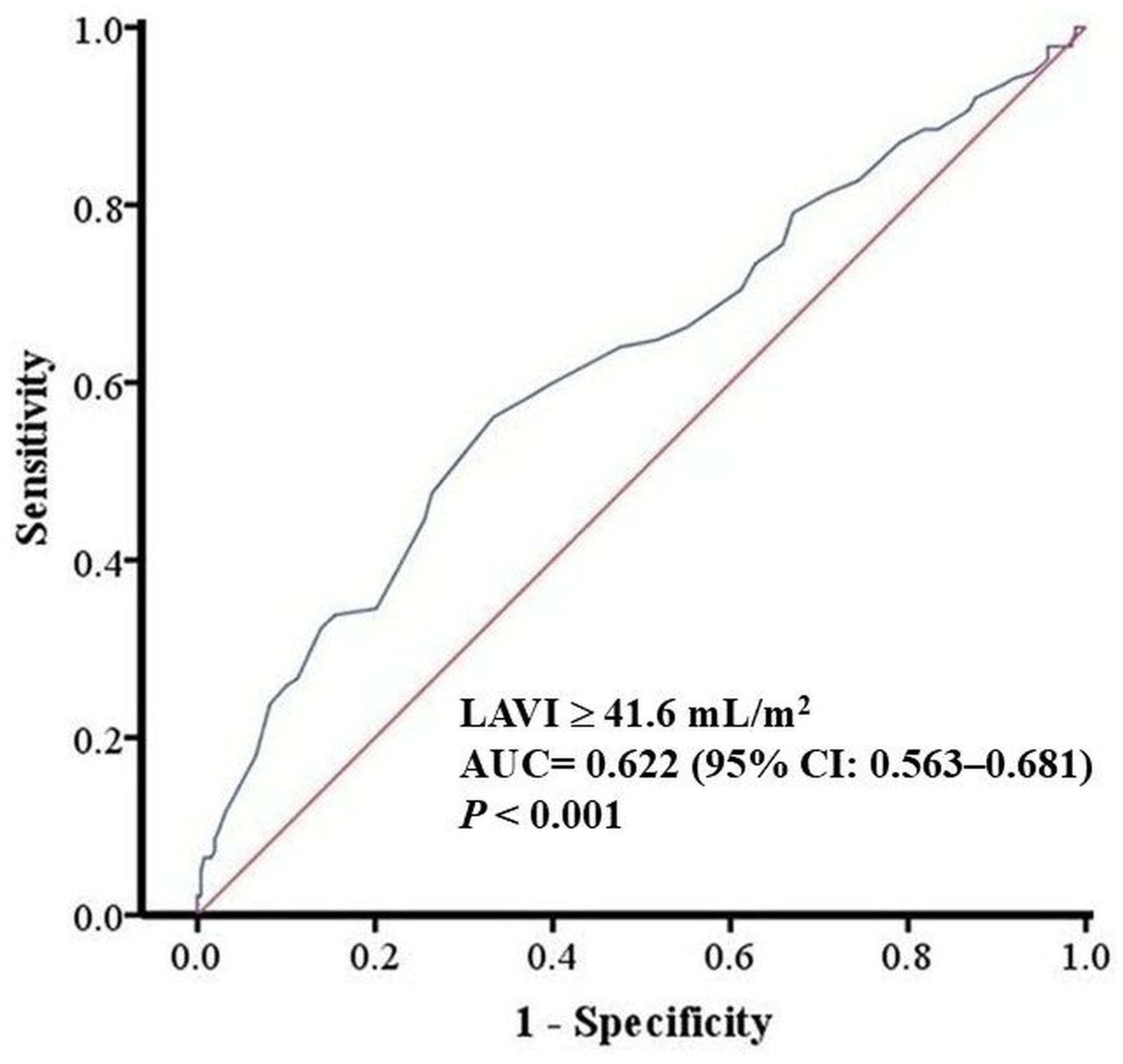
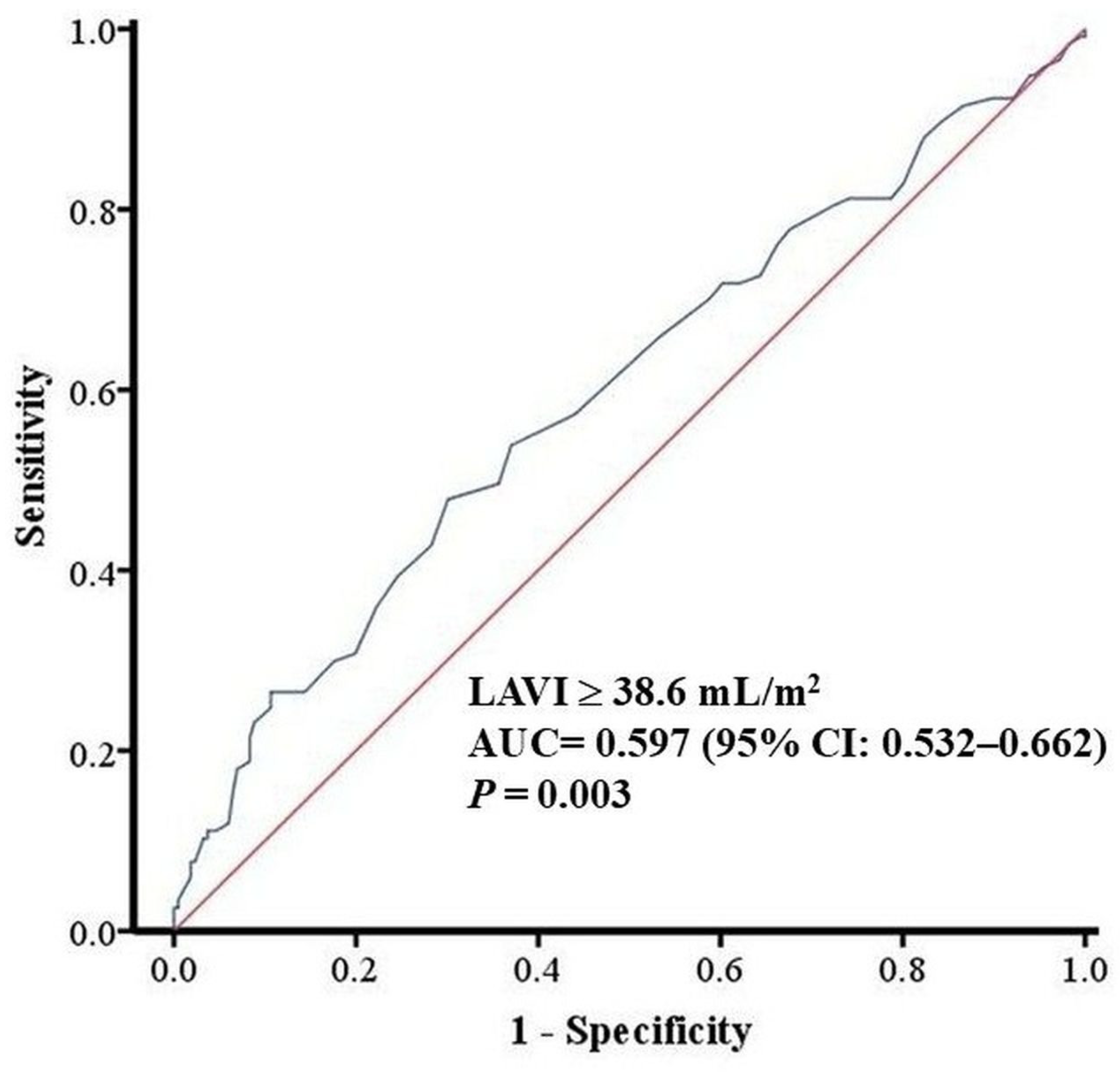
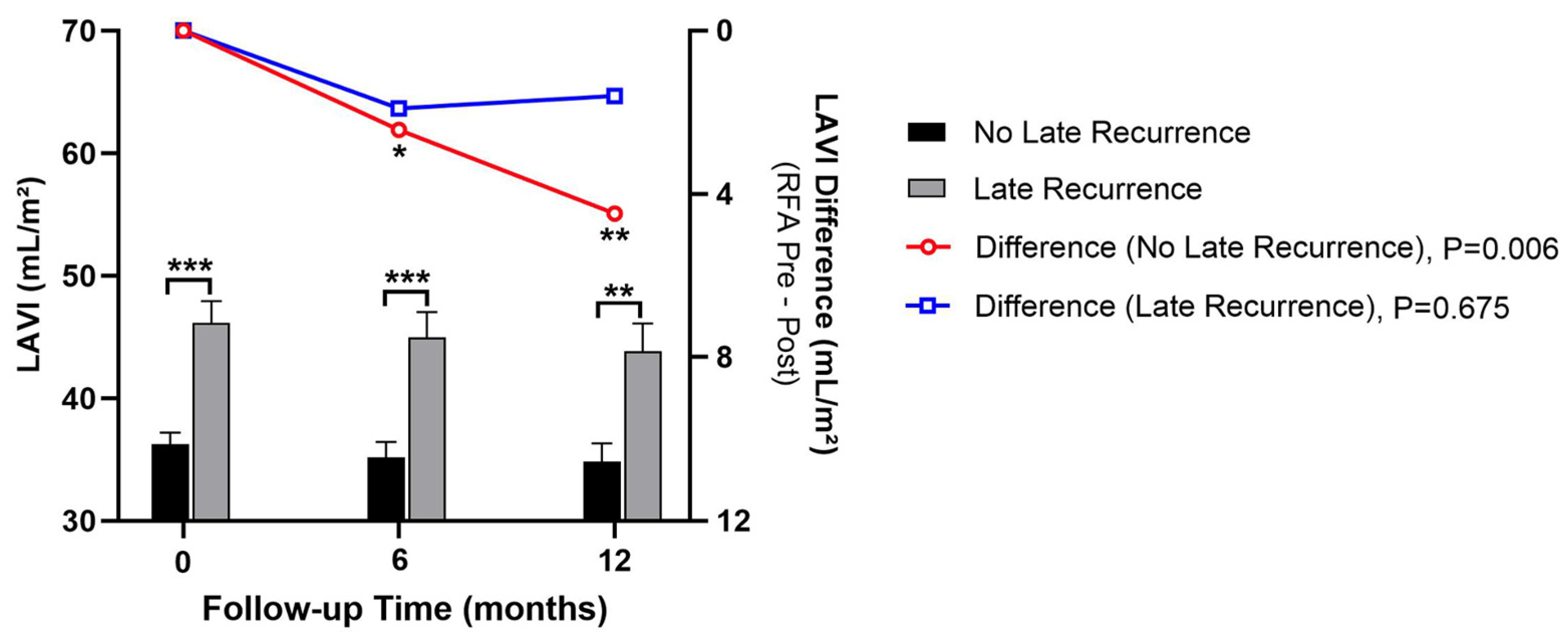
Background: Radiofrequency catheter ablation for atrial fibrillation (AF) restores sinus rhythm, but late recurrence is common. Left atrial (LA) size is a known predictor of AF recurrence, but the prognostic value of early post-ablation LA remodeling remains underexplored. Objective: We aimed to evaluate whether pre-ablation and early post-ablation LA volume index (LAVI) predict late atrial tachyarrhythmia recurrence after AF ablation. Methods: This is a retrospective single-center study of adults undergoing their first radiofrequency ablation for AF between January 2013 and December 2021. LA volume was measured by transthoracic echocardiography and indexed to body surface area to derive LAVI within one week before ablation and at 6 and 12 months after the procedure. The 6-month echocardiographic assessment was prespecified as the primary early post-ablation time point because it occurs beyond the 3-month blanking period and captures early structural remodeling during routine follow-up. Early recurrence was defined as atrial tachyarrhythmia occurring within 3 months after ablation, and late recurrence (LR) as any atrial tachyarrhythmic event thereafter. Multivariable Cox proportional hazards models were used to identify independent predictors of LR. Results: Among 408 patients with at least one year of follow-up, 157 (38.5%) experienced LR. Age and sex were similar between recurrence and non-recurrence groups (60.7 ± 9.8 vs. 59.9 ± 0.8 years; 56.1% vs. 64.1% male). Recurrence was associated with a higher prevalence of atrial flutter and persistent AF, higher pre-ablation and post-ablation LAVI, and lower post-ablation left ventricular ejection fraction. In multivariable analysis, atrial flutter, persistent AF, and LAVI, measured both before and after ablation, were independent predictors of LR. In receiver operating characteristic analysis, pre-ablation LAVI demonstrated modest discrimination for LR (AUC = 0.622; 95% CI 0.563–0.681; p < 0.001), with an optimal cut-off of 41.6 mL/m2, while post-ablation LAVI showed similar performance (AUC = 0.597; 95% CI 0.532–0.662; p = 0.003), with a cut-off of 38.6 mL/m2. Overall, discrimination was modest (AUC < 0.65), limiting LAVI as a standalone predictor. Conclusions: Elevated LAVI measured before and early after AF ablation independently predicts LR. Limited post-ablation LA reverse remodeling, reflected by persistently increased LAVI, is associated with unfavorable long-term rhythm outcomes. Serial assessment of LAVI may enhance post-ablation risk stratification.
Keywords: atrial fibrillation; radiofrequency ablation; left atrial volume index; remodeling; late recurrence atrial fibrillation; radiofrequency ablation; left atrial volume index; remodeling; late recurrence