Gastric Adenomas and Mimickers: A Review
Abstract
1. Introduction
2. Pathologic Features of Gastric Epithelial Polyps
2.1. Fundic Gland Polyps
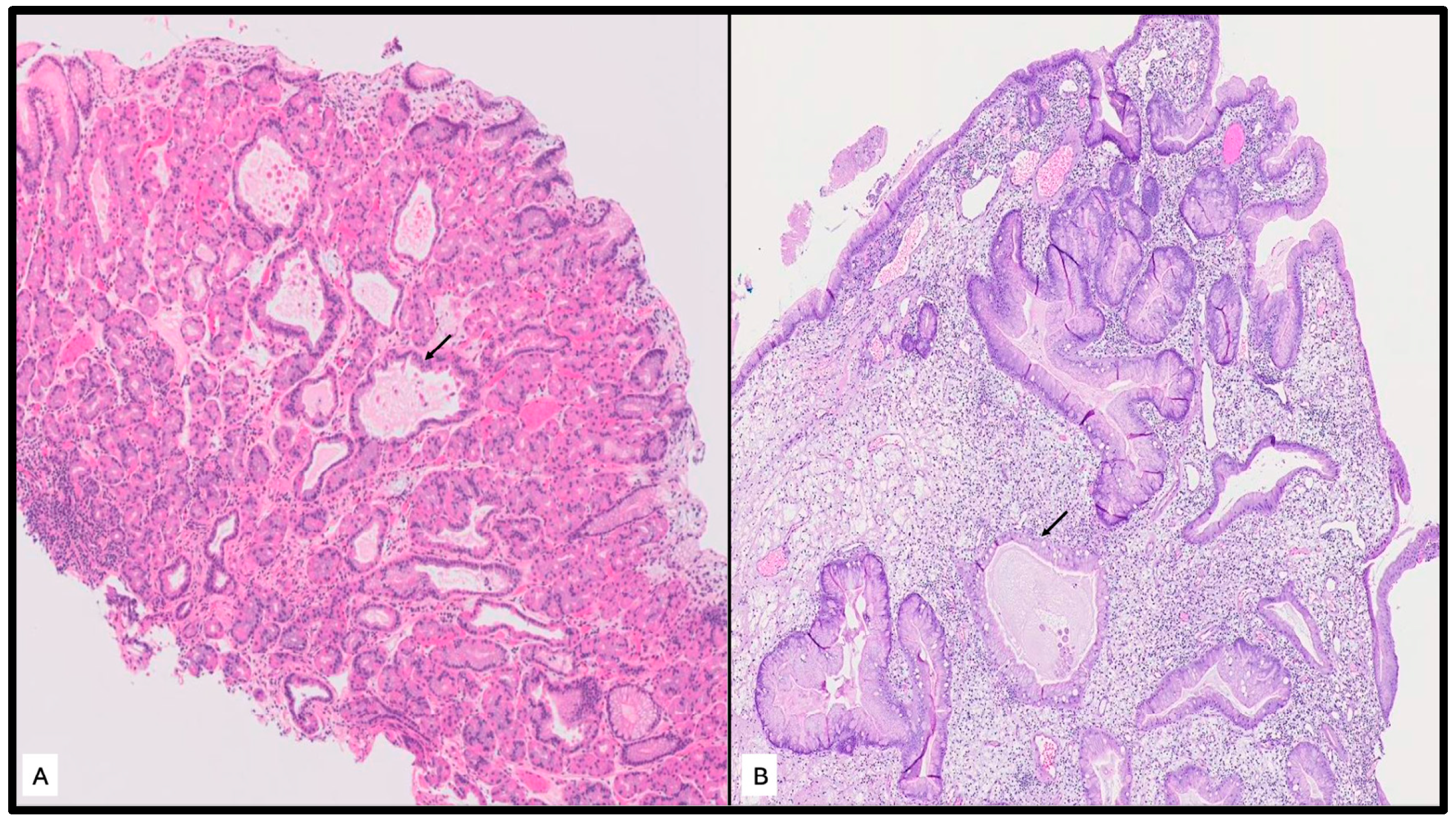
2.2. Hyperplastic Polyps
2.3. Gastric Adenomas
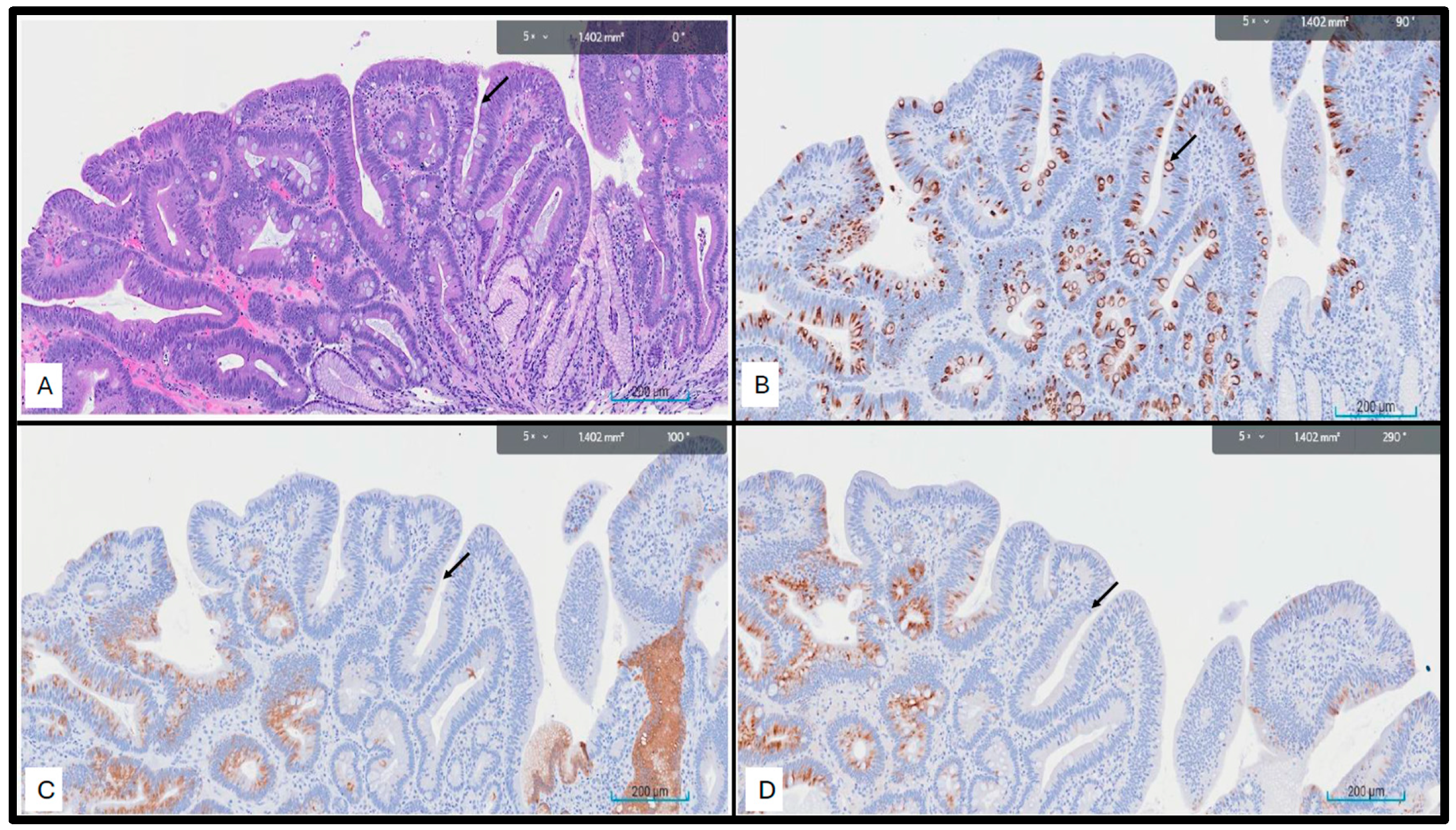
2.3.1. Intestinal-Type Gastric Adenomas
2.3.2. Foveolar-Type Gastric Adenomas
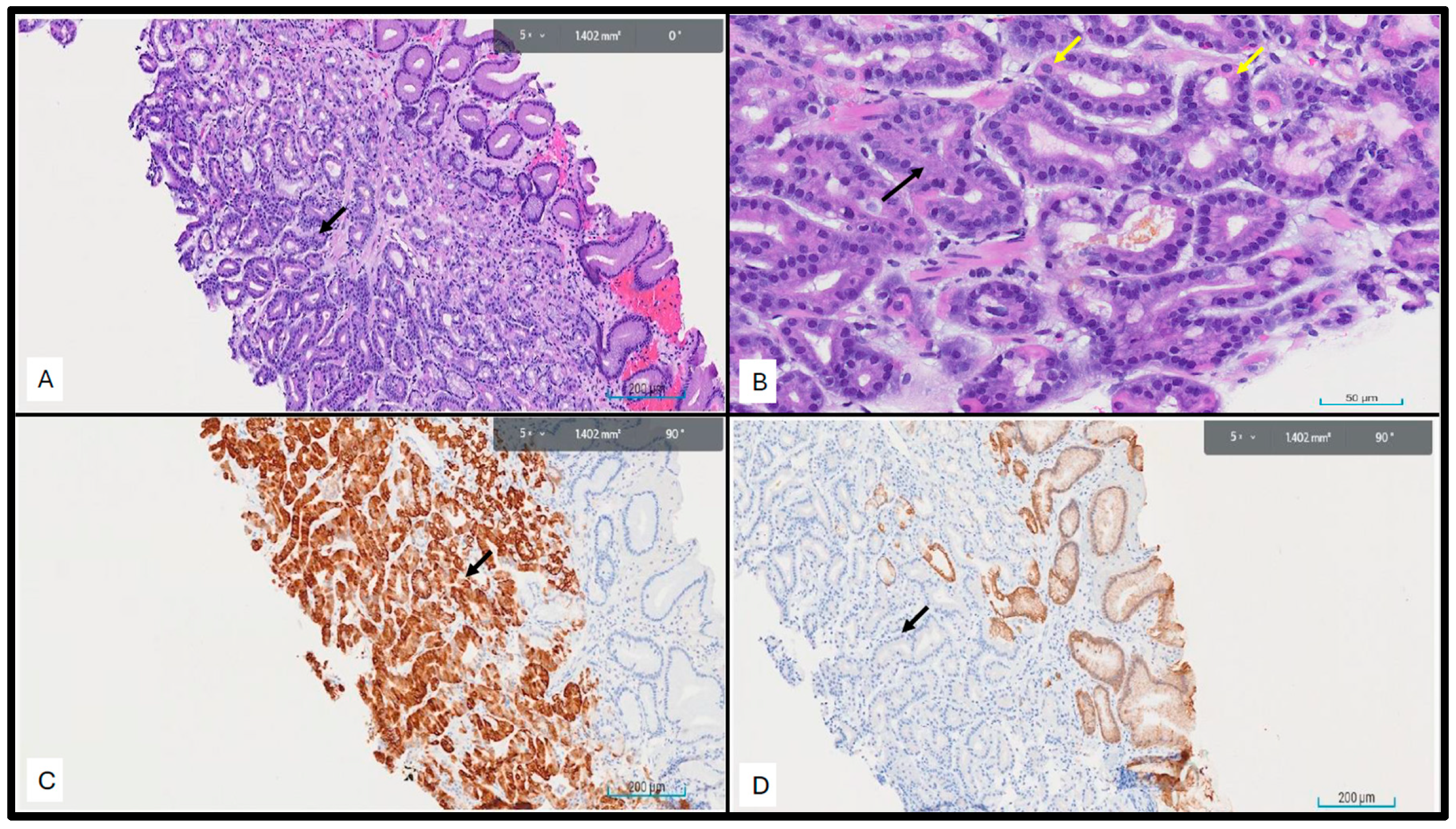
2.3.3. Pyloric Gland Adenomas
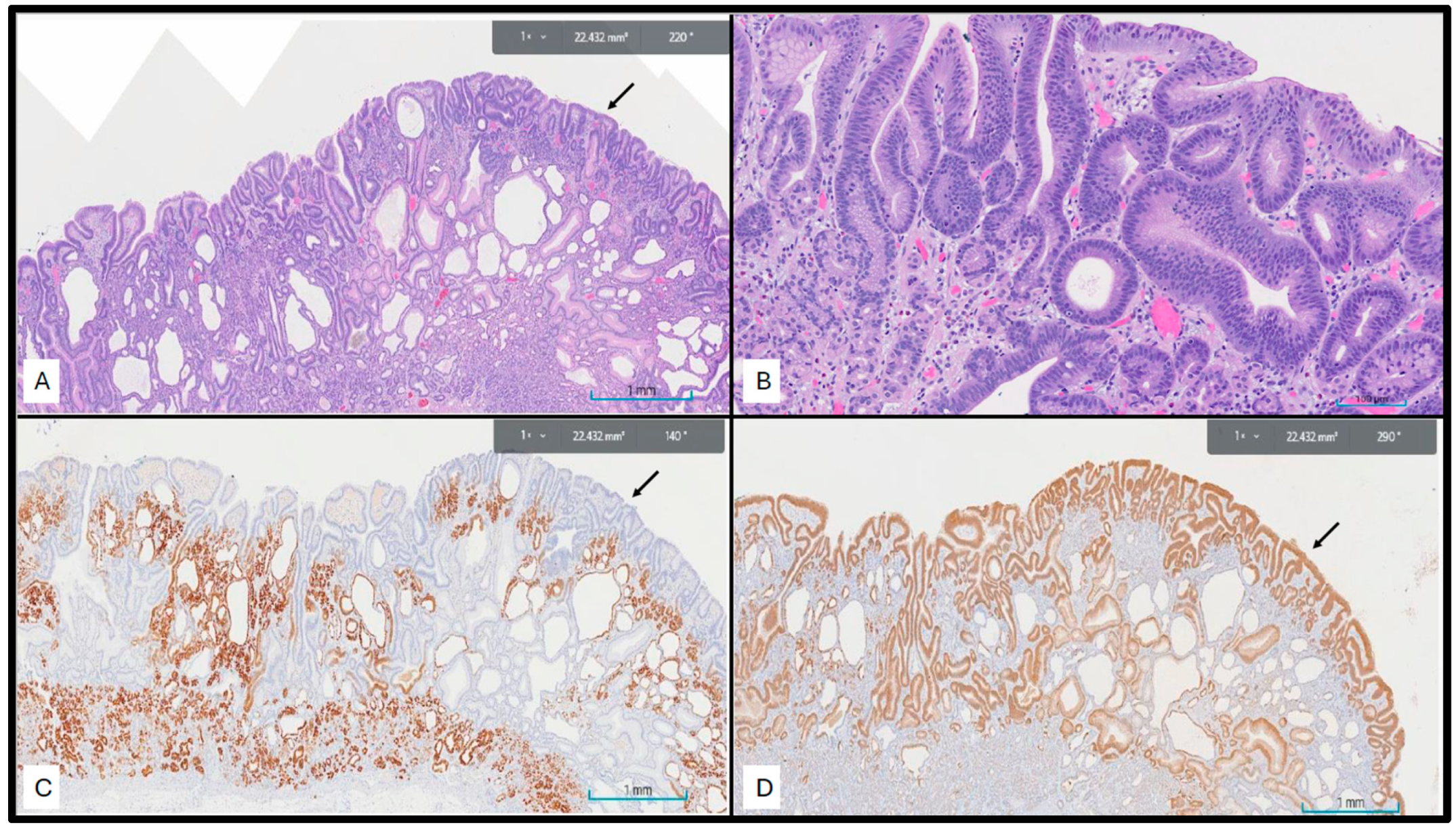
2.3.4. Oxyntic Gland Adenomas
3. Clinical Management and Surveillance
4. Gastric Non-Epithelial Lesions—Polypoid Mimics
4.1. Gastrointestinal Stromal Tumors (GIST)
4.2. Leiomyoma
4.3. Schwannoma
4.4. Lipoma
4.5. Inflammatory Fibroid Polyp
5. Conclusions and Future Directions
Author Contributions
Funding
Institutional Review Board Statement
Informed Consent Statement
Data Availability Statement
Conflicts of Interest
Abbreviations
References
- ASGE Standards of Practice Committee; Evans, J.A.; Chandrasekhara, V.; Chathadi, K.V.; Decker, G.A.; Early, D.S.; Fisher, D.A.; Foley, K.; Hwang, J.H.; Jue, T.L.; et al. The role of endoscopy in the management of premalignant and malignant conditions of the stomach. Gastrointest. Endosc. 2015, 82, 1–8. [Google Scholar] [CrossRef] [PubMed]
- Okamoto, Y.; Kanzaki, H.; Tanaka, T.; Sakae, H.; Abe, M.; Iwamuro, M.; Kawano, S.; Kawahara, Y.; Okada, H. Gastric Adenoma: A High Incidence Rate of Developing Carcinoma and Risk of Metachronous Gastric Cancer according to Long-Term Follow-Up. Digestion 2021, 102, 878–886. [Google Scholar] [CrossRef] [PubMed]
- Castro, R.; Pimentel-Nunes, P.; Dinis-Ribeiro, M. Evaluation and management of gastric epithelial polyps. Best Pract. Res. Clin. Gastroenterol. 2017, 31, 381–387. [Google Scholar] [CrossRef] [PubMed]
- Ishida, T.; Yamaguchi, T.; Yoshida, T.; Kobayashi, S.; Kuno, T.; Takaoka, S.; Aonuma, Y.; Kawakami, S.; Muraoka, M.; Suzuki, Y.; et al. Evaluating Malignant Potential of Gastric Adenomas: The Role of Endoscopic Features and Genetic Alterations. J. Gastroenterol. Hepatol. 2025, 40, 2282–2289. [Google Scholar] [CrossRef] [PubMed] [PubMed Central]
- World Health Organization. Digestive system tumors. In WHO Classification of Tumours, 5th ed.; International Agency for Research on Cancer: Lyon, France, 2019; Volume 1. [Google Scholar]
- Naka, T.; Hashimoto, T.; Cho, H.; Tanabe, N.; Yoshida, T.; Yatabe, Y.; Yoshikawa, T.; Abe, S.; Sekine, S. Sporadic and Familial Adenomatous Polyposis-associated Foveolar-type Adenoma of the Stomach. Am. J. Surg. Pathol. 2023, 47, 91–101. [Google Scholar] [CrossRef] [PubMed]
- Worthley, D.L.; Phillips, K.D.; Wayte, N.; Schrader, K.A.; Healey, S.; Kaurah, P.; Shulkes, A.; Grimpen, F.; Clouston, A.; Moore, D.; et al. Gastric adenocarcinoma and proximal polyposis of the stomach (GAPPS): A new autosomal dominant syndrome. Gut 2012, 61, 774–779, Erratum in Gut 2012, 61, 1305. [Google Scholar] [CrossRef] [PubMed]
- Abraham, S.C.; Nobukawa, B.; Giardiello, F.M.; Hamilton, S.R.; Wu, T.T. Fundic gland polyps in familial adenomatous polyposis: Neoplasms with frequent somatic adenomatous polyposis coli gene alterations. Am. J. Pathol. 2000, 157, 747–754. [Google Scholar] [CrossRef] [PubMed] [PubMed Central]
- Abraham, S.C.; Park, S.J.; Mugartegui, L.; Hamilton, S.R.; Wu, T.T. Sporadic fundic gland polyps with epithelial dysplasia: Evidence for preferential targeting for mutations in the adenomatous polyposis coli gene. Am. J. Pathol. 2002, 161, 1735–1742. [Google Scholar] [CrossRef] [PubMed] [PubMed Central]
- Yang, J.; Gurudu, S.R.; Koptiuch, C.; Agrawal, D.; Buxbaum, J.L.; Abbas Fehmi, S.M.; Fishman, D.S.; Khashab, M.A.; Jamil, L.H.; Jue, T.L.; et al. American Society for Gastrointestinal Endoscopy guideline on the role of endoscopy in familial adenomatous polyposis syndromes. Gastrointest. Endosc. 2020, 91, 963–982.e2. [Google Scholar] [CrossRef] [PubMed]
- Chey, W.D.; Howden, C.W.; Moss, S.F.; Morgan, D.R.; Greer, K.B.; Grover, S.; Shah, S.C. ACG Clinical Guideline: Treatment of Helicobacter pylori Infection. Am. J. Gastroenterol. 2024, 119, 1730–1753. [Google Scholar] [CrossRef] [PubMed]
- Abraham, S.C.; Singh, V.K.; Yardley, J.H.; Wu, T.T. Hyperplastic polyps of the stomach: Associations with histologic patterns of gastritis and gastric atrophy. Am. J. Surg. Pathol. 2001, 25, 500–507. [Google Scholar] [CrossRef] [PubMed]
- Boland, C.R.; Idos, G.E.; Durno, C.; Giardiello, F.M.; Anderson, J.C.; Burke, C.A.; Dominitz, J.A.; Gross, S.; Gupta, S.; Jacobson, B.C.; et al. Diagnosis and Management of Cancer Risk in the Gastrointestinal Hamartomatous Polyposis Syndromes: Recommendations from the US Multi-Society Task Force on Colorectal Cancer. Gastroenterology 2022, 162, 2063–2085. [Google Scholar] [CrossRef] [PubMed]
- Rugge, M.; Cassaro, M.; Di Mario, F.; Leo, G.; Leandro, G.; Russo, V.M.; Pennelli, G.; Farinati, F. Interdisciplinary Group on Gastric Epithelial Dysplasia (IGGED). The long term outcome of gastric non-invasive neoplasia. Gut 2003, 52, 1111–1116. [Google Scholar] [CrossRef] [PubMed] [PubMed Central]
- Zhang, T.; Tang, X. Beyond metaplasia: Unraveling the complex pathogenesis of autoimmune atrophic gastritis and its implications for gastric cancer risk. QJM 2025, 118, 203–247. [Google Scholar] [CrossRef] [PubMed]
- Yakirevich, E.; Resnick, M.B. Pathology of gastric cancer and its precursor lesions. Gastroenterol. Clin. N. Am. 2013, 42, 261–284. [Google Scholar] [CrossRef] [PubMed]
- Park, D.Y.; Srivastava, A.; Kim, G.H.; Mino-Kenudson, M.; Deshpande, V.; Zukerberg, L.R.; Song, G.A.; Lauwers, G.Y. Adenomatous and foveolar gastric dysplasia: Distinct patterns of mucin expression and background intestinal metaplasia. Am. J. Surg. Pathol. 2008, 32, 524–533. [Google Scholar] [CrossRef] [PubMed]
- National Comprehensive Cancer Network. Genetic/Familial High-Risk Assessment: Colorectal, Endometrial, and Gastric. Version 1.2025. Updated 13 June 2025. Available online: https://www.nccn.org/guidelines/guidelines-detail?category=2&id=1436 (accessed on 24 March 2026).
- Choi, W.T.; Brown, I.; Ushiku, T.; Yozu, M.; Setia, N.; Srivastava, A.; Johncilla, M.; Pai, R.K.; Gill, R.M.; Fukayama, M.; et al. Gastric pyloric gland adenoma: A multicentre clinicopathological study of 67 cases. Histopathology 2018, 72, 1007–1014. [Google Scholar] [CrossRef] [PubMed]
- Pezhouh, M.K.; Park, J.Y. Gastric pyloric gland adenoma. Arch. Pathol. Lab Med. 2015, 139, 823–826. [Google Scholar] [CrossRef] [PubMed]
- Matsubara, A.; Sekine, S.; Kushima, R.; Ogawa, R.; Taniguchi, H.; Tsuda, H.; Kanai, Y. Frequent GNAS and KRAS mutations in pyloric gland adenoma of the stomach and duodenum. J. Pathol. 2013, 229, 579–587. [Google Scholar] [CrossRef] [PubMed]
- Ushiku, T.; Kunita, A.; Kuroda, R.; Shinozaki-Ushiku, A.; Yamazawa, S.; Tsuji, Y.; Fujishiro, M.; Fukayama, M. Oxyntic gland neoplasm of the stomach: Expanding the spectrum and proposal of terminology. Mod. Pathol. 2020, 33, 206–216. [Google Scholar] [CrossRef] [PubMed]
- Asahara, H.; Takao, T.; Asahara, Y.; Asahara, M.; Motomura, D.; Sakaguchi, H.; Yoshizaki, T.; Ikezawa, N.; Takao, M.; Morita, Y.; et al. Clinicopathological Features and the Prevalence of Oxyntic Gland Neoplasm: A Single-center Retrospective Study. Intern. Med. 2023, 62, 2763–2774. [Google Scholar] [CrossRef] [PubMed] [PubMed Central]
- Singhi, A.D.; Lazenby, A.J.; Montgomery, E.A. Gastric adenocarcinoma with chief cell differentiation: A proposal for reclassification as oxyntic gland polyp/adenoma. Am. J. Surg. Pathol. 2012, 36, 1030–1035. [Google Scholar] [CrossRef] [PubMed]
- Chan, K.; Brown, I.S.; Kyle, T.; Lauwers, G.Y.; Kumarasinghe, M.P. Chief cell-predominant gastric polyps: A series of 12 cases with literature review. Histopathology 2016, 68, 825–833. [Google Scholar] [CrossRef] [PubMed]
- Lee, T.I.; Jang, J.Y.; Kim, S.; Kim, J.W.; Chang, Y.W.; Kim, Y.W. Oxyntic gland adenoma endoscopically mimicking a gastric neuroendocrine tumor: A case report. World J. Gastroenterol. 2015, 21, 5099–5104. [Google Scholar] [CrossRef] [PubMed] [PubMed Central]
- Yamada, S.; Yamanoi, K.; Sato, Y.; Nakayama, J. Diffuse MIST1 expression and decreased α1,4-linked N-acetylglucosamine (αGlcNAc) glycosylation on MUC6 are distinct hallmarks for gastric neoplasms showing oxyntic gland differentiation. Histopathology 2020, 77, 413–422. [Google Scholar] [CrossRef] [PubMed]
- Iwamuro, M.; Kusumoto, C.; Nakagawa, M.; Kobayashi, S.; Yoshioka, M.; Inaba, T.; Toyokawa, T.; Hori, S.; Tanaka, S.; Matsueda, K.; et al. Endoscopic resection is a suitable initial treatment strategy for oxyntic gland adenoma or gastric adenocarcinoma of the fundic gland type. Sci. Rep. 2021, 11, 7375. [Google Scholar] [CrossRef] [PubMed] [PubMed Central]
- Ueyama, H.; Yao, T.; Akazawa, Y.; Hayashi, T.; Kurahara, K.; Oshiro, Y.; Yamada, M.; Oda, I.; Fujioka, S.; Kusumoto, C.; et al. Gastric epithelial neoplasm of fundic-gland mucosa lineage: Proposal for a new classification in association with gastric adenocarcinoma of fundic-gland type. J. Gastroenterol. 2021, 56, 814–828. [Google Scholar] [CrossRef] [PubMed] [PubMed Central]
- Kumagai, K.; Shimizu, T.; Nikaido, M.; Hirano, T.; Kakiuchi, N.; Takeuchi, Y.; Minamiguchi, S.; Sakurai, T.; Teramura, M.; Utsumi, T.; et al. On the origin of gastric tumours: Analysis of a case with intramucosal gastric carcinoma and oxyntic gland adenoma. J. Pathol. 2023, 259, 362–368. [Google Scholar] [CrossRef] [PubMed]
- Min, C.C.; Wu, J.; Hou, F.; Mao, T.; Li, X.Y.; Ding, X.L.; Liu, H. Gastric pyloric gland adenoma resembling a submucosal tumor: A case report. World J. Clin. Cases 2020, 8, 2380–2386. [Google Scholar] [CrossRef] [PubMed] [PubMed Central]
- Shah, S.C.; Wang, A.Y.; Wallace, M.B.; Hwang, J.H. AGA Clinical Practice Update on Screening and Surveillance in Individuals at Increased Risk for Gastric Cancer in the United States: Expert Review. Gastroenterology 2025, 168, 405–416.e1. [Google Scholar] [CrossRef] [PubMed]
- Wang, A.Y.; Hwang, J.H.; Bhatt, A.; Draganov, P.V. AGA Clinical Practice Update on Surveillance After Pathologically Curative Endoscopic Submucosal Dissection of Early Gastrointestinal Neoplasia in the United States: Commentary. Gastroenterology 2021, 161, 2030–2040.e1. [Google Scholar] [CrossRef] [PubMed]
- Syngal, S.; Brand, R.E.; Church, J.M.; Giardiello, F.M.; Hampel, H.L.; Burt, R.W.; American College of Gastroenterology. ACG clinical guideline: Genetic testing and management of hereditary gastrointestinal cancer syndromes. Am. J. Gastroenterol. 2015, 110, 223–262; quiz 263. [Google Scholar] [CrossRef] [PubMed] [PubMed Central]
- Ali, M.; Srour, L.; Bitar, M.; Karam, K.; El Hajj, I.I.; Fiani, E. Current Guidelines and Advances in the Management of Fundic Gland Polyps. J. Gastroenterol. Hepatol. 2025, 40, 1374–1380. [Google Scholar] [CrossRef] [PubMed]
- Wang, K.K.; Kim, K.; Bancila, L.; Lew, D.; Larson, B.K.; Kim, S.; Lee, J.Y.; Gaddam, S.; Lo, S.K. Novel Endoscopic Polypectomy Surveillance Technique for Fundic Gland Polyps in Familial Adenomatous Polyposis Can Improve Early Detection of Dysplasia and Gastric Cancer. Am. J. Gastroenterol. 2022, 117, 1246–1254. [Google Scholar] [CrossRef] [PubMed]
- Markowski, A.R.; Markowska, A.; Guzinska-Ustymowicz, K. Pathophysiological and clinical aspects of gastric hyperplastic polyps. World J. Gastroenterol. 2016, 22, 8883–8891. [Google Scholar] [CrossRef] [PubMed] [PubMed Central]
- ASGE Standards of Practice Committee; Forbes, N.; Elhanafi, S.E.; Al-Haddad, M.A.; Thosani, N.C.; Draganov, P.V.; Othman, M.O.; Ceppa, E.P.; Kaul, V.; Feely, M.M.; et al. American Society for Gastrointestinal Endoscopy guideline on endoscopic submucosal dissection for the management of early esophageal and gastric cancers: Summary and recommendations. Gastrointest. Endosc. 2023, 98, 271–284. [Google Scholar] [CrossRef] [PubMed]
- Kim, G.H.; Lee, J.S.; Lee, J.H.; Park, Y.S. Oxyntic Gland Neoplasms—From Adenoma to Advanced Gastric Cancer: A Review of 29 Cases. J. Gastric Cancer 2024, 24, 378–390. [Google Scholar] [CrossRef] [PubMed] [PubMed Central]
- Al-Haddad, M.A.; Elhanafi, S.E.; Forbes, N.; Thosani, N.C.; Draganov, P.V.; Othman, M.O.; Ceppa, E.P.; Kaul, V.; Feely, M.M.; Sahin, I.; et al. American Society for Gastrointestinal Endoscopy guideline on endoscopic submucosal dissection for the management of early esophageal and gastric cancers: Methodology and review of evidence. Gastrointest. Endosc. 2023, 98, 285–305.e38. [Google Scholar] [CrossRef] [PubMed]
- Standards of Practice Committee; Faulx, A.L.; Kothari, S.; Acosta, R.D.; Agrawal, D.; Bruining, D.H.; Chandrasekhara, V.; Eloubeidi, M.A.; Fanelli, R.D.; Gurudu, S.R.; et al. The role of endoscopy in subepithelial lesions of the GI tract. Gastrointest. Endosc. 2017, 85, 1117–1132. [Google Scholar] [CrossRef] [PubMed]
- Wang, M.X.; Devine, C.; Segaran, N.; Ganeshan, D. Current update on molecular cytogenetics, diagnosis and management of gastrointestinal stromal tumors. World J. Gastroenterol. 2021, 27, 7125–7133. [Google Scholar] [CrossRef] [PubMed] [PubMed Central]
- Sharzehi, K.; Sethi, A.; Savides, T. AGA Clinical Practice Update on Management of Subepithelial Lesions Encountered During Routine Endoscopy: Expert Review. Clin. Gastroenterol. Hepatol. 2022, 20, 2435–2443.e4. [Google Scholar] [CrossRef] [PubMed]
- Miettinen, M.; Sobin, L.H.; Lasota, J. Gastrointestinal stromal tumors of the stomach: A clinicopathologic, immunohistochemical, and molecular genetic study of 1765 cases with long-term follow-up. Am. J. Surg. Pathol. 2005, 29, 52–68. [Google Scholar] [CrossRef] [PubMed]
- Medeiros, F.; Corless, C.L.; Duensing, A.; Hornick, J.L.; Oliveira, A.M.; Heinrich, M.C.; Fletcher, J.A.; Fletcher, C.D. KIT-negative gastrointestinal stromal tumors: Proof of concept and therapeutic implications. Am. J. Surg. Pathol. 2004, 28, 889–894. [Google Scholar] [CrossRef] [PubMed]
- Miettinen, M.; Makhlouf, H.; Sobin, L.H.; Lasota, J. Gastrointestinal stromal tumors of the jejunum and ileum: A clinicopathologic, immunohistochemical, and molecular genetic study of 906 cases before imatinib with long-term follow-up. Am. J. Surg. Pathol. 2006, 30, 477–489. [Google Scholar] [CrossRef] [PubMed]
- Carney, J.A. Gastric stromal sarcoma, pulmonary chondroma, and extra-adrenal paraganglioma (Carney Triad): Natural history, adrenocortical component, and possible familial occurrence. Mayo Clin. Proc. 1999, 74, 543–552. [Google Scholar] [CrossRef] [PubMed]
- Pasini, B.; McWhinney, S.R.; Bei, T.; Matyakhina, L.; Stergiopoulos, S.; Muchow, M.; Boikos, S.A.; Ferrando, B.; Pacak, K.; Assie, G.; et al. Clinical and molecular genetics of patients with the Carney-Stratakis syndrome and germline mutations of the genes coding for the succinate dehydrogenase subunits SDHB, SDHC, and SDHD. Eur. J. Hum. Genet 2008, 16, 79–88. [Google Scholar] [CrossRef] [PubMed]
- Hirota, S.; Isozaki, K.; Moriyama, Y.; Hashimoto, K.; Nishida, T.; Ishiguro, S.; Kawano, K.; Hanada, M.; Kurata, A.; Takeda, M.; et al. Gain-of-function mutations of c-kit in human gastrointestinal stromal tumors. Science 1998, 279, 577–580. [Google Scholar] [CrossRef] [PubMed]
- National Comprehensive Cancer Network. NCCN Clinical Practice Guidelines in Oncology (NCCN Guidelines®): Gastrointestinal Stromal Tumors (GISTs). Version 1; National Comprehensive Cancer Network: Fort Washington, PA, USA, 2026; Available online: https://www.nccn.org/professionals/physician_gls/pdf/gist.pdf (accessed on 24 March 2026).
- Luo, K.; Bin, J.; Bian, J.; Wang, H.; Tang, D.; Yan, M.; Ge, H. Gastric fundus leiomyoma: A rare case report. Front Oncol. 2025, 15, 1652318. [Google Scholar] [CrossRef] [PubMed] [PubMed Central]
- Park, K.; Ahn, J.Y.; Na, H.K.; Jung, K.W.; Lee, J.H.; Kim, D.H.; Choi, K.D.; Song, H.J.; Lee, G.H.; Jung, H.Y. Natural history of gastric leiomyoma. Surg. Endosc. 2024, 38, 2726–2733. [Google Scholar] [CrossRef] [PubMed]
- Appelman, H.; Helwig, E.B. Cellular leiomyomas of the stomach in 49 patients. Arch. Pathol. Lab Med. 1977, 101, 373–377. [Google Scholar] [PubMed]
- Deshpande, A.; Nelson, D.; Corless, C.L.; Deshpande, V.; O’Brien, M.J. Leiomyoma of the gastrointestinal tract with interstitial cells of Cajal: A mimic of gastrointestinal stromal tumor. Am. J. Surg. Pathol. 2014, 38, 72–77. [Google Scholar] [CrossRef] [PubMed]
- Anker, M.C.; Arnemann, J.; Neumann, K.; Ahrens, P.; Schmidt, H.; König, R. Alport syndrome with diffuse leiomyomatosis. Am. J. Med. Genet A 2003, 119A, 381–385. [Google Scholar] [CrossRef] [PubMed]
- Zhang, P.C.; Wang, S.H.; Li, J.; Wang, J.J.; Chen, H.T.; Li, A.Q. Clinicopathological features and treatment of gastrointestinal schwannomas. World J. Gastroenterol. 2025, 31, 101280. [Google Scholar] [CrossRef] [PubMed] [PubMed Central]
- Xiang, J.; Li, L.; Xu, N.; Wang, S.; Linghu, E.; Chai, N. Clinical characteristics and endoscopic management of upper gastrointestinal schwannoma: 12-year experience from a large tertiary hospital in China. Surg. Endosc. 2026, 40, 3166. [Google Scholar] [CrossRef] [PubMed]
- Voltaggio, L.; Murray, R.; Lasota, J.; Miettinen, M. Gastric schwannoma: A clinicopathologic study of 51 cases and critical review of the literature. Hum. Pathol. 2012, 43, 650–659. [Google Scholar] [CrossRef] [PubMed] [PubMed Central]
- Liegl, B.; Bennett, M.W.; Fletcher, C.D. Microcystic/reticular schwannoma: A distinct variant with predilection for visceral locations. Am. J. Surg. Pathol. 2008, 32, 1080–1087. [Google Scholar] [CrossRef] [PubMed]
- Lasota, J.; Wasag, B.; Dansonka-Mieszkowska, A.; Karcz, D.; Millward, C.L.; Ryś, J.; Stachura, J.; Sobin, L.H.; Miettinen, M. Evaluation of NF2 and NF1 tumor suppressor genes in distinctive gastrointestinal nerve sheath tumors traditionally diagnosed as benign schwannomas: A study of 20 cases. Lab. Investig. 2003, 83, 1361–1371. [Google Scholar] [CrossRef] [PubMed]
- Kumar, S.; Kumar, A.; Dayal, M.; Prakash, V. Gastric lipoma: A rare cause of massive haematemesis. Ann. R Coll. Surg. Engl. 2021, 103, e196–e198. [Google Scholar] [CrossRef] [PubMed] [PubMed Central]
- Cappell, M.S.; Stevens, C.E.; Amin, M. Systematic review of giant gastric lipomas reported since 1980 and report of two new cases in a review of 117110 esophagogastroduodenoscopies. World J. Gastroenterol. 2017, 23, 5619–5633. [Google Scholar] [CrossRef] [PubMed] [PubMed Central]
- Jacobson, B.C.; Bhatt, A.; Greer, K.B.; Lee, L.S.; Park, W.G.; Sauer, B.G.; Shami, V.M. ACG Clinical Guideline: Diagnosis and Management of Gastrointestinal Subepithelial Lesions. Am. J. Gastroenterol. 2023, 118, 46–58. [Google Scholar] [CrossRef] [PubMed]
- Ingason, A.B.; Theodors, A.; Agustsson, A.S.; Arnarson, A. Giant gastric lipoma successfully removed by endoscopic submucosal dissection: Case report and systematic review. Scand. J. Gastroenterol. 2018, 53, 1018–1024. [Google Scholar] [CrossRef] [PubMed]
- Schildhaus, H.U.; Cavlar, T.; Binot, E.; Büttner, R.; Wardelmann, E.; Merkelbach-Bruse, S. Inflammatory fibroid polyps harbour mutations in the platelet-derived growth factor receptor alpha (PDGFRA) gene. J. Pathol. 2008, 216, 176–182. [Google Scholar] [CrossRef] [PubMed]
- Albuquerque, A.; Rios, E.; Carneiro, F.; Macedo, G. Evaluation of clinico-pathological features and Helicobacter pylori infection in gastric inflammatory fibroid polyps. Virchows Arch. 2014, 465, 643–647. [Google Scholar] [CrossRef] [PubMed]
- Garmpis, N.; Damaskos, C.; Garmpi, A.; Georgakopoulou, V.E.; Sakellariou, S.; Liakea, A.; Schizas, D.; Diamantis, E.; Farmaki, P.; Voutyritsa, E.; et al. Inflammatory Fibroid Polyp of the Gastrointestinal Tract: A Systematic Review for a Benign Tumor. Vivo 2021, 35, 81–93. [Google Scholar] [CrossRef] [PubMed] [PubMed Central]
- Matsushita, M.; Hajiro, K.; Okazaki, K.; Takakuwa, H. Endoscopic features of gastric inflammatory fibroid polyps. Am. J. Gastroenterol. 1996, 91, 1595–1598. [Google Scholar] [PubMed]
- Hasegawa, T.; Yang, P.; Kagawa, N.; Hirose, T.; Sano, T. CD34 expression by inflammatory fibroid polyps of the stomach. Mod. Pathol. 1997, 10, 451–456. [Google Scholar] [PubMed]
- Ricci, R.; Martini, M.; Cenci, T.; Carbone, A.; Lanza, P.; Biondi, A.; Rindi, G.; Cassano, A.; Larghi, A.; Persiani, R.; et al. PDGFRA-mutant syndrome. Mod. Pathol. 2015, 28, 954–964. [Google Scholar] [CrossRef] [PubMed]
- Kumari, S.; Peela, S.; Bramhachari, P.V.; Mallikarjuna, K.; Nagaraju, G.P.; Srilatha, M. Raf-kinase inhibitor protein (RKIP): A therapeutic target in colon cancer. Biochim Biophys. Acta Rev. Cancer 2025, 1880, 189387. [Google Scholar] [CrossRef] [PubMed]



| Features | IGA (Intestinal-Type) | FGA (Foveolar-Type) | PGA (Pyloric Gland) | OGA (Oxyntic Gland) |
|---|---|---|---|---|
| Typical location | Antrum | Body/fundus (within FAP/GAPPS) | Body, fundus, antrum | Body/fundus |
| Background Mucosa | Intestinal metaplasia due to autoimmune gastritis or H. pylori infection | Normal mucosa | Autoimmune gastritis and intestinal metaplasia; normal background mucosa when associated with FAP, Lynch Syndrome | Normal oxyntic mucosa |
| Key Histological Features | Intestinal-type epithelium with pseudostratified nuclei, goblet cells, Paneth cells and ±high-grade dysplasia * | Columnar foveolar epithelium with apical mucin cap (elongated pseudostratified nuclei) ±high-grade dysplasia * | Tightly packed pyloric-type glands lined by columnar to cuboidal cells, lacking apical mucin cap, eosinophilic ground glass cytoplasm ± high-grade dysplasia * | Oxyntic glands with basophilic chief cells, some parietal cells with mild atypia |
| Immunohistochemistry | MUC2+, CD10+, CDX2+, MUC5AC−, MUC6− | MUC5AC+, variable MUC6; MUC2−, CDX2−, CD10− | MUC6+ (diffuse), MUC5AC+ (coexpression); CDX2−, MUC2− | Pepsinogen-I + (chief cells), MUC6+; MUC5AC−, MUC2−, CDX2− |
| Typical Molecular Alterations | APC, KRAS | APC, KRAS | GNAS | GNAS |
| Malignant Risk | High: 34% 5-year carcinoma development | Low: high-grade dysplasia and carcinoma rare in sporadic cases; higher risk in FAP/GAPPS | High: high-grade dysplasia up to 42%; adenocarcinoma risk between 12 and 30% | Low: rarely submucosal invasion |
| Recommended Surveillance | Complete ESD to assess for high-grade dysplasia; Endoscopy at 6–12 months | Same as IGA | Same as IGA/FGA | Same as IGA/FGA/PGA; endoscopic resection usually curative |
| Syndromic Associations | FAP | FAP and GAPPS | FAP and Lynch Syndrome | Arises sporadically without known syndromic association |
Disclaimer/Publisher’s Note: The statements, opinions and data contained in all publications are solely those of the individual author(s) and contributor(s) and not of MDPI and/or the editor(s). MDPI and/or the editor(s) disclaim responsibility for any injury to people or property resulting from any ideas, methods, instructions or products referred to in the content. |
© 2026 by the authors. Licensee MDPI, Basel, Switzerland. This article is an open access article distributed under the terms and conditions of the Creative Commons Attribution (CC BY) license.
Share and Cite
Zanchelli, P.; Glomski, K.; Gauat, F.; El Jabbour, T. Gastric Adenomas and Mimickers: A Review. Diagnostics 2026, 16, 1858. https://doi.org/10.3390/diagnostics16121858
Zanchelli P, Glomski K, Gauat F, El Jabbour T. Gastric Adenomas and Mimickers: A Review. Diagnostics. 2026; 16(12):1858. https://doi.org/10.3390/diagnostics16121858
Chicago/Turabian StyleZanchelli, Peter, Krzysztof Glomski, Fleance Gauat, and Tony El Jabbour. 2026. "Gastric Adenomas and Mimickers: A Review" Diagnostics 16, no. 12: 1858. https://doi.org/10.3390/diagnostics16121858
APA StyleZanchelli, P., Glomski, K., Gauat, F., & El Jabbour, T. (2026). Gastric Adenomas and Mimickers: A Review. Diagnostics, 16(12), 1858. https://doi.org/10.3390/diagnostics16121858