Feasibility of Vibroacoustic Sensing for Detection of Peritoneal Entry During Laparoscopic Access: A Pilot Study in a Human Body Donor

 , , , , and
Abstract
1. Introduction
- 1.
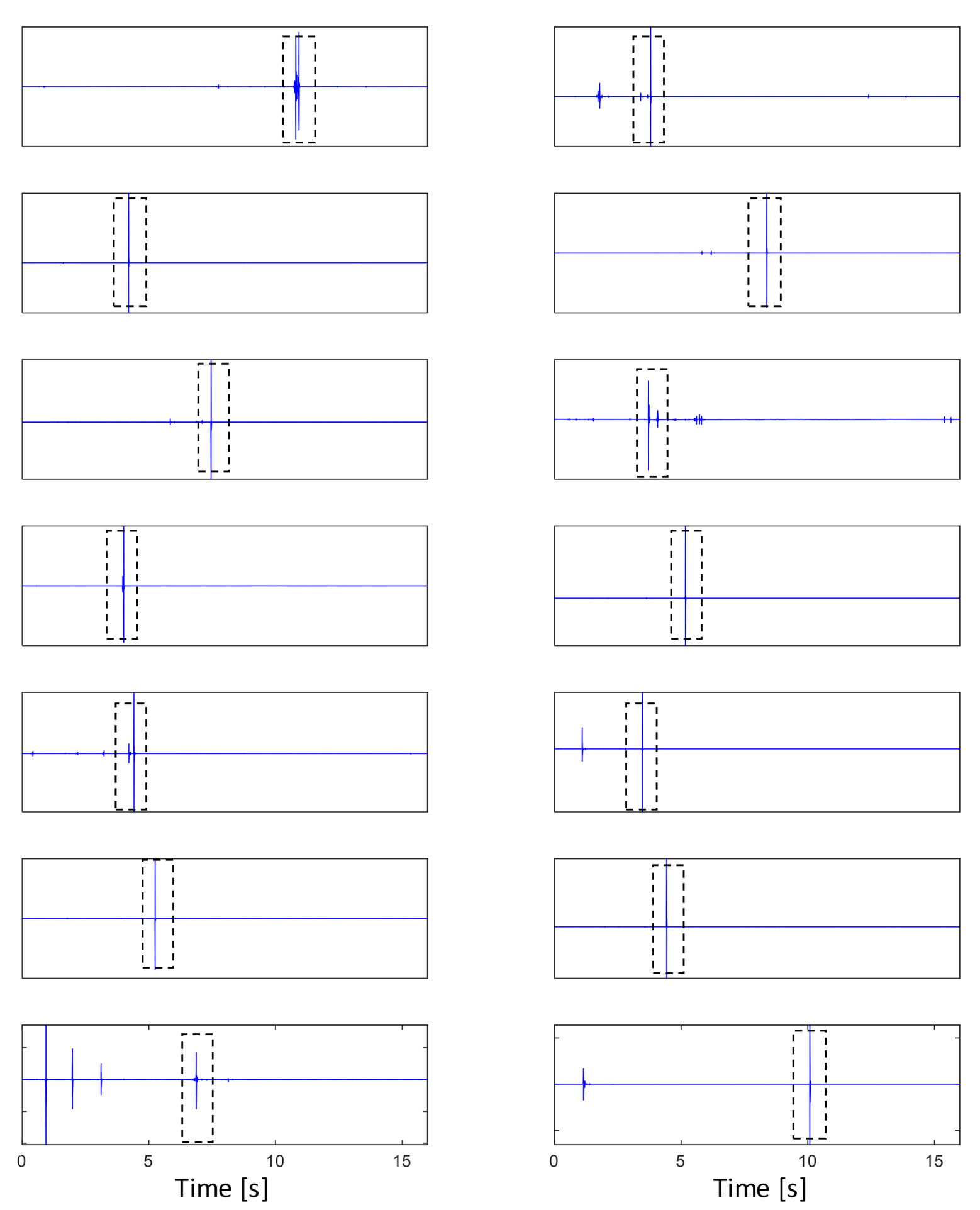
- The puncture to the peritoneum of the human body donor can be identified in the vibroacoustic signal.
- 2.
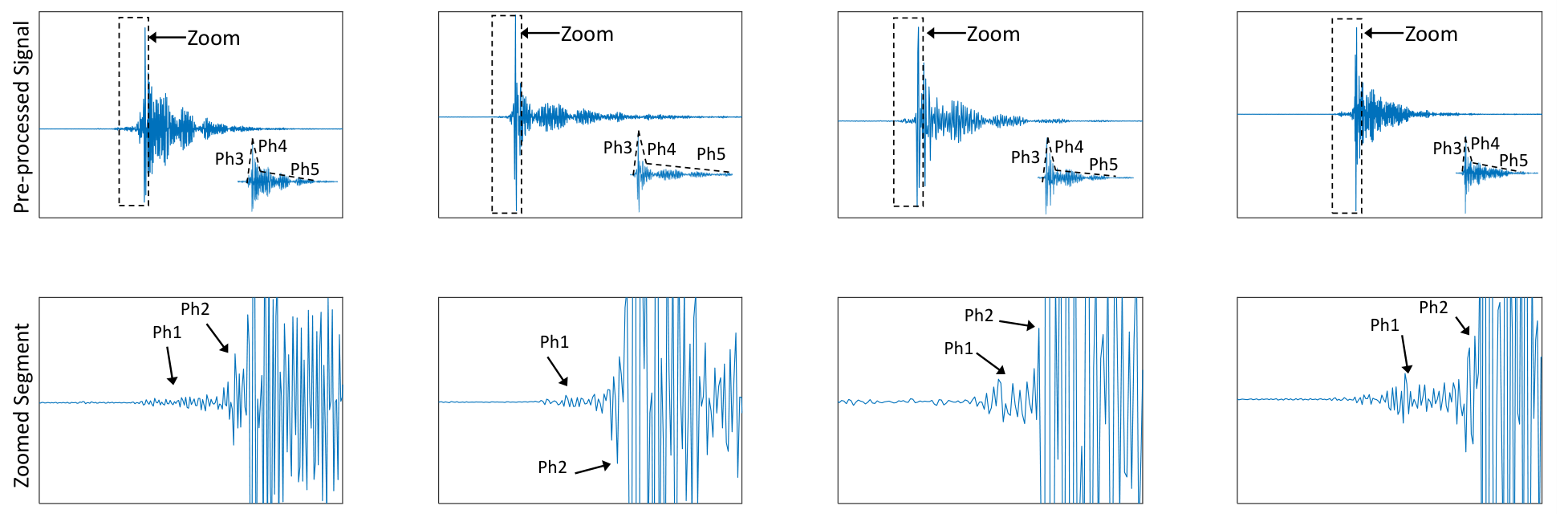
- The signal phases observed during Veress needle puncture of the peritoneum in porcine cadavers can also be observed in human body donors, especially with respect to signal energies and temporal durations.
- 3.
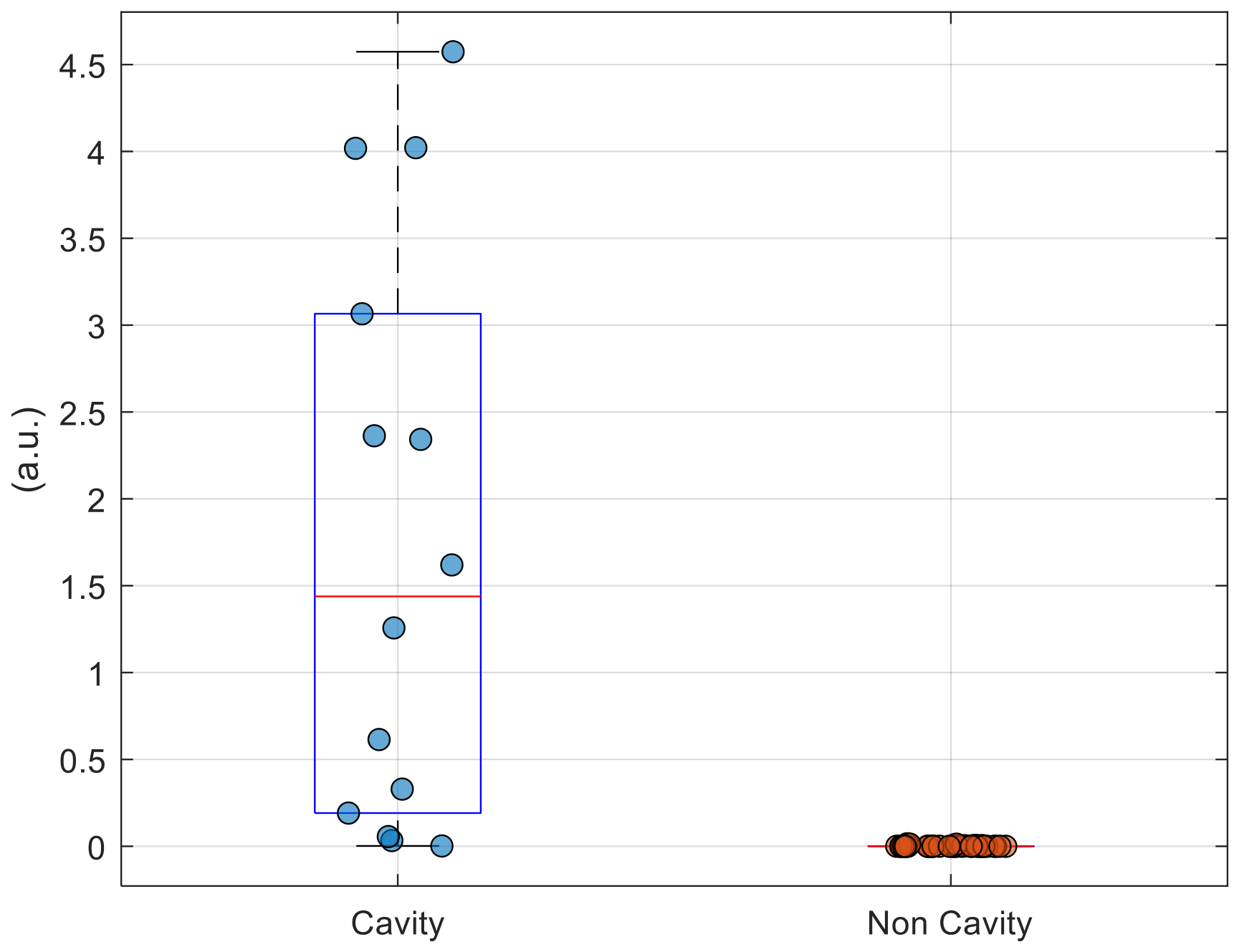
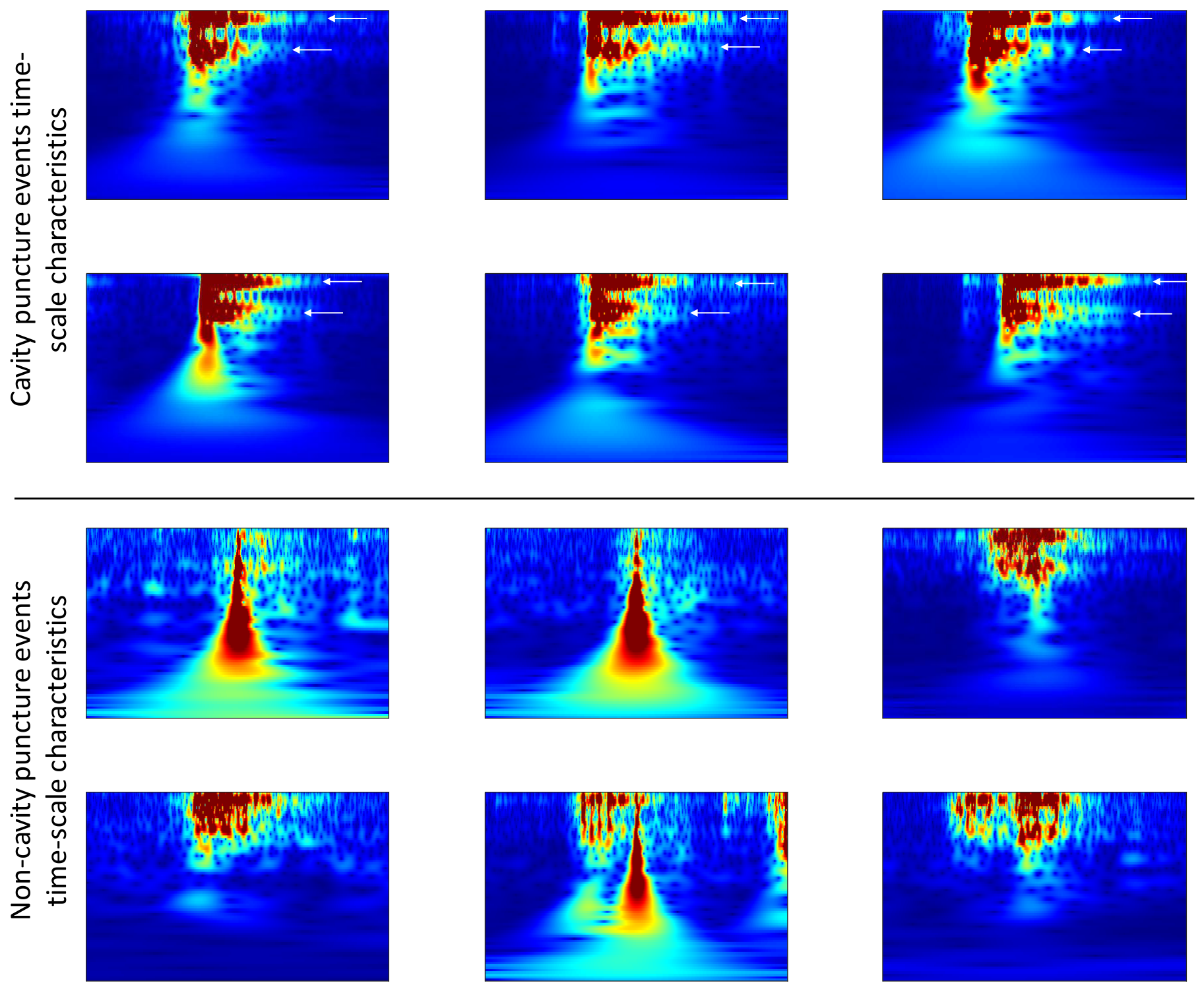
- It is feasible to statistically differentiate the signal characteristics of peritoneum and non-peritoneum punctures.
2. Materials and Methods
2.1. Experimental Setup and Data Acquisition
2.2. Data Analysis
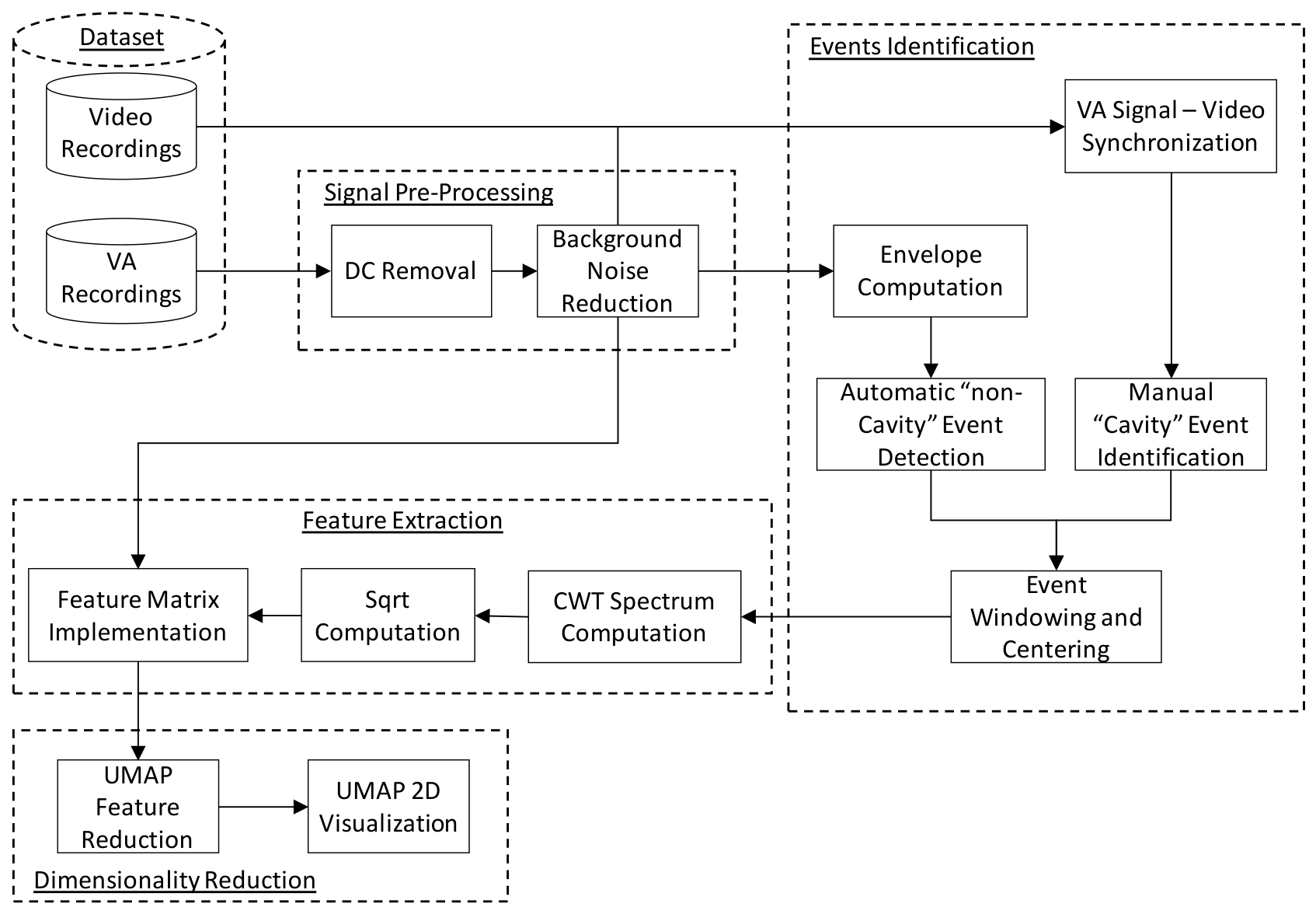
2.2.1. Signal Pre-Processing
2.2.2. Event Identification
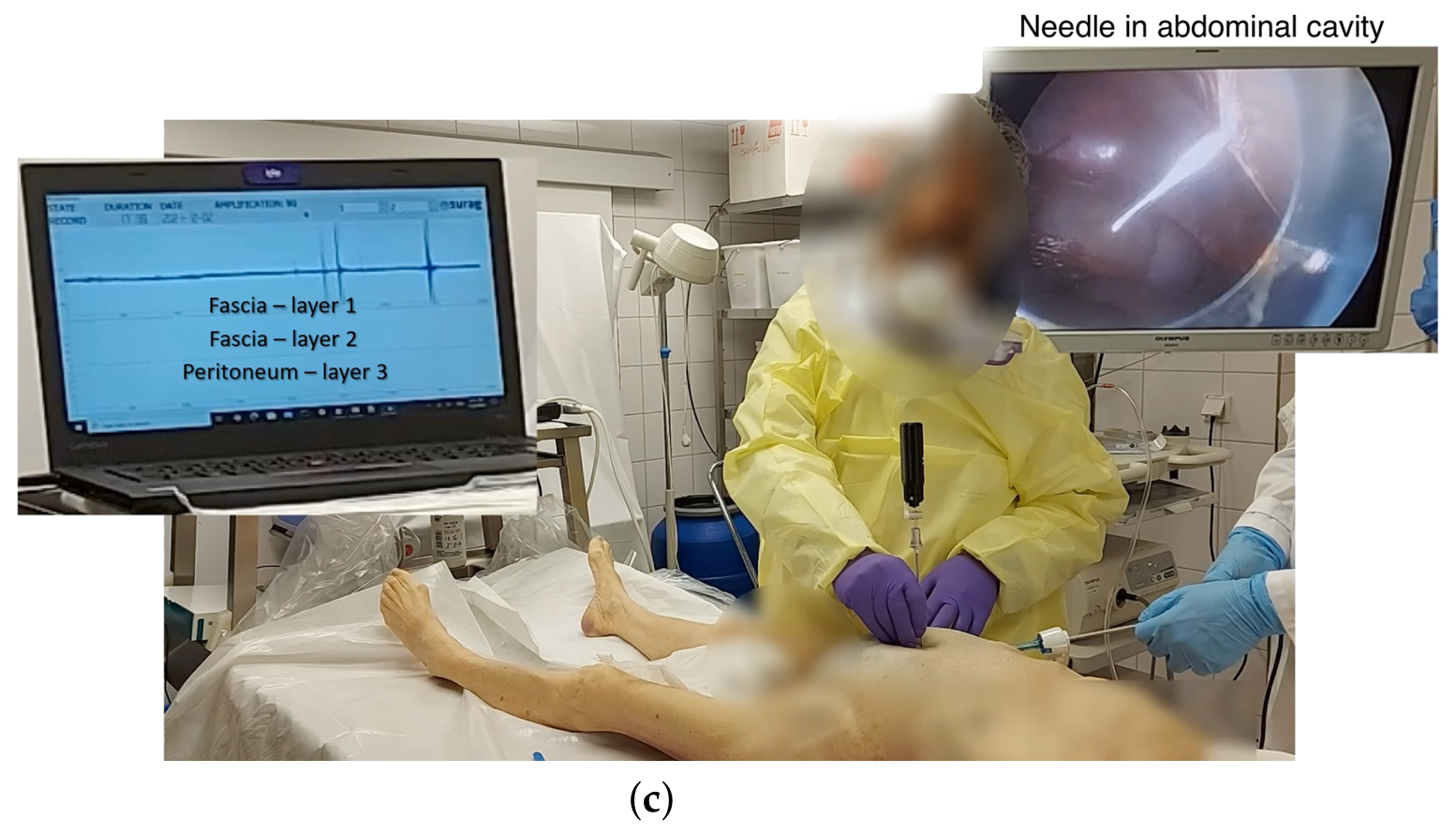
- Needle–surface contact: the moment the Veress needle enters in contact with the abdominal wall (visible in the observation video).
- Peritoneum puncture: the moment the needle crosses the peritoneal layer (visible in endoscopic video and confirmed from the view of the monitor in the external recording).
- 1.
- Peritoneal puncture events identified in the video,
- 2.
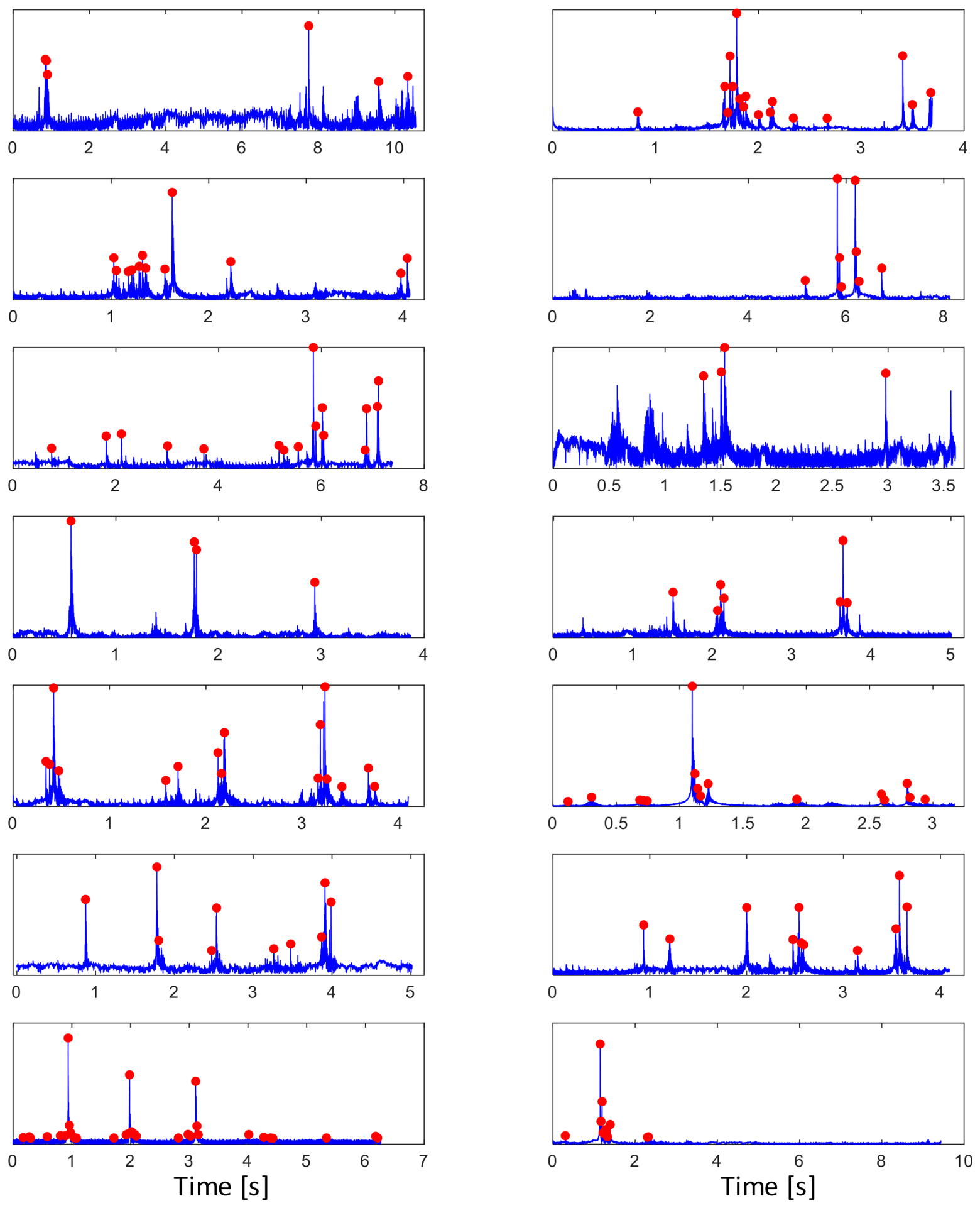
- Automatically detected non-peritoneal interactions from the vibroacoustic signal.
2.2.3. Feature Extraction
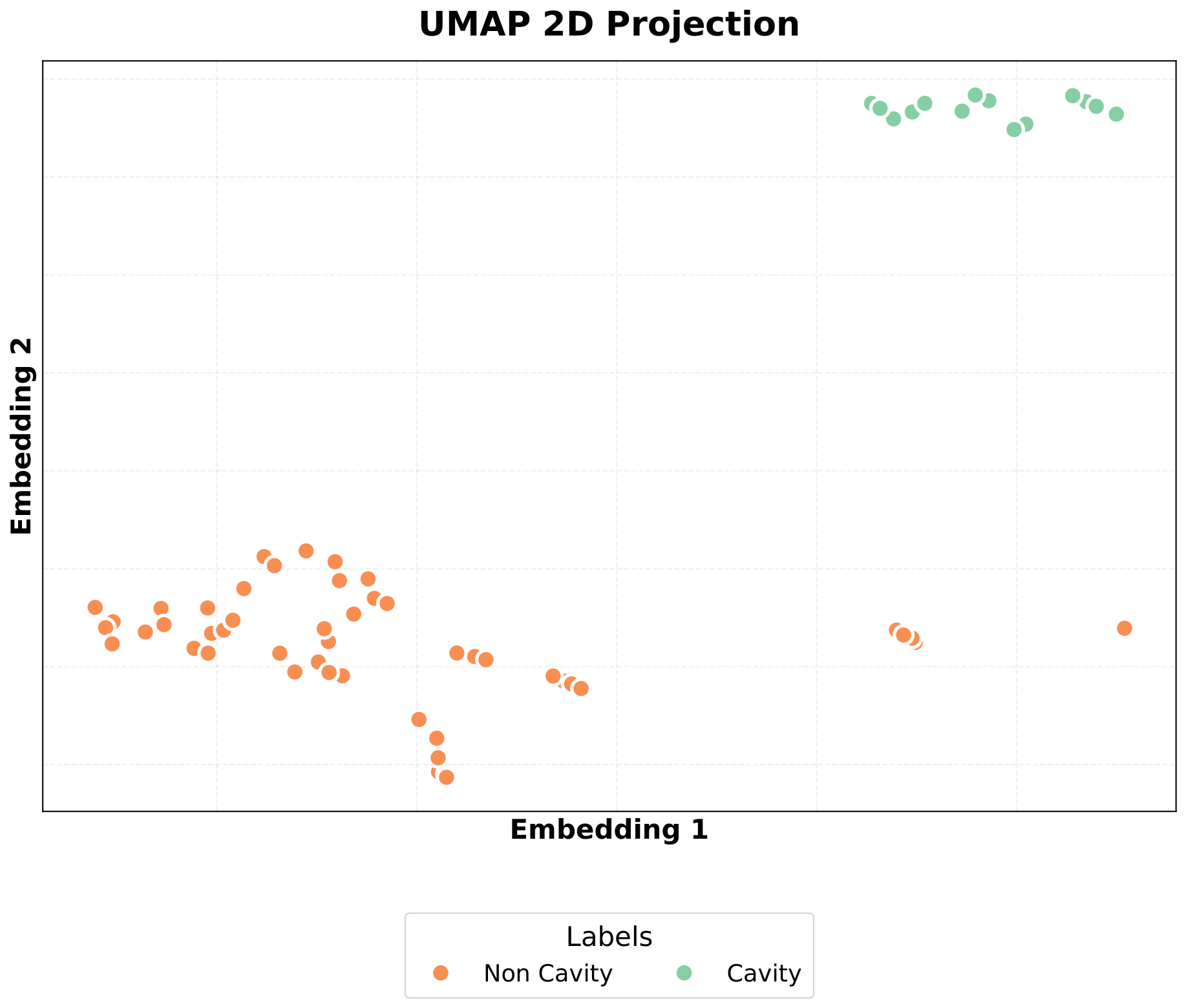
2.2.4. Dimensionality Reduction
- Number of neighbors: 4;
- Metric: cosine (chosen to emphasize relative spectral patterns rather than absolute magnitude);
- Minimum distance: 0.1;
- Spread: 0.1;
- Number of epochs: 1000.
3. Results
3.1. Identification of Peritoneum Punctures
3.2. Observability of Characteristic Signal Phases
- Phase 3 (Ph3): rapid release of spring tension,
- Phase 4 (Ph4): decline phase following release,
- Phase 5 (Ph5): release phase after spring relaxation.
- Phase 1 (Ph1): friction between the inner and outer needle cores,
- Phase 2 (Ph2): rupture of the peritoneal membrane.
3.3. Statistical Differentiation Between Peritoneum and Non-Peritoneum Punctures
4. Discussion
5. Conclusions
Author Contributions
Funding
Institutional Review Board Statement
Informed Consent Statement
Data Availability Statement
Conflicts of Interest
References
- Hernández-Vaquero, D.; Fernández-Fairen, M.; Torres-Perez, A.; Santamaría, A. Minimally invasive surgery versus conventional surgery. A review of the scientific evidence. Revista Española de Cirugía Ortopédica y Traumatología (Engl. Ed.) 2012, 56, 444–458. [Google Scholar] [CrossRef] [Scilit]
- Alkatout, I. Complications of Laparoscopy in Connection with Entry Techniques. J. Gynecol. Surg. 2017, 33, 81–91. [Google Scholar] [CrossRef] [Scilit] [PubMed]
- Magrina, J.F. Complications of Laparoscopic Surgery: Clinical Obstetrics and Gynecology. Clin. Obstet. Gynecol. 2002, 45, 469–480. [Google Scholar]
- Monnet, E. Laparoscopic entry techniques: What is the controversy? Vet. Surg. 2019, 48, O6–O14. [Google Scholar] [CrossRef] [Scilit]
- Tourinho-Barbosa, R.R.; Tobias-Machado, M.; Castro-Alfaro, A.; Ogaya-Pinies, G.; Cathelineau, X.; Sanchez-Salas, R. Complications in robotic urological surgeries and how to avoid them: A systematic review. Arab. J. Urol. 2018, 16, 285–292. [Google Scholar] [CrossRef] [Scilit]
- Huang, H.Y.; Yen, C.F.; Wu, M.P. Complications of electrosurgery in laparoscopy. Gynecol. Minim. Invasive Ther. 2014, 3, 39–42. [Google Scholar] [CrossRef] [Scilit]
- Krishnakumar, S.; Tambe, P. Entry Complications in Laparoscopic Surgery. J. Gynecol. Endosc. Surg. 2009, 1, 4–11. [Google Scholar] [CrossRef] [Scilit]
- Muthammal, R.; Joseph, J.P. Entry related injuries and port site hernias in laparoscopic procedures: A review of 100 cases. J. Evol. Med. Dent. Sci. 2016, 5, 1885–1888. [Google Scholar] [CrossRef] [Scilit]
- Tare, D.; Maria, P.; Ghavamian, R. Vascular Complications in Laparoscopic and Robotic Urologic Surgery. In Complications of Laparoscopic and Robotic Urologic Surgery; Ghavamian, R., Ed.; Springer: New York, NY, USA, 2010; pp. 45–58. [Google Scholar] [CrossRef] [Scilit]
- Molloy, D.; Kaloo, P.D.; Cooper, M.; Nguyen, T.V. Laparoscopic entry: A literature review and analysis of techniques and complications of primary port entry. Aust. N. Z. J. Obstet. Gynaecol. 2002, 42, 246–254. [Google Scholar] [CrossRef] [Scilit]
- Catarci, M.; Carlini, M.; Gentileschi, P.; Santoro, E. Major and minor injuries during the creation of pneumoperitoneum. A multicenter study on 12,919 cases. Surg. Endosc. 2001, 15, 566–569. [Google Scholar] [CrossRef] [Scilit]
- Richardson, R.E.; Sutton, C.J. Complications of first entry: A pospective laparoscopy audit. Gynaecol. Endosc. 1999, 8, 327–334. [Google Scholar] [CrossRef] [Scilit]
- Sajid, M.; Lateef, A.U.; Misbah, J.; Rehman, S. Veress Needle Related Complications in Laparoscopic Surgery: Our Experience. Ann. Punjab Med. Coll. 2010, 4, 72–76. [Google Scholar]
- Li, X.L.; Du, D.F.; Jiang, H. The learning curves of robotic and three-dimensional laparoscopic surgery in cervical cancer. J. Cancer 2016, 7, 2304–2308. [Google Scholar] [CrossRef] [Scilit]
- Spiller, M.; Bruennel, M.; Grosse, V.; Sühn, T.; Esmaeili, N.; Stockheim, J.; Turial, S.; Croner, R.; Boese, A.; Friebe, M.; et al. Surgeons’ requirements for a surgical support system to improve laparoscopic access. BMC Surg. 2022, 22, 279. [Google Scholar] [CrossRef] [Scilit]
- Ahmad, G.; O’Flynn, H.; Duffy, J.; Phillips, K.; Watson, A. Laparoscopic entry techniques. Cochrane Database Syst. Rev. 2012, 2, 108. [Google Scholar] [CrossRef] [Scilit]
- Marchand, G.J.; Masoud, A.; King, A.; Brazil, G.; Ulibarri, H.; Parise, J.; Arroyo, A.; Coriell, C.; Goetz, S.; Moir, C.; et al. Systematic review and meta-analysis of Veress needle entry versus direct trocar entry in gynecologic surgery. BMJ Surg. Interv. Health Technol. 2021, 4, e000121. [Google Scholar]
- Cornette, B.; Berrevoet, F. Trocar Injuries in Laparoscopy: Techniques, Tools, and Means for Prevention. A Systematic Review of the Literature. World J. Surg. 2016, 40, 2331–2341. [Google Scholar] [CrossRef] [Scilit] [PubMed]
- Kassir, R.; Blanc, P.; Lointier, P.; Tiffet, O.; Berger, J.L.; Amor, I.B.; Gugenheim, J. Laparoscopic entry techniques in obese patient: Veress needle, direct trocar insertion or open entry technique? Obes. Surg. 2014, 24, 2193–2194. [Google Scholar] [CrossRef] [Scilit] [PubMed]
- Bianchi, G.; Martorana, E.; Ghaith, A.; Pirola, G.M.; Rani, M.; Bove, P.; Porpiglia, F.; Manferrari, F.; Micali, S. Laparoscopic access overview: Is there a safest entry method? Actas Urológicas Españolas (Engl. Ed.) 2016, 40, 386–392. [Google Scholar] [CrossRef] [Scilit]
- Compeau, C.; McLeod, N.T.; Ternamian, A. Laparoscopic entry: A review of Canadian general surgical practice. Can. J. Surg. J. Can. De Chir. 2011, 54, 315–320. [Google Scholar] [CrossRef] [Scilit]
- Bhoyrul, S.; Vierra, M.A.; Nezhat, C.R.; Krummel, T.M.; Way, L.W. Trocar injuries in laparoscopic surgery. J. Am. Coll. Surg. 2001, 192, 677–683. [Google Scholar] [CrossRef] [Scilit]
- Merdan, I. Laparoscopic Entry: A Review of Techniques, Technologies, and Complications. Basrah J. Surg. 2013, 19, 10–23. [Google Scholar] [CrossRef] [Scilit]
- Sharp, H. Complications associated with optical-access laparoscopic trocars. Obstet. Gynecol. 2002, 99, 553–555. [Google Scholar] [CrossRef] [Scilit]
- Fuller, J.; Scott, W.; Ashar, B.; Corrado, J. Laparoscopic Trocar Injuries: A Report from a U.S. Food and Drug Administration (FDA) Center for Devices and Radiological Health (CDRH) Systematic Technology Assessment of Medical Products (STAMP) Committee; FDA Safety Communication: Silver Spring, MD, USA, 2003.
- Huang, E.Y.H.; Kao, M.C.; Ting, C.K.; Huang, W.J.S.; Yeh, Y.T.; Ke, H.H.; Kuo, W.C. Needle-probe optical coherence tomography for real-time visualization of Veress peritoneal needle placement in a porcine model: A new safety concept for pneumoperitoneum establishment in laparoscopic surgery. Biomedicines 2022, 10, 485. [Google Scholar] [CrossRef] [Scilit]
- Francoeur, J.; Lezcano, D.; Zhetpissov, Y.; Kashyap, R.; Iordachita, I.; Kadoury, S. Fully Distributed Shape Sensing of a Flexible Surgical Needle Using Optical Frequency Domain Reflectometry for Prostate Interventions. In Proceedings of the 2024 IEEE International Conference on Robotics and Automation (ICRA), Yokohama, Japan, 13–17 May 2024; Volume 139. [Google Scholar]
- Schrope, J.; Olmanson, B.; Fick, C.; Motameni, C.; Viratyosin, T.; Miller, Z.D.; Harmon, J.; Emerson, P. The SMART Trocar: Force, Deviation, and Impedance Sensing Trocar forEnhanced Laparoscopic Surgery. In Proceedings of the 2019 Design of Medical Devices Conference, Minneapolis, MN, USA, 15–18 April 2019; Medical Devices; ASME: New York, NY, USA, 2019; Available online: https://asmedigitalcollection.asme.org/BIOMED/proceedings-pdf/DMD2019/41037/V001T06A002/5171297/v001t06a002-dmd2019-3244.pdf (accessed on 10 April 2026). [CrossRef] [Scilit]
- Fontanelli, G.A.; Buonocore, L.R.; Ficuciello, F.; Villani, L.; Siciliano, B. A novel force sensing integrated into the trocar for minimally invasive robotic surgery. In Proceedings of the 2017 IEEE/RSJ International Conference on Intelligent Robots and Systems (IROS), Vancouver, BC, Canada, 24–28 September 2017. [Google Scholar] [CrossRef] [Scilit]
- Kim, S.; Kim, C.; Park, S.; Lee, D.Y. A 3-DOF sensor to estimate the force applied to the tip of a surgical instrument. In Proceedings of the 2017 18th International Conference on Advanced Robotics (ICAR), Hong Kong, China, 10–12 July 2017. [Google Scholar] [CrossRef] [Scilit]
- Postema, R.R.; Cefai, D.; van Straten, B.; Miedema, R.; Hardjo, L.L.; Dankelman, J.; Nickel, F.; Horeman-Franse, T. A novel Veress needle mechanism that reduces overshooting after puncturing the abdominal wall. Surg. Endosc. 2021, 35, 5857–5866. [Google Scholar] [CrossRef] [Scilit] [PubMed]
- Deffieux, X.; Benifla, J.L.; Juhasz-Böss, I.; Breitbach, M.; Buchweitz, O.; Habib, N.; Hald, K.; Haj Hamoud, B.; Huchon, C.; Lysdal, V.; et al. Post-market clinical follow-up study of the LevaLap 1.0 during laparoscopic access. J. Soc. Laparosc. Robot. Surg. 2025, 29, e2025-00014. [Google Scholar] [CrossRef] [Scilit]
- Seif, M.; Mourad, M.; Elkeleny, M.R.; Wael, M. Safe access to laparoscopic cholecystectomy in patients with previous periumbilical incsions: New approach to avoid entry related bowel injury. Langenbecks Arch. Surg. 2025, 410, 57. [Google Scholar] [CrossRef] [Scilit] [PubMed]
- Illanes, A.; Sühn, T.; Esmaeili, N.; Maldonado, I.; Schaufler, A.; Chen, C.H.; Boese, A.; Friebe, M. Surgical Audio Guidance SurAG: Extracting Non-Invasively Meaningful Guidance Information During Minimally Invasive Procedures. In Proceedings of the 2019 IEEE 19th International Conference on Bioinformatics and Bioengineering (BIBE), Athens, Greece, 28–30 October 2019. [Google Scholar] [CrossRef] [Scilit]
- Illanes, A.; Boese, A.; Maldonado, I.; Pashazadeh, A.; Schaufler, A.; Navab, N.; Friebe, M. Novel clinical device tracking and tissue event characterization using proximally placed audio signal acquisition and processing. Sci. Rep. 2018, 8, 12070. [Google Scholar] [CrossRef] [Scilit] [PubMed]
- Schaufler, A.; Sühn, T.; Esmaeili, N.; Boese, A.; Wex, C.; Croner, R.; Friebe, M.; Illanes, A. Automatic differentiation between Veress needle events in laparoscopic access using proximally attached audio signal characterization. Curr. Dir. Biomed. Eng. 2019, 5, 369–371. [Google Scholar] [CrossRef] [Scilit]
- Spiller, M.; Esmaeili, N.; Sühn, T.; Boese, A.; Turial, S.; Gumbs, A.A.; Croner, R.; Friebe, M.; Illanes, A. Enhancing Veress Needle Entry with Proximal Vibroacoustic Sensing for Automatic Identification of Peritoneum Puncture. Diagnostics 2024, 14, 1698. [Google Scholar] [CrossRef] [Scilit]
- Reynolds, R.E.; Wankum, B.P.; Crimmins, S.J.; Carlson, M.A.; Terry, B.S. Preperitoneal insufflation pressure of the abdominal wall in a porcine model. Surg. Endosc. 2022, 36, 300–306. [Google Scholar] [CrossRef] [Scilit]
- Healy, J.; McInnes, L. Uniform manifold approximation and projection. Nat. Rev. Methods Prim. 2024, 4, 82. [Google Scholar] [CrossRef] [Scilit]
- Urrutia, R.; Espejo, D.; Guerra, M.; Vio, K.; Sühn, T.; Esmaeili, N.; Boese, A.; Fuentealba, P.; Illanes, A.; Hansen, C.; et al. Exploring Deep Clustering Methods in Vibro-Acoustic Sensing for Enhancing Biological Tissue Characterization. IEEE Access 2025, 13, 80395–80406. [Google Scholar] [CrossRef] [Scilit]
- Urrutia, R.; Espejo, D.; Evens, N.; Guerra, M.; Sühn, T.; Boese, A.; Hansen, C.; Fuentealba, P.; Illanes, A.; Poblete, V. Clustering Methods for Vibro-Acoustic Sensing Features as a Potential Approach to Tissue Characterisation in Robot-Assisted Interventions. Sensors 2023, 23, 9297. [Google Scholar] [CrossRef] [Scilit] [PubMed]
- Shahapure, K.R.; Nicholas, C. Cluster quality analysis using silhouette score. In Proceedings of the 2020 IEEE 7th International Conference on Data Science and Advanced Analytics (DSAA), Sydney, NSW, Australia, 6–9 October 2020. [Google Scholar]
- Ros, F.; Riad, R.; Guillaume, S. PDBI: A partitioning Davies-Bouldin index for clustering evaluation. Neurocomputing 2023, 528, 178–199. [Google Scholar] [CrossRef] [Scilit]
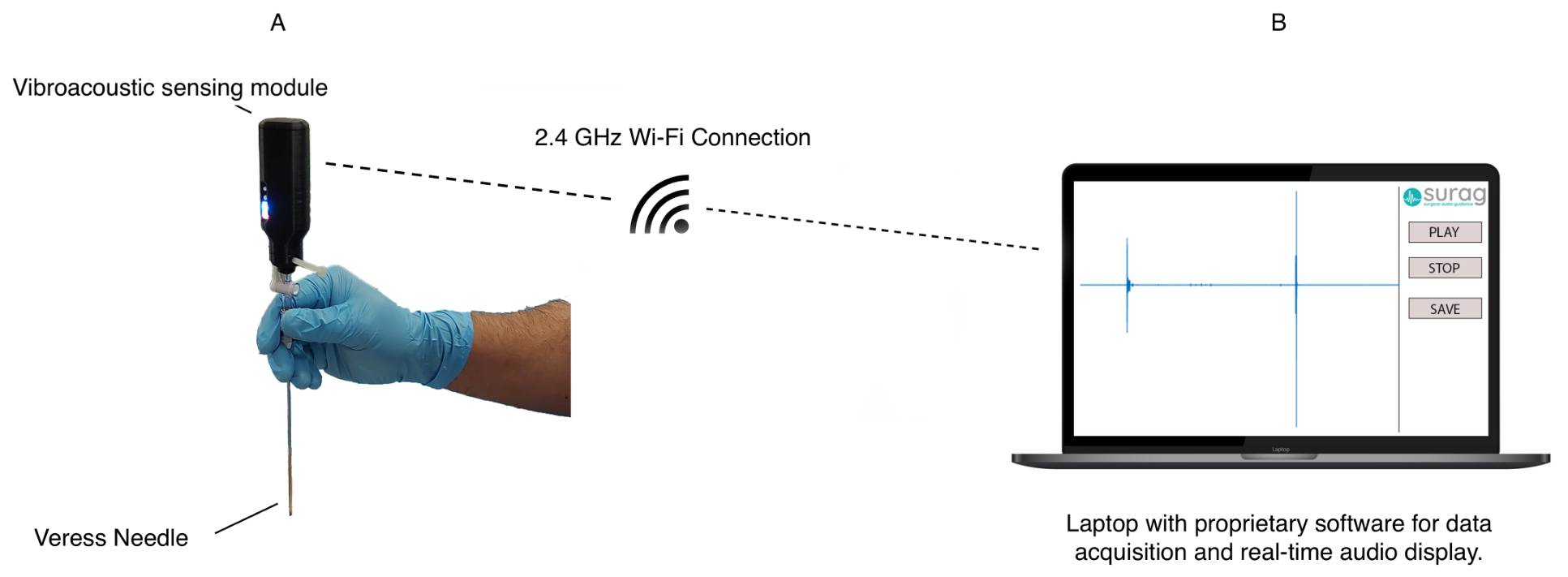
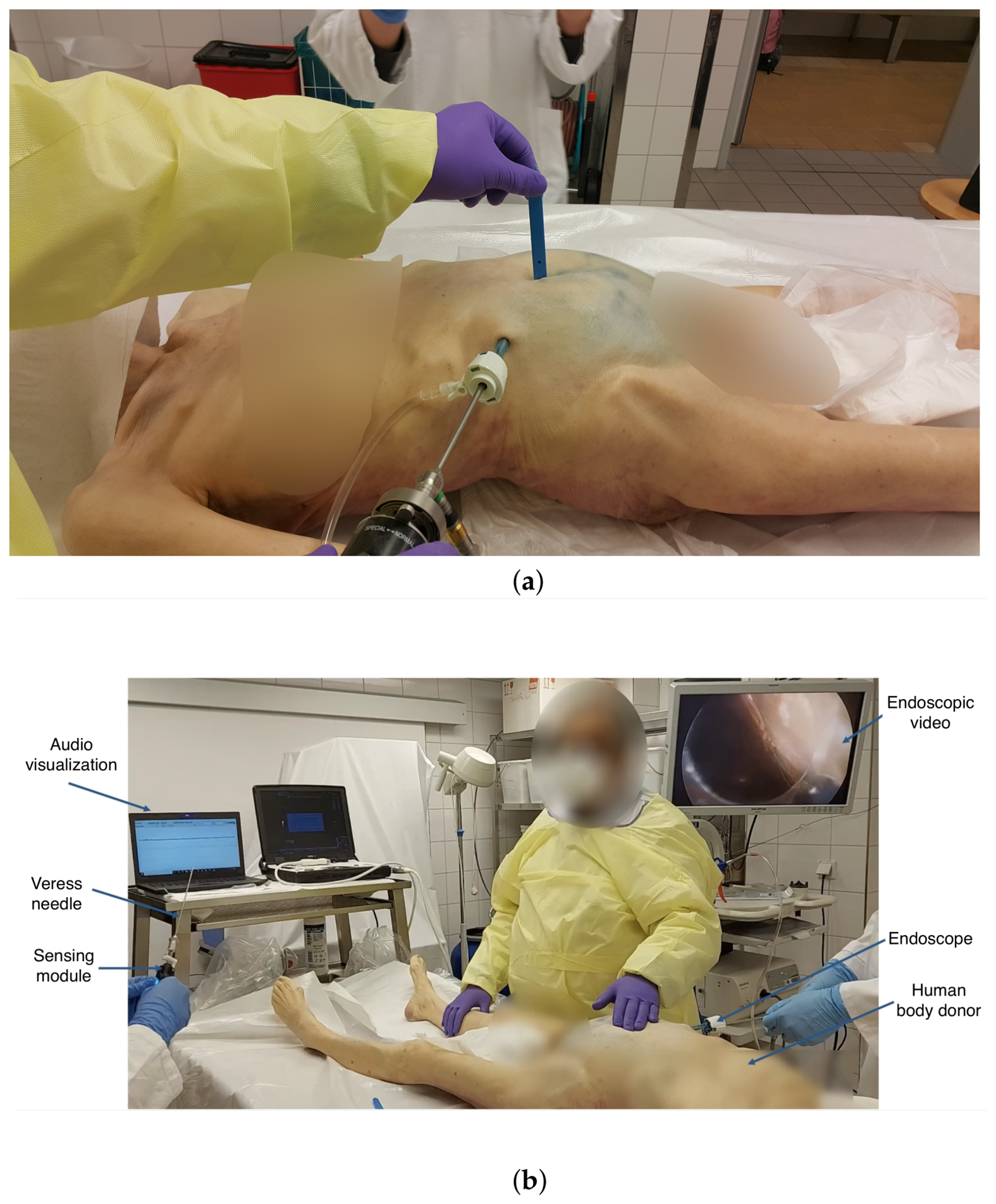



| Anatomical Location | Number of Insertions | Approximate Location |
|---|---|---|
| Subumbilical region | 5 | Midline, immediately inferior to umbilicus |
| Lee–Huang point | 4 | Upper midline, between xiphoid and umbilicus |
| Palmer’s point (LUQ) | 5 | Left upper quadrant, ∼3 cm below costal margin |
| Total | 14 |
Disclaimer/Publisher’s Note: The statements, opinions and data contained in all publications are solely those of the individual author(s) and contributor(s) and not of MDPI and/or the editor(s). MDPI and/or the editor(s) disclaim responsibility for any injury to people or property resulting from any ideas, methods, instructions or products referred to in the content. |
© 2026 by the authors. Licensee MDPI, Basel, Switzerland. This article is an open access article distributed under the terms and conditions of the Creative Commons Attribution (CC BY) license.
Share and Cite
Spiller, M.; Urrutia, R.; Esmaeili, N.; Boese, A.; Neumuth, T.; Illanes, A.; Turial, S. Feasibility of Vibroacoustic Sensing for Detection of Peritoneal Entry During Laparoscopic Access: A Pilot Study in a Human Body Donor. Diagnostics 2026, 16, 1780. https://doi.org/10.3390/diagnostics16121780
Spiller M, Urrutia R, Esmaeili N, Boese A, Neumuth T, Illanes A, Turial S. Feasibility of Vibroacoustic Sensing for Detection of Peritoneal Entry During Laparoscopic Access: A Pilot Study in a Human Body Donor. Diagnostics. 2026; 16(12):1780. https://doi.org/10.3390/diagnostics16121780
Chicago/Turabian StyleSpiller, Moritz, Robin Urrutia, Nazila Esmaeili, Axel Boese, Thomas Neumuth, Alfredo Illanes, and Salmai Turial. 2026. "Feasibility of Vibroacoustic Sensing for Detection of Peritoneal Entry During Laparoscopic Access: A Pilot Study in a Human Body Donor" Diagnostics 16, no. 12: 1780. https://doi.org/10.3390/diagnostics16121780
APA StyleSpiller, M., Urrutia, R., Esmaeili, N., Boese, A., Neumuth, T., Illanes, A., & Turial, S. (2026). Feasibility of Vibroacoustic Sensing for Detection of Peritoneal Entry During Laparoscopic Access: A Pilot Study in a Human Body Donor. Diagnostics, 16(12), 1780. https://doi.org/10.3390/diagnostics16121780