Diagnostic Potential of Apparent Diffusion Coefficient-Based Lymph Node Classification in Breast Cancer Patients Undergoing [18F]FDG-PET/MRI
 , , , , ,
Abstract
1. Introduction
2. Materials and Methods
2.1. Patients
2.2. [18F]FDG-PET/MRI
- Axial T2-weighted HASTE sequence acquired in breath-hold technique (slice thickness 7 mm; TE 97 ms; TR 1500 ms; turbo factor 194; FOV 400 mm; phase FOV 75%; matrix 320 × 240; in-plane resolution 1.3 × 1.3 mm; acquisition time 0:47 min per bed position).
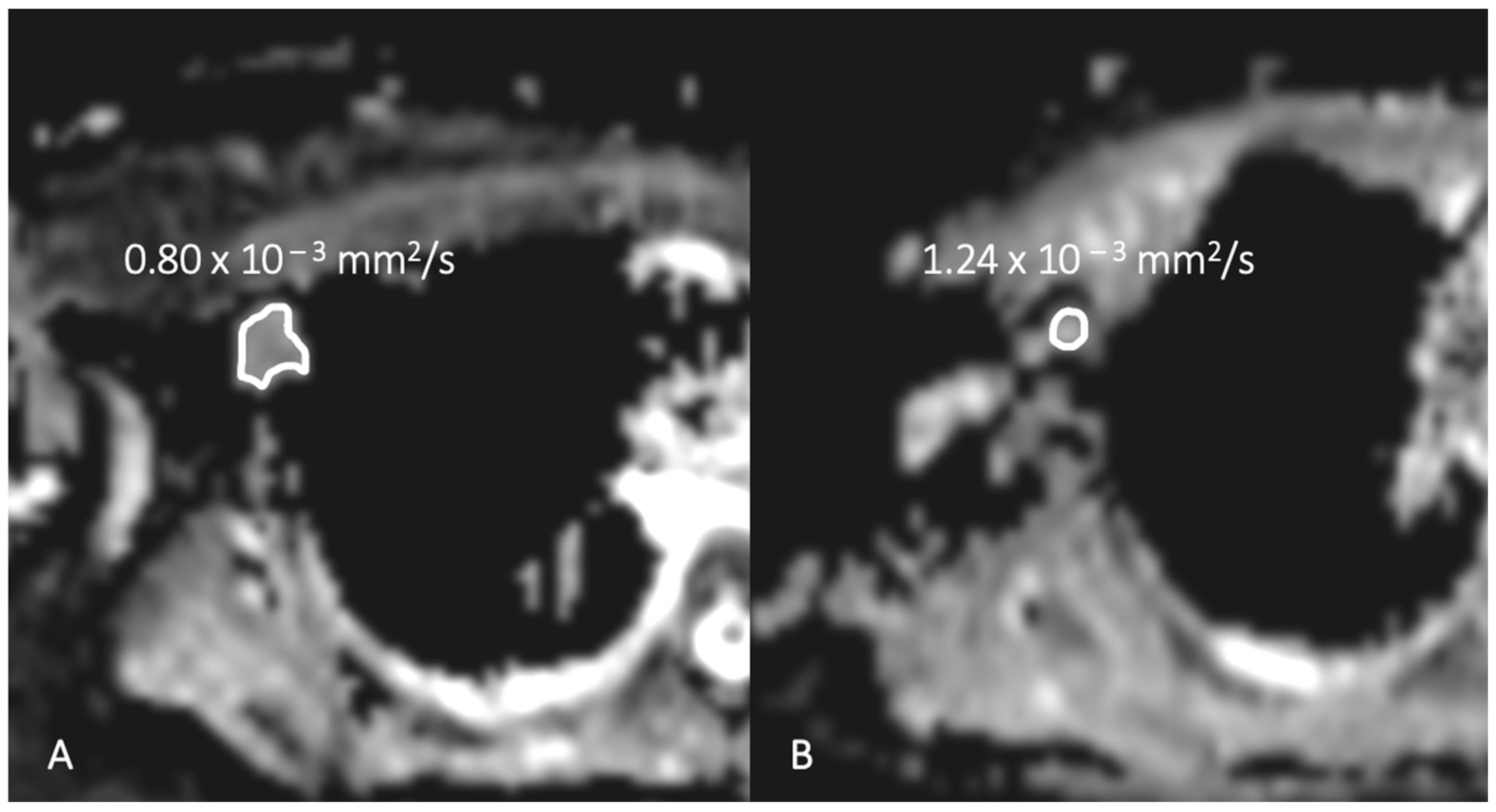
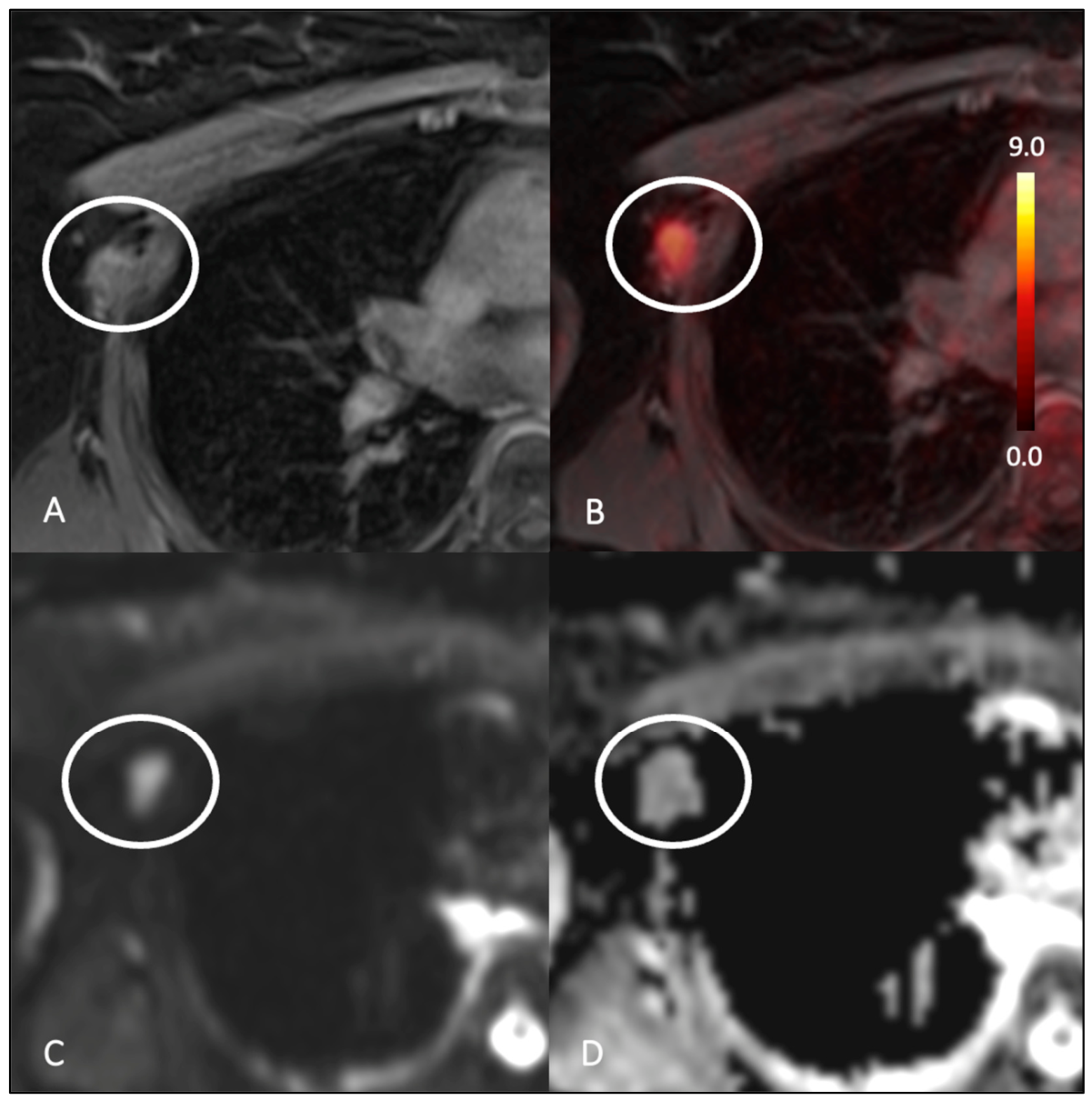
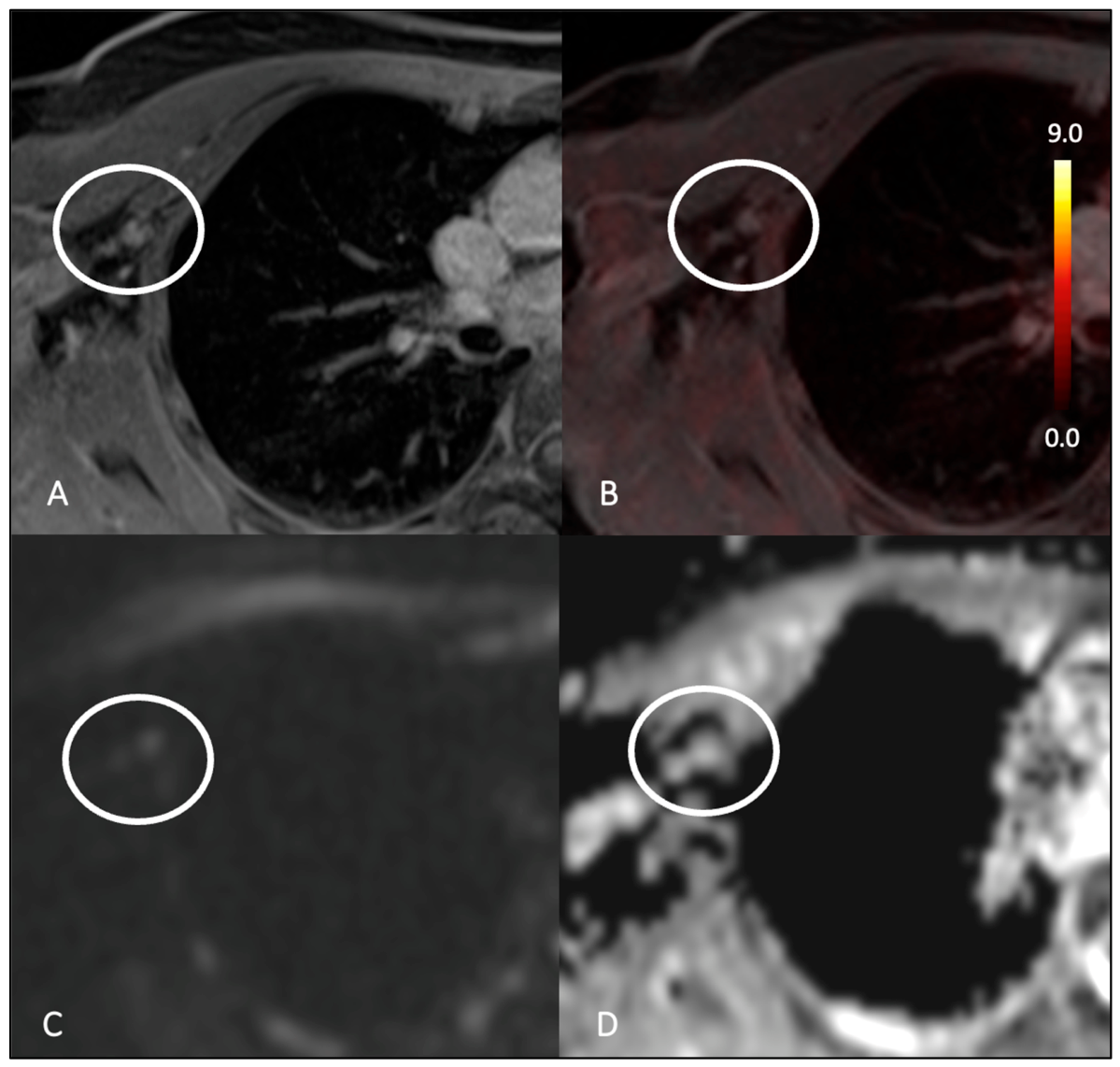
- Axial diffusion-weighted imaging (EPI) performed under free breathing (slice thickness 5 mm; TR 7400 ms; TE 72 ms; b-values 0, 500, 1000 s/mm2; matrix 160 × 90; FOV 400 × 315 mm; GRAPPA factor 2; in-plane resolution 2.6 × 2.6 mm; acquisition time 2:06 min per bed position). ADC maps were automatically generated using a dedicated workstation.
- Fat-suppressed contrast-enhanced 3D T1-weighted VIBE sequence acquired during breath-hold (slice thickness 3 mm; TE 1.53 ms; TR 3.64 ms; flip angle 9°; FOV 400 × 280 mm; matrix 512 × 384; in-plane resolution 0.7 × 0.7 mm; acquisition time 0:19 min per bed position).
2.3. Image Analysis
2.4. Statistics
3. Results
3.1. Patient Characteristics
3.2. Thoracic Lymph Nodes
3.3. Morphology of Thoracic Lymph Nodes
4. Discussion
5. Conclusions
Author Contributions
Funding
Institutional Review Board Statement
Informed Consent Statement
Data Availability Statement
Acknowledgments
Conflicts of Interest
Abbreviations
| ADC | apparent diffusion coefficient |
| ALND | axillary lymph node dissection |
| BC | breast cancer |
| CT | computer tomography |
| CI | confidence interval |
| DWI | diffusion-weighted imaging |
| EPI | echo-planar imaging |
| [18F]FDG-PET/CT | [18F]fluorodeoxyglucose positron emission tomography/computed tomography |
| [18F]FDG-PET/MRI | [18F]fluorodeoxyglucose positron emission tomography/magnetic resonance imaging |
| FWHM | full width at half maximum |
| FOV | field of view |
| HASTE | half-Fourier acquisition single-shot turbo spin echo |
| IQR | interquartile range |
| MRI | magnetic resonance imaging |
| Node-RADS | Node-RADS (Node Reporting and Data System) |
| OSEM | ordered subset expectation maximization |
| RF | radiofrequency |
| ROC | receiver operating characteristic |
| ROI | region of interest |
| SD | standard deviation |
| SLNB | sentinel lymph node biopsy |
| VIBE | volumetric interpolated breath-hold examination |
References
- Bray, F.; Laversanne, M.; Sung, H.; Ferlay, J.; Siegel, R.L.; Soerjomataram, I.; Jemal, A. Global cancer statistics 2022: GLOBOCAN estimates of incidence and mortality worldwide for 36 cancers in 185 countries. CA Cancer J. Clin. 2024, 74, 229–263. [Google Scholar] [CrossRef] [PubMed]
- Sedeta, E.T.; Jobre, B.; Avezbakiyev, B. Breast cancer: Global patterns of incidence, mortality, and trends. J. Clin. Oncol. 2023, 41, 10528. [Google Scholar] [CrossRef]
- Kalli, S.; Semine, A.; Cohen, S.; Naber, S.P.; Makim, S.S.; Bahl, M. American Joint Committee on Cancer’s Staging System for Breast Cancer, Eighth Edition: What the Radiologist Needs to Know. Radiographics 2018, 38, 1921–1933. [Google Scholar] [CrossRef]
- Schwartz, T.L. Axillary nodal staging in breast cancer: What have we learned? Clin. Exp. Metastasis 2024, 41, 375–380. [Google Scholar] [CrossRef]
- Yılmaz, E.; Erok, B.; Atca, A. Measurement of apparent diffusion coefficient in discrimination of benign and malignant axillary lymph nodes. Pol. J. Radiol. 2019, 84, e592–e597. [Google Scholar] [CrossRef]
- Mousavi-kiasary, S.M.S.; Bayat, M.; Abbasvandi, F.; Khoundabi, B.; Mousavi, F.; Akbari, A.; Bagherian, M.; Zandi, A.; Honarvar, B.; Akbari, M.E. Tumor characteristics and survival rate of axillary metastatic breast cancer patients: A three decades retrospective cohort study. Sci. Rep. 2025, 15, 4571. [Google Scholar] [CrossRef]
- Gilbert, F.J.; Pinker-Domenig, K. Diagnosis and Staging of Breast Cancer: When and How to Use Mammography, Tomosynthesis, Ultrasound, Contrast-Enhanced Mammography, and Magnetic Resonance Imaging. In Diseases of the Chest, Breast, Heart and Vessels 2019–2022: Diagnostic and Interventional Imaging; Hodler, J., Kubik-Huch, R.A., von Schulthess, G.K., Eds.; Springer: Cham, Switzerland, 2019; pp. 155–166. [Google Scholar]
- Pilewskie, M.; Morrow, M. Axillary Nodal Management Following Neoadjuvant Chemotherapy: A Review. JAMA Oncol. 2017, 3, 549–555. [Google Scholar] [CrossRef]
- Caudle, A.S.; Yang, W.T.; Krishnamurthy, S.; Mittendorf, E.A.; Black, D.M.; Gilcrease, M.Z.; Bedrosian, I.; Hobbs, B.P.; DeSnyder, S.M.; Hwang, R.F.; et al. Improved Axillary Evaluation Following Neoadjuvant Therapy for Patients with Node-Positive Breast Cancer Using Selective Evaluation of Clipped Nodes: Implementation of Targeted Axillary Dissection. J. Clin. Oncol. 2016, 34, 1072–1078. [Google Scholar] [CrossRef] [PubMed]
- Heidinger, M.; Weber, W.P. Axillary Surgery for Breast Cancer in 2024. Cancers 2024, 16, 1623. [Google Scholar] [CrossRef]
- Giuliano, A.E.; Ballman, K.V.; McCall, L.; Beitsch, P.D.; Brennan, M.B.; Kelemen, P.R.; Ollila, D.W.; Hansen, N.M.; Whitworth, P.W.; Blumencranz, P.W.; et al. Effect of Axillary Dissection vs No Axillary Dissection on 10-Year Overall Survival Among Women with Invasive Breast Cancer and Sentinel Node Metastasis: The ACOSOG Z0011 (Alliance) Randomized Clinical Trial. JAMA 2017, 318, 918–926. [Google Scholar] [CrossRef] [PubMed]
- Morawitz, J.; Sigl, B.; Rubbert, C.; Bruckmann, N.M.; Dietzel, F.; Häberle, L.J.; Ting, S.; Mohrmann, S.; Ruckhäberle, E.; Bittner, A.K.; et al. Clinical Decision Support for Axillary Lymph Node Staging in Newly Diagnosed Breast Cancer Patients Based on (18)F-FDG PET/MRI and Machine Learning. J. Nucl. Med. 2023, 64, 304–311. [Google Scholar] [CrossRef] [PubMed]
- Loibl, S.; André, F.; Bachelot, T.; Barrios, C.H.; Bergh, J.; Burstein, H.J.; Cardoso, M.J.; Carey, L.A.; Dawood, S.; Del Mastro, L.; et al. Early breast cancer: ESMO Clinical Practice Guideline for diagnosis, treatment and follow-up. Ann. Oncol. 2024, 35, 159–182. [Google Scholar] [CrossRef]
- Cristo Santos, J.; Henriques Abreu, M.; Seoane Santos, M.; Duarte, H.; Alpoim, T.; Próspero, I.; Sousa, S.; Henriques Abreu, P. Bone Metastases Detection in Patients with Breast Cancer: Does Bone Scintigraphy Add Information to PET/CT? Oncologist 2023, 28, e600–e605. [Google Scholar] [CrossRef]
- Marino, M.A.; Avendano, D.; Zapata, P.; Riedl, C.C.; Pinker, K. Lymph Node Imaging in Patients with Primary Breast Cancer: Concurrent Diagnostic Tools. Oncologist 2020, 25, e231–e242. [Google Scholar] [CrossRef]
- Diessner, J.; Anders, L.; Herbert, S.; Kiesel, M.; Bley, T.; Schlaiss, T.; Sauer, S.; Wöckel, A.; Bartmann, C. Evaluation of different imaging modalities for axillary lymph node staging in breast cancer patients to provide a personalized and optimized therapy algorithm. J. Cancer Res. Clin. Oncol. 2023, 149, 3457–3467. [Google Scholar] [CrossRef] [PubMed]
- Bruckmann, N.M.; Sawicki, L.M.; Kirchner, J.; Martin, O.; Umutlu, L.; Herrmann, K.; Fendler, W.; Bittner, A.K.; Hoffmann, O.; Mohrmann, S.; et al. Prospective evaluation of whole-body MRI and (18)F-FDG PET/MRI in N and M staging of primary breast cancer patients. Eur. J. Nucl. Med. Mol. Imaging 2020, 47, 2816–2825. [Google Scholar] [CrossRef]
- Morawitz, J.; Bruckmann, N.M.; Jannusch, K.; Dietzel, F.; Milosevic, A.; Bittner, A.K.; Hoffmann, O.; Mohrmann, S.; Ruckhäberle, E.; Häberle, L.; et al. Conventional Imaging, MRI and (18)F-FDG PET/MRI for N and M Staging in Patients with Newly Diagnosed Breast Cancer. Cancers 2023, 15, 3646. [Google Scholar] [CrossRef] [PubMed]
- Di Micco, R.; Botteri, E.; Canevari, C.; Gallivanone, F.; Antunovic, L.; Scifo, P.; Neri, I.; Gelardi, F.; Magnani, P.; Losio, C.; et al. [18F]FDG PET/MRI vs sentinel node biopsy for axillary staging of early breast cancer patients. A prospective single-arm trial. Eur. J. Cancer 2025, 224, 115519. [Google Scholar] [CrossRef]
- Hundvin, J.A.; Bornstein, M.; Negård, A.; Holmedal, S.H.; Meltzer, S.; Ree, A.H.; Pilskog, S.; Redalen, K.R. Low b-values in apparent diffusion coefficient calculations overestimate diffusion in rectal cancer. Acta Oncol. 2025, 64, 1430–1436. [Google Scholar] [CrossRef]
- Tang, L.; Zhou, X.J. Diffusion MRI of cancer: From low to high b-values. J. Magn. Reson. Imaging 2019, 49, 23–40. [Google Scholar] [CrossRef]
- Cho, N. Breast Diffusion-weighted MR Imaging: Current Applications, Insights from Screening, and Future Directions. Magn. Reson. Med. Sci. 2025, 24, 300–314. [Google Scholar] [CrossRef] [PubMed]
- Kim, J.Y.; Partridge, S.C. Non-contrast Breast MR Imaging. Radiol. Clin. N. Am. 2024, 62, 661–678. [Google Scholar] [CrossRef]
- Gullo, R.L.; Partridge, S.C.; Shin, H.J.; Thakur, S.B.; Pinker, K. Update on DWI for Breast Cancer Diagnosis and Treatment Monitoring. Am. J. Roentgenol. 2024, 222, e2329933. [Google Scholar] [CrossRef]
- Iima, M.; Honda, M.; Satake, H.; Kataoka, M. Standardization and advancements efforts in breast diffusion-weighted imaging. Jpn. J. Radiol. 2025, 43, 347–354. [Google Scholar] [CrossRef]
- Quick, H.H. Integrated PET/MR. J. Magn. Reson. Imaging 2014, 39, 243–258. [Google Scholar] [CrossRef] [PubMed]
- Beyer, T.; Lassen, M.L.; Boellaard, R.; Delso, G.; Yaqub, M.; Sattler, B.; Quick, H.H. Investigating the state-of-the-art in whole-body MR-based attenuation correction: An intra-individual, inter-system, inventory study on three clinical PET/MR systems. Magma 2016, 29, 75–87. [Google Scholar] [CrossRef]
- Zeman, M.N.; Green, C.; Akin, E.A. Spectrum of [18F]FDG-PET/CT Findings in Benign Lymph Node Pathology. Mol. Imaging Biol. 2021, 23, 469–480. [Google Scholar] [CrossRef]
- Rahman, W.T.; Wale, D.J.; Viglianti, B.L.; Townsend, D.M.; Manganaro, M.S.; Gross, M.D.; Wong, K.K.; Rubello, D. The impact of infection and inflammation in oncologic (18)F-FDG PET/CT imaging. Biomed. Pharmacother. 2019, 117, 109168. [Google Scholar] [CrossRef] [PubMed]
- Lee, J.; Kim, Y.K.; Seo, Y.Y.; Choi, E.K.; Lee, D.S.; Kim, Y.S.; Hong, S.H.; Kang, J.H.; Lee, K.Y.; Park, J.K.; et al. Clinical Characteristics of False-Positive Lymph Node on Chest CT or PET-CT Confirmed by Endobronchial Ultrasound-Guided Transbronchial Needle Aspiration in Lung Cancer. Tuberc. Respir. Dis. 2018, 81, 339–346. [Google Scholar] [CrossRef]
- de Koekkoek-Doll, P.K.; Roberti, S.; Smit, L.; Vogel, W.V.; Beets-Tan, R.; van den Brekel, M.W.; Castelijns, J. ADC Values of Cytologically Benign and Cytologically Malignant 18 F-FDG PET-Positive Lymph Nodes of Head and Neck Squamous Cell Carcinoma. Cancers 2022, 14, 4019. [Google Scholar] [CrossRef]
- King, B.G.; Bharwani, N.; Wilson, W.; Cook, G.J.R.; Sohaib, A.; Nobbenhuis, M.; Warbey, V.; Miquel, M.E.; Koh, D.M.; De Paepe, K.N.; et al. Diagnostic performance of quantitative measures from [18F]FDG PET/CT, [18F]FEC PET/CT, and DW-MRI in the detection of lymph node metastases in endometrial and cervical cancer: Data from the MAPPING study. Eur. J. Nucl. Med. Mol. Imaging 2026, 53, 2414–2426. [Google Scholar] [CrossRef]
- Gui, B.; Russo, L.; Minordi, L.; Miccò, M.; Persiani, S.; Avesani, G.; Rufini, V.; Fuoco, V.; Autorino, R.; Ferrandina, G.; et al. The role of apparent diffusion coefficient (ADC) in the evaluation of lymph node status in patients with locally advanced cervical cancer: Our experience and a review. Pol. J. Radiol. 2022, 87, e438–e447. [Google Scholar] [CrossRef]
- Ozen, A.; Sayin, T.; Kandemir, O.; Ekmekcioglu, O.; Altınay, S.; Bastug, E.; Muhammedoglu, A.; Celik, A.; Albayrak, R. Comparison between (18)F-FDG PET/CT and diffusion-weighted imaging in detection of invasive ductal breast carcinoma. Asia Ocean J. Nucl. Med. Biol. 2024, 12, 11–20. [Google Scholar] [CrossRef] [PubMed]
- Türkeş, F.; Dere, Ö.; Dinç, F.; Yazkan, C.; Özcan, Ö.; Nazlı, O. The Efficacy of MRI-Based ADC Measurements in Detecting Axillary Lymph Node Metastasis: Evaluation of a Prospective Study. Curr. Oncol. 2024, 31, 6598–6607. [Google Scholar] [CrossRef] [PubMed]
- Azizzadeh, A.; Zeinalkhani, F.; Hakim, P.K.; Mousavi, A. Diagnostic Test Accuracy of Apparent Diffusion Coefficient in Evaluation of Breast Cancer Lymph Node Metastasis: A Systematic Review and Meta-Analysis. Cancer Rep. 2025, 8, e70395. [Google Scholar] [CrossRef]
- Guvenc, I.; Whitman, G.J.; Liu, P.; Yalniz, C.; Ma, J.; Dogan, B.E. Diffusion-weighted MR imaging increases diagnostic accuracy of breast MR imaging for predicting axillary metastases in breast cancer patients. Breast J. 2019, 25, 47–55. [Google Scholar] [CrossRef]
- Razek, A.A.; Lattif, M.A.; Denewer, A.; Farouk, O.; Nada, N. Assessment of axillary lymph nodes in patients with breast cancer with diffusion-weighted MR imaging in combination with routine and dynamic contrast MR imaging. Breast Cancer 2016, 23, 525–532. [Google Scholar] [CrossRef]
- Fardanesh, R.; Thakur, S.B.; Sevilimedu, V.; Horvat, J.V.; Gullo, R.L.; Reiner, J.S.; Eskreis-Winkler, S.; Thakur, N.; Pinker, K. Differentiation Between Benign and Metastatic Breast Lymph Nodes Using Apparent Diffusion Coefficients. Front. Oncol. 2022, 12, 795265. [Google Scholar] [CrossRef] [PubMed]
- Luo, N.; Su, D.; Jin, G.; Liu, L.; Zhu, X.; Xie, D.; Liu, Y. Apparent diffusion coefficient ratio between axillary lymph node with primary tumor to detect nodal metastasis in breast cancer patients. J. Magn. Reson. Imaging 2013, 38, 824–828. [Google Scholar] [CrossRef]
- Caglic, I.; Barrett, T. Diffusion-weighted imaging (DWI) in lymph node staging for prostate cancer. Transl. Androl. Urol. 2018, 7, 814–823. [Google Scholar] [CrossRef]
- Deng, Y.; Bi, Q.; Wang, Q.; Wang, J.; Yang, H.; Ding, F.; Li, Q.; Wang, Q.; Wu, K. The performance of DWI and ADC values with different b-values for the diagnosis and staging of endometrial carcinoma at 3T. Cancer Imaging 2025, 25, 126. [Google Scholar] [CrossRef] [PubMed]
- He, Y.; Gu, T.; Cheng, X.; Yang, Y.; Li, J.; Zhai, H.; Chen, M.; Cao, C.; Li, W.; Wang, S.; et al. Diagnosis of axillary lymph node metastasis in breast cancer: A systematic review and meta-analysis of the literature on ultrasound and magnetic resonance imaging published from 2014 to 2025. Quant. Imaging Med. Surg. 2026, 16, 15. [Google Scholar] [CrossRef] [PubMed]
- Yadav, S.K.; Bharath, S.; Sharma, D.; Srivastava, A.; Jha, C.K.; Agarwal, G.; Khadka, S.; Singh, M.; Shekhar, S.; Goyal, A. A systematic review and meta-analysis of diagnostic performance of fluorescein-guided sentinel lymph node biopsy in early breast cancer. Breast Cancer Res. Treat. 2024, 206, 19–30. [Google Scholar] [CrossRef] [PubMed]
- Rogers, C.; Zeien, S.; Puccetti, K.; Jorns, J.M.; Kong, A.L.; Cherian, S.; Cortina, C.S. Examining the false-negative rate of a negative axillary node ultrasound-guided core needle biopsy in breast cancer patients undergoing upfront surgery. Am. J. Surg. 2025, 239, 116047. [Google Scholar] [CrossRef]
- Huang, Z.; Mo, S.; Li, G.; Tian, H.; Wu, H.; Chen, J.; Wang, M.; Tang, S.; Xu, J.; Dong, F. Prognosticating axillary lymph node metastasis in breast cancer through integrated photoacoustic imaging, ultrasound, and clinical parameters. Breast Cancer Res. 2025, 27, 123. [Google Scholar] [CrossRef]
- Gorodetski, B.; Becker, P.H.; Baur, A.D.J.; Hartenstein, A.; Rogasch, J.M.M.; Furth, C.; Amthauer, H.; Hamm, B.; Makowski, M.; Penzkofer, T. Inferring FDG-PET-positivity of lymph node metastases in proven lung cancer from contrast-enhanced CT using radiomics and machine learning. Eur. Radiol. Exp. 2022, 6, 44. [Google Scholar] [CrossRef]
- Parillo, M.; Quattrocchi, C.C. Node Reporting and Data System 1.0 (Node-RADS) for the Assessment of Oncological Patients’ Lymph Nodes in Clinical Imaging. J. Clin. Med. 2025, 14, 263. [Google Scholar] [CrossRef]
- Endoh, H.; Yamamoto, R.; Ichikawa, A.; Shiozawa, S.; Nishizawa, N.; Satoh, Y.; Oriuchi, N. Clinicopathologic Significance of False-Positive Lymph Node Status on FDG-PET in Lung Cancer. Clin. Lung Cancer 2021, 22, 218–224. [Google Scholar] [CrossRef]





| Patients | Data |
|---|---|
| Total patients | 113 |
| Sex (female) | 113 |
| Mean age ± SD (years) | 50 ± 12 |
| Mean number of lymph nodes examined per patient | 1.8 ± 0.8 |
| Lymph Nodes | Data |
| Total lymph nodes | 199 |
| FDG+ | 106 |
| FDG− | 93 |
| Mean Short-Axis Diameter ± SD (mm) | |
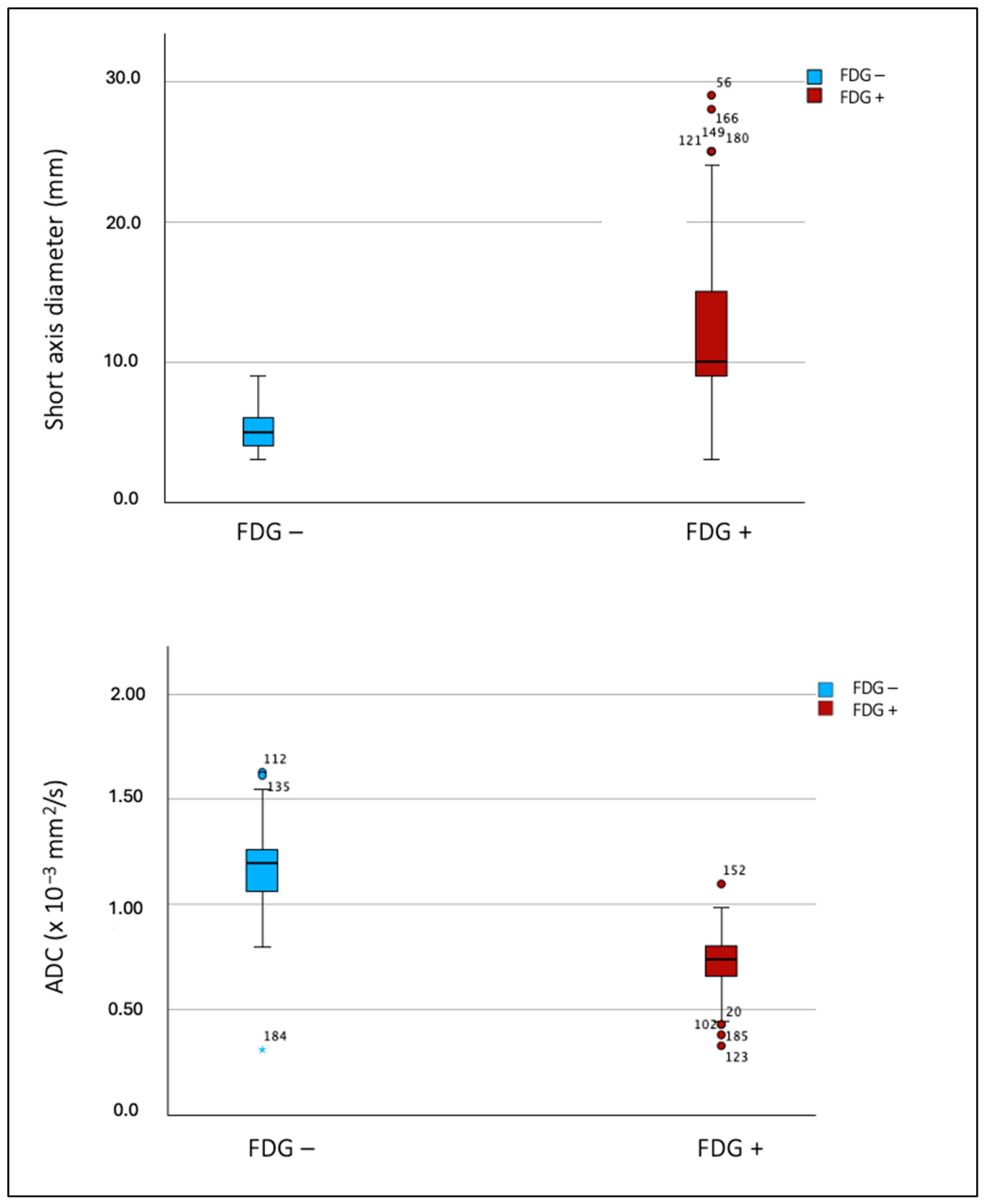
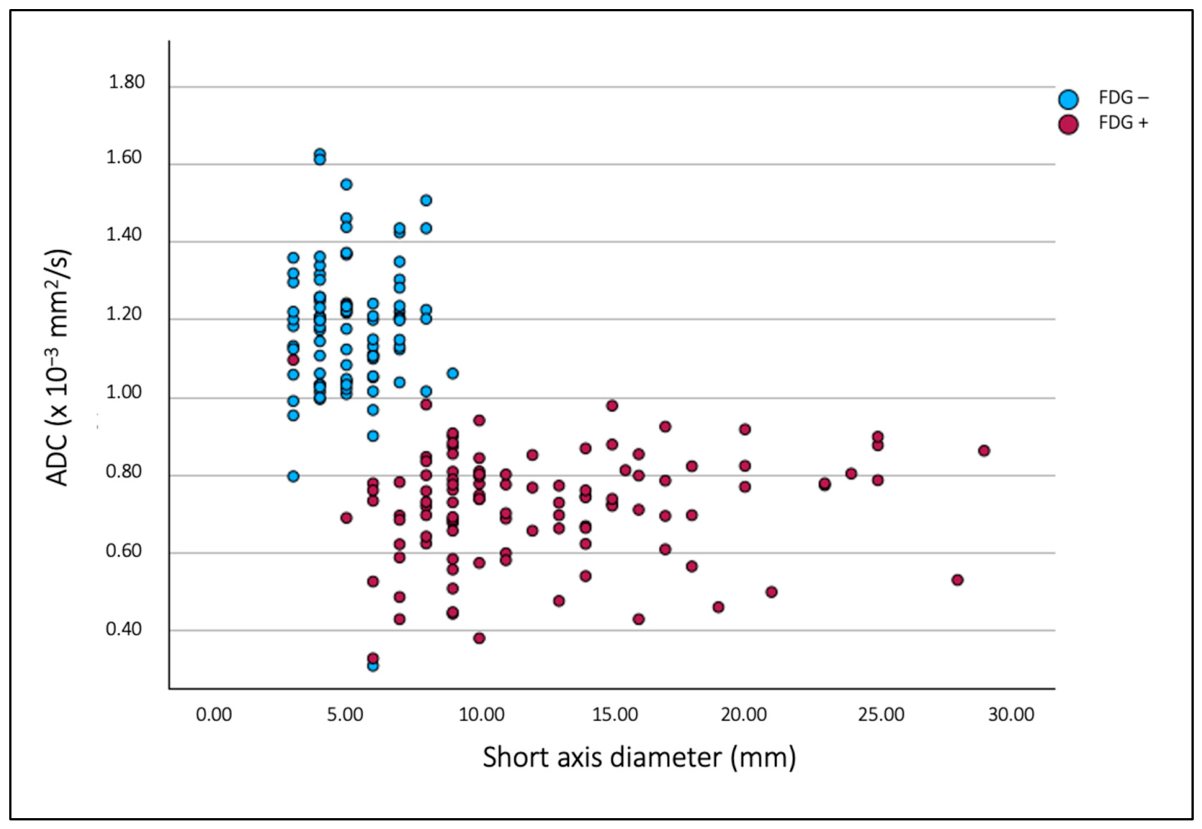
| All lymph nodes | 9.0 ± 5.4 mm |
| FDG+ | 12.3 ± 5.3 mm |
| FDG− | 5.1 ± 1.5 mm |
| Short-axis diameter ≤ 10 mm | 147 |
| Short-axis diameter > 10 mm | 52 |
| Localization | |
| Axillary | 180 |
| Pectoral | 10 |
| Supraclavicular/cervical | 7 |
| Mammaria interna | 2 |
| FDG Uptake | |
|---|---|
| FDG+ (mean ADC ± SD) | 0.72 ± 0.14 × 10⁻³ mm2/s |
| FDG− (mean ADC ± SD) | 1.18 ± 0.18 × 10⁻³ mm2/s |
| p | <0.01 |
| U | 173.00 |
| Z | −11.80 |
| ROC Analysis | |
| ADC cut-off | 0.95 × 10⁻³ mm2/s |
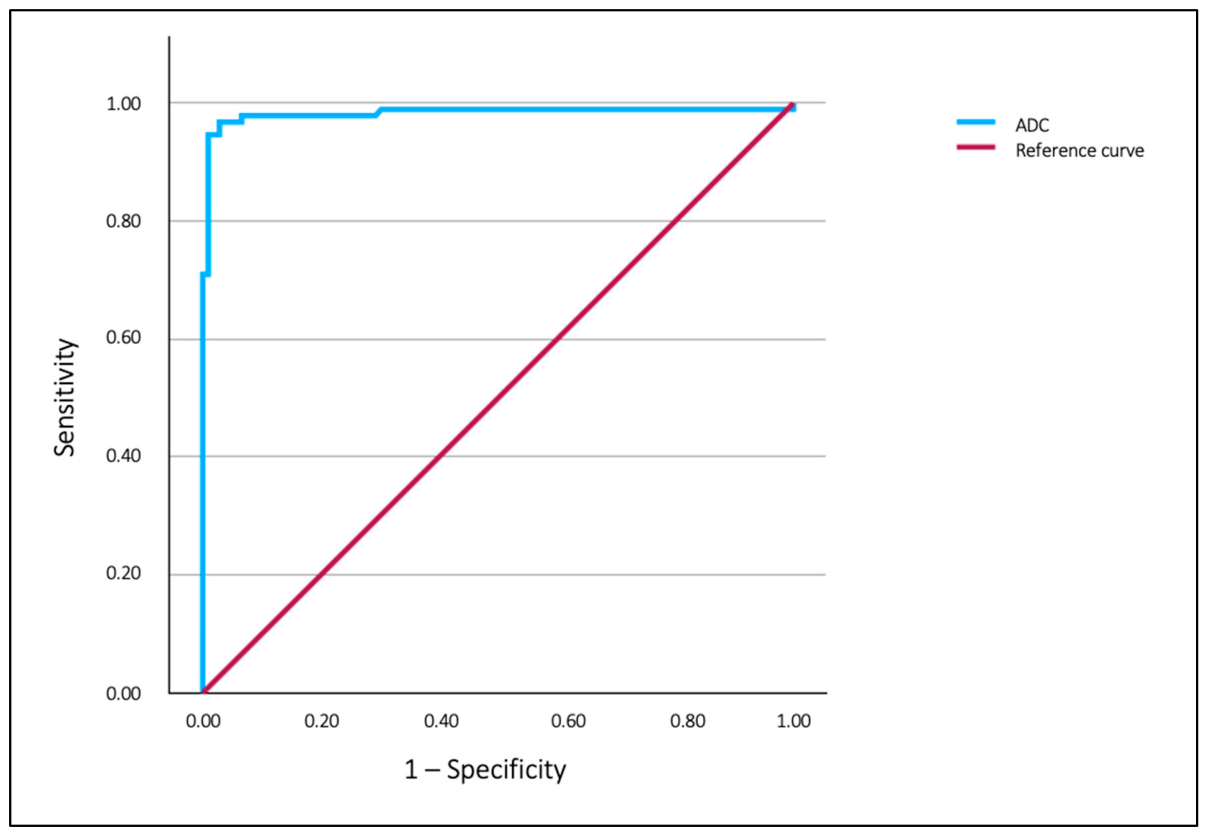
| AUC | 0.98, p < 0.01; 95% CI: 0.96–1.00 |
| Sensitivity | 98% |
| Specificity | 97% |
| Accuracy | 97% |
Disclaimer/Publisher’s Note: The statements, opinions and data contained in all publications are solely those of the individual author(s) and contributor(s) and not of MDPI and/or the editor(s). MDPI and/or the editor(s) disclaim responsibility for any injury to people or property resulting from any ideas, methods, instructions or products referred to in the content. |
© 2026 by the authors. Licensee MDPI, Basel, Switzerland. This article is an open access article distributed under the terms and conditions of the Creative Commons Attribution (CC BY) license.
Share and Cite
Peters, H.A.; Scheuer, M.; Weiss, D.; Boschheidgen, M.; Ivan, V.L.; Dietzel, F.; Mohrmann, S.; Ruckhäberle, E.; Herrmann, K.; Quick, H.H.; et al. Diagnostic Potential of Apparent Diffusion Coefficient-Based Lymph Node Classification in Breast Cancer Patients Undergoing [18F]FDG-PET/MRI. Diagnostics 2026, 16, 1712. https://doi.org/10.3390/diagnostics16111712
Peters HA, Scheuer M, Weiss D, Boschheidgen M, Ivan VL, Dietzel F, Mohrmann S, Ruckhäberle E, Herrmann K, Quick HH, et al. Diagnostic Potential of Apparent Diffusion Coefficient-Based Lymph Node Classification in Breast Cancer Patients Undergoing [18F]FDG-PET/MRI. Diagnostics. 2026; 16(11):1712. https://doi.org/10.3390/diagnostics16111712
Chicago/Turabian StylePeters, Helena A., Marie Scheuer, Daniel Weiss, Matthias Boschheidgen, Vivien Lorena Ivan, Frederic Dietzel, Svjetlana Mohrmann, Eugen Ruckhäberle, Ken Herrmann, Harald H. Quick, and et al. 2026. "Diagnostic Potential of Apparent Diffusion Coefficient-Based Lymph Node Classification in Breast Cancer Patients Undergoing [18F]FDG-PET/MRI" Diagnostics 16, no. 11: 1712. https://doi.org/10.3390/diagnostics16111712
APA StylePeters, H. A., Scheuer, M., Weiss, D., Boschheidgen, M., Ivan, V. L., Dietzel, F., Mohrmann, S., Ruckhäberle, E., Herrmann, K., Quick, H. H., Milosevic, A., Minko, P., Kirchner, J., Umutlu, L., Antoch, G., & Jannusch, K. (2026). Diagnostic Potential of Apparent Diffusion Coefficient-Based Lymph Node Classification in Breast Cancer Patients Undergoing [18F]FDG-PET/MRI. Diagnostics, 16(11), 1712. https://doi.org/10.3390/diagnostics16111712