The Role of Tumor pH in Breast Cancer Imaging: Biology, Diagnostic Applications, and Emerging Techniques



Abstract
1. Introduction
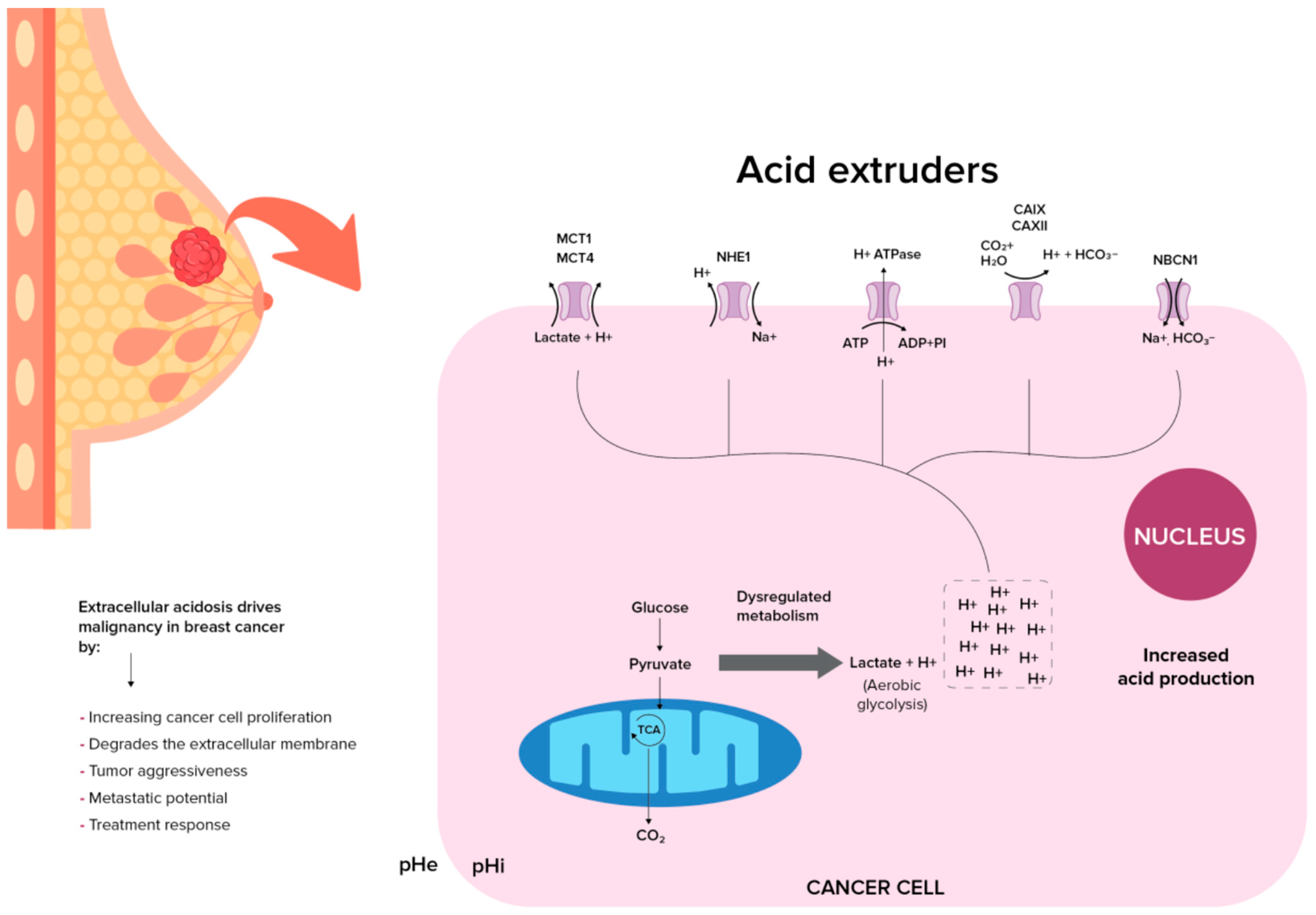
2. Tumor pH Biology and Its Role in Breast Cancer
2.1. Why pH Is a Hallmark of Cancer?
2.2. Acidic Shift in Breast Cancer
3. Imaging Techniques for pH Detection in Breast Cancer
3.1. MR Spectroscopy Methods
- a.
- Proton Magnetic Resonance Spectroscopy (1H-MRS)
- b.
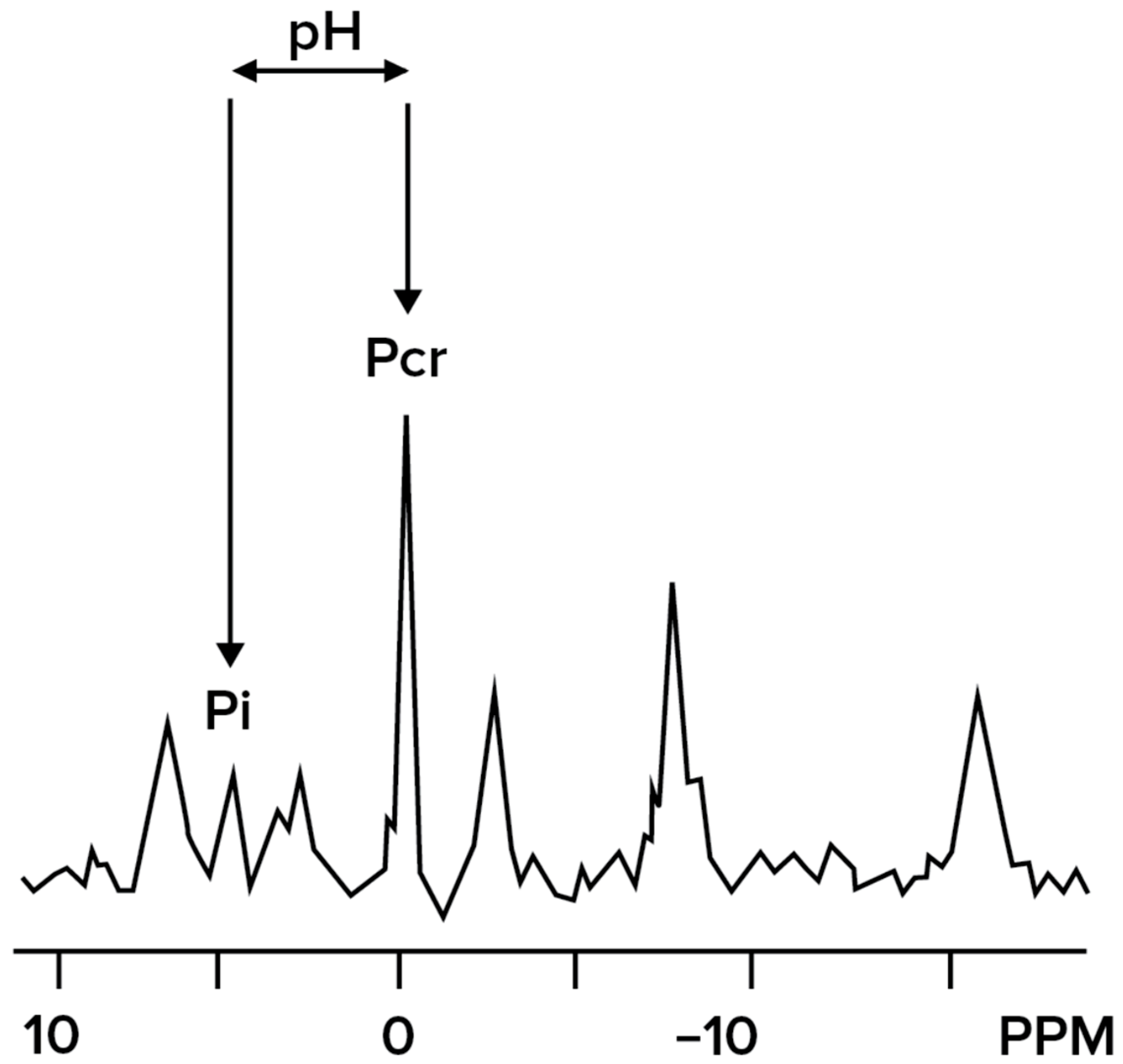
- Phosphorus MRS (31P-MRS)
- c.
- Fluoride MRS (19F-MRS)
3.2. Hyperpolarized Carbon-13 (13C-MRI)
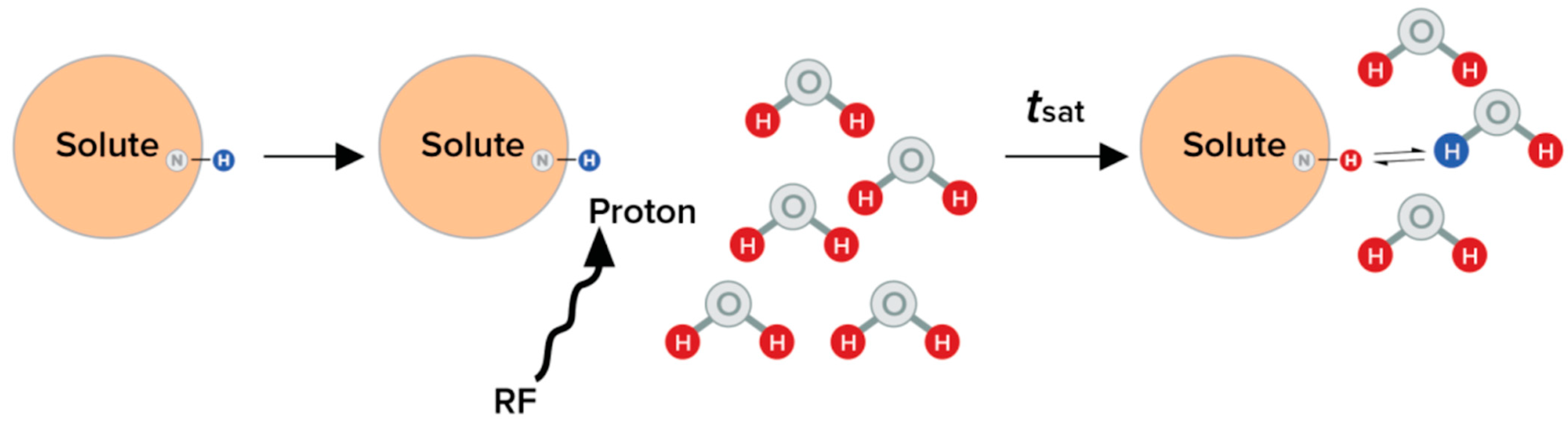
3.3. Chemical Exchange Saturation Transfer (CEST) MRI
- a.
- Endogenous CEST:
- b.
- Exogenous CEST:
3.4. Optical and Fluorescent Probes for Tumor pH Detection
3.5. FDG-PET
4. Discussion
Author Contributions
Funding
Institutional Review Board Statement
Informed Consent Statement
Data Availability Statement
Conflicts of Interest
Abbreviations
| AMPK | AMP-Activated Protein Kinase |
| AUC | Area Under the Curve |
| DBT | Digital Breast Tomosynthesis |
| DFO | Desferrioxamine |
| DM | Digital Mammography |
| DQF | Double-Quantum Filtered |
| ECM | Extracellular Matrix |
| EMT | Epithelial-to-Mesenchymal Transition |
| ERK | Extracellular Signal-Regulated Kinase |
| FDG | Fluorodeoxyglucose |
| FDG-PET | Fluorodeoxyglucose Positron Emission Tomography |
| gluCEST | Glutamate Chemical Exchange Saturation Transfer |
| glycoCEST | Glycogen Chemical Exchange Saturation Transfer |
| gagCEST | Glycosaminoglycan Chemical Exchange Saturation Transfer |
| HER2 | Human Epidermal Growth Factor Receptor 2 |
| HIF-1α | Hypoxia-Inducible Factor 1 alpha |
| LKB1 | Liver Kinase B1 |
| LDHA | Lactate Dehydrogenase A |
| MMP-9 | Matrix Metalloproteinase 9 |
| NIR | Near-Infrared |
| NOTA | 1,4,7-Triazacyclononane-1,4,7-triacetic Acid |
| NO2A | 1,4,7-Triazacyclononane-1,4-diacetic Acid |
| OCT | Optical Coherence Tomography |
| PC | Phosphocholine |
| pCR | Pathologic Complete Response |
| PE | Phosphoethanolamine |
| PET-CT | Positron Emission Tomography–Computed Tomography |
| pHLIP | pH-Low Insertion Peptide |
| RSK | Ribosomal S6 Kinase |
| SLC16A1 | Solute Carrier Family 16 Member 1 |
| SLC16A3 | Solute Carrier Family 16 Member 3 |
| SLC4A7 | Solute Carrier Family 4 Member 7 |
| SNARF-1 | Seminaphthorhodafluor-1 |
| SNARF-5F | Seminaphthorhodafluor-5F |
| SNR | Signal-to-Noise Ratio |
| TAM | Tumor-Associated Macrophage |
| tCho | Total Choline |
| USPSTF | United States Preventive Services Task Force |
References
- Mahfuz Al Hasan, S.; Bennett, D.; Toriola, A. Screening programmes and breast cancer mortality: An observational study of 194 countries. Bull. World Health Organ. 2025, 103, 470–483. [Google Scholar] [CrossRef]
- Breast Cancer Statistics. How Common Is Breast Cancer? Available online: https://www.cancer.org/cancer/types/breast-cancer/about/how-common-is-breast-cancer.html (accessed on 29 October 2025).
- Kim, J.; Harper, A.; McCormack, V.; Sung, H.; Houssami, N.; Morgan, E.; Mutebi, M.; Garvey, G.; Soerjomataram, I.; Fidler-Benaoudia, M.M. Global patterns and trends in breast cancer incidence and mortality across 185 countries. Nat. Med. 2025, 31, 1154–1162. [Google Scholar] [CrossRef]
- US Preventive Services Task Force; Nicholson, W.K.; Silverstein, M.; Wong, J.B.; Barry, M.J.; Chelmow, D.; Coker, T.R.; Davis, E.M.; Jaén, C.R.; Krousel-Wood, M.; et al. Screening for Breast Cancer: US Preventive Services Task Force Recommendation Statement. JAMA 2024, 331, 1918–1930. [Google Scholar] [CrossRef]
- Turnbull, L.W. Dynamic contrast-enhanced MRI in the diagnosis and management of breast cancer. NMR Biomed. 2009, 22, 28–39. [Google Scholar] [CrossRef]
- Reig, B.; Lewin, A.A.; Du, L.; Heacock, L.; Toth, H.K.; Heller, S.L.; Gao, Y.; Moy, L. Breast MRI for Evaluation of Response to Neoadjuvant Therapy. Radiographics 2021, 41, 665–679. [Google Scholar] [CrossRef]
- Van Gils, C.H.; Otten, J.D.M.; Verbeek, A.L.M.; Hendriks, J.H.C.L. Mammographic breast density and risk of breast cancer: Masking bias or causality? Eur. J. Epidemiol. 1998, 14, 315–320. [Google Scholar] [CrossRef]
- Bodewes, F.T.H.; Van Asselt, A.A.; Dorrius, M.D.; Greuter, M.J.W.; De Bock, G.H. Mammographic breast density and the risk of breast cancer: A systematic review and meta-analysis. Breast 2022, 66, 62–68. [Google Scholar] [CrossRef] [PubMed]
- Trentham-Dietz, A.; Chapman, C.H.; Jayasekera, J.; Lowry, K.P.; Heckman-Stoddard, B.; Hampton, J.M.; Caswell-Jin, J.; Lu, Y.; Gangnon, R.E.; Sun, L.; et al. Breast Cancer Screening with Mammography: An Updated Decision Analysis for the U.S. Preventive Services Task Force; Agency for Healthcare Research and Quality: Rockville, MD, USA, 2024. Available online: http://www.ncbi.nlm.nih.gov/books/NBK603560/ (accessed on 29 October 2025).
- Trentham-Dietz, A.; Chapman, C.H.; Jayasekera, J.; Lowry, K.P.; Heckman-Stoddard, B.M.; Hampton, J.M.; Caswell-Jin, J.L.; Gangnon, R.E.; Lu, Y.; Huang, H.; et al. Collaborative Modeling to Compare Different Breast Cancer Screening Strategies: A Decision Analysis for the US Preventive Services Task Force. JAMA 2024, 331, 1947. [Google Scholar] [CrossRef]
- Nelson, H.D.; Cantor, A.; Humphrey, L.; Fu, R.; Pappas, M.; Daeges, M.; Griffin, J. Screening for Breast Cancer: A Systematic Review to Update the 2009 U.S. Preventive Services Task Force Recommendation; Agency for Healthcare Research and Quality: Rockville, MD, USA, 2016. Available online: http://www.ncbi.nlm.nih.gov/books/NBK343819/ (accessed on 29 October 2025).
- Henderson, J.T.; Webber, E.M.; Weyrich, M.; Miller, M.; Melnikow, J. Screening for Breast Cancer: A Comparative Effectiveness Review for the U.S. Preventive Services Task Force; Agency for Healthcare Research and Quality: Rockville, MD, USA, 2024. Available online: http://www.ncbi.nlm.nih.gov/books/NBK603789/ (accessed on 29 October 2025).
- Irvin, V.L.; Zhang, Z.; Simon, M.S.; Chlebowski, R.T.; Luoh, S.W.; Shadyab, A.H.; Krok-Schoen, J.L.; Tabung, F.K.; Qi, L.; Stefanick, M.L.; et al. Comparison of Mortality Among Participants of Women’s Health Initiative Trials with Screening-Detected Breast Cancers vs Interval Breast Cancers. JAMA Netw. Open 2020, 3, e207227. [Google Scholar] [CrossRef]
- Persi, E.; Duran-Frigola, M.; Damaghi, M.; Roush, W.R.; Aloy, P.; Cleveland, J.L.; Gillies, R.J.; Ruppin, E. Systems analysis of intracellular pH vulnerabilities for cancer therapy. Nat. Commun. 2018, 9, 2997. [Google Scholar] [CrossRef]
- Webb, B.A.; Chimenti, M.; Jacobson, M.P.; Barber, D.L. Dysregulated pH: A perfect storm for cancer progression. Nat. Rev. Cancer 2011, 11, 671–677. [Google Scholar] [CrossRef]
- Kato, Y.; Ozawa, S.; Miyamoto, C.; Maehata, Y.; Suzuki, A.; Maeda, T.; Baba, Y. Acidic extracellular microenvironment and cancer. Cancer Cell Int. 2013, 13, 89. [Google Scholar] [CrossRef]
- Kallinowski, F.; Schlenger, K.H.; Runkel, S.; Kloes, M.; Stohrer, M.; Okunieff, P.; Vaupel, P. Blood flow, metabolism, cellular microenvironment, and growth rate of human tumor xenografts. Cancer Res. 1989, 49, 3759–3764. [Google Scholar]
- Warburg, O.; Wind, F.; Negelein, E. The Metabolism Of Tumors In The Body. J. Gen. Physiol. 1927, 8, 519–530. [Google Scholar] [CrossRef] [PubMed]
- Lee, S.; Shanti, A. Effect of Exogenous pH on Cell Growth of Breast Cancer Cells. Int. J. Mol. Sci. 2021, 22, 9910. [Google Scholar] [CrossRef] [PubMed]
- Ward, C.; Meehan, J.; Gray, M.E.; Murray, A.F.; Argyle, D.J.; Kunkler, I.H.; Langdon, S.P. The impact of tumor pH on cancer progression: Strategies for clinical intervention. Explor. Target. Anti-Tumor Ther. 2020, 1, 71–100. [Google Scholar] [CrossRef]
- Estrella, V.; Chen, T.; Lloyd, M.; Wojtkowiak, J.; Cornnell, H.H.; Ibrahim-Hashim, A.; Bailey, K.; Balagurunathan, Y.; Rothberg, J.M.; Sloane, B.F.; et al. Acidity Generated by the Tumor Microenvironment Drives Local Invasion. Cancer Res. 2013, 73, 1524–1535. [Google Scholar] [CrossRef]
- Gillies, R.J.; Gatenby, R.A. Hypoxia and adaptive landscapes in the evolution of carcinogenesis. Cancer Metastasis Rev. 2007, 26, 311–317. [Google Scholar] [CrossRef]
- Morita, T.; Nagaki, T.; Fukuda, I.; Okumura, K. Clastogenicity of low pH to various cultured mammalian cells. Mutat. Res. 1992, 268, 297–305. [Google Scholar] [CrossRef] [PubMed]
- Shi, Q.; Le, X.; Wang, B.; Abbruzzese, J.L.; Xiong, Q.; He, Y.; Xie, K. Regulation of vascular endothelial growth factor expression by acidosis in human cancer cells. Oncogene 2001, 20, 3751–3756. [Google Scholar] [CrossRef]
- Bix, G.; Castello, R.; Burrows, M.; Zoeller, J.J.; Weech, M.; Iozzo, R.A.; Cardi, C.; Thakur, M.L.; Barker, C.A.; Camphausen, K.; et al. Endorepellin In Vivo: Targeting the Tumor Vasculature and Retarding Cancer Growth and Metabolism. JNCI J. Natl. Cancer Inst. 2006, 98, 1634–1646. [Google Scholar] [CrossRef]
- Wike-Hooley, J.L.; Haveman, J.; Reinhold, H.S. The relevance of tumor pH to the treatment of malignant disease. Radiother. Oncol. 1984, 2, 343–366. [Google Scholar] [CrossRef]
- Gillies, R.J.; Liu, Z.; Bhujwalla, Z. 31P-MRS measurements of extracellular pH of tumors using 3-aminopropylphosphonate. Am. J. Physiol. 1994, 267, C195–C203. [Google Scholar] [CrossRef]
- Tannock, I.F.; Rotin, D. Acid pH in tumors and its potential for therapeutic exploitation. Cancer Res. 1989, 49, 4373–4384. [Google Scholar] [PubMed]
- Swietach, P.; Boedtkjer, E.; Pedersen, S.F. How protons pave the way to aggressive cancers. Nat. Rev. Cancer 2023, 23, 825–841. [Google Scholar] [CrossRef] [PubMed]
- Koltai, T. The Ph paradigm in cancer. Eur. J. Clin. Nutr. 2020, 74, 14–19. [Google Scholar] [CrossRef]
- Michl, J.; Monterisi, S.; White, B.; Blaszczak, W.; Hulikova, A.; Abdullayeva, G.; Bridges, E.; Yin, Z.; Bodmer, W.F. Acid-adapted cancer cells alkalinize their cytoplasm by degrading the acid-loading membrane transporter anion exchanger 2, SLC4A2. Cell Rep. 2023, 42, 112601. [Google Scholar] [CrossRef] [PubMed]
- Boron, W.F. Regulation of intracellular pH. Adv. Physiol. Educ. 2004, 28, 160–179. [Google Scholar] [CrossRef]
- Chesler, M.; Nicholson, C. Regulation of intracellular pH in vertebrate central neurons. Brain Res. 1985, 325, 313–316. [Google Scholar] [CrossRef]
- Nishisho, T.; Hata, K.; Nakanishi, M.; Morita, Y.; Sun-Wada, G.-H.; Wada, Y.; Yasui, N.; Yoneda, T. The a3 isoform vacuolar type H+-ATPase promotes distant metastasis in the mouse B16 melanoma cells. Mol. Cancer Res. MCR 2011, 9, 845–855. [Google Scholar] [CrossRef] [PubMed]
- Pouysségur, J.; Franchi, A.; L’Allemain, G.; Paris, S. Cytoplasmic pH, a key determinant of growth factor-induced DNA synthesis in quiescent fibroblasts. FEBS Lett. 1985, 190, 115–119. [Google Scholar] [CrossRef]
- Moolenaar, W.H. Effects of growth factors on intracellular pH regulation. Annu. Rev. Physiol. 1986, 48, 363–376. [Google Scholar] [CrossRef]
- Kapus, A.; Romanek, R.; Qu, A.Y.; Rotstein, O.D.; Grinstein, S. A pH-sensitive and voltage-dependent proton conductance in the plasma membrane of macrophages. J. Gen. Physiol. 1993, 102, 729–760. [Google Scholar] [CrossRef]
- Denker, S.P.; Huang, D.C.; Orlowski, J.; Furthmayr, H.; Barber, D.L. Direct Binding of the Na–H Exchanger NHE1 to ERM Proteins Regulates the Cortical Cytoskeleton and Cell Shape Independently of H+ Translocation. Mol. Cell. 2000, 6, 1425–1436. [Google Scholar] [CrossRef]
- Lagadic-Gossmann, D.; Huc, L.; Lecureur, V. Alterations of intracellular pH homeostasis in apoptosis: Origins and roles. Cell Death Differ. 2004, 11, 953–961. [Google Scholar] [CrossRef]
- Matsuyama, S.; Llopis, J.; Deveraux, Q.L.; Tsien, R.Y.; Reed, J.C. Changes in intramitochondrial and cytosolic pH: Early events that modulate caspase activation during apoptosis. Nat. Cell Biol. 2000, 2, 318–325. [Google Scholar] [CrossRef]
- Kato, Y.; Ozawa, S.; Tsukuda, M.; Kubota, E.; Miyazaki, K.; St-Pierre, Y.; Hata, R. Acidic extracellular pH increases calcium influx-triggered phospholipase D activity along with acidic sphingomyelinase activation to induce matrix metalloproteinase-9 expression in mouse metastatic melanoma. FEBS J. 2007, 274, 3171–3183. [Google Scholar] [CrossRef]
- Kato, Y.; Nakayama, Y.; Umeda, M.; Miyazaki, K. Induction of 103-kDa gelatinase/type IV collagenase by acidic culture conditions in mouse metastatic melanoma cell lines. J. Biol. Chem. 1992, 267, 11424–11430. [Google Scholar] [CrossRef]
- Comito, G.; Iscaro, A.; Bacci, M.; Morandi, A.; Ippolito, L.; Parri, M.; Montagnani, I.; Raspollini, M.R.; Serni, S.; Simeoni, L.; et al. Lactate modulates CD4+ T-cell polarization and induces an immunosuppressive environment, which sustains prostate carcinoma progression via TLR8/miR21 axis. Oncogene 2019, 38, 3681–3695. [Google Scholar] [CrossRef]
- Certo, M.; Tsai, C.H.; Pucino, V.; Ho, P.C.; Mauro, C. Lactate modulation of immune responses in inflammatory versus tumor microenvironments. Nat. Rev. Immunol. 2021, 21, 151–161. [Google Scholar] [CrossRef]
- Calcinotto, A.; Filipazzi, P.; Grioni, M.; Iero, M.; De Milito, A.; Ricupito, A.; Cova, A.; Canese, R.; Jachetti, E.; Rossetti, M.; et al. Modulation of microenvironment acidity reverses anergy in human and murine tumor-infiltrating T lymphocytes. Cancer Res. 2012, 72, 2746–2756. [Google Scholar] [CrossRef]
- Brand, A.; Singer, K.; Koehl, G.E.; Kolitzus, M.; Schoenhammer, G.; Thiel, A.; Matos, C.; Bruss, C.; Klobuch, S.; Peter, K.; et al. LDHA-Associated Lactic Acid Production Blunts Tumor Immunosurveillance by T and NK Cells. Cell Metab. 2016, 24, 657–671. [Google Scholar] [CrossRef]
- Rolver, M.G.; Holland, L.K.K.; Ponniah, M.; Prasad, N.S.; Yao, J.; Schnipper, J.; Kramer, S.; Elingaard-Larsen, L.; Pedraz-Cuesta, E.; Liu, B.; et al. Chronic acidosis rewires cancer cell metabolism through PPARα signaling. Int. J. Cancer 2023, 152, 1668–1684. [Google Scholar] [CrossRef]
- Raghunand, N.; Gillies, R.J. pH and drug resistance in tumors. Drug Resist. Updat. 2000, 3, 39–47. [Google Scholar] [CrossRef]
- Gupta, S.; Farooque, A.; Adhikari, J.S.; Singh, S.; Dwarakanath, B.S. Enhancement of radiation and chemotherapeutic drug responses by 2-deoxy-D-glucose in animal tumors. J. Cancer Res. Ther. 2009, 5, S16–S20. [Google Scholar] [CrossRef]
- Pelicano, H.; Martin, D.S.; Xu, R.H.; Huang, P. Glycolysis inhibition for anticancer treatment. Oncogene 2006, 25, 4633–4646. [Google Scholar] [CrossRef]
- Hardie, D.G. AMP-activated/SNF1 protein kinases: Conserved guardians of cellular energy. Nat. Rev. Mol. Cell Biol. 2007, 8, 774–785. [Google Scholar] [CrossRef]
- Vander Heiden, M.G.; Cantley, L.C.; Thompson, C.B. Understanding the Warburg Effect: The Metabolic Requirements of Cell Proliferation. Science 2009, 324, 1029–1033. [Google Scholar] [CrossRef]
- Toft, N.J.; Axelsen, T.V.; Pedersen, H.L.; Mele, M.; Burton, M.; Balling, E.; Johansen, T.; Thomassen, M.; Christiansen, P.M.; Boedtkjer, E. Acid-base transporters and pH dynamics in human breast carcinomas predict proliferative activity, metastasis, and survival. eLife 2021, 10, e68447. [Google Scholar] [CrossRef]
- Swallow, C.J.; Grinstein, S.; Rotstein, O.D. A vacuolar type H(+)-ATPase regulates cytoplasmic pH in murine macrophages. J. Biol. Chem. 1990, 265, 7645–7654. [Google Scholar] [CrossRef]
- Young, P.R.; Zygas, A.P. Secretion of lactic acid by peritoneal macrophages during extracellular phagocytosis. The possible role of local hyperacidity in inflammatory demyelination. J. Neuroimmunol. 1987, 15, 295–308. [Google Scholar] [CrossRef]
- Halestrap, A.P.; Wilson, M.C. The monocarboxylate transporter family--role and regulation. IUBMB Life 2012, 64, 109–119. [Google Scholar] [CrossRef]
- Doherty, J.R.; Yang, C.; Scott, K.E.; Cameron, M.D.; Fallahi, M.; Li, W.; Hall, M.A.; Amelio, A.L.; Mishra, J.K.; Li, F.; et al. Blocking lactate export by inhibiting the Myc target MCT1 Disables glycolysis and glutathione synthesis. Cancer Res. 2014, 74, 908–920. [Google Scholar] [CrossRef]
- Kumar, A.; Kant, S.; Singh, S.M. Targeting monocarboxylate transporter by α-cyano-4-hydroxycinnamate modulates apoptosis and cisplatin resistance of Colo205 cells: Implication of altered cell survival regulation. Apoptosis 2013, 18, 1574–1585. [Google Scholar] [CrossRef]
- Ullah, M.S.; Davies, A.J.; Halestrap, A.P. The plasma membrane lactate transporter MCT4, but not MCT1, is up-regulated by hypoxia through a HIF-1alpha-dependent mechanism. J. Biol. Chem. 2006, 281, 9030–9037. [Google Scholar] [CrossRef]
- Xu, D.; Hemler, M.E. Metabolic activation-related CD147-CD98 complex. Mol. Cell. Proteomics MCP 2005, 4, 1061–1071. [Google Scholar] [CrossRef]
- Guo, H.; Li, R.; Zucker, S.; Toole, B.P. EMMPRIN (CD147), an inducer of matrix metalloproteinase synthesis, also binds interstitial collagenase to the tumor cell surface. Cancer Res. 2000, 60, 888–891. [Google Scholar]
- Martinez-Zaguilan, R.; Lynch, R.M.; Martinez, G.M.; Gillies, R.J. Vacuolar-type H(+)-ATPases are functionally expressed in plasma membranes of human tumor cells. Am. J. Physiol. 1993, 265, C1015–C1029. [Google Scholar] [CrossRef]
- Rochefort, H.; Liaudet, E.; Garcia, M. Alterations and role of human cathepsin D in cancer metastasis. Enzyme Protein 1996, 49, 106–116. [Google Scholar] [CrossRef]
- Montcourrier, P.; Mangeat, P.H.; Valembois, C.; Salazar, G.; Sahuquet, A.; Duperray, C.; Rochefort, H. Characterization of very acidic phagosomes in breast cancer cells and their association with invasion. J. Cell Sci. 1994, 107, 2381–2391. [Google Scholar] [CrossRef]
- Lauritzen, G.; Stock, C.M.; Lemaire, J.; Lund, S.F.; Jensen, M.F.; Damsgaard, B.; Petersen, K.S.; Wiwel, M.; Rønnov-Jessen, L.; Schwab, A.; et al. The Na+/H+ exchanger NHE1, but not the Na+, HCO3(-) cotransporter NBCn1, regulates motility of MCF7 breast cancer cells expressing constitutively active ErbB2. Cancer Lett. 2012, 317, 172–183. [Google Scholar] [CrossRef]
- Boedtkjer, E.; Moreira, J.M.A.; Mele, M.; Vahl, P.; Wielenga, V.T.; Christiansen, P.M.; Jensen, V.E.; Pedersen, S.F.; Aalkjaer, C. Contribution of Na+,HCO3(-)-cotransport to cellular pH control in human breast cancer: A role for the breast cancer susceptibility locus NBCn1 (SLC4A7). Int. J. Cancer 2013, 132, 1288–1299. [Google Scholar]
- Lee, S.; Mele, M.; Vahl, P.; Christiansen, P.M.; Jensen, V.E.D.; Boedtkjer, E. Na+,HCO3−-cotransport is functionally upregulated during human breast carcinogenesis and required for the inverted pH gradient across the plasma membrane. Pflug. Arch. 2015, 467, 367–377. [Google Scholar] [CrossRef]
- Lee, S.; Axelsen, T.V.; Andersen, A.P.; Vahl, P.; Pedersen, S.F.; Boedtkjer, E. Disrupting Na+, HCO3−-cotransporter NBCn1 (Slc4a7) delays murine breast cancer development. Oncogene 2016, 35, 2112–2122. [Google Scholar] [CrossRef]
- Lee, S.; Axelsen, T.V.; Jessen, N.; Pedersen, S.F.; Vahl, P.; Boedtkjer, E. Na+,HCO3−-cotransporter NBCn1 (Slc4a7) accelerates ErbB2-induced breast cancer development and tumor growth in mice. Oncogene 2018, 37, 5569–5584. [Google Scholar] [CrossRef] [PubMed]
- Bernstein, B.W.; Painter, W.B.; Chen, H.; Minamide, L.S.; Abe, H.; Bamburg, J.R. Intracellular pH modulation of ADF/cofilin proteins. Cell Motil. Cytoskelet. 2000, 47, 319–336. [Google Scholar] [CrossRef]
- Kumar, A.P.; Quake, A.L.; Chang, M.K.X.; Zhou, T.; Lim, K.S.Y.; Singh, R.; Hewitt, R.E.; Salto-Tellez, M.; Pervaiz, S.; Clément, M.-V. Repression of NHE1 Expression by PPARγ Activation Is a Potential New Approach for Specific Inhibition of the Growth of Tumor Cells In Vitro and In Vivo. Cancer Res. 2009, 69, 8636–8644. [Google Scholar] [CrossRef]
- Miraglia, E.; Viarisio, D.; Riganti, C.; Costamagna, C.; Ghigo, D.; Bosia, A. Na+/H+ exchanger activity is increased in doxorubicin-resistant human colon cancer cells and its modulation modifies the sensitivity of the cells to doxorubicin. Int. J. Cancer 2005, 115, 924–929. [Google Scholar] [CrossRef]
- Sloth, R.A.; Axelsen, T.V.; Espejo, M.S.; Toft, N.J.; Voss, N.C.S.; Burton, M.; Thomassen, M.; Vahl, P.; Boedtkjer, E. Loss of RPTPγ primes breast tissue for acid extrusion, promotes malignant transformation and results in early tumor recurrence and shortened survival. Br. J. Cancer 2022, 127, 1226–1238. [Google Scholar] [CrossRef]
- Zhou, Y.; Skelton, L.A.; Xu, L.; Chandler, M.P.; Berthiaume, J.M.; Boron, W.F. Role of Receptor Protein Tyrosine Phosphatase γ in Sensing Extracellular CO2 and HCO3. J. Am. Soc. Nephrol. JASN 2016, 27, 2616–2621. [Google Scholar] [CrossRef]
- Boedtkjer, E.; Hansen, K.B.; Boedtkjer, D.M.B.; Aalkjaer, C.; Boron, W.F. Extracellular HCO3− is sensed by mouse cerebral arteries: Regulation of tone by receptor protein tyrosine phosphatase γ. J. Cereb. Blood. Flow. Metab. 2016, 36, 965–980. [Google Scholar] [CrossRef]
- Gottlieb, R.A.; Giesing, H.A.; Zhu, J.Y.; Engler, R.L.; Babior, B.M. Cell acidification in apoptosis: Granulocyte colony-stimulating factor delays programmed cell death in neutrophils by up-regulating the vacuolar H(+)-ATPase. Proc. Natl. Acad. Sci. USA 1995, 92, 5965–5968. [Google Scholar] [CrossRef]
- Khramtsov, V.; Grigor’ev, I.; Foster, M.; Lurie, D.J.; Nicholson, I. Biological applications of spin pH probes. Cell. Mol. Biol. 2000, 46, 1361–1374. [Google Scholar]
- Gillies, R.J.; Morse, D.L. In vivo magnetic resonance spectroscopy in cancer. Annu. Rev. Biomed. Eng. 2005, 7, 287–326. [Google Scholar] [CrossRef]
- Tognarelli, J.M.; Dawood, M.; Shariff, M.I.; Grover, V.P.; Crossey, M.M.; Cox, I.J.; Taylor-Robinson, S.D.; McPhail, M.J. Magnetic Resonance Spectroscopy: Principles and Techniques: Lessons for Clinicians. J. Clin. Exp. Hepatol. 2015, 5, 320–328. [Google Scholar] [CrossRef]
- Rhodes, C.J. Magnetic Resonance Spectroscopy. Sci. Prog. 2017, 100, 241–292. [Google Scholar] [CrossRef]
- Aime, S.; Botta, M.; Milone, L.; Terreno, E. Paramagnetic complexes as novel NMR pH indicators. Chem. Commun. 1996, 1265–1266. [Google Scholar] [CrossRef]
- Bitencourt, A.G.V.; Goldberg, J.; Pinker, K.; Thakur, S.B. Clinical applications of breast cancer metabolomics using high-resolution magic angle spinning proton magnetic resonance spectroscopy (HRMAS 1H MRS): Systematic scoping review. Metabolomics 2019, 15, 148. [Google Scholar] [CrossRef]
- Glunde, K.; Bhujwalla, Z.M.; Ronen, S.M. Choline metabolism in malignant transformation. Nat. Rev. Cancer 2011, 11, 835–848. [Google Scholar] [CrossRef]
- Sharma, U.; Jagannathan, N.R. In vivo MR spectroscopy for breast cancer diagnosis. BJR Open 2019, 1, 20180040. [Google Scholar] [CrossRef] [PubMed]
- Mellon, E.A.; Lee, S.; Pickup, S.; Kim, S.; Goldstein, S.C.; Floyd, T.F.; Poptani, H.; Delikatny, E.J.; Reddy, R.; Glickson, J.D. Detection of Lactate with a Hadamard Slice Selected, Selective Multiple Quantum Coherence, Chemical Shift Imaging Sequence (HDMD-SelMQC-CSI) on a clinical MRI scanner: Application to Tumors and Muscle Ischemia. Magn. Reson. Med. 2009, 62, 1404–1413. [Google Scholar] [CrossRef]
- Maudsley, A.A.; Darkazanli, A.; Alger, J.R.; Hall, L.O.; Schuff, N.; Studholme, C.; Yu, Y.; Ebel, A.; Frew, A.; Goldgof, D.; et al. Comprehensive processing, display and analysis for in vivo MR spectroscopic imaging. NMR Biomed. 2006, 19, 492–503. [Google Scholar] [CrossRef]
- He, Q.; Shungu, D.C.; van Zijl, P.C.; Bhujwalla, Z.M.; Glickson, J.D. Single-scan in vivo lactate editing with complete lipid and water suppression by selective multiple-quantum-coherence transfer (Sel-MQC) with application to tumors. J. Magn. Reson. B 1995, 106, 203–211. [Google Scholar] [CrossRef]
- Thakur, S.B.; Yaligar, J.; Koutcher, J.A. In vivo lactate signal enhancement using binomial spectral-selective pulses in selective MQ coherence (SS-SelMQC) spectroscopy. Magn. Reson. Med. 2009, 62, 591–598. [Google Scholar] [CrossRef]
- Payne, G.S.; Harris, L.M.; Cairns, G.S.; Messiou, C.; deSouza, N.M.; Macdonald, A.; Saran, F.; Leach, M.O. Validating a robust double-quantum-filtered (1) H MRS lactate measurement method in high-grade brain tumors. NMR Biomed. 2016, 29, 1420–1426. [Google Scholar] [CrossRef] [PubMed]
- Thakur, S.; Annarao, S.; Bokacheva, L.; Oh, J.H. Measurement of lactate concentrations in the breast mammary tumors using selective multiple quantum coherence editing sequence at 4.7 T. In Proceedings of the Joint Annual Meeting ISMRM-ESMRMB, Milan, Italy, 10–16 May 2014. [Google Scholar]
- Rizwan, A.; Serganova, I.; Khanin, R.; Karabeber, H.; Ni, X.; Thakur, S.; Zakian, K.L.; Blasberg, R.; Koutcher, J.A. Relationships between LDH-A, Lactate, and Metastases in 4T1 Breast Tumors. Clin. Cancer Res. 2013, 19, 5158–5169. [Google Scholar] [CrossRef]
- Serganova, I.; Rizwan, A.; Ni, X.; Thakur, S.B.; Vider, J.; Russell, J.; Blasberg, R.; Koutcher, J.A. Metabolic imaging: A link between lactate dehydrogenase A, lactate, and tumor phenotype. Clin. Cancer Res. 2011, 17, 6250–6261. [Google Scholar] [CrossRef]
- Cheung, S.M.; Husain, E.; Masannat, Y.; Miller, I.D.; Wahle, K.; Heys, S.D.; He, J. Lactate concentration in breast cancer using advanced magnetic resonance spectroscopy. Br. J. Cancer 2020, 123, 261–267. [Google Scholar] [CrossRef]
- García-Martín, M.L.; Hérigault, G.; Rémy, C.; Farion, R.; Ballesteros, P.; A Coles, J.; Cerdán, S.; Ziegler, A. Mapping extracellular pH in rat brain gliomas in vivo by 1H magnetic resonance spectroscopic imaging: Comparison with maps of metabolites. Cancer Res. 2001, 61, 6524–6531. [Google Scholar]
- van Sluis, R.; Bhujwalla, Z.M.; Raghunand, N.; Ballesteros, P.; Galons, J.-P.; Gillies, R.J.; Alvarez, J.; Cerdán, S. In vivo imaging of extracellular pH using 1H MRSI. Magn. Reson. Med. 1999, 41, 743–750. [Google Scholar] [CrossRef]
- Gil, M.S.; Cruz, F.; Cerdán, S.; Ballesteros, P. Imidazol-1-ylalkanoate esters and their corresponding acids. A novel series of extrinsic 1H NMR probes for intracellular pH. Bioorg. Med. Chem. Lett. 1992, 2, 1717–1722. [Google Scholar] [CrossRef]
- Gil, S.; Zaderenzo, P.; Cruz, F.; Cerdán, S.; Ballesteros, P. Imidazol-1-ylalkanoic acids as extrinsic 1H NMR probes for the determination of intracellular pH, extracellular pH and cell volume. Bioorg. Med. Chem. 1994, 2, 305–314. [Google Scholar] [CrossRef]
- Provent, P.; Benito, M.; Hiba, B.; Farion, R.; López-Larrubia, P.; Ballesteros, P.; Rémy, C.; Segebarth, C.; Cerdán, S.; Coles, J.A.; et al. Serial In vivo Spectroscopic Nuclear Magnetic Resonance Imaging of Lactate and Extracellular pH in Rat Gliomas Shows Redistribution of Protons Away from Sites of Glycolysis. Cancer Res. 2007, 67, 7638–7645. [Google Scholar] [CrossRef]
- Lee, S.H.; McIntyre, D.; Honess, D.; Hulikova, A.; Pacheco-Torres, J.; Cerdán, S.; Swietach, P.; Harris, A.L.; Griffiths, J.R. Carbonic anhydrase IX is a pH-stat that sets an acidic tumor extracellular pH in vivo. Br. J. Cancer 2018, 119, 622–630. [Google Scholar] [CrossRef]
- Bhujwalla, Z.M.; Artemov, D.; Ballesteros, P.; Cerdan, S.; Gillies, R.J.; Solaiyappan, M. Combined vascular and extracellular pH imaging of solid tumors. NMR Biomed. 2002, 15, 114–119. [Google Scholar] [CrossRef]
- Haselgrove, J.C.; Subramanian, V.H.; Leigh, J.S.; Gyulai, L.; Chance, B. In vivo one-dimensional imaging of phosphorus metabolites by phosphorus-31 nuclear magnetic resonance. Science 1983, 220, 1170–1173. [Google Scholar] [CrossRef]
- Podo, F. Tumor phospholipid metabolism. NMR Biomed. 1999, 12, 413–439. [Google Scholar]
- Glaholm, J.; Leach, M.; Collins, D.; Mansi, J.; Sharp, I.; Madden, A.; Smith, I.; Mccready, V. In-vivo 31P magnetic resonance spectroscopy for monitoring treatment response in breast cancer. Lancet 1989, 1, 1326–1327. [Google Scholar]
- Leach, M.O.; Verrill, M.; Glaholm, J.; Smith, T.A.D.; Collins, D.J.; Payne, G.S.; Sharp, J.C.; Ronen, S.M.; McCready, V.R.; Powles, T.J.; et al. Measurements of human breast cancer using magnetic resonance spectroscopy: A review of clinical measurements and a report of localized 31P measurements of response to treatment. NMR Biomed. 1998, 11, 314–340. [Google Scholar] [CrossRef]
- Arias-Mendoza, F.; Zakian, K.; Schwartz, A.; Howe, F.A.; Koutcher, J.A.; Leach, M.O.; Griffiths, J.R.; Heerschap, A.; Glickson, J.D.; Nelson, S.J.; et al. Methodological standardization for a multi-institutional in vivo trial of localized 31P MR spectroscopy in human cancer research. In vitro and normal volunteer studies. NMR Biomed. 2004, 17, 382–391. [Google Scholar] [CrossRef]
- Robey, I.F.; Baggett, B.K.; Kirkpatrick, N.D.; Roe, D.J.; Dosescu, J.; Sloane, B.F.; Hashim, A.I.; Morse, D.L.; Raghunand, N.; Gatenby, R.A.; et al. Bicarbonate Increases Tumor pH and Inhibits Spontaneous Metastases. Cancer Res. 2009, 69, 2260–2268. [Google Scholar] [CrossRef]
- Negendank, W. Studies of human tumors by MRS: A review. NMR Biomed. 1992, 5, 303–324. [Google Scholar] [CrossRef]
- Chen, L.Q.; Pagel, M.D. Evaluating pH in the Extracellular Tumor Microenvironment Using CEST MRI and Other Imaging Methods. Adv. Radiol. 2015, 2015, 1–25. [Google Scholar] [CrossRef] [PubMed]
- Sharma, U.; Jagannathan, N.R. Magnetic Resonance Imaging (MRI) and MR Spectroscopic Methods in Understanding Breast Cancer Biology and Metabolism. Metabolites 2022, 12, 295. [Google Scholar] [CrossRef] [PubMed]
- Rata, M.; Giles, S.L.; deSouza, N.M.; Leach, M.O.; Payne, G.S. Comparison of three reference methods for the measurement of intracellular pH using 31P MRS in healthy volunteers and patients with lymphoma. NMR Biomed. 2014, 27, 158–162. [Google Scholar] [CrossRef] [PubMed]
- Moon, R.B.; Richards, J.H. Determination of intracellular pH by 31P magnetic resonance. J. Biol. Chem. 1973, 248, 7276–7278. [Google Scholar] [CrossRef]
- Stubbs, M.; Bhujwalla, Z.M.; Tozer, G.M.; Rodrigues, L.M.; Maxwell, R.J.; Morgan, R.; Howe, F.A.; Griffiths, J.R. An assessment of 31P MRS as a method of measuring pH in rat tumors. NMR Biomed. 1992, 5, 351–359. [Google Scholar] [CrossRef]
- Ackerman, J.J.; Soto, G.E.; Spees, W.M.; Zhu, Z.; Evelhoch, J.L. The NMR chemical shift pH measurement revisited: Analysis of error and modeling of a pH dependent reference. Magn. Reson. Med. 1996, 36, 674–683. [Google Scholar] [CrossRef]
- Oberhaensli, R.D.; Hilton-Jones, D.; Bore, P.J.; Hands, L.J.; Rampling, R.P.; Radda, G.K. Biochemical investigation of human tumors in vivo with phosphorus-31 magnetic resonance spectroscopy. Lancet 1986, 328, 8–11. [Google Scholar] [CrossRef]
- Ng, T.C.; Grundfest, S.; Vijayakumar, S.; Baldwin, N.J.; Majors, A.W.; Karalis, I.; Meaney, T.F.; Shin, K.H.; Thomas, F.J.; Tubbs, R. Therapeutic response of breast carcinoma monitored by 31P MRS in situ. Magn. Reson. Med. 1989, 10, 125–134. [Google Scholar]
- Merchant, T.E.; Thelissen, G.R.; de Graaf, P.W.; Den Otter, W.; Glonek, T. Clinical magnetic resonance spectroscopy of human breast disease. Investig. Radiol. 1991, 26, 1053–1059. [Google Scholar] [CrossRef]
- Twelves, C.; Porter, D.; Lowry, M.; Dobbs, N.; Graves, P.; Smith, M.; Rubens, R.; Richards, M. Phosphorus-31 metabolism of post-menopausal breast cancer studied in vivo by magnetic resonance spectroscopy. Br. J. Cancer 1994, 69, 1151–1156. [Google Scholar] [CrossRef][Green Version]
- van der Kemp, W.J.; Stehouwer, B.L.; Luijten, P.R.; van den Bosch, M.A.; Klomp, D.W. Detection of alterations in membrane metabolism during neoadjuvant chemotherapy in patients with breast cancer using phosphorus magnetic resonance spectroscopy at 7 Tesla. SpringerPlus 2014, 3, 634. [Google Scholar] [CrossRef] [PubMed]
- Li, H. A Non-invasive way to Detect Phospholipid Metabolism of Cancer: In vivo31P-MRS. J. Radiol. Radiat. Ther. 2024, 12, 1–7. [Google Scholar] [CrossRef]
- Ojugo, A.S.E.; McSheehy, P.M.J.; McIntyre, D.J.O.; McCoy, C.; Stubbs, M.; Leach, M.O.; Judson, I.R.; Griffiths, J.R. Measurement of the extracellular pH of solid tumors in mice by magnetic resonance spectroscopy: A comparison of exogenous (19)F and (31)P probes. NMR Biomed. 1999, 12, 495–504. [Google Scholar] [CrossRef]
- Gillies, R.J.; Raghunand, N.; Garcia-Martin, M.L.; Gatenby, R.A. pH imaging. A review of pH measurement methods and applications in cancers. IEEE Eng. Med. Biol. Mag. Q Mag. Eng. Med. Biol. Soc. 2004, 23, 57–64. [Google Scholar] [CrossRef]
- Deutsch, C.J.; Taylor, J.S. Intracellular pH as Measured by 19F NMRa. Ann. N. Y. Acad. Sci. 1987, 508, 33–47. [Google Scholar] [CrossRef]
- Chen, J.; Lanza, G.M.; Wickline, S.A. Quantitative magnetic resonance fluorine imaging: Today and tomorrow. WIREs Nanomed. Nanobiotechnol. 2010, 2, 431–440. [Google Scholar] [CrossRef]
- Prior, M.J.W.; Maxwell, R.J.; Griffiths, J.R. Fluorine-19F NMR Spectroscopy and Imaging In-Vivo. In In-Vivo Magnetic Resonance Spectroscopy III: In-Vivo MR Spectroscopy: Potential and Limitations; Rudin, M., Ed.; Springer: Berlin, Germany, 1992; pp. 101–130. [Google Scholar] [CrossRef]
- Mehta, V.D.; Kulkarni, P.V.; Mason, R.P.; Constantinescu, A.; Aravind, S.; Goomer, N.; Antich, P.P. 6-Fluoropyridoxol: A novel probe of cellular pH using 19F NMR spectroscopy. FEBS Lett. 1994, 349, 234–238. [Google Scholar]
- Deutsch, C.; Taylor, J.S.; Wilson, D.F. Regulation of intracellular pH by human peripheral blood lymphocytes as measured by 19F NMR. Proc. Natl. Acad. Sci. USA 1982, 79, 7944–7948. [Google Scholar] [CrossRef]
- Deutsch, C.; Taylor, J.S.; Price, M. pH homeostasis in human lymphocytes: Modulation by ions and mitogen. J. Cell Biol. 1984, 98, 885–893. [Google Scholar] [CrossRef]
- Taylor, J.S.; Deutsch, C.; McDonald, G.G.; Wilson, D.F. Measurement of transmembrane pH gradients in human erythrocytes using 19F NMR. Anal. Biochem. 1981, 114, 415–418. [Google Scholar] [CrossRef]
- Taylor, J.S.; Deutsch, C. Fluorinated alpha-methylamino acids as 19F NMR indicators of intracellular pH. Biophys. J. 1983, 43, 261–267. [Google Scholar] [CrossRef] [PubMed]
- McSheehy, P.; Seymour, M.; Ojugo, A.; Rodrigues, L.; Leach, M.; Judson, I.; Griffiths, J. A pharmacokinetic and pharmacodynamic study in vivo of human HT29 tumors using 19F and 31P magnetic resonance spectroscopy. Eur. J. Cancer 1997, 33, 2418–2427. [Google Scholar] [CrossRef]
- Peterson, K.L.; Srivastava, K.; Pierre, V.C. Fluorinated Paramagnetic Complexes: Sensitive and Responsive Probes for Magnetic Resonance Spectroscopy and Imaging. Front. Chem. 2018, 6, 160. [Google Scholar] [CrossRef]
- Mizukami, S. Development of Molecular Imaging Tools to Investigate Protein Functions by Chemical Probe Design. Chem. Pharm. Bull 2011, 59, 1435–1446. [Google Scholar] [CrossRef]
- Carril, M. Activatable probes for diagnosis and biomarker detection by MRI. J. Mater. Chem. B 2017, 5, 4332–4347. [Google Scholar] [CrossRef] [PubMed]
- Oishi, M.; Sumitani, S.; Nagasaki, Y. On–Off Regulation of 19F Magnetic Resonance Signals Based on pH-Sensitive PEGylated Nanogels for Potential Tumor-Specific Smart 19F MRI Probes. Bioconjug. Chem. 2007, 18, 1379–1382. [Google Scholar] [CrossRef]
- Yu, J.X.; Cui, W.; Bourke, V.A.; Mason, R.P. 6-Trifluoromethylpyridoxine: Novel 19F NMR pH Indicator for in Vivo Detection. J. Med. Chem. 2012, 55, 6814–6821. [Google Scholar] [CrossRef]
- Chen, S.; Yang, Y.; Li, H.; Zhou, X.; Liu, M. pH-Triggered Au-fluorescent mesoporous silica nanoparticles for 19F MR/fluorescent multimodal cancer cellular imaging. Chem. Commun. 2014, 50, 283–285. [Google Scholar] [CrossRef]
- Huang, X.; Huang, G.; Zhang, S.; Sagiyama, K.; Togao, O.; Ma, X.; Wang, Y.; Li, Y.; Soesbe, T.C.; Sumer, B.D.; et al. Multi-Chromatic pH-Activatable 19F-MRI Nanoprobes with Binary ON/OFF pH Transitions and Chemical-Shift Barcodes. Angew. Chem. Int. Ed. 2013, 52, 8074–8078. [Google Scholar]
- Li, Y.; Zhang, H.; Guo, C.; Hu, G.; Wang, L. Multiresponsive Nanoprobes for Turn-On Fluorescence/19F MRI Dual-Modal Imaging. Anal. Chem. 2020, 92, 11739–11746. [Google Scholar] [CrossRef]
- Zalewski, M.; Janasik, D.; Kapała, A.; Minoshima, M.; Sugihara, F.; Raj, W.; Pietrasik, J.; Kikuchi, K.; Krawczyk, T. pH-Sensitive Polymethacrylates as Potential Contrast Agents in 19F MRI. Macromol. Chem. Phys. 2022, 223, 2200027. [Google Scholar] [CrossRef]
- Janasik, D.; Jasiński, K.; Węglarz, W.P.; Nemec, I.; Jewula, P.; Krawczyk, T. Ratiometric pH-Responsive 19F Magnetic Resonance Imaging Contrast Agents Based on Hydrazone Switches. Anal. Chem. 2022, 94, 3427–3431. [Google Scholar] [CrossRef]
- Chen, L.; Jiang, Y.; Xiong, N.; Fan, Y.; Lin, H.; Gao, J. Sensitive Multichannel 19F Magnetic Resonance Imaging Enabled by Paramagnetic Fluorinated Ionic Liquid-Based Probes. ACS Nano 2025, 19, 9061–9069. [Google Scholar] [CrossRef] [PubMed]
- Deen, S.S.; Rooney, C.; Shinozaki, A.; McGing, J.; Grist, J.T.; Tyler, D.J.; Serrão, E.; Gallagher, F.A. Hyperpolarized Carbon 13 MRI: Clinical Applications and Future Directions in Oncology. Radiol. Imaging Cancer 2023, 5, e230005. [Google Scholar] [CrossRef]
- Gallagher, F.A.; Kettunen, M.I.; Brindle, K.M. Imaging pH with hyperpolarized 13C. NMR Biomed. 2011, 24, 1006–1015. [Google Scholar] [CrossRef]
- Woitek, R.; Brindle, K.M. Hyperpolarized Carbon-13 MRI in Breast Cancer. Diagnostics 2023, 13, 2311. [Google Scholar] [CrossRef]
- Gallagher, F.A.; Woitek, R.; McLean, M.A.; Gill, A.B.; Garcia, R.M.; Provenzano, E.; Riemer, F.; Kaggie, J.; Chhabra, A.; Ursprung, S.; et al. Imaging breast cancer using hyperpolarized carbon-13 MRI. Proc. Natl. Acad. Sci. USA 2020, 117, 2092–2098. [Google Scholar] [CrossRef]
- Woitek, R.; McLean, M.A.; Ursprung, S.; Rueda, O.M.; Garcia, R.M.; Locke, M.J.; Beer, L.; Baxter, G.; Rundo, L.; Provenzano, E.; et al. Hyperpolarized Carbon-13 MRI for Early Response Assessment of Neoadjuvant Chemotherapy in Breast Cancer Patients. Cancer Res. 2021, 81, 6004–6017. [Google Scholar] [CrossRef]
- Comment, A.; Merritt, M.E. Hyperpolarized magnetic resonance as a sensitive detector of metabolic function. Biochemistry 2014, 53, 7333–7357. [Google Scholar] [CrossRef] [PubMed]
- Ravoori, M.K.; Singh, S.P.; Lee, J.; Bankson, J.A.; Kundra, V. In Vivo Assessment of Ovarian Tumor Response to Tyrosine Kinase Inhibitor Pazopanib by Using Hyperpolarized 13C-Pyruvate MR Spectroscopy and 18F-FDG PET/CT Imaging in a Mouse Model. Radiology 2017, 285, 830–838. [Google Scholar] [CrossRef]
- Petersen, S.; Nagel, L.; Groß, P.R.; de Maissin, H.; Willing, R.; Heß, L.; Mitschke, J.; Klemm, N.; Treiber, J.; Müller, C.A.; et al. In Vivo Molecular Imaging of Breast Cancer Metabolic Heterogeneity Using [1-13C]Pyruvate-d3 Hyperpolarized By Reversible Exchange with Parahydrogen. Theranostics 2025, 15, 3714–3723. [Google Scholar] [CrossRef]
- Van Zijl, P.C.M.; Yadav, N.N. Chemical exchange saturation transfer (CEST): What is in a name and what isn’t? Magn Reson Med. 2011, 65, 927–948. [Google Scholar] [CrossRef]
- Cai, K.; Haris, M.; Singh, A.; Kogan, F.; Greenberg, J.H.; Hariharan, H.; Detre, J.A.; Reddy, R. Magnetic resonance imaging of glutamate. Nat. Med. 2012, 18, 302–306. [Google Scholar] [CrossRef]
- Sherry, A.D.; Woods, M. Chemical exchange saturation transfer contrast agents for magnetic resonance imaging. Annu. Rev. Biomed. Eng. 2008, 10, 391–411. [Google Scholar] [CrossRef]
- Song, X.; Airan, R.D.; Arifin, D.R.; Bar-Shir, A.; Kadayakkara, D.K.; Liu, G.; Gilad, A.A.; van Zijl, P.C.M.; McMahon, M.T.; Bulte, J.W.M. Label-free in vivo molecular imaging of underglycosylated mucin-1 expression in tumor cells. Nat. Commun. 2015, 6, 6719. [Google Scholar] [CrossRef]
- Sun, P.Z.; Lu, J.; Wu, Y.; Xiao, G.; Wu, R. Evaluation of the dependence of CEST-EPI measurement on repetition time, RF irradiation duty cycle and imaging flip angle for enhanced pH sensitivity. Phys. Med. Biol. 2013, 58, N229–N240. [Google Scholar] [CrossRef] [PubMed]
- Igarashi, T.; Kim, H.; Sun, P.Z. Detection of tissue pH with quantitative chemical exchange saturation transfer magnetic resonance imaging. NMR Biomed. 2023, 36, e4711. [Google Scholar] [CrossRef] [PubMed]
- Anemone, A.; Consolino, L.; Conti, L.; Irrera, P.; Hsu, M.Y.; Villano, D.; Dastrù, W.; Porporato, P.E.; Cavallo, F.; Longo, D.L. Tumor acidosis evaluated in vivo by MRI-CEST pH imaging reveals breast cancer metastatic potential. Br. J. Cancer 2020, 124, 207–216. [Google Scholar] [CrossRef]
- Corrado, A.; Lorito, N.; Anemone, A.; Carella, A.; Villano, D.; Pirotta, E.; Gammaraccio, F.; Subbiani, A.; Bacci, M.; Dastrù, W.; et al. In vivo imaging of the spatial heterogeneity of intratumoral acidosis (pH) as a marker of the metastatic phenotype in breast cancer. Breast Cancer Res. 2025, 27, 112. [Google Scholar] [CrossRef]
- Chan, K.W.Y.; Jiang, L.; Cheng, M.; Wijnen, J.P.; Liu, G.; Huang, P.; van Zijl, P.C.M.; McMahon, M.T.; Glunde, K. CEST-MRI detects metabolite levels altered by breast cancer cell aggressiveness and chemotherapy response. NMR Biomed. 2016, 29, 806–816. [Google Scholar] [CrossRef]
- Zhou, J.; Lal, B.; Wilson, D.A.; Laterra, J.; Van Zijl, P.C.M. Amide proton transfer (APT) contrast for imaging of brain tumors. Magn. Reson. Med. 2003, 50, 1120–1126. [Google Scholar] [CrossRef] [PubMed]
- Sun, P.Z.; Wang, E.; Cheung, J.S.; Zhang, X.; Benner, T.; Sorensen, A.G. Simulation and optimization of pulsed radio frequency irradiation scheme for chemical exchange saturation transfer (CEST) MRI—Demonstration of pH-weighted pulsed-amide proton CEST MRI in an animal model of acute cerebral ischemia. Magn. Reson. Med. 2011, 66, 1042–1048. [Google Scholar] [CrossRef]
- Sun, P.Z.; Wang, E.; Cheung, J.S. Imaging acute ischemic tissue acidosis with pH-sensitive endogenous amide proton transfer (APT) MRI—Correction of tissue relaxation and concomitant RF irradiation effects toward mapping quantitative cerebral tissue pH. NeuroImage 2012, 60, 1–6. [Google Scholar] [CrossRef] [PubMed]
- Zhou, J.; Payen, J.F.; Wilson, D.A.; Traystman, R.J.; van Zijl, P.C.M. Using the amide proton signals of intracellular proteins and peptides to detect pH effects in MRI. Nat. Med. 2003, 9, 1085–1090. [Google Scholar] [CrossRef]
- Zhou, J.; Heo, H.Y.; Knutsson, L.; van Zijl, P.C.M.; Jiang, S. APT-weighted MRI: Techniques, current neuro applications, and challenging issues. J. Magn. Reson. Imaging JMRI 2019, 50, 347–364. [Google Scholar] [CrossRef] [PubMed]
- Yan, K.; Fu, Z.; Yang, C.; Zhang, K.; Jiang, S.; Lee, D.-H.; Heo, H.-Y.; Zhang, Y.; Cole, R.N.; Van Eyk, J.E.; et al. Assessing Amide Proton Transfer (APT) MRI Contrast Origins in 9 L Gliosarcoma in the Rat Brain Using Proteomic Analysis. Mol. Imaging Biol. 2015, 17, 479–487. [Google Scholar] [CrossRef]
- Lee, D.; Heo, H.; Zhang, K.; Zhang, Y.; Jiang, S.; Zhao, X.; Zhou, J. Quantitative assessment of the effects of water proton concentration and water T1 changes on amide proton transfer (APT) and nuclear overhauser enhancement (NOE) MRI: The origin of the APT imaging signal in brain tumor. Magn. Reson. Med. 2016, 77, 855–863. [Google Scholar] [CrossRef]
- Xu, M.; Shan, D.; Zhang, R.; Li, J.; Guo, L.; Chen, X.; Qu, J. Differentiation of breast cancer subtypes and correlation with biological status using functional magnetic resonance imaging: Comparison with amide proton transfer-weighted imaging and diffusion-weighted imaging. Quant. Imaging Med. Surg. 2025, 15, 6102–6117. [Google Scholar] [CrossRef]
- Lee, R.C.; Boparai, M.S.; Duong, T.Q. Detection of breast cancer lesions using APT weighted MRI: A systematic review. J. Transl. Med. 2025, 23, 141. [Google Scholar] [CrossRef] [PubMed]
- Liu, Z.; Wen, J.; Wang, M.; Ren, Y.; Yang, Q.; Qian, L.; Luo, H.; Feng, S.; He, C.; Liu, X.; et al. Breast Amide Proton Transfer Imaging at 3 T: Diagnostic Performance and Association with Pathologic Characteristics. J. Magn. Reson. Imaging 2022, 57, 824–833. [Google Scholar] [CrossRef]
- Van Zijl, P.C.M.; Jones, C.K.; Ren, J.; Malloy, C.R.; Sherry, A.D. MRI detection of glycogen in vivo by using chemical exchange saturation transfer imaging (glycoCEST). Proc. Natl. Acad. Sci. USA 2007, 104, 4359–4364. [Google Scholar] [CrossRef]
- Ling, W.; Regatte, R.R.; Navon, G.; Jerschow, A. Assessment of glycosaminoglycan concentration in vivo by chemical exchange-dependent saturation transfer (gagCEST). Proc. Natl. Acad. Sci. USA 2008, 105, 2266–2270. [Google Scholar] [CrossRef]
- Zhou, R.; Bagga, P.; Nath, K.; Hariharan, H.; Mankoff, D.A.; Reddy, R. Glutamate-Weighted Chemical Exchange Saturation Transfer Magnetic Resonance Imaging Detects Glutaminase Inhibition in a Mouse Model of Triple-Negative Breast Cancer. Cancer Res. 2018, 78, 5521–5526. [Google Scholar] [CrossRef]
- Cember, A.T.J.; Nanga, R.P.R.; Reddy, R. Glutamate-weighted CEST (gluCEST) imaging for mapping neurometabolism: An update on the state of the art and emerging findings from in vivo applications. NMR Biomed. 2023, 36, e4780. [Google Scholar] [CrossRef] [PubMed]
- Ward, K.M.; Balaban, R.S. Determination of pH using water protons and chemical exchange dependent saturation transfer (CEST). Magn. Reson. Med. 2000, 44, 799–802. [Google Scholar] [CrossRef]
- Longo, D.L.; Dastrù, W.; Digilio, G.; Keupp, J.; Langereis, S.; Lanzardo, S.; Prestigio, S.; Steinbach, O.; Terreno, E.; Uggeri, F.; et al. Iopamidol as a responsive MRI-chemical exchange saturation transfer contrast agent for pH mapping of kidneys: In vivo studies in mice at 7 T. Magn. Reson. Med. 2010, 65, 202–211. [Google Scholar] [CrossRef]
- Longo, D.L.; Michelotti, F.; Consolino, L.; Bardini, P.; Digilio, G.; Xiao, G.; Sun, P.Z.; Aime, S. In Vitro and In Vivo Assessment of Nonionic Iodinated Radiographic Molecules as Chemical Exchange Saturation Transfer Magnetic Resonance Imaging Tumor Perfusion Agents. Investig. Radiol. 2016, 51, 155–162. [Google Scholar] [CrossRef]
- Chen, L.Q.; Howison, C.M.; Jeffery, J.J.; Robey, I.F.; Kuo, P.H.; Pagel, M.D. Evaluations of extracellular pH within in vivo tumors using acidoCEST MRI. Magn. Reson. Med. 2014, 72, 1408–1417. [Google Scholar] [CrossRef] [PubMed]
- Singh, A.; Stabinska, J.; Krishnamachary, B.; Sedaghat, F.; Nimmagadda, S.; Bulte, J.W.M.; Bhujwalla, Z.M.; McMahon, M.T. Glucose stimulated CEST MRI pHe mapping for improved differentiation of tumors with altered hypoxia inducible factor 1alpha expression. Sci. Rep. 2025, 15, 29129. [Google Scholar] [CrossRef]
- Chen, M.; Chen, C.; Shen, Z.; Zhang, X.; Chen, Y.; Lin, F.; Ma, X.; Zhuang, C.; Mao, Y.; Gan, H.; et al. Extracellular pH is a biomarker enabling detection of breast cancer and liver cancer using CEST MRI. Oncotarget 2017, 8, 45759–45767. [Google Scholar] [CrossRef]
- Moon, B.F.; Jones, K.M.; Chen, L.Q.; Liu, P.; Randtke, E.A.; Howison, C.M.; Pagel, M.D. A comparison of iopromide and iopamidol, two acidoCEST MRI contrast media that measure tumor extracellular pH. Contrast Media Mol. Imaging 2015, 10, 446–455. [Google Scholar] [CrossRef]
- Wu, R.; Longo, D.L.; Aime, S.; Sun, P.Z. Quantitative description of radiofrequency (RF) power-based ratiometric chemical exchange saturation transfer (CEST) pH imaging. NMR Biomed. 2015, 28, 555–565. [Google Scholar] [CrossRef]
- Wu, R.; Liu, C.; Liu, P.K.; Sun, P.Z. Improved measurement of labile proton concentration-weighted chemical exchange rate (kws) with experimental factor-compensated and T1-normalized quantitative chemical exchange saturation transfer (CEST) MRI. Contrast Media Mol. Imaging 2012, 7, 384–389. [Google Scholar] [CrossRef]
- Bakshi, S.F.; Guz, N.; Zakharchenko, A.; Deng, H.; Tumanov, A.V.; Woodworth, C.D.; Minko, S.; Kolpashchikov, D.M.; Katz, E. Nanoreactors based on DNAzyme-functionalized magnetic nanoparticles activated by magnetic field. Nanoscale 2017, 10, 1356–1365. [Google Scholar] [CrossRef]
- Ivanov, Y.D.; Pleshakova, T.; Malsagova, K.; Kozlov, A.; Kaysheva, A.; Shumov, I.; Galiullin, R.; Kurbatov, L.; Popov, V.; Naumova, O.; et al. Detection of marker miRNAs in plasma using SOI-NW biosensor. Sens. Actuators B Chem. 2018, 261, 566–571. [Google Scholar] [CrossRef]
- Dellian, M.; Helmlinger, G.; Yuan, F.; Jain, R. Fluorescence ratio imaging of interstitial pH in solid tumors: Effect of glucose on spatial and temporal gradients. Br. J. Cancer 1996, 74, 1206–1215. [Google Scholar] [CrossRef] [PubMed]
- Gatenby, R.A.; Gawlinski, E.T.; Gmitro, A.F.; Kaylor, B.; Gillies, R.J. Acid-Mediated Tumor Invasion: A Multidisciplinary Study. Cancer Res. 2006, 66, 5216–5223. [Google Scholar] [CrossRef] [PubMed]
- Hassan, M.; Riley, J.; Chernomordik, V.; Smith, P.; Pursley, R.; Lee, S.B.; Capala, J.; Gandjbakhche Amir, H. Fluorescence Lifetime Imaging System for In Vivo Studies. Mol. Imaging 2007, 6, 229–236. [Google Scholar] [CrossRef]
- Li, C.; Xia, J.; Wei, X.; Yan, H.; Si, Z.; Ju, S. pH-Activated Near-Infrared Fluorescence Nanoprobe Imaging Tumors by Sensing the Acidic Microenvironment. Adv. Funct. Mater. 2010, 20, 2222–2230. [Google Scholar] [CrossRef]
- Anemone, A.; Consolino, L.; Arena, F.; Capozza, M.; Longo, D.L. Imaging tumor acidosis: A survey of the available techniques for mapping in vivo tumor pH. Cancer Metastasis Rev. 2019, 38, 25–49. [Google Scholar] [CrossRef]
- Majd, S.M.; Salimi, A.; Ghasemi, F. An ultrasensitive detection of miRNA-155 in breast cancer via direct hybridization assay using two-dimensional molybdenum disulfide field-effect transistor biosensor. Biosens. Bioelectron. 2018, 105, 6–13. [Google Scholar] [CrossRef]
- Varghese, M.; Varghese, S.; Preethi, S. Revolutionizing medical imaging: A comprehensive review of optical coherence tomography (OCT). J. Opt. 2025, 54, 1178–1195. [Google Scholar] [CrossRef]
- Veselinovic, J.; Li, Z.; Daggumati, P.; Seker, E. Electrically Guided DNA Immobilization and Multiplexed DNA Detection with Nanoporous Gold Electrodes. Nanomaterials 2018, 8, 351. [Google Scholar] [CrossRef]
- Lin, Y.; Wu, T.Y.; Gmitro, A.F. Error analysis of ratiometric imaging of extracellular pH in a window chamber model. J. Biomed. Opt. 2012, 17, 046004. [Google Scholar] [CrossRef]
- Wang, Y.; Zhou, K.; Huang, G.; Hensley, C.; Huang, X.; Ma, X.; Zhao, T.; Sumer, B.D.; DeBerardinis, R.J.; Gao, J. A nanoparticle-based strategy for the imaging of a broad range of tumors by nonlinear amplification of microenvironment signals. Nat. Mater. 2014, 13, 204–212. [Google Scholar] [CrossRef]
- Ntziachristos, V.; Razansky, D. Molecular Imaging by Means of Multispectral Optoacoustic Tomography (MSOT). Chem. Rev. 2010, 110, 2783–2794. [Google Scholar] [CrossRef] [PubMed]
- Su, R.; Ermilov, S.; Liopo, A.; Oraevsky, A. Laser optoacoustic tomography: Towards new technology for biomedical diagnostics. Nucl. Instrum. Methods Phys. Res. Sect. A Accel. Spectrometers Detect. Assoc. Equip. 2013, 720, 58–61. [Google Scholar] [CrossRef]
- Stummer, W.; Pichlmeier, U.; Meinel, T.; Wiestler, O.D.; Zanella, F.; Reulen, H.J. Fluorescence-guided surgery with 5-aminolevulinic acid for resection of malignant glioma: A randomised controlled multicentre phase III trial. Lancet Oncol. 2006, 7, 392–401. [Google Scholar] [CrossRef]
- Chen, Q.; Liu, X.; Chen, J.; Zeng, J.; Cheng, Z.; Liu, Z. A Self-Assembled Albumin-Based Nanoprobe for In Vivo Ratiometric Photoacoustic pH Imaging. Adv. Mater. 2015, 27, 6820–6827. [Google Scholar] [CrossRef]
- Hofman, M.S.; Hicks, R.J. How We Read Oncologic FDG PET/CT. Cancer Imaging 2016, 16, 35. [Google Scholar] [CrossRef]
- Vanhove, K.; Thomeer, M.; Derveaux, E.; Shkedy, Z.; Owokotomo, O.E.; Adriaensens, P.; Mesotten, L. Correlations between the metabolic profile and 18F-FDG-Positron Emission Tomography-Computed Tomography parameters reveal the complexity of the metabolic reprogramming within lung cancer patients. Sci. Rep. 2019, 9, 16212. [Google Scholar] [CrossRef]
- Chardin, D.; Pourcher, T.; Gal, J.; Bailleux, C.; Guigonis, J.M.; Darcourt, J.; Arnould, L.; Humbert, O. Is “high FDG uptake” really synonymous with “hypermetabolism”? J. Nucl. Med. 2020, 61, 1214. Available online: https://jnm.snmjournals.org/content/61/supplement_1/1214 (accessed on 29 October 2025).
- Bauer, D.; Visca, H.; Weerakkody, A.; Carter, L.M.; Samuels, Z.; Kaminsky, S.; Andreev, O.A.; Reshetnyak, Y.K.; Lewis, J.S. PET Imaging of Acidic Tumor Environment with 89Zr-labeled pHLIP Probes. Front. Oncol. 2022, 12, 882541. [Google Scholar] [CrossRef] [PubMed]
- Rohani, N.; Hao, L.; Alexis, M.S.; Joughin, B.A.; Krismer, K.; Moufarrej, M.N.; Soltis, A.R.; Lauffenburger, D.A.; Yaffe, M.B.; Burge, C.B.; et al. Acidification of Tumor at Stromal Boundaries Drives Transcriptome Alterations Associated with Aggressive Phenotypes. Cancer Res. 2019, 79, 1952–1966. [Google Scholar] [CrossRef]
- Sahraei, M.; Chaube, B.; Liu, Y.; Sun, J.; Kaplan, A.; Price, N.L.; Ding, W.; Oyaghire, S.; García-Milian, R.; Mehta, S.; et al. Suppressing miR-21 activity in tumor-associated macrophages promotes an antitumor immune response. J. Clin. Investig. 2019, 129, 5518–5536. [Google Scholar] [CrossRef]
- Wu, H.; Estrella, V.; Beatty, M.; Abrahams, D.; El-Kenawi, A.; Russell, S.; Ibrahim-Hashim, A.; Longo, D.L.; Reshetnyak, Y.K.; Moshnikova, A.; et al. T-cells produce acidic niches in lymph nodes to suppress their own effector functions. Nat. Commun. 2020, 11, 4113. [Google Scholar] [CrossRef]
- Demoin, D.W.; Wyatt, L.C.; Edwards, K.J.; Abdel-Atti, D.; Sarparanta, M.; Pourat, J.; Longo, V.A.; Carlin, S.D.; Engelman, D.M.; Andreev, O.A.; et al. PET Imaging of Extracellular pH in Tumors with 64Cu- and 18F-Labeled pHLIP Peptides: A Structure–Activity Optimization Study. Bioconjug. Chem. 2016, 27, 2014–2023. [Google Scholar] [CrossRef] [PubMed]
- Javor, D.; Bennani-Baiti, B.I.; Clauser, P.; Kifjak, D.; Baltzer, P.A.T. Automated analysis of the total choline resonance peak in breast proton magnetic resonance spectroscopy. NMR Biomed. 2024, 37, e5054. [Google Scholar] [CrossRef]
- Fardanesh, R.; Marino, M.A.; Avendano, D.; Leithner, D.; Pinker, K.; Thakur, S.B. Proton MR spectroscopy in the breast: Technical innovations and clinical applications. J. Magn. Reson. Imaging 2019, 50, 1033–1046. [Google Scholar] [CrossRef]
- Cheung, S.M.; Husain, E.; Mallikourti, V.; Masannat, Y.; Heys, S.; He, J. Intra-tumoral lipid composition and lymphovascular invasion in breast cancer via non-invasive magnetic resonance spectroscopy. Eur. Radiol. 2021, 31, 3703–3711. [Google Scholar] [CrossRef] [PubMed]
- Van Der Kemp, W.J.M.; Van Der Velden, T.A.; Schmitz, A.M.; Gilhuijs, K.G.; Luijten, P.R.; Klomp, D.W.J.; Wijnen, J.P. Shortening of apparent transverse relaxation time of inorganic phosphate as a breast cancer biomarker. NMR Biomed. 2019, 32, e4011. [Google Scholar] [CrossRef]
- Jirak, D.; Galisova, A.; Kolouchova, K.; Babuka, D.; Hruby, M. Fluorine polymer probes for magnetic resonance imaging: Quo vadis? Magn. Reson. Mater. Phys. Biol. Med. 2019, 32, 173–185. [Google Scholar] [CrossRef]
- Jørgensen Sh Bøgh, N.; Hansen Ess Væggemose, M.; Wiggers, H.; Laustsen, C. Hyperpolarized MRI—An Update and Future Perspectives. Semin. Nucl. Med. 2022, 52, 374–381. [Google Scholar] [CrossRef]
- Vinogradov, E.; Keupp, J.; Dimitrov, I.E.; Seiler, S.; Pedrosa, I. CEST-MRI for body oncologic imaging: Are we there yet? NMR Biomed. 2023, 36, e4906. [Google Scholar] [CrossRef] [PubMed]
- Shimolina, L.; Potekhina, E.; Druzhkova, I.; Lukina, M.; Dudenkova, V.; Belousov, V.; Shcheslavskiy, V.; Zagaynova, E.; Shirmanova, M. Fluorescence lifetime-based pH mapping of tumors in vivo using genetically encoded sensor SypHerRed. Biophys. J. 2022, 121, 1156–1165. [Google Scholar] [CrossRef]
- Li, M.; Li, T.; Wu, F.; Ren, F.; Xue, S.; Li, C. Advanced NIR-II Fluorescence Imaging Technology for Precise Evaluation of Nanomedicine Delivery in Cancer Therapy. Chemosensors 2024, 12, 113. [Google Scholar] [CrossRef]
- Jo, J.; Lee, C.H.; Kopelman, R.; Wang, X. In vivo quantitative imaging of tumor pH by nanosonophore assisted multispectral photoacoustic imaging. Nat. Commun. 2017, 8, 471. [Google Scholar] [CrossRef]
- Wang, R.; Chen, H.; Fan, C. Impacts of time interval on 18F-FDG uptake for PET/CT in normal organs: A systematic review. Medicine 2018, 97, e13122. [Google Scholar] [CrossRef]
- Mann, R.M.; Cho, N.; Moy, L. Breast MRI: State of the Art. Radiology 2019, 292, 520–536. [Google Scholar] [CrossRef] [PubMed]
- Nguyen, F.T.; Zysk, A.M.; Chaney, E.J.; Kotynek, J.G.; Oliphant, U.J.; Bellafiore, F.J.; Rowland, K.M.; Johnson, P.A.; Boppart, S.A. Intraoperative Evaluation of Breast Tumor Margins with Optical Coherence Tomography. Cancer Res. 2009, 69, 8790–8796. [Google Scholar] [CrossRef]



| Technique | Primary Measure | Key Strength | Key Finding | Main Limitation | Typical Acquisition Times |
|---|---|---|---|---|---|
| Techniques to evaluate pH | |||||
| 1 H MRS (Conventional) | Total Choline (tCho) concentration | High endogenous concentration; widely available on standard clinical MRI systems | 71–80% sensitivity/specificity for malignant lesion detection | Indirectly measures pH; lipid signal contamination | 5–10 min for single voxel spectroscopy [206] 10–15 min for multivoxel/2D [207] |
| 1 H MRS (DQF) | Lactate concentration | Specific lactate detection by suppressing lipid signals | Higher lactate in grade III vs. grade II lesions; links to hypoxia | 50% inherent signal loss; challenging for small lesions | 10–12 min [93,208] |
| 1 H MRS (Exogenous Probes) | Chemical shift of probe’s H-2 proton | Ratiometric, concentration-independent pHe measurement | Successful pHe mapping in preclinical models reveals acidic regions | Small chemical shift range (~0.7 ppm); may alter native pHe | ~20–55 min [95,98] |
| 31 P MRS | Chemical shift difference of inorganic phosphate compared to pH-independent phosphates I | Direct measurement of intracellular pH; monitors energy metabolism | Resolves multiple pH compartments via Pi splitting | Low endogenous concentration; poor spatial/temporal resolution | ~25 min [118,209] |
| 19 F MRS | Chemical shift of exogenous 19F probe | Negligible biological background; large chemical shift dispersion | Superior SNR vs. 31P MRS; enables specific pHe mapping | Requires exogenous probes; limited clinical translation | ~5–20 min [210] |
| Hyperpolarized 13C MRI | Lac/Pyr or H13CO3−/13CO2 ratio | >10,000× signal enhancement for real-time metabolic flux | Lac/Pyr increase ≥20% predicts pCR post-treatment | Extreme cost/technical complexity; short signal lifetime | ~3 min [211] |
| CEST MRI (Endogenous) | Amide proton transfer (APT) effect | No contrast agent needed; correlates with tumor aggression | High AUC (~0.96) for malignancy; tracks therapy response | Confounded by multiple factors; less sensitive in small lesions | 2–13 min [212] |
| CEST MRI (Exogenous) | Chemical exchange of iodinated agents | Ratiometric, concentration-independent pHe measurement | Revealed “pH-neutral” tumors; quantitative pHe mapping | Limited to acidic range (pH < 7.2); requires high field strength (e.g., 7 T) | ~30 min [156,176] |
| Fluorescence Imaging | Fluorescence intensity ratio | High sensitivity; real-time ratiometric quantification | Direct correlation between low pHe and high tumor invasion | Limited to superficial tumors (<1 cm depth) | Seconds to minutes [213,214] |
| Photoacoustic Imaging | Optoacoustic signal ratio | Deeper penetration than pure optical; combines optical/ultrasound | 91% sensitivity for lesions 1–2 mm; quantifies tumor pH | Nonlinear response curves; probe biocompatibility issues | Seconds [215] |
| Additional imaging modalities used in breast cancer that do not evaluate pH | |||||
| FDG-PET | Glucose uptake as a surrogate for glycolytic activity | Widely available, non-invasive, clinically validated for staging and response assessment | Higher FDG uptake correlates with elevated glycolytic metabolites (lactate, L-acetylcarnitine), which are associated with extracellular acidification | Indirect measure of pH; cannot distinguish causes of high glucose flux (proliferation, inflammation, hypoxia) | 50–70 min [216] |
| 89 Zr-pHLIP PET | Direct binding of pHLIP peptides to acidic extracellular pH | Direct visualization of acidic TME; identifies stromal acidity and TAM-rich regions | Uniform tumor staining; highlights acidified zones beyond hypoxia, including immunosuppressive stromal regions | Slow pharmacokinetics; requires long-lived isotopes | Multiday imaging (24–72 h post-injection [201]) |
| 18 F-AlF-NO2A-cysVar3/64Cu-NO2A-cysVar3 PET | Direct pH-dependent peptide insertion | Practical radiosynthesis (especially 18F-AlF); improved tumor retention; higher T:B ratios | Neutral NO2A-cysVar3 variants show sustained trapping in acidic TME and superior contrast across breast, prostate, melanoma, and brain tumors | Some variants show hepatobiliary clearance; optimization still ongoing | Multi-day imaging [205] (24–72 h post-injection) |
| Dynamic Contrast-Enhanced MRI | Gadolinium uptake kinetics | Highest reported sensitivity for breast cancer diagnosis | Clinical gold standard for lesion detection and characterization | Requires contrast injection; high cost; not pH-specific | ~5–7 min [217] |
| Optical Coherence Tomography | Tissue microstructure changes | High spatial resolution (~micrometers); non-invasive | 93% sensitivity/85% specificity for cancerous tissue | Does not directly measure pH; structural context only | 5 s per image [218] |
Disclaimer/Publisher’s Note: The statements, opinions and data contained in all publications are solely those of the individual author(s) and contributor(s) and not of MDPI and/or the editor(s). MDPI and/or the editor(s) disclaim responsibility for any injury to people or property resulting from any ideas, methods, instructions or products referred to in the content. |
© 2025 by the authors. Licensee MDPI, Basel, Switzerland. This article is an open access article distributed under the terms and conditions of the Creative Commons Attribution (CC BY) license.
Share and Cite
Kantamneni, D.; Gurbani, S.; Salvatore, M. The Role of Tumor pH in Breast Cancer Imaging: Biology, Diagnostic Applications, and Emerging Techniques. Diagnostics 2026, 16, 76. https://doi.org/10.3390/diagnostics16010076
Kantamneni D, Gurbani S, Salvatore M. The Role of Tumor pH in Breast Cancer Imaging: Biology, Diagnostic Applications, and Emerging Techniques. Diagnostics. 2026; 16(1):76. https://doi.org/10.3390/diagnostics16010076
Chicago/Turabian StyleKantamneni, Dyutika, Saumya Gurbani, and Mary Salvatore. 2026. "The Role of Tumor pH in Breast Cancer Imaging: Biology, Diagnostic Applications, and Emerging Techniques" Diagnostics 16, no. 1: 76. https://doi.org/10.3390/diagnostics16010076
APA StyleKantamneni, D., Gurbani, S., & Salvatore, M. (2026). The Role of Tumor pH in Breast Cancer Imaging: Biology, Diagnostic Applications, and Emerging Techniques. Diagnostics, 16(1), 76. https://doi.org/10.3390/diagnostics16010076