The Triage Role of Transabdominal Ultrasonography (TAUS) in the Diagnostic Management of Pancreatic and Distal Biliary Pathologies: A Comparative Efficacy Analysis with Endoscopic Ultrasonography (EUS)


Abstract
1. Introduction
2. Materials and Methods
2.1. Study Design, Patient Population, and Ethical Approval
2.2. Collection of Demographic and Laboratory Data
2.3. Imaging Modalities and Technical Details
2.3.1. Transabdominal Ultrasonography (TAUS)
2.3.2. Endoscopic Ultrasonography (EUS)
2.4. Diagnostic Category and Subgroup Classification
2.5. Gold Standard and Final Diagnosis (Definitive Diagnostic Methods)
2.6. Statistical Analysis
3. Results
3.1. Demographic and Clinical Characteristics of the Patients
3.2. Comparison of the Diagnostic Performance of EUS and TAUS in Pancreatobiliary Lesions
3.3. Comparison of TAUS and EUS in Subgroups of Pancreatobiliary Lesions
3.3.1. Pancreatic Solid Lesions
3.3.2. Pancreatic Cystic Lesions
3.3.3. Choledocholithiasis
3.3.4. Ampullary/Distal Common Bile Duct Lesions
3.3.5. Comparison of Diagnostic Performance in Chronic Pancreatitis (CP)
3.4. The Triage Role of TAUS in Pancreatobiliary Lesions
3.4.1. Lesion Size and the Detection Probability of TAUS in Pancreatic Solid and Cystic Lesions
3.4.2. Relationship Between Lesion Localization and the Detection Probability of TAUS in Pancreatic Solid and Cystic Lesions
3.4.3. Relationship Between BMI and the Detection Probability of TAUS in Pancreatobiliary Lesions
3.4.4. Relationship Between Main Pancreatic Duct and Common Bile Duct Dilatation and the Triaging Role of TAUS
3.4.5. Multivariate Logistic Regression Analysis of Independent Predictors of TAUS Success
4. Discussion
4.1. Efficacy of TAUS and EUS in Solid Pancreatic Lesions
- If TAUS is sufficient: If a clear TAUS image detects an obstructive mass with high confidence (high PPV), the patient should be presented directly to the multidisciplinary board for definitive diagnosis and treatment planning, and then referred for advanced staging workup (CT/MR) and/or EUS-FNA/CH-EUS or surgery as required.
- If TAUS is insufficient or shows indirect findings: When pancreatic imaging via TAUS is insufficient, or when a clear mass is not detected but critical secondary findings such as high clinical suspicion, significant bile duct dilation, or main pancreatic duct (MPD) dilation (≥2.5 mm) are present, a transition to cross-sectional radiological modalities and/or EUS/EUS-FNA should be recommended for definitive diagnosis and local staging to rule out occult and isoattenuating malignancies.
4.2. Evaluation of Pancreatic Cystic Lesions
- If TAUS shows positive findings: If a clear cystic lesion is visualized (especially in the pancreatic head/body), the patient should be referred for advanced characterization modalities (MRCP/CT) and definitive diagnostic methods (EUS-FNA) to differentiate the lesion’s benign/malignant potential.
- If TAUS is negative or imaging is insufficient: When TAUS imaging is insufficient (e.g., pancreatic tail or small lesions <10 mm), or when no lesion is detected but clinical suspicion persists, EUS/EUS-FNA examination is recommended for definitive diagnosis and to reliably rule out malignancy.
4.3. Role of TAUS and EUS in the Diagnosis of Choledocholithiasis
- If TAUS shows positive findings: If a clear TAUS image detects significant common bile duct dilation and stone presence, the patient can be referred directly for therapeutic ERCP or definitive treatment planning, bypassing the need for diagnostic EUS.
- If TAUS is negative or insufficient: In cases where imaging is insufficient (especially if microlithiasis or distal CBD is suspected), EUS and/or MRCP should be utilized to alleviate high clinical suspicion and establish a definitive diagnosis, considering the superior diagnostic power of these methods.
4.4. Malignant Distal Biliary Obstructions (Cholangiocarcinoma and Ampullary Tumor)
- If TAUS shows positive findings: In cases where TAUS detects the obstructive lesion itself along with common bile duct dilation with high confidence (based on the high PPV of TAUS), the patient can be referred to the multidisciplinary board and/or advanced cross-sectional radiological modalities (CT/MR), or EUS can be employed for further staging and treatment planning.
- If TAUS only detects dilation: In all cases where TAUS cannot definitively establish the etiology of malignancy but detects common bile duct dilation—since this dilation finding is the strongest clue for the need for further diagnosis—EUS/EUS-FNA and/or cross-sectional radiological modalities (CT/MR) are recommended for definitive diagnosis and to rule out malignancy.
4.5. Chronic Pancreatitis and Imaging Strategy
- If TAUS shows positive findings: If a clear TAUS image detects significant signs of chronic pancreatitis (pseudocyst, marked ductal dilation, or calcification), cross-sectional radiological modalities (CT/MR) can be performed for diagnostic certainty and staging, if deemed necessary.
- If TAUS is negative or indeterminate: In situations where clinical suspicion remains strong but TAUS fails to detect significant changes or its diagnostic specificity is insufficient, EUS and/or cross-sectional radiological modalities (CT/MR) are recommended to detect early morphological signs, rule out malignancy, and establish a definitive diagnosis.
4.6. The General Triage Role of TAUS
4.7. Study Limitations and Strengths
5. Conclusions
Author Contributions
Funding
Institutional Review Board Statement
Informed Consent Statement
Data Availability Statement
Acknowledgments
Conflicts of Interest
Abbreviations
| BMI | Body mass index |
| CBD | Common bile duct |
| CT | Computed tomography |
| DM | Diabetes mellitus |
| ERCP | Endoscopic retrograde cholangiopancreatography |
| EUS | Endoscopic ultrasonography |
| IPMN | Intraductal papillary mucinous neoplasm |
| MPD | Main pancreatic duct |
| MRCP | Magnetic resonance cholangiopancreatography |
| MRI | Magnetic resonance imaging |
| NPV | Negative predictive value |
| PPV | Positive predictive value |
| TAUS | Transabdominal ultrasonography |
References
- Park, J.S.; Kim, H.K.; Bang, B.W.; Kim, S.G.; Jeong, S.; Lee, D.H. Effectiveness of Contrast-Enhanced Harmonic Endoscopic Ultrasound for the Evaluation of Solid Pancreatic Masses. World J. Gastroenterol. 2014, 20, 518–524. [Google Scholar] [CrossRef] [PubMed]
- Ahuja, S.; Fattahi-Darghlou, M.; Zaheer, S. Systematic Review and Meta-Analysis of the Papanicolaou Society of Cytopathology (PSC) System in Diagnosing Pancreatic Lesions: Evaluating Diagnostic Accuracy. Rev. Esp. Patol. 2025, 58, 100820. [Google Scholar] [CrossRef] [PubMed]
- Pereira de Borborema, C.L.; Paletta, J.T.E.; Pacheco, E.O.; Torres, U.S.; D’Ippolito, G. Beyond the Common: A Pictorial Review of Rare and Atypical Periampullary Lesions. Semin. Ultrasound CT MRI 2025, 46, 189–203. [Google Scholar] [CrossRef]
- Șolea, S.F.; Brisc, M.C.; Orășeanu, A.; Venter, F.C.; Brisc, C.M.; Șolea, R.M.; Davidescu, L.; Venter, A.; Brisc, C. Revolutionizing the Pancreatic Tumor Diagnosis: Emerging Trends in Imaging Technologies: A Systematic Review. Medicina 2024, 60, 695. [Google Scholar] [CrossRef]
- Pedro, B.A.; Wood, L.D. Early Neoplastic Lesions of the Pancreas: Initiation, Progression, and Opportunities for Precancer Interception. J. Clin. Investig. 2025, 135, e191937. [Google Scholar] [CrossRef]
- Tanaka, S.; Kitamra, T.; Yamamoto, K.; Fujikawa, S.; Imaoka, T.; Nishikawa, S.; Nakaizumi, A.; Uehara, H.; Ishikawa, O.; Ohigashi, H. Evaluation of Routine Sonography for Early Detection of Pancreatic Cancer. Jpn. J. Clin. Oncol. 1996, 26, 422–427. [Google Scholar] [CrossRef]
- Ashida, R.; Tanaka, S.; Yamanaka, H.; Okagaki, S.; Nakao, K.; Fukuda, J.; Nakao, M.; Ioka, T.; Katayama, K. The Role of Transabdominal Ultrasound in the Diagnosis of Early Stage Pancreatic Cancer: Review and Single-Center Experience. Diagnostics 2018, 9, 2. [Google Scholar] [CrossRef]
- Nakao, M.; Katayama, K.; Fukuda, J.; Okagaki, S.; Misu, K.; Miyazaki, S.; Matsuno, N.; Ashida, R.; Ioka, T.; Ito, Y.; et al. Evaluating the Ability to Detect Pancreatic Lesions Using a Special Ultrasonography Examination Focusing on the Pancreas. Eur. J. Radiol. 2017, 91, 10–14. [Google Scholar] [CrossRef]
- Ikezawa, K.; Tanaka, S.; Fukuda, J.; Nakao, M.; Nakano, Y.; Chagi, M.; Yamanaka, H.; Ohkawa, K. Main Pancreatic Duct Dilatation and Pancreatic Cysts in Relatives and Spouses of Patients with Pancreatic Cancer. PLoS ONE 2023, 18, e0280403. [Google Scholar] [CrossRef]
- Hashimoto, S.; Hirooka, Y.; Kawabe, N.; Nakaoka, K.; Yoshioka, K. Role of Transabdominal Ultrasonography in the Diagnosis of Pancreatic Cystic Lesions. J. Med. Ultrason. 2020, 47, 389–399. [Google Scholar] [CrossRef]
- Issa, Y.; Kempeneers, M.A.; van Santvoort, H.C.; Bollen, T.L.; Bipat, S.; Boermeester, M.A. Diagnostic Performance of Imaging Modalities in Chronic Pancreatitis: A Systematic Review and Meta-Analysis. Eur. Radiol. 2017, 27, 3820–3844. [Google Scholar] [CrossRef]
- Nordaas, I.K.; Engjom, T.; Gilja, O.H.; Havre, R.F.; Sangnes, D.A.; Haldorsen, I.S.; Dimcevski, G. Diagnostic Accuracy of Transabdominal Ultrasound and Computed Tomography in Chronic Pancreatitis: A Head-to-Head Comparison. Ultrasound Int. Open 2021, 7, E35–E44. [Google Scholar] [CrossRef] [PubMed]
- Jüngst, C.; Kullak-Ublick, G.A.; Jüngst, D. Gallstone Disease: Microlithiasis and Sludge. Best Pract. Res. Clin. Gastroenterol. 2006, 20, 1053–1062. [Google Scholar] [CrossRef] [PubMed]
- Psar, R.; Urban, O.; Rohan, T.; Stepan, M.; Hill, M.; Cerna, M. The Role of Abdominal Ultrasonography in Patients with Isoattenuating Pancreatic Carcinoma. Biomed. Pap. Med. Fac. Palacky Univ. Olomouc 2023, 167, 352–356. [Google Scholar] [CrossRef]
- Kim, H.S.; Kang, M.J.; Kang, J.; Kim, K.; Kim, B.; Kim, S.H.; Kim, S.J.; Kim, Y.I.; Kim, J.Y.; Kim, J.S.; et al. Practice Guidelines for Managing Extrahepatic Biliary Tract Cancers. Ann. Hepatobiliary Pancreat. Surg. 2024, 28, 161–202. [Google Scholar] [CrossRef] [PubMed]
- Khan, R.S.A.; Alam, L.; Khan, Z.A.; Khan, U.A. Comparing the Efficacy of EUS versus MRCP with ERCP as Gold Standard in Patients Presenting with Partial Biliary Obstruction–Finding a Better Diagnostic Tool. Pak. J. Med. Sci. 2023, 39, 1275–1279. [Google Scholar] [CrossRef]
- Fujita, A.; Ryozawa, S.; Mizuide, M.; Tanisaka, Y.; Ogawa, T.; Suzuki, M.; Katsuda, H.; Saito, Y.; Tashima, T.; Miyaguchi, K.; et al. Diagnosis of Pancreatic Solid Lesions, Subepithelial Lesions, and Lymph Nodes Using Endoscopic Ultrasound. J. Clin. Med. 2021, 10, 1076. [Google Scholar] [CrossRef]
- Yang, X.; Ge, N. Diagnostic Value of Endoscopic Ultrasound in Staging of Pancreatic Cancer. World J. Gastrointest. Oncol. 2025, 17, 107670. [Google Scholar] [CrossRef]
- Meeralam, Y.; Al-Shammari, K.; Yaghoobi, M. Diagnostic Accuracy of EUS Compared with MRCP in Detecting Choledocholithiasis: A Meta-Analysis of Diagnostic Test Accuracy in Head-to-Head Studies. Gastrointest. Endosc. 2017, 86, 986–993. [Google Scholar] [CrossRef]
- Salom, F.; Prat, F. Current Role of Endoscopic Ultrasound in the Diagnosis and Management of Pancreatic Cancer. World J. Gastrointest. Endosc. 2022, 14, 35–48. [Google Scholar] [CrossRef]
- Du, C.; Chai, N.L.; Linghu, E.Q.; Li, H.K.; Sun, L.H.; Jiang, L.; Wang, X.D.; Tang, P.; Yang, J. Comparison of Endoscopic Ultrasound, Computed Tomography and Magnetic Resonance Imaging in Assessment of Detailed Structures of Pancreatic Cystic Neoplasms. World J. Gastroenterol. 2017, 23, 3184–3192. [Google Scholar] [CrossRef]
- Guilabert, L.; Nikolìc, S.; de-Madaria, E.; Vanella, G.; Capurso, G.; Tacelli, M.; Maida, M.; Vladut, C.; Knoph, C.S.; Quintini, D.; et al. Endoscopic Ultrasound for Pancreatic Cystic Lesions: A Narrative Review. BMJ Open Gastroenterol. 2025, 12, e001893. [Google Scholar] [CrossRef] [PubMed]
- Tian, G.; Ye, Z.; Zhao, Q.; Jiang, T. Complication Incidence of EUS-Guided Pancreas Biopsy: A Systematic Review and Meta-Analysis of 11 Thousand Population from 78 Cohort Studies. Asian J. Surg. 2020, 43, 1049–1055. [Google Scholar] [CrossRef] [PubMed]
- Talapko, J.; Talapko, D.; Katalinić, D.; Kotris, I.; Erić, I.; Belić, D.; Vasilj Mihaljević, M.; Vasilj, A.; Erić, S.; Flam, J.; et al. Health Effects of Ionizing Radiation on the Human Body. Medicina 2024, 60, 653. [Google Scholar] [CrossRef]
- Manes, G.; Paspatis, G.; Aabakken, L.; Anderloni, A.; Arvanitakis, M.; Ah-Soune, P.; Barthet, M.; Domagk, D.; Dumonceau, J.M.; Gigot, J.F.; et al. Endoscopic management of common bile duct stones: European Society of Gastrointestinal Endoscopy (ESGE) guideline. Endoscopy 2019, 51, 472–491. [Google Scholar] [CrossRef] [PubMed]
- Pouw, R.E.; Barret, M.; Biermann, K.; Bisschops, R.; Czakó, L.; Gecse, K.B.; de Hertogh, G.; Hucl, T.; Iacucci, M.; Jansen, M.; et al. Endoscopic tissue sampling–Part 1: Upper gastrointestinal and hepatopancreatobiliary tracts. European Society of Gastrointestinal Endoscopy (ESGE) Guideline. Endoscopy 2021, 53, 1174–1188. [Google Scholar] [CrossRef]
- Yamashita, Y.; Kitano, M. Endoscopic Ultrasonography for Pancreatic Solid Lesions. J. Med. Ultrason. 2020, 47, 377–387. [Google Scholar] [CrossRef]
- Toft, J.; Løgager, V.P.; Henriksen, B.M.; Ewertsen, C. Imaging Modalities in the Diagnosis of Pancreatic Adenocarcinoma: A Systematic Review and Meta-Analysis of Sensitivity, Specificity and Diagnostic Accuracy. Eur. J. Radiol. 2017, 92, 17–23. [Google Scholar] [CrossRef]
- Hentschel, V.; Beckmann, J.; Kratzer, W.; Arnold, F.; Seufferlein, T.; Walter, B.; Kleger, A.; Müller, M. A Systematic Comparative Study on the Diagnostic Value of Transabdominal Ultrasound in Patients with Pancreatic Cystic Lesions. J. Clin. Med. 2022, 11, 6176. [Google Scholar] [CrossRef]
- Byrne, M.F.; Mitchell, R.M.; Baillie, J. Pancreatic Pseudocysts. Curr. Treat. Options Gastroenterol. 2002, 5, 331–338. [Google Scholar] [CrossRef]
- European Study Group on Cystic Tumours of the Pancreas. European evidence-based guidelines on pancreatic cystic neoplasms. Gut 2018, 67, 789–804. [Google Scholar] [CrossRef]
- Mukewar, S.; de Pretis, N.; Aryal-Khanal, A.; Ahmed, N.; Sah, R.; Enders, F.; Larson, J.J.; Levy, M.J.; Takahashi, N.; Topazian, M.; et al. Fukuoka criteria accurately predict risk for adverse outcomes during follow-up of pancreatic cysts presumed to be intraductal papillary mucinous neoplasms. Gut 2017, 66, 1811–1817. [Google Scholar] [CrossRef] [PubMed]
- Binnuhaid, A.A.; Alsubaie, A.M.; Alghamdi, A.M.; Alghamdi, A.S.; Alghamdi, S.M.; Alquarni, F.A.; Aljohani, A.A.; Binnuhaid, A.B. Predictive Value of Transabdominal Ultrasonography in Detecting Extrahepatic Bile Duct Obstructive Lesions Compared with Endoscopic Retrograde Cholangiopancreatography. Pak. J. Med. Sci. 2025, 41, 329–335. [Google Scholar] [CrossRef]
- Afzalpurkar, S.; Giri, S.; Kasturi, S.; Ingawale, S.; Sundaram, S. Magnetic resonance cholangiopancreatography versus endoscopic ultrasound for diagnosis of choledocholithiasis: An updated systematic review and meta-analysis. Surg. Endosc. 2023, 37, 2566–2573. [Google Scholar] [CrossRef]
- Ul Hassan Khurshid, K.; Hinna, R.E.; Khan, R.S.A.; Rauf Asghar, A.; Mushtaq Chaudhary, A.; Afzal, M.; Ali Khan, U.; Ali Khan, Z.; Ali Khan, A.; Ali Khan, R.Z. Comparison of Endoscopic Ultrasound and Transabdominal Ultrasound in the Detection of Gallbladder and Common Bile Duct Microlithiasis. Cureus 2024, 16, e58756. [Google Scholar] [CrossRef] [PubMed]
- Fernandez, Y.; Viesca, M.; Arvanitakis, M. Early Diagnosis and Management of Malignant Distal Biliary Obstruction: A Review on Current Recommendations and Guidelines. Clin. Exp. Gastroenterol. 2019, 12, 491–500. [Google Scholar] [CrossRef] [PubMed]
- Florescu, L.M.; Florescu, D.N.; Gheonea, I.A. The Importance of Imaging Techniques in the Assessment of Biliary Tract Cancer. Curr. Health Sci. J. 2017, 43, 201–208. [Google Scholar]
- Albu, S.; Tanțău, M.; Spârchez, Z.; Branda, H.; Șuteu, T.; Badea, R.; Pascu, O. Diagnosis and Treatment of Extrahepatic Cholangiocarcinoma: Results in a Series of 124 Patients. Rom. J. Gastroenterol. 2005, 14, 33–36. [Google Scholar]
- Soytürk, M.; Bengi, G.; Oğuz, D.; Kalkan, İ.H.; Yalnız, M.; Tahtacı, M.; Demir, K.; Kasap, E.; Oruç, N.; Ünal, N.G.; et al. Turkish Gastroenterology Association, Pancreas Study Group, Chronic Pancreatitis Committee Consensus Report. Turk. J. Gastroenterol. 2020, 31, S1–S41. [Google Scholar] [CrossRef]
- Schreyer, A.G.; Grenacher, L.; Juchems, M. Pancreatitis: An Update. Radiologe 2016, 56, 355–362. [Google Scholar] [CrossRef]
- Jung, C.F.M.; Binda, C.; Liverani, E.; Dajti, E.; Abbatiello, C.; Cristofaro, L.; Alemanni, L.V.; Sartini, A.; Perini, B.; Giuffrida, P.; et al. Diagnosis and Staging of Chronic Pancreatitis-Diagnostic Accuracy and Agreement between Endoscopic Ultrasound and Transabdominal Ultrasound Shear Wave Elastography. Dig. Liver Dis. 2025, 57, 1280–1287. [Google Scholar] [CrossRef]
- Jeon, J.H.; Kim, J.H.; Joo, I.; Lee, S.; Choi, S.Y.; Han, J.K. Transabdominal Ultrasound Detection of Pancreatic Cysts Incidentally Detected at CT, MRI, or Endoscopic Ultrasound. AJR Am. J. Roentgenol. 2018, 210, 518–525. [Google Scholar] [CrossRef] [PubMed]
- Choi, S.Y.; Kim, J.H.; Eun, H.W.; Ryu, H. Factors Affecting the Ability of Abdominal Ultrasonography to Detect Focal Pancreatic Lesions Identified Using Endoscopic Ultrasonography. Ultrasonography 2020, 39, 247–256. [Google Scholar] [CrossRef] [PubMed]
- Sahani, D.V.; Kambadakone, A.; Macari, M.; Takahashi, N.; Chari, S.; Fernandez-del Castillo, C. Diagnosis and Management of Cystic Pancreatic Lesions. AJR Am. J. Roentgenol. 2013, 200, 343–354. [Google Scholar] [CrossRef]
- Reddymasu, S.C.; Gupta, N.; Singh, S.; Oropeza-Vail, M.; Jafri, S.F.; Olyaee, M. Pancreato-Biliary Malignancy Diagnosed by Endoscopic Ultrasonography in Absence of a Mass Lesion on Transabdominal Imaging: Prevalence and Predictors. Dig. Dis. Sci. 2011, 56, 1912–1916. [Google Scholar] [CrossRef] [PubMed]
- Zhang, Y.; Hao, J.; Luo, Z.; Li, Y.J.; Liu, Z.; Zhao, N.B. Detecting Biliary Complications Following Liver Transplantation with Contrast-Enhanced Ultrasound. World J. Radiol. 2025, 17, 106556. [Google Scholar] [CrossRef]



| Parameter | Normal Group (n = 38) | Group with Pancreaticobiliary Lesion (n = 166) | p-Value |
|---|---|---|---|
| Age (years) | 60.3 ± 15.6 | 63.7 ± 11.2 | 0.187 |
| Gender (female, %) | 48.7 | 51.2 | 0.780 |
| BMI (kg/m2) | 27.5 ± 3.9 | 27.3 ± 4.1 | 0.732 |
| Smoking (%) | 22.3 | 28.7 | 0.330 |
| Alcohol Consump. (%) | 12.5 | 18.1 | 0.270 |
| DM (%) | 9.4 | 16.0 | 0.180 |
| AP history (%) | 5.3 | 22.7 | 0.010 |
| Total Bil (mg/dL) | 0.85 ± 0.35 | 2.69 ± 3.01 | 0.002 |
| GGT (U/L) | 66.1 ± 78.4 | 188.2 ± 160.5 | <0.001 |
| ALP (U/L) | 97.9 ± 41.1 | 226.7 ± 103.5 | <0.001 |
| ALT (U/L) | 31.4 ± 16.5 | 82.8 ± 64.1 | <0.001 |
| AST (U/L) | 29.0 ± 14.9 | 71.5 ± 58.5 | 0.001 |
| CEA (ng/mL) | 1.7 ± 1.2 | 4.8 ± 11.2 | 0.040 |
| CA 19-9 (U/mL) | 23.5 ± 18.1 | 246.7 ± 400.2 | <0.001 |
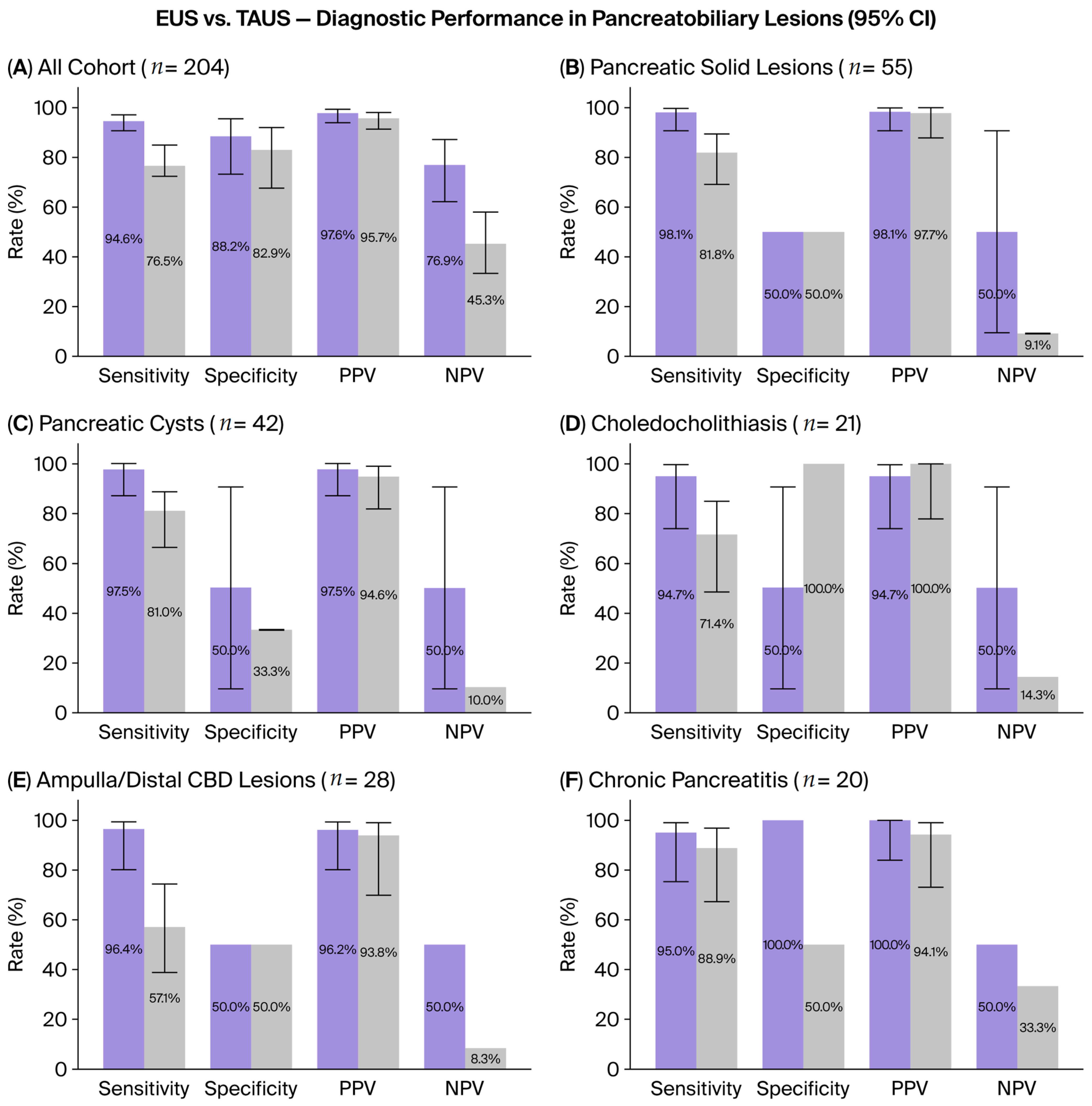
| Group | Modality | Sensitivity (%) (95% CI) | Specificity (%) (95% CI) | PPV (%) (95% CI) | NPV (%) (95% CI) | p |
|---|---|---|---|---|---|---|
| All cohort (n = 204) | TAUS | 76.5 (72.2–84.8) | 82.9 (67.4–91.8) | 95.7 (91.3–97.9) | 45.3 (33.2–57.9) | 0.000 |
| EUS | 94.6 (90.6–97.0) | 88.2 (73.2–95.3) | 97.6 (93.8–99.1) | 76.9 (62.1–87.1) | ||
| Pancreatic solid lesion (n = 55) | TAUS | 81.8 (69.1–89.3) | 50.0 (*) | 97.7 (87.9–99.9) | 9.1 (*) | 0.021 |
| EUS | 98.1 (90.6–99.8) | 50.0 (9.5–90.6) | 98.1 (90.6–99.8) | 50.0 (9.5–90.6) | ||
| Pancreatic cyst (n = 42) | TAUS | 80.9 (66.3–88.6) | 33.3 (*) | 94.6 (81.7–98.7) | 10.0 (*) | 0.012 |
| EUS | 97.5 (86.8–99.9) | 50.0 (9.5–90.6) | 97.5 (86.8–99.9) | 50.0 (9.5–90.6) | ||
| Choledocholithiasis (n = 21) | TAUS | 71.4 (48.5–84.8) | 100.0 (*) | 100.0 (77.6–100) | 14.3 (*) | 0.031 |
| EUS | 94.7 (74.0–99.4) | 50.0 (9.5–90.5) | 94.7 (74.0–99.4) | 50.0 (9.5–90.5) | ||
| Ampulla/distal common bile duct (n = 28) | TAUS | 57.1 (38.8–74.5) | 50.0 (*) | 93.8 (69.8–99.2) | 8.3 (*) | 0.006 |
| EUS | 96.4 (79.9–99.3) | 50.0 (*) | 96.2 (79.9–99.3) | 50.0 (*) | ||
| Chronic pancreatitis (n = 20) | TAUS | 88.9 (67.2–96.9) | 50.0 (*) | 94.1 (73.0–98.9) | 33.3 (*) | 0.500 |
| EUS | 95.0 (75.4–99.2) | 100.0 (*) | 100.0 (83.9–100) | 50.0 (*) |
| Parameter | TAUS (Success) | TAUS (Failure) | p-Value |
|---|---|---|---|
| Age (years) (mean ± SD) | 62.8 ± 14.7 | 66.6 ± 12.9 | 0.140 |
| Sex (female, %) | 51.2% | 53.8% | 0.769 |
| BMI (kg/m2) (mean ± SD) | 29.9 ± 3.2 | 26.5 ± 4.7 | <0.001 |
| Smoking (%) | 29.9% | 25.6% | 0.599 |
| Alcohol_C (%) | 19.6% | 12.8% | 0.341 |
| CEA (ng/mL) (mean ± SD) | 5.2 ± 10.8 | 3.5 ± 11.9 | 0.403 |
| CA 19-9 (U/mL) (mean ± SD) | 259.8 ± 395 | 204.1 ± 425 | 0.448 |
| ALT (U/L) (mean ± SD) | 86.2 ± 61.8 | 73.3 ± 69.3 | 0.270 |
| AST (U/L) (mean ± SD) | 73.1 ± 55.9 | 62.6 ± 64.1 | 0.323 |
| GGT (U/L) (mean ± SD) | 195.6 ± 157.1 | 154.1 ± 166.7 | 0.157 |
| ALP (U/L) (mean ± SD) | 230.1 ± 99.8 | 215.6 ± 111.2 | 0.441 |
| Size (mm) (mean ± SD) | 30.3 ± 17.4 | 17.6 ± 14.1 | 0.002 |
| Localization * (1/2) | 90.8%/47.6% | 9.2%/52.4% | <0.001 |
| MPD frequency (%) | 35.4% | 10.3% | 0.001 |
| CD frequency (%) | 37.7% | 46.1% | 0.230 |
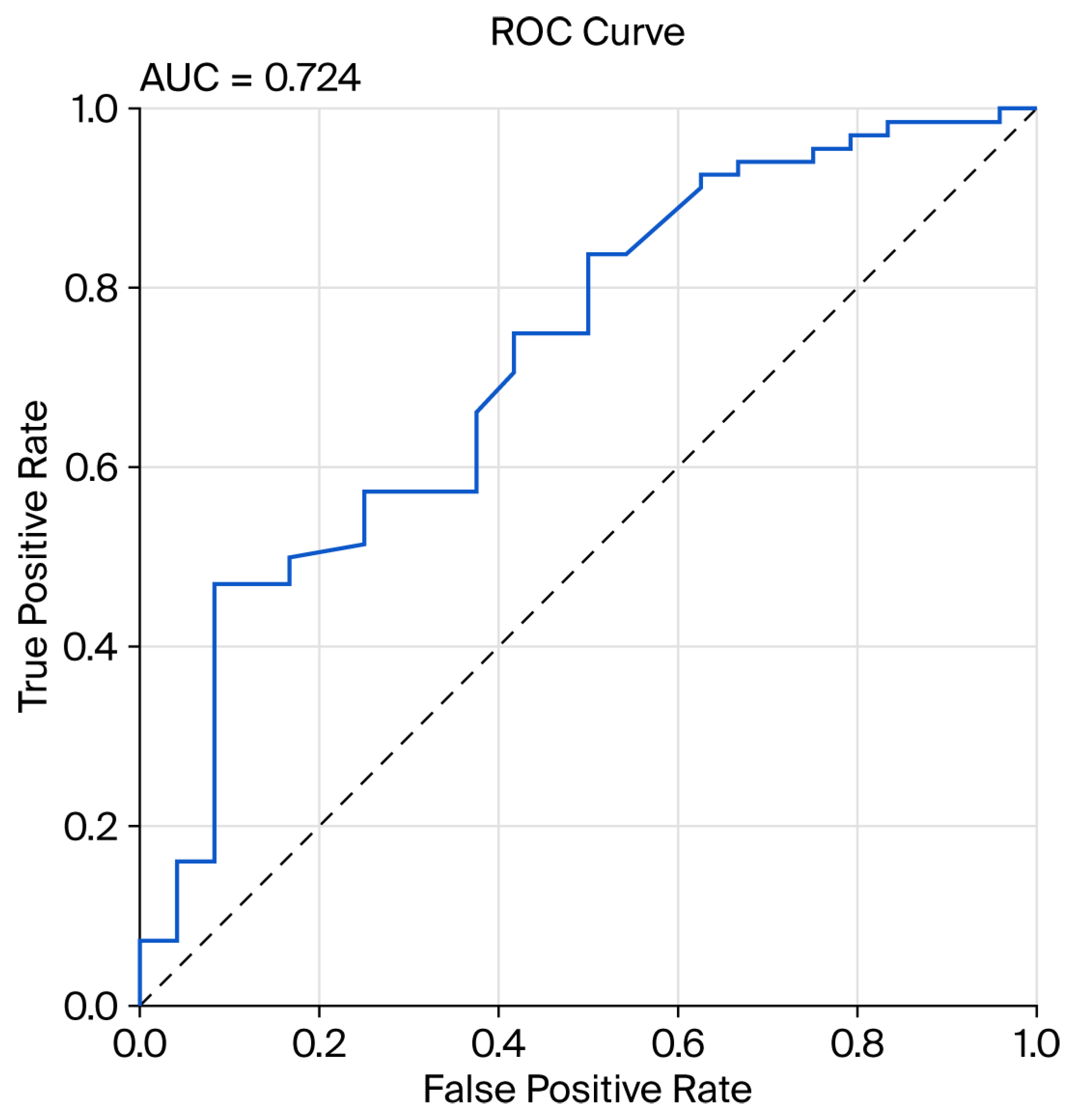
| Lesion Size Category (mm) | Number of Cases (n) | TAUS Detection Rate |
|---|---|---|
| <10 | 22 | 0.5 |
| 10–20 | 20 | 0.75 |
| >20 | 55 | 0.84 |
| USG Status | Localization | |||
|---|---|---|---|---|
| Head n (%) | Body n (%) | Tail n (%) | p-Value | |
| USG detected | 52 (91.2%) | 17 (89.5%) | 10 (47.6%) | <0.001 |
| USG failed | 5 (8.8%) | 2 (10.5%) | 11 (52.4%) | |
| Total | 57 (100%) | 19 (100%) | 21 (100%) | |
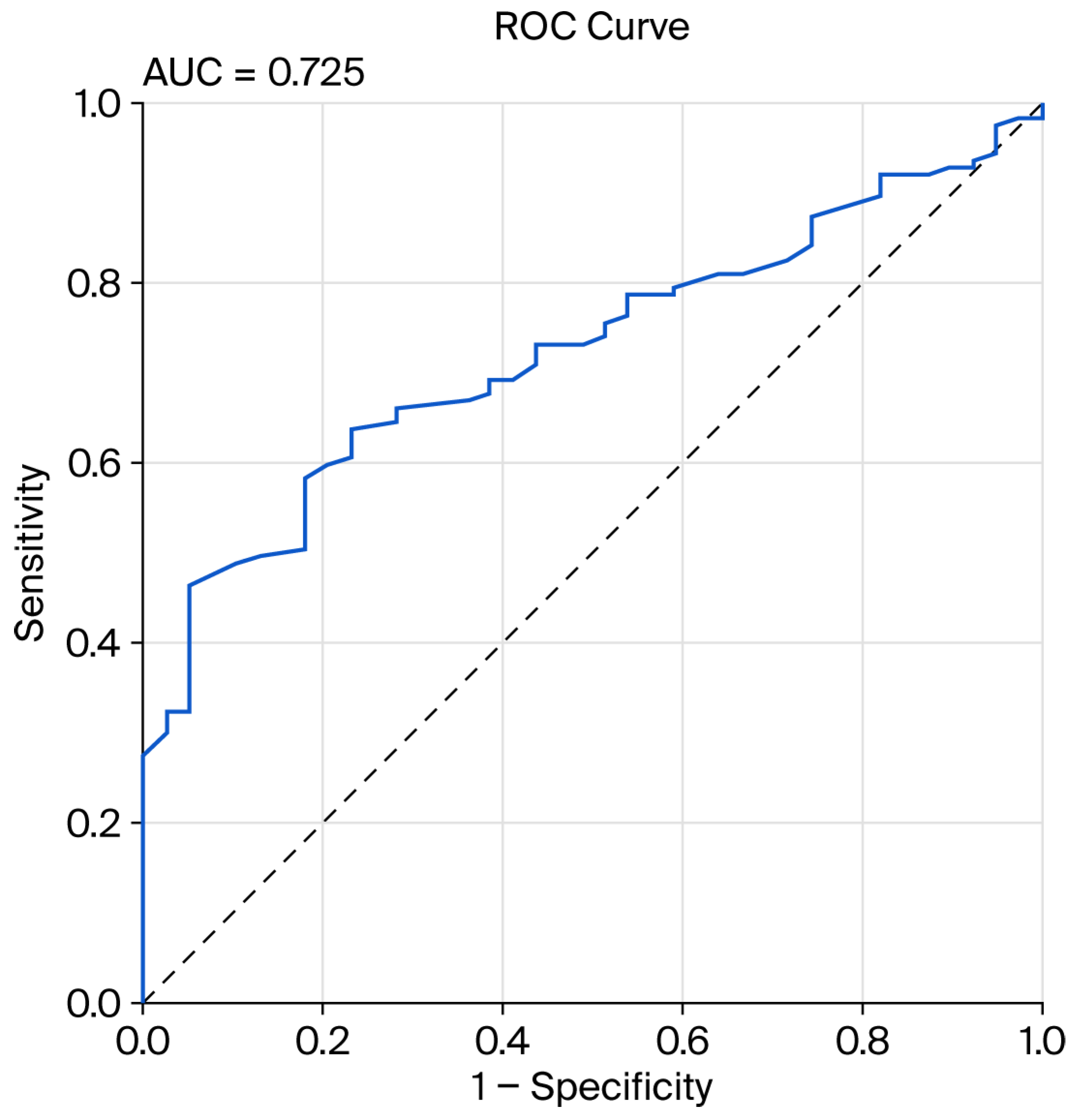
| Variable (Predictor) | Odds Ratio (Exp (B)) | 95% Confidence Interval (CI) | p-Value |
|---|---|---|---|
| Pathology Size (mm) | 1.049 | 1.005–1.096 | 0.029 |
| BMI (kg/m2) | 1.106 | 0.937–1.307 | 0.234 |
| Localization (1 vs. Ref.) | 0.875 | 0.221–3.468 | 0.849 |
| MPD Dilatation (Yes vs. No) | 3.372 | 0.740–15.365 | 0.116 |
Disclaimer/Publisher’s Note: The statements, opinions and data contained in all publications are solely those of the individual author(s) and contributor(s) and not of MDPI and/or the editor(s). MDPI and/or the editor(s) disclaim responsibility for any injury to people or property resulting from any ideas, methods, instructions or products referred to in the content. |
© 2025 by the authors. Licensee MDPI, Basel, Switzerland. This article is an open access article distributed under the terms and conditions of the Creative Commons Attribution (CC BY) license (https://creativecommons.org/licenses/by/4.0/).
Share and Cite
Yaraş, S.; Özdoğan, O.; Sezgin, O. The Triage Role of Transabdominal Ultrasonography (TAUS) in the Diagnostic Management of Pancreatic and Distal Biliary Pathologies: A Comparative Efficacy Analysis with Endoscopic Ultrasonography (EUS). Diagnostics 2025, 15, 2955. https://doi.org/10.3390/diagnostics15232955
Yaraş S, Özdoğan O, Sezgin O. The Triage Role of Transabdominal Ultrasonography (TAUS) in the Diagnostic Management of Pancreatic and Distal Biliary Pathologies: A Comparative Efficacy Analysis with Endoscopic Ultrasonography (EUS). Diagnostics. 2025; 15(23):2955. https://doi.org/10.3390/diagnostics15232955
Chicago/Turabian StyleYaraş, Serkan, Osman Özdoğan, and Orhan Sezgin. 2025. "The Triage Role of Transabdominal Ultrasonography (TAUS) in the Diagnostic Management of Pancreatic and Distal Biliary Pathologies: A Comparative Efficacy Analysis with Endoscopic Ultrasonography (EUS)" Diagnostics 15, no. 23: 2955. https://doi.org/10.3390/diagnostics15232955
APA StyleYaraş, S., Özdoğan, O., & Sezgin, O. (2025). The Triage Role of Transabdominal Ultrasonography (TAUS) in the Diagnostic Management of Pancreatic and Distal Biliary Pathologies: A Comparative Efficacy Analysis with Endoscopic Ultrasonography (EUS). Diagnostics, 15(23), 2955. https://doi.org/10.3390/diagnostics15232955