
Article

Clinical Significance of a Pain Scoring System for Deep Endometriosis by Pelvic Examination: Pain Score


1
Department of Obstetrics and Gynecology, Nippon Medical School, 1-1-5 Sendagi, Bunkyo, Tokyo 113-8602, Japan
2
Department of Obstetrics and Gynecology, Nippon Medical School, Chibe Hokuso Hospital, 1715 Kamagari, Inzai 270-1694, Chiba, Japan
3
Meirikai Tokyo Yamato Hospital, 36-3 Honcho Itabashi, Tokyo 173-0001, Japan
4
Department of Obstetrics and Gynecology, Nippon Medical School, Musashikosugi Hospital, 1-383 Kosugicho, Nakahara, Kawasaki 211-8533, Kanagawa, Japan
*
Author to whom correspondence should be addressed.
Diagnostics 2023, 13(10), 1774; https://doi.org/10.3390/diagnostics13101774

Submission received: 31 January 2023 / Revised: 9 May 2023 / Accepted: 12 May 2023 / Published: 17 May 2023
(This article belongs to the Special Issue Advances in Diagnosis and Management of Endometriosis)

Abstract

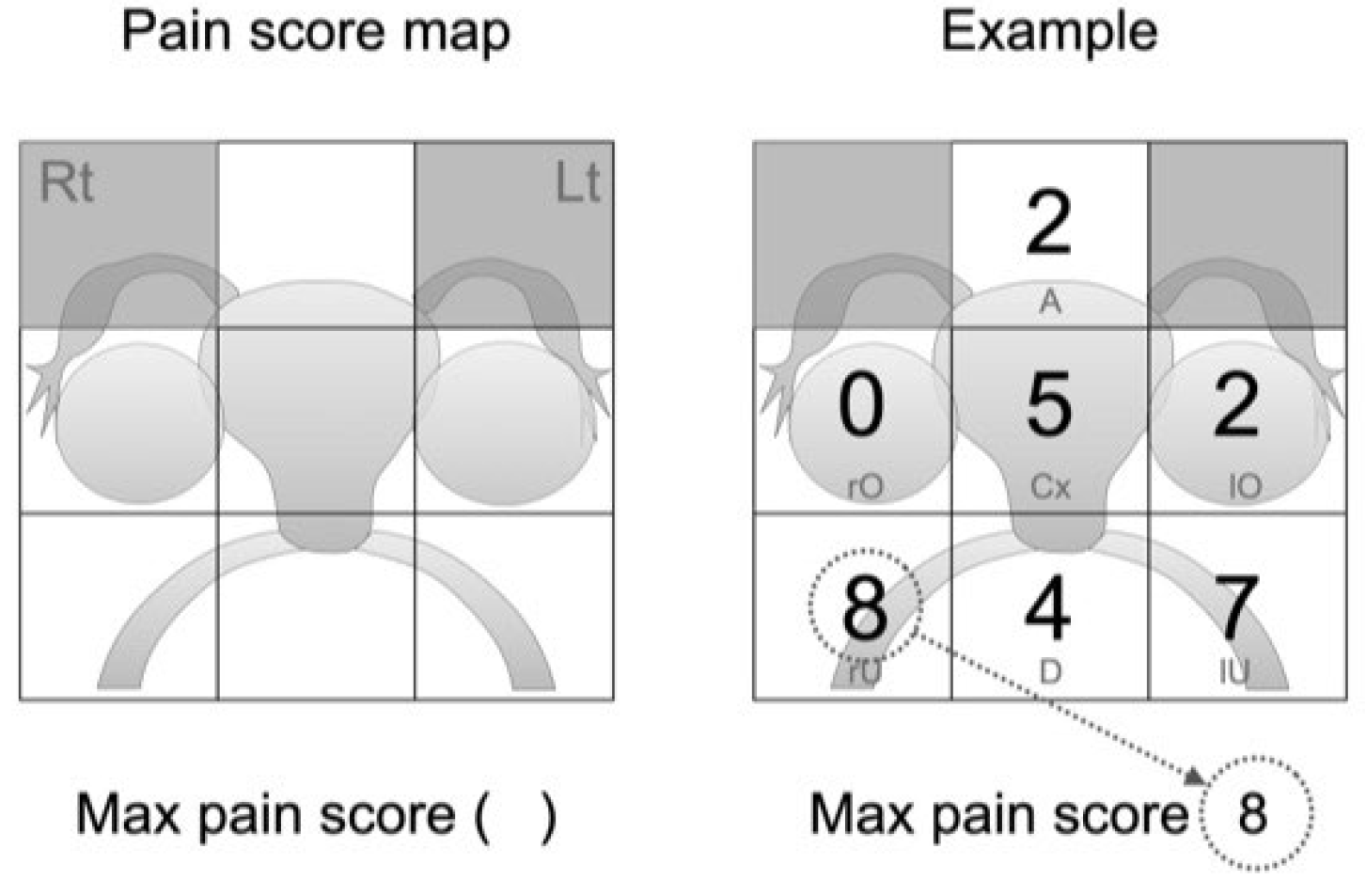
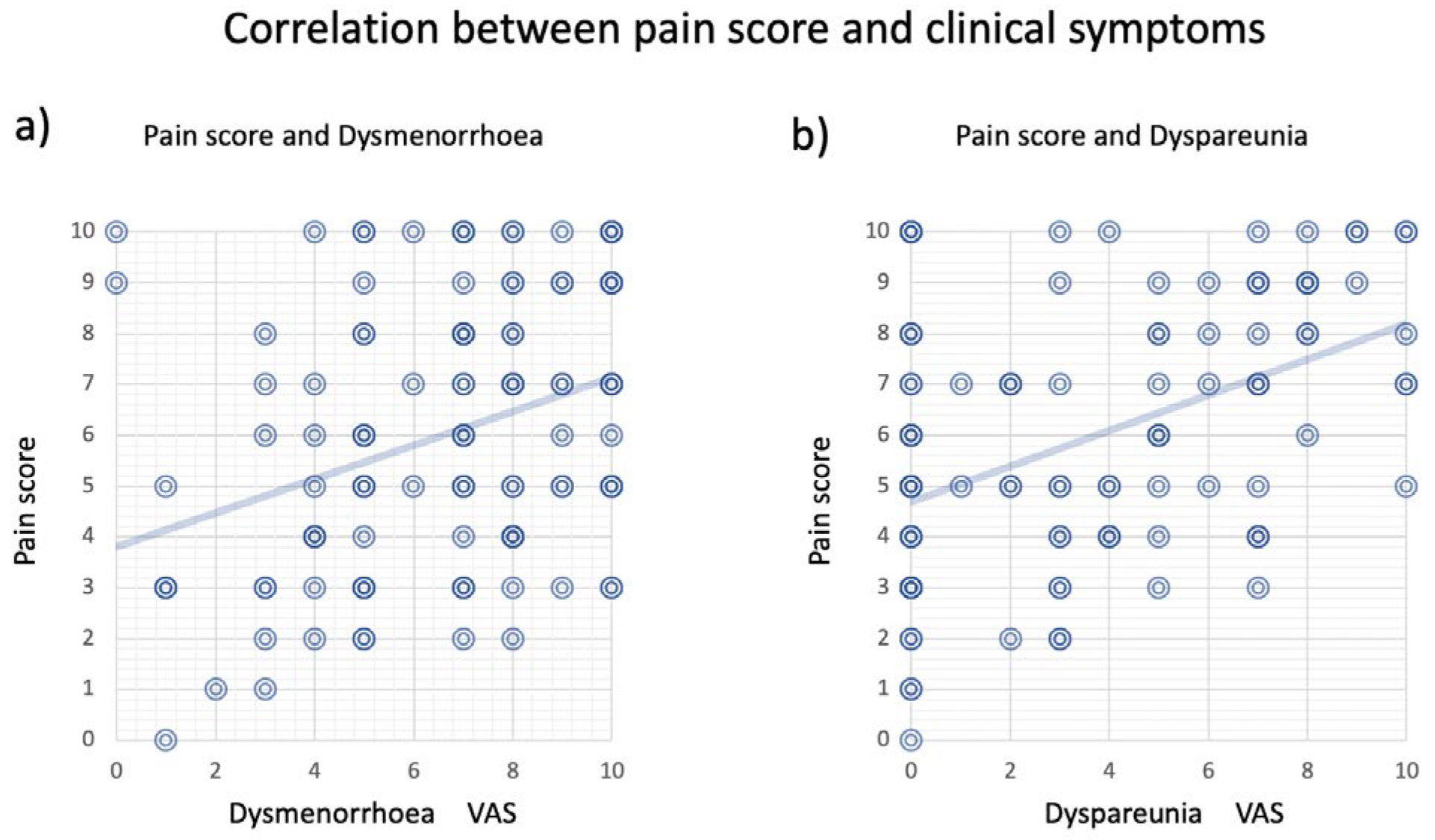
Endometriosis-associated pain is an essential factor in deciding surgical indications of endometriosis. However, there is no quantitative method to diagnose the intensity of local pain in endometriosis (especially deep endometriosis). This study aims to examine the clinical significance of the pain score, a preoperative diagnostic scoring system for endometriotic pain that can be performed only with pelvic examination, devised for the above purpose. The data from 131 patients from a previous study were included and evaluated using the pain score. This score measures the pain intensity in each of the seven areas of the uterus and its surroundings via a pelvic examination using a numeric rating scale (NRS) which contains 10 points. The maximum value was then defined as the max pain score. This study investigated the relationship between the pain score and clinical symptoms of endometriosis or endometriotic lesions related to deep endometriosis. The preoperative max pain score was 5.93 ± 2.6, which significantly decreased to 3.08 ± 2.0 postoperatively (p = 7.70 × 10⁻²⁰). Regarding preoperative pain scores for each area, those of the uterine cervix, pouch of Douglas, and left and right uterosacral ligament areas were high (4.52, 4.04, 3.75, and 3.63, respectively). All scores decreased significantly after surgery (2.02, 1.88, 1.75, and 1.75, respectively). The correlations between the max pain score and dysmenorrhea, dyspareunia, perimenstrual dyschezia (pain with defecation), and chronic pelvic pain were 0.329, 0.453, 0.253, and 0.239, respectively, and were strongest with dyspareunia. Regarding the pain score of each area, the combination of the pain score of the pouch of Douglas area and the VAS score of dyspareunia showed the strongest correlation (0.379). The max pain score in the group with deep endometriosis (endometrial nodules) was 7.07 ± 2.4, which was significantly higher than the 4.97 ± 2.3 score obtained in the group without (p = 1.71 × 10⁻⁶). The pain score can indicate the intensity of endometriotic pain, especially dyspareunia. A local high value of this score could suggest the presence of deep endometriosis, depicted as endometriotic nodules at that site. Therefore, this method could help develop surgical strategies for deep endometriosis.
Keywords: pain score; deep endometriosis; dysmenorrhea; dyspareunia; perimenstrual dyschezia; chronic pelvic pain; endometriotic nodule; obliteration of the pouch of Douglas; retroflexed uterus; adenomyosis pain score; deep endometriosis; dysmenorrhea; dyspareunia; perimenstrual dyschezia; chronic pelvic pain; endometriotic nodule; obliteration of the pouch of Douglas; retroflexed uterus; adenomyosis