Application of 3D-Bioprinting in Treatment of Chronic Wounds: A Review

Abstract
1. Introduction
2. Bioprinting Technologies and Techniques
2.1. Bioprinting Technologies, Based on Deposition Mechanism
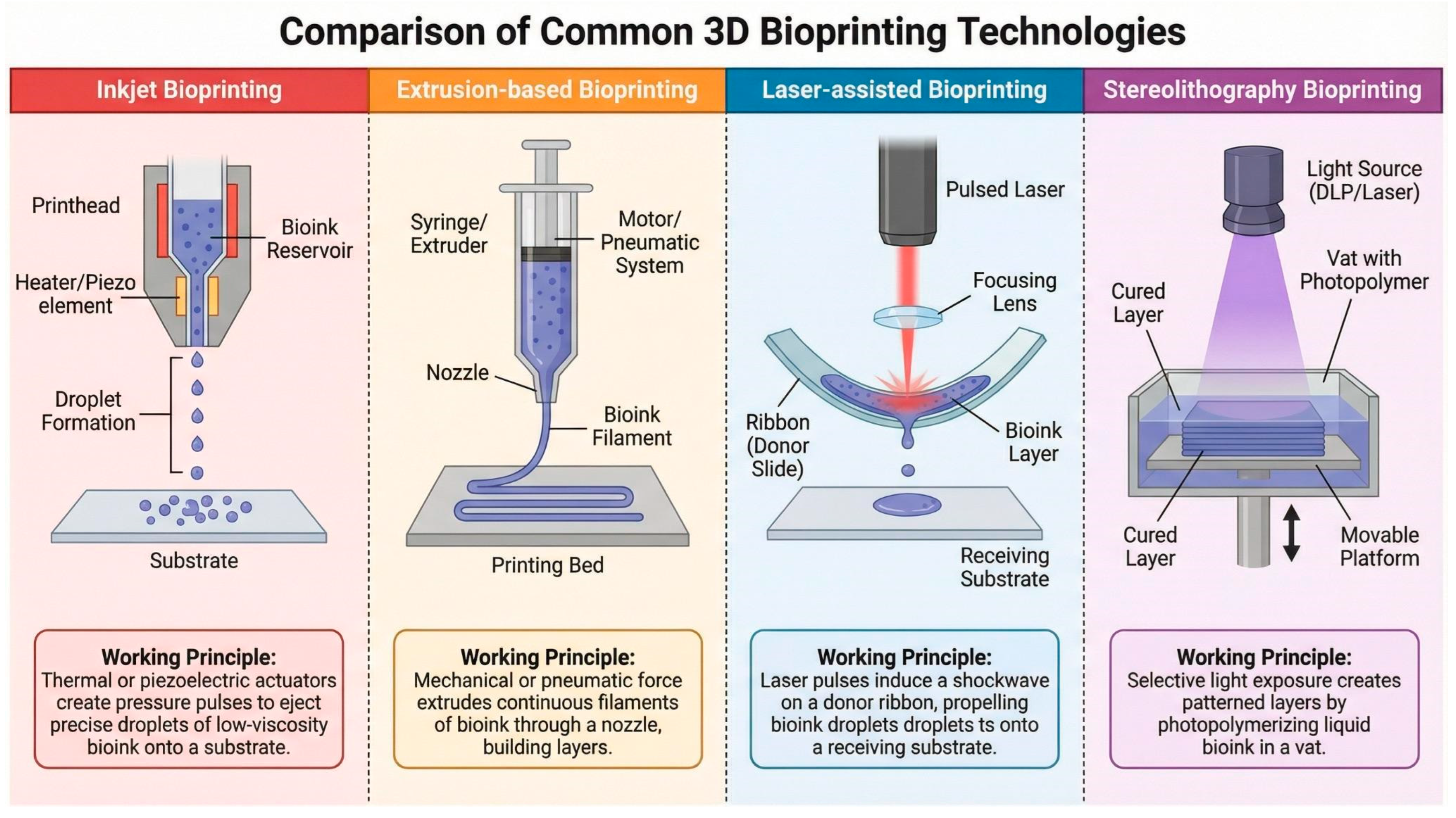
2.1.1. Extrusion-Based and Inkjet Bioprinting
2.1.2. Laser-Assisted Bioprinting
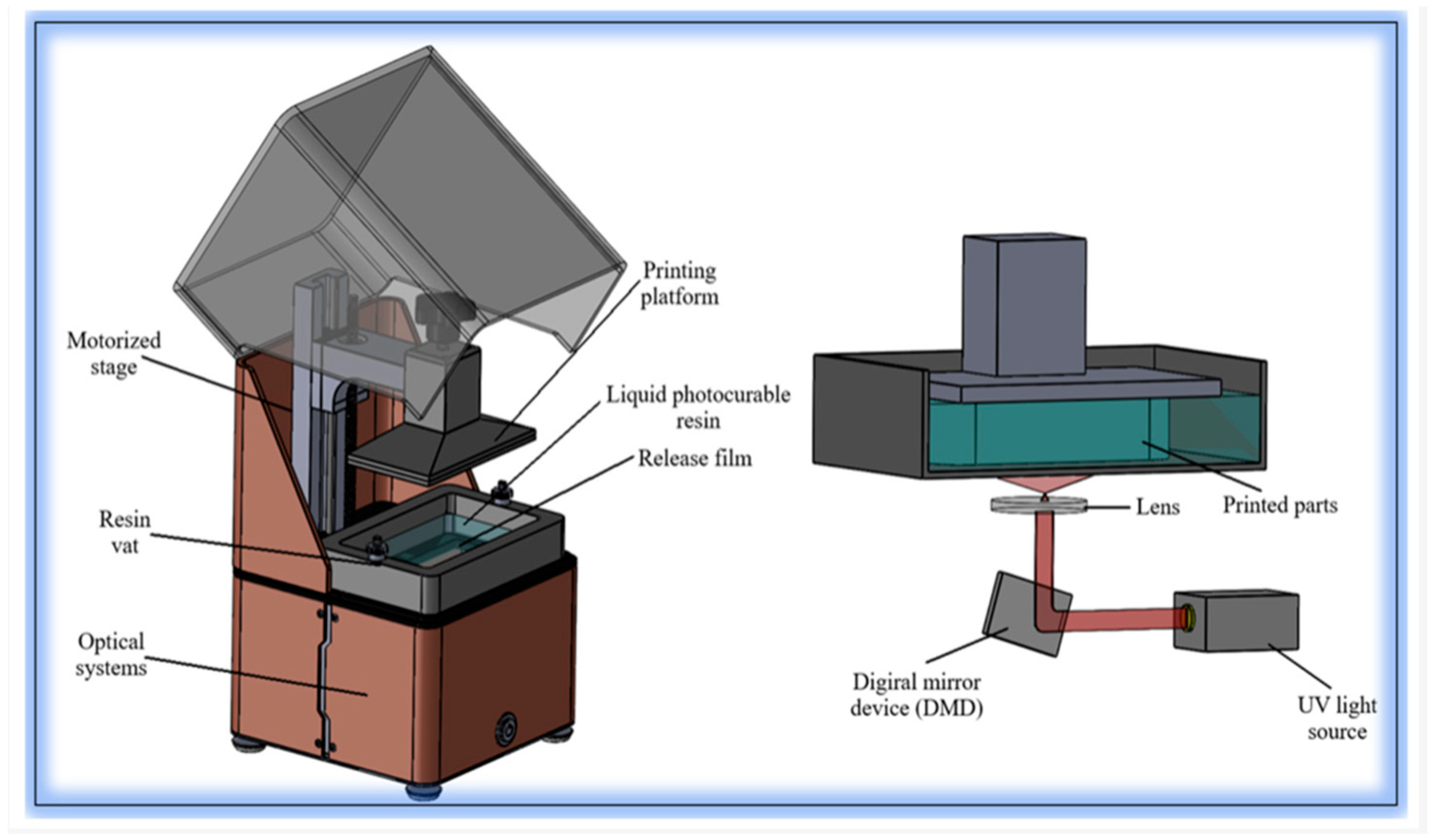
2.1.3. Stereolithography Bioprinting
2.1.4. Digital Light Processing (Dlp) Bioprinting
2.2. Bioprinting Technologies, Based on Application Mechanism
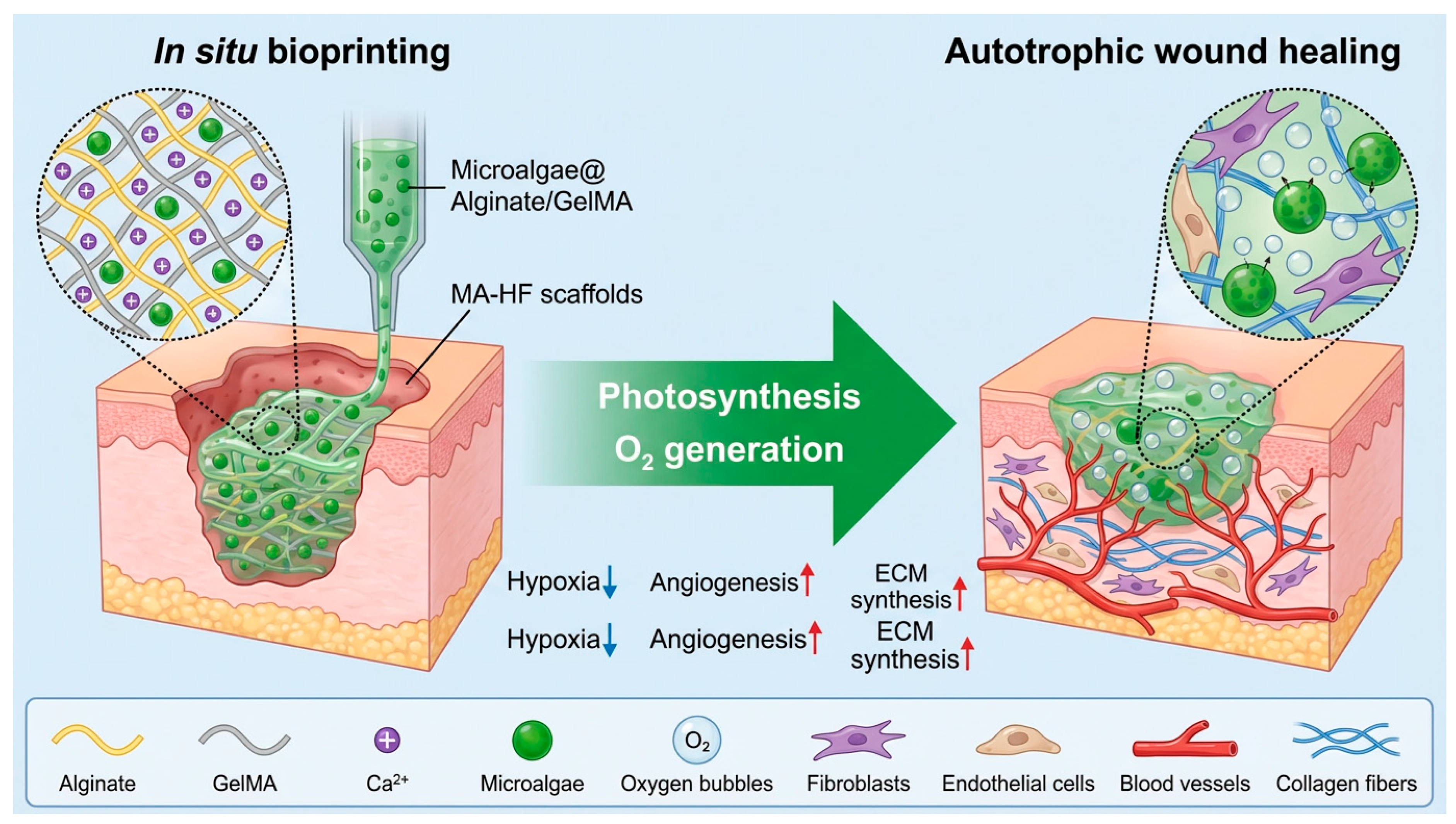
2.2.1. In Situ Bioprinting
2.2.2. Coaxial and Microfluidic Bioprinting
3. Biomaterials for Wound Healing
3.1. Natural Polymers
3.2. Synthetic Polymers
3.3. Composite and Hybrid Bioinks
3.4. Bioactive Components
3.4.1. Cellular Components
3.4.2. Growth Factors and Cytokines
3.4.3. Bioactive Molecules
3.4.4. Photosynthetic Microorganisms
4. Mechanisms of Chronic Wound Healing
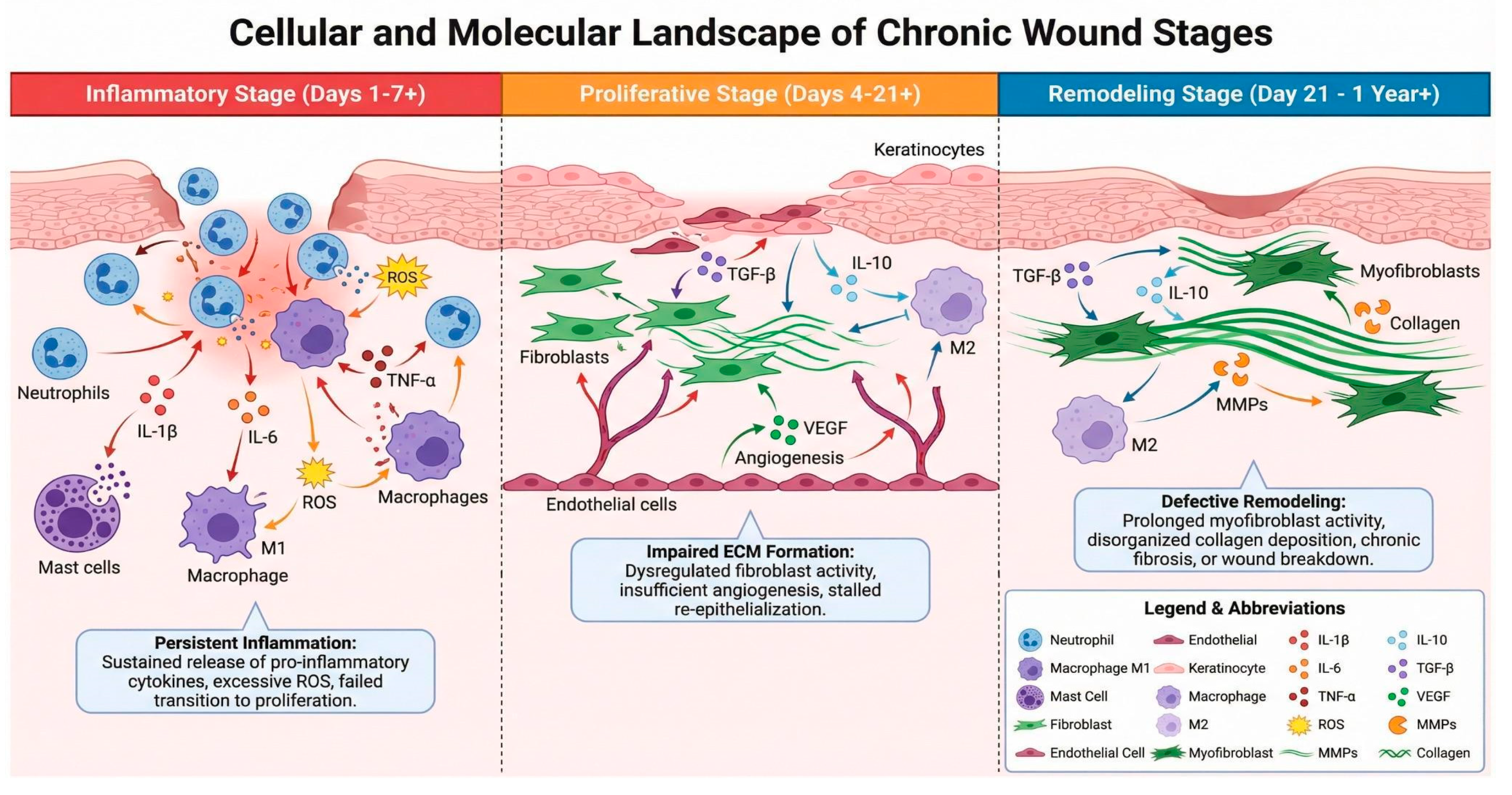
4.1. Pathophysiology of Chronic Wounds
4.2. Angiogenesis and Vascularization
4.3. Immunomodulation and Inflammation Control
4.4. Extracellular Matrix Remodeling
5. Clinical Applications and Outcomes
5.1. Diabetic Wound Healing
5.2. Full-Thickness Skin Defects
5.3. Comparative Analysis of Bioprinted Constructs
6. Our Preliminary Clinical Experience with 3D-Bioptining Technology
6.1. Overview
6.2. Patient Population and Study Design
- Wound duration: >4 years of failed treatment;
- Comorbidities: Stage 2 arterial hypertension (well-controlled) in all patients (100%); diabetes mellitus type 2 (well-controlled) in one patient (25%);
- Infection status: Microbiological examination confirmed absence of active infection in all cases;
- Previous treatments: Multiple debridements, advanced wound dressings, negative pressure wound therapy, and failed surgical interventions including skin grafting and local flap reconstruction.
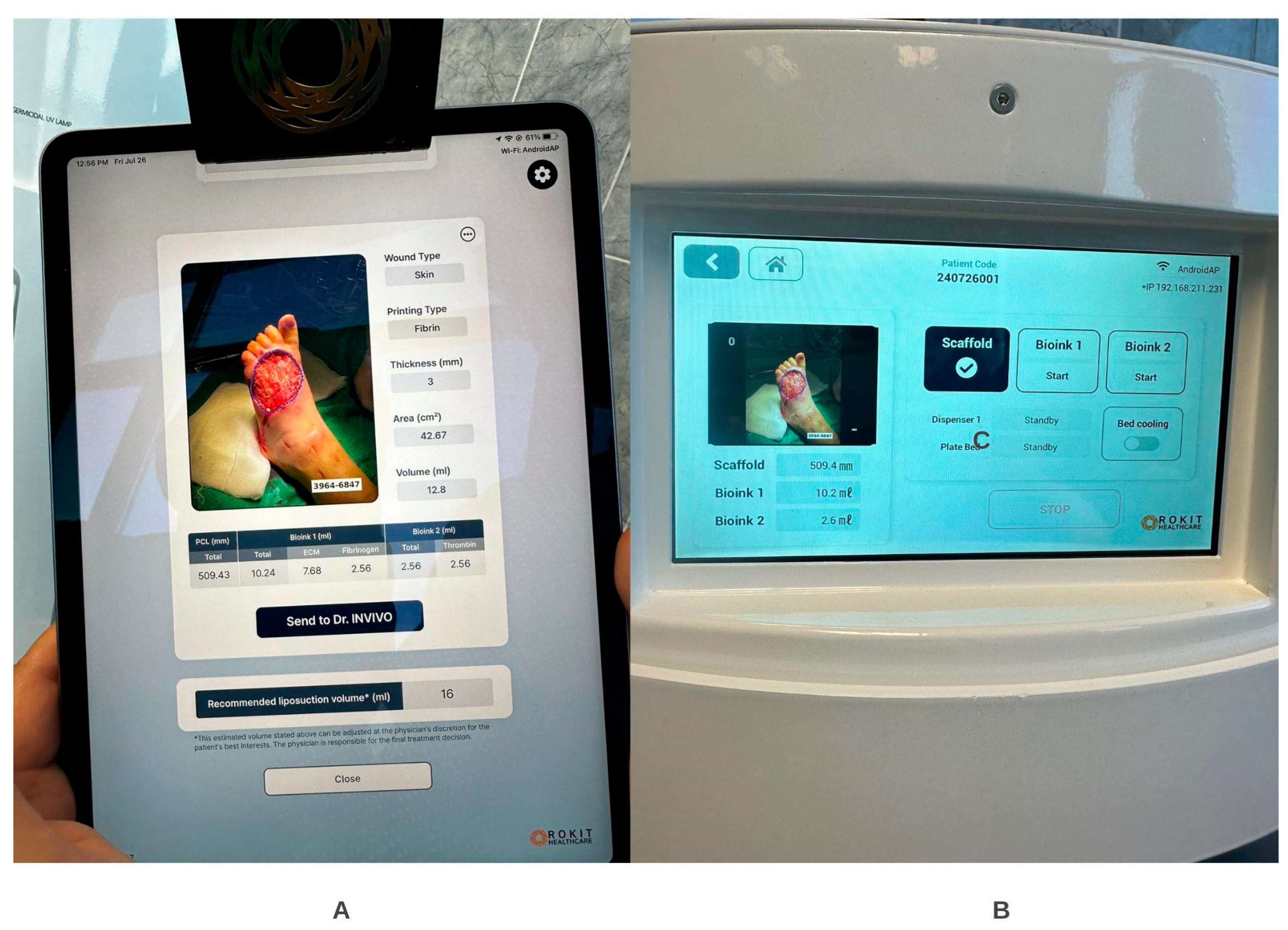
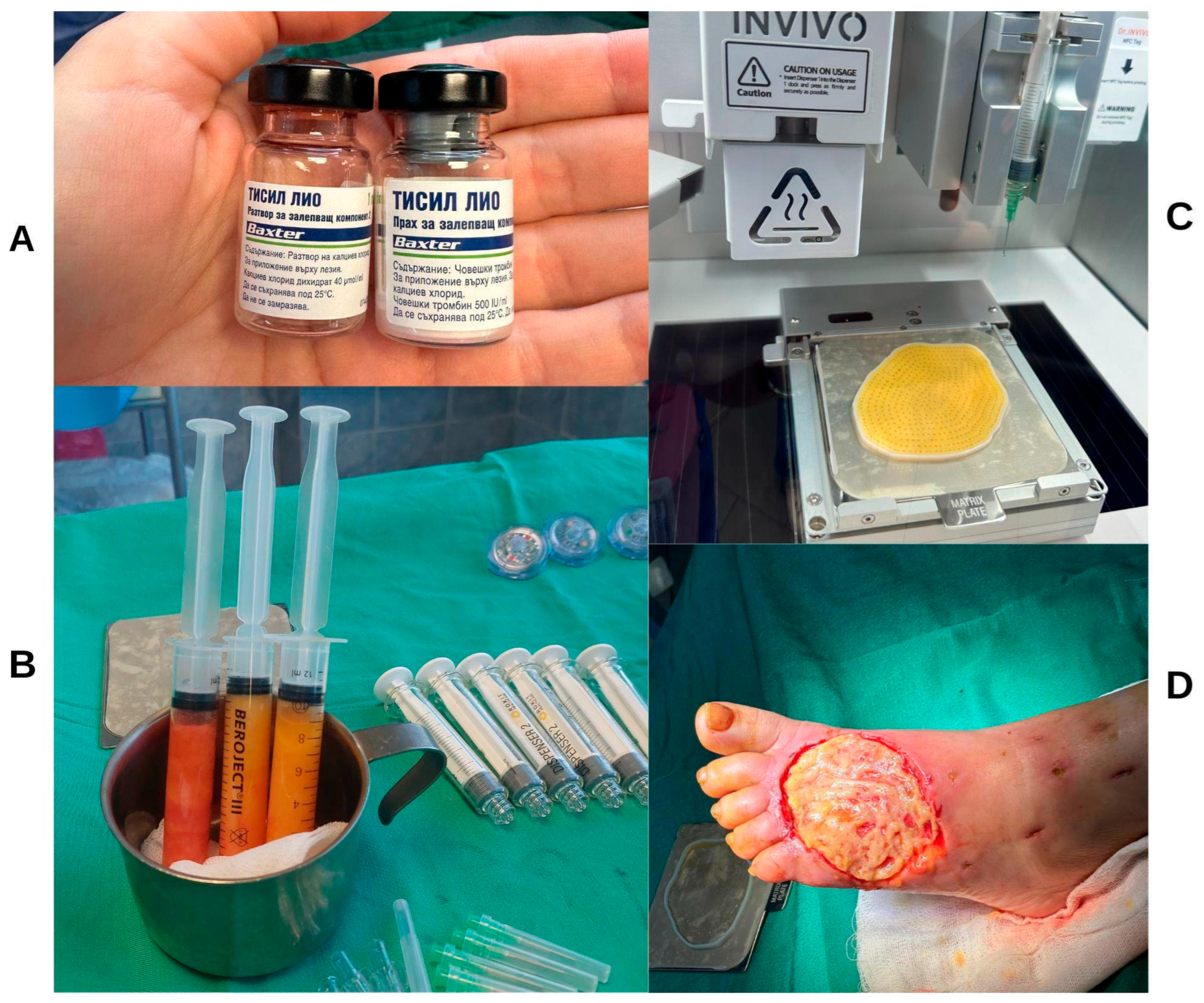
6.3. Technology and Treatment Protocol
6.4. Safety Profile
- Ensuring adequate infection control;
- Optimizing comorbid conditions (particularly diabetes);
- Managing patient expectations, especially in diabetic populations;
- Appropriate wound bed preparation;
- Consideration of wound duration and previous treatment failures.
6.5. Clinical Outcomes
7. Comparison with Conventional Approaches
8. Limitations and Future Research Directions
8.1. Technical Challenges
Challenges in Vascularization of Large Bioprinted Constructs
8.2. Emerging Innovations
8.3. Scalability Issues and Manufacturing Challenges Associated with Clinical Translation of Bioprinted Tissues
8.3.1. Scalability and Process Bottlenecks
8.3.2. Manufacturing and Quality Control
8.3.3. Supply Chain and Economic Risks
9. Conclusions
Supplementary Materials
Author Contributions
Funding
Institutional Review Board Statement
Informed Consent Statement
Data Availability Statement
Conflicts of Interest
References
- Graves, N.; Phillips, C.J.; Harding, K.G. A narrative review of the epidemiology and economics of chronic wounds. Br. J. Dermatol. 2022, 186, 968–975. [Google Scholar] [CrossRef] [PubMed]
- Lo, Z.J.; Lim, X.; Eng, D.; Car, J.; Hong, Q.; Yong, E.; Zhang, L.; Chandrasekar, S.; Tan, G.W.L.; Chan, Y.M.; et al. Clinical and economic burden of wound care in the tropics: A 5-year institutional population health review. Int. Wound J. 2020, 17, 790–803. [Google Scholar] [CrossRef]
- Chu, L. Assessment and Management of Chronic Venous, Arterial, and Diabetic Wounds in Elderly Adults. Semin. Vasc. Surg. 2025, 38, 100–108. [Google Scholar] [CrossRef]
- Ogbera, A.O.; Fasanmade, O.; Ohwovoriole, A.E.; Adediran, O. An assessment of the disease burden of foot ulcers in patients with diabetes mellitus attending a teaching hospital in Lagos, Nigeria. Int. J. Low. Extrem. Wounds 2006, 5, 244–249. [Google Scholar] [CrossRef]
- Fox, J.D.; Baquerizo Nole, K.L.; Berriman, S.J.; Kirsner, R.S. Chronic Wounds: The Need for Greater Emphasis in Medical Schools, Post-graduate Training and Public Health Discussions. Ann. Surg. 2016, 264, 221–222. [Google Scholar] [CrossRef]
- Carter, M.J.; DaVanzo, J.; Haught, R.; Nusgart, M.; Cartwright, D.; Fife, C.E. Chronic wound prevalence and the associated cost of treatment in medicare beneficiaries: Changes between 2014 and 2019. J. Med. Econ. 2023, 26, 894–901. [Google Scholar] [CrossRef]
- Lo, Z.J.; Surendra, N.K.; Saxena, A.; Car, J. Clinical and economic burden of diabetic foot ulcers: A 5-year longitudinal multi-ethnic cohort study from the tropics. Int. Wound J. 2021, 18, 375–386. [Google Scholar] [CrossRef]
- Kammona, O.; Kiparissides, C. Recent Developments in 3D-(Bio)printed Hydrogels as Wound Dressings. Gels 2024, 10, 147. [Google Scholar] [CrossRef]
- Liao, W.; Duan, X.; Xie, F.; Zheng, D.; Yang, P.; Wang, X.; Hu, Z. 3D-bioprinted double-crosslinked angiogenic alginate/chondroitin sulfate patch for diabetic wound healing. Int. J. Biol. Macromol. 2023, 242, 123952. [Google Scholar] [CrossRef]
- Glover, K.; Mathew, E.; Pitzanti, G.; Magee, E.; Lamprou, D.A. 3D bioprinted scaffolds for diabetic wound-healing applications. Drug Deliv. Transl. Res. 2022, 12, 1133–1147. [Google Scholar] [CrossRef] [PubMed]
- Amo, C.; Fernández-San Argimiro, X.; Cascajo-Castresana, M.; Perez-Valle, A.; Madarieta, I.; Olalde, B.; Andia, I. Wound-Microenvironment Engineering through Advanced-Dressing Bioprinting. Int. J. Mol. Sci. 2022, 23, 2836. [Google Scholar] [CrossRef]
- Zhang, T.; Sheng, S.; Cai, W.; Yang, H.; Li, J.; Niu, L.; Chen, W.; Zhang, X.; Zhou, Q.; Gao, C.; et al. 3-D bioprinted human-derived skin organoids accelerate full-thickness skin defects repair. Bioact. Mater. 2024, 40, 234–248. [Google Scholar] [CrossRef] [PubMed]
- Van Damme, L.; Blondeel, P.; Van Vlierberghe, S. Reconstructing Curves: A Bottom-Up Approach toward Adipose Tissue Regeneration with Recombinant Biomaterials. Macromol. Biosci. 2024, 24, 2300466. [Google Scholar] [CrossRef]
- Guillotin, B.; Souquet, A.; Catros, S.; Duocastella, M.; Pippenger, B.; Bellance, S.; Bareille, R.; Rémy, M.; Bordenave, L.; Amédée, J.; et al. Laser assisted bioprinting of engineered tissue with high cell density and microscale organization. Biomaterials 2010, 31, 7250–7256. [Google Scholar] [CrossRef]
- Ventura, R.D. An overview of laser-assisted bioprinting (LAB) in tissue engineering applications. Med. Lasers Eng. Basic Res. Clin. Appl. 2021, 10, 76–81. [Google Scholar] [CrossRef]
- Hakobyan, D.; Kerouredan, O.; Remy, M.; Dusserre, N.; Medina, C.; Devillard, R.; Fricain, J.C.; Oliveira, H. Laser-Assisted Bioprinting for Bone Repair. Methods Mol. Biol. 2020, 2140, 135–144. [Google Scholar] [CrossRef] [PubMed]
- Xu, Y.; Zhang, F.; Zhai, W.; Cheng, S.; Li, J.; Wang, Y. Unraveling of Advances in 3D-Printed Polymer-Based Bone Scaffolds. Polymers 2022, 14, 566. [Google Scholar] [CrossRef]
- Lin, K.; Xu, H.; Liu, H.; Jiang, H.; Mei, H.; Jiang, L.; Du, Z.; Tan, W.; Li, X.; Zhou, J.; et al. Bioprinted dressing with symbiotic microbes for oxygen supply and antibacterial therapy for enhanced diabetic wound healing. J. Control Release 2026, 392, 114653. [Google Scholar] [CrossRef] [PubMed]
- Liu, T.; Qu, L.; Zhu, C.; Guo, M.; Ma, X.; Lei, H.; Fan, D. Oxygen-generating hydrogels combined with electrical stimulation: A dual approach for promoting diabetic wound healing. Acta Biomater. 2024, 190, 95–106. [Google Scholar] [CrossRef]
- Xue, J.; Qin, C.; Wu, C. 3D printing of cell-delivery scaffolds for tissue regeneration. Regen. Biomater. 2023, 10, rbad032. [Google Scholar] [CrossRef] [PubMed] [PubMed Central]
- Lim, K.S.; Levato, R.; Costa, P.F.; Castilho, M.D.; Alcala-Orozco, C.R.; van Dorenmalen, K.M.A.; Melchels, F.P.W.; Gawlitta, D.; Hooper, G.J.; Malda, J.; et al. Bio-resin for high resolution lithography-based biofabrication of complex cell-laden constructs. Biofabrication 2018, 10, 034101. [Google Scholar] [CrossRef] [PubMed]
- Anandakrishnan, N.; Ye, H.; Guo, Z.; Chen, Z.; Mentkowski, K.I.; Lang, J.K.; Rajabian, N.; Andreadis, S.T.; Ma, Z.; Spernyak, J.A.; et al. Fast Stereolithography Printing of Large-Scale Biocompatible Hydrogel Models. Adv. Healthc. Mater. 2021, 10, e2002103. [Google Scholar] [CrossRef]
- Grigoryan, B.; Paulsen, S.J.; Corbett, D.C.; Sazer, D.W.; Fortin, C.L.; Zaita, A.J.; Greenfield, P.T.; Calafat, N.J.; Gounley, J.P.; Ta, A.H.; et al. Multivascular networks and functional intravascular topologies within biocompatible hydrogels. Science 2019, 364, 458–464. [Google Scholar] [CrossRef] [PubMed] [PubMed Central]
- Li, W.; Wang, M.; Ma, H.; Chapa-Villarreal, F.A.; Lobo, A.O.; Zhang, Y.S. Stereolithography apparatus and digital light processing-based 3D bioprinting for tissue fabrication. iScience 2023, 26, 106039. [Google Scholar] [CrossRef] [PubMed] [PubMed Central]
- Alparslan, C.; Bayraktar, Ş. Advances in Digital Light Processing (DLP) Bioprinting: A Review of Biomaterials and Its Applications, Innovations, Challenges, and Future Perspectives. Polymers 2025, 17, 1287. [Google Scholar] [CrossRef] [PubMed]
- Fu, C.; Liu, G.; Fan, Y.; Wang, J.; Tian, X.; Xiao, J. Pro-angiogenic dual-crosslinked collagen bioinks for precise cell-laden DLP 3D printing and rapid vascularized diabetic wound repair. Int. J. Biol. Macromol. 2026, 343, 150408. [Google Scholar] [CrossRef]
- Kamaraj, M.; Moghimi, N.; Joshi, A.; Rezayof, O.; Barer, A.; Cao, S.; Orkin, R.; Alambeigi, F.; John, J.V. Recent Advances in Handheld and Robotic Bioprinting Approach for Tissue Engineering. Adv. Mater. Technol. 2025, 10, 2500206. [Google Scholar] [CrossRef]
- Jain, P.; Kathuria, H.; Ramakrishna, S.; Parab, S.; Pandey, M.M.; Dubey, N. In Situ Bioprinting: Process, Bioinks, and Applications. ACS Appl. Bio Mater. 2024, 7, 7987–8007. [Google Scholar] [CrossRef] [PubMed]
- Ansaf, R.B.; Ziebart, R.; Gudapati, H.; Simoes Torigoe, R.M.; Victorelli, S.; Passos, J.; Wyles, S.P. 3D bioprinting-a model for skin aging. Regen. Biomater. 2023, 10, rbad060. [Google Scholar] [CrossRef] [PubMed] [PubMed Central]
- Xu, L.; Zhang, J.; Luo, J.; Cui, Y.; Chen, J.; Zeng, B.; Deng, Z.; Shao, L. “Double-sided protector” Janus hydrogels for skin and mucosal wound repair: Applications, mechanisms, and prospects. J. Nanobiotechnol. 2025, 23, 387. [Google Scholar] [CrossRef] [PubMed] [PubMed Central]
- Tanfani, J.D.; Monpara, J.D.; Jonnalagadda, S. 3D Bioprinting and Its Role in a Wound Healing Renaissance. Adv. Mater. Technol. 2023, 8, 2300411. [Google Scholar] [CrossRef]
- Wu, Y.; Ravnic, D.J.; Ozbolat, I.T. Intraoperative bioprinting: Repairing tissues and organs in a surgical setting. Trends Biotechnol. 2020, 38, 594–605. [Google Scholar] [CrossRef]
- Samandari, M.; Mostafavi, A.; Quint, J.; Memić, A.; Tamayol, A. In situ bioprinting: Intraoperative implementation of regenerative medicine. Trends Biotechnol. 2022, 40, 1229–1247. [Google Scholar] [CrossRef]
- Kesavan, R.; Sheela Sasikumar, C.; Narayanamurthy, V.B.; Rajagopalan, A.; Kim, J. Management of Diabetic Foot Ulcer with MA-ECM (Minimally Manipulated Autologous Extracellular Matrix) Using 3D Bioprinting Technology—An Innovative Approach. Int. J. Low. Extrem. Wounds 2024, 23, 161–168. [Google Scholar] [CrossRef] [PubMed]
- Wang, X.; Yang, C.; Yu, Y.; Zhao, Y. In Situ 3D Bioprinting Living Photosynthetic Scaffolds for Autotrophic Wound Healing. Research 2022, 2022, 9794745. [Google Scholar] [CrossRef] [PubMed] [PubMed Central]
- Fratini, C.; Weaver, E.; Moroni, S.; Irwin, R.; Dallal Bashi, Y.H.; Uddin, S.; Casettari, L.; Wylie, M.P.; Lamprou, D.A. Combining microfluidics and coaxial 3D-bioprinting for the manufacturing of diabetic wound healing dressings. Biomater. Adv. 2023, 153, 213557. [Google Scholar] [CrossRef]
- Wang, C.; Shahriar, S.M.S.; Su, Y.; Hayati, F.; Andrabi, S.M.; Xiao, Y.; Busquets, M.E.; Sharma, N.S.; Xie, J. Three-Dimensional Bioprinting of Biphasic Nanobioink for Enhanced Diabetic Wound Healing. ACS Nano 2025, 19, 21411–21425. [Google Scholar] [CrossRef]
- Lihao, Q.; Tingting, L.; Jiawei, Z.; Yifei, B.; Zheyu, T.; Jingyan, L.; Tongqing, X.; Zhongzhi, J. 3D bioprinting of Salvianolic acid B-sodium alginate-gelatin skin scaffolds promotes diabetic wound repair via antioxidant, anti-inflammatory, and proangiogenic effects. Biomed. Pharmacother. 2024, 171, 116168. [Google Scholar] [CrossRef] [PubMed]
- Jebakumar, M.; Pachaiyappan, M.; Kamini, N.R.; Radhakrishnan, J.; Ayyadurai, N. Engineered Spider Silk in Core-Shell Multifunctional Fibrous Mat for Accelerated Chronic Diabetic Wound Healing via Macrophage Polarization. ACS Biomater. Sci. Eng. 2025, 11, 6017–6036. [Google Scholar] [CrossRef]
- Chávez, J.C.P.; Dobricic, M.; McGrath, M.; O’COnnor, C.; McGuire, T.; Maughan, J.; Dervan, A.; Dixon, J.E.; Kearney, C.J.; Browne, S.; et al. Scaffold-mediated miRNA-155 inhibition promotes regenerative macrophage polarisation leading to anti-inflammatory, angiogenic and neurogenic responses for wound healing. Bioact. Mater. 2026, 61, 373–390. [Google Scholar] [CrossRef]
- Tian, F.; Kong, Y.; Liu, Q.; Zhu, S.; Guo, X.; Su, Y.; Yu, B.; Zhang, C.; Zhu, D.; Li, Z.; et al. TLR2-PI3K/Akt mediated microbe-mimetic priming boosts the therapeutic paracrine function of GelMA-Encapsulated MSCs for diabetic wound regeneration. Bioact. Mater. 2026, 57, 601–615. [Google Scholar] [CrossRef]
- Guan, G.; Lv, Q.; Liu, S.; Jiang, Z.; Zhou, C.; Liao, W. 3D-bioprinted peptide coupling patches for wound healing. Mater. Today Bio 2022, 13, 100188. [Google Scholar] [CrossRef] [PubMed]
- Ma, J.; Qin, C.; Wu, J.; Zhang, H.; Zhuang, H.; Zhang, M.; Zhang, Z.; Ma, L.; Wang, X.; Ma, B.; et al. 3D Printing of Strontium Silicate Microcylinder-Containing Multicellular Biomaterial Inks for Vascularized Skin Regeneration. Adv. Healthc. Mater. 2021, 10, e2100523. [Google Scholar] [CrossRef] [PubMed]
- Metwally, W.M.; El-Habashy, S.E.; El-Hosseiny, L.S.; Essawy, M.M.; Eltaher, H.M.; El-Khordagui, L.K. Bioinspired 3D-printed scaffold embedding DDAB-nano ZnO/nanofibrous microspheres for regenerative diabetic wound healing. Biofabrication 2023, 16, 015001. [Google Scholar] [CrossRef] [PubMed]
- Jorgensen, A.M.; Gorkun, A.; Mahajan, N.; Willson, K.; Clouse, C.; Jeong, C.G.; Varkey, M.; Wu, M.; Walker, S.J.; Molnar, J.A.; et al. Multicellular bioprinted skin facilitates human-like skin architecture in vivo. Sci. Transl. Med. 2023, 15, eadf7547. [Google Scholar] [CrossRef]
- Kuan, C.H.; Chang, L.; Ho, C.Y.; Tsai, C.H.; Liu, Y.C.; Huang, W.Y.; Wang, Y.N.; Wang, W.H.; Wang, T.W. Immunomodulatory hydrogel orchestrates pro-regenerative response of macrophages and angiogenesis for chronic wound healing. Biomaterials 2025, 314, 122848. [Google Scholar] [CrossRef]
- Guptha, P.M.; Kanoujia, J.; Kishore, A.; Raina, N.; Wahi, A.; Gupta, P.K.; Gupta, M. A comprehensive review of the application of 3D-bioprinting in chronic wound management. Expert. Opin. Drug Deliv. 2024, 21, 1573–1594. [Google Scholar] [CrossRef]
- Everett, E.; Mathioudakis, N. Update on management of diabetic foot ulcers. Ann. N. Y. Acad. Sci. 2018, 1411, 153–165. [Google Scholar] [CrossRef] [PubMed] [PubMed Central]
- Lee, J.; Dutta, S.D.; Acharya, R.; Park, H.; Kim, H.; Randhawa, A.; Patil, T.V.; Ganguly, K.; Luthfikasari, R.; Lim, K. Stimuli-Responsive 3D Printable Conductive Hydrogel: A Step toward Regulating Macrophage Polarization and Wound Healing. Adv. Health Mater. 2023, 13, e2302394. [Google Scholar] [CrossRef]
- Zhang, D.; Lai, L.; Fu, H.; Fu, Q.; Chen, M. 3D-Bioprinted Biomimetic Multilayer Implants Comprising Microfragmented Adipose Extracellular Matrix and Cells Improve Wound Healing in a Murine Model of Full-Thickness Skin Defects. ACS Appl. Mater. Interfaces 2023, 15, 29713–29728. [Google Scholar] [CrossRef] [PubMed]
- Perin, F.; Ouyang, L.; Lim, K.S.; Motta, A.; Maniglio, D.; Moroni, L.; Mota, C. Bioprinted Constructs in the Regulatory Landscape: Current State Future Perspectives. Adv. Mater. 2026, 38, e04037. [Google Scholar] [CrossRef]
- Han, C.; Singla, R.K.; Wang, C. Application of Biomaterials in Diabetic Wound Healing: The Recent Advances and Pathological Aspects. Pharmaceutics 2025, 17, 1295. [Google Scholar] [CrossRef] [PubMed] [PubMed Central]
- Dandoulakis, G. Next-generation 3D-printed bioengineered skin grafts: From experimental validation to clinical implementation. World J. Biol. Pharm. Health Sci. 2025, 23, 0694. [Google Scholar] [CrossRef]
- Luo, Y.; Xu, X.; Ye, Z.; Xu, Q.; Li, J.; Liu, N.; Du, Y. 3D bioprinted mesenchymal stromal cells in skin wound repair. Front. Surg. 2022, 9, 988843. [Google Scholar] [CrossRef] [PubMed] [PubMed Central]
- Li, J.; Chen, M.; Fan, X.; Zhou, H. Recent advances in bioprinting techniques: Approaches, applications and future prospects. J. Transl. Med. 2016, 14, 271. [Google Scholar] [CrossRef] [PubMed] [PubMed Central]
- Holl, J.; Kowalewski, C.; Zimek, Z.; Fiedor, P.; Kaminski, A.; Oldak, T.; Moniuszko, M.; Eljaszewicz, A. Chronic Diabetic Wounds and Their Treatment with Skin Substitutes. Cells 2021, 10, 655. [Google Scholar] [CrossRef] [PubMed]
- Park, J.A.; Lee, Y.; Jung, S. Inkjet-based bioprinting for tissue engineering. Organoid 2023, 3, e12. [Google Scholar] [CrossRef]
- Bajuri, M.Y.; Kim, J.; Yu, Y.; Shahul Hameed, M.S. New Paradigm in Diabetic Foot Ulcer Grafting Techniques Using 3D-Bioprinted Autologous Minimally Manipulated Homologous Adipose Tissue (3D-AMHAT) with Fibrin Gel Acting as a Biodegradable Scaffold. Gels 2023, 9, 66. [Google Scholar] [CrossRef]
- Shi, B.; Zhu, T.; Luo, Y.; Zhang, X.; Yao, J.; Cao, X.; Zhu, Y.; Miao, H.; Li, L.; Song, Q.; et al. Three-dimensional bioprinted cell-adaptive hydrogel with anisotropic micropores for enhancing skin wound healing. Int. J. Biol. Macromol. 2024, 280, 136106. [Google Scholar] [CrossRef]
- Wang, J.; Erikawa, T. 3D bioprinting of heterogeneous tissue-engineered skin containing human dermal fibroblasts and keratinocytes. Biomater. Sci. 2023, 11, 2461–2477. [Google Scholar] [CrossRef]
- Huyan, Y.; Lian, Q.; Zhao, T.; Li, D.; He, J. Pilot Study of the Biological Properties and Vascularization of 3D Printed Bilayer Skin Grafts. Int. J. Bioprint. 2020, 6, 246, Erratum in Int. J. Bioprint. 2020, 6, 309. https://doi.org/10.18063/ijb.v6i4.309. [Google Scholar] [CrossRef] [PubMed] [PubMed Central]
- Baltazar, T.; Merola, J.; Catarino, C.; Xie, C.B.; Kirkiles-Smith, N.C.; Lee, V.; Hotta, S.; Dai, G.; Xu, X.; Ferreira, F.C.; et al. Three Dimensional Bioprinting of a Vascularized and Perfusable Skin Graft Using Human Keratinocytes, Fibroblasts, Pericytes, and Endothelial Cells. Tissue Eng. Part. A 2020, 26, 227–238. [Google Scholar] [CrossRef]
- Wang, K.; Lan, X.; Chen, J.; Wu, Y.; Zhu, D.; Kong, X.; Hu, Y.; Liu, Q.; Wang, K.; Xu, T.; et al. One-Step Coaxial 3D Printing of Pre-Vascularized Skin Organoid Models with ADSC Microspheres for Enhanced Wound Healing. Adv. Sci. 2025, 13, e17409. [Google Scholar] [CrossRef]
- Kang, R.; Shin, S.; Choi, Y.; Jang, W.; Park, S.; Lee, M.K.; Cho, H.J.; Zhang, Y.S.; Kim, H.J.; Park, B.Y.; et al. Bioengineered Skin Grafts from Patient-Derived Decellularized Extracellular Matrix and Autologous Cells for Personalized Regenerative. Adv. Sci. 2025, 12, e11889. [Google Scholar] [CrossRef]
- Ma, Y.; Wang, Y.; Chen, D.; Su, T.; Chang, Q.; Huang, W.; Lu, F. 3D bioprinting of a gradient stiffened gelatin-alginate hydrogel with adipose-derived stem cells for full-thickness skin regeneration. J. Mater. Chem. B 2023, 11, 2989–3000. [Google Scholar] [CrossRef] [PubMed]
- Wu, Y.; Liang, T.; Hu, Y.; Jiang, S.; Luo, Y.; Liu, C.; Wang, G.; Zhang, J.; Xu, T.; Zhu, L. 3D bioprinting of integral ADSCs-NO hydrogel scaffolds to promote severe burn wound healing. Regen. Biomater. 2021, 8, rbab014. [Google Scholar] [CrossRef] [PubMed] [PubMed Central]
- Baltazar, T.; Jiang, B.; Moncayo, A.; Merola, J.; Albanna, M.Z.; Saltzman, W.M.; Pober, J.S. 3D bioprinting of an implantable xeno-free vascularized human skin graft. Bioeng. Transl. Med. 2022, 8, e10324. [Google Scholar] [CrossRef] [PubMed] [PubMed Central]
- Dai, L.-G.; Dai, N.-T.; Chen, T.-Y.; Kang, L.-Y.; Hsu, S.-H. A bioprinted vascularized skin substitute with fibroblasts, keratinocytes, and endothelial progenitor cells for skin wound healing. Bioprinting 2022, 28, e00237. [Google Scholar] [CrossRef]
- Li, M.; Liu, Z.; Shen, Z.; Han, L.; Wang, J.; Sang, S. A heparin-functionalized bioink with sustained delivery of vascular endothelial growth factor for 3D bioprinting of prevascularized dermal constructs. Int. J. Biol. Macromol. 2024, 262, 130075. [Google Scholar] [CrossRef]
- Certelli, A.; Valente, P.; Uccelli, A.; Grosso, A.; Di Maggio, N.; D’Amico, R.; Briquez, P.S.; Hubbell, J.A.; Wolff, T.; Gürke, L.; et al. Robust Angiogenesis and Arteriogenesis in the Skin of Diabetic Mice by Transient Delivery of Engineered VEGF and PDGF-BB Proteins in Fibrin Hydrogels. Front. Bioeng. Biotechnol. 2021, 9, 688467. [Google Scholar] [CrossRef] [PubMed] [PubMed Central]
- Chu, H.; Wang, Y. Therapeutic angiogenesis: Controlled delivery of angiogenic factors. Ther. Deliv. 2012, 3, 693–714. [Google Scholar] [CrossRef] [PubMed] [PubMed Central]
- Freeman, F.E.; Pitacco, P.; van Dommelen, L.H.A.; Nulty, J.; Browe, D.C.; Shin, J.Y.; Alsberg, E.; Kelly, D.J. 3D bioprinting spatiotemporally defined patterns of growth factors to tightly control tissue regeneration. Sci. Adv. 2020, 6, eabb5093. [Google Scholar] [CrossRef] [PubMed] [PubMed Central]
- Jimi, S.; Jaguparov, A.; Nurkesh, A.; Sultankulov, B.; Saparov, A. Sequential Delivery of Cryogel Released Growth Factors and Cytokines Accelerates Wound Healing and Improves Tissue Regeneration. Front. Bioeng. Biotechnol. 2020, 8, 345. [Google Scholar] [CrossRef] [PubMed] [PubMed Central]
- Siebert, L.; Luna-Cerón, E.; García-Rivera, L.E.; Oh, J.; Jang, J.; Rosas-Gómez, D.A.; Pérez-Gómez, M.D.; Maschkowitz, G.; Fickenscher, H.; Oceguera-Cuevas, D.; et al. Light-controlled growth factors release on tetrapodal ZnO-incorporated 3D-printed hydrogels for developing smart wound scaffold. Adv. Funct. Mater. 2021, 31, 2007555. [Google Scholar] [CrossRef] [PubMed]
- Wu, S.D.; Dai, N.T.; Liao, C.Y.; Kang, L.Y.; Tseng, Y.W.; Hsu, S.H. Planar-/Curvilinear-Bioprinted Tri-Cell-Laden Hydrogel for Healing Irregular Chronic Wounds. Adv. Healthc. Mater. 2022, 11, e2201021. [Google Scholar] [CrossRef] [PubMed]
- Jang, M.J.; Bae, S.K.; Jung, Y.S.; Kim, J.C.; Kim, J.S.; Park, S.K.; Suh, J.S.; Yi, S.J.; Ahn, S.H.; Lim, J.O. Enhanced wound healing using a 3D printed VEGF-mimicking peptide incorporated hydrogel patch in a pig model. Biomed. Mater. 2021, 16. [Google Scholar] [CrossRef] [PubMed]
- Lu, H.; Cui, M.; Wang, Y.; Du, X.; Zhou, X.; Fang, Y.; Gao, X.; Peng, Y.; Zhu, J.; Yang, G.; et al. Protein-based functional hydrogel improves cutaneous nerve repair and diabetic wound healing. Nano Res. 2024, 18, 94907012. [Google Scholar] [CrossRef]
- Matsumura, R.; Matsumura, H.; Kawai, Y.; Kim, J.; Lee, M.-C.; Yu, Y.; Fujii, M.; Shimada, K.; Komiya, T. Three-Dimensional Bioprinted Autologous Minimally Manipulated Homologous Adipose Tissue for Skin Defects After Wide Excision of Skin Cancer Provides Early Wound Closure and Good Esthetic Patient Satisfaction. J. Clin. Med. 2025, 14, 1795. [Google Scholar] [CrossRef]
- Yilmaz, H.; Bedir, T.; Gursoy, S.; Kaya, E.; Senel, I.; Tinaz, G.B.; Gunduz, O.; Ustundag, C.B. Development of bilayer tissue-engineered scaffolds: Combination of 3D printing and electrospinning methodologies. Biomed. Mater. 2024, 19, 045029. [Google Scholar] [CrossRef] [PubMed]
- Rana, D.; Rangel, V.R.; Padmanaban, P.; Trikalitis, V.D.; Kandar, A.; Kim, H.W.; Rouwkema, J. Bioprinting of Aptamer-Based Programmable Bioinks to Modulate Multiscale Microvascular Morphogenesis in 4D. Adv. Healthc. Mater. 2025, 14, e2402302. [Google Scholar] [CrossRef]
- Abuhamad, A.Y.; Masri, S.; Fadilah, N.I.M.; Alamassi, M.N.; Maarof, M.; Fauzi, M.B. Application of 3D-Printed Bioinks in Chronic Wound Healing: A Scoping Review. Polymers 2024, 16, 2456. [Google Scholar] [CrossRef] [PubMed] [PubMed Central]
- Nuutila, K.; Samandari, M.; Endo, Y.; Zhang, Y.; Quint, J.; Schmidt, T.A.; Tamayol, A.; Sinha, I. In vivo printing of growth factor-eluting adhesive scaffolds improves wound healing. Bioact. Mater. 2021, 8, 296–308. [Google Scholar] [CrossRef] [PubMed] [PubMed Central]
- Priya, S.G. VascuBiomatrix™ bioink with PODS® encapsulated VEGF-165 and TGF-β1 for 3D bioprinted bilayer vascular structures with ADSC-derived endothelium. Biomater. Sci. 2024, 12, 1012–1028. [Google Scholar]
- Pei, Z.; Wang, J. Research progress of in-situ three dimensional bio-printing technology for repairing bone and cartilage injuries. Chin. J. Reparative Reconstr. Surg. 2022, 36, 487. [Google Scholar] [CrossRef]
- Moon, Y.-W.; Dobroski, T.; Willson, K.; Jeong, J.-O.; Bishop, C.; Atala, A.; Yoo, J.J.; Lee, S.J. 3D bioprinted thick hepatic constructs. Mater. Today Bio 2025, 32, 101786. [Google Scholar] [CrossRef] [PubMed]
- Szklanny, A.A.; Machour, M.; Redenski, I.; Chochola, V.; Goldfracht, I.; Kaplan, B.; Epshtein, M.; Simaan Yameen, H.; Merdler, U.; Feinberg, A.; et al. 3D Bioprinting of Engineered Tissue Flaps with Hierarchical Vessel Networks (VesselNet) for Direct Host-To-Implant Perfusion. Adv. Mater. 2021, 33, e2102661. [Google Scholar] [CrossRef]
- Velu, A. Three-Tier Framework for High-Throughput Biofabrication: Integrating 3D Bioprinting, Assistive Platforms, and Translational Opportunities. Bioact. Mater. 2025, 57, 726–753. [Google Scholar]
- Di Stefano, A.B.; Urrata, V.; Schilders, K.; Franza, M.; Di Leo, S.; Moschella, F.; Cordova, A.; Toia, F. Three-Dimensional Bioprinting Techniques in Skin Regeneration: Current Insights and Future Perspectives. Life 2025, 15, 787. [Google Scholar] [CrossRef]
- Wang, W.; Cai, T.; Shao, C.; Xiao, Y.; Xiang, Y.; Jiang, Y. MXene-Based Responsive Hydrogels and Applications in Wound Healing. ChemistrySelect 2024, 9, e202402073. [Google Scholar] [CrossRef]
- Tai, Q.-D.; Tang, Y.; Xie, S.-T.; Ye, Y.-Y.; Tang, X.; Lyu, Q.; Fan, Z.-J.; Liao, Y.-H. Glucose-responsive nanozyme hydrogel for glycemic control and catalytic anti-infective therapy in diabetic wound healing. Mater. Today Bio 2025, 35, 102405. [Google Scholar] [CrossRef]



| Authors Years | Bionk Composition | Cell Types | Growth Factors | Bioprinting Technique | Wound Model | Key Outcomes |
|---|---|---|---|---|---|---|
| Freeman et al. 2020 [72] | Nanoparticle-functionalized bioinks enabling spatial patterns of proteins (GF-loaded nanoparticles) | Acellular implants in some conditions | VEGF and BMP-2 spatial patterns printed | Extrusion bioprinting of nanoparticle-functionalized inks | In vivo large bone defect model (demonstrates spatiotemporal GF patterning) | Spatial VEGF patterns increased vessel invasion and angiogenesis versus homogeneous loading, showing controlled angiogenesis via printed GF patterns [1]. |
| Baltazar et al. 2020 [62] | Rat tail type I collagen dermal bioink; second epidermal bioink for keratinocytes | Human foreskin dermal fibroblasts, cord blood-derived endothelial colony-forming cells, placental pericytes, keratinocytes | None reported as exogenous GFs | 3D bioprinting to create multilayered grafts (layered collagen dermis + keratinocyte epidermis) | Implantation on dorsum of immunodeficient mice | Printed ECs and PCs self-assembled into perfused human microvessels that inosculated with host vessels by 4 weeks; improved epidermal rete and graft perfusion [2]. |
| Huyan et al. 2020 [61] | Gelatin-sodium alginate composite hydrogel dermis; gel-based epithelium | Human dermal fibroblasts, human microvascular endothelial cells, human keratinocytes | No exogenous GF reported | Extrusion 3D printing to form bilayer skin graft | Full-thickness dorsal wounds in nude mice | ~10% improved wound contraction versus control; transplanted cells survived, promoted angiogenesis, and contributed to dermal/epidermal repair. |
| Jimi et al. 2020 [73] | Chitosan-based cryogel (sequentially loaded with factors)—controlled release system, not conventional bioink | Not cell-laden (growth factor/cytokine delivery scaffold) | Sequential IL-10, TGF-β (early), then VEGF and FGF (late) | Cryogel fabrication and topical application (not nozzle bioprinting) | Murine internal splint wound model | Sequential delivery accelerated wound closure (significant reduction by day 7 and down to ~10% area by day 10), enhanced granulation and functional neovascularization. |
| Jang et al. 2021 [76] | Gelatin methacrylate (GelMA) hydrogel incorporating a VEGF-mimicking peptide | In vitro assays with NIH-3T3 fibroblasts and HUVECs (patches acellular in vivo) | VEGF-mimicking peptide incorporated into GelMA | Extrusion 3D printing of hydrogel patch | Full-thickness pig skin wound model | Printed GelMA-VEGF peptide patches promoted endothelial tube formation in vitro and improved wound healing and angiogenesis in pig skin wounds. |
| Siebert et al. 2021 [74] | Hydrogel matrices incorporating tetrapodal ZnO for light-triggered GF release | In vitro endothelial cell assays reported | VEGF loaded and released on light trigger | Bioink deposition with light-responsive components (printed hydrogel scaffolds) | In vitro angiogenesis assays and material characterization | Light-triggered VEGF release at therapeutically relevant doses promoted endothelial migration and tubular formation while avoiding overdose risk. |
| Wu et al. 2022 [75] | Bioprintable biodegradable polyurethane (PU) blended with gelatin hydrogel | Tri-cell-laden: fibroblasts, keratinocytes, endothelial progenitor cells (EPCs) | No exogenous GF reported | Planar and curvilinear extrusion bioprinting modules for shape-customized constructs | Normal and diabetic rat large/irregular skin wounds | Full re-epithelialization and dermal repair with abundant neovascularization and collagen deposition by 28 days in both normal and diabetic rats. |
| Baltazar et al. 2022 (xeno-free) [67] | Xeno-free bioink of human collagen I and fibronectin layered on PGA mesh | Xeno-free human endothelial cells, fibroblasts, pericytes; keratinocytes seeded to form epidermis | No exogenous GF reported | 3D bioprinting to deposit dermal bioink and seeded epidermis | Implantation on dorsum of immunodeficient mice | Keratinocytes formed stratified epidermis; human ECs and pericytes formed perfused human microvessels within 2 weeks, preventing graft necrosis. |
| Nuutila et al. 2022 [82] | Adhesive scaffold matrix formulated for point-of-care printing delivering dissolved GFs | Not cell-laden (GF-eluting scaffold delivered in situ) | VEGF used as active GF | In vivo printing (handheld in situ deposition) of adhesive GF-eluting scaffolds | In vivo wound models (rodent), in situ printed onto wounds | In vivo printed VEGF-eluting scaffolds enhanced endothelial migration and improved histologic healing metrics versus controls. |
| Wang et al. 2023 [60] | Layered GelMA/bacterial nano-cellulose (BNC) formulations (e.g., 10% GelMA/0.3% BNC dermis; 10% GelMA/1.5% BNC basal) | Human dermal fibroblasts and keratinocytes to form heterogeneous tissue-engineered skin | No exogenous GF reported | Extrusion 3D bioprinting with tuned bioink formulations for layered heterogeneity | Full-thickness wound-healing experiments in vivo (animal model) | HTS supported epidermal stratification (epidermal thickness ~80 μm at 14 days), improved granulation, ECM remodeling, and hair-follicle–like structures in vivo. |
| Ma et al. 2023 [65] | Gradient-stiffness Gelatin-Alginate hydrogel (secondary crosslinking on Ca2+ substrate) | Adipose-derived stem cells (ADSCs) encapsulated | No exogenous GF; ADSC paracrine factors implicated | Extrusion bioprinting to produce gradient stiffness scaffolds | Animal full-thickness wound model | Gradient scaffolds enhanced ADSC proliferation/migration, increased paracrine angiogenic signaling, and improved angiogenesis and wound healing versus uniform scaffolds]. |
| Liao et al. 2023 [9] | Double-crosslinked alginate/chondroitin sulfate patch with photocovalent crosslinked VEGF | Acellular patch used to recruit host cells in diabetic wounds | VEGF photocovalently immobilized/released | 3D bioprinted patches with photocrosslinking | Diabetic wound model in vivo | Patch promoted diabetic wound healing with enhanced angiogenesis and tissue repair in vivo. |
| Fu et al. 2026 [26] | Adipose-derived decellularized ECM (dECM) pre-gel blended with GelMA and HAMA | Human adipose-derived stem cells (hADSCs) loaded into printed scaffold | No exogenous GF reported (hADSC paracrine activity) | 3D printing of dECM-GelMA-HAMA constructs | Full-thickness dorsal wounds in nude mice | 3D-printed constructs accelerated wound closure, reduced inflammation, increased blood perfusion, promoted re-epithelialization, angiogenesis, and collagen deposition. |
| Li et al. 2024 [69] | Heparin-functionalized bioink (GH/HepMA): HA 0.3% + GelMA 10% + HepMA 0.5% for sustained GF binding | Human dermal fibroblasts and HUVECs used in constructs | VEGF loaded for 21-day sustained release | Extrusion 3D bioprinting of covalently crosslinked heparinized ink | In vitro multicellular dermal constructs and vascular network assays | GH/HepMA enabled 21-day sustained VEGF release, promoted HUVEC proliferation/migration and formation of mature capillary-like networks and enhanced collagen I/III deposition in printed dermal constructs. |
| Pajooh et al. 2024 [79] | Bilayer scaffold: 3D-printed dextran-VEGF upper layer + electrospun gelatin-keratin bottom layer | Host cell recruitment (acellular scaffold) | VEGF incorporated into printed upper layer | Combined 3D printing and electrospinning fabrication | CAM assay and in vivo animal skin models | VEGF-loaded bilayer scaffold showed highest angiogenic potential in CAM and the best wound-healing rate within 14 days in animal tests. |
| Shi et al. 2024 [59] | GelMA/sodium alginate (SA) therm o/ion/photo-crosslinked hydrogel with shear-oriented PEO filler producing anisotropic micropores | Human fibroblasts in dermal layer; co-culture with human keratinocytes for bilayer | No exogenous GF reported | Extrusion bioprinting with oriented filler to produce anisotropic pores | Full-thickness wound model in vivo | Anisotropic micropores guided fibroblast alignment, promoted myofibroblast transition, mitigated inflammation, stimulated angiogenesis and ECM remodeling, accelerating full-thickness wound closure. |
| Zhang et al. 2024 [12] | Selected biocompatible bioink (suitable for organoid spheres) with dual-photo crosslinking to stabilize organoids | Skin organoid spheres comprising human keratinocytes, fibroblasts, endothelial cells | No exogenous GF reported; organoid paracrine signaling | Extrusion bioprinting combined with dual-photo crosslinking to print organoid units | Customized full-thickness defects in immunodeficient mice | 3D-printed human-derived skin organoids accelerated wound closure via in situ regeneration: enhanced epithelialization, vascularization, reduced inflammation, and ECM remodeling. |
| Rana et al. 2024 [80] | Aptamer-based programmable bioinks that sequester and release VEGF on demand | HUVECs and endothelial network formation assays in printed constructs | VEGF sequestered via aptamers and released by complementary sequence | Extrusion/in-bath bioprinting of spatially resolved aptamer inks with temporal trigger | In vitro vascular morphogenesis in 3D printed constructs | Programmable bioinks enabled spatially confined VEGF presentation and CS-triggered release, improving vessel density, branching, and average vessel length compared to non-triggered controls. |
| Priya et al. 2024 [83] | VascuBiomatrixTM bioink with PODS® encapsulated growth factors for controlled GF delivery in printed vascular grafts | ADSCs differentiated towards endothelial and smooth muscle lineages in/adherent to printed graft | VEGF-165 PODS® and TGF-β1 PODS® to drive differentiation | 3D bioprinting of bilayer vascular structures | Vascular graft development and CAM assay/ex ovo angiogenesis tests | Printed vessels with ADSC-derived endothelium and SMCs showed physiological properties, ECM deposition, hemocompatibility, and angiogenic potential in CAM assays. |
| Kang et al. 2025 [64] | Patient-derived decellularized ECM (pddECM) blended bioink combined with keratin-alginate (KA) bioink layers | Autologous dermal fibroblasts and keratinocytes used in constructs | No exogenous GF reported | Extrusion 3D bioprinting of layered pddECM + KA constructs | In vivo wound-healing tests (animal models) | pddECM supported HDF viability and collagen I production; GelMA + pddECM scaffolds accelerated wound closure, improved angiogenesis, ECM remodeling, and reduced pro-inflammatory cytokines. |
| Wang et al. 2026 [63] | Coaxial system: inner sacrificial temperature-responsive material forming hollow vascular channels + outer biomimetic hydrogel containing ADSC microspheres and fibroblasts | Endothelial cells in inner channel; outer phase contained ADSC microspheres and skin fibroblasts | ADSC microspheres activated PI3K-AKT-mTOR signaling leading to pro-angiogenic paracrine effects (no exogenous GF) | One-step coaxial 3D printing (PV-XOM) to fabricate pre-vascularized organoid modules | In vitro vascular closure assays and in vivo large skin defect implantation | Rapid vascular closure and maturation in vitro; in vivo formed abundant neovessels, accelerated wound closure and improved collagen remodeling versus controls. |
| Patient Information | Preoperative (Baseline) | Week 2 Postoperative | Week 5 Postoperative | Week 8 Postoperative | Week 11 Postoperative |
|---|---|---|---|---|---|
| PATIENT 1 67-year-old Male Hypertension (controlled) Wound Duration: 4.5 years |  Chronic wound (4.5 years) Failed multiple debridements Failed NPWT Non-healing, stalled epithelialization Infection: Negative Minimal granulation tissue |  Post-bioprinting (2 weeks) Initial material integration Early cellular migration No infection/rejection Standard wound care maintained |  Mid-treatment (5 weeks) Progressive epithelialization Increased granulation tissue Wound contraction beginning Scaffold integration ongoing No adverse events |  Advanced healing (8 weeks) Significant size reduction Robust epithelialization Healthy granulation tissue Continued remodeling Patient tolerating well |  COMPLETE EPITHELIALIZATION 100% wound closure achieved Mature epithelium present No residual defect Successful outcome No complications |
| PATIENT 2 62-year-old Female Hypertension (controlled) Wound Duration: 4.2 years |  Chronic wound (4.2 years) Failed conservative management Failed surgical closure attempt Persistent non-healing defect Infection: Negative Previous surgery unsuccessful |  Post-bioprinting (2 weeks) Material adherence confirmed Initial wound bed response Early cellular infiltration No material rejection Well-tolerated treatment |  Mid-treatment (5 weeks) Progressive healing response Peripheral epithelialization Improved wound bed quality Bioink scaffold supporting regeneration Continued positive response |  Advanced healing (8 weeks) Marked wound contraction Accelerated epithelialization Healthy vascular tissue formation Success where previous surgery failed No complications |  COMPLETE EPITHELIALIZATION 100% wound closure achieved Successful where surgery failed Mature epithelial layer No residual defect |
| PATIENT 3 78-year-old Male Hypertension (controlled) Wound Duration: 5.1 years (Longest duration) (Oldest patient) |  Chronic wound (5.1 years) LONGEST DURATION IN SERIES Extended conservative management failed Failed flap coverage attempt Severely chronic, non-healing Infection: Negative Oldest patient (78 years) |  Post-bioprinting (2 weeks) Successful material integration Initial healing in elderly patient Wound bed improvement noted No age-related complications Good tolerance despite age |  Mid-treatment (5 weeks) Encouraging healing progression Epithelialization advancing despite age Granulation tissue formation Positive geriatric response No adverse events |  Advanced healing (8 weeks) Continued wound size reduction Strong epithelialization despite prolonged duration Healthy tissue regeneration Efficacy in elderly demonstrated |  COMPLETE EPITHELIALIZATION 100% wound closure achieved Successful in 78-year-old patient Longest duration (5.1 years) treated successfully Demonstrates efficacy across age spectrum No complications |
| PATIENT 4 74-year-old Male Hypertension (controlled) + DIABETES MELLITUS Type 2 (HbA1c < 7.0%, controlled) Wound Duration: 4.8 years (ONLY DIABETIC PATIENT) |  Chronic diabetic wound (4.8 years) Failed comprehensive diabetic care Failed advanced biologics treatment Chronic diabetic wound characteristics Infection: Negative Good glycemic control maintained |  Post-bioprinting (2 weeks) Initial integration in diabetic wound bed Early response observed Diabetic healing challenges evident No infection/rejection Slower initial response vs. non-diabetic |  Mid-treatment (5 weeks) Partial healing response Wound size reduction observed Epithelialization slower than non-diabetic Diabetes impacting healing kinetics Bioprinted material facilitating partial closure |  Advanced healing (8 weeks) Continued partial improvement Significant wound size reduction Incomplete epithelialization Residual defect remaining Diabetes limiting complete closure despite good control |  INCOMPLETE EPITHELIALIZATION Partial wound closure achieved Residual defect present REQUIRED SKIN GRAFTING Bioprinting reduced defect size significantly Facilitated subsequent surgical intervention Demonstrates diabetes impact despite control |
Disclaimer/Publisher’s Note: The statements, opinions and data contained in all publications are solely those of the individual author(s) and contributor(s) and not of MDPI and/or the editor(s). MDPI and/or the editor(s) disclaim responsibility for any injury to people or property resulting from any ideas, methods, instructions or products referred to in the content. |
© 2026 by the authors. Licensee MDPI, Basel, Switzerland. This article is an open access article distributed under the terms and conditions of the Creative Commons Attribution (CC BY) license.
Share and Cite
Chortova, M.; Zanzov, E.; Anastasova, V. Application of 3D-Bioprinting in Treatment of Chronic Wounds: A Review. Life 2026, 16, 581. https://doi.org/10.3390/life16040581
Chortova M, Zanzov E, Anastasova V. Application of 3D-Bioprinting in Treatment of Chronic Wounds: A Review. Life. 2026; 16(4):581. https://doi.org/10.3390/life16040581
Chicago/Turabian StyleChortova, Miroslava, Elean Zanzov, and Vanya Anastasova. 2026. "Application of 3D-Bioprinting in Treatment of Chronic Wounds: A Review" Life 16, no. 4: 581. https://doi.org/10.3390/life16040581
APA StyleChortova, M., Zanzov, E., & Anastasova, V. (2026). Application of 3D-Bioprinting in Treatment of Chronic Wounds: A Review. Life, 16(4), 581. https://doi.org/10.3390/life16040581