In Vivo Prostate Cancer Modelling: From the Pre-Clinical to the Clinical Setting

 ,
,  , and
, and 
Abstract
1. Introduction
2. Prostate Cancer Modelling: From Traditional to Emerging Models
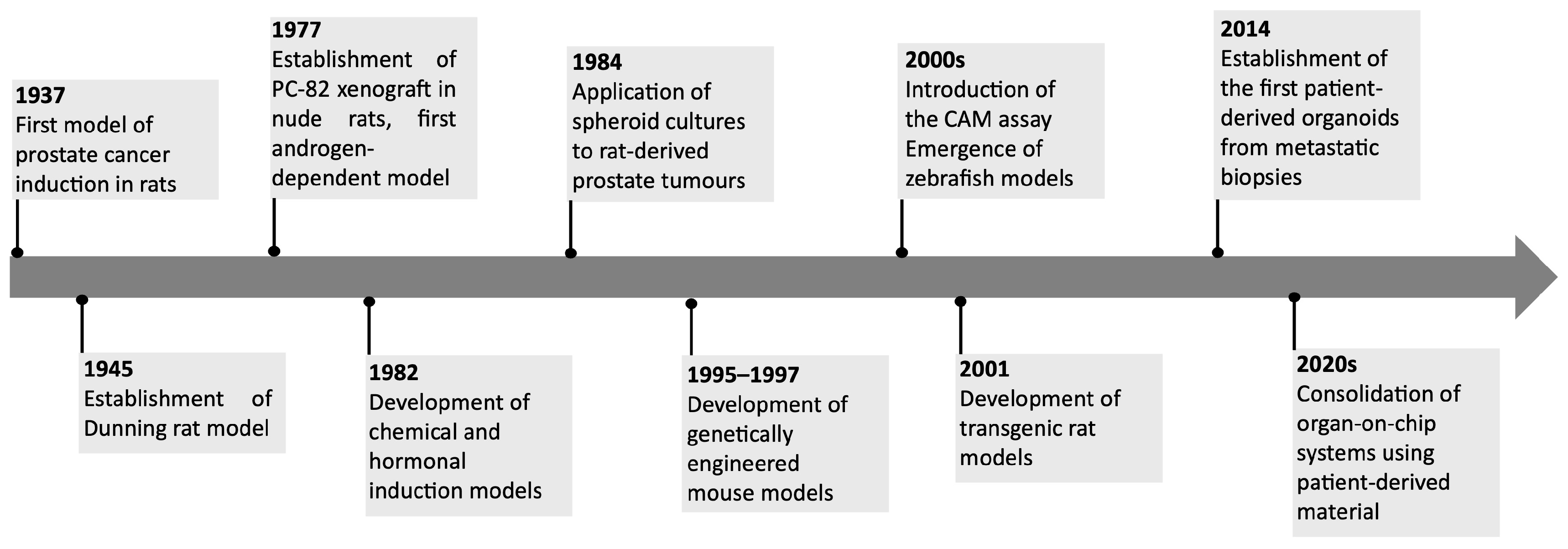
2.1. Tracing the Evolution of Prostate Cancer Models
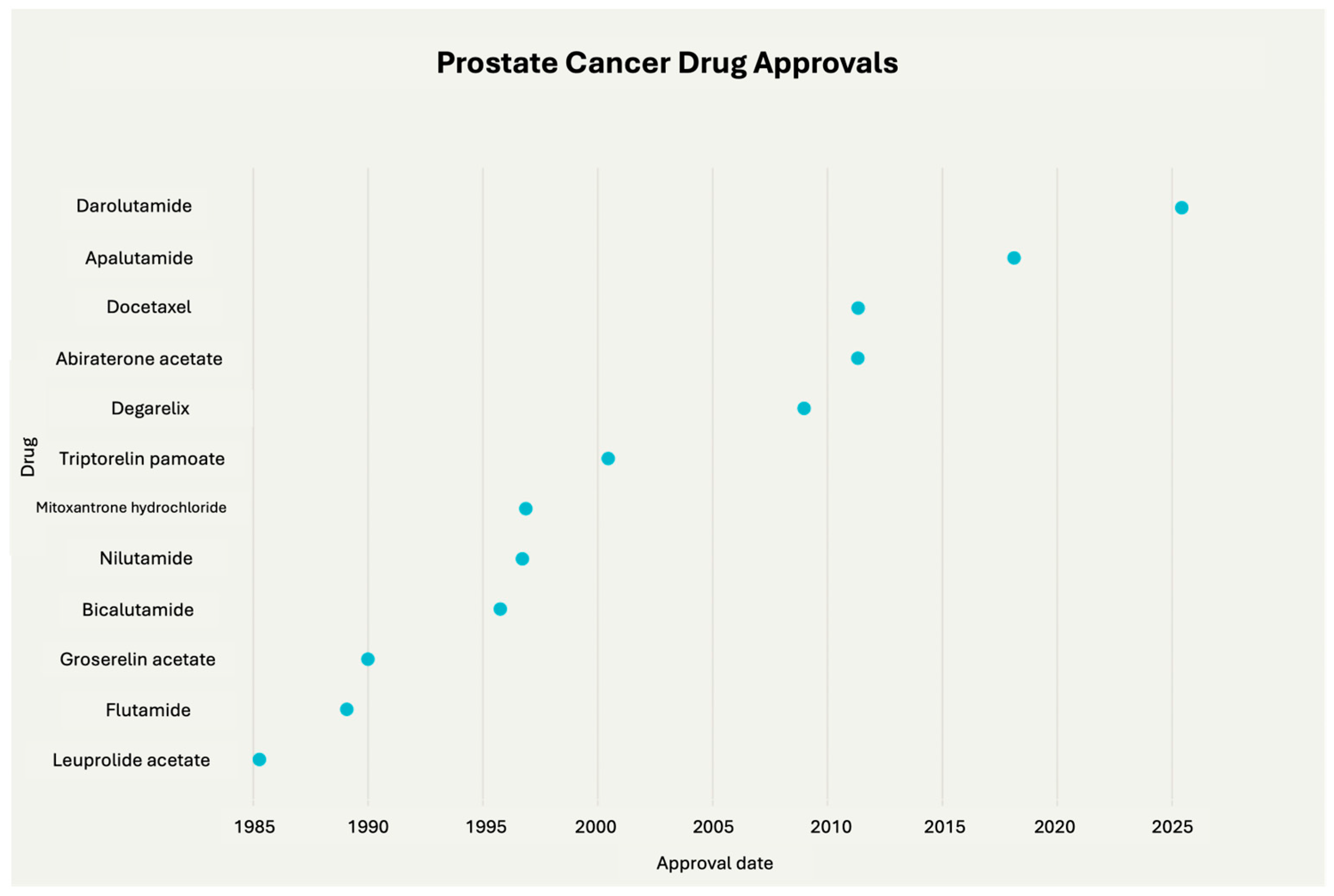
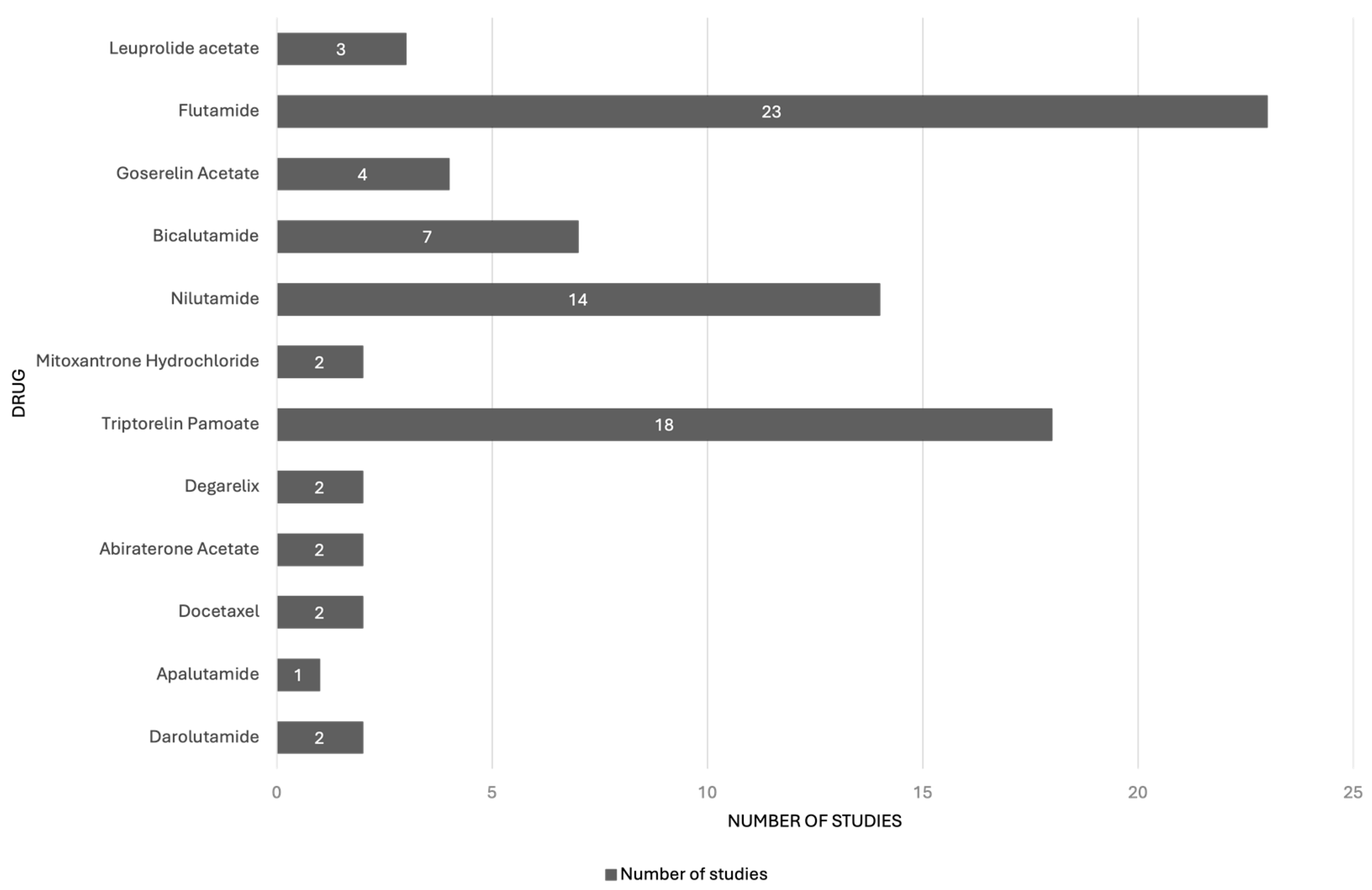
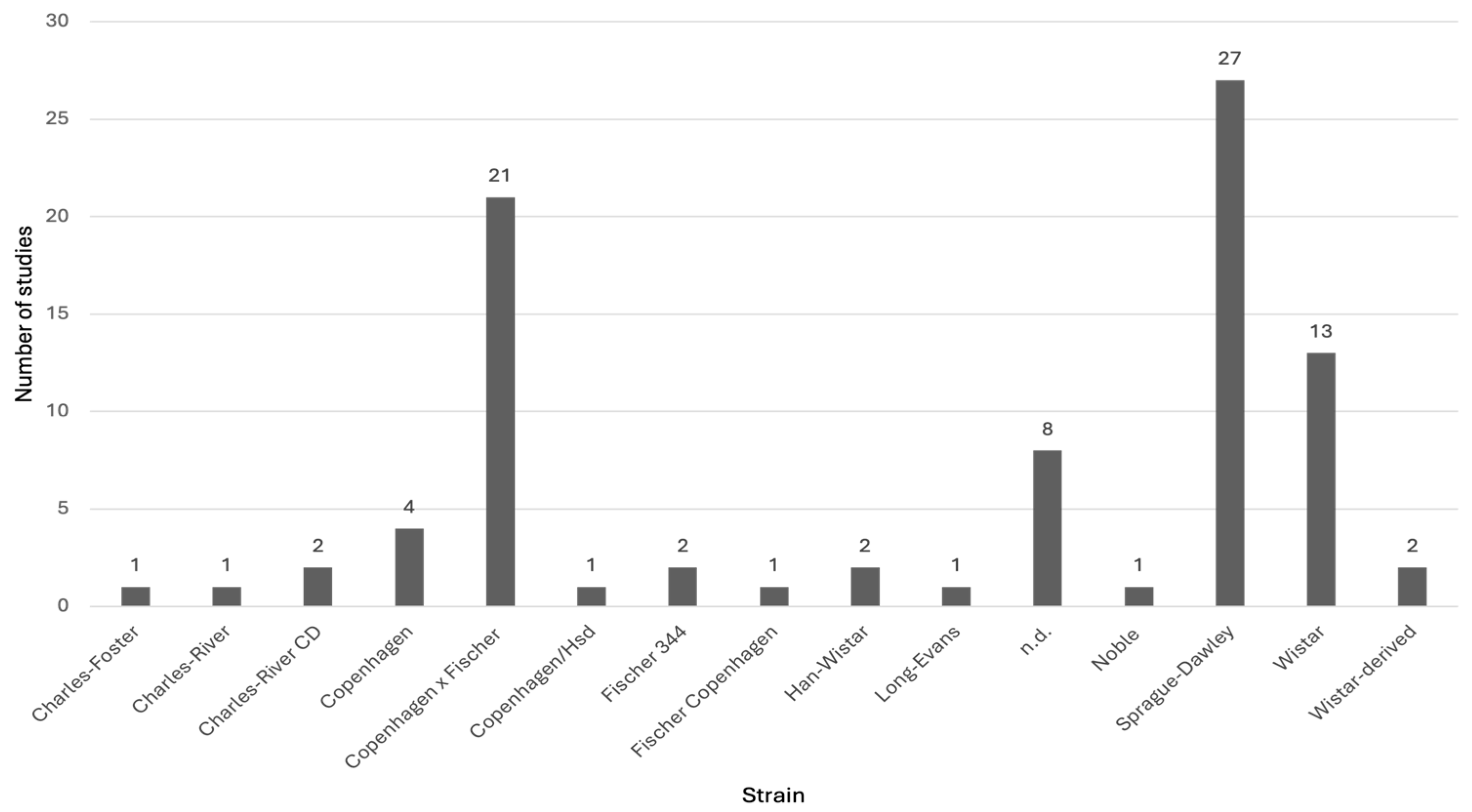
2.2. Rat in the Development of Drugs for Prostate Cancer Treatment
2.3. Zebrafish in Prostate Cancer Modelling: Current Status and Future Directions
3. From Bench to Bedside: Challenges in Translating Preclinical Model to Humans
4. Conclusions
Author Contributions
Funding
Institutional Review Board Statement
Informed Consent Statement
Data Availability Statement
Conflicts of Interest
Abbreviations
| CAM | Chorioallantoic membrane |
| CDX | Cell-derived xenograft |
| PCa | Prostate cancer |
| PDX | Patient-derived xenograft |
| zPDX | Zebrafish patient-derived xenograft |
References
- Chu, F.; Chen, L.; Guan, Q.; Chen, Z.; Ji, Q.; Ma, Y.; Ji, J.; Sun, M.; Huang, T.; Song, H.; et al. Global Burden of Prostate Cancer: Age-Period-Cohort Analysis from 1990 to 2021 and Projections until 2040. World J. Surg. Oncol. 2025, 23, 98. [Google Scholar] [CrossRef] [PubMed]
- Bray, F.; Laversanne, M.; Sung, H.; Ferlay, J.; Siegel, R.L.; Soerjomataram, I.; Jemal, A. Global Cancer Statistics 2022: GLOBOCAN Estimates of Incidence and Mortality Worldwide for 36 Cancers in 185 Countries. CA. Cancer J. Clin. 2024, 74, 229–263. [Google Scholar] [CrossRef]
- Nurgalieva, P.K.; Yakimov, B.P.; Sorokin, N.I.; Nesterova, O.Y.; Strigunov, A.A.; Aripshev, S.A.; Kamalov, A.A.; Shirshin, E.A. Prostate Cancer Detection with Blood Serum Autofluorescence: Comparison to Non-Optical Methods. Spectrochim. Acta A Mol. Biomol. Spectrosc. 2025, 343, 126614. [Google Scholar] [CrossRef]
- Sekhoacha, M.; Riet, K.; Motloung, P.; Gumenku, L.; Adegoke, A.; Mashele, S. Prostate Cancer Review: Genetics, Diagnosis, Treatment Options, and Alternative Approaches. Molecules 2022, 27, 5730. [Google Scholar] [CrossRef]
- Matsushita, M.; Fujita, K.; Nonomura, N. Influence of Diet and Nutrition on Prostate Cancer. Int. J. Mol. Sci. 2020, 21, 1447. [Google Scholar] [CrossRef]
- Haffner, M.C.; Zwart, W.; Roudier, M.P.; True, L.D.; Nelson, W.G.; Epstein, J.I.; De Marzo, A.M.; Nelson, P.S.; Yegnasubramanian, S. Genomic and Phenotypic Heterogeneity in Prostate Cancer. Nat. Rev. Urol. 2021, 18, 79–92. [Google Scholar] [CrossRef] [PubMed]
- Shoag, J.; Barbieri, C. Clinical Variability and Molecular Heterogeneity in Prostate Cancer. Asian J. Androl. 2016, 18, 543. [Google Scholar] [CrossRef]
- Nguyen-Nielsen, M.; Borre, M. Diagnostic and Therapeutic Strategies for Prostate Cancer. Semin. Nucl. Med. 2016, 46, 484–490. [Google Scholar] [CrossRef] [PubMed]
- Wang, Y.; Chen, Y.; Wang, J. Role of Tumor Microenvironment in Prostate Cancer Immunometabolism. Biomolecules 2025, 15, 826. [Google Scholar] [CrossRef]
- Yoon, C.E.; Kang, S.; Rhew, S.A.; Kwon, H.J.; Shin, D.; Moon, H.W.; Kim, M.Y.; Lee, J.Y. Genetic Alterations of Prostate Cancer: In Localized and Metastatic Prostate Cancer. BMC Urol. 2025, 25, 166. [Google Scholar] [CrossRef]
- Chelebian, E.; Avenel, C.; Järemo, H.; Andersson, P.; Wählby, C.; Bergh, A. A Clinical Prostate Biopsy Dataset with Undetected Cancer. Sci. Data 2025, 12, 423. [Google Scholar] [CrossRef]
- Sailer, V.; Von Amsberg, G.; Duensing, S.; Kirfel, J.; Lieb, V.; Metzger, E.; Offermann, A.; Pantel, K.; Schuele, R.; Taubert, H.; et al. Experimental in vitro, ex vivo and in vivo Models in Prostate Cancer Research. Nat. Rev. Urol. 2023, 20, 158–178. [Google Scholar] [CrossRef]
- Che, J.; Liu, Y.; Liu, Y.; Song, J.; Cui, H.; Feng, D.; Tian, A.; Zhang, Z.; Xu, Y. The Application of Emerging Immunotherapy in the Treatment of Prostate Cancer: Progress, Dilemma and Promise. Front. Immunol. 2025, 16, 1544882. [Google Scholar] [CrossRef]
- Deluce, J.E.; Cardenas, L.; Lalani, A.-K.; Maleki Vareki, S.; Fernandes, R. Emerging Biomarker-Guided Therapies in Prostate Cancer. Curr. Oncol. 2022, 29, 5054–5076. [Google Scholar] [CrossRef]
- Zhu, S.; Chen, J.; Zeng, H. Our Current Understanding of the Heterogeneity in Prostate Cancer and Renal Cell Carcinoma. J. Clin. Med. 2023, 12, 1526. [Google Scholar] [CrossRef] [PubMed]
- Marshall, C.H.; Antonarakis, E.S. Emerging Treatments for Metastatic Castration-Resistant Prostate Cancer: Immunotherapy, PARP Inhibitors, and PSMA-Targeted Approaches. Cancer Treat. Res. Commun. 2020, 23, 100164. [Google Scholar] [CrossRef] [PubMed]
- Tzelepi, V. Prostate Cancer: Pathophysiology, Pathology and Therapy. Cancers 2022, 15, 281. [Google Scholar] [CrossRef]
- Sedelaar, J.M.; Schalken, J.A. The Need for a Personalized Approach for Prostate Cancer Management. BMC Med. 2015, 13, 109. [Google Scholar] [CrossRef]
- Sumanasuriya, S.; De Bono, J. Treatment of Advanced Prostate Cancer—A Review of Current Therapies and Future Promise. Cold Spring Harb. Perspect. Med. 2018, 8, a030635. [Google Scholar] [CrossRef]
- Bahmad, H.F.; Demus, T.; Moubarak, M.M.; Daher, D.; Alvarez Moreno, J.C.; Polit, F.; Lopez, O.; Merhe, A.; Abou-Kheir, W.; Nieder, A.M.; et al. Overcoming Drug Resistance in Advanced Prostate Cancer by Drug Repurposing. Med. Sci. 2022, 10, 15. [Google Scholar] [CrossRef] [PubMed]
- Mizuno, K.; Beltran, H. Future Directions for Precision Oncology in Prostate Cancer. Prostate 2022, 82, S86–S96. [Google Scholar] [CrossRef]
- Basak, D.; Gregori, L.; Johora, F.; Deb, S. Preclinical and Clinical Research Models of Prostate Cancer: A Brief Overview. Life 2022, 12, 1607. [Google Scholar] [CrossRef] [PubMed]
- Cunningham, D.; You, Z. In vitro and in vivo Model Systems Used in Prostate Cancer Research. J. Biol. Methods 2015, 2, 1. [Google Scholar] [CrossRef] [PubMed]
- Namekawa, T.; Ikeda, K.; Horie-Inoue, K.; Inoue, S. Application of Prostate Cancer Models for Preclinical Study: Advantages and Limitations of Cell Lines, Patient-Derived Xenografts, and Three-Dimensional Culture of Patient-Derived Cells. Cells 2019, 8, 74. [Google Scholar] [CrossRef]
- Ittmann, M.; Huang, J.; Radaelli, E.; Martin, P.; Signoretti, S.; Sullivan, R.; Simons, B.W.; Ward, J.M.; Robinson, B.D.; Chu, G.C.; et al. Animal Models of Human Prostate Cancer: The Consensus Report of the New York Meeting of the Mouse Models of Human Cancers Consortium Prostate Pathology Committee. Cancer Res. 2013, 73, 2718–2736. [Google Scholar] [CrossRef]
- Nascimento-Gonçalves, E.; Faustino-Rocha, A.; Seixas, F.; Colaço, B.; Ferreira, R.; Oliveira, P. Successful Hormonal and Chemical Induction of Prostate Cancer in a Rat Model: Practical Guidelines. Vet. Res. Forum 2024, 15, 445–453. [Google Scholar] [CrossRef]
- Nascimento-Gonçalves, E.; Seixas, F.; Ferreira, R.; Oliveira, P.A.; Colaço, B. In Vivo Prostate Cancer Research: Key Interspecies Prostate Anatomical Features for Translation Medicine. Open Vet. J. 2023, 13, 782. [Google Scholar] [CrossRef] [PubMed]
- Nascimento-Gonçalves, E.; Seixas, F.; Palmeira, C.; Martins, G.; Fonseca, C.; Duarte, J.A.; Faustino-Rocha, A.I.; Colaço, B.; Pires, M.J.; Neuparth, M.J.; et al. Lifelong Exercise Training Promotes the Remodelling of the Immune System and Prostate Signalome in a Rat Model of Prostate Carcinogenesis. GeroScience 2023, 46, 817–840. [Google Scholar] [CrossRef]
- Sun, L.; Zhou, Y.; Yin, M.; Wang, F.; Yang, L. Approaches to Modeling Cancer Metastasis: From Bench to Bedside. Front. Oncol. 2025, 15, 1602489. [Google Scholar] [CrossRef]
- Nascimento-Gonçalves, E.; Faustino-Rocha, A.I.; Seixas, F.; Ginja, M.; Colaço, B.; Ferreira, R.; Fardilha, M.; Oliveira, P.A. Modelling Human Prostate Cancer: Rat Models. Life Sci. 2018, 203, 210–224. [Google Scholar] [CrossRef]
- Nascimento-Gonçalves, E.; Seixas, F.; Ferreira, R.; Colaço, B.; Parada, B.; Oliveira, P.A. An Overview of the Latest in State-of-the-Art Murine Models for Prostate Cancer. Expert Opin. Drug Discov. 2021, 16, 1349–1364. [Google Scholar] [CrossRef]
- Nascimento-Gonçalves, E.; Ferreira, R.; Oliveira, P.A.; Colaço, B.J.A. An Overview of Current Alternative Models for Use in the Context of Prostate Cancer Research. Altern. Lab. Anim. 2020, 48, 58–69. [Google Scholar] [CrossRef]
- Faustino-Rocha, A.I.; Jota-Baptista, C.; Nascimento-Gonçalves, E.; Oliveira, P.A. Evolution of Models of Prostate Cancer: Their Contribution to Current Therapies. Anticancer Res. 2023, 43, 323–333. [Google Scholar] [CrossRef] [PubMed]
- Jiang, L.; Khawaja, H.; Tahsin, S.; Clarkson, T.A.; Miranti, C.K.; Zohar, Y. Microfluidic-Based Human Prostate-Cancer-on-Chip. Front. Bioeng. Biotechnol. 2024, 12, 1302223. [Google Scholar] [CrossRef]
- Moore, R.A.; Melchionna, R.H. Production of Tumors of the Prostate of the White Rat with 1:2-Benzpyrene. Am. J. Cancer 1937, 30, 731–741. [Google Scholar] [CrossRef]
- Dunning, W.F.; Curtis, M.R.; Segaloff, A. Methylcholanthrene Squamous Cell Carcinoma of the Rat Prostate with Skeletal Metastases, and Failure of the Rat Liver to Respond to the Same Carcinogen. Cancer Res. 1946, 6, 256–262. [Google Scholar] [PubMed]
- Bosland, M.C. Chemical and Hormonal Induction of Prostate Cancer in Animal Models. Urol. Oncol. Semin. Orig. Investig. 1996, 2, 103–110. [Google Scholar] [CrossRef] [PubMed]
- Bosland, M.C. Animal Models for the Study of Prostate Carcinogenesis. J. Cell. Biochem. 1992, 50, 89–98. [Google Scholar] [CrossRef]
- Nascimento-Goncalves, E.; Seixas, F.; Da Costa, R.M.G.; Pires, M.J.; Neuparth, M.J.; Moreira-Goncalves, D.; Fardilha, M.; Faustino-Rocha, A.I.; Colaco, B.; Ferreira, R.; et al. Appraising Animal Models of Prostate Cancer for Translational Research: Future Directions. Anticancer Res. 2023, 43, 275–281. [Google Scholar] [CrossRef]
- Horoszewicz, J.S.; Leong, S.S.; Chu, T.M.; Wajsman, Z.L.; Friedman, M.; Papsidero, L.; Kim, U.; Chai, L.S.; Kakati, S.; Arya, S.K.; et al. The LNCaP Cell Line--a New Model for Studies on Human Prostatic Carcinoma. Prog. Clin. Biol. Res. 1980, 37, 115–132. [Google Scholar]
- Sobel, R.E.; Sadar, M.D. Cell Lines Used in Prostate Cancer Research: A Compendium of Old and New Lines—Part 1. J. Urol. 2005, 173, 342–359. [Google Scholar] [CrossRef]
- Moresi, F.; Noto, F.; Vasudevan, J.; Bisteau, X.; Adriani, G.; Pavesi, A. Microphysiological Systems in Cancer Research: Advancing Immunotherapy through Tumor Microenvironment-Integrated Organ-On-Chip Models. Adv. Ther. 2025, 8, e00098. [Google Scholar] [CrossRef]
- Xiao, Y.; Yu, D. Tumor Microenvironment as a Therapeutic Target in Cancer. Pharmacol. Ther. 2021, 221, 107753. [Google Scholar] [CrossRef]
- Van Steenbrugge, G.J.; Van Dongen, J.J.W.; Reuvers, P.J.; De Jong, F.H.; Schroeder, F.H. Transplantable Human Prostatic Carcinoma (PC-82) in Athymic Nude Mice: I. Hormone Dependence and the Concentration of Androgens in Plasma and Tumor Tissue. Prostate 1987, 11, 195–210. [Google Scholar] [CrossRef]
- van Weerden, W.M.; de Ridder, C.M.; Verdaasdonk, C.L.; Romijn, J.C.; van der Kwast, T.H.; Schröder, F.H.; van Steenbrugge, G.J. Development of Seven New Human Prostate Tumor Xenograft Models and Their Histopathological Characterization. Am. J. Pathol. 1996, 149, 1055–1062. [Google Scholar]
- Lovitt, C.; Shelper, T.; Avery, V. Advanced Cell Culture Techniques for Cancer Drug Discovery. Biology 2014, 3, 345–367. [Google Scholar] [CrossRef] [PubMed]
- Kapałczyńska, M.; Kolenda, T.; Przybyła, W.; Zajączkowska, M.; Teresiak, A.; Filas, V.; Ibbs, M.; Bliźniak, R.; Łuczewski, Ł.; Lamperska, K. 2D and 3D Cell Cultures—A Comparison of Different Types of Cancer Cell Cultures. Arch. Med. Sci. AMS 2018, 14, 910–919. [Google Scholar] [CrossRef]
- Franko, A.J.; Koch, C.J. Binding of Misonidazole to V79 Spheroids and Fragments of Dunning Rat Prostatic and Human Colon Carcinomas in vitro: Diffusion of Oxygen and Reactive Metabolites. Int. J. Radiat. Oncol. 1984, 10, 1333–1336. [Google Scholar] [CrossRef] [PubMed]
- Ballangrud, A.M.; Yang, W.H.; Dnistrian, A.; Lampen, N.M.; Sgouros, G. Growth and Characterization of LNCaP Prostate Cancer Cell Spheroids. Clin. Cancer Res. 1999, 5, 3171s–3176s. [Google Scholar]
- Weeber, F.; Ooft, S.N.; Dijkstra, K.K.; Voest, E.E. Tumor Organoids as a Pre-Clinical Cancer Model for Drug Discovery. Cell Chem. Biol. 2017, 24, 1092–1100. [Google Scholar] [CrossRef]
- Saglam-Metiner, P.; Gulce-Iz, S.; Biray-Avci, C. Bioengineering-Inspired Three-Dimensional Culture Systems: Organoids to Create Tumor Microenvironment. Gene 2019, 686, 203–212. [Google Scholar] [CrossRef]
- Wang, J.; Tao, X.; Zhu, J.; Dai, Z.; Du, Y.; Xie, Y.; Chu, X.; Fu, G.; Lei, Z. Tumor Organoid-Immune Co-Culture Models: Exploring a New Perspective of Tumor Immunity. Cell Death Discov. 2025, 11, 195. [Google Scholar] [CrossRef]
- Gao, D.; Vela, I.; Sboner, A.; Iaquinta, P.J.; Karthaus, W.R.; Gopalan, A.; Dowling, C.; Wanjala, J.N.; Undvall, E.A.; Arora, V.K.; et al. Organoid Cultures Derived from Patients with Advanced Prostate Cancer. Cell 2014, 159, 176–187. [Google Scholar] [CrossRef] [PubMed]
- Maroulakou, I.G.; Anver, M.; Garrett, L.; Green, J.E. Prostate and Mammary Adenocarcinoma in Transgenic Mice Carrying a Rat C3(1) Simian Virus 40 Large Tumor Antigen Fusion Gene. Proc. Natl. Acad. Sci. USA 1994, 91, 11236–11240. [Google Scholar] [CrossRef] [PubMed]
- Deocampo, N.D.; Huang, H.; Tindall, D.J. The Role of PTEN in the Progression and Survival of Prostate Cancer. Minerva Endocrinol. 2003, 28, 145–153. [Google Scholar]
- Cristofano, A.D.; Pesce, B.; Cordon-Cardo, C.; Pandolfi, P.P. Pten is Essential for Embryonic Development and Tumour Suppression. Nat. Genet. 1998, 19, 348–355. [Google Scholar] [CrossRef]
- Asamoto, M.; Hokaiwado, N.; Cho, Y.M.; Takahashi, S.; Ikeda, Y.; Imaida, K.; Shirai, T. Prostate Carcinomas Developing in Transgenic Rats with SV40 T Antigen Expression under Probasin Promoter Control Are Strictly Androgen Dependent. Cancer Res. 2001, 61, 4693–4700. [Google Scholar]
- Kain, K.H.; Miller, J.W.I.; Jones-Paris, C.R.; Thomason, R.T.; Lewis, J.D.; Bader, D.M.; Barnett, J.V.; Zijlstra, A. The Chick Embryo as an Expanding Experimental Model for Cancer and Cardiovascular Research. Dev. Dyn. 2014, 243, 216–228. [Google Scholar] [CrossRef]
- Kunzi-Rapp, K.; Genze, F.; Küfer, R.; Reich, E.; Hautmann, R.E.; Gschwend, J.E. Chorioallantoic Membrane Assay: Vascularized 3-Dimensional Cell Culture System for Human Prostate Cancer Cells as an Animal Substitute Model. J. Urol. 2001, 166, 1502–1507. [Google Scholar] [CrossRef] [PubMed]
- He, S.; Lamers, G.E.; Beenakker, J.M.; Cui, C.; Ghotra, V.P.; Danen, E.H.; Meijer, A.H.; Spaink, H.P.; Snaar-Jagalska, B.E. Neutrophil-mediated Experimental Metastasis Is Enhanced by VEGFR Inhibition in a Zebrafish Xenograft Model. J. Pathol. 2012, 227, 431–445. [Google Scholar] [CrossRef]
- Szewczyk, K.; Jiang, L.; Khawaja, H.; Miranti, C.K.; Zohar, Y. Microfluidic Applications in Prostate Cancer Research. Micromachines 2024, 15, 1195. [Google Scholar] [CrossRef]
- Jiang, L.; Ivich, F.; Tahsin, S.; Tran, M.; Frank, S.B.; Miranti, C.K.; Zohar, Y. Human Stroma and Epithelium Co-Culture in a Microfluidic Model of a Human Prostate Gland. Biomicrofluidics 2019, 13, 064116. [Google Scholar] [CrossRef]
- Dolega, M.E.; Wagh, J.; Gerbaud, S.; Kermarrec, F.; Alcaraz, J.-P.; Martin, D.K.; Gidrol, X.; Picollet-D’hahan, N. Facile Bench-Top Fabrication of Enclosed Circular Microchannels Provides 3D Confined Structure for Growth of Prostate Epithelial Cells. PLoS ONE 2014, 9, e99416. [Google Scholar] [CrossRef] [PubMed]
- Tan, R.; Hua, H.; Zhou, S.; Yang, Z.; Yang, C.; Huang, G.; Zeng, J.; Zhao, J. Current Landscape of Innovative Drug Development and Regulatory Support in China. Signal Transduct. Target. Ther. 2025, 10, 220. [Google Scholar] [CrossRef] [PubMed]
- Spreafico, A.; Hansen, A.R.; Abdul Razak, A.R.; Bedard, P.L.; Siu, L.L. The Future of Clinical Trials Design in Oncology. Cancer Discov. 2021, 11, 822–837. [Google Scholar] [CrossRef]
- van Rijt, A.; Stefanek, E.; Valente, K. Preclinical Testing Techniques: Paving the Way for New Oncology Screening Approaches. Cancers 2023, 15, 4466. [Google Scholar] [CrossRef]
- Drugs Approved for Prostate Cancer. Available online: https://www.cancer.gov/about-cancer/treatment/drugs/prostate (accessed on 6 October 2025).
- Warner, B.; Worgul, T.J.; Drago, J.; Demers, L.; Dufau, M.; Max, D.; Santen, R.J. Effect of Very High Dose D-Leucine6-Gonadotropin-Releasing Hormone Proethylamide on the Hypothalamic-Pituitary Testicular Axis in Patients with Prostatic Cancer. J. Clin. Investig. 1983, 71, 1842–1853. [Google Scholar] [CrossRef]
- Pollack, A.; Block, N.L.; Stover, B.J.; Fuentes, M.P.; Irvin, G.L. Effects of the Gonadotropin-Releasing Hormone Agonist [D-Leu6, Desgly-NH210, Proethylamide9]-GnRH (Leuprolide) on R3327-G Rat Prostatic Tumor Growth. J. Urol. 1984, 131, 399–403. [Google Scholar] [CrossRef] [PubMed]
- Rajfer, J.; Heber, D.; Peng, S.; Swerdloff, R.S. Effects of Chronic D-Leu6, Des-Gly10-Gonadotropin Releasing Hormone Ethylamide on Male Sex Tissues. Biol. Reprod. 1984, 30, 646–651. [Google Scholar] [CrossRef]
- Peets, E.A.; Henson, M.F.; Neri, R. On the Mechanism of the Anti-Androgenic Action of Flutamide (Alpha-Alpha-Alpha-Trifluoro-2-Methyl-4′-Nitro-m-Propionotoluidide) in the Rat. Endocrinology 1974, 94, 532–540. [Google Scholar] [CrossRef]
- Liao, S.; Howell, D.K.; Chang, T.M. Action of a Nonsteroidal Antiandrogen, Flutamide, on the Receptor Binding and Nuclear Retention of 5 Alpha-Dihydrotestosterone in Rat Ventral Prostate. Endocrinology 1974, 94, 1205–1209. [Google Scholar] [CrossRef] [PubMed]
- Dhar, J.D.; Setty, B.S. Studies on the Physiology and Biochemistry of Mammalian Epididymis: Effect of Flutamide, a Nonsteroidal Antiandrogen, on the Epididymis of the Rat. Fertil. Steril. 1976, 27, 566–576. [Google Scholar] [CrossRef] [PubMed]
- Ghanadian, R.; Smith, C.B.; Williams, G.; Chisholm, G.D. The Effect of Antiandrogens and Stilboestrol on the Cytosol Receptor in Rat Prostate. Br. J. Urol. 1977, 49, 695–700. [Google Scholar] [CrossRef]
- Neri, R.; Peets, E.; Watnick, A. Anti-Androgenicity of Flutamide and Its Metabolite Sch 16423. Biochem. Soc. Trans. 1979, 7, 565–569. [Google Scholar] [CrossRef]
- Gladue, B.A.; Clemens, L.G. Flutamide Inhibits Testosterone-Induced Masculine Sexual Behavior in Male and Female Rats. Endocrinology 1980, 106, 1917–1922. [Google Scholar] [CrossRef]
- Brooks, J.R.; Baptista, E.M.; Berman, C.; Ham, E.A.; Hichens, M.; Johnston, D.B.; Primka, R.L.; Rasmusson, G.H.; Reynolds, G.F.; Schmitt, S.M.; et al. Response of Rat Ventral Prostate to a New and Novel 5 Alpha-Reductase Inhibitor. Endocrinology 1981, 109, 830–836. [Google Scholar] [CrossRef] [PubMed]
- Mathur, P.P.; Chattopadhyay, S. Involvement of Lysosomal Enzymes in Flutamide-Induced Stimulation of Rat Testis. Andrologia 1982, 14, 171–176. [Google Scholar] [CrossRef]
- Belis, J.A.; Adlestein, L.B.; Tarry, W.F. Influence of Estradiol on Accessory Reproductive Organs in the Castrated Male Rat. Effects of Bromocriptine and Flutamide. J. Androl. 1983, 4, 144–149. [Google Scholar] [CrossRef]
- Assimos, D.; Smith, C.; Lee, C.; Grayhack, J.T. Action of Prolactin in Regressing Prostate: Independent of Action Mediated by Androgen Receptors. Prostate 1984, 5, 589–595. [Google Scholar] [CrossRef]
- Roselli, C.E.; Resko, J.A. Androgens Regulate Brain Aromatase Activity in Adult Male Rats through a Receptor Mechanism. Endocrinology 1984, 114, 2183–2189. [Google Scholar] [CrossRef]
- Tenniswood, M.; Abrahams, P.; Bird, C.; Clark, A. Anti-Androgens Do Not Alter Androgen-Dependent Characteristics of Acid Phosphatase in the Rat Ventral Prostate. Mol. Cell. Endocrinol. 1984, 37, 153–158. [Google Scholar] [CrossRef]
- Redding, T.W.; Schally, A.V. Investigation of the Combination of the Agonist D-Trp-6-LH-RH and the Antiandrogen Flutamide in the Treatment of Dunning R-3327H Prostate Cancer Model. Prostate 1985, 6, 219–232. [Google Scholar] [CrossRef] [PubMed]
- Foldesy, R.G.; Vanderhoof, M.M.; Canton, L.E.; Hahn, D.W. Role of Adrenal Androgens in Prostate Regression in Rats Treated with an Antiandrogen and an LHRH Agonist. Prostate 1986, 9, 227–235. [Google Scholar] [CrossRef]
- Burton, S.; Trachtenberg, J. Effectiveness of Antiandrogens in the Rat. J. Urol. 1986, 136, 932–935. [Google Scholar] [CrossRef]
- El Etreby, M.F.; Habenicht, U.F.; Louton, T.; Nishino, Y.; Schröder, H.G. Effect of Cyproterone Acetate in Comparison to Flutamide and Megestrol Acetate on the Ventral Prostate, Seminal Vesicle, and Adrenal Glands of Adult Male Rats. Prostate 1987, 11, 361–375. [Google Scholar] [CrossRef]
- Furr, B.J.; Valcaccia, B.; Curry, B.; Woodburn, J.R.; Chesterson, G.; Tucker, H. ICI 176,334: A Novel Non-Steroidal, Peripherally Selective Antiandrogen. J. Endocrinol. 1987, 113, R7–R9. [Google Scholar] [CrossRef] [PubMed]
- Sunahara, G.I.; Pak, R.C.; Bellward, G.D. Effect of Flutamide on Hepatic Cytosolic Methyltrienolone (R1881) Binding Kinetics and Testosterone Responsive Hepatic Drug and Steroid Metabolism in the Adult Male Rat. Biochem. Pharmacol. 1987, 36, 3571–3577. [Google Scholar] [CrossRef]
- Léger, J.G.; Le Guellec, R.; Tenniswood, M.P. Treatment with Antiandrogens Induces an Androgen-Repressed Gene in the Rat Ventral Prostate. Prostate 1988, 13, 131–142. [Google Scholar] [CrossRef]
- Kung, T.T.; Mingo, G.G.; Siegel, M.I.; Watnick, A.S. Effect of Adrenalectomy, Flutamide, and Leuprolide on the Growth of the Dunning Rat R-3327 Prostatic Carcinoma. Prostate 1988, 12, 357–363. [Google Scholar] [CrossRef] [PubMed]
- Rennie, P.S.; Bruchovsky, N.; Goldenberg, S.L.; Lawson, D.; Fletcher, T.; Foekens, J.A. Relative Effectiveness of Alternative Androgen Withdrawal Therapies in Initiating Regression of Rat Prostate. J. Urol. 1988, 139, 1337–1342. [Google Scholar] [CrossRef]
- Pelletier, G.; Labrie, C.; Simard, J.; Duval, M.; Martinoli, M.G.; Zhao, H.; Labrie, F. Effects of Sex Steroids on Regulation of the Levels of C1 Peptide of Rat Prostatic Steroid-Binding Protein mRNA Evaluated by in-Situ Hybridization. J. Mol. Endocrinol. 1988, 1, 213–223. [Google Scholar] [CrossRef]
- Tucker, H.; Crook, J.W.; Chesterson, G.J. Nonsteroidal Antiandrogens. Synthesis and Structure-Activity Relationships of 3-Substituted Derivatives of 2-Hydroxypropionanilides. J. Med. Chem. 1988, 31, 954–959. [Google Scholar] [CrossRef]
- Freeman, S.N.; Mainwaring, W.I.; Furr, B.J. A Possible Explanation for the Peripheral Selectivity of a Novel Non-Steroidal Pure Antiandrogen, Casodex (ICI 176,334). Br. J. Cancer 1989, 60, 664–668. [Google Scholar] [CrossRef]
- Snyder, B.W.; Winneker, R.C.; Batzold, F.H. Endocrine Profile of Win 49596 in the Rat: A Novel Androgen Receptor Antagonist. J. Steroid Biochem. 1989, 33, 1127–1132. [Google Scholar] [CrossRef] [PubMed]
- Maucher, A.; von Angerer, E. Antiproliferative Activity of Casodex (ICI 176.334) in Hormone-Dependent Tumours. J. Cancer Res. Clin. Oncol. 1993, 119, 669–674. [Google Scholar] [CrossRef]
- Vollmer, G.; Michna, H.; Ebert, K.; Knuppen, R. Androgen Ablation Induces Tenascin Expression in the Rat Prostate. Prostate 1994, 25, 81–90. [Google Scholar] [CrossRef]
- Tsukamoto, S.; Akaza, H.; Imada, S.; Koiso, K.; Shirai, T.; Ideyama, Y.; Kudo, M. Chemoprevention of Rat Prostate Carcinogenesis by Use of Finasteride or Casodex. J. Natl. Cancer Inst. 1995, 87, 842–843. [Google Scholar] [CrossRef]
- Séguin, C.; Cusan, L.; Bélanger, A.; Kelly, P.A.; Labrie, F.; Raynaud, J.P. Additive Inhibitory Effects of Treatment with an LHRH Agonist and an Antiandrogen on Androgen-Dependent Tissues in the Rat. Mol. Cell. Endocrinol. 1981, 21, 37–41. [Google Scholar] [CrossRef]
- Raynaud, J.P.; Bonne, C.; Moguilewsky, M.; Lefebvre, F.A.; Bélanger, A.; Labrie, F. The Pure Antiandrogen RU 23908 (Anandron), a Candidate of Choice for the Combined Antihormonal Treatment of Prostatic Cancer: A Review. Prostate 1984, 5, 299–311. [Google Scholar] [CrossRef] [PubMed]
- Moguilewsky, M.; Fiet, J.; Tournemine, C.; Raynaud, J.P. Pharmacology of an Antiandrogen, Anandron, Used as an Adjuvant Therapy in the Treatment of Prostate Cancer. J. Steroid Biochem. 1986, 24, 139–146. [Google Scholar] [CrossRef] [PubMed]
- Moguilewsky, M.; Bertagna, C.; Hucher, M. Pharmacological and Clinical Studies of the Antiandrogen Anandron. J. Steroid Biochem. 1987, 27, 871–875. [Google Scholar] [CrossRef]
- Moguilewsky, M.; Tournemine, C. The Antiandrogen Anandron Potentiates the Castrating Effect of the LH-RH Agonist Buserelin in the Rat. Am. J. Clin. Oncol. 1988, 11, S148–S151. [Google Scholar] [CrossRef]
- Rao, B.R.; Geldof, A.A.; van der Wilt, C.L.; de Voogt, H.J. Efficacy and Advantages in the Use of Low Doses of Anandron and Estrogen Combination in the Treatment of Prostate Cancer. Prostate 1988, 13, 69–78. [Google Scholar] [CrossRef]
- Rao, B.R.; de Voogt, H.J.; Geldof, A.A.; Gooren, L.J.; Bouman, F.G. Merits and Considerations in the Use of Anti-Androgen. J. Steroid Biochem. 1988, 31, 731–737. [Google Scholar] [CrossRef]
- Dhar, J.D.; Setty, B.S. Changes in Testis, Epididymis and Other Accessory Organs of Male Rats Treated with Anandron during Sexual Maturation. Endocr. Res. 1990, 16, 231–239. [Google Scholar] [CrossRef] [PubMed]
- Dhar, J.D.; Setty, B.S. Effect of a Nonsteroidal Antiandrogen, Anandron, on the Reproductive System and Fertility in Male Rats. Contraception 1990, 42, 121–138. [Google Scholar] [CrossRef]
- Creaven, P.J.; Pendyala, L.; Tremblay, D. Pharmacokinetics and Metabolism of Nilutamide. Urology 1991, 37, 13–19. [Google Scholar] [CrossRef] [PubMed]
- Gaillard-Moguilewsky, M. Pharmacology of Antiandrogens and Value of Combining Androgen Suppression with Antiandrogen Therapy. Urology 1991, 37, 5–12. [Google Scholar] [CrossRef]
- Steinsapir, J.; Mora, G.; Muldoon, T.G. Effects of Steroidal and Non-Steroidal Antiandrogens on the Androgen Binding Properties of the Rat Ventral Prostate Androgen Receptor. Biochim. Biophys. Acta 1991, 1094, 103–112. [Google Scholar] [CrossRef] [PubMed]
- Sundaram, K.; Cao, Y.Q.; Wang, N.G.; Bardin, C.W.; Rivier, J.; Vale, W. Inhibition of the Action of Sex Steroids by Gonadotropin-Releasing Hormone (GnRH) Agonists: A New Biological Effect. Life Sci. 1981, 28, 83–88. [Google Scholar] [CrossRef]
- Redding, T.W.; Schally, A.V. Inhibition of Prostate Tumor Growth in Two Rat Models by Chronic Administration of D-Trp6 Analogue of Luteinizing Hormone-Releasing Hormone. Proc. Natl. Acad. Sci. USA 1981, 78, 6509–6512. [Google Scholar] [CrossRef]
- Schally, A.V.; Redding, T.W.; Comaru-Schally, A.M. Inhibition of Prostate Tumors by Agonistic and Antagonistic Analogs of LH-RH. Prostate 1983, 4, 545–552. [Google Scholar] [CrossRef]
- Cehovic, G.; Redding, T.W.; Hierowski, M.T.; Schally, A.V. Endogenous Phosphorylation in Dunning Prostate Tumors of Rats Treated with LH-RH Analogues. Prostate 1984, 5, 605–611. [Google Scholar] [CrossRef] [PubMed]
- Schally, A.V.; Redding, T.W.; Comaru-Schally, A.M. Inhibition of the Growth of Some Hormone Dependent Tumors by D-Trp6-LH-RH. Med. Oncol. Tumor Pharmacother. 1984, 1, 109–118. [Google Scholar] [CrossRef] [PubMed]
- Redding, T.W.; Schally, A.V.; Tice, T.R.; Meyers, W.E. Long-Acting Delivery Systems for Peptides: Inhibition of Rat Prostate Tumors by Controlled Release of [D-Trp6]Luteinizing Hormone-Releasing Hormone from Injectable Microcapsules. Proc. Natl. Acad. Sci. USA 1984, 81, 5845–5848. [Google Scholar] [CrossRef]
- Hierowski, M.T.; Schally, A.V. An Inhibitor of Urokinase and Tissue Plasminogen Activators in Dunning R3327H Prostate Tumors of Rats Treated with D-Trp6-LH-RH. Horm. Res. 1985, 21, 124–135. [Google Scholar] [CrossRef] [PubMed]
- Schally, A.V.; Redding, T.W. Combination of Long-Acting Microcapsules of the D-Tryptophan-6 Analog of Luteinizing Hormone-Releasing Hormone with Chemotherapy: Investigation in the Rat Prostate Cancer Model. Proc. Natl. Acad. Sci. USA 1985, 82, 2498–2502. [Google Scholar] [CrossRef]
- Ezan, E.; Drieu, K.; Chapelat, M.; Rougeot, C.; Dray, F. Radioimmunoassay of [D-Trp6]-Luteinizing Hormone-Releasing Hormone: Its Application to Animal Pharmacokinetic Studies after Single Injection and Long-Acting Formulation Administration. Regul. Pept. 1986, 14, 155–167. [Google Scholar] [CrossRef]
- Schally, A.V.; Kook, A.I.; Monje, E.; Redding, T.W.; Paz-Bouza, J.I. Combination of a Long-Acting Delivery System for Luteinizing Hormone-Releasing Hormone Agonist with Novantrone Chemotherapy: Increased Efficacy in the Rat Prostate Cancer Model. Proc. Natl. Acad. Sci. USA 1986, 83, 8764–8768. [Google Scholar] [CrossRef]
- Paz-Bouza, J.I.; Schor, N.A.; Monje, E.; Redding, T.W.; Schally, A.V. Histological Findings in the Rat Prostate Cancer Model during Treatment with a Luteinizing Hormone-Releasing Hormone Agonist and Novantrone. Prostate 1987, 10, 291–302. [Google Scholar] [CrossRef]
- Schally, A.V.; Redding, T.W. Somatostatin Analogs as Adjuncts to Agonists of Luteinizing Hormone-Releasing Hormone in the Treatment of Experimental Prostate Cancer. Proc. Natl. Acad. Sci. USA 1987, 84, 7275–7279. [Google Scholar] [CrossRef]
- Zalatnai, A.; Paz-Bouza, J.I.; Redding, T.W.; Schally, A.V. Histologic Changes in the Rat Prostate Cancer Model after Treatment with Somatostatin Analogs and D-Trp-6-LH-RH. Prostate 1988, 12, 85–98. [Google Scholar] [CrossRef] [PubMed]
- Kadar, T.; Redding, T.W.; Ben-David, M.; Schally, A.V. Receptors for Prolactin, Somatostatin, and Luteinizing Hormone-Releasing Hormone in Experimental Prostate Cancer after Treatment with Analogs of Luteinizing Hormone-Releasing Hormone and Somatostatin. Proc. Natl. Acad. Sci. USA 1988, 85, 890–894. [Google Scholar] [CrossRef]
- Marchetti, B.; Labrie, F. Characteristics of Flutamide Action on Prostatic and Testicular Functions in the Rat. J. Steroid Biochem. 1988, 29, 691–698. [Google Scholar] [CrossRef]
- Simard, J.; Labrie, C.; Hubert, J.F.; Labrie, F. Modulation by Sex Steroids and [D-Trp6, Des-Gly-NH2(10)]Luteinizing Hormone (LH)-Releasing Hormone Ethylamide of Alpha-Subunit and LH Beta Messenger Ribonucleic Acid Levels in the Rat Anterior Pituitary Gland. Mol. Endocrinol. Baltim. Md. 1988, 2, 775–784. [Google Scholar] [CrossRef] [PubMed]
- Szepeshazi, K.; Korkut, E.; Schally, A.V. Decrease in the AgNOR Number in Dunning R3327 Prostate Cancers after Treatment with an Agonist and Antagonist of Luteinizing Hormone-Releasing Hormone. Am. J. Pathol. 1991, 138, 1273–1277. [Google Scholar]
- Pinski, J.; Yano, T.; Miller, G.; Schally, A.V. Blockade of the LH Response Induced by the Agonist D-Trp-6-LHRH in Rats by a Highly Potent LH-RH Antagonist SB-75. Prostate 1992, 20, 213–224. [Google Scholar] [CrossRef]
- Pinski, J.; Reile, H.; Halmos, G.; Groot, K.; Schally, A.V. Inhibitory Effects of Analogs of Luteinizing Hormone-Releasing Hormone on the Growth of the Androgen-Independent Dunning R-3327-AT-1 Rat Prostate Cancer. Int. J. Cancer 1994, 59, 51–55. [Google Scholar] [CrossRef]
- Schwach, G.; Oudry, N.; Giliberto, J.-P.; Broqua, P.; Lück, M.; Lindner, H.; Gurny, R. Biodegradable PLGA Microparticles for Sustained Release of a New GnRH Antagonist: Part II. In Vivo Performance. Eur. J. Pharm. Biopharm. 2004, 57, 441–446. [Google Scholar] [CrossRef]
- Princivalle, M.; Broqua, P.; White, R.; Meyer, J.; Mayer, G.; Elliott, L.; Bjarnason, K.; Haigh, R.; Yea, C. Rapid Suppression of Plasma Testosterone Levels and Tumor Growth in the Dunning Rat Model Treated with Degarelix, a New Gonadotropin-Releasing Hormone Antagonist. J. Pharmacol. Exp. Ther. 2007, 320, 1113–1118. [Google Scholar] [CrossRef]
- Duc, I.; Bonnet, P.; Duranti, V.; Cardinali, S.; Rivière, A.; De Giovanni, A.; Shields-Botella, J.; Barcelo, G.; Adje, N.; Carniato, D.; et al. In vitro and in vivo Models for the Evaluation of Potent Inhibitors of Male Rat 17alpha-Hydroxylase/C17,20-Lyase. J. Steroid Biochem. Mol. Biol. 2003, 84, 537–542. [Google Scholar] [CrossRef] [PubMed]
- Haidar, S.; Ehmer, P.B.; Barassin, S.; Batzl-Hartmann, C.; Hartmann, R.W. Effects of Novel 17alpha-Hydroxylase/C17, 20-Lyase (P450 17, CYP 17) Inhibitors on Androgen Biosynthesis in Vitro and in Vivo. J. Steroid Biochem. Mol. Biol. 2003, 84, 555–562. [Google Scholar] [CrossRef]
- Pang, X.; Wang, Y.; Chen, Y. Design, Synthesis, and Biological Evaluation of Deuterated Apalutamide with Improved Pharmacokinetic Profiles. Bioorg. Med. Chem. Lett. 2017, 27, 2803–2806. [Google Scholar] [CrossRef]
- Kiran, V.; Dixit, A.; Gabani, B.B.; Srinivas, N.R.; Mullangi, R. Novel Methodology to Perform Incurred Sample Reanalysis on Dried Blood Spot Cards: Experimental Data Using Darolutamide and Filgotinib. Biomed. Chromatogr. BMC 2020, 34, e4938. [Google Scholar] [CrossRef] [PubMed]
- Yuan, L.; Liao, J.; Qin, Y.; Cai, L.; Zhang, M.; Liao, J.; Li, D.; Hou, T.; Sheng, R. Discovery of Novel Tetrahydroquinoline Derivatives as Potent, Selective, and Orally Available AR Antagonists. Eur. J. Med. Chem. 2025, 291, 117566. [Google Scholar] [CrossRef]
- Geldof, A.A.; de Voogt, H.J.; Rao, B.R. Renewal Timing of Long-Acting Depot Luteinizing Hormone-Releasing Hormone Agonist (Zoladex) Is Critical in the Treatment of Hormone-Dependent Rat Prostatic Carcinoma (R3327-H). Prostate 1987, 11, 281–290. [Google Scholar] [CrossRef]
- Greenstein, B.D.; Fitzpatrick, F.T.; Kendall, M.D.; Wheeler, M.J. Regeneration of the Thymus in Old Male Rats Treated with a Stable Analogue of LHRH. J. Endocrinol. 1987, 112, 345–350. [Google Scholar] [CrossRef] [PubMed]
- Lamberts, S.W.; Uitterlinden, P.; de Jong, F.H. Rat Prostatic Weight Regression in Reaction to Ketoconazole, Cyproterone Acetate, and RU 23908 as Adjuncts to a Depot Formulation of Gonadotropin-Releasing Hormone Analogue. Cancer Res. 1988, 48, 6063–6068. [Google Scholar]
- Ward, J.A.; Furr, B.J.; Valcaccia, B.; Curry, B.; Bardin, C.W.; Gunsalus, G.L.; Morris, I.D. Prolonged Suppression of Rat Testis Function by a Depot Formulation of Zoladex, a GnRH Agonist. J. Androl. 1989, 10, 478–486. [Google Scholar] [CrossRef]
- Paparel, P.; Chapelon, J.Y.; Bissery, A.; Chesnais, S.; Curiel, L.; Gelet, A. Influence of the Docetaxel Administration Period (Neoadjuvant or Concomitant) in Relation to HIFU Treatment on the Growth of Dunning Tumors: Results of a Preliminary Study. Prostate Cancer Prostatic Dis. 2008, 11, 181–186. [Google Scholar] [CrossRef]
- Franke, R.M.; Carducci, M.A.; Rudek, M.A.; Baker, S.D.; Sparreboom, A. Castration-Dependent Pharmacokinetics of Docetaxel in Patients with Prostate Cancer. J. Clin. Oncol. 2010, 28, 4562–4567. [Google Scholar] [CrossRef]
- Howe, K.; Clark, M.D.; Torroja, C.F.; Torrance, J.; Berthelot, C.; Muffato, M.; Collins, J.E.; Humphray, S.; McLaren, K.; Matthews, L.; et al. The Zebrafish Reference Genome Sequence and Its Relationship to the Human Genome. Nature 2013, 496, 498–503. [Google Scholar] [CrossRef]
- Brown, H.K.; Schiavone, K.; Tazzyman, S.; Heymann, D.; Chico, T.J. Zebrafish Xenograft Models of Cancer and Metastasis for Drug Discovery. Expert Opin. Drug Discov. 2017, 12, 379–389. [Google Scholar] [CrossRef]
- Zhan, T.; Song, W.; Jing, G.; Yuan, Y.; Kang, N.; Zhang, Q. Zebrafish Live Imaging: A Strong Weapon in Anticancer Drug Discovery and Development. Clin. Transl. Oncol. 2024, 26, 1807–1835. [Google Scholar] [CrossRef]
- Mohanty, B.; Mohan, M.; Nanjappa, D.P.; Shenoy, R.D.; Hosmane, G.B.; Chakraborty, G.; Chakraborty, A. Biomedical Models: Use of Zebrafish as a Multi-Utility In Vivo Tool Box. WIREs Mech. Dis. 2025, 17, e70002. [Google Scholar] [CrossRef]
- Tang, Q.; Moore, J.C.; Ignatius, M.S.; Tenente, I.M.; Hayes, M.N.; Garcia, E.G.; Torres Yordán, N.; Bourque, C.; He, S.; Blackburn, J.S.; et al. Imaging Tumour Cell Heterogeneity Following Cell Transplantation into Optically Clear Immune-Deficient Zebrafish. Nat. Commun. 2016, 7, 10358. [Google Scholar] [CrossRef] [PubMed]
- Smolowitz, R.; Hanley, J.; Richmond, H. A Three-Year Retrospective Study of Abdominal Tumors in Zebrafish Maintained in an Aquatic Laboratory Animal Facility. Biol. Bull. 2002, 203, 265–266. [Google Scholar] [CrossRef] [PubMed]
- Matthews, J.L. Common Diseases of Laboratory Zebrafish. In Methods in Cell Biology; The Zebrafish: Genetics, Genomics, and Informatics; Academic Press: Cambridge, MA, USA, 2004; Volume 77, pp. 617–643. [Google Scholar]
- Anelli, V.; Santoriello, C.; Distel, M.; Köster, R.W.; Ciccarelli, F.D.; Mione, M. Global Repression of Cancer Gene Expression in a Zebrafish Model of Melanoma Is Linked to Epigenetic Regulation. Zebrafish 2009, 6, 417–424. [Google Scholar] [CrossRef] [PubMed]
- Li, Z.; Huang, X.; Zhan, H.; Zeng, Z.; Li, C.; Spitsbergen, J.M.; Meierjohann, S.; Schartl, M.; Gong, Z. Inducible and Repressable Oncogene-Addicted Hepatocellular Carcinoma in Tet-on Xmrk Transgenic Zebrafish. J. Hepatol. 2012, 56, 419–425. [Google Scholar] [CrossRef]
- Raby, L.; Völkel, P.; Le Bourhis, X.; Angrand, P.-O. Genetic Engineering of Zebrafish in Cancer Research. Cancers 2020, 12, 2168. [Google Scholar] [CrossRef]
- Letrado, P.; De Miguel, I.; Lamberto, I.; Díez-Martínez, R.; Oyarzabal, J. Zebrafish: Speeding Up the Cancer Drug Discovery Process. Cancer Res. 2018, 78, 6048–6058. [Google Scholar] [CrossRef]
- Amatruda, J.F.; Shepard, J.L.; Stern, H.M.; Zon, L.I. Zebrafish as a Cancer Model System. Cancer Cell 2002, 1, 229–231. [Google Scholar] [CrossRef] [PubMed]
- Astell, K.R.; Sieger, D. Zebrafish in vivo Models of Cancer and Metastasis. Cold Spring Harb. Perspect. Med. 2020, 10, a037077. [Google Scholar] [CrossRef]
- Gamble, J.T.; Elson, D.J.; Greenwood, J.A.; Tanguay, R.L.; Kolluri, S.K. The Zebrafish Xenograft Models for Investigating Cancer and Cancer Therapeutics. Biology 2021, 10, 252. [Google Scholar] [CrossRef] [PubMed]
- De Esch, C.; Slieker, R.; Wolterbeek, A.; Woutersen, R.; De Groot, D. Zebrafish as Potential Model for Developmental Neurotoxicity Testing. Neurotoxicol. Teratol. 2012, 34, 545–553. [Google Scholar] [CrossRef] [PubMed]
- Tobia, C.; Gariano, G.; De Sena, G.; Presta, M. Zebrafish Embryo as a Tool to Study Tumor/Endothelial Cell Cross-Talk. Biochim. Biophys. Acta BBA-Mol. Basis Dis. 2013, 1832, 1371–1377. [Google Scholar] [CrossRef]
- Huang, C.; Murgulet, I.; Liu, L.; Zhang, M.; Garcia, K.; Martin, L.; Xu, W. The Effects of Perfluorooctanoic Acid on Breast Cancer Metastasis Depend on the Phenotypes of the Cancer Cells: An in Vivo Study with Zebrafish Xenograft Model. Environ. Pollut. 2024, 362, 124975. [Google Scholar] [CrossRef]
- Song, F.; Yi, X.; Zheng, X.; Zhang, Z.; Zhao, L.; Shen, Y.; Zhi, Y.; Liu, T.; Liu, X.; Xu, T.; et al. Zebrafish Patient-Derived Xenograft System for Predicting Carboplatin Resistance and Metastasis of Ovarian Cancer. Drug Resist. Updat. 2025, 78, 101162. [Google Scholar] [CrossRef]
- Stoletov, K.; Montel, V.; Lester, R.D.; Gonias, S.L.; Klemke, R. High-Resolution Imaging of the Dynamic Tumor Cell–Vascular Interface in Transparent Zebrafish. Proc. Natl. Acad. Sci. USA 2007, 104, 17406–17411. [Google Scholar] [CrossRef]
- Traver, D.; Winzeler, A.; Stern, H.M.; Mayhall, E.A.; Langenau, D.M.; Kutok, J.L.; Look, A.T.; Zon, L.I. Effects of Lethal Irradiation in Zebrafish and Rescue by Hematopoietic Cell Transplantation. Blood 2004, 104, 1298–1305. [Google Scholar] [CrossRef]
- Yan, C.; Brunson, D.C.; Tang, Q.; Do, D.; Iftimia, N.A.; Moore, J.C.; Hayes, M.N.; Welker, A.M.; Garcia, E.G.; Dubash, T.D.; et al. Visualizing Engrafted Human Cancer and Therapy Responses in Immunodeficient Zebrafish. Cell 2019, 177, 1903–1914.e14. [Google Scholar] [CrossRef]
- Anderson, N.M.; Li, D.; Peng, H.L.; Laroche, F.J.F.; Mansour, M.R.; Gjini, E.; Aioub, M.; Helman, D.J.; Roderick, J.E.; Cheng, T.; et al. The TCA Cycle Transferase DLST Is Important for MYC-Mediated Leukemogenesis. Leukemia 2016, 30, 1365–1374. [Google Scholar] [CrossRef]
- Melong, N.; Steele, S.; MacDonald, M.; Holly, A.; Collins, C.C.; Zoubeidi, A.; Berman, J.N.; Dellaire, G. Enzalutamide Inhibits Testosterone-Induced Growth of Human Prostate Cancer Xenografts in Zebrafish and Can Induce Bradycardia. Sci. Rep. 2017, 7, 14698. [Google Scholar] [CrossRef]
- Sun, D.-Y.; Wu, J.-Q.; He, Z.-H.; He, M.-F.; Sun, H.-B. Cancer-Associated Fibroblast Regulate Proliferation and Migration of Prostate Cancer Cells through TGF-β Signaling Pathway. Life Sci. 2019, 235, 116791. [Google Scholar] [CrossRef] [PubMed]
- Chen, L.; Boleslaw Olszewski, M.; Kruithof-de Julio, M.; Snaar-Jagalska, B.E. Zebrafish Microenvironment Elevates EMT and CSC-Like Phenotype of Engrafted Prostate Cancer Cells. Cells 2020, 9, 797. [Google Scholar] [CrossRef] [PubMed]
- Xiao, B.; Landesman-Bollag, E.; Feng, H. What Value Do Zebrafish Have to Anticancer Drug Discovery? Expert Opin. Drug Discov. 2024, 19, 369–375. [Google Scholar] [CrossRef]
- Cornet, C.; Dyballa, S.; Terriente, J.; Di Giacomo, V. ZeOncoTest: Refining and Automating the Zebrafish Xenograft Model for Drug Discovery in Cancer. Pharmaceuticals 2019, 13, 1. [Google Scholar] [CrossRef]
- Fang, W.; Chen, Y.; Nie, M.; Zhou, X.; Liu, Y.; Tao, H.; Yang, B.; Wang, X. Targeting YY1-DR5 Axis by Pyripyropene O as a Novel Therapeutic Strategy Against Prostate Cancer: Molecular Mechanisms and In Vivo Zebrafish Validation. Mar. Drugs 2025, 23, 214. [Google Scholar] [CrossRef]
- Gan, X.; Luo, X.; Chen, J.; Fang, W.; Nie, M.; Lu, H.; Liu, Y.; Wang, X. Ilicicolin C Suppresses the Progression of Prostate Cancer by Inhibiting PI3K/AKT/mTOR Pathway. Mol. Cell. Biochem. 2025, 480, 1089–1104. [Google Scholar] [CrossRef]
- Gan, X.; Nie, M.; Cai, S.; Liu, Y.; Zhang, F.; Feng, X.; Li, Y.; Yang, B.; Wang, X. Dankasterone A Induces Prostate Cancer Cell Death by Inducing Oxidative Stress. Eur. J. Pharmacol. 2023, 957, 175988. [Google Scholar] [CrossRef]
- Zhang, Y.; Chen, J.; Fang, W.; Liang, K.; Li, X.; Zhang, F.; Pang, Y.; Fang, G.; Wang, X. Kaempferol Suppresses Androgen-Dependent and Androgen-Independent Prostate Cancer by Regulating Ki67 Expression. Mol. Biol. Rep. 2022, 49, 4607–4617. [Google Scholar] [CrossRef]
- Butler, M.S.; Roshan-Moniri, M.; Hsing, M.; Lau, D.; Kim, A.; Yen, P.; Mroczek, M.; Nouri, M.; Lien, S.; Axerio-Cilies, P.; et al. Discovery and Characterization of Small Molecules Targeting the DNA-Binding ETS Domain of ERG in Prostate Cancer. Oncotarget 2017, 8, 42438–42454. [Google Scholar] [CrossRef]
- Patton, E.E.; Zon, L.I.; Langenau, D.M. Zebrafish Disease Models in Drug Discovery: From Preclinical Modelling to Clinical Trials. Nat. Rev. Drug Discov. 2021, 20, 611–628. [Google Scholar] [CrossRef]
- Reimunde, P.; Pensado-López, A.; Carreira Crende, M.; Lombao Iglesias, V.; Sánchez, L.; Torrecilla-Parra, M.; Ramírez, C.M.; Anfray, C.; Torres Andón, F. Cellular and Molecular Mechanisms Underlying Glioblastoma and Zebrafish Models for the Discovery of New Treatments. Cancers 2021, 13, 1087. [Google Scholar] [CrossRef] [PubMed]
- Roy, D.; Subramaniam, B.; Chong, W.C.; Bornhorst, M.; Packer, R.J.; Nazarian, J. Zebrafish—A Suitable Model for Rapid Translation of Effective Therapies for Pediatric Cancers. Cancers 2024, 16, 1361. [Google Scholar] [CrossRef]
- Yoganantharjah, P.; Gibert, Y. The Use of the Zebrafish Model to Aid in Drug Discovery and Target Validation. Curr. Top. Med. Chem. 2017, 17, 2041–2055. [Google Scholar] [CrossRef] [PubMed]
- Tat, J.; Liu, M.; Wen, X.-Y. Zebrafish Cancer and Metastasis Models for in vivo Drug Discovery. Drug Discov. Today Technol. 2013, 10, e83–e89. [Google Scholar] [CrossRef] [PubMed]
- Usai, A.; Di Franco, G.; Piccardi, M.; Cateni, P.; Pollina, L.E.; Vivaldi, C.; Vasile, E.; Funel, N.; Palmeri, M.; Dente, L.; et al. Zebrafish Patient-Derived Xenografts Identify Chemo-Response in Pancreatic Ductal Adenocarcinoma Patients. Cancers 2021, 13, 4131. [Google Scholar] [CrossRef]
- Mendes, R.V.; Ribeiro, J.M.; Gouveia, H.; Rebelo de Almeida, C.; Castillo-Martin, M.; Brito, M.J.; Canas-Marques, R.; Batista, E.; Alves, C.; Sousa, B.; et al. Zebrafish Avatar Testing Preclinical Study Predicts Chemotherapy Response in Breast Cancer. npj Precis. Oncol. 2025, 9, 94. [Google Scholar] [CrossRef]
- Blanchard, Z.; Brown, E.A.; Ghazaryan, A.; Welm, A.L. PDX Models for Functional Precision Oncology and Discovery Science. Nat. Rev. Cancer 2025, 25, 153–166. [Google Scholar] [CrossRef]
- Lunina, N.A.; Safina, D.R.; Kostrov, S.V. Zebrafish Xenographs in Oncology and Personalized Medicine. Mol. Biol. 2024, 58, 381–401. [Google Scholar] [CrossRef]
- Jiang, Y.; Song, Q.; Cao, D.; Guo, H.; Wang, J.; Li, J.; Lu, S. The Current Status of Prostate Cancer Animal Models. J. Vet. Med. Anim. Sci. 2020, 3, 1041. [Google Scholar]
- Denayer, T.; Stöhr, T.; Roy, M.V. Animal Models in Translational Medicine: Validation and Prediction. Eur. J. Mol. Clin. Med. 2014, 2, 5. [Google Scholar] [CrossRef]
- Richter, H.; Karol, A.; Nuss, K.; Lenisa, A.; Bruellmann, E.; Maudens, S.-S.; Hoffmann, H.; Von Rechenberg, B.; Kircher, P.R. Comparison of Hock- and Footpad-Injection as a Prostate Adenocarcinoma Model in Rats. BMC Vet. Res. 2018, 14, 327. [Google Scholar] [CrossRef]
- Ginja, M.; Pires, M.J.; Gonzalo-Orden, J.M.; Seixas, F.; Correia-Cardoso, M.; Ferreira, R.; Fardilha, M.; Oliveira, P.A.; Faustino-Rocha, A.I. Anatomy and Imaging of Rat Prostate: Practical Monitoring in Experimental Cancer-Induced Protocols. Diagnostics 2019, 9, 68. [Google Scholar] [CrossRef]
- Saranyutanon, S.; Deshmukh, S.K.; Dasgupta, S.; Pai, S.; Singh, S.; Singh, A.P. Cellular and Molecular Progression of Prostate Cancer: Models for Basic and Preclinical Research. Cancers 2020, 12, 2651. [Google Scholar] [CrossRef] [PubMed]
- Simmons, J.; Elshafae, S.; Keller, E.; McCauley, L.; Rosol, T. Review of Animal Models of Prostate Cancer Bone Metastasis. Vet. Sci. 2014, 1, 16–39. [Google Scholar] [CrossRef]
- Bosland, M.C.; Schlicht, M.J.; Horton, L.; McCormick, D.L. The MNU Plus Testosterone Rat Model of Prostate Carcinogenesis. Toxicol. Pathol. 2022, 50, 478–496. [Google Scholar] [CrossRef]
- Johnson, L.E.; Becker, J.T.; Dubovsky, J.A.; Olson, B.M.; McNeel, D.G. Prostate Carcinoma in Transgenic Lewis Rats—A Tumor Model for Evaluation of Immunological Treatments. Chin. Clin. Oncol. 2013, 2, 1–13. [Google Scholar] [CrossRef]
- Knudsen Dal, N.-J.; Speth, M.; Johann, K.; Barz, M.; Beauvineau, C.; Wohlmann, J.; Fenaroli, F.; Gicquel, B.; Griffiths, G.; Alonso-Rodriguez, N. The Zebrafish Embryo as an in vivo Model for Screening Nanoparticle-Formulated Lipophilic Anti-Tuberculosis Compounds. Dis. Models Mech. 2022, 15, dmm049147. [Google Scholar] [CrossRef]
- Bangeppagari, M.; Manjunath, A.; Srinivasa, A.; Lee, S.J. Tiny Fish, Big Hope: Zebrafish Unlocking Secrets to Fight Parkinson’s Disease. Biology 2025, 14, 1397. [Google Scholar] [CrossRef] [PubMed]
- Crilly, S.; McMahon, E.; Kasher, P.R. Zebrafish for Modeling Stroke and Their Applicability for Drug Discovery and Development. Expert Opin. Drug Discov. 2022, 17, 559–568. [Google Scholar] [CrossRef] [PubMed]
- Withers, S.E.; Parry-Jones, A.R.; Allan, S.M.; Kasher, P.R. A Multi-Model Pipeline for Translational Intracerebral Haemorrhage Research. Transl. Stroke Res. 2020, 11, 1229–1242. [Google Scholar] [CrossRef] [PubMed]



| Drug/Approval Date | Year | Strain | Model | Age/Weight | Administration Route | Dose | Frequency | Duration | Effects | Reference |
|---|---|---|---|---|---|---|---|---|---|---|
| Leuprolide acetate 9 April 1985 | 1983 | Noble | Pr tumor implant (s.c.) | 290–319 g | s.c. | 20, 50 μm | 2×/d | 12 wks | ↓ Pr and SV weight, and LH and testosterone | [68] |
| 1984 | Fischer | R3327-G Pr tumor (s.c.) | 200–250 g | s.c. | 1, 50, 100 μm/kg | 5, 7×/wk | 2 wks | ↓ testis and tumor weight; ↓ testosterone | [69] | |
| 1984 | Sprague-Dawley | 250 g | s.c. | 200 ng | 1×/d | 14 d | ↓ Pr and SV weight | [70] | ||
| Flutamide 27 January 1989 | 1974 | Charles-River CD | 250–300 g | p.o./i.p. | 15 mg/kg | 1×/d | 3, 7 d | ↓ Pr and SV weight | [71] | |
| 1974 | Sprague-Dawley | 350–400 g | i.p. | 1, 10 μm | Once | once | Anti-androgenic effect | [72] | ||
| 1976 | n.d. | 150–200 g | p.o./i.p. | 25 mg/kg | 1×/d | 30 d | ↓ Pr and SV weight | [73] | ||
| 1977 | Wistar | 300–400 g | i.p. | ↓ androgens binding | [74] | |||||
| 1979 | Charles-River CD | 50–65 g | p.o. | Once | Anti-androgenic effect | [75] | ||||
| 1980 | Long-Evans | 70 d | s.c. | 5 mg | 1×/d | 5 d | ↓ Pr and SV weight | [76] | ||
| 1981 | Charles-River | 200 g | s.c. | 33, 100, 300 μm | once | ↓ Pr and SV weight | [77] | |||
| 1982 | Charles-Foster | 220 g | i.p. | 0.25, 2.5, 5 mg/100 g b.w. | 1×/d | 7 d | ↓ Pr and SV weight | [78] | ||
| 1983 | Wistar | 120 d | s.c. | 20 mg/kg | 1×/d | 14 d | Anti-androgenic affect | [79] | ||
| 1984 | Sprague-Dawley | 275–310 g | s.c. | 25 mg/kg | 1×/d | 7 d | ↓ Pr weight | [80] | ||
| 1984 | Sprague-Dawley | 250 g | s.c. | 15 mg/kg | 1×/d | 7 d | ↓ Pr and SV weight, and LH | [81] | ||
| 1984 | Sprague-Dawley | 250–275 g | 15 mg/d | 1×/d | 20 d | Anti-androgenic effect | [82] | |||
| 1985 | Fischer | R3327-H Pr tumor (s.c.) | s.c. | 25 mg/kg | 1×/d | 60 d | ↓ tumor volume; Pr and testes weights | [83] | ||
| 1986 | Wistar | 300 g | s.c. | 5, 25 mg/kg | 1×/d | 14 d | ↓ Pr and SV weight | [84] | ||
| 1986 | Sprague-Dawley | 275–300 g | s.c. | 10 mg/kg | 1×/d | 14, 28 d | ↓ Pr and SV weight | [85] | ||
| 1987 | Han-Wistar | 250 g | s.c. | 10 mg/kg | 1×/d | 1–12 wks | ↓ Pr and SV weight | [86] | ||
| Han-Wistar | 350 g | s.c. | 100 mg/d | 1×/d | 2 wks | Study of drug pharmacokinetics | [86] | |||
| 1987 | Wistar-derived | 1, 5, 25 mg/kg | 1×/d | 14 d | ↓ growth of the SV and ventral Pr; did not influence hormones | [87] | ||||
| 1987 | Wistar | 60–85 d | s.c. | 25 μm/kg | 1×/d | 10 d | ↓ Pr and SV weight | [88] | ||
| 1988 | Sprague-Dawley | 250–275 d | 15 mg/d | 1×/d | 8 d | ↓ Pr and SV weight | [89] | |||
| 1988 | Fischer | R3327 Pr tumor (s.c.) | p.o. | 15 mg/kg | 1×/d | 4 wks | ↓ tumor size | [90] | ||
| 1988 | Wistar | 250–350 g | s.c. | 10 mg | 3× | 4 d | Suppression of androgenic mechanisms | [91] | ||
| 1988 | Sprague-Dawley | 225–250 g | 5 mg | 2×/d | 7 d | ↓ Pr weight | [92] | |||
| 1988 | n.d. | 170–190 g | p.o. | 5 mg/kg | 1×/d | 4 d | Inhibited growth of the SV and ventral Pr gland; increase testosterone and LH | [93] | ||
| Bicalutamide 4 October 1995 | 1987 | Wistar-derived | s.c. | 1, 5, 25 mg/kg | 1×/d | 14 d | Inhibited growth of the SV and ventral Pr gland; did not influence hormone | [87] | ||
| 1988 | n.d. | 170–190 g | 25 mg/kg | 1×/d | 7 d | Anti-androgenic activity (selective anti-androgen)—reduced testosterone and LH | [93] | |||
| 1989 | Wistar | 200–300 g | i.v. | 25 mg/kg | 1×/d | 28 d | Anti-androgenic activity (selective anti-androgen)—reduced testosterone and LH | [94] | ||
| 1989 | Sprague-Dawley | 200 g | p.o. | 50 mg/kg | 1×/d | 14 d | Inhibited ventral Pr and SV weight gain; minimal effects on testosterone | [95] | ||
| 1993 | Fischer | R3327-G Pr tumor (s.c.) | 8 wks | p.o. | 10 mg/kg | 1×/d | 15 d | ↓ Pr and SV weights | [96] | |
| Fischer | R3327-G Pr tumor (s.c.) | 8 wks | s.c. | 20 mg/kg | 3×/wk | 4 wks | ↓ tumor growth | [96] | ||
| 1994 | Wistar | 200 g | s.c. | 1, 3, 10 mg/d | 1×/d | 14 d | ↓ Pr weight | [97] | ||
| 1995 | Fischer 344 | DMBA (50 mg/kg, s.c., 10 wks) + testosterone tube (20 mg; 60 wks) | 6 wks | p.o. | 30 mg/kg | 3×/wk | 20, 39 wks | Inhibited the development of PCa | [98] | |
| Nilutamide 19 September 1996 | 1981 | Sprague-Dawley | 225–250 | s.c. | 5 mg/d | 1×/d | 2 wks | ↓ Pr and SV weight | [99] | |
| 1984 | Sprague-Dawley | 200 g | s.c. | 0.2, 1, 5, 10 mg/d | 14 d | ↓ ventral Pr and SV weight | [100] | |||
| 1986 | n.d. | Adult | p.o. | 10 mg/kg | 1×/d | 8 d | ↓ Pr weight | [101] | ||
| 1986 | Sprague-Dawley | 275–300 g | s.c. | 10, 20 mg/kg | 1×/d | 14, 28 d | ↓ Pr and SV volume | [85] | ||
| 1987 | n.d. | Adult | p.o. | 20 mg/kg | 1×/d | 5, 10, 15 d | ↓ Pr weight | [102] | ||
| 1988 | Sprague-Dawley | 220–250 g | p.o. | 20 mg/kg | 1×/d | 15 d | ↓ Pr and testis weight | [103] | ||
| 1988 | Copenhagen | s.c. | 8 μm | Once | 6 wks | ↓ Pr, SV and testis weight | [104] | |||
| 1988 | Wistar | 250–350 g | s.c. | 3 mg/kg | 3 times | 4 d | Suppression of androgenic mechanisms | [91] | ||
| 1988 | Copenhagen | s.c. implant | 8 μm | Once | 3 d | ↓ testosterone | [105] | |||
| 1990 | Sprague-Dawley | 61 d | p.o. | 0.5, 5 mg | 1×/d | 30 d | Inhibited the growth of accessory glands | [106] | ||
| 1990 | Sprague-Dawley | 170–200 g | p.o. | 5, 10 mg/kg | 1×/d | 15, 30 d | ↓ testis and accessory glands weight; increased testosterone | [107] | ||
| 1991 | n.d. | i.v./p.o. | 10 mg/kg | Once | 24 h | Plasma decay of nilutamide is very slow | [108] | |||
| 1991 | n.d. | p.o. | 0.4, 2, 10 mg/kg | 1×/d | 15 d | ↓ Pr weight | [109] | |||
| 1991 | n.d. | 120 d | i.p. | 5 mg/100 g b.w. | Increased nuclear androgen receptors | [110] | ||||
| Triptorelin pamoate 15 June 2000 | 1981 | Sprague-Dawley | s.c. | 10 μm/d | 1 ×/d | 5 d | ↓ Pr and Sv weights | [111] | ||
| 1981 | Fischer 344 | 11095 Pr tumor (s.c.) | 100–120 g | s.c. | 25 μm | 1×/d | 14–21 d | ↓ tumor growth, and testosterone | [112] | |
| Fischer | R3327 Pr tumor (s.c.) | s.c. | 25 μm | 1×/d | 42 d | ↓ tumor growth, and testosterone | [112] | |||
| 1983 | Fischer | R3327 Pr tumor (s.c.) | s.c. | 25 μm | 2×/d | 21 d | ↓ tumor growth, and testosterone | [113] | ||
| 1984 | Wistar | R3327 Pr tumor (s.c.) | 180–200 | 25 μm | 2×/d | 21 d | ↓ tumor weight | [114] | ||
| 1984 | Fischer | R3327 Pr tumor (s.c.) | s.c. | 25 μm | 2×/d | 28 d | ↓ tumor weight | [115] | ||
| Fischer | 11095 Pr tumor (s.c.) | ↓ tumor weight | [115] | |||||||
| 1984 | Fischer | R3327-H Pr tumor (s.c.) | s.c. | 12.5, 25 μm | 1×/d | 30 d | ↓ tumor weight and testosterone | [116] | ||
| 1985 | Fischer | R3327-H Pr tumor (s.c.) | 25 μm/d | 14 d | ↓ activity of plasminogen activators (inhibition of fibrinolytic process) | [117] | ||||
| 1985 | Fischer | R3327-H Pr tumor (s.c.) | i.m. | 25 μm/d | 30, 60 d | ↓ tumor and testis weight and volume | [83] | |||
| 1985 | Fischer | R3327-H Pr tumor (s.c.) | i.m. | 25 μm/d | 60–100 d | ↓ tumor and testis weight and volume, and testosterone | [118] | |||
| 1986 | Sprague-Dawley | 300 g | Microcapsules | ↓ testosterone | [119] | |||||
| 1986 | Fischer | R3327-H Pr tumor (s.c.) | i.m. | 25 μm/d | 60, 70, 105 d | ↓ Pr weight; and testosterone and LH | [120] | |||
| 1987 | Fischer | R3327-H Pr tumor (s.c.) | i.m. | 25 μm/d | 45, 70, 135 d | ↓ tumor weight and volume | [121] | |||
| 1987 | Fischer | R3327-H Pr tumor (s.c.) | s.c. | 25 μm | 2×/d | 70, 83 d | ↓ tumor weight | [122] | ||
| 1988 | Fischer | R3327-H Pr tumor (s.c.) | 351 g | s.c. | 25 μm | 2×/d | 30 d | ↓ tumor weight and volume; and tumor proliferation | [123] | |
| 1988 | Fischer | R3327-H Pr tumor (s.c.) | i.m. | 25 μm/d | 83 d | ↓ Pr tumor volume | [124] | |||
| 1988 | Sprague-Dawley | 325–350 g | 1 μm/d | 10 d | ↓ ventral Pr and SV weights; and testosterone and LH | [125] | ||||
| 1988 | Sprague-Dawley | 225–250 g | s.c. | 5 μm | 1×/d | 14 d | ↓ Pr weight | [126] | ||
| 1991 | Fischer | R3327-H Pr tumor (s.c.) | s.c. | 25 μm/d | 8 wks | ↓ number of Ag-NORs in the tumors | [127] | |||
| 1992 | Sprague-Dawley | s.c. | 50 μm | Once | Increased LH | [128] | ||||
| 1994 | Copenhagen | R-3327-AT-1 Pr tumor (s.c.) | 300–320 g | 100 μm/d | 2 wks | Inhibition of tumor growth | [129] | |||
| Degarelix 24 December 2008 | 2004 | Sprague-Dawley | s.c. | 0.4, 1.0, 1.5 mg/kg | Once | Once | ↓ LH | [130] | ||
| 2007 | Copenhagen/Hsd | R3327-H Pr tumor (s.c.) | 7–8 wks | s.c. | 1 mg/kg | 1×/mo | 2, 12 mo | Inhibited tumor growth | [131] | |
| Abiraterone acetate 28 April 2011 | 2003 | Wistar | 220–240 g | p.o. | 50 mg/kg | 1×/d | 3 d | ↓ Pr and SV weight | [132] | |
| 2003 | Sprague-Dawley | 2–3 mo | i.p. | 5 mL/kg | 1×/d | 14 d | ↓ Pr and SV weights, and testosterone | [133] | ||
| Apalutamide 14 February 2018 | 2017 | Sprague-Dawley | p.o. | 10 mg/kg | Once | Once | Study of drug pharmacokinetics | [134] | ||
| Darolutamide 3 June 2025 | 2020 | Sprague-Dawley | 215 g | p.o. | 10 mg/kg | Good bioavailability | [135] | |||
| Sprague-Dawley | i.v. | 1.0 mg/kg | Good bioavailability | [135] | ||||||
| 2025 | Sprague-Dawley | p.o./i.v. | 0.5, 1.0 mg/kg | Once | Once | Good bioavailability | [136] |
| Drug/Approval Date | Year | Strain | Model | Age/Weight | Administration Route | Dose | Frequency | Duration | Effects | Reference |
|---|---|---|---|---|---|---|---|---|---|---|
| Goserelin acetate 29 December 1989 | 1987 | Copenhagen | R3327-H Pr tumor (s.c.) | >90 d | s.c. implant | 10 wks | ↓ Pr and SV weight, and testosterone, restoration of normal elements in neoplastic cells | [137] | ||
| 1987 | Wistar | 12–15 mo | s.c. implant | 1 μm/h | 28 d | ↓ Pr and SV weight; testosterone not changed | [138] | |||
| 1988 | Wistar | 200–220 g | s.c. | 0.9 mg | 1×/d | 4, 10, 17 d | ↓ Pr and testes weight; LH and testosterone | [139] | ||
| 1989 | Wistar | 300–500 g | s.c. | 3.6 mg/depot | 1×/mo | 2–24 wks | Testis suppression | [140] | ||
| Mitoxantrone hydrochloride 13 November 1996 | 1986 | Fischer | R3327-H Pr tumor (s.c.) | i.v. | 0.25 mg/kg | 1×/wk | 3 wks | ↓ Pr, SV and tumor volume | [120] | |
| 1987 | Fischer | R3327-H Pr tumor (s.c.) | i.v. | 0.25 mg/kg | Every 3 wks | 10, 15 wks | ↓ tumor volume and weight | [121] | ||
| Docetaxel 3 May 2011 | 2008 | Fischer Copenhagen | R3327 Pr tumor (s.c.) | 12 wks | i.p. | 10 mg/kg | Once | ↓ tumor growth | [141] | |
| 2010 | Sprague-Dawley | i.v. | 10 mg/kg | Once | Study of drug pharmacokinetics | [142] |
| Strain | Cell Line(s) | Drug | Dose | Duration | Effect | Reference |
|---|---|---|---|---|---|---|
| Wild-type | VCaP, PNT1B-ERG | VPC-18005 | 1–10 μM | 5 d post-injection | ↓ dissemination (20–30%) | [174] |
| Wild-type | VCaP, PNT1B-ERG | YK-4-279 | 1–10 μM | 5 d post-injection | ↓ dissemination (40–60%) | [174] |
| Wild-type | PC-3 | Dankasterone A | 0.3125–2.5 μM | 72 h post-injection | ⛔ xenograft growth | [172] |
| Wild-type | PC-3 | Ilicicolin C | 10−8–10−7 M | 72 h post-injection | ⛔ xenograft growth | [171] |
| Wild-type | PC-3 | Pyripyropene O | 2.5–10 μM | 72 h post-injection | ⛔ xenograft growth | [170] |
| Transgenic (s843Tg/+) | 22Rv1 | Kaempferol | 10–40 μM | 6 d post-injection | ⛔ xenograft growth | [173] |
Disclaimer/Publisher’s Note: The statements, opinions and data contained in all publications are solely those of the individual author(s) and contributor(s) and not of MDPI and/or the editor(s). MDPI and/or the editor(s) disclaim responsibility for any injury to people or property resulting from any ideas, methods, instructions or products referred to in the content. |
© 2026 by the authors. Licensee MDPI, Basel, Switzerland. This article is an open access article distributed under the terms and conditions of the Creative Commons Attribution (CC BY) license.
Share and Cite
Nascimento-Gonçalves, E.; Azevedo, T.; Medeiros, C.; Faustino-Rocha, A.I. In Vivo Prostate Cancer Modelling: From the Pre-Clinical to the Clinical Setting. Life 2026, 16, 111. https://doi.org/10.3390/life16010111
Nascimento-Gonçalves E, Azevedo T, Medeiros C, Faustino-Rocha AI. In Vivo Prostate Cancer Modelling: From the Pre-Clinical to the Clinical Setting. Life. 2026; 16(1):111. https://doi.org/10.3390/life16010111
Chicago/Turabian StyleNascimento-Gonçalves, Elisabete, Tiago Azevedo, Catarina Medeiros, and Ana I. Faustino-Rocha. 2026. "In Vivo Prostate Cancer Modelling: From the Pre-Clinical to the Clinical Setting" Life 16, no. 1: 111. https://doi.org/10.3390/life16010111
APA StyleNascimento-Gonçalves, E., Azevedo, T., Medeiros, C., & Faustino-Rocha, A. I. (2026). In Vivo Prostate Cancer Modelling: From the Pre-Clinical to the Clinical Setting. Life, 16(1), 111. https://doi.org/10.3390/life16010111