
Article

Gene Expression Meta-Analysis of Cerebellum Samples Supports the FKBP5 Gene-Environment Interaction Model for Schizophrenia

1
Department of Physics of Complex Systems, Weizmann Institute of Science, Rehovot 76100, Israel
2
Shalvata Mental Health Center, Affiliated with the Sackler School of Medicine, Tel-Aviv University, Tel Aviv 69978, Israel
3
Department of Behavioral Sciences, Ruppin Academic Center, Hefer Valley 40250, Israel
*
Author to whom correspondence should be addressed.
Life 2021, 11(3), 190; https://doi.org/10.3390/life11030190
Submission received: 1 February 2021 / Revised: 19 February 2021 / Accepted: 22 February 2021 / Published: 27 February 2021
(This article belongs to the Section Medical Research)

Abstract

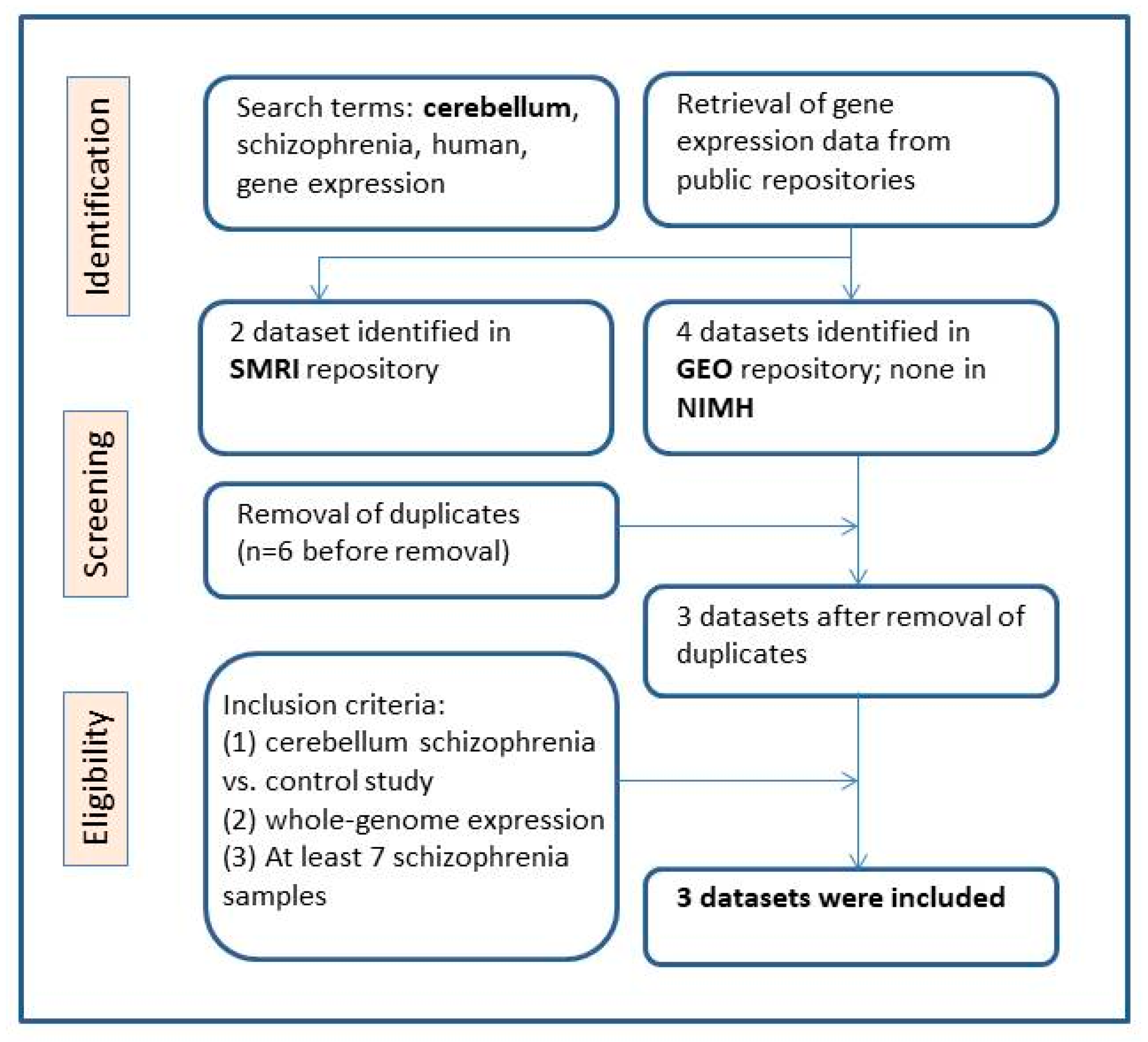
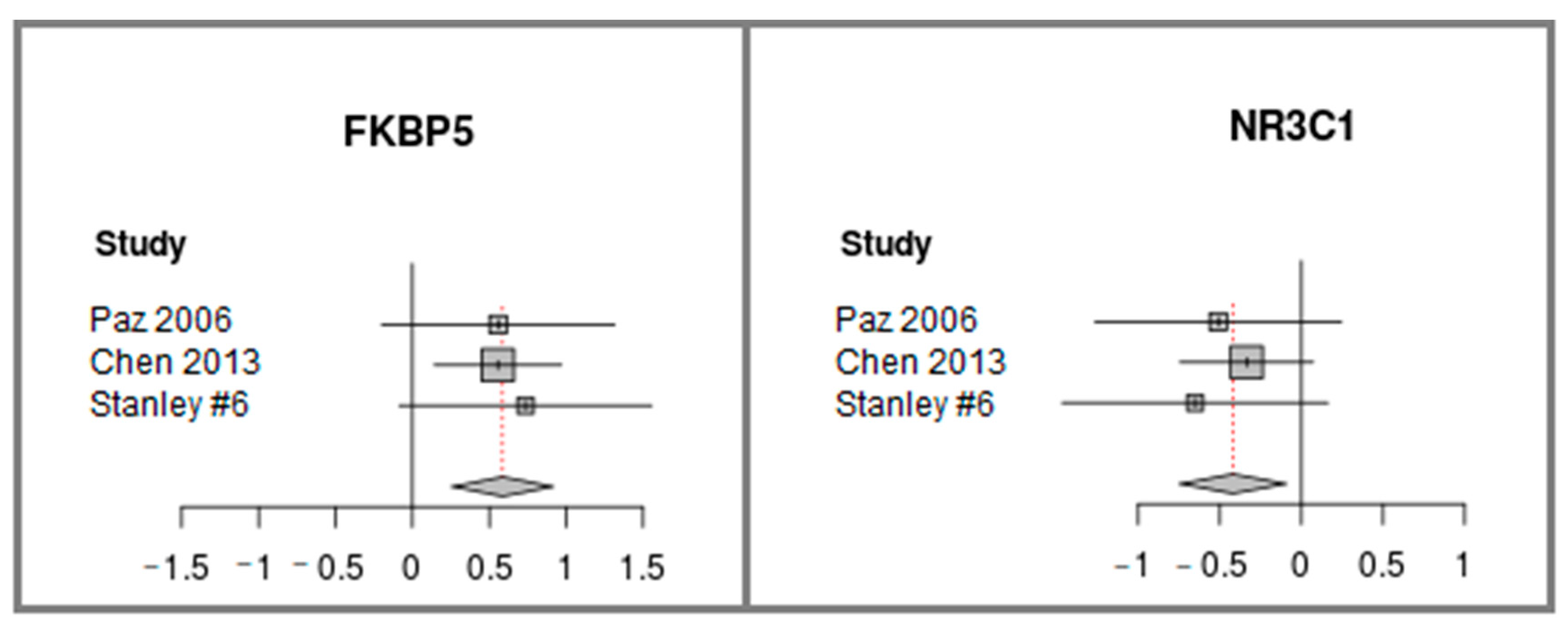
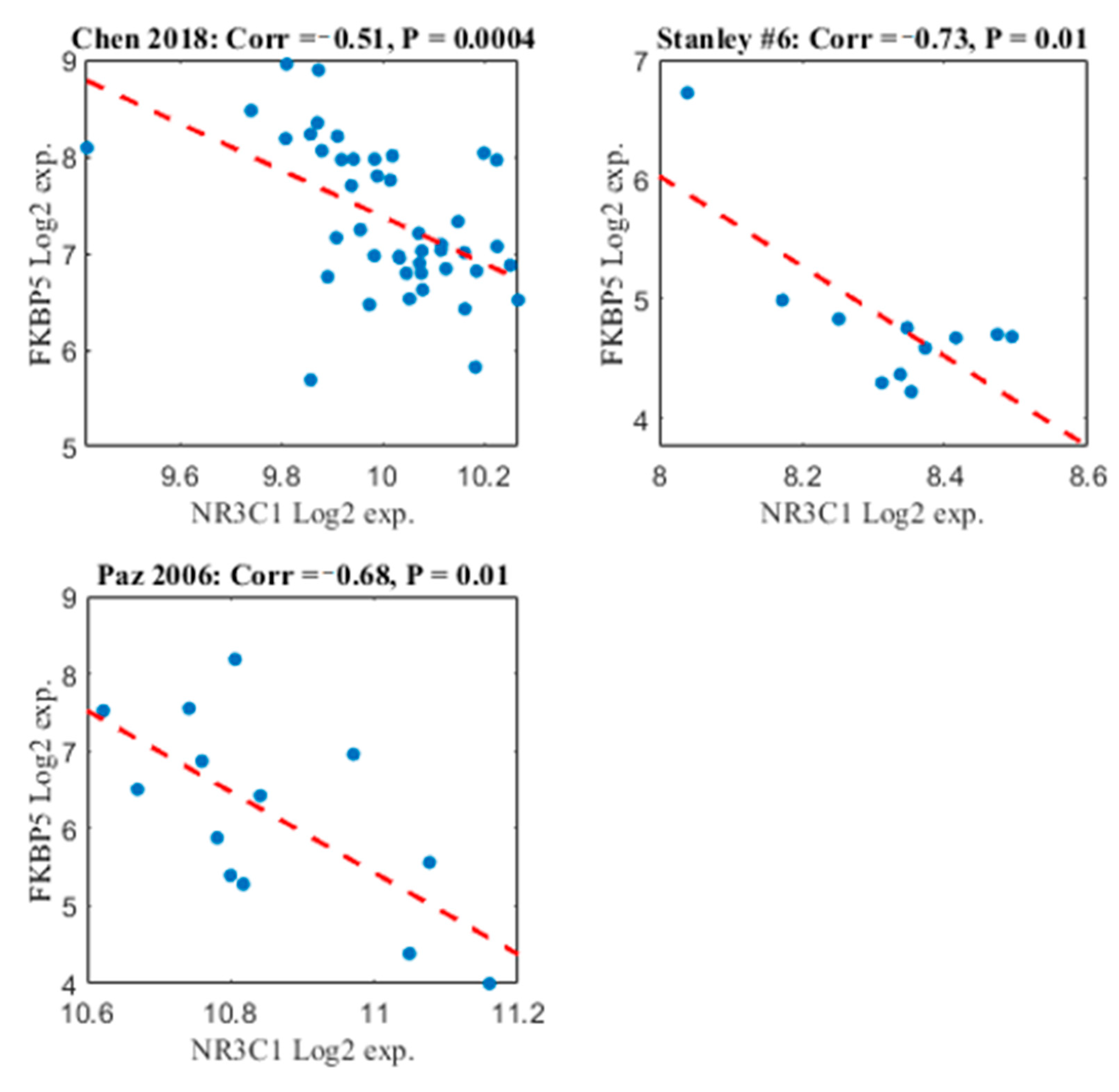
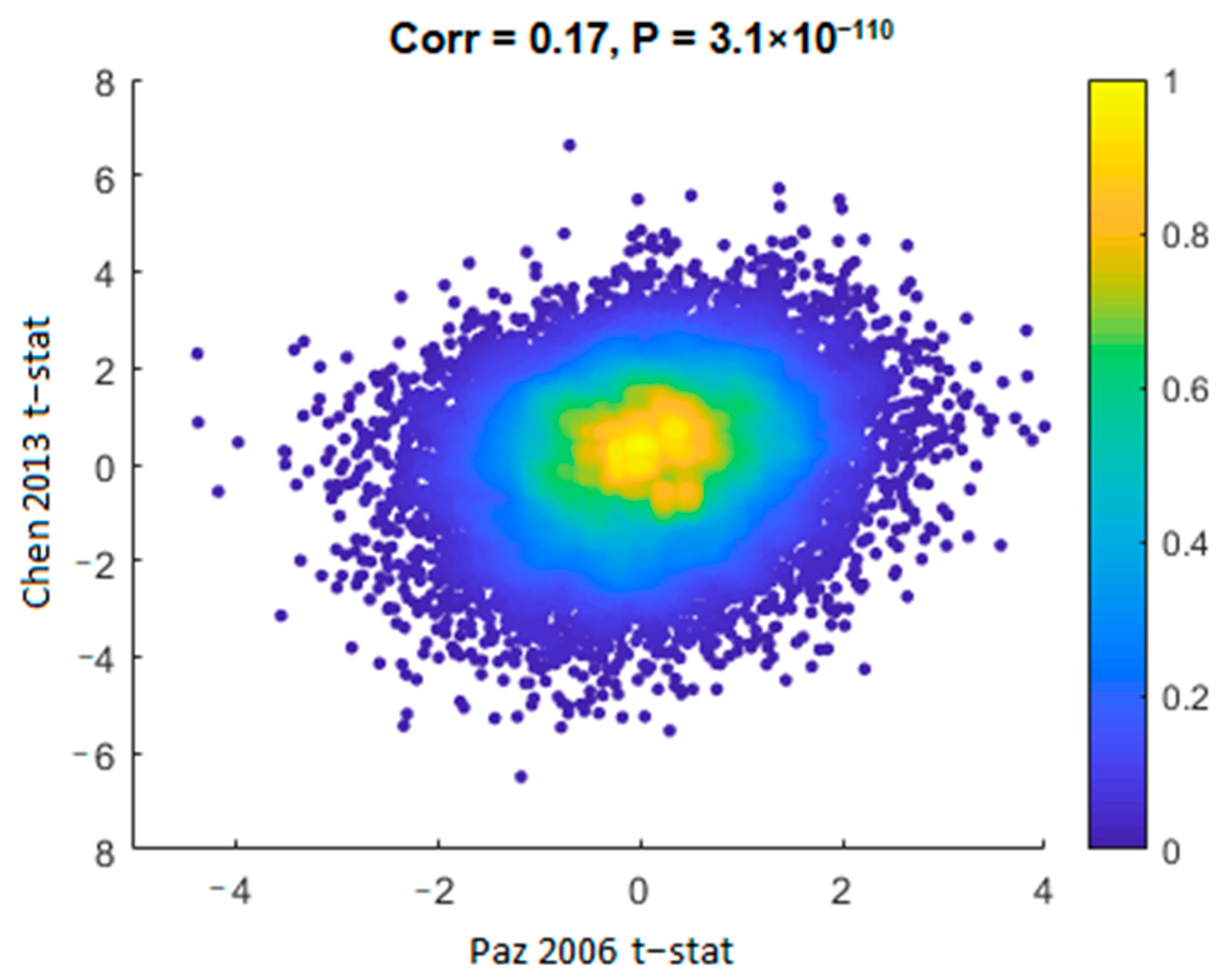
Background: One of the most studied molecular models of gene-environment interactions is that of FKBP5, which has been shown to interact with childhood adversity to increase the risk of psychiatric disorders, and has been implicated in schizophrenia. While the model predicts up-regulation of FKBP5, previous brain samples gene expression studies yielded inconsistent results. Methods: We performed a systematic gene expression meta-analysis of FKBP5 and NR3C1, a glucocorticoid receptor inhibited by FKBP5, in cerebellum samples of patients with schizophrenia. The gene expression databases GEO, SMRI and those of NIMH were searched, and out of six screened datasets, three were eligible for the meta-analysis (overall 69 with schizophrenia and 78 controls). Results: We detected up-regulation of FKBP5 and down-regulation of NR3C1 in schizophrenia, and a negative correlation between their expression patterns. Correlation analysis suggested that the detected differential expression did not result from potential confounding factors. Conclusions: Our results give significant support to the FKBP5 gene-environment interaction model for schizophrenia, which provides a molecular mechanism by which childhood adversity is involved in the development of the disorder. To explore FKBP5’s potential as a therapeutic target, a mapping of its differential expression patterns in different brain regions of schizophrenia patients is needed.
Keywords: gene expression; meta-analysis; schizophrenia; FKBP5; cerebellum gene expression; meta-analysis; schizophrenia; FKBP5; cerebellum