1. Introduction
Surface modification technologies play a fundamental role in improving the functional performance and service life of engineering components operating under severe mechanical, thermal, and corrosive conditions [
1,
2,
3]. In many industrial applications, the bulk material of a component is selected primarily for its structural strength and load-bearing capacity, whereas the surface must provide specific properties such as wear resistance, corrosion resistance, or improved tribological behavior [
4,
5]. Consequently, the development of reliable surface engineering techniques has become essential for extending component lifetime and improving operational efficiency.
Copper and copper-based alloys, particularly bronze alloys, are widely employed as surface materials because of their excellent thermal conductivity, corrosion resistance, and favorable tribological properties [
6,
7,
8]. Bronze coatings are commonly used in components subjected to sliding contact and frictional loading, including bearings, bushings, marine components, and electrical contact systems [
9,
10]. Depositing bronze or Cu-based alloys onto steel substrates enables the combination of the high mechanical strength of steel with the desirable surface properties of copper alloys, making such material combinations attractive for many industrial applications [
11,
12].
Among various surface modification techniques such as thermal spraying [
13], welding overlays [
14], and electroplating [
15], laser cladding [
16,
17,
18] has attracted considerable attention due to its ability to produce high-quality coatings with strong metallurgical bonding to the substrate. The process involves localized melting of both the feed material and a thin layer of the substrate using a high-energy laser beam, allowing for the formation of dense coatings with controlled dilution and limited heat input. In addition, the rapid heating and cooling conditions associated with laser processing often lead to refined microstructures, which can further enhance the mechanical and tribological performance of the deposited layer [
19,
20].
Different studies have investigated the deposition of bronze and copper-based alloys by laser cladding in order to enhance surface properties. González et al. [
21] demonstrated the feasibility of producing phosphor bronze coatings on alloy steel through laser cladding as an alternative to conventional shrink-fitted bronze bushings. Their results showed that dense coatings with strong metallurgical bonding and negligible dilution could be obtained, with a microstructure composed mainly of α-dendrites and (α + δ) eutectoid phases. The deposited layer exhibited a hardness approximately 56% higher than that of cast bronze, indicating the capability of laser cladding to improve the mechanical performance of bronze coatings. The influence of process parameters on coating quality has also been investigated in some studies. Yin et al. [
22] examined the effect of laser energy density on modified aluminum bronze coatings deposited on stainless steel substrates. Their results demonstrated that energy density significantly affects coating morphology, microstructure evolution, and wear behavior, and an optimal energy density of approximately 42.4 J/mm
2 produced coatings with improved hardness and reduced wear rate. Laser cladding of bronze alloys has also been studied for specialized applications such as marine component repair. Feng et al. [
23] investigated underwater laser cladding of nickel–aluminum bronze coatings using a protective covering system to enable deposition in a full-wet environment. Their study showed that stable coatings with acceptable morphology could be produced underwater, and the resulting microstructures contributed to improved electrochemical behavior compared with coatings fabricated in air.
In addition to parameter optimization, improvements in laser technology have also been explored to enhance copper alloy deposition. Rippa et al. [
24] compared blue-light high-speed laser cladding with conventional infrared laser cladding for bronze deposition on steel substrates. Their results demonstrated that the blue-laser process significantly increased deposition efficiency, achieving a substantially higher deposition rate while requiring lower laser power and producing a smaller heat-affected zone.
Most of the studies mentioned above have employed powder feedstock in the laser cladding process. Powder-based laser cladding offers flexibility in material selection and has been widely used in industrial applications. However, powder delivery systems present several limitations, including relatively low material utilization efficiency, potential oxidation of metallic powders, safety concerns associated with powder handling, and instability in powder feeding during deposition [
25].
Wire-based laser cladding has emerged as a promising alternative to powder-fed processes. In this approach, the feedstock is supplied in the form of a solid wire that is melted by the laser beam and deposited onto the substrate surface. Compared with powder-based methods, wire laser cladding offers several advantages, including nearly complete material utilization, improved process stability, reduced oxidation and contamination, and lower feedstock cost. Furthermore, wire feeding allows for more precise control of material deposition rate, which improves process repeatability and facilitates industrial implementation [
26].
Recent research has begun to explore the deposition of copper-based alloys using wire-feed laser cladding. Guo et al. [
27] investigated underwater wire-feed laser cladding of nickel–aluminum bronze coatings and compared the resulting microstructures with those produced in air. Their results showed that the higher cooling rate in the underwater environment produced finer grain structures and increased microhardness due to the formation of β′ phases and a higher fraction of low-angle grain boundaries, while the corrosion behavior remained largely governed by the copper matrix.
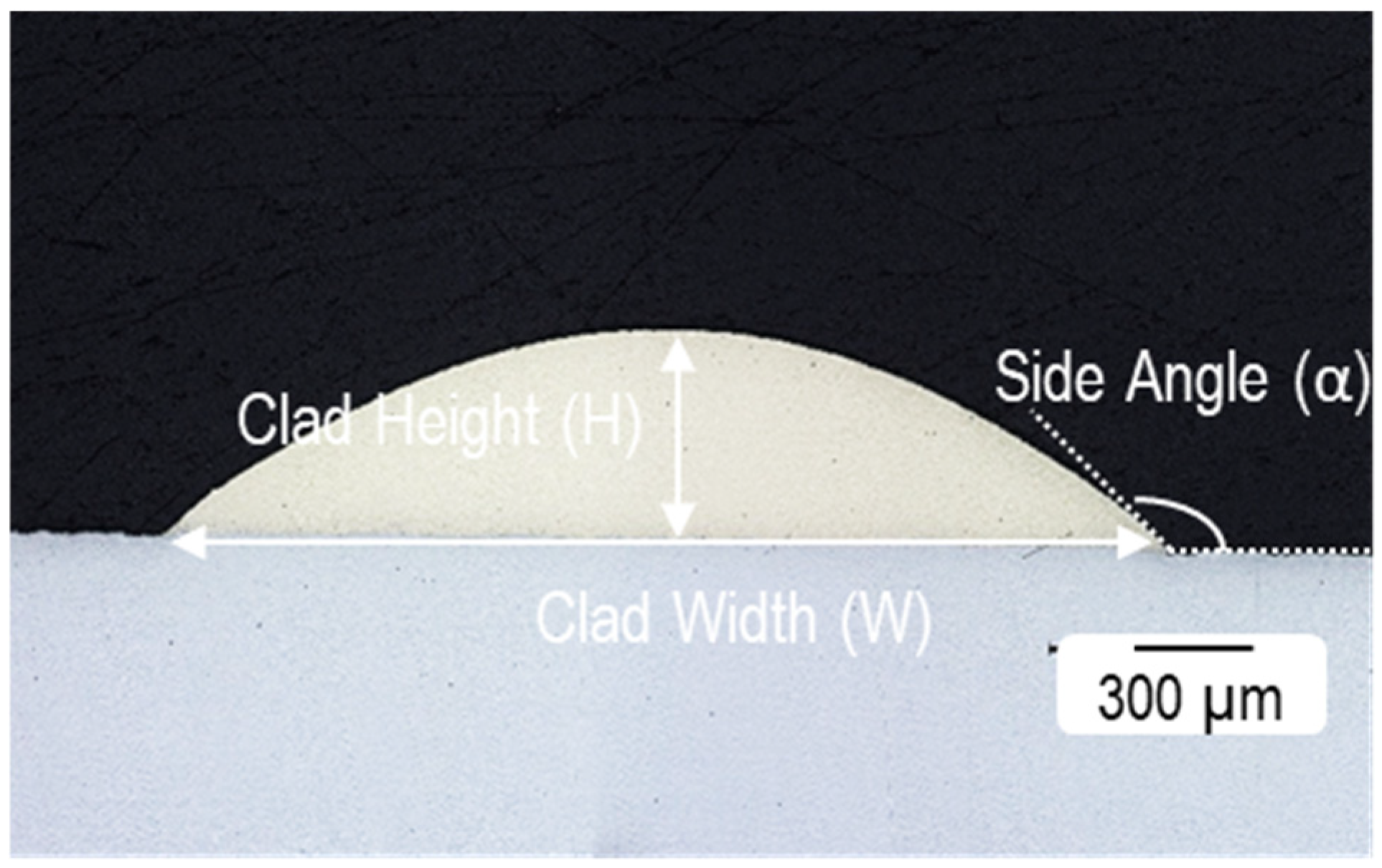
Despite these advances, depositing copper-based alloys using wire laser cladding remains challenging due to the high thermal conductivity and reflectivity of copper alloys, which influence laser energy absorption and melt pool stability. Consequently, careful control of process parameters is required to achieve stable deposition and desirable clad geometry. Key parameters include laser power, wire feed speed, deposition speed, and thermal conditions such as wire preheating, which directly affect melt pool temperature and the geometric characteristics of the deposited layer, including clad height, clad width, and side wall angle.
Accordingly, the use of a robot-assisted wire laser cladding system in the present study is consistent with recent developments in automated manufacturing, where optimized robotic tool paths and energy-efficient process planning have been emphasized as important factors for improving sustainability and process reliability [
28].
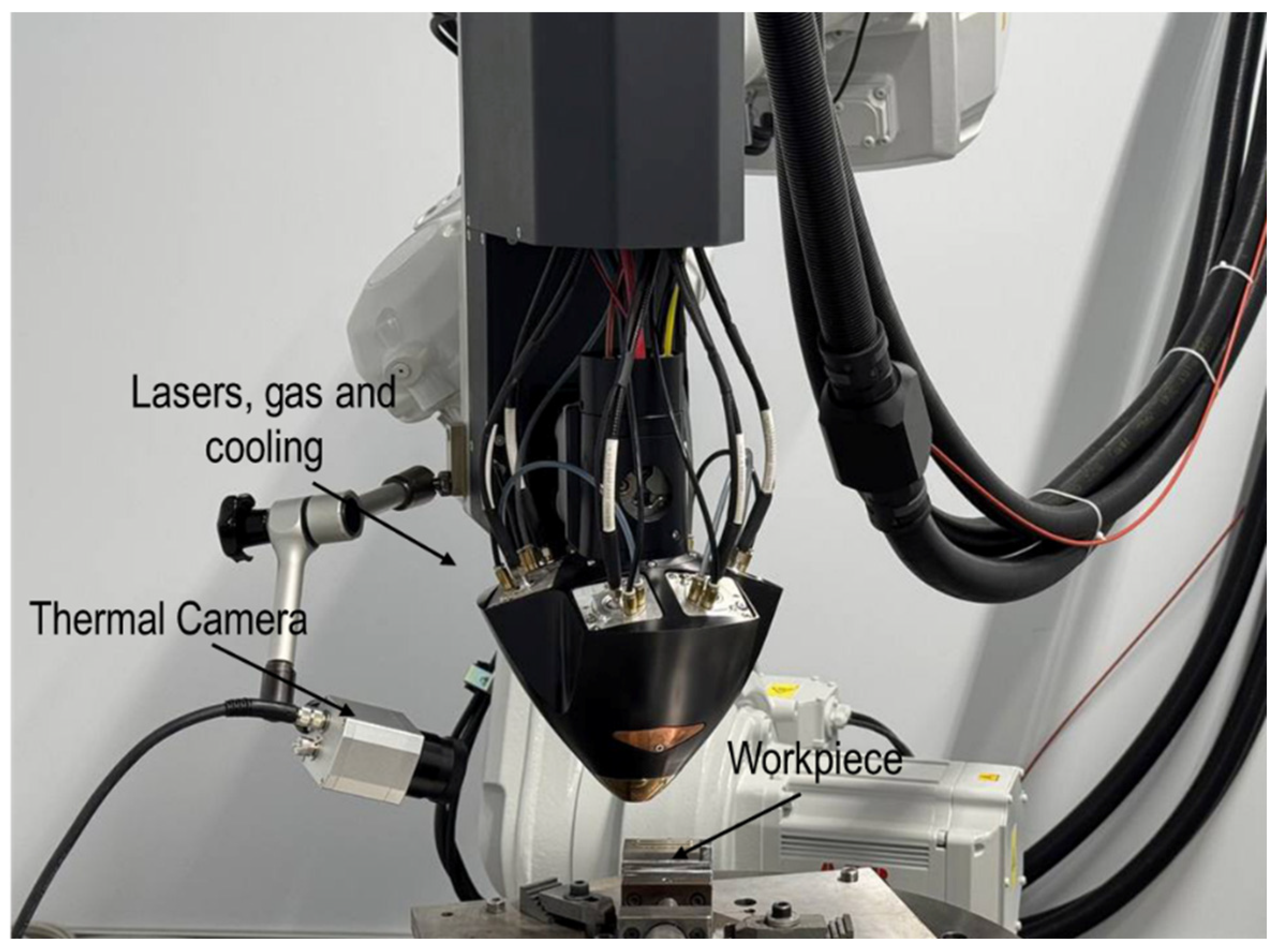
In the present study, wire-based laser cladding of bronze on AISI 304 stainless steel substrates is experimentally investigated. The effects of wire preheating current (WP), wire feed speed (WFS), deposition speed (DS), and laser power (P) on melt pool temperature and clad geometry, including clad height, clad width, and side angle, are analyzed using response surface methodology. The objective of this work is to establish relationships between process parameters and deposition characteristics in order to identify suitable conditions for producing high-quality bronze coatings using wire laser cladding.
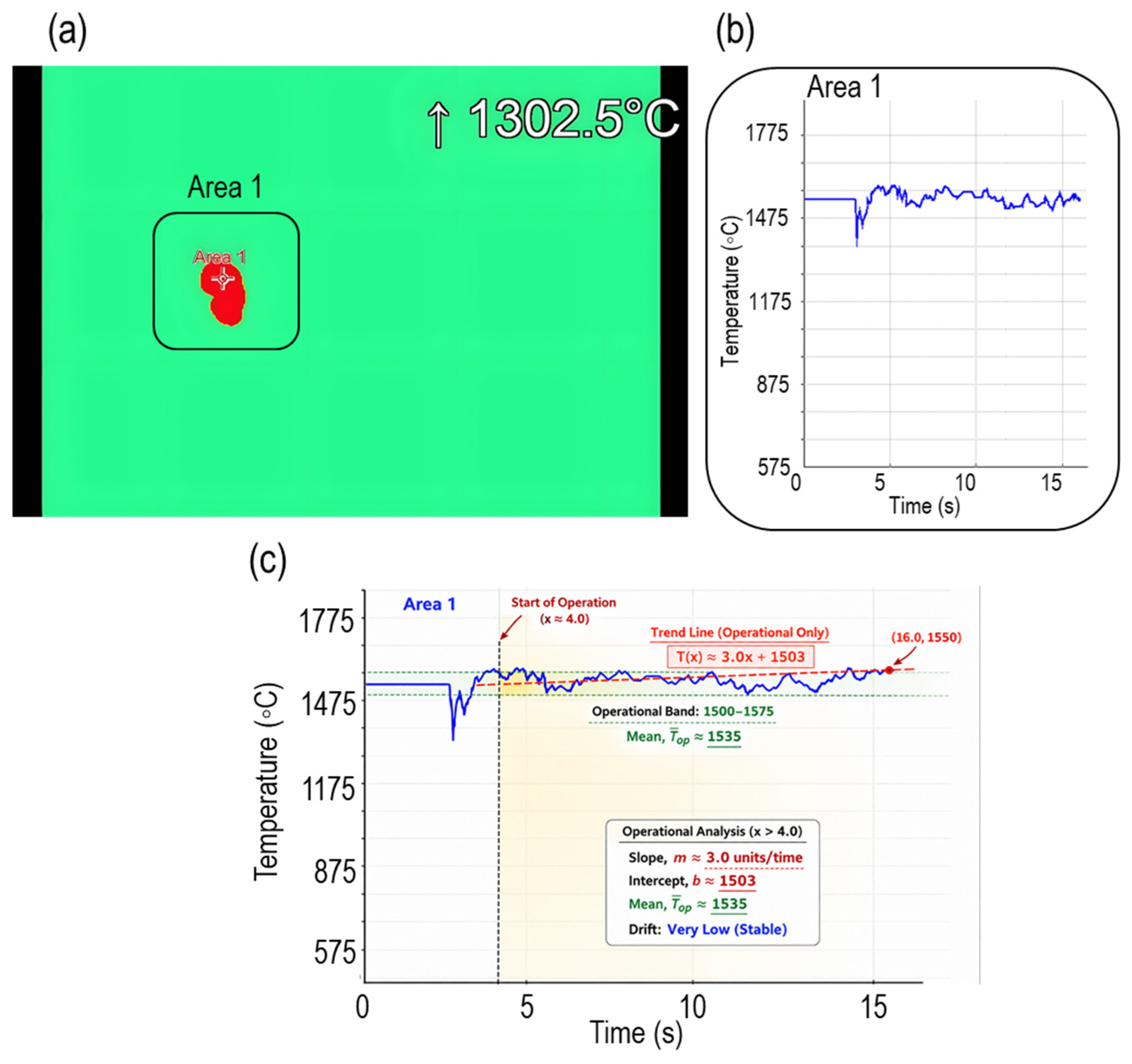
This study therefore contributes by investigating the effects of key process parameters in wire laser cladding of CuAl9Ni5Fe3Mn2 bronze on AISI 304 stainless steel and by using real-time infrared thermal monitoring to correlate melt pool temperature with clad geometry and process stability.
3. Results and Discussion
3.1. Clad Layer Quality
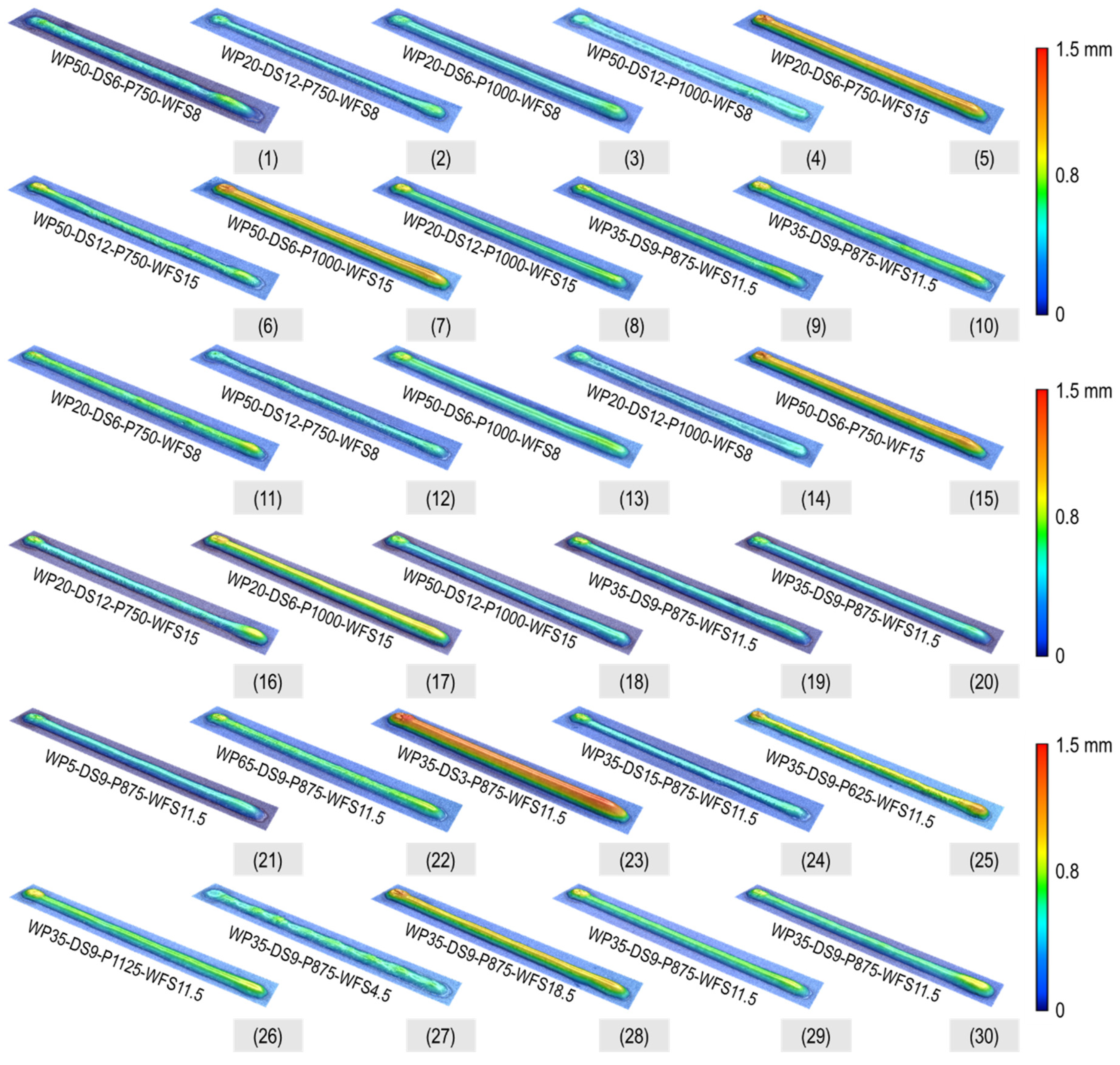
The surface morphology and geometric consistency of the deposited clads were evaluated using 3D profilometry, as presented in
Figure 4. Based on the observations, all experimental conditions resulted in successful material deposition, with continuous tracks formed along the substrate surface. This indicates that the selected parameter ranges ensured sufficient energy input to sustain the cladding process. Despite the overall successful deposition, significant variations in clad quality can be observed across the experimental runs. Several samples exhibit highly uniform and continuous tracks with stable geometry along the entire deposition length. In particular, runs 3, 5, 7, 8, 9,10, 13, 15, 17, 18, 19, 20, 21, 23, 26, 28, 29 and 30 demonstrate consistent bead width and height, as well as smooth surface morphology. These characteristics suggest stable melt pool behavior and a proper balance between energy input, material supply, and thermal conditions influenced by wire preheating current and deposition speed. In contrast, some experimental conditions show reduced clad quality, characterized by irregular geometry, fluctuations in bead height, and localized inconsistencies along the track. A clear example is run 27, where the clad appears discontinuous and less uniform compared to other cases. This behavior can be attributed to insufficient material supply relative to the thermal input, as indicated by the low WFS = 4.5 mm/s, which likely led to unstable melt pool conditions. Similar, although less pronounced, irregularities are observed in other runs where the mismatch between deposition speed and wire feed speed affects the continuity of the clad. From a broader perspective, the visual results indicate that clad quality is governed by the interaction between process parameters rather than by any single factor. A balanced combination of deposition speed and wire feed speed is essential to maintain a stable melt pool and ensure continuous material deposition. In addition, adequate laser power is required to sustain proper melting, while wire preheating contributes to improved process stability by reducing thermal gradients and facilitating smoother material transfer.
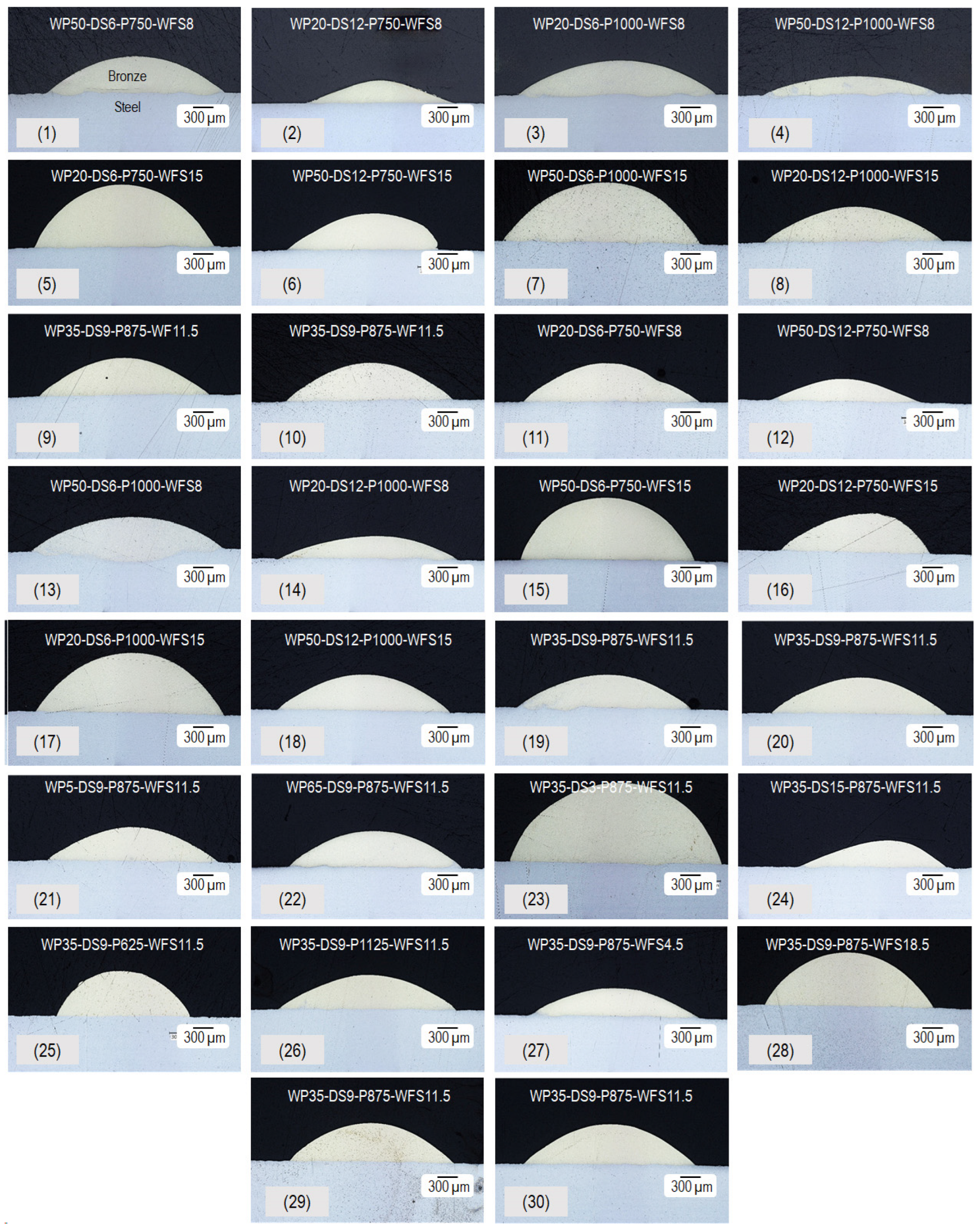
The cross-sectional micrographs presented in
Figure 5 provide detailed insight into the internal geometry and metallurgical characteristics of the deposited clads for all experimental conditions. The images correspond to the cross-section of mid-length of each track and allow for direct comparison of clad morphology under different combinations of process parameters (wire preheating current, deposition speed, laser power, and wire feed speed). From a metallurgical perspective, all samples exhibit sound bonding between the bronze clad and the AISI 304 steel substrate, with no visible signs of cracking, delamination, or major defects. This indicates that the selected process window was sufficient to ensure proper fusion and structural integrity of the deposited material. In addition, the interface between the clad and substrate appears relatively well-defined, suggesting that dilution is limited and that excessive mixing between bronze and steel did not occur. Despite the overall good bonding quality, noticeable variations in clad geometry are observed across the different experimental runs. Significant differences in clad height, width, and side wall angle can be clearly identified, confirming the strong influence of process parameters on the final bead shape. In several cases, the clads exhibit a well-defined and smooth semi-circular profile, indicating stable melt pool behavior and uniform material distribution.
However, some samples display asymmetric clad shapes, where one side of the bead is steeper or more extended than the other. This asymmetry can be attributed to non-uniform melt pool dynamics, which may arise from imbalances between heat input and material supply, as well as local variations in heat dissipation during deposition. Such effects are more pronounced under conditions where the relationship between deposition speed and wire feed speed is not well balanced. Furthermore, variations in laser power and wire preheating current also influence the extent of spreading and penetration. Higher energy input generally leads to wider clads with reduced height, while lower material supply or insufficient thermal input may result in narrower and more pronounced bead profiles. These trends are consistent with the visual observations of clad morphology across the different runs.
Overall, the cross-sectional analysis confirms that all process conditions produced defect-free clads with acceptable metallurgical bonding and controlled dilution. However, the observed variations in geometric features and symmetry show the importance of parameter optimization in achieving consistent and high-quality clad layers. These geometric differences are further analyzed quantitatively in the following sections.
3.2. Statistical Investigation of Temperature Changes
Table 2 presents the statistical significance of the main process parameters and their two-way interactions on melt pool temperature. Based on a significance level of
p < 0.05, deposition speed and laser power are identified as the most influential factors affecting the temperature response. Deposition speed exhibits a negative coefficient, indicating that increasing this speed reduces the melt pool temperature. In contrast, laser power shows a positive effect, confirming that higher energy input leads to an increase in temperature. Wire preheating current and wire feed speed are not statistically significant within the investigated range, although the effect of wire feed speed is relatively close to the significance threshold. This suggests that their direct influence on temperature is less pronounced compared with deposition speed and laser power. Among the interaction terms, only the interaction between deposition speed and laser power is statistically significant. The negative coefficient of this term indicates that the combined effect of these two parameters is not purely additive, and that the influence of laser power on temperature depends on the selected deposition speed. The remaining interaction terms (WP × DS, WP × P, WP × WFS, DS × WFS, and P × WFS) are not statistically significant, indicating that their combined effects on temperature are limited within the studied parameter space.
The term “coefficient” in the table refers to the estimated regression coefficient of the RSM model, indicating the direction and relative magnitude of each main effect or interaction term on the response variable.
Overall, the statistical results demonstrate that melt pool temperature is primarily governed by the balance between energy input and process speed, while other parameters play a secondary role under the selected experimental conditions. The developed model shows strong agreement with the experimental data, with a coefficient of determination of R2 = 95.69% and an adjusted R2 = 90.39%, indicating that the selected parameters effectively explain the variability in melt pool temperature.
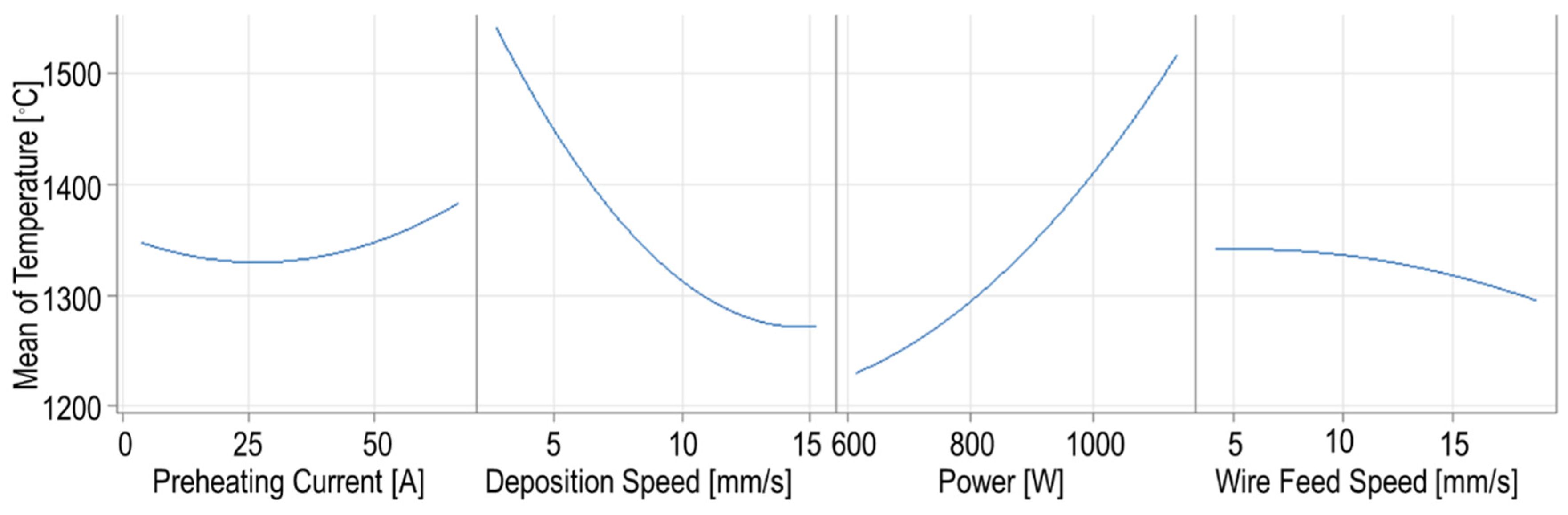
The main effects plots presented in
Figure 6 illustrate the individual influence of the process parameters on the mean melt pool temperature. Among the investigated parameters, laser power exhibits the strongest influence on temperature. A clear increasing trend is observed, where the melt pool temperature rises significantly with increasing laser power. This behavior is expected, as higher power directly increases the energy input into the system, resulting in higher thermal accumulation within the melt pool. In contrast, deposition speed shows a strong negative effect on temperature. As the deposition speed increases, the melt pool temperature decreases noticeably. This is attributed to the reduced interaction time between the laser beam and the substrate, which limits heat accumulation and leads to lower thermal input per unit length. The curvature observed in the plot suggests a non-linear relationship, with temperature decreasing more rapidly at lower speeds and stabilizing at higher speeds. The effect of wire preheating current is relatively weak compared with deposition speed and power. A slight variation in temperature is observed across the investigated range, with a mild non-linear trend. The temperature initially decreases slightly and then increases at higher preheating levels, indicating that wire preheating has a secondary influence on the thermal behavior of the process. This observation is consistent with the statistical results, where wire preheating current was not identified as a significant factor. Similarly, wire feed speed shows a limited influence on temperature. A slight decreasing trend is observed with increasing wire feed speed, which may be attributed to the increased material input absorbing part of the available thermal energy. However, the variation is relatively small, confirming that wire feed speed has a minor effect on melt pool temperature compared with laser power and deposition speed.
Overall, the main effects plots confirm that melt pool temperature is primarily governed by the balance between energy input (laser power) and deposition speed, while wire preheating current and wire feed speed play a secondary role. These observations are in strong agreement with the statistical analysis presented in
Table 2.
3.3. Statistical Investigation of Clad Height
Table 3 presents the statistical significance of the main process parameters and their two-way interactions on clad height. Based on a significance level of
p < 0.05, deposition speed, laser power, and wire feed speed were found to significantly affect the clad height. Among these factors, deposition speed showed the strongest negative effect, indicating that increasing this speed leads to a reduction in clad height. This behavior can be attributed to the lower energy input per unit length and reduced material accumulation at higher travel speeds. Wire feed speed exhibited a strong positive effect on clad height, confirming that increasing the material feed rate promotes the formation of taller deposits. In contrast, power showed a statistically significant but smaller negative effect, suggesting that higher power levels may increase melt pool spreading and reduce the final bead height under the investigated conditions. Wire preheating current did not have a statistically significant effect on clad height within the selected parameter range. Among the two-way interaction terms, only the interaction between deposition speed and wire feed speed was statistically significant. The negative coefficient of this interaction indicates that the effect of wire feed speed on clad height depends on the selected deposition speed, and that the height increase associated with higher wire feed speed becomes less pronounced at higher deposition speed. The remaining interaction terms were not statistically significant, showing a limited combined effect on clad height within the studied process window. The developed model showed strong agreement with the experimental data, with R
2 = 96.86% and adjusted R
2 = 93.00%, showing that the selected parameters explain most of the variability in clad height.
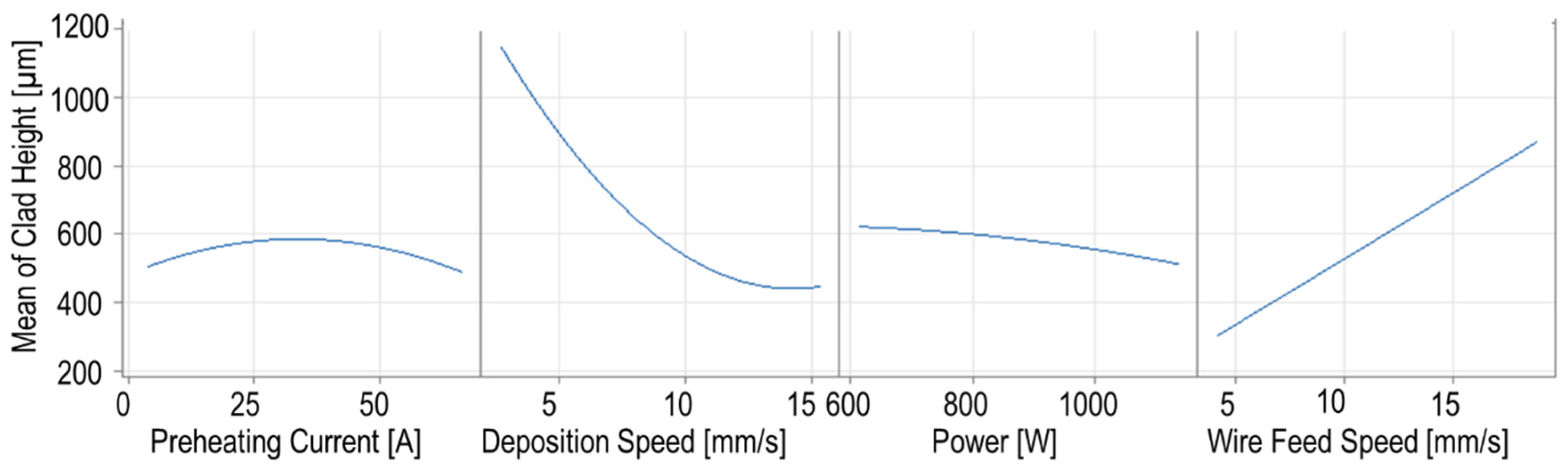
The main effects plots presented in
Figure 7 illustrate the individual influence of process parameters on the mean clad height. Among the investigated parameters, wire feed speed exhibits the strongest positive influence on clad height. A clear increasing trend is observed, where higher wire feed speed results in significantly taller clads. This behavior is expected, as increasing the material supply rate leads to greater material accumulation within the melt pool, thereby increasing the deposited layer height. In contrast, deposition speed shows a pronounced negative effect on clad height. As the deposition speed increases, the clad height decreases significantly. This is attributed to the reduced energy input per unit length and shorter interaction time between the laser and substrate, which limits both melting and material deposition. The non-linear curvature observed in the plot suggests that the reduction in height is more significant at lower speeds and tends to stabilize at higher speeds. The effect of laser power on clad height is relatively moderate compared with deposition speed and wire feed speed. A slight decreasing trend is observed with increasing power, indicating that higher energy input promotes melt pool spreading rather than vertical buildup. As a result, the deposited material tends to form wider and flatter clads, leading to a reduction in height. Wire preheating current shows a minimal effect on clad height within the investigated range. The plot indicates only a slight variation, with a mild increase followed by a decrease at higher preheating levels. This confirms that preheating does not significantly influence the clad height compared with the dominant effects of deposition speed and wire feed speed.
3.4. Statistical Investigation of Clad Width
Table 4 presents the statistical significance of the main process parameters and their two-way interactions on clad width. Based on a significance level of
p < 0.05, deposition speed and power were identified as the only statistically significant main factors affecting clad width. Deposition speed exhibited a strong negative coefficient, indicating that increasing the deposition speed leads to a reduction in clad width. This behavior is associated with the lower energy input per unit length and the shorter interaction time available for melt pool spreading. In contrast, laser power showed a strong positive effect on clad width, confirming that increasing the power promotes greater melting and lateral spreading of the deposited material, which results in wider clads. Wire preheating current and wire feed speed were not statistically significant within the investigated range, indicating that their direct effects on clad width were limited under the selected experimental conditions. None of the two-way interaction terms were statistically significant at the selected confidence level, although the interaction between deposition speed and laser power approached significance with a
p-value of 0.067. This suggests that the combined effect of these two parameters may have some influence on clad width, but it was not strong enough to be considered statistically significant within the present experimental domain. The developed model showed strong agreement with the experimental data, with R
2 = 96.47% and adjusted R
2 = 92.13%, indicating that the selected factors explain most of the variability in clad width.
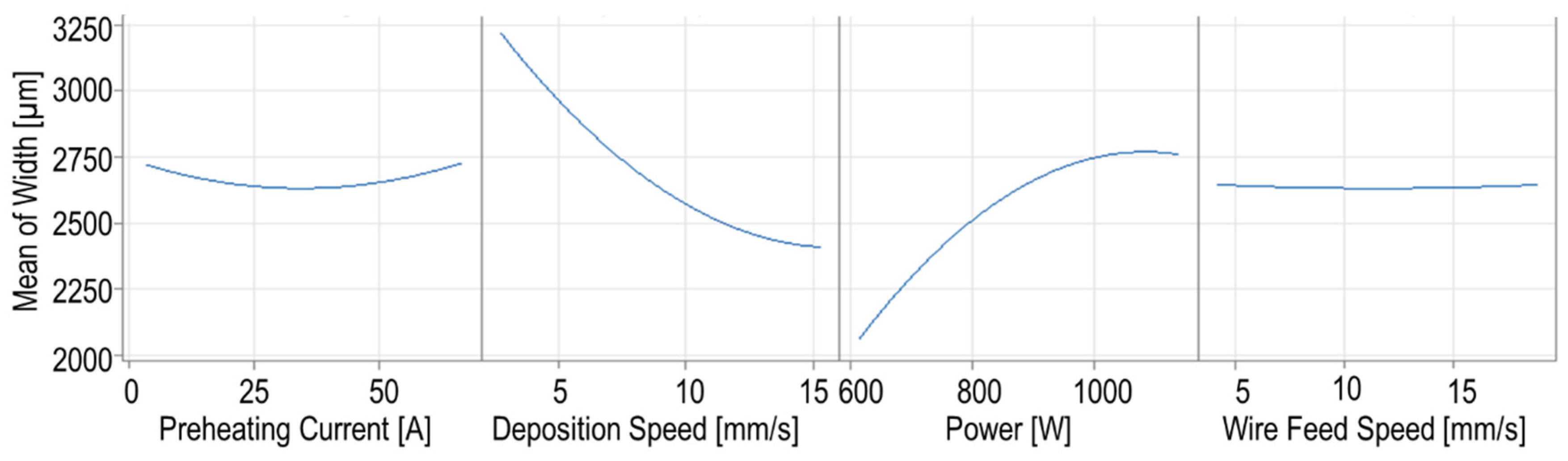
The main effects plots presented in
Figure 8 illustrate the individual influence of the process parameters on the mean clad width. Among the investigated parameters, deposition speed shows a strong negative influence on clad width. As the deposition speed increases, the clad width decreases markedly. This trend indicates that higher deposition speed reduces the heat input per unit length and shortens the interaction time between the laser beam and the deposited material, thereby limiting lateral melt pool spreading. The curvature of the plot further suggests that the effect is non-linear, with a more pronounced reduction in width at lower deposition speeds. In contrast, laser power exhibits a strong positive effect on clad width. Increasing the power leads to a significant increase in clad width, particularly from the lower to intermediate range of the investigated values. This behavior is expected because higher power enhances melting and promotes broader spreading of the molten material over the substrate surface. At the highest power levels, the trend begins to level off, indicating that the widening effect becomes less pronounced beyond a certain energy input. The effects of wire preheating current and wire feed speed are comparatively small. Wire preheating current shows only a slight variation in clad width, with a weak non-linear trend, confirming that its influence on width is limited within the studied range. Similarly, wire feed speed has a nearly flat effect, indicating that changes in material supply do not substantially alter the lateral dimension of the clad under the selected processing conditions.
Overall, the main effects plots confirm that clad width is primarily governed by the balance between laser power and deposition speed, while wire preheating current and wire feed speed have negligible direct influence.
3.5. Statistical Investigation of Side Angle
Table 5 presents the statistical significance of the main process parameters and their two-way interactions on side angle. Based on a significance level of
p < 0.05, deposition speed, laser power, and wire feed speed were identified as statistically significant main factors. Among these, deposition speed and power exhibited positive coefficients, indicating that increasing either parameter tends to increase the side angle. In contrast, wire feed speed showed a negative coefficient, meaning that increasing the material feed rate reduces the side angle. Wire preheating current did not have a statistically significant effect on side angle within the investigated range. Among the two-way interaction terms, only the interaction between power and wire feed speed was statistically significant. The positive coefficient of this interaction indicates that the combined effect of power and wire feed speed on side angle is not purely additive, and that the influence of power depends on the selected wire feed speed. The remaining interaction terms were not statistically significant, indicating that their combined effects on side angle were limited under the selected experimental conditions. The developed model showed good agreement with the experimental data, with R
2 = 95.88% and adjusted R
2 = 90.82%, indicating that the selected parameters explain most of the observed variability in side angle.
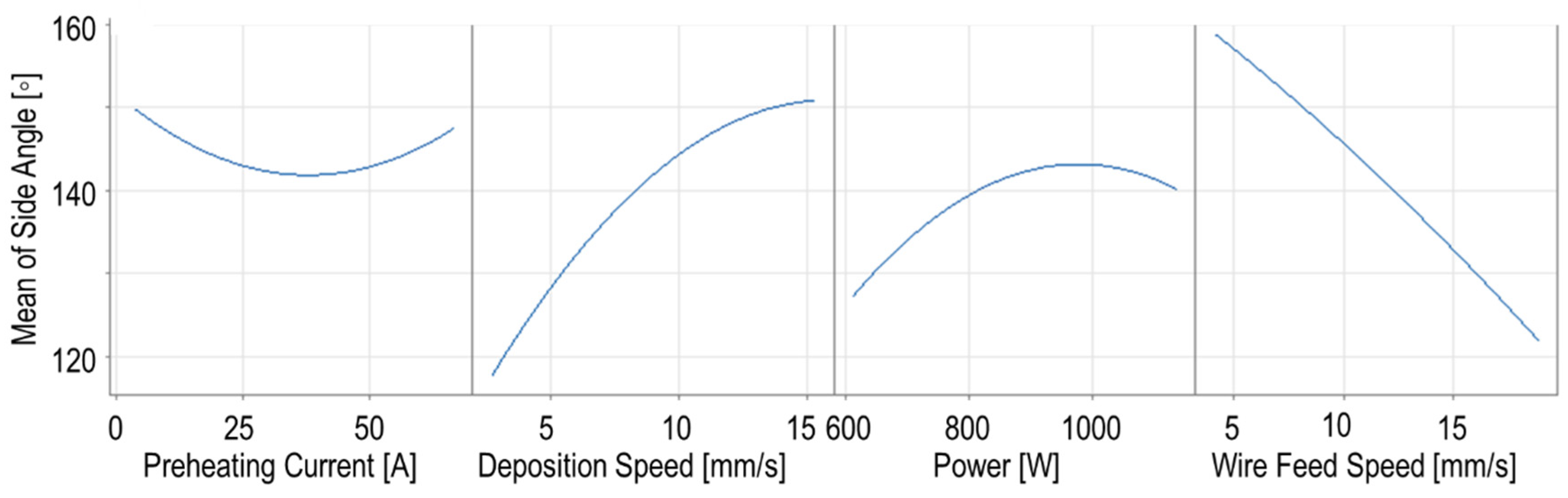
The main effects plots presented in
Figure 9 illustrate the individual influence of the process parameters on the mean side angle of the clad. Among the investigated parameters, wire feed speed shows the strongest influence on side angle, with a clear negative trend. As the wire feed speed increases, the side angle decreases markedly. This behavior indicates that higher material supply promotes a broader and less steep bead profile, thereby reducing the side wall angle. The effect is pronounced over the entire investigated range, confirming the strong role of wire feed speed in determining the final clad geometry. In contrast, deposition speed exhibits a strong positive effect on side angle. Increasing the deposition speed leads to a noticeable increase in side angle, indicating the formation of steeper clad flanks. This can be attributed to the reduced heat input per unit length at higher travel speeds, which limits lateral spreading and promotes a more compact bead profile. The trend also shows a non-linear behavior, with the side angle increasing rapidly at lower deposition speeds and approaching a plateau at higher values. Laser power also has a statistically significant positive effect on side angle, although its influence is weaker than that of deposition speed and wire feed speed. The plot shows that increasing power initially increases the side angle, followed by a slight reduction at the highest power levels. This trend suggests that moderate increases in power enhance clad buildup, while excessive power promotes melt pool spreading and slightly reduces the steepness of the side walls. The effect of wire preheating is relatively small and statistically insignificant. The plot shows only a mild curved trend, with limited variation in side angle across the investigated range. This confirms that wire preheating has a secondary influence on this response compared with the dominant effects of deposition speed, laser power, and wire feed speed.
Overall, the results clarify the respective roles of the main process variables in wire laser cladding of bronze on AISI 304 stainless steel. Laser power and deposition speed primarily determined the thermal response and strongly influenced clad width, whereas wire feed speed mainly affected clad height. The side angle reflected the combined balance between thermal input and material supply. Within the investigated range, wire preheating did not show a statistically significant effect. These findings provide the basis for the main conclusions summarized in the following section.
It is important to mention that the dilution ratio calculated from the cross-sectional images was below 2% for all investigated conditions, with only minor variation between samples; therefore, it was not considered as a separate response variable.



 ,
,