
A Cable-Driven Hip Exoskeleton with a Postural Control Strategy for Reinforcing Human Balance

 , , ,
, , ,  and
and
Featured Application
Abstract
1. Introduction
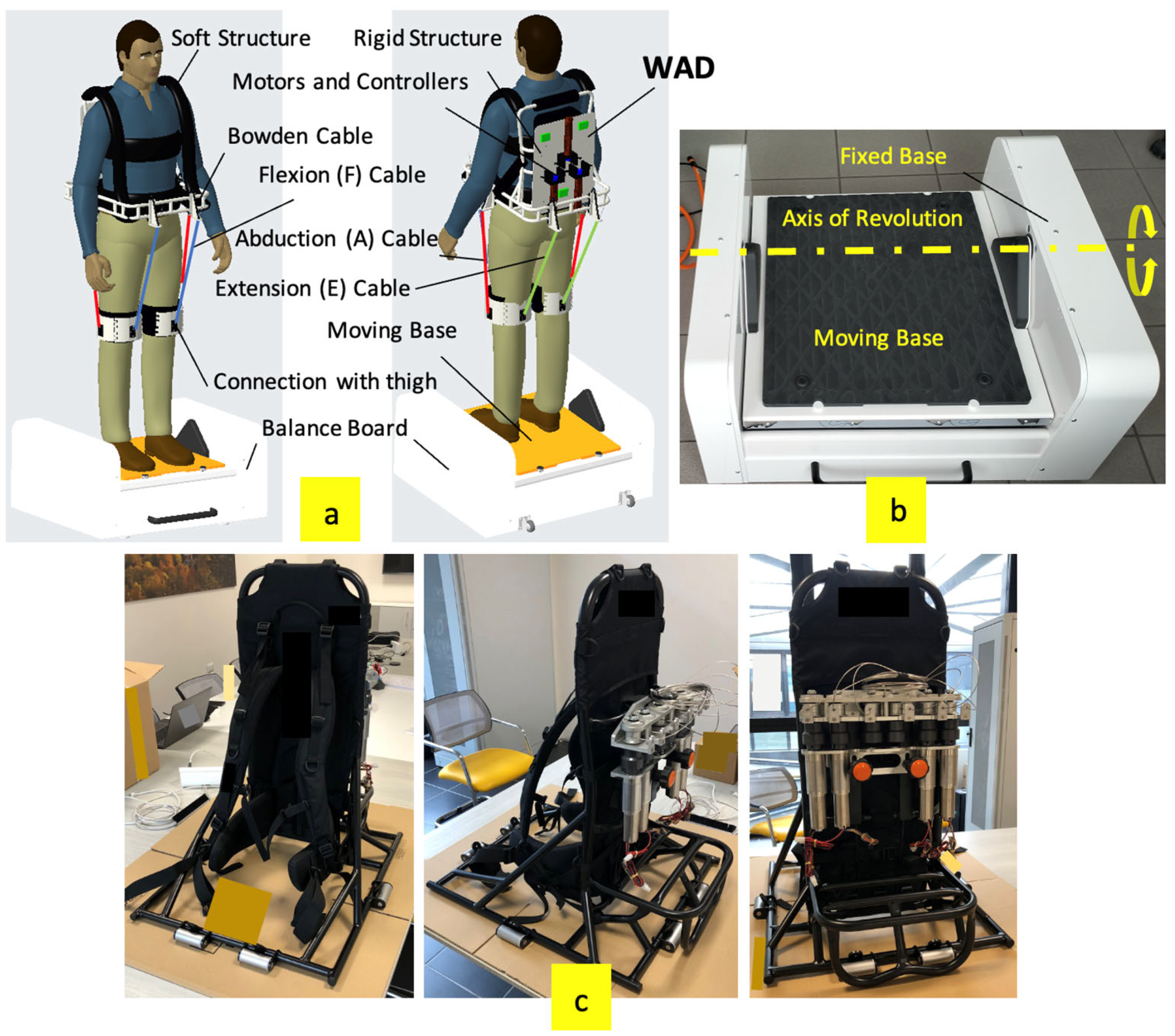
2. Cable-Driven Hip Exoskeleton
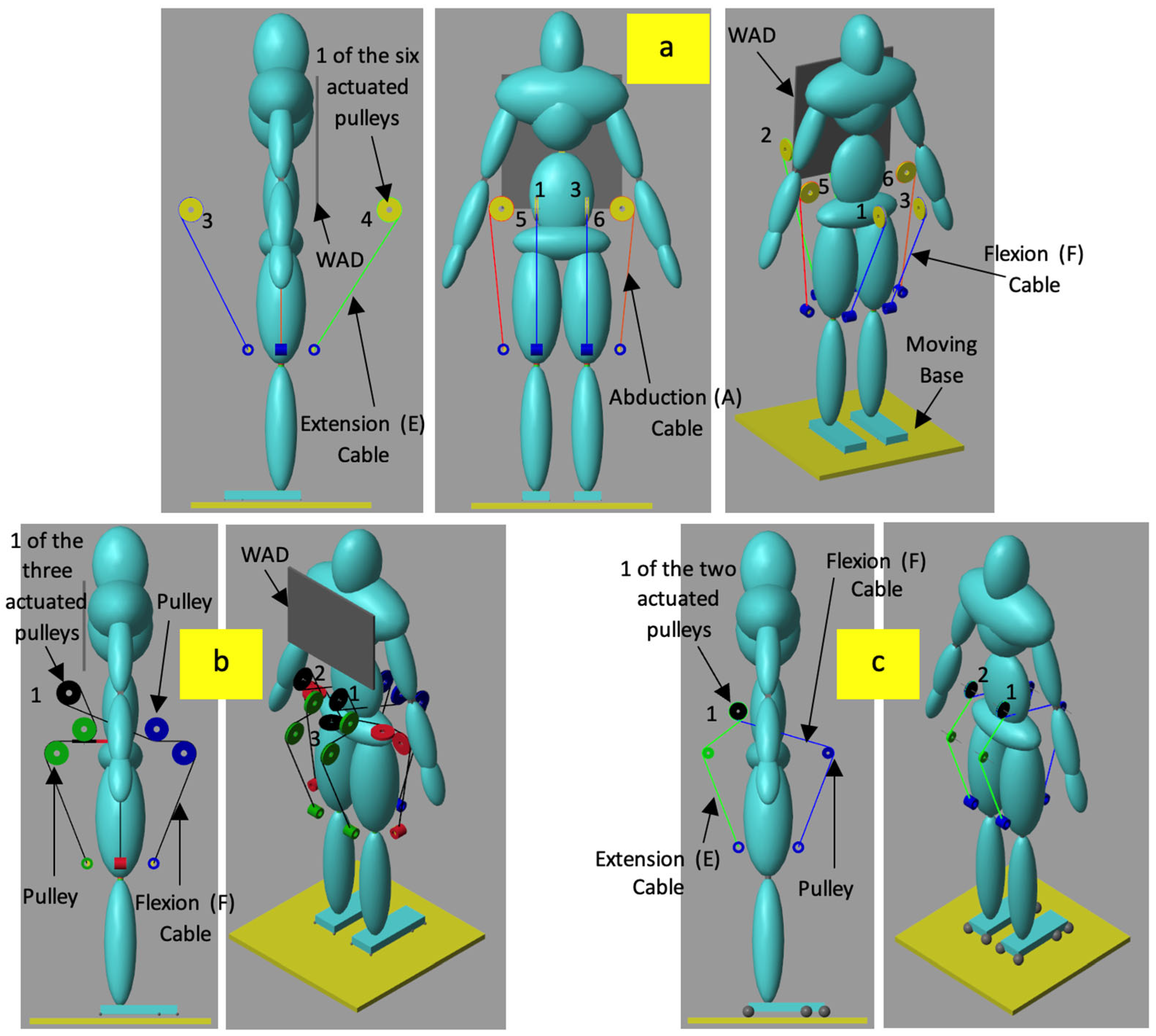
2.1. Conceptual and Functional Design
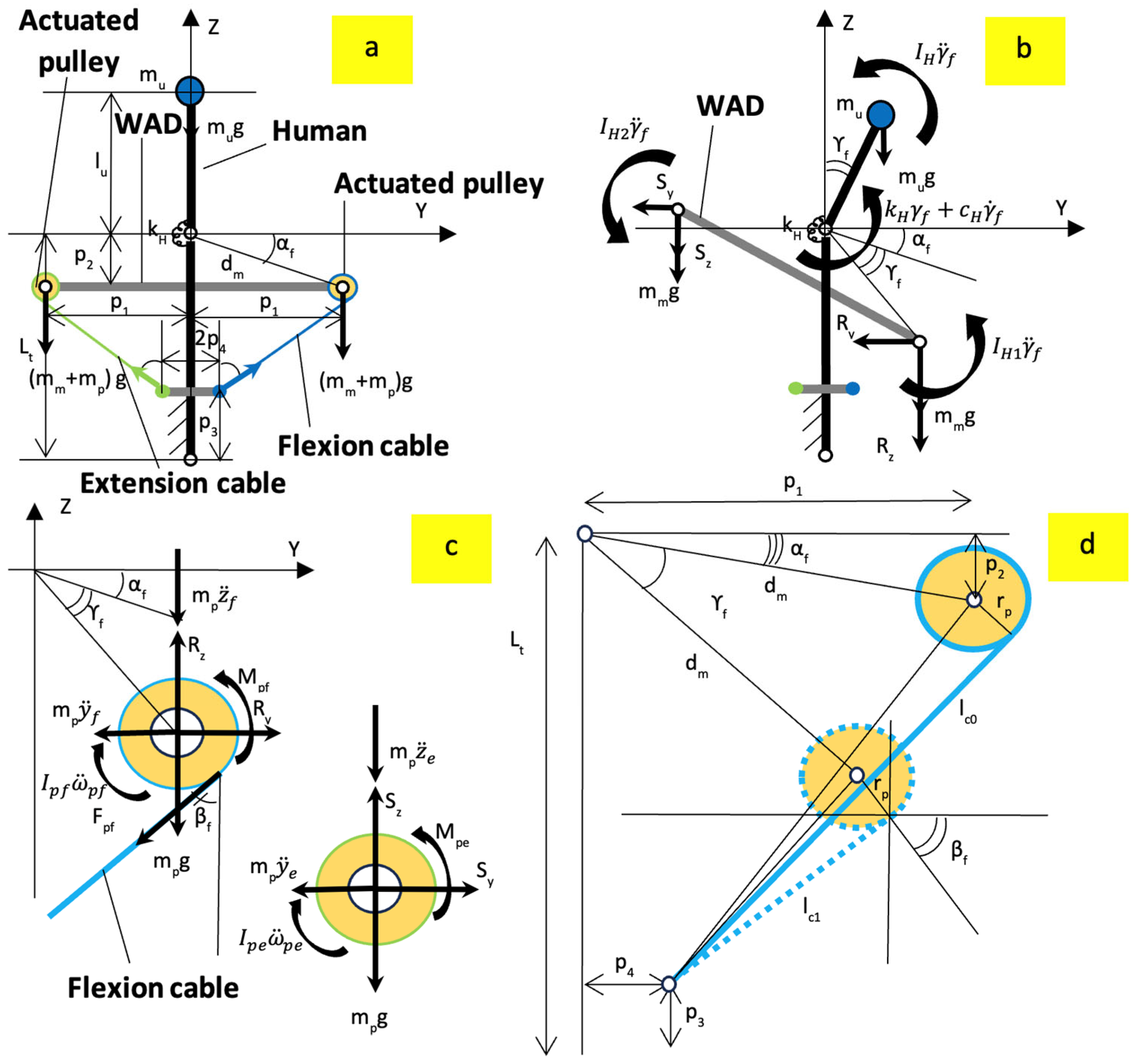
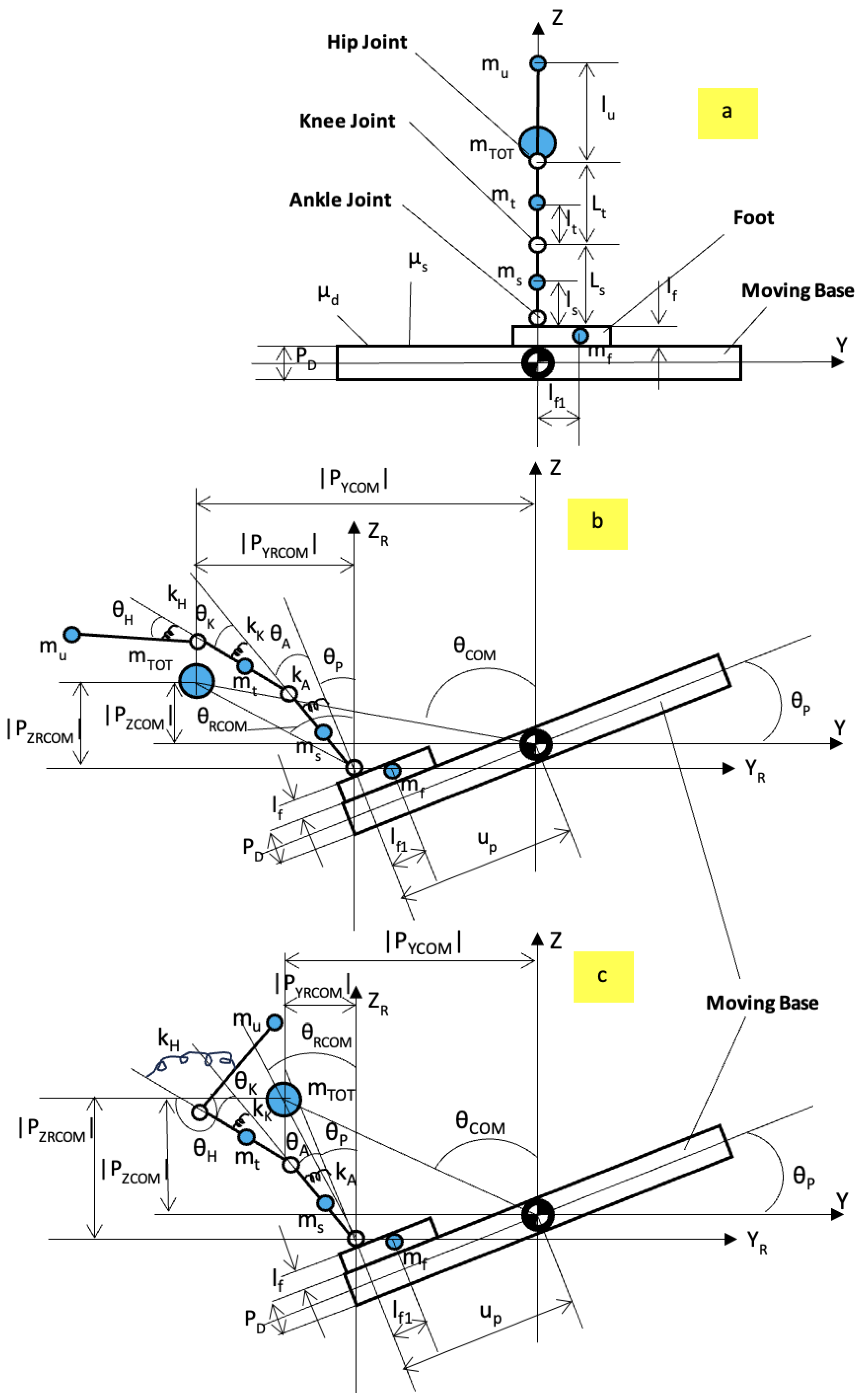
2.2. Multibody and Analytical Modeling
3. Control System: Strategy and Architecture
3.1. Postural Control Strategy
3.2. Control Architecture
3.3. Multibody Simulations
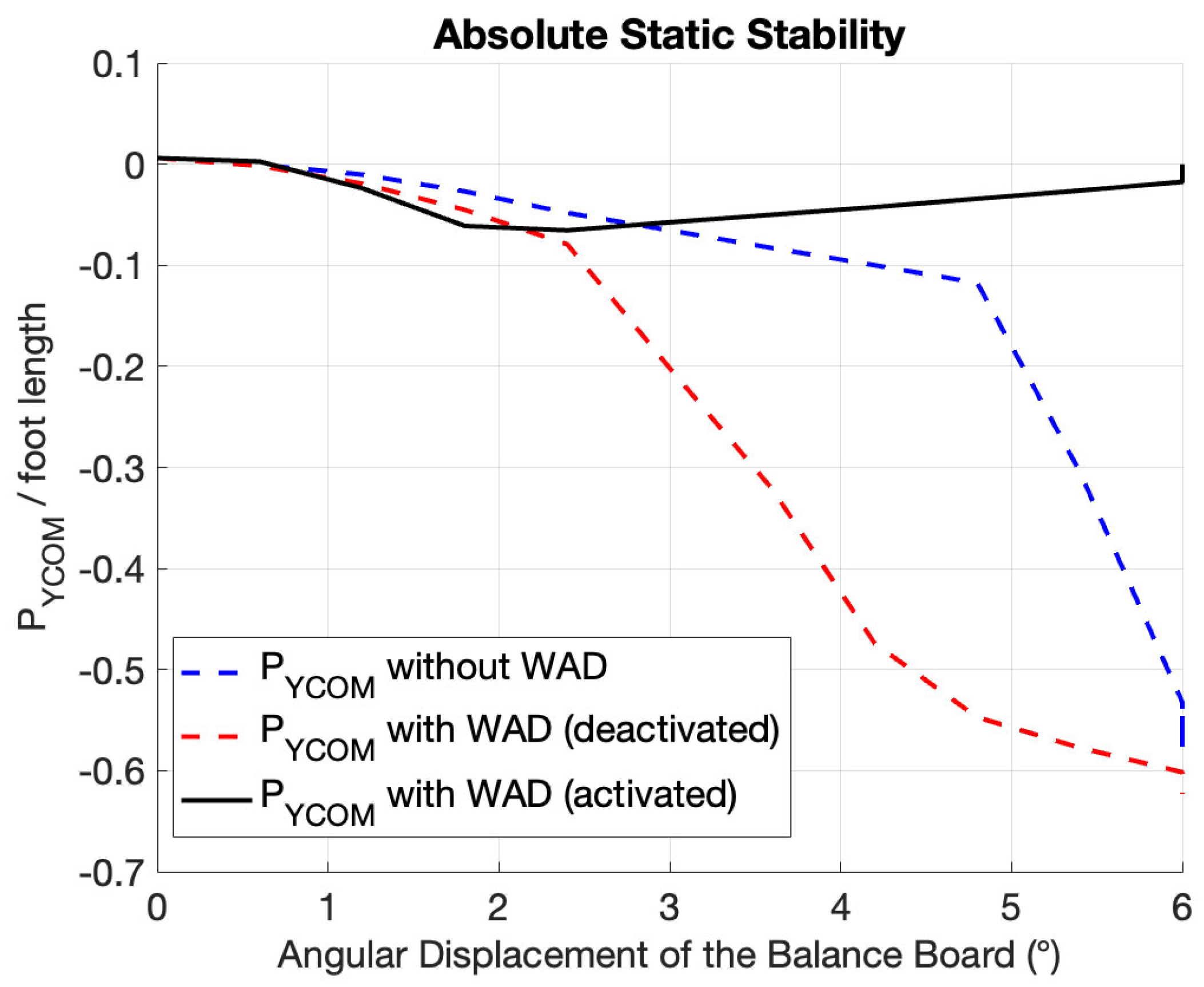
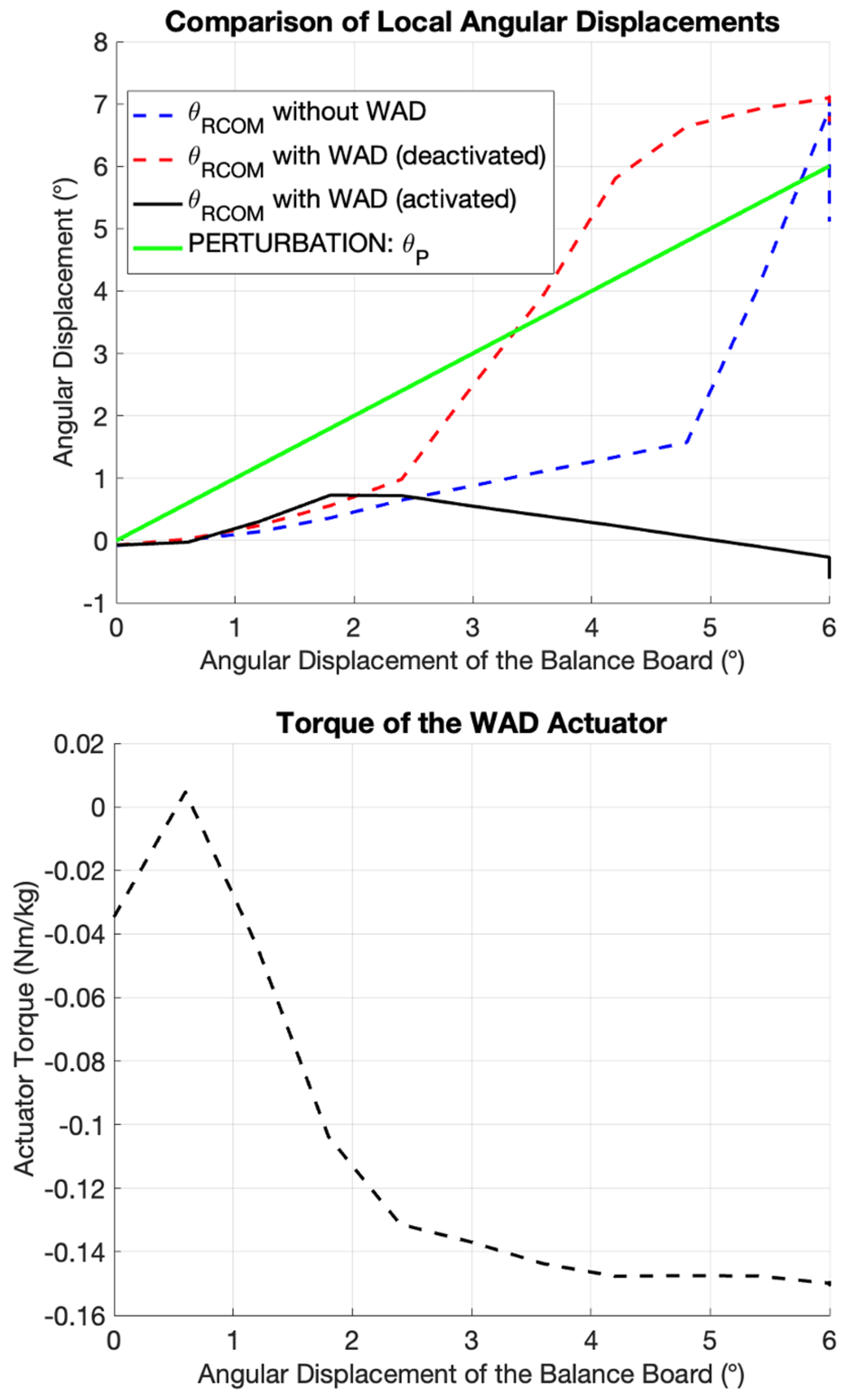
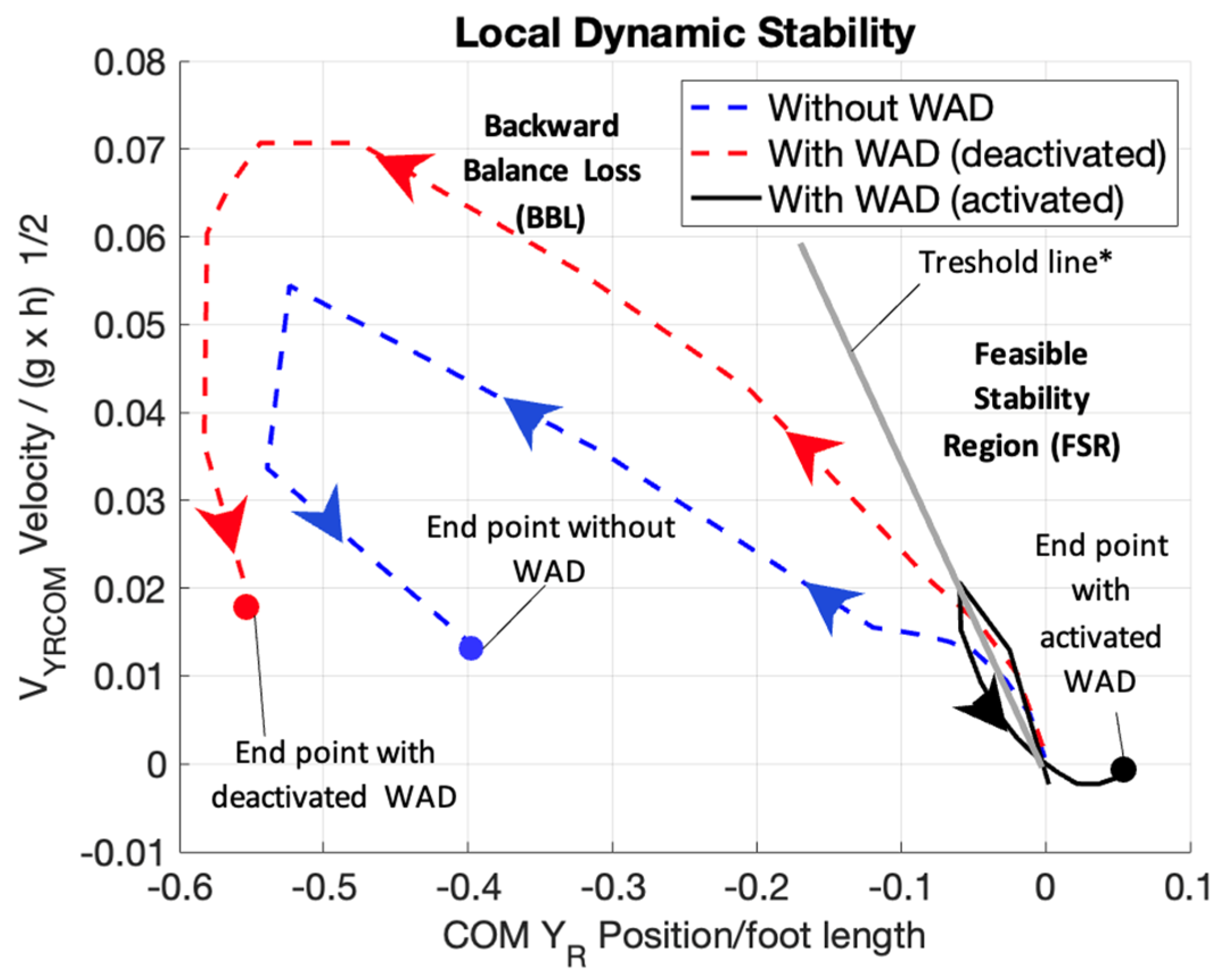
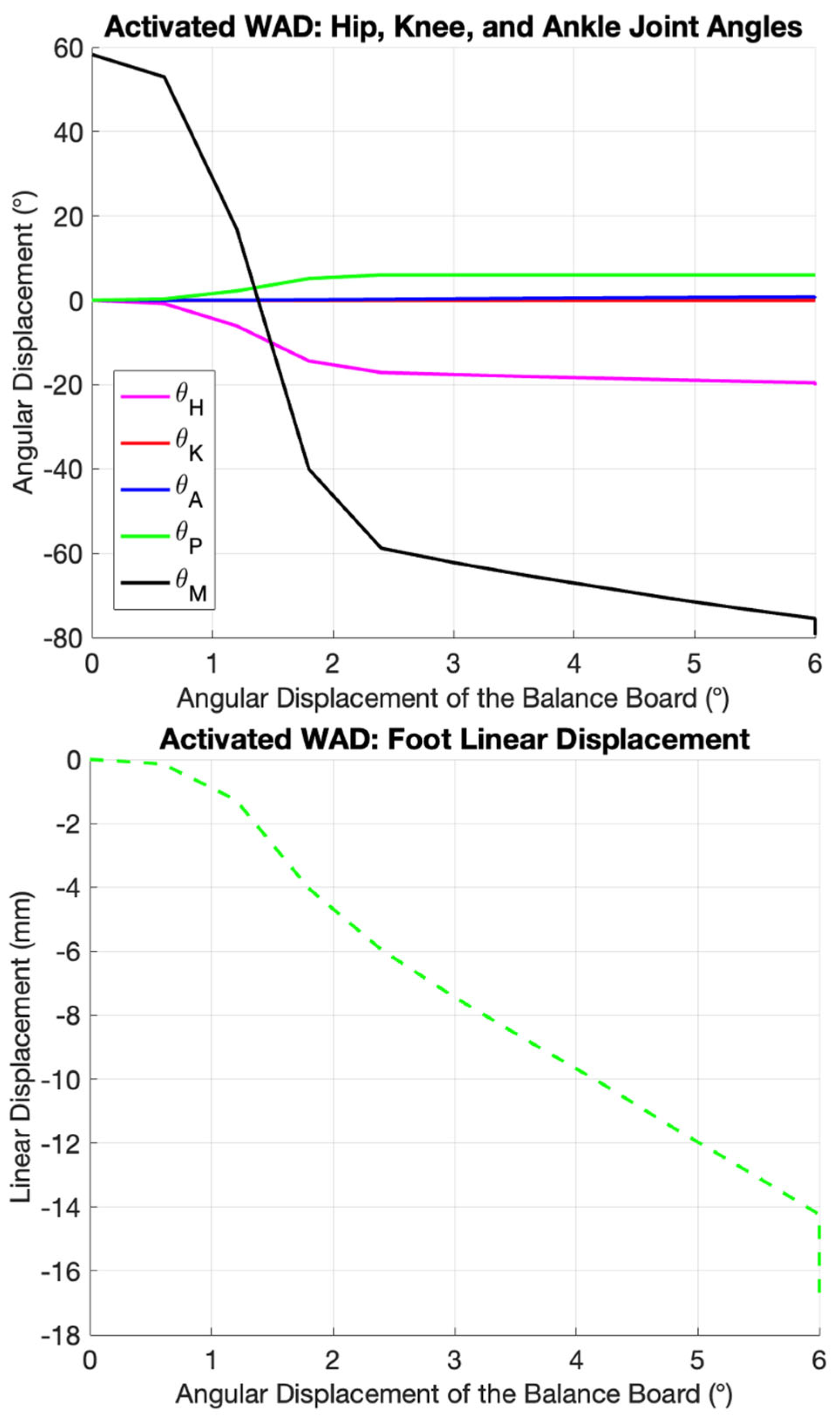
4. Results and Discussion
5. Conclusions
Author Contributions
Funding
Institutional Review Board Statement
Informed Consent Statement
Data Availability Statement
Conflicts of Interest
Abbreviations
| MBD | Multibody |
| DoF | Degree of Freedom |
| MBDHM | Multibody Human Model |
| WAD | Wearable Assistive Device |
| CoM | Center of Mass |
| FSR | Feasible Stability Region |
| BBL | Backward Balance Loss |
References
- Sturnieks, D.L.; George, R.S.; Lord, S.R. Balance disorders in the elderly. Neurophysiol. Clin./Clin. Neurophysiol. 2008, 38, 467–478. [Google Scholar] [CrossRef] [Scilit] [PubMed]
- Cuevas-Trisan, R. Balance problems and fall risks in the elderly. Phys. Med. Rehabil. Clin. 2017, 28, 727–737. [Google Scholar] [CrossRef] [Scilit] [PubMed]
- Corsinovi, L.; Bo, M.; Ricauda Aimonino, N.; Marinello, R.; Gariglio, F.; Marchetto, C.; Gastaldi, L.; Fissore, L.; Zanocchi, M.; Molaschi, M. Predictors of falls and hospitalization outcomes in elderly patients admitted to an acute geriatric unit. Arch. Gerontol. Geriatr. 2009, 49, 142–145. [Google Scholar] [CrossRef] [Scilit] [PubMed]
- Zijlstra, A.; Mancini, M.; Chiari, L.; Zijlstra, W. Biofeedback for training balance and mobility tasks in older populations: A systematic review. J. Neuroeng. Rehabil. 2010, 7, 58. [Google Scholar] [CrossRef] [Scilit]
- Fareseeing European Project. Available online: https://cordis.europa.eu/article/id/188518-farreaching-benefits-for-keeping-an-ageing-population-active (accessed on 16 April 2026).
- Profound European Project. Available online: https://profound.eu (accessed on 10 May 2025).
- Pijnappels, M.; Reeves, N.D.; Maganaris, C.N.; van Dieën, J.H. Tripping without falling; lower limb strength, a limitation for balance recovery and a target for training in the elderly. J. Electromyogr. Kinesiol. 2008, 18, 188–196. [Google Scholar] [CrossRef] [Scilit]
- Smulders, E.; van Lankveld, W.; Laan, R.; Duysens, J.; Weerdesteyn, V. Does osteoporosis predispose falls? A study on obstacle avoidance and balance confidence. BMC Musculoskelet. Disord. 2011, 12, 1. [Google Scholar] [CrossRef] [Scilit]
- Muscolo, G.G.; Conconi, M.; Chiari, L.; Del Felice, A.; Sancisi, N. Conceptual and Functional Design of a New Sustainable Cable-Driven Hip Exoskeleton. In Proceedings of I4SDG Workshop 2025-IFToMM for Sustainable Development Goals. I4SDG 2025; Carbone, G., Quaglia, G., Eds.; Mechanisms and Machine Science; Springer: Cham, Switzerland, 2025; Volume 180. [Google Scholar] [CrossRef] [Scilit]
- Muscolo, G.G.; Sancisi, N.; Conconi, M.; Del Felice, A.; Chiari, L. A New Hip Cable-Driven Wearable Assistive Device to Reinforce Human Balance. In Proceedings of the 12th ECCOMAS Thematic Conference on Multibody Dynamics, Innsbruck, Austria, 13–18 July 2025. [Google Scholar]
- Skempes, D.; Kiekens, C.; Malmivaara, A.; Michail, X.; Bickenbach, J.; Stucki, G. Supporting government policies to embed and expand rehabilitation in health systems in Europe: A framework for action. Health Policy 2022, 126, 158–172. [Google Scholar] [CrossRef] [Scilit]
- Lou, Z.; Wang, L.; Shen, G. Recent advances in smart wearable sensing systems. Adv. Mater. Technol. 2018, 3, 1800444. [Google Scholar] [CrossRef] [Scilit]
- Jacob, S.; Alagirisamy, M.; Xi, C.; Balasubramanian, V.; Srinivasan, R.; Parvathi, R. AI and IoT-enabled smart exoskeleton system for rehabilitation of paralyzed people in connected communities. IEEE Access 2021, 9, 80340–80350. [Google Scholar] [CrossRef] [Scilit]
- Rojas, M.; Balderas, D.C.; Maldonado, J.; Ponce, P.; Lopez-Bernal, D.; Molina, A. Lack of verified Inclusive Technology for Workers with disabilities in industry 4.0: A systematic review. Int. J. Sustain. Eng. 2024, 17, 190–210. [Google Scholar] [CrossRef] [Scilit]
- Monaco, V.; Tropea, P.; Aprigliano, F.; Martelli, D.; Parri, A.; Cortese, M.; Molino-Lova, R.; Vitiello, N.; Micera, S. An ecologically-controlled exoskeleton can improve balance recovery after slippage. Sci. Rep. 2017, 7, 46721. [Google Scholar] [CrossRef] [Scilit] [PubMed]
- Asbeck, A.T.; Dyer, R.J.; Larusson, A.F.; Walsh, C.J. Biologically-inspired soft exosuit. In Proceedings of the 2013 IEEE 13th International Conference on Rehabilitation Robotics (ICORR), Seattle, WA, USA, 24–26 June 2013. [Google Scholar]
- Ciaramella, A.; Bagneschi, T.; Tricomi, E.; Missiroli, F.; Zhang, X.; Frisoli, A. Design and Overground Testing of a Portable Hip Exosuit for Enhancing Running Efficiency. IEEE Trans. Med. Robot. Bionics 2024, 7, 33–42. [Google Scholar] [CrossRef] [Scilit]
- Tricomi, E.; Missiroli, F.; Xiloyannis, M.; Lotti, N.; Zhang, X.; Stefanakis, M.; Theisen, M.; Bauer, J.; Becker, C.; Masia, L. Soft robotic shorts improve outdoor walking efficiency in older adults. Nat. Mach. Intell. 2024, 6, 1145–1155. [Google Scholar] [CrossRef] [Scilit]
- Muscolo, G.; Marcheschi, S.; Fontana, M.; Bergamasco, M. Dynamics Modeling of Human–Machine Control Interface for Underwater Teleoperation. Robotica 2021, 39, 618–632. [Google Scholar] [CrossRef] [Scilit]
- Muscolo, G.G.; Recchiuto, C.T.; Molfino, R. Dynamic balance optimization in biped robots: Physical modeling, implementation and tests using an innovative formula. Robotica 2015, 33, 2083–2099. [Google Scholar] [CrossRef] [Scilit]
- Chen, Y.N.; Wu, Y.N.; Yang, B.S. The neuromuscular control for lower limb exoskeleton-a 50-year perspective. J. Biomech. 2023, 158, 111738. [Google Scholar] [CrossRef] [Scilit]
- Qian, Y.; Han, S.; Wang, Y.; Yu, H.; Fu, C. Toward improving actuation transparency and safety of a hip exoskeleton with a novel nonlinear series elastic actuator. IEEE/ASME Trans. Mechatron. 2022, 28, 417–428. [Google Scholar] [CrossRef] [Scilit]
- Wang, X.; Guo, S.; Bai, S. A cable-driven parallel hip exoskeleton for high-performance walking assistance. IEEE Trans. Ind. Electron. 2023, 71, 2705–2715. [Google Scholar] [CrossRef] [Scilit]
- Wang, X.; Guo, S.; Qu, B.; Bai, S. Design and experimental verification of a hip exoskeleton based on human–machine dynamics for walking assistance. IEEE Trans. Hum.-Mach. Syst. 2022, 53, 85–97. [Google Scholar] [CrossRef] [Scilit]
- Fang, Y.; Lerner, Z.F. How adaptive ankle exoskeleton assistance affects stability during perturbed and unperturbed walking in the elderly. Ann. Biomed. Eng. 2023, 51, 2606–2616. [Google Scholar] [CrossRef] [Scilit]
- Rodríguez-Fernández, A.; Lobo-Prat, J.; Font-Llagunes, J.M. Systematic review on wearable lower-limb exoskeletons for gait training in neuromuscular impairments. J. Neuroeng. Rehabil. 2021, 18, 22. [Google Scholar] [CrossRef] [Scilit] [PubMed]
- Morris, L.; Diteesawat, R.S.; Rahman, N.; Turton, A.; Cramp, M.; Rossiter, J. The-state-of-the-art of soft robotics to assist mobility: A review of physiotherapist and patient identified limitations of current lower-limb exoskeletons and the potential soft-robotic solutions. J. Neuroeng. Rehabil. 2023, 20, 18. [Google Scholar] [CrossRef] [Scilit] [PubMed]
- Dempster, W.T.; Gaughran, G.R.L. Properties of body segments based on size and weight. Am. J. Anat. 1967, 120, 33–54. [Google Scholar] [CrossRef] [Scilit]
- NASA. Man-Systems Integration Standards, Revision b. NASA-STD-3000. Volume I. 1995. Available online: https://standards.nasa.gov/standard/NASA/NASA-STD-3000_VOL_I (accessed on 15 January 2025).
- Trono, G.; Nicolì, A.; Muscolo, G.G. Sustainable Compliant Physical Interaction in a Biped-Wheeled Wearable Machine. Front. Mech. Eng. 2020, 6, 581626. [Google Scholar] [CrossRef] [Scilit]
- Shamaei, K.; Sawicki, G.S.; Dollar, A.M. Estimation of Quasi-Stiffness of the Human Hip in the Stance Phase of Walking. PLoS ONE 2013, 8, e81841. [Google Scholar] [CrossRef] [Scilit]
- Shin, S.; Simpkins, C.; Ahn, J.; Yang, F. Impact of standing perturbation intensities on fall and stability outcomes in healthy young adults. J. Biomech. 2024, 168, 112123. [Google Scholar] [CrossRef] [Scilit]
- Pai, Y.-C.; Patton, J. Center of mass velocity-position predictions for balance control. J. Biomech. 1997, 30, 347–354. [Google Scholar] [CrossRef] [Scilit]
- Yang, F.; Anderson, F.C.; Pai, Y.-C. Predicted threshold against backward balance loss following a slip in gait. J. Biomech. 2008, 41, 1823–1831. [Google Scholar] [CrossRef] [Scilit]
- Pai, Y.-C.; Iqbal, K. Simulated movement termination for balance recovery: Can movement strategies be sought to maintain stability in the presence of slipping or forced sliding? J. Biomech. 1999, 32, 779–786. [Google Scholar] [CrossRef] [Scilit]
- Jones, R.; Ratnakumar, N.; Akbaş, K.; Zhou, X. Delayed center of mass feedback in elderly humans leads to greater muscle co-contraction and altered balance strategy under perturbed balance: A predictive musculoskeletal simulation study. PLoS ONE 2024, 19, e0296548. [Google Scholar] [CrossRef] [Scilit]


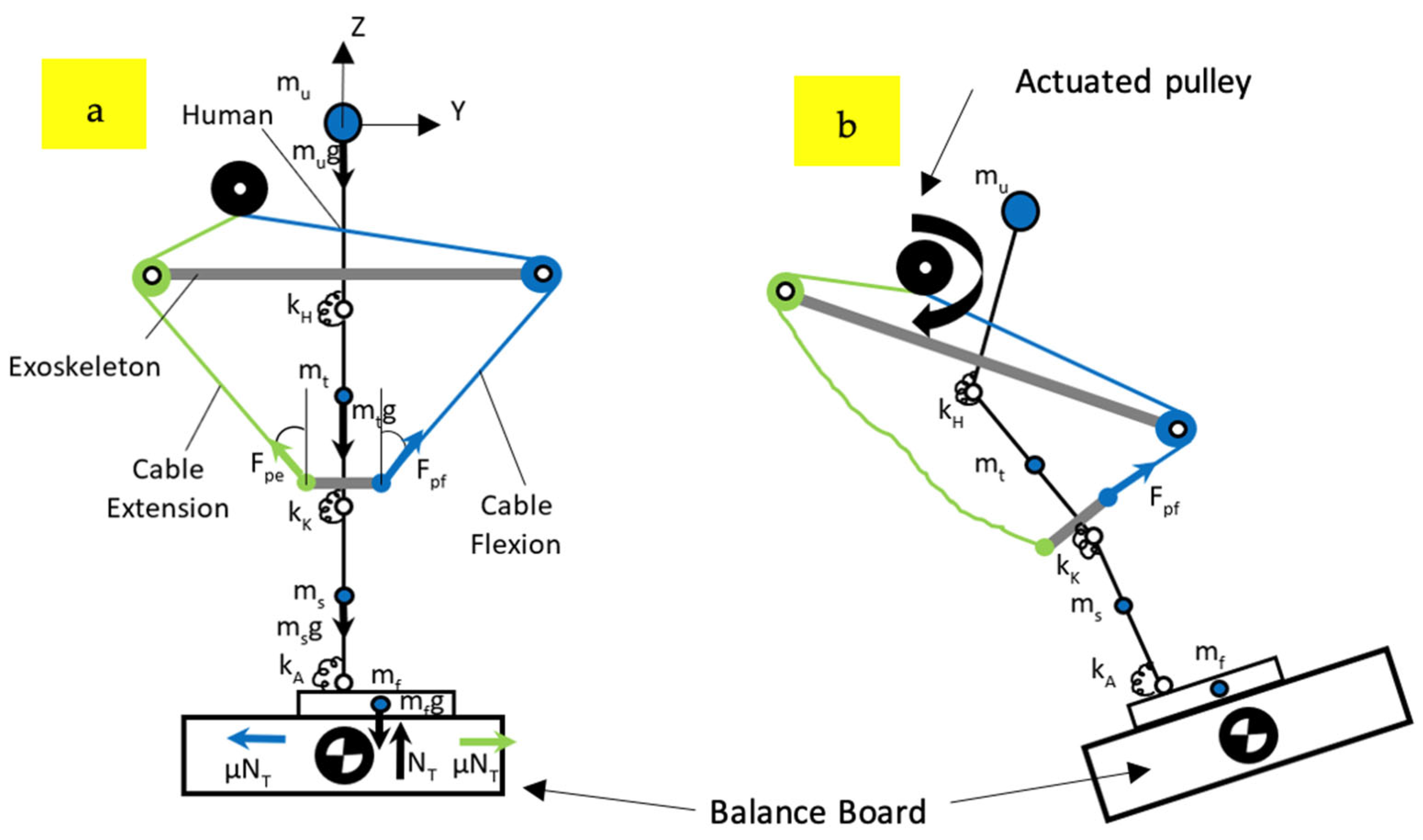
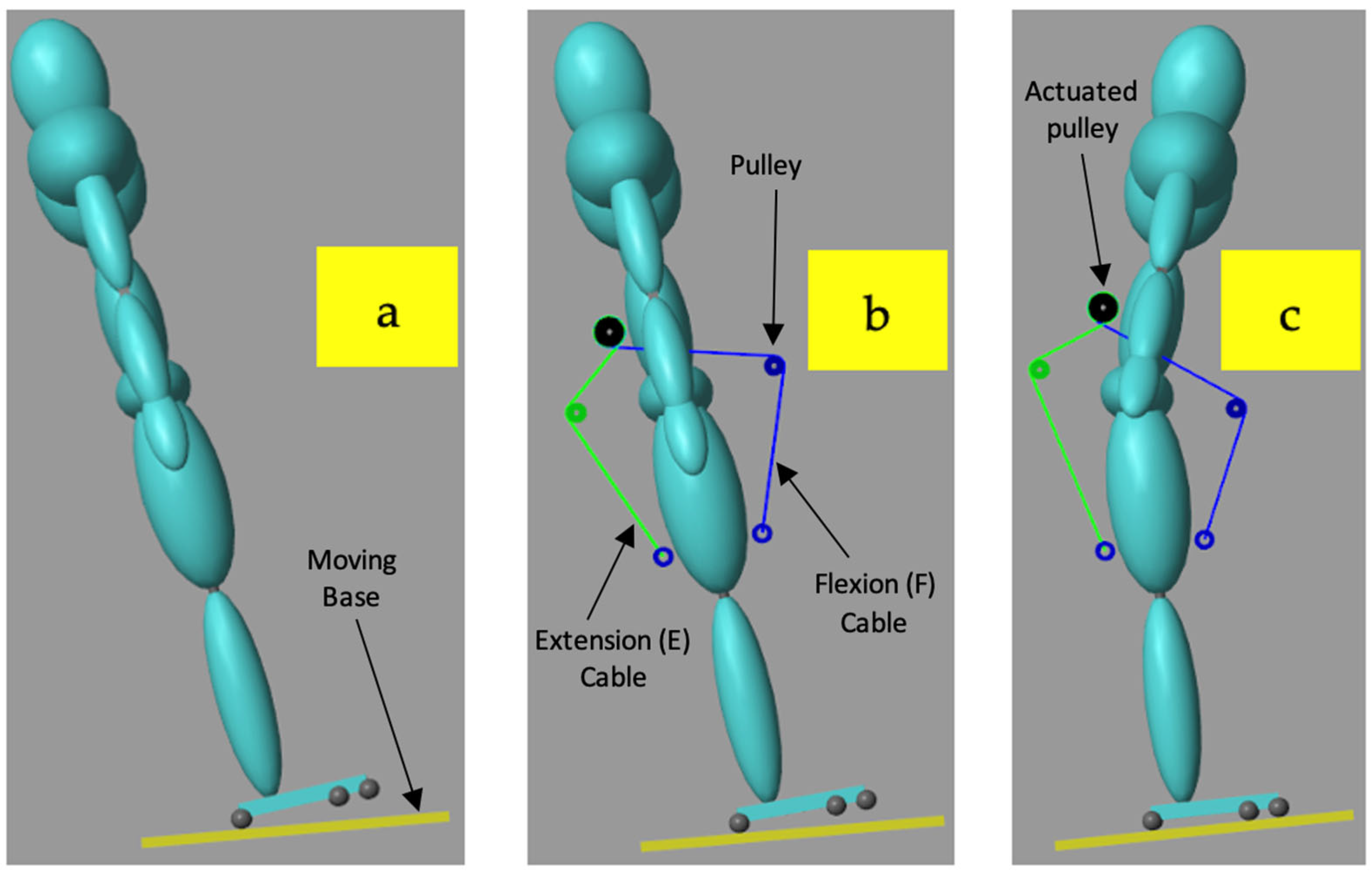

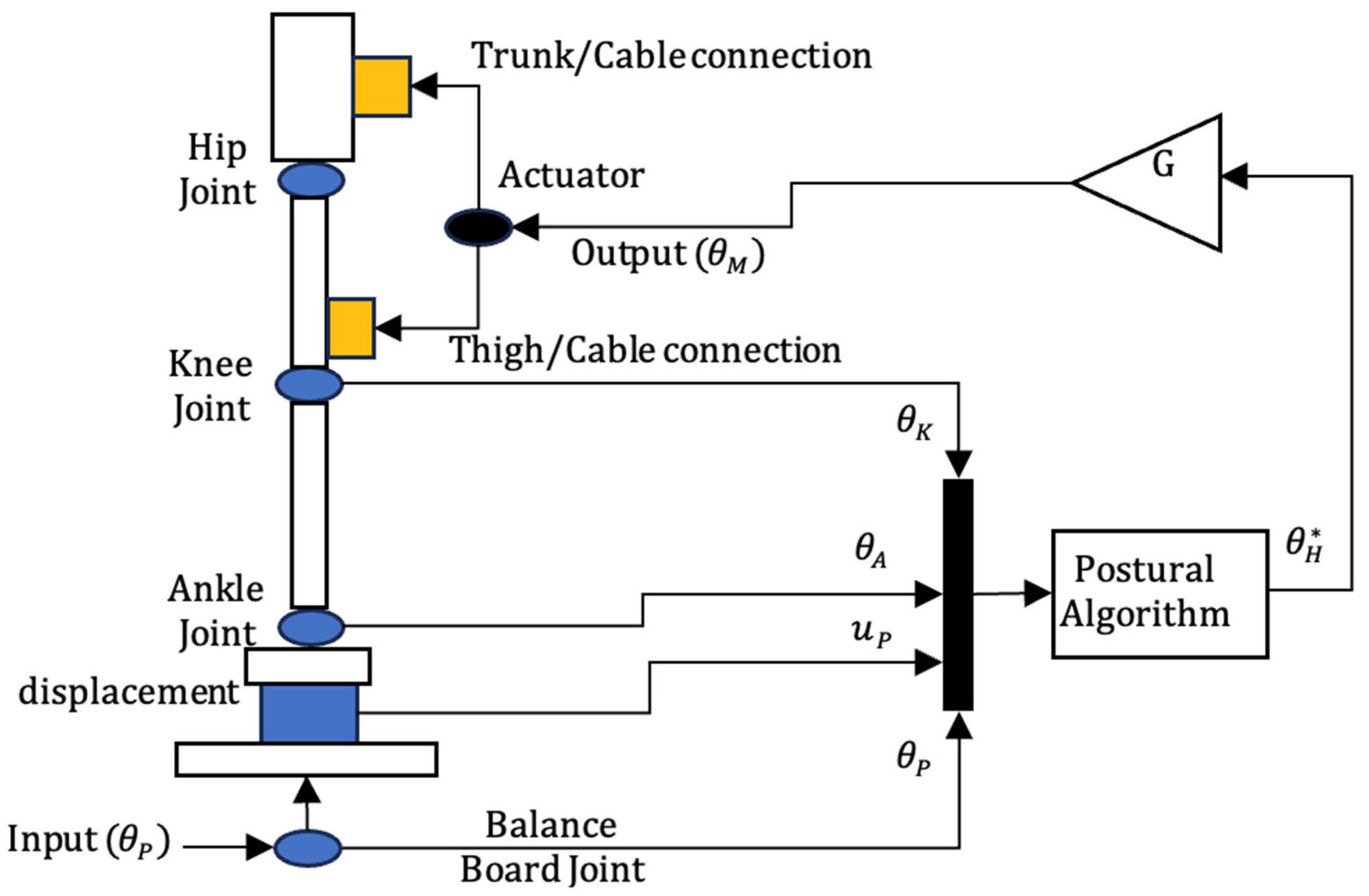



| Variable | Description | Variable | Description |
|---|---|---|---|
| kH, kK, kA | Hip, knee, and ankle stiffness coefficients | , | Agular accelerations of the pulleys (respectively for flexion and extension) |
| cH, cK, cA | Hip, knee, and ankle damping coefficients | Ry, Rz, Sy, Sz | Reaction forces between the pulleys and the motor shaft of the motor |
| Mpf, Mpe | Motor torques for the flexion and extension cables | g | Gravity |
| Fpf, Fpe | Cable tensions for flexion and extension | mu | Includes the masses of the trunk and the WAD |
| Ipf, Ipe | Moments of inertia of the pulleys and motors (respectively for flexion and extension) | γf | Angular displacement of the hip |
| mm, mp | Respectively, the masses of the motors and pulleys | IH, IH1, IH2 | Moments of inertia (calculated with respect to the center of the reference system shown in Figure 3), respectively, of the trunk, the anterior part of the WAD, and the posterior part of the WAD |
| µs, µd | Static and dynamic friction coefficients between the foot and the base surface. | rp | Pulley ray |
| mTOT, mb, mE | Total mass of the system, mass of the human body and the WAD | Lt, Ls | Lengths of the thigh and shank, respectively |
| mu, mt, ms, mf | Mass of the trunk and WAD, mass of the thigh, mass of the shank, mass of the foot | lu, lt, ls | Distances from the hip, knee, and ankle joints to their corresponding segmental center of masses |
| lf1 | Distance from the center of mass of the foot to the ankle joint | lf | Double of the distance from the center of mass of the foot to the moving base surface. |
| θH, θK, θA, θp, θM | Joint angles of hip, knee, ankle, balance board and actuator | PYCOM, PZCOM | Linear absolute displacements in Y and Z |
| PYRCOM, PZRCOM | Linear local displacements in Y and Z | θCOM, θRCOM | Absolute and local angular displacement of the center of mass |
| up | Linear displacement between foot and balance board | G | Constant |
| PD | Balance board thickness | Hip joint angle when PYCOM = 0 |
| Human body mass (mb) | 72.162 kg | Simulation time | 2 s |
| Mass of the WAD (mE) | 5 kg | Human height (h) | 1.69 m |
| Static (μs) and Dynamic (μd) Friction Coefficients with the board [36] | 0.9 and 0.6 | Pitch radius of the actuator | 30 mm |
| Hip stiffness (kH) | 335 Nm/rad | Pitch radius of the pulleys | 20 mm |
| Ankle stiffness (kA) | 338 Nm/rad | Tolerance factor (solver configuration) | 0.001 |
| Knee stiffness (kK) | 275 Nm/rad | Time-step size (s) | 0.1 |
| Damping: Ankle (cA), Knee (cK), Hip (cH) | 573 Nms/rad | Gravity (g) | 9.81 m/s2 |
Disclaimer/Publisher’s Note: The statements, opinions and data contained in all publications are solely those of the individual author(s) and contributor(s) and not of MDPI and/or the editor(s). MDPI and/or the editor(s) disclaim responsibility for any injury to people or property resulting from any ideas, methods, instructions or products referred to in the content. |
© 2026 by the authors. Licensee MDPI, Basel, Switzerland. This article is an open access article distributed under the terms and conditions of the Creative Commons Attribution (CC BY) license.
Share and Cite
Muscolo, G.G.; Conconi, M.; Del Felice, A.; Chiari, L.; Sancisi, N. A Cable-Driven Hip Exoskeleton with a Postural Control Strategy for Reinforcing Human Balance. Machines 2026, 14, 484. https://doi.org/10.3390/machines14050484
Muscolo GG, Conconi M, Del Felice A, Chiari L, Sancisi N. A Cable-Driven Hip Exoskeleton with a Postural Control Strategy for Reinforcing Human Balance. Machines. 2026; 14(5):484. https://doi.org/10.3390/machines14050484
Chicago/Turabian StyleMuscolo, Giovanni Gerardo, Michele Conconi, Alessandra Del Felice, Lorenzo Chiari, and Nicola Sancisi. 2026. "A Cable-Driven Hip Exoskeleton with a Postural Control Strategy for Reinforcing Human Balance" Machines 14, no. 5: 484. https://doi.org/10.3390/machines14050484
APA StyleMuscolo, G. G., Conconi, M., Del Felice, A., Chiari, L., & Sancisi, N. (2026). A Cable-Driven Hip Exoskeleton with a Postural Control Strategy for Reinforcing Human Balance. Machines, 14(5), 484. https://doi.org/10.3390/machines14050484