Article

Mechanisms of Notch Wear Formation in Stainless Steel Turning

1
Driscg, 811 35 Sandviken, Sweden
2
Department of Industrial Management, Industrial Design and Mechanical Engineering, University of Gävle, 801 76 Gävle, Sweden
3
Sandvik Coromant R&D, 811 34 Sandviken, Sweden
*
Author to whom correspondence should be addressed.
Machines 2026, 14(3), 297; https://doi.org/10.3390/machines14030297
Submission received: 27 January 2026 / Revised: 13 February 2026 / Accepted: 3 March 2026 / Published: 5 March 2026
(This article belongs to the Special Issue Vibrations and Tool Wear in Metal Cutting)

Abstract

Notch wear in austenitic stainless steel turning develops rapidly and remains a key productivity limitation with carbide tools. This work identifies the initiation mechanism of notch wear when turning EN 1.4307 stainless steel using CVD-coated cemented carbide inserts with an Al2O3 top layer. Turning tests were performed under dry conditions, followed by optical wear measurements and chip surface analysis. The tool–chip interface chemistry and material transfer were characterized using SEM/EDS, while high-frequency acoustic emissions were recorded to resolve the dynamics of adhesive events. Thermo-mechanical FEM simulations were conducted to map contact pressure and temperature along the cutting edge. The results show that adhesive wear initiates immediately at engagement and governs notch formation: polluted SiO2 deposits act as an active bonding medium, and repeated bond formation/rupture removes extremely thin flakes of tool and coating material, evidenced by Al2O3 and Ti(C,N) fragments on the chip and by characteristic acoustic cluster waves. A new tool–chip contact model is presented, indicating that high pressure and high temperature within the polluted SiO2 near the chip’s outmost side promote larger, stronger adhesive bonds together with the absence of ceramic particles near the rake in the notch area. Oxidation and diffusion are assumed to be secondary processes that become relevant after local coating loss, while adhesion remains the primary removal mechanism during early and intermediate stages.

1. Introduction

Stainless steels have a wide range of applications, and demand for them is growing. In environments where corrosion is a significant concern, various stainless steels provide a solution. These include applications in the chemical industry, offshore saltwater environments, pulp and paper production, and nuclear power plants, among others. Due to their excellent formability and weldability, austenitic stainless steels are today’s most widely used group of stainless steels [1].
Despite these advantages, their machinability remains poor because of their low thermal conductivity (≈16 W/(m·K)), high work-hardening tendency, and strong adhesion to cutting tools [2,3]. These characteristics cause short tool life, restricted cutting parameters, and rapid development of notch wear, a predominant wear type, when turning in stainless steels with carbide tools [2,4,5,6,7,8].
Notch wear manifests as a localized groove perpendicular to the cutting edge, typically at the point where the engagement commences, at ap [2]. It initiates within the first seconds of cutting and intensifies dramatically when the tool machines a strain-hardened surface generated by the previous pass [4,5,6,7]. The combination of high ductility and work-hardening rate produces a very hard burr at the end of the depth of cut, which is believed furrow the tool coating and accelerates wear in this region (observed with both uncoated and coated carbides) [4,5,8]. Similar severe notch wear is observed in other strongly work-hardening materials, such as nickel-based alloys (with a ceramic tool [9,10]) and pure iron (with an uncoated carbide [9]).
Several practical strategies partially mitigate notch wear:
  • Increasing the depth of cut or feed rate to remove the work-hardened layer [10];
  • Using a larger lead angle or varying depths of cut between passes [2];
  • Applying high-pressure coolant, Minimum Quantity Lubrication (MQL), cryogenic cooling, or hybrid techniques [11,12,13,14];
  • Selecting sharp Physical Vapor Deposition (PVD)-coated inserts in combination with high-pressure cooling [15].
However, none of these measures eliminates notch wear, and it remains the primary obstacle to higher productivity.
Proposed mechanisms for notch wear initiation and progression, in the literature, can be grouped into four, often overlapping, categories:
  • Mechanical overload and burr furrowing caused by the hard, work-hardened layer at the depth-of-cut line [4,5,8]; the hardened chip promotes greater heat generation and causes a localized reduction in the tool strength and the development of notch wear [16]. This category involves mechanisms of adhesion, abrasion, and attrition.
  • Adhesion and attrition after local coating, brittle crack and removal [5,6,7,17].
  • Diffusion and oxidation, which become significant only after prolonged exposure or coating loss [5,18].
  • Early brittle fracture and delamination of the coating, followed immediately by workpiece adhesion [6,7].
Recent short-time tests confirm that, with modern coated carbide tools, notch wear appears first and progresses fastest among all wear modes [6,7,19].
Hrechuk et al. [20] investigated the performance of uncoated carbide tools when turning AISI 316L with different levels of abrasiveness. They showed that SiO2 and Al2O3 inclusions can abrade the substrate directly and may also activate additional wear mechanisms, which they attributed primarily to diffusion. In the present work, however, Chemical Vapor Deposition (CVD)-coated tools with an Al2O3 top layer are used, which changes the dominant wear processes. As long as the coating remains intact, oxidation and diffusion are limited, and measurements show that adhesive wear begins immediately when the tool engages the workpiece. For this reason, the inclusion–tool interaction observed by Hrechuk et al. [20] is interpreted here as part of the adhesive wear mechanism, rather than diffusion-controlled wear.
Earlier studies by Svenningsson and Tatar [21,22] have provided insight into the adhesive mechanism in metal cutting, particularly its dynamic character and the sequence of bonding and detachment events occurring at the tool–chip interface. Their work demonstrated that adhesion is a transient, thermally activated mechanism characterized by repeated clusters of high-frequency vibrations generated by the chip as it binds and ruptures at the rake face. They showed that the adhesive layer consists of a SiO2-containing material and that the adhesive cycle removes extremely thin flakes of the tool material through localized fatigue. In [22], they established adhesion as a general process in metal cutting, active across several operations and work materials, and clarified the mechanical dynamics of adhesive bond formation. However, these studies did not address how wear initiates at the depth-of-cut line in stainless steels, nor how tool–chip contact conditions, temperature, pressure, and the distribution of polluted SiO2 inclusions interact to localize wear into a notch. The influence of cutting geometry and strain-hardened entry surfaces on the spatial concentration of contact stresses was also not considered.
Although cyclic mechanical and thermal loading in intermittent operations is known to intensify notching, the fundamental initiation sequence under continuous engagement, where thermal fluctuations are minimal, remains unexplained. Thus, despite progress in understanding the dynamic behavior of adhesive bonding, a mechanistic explanation linking inclusion chemistry, coating delamination, adhesive bond cycling, and the thermo-mechanical fields at the cutting edge to early notch initiation remains missing. The current conclusions regarding the formation of notch wear are, in some respects, conflicting and not fully convincing.
The objective of the present study is to reveal the mechanisms behind the propagation of notch wear in the turning of EN 1.4307 stainless steel with CVD-coated carbide tools. The work combines cutting tests at different cutting speeds, scanning electron microscopy (SEM) and energy-dispersive spectroscopy (EDS) of adhered deposits and coating fragments, acoustic monitoring of high-frequency adhesive events, and thermo-mechanical finite element simulations of contact pressure and temperature near the cutting edge. By correlating these multi-modal observations, a physically consistent mechanism is proposed that describes how polluted SiO2 inclusions, coating delamination, and repeated adhesive bond cycles lead to rapid, localized notch formation. The resulting understanding is intended to support the design of more robust cutting geometries, to improve the cutting tool material, and process strategies for stainless steel machining.

2. The Adhesive Wear Mechanism

An adhesive wear mechanism based on the effects of SiO2 inclusions in the workpiece material and the assessment of its impact are studied. To gain a better overall picture of the adhesive wear process, it is necessary to study the deposits of polluted SiO2 on the rake and the formation of Build-up Edge (BuE). The designation “Polluted SiO2” refers to all substances that can melt at the temperatures in the cutting zone, and particles emanating from the workpiece and the cutting tool. The polluted SiO2 contains several metals solved during its melted stage at the steel plant, including metallic and ceramic particles, often MnS on the surface of the SiO2. In other words, whatever is available in the cutting tool and the workpiece.
The extrusion of polluted SiO2 from the chip and workpiece toward the rake is explained by the higher pressure at the center of the chip than near the rake. The expansion in the chip flow direction lowers the pressure. What is evident is that the melted substances end up on the rake (see, for example, Ref. [21]). Similarly, on the clearance side, SiO2 is present in most metals in small quantities, but there are some exceptions, and other substances play their role in them. Adhesive wear is present in most metallic work materials, such as steels, stainless steels, and ductile iron [22]. The adhesive wear progression is correlated to the area of the bond and the frequency [22], a large bond area gives a thicker removed flake. The polluted SiO2, the same as the inclusions in the steel, has picked up remnants from the cutting tool and pieces of the work material. A mixture of elements from the cutting tool and the workpiece. The engagement area on the rake and the clearance are covered with this material. The amount of SiO2, in most steels is low, often 50–1000 ppm. The percentage in the steel is not so important, because it accumulates on the rake during cutting. The content of metals and ceramic particles in that substance is of more importance.
The deposit mechanism in the cutting zone is schematically shown in Figure 1. Major visible deposits of polluted SiO2 on rake and clearance do not occur at low cutting speed or low temperature in the cutting zone. A low cutting speed could be around vc = 4 m/min in this case. With an increased cutting speed of around 50 m/min, a BuE region is present, and more SiO2 is pressed out of the chip and binds to the cutting tool and the chip. However, the expansion of the chip’s rake surface forces the deposit to come away from the chip, but not the tool. In this way, large deposits pile up on the tool rake. The adhesive wear is often moderate, but chipping and a ruined workpiece surface can occur. At an even higher cutting speed of about 200 m/min, the SiO2 substance can follow the expansion of the chip surface without breaking the bonds. The hot and more ductile substance is then fed and removed with the chip flow. In all cases described, the cutting conditions are assumed to be feed fn = 0.2 mm/rev, depth of cut ap = 2 mm, work material EN 1.4307 (or similar), an Al2O3-coated cutting tool with rake angle γo = 14°, edge radius ER = 35 µm.
The deposits appear mainly in or around the adhesive zone but can occur in other areas of the contact zone if the conditions (temperature and pressure) are right. The mentioned mechanism is present in most work materials and cutting tools, but its appearance can vary in terms of area and volume.

3. Experiments and Simulations

3.1. Experimental Set-Up

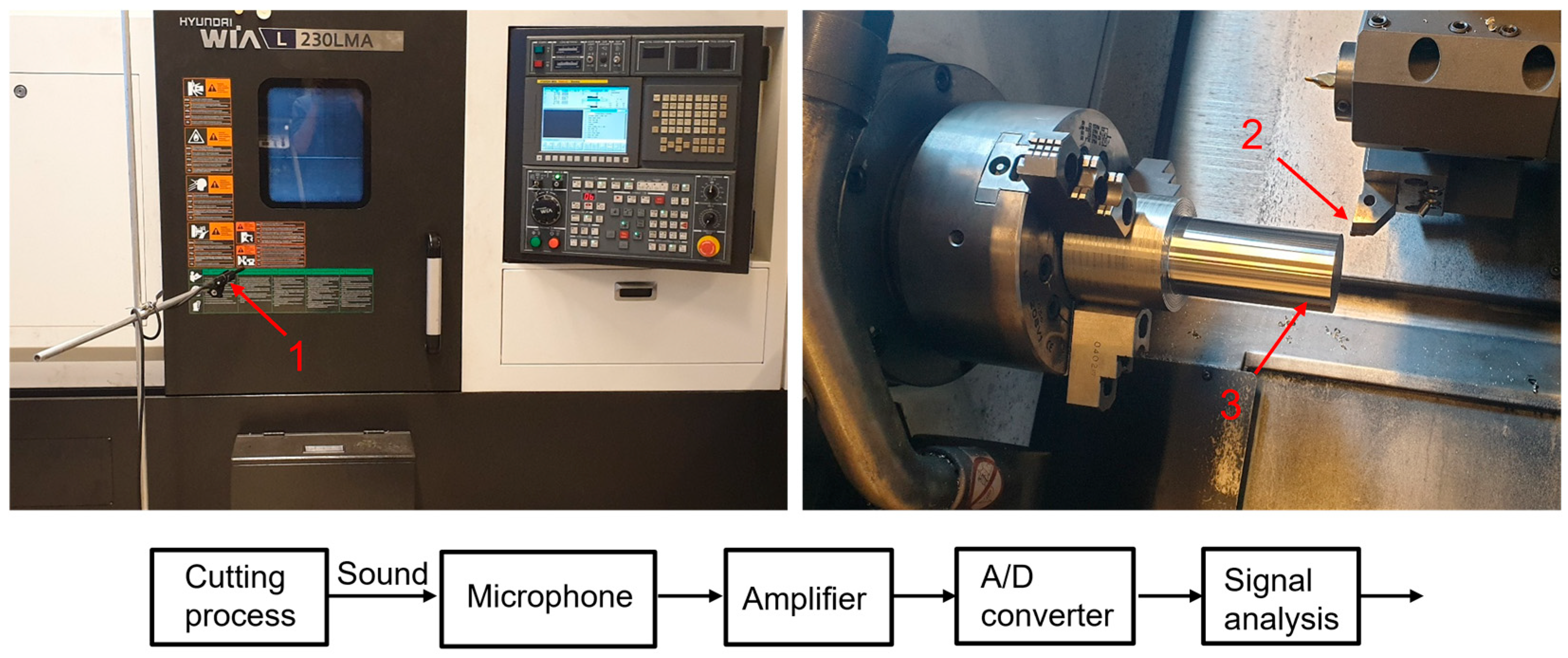
Figure 2 shows the experimental set-up. All turning tests were conducted on a Hyundai-Wia L230LMSA CNC lathe (Hyundai Wia, Changwon, South Korea). Cutting parameters (baseline) were dry machining under ap = 2 mm and fn = 0.2 mm/rev. A series of short-duration wear tests was performed at cutting speeds vc = 100, 150, and 200 m/min, with cutting times of 15 s, 30 s, and 60 s. The economical cutting speed corresponds to about 15 min of tool life, which is found in the middle of the cutting speed range above. Additional tests were conducted for SEM and acoustic analysis. Also, a long-duration cutting test in a more difficult to cut material, (super duplex Hot Isostatic Pressure (HIP) steel) was performed to present the general validity.
The work material was austenitic stainless steel, EN 1.4307, with an initial diameter of 90 mm, not calcium treated. Carbon C ≤ 0.07%; Silicon Si ≤ 1.00%; Manganese Mn ≤ 2.00%; Phosphorus P = 0.045%; Sulfur S = 0.015%; Chrome Cr = 17.5–19.5%; Nickel Ni = 8%. The steel also contained small quantities of Al2O3 and SiO2 inclusions.
The supplier’s bulk hardness was 180–190 HV. Before machining, the hardness was measured to 189 HV s = 9. Hardness on the peripheral surface after machining under ap = 2 mm, fn = 0.2 mm/rev., vc = 200 m/min was measured to 248 HV s = 7.
A Sandvik Coromant CNMG 120412 PM 4305 insert was used in all tests. Rake angle γo = 14°, clearance angle αo = 6°, inclination angle λs = –6°, lead angle κr = 90° (corresponding to a straight edge perpendicular to the feed direction), edge radius ER = 35 μm. The coating consisted of Al2O3 on top of a Ti(C,N) intermediate layer. No post-treatment (such as polishing) was performed. CVD coatings were selected because they are most used in industrial stainless steel turning [6]. Previous work indicates that the coating type (CVD/PVD) is not a significant factor for the fundamental mechanisms investigated in the present study [7].

3.2. Optical Microscopy for Tool Wear Inspections and Chip Surface Analysis

The tool wear was inspected, and the chip’s rake surface was analyzed using a general-purpose digital optical microscope. The microscope was calibrated using a gauge block with a certified length of 1 mm to ensure accurate measurements.
Saketi et al. [23] emphasized the importance of the chip’s rake region, reporting that this side of chips contained fragments of build-up layers and debris originating from the degraded tool material, thereby supporting the use of chip surface analysis to investigate notch wear mechanisms.

3.3. Acoustic Measurements

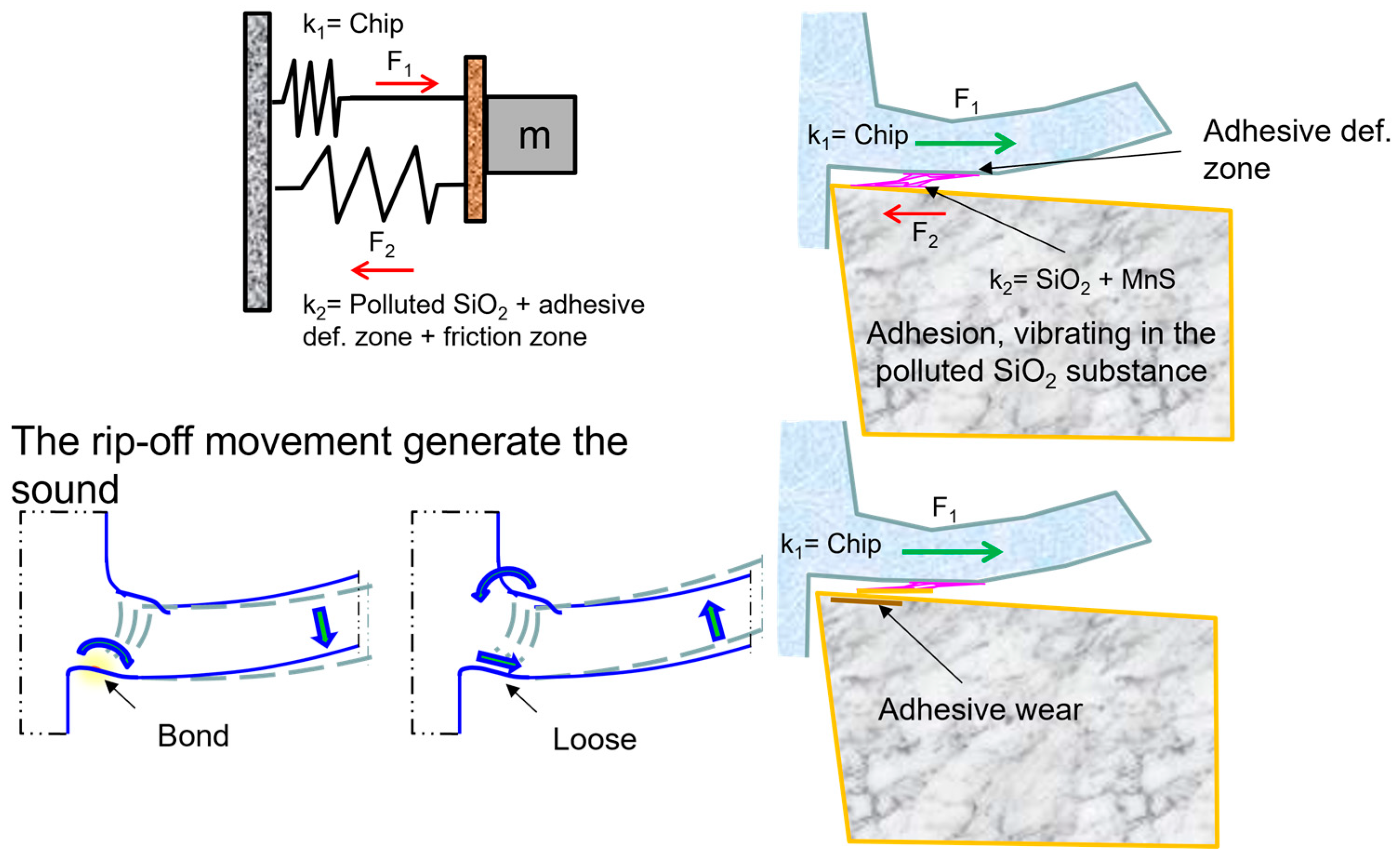
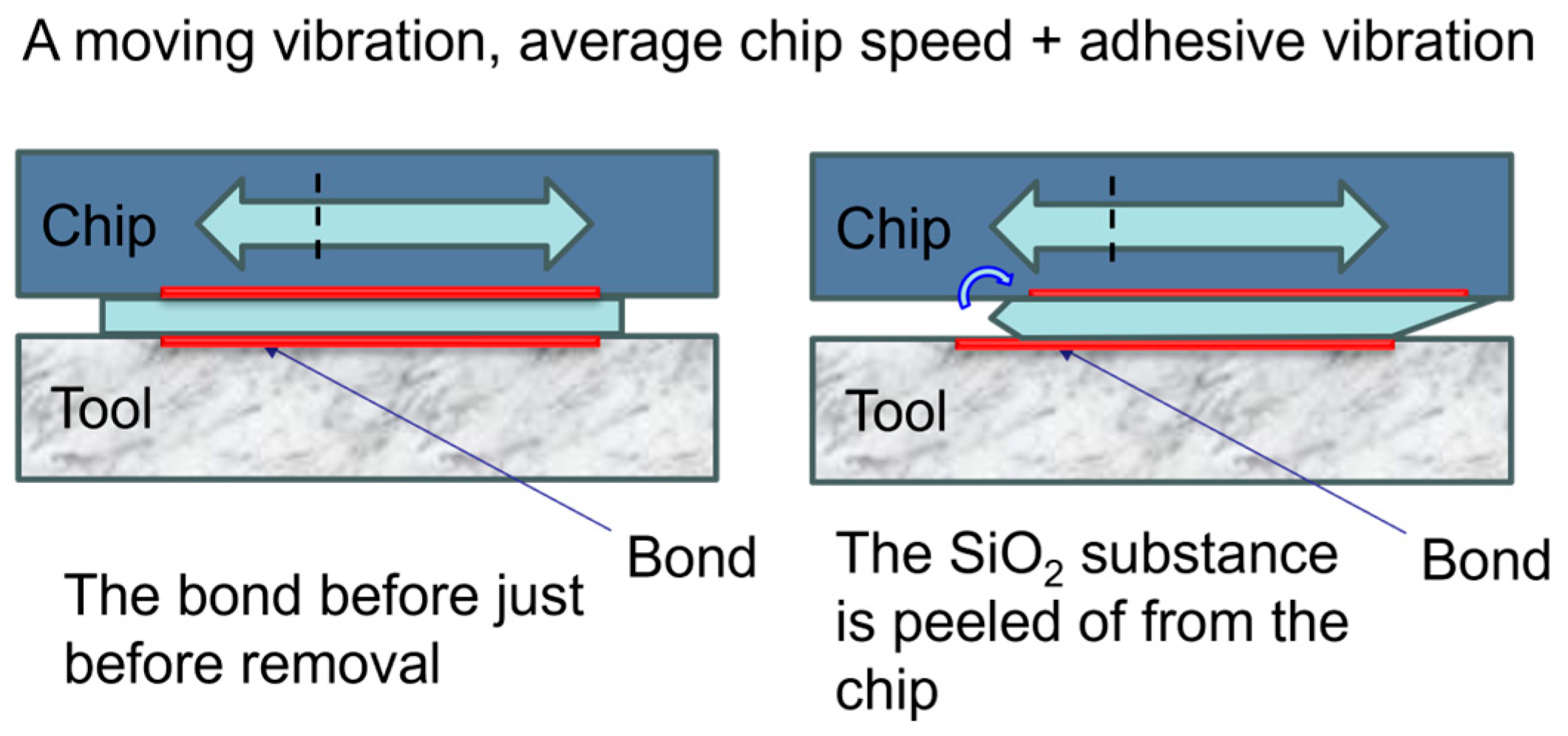
The adhesive mechanism generates chip vibrations (Figure 3). When a bond forms between the tool and the polluted SiO2, the chip bends towards the rake. When the bond breaks, the chip springs upwards. This pivot movement generates high-frequency sound [22].
A Beyerdynamic MM1 condenser microphone was used to monitor chip-induced vibrations. This microphone features a frequency response of 20–20,000 Hz and a sensitivity of 15 mV/Pa. The microphone captured acoustic emissions generated during the experiments. The acoustic signals were sampled at 48 kHz and stored in uncompressed WAV format.
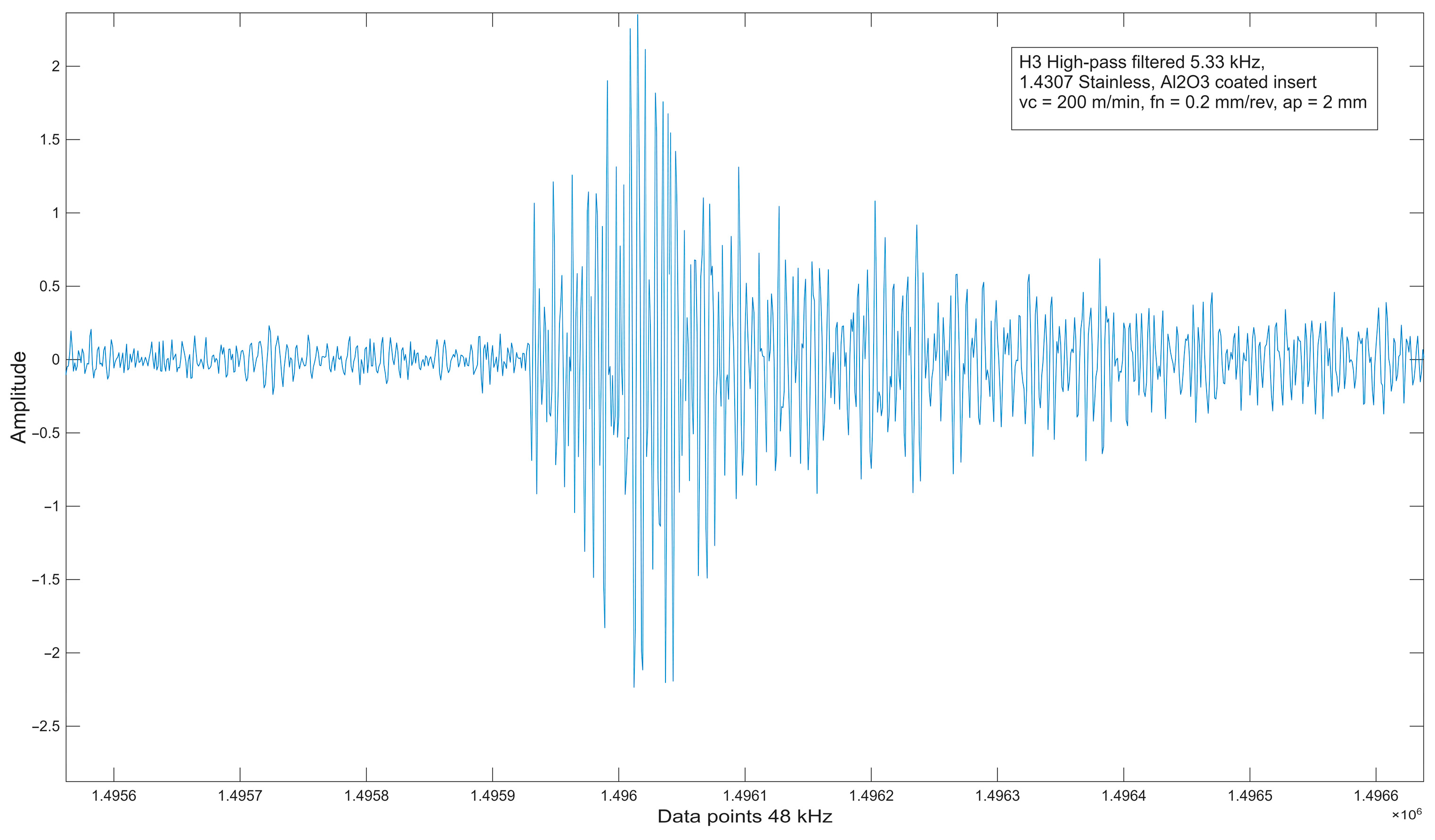
The signal was high-pass filtered at 5.3 kHz to exclude both background machine noise and chip breaking noise; almost all adhesion vibrations are between 6 and 20 kHz [22]. If they occur above 20 kHz, they are still detectable, but the amplitudes might be wrong (damped). Frequencies above 20 kHz were therefore not used in the analysis. The adhesive vibration occurs as a cluster wave, shown in Figure 4. In the shown plot, the tool is engaged in the entire present window. The last wave has a slightly higher frequency. If this occurs, the wave is likely generated by adhesion. There is not much else in a machine tool that can vibrate above 5.3 kHz, and mechanisms that can generate cluster waves are rare. The filter algorithm used is
R(i) = {Sum[D(i) − D(i-8)]/9} − D(i),
where D(i) is the measured data, and R(i) is the filtered data.
The forces generated by adhesion are visible on the measured cutting forces [21]. Unfortunately, the available cutting force sensors do not give reliable results above 10 kHz. The current equipment for sound measurements measures linearly up to 20 kHz, but microphones capable of higher frequencies are also available. Another complication regarding cutting forces is that the adhesion on both clearance and rake is measured, two stochastic variables added together. When the sound is measured, though, only the adhesion on the rake is recorded, and a weak signal from segmentation (which can easily be removed, if necessary, since it appears as a continuous wave). The impedance of the machining center window was measured, showing that just a small portion of the sound signal in the current frequency range is damped [24].

3.4. SEM and EDS Investigations

A Zeiss EVO MA25 Scanning Electron Microscope (SEM) (Carl Zeiss AG, Oberkochen, Germany) equipped with Energy-Dispersive X-ray Spectroscopy (EDS) was used to investigate the presence of adhered material on the chip and rake face. An acceleration voltage of 20 kV was used for the SEM micrographs. The samples were cleaned in ethanol in an ultrasonic bath in preparation for the examination. All particles that were found through EDS to contain mostly carbon were categorized as remaining contaminations of dust.
In the adhesion on the cutting tool rake face, Si could be measured, which is likely present on the rake as SiO2, a small part of all steels. Also, MnS, Fe, W, Co, Ni, Cr, and others were observed on the rake.
The cutting zone contact side of a chip was also investigated, and here, the element analyses found many micro-sized particles containing mainly elements that were categorized as likely being from the tool or from ceramic inclusions in the workpiece material. Based on the nature of the examination, it was difficult to quantify the densities of adhered particles or inclusions. Particles were found with distances of about 50–100 µm along the entire width of the chip, but the vast majority of identified particles were found in clusters of five or more particles only about 10 µm apart along the edge of the chip that was in contact with primary notch region along the cutting edge. Quantifying the densities of adhered particles or inclusions did not limit the analysis.

3.5. FEM Model

A model geometry based on the cutting edge geometry of a CNMG 120412 PM 4305 insert was designed in the CAD software NX v2406.83. The geometry was simplified compared to the insert, but features such as chamfer length, edge radius, and angles for rake and chamfer were reproduced closely. Calculations on this geometry were performed using the commercial FEM-based program AdvantEdge v7.3014. The purposes of the calculations were to provide reasonable assessments of thermo-mechanical loads in the cutting zone against which to evaluate the adhesive models in the present work. For these purposes, the default black-box material models provided in the program were considered sufficient. All analyses were linear isotropic and elastic and performed in 3D. All options for tool, workpiece, and process were at default values except for those listed here.
In the nose region, the tetrahedral mesh of the imported tool was refined on the cutting edge. An element length of 10 µm in this region was enough to reproduce the roundness of the cutting edge. Element lengths of 25, 50, and 100 µm were used for primary chamfer, transition curvature to rake, and clearance face, respectively.
The insert was modeled using the built-in Carbide General material model. A standard workpiece using the built-in 304L stainless steel material model was used. The workpiece was 10 mm long and 2 mm thicker than ap. The workpiece mesh was refined setting minimum element size to 5 µm. Additionally, the Adaptive Remeshing Parameter min. elem. edge length was set to 10 µm for chip bulk and 13.1 µm for cutter edge.
The simulations were performed using fn = 0.2 mm/rev, ap = 2 mm, and vc = 200 m/min. The first 5 mm of the cut were modeled. Results and contact loads were obtained using the built-in steady-state analysis, averaging loads over the last 20% of the cut. The exported geometry and contact loads were used to calculate contact stresses using the software GNU Octave 10.2.0. This software package was also used for the plots of these loads on the contact zones. Additional results were plotted with the software Tecplot 360 2011R2.

4. Results and Analysis

4.1. Notch Wear Propagation and Chip Surface Analysis

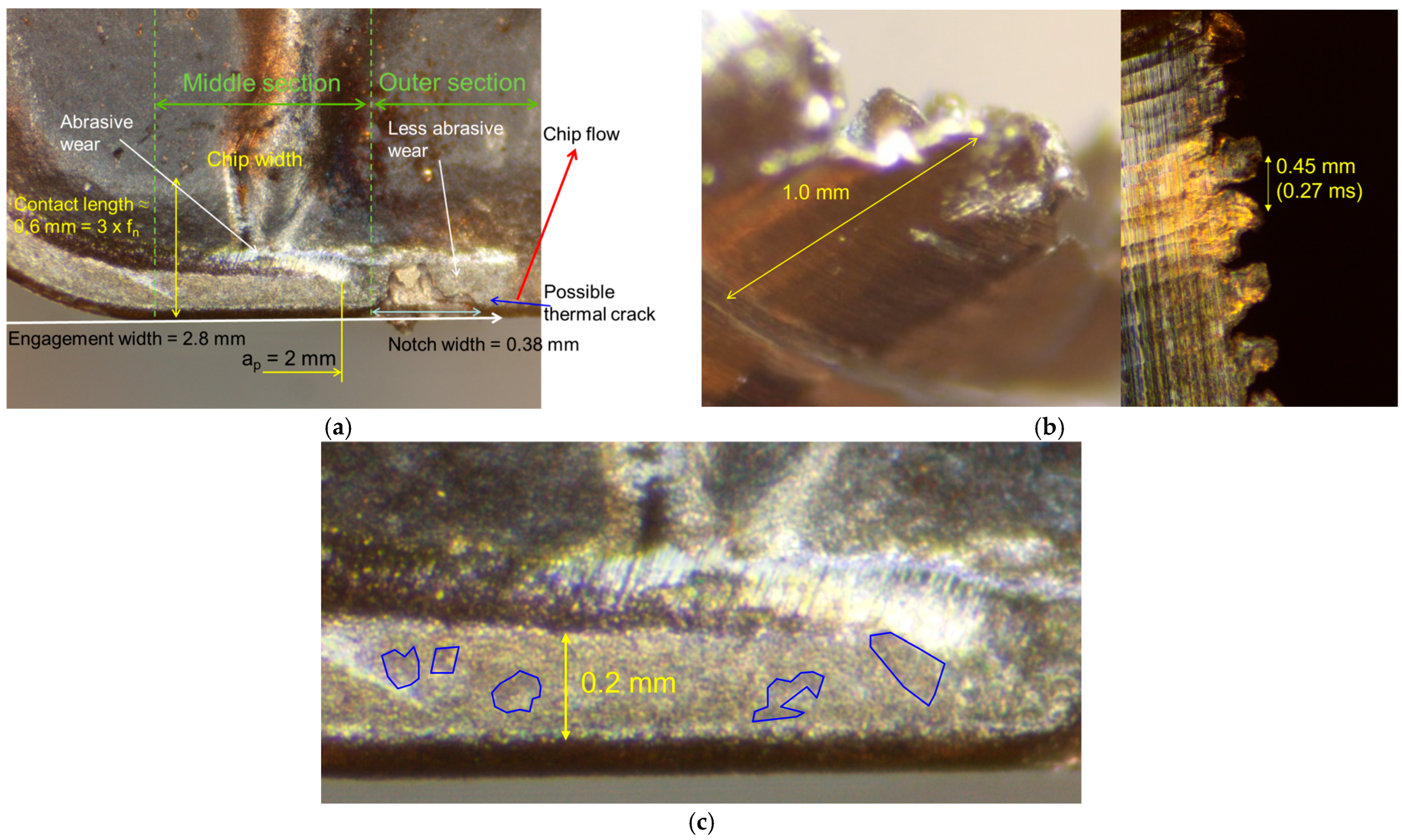
The wear pattern in Figure 5a shows a notch, 0.38 mm wide, where the deformation-hardened zone hit the cutting tool. The flakes removed from the tool indicate that an adhesive wear process is present, in agreement with the early notch wear observations reported in [6]. In this case, the abrasive wear pattern does not have the magnitude to limit the tool life. There are no visible signs of plastic deformation either. In Figure 5b, the traces from adhesive bonds at the rake side of the chip, in the area where the notch is generated, are shown. The yellow deposits are polluted SiO2; between them are pieces of the cutting tool coatings, Al2O3 from the top coating layer, and TiCN from the coating underneath the Al2O3. The pattern of the SiO2 deposits is the same size as the grain size of the substrate, which makes sense since the grains have uneven strength in different directions. In Figure 5c, a zoomed part of the middle section is shown.
The chip shown in Figure 5b looks something like a burr. Between the protuberances, there are cracks as remnants of powerful adhesions. When that part of the chip is stuck to the tool, the chip is torn apart. The distance 0.45 mm corresponds to 0.27 ms of chip speed, a common cluster length in time. The time span of 0.27 ms is calculated with a chip ratio of 2 and the current cutting speed (the chip speed is half of the cutting speed); see also the acoustic emission results presented later.
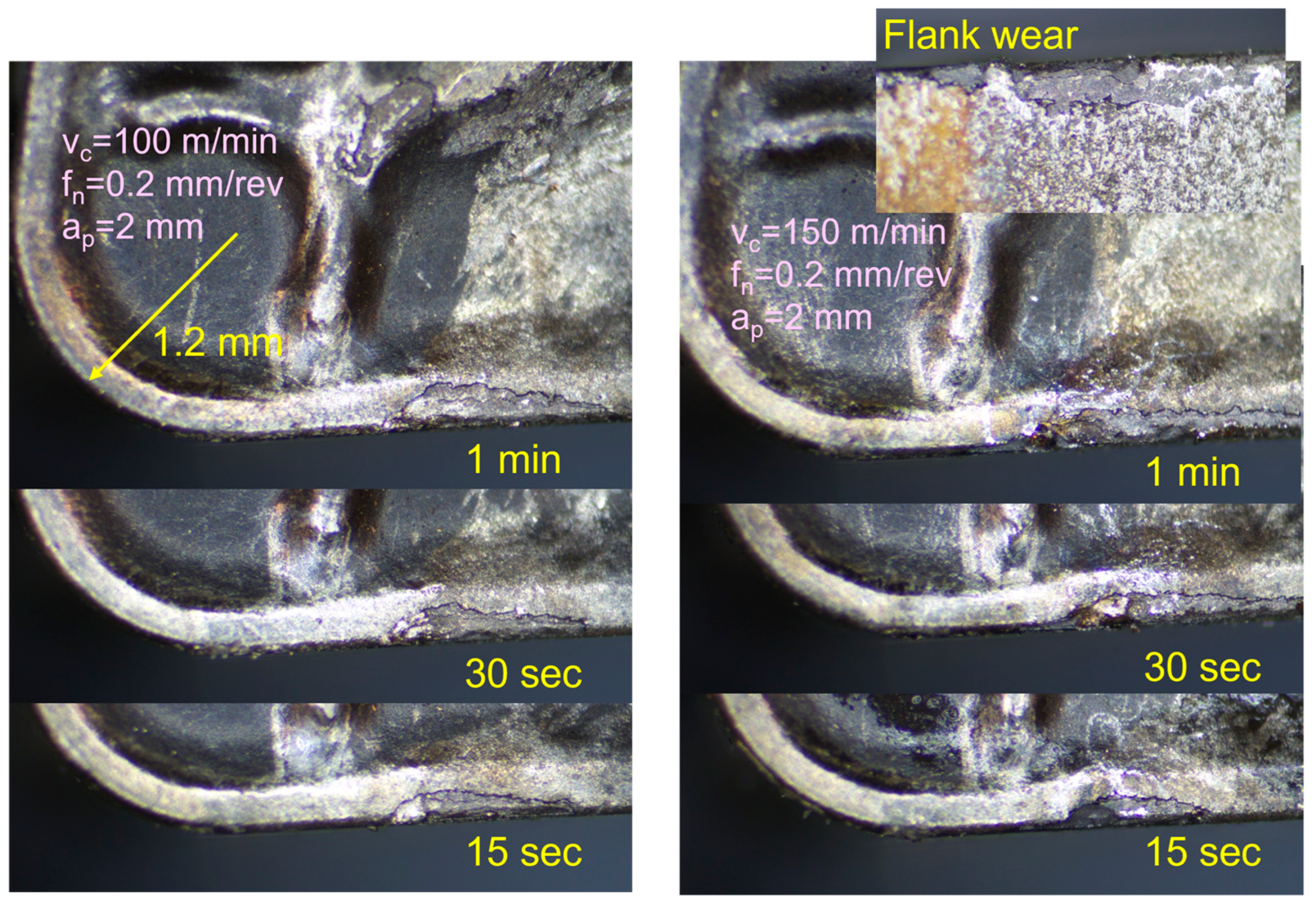
A similar wear pattern appears when the cutting speed is changed, though the magnitude of the wear is different; see Figure 6. The engagements are short; the beginning of the engagement shows the wear mechanisms as they are. Later, in some minutes the traces of the wear mechanisms are destroyed by wear. The current cutting edges can, despite their wear, produce chips for a few more minutes. The adhesion seems to remove the coatings one by one, which is logical. The two coatings (Al2O3 on the top and Ti(C,N) beneath) have different thermal elongation coefficients, so when the energy from the chemical reaction is released, and the temperature rises, the two coatings expand differently, leading to stress and potentially causing crack propagation.
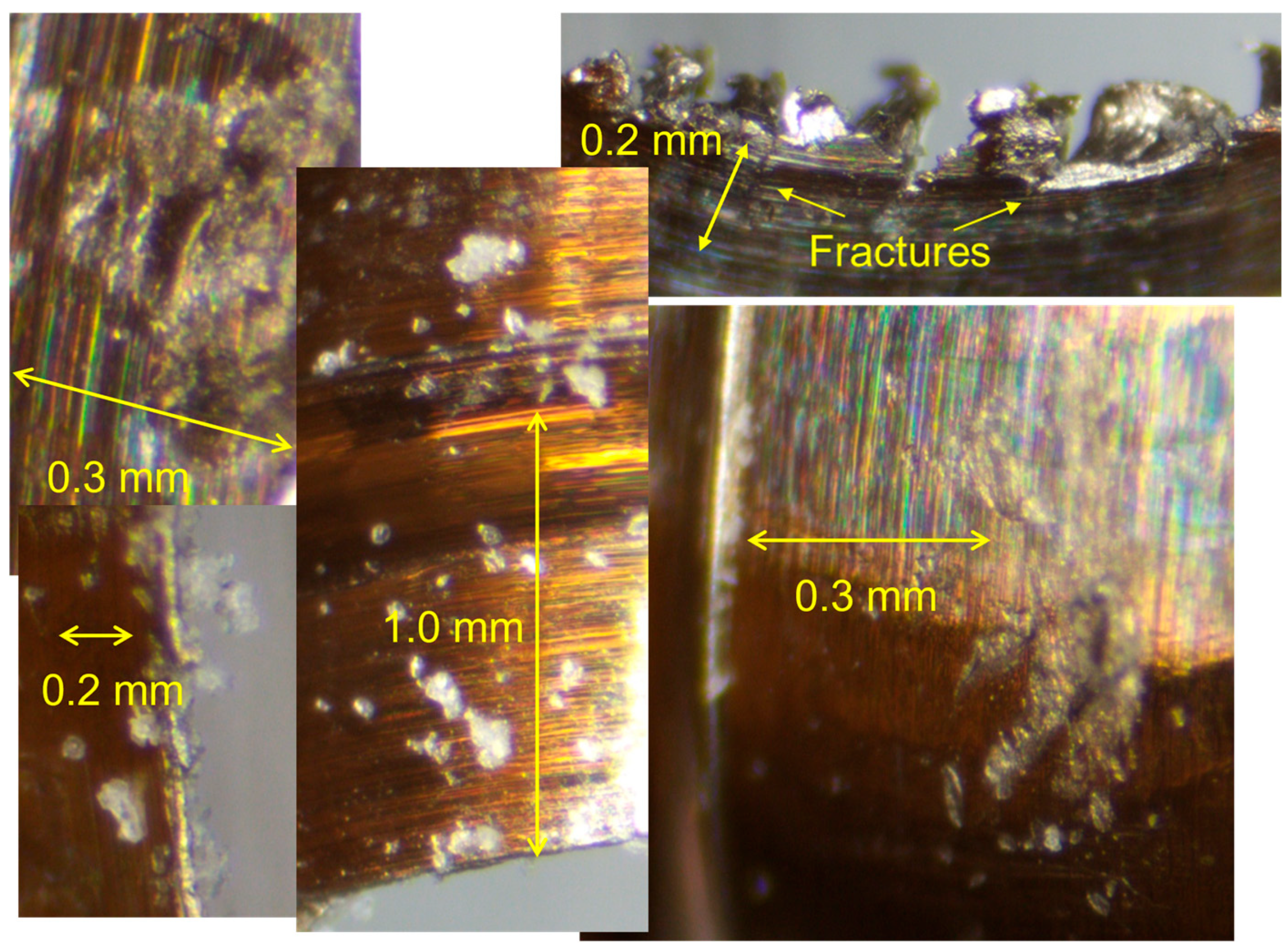
The size, shape, and thickness of the removed materials in a single adhesive cycle are investigated. The bond before separation consists of materials from the tool, the chip, and the polluted SiO2, but only the removal of cutting tool materials is considered below. There is a wide spectrum of shapes, sizes, and thicknesses, but in general, adhesive wear removes thin layers of material from the cutting tool. The remnants of the bond in Figure 5b are some of the largest, about 0.3 mm in diameter. Figure 7 shows other shapes. The thickness is difficult to measure, but around the notch in Figure 5a, it is visible that the coating is sliced, probably between the two types of coating. We can conclude that a thickness less than the coating is possible.
The average time span for a cluster wave in the current measurement is about 0.4 ms (see also the acoustic emission results presented later.). After 30 s, as in Figure 5a, the number of adhesive removals is about 75 000, the wear in Figure 5a is removed in 75 000 pieces, and therefore, the removed material must be rather thin. It is also worth to mention that most of the adhesions are very small, but larger pieces can also be removed. If some material is sitting loose, it will be removed together with an appropriate adhesive binding.
Regarding burr furrowing (pulsating pressure from the earlier cut surface), the grade used in the test can withstand that load; it can machine hard steels up to 48 HRC without chipping (www.sandvik.coromant.com (accessed on 20 January 2026)). Carbide tools are sensitive to tensile stress, not compression; the difference in strength is about 100 times. High pressure can cause a temperature rise, leading to plastic deformation and chipping. This mechanism is a common problem in milling hard steels. However, there are no signs of plastic deformation wear in the current test. During turning operations, vibrations can cause chipping when the edge moves away from the workpiece; tensile stress occurs on the rake, leading to tool chipping along the clearance. The current tests are under stable conditions, and there is no sign of chipping along the clearance.

4.2. SEM and EDS Observations

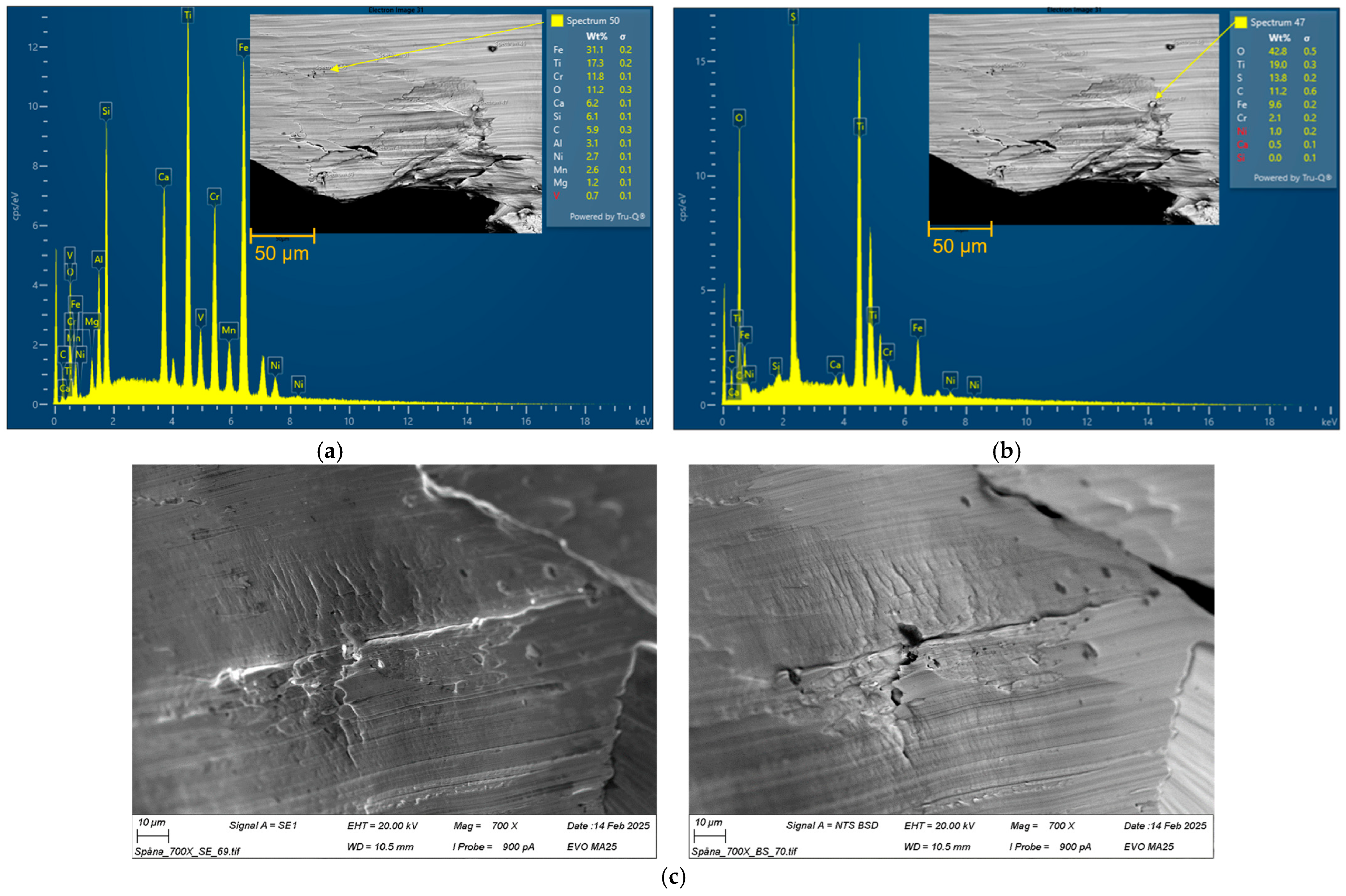
Particles from the coating were found on the rake side of the chip (about the same places as shown in the optical microscopy picture in Figure 5b). In Figure 8a,b, the EDS results show micro-sized particles that were categorized as likely tool adhesion. Also, a wide spectrum of workpiece and cutting tool elements is present in the “polluted SiO2 substance”. High-temperature chemistry of the bond formation is complex. Figure 8c shows SEM micrographs acquired from the same location, with secondary electron imaging on the left and backscattered electron imaging on the right. The deformations around the bond are severe. The bond is strong enough to rip the chip apart. Fractures are also visible on the outer side of the chip, shown in optical microscopy image, Figure 5b. Along the ~100 µm long central crack in Figure 8c, four separate EDS measurements were high in Al and categorized as Al2O3. One measurement with a high Ca content was also made. Secondary electron and backscattered electron images from the same location provide complementary information on the adhesive bond remnants. Secondary electron imaging highlights severe local deformation and cracking caused by bond rupture, while backscattered electron imaging reveals compositional contrast, showing coating material within the polluted SiO2 substance. Together, the observations show that notch wear is driven by formation and rupture of localized adhesive junctions rather than by smearing or post-fracture contamination.

4.3. Acoustic Emission from Cutting

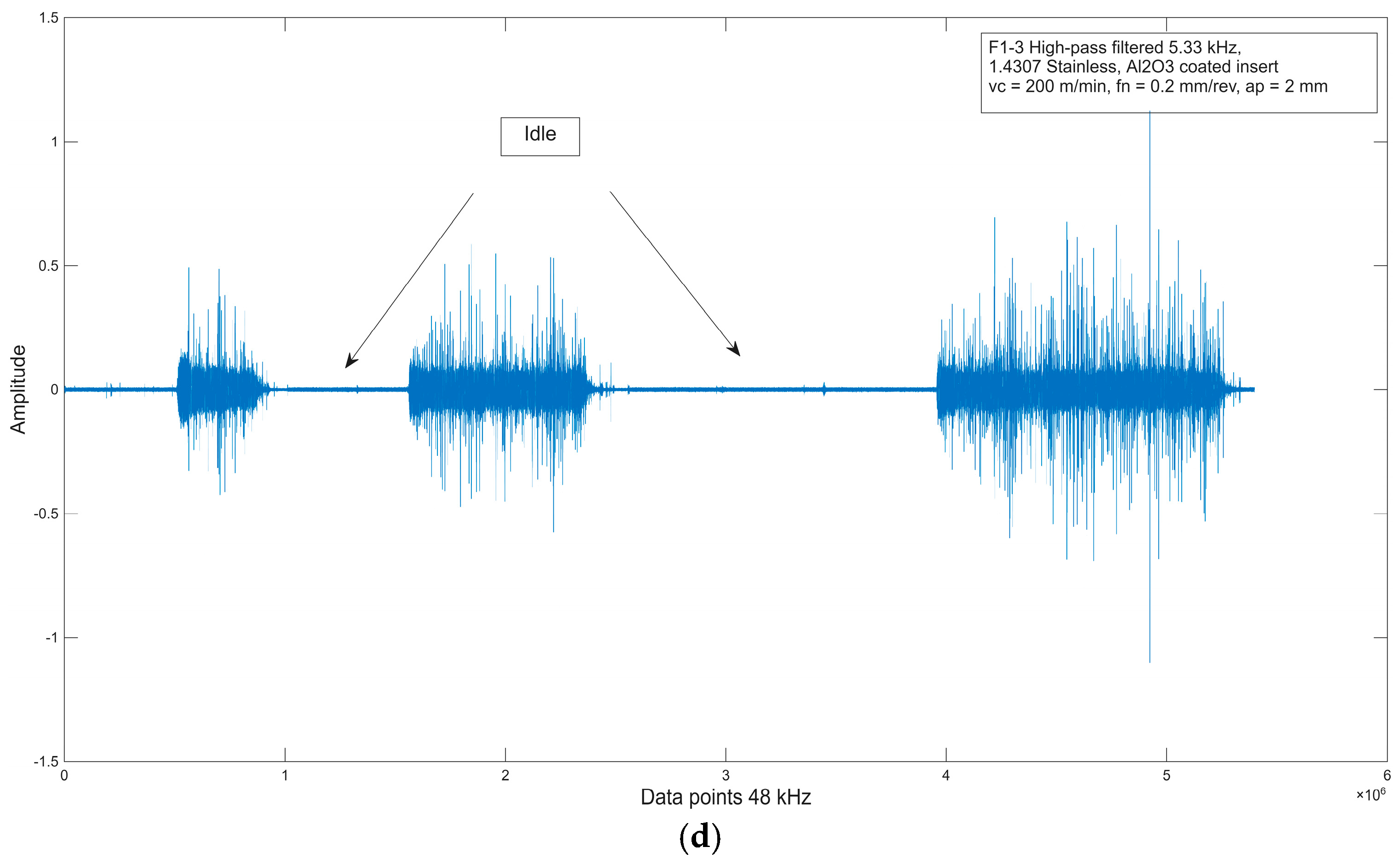
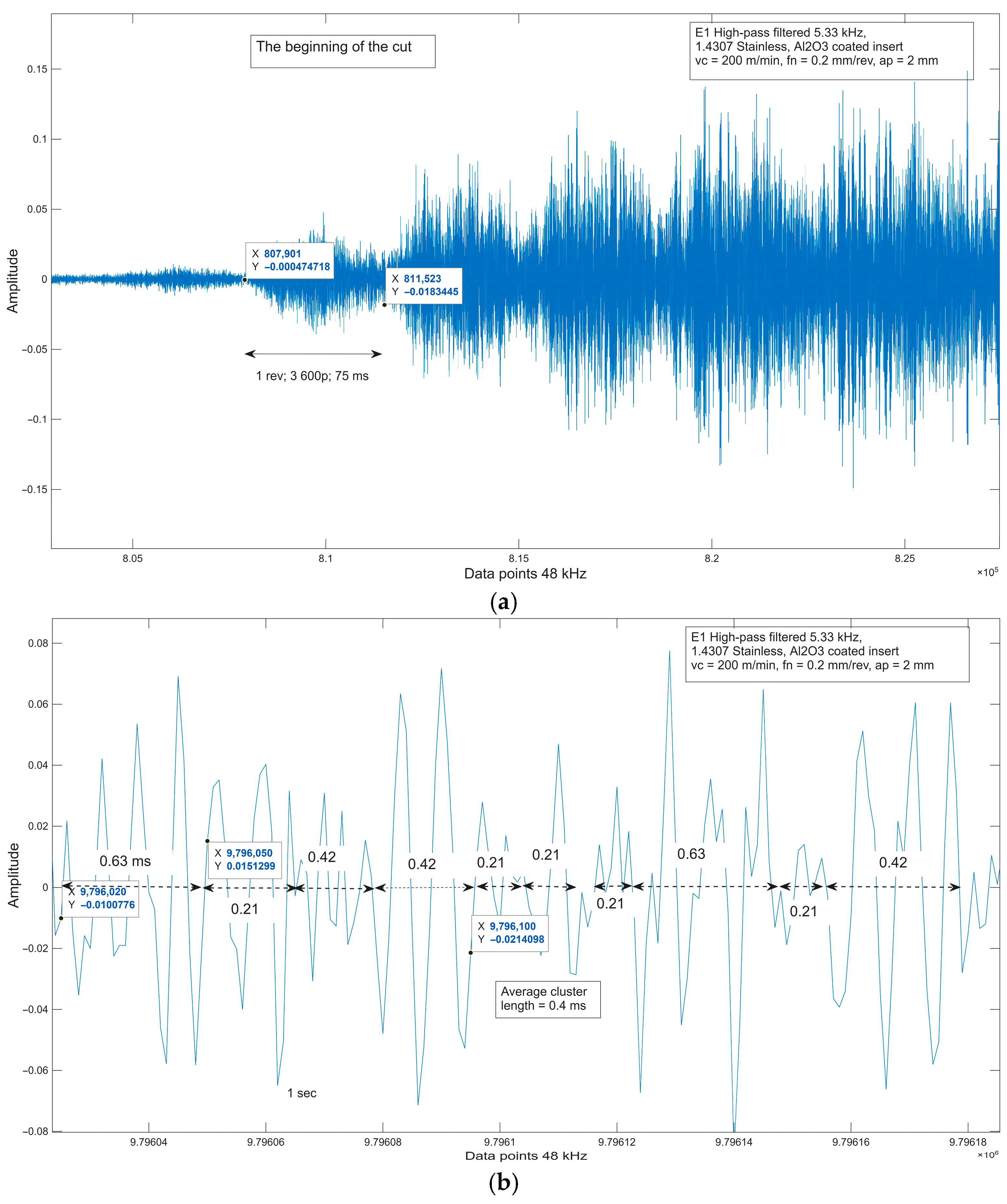
Figure 9 and Figure 10 show the measured sound emanating from the cutting zone. In Figure 9a, it is shown that adhesive vibrations begin at the very start of engagement. In Figure 9b, the average cluster length is measured to be about 0.4 ms.
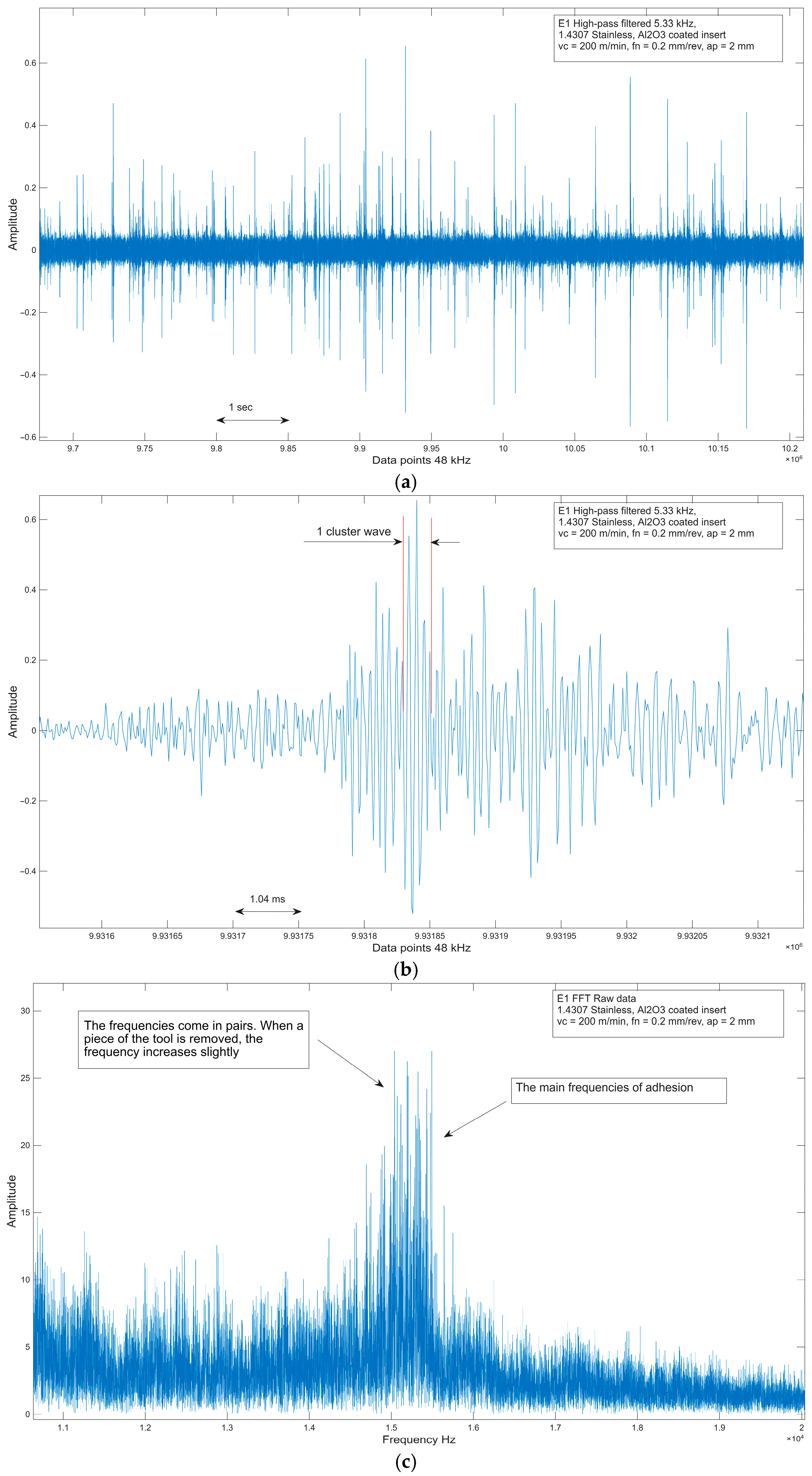
The sound caused by the adhesion, shown in Figure 10a, mirrors the size of the adhesive bindings. The measurement confirms the earlier-mentioned results. Some very powerful adhesions occur, ripping the chip apart and downgrading the cutting edge, but so do many smaller bonds and everything in between. It is assumed that the major ones are around the notch. The distance, in time, between the major adhesions in Figure 10a corresponds roughly to the distance between the major adhesions on the chip. More exact measurements are not possible because we do not know which chip generated the current sound. Figure 10b shows a closer view of one of the major clusters. The amplitude of the major clusters should be related to the minor. There are a few powerful adhesions among many minor adhesions. The major ones are likely the maximum size of adhesive remnants found on the chip. The FFT spectra in Figure 10c show adhesive vibrations around 15 kHz, and the peaks are often in pairs, which indicates adhesive wear (Ref. [22]). In Figure 10d, the measured sound increases with the engagement time, like the wear, which means that the wear status influences the area of the adhesive bonds.
A common view is that notch wear is caused by oxidation and by the “hammering” in the notch zone, due to high pulsating pressure from the earlier cut surface. More oxygen is indeed available near both sides of the chip, but oxidation is not possible if the Al2O3 coating on the cutting tool remains. Notch wear (adhesion) begins at the maximum engagement line, when the coating is still on the rake. The measured sound also starts at the beginning of the cut. Later, when the coating is removed, oxidation occurs, but to trigger an oxidation wear event, adhesion or abrasion is necessary. As mentioned earlier, abrasion is moderate around the notch; thus, adhesion must be the main removal mechanism.
Regarding diffusion wear, the ceramic coating is quite dense, and the diffusion speed is slow. Later, when the coatings are removed, diffusion is a part of the wear process. The wear event is similar to oxidation; diffusion undermines the strength, chemistry, etc., of the cutting tool materials, which are later removed by adhesion, abrasion, or vaporization. Even if diffusion wear is present in the current test, it does not change much; adhesion is far more rapid in the removal of cutting tool materials. While oxidation- and diffusion-based explanations have been proposed in earlier studies [5,16,18], the present work shows that adhesion begins while the coating shows no visible wear, indicating that these mechanisms cannot govern the initiation stage.

4.4. FEM Simulations

The von Mises stresses plotted in Figure 11 are well below 1 GPa outside the chip contact in the notch region, but they exceed 1 GPa near the edge inside the cutting zone, indicating a possible slight plastic impression of the edge. In the figure, a white dotted line is added at the end of the chip contact, which is found at approximately 2.1 mm outside the deepest point of the cut. The chip is slightly thicker than ap due to swelling. The x-direction marked is the direction of the cut, and the z-direction is the feed direction.
Tensile stresses are difficult to plot effectively. Most stresses near the cutting contact are compressive, but there is a very slight tension in the notch zone at the edge of the chip contact. The maximum principal stresses in these regions are below 100 MPa, indicating that they alone are not enough to explain the notch. It is possible that the tensile stresses in the physical situation could be slightly increased due to the adjacent plastic impression. Such a situation would make the notch region more vulnerable to the effects of adhesion and subsequent pull-off from an uneven chip flow.
The normal stress load plotted in Figure 12a is calculated by distributing each directional nodal contact force as an even directional stress on each neighboring element. After this, the directional stresses on each element are summarized, and the component normal to the element plane is used.
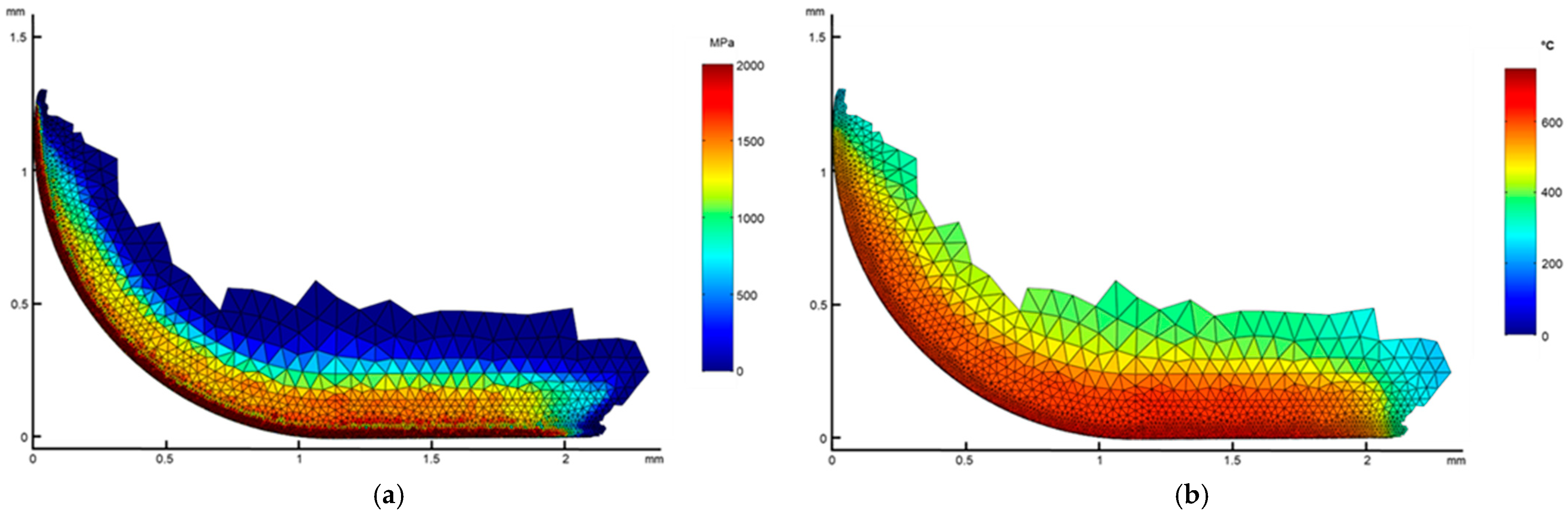
The temperature load plotted in Figure 12b is calculated by averaging all nodal temperature loads on an element. Note that the temperature is not higher in the notch region than the rest of the contact zone.
The loads plotted here are projected into the plane orthogonal to the cutting direction. The effects of insert geometry variations and the −6° angle of inclination are negligible on the proportions in the images.
The deformation-hardened zone increases pressure and temperature, but not to levels that exceed those in other parts of the rake (Figure 12). It must be another factor behind the propagation of notch wear besides pressure and temperature. There are almost no abrasive wear rips around the notch wear (Figure 5 and Figure 6), which means the abrasive ceramic particles within the work material have not yet been pressed against the tool rake. While abrasive rips are visible on the rest of the rake. Earlier interpretations have emphasized high local temperature or mechanical loading at the depth-of-cut line [4,5]. The present simulations show that neither temperature nor average contact pressure alone explains the localization, suggesting that an additional adhesion-related mechanism must be involved.

4.5. A New Tool–Chip Contact Model

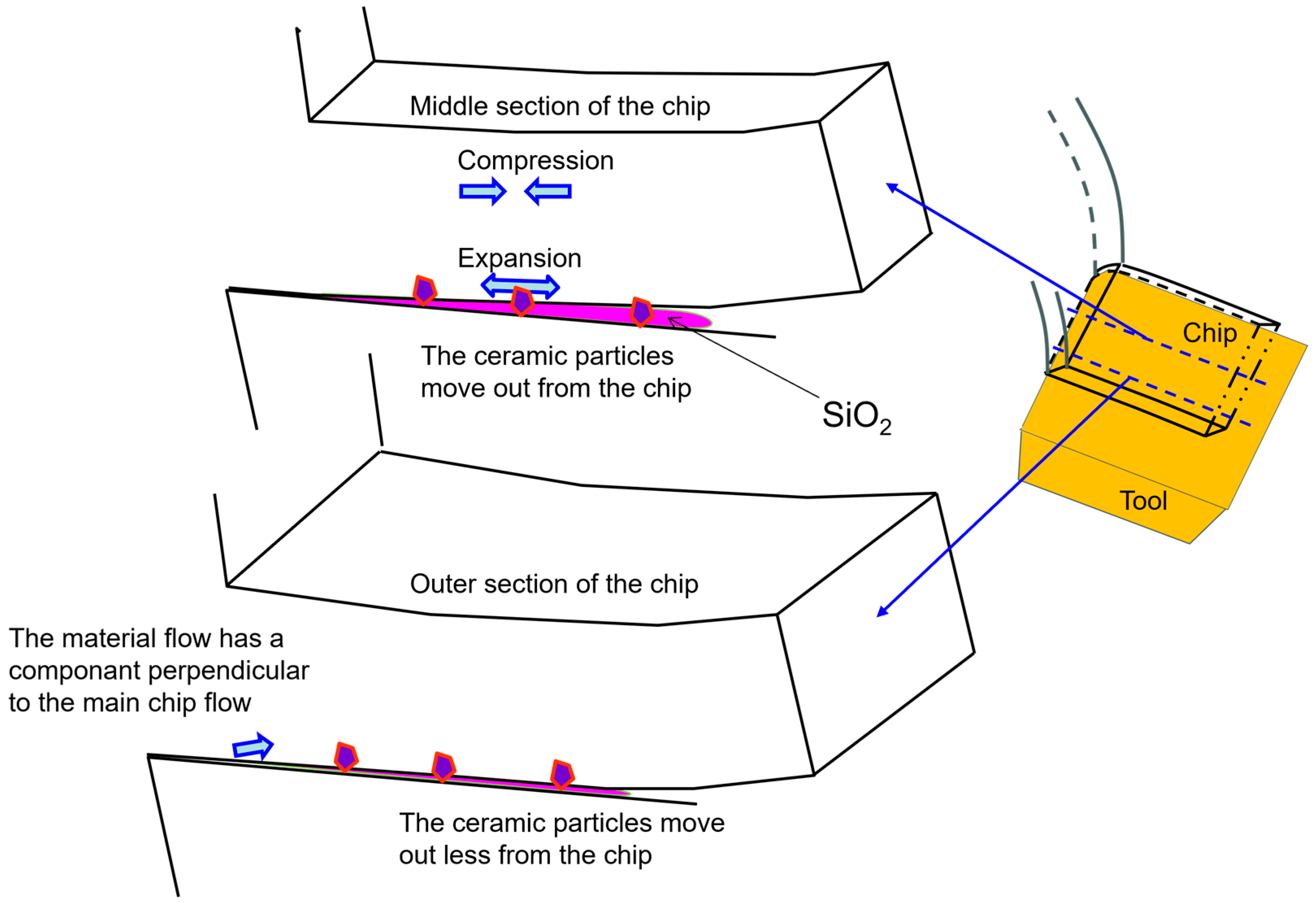
A new tool–chip contact model is illustrated in Figure 13. The ceramic particles in the middle section of the chip move out of the rake side of the chip due to the expansion of the matrix material; they cannot follow the plastic deformation. The chip is more or less “standing” on the particles, resulting in lower pressure in the SiO2 substance than without the particles [25].
The expansion of the chip in the chip flow direction near the rake on the outer section of the chip is lower than in the middle due to material movements sideways. The movements of the ceramic particles on the side are less than in the middle section. Therefore, the pressure at the outermost part of the chip where the notch occurs is likely higher due to the lack of dividing particles. This results in less severe abrasive wear in the area around the notch wear, shown in Figure 5 and Figure 6.
The proposed contact model explains the wear pattern shown in Figure 5. Adhesion along the middle section of the chip is less pronounced than around the notch. The binding diameter is about 0.05 mm, compared to 0.3 mm around the notch, and the area is 36 times smaller. Some adhesive wear marks are likely hidden under the deposits, but they should be the same size or slightly larger.

4.6. Additional Observations

4.6.1. Cutting Super Duplex Hot Isostatic Pressure Steel

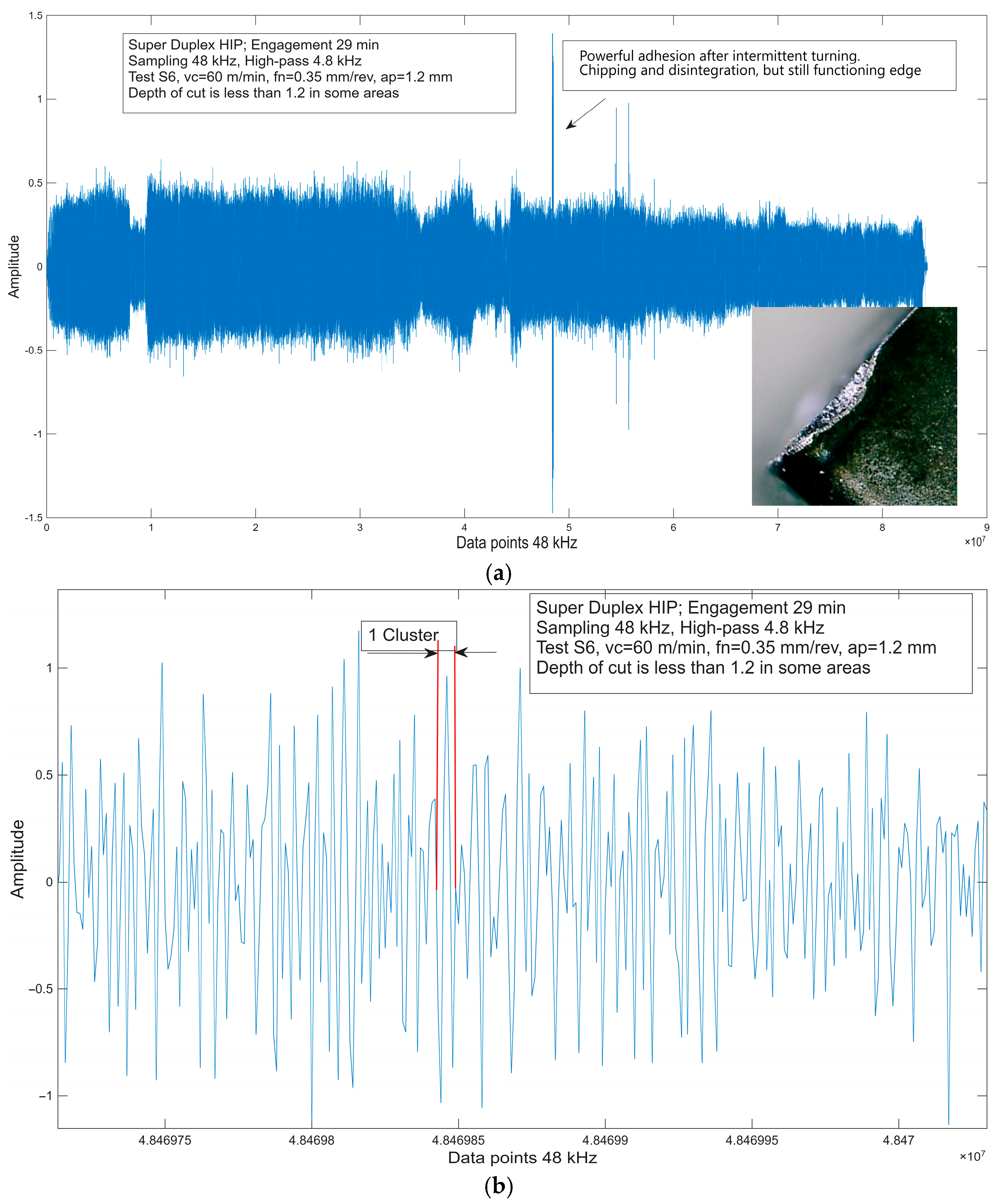
Hot Isostatic Pressure (HIP) steel is almost free of hard ceramic particles, since oxides are problematic in the HIP process. Therefore, it is desirable to keep the oxides at a low level. Consequently, the level of abrasion on the rake is quite low, enabling adhesion studies free of abrasion. Figure 14a shows the adhesive sound during a more extended engagement of about 30 min, a single pass over the component, and the wear at the end of the engagement. The wear is smooth, a large volume has been removed at the beginning of the engagement, and the notch, while the rest of the contact area is intact. The edge is still functioning despite the loss of a large “chunk” of its tool material. The wear material is removed in approximately 10 million adhesive cycles. In Figure 14b, the area where the edge starts to disintegrate is shown to generate, despite the “chaotic” stage with chipping and fractures, regular adhesion sound waves, with 1–3 waves in each cluster.

4.6.2. A Cutting Geometry That Drains Polluted SiO2 Substance

The rake of the applied tool has a cavity near the edge. To verify that pressure is decisive for adhesion, the depth of the cut was increased so that engagement starts over that cavity. In Figure 15a, the adhesion wear in the cavity area becomes minor, but increases in other places along the edge. It is not the right measure to reduce adhesive wear, but it shows that pressure affects where adhesive bonding occurs. Even though this experiment did not reduce the adhesive wear over the total engagement, it is believed that improving the rake geometry could give positive results. For example, small cavities along the entire edge could work. Such geometries for milling are available on the market (Figure 15b).

5. Discussion

5.1. Adhesive Wear as the Dominant Notch Wear Mechanism

The results presented in this work consistently indicate that adhesion is the dominant mechanism governing notch wear initiation during turning EN 1.4307 stainless steel with CVD-coated carbide tools. SEM observations show that thin flakes of coating and tool material are removed during the earliest stages of engagement, while acoustic measurements confirm that adhesive events occur immediately upon the tool entering the cut. The rapid appearance of notch wear within seconds further supports the idea that cumulative mechanisms such as oxidation or diffusion cannot be the dominant mechanisms for initiation.
The presence of polluted SiO2 deposits at the rake side of the chip, together with fragments of Al2O3 and Ti(C,N) coatings, demonstrates that adhesive bonds form directly at the tool–chip interface. These bonds repeatedly form and rupture, removing extremely thin layers of tool material and progressively degrading the cutting edge at the depth-of-cut line.
The present results indicate that oxidation and diffusion mechanisms become relevant only after the coating has been locally removed. As long as the Al2O3 coating remains intact, oxidation of the underlying tool material is unlikely due to the ceramic layer’s chemical stability and density. Similarly, diffusion through the intact coating is expected to be slow.
Even when diffusion or oxidation occurs later, these mechanisms primarily weaken the material locally. The actual removal of tool material still requires adhesion or abrasion. In the present tests, abrasive wear around the notch is limited, which further supports adhesion as the primary removal mechanism throughout the early and intermediate stages of notch development.
To reduce notch wear, it is important to reduce adhesive wear. This could be achieved by choosing a coating with lower thermal expansion, or a Wolfram coating under the top layer, which can be deformed plastically. The coating should also be electrically conductive [22].

5.2. Pressure in the SiO2 Substance

The deposit on the rake is parallel to the edge but turns toward the edge around the notch wear (Figure 5c). The binding zone occurs closer to the edge, where the pressure in the SiO2 substance is extremely high due to the vicinity of the edge. The ceramic particles are not pressed out enough to relieve the pressure in the substance. The main difference in properties among the deposits is the pressure in the SiO2 substance.
An interesting observation from the field is that turning (fn = 0.2 mm) with rake angles above γo = 23° is much quieter. The cutting tool suppliers recommend positive or extremely positive geometries. Thus, reducing the pressure on the rake appears to be a winning strategy.
The main differences between machining steel, such as 34CrNiMo6, and austenitic stainless steel, such as EN 1.4307, are the deformation zone at the start of engagement and the composition of the polluted SiO2 substance. The hardness of the deformation zone can be reduced by using more light-cutting geometries, and the high Ni and Cr content in the substance is a task/challenge for the steel producer. The content of the SiO2 inclusions mirrors the content of the workpiece material and the time they have been in the melt; Cr and Ni diffuse into the SiO2 inclusions. One way is to remove as much SiO2 as possible and add Si before casting. Injecting glass powder at the end (just before casting) is also possible.
Small cavities along the entire edge of the rake could drain SiO2, thereby reducing pressure.

5.3. Breaking the Adhesive Bond

It is believed that more than one way exists to break the adhesive bond. The first one, “just to rip it off”, as Figure 3 shows, occurs when the binding area is small. Another is “rolling it off”, like in Figure 16, when the binding area is large.

6. Conclusions

In this study, the initiation mechanism of notch wear during turning of EN 1.4307 austenitic stainless steel with CVD-coated carbide tools was investigated through combined cutting experiments, SEM/EDS analysis, acoustic measurements, and thermo-mechanical FEM simulations. The following conclusions can be drawn:
  • Notch wear initiation is governed by an adhesion-dominated mechanism that is active from the very start of tool engagement.
  • Polluted SiO2 inclusions act as an active binding medium at the tool–chip interface. Repeated formation and rupture of adhesive bonds remove extremely thin layers of tool and coating material, leading to rapid, localized material loss.
  • Fragments of Al2O3 and Ti(C,N) coatings detected on the chip, together with high-frequency acoustic cluster waves recorded immediately at engagement, confirm that adhesion precedes coating failure and dominates the early stages of notch formation.
  • FEM simulations show that neither peak temperature nor average contact pressure alone explains this localization. The proposed tool–chip contact model indicates that pressure within the polluted SiO2 substance, arising from constrained particle motion near the chip’s side edge, promotes stronger and larger adhesive bonds in the notch region.
  • Oxidation and diffusion are considered secondary mechanisms that become relevant after local coating removal. Even then, they mainly weaken the tool material; the actual material removal is still primarily driven by adhesion or abrasion. Abrasive wear plays a minor role during notch initiation under the investigated conditions.
  • Reducing local contact pressure on the rake face through cutting geometry optimization or pressure-draining surface features offers a physically grounded strategy for reducing notch wear.
Future work will focus on systematic geometry modifications and process parameter adjustments to reduce pressure in the depth-of-cut entry region and thereby suppress adhesive notch wear. Reducing the pollution in the SiO2 inclusions in the stainless steels is also a possible measure to investigate.

Author Contributions

Conceptualization, I.S., K.T. and J.Ö.; methodology, I.S., K.T. and J.Ö.; validation, I.S., K.T. and J.Ö.; formal analysis, I.S., K.T. and J.Ö.; investigation, I.S., K.T. and J.Ö.; data curation, I.S., K.T. and J.Ö.; writing—original draft preparation, I.S., K.T. and J.Ö.; writing—review and editing, I.S., K.T. and J.Ö. All authors have read and agreed to the published version of the manuscript.

Funding

This research received no external funding.

Data Availability Statement

All data supporting the findings of this study are included within the article. Further inquiries can be directed to the corresponding author.

Acknowledgments

The authors acknowledge the support from Laboratory Technician Dario Senkic for the carefully performed cutting experiments and optical microscopy. Special thanks are also extended to Elin Myrell at Sandvik Coromant for performing the scanning electron microscopy measurements.

Conflicts of Interest

Author Jonas Östby was employed by the company Sandvik Coromant R&D. The remaining authors declare that the research was conducted in the absence of any commercial or financial relationships that could be construed as a potential conflict of interest.

Abbreviations

The following abbreviations are used in this manuscript:
BuEBuild-up Edge
CVDChemical Vapor Deposition
EDSEnergy-Dispersive X-ray Spectroscopy
FEMFinite Element Method
HIPHot Isostatic Pressure
MQLMinimum Quantity Lubrication
PVDPhysical Vapor Deposition
SEMScanning Electron Microscope

References

  1. Čička, M.; Turisová, R.; Kóča, F.; Pačaiová, H. Machining of Austenitic Stainless Steels—the Influence of Various Factors on the Machining Result. Acta Mech. Slovaca 2023, 27, 18–26. [Google Scholar] [CrossRef]
  2. Stephenson, D.A.; Agapiou, J.S. Metal cutting theory and practice. In Metal Cutting Theory and Practice, 3rd ed.; CRC Press: Boca Raton, FL, USA, 2016; 947p. [Google Scholar]
  3. Das, C.R.; Ghosh, A. Performance of carbide end mills coated with new generation nano-composite TiAlSiN in machining of austenitic stainless steel under near-dry (MQL) and flood cooling conditions. J. Manuf. Process. 2023, 104, 418–442. [Google Scholar] [CrossRef]
  4. Chandrasekaran, H.; Johansson, J.O. Chip Flow and Notch Wear Mechanisms during the Machining of High Austenitic Stainless Steels. CIRP Ann. 1994, 43, 101–105. [Google Scholar] [CrossRef]
  5. Diniz, A.E.; Machado, Á.R.; Corrêa, J.G. Tool wear mechanisms in the machining of steels and stainless steels. Int. J. Adv. Manuf. Technol. 2016, 87, 3157–3168. [Google Scholar] [CrossRef]
  6. Sirtuli, L.J.; Boing, D.; Bushlya, V.; Norgren, S. Study of initial notch wear during turning of stainless steel with CVD Al2O3/Ti(C,N) coated cemented carbide tools. Int. J. Refract. Met. Hard Mater. 2025, 129, 107116. [Google Scholar] [CrossRef]
  7. Sirtuli, L.J.; Lindberg, F.; Boing, D.; Bushlya, V.; Norgren, S. Impact of cutting tool and workpiece material on initial notch wear in turning. Wear 2025, 570, 205942. [Google Scholar] [CrossRef]
  8. Alabdullah, M.; Polishetty, A.; Nomani, J. Impact of work hardening, tool wear and geometry response on machinability during turning AL-6XN super austenitic stainless steel: A work hardening and wear studies on AL-6XN alloy. Materwiss Werksttech. 2017, 48, 190–197. [Google Scholar] [CrossRef]
  9. Kong, J.; Xia, Z.; Xu, D.; He, N. Investigation on notch wear mechanism in finish turning pure iron material with uncoated carbide tools under different cooling/lubrication conditions. Int. J. Adv. Manuf. Technol. 2016, 86, 97–105. [Google Scholar] [CrossRef]
  10. Zhuang, K.; Zhu, D.; Zhang, X.; Ding, H. Notch wear prediction model in turning of Inconel 718 with ceramic tools considering the influence of work hardened layer. Wear 2014, 313, 63–74. [Google Scholar] [CrossRef]
  11. Szczotkarz, N.; Mrugalski, R.; Maruda, R.W.; Królczyk, G.M.; Legutko, S.; Leksycki, K.; Dębowski, D.; Pruncu, C.I. Cutting tool wear in turning 316L stainless steel in the conditions of minimized lubrication. Tribol. Int. 2021, 156, 106813. [Google Scholar] [CrossRef]
  12. Passari, É.S.; Souza, A.J.; Aita, C.A.G. Machinability investigation of 254 SMO super austenitic stainless steel in end milling under different cutting and lubri-cooling conditions. Int. J. Adv. Manuf. Technol. 2024, 131, 6061–6073. [Google Scholar] [CrossRef]
  13. Chetan Ghosh, S.; Venkateswara Rao, P. Application of sustainable techniques in metal cutting for enhanced machinability: A review. J. Clean. Prod. 2015, 100, 17–34. [Google Scholar] [CrossRef]
  14. Ross, N.S.; Ananth, M.B.J.; Mashinini, P.M.; Ji, H.; Palaniappan, S.K.; Gupta, M.K.; Vashishtha, G. Mitigating tribological challenges in machining additively manufactured stainless steel with cryogenic-MQL hybrid technology. Tribol. Int. 2024, 193, 109343. [Google Scholar] [CrossRef]
  15. De Oliveira Junior, C.A.; Diniz, A.E.; Bertazzoli, R. Correlating tool wear, surface roughness and corrosion resistance in the turning process of super duplex stainless steel. J. Braz. Soc. Mech. Sci. Eng. 2014, 36, 775–785. [Google Scholar] [CrossRef]
  16. Corrêa, J.G.; Schroeter, R.B.; Machado, Á.R. Tool life and wear mechanism analysis of carbide tools used in the machining of martensitic and supermartensitic stainless steels. Tribol. Int. 2017, 105, 102–117. [Google Scholar] [CrossRef]
  17. Šramhauser, K.; Kraus, P.; Špalek, F.; Černý, P.; Ufitikirezi, J.D.D.M.; Zoubek, T.; Strob, M.; Kononets, Y.; Kříž, P.; Vochozka, V. Intercomparison of Indexable Cutting Inserts’ Wear Progress and Chip Formation During Machining Hardened Steel AISI 4337 and Austenitic Stainless Steel AISI 316 L. Materials 2024, 17, 5418. [Google Scholar] [CrossRef]
  18. Xue, C.; Wang, D.; Zhang, J. Wear Mechanisms and Notch Formation of Whisker-Reinforced Alumina and Sialon Ceramic Tools during High-Speed Turning of Inconel 718. Materials 2022, 15, 3860. [Google Scholar] [CrossRef]
  19. Sönmez, F. Analysis of tool wear and surface roughness in machining of AISI 4462 duplex stainless steel. Mater. Test. 2023, 65, 1561–1570. [Google Scholar] [CrossRef]
  20. Hrechuk, A.; Slipchenko, K.; Maistro, G.; Bushlya, V. Quantification of tool wear mechanisms in machining: The case of controlled-microstructure AISI 316L. Wear 2025, 570, 205944. [Google Scholar] [CrossRef]
  21. Svenningsson, I.; Tatar, K. On the mechanism of three-body adhesive wear in turning. Int. J. Adv. Manuf. Technol. 2021, 113, 3457–3472. [Google Scholar] [CrossRef]
  22. Svenningsson, I.; Tatar, K. Exploring the mechanics of adhesion in metal cutting. Int. J. Adv. Manuf. Technol. 2023, 127, 3337–3356. [Google Scholar] [CrossRef]
  23. Saketi, S.; Odelros, S.; Östby, J.; Olsson, M. Experimental Study of Wear Mechanisms of Cemented Carbide in the Turning of Ti6Al4V. Materials 2019, 12, 2822. [Google Scholar] [CrossRef]
  24. Salm, T.; Tatar, K.; Chilo, J. Real-Time Acoustic Measurement System for Cutting-Tool Analysis During Stainless Steel Machining. Machines 2024, 12, 892. [Google Scholar] [CrossRef]
  25. Svenningsson, I. On the mechanism of two-body abrasive wear in turning “the spin-split theory”. Int. J. Adv. Manuf. Technol. 2017, 92, 3337–3348. [Google Scholar] [CrossRef]
Figure 1. The scheme of the deposit mechanism at different cutting speeds.
Machines 14 00297 g001
Figure 2. Experimental set-up showing the CNC lathe, (1) measurement microphone, (2) turning tool, and (3) workpiece. The lower diagram illustrates the acoustic signal acquisition and processing chain. Sound was recorded with the machine door closed; frequencies in the 6–20 kHz range passed through the window without significant amplitude loss.
Machines 14 00297 g002
Figure 3. The adhesive mechanism and the sound generation. The chip rips material from the cutting tool (k2 vanish), causing adhesive wear and chip vibrations (pivoting mode).
Machines 14 00297 g003
Figure 4. High-pass filtered measured sound signal from the cutting zone. The chip’s pivot movement generates cluster waves. The last wave vibrates with a slightly higher frequency. Work material EN 1.4307. Al2O3-coated insert. Dry turning under vc = 200 m/min, fn = 0.2 mm/rev., and ap = 2 mm.
Machines 14 00297 g004
Figure 5. (a) Wear pattern after 30 s of engagement when turning in EN 1.4307 stainless steel with an Al2O3-coated tool, vc = 200 m/min, fn = 0.2 mm/rev, ap = 2 mm. The abrasion on the outer section is less severe than on the middle section. The measured notch width is 0.38 mm, a representative wear for these cutting conditions. (b) A produced chip. To the left, an adhesive binding at the rake side of the chip, where the notch is made. The diameter of the trace is about 0.3 mm. To the right, the burr formed by powerful adhesions, and there are traces of adhesive bonds on each piece of the burr sticking out to the right. The distance of 0.45 mm corresponds to 0.27 ms of chip speed, a common time interval for a cluster. (c) Adhesive marks along the middle part of the cutting zone, shown in (a).
Machines 14 00297 g005
Figure 6. Wear patterns for different engagement times and cutting speeds.
Machines 14 00297 g006
Figure 7. A sample of remnants of adhesive bonds. If the bond is near the side of the chip, it often fractures the chip.
Machines 14 00297 g007
Figure 8. Traces of adhesive bond and the cutting tool coating on two different parts of the chip’s rake surface. (a) Ti could emanate from the TiN or TiCN coatings; Al could be from the Al2O3 coating. All the traces are in the polluted SiO2 substance. (b) Ti and C could emanate from the TiCN coating, and Al could be from the top coating and the work material. (c) The remnants of an adhesive bond after its removal. Secondary electron (left) and backscattered electron (right). The secondary electron image highlights severe local plastic deformation, tearing, and crack opening caused by bond rupture, while the backscattered electron image reveals compositional contrast.
Machines 14 00297 g008
Figure 9. Measured sound from the cutting zone. Sampled at 48 kHz and high-pass filtered at 5.33 kHz. Dry turning under vc = 200 m/min, fn = 0.2 mm/rev., and ap = 2 mm. (a) Sound from the beginning of the cut; (b) average length of clusters is approximately 0.4 ms, the average of the 10 dotted lines in the plot.
Machines 14 00297 g009
Figure 10. Measured sound from the cutting zone. Sampled at 48 kHz and high-pass filtered at 5.33 kHz. Dry turning under vc = 200 m/min, fn = 0.2 mm/rev., and ap = 2 mm. (a) Powerful adhesion, and it is assumed that the large adhesive bindings around the notch are the cause. (b) One of the major clusters. There are multiple clusters in the major sound burst. (c) FFT spectra from the raw sound signal. (d) The wear progress for the three cutting tests.
Machines 14 00297 g010aMachines 14 00297 g010b
Figure 11. The von Mises stresses as calculated by AdvantEdge. Cutting direction x, and feed direction z. The white dotted line indicates the end of the chip contact.
Machines 14 00297 g011
Figure 12. Load on the tool rake. (a) Normal stress; (b) temperature.
Machines 14 00297 g012
Figure 13. A tool–chip contact model where the movement of ceramic particles included in the work material is considered. The outer and middle section of the chip is illustrated.
Machines 14 00297 g013
Figure 14. Sound generation and wear from turning in Super Duplex HIP stainless steel. Sampled at 48 kHz and high-pass filtered at 4.8 kHz. Dry turning with vc = 60 m/min, fn = 0.35 mm/rev., and ap = 1.2 mm. (a) A view of 29 min of engagement and the wear at the end; (b) a closer look, where the edge starts to disintegrate.
Machines 14 00297 g014
Figure 15. (a) Adhesive wear after seconds of machining. The depth of the cut is chosen so that the engagement starts over a cavity on the rake. (b) Pattern on the rake “aimed” to reduce notch wear, like the pattern SECO TOOLS AB Sweden uses on some of their milling inserts.
Machines 14 00297 g015
Figure 16. Rolling of the adhesive bond.
Machines 14 00297 g016
Disclaimer/Publisher’s Note: The statements, opinions and data contained in all publications are solely those of the individual author(s) and contributor(s) and not of MDPI and/or the editor(s). MDPI and/or the editor(s) disclaim responsibility for any injury to people or property resulting from any ideas, methods, instructions or products referred to in the content.