1. Introduction
Inconel 718 alloy is a typical precipitation-strengthened nickel–chromium–iron-based superalloy [
1,
2,
3,
4]. Its high strength primarily originates from the synergistic precipitation strengthening of the body-centered tetragonal γ″ phase (Ni3Nb) and the face-centered cubic γ′ phase (Ni3(Al,Ti)). This alloy combines exceptional corrosion resistance, oxidation resistance, fatigue resistance, and radiation resistance, along with good hot workability and weldability [
5,
6,
7]. In practical aero-engine applications, severe fretting wear frequently occurs at critical contact interfaces under intense vibratory loads, including mortise-tenon joints [
8] and the mating surfaces between rolling element bearing rings and In718 bearing housings (or shafts) [
9]. This fretting phenomenon accelerates material removal and can lead to catastrophic fatigue failure [
10]. Consequently, evaluating the fretting wear resistance of LMD In718 is crucial not only for manufacturing these high-load structural parts but also holds significant application value for the localized repair and dimensional restoration of fretting-damaged components, such as bearing supports.
Despite the unique advantages of LMD, recent comprehensive reviews have systematically evaluated the laser-based directed energy deposition process and highlighted its inherent technological limitations. These studies point out that complex melt pool dynamics and severe thermal gradients during the deposition process inevitably lead to residual stresses, pronounced microstructural anisotropy, and volume defects such as lack-of-fusion and gas-entrapped pores. Furthermore, achieving material-property homogenization and mitigating these process-induced micro-cracks remain significant hurdles for the reliable industrial adoption of the LMD process [
11,
12]. Notably, as-deposited Inconel 718 alloy produced by means of LMD, due to its extremely high cooling rates and non-equilibrium solidification characteristics, typically exhibits epitaxially grown coarse columnar grain structures, resulting in pronounced microstructural anisotropy [
13].
Compared to other additive manufacturing techniques such as Laser Powder Bed Fusion (LPBF) and general Laser Directed Energy Deposition (LDED) [
14], Laser Metal Deposition (LMD) offers unique advantages in terms of highly concentrated heat input, controllable dilution rates, and superior adaptability for both manufacturing large monolithic aerospace structures and executing precision repairs on high-value components. However, while the recent literature has increasingly investigated the general sliding wear or high-cycle fatigue of additively manufactured In718 [
15,
16], systematic research specifically focusing on the fretting wear mechanisms of LMD Inconel 718 remains remarkably scarce. Specifically, how the interactive effects of distinct phase distributions, including Laves phases and uniformly dispersed γ″ precipitates, and LMD-induced defects govern fretting damage mechanisms is not yet fully understood [
17,
18]. A direct-aged treatment is frequently employed in aviation component repair scenarios to minimize thermal distortion and preserve the original substrate’s properties [
19]. Comparing the homogenized STA and direct-aging routes is of great practical importance. It provides critical guidance for industries deciding between maximizing overall microstructural performance for newly manufactured components and maintaining dimensional stability during the targeted repair of fretting-prone parts. Therefore, the distinct contribution of this work lies in bridging this specific knowledge gap by elucidating the fretting wear mechanisms of LMD In718 dictated by homogenized STA and direct aging, thereby providing essential theoretical and experimental guidance for its reliable application in fretting-prone environments.
In this paper, a comparative investigation is presented to evaluate the fretting wear behavior of LMD In718 subjected to STA and direct aging. Utilizing a newly developed fretting test apparatus, the contact parameter evolution, wear volume, and specific wear rates were quantified. Microstructural characterization and surface analysis were then correlated with tribological responses to elucidate the different wear mechanisms dictated by different heat treatments.
2. Experimental Method
This section develops a modified fretting test apparatus specifically designed for material-level investigation. The tangential relative displacement and friction force can be measured to characterize the fretting behavior of contact interfaces.
2.1. Fretting Test Apparatus
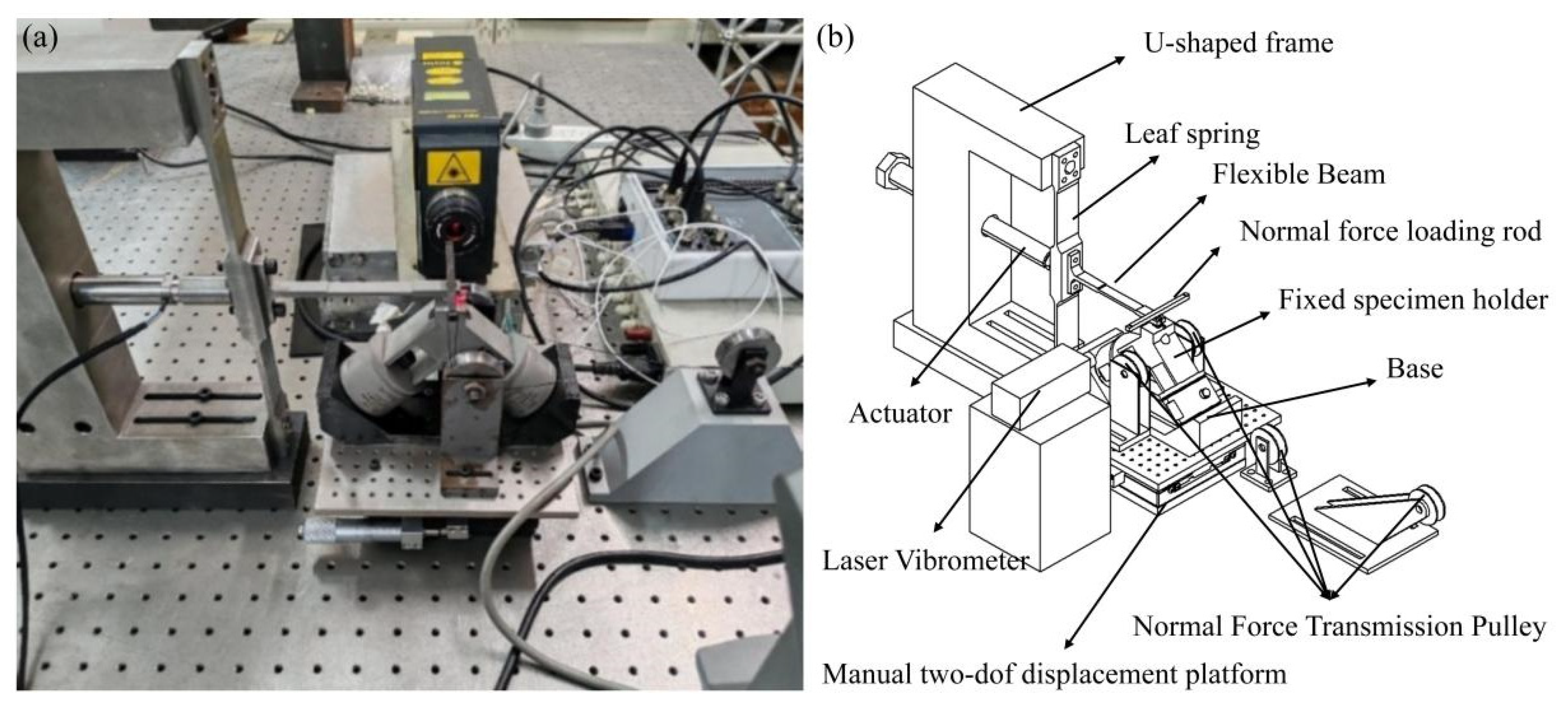
The fretting wear apparatus used in this study, as illustrated in
Figure 1, is an improved version of the device developed by Li et al. [
20,
21]. It is primarily composed of three subsystems: the excitation system, the measurement system, and the normal loading system. The excitation system utilizes a closed-loop controlled piezoelectric actuator (Model PSt150/14/100VS20, CoreMorrow, Harbin, China) and a power amplifier (Model E-505, Physik Instrumente, Karlsruhe, Germany) to generate cyclic tangential displacement with a maximum amplitude of 0.40 mm at 50 Hz. Since the actuator cannot withstand shear or tensile loads, it cannot be rigidly fixed to provide the retraction force required for cyclic loading. Consequently, the actuator is designed with spherical tips at both ends. One end interfaces with a spherical recess on a 3 mm wide leaf spring, which provides the necessary restoring force for the specimen. The other end is secured by a pre-loading bolt featuring a matching spherical recess, clamping the actuator within a U-shaped frame, as shown in
Figure 1b. This configuration ensures reliable contact and eliminates shear stress. The entire assembly is mounted on a vibration isolation table.
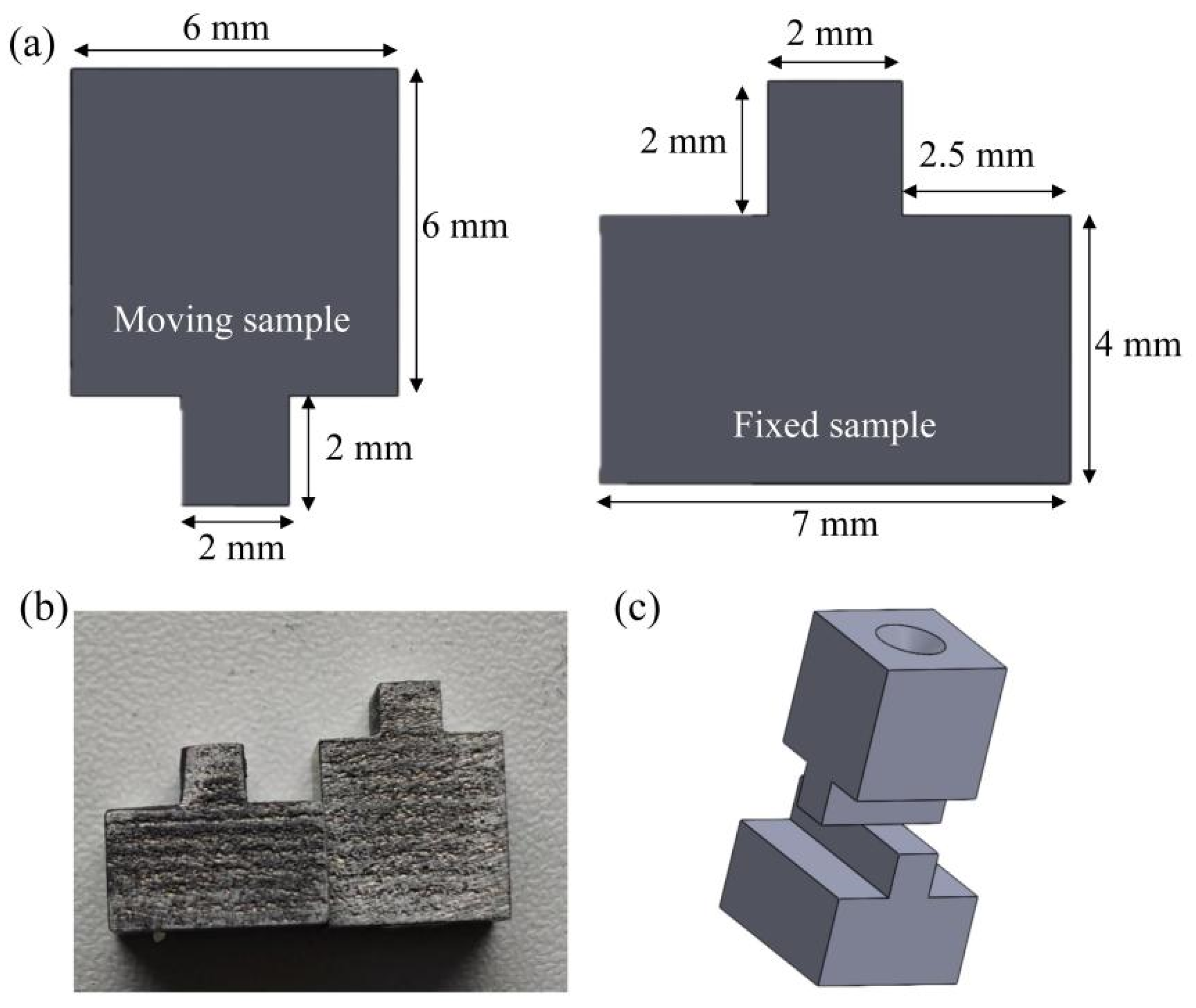
The moving specimen has a maximum size of 6 × 6 mm, while the fixed specimen measures 7 × 8 mm. Both specimens are secured by bolts. To accommodate a standard loading rod, a conical recess 3 mm in depth is machined on the top surface of the moving specimen.
The moving specimen is connected to a leaf spring via a flexible beam, and the fixed specimen is mounted on a support attached to two orthogonal dynamic force sensors. The measurement system monitors the relative displacement and contact forces at the interface in real time.
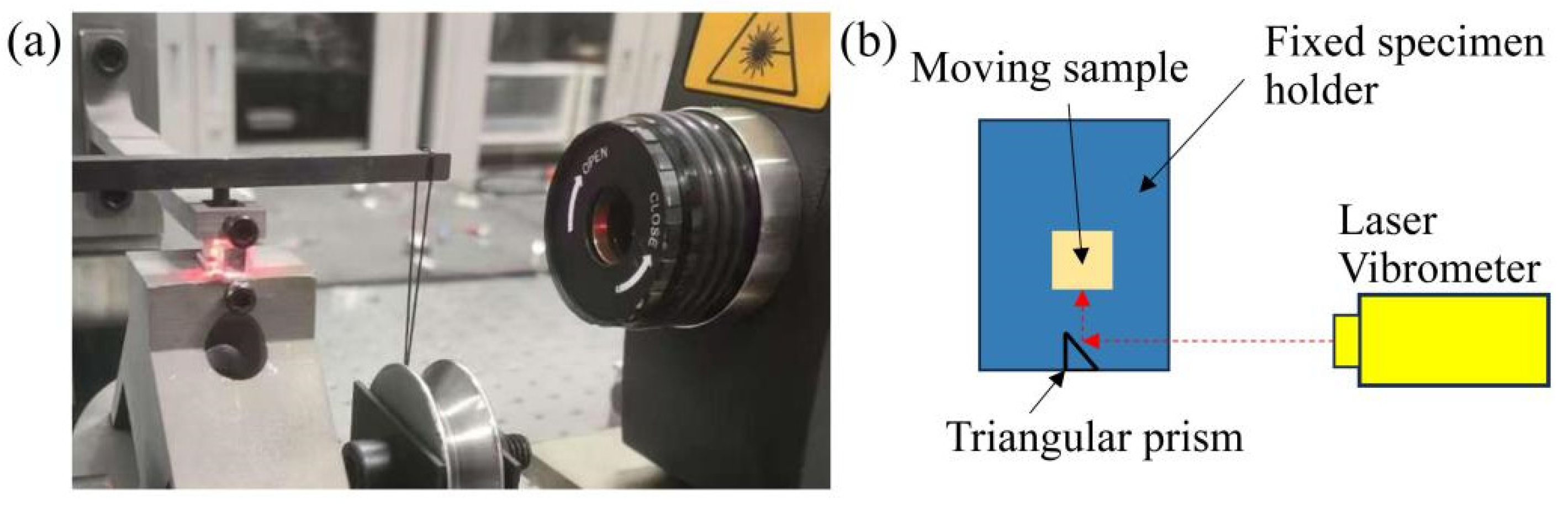
The relative displacement is measured using a laser vibrometer combined with a prism, as shown in
Figure 2. Specifically, the prism is bonded at a 45° angle to the holder of the fixed specimen. The laser beam emitted from the vibrometer is reflected by the prism onto the side surface of the moving specimen and returns along the same optical path. This arrangement directly captures the relative velocity between the specimens. The velocity signal obtained by the vibrometer is then integrated over time to obtain the relative displacement. Simultaneously, the orthogonal sensors record the normal and tangential forces at the contact interface. Real-time plotting of tangential force versus relative displacement (hysteresis loops) via the data acquisition software enables continuous monitoring of the experimental conditions. These sensors are fixed to a base plate positioned on a manual X-Y translation stage, as shown in
Figure 1b.
The normal loading system transfers the weight of suspended loads to the loading rod via a flexible high-strength steel wire. The steel wire relies on static gravitational force and is simply routed through the guide pulleys to redirect the loading force. The rod’s conical tip applies this force directly to the moving specimen. Unlike traditional fixed-specimen loading, this design maintains a uniform force distribution across the contact interface during tangential displacement, accommodating various specimen geometries. For setup, the fixed specimen is first bolted to its holder. The moving specimen is then inserted into the flexible beam and pre-fastened. After fine-tuning the stage to align the specimens, the loading rod is positioned, and the weighted wires are hooked into its grooves to initiate loading.
To provide a clear and concise overview of the experimental conditions, the detailed process parameters used in the fretting wear tests are summarized in
Table 1.
2.2. Test Samples
To investigate the microstructure of the LMD In718 alloy following different heat treatments, metallographic specimens were prepared. The specimens were sectioned from the as-built components using the wire electrical discharge machining and subsequently mounted using a metallographic mounting press. The samples were then ground sequentially using SiC abrasive papers with grits of 400, 800, and 1500, followed by mechanical polishing on a polishing machine to obtain a mirror-like surface suitable for observation. For chemical etching, to reveal the general metallographic structure, the polished surfaces were etched using a solution consisting of 100 mL C2H5OH, 20 mL HCl, and 5 g FeCl3. To clearly distinguish the Laves phase, MC carbides, and the γ′ and γ″ strengthening phases under Scanning Electron Microscopy (SEM), a specific etchant composed of 50 mL HCl, 10 mL HNO3, 2 mL HF, and 38 mL H2O was employed.
For the fretting wear tests, specimens were prepared from LMD In718 alloy subjected to two distinct conditions: homogenized STA and direct-aged. Each friction pair consisted of self-mated materials with identical heat treatment histories. The specimens were machined into a convex geometry. Following machining, surface contaminants were removed using acetone. The contact surfaces were then ground sequentially with 400, 800, and 1200 grit SiC papers to achieve a surface roughness of approximately 1 μm. Finally, the specimens were ultrasonically cleaned in anhydrous ethanol to remove grinding debris and residual oil. The friction pairs in
Figure 3 were arranged in an orthogonal, face-to-face contact configuration with a nominal contact area of 2 mm × 2 mm, as illustrated in
Figure 3. This specific dimension was chosen to minimize material consumption, maintain a stable flat-on-flat contact state, and effectively maximize the nominal contact pressure during testing.
To ensure data reliability, the fretting wear tests were repeated a minimum of three times for each heat treatment state under identical operating conditions. It should be noted that despite controlling the initial surface roughness to a uniform level, inherent differences in the specific microscopic topography of individual specimens led to observable variations during the initial running-in stage of the friction curves, particularly in local slopes and fluctuations. Consequently, the reproducibility of the experimental results was assessed primarily by the consistency of the steady-state friction coefficients. Because the overarching evolutionary trends of the friction curves remained highly consistent across all iterations, a single representative curve for each condition was selected for subsequent detailed analysis.
3. Heat Treatment Methods and Microstructural Characteristics
The high strength of In718 alloy originates from the complex precipitation strengthening effect provided by two strengthening phases, γ″ and γ′, which precipitate in the γ (FCC) matrix and work together to efficiently hinder dislocation movement [
1,
22,
23,
24,
25,
26]. Among them, the γ″ phase (Ni
3Nb) is the most critical strengthening source, contributing the majority of the strength. It has a disc-like morphology and a body-centered tetragonal crystal structure [
27,
28,
29]. Although maintaining a coherent relationship with the matrix, the large lattice mismatch between the γ″ phase and the matrix induces an extremely strong elastic strain field in the matrix surrounding the γ″ particles. This constitutes the primary coherent strain-strengthening mechanism; when a dislocation line attempts to move through this stress field, it must overcome a substantial energy barrier, thus becoming effectively pinned [
30,
31,
32,
33]. Simultaneously, as an ordered intermetallic compound, the γ″ phase forces dislocations to create high-energy antiphase boundaries when shearing through it, which forms a secondary ordered strengthening mechanism. In contrast, the minor strengthening phase γ′ (Ni
3(Al,Ti)), which is spherical in shape, possesses an L1
2 (FCC) structure. Its lattice mismatch with the matrix is very small, resulting in a weak coherent strain effect. Its strengthening contribution mainly relies on the additional energy required to generate APBs during dislocation shearing. The synergistic effect of these two strengthening phases gives In718 its exceptionally high yield strength. However, the γ″ phase, which provides the primary strengthening, is metastable; once the temperature exceeds approximately 650 °C, it undergoes overaging and transforms into coarse, plate-like δ phase that is detrimental to strength, leading to a rapid decline in alloy strength. This also defines the main service temperature limit of In718.
3.1. Heat Treatment Methods
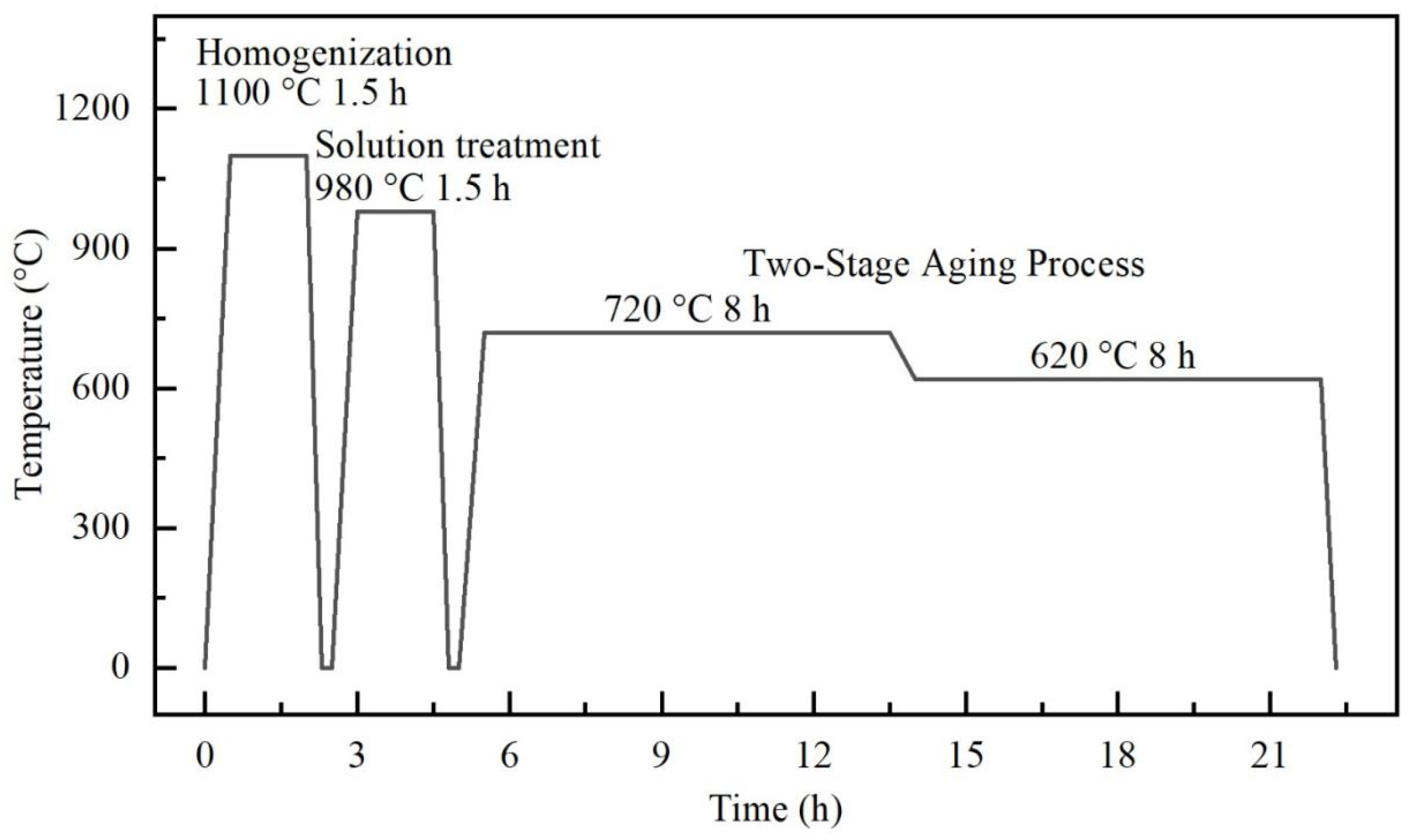
For the as-deposited LMD In718 alloy, two primary heat treatment strategies are employed. The first is direct-aged, which is predominantly utilized for the repair of aerospace components. This method effectively enhances the strength of the repaired zone to an acceptable level without compromising the performance of the original substrate. Bypassing homogenization and solution treatments, the process involves a two-step aging regimen: 8 h at 720 °C followed by 8 h at 620 °C. The core strengthening mechanism of direct-aged relies on inducing the ultra-high-density, nanoscale precipitation of strengthening phases (primarily the γ″ phase) while retaining the non-equilibrium microstructural features of the as-deposited state, such as high dislocation density, cellular subgrains, and compositional segregation. These fine precipitates preferentially nucleate at defects like dislocation lines and cellular walls, achieving significant precipitation strengthening through strong interactions with dislocations. Simultaneously, the fine-grain strengthening and residual solid solution strengthening inherent to the un-solutionized matrix are partially preserved. Consequently, the essence of this process lies in transforming the defects generated during rapid solidification into catalysts for precipitation strengthening. This achieves a highly efficient synergy between substructure strengthening and precipitation strengthening, thereby obtaining high yield strength while minimizing component distortion.
The second method is the homogenized STA, which constitutes a comprehensive thermal processing cycle. Initially, homogenization is conducted at 1100 °C for 1.5 h to fully dissolve the detrimental Laves phases distributed along the dendritic boundaries in the as-deposited structure and to promote the homogenization of alloying elements. Subsequently, solution treatment is performed at 980 °C for 1.5 h. This step further eliminates micro-segregation and induces recrystallization and grain refinement, transforming the original coarse columnar grains into finer, randomly oriented equiaxed grains, thereby substantially eliminating anisotropy. Finally, a double aging treatment is applied: holding at 720 °C for 8 h to precipitate a large volume of the body-centered tetragonal γ″ strengthening phase within the matrix, followed by holding at 620 °C for 8 h to ensure sufficient precipitation of the face-centered cubic γ″ strengthening phase. The process shown in
Figure 4 concludes with air cooling, ultimately yielding a high-performance material state characterized by a uniform microstructure, dispersively distributed strengthening phases, and isotropic mechanical properties [
34].
3.2. Microstructural Characteristics
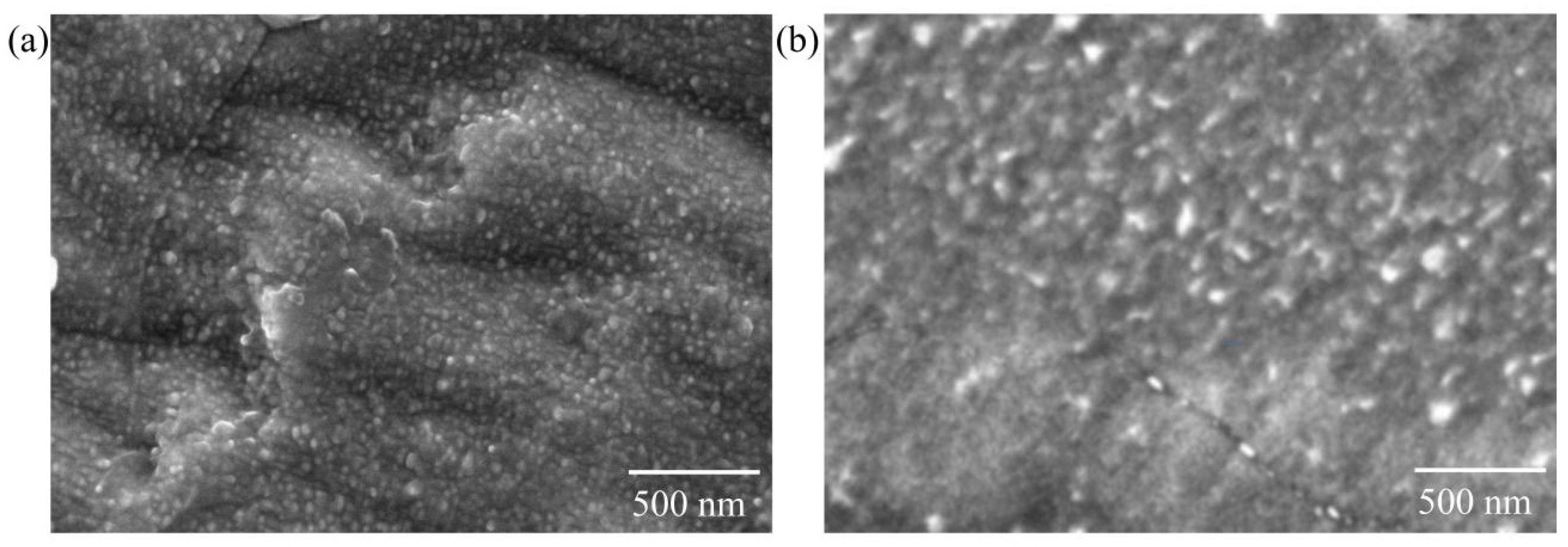
Following metallographic preparation, scanning electron microscopy (SEM) was employed to observe the microstructures of the LMD In718 alloy in both the direct-aged and homogenized STA conditions. The initial microstructures of the LMD In718 alloy in both homogenized STA and direct-aged conditions are compared in the SEM images provided in
Figure 5.
The direct-aged treatment largely retains the microstructural framework of the as-deposited state, characterized by coarse columnar grains growing epitaxially along the deposition direction. These grains can extend up to several millimeters in length, traversing multiple deposition layers. Due to the absence of a high-temperature solution process, severe elemental segregation persists within the microstructure. Furthermore, a substantial amount of hard, brittle, white Laves phases and granular MC carbides are distributed along the interdendritic regions. During the aging process, although the γ″ strengthening phase precipitates abundantly from the matrix in an extremely fine morphology (with a volume fraction of approximately 12.216%), its distribution remains highly inhomogeneous due to the segregated nature of the matrix. This results in inferior plasticity and toughness, and facilitates stress concentration at the interfaces of the Laves phases.
In contrast, the homogenized STA fundamentally alters the alloy’s microstructure through three critical steps: homogenization, solution treatment, and double aging. The homogenization treatment at 1100 °C effectively dissolves the detrimental Laves phases distributed in the interdendritic regions of the as-deposited structure and promotes the uniform distribution of alloying elements. The subsequent solution treatment further eliminates micro-segregation and induces recrystallization, transforming the original coarse columnar grains into finer, randomly oriented equiaxed grains, thereby substantially eliminating the material’s anisotropy. The final aging treatment results in a nanoscale dispersive distribution of γ″ and γ′ strengthening phases within the homogenized matrix, with a volume fraction of approximately 11.740%. This microstructural state enables the homogenized STA alloy to achieve an optimal balance between hardness and ductility while maintaining high strength, significantly enhancing the structural integrity of the material.
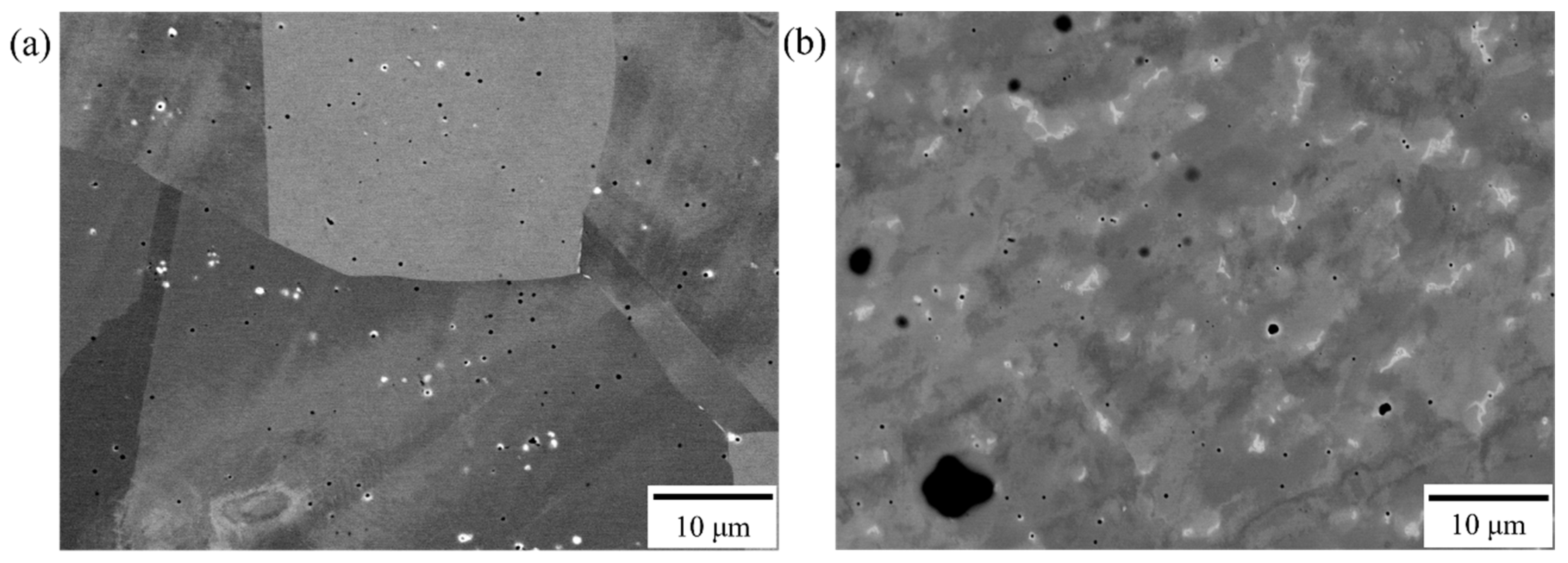
Furthermore, it is important to address the inherent micro-defects, such as microporosity, introduced by the LMD process. By calculating the ratio of the void area to the total area on microscopic images, shown in
Figure 6, quantitative analysis reveals that the direct-aged specimen possesses a porosity of approximately 1.049%. During cyclic fretting wear, these pores naturally act as severe stress concentrators. Coupled with the surrounding brittle Laves phases, they provide easy initiation sites for micro-cracks, thereby accelerating fatigue spalling and delamination. In contrast, the homogenized STA treatment significantly reduces the porosity to 0.433%. The high-temperature homogenization step promotes sufficient atomic diffusion, which partially heals the as-deposited lack-of-fusion voids and gas pores. This significant reduction in defect density, combined with the improved matrix toughness resulting from the dissolution of Laves phases, fundamentally enhances the material’s defect tolerance. Consequently, the tougher matrix effectively blunts crack tips and significantly delays the propagation of subsurface cracks from the remaining pores.
4. Experimental Results and Discussion
In this section, fretting wear tests were conducted at room temperature under a fretting frequency of 30 Hz, a normal load of 20 N, and a relative displacement of 10 μm for 2 × 10⁶ wear cycles. The evolution of contact parameters was obtained. The wear depth and volume of different samples were also compared.
4.1. Hysteresis Loops
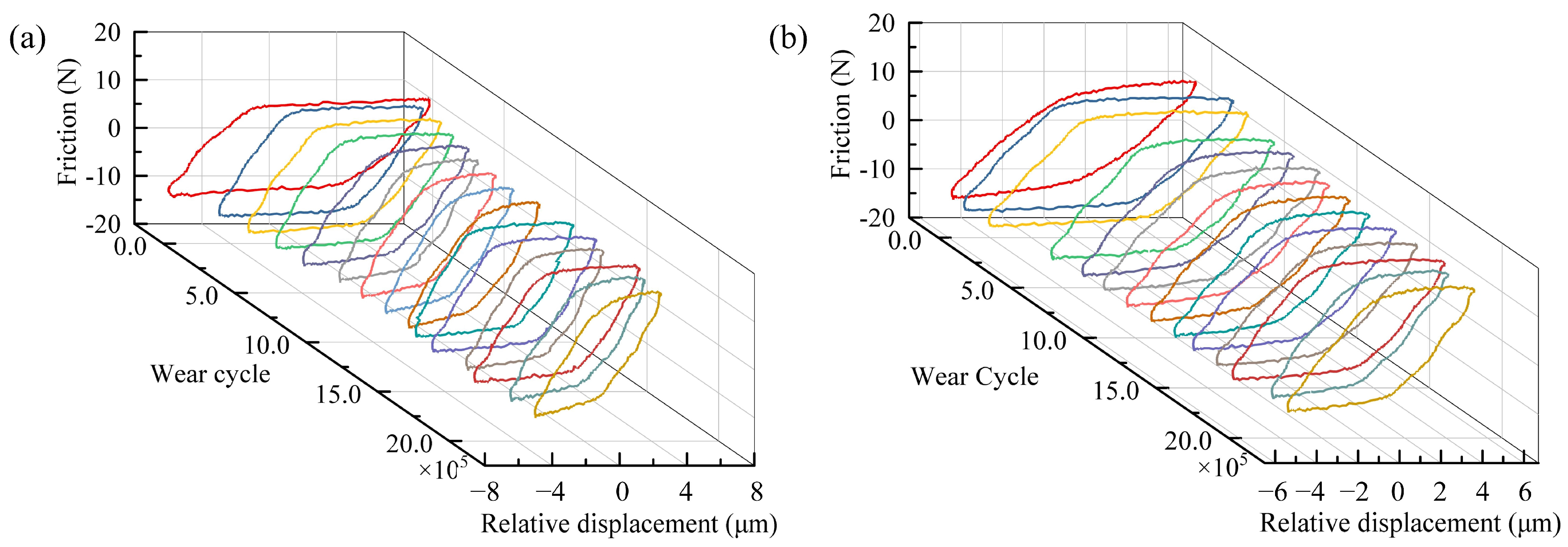
Under the homogenized STA condition, the hysteresis loop gradually shrinks from an initial parallelogram shape. This indicates a progressive reduction in the gross slip component and the relative displacement amplitude, accompanied by an increase in the critical friction force. Consequently, the specimen exhibits a mixed slip regime, is recorded in
Figure 7. The primary reason for this evolution is that at the onset of wear, the surface interaction is dominated by Coulomb friction, where the friction force is mainly expended in overcoming the mechanical interlocking and plowing of surface asperities, resulting in severe friction. As wear progresses, the delaminated alloy lamellae and wear debris on the specimen surface undergo oxidation in the ambient air, forming an oxide layer at the contact interface. This layer provides a certain lubricating effect, allowing shear forces to be transmitted through the oxide film. This leads to smoother and more gradual variations in friction force, thereby reducing energy dissipation and stabilizing the friction behavior. Initially, the wear mechanisms are characterized by adhesive and abrasive wear. However, as the temperature at the contact interface rises, the wear debris reacts with atmospheric oxygen, shifting the dominant wear mechanisms to oxidative and abrasive wear.
The direct-aged specimen similarly remains in a gross slip regime throughout the entire process and exhibits a hysteresis loop evolution trend consistent with that of the homogenized STA specimen. It can be inferred that the predominant wear mechanisms in the direct-aged specimen are adhesive and abrasive wear, accompanied by a minor degree of oxidative wear.
4.2. Contact Parameters
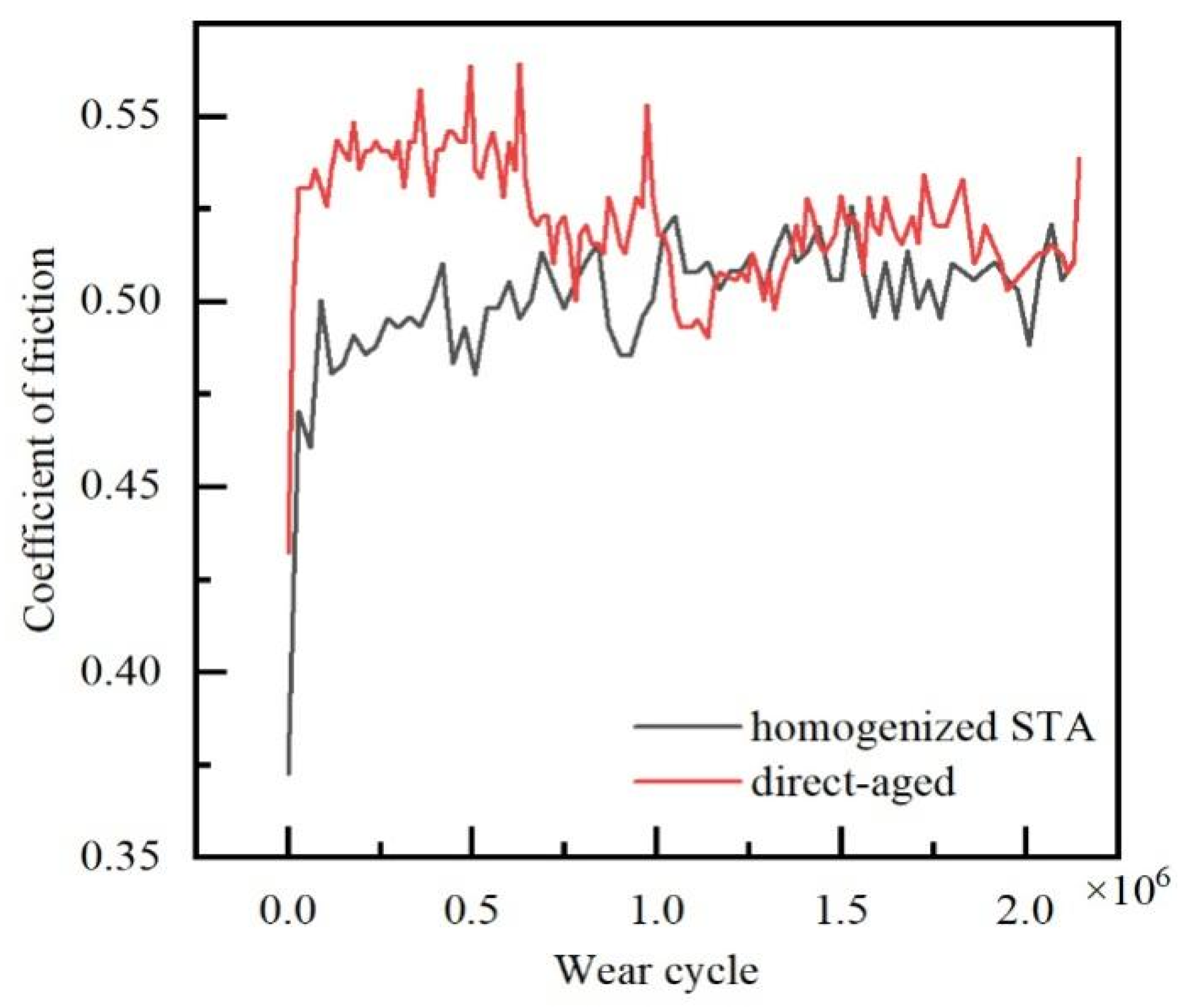
The coefficient of friction (COF) plots for the direct-aged and homogenized STA In718 specimens are compared in
Figure 8. The COFs are identified from the measured hysteresis curves, which are defined as the ratio of the sliding friction to normal load. For the homogenized STA specimen, the COF fluctuates around 0.5. In the initial stage, the COF is relatively low due to insufficient contact between the surfaces. Subsequently, as surface asperities are gradually leveled, the two surfaces achieve fuller contact, leading to a gradual increase in the actual contact area and, consequently, a rise in the COF. In contrast, the specimen subjected solely to aging (direct-aged) exhibits larger grain sizes due to the omission of solution treatment. Additionally, the presence of internal pores results in a rougher surface, contributing to a higher COF.
The hysteresis curves of both the direct-aged and standard-aged specimens exhibit stick, partial slip, and gross slip stages, indicating a complete transition from static to kinetic friction. This is primarily manifested as sliding across the entire contact interface, leading to more severe material removal. Hard wear debris or surface asperities act as cutting tools, resulting in abrasive wear. Simultaneously, adhesive junctions at the interface are repeatedly sheared and reformed, causing material transfer and loss. The wear mechanism is typical fretting wear, characterized by significant material loss, wear scars, and debris generation. Although the wear rate can be high, it generally lacks the sudden, catastrophic nature typical of fatigue cracking.
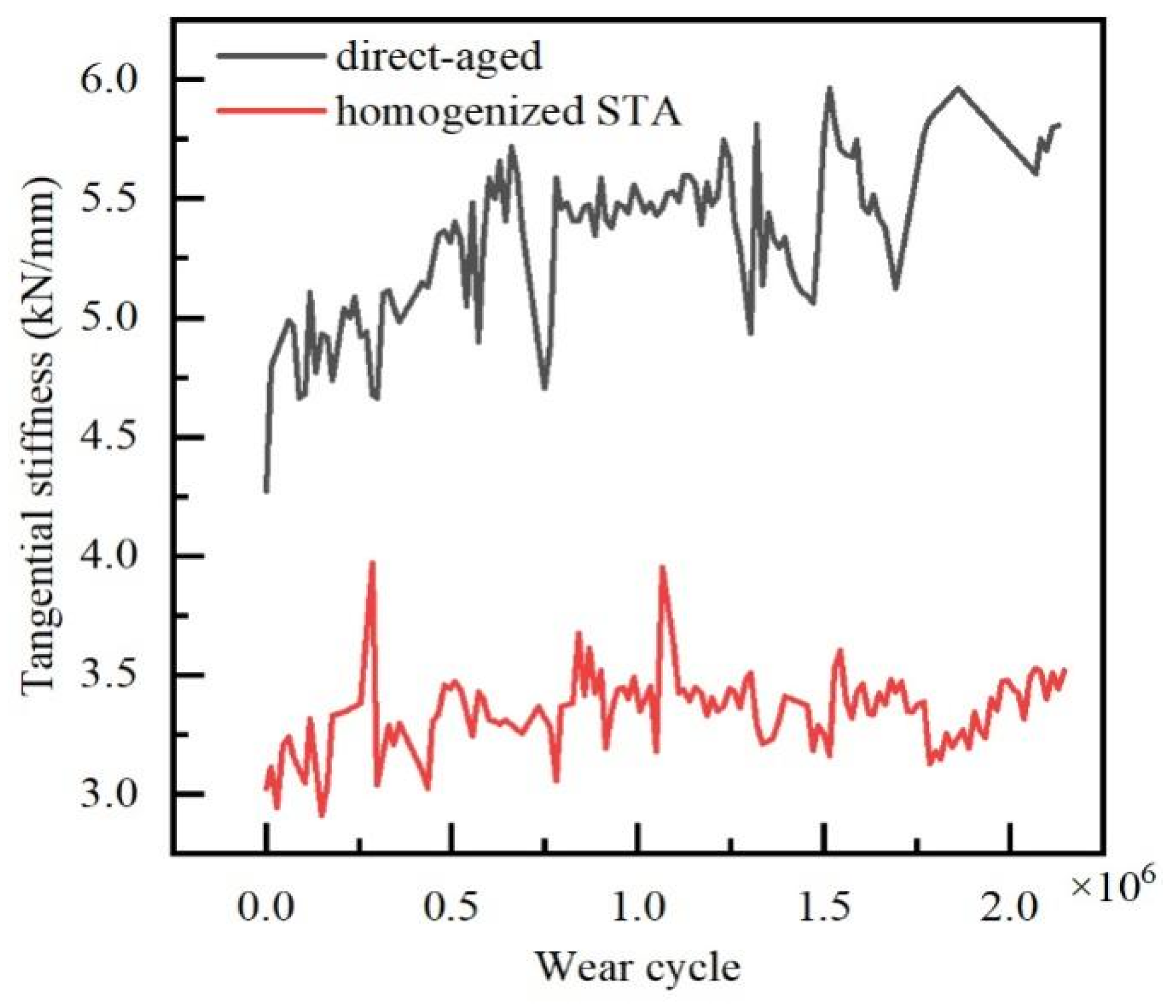
Tangential contact stiffness is defined as the slope of the force-displacement curve during the stick phase of the interface.
Figure 9 plots the tangential contact stiffness of the direct-aged specimen as a function of wear cycle. It exhibits a fluctuating upward trend with increasing cycles, and the value is relatively high, approximately 5–6 kN/mm. In contrast, the contact stiffness of the standard specimen stays between 3–4 kN/mm. The main reason for their comparable tangential characteristics lies in the similar content of the γ″ strengthening phase. When dislocations pass through the elastic strain fields induced by these phases, they must overcome significant energy barriers. This coherent strain strengthening substantially enhances the material’s yield strength and macroscopic hardness. Under tangential loads, the high-hardness matrix more effectively resists plastic yielding and partial slip of asperities, thereby exhibiting higher tangential stiffness. Furthermore, the omission of solution treatment in the direct aging process results in the retention of a large amount of brittle Laves phase, leading to inferior toughness and ductility, which contributes to the higher stiffness and more pronounced fluctuations.
4.3. Wear Depth and Volume
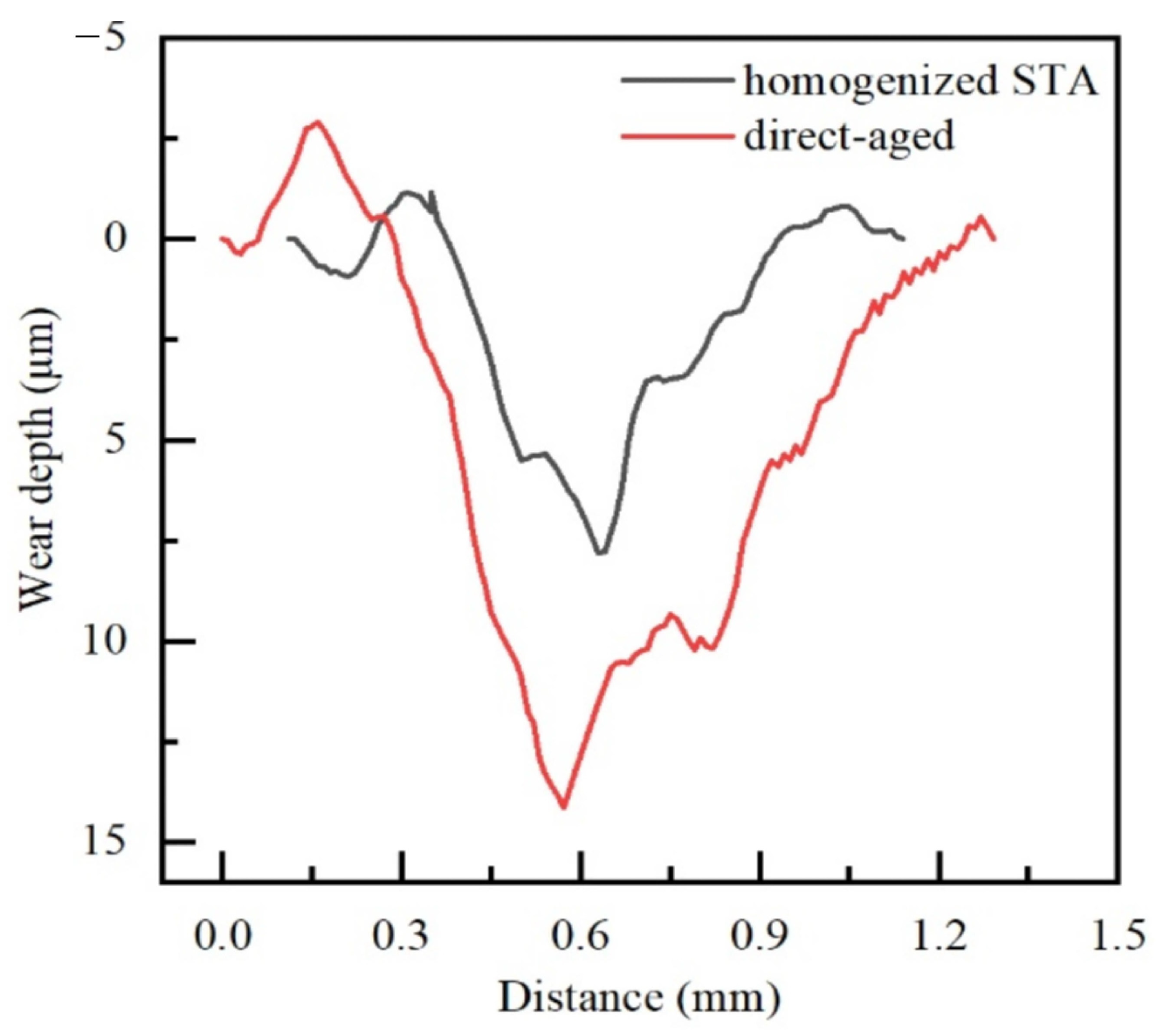
The cross-sectional wear profile of the direct-aged specimen exhibits a pronounced depression, with a maximum wear depth reaching approximately 8 μm, reflecting significant material loss under this condition, as shown in
Figure 10. Due to the omission of solution treatment, the matrix is characterized by notable elemental segregation and an inhomogeneous distribution of precipitated γ″ phases. Under cyclic loading, the limited plasticity and toughness of this state facilitate micro-crack initiation and propagation, leading to wear characterized by fatigue delamination or brittle fracture [
35,
36]. In contrast, the homogenized STA effectively homogenizes the as-deposited microstructure, dissolves a large portion of the detrimental Laves phases, and yields a uniform distribution of γ″ and γ′ strengthening phases. This process achieves a favorable balance between strength and ductility, enhancing the resistance to plastic deformation and tearing during friction.
In the transverse range of 0–200 μm, both wear profiles display slight material accumulation. This phenomenon is primarily attributed to tangential force-induced plastic flow, where material is extruded toward the edges of the wear track. The fluctuations in profile morphology suggest that the wear process is not dominated by a single mechanism but involves a combination of adhesive, oxidative, and abrasive wear. Analysis of the wear depth indicates that the influence of heat treatment on the wear behavior of LMD In718 alloy is essentially a regulation of the microstructure and secondary phase distribution, which optimizes the hardness-toughness synergy and governs the resistance to fatigue wear and plastic removal.
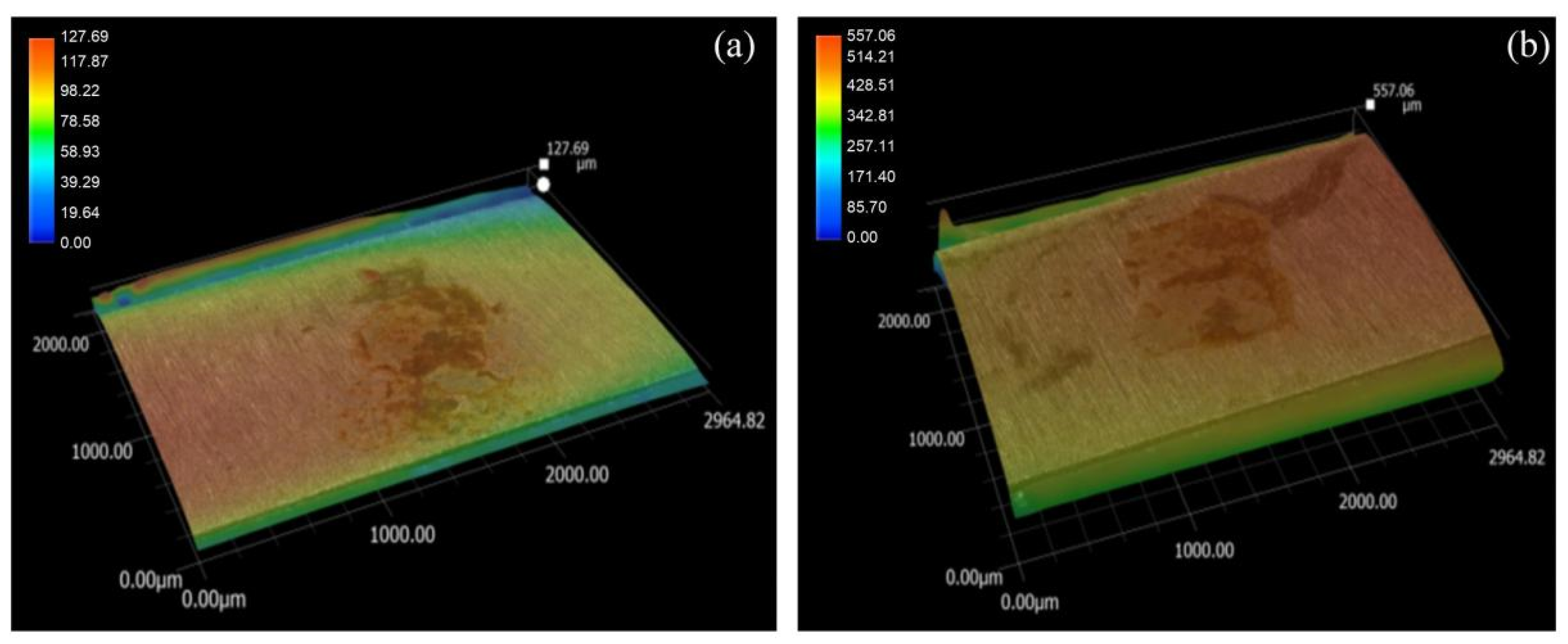
The optical profile measurement images of the In718 alloy after 2 million cycles provide a 3D visualization of the wear scars as shown in
Figure 11. Despite the pronounced difference in maximum wear depth, the variation in total wear volume between the two conditions is relatively moderate. Specifically, the wear volume was measured at 0.055 mm
3 for the homogenized STA specimen, compared to 0.062 mm
3 for the direct-aged specimen. Consequently, the calculated specific wear rates show a close proximity: 1.375 × 10
−7 mm
3/(N∙m) for the homogenized STA condition and 1.551 × 10
−7 mm
3/(N∙m) for the direct-aged condition. This observation—where depth varies significantly but volume does not—is attributed to the distinct wear morphologies governed by the heat treatment-induced regulation of hardness and exfoliation resistance. For the homogenized STA specimen, the uniformly dispersed γ″ and γ′strengthening phases effectively impede dislocation motion, enhancing the overall resistance to plastic deformation and spalling. During relative displacement at the interface, the material exhibits strong resistance to plastic flow, resulting in uniform wear with only minor surface material transfer. In contrast, the direct-aged specimen suffers from weak interfacial bonding between secondary particles and the matrix due to the lack of elemental homogenization, alongside insufficient strength at the boundaries of coarse grains. Under a 20 N normal load, localized stress concentrations caused by brittle Laves phases tend to trigger particle detachment and grain boundary cracking. Furthermore, during relative displacement, plastic yielding of asperities in lower-hardness regions leads to large-scale spalling. This mechanism creates deep localized pits (explaining the greater wear depth); however, because the material removal is concentrated in specific stress-prone areas rather than being uniform across the entire interface, the total volumetric loss does not increase disproportionately.
To facilitate a direct and comprehensive comparison between the two heat treatment conditions, the key microstructural metrics and the corresponding fretting wear results for both the homogenized STA and direct-aged specimens are summarized in
Table 2. This table systematically highlights the correlation between the phase distributions and the resulting tribological performance.
5. Influence Mechanism of Heat Treatment
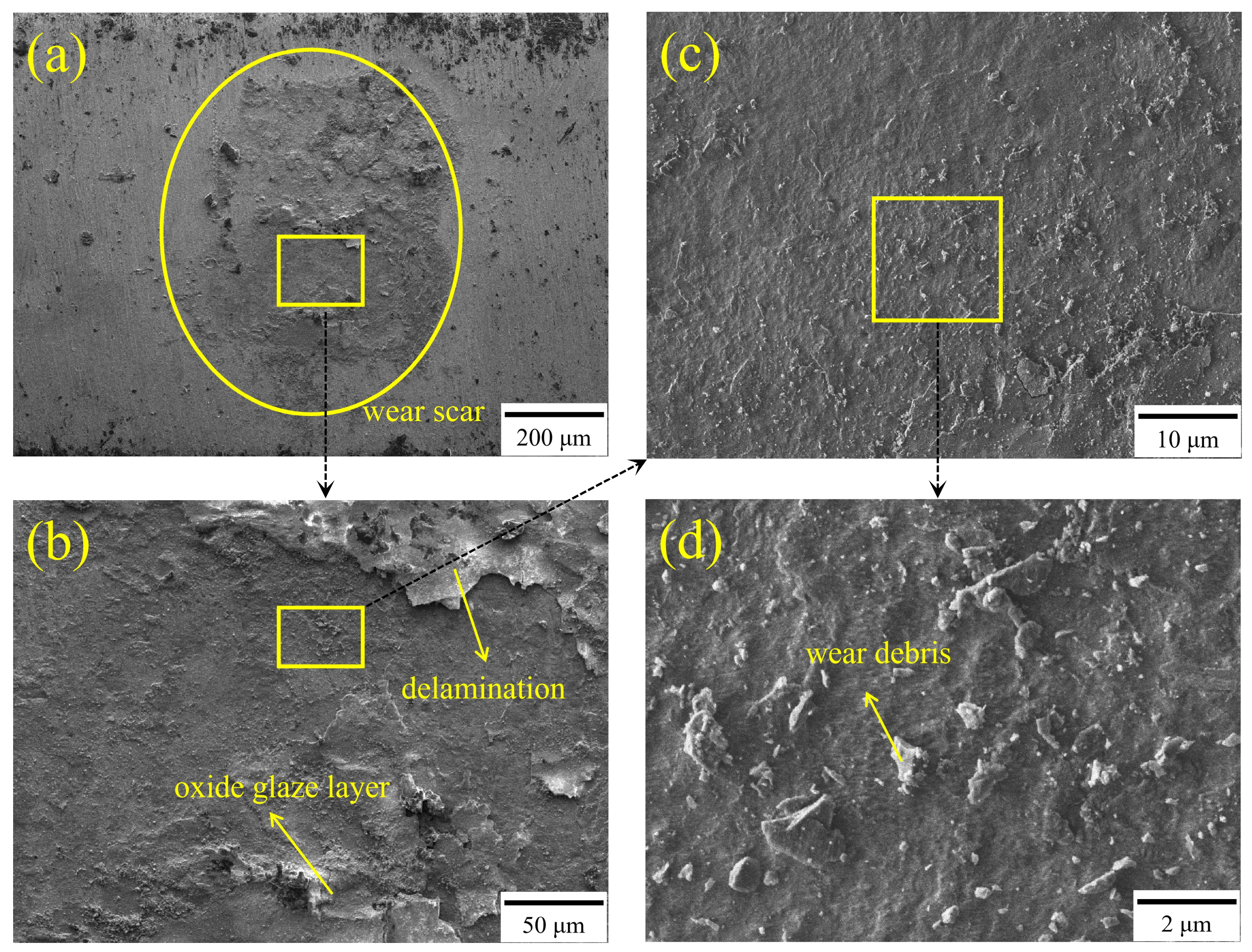
The microscopic morphology of the worn surfaces was characterized using SEM in this section. For the direct-aged specimen, shown in
Figure 12, the SEM images reveal surface topography characterized by severe plastic deformation and material removal. At lower magnification, the worn surface exhibits pronounced delamination, where extensive flake-like sheets of material have torn from the substrate. According to Suh’s delamination theory of wear [
37], this phenomenon originates from subsurface crack initiation and propagation induced by accumulated plastic deformation. In the direct-aged state, the absence of solution treatment results in the retention of numerous brittle Laves phases and micro-segregation within the matrix. Under cyclic tangential stress, dislocation pile-ups occur at the interface between the hard Laves phase and the matrix, causing severe localized stress concentration. This facilitates void nucleation and the initiation of subsurface cracks. As fretting cycles progress, driven by shear stress, these cracks propagate parallel to the surface and coalesce, eventually leading to material detachment in the form of sheets, creating typical fatigue spalling pits. High-magnification images show that the spalled regions are covered with numerous fine, irregularly shaped wear debris. These particles result from the further fragmentation and oxidation of spalled material. Due to the lower hardness of the matrix (lacking solution strengthening), it fails to provide sufficient mechanical support for the oxide film. Consequently, the surface oxides continuously fracture during fretting and, rather than forming a protective glaze layer, act as hard third-body abrasives within the contact interface, inducing severe three-body abrasive wear [
38].
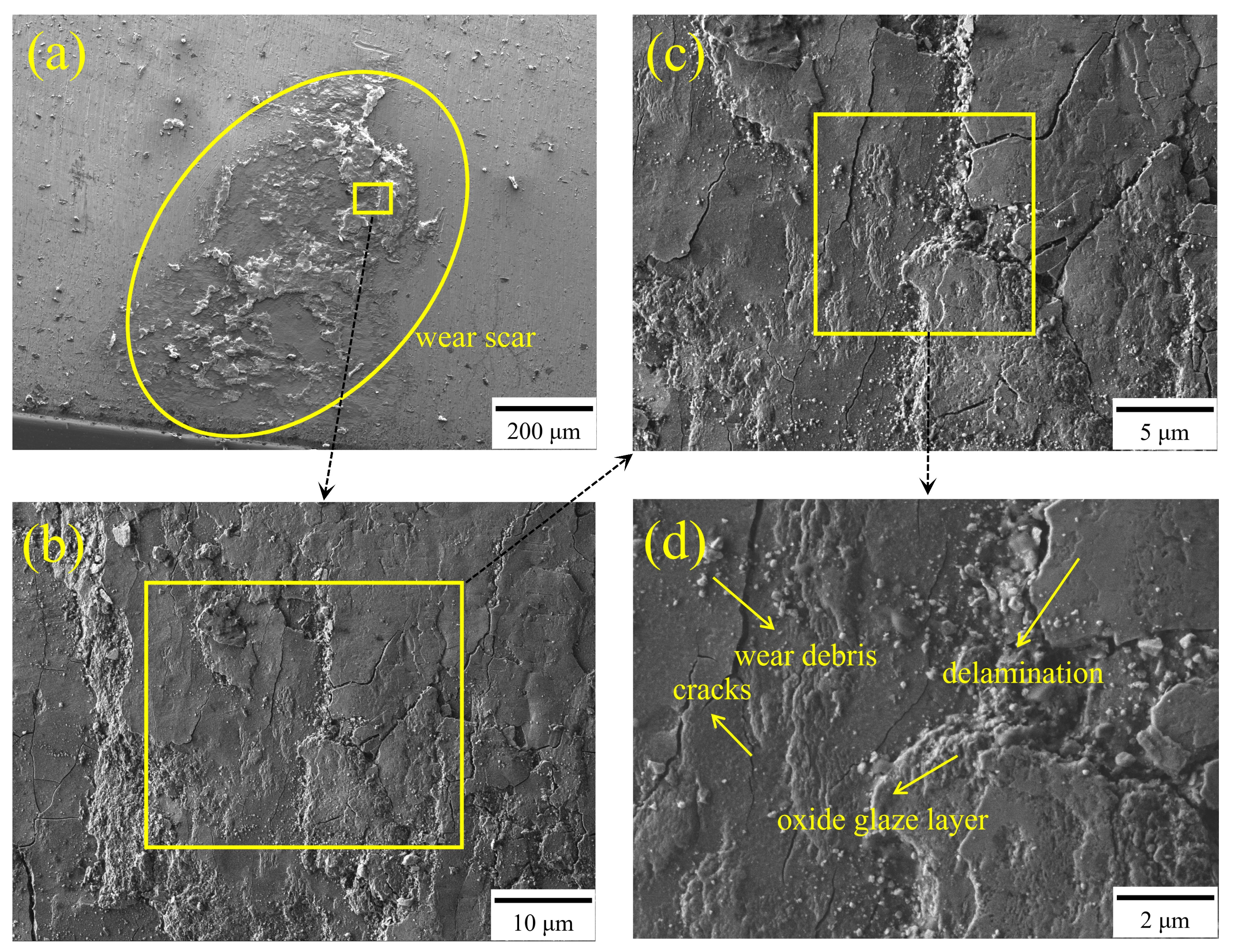
For the homogenized STA specimen, shown in
Figure 13, the wear features contrast sharply with the direct-aged state, exhibiting significantly mitigated damage. The SEM images show that the wear track is covered by a relatively dense, continuous, and smooth material, identified as a third-body tribolayer or oxide glaze layer. According to Stott’s theory of oxidative wear, wear debris undergoes sintering and densification assisted by the high flash temperatures and hydrostatic pressures generated during fretting, forming this ceramic-like protective film. The presence of this layer effectively isolates the substrate from direct metallic contact with the counter-pair, thereby significantly reducing the wear rate. This mechanism is primarily attributed to the uniform dispersion of γ″ and γ′ strengthening phases after homogenized STA, which provides superior yield strength. This effectively inhibits plastic flow of the substrate, offering robust mechanical support for the formation and stable adhesion of the glaze layer [
17,
39]. However, at higher magnification, the tribolayer exhibits dense reticular cracks, dividing the glaze layer into island-like blocks. This occurs because the oxide glaze layer is inherently brittle and possesses a mismatch in thermal expansion coefficient and elastic modulus with the metallic substrate. Under repeated cyclic contact stresses (particularly alternating shear stress), brittle cracking occurs when the strain exceeds the fracture toughness of the layer. Nevertheless, most glaze blocks remain firmly adherent to the substrate without massive spalling, indicating superior interfacial bonding strength compared to the direct-aged specimen.
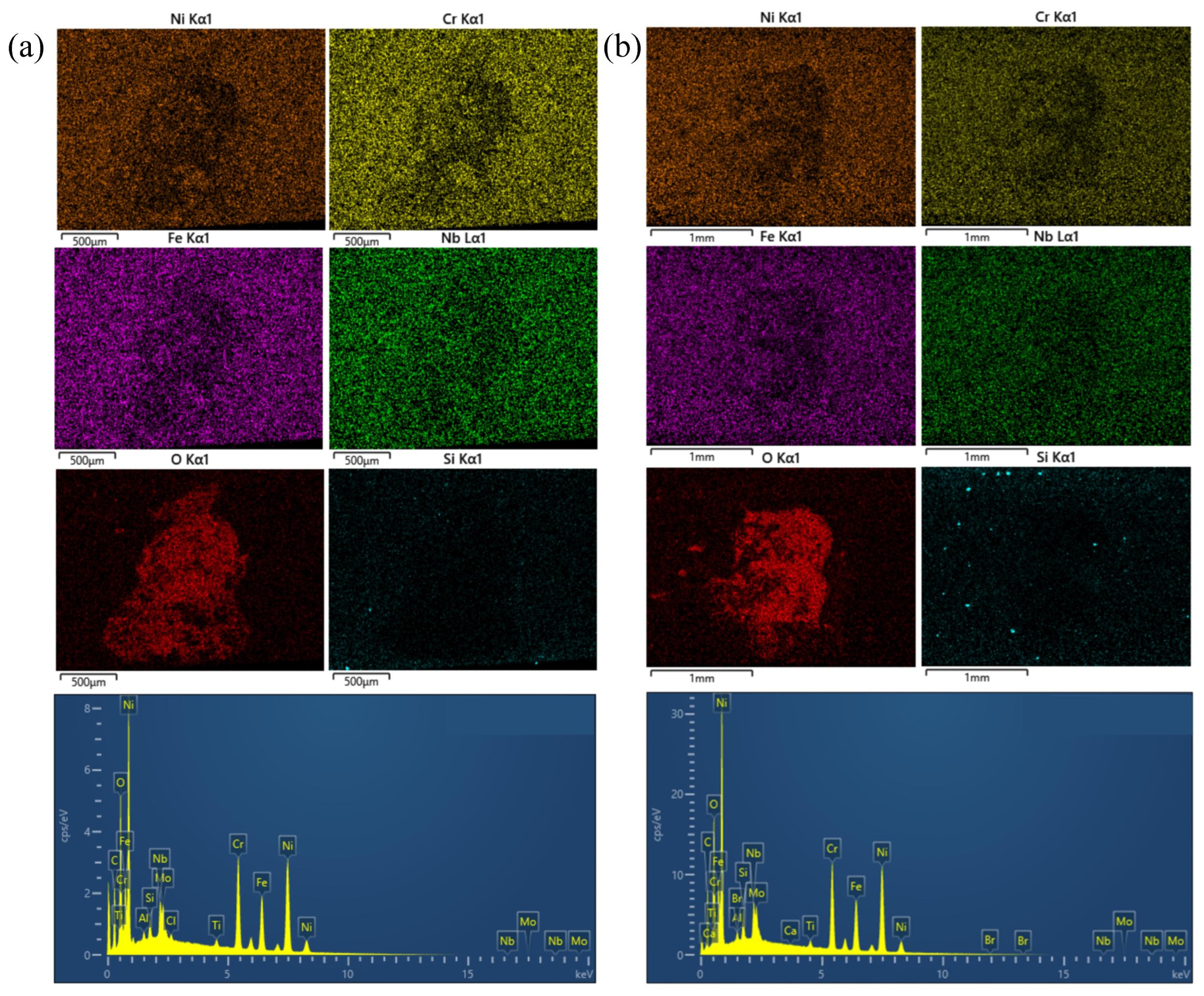
Quantitative analysis via Energy-Dispersive Spectroscopy (EDS) area mapping, as shown in
Figure 14, reveals significant chemical evolution on the fretting surfaces. High concentrations of oxygen were detected on both specimens, identifying oxidative wear as a dominant mechanism. It should be noted that EDS quantification of light elements in thin surface films is inherently semi-quantitative, as the electron interaction volume often penetrates the oxide layer into the underlying metallic substrate. The reported values in this study are derived from an area mapping of the single fretting wear region on each specimen. The results indicate a consistent qualitative trend: the oxygen mass fraction on the homogenized STA surface was approximately 9.48%, slightly higher than the 8.04% observed on the direct-aged surface. Rather than over-interpreting this modest numerical difference, this trend should be viewed in conjunction with the SEM morphological evidence. The slightly higher retained oxygen signature, paired with the visually dense and continuous glaze layer morphology, supports Godet’s third-body theory, indicating that the oxidized debris acts as a protective third-body layer to mitigate severe metal-to-metal contact and lower the wear rate.
In the direct-aged state, although frictional heat induces oxidation, the severe plastic deformation of the substrate causes the formed oxide film to fracture easily under cyclic shear stress. The fragmented oxide debris cannot remain stably within the contact zone and is rapidly ejected from the contact edges as loose abrasive particles. This rapid cycle of “generation-fragmentation-ejection” prevents the maintenance of a high-coverage oxide layer, explaining the lower residual oxygen content and the violently fluctuating friction coefficient.
Conversely, the higher oxygen content in the homogenized STA state is attributed to the formation of a dense, continuous, and strongly adherent oxide glaze layer [
40]. Assisted by high flash temperatures and contact pressures, the oxidized debris retained in the contact zone undergoes sintering and densification. This glaze-like structure not only traps more oxygen but also acts as a ceramic solid lubricant film, effectively isolating the metallic substrate from direct contact, which macroscopically manifests as stable tribological behavior and reduced material loss.
Based on the findings of this study, the following brief recommendation checklist is provided for industrial applications regarding the selection of heat treatments for LMD Inconel 718 in fretting-prone components: (I) Homogenized STA (preferred for structural integrity) is recommended for manufacturing critical, highly loaded components, e.g., aero-engine turbine disks and new blade fabrications. It provides superior resistance to fretting wear, delamination, and crack propagation by eliminating brittle Laves phases and homogenizing the microstructure. (II) Direct-Aged (preferred for dimensional control) is recommended primarily for the localized repair of high-value components where maintaining strict dimensional tolerances and avoiding high-temperature distortion are the absolute priorities, provided that a slightly higher fretting wear rate is within acceptable engineering margins.
6. Conclusions
This study investigates the fretting wear behavior and underlying mechanisms of LMD Inconel 718 alloy subjected to two distinct heat treatment processes: homogenized STA and direct-aged. Based on comprehensive microstructural characterization and fretting wear tests under ambient conditions, the key conclusions are drawn as follows:
While both the homogenized STA and direct-aged LMD In718 alloys exhibit comparable proportions of the γ″ strengthening phase, the direct-aged condition retains a significantly higher volume fraction of detrimental Laves phases due to the omission of the solution treatment step. Compared to the homogenized STA state, the direct-aged LMD In718 alloy exhibits higher tangential stiffness and a significantly greater wear depth during the fretting wear process. SEM and EDS analyses indicate that the wear mechanisms for both heat-treated specimens involve abrasive and oxidative wear. However, the abundance of hard and brittle Laves phases in the direct-aged alloy exacerbates microstructural inhomogeneity and deteriorates matrix plasticity, thereby inducing more severe delamination wear.
The findings of this study offer important engineering insights for the application of LMD Inconel 718 alloy in critical components prone to fretting wear, such as aero-engine turbine disks and blades. They demonstrate that homogenized STA heat treatment is the superior choice for improving the fretting wear performance of this alloy.