
Article

Study on Loosening Mechanisms of Fastening Bolt in High-Speed Train Brake Disc

1
Key Laboratory of Traffic Safety on Track School of Traffic & Transportation Engineering, Central South University, Ministry of Education, Changsha 410075, China
2
Joint International Research Laboratory of Key Technology for Rail Traffic Safety, Central South University, Changsha 410075, China
3
National & Local Joint Engineering Research Center of Safety Technology for Rail Vehicle, Changsha 410075, China
*
Author to whom correspondence should be addressed.
Machines 2026, 14(3), 271; https://doi.org/10.3390/machines14030271 (registering DOI)
Submission received: 11 January 2026 / Revised: 2 February 2026 / Accepted: 17 February 2026 / Published: 1 March 2026
(This article belongs to the Special Issue Reliability in Mechanical Systems: Innovations and Applications)

Abstract

Brake disc fastening bolts endure complex thermomechanical loads and are susceptible to loosening during emergency braking, making comprehensive analysis of their thermomechanical response and failure mechanism critical. This study developed and experimentally validated a thermal-mechanical coupling model for a C/C-SiC axle-mounted brake disc system, investigating the bolt’s thermodynamic responses under emergency braking at different initial speeds and pressures. During the emergency braking process, a non-uniform temperature field and deformation field are generated in the bolt, causing it to bend slightly towards the brake flange. Significant stress concentration consistently occurs at the root of the first engaged thread, identifying it as the critical region for loosening initiation. Higher initial speeds elevate bolt maximum temperature and equivalent stress. Under 400 km/h emergency braking condition, the bolt reaches a maximum temperature of 159.91 °C, a maximum equivalent stress of 849.00 MPa, and a stress amplitude of 98.66 MPa. Braking pressure also exerts significant effects. The optimal strategy for a 400 km/h emergency braking is determined as follows: a braking pressure of 26 kN is applied when the speed exceeds 300 km/h, and 28 kN when the speed drops below 300 km/h. With this strategy, the bolt’s maximum temperature, maximum equivalent stress, and stress amplitude are reduced by 17.02%, 1.41%, and 4.33%, respectively.

1. Introduction

With the continuous development of high-speed railway technology, the operating speed of trains has been increasing. In emergency braking conditions, a train may begin decelerating from an initial speed as high as 400 km/h. During this process, a substantial amount of kinetic energy must be reliably dissipated within an extremely short time [1,2], imposing more stringent performance requirements on key components such as the brake disc [3,4]. As the core connecting element of an axle-mounted brake disc, the service performance of the fastening bolts directly determines the integrity of power transmission and the safety of the braking process. During braking, the immense kinetic energy is converted into thermal energy, leading to high transient temperatures and thermal stress in the brake disc. Simultaneously, external vibrational excitations transmitted through the axle subject the bolts to more unstable mechanical loads [5,6,7]. Under extreme conditions like high-speed emergency braking, intensified thermal stress fluctuations combine with high temperatures [8,9,10], complex mechanical loads [11], and severe vibration [12]. These combined factors can lead to bolt loosening. Therefore, an in-depth study of the thermodynamic response of fastening bolts during the braking process is of great significance for revealing their loosening mechanisms and ensuring the braking safety of high-speed trains.
Researchers have primarily relied on experimental testing [13,14] and numerical simulation [15,16] to dissect the problem, with key findings often attributed to alternating external mechanical loads and thermal-induced preload relaxation [17]. The underlying loosening mechanism is highly dependent on the characteristics of the applied load, including its direction, amplitude, and frequency [18,19,20]. Furthermore, in elevated temperature environments or under significant thermal gradients, thermal loading can also precipitate preload relaxation. This thermal effect manifests through the following two principal pathways: thermal stresses arising from the differential thermal expansion between the bolt and the joined components [21,22,23], and continuous preload attenuation due to material creep at high temperatures [24]. However, the fastening bolts in the brake disc system are consequently subject to coupled thermomechanical loading, substantially elevating the risk of loosening failure.
Current EMU designs utilize cast steel axle-mounted brake discs. Prior studies have explored the thermomechanical behaviour of the brake disc bolts via both experimental testing and numerical simulation. Qu et al. [25] measured that the variation range of the axial load of bolts can reach up to 59.4 kN under 280 km/h emergency braking condition. Fan et al. [26] observed periodic bolt load fluctuations during actual train operation, and pointed out that the variation period is related to the speed of trains. Numerical simulations reveal that obvious temperature gradients in the brake disc along the radial and thickness directions is the main reason for the changes in the axial and transverse loads of bolts, and thus the changes in stress [27]. Shen et al. [28] demonstrated that external vibration excitation will amplify the bending stress of the bolt. Zhou et al. [29] found that there is a serious stress concentration on the bolt thread through a threaded model, which is consistent with the actual location where fatigue cracks or fractures occur.
However, due to the small heat capacity and large expansion coefficient of metallic materials, cast steel brake discs have almost reached their limit when used in high-speed trains with a speed of 300 km/h and are no longer applicable at higher speeds [30,31]. By contrast, Carbon/Carbon-Silicon Carbide (C/C-SiC) composites, featuring excellent high-temperature thermal stability, good wear resistance, and low density, are now preferred for next-generation high-performance brake discs in high-speed trains [32,33,34]. At present, C/C-SiC has found applications in the aerospace field. Zhao et al. [35] identified that the thermal expansion mismatch between hybrid CMC and high-strength bolts is the main reason for the change in the axial load of bolts, which in turn leads to structural thermal failure. Current research on high-speed train C/C-SiC brake disc focuses primarily on disc body, while research on the bolts equipped with C/C-SiC brake disc is relatively scarce. Liang et al. [36] reported that the surface temperature of C/C-SiC brake discs was 200 °C higher than that of the cast steel discs, which may compromise the safety and performance of both the brake system and adjacent components. Yang et al. [37] reported the maximum temperature rise in C/C-SiC brake disc is 869.90 °C during braking.
Therefore, this study develops a thermal-mechanical coupling simulation model, validated through full-scale brake bench testing, to systematically analyze the behaviour of fastening bolts in C/C-SiC axle-mounted brake discs under emergency braking conditions, and investigates the effects of initial braking speed and braking pressure on the bolt’s maximum temperature, peak equivalent stress, and stress amplitude. To achieve these objectives, the paper proceeds as follows: Section 2 presents the full-scale braking test and its measurement methods, providing experimental data for model validation; Section 3 establishes and validates the thermal-mechanical coupling finite element model with detailed mesh and boundary condition optimizations; Section 4 analyzes the bolt’s thermomechanical response and reveals its loosening mechanism; Section 5 explores how initial braking speed and brake pressure influence the bolt’s response and loosening behaviour; and Section 6 summarizes key conclusions. The findings of this work provide theoretical support and data references for assessing the loosening risk of fastening bolts in C/C-SiC brake disc system and for selecting appropriate braking pressure at the 400 km/h level.

2. Full-Scale Bench Test

2.1. Experiment Setup

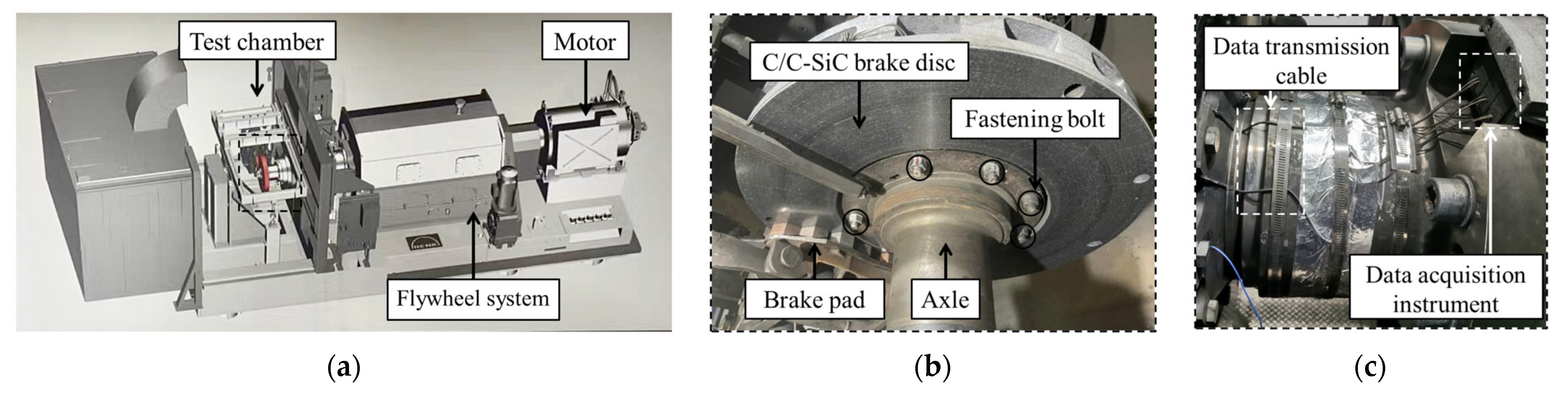
Emergency braking tests of C/C-SiC axle-mounted brake disc was carried out on the full-scale braking dynamic test bench for high-speed trains (manufactured by RENK GmbH, Augsburg, Germany; installed in Zhuzhou, China). The test bench consists of the following three main parts: a test chamber, a flywheel system and a motor, as shown in Figure 1a. The motor accelerates the flywheel set to the required speed, and it can also be used as an additional brake or to simulate additional mass. During the test, cold air at a certain speed is continuously input into the test chamber to accelerate the heat dissipation of the brake disc system.
The setup inside the test chamber is shown in Figure 1b. The test sample consists of rotating components (axle and brake disc) and non-rotating components (brake calliper and brake pad). The motor is started to drive the axle and brake disc to rotate until the expected operating speed is reached, and then the emergency braking programme is activated to make the brake pad contact with the brake disc so as to achieve the braking purpose. The data transmission cables used in the experiment were fixed to the rotating shaft with cable ties and connected to the built-in data acquisition instrument of the equipment, as illustrated in Figure 1c.

2.2. Measurement

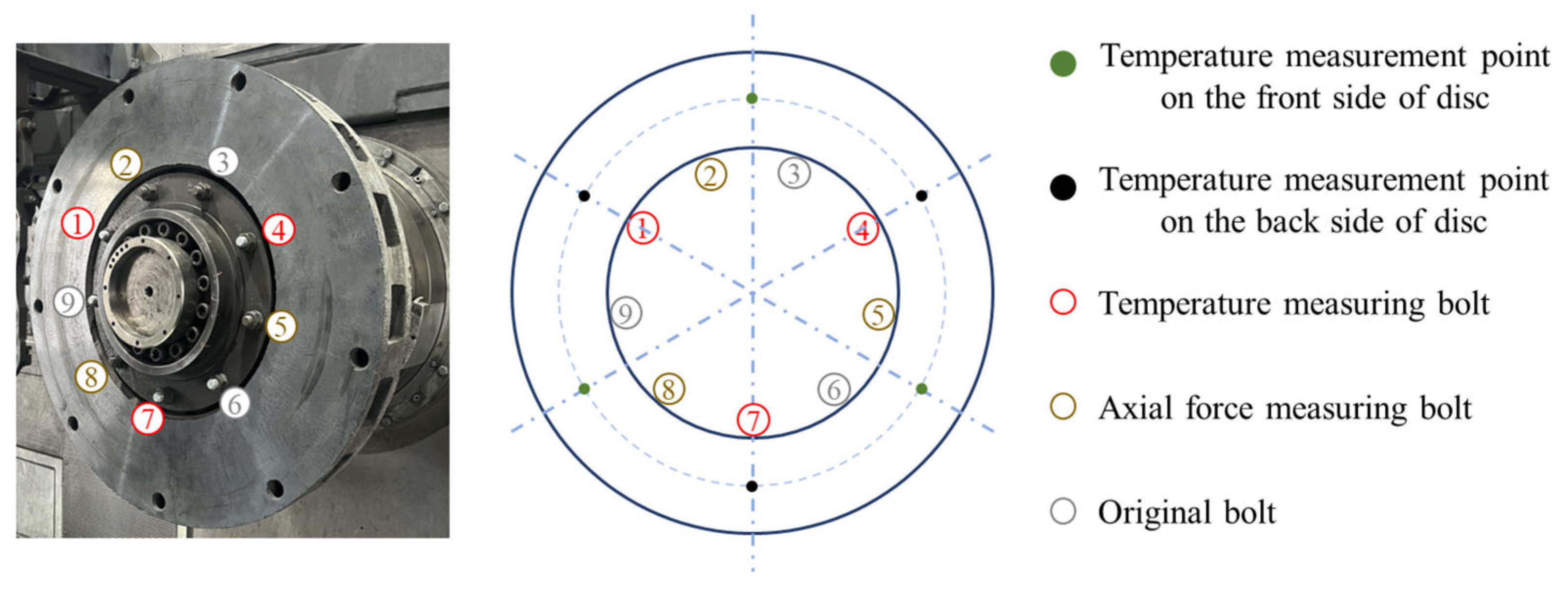
To detect the temperature of the brake discs and the axial force and temperature of the fastening bolts changes during the braking process, the measuring points as shown in Figure 2 were arranged on the test bench. The test method for the temperature of the brake discs refers to the standard UIC 541-3 [38]. Six measuring points are symmetrically arranged 1 mm below the friction surfaces of both sides of the disc body, with three K-type thermocouple probes arranged at each surface as temperature measuring points, and each point is 120° apart from each other. A total of 9 fastening bolts are used for axle-mounted brake discs, which can be classified into the following three categories in the test: original bolts, temperature measuring bolts and axial force measuring bolts. To ensure the reliability of the test data, three bolts are used for each type, and the included angle between the same type of bolts is 120°.
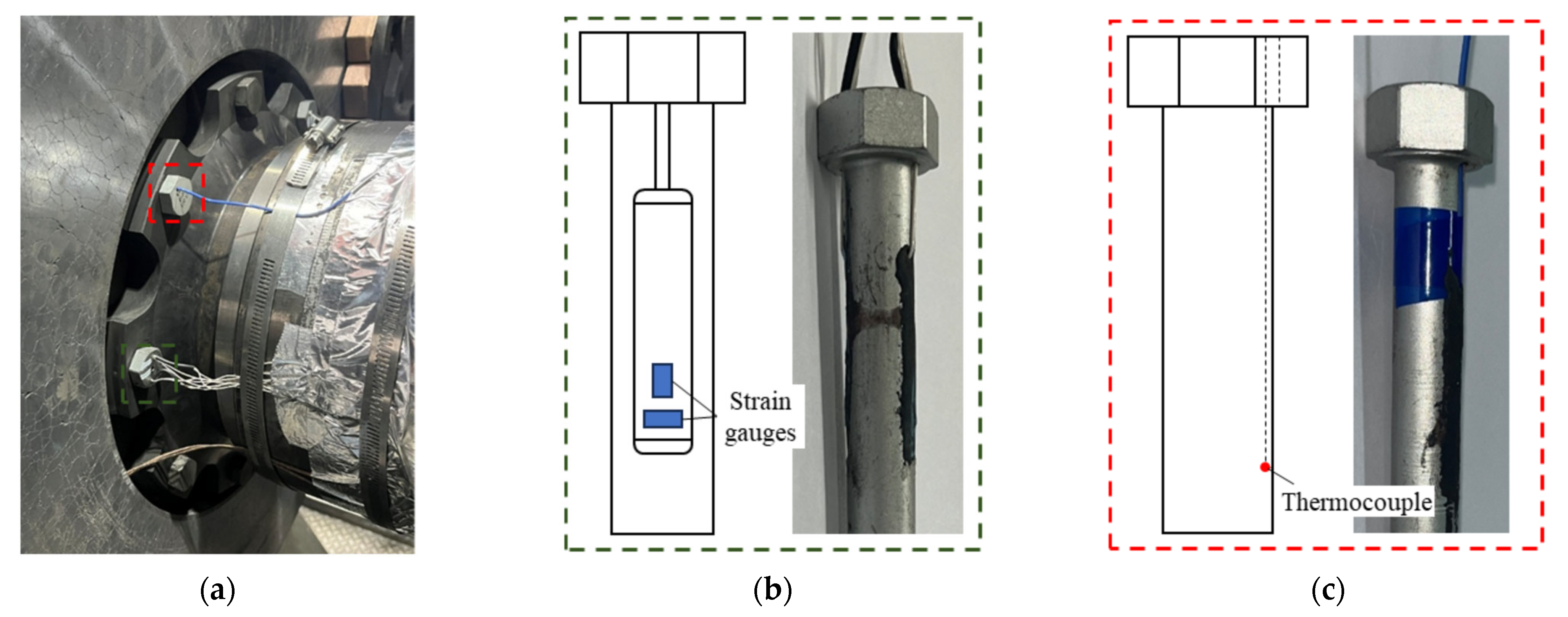
As shown in Figure 3, based on the principle of the Wheatstone bridge, four high-temperature resistant strain gauges are grouped in pairs and adhered respectively along the axis and the vertical axis of the axial force measuring bolts. This scheme can eliminate the interference of bending loads and measure more sensitive tensile load signals [26]. The K-type thermocouple probe for temperature measuring is arranged on the surface of the bolt shank, 42 mm away from the bolt head. The heads of the test bolts are all machined with through holes by electrical discharge machining to facilitate the passage of sensing wires and connection of the signal receivers. Both the strain gauges and thermocouples are bonded with high-temperature adhesive, which ensures good stability.

3. Thermal-Mechanical Coupling Model and Validation

3.1. Modelling Establishment

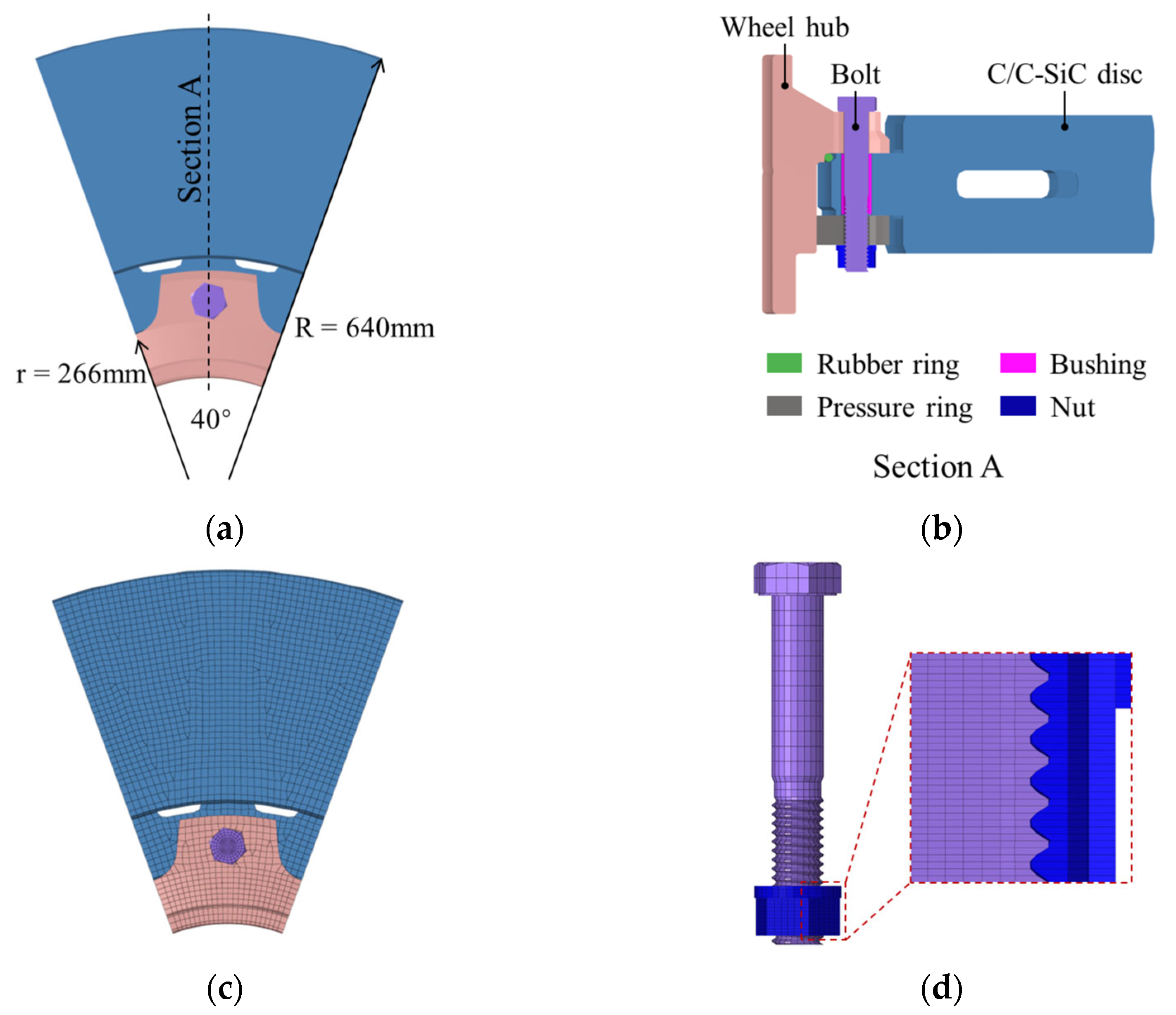
The C/C-SiC axle-mounted brake disc system comprises a hub, a pressure ring, a disc body, a rubber ring, and a bolt assembly, including a bolt, bushing, and nut. Given the circumferential symmetry of the system confirmed in previous studies, this study focuses on a representative 1/9 segment (with a circumferential angle of 40°), as shown in Figure 4a, while the corresponding cross-sectional assembly view is displayed in Figure 4b. The disc body has an inner diameter of 266 mm and an outer diameter of 640 mm, with an average friction radius of 270 mm. The bolt has a nominal diameter of 14 mm, a designed length of 101.50 mm, a standard pitch of 2.0 mm, and a threaded section length of 40 mm.
The 3D model of the brake disc system was meshed using the professional meshing software HyperMesh 2019, as shown in Figure 4c. The model is dominated by hexahedral elements, with a small number of wedge elements only used in transitional geometric areas when necessary to ensure mesh integrity. The model has a total of 57,713 nodes and 47,118 elements, including 735 wedge elements. The disc body alone contains 23,964 elements.
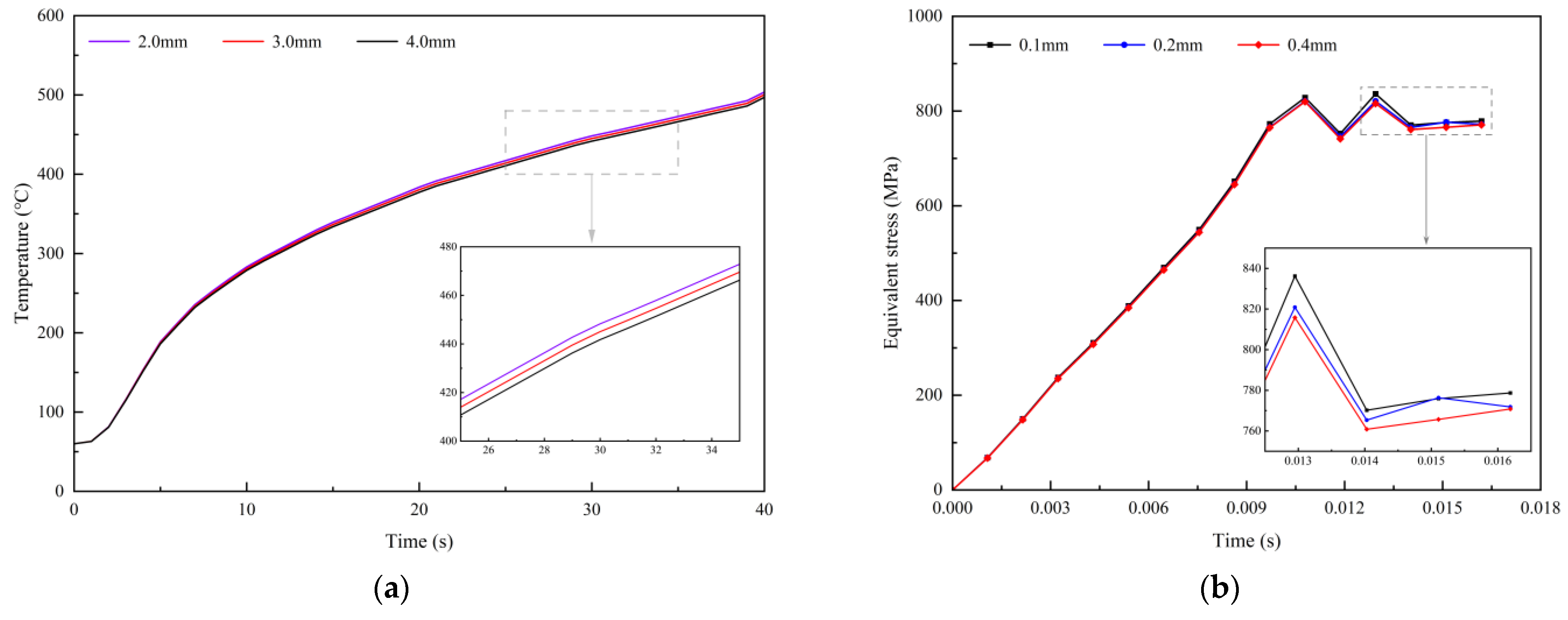
To ensure the accuracy of the finite element model calculations, a mesh sensitivity analysis was conducted. However, excessive mesh refinement leads to high computational costs. Therefore, mesh convergence analyses were performed separately for the brake disc body and fastening bolt to determine the dependence of simulation results on mesh size. Comparing the temperature results of the brake disc with mesh sizes of 2.0 mm, 3.0 mm, and 4.0 mm, as shown in Figure 5a, the temperature-time curves for the three mesh sizes are stable and nearly identical, but the solution times are 15.6 h, 9.2 h, and 7.8 h, respectively. Considering the balance between computational efficiency and result accuracy, a mesh size of 3.0 mm was selected as the optimal mesh size for the disc body for the finite element simulation.
Given that stress concentrations occur predominantly at thread roots in bolted connections, especially at the root of the first thread [39,40], and bolt fractures typically initiate there, the thread section requires refined meshing. The models of bolt and nut retain the thread lead angle feature. Comparing the stress results of bolt models with different mesh sizes after preload application via the dynamic relaxation method as shown in Figure 5b, the stress results of models with thread mesh sizes of 0.1 mm, 0.2 mm, and 0.4 mm are nearly identical, with a maximum error of 2.50%, and all converge rapidly. This indicates that the mesh size has no significant effect on the bolt stress response. Therefore, based on computational efficiency, a mesh size of 0.4 mm was selected for the thread sections, as shown in Figure 4d, which is sufficient to capture the geometric features of the threads while reducing the number of elements and shortening the solution time.
The element integration type adopted in this model is Type 1 constant stress solid element, which is based on the principle of single-point Gauss integration. Stress and strain are calculated at the centroid of the element, and the stress and strain distribution inside the element remains constant, which can well meet the demand for fast and accurate solution of the overall model of the brake disc system in this study. Meanwhile, the model is equipped with hourglass control of Type 4 Flanagan-Belytschko stiffness form. This control method suppresses hourglass deformation by introducing artificial stiffness, which can effectively avoid calculation errors caused by zero-energy modes and ensure the reliability of simulation results.
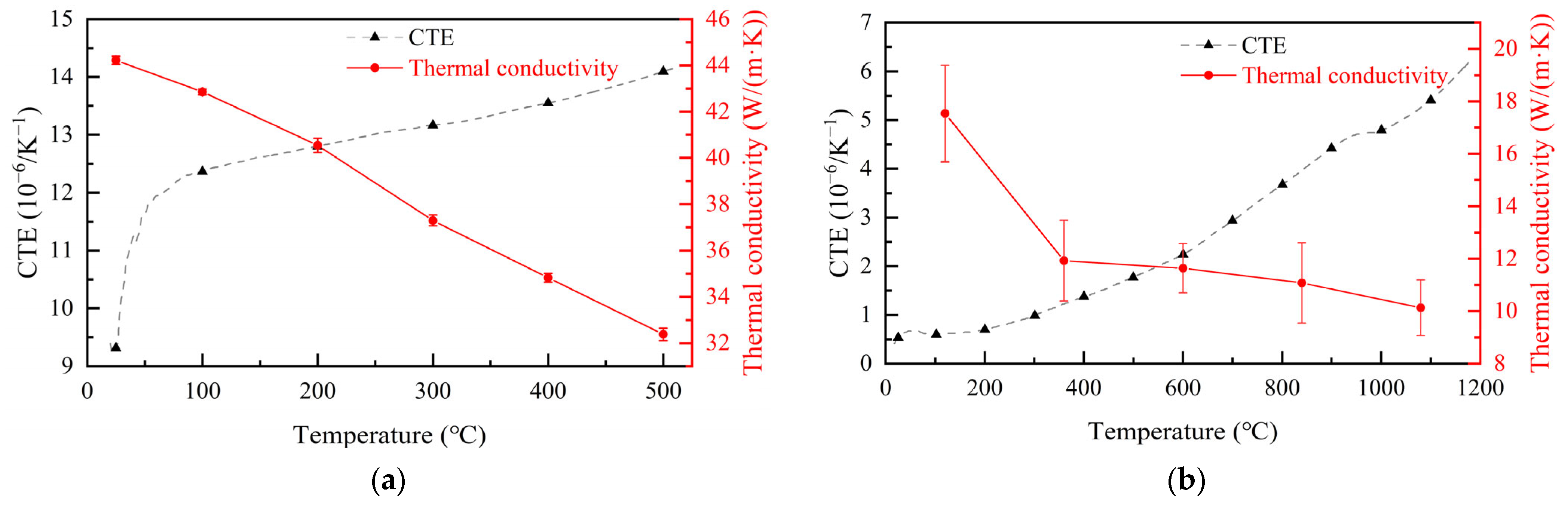
The thermophysical properties of materials are crucial for thermal-mechanical coupling simulation. The bolts are made of superalloy GH2132, which has more stable mechanical properties in high-temperature environments compared with general alloy materials, as listed in Table 1. It can be seen that the strength of the material generally shows a downward trend with the increase in temperature. Compared with the room temperature environment, the elastic modulus, initial yield strength, and ultimate tensile strength decrease by 18.69%, 33.72%, and 28.44% respectively at 500 °C.
The thermophysical properties of C/C-SiC composites [37,41] and GH2132 at different temperatures are showed in Figure 6a,b. Both materials exhibit similar trends in thermal expansion coefficient (CTE) and thermal conductivity with increasing temperature, but the values of the bolt materials are significantly higher than those of C/C-SiC.

3.2. Modelling Settings

To conduct an in-depth analysis of the thermomechanical response of the fastening bolt for C/C-SiC axle-mounted brake disc system under the 350 km/h emergency braking condition, appropriate simplifications were made to the finite element model in this study, with the following basic assumptions proposed:
(a) The pressure of the brake pads is always uniformly applied to both sides of the brake disc;
(b) All kinetic energy is converted into thermal energy, which is entirely absorbed by the brake disc and brake pads;
(c) The heat loaded on the two friction surfaces of the brake disc is equal and uniform.
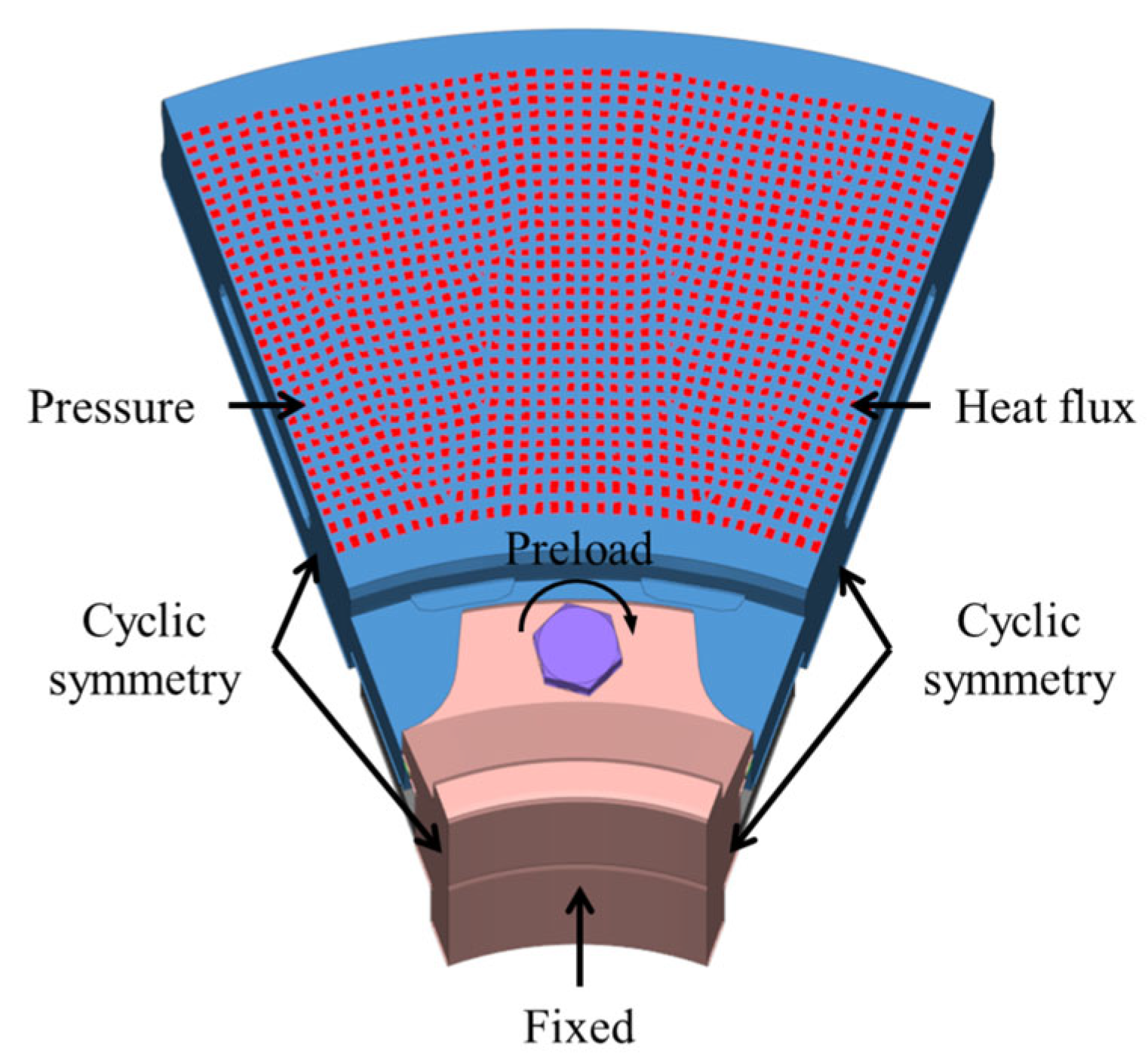
The configuration of boundary conditions and applied loads for the finite element model is presented in Figure 7. For the boundary condition setting of the model, cyclic symmetry constraints are applied to both circumferential sides of the brake disc to ensure the circumferential symmetry of the model. A fully fixed constraint is applied at the wheel hub to completely limit the translational and rotational degrees of freedom of the wheel hub, thus simulating the interference fit between the wheel hub and the axle in line with the actual working state.
During the braking process, the brake pad clings to the brake disc, and the kinetic energy is converted into thermal energy through the friction pair. For the thermal-mechanical coupling simulation, the input heat flux is calculated via the energy conversion method based on the above assumptions, and the calculation formula for the input heat flux density on each side of the brake disc is as follows:
q t = η a M ( v 0 + a t ) 2 n A ,
where η is the heat flux absorption rate of the brake disc, A is the friction surface area of the brake disc, M is the axle load, a is the braking acceleration, v 0 is initial braking velocity of the train, and n is the number of brake disc assembled on each axle.
Under the 350 km/h emergency braking condition, the relevant braking parameters are shown in Table 2. According to the requirements of the standard TJ/CL 310-2014 [42], when the train speed is higher than 300 km/h, the braking force needs to be applied in two stages. Based on this control strategy, the heat flux density calculated by the energy conversion method also presents a piecewise function form. In addition, at the initial stage of braking, the brake pad and the brake disc undergo a gradual fitting process. Before the brake pad pressure reaches 95% of the stable effective value, the train will experience a coasting distance; this coasting time varies with the system design and specific working conditions, and is usually set as 2 s. Under this simulation condition, the calculated braking distance of the train is 5699.55 m, which meets the relevant specification requirements for the emergency braking distance.
In the thermal-mechanical coupling simulation, the following three basic modes of heat transfer need to be considered: heat conduction within components, heat convection caused by fluid motion, and thermal radiation. According to the experimental study by Fukuoka [43], there are three types of thermal contact relationships in the C/C-SiC axle-mounted brake disc system, which are:
(a) Pressure-dependent thermal contact model of the same material: the contact relationship between bolts or nuts and other metal connected components;
(b) Pressure-dependent thermal contact model of different materials: the contact relationship between C/C-SiC brake disc and other metal connected components;
(c) Clearance-dependent thermal contact model: the heat exchange relationship existing in the small gap between bolts and connected components.
Meanwhile, Fukuoka assumed that the heat flow through the clearance is the result of the combined effect of air conduction, convective heat transfer, and radiative heat dissipation. The relevant empirical formulas are as follows:
h c 1 = 10 5 c 1 λ P / H v 2 3 / R a t m + c 2 / R a t n ,
h c 2 = 10 5 c 1 λ 1 P H v 1 2 3 R a t m + c 2 λ 2 P H v 2 2 3 R a t m + c 3 R a t n ,
h e = λ a δ g + h c v + h r ,
h r = σ T 1 2 + T 2 2 T 1 + T 2 1 / ε 1 + ( A 1 / A 2 ) ( 1 / ε 2 1 ) ,
where P is the contact surface pressure, R a t is the arithmetic mean of the surface roughness of the contact surface, H v is the Vickers hardness of the contact surface, λ a is the heat transfer coefficient of air, δ g is the gap size, c 1 , c 2 , c 3 , c 4 , c 5 , m 1 , m 2 , n 1 , n 2 are all dimensionless coefficients, h c v is the convective heat transfer coefficient, h r is the radiative heat transfer coefficient, σ is the Stefan–Boltzmann constant, ε 1 and ε 2 are the radiation coefficients of the contact surface, A 1 and A 2 are the contact areas, and T 1 and T 2 are the contact temperatures.

3.3. Modelling Validation

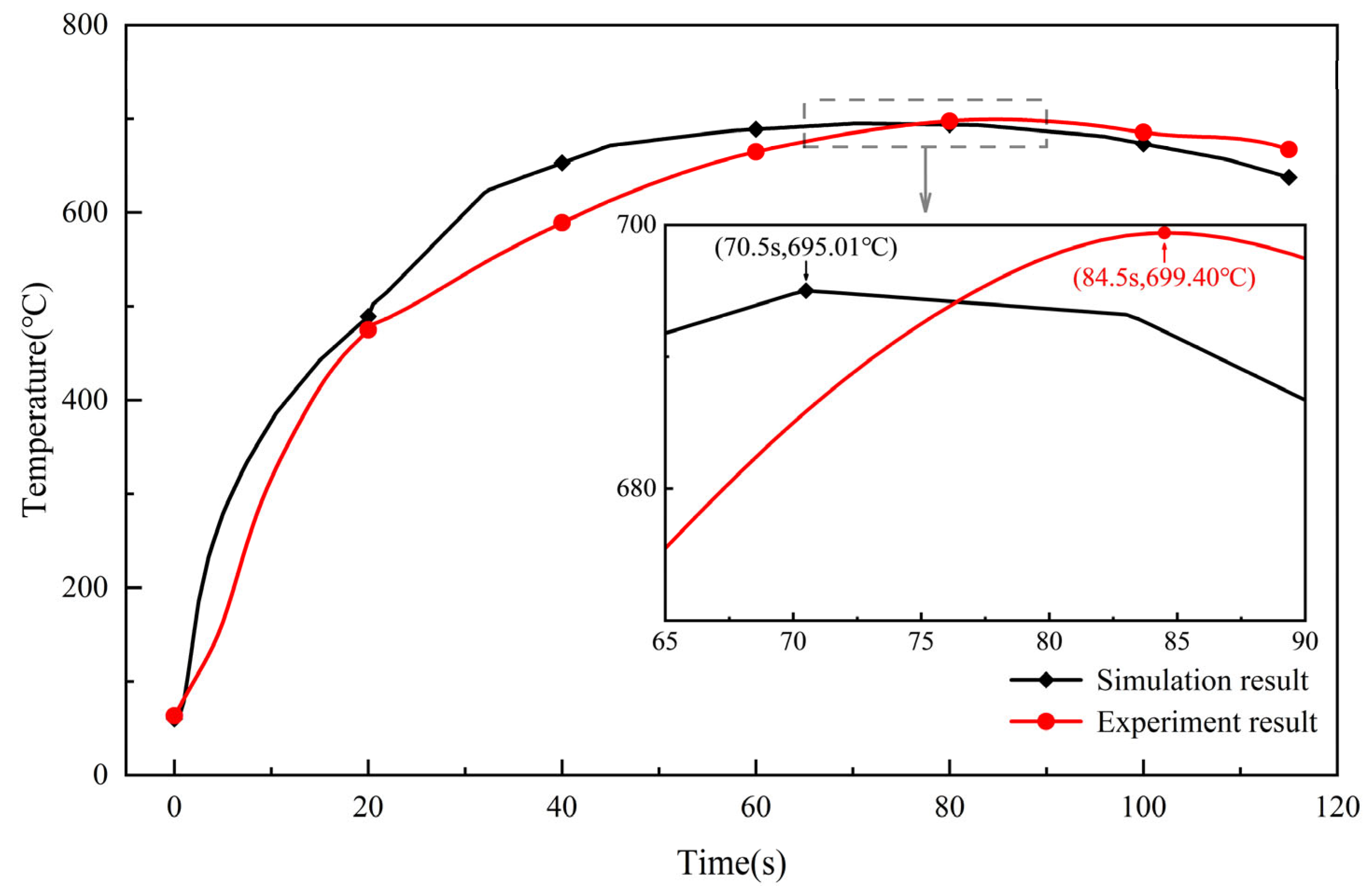
The temperature recorded by the experimental equipment system represents the average temperature of all measuring points. Therefore, temperature data used for calculation are obtained from identical positions on the brake disc, and the comparison results are shown in Figure 8. From the image, the average temperature of the brake disc in the simulation and the experiment has good consistency.
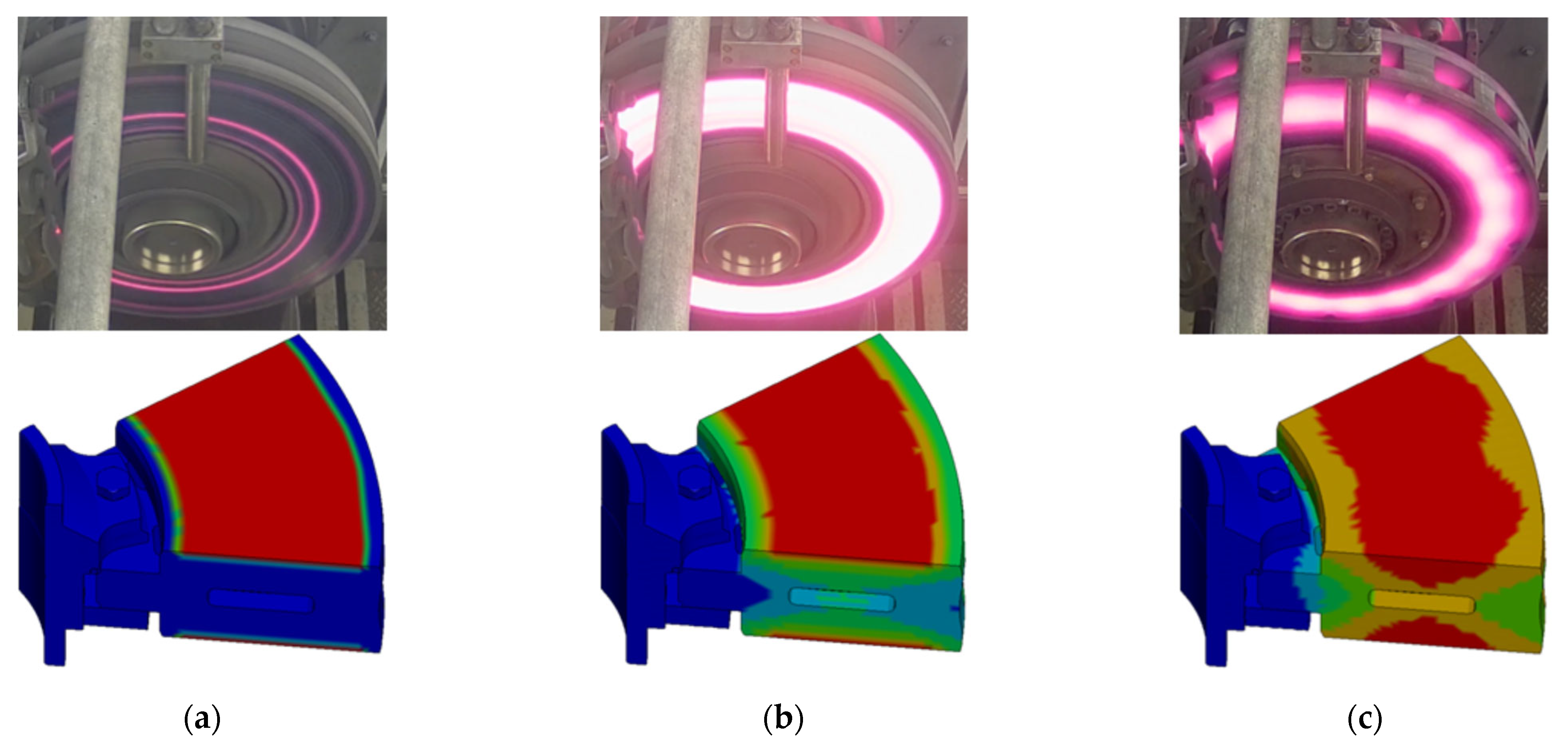
As shown in Figure 9a, at the initial stage of braking (t = 5 s), the frictional contact between the brake pads and the brake disc remains unstable in the actual braking experiment, and varying friction units cause light bands of different diameters appear on the brake disc. In contrast, the simulation model applies heat flux density uniformly across the brake disc surface, resulting in the absence of narrow light bands. Consequently, the simulated temperature is slightly higher than that recorded in the experiment.
When the braking enters the second stage (t = 24 s), the heat distribution on the surface of the brake disc is uniform, and the temperature at the heat dissipation ribs is obviously lower than that of the friction surface, as shown in Figure 9b. At this time, inflexion points emerge in both average temperature curves. This phenomenon is attributed to a sudden increase in brake force during the experiment, which leads to a notable decrease in the average acceleration of the brake disc. In the simulation, the heat flux density increases abruptly, resulting in a rapid accumulation of heat within a short time period. Experimental results show that the brake disc temperature curve reaches its peak at 84.5 s, which is 699.40 °C; in the simulation, the peak average temperature on the brake disc surface occurs slightly earlier, reaching 695.01 °C at 70.5 s. The difference between the peaks of the two average temperature curves is 4.39 °C, with a relative error of 0.63%. After that, the temperature of the brake disc gradually decreases.
At the end of braking procedure (t = 113 s), the temperature distribution on the brake disc surface is no longer uniformly ring-shaped but shows a regular wave-like pattern along the edge of the ring. The inward concave regions of the waves correspond to the positions of the heat dissipation ribs, as shown in Figure 9c.
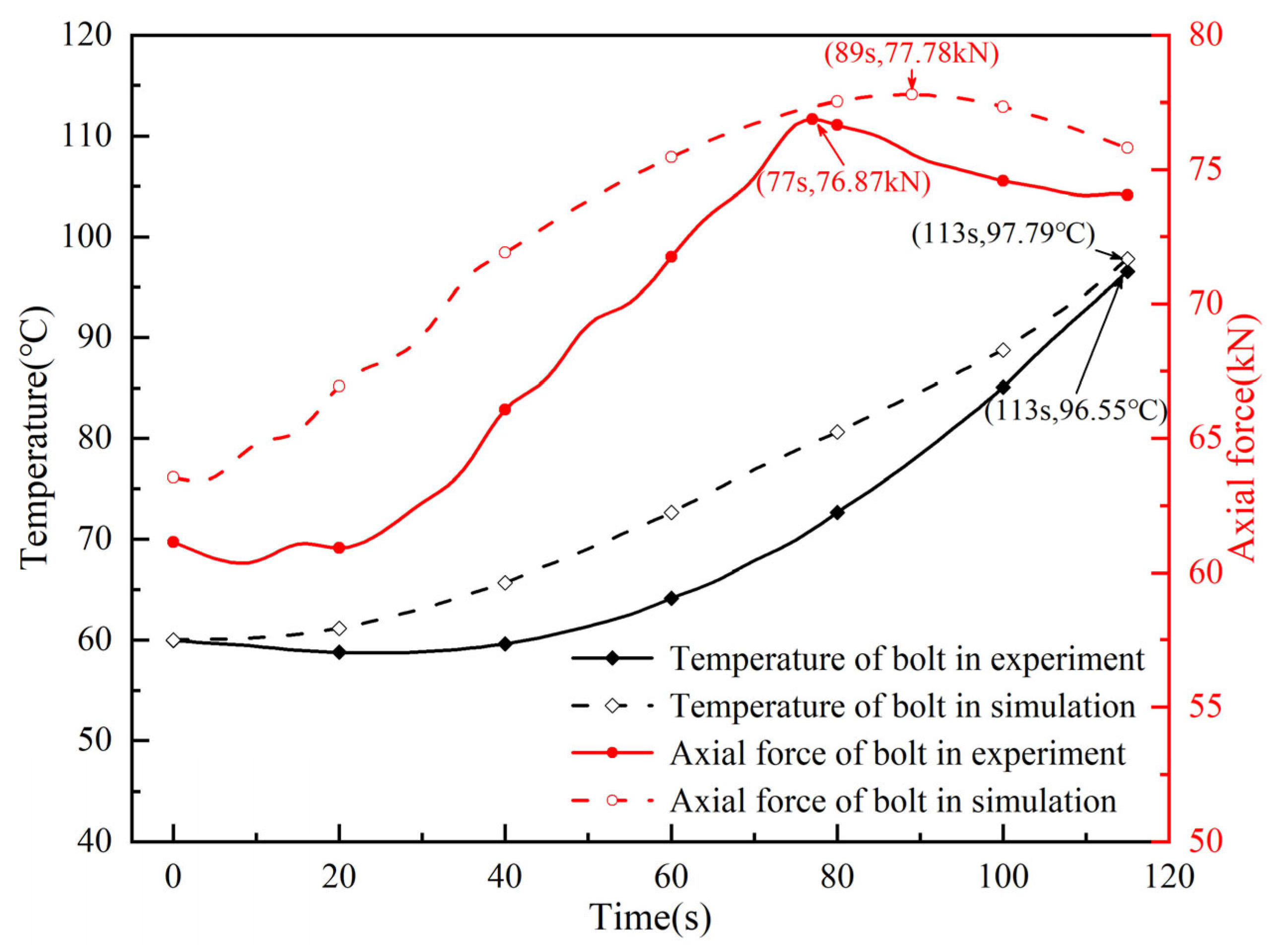
The temperature and axial load of the bolt are calculated by selecting measurement points at corresponding positions on the bolt, and the results are shown in Figure 10. During the braking process, the temperature of the fastening bolt consistently increases, while the axial force initially rises and subsequently decreases. However, the simulation results are generally higher than the experimental results. The heat source for the bolts mainly originates from thermal conduction from the brake disc. In the early stage, the majority of the generated heat accumulates on the surface of the brake disc, with only a small fraction being transferred to the bolt. Consequently, the temperature rise in the bolt is significantly lower than that of the brake disc, reaching 36.64 °C and 37.79 °C respectively. However, the temperature curve of the fastening bolt still shows an upward trend at the end of braking. During braking, the axial force of the bolt increases initially with the peak loads of 76.87 kN and 77.78 kN respectively. Thereafter, the axial force gradually decreased and still showed a downward trend at the end of braking.
The error comparison of the average temperature of the brake disc surface, the bolt temperature and the axial force between the experimental and simulation results is shown in Table 3. The data indicate that the average relative error is small, so the simulation model is considered effective and reliable.

4. Thermomechanical Response of Fastening Bolt

4.1. Temperature

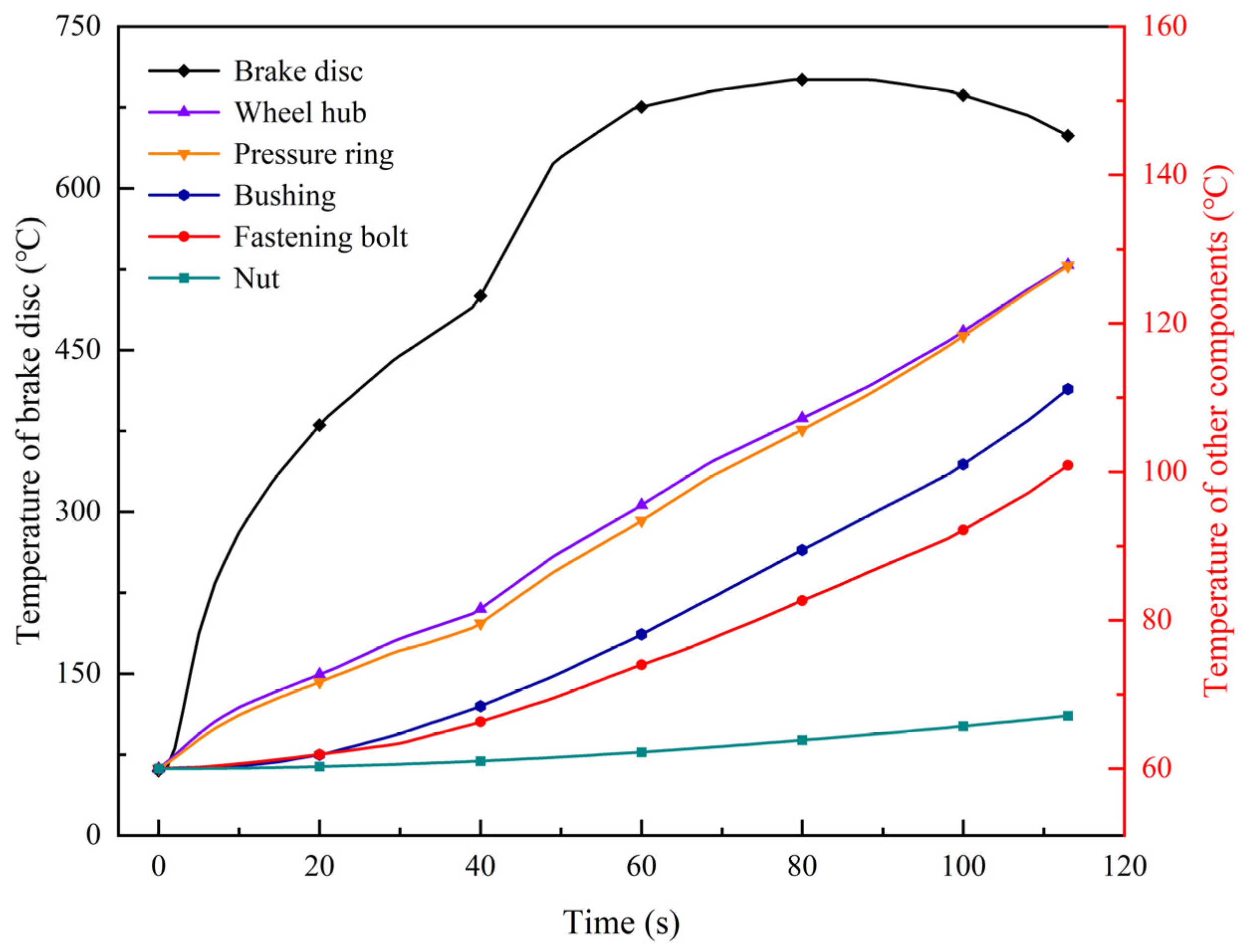
The curves of the maximum temperature of each component in the brake disc system varying with time are shown in Figure 11. In the early stage of braking, the system heat is predominantly accumulated on the surface of the brake disc, with minimal heat transferred to other components, resulting in a relatively slow temperature rise in this period. After entering the second stage of braking, the brake disc surface continues to receive a large amount of heat input, and at the same time, the heat is further transferred to the interior of the structure. The wheel hub and the pressure ring are in direct frictional thermal contact with the brake disc, resulting in a faster temperature rise; the bushing is arranged between the fastening bolt and the brake disc body, which plays a certain heat insulation role, and its temperature rises is slightly higher that of the fastening bolt. The simulation results indicate that the maximum temperature of the brake disc friction surface reaches 701.36 °C during braking, while the maximum temperatures of the other components all appear at the end of braking. Among them, the maximum temperatures of the wheel hub and pressure ring are close, being 127.89 °C and 127.75 °C respectively; the maximum temperature of the bushing is 111.16 °C, which is slightly higher than that of the fastening bolt, which is 100.90 °C; the maximum temperature of the nut is the lowest, only 67.14 °C.
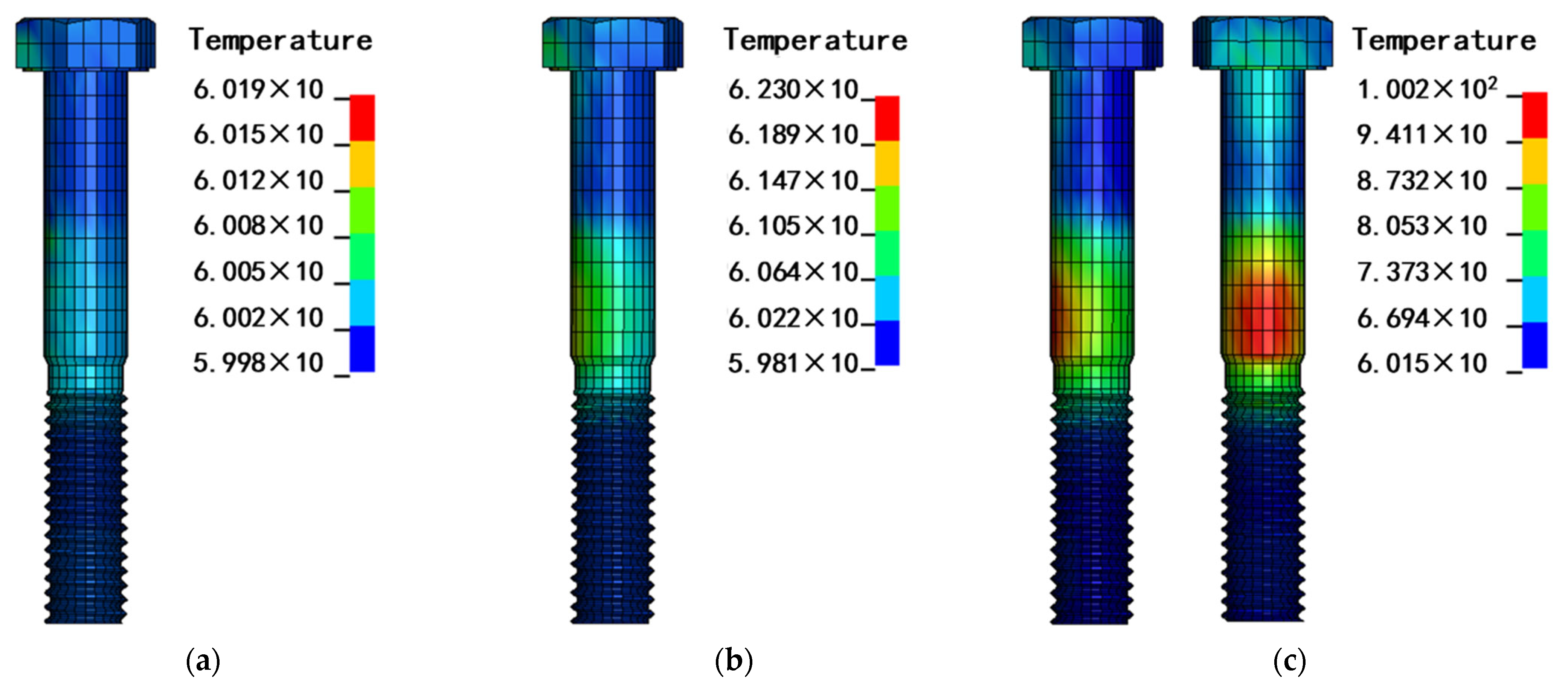
The temperature distribution nephograms of the fastening bolt at different moments under 350 km/h emergency braking condition are shown in Figure 12. As time progresses, the temperature gradient distribution of the fastening bolt becomes increasingly obvious. Since the temperature of the C/C-SiC brake disc body remains consistently higher than that of other components during braking, the high-temperature area of the bolt also appears near the brake flange. In terms of temperature distribution characteristics, the bolt has significant temperature gradients both along the axial and transverse directions: along the axial direction, the temperature gradually decreases from the middle of the bolt toward both ends; in the cross-section, the temperature gradually decreases from the end near the friction surface to the end close to the hub.

4.2. Deformation

According to the thermophysical properties of the fastening bolt material (Figure 6a) that the bolt tends to thermally expand in a high-temperature environment, the significant temperature gradients on the bolt directly lead to variations in deformation across different regions.
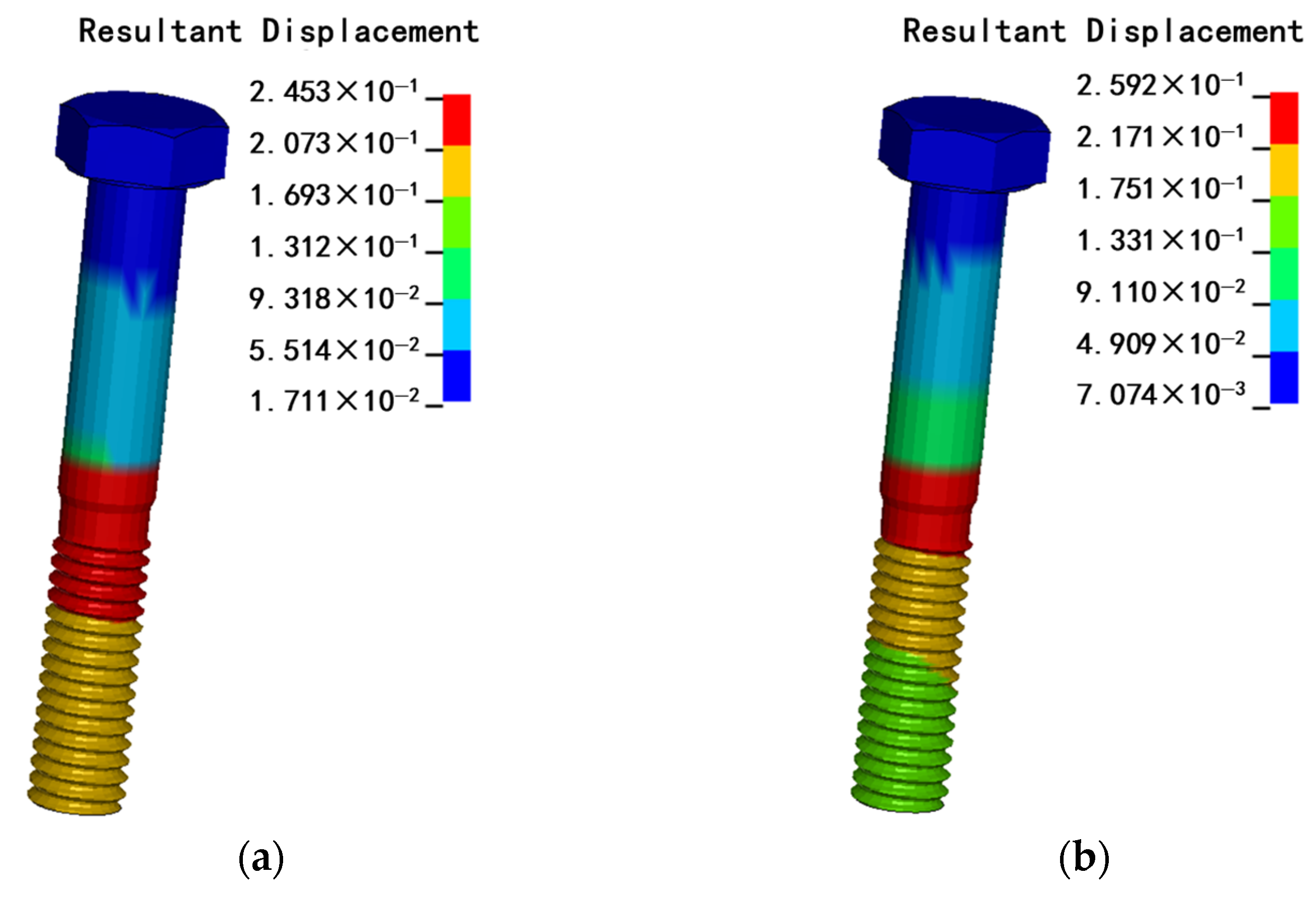
As shown in Figure 13, the displacement nephograms of the bolt at t = 0 s and t = 113 s show clear boundary in the screw part, which is the cross-section where the preload is applied in the simulation model. The axial displacements of the bolt are opposite on both sides of this cross-section, both pointing to the preload cross-section, and the maximum axial displacements occur near the cross-section. The designed length of the fastening bolts equipped with this type of C/C-SiC axle-mounted brake disc is 101.50 mm. After applying the preload, the length of the bolt is reduced to 101.29 mm, and at the end of the braking process, the fastening bolt elongated by 7.87 μm along its axis. The nominal diameter of the bolt is 14.00 mm, and after one emergency braking, the average diameter of the preload cross-section increases by 6.58 μm. This indicates that during a braking process, the bolt as a whole shows a trend of elongation along the axial direction and outward expansion along the radial direction of the cross-section.
Compared with the initial state, the displacement nephogram of the bolt at 113 s is no longer symmetric about the preload cross-section, but shows slight bending and a slight bulge along the radial direction of the brake disc. This is because the heat is mainly accumulated in the brake disc in the early stage of braking, and the brake disc has a trend of expanding outward along its radial direction. At this time, the bolt tends to be eccentrically connected, resulting in a small amount of bending deformation. In the late braking stage, heat is conducted from the disc body to the wheel hub and pressure ring. At this time, the temperature gradient of the bolt is gradually obvious, leading in uneven thermal expansion and bending to one side, increasing the amount of bending deformation. This further exacerbates the eccentric loading condition of the fastening bolt, and the preload of the bolt also starts to decrease accordingly.

4.3. Loosening Mechanism

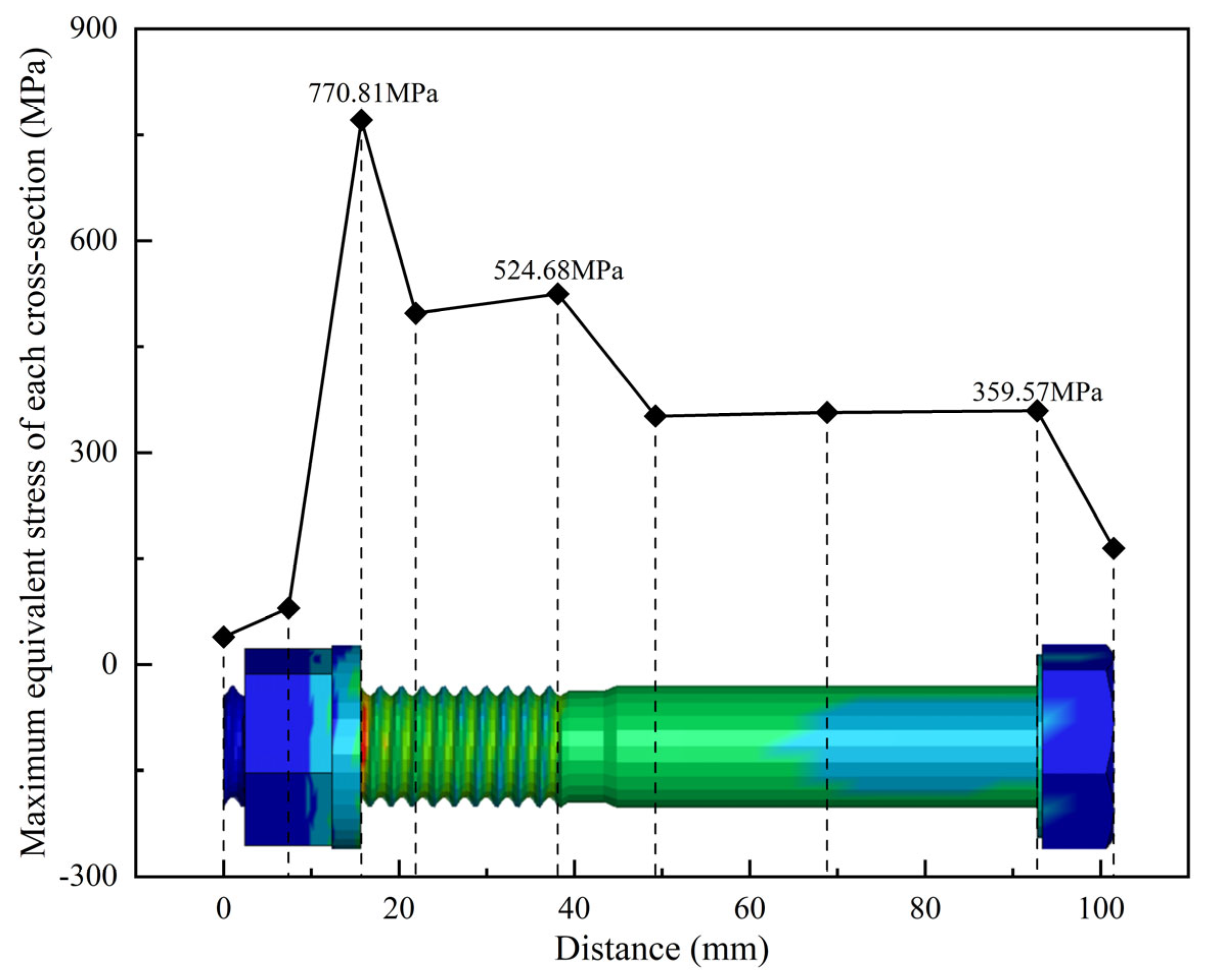
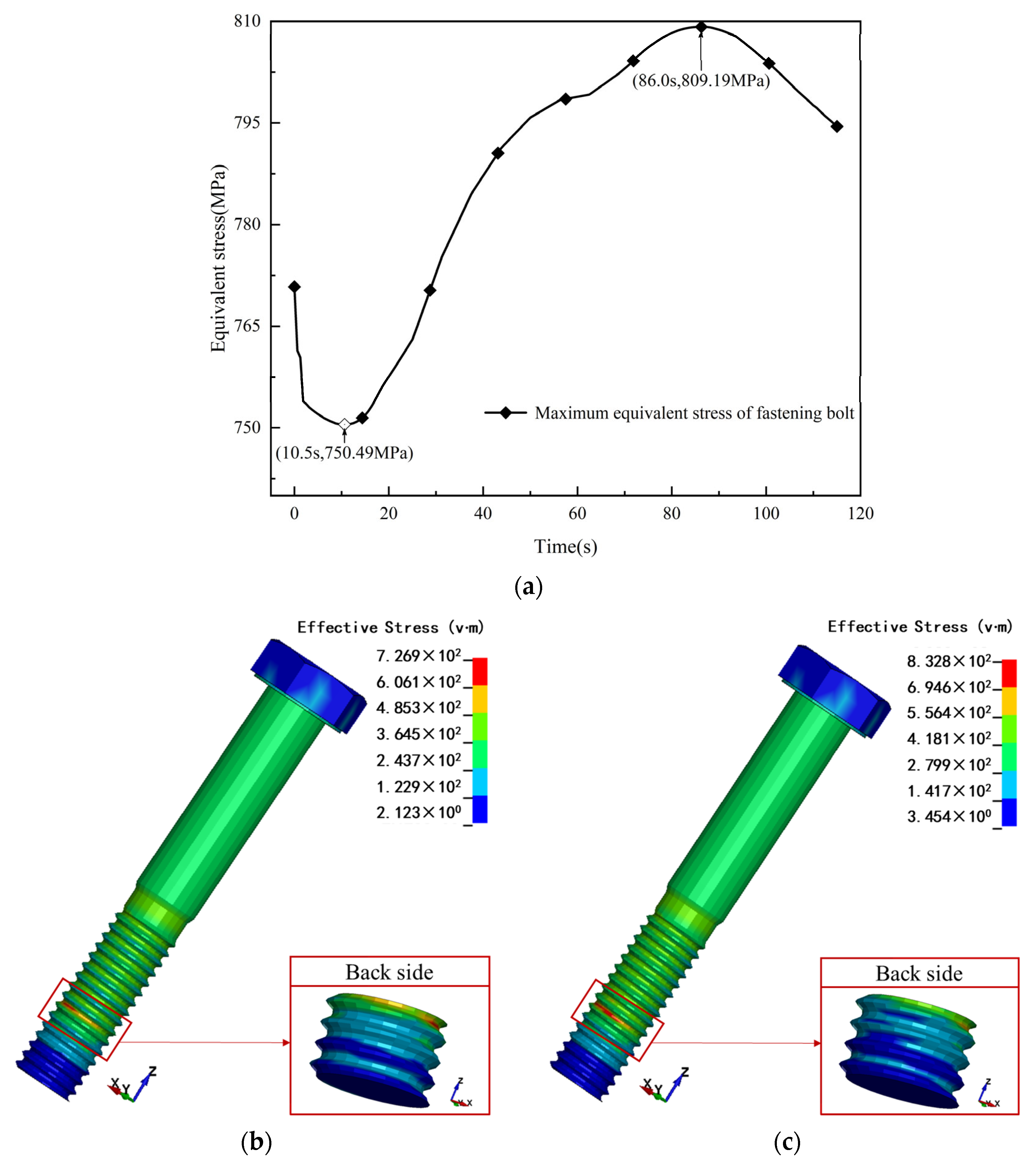
The equivalent stress distribution nephogram of the bolt at 0 s, immediately after the preload is applied, is displayed in Figure 14. As can been seen, cross-sections were selected at different positions along the axial direction of the bolt with its tail end as the starting point, and the maximum equivalent stress of each cross-section was extracted. The results show that after the preload is applied, the maximum equivalent stress is 770.81 MPa, located at the root of the first thread where the bolt engages with the nut. This finding aligns with previous research results [29] and corresponds to the typical location for crack initiation or fracture in actual thread failure. Additionally, the second largest equivalent stress appears in the transition area between the bolt shank and the threaded section, while the third highest stress appears at the junction between the screw and the bolt head.
The variation curve of the maximum equivalent stress of the fastening bolt within 113 s are displayed in Figure 15a, presenting a consistent trend of “decreasing, then increasing, and finally decreasing”. In the early stage of braking, the external braking pressure is the dominant influencing factor. The stress in the bolt is temporarily redistributed to other regions, resulting in a slight reduction in the stress level at the thread. After that, a large amount of heat is transferred from the friction surface to the brake disc system. Other components clamped by the bolt expand and deform due to rapid temperature rise, resulting in an increase in the bolt load and a rise in the thread stress, reaching a peak value of 809.19 MPa at 86.0 s. As the braking process continues, the temperature of the bolt gradually increases, causing thermal expansion. The axial relative deformation between the connecting components and the bolt decreases, which results in a subsequent reduction in bolt stress. At 113 s, the trend in the curve suggests a continued decline, which implies that the bolt experiences alternating loads during the emergency braking process.
Based on the data in Table 1, the yield strength of GH2132 material at 100 °C is 1018.27 MPa, while the maximum equivalent stress of the bolt under the 350 km/h emergency braking condition reaches 79.47% of this value, indicating a risk of yield failure at the thread. Further analysis of the equivalent stress distribution nephogram under this condition reveals that obvious stress redistribution occurs in the threaded section where the bolt engages with the nut during braking. The stress distributions at the moments when the equivalent stress reaches its valley value (t = 10.5 s) and peak value (t = 86.0 s) are shown in Figure 15b,c. It can be seen that the equivalent stress in the first three threads engaged between the bolt and the nut is concentrated at the root of the first thread, particularly on the side adjacent to the brake flange. This is because in the second stage of the braking, the non-uniform temperature field along the bolt becomes increasingly pronounced, causing the bolt to slightly bulge toward the brake flange and bear a bending load. Under thermomechanical loading, the stress concentration and accumulation at the root of the first engaged thread are significantly intensified, leading to a local stress that far exceeds the bolt’s average stress. When sustained at a high level, this stress concurrently induces micro-plastic deformation, creep relaxation, and severe fretting wear at the interfaces, which collectively cause the decay of the preload, ultimately resulting in bolt loosening failure.

5. Influence Factors of Loosening

5.1. Initial Speed

To further investigate the thermomechanical response of the fastening bolt under emergency braking at higher speeds, this study conducted thermal-mechanical coupling simulations on a C/C-SiC brake disc system with initial speeds of 380 km/h and 400 km/h. During braking, both the braking force and average acceleration remained consistent with the 350 km/h emergency braking condition. Specifically, when the speed exceeded 300 km/h, the braking pressure was set at 18 kN with a corresponding acceleration of −0.72 m/s2; below 300 km/h, the braking pressure increased to 32 kN with a corresponding acceleration of −0.94 m/s2. When the initial speed was raised to 380 km/h, the total braking time reached 122 s, and the braking distance extended to 6820.67 m. With a further increase in the initial speed to 400 km/h, the braking process lasted 129 s, resulting in a braking distance of 7666.85 m.
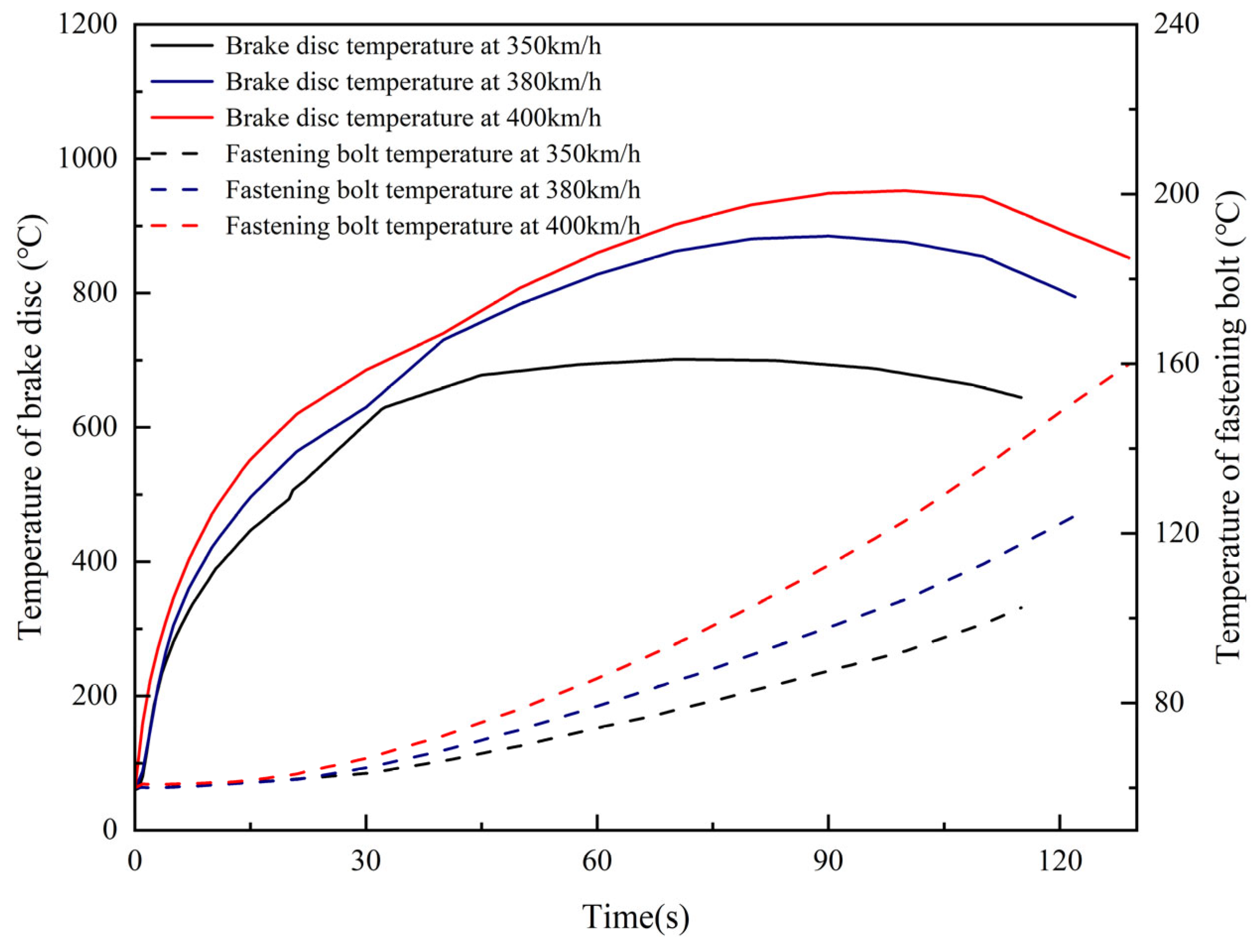
The variations in the maximum temperature of the brake disc and the fastening bolt over time during the braking process is as illustrated in Figure 16. As shown in the figure, the temperature change curves of the C/C-SiC brake disc show a similar trend. Specifically, the disc temperature generally rises during the braking process, with the heating rate gradually decreasing in the later stage of braking, and the peak temperature is reached during the second stage. The maximum temperatures of the brake disc under emergency braking conditions at initial speeds of 350 km/h, 380 km/h, and 400 km/h are 701.36 °C, 884.76 °C, and 952.44 °C, respectively, demonstrating that the maximum brake disc temperature increases with the initial braking speed. Compared to the emergency braking condition at 350 km/h, the maximum temperature increases by 26.25% at 380 km/h; compared to 380 km/h, the increase is 7.65% at 400 km/h. After that, due to the combined effects of heat conduction and heat convection, the surface temperature of the brake disc continues to decrease. At the end of braking for each condition, the maximum temperatures of the brake disc under emergency braking conditions at 350 km/h, 380 km/h and 400 km/h are 644.46 °C, 794.10 °C and 852.18 °C respectively.
As shown in Figure 16, in the second stage of braking, the bolts absorb a large amount of heat conducted from the brake disc and other connected components, leading to a rapid temperature increase. Under emergency braking conditions at initial speeds of 350 km/h, 380 km/h, and 400 km/h, the maximum bolt temperatures are 100.90 °C, 124.15 °C, and 159.91 °C, respectively, demonstrating a clear increasing trend with higher initial braking speeds. Meanwhile, the temperature rise amplitude of the fastening bolt’s maximum temperature also increases, with the temperature rise amplitudes in different speed ranges being 21.18% and 28.80% respectively.
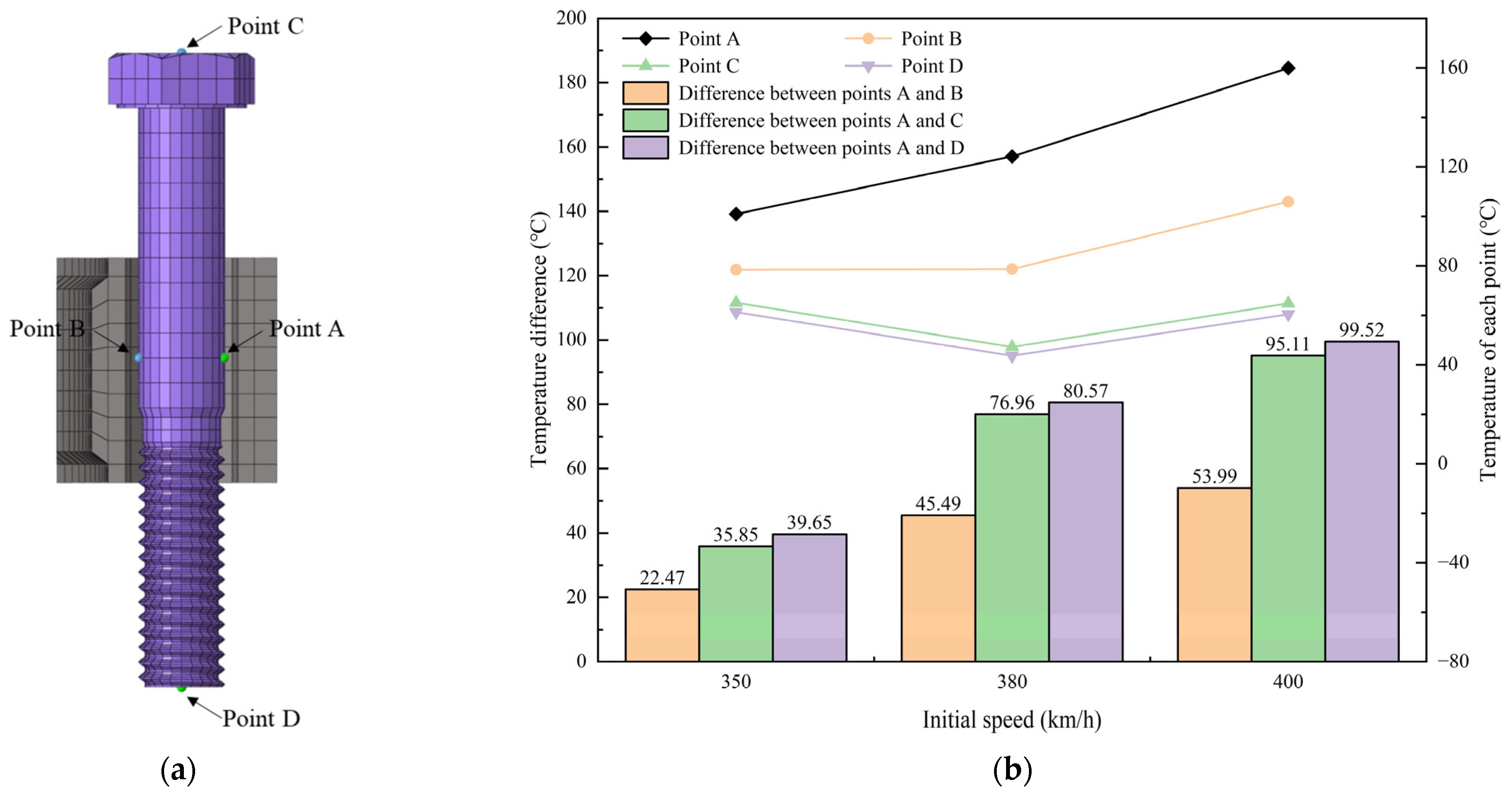
Under different braking conditions, the temperature distribution nephograms of the fastening bolt exhibit similarity. Since the temperature of the C/C-SiC brake disc body remains consistently higher than that of other components during braking, the high-temperature area of the bolt still appears near the brake flange. As shown in Figure 17a, points are selected at representative positions on the bolt: point A represents the location of maximum temperature on the bolt; point B is the point opposite to point A, located at the central section far from the friction surface; points C and D are the centre points of the cross-sections of the bolt head and tail, respectively. The temperature differences between these points at the moment of peak bolt temperature under different braking conditions are calculated, and the results are summarized in Figure 17b. It can be observed that the temperature differences between point A and the other points increase with the initial braking speed. Along the axial direction, the average temperature drop of the bolt under the 400 km/h emergency braking condition is 97.32 °C, which is 18.47 °C and 59.59 °C higher than under the 380 km/h and 350 km/h emergency braking conditions, respectively. In the cross-section, the average temperature drop under the 400 km/h condition is 8.50 °C and 31.52 °C higher than under the 380 km/h and 350 km/h conditions, respectively. This indicates that as the initial braking speed increases, the bolt not only experiences a higher overall thermal load but also develops a more uneven temperature distribution.
By calculating the time when the highest temperature occurs in the bolt under three emergency braking conditions, the average diameter of the cross-sections at points A and B, and the length change between points C and D, the lateral deformation and axial elongation of the bolt can be represented respectively. The results are shown in Table 4, indicating that as the initial braking speed increases both the magnitude of thermal expansion and the degree of bending deformation become more pronounced.
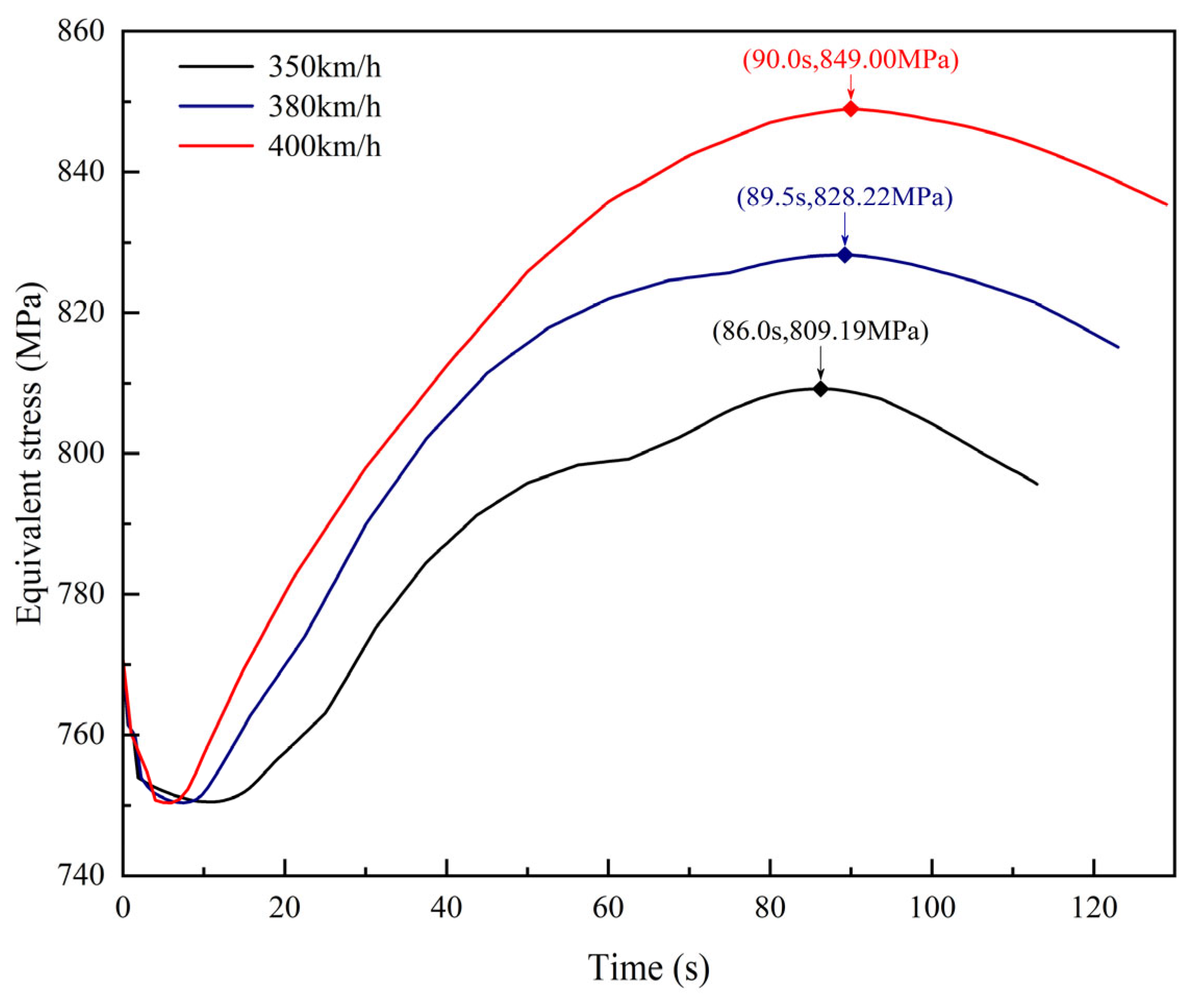
The variation curves of the maximum equivalent stress of the fastening bolt are displayed in Figure 18. All curves follow a consistent trend, and no abrupt stress increase is observed even under higher-speed emergency braking conditions. Across different initial braking speeds, the valley values of the maximum equivalent stress remain nearly identical, while the peak values exhibit a positive correlation with the initial braking speed. Compared to the previous speed level, the peak equivalent stress increased by 19.03 MPa and 20.78 MPa, respectively. Correspondingly, the stress amplitude at the critical section of the bolt also rose. Under the 350 km/h emergency braking condition, the stress amplitude measured 58.70 MPa. As the initial braking speed increased, the amplitude further grew to 77.86 MPa and 98.66 MPa, respectively. Therefore, it can be concluded that with an increase in the initial emergency braking speed, the equivalent stress at the critical section of the bolt approaches closer to the yield limit, and the bolt is subjected to more severe load fluctuations.

5.2. Brake Pressure

Under 400 km/h emergency braking, the braking pressure directly governs the frictional heat input to the C/C-SiC disc, which in turn dictates the thermomechanical response of the fastening bolt. A study of braking pressure allocation is therefore critical for analyzing this stress behaviour. The specific parameters for each case and corresponding thermomechanical response of fastening bolt are provided in Table 5.
Compared to the baseline emergency braking condition with pressure settings of 18 kN and 32 kN, both Case 1 and Case 2 achieved a reduction in braking distance and lowered the maximum temperature of the fastening bolt at the end of braking by increasing the braking pressure in the second and first stages, respectively. However, they led to markedly different stress responses in the bolt. In Case 1, the increased braking pressure in the second stage subjected the fastening bolt to higher external loads during the stress-increasing phase, leading to an overall elevation in the stress level. The maximum equivalent stress increased by 1.12% compared to the baseline condition, while the stress amplitude exhibited a significant rise of 17.47%. As a result, the critical regions of the bolts approached closer to the yield limit, indicating an elevated risk of bolt loosening. In Case 2, the higher pressure applied in the first stage contributed to a rapid dissipation of the initial kinetic energy. Meanwhile, the heat accumulated on the brake disc surface was dissipated more efficiently via convection, reducing the overall thermal load on the fastening bolt. Consequently, the maximum equivalent stress decreased by 0.60% relative to the baseline. However, the stress amplitude increased slightly by 2.68%, which can be attributed to the reduction in the valley equivalent stress value caused by the elevated first-stage pressure. In Case 3, a modified two-stage braking strategy was implemented: a higher braking pressure in the first stage, enabling efficient dissipation of kinetic energy in the brake disc system, while a relatively moderate braking pressure in the second stage prevented localized heat accumulation and a sharp increase in bolt thermal stress. This strategy resulted in a 17.02% reduction in the maximum temperature of the fastening bolts, a 1.41% decrease in the maximum equivalent stress, and a 4.33% reduction in the stress amplitude compared to the baseline condition.

6. Conclusions

In this paper, the validity of the models for the brake disc and fastening bolt is verified through bench tests on the C/C-SiC axle-mounted brake disc. Further, aiming at emergency braking conditions at different initial speeds, simulation calculations were conducted. Meanwhile, under the 400 km/h emergency braking condition, the effects of pressure magnitude and transition speed on the thermomechanical response of the fastening bolt were studied. The conclusions are as follows:
(1) Under the emergency braking condition at an initial speed of 350 km/h, the maximum temperature of the brake disc obtained from the test is 699.40 °C, and the simulation result is 695.01 °C; the maximum temperature of the bolt obtained from the test is 96.55 °C, and the simulation result is 97.79 °C; the maximum axial load of the bolt obtained from the test is 76.87 kN, and the simulation result is 77.78 kN. The average error between the test results and the simulation results is less than 10%, which can verify the validity of the simulation model.
(2) During the emergency braking process, a non-uniform temperature field is generated on the bolt, with obvious temperature gradients along its axial and cross-sectional directions. The uneven thermal expansion will cause slight bending deformation of the bolt; under the coupling effect of mechanical load and thermal load, there is always significant stress concentration at the root of the first engaged thread of the bolt, making it a dangerous stress section where the bolt is prone to yield failure and the critical region for loosening initiation.
(3) Both the maximum temperature and maximum equivalent stress of the fastening bolt are obviously positively correlated with the initial braking speed. Under the 400 km/h emergency braking condition, the fastening bolt generates more obvious temperature gradients and bending deformation. At this point, the maximum temperature of the fastening bolt is 159.91 °C, the maximum equivalent stress is 849.00 MPa, and the stress amplitude also increases to 98.66 MPa, which means the fastening bolt faces a higher risk of failure.
(4) The magnitude of the braking pressure is a critical factor affecting the thermomechanical response of the fastening bolt. A two-stage braking strategy with high pressure in the first stage and moderated pressure in the second stage achieves the most favourable thermodynamic performance in the fastening bolt, minimizing both the overall temperature rise and the loosening risk. The optimal braking strategy for a 400 km/h emergency brake is determined: a braking pressure of 26 kN is applied when the speed exceeds 300 km/h, and 28 kN when the speed drops below 300 km/h. With this strategy, the bolt’s maximum temperature, maximum equivalent stress, and stress amplitude are reduced by 17.02%, 1.41%, and 4.33%, respectively.

Author Contributions

Conceptualization: S.Y.; Data Curation: M.T.; Formal Analysis: M.T.; Funding Acquisition: S.Y.; Investigation: J.X.; Methodology: M.T.; Project Administration: J.X.; Resources: S.Y.; Software: S.Y.; Supervision: J.X.; Validation: Y.L., J.T. and X.G.; Visualization: Y.L.; Writing—Original Draft: M.T.; Writing—Review and Editing: J.T. and X.G. All authors have read and agreed to the published version of the manuscript.

Funding

This research was funded by the National Key Research and Development Program of China (No. 2024YFB4303001) and the National Natural Science Foundation of China (No. U2568230). The financial supports are gratefully acknowledged.

Data Availability Statement

The original contributions presented in this study are included in the article. Further inquiries can be directed to the corresponding author.

Acknowledgments

The authors have reviewed and edited the output and take full responsibility for the content of this publication.

Conflicts of Interest

The authors declare no conflicts of interest.

References

  1. Chen, Y.; Gao, F.; Fu, R.; Su, L.; Han, X.; Yang, J. Braking-Experimental Study on the Relationship between Friction Material Type and Brake Disc Temperature. ILT 2022, 74, 975–984. [Google Scholar] [CrossRef]
  2. Chang, J.; Jiang, D.; Han, C.; Wu, X.; Hu, F. Thermal Field Simulation and Thermal Capacity Influence Factor Analysis of Disc Brake Based on Thermal-Structure Coupling. J. Phys. Conf. Ser. 2023, 2610, 012005. [Google Scholar] [CrossRef]
  3. Ghadimi, B.; Sajedi, R.; Kowsary, F. 3D Investigation of Thermal Stresses in a Locomotive Ventilated Brake Disc Based on a Conjugate Thermo-Fluid Coupling Boundary Conditions. Int. Commun. Heat Mass Transf. 2013, 49, 104–109. [Google Scholar] [CrossRef]
  4. Yevtushenko, A.; Kuciej, M.; Och, E. Influence of Thermal Sensitivity of the Materials on Temperature and Thermal Stresses of the Brake Disc with Thermal Barrier Coating. Int. Commun. Heat Mass Transf. 2017, 87, 288–294. [Google Scholar] [CrossRef]
  5. Wang, Z.; Allen, P.; Mei, G.; Wang, R.; Yin, Z.; Zhang, W. Influence of Wheel-Polygonal Wear on the Dynamic Forces within the Axle-Box Bearing of a High-Speed Train. Veh. Syst. Dyn. 2020, 58, 1385–1406. [Google Scholar] [CrossRef]
  6. Shu, Y.; Yang, G.; Liu, Z.; Dong, L. High-Speed Train Axle Fretting Fatigue Scaling Experiment Research and Damage Analysis. Eng. Fail. Anal. 2024, 162, 108317. [Google Scholar] [CrossRef]
  7. Zhu, Q.; Xie, J.; Zhang, W.; Chen, G.; Tuo, J. Influence of Disc Brake on Wheel Polygonal Wear of High-Speed Train. Wear 2023, 524–525, 204814. [Google Scholar] [CrossRef]
  8. Yu, Q.; Zhou, H.; Yu, X.; Yang, X. High-Temperature Low Cycle Fatigue Life Prediction and Experimental Research of Pre-Tightened Bolts. Metals 2018, 8, 828. [Google Scholar] [CrossRef]
  9. Gao, S.; Li, J.; Guo, L.; Bai, Q.; Li, F. Mechanical Properties and Low-Temperature Impact Toughness of High-Strength Bolts after Elevated Temperatures. J. Build. Eng. 2022, 57, 104851. [Google Scholar] [CrossRef]
  10. Zhao, W.; Lian, C.; Zhang, W.; Zhang, H.; Zhang, T.; Wang, P.; Yue, Z. Test and Simulation of High Temperature Resistant Polyamide Composite with Single Lap Single Bolt Connection. Thin-Walled Struct. 2025, 206, 112649. [Google Scholar] [CrossRef]
  11. Zhang, W.; Xie, J.; Li, S. Low-Cycle Fatigue Behavior of High-Strength Bolts under Combined Tension-Shear Loading. Eng. Struct. 2025, 340, 120799. [Google Scholar] [CrossRef]
  12. Du, J.; Qiu, Y.; Li, J. Research on Bolt Loosening Mechanism Under Sine-on-Random Coupling Vibration Excitation. Machines 2025, 13, 80. [Google Scholar] [CrossRef]
  13. Baek, K.-H.; Jeong, N.-T.; Hong, H.-R.; Choi, S.; Lee, E.-S.; Kim, H.-M.; Kwon, J.-W.; Song, S.-Y.; Jang, H.-S.; Lee, H.-Y.; et al. Loosening Mechanism of Threaded Fastener for Complex Structures. J Mech Sci Technol 2019, 33, 1689–1702. [Google Scholar] [CrossRef]
  14. Ding, B.; Zhao, Y.; Huang, Z.; Cai, L.; Wang, N. Tensile Bearing Capacity for Bolted Spherical Joints with Different Screwing Depths of High-Strength Bolts. Eng. Struct. 2020, 225, 111255. [Google Scholar] [CrossRef]
  15. Chen, F.; Zhang, J.; Wang, C.; Yuan, F.; Wang, W.; Yang, S.; Di, Q. Three-Dimensional Mechanical Characteristics Analysis of Bolted Joints and Loosening Mechanism. Eng. Fail. Anal. 2024, 157, 107894. [Google Scholar] [CrossRef]
  16. Nguyen-Hoang, M.; Becker, W. Stress Analysis of a Bolted Finite Dimensions Plate under Bearing-Bypass Load Interaction Using the Airy Stress Function. Eng. Struct. 2022, 256, 113943. [Google Scholar] [CrossRef]
  17. Zhao, L.; Kuang, R.; Tian, G.; Shi, X.; Sun, L. Acoustoelastic Theory and Mode Analysis of Bolted Structures Under Preload. Machines 2024, 12, 822. [Google Scholar] [CrossRef]
  18. Yan, X.; Liu, Z.; Zhao, Y.; Li, Y.; Chen, W.; Li, M. Experimental and Numerical Study on the Effect of Load Direction on the Bolt Loosening Failure. Eng. Fail. Anal. 2024, 163, 108574. [Google Scholar] [CrossRef]
  19. Liu, X.; Yu, G.; Xu, J.; Zhang, Y.; Hu, Y.; Ding, S.; Xia, R. Dynamic Mechanical Characteristics of Bolted Connections under Transverse Vibration. J. Braz. Soc. Mech. Sci. Eng. 2024, 47, 23. [Google Scholar] [CrossRef]
  20. Yang, L.; Zhao, H.; Yang, G.; Yang, B.; Xiao, S.; Jiang, S. Load-Equivalent Model and Loosening Life Prediction Method of Bolts under Transverse Loading. Eng. Struct. 2024, 314, 118295. [Google Scholar] [CrossRef]
  21. Sun, L.; Liu, S.; Zhao, H.; Muhammad, U.; Zhang, X. Study on Bolt Loosening Behavior under Temperature Variations Based on Thread Modeling. J. Braz. Soc. Mech. Sci. Eng. 2025, 47, 417. [Google Scholar] [CrossRef]
  22. Wang, H.; Xue, P. Investigation of the Uncoordinated Bolt Deformation of a Disc–Drum Combined Structure in a Turbine under Various Operating Conditions. Machines 2023, 11, 661. [Google Scholar] [CrossRef]
  23. Yan, K.; Hu, Y.; Zhao, K.; Lin, X. Study on Safety Performance of Building Finish Layer under Thermomechanical Coupling Condition. Adv. Mater. Sci. Eng. 2021, 2021, 3438613. [Google Scholar] [CrossRef]
  24. He, L.; Yuan, Z.; Zhang, B.; Nie, Y.; Li, T. Study of Bolt Loosening under Vibration Conditions Considering High-Temperature Creep. J. Braz. Soc. Mech. Sci. Eng. 2022, 44, 306. [Google Scholar] [CrossRef]
  25. Qu, J.; Wang, W.; Wang, B.; Li, G.; Jiao, B. Analysis of the Axial Load of Bolts of Wheel-Mounted Brake Discs of High-Speed Trains. Eng. Fail. Anal. 2022, 137, 106250. [Google Scholar] [CrossRef]
  26. Fan, T.; Ren, Z.; Xue, R. Load Variation of the Wheel-Mounted Brake Disc Bolts of a High-Speed Train. Eng. Fail. Anal. 2021, 119, 105001. [Google Scholar] [CrossRef]
  27. Wang, X.; Wang, W.; Wang, Y. Variation of Bolt Loads of Axle Braking Disc under Continuous Braking Condition. J. Mech. Eng. 2018, 54, 71–77. [Google Scholar] [CrossRef]
  28. Shen, X.; Lu, L.; Zeng, D. Fatigue Failure Analysis of High Strength Bolts Used for High-Speed Railway Vehicle Braking Discs. Eng. Fail. Anal. 2020, 115, 104661. [Google Scholar] [CrossRef]
  29. Zhou, S.; Guo, Z.; Bai, X. Fatigue Fracture Analysis of Brake Disc Bolts under Continuous Braking Condition. Eng. Fail. Anal. 2020, 115, 104588. [Google Scholar] [CrossRef]
  30. Wang, Z.; Han, J.; Domblesky, J.P.; Li, Z.; Fan, X.; Liu, X. Crack Propagation and Microstructural Transformation on the Friction Surface of a High-Speed Railway Brake Disc. Wear 2019, 428–429, 45–54. [Google Scholar] [CrossRef]
  31. Li, Z.; Han, J.; Yang, Z.; Pan, L. The Effect of Braking Energy on the Fatigue Crack Propagation in Railway Brake Discs. Eng. Fail. Anal. 2014, 44, 272–284. [Google Scholar] [CrossRef]
  32. Li, Z.; Xiao, P.; Xiong, X.; Zhu, S. Tribological Characteristics of C/C-SiC Braking Composites under Dry and Wet Conditions. Trans. Nonferrous Met. Soc. China 2008, 18, 1071–1075. [Google Scholar] [CrossRef]
  33. Benhassine, N.; Haiahem, A.; Bou-Said, B. A Comparative Study of the Transient Thermomechanical Behavior of Friction of the Ceramic Brake Discs: Temperature Field Effect. J. Mech. Sci. Technol. 2019, 33, 233–240. [Google Scholar] [CrossRef]
  34. Zhao, S.; Zhang, X.; Zhong, W.; Wen, Y.; Yan, Q. The Wet Braking and Recovery Behaviors of the P/M Pad Mated with C/C–SiC Disc for High-Speed Trains. Wear 2021, 468–469, 203609. [Google Scholar] [CrossRef]
  35. Zhao, S.; Dong, J.; Lv, C.; Li, Z.; Sun, X.; Zhang, W. Thermal Mismatch Effect and High-Temperature Tensile Performance Simulation of Hybrid CMC and Superalloy Bolted Joint by Progressive Damage Analysis. Int. J. Aerosp. Eng. 2020, 2020, 1–14. [Google Scholar] [CrossRef]
  36. Liang, H.; Shan, C.; Wang, X.; Hu, J. Matching Analysis of Carbon-Ceramic Brake Discs for High-Speed Trains. Appl. Sci. 2023, 13, 4532. [Google Scholar] [CrossRef]
  37. Yang, L.; Yang, C.; Guo, W.; Xu, P.; Ma, Y.; Li, P. Coupled Thermal-Structural Analysis of an Axle Mounted C/C-SiC Brake Disc for High-Speed Trains. Therm. Sci. Eng. Prog. 2024, 53, 102694. [Google Scholar] [CrossRef]
  38. UIC 541-3; Brakes—Disc Brakes and Their Application—General Conditions for the Certification of Brake Pads. 8th ed. International Union of Railways (UIC): Paris, France, 2017.
  39. Rousseau, R.I.; Bouzid, A.-H. The Tightening and Untightening Modeling and Simulation of Bolted Joints. Machines 2024, 12, 654. [Google Scholar] [CrossRef]
  40. Yang, Y.; Yuan, B.; Sun, Q.; Mu, X.; Zhao, B. Research on Preload and Stress Distribution of Small-Size Precision Threaded Connection Considering Geometric Deviation. Machines 2022, 10, 1166. [Google Scholar] [CrossRef]
  41. Yang, C.; Yang, L.; Xu, P.; Guo, W.; Li, P.; Ma, Y.; Nan, Z. Mechanical and Microstructure Characterisation of 2.5D C/C-SiC Composites Applied for the Brake Disc of High-Speed Train. Alex. Eng. J. 2024, 108, 445–458. [Google Scholar] [CrossRef]
  42. TJ/CL 310-2014; Urban Rail Transit Vehicles—Disc Brakes—Brake Discs. China Association of Metros (CAM): Beijing, China, 2014.
  43. Fukuoka, T. Finite Element Analysis of the Thermal and Mechanical Behaviors of a Bolted Joint. J. Press. Vessel Technol. 2005, 127, 402–407. [Google Scholar] [CrossRef]
Figure 1. Experiment setup: (a) full-scale test bench; (b) C/C-SiC axled-mounted brake disc specimens; (c) data acquisition instrument and data transmission cable.
Machines 14 00271 g001
Figure 2. Arrangement of measuring points.
Machines 14 00271 g002
Figure 3. Bolts arrangement: (a) test specimens; (b) axial force measuring bolt; (c) temperature measuring bolt.
Machines 14 00271 g003
Figure 4. Model of C/C-SiC axle-mounted brake disc system: (a) geometric model; (b) assembly section; (c) finite element model; (d) bolt and nut models.
Machines 14 00271 g004
Figure 5. Mesh convergence analysis: (a) mesh size of brake disc body; (b) mesh size of bolt thread.
Machines 14 00271 g005
Figure 6. Temperature-dependent material properties: (a) CTE and thermal conductivity of GH2132; (b) CTE and thermal conductivity of C/C-SiC.
Machines 14 00271 g006
Figure 7. Boundary conditions of the brake disc system.
Machines 14 00271 g007
Figure 8. Comparison of experiment and simulation temperature results for brake disc.
Machines 14 00271 g008
Figure 9. Comparison of temperature distribution nephograms of C/C-SiC brake disc: (a) t = 5 s; (b) t = 24 s; (c) t = 113 s.
Machines 14 00271 g009
Figure 10. Comparison of experiment and simulation temperature and axial force results of bolt.
Machines 14 00271 g010
Figure 11. Time history curves of maximum temperature of each component.
Machines 14 00271 g011
Figure 12. Temperature distribution nephograms of fastening bolt at different moments: (a) t = 5 s; (b) t = 24 s; (c) t = 113 s.
Machines 14 00271 g012
Figure 13. Deformation nephogram of fastening bolt at different moments: (a) t = 0 s; (b) t = 113 s.
Machines 14 00271 g013
Figure 14. Maximum equivalent stress of cross-sections at discrete bolt locations at t = 0 s.
Machines 14 00271 g014
Figure 15. Maximum equivalent stress and nephograms of fastening bolt: (a) time history curve; (b) t = 10.5 s; (c) t = 86.0 s.
Machines 14 00271 g015
Figure 16. Curves of the maximum temperature for brake disc and fastening bolt under different emergency braking conditions.
Machines 14 00271 g016
Figure 17. Temperature differences in bolt under different emergency braking conditions: (a) points selection; (b) results.
Machines 14 00271 g017
Figure 18. Curves of the maximum equivalent stress of the bolt varying with time under different emergency braking conditions.
Machines 14 00271 g018
Table 1. Mechanical properties of GH2132 at different temperatures.
Temperature
(°C)
Elastic Modulus
(MPa)
Initial Yield Strength
(MPa)
Ultimate Tensile Strength
(MPa)
20211,175.381080.701103.02
100202,501.001018.271069.98
200189,821.91938.561073.92
300195,271.82890.851057.34
400183,780.78802.02937.36
500171,704.87716.24789.34
Table 2. Parameters of 350 km/h emergency braking.
StageInitial
Speed
(km/h)
Final
Speed
(km/h)
Brake
Force
(kN)
Average
Acceleration
(m/s2)
Time
Cost
(s)
Heat Flux Density
(W/m2)
135030018−0.72237432.43 [97.22 − 0.72(t − 2)]
2300032−0.94909703.45 [83.33 − 0.94(t − 23)]
Table 3. Error between experiment and simulation results.
Disc Temperature
(°C)
Bolt Temperature
(℃)
Bolt Axial Force
(kN)
max113 s113 s0 smax113 s
Experiment699.40667.2196.5561.1476.8774.06
Simulation695.01637.5497.7963.5577.7875.82
Error0.63%4.45%1.18%3.94%1.18%2.38%
Mean error8.57%7.59%5.48%
Table 4. Thermal expansion of bolt under emergency braking conditions at different initial speeds.
Initial Speed (km/h)350380400
Average diameter (μm)7.879.1115.61
Increase rate-15.76%71.35%
Length (μm)6.5811.5219.71
Increase rate-75.08%71.09%
Table 5. Braking parameters under 400 km/h emergency braking.
CaseBrake
Force
(kN)
Average
Acceleration
(m/s2)
Distance
(m)
Maximum
Temperature
(°C)
Maximum
Equivalent
Stress
(MPa)
Stress
Amplitude
(MPa)
118−0.747147.33150.00858.52115.90
36−1.06
222−0.916963.95132.21843.92101.30
32−0.92
326−1.086957.01132.69837.0194.39
28−0.82
Disclaimer/Publisher’s Note: The statements, opinions and data contained in all publications are solely those of the individual author(s) and contributor(s) and not of MDPI and/or the editor(s). MDPI and/or the editor(s) disclaim responsibility for any injury to people or property resulting from any ideas, methods, instructions or products referred to in the content.