
Study on Pantograph–Rigid Catenary Separation Through Simulation Experiments and the Dynamic Characteristics of DC Arcs

Abstract
1. Introduction
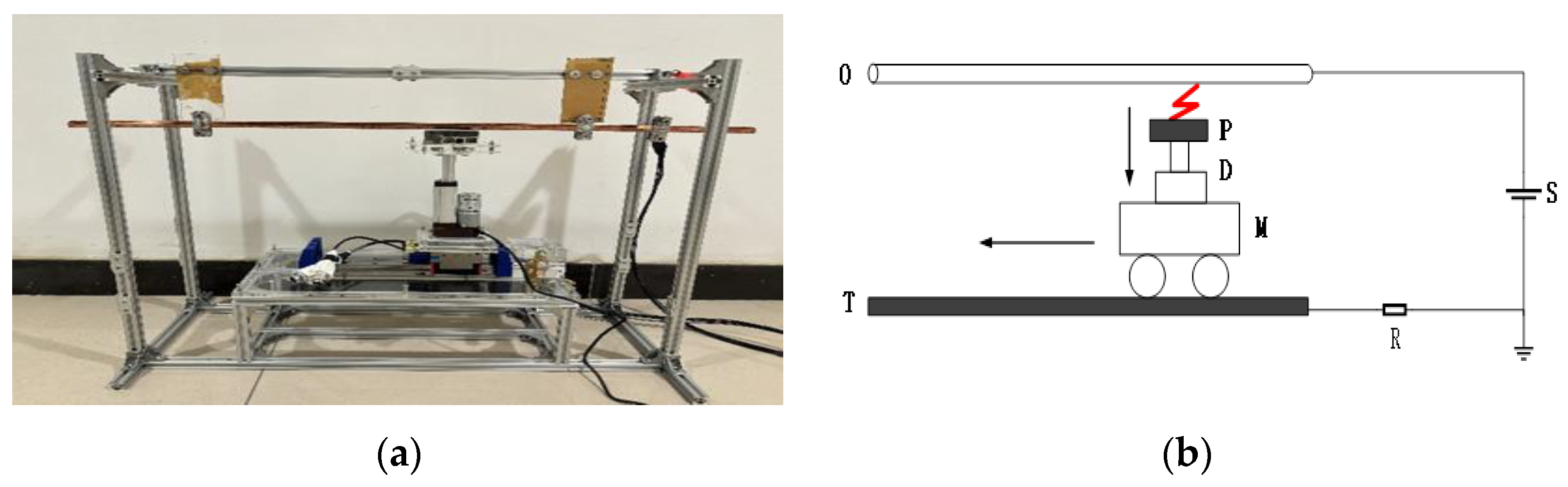
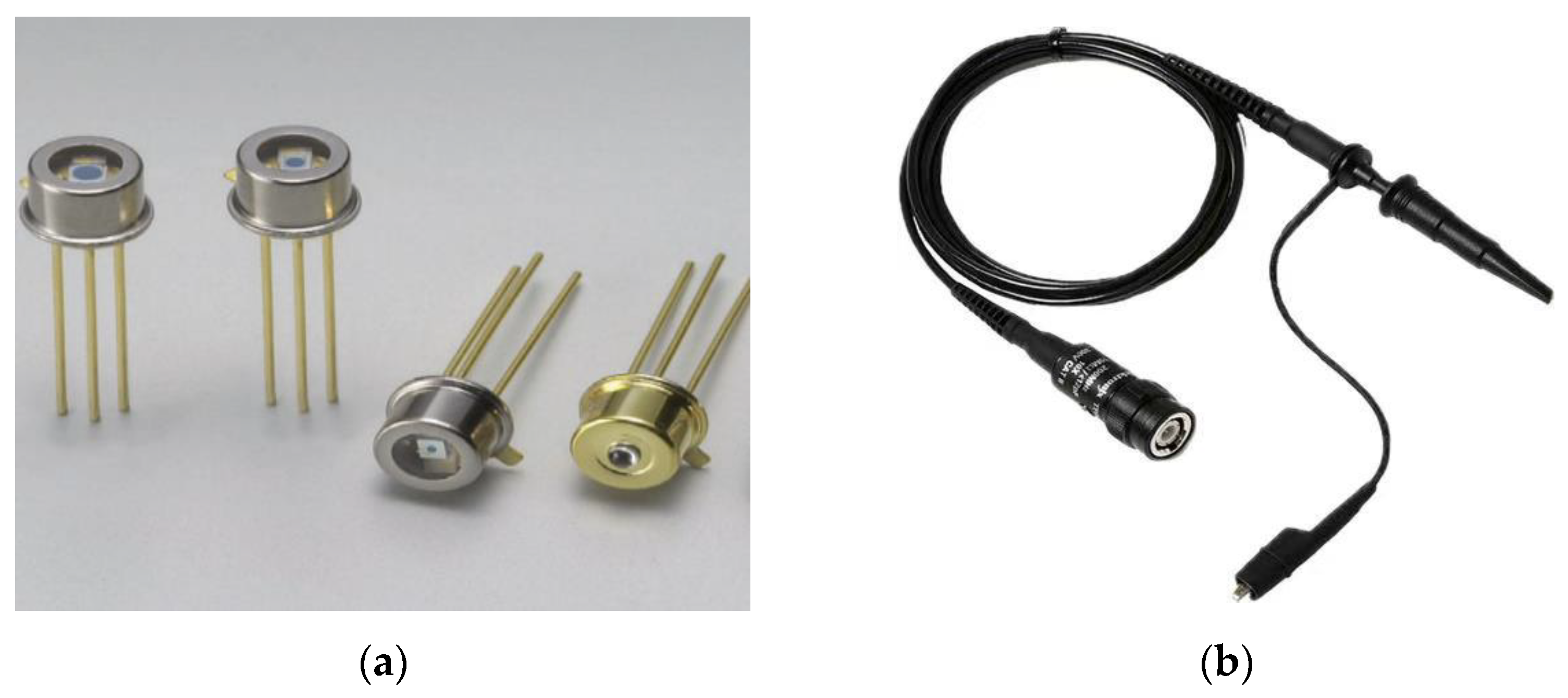
2. Experimental Setup
3. Arc Characteristics of Pantograph–Catenary Separation Discharge
3.1. Voltage and Current Variation During Pantograph–Catenary Separation Arcing
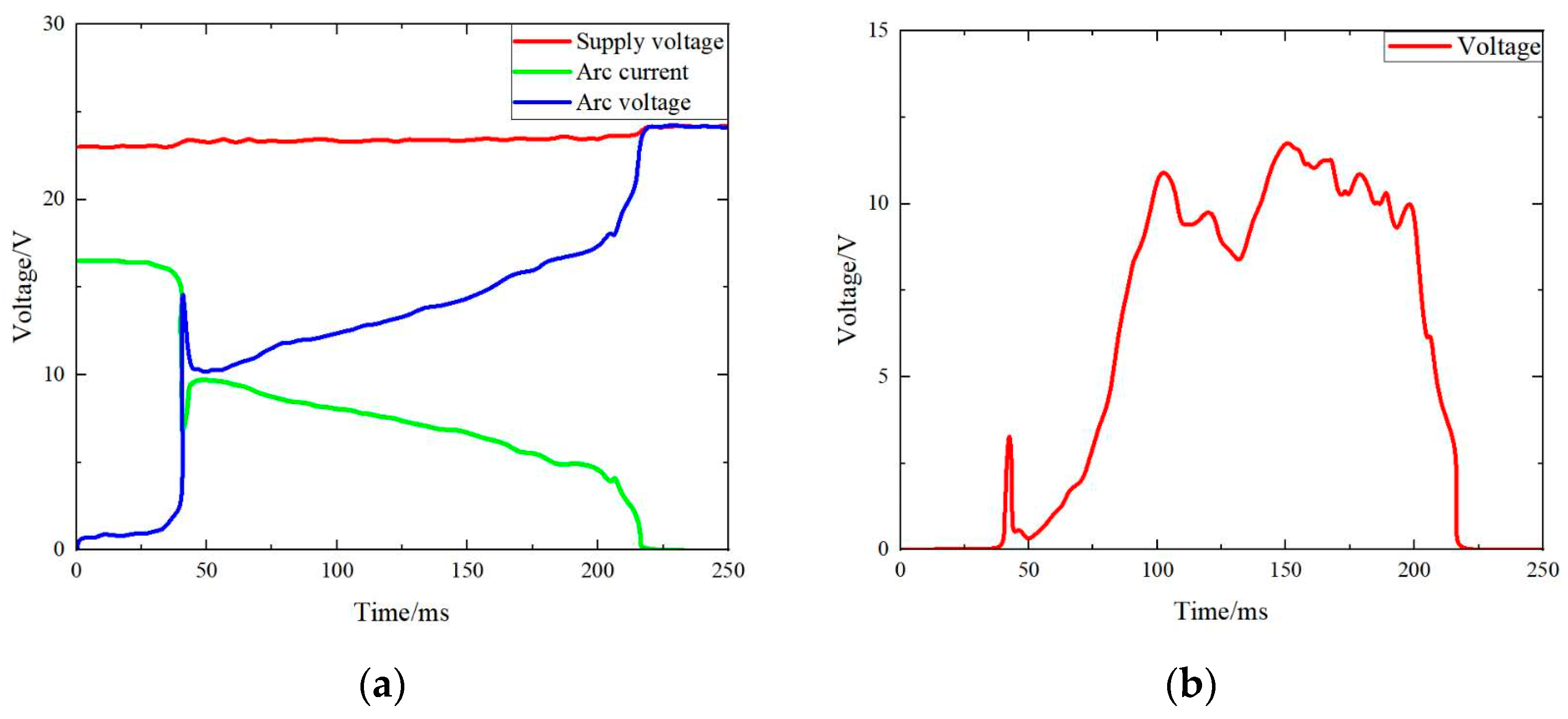
3.1.1. Voltage and Current Variation During Static Pantograph–Catenary Separation Arcing
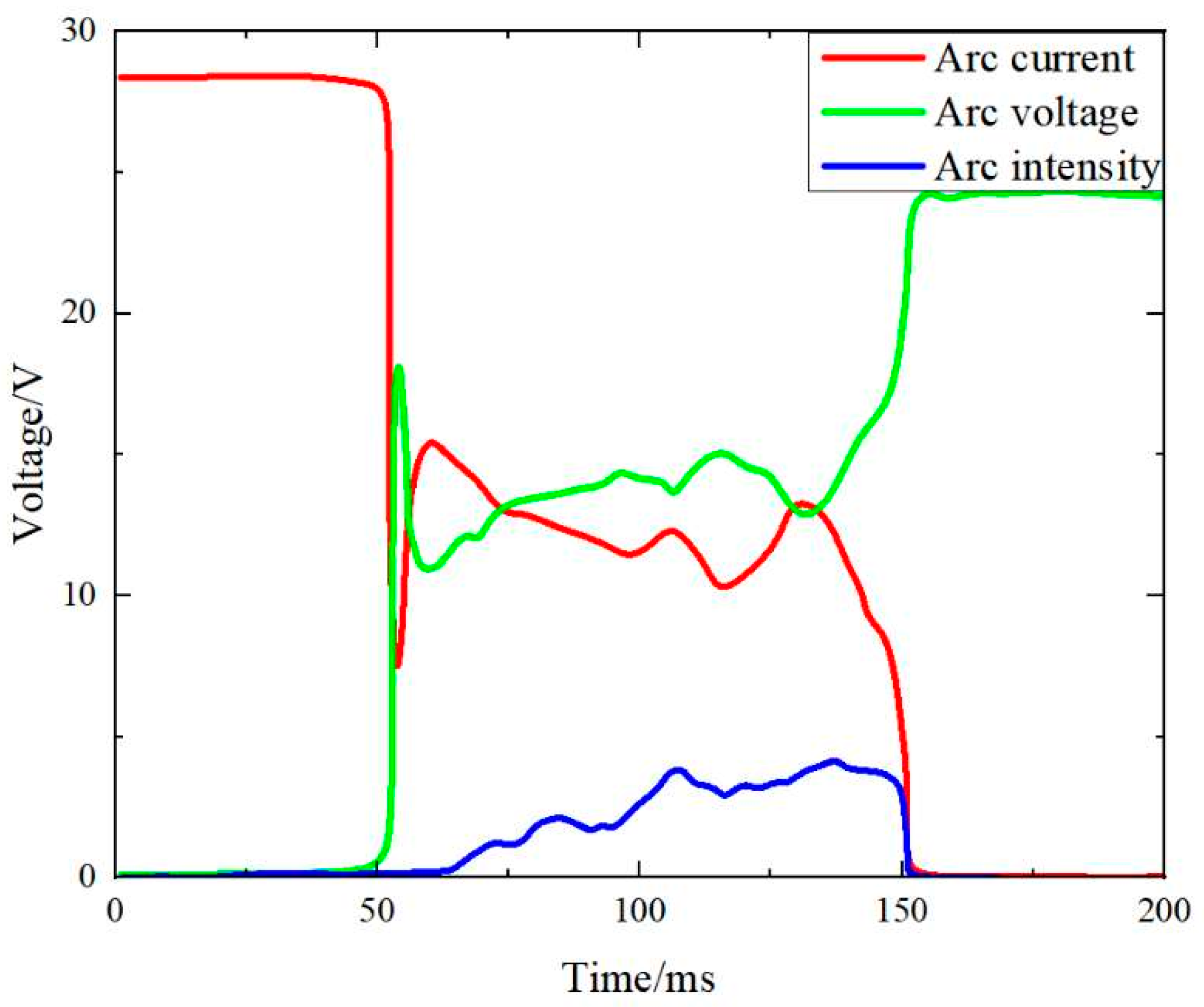
3.1.2. Voltage and Current Variation During Dynamic Pantograph–Catenary Separation Arcing
3.2. Electrical Characteristics of Pantograph–Catenary Separation Arcs
4. Experimental Study on Arc Duration and Arc Luminosity During Pantograph–Catenary Separation
4.1. Light Intensity Characteristics of Discharge During Pantograph–Catenary Separation
4.1.1. Arc Light Intensity Characteristics Under Static Pantograph–Catenary Separation
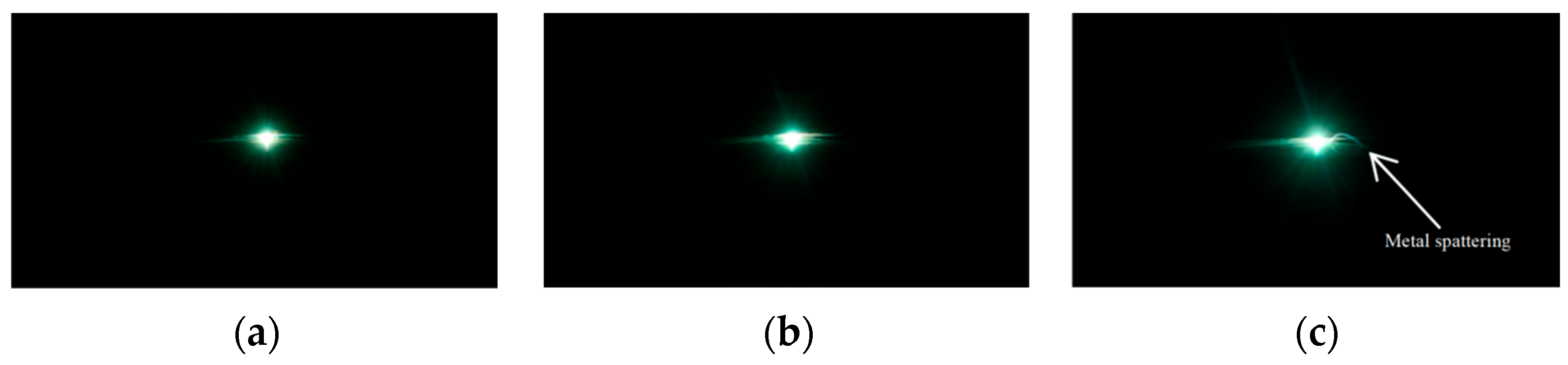
4.1.2. Arc Light Intensity Characteristics During Dynamic Pantograph–Catenary Separation
4.2. Influence of Voltage and Current Levels on the Burning Duration and Light Intensity of Decontact Arcs
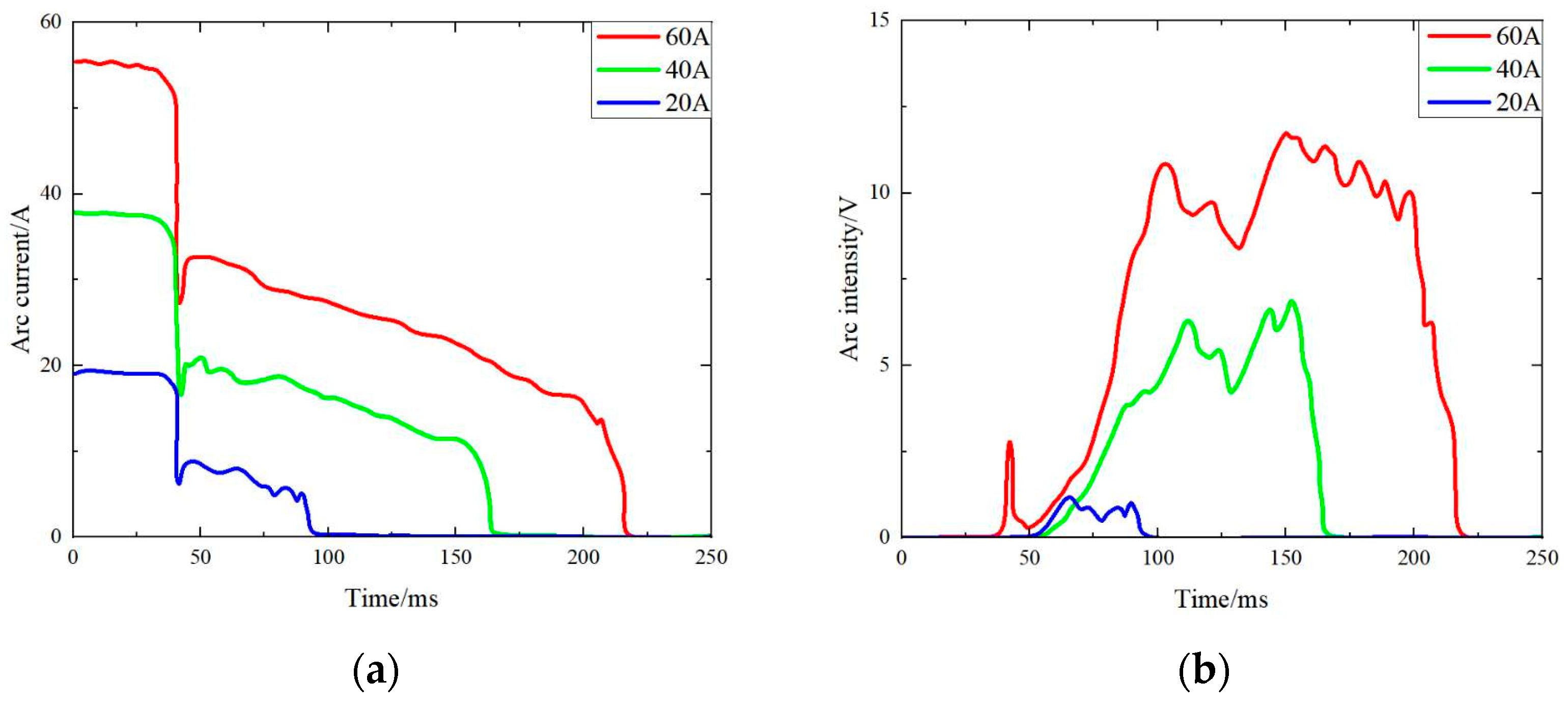
4.2.1. Influence of Current Level on the Burning Duration and Light Intensity of Decontact Arcs
4.2.2. Influence of Voltage Level on the Burning Duration and Light Intensity of Decontact Arcs
4.3. Influence of Train Operating Speed on Arc Duration
5. Conclusions
- (1)
- The arc burning time is longer when the contact wire acts as the cathode than when the carbon strip acts as the cathode.
- (2)
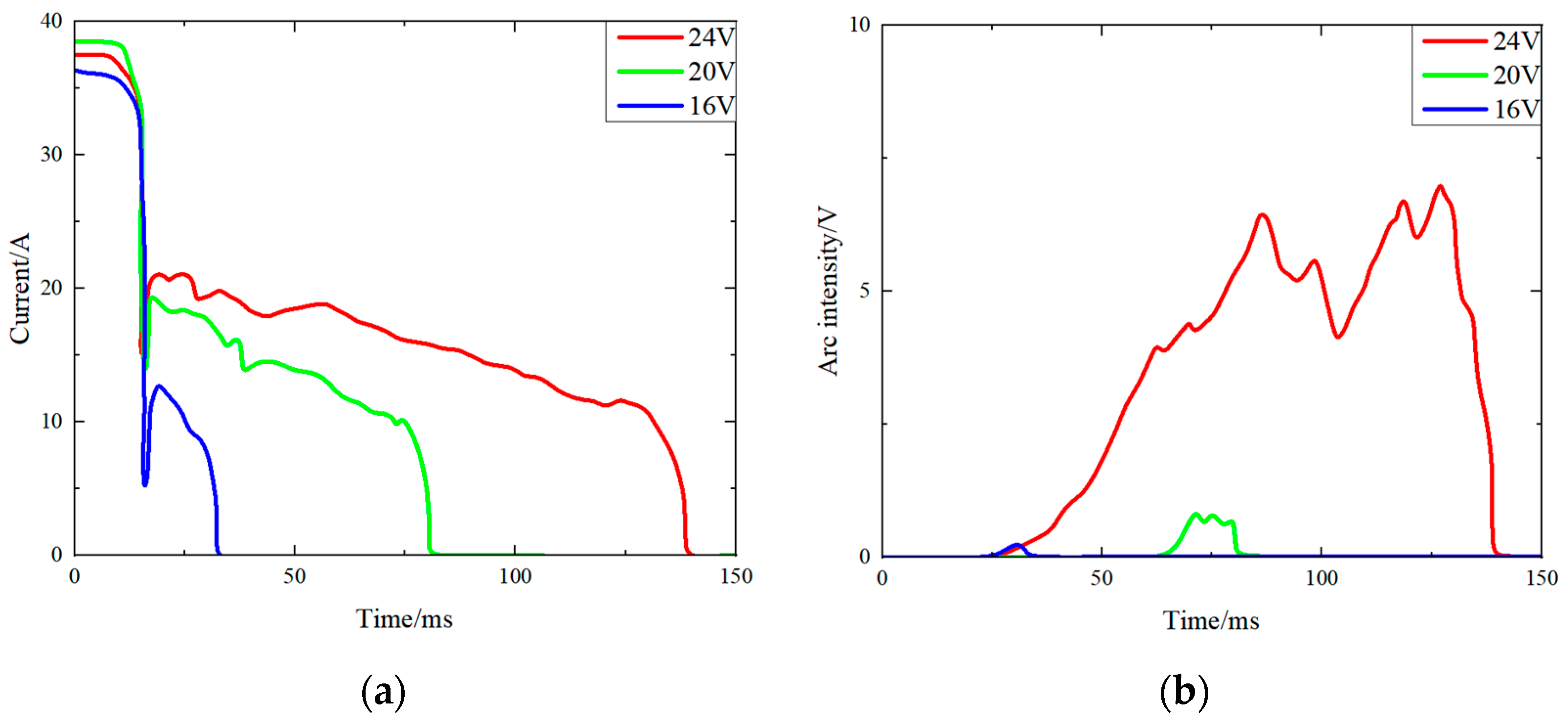
- In a DC pantograph–catenary system, when the voltage and current levels are increased or decreased by the same factor, the influence of the voltage level on the arc light intensity and burning duration during pantograph–catenary separation is greater than that of the current level.
- (3)
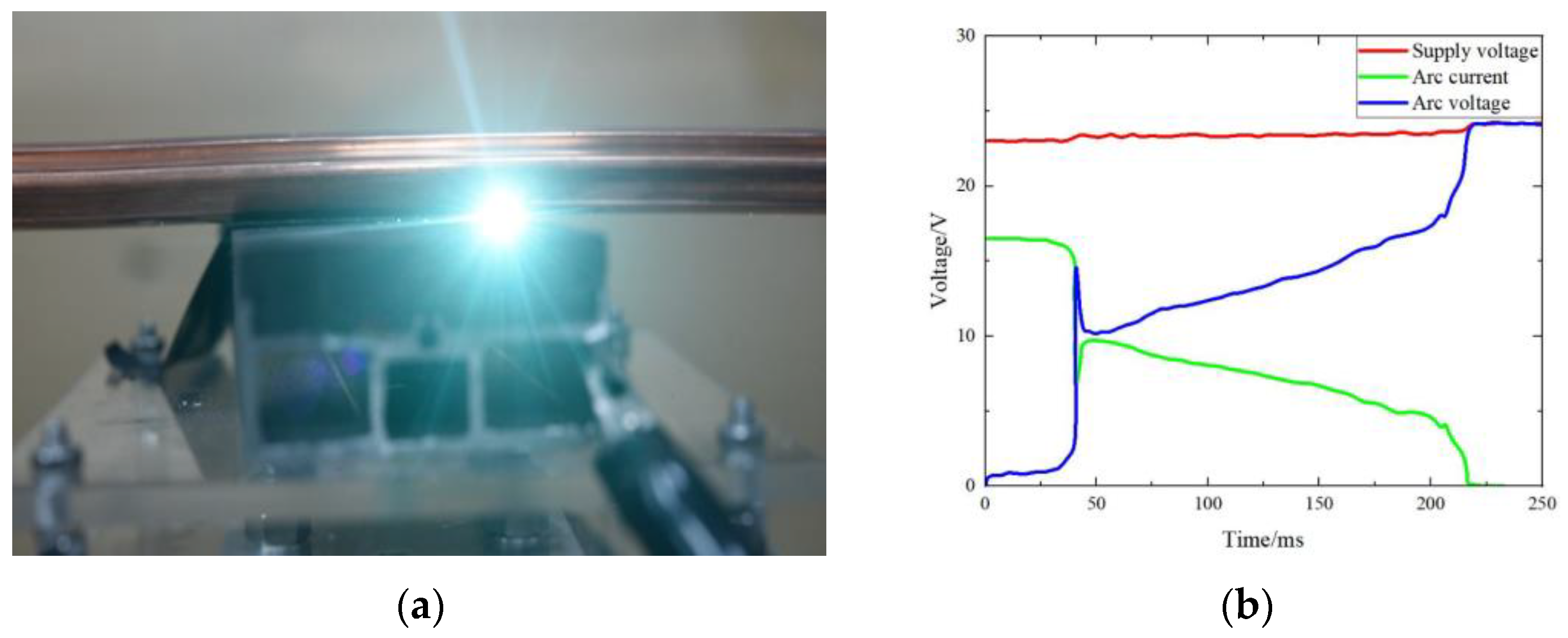
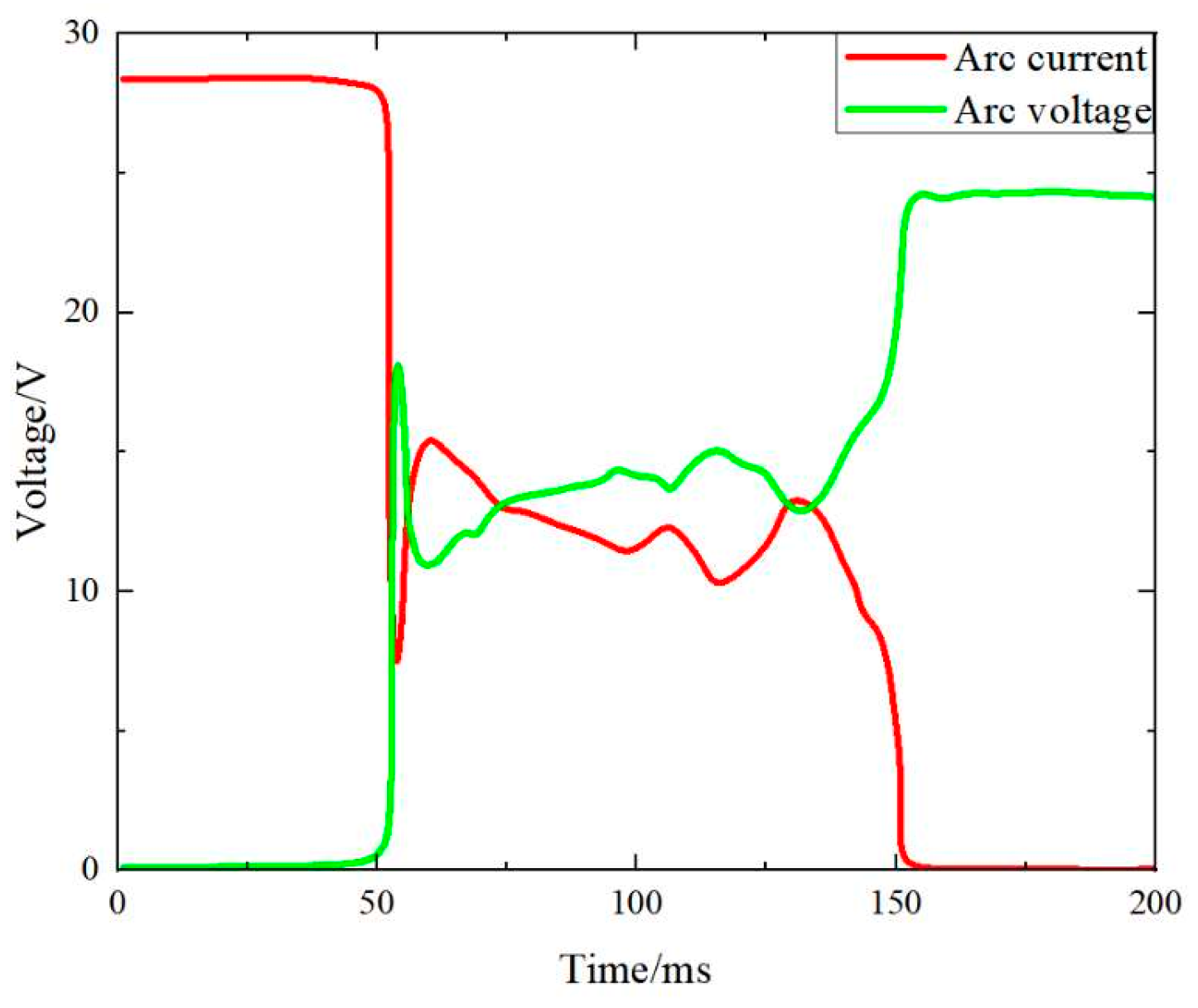
- At the instant of pantograph–catenary separation, the voltage exhibits a significant abrupt rise before receding to a stable arcing voltage. Conversely, the current shows a trend of a sharp drop followed by recovery at the moment of arc ignition, eventually decreasing to 0 A upon arc extinction.
- (4)
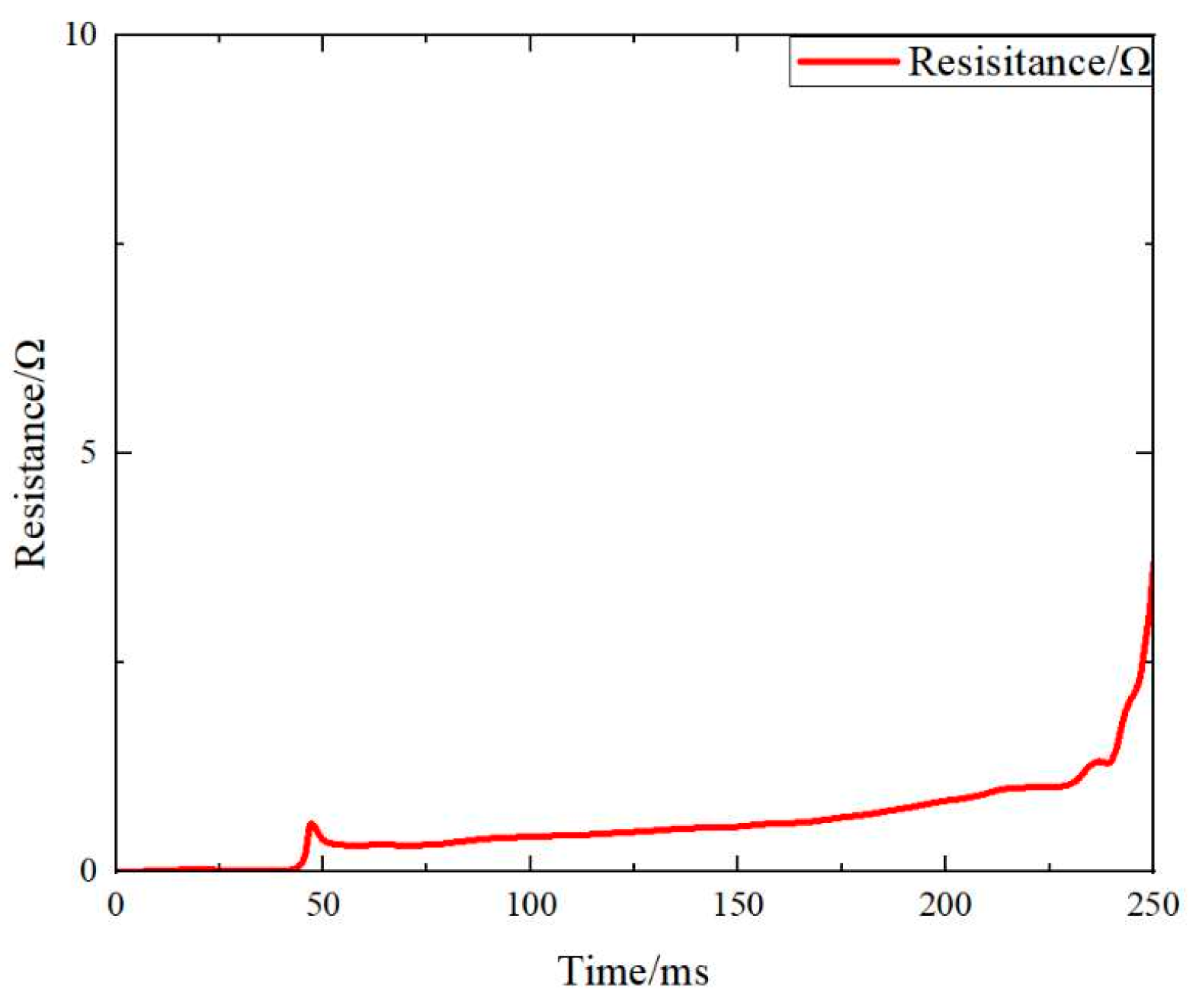
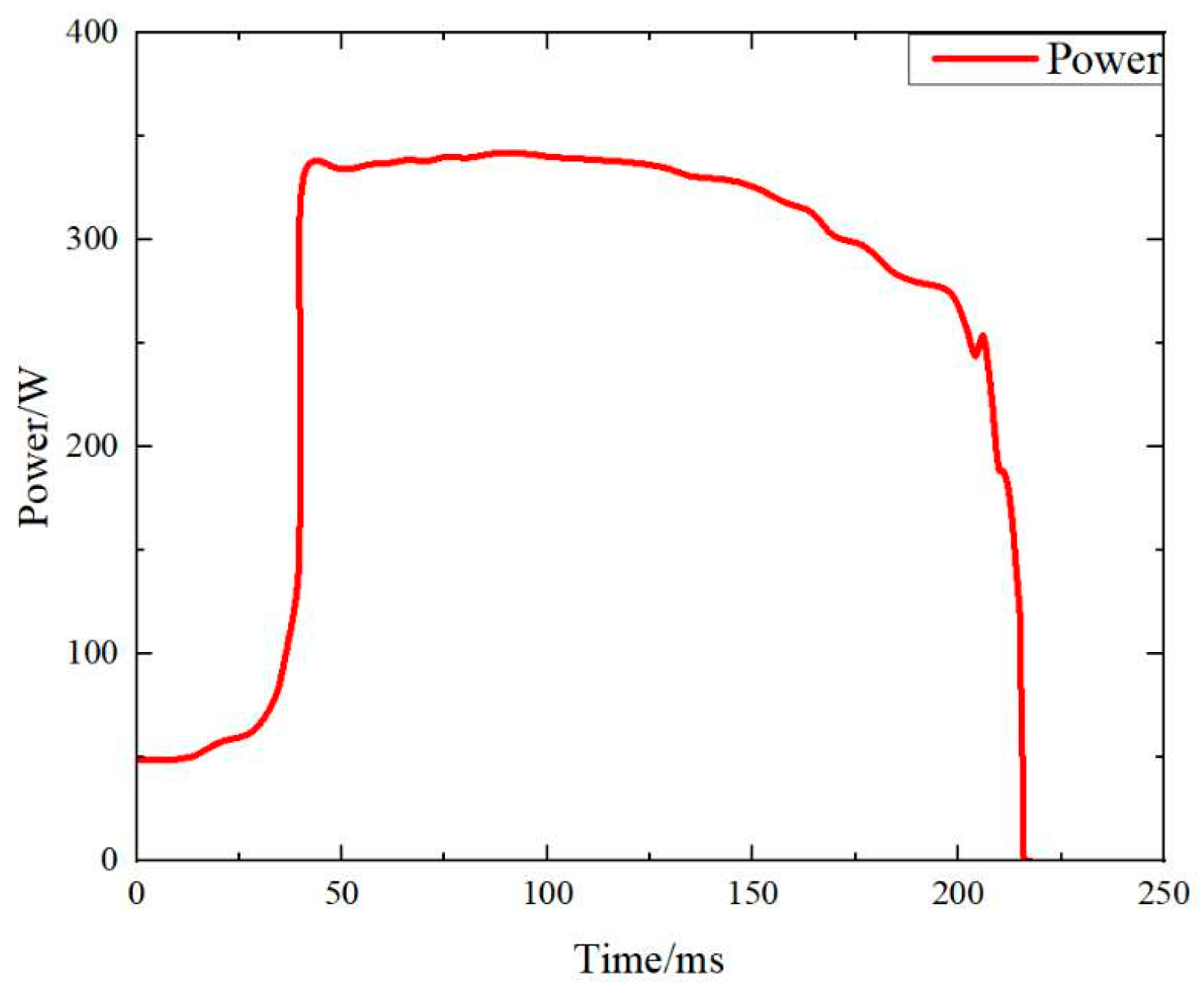
- At the moment of separation, due to the extremely small gap distance and high electric field intensity, both arc resistance and arc power exhibit pronounced “peak phenomena.”
- (5)
- As the offline gap increases, the electric field intensity decreases, causing the arc resistance to increase gradually towards infinity. Meanwhile, the arc power continues to decline amidst fluctuations until the arc is extinguished.
- (6)
- Compared to static separation, the voltage during the stable arcing phase of dynamic separation (with horizontal running speed) displays a trend of a slow increase followed by a gradual decrease, while the current slowly decreases before rising steadily.
- (7)
- The voltage required to maintain the arc channel is much lower than the air breakdown voltage, which explains why the arcing phenomenon is more persistent than simple air dielectric breakdown.
Author Contributions
Funding
Data Availability Statement
Conflicts of Interest
Abbreviations
| Mean | Arithmetic Mean |
| SD | Standard Deviation |
References
- Wang, J.P. Research on Key Characteristics of DC Pantograph-Catenary Arc. Master’s Thesis, Liaoning Technical University, Fuxin, China, 2021. [Google Scholar]
- Song, M.J. Simulation of Physical Field of Pantograph-Catenary Arc in Urban Rail and Research on Temperature Distribution and Influencing Factors. Master’s Thesis, Lanzhou Jiaotong University, Lanzhou, China, 2024. [Google Scholar]
- Ma, Z.P. Characteristic Analysis and Experimental Research on Arc of Rigid Catenary in Urban Rail Transit. Master’s Thesis, China Academy of Railway Sciences, Beijing, China, 2024. [Google Scholar]
- Tang, Y.T. Research on Model Characteristics and EMI of Pantograph-Catenary of the High-Speed Train. Ph.D. Thesis, Southwest Jiaotong University, Chengdu, China, 2021. [Google Scholar]
- Hao, J.; Gao, G.Q. Dynamic Analysis of Pantograph-Catenary Arc Plasma during Pantograph Lowering. J. China Railw. Soc. 2018, 40, 65–70. [Google Scholar] [CrossRef]
- Qiao, K.; Liu, W.Z.; Zhang, J. Simulation Analysis of Pantograph-Catenary Arc Based on Improved Mayr Model. Railw. Stand. Des. 2018, 62, 138–142. [Google Scholar] [CrossRef]
- Crotti, G.; Femine, A.D.; Gallo, D.; Giordano, D.; Landi, C.; Luiso, M.; Mariscotti, A.; Roccato, P.E. Pantograph-to-OHL Arc: Conducted Effects in DC Railway Supply System. IEEE Trans. Instrum. Meas. 2019, 68, 3861–3870. [Google Scholar] [CrossRef]
- Borsero, M.; Farina, G.; Vizio, G. RF Disturbance Field Produced by the Pantograph-Catenary Contact. In Proceedings of the EMC’98 ROMA International Symposium on Electromagnetic Compatibility, Rome, Italy, 14–18 September 1998; Volume 1, pp. 46–51. [Google Scholar]
- Midya, S.; Bormann, D.; Schütte, T.; Thottappillil, R. Pantograph Arcing in Electrified Railways—Mechanism and Influence of Various Parameters—Part I: With DC Traction Power Supply. IEEE Trans. Power Deliv. 2009, 24, 1931–1939. [Google Scholar] [CrossRef]
- Midya, S.; Bormann, D.; Schütte, T.; Thottappillil, R. Pantograph Arcing in Electrified Railways—Mechanism and Influence of Various Parameters—Part II: With AC Traction Power Supply. IEEE Trans. Power Deliv. 2009, 24, 1940–1950. [Google Scholar] [CrossRef]
- Midya, S.; Bormann, D.; Schütte, T.; Thottappillil, R. DC Component from Pantograph Arcing in AC Traction System—Influencing Parameters, Impact, and Mitigation Techniques. IEEE Trans. Electromagn. Compat. 2011, 53, 18–27. [Google Scholar] [CrossRef]
- Wang, W.G.; Wu, G.N.; Gao, G.Q.; Wang, B.; Cui, Y.; Liu, D.L. The Pantograph-Catenary Arc Test System for High-Speed Railways. J. China Railw. Soc. 2012, 34, 22–27. [Google Scholar] [CrossRef]
- Wei, W.F.; Wu, J.; Gao, G.Q.; Liu, X.; Zhu, G.; Wu, G. Study on Pantograph Arcing in a Laboratory Simulation System by High-Speed Photography. IEEE Trans. Plasma Sci. 2016, 44, 2438–2445. [Google Scholar] [CrossRef]
- Lu, Y.; Wang, Y.; Chen, X.Q. Modeling and verification analysis of pantograph-catenary arc of electrified railway considering transition function. High Volt. Appar. 2023, 59, 97–103. [Google Scholar]
- Chen, X.K.; Cao, B.J.; Liu, Y.Y.; Gao, G.Q.; Wu, G.N. Dynamic model of pantograph-catenary arc of train in high-speed airflow field. High Volt. Eng. 2016, 42, 3593–3600. [Google Scholar] [CrossRef]
- Peng, K.S.; Gao, G.Q. The Influence of Power Factor and Traction Current on Pantograph-Catenary Arc Energy. In Proceedings of the 2016 IEEE International Conference on High Voltage Engineering and Application (ICHVE), Chengdu, China, 19–22 September 2016; pp. 1–4. [Google Scholar] [CrossRef]
- Liu, Z.G.; Yang, Y.H.; Zhou, H.Y.; Huang, K. Study on the Modeling and Suppression of Arcing Generated by Articulated Split-Zone Insulator in Electrified Railways. IEEE Trans. Transp. Electrif. 2022, 8, 542–552. [Google Scholar] [CrossRef]
- Lin, F.; Wang, X.F.; Yang, Z.P.; Sun, H.; Liu, W.; Hao, R.; Jiao, J.; Yu, J. Analysis of Electrical Characteristics of the Four-Quadrant Converter in High-Speed Train Considering Pantograph-Catenary Arcing. Proc. Inst. Mech. Eng. Part F J. Rail Rapid Transit 2016, 231, 185–197. [Google Scholar] [CrossRef]
- Zhou, H.Y.; Liu, Z.G.; Deng, Y.C.; Yang, Y.H.; Gao, S.B. Suppression of arcing generated by articulated split-zone insulator on electrified railways. Power Syst. Technol. 2023, 47, 2583–2593. [Google Scholar] [CrossRef]
- Huang, X.; Gao, G.Q.; Wu, G.N. Influence of Pantograph-catenary Disconnection on Traction System. Power Syst. Technol. 2019, 55, 102–107. [Google Scholar]
- Chen, Y.; Chen, C.X.; Wang, X.Y. Influences on AT power supply system caused by pantograph-catenary arc and its suppression measures. Electr. Railw. 2019, 30, 15–19. [Google Scholar]
- Xu, M.; Liu, W.Z.; Yi, J.H. Study on electrical characteristics of pantograph-catenary arc during contact loss. Railw. Stand. Des. 2021, 65, 147–153. [Google Scholar]






| 60 A | 40 A | 20 A | |
|---|---|---|---|
| Arc burning time (Mean ± SD) | 175 ± 11.8 ms | 125 ± 12 ms | 55 ± 11 ms |
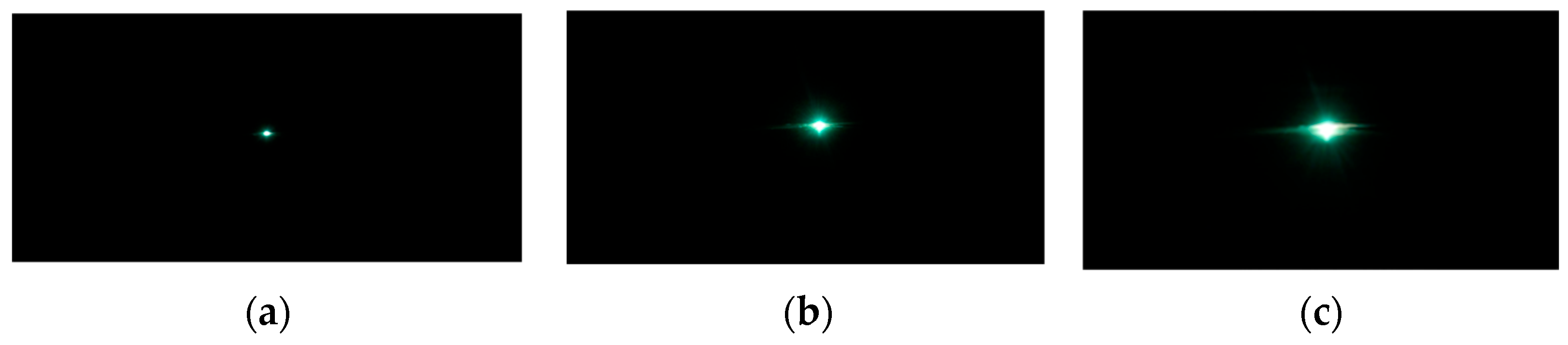
| Arc optical intensity (Mean ± SD) | 13 ± 1.89 V | 7.5 ± 1.59 V | 1.5 ± 0.71 V |
| 24 V | 20 V | 16 V | |
|---|---|---|---|
| Arc burning time (Mean ± SD) | 125 ± 12 ms | 70 ± 16 ms | 22 ± 8.79 ms |
| Arc optical intensity (Mean ± SD) | 7.5 ± 1.59 V | 1.2 ± 0.6 V | 0.3 ± 0.71 V |
Disclaimer/Publisher’s Note: The statements, opinions and data contained in all publications are solely those of the individual author(s) and contributor(s) and not of MDPI and/or the editor(s). MDPI and/or the editor(s) disclaim responsibility for any injury to people or property resulting from any ideas, methods, instructions or products referred to in the content. |
© 2026 by the authors. Licensee MDPI, Basel, Switzerland. This article is an open access article distributed under the terms and conditions of the Creative Commons Attribution (CC BY) license.
Share and Cite
Gong, Z.; Liu, C.; Xu, S.; Wang, G.; Liu, W.; Zhang, G. Study on Pantograph–Rigid Catenary Separation Through Simulation Experiments and the Dynamic Characteristics of DC Arcs. Machines 2026, 14, 264. https://doi.org/10.3390/machines14030264
Gong Z, Liu C, Xu S, Wang G, Liu W, Zhang G. Study on Pantograph–Rigid Catenary Separation Through Simulation Experiments and the Dynamic Characteristics of DC Arcs. Machines. 2026; 14(3):264. https://doi.org/10.3390/machines14030264
Chicago/Turabian StyleGong, Zhaofeng, Chang Liu, Shuai Xu, Guangxiao Wang, Wenzheng Liu, and Gang Zhang. 2026. "Study on Pantograph–Rigid Catenary Separation Through Simulation Experiments and the Dynamic Characteristics of DC Arcs" Machines 14, no. 3: 264. https://doi.org/10.3390/machines14030264
APA StyleGong, Z., Liu, C., Xu, S., Wang, G., Liu, W., & Zhang, G. (2026). Study on Pantograph–Rigid Catenary Separation Through Simulation Experiments and the Dynamic Characteristics of DC Arcs. Machines, 14(3), 264. https://doi.org/10.3390/machines14030264