Abstract
Computer-based engineering design tools can quicken the cadence for machine design, which enables companies to compete better in the global marketplace. The application of nonlinear optimization and tradespace analysis methods allows the exploration of design variables within dynamic mechanisms. In this paper, the design of a classical machine, the Seth Thomas pendulum street clock, which offered precision timekeeping and time display at the turn of the 20th century, will be investigated from a modern perspective. A mathematical model serves as the basis for the genetic algorithm optimization method to assess the system design in terms of accuracy, mass, quality factor, and bending stress. To validate the model, experimental data was collected on a 1906 Seth Thomas Model 04 movement. The engineering study findings indicate that the target accuracy, quality factor, and bending stress can be achieved with pendulum mass and gear thickness reductions of 1.4% and 50.3%, respectively. The tradespace exploration offers a visualization of the machine’s performance per design variable adjustments for greater insight into the original solution and subsequent recommended changes. Overall, this mechanical machine review enables an assessment of original design choices made over a century ago and provides an awareness of engineering’s progress during this period.
1. Introduction
The terms digital engineering, modeling, optimization, and tradespace analysis are often used within the product development realm. Digital engineering involves using computers, specialized software tools, and numerical plus physical information stored in databases to create and evaluate products within a lifecycle framework [1]. These digital engineering tools include additive manufacturing (AM), computer-aided design (CAD), computer-aided engineering (CAE), computer-aided manufacturing (CAM), Computational Fluid Dynamics (CFD), Finite Element Analysis (FEA), and product data management (PDM) to support the collaborative design process [2,3]. With the advent of Industry 4.0, transforming into Industry 5.0, the need for the inclusion of technologically advanced tools within academia is important to help prepare future engineers through hands-on experience in these technologies [4]. The incorporation of optimization techniques and tradespace analysis tools within digital engineering enables engineers and scientists to explore multiple design alternatives, evaluate trade-offs, and make informed decisions to meet product requirements and specifications, enhance performance, and improve efficiency [5].
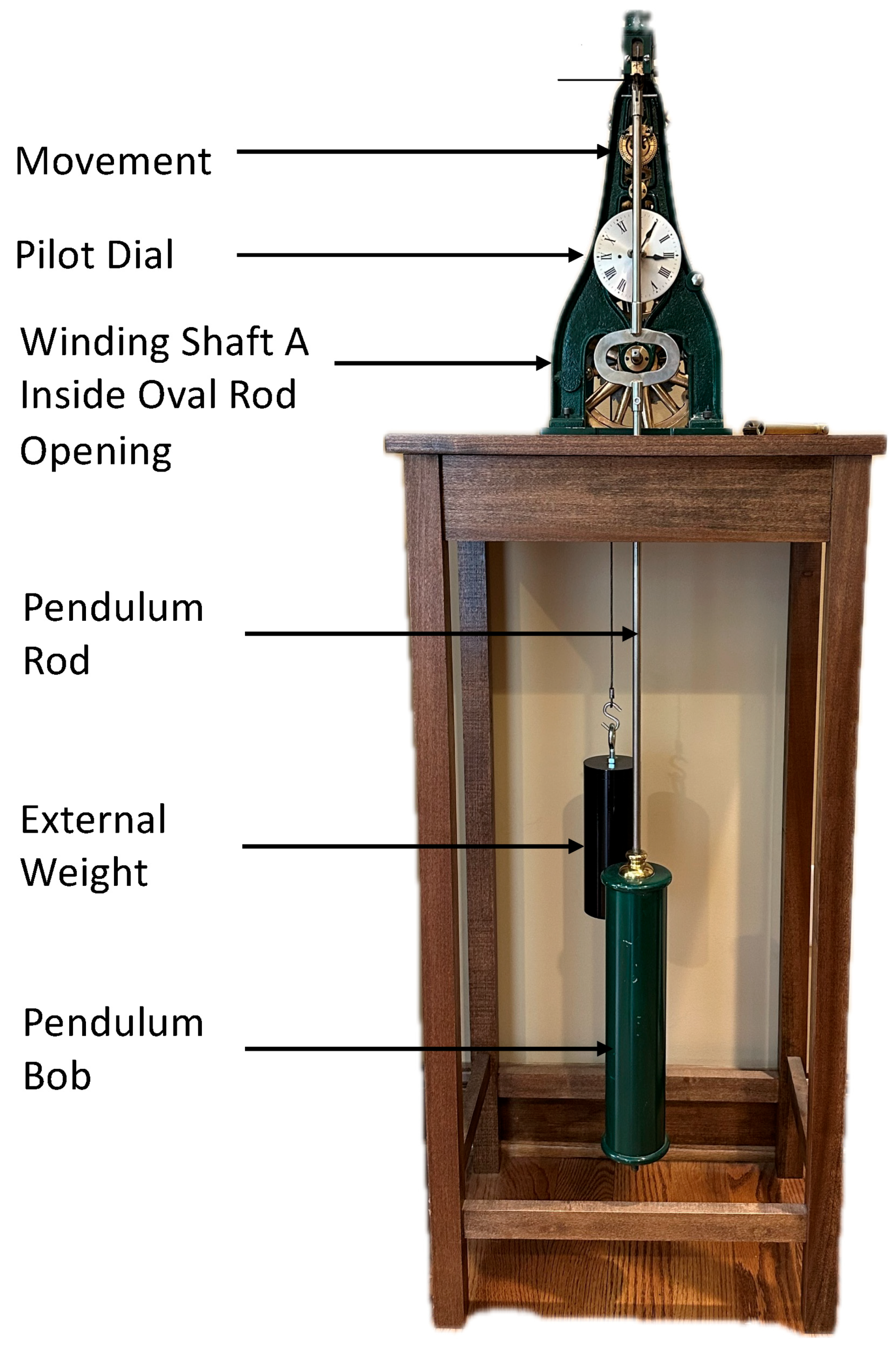
Modern digital engineering methodologies, including the emergence of artificial intelligence (AI) and data-driven approaches, provide additional tools to enhance the design process. Afifi et al. [6] presented a detailed systematic literature review of data-driven methods in engineering design overlaid on the traditional V-model framework for product development. The data-driven methods included artificial intelligence (AI), machine learning (ML), and deep learning (DL) with consideration of probabilistic and statistical approaches. The critical design decisions within the digital thread that links product lifecycle-generated information were studied by Singh and Willcox [7,8]. A mathematical foundation was proposed for data-driven decision-making in designs subject to uncertainty. Pasquariello et al. [9] reported on the integration of model-based system engineering (MSBE) and digital twin technology to support virtual design prototyping. The application of MSBE to the design, development, verification, and validation of an aircraft test bench digital twin enhanced the overall design process. The research objective is to employ advanced digital engineering methodologies for evaluating enhancements to products originally developed under 19th century factory design practices. The research utilizes an integrated workflow encompassing nonlinear modeling, experimental testing, calibrated numerical simulation, optimization, and tradespace analysis. As a representative case study, a 1906 street clock’s mechanical movement is digitally characterized and analyzed to demonstrate modern design and evaluation strategies on a historical machine (refer to Figure 1). Although additional features of the digital design thread might be pursued, the selected technical path will illustrate the enhanced product design process compared to the iterative build and test cycles with progressive improvements over many years.
Figure 1.
Seth Thomas Model 04 clock with pendulum.
Street and tower clocks provided a public time standard that coordinated commercial and civic activities within a community. The classic mechanical clock offers a technology road map spanning centuries with ever-increasing machine complexity (e.g., time, strike, and animation features) and accuracy to realize state-of-the-art solutions. But a question can be posed by asking, how much of a difference exists in design solutions separated by over 1¼ centuries? Modern engineering digital tools will be applied to determine whether improvements in component design can be accomplished. To demonstrate the approach, a classical late 1880s mechanical time movement will be investigated. A subset of design areas will be selected to assess possible updates while maintaining the overall machine power. Specifically, the time mechanism designed will be studied to improve the accuracy, quality factor, gear strength, and pendulum system mass. A comprehensive nonlinear mathematical model, calibrated using experimental data, will serve as the basis for the seamless optimization and tradespace exploration activities.
The remainder of the paper is organized as follows: Section 2 describes the fundamentals of optimization and tradespace exploration. Section 3 presents a case study to assess the design of a classical mechanical machine, focusing on modeling, performance metrics, testing and validation, optimization, and tradespace exploration within a design engineering framework. Importantly, measured parameter values are listed for the Seth Thomas Model 04 movement, which offers a database for future studies. Observations will be shared on the original design to offer insight into form and functionality in Section 4. The conclusion is contained in Section 5 followed by a Nomenclature List. Appendix A presents the clock escapement impulse logic.
2. Optimization and Tradespace Exploration
Engineering design optimization selects the best solution from a set of feasible candidate solutions to achieve specific objectives or criteria. The goal is to maximize or minimize the value of a function, known as the objective, subject to multiple constraints [10]. It involves the use of mathematical techniques, computational algorithms, and decision-making strategies to find the optimal value of a set of design variables while satisfying the problem constraints. An engineering design optimization problem provides a rigorous methodology to identify a set of values for the design vector, subject to the equality and inequality constraints while minimizing the value of one or more objective functions [11]. If either the objective function or any of the constraints are not linear functions of the selected design variables, then it becomes a nonlinear optimization problem of the form [12]
subject to the constraints
Solving an optimization problem generally involves using iterative algorithms [13]. This process begins with defining design variables, objectives, and constraints, ensuring that all system components are accurately represented. The solver addresses the problem using various optimization algorithms, including gradient descent, quasi-Newton, genetic algorithms, and simulated annealing. Engineering software tools such as Matlab (R2023b), ModeFrontier (2025R1), Octave (10.1.0), and Python (3.11.5) provide comprehensive platforms for performing multiple-objective optimization studies and exploring trade-offs between different design variables. These tools enable parameter-tuning and result visualization, allowing engineers to explore design trade-offs and make informed decisions based on multiple criteria [14].
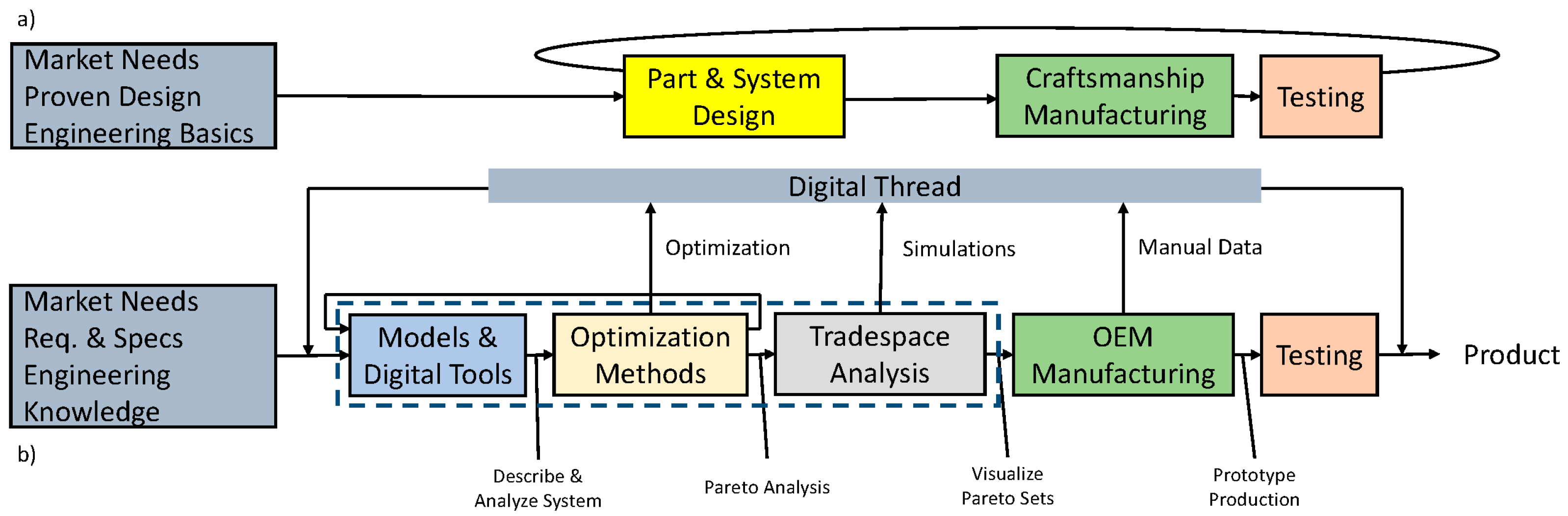
Tradespace exploration utilizes model-based engineering analysis and multi-objective optimization techniques to enable stakeholders to make informed decisions and trade-offs concerning a project’s scope, schedule, budget, performance, risk profile, and other considerations [15]. Since the relative importance of different tradespace metrics is generally not known a priori, tradespace exploration methods often focus on identifying the Pareto Frontier or Pareto Set of solutions. The Pareto solutions are a set of non-dominated solutions in which no further improvement in one objective can be achieved without a corresponding loss in performance in another objective [16]. To provide a broader perspective on the design landscape, tradespace analysis often considers dominated solutions within a certain tolerance of the Pareto Frontier as additional possible solutions of interest and feasibility [17]. By visualizing these results in integrated graphs and charts, the complex trade-offs between the design variables, constraints, and optimal solutions can be understood better by decision-makers, leading to more informed design decisions. The current trend towards a digital design thread is fully integrated into this process as shown in Figure 2. Note that in Figure 2a, traditional design approaches focus on the long-term evolution of the design, which depends heavily on proven solutions, craftsmanship, and iterative testing. The emergence of a digital design thread alternative (Figure 2b) provides increased iteration capabilities throughout the design process. This integration enables an accelerated design process with a faster evolution than historic processes, although historic processes have achieved highly optimized designs over long timeframes.
Figure 2.
Product design processes—(a) 1880s approach primarily using empirical knowledge, limited engineering principles, and intuition; (b) modern approach based on digital engineering strategies to model, analyze, and precise manufacturing.
The integration of optimization techniques via tradespace analysis enhances decision-making by systematically evaluating and refining design alternatives based on multiple objectives [18]. To determine the best trade-offs, optimization algorithms effectively explore the design space by modifying system variables. Stakeholders can then investigate how design modifications impact system performance in tradespace exploration, leading to solutions with superior performance. Tradespace analysis and digital engineering tools enable a flexible, cost-efficient and well-informed engineering design process for solving multi-objective problems. The synergy available with these digital design space utilities empowers today’s engineers to create innovative solutions in far less time than those undertaken before the turn of the 20th century.
The novelty in this work is in the application of modern techniques to a design which has evolved over centuries of iterative traditional design evolution. This work demonstrates (i) the formulation of a multi-objective optimization formulation of a historical mechanical system with explicit design variables, constraints and performance objectives, (ii) the quality of the multi-objective optimization solution for a historical mechanical system obtained via tradespace exploration of the Pareto solutions with respect to the historical development, achieved through (iii) the application of modern digital engineering techniques, including digital thread for repeatable and scalable model-driven exploration versus traditional intuition-based iterative development.
3. Design Analysis of a Classic Machine
To explore the application of optimization and tradespace exploration tools to a classic machine for design analysis and improvement, the ModeFrontier utility was selected. The governing dynamics in the underlying nonlinear model will be presented, followed by the performance metrics to help guide the assessment process. Representative data gathered through experimental testing on an 1880s-designed and 1907-manufactured mechanical machine enable model validation activities. Lastly, the optimization problem is formulated and solved, followed by tradespace visualization of Pareto solutions.
3.1. Classic Mechanical Movement
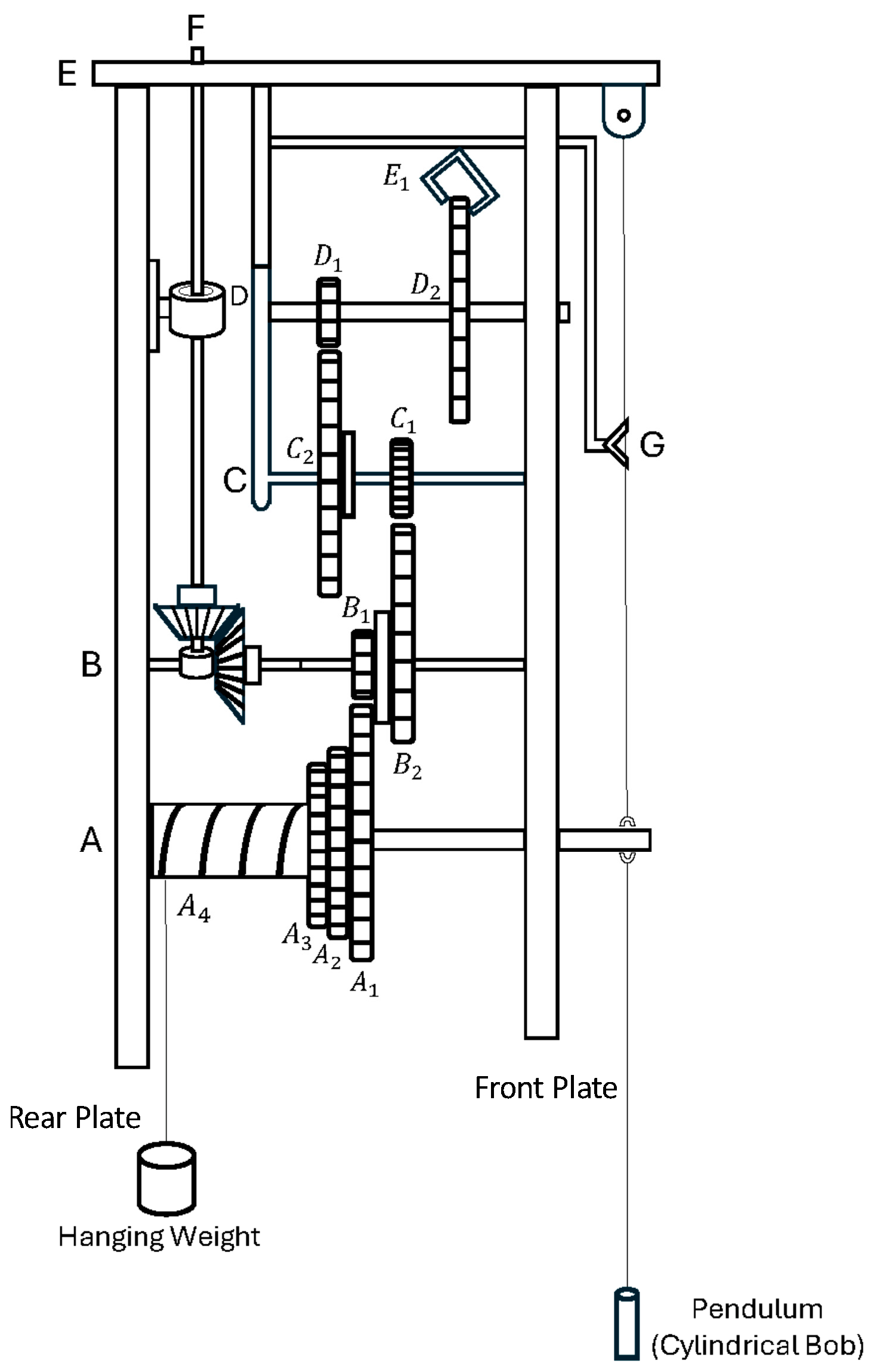
Throughout the period from the 15th to the 20th centuries, mechanical timekeeping devices embodied the progression of scientific knowledge, craftsmanship, and the evolution of artistic creativity [19]. In the late 1800s and beyond, tower and street clocks, serving as prominent visual timekeepers, facilitated the coordination of daily routines within communities, enhancing commerce and transportation. This included factory time recorders for workers, business meeting scheduling, railroad timetables, and personal pocket watches [20]. These pendulum clock mechanisms, studied by Galileo Galilei and pioneered by Christian Huygens, exemplify remarkable engineering feats [21]. The movement harnesses potential energy from a suspended weight or wound spring, channeling it into the periodic oscillations of a pendulum through intricate reduction gears and escapement. Notably, the Graham deadbeat escapement ensures precise regulation by discretizing rotational motion into pendulum swings using dual pallets [22,23]. A thin steel suspension spring maintains pendulum alignment, while the escapement-connected crutch imparts controlled impulses. The time display, extracted from the gear train’s second set of wheels with a 12:1 hour ratio, and the periodic winding of the weight every 8 days using a removable hand crank further characterize these clocks. Fine adjustments to the pendulum length, facilitated by a screw adjustment, regulate the clock’s accuracy. An exemplary model of a classic pendulum movement is the 1905 Seth Thomas Model 04, whose integrated components (shafts, gears, and pendulum) are shown in Figure 3. As anticipated, the availability of electric motors, quartz crystals, and atomic technology relegated traditional mechanical timepieces to a historical role.
Figure 3.
Seth Thomas Model 04 movement configuration with components.
Crucial attributes of pendulum clocks include accuracy, quality factor, gear teeth strength, and mass. The clock’s period requires fine-tuning through pendulum length adjustments to ensure consistent day-to-day operation, minimizing error accumulation and maintaining accurate time displays [24]. Conversely, the quality factor quantifies energy losses attributable to friction and aerodynamic forces during pendulum motion, reflecting the clock’s ability to convert potential energy into kinetic energy [25]. The strength of the gear teeth, dependent on the metal stock properties and dimensions, addresses the bending stresses that can be accommodated by the applied torque loads. Finally, the pendulum’s physical size and materials, as well as the clock’s structure, influence the time movement’s overall performance. Addressing these considerations entails formulating an optimization problem to evaluate their interplay. Engineering optimization methodologies seek to identify optimal solutions within specified constraints, encompassing factors like geometry, cost, and service requirements [26]. Ultimately, optimization methods endeavor to enhance performance while minimizing costs simultaneously. The provision of these solutions to the tradespace tool enables the visual exploration of the Pareto designs and the subsequent selection of the best choices for closer inspection [27].
3.2. Mathematical Model
A lumped parameter model has been formulated to describe the mechanical movement of a clock, incorporating components such as the external weight, gear train, escapement, and pendulum. The escapement, crucial for regulating the rotational torque transmitted through the gear train to impulse the pendulum periodically, is a focal point of this model. The escape wheel’s rotational speed, can be expressed as
The parameters and represent the moment of inertia and viscous damping coefficient of the escape wheel. The available drive torque is dependent on the external weights hung, crutch impulses, losses through the gear train, and clock hands. The term signifies the applied torque acting through the gear train on the escape wheel, denotes the impulsive torque that arises every half-period due to the escape wheel and crutch interaction, and represents the load torque due to the clock dial hands. Note that yields the escape wheel angle, which regulates the crutch impulses, in conjunction with the anchor pallets, supplied to the pendulum rod. In other words, the escapement sustains the pendulum’s oscillatory motion, which in turn precisely regulates the clock’s period.
The gear train, comprising four meshed gear interfaces, reduces the applied torque from the suspended weight and augments the available rotation as shown in Figure 3. The train ratio, R*, becomes
where denotes the gear teeth for Shaft A–Gear 1.
The load torque due to the minute and hour hands can be expressed as
where the subscripts m and h denote the minute and hour hands. The parameters m and r correspond to the hand mass and radius from the pivot point to CG. A fixed maximum torque might be considered (e.g., hands positioned at 21:45 hours), although the hand rotational angle influences the load torque. For completeness, the gear ratio from Arbor B to Arbor D, , and the minute–hour hand ratio of 12:1 should be integrated into the analysis.
The hanging weight, W, acts on the winding drum to power the machine with the drive torque given as . The relationship within the gear train enables the escape wheel torque to be expressed as .
The angular motion of the pendulum, , in a vertical plane about an elevated horizontal pivot point, can be described by
where is the damping coefficient and Fa is the aerodynamic drag force. The term denotes the pendulum’s moment of inertia, is the pendulum rod mass, is the pendulum bob total mass, L signifies the pendulum rod length, and is the pendulum cylinder height. The symbol represents the periodic impulse torque applied to the pendulum to maintain angular motion.
Note that the pendulum rod’s effective length, , denotes the distance from the suspension spring to the pendulum bob center of mass [28]. For the compound pendulum with a cylindrical hollow bob featuring cap ends, the moment of inertia becomes
with and representing the pendulum’s cylinder outer and inner radius, respectively. For a fixed hollow cylinder thickness, , the inner radius becomes Further, the terms , , , and represent the cylinder mass, ith end cap mass including fastener (top, bottom), end cap radius assumed to be , and pivot distance to the end caps.
The pendulum rod mass becomes where and denote the rod radius and fixed mass due to discontinuous rod geometry. The cylinder mass becomes while the end caps with fasteners are considered thin circular plates with fixed mass. The parameters and represent the pendulum rod and pendulum bob cylinder density, respectively. Thus, the pendulum bob mass becomes . Lastly, the distances to the end caps are and .
An aerodynamic drag force, Fa, primarily acts on the pendulum bob to dissipate energy as it swings through the air. This force considers parameters such as the drag coefficient, CD, surface area of the bob and rod, A, air density, ρa, and translational velocity of the bob so
where . For a cylinder-shaped object, = 0.8 when aligned perpendicular to the flow, corresponding to the pendulum swinging through the air.
The symmetric impulse interval of the pendulum is based on the rod’s angular position and angular velocity. The impulses begin and end at the pendulum angles entry and exit in one direction and vice versa for the return motion. The impulsive torque, applied to the pendulum rod can be calculated [29] as
Here, is the radius of the escape wheel, is the distance from the pallet to the pivot, and denotes the angle enclosed by the line between the escapement wheel’s center and the impulse face’s contact point. Additional information regarding the escapement impulse logic is contained in Appendix A.
To initially analyze the gear bending stress, , the W. Lewis formula can be applied (although other AGMA approaches may be suitable) as follows
where is the tangential force, is the diametral pitch, is the tooth width, and is the Lewis Form Factor [30]. The tangential load becomes where , corresponding to the torque acting on Shaft A, and is the pitch radius. The diametral pitch may be expressed as with denoting the number of gear teeth. Substituting these relationships into Equation (9) offers . The corresponding gear mass becomes where and represent the gear density and spokes factor.
3.3. Performance Metrics—Quality Factor, Accuracy, and Bending Stress
To assess the performance of a purpose-designed vibrational system, various measures can be employed. For a clock mechanism, one may consider the efficient utilization of available energy for timekeeping and accuracy evaluation, as well as the strength of the component designs. One crucial parameter is the quality factor, Q—a dimensionless quantity defined as the ratio of the energy stored, , to energy lost, , in the system within one period [28] or
For a pendulum system, a higher Q value is desirable as it corresponds to a lower rate of energy loss primarily due to aerodynamic drag, resulting in increased stability and accuracy. Pendulum clocks may exhibit Q values from less than 500 to more than 10,000 depending on the size and aerodynamics of the pendulum, as well as the clock’s period and amplitude of oscillation. For an oscillator system, the quality factor can be analytically calculated as
where is the system’s natural frequency, and τ is the exponential time constant. In the case of small angles, the period can be expressed as so that
When experimental data is available, Q can be measured by observing the logarithmic decay of the pendulum over time, fitting a decay curve to this data, and determining the damping coefficient leading to , and using Equation (14).
The accuracy of the clock movement hinges primarily on factors such as the pendulum length, symmetrical operation of the escapement (ensuring equal impulse forces act on the pendulum during swings of approximately ±2° about the vertical), aerodynamic drag on the pendulum and its bob, and friction within mechanical components. In certain cases, a wooden or metal casing may shield the clock movement and pendulum from dust and aerodynamic disturbances. It is worth noting that high-precision mechanical clocks often encase the pendulum in a vacuum chamber to minimize temperature-induced variations (e.g., pendulum rod lengthening) and air resistance.
The maximum torque on the movement’s spur gears occurs at the interface of the shaft A gear A1 and shaft B pinion B1. The bending stress depends on the tangential tooth force due to the applied torque, gear pitch radius, diametral pitch, and tooth width. From a design perspective, some gears (e.g., primarily the escape wheel) will experience cyclical loading due to the repeated transmission of discontinuous rotational motion, to impulse the pendulum over a small portion of its swing. However, the contact stresses with the large gear teeth adjacent to the external weight will experience the greatest bending stress, which must remain below the given material’s limit with a Safety Factor of two.
3.4. Experimental Testing and Model Validation
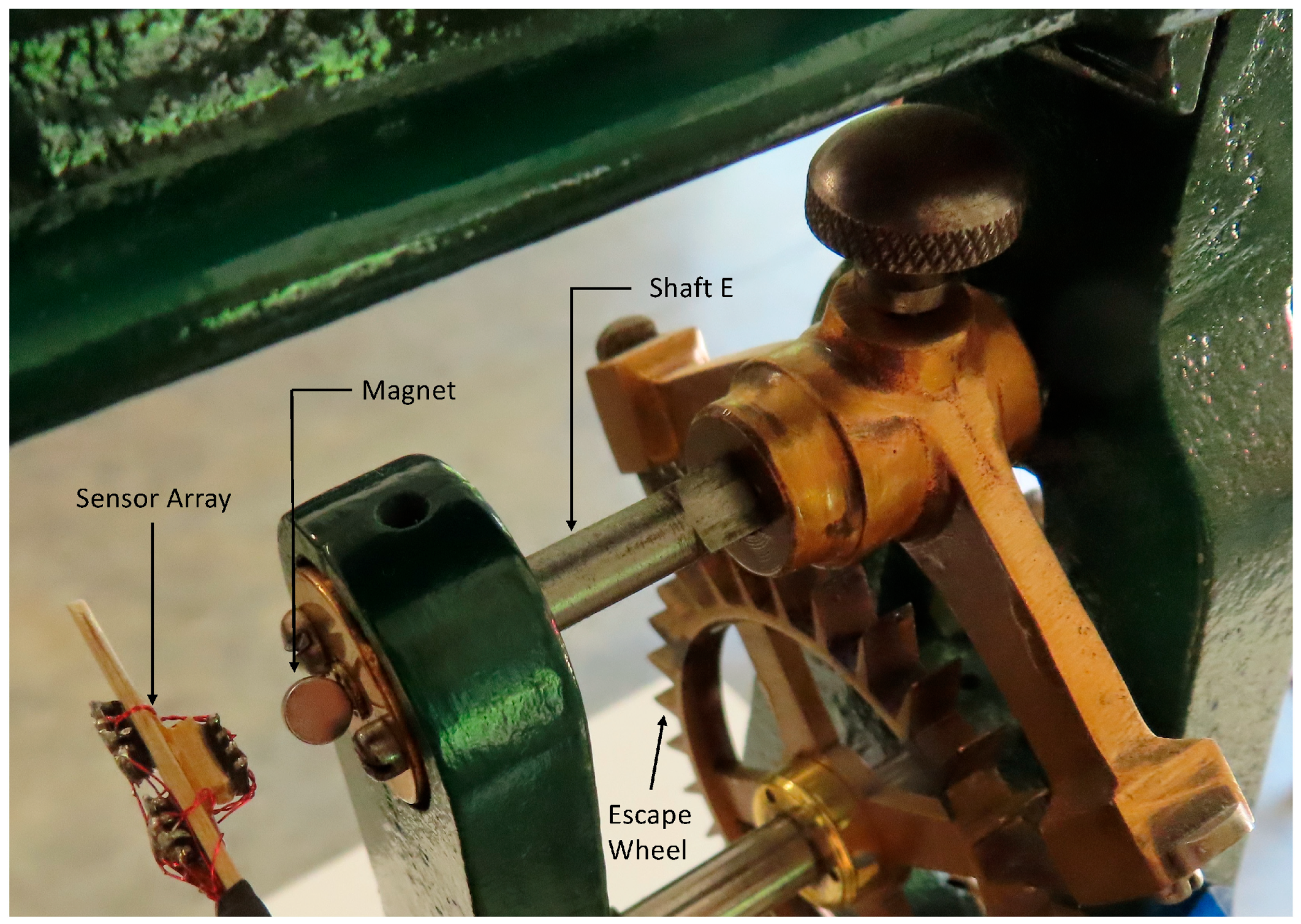
To validate the nonlinear mathematical model, experimental testing was performed on the Seth Thomas Model 04 movement with an external hanging weight, W. No hands or corresponding hand loads were considered, given the variability in applications (e.g., the number of clock faces, materials chosen for the hands, possible exposure to elements or operation behind the glass, balancing of hands, etc.). Three non-contact magnetic angular position sensors were constructed and attached to the escape wheel, crutch, and pendulum to measure the respective angular motion. Figure 4 shows a typical installation, which consists of a rare-earth magnet affixed to the moving component, in this case, the end of the crutch arbor. All electronics were mounted on a slender wooden slat. On one side of the slat, facing the magnet, is the Honeywell (Golden Valley, MN, USA) APS00B magnetic field sensor, a dual-channel sensor in an SOIC package that outputs the sine and cosine of the magnetic field lines in the sensor plane. On the opposite side of the slat is a pair of Analog Devices (Norwood, MA, USA) AD623 instrumentation amplifiers, one for each channel. These boost the APS00B outputs to better match the input range on the 16-bit, 16-channel National Instruments Elvis II data acquisition system. The three sensors require six channels of the data acquisition system. Data were logged using the LabVIEW software (2024Q3), set at sample rates of 10,000 Hz for each channel to facilitate post-processing numerical filtering in Matlab.
Figure 4.
Experimental measurement of the crutch arbor’s angular motion using a miniature magnet and sensor array with attached amplifiers.
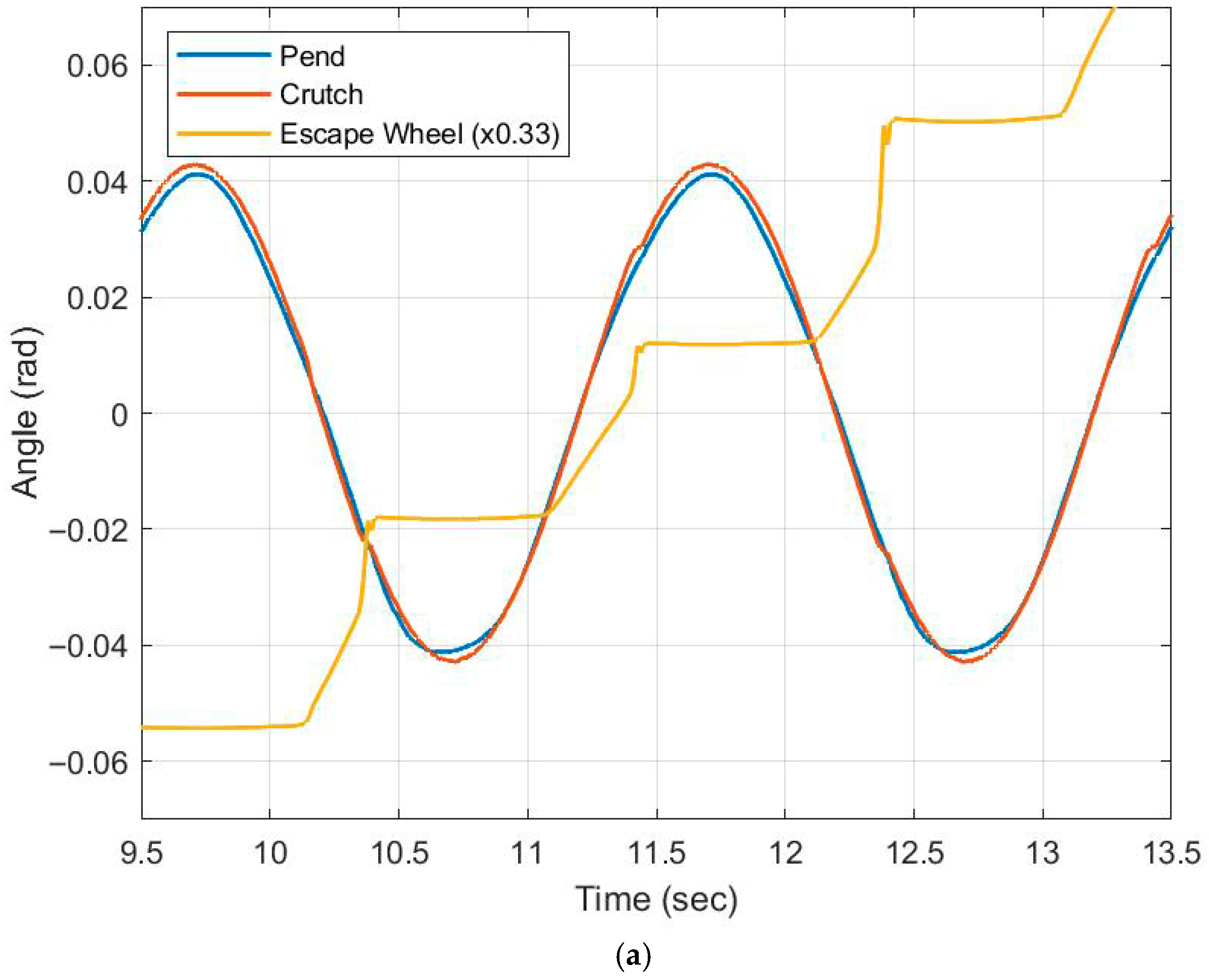
The manufacturer recommends using the APS00B with pole pieces to present a uniform field to the sensor for optimal performance, but it is not a requirement if there is insufficient space to use them. The 3D field of a bare magnet can be challenging, but the output is nonetheless usable. Calibration requires a separate test with a magnet to determine the output span and zero of each sensor and amplifier combination, which are required to perform the arcsine and arccosine calculations that give each angular measurement. Physical verification of the installed system shows field non-uniformity to be affecting some results by five percent. Typical data are plotted in Figure 5a, which shows motion over two periods and entails three complete lock–impulse–lock sequences. The pendulum and crutch exhibited an angular rotation of approximately ±0.041 (rads) with a T = 2.0 (sec) period. The motion of the crutch does not exactly follow the motion of the pendulum due to the small gap in the mechanical connection between them, causing the crutch to move through a slightly larger angle as it is driven by the escape wheel. Note the slight distortion of the waveform of the pendulum motion at extreme angles less than zero as opposed to the shape at the extremes greater than zero; this is due to the use of a bare magnet as mentioned above. The 30-tooth escape wheel should advance by 0.105 (rads), or p/30, every second in a well-adjusted clock. Some variation is shown between alternate beats, namely 0.010 and 0.012 (rads), suggesting some adjustment error, wear of the escape wheel teeth, and possibly non-uniform field effects. However, the sensor does capture the dynamics of each “tick” of the clock. For example, the escape wheel tooth transitions from the lock face to the impulse face of the pallet at 10.15 s, delivering the impulse to the crutch and pendulum up to 10.35 s, whereupon the tooth drops off that pallet impulse face. Under the action of the drive train alone, the escape wheel now spins freely, albeit for a very small angle, until another escape wheel tooth impacts the lock face of the other pallet at 10.40 s and exhibits two or three short bounces.

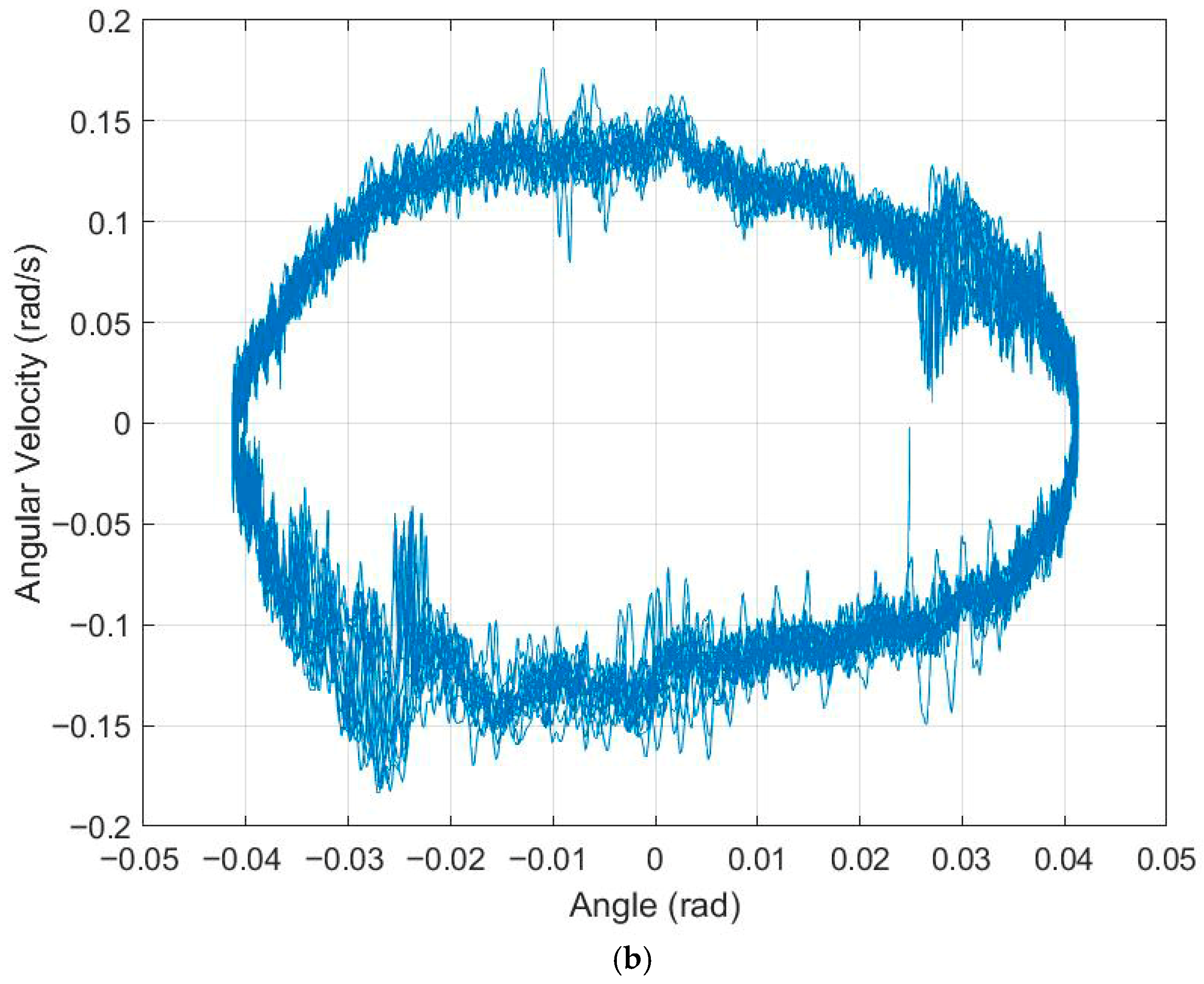
Figure 5.
Seth Thomas Model 04, with hanging weight W, experimental results—(a) pendulum, crutch, and escape wheel (scaled for improved visibility) angular responses; (b) phase plane of pendulum speed versus pendulum angle with periodic bob wobble after liftoff of the impulse torque acting on the pendulum rod.
A phase plot of the pendulum motion in Figure 5b shows notable noise and disturbances. The noise is the result of numerical differentiation of the calculated pendulum angle to obtain the angular velocity. The disturbances in the upper right and lower left quadrants are due to torsional modes of the pendulum, i.e., twisting the suspension spring, excited by the sudden reversal of forces coming through the crutch as the tooth impacts the lock face of the pallet. There is also a minor disturbance as the impulse starts, especially as the pendulum passes through the vertical position. This twisting of the pendulum about its own axis affects the magnet alignment and is in turn reflected in the data as displayed in Figure 5.
The clock’s bending stress on Shaft A–Gear 1 (brass) was initially calculated as = 5.88 (MPa) for direct external hanging weight = 66.7 (N) and measured tooth thickness = 8.4 (mm) per Table 1. The total pendulum system mass, , was measured to be 4.40 (kg). The crutch was removed from the movement to assess the quality factor, Q, of the freely swinging pendulum. An initial displacement from the vertical of greater than 0.04 (rads) was imparted to the pendulum, which was then released. The system’s time constant, τ, was determined by noting the log decrement of the motion as the amplitude decayed to less than 0.04 (rads), comprising about 100 periods, or nearly 200 s. The quality factor, Q, was subsequently experimentally measured as 3971.
Table 1.
Summary of experimental, dynamic model, and optimization parameters (symbol † corresponds to manufacturer’s product catalog listed value; R* denotes the gear train ratio).
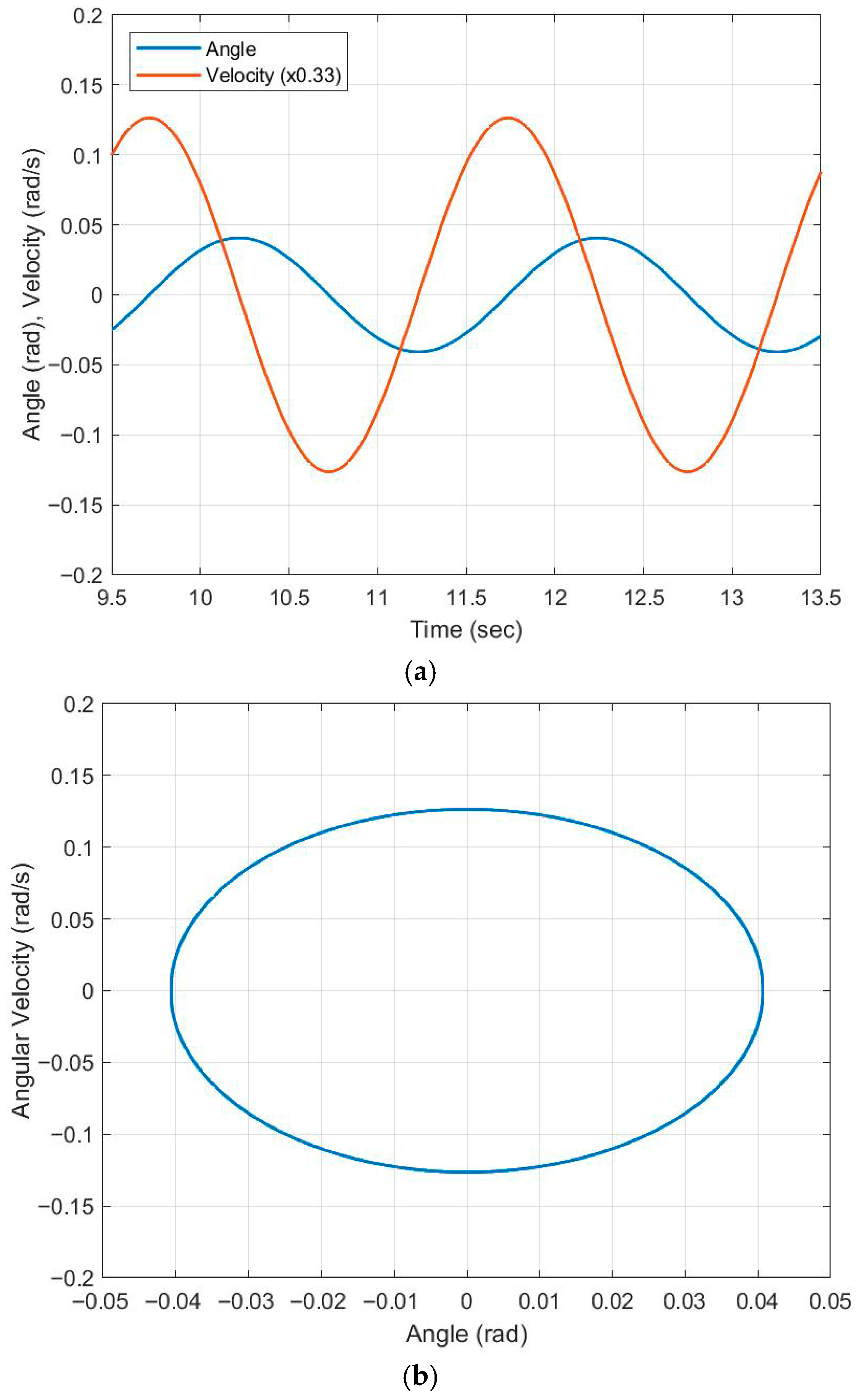
The simulated pendulum’s behavior during normal (weight-driven) operation was compared against experimental data to verify the accuracy of the mathematical model and simulation. A simulation time step of = 0.0005 (sec) was selected. The simulated pendulum harmonic motion featured a 2.024 (sec) period per Figure 6a, corresponding to a 1% error in comparison to Figure 5a, which may be attributed to the nonlinear distributed pendulum rod and hollow cylindrical bob. The phase plane in Figure 6b has a more distinct elliptical profile, lacking the signal variation observed in Figure 5b in which the magnetic sensor was influenced by the three-dimensional true motion of the pendulum. Nevertheless, the numerical profile in Figure 6b corresponds well to the experimental signal average in Figure 5b. Note that the pendulum’s large inertia effectively smooths out the periodic crutch impulses. The quality factor, Q, for the calibrated numerical simulation model was 3967. The model parameters and were carefully tuned as these entities impact the energy dissipated. Finally, the simulated weight calculations yielded = 3.222 (kg), = 2.629 (kg), = 0.383 (kg), = 0.797 (kg), = 4.403 (kg). Overall, the model-based simulation estimates compared favorably with the Seth Thomas clock measurements.
Figure 6.
Numerical results for simulated Seth Thomas clock movement—(a) pendulum velocity and pendulum angle motion versus time; (b) phase plan of pendulum velocity vs. pendulum angle.
The mathematical model and accompanying computer simulation have been validated against the experimental data; the engineering design study may now proceed.
3.5. Multiple Objective Optimization Results
Classical machine design is well-suited for an optimization study with the thoughtful selection of the design variables that influence the system’s performance. The mathematical model, coupled with a genetic algorithm strategy, will be employed to optimize the clock’s pendulum and gear features. The design of the pendulum rod’s length, L, the pendulum bob’s cylindrical radius and height, and , and the first spur gear’s thickness, b, were specifically chosen due to their significant influence on the clock’s mass, efficiency (i.e., quality factor), accuracy (i.e., period), and material strength (i.e., bending stress). The design vector, = [x1, x2, x3, x4], becomes x1 = L, x2 = , x3 = , and x4 = b with upper and lower limits selected based on the general properties of the pendulum subsystem for the target street clock movement. The actual Model 04 clock’s physical measurements and the design study’s parameter values are listed in Table 1. Note that the Seth Thomas catalog indicates that larger magnitudes may be used for the pendulum bob and hanging weight; however, this was not explored due to the minimal loading of the clock hands.
The objective function comprises four components, which leverage the mathematical model insights to realize an improved clock design. Specifically, is the combined mass of the dulum rod, pendulum bob, and gear A1; is the variation in the quality factor from a desired value, , to ensure efficiency; is the deviation in the period from a specified value, , to maintain accuracy; and ensures that the gear tooth A1 bending stress is below the maximum allowable value, , for brass subject to static loading.
The scaling terms – are weighting factors that enable similar magnitudes in the objective function. Upon inspection of this expression, the multiple objective functions minimize the pendulum mass and deviation from specified quality factor, period, and bending stress targets, which are influenced by the clock’s design variables. Consequently, a multi-objective optimization approach will be pursued to simultaneously meet these four objective functions. The step size, , was considered based on the design vector constraints.
The governing equations were translated into Matlab™ code, employing a sixth-order Runge–Kutta numerical integration method. The investigation encompassed two operational scenarios. Firstly, the pendulum was released from a vertical angle of 2.0° (0.035 radians), initiating free oscillation within the system. Secondly, normal clock operation was simulated for 10,000 s to evaluate the accuracy, focusing on measuring the period. The Seth Thomas clock’s experimentally measured design variable values are * = [1.20, 0.03670, 0.3238, 0.0084] with a corresponding quality factor, Q = 3971, and period, T = 2.0 (s), respectively. To normalize the objective function terms magnitude the scaling factors become = 1 , = 0.1, = 100 , and = 1.0 × 10⁻⁷ .
To solve the optimization problem, ModeFrontier software was used to find the value of the design variables that minimize the objective function. ModeFrontier is a digital engineering tool for simulation process automation and design optimization. Different optimization algorithms are available in this package for both stochastic and deterministic scenarios. For this study, the heuristic algorithm of genetic algorithm (GA) was applied in the optimization process due to its robustness in handling complex, nonlinear problems [31]. GA draws inspiration from biological evolution, using mechanisms such as selection, crossover, and mutation to iteratively improve a population of candidate solutions. Over multiple generations, the algorithm guides the population toward better-performing regions of the design space, striking a balance between exploration and minimizing the risk of premature convergence at local minima [32]. The benefit of using this tool is that engineers need not spend resources developing the Design of Experiments (DOE) for physical testing and implementing the optimization algorithm, as the tool itself explores the design space using built-in algorithms that may be selected. This approach enables a more accurate interpretation of results and the refinement of models, rather than handling the underlying optimization tasks [33].
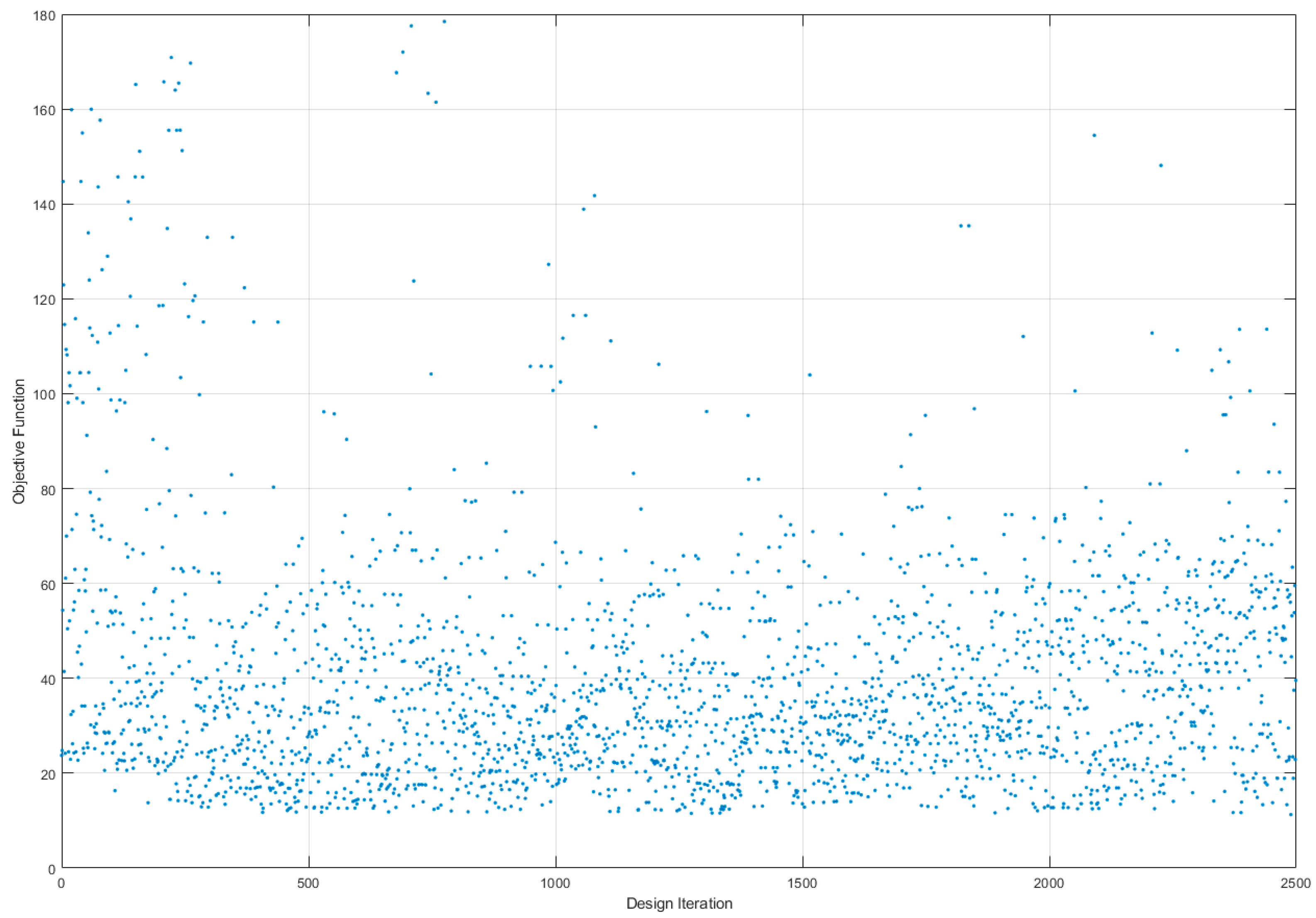
The design study results, obtained from this software package using a genetic algorithm optimization strategy, will be evaluated and discussed. The solution history of the objective function against the iteration number of generations is depicted in Figure 7. A total of 2500 iterations were considered, and 950 designs were Pareto solutions. At the optimization algorithm conclusion, the minimum cost function value was = 11.2642, and the four Pareto design variables are = [1.1875, 0.035818, 0.355, 0.004]. Compared to the Seth Thomas clock factory design vector, , the differences in the final design values were = [−0.62%, −2.40%, 8.78%, −52.38%]. Further, the objective function for the factory design variables was = 16.9262. The optimized pendulum system period and quality factor were 2.0013 (sec) and 3995, respectively, which are improvements in the design. The change in the pendulum rod and cylinder dimensions resulted in a total pendulum system mass of = 4.3757 (kg). The thickness of the gear teeth appears to have been overdesigned for the hanging weight, given the dimensional reduction (Note: clock hand load was neglected, and compound pulleys may increase the applied hanging weight load). The maximum bending stress listed in Table 1 ensures mechanical component durability due to cyclic loadings over long periods.
Figure 7.
Optimization objective function, f(x), magnitude versus design iteration.
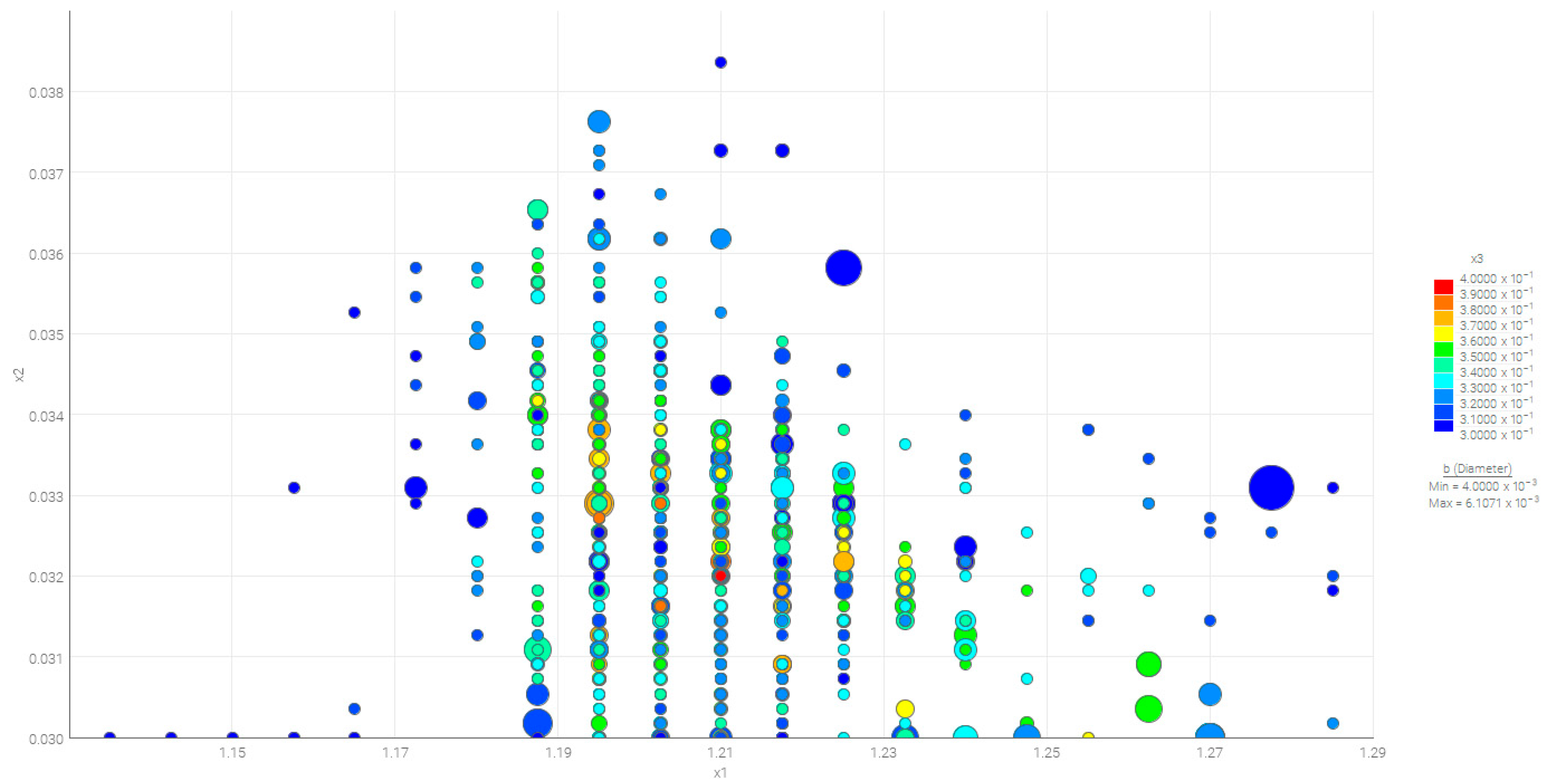
The movement’s four design variables for the Pareto solution design space are displayed in a colored bubble graph (Figure 8). The intrinsic relationship among these variables is displayed through the bubbles’ relative position, color, and size. Upon inspection of the governing dynamics, the pendulum bob’s volume, v, is influenced by a dependency between the bob radius, x2, and bob height, x3. A linear trade-off exists between the pendulum’s length, L, and the pendulum bob’s volume, v, which influences the overall pendulum system mass. The fourth design variable, b, is relatively independent of the others as it corresponds to the gear thickness.
Figure 8.
Exploration of Pareto optimal solution design variables in mechanical system design with ×1, ×2, ×3, and ×4 corresponding to the x-axis, y-axis, bubble color, and bubble size.
3.6. Tradespace Exploration Results
The tradespace analysis systematically examines the relationships between different variables in the design space and identifies the optimal solution for the defined objectives. Goal programming is a multi-objective optimization technique that seeks to identify an optimal solution that minimizes the distance between that solution and an ideal (target) optimization point within the tradespace [34]. This ideal optimization point is selected by the decision-maker and is often the utopia point, or the point where the solution is individually optimized for each individual objective function. Different objectives may be prioritized by applying weights to the individual Euclidean distances associated with particular objectives. This approach can directly implement programmatic mandates of decision-makers [35,36] in the conceptual design stage. Goal programming formulations are a common aspect of tradespace exploration approaches, such as Multi-Attribute Tradespace Exploration (MATE), and are particularly valuable in considering unarticulated performance mandates [37]. Notably, goal programming is effective in both convex and nonconvex tradespace cases [38].
To establish the mathematical framework, the four objective function terms will be considered to identify the best objective function values, In this study, six graphs were constructed, and . The best location on each graph, , , , and , where the prime superscript, ‘, denotes these graphical points, may be visually determined by reviewing Equation (16). For the four objective functions, these best design space points become
In the final step, the Euclidean distance, D, can be calculated as
The minimum Euclidean distance value corresponds to the best design variables, .
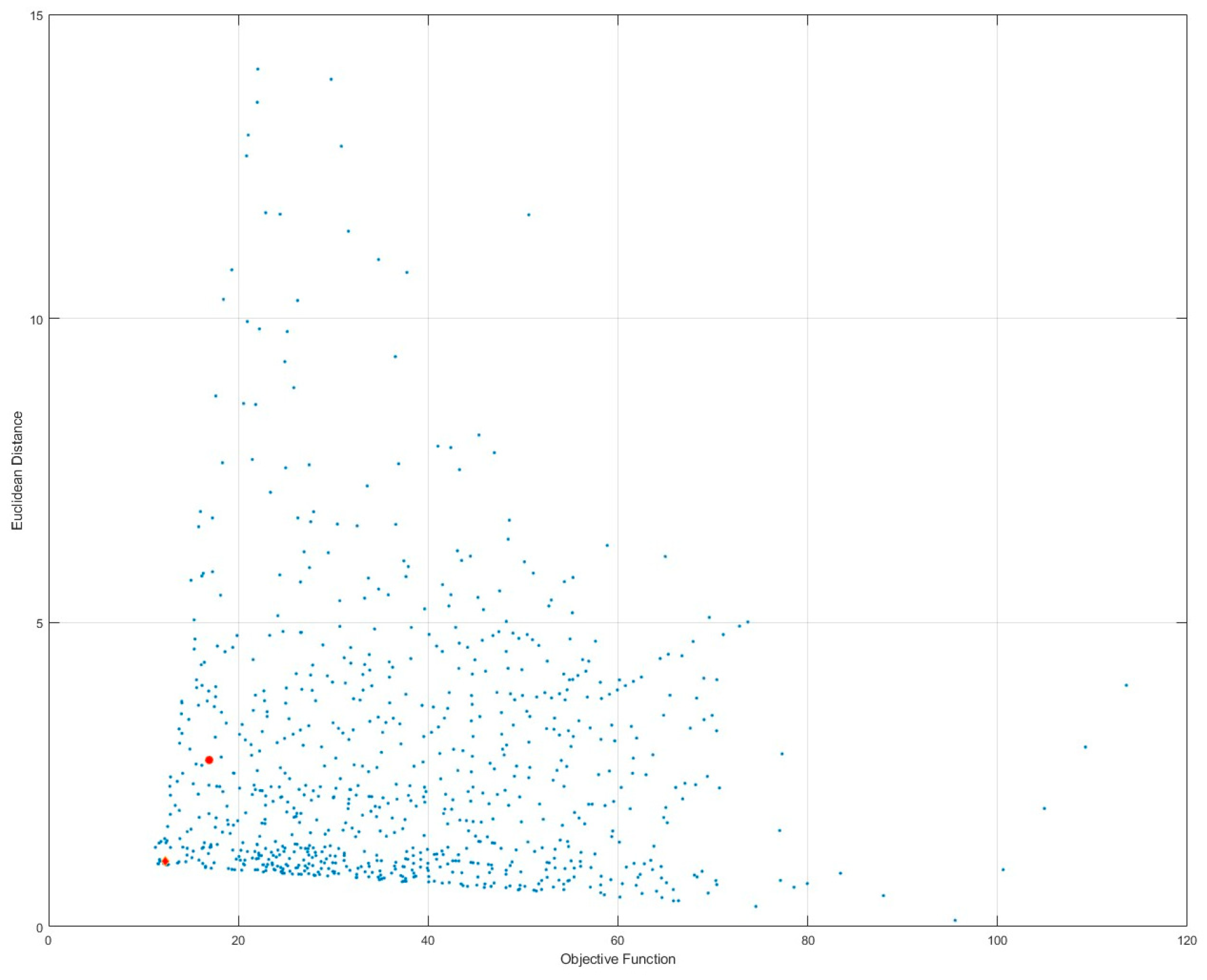
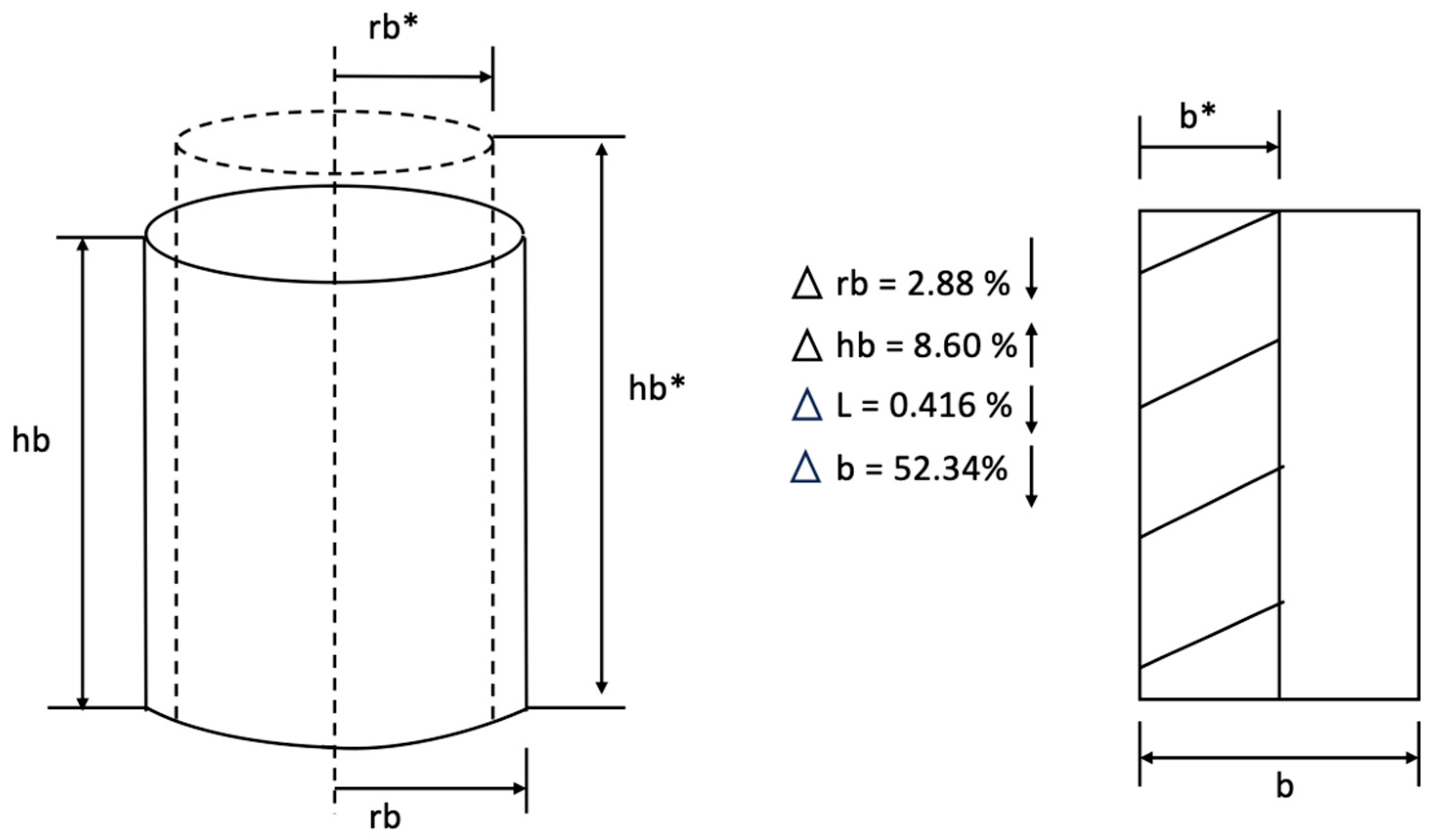
For this application, the goal programming approach yields the ideal design vector = [1.195, 0.03564, 0.35166, 0.004003]. The quality factor, clock period, and total pendulum system mass are 4007.824, 2.009356 (sec), and 4.33781 (kg), respectively. Further, the Euclidean distance and objective function values are = 1.06984 and = 12.32212. For comparison, the factory clock design has a Euclidean distance and an objective function of = 16.9262 and = 2.738777. The change in design vector becomes ∆ = [−0.416%, −2.888%, 8.604%, −52.345%]. Overall, the ideal solution offers better performance compared to the factory design in terms of quality factor gain (0.927%), total pendulum system mass reduction (1.413%), and gear thickness reduction (52.345%) while satisfying the clock requirements (e.g., period, maximum bending stress). In addition, the ideal clock design exceeds the performance of the optimized design, which highlights the advantage of tradespace exploration. The tradespace graph of the objective function versus the Euclidean distance for the Pareto solutions is shown in Figure 9. The red circle and red diamond denote the factory and ideal designs. The original design of this street clock from the 1890s was successful in providing an accurate time display with excellent reliability over many decades, until its eventual replacement by synchronized electric clocks. The application of digital engineering design tools enables component improvements.
Figure 9.
Exploration of design space using the optimization objective function versus the goal programming using Euclidean distance (note: blue points are Pareto solutions, red circle is factory design, and red diamond is proposed design).
4. Machine Design Observations
The investigation of a late 19th century-designed mechanical clock movement provides a basis for engineering observations in light of modern digital practices. Our limited comments will span the categories of engineering methods, structural design, product manufacture, system functionality, and overall maintenance. In general, machine design has evolved from rugged over-specified mechanisms to lighter-weight solutions that meet the customer’s needs while optimizing materials [39].
Engineering Methods: The design analysis tools of 1880s engineers relied on hands-on experience, basic principles of mathematics, mechanics, material science, empirical rules, hand drafting, and prototypes. In other words, practical experience, practicality (reuse of parts), and limited slide rule calculations (e.g., torques, 19th century strength of materials) were common practices. In the 21st century, virtual engineering design encompasses computer-aided design (CAD), computer-aided engineering (CAE), and computer-aided manufacturing (CAM) or additive manufacturing (AM). Digital design strategies can be leveraged using product data management (PDM) utilities across an enterprise, including next-generation product designs. State-of-the-art engineering analysis can be completed virtually, followed by the swift manufacture of prototypes and installation of sensors for real-time data acquisition to verify models and designs. Generally, high quality and lower costs can be realized, including reduced time [40]. In the case study, a nonlinear model was derived and calibrated using experimentally gathered test data. The simulation served as the basis for multi-objective optimization and tradespace analysis activities, investigating improved machine designs. Modern digital engineering tools have significantly accelerated the design process compared to the original machine’s years-long process.
Structural Design: The market for public time brought forth manufacturers such as the E. Howard Clock Company (Boston, MA, USA), Joseph Mayer Clock Company (Seattle, WA, USA) and Seth Thomas Clock Company (Thomaston, CT, USA), who fabricated street and tower clocks [41]. Upon inspection, the Seth Thomas Model 04 movement has beautiful metal details (e.g., heart-shaped openings and spherical structural elements that house shaft supports), hinting at classical solutions’ artistic perspective. In modern times, machine design tends to be practical unless specific requirements address the fit and finish. This approach is valid if cost is the primary driver, resulting in basic structural geometries. Seth Thomas street clocks were launched in the 1850s using in-house designs. Proven patterns (e.g., 3 wheels vs. 4-wheel trains), straight pallet vs. deadbeat, choices about complexity (e.g., direct wind with power maintained vs. differential winder), inline vs. optimized placement for gravity loads vs. torque reactions, and cost but also practicality of open A-frame design were pursued (refer to Figure 1). The movement end plates are not flat but rather case with “L”-shaped folded edges for additional strength. Importantly, this design was strengthened for nominal running stress, as well as protection against accidents and bumps that required field repairs. For this study, the original machine’s gears were overdesigned in terms of thickness to accommodate external loading, which resulted in a 50% reduction while satisfying the stress limit (refer to Figure 10).
Figure 10.
Impact of recommended machine design changes to pendulum bob and driveline gear thickness.
Product Manufacture: At the turn of the century, metal work was primarily performed by mold casting and shop equipment (e.g., gear cutting machines, lathes, mills) driven using steam, dyno or water-driven overhead belts. Companies had foundries for metal pours with custom molds for intricate patterns on supporting structural members. Craftsmen completed the work using hand tools to a precision based on their talents. More recently, multi-degree-of-freedom CNC machines are available for milling and lathing operations to machine components. Furthermore, additive manufacturing methods using laser sintering enable the 3D printing of custom parts, thereby eliminating the need for material removal associated with traditional metal cutting processes. High precision can be achieved and documented through metrology, including physical dimensions, surface finish, hardness, chemical composition, etc.
Material selection is premised on the availability and cost of stock metals. In the late 1800s, these materials were typically cast iron, brass, and steel. In contrast, the diverse selection of metal stock with specialty surface finishes and material composition enables the engineer to select a metal that meets operating demands. For gear arrangement, most gears were pressed on shafts without provision for repair or replacement.
System Functionality: For the original design, the tall, cylindrical-shaped pendulum bob offers significant aerodynamic drag compared to alternative designs. For the case study, the pendulum bob was redesigned to feature a taller and more slender cylindrical profile, as shown in Figure 10, which improved the efficiency (quality factor) and reduced the mass of the pendulum system. The drivetrain splits power to the dial (hands) and pendulum oscillation; losses arise due to inefficiency, friction, and viscous drag—variations in any one of these affect the power available to the other. Consequently, the power due to the external hanging weight is more than ideally needed, which impacts the gear interfaces. Improved aerodynamics, the use of ball or ceramic bearings, rather than bushings, and modern lubricants can contribute to reductions in the energy loss, which improves system operation.
Overall Maintenance: The classical design required frequent lubrication, and if a part failed, then the entire host assembly may have needed extensive work. For instance, if a gear/pinion fails due to broken teeth, then the entire shaft may have needed to have all parts removed to repair the part. The compact nature of a clock’s mechanical drivetrain minimizes space but also demands that the movement be removed for repair. On the other hand, modern mechanical assemblies can be designed for simplified maintenance, including gears that are keyed to the shaft for quick replacement. Further, the lubricant need can be reduced using ceramic bearings rather than bushings. As the availability of skilled repairers is limited, a low-maintenance design should be listed as a Requirements and Specifications item.
5. Conclusions
Overall, this research demonstrates that modern digital engineering methods can be successfully applied to classical machines to quantitatively reassess and improve their original design. The principal conclusions are:
- (i)
- Integration of dynamic modeling with multi-objective optimization for classical machine design. The incorporation of an analytical nonlinear model, experimental data for model validation, and optimization algorithm created a single digital engineering workflow to support the street clock movement’s redesign effort.
- (ii)
- Tradespace exploration offers decision-making insights for mechanical design often unavailable from single-solution optimization. The tradespace analysis identifies the Pareto Frontier plus demonstrated solutions within acceptable tolerances. This design space approach illustrated trade-offs between mass reduction, stress limits, efficiency, and time accuracy. Note that traditional design–build–test cycles cannot offer this capability.
- (iii)
- The digital design thread accelerates the design process and reduces iterative physical prototyping. The shift from prototype build to virtual model-driven decision-making can quicken the design cadence per Figure 2. The validated model, optimization, and tradespace tools significantly reduced iteration cost, demonstrating advantages of a model-driven, data-supported process over designs rooted in accumulated empirical knowledge and craftsmanship over centuries.
- (iv)
- Demonstratable, measurable performance improvements are possible for systems refined through centuries of empirical craftsmanship using digital engineering strategies. The core clock performance metrics—including period accuracy, quality factor, and maximum bending stress—can be satisfied while reducing total pendulum system mass by 1.4% and gear thickness by 50.3%.
Looking forward, digital engineering methods can be extended beyond a classic clock’s pendulum and gear train to encompass full system-level redesign. Future work may integrate additional subsystems (e.g., full gear train, escapement, and supporting frame structure) into the design. Integrating CAD/CAE/FEA with the validated dynamic model could enable a broader reliability assessment and maintenance-aware redesign of additional components. Moreover, expanding tradespace exploration to include manufacturability, cost, and sustainability metrics would align classical machine redesign with modern engineering priorities. Ultimately, modern digital engineering methods offer a scalable pathway not only to improve historical designs, but also to guide the systematic design of new contemporary engineering systems.
Author Contributions
Conceptualization, Y.X. and J.W.; methodology, Y.X. and C.T.; software, P.M.; validation, D.M. and J.W.; formal analysis, Y.X. and P.M.; investigation, Y.X.; resources, J.W.; data curation, D.M.; writing, P.M. and J.W.; writing—review and editing, P.M. and J.W.; visualization, P.M.; supervision, J.W.; project administration, J.W.; funding acquisition, J.W. and C.T. All authors have read and agreed to the published version of the manuscript.
Funding
This research received no external funding, but it was completed in the Product Lifecycle Management (PLM) Center at Clemson University.
Data Availability Statement
The original contributions presented in this study are included in the article.
Conflicts of Interest
Author Yifan Xu was employed by the company Amazon Web Services. The remaining authors declare that the research was conducted in the absence of any commercial or financial relationships that could be construed as a potential conflict of interest.
Nomenclature
| Effective pendulum bob and rod aerodynamic surface area ( | |
| Tooth width (m) | |
| Viscous damping coefficient of escape wheel () | |
| Damping coefficient of pendulum () | |
| Bi | ith best objective function spatial location |
| BG | Objective function graph to identify best point |
| CG | Center of gravity |
| Drag coefficient | |
| Distance from pivot to end cap (m) | |
| Euclidean distance | |
| Energy loss during one swing period (J) | |
| Energy stored in the system during one swing period (J) | |
| f0 | Frequency of pendulum (Hz) |
| f() | Objective function |
| Different elements in objective function | |
| Location on ith function graph | |
| Air drag force acting on pendulum (N) | |
| g | Gravity () |
| Equality constraints for optimization | |
| Pendulum bob cylinder height (m) | |
| Inequality constraints for optimization | |
| i | ith element in the design vector |
| j | jth element in the equality constraints |
| Escape wheel moment of inertia (N m2) | |
| Pendulum moment of inertia (N m2) | |
| k | kth element in the inequality constraints |
| ki | ith scaling factor |
| L | Length of pendulum rod (m) |
| Effective pendulum length (m) | |
| Pendulum bob mass (kg) | |
| End cap with fasteners mass (kg) | |
| Cylinder mass (kg) | |
| Discontinuity in pendulum rod geometry mass (kg) | |
| Gear mass (kg) | |
| Hour hand mass (kg) | |
| Minute hand mass (kg) | |
| Pendulum rod mass (kg) | |
| Total pendulum rod and bob mass (kg) | |
| N | Number of gear teeth |
| Number of jth gear’s teeth on ith arbor | |
| Diametral pitch () | |
| Distance from pallet to pivot (m) | |
| Quality factor | |
| Desired quality factor for optimization | |
| Radius of Arbor A–Gear 1 | |
| Radius of winding drum (m) | |
| Pendulum bob’s hollow cylinder outer radius (m) | |
| Pendulum bob’s hollow cylinder inner radius (m) | |
| Radius of end cap (m) | |
| Radius of escape wheel (m) | |
| Hour hand radial distance to CG (m) | |
| Minute hand radial distance to CG (m) | |
| Pitch radius (m) | |
| Pendulum rod radius (m) | |
| Gear train ratio | |
| R’ | Train ratio for partial gear sets |
| t | Time (s) |
| T | Period (s) |
| Hollow cylinder thickness (m) | |
| Desired period for optimization (s) | |
| Applied torque on escape wheel (N m) | |
| Impulsive torque (N m) | |
| Load torque due to hands (N m) | |
| Pinion shaft torque (N m) | |
| Torque of winding drum (N m) for hanging weight | |
| v | Volume (m3) |
| External hanging weight (N) | |
| Tooth tangential force (N) | |
| Design vector | |
| Factory configured design vector | |
| Design variable set with optimized values | |
| Best design variables per Euclidean distances | |
| xi | ith design variable |
| Upper limit for design variable | |
| Initial guess for design variables | |
| Lower limit for design variable | |
| Design variable set with initial values | |
| Optimization step size | |
| Lewis Form Factor | |
| Percent solid material on gear wheel | |
| τ | Time constant (s) |
| Angular position of escapement wheel (rad) | |
| Angular position of pendulum (rad) | |
| Escape wheel angular speed (rad) | |
| Entry angular limit for impulse (rad) | |
| Exit angular limit for impulse (rad) | |
| Angle between escape wheel and impulse face contact point (rad) | |
| Bending stress (N) | |
| Maximum bending stress (N) | |
| Density of air () | |
| Density of pendulum cylinder () | |
| Density of gear () | |
| Density of clock hands () | |
| Density of pendulum rod () | |
| Gear scaling factor for spokes | |
| ∆t | Integration time step (s) |
| ∆x | Difference in design vector solutions |
Appendix A. Inline Function Escapement Impulse Logic
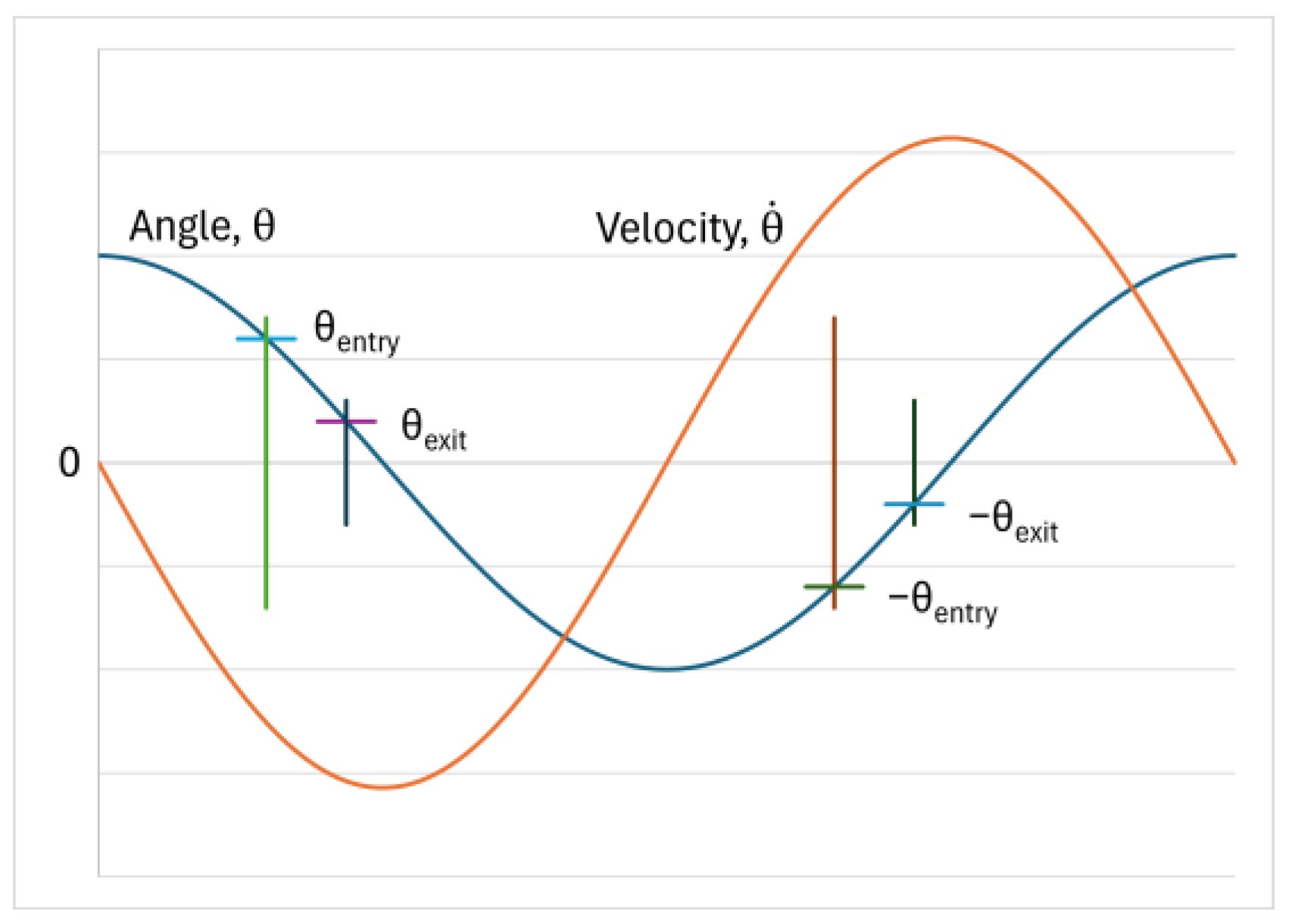
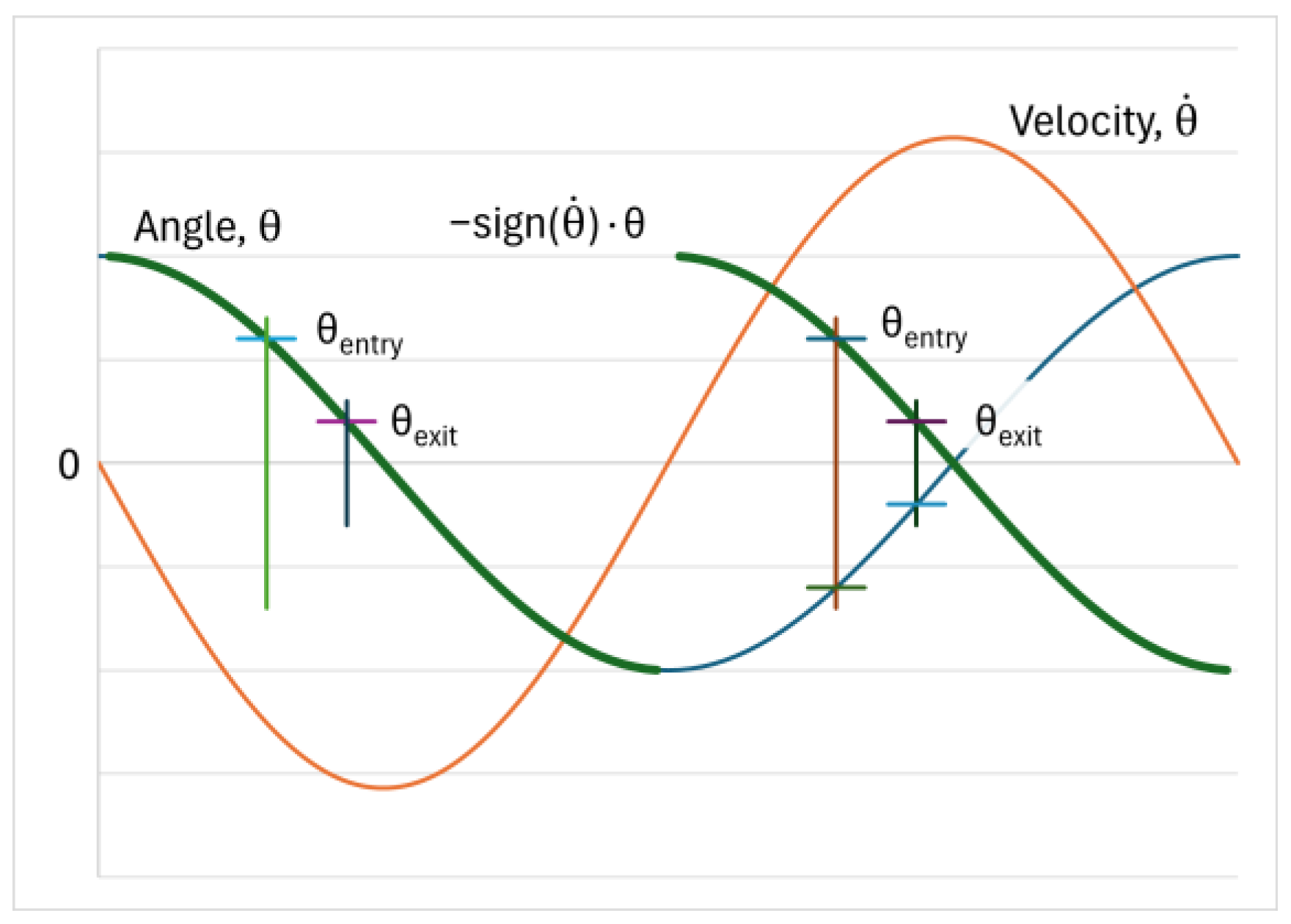
The task is to find a mathematical expression that would allow the impulse force, , to a pendulum to be calculated based on the pendulum angle, , and pendulum angular velocity, . The impulse function requires insight into the physical operation of the mechanical movement as shown in Figure A1.
Figure A1.
Pendulum angular position and velocity versus time with indication of impulse events on down swings to maintain motion.
We wish the impulses to begin at θentry and end at θexit (both specified as greater than zero for this example), which for the first impulse shown is true for the condition
However, while true for the decreasing angle as shown, it will also be true when the angle crosses zero the second time after the second impulse should have occurred. Likewise, while the test for the second impulse in Figure A1 becomes
this test would also permit an impulse to occur shortly after the angle crossed negative following the first impulse. The result is four impulse events. What is needed is an additional test: the first impulse occurs only when the angular velocity is negative and the second only when the velocity is positive, as can be seen from the figure. Assuming the magnitude of the two impulses are the same, the only difference between the two would be the sign, which will also be in phase with the angular velocity.
A single algebraic test that (a) confirms if an impulse should be applied, and (b) assigns the sign of the impulse correctly can be proposed for the given application.
In Figure A2, a graph of −SGN() illustrates the concept. As the product of the three terms in equation (A3) is either valued 0, 1, or −1, we need only then multiply the result by the desired magnitude of the impulse. Note that this impulse function may specify negative values for entry or exit, so long as the condition entry > exit is maintained. This impulse strategy cannot accommodate recoiling movements.
Figure A2.
Treatment of the periodic impulse based on the pendulum’s angular position and velocity with corresponding physical interpretation.
References
- Gerschütz, B.; Sauer, C.; Kormann, A.; Nicklas, S.J.; Goetz, S.; Roppel, M.; Tremmel, S.; Paetzold-Byhain, K.; Wartzack, S. Digital Engineering Methods in Practical Use During Mechatronic Design Processes. Designs 2023, 7, 93. [Google Scholar] [CrossRef]
- Rowell, F.; Schweisinger, T.; Wagner, J. Exploration of Collaborative Design Spaces: Student Engineering Interactions and Workflow in Product Development. In ASEE Southeast Regional Conference, Starkville, MS, USA, 9–11 March 2025; Mississippi State University: Starkville, MS, USA, 2025. [Google Scholar] [CrossRef]
- Yilmax, N.; Bae, H.D. Integration of Digital Tools for Engineering Design, Analysis and Optimization. In American Society for Engineering Education, Montreal, QC, Canada, 7 November 2020; ASEE Conferences: Washington, DC, USA, 2020. [Google Scholar]
- Xu, X.; Lu, Y.; Vogel-Heuser, B.; Wang, L. Industry 4.0 and Industry 5.0—Inception, Conception and Perception. J. Manuf. Syst. 2021, 61, 530–535. [Google Scholar] [CrossRef]
- Manvi, P.; Griffith, K.; Suber, D.; Turner, C.; Castanier, M.P.; Wagner, J. Validation of Product Requirements—Specifications Using Field Data and Next Generation Vehicle Design Strategy Using a Calibrated Digital Twin. In SAE WCX Conference; 2025-01-8344; SAE International: Detroit, MI, USA, 2025. [Google Scholar]
- Afifi, N.; Wittig, C.; Paehler, L.; Lindenmann, A.; Wolter, K.; Leitenberger, F.; Dogru, M.; Grauberger, P.; Düser, T.; Albers, A.; et al. Data-Driven Methods and AI in Engineering Design: A Systematic Literature Review Focusing on Challenges and Opportunities. arXiv 2025, arXiv:2511.20730. [Google Scholar] [CrossRef]
- Singh, V.; Willcox, K.E. Engineering Design with Digital Thread. AIAA J. 2018, 56, 4515–4528. [Google Scholar] [CrossRef]
- Singh, V.; Willcox, K.E. Decision-Making Under Uncertainty for a Digital Thread-Enabled Design Process. J. Mech. Des. 2021, 143, 081704. [Google Scholar] [CrossRef]
- Pasquariello, A.; Bouhali, I.; Leherbauer, D.; Abdeljabbar, N.; Mhenni, F.; Patalano, S. Model-Based Systems Engineering for Digital Twin System Development Applied to an Aircraft Seat Test Bench. IEEE Access 2025, 13, 71911–71930. [Google Scholar] [CrossRef]
- Martins, J.R.R.A.; Lambe, A.B. Multidisciplinary Design Optimization: A Survey of Architectures. AIAA J. 2013, 51, 2049–2075. [Google Scholar] [CrossRef]
- Rao, S.S. Engineering Optimization: Theory and Practice; John Wiley & Sons: Hoboken, NJ, USA, 1996. [Google Scholar]
- Venter, G. Review of Optimization Techniques. In Encyclopedia of Aerospace Engineering, Systems Engineering, Optimization Techniques and Applications; John Wiley & Sons: Hoboken, NJ, USA, 2010. [Google Scholar] [CrossRef]
- Sioshansi, R.; Conejo, A.J. Optimization in Engineering—Models and Algorithms; Springer: New York, NY, USA, 2017. [Google Scholar]
- Safavi, E. Collaborative Multidisciplinary Design Optimization. Linkoping Studies in Science and Technology. Licentiate Thesis, Linkoping University, Linkoping, Sweden, 2013. [Google Scholar]
- Chattopadhyay, D.; Ross, A.M.; Rhodes, D.H. A Practical Method for Tradespace Exploration of Systems of Systems. In Proceedings of the AIAA Space Conference, Pasadena, CA, USA, 14–17 September 2009. [Google Scholar]
- Harris, J.C.; Fenwick, S.V. The Application of Pareto Methods to Multi-Disciplinary Design Optimization. Aeronaut. J. 2001, 105, 329–334. [Google Scholar] [CrossRef]
- Ross, A.; Hastings, D.E. The Tradespace Exploration Paradigm. In INCOSE International Symposium; Wiley on behalf of the International Council on Systems Engineering (INCOSE): Rochester, NY, USA, 2005; Volume 15. [Google Scholar] [CrossRef]
- Sutton, M.; Daniels, J.; Masoudi, N.; Gorsich, D.; Turner, C. Approaches for Exploration, Analysis, and Visualization of Tradespace for Engineering Decision-Making. In Proceedings of the International Design Society, Engineering Design Practice, Washington, DC, USA, 20–23 May 2024; Volume 4, pp. 3023–3032. [Google Scholar] [CrossRef]
- Denny, M. The Pendulum Clock: A Venerable Dynamical System. Eur. J. Phys. 2002, 23, 449–458. [Google Scholar] [CrossRef]
- Bartky, I.R. Selling the True Time. In Nineteenth Century Timekeeping in America; Stanford University Press: Stanford, CA, USA, 2000. [Google Scholar]
- Wagner, J.; Huey, C.; Knaub, K.; Volk, E.; Jagarwal, A. Modeling and Analysis of a Weight Driven Mechanical Tower Clock. In American Controls Conference, Baltimore, MD, USA, 30 June–2 July 2010; WeA18.3; IEEE: New York, NY, USA, 2010. [Google Scholar]
- Bernstein, D. Feedback Control: An Invisible Thread in the History of Technology. IEEE Control Syst. Mag. 2002, 22, 53–68. [Google Scholar] [CrossRef]
- Kesteven, M. On the Mathematical Theory of Clock Escapements. Am. J. Phys. 1978, 46, 125–129. [Google Scholar] [CrossRef]
- Baker, G.; Blackburn, J. The Pendulum—A Case Study in Physics; Oxford University Press: Oxford, UK, 2005. [Google Scholar]
- Nawrodt, R.; Zimmer, A.; Koettig, T.; Schwarz, C.; Heinert, D.; Hudl, M.; Neubert, R.; Thurk, M.; Nietzsche, S.; Vodel, W.; et al. High Mechanical Q-factor Measurements on Silicon Bulk Samples. J. Phys. Conf. Ser. 2008, 122, 012008. [Google Scholar] [CrossRef]
- El-Halwagi, M. Overview of Optimization. Process Syst. Eng. 2006, 7, 285–314. [Google Scholar]
- Daniels, J.; Turner, C.; Wagner, J.; Masoudi, N.; Agyemang, M.; Hartman, G.; Rizzo, D.; Gorsich, D.; Skowronska, A.; Agusti, R. Designing the Design Space: Evaluating Best Practices in Tradespace Exploration, Analysis and Decision-Making. SAE Int. J. Adv. Curr. Pract. Mobil. 2002, 4, 1344–1359. [Google Scholar] [CrossRef]
- Rawlings, A.L. Science of Clocks & Watches; British Horological Institute: Newark-on-Trent, UK, 1993. [Google Scholar]
- Schwartz, C.; Gran, R. Describing Function Analysis Using Matlab and Simulink. IEEE Control Syst. Mag. 2001, 21, 19–26. [Google Scholar]
- Sharma, K.; Singh, A.P. Optimization of Gear and Bending Stress Analysis. J. Emerg. Technol. Innov. Res. JETIR 2022, 9, 585–590. [Google Scholar]
- Gallager, K.; Sambridge, M. Genetic Algorithms: A Powerful Tool for Large-Scale Nonlinear Optimization Problems. Comput. Geosci. 1994, 20, 1229–1236. [Google Scholar] [CrossRef]
- Pandey, H.; Chaudhary, A.; Mehrotra, D. A Comparative Review of Approaches to Prevent Premature Convergence in GA. Appl. Soft Comput. 2014, 24, 1047–1077. [Google Scholar] [CrossRef]
- Ross, A.M.; Fitzgerald, M.E.; Rhodes, D.H. Interactive Evaluative Model Trading for Resilient Systems Decisions. In Proceedings of the 14th Conference on Systems Engineering Research, Huntsville, AL, USA, 22–24 March 2016; pp. 22–24. [Google Scholar]
- Nargundkar, A.; Kulkarni, A.J. A Comprehensive Review of Goal Programming Problems and Constraint Handling Approaches. In Handbook of Formal Optimization; Springer: Singapore, 2023. [Google Scholar]
- Salado, A. Defining Better Test Strategies with Tradespace Exploration Techniques and Pareto Fronts: Application in an Industrial Project. Syst. Eng. 2015, 18, 639–658. [Google Scholar] [CrossRef]
- Salado, A. Tradespace Exploration for Better Verification Strategies; Acquisition Research Program Sponsored Report; Naval Postgraduate School: Monterey, CA, USA, 2018; Available online: https://hdl.handle.net/10945/61892 (accessed on 10 January 2025).
- Ross, A. Managing Unarticulated Value: Changeability in Multi-Attribute Tradespace Exploration. Ph.D. Thesis, Massachusetts Institute of Technology, Engineering Systems Division, Cambridge, MA, USA, 2006. [Google Scholar]
- Mistree, F.; Smith, W.; Bras, B. A Decision-based Approach to Concurrent Engineering. In Handbook of Concurrent Optimization; Chapman and Hall: New York, NY, USA, 1993; pp. 127–158. [Google Scholar]
- Petroski, H. To Engineer Is Human: The Role of Failure in Successful Design; Vintage Books: New York, NY, USA, 1992. [Google Scholar]
- Womack, J.P.; Jones, D.T.; Roos, D. The Machine That Changed the World: The Story of Lean Production; Harper Perennial: New York, NY, USA, 1990. [Google Scholar]
- Shelley, F. Early American Tower Clocks; NAWCC: Columbia, PA, USA, 2015. [Google Scholar]
Disclaimer/Publisher’s Note: The statements, opinions and data contained in all publications are solely those of the individual author(s) and contributor(s) and not of MDPI and/or the editor(s). MDPI and/or the editor(s) disclaim responsibility for any injury to people or property resulting from any ideas, methods, instructions or products referred to in the content. |
© 2026 by the authors. Licensee MDPI, Basel, Switzerland. This article is an open access article distributed under the terms and conditions of the Creative Commons Attribution (CC BY) license.