Modelling of Aerostatic Bearings with Micro-Hole Restriction





Abstract
1. Introduction
2. Governing Equations
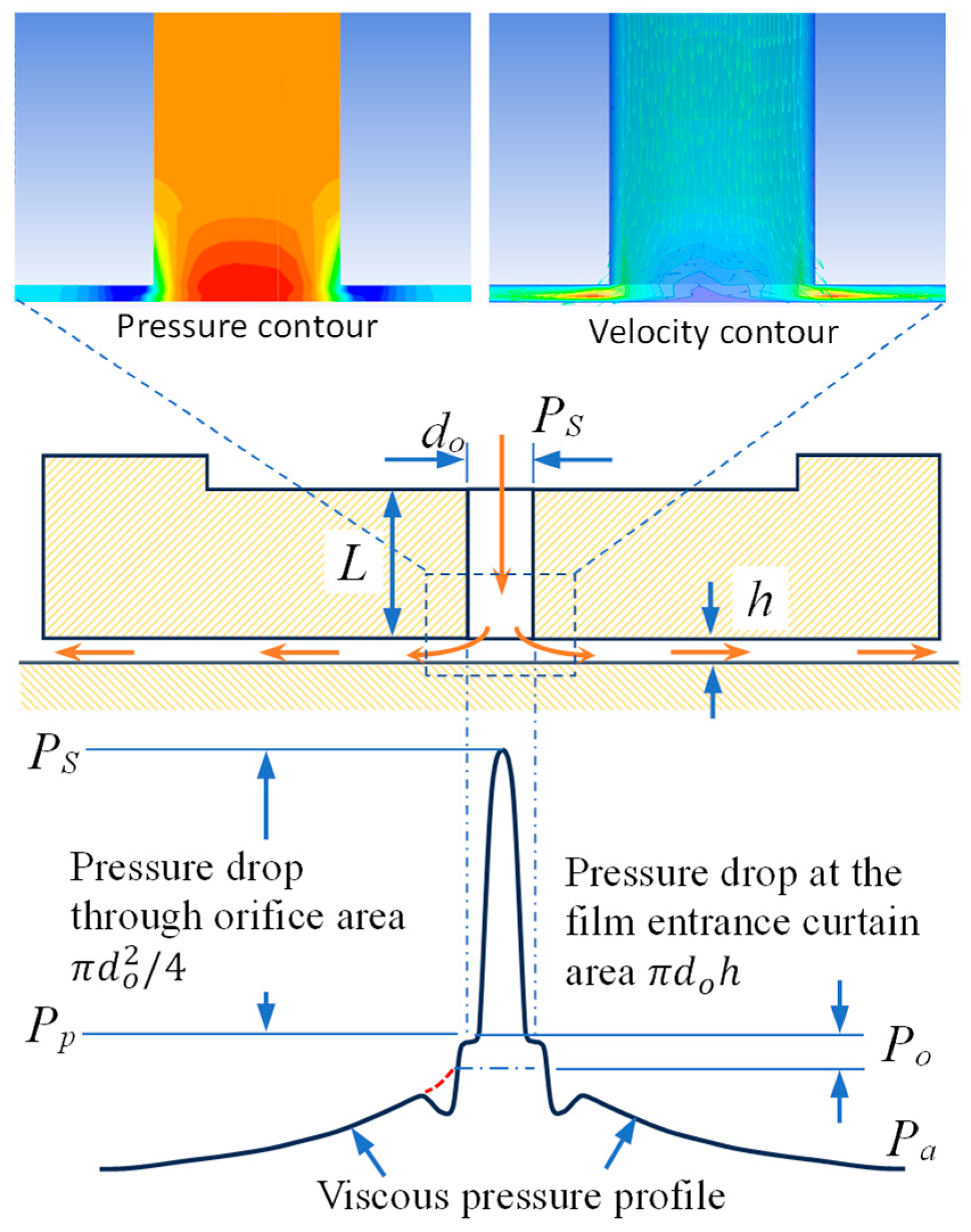
2.1. Flow Characteristics of Micro-Hole Restrictors
2.2. Micro-Hole Restrictor Modelling
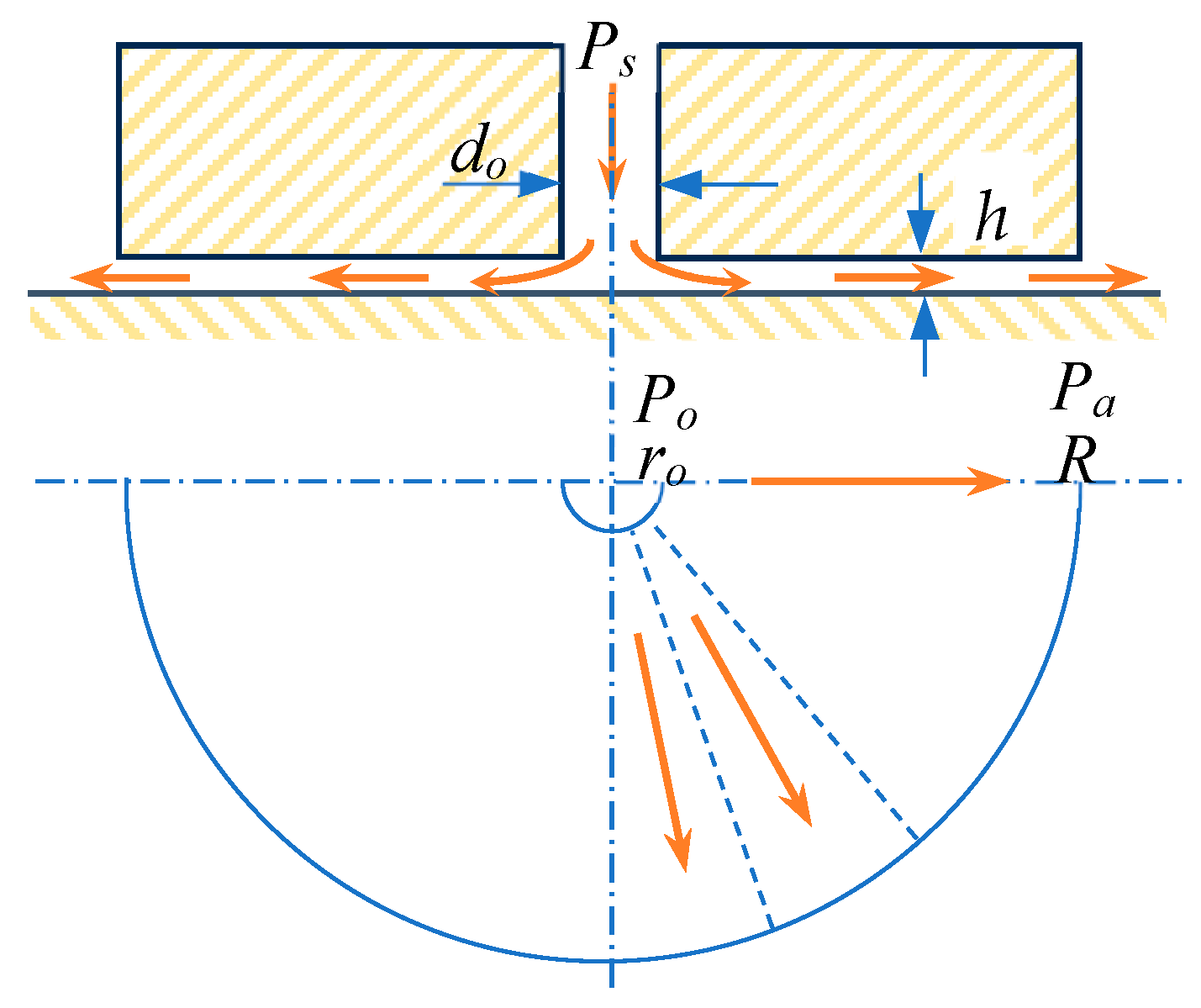
2.3. Air Bearing Film Modelling
- The following assumptions are made in modelling air bearing film:
- (a)
- Inertia forces, due to acceleration, can be neglected compared to forces produced by viscous shear.
- (b)
- Laminar flow conditions exist at all points in the air film.
- (c)
- Pressure is constant over any section normal to the direction of flow. For thin film flow, film height is significantly smaller than film length, so the difference in pressure in film height is neglected.
- (d)
- The boundaries are solid and impervious.
- (e)
- There is no slip in the boundaries between the fluid and the surfaces, i.e., the fluid and surface have the same velocity at the interface.
- (f)
- The lubricant behaves like a Newtonian fluid. Shear stress is linearly proportional with the velocity derivative scaled with viscosity.
- (g)
- The air film is assumed to be isothermal.
- p—pressure;
- h—film thickness;
- μ—dynamic viscosity of air;
- ρ—air density (function of pressure under isothermal conditions);
- U, V—relative surface velocities in the x- and y-directions;
- ∂h/∂t—squeeze film effects representing the time rate of change in film thickness.
- Po—pressure at radius ro (entrance of the air film);
- Pa—ambient pressure;
- R—circular bearing radius;
- ro—orifice radius.
2.4. Air Bearing Performance Calculations
3. Discharge Coefficient Determination and Numerical Solution Scheme
3.1. Discharge Coefficient Determination
- (1)
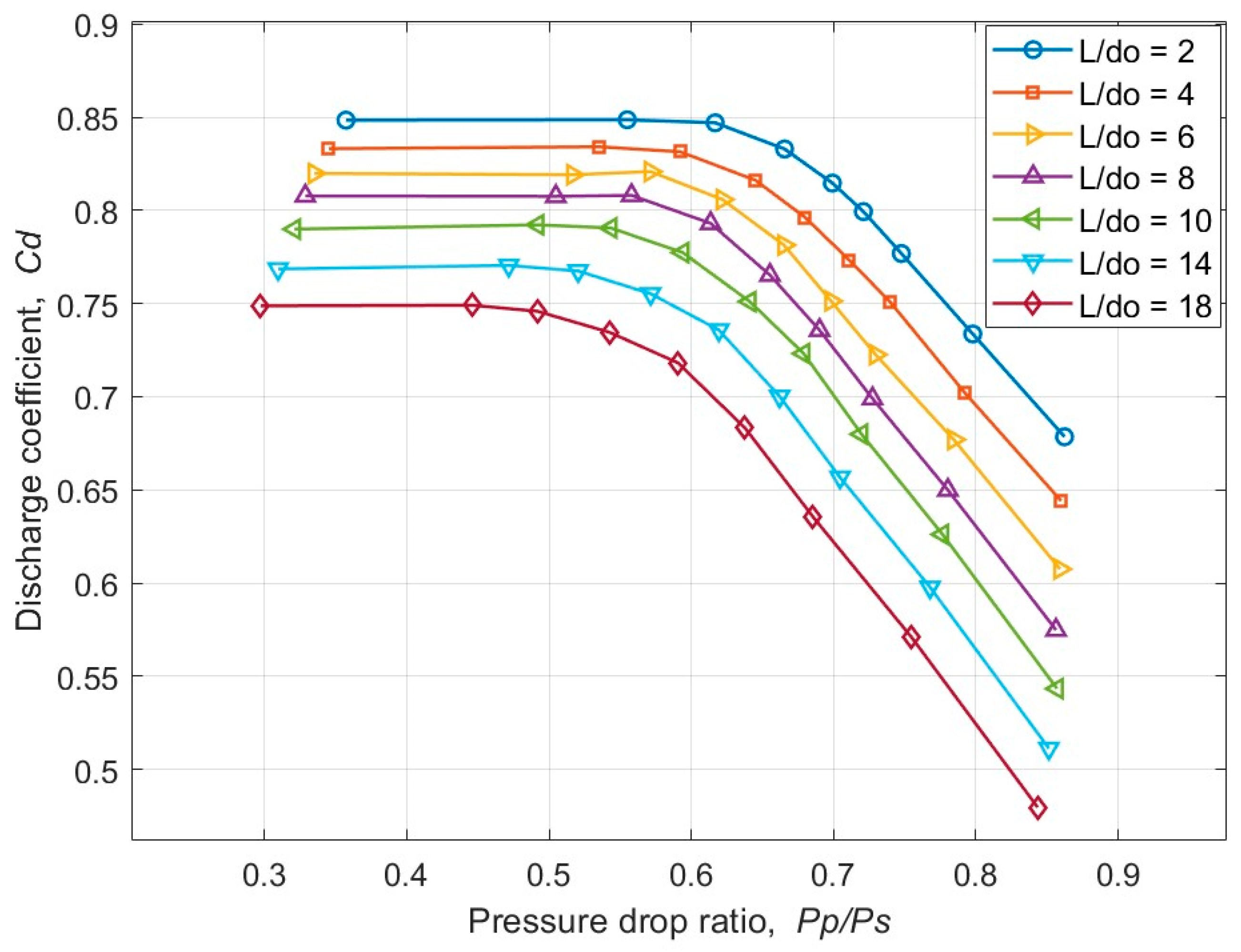
- Perform CFD simulations on a simple geometry, e.g., circular centrally fed air bearing pad, to obtain mass flow rate and load W at different film thickness h, orifice diameter do, and orifice length-to-diameter ratio L/do.
- (2)
- Calculate film curtain entry pressure Po from mass flow rate using Equation (15) for radial flow. Although Po can also be calculated from load W, this approach would be less accurate and requires iterations. Po is the pressure used in the isothermal Reynolds equation to obtain pressure distribution in practical bearing designs using numerical methods such as FDM or FEM.
- (3)
- Calculate the downstream pressure Pp by solving Equation (4), i.e., mass flow equation for flow through the annular curtain area.
- (4)
- Determine the discharge coefficient Cd by solving Equations (1)–(3) at different do, h(Pp/Ps) and L/do.
- (5)
- Determine Cd as a function of do, h (Pp /Ps) and L/do.
3.2. Bearing Design Numerical Solution Scheme
- (1)
- Specify the air bearing geometry, generate mesh, and define position of the orifices.
- (2)
- Guess the pressure Po thus enabling the pressure boundary condition at the inlet to the air film.
- (3)
- Solve Reynolds equation numerically to obtain the pressure distribution within the film (finite difference equations, Equation (13), are given in polar coordinates) and mass flow rate through the bearing film.
- (4)
- Calculate the pressure drop Pp by solving Equation (4).
- (5)
- Determine mass flow rate through the orifice using Equation (1) or Equation (3) using the corresponding discharge coefficient Cd (Equation (20)).
- (6)
- Repeat steps (2)–(5), until the difference between two mass flow rates, and , falls within the specified tolerance.
- (7)
- Repeat steps (2)–(6) for a predefined range of bearing air film thicknesses.
- (8)
- Calculate the load capacity, stiffness, and flow rate against air film thickness for the bearing.
4. Characteristics of a Circular Thrust Air Bearing with Micro-Hole Restrictors
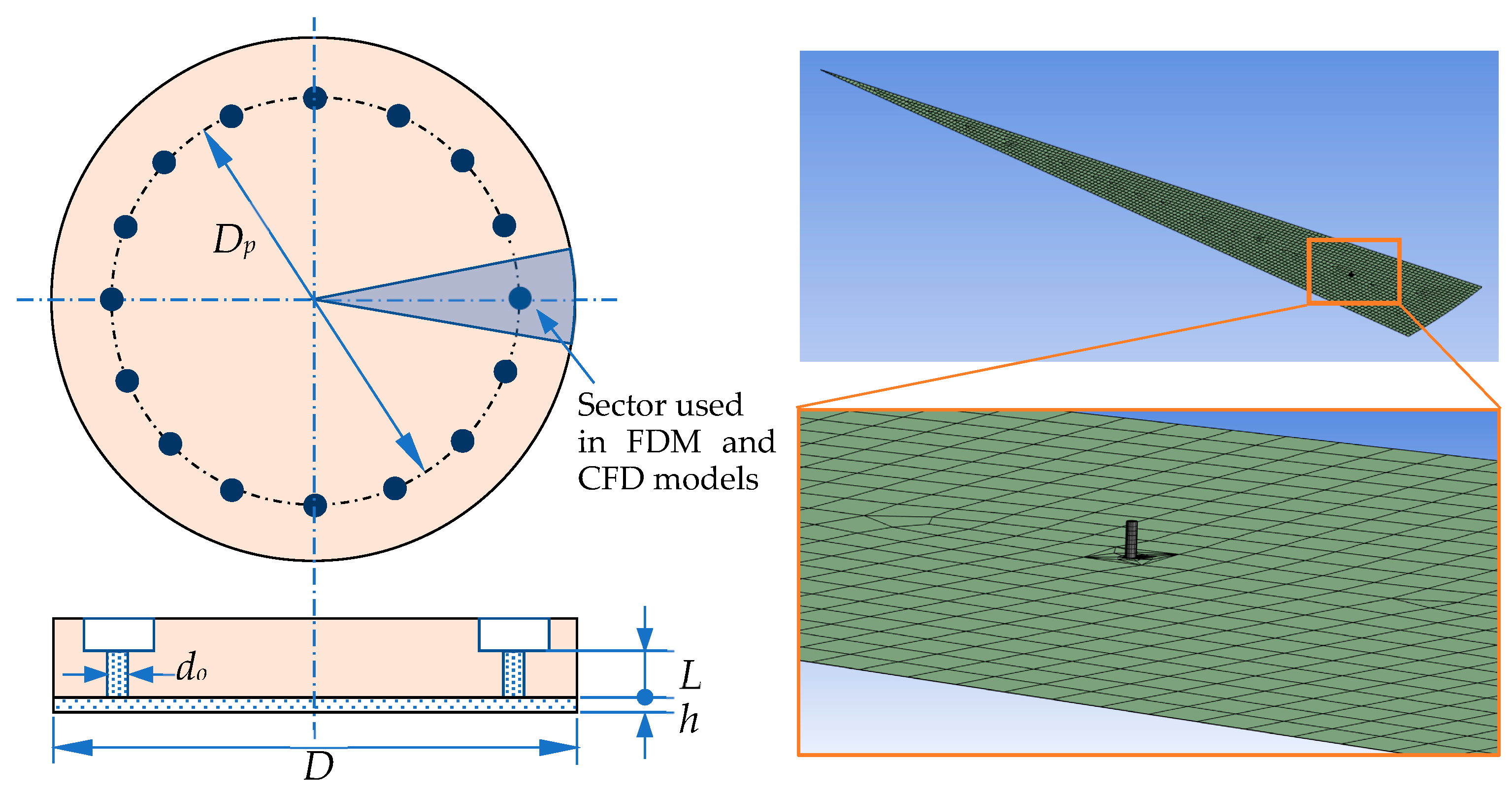
4.1. Numerical Models
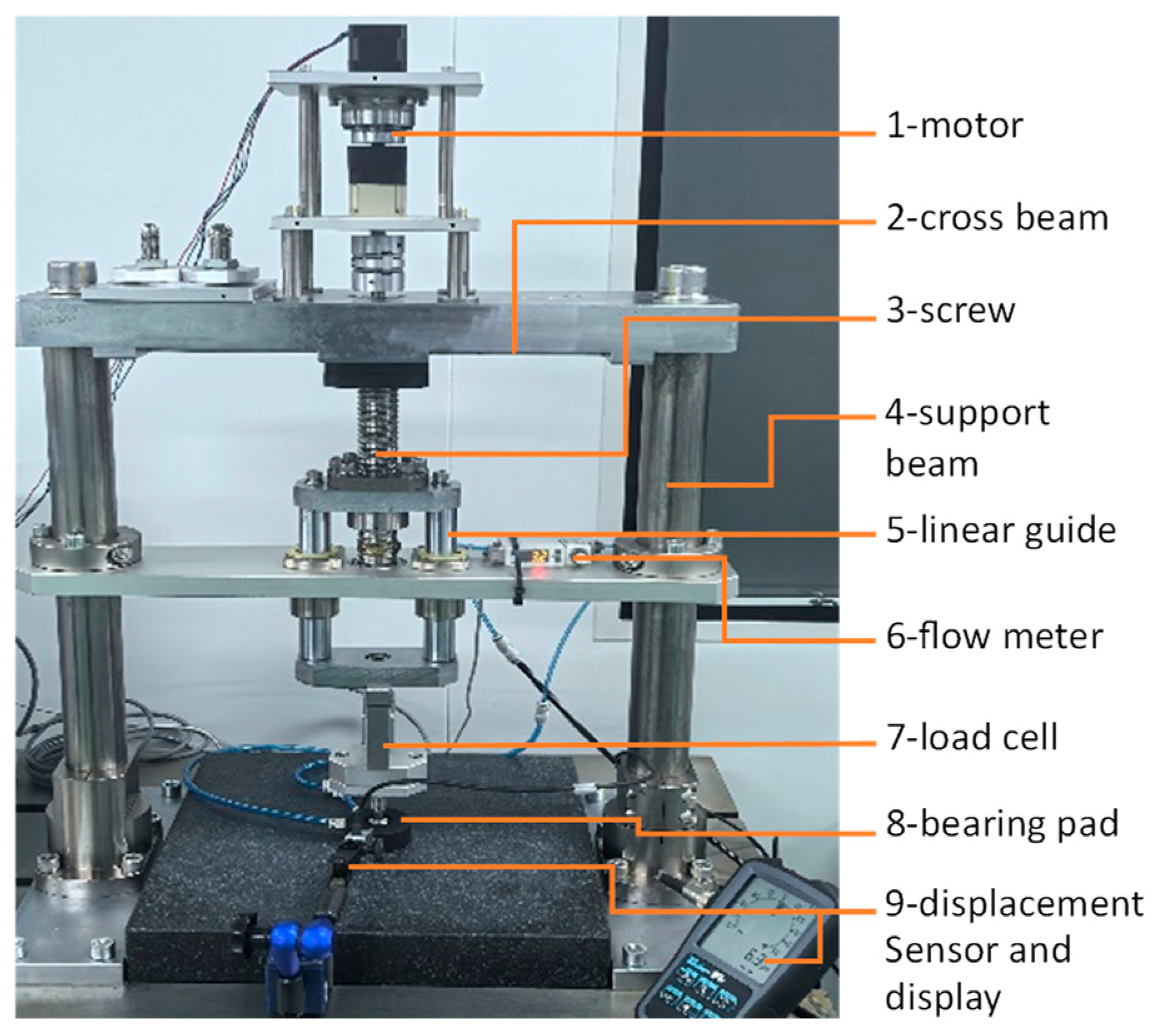
4.2. Experimental Setup
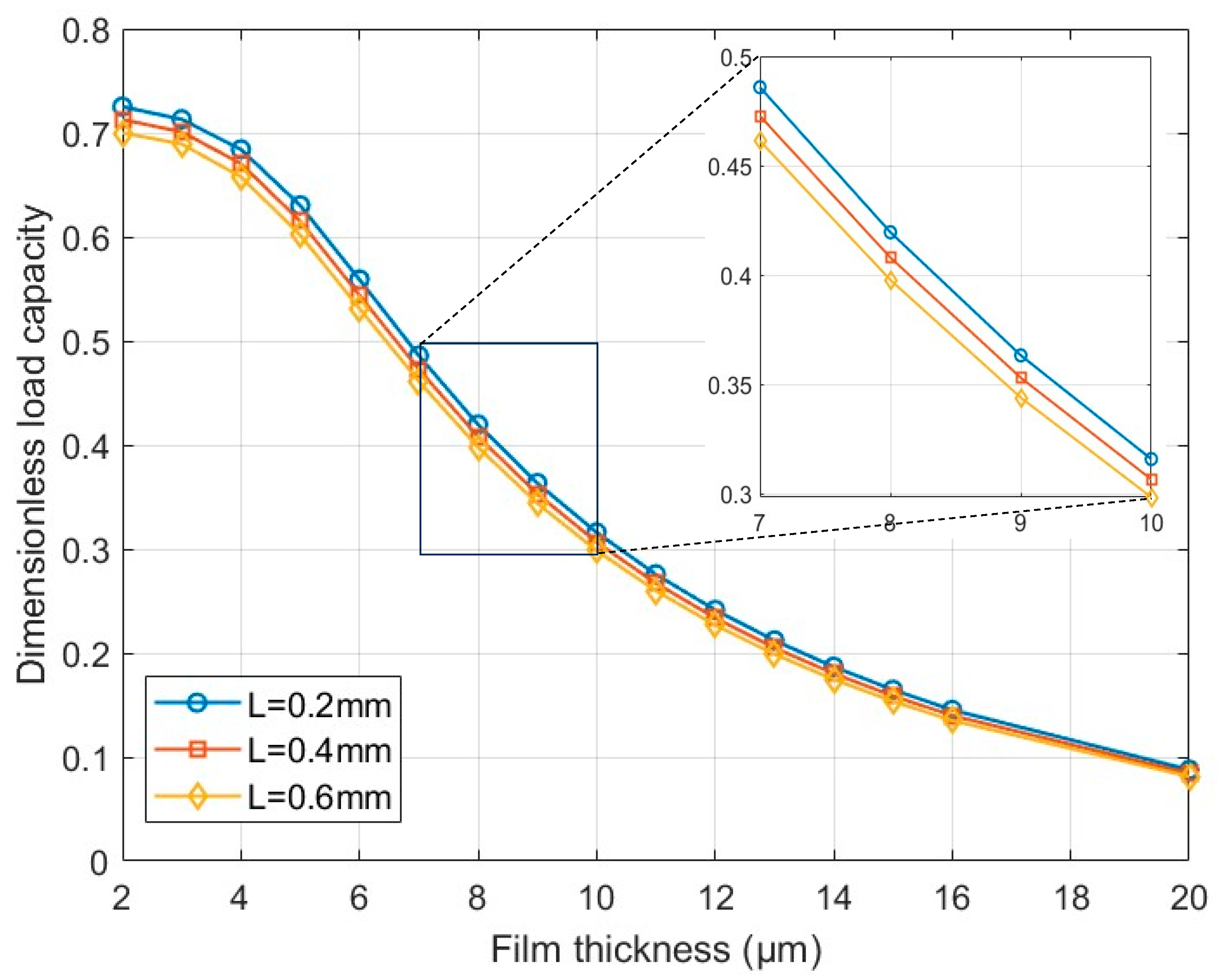
4.3. Results and Discussion
5. Conclusions
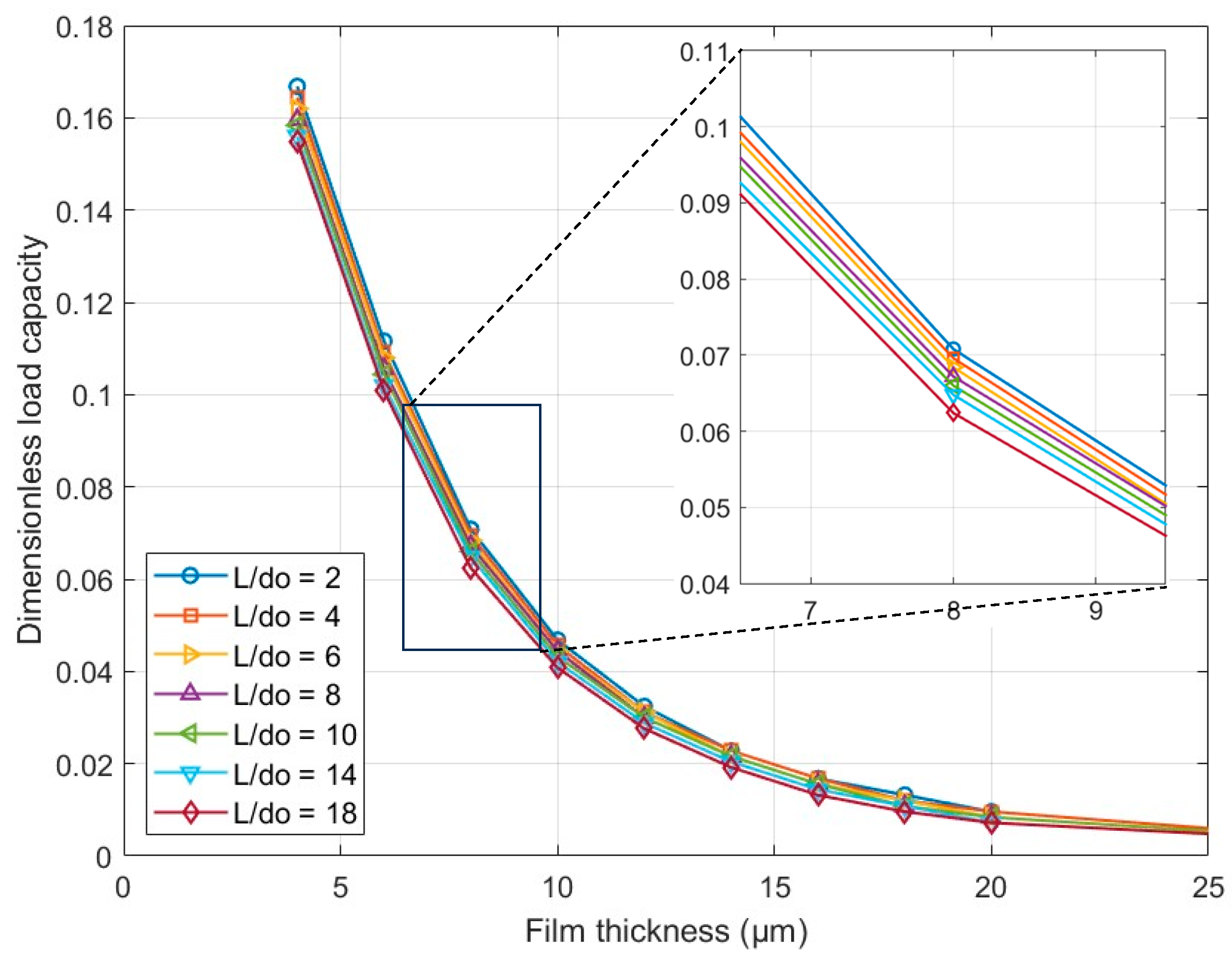
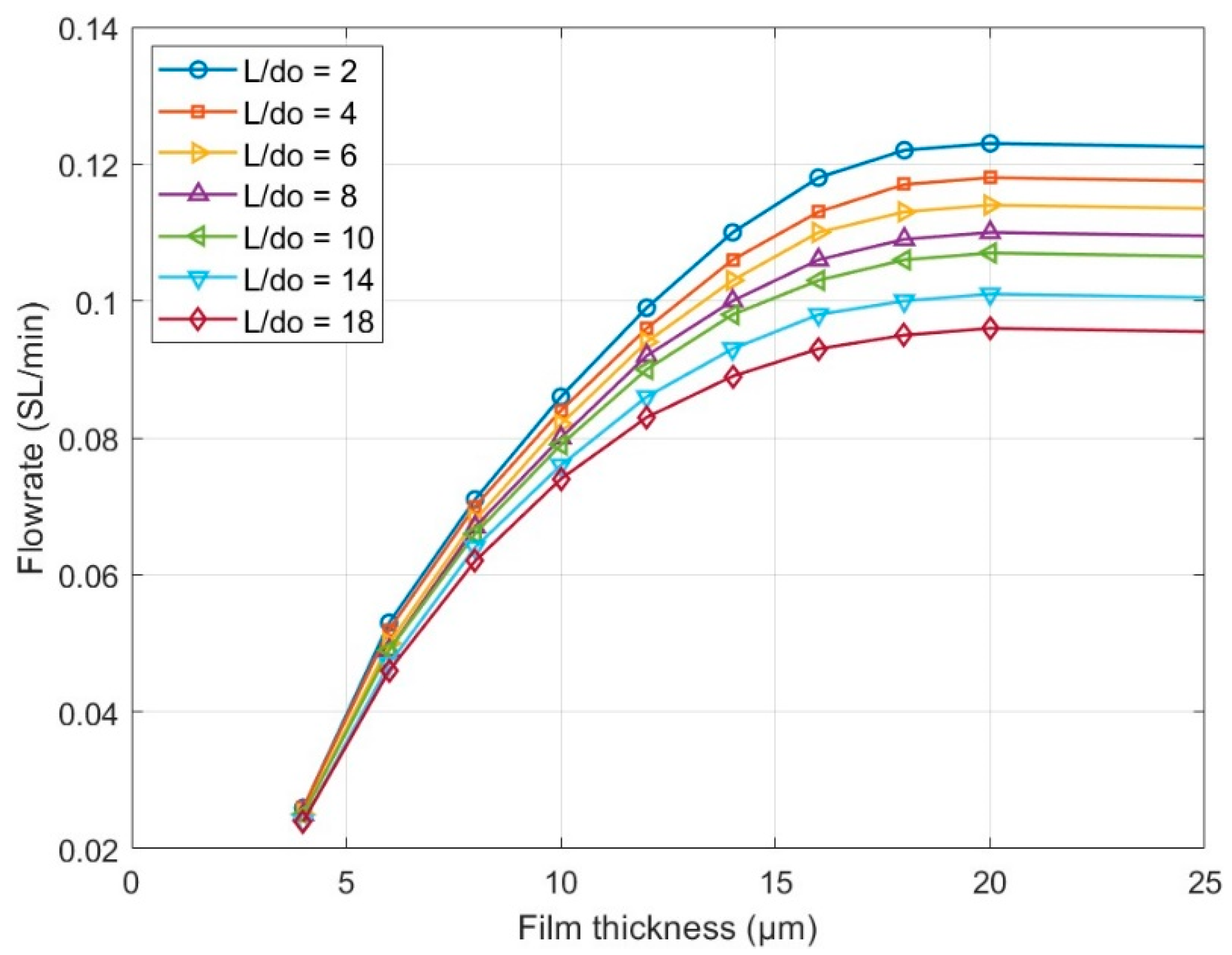
- CFD simulations confirm that, for micro-hole-restricted air bearings, the orifice length-to-diameter ratio influences the flow behaviour through the restrictors, and consequently, the bearing performance in terms of load, stiffness, and mass flow rate.
- An accurate discharge coefficient formula accounting for both orifice length-to-diameter ratio and film thickness was derived from a centrally fed air bearing, and was verified to be accurate in a thrust circular bearing with multiple feed holes arranged in a pitch circle diameter.
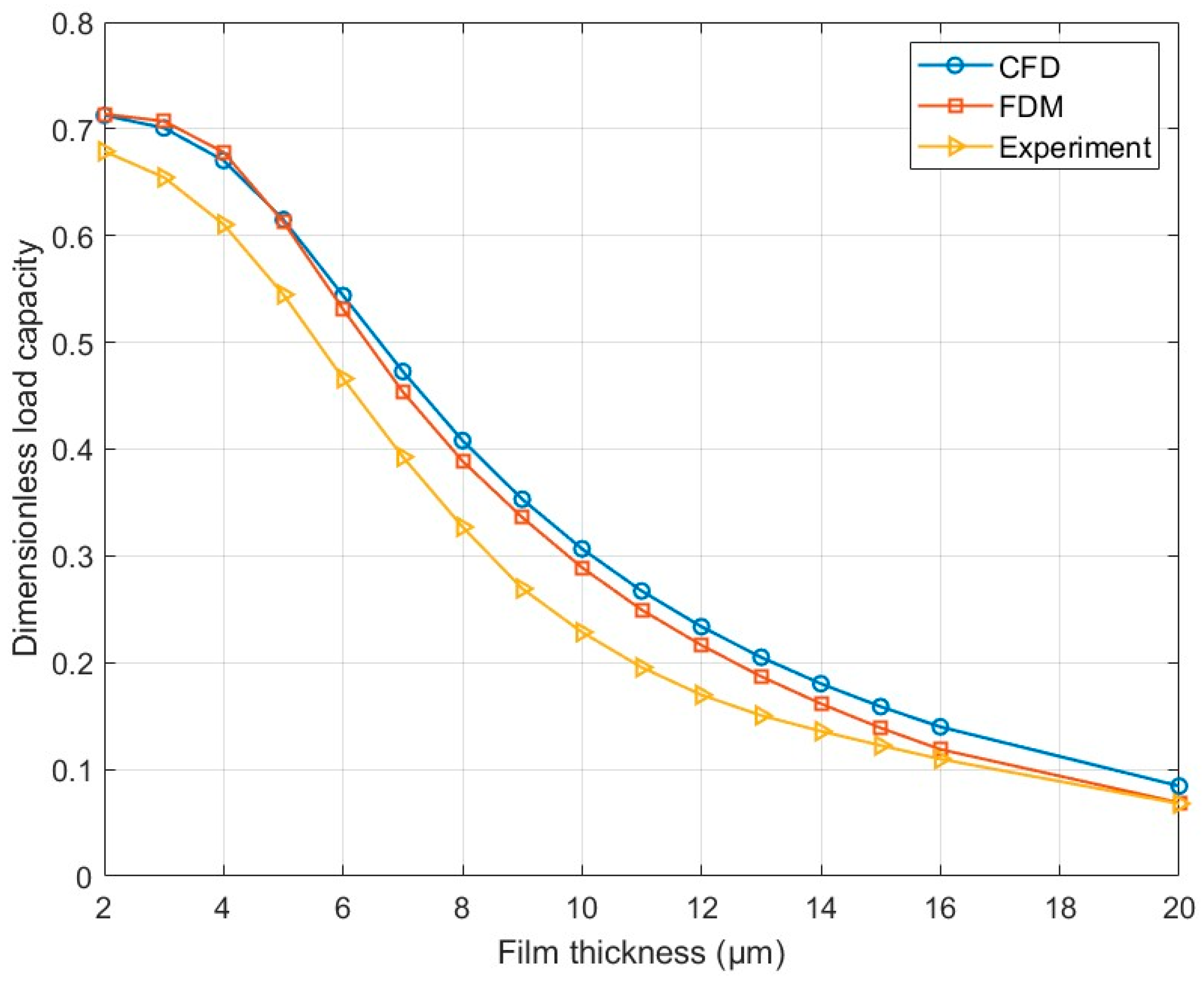
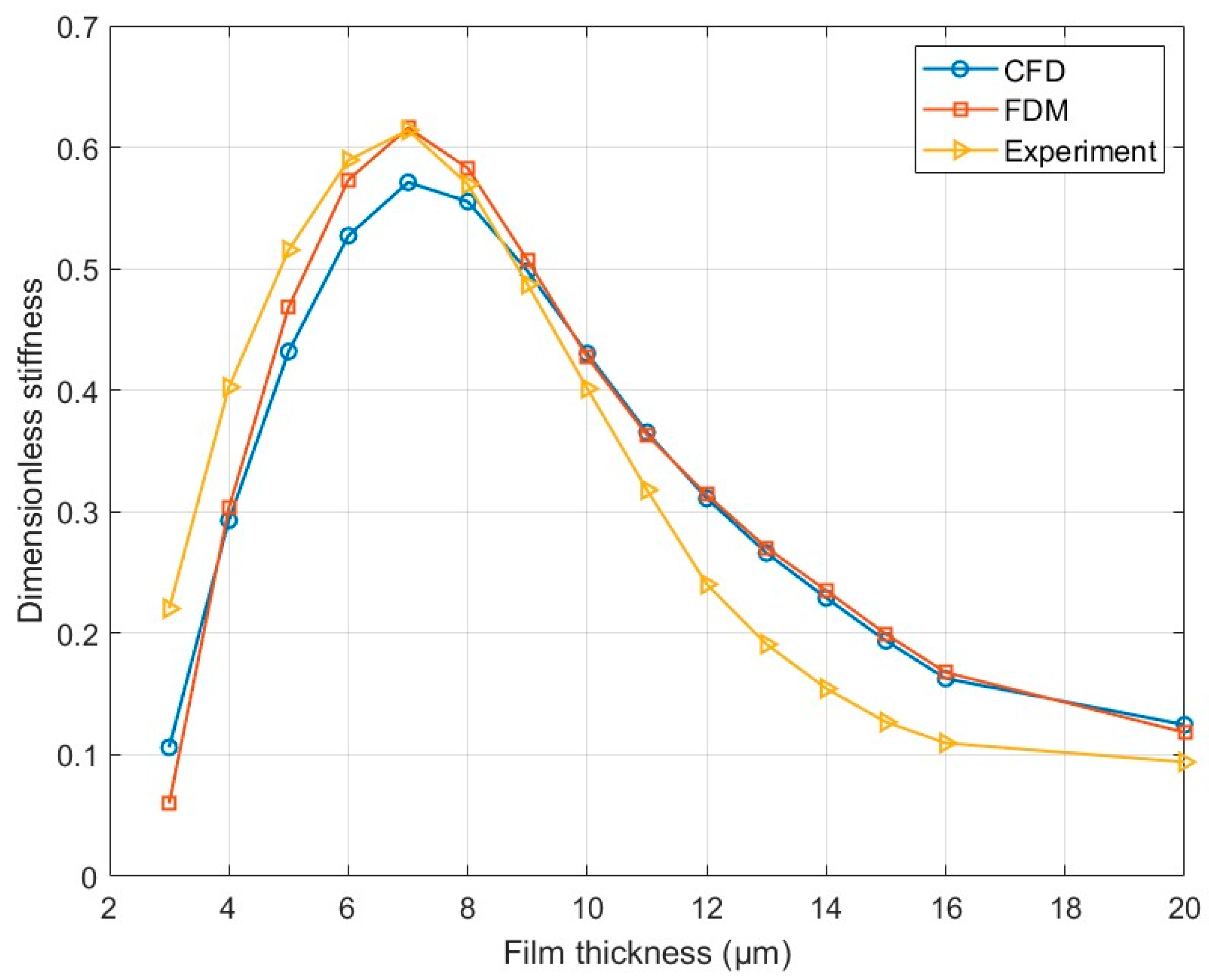
- It was numerically and experimentally demonstrated that micro-hole-restricted air bearings can achieve high load capacity and high stiffness, having the potential for application in more complex air bearing designs and systems.
Author Contributions
Funding
Data Availability Statement
Conflicts of Interest
References
- Gong, Z.; Huo, D.; Niu, Z.; Chen, W.; Cheng, K. A novel long-stroke fast tool servo system with counterbalance and its application to the ultra-precision machining of microstructured surfaces. Mech. Syst. Signal Process. 2022, 173, 109063. [Google Scholar] [CrossRef]
- Gou, N.; Cheng, K.; Huo, D. Multiscale modelling and analysis for design and development of a high-precision aerostatic bearing slideway and its digital twin. Machines 2021, 9, 85. [Google Scholar] [CrossRef]
- Chen, W.; Liang, Y.; Sun, Y.; Huo, D.; Lu, L.; Liu, H. Design philosophy of an ultra-precision fly cutting machine tool for KDP crystal machining and its implementation on the structure design. Int. J. Adv. Manuf. Technol. 2014, 70, 429–438. [Google Scholar] [CrossRef]
- Hooijschuur, R.H.T.; Saikumar, N.; HosseinNia, S.H.; van Ostayen, R.A.J. Air-based contactless wafer precision positioning system: Contactless sensing using charge coupled devices. Proc. Inst. Mech. Eng. Part J J. Eng. Tribol. 2022, 237, 1276–1288. [Google Scholar] [CrossRef]
- Zhang, F.; Liu, P. Accuracy improvement of the H-drive air-levitating wafer inspection stage based on error analysis and compensation. Meas. Sci. Technol. 2018, 29, 045013. [Google Scholar] [CrossRef]
- Hwang, J.; Park, C.H.; Kim, S.W. Estimation method for errors of an aerostatic planar XY stage based on measured profile errors. Int. J. Adv. Manuf. Technol. 2010, 46, 877–883. [Google Scholar] [CrossRef]
- Ito, S.; Kikuchi, H.; Chen, Y.; Shimizu, Y.; Gao, W.; Takahashi, K.; Kanayama, T.; Arakawa, K.; Hayashi, A. A micro-coordinate measurement machine (CMM) for large-scale dimensional measurement of micro-slits. Appl. Sci. 2016, 6, 156. [Google Scholar] [CrossRef]
- Bos, E.; Moers, T.; van Riel, M. Design and verification of an ultra-precision 3D-coordinate measuring machine with parallel drives. Meas. Sci. Technol. 2015, 26, 085904. [Google Scholar] [CrossRef]
- Lappas, V.J.; Steyn, W.H.; Underwood, C.I. Attitude control for small satellites using control moment gyros. Acta Astronaut. 2002, 51, 101–111. [Google Scholar] [CrossRef]
- Şener, R.; Koç, M.A.; Ermiş, K. Hybrid ANFIS-PSO algorithm for estimation of the characteristics of porous vacuum preloaded air bearings and comparison performance of the intelligent algorithm with the ANN. Eng. Appl. Artif. Intell. 2024, 128, 107460. [Google Scholar] [CrossRef]
- Gao, Q.; Chen, W.; Lu, L.; Huo, D.; Cheng, K. Aerostatic bearings design and analysis with the application to precision engineering: State-of-the-art and future perspectives. Tribol. Int. 2019, 135, 1–17. [Google Scholar] [CrossRef]
- Schulz, B.; Muth, M. Dynamically optimized air bearings manufactured with the laser beam. In Proceedings of the Lasers and Optics in Manufacturing III, Munich, Germany, 16–20 June 1997. [Google Scholar] [CrossRef]
- Muth, M.; Schulz, B. Segmented air bearing in micronozzle technology for the project SOFIA. In Proceedings of the Optical Science, Engineering and Instrumentation ’97, San Diego, CA, USA, 27 July–1 August 1997. [Google Scholar] [CrossRef]
- Miyatake, M.; Yoshimoto, S. Numerical investigation of static and dynamic characteristics of aerostatic thrust bearings with small feed holes. Tribol. Int. 2010, 43, 1353–1359. [Google Scholar] [CrossRef]
- Nishio, U.; Somaya, K.; Yoshimoto, S. Numerical calculation and experimental verification of static and dynamic characteristics of aerostatic thrust bearings with small feedholes. Tribol. Int. 2011, 44, 1790–1795. [Google Scholar] [CrossRef]
- Lu, Z.-W.; Zhang, J.-A.; Liu, B. Research and analysis of the static characteristics of aerostatic bearings with a multihole integrated restrictor. Shock Vib. 2020, 2020, 7426928. [Google Scholar] [CrossRef]
- Belforte, G.; Colombo, F.; Raparelli, T.; Trivella, A.; Viktorov, V. Experimental analysis of air pads with micro holes. Tribol. Trans. 2013, 56, 169–177. [Google Scholar] [CrossRef]
- Wu, Y.; Li, C.; Li, J.; Du, J. Lubrication mechanism and characteristics of aerostatic bearing with close-spaced micro holes. Tribol. Int. 2024, 192, 109278. [Google Scholar] [CrossRef]
- Wang, G.; Li, W.; Liu, G.; Feng, K. A novel optimization design method for obtaining high-performance micro-hole aerostatic bearings with experimental validation. Tribol. Int. 2023, 185, 108542. [Google Scholar] [CrossRef]
- Chang, S.H.; Chan, C.W.; Jeng, Y.R. Discharge coefficients in aerostatic bearings with inherent orifice-type restrictors. ASME J. Tribol. 2015, 137, 011705. [Google Scholar] [CrossRef]
- Beforte, G.; Raparelli, T.; Viktorov, V.; Trivella, A. Discharge coefficients of orifice-type restrictor for aerostatic bearings. Tribol. Int. 2007, 40, 512–521. [Google Scholar] [CrossRef]
- Pink, E.G.; Stout, K.J. Orifice restrictor losses in journal bearings. Proc. Inst. Mech. Eng. 1979, 193, 47–52. [Google Scholar] [CrossRef]



| Parameters | Values |
|---|---|
| Supply pressure, Ps (MPa) | 0.5 |
| Bearing pad diameter, D (mm) | 20 |
| Orifice diameter, do (µm) | 50 |
| Orifice length (L)-to-diameter ratio, L/do | 2, 4, 6, 8, 10, 14, 18 |
| Parameters | Values/Range | |
|---|---|---|
| FDM/CFD Simulation | Experiments | |
| Supply pressure, Ps (MPa) | 0.5 | |
| Bearing pad diameter, D (mm) | 65 | |
| Orifice diameter, do (µm) | 50 | |
| Orifice position pitch circle diameter, Dp (mm) | 60 | |
| Orifice length, L (µm) | 200, 400, 600 | 400 |
| Number of orifice, N | 36 | 36 |
| Bearing film thickness, h (µm) | 2–20 at an interval of 1 µm | |
Disclaimer/Publisher’s Note: The statements, opinions and data contained in all publications are solely those of the individual author(s) and contributor(s) and not of MDPI and/or the editor(s). MDPI and/or the editor(s) disclaim responsibility for any injury to people or property resulting from any ideas, methods, instructions or products referred to in the content. |
© 2025 by the authors. Licensee MDPI, Basel, Switzerland. This article is an open access article distributed under the terms and conditions of the Creative Commons Attribution (CC BY) license.
Share and Cite
Huo, D.; Fard, A.; Liu, J.; Gou, N.; Cheng, K. Modelling of Aerostatic Bearings with Micro-Hole Restriction. Machines 2026, 14, 43. https://doi.org/10.3390/machines14010043
Huo D, Fard A, Liu J, Gou N, Cheng K. Modelling of Aerostatic Bearings with Micro-Hole Restriction. Machines. 2026; 14(1):43. https://doi.org/10.3390/machines14010043
Chicago/Turabian StyleHuo, Dehong, Amir Fard, Junliang Liu, Ning Gou, and Kai Cheng. 2026. "Modelling of Aerostatic Bearings with Micro-Hole Restriction" Machines 14, no. 1: 43. https://doi.org/10.3390/machines14010043
APA StyleHuo, D., Fard, A., Liu, J., Gou, N., & Cheng, K. (2026). Modelling of Aerostatic Bearings with Micro-Hole Restriction. Machines, 14(1), 43. https://doi.org/10.3390/machines14010043