


Abstract
We aimed to address the issue of fretting wear on the rollers and raceways of pitch bearings in wind turbines during shutdown and under intermittent high loads. This study focuses on triple-row cylindrical roller bearings. A finite element wear simulation of the contact area between a single roller and the raceway was established based on Hertzian contact theory and the modified Archard model. The wear coefficient values of the model before and after coating were verified through experiments, with results of k1 = 3.125 × 10⁻⁸ and k2 = 4.5 × 10⁻¹⁰, respectively. The effects of normal load, displacement amplitude, and cycle number on the fretting wear behavior of rollers under both uncoated and GLC-coated conditions were investigated. The results show that the GLC (Glassy Carbon-like Carbon) film significantly reduces the friction coefficient and wear. Compared to uncoated rollers, it reduces the maximum wear depth by approximately 90.53% across various normal loads, displacement amplitudes, and numbers of cycles. Additionally, the wear rate of the coated rollers remains consistently low with small fluctuations. The conclusion holds that the GLC film reduces the interface shear force and effective slip amplitude, enhances surface hardness and stability, and improves the fretting wear resistance of pitch bearings by an order of magnitude under complex load and oil-starved conditions. The primary objective of this work is to investigate the mechanisms for enhancing the anti-fretting wear performance of pitch bearings, with the goal of significantly extending their service life and reliability in harsh operating environments.
1. Introduction
When it comes to increasing the reliability of wind turbines, there are several applied scientific methods that can indicate potential failures and suggest new improvements to the solution [1]. In research to improve the performance of wind turbines, FTA analysis was used, which concluded that the generator system with its working elements plays a key role in influencing the overall reliability of the wind turbine [2]. The slewing bearings used in wind turbines mainly include two types: pitch bearings and yaw bearings. Among them, the pitch bearing is essentially a specially designed and applied slewing bearing. Pitch bearings are installed between the blades and the hub, need to withstand complex combined loads, including radial forces, axial forces, and overturning moments, and are often accompanied by strong shock and vibration. Their operating characteristics are characterized by intermittent operation, frequent starts and stops, and the transmission of large torques [3]. These working conditions cause slight relative displacement in the contact area between the rolling elements and the raceways, which is highly likely to trigger fretting wear [4,5,6]. A large number of studies have shown that fretting wear is one of the main failure forms of pitch bearings, often leading to lubrication failure, material damage and even early failure [7,8].
Fretting wear is affected by multiple types of factors, mainly including displacement amplitude, contact stress, cycle number, frequency, material properties, temperature, and environmental conditions. Studies have shown that vibration amplitude, load cycle characteristics, and surface stress state are also recognized as key parameters influencing fretting behavior [9]. Sharma and Sadeghi [10] analyzed the fretting wear curves and friction coefficients under different initial fretting pressures. Aktas et al. [11] reported relevant findings on wear behavior under different contact and loading conditions. Li and Lu [12] studied the influence of displacement amplitude on the fretting wear behavior of alloys and its mechanism; Molina and Long [13] discussed the effects of vibration amplitude, contact force, vibration frequency, lubrication conditions, and contact geometry on fretting wear; Han et al. [14] took the fretting wear of titanium alloys as an example to study the simulation analysis and experimental testing of fretting wear under alternating biaxial loading; and Lin et al. [15] studied the fretting wear performance of high-nitrogen bearing steel under lubrication conditions and conducted an in-depth analysis of the changes in this wear mechanism.
Among various surface modification techniques, coating technology stands out particularly in enhancing the resistance to fretting wear and is an extremely attractive solution for reducing fretting wear [16]. The coating can effectively enhance the hardness, wear resistance, and corrosion resistance of the material surface, and reduce fretting damage by inhibiting adhesion, inhibiting oxidation, and lowering stress concentration. Ti-doped graphite-like carbon-based (Ti-GLC) films still maintain low friction and excellent anti-wear performance under high temperature and oil-deficient conditions [17,18]; GLC films also exhibit excellent tribological behavior under extreme working conditions [19,20]. Li et al. [21] analyzed the influence of modulation period on the corrosion-wear resistance of Cr/GLC multilayer films and explored a relatively appropriate modulation period value. Zhu et al. [22] established a molecular dynamics model of DLC films containing graphene (DLC-GR-DLC) using LAMMPS and investigated the influence of graphitization mechanism on the friction and wear behavior of DLC films. Ding et al. [23] investigated the anti-fretting wear performance of diamond-like carbon (DLC) coatings. The results indicated that DLC coatings could effectively reduce the coefficient of friction. At present, coating technologies such as magnetron sputtering have been widely applied to enhance the wear resistance and contact fatigue resistance of materials. Wang et al. [24] successfully synthesized doped graphite-like carbon-based (Ti/GLC) films using magnetron sputtering technology. Through experimental research, it was found that Ti-GLC films have high wear resistance under both dry friction and oil lubrication conditions. Pinedo et al. [25] investigated the resistance of WC/C coatings to fretting wear under dry friction by simulating fretting conditions. Wang et al. [26] studied Cr-doped graphite-like carbon films, which reduced the hardness, elastic modulus and friction coefficient of GLC films, thereby decreasing both the fluctuation of the friction curve and the wear rate.
Despite notable progress in coating technologies for enhancing tribological performance, their targeted application for mitigating fretting wear in wind turbine pitch bearings remains under-explored. Conventional surface treatments—such as laser cladding or raceway quenching—are often constrained by challenges including non-uniform treatment depth and difficulty in controlling residual stresses in large-scale bearings, which limits their effectiveness against fretting damage. This research investigates the fretting wear in a three-row cylindrical roller pitch bearing. Using finite element analysis, the study examines the fretting wear behavior between the rollers and raceways under uncoated and GLC-coated conditions. It discusses the influence of key parameters on wear, elucidates the contrasting wear mechanisms, and ultimately verifies the reliability of the GLC coating in mitigating fretting wear through experimental tests to provide a theoretical basis for improving the anti-fretting wear performance of pitch bearings in wind turbine units.
2. Materials and Methods
Fretting wear is a form of surface degradation caused by extremely small-amplitude oscillatory relative motion between two contacting surfaces, with the displacement amplitude typically in the range of a few micrometers to 300 µm [27]. Accurate quantification of material loss due to fretting requires precise control of nodal coordinates on the contact interface, which enables the reliable reproduction of material removal behavior during the fretting process.
2.1. Hertzian Contact Theory
According to Hertzian contact theory, the stress field distribution in the contact region between two elastic bodies can be analytically determined. The detailed expressions for contact stress are as follows:
In the equations, p0 denotes the maximum contact stress, a is the radius of the contact area, and PL is the normal load per unit length
Furthermore, the effective elastic modulus E* and equivalent radius of curvature R are defined by:
where v1 and v2 are the Poisson’s ratios of the roller and outer ring, respectively; E1 and E2 are their respective elastic moduli; and R1 and R2 denote the radii of curvature of the roller and outer ring.
Fretting displacements are generally in the micrometer range. Under combined normal and tangential loading, the plane-strain condition is described by the following relationship:
In the equations, c is the radius of the stick zone (mm); μ is the coefficient of friction.
2.2. Archard Wear Model
In this study, a wear model similar to that in References [28,29,30,31], namely the Archard model commonly used in calculating wear damage, is adopted, which is expressed as follows:
where V is the volumetric wear depth, s is the sliding distance, P is the normal load, H is the material hardness, and K is the dimensionless wear coefficient.
For a specific point on the contact surface:
In the equations, h is the wear depth; ki is the wear coefficient, representing the wear depth generated by unit contact pressure on unit contact area; and p is the contact pressure. Its differential form is expressed as follows:
Finally, the discrete method is used to conduct a numerical analysis of the wear depth. The discrete Archard model is as follows:
In the equations, Δh(x,τ) represents the increment of wear depth; p(x,τ) represents the contact pressure; and δ(x,τ) represents the relative sliding distance. From the above formula, it can be seen that the wear coefficient depends on the contact pressure and the sliding distance. The specific value of this coefficient needs to be obtained through the subsequent tests.
2.3. Friction and Wear
In this study, a combined approach of experiments and finite element simulations was employed to inversely calibrate the wear coefficients under fretting wear conditions and to compare the test results with the simulation analysis. Firstly, the Cr-CrN-GLC film was deposited using a UDP-700 closed-field unbalanced magnetron sputtering system, the deposition process parameters of Cr-CrN-GLC films are shown in Table 1 below.
Table 1.
Deposition process parameters of Cr-CrN-GLC thin films.
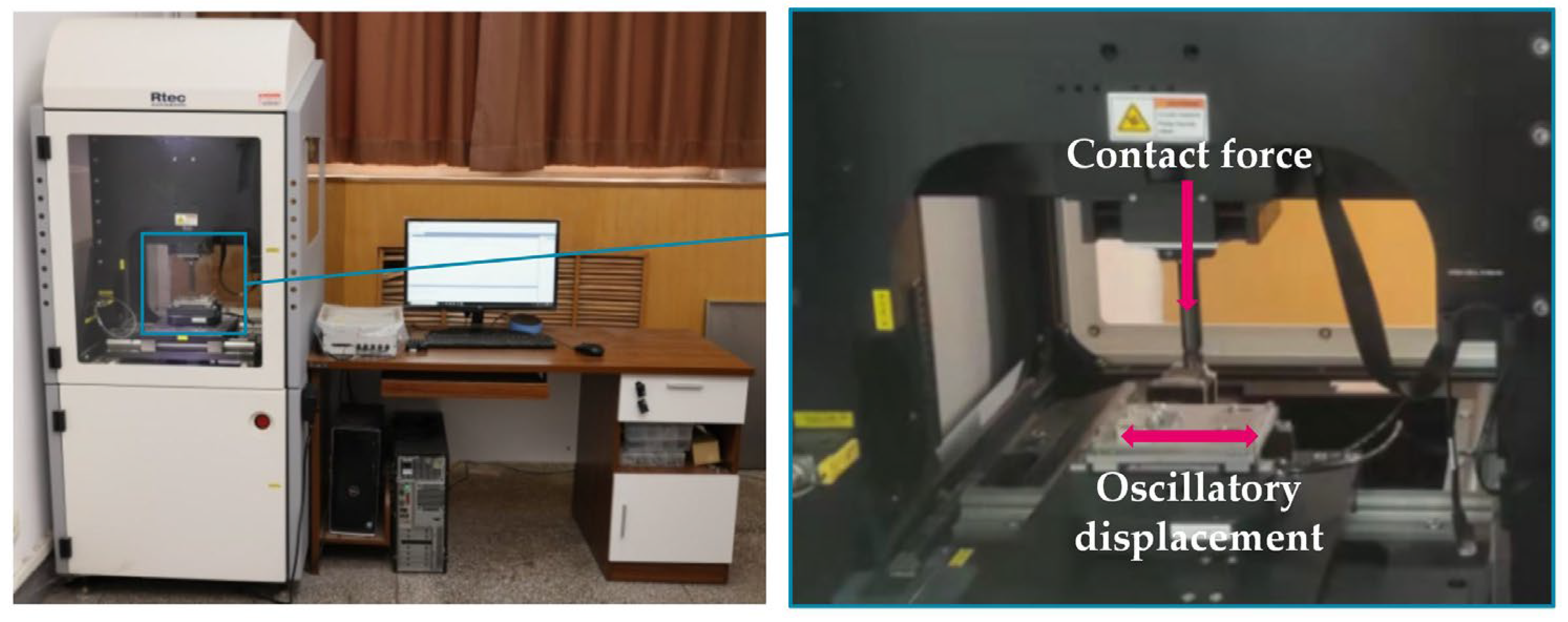
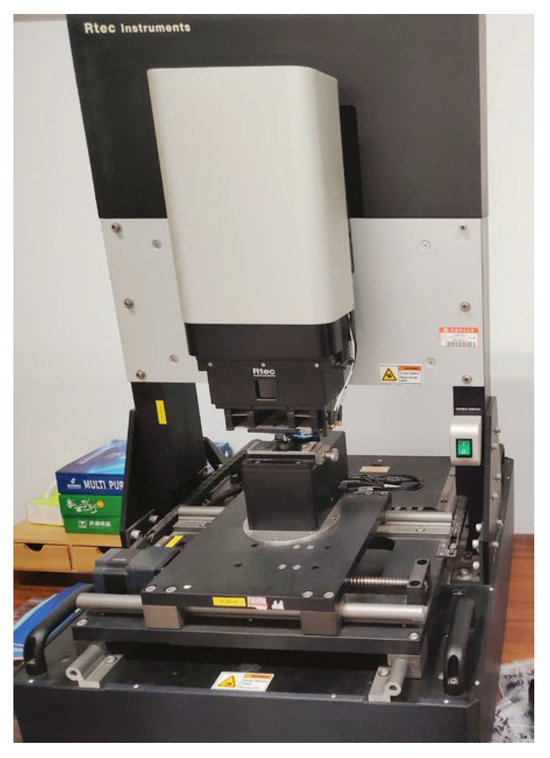
Tests showed that the Cr-CrN-GLC film has an elastic modulus of 175 GPa and a Poisson’s ratio of 0.2. Subsequently, ball-on-disc fretting tests were conducted using an MFT-5000 friction and wear tester manufactured by Rtec-Instruments, USA (Figure 1). A GCr15 steel ball (Φ 9.5 mm) and a 42CrMo4 disc (Φ 24 × 7 mm) were subjected to 36,000 cycles under a normal force of 30 N, a frequency of 5 Hz, and a displacement amplitude of 100 μm. The parameters of the MFT-5000 testing machine are shown in Table 2.
Figure 1.
MFT-5000 friction and wear tester and its fretting module.
Table 2.
Parameters of the MFT-5000 Friction and Wear testing machine.
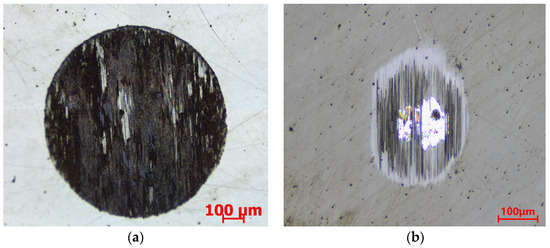
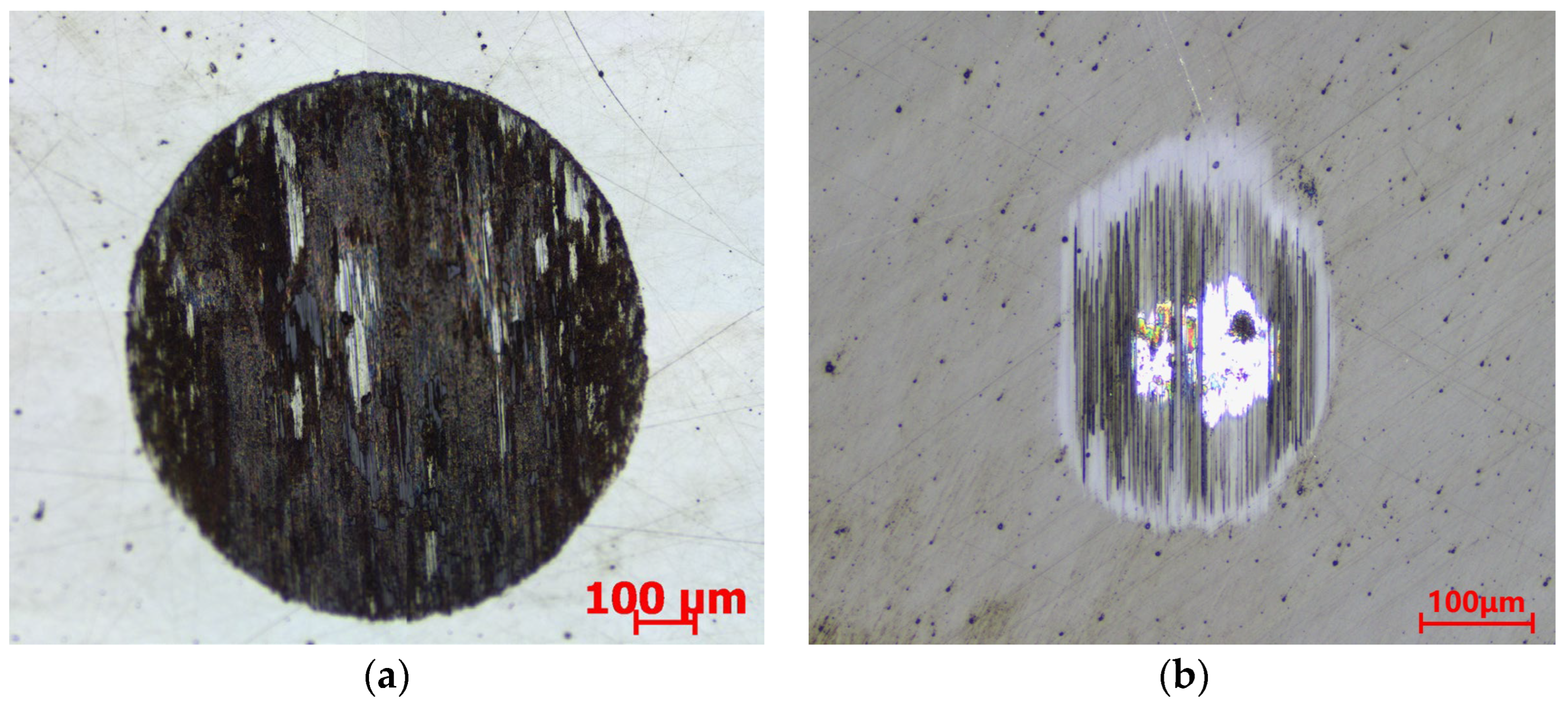
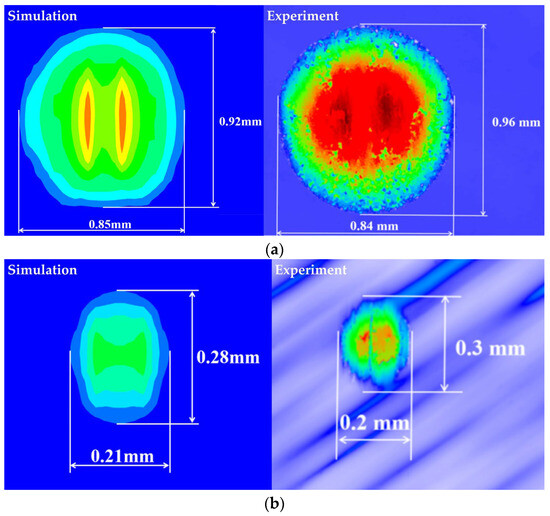
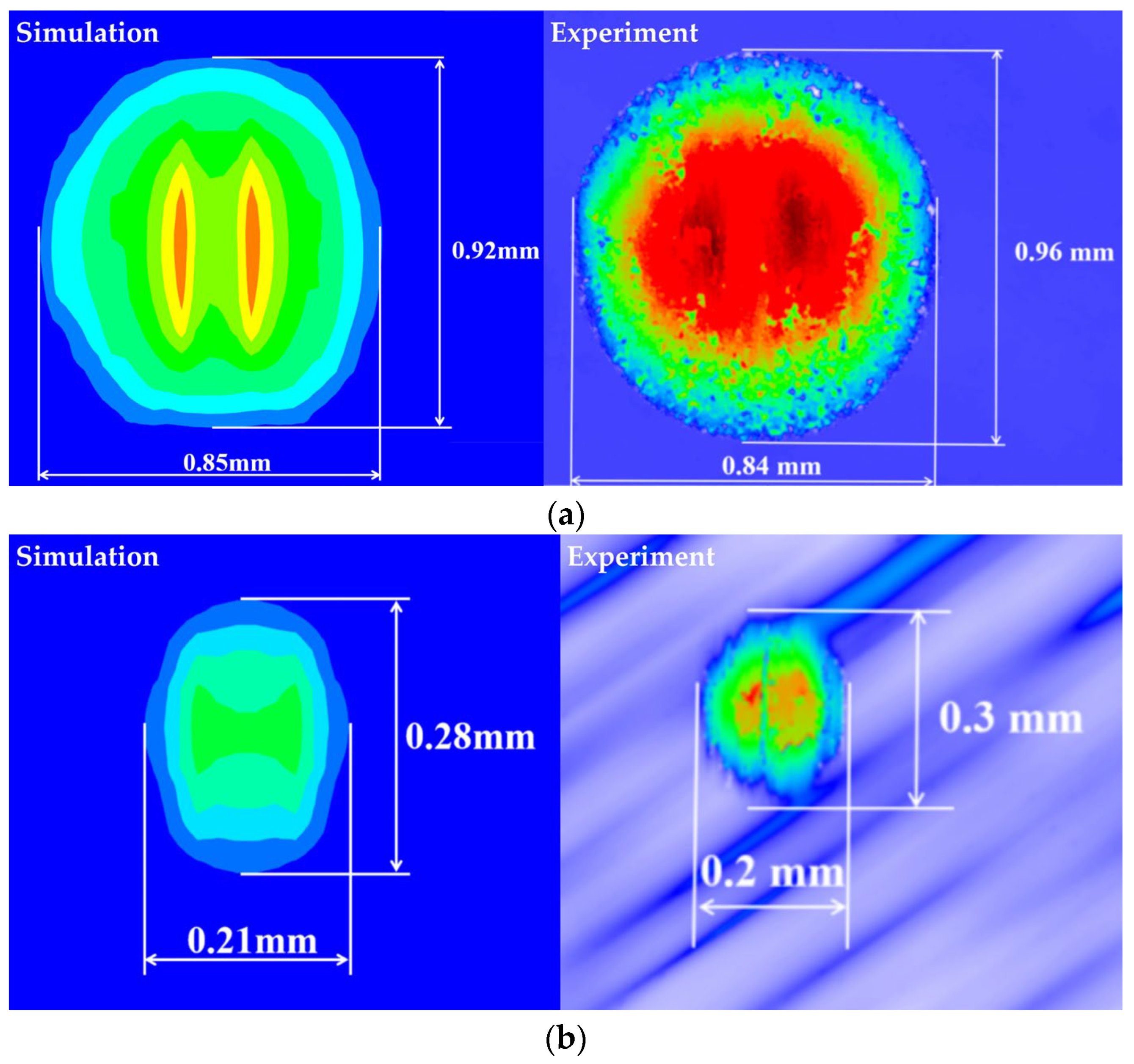
Figure 2 shows a comparison of the worn uncoated versus GLC-coated specimens. Through controlled ball-on-disc fretting wear tests, the actual wear scar morphologies of the coated and uncoated specimens under specific load, frequency, and displacement conditions were obtained (as shown in Figure 3). Microscopic observation revealed that no delamination or cracking occurred in the working area after the deposition of the GLC film. The analysis indicates that the exposed CrN layer, after the wear of the GLC layer, possesses high hardness. Additionally, the film exhibits a high H3/E2 ratio, enabling it to resist plastic deformation effectively and withstand external high-frequency loading without the easy formation of microcracks. The simulation model was established and calibrated against the experimental wear scar morphology shown in Figure 3 [32]. The wear coefficient k was iteratively adjusted in the simulation until the predicted wear scar matched the experimental results. The length and width of the simulated wear scar morphologies were quantitatively compared with the experimental results until their trends and morphologies were highly consistent. As can be seen from the comparison of wear scar morphologies (Figure 3), the wear coefficients under dry friction before and after coating were finally determined to be k1 = 3.125 × 10⁻⁸ and k2 = 4.5 × 10⁻¹⁰, respectively.
Figure 2.
Wear morphologies of specimens under uncoated and GLC-coated conditions. (a) Uncoated; (b) Coated.
Figure 3.
Comparison of fretting wear scar morphologies between simulation and experiment for balls and specimens under uncoated and GLC-coated conditions. (a) Uncoated; (b) Coated.
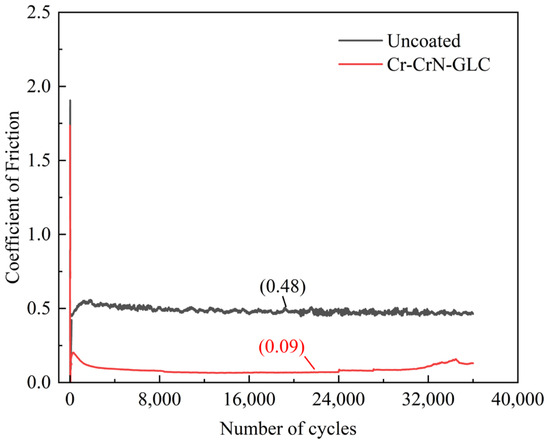
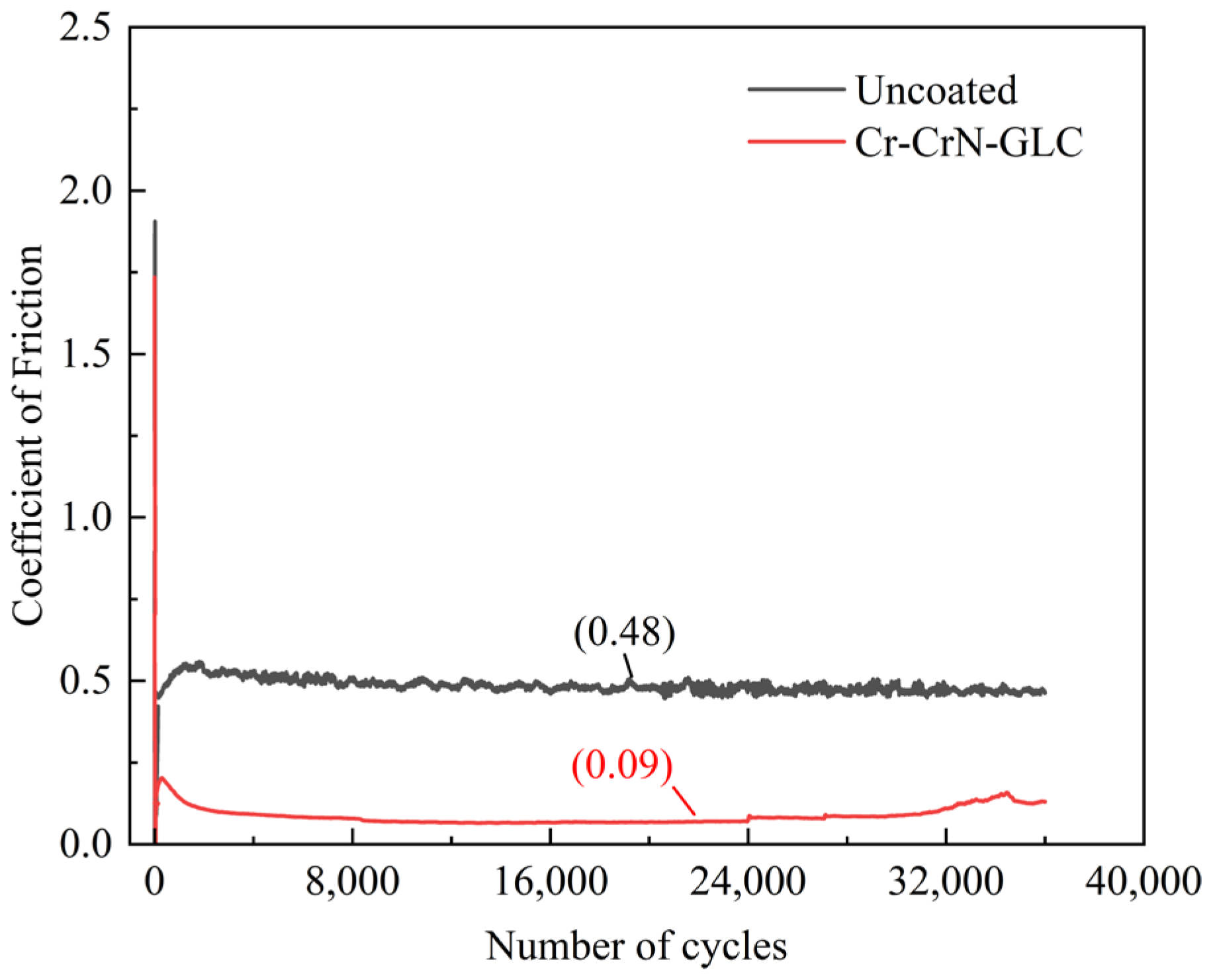
While determining the wear coefficients through experiments in the previous section, the friction coefficients of the specimens under uncoated and GLC-coated were also obtained. Figure 4 shows the friction coefficient curves of the two groups of specimens. In the initial stage, the friction coefficient fluctuates significantly due to the presence of micro-protrusions on the surface. As the number of cycles increases, the micro-protrusions are gradually worn flat, and the friction tends to stabilize. In the stable stage, the friction coefficient of the uncoated specimen is 0.48, while that of the coated specimen is 0.09.
Figure 4.
Friction coefficient curves.
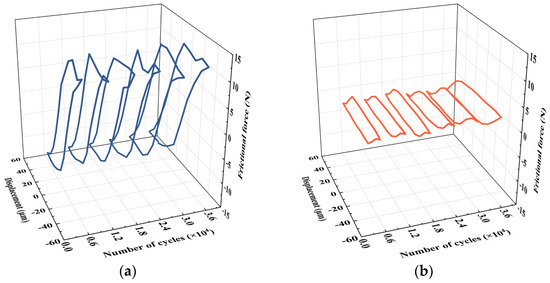
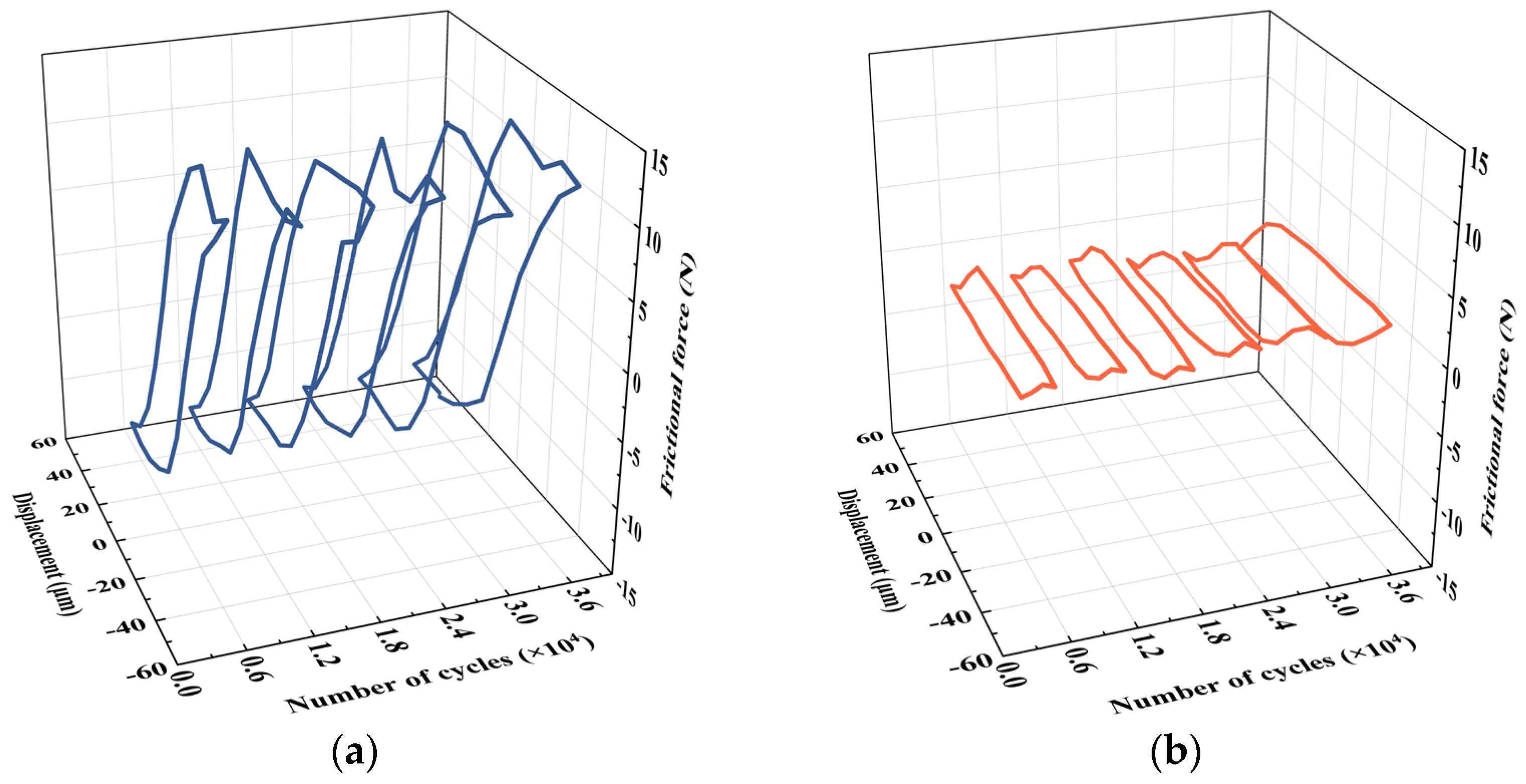
The friction force–displacement–cycle number (Ft-D-N) curve offers a comprehensive and intuitive characterization of the fretting regime [33]. As shown in Figure 5, the Ft-D loops for both sample sets form distinct parallelograms throughout the fretting process, confirming a full-slip fretting regime at the interface [34]. Moreover, the area enclosed by each Ft-D loop corresponds to the work done by friction forces, i.e., the frictional dissipation energy, which serves as an indicator of fretting damage severity [35]. The parallelogram area for the uncoated sample is significantly larger than that of the coated sample, demonstrating considerably higher frictional energy dissipation. This result further confirms that the uncoated sample undergoes significantly more severe fretting wear than the Cr-CrN-GLC coated counterpart.
Figure 5.
Curves of friction force-displacement-cycle number for the two groups of specimens. (a) Uncoated; (b) Coated.
2.4. Fretting Wear Simulation Analysis
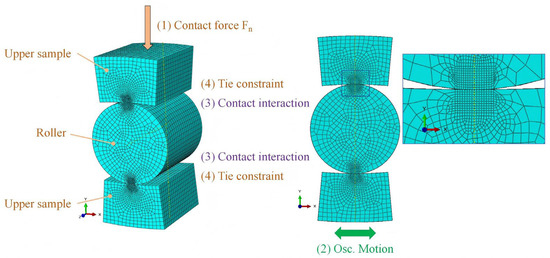
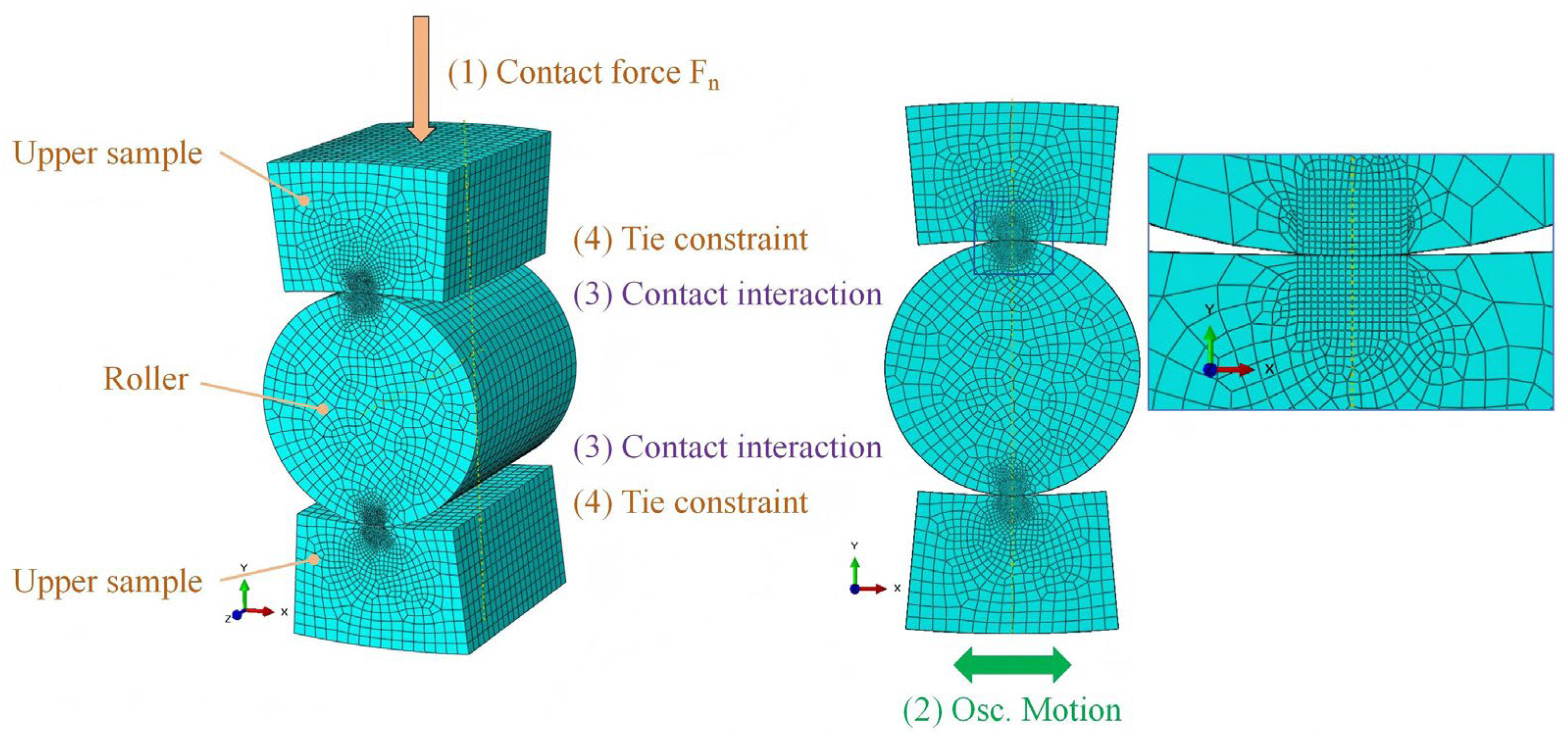
Considering the large size of the bearing, a simplified model of the roller–disc fretting wear as shown in Figure 6 was established in the Abaqus/CAE (2024) software with the radial roller (diameter: 20 mm, length: 20 mm) and its corresponding raceway region as the research objects. According to the actual situation, a 2-μm-thick coating layer was deposited on the circumferential surface of the roller and bonded to the substrate [36]. When adding boundary conditions, they should be based on the actual force and constraint conditions as much as possible. The boundary conditions added to the finite element model are as follows:
Figure 6.
Fretting wear simulation model of coated rollers and specimens.
(1) Fixed constraints are imposed on the rollers in the Y and Z directions, with the X direction being free. The remaining degrees of freedom are restricted to ensure that radial fretting wear can be achieved. The finite element type of the roller is a solid hexahedron.
(2) Set the bottom surface of the raceway as a fixed support. The finite element type of the raceway is also a solid hexahedron.
The mesh is gradually densified, and the contact stress is calculated through Hertz contact theory. When the simulation result is less than 3% of the calculated value, its convergence is determined. To reduce computational cost, only the contact region was meshed with a fine element size (30 μm × 30 μm), while the remaining areas used a coarser mesh size of 300 μm. The material parameters are shown in Table 3.
Table 3.
Parameters of the friction pairs and coating materials.
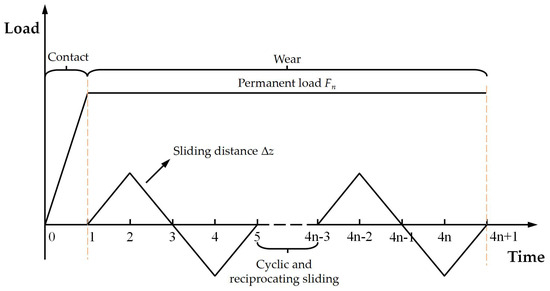
To ensure numerical convergence, the simulation was conducted in two sequential stages: a normal loading phase lasting 1 s, followed by a fretting wear phase lasting 5 s. The loading history, including both applied load and reciprocating displacement, is depicted in Figure 7.
Figure 7.
Loading process of load and reciprocating displacement.
3. Analysis of Results
3.1. Normal Load
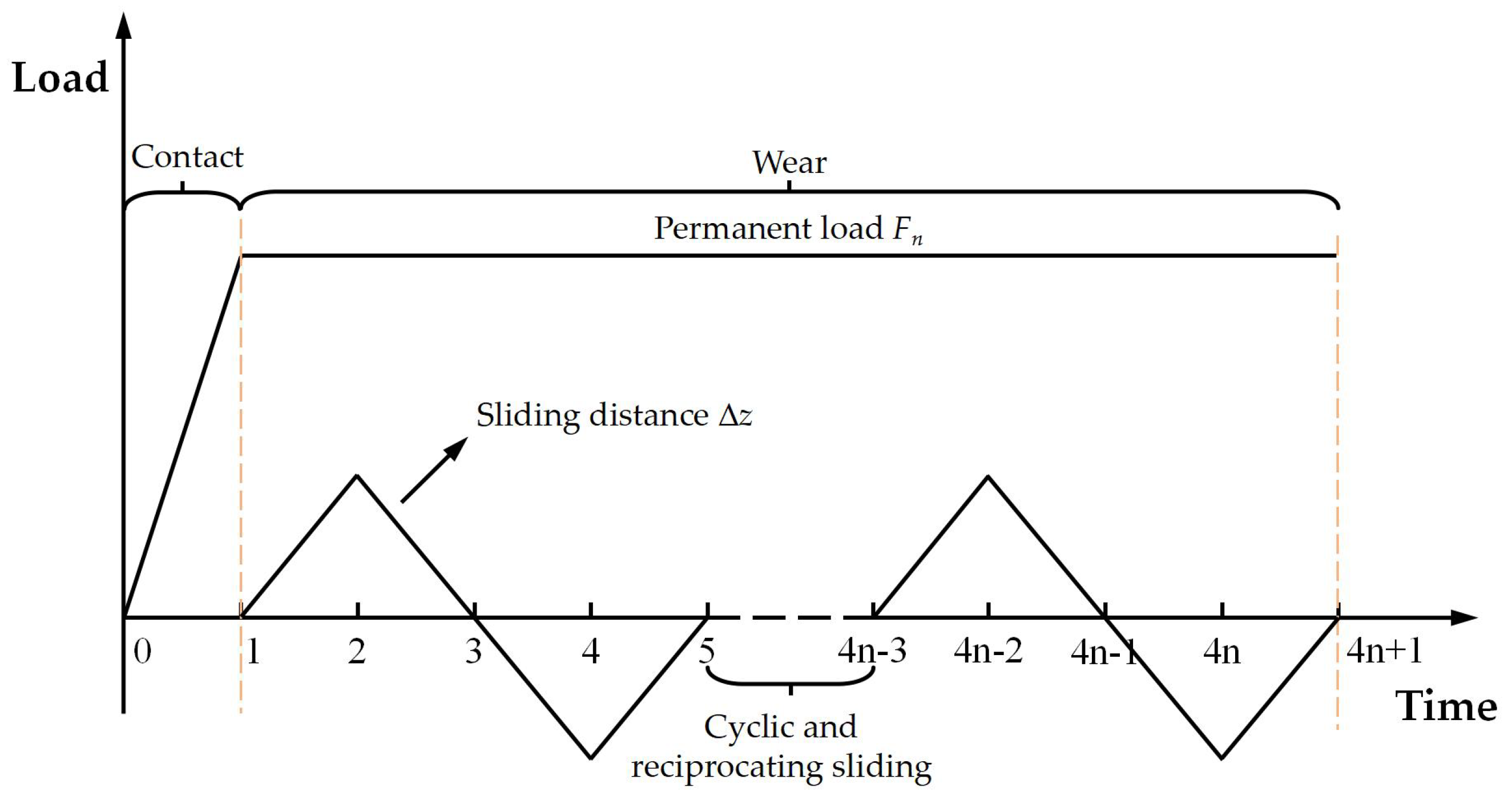
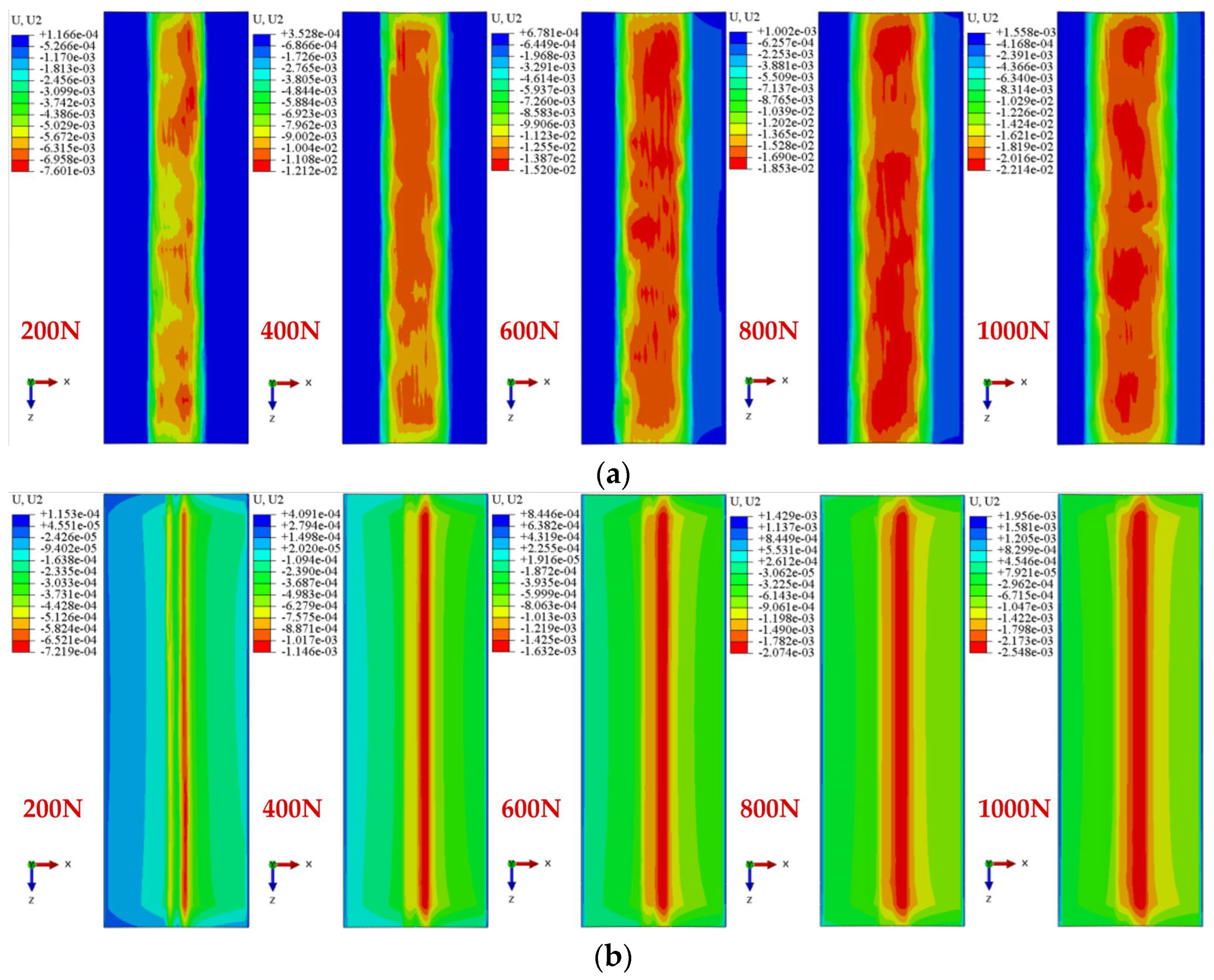
Figure 8 compares the simulated wear scars of the raceways under uncoated and GLC-coated conditions at different normal loads Fn. As observed from the figure, with increasing normal load, the maximum wear scar depth of both uncoated and coated rollers increases, and the raceways paired with uncoated rollers are more susceptible to load effects.
Figure 8.
Simulation contour maps of raceway fretting wear scars under different normal loads. (a) Uncoated; (b) Coated.
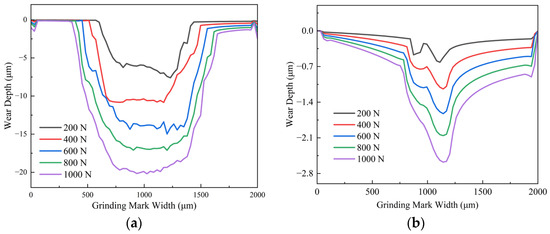
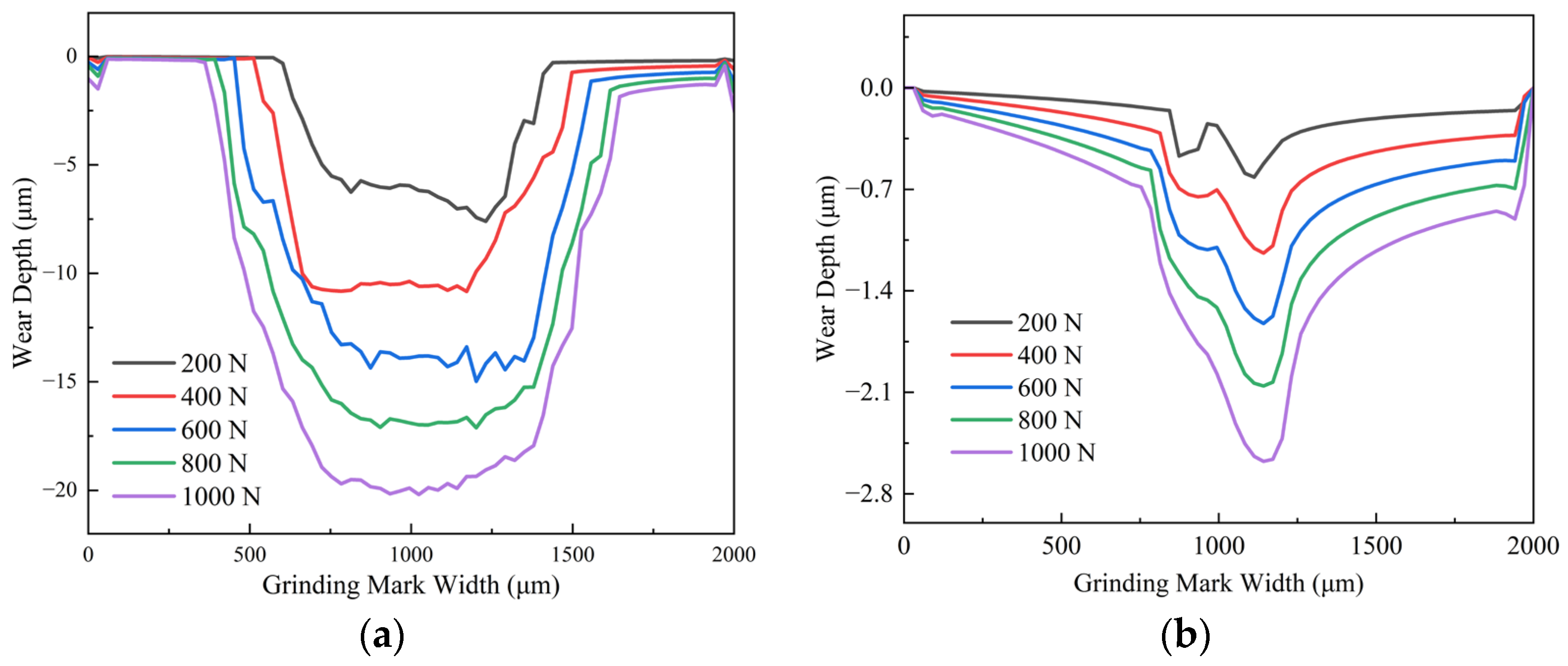
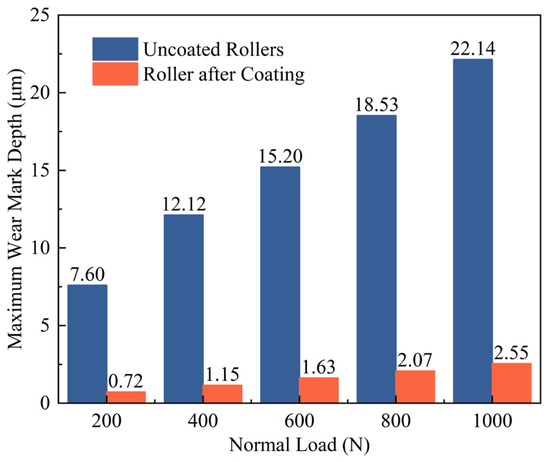
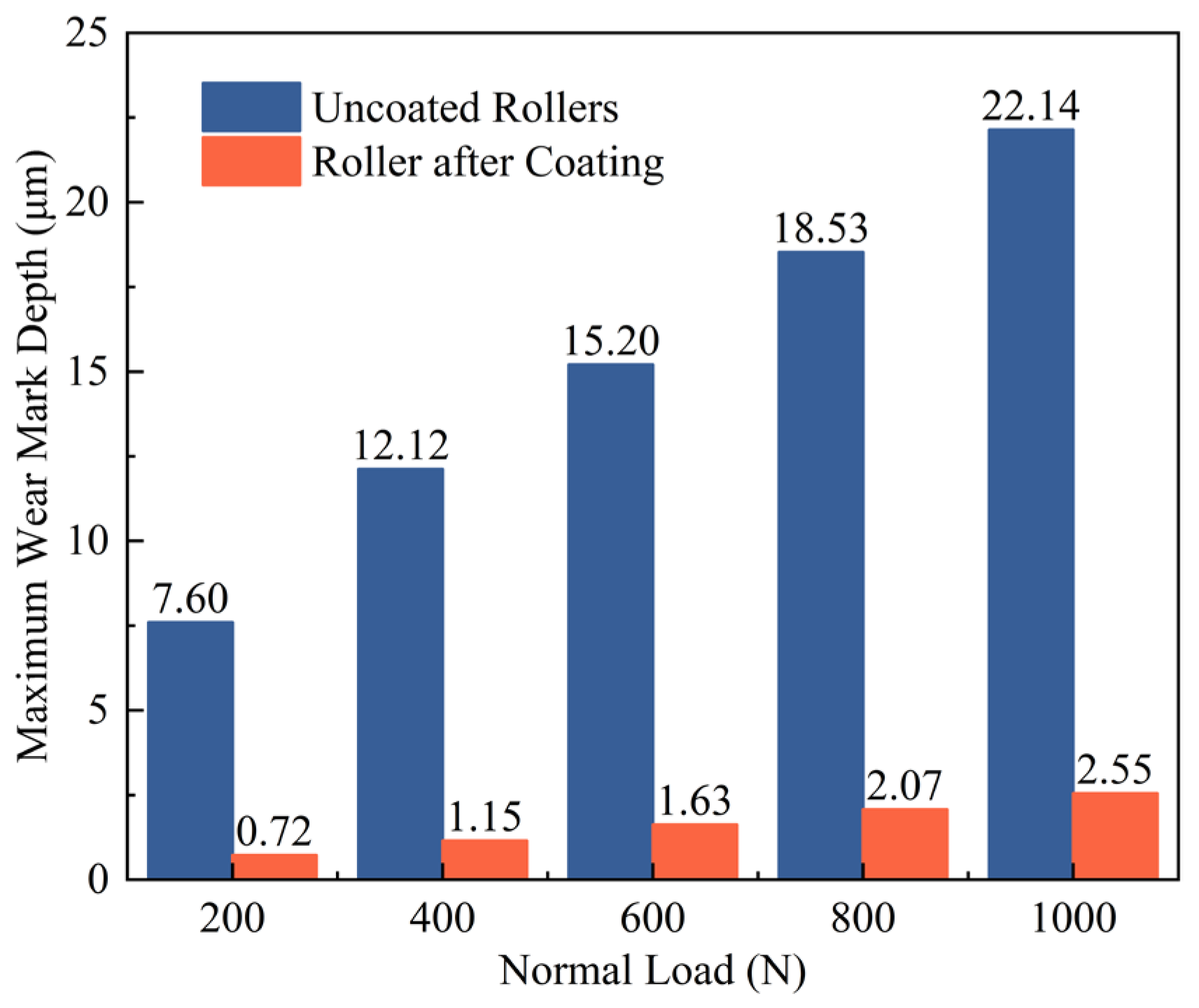
Figure 9 shows a comparison of the cross-sectional profiles of raceway wear marks under different normal loads. It is evident that as the normal load increases, both the wear depth of the outer ring and the width of the wear mark gradually increase. This is because an increase in the normal load (Fn) leads to an enlargement of the contact area, resulting in the expansion of the lateral dimensions of the indentation. Additionally, a higher normal load (Fn) causes an increase in tangential friction, which means that the shear stress borne by the material surface increases accordingly during each fretting cycle. Greater shear stress exacerbates the plastic deformation and fatigue damage of the surface material. Under repeated intense squeezing and shearing, the material becomes more prone to crack initiation and propagation [37], thereby contributing to the gradual increase in wear depth. The wear marks for both uncoated and GLC-coated conditions are distributed in the central area of the raceway, with local spalling pits formed in the severely worn middle region (Figure 8). At a normal load of 200 N, the maximum wear mark depth without coating is 7.60 μm, while that with coating is 0.72 μm, representing a 90.53% reduction in wear depth. As can also be seen from Figure 10, the application of the GLC coating significantly reduces the maximum wear mark depth of the inner ring and enhances the anti-fretting wear performance of the pitch bearing.
Figure 9.
Comparison of cross-sectional wear scar profiles for uncoated and GLC-coated raceways at different normal loads. (a) Uncoated; (b) Coated.
Figure 10.
Maximum wear scar depth of raceway under uncoated and GLC-coated conditions at different normal loads.
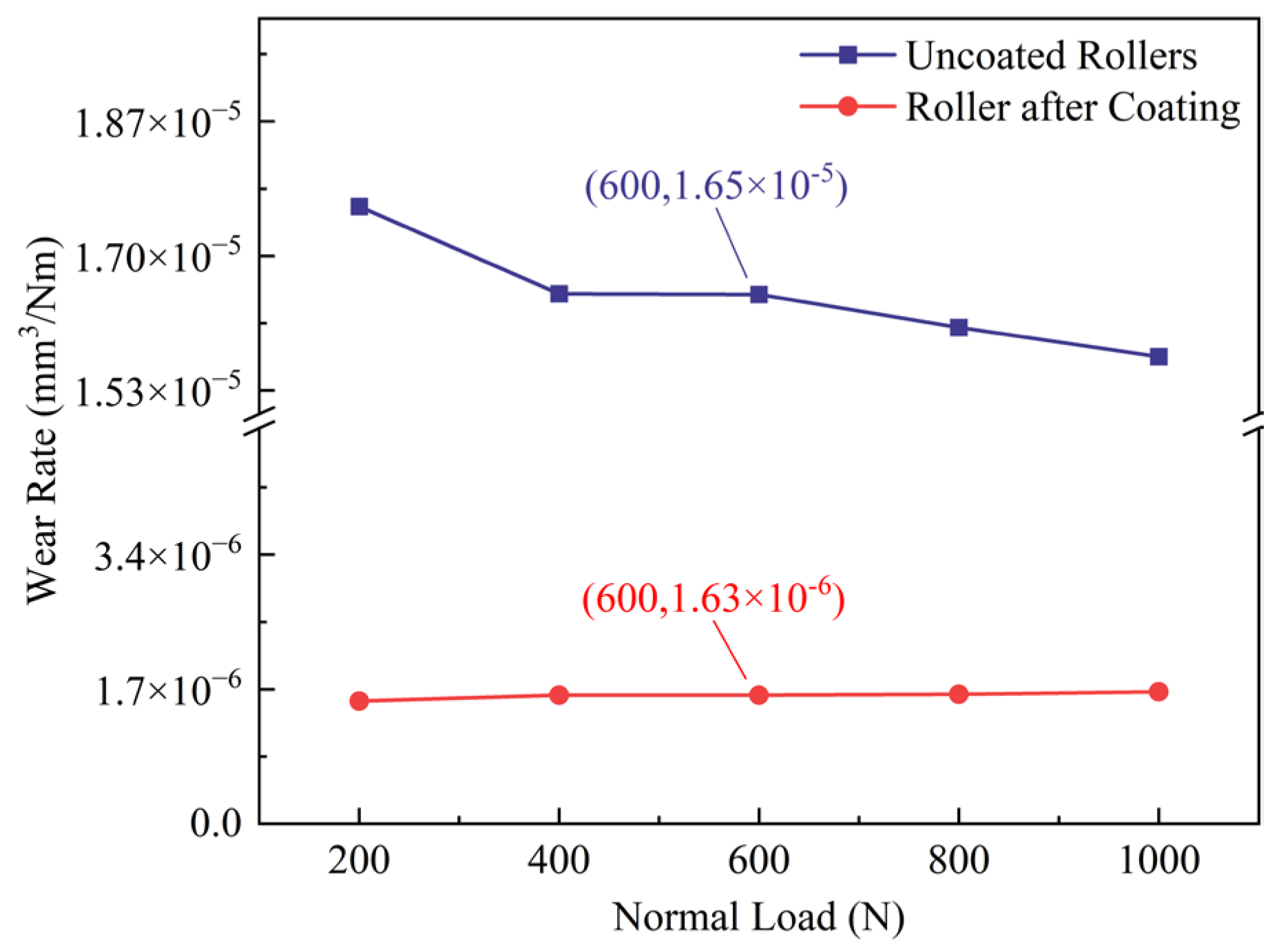
Figure 11 reveals that the wear rate of the uncoated roller and inner ring [38] is one order of magnitude higher than that of the coated counterparts, indicating that the GLC film can reduce the fretting wear rate of the pitch bearing. For the uncoated samples, the wear rate decreases gradually with increasing normal load; in contrast, the wear rate of the coated samples remains relatively stable as the normal load increases. This phenomenon arises from the difference in the dominant wear mechanisms between uncoated and coated rollers: variations in load intensify and inhibit these two mechanisms, respectively, thereby leading to distinct trends in wear rate with respect to load.
In the equations, Vc denotes the wear rate; V represents the wear volume; Fn is the normal load; N is the total number of test cycles; and D is the total micro-motion distance per cycle.
Figure 11.
Comparison of raceway wear rates under uncoated and GLC-coated conditions at different normal loads.
3.2. Displacement Amplitude
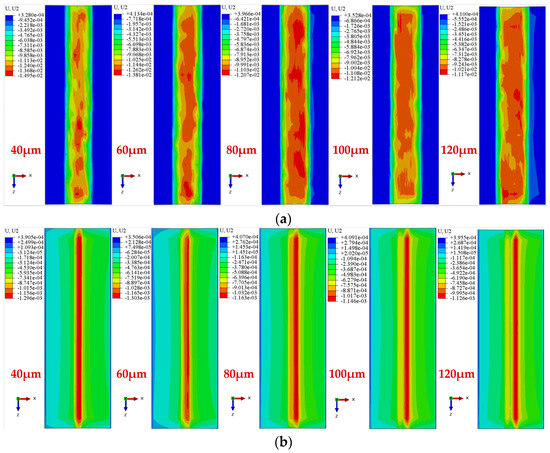
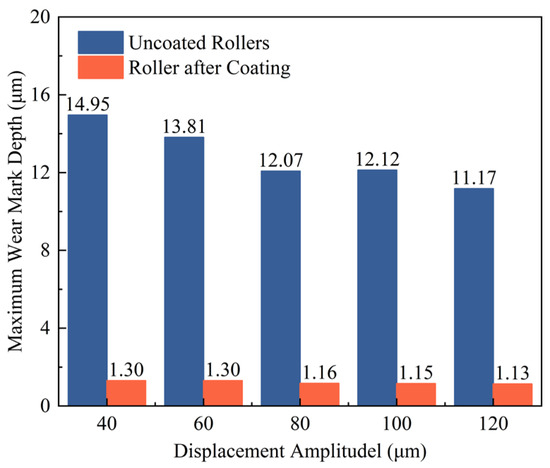
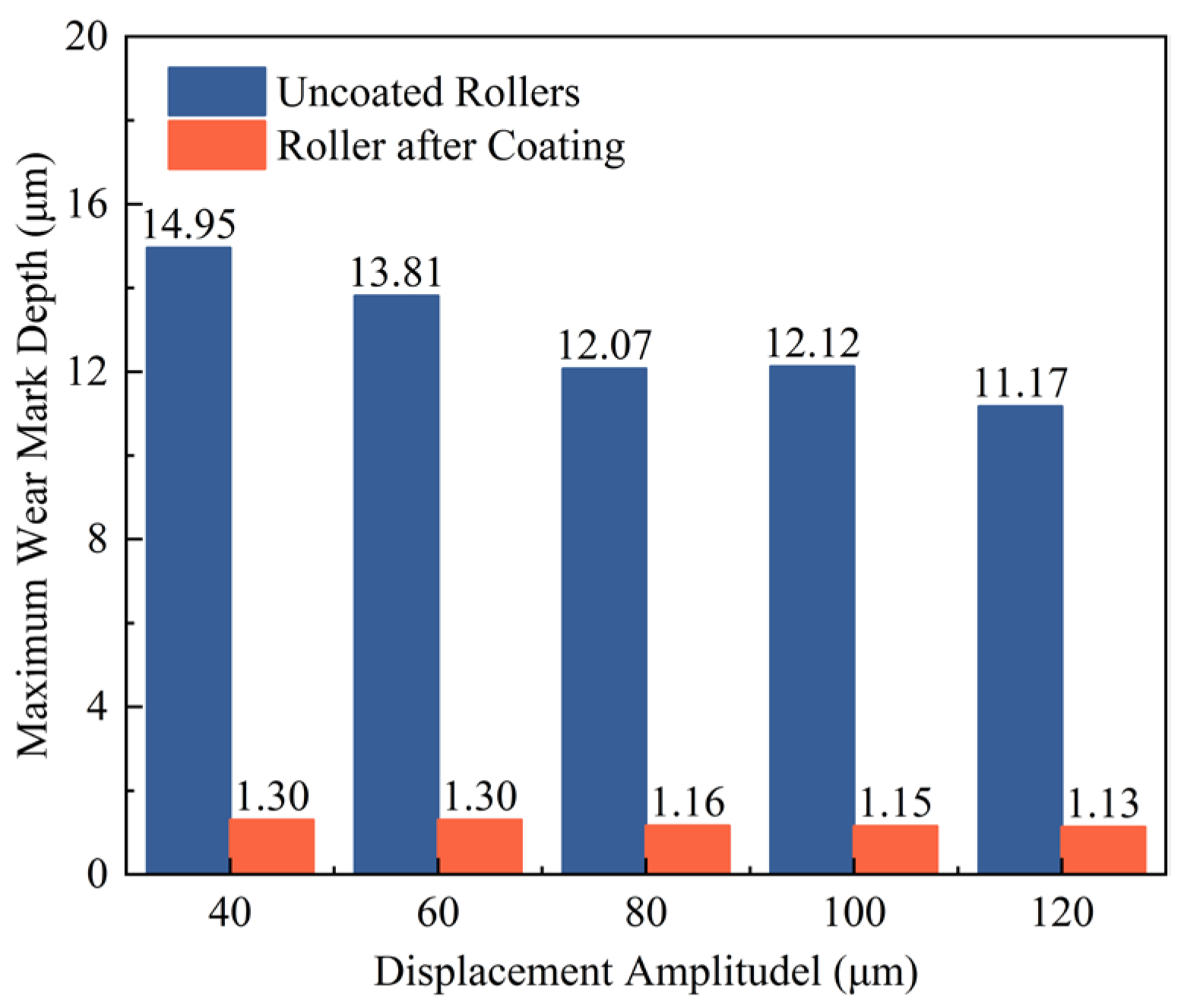
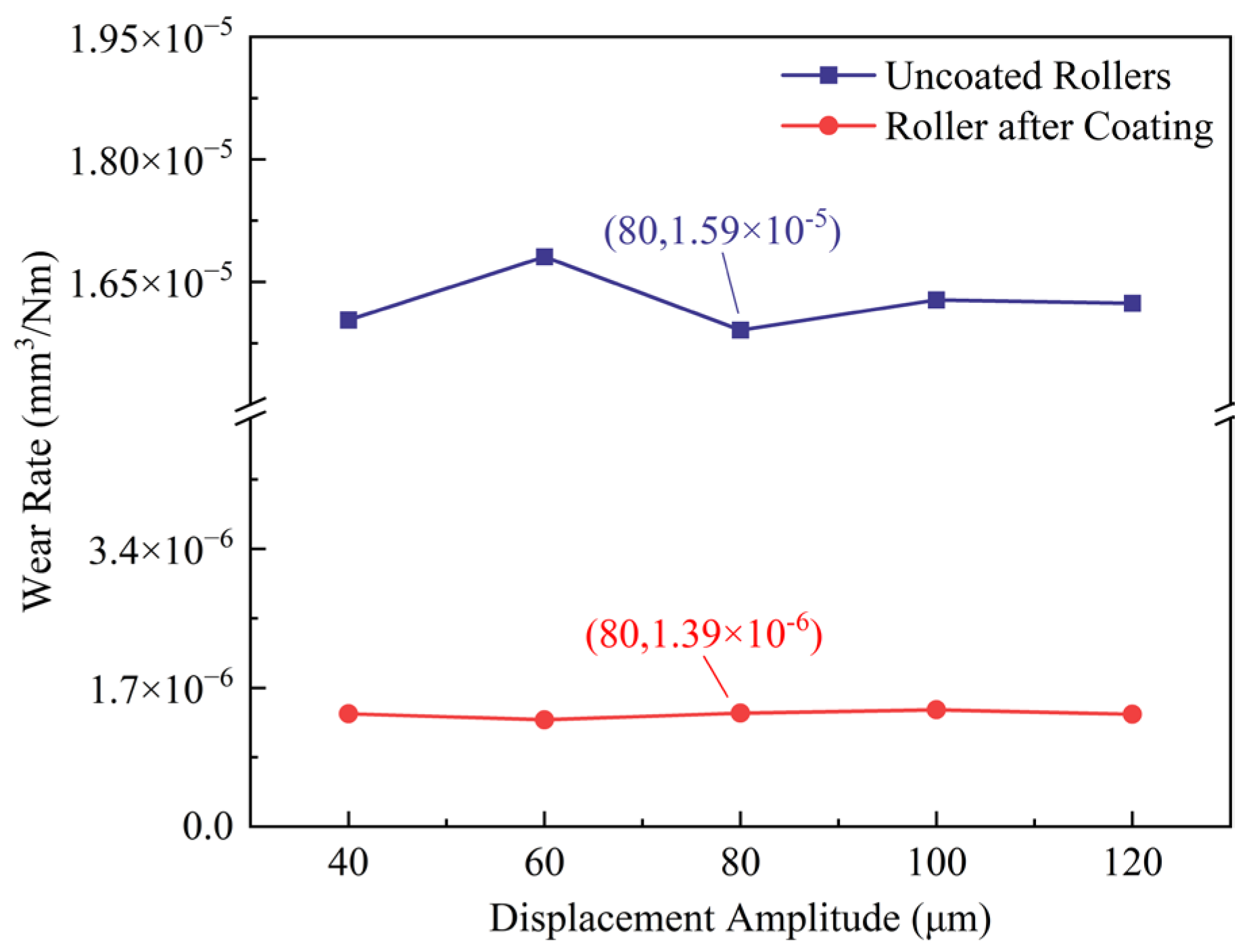
The displacement amplitude D is also a key factor affecting the fretting wear of materials. Within the range of 40 μm to 120 μm, different gradients were selected at 20 μm intervals for the study. When the normal load is 400 N, the contact half-width is calculated to be 47.43 μm via Hertz contact theory. The influence of different displacement amplitudes on the fretting wear behavior of the roller–disc system is presented in Figure 12. The maximum wear scar depth of both the uncoated and GLC-coated components (roller and raceway) exhibits minimal dependence on the displacement amplitude. For the uncoated rollers, the surface of the wear mark cloud map shows irregular boundaries and regions, with obvious delamination (Figure 12a). The maximum wear mark depth varies slightly, fluctuating within the range of 11 to 15 μm. At this point, the contact area is in a fully sliding state, and the adhesion zone at the contact center is subjected to high-frequency shear stress, leading to fatigue spalling of the raceway material. In contrast, after the roller is coated, the surface of the wear mark cloud map exhibits regular boundaries and regions. However, the maximum wear mark depth still varies slightly, fluctuating within the range of 1.1 to 1.3 μm.
Figure 12.
Simulation contour maps of raceway fretting wear scars under uncoated and GLC-coated conditions at different displacement amplitudes. (a) Uncoated; (b) Coated.
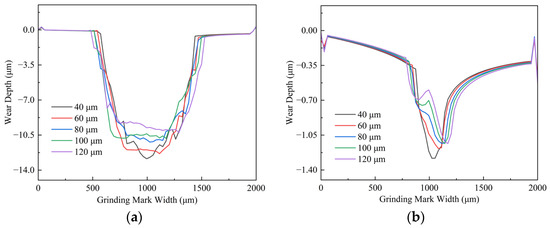
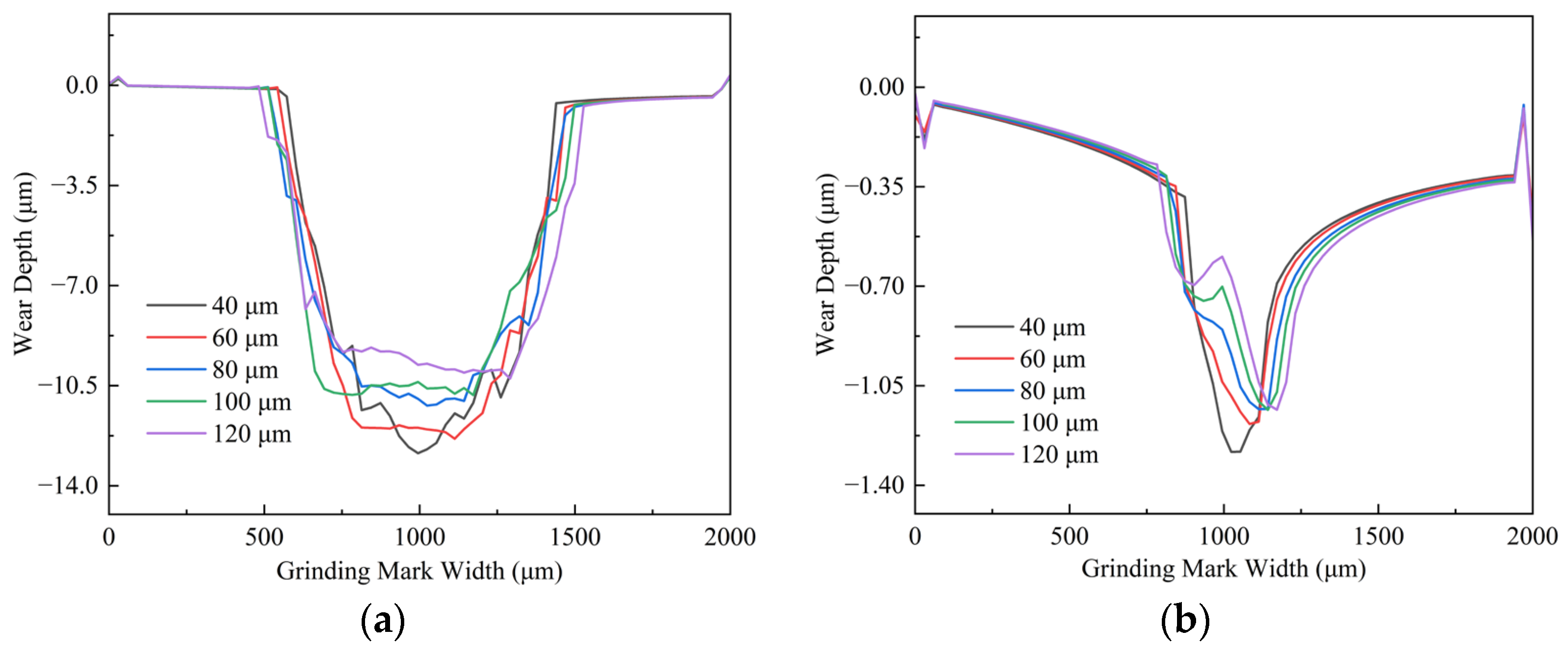
Figure 13 presents a comparison of the cross-sectional profiles of raceway wear scars under uncoated and GLC-coated conditions at different displacement amplitudes. It is observed that as the displacement amplitude increases, the wear scar width of the inner ring, for both uncoated and GLC-coated conditions, gradually increases, while the maximum wear depth shows minimal change. This suggests that variations in displacement amplitude have a relatively minor effect on fretting wear. The overall trend, though, indicates that the maximum wear depth decreases slightly with increasing displacement amplitude.
Figure 13.
Comparison of cross-sectional profiles of raceway wear scars under uncoated and GLC-coated conditions at different displacement amplitudes. (a) Uncoated; (b) Coated.
As shown in Figure 14, under the uncoated condition, the average maximum wear depth across different displacement amplitudes is 12.82 μm. In contrast, after coating, the average maximum wear depth over the same range of displacement amplitudes is reduced to 1.21 μm, representing a 90.56% reduction compared to the uncoated condition. This significant reduction can be attributed to the relatively low shear modulus (G) of the GLC film. The relationship between shear modulus (G), elastic modulus (E), and Poisson’s ratio (ν) is given by the equation E = 2G(1 + v). The lower shear modulus of the GLC film reduces the effective slip amplitude between the contact pairs (i.e., the roller and raceway), thereby decreasing the proportion of full slip. Consequently, the GLC-coated contact pairs exhibit excellent anti-fretting wear performance across different displacement amplitudes.
Figure 14.
Maximum wear scar depth of raceway under uncoated and GLC-coated conditions at different displacement amplitudes.
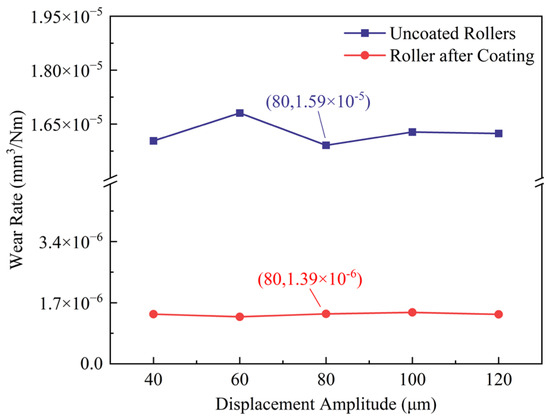
Figure 15 shows that under different displacement amplitude conditions, the wear rates of both the uncoated and coated roller–inner ring pairs exhibit a relatively stable trend. However, compared to the wear rate of the uncoated pair, the range of variation in the wear rate of the coated pair is significantly smaller, with notably improved stability. This improvement is primarily attributed to the superior properties of the GLC film, such as a low friction coefficient, high hardness, and high chemical inertness. Specifically, the low friction coefficient effectively reduces shear stress between the friction pairs, thereby alleviating adhesive wear and surface plastic deformation. The high hardness significantly enhances the material’s resistance to scratching and plastic deformation, while the high chemical inertness prevents the film from reacting with media in complex frictional environments, thus avoiding the exacerbation of corrosive and oxidative wear.
Figure 15.
Comparison of raceway wear rates under uncoated and GLC-coated conditions at different displacement amplitudes.
3.3. Number of Cycles
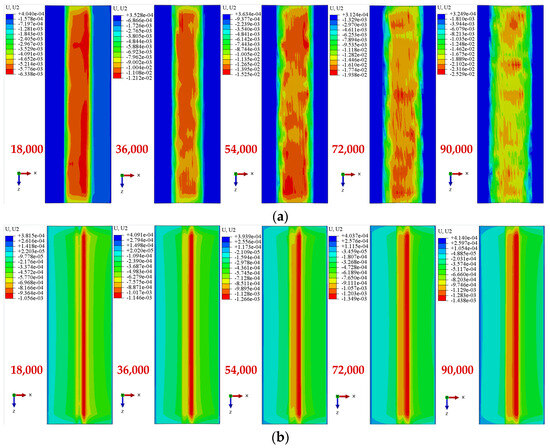
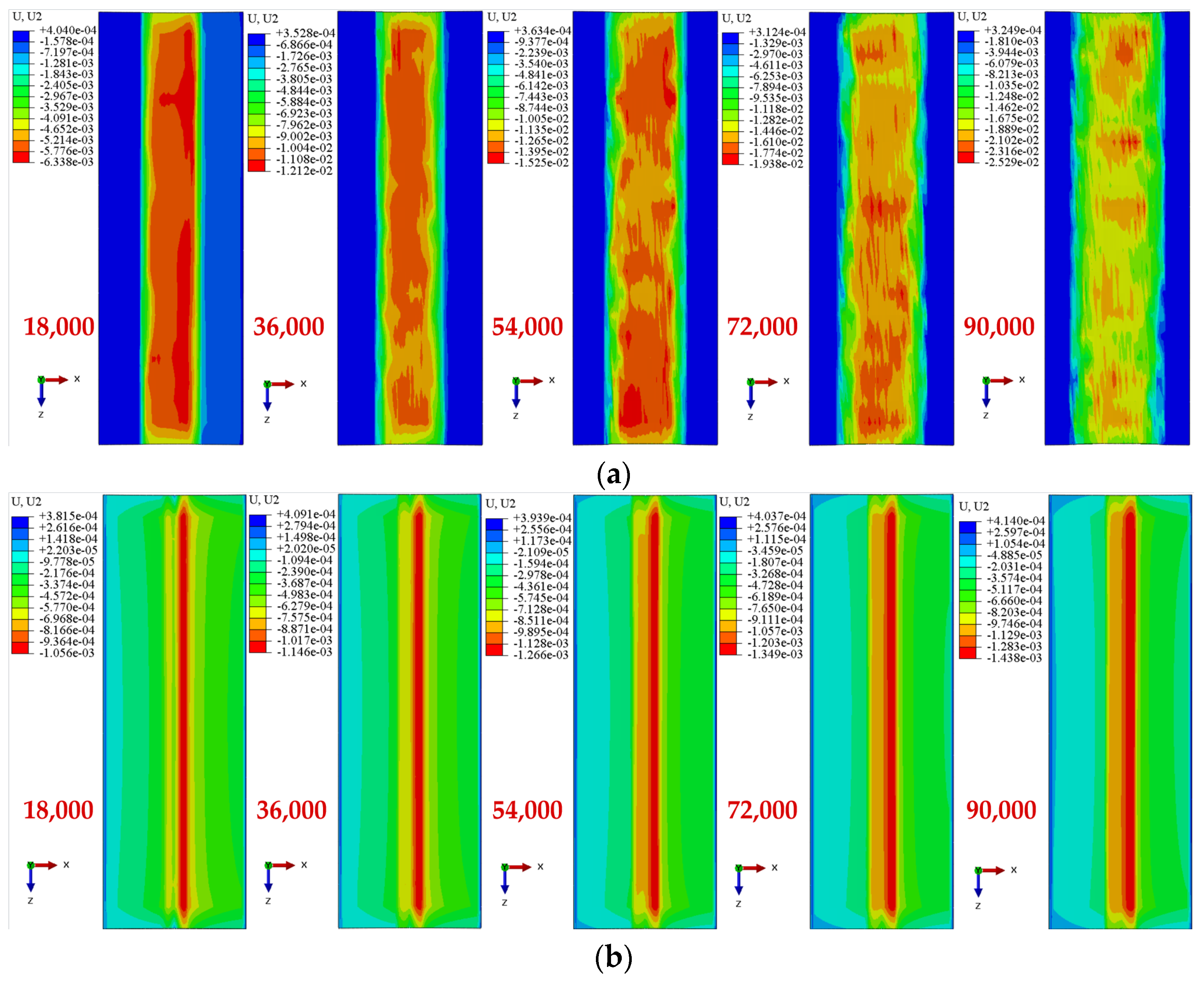
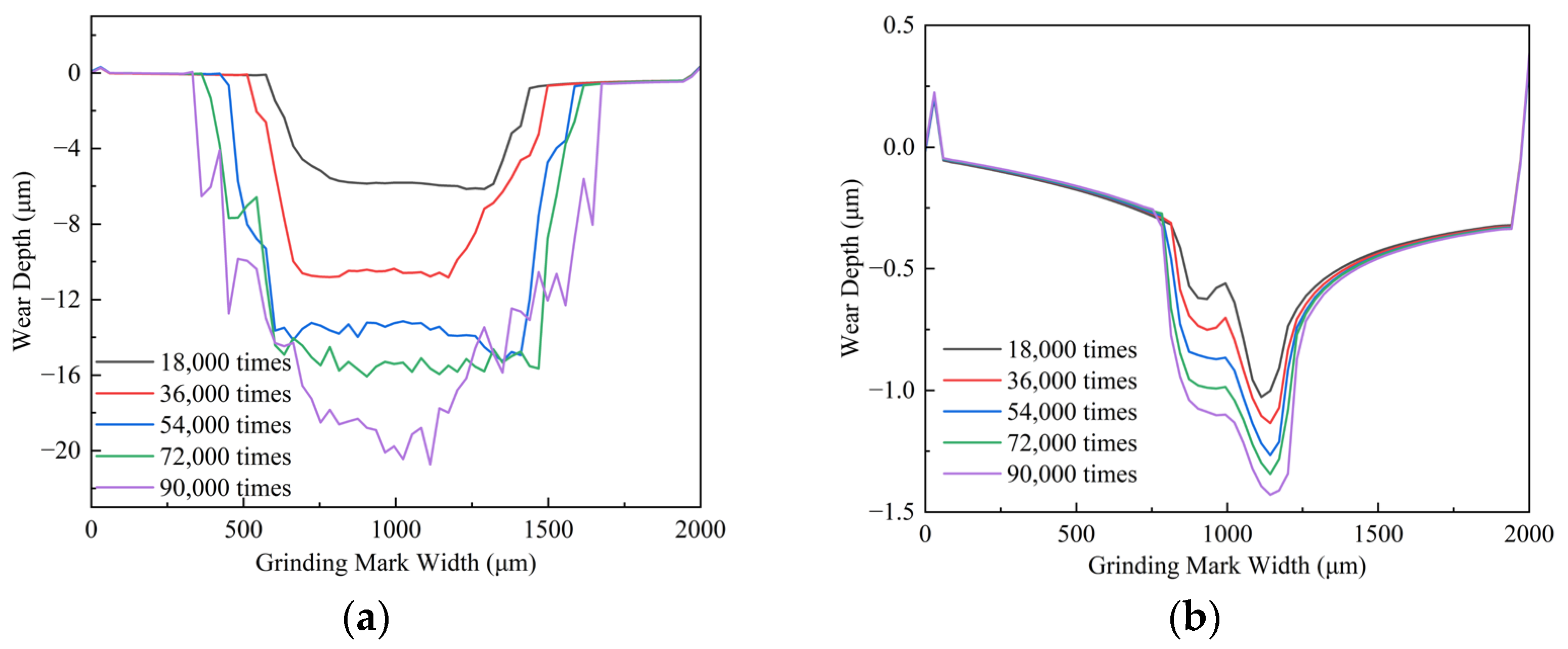
Figure 16 illustrates the effect of different cycle numbers (N) on the fretting wear behavior of the roller-–disc system, revealing the evolution of the wear mechanism at the contact interface. As shown in the figure, with an increase in the number of cycles, the contact region transitions from a partial slip zone at 18,000–36,000 cycles to a mixed slip zone at 54,000 cycles, and further to a full-slip zone at 72,000–90,000 cycles. Both the wear scar width and depth of the raceway, for both coated and uncoated rollers, gradually increase—consistent with a fundamental characteristic of fretting wear, namely progressive expansion with cycle accumulation.
Figure 16.
Simulation contour maps of raceway fretting wear scars under uncoated and GLC-coated conditions at different cycle numbers. (a) Uncoated; (b) Coated.
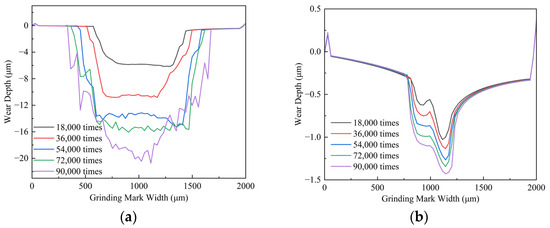
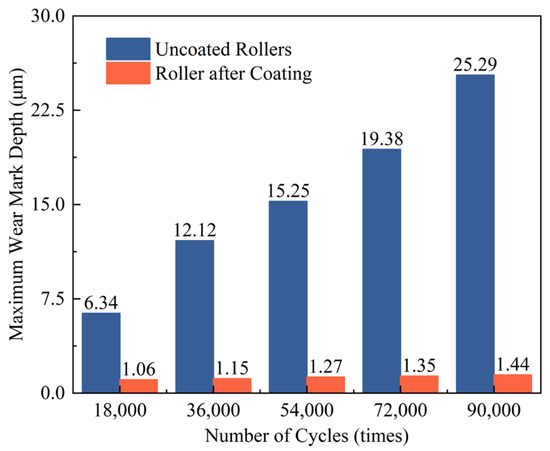
When the number of cycles reaches 18,000, the fretting wear depth of the uncoated roller–inner ring pair is 6.34 μm. At this point, the wear scar contour profiles exhibit relatively regular boundaries and a uniform color distribution, with a continuous surface damage area and no clear stratification. This indicates that wear is in the initial stage, primarily driven by slight adhesion and surface fatigue. However, when the number of cycles exceeds 18,000, the wear scar morphology undergoes noticeable changes: the boundaries in the contour profiles become increasingly blurred and irregular, the damage area shows significant undulations and discontinuous distribution, and layered structures along with spalling signs are simultaneously observed (Figure 17). This suggests that the wear mechanism has evolved from initial surface damage to severe subsurface fatigue and material spalling.
Figure 17.
Comparison of raceway wear rates under uncoated and GLC-coated conditions at different cycle numbers. (a) Uncoated; (b) Coated.
As can be seen from Figure 18, the maximum wear depth gradually increases with the increase of the number of cycles. For the raceway paired with the coated roller, the wear evolution remains relatively stable across the same range of cycles. Both the wear scar width and maximum wear scar depth show little change, without any abrupt changes. This indicates that the GLC film effectively inhibits the accumulation of fatigue damage during the fatigue stage. This can be attributed to two key properties of the GLC film: first, its relatively high hardness reduces plastic deformation of the contact surface; and second, its low friction coefficient minimizes fretting wear on the raceway.
Figure 18.
Maximum wear scar depth of raceway under uncoated and GLC-coated conditions at different cycle numbers.
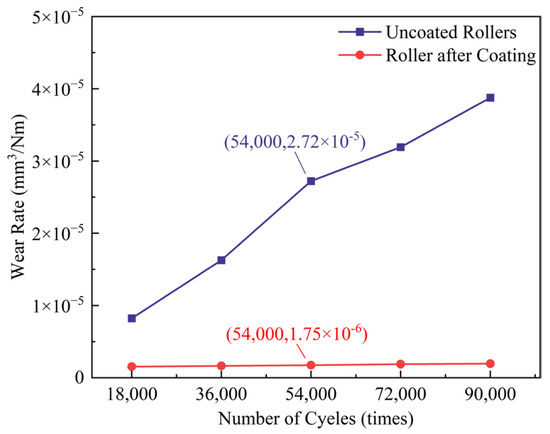
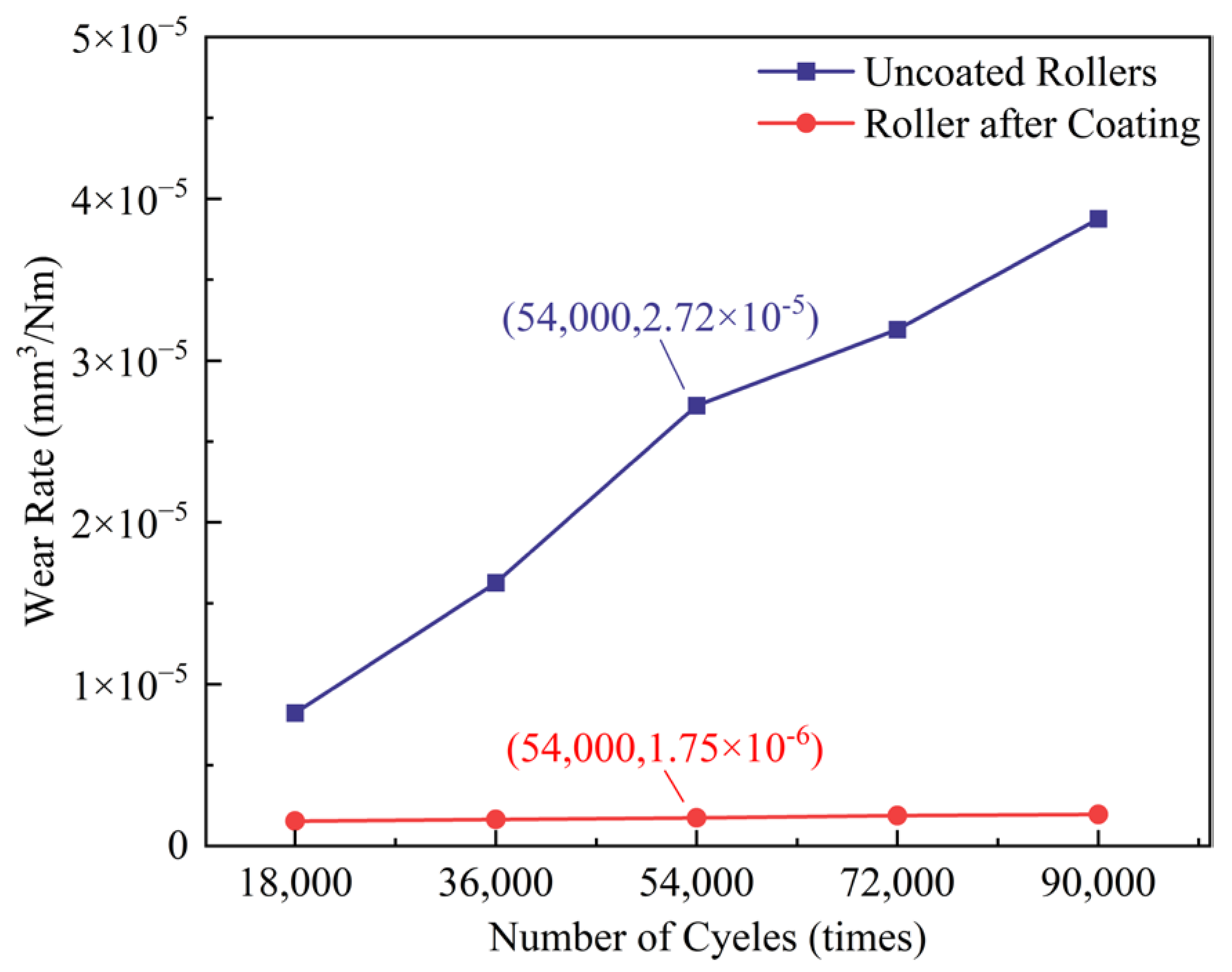
Figure 19 shows the variation in wear rate of the coated and uncoated roller–inner ring pairs under different cycle numbers. As observed in the figure, throughout the entire cycle range, the wear rate of the coated roller–inner ring pair remains at a low level, with only slight fluctuations as the number of cycles increases, indicating excellent stability. In contrast, the wear rate of the uncoated roller–inner ring pair shows a continuous upward trend with increasing cycle numbers, suggesting that surface damage accumulates progressively during the fretting process. This behavior is primarily attributed to the properties of the GLC film, including high hardness, low friction, and high adhesion strength. The high hardness effectively inhibits plastic deformation during fretting, while the low friction coefficient reduces interfacial shear stress, maintaining stable and controllable wear behavior. For the uncoated roller–inner ring pair, the absence of such protective properties exposes the surface directly to cyclic shear and stress. As the number of cycles increases, damage accumulates, resulting in a continuous increase in wear rate.
Figure 19.
Comparison of raceway wear rates under uncoated and GLC-coated conditions at different cycle numbers.
4. Test Verification
4.1. Preparation of Graphite-like Carbon-Based Thin Film Rollers
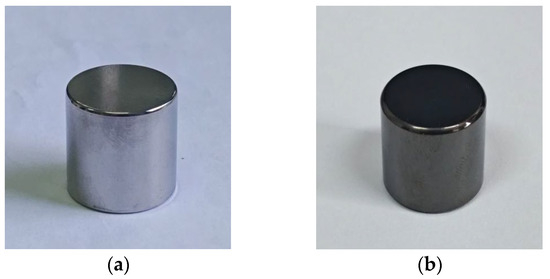
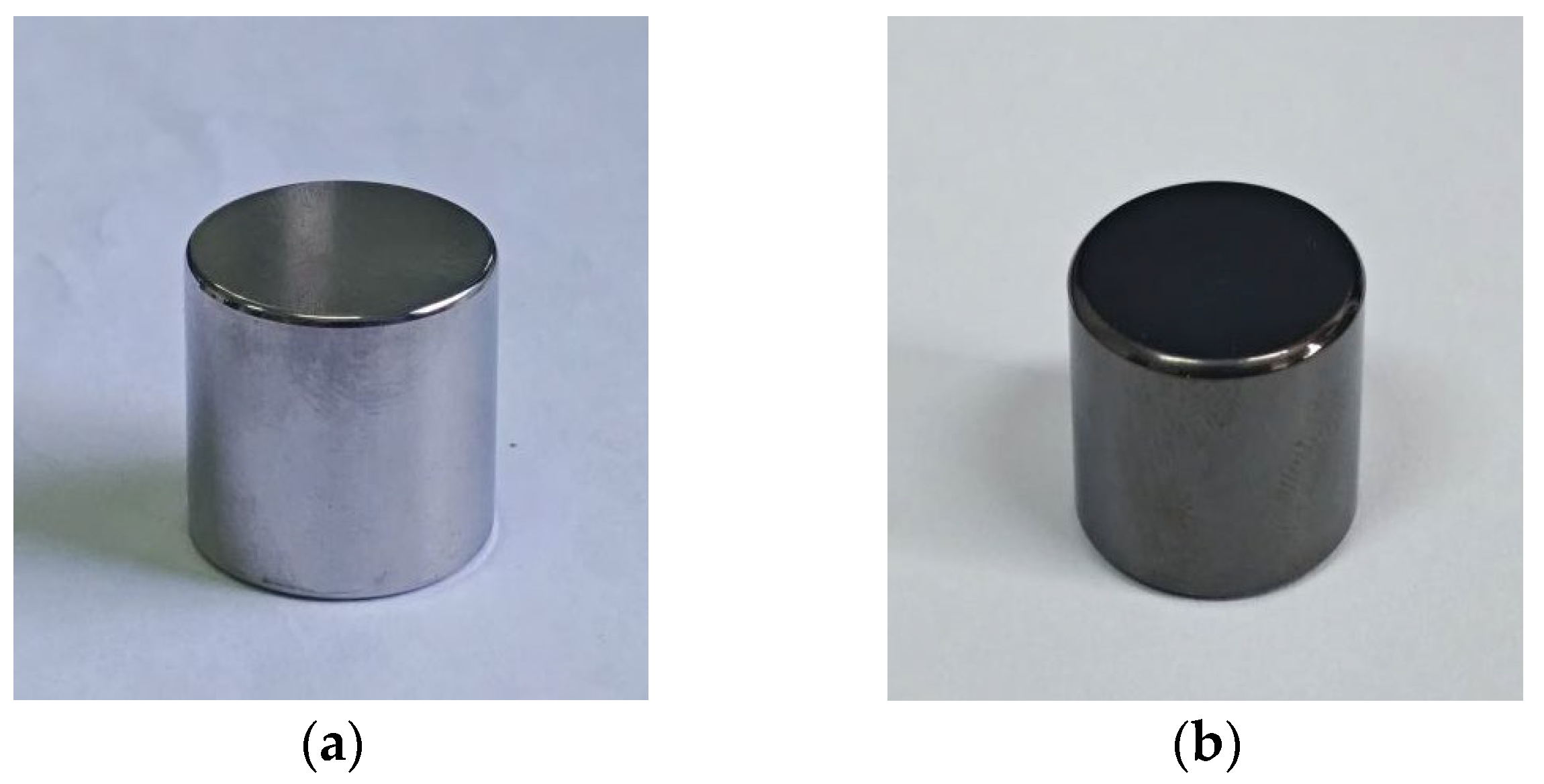
This study utilized NJ1006 bearings equipped with cylindrical rollers made of GCr15 steel (Φ6 × 6 mm). To ensure uniform coating deposition, a three-axis motion fixture was employed. In this setup, the roller holder, mounted on a central screw, allowed the rollers to rotate around the screw axis while simultaneously spinning on their own axes as the screw itself rotated. Following an optimized process established in prior research, the bearing rollers were coated with a Cr-CrN-GLC film, while uncoated rollers were kept as controls. Images of the rollers under uncoated and GLC-coated conditions are shown in Figure 20.
Figure 20.
Comparison of uncoated and GLC-coated rollers. (a) Uncoated; (b) Coated.
4.2. Micro-Motion Testing
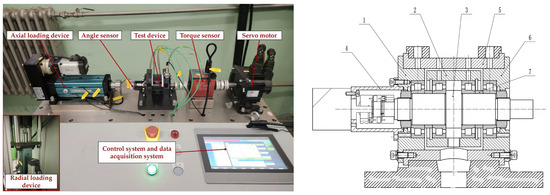
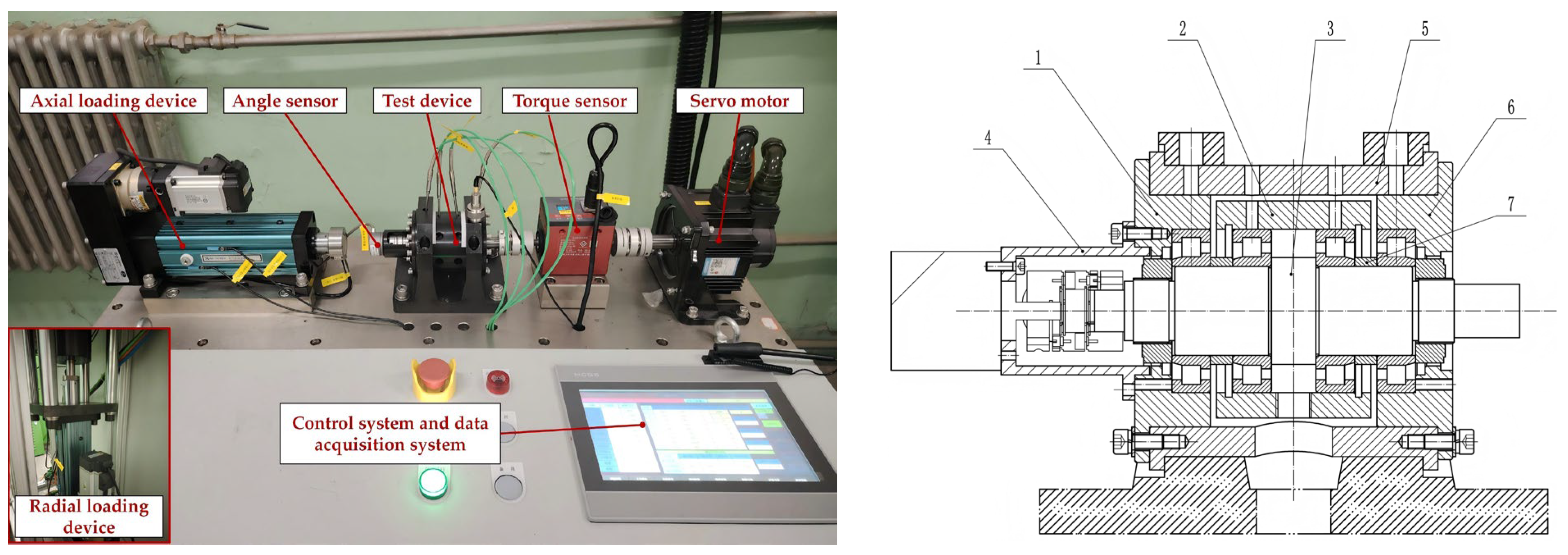
To further verify the anti-fretting wear performance of the test bearings under uncoated and GLC-coated conditions, a combined-loading bearing fretting wear tester was constructed, the type of this testing machine is a life and reliability testing machine. Table 4 presents the test bearings and test parameters. This tester can replicate the fretting wear occurring between the cylindrical roller and the inner ring. The designed experimental setup enables the study of how key test parameters (e.g., swing angle, axial/radial load, loading frequency, lubrication, contact geometry, and cycle number) influence fretting wear. As shown in Figure 21, the tester primarily consists of functional modules including the test body and shaft system, loading system, drive system, and electrical control system, which can simulate bearing operating conditions under different loads, swing angles, and lubrication conditions.
Table 4.
Test bearings and test parameters.
Figure 21.
Bearing Micro-Wear Test Bench (1. Left bushing; 2. Middle bushing; 3. Main shaft; 4. Bracket; 5. Test chamber; 6. Right bushing; 7. Inner Race Spacer).
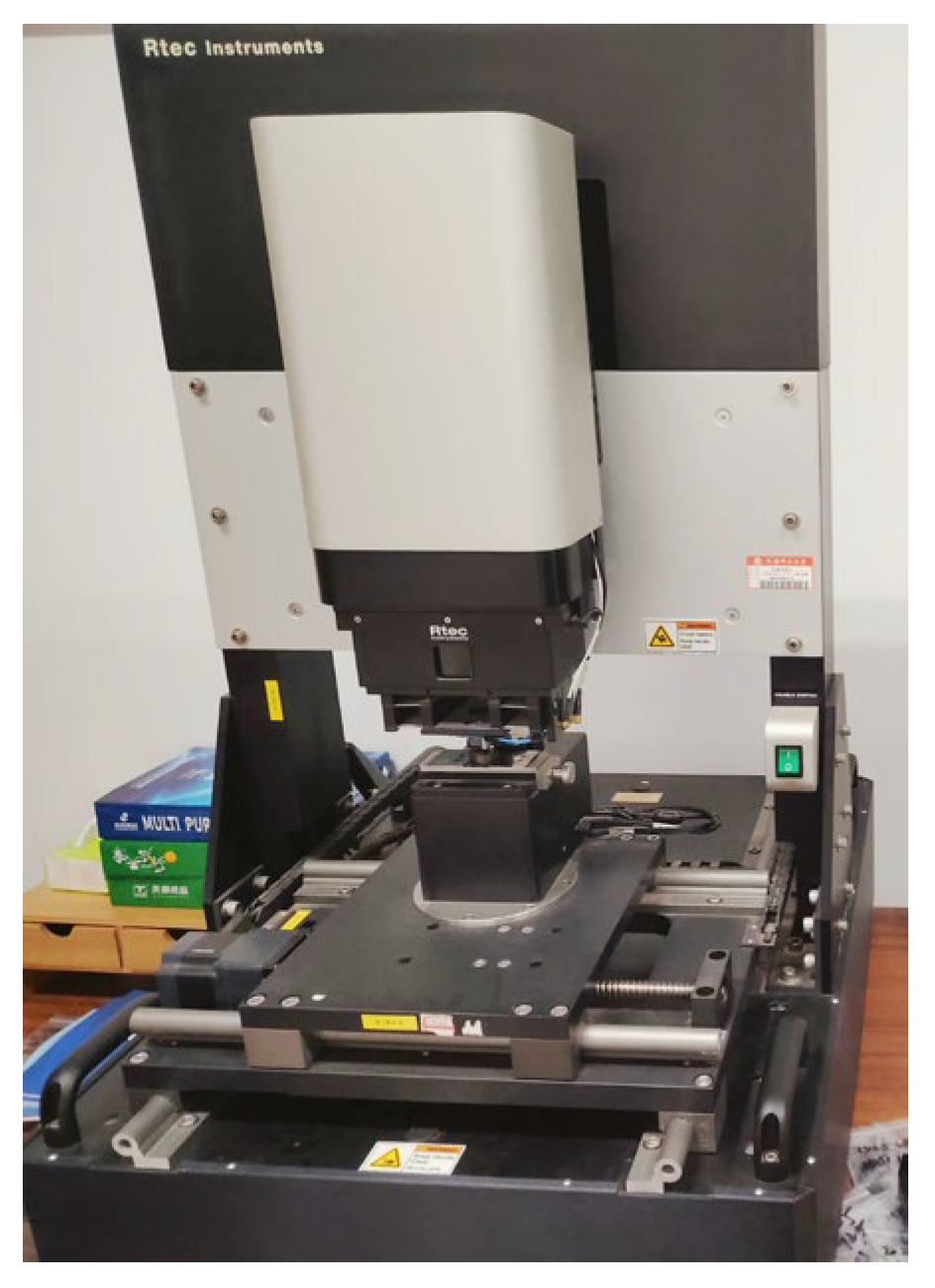
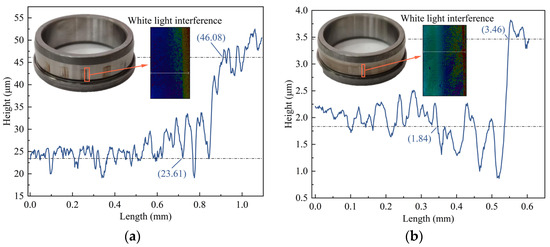
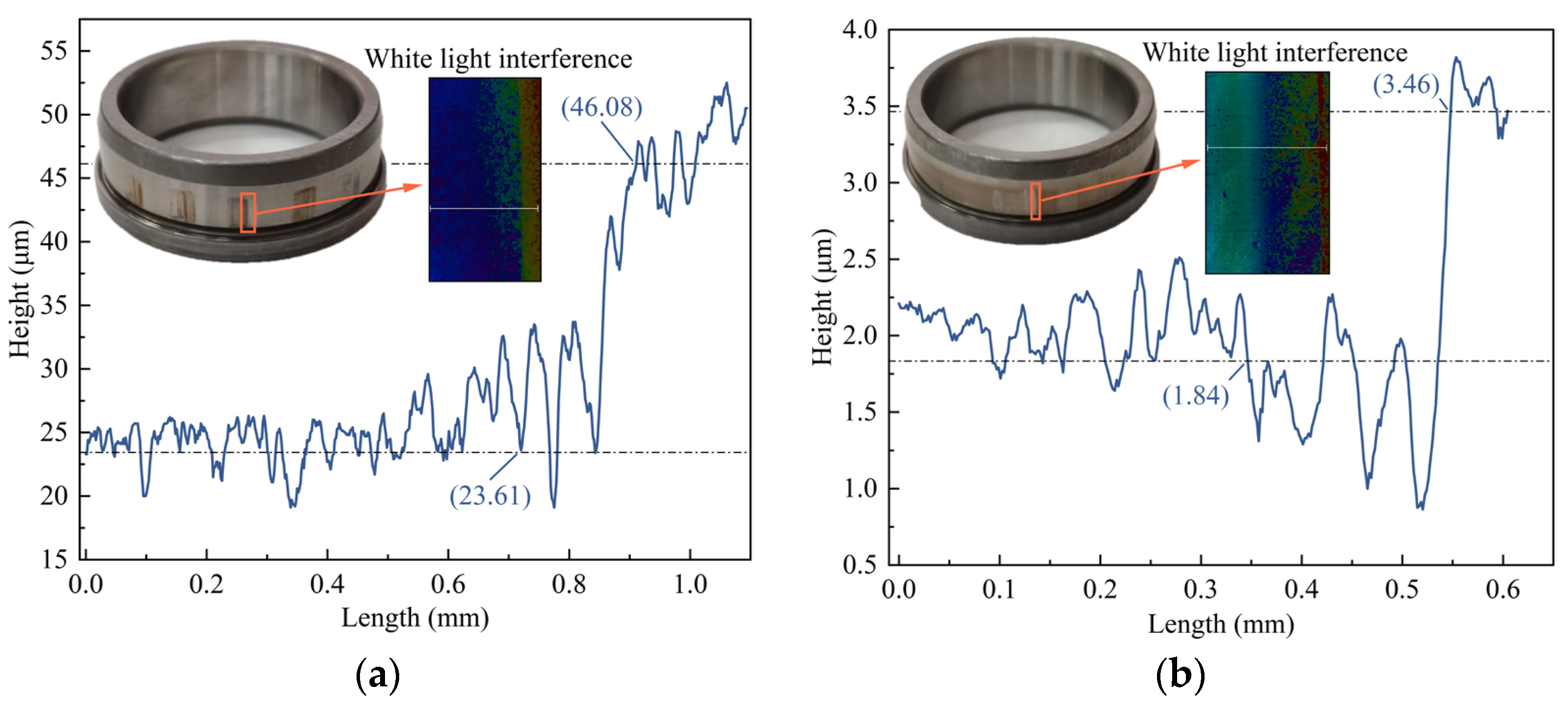
The 3D scratch tester (Figure 22) is a three-dimensional surface topography measurement device that can perform white light interferometry to measure the wear depth of the sample. Figure 23 presents the fretting wear morphology of the bearing inner ring under uncoated and GLC-coated conditions, as obtained from experimental tests. It is evident that for uncoated rollers, the surface of the bearing inner ring (Figure 23a) exhibits significant wear characteristics. The wear depth after fretting wear obtained through white light interference is approximately 22.47 μm. The damage is characterized by pronounced scratches, material spalling, and localized plastic deformation, indicating poor wear resistance under fretting wear conditions. In contrast, for rollers coated with the GLC film, the wear severity on both the roller and inner ring surfaces (Figure 23b) is markedly reduced. Using the same measurement method, the wear depth decreases to approximately 1.62 μm, with only minor frictional marks and no evident material loss or spalling observed.
Figure 22.
3D Scratch tester.
Figure 23.
Test the fretting wear depth of the inner ring of the bearing. (a) Uncoated; (b) Coated.
A corresponding simulation model was established under the same test conditions, and the comparison between the simulated and experimental fretting wear depths (uncoated and GLC-coated) is presented in Table 5. The errors between the simulated and experimental wear depths for both conditions are within 4.5%. This comparison fully validates the accuracy of the fretting wear finite element model. It also confirms that the GLC film exhibits excellent reliability and long-term stability in anti-fretting wear performance, as it can effectively reduce the friction coefficient, inhibit material wear, and extend the service life of pitch bearings under severe operating conditions.
Table 5.
Comparison between simulation values and experimental values.
5. Conclusions
Based on the modified Archard wear model, this study addresses the issue of fretting wear susceptibility in three-row cylindrical roller pitch bearings. A finite element simulation model of the contact area between a single roller and the raceway was established, and the validity of the model was verified through experiments. The effects of normal load, displacement amplitude, and number of cycles on the fretting wear behavior of roller–disc pairs (both with and without coating) were investigated, leading to the following conclusions:
- By comparing the ball–disc fretting wear simulation model with experimental results, the wear coefficients of the uncoated and coated roller–inner ring pairs under dry friction were determined to be k1 = 3.125 × 10⁻⁸ and k2 = 4.5 × 10⁻¹⁰, respectively.
- With increasing normal load (Fn), the maximum wear depth and width of both coated and uncoated raceways increase gradually, with the uncoated raceways exhibiting greater sensitivity to load variations. After coating, the wear rate is reduced by approximately one order of magnitude and demonstrates improved stability. Displacement amplitude (D) has a relatively minor influence on the maximum wear depth for both coated and uncoated rollers, whereas wear width increases progressively with displacement amplitude. Compared to the uncoated condition, the average wear depth after coating with GLC film is reduced by approximately 90.56%. As the number of loading cycles (N) increases, wear scar morphology evolves, exhibiting blurred boundaries, delamination, and spalling. The wear evolution of the rollers and inner rings after being coated with GLC film is relatively stable, indicating that the GLC film has good anti-fretting wear performance.
Although this study investigates the anti-fretting characteristics of GLC films and demonstrates their anti-fretting wear performance, certain limitations remain. In future work, we will examine fretting wear under variable loading conditions to better simulate real-world operational scenarios. Additionally, a more in-depth analysis will be conducted to identify which factors accelerate the formation of “false Brinell indentation”. Although prolonged fretting can displace the lubricating grease between the rollers and the inner/outer rings, subsequent research may also consider investigating fretting wear under lubricated conditions.
Author Contributions
Conceptualization and writing—original draft preparation, X.P. and X.Z.; methodology, D.Z.; software, M.Y. and Q.L.; writing—review and editing, C.J. and J.M.; supervision, X.P. All authors have read and agreed to the published version of the manuscript.
Funding
This research was funded by the Key Research and Development Program Project of Henan Province (241111220800), Zhejiang Province’s Leading innovation and Entrepreneurship Team for Advanced Manufacturing of Robot Bearings (2024R01014) and Major Project of the Joint Fund for Science and Technology Research and Development of Henan Province (225101610001).
Data Availability Statement
Data will be made available on request.
Acknowledgments
The authors have reviewed and edited the output and take full responsibility for the content of this publication.
Conflicts of Interest
The authors declare no conflicts of interest.
References
- Novaković, B.; Radovanović, L.; Vidaković, D.; Đorđević, L.; Radišić, B. Evaluating wind turbine power plant reliability through fault tree analysis. Appl. Eng. Lett. 2023, 8, 175–182. [Google Scholar] [CrossRef] [Scilit]
- Lazović, T.; Marinković, A.; Atanasovska, I.; Sedak, M.; Stojanović, B. From innovation to standardization—A century of rolling bearing life formula. Machines 2024, 12, 444. [Google Scholar] [CrossRef] [Scilit]
- Peng, H.; Zhao, D.; Shangguan, L. Review of wind power bearing wear analysis and intelligent lubrication Method research. Coatings 2023, 14, 30. [Google Scholar] [CrossRef] [Scilit]
- Chen, L.; Xia, X.T.; Qiu, M. Analysis and Control of Fretting Wear for Blade Bearing in Wind Turbine. Appl. Mech. Mater. 2010, 26–28, 167–170. [Google Scholar] [CrossRef] [Scilit]
- Liu, Q. Cause Analysis and Preventive Measures for Fretting Wear of Doubly-F’ed Wind Turbine Rotor Shaft. Bearing 2024, 9, 88–91. [Google Scholar] [CrossRef]
- De Azevedo, H.D.M.; Araújo, A.M.; Bouchonneau, N. A review of wind turbine bearing condition monitoring: State of the art and challenges. Renew. Sustain. Energy Rev. 2016, 56, 368–379. [Google Scholar] [CrossRef] [Scilit]
- Cubillas, D.; Olave, M.; Llavori, I.; Ulacia, I.; Larrañaga, J.; Zurutuza, A.; Lopez, A. A novel formulation for radial fretting wear: Application to false brinelling in thrust bearings. Wear 2022, 488, 204078. [Google Scholar] [CrossRef] [Scilit]
- Zhu, M.H.; Zhou, Z.R. On the mechanisms of various fretting wear modes. Tribol. Int. 2011, 44, 1378–1388. [Google Scholar] [CrossRef] [Scilit]
- Collins, J.A. Fretting-fatigue damage-factor determination. J. Manuf. Sci. Eng. 1965, 87, 298–302. [Google Scholar] [CrossRef] [Scilit]
- Sharma, A.; Sadeghi, F. Effects of fretting wear on rolling contact fatigue. Tribol. Int. 2024, 192, 109204. [Google Scholar] [CrossRef] [Scilit]
- Aktas, B.; Balak, V.; Carboga, C. Dry sliding wear behavior of boron-doped AISI 1020 steels. Acta Phys. Pol. A 2017, 132, 455–457. [Google Scholar] [CrossRef] [Scilit]
- Li, J.; Lu, Y.H. Effects of displacement amplitude on fretting wear behaviors and mechanism of Inconel 600 alloy. Wear 2013, 304, 223–230. [Google Scholar] [CrossRef] [Scilit]
- Molina, E.H.; Long, H. Fretting wear in raceway-ball contact under wind turbine pitch bearing operating conditions. Wear 2025, 564, 205696. [Google Scholar] [CrossRef] [Scilit]
- Han, Y.M.; Li, X.; Yan, H.N. Simulation and experimental study of titanium alloy fretting wear under alternating biaxial loading. Mech. Electr. Eng. 2024, 41, 1251–1259+1268. [Google Scholar] [CrossRef]
- Lin, H.; Yang, M.; Shu, B. Fretting wear behaviour of high-nitrogen stainless bearing steel under lubrication condition: H. Lin et al. J. Iron Steel Res. Int. 2020, 27, 849–866. [Google Scholar] [CrossRef] [Scilit]
- Ma, L.; Eom, K.; Geringer, J. Literature review on fretting wear and contact mechanics of tribological coatings. Coatings 2019, 9, 501. [Google Scholar] [CrossRef] [Scilit]
- Zhu, M.H.; Cai, Z.B.; Zhou, Z.R. Fretting Wear under Special Conditions; Science Press: Beijing, China, 2020; pp. 212–250. [Google Scholar]
- Nie, A.N.; Li, Y.C.; Fan, H.H. High Temperature Tribological Properties of Ti-GLC Films Deposited on Different Bearing Steel Substrates. China Surf. Eng. 2022, 35, 187–195. [Google Scholar] [CrossRef]
- Shi, X.R. Research on The Dynamic Contact Behavior of Amorphous Carbon Filmsat Micro/Nano Scale. Ph.D. Thesis, Southeast University, Nanjing, China, 2021; pp. 2–22. [Google Scholar] [CrossRef]
- Li, Z.; Zhang, H.; He, W.; Xu, L.; Zhang, G.A.; Nie, X.; Liao, B.; Li, Y. Tribological performance of GLC, WC/GLC and TiN films on the carburized M50NiL steel. Surf. Coat. Technol. 2019, 361, 1–8. [Google Scholar] [CrossRef] [Scilit]
- Li, Y.C.; Yang, G.S.; Yang, M.X. Influence of Modulation Periodicity on Tribo-corrosion Properties of Magnetron-sputtered Film Consisting of Multiple Alternating Layers of Cr and Graphite-like Carbon. Mater. Rev. 2024, 38, 216–222. [Google Scholar] [CrossRef]
- Zhu, X.; Wang, X.; Liu, Y. Effect of the graphitization mechanism on the friction and wear behavior of DLC films based on molecular dynamics simulations. Langmuir 2023, 39, 1905–1913. [Google Scholar] [CrossRef] [Scilit]
- Ding, H.H.; Fridrici, V.; Geringer, J. Influence of diamond-like carbon coatings and roughness on fretting behaviors of Ti–6Al–4V for neck adapter–femoral stem contact. Wear 2018, 406, 53–67. [Google Scholar] [CrossRef] [Scilit]
- Wang, Y.; Wang, L.; Xue, Q. Influence of Ti target current on microstructure and properties of Ti-doped graphite-like carbon films. Trans. Nonferrous Met. Soc. China 2012, 22, 1372–1380. [Google Scholar] [CrossRef] [Scilit]
- Pinedo, B.; Mendoza, G.; López-Ortega, A. Tribological investigation on WC/C coatings applied on bearings subjected to fretting wear. Tribol. Lett. 2024, 72, 87. [Google Scholar] [CrossRef] [Scilit]
- Wang, J.F.; Wang, Y.X.; Chen, K.X. Effect of Cr Doping on the Microstructure and Tribological Performances of Graphite -like Carbon Films. Chin. J. Tribol. 2015, 32, 206–213. [Google Scholar] [CrossRef]
- Wang, J.F. Study on Fretting Wear Behavior of Titanium Alloy in Aero-Engine. Ph.D. Thesis, University of Science and Technology of China, Hefei, China, 2022. [Google Scholar] [CrossRef]
- Ly, A.; Yoon, C.; Caruana, J. Development of an Advanced Wear Simulation Model for a Racing Slick Tire Under Dynamic Acceleration Loading. Machines 2025, 13, 635. [Google Scholar] [CrossRef] [Scilit]
- Cui, Y.; Li, X.; Zheng, M. Study on Friction and Wear Performance of Bionic Function Surface in High-Speed Ball Milling. Machines 2025, 13, 597. [Google Scholar] [CrossRef] [Scilit]
- Storchak, M.; Melnyk, O.; Stepchyn, Y. Effect of Friction Model Type on Tool Wear Prediction in Machining. Machines 2025, 13, 904. [Google Scholar] [CrossRef] [Scilit]
- Yu, Y.; Dong, Z.; Xue, Y. A Study on the Wear Characteristics of a Point Contact Pair of Angular Contact Ball Bearings Under Mixed Lubrication. Machines 2025, 13, 312. [Google Scholar] [CrossRef] [Scilit]
- Qian, K.; Chen, J.; Gao, X.H. Numerical Simulation of Radial Fretting Behaviors on Wind Turbine Slewing Bearings. Mach. Des. Manuf. 2013, 8, 203–206. [Google Scholar] [CrossRef]
- Esteves, M.; Ramalho, A.; Ramos, F. Electrical performance of textured stainless steel under fretting. Tribol. Int. 2017, 110, 41–51. [Google Scholar] [CrossRef] [Scilit]
- Dong, Y.H.; Chen, F.H.; Cai, Z.B. Fretting Wear Properties of Laser-cladded MoNbTaVW Refractory High-entropy Alloy Coatings. Mater. Rev. 2024, 38, 177–182. [Google Scholar] [CrossRef]
- Mohrbacher, H.; Blanpain, B.; Celis, J.P. Oxidational wear of TiN coatings on tool steel and nitrided tool steel in unlubricated fretting. Wear 1995, 188, 130–137. [Google Scholar] [CrossRef] [Scilit]
- Zhao, J.J.; Yin, D.; Tang, L.C. Numerical Calculation and Analysis of The Effect of Fretting Contact Conditions on The Wear Rate of Zircaloy. Eng. Mech. 2016, 33, 275–282. [Google Scholar] [CrossRef]
- Wang, S.M.; Shi, X.H.; Xu, M.H. Analysis of Fretting Wear and Fretting Protection for Wind Turbine Pitch Bearing. Lubr. Eng. 2009, 34, 110–112+117. [Google Scholar] [CrossRef]
- Long, Y.H.; Ren, Y.P.; He, T. Study on Fretting Wear Behaviour of Plasma Nitriding Layer of 31CrMoV9 Steel. J. Tribol. 2024, 44, 633–643. [Google Scholar] [CrossRef]

Disclaimer/Publisher’s Note: The statements, opinions and data contained in all publications are solely those of the individual author(s) and contributor(s) and not of MDPI and/or the editor(s). MDPI and/or the editor(s) disclaim responsibility for any injury to people or property resulting from any ideas, methods, instructions or products referred to in the content. |
© 2025 by the authors. Licensee MDPI, Basel, Switzerland. This article is an open access article distributed under the terms and conditions of the Creative Commons Attribution (CC BY) license (https://creativecommons.org/licenses/by/4.0/).