Article

Kaolinite Illitization Under Hydrothermal Conditions: Experimental Insight into Transformation Pathways


by
Mashaer A. Alfaraj
1,
Abdulwahab Muhammad Bello
2,
Anas Muhammad Salisu
2 and
Khalid Al-Ramadan
1,2,*
1
Geosciences Department, College of Petroleum Engineering and Geosciences, King Fahd University of Petroleum and Minerals, Dhahran 31261, Saudi Arabia
2
Center for Integrative Petroleum Research, College of Petroleum Engineering and Geosciences, King Fahd University of Petroleum and Minerals, Dhahran 31261, Saudi Arabia
*
Author to whom correspondence should be addressed.
Minerals 2026, 16(1), 4; https://doi.org/10.3390/min16010004
Submission received: 6 October 2025 / Revised: 9 December 2025 / Accepted: 17 December 2025 / Published: 19 December 2025
(This article belongs to the Section Clays and Engineered Mineral Materials)

Abstract

Illite plays a critical role in diagenetic processes of sedimentary rocks, influencing geochemical evolution, reservoir quality, and fluid flow pathways. This study experimentally investigated the hydrothermal transformation of kaolinite to illite using sandstones from the Upper Ordovician Quwarah Member of Qasim Formation, northwest Saudi Arabia. Experiments were performed to simulate burial diagenesis involving illitization using three fluid systems: a synthetic solution (0.2 M KCl and 0.5 M MgCl2), natural Red Sea water, and modified Red Sea water (0.2 M KCl and 0.5 M MgCl2 + Red Sea water) at different temperatures (80 °C, 150 °C, 200 °C, 250 °C). Analysis included thin-section petrography, scanning electron microscopy, and X-ray diffraction, whereas the elemental compositions of the experimental solutions were analyzed using ICP-MS and Ion Chromatography. At 80 °C and 150 °C, kaolinite underwent dissolution without significant mineralogical changes. At 200 °C, continued kaolinite disaggregation and dissolution produced smectite and mixed smectite–chlorite/illite layers, indicating early transformation pathways. At 250 °C, fluid chemistry exerted strong control on clay minerals. The synthetic solution formed smectite with minor chlorite and illite; Red Sea water favored well developed smectite; the modified Red Sea water promoted well-developed illite due to increased potassium availability. The experiments show illitization is strongly temperature dependent and primarily controlled by potassium activity in fluids. The study provides insights into clay mineral evolution with different diagenetic conditions, which can be useful to evaluate diagenetic impact on reservoir qualities.

1. Introduction

Clay minerals in sedimentary basins are generally classified as either detrital or authigenic, with the latter being formed by diagenetic transformation or a combination of both [1,2,3,4]. The presence of authigenic grain-coating clay minerals can prevent the formation of quartz cements and thus preserve porosity or reservoir quality [5,6,7,8,9,10,11,12,13,14]. Illite is one of the most common grain-coating clay minerals in siliciclastic rocks, formed primarily by diagenetic alteration of detrital feldspar and muscovite grains or by transformation of other precursor clay minerals such as smectite and kaolinite [15,16].
Silica-rich solutions are one of the main controls in diagenetic processes, particularly in quartz cementation and clay mineral transformations within siliciclastic rocks. Quartz cementation begins at 70–80 °C (around 2 km burial) and increases progressively with depth and temperature [14,17,18]. The transformation of smectite to illite commonly occurs at temperatures of 80–200 °C, releasing significant amounts of silica into the diagenetic solutions [16,19,20,21]. Pressure exerts a secondary control on silica solubility by altering fluid density with burial depth [16]. These silica-rich fluids usually precipitate as quartz overgrowths, reducing reservoir quality. However, early grain-coating clay minerals, such as illite, can inhibit quartz cementation [22,23]. This shows the importance of burial depth, temperature, and pressure in affecting the diagenetic processes and reservoir quality.
Elevated temperature, fluid chemistry, and the presence of potassium are essential factors for the transformation of clay minerals such as smectite and kaolinite into illite [15,21,24]. The conversion of kaolinite and smectite to illite requires a sufficient abundance of potassium in the formation water [24]. It is worth noting that the lack of potassium could lead to incomplete transformation or mixed layer of illite-smectite [19,25]. The main source of potassium is the dissolution of K-feldspar and micas [15]. However, another important source of potassium is the formation of K+ rich fluids, which may be introduced during compaction or fluid migration [15].
The transformation of kaolinite into illite through hydrothermal reactions is especially important because it represents a key diagenetic reaction that affects reservoir quality, fluid rock interaction, and inhibition of quartz cementation [5,15,16,26,27,28]. Understanding the controls of this transformation improves understanding of burial history and fluid chemistries of sedimentary basins [2,4,19]. Despite comprehensive research studies by previous workers, key elements remain unclear, specifically, whether illite forms via a single or multiple pathways, how fluid composition influence the reaction pathways, and what morphological and textures characterize illite formation [2,15,29].
Despite advances in experimental diagenetic studies, the mechanism of kaolinite to illite transformation is still relatively poorly understood [2,19]. Therefore, this study aims to identify the diagenetic controls governing the kaolinite–illite transformation by conducting controlled hydrothermal laboratory experiments. The main objectives are to determine the conditions that promote illitization and investigate the morphological and textural features of synthesized illite. These hydrothermal experimental simulations are significant because they mimic subsurface conditions in a closed system, allowing the isolation of controlled conditions such as temperature, pressure, and fluid chemistry [30]. The experimental approach allows the understanding of how fluid composition and thermal histories influence illite crystallization pathways, thereby clarifying the gap between natural diagenetic processes and thermodynamic models. Furthermore, this study provides valuable insights into how fluid compositions constrain illite formation. Integrating these aspects, the present study provides critical insights into the pathways of kaolinite transformation. The objectives of the study are as follows:
  • Identify the conditions under which kaolinite transforms into illite.
  • Examine morphological and textural changes in kaolinite-derived illite compared to natural illite.
  • Assess the effect of varying fluid compositions (synthetic KCl–MgCl2 vs. natural Red Sea water) on illitization.

2. Geological Background of the Starting Material

The samples used in this study are outcrop samples collected from the Quwarah Sandstone Member of the upper Ordovician Qasim Formation in the Tabuk region, northern Saudi Arabia.
The Quwarah member was first described by Powers near Al Quwarah as thinly interbedded silty clay that is composed of fine-grained sediments that are mixed with silt and clay-sized particles and ferruginous and micaceous sandstone. It is composed of coarsening upward facies of interbedded sandstone, siltstone, and shale to massive, bedded sandstone that represents a tide-dominated shallow marine depositional environment [31,32]. As the upper member of the Qasim Formation, the Quwarah Member underwent shallow to moderate burial diagenesis, minor mechanical compaction, low quartz overgrowth formation, and largely unaltered kaolinite [26,33]. The experimental sample is composed of fine-grained upper shoreface sandstone.
The characteristics of the two starting materials (QF-PRE and QFT1-PRE) show that they are dominated by quartz-rich and kaolinite-cemented sandstone, with traces of anatase. QFT1-PRE provide more diversity in minerology with significant feldspar components, along with traces of dolomite and mica. XRD analysis also confirms that the two starting samples represent distinct mineralogical end members within the Quwarah Member and provide contrasting baselines for the hydrothermal experiments.

3. Materials and Methods

3.1. Hydrothermal Reactor Experiments

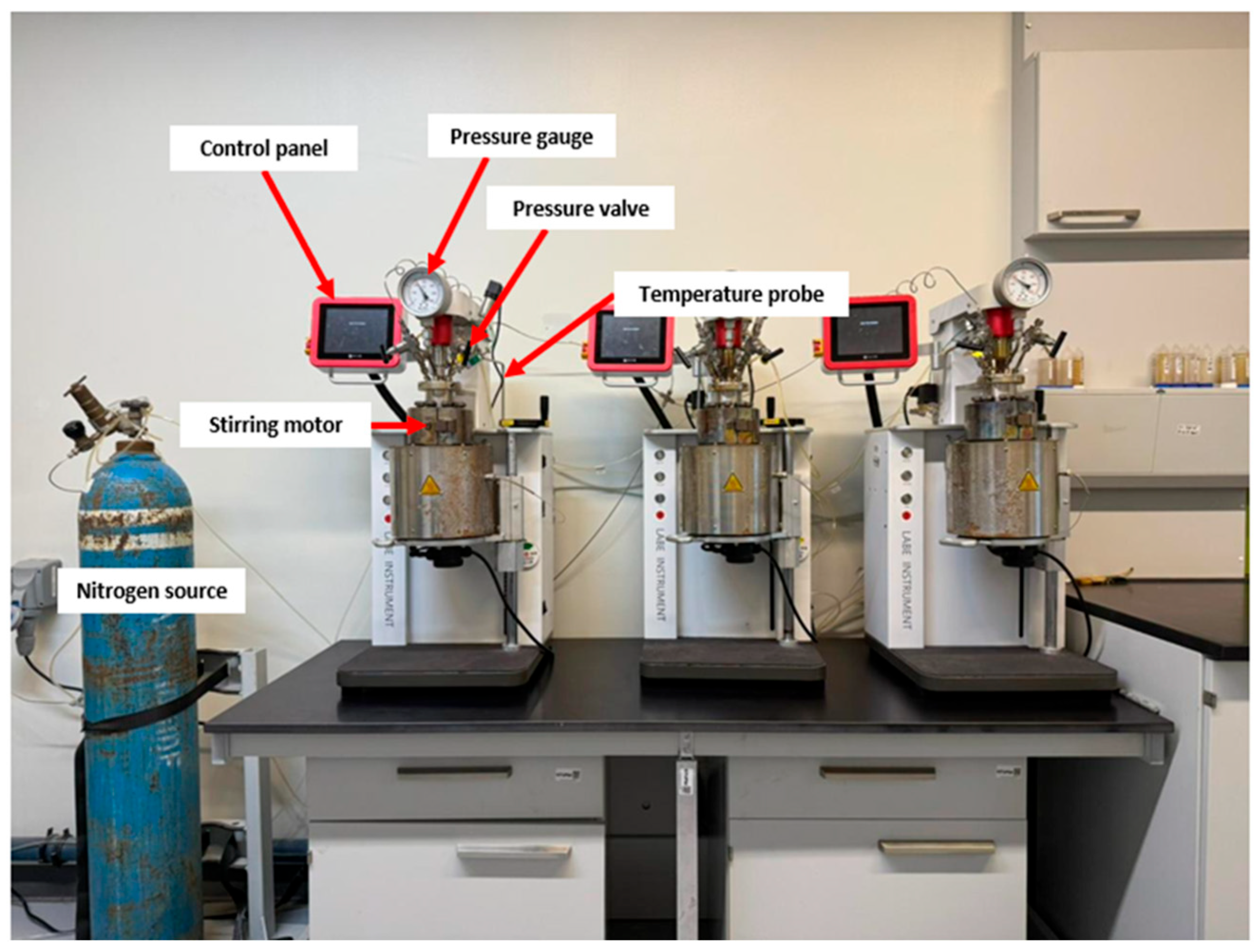
The study objective is to experimentally examine the illitization of kaolinite using hydrothermal treatment. The experiments were conducted using an Ollital OLT-HP-500 (manufactured by Xiamen Ollital Technology Co., Ltd., Xiamen, Fujian, China) multi-position parallel reactor autoclave system connected to a nitrogen gas cylinder (Figure 1). The system comprises four stainless-steel micro-stirred reactors, each with independent controls for temperature, pressure, and reaction time, and a maximum capacity of 500 mL. Autoclave reactors were used with 200 mL of three fluid systems: (i) a synthetic solution (0.2 M MgCl2 + 0.5 M KCl), (ii) natural Red Sea water, and (iii) modified Red Sea water (0.2 M KCl + 0.5 M MgCl2 + Red Sea water) (Table 1 and Table 2)
Twenty grams of each sample were wrapped in 50 µm stainless steel mesh and transferred into the hydrothermal reactors containing the experimental solutions. Experiments were conducted at various temperatures of 80 °C, 150 °C, 200 °C, and 250 °C for a duration of two to three weeks, capitalizing on the experimental procedure adapted by [34,35,36].
After each experiment, the reacted samples were dried in fume hood for 48 h at room temperature prior to subsequent preparations for analysis. A combination of analytical techniques was applied, including scanning electron microscopy (SEM), thin-section petrography, X-ray diffraction (XRD) for bulk mineralogy and clay fraction, Inductively Coupled Plasma—Mass Spectroscopy (ICP-MS), Ion Chromatography (IC), pH, and Total Dissolved Solids (TDS) were used to analyze the rock and fluid samples before and after hydrothermal treatment to achieve the objectives of the study. These combined methods allowed us to track mineral transformations and fluid–rock interactions during illitization, consistent with approaches adopted in recent experimental studies on clay-minerals-driven dolomitization [37], smectite authigenesis and illitization [35], and kaolinite-to-chlorite conversion [34].

3.2. Thin-Section Petrography

Thin section samples were prepared and polished to a standard thickness of 30 µm and filled with blue dyed epoxy resin to examine the textural and mineralogical characteristics before and after hydrothermal treatments. Images were taken using an Olympus BX53F polarizing microscope under plane-polarized and cross-polarized light. This approach provided information on detrital framework composition, pore-filling phases, and authigenic clay minerals before and after hydrothermal treatment, consistent with petrographic protocols adopted in recent experimental diagenesis studies [31,33] using scanning electron microscopy and energy dispersive X-ray spectroscopy (SEM)-(EDS).
Microstructural and compositional analyses were carried out using a Zeiss Gemini 550 scanning electron microscope equipped with a backscattered electron (BSE) detector and an Aztec EDS system (Oxford Instruments, Oxford, United Kingdom). Samples were prepared on aluminum stubs with carbon tape and coated with a 30 nm layer of gold using a Quorum Q150R spray coater to create a conductive surface for each tested sample. Imaging was performed at an accelerating voltage of 15–20 kV and a probe current of 1–2 nA. SEM imaging documented the morphology and growth habits of neoformed clay mineral phases, while EDS spot analyses were used to quantify the elemental composition before and after the hydrothermal experiments.

3.3. X-Ray Diffraction (XRD)

The mineralogical composition of the samples was determined using Malvern Empyrean PanNalytical at the Inorganic Geochemistry Laboratory, College of Petroleum Engineering and Geosciences, King Fahd University of Petroleum and Minerals, Saudi Arabia. The instrument was operated at 45 kV and 40 mA with Cu-Ka radiation, at angle range (2θ) of 4–70° scans, and step size of 0.0130. By using mineralogical library of International Centre for Diffraction Data PDF-2-2024 fitted with Highscore Plus (v.5.3a) search-match module, the minerals were identified [38,39]. Moreover, the semi-quantified minerals percentage of the diffraction peaks of different minerals using the area under the curve was analyzed.

Clay Fraction XRD Sample Preparation and Procedure

Approximately 5 g of the sample was soaked in deionized water for 24 h for clay fraction XRD analysis. The samples were then gently ground with a hand grinder to fine fragments. The tested samples were placed in labeled flasks filled with 40 mL of deionized water and then shaken to homogenous form. The flasks were placed in Ultrasonic bath for 20 min. Then, suspended fine material in the upper part of the flasks that contained the concentrated clay content was carefully decanted into a clean, labeled flasks. The samples were then centrifuged at 6000–7000 rpm for 10 min to isolate the <2 μm fraction. The concentrated clay material at the bottom of the flask was decanted from the water and pipetted into the XRD sample holder in an oriented arrangement. Finally, the sample was air-dried under fume hood for 24 h prior to analysis. These treatments allowed clear distinction between kaolinite, smectite, illite, and chlorite peaks, consistent with experimental diagenesis protocols used in previous hydrothermal studies [34,35].
Mineral quantification was conducted using a semi-quantitative Rietveld refinement approach within HighScore Plus (v. 5.3a), employing structure files from the Inorganic Crystal Structure Database (ICSD, 2021.1). To minimize errors associated with preferred orientation, the March–Dollase correction function was applied during refinement. Profile-matching and pattern-fitting techniques were used to ensure alignment between experimental spectra and reference data. Cross-validation was performed using Profex software (v. 5.4.1) to verify the reliability of the estimated mineral proportions. The semi-quantitative values reported represent relative mineral abundances rather than absolute concentrations, acknowledging that factors such as chemical composition, crystallinity, and structure influence reflection intensities. As such, the results are interpreted in a comparative context to illustrate mineral transformation trends (e.g., decrease in kaolinite and increase in illite) rather than precise compositional percentages.
Clay faction analysis was performed in three different tests and scanned from 0 to 45° 2θ with Cu–Kα radiation to confirm the presence of illite, smectite, and chlorite in the experimental samples.
The first test was performed on air-dried samples to identify the primary clay minerals and observe the alteration in kaolinite (7.1 Å), illite (10 Å), chlorite (14 Å), and mixed-layer minerals [31,33].
The second test on the dried samples was performed using ethylene glycol to determine the existence of expandable smectite layers or mixed-layer illite/smectite after subjecting it to gentle heating at 80 °C for 12 h in a controlled oven.
A third test was performed on samples heated at 550 °C for 1 h to apply the thermal destruction test used to differentiate chlorite from kaolinite [35]. This test was conducted to confirm any dissolution of any residual kaolinite after the experimental reaction, the stability or existence of chlorite, and the enhanced crystallinity of newly produced illite at a higher temperature [34,35].

3.4. Inductively Coupled Plasma-Optical Mass Spectrometer (ICP-MS)

Fluid samples were acidified with diluted HNO3 for stabilization and dissolution of trace metals prior to analysis. The concentration of trace elements Al and Fe was measured using an inductively coupled plasma mass spectrometer (ICP-MS; iCAP-RQ, Thermo Scientific, Loughborough, United Kingdom) operated through the Qtegra Intelligent Scientific Data Solution software and used an ASX-280 autosampler (Teledyne CETAC Technologies, Omaha, Nebraska, United States of America) for automated sample introduction.
Calibration of standards for verification was performed using NIST-traceable multi-element (100 ppb of Sc and Y) and analyzed intermittently to monitor drift and ensure accuracy throughout the analytical sequence and ensure covering concentration ranges. All measurements were conducted under optimized ICP-MS operating conditions recommended by the manufacturer for trace-metal quantification.

Ion Chromatography

The Na, K, Mg, Ca, and Cl ion concentrations were detected using a Metrohm 850 Professional IC system (Metrohm, Herisau, Switzerland) with dual column operated with MagIC Net software (v. 4.2) for instrument operation and data processing. Calibration prior to analysis was performed using five calibration standards prepared for both anions and cations for wider concentration range coverage for samples. A sodium-carbonate-based eluent was employed for anion analysis, whereas dilute HNO3 was used for cation separation. Eluents were delivered at a constant flow rate of 0.75 mL/min under a system pressure of approximately 8 MPa. The analytical columns were kept at 45 °C for all measurements for separation efficiency and stability following the manufacturer’s recommended operating conditions for high-precision ion quantification.
The ICP-MS analyses were performed on filtered experimental fluids, with 0.25 mL of the filtrate diluted in 10 mL of deionized water before testing to decrease matrix load and maintain stable plasma conditions. For Ion Chromatography chemistry analysis, samples were prepared by mixing 0.05 mL of filtered fluid with 35 mL of deionized water. Following these steps in sample preparation and different analytical testing steps ensure the major, minor, and trace ion measurements in the dataset stayed accurate and comparable.

4. Results

4.1. Mineralogy and Texture of the Starting Material

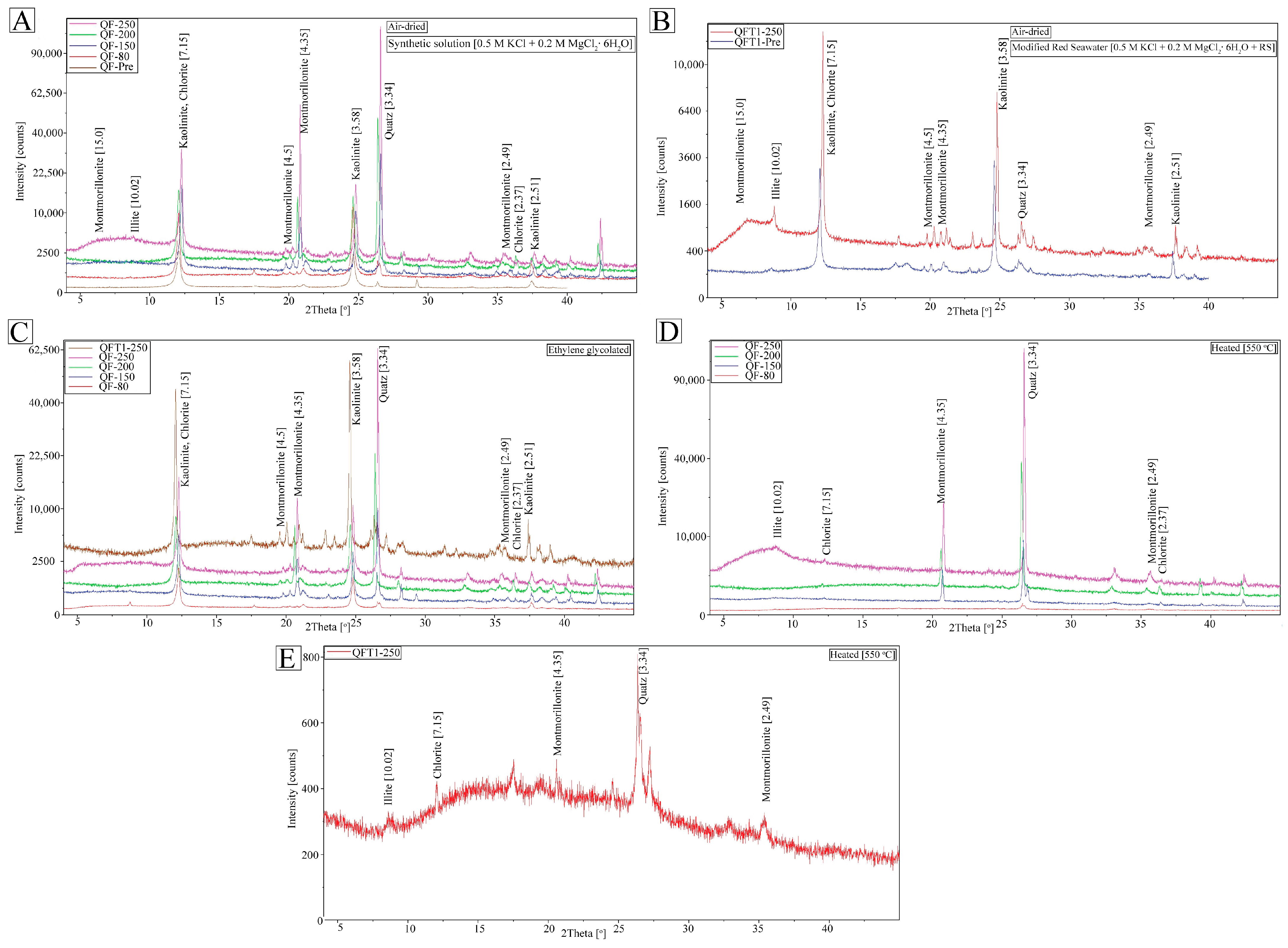
Bulk XRD mineral analysis of untreated Quwarah Sandstone (QF-PRE) shows quartz-dominated composition of 96.3% quartz, minor 3.5% of kaolinite, and 0.2% traces of a heavy mineral anatase. Clay fraction results confirm the presence of kaolinite as well as detrital quartz (Figure 2A). In contrast, the second starting sample (QFT1-PRE) shows more diverse minerology. Bulk XRD results show 33.3% quartz, a higher amount of 27.6% kaolinite, minor feldspars (orthoclase 4.8%, microcline 25.1%, sanidine 4.9%), traces of dolomite, and micas. Clay fraction analysis supports this, with kaolinite (~3.58 Å) and abundant chlorite (7.15 Å), alongside minor illite (~10 Å) (Figure 2B) and traces of siderite and micas.
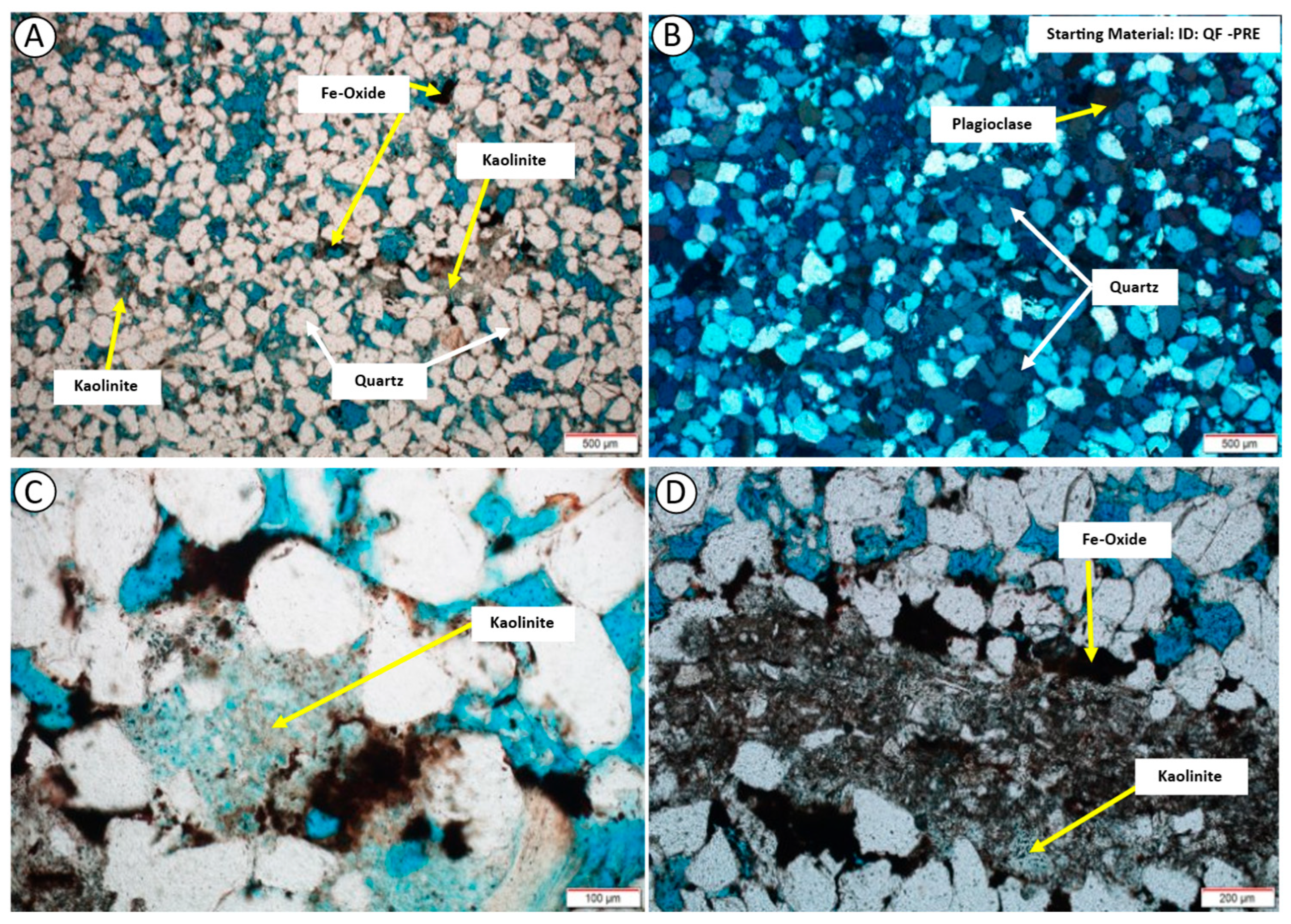
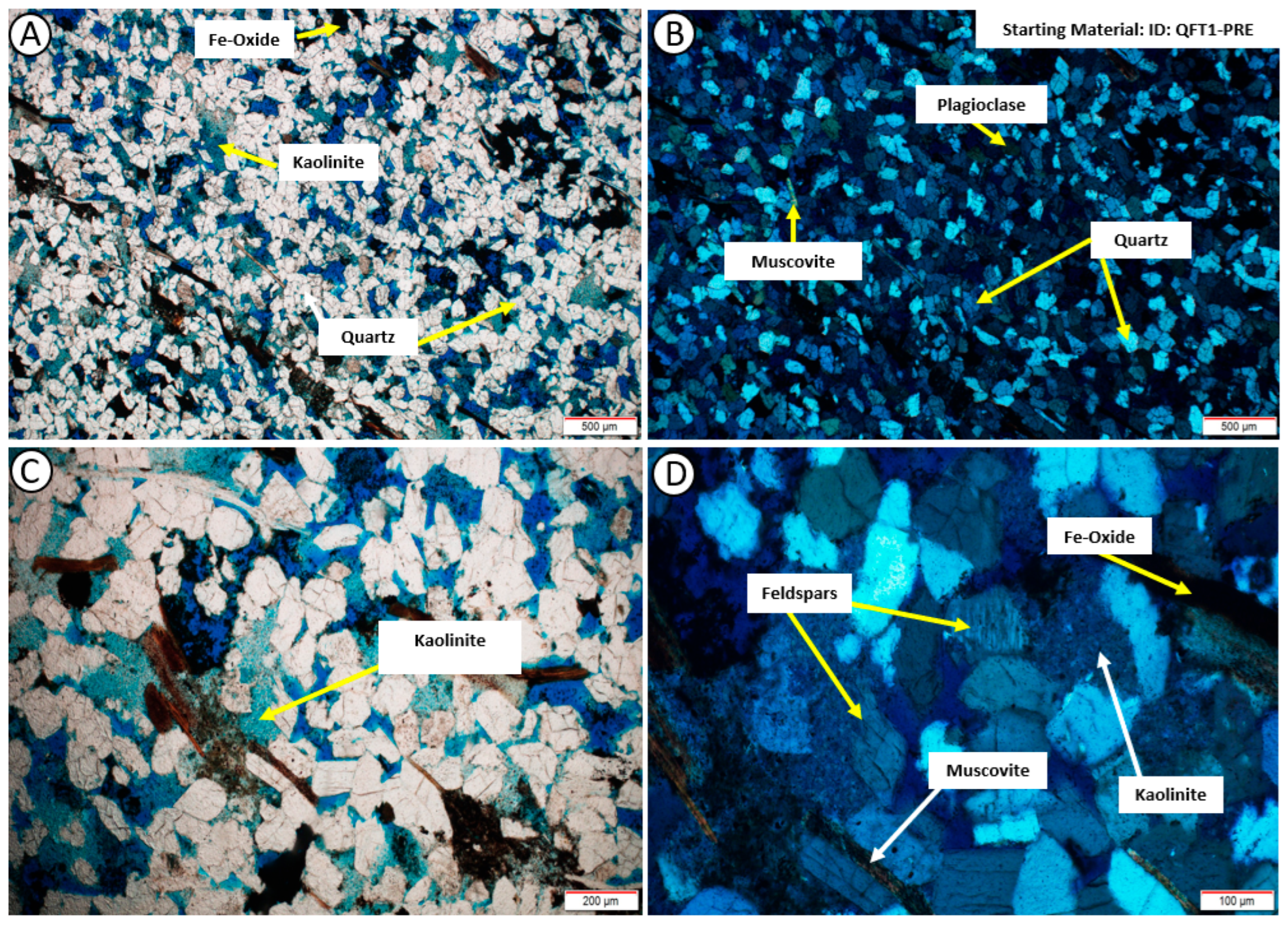
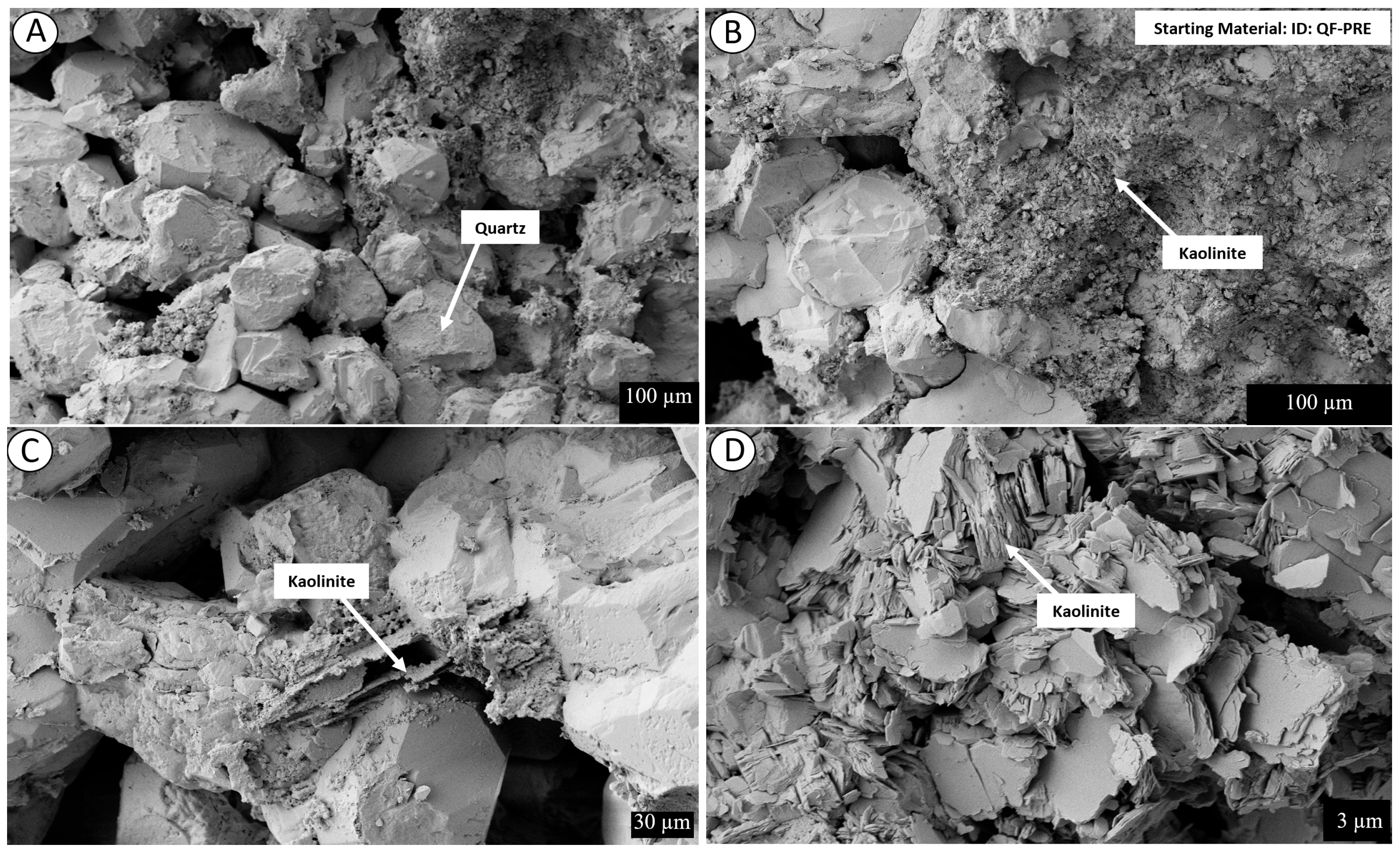
The texture of the starting materials consists of fine- to medium-grained, sub-rounded, and moderately sorted sandstone. Both samples are dominated by detrital monocrystalline quartz, minor plagioclase, and traces of mica and muscovite (Figure 3B). The thin section images also show stacked crystals of pore-filling kaolinite (Figure 3A,C,D) as well as grain-coating Fe-oxide (Figure 3A,D). Moreover, thin-section petrographic analysis shows that the grain packing mainly consists of point and long grain contacts (Figure 3).
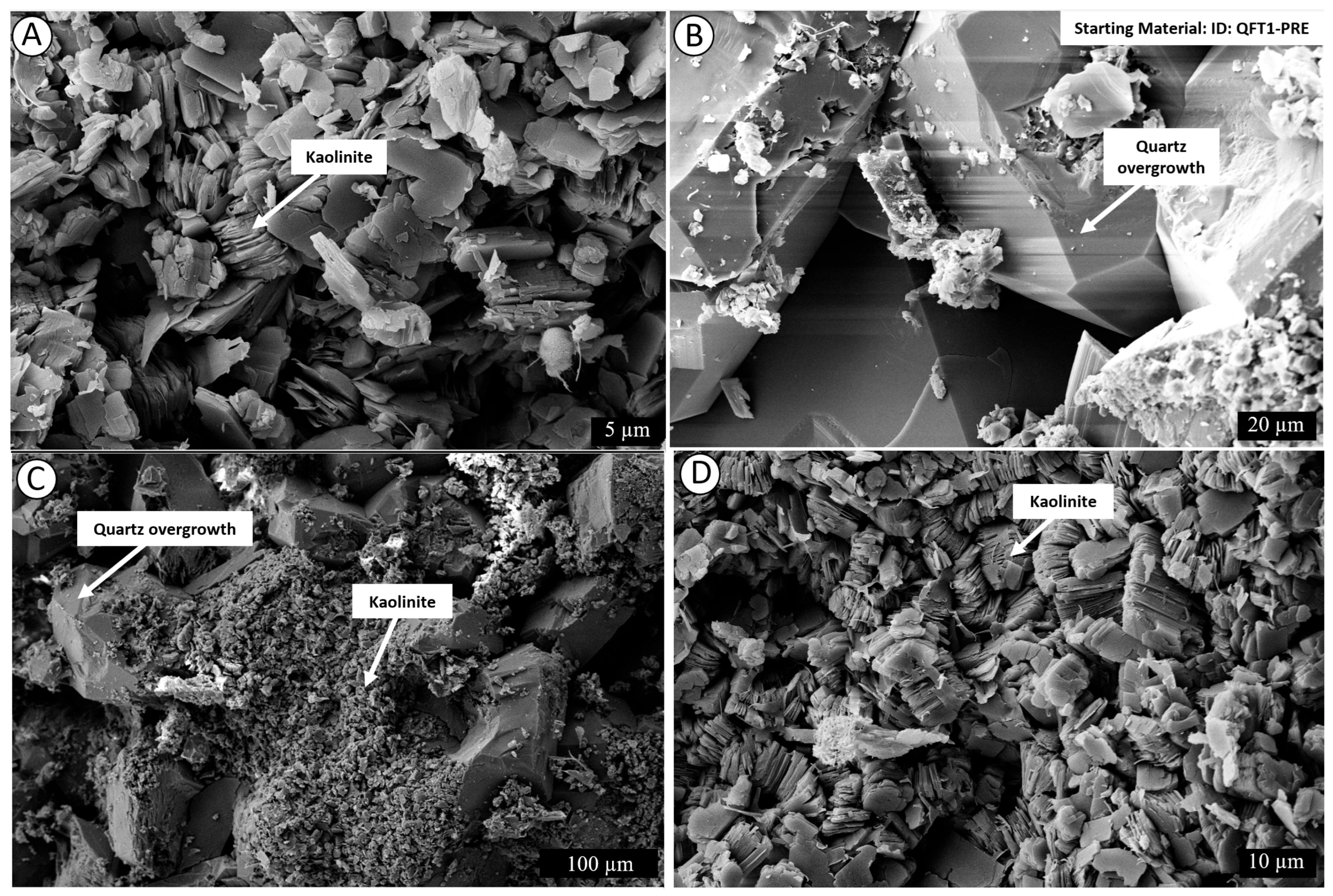
Additionally, SEM analysis supports observation by showing the abundance of quartz grains associated with authigenic kaolinite in QF-PRE (Figure 4 and Figure 5), and significant pore-filling kaolinite with quartz overgrowth in QFT1-PRE (Figure 6). Both samples provided a mineralogical baseline for hydrothermal experiments.

4.2. Post-Experiment Composition

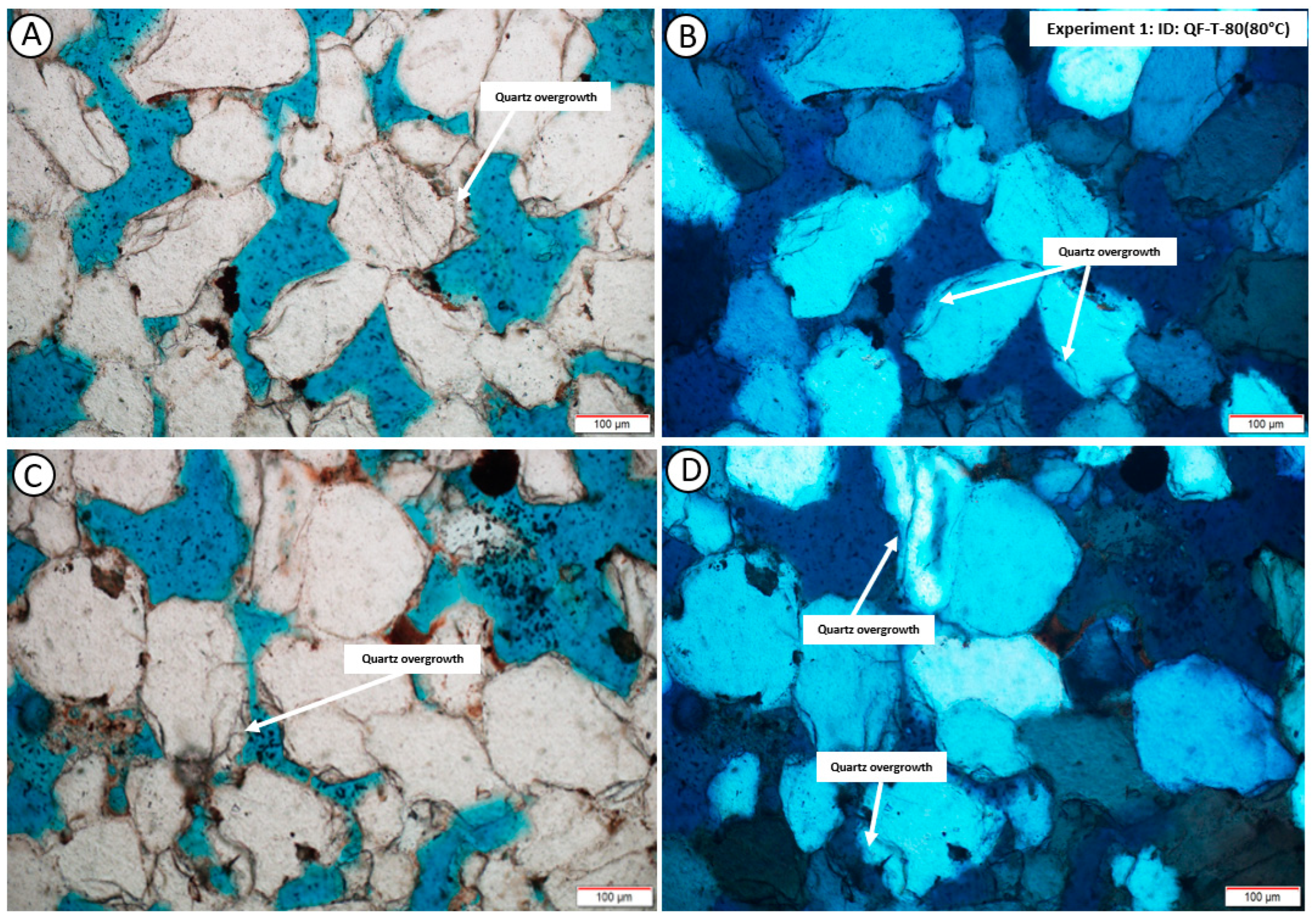
Experiment 1 (QF-T80; 80 °C) shows that no new clay mineral formed, and kaolinite remained as the predominant clay mineral component. However, the kaolinite shows minor dissolution suggesting the early breakdown of the original kaolinite framework. Bulk XRD data for experiment 1 shows a decrease in kaolinite contents relative to the starting material from 3.5% to 2.7%, and clay-fraction XRD results show further decrease in kaolinite to 64.1%, quartz to 4.4%, and traces of vermiculite to 0.2%, while 31.3% of illite appeared (Figure 2A,C). This illite is likely disordered and represents the earliest onset of illitization under hydrothermal conditions. Thin section images only show the presence of quartz overgrowth on detrital grains (Figure 7).
Experiment 2 (QF-T-150; 150 °C) showed similar results as experiment 1 for dissolution of kaolinite booklet structure and no new clay mineral formed. Bulk XRD data indicate a decrease in kaolinite relative to the starting material from 3.5% to 1.3%, and clay-fraction XRD results showed that kaolinite reached 78.3%, quartz remained minor at 7.7%, and a trace amount of illite (13.9%) was detected, with vermiculite (0.1%) also present (Figure 2A,C,D).
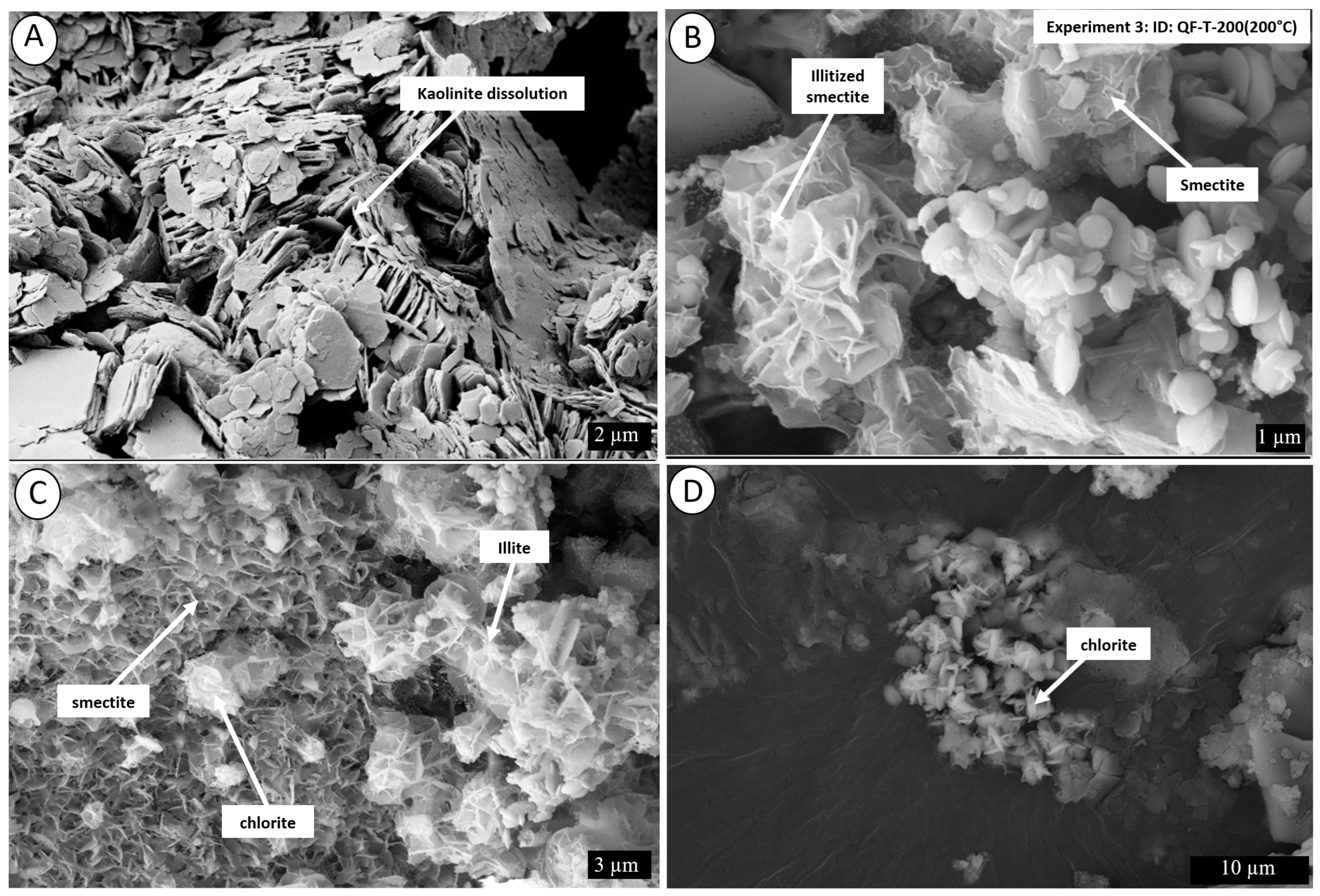
In experiment 3 (QF-T-200), with temperature increased to 200 °C, clear mineralogical transformation was observed. Both bulk XRD and clay fraction analysis indicate a decrease in kaolinite with minor illite peaks; where kaolinite decreased to 2.8% in bulk and 72% in clay fraction, quartz increased to 97% in bulk analysis and 22.8% in fraction, and illite reached 5.2% in fraction, confirming the onset of illitization at this temperature (Figure 2A,D). SEM images show high dissolution of kaolinite and disaggregation of the original stacked booklet morphology (Figure 8A), where smectite partially transformed into illitized smectite (Figure 8B) and chloritized smectite was formed (Figure 8C,D).
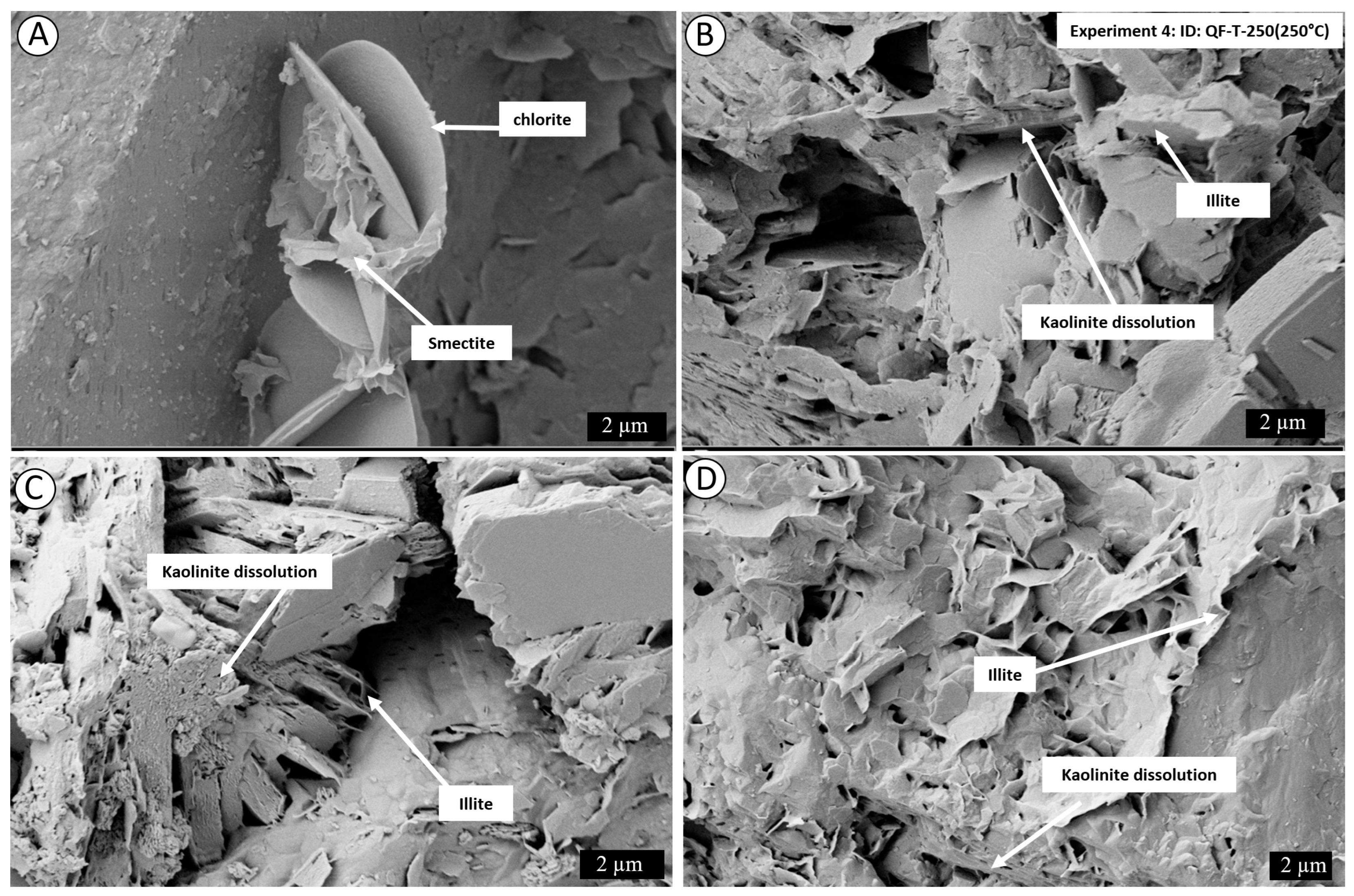
In experiment 4 (QF-T-250) at 250 °C, SEM images show pervasive dissolution of kaolinite (Figure 9B,C) and the formation of both flaky smectite (Figure 9A) and illite (Figure 9B–D). In addition, chlorite is also observed (Figure 9A) indicating that Mg incorporation from fluids played a role in stabilizing chlorite e at this stage. XRD clay fraction data confirms and shows a reduction in kaolinite from 72% at 200 °C to 29.9% at 250 °C, with increased illite (65.4%); quartz also decreased to 3.5%, while hematite (1.2%) appeared as a trace (Figure 2A,C,D).
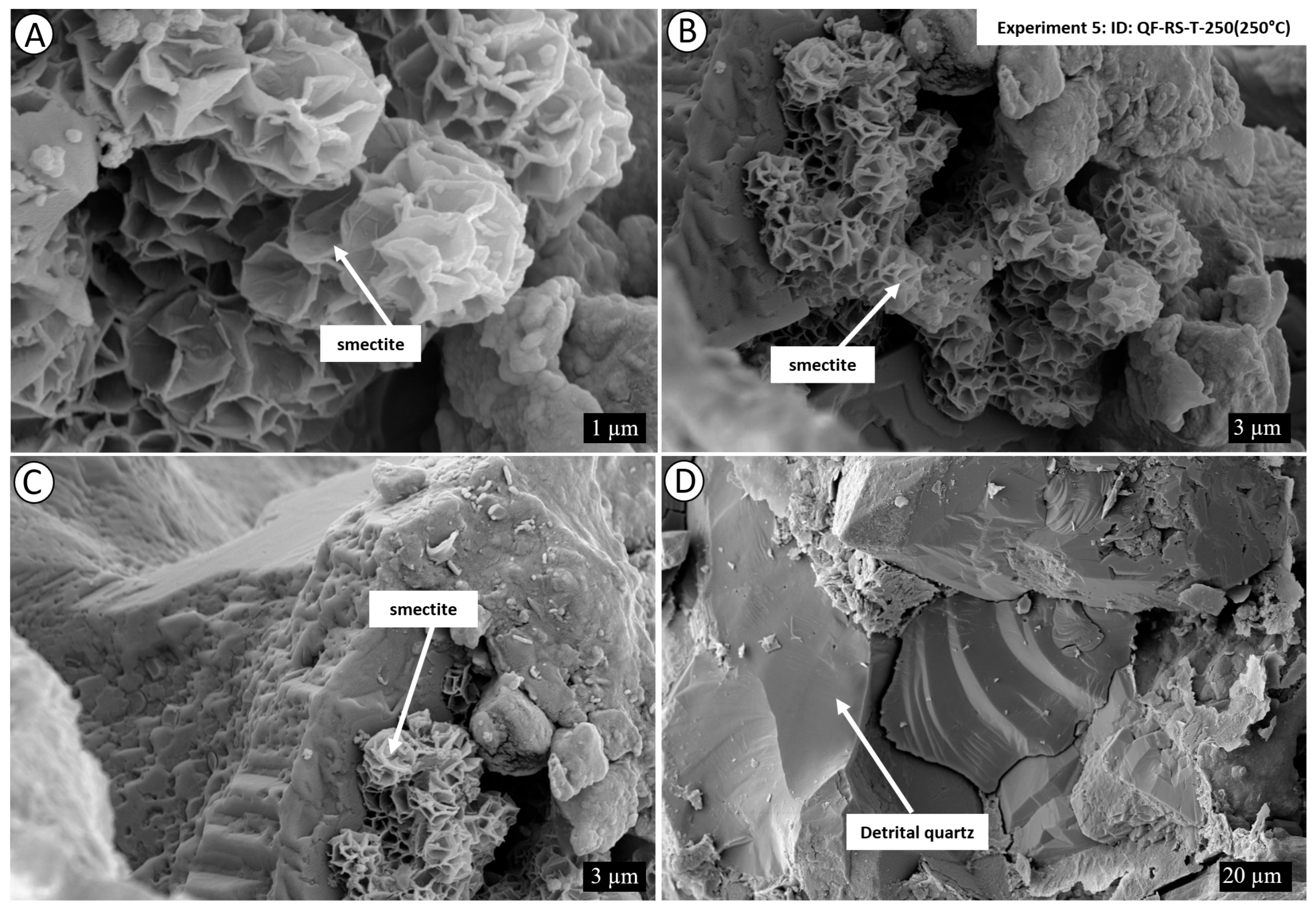
In experiment 5 (QF-RS-T-250) at 250 °C with Red Sea water as the fluid solution for the experiment, smectite was observed (Figure 10). No trace of illite was observed in SEM images or XRD, which showed quartz at 98.4% and kaolinite at 1.6%.
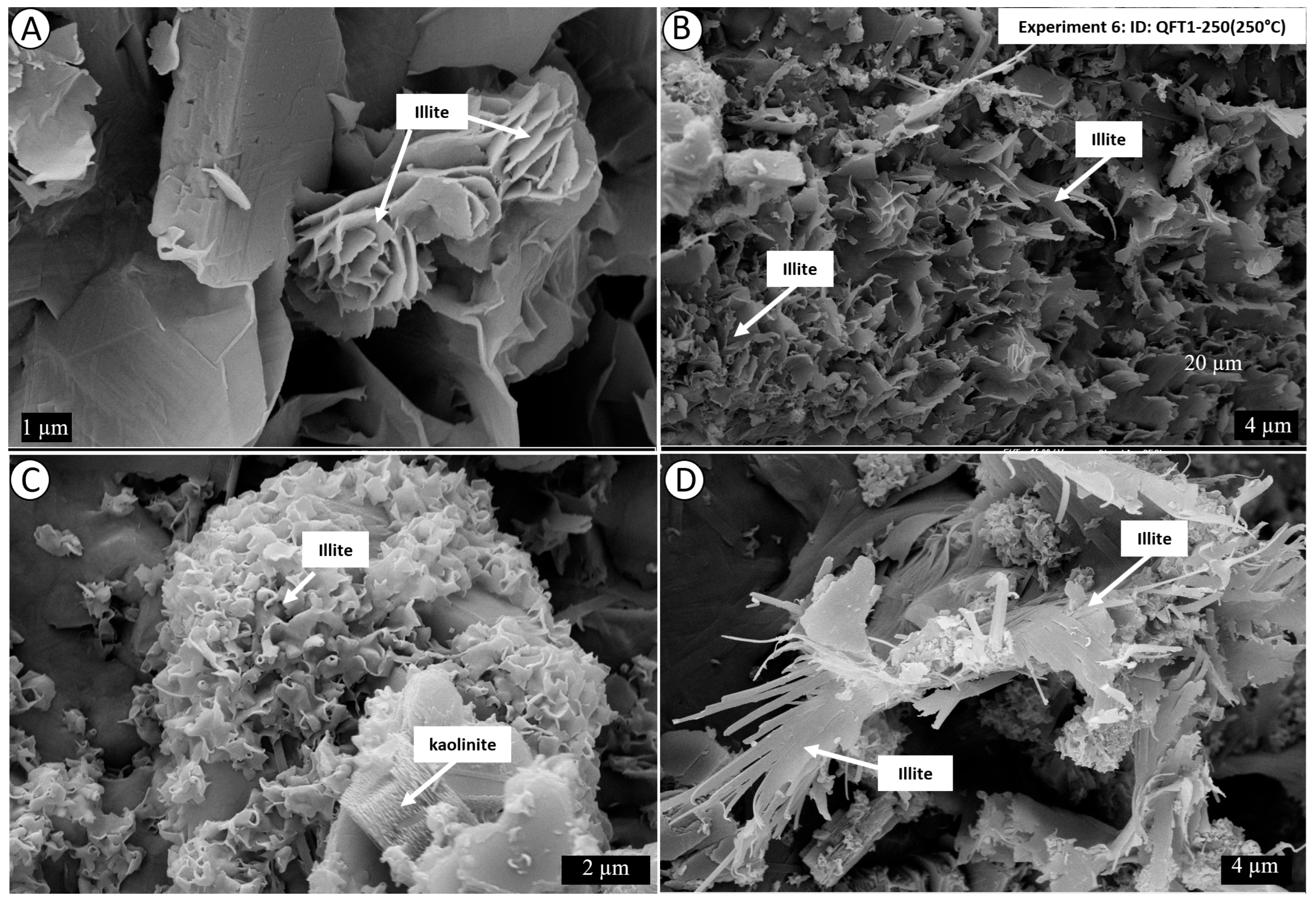
In experiment 6 (QFT1-T-250) at 250 °C with the modified Red Sea water system, SEM images show the formation of illite platelets (Figure 11). Clay-fraction XRD analysis shows kaolinite at 15.1%, illite at 26.9%, and chlorite at 43.4%, with minor dickite (8.3%), mica (0.5%), biotite (4.4%), and siderite (1.4%) (Figure 2B,E). Bulk XRD analysis resulted on quartz at 36%, kaolinite at 10.4%, feldspar (14.7%), and microcline (32.9%), and minor accessory phases, such as halite (1.1%), sylvite (0.7%), dolomite (0.4%), biotite (1.8%), muscovite (1%), and sanidine (0.3%).

4.3. Chemical Changes (ICP-MS and Ion Chromatography Analysis)

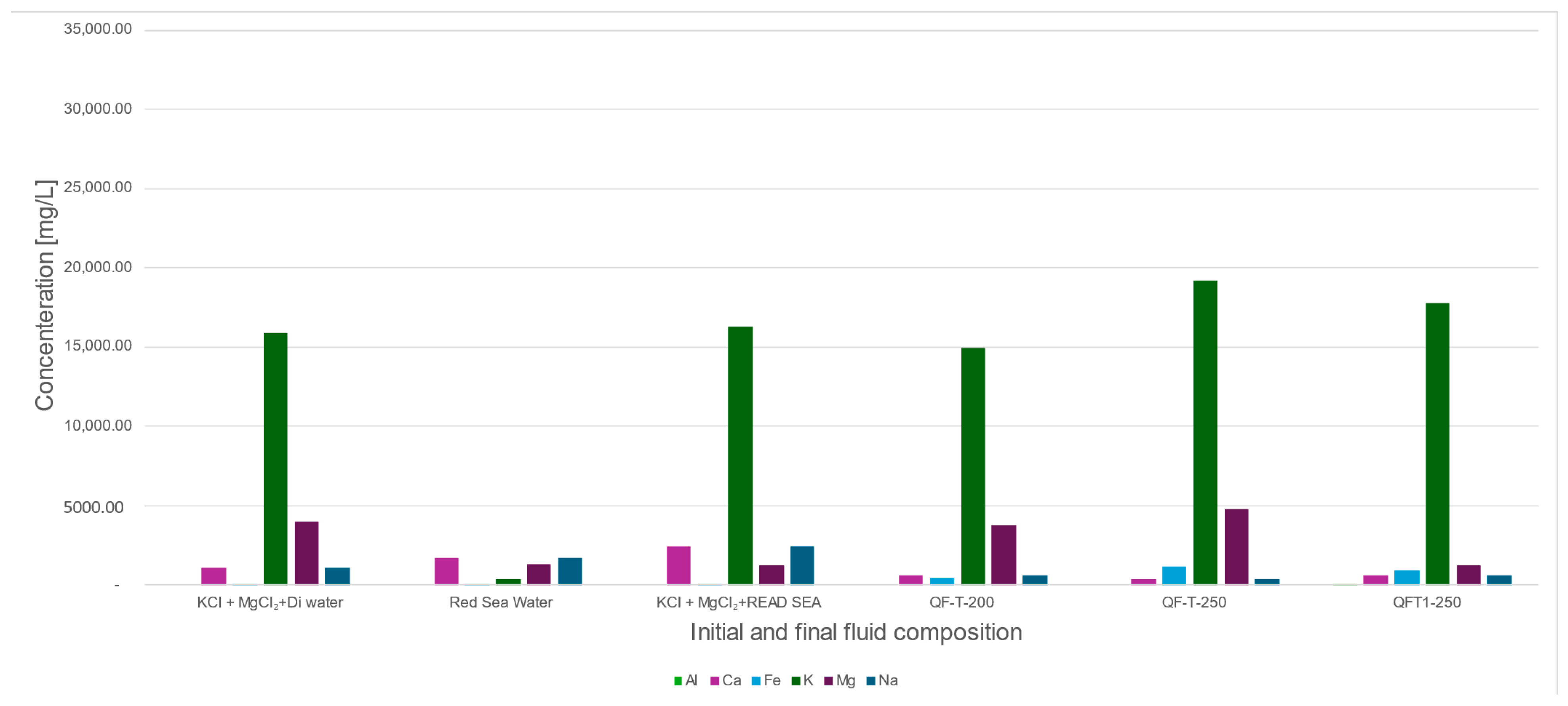
Elemental analysis results for the experimental fluids are summarized in Table 2 and illustrated in Figure 12. The major cations detected were K, Al, Ca, Fe, Mg, and Na.
ICP results of the synthetic solution (KCl + MgCl2 + DI water) showed high Mg (3979.41 mg/L), moderate Ca (1104.56 mg/L), and Na (1104 mg/L) concentrations comparing to the Red Sea solution (Figure 12). By contrast, the synthetic solution prepared with Red Sea water contained lower Mg (1266.02 mg/L) concentrations but higher Na (2389.08 mg/L). Moreover, Red Sea water (RS) showed a moderate composition of Mg 1277.04 mg/L, Na 1671 mg/L, and low K 392.64 mg/L (Figure 13).
These variations in solutions were used in the study between synthetic chloride solutions and seawater chemistry, which could influence the composition of neoformed clay minerals.
Results for experiment 3 (QF-T-200) show no availability of Al and Mg (3771 mg/L) concentration and Fe (461.27 mg/L). Potassium remained high (14,931.69 mg/L), while Na decreased with time to 615.13 mg/L at 200 °C (Figure 12).
With the increasing temperature in experiment 4 at 250 °C, chemical changes in composition were recorded. Fe increased to 1121.53 mg/L at 250 °C, resulting in kaolinite dissolution. While the Mg reached to 4758.35 mg/L with decreased in Ca to 373.90 mg/L (Figure 12).

5. Discussion

5.1. Mechanism of Conversion of Kaolinite into Illite

5.1.1. Smectite Pathway

With increasing temperature to 200 °C, kaolinite becomes unstable and supplies Al and dissolved silica to promote the formation of smectite (Figure 2 and Figure 8A) [20,24]. SEM images showed kaolinite dissolution and formation of webby and honeycomb smectite (Figure 8B–D). Smectite layers are continuously replaced by partial transformation into mixed-layer smectite/illite and chloritized smectite (Figure 3 and Figure 8B,C) [16,20,24,31]. The smectite pathway is controlled by temperature, reaction time, and external fluid composition.
Kaolinite starts to dissolve and release Al and dissolved silica into the fluids at high temperatures around 200 °C, which initiates the formation of new clay minerals (Figure 8) and (Figure 2). Observed in the first stage of this transformation at ~150 °C was kaolinite converting into dioctahedral smectite (montmorillonite) under acidic conditions [34]. SEM and XRD data in this study showed smectite progressively replacing the original kaolinite morphology, with flaky textures on altered kaolinite surfaces as temperatures reached 200 °C [19]. The smectite chemistry changed with increasing temperature by incorporating Mg and Fe into the smectite lattice (Figure 8) [40,41], consistent with elemental analysis results (Table 2).
This newly formed smectite acts as the precursor for illite formation [21]. Reference [34] documented that both kaolinite and smectite undergo illitization when K+ is added by the experimental solutions. In this study, early illite trace was observed (Figure 8) at 200 °C and 5.2% illite in the clay fraction (Figure 2). This indicates that illite formed either directly on kaolinite or through transition from smectite (Figure 2). The transformation was controlled by the availability of potassium in experimental fluids and the increase in temperature (Table 1).
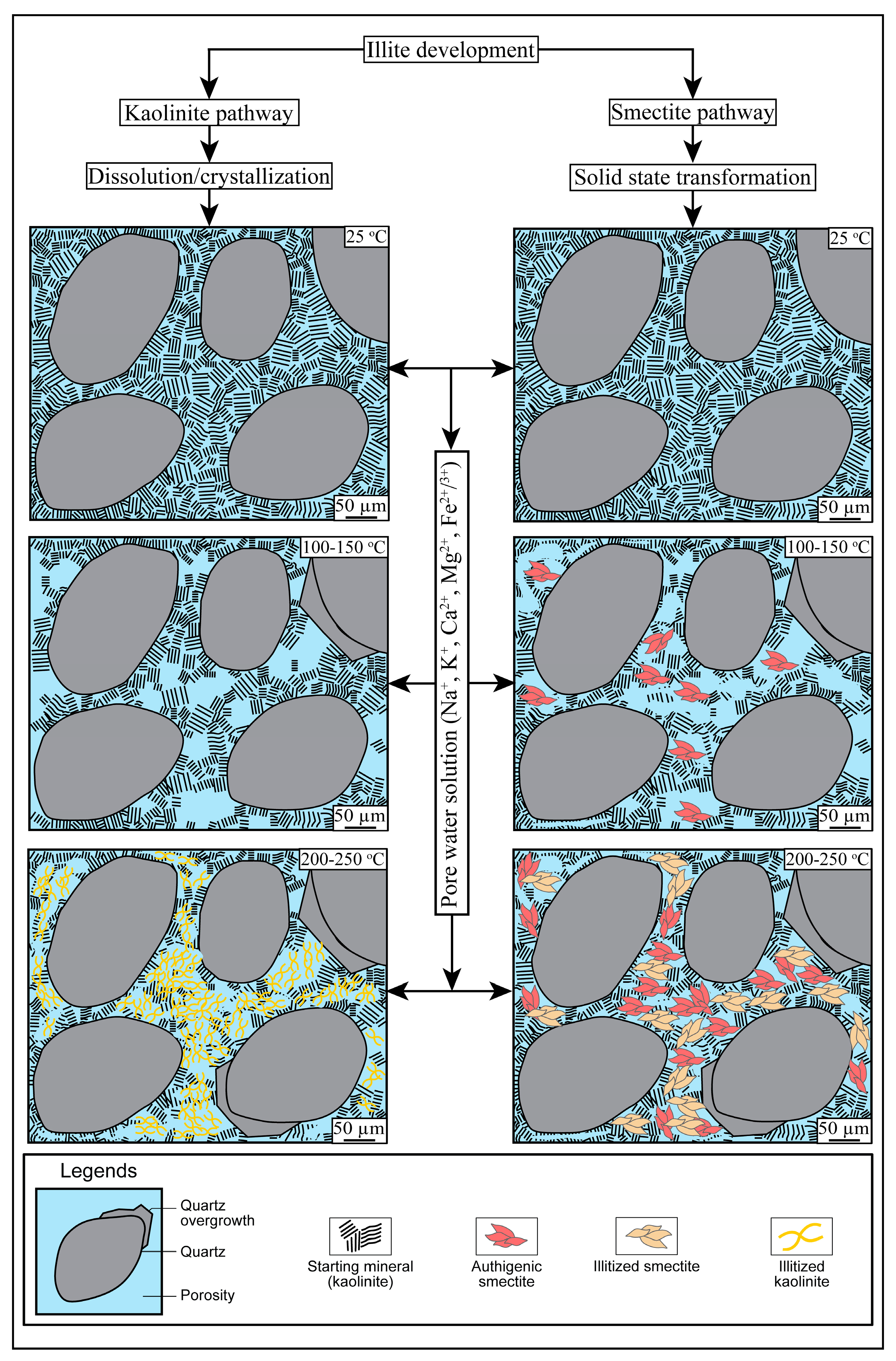
The transition of kaolinite to smectite and then to illite pathway is represented by dissolution, re-precipitation, and K-availability (Figure 2). The dissolution of kaolinite supplied Al and Si, which also contributed to quartz overgrowths in areas lacking clay mineral coatings (Figure 7B) [6,14], while K+ supplied by the fluids incorporated in the clay fraction (Figure 2). As a result, illite formation represents the product of kaolinite alteration with K-rich solutions at high-temperature conditions (Figure 2), following the alternative smectite-to-chlorite route discussed in the same experiments [34].

5.1.2. Kaolinite Pathway

The formation of illite requires sources of potassium, aluminum, and silica [15,19]. The formation of illite through direct dissolution of kaolinite commenced at 250 °C (Figure 10 and Figure 11). This indicates that kaolinite dissolution provided the required aluminum and silica for illite formation, aided by the potassium-rich and modified Red Sea water solution (0.5 M KCl + 0.2 M MgCl2) (Figure 12). The increase in temperature to 250 °C and the potassium rich solution control the conversion to illite directly from kaolinite (Figure 2).
The formation of illite occurred through the dissolution–crystallization process (Figure 2). SEM images showed dissolution of kaolinite booklets at 250 °C before the growth of illite (Figure 9D). Clay-fraction XRD confirmed the presence of illite, with values of 65.4% in the synthetic solution experiment 4 and 26.9% in the modified Red Sea system (Figure 2). The potassium-rich solution increased the possibility of saturation of the reaction, which enabled illite precipitation and formation [21].
The formation of illite requires sources of potassium, aluminum, and silica. ICP-MS and Ion-C data also show a significant decrease in K concentration in post-experiment fluids (Table 2), consistent with K+ incorporation into illite structures.
These results mirror [34], who observed both illitized kaolinite (booklet replacement) and illitized smectite (overgrowth textures), demonstrating that illite can form through multiple pathways depending on precursor stability (Figure 2). SEM analyses showed direct kaolinite-to-illite formation representing dissolution mechanism with removal of the precursor structure (Figure 9 and Figure 11).

5.2. Role of Fluid Composition and Temperature

The morphology of illite differs (Figure 8 and Figure 9, and Figure 11) based on the availability of potassium and chemistry of the pore fluids in the prepared synthetic solution [19]. The precipitation of illite–smectite mixed-layer coating quartz grains by the dissolution of kaolinite in the synthetic solutions shows additional support to these results (Figure 8B). The synthetic KCl-MgCl2 solutions induced kaolinite dissolution, which destroyed their stacked booklet layers (Figure 8A and Figure 9C).
In comparison, the Red Sea water experiment (QF-RS-T-250) showed no illite formation, with SEM images instead showing smectite (Figure 11) due to lower potassium and higher magnesium and calcium content in the used solution which promoted smectite formation instead of illite.
This shows the important role of solution chemical composition in controlling clay mineral transformations [18,42]. K-rich solution systems prompt illitization, whereas Mg-rich, K-poor solution systems favor smectite instead of illite.

5.3. Limitations of the Study and Future Work

This study was conducted in different hydrothermal conditions under accelerated periods, two to three weeks, which is significantly shorter than natural burial diagenetic processes that occur over millions of years [20,36]. As a result, the reaction kinetics and mineralogical transformations in this experiment do not fully represent the natural timescales of kaolinite illitization. For example, SEM images showed kaolinite dissolution and progressive formation of illite when temperature increased (Figure 8, Figure 9 and Figure 11), whereas smectite formed with no trace of illite in Red Sea water experiments (Figure 10). Moreover, synthetic solutions were used as KCl-MgCl2 and Red Sea water, which do not capture the full geochemical variability in the natural subsurface.
Future work should experiment with longer durations to better simulate natural reaction rates and test additional fluid compositions to replicate more natural conditions and variable pH systems.

6. Conclusions

This study demonstrates that both temperature and fluid chemistry are key controls on kaolinite-to-illite transformation. At 80–150 °C, kaolinite remained relatively stable, showing only minor dissolution and quartz overgrowth formation. At 200 °C, smectite formed as an intermediate, accompanied by traces of illite, reflecting smectite to illite transformation. At 250 °C, kaolinite significantly dissolved, producing illite through direct and indirect pathways in a potassium-rich system.
Fluid chemistry exerted a first-order control on these transformations. Potassium-rich solutions (KCl-MgCl2 and modified Red Sea water) enhanced illite formation, while Red Sea water favored smectite. This transformation was controlled by K+ availability, as confirmed by elemental analysis data showing higher K. Synthetic KCl-MgCl2 solutions favored illite formation, whereas the Red Sea water solution, with lower potassium and higher magnesium concentrations, resulted in smectite formation. The results of the experiments show the important role of increasing hydrothermal conditions and potassium supply to promote transformation of kaolinite to illite.
Overall, these results emphasize that kaolinite transformation pathways are strongly dictated by the balance between K-rich and Mg–Fe-rich fluids under hydrothermal conditions. Illite formation dominates in K-rich systems, while smectite (and in some cases chlorite) persists in Mg-rich, K-poor environments.

Author Contributions

Conceptualization, M.A.A., and A.M.B.; methodology, M.A.A.; software, M.A.A., A.M.S., and A.M.B.; validation, M.A.A., A.M.S., A.M.B., and K.A.-R.; formal analysis, M.A.A.; investigation, M.A.A.; resources, K.A.-R., A.M.S., and A.M.B.; data curation, M.A.A.; writing—original draft preparation, M.A.A.; writing—review and editing, M.A.A., A.M.S., A.M.B., and K.A.-R.; visualization, M.A.A., A.M.S., A.M.B., and K.A.-R.; supervision, K.A.-R., and A.M.B.; project administration, K.A.-R., A.M.S., and A.M.B.; funding acquisition, K.A.-R., and A.M.B. All authors have read and agreed to the published version of the manuscript.

Funding

This study was funded by the Center for Integrative Petroleum Research (CIPR), College of Petroleum Engineering and Geosciences, King Fahd University of Petroleum & Minerals, Dhahran, Saudi Arabia (Grant number: SF24004).

Data Availability Statement

Data are contained within the article.

Acknowledgments

We would like to sincerely thank King Fahd university of petroleum and minerals, College of petroleum and geosciences (CPG), Saudi Arabia for providing the facilities and support that made this milestone achievable. We are grateful to the CPG Lab specialists’ team for their support in conducting samples analysis for this experiment. Our appreciation extends to Ajibola Okeyode for the support on SEM images, Bandar Al-Otaibi for conducting XRD-XRF analysis, Asim Qahtani for ICP-OES analysis, Eyad Safi and Ghalia AlSaif for ICP-MS and IC analyses. Credit also goes to Habeeb Al-Abbas for preparing thin sections, and Fatimah Almohsen for her assistance with thin sections imaging and expertise. Lastly, we extend our appreciation to Halliburton, especially Ehab Negm and Adham Osman for their continuous support.

Conflicts of Interest

The authors declare no conflict of interest.

References

  1. Akinlotan, O.O.; Moghalu, O.A.; Hatter, S.J.; Okunuwadje, S.; Anquilano, L.; Onwukwe, U.; Haghani, S.; Anyiam, O.A.; Jolly, B.A. Clay Mineral Formation and Transformation in Non-Marine Environments and Implications for Early Cretaceous Palaeoclimatic Evolution: The Weald Basin, Southeast England. J. Palaeogeogr. 2022, 11, 387–409. [Google Scholar] [CrossRef]
  2. Eberl, D.; Hower, J. The Hydrothermal Transformation of Sodium and Potassium Smectite into Mixed-Layer Clay. Clays Clay Min. 1977, 25, 215–227. [Google Scholar] [CrossRef]
  3. Wilson, M.D.; Pittman, E.D. Authigenic Clays in Sandstones; Recognition and Influence on Reservoir Properties and Paleoenvironmental Analysis. J. Sediment. Res. 1977, 47, 3–31. [Google Scholar] [CrossRef]
  4. Worden, R.H.; Burley, S.D. Sandstone Diagenesis: The Evolution of Sand to Stone. In Sandstone Diagenesis; Wiley-Blackwell: Hoboken, NJ, USA, 2003; pp. 1–44. ISBN 9781444304459. [Google Scholar]
  5. Ajdukiewicz, J.M.; Lander, R.H. Sandstone Reservoir Quality Prediction: The State of the Art. Am. Assoc. Pet. Geol. Bull. 2010, 94, 1083–1091. [Google Scholar] [CrossRef]
  6. Al-Ramadan, K. Illitization of Smectite in Sandstones: The Permian Unayzah Reservoir, Saudi Arabia. Arab. J. Sci. Eng. 2014, 39, 407–412. [Google Scholar] [CrossRef]
  7. Salisu, A.M.; Algheryafi, H.; Bello, A.M.; Amao, A.O.; Al-Otaibi, B.; Al-Ramadan, K. Depositional and Diagenetic Controls on the Reservoir Quality of Marginal Marine Sandstones: An Example from the Early Devonian Subbat Member, Jauf Formation, Northwest Saudi Arabia. Mar. Pet. Geol. 2024, 170, 107147. [Google Scholar] [CrossRef]
  8. Bello, A.M.; Salisu, A.M.; Alqubalee, A.; Amao, A.O.; Al-Hashem, M.; Al-Hussaini, A.; Al-Ramadan, K. Diagenetic Controls on the Quality of Shallow Marine Sandstones: An Example from the Cambro-Ordovician Saq Formation, Central Saudi Arabia. J. Afr. Earth Sci. 2024, 215, 105295. [Google Scholar] [CrossRef]
  9. Bello, A.M.; Usman, M.B.; Abubakar, U.; Al-Ramadan, K.; Babalola, L.O.; Amao, A.O.; Sarki Yandoka, B.M.; Kachalla, A.; Kwami, I.A.; Ismail, M.A.; et al. Role of Diagenetic Alterations on Porosity Evolution in the Cretaceous (Albian-Aptian) Bima Sandstone, a Case Study from the Northern Benue Trough, NE Nigeria. Mar. Pet. Geol. 2022, 145, 105851. [Google Scholar] [CrossRef]
  10. Dowey, P.J.; Hodgson, D.M.; Worden, R.H. Pre-Requisites, Processes, and Prediction of Chlorite Grain Coatings in Petroleum Reservoirs: A Review of Subsurface Examples. Mar. Pet. Geol. 2012, 32, 63–75. [Google Scholar] [CrossRef]
  11. Ehrenberg, S.N. Preservation of Anomalously High Porosity in Deeply Buried Sandstones by Grain-Coating Chlorite: Examples from the Norwegian Continental Shelf1. Am. Assoc. Pet. Geol. Bull. 1993, 77, 1260–1286. [Google Scholar] [CrossRef]
  12. Koeshidayatullah, A.; Trower, E.J.; Li, X.; Mukerji, T.; Lehrmann, D.J.; Morsilli, M.; Al-Ramadan, K.; Payne, J.L. Quantitative Evaluation of the Roles of Ocean Chemistry and Climate on Ooid Size across the Phanerozoic: Global versus Local Controls. Sedimentology 2022, 69, 2486–2506. [Google Scholar] [CrossRef]
  13. Salisu, A.M.; Alqubalee, A.; Bello, A.M.; Al-Hussaini, A.; Adebayo, A.R.; Amao, A.O.; Al-Ramadan, K. Impact of Kaolinite and Iron Oxide Cements on Resistivity and Quality of Low Resistivity Pay Sandstones. Mar. Pet. Geol. 2023, 158, 106568. [Google Scholar] [CrossRef]
  14. Walderhaug, O. Kinetic Modeling of Quartz Cementation and Porosity Loss in Deeply Buried Sandstone Reservoirs1. Am. Assoc. Pet. Geol. Bull. 1996, 80, 731–745. [Google Scholar] [CrossRef]
  15. Awwiller, D.N. Illite/Smectite Formation and Potassium Mass Transfer during Burial Diagenesis of Mudrocks; a Study from the Texas Gulf Coast Paleocene-Eocene. J. Sediment. Res. 1993, 63, 501–512. [Google Scholar] [CrossRef]
  16. Worden, R.; Morad, S. Clay Minerals in Sandstones: Controls on Formation, Distribution and Evolution. In Clay Mineral Cements in Sandstones; Wiley-Blackwell: Hoboken, NJ, USA, 2009; Volume 34, pp. 1–41. ISBN 9781444304336. [Google Scholar]
  17. Lander, R.H.; Walderhaug, O. Predicting Porosity through Simulating Sandstone Compaction and Quartz Cementation1. Am. Assoc. Pet. Geol. Bull. 1999, 83, 433–449. [Google Scholar] [CrossRef]
  18. McBride, E.F. Quartz Cement in Sandstones: A Review. Earth Sci. Rev. 1989, 26, 69–112. [Google Scholar] [CrossRef]
  19. Mills, M.M.; Sanchez, A.C.; Boisvert, L.; Payne, C.B.; Ho, T.A.; Wang, Y. Understanding Smectite to Illite Transformation at Elevated. Chem. Geol. 2023, 615, 121214. [Google Scholar] [CrossRef]
  20. Nadeau, P.H.; Wilson, J.; McHardy, W.J.; Tait, J.M. The Conversion of Smectite to Illite during Diagenesis: Evidence from Some Illitic Clays from Bentonites and Sandstones. Miner. Mag. 1985, 49, 393–400. [Google Scholar] [CrossRef]
  21. Pytte, A.M.; Reynolds, R.C. The Thermal Transformation of Smectite to Illite. In Thermal History of Sedimentary Basins: Methods and Case Histories; Springer: Berlin/Heidelberg, Germany, 1989; pp. 133–140. [Google Scholar]
  22. Ajdukiewicz, J.M.; Larese, R.E. How Clay Grain Coats Inhibit Quartz Cement and Preserve Porosity in Deeply Buried Sandstones: Observations and Experiments. Am. Assoc. Pet. Geol. Bull. 2012, 96, 2091–2119. [Google Scholar] [CrossRef]
  23. Wooldridge, L.J.; Worden, R.H.; Griffiths, J.; Utley, J.E.P. Clay-Coated Sand Grains in Petroleum Reservoirs: Understanding Theirdistribution via a Modern Analogue. J. Sediment. Res. 2017, 87, 338–352. [Google Scholar] [CrossRef]
  24. Millot, G. Geology of Clays: Weathering Sedimentology Geochemistry; Springer Science & Business Media: Berlin/Heidelberg, Germany, 2013; ISSN 3662416093. [Google Scholar]
  25. Oluwadebi, A.G.; Taylor, K.G.; Dowey, P.J. Diagenetic Controls on the Reservoir Quality of the Tight Gas Collyhurst Sandstone Formation, Lower Permian, East Irish Sea Basin, United Kingdom. Sediment. Geol. 2018, 371, 55–74. [Google Scholar] [CrossRef]
  26. Bello, A.M.; Usman, M.B.; Ismail, M.A.; Mukkafa, S.; Abubakar, U.; Kwami, I.A.; Al-Ramadan, K.; Amao, A.O.; Al-Hashem, M.; Salisu, A.M.; et al. Linking Diagenesis and Reservoir Quality to Depositional Facies in Marginal to Shallow Marine Sequence: An Example from the Campano-Maastrichtian Gombe Sandstone, Northern Benue Trough, NE Nigeria. Mar. Pet. Geol. 2023, 155, 106386. [Google Scholar] [CrossRef]
  27. Bello, A.M.; Usman, M.B.; Amao, A.O.; Al-Ramadan, K.; Al-Hashem, M.; Kachalla, A.; Abubakar, U.; Salisu, A.M.; Mukkafa, S.; Kwami, I.A.; et al. Diagenesis and Reservoir Quality Evolution of Estuarine Sandstones: Insights from the Cenomanian-Turonian Yolde Formation, Northern Benue Trough, NE Nigeria. Mar. Pet. Geol. 2024, 169, 107073. [Google Scholar] [CrossRef]
  28. Walderhaug, O.; Porten, K.W. How Do Grain Coats Prevent Formation of Quartz Overgrowths? J. Sediment. Res. 2022, 92, 988–1002. [Google Scholar] [CrossRef]
  29. Lanson, B.; Sakharov, B.; Claret, F.; Drits, V. Diagenetic Smectite-to-Illite Transition in Clay-Rich Sediments: A Reappraisal of X-Ray Diffraction Results Using the Multi-Specimen Method. Am. J. Sci. 2009, 309, 476–516. [Google Scholar] [CrossRef]
  30. Bello, A.M.; Charlaftis, D.; Jones, S.J.; Gluyas, J.; Acikalin, S.; Cartigny, M.; Al-Ramadan, K. Experimental Diagenesis Using Present-Day Submarine Turbidite Sands. Front. Earth Sci. 2022, 10, 1–20. [Google Scholar] [CrossRef]
  31. Abu-Ali, M.; Littke, R. Paleozoic Petroleum Systems of Saudi Arabia: A Basin Modeling Approach. GeoArabia 2005, 10, 131–168. [Google Scholar] [CrossRef]
  32. Bloch, S.; McGowen, J.H. Influence of Depositional Environment on Reservoir Quality Prediction. Reserv. Qual. Assess. Predict. Clastic Rocks 1994, 30, 952690. [Google Scholar]
  33. Bello, A.M.; Al-Ramadan, K.; Koeshidayatullah, A.I.; Amao, A.O.; Herlambang, A.; Al-Ghamdi, F.; Malik, M.H. Impact of Magmatic Intrusion on Diagenesis of Shallow Marine Sandstones: An Example from Qasim Formation, Northwest Saudi Arabia. Front. Earth Sci. 2023, 11, 1105547. [Google Scholar] [CrossRef]
  34. Bello, A.M.; Salisu, A.M.; Amao, A.O.; Mustapha, U.; Al Ramadan, K. Experimental Development of Chlorite: Insights from a Kaolinite Precursor. J. Sediment. Res. 2025, 95, 462–484. [Google Scholar] [CrossRef]
  35. Salisu, A.M.; Bello, A.M.; Amao, A.O.; Lander, R.H.; Al-Ramadan, K. Experimental Study of Smectite Authigenesis and Its Subsequent Illitization: Insights From Modern Estuary Sediments. J. Sediment. Res. 2025, 95, 562–588. [Google Scholar] [CrossRef]
  36. Salisu, A.M.; Bello, A.M.; Amao, A.O.; Al-Ramadan, K. The Role of Fluid Chemistry in the Diagenetic Transformation of Detrital Clay Minerals: Experimental Insights from Modern Estuarine Sediments. Minerals 2025, 15, 317. [Google Scholar] [CrossRef]
  37. Bello, A.M.; Amao, A.O.; Salisu, A.M.; Al-Ramadan, K. Clay-Driven Dolomitization at Moderate to High Temperatures: Evidence from Hydrothermal Experiments. Geology 2025, 53, 1040–1045. [Google Scholar] [CrossRef]
  38. Amao, A.; Al-Ramadan, K.; Koeshidayatullah, A. Automated Mineralogical Methodology to Study Carbonate Grain Microstructure: An Example from Oncoids. Environ. Earth Sci. 2016, 75, 666. [Google Scholar] [CrossRef]
  39. Alqubalee, A.; Muharrag, J.; Salisu, A.M.; Eltom, H. The Negative Impact of Ophiomorpha on Reservoir Quality of Channelized Deposits in Mixed Carbonate Siliciclastic Setting: The Case Study of the Dam Formation, Saudi Arabia. Mar. Pet. Geol. 2022, 140, 105666. [Google Scholar] [CrossRef]
  40. Haile, B.G.; Hellevang, H.; Aagaard, P.; Jahren, J. Experimental Nucleation and Growth of Smectite and Chlorite Coatings on Clean Feldspar and Quartz Grain Surfaces. Mar. Pet. Geol. 2015, 68, 664–674. [Google Scholar] [CrossRef]
  41. McKinley, J.M.; Worden, R.H.; Ruffell, A.H. Smectite in Sandstones: A Review of the Controls on Occurrence and Behaviour during Diagenesis. Clay Miner. Cem. Sandstones 1999, 34, 109–128. [Google Scholar] [CrossRef]
  42. Butt, M.N.; Franks, S.G.; Hussain, A.; Amao, A.O.; Bello, A.M.; Al-Ramadan, K. Depositional and Diagenetic Controls on the Reservoir Quality of Early Miocene Syn-Rift Deep-Marine Sandstones, NW Saudi Arabia. J. Asian Earth Sci. 2024, 259, 105880. [Google Scholar] [CrossRef]
Figure 1. Autoclave system used in this study. The system is mainly equipped with 316 L steel, and it is equipped with an electric heater, stirring device, and unit for temperature control.
Minerals 16 00004 g001
Figure 2. Powder X-ray diffraction (XRD) patterns of the untreated and experimentally reacted Quwarah Sandstone samples showing the progressive transformation of kaolinite under different thermal and fluid conditions. (A) Air-dried pre and reacted samples in synthetic solution (0.5 M KCl + 0.2 M MgCl2 + deionized water). (B) Air-dried pre and post experiment samples at 250 °C in modified Red Sea water. (C) Ethylene glycolation patterns at 80 °C confirm the swelling or non-swelling behavior of phyllosilicates. (D,E) Heated samples at 550 °C patterns showing irreversible collapse of kaolinite and degradation of clays. Illite and chlorite peaks become sharper, verifying their crystallinity after thermal treatment.
Minerals 16 00004 g002
Figure 3. Thin-section photomicrographs of the starting material (QF-PRE) highlighting detrital and diagenetic components. (A) Quartz grains with pore-filling kaolinite and dispersed Fe-oxide patches. (B) Abundant detrital quartz with subordinate plagioclase. (C) Enlarged view showing pore-filling kaolinite replacing grain margins. (D) Concentrated Fe-oxide accumulations associated with pore-filling kaolinite.
Minerals 16 00004 g003
Figure 4. SEM images of the starting material (QF-PRE) showing detrital and diagenetic minerals. (A) Detrital quartz grains. (BD) Pore-filling kaolinite associated with quartz grains.
Minerals 16 00004 g004
Figure 5. Thin-section photomicrographs of the starting material (QFT1-PRE) showing detrital and diagenetic constituents. (A) Quartz grains with pore-filling kaolinite and dispersed Fe-oxide. (B) Detrital quartz with subordinate plagioclase and muscovite. (C) Enlarged view highlighting pore-filling kaolinite around grain boundaries. (D) Feldspars and muscovite flakes associated with Fe-oxide and kaolinite.
Minerals 16 00004 g005
Figure 6. SEM images of the starting material (QFT1-PRE) showing detrital and diagenetic minerals. (A) Pore-filling kaolinite. (B) Quartz overgrowth on detrital quartz grains. (C) Quartz overgrowth associated with kaolinite. (D) Aggregates of pore-filling kaolinite.
Minerals 16 00004 g006
Figure 7. Thin-section photomicrographs of experiment 1 (QF-T-80, 80 °C) showing the development of quartz overgrowth. (A,B) Quartz overgrowths identified under plane- and cross-polarized light. (C,D) Enlarged views highlighting syntaxial quartz overgrowths around detrital quartz grains.
Minerals 16 00004 g007
Figure 8. SEM images of experiment 3 (QF-T-200, 200 °C) showing clay mineral transformations. (A) Kaolinite dissolution. (B) Smectite and illitized smectite formation. (C) Coexisting smectite, illite, and chlorite. (D) Authigenic chlorite aggregates.
Minerals 16 00004 g008
Figure 9. SEM images of experiment 4 (QF-T-250, 250 °C) showing advanced clay mineral transformations. (A) Smectite with associated chlorite. (B) Kaolinite dissolution and newly formed illite. (C) Kaolinite dissolution with illite precipitation. (D) Abundant illite associated with kaolinite dissolution.
Minerals 16 00004 g009
Figure 10. SEM images of experiment 5 (QF-RS-T-250, 250 °C) showing abundant smectite formation. (AC) Smectite aggregates with honeycomb-like morphology developed within the pore spaces. (D) Detrital quartz grain showing conchoidal fracture surfaces.
Minerals 16 00004 g010
Figure 11. SEM images of experiment 6 (QFT1-250, 250 °C) showing extensive illite formation. (A) Fibrous illite crystallites. (B) Sheet-like aggregates of illite. (C) Illite associated with residual kaolinite. (D) Lath-like illite growth within pore spaces.
Minerals 16 00004 g011
Figure 12. ICP-MS and Ion-C results showing the initial and final fluid compositions of experimental runs. Concentrations of major elements (Al, Ca, Fe, K, Mg, and Na) are plotted for starting solutions (KCl + MgCl2 + DI water, Red Sea water, and KCl + MgCl2 + Red Sea water) and experimental fluid samples for (QF-T-200, QF-T-250, and QFT1-250).
Minerals 16 00004 g012
Figure 13. Conceptual diagenetic model illustrating the transformation pathways of kaolinite to illite. The first pathway involves the dissolution of kaolinite and the subsequent direct crystallization of temperatures between 200 and 250 °C. Although this dissolution starts at 80 to 150 °C, no illite was formed at these temperatures. In this transformation pathway, K+ is the only required cation for illitization to occur [16]. The second pathway involves dissolution of kaolinite and formation of intermediate smectite, which is subsequently illitized through solid-state transformation. In this pathway, although the overall honeycomb morphology of replaced smectite is maintained by the illite, the edges of the illitized smectite develop spiny to fibrous terminations. This pathway consumes cations such as Mg2+, Na+, Ca2+, and Fe2+/3+ during the initial stage of smectite development [16]. However, the smectite subsequently consumed K+ for complete illitization [16]. These cations were sourced either from the synthetic solution or the modified Red Sea water. Nevertheless, both pathways release excess silica as byproduct, which precipitate as quartz overgrowths. The quartz overgrowth observed at 80 and 150 °C might not be associated with illitization of kaolinite, but most likely, the silica for the overgrowth development was sourced from kaolinite dissolution at these temperatures.
Minerals 16 00004 g013
Table 1. Hydrothermal experimental conditions.
Experiment Sample IDpH (25 °C)Total Dissolved Solid (ppm)Starting Solution (M)Temperature (°C)Duration (Hours)
1QF-T-806.7779.230.5 KCl, 0.2 MgCl2. H2O80336
2QF-T-1505.9979.470.5 KCl, 0.2 MgCl2. H2O150336
3QF-T-2005.8460.810.5 KCl, 0.2 MgCl2. H2O200336
4QF-T-2505.760.380.5 KCl, 0.2 MgCl2. H2O250336
5QF-RS-T-2505.661.46Red Sea water (see Table 2 for composition)250336
6QFT1-T2503.3108.50.5 KCl, 0.2 MgCl2 + Red Sea water250504
Table 2. Results of the ICP-MS and Ion-C analysis showing the concentrations of major cations. The measurements were conducted at room temperature (25 °C) (mg/L). ND = Not detected.
SAMPLE ID
Method
Al
ICP-MS
Ca
Ion-C
Fe
ICP-MS
K
Ion-C
Mg
Ion-C
Na
Ion-C
KCl + MgCl2+Di waterND 1104.56 7.14 15,849.59 3979.41 1104.56
Red Sea WaterND 1671.44 6.79 392.64 1277.04 1671.44
KCl + MgCl2+RED SEAND 2389.08 7.15 16,243.02 1266.02 2389.08
QF-T-200ND 615.13 461.27 14,931.69 3771.10 615.13
QF-T-250ND 373.90 1121.53 19,173.69 4758.35 373.90
QFT1-2500.57 597.80 933.09 17,737.03 1248.17 597.80
Disclaimer/Publisher’s Note: The statements, opinions and data contained in all publications are solely those of the individual author(s) and contributor(s) and not of MDPI and/or the editor(s). MDPI and/or the editor(s) disclaim responsibility for any injury to people or property resulting from any ideas, methods, instructions or products referred to in the content.