Article

Classification and Depositional Modeling of the Jurassic Organic Microfacies in Northern Iraq Based on Petrographic and Geochemical Characterization: An Approach to Hydrocarbon Source Rock Evaluation


1
College of Petroleum and Mining Engineering, University of Mosul, Mosul 41002, Iraq
2
Department of Earth Sciences and Petroleum, College of Science, Salahaddin University-Erbil, Erbil 44001, Iraq
3
Department of Oil and Gas Economics, College of Administrative and Financial Sciences, Imam Jaafar Al-Sadiq University, Kirkuk 36001, Iraq
4
Department of Petroleum Technology, Erbil Technology College, Erbil Polytechnic University, Erbil 44001, Iraq
5
Exploration Department, Egyptian Petroleum Research Institute (EPRI), 1 Ahmed El Zomor St., Nasr City, Cairo 11727, Egypt
6
Petroleum Engineering Department, Al-Kitab University, Kirkuk 36001, Iraq
7
Core Laboratories, Houston, TX 77040, USA
8
Earth Science Department, Faculty of Science, Damanhour University, Damanhour 22511, Egypt
9
Institut fur Geowissenschaften—Geologie, University of Bonn, 53115 Bonn, Germany
10
Geology Department, Faculty of Science, Al-Azhar University, Cairo 11884, Egypt
11
Geology and Geophysics Department, College of Science, King Saud University, Riyadh 11451, Saudi Arabia
*
Authors to whom correspondence should be addressed.
Minerals 2025, 15(11), 1202; https://doi.org/10.3390/min15111202
Submission received: 29 September 2025 / Revised: 10 November 2025 / Accepted: 11 November 2025 / Published: 14 November 2025
(This article belongs to the Section Mineral Exploration Methods and Applications)

Abstract

This study provides the first comprehensive characterization and classification of organic microfacies within the globally significant Jurassic hydrocarbon source rocks of Iraqi Kurdistan. This study aims to resolve the knowledge gap in the Jurassic source rocks of northern Iraq by establishing the first organic microfacies classification scheme, utilizing an integrated petrographic and geochemical approach to reconstruct the regional paleoenvironmental evolution and confirm the source rock’s petroleum potential. The Middle–Late Jurassic Sargelu, Naokelekan, and Barsarin formations were investigated using samples from the Mangesh-1 and Sheikhan-8 wells. Using cluster analysis, we identified five distinct organic microfacies (A–E). Microfacies A (highly laminated bituminite), B (laminated/groundmass bituminite), C (laminated rock/lamalginite), and D (massive organic-matter-rich) show the highest hydrocarbon generation potential. The findings reveal a clear paleoenvironmental evolution: the Sargelu Formation was deposited in anoxic open marine conditions (microfacies C, D); the Naokelekan Formation represents a progressively restricted silled basin with intense anoxia leading to condensed sections dominated by microfacies A, which shows the highest source rock potential; and the Barsarin Formation reflects increasing restriction and hypersalinity, showing diverse microfacies (B, C, D, E) that captured variations in marine productivity and terrigenous influx. Principal component analysis (PCA) quantitatively modeled these paleoenvironmental gradients, aligning the distinct organic microfacies and their transitions with conceptual basin models. Geochemical analysis confirms that the organic matter is rich, predominantly Type II kerogen, and thermally mature, falling within the oil window. The presence of solid bitumen, both in situ and as evidence of migration (microfacies E), confirms effective hydrocarbon generation and movement. This integrated approach confirms the significant hydrocarbon potential of these Jurassic successions and highlights the critical role of specific organic microfacies in the region’s petroleum system, providing crucial guidance for future hydrocarbon exploration in northern Iraq.

1. Introduction

As a key petroleum producer in the Middle East, Iraq’s global energy importance is built upon its substantial hydrocarbon resources, calculated to be roughly 133 billion barrels of oil and exceeding 110 trillion cubic feet of gas [1,2,3]. Geologically, most of these assets are concentrated within two principal provinces: the Mesopotamian Foredeep Basin (MFB) and the Zagros fold belt (ZFB). These geological systems are not confined to Iraq but also extend regionally into Kuwait and Iran [4,5,6,7,8]. The Mesopotamian Foredeep Basin is recognized as a highly fertile area for petroleum exploration, containing a multitude of major fields [3]. Within Iraq’s sedimentary succession, the Jurassic to Lower Cretaceous intervals are considered critically important (e.g., [9,10,11,12,13,14]). This significance stems largely from the widely accepted understanding that Jurassic-age rocks constitute the primary source of the majority of the petroleum discovered in Iraq, which subsequently migrated and accumulated in younger Cretaceous and Tertiary reservoirs within both the Mesopotamian and Zagros basins [15].
Significant exploration potential resides within the Jurassic plays, particularly in northern and northeastern Iraq. Key source rock units identified include the Bajocian–Bathonian Sargelu Formation, the Callovian–Oxfordian Naokelekan Formation, and the Kimmeridgian–Tithonian Chia Gara/Barsarin Formation [2,10,15,16,17,18,19,20,21]. These formations are generally characterized as organic-rich successions comprising deep-water carbonates with subordinate shales, and, collectively, they are credited with generating most of the oil found to date in Iraq’s younger reservoirs. Consequently, a thorough understanding of the depositional conditions and paleoenvironments of these Jurassic successions in the Zagros fold belt of NE Iraq is crucial for refining geological models and guiding future hydrocarbon exploration efforts in this highly promising region.
The term ‘organic facies’ was defined firstly by Rogers [22] as “organic matter type, its source, and paleodepositional environment”. The formulation was developed throughout the 1970s and 1980s because of the increased integration of microscopy and bulk organic geochemistry [23]. The basic applications of the organic facies are predicting the potential occurrences of hydrocarbon source rocks as a function of the depositional environment and tracking the lateral variation in source quality rather than the actual occurrence of source rock potential [23,24]. This means that the organic facies should be mappable and correlatable throughout the basins. Jones [25] defined the organic facies as the “mappable subdivision of a designated stratigraphic unit, distinguished from the adjacent subdivisions based on the character of its organic constituents, without regard to the inorganic aspects of the sediment”. Tyson [23] simplified the definition to isolate the organic facies based on recognition of the organic assemblages by microscopy individually or in association with bulk organic geochemistry. The term ‘organic microfacies’ is exclusively employed in the present study. This emphasizes the characterization of organic matter assemblages at the micro-scale, directly derived from petrographic observations and their integrated statistical interpretation.
Despite the acknowledged importance of these Jurassic source rocks, existing research on hydrocarbon source rock evaluation has generally not focused on a detailed, integrated study dedicated to thoroughly classifying their organic microfacies and understanding their precise stratigraphical and geographical distribution within the northern Iraq region. Previous works were predominantly aimed at broad source rock potential assessment and general organic matter characterization, relying heavily on bulk organic geochemical analysis rather than on dedicated organic petrography utilizing the same wells (e.g., Al-Atroshi et al. [26]). Damoulianou et al. [27] suggested that solid bitumen found in pores or around calcite could have migrated from other source rocks (e.g., underlying Sargelu or organic-rich Naokelekan shales, where the latter may act as an active petroleum system). However, direct petrographic evidence to support such complex source–reservoir relationships has remained limited in the region.
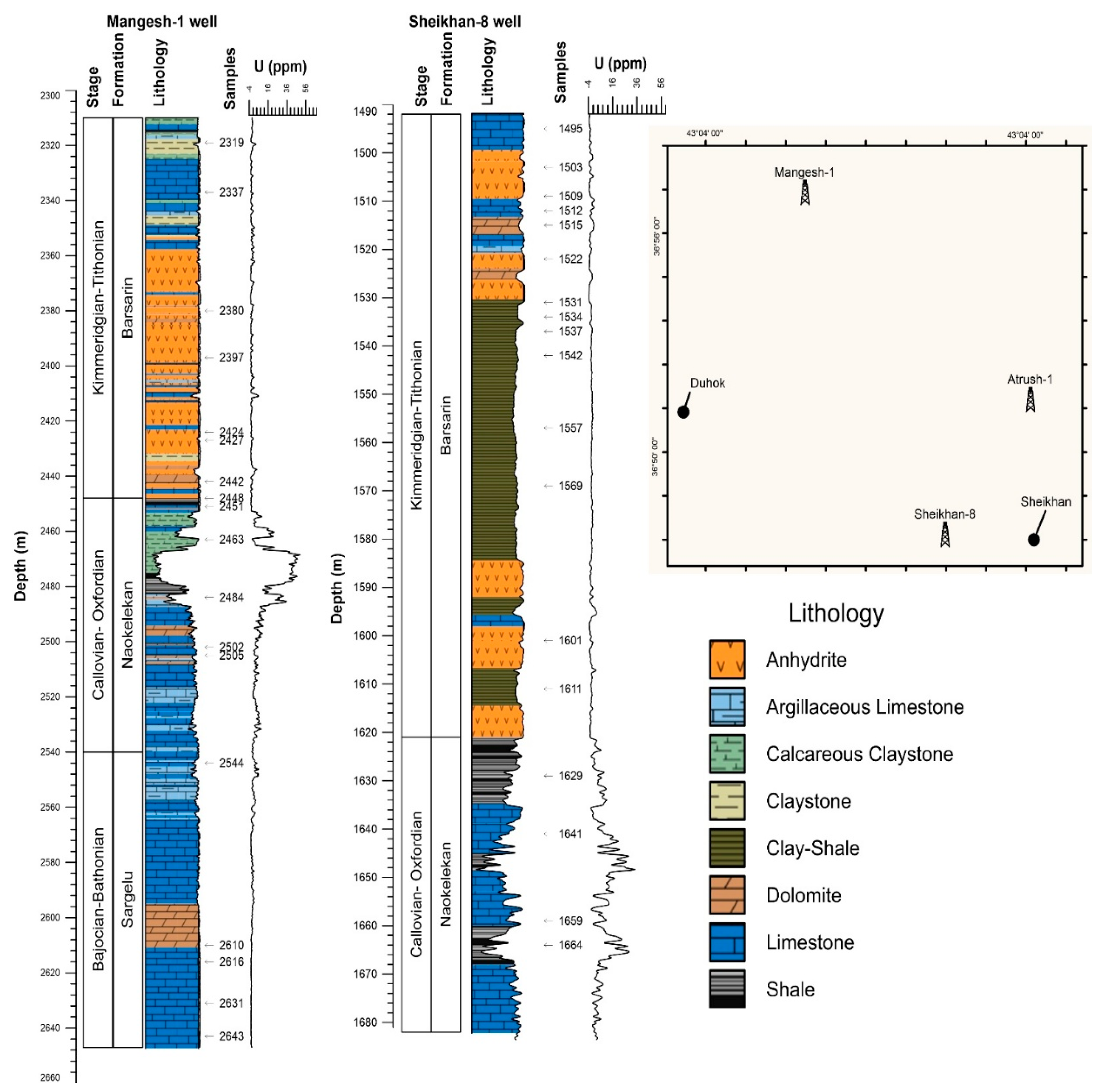
The primary objective of the present study is, therefore, to fill this knowledge gap by comprehensively defining, classifying, and correlating the organic microfacies of the Jurassic successions in northern Iraq (Figure 1). This is achieved through an integrated approach analyzing the detailed organic petrographic and geochemical characteristics of samples collected from two key wells (Mangesh-1 and Sheikhan-8, Figure 1). This study provides new, dedicated organic petrographic evidence from previously recognized source rocks, shedding light on both in situ hydrocarbon generation and the petrographic character of migrated bitumen. This research also aims to reconstruct the paleoenvironmental evolution that governed organic matter accumulation and preservation, utilizing advanced statistical methods such as cluster and principal component analyses (PCA) to model these complex relationships. By understanding the intricate geographical and stratigraphical distribution of these organic microfacies, this research is expected to significantly assist hydrocarbon exploration efforts by providing a refined source rock evaluation approach rooted in detailed organic microfacies classification and its paleoenvironmental context.

2. Geological Framework and Tectonic Evolution of Iraqi Kurdistan

2.1. Structural and Tectonic Framework

Iraqi Kurdistan is positioned on the northeastern boundary of the Arabian Plate, forming part of the Alpine Mountain belt. This belt trends east–west in the north and northwest–southeast in northeastern Iraq [28]. The area encompasses part of the Zagros basin, representing the Zagros fold belt of north Iraq, a narrow zone extending toward the Arabian Gulf. The Taurus–Zagros belt here comprises two main sectors: the Thrust Zone and the Folded Zone [29]. The Thrust Zone lies near the Iraq–Iran border (NE) and outside the Iraq–Turkey border (N) [30]. The Folded Zone is subdivided based on deformation intensity into the highly distorted Imbricated Folded Zone and the Simply Folded Zone. The latter includes the High Folded Zone (asymmetric anticlines, narrow synclines) and the Foothills Zone (smaller anticlines). High Folded Zone anticline cores primarily consist of Jurassic and Cretaceous rocks (mostly limestone), flanked by Tertiary limestones and clastics [28,31,32]. The study area lies within this Zagros fold belt. The Zagros fold belt originated from the Tethys Ocean closure between the Arabian and Eurasian plates [28,33]. Jassim and Goff [28] divided the Iraqi Zagros Orogenic belt into the Stable Shelf, Unstable Shelf, and Suture Zone (Figure 2). Three main orogenic phases affected northern Iraq [34]:
  • Late Cretaceous compression inverted Neo-Tethys rift structures.
  • Eocene–Miocene Arabian–Eurasian collision caused further inversion, folding, and thrusting.
  • Neogene shortening shaped the current fold-and-thrust belt.

2.2. Petroleum System Context and Source Rock Relevance

Most oil discoveries in northern Iraq are sourced from Middle–Upper Jurassic rocks trapped in Cretaceous and Tertiary reservoirs within the Zagros fold belt and Mesopotamian basin [10,18]. Middle–Late Jurassic deposits formed under euxinic conditions are considered key Middle East source rocks [35]. In northeastern Iraq, Jurassic formations often produce gas and contain spore-/pollen-rich sediments [36]. These source rocks reached peak oil generation during the Late Miocene–Pliocene in the Folded Belt Zone [15].
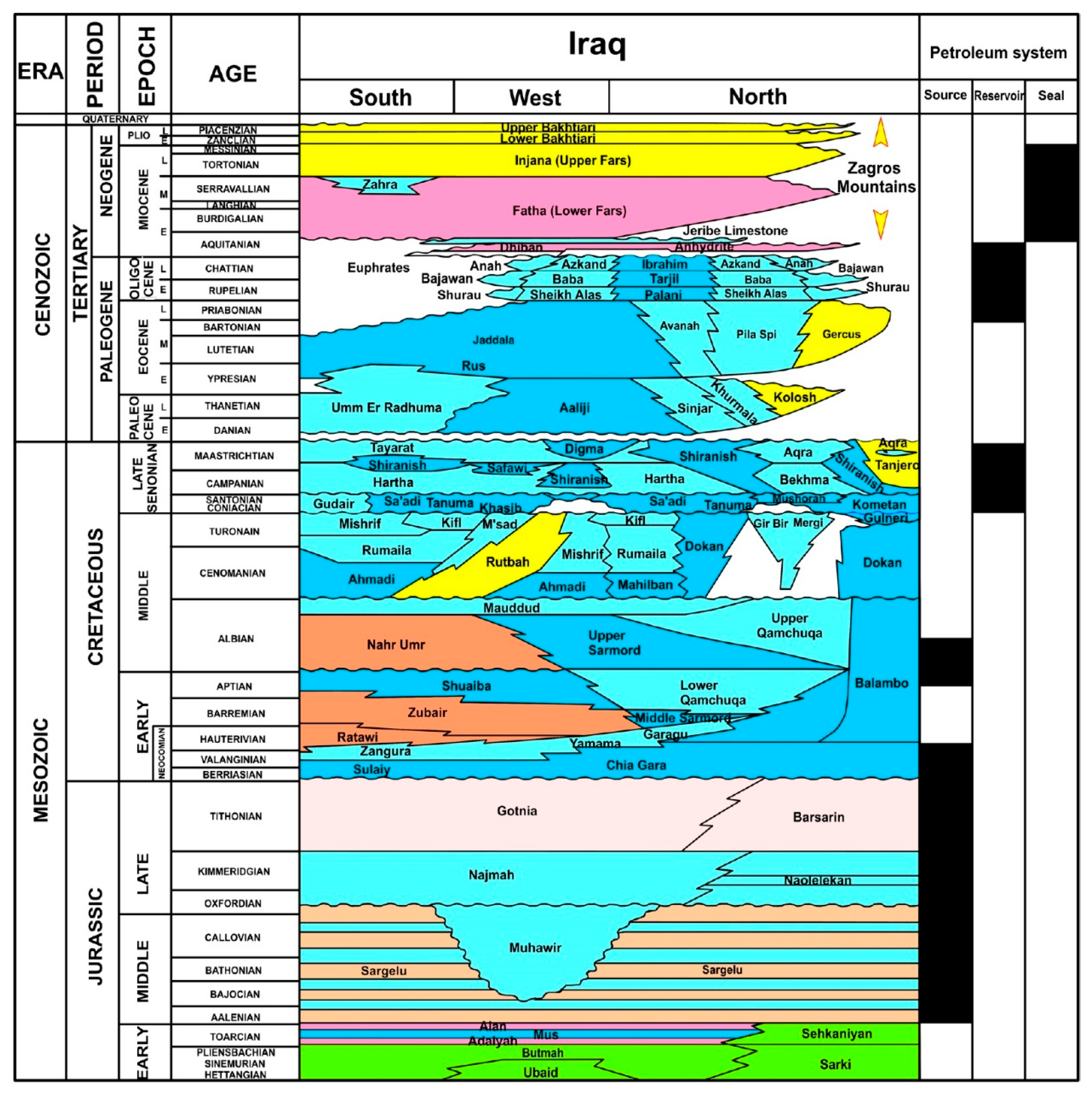
Various stratigraphic intervals in northwestern Iraq are cited as source rocks. Lithological geochemical features and microfacies indicate the following depositional environments for Middle–Late Jurassic formations: Sargelu (deep open marine), Naokelekan (salty swamps/tidal flats/hypersaline lagoons), and Barsarin (shallow open/restricted marine) [37]. These formations (Sargelu, Naokelekan, Barsarin) outcrop in thrust, imbricated, and highly folded zones and constitute the Upper Toarcian–Tithonian interval of Megasequence AP7 [28].

2.3. Stratigraphic Overview of Target Jurassic Formations

During the Jurassic, northern Iraq featured intrashelf basins, geometrically distinct from the main basin physiography, where various formations accumulated [28]. Within the Zagros basin context, this area shows depositional cycles with thickness and lithology variations linked to the broader Arabian basin. Mesozoic deposition here involves deep intrashelf basin marl accumulation flanked by carbonate shelf zones.
  • Sargelu Formation (Bajocian–Bathonian): Type section (Surdash Anticline) 115 m and consists of thin-bedded black bituminous/dolomitic limestone, black shale, and upper chert [17]. Contacts conformable with Sehkaniyan (below) and Naokelekan (above) [28].
  • Naokelekan Formation (Callovian–Upper Oxfordian): Type section is located near Naokelekan Village [17]. It conformably overlies the Sargelu and underlies the Barsarin [32,38,39]. The upper contact is often marked by a detrital, ferruginous horizon [40,41]. Subsurface lithology includes argillaceous limestone, limestone, and calcareous claystone.
  • Barsarin Formation (Kimmeridgian–Oxfordian): Type section is near Barsarin Village (van Bellen et al., 1959 [17]). It comprises limestone with laminated dolomitic limestone, argillaceous, brecciated beds. It conformably overlies the Naokelekan (often with detrital horizon) and underlies Chia Gara [17,40,41].

3. Material and Methods

3.1. Sampling and Sample Preparation Procedures

Thirty-five drill cutting samples were collected from two wells: Mangesh-1 (18 samples covering a 332 m interval, 36°59′35.17″ N, 43°10′15.22″ E) and Sheikhan-8 (17 samples covering a 181 m interval, 36°46′13.04″ N, 43°21′00.04″ E) (Figure 1). The samples were specifically collected to cover the Jurassic rock units of interest: the lowermost Sargelu Formation, Naokelekan Formation, and Barsarin Formation. The sampling strategy aimed to comprehensively cover most of the rock lithologies and stratigraphic variability, thereby ensuring the exploration of the maximum possible organic microfacies types and organic matter modes of occurrence. A proportion of the same samples was sent for analysis. The total organic carbon (TOC), Rock-Eval pyrolysis, and molecular analyses were performed at StratoChem Laboratories, Cairo, Egypt. The petrographic analysis was conducted at the Egyptian Petroleum Research Institute (EPRI), Cairo, Egypt.

3.2. Organic Petrography

The thirty-five drill cutting samples were collected from the Mangesh-1 and Sheikhan-8 wells and prepared following the procedures outlined in ASTM D2797 [42]. The samples were thoroughly washed with distilled water to remove drilling mud and contaminants. Representative rock fragments were then selected from each sample and placed in plastic molds (diameter = 4 cm) for embedding in an epoxy resin binder mixture. After curing, the hardened sample briquettes were sequentially ground and polished to a 0.25 μm finish. The polished samples were then cleaned and examined using Leica stereomicroscope M205 C (Leica, Wetzlar, Germany) under magnifications from 1–10× and photomicrographed in normal white light to obtain an overview of rock composition and structure. The samples were investigated by a Leica DM4 microscopic system equipped for reflected light microscopy to determine detailed petrographic composition. Petrographic observations were conducted under both incident white light (IWL) and incident blue light (IBL) at various magnifications (e.g., 250×, 500×). Maceral identification adhered to international standards: total maceral composition was determined following ASTM D2799 [43] and ASTM D7708-23 [44]. The nomenclature for individual maceral groups, including vitrinite [45], inertinite [46], and liptinite [47], strictly followed the guidelines of the International Committee for Coal and Organic Petrology (ICCP).
The relative abundance of individual maceral groups (vitrinite, inertinite, liptinite), as well as specific organic constituents such as bituminite and solid bitumen, was assessed semi-quantitatively based on visual estimation of their volumetric proportion within the organic matter present [20,43,48]. A three-tiered scale was consistently utilized for this estimation: Rare (1) indicates <5% of the total organic matter, Common (2) 5%–10% of the total organic matter, and Abundant (3) >10% of the total organic matter.
In addition to maceral composition, other critical organic petrographic characteristics were also assessed using a similar semi-quantitative scale to capture their relative presence and intensity throughout the rock fabric: rock lamination was (1) faint, (2) moderate, or (3) strong; solid bitumen in pores and fissures was (1) minor, (2) common, or (3) abundant; sulfide minerals (e.g., pyrite) were (1) rare, (2) common, or (3) abundant; and fluorescent solid bitumen was (1) rare, (2) common, or (3) abundant.
Following the acquisition of organic petrographic data, a multivariate statistical approach was employed to objectively classify the samples into distinct organic microfacies. Cluster analysis, specifically utilizing Ward’s method [49], was applied to the semi-quantitative petrographic dataset to identify natural groupings among the samples. The resulting dendrogram from this hierarchical clustering analysis provided a visual representation of sample similarities, allowing for the identification of robust clusters that formed the basis for the classification of the organic microfacies (i.e., organic microfacies A, B, C, etc.). Once these organic microfacies were established, principal component analysis (PCA) was then performed on the samples, now categorized by their respective microfacies, to study their distribution and to develop the interpretive paleoenvironmental model. PCA helped to identify the main factors controlling the variability among these classified microfacies and their associated petrographic characteristics, thus revealing the key paleoenvironmental gradients (e.g., terrigenous input, redox conditions, marine productivity) that governed organic matter accumulation and preservation. This integrated statistical approach ensured an objective classification followed by a robust understanding of the paleoenvironmental controls.

3.3. Screening Organic Geochemical Analysis

The organic geochemical analysis was conducted to measure the organic matter quantity and quality [50] of nineteen samples. The LECO C230 was used to obtain the total organic carbon weight percentage (TOC wt%). Total organic carbon (TOC) represents the measure of carbon bound within organic compounds found in geological samples such as rock or sediment. Initial sample preparation involves rigorous washing and dissolution steps designed to remove external contaminants like oily drilling mud. Once cleaned, the samples are ready for both TOC quantification and pyrolysis analysis. A prevalent method for quantifying TOC is through direct combustion [51].
To identify kerogen types (organic matter quality), pyrolysis is widely regarded as one of the most valuable analytical tools [52]. The Rock-Eval 6 instrument facilitates progressively heating a rock sample from 300 °C up to 650 °C at a rate of 25 °C per minute and measuring the volume of hydrocarbons emitted as the temperature climbs. The Rock-Eval procedure utilizes this programmed heating sequence to estimate the hydrocarbon generation potential (GP) of the analyzed rock. Liberated hydrocarbons are detected using a Flame Ionization Detector (FID). This detection process distinguishes between two key hydrocarbon yields: the S1 peak, signifying the amount of pre-existing volatile hydrocarbons released without kerogen decomposition (measured in mg HC/g of rock), and the S2 peak, indicating the hydrocarbons produced directly from the thermal breakdown of the kerogen (expressed in mg HC/g of rock). The temperature corresponding to the maximum hydrocarbon generation rate during the S2 phase of pyrolysis is recorded as Tmax (°C) and functions as a gauge of kerogen’s thermal maturation. Simultaneously, the carbon dioxide (CO2) evolved during the pyrolysis process is measured by an infrared (IR) cell, providing the S3 value in mgCO2/g of rock. The S3 measurement offers clues about the kerogen’s oxidation level.
Further useful parameters can be calculated by combining the S1, S2, S3, and total organic carbon (TOC) values (e.g., hydrogen index (HI), mg HC/g TOC; oxygen index (OI), mg CO2/g TOC; production index (PI); and generation potential (GP)) [52,53]. For this study, kerogen classification relied on data generated by Rock-Eval 6 pyrolysis [54,55]. The determination of kerogen types involved plotting the hydrogen index (HI) against the oxygen index (OI) on a modified Van Krevelen diagram [56], along with analyzing plots of HI versus Tmax. Tmax can also be used to calculate vitrinite reflectance (Ro), mathematically expressed as Ro% = (0.018 × Tmax) − 7.16 [57].

3.4. Molecular Organic Geochemical Analysis

The molecular analysis was conducted on the bitumen extract from seven samples in the studied wells using Gas Chromatography (GC) (Agilent 6890 GC Dual Detector System, Agilent Technologies, Santa Clara, CA, USA) and Gas Chromatography–Mass Spectroscopy (GC-MS) (Agilent 7890A GC, equipped with a split injector and coupled to a 5975 °C mass spectrometer). Extraction involves separating adsorbed substances from a rock matrix through repeated flushing with a suitable solvent, often in a continuous process. In this specific case, bitumen was extracted from sedimentary rocks utilizing Soxhlet extraction with dichloromethane (DCM) over approximately 72 h. DCM was chosen as the solvent due to its polar nature and high efficacy in recovering bitumen and dissolving various oil types. Subsequently, the total extracted organic matter underwent separation into distinct hydrocarbon fractions—saturated, aromatic, asphaltene, and NSO (nitrogen-, sulfur-, and oxygen-containing compounds, also known as resins)—using column chromatography packed with silica gel. This fractionation was performed to facilitate molecular analysis. Following this separation, GC was employed to analyze ten samples of extracted bitumen. GC is a chromatographic method used for separating the volatile constituents found in various mixtures. In this technique, an inert gas, such as helium, serves as the mobile phase, which carries the sample through a column. Inside the column, a stationary phase, consisting of a thin layer of liquid or polymer coated on an inert solid support within a tube (either metal or glass), interacts with the sample components [57]. This approach is considered a highly effective separation technique well suited for quantitatively determining the amount of each compound present.
GC-MS was performed on the C15+ branched/cyclic and aromatic hydrocarbon fractions to determine the distribution of sterane and terpane biomarkers. A consistent flow rate of helium was maintained throughout the analysis. A J&W DB5 column was used, and the temperature was progressively increased. For the aromatic compounds, the temperature rose from 100 °C to 325 °C at a rate of 3 °C per minute, while for the branched/cyclic compounds, it increased from 150 °C to 325 °C at 2 °C per minute.

4. Results

4.1. Lithological Characteristics and Electric Well Log Response

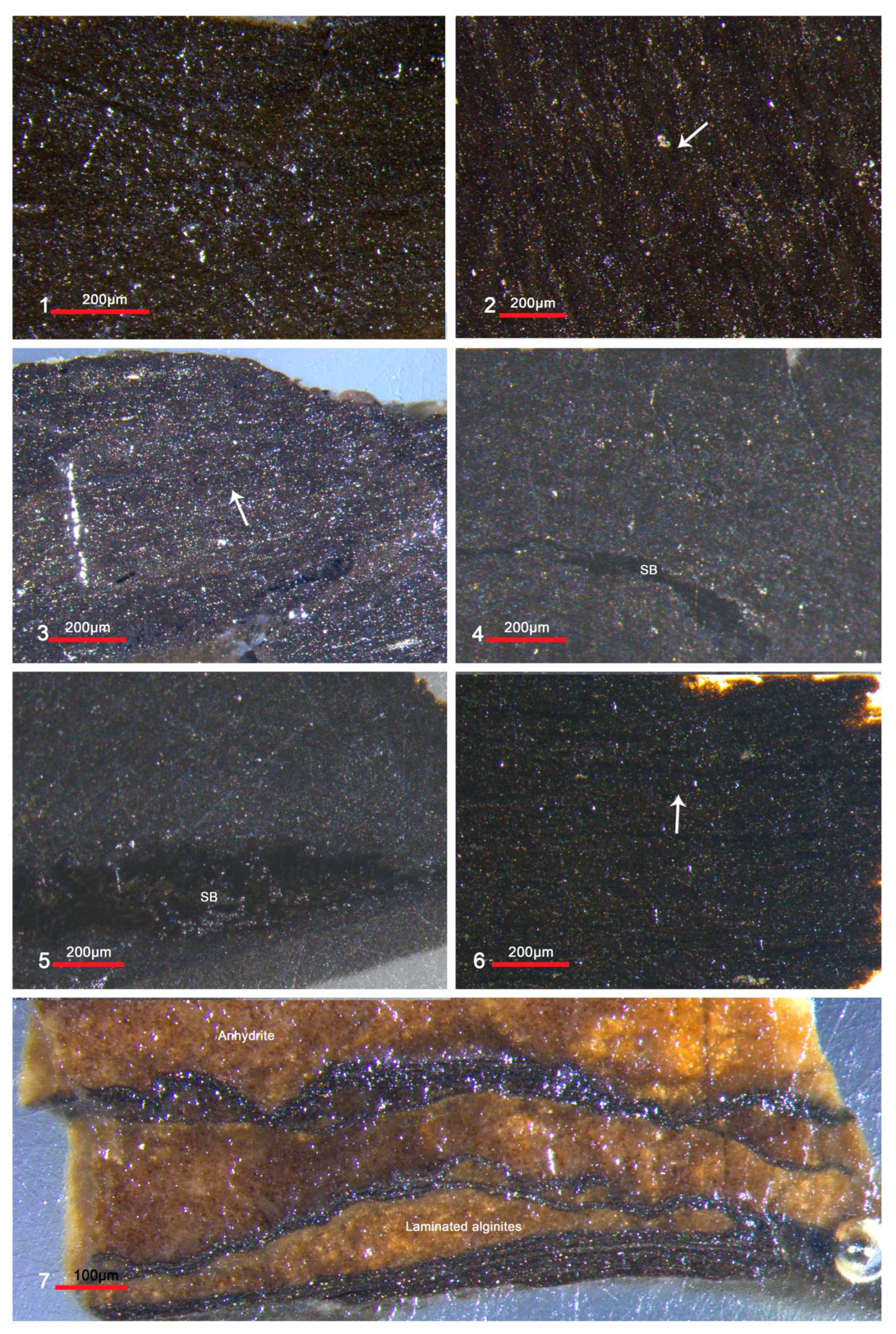
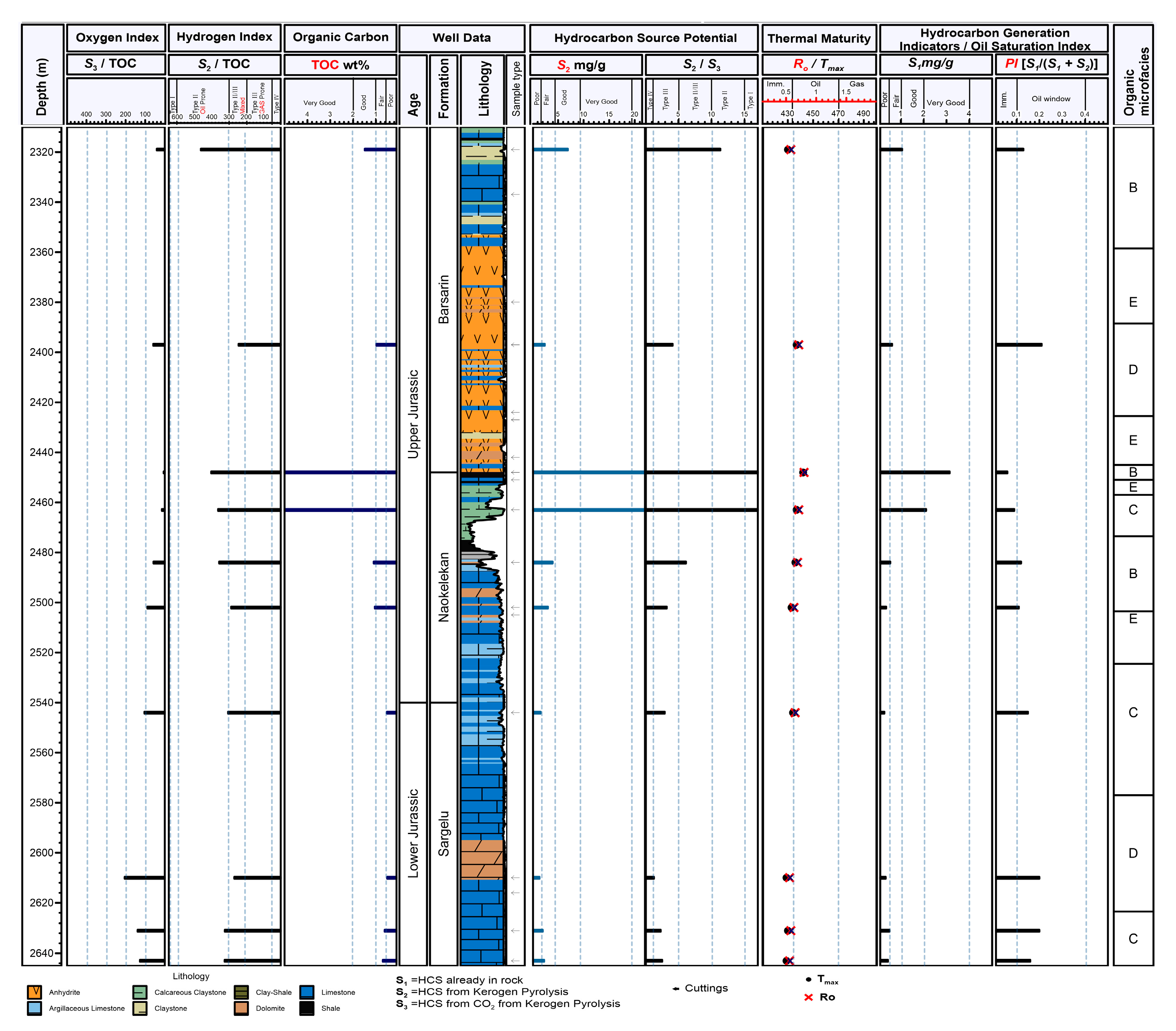
A lateral continuity of lithological characteristics was observed among the studied wells (Figure 3). Analysis of sample cuttings and electric well logs revealed the composition of three rock units: the lowermost Sargelu and Naokelekan formations and the uppermost Barsarin Formation (Figure 4, Figure 5, Figure 6, Figure 7, Figure 8 and Figure 9). The Sargelu Formation was encountered in Mangesh-1 (2647–2540 m, 107 m thick) (Figure 3). The lithological composition is predominantly carbonate (limestone and dolomite). These thick limestone and dolomite beds exhibit low gamma ray relief in the electric well logs (Figure 3). The uranium (U) content log for these units shows medium values (up to 15 ppm) (Figure 3). The carbonate rocks in samples at depths of 2544 m, 2631 m, and 2643 m are dark gray in color and moderately laminated (Figure 4(1)). The carbonate rocks from 2610 m and 2616 m have a bright white color and a more transparent nature where disseminated organic matter is observed in the rocks (Figure 4(6)).
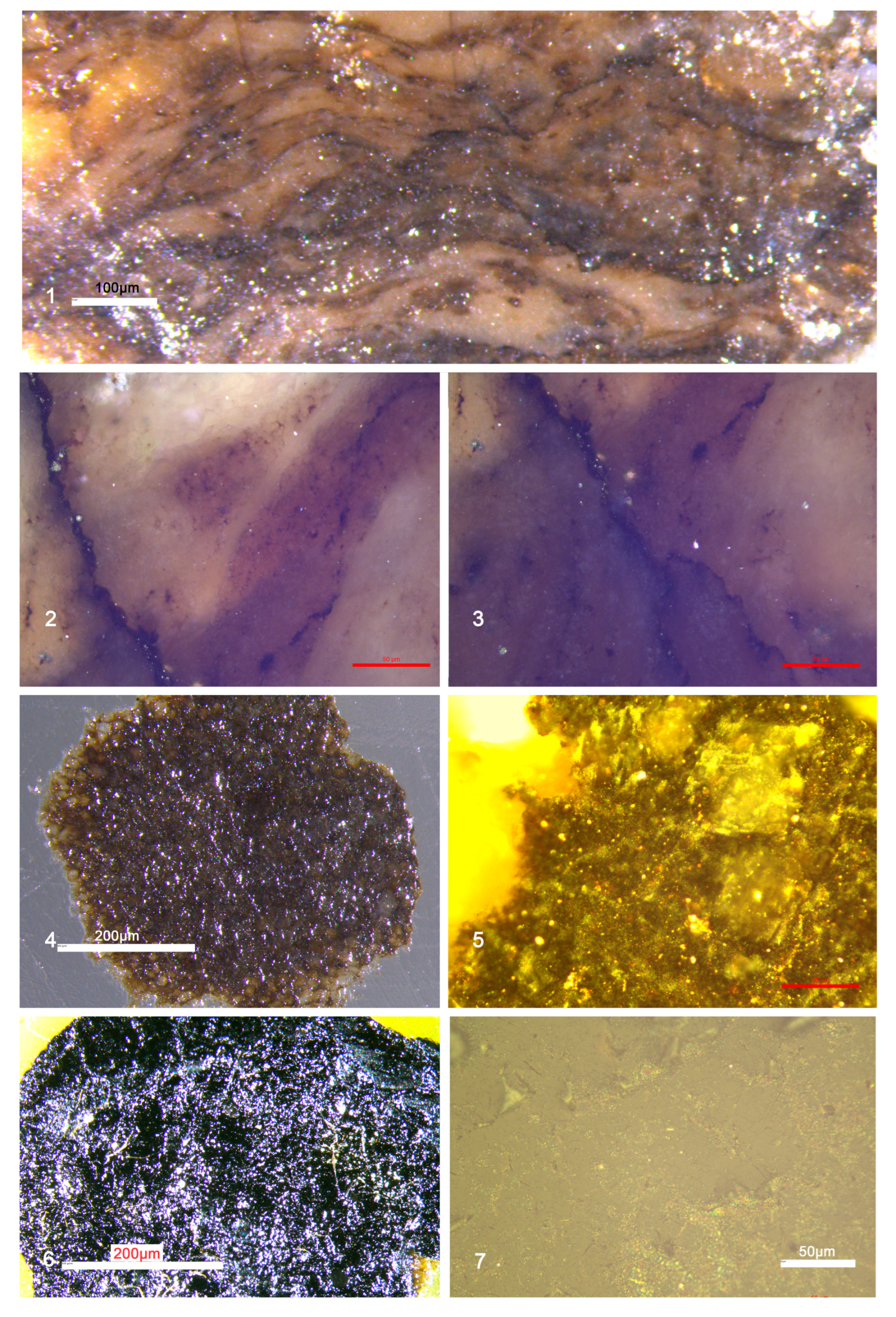
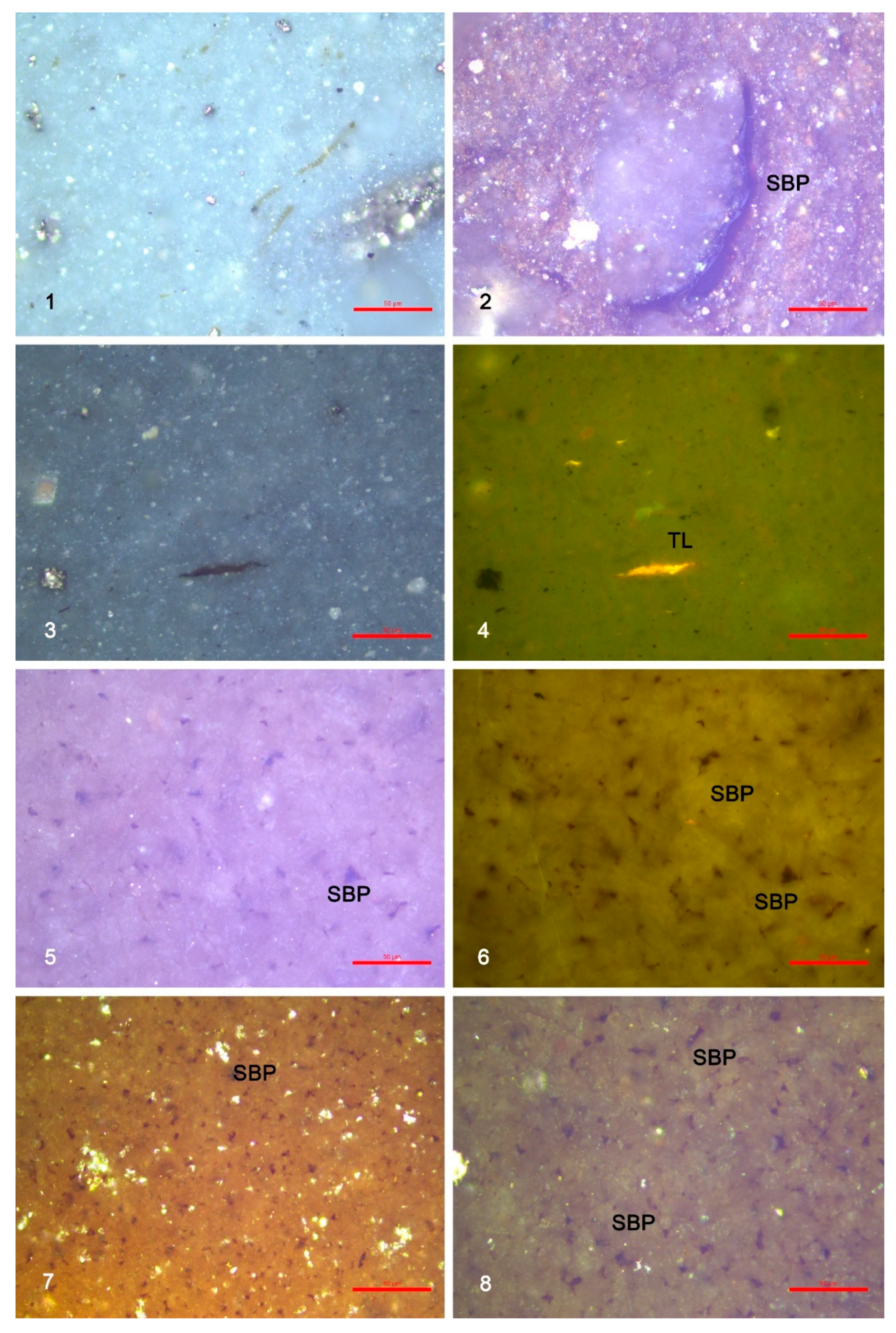
In Mangesh-1 well, the limestone beds are intercalated with argillaceous limestone, a characteristic that continues into the lower part of the Naokelekan Formation (2540–2448 m, 92 m thick) before being replaced by calcareous claystone and dark shale in the upper part. The dark shale frequency increases in the formation’s middle part. The dark gray shale is thinly laminated with abundant sulfide minerals (Figure 5(1–3)). The carbonate rocks from Mangesh-1 well that carry bitumen were observed in different forms (Figure 6(1–4,6)).
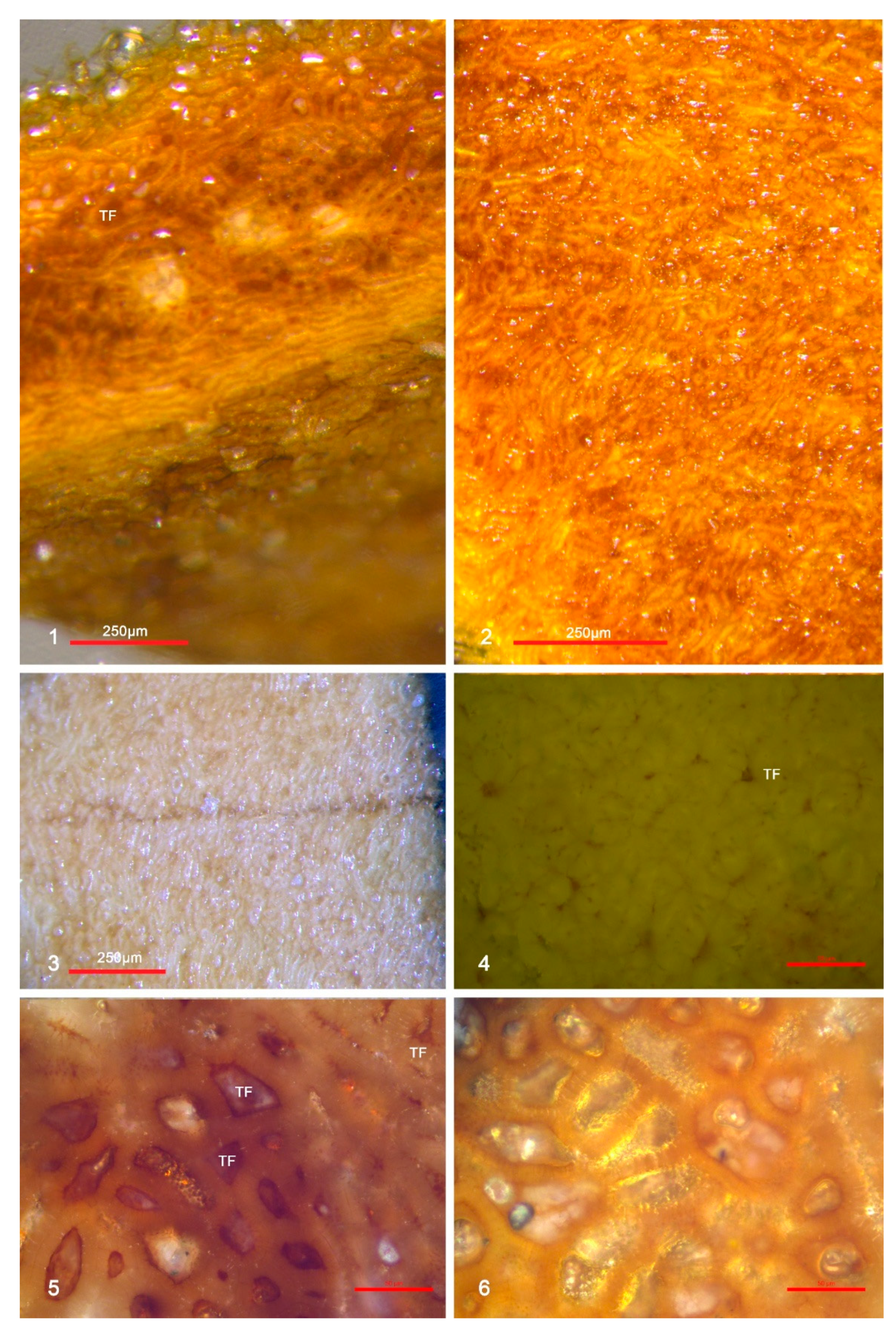
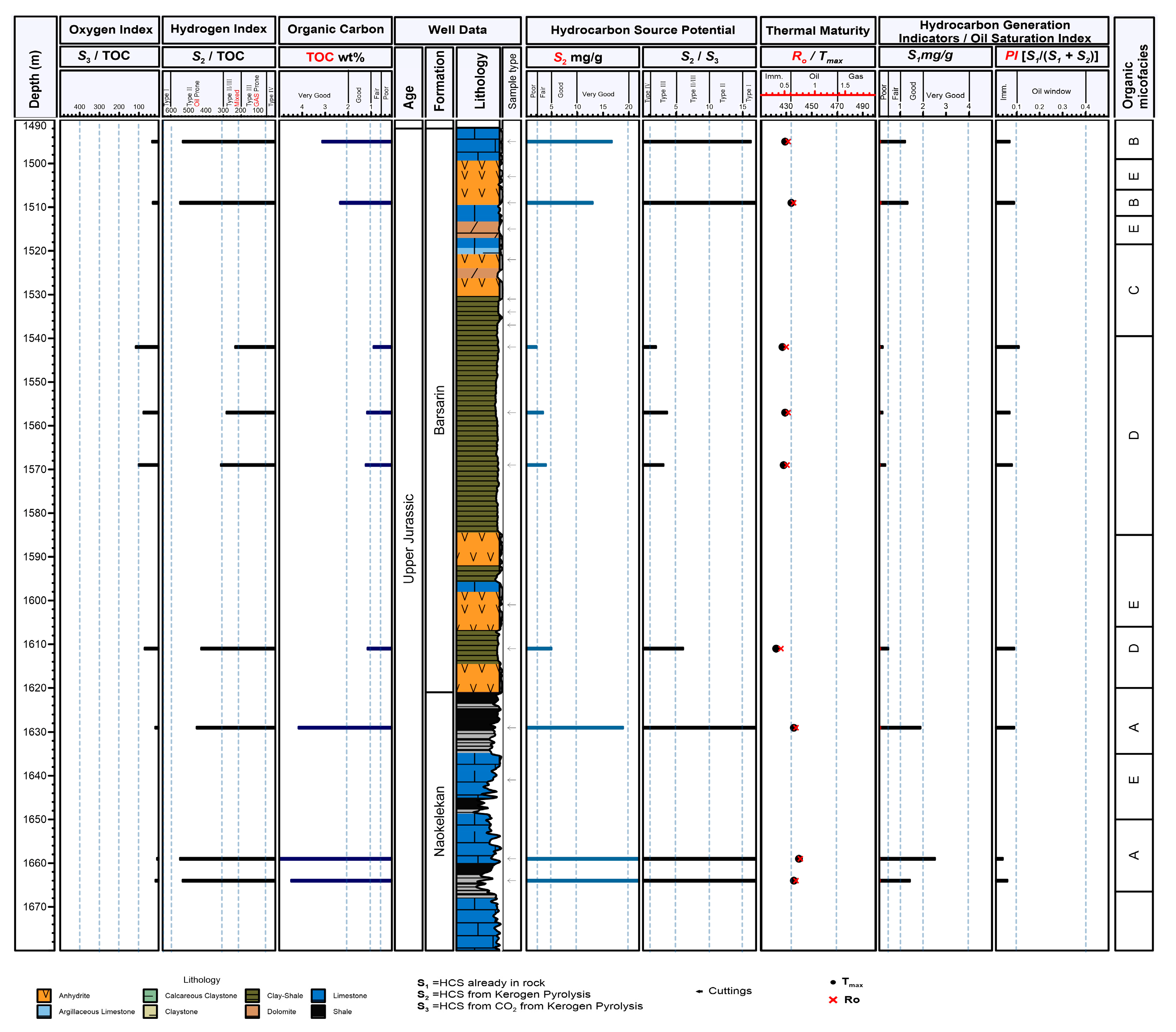
In Sheikhan-8 well, the Naokelekan Formation (1682–1621 m, 61 m thick) features dark shale beds intercalated with thick limestone beds (Figure 3). Calcareous dark shales are characterized by maximum uranium (U) content (up to 60 ppm) and high gamma ray relief, as indicated by the electric log (Figure 3). The peak U abundance is consistent across all studied well sections, serving as a reliable correlation marker. The calcareous shales have a dark gray color and are thinly laminated with bands of black solid bitumen (Figure 5(4,5)). The Naokelekan Formation in Sheikhan-8 well (sample at 1641 m) is also distinguished by occurrences of colonial, non-septate, and interlocked chaetetids. Chaetetids are a type of Demospongiae (Phylum Porifera) known to be reef-building stromatoporoids [58,59]. The specimens have light orange to brown colors and a porous texture (Figure 7(1–3)).
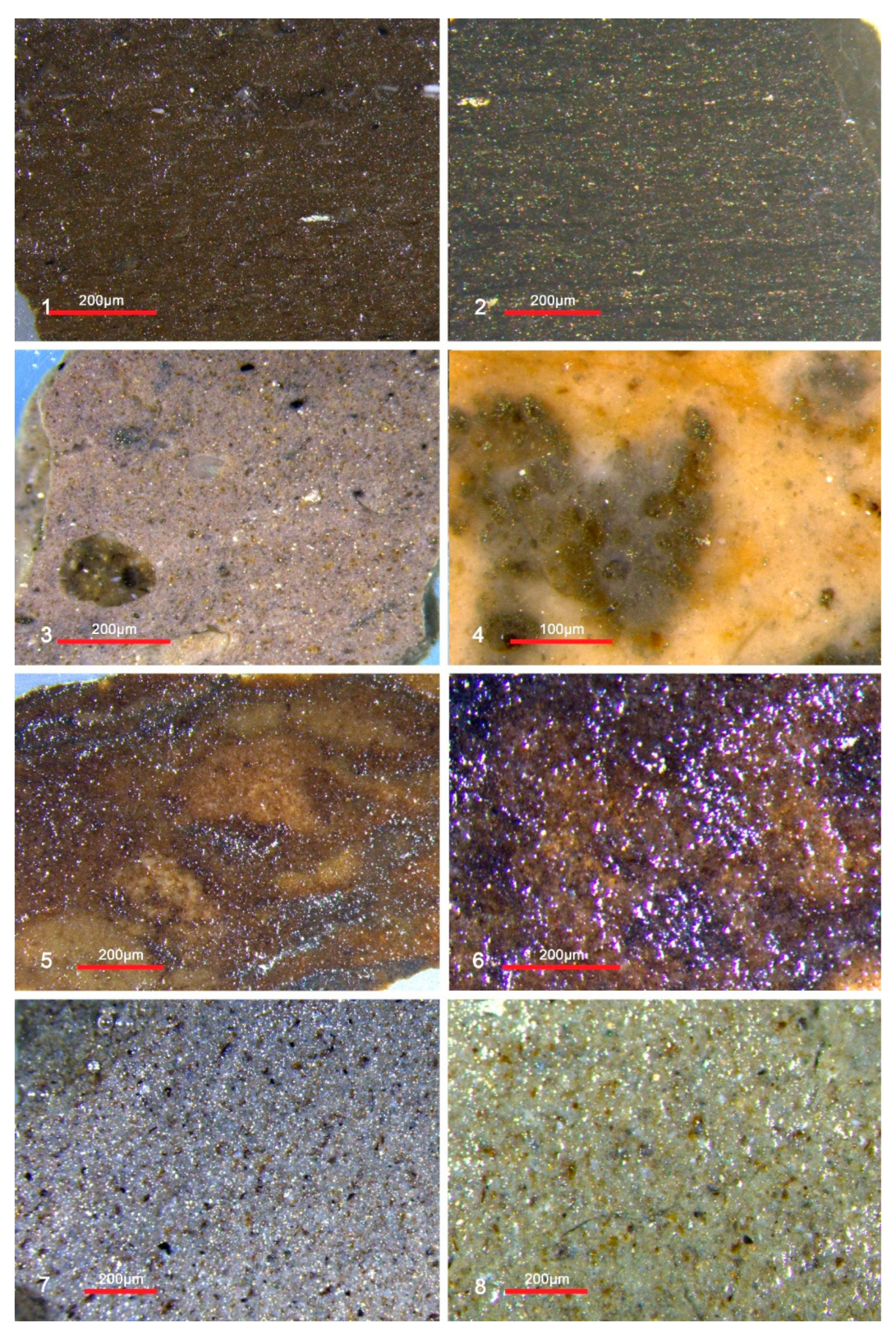
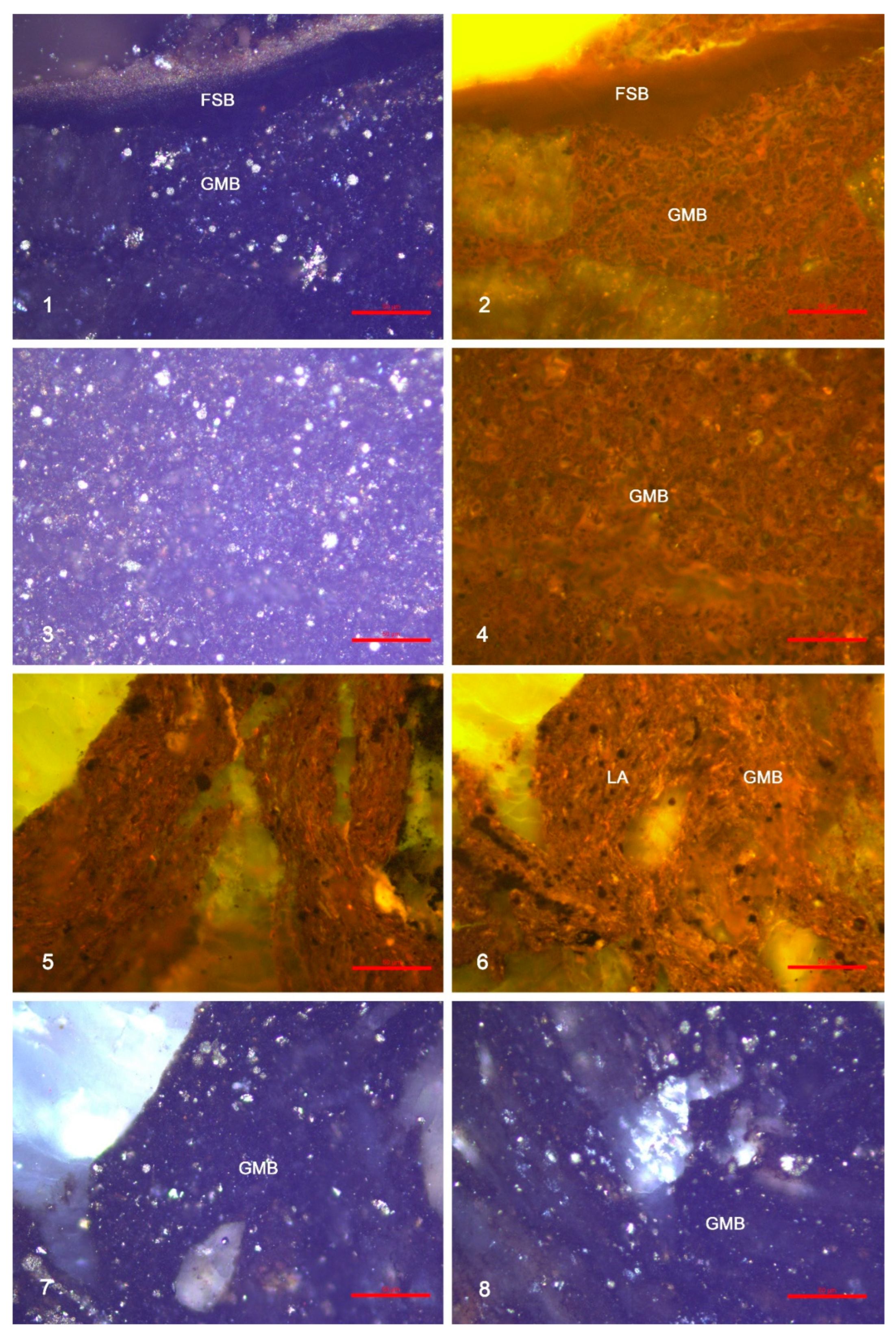
The Barsarin Formation is characterized by an evaporite composition in both wells. In Mangesh-1 well, this formation (2448–2310 m, 138 m thick) comprises lower, thick anhydrite beds intercalated with minor carbonate beds (Figure 3). The carbonate beds become dominant in the upper part, alongside minor claystones. The anhydrite rocks are white, fossiliferous (Figure 8(3)), and have a brown color and a homogeneous texture (Figure 8(5,6)). The intercalated shale has a light gray color and a massive texture (Figure 8(7)).
In Sheikhan-8 well, thick clay shale beds replace the carbonate rocks previously intercalated with anhydrite within this formation (1621–1492 m, 129 m thick) (Figure 3). The Barsarin Formation consistently exhibits low gamma ray log relief and low uranium (U) content (Figure 3). The U content remains relatively constant within the carbonate-rich rocks of the Mangesh-1 (>3 ppm) and Sheikhan-8 (>5 ppm) wells. Notably, both the anhydrite and shale rocks also display low U content (typically >5 ppm) (Figure 3). The shales have a black color, thin lamination, and sulfide minerals (Figure 5(6)). The same shales intercalate in thin lamination with anhydrite rocks (Figure 5(7)). The carbonate rocks are dark gray to black in color and thinly laminated (Figure 7(1,2)). The anhydrite is distinguished by its light gray color and massive to fossiliferous texture (Figure 8(4)). The light gray color shales that are intercalated with anhydrite are light in color and massive in texture, similar to those that occur in Mangesh-1 well (Figure 8(8)).

4.2. Organic Microfacies Classification and Distribution Model

4.2.1. Organic Microfacies Classification

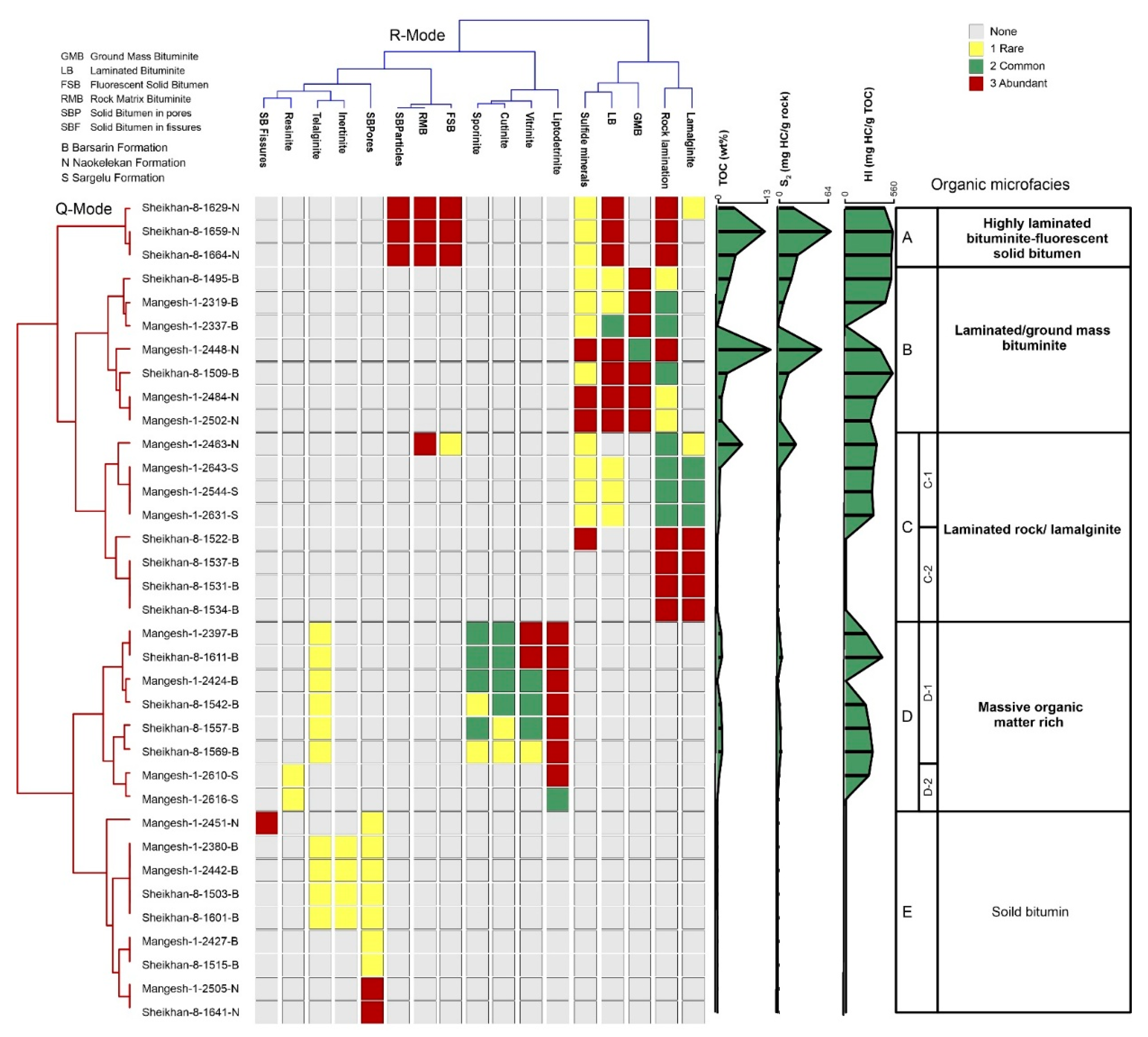
The classification of the organic microfacies was achieved through cluster analysis based on semi-quantitative descriptions [49]. Two dendrograms were produced during the analysis: R-mode for the variables of the semi-quantitative descriptions, and Q-mode for the samples (Figure 9). The distinct organic microfacies were identified according to the clusters of the Q-mode dendrogram and named based on their dominant petrographic features observed in the semi-quantitative analysis (Table 1).
Highly Laminated Bituminite–Fluorescent Solid Bitumen Organic Microfacies (A): This cluster comprises dark shale samples from the Naokelekan Formation in Sheikhan-8 well, specifically from 1621 m to 1682 m (three samples: 1629 m, 1659 m, 1664 m) (Table 1, Figure 3 and Figure 9).
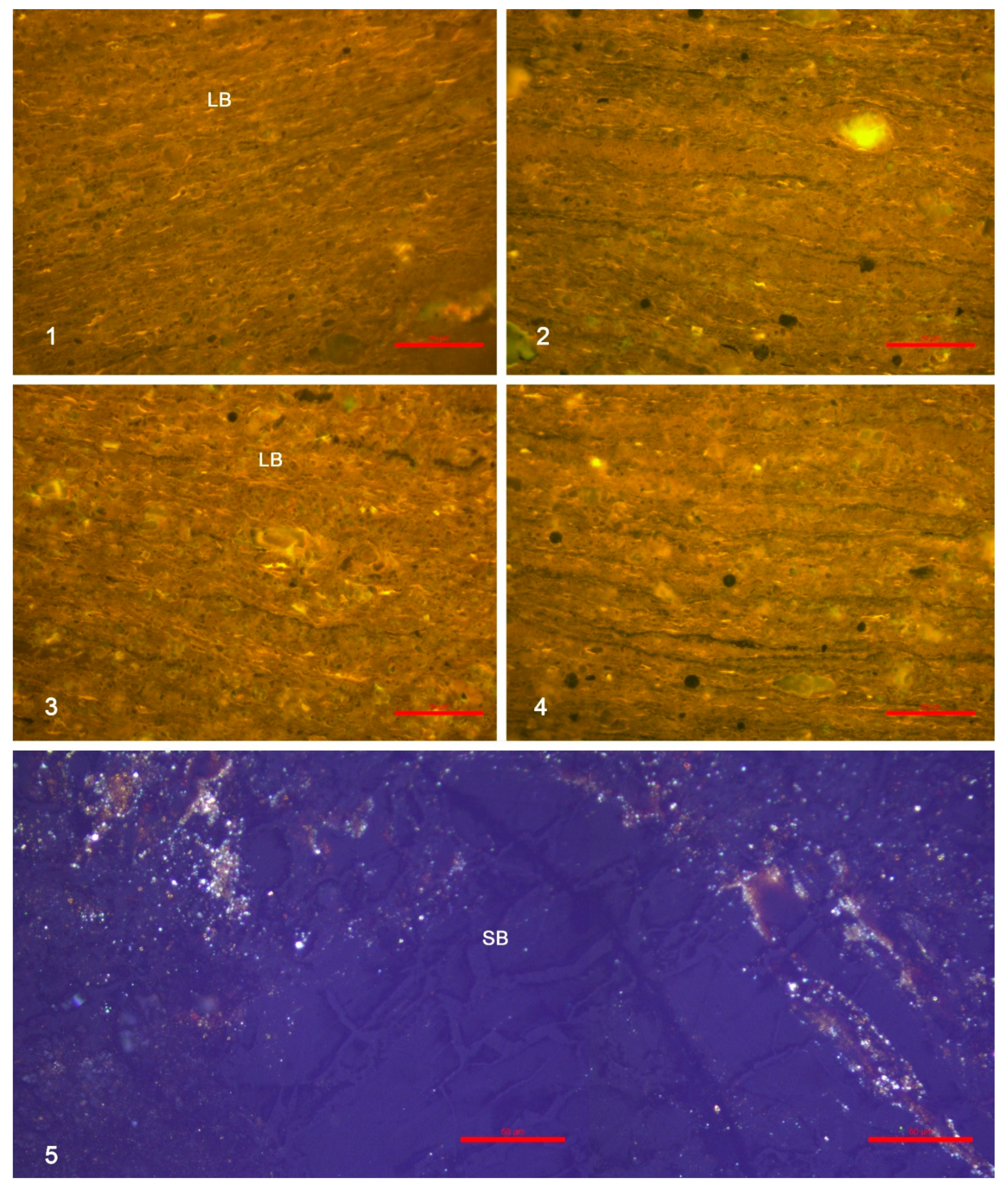
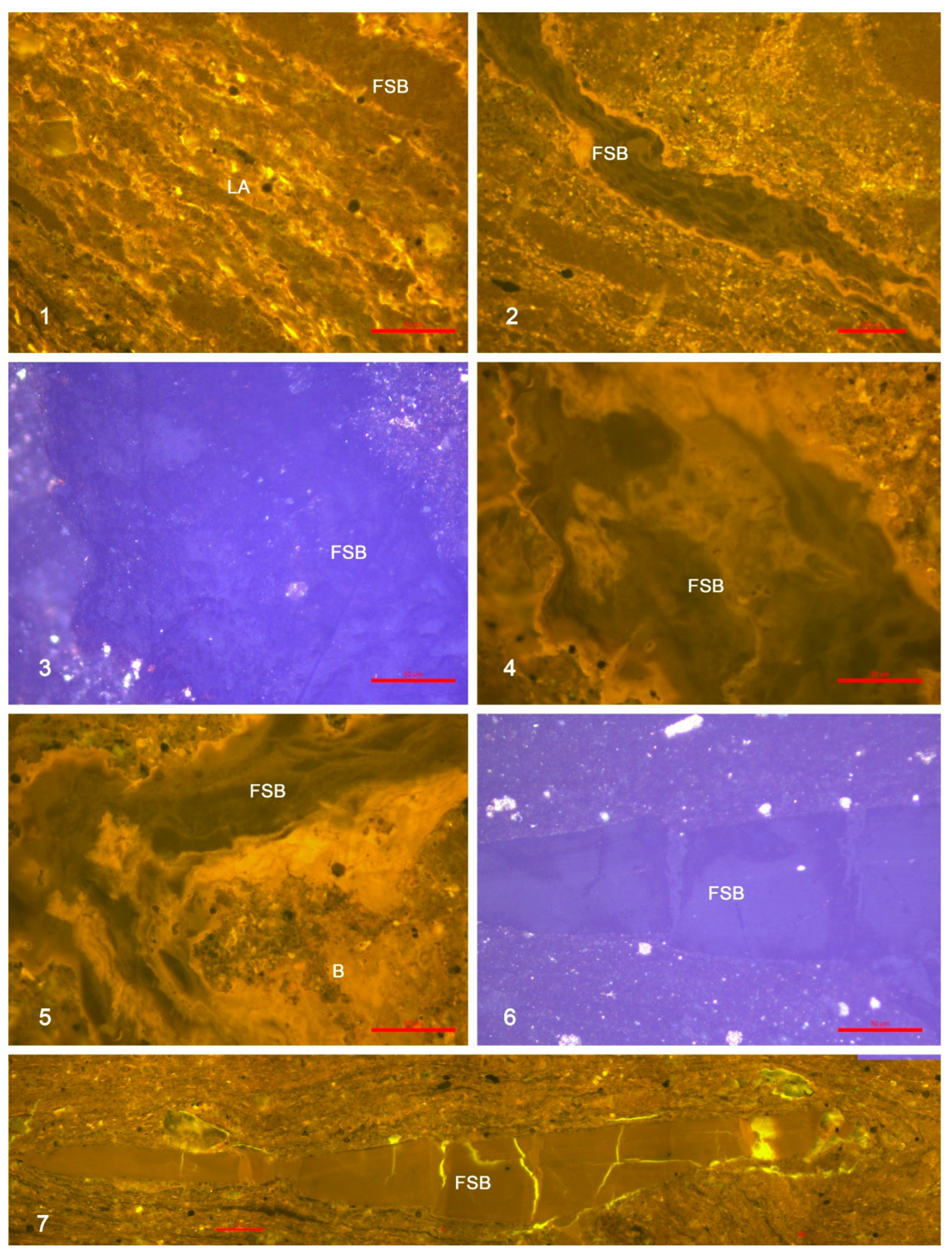
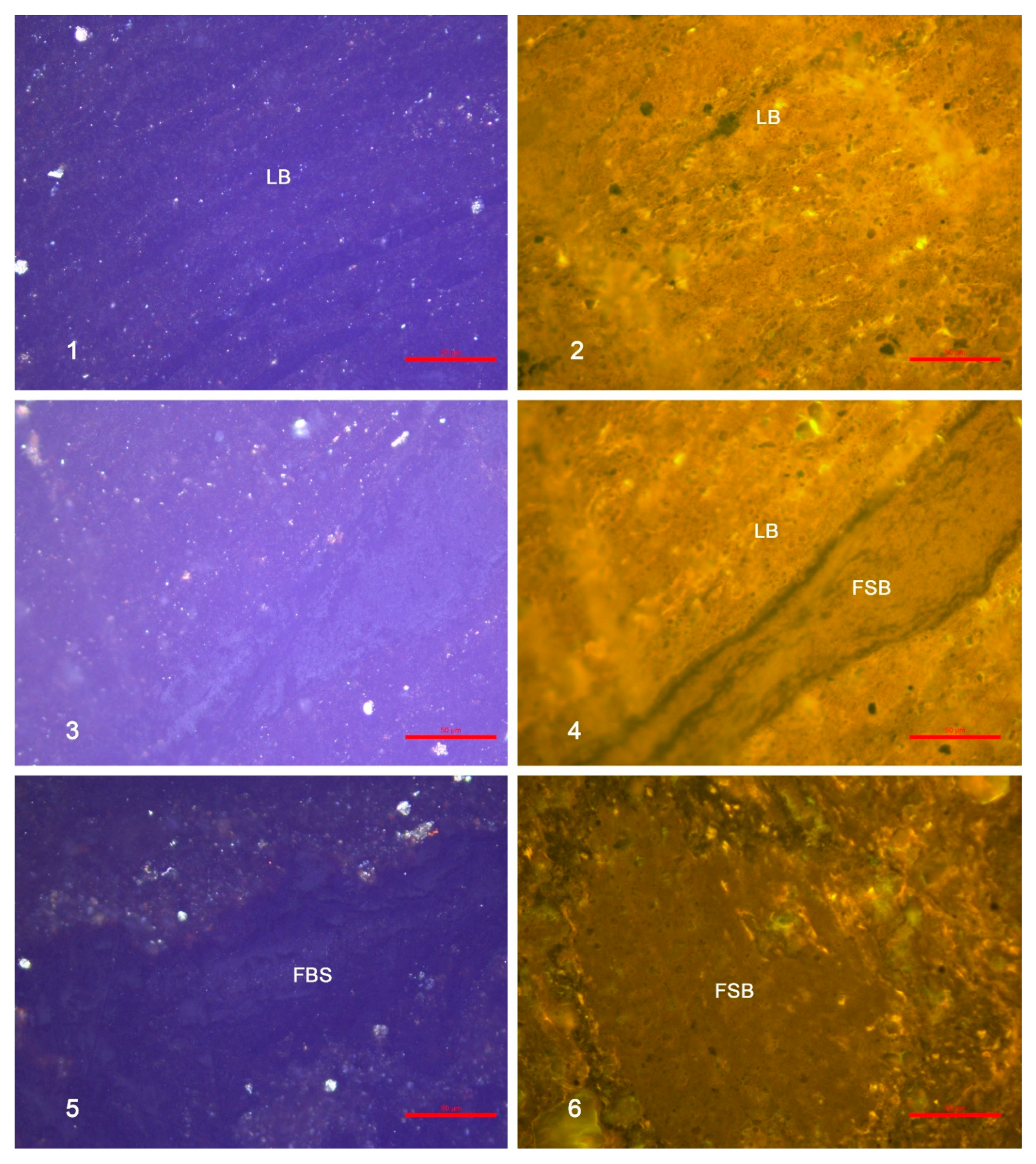
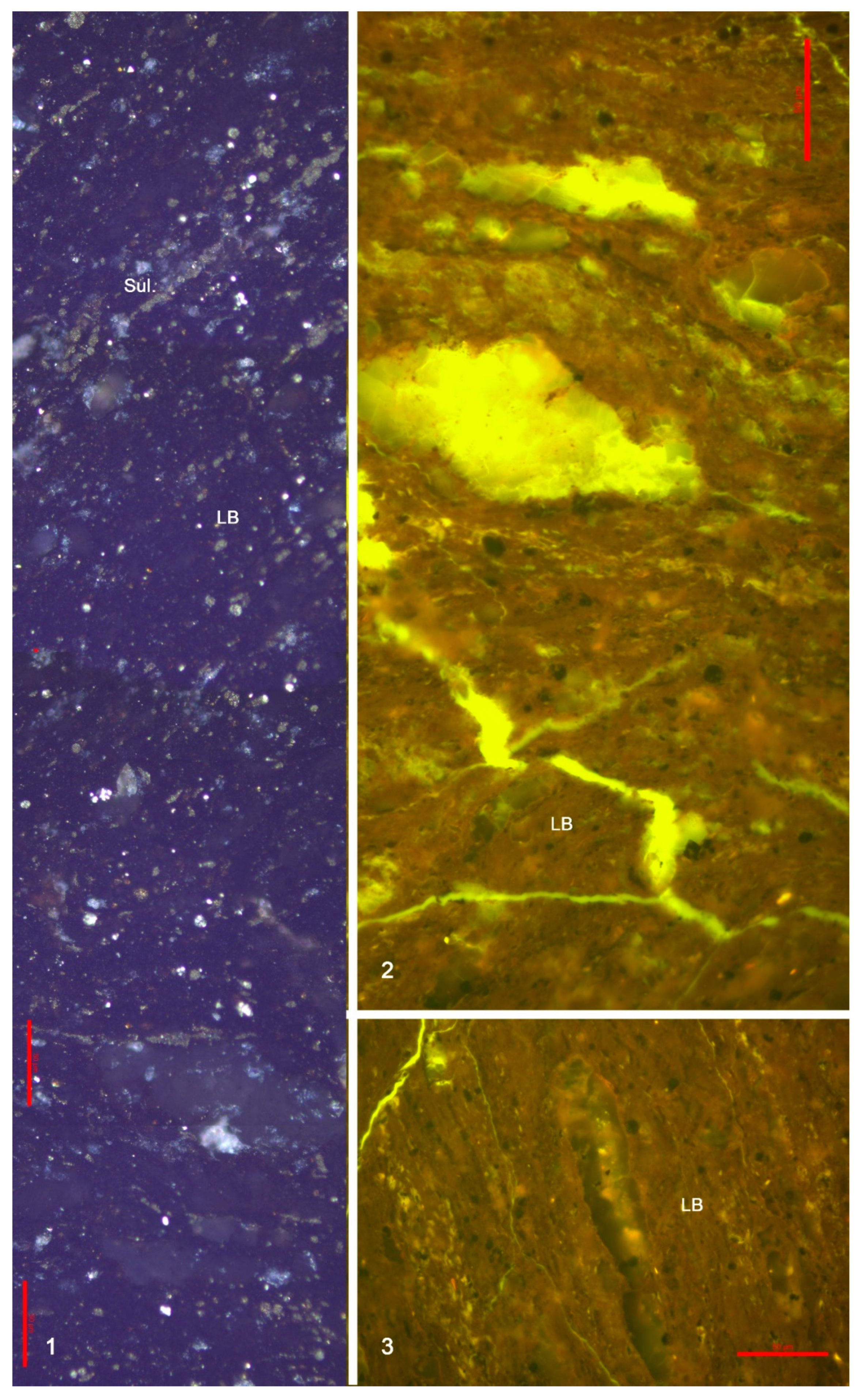
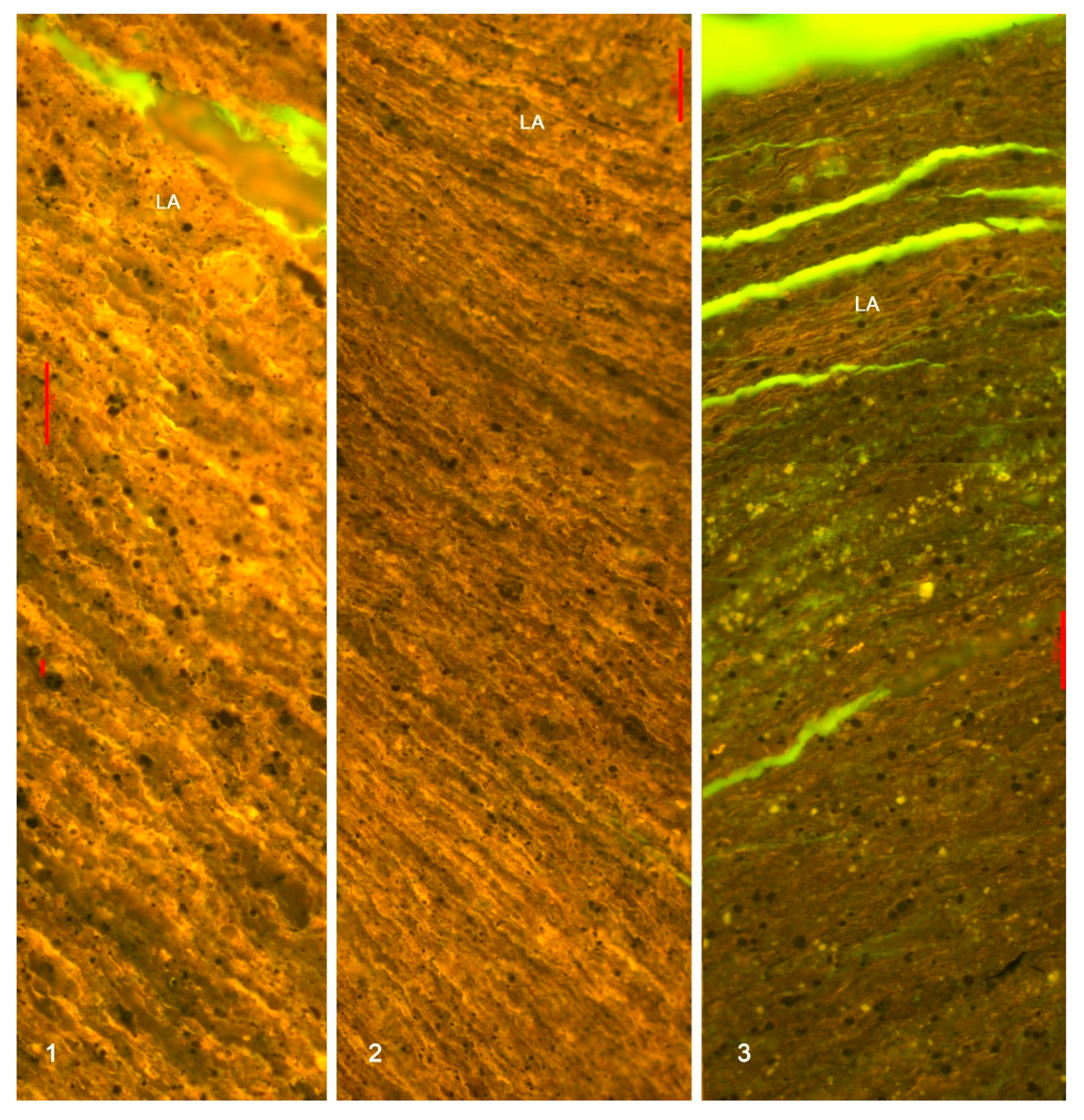
The organic matter in these microfacies is composed predominantly of abundant bituminite, occurring in thin laminae with high rock lamination and the presence of abundant fluorescent solid bitumen. In samples collected at depths of 1629 m and 1664 m (Table 1, Figure 9), the bituminite is highly differentiated into a thinly laminated rock matrix (Figure 5(4), Figure 10(1–5), and Figure 11(1–7)). These bituminite laminae exhibit a high frequency of repetition (up to 15 per 50 μm length) and demonstrate continuous lateral and vertical distribution within the rock matrix (Figure 10(1–5) and Figure 11(1–7)). Sulfide minerals are common, occurring primarily as framboids (Figure 10(1–5) and Figure 11(1–7)). In the 1664 m sample, alginite is mixed within the bituminite laminae (Figure 5(7) and Figure 11(1–7)). Solid bitumen (wurtzilite) is common in these organic microfacies, appearing as layers parallel to the bituminite laminae or as large stains and lenses within the rock matrix (Figure 10(1–5)). The remaining sample from 1659 m (Table 1) represents the peak abundance of thinly laminated bituminite, which grades into and alternates with alginite (Figure 12(1–6)). Primary bitumen (wurtzilite) becomes common and abundant as distinct layers and lenses, characterized by weak fluorescence in incident blue light (IBL) and a dark color in incident white light (IWL) (Figure 12(1–6)).
Laminated/Groundmass Bituminite (B): This organic microfacies includes samples from carbonate rocks within the dark shale beds from the Naokelekan Formation in Mangesh-1 well (three samples: 2448 m, 2484 m, and 2502 m) (Table 1, Figure 9). It also encompasses the Barsarin Formation (Mangesh-1 well: samples 2319 m and 2337 m; Sheikhan-8 well: samples 1495 m and 1509 m).
In the Naokelekan Formation samples within this microfacies, diverse varieties of abundant bituminite lamination and bituminite groundmass are observed based on variations in texture, density, and lamination style (Figure 6(1) and Figure 13(1–2)). The first variety, from the sample at 2448 m in the Mangesh-1 well, shows bituminite concentrated in laminae. These are distinguished by a bright orange color in IBL and a dark color in IWL (Figure 14(1,2)). Single bituminite laminae can reach up to 40 μm in thickness (Figure 13(1,2)) and exhibit continuous lateral and vertical distribution within the rock. Sulfide minerals are common to abundant and scattered throughout the bituminite laminae without a clear alignment. The second variety, also from Mangesh-1 well (depths 2484 m and 2502 m), consists of massive to laminated bituminite in parts, highly mixed with the carbonate rock matrix. This mixture is characterized by a dark color in IWL and weak fluorescence in IBL (Figure 5(2) and Figure 14(1–3)). The rock matrix is rich in sulfide minerals, which are also associated with the bituminite lamination (Figure 14(1–3)).
In the Barsarin Formation samples, the organic matter is exclusively composed of bituminite, appearing as thinly laminated streaks in Sheikhan-8 well (Figure 8(1,2) and Figure 15(1–4)) and as bituminite groundmass and streaks in Mangesh-1 well (Figure 15(5–8)). This bituminite is identified by its dark color in IWL and weak to moderate pale orange fluorescence (Figure 15). No other macerals were detected in this organic microfacies in these particular samples. Sulfide minerals are frequently aligned with the bituminite laminae throughout the rock matrix, occurring as single crystals and framboids (Figure 15(1–8)).
Laminated Rock/Lamalginite Organic Microfacies (C): This organic microfacies encompasses samples from carbonate and calcareous shales intercalated with anhydrite in the Barsarin Formation (Sheikhan-8 well: four samples at 1522 m, 1531 m, 1537 m, and 1542 m), in the Naokelekan Formation (Mangesh-1 well: sample 2463 m), and in the Sargelu Formation (Mangesh-1 well: three samples at 2544 m, 2631 m, and 2643 m) (Table 1, Figure 9). This organic microfacies can be subdivided into two sub-microfacies: C-1 and C-2 (Figure 9).
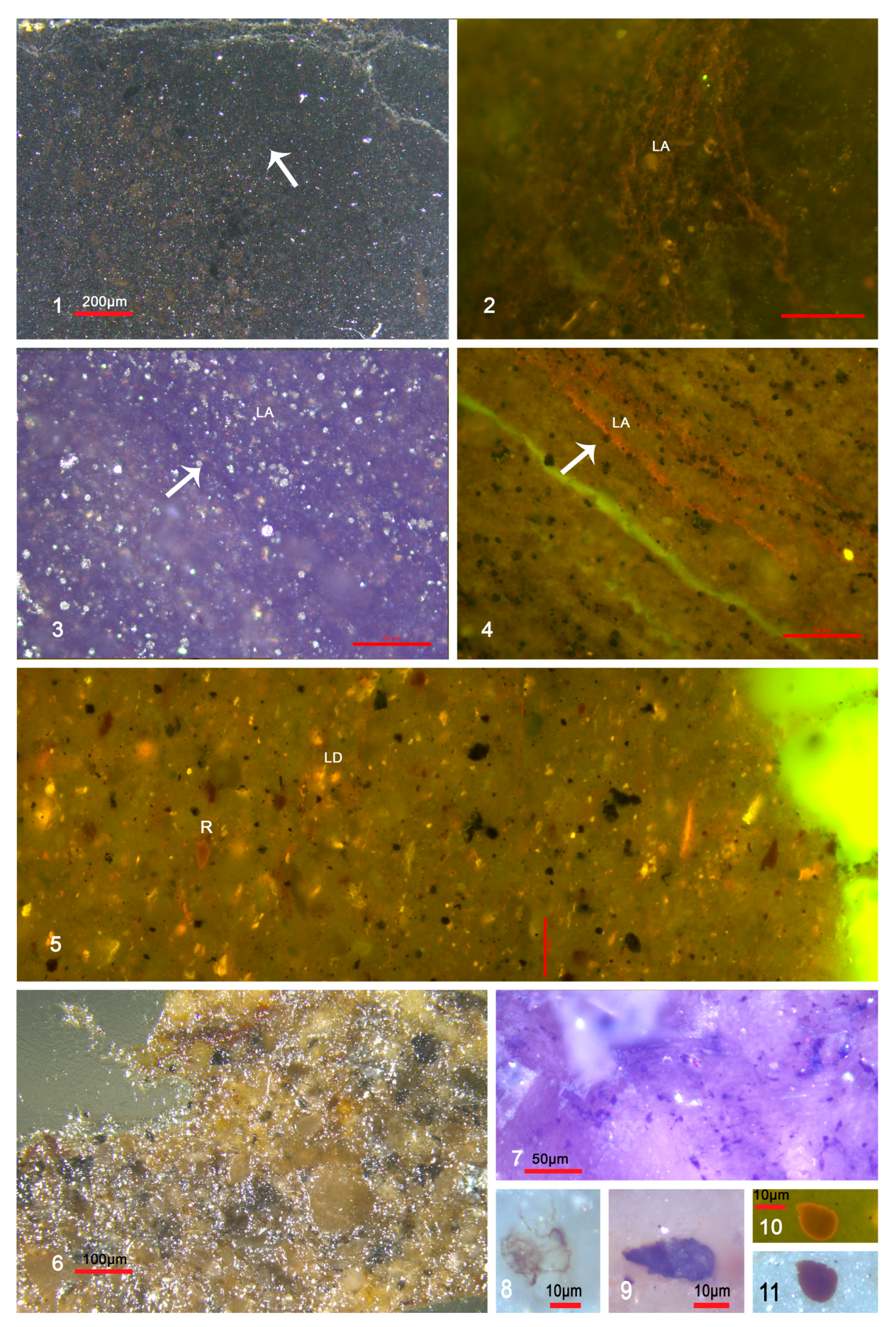
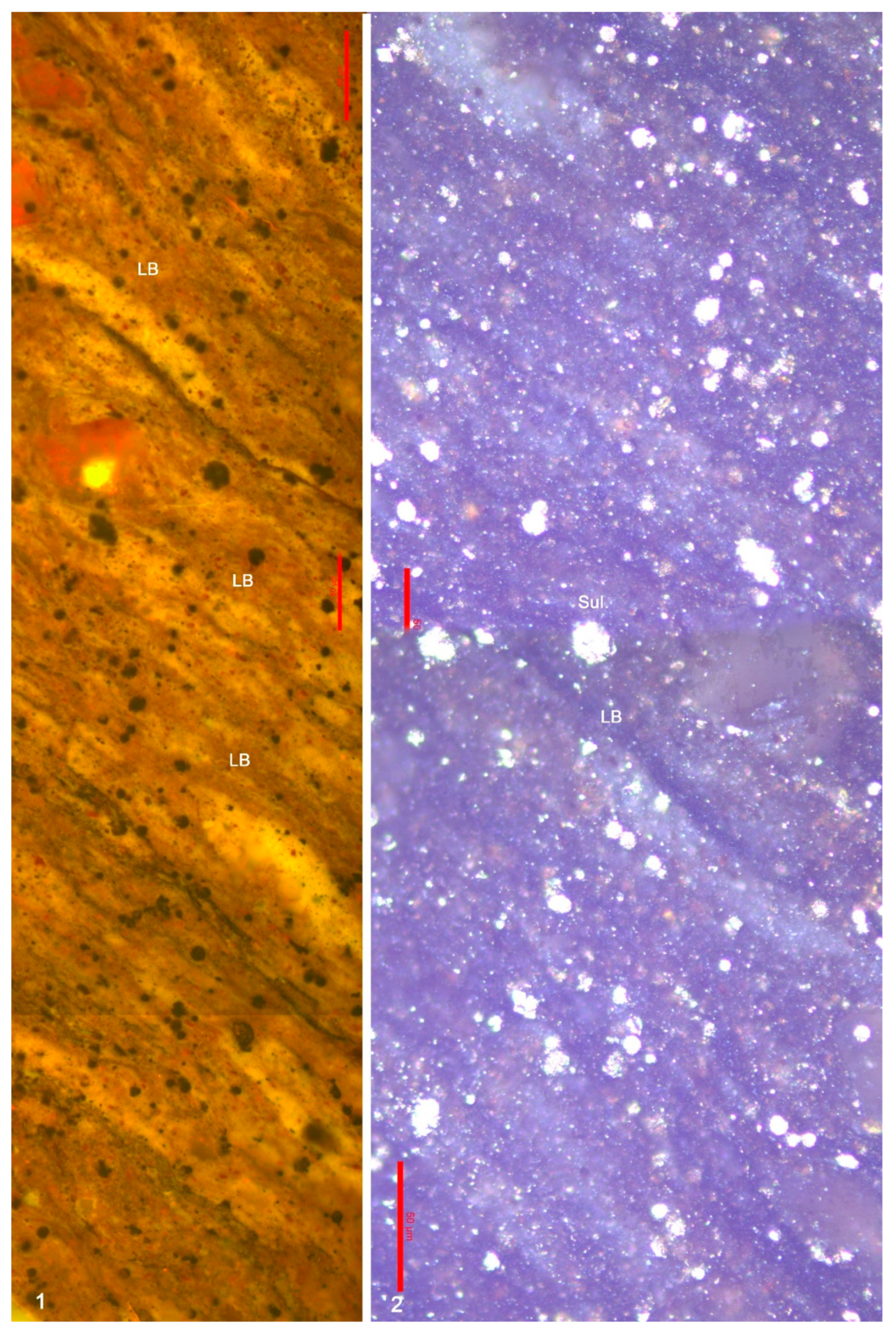
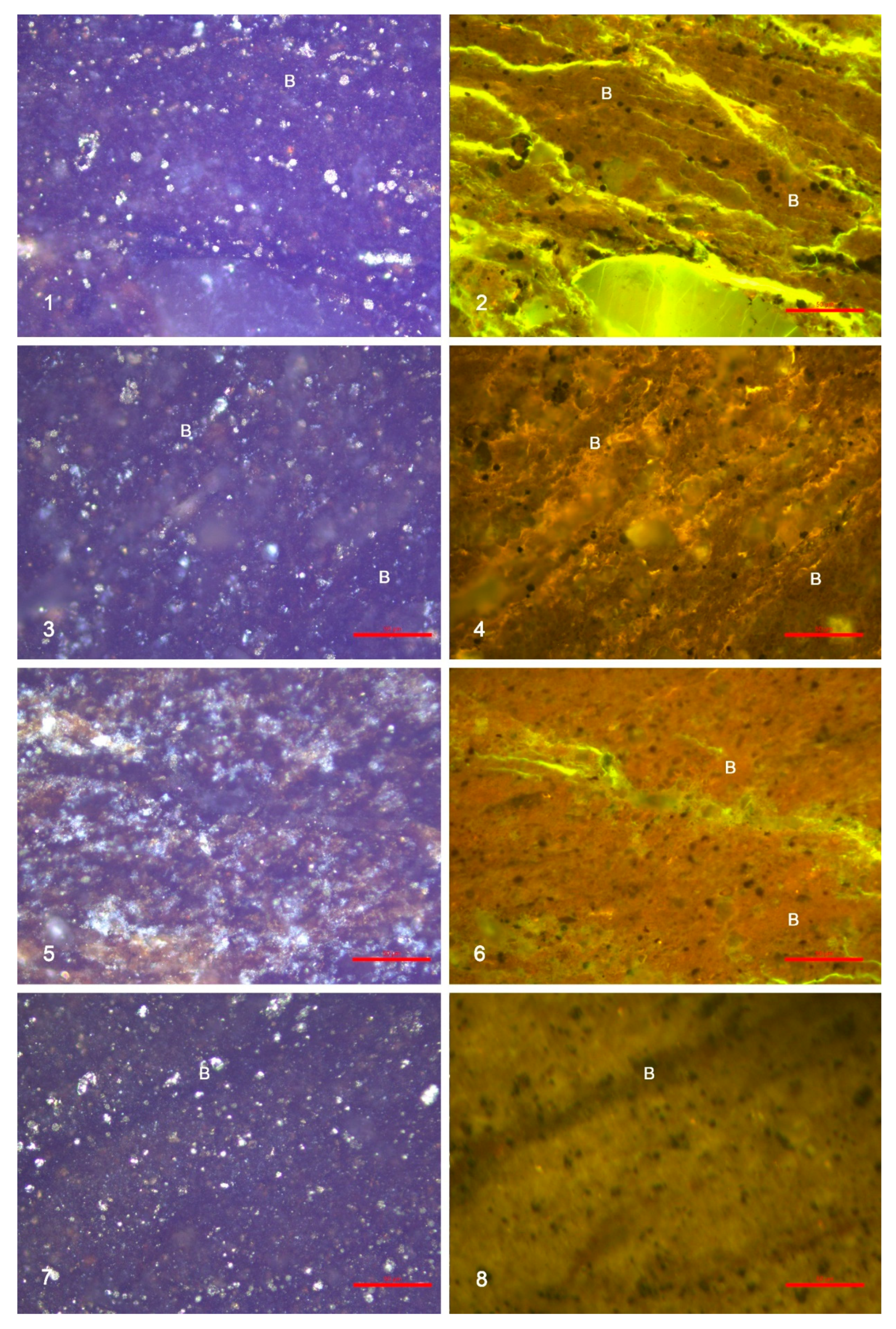
Sub-microfacies (C-1): In the samples from the Sargelu Formation in Mangesh-1 well, the major component in this organic microfacies is the lamalginite threads and sheet-like laminae (Figure 4(1–4)). These lamalginite laminae are distinguished by a fluorescent orange color in IBL and a dark brown color in IWL (Figure 4(1–4)). The lamalginite laminae include abundant sulfide framboids aligned parallel to the alginite laminae (Figure 4(1–3)). The rock matrix in these organic microfacies contains abundant bitumen that is characterized by a dark gray color in IWL and a fluorescent brown color in IBL (Figure 4(1–4)). The alginite lamination is not as prominent or continuous as that recorded in the bituminite lamination in the previous organic microfacies.
The sample from 2463 m from the Naokelekan Formation in Mangesh-1 well is distinguished by the occurrence of bituminite that is partially laminated within the rock matrix and exhibits a granular texture due to its concentration within the matrix (Figure 16(1–8)). This bituminite is characterized by an orange color in IBL and a dark color in IWL (Figure 5(4) and Figure 16(1,2)). Sulfide minerals occur as framboids within the rock matrix/bituminite mixture (Figure 16(1,2)). This sample also shows an abundant occurrence of solid primary bitumen (Figure 16(1,2)), identified as wurtzilite, characterized by low reflectance in IWL and weak orange fluorescence in IBL (Figure 16(1,2)).
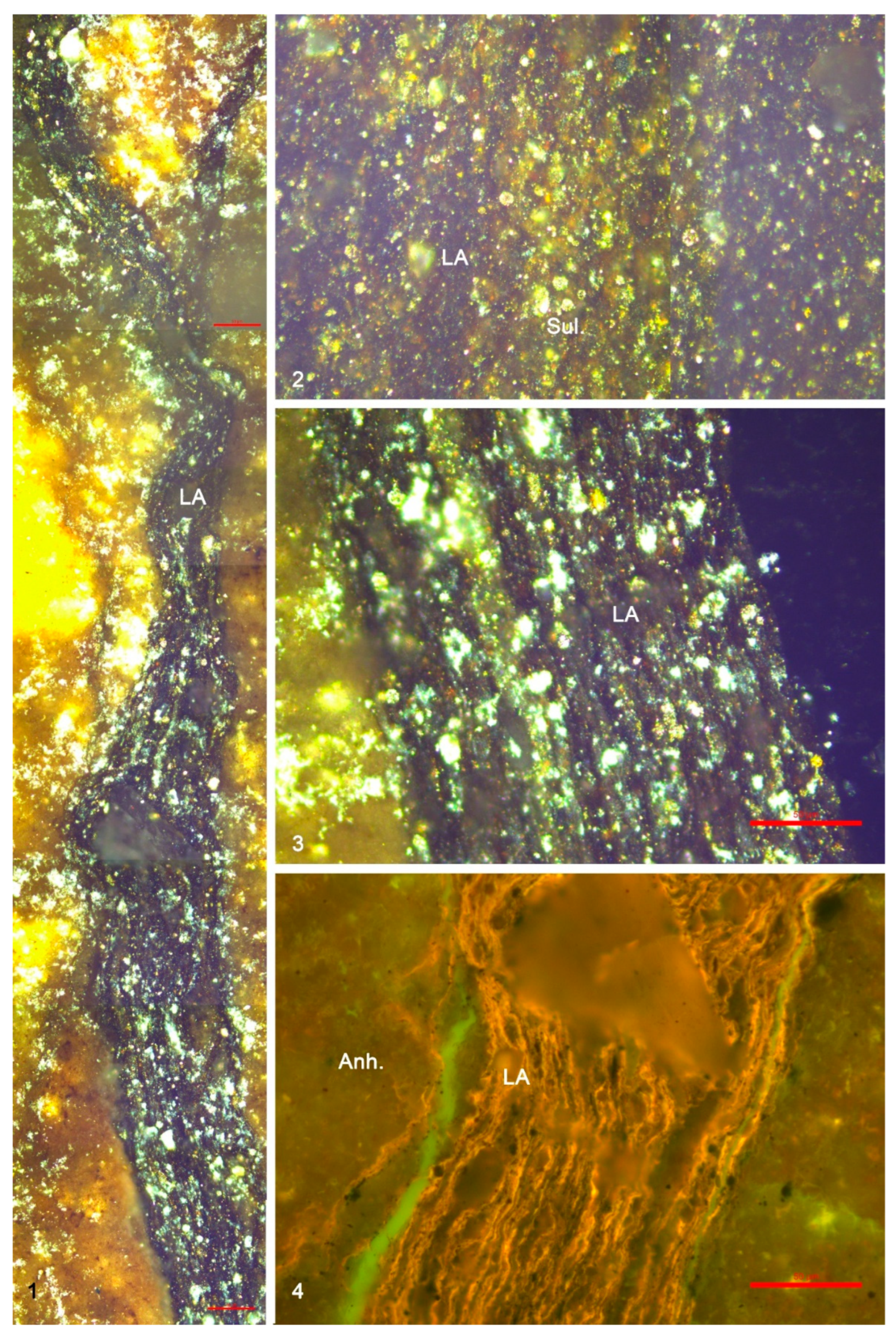
Sub-microfacies (C-2): This organic microfacies is identified in the Barsarin Formation (Figure 9). In the 1522 m sample from Sheikhan-8 well, shales occur as streaks or thin laminae within the anhydrite, distinguished by their dark color (Figure 5(7) and Figure 17(1–4)). There is a weak coupling of dark (shale) and light (anhydrite) laminae, which are undulant and irregular in thickness (Figure 17(1)). The shale consists of densely packed, thinly laminated, sheet-like alginite (lamalginite) (Figure 17(1–4)). These alginite sheets are characterized by a fluorescent orange color (Figure 17(4)). The shale beds contain dense packings of sulfide mineral framboids and specks (Figure 17(1–4)).
In other samples (1531 m, 1537 m, and 1543 m) from the same well and formation, these shale beds are relatively thicker than the shale laminae found scattered within the anhydrite (laminite) (Figure 5(6) and Figure 18(1–3)). The organic composition and texture are like those of the shale laminae within the anhydrite. The organic matter includes mainly thinly laminated, sheet-like alginite (lamalginite) that extends continuously laterally and throughout the length and width of the polished rock specimens (Figure 18(1–3)). The alginite sheets vary in density and thickness among the samples studied (Figure 18(1–3)). In the upper sample (1531 m), the alginite sheets number 2 to 3 per 50 μm in length and are approximately 15 to 20 μm in thickness (Figure 18(1)). In the 1534 m sample, the alginite sheets become denser, reaching 10 sheets per 50 μm in length and approximately 5 to 10 μm in thickness (Figure 18(2)). In the lower sample (1537 m), the alginite sheets become thinner and less prominent, with an increasing proportion of liptodetrinite (Figure 18(3)). All lamalginite sheets are distinguished by their bright fluorescent orange color (Figure 18(1–3)). Sulfide minerals are observed to be disseminated within the alginite sheets (Figure 18(1–3)).
Massive Organic Matter Organic Microfacies (D): This organic microfacies occurs in the shale beds of the Barsarin Formation, which are thicker in Sheikhan-8 well (four samples: 1542 m, 1557 m, 1569 m, and 1611 m) than in Mangesh-1 well (two samples: 2397 m and 2424 m). It also comprises some carbonate rocks from the Sargelu Formation in Mangesh-1 well (two samples: 2610 m and 2616 m) (Table 1, Figure 9).
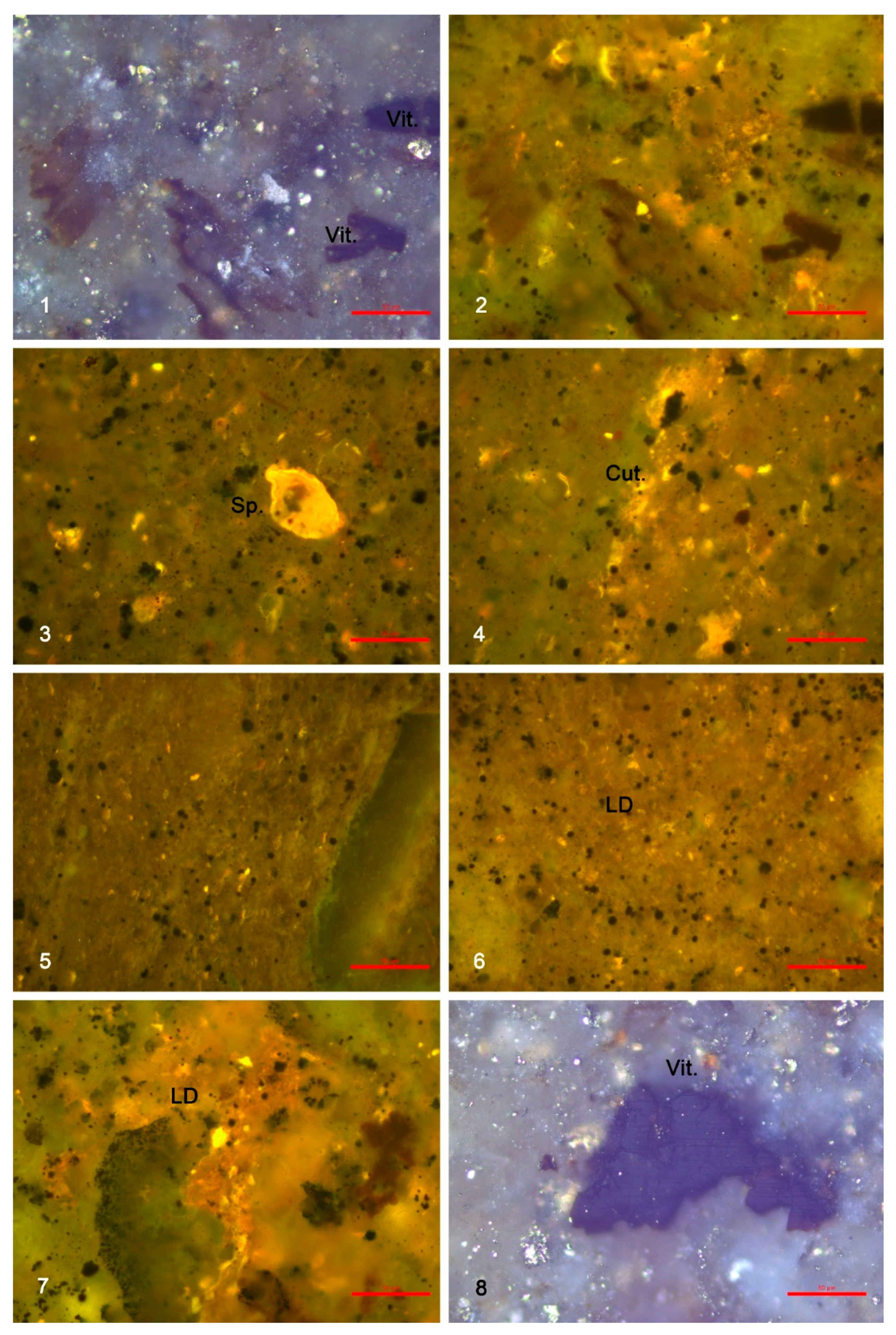
Organic sub-microfacies (D-1): These shales from the Barsarin Formation contain abundant terrigenous and marine organic matter (Figure 8(7,8) and Figure 19(1–8)). The shales in Mangesh-1 well include cutinite, sporinite, vitrinite, and minor alginite and liptodetrinite (Figure 19(1–4)). The abundance of marine alginite increases with depth in Sheikhan-8 (Figure 19(5–8)). The rock matrix is massive, and the organic matter is scattered and well preserved (Figure 19(1–8)).
Organic sub-microfacies (D-2): In the Sargelu Formation, the carbonate rocks are characterized by the occurrence of liptodetrinite within a massive carbonate rock matrix (Figure 4(5,6)). In the 2610 m sample, liptodetrinite particles are abundantly disseminated throughout the rock matrix, recognizable by their fluorescent orange and yellow color in IBL (Figure 4(5)). These liptodetrinite particles do not show any specific arrangement or lamination and lack sufficient structure to identify their specific origin (e.g., sporinite, alginite, or resinite) (Figure 4(5)). In the 2616 m sample, liptodetrinite organic particles are highly disseminated within the carbonate rock matrix (Figure 4(7–11)). Most liptodetrinite particles lack sufficient structure for identification, though some others resemble dinoflagellates or acritarchs (Figure 4(8)). Resinite is identified by its brown color in IWL and fluorescent brown color in IBL (Figure 4(9–11)).
Solid Bitumen Organic Microfacies (E): This organic microfacies comprises all rock varieties that contain solid bitumen in micro-fissures and pores. Solid bitumen occurs as the most prominent maceral in these rocks, with low abundances of other organic matter (Table 1, Figure 9). Thin films of brown bitumen are found in limestones from the Naokelekan Formation in Mangesh-1 well (two samples: 2451 m and 2505 m) and Sheikhan-8 well (one sample from the 1621–1682 m interval). The solid bitumen occurrences are recorded in anhydrite rocks from the Barsarin Formation in Mangesh-1 well (three samples: 2380 m, 2427 m, and 2442 m) and Sheikhan-8 well (three samples: 1503 m, 1601 m, and 1641 m).
In the Naokelekan Formation, the samples are distinguished by scarce occurrences of organic matter and are composed of a massive rock matrix (Figure 6(1–7)). The most characteristic feature of these organic microfacies is the presence of bitumen in four varieties. The first three varieties are from Mangesh-1 well, and the fourth is from Sheikhan-8 well. In the first variety, bitumen impregnation was observed along the irregular micro-fissures of the carbonate rock matrix, found at a depth of 2451 m (Figure 6(1–3)). These bitumen impregnations are distinguished by a dark color concentrated along the micro-fissures or as stains in the rock matrix that fade to a smoky brown color away from the micro-fissure. The second variety involves bitumen filling the rock matrix and intragranular spaces, found in the 2505 m sample (Figure 6(4,5)). This variety exhibits a granular texture and low reflectance in IWL (Figure 6(5)). The third variety, also found in the 2505 m sample, comprises massive bitumen pieces characterized by high reflectance and a smooth, homogeneous texture (Figure 6(6,7)). The fourth variety is represented by the occurrence of bitumen within colonial, non-septate, and interlocked chaetetids (Figure 7(1–6)). The characteristic architecture of the chaetetid is recorded with polygonal calicles or tubules (Figure 7(1–6)). The chaetetid rock ranges from white to light brown in IWL and exhibits the green color characteristic of carbonate in IBL (Figure 7(3,4,6)). The spaces within the polygonal calicles are filled with calcareous material (sparite) in addition to the impregnation of brown bitumen, appearing as thin films and pore space coatings (Figure 7(5–6)). These bitumen impregnations are not equally distributed within the chaetetid structure; while some rock specimens include bitumen (Figure 7(1,2)), others do not (Figure 7(3)).
In the anhydrite rocks from the Barsarin Formation, scattered telalginite is observed, distinguished by its brown color and low reflectance in IWL and strong fluorescent yellow color (Figure 8(3,4) and Figure 20(1–4)). Some organic particles of possible fungal origin are characterized by a light brown color and low reflectance in IWL (Figure 20(2)). A prominent occurrence of solid bitumen is also noted around inorganic microfossils, appearing gray with low reflectance and a faint brown color in IWL (Figure 20(2)). This solid bitumen represents the impregnation of hydrocarbon products into the porous areas around the microfossils [60]. The rock matrix lacks lamination (Figure 8(3,4) and Figure 20(1–4)). Other anhydrite rocks in these microfacies are characterized by overlapped lath-shaped crystals that create intergranular spaces (pores) (Figure 8(5,6) and Figure 20(5–8)). The lath-shaped crystallized anhydrite is recognizable under IBL (Figure 20(5)). Bitumen particles are observed with low reflectance and a brown color in the pores between the anhydrite laths (Figure 20(5–8)). This anhydrite is barren of sedimentary organic particles, and the bitumen represents impregnation from organic-rich rocks within the section.

4.2.2. Distribution Model of Organic Microfacies

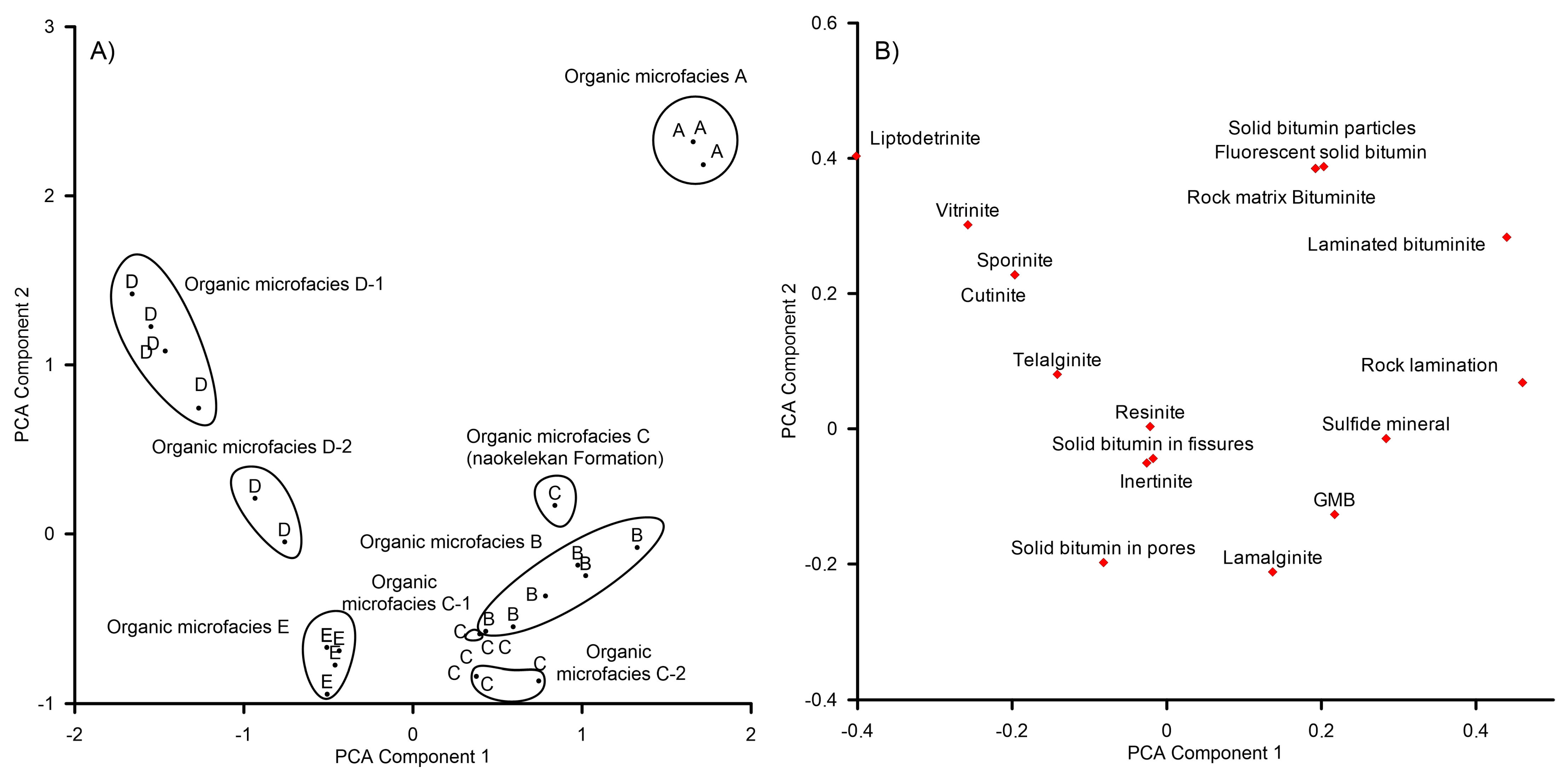
The principal component analysis was used to construct a distribution model for the organic microfacies from a quantitative perspective. The semi-quantitative variables were reduced to two major components, namely, 1 (Eigen value 4.9, variance 39.7%) and 2 (Eigen value 2.31, variance 18.65%). The distribution of the organic microfacies in the biplot of component 1 versus component 2 is in accordance with the cluster analysis, showing good separation between the organic microfacies (Figure 21A,B). The organic microfacies A, B, and C occupy the positive side of component 1 (0.4 to 2.0), and the organic microfacies D and E occupy the negative side (−0.4 to 2.0) (Figure 21). The samples of organic microfacies A are tightly clustered in the upper-right quadrant of the biplot, indicating a high degree of similarity among these samples and their distinctness from other organic microfacies. This organic microfacies correlates highly with variables such as laminated bituminite, matrix bituminite, fluorescent solid bitumen, and solid bitumen particles. The samples of organic microfacies D form a distinct cluster in the upper-left quadrant of the biplot. Organic microfacies E samples are tightly grouped in the lower-central-left portion of the score plot. Variables loading negatively on the y-axis, such as solid bitumen in pores and solid bitumen in fissures, appear to be associated with this cluster. This grouping aligns with positive loadings of liptodetrinite and vitrinite. Organic microfacies B and C show some overlap that is related to the genetic similarity of the organic matter between them.

4.3. Organic Geochemical Analysis

4.3.1. Organic Richness

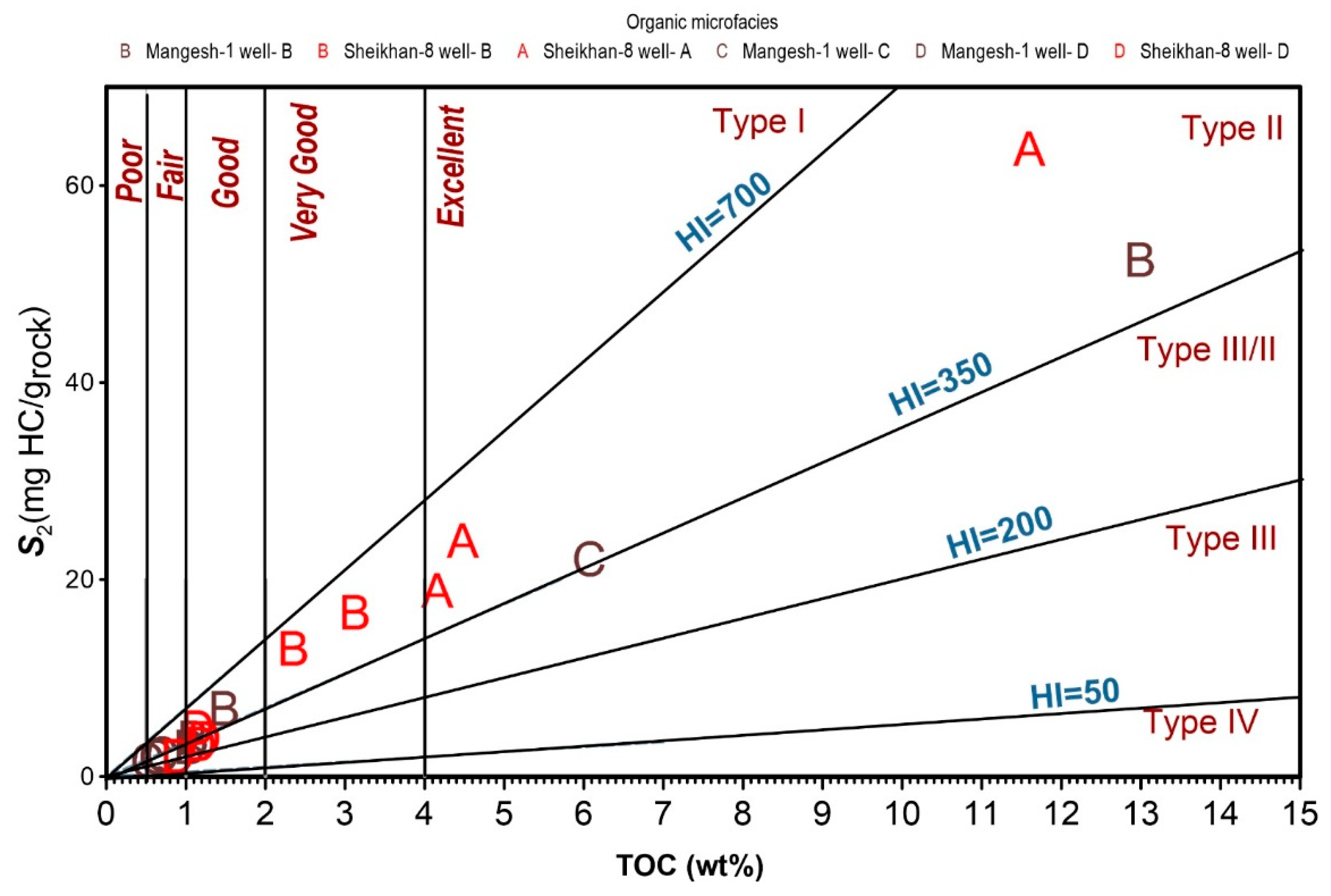
When comparing the Mangesh-1 and Sheikhan-8 wells, distinct patterns in organic richness and hydrocarbon generative potential emerge (Table 2, Figure 22, Figure 23 and Figure 24). Mangesh-1 well displays TOC values ranging from a minimum of 0.51% to a maximum of 13.00 wt.%, with S1 values spanning from 0.34 to 3.14 mg HC/g rock and S2 values from 1.37 to 52.48 mg HC/g rock. By contrast, Sheikhan-8 well exhibits TOC values ranging from 0.90% to 11.60 wt.%, S1 values from 0.24 to 2.52 mg HC/g rock, and S2 values from 2.08 to 63.75 mg HC/g rock. Notably, the highest S2 value observed in the entire dataset (63.75 mg HC/g rock) is from Sheikhan-8 well, suggesting a greater overall hydrocarbon generative capacity in this well compared to Mangesh-1, where the maximum S2 value is 52.48 mg HC/g rock. While Mangesh-1 has a slightly broader overall range for TOC (13.00% vs. 11.60 wt.%), the presence of significantly higher maximum S2 values in Sheikhan-8 points toward a more potent source rock interval within its sampled section. The average values for TOC across all formations in the Mangesh-1 well are approximately 3.14 wt.%, S1 is 0.81 mg HC/g rock, and S2 is 11.23 mg HC/g rock. For Sheikhan-8, the averages are approximately 3.99% for TOC, 1.05 mg HC/g rock for S1, and 17.51 mg HC/g rock for S2, indicating that Sheikhan-8 well generally possesses higher average organic richness and hydrocarbon potential (Table 2, Figure 22, Figure 23 and Figure 24).
The Barsarin Formation is present in both wells, demonstrating moderate organic richness. In Mangesh-1 well, the TOC values of the Barsarin Formation range from 0.98% to 1.49% wt.%, with an average of approximately 1.24%. The corresponding S1 values are between 0.62 and 1.06 mg HC/g rock (average 0.84 mg HC/g rock), and the S2 values range from 2.40 to 6.92 mg HC/g rock (average 4.66 mg HC/g rock). For Sheikhan-8 well, the Barsarin Formation exhibits a wider range for TOC, from 0.90% to 3.13 wt.%, with an average of approximately 1.76%. The S1 values are observed to be between 0.24 and 1.33 mg HC/g rock (average 0.67 mg HC/g rock), and the S2 values range from 2.08 to 16.70 mg HC/g rock (average 7.80 mg HC/g rock). Comparatively, the Barsarin Formation in Sheikhan-8 generally displays higher average TOC and S2 values, reaching a maximum S2 of 16.70 mg HC/g rock, which is significantly higher than the 6.92 mg HC/g rock maximum in Mangesh-1, suggesting a better overall source rock quality for this formation in Sheikhan-8 (Table 2, Figure 22, Figure 23 and Figure 24).
The Naokelekan Formation stands out as the most organically rich unit in both wells, exhibiting excellent source rock potential. In Mangesh-1 well, the Naokelekan Formation records remarkably high TOC values, ranging from 1.05% to a peak of 13.00 wt.%, with an average of approximately 4.96%. The S1 values are between 0.36 and 3.14 mg HC/g rock (average 1.39 mg HC/g rock), and the S2 values range from 3.02 to 52.48 mg HC/g rock (average 20.91 mg HC/g rock). In Sheikhan-8 well, the Naokelekan Formation also shows exceptional organic richness, with TOC values ranging from 4.16% to 11.60 wt.%, averaging approximately 8.41%. The S1 values are between 1.43 and 2.52 mg HC/g rock (average 1.98 mg HC/g rock), and the S2 values are notably high, ranging from 18.88 to 63.75 mg HC/g rock (average 34.86 mg HC/g rock). A direct comparison reveals that, while both wells host excellent Naokelekan Formation source rocks, Sheikhan-8 well consistently shows higher minimum, maximum, and average TOC and S2 values for this formation. The peak S2 value of 63.75 mg HC/g rock in Sheikhan-8 is the highest observed across the entire dataset, indicating a superior hydrocarbon generative capacity in the Naokelekan Formation in Sheikhan-8 relative to Mangesh-1 (Table 2, Figure 22, Figure 23 and Figure 24).
The Sargelu Formation is only present in Mangesh-1 well. This formation exhibits comparatively lower organic richness than the Naokelekan Formation. Its TOC values range from 0.51% to 0.70 wt.%, with an average of approximately 0.61%. Its S1 values are between 0.34 and 0.50 mg HC/g rock (average 0.43 mg HC/g rock), and its S2 values range from 1.37 to 2.28 mg HC/g rock (average 1.89 mg HC/g rock). These values generally classify the Sargelu Formation as having marginal to fair source rock potential within Mangesh-1 well (Table 2, Figure 22, Figure 23 and Figure 24).
Organic microfacies A, predominantly found in Sheikhan-8 well, exhibits the highest organic richness, with TOC values ranging from 4.16 to 11.6 wt.%. This is complemented by elevated S2 values (18.88–63.75 mg HC/g rock) and S1 values (1.43–2.52 mg HC/g rock), indicating very good to excellent source potential, particularly at a depth of 1659 m due to abundant bituminite and alginite (Table 2, Figure 22, Figure 23 and Figure 24).
Organic microfacies B, characterized by thinly laminated bituminite streaks in the Barsarin Formation, displays good to very good organic matter packing. The Sheikhan-8 samples in this microfacies show TOC values of 2.36–3.13 wt.%, approximately twice the concentration of the Mangesh-1 samples (1.49 wt.%). The corresponding S1 values (1.22–1.33 mg HC/g rock in Sheikhan-8; 1.06 mg HC/g rock in Mangesh-1) and S2 values (12.99–16.7 mg HC/g rock in Sheikhan-8; 6.92 mg HC/g rock in Mangesh-1) also confirm good to very good enrichment. The Naokelekan Formation in Mangesh-1 also contains organic microfacies B, with excellent richness (up to 13 wt.% TOC at 2448 m) and very good S1 (0.36–3.14 mg HC/g rock) and S2 values (up to 52.48 mg HC/g rock), particularly in samples with thick bituminite laminae (Table 2, Figure 22, Figure 23 and Figure 24).
Organic microfacies C exhibits fair to very good organic richness. In the Sargelu Formation of Mangesh-1, the richness is relatively low (0.52–0.7 wt.% TOC), categorized as fair potential, with S1 (0.28–0.5 mg HC/g rock) and S2 (1.59–2.28 mg HC/g rock) values indicating poor levels. However, a sample from the Naokelekan Formation in Mangesh-1 (2463 m) also falls into organic microfacies C, showing a much higher TOC (6.07 wt.%), good S1 (2.11 mg HC/g rock), and excellent S2 (22.09 mg HC/g rock), indicating very good to excellent hydrocarbon generative potential (Table 2, Figure 22, Figure 23 and Figure 24).
Organic microfacies D generally has fair to poor organic richness. In the Barsarin Formation, Mangesh-1 shows 0.98 wt.% TOC, while Sheikhan-8 ranges from 0.90 to 1.24 wt.% TOC, classified as fair to good. The S1 values are fair in Mangesh-1 (0.98 mg HC/g rock) and good in Sheikhan-8 (1.22–1.33 mg HC/g rock). The S2 values are poor to fair, with Mangesh-1 at 2.4 mg HC/g rock and Sheikhan-8 ranging from 2.08 to 4.97 mg HC/g rock. The Sargelu Formation in Mangesh-1 also falls into organic microfacies D, exhibiting fair richness (0.51 wt.% TOC) and poor S1 (0.34 mg HC/g rock) and S2 (1.37 mg HC/g rock) values (Table 2, Figure 22, Figure 23 and Figure 24).

4.3.2. Organic Quality

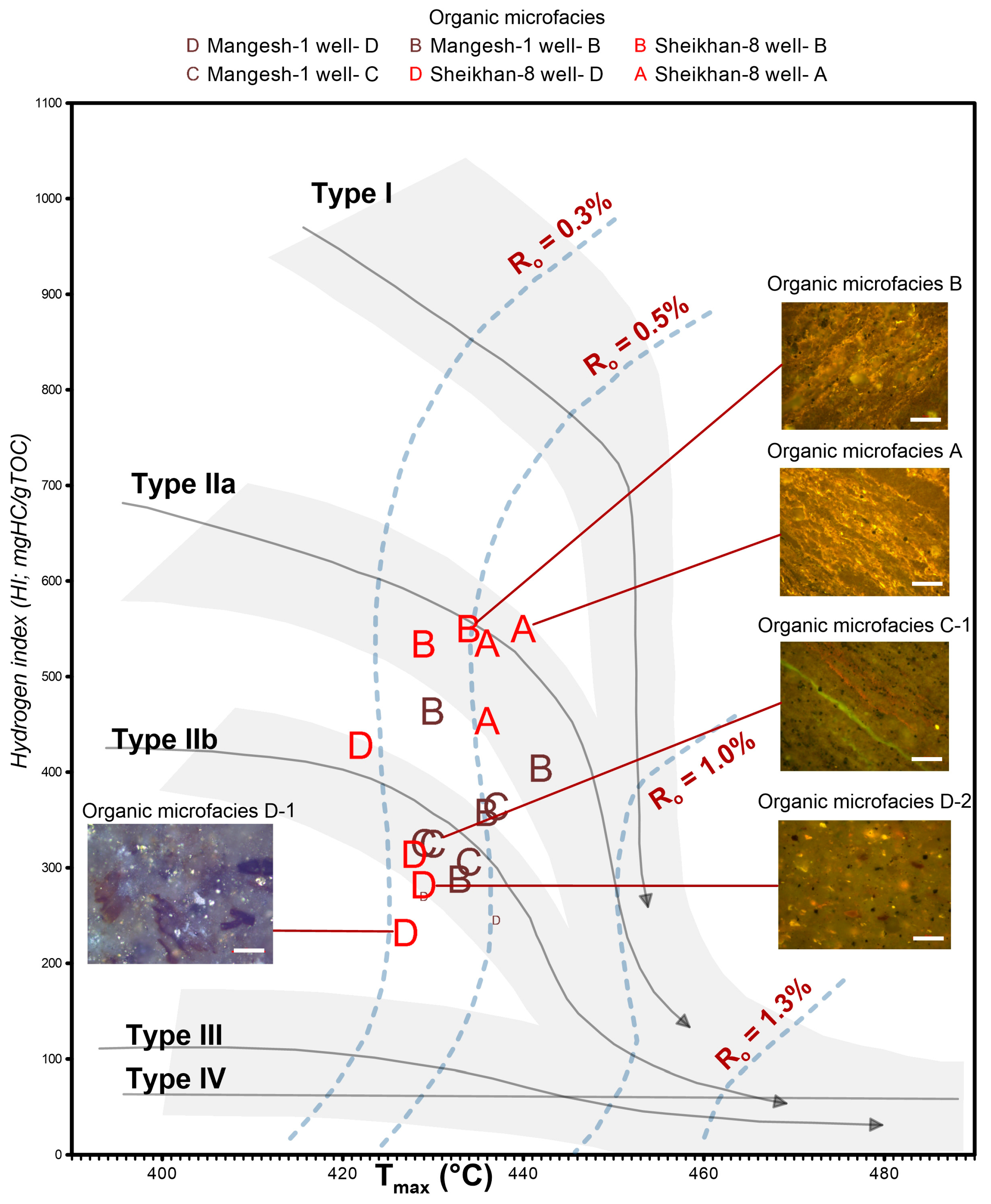
Overall, Sheikhan-8 well exhibits generally superior organic matter quality compared to Mangesh-1. In Mangesh-1, the HI values range from 245 to 464 mg HC/g TOC, with S2/S3 ratios varying from 1.31 to 65.60. The average HI for Mangesh-1 is approximately 324.9 mg HC/g TOC, and the average S2/S3 ratio is around 10.9 (Table 2, Figure 22, Figure 23, Figure 24 and Figure 25). By contrast, Sheikhan-8 shows HI values ranging from 232 to 550 mg HC/g TOC and S2/S3 ratios spanning from 2.08 to 70.83. The average HI for Sheikhan-8 is approximately 432.86 mg HC/g TOC, and the average S2/S3 ratio is 25.10. The notably higher maximum HI (550 mg HC/g TOC) and S2/S3 ratio (70.83) in Sheikhan-8, along with its generally higher average values, suggest a greater abundance of Type II kerogen and, consequently, a more oil-prone source rock potential in this well, aligning with the criteria for very good to excellent source rocks [24] (Table 2, Figure 22, Figure 23, Figure 24 and Figure 25).
The Barsarin Formation in Mangesh-1 exhibits HI values between 245 and 464 mg HC/g TOC (average 354.5 mg HC/g TOC) and S2/S3 ratios ranging from 4.13 to 11.34 (average 7.74 mg HC/g rock) (Table 2, Figure 22, Figure 23, Figure 24 and Figure 25). These values generally indicate fair to good source rock potential (Peters and Cassa, 1994 [24]). For the Barsarin Formation in Sheikhan-8, the HI values range from 232 to 550 mg HC/g TOC (average 381.67 mg HC/g TOC), and the S2/S3 ratios range from 2.08 to 18.50 (average 7.80 mg HC/g rock) (Table 2, Figure 22, Figure 23, Figure 24 and Figure 25). While the average HI values are comparable, the Sheikhan-8 Barsarin shows a broader range for HI and a higher maximum S2/S3 ratio (18.55), which indicates a slightly more favorable organic microfacies or localized intervals with better hydrocarbon generation potential within this formation in Sheikhan-8, thus suggesting good to very good source rock potential in certain intervals [24].
The Naokelekan Formation consistently exhibits the highest organic quality indicators in both wells, signifying excellent source rock potential [24]. In Mangesh-1, the Naokelekan Formation has HI values ranging from 288 to 404 mg HC/g TOC (average 356 mg HC/g TOC) and exceptionally high S2/S3 ratios ranging between 3.24 and 65.60 (average 25.04) (Table 2, Figure 22, Figure 23, Figure 24 and Figure 25). Notably, the sample at 2448 m shows the peak S2/S3 ratio of 65.60, which signifies a highly oil-prone kerogen. In Sheikhan-8, the Naokelekan Formation shows even more impressive values, with HI ranging from 454 to 550 mg HC/g TOC (average 513 mg HC/g TOC) and S2/S3 ratios ranging between 26.22 and 70.83 (average 43.43) (Table 2, Figure 22, Figure 23, Figure 24 and Figure 25). The highest S2/S3 ratio in the entire dataset (70.83) is observed in the Naokelekan Formation of Sheikhan-8 at 1659 m, confirming its superior Type II kerogen content and excellent oil generation potential [24].
The Sargelu Formation, exclusively found in Mangesh-1 in this dataset, generally displays lower organic quality compared to the Naokelekan Formation. Its HI values range from 270 to 326 mg HC/g TOC (average 300 mg HC/g TOC), and its S2/S3 ratios vary from 1.31 to 2.94 (average 2.02) (Table 2, Figure 22, Figure 23, Figure 24 and Figure 25). These values typically indicate fair to poor source rock potential [24], suggesting a mixture of Type II/III or predominantly Type III kerogen and, thus, a lesser oil-generating capacity compared to the Naokelekan Formation.
Organic microfacies A (Sheikhan-8, Naokelekan samples 1629 m and 1659 m) consistently shows the highest HI values (454 to 550 mg HC/g TOC) and S2/S3 ratios (26.22 to 70.83) (Table 2, Figure 22, Figure 23, Figure 24 and Figure 25), which confirms its excellent oil-prone potential, likely dominated by alginite or abundant bituminite [24]. Organic microfacies B includes various samples from both wells and formations, with HI values broadly ranging from 245 to 464 mg HC/g TOC and S2/S3 ratios ranging from 3.24 to 65.6. This category represents good to very good oil-prone source rocks [24]. Organic microfacies C (Mangesh-1, Naokelekan 2463 m and Sargelu 2631 m and 2643 m) has HI values ranging from 325 to 364 mg HC/g TOC and S2/S3 ratios ranging from 2.33 to 24.54 (Table 2, Figure 22, Figure 23, Figure 24 and Figure 25), which indicates good source rock potential (Peters and Cassa, 1994 [24]), possibly with a higher contribution of gas-prone components or slightly degraded Type II kerogen. Organic microfacies D (Barsarin, Sargelu, and some Naokelekan samples) exhibits the lowest HI values, ranging from 232.00 to 314.00 mg HC/g TOC, and S2/S3 ratios ranging from 1.31 to 4.13, which suggests fair to poor source rock quality [24] (Type III or IV kerogen). The strong correlation between higher S2/S3 ratios and excellent HI values, particularly within organic microfacies A, further supports the interpretation of a predominantly oil-prone kerogen.

4.3.3. Molecular Organic Composition

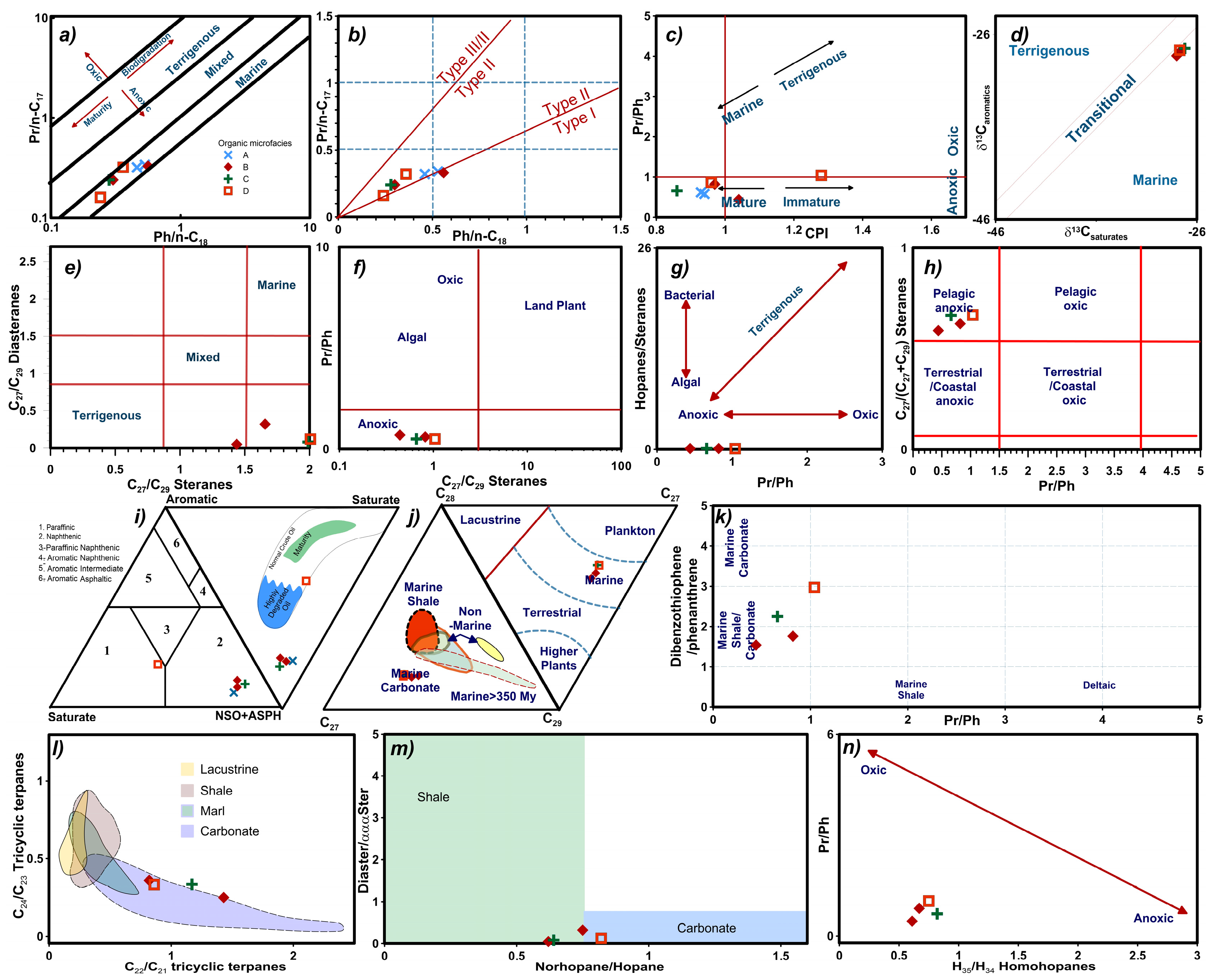
In organic microfacies A, the two samples at depths of 1629 m (GC) and 1664 m (GC and GC-MS) represent the varieties in Sheikhan-8 well (Table 3, Figure 26). The samples show high similarity in composition and distribution on the GC analysis plots (Pr/n-C17 (0.32–0.34), Ph/n-C18 (0.46–0.53), Pr/Ph (0.58–0.62), and CPI (0.93–0.94)) (Table 3, Figure 26). The different plots revealed that the samples were deposited in an anoxic marine environment characterized by mostly Type II kerogen (Table 2, Figure 26). However, the samples have an identical biomarker fingerprint that characterizes marine pelagic carbonate anoxic basins and algal Type II kerogen (Table 2, Figure 26). This sample is characterized by a biomarker fingerprint similar to that of the other organic microfacies and indicates deposition in an anoxic marine shale/carbonate environment (Table 3, Figure 26i).
In organic microfacies B, one sample from Sheikhan-8 well was analyzed by GC and GC-MS at a depth of 1509 m. The bulk GC chromatogram of this organic microfacies is characterized by the highest peak envelope above C15 among all the organic microfacies (Figure 26) and high NSO+ asphaltenes (75.4 wt%) (Table 3, Figure 26i). The composition of the organic matter is indicated by Pr/n-C17 (0.33), Ph/n-C18 (0.56), Pr/Ph (0.44), and CPI (1.04), as well as by biomarkers and isotopes, as marine pelagic algal kerogen Type II/I that was deposited in shale/carbonate anoxic basins (Figure 26). The steranes are characterized by high C27 and C29 peaks (Figure 26). On the sterane ternary diagram (C27-C28-C29), the sample is plotted in the marine carbonate fields (Figure 26). The composition is also characterized by a high peak of the C30 hopane and the C31 homohopane (Figure 26). Their ratio (0.62) points to organic-rich carbonates and evaporites deposited in a marine environment [61]. One sample collected from a depth of 2484 m (GC and GC-MS) represents the third variety of these organic microfacies in Mangesh-1 well.
In organic microfacies C, one sample was collected from a depth of 2631 m in Manngesh-1 well (GC and GC-MS) (Table 2, Figure 26). The sample has a similar distribution in the GC plots based on the values of Pr/n-C17 (0.21–0.24), Ph/n-C18 (0.28–0.42), Pr/Ph (0.63–0.66), and CPI (0.86–0.97) (Table 2, Figure 26). This sample is characterized by biomarker and isotope data similar to that of the other organic microfacies that indicate deposition in an anoxic marine shale/carbonate environment (Table 3, Figure 26i).
Figure 26. (a) Plot of pristane/n-C17 vs. phytane/n-C18 (modified after Shanmugam [62]), showing the organic composition, depositional environment, and thermal maturity; (b) a cross-plot between Pr/n-C17 versus Ph/n-C18 [63] showing the kerogen type; (c) Pr/Ph versus CPI after Peters et al. [57]; (d) δ13C value plot for saturated and aromatic fractions [64]; (e) C27/C29 diasteranes versus C27/C29 sterane showing the paleoenvironment of deposition [57]; (f) C27/C29 sterane versus Pr/Ph [57]; (g) hopane/sterane versus pristane/phytane ratios demonstrating paleoenvironmental conditions and organic matter source input [65]; (h) C27/C27 + C29 sterane versus pristane/phytane ratios show paleodepositional conditions of organic matter [66]; (i) bulk composition distribution of the bitumen from the different organic facies (modified after Tissot and Welte [53]); (j) the ternary plots of C27, C28, and C29 steranes presents the source input and depositional environment [67]; (k) plot of dibenzothiophene/phenanthrene (DBT/P) and pristane/phytane (Pr/Ph) showing depositional environments where most of the organic facies fall within marine shale/carbonate and marine carbonate fields [68]; (l) C22TT/C21TT versus C24T/C23T cross-plot showing the paleoenvironment of the organic facies plot, showing data are within the marl and carbonate zone; (m) diasteranes/ααα steranes versus norhopane/hopane [57]; (n) Pr/Ph versus H35/H34 homohopanes [57].
Minerals 15 01202 g026
In organic microfacies D, two samples were collected from Mangesh-1 well at a depth of 2397 m (GC) and from Sheikhan-8 at a depth of 1569 m (GC and GC-MS) (Table 3). Both samples show a similar composition that falls within the field of anoxic marine fields based on the GC results (Pr/n-C17 (0.16–0.32), Ph/n-C18 (0.24–0.36), Pr/Ph (0.87–1.04), and CPI (0.96–1.28)) (Table 3, Figure 26). The sample from Sheikhan-8 is characterized as having the highest saturate ratio of all the organic microfacies (42.62 wt.%) (Table 2, Figure 26i). The biomarkers of the organic matter in this sample indicate that it consists of marine pelagic algal Type II kerogen and mixed Type II/III kerogen and that it was deposited in a shale/carbonate anoxic basin (Figure 26). The steranes are characterized by high C27 and C29 peaks (Figure 26). On the sterane ternary diagram (C27-C28-C29), the sample is plotted in the marine carbonate fields (Figure 26). The ratio of C30 hopane/C31 homohopane (0.82) indicates organic-rich carbonates and evaporites deposited in a marine environment [61] (Figure 26).

4.3.4. Thermal Maturity and Hydrocarbon Generation Indicators

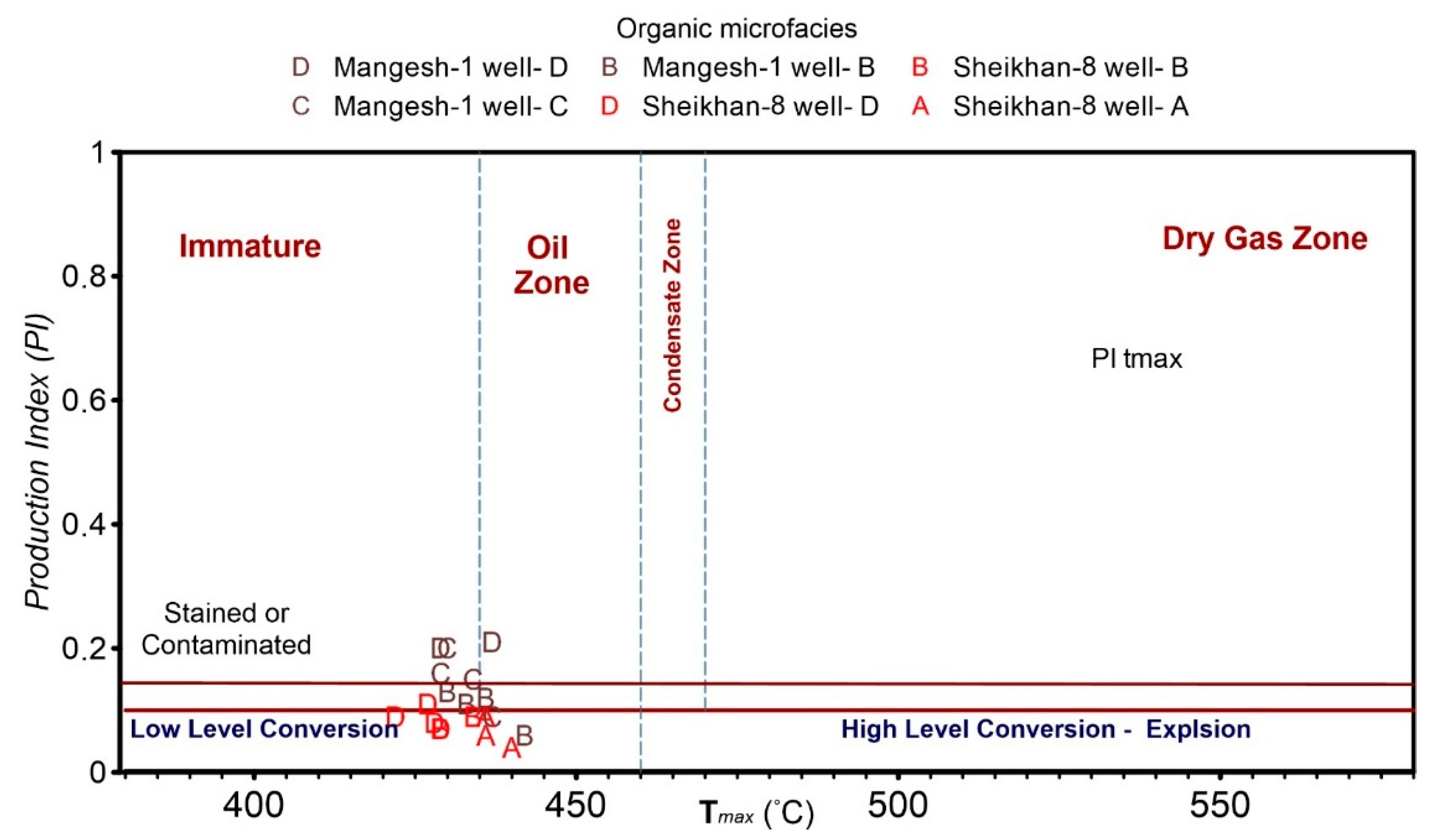
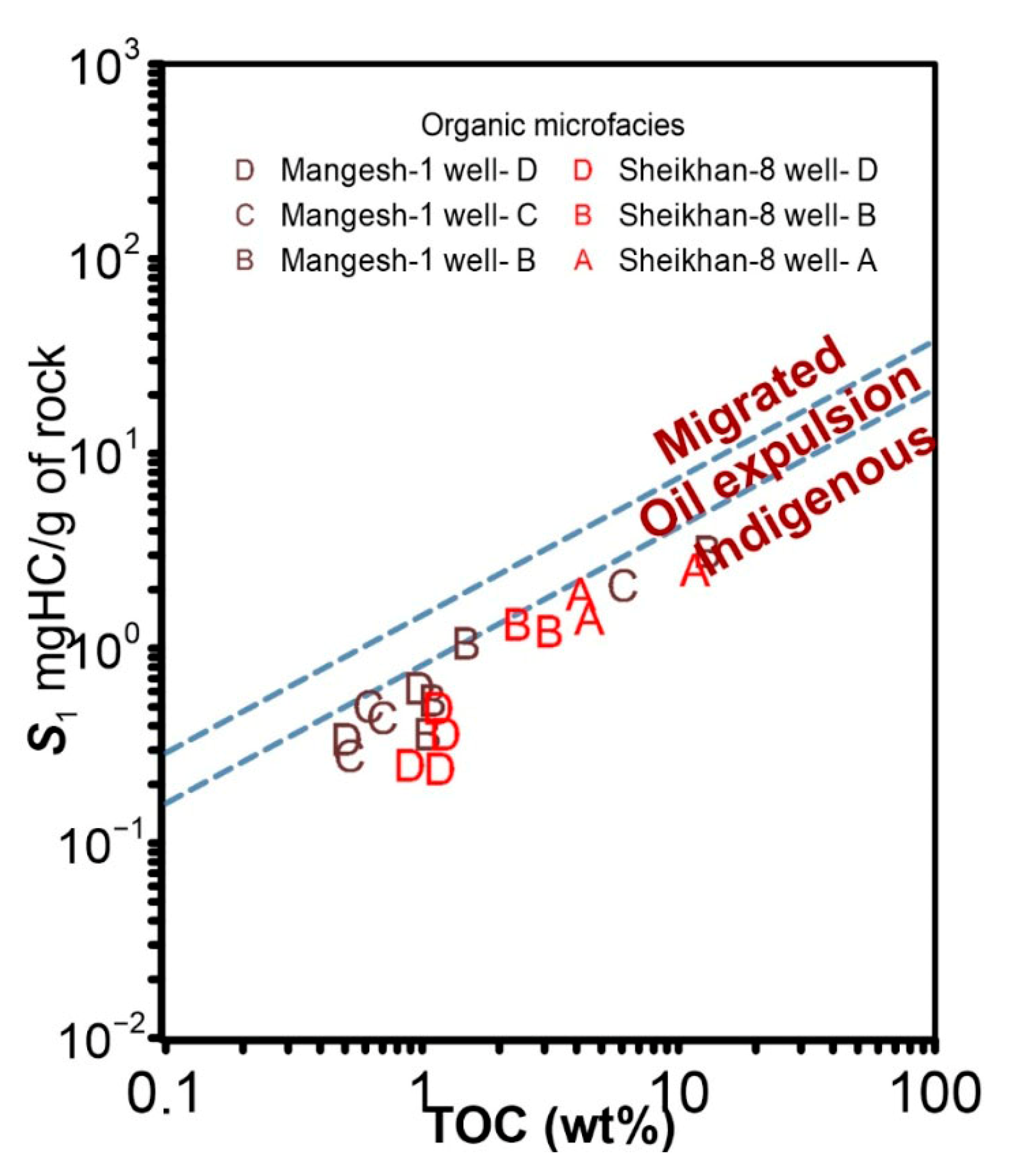
Thermal maturity in the studied wells was assessed based on petrographic and organic geochemical parameters, including Tmax (°C) and calculated vitrinite reflectance (%Ro). In Mangesh-1 well (2319–2643 m, thickness 324 m), the vitrinite reflectance (Ro 0.58%–0.8%, 10 samples) indicates that the entire interval is within the early to peak thermal maturity levels (0.6% for Type II kerogen, Peters and Cassa [24]; Dembicki [69]) (Table 1, Figure 22 and Figure 25). The Tmax values (429–442 °C) show comparable results, although the indicated levels range from immature to peak maturity (>435 °C, Peters and Cassa [24]) (Table 1, Figure 4 and Figure 10). The maximum thermal maturity values are found at a depth of 2448 m (Ro = 0.8%, Tmax = 442 °C) in the Naokelekan Formation. All organic microfacies in Mangesh-1 well fall within the oil window. The hydrocarbon generation indices support these results. The production index (PI = 0.06–0.21) and bitumen yield (8.6–75.6 mg/g rock) point to immature to early thermal maturity levels [24] (Table 1, Figure 4 and Figure 27). The presence of solid bitumen in organic microfacies (e.g., A, B, and E) in this well, which align with the given organic microfacies for Mangesh-1 despite the low level of conversion shown by PI (0.09–0.20) (Figure 27), further indicates effective hydrocarbon generation throughout the entire depth. The S1/TOC ratio (0.24–0.80) represents indigenous hydrocarbon content (Figure 28).
In Sheikhan-8 well (1495–1664 m, thickness 169 m), the Ro (0.44%–0.76%, nine samples) and Tmax values (422–440 °C) indicate thermal maturity ranging from immature to peak thermal maturity [24] (Table 1, Figure 23 and Figure 25). The thermal maturity reaches its maximum at a depth of 1659 m in the Naokelekan Formation, where peak generation will be limited to this depth in this well (Ro = 0.76%, Tmax = 440 °C) (Table 1, Figure 23 and Figure 27). The production index values (PI = 0.04–0.11, Figure 27) indicate an immature thermal condition [24]. However, solid bitumen is recorded in this well at many levels across different organic microfacies, most importantly in organic microfacies A and D, which align with the given organic microfacies for Sheikhan-8. The S1/TOC ratio (0.20–0.56) represents indigenous hydrocarbon content (Figure 28).

5. Discussion

5.1. Paleoenvironmental Analysis of Organic Microfacies

Organic microfacies A exhibits striking similarities to the oil shale characterized by thinly laminated filamentous alginite in the Tournaisian Albert oil shale, New Brunswick, Canada [72,73]. This organic microfacies displays thinly laminated bituminite and alginite set within a strongly laminated rock matrix. While the Albert oil shale is primarily known for its alginite, the overall petrographic and organic geochemical compositional characteristics, particularly the pronounced lamination, are highly comparable. This similarity points toward analogous paleoenvironmental conditions. The consistent presence of abundant alginite and bituminite, derived from algal mats, alongside the prominent lamination, is indicative of periods of high primary productivity, often associated with active upwelling. The distinct and preserved laminae signify that this organic matter was deposited in deeper, quiet, anoxic parts of the basin. The strongly laminated nature of the rock matrix, coupled with the thinly laminated organic components, provides evidence for low sedimentation rates (implying a minimal influx of coarse clastic grains). Such conditions allow for the ordered settling of fine organic and inorganic particles without significant disturbance, facilitating their burial and preservation [72,73,74,75,76,77,78,79].
For instance, the Albert oil shale organic microfacies are defined as lacustrine sediments, representing a tectonically controlled rift basin that provided steep half-graben morphology and deeper lake conditions, ultimately promoting such excellent preservation [72,73]. While further investigation is needed to confirm, the low sedimentation rates inferred from the lamination, especially during high sea-level stands, lead to sediment starvation (condensation) in distal and deeper marine environments [76]. These conditions are highly conducive to the efficient and undisturbed preservation of organic matter. The evidence for lacustrine depositional conditions for the organic microfacies from the Naokelekan Formation in Sheikhan-8 well still requires further detailed studies. Overall, this organic microfacies is highly comparable to the organic facies of the Albert oil shale in New Brunswick, Canada [72,73].
Organic microfacies B shares several main characteristics with organic microfacies A; however, the strength and distinctness of lamination are notably lower in organic microfacies B. The presence of matrix bituminite and less prominent lamination in organic microfacies B is associated with periods of high primary productivity of organic matter, typically linked to upwelling periods [80,81]. This interpretation is supported by the elevated TOC and high S2 values, which indicate a substantial accumulation of preserved organic matter. The coupling of bituminite streaks and bituminite matrix-rich laminae, even if less pronounced than in organic microfacies A, suggests dysoxic–anoxic oscillation within the depositional environment [81]. Specifically, the bituminite-rich laminae are interpreted to have formed during more oxygen-depleted (anoxic) events within these upwelling cycles, often exhibiting an alignment with pyrite. This bituminite primarily results from the decay of precursor algae or fecal pellets [48,82]. The high concentration of marine liptinite observed in this microfacies, further supported by the high S2 values, broadly indicates deposition within productive upwelling areas [83]. This organic microfacies is comparable to that found in Unit B of the Jurassic Gordondale Formation, Canada (Ross and Bustin, 2006 [81]). Although the organic matter in Gordondale’s Unit B reaches even higher concentrations, the overall characteristics of organic microfacies B, particularly its elevated organic richness and less pronounced lamination, align with a variety of organic facies B and AB, as defined by Jones [25].
The organic sub-microfacies C-1, which included samples from the Naokelekan and Sargelu formations, also contain lamalginite laminae. However, unlike the previously described bituminite-rich laminae (e.g., in organic microfacies B), these samples show generally lower organic geochemical parameters, specifically, lower TOC, S2, and HI values. The presence of alginite laminae still indicates anoxic conditions and high primary productivity, like other highly productive microfacies, but at a comparatively lower intensity. This reduced intensity of organic matter preservation and accumulation is the principal reason for the observed overlap between the samples of microfacies C and B in the biplot (Figure 21). This organic sub-microfacies iscomparable to organic facies B [25].
The organic sub-microfacies C-2 includes samples from the Barsarin Formation in Sheikhan-8 well and represents a specific paleoenvironmental setting within organic microfacies C characterized by high lamalginite content. This sub-microfacies forms an analogue to the shale/anhydrite couplets, or ‘Laminites,’ found in the Middle Devonian evaporite deposits of the Elk Point Basin, Canada [84]. A typical example of this sequence is observed at a depth of 1522 m. The lithology comprises couplets of crystalline calcium carbonate or calcium sulfate interspersed with films of organic matter [84]. The composition of these organic films is petrographically similar to that of the shale laminae found in this study. They appear undulated and exhibit thickness irregularities resulting from the microrelief of pressure solution (microstylolitization) and pocket replacement of anhydrite [84]. In thin section under transmitted light, the dark organic layers are opaque and commonly contain pyrite framboids [84,85]. The composition of these dark layers is bituminous or calcitized organic matter of algal origin, as evidenced by the remains of algal filaments [84,85].
The deposition of these laminite sequences is interpreted to have occurred in highly stratified basins experiencing seasonal precipitation of carbonates and sulfates. Organic detritus, originally produced in the upper oxygenated water mass, settled continuously to the basin floor, where it was promptly preserved in the anoxic lower water stratum. The physical stratification of the basin effectively prevented biological and physical disruption of the sediment layer, even at water depths of at least 50 m [84]. The pervasive lamination and complete absence of burrowing and bioturbation directly indicate low energy conditions during deposition [80,81]. This combination of thin lamination and enhanced preservation of alginite laminae and alginite/shale couplets strongly suggests very low sedimentation rates coupled with high surface productivity, characteristic of efficient organic matter accumulation [79]. The absence of benthic organisms and burrowing further confirms a restricted and intensely anoxic environment typical of evaporite basins [84,86]. The organic microfacies C-2 is highly comparable to the organic matter films and alginite-rich shale found in the Devonian evaporite laminite sequences of Elk Point, Canada [84]. The level of oxygen depletion observed in these organic microfacies, particularly the strongly laminated types, is similar to Level 1 of Röhl and Schmid-Röhl [86]. Based on their organic matter content and characteristics, these organic microfacies are comparable to organic facies AB [25].
The organic sub-microfacies D-1 is characterized by an increasing proportion of terrigenous organic matter, associated with a perceived increase in marine influence down-section. This compositional change reflects less restricted basinal settings compared to those that led to the deposition of intercalated anhydrite in the Barsarin Formation (as observed in Managesh-1 and Sheikhan-8 wells). The size and preservation quality of the terrigenous organic matter are indicative of freshwater input from a fluvial or deltaic environment [23,83]. A greater influence of freshwater input, consistent with a deltaic setting, is particularly evident in Sheikhan-8 well, which exhibits thicker shale beds of this organic microfacies type (Figure 3). These organic microfacies are comparable to organic facies BC [25].
The organic sub-microfacies D-2 is characterized by the presence of liptodetrinite particles that are predominantly of algal origin. This observation, combined with the conspicuous absence of terrigenous organic matter (specifically vitrinite and cutinite), strongly indicates deposition in open marine environments. Such settings would exhibit less restriction and hypersalinity compared to the conditions that prevailed during the deposition of the other organic facies [83].
Organic microfacies E includes most of the organically poor or even barren samples from all the formations; however, they contain abundant bitumen in the form of particles, impregnation in pores, or micro-fissures. The impregnation in the form of bitumen is well recognized in evaporite basins with organic-rich sections [87], as in the Barsarin Formation. This anhydrite is similar to the Permian bituminous anhydrite from western Poland [87]. In the carbonate rocks, similar impregnations are well recognized in the Naokelekan Formation in other areas of Iraq [27,88].

5.2. Evolution and Modeling Organic Microfacies: An Approach to Source Rock Evaluation

5.2.1. Evolution and Change in Organic Microfacies

In this study, five organic microfacies were identified in the studied wells and classified based on their organic petrographic and geochemical contents. However, the number of organic microfacies depends on the sampling resolution and sample preparation techniques and can potentially be higher. This variation in organic microfacies reflects variations in paleoclimatological conditions and the physical and geochemical characteristics of the basin water mass, such as volume (influenced by sea level and sediment accommodation), temperature gradient (influencing water circulation), and nutrient supply (driving productivity) [23,75,76]. These conditions can be variable, representing geographical gradients within the same basin during the same time interval [25]. In addition, continuous shifts in environmental conditions lead to stratigraphic variations in the microfacies. The paleoenvironmental settings discussed in the present study are in accordance with those presented in previous studies that discussed the Jurassic section using different approaches [89,90,91]. These paleoenvironmental settings include high paleoproductivity, deposition in oxygen-depleted environments (anoxia), and appropriate sedimentation rates. The interaction between these parameters is vital for maintaining the richness and quality of organic matter at high levels. These factors control the production and preservation of organic matter and should occur within certain thresholds [75,76,92]. The stratigraphical and geographical variation in the Jurassic organic microfacies, driven by various forces and interactions, can be comprehended in light of the similarity in organic content and rock texture to the organic-rich Devonian evaporite/carbonate sections in Alberta, Canada [72,73,84,93,94,95]. This comparison is reliable, supported by previous paleofacies studies by Ziegler [96] and the stratigraphic classification by Aqrawi et al. [20]. These paleoenvironmental settings can be integrated within the ‘expanding puddle’ silled basin model [3].
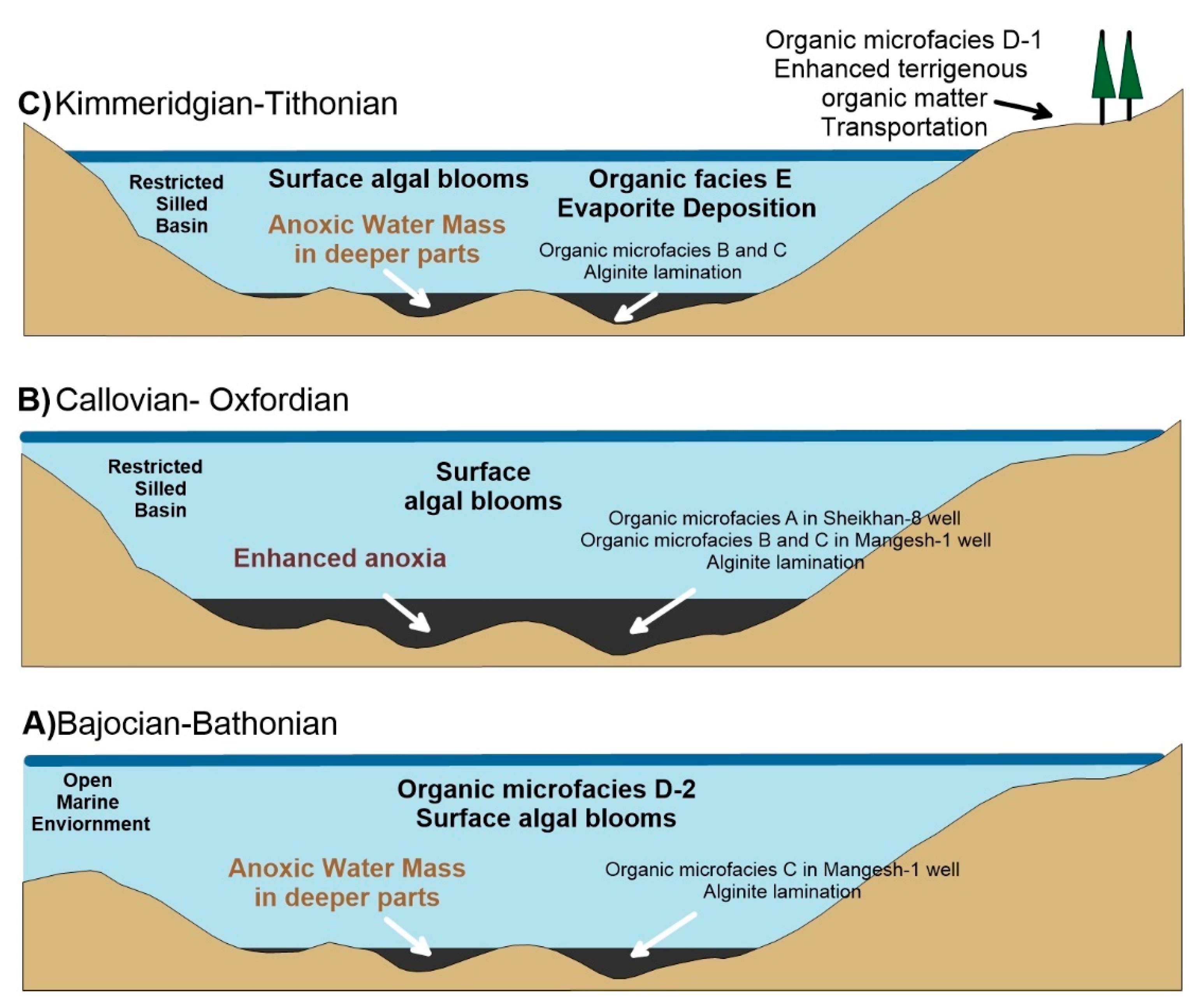
The Jurassic formations, including Sargelu, Naokelekan, and Barsarin, represent distinct depositional stages along the passive margins of the Arabian Plate, primarily controlled by sea level and tectonic movements [97]. Beginning with the Sargelu Formation, the carbonates/clastic rocks were predominantly deposited in deeper, open marine environmental settings that persisted through the Bajocian–Bathonian stages [96] (Figure 29A). The organic enrichment in the Sargelu Formation reaches 2.72 wt.% in Mangesh-1 well; however, higher enrichments are recorded in some surface sections in northern Iraq (24.82 wt%, Al Jaafary and Hadi [98]) and in some wells (e.g., TA-15 well, 42.5 wt%, Abdula [99]). The recorded organic matter quality shows high similarity between the studied well in this work and previous studies (Type II kerogen, HI = 512 mg HC/g TOC, Al Jaafary and Hadi [98]). Conversely, the most extreme cases of organic enrichment sometimes show lower quality (Type III kerogen, HI = 51 mg HC/g TOC, Abdula [99]).
The observed organic microfacies in Mangesh-1 well in the present study are rich in alginite and liptodetrinite, which indicates deposition in highly productive anoxic marine environments that were distal from terrigenous organic matter input. These results are corroborated by previous studies that relied mostly on organic geochemical analyses, including biomarkers and carbon isotopes [98,99,100]. However, the intensity of alginite lamination (organic microfacies C) or even its absence (organic microfacies D) suggests higher carbonate sedimentation rates that significantly dilute algal remains accumulations [76]. High sedimentation rates in anoxic environments dilute the concentration of organic matter (>8 wt.%, Tyson [76]) but increase burial efficiency, thereby preserving its quality. These environmental settings would exist in the early stages or prior to the formation of a fully silled basin, where there was effective connection to open marine conditions. During the deposition of the Sargelu Formation in the Bajocian–Bathonian time slice, the northern Iraq Basin was connected to the open marine environment of the Neo-Tethys Arabian Plate’s passive margins through the Euphrates–Anah Graben [96]. The significant differentiation in the geographical or lateral continuity of organic matter enrichment results from basin topographic variations, which are characteristic of an “expanding puddle” silled basin model where sea level controls the expansion of seafloor anoxia [97]. The prevalent aridity in the region may have also affected the production and supply of terrigenous organic matter [101].
During the deposition of the Naokelekan Formation in the Callovian–Oxfordian time period, the relatively lower sea level produced widespread carbonate/shale deposition in shallow marine environments in the Gotnia intrashelf Basin [96] (Figure 29B). The organic enrichment reached the maximum stratigraphic stability and geographic continuity. The organic enrichment is highly comparable among the different works and reached up to 13 wt.% in Mangesh-1 well. Higher records occur in other locations in northern Iraq such as Aj-8 well (11.81 wt.%, Al-Ahmed [102]; 16.0 wt.%, El Diasty et al. [103]), Mk-2 (20.69 wt.%, Al-Ahmed [102]), and surface sections in northernmost Iraq (45.11 wt.%, Al-Jaafary and Hadi [98]). The higher organic enrichment is associated with the elevated U content of the hot shale. The organic quality (HI > 550 mg HC/g TOC) did not differ greatly from that in the Sargelu Formation because of the similarity in algal origin, although the organic matter is highly dominated by bituminite (organic microfacies A). The organic microfacies in this time period indicate a highly productive anoxic marine environment [101]. The restricted conditions in the silled basin stabilized the anoxic conditions, which were occasionally interrupted by connection to open marine during high sea levels. The sediment starvation became dominant and led to the formation of condensed sections. This enabled the formation of the continuous and more prominent bituminite laminations that were found in the studied wells covering most of northern Iraq. Organic microfacies A is considered to have the highest potential as a petroleum source rock.
During the deposition of the Barsarin Formation in the Kimmeridgian–Tithonian time period, the deposition of evaporites was widespread in the Gotnia Basin, with shallow marine carbonate [96] (Figure 29C). The occurrence of evaporite/carbonate/shale sequences produced highly diverse organic microfacies and a higher likelihood of preserving the organic matter with high quality. The deposition in these environmental settings resulted in the deposition of carbonate organic microfacies B and organic microfacies C. The deposition of these organic microfacies is characterized by the prominent lamination and occurrences of “Laminites” that indicate deposition in a deep evaporite basin [72,73,84,93,94,95]. The organic richness remained the lowest (<3.13 wt.%) throughout the studied Jurassic rock units in the present study and in the record of previous works (Miran-2 well, Mohialdeen et al. [89]). The organic quality remains Type II kerogen within the organic microfacies (HI = <550 mg HC/g TOC). However, the terrigenous organic matter in organic microfacies D slightly decreased the quality to Type III kerogen (HI = <550 mg HC/g TOC). The high algal productivity remains the characteristic feature of the organic matter. Terrigenous organic matter input existed only during short humid climatic events. The silled basin became highly restricted, leading to hypersaline conditions and the deposition of evaporites. The anoxic conditions became stabilized, leading to the deposition of laminite when the evaporite deposition was high or to the formation of highly laminated alginite when low carbonate and evaporite sedimentation occurred. The optimum rate of sedimentation greatly enhanced the concentration and quality of the organic matter in well-preserved laminae [76]. Organic microfacies B and C in the Barsarin Formation have high potential as hydrocarbon source rocks.

5.2.2. Dynamic Modeling of Organic Microfacies

To understand and model the complex paleoenvironmental evolution of the Jurassic successions in the studied region, an integrated, detailed organic petrographic analysis using established conceptual basin models is conducted. Principal component analysis (PCA) served as the primary quantitative tool for developing this interpretive paleoenvironmental model.
The biplot visualization of this PCA model (Figure 21) quantitatively defines distinct organic microfacies (A–F), each representing a unique paleoenvironmental signature. For instance, PC1 (Principal Component 1) typically accounts for variations related to terrigenous input versus redox conditions and marine productivity. The clustering of samples within this multivariate space allowed us to classify and interpret the varying depositional conditions. This PCA-derived framework aligns seamlessly with the conceptual basin evolution model depicted in Figure 29, providing a quantitative basis for the qualitative stages of deposition.
Bajocian–Bathonian (Sargelu Formation, Figure 29A): This initial stage is characterized predominantly by organic microfacies C and D. As defined by the PCA, organic microfacies C, with its high alginite and abundant laminated bitumen, reflects deeper, open anoxic marine conditions with high marine productivity. Organic microfacies D, also present, indicates less prominent lamination and more mixed organic components, possibly reflecting higher carbonate content and dilution. This suggests varying degrees of local oxygenation or higher sedimentation rates within this broadly open marine setting. The persistent connection to the Neo-Tethys through the Euphrates–Anah Graben maintained these open marine conditions, consistent with the PCA clustering of these microfacies reflecting a dominant marine origin.
Callovian–Oxfordian (Naokelekan Formation, Figure 29B): This period marks a critical transition toward more restricted conditions, strongly dominated by organic microfacies A. PCA analysis identifies organic microfacies A as representing maximum bituminite content, extreme lamination, and minimal terrigenous input, quantitatively confirming the interpretation of a progressively restricted silled intrashelf basin. In this setting, sediment starvation became dominant, leading to the formation of condensed sections and widespread, continuous bituminite laminae. The stable and intense anoxic conditions in this highly restricted basin, a key feature defined by the PCA’s interpretation of organic microfacies A, were crucial for exceptional organic matter preservation.
Kimmeridgian–Tithonian (Barsarin Formation, Figure 29C): The final stage of basin evolution is characterized by increasing restriction and hypersaline conditions, as evidenced by widespread evaporite deposition. This is reflected in the high diversity of organic microfacies within the Barsarin Formation, encompassing organic microfacies B, C, and D. Organic microfacies B and C, like those in the Sargelu Formation, still indicate continued marine algal input, lamination, and the presence of some bitumen types. The above highlights the persistence of anoxic bottom waters and marine productivity even in highly saline environments. The re-appearance and significance of organic microfacies D, with its increased presence of terrigenous organic matter, reflects the influence of episodic humid climatic events introducing clastic and terrestrial organic matter. Thus, the PCA quantifies the varying degrees of marine versus terrigenous influence and the impact of hypersalinity on organic matter types and preservation in this evolved basin stage.

5.3. The Role of Organic Microfacies in the Petroleum System

Thermal maturity assessments in the studied wells consistently indicate that the Jurassic intervals are within early to peak thermal maturity levels, placing them within the oil window [24,69]. Hydrocarbon generation indices, including production index (PI) and bitumen yield values, generally point to immature to early thermal maturity conditions, although specific intervals within the Naokelekan Formation reach maximum maturity for their depth. The S1/TOC ratio consistently represents indigenous hydrocarbon content, further supporting the source potential of these units.
A crucial petrographic indicator of effective hydrocarbon generation throughout the depth intervals studied in all wells is the presence of solid bitumen. This observation is further corroborated by numerous previous studies conducted on the same formations across northern Iraq, both in subsurface and outcrop sections, which consistently report similar thermal maturity levels and frequently cite solid bitumen as a key generation indicator (e.g., [98,99,100,102,103]). For instance, Omar et al. [104] documented abundant solid bitumen in the Sargelu and Naokelekan formations in the Banik surface section, suggesting that these units reached peak generation at equivalent maturity levels to those observed in the present study.
While some studies interpret solid bitumen as migrated hydrocarbons accumulating in porous host rocks [104], the solid bitumen recorded in the present study primarily represents the segregation of hydrocarbons accumulated in close association with the parent organic matter within the rock fabric. This in situ generation and retention within specific organic microfacies is analogous to wurtzilite concretions and migrated solid bitumen veins observed in formations like the Albert oil shale, Canada [72,73]. The organic microfacies A, B, C, and D consistently carry direct petrographic and geochemical evidence to classify these units as effective source rocks, primarily indicating significant in situ hydrocarbon generation and excellent preservation.
Beyond in situ generation, the petroleum system also exhibits evidence of hydrocarbon migration. Micro-fissures and pores within the evaporites and carbonates of the Barsarin and Naokelekan formations, respectively, show migrated hydrocarbons, as is particularly evident in organic microfacies E. This observation aligns with external studies (e.g., [27]) that suggest that solid bitumen found in pores or around calcite can be migrated from other source rocks, such as the underlying Sargelu Formation or the organic-rich shales within the Naokelekan Formation (where the latter may act as a standalone active petroleum system, functioning as both source and reservoir depending on its lithofacies). Damoulianou et al. [27] also recommended that future studies provide more evidence for such source–reservoir relationships.
Therefore, the specific organic microfacies play a direct and critical role in defining and characterizing the petroleum system elements. The presence of bituminite/bitumen lamination in organic microfacies A, for example, provides clear petrographic evidence of the Naokelekan Formation’s role as an active petroleum system, demonstrating significant in situ hydrocarbon generation and preservation within its distinct fabric.
Northern Iraq shares a common geological history and experienced similar regional environmental conditions to the Arabian Gulf area during the Jurassic period as part of the stable Arabian Plate [35,105]. Both regions were subjected to the overarching tectonic and eustatic controls that shaped the vast carbonate and evaporite platforms and the development of intrashelf basins where organic-rich sediments accumulated [33]. Consequently, the identified organic facies in northern Iraq can be correlated and tracked southward into coeval Jurassic successions within the Arabian Gulf.
Future detailed correlation efforts, integrating high-resolution organic facies analysis with sequence stratigraphy and geochemistry across multiple wells and outcrops, will be invaluable. This will not only assist in understanding the regional distribution of hydrocarbon source rocks but also help to explain the differences in their potential and maturity levels across the Arabian Plate [10,20]. By mapping the spatial extent and thickness of specific organic facies and their internal variations, exploration models can be refined, reducing uncertainty and improving the success rate in identifying both conventional and unconventional hydrocarbon accumulations tied to these prolific Jurassic source rocks.

6. Conclusions

This study utilized an integrated approach of organic petrography, organic geochemistry, and statistical modeling (cluster and principal component analysis) to comprehensively evaluate the Upper Jurassic Sargelu, Naokelekan, and Barsarin formations as potential hydrocarbon source rocks in northern Iraq. The investigation focused on characterizing organic microfacies, reconstructing paleoenvironmental evolution, and assessing their direct role in the region’s petroleum system. The key conclusions drawn from this research are as follows:
  • Five distinct organic microfacies (A, B, C, D, E) were identified, each characterized by a unique assemblage of macerals, organic matter textures, and lamination patterns. These microfacies serve as sensitive indicators of varying depositional environments and organic matter preservation conditions.
  • The organic geochemical parameters, including the TOC, Rock-Eval pyrolysis, molecular composition, and isotope, agree with the organic microfacies, indicating Type II kerogen and Type III kerogen.
  • The Jurassic succession records a clear and progressive basin evolution, reflected in the shifting organic microfacies:
    The Sargelu Formation (Bajocian–Bathonian) was deposited in a deeper, open marine, anoxic setting, primarily characterized by organic microfacies C and D. This environment supported high marine productivity, although organic matter concentration was variably influenced by carbonate sedimentation rates.
    The Naokelekan Formation (Callovian–Oxfordian) marks a transition to a highly restricted silled intrashelf basin. Intense anoxia and significant sediment starvation during this period led to the formation of condensed sections. These sections are notably dominated by highly laminated bituminite (organic microfacies A), which signifies exceptionally high source rock potential.
    The Barsarin Formation (Kimmeridgian–Tithonian) represents the final stage of increased restriction, leading to hypersaline, evaporitic conditions. Its diverse organic microfacies (B, C, D, E) indicate a complex interplay of persistent marine productivity, episodic terrigenous input during short humid climatic events, and varying degrees of bottom water anoxia.
  • Principal component analysis (PCA) proved to be an effective quantitative modeling tool, successfully defining the key paleoenvironmental gradients (e.g., redox conditions, primary productivity, terrigenous vs. marine influence, sedimentation rates) that control organic microfacies distribution. The PCA-derived microfacies classification (A–E) directly aligns with and provides quantitative support for the conceptual basin evolution model, significantly enhancing the understanding of the basin’s dynamic changes over time.
  • Comprehensive organic geochemical parameters combined with widespread petrographic evidence of solid bitumen consistently indicate that all studied Jurassic intervals are within the oil window, with specific zones reaching peak generation, confirming effective hydrocarbon generation within these formations.
  • Organic microfacies A, B, C, and D consistently provide direct petrographic and geochemical evidence of their role as effective source rocks, reflecting significant in situ hydrocarbon generation and excellent preservation of marine organic matter within their distinct fabrics.
  • Organic microfacies E offers clear petrographic evidence of hydrocarbon migration into micro-fissures and pores within carbonates and evaporites. This indicates connectivity with other potentially underlying or adjacent source intervals, highlighting the complex migration pathways within the petroleum system.
The studied Jurassic successions, particularly the Naokelekan Formation with its dominant organic microfacies A, possess significant hydrocarbon potential. They function as prolific source rocks and exhibit clear evidence of hydrocarbon generation and migration pathways essential for a functioning petroleum system in northern Iraq.

Author Contributions

Conceptualization, W.A.M.; Methodology, W.A.M.; Software, W.A.M.; Validation, A.Q.M., A.I.A.-J. and T.G.; Formal analysis, W.A.M., A.K. and M.M.E.G.; Investigation, W.A.M., A.K. and M.M.E.G.; Data curation, W.A.M., T.G. and M.M.E.G.; Writing—original draft, W.A.M. and A.K.; Writing—review and editing, R.S.A.-A., W.J.M., A.Q.M., R.K.A., A.I.A.-J., T.G., N.O. and N.A.; Supervision, N.A. All authors have read and agreed to the published version of the manuscript.

Funding

This research was funded by the Ongoing Research Funding program, King Saud University, Riyadh, Saudi Arabia, grant number ORF-2025-804.

Data Availability Statement

The original contributions presented in this study are included in the article. Further inquiries can be directed to the corresponding authors.

Acknowledgments

The authors extend their appreciation to the Egyptian Petroleum Research Institute provided the organic petrography studies.

Conflicts of Interest

The authors declare no conflict of interest.

References

  1. Verma, M.K.; Ahlbrandt, T.S.; Al-gailani, M. Petroleum reserves and undiscovered resources in the total petroleum systems of Iraq: Reserve growth and production implications. GeoArabia 2004, 9, 51–74. [Google Scholar] [CrossRef]
  2. Horn, M. Selected features of giant fields, using maps and histograms. AAPG Mem. 2004, 10068, 340. [Google Scholar]
  3. Gharib, A.F.; Haseeb, M.T.; Ahmed, M.S. Geochemical investigation and hydrocarbon generation–potential of the Chia Gara (Tithonian–Berriasian) source rocks at Hamrin and Kirkuk fields, Northwestern Zagros Basin, Iraq. IOP Conf. Ser. Earth Environ. Sci. 2024, 1300, 012037. [Google Scholar] [CrossRef]
  4. Al-Dabbas, M.A.; Hassan, R.A. Geochemical and palynological analyses of the Serikagni Formation, Sinjar, Iraq. Arab. J. Geosci. 2013, 6, 1395–1406. [Google Scholar] [CrossRef]
  5. Al-Khafaji, A.J.; Al Najm, F.M.; Al Ibrahim, R.N.; Sadooni, F.N. Geochemical investigation of Yamama crude oils and their inferred source rocks in the Mesopotamian Basin, Southern Iraq. Pet. Sci. Technol. 2019, 37, 2025–2033. [Google Scholar] [CrossRef]
  6. Al-Khafaji, A.J.; Hakimi, M.H.; Ibrahim, E.-K. Organic geochemistry of oil seeps from the Abu-Jir Fault Zone in the Al-Anbar Governorate, western Iraq: Implications for early-mature sulfur-rich source rock. J. Pet. Sci. Eng. 2020, 184, 106584. [Google Scholar] [CrossRef]
  7. Al-Dolaimy, A.M.S. Source rock characteristic of Sargelu and Kurrachine Formations from the selected wells in Northern Iraq. Iraqi Geol. J. 2021, 54, 60–74. [Google Scholar] [CrossRef]
  8. Gharib, A.F.; Ozkan, A.M. Reservoir evaluation of the tertiary succession in selected wells at Ajeel Oilfield, Northern Mesopotamian Basin, NE Iraq. Arab. J. Geosci. 2022, 15, 1147. [Google Scholar] [CrossRef]
  9. Daoud, H.S.; Karim, K.H. Types of stromatolites in the Barsarin Formation (late Jurassic), Barzinja area, NE Iraq. Iraqi Bull. Geol. Min. 2010, 6, 47–57. [Google Scholar]
  10. Al-Ameri, T.K.; Zumberge, J. Middle and Upper Jurassic hydrocarbon potential of the Zagross Fold Belt, North Iraq. Mar. Pet. Geol. 2012, 36, 13–34. [Google Scholar] [CrossRef]
  11. Al-Juboury, A.I.; McCann, T. Petrological and geochemical interpretation of Triassic-Jurassic boundary sections from north Iraq. Geol. J. 2013, 50, 157–172. [Google Scholar] [CrossRef]
  12. Jasim, S.Y. The potential of hydrocarbons generation in the Chia Gara Formation at Amadia area, north of Iraq. Arab. J. Geosci. 2013, 6, 3313–3318. [Google Scholar] [CrossRef]
  13. Abdula, R. Source rock assessment of Naokelekan Formation in Iraqi Kurdistan. J. Zankoi Sulaimani Part-A (Pure Appl. Sci.) 2017, 19, 103–124. [Google Scholar] [CrossRef]
  14. Mamaseni, W.J.J. Petroleum potentiality and petrophysical evaluation of the Middle-Jurassic Sargelu Formation, Northern Iraq. Iraqi Geol. J. 2020, 53, 77–93. [Google Scholar] [CrossRef]
  15. Pitman, J.K.; Steinshouer, D.; Lewan, M. Petroleum generation and migration in the Mesopotamian Basin and Zagros Fold Belt of Iraq: Results from a basin-modeling study. GeoArabia 2004, 9, 41–72. [Google Scholar] [CrossRef]
  16. Sadooni, F. Stratigraphy and petroleum prospects of Upper Jurassic carbonates in Iraq. Pet. Geosci. 1997, 3, 233–234. [Google Scholar] [CrossRef]
  17. Van Bellen, R.C.; Dunnington, H.V.; Wetzel, R.; Morton, D.M. Lexique Stratigraphique International: Vol. 3. Asie, Fascicule 10a Iraq; Centre National de la Recherche Scientifique: Paris, France, 1959. [Google Scholar]
  18. Aqrawi, A.A.M.; Badics, B. Geochemical characterisation, volumetric assessment and shale-oil/gas potential of the Middle Jurassic-Lower Cretaceous source rocks of NE Arabian Plate. GeoArabia 2015, 20, 99–140. [Google Scholar] [CrossRef]
  19. Mohialdeen, I.M.J.; Hakimi, M.H.; Al-Beyati, F.M. Geochemical and petrographic characterisation of late Jurassic-early Cretaceous Chia Gara Formation in northern Iraq: Palaeoenvironment and oil generation potential. Mar. Pet. Geol. 2013, 43, 166–177. [Google Scholar] [CrossRef]
  20. Aqrawi, A.A.M.; Goff, J.C.; Horbury, A.D.; Sadooni, F.N. The Petroleum Geology of Iraq; Scientific Press: Buckinghamshire, UK, 2010. [Google Scholar]
  21. Tobia, F.H.; Al-Jaleel, H.S.; Ahmad, I.N. Provenance and depositional environment of the Middle-Late Jurassic shales, northern Iraq. Geosci. J. 2019, 23, 747–765. [Google Scholar] [CrossRef]
  22. Rogers, M.A. Application of organic facies concepts to hydrocarbon source-rock-evaluation. In Proc. Tenth World Pet. Congr. 1980, 10, 23–30. [Google Scholar]
  23. Tyson, R.V. Sedimentary Organic Matter: Organic Facies and Palynofacies; Chapman and Hall: Boca Raton, FL, USA, 1995; p. 615. [Google Scholar]
  24. Peters, K.E.; Cassa, M.R. Applied source rock geochemistry. In The Petroleum System—From Source to Trap; American Association of Petroleum Geologists: Tulsa, OK, USA, 1994; pp. 93–120. [Google Scholar] [CrossRef]
  25. Jones, R.W. Organic facies. In Advances in Petroleum Geochemistry; Academic Press: Cambridge, MA, USA, 1987; pp. 1–90. [Google Scholar]
  26. Al-Atroshi, J.S.; Sherwani, H.G.; Al-Naqshbandi, F.S. Assessment of the hydrocarbon potentiality of the Late Jurassic formations of NW Iraq: A case study based on TOC and Rock-Eval pyrolysis in selected oil-wells. Open Geosci. 2019, 11, 918–928. [Google Scholar] [CrossRef]
  27. Damoulianou, M.E.; Kolo, K.Y.; Borrego, A.G.; Kalaitzidis, S.P. Organic petrological and geochemical appraisal of the Upper Jurassic Naokelekan Formation, Kurdistan, Iraq. Int. J. Coal Geol. 2020, 232, 103637. [Google Scholar] [CrossRef]
  28. Jassim, S.Z.; Goff, J.C. Geology of Iraq; Moravian Museum: Brno, Czech Republic, 2006. [Google Scholar]
  29. Ameen, M.S. Effect of basement tectonics on hydrocarbon generation, migration, and accumulation in Northern Iraq. AAPG Bull. 1992, 76, 356–370. [Google Scholar] [CrossRef]
  30. Goff, J.; Jassim, S.Z.; Perincek, D. Mid-Triassic-Neogene tectonostratigraphic evolution of the northeastern active margin of the Arabian plate and its control on the evolution of the Gotnia basin. GeoArabia 2004, 9, 71. [Google Scholar]
  31. Rasool, R.H.; Ali, S.A.; Al-Juboury, A.I.; Rowe, H.; Zanoni, G. Mineralogical implications of the middle to upper Jurassic succession at Sargelu village in Sulaymaniyah city northeastern Iraq. Iraqi Natl. J. Earth Sci. 2024, 24, 212–230. [Google Scholar] [CrossRef]
  32. Abdula, R.A.; Balaky, S.M.; Nourmohamadi, M.S.; Piroui, M. Microfacies analysis and depositional environment of the Sargelu Formation (Middle Jurassic) from Kurdistan Region, Northern Iraq. Donnish J. Geol. Min. Res. 2015, 1, 1–26. [Google Scholar]
  33. Sharland, P.R.; Archer, R.; Casey, D.M.; Hall, S.H.; Heward, A.P.; Horbury, A.D.; Simmons, M.D. Arabian Plate Sequence Stratigraphy; Gulf Petrolink: Manama, Bahrain, 2001. [Google Scholar]
  34. Buday, T. The Regional Geology of Iraq: Vol. 1. Stratigraphy and Paleogeography; State Organization for Minerals Library: Baghdad, Iraq, 1980.
  35. Murris, R.J. Middle East—Stratigraphic evolution and oil habitat. AAPG Bull. 1980, 64, 597–618. [Google Scholar]
  36. Ahmed, A.A.; Al-Gibouri, A.S. Geochemical and palynological analysis in assessing hydrocarbon potential and palaeoenvironmental deposition, North Iraq. J. Pet. Res. Stud. 2011, 190, 98–116. [Google Scholar]
  37. Al-Badri, A.M.S. Stratigraphy and Geochemistry of Jurassic Formations in Selected Sections-North Iraq. Unpublished Doctoral Dissertation, University of Baghdad, Baghdad, Iraq, 2012. [Google Scholar]
  38. Balaky, S.M.H. Sequence stratigraphic analyses of Naokelekan Formation (Late Jurassic), Barsarin area, Kurdistan Region—Northeast Iraq. Arab. J. Geosci. 2015, 8, 5869–5878. [Google Scholar] [CrossRef]
  39. Rasool, R.H.; Ali, S.A.; Al-Juboury, A.I.; Alarifi, N.; Lawa, F.A.; Rowe, H.; Zanoni, G.; Dettman, D.L. Mineralogy and geochemistry of the middle to upper Jurassic Sargelu, Naokelekan, and Barsarin formations from northeastern Iraq: Implications for paleoenvironmental, provenance, and tectonic setting proxies. J. Afr. Earth Sci. 2025, 224, 105559. [Google Scholar] [CrossRef]
  40. Salae, A.T.S. Stratigraphy and Sedimentology of the Upper Jurassic Succession Northern Iraq. Unpublished Master’s Thesis, University of Baghdad, Baghdad, Iraq, 2001. [Google Scholar]
  41. Samad, S.A.; Al-Jumaily, H.A.A.; Al-Juboury, A.I.; Rowe, H.; Zanoni, G.; Zumberge, A. Inorganic and organic geochemical characteristics of the Naokelekan Formation in northeastern Iraq: Implications for paleoredox conditions and organic maturity. Iraqi Geol. J. 2025, 58, 1–21. [Google Scholar] [CrossRef]
  42. D2797; Standard Practice for Preparing Coal Samples for Microscopical Analysis by Reflected Light. ASTM International: West Conshohocken, PA, USA, 2015.
  43. D2799-23; Standard Test Method for Microscopical Determination of the Maceral Composition of Coal. ASTM International: West Conshohocken, PA, USA, 2023.
  44. D7708-23a; Standard Test Method for Microscopical Determination of the Reflectance of Vitrinite Dispersed in Sedimentary Rocks. ASTM International: West Conshohocken, PA, USA, 2023.
  45. ICCP. The new vitrinite classification (ICCP System 1994). Fuel 1998, 77, 349–358. [Google Scholar] [CrossRef]
  46. ICCP. The new inertinite classification (ICCP System 1994). Fuel 2001, 80, 459–471. [Google Scholar] [CrossRef]
  47. Pickel, W.; Kus, J.; Flores, D.; Kalaitzidis, S.; Christanis, K.; Cardott, B.J.; Misz-Kennan, M.; Rodrigues, S.; Hentschel, A.; Hamor-Vido, M.; et al. Classification of liptinite—ICCP system 1994. Int. J. Coal Geol. 2017, 169, 40–61. [Google Scholar] [CrossRef]
  48. Taylor, G.H.; Teichmüller, M.; Davis, A.; Diessel, C.F.K.; Littke, R.; Roberts, P. Organic Petrology: A New Handbook Incorporating Some Revised Parts of Stach’s Textbook of Coal Petrology; Gebrüder Bornträger: Stuttgart, Germany, 1998. [Google Scholar]
  49. Ward, J.H., Jr. Hierarchical grouping to optimize an objective function. J. Am. Stat. Assoc. 1963, 58, 236–244. [Google Scholar] [CrossRef]
  50. Van Iperen, J.; Helder, W. A method for the determination of organic carbon in calcareous marine sediments. Mar. Geol. 1985, 64, 179–187. [Google Scholar] [CrossRef]
  51. Espitalié, J.; Laporte, J.L.; Madec, M.; Marquis, F.; Leplat, P.; Paulet, J.; Boutefeu, A. Méthode rapide de caractérisation des roches-mères, de leur potentiel pétrolier et de leur degré d’évolution. Rev. L’institut Français Pétrole 1977, 32, 23–43. [Google Scholar] [CrossRef]
  52. Jarvie, D.M.; Claxton, B.L.; Henk, F.; Breyer, J.T. Oil and Shale Gas from the Barnett Shale, Fort Worth Basin, Texas. Am. Assoc. Pet. Geol. Bull. 2001, 85, A100. [Google Scholar]
  53. Tissot, B.P.; Welte, D.H. Sedimentary processes and the accumulation of organic matter. In Petroleum Formation and Occurrence: A New Approach to Oil and Gas Exploration; Springer: Berlin/Heidelberg, Germany, 1978; pp. 55–62. [Google Scholar]
  54. Delvaux, D.; Martin, H.; Leplat, P.; Paulet, J. Geochemical characterization of sedimentary organic matter by means of pyrolysis kinetic parameters. In Advances in Organic Geochemistry; Pergamon: Oxford, UK, 1990; Volume 16, pp. 175–187. [Google Scholar]
  55. Langford, F.F.; Blanc-Valleron, M.-M. Interpreting Rock-Eval pyrolysis data using graphs of pyrolizable hydrocarbons vs. total organic carbon. AAPG Bull. 1990, 74, 799–804. [Google Scholar] [CrossRef]
  56. Van Krevelen, D.W. Coal: Typology-Chemistry-Physics-Constitution; Elsevier: Amsterdam, The Netherlands, 1961; 514p. [Google Scholar]
  57. Peters, K.E.; Walters, C.C.; Moldowan, J.M. The Biomarker Guide: Biomarkers and Isotopes in Petroleum Exploration and Earth History; Cambridge University Press: Cambridge, UK, 2005. [Google Scholar]
  58. Leinfelder, R.R.; Schlagintweit, F.; Werner, W.; Ebli, O.; Nose, M.; Schmid, D.U.; Hughes, G.W. Significance of stromatoporoids in Jurassic reefs and carbonate platforms—Concepts and implications. Facies 2005, 51, 288–326. [Google Scholar] [CrossRef]
  59. Kershaw, S.; Sendino, C. Labechia carbonaria Smith 1932 in the Early Carboniferous of England; affinity, palaeogeographic position and implications for the geological history of stromatoporoid-type sponges. J. Palaeogeogr. 2020, 9, 29. [Google Scholar] [CrossRef]
  60. Hackley, P.C.; Valentine, B.J.; Hatcherian, J.J. On the petrographic distinction of bituminite from solid bitumen in immature to early mature source rocks. Int. J. Coal Geol. 2018, 196, 232–245. [Google Scholar] [CrossRef]
  61. Connan, J.; Bouroullec, J.; Dessort, D.; Albrecht, P. The microbial input in carbonate-anhydrite facies of sabkha palaeoenvironment from Guatemala: A molecular approach. Org. Geochem. 1986, 10, 29–50. [Google Scholar] [CrossRef]
  62. Shanmugam, G. Significance of coniferous rain frost and related organic matter in generating commercial quantities of oil, Gippsland basin, Australia. AAPG Bull. 1985, 69, 1241–1254. [Google Scholar]
  63. Waples, D.W. Geochemistry in Petroleum Exploration; Springer: Berlin/Heidelberg, Germany, 1985. [Google Scholar]
  64. Sofer, Z. Preparation of carbon dioxide for stable carbon isotope analysis of petroleum fractions. Anal. Chem. 1980, 52, 1389–1391. [Google Scholar] [CrossRef]
  65. El Diasty, W.S.; Moldowan, J.M. Application of biological markers in the recognition of the geochemical characteristics of some crude oils from Abu Gharadig Basin, north Western Desert–Egypt. Mar. Pet. Geol. 2012, 35, 28–40. [Google Scholar] [CrossRef]
  66. Othman, R.; Arouri, K.R.; Ward, C.R.; McKirdy, D.M. Oil generation by igneous intrusions in the northern Gunnedah Basin, Australia. Org. Geochem. 2001, 32, 1219–1232. [Google Scholar] [CrossRef]
  67. Huang, W.-Y.; Meinschein, W.G. Sterols as ecological indicators. Geochim. Cosmochim. Acta. 1979, 43, 739–745. [Google Scholar] [CrossRef]
  68. Hughes, G.W. Middle to Upper Jurassic Saudi Arabian carbonate petroleum reservoirs: Biostratigraphy, micropalaeontology, and palaeoenvironments. GeoArabia 2004, 9, 79–114. [Google Scholar] [CrossRef]
  69. Dembicki, H., Jr. Three common source rock evaluation errors made by geologists during prospect or play appraisals. Am. Assoc. Pet. Geol. Bull. 2009, 93, 341–356. [Google Scholar] [CrossRef]
  70. Smith, J.T. Petroleum system logic as an exploration tool in frontier setting. In The Petroleum System—From Source to Trap; American Association of Petroleum Geologists: Tulsa, OK, USA, 1994; pp. 25–49. [Google Scholar]
  71. Jin, H.; Sonnenberg, S.A. Source rock potential of the Bakken Shales in the Williston Basin, North Dakota and Montana. In Proceedings of the Poster Presentation American Association of Petroleum Geologists Annual Convention and Exhibition, Long Beach, CA, USA, 22–25 April 2012. [Google Scholar]
  72. Goodarzi, F.; Gentzis, T.; Karacan, C.Ö.; Sanei, H.; Pedersen, P.K. Petrology and geochemistry of migrated hydrocarbons associated with the Albert Formation oil shale in New Brunswick, Canada. Fuel 2019, 256, 115922. [Google Scholar] [CrossRef]
  73. Goodarzi, F.; Haeri-Ardakani, O.; Gentzis, T.; Pedersen, P.K. Organic petrology and geochemistry of Tournaisian-age Albert Formation oil shales, New Brunswick, Canada. Int. J. Coal Geol. 2019, 205, 43–57. [Google Scholar] [CrossRef]
  74. Makled, W.A.; Mostafa, T.F.; Maky, A.B.F. Mechanism of Late Campanian–Early Maastrichtian oil shale deposition and its sequence stratigraphy implications inferred from the palynological and geochemical analysis. Egypt. J. Pet. 2014, 23, 427–444. [Google Scholar] [CrossRef]
  75. Katz, B.J. Controlling factors on the source rock development—A review of productivity, preservation and sedimentation rate. In The Deposition of Organic-Carbon-Rich Sediments: Models, Mechanisms, and Consequences; SEPM: Claremore, OK, USA, 2005; pp. 7–16. [Google Scholar]
  76. Tyson, R.V. The “productivity versus preservation” controversy: Cause, flaws, and resolution. In The Deposition of Organic-Carbon-Rich Sediments: Models, Mechanisms, and Consequences; SEPM: Claremore, OK, USA, 2005; pp. 17–33. [Google Scholar]
  77. Makled, W.A.; Ashwah, A.A.E.; Lotfy, M.M.; Hegazey, R.M. Anatomy of the organic carbon related to the Miocene syn-rift dysoxia of the Rudeis Formation based on foraminiferal indicators and palynofacies analysis in the Gulf of Suez, Egypt. Mar. Pet. Geol. 2020, 111, 695–719. [Google Scholar] [CrossRef]
  78. Makled, W.A.; Gentzis, T.; Hosny, A.M.; Mousa, D.A.; Lotfy, M.M.; Abd El Ghany, A.A.; Shahat, W.I. Depositional dynamics of the Devonian rocks and their influence on the distribution patterns of liptinite in the Sifa-1X well, Western Desert, Egypt: Implications for hydrocarbon generation. Mar. Pet. Geol. 2021, 126, 104935. [Google Scholar] [CrossRef]
  79. Abou El-Anwar, E.; Salman, S.; Makled, W.; Mousa, D.; Gentzis, T.; Shazly, T.F. Depositional mechanism of Duwi Formation organic-rich rocks in anoxic Campanian-early Maastrichtian condensed sections in the Qusseir–Safaga region in Eastern Desert of Egypt and their economic importance. Mar. Pet. Geol. 2024, 163, 106759. [Google Scholar] [CrossRef]
  80. Brumsack, H.J. Responses of the sediment regime to present coastal upwelling. In Coastal Upwelling, Its Sediment Record; Plenum Press: New York, NY, USA, 1983; p. 471. [Google Scholar]
  81. Ross, D.J.; Bustin, R.M. Sediment geochemistry of the lower Jurassic Gordondale member, northeastern British Columbia. Bull. Can. Pet. Geol. 2006, 54, 337–365. [Google Scholar] [CrossRef]
  82. Teichmüller, M. Organic petrology of source rocks, history and state of the art. Org. Geochem. 1986, 10, 581–599. [Google Scholar] [CrossRef]
  83. Littke, R.; Sachsenhofer, R.F. Organic petrology of deep sea sediments: A compilation of results from the Ocean Drilling Program and the Deep Sea Drilling Project. Energy Fuels 1994, 8, 1498–1512. [Google Scholar] [CrossRef]
  84. Davies, G.R.; Ludlam, S.D. Origin of laminated and graded sediments, Middle Devonian of western Canada. Geol. Soc. Am. Bull. 1973, 84, 3527–3546. [Google Scholar] [CrossRef]
  85. Shearman, D.J.; Fuller, J.G.C.M. Anhydrite diagenesis, calcitization, and organic laminites, Winnipegosis Formation, Middle Devonian, Saskatchewan. Bull. Can. Pet. Geol. 1969, 17, 496–525. [Google Scholar] [CrossRef]
  86. Röhl, J.H.; Schmid-Röhl, A. Lower Toarcian (Upper Liassic) black shales of the Central European epicontinental basin: A sequence stratigraphic case study from the SW German Posidonia shale. In The Deposition of Organic Carbon-Rich Sediments: Models, Mechanisms, and Consequences; Society for Sedimentary Geology: Claremore, OK, USA, 2005; pp. 165–189. [Google Scholar]
  87. Słowakiewicz, M.; Panajew, P. Organic geochemistry and origin of bitumen seeps in the Upper Permian (Zechstein) bituminous anhydrite in a Cu–Ag mine in western Poland. Int. J. Earth Sci. 2022, 111, 1373–1394. [Google Scholar] [CrossRef]
  88. Damoulianou, M.E.; Perleros, K.; Mohialdeen, I.M.; Khanaqa, P.; Araujo, C.V.; Kalaitzidis, S. Characterization of the bituminite-rich Chia Gara Formation in M-2 well Miran field, Kurdistan Region, NE Iraq. Int. J. Coal Geol. 2022, 263, 104115. [Google Scholar] [CrossRef]
  89. Mohialdeen, I.M.; Mustafa, K.A.; Salih, D.A.; Sephton, M.A.; Saeed, D.A. Biomarker analysis of the upper Jurassic Naokelekan and Barsarin formations in the Miran Well-2, Miran oil field, Kurdistan region, Iraq. Arab. J. Geosci. 2018, 11, 51. [Google Scholar] [CrossRef]
  90. Omar, N.; McCann, T.; Al-Juboury, A.I.; Franz, S.O. Petrography and geochemistry of the Middle-Upper Jurassic Banik section, northernmost Iraq–Implications for palaeoredox, evaporitic and diagenetic conditions. Neues Jahrb. Geol. Paläontologie-Abh. 2020, 297, 125–152. [Google Scholar] [CrossRef]
  91. Mina, C.T.; Abdula, R.A. Palaeoenvironment conditions during deposition of Sargelu, Naokelekan, and Najmah formations in Zey Gawara Area, Kurdistan Region, Iraq: Implications from major and trace elements proportions. Iraqi Geol. J. 2023, 56, 263–277. [Google Scholar] [CrossRef]
  92. Harris, N.B. The Deposition of Organic-Carbon-Rich Sediments: Models, Mechanisms, and Consequences—Introduction; SEPM: Tulsa, OK, USA, 2005. [Google Scholar]
  93. Chow, N.; Wendte, J.; Stasiuk, L.D. Productivity versus preservation controls on two organic-rich carbonate facies in the Devonian of Alberta: Sedimentological and organic petrological evidence. Bull. Can. Pet. Geol. 1995, 43, 433–460. [Google Scholar]
  94. Rogers, M.B.; Pratt, B. Stratigraphy of the Middle Devonian Keg River and Prairie Evaporite formations, northeast Alberta, Canada. Bull. Can. Pet. Geol. 2017, 65, 5–63. [Google Scholar] [CrossRef]
  95. Stasiuk, L.D.; Fowler, M.G. Organic facies in Devonian and Mississippian strata of Western Canada Sedimentary Basin: Relation to kerogen type, paleoenvironment, and paleogeography. Bull. Can. Pet. Geol. 2004, 52, 234–255. [Google Scholar] [CrossRef]
  96. Ziegler, M.A. Late Permian to Holocene paleofacies evolution of the Arabian Plate and its hydrocarbon occurrences. GeoArabia 2001, 6, 445–504. [Google Scholar] [CrossRef]
  97. Wignall, P.B. Model for transgressive black shales? Geology 1991, 19, 167–170. [Google Scholar] [CrossRef]
  98. Al-Jaafary, A.S.; Hadi, A. Hydrocarbon potential, thermal maturation of the Jurassic sequences, and the genetic implication for the oil seeps in North Thrust Zone, North Iraq. Arab. J. Geosci. 2015, 8, 8089–8105. [Google Scholar] [CrossRef]
  99. Abdula, R. Petroleum Source Rock Analysis of the Jurassic Sargelu Formation, Northern Iraq. Master’s Thesis, Colorado School of Mines, Golden, CO, USA, 2010. [Google Scholar]
  100. El-Kammar, M.M.; Hussein, F.S.; Sherwani, G.H. Organic petrological and geochemical evaluation of Jurassic source rocks from North Iraq. Asian Rev. Environ. Earth Sci. 2015, 2, 1–8. [Google Scholar]
  101. Omar, N.; McCann, T.; Al-Juboury, A.I.; Franz, S.O.; Zanoni, G.; Rowe, H. A comparative study of the paleoclimate, paleosalinity and paleoredox conditions of Lower Jurassic-Lower Cretaceous sediments in northeastern Iraq. Mar. Pet. Geol. 2023, 156, 106430. [Google Scholar] [CrossRef]
  102. Al Ahmed, A.A.N. Determination and applications of chemical analysis to evaluate Jurassic hydrocarbon potentiality in Northern Iraq. Arab. J. Geosci. 2013, 6, 2941–2949. [Google Scholar] [CrossRef]
  103. El Diasty, W.S.; El Beialy, S.Y.; Peters, K.E.; Batten, D.J.; Al-Beyati, F.M.; Mahdi, A.Q.; Haseeb, M.T. Organic geochemistry of the Middle-Upper Jurassic Naokelekan Formation in the Ajil and Balad oil fields, northern Iraq. J. Pet. Sci. Eng. 2018, 166, 350–362. [Google Scholar] [CrossRef]
  104. Omar, N.; McCann, T.; Al-Juboury, A.I.; Suárez-Ruiz, I. Solid bitumen in shales from the Middle to Upper Jurassic Sargelu and Naokelekan Formations of northernmost Iraq: Implication for reservoir characterization. Arab. J. Geosci. 2021, 14, 755. [Google Scholar] [CrossRef]
  105. Alsharhan, A.S.; Kendall, C.S.C. Holocene coastal carbonates and evaporites of the southern Arabian Gulf and their ancient analogues. Earth-Sci. Rev. 2003, 61, 191–243. [Google Scholar] [CrossRef]
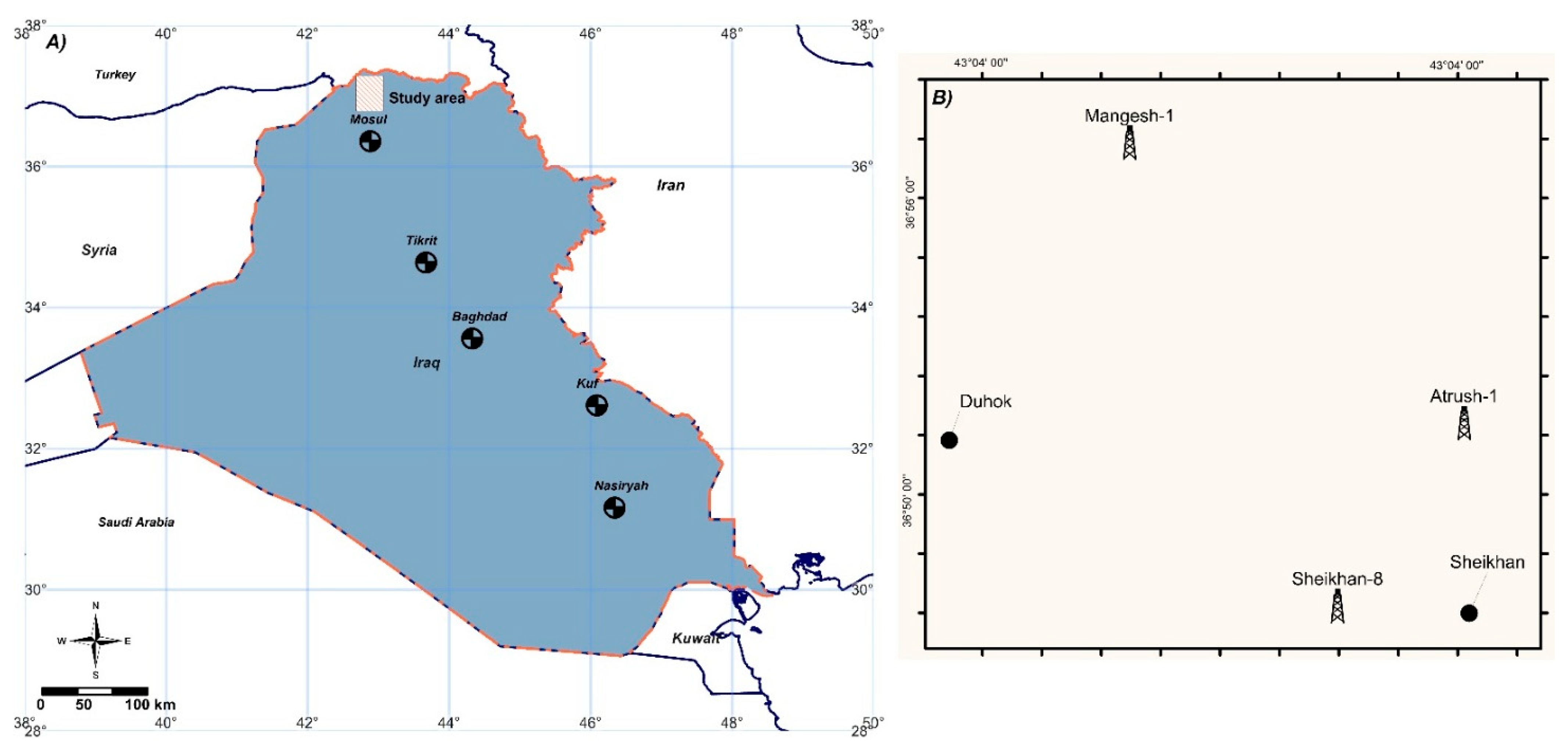
Figure 1. Location maps of the study area. (A) Base map of Iraq showing the study location in the northern region (Kurdistan). (B) Base map of the study area presenting the location of the studied wells.
Minerals 15 01202 g001
Figure 2. Regional geological column of northern Iraq showing the general rock units (adapted from Gharib et al. [3]).
Minerals 15 01202 g002
Figure 3. Stratigraphic logs for Mangesh-1 and Sheikhan-8 wells showing lithology, formation, and U (ppm) profiles. The enclosed map indicates the well locations.
Minerals 15 01202 g003
Figure 4. Scale bar is 50 μm in 2–5. Panels 1–4 show organic microfacies C-1 in the Sargelu Formation. (14) Mangesh-1 well, sample depth 2544 m. (1) Rock section showing dark gray color of the laminated-alginite-rich rock matrix (arrow indicates the lamination direction); 4 in IBL, 3 in IWL. (3,4) Lamalginite laminae (LA) are recognizable by dark gray bands in IBL and orange color fluorescence in IBL (arrow indicates the lamination direction). (511) Organic microfacies D-2 in the Sargelu Formation. (5,6) Mangesh-1 well, sample depth 2610 m, 5 in IBL. Liptodetrinite (LD) and resinite (R) are recognizable by yellow to orange color in IBL. (6) Rock section showing dispersed organic particles recognizable by brown, black, and orange colors. (711) Mangesh-1 well, sample depth 2616 m. (7) The limestone is massive, and the organic particles are less dense. (8) Unidentified organic particles (dinoflagellate?). (911) Resinite (R), showing brown color in IWL and brown color fluorescence IBL, (11) in IWL, (10) in IBL.
Minerals 15 01202 g004
Figure 5. Rock sections of different organic microfacies. (1) Organic microfacies B in the Naokelekan Formation in Mangesh-1 well (first variety). The rock section represents dark gray shale with homogeneous surface, and the thin lamination of bituminite is not observed, sample depth 2448 m. (2) Organic microfacies B in the Naokelekan Formation in Mangesh-1 well (second variety) (arrow points to the lamination direction). The rock section shows dark, thinly laminated rock matrix with numerous sulfide framboids, sample depth 2484 m. (3) Organic microfacies C-1 in the Naokelekan Formation in Mangesh-1 well. The rock section shows thinly laminated dark gray rock matrix (arrow points to the lamination direction), sample depth 2463 m. (4,5) Organic microfacies A in Naokelekan Formation in Sheikhan-8 well, 4 sample depth 1629 m, 5 sample depth 1664 m. The rock sections of calcareous shale show a black rock matrix with several bitumen bands. (6) Organic microfacies C-2 from the Barsarin Formation in Sheikhan-8 well; the rock section shows dark gray thin carbonate rock with laminated rock matrix (arrow points to the lamination direction), sample depth 1542 m. (7) Organic microfacies C-2 from the Barsarin Formation in Sheikhan-8 well. Rock section shows coupling of three laminae of different thicknesses that are undulated and intercalated with anhydrite, sample depth 1522 m.
Minerals 15 01202 g005
Figure 6. Scale bar is 50 μm in all photomicrographs except as otherwise indicated. Organic microfacies E from the Naokelekan Formation in Mangesh-1 well. (13) Different fields of bituminous limestone (first variety), sample depth 2451 m. (1) Rock section photomicrograph of the bitumen impregnation. (13) The bitumen impregnations are observed along the irregular micro-fissures of the carbonate rock matrix (SBF). (4,5) Different fields of bituminous limestone (second variety), (4) rock section, (5) the second variety is the bitumen filling rock matrix pores and intragranular spaces (SBP), sample depth 2505 m. (6,7) Different fields of bituminous limestone (third variety), (6) rock section, (7) the massive bitumen particles (SB) that are characterized by high reflectance and smooth homogeneous texture, sample depth 2505 m.
Minerals 15 01202 g006
Figure 7. Scale bar is 50 μm in (46). (16) Organic microfacies E in the Naokelekan Formation in Sheikhan-8 well. (16) Different fields of chaetetid stromatoporoids, sample depth 1641 m. (13) Rock section photomicrographs, 4 in IBL, (5,6) in IWL. (1,2,4,5) Bitumen is recognized as thin, brown films (TF) within the polygonal calicles. (3,6) Free bitumen rock specimens.
Minerals 15 01202 g007
Figure 8. Rock sections from different organic microfacies. (1,2) Organic microfacies B in the Barsarin Formation in Sheikhan-8 well. (1) The rock section comprises dark brown rock matrix, sample depth 1495 m. (2) Includes dark gray thinly laminated rock matrix, sample depth 1509 m. (3,4) Organic microfacies E in the Barsarin Formation. (3) Rock section comprises white fossiliferous anhydrite rock with scarce organic matter, from Mangesh-1 well, sample depth 2442 m. (4) The rock section showing white fossiliferous anhydrite, from Sheikhan-8 well, sample depth 1503 m. (5,6) Organic microfacies E in the Barsarin Formation in Mangesh-1 well. (5,6) Rock section comprising brown bitumen dots disseminated in the rock matrix, sample depth 2427 m. (7,8) Organic microfacies D in the Barsarin Formation. The rock section includes light gray shale and scattered organic particles recognizable by brown color. (7) From Mangesh-1 well, sample depth 2397 m. (58) From Sheikhan-8 well, sample depth 1569 m.
Minerals 15 01202 g008
Figure 9. Integrated Q-mode and R-mode cluster analysis for the classification of organic microfacies. The Q-mode dendrogram (left) shows sample groupings that define the organic microfacies (A to E). The R-mode dendrogram (top) illustrates the relationships between the input petrographic variables. The central heatmap displays the semi-quantitative petrographic composition of each sample. Organic geochemical data (total organic carbon (TOC), hydrogen index (HI)) are presented.
Minerals 15 01202 g009
Figure 10. Scale bar is 50 μm in all photomicrographs. Organic microfacies A in the Naokelekan Formation in Sheikhan-8 well. (15) Different fields from Sheikhan-8 well, sample depth 1629 m, (14) in IBL, 5 in IWL. The rock section of photomicrographs in Figure 5(4). The bituminite (LB) is condensed in thinly laminated texture. Some layers are rich in solid bitumen (SB), characterized by orange color and smooth, fine texture.
Minerals 15 01202 g010
Figure 11. Scale bar is 50 μm in all photomicrographs. Organic microfacies A in the Naokelekan Formation in Sheikhan-8 well. (17) Different fields from Sheikhan-8 well, sample depth 1664 m, (1,2,4,5,7) in IBL, (3,6) in IWL. The rock section of photomicrographs in Figure 5(5). The lamalginite (LA) lamina with bituminite (B) is observed in 1. The solid bitumen (wurtzilite, FSB) is observed in all photomicrographs and distinguished by homogeneous yellow color in IBL and dark gray color in IWL.
Minerals 15 01202 g011
Figure 12. Scale bar is 50 μm in all photomicrographs. Organic microfacies A in the Naokelekan Formation in Sheikhan-8 well. (16) Different fields from Sheikhan-8 well, sample depth 1659 m. (14) Represent same fields. The groundmass becomes highly bituminous (LB). The fluorescent solid bitumen (wurtzilite, FSB) is observed in all photomicrographs and distinguished by homogeneous yellow color in IBL and dark gray color in IWL.
Minerals 15 01202 g012
Figure 13. Scale bar is 50 μm in all photomicrographs. Organic microfacies B in the Naokelekan Formation in Mangesh-1 well (first variety), rock section of photomicrographs in Figure 5(1). (1,2) Same field, sample depth 2448 m, (1) in IBL, (2) in IWL. The laminated bituminite (LB) is recognizable by brown color bands in IWL and fluorescent orange color in IBL. Grain with high brightness in IWL and black in IBL is sulfide framboids (Sul.).
Minerals 15 01202 g013
Figure 14. Scale bar is 50 μm in all photomicrographs. Organic microfacies B Mangesh-1 well (second variety). Rock section of photomicrographs in Figure 5(2). (12) Sample depth 2484 m. (3) Mangesh-1 well, sample depth 2502 m, 1 in IWL, (2,3) in IFL. The bituminite (LB) is mixed with the rock matrix. The rock matrix/bituminite mixture is distinguished by dark gray color in IWL and orange color in IBL. The rock matrix/bituminite mixture is massive to laminated in some parts, and the sulfide minerals are aligned with the bituminite lamination.
Minerals 15 01202 g014
Figure 15. Scale bar is 50 μm in all photomicrographs. Organic microfacies B in the Naokelekan Formation. (1,2) Same field, sample depth 1495 m. (3,4) Same field, sample depth 1509 m. (1,3) In IWL, (2,4) in IBL. (3,4) Rock section of photomicrographs (Figure 8(2)). (14) The bituminite (B) is thinly laminated and is recognizable by dark color and weak reflectance in IWL and weak fluorescence in IBL. (5,6) From Mangesh-1 well. (5,6) Same field, sample depth 1495 m. (7,8) Same field, sample depth 1509 m. (5,7) In IWL, (6,8) in IBL. The bituminite (B) is highly mixed with the groundmass; it is recognizable by dark color in IWL and weak fluorescence in IBL.
Minerals 15 01202 g015
Figure 16. Scale bar is 50 μm in all photomicrographs. (18) Organic microfacies C-1 in the Naokelekan Formation in Mangesh-1 well. Mangesh-1 well, sample depth 2463 m; (1,3,7,8) are in IWL; (2,4,5,6) are in IBL; (1,2) and (3,4) are same fields. Rock section of photomicrographs in Figure 5(3). Groundmass bituminite (GMB) is mixed with grain matrix. The rock matrix/bituminite mixture is distinguished by dark gray color in IWL and orange color in IBL. Fluorescent solid bitumen (FSB) is noticed in the upper part of photomicrographs 1 and 2.
Minerals 15 01202 g016
Figure 17. Scale bar is 50 μm in all photomicrographs. (14) Organic microfacies C-2 in the Barsarin Formation in Sheikhan-8 well, sample depth 1522 m; (13) in IWL; (4) in IBL; 1. rock section of photomicrographs in Figure 5(7). The organic-rich lamalginite lamina (LA) is undulant and irregular in thickness and intercalate with anhydrite. (3,4) The lamalginite laminae (LA) are densely packed with the sulfide framboids, and the organic matter is recognizable by dark brown to gray color and strong orange color in IBL.
Minerals 15 01202 g017
Figure 18. Scale bar is 50 μm in all photomicrographs. (13) Organic microfacies C-2 in the Barsarin Formation in Sheikhan-8 well. (13) Different field in IBL. The rock section of photomicrographs in Figure 5(6). (1) Sample depth 1531 m, (2) sample depth 1543 m, (3) sample depth 1537 m. (13) The lamalginite sheets (LA) are recognizable by strong orange color in the IBL and laterally and vertically continuous lamination. The lamination regularity and intensity are different among the samples.
Minerals 15 01202 g018
Figure 19. Scale bar is 50 μm in all photomicrographs. (18) Organic microfacies D-1 in the Barsarin Formation. (14) From Mangesh-1 well; (1,2) same field sample, depth 2397 m; 2 in IBL; (3,4) different fields, sample depth 2424 m. (58) From Sheikhan-8 well; (5,6) different fields in IBL, sample depth 1611 m; (7,8) different fields, sample depth 1569 m; 7 in IBL; 8 in IWL. (18) The terrigenous organic matter like cutinite (Cut.) and sporinite (Sp.) is found scattered in the rock matrix and recognizable by brown color in IWL and strong yellow to orange color in IBL. (18) Liptodetrinite (LD) is common and recognizable by strong fluorescence. (1,9) Vitrinite (Vit.) is recognizable by brown color to gray color with higher reflectance in IWL and weak fluorescent brown color in IBL.
Minerals 15 01202 g019
Figure 20. Scale bar is 50 μm in all photomicrographs. (18) Organic microfacies E in the Barsarin Formation. (1,2) From Mangesh-1 well, (1) sample depth 2380 m, (2) sample depth 2442 m. (3,4) Same field from Sheikhan-8 well, sample depth 1503 m. (13) In IWL, 4 in IBL. (1) Anhydrite is recognizable in the rock section by greenish white color in IWL; some brown organic particles are observed in the form of threads. (2) Solid bitumen (SBP) is found in pores around the scattered microfossils and recognizable by gray reflectance and brown color in IWL, the rock section of photomicrographs (Figure 8(3)). (3,4) Alginite (telalginite = TL) is present and recognizable by brown color in IWL and fluorescent orange color in IBL, rock section of photomicrographs (Figure 8(3,4)). (58) Crystallized anhydrite, rock sections of photomicrographs (Figure 8(5,6)). (5,6) Same field from Mangesh-1 well, sample depth 2427 m; (5) in IWL; (6) in IBL. (7,8) From Sheikhan-8 well, sample depth 1515 m in IWL. The bitumen (SBP) occurs in the pores between the lath-shaped crystals and recognizable by brown color and low reflectance in IWL.
Minerals 15 01202 g020
Figure 21. Principal component analysis (PCA) biplots showing the distribution of samples according to organic microfacies (A) and the loadings of petrographic components (B), providing insights into their controlling factors.
Minerals 15 01202 g021
Figure 22. Organic geochemical log of Mangesh-1 well showing the distribution of the samples and values of organic quantity and quality as well as the organic microfacies.
Minerals 15 01202 g022
Figure 23. Organic geochemical log of Sheikhan-8 showing the distribution of the samples and values of organic quantity and quality as well as the organic microfacies.
Minerals 15 01202 g023
Figure 24. The S2 versus TOC diagram of Langford and Blanc-Valleron [55]. This plot presents the quantity and quality of each organic microfacies.
Minerals 15 01202 g024
Figure 25. HI versus Tmax (modified after Delvaux et al. [54]). Representative photomicrographs are provided from samples of each organic microfacies. The scale bar is 50 μm.
Minerals 15 01202 g025
Figure 27. Production index versus the Tmax (°C) (modified from Langford and Blank-Vallero [55]).
Minerals 15 01202 g027
Figure 28. The S1 versus TOC diagram as modified after Smith [70] and Jin and Sonnenberg [71].
Minerals 15 01202 g028
Figure 29. Schematic diagram based on the silled basin model of Wignall (expanding puddle [97]). The diagram showing three successive periods of changes in northern Iraq during the Jurassic. The change in restriction intensity is the main reason for the major variations among the different organic microfacies. The base of the diagram is modified after Röhl and Schmid-Röhl [86].
Minerals 15 01202 g029
Table 1. Organic petrographical data for samples from the Barsarin and Naokelekan formations in Mangesh-1 and Sheikhan-8 wells. The table presents semi-quantitative abundances (0 = none, 1 = rare, 2 = common, 3 = abundant) of macerals. GM = groundmass bituminite. Each sample is assigned an organic microfacies (A–E) determined by cluster analysis, with corresponding PCA1 and PCA2 scores.
WellSample Depth VitriniteInertinite GMBLaminated BituminiteRock Matrix BituminiteCutiniteSporiniteTelalginiteLamalginiteResiniteLiptodetriniteSolid Bitumen in PoresSolid Bitumen in FissuresSolid Bitumen ParticlesFluorescent Solid Bitumen Rock LaminationSulfide MineralOrganic MicrofaciesPCA1PCA2
Mangesh-12319Barsarin00310000000000021B0.6−0.5
233700320000000000021B0.8−0.4
238001000001000100000E−0.5−0.7
239730000221003000000D−1.71.4
242420000221003000000D−1.51.2
242700000000000100000E−0.4−0.7
244201000001000100000E−0.5−0.7
2448Naokelekan00230000000000033B1.3−0.1
245100000000000130000E−0.5−0.8
246300030000100000121C0.80.2
248400330000000000013B1.0−0.2
250200330000000000013B1.0−0.2
250500000000000300000E−0.5−0.9
2544Sargelu00010000200000021C0.4−0.6
261000000000013000000D−0.90.2
261600000000012000000D−0.80.0
263100010000200000021C0.4−0.6
264300010000200000021C0.4−0.6
Sheikhan−81495Barsarin00310000000000011B0.4−0.6
150301000001000100000E−0.5−0.7
150900330000000000021B1.0−0.2
151500000000000100000E−0.4−0.7
152200000000300000033C0.7−0.9
153100000000300000030C0.4−0.8
153400000000300000030C0.4−0.8
153700000000300000030C0.4−0.8
154220000211003000000D−1.51.1
155720000121003000000D−1.51.1
156910000111003000000D−1.30.7
160101000001000100000E−0.5−0.7
161130000221003000000D−1.71.4
1629Naokelekan00033000100003331A1.72.2
164100000000000300000E−0.5−0.9
165900033000000003331A1.72.3
166400033000000003331A1.72.3
Table 2. The pyrolysis, vitrinite reflectance (Ro%), and organic parameters for the Jurassic samples in the studied wells. TOC (wt%) = total organic carbon; S1 = free contents of hydrocarbon (mg HC/g rock); S2 = remaining hydrocarbon potential (mg HC/g rock); S3 peak = produced carbon dioxide (mg CO2/g rock); HI = hydrogen index; OI = oxygen index; Tmax = maximum temperature at peak of S2 (°C); PI = production index.
WellDepthRock FormationOrganic MicrofaciesTOCS1S2S3HIS2/S3TmaxRoPIGPS1/TOCOIPIGPRoS1/TOCS2/S3
Mangesh-12319BarsarinB1.491.066.920.61464.0011.34430.000.580.137.98627.1141.000.137.980.5871.1411.34
2397D0.980.622.400.58245.004.14437.000.710.213.021528.9159.000.213.020.7163.274.14
2448NaokelekanB13.003.1452.480.80404.0065.60442.000.800.0655.6236.826.000.0655.620.8024.1565.60
2463C6.072.1122.090.90364.0024.54437.000.710.0924.20141.6315.000.0924.200.7134.7624.54
2484B1.100.543.940.64358.006.16436.000.690.124.48797.4258.000.124.480.6949.096.16
25021.050.363.020.93288.003.25433.000.630.113.381055.8289.000.113.380.6334.293.25
2544SargeluC0.520.281.590.54306.002.94434.000.650.151.871828.74104.000.151.870.6553.852.94
2610D0.510.341.371.04270.001.32429.000.560.201.715060.83205.000.201.710.5666.671.32
2631C0.620.502.010.86325.002.34430.000.580.202.513450.49139.000.202.510.5880.652.34
26430.700.442.280.89326.002.56429.000.560.162.722453.63127.000.162.720.5662.862.56
Sheikhan-81629NaokelekanA4.161.8918.880.72454.0026.22436.000.690.0920.77173.2617.000.0920.770.6945.4326.22
165911.602.5263.750.90550.0070.83440.000.760.0466.2730.678.000.0466.270.7621.7270.83
16644.481.4323.950.72535.0033.26436.000.690.0625.3895.9616.000.0625.380.6931.9233.26
1495BarsarinB3.131.2216.701.03534.0016.21429.000.560.0717.92240.4033.000.0717.920.5638.9816.21
15092.361.3312.990.70550.0018.56434.000.650.0914.32303.6930.000.0914.320.6556.3618.56
1542D0.900.252.081.04232.002.00427.000.530.112.331388.89116.000.112.330.5327.782.00
15571.180.243.330.91282.003.66429.000.560.073.57555.8177.000.073.570.5620.343.66
15691.240.363.891.25314.003.11428.000.540.084.25932.91101.000.084.250.5429.033.11
16111.160.494.970.82428.006.06422.000.440.095.46696.9471.000.095.460.4442.246.06
Table 3. Selected biomarker parameters of the extracted bitumen samples.
WellDepthTOCWeightSATARONSOASPHδSat13‰δAro13‰CVPr/PhPr/n-C17Ph/n-C18CPIC27%C28%Rock Formation Organic Microfacies
Mangesh-123970.988.6 0.870.160.240.96 BarsarinD
24841.133.613.429.428.1948.99−27.9−27.7−2.550.820.240.30.9753.214.7NaokelekanB
26310.6275.79.2510.9820.2359.54−27.5−27.2−2.470.660.240.280.8655.916SargeluC
Sheikhan-815092.362211.712.933.0642.34−28.3−28−2.210.440.330.561.0449.915.4BarsarinB
15691.24142.6221.0220.4515.91−27.7−27.7−3.061.040.320.361.2856.615.2D
16294.1662.4 0.580.340.530.94 NaokelekanA
16644.4896.116.46.6712.3164.62−28.2−28.1−2.680.620.320.460.9353.214.7A
WellDepthC29%Dia/SterC19/C23C22/C21C23/C24C26/C25C24TT/C26TC24T/HG/C30HC29/C30Diahop/HopC35/C34TT/HopC32SDBT/PRock FormationOrganic microfacies
Mangesh-12397 BarsarinD
248432.10.320.210.822.780.654.960.430.110.750.020.670.290.621.76NaokelekanB
263128.10.080.121.172.990.648.360.50.10.640.010.820.20.622.25SargeluC
Sheikhan-8150934.70.050.11.433.990.629.240.120.10.620.010.610.080.621.54BarsarinB
156928.20.120.190.8630.825.10.590.090.820.020.750.310.62.97D
1629 NaokelekanA
166432.10.140.251.013.520.7114.460.680.240.710.010.810.250.622.22A
Disclaimer/Publisher’s Note: The statements, opinions and data contained in all publications are solely those of the individual author(s) and contributor(s) and not of MDPI and/or the editor(s). MDPI and/or the editor(s) disclaim responsibility for any injury to people or property resulting from any ideas, methods, instructions or products referred to in the content.