
Article

Swelling Stress of Bentonite: Thermodynamics of Interlayer Water in K-Montmorillonite in Consideration of Alteration
1
Graduate School of Environmental, Life, Natural Science and Technology, Okayama University, 3-1-1, Tsushima-naka, Kita-ku, Okayama 700-0082, Japan
2
Institute of Academic and Research, Okayama University, 3-1-1, Tsushima-naka, Kita-ku, Okayama 700-8530, Japan
*
Author to whom correspondence should be addressed.
Minerals 2024, 14(4), 430; https://doi.org/10.3390/min14040430
Submission received: 16 February 2024 / Revised: 16 April 2024 / Accepted: 19 April 2024 / Published: 21 April 2024
(This article belongs to the Special Issue Environmental Mineralogy, 2nd Edition)

Abstract

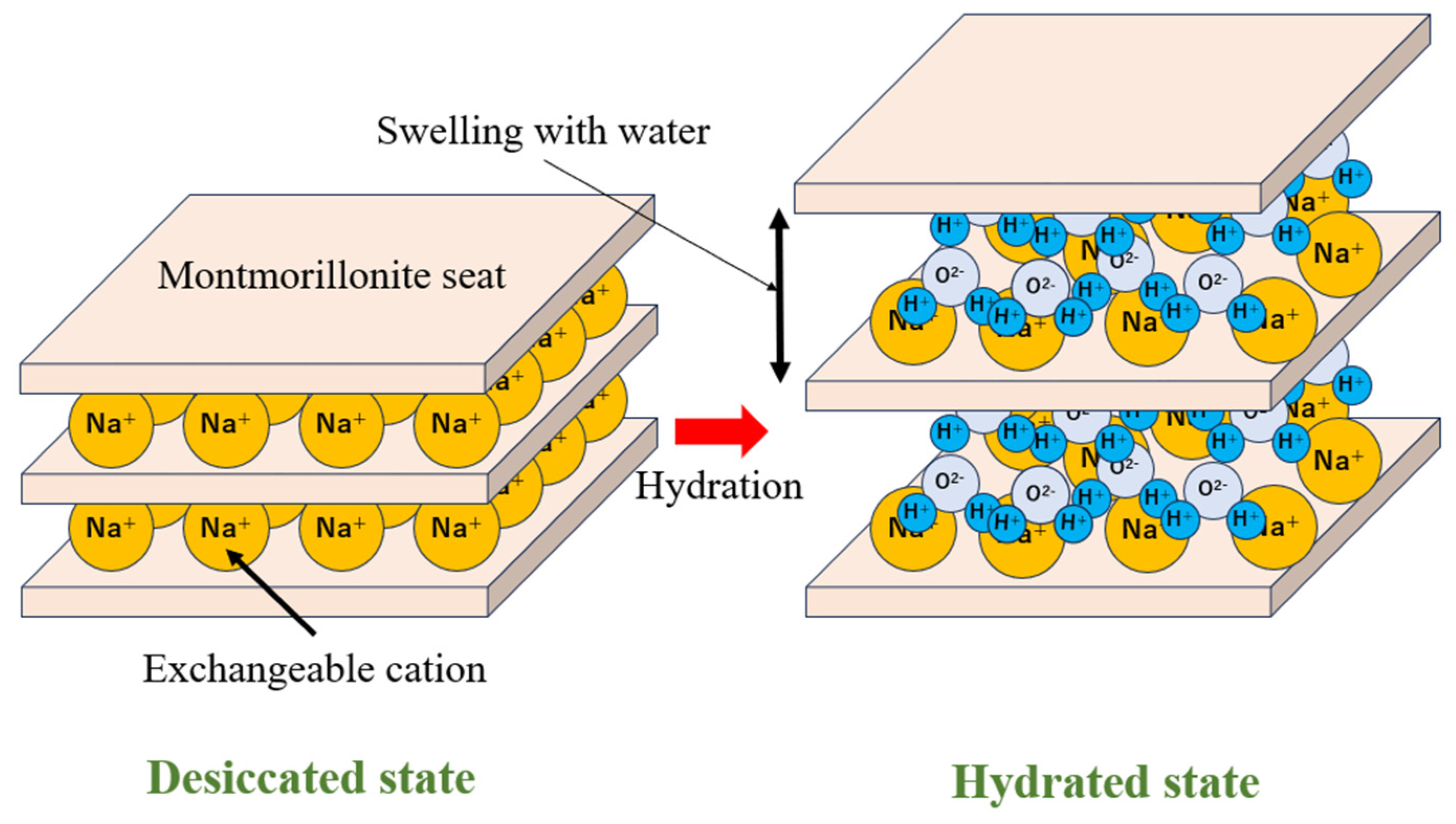
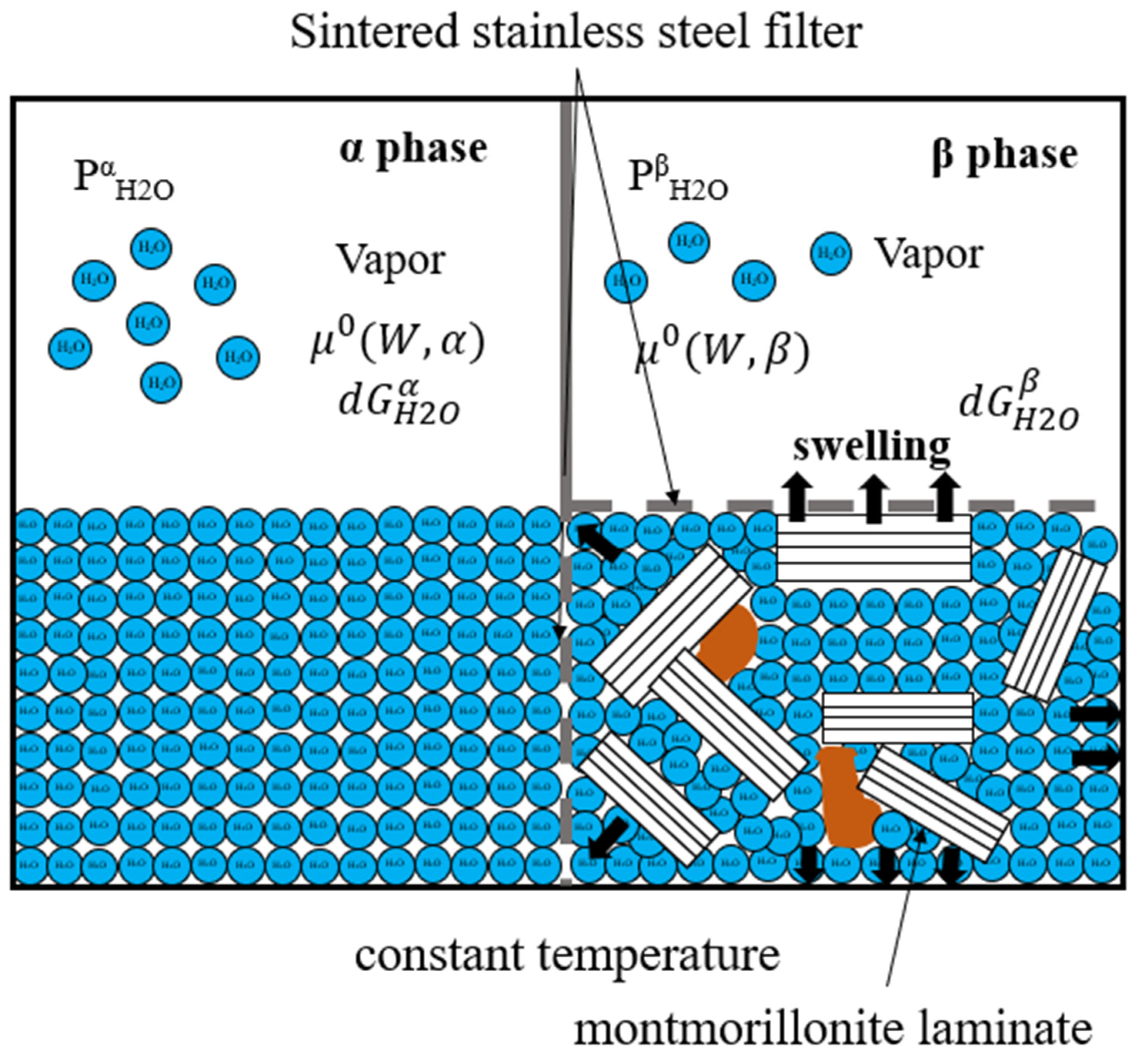
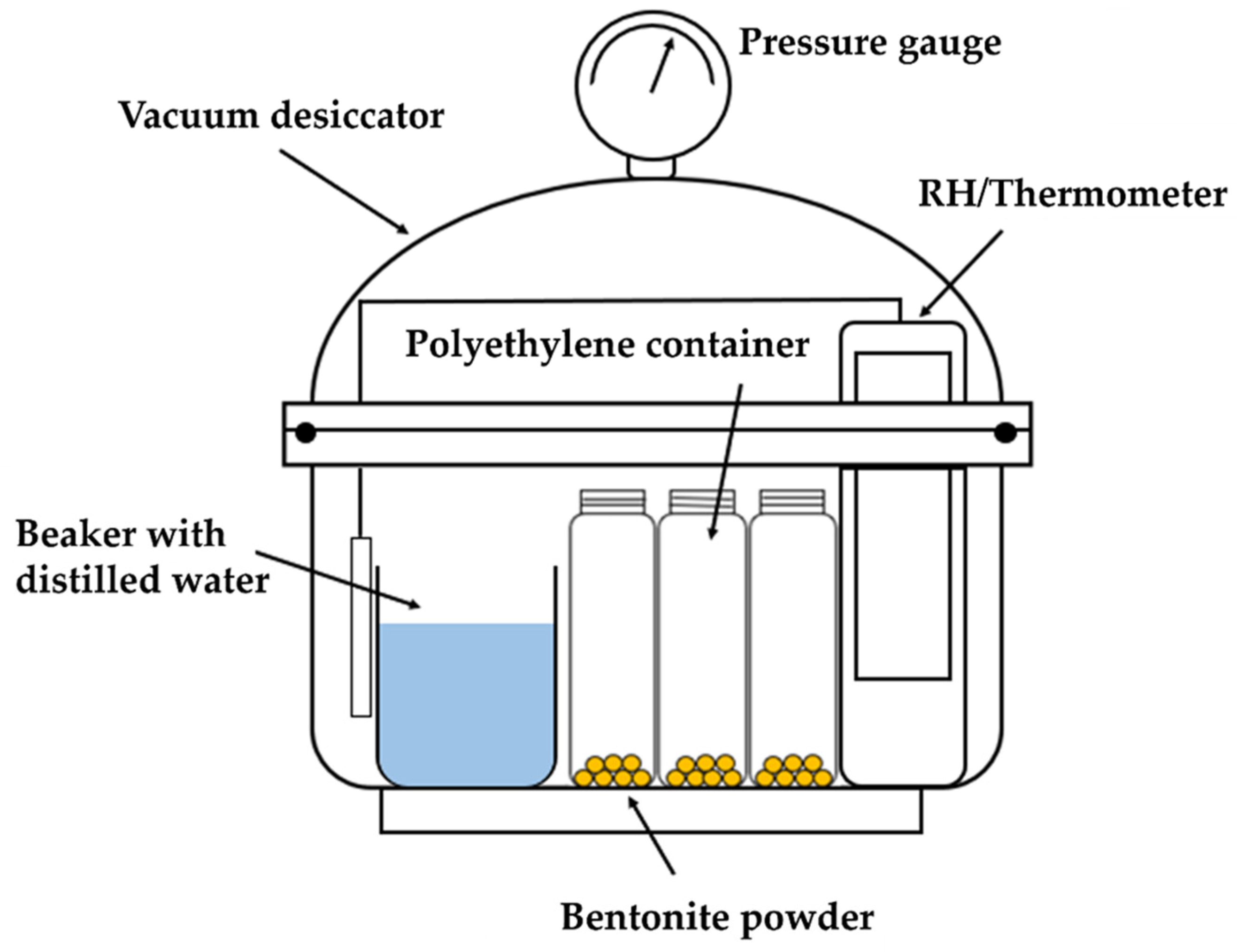
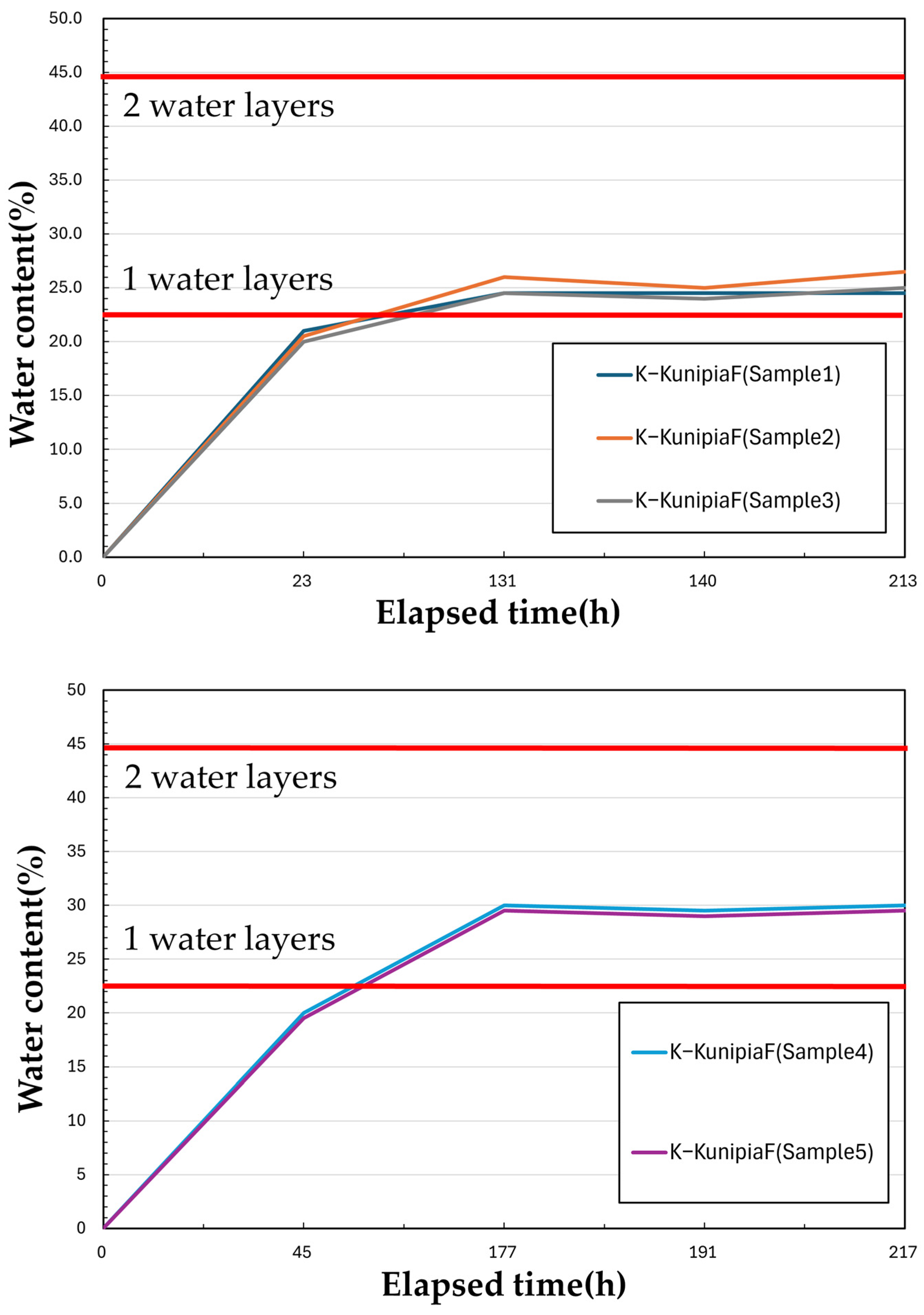
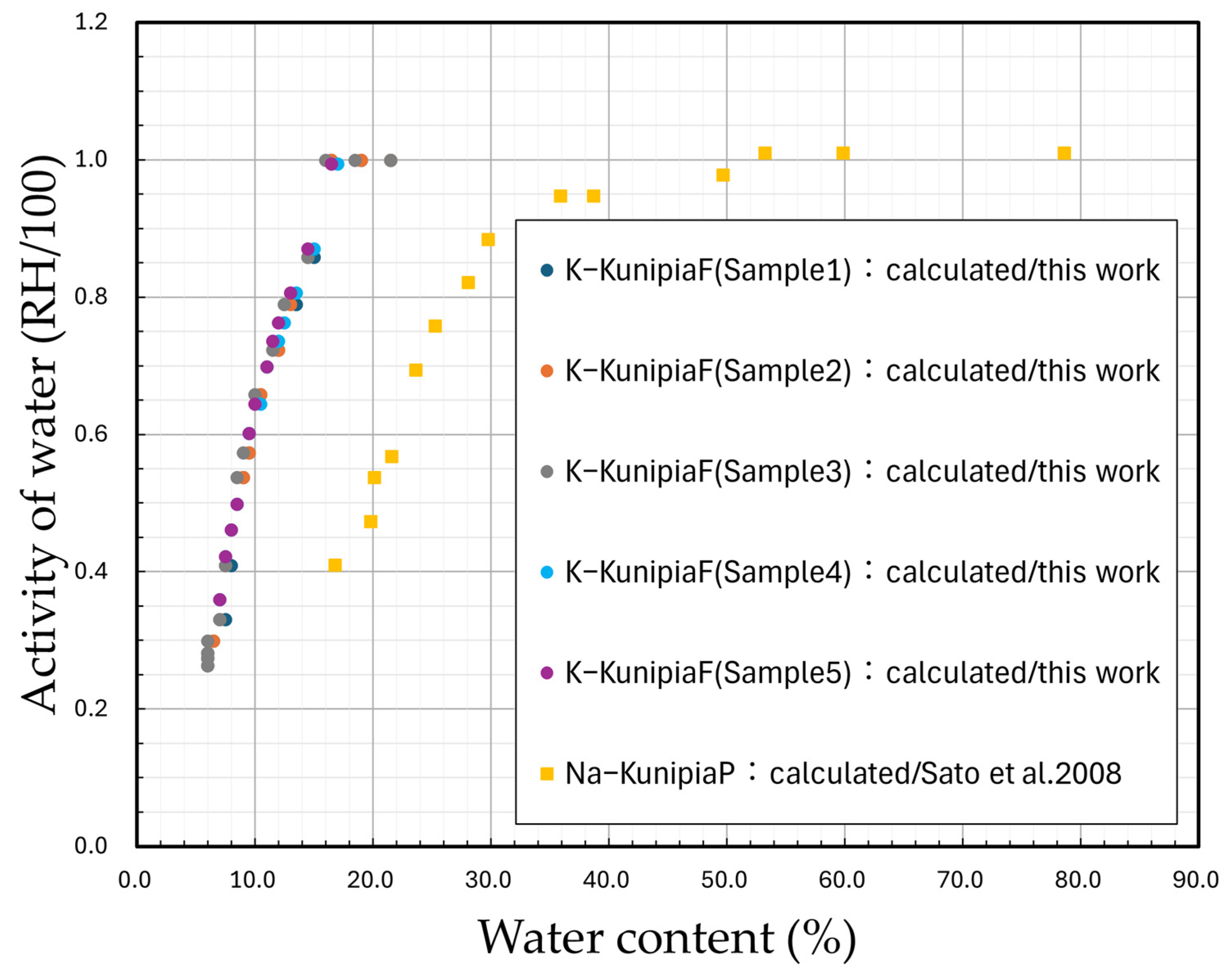
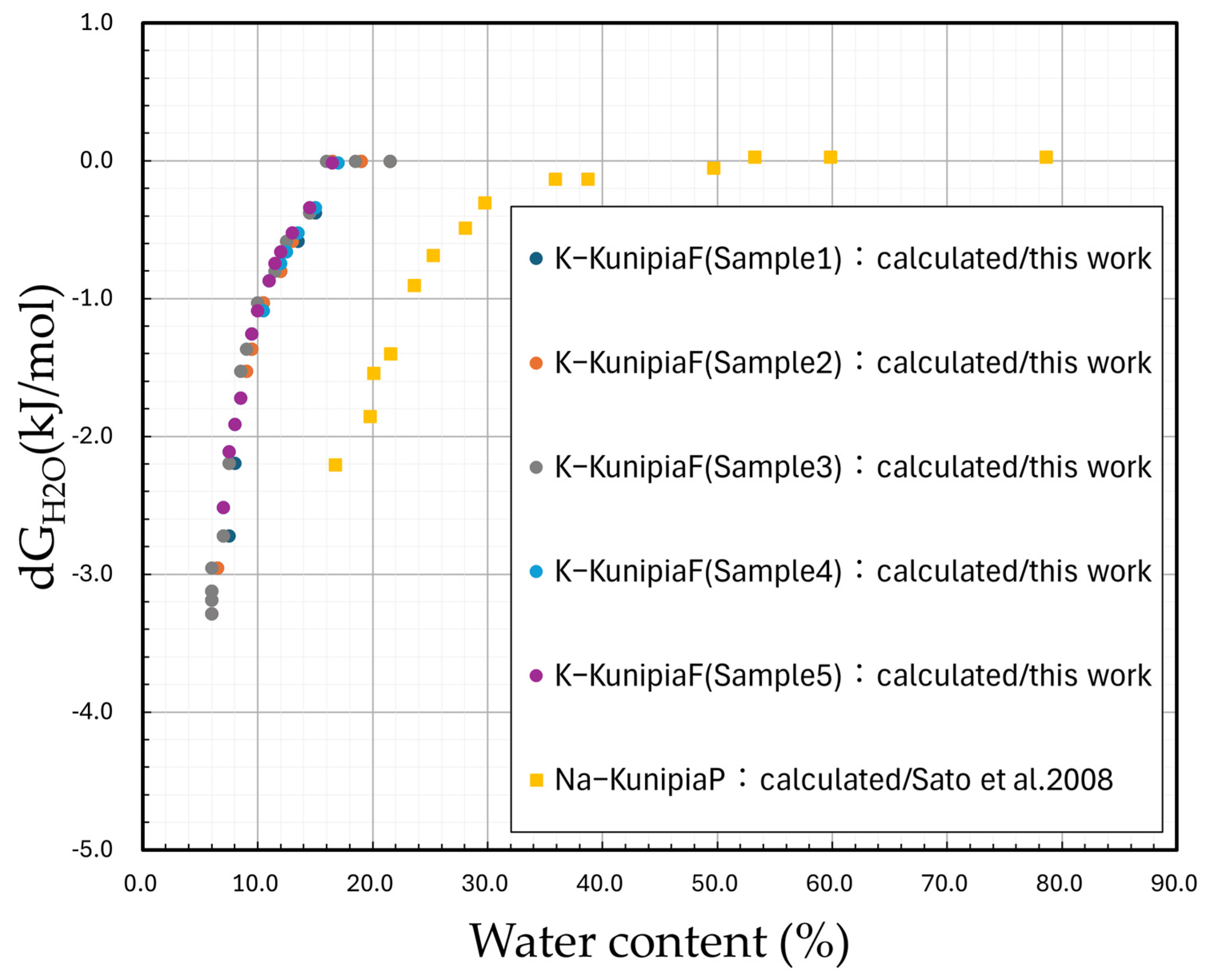
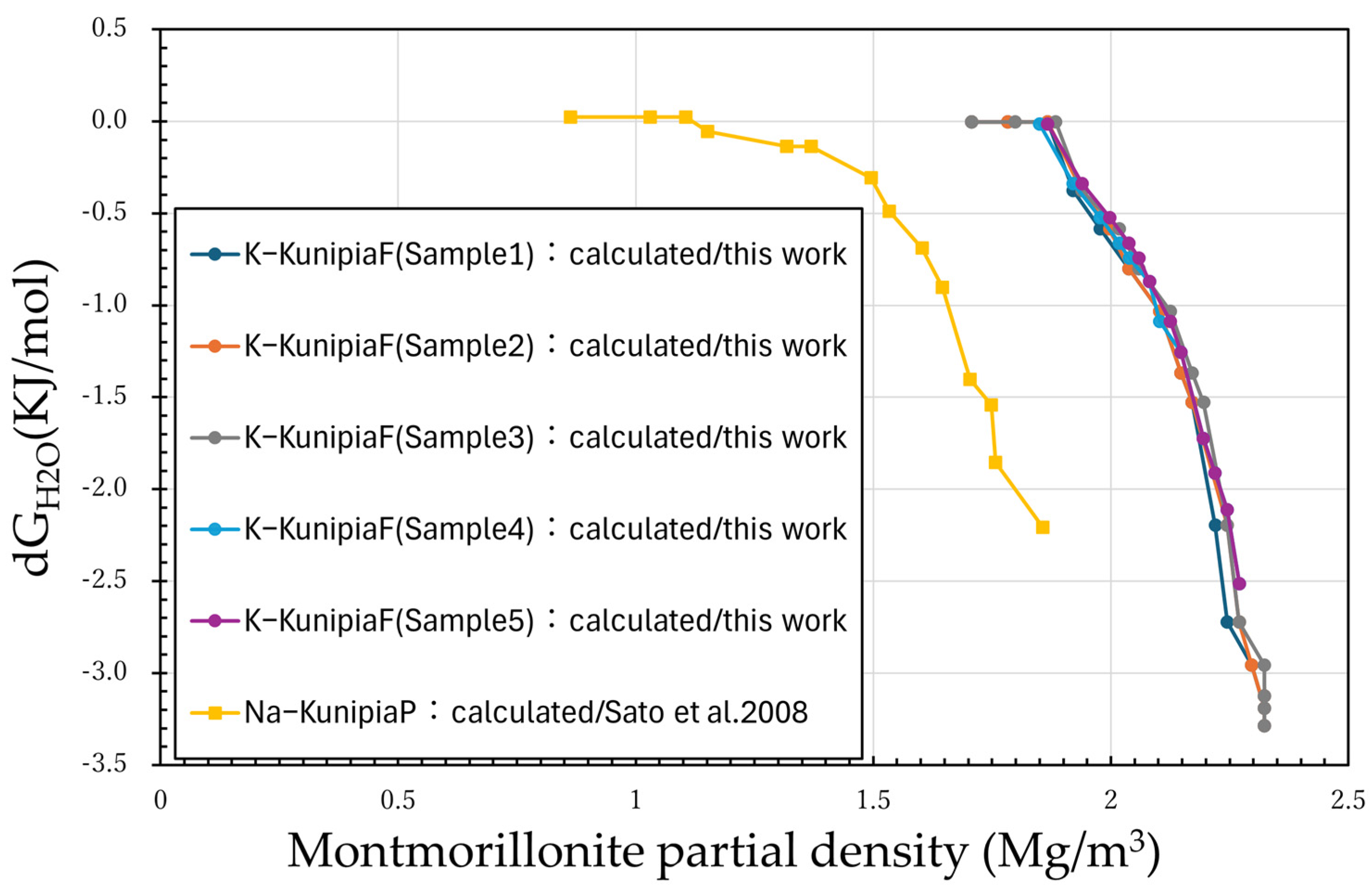
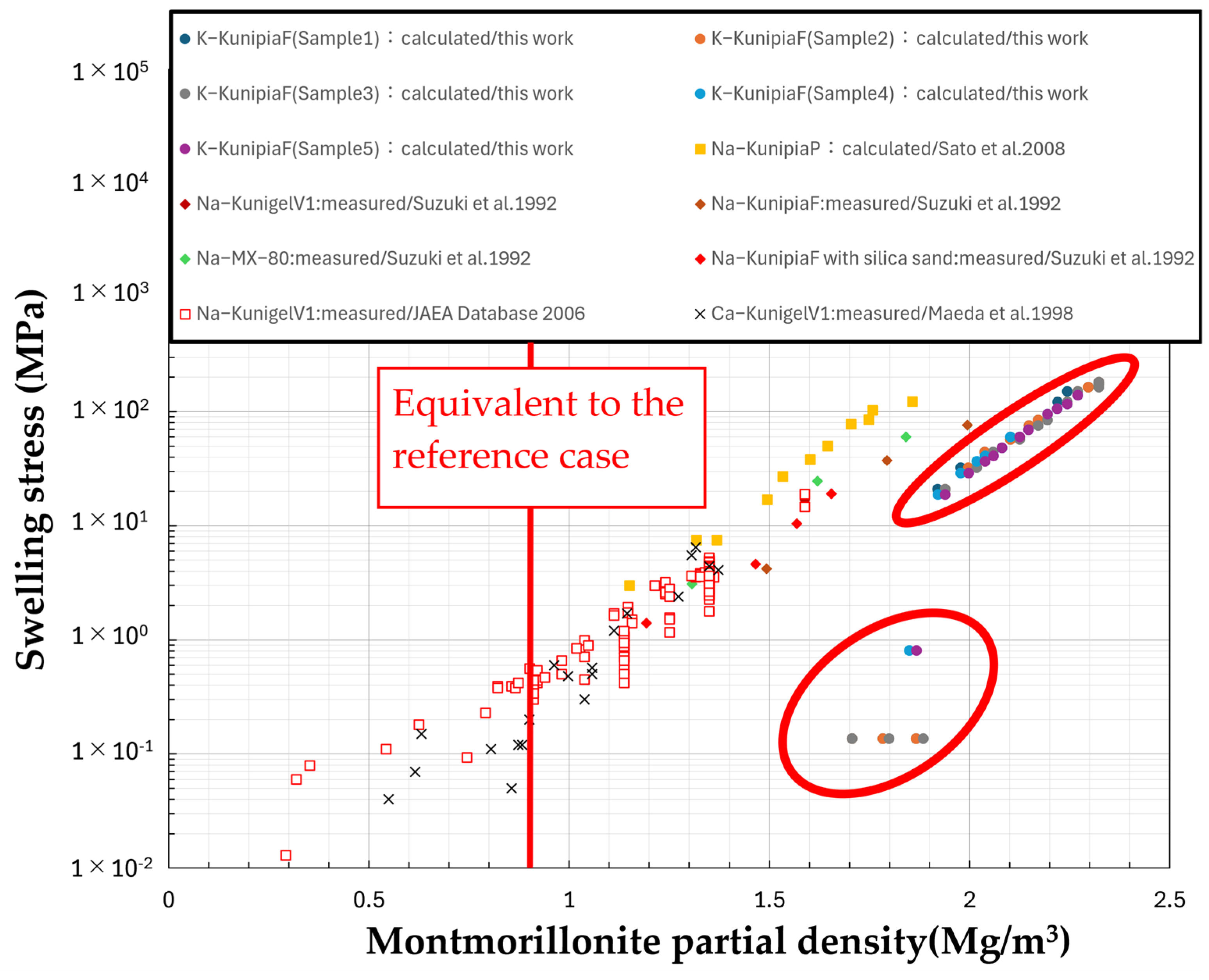
The buffer material that makes up the geological disposal system of high-level waste swells by contact with groundwater and seals space with rock mass and fractures in rock mass. The buffer material has a function of mechanical buffer with rock pressure, and swelling stress is important in this case. The alteration of bentonite may occur due to the initial replacement of cations (Na+ ions) in the interlayer with K+ ions upon contact with groundwater, but there are no studies on the swelling stress of K-bentonite. In this study, the author prepared K-montmorillonite samples and obtained thermodynamic data on interlayer water as a function of water content using a relative humidity method. The swelling stress was analyzed based on a thermodynamic model developed in earlier studies and compared with measured data. The activity and the relative partial molar Gibbs free energy of porewater decreased with decreasing water content in the region, below approximately 15%. This behavior significantly differs from that of other ions, such as Na. The swelling stress calculated based on the thermodynamic model and date occurred in the region of high density of 1.9 Mg/m3 with montmorillonite partial density. It was indicated for the first time that K-bentonite scarcely swells under realistic design conditions.
Keywords: swelling stress; K-montmorillonite; thermodynamic data; interlayer water; relative humidity method swelling stress; K-montmorillonite; thermodynamic data; interlayer water; relative humidity method