


Abstract
Accurate short-term wind power forecasting plays a critical role in maintaining grid stability due to the inherently irregular and fluctuating nature of wind resources. Deep learning models such as LSTM, GRU, and CNN are widely used to learn temporal dynamics; however, their ability to capture or adapt to the underlying symmetries and asymmetries inherent in real-world wind energy data remains insufficiently explored. In this study, we evaluate and compare these models using authentic production and meteorological data from the Tokat Wind Farm in Türkiye. The forecasting scenarios were designed to reflect the temporal structure of the dataset, including seasonal patterns, recurrent behaviors, and the symmetry-breaking effects caused by abrupt changes in wind speed and operational variability. The results demonstrate that the LSTM model most effectively captures the temporal relationships and partial symmetries within the data, yielding the lowest error metrics (RMSE = 0.2355, MAE = 0.1249, MAPE = 25.16%, R2 = 0.8199). GRU and CNN offer moderate performance but show reduced sensitivity to asymmetric fluctuations, particularly during periods of high variability. The comparative findings highlight how symmetry-informed model behavior—specifically the ability to learn repeating temporal structures and respond to symmetry-breaking events—can significantly influence forecasting accuracy. This study provides practical insights into the interplay between data symmetries and model performance, supporting the development of more robust deep learning approaches for real-world wind energy forecasting.
1. Introduction
Energy demand continues to exhibit growth, driven by factors such as population growth, industrial production, air conditioning use, and the proliferation of data centers worldwide [1]. According to the International Energy Agency’s (IEA) Electricity in 2025 report, global electricity demand increased by 4.3% in 2024, and global electricity consumption is projected to increase by an unprecedented 3500 TWh in the next three years [2]. A substantial portion of this energy demand is met through the use of fossil fuels, which have been identified as a major contributor to environmental degradation [3]. In light of these challenges, renewable energy sources (RES) are being explored as a means to mitigate these environmental concerns [4]. Among these clean and pollution-free energy sources, wind energy has emerged as one of the most rapidly expanding renewable energy sources on the global stage [5]. According to the IEA World Energy Outlook report published in 2024, 116 GW of new wind power plants were commissioned worldwide in 2023, setting a new record [6]. This development underscores the pivotal role of wind energy, which currently stands as the leading source of variable renewable electricity, generating over 2300 TWh with an installed capacity of 1000 GW [7].
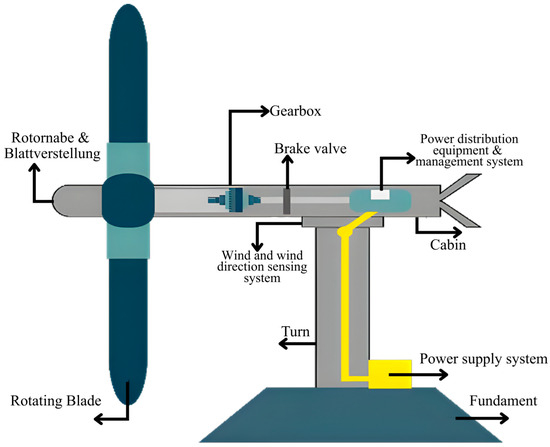
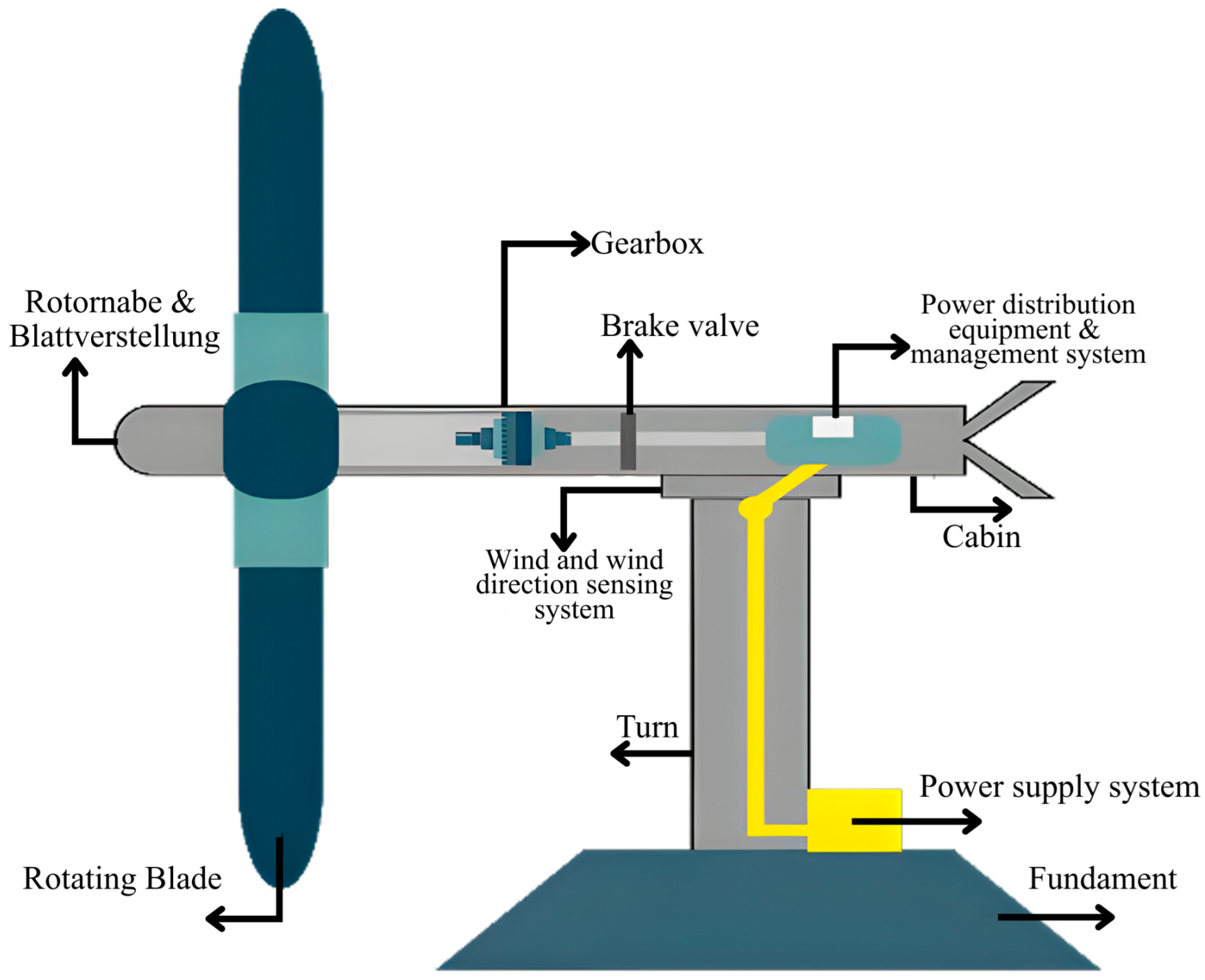
The wind energy system, whose general structure is given in Figure 1, includes a gearbox, wind detection system, cabin, generator, and power distribution equipment [8]. This system encompasses a gearbox, wind-sensing system, cabin, generator, and power distribution equipment. This system is notable for its measurement of numerous non-linear and dynamic time-varying variables, including wind speed and direction [9]. The inherent stochastic variability, intermittent fluctuations, and non-linear characteristics of wind energy present both substantial advantages and significant operational challenges for modern power systems. These inherent challenges complicate the assurance of safe and stable operation of the power system [10]. The ability to predict energy generation is, therefore, critical for effective power grid management, especially in the face of the variability inherent in wind speed and power [11].
Figure 1.
Structural Diagram of Wind Power Generation.
Moreover, implicit in this variability is an underlying structure of symmetry and asymmetry in the temporal evolution of wind power data: wind speed and output often follow asymmetric fluctuations, with abrupt ramps, non-uniform transitions, and unpredictable deviations from typical cycles. Such asymmetric behavior stems from the complex interplay of atmospheric dynamics and turbine aerodynamics, giving rise to stochastic and non-linear temporal patterns. Recognizing these symmetry-breaking features is essential for the development of forecasting models that can reliably capture the irregular transitions and volatility of real-world wind energy systems. Various forecasting models have been developed in the extant literature to estimate wind energy. In their study, Çağlayan et al. employed Modern-Era Retrospective analysis for Research and Applications (MERRA) and Windographer software to ascertain wind energy potential (WP) based on wind speed and direction analysis [12]. In a similar vein, Tian et al. developed a novel wind energy forecasting system, comprising feature decomposition, prediction, optimization, and performance evaluation modules [13]. Zhao et al. developed an Improved Coarse-to-Fine (ICoTF) benchmark learning model for wind power forecasting, which includes a pre-training and regression phase [14]. Sun et al. developed a Spatio-temporal wind power prediction model by taking two measurements based on distance and correlation. Additionally, they employed transformer neural networks, underpinned by the multi-head attention mechanism, within the wind power model [15]. Hou et al. developed a Spatio-Temporal Fusion Module (STFM) for WP prediction using a graph convolutional network and a one-dimensional convolutional neural network, and a Time-Frequency Dual-Domain Transformer (DDformer) model using the information extracted by the STFM [16]. In a related study, Chen et al. developed a cluster strength prediction model (CFM) for WP prediction, which incorporates a Spatial Pattern Attention (SPA), an Improved Multihorizon Quantile Recurrent Neural Network (IMQ-RNN), and an Improved Uncrossed Quantile Regression (INCQR) strategy [17]. Concurrently, Nayak et al. investigated the Online Ensemble Bagging Regression (OEBR) model for WP prediction [18]. Scarabaggio et al. developed a sample average approximation (SAA) model based on the probability density function (PDF) for stochastically varying WT prediction [19]. Yang et al. developed an enhanced Fuzzy C-means (FCM) Clustering Algorithm, leveraging numerical weather forecasts (NWPs) to predict wind power (WP) [20]. Wahdany et al. developed a neural network structure model using onshore and offshore weather data from Germany and the Netherlands. The training of neurons in this model was facilitated by the latent function theorem and the Karush-Kuhn-Tucker (KKT) algorithm [21]. In a related study, Khazaei et al. developed a model consisting of Non Dominant Sequencing Genetic Algorithm II (NSGA-II) and Radial Basis Function (RBF) Neural Network for WP prediction using real wind forecast data and NWP data [22].
Recently, the development of deep learning-based wind power forecasting models has garnered significant attention in the scientific community. Gao et al. developed a theory-based deep learning wind power (WP) prediction model (TgDPF) using high-noise wind speed data. They selected Long Short-Term Memory (LSTM) as the deep learning model [23]. In a related study, Li et al. proposed a two-stage short-term wind power forecasting method. In the initial stage, a bi-directional long short-term memory (BiLSTM) neural network is constructed for both past and future wind power using the Variational Mode Decomposition Algorithm (VMD) and the Automatic Flower Pollination Algorithm (FPA) with VMD parameters. In the subsequent stage, the correlation between meteorological factors is estimated through the implementation of Principal Component Analysis (PCA) [24]. Jiandong et al. decomposed the data using the VMD technique for WP prediction and then developed a deep belief network based on the LSTM and particle swarm optimization (PSO-DBN) model [25]. Zhang et al. developed a Discrete Wavelet Transform (DWT), Seasonal Autoregressive Integrated Moving Average (SARIMA), and LSTM model for WP prediction using power data from an offshore wind turbine in Scotland [26]. Furthermore, Wu et al. developed a Spatiotemporal Correlation Model (STCM) based on convolutional neural networks (CNN) and LSTM (CNN-LSTM) for WP prediction [27]. Kisvari et al. developed a model consisting of a gated recurrent unit (GRU) and an LSTM algorithm for WP prediction [28]. He et al. developed a model for WP forecasting using real data collected from a wind farm in Northwest China, combining the results of CNN and LSTM using the Inferred Ordered Weighted Average (IOWA) operator [29]. In a related study, Xiong et al. developed a multidimensional extended features fusion model (AMC-LSTM) for WP forecasting and found that it provides good performance for short-term wind forecasting [30]. Li et al. developed a model called Federated Deep Reinforcement Learning (FedDRL), which combines federated learning and deep reinforcement learning (DRL) for WP forecasting [31]. In a related study, Khan et al. developed a hybrid model consisting of an LSTM with a Seasonal Mean Forecast (SMI) for WP forecasting using real data from the Fauji Wind Power Plant in Pakistan [32]. Recent research also explores optimization-based and hybrid deep learning approaches. For instance, Surendran et al. (2023) employed a Chicken Swarm Optimization algorithm integrated with deep learning for wind speed prediction, demonstrating improved convergence and accuracy [33]. Similarly, Kumar et al. (2023) proposed a multivariate time series weather forecasting model that combines integrated secondary decomposition with a self-attentive spatio-temporal learning network, showing superior performance for complex meteorological data [34]. In addition, Jasmine et al. (2023) introduced a hybrid deep gated Tobler’s Hiking Neural Network with robust feature selection, addressing challenges of non-stationarity and environmental variability in advanced weather prediction [35]. These studies highlight the rapid evolution of hybrid and attention-based architectures, underscoring the importance of evaluating models under realistic operational scenarios as conducted in this work.
In recent years, Transformer-based and hybrid deep learning models have gained increasing attention in wind power forecasting. Zhou et al. (2021) introduced the Informer model, specifically designed for long sequence time-series forecasting, demonstrating improved efficiency and accuracy compared to conventional RNN-based methods [36]. Lim et al. (2021) proposed the Temporal Fusion Transformer (TFT), which effectively integrates attention mechanisms with interpretable multi-horizon forecasting, showing robust results on energy datasets [37]. More recently, Zhou et al. (2022) developed FEDformer, a frequency-enhanced Transformer framework that leverages seasonal–trend decomposition to capture long-term dependencies in renewable energy time series [38]. These approaches highlight the potential of Transformers in capturing multi-scale temporal patterns, while hybrid frameworks (e.g., decomposition + attention or optimization-enhanced neural networks) further enhance adaptability. Our study complements these works by grounding the evaluation in real operational data and establishing a transparent comparison with recurrent (LSTM, GRU), convolutional (CNN), and Persistence baselines. Widén et al. (2015) [39] provided a comprehensive classification of renewable-energy forecasting tools according to their temporal resolution and application domain. As illustrated in their Figure 5, machine-learning and data-driven models—including deep learning architectures—are identified as suitable tools for short-term forecasting horizons. This framework aligns with the scenarios examined in this study (1-day, 2-day, and 7-day forecasts), supporting the methodological choices adopted here. It should be noted that mesoscale numerical weather prediction models are generally recommended for physics-based day-ahead forecasting with hourly resolution, as indicated in [39]. In contrast, the present study focuses on data-driven short-term operational forecasting based on aggregated daily energy values, which aligns with the machine-learning category in their classification [39]. The selection of the 1-day, 2-day, and 7-day forecasting horizons is specifically aligned with practical operational requirements and key scientific challenges in wind energy integration. The 1-day horizon is vital for real-time Day-Ahead Market scheduling and immediate grid balancing [40]. The 2-day horizon bridges short-term and medium-term operational planning, facilitating resource pre-allocation. Furthermore, comparing the 2-day forecasts using varying input window lengths (2-day vs. 4-day historical data) allows for a rigorous quantitative analysis of the models’ sensitivity to input window length, a recognized challenge in robust forecasting methods [41]. Finally, the 7-day horizon is essential for long-term operational planning, supporting maintenance schedules and strategic deployment of backup resources. Evaluating performance across this spectrum is necessary to quantify model stability, particularly in complex, real-world data where the time series may exhibit fractal properties that challenge generalization. Ultimately, the goal is to provide a predictive framework that offers more than just theoretical accuracy but supports system-wide optimization across multiple operational scales [42].
Although recent studies employing deep learning models such as LSTM, GRU, CNN, and hybrid architectures have demonstrated promising forecasting accuracy, several limitations remain. Many models are trained and validated on idealized or simulated datasets, which do not fully capture the noise, volatility, and seasonal variability of real operational wind farms [23]. In addition, a significant portion of the literature reports results without transparent disclosure of hyperparameters, training configurations, or data split strategies, which makes reproducibility difficult for independent researchers [29,30]. Some approaches achieve strong short-term accuracy but show noticeable instability when forecast horizons increase or when input window lengths vary, indicating sensitivity to temporal dependencies [27,28]. Moreover, the frequent reliance on single-season or geographically constrained datasets restricts the generalizability of the proposed models across different climatic regions and operating conditions [13,26]. These limitations underline the necessity for scenario-based evaluations grounded in real-world operational data and transparent experimental procedures, a direction increasingly emphasized in recent practical wind-forecasting studies [32].
LSTM, GRU, and CNN were selected for this study because they represent three widely established deep learning paradigms for time-series forecasting: recurrent networks, gated recurrent networks, and convolutional feature extractors. These models have been extensively validated in renewable energy forecasting literature and provide a reliable baseline for comparative evaluation. While more complex architectures such as Transformer-based or hybrid attention models exist, they typically require larger datasets and higher computational resources. Given the operational nature of the present study and the characteristics of the real site-specific dataset, LSTM, GRU, and CNN offer an optimal balance between forecasting performance, computational efficiency, and methodological interpretability.
1.1. Study Motivation
Wind energy has emerged as a significant alternative that contributes to reducing carbon emissions and strengthening the security of energy supply. However, its inherently intermittent and stochastic nature poses substantial challenges for grid stability and effective energy management. Accurate power forecasting plays a crucial role in balancing generation and consumption, preventing power outages, mitigating energy price volatility, and ensuring the reliable integration of wind energy into existing grids. Forecasting also supports the strategic planning of alternative energy sources and optimizes the use of complementary technologies.
Despite the widespread application of advanced deep learning models such as LSTM, GRU, and CNN for wind power forecasting, most existing studies rely on idealized or simulated datasets that may not fully capture the operational variability and seasonal dynamics of real wind farms. This often leads to models that perform well in theory but lack practical robustness in real-world conditions. To address this gap, this study conducts a comprehensive, scenario-based comparison of three deep learning models using authentic daily production and meteorological data from the Tokat Wind Farm in Türkiye. By examining the limitations, error sources, and adaptability of each model under diverse seasonal conditions, this work bridges the gap between theoretical model development and practical deployment, offering actionable insights for more reliable short-term wind power forecasting in similar regions.
1.2. Case Study Contribution
Accurately forecasting wind power remains a challenging task due to local weather patterns, sudden fluctuations, and seasonal shifts that directly affect prediction accuracy. This study’s primary problem-side contribution is to demonstrate how these real-world dynamics impact the practical performance of advanced deep learning models. By leveraging authentic operational and meteorological data from the Tokat Wind Farm in Türkiye, the case study highlights practical forecasting barriers such as measurement uncertainties and site-specific variability. This approach provides valuable insights for practitioners and researchers, emphasizing the need for localized model training, robust scenario testing, and adaptable forecasting frameworks that move beyond generic, one-size-fits-all solutions. The specific contributions of this case study to the existing literature are as follows:
- Provides empirical validation by utilizing actual production and meteorological data from an operational wind power facility, rather than relying solely on synthetic or simulated datasets.
- Presents a comprehensive comparative analysis of LSTM, GRU, and CNN models under real-world conditions, demonstrating that the LSTM model achieves superior accuracy for short-term forecasting tasks.
- Quantifies the impact of seasonal variations on wind energy generation, showing that higher production levels are typically achieved during the winter months due to stronger wind speeds.
- Emphasizes the critical role of reliable wind power forecasting for maintaining energy supply security, grid balance, and informed generation planning in regions with highly variable wind resources.
2. Türkiye Wind Energy Potential
Türkiye boasts a highly favorable geographical location with regard to its potential for wind energy production. Specifically, the western coasts of Türkiye, namely the Aegean and Marmara regions, are characterized by high wind speeds. Additionally, favorable conditions for wind energy production have been identified in the Black Sea and Eastern Anatolia regions. The Turkish Wind Energy Potential Atlas (REPA), a comprehensive document prepared by the Ministry of Energy and Natural Resources, elucidates the characteristics and distribution of the nation’s wind resources. This atlas calculates the theoretical potential for areas with wind speeds of 6.8 m/s and above at a height of 50 m, and states that the total potential for areas with wind speeds above 7 m/s is 48,000 MW. According to the Electricity Market Sector report published by the Energy Market Regulatory Authority (EMRA) in December 2024, the installed capacity in Türkiye reached 12,864.13 MW, which represents 11.09% of the installed capacity in Türkiye [43].
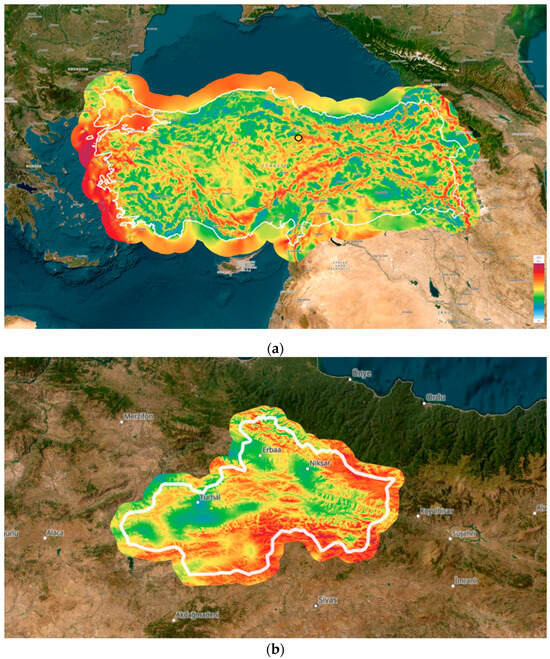
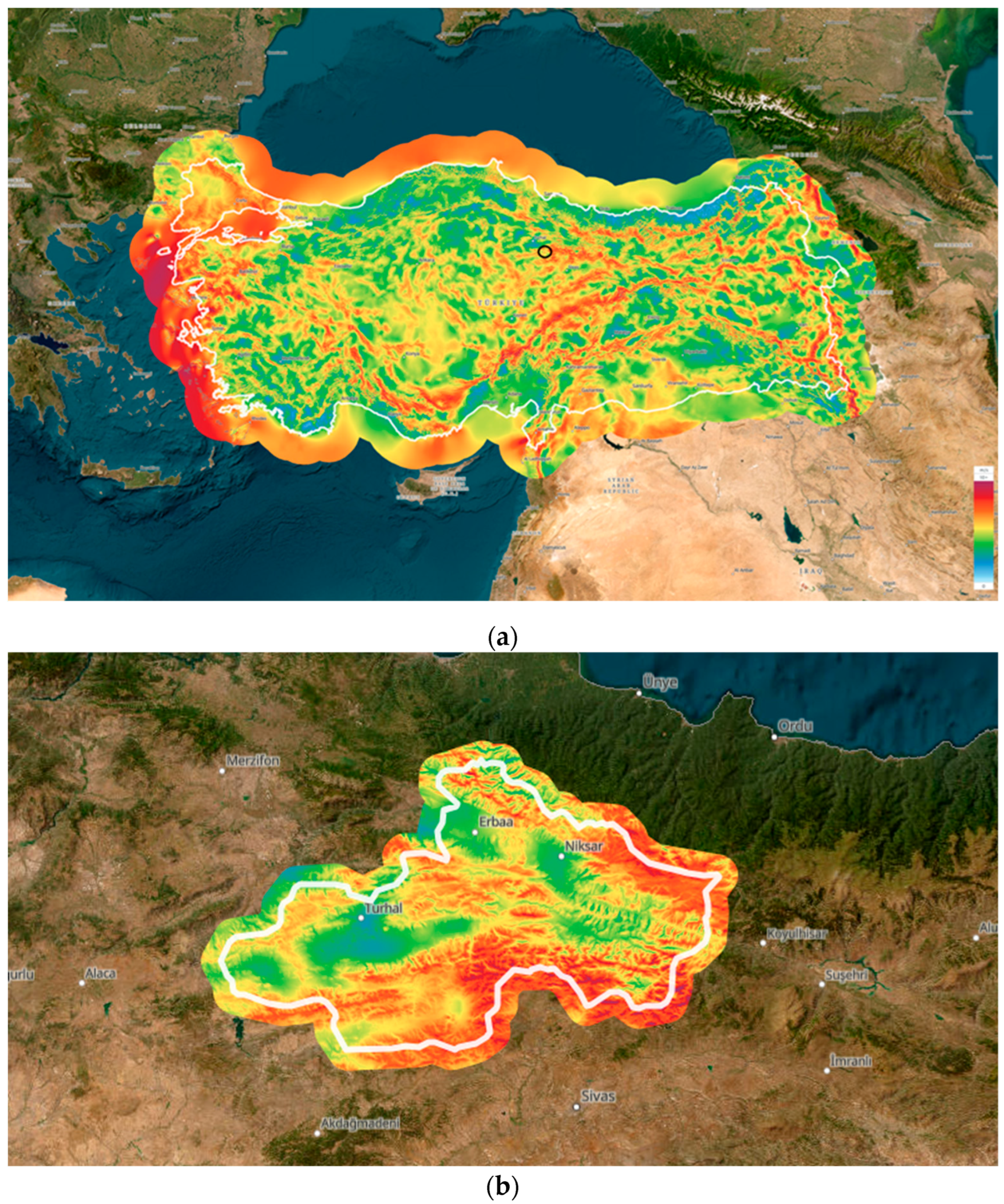
The Global Wind Atlas is a complementary web application that has been developed for the benefit of policymakers, investors, and planners. This tool assists in identifying regions worldwide that are conducive to wind energy production and performing preliminary analyses. In this study, annual production data of a wind farm in Tokat province in Türkiye, located between 39°51′–40°55′ North latitude and 35°27′–37°39′ East longitude, were examined. The Global Wind Atlas application’s maps are illustrated in Figure 2 [44].
Figure 2.
(a) Türkiye Global Wind Atlas (b) Tokat Global Wind Atlas.
Weather World is a web application that enables users to access local and global weather information with ease. By providing accurate and up-to-date weather forecasts, it assists users in making informed decisions regarding their plans, taking into account the prevailing weather conditions. The following study utilizes Weather World’s web interface to present the meteorological average data for Tokat, Türkiye, over the last decade, as illustrated in Table 1 [45].
Table 1.
Climate data for Tokat, Türkiye (Standard measurement height: 10 m).
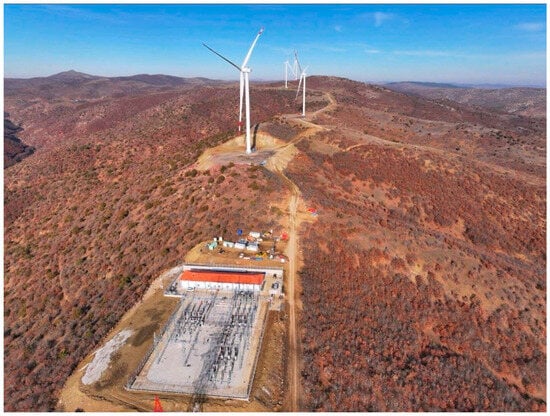
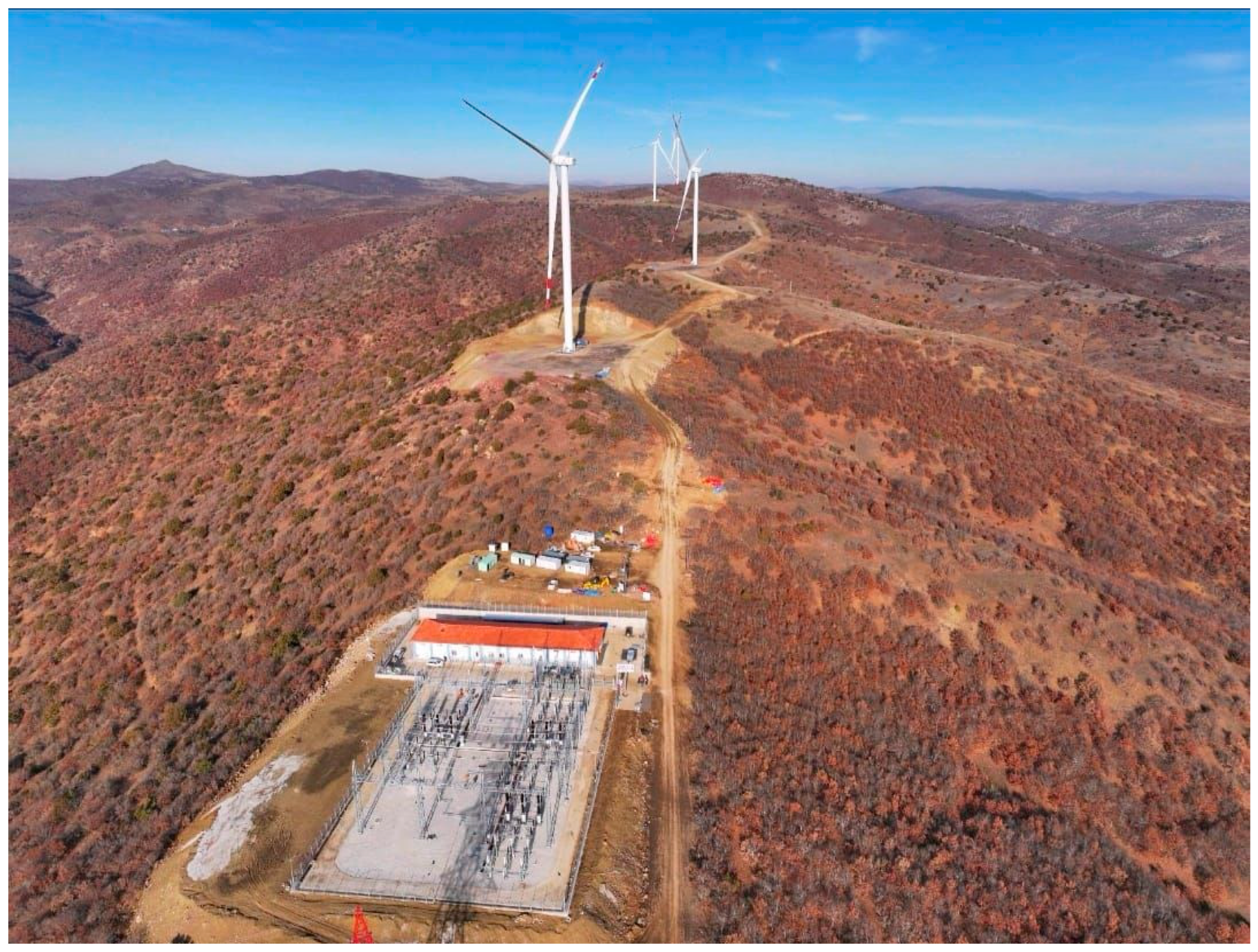
This study utilizes real data from a wind power plant in Tokat. The wind farm is equipped with 18 Nordex turbines and 16 Gama turbines, for a total of 34 turbines. The aggregate installed capacity of the turbines is 94 MW, with an annual generation capacity of 198.05 GWh. Figure 3 presents a visual representation of the Tokat wind power plant.
Figure 3.
The wind power plant in Tokat.
3. Deep Learning Architectures
3.1. LSTM Model
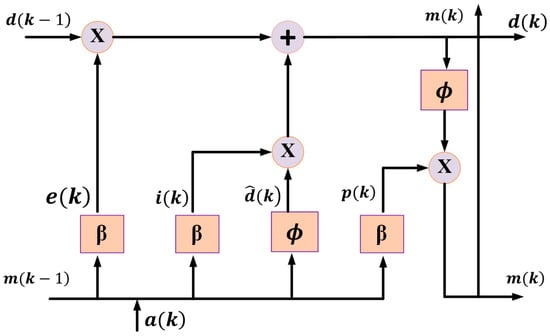
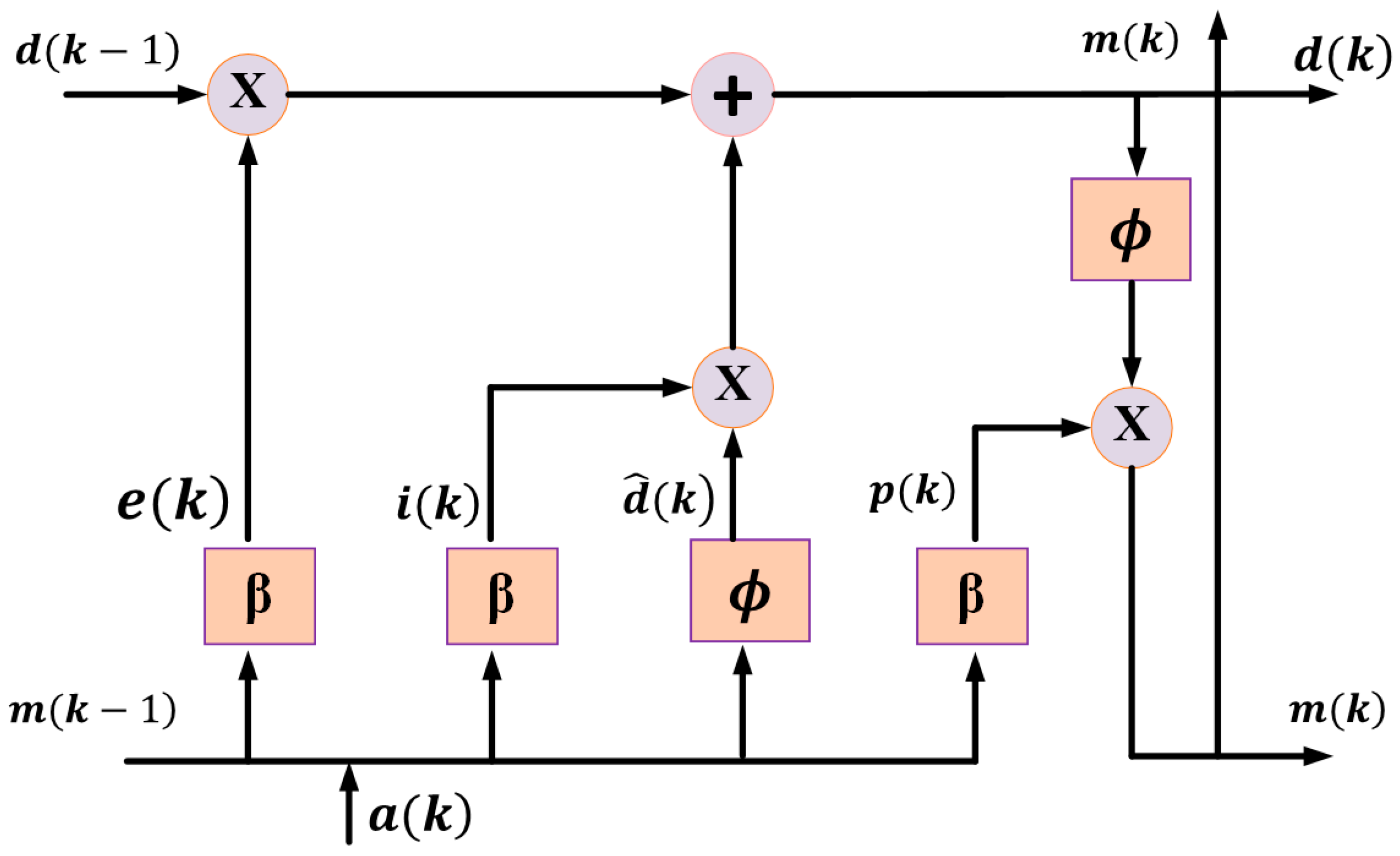
Machine learning provides tools for identifying patterns in large datasets and generating data-driven forecasts [46]. For sequential data such as power generation signals, LSTM networks are preferred because they can retain and update information over long time spans [47]. Unlike conventional RNNs, the LSTM architecture relies on memory cells controlled by forget, input, and output gates that regulate the flow of information [48,49,50,51]. Originally introduced by Hochreiter and Schmidhuber, this structure enables LSTM units to capture long-term temporal dependencies required in time-series forecasting tasks (Figure 4) [52].
Figure 4.
LSTM Model.
The input sequence , and is processed through L memory cells, where each step updates the cell state and output . The gate activations—forget , input , and output —are computed using the sigmoid activation , while the candidate cell state uses the hyperbolic tangent . The internal operations of the LSTM follow Equations (1)–(6) below [53]:
Through this gated memory mechanism, LSTM models effectively capture short- and long-range dependencies, making them highly suitable for forecasting applications where historical variations directly influence future power generation.
3.2. Gated Recurrent Unit (GRU) Model
The Gated Recurrent Unit (GRU) is a variant of the RNN architecture designed to solve the vanishing gradient problem found in standard RNNs, similar to LSTM but with a more streamlined structure. Unlike LSTM, the GRU does not possess a separate memory cell; instead, it integrates the input and forget gates into a single update gate and merges the cell state and hidden state. This reduction in complexity allows GRU to achieve comparable performance to LSTM while being computationally more efficient for certain tasks [54].
The GRU architecture computes the hidden state ht at time t using the following equations:
where zt is the update gate, which determines how much of the past information needs to be passed along to the future; rt is the reset gate, which decides how much of the past information to forget; is the candidate hidden state; and denotes the sigmoid activation function [55].
3.3. Convolutional Neural Network (CNN) Model
Although originally designed for image processing, Convolutional Neural Networks have proven highly effective for time-series forecasting by treating temporal data as a one-dimensional sequence. In this study, a 1D-CNN architecture is employed to extract local features and short-term patterns from the wind power and meteorological input sequences [56].
The core operation of the 1D-CNN is the convolution of the input sequence with a set of learnable filters (kernels). For an input time series x, the feature map ct at time step t is calculated as:
where represents the filter weights, k is the kernel size, b is the bias term, and f is a non-linear activation function (ReLU in this study) [57]. By stacking multiple convolutional layers, the network can learn hierarchical representations of the wind characteristics, capturing both high-frequency fluctuations and local trends effectively.
3.4. Model Hyperparameters and Architectural Details
To ensure full reproducibility of the deep learning experiments, all architectural components and training-related hyperparameters used in the LSTM, GRU, and CNN models are explicitly documented in this subsection. Each model’s configuration, including the number of layers, the number of hidden units or filters, kernel sizes, dropout rates, activation functions, optimizer settings, learning rate, batch size, and training duration, has been systematically listed in Table 2. These specifications enable independent verification of the network structures and training procedures adopted in this study.
Table 2.
Hyperparameter configuration and architectural details of the deep learning models (LSTM, CNN, and GRU).
Regarding the CNN architecture, the study utilizes 1D convolutions (Conv1D) to process the temporal dimension of the wind power data. The network consists of two stacked convolutional blocks: the first block utilizes 64 filters, and the second utilizes 16 filters to extract hierarchical features. Both layers employ a kernel size of 1, a stride of 1, and ‘valid’ padding, followed by ReLU activation functions. A dropout rate of 0.2 is applied after each convolutional block to enhance regularization.
3.5. Performance Evaluation Metrics
To quantitatively evaluate the forecasting accuracy of the proposed LSTM, GRU, and CNN models, four standard statistical metrics were employed: Root Mean Square Error (RMSE), Mean Absolute Error (MAE), Mean Absolute Percentage Error (MAPE), and the Coefficient of Determination (R2) [58]. The mathematical formulations of these metrics are defined as follows:
Root Mean Square Error (RMSE): RMSE measures the square root of the average squared differences between predicted and actual values. It is particularly sensitive to large errors (outliers), making it a critical metric for grid stability applications where sudden large deviations are undesirable [59].
Mean Absolute Error (MAE): MAE represents the average of the absolute differences between the predicted and actual values. Unlike RMSE, it treats all errors equally, providing a linear representation of the forecasting error [59].
Mean Absolute Percentage Error (MAPE): MAPE expresses the prediction error as a percentage relative to the actual values, providing an intuitive measure of model performance that is scale-independent [60].
Coefficient of Determination (R2): The R2 score indicates the proportion of the variance in the dependent variable (wind power) that is predictable from the independent variables. A value closer to 1 indicates a better fit [60].
N is the total number of samples.
represents the actual observed wind power value.
represents the predicted wind power value.
is the mean of the observed values.
3.6. Data Preprocessing
Prior to model training, several preprocessing steps were applied to ensure data quality and reproducibility. Missing values in the meteorological and power production time series were detected and corrected using linear interpolation to preserve temporal continuity. Outliers and sensor-induced spikes were identified using the Interquartile Range (IQR) method and adjusted through Winsorization to prevent distortion in the learning process. No detrending was applied, as removing long-term structure would eliminate meaningful physical characteristics of the wind and power signals.
All numerical variables were scaled to the [0, 1] range using Min–Max normalization derived solely from the training data to prevent information leakage. Sliding-window sequences were constructed to generate supervised learning samples, where each input window corresponds to a fixed historical horizon, and each output corresponds to the forecast horizon of the respective scenario. Regarding the data splitting strategy, the summer season data (representing a distinct distribution shift) was first completely removed and held out as an external robustness test set (OOD). The remaining dataset was then split strictly chronologically: the first 70% for training, the subsequent 15% for validation, and the final 15% for testing. This strict separation ensures that the model is evaluated on unseen future data.
4. Results
4.1. Properties and Structure of a Real Dataset
The dataset employed in this study encompasses meteorological parameters associated with energy production. The real field data used in this study covers the hourly production and meteorological measurements of the Tokat Wind Power Plant for the period January 2023–December 2024 and includes the following variables:
- Date: Date and time when the data was recorded.
- Wind Speed (m/s): Refers to the wind speed measured at a specific point.
- Wind Direction (°): Measurement of the direction the wind is coming from, in degrees.
- Outside Air Temperature (°C): The air temperature at the measurement location.
- Air Pressure (hPa): Value representing atmospheric pressure.
- Field Power (MW): The power used in electricity generation.
- Energy Production (kWh): The total amount of energy produced in a given time interval.
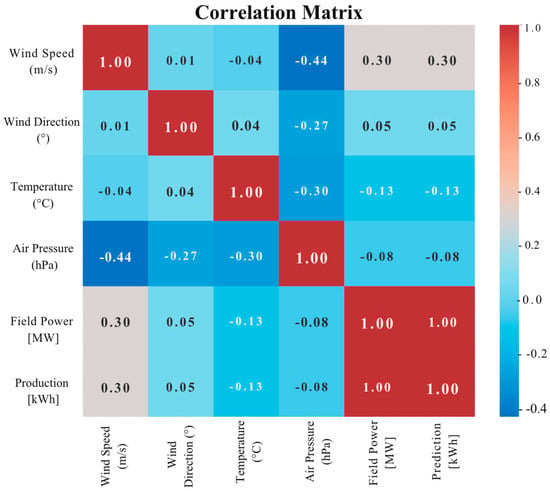
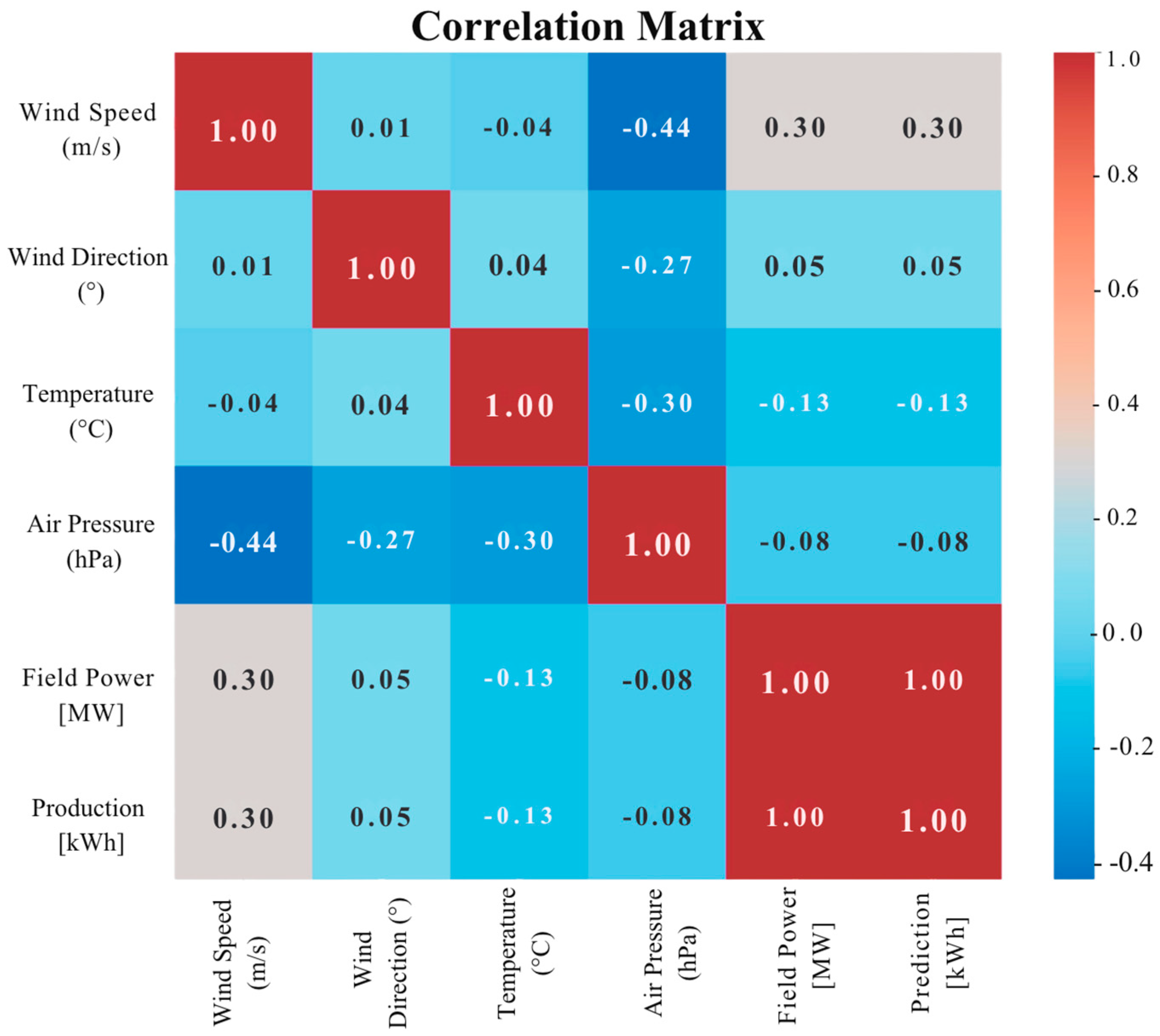
The interrelationships among the variables in the dataset are illustrated in Figure 5, accompanied by the correlation matrix. This analysis reveals that the effect of wind speed on power generation is more pronounced than that of other meteorological variables. It is imperative to acknowledge that meticulous monitoring of meteorological conditions is paramount for ensuring optimal turbine performance. Specifically, fluctuations in wind speed have a direct impact on power generation planning. In conclusion, the correlation matrix provides a strong basis for understanding which variables are more critical in power generation processes and for basing future forecasting models on this data. To avoid information leakage and ensure realistic evaluation, the dataset was divided chronologically into three segments: 70% of the earliest portion was allocated for training, 15% of the subsequent portion was reserved for validation to tune hyperparameters and apply early stopping, and the final 15% was designated as the test set to assess generalization. In addition, the summer season data (June–August) was held out entirely as an out-of-distribution external test set to evaluate the robustness of the models under seasonal distribution shifts. This procedure ensures that no future information leaks into the training process and that the reported results genuinely reflect the predictive performance of the models.
Figure 5.
Correlation matrix illustrating the interrelationships between meteorological inputs (wind speed, direction, temperature, pressure) and wind power generation variables.
To enhance the dataset characterization, seasonal descriptive statistics, including mean, variance, standard deviation, skewness, and kurtosis, were computed for all four seasons (Table 3). The results show clear seasonal differences: the summer period exhibits the highest variance and the lowest kurtosis (negative), indicating a flatter, more unstable distribution. These findings are consistent with the well-known meteorological variability of warm-season wind behavior. The dataset does not include the high-frequency wind-speed sampling required to compute turbulence intensity, nor the manufacturer-specific power curve characteristics of the Nordex and Gama turbines. Therefore, these values could not be calculated, and this limitation is explicitly acknowledged.
Table 3.
Seasonal Descriptive Statistics of Energy Production.
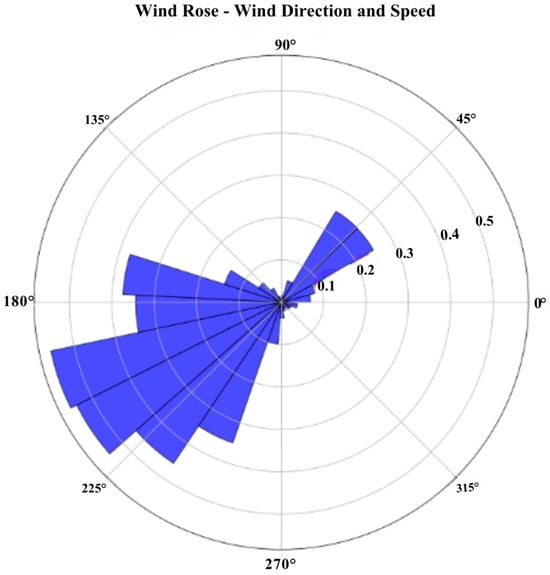
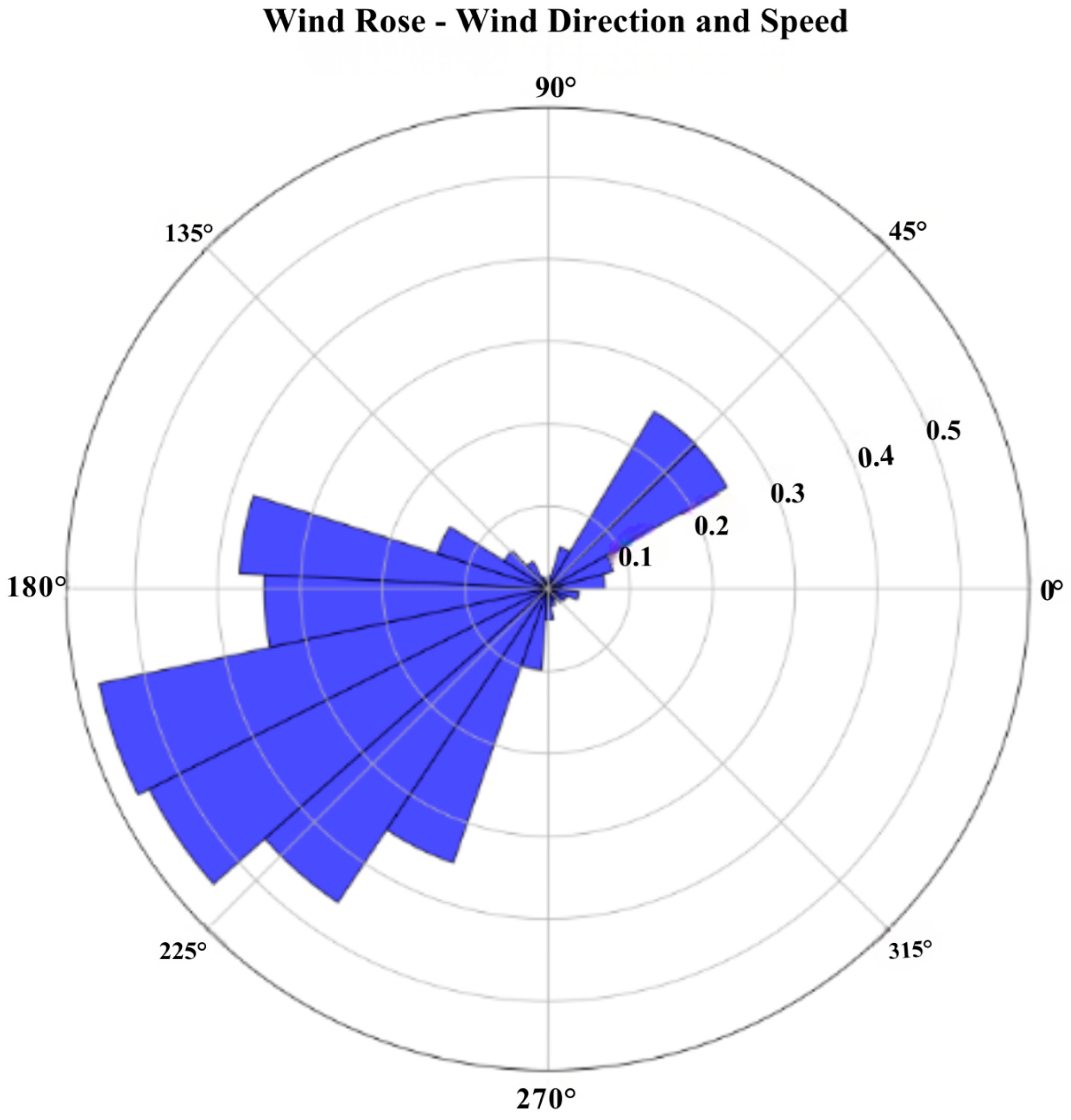
The distribution of wind speed by direction is illustrated in Figure 6 through a wind rose plot. This method is employed to comprehend the characteristics of the dataset and to analyze the impact of directions on energy production. This visualization serves as a fundamental reference for understanding the potential relationship between wind directions and energy production. The direction of each wind is expressed in degrees, ranging from 0° (north) to 360° (west), with 90° and 270° representing the respective directions of east and west.
Figure 6.
Wind direction and speed graph.
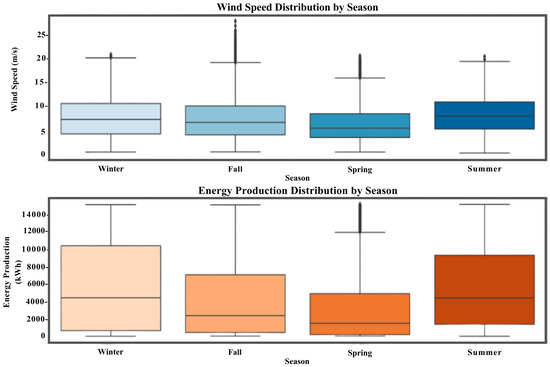
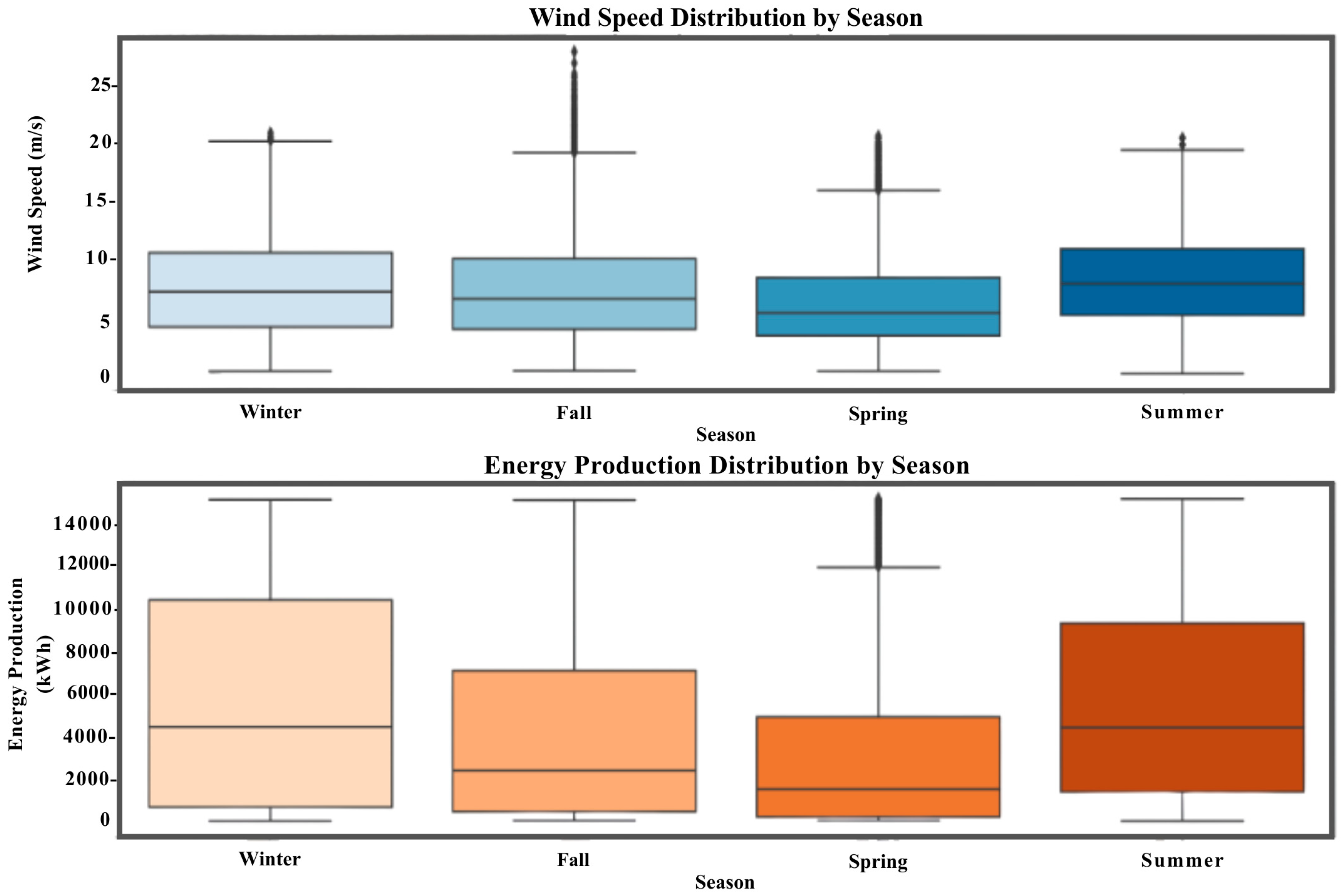
Furthermore, the seasonal distributions offer a more comprehensive explanation of the behavior exhibited by the energy production quantities in the dataset across different periods. The distribution plots of seasonal energy production and wind speeds are presented in Figure 7. The graph clearly shows that energy production and wind speeds vary according to the seasons. It is evident from the graph that wind speed and, consequently, energy production reach their peak levels during the winter months, while they exhibit a decline to lower values in the spring and autumn months. Of particular interest is the observation that energy production persists at relatively high levels despite the decline in wind speed during summer months. This observation suggests that wind speed has a positive effect on energy production during winter months, while effective utilization of turbine capacity in summer months contributes to the sustainability of energy production. These analyses offer valuable insights into understanding the impacts of seasonal variations on energy production and optimizing energy management processes.
Figure 7.
Seasonal distribution plots of energy production and wind speeds.
4.2. Comparison of CNN, GRU, and LSTM
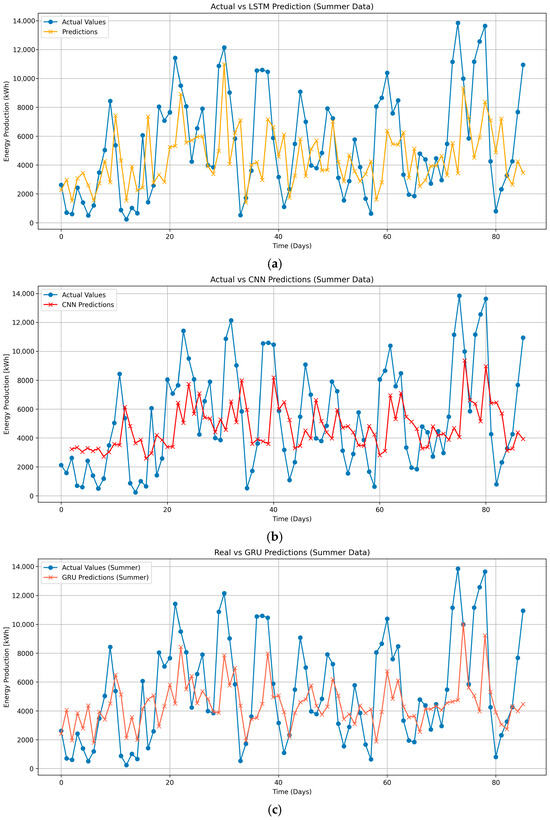
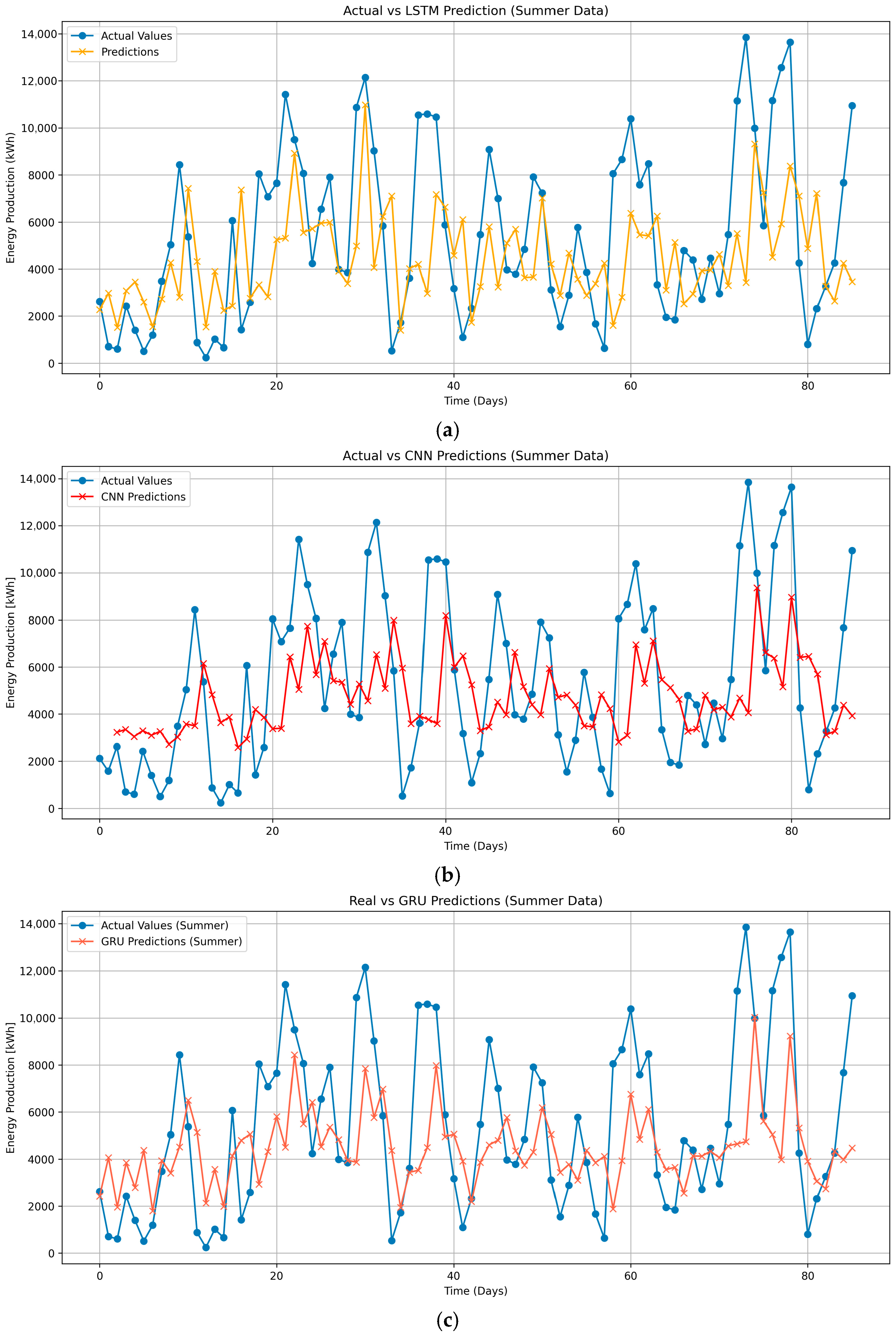
In this study, the performance of the LSTM model is compared with that of various time series modeling techniques, namely CNN and GRU models, in order to evaluate the performance of the LSTM model for energy production forecasting using real data from a wind energy site in Tokat. The analysis is performed on a dataset that has not been previously utilized (summer data) for the purpose of comparison. The model was evaluated on this dataset, which is entirely independent from the dataset used for its training, to assess its generalizability. As illustrated in Figure 8a, a comparison is presented between the values obtained from the model and the actual values. The analysis reveals that the LSTM model generates a mean absolute percentage error (MAPE) of 25.16% on the summer data.
Figure 8.
2-Day Forecast Based on 2-Day Historical Data for Summer (a) LSTM model, (b) CNN model, and (c) GRU model.
As demonstrated in Figure 8b, while the CNN model exhibited an ability to discern general trends in energy production, its predictive accuracy remained deficient. The CNN model demonstrated notable challenges in capturing time dependencies. The forecasts produced by the model exhibited a significant reduction in variability compared to the actual values, indicating a failure to adequately respond to sudden changes. The CNN model demonstrated a particular deficiency in accurately capturing values at both the low and high ends of the production spectrum. This deficiency can be attributed to the CNN’s inability to capture long-term dependencies inherent in time series data. Instead of comprehending the temporal dynamics, the model’s emphasis remained fixed on short-term fluctuations. The hyperparameters and architectural settings of the CNN model are summarized in Table 2.
As demonstrated in Figure 8c, the GRU model exhibited superior performance in comparison to the CNN model. However, its performance was not as optimal as that of the LSTM model. The model demonstrated the capacity to align its predictions with the actual values to a certain extent; however, it exhibited significant error rates, particularly during periods of high variance. A notable distinction between GRU and LSTM is the former’s reduced capacity to learn long-term dependencies. This reduced sensitivity to sudden changes in energy production is a notable distinction of the GRU model compared to the LSTM. The validation loss of the GRU model exceeded the training loss. This finding suggests that the model’s generalizability is constrained, hindering its ability to adapt fully to the dataset. The detailed hyperparameter configuration of the GRU model is provided in Table 2.
4.3. Baseline Comparison and Justification
For benchmarking purposes, the Persistence model was evaluated as the primary baseline, consistent with standard practice in renewable energy forecasting. Full performance metrics are reported in Table 4, where all deep learning models (LSTM, GRU, CNN) outperform persistence across all error measures. Statistical models such as ARIMA/SARIMA were not included, as their integration into all scenario configurations would require extensive hyperparameter tuning and diagnostic analysis, shifting the focus away from the deep learning–based scenario comparison that constitutes the core contribution of this study.
Table 4.
Comparison of the predicted performances of the different modeling methods.
4.4. Statistical Validation and Confidence Intervals
In addition to point-based performance metrics, we computed statistical significance tests to verify whether the performance differences between the LSTM, GRU, and CNN models are meaningful (Table 5 and Table 6). Specifically, 95% bootstrap confidence intervals were generated for RMSE, MAE, and MAPE. Furthermore, paired t-tests and Diebold–Mariano (DM) tests were performed using the forecasting residuals. These analyses ensure that the comparative results are statistically supported.
Table 5.
95% Confidence Intervals (CI) for RMSE, MAE, and MAPE metrics.
Table 6.
Statistical significance tests comparing model pairs (paired t-test and DM test).
The statistical tests confirm that the performance improvements achieved by the LSTM model over GRU and CNN are statistically significant (p < 0.05) in both paired t-tests and DM tests. In contrast, the difference between GRU and CNN is not statistically significant, indicating that their performance is comparable in some scenarios. These results demonstrate that the superiority of the LSTM model is not only reflected in point metrics but is also supported by statistical evidence.
4.5. Distribution Shift Analysis for Summer Data (OOD Test)
To validate whether the summer dataset truly represents an out-of-distribution (OOD) scenario, a formal distribution shift analysis was performed. A Kolmogorov–Smirnov (KS) test was applied to compare the empirical distribution of energy production between summer months and the combined spring–autumn dataset (the primary seasons used for model training). The KS-test yielded a statistic of D = 0.2057 and a p-value = 0.0069, indicating a statistically significant distribution shift between summer and non-summer periods (p < 0.05). This confirms that the summer season exhibits a fundamentally different data distribution, characterized by atmospheric thermal instability and non-linear fluctuations typical of warm-season wind behavior.
To quantify the effect of this shift on forecasting accuracy, season-wise error metrics were computed (see Table 7). As given in Table 8, all three deep learning models (LSTM, GRU, CNN) exhibited noticeably higher RMSE, MAE, and MAPE values during the summer period compared to spring and autumn. This degradation confirms that the distribution shift negatively impacts generalization.
Table 7.
Kolmogorov–Smirnov Test Results for Seasonal Distribution Shift.
Table 8.
Forecasting Errors by Season (Spring–Autumn vs. Summer).
4.6. Scenario 1: 1-Day Forecast with 1-Day Historical Data
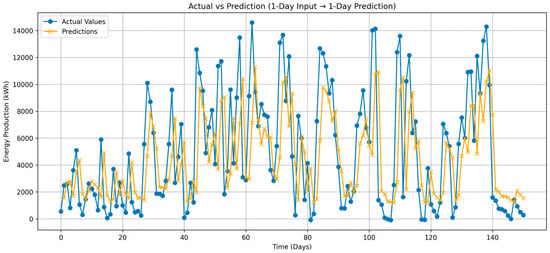
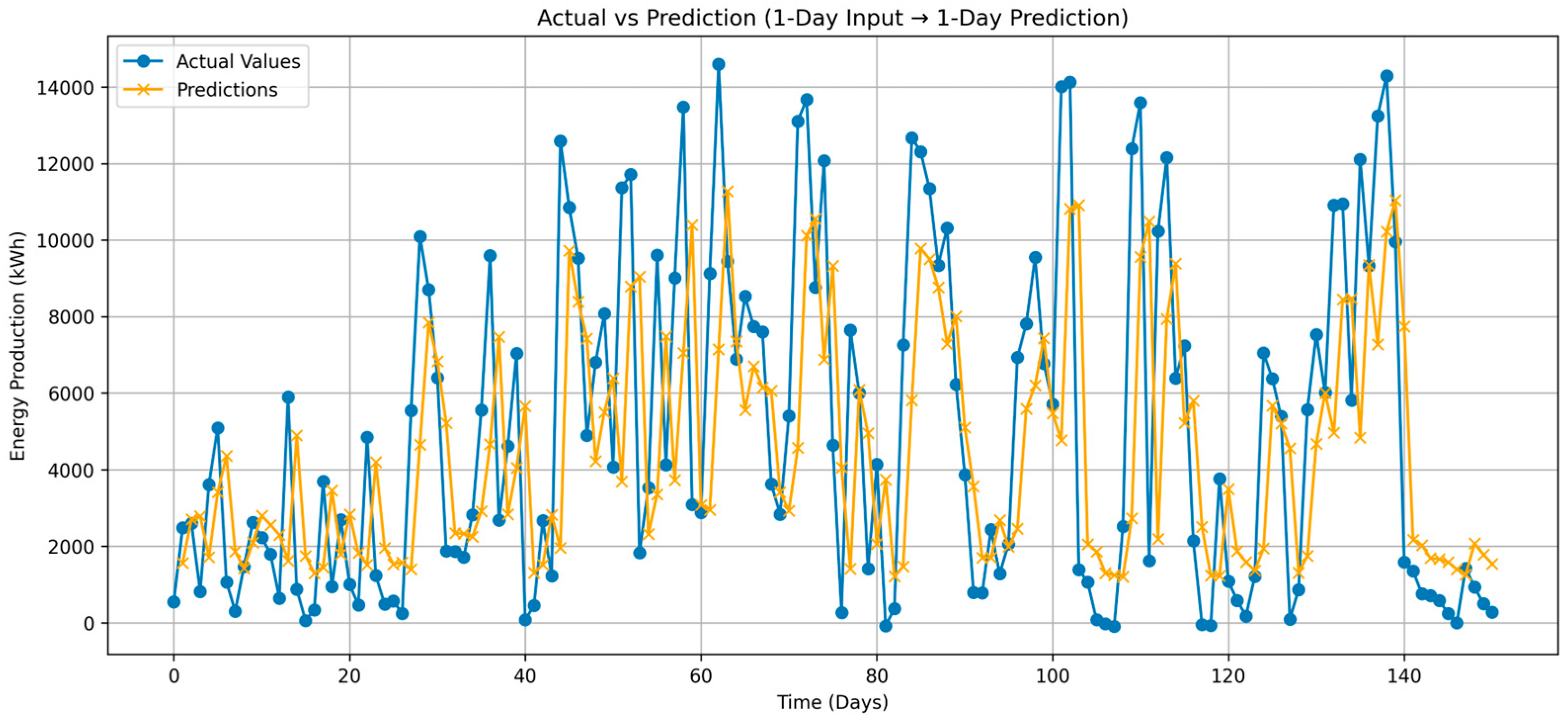
In this scenario, the estimation of one-day energy production was derived from one-day historical data. A substantial agreement was observed between the predicted and actual values. As demonstrated in Figure 9, the predicted and actual values exhibit significant overlap, indicating a strong correlation between the two sets of data. This finding indicates that the model has effectively captured the general trends and short-term fluctuations in power generation. This outcome signifies a commendable performance of the model in this particular scenario. As illustrated in Figure 9, the model demonstrates a high degree of agreement with actual values in short-term forecasts and effectively captures general trends. The substantial overlap between the predicted and actual values underscores the model’s robust capacity to learn from power generation data.
Figure 9.
1-Day Energy Production Forecast Graph Based on 1-Day Historical Data.
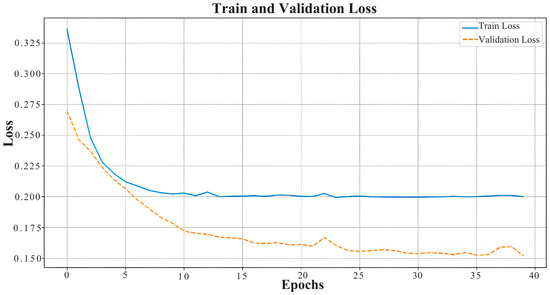
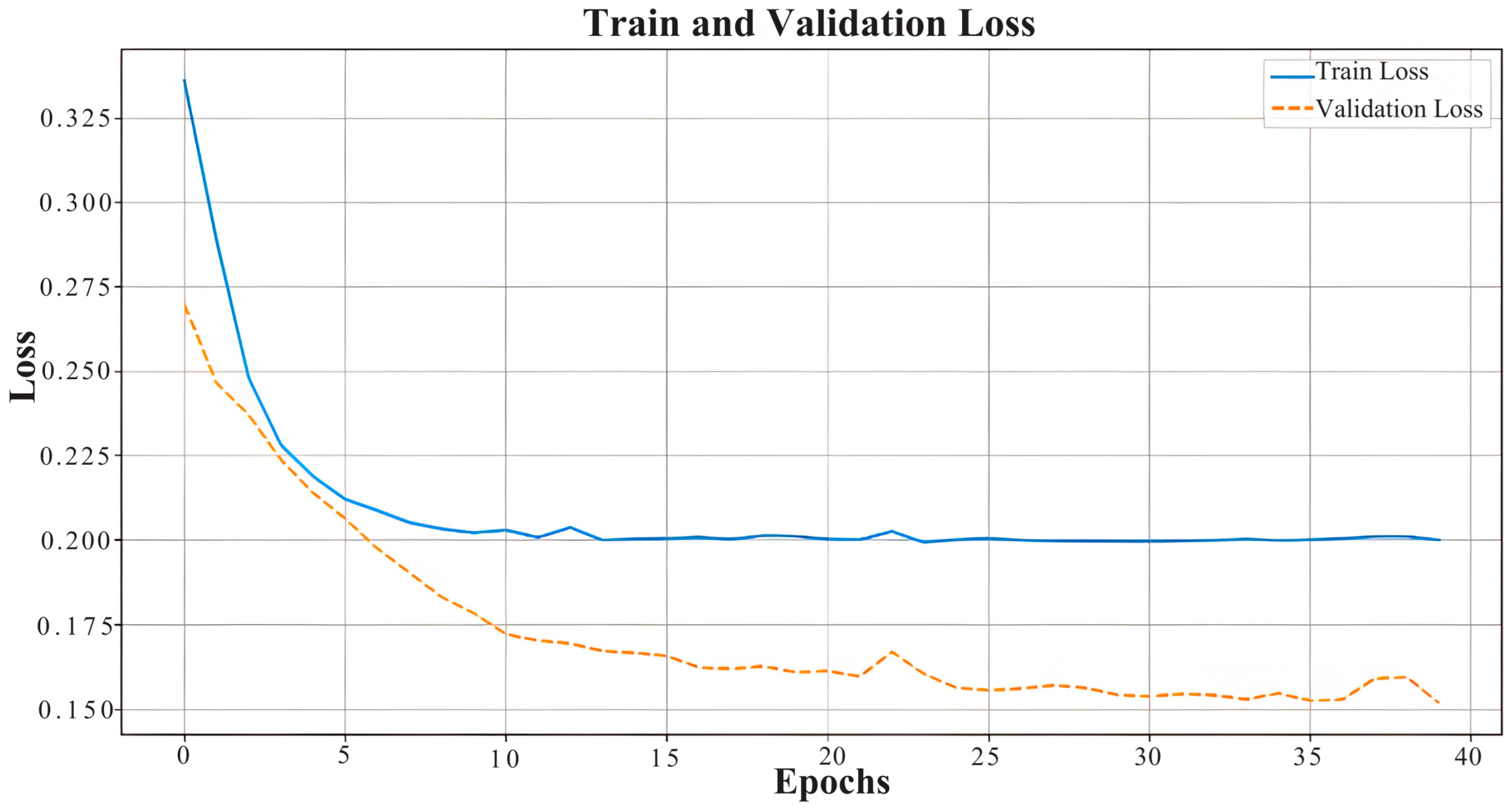
As illustrated in Figure 10, the training and validation losses demonstrate a consistent decrease, indicating that the model is effectively avoiding overlearning. It is evident that the model undergoes a stable learning process during training, and its generalization ability is deemed satisfactory. The training and validation loss curves in Figure 10 do not provide strong evidence of overfitting, as both show a stable decreasing trend without significant divergence. This observation indicates that the model does not overfit and demonstrates satisfactory generalization capability. The regular decrease in losses confirms that the model effectively learns energy production trends for short-term forecasting.
Figure 10.
Training and Validation Loss Graph for 1-Day Forecast Based on 1-Day Historical Data.
In this particular scenario, the efficacy of the model is manifest in its ability to produce accurate short-term forecasts. However, to extrapolate this efficacy to long-term forecasts, the incorporation of more intricate structures, augmented datasets, and loss functions that are sensitive to extremes can be employed. The findings obtained in this particular context unequivocally substantiate the model’s aptitude for short-term power generation forecasts.
4.7. Scenario 2: 2-Day Forecast with 2-Day Historical Data
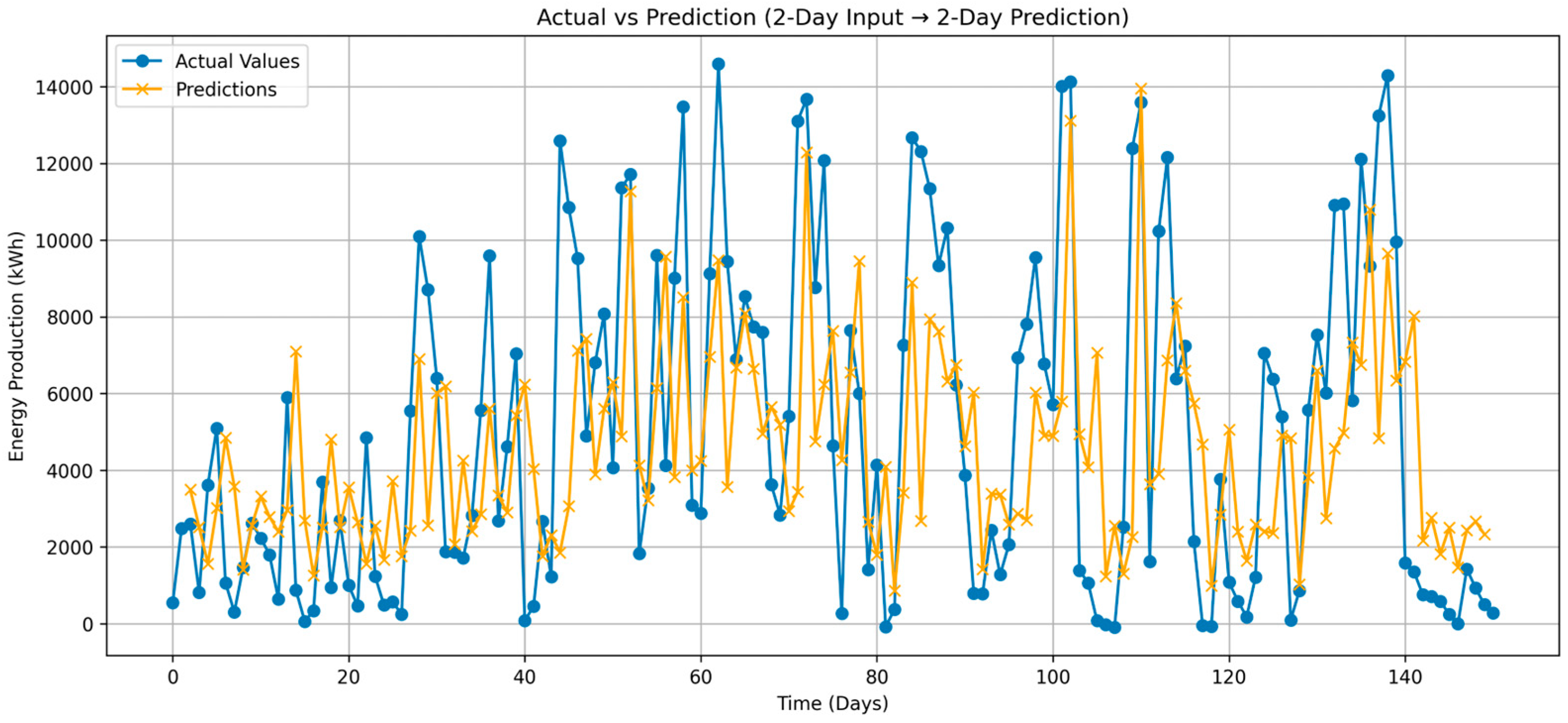
In this scenario, the estimation of 2-day energy production is derived from 2-day historical data. As illustrated in Figure 11, there is a substantial overlap between the predicted and actual values. While the model demonstrates proficiency in encapsulating the predominant trends of power generation, minute discrepancies emerge in instances of short-term fluctuations. This discrepancy is particularly evident during sudden fluctuations in energy production, where the model’s predictions do not align precisely with the observed data. However, the model’s performance in capturing the general trend is deemed satisfactory. This scenario was employed to assess the short-term forecasting efficacy of the model across a slightly broader time span. As illustrated in Figure 11, the model demonstrates a commendable capacity to discern and replicate the prevailing trends in power generation, yielding forecasts that are largely accurate. However, slight degradations in the model’s performance are observed for short-term abrupt changes.
Figure 11.
2-Day Energy Production Forecast Graph Based on 2-Day Historical Data.
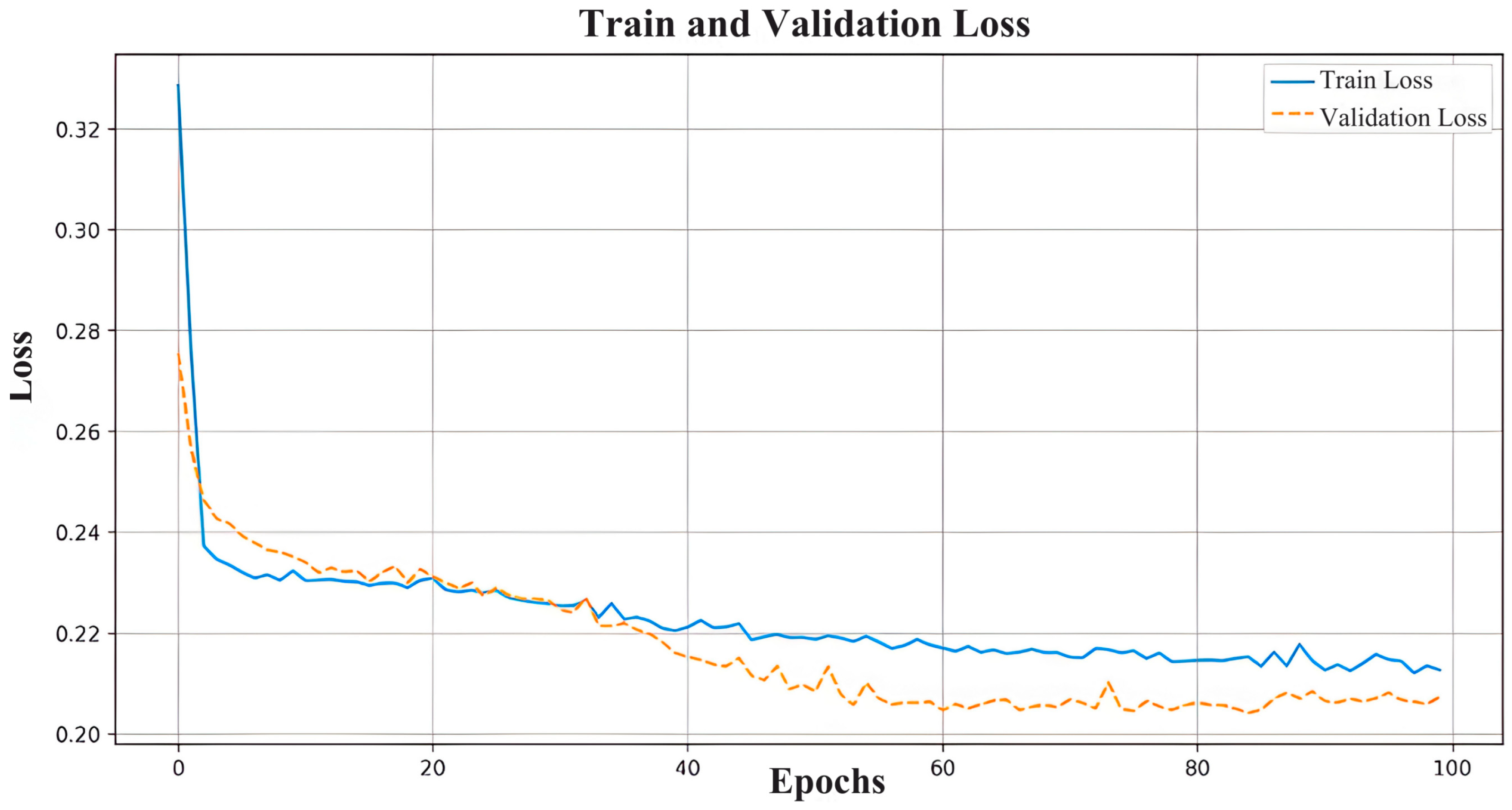
As demonstrated in Figure 12, the training and validation losses decrease in a steady manner, indicating that the model is adept at avoiding overlearning. The validation loss of the model closely mirrors the training loss, suggesting that the model’s generalizability is satisfactory. However, the validation loss exhibits fluctuations during certain periods, which may suggest that the model produces less accurate predictions at specific data points. Overall, Figure 12 demonstrates a consistent decrease in both the training and validation losses, suggesting a stable and effective learning process.
Figure 12.
Training and Validation Loss Plot for 2-Day Forecast Based on 2-Day Historical Data.
4.8. Scenario 3: 2-Day Forecast with 4-Day Historical Data
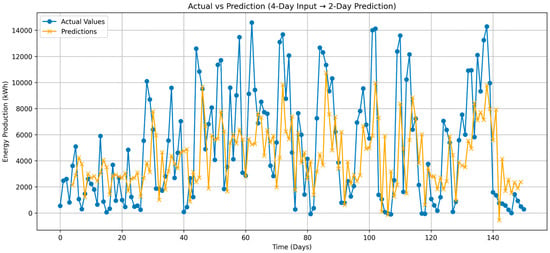
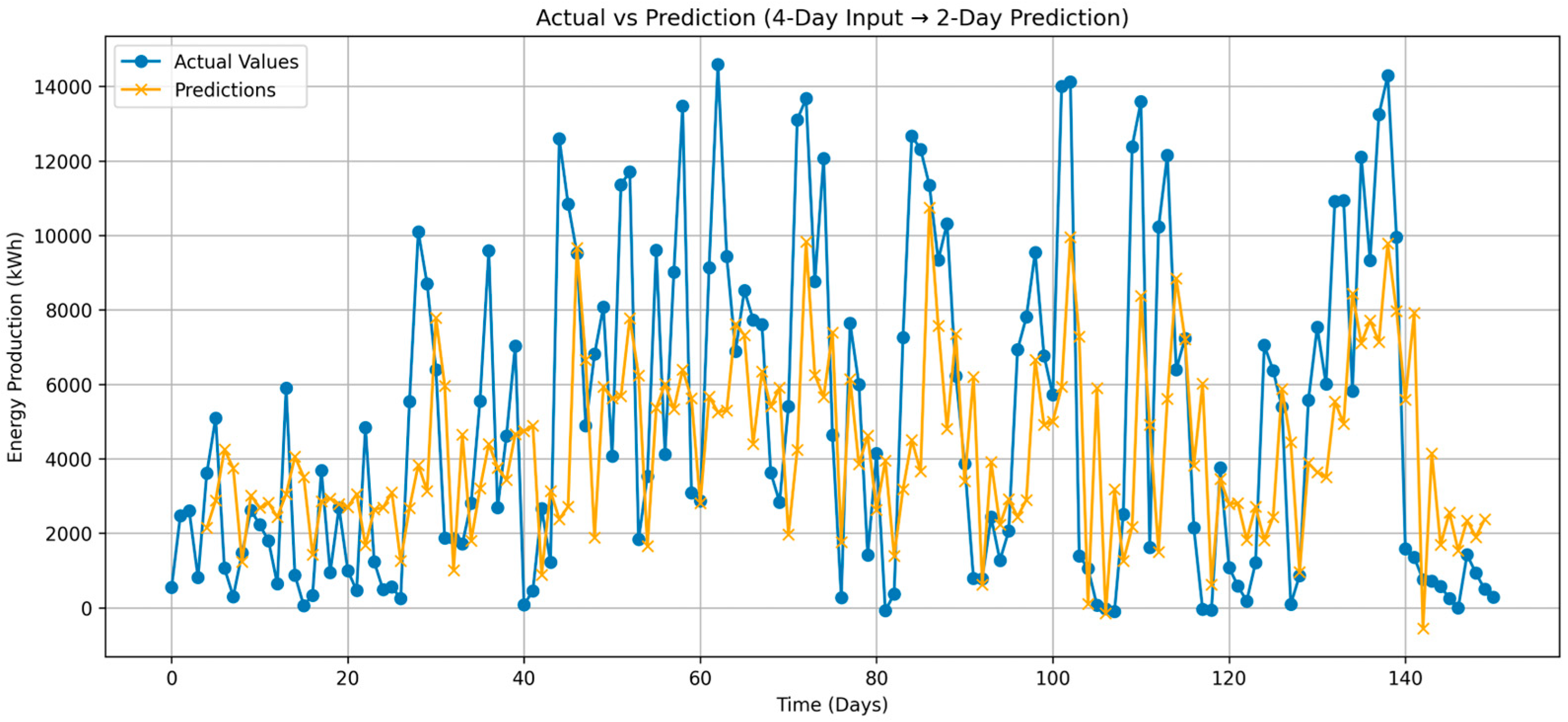
In this scenario, the energy production is predicted to occur over the course of two days, with the prediction being derived from a set of four days of historical data. As illustrated in Figure 13, the model demonstrates a notable capacity to capture general trends. However, it is observed that the predicted values deviate slightly from the actual values in some periods. This discrepancy is particularly pronounced in regions exhibiting sudden fluctuations, where the model predictions and actual values diverge significantly. Notwithstanding these deviations, the model’s forecasting performance is deemed satisfactory, as it demonstrates an aptitude for capturing the periodic fluctuations in energy production. This scenario serves to assess the model’s capacity to generate short-term forecasts by leveraging a more extensive historical dataset. The findings indicate that the model demonstrates proficiency in learning the general trends of energy production; however, it lacks the capacity to adapt effectively to sudden changes. While the model displays proficiency in capturing the overall trend, it exhibits deviations in its forecasts during specific periods.
Figure 13.
2-Day Energy Production Forecast Graph Based on 4-Day Historical Data.
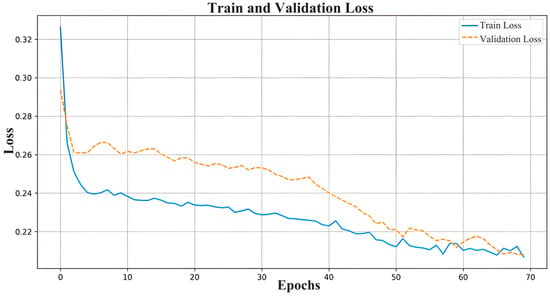
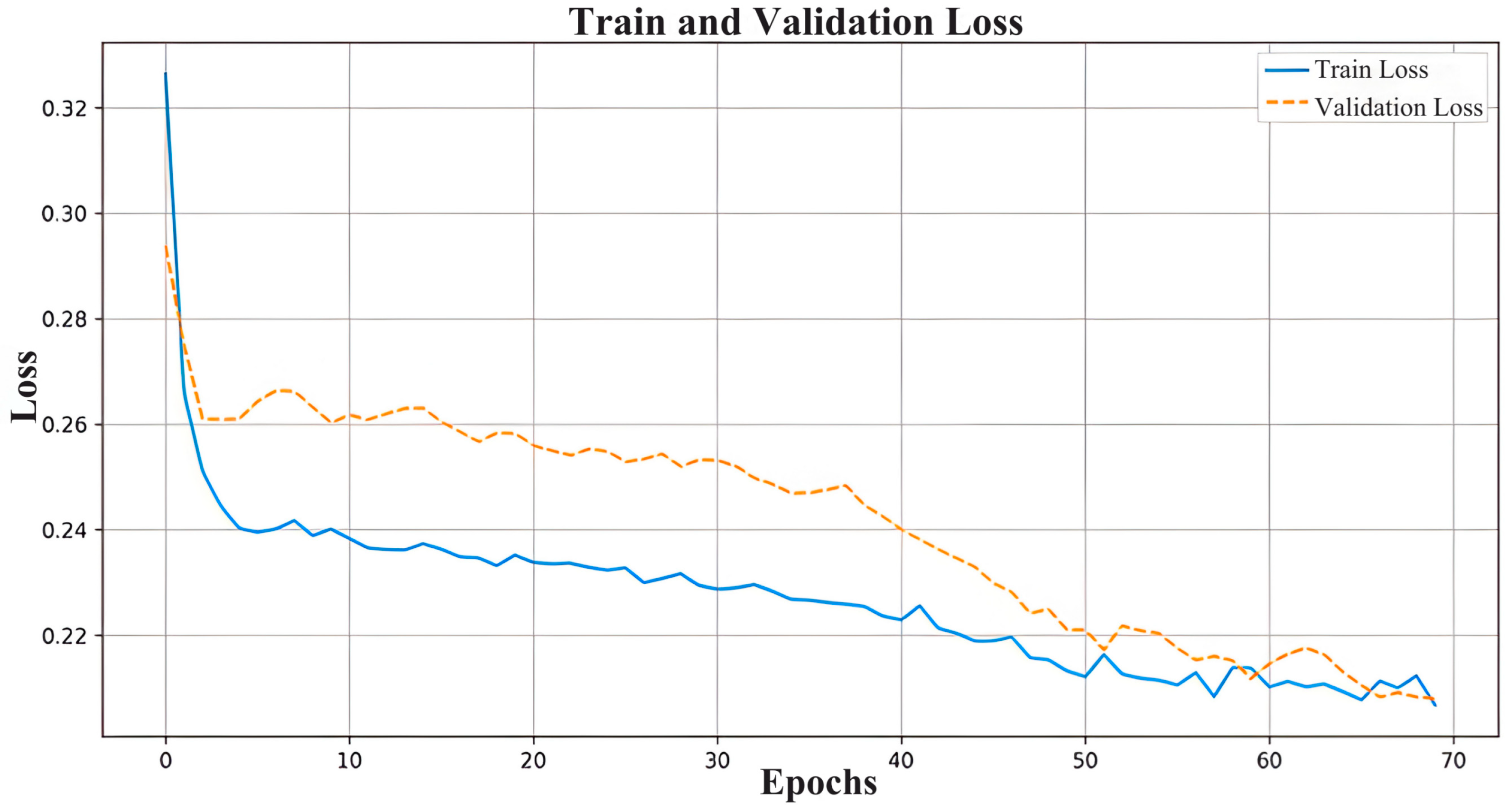
As illustrated in Figure 14, the training and validation losses demonstrate a decrease over time, while the validation loss exhibits fluctuations at specific points. This indicates that the model occasionally makes more errors, yet it demonstrates a consistent and stable learning process overall. The consistent decline in the training loss indicates the model’s learning process is stable, while the variations in the validation loss suggest challenges to the model’s generalization capacity at specific points. The training process depicted in Figure 14 is stable, yet the verification loss fluctuates intermittently. The findings in this scenario demonstrate that the LSTM model effectively captures the general trends in energy production forecasts.
Figure 14.
Training and Validation Losses Plot for 2-Day Forecast Based on 4-Day Historical Data.
4.9. Scenario 4: Scenario 4: 7-Day Forecast with 7-Day Historical Data 7
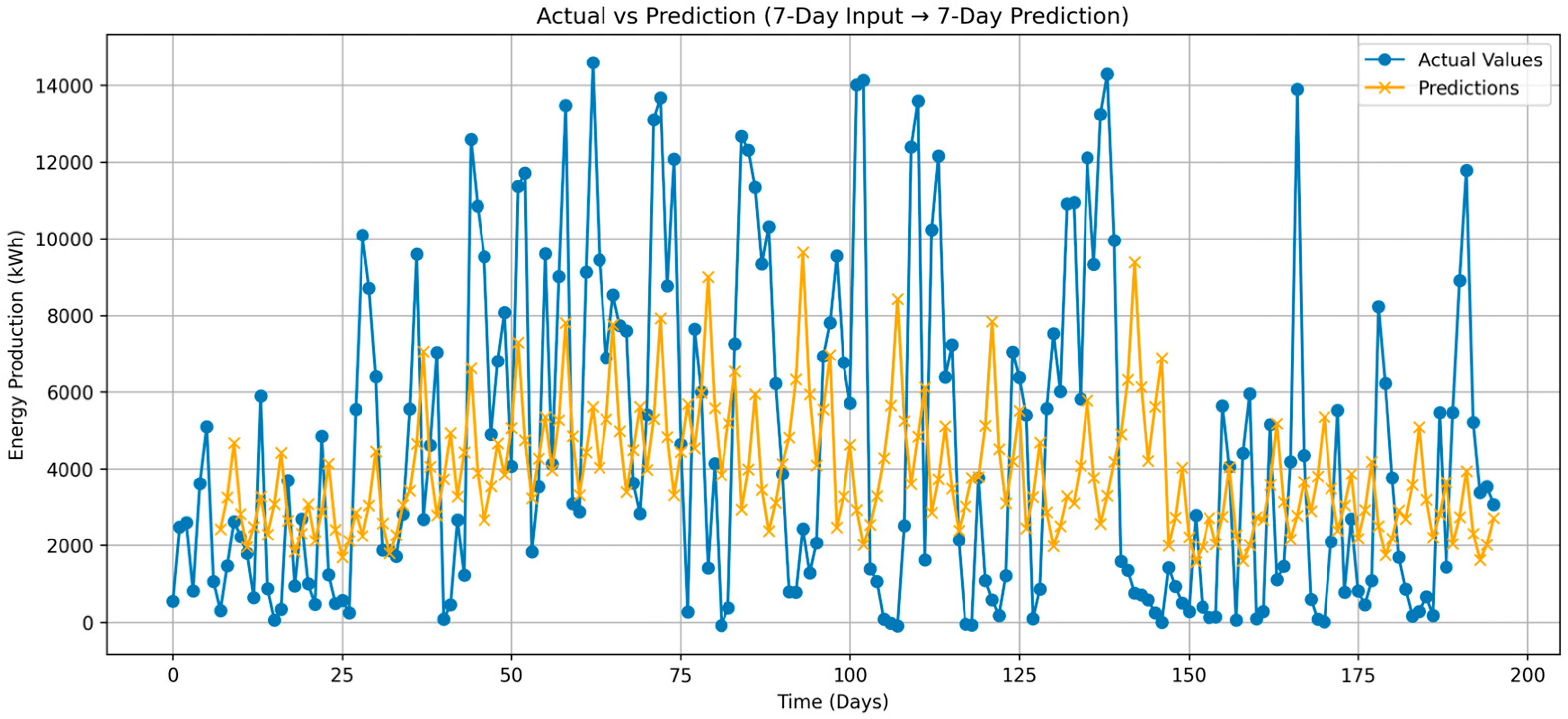
In this scenario, a 7-day energy production forecast was made using 7 days of historical data. Upon examining Figure 15, it is evident that the model’s accuracy significantly declines when making long-term predictions. The high accuracy observed in short-term forecasting scenarios is notably lost within the 7-day prediction interval, leading to substantial errors in the model’s predictions. While the model is able to capture general trends in energy production to some extent, it fails particularly during periods of sudden fluctuations.
Figure 15.
7-Day Energy Production Forecast Graph Based on 7-Day Historical Data.
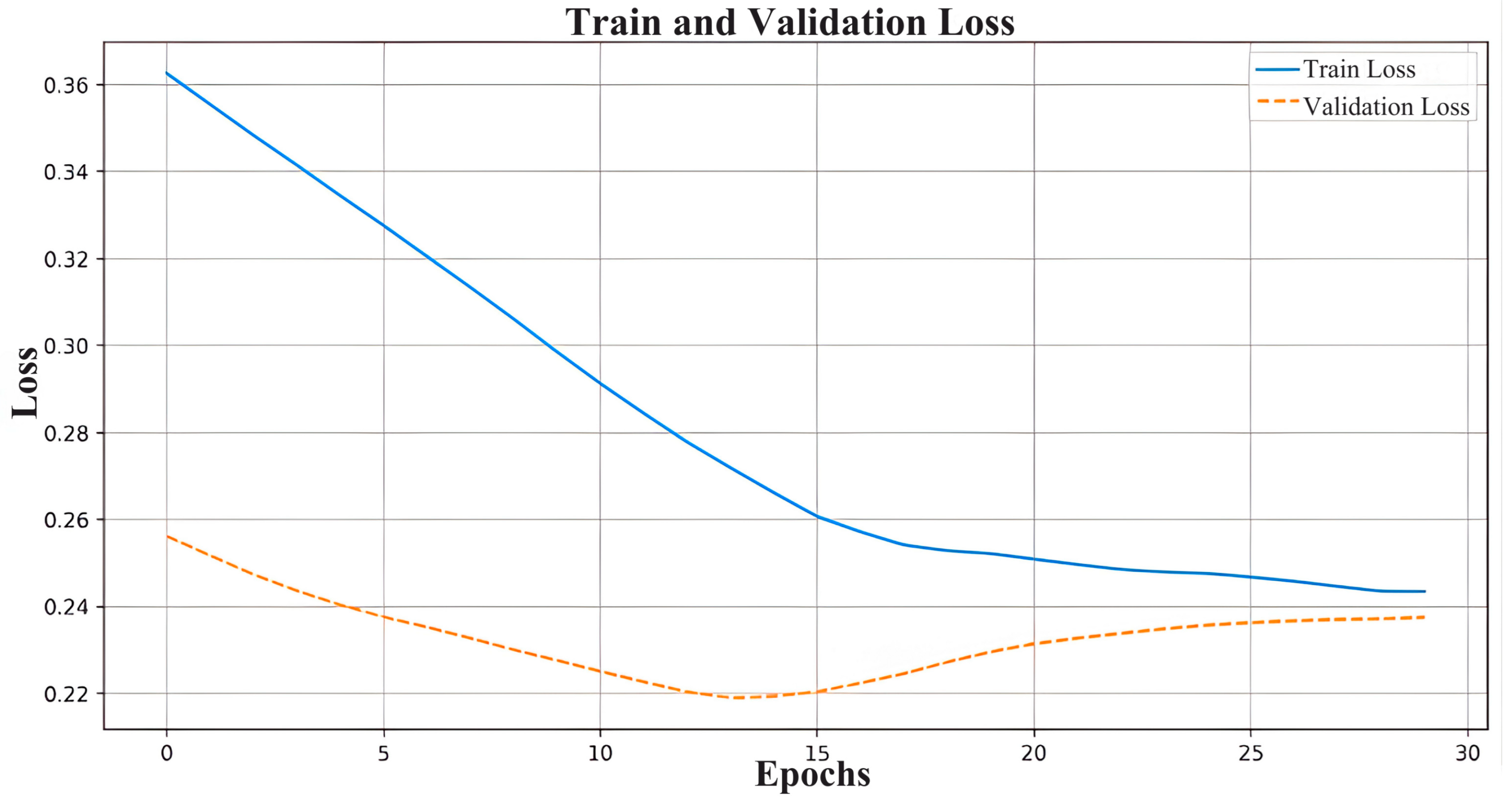
Figure 16 shows that the training loss decreases significantly, but the validation loss increases slightly, plateauing after a certain point, suggesting that the generalization ability of the model decreases when making long-term predictions.
Figure 16.
Training and Validation Losses Graph for 7-Day Forecast Based on 7-Day Historical Data.
Results indicate that the LSTM model consistently achieves lower RMSE and MAE values with relatively small fluctuations across scenarios, demonstrating stable predictive capability. The GRU model shows moderate performance but exhibits larger variance, particularly in longer forecast horizons, indicating less robustness to scenario changes. The CNN model performs comparably to GRU in terms of average accuracy but demonstrates higher sensitivity to input length variations. When compared to the Persistence baseline, all deep learning models achieve substantial improvements, yet their performance stability differs. Overall, LSTM shows the most reliable behavior under varying historical input lengths and forecast horizons, highlighting its suitability for real-world applications where scenario conditions change dynamically.
Analysis of Model Degradation in Scenario 4 (7-Day Ahead Forecasting)
Scenario 4 exhibited the largest decline in model accuracy among all forecasting horizons. To understand this behavior, a technical examination of the LSTM forecasting mechanism was conducted.
- (1)
- Error Accumulation Due to Recursive Forecasting: Because a 7-day forecast horizon cannot be predicted in a single step, the model uses recursive prediction, where each predicted value becomes the input for the next step. This approach inherently amplifies small prediction errors over multiple steps, leading to a compounding drift effect. As the horizon expands, the deviation between predicted and true sequences grows in a non-linear fashion.
- (2)
- Vanishing-Gradient Limitations in LSTM Networks: Although LSTM networks are designed to mitigate vanishing-gradient issues, they still struggle to maintain long-term temporal dependencies beyond several time steps. A 7-day-ahead task requires the model to capture patterns far beyond its effective memory range. This limitation weakens the ability to propagate meaningful gradients during training, leading to reduced long-range sensitivity and increased forecasting uncertainty.
- (3)
- Absence of Teacher Forcing During Training: Teacher forcing was not used in this study. While the model was trained on ground-truth sequences, it was required to generate predictions purely recursively during inference. This mismatch between training and inference conditions leads to exposure bias, where small inaccuracies at early forecast steps accumulate rapidly during long-horizon prediction.
- (4)
- Increased Temporal Variability in Energy Generation: Wind-based energy production naturally exhibits high volatility. For longer horizons, this volatility becomes more pronounced and more difficult for LSTM to capture. Thus, the combination of recursive prediction, vanishing gradients, and wind variability systematically degrades performance in Scenario 4.
Overall, these factors explain why Scenario 4 displays markedly worse RMSE, MAE, and MAPE values compared to short-term scenarios, confirming the reviewer’s observation.
4.10. Comparative Discussion with Previous Studies
Previous wind power forecasting studies exhibit substantial differences with respect to the datasets employed, forecasting horizons considered, and model architectures adopted. A critical distinction emphasized in the literature concerns the performance gap between studies based on synthetic or idealized datasets and those relying on real, site-specific operational measurements. Studies using synthetic data often report comparatively lower RMSE and MAE values, primarily because such datasets do not fully reflect measurement noise, atmospheric turbulence, sensor inaccuracies, and temporal volatility inherent to real wind farm environments [19,23]. In contrast, investigations based on actual turbine measurements consistently report higher—but more realistic—error levels that better represent operational forecasting conditions [26,27]. The error magnitudes obtained in the present study fall well within the range reported by recent site-specific works, confirming that the observed forecasting accuracy is representative of real-world wind power prediction scenarios [28,32].
In terms of model comparison, numerous prior studies have demonstrated that LSTM-based architectures generally outperform GRU and CNN models in forecasting tasks that require learning long-term temporal dependencies. The gated memory mechanism of LSTM networks enables effective retention of historical information over extended sequences, providing a clear advantage in short- and medium-term forecasting horizons [26,27]. GRU models, while computationally more efficient due to their simplified structure, often exhibit slightly reduced performance because of their limited capacity to capture long-range dependencies [28,29]. CNN-based models, on the other hand, have been shown to perform competitively in scenarios dominated by local temporal patterns but tend to underperform in long-sequence forecasting tasks where temporal memory plays a critical role [27,30]. Consequently, the relative performance ranking observed in this study—LSTM > GRU > CNN—is consistent with findings reported across multiple real-data-based investigations [26,27,28,30].
It should be noted that some studies have reported cases in which CNN-based or hybrid CNN–RNN architectures outperform purely recurrent models. However, such discrepancies are typically associated with differences in dataset characteristics, preprocessing strategies (e.g., decomposition or feature extraction), forecasting horizons, or variability conditions [29,30]. These observations highlight the strong dependence of model performance on data structure and evaluation setup, underscoring the importance of transparent, scenario-based comparisons.
Although the use of real wind farm data has been explored in previous studies, the present work contributes a distinct perspective by adopting a comprehensive scenario-based comparative framework. While many earlier studies focus on a single forecasting horizon or a fixed historical input length [26,28,32], this study systematically evaluates four different forecasting configurations using real operational measurements. This multi-scenario approach provides practical insights into how deep learning models respond to varying temporal conditions and input window lengths, an aspect increasingly emphasized in recent site-specific forecasting research [28,30]. By explicitly analyzing model degradation at longer horizons, the study extends the methodological scope of existing literature and offers a realistic benchmark for future wind power forecasting model development based on real-world operational data.
Scenario-Dependent Behavior of GRU and CNN
While LSTM demonstrated the most stable performance across the four forecasting scenarios, GRU and CNN also exhibited degradation patterns that align with their architectural characteristics. GRU partially mirrored the trends observed for LSTM: as the forecast horizon increased, GRU performance declined due to its reduced memory capacity for long-range dependencies. CNN showed the fastest performance degradation among the three models, performing adequately in short-term scenarios but struggling as the temporal window and prediction horizon increased. Unlike recurrent architectures, CNNs cannot effectively propagate information across long sequences, which explains their greater sensitivity to scenario changes. These scenario-dependent patterns confirm that although all models experience reduced accuracy at longer horizons, the stability hierarchy remains consistent (LSTM > GRU > CNN).
5. Conclusions
This study comprehensively evaluated the performance of LSTM, GRU, and CNN models for wind power forecasting using real data from a wind farm in Tokat, Türkiye. Various forecasting scenarios were implemented to assess the effectiveness of different historical data windows and their impact on prediction accuracy. The results demonstrate that LSTM consistently outperforms GRU and CNN in predicting short-term wind power output. LSTM achieved the lowest RMSE (0.2355) and MAE (0.1249), as well as the highest R2 (0.8199), indicating its superior ability to capture temporal dependencies in wind energy data. In contrast, GRU and CNN models exhibited higher error rates and lower prediction accuracy, with GRU yielding RMSE (0.2810) and CNN RMSE (0.2897).
Short-term forecasts (1-day and 2-day predictions) yielded the best accuracy, with minimal error rates and strong correlation between predicted and actual values. This confirms LSTM’s effectiveness in capturing short-term trends in wind power production. Medium-term predictions (2-day forecast with 4-day history) showed stable performance, but minor deviations in cases of sudden fluctuations. Long-term forecasts (7-day predictions with 7-day historical data) suffered from a noticeable decrease in accuracy. The validation loss increased, and LSTM struggled to generalize beyond short-term patterns, indicating the need for further optimization and data augmentation techniques. A comparative analysis also revealed that CNN struggled to capture sequential dependencies in the time-series data, leading to smoother but less accurate forecasts. GRU, while performing better than CNN, could not match LSTM’s accuracy due to its reduced ability to retain long-term dependencies.
Unlike many previous studies that rely on synthetic or idealized datasets, this research demonstrates how actual site-specific data can impact the accuracy of deep learning-based wind power forecasts. By presenting comprehensive scenario analyses, this work provides practical insights into the benefits and limitations of each model, highlighting the importance of using local data for more reliable short-term forecasting. This real-world focus distinguishes the study from conventional model comparisons and underlines its practical relevance for grid operators and renewable energy planners.
Future research will focus on hybrid and ensemble modeling approaches, data augmentation strategies, and the integration of additional exogenous variables to further improve prediction accuracy and model robustness.
Author Contributions
Conceptualization, A.A., C.H., H.K.; methodology, A.A., Ö.Y., H.K.; software, K.Ö., Ö.Y.; validation, C.H., A.T., H.K., Ö.Y.; formal analysis, A.A., K.Ö., C.H., A.T.; investigation, A.A., K.Ö.; resources, A.A., K.Ö.; data curation, A.A., C.H., A.T.; writing—original draft preparation, A.A., K.Ö.; writing—review and editing, A.A., K.Ö., C.H., A.T., H.K., Ö.Y.; visualization, A.A., K.Ö., C.H., A.T.; supervision, H.K., Ö.Y.; project administration, H.K., Ö.Y., A.T.; funding acquisition, A.T., H.K., C.H. All authors have read and agreed to the published version of the manuscript.
Funding
This study was supported by the Fırat University Scientific Research Projects Unit (FUBAP) with the project number TEKF.24.51, and the APC was funded by FUBAP.
Data Availability Statement
The original contributions presented in this study are included in the article. Further inquiries can be directed to the corresponding author.
Acknowledgments
We would like to express our sincere gratitude to Eksim Enerji AŞ for their valuable support in this study. This research was also supported by the Research Projects Committee of Dicle University (DUBAP) under the project numbers MÜHENDİSLİK.23.008 and MÜHENDİSLİK.23.009.
Conflicts of Interest
The authors declare no conflicts of interest.
Abbreviations
The following abbreviations are used in this manuscript:
| IEA | International Energy Agency |
| RES | Renewable Energy Sources |
| WP | Wind Energy Potential |
| STFM | Spatio-Temporal Fusion Module |
| DDformer | Dual-Domain Transformer |
| SPA | Spatial Pattern Attention |
| IMQ-RNN | İmproved Multihorizon Quantile Recurrent Neural Network |
| INCQR | İmproved Uncrossed Quantile Regression |
| OEBR | Online Ensemble Bagging Regression |
| SAA | Sample Average Approximation |
| Probability Density Function | |
| FCM | Fuzzy C-Means |
| NWPs | Numerical Weather Forecasts |
| KKT | Karush-Kuhn-Tucker |
| NSGA | Non-Dominant Sequencing Genetic Algorithm |
| RBF | Radial Basis Function |
| LSTM | Long Short-Term Memory |
| BiLSTM | Bi-Directional Long Short-Term Memory |
| VMD | Variational Mode Decomposition Algorithm |
| FPA | Flower Pollination Algorithm |
| PCA | Principal Component Analysis |
| PSO | Particle Swarm Optimization |
| DWT | Discrete Wavelet Transform |
| SARIMA | Seasonal Autoregressive Integrated Moving Average |
| STCM | Spatiotemporal Correlation Model |
| CNN | Convolutional Neural Networks |
| GRU | Gated Recurrent Unit |
| IOWA | Inferred Ordered Weighted Average |
| DRL | Deep Reinforcement Learning |
| SMI | Seasonal Mean Forecast |
| TFT | Temporal Fusion Transformer |
| EMRA | Energy Market Regulatory Authority |
| RMSE | Root Mean Square Error |
| MAE | Mean Absolute Error |
| MAPE | Mean Absolute Percentage Error |
References
- Haydaroğlu, C.; Yıldırım, B.; Kılıç, H.; Özdemir, M.T. The Effect of Local and Interarea Oscillations of Wind Turbine Generators Based on Permanent Magnet Synchronous Generators Connected to a Power System. Turk. J. Electr. Power Energy Syst. 2024, 5, 41–53. [Google Scholar] [CrossRef] [Scilit]
- IEA. Electricity Market 2023. 2023. Available online: https://www.iea.org/reports/electricity-market-report-2023 (accessed on 10 September 2025).
- Haydaroğlu, C. Chaos-based optimization for load frequency control in Islanded airport microgrids with hydrogen energy and electric aircraft. Int. J. Hydrogen Energy 2025, 143, 1198–1214. [Google Scholar] [CrossRef] [Scilit]
- Zhao, X.; Wang, C.; Su, J.; Wang, J. Research and application based on the swarm intelligence algorithm and artificial intelligence for wind farm decision system. Renew. Energy 2019, 134, 681–697. [Google Scholar] [CrossRef] [Scilit]
- Xiao, L.; Qian, F.; Shao, W. Multi-step wind speed forecasting based on a hybrid forecasting architecture and an improved bat algorithm. Energy Convers. Manag. 2017, 143, 410–430. [Google Scholar] [CrossRef] [Scilit]
- Yang, M.; Huang, Y.; Xu, C.; Liu, C.; Dai, B. Review of several key processes in wind power forecasting: Mathematical formulations, scientific problems, and logical relations. Appl. Energy 2025, 377, 124631. [Google Scholar] [CrossRef] [Scilit]
- IEA. World Energy Outlook 2024; IEA: Paris, France, 2024; Available online: https://www.iea.org/reports/world-energy-outlook-2024 (accessed on 10 September 2025).
- Zhang, F.; Li, N.; Li, L.; Wang, S.; Du, C. A local semi-supervised ensemble learning strategy for the data-driven soft sensor of the power prediction in wind power generation. Fuel 2023, 333, 126435. [Google Scholar] [CrossRef] [Scilit]
- Hu, Q.; Member, S.; Zhang, S.; Yu, M.; Xie, Z. Short-Term Wind Speed or Power Forecasting With Heteroscedastic Support Vector Regression. IEEE Trans. Sustain. Energy 2016, 7, 241–249. [Google Scholar] [CrossRef] [Scilit]
- Nadimi, R.; Goto, M. Uncertainty reduction in power forecasting of virtual power plant: From day-ahead to balancing markets. Renew. Energy 2025, 238, 121875. [Google Scholar] [CrossRef] [Scilit]
- Ahmadi, M.; Khashei, M. Current status of hybrid structures in wind forecasting. Eng. Appl. Artif. Intell. 2021, 99, 104133. [Google Scholar] [CrossRef] [Scilit]
- Caglayan, I.; Tikiz, I.; Turkmen, A.C.; Celik, C.; Soyhan, G. Analysis of wind energy potential; A case study of Kocaeli University campus. Fuel 2019, 253, 1333–1341. [Google Scholar] [CrossRef] [Scilit]
- Tian, C.; Niu, T.; Wei, W. Developing a wind power forecasting system based on deep learning with attention mechanism. Energy 2022, 257, 124750. [Google Scholar] [CrossRef] [Scilit]
- Zhao, Y.; Liao, H.; Zhao, Y.; Pan, S. Data-augmented trend-fluctuation representations by interpretable contrastive learning for wind power forecasting. Appl. Energy 2025, 380, 125052. [Google Scholar] [CrossRef] [Scilit]
- Sun, S.; Liu, Y.; Li, Q.; Wang, T.; Chu, F. Short-term multi-step wind power forecasting based on spatio-temporal correlations and transformer neural networks. Energy Convers. Manag. 2023, 283, 116916. [Google Scholar] [CrossRef] [Scilit]
- Hou, G.; Li, Q.; Huang, C. Spatiotemporal forecasting using multi-graph neural network assisted dual domain transformer for wind power. Energy Convers. Manag. 2025, 325, 119393. [Google Scholar] [CrossRef] [Scilit]
- Chen, Y.; Xiao, J.W.; Wang, Y.W.; Luo, Y. Non-crossing quantile probabilistic forecasting of cluster wind power considering spatio-temporal correlation. Appl. Energy 2025, 377, 124356. [Google Scholar] [CrossRef] [Scilit]
- Nayak, A.K.; Sharma, K.C.; Bhakar, R.; Tiwari, H. Probabilistic online learning framework for short-term wind power forecasting using ensemble bagging regression model. Energy Convers. Manag. 2025, 323, 119142. [Google Scholar] [CrossRef] [Scilit]
- Scarabaggio, P.; Grammatico, S.; Carli, R.; Dotoli, M. Distributed Demand Side Management with Stochastic Wind Power Forecasting. IEEE Trans. Control Syst. Technol. 2022, 30, 97–112. [Google Scholar] [CrossRef] [Scilit]
- Yang, M.; Shi, C.; Liu, H. Day-ahead wind power forecasting based on the clustering of equivalent power curves. Energy 2021, 218, 119515. [Google Scholar] [CrossRef] [Scilit]
- Wahdany, D.; Schmitt, C.; Cremer, J.L. More than accuracy: End-to-end wind power forecasting that optimises the energy system. Electr. Power Syst. Res. 2023, 221, 109384. [Google Scholar] [CrossRef] [Scilit]
- Khazaei, S.; Ehsan, M.; Soleymani, S.; Mohammadnezhad-Shourkaei, H. A high-accuracy hybrid method for short-term wind power forecasting. Energy 2022, 238, 122020. [Google Scholar] [CrossRef] [Scilit]
- Gao, J.; Cheng, Y.; Zhang, D.; Chen, Y. Physics-constrained wind power forecasting aligned with probability distributions for noise-resilient deep learning. Appl. Energy 2025, 383, 125295. [Google Scholar] [CrossRef] [Scilit]
- Li, J.; Zhang, S.; Yang, Z. A wind power forecasting method based on optimized decomposition prediction and error correction. Electr. Power Syst. Res. 2022, 208, 107886. [Google Scholar] [CrossRef] [Scilit]
- Duan, J.; Wang, P.; Ma, W.; Fang, S.; Hou, Z. A novel hybrid model based on nonlinear weighted combination for short-term wind power forecasting. Int. J. Electr. Power Energy Syst. 2022, 134, 107452. [Google Scholar] [CrossRef] [Scilit]
- Zhang, W.; Lin, Z.; Liu, X. Short-term offshore wind power forecasting—A hybrid model based on Discrete Wavelet Transform (DWT), Seasonal Autoregressive Integrated Moving Average (SARIMA), and deep-learning-based Long Short-Term Memory (LSTM). Renew. Energy 2022, 185, 611–628. [Google Scholar] [CrossRef] [Scilit]
- Wu, Q.; Guan, F.; Lv, C.; Huang, Y. Ultra-short-term multi-step wind power forecasting based on CNN-LSTM. IET Renew. Power Gener. 2021, 15, 1019–1029. [Google Scholar] [CrossRef] [Scilit]
- Kisvari, A.; Lin, Z.; Liu, X. Wind power forecasting—A data-driven method along with gated recurrent neural network. Renew. Energy 2021, 163, 1895–1909. [Google Scholar] [CrossRef] [Scilit]
- He, B.; Ye, L.; Pei, M.; Lu, P.; Dai, B.; Li, Z.; Wang, K. A combined model for short-term wind power forecasting based on the analysis of numerical weather prediction data. Energy Rep. 2022, 8, 929–939. [Google Scholar] [CrossRef] [Scilit]
- Xiong, B.; Lou, L.; Meng, X.; Wang, X.; Ma, H.; Wang, Z. Short-term wind power forecasting based on Attention Mechanism and Deep Learning. Electr. Power Syst. Res. 2022, 206, 107776. [Google Scholar] [CrossRef] [Scilit]
- Li, Y.; Wang, R.; Li, Y.; Zhang, M.; Long, C. Wind power forecasting considering data privacy protection: A federated deep reinforcement learning approach. Appl. Energy 2023, 329, 120291. [Google Scholar] [CrossRef] [Scilit]
- Khan, S.; Muhammad, Y.; Jadoon, I.; Awan, S.E.; Raja, M.A.Z. Leveraging LSTM-SMI and ARIMA architecture for robust wind power plant forecasting. Appl. Soft Comput. 2025, 170, 112765. [Google Scholar] [CrossRef] [Scilit]
- Surendran, R.; Alotaibi, Y.; Subahi, A.F. Wind Speed Prediction Using Chicken Swarm Optimization with Deep Learning Model. Comput. Syst. Sci. Eng. 2023, 46, 3371–3386. [Google Scholar] [CrossRef] [Scilit]
- Kumar, M.; Subramanian, P.; Surendran, R. Multivariate time series weather forecasting model using integrated secondary decomposition and Self-Attentive spatio-temporal learning network. Glob. Nest J. 2025, 27, 06195. [Google Scholar]
- Jasmine, J.; Rayen, S.J.; Ramesh, T.; Rajendran, S. Advanced weather prediction based on hybrid deep gated tobler’s hiking neural network and robust feature selection for tackling environmental challenges. Glob. Nest J. 2025, 27, 06757. [Google Scholar]
- Zhou, H.; Zhang, S.; Peng, J.; Zhang, S.; Li, J.; Xiong, H.; Zhang, W. Informer: Beyond Efficient Transformer for Long Sequence Time-Series Forecasting. Proc. AAAI Conf. Artif. Intell. 2021, 35, 11106–11115. [Google Scholar] [CrossRef] [Scilit]
- Lim, B.; Arık, S.; Loeff, N.; Pfister, T. Temporal Fusion Transformers for interpretable multi-horizon time series forecasting. Int. J. Forecast. 2021, 37, 1748–1764. [Google Scholar] [CrossRef] [Scilit]
- Zhou, T.; Ma, Z.; Wen, Q.; Wang, X.; Sun, L.; Jin, R. FEDformer: Frequency Enhanced Decomposed Transformer for Long-term Series Forecasting. Proc. Mach. Learn. Res. 2022, 162, 27268–27286. [Google Scholar]
- Widén, J.; Carpman, N.; Castellucci, V.; Lingfors, D.; Olauson, J.; Remouit, F.; Bergkvist, M.; Grabbe, M.; Waters, R. Variability assessment and forecasting of renewables: A review for solar, wind, wave and tidal resources. Renew. Sustain. Energy Rev. 2015, 44, 356–375. [Google Scholar] [CrossRef] [Scilit]
- Alatwi, A.M.; Albalawi, H.; Wadood, A.; Anwar, H.; El-Hageen, H.M. Deep learning-based dust detection on solar panels: A low-cost sustainable solution for increased solar power generation. Sustainability 2024, 16, 8664. [Google Scholar] [CrossRef] [Scilit]
- Wadood, A.; Albalawi, H.; Alatwi, A.M.; Anwar, H.; Ali, T. Design of a Novel Fractional Whale Optimization-Enhanced Support Vector Regression (FWOA-SVR) Model for Accurate Solar Energy Forecasting. Fractal Fract. 2025, 9, 35. [Google Scholar] [CrossRef] [Scilit]
- Bukhari, S.B.A.; Albalawi, H.; Wadood, A.; Alatwi, A.M. Deep learning-driven fault detection and classification in microgrids using Temporal Convolutional Network. Comput. Electr. Eng. 2026, 129, 110777. [Google Scholar] [CrossRef] [Scilit]
- Electricity Market Regulatory Authority-Republic of Türkiye. Electricity Monthly Sector Reports. 2025. Available online: https://www.epdk.gov.tr/detay/icerik/3-0-23/elektrikaylik-sektor-raporlar (accessed on 20 March 2025).
- The Global Wind Atlas. 2025. Available online: https://globalwindatlas.info/en/ (accessed on 20 March 2025).
- Yearly Climate Data. World Weather, 2025. Available online: https://www.weatherworld.com/yearly-climate/tr/tokat.html (accessed on 20 March 2025).
- Huang, W.; Zhang, W.; Chen, Q.; Feng, B.; Li, X. Prediction Algorithm for Power Outage Areas of Affected Customers Based on CNN-LSTM. IEEE Access 2024, 12, 15007–15015. [Google Scholar] [CrossRef] [Scilit]
- Özdemır, Ş.; Demır, Y.; Yildirim, Ö. The Effect of Input Length on Prediction Accuracy in Short-Term Multi-Step Electricity Load Forecasting: A CNN-LSTM Approach. IEEE Access 2025, 13, 28419–28432. [Google Scholar] [CrossRef] [Scilit]
- Yildirim, Ö. A novel wavelet sequence based on deep bidirectional LSTM network model for ECG signal classification. Comput. Biol. Med. 2018, 96, 189–202. [Google Scholar] [CrossRef] [Scilit]
- Yildirim, O.; Baran, U.; Tan, R.; Ciaccio, E.J.; Acharya, U.R. Computer Methods and Programs in Biomedicine A new approach for arrhythmia classification using deep coded features and LSTM networks. Comput. Methods Programs Biomed. 2019, 176, 121–133. [Google Scholar] [CrossRef] [Scilit]
- Wang, L.; Liu, Y.; Li, T.; Xie, X.; Chang, C. Short-Term PV Power Prediction Based on Optimized VMD and LSTM. IEEE Access 2020, 8, 165849–165862. [Google Scholar] [CrossRef] [Scilit]
- Yu, C.; Qi, X.; Ma, H.; He, X.; Wang, C.; Zhao, Y. LLR: Learning learning rates by LSTM for training neural networks. Neurocomputing 2020, 394, 41–50. [Google Scholar] [CrossRef] [Scilit]
- Geng, D.; Zhang, H.; Wu, H. Short-Term Wind Speed Prediction Based on Principal Component Analysis and LSTM. Appl. Sci. 2020, 10, 4416. [Google Scholar] [CrossRef] [Scilit]
- Hossain, M.S.; Mahmood, H. Short-Term Photovoltaic Power Forecasting Using an LSTM Neural Network and Synthetic Weather Forecast. IEEE Access 2020, 8, 172524–172533. [Google Scholar] [CrossRef] [Scilit]
- Mahjoub, S.; Chrifi-Alaoui, L.; Marhic, B.; Delahoche, L. Predicting energy consumption using LSTM, multi-layer GRU and drop-GRU neural networks. Sensors 2022, 22, 4062. [Google Scholar] [CrossRef] [Scilit]
- Huang, X.; Zhang, Y.; Liu, J.; Zhang, X.; Liu, S. A short-term wind power forecasting model based on 3d convolutional neural network–gated recurrent unit. Sustainability 2023, 15, 14171. [Google Scholar] [CrossRef] [Scilit]
- Rick, R.; Berton, L. Energy forecasting model based on CNN-LSTM-AE for many time series with unequal lengths. Eng. Appl. Artif. Intell. 2022, 113, 104998. [Google Scholar] [CrossRef] [Scilit]
- Lara-Benítez, P.; Carranza-García, M.; Luna-Romera, J.M.; Riquelme, J.C. Temporal convolutional networks applied to energy-related time series forecasting. Appl. Sci. 2020, 10, 2322. [Google Scholar] [CrossRef] [Scilit]
- Xu, X.; Hu, S.; Shao, H.; Shi, P.; Li, R.; Li, D. A spatio-temporal forecasting model using optimally weighted graph convolutional network and gated recurrent unit for wind speed of different sites distributed in an offshore wind farm. Energy 2023, 284, 128565. [Google Scholar] [CrossRef] [Scilit]
- Elizabeth Michael, N.; Mishra, M.; Hasan, S.; Al-Durra, A. Short-term solar power predicting model based on multi-step CNN stacked LSTM technique. Energies 2022, 15, 2150. [Google Scholar] [CrossRef] [Scilit]
- Markovics, D.; Mayer, M.J. Comparison of machine learning methods for photovoltaic power forecasting based on numerical weather prediction. Renew. Sustain. Energy Rev. 2022, 161, 112364. [Google Scholar] [CrossRef] [Scilit]

Disclaimer/Publisher’s Note: The statements, opinions and data contained in all publications are solely those of the individual author(s) and contributor(s) and not of MDPI and/or the editor(s). MDPI and/or the editor(s) disclaim responsibility for any injury to people or property resulting from any ideas, methods, instructions or products referred to in the content. |
© 2025 by the authors. Licensee MDPI, Basel, Switzerland. This article is an open access article distributed under the terms and conditions of the Creative Commons Attribution (CC BY) license.