
Analysis of Economic Development Patterns and Driving Factors of Dianchi Lake Basin Based on Space–Time Cubes and Interpretable Machine Learning


Abstract
1. Introduction
2. Materials and Methods
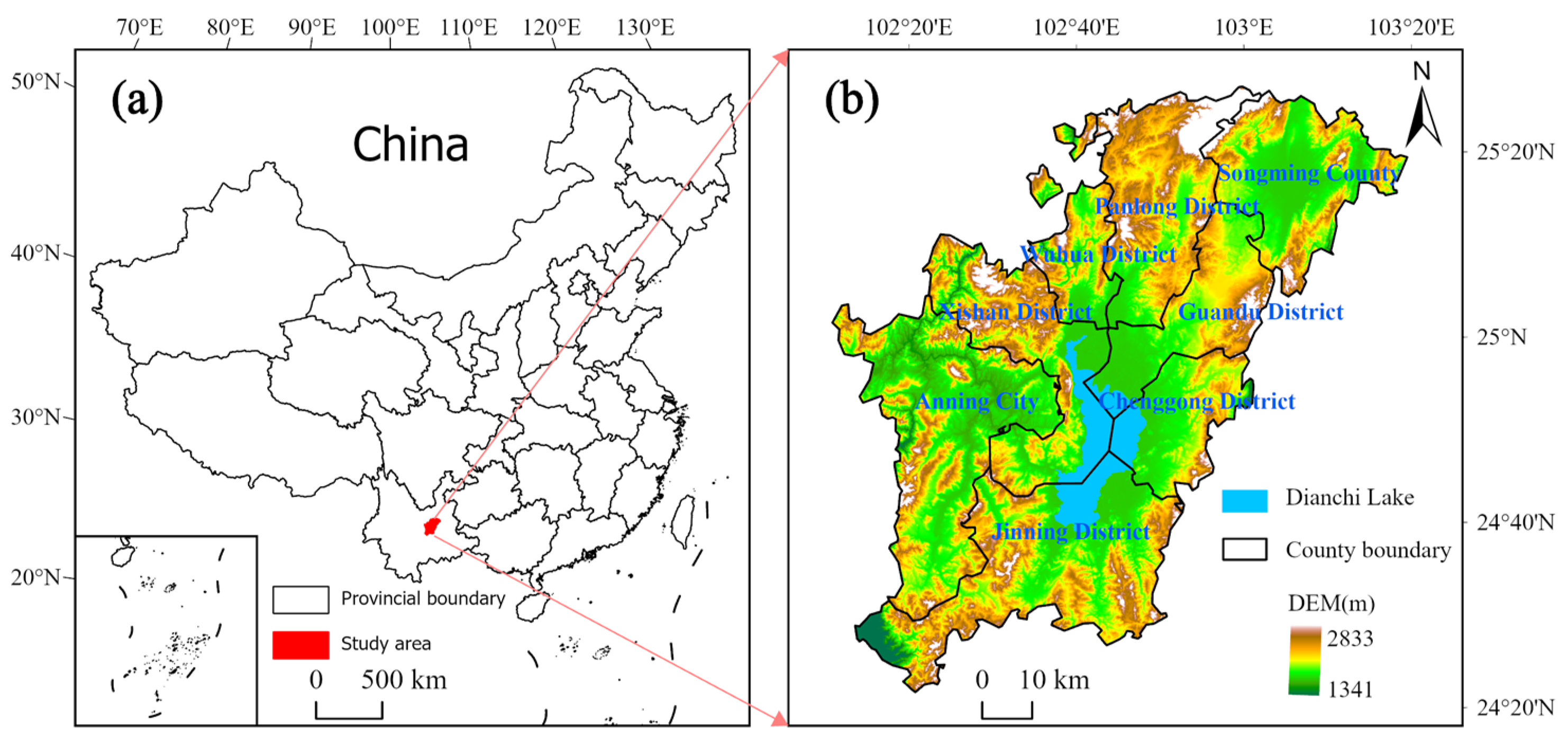
2.1. Research Area
2.2. Data Collection and Processing
2.3. Methods
2.3.1. Standard Deviation Ellipse
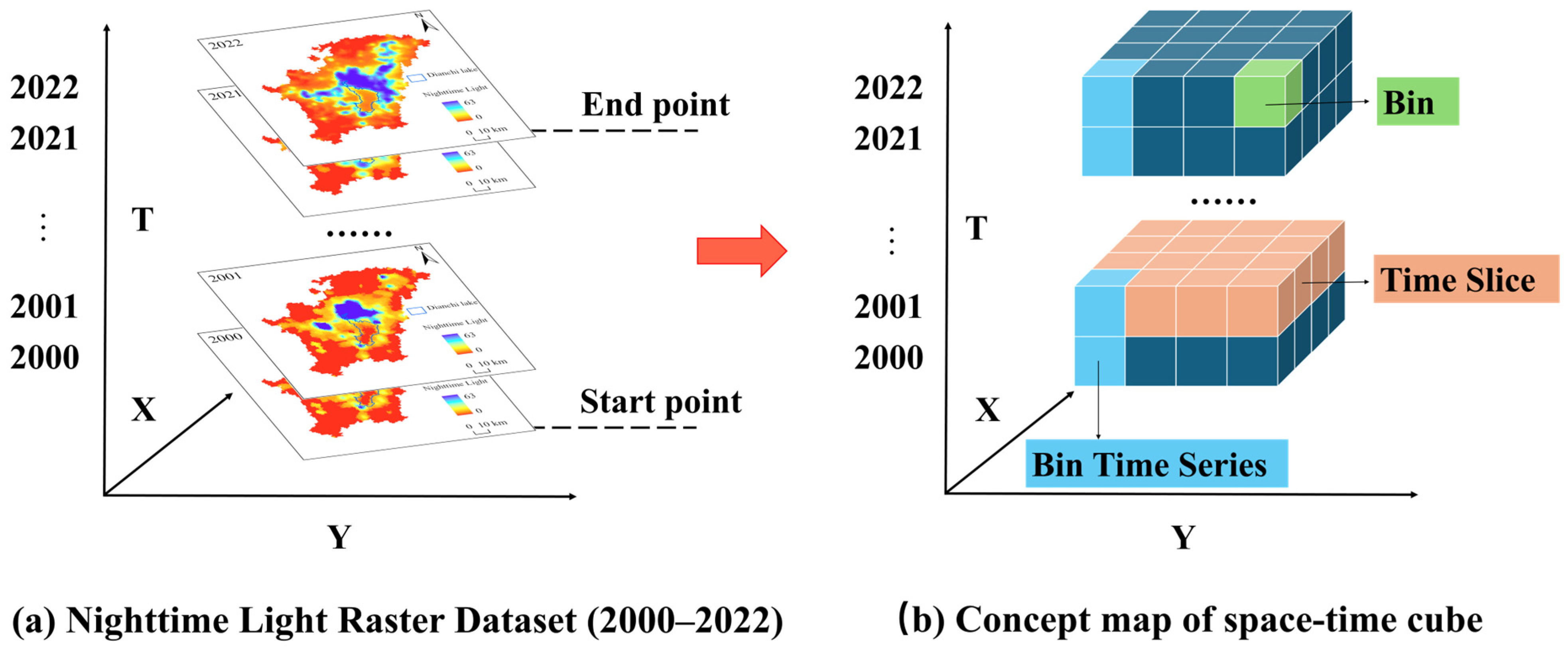
2.3.2. Defining the Space–Time Cube
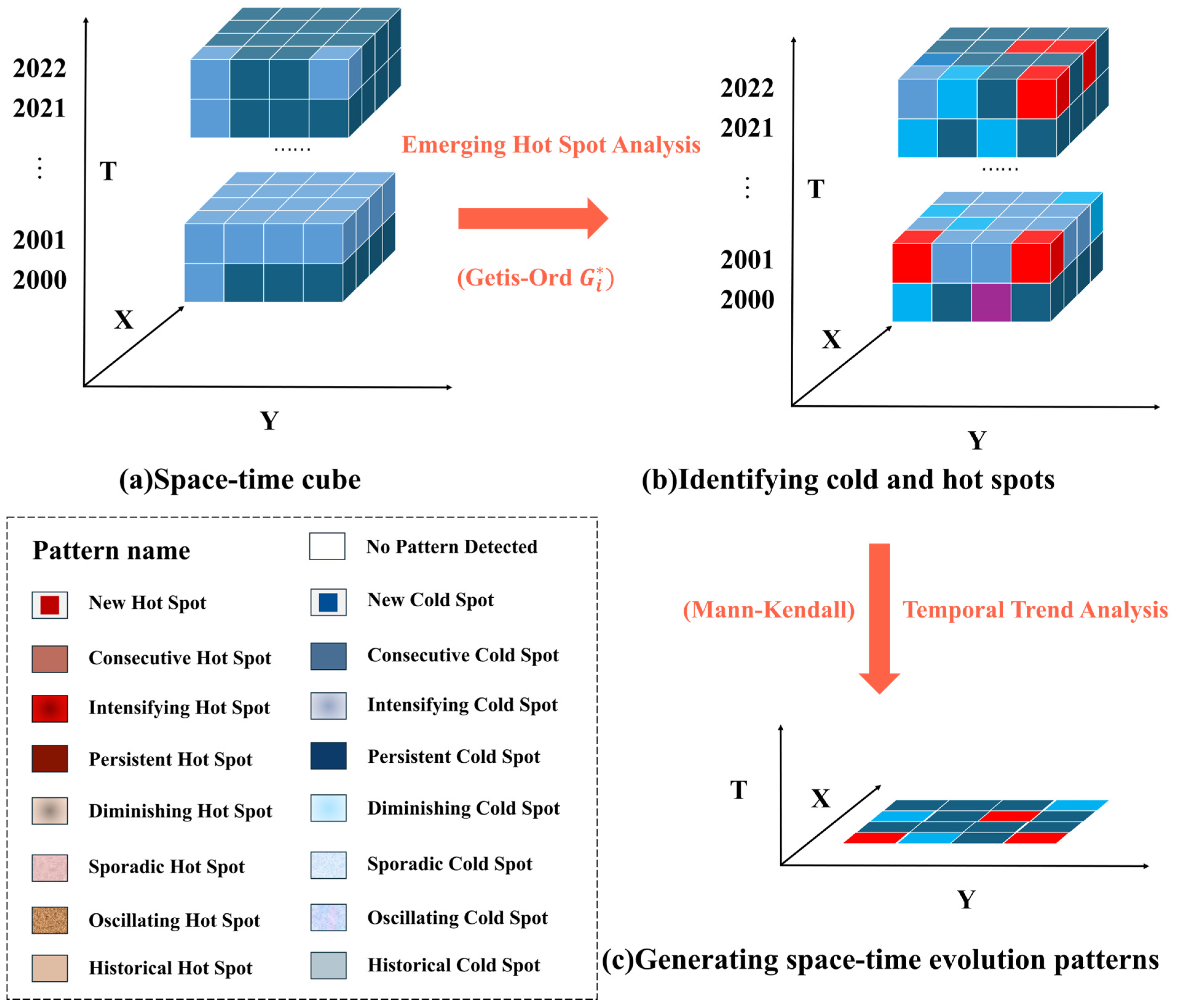
2.3.3. Emerging Space–Time Hot Spot Analysis
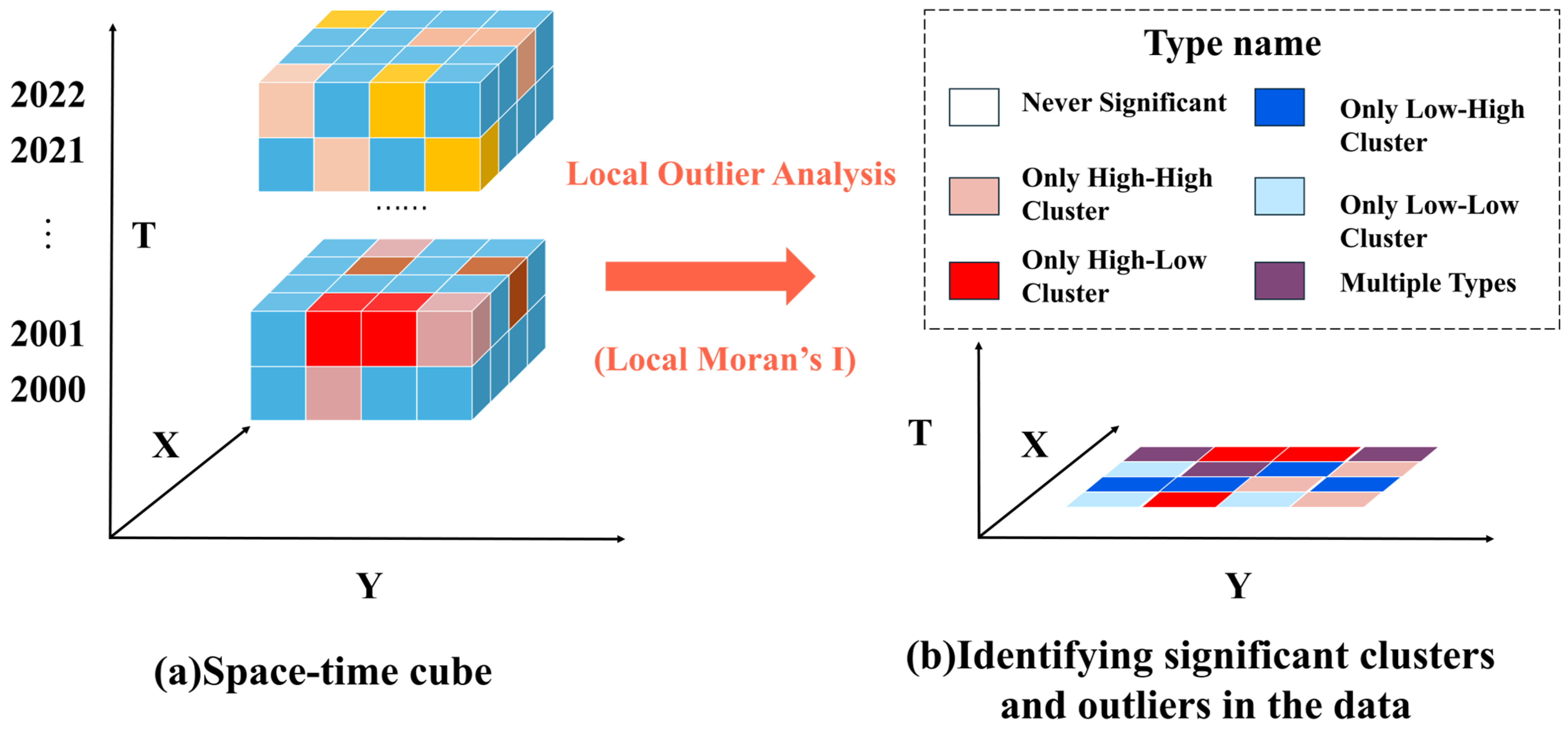
2.3.4. Local Outlier Analysis
2.3.5. Machine Learning Methods
2.3.6. SHAP Algorithm
3. Results and Analysis
3.1. Spatiotemporal Pattern Mining of Economic Development
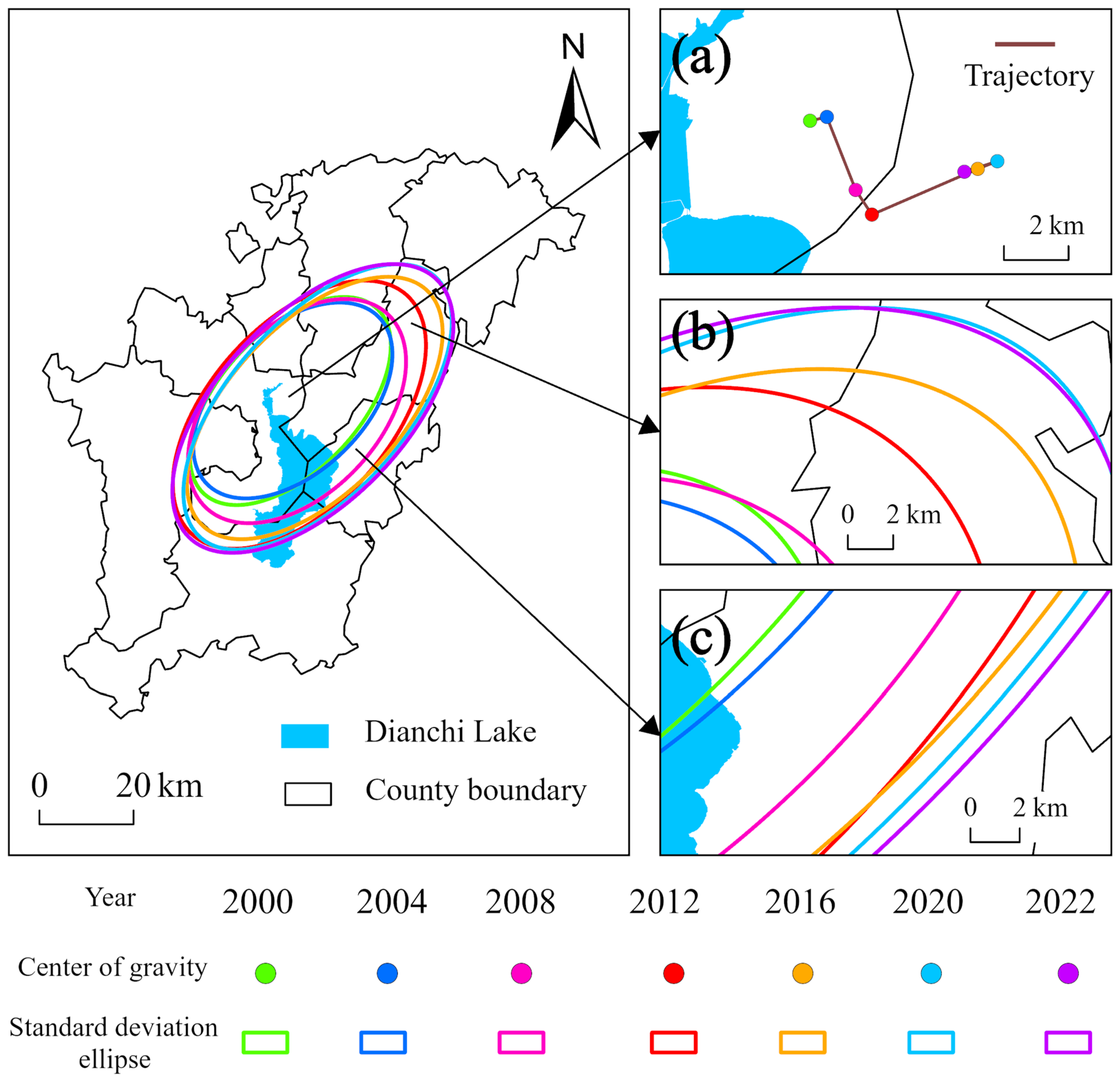
3.1.1. The Trajectory of Economic Development
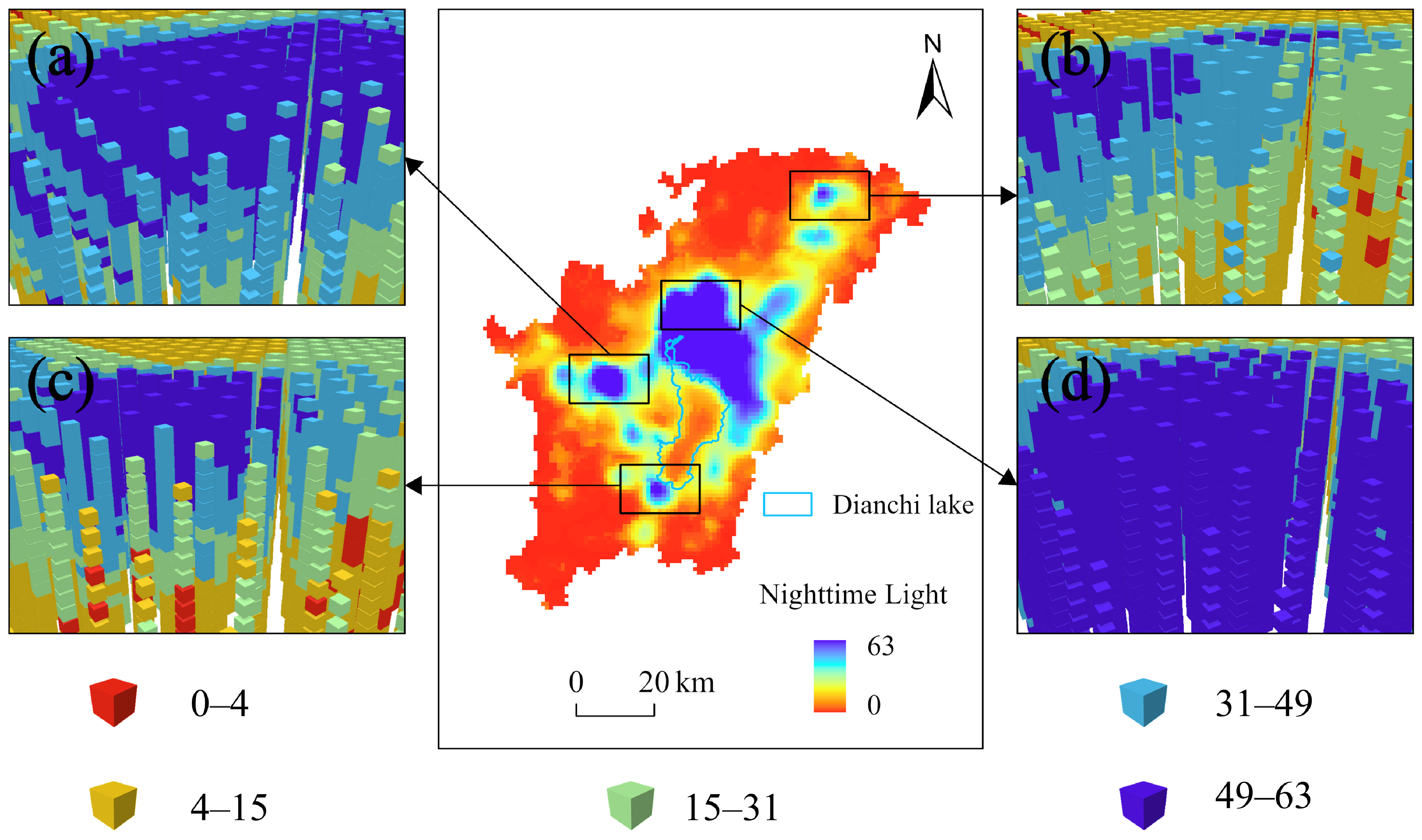
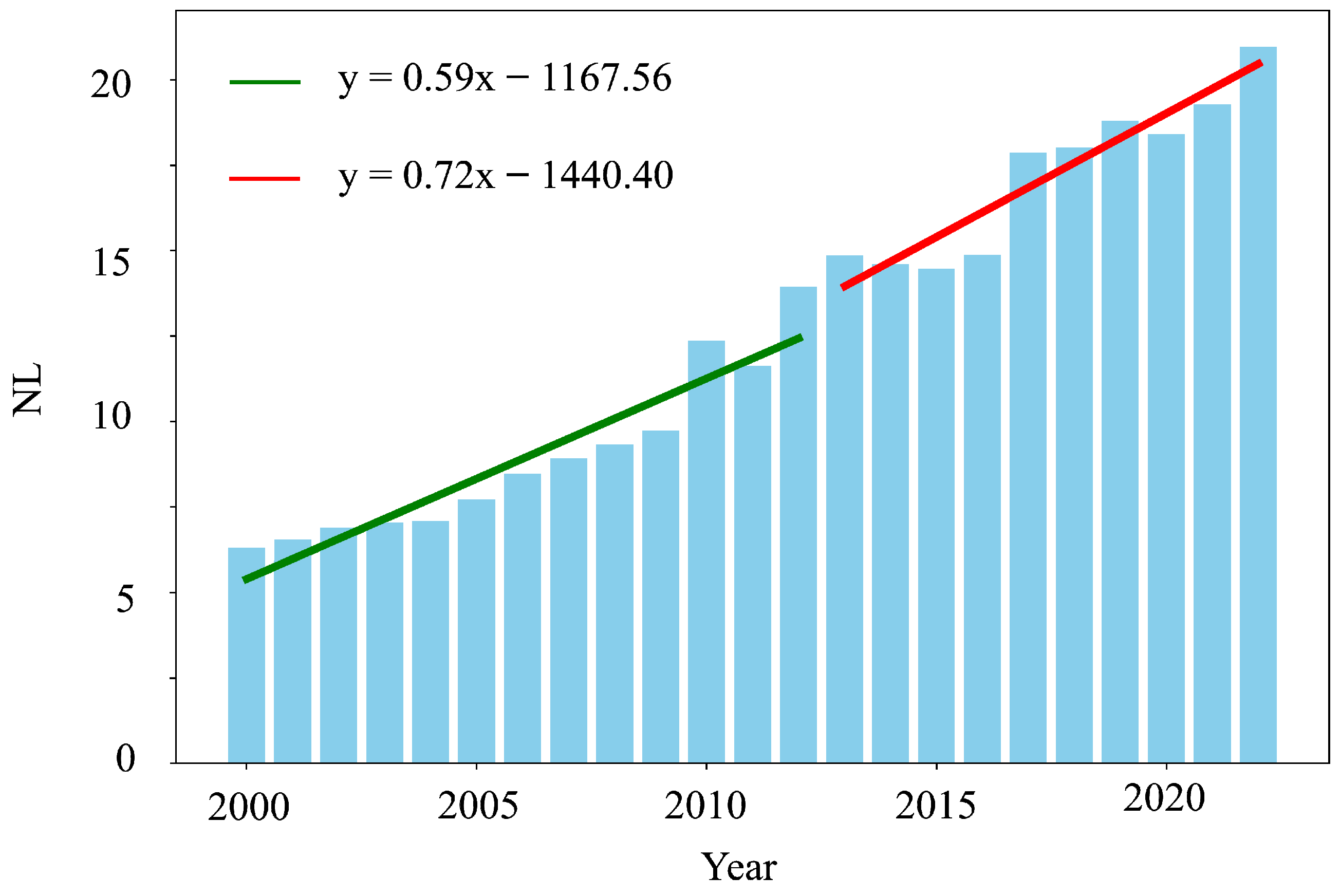
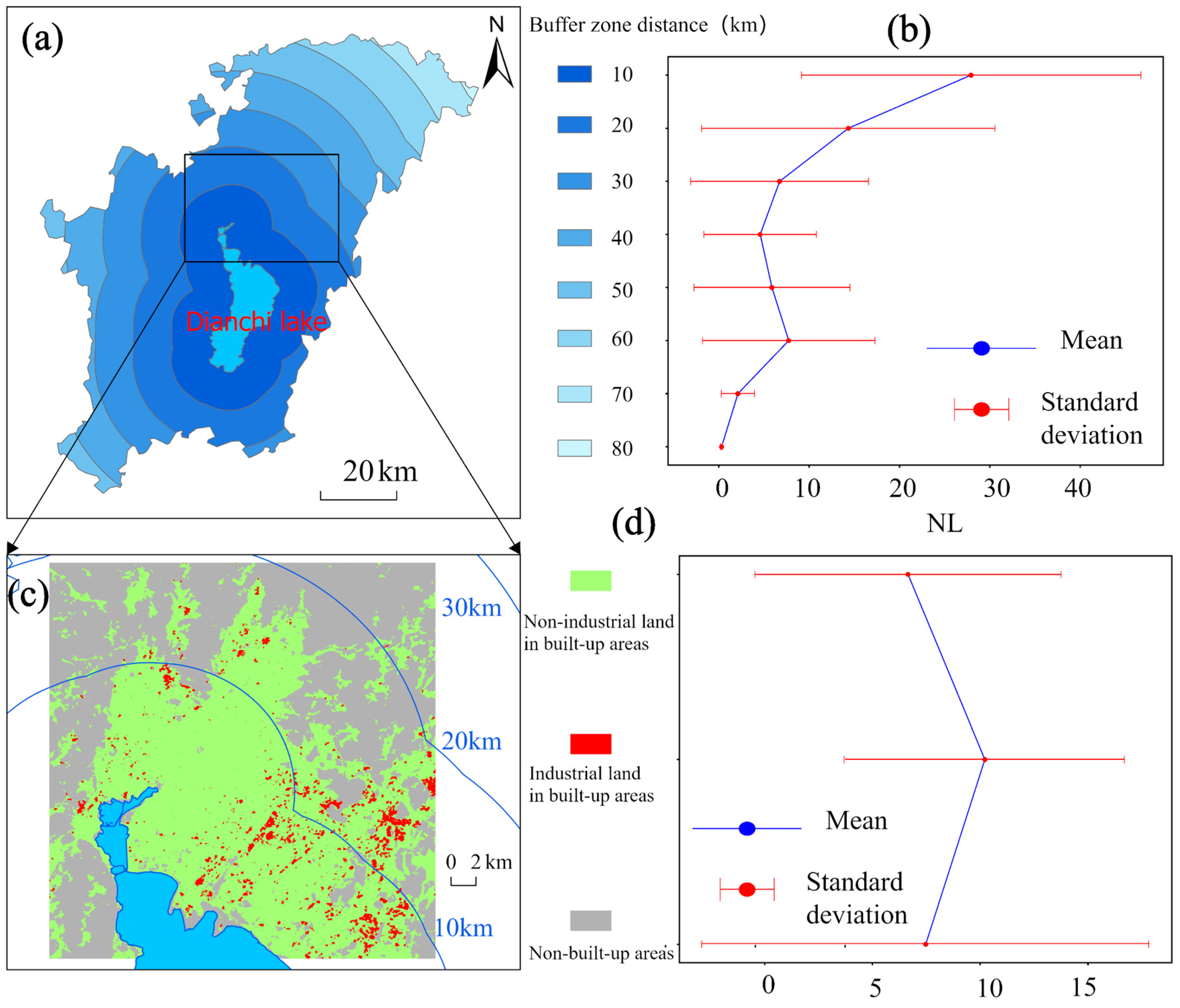
3.1.2. Spatiotemporal Distribution Characteristic
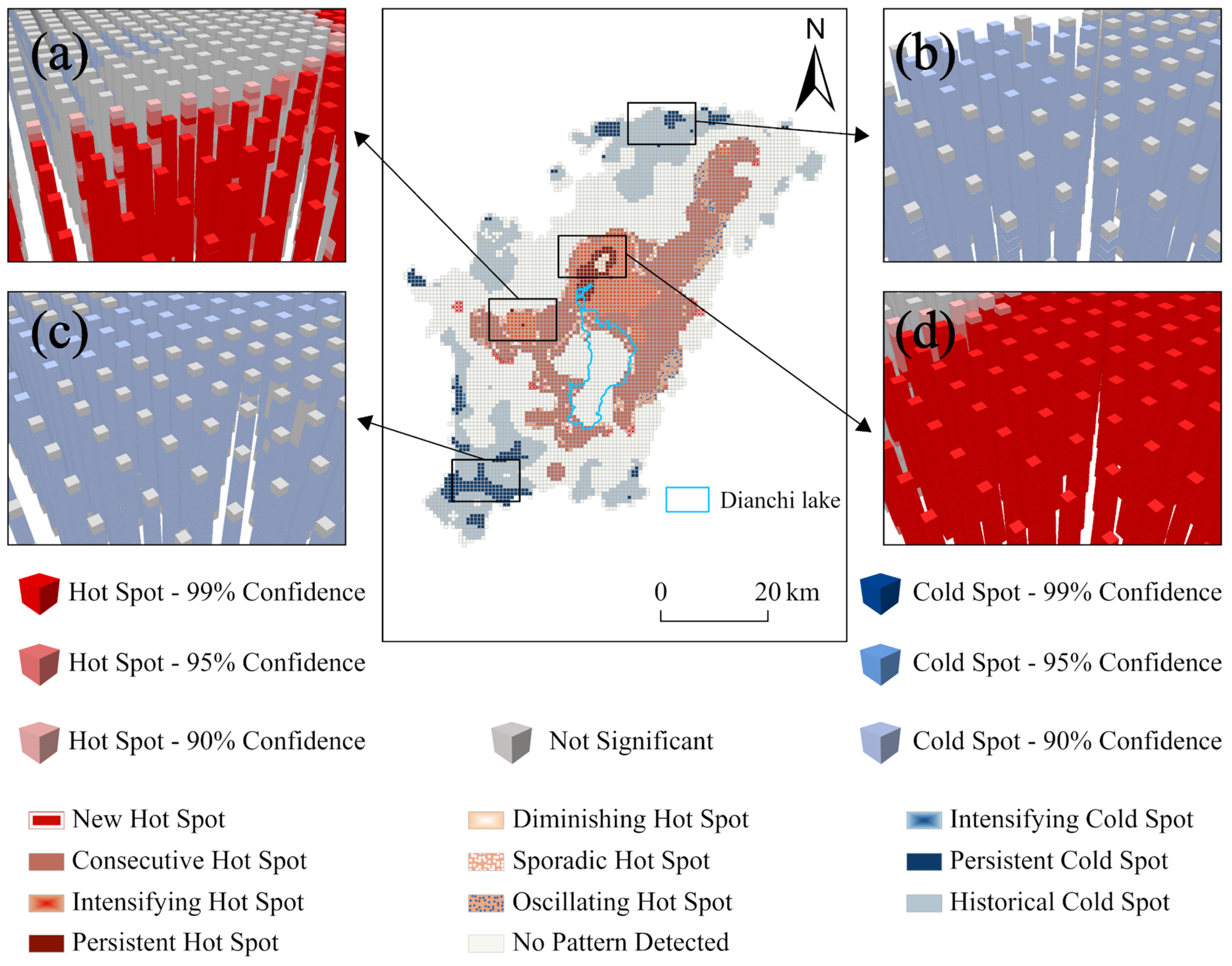
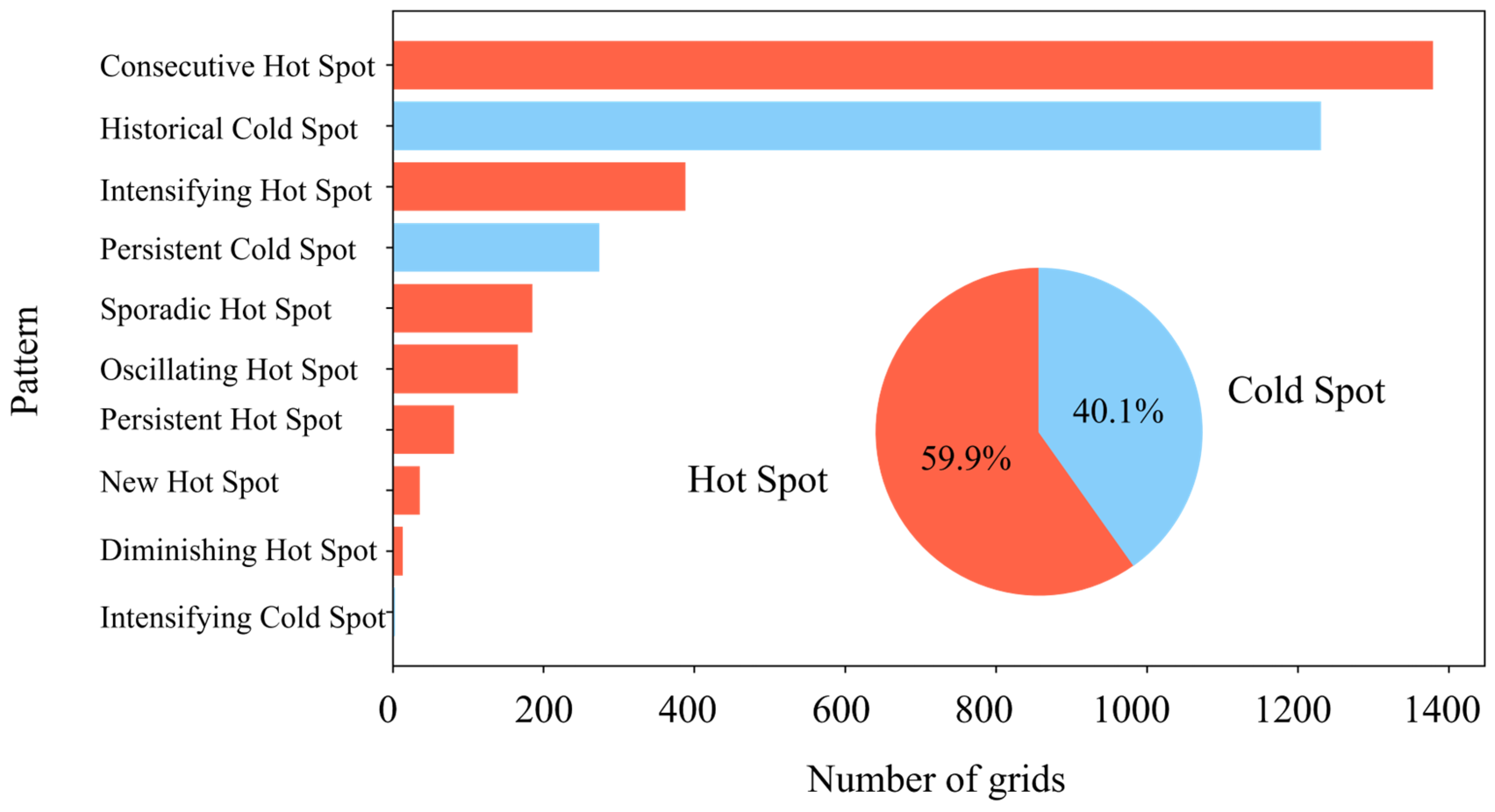
3.1.3. Emerging Space–Time Hot Spot
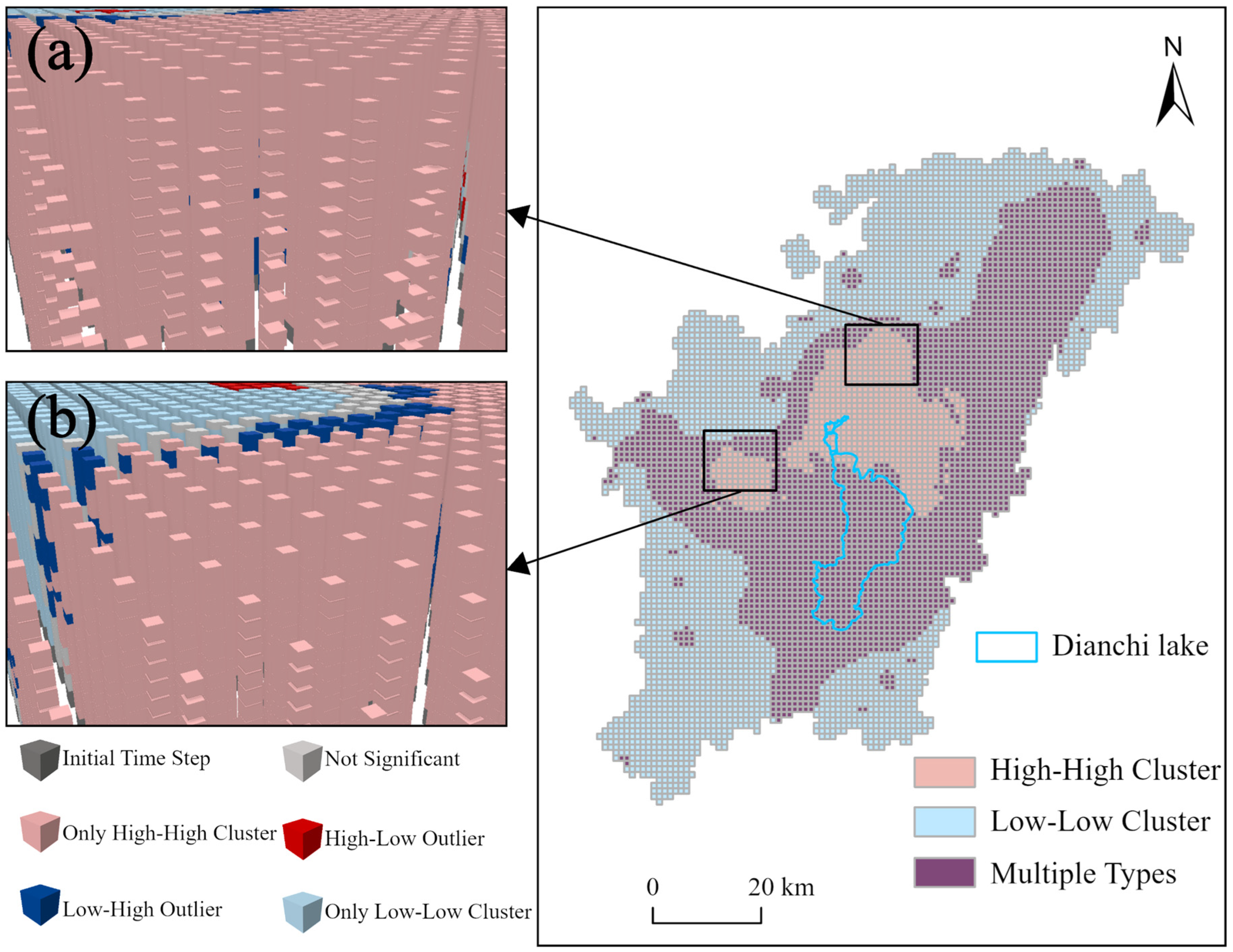
3.1.4. Clustering of Local Outliers
3.2. Influencing Factors of Economic Development
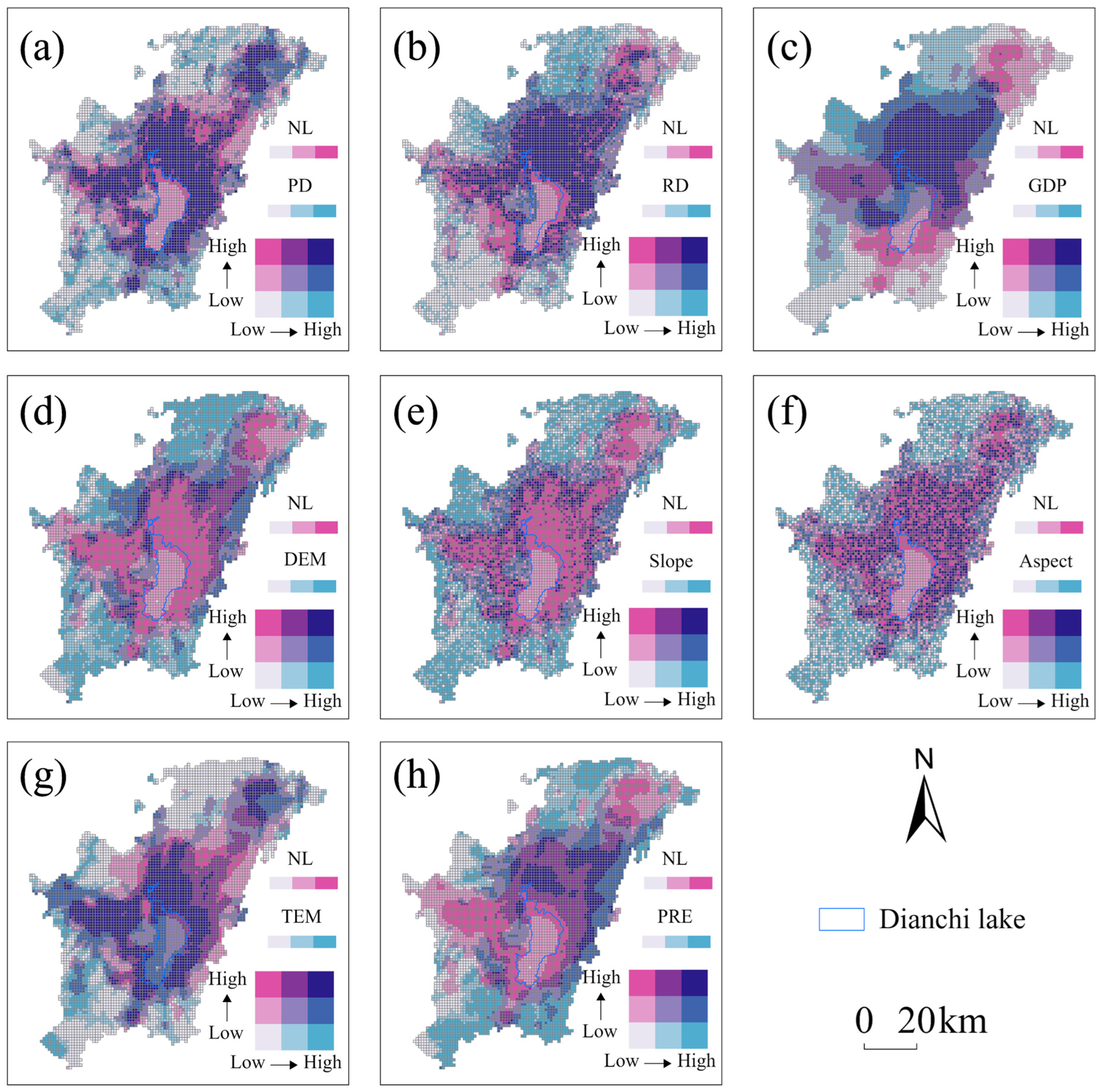
3.2.1. Bivariate Spatial Relationship
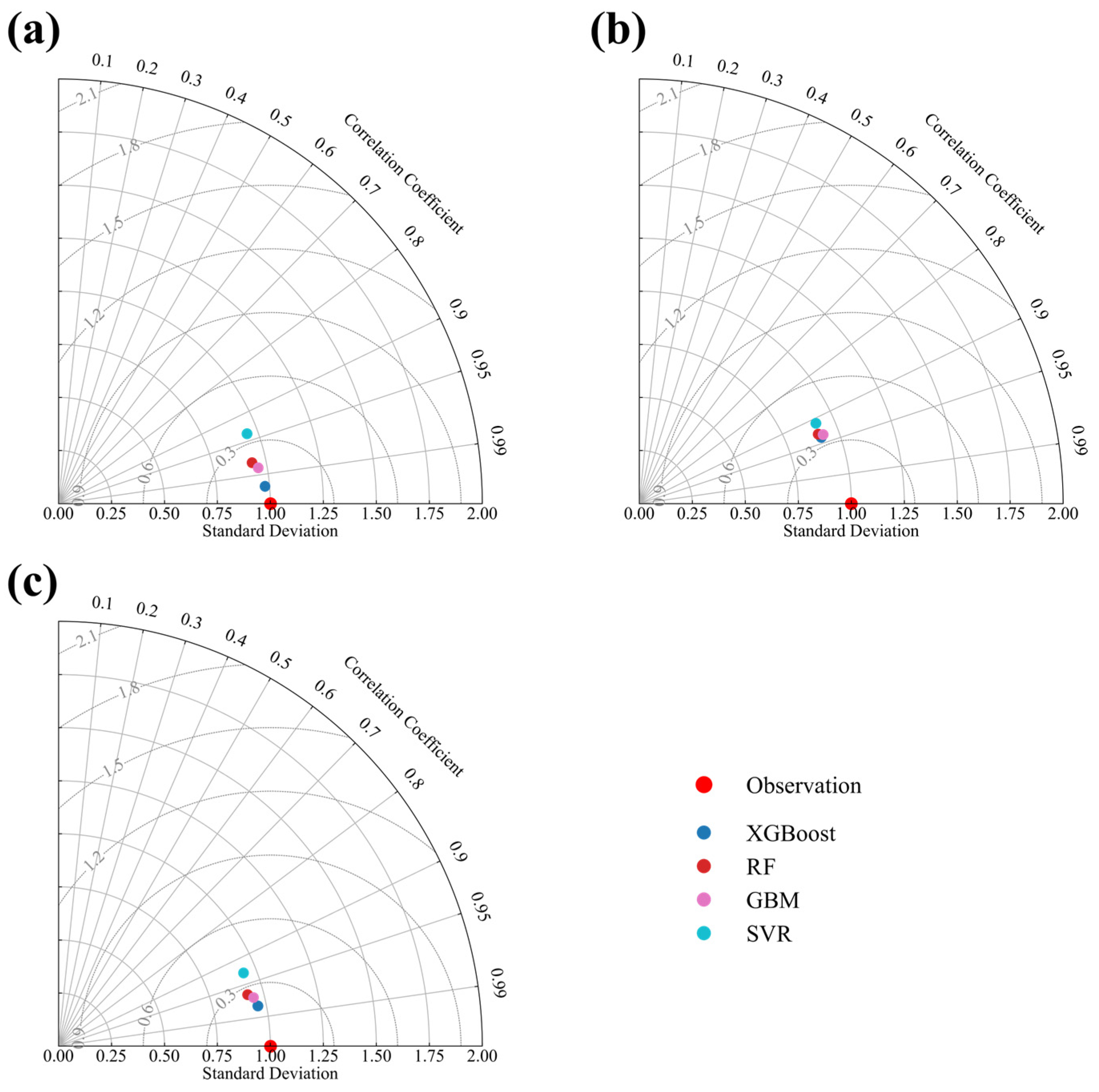
3.2.2. Comparison of Machine Learning Models
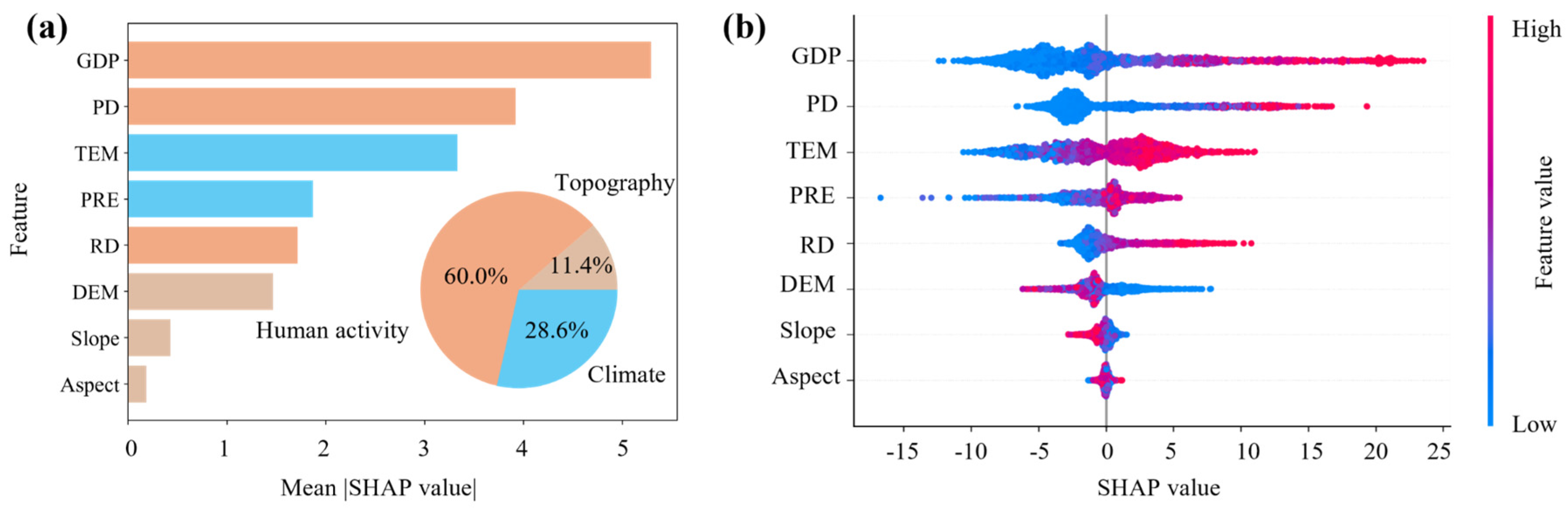
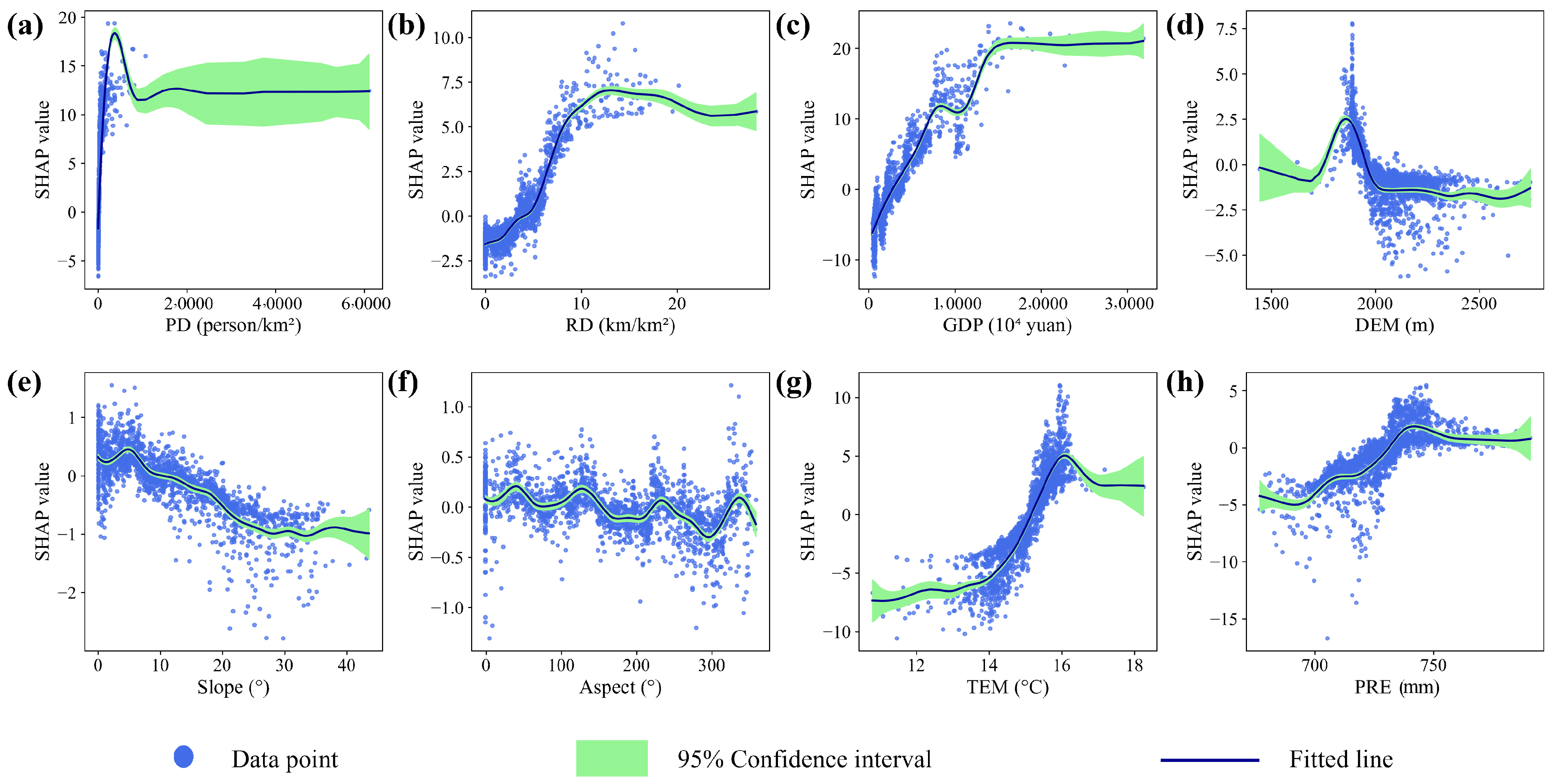
3.2.3. Results of the ML Model
4. Discussion
4.1. The Space–Time Cube Illustrates Economic Development Dynamics
4.2. The Application of Interpretable Machine Learning
5. Conclusions
Author Contributions
Funding
Data Availability Statement
Conflicts of Interest
References
- Gu, Y.; Shao, Z.; Huang, X.; Cai, B. GDP Forecasting Model for China’s Provinces Using Nighttime Light Remote Sensing Data. Remote Sens. 2022, 14, 3671. [Google Scholar] [CrossRef]
- Cao, J.; Cao, X.; Tu, W.; Tan, X.; Wang, T.; Chen, G.; Zhang, X.; Li, Q. Nighttime light imagery or mobile phone footprints: Which better reflects urban socio-economics at the grid level? A case study in the Pearl River Delta, China. Comput. Environ. Urban Syst. 2025, 116, 102220. [Google Scholar] [CrossRef]
- Zhao, Z.; Tang, X.; Wang, C.; Cheng, G.; Ma, C.; Wang, H.; Sun, B. Analysis of the Spatial and Temporal Evolution of the GDP in Henan Province Based on Nighttime Light Data. Remote Sens. 2023, 15, 716. [Google Scholar] [CrossRef]
- Zhao, N.; Liu, Y.; Cao, G.; Samson, E.L.; Zhang, J. Forecasting China’s GDP at the pixel level using nighttime lights time series and population images. GISci. Remote Sens. 2017, 54, 407–425. [Google Scholar] [CrossRef]
- Liu, S.; Liu, W.; Zhou, Y.; Wang, S.; Wang, Z.; Wang, Z.; Wang, Y.; Wang, X.; Hao, L.; Wang, F. Analysis of Economic Vitality and Development Equilibrium of China’s Three Major Urban Agglomerations Based on Nighttime Light Data. Remote Sens. 2024, 16, 4571. [Google Scholar] [CrossRef]
- Jiang, W.; Liu, J.; Long, T.; Liu, M.; Pang, Z.; Luo, G.; Adam, E.; Ding, X.; Cui, S.; Wen, C.; et al. Preliminary analysis of factors affecting economic well-being based on SDGSAT-1 nighttime light remote sensing and household survey data. ISPRS Ann. Photogramm. Remote Sens. Spat. Inf. Sci. 2025, X-G-2025, 421–426. [Google Scholar] [CrossRef]
- Deng, Z.; Huang, J.; Ruan, C.; Li, J.; Gao, S.; Cai, Y. Volume-Based Space-Time Cube for Large-Scale Continuous Spatial Time Series. IEEE Trans. Vis. Comput. Graph. 2025, 31, 7019–7033. [Google Scholar] [CrossRef]
- Kristensson, P.O.; Dahlback, N.; Anundi, D.; Bjornstad, M.; Gillberg, H.; Haraldsson, J.; Martensson, I.; Nordvall, M.; Stahl, J. An Evaluation of Space Time Cube Representation of Spatiotemporal Patterns. IEEE Trans. Vis. Comput. Graph. 2009, 15, 696–702. [Google Scholar] [CrossRef]
- Huang, L.; Kong, F.; Lu, Q.; Huang, W.; Dong, Y.; Zhao, J.; Shang, J.; Zhang, H. Analysis of desert locust (Schistocerca gregaria) suitability in Yemen: An integrated evaluation based on MaxEnt and space–time cube approaches. Int. J. Digit. Earth 2024, 17, 2346266. [Google Scholar] [CrossRef]
- Mo, C.; Tan, D.; Mai, T.; Bei, C.; Qin, J.; Pang, W.; Zhang, Z. An analysis of spatiotemporal pattern for COIVD-19 in China based on space-time cube. J. Med. Virol. 2020, 92, 1587–1595. [Google Scholar] [CrossRef]
- Wu, P.; Meng, X.; Song, L. Identification and spatiotemporal evolution analysis of high-risk crash spots in urban roads at the microzone-level: Using the space-time cube method. J. Transp. Saf. Secur. 2022, 14, 1510–1530. [Google Scholar] [CrossRef]
- Fang, T.B.; Lu, Y. Constructing a Near Real-time Space-time Cube to Depict Urban Ambient Air Pollution Scenario. Trans. GIS 2011, 15, 635–649. [Google Scholar] [CrossRef]
- Luan, G.; Zhao, F.; Xia, J.; Huang, Z.; Feng, S.; Song, C.; Dong, P.; Zhou, X. Analysis of long-term spatio-temporal changes of plateau urban wetland reveals the response mechanisms of climate and human activities: A case study from Dianchi Lake Basin 1993–2020. Sci. Total Environ. 2024, 912, 169447. [Google Scholar] [CrossRef]
- Yang, F.; Shen, J.; Zhu, F.; Zhang, J. A cartographic generalization method for 3D visualization of trajectories in space–time cubes: Case study of epidemic spread. Int. J. Digit. Earth 2025, 18, 2474190. [Google Scholar] [CrossRef]
- Kim, M.; Lee, S. Identification of Emerging Roadkill Hotspots on Korean Expressways Using Space–Time Cubes. Int. J. Environ. Res. Public Health 2023, 20, 4896. [Google Scholar] [CrossRef] [PubMed]
- Liu, Y.; Hou, P.; Wang, P.; Zhu, J.; Zhai, J.; Chen, Y.; Wang, J.; Xie, L. Quantitative Analysis about the Spatial Heterogeneity of Water Conservation Services Function Using a Space–Time Cube Constructed Based on Ecosystem and Soil Types. Diversity 2024, 16, 638. [Google Scholar] [CrossRef]
- Del Castillo, M.F.P.; Fujimi, T.; Tatano, H. Spatiotemporal economic impact analysis of the Taal Volcano eruption using electricity consumption and nighttime light data. Geomat. Nat. Hazards Risk 2025, 16, 2445626. [Google Scholar] [CrossRef]
- Wang, C.; Qin, H.; Zhao, K.; Dong, P.; Yang, X.; Zhou, G.; Xi, X. Assessing the Impact of the Built-Up Environment on Nighttime Lights in China. Remote Sens. 2019, 11, 1712. [Google Scholar] [CrossRef]
- Beyer, R.C.M.; Franco-Bedoya, S.; Galdo, V. Examining the economic impact of COVID-19 in India through daily electricity consumption and nighttime light intensity. World Dev. 2021, 140, 105287. [Google Scholar] [CrossRef]
- Yang, Z.; Hong, Y.; Zhai, G.; Wang, S.; Zhao, M.; Liu, C.; Yu, X. Spatial Coupling of Population and Economic Densities and the Effect of Topography in Anhui Province, China, at a Grid Scale. Land 2023, 12, 2128. [Google Scholar] [CrossRef]
- Stuart, D.; Gunderson, R.; Petersen, B. Is a New Economic System Necessary to Address Climate Change? WIREs Clim. Change 2025, 16, e70003. [Google Scholar] [CrossRef]
- Musibau Ojo, A. Climate change and economy in nigeria: A quantitative approach. ACTA Econ. 2021, 19, 169–186. [Google Scholar] [CrossRef]
- Jiang, S.; Sweet, L.; Blougouras, G.; Brenning, A.; Li, W.; Reichstein, M.; Denzler, J.; Shangguan, W.; Yu, G.; Huang, F.; et al. How Interpretable Machine Learning Can Benefit Process Understanding in the Geosciences. Earths Future 2024, 12, e2024EF004540. [Google Scholar] [CrossRef]
- Molnar, C.; Casalicchio, G.; Bischl, B. Interpretable Machine Learning—A Brief History, State-of-the-Art and Challenges. In Joint European Conference on Machine Learning and Knowledge Discovery in Databases; Springer International Publishing: Cham, Switzerland, 2020. [Google Scholar]
- Liu, X.; Zheng, L.; Wang, Y. Revealing the roles of climate, urban form, and vegetation greening in shaping the land surface temperature of urban agglomerations in the Yangtze River Economic Belt of China. J. Environ. Manag. 2025, 377, 124602. [Google Scholar] [CrossRef] [PubMed]
- Zhang, J.; Ma, X.; Zhang, J.; Sun, D.; Zhou, X.; Mi, C.; Wen, H. Insights into geospatial heterogeneity of landslide susceptibility based on the SHAP-XGBoost model. J. Environ. Manag. 2023, 332, 117357. [Google Scholar] [CrossRef]
- Zhang, Z.; Li, J.; Hu, Z.; Zhang, W.; Ge, H.; Li, X. Impact of Land Use/Land Cover and Landscape Pattern on Water Quality in Dianchi Lake Basin, Southwest of China. Sustainability 2023, 15, 3145. [Google Scholar] [CrossRef]
- Zhang, Z.; Li, J.; Lu, Y.; Yang, L.; Hu, Z.; Li, C.; Yang, X. Temporal and spatial changes in land use and ecosystem service value based on SDGs’ reports: A case study of Dianchi Lake Basin, China. Environ. Sci. Pollut. Res. 2022, 30, 31421–31435. [Google Scholar] [CrossRef]
- Peng, S. 1-km Monthly Precipitation Dataset for China (1901–2023); National Tibetan Plateau Data Center: Beijing, China, 2020. [Google Scholar]
- Peng, S. 1-km Monthly Mean Temperature Dataset for China (1901–2023); National Tibetan Plateau Data Center: Beijing, China, 2024. [Google Scholar]
- Zhang, Y.; Jiang, P.; Cui, L.; Yang, Y.; Ma, Z.; Wang, Y.; Miao, D. Study on the spatial variation of China’s territorial ecological space based on the standard deviation ellipse. Front. Environ. Sci. 2022, 10, 982734. [Google Scholar] [CrossRef]
- Zhang, S.; Liu, J.; Chen, Y.; Pei, W.; Xuan, L.; Wang, Y. Investigating the Dynamic Change and Driving Force of Isolated Marsh Wetland in Sanjiang Plain, Northeast China. Land 2024, 13, 1969. [Google Scholar] [CrossRef]
- Hägerstraand, T. What about people in regional science? Pap. Reg. Sci. 1970, 24, 7–21. [Google Scholar] [CrossRef]
- Wang, S.; Liu, M.; Li, Y.; Wu, L.; Zhou, B.; Tian, L. Spatiotemporal Cube Model Based on Stress Features for Identification of Heavy Metal Stress in Rice. IEEE Trans. Geosci. Remote Sens. 2024, 62, 4401313. [Google Scholar] [CrossRef]
- Feng, Y.; Huang, D.; Hong, X.; Wang, H.; Loughney, S.; Wang, J. Spatial-Temporal Evolution of Maritime Accident Hot Spots in the East China Sea: A Space-Time Cube Representation. J. Mar. Sci. Eng. 2025, 13, 233. [Google Scholar] [CrossRef]
- Xu, Q.; Yang, F.; Hu, S.; He, X.; Hong, Y. Tree Height–Diameter Model of Natural Coniferous and Broad-Leaved Mixed Forests Based on Random Forest Method and Nonlinear Mixed-Effects Method in Jilin Province, China. Forests 2024, 15, 1922. [Google Scholar] [CrossRef]
- Awad, M.; Khanna, R. Support Vector Regression. In Efficient Learning Machines; Apress: Berkeley, CA, USA, 2015; pp. 67–80. [Google Scholar]
- Friedman, J.H. Greedy function approximation: A gradient boosting machine. Ann. Stat. 2001, 29, 1189–1232. [Google Scholar] [CrossRef]
- Ptr, A.F.L.; Siregar, M.M.; Daniel, I. Analysis of Gradient Boosting, XGBoost, and CatBoost on Mobile Phone Classification. J. Comput. Netw. Archit. High Perform. Comput. 2024, 6, 661–670. [Google Scholar] [CrossRef]
- Lundberg, S.M.; Lee, S.-I. A Unified Approach to Interpreting Model Predictions. In Advances in Neural Information Processing Systems 30; Guyon, I., Luxburg, U.V., Bengio, S., Wallach, H., Fergus, R., Vishwanathan, S., Garnett, R., Eds.; Curran Associates Inc.: Red Hook, NY, USA, 2017; pp. 4765–4774. [Google Scholar]
- Kraak, M.J. The space-time cube revisited from a geovisualization perspective. In Proceedings of the 21st International Cartographic Conference, Durban, South Africa, 10–16 August 2003; International Cartographic Association: Wellington, New Zealand, 2003; pp. 1988–1996. [Google Scholar]
- Dawei, Z. Impacts of 20-year socio-economic development on aquatic environment of Lake Dianchi Basin. J. Lake Sci. 2012, 24, 875–882. [Google Scholar] [CrossRef]



| Category | Impact Factor | Abbreviation | Unit | Spatial Resolution | Time | Source | VIF |
|---|---|---|---|---|---|---|---|
| Human activity | Population Density | PD | 1 km | 2000–2022 | Data from https://landscan.ornl.gov/ (before 24 December 2025) was used to calculate the annual average raster. | 1.25 | |
| Road Network Density | RD | 1 km | 2022 | Calculated using ArcGIS (v10.8.1) based on Open Street Map (OSM) data. | 1.64 | ||
| Gross Domestic Product | GDP | 10,000 yuan | 1 km | 2000, 2005, 2010, 2015, 2020 | Data from https://www.resdc.cn/ (before 24 December 2025) was used to calculate the average raster. | 1.64 | |
| Topography | DEM | DEM | m | 30 m | - | https://browser.dataspace.copernicus.eu/ (before 24 December 2025) | 5.77 |
| Slope | Slope | ° | 30 m | - | Calculated using ArcGIS based on DEM. | 1.34 | |
| Aspect | Aspect | ° | 30 m | - | 1.07 | ||
| Climate | Temperature | TEM | °C | 1 km | 2000–2022 | Calculating average raster [29,30]. | 6.50 |
| Precipitation | PRE | mm | 1 km | 2000–2022 | 2.71 |
| Z-Score | p-Value | Confidence | Pattern Name |
|---|---|---|---|
| <−2.58 | <0.01 | 99% | Cold Spot |
| −2.58–−1.96 | <0.05 | 95% | Cold Spot |
| −1.96–−1.65 | <0.1 | 90% | Cold Spot |
| −1.65–1.65 | - | - | Not significant |
| 1.65–1.96 | <0.1 | 90% | Hot Spot |
| 1.96–2.58 | <0.05 | 95% | Hot Spot |
| >2.58 | <0.01 | 99% | Hot Spot |
| Model | XGBoost | RF | GBM | SVR | |
|---|---|---|---|---|---|
| Training set | 0.99 | 0.95 | 0.97 | 0.88 | |
| RMSE | 1.39 | 3.41 | 2.88 | 5.63 | |
| MAE | 0.95 | 2.44 | 2.02 | 3.37 | |
| Testing set | 0.88 | 0.87 | 0.88 | 0.83 | |
| RMSE | 5.42 | 5.73 | 5.56 | 6.60 | |
| MAE | 3.66 | 3.96 | 3.81 | 4.38 | |
| Full dataset | 0.96 | 0.93 | 0.94 | 0.86 | |
| RMSE | 3.19 | 4.24 | 3.88 | 5.94 | |
| MAE | 1.76 | 2.90 | 2.56 | 3.67 |
Disclaimer/Publisher’s Note: The statements, opinions and data contained in all publications are solely those of the individual author(s) and contributor(s) and not of MDPI and/or the editor(s). MDPI and/or the editor(s) disclaim responsibility for any injury to people or property resulting from any ideas, methods, instructions or products referred to in the content. |
© 2025 by the authors. Licensee MDPI, Basel, Switzerland. This article is an open access article distributed under the terms and conditions of the Creative Commons Attribution (CC BY) license.
Share and Cite
Li, S.; Zhang, G.; Wei, X.; Liu, H.; Xia, J. Analysis of Economic Development Patterns and Driving Factors of Dianchi Lake Basin Based on Space–Time Cubes and Interpretable Machine Learning. Land 2026, 15, 51. https://doi.org/10.3390/land15010051
Li S, Zhang G, Wei X, Liu H, Xia J. Analysis of Economic Development Patterns and Driving Factors of Dianchi Lake Basin Based on Space–Time Cubes and Interpretable Machine Learning. Land. 2026; 15(1):51. https://doi.org/10.3390/land15010051
Chicago/Turabian StyleLi, Shihua, Guoyou Zhang, Xiaoyan Wei, Heng Liu, and Jisheng Xia. 2026. "Analysis of Economic Development Patterns and Driving Factors of Dianchi Lake Basin Based on Space–Time Cubes and Interpretable Machine Learning" Land 15, no. 1: 51. https://doi.org/10.3390/land15010051
APA StyleLi, S., Zhang, G., Wei, X., Liu, H., & Xia, J. (2026). Analysis of Economic Development Patterns and Driving Factors of Dianchi Lake Basin Based on Space–Time Cubes and Interpretable Machine Learning. Land, 15(1), 51. https://doi.org/10.3390/land15010051