


Abstract
Enhancing urban ecological resilience (UER) is crucial for mitigating soil erosion, improving land use efficiency, and preventing ecological degradation. The digital–real economy integration (DRI) plays a pivotal role in strengthening UER, offering a vital pathway for modernizing ecological governance systems and capabilities in the Yellow River Basin (YRB). Based on ecological resilience theory, this study establishes a three-dimensional evaluation framework centered on “resistance–recovery–adaptation”. Using panel data from 78 cities in the YRB from 2011 to 2023, we empirically examine the impact of DRI on UER. The results indicate that DRI significantly improves UER in the YRB, with notably strong positive effects on recovery and adaptation capacities, although there is no significant effect on resistance capacity. Mechanism analysis reveals that DRI promotes UER primarily through three channels: upgrading the industrial structure, strengthening government governance, and spurring green technological innovation. Heterogeneity analysis further shows that the positive impact of DRI on UER is more pronounced in downstream cities, urban agglomerations, non-resource-based cities, key environmental protection cities, green data center pilot cities, and informatization–industrialization integration pilot cities. Spatial analysis confirms DRI generating positive spatial spillover effects on the UER of neighboring cities. This study provides a theoretical basis for understanding the ecological governance potential of DRI and offers policy insights to support coordinated digital and green transformation in the YRB.
1. Introduction
Urban ecological resilience (UER) refers to the capacity of ecosystems to maintain structural and functional stability by resisting, recovering from, and adapting to external disturbances such as natural disasters, human activities, and climate change [1]. In 2022, the report of the 20th CPC National Congress established “building livable, resilient and smart cities” as a national strategic goal [2]. In 2023, the “Opinions of the Central Committee of the Communist Party of China and the State Council on Comprehensively Advancing the Construction of a Beautiful China” further emphasized the need to “fortify the national ecological security barrier and enhance the diversity, stability and sustainability of ecosystems”. Against the backdrop of rapid urbanization, urban ecosystems face increasingly complex pressures. Enhancing UER has thus become crucial not only for addressing climate change but also for achieving sustainable urban development [3]. As a vital economic corridor and ecological security barrier in China, the Yellow River Basin (YRB) holds a strategic position in the national ecological security and regional sustainable development framework [4]. However, the basin’s inherent ecological fragility, coupled with long-term intensive resource exploitation, has led to prominent issues, such as water scarcity, soil erosion, and ecological degradation, posing serious threats to regional ecological security and sustainable development [5]. In 2024, major provinces within the YRB accounted for only 10.28% of China’s total water resources, yet their soil erosion area represented 30.93% of the basin’s total land area [4]. Therefore, enhancing UER in the YRB and systematically improving the ecosystem’s ability to resist, recover from, and adapt to external disturbances has become a central issue in advancing the basin’s ecological conservation and high-quality development strategy.
Digital–real economy integration (DRI) refers to a dynamic process wherein data becomes the core productive factor and digital technology acts as the primary driver [6]. It encompasses both the industrialization of digital technologies and the digitalization of traditional industries, thereby fostering deep integration, systemic restructuring, and boundary dissolution between the digital economy (DE) and the real economy (RE). From the perspective of techno-economic paradigm theory, DRI fundamentally represents the pervasive diffusion of new technological systems into economic structures, catalyzed by the digital technology revolution [7]. This transformative process engenders novel infrastructure, technological frameworks, and industrial configurations, ultimately facilitating a paradigm shift toward a new techno-economic model. With the rapid growth of the DE, Chinese authorities have increasingly emphasized the enabling role of DRI in ecological and environmental governance [6]. In 2022, “the State Council’s Guiding Opinions on Strengthening Digital Government Construction” explicitly proposed comprehensively advancing the digital transformation of ecological and environmental protection and building a collaborative governance system featuring precise perception and intelligent control [7]. In 2023, Chinese President Xi Jinping further emphasized “deepening the application of digital technologies such as artificial intelligence, building a digital governance system for a Beautiful China, and fostering a green and intelligent digital ecological civilization”. DRI not only injects momentum into national ecological civilization construction but also opens new pathways for innovating environmental governance models in the YRB [8]. In particular, with the advancement of the “East Data, West Computing” strategy, DRI is expected to provide new impetus for enhancing UER in the region [6]. Figure 1 illustrates the relationship between DRI and UER. Specifically, the integration of digital infrastructure with environmental governance facilities enables the establishment of a comprehensive, real-time, and multi-dimensional monitoring network, facilitating accurate identification and early warning of ecological risks, such as natural disasters and pollution [9]. Digital technologies can also be used to dynamically simulate and optimize ecological restoration projects, improving their effectiveness and promoting the recovery of ecosystem function [10]. Moreover, DRI can stimulate new business models, promote the scaling of circular economy practices, enhance material recycling and waste reuse, reduce urban dependence on natural resources, and strengthen climate adaptation capacity [11]. In summary, systematically examining the impact of DRI on UER in the YRB and accelerating the construction of a digital ecological governance system in the YRB hold significant theoretical and practical relevance.
Figure 1.
Direct relationship between DRI and UER.
The potential contributions of this study are threefold. First, through a combination of theoretical analysis and empirical testing, it systematically investigates the influence and pathways through which DRI affects UER in the YRB. This approach enhances the understanding of the intrinsic mechanisms by which DRI empowers UER and provides a theoretical basis for constructing digital governance systems for urban ecological environments. Second, addressing the limitations of existing measurement methods, it constructs a DRI indicator system based on the three dimensions of “infrastructure-technology-industry” and a UER indicator system grounded in the “resistance-recovery-adaptation” framework. These systems comprehensively capture the dynamic evolution of DRI and UER, thereby expanding the theoretical frameworks in both fields. Third, as relatively integrated geo-economic units, river basins feature closely interconnected cities and highly complex ecological governance. Taking the YRB as a case study and closely aligning with its national strategic positioning and regional characteristics, this research comprehensively analyzes intra-regional disparities and spatial spillover effects. The findings may help bridge the UER gap between upstream and downstream cities and provide a reference model for other basin-based economic zones around the world.
2. Literature Review
2.1. Research on UER
The concept of ecological resilience was pioneered by Canadian ecologist Holling (1973) [12], who defined it as the capacity of an ecosystem to absorb disturbances and return to its original state. In recent decades, fostering resilient cities has emerged as a central theme in urban planning and management [2]. Scholars have subsequently expanded this concept into the urban context, conducting extensive research on the conceptual dimensions [1], measurement approaches [13], and influencing factors [14] of UER. Theoretically, UER is distinct from urban economic resilience, primarily due to the inherent irreversibility of ecological processes. This characteristic renders the simplistic notion of “returning to a pre-shock state” inadequate for capturing its essence [15]. A scholarly consensus has thus converged on defining UER as the ability of urban ecosystems to withstand sustained pressures while maintaining three core capacities: (1) the ability to endure disturbances without fundamental changes to structure or function; (2) the capacity to rebound to a stable state following a disturbance; (3) the capability to proactively adjust structures through learning and innovation in response to new environmental conditions [16]. Regarding measurement, mainstream research typically constructs an index system based on frameworks such as “scale-density-morphology” [16] or the “pressure-state-response” model [17]. Entropy weight methods are commonly employed to calculate a composite UER index, followed by analyses of its dynamic evolution [18] and spatial network characteristics [19]. A smaller subset of studies employs the energy value ecological footprint model for regional comparisons [2]. Concerning influencing factors, various national pilot policies—including those for low-carbon cities [20], sponge cities [21], ecological civilization cities [22], and smart city initiatives [23]—have been identified as significantly enhancing UER. Additional drivers include urban renewal [17], environmental regulations [24], and the productivity efficiency of vegetation [25].
2.2. Research on DRI and UER
Against the backdrop of China’s high-quality development strategy, the relationship between DRI and UER has attracted growing scholarly attention [26]. Existing research explores the positive impact of DRI on UER through two dimensions: pollution reduction and ecological restoration. In terms of pollution reduction, (1) technologies like the industrial internet enable real-time data flow and systemic interconnectivity across production processes, significantly improving resource utilization efficiency while reducing pollutant emissions [27]. (2) The use of digital technologies to build smart grids, smart buildings, and smart transportation systems helps optimize energy structures and enhance energy efficiency, thereby reducing fossil fuel consumption intensity [28]. (3) DRI facilitates knowledge spillovers and synergy among innovation actors, driving dual improvements in innovation efficiency and quality [29], which provides critical technological support for the green transformation of traditional industries [30]. Regarding ecological restoration, studies theoretically suggest that DRI can enhance ecological monitoring, deepen environmental data mining and analysis, and optimize governance solutions, thereby improving the precision and effectiveness of ecological governance. (1) Technologies such as remote sensing satellites and drones enable high-precision, all-weather dynamic monitoring of the ecological environment, promoting the systematic integration and sharing of environmental information [31] and providing a real-time, reliable data foundation for governance decisions [32]. (2) Artificial intelligence algorithms facilitate intelligent ecological assessment, risk identification, and trend forecasting through deep mining and pattern recognition of environmental data [33,34]. (3) Digital twin technology simulates environmental responses under different governance strategies, enabling policy impact simulation and optimization of governance plans, thereby supporting the formulation of forward-looking and precise ecological protection strategies [35].
In summary, while existing studies provide a valuable foundation for understanding the relationship between DRI and UER, several research gaps remain. First, most research focuses predominantly on the pollution reduction effects of DRI, overlooking its enabling role in ecological regulation, restoration, and adaptation. Given pressing global challenges such as land degradation and resource depletion, there is an urgent need to systematically examine the comprehensive effects of DRI on UER through both theoretical and empirical lenses. Second, UER evaluation frameworks often lack comprehensiveness, particularly in incorporating the core dimensions of resistance, recovery, and adaptation. In addition, UER measurement methods are frequently tailored to specific regions and lack cross-regional and transnational applicability, limiting the formulation of globally relevant policy insights. Third, despite the strategic emphasis on ecological conservation and high-quality development in the YRB, systematic research on the impact, mechanisms, and spatial spillover effects of DRI on UER in this region remains underexplored. Consequently, there is insufficient reference for other ecologically fragile river basins (e.g., the Nile, Danube, and Indus). To address these gaps, this study utilizes panel data from 78 cities in the YRB from 2011 to 2023. The entropy weight method is employed to measure DRI and UER, while two-way fixed effects models and Spatial Durbin Models (SDMs) are applied to identify the effects of DRI on UER in the YRB. This research not only provides empirical evidence for promoting the coordinated development of digitalization and greening in the YRB but also offers policy insights into leveraging DRI to support sustainable development in ecologically vulnerable regions globally, such as arid and semi-arid zones and transboundary river basins.
3. Theoretical Analysis
Table 1 presents the fundamental theoretical framework and primary references of this study.
Table 1.
Theoretical framework and references.
According to dynamic capability theory, the possession of digital systems capable of real-time environmental sensing and rapid response is essential for cities to effectively address environmental regulatory pressures and the impacts of climate change [36]. The UER system functions as a complex adaptive system emerging from interactions among diverse heterogeneous actors [12]. Its stability relies on three core dimensions: resistance, recovery, and adaptive capacity [37]. Through enabling high-precision monitoring, targeted restoration, and intelligent forecasting of the ecological environment in the YRB, DRI profoundly reshapes the underlying logic and operational models of urban ecological governance in the region, offering an innovative pathway for systematically enhancing UER [6]. First, by leveraging digital technologies such as the Internet of Things (IoT) and remote sensing, an intelligent environmental monitoring network is established. This facilitates high-precision, real-time, and comprehensive tracking of critical ecological indicators—including water quality, flood risks, and soil erosion—thereby enhancing the capacity of urban ecosystems in the YRB to identify, proactively defend against, and avoid risks during the early stages of disturbance [10]. Second, in contexts such as mining area remediation, reconstruction of river and lake wetlands, and emergency water pollution treatment, the deep integration of intelligent equipment—such as drones and underwater robots—with conventional ecological restoration projects significantly enhances the precision and implementation efficiency of remediation efforts. This effectively shortens the recovery cycle of degraded ecosystems [31]. Third, by utilizing multi-source data fusion and dynamic simulation technologies, digital modeling is deeply integrated with policy evaluation. This enables scientific assessment of the comprehensive effectiveness, potential costs, and implementation risks associated with strategies such as water resource optimization, industrial layout adjustment, and ecological protection red-line management in the YRB. Such assessments provide decision-making support for more forward-looking, scientifically grounded, and dynamically adaptive policy formulation [8]. Accordingly, this study proposes the following hypothesis.
Hypothesis 1.
DRI significantly enhances UER in the YRB.
3.1. Perspective of Industrial Structure Upgrading (IU)
According to the new structural economic theory, the upgrading of the factor endowment structure constitutes the fundamental driver of industrial evolution [38]. By embedding digital production factors into the economic system, DRI reshapes the industrial landscape of cities in the YRB. DRI is fundamentally distinct from digitalization. While digitalization emphasizes the external application of technology for empowerment—focusing primarily on the unidirectional impetus of data elements—DRI underscores the embedded transformation of technology, characterized by the reconfiguration of production networks and the enhancement of governance systems [6]. As such, DRI facilitates deep IU. First, the YRB hosts a concentration of traditional pillar industries such as energy, chemicals, and raw materials. Through deep integration with technologies such as the industrial internet and artificial intelligence, production processes can achieve equipment interconnectivity, real-time monitoring, and dynamic optimization, thereby reducing unit energy and material consumption. Moreover, the integration of digital technologies with sectors such as agriculture, cultural tourism, and logistics fosters the emergence of smart agriculture, smart tourism, and smart logistics, thereby establishing new technology-intensive pillars for the regional economy [11]. Third, the adoption of digital technologies and platforms has weakened traditional geographic constraints on industrial agglomeration, facilitating the efficient cross-regional flow of production factors such as talent, technology, and capital. This helps bridge the “digital divide” between upstream, midstream, and downstream regions of the YRB, as well as between urban and rural areas, thereby enhancing the risk resistance and resilience of the basin’s industrial chain [12]. Finally, IU generates extensive market opportunities and application scenarios that accelerate the implementation and innovation of DRI. Accordingly, the relationship between DRI and IU is not unidirectional but constitutes a positive feedback loop characterized by a cycle of “digital technology embedding → industrial efficiency enhancement → escalating application demand → deeper technological iteration.”
The environmental Kuznets curve (EKC) theory posits that reducing the pollution emission elasticity of economic systems through IU is a key mechanism for improving environmental quality [39]. As a core engine of high-quality development in the YRB, IU reshapes industrial structures and resource utilization patterns, thereby enhancing the stability, recovery, and sustainability of regional ecosystems. First, implementing smart upgrades and clean technology substitutions in pillar industries such as energy, chemicals, and metallurgy significantly decreases key pollutants—including energy consumption, water use, and ammonia nitrogen emissions—per unit of output [40]. It is important to acknowledge, however, that as the digital industry continues to expand, the energy consumption and carbon emissions associated with digital infrastructure—such as data centers—may rise considerably, potentially exerting adverse effects on the ecological environment of the YRB. Second, shifting toward technology-intensive and service-oriented industries reduces dependence on water and land resources, boosting the capacity of ecosystems to recover naturally after disturbances [41]. For example, upstream regions of the YRB have developed big data centers to replace water-intensive industries, midstream regions have promoted water-saving technological upgrades in food processing, and downstream regions have developed seawater desalination. These multi-faceted efforts safeguard ecological base flows and accelerate the natural restoration of riverine wetlands. Third, by leveraging ecological resource advantages, green industries such as forest-based economies, organic agriculture, and ecotourism have been developed, transforming “lucid waters and lush mountains” into “valuable economic assets”. For instance, integrating specialty ecological products such as Ningxia goji berries and Inner Mongolia sea buckthorn with e-commerce not only elevates their value chains but also yields ecological benefits such as soil stabilization and water conservation, thereby enhancing the long-term adaptive capacity and stability of ecosystems against shocks. Accordingly, this study proposes the following hypothesis.
Hypothesis 2.
DRI enhances UER in the YRB by promoting IU.
3.2. Perspective of Government Governance Capabilities (GC)
Digital governance theory suggests that leveraging information technology to mitigate information asymmetry and fragmentation in public decision-making can fundamentally transform traditional government governance paradigms [42]. First, through technologies such as remote sensing satellites and big data platforms, a comprehensive ecological and environmental monitoring network can be established. This enables real-time data collection on hydrological dynamics, water quality pollution, and ecological degradation, laying a robust data foundation for accurate problem identification and evidence-based policy formulation. Second, using platforms such as the “YRB Ecological Protection Integration Platform”, a cross-jurisdictional data sharing and trust mechanism has been established, enabling trans-provincial processing of permits for water withdrawal, pollution discharge registration, and project approval. This effectively addresses challenges related to administrative fragmentation and departmental information silos in basin governance, improving the efficiency of addressing cross-regional and cross-departmental environmental issues [43]. Third, DRI reshapes interactions among governments, citizens, and enterprises. By collecting public feedback through digital platforms and incorporating it into policy formulation and evaluation, governments not only stimulate societal engagement in ecological conservation but also strengthen oversight of governmental actions, thereby enhancing responsiveness and credibility [7].
Strengthened GC provides institutional safeguards for enhancing UER in the YRB [44]. First, an efficient environmental monitoring network and enforcement system are key manifestations of GC. Through digitally enabled precision oversight, governments can promptly detect and penalize environmental violations such as illegal discharges, unauthorized sand mining, and wetland encroachment, significantly improving the identification and investigation rates of environmental offenses and safeguarding the structural and functional integrity of ecosystems [31]. Second, through various measures—such as increasing fiscal investment, refining ecological compensation mechanisms, and guiding social capital—governments can effectively organize and implement key ecological infrastructure projects, including major water conservancy works, soil and water conservation projects, and wetland restoration. Concurrently, the establishment of digital government significantly shortens the decision-making lag between “ecological impact occurrence” and “governance response initiation” [44]. Third, the government’s capacity for organizational coordination and interest integration is crucial for establishing a basin ecological governance framework characterized by “government leadership, enterprise responsibility, and participation by social organizations and the public” [31]. For instance, by establishing platforms, facilitating communication channels, and formulating rules, the government promotes consensus, shared responsibility, and mutual benefits among upstream and downstream regions, effectively coordinating conflicts over water resource allocation. Therefore, this study proposes the following hypothesis.
Hypothesis 3.
DRI enhances UER in the YRB by strengthening GC.
3.3. Perspective of Green Technological Innovation (GI)
Drawing on open innovation theory, breaking down organizational boundaries through DRI to facilitate the efficient flow of knowledge and technology among innovation actors is a key pathway to overcoming internal R&D limitations and enhancing innovation efficiency [45]. First, by deeply integrating the YRB hydrological monitoring network with AI algorithms, it becomes possible to accurately identify pollution hotspots and ecologically fragile areas within the basin. This guides green technology R&D toward priorities such as clean production in high-energy-consuming industries, near-zero wastewater discharge, and carbon capture technologies [26]. Second, industrial internet platforms consolidate resources from enterprises, universities, and research institutions across the basin, breaking down information silos. For example, the government-led “YRB Science and Technology Innovation Corridor” digital platform reduces the cost of commercializing green technologies through policy matching, financing linkages, and service integration, thereby activating a comprehensive innovation network. Third, DRI not only enhances the efficacy of green technologies but also accelerates the green transformation of the entire basin [11]. For instance, smart traffic management platforms help reduce logistics-related energy consumption, accelerating the adoption of new energy heavy-duty trucks in hub cities such as Zhengzhou and Xi’an.
Low-carbon economy theory emphasizes that optimizing resource allocation patterns through the widespread application of low- and zero-carbon technologies is central to reducing resource and energy waste and achieving sustainable development [46]. First, through green process innovations that alter the pollution emission coefficients of production functions, green technologies reduce the pollution pressure exerted by economic activities on ecosystems at the source [46]. For example, ultra-low emission technologies in the YRB’s coal-fired power sector and “zero wastewater discharge” membrane separation technologies in heavy chemical industrial parks directly lower baseline ecological pressures. Second, addressing the core challenge of water scarcity in the YRB, urban recycled water treatment technologies deployed in cities such as Xi’an and Taiyuan have replaced over 20% of industrial freshwater demand [9]. Remote sensing ecological monitoring networks enable real-time identification of landslide risks in loess hilly areas, guiding slope stabilization and vegetation restoration projects to mitigate cascading risks from extreme climate disasters [47]. Third, solid waste resource recovery technologies transform linear economic models into circular networks, reducing ongoing ecological disturbance from resource extraction while providing proactive restoration tools for degraded ecosystems. For instance, high-value utilization of crop straw has formed circular industrial chains in agricultural regions of Shandong, significantly reducing burning-related pollution. Accordingly, this study proposes the following hypothesis.
Hypothesis 4.
DRI enhances UER in the YRB by promoting GI.
3.4. Perspective of Spatial Spillover Effects
The first law of geography indicates that spatial dependencies exist among geographical units [48]. Therefore, the impact of DRI on UER in the YRB extends beyond individual cities. Through effects such as technology spillovers, demonstration learning, and collaborative governance, it may generate positive spatial spillover effects on the UER of neighboring cities. First, developed cities like Qingdao, Jinan, and Zhengzhou possess technological advantages in DRI and green innovation. Through channels such as technological cooperation, cross-regional investment, and talent mobility, they can facilitate the diffusion of digital and green technologies to mid- and upstream cities. This supports applications like smart water management and ecological monitoring in technologically lagging cities, thereby promoting balanced development of UER across the entire basin. Second, successful models, institutional norms, and policy tools developed by leading cities in innovative practices like “Smart YRB” and “Climate-Resilient City Development” can serve as replicable experience samples for others. This significantly reduces trial-and-error costs for cities exploring DRI to enhance UER, ultimately forming a resilience enhancement pathway at the basin level characterized by “point-to-area expansion and collaborative evolution.” Third, DRI can effectively overcome the temporal–spatial constraints of inter-city collaborative governance. It promotes cooperation among upstream and downstream cities in areas such as ecological restoration and smart water management, facilitates the formation of cross-regional industrial chains and innovation networks, and systematically enhances the basin’s overall capacity for coordinated response, resource allocation, and collective action [49]. This elevates the region’s overall UER to a higher level. Therefore, this study proposes the following hypothesis.
Hypothesis 5.
DRI exerts a positive spatial spillover effect on UER in the YRB.
4. Research Design
4.1. Research Scope
The YRB traverses the Qinghai–Tibet Plateau, the Loess Plateau, the Inner Mongolia Plateau, and the North China Plain, exhibiting marked spatial heterogeneity and diverse ecological functions. Over 60% of its cities are resource-based or traditional industrial centers, characterized by industrial structures with high energy consumption, high water use, and high emissions, resulting in tensions between economic development and environmental protection. Simultaneously, the YRB serves as a critical energy base and grain-producing region for China. It hosts several large-scale coal bases, accounting for over 80% of the nation’s raw coal output, while the Huanghuaihai and Fenwei plains contribute approximately 35% of national grain production. This overlapping configuration of energy, agricultural, and ecological functions has led to an overreliance on heavy industry, resource overexploitation, and imbalanced spatial development.
Ecologically, risks vary considerably across the upper, middle, and lower reaches. In the upper reaches, climate change has accelerated glacier retreat and permafrost degradation, leading to a persistent decline in water conservation capacity. In the middle reaches, severe soil erosion on the Loess Plateau—characterized by a high proportion of eroded land—poses substantial challenges for ecological restoration. In the lower reaches, sediment deposition and the “secondary suspended river” phenomenon heighten the risk of flooding and waterlogging. Overall, the basin’s ecological security pattern can be summarized as “fragile in the upstream, stressed in the midstream, and risk-concentrated in the downstream,” underscoring the need for regionally tailored approaches to enhancing UER.
The Yellow River flows through nine provincial-level regions: Qinghai, Sichuan, Gansu, Ningxia, Inner Mongolia, Shaanxi, Shanxi, Henan, and Shandong. In line with existing studies, this research excludes Sichuan Province, as the majority of its territory lies within the Yangtze River Basin. Similarly, the cities of Hulunbuir, Chifeng, and Tongliao in Inner Mongolia are excluded due to their conventional classification as part of Northeast China. Accordingly, the study area comprises 78 prefecture-level and above cities across the remaining eight provinces. This delineation balances natural geographic boundaries with administrative integrity, thereby enhancing the scientific validity of the empirical findings.
4.2. Model Construction
To examine the impact of DRI on UER in the YRB, the following two-way fixed effects model is specified:
where β1 is the coefficient of influence for DRI; C is the control variable; θj is the coefficient of influence for the control variable; i and t denote city and year, respectively; and α0, μi, ηt, and εit represent the constant term, city fixed effect, time fixed effect, and random disturbance term, respectively.
4.3. Variable Definitions
4.3.1. Explained Variable: UER
Many existing indicator systems exhibit inconsistencies in the theoretical grounding for dimensional classification and metric selection [50]. To address this gap, this study draws on complex adaptive systems theory and aligns with the specific ecological governance requirements of the YRB [17] to conceptualize UER through three core dimensions: resistance, recovery, and adaptation (Table 2). Within this framework, resistance refers to an ecosystem’s capacity to withstand external disturbances without undergoing fundamental changes in structure or function. It is measured using four negative indicators that reflect ecosystem pressure: per capita urban sewage discharge, per capita carbon dioxide emissions, per capita industrial soot and dust emissions, and per capita industrial sulfur dioxide emissions. Recovery captures an ecosystem’s ability to return rapidly to a stable state following a disturbance. This dimension is assessed by four positive indicators: PM2.5 annual average concentration, green coverage rate in built-up areas, per capita park green space, and per capita water resources. Adaptation denotes an ecosystem’s capacity to proactively adjust its structure through learning and innovation in response to new environmental conditions. It is measured by four positive indicators: per capita natural gas supply, domestic waste harmless treatment rate, centralized sewage treatment plant coverage rate, and industrial solid waste comprehensive utilization rate. Finally, the entropy weight method [36] is applied to determine the objective weights of each indicator, enabling the computation of the UER index for subsequent analysis.
Table 2.
UER index.
4.3.2. Explanatory Variables: DRI
DRI is not a simple summation of the DE and RE, but rather a dynamic and interactive process. This process is primarily manifested in three aspects: DE driving the transformation and upgrading of RE, RE providing foundational support for the innovation of DE, and the synergistic advancement of both sectors [6]. The coupling coordination degree model, which reflects both the intensity of interaction between systems and the developmental level of each subsystem, is well-suited to measure the extent of integration between systems during their co-evolution [51]. Following established research practices [10], this study employs the coupling coordination degree model to assess the DRI in cities.
Regarding the measurement of DE, most studies measure DE across two dimensions: internet development and digital finance [52]. From a systems theory perspective, infrastructure constitutes the “skeleton” of system operation, technology serves as the “blood”, and industry forms the “organism”, together constituting an organic whole [4]. Accordingly, this study constructs a comprehensive evaluation index system for DE across three dimensions: digital infrastructure, digital technology development, and digital industry development (Table 3). Specifically, digital infrastructure reflects the level of information network development, with indicators selected for mobile internet and broadband internet. Digital technology development captures innovation capacity and the depth of technological application, covering digital innovation, enterprise digitization, and digital finance. Digital industry development reflects the scale of the digital sector, incorporating indicators related to telecommunications and information industries. The entropy weight method is then applied to calculate the DE index [10].
Table 3.
DRI index.
For the measurement of RE, existing research adopts two approaches: one uses secondary industry output value as a proxy variable [53], while the other adjusts GDP by excluding value added from real estate and financial sectors [54]. However, neither indicator fully captures the overall development level of a city’s RE. Drawing on the dimensional logic applied to DE indicators, this paper structures the RE indicator system along three dimensions: real infrastructure, real technology development, and real industry development (Table 3). Real infrastructure provides the material foundation for RE development and includes indicators from industrial infrastructure, transport infrastructure, and infrastructure investment. Real technology development represents the driving force behind real economic growth, incorporating indicators such as R&D investment, industrial technological progress, and agricultural technology advancement. Real industry development reflects the scale, structure, and performance of the RE, measured through industrial scale, industrial structure, and industrial profitability. Similarly, the entropy weight method is applied to compute the RE index [10].
4.3.3. Control Variables
To account for other factors potentially influencing UER, this study includes the following control variables:
- (1)
- Population size (PS), measured as the logarithm of the total population. Population size has a dual effect on UER. On the one hand, moderate agglomeration facilitates economies of scale, reducing ecological damage per unit of output. On the other hand, when the population exceeds the resource and environmental carrying capacity, it exacerbates resource depletion and pollution emissions, placing sustained pressure on urban ecosystems.
- (2)
- Economic development (ED), measured as the logarithm of real GDP per capita. In the early stages of industrialization, economic growth is often accompanied by resource depletion and environmental degradation. However, beyond a certain threshold, higher income levels enable greater investment in green technology R&D and environmental infrastructure, accelerating industrial ecological transformation and enhancing UER.
- (3)
- Government regulation (GR), calculated as the ratio of fixed asset investment to government fiscal expenditure. Local governments influence UER by directing fixed-asset investment toward industrial restructuring and green infrastructure while using fiscal expenditures to ensure the provision of environmental public goods.
- (4)
- Human capital (HC), measured as the proportion of college students in the total population. Cities with higher levels of human capital tend to exhibit stronger environmental policy enforcement and greater capacity to absorb green technologies. This facilitates the adoption of clean production models and the development of a circular economy, thereby contributing to UER.
- (5)
- Urbanization level (UL), measured as the proportion of the urban population relative to the total population. Urbanization can enhance infrastructure and public services, promote a shift toward knowledge-intensive industries, and improve the carrying capacity of ecosystems. However, excessively rapid urbanization may compress ecological space and overload environmental capacity.
- (6)
- Foreign trade (FT), measured as the share of total imports and exports in GDP. Trade openness may have contrasting effects. On the one hand, foreign direct investment can lead to the relocation of pollution-intensive industries, increasing local environmental pressure. On the other hand, the spillover of green technologies and the convergence of environmental standards associated with openness may incentivize local enterprises to improve environmental performance, thereby fostering UER.
4.4. Data Sources
This study employs a panel dataset encompassing 78 prefecture-level and above cities in the YRB from 2011 to 2023. The primary data are sourced from the China City Statistical Yearbook, the China Urban Construction Statistical Yearbook, and the China County Statistical Yearbook. Meanwhile, the total Digital Financial Inclusion Index from the Peking University Digital Finance Research Center, data on digital technology adoption by listed companies from the CSMAR database, counts of high-tech enterprises from the China Industrial and Commercial Enterprise Database, patent statistics related to DE from the CNRDS database, and carbon dioxide emissions data from the EDGAR Global Emissions Database are used. For variables with significant data gaps in the primary yearbooks, missing values were supplemented using provincial or municipal statistical yearbooks. Table 4 presents the descriptive statistics for all variables.
Table 4.
Descriptive statistics.
5. Empirical Analysis
5.1. Baseline Regression Analysis
Table 5 reports the baseline regression results examining the impact of DRI on UER in the YRB. Columns (1) to (4) present the estimated effects of DRI on overall UER, resistance, recovery, and adaptation, respectively. As shown in Column (1), the coefficient of DRI on UER is 0.2543, which is statistically significant at the 1% level, indicating that DRI exerts a substantial positive influence on UER in the YRB. This result supports Research Hypothesis 1. Column 2 shows that the impact of DRI on resilience is not significant. It may reflect that efficiency gains from DRI could lead to industrial scaling, temporarily increasing total pollutant emissions such as wastewater and exhaust gases. Meanwhile, the operation of digital infrastructure generates significant carbon emissions. Columns (3) and (4) show that DRI has significantly positive effects on both recovery and adaptation. This suggests that DRI strengthens the dynamic recuperation capacity and long-term adaptive potential of urban ecosystems by improving the efficiency of ecological restoration and facilitating the transition toward a circular economy.
Table 5.
Baseline regression results.
5.2. Endogeneity Processing
To address potential endogeneity concerns, such as reverse causality between DRI and UER, this study employs a two-stage least squares (2SLS) estimation strategy. Drawing on the approach of Huang et al. [55], the instrumental variable (IV) is constructed as the interaction between each city’s volume of postal and telecommunications services in 1984 and the lagged national number of internet users. The validity of this IV is supported on two grounds. First, historical postal and telecommunications infrastructure laid the physical foundation for modern information networks. By improving data transmission efficiency and strengthening inter-regional information coordination, it established a path-dependent basis for contemporary DRI development [55], thereby satisfying the relevance condition. Second, postal and telecommunications services in 1984 were primarily oriented toward long-distance communication at the national level, with no direct theoretical linkage to UER in the sample period. Furthermore, the national number of internet users is a macro-level variable unlikely to be influenced by individual cities’ UER, thus supporting the exogeneity condition. Columns (1) and (2) of Table 6 present the 2SLS regression results. The first-stage estimates show that the IV exhibits a statistically significant coefficient of 0.0294 at the 1% level. The associated F-statistic of 24.8491 substantially exceeds the conventional threshold of 10, indicating that the instrument is strong and not subject to weak-instrument concerns. In the second stage, the estimated coefficient of DRI remains positive and statistically significant at the 5% level, aligning with the baseline regression findings. These results suggest that the promoting effect of DRI on UER in the YRB remains robust after accounting for potential endogeneity.
Table 6.
Robustness test regression results.
5.3. Robustness Tests
- (1)
- Replacement of the explained variable. Following Zhou et al. [37], the UER index is replaced with a coupling coordination index that reflects the development level and synergistic interactions among internal subsystems of UER. As shown in Column (3) of Table 6, the coefficient on DRI remains positive (0.0790) and statistically significant at the 10% level, supporting the robustness of the baseline result.
- (2)
- Replacement of the explanatory variable. Drawing on Zhou et al. [56], a co-classification analysis of patents is applied to measure the DRI, which is then aggregated to the city level as an alternative measure of DRI. Column (4) shows that the estimated coefficient of DRI is 0.0015 and significant at the 1% level, further corroborating the main finding.
- (3)
- Lagged explanatory variable. To account for potential delayed effects of DRI and mitigate serial correlation, the explanatory variable is lagged by one period. Column (5) indicates that the coefficient of the lagged DRI is 0.2810 and significant at the 1% level, consistent in both sign and magnitude with the baseline estimate, confirming the robustness of the result to dynamic specification.
- (4)
- Exclusion of policy-biased samples. Provincial capitals and sub-provincial cities typically possess greater advantages in talent and policy support, which may strengthen both DRI and UER, excluding them and re-estimating the model. Column (6) shows that the coefficient on DRI remains positive (0.2499) and significant at the 10% level, indicating that the core finding is not driven by these advantaged cities.
- (5)
- Exclusion of extreme external shocks. The COVID-19 outbreak in China in 2020 may have caused structural anomalies in subsequent years, excluding data from 2020 to 2023 to enhance the robustness. As reported in Column (7), the coefficient on DRI is 0.2453 and significant at the 1% level, suggesting that the main conclusion is not sensitive to the inclusion of pandemic-era data.
5.4. Mechanism Tests
Based on the theoretical analytical framework constructed earlier, the core pathway for enhancing UER in the YRB through DRI lies in promoting IU, strengthening GC, and fostering GI. To rigorously identify these mechanisms, this study follows Jiang’s approach for testing mediating effects [57]. The mechanism testing model is as follows:
where Mit represents the mediating variable and δ1 denotes the coefficient reflecting the impact of DRI on the mediating variable; other variables retain the same definitions as in Model (1).
- (1)
- The greening of industrial structure constitutes a critical pathway for enhancing UER. The tertiary sector is characterized by higher knowledge intensity and lower energy consumption and pollution intensity. An increase in its share reflects a structural shift from resource- and labor-intensive industries toward technology- and knowledge-intensive sectors [6]. To systematically capture IU, this study employs the share of tertiary sector output in GDP to measure IU. As reported in Column (1) of Table 7, the coefficient of DRI on IU is positive and statistically significant. This suggests that DRI raises the share of services in economic output. Consistent with the literature, an increased share of high-tech and service industries helps reduce resource consumption and pollution emissions per unit of output, thereby mitigating ecological pressures at the source [58]. Therefore, Hypothesis 2 is supported.Table 7. Mechanism tests results.
- (2)
- As the primary actor in ecological governance, the government’s effectiveness directly influences the capacity of urban ecosystems to withstand disturbances and sustain functionality. The intensity of public investment in specific domains serves as a key indicator of governance capacity [10]. Drawing on the approach of Xu et al. [10], we use per capita completed investment in urban drainage, landscaping, and sanitation fixed assets to measure GC. The results in Column (2) of Table 7 show that DRI exerts a significantly positive impact on GC, indicating that DRI strengthens the capacity for environmental governance. Existing research suggests that the inherent externalities of ecological systems necessitate a leading governmental role in ecological conservation [59]. Enhancing governmental environmental governance through improved regulation, enforcement, and ecological investment can directly strengthen ecosystems’ resistance, recovery, and adaptation to external shocks [60]. Accordingly, Hypothesis 3 is confirmed.
- (3)
- Patent data provide an effective proxy for measuring the level and market value of technological innovation [6]. Among these, patent grants more accurately indicate the quality and market recognition of innovation outcomes. Therefore, this study uses per capita green patent grants to characterize the GI [61]. The results in Column (3) of Table 7 indicate that DRI has a significantly positive effect on GI, suggesting that DRI facilitates the generation of high-quality and commercially viable innovations. A synthesis of the relevant literature indicates that the application of energy-saving, clean production, and pollution control technologies can directly reduce energy consumption and emission intensity per unit of output [62]. Meanwhile, advances in environmental remediation, ecological monitoring, and climate adaptation technologies provide essential tools for restoring degraded ecosystems and addressing future environmental risks [47]. On this basis, Hypothesis 4 is verified.
5.5. Heterogeneity Analysis
5.5.1. Geographic Location Heterogeneity Analysis
- (1)
- Basin gradient heterogeneity. The YRB exhibits marked disparities in economic development, resource endowment, and industrial structure among its upstream, midstream, and downstream cities. A notable “digital divide” may lead to spatial variation in the effect of DRI on UER. Following the classification approach of Chen et al. [5], sample cities are grouped into upstream, midstream, and downstream regions. As shown in Columns (1) to (3) of Table 8, the DRI most effectively enhances UER in downstream areas. These regions benefit from advanced economic development, well-established infrastructure, and a concentration of skilled human capital, which collectively provide a solid foundation for applying DRI in ecological monitoring, restoration, and governance—thereby strengthening the capacity of ecosystems to resist disturbances and recover stability. In midstream regions, where energy and chemical industries dominate, industrial transformation has progressed more slowly. Structural pollution pressures partly counteract the positive ecological benefits of DRI. Upstream areas, constrained by remote location and scarce resources, exhibit weaker digital foundations and lower levels of technological application.Table 8. Geographic location heterogeneity results.
- (2)
- Urban agglomerations’ heterogeneity. According to the “core–periphery” theory [63], systemic differences exist between core and peripheral areas in terms of resource allocation and innovation capacity. Cities within urban agglomerations (UAC) generally possess more developed digital industries, stronger regional connectivity, and richer talent pools, leading to higher overall levels of digitization. In contrast, peripheral cities (PC) often face constraints such as limited fiscal capacity, weak technological absorption, and less developed innovation ecosystems. Based on this distinction, the sample is divided into UAC and PC subgroups. Columns (4) and (5) of Table 8 show that DRI exerts a more pronounced impact on the UER of UAC. A key reason is that UAC—endowed with superior digital infrastructure and human capital—can more effectively implement sophisticated and intelligent ecological governance practices. By contrast, PC are hampered by lower levels of digitization and the outflow of skilled labor, limiting the integration of digital technologies into local ecological governance systems and thus constraining DRI’s potential catalytic effect.
5.5.2. Environmental Quality Heterogeneity Analysis
- (1)
- Resource type heterogeneity. Resource-based cities (RBC) refer to urban types where the extraction and processing of local natural resources, such as minerals and forests, constitute the dominant industries. RBC has long relied on mineral extraction and heavy chemical industries, leading to significant historical ecological degradation. Non-resource-based cities (N-RBC), in contrast, develop primarily through factors such as transportation hubs, technological innovation, commerce, and finance, rather than natural resource extraction. N-RBC generally exhibit more diversified industrial structures, greater ecosystem integrity, and stability. Based on the National Sustainable Development Plan for Resource-Based Cities (2013–2020), the sample is divided into RBC and N-RBC [6]. RBC includes 40 cities, such as Dongying and Zibo, while N-RBC includes 38 cities, such as Qingdao and Jinan. Columns (1) and (2) of Table 9 show that DRI significantly enhances UER in N-RBC, whereas its effect in RBC is statistically insignificant. This divergence can be attributed to the higher share of digital industries and service sectors in N-RBC, which not only sustains digital technology R&D but also provides diverse application scenarios for DRI. In RBC, however, industrial structures remain rigid, constrained by the “resource curse” and strong path dependence. Their development models—characterized by high pollution and energy intensity—have not yet undergone a fundamental transformation, limiting the short-term effectiveness of DRI in activating UER enhancement mechanisms.Table 9. Environmental quality heterogeneity results.
- (2)
- Environmental policy heterogeneity. Key environmental protection cities (KEPC) refer to those specifically designated by the state to bear stricter requirements and take the lead in meeting standards for environmental protection, particularly in air pollution control. KEPC benefits from stronger policy support, greater financial investment, stricter regulatory enforcement, and higher public environmental awareness compared to non-key environmental protection cities (N-KEPC). These advantages may lead to differential impacts of DRI under varying environmental policy pressures. Drawing on the city classification specified in the National Environmental Protection 11th Five-Year Plan, the sample is categorized into KEPC and N-KEPC [6]. Among these, KEPC includes 33 cities, such as Xining and Lanzhou; N-KEPC includes 45 cities, such as Yan’an and Baotou. As reported in Columns (3) and (4) of Table 9, DRI exerts a significant positive effect on UER in KEPC, while its impact in N-KEPC remains statistically insignificant. This outcome can be explained by the fact that KEPC faces stronger emission reduction targets and regulatory oversight, motivating local governments to actively leverage DRI as a means to improve environmental governance. In contrast, N-KEPC experiences weaker policy pressure, inadequate funding, and lower environmental awareness, which collectively restrict the depth of digital technology application in ecological domains.
5.5.3. Digital Policies Heterogeneity Analysis
- (1)
- Pilot policy for green data centers. Digital infrastructure represents a critical nexus between digital transformation and green development, yet it is also a significant energy-consuming sector. The Green Data Center Pilot Policy aims to promote energy conservation, emission reduction, and the clean, intensive development of data centers, thereby potentially amplifying the net positive effect of DRI on UER. Based on whether a city was selected as a pilot for green data centers during the study period, the sample is divided into green data center pilot cities (GDCPC) and non-pilot cities (N-GDCPC). Results in Columns (1) and (2) of Table 10 show that DRI significantly improves UER in GDCPC, whereas its effect in N-GDCPC is statistically insignificant. This can be attributed to the fact that GDCPC, guided by supportive policies, achieves low-carbon and intensive data center operations. These measures provide more efficient data support for ecological governance. By contrast, N-GDCPC exhibits lower energy efficiency in its digital infrastructure, and the associated energy consumption and carbon emissions partly offset the ecological benefits brought by DRI.Table 10. Digital policies heterogeneity results.
- (2)
- Pilot policy for informationization–industrialization integration. The integration of informatization and industrialization represents a strategic initiative to deepen the convergence of information technology and industrial processes, fostering greener production methods and enhancing the efficiency of energy and resource use. It constitutes a crucial pathway through which DRI enhances UER. Cities are classified as integration pilot cities (IPC) or non-pilot cities (N-IPC) according to whether they hosted enterprises included in the national integration pilot program. As reported in Columns (3) and (4) of Table 10, DRI exerts a significant positive impact on UER in IPC, while its effect in N-IPC remains statistically insignificant. This discrepancy stems from the targeted policy and financial support available in IPC, which incentivize enterprises to adopt industrial internet and big data technologies to implement comprehensive green transformation. In N-IPC, however, DRI initiatives often remain superficial, focused primarily on managerial improvements rather than penetrating core production processes.
6. Further Analysis
To further examine the spatial spillover effects of DRI on UER in the YRB, this study employs spatial autocorrelation tests and SDM for analysis.
6.1. Spatial Autocorrelation
Before conducting spatial econometric analysis, a global spatial autocorrelation test was first performed on DRI and UER (Table 11). The test results indicate that both Moran’s I values for DRI and UER were significantly positive during the study period. This demonstrates a positive spatial correlation between DRI and UER in the YRB, satisfying the prerequisite for further spatial econometric analysis.
Table 11.
Moran’s I for DRI and UER.
6.2. Spatial Effect Analysis
Spatial econometric model specification. To identify potential spatial spillover effects of DRI on UER, this study employs a spatial econometric model. Following LM tests, LR tests, and Hausman tests, the SDM incorporating both time and spatial two-way fixed effects was selected, formulated as follows:
where ρ represents the spatial correlation coefficient of UER; β1W denotes the influence coefficient of neighboring cities’ DRI; W is the geographic distance matrix; and other variables retain the same meanings as in Model (1).
Analysis of spatial econometric results. As shown in Column (1) of Table 12, the spatial autoregressive coefficient (ρ) for UER is 0.9238 and significant at the 5% level, further confirming the presence of significant spatial dependence of UER. Meanwhile, the estimated coefficient of the spatial interaction term W*DRI is 0.2916 and significant at the 1% level, indicating that DRI exerts a positive spatial spillover effect on the UER of neighboring cities. In other words, a higher level of DRI in a given city tends to promote UER improvement in surrounding areas. To further interpret the local and cross-regional influences, we decompose the total impact of DRI into direct, indirect, and total effects using the partial differential method. Column (2) shows that the direct effect of DRI is significantly positive, suggesting that it effectively enhances UER within the local city. Column (3) reveals a significantly positive indirect effect, reflecting the positive impact of DRI on the UER of adjacent cities. Column (4) indicates that the total effect is significantly positive, implying that DRI plays a crucial role in synergistically enhancing the UER of cities along the YRB. In summary, due to technological spillovers, demonstration learning, and synergistic governance effects, the DRI exerts a positive influence on the UER of neighboring cities. These findings support Hypothesis 5.
Table 12.
SDM regression results.
7. Conclusions and Recommendations
7.1. Conclusions
Based on panel data from 78 cities in the YRB spanning the period 2011–2023, this study constructs a comprehensive evaluation index system for DRI and UER. Using a two-way fixed effects model and an SDM, we empirically investigate the impact, mechanisms, and spatial spillover effects of DRI on UER in the YRB. The analysis yields four main findings: (1) DRI significantly enhances UER in the YRB. This positive effect is primarily reflected in the strengthening of recovery and adaptation capacities. It is noteworthy that the impact of DRI on resistance is not significant. This finding does not negate the risk warning value of DRI but may reflect two offsetting effects. First, the economic efficiency gains driven by DRI may lead to industrial scale expansion, increasing the total emissions of pollutants, such as exhaust gases and wastewater, in the short term. Second, the construction and operation of high-energy-consuming digital infrastructure, such as data centers and 5G base stations, directly elevate carbon emission intensity in the YRB. (2) Mechanism analysis confirms that DRI improves UER through three key channels: promoting IU, strengthening GC, and fostering GI. (3) Heterogeneity analyses reveal that the ecological benefits of DRI vary significantly across geographic, resource-based, and policy contexts. Specifically, the positive impact of DRI is more pronounced in downstream cities, UAC, N-RBC, KEPC, GDCPC, and IPC. (4) Spatial effect tests indicate significant spatial dependence in UER. While DRI enhances local UER, it generates positive spatial spillover effects on neighboring areas, suggesting that a regional collaborative governance mechanism has taken shape.
7.2. Recommendations
- (1)
- Strengthen the enabling role of DRI in enhancing UER. Given that the enhancement of UER through DRI primarily focuses on recovery and adaptation capacities, with limited impact on resistance, differentiated policy recommendations should be designed. First, enhance resistance by establishing an intelligent risk early warning and prevention system. By deploying satellite remote sensing, IoT, and other digital technologies, a basin-wide ecological monitoring network can be constructed to enable real-time tracking and intelligent diagnosis of environmental risks in ecologically vulnerable zones, such as the Three Rivers Source Region and the Qilian Mountains, as well as in older industrial bases, like Lanzhou and Baotou. This will facilitate early identification and prevention of ecological threats. Second, enhance recovery capacity by advancing intelligent and precision-based ecological restoration. A cross-regional, multi-department emergency command platform should be developed to integrate disaster, resource, and environmental data. Intelligent algorithms can then be used to optimize resource allocation and emergency response pathways. In critical areas such as the Fenwei Plain, digital twin models can be introduced to simulate the ecological outcomes of different restoration strategies and support targeted decision-making. Third, boost adaptation capacity by building a sustainable smart ecological governance system. Digital twins and big data can help simulate long-term environmental challenges, such as shifts in water resources, extreme weather, and coastal erosion, providing a scientific basis for spatial planning and flood control infrastructure. At the same time, an IoT-enabled smart waste management platform should be established to achieve full-process traceability and intelligent scheduling from waste generation to recycling, promoting a circular economy across the YRB.
- (2)
- Unblock the channels through which DRI contributes to UER. Further efforts should be made to DRI, enhancing UER through promoting IU, strengthening GC, and fostering GI. First, in terms of promoting IU, accelerate the green and low-carbon transformation of industrial structures. Special funds should be set up to support the digital transformation of high-energy-consuming industries, such as coal power and chemicals. Online energy and emission monitoring systems should be widely deployed to optimize production processes and reduce pollution externalities. In central cities such as Jinan and Xi’an, digital and low-carbon industrial parks should be developed to attract enterprises specializing in smart environmental protection and carbon management. Second, in terms of strengthening GC, build a smart environmental governance system. A unified “YRB Ecological Cloud” platform should be developed to integrate water, meteorological, and environmental data for holistic basin management. AI image recognition and big data analytics can support an automated cross-regional pollution source identification system, enhancing remote regulatory capacity. A “Green Co-governance Cloud Platform” can also be established to encourage public participation in environmental monitoring, forming a multi-stakeholder collaborative governance mechanism. Third, in terms of fostering GI, bolster green technology R&D and commercialization. Collaborative initiatives such as the “YRB Digital Green Laboratory” should be promoted to facilitate cross-regional and cross-institutional R&D sharing. Meanwhile, green financial instruments—such as green credit and patent-backed financing—should be innovated using blockchain and big data to lower R&D costs and accelerate the industrial application of green technologies like water-saving irrigation and carbon-absorbing materials.
- (3)
- Implement differentiated strategies based on urban functional positioning. Given the regional heterogeneity in the UER empowered by DRI, tailored strategies should be implemented based on factors such as geographical location, environmental quality, and digital policies to fully leverage the ecosystem-empowering role of DRI. First, downstream cities such as Jinan and Qingdao should focus on R&D in core green and low-carbon technologies and pioneer green smart city models. Midstream cities should deepen the integration of industrial internet with traditional sectors such as energy and chemicals to reduce carbon intensity. Upstream ecological conservation areas should prioritize deploying ecological monitoring systems and incentivizing public participation in environmental protection. Additionally, UAC should concentrate on building “digital-green” industrial clusters and strengthen their technological spillover effects to peripheral cities. Second, RBC and KEPC should broaden the application of digital technologies in high-energy-consuming sectors, improve grid-based early warning systems for air pollution, and establish digital carbon emission ledger systems for major enterprises. N-RBC and N-KEPC may explore green development models such as “digital cultural tourism”, “smart farms”, and “smart ranches” to synergize ecological conservation with economic growth. Third, GDCPC should prioritize the green upgrade of digital infrastructure by scaling up low-carbon technologies such as liquid cooling and waste heat recovery to reduce the carbon footprint of digital facilities. IPC should expand demonstration projects, develop industrial internet platforms for sectors such as steel and chemicals, and promote digital carbon-reduction solutions.
- (4)
- Focus on building a new pattern of coordinated regional development. Given that the DRI exerts a positive spatial spillover effect on UER, cities should further strengthen exchanges and cooperation, mitigate the resource siphoning effect of core cities, and achieve regional integrated development. First, formulate scientifically sound regional coordination plans. Clear functional roles and development priorities should be defined for different zones, with downstream regions providing technological support to upstream areas and upstream regions ensuring the supply of ecological products and resources to downstream partners. This will help build a development framework based on complementary advantages and collaborative division of labor. Second, promote the coordinated deployment of digital infrastructure. To prevent over-concentration of computing resources in developed downstream cities, encourage the orderly relocation of data infrastructure to upstream regions rich in renewable energy. Establish green computing hubs in western nodes such as Ningxia and Inner Mongolia under the “East Data, West Computing” project, prioritizing ecological modeling and environmental simulation tasks to better align computing power, energy supply, and ecological carrying capacity. Third, improve ecological compensation and benefit-sharing mechanisms. A quantitative platform for interprovincial ecological compensation should be established using satellite remote sensing to scientifically assess the positive externalities of upstream conservation efforts and the costs of transboundary pollution. Explore a “technology export + ecological feedback” mechanism in which core cities such as Xi’an and Zhengzhou provide smart environmental solutions to neighboring regions and receive value returns through carbon credit trading and water rights markets.
7.3. Discussion
Through theoretical analysis and empirical testing, this study systematically investigates the mechanisms through which DRI influences UER in the YRB, thereby offering a novel analytical perspective for understanding pathways to enhance UER in the digital era. Relative to the existing literature, the main contributions of this paper are threefold.
First, this study extends the theoretical implications and application boundaries of DRI within the domain of ecological governance. In contrast to prior research that has largely concentrated on the emission reduction effects of DRI, this paper conceptualizes DRI as a critical enabler of ecosystem risk prevention, functional restoration, and adaptive capacity building. It systematically examines the pathways and heterogeneous characteristics through which DRI empowers UER. This approach not only enriches interdisciplinary scholarship at the intersection of the DE and green development but also provides theoretical underpinnings and policy insights for addressing global ecological challenges such as land degradation and the decline of resource-based cities.
Second, this study constructs a comprehensive and operational evaluation framework. It develops a multi-dimensional UER measurement system grounded in the triad of “resistance, recovery, and adaptation,” and characterizes DRI across three tiers: “infrastructure integration, technological integration, and industrial integration.” This framework establishes a methodological foundation for accurately assessing the evolutionary dynamics of DRI and UER in the YRB while also offering a transferable technical template for the construction of analogous indicator systems in other major river basins worldwide.
Third, by focusing on the YRB as a representative regional unit, this study distills a logic of digital governance with broader applicability. Although the empirical context is situated within China’s policy environment, the transmission mechanisms identified—whereby infrastructure integration enhances resistance, technological integration drives recovery, and industrial integration empowers adaptation—provide both theoretical reference and practical guidance for addressing common challenges in global river basins, including water resource conflicts in the Nile, transboundary pollution governance in the Danube, and climate adaptation dilemmas in the Indus.
Despite these contributions, several limitations warrant further investigation in future research.
First, regional environmental policies may moderate the effectiveness of DRI in empowering UER and shape its spatial spillover effects. The implementation of the Outline of Ecological Protection and High-Quality Development of the YRB and related policy initiatives could either amplify or constrain the ecological governance benefits of DRI. Future studies could incorporate moderation effect models, integrating policy variables such as low-carbon city pilots and ecological compensation trials into the analytical framework to systematically evaluate the heterogeneous impacts of the policy environment on the relationships identified in this study.
Second, while some conclusions possess a degree of generalizability, they cannot fully address the complex and context-specific ecological challenges confronting other global river basins. Cross-national comparative research is needed to identify both commonalities and divergences across basins—such as water allocation disputes in the Nile, transboundary pollution governance in the Danube, and climate adaptation pressures in the Indus—and to develop more differentiated and targeted governance strategies accordingly.
In summary, this study establishes a theoretical linkage between DRI and UER, develops a systematic and robust evaluation framework, and reveals the enabling mechanisms through which DRI enhances UER in the YRB. It offers a novel analytical lens and policy insights for constructing digitally enabled ecological governance systems in river basins. Future research can build upon this foundation in two principal directions: first, by delving deeper into the moderating role of regional environmental policies in the DRI–UER nexus, and second, by conducting cross-national basin comparisons to identify universal patterns and context-specific variations in UER, thereby providing theoretical foundations and decision support for advancing sustainable development in global basin-based economic zones.
Author Contributions
Conceptualization, Z.X.; methodology, J.Z.; software, J.Z.; validation, Z.X.; formal analysis, J.Z.; resources, Z.X.; data curation, J.Z.; writing—original draft preparation, Z.X.; writing—review and editing, J.Z.; visualization, J.Z.; supervision, Z.X. and J.Z.; project administration, Z.X.; funding acquisition, Z.X. All authors have read and agreed to the published version of the manuscript.
Funding
This research was funded by the General Project of the National Social Science Fund of China, “Research on the Mechanism of Fiscal System’s Impact on Building a Unified National Market” (Grant No. 24BJY048).
Data Availability Statement
Data used in this study were derived from the China City Statistical Yearbook, the China Urban Construction Statistical Yearbook, and the China County Statistical Yearbook (https://data.cnki.net/yearBook?type=type&code=A, accessed on 5 December 2025). Supplementary data were obtained from specialized databases to ensure comprehensive variable coverage. These include the total Digital Financial Inclusion Index from the Peking University Digital Finance Research Center (https://www.idf.pku.edu.cn/, accessed on 5 December 2025), data on digital technology adoption by listed companies from the CSMAR database (https://data.csmar.com/, accessed on 5 December 2025), counts of high-tech enterprises from the China Industrial and Commercial Enterprise Database (http://microdata.sozdata.com/#/business, accessed on 5 December 2025), patent statistics related to DE from the CNRDS database (https://www.cnrds.com/Home/Login, accessed on 5 December 2025), and carbon dioxide emissions data from the EDGAR Global Emissions Database (https://edgar.jrc.ec.europa.eu/, accessed on 5 December 2025).
Acknowledgments
We are grateful to the editors and the anonymous reviewers for their constructive guidance.
Conflicts of Interest
The authors declare no conflicts of interest.
Abbreviations
The following abbreviations are used in this manuscript:
| DRI | Digital–real economy integration |
| UER | Urban ecological resilience |
| DE | Digital economy |
| RE | Real economy |
| YRB | Yellow River Basin |
| IU | Industrial structure upgrading |
| GC | Government governance capabilities |
| GI | Green technological innovation |
| UAC | Cities within urban agglomerations |
| PC | Peripheral cities |
| RBC | Resource-based cities |
| KEPC | Key environmental protection cities |
| GDCPC | Green data center pilot cities |
| IPC | Integration pilot cities |
References
- Yu, X.; Liu, Y.; He, H.; Yang, B. Revealing the spatial effects of new-type urbanization on urban ecological resilience: Evidence from 281 prefecture-level cities in China. Land 2025, 14, 1851. [Google Scholar] [CrossRef] [Scilit]
- Zhao, Z.; Ru, S.; Xue, F. Spatio-temporal pattern and dynamic evolution of ecological resilience in the Yellow River Basin: Based on the analysis of emergy ecological footprint model. China Popul. Resour. Environ. 2024, 34, 136. [Google Scholar]
- Turner, B.; Devisscher, T.; Chabaneix, N.; Woroniecki, S.; Messier, C.; Seddon, N. The role of nature-based solutions in supporting social-ecological resilience for climate change adaptation. Annu. Rev. Environ. Resour. 2022, 47, 123–148. [Google Scholar] [CrossRef] [Scilit]
- Zhu, M.; Zhang, X.; Elahi, E.; Fan, B.; Khalid, Z. Assessing ecological product values in the Yellow River Basin: Factors, trends, and strategies for sustainable development. Ecol. Indic. 2024, 160, 111708. [Google Scholar] [CrossRef] [Scilit]
- Chen, M.; Yue, H.; Hao, Y.; Liu, W. The spatial disparity, dynamic evolution and driving factors of ecological efficiency in the Yellow River Basin. J. Quant. Technol. Econ. 2021, 38, 25–44. [Google Scholar]
- Xu, Z.; Xu, W.; Xin, D. Digital-real economy integration and urban low-carbon development in China. Econ. Anal. Policy 2025, 86, 606–621. [Google Scholar] [CrossRef] [Scilit]
- Zhang, L.; Zhang, X. Impact of digital government construction on the intelligent transformation of enterprises: Evidence from China. Technol. Forecast. Soc. Change 2025, 210, 123787. [Google Scholar] [CrossRef] [Scilit]
- Berigüete, F.E.; Santos, J.S.; Rodriguez, I. Digital revolution: Emerging technologies for enhancing citizen engagement in urban and environmental management. Land 2024, 13, 1921. [Google Scholar] [CrossRef] [Scilit]
- Ma, R.; Lin, B. The impact of digital technology innovation on energy-saving and emission reduction based on the urban innovation environment. J. Environ. Manag. 2025, 375, 124176. [Google Scholar] [CrossRef] [Scilit] [PubMed]
- Xu, Z.; Ci, F.; Zhang, J. Spatiotemporal characteristics and influencing factors of synergistic development of digital and green villages. Resour. Sci. 2025, 47, 1263–1277. [Google Scholar]
- Wang, B.; Wang, J.; Dong, K.; Dong, X. Is the digital economy conducive to the development of renewable energy in Asia? Energy Policy 2023, 173, 113381. [Google Scholar] [CrossRef] [Scilit]
- Holling, C.S. Resilience and stability of ecological systems. Annu. Rev. Ecol. Evol. Syst. 1973, 4, 1–23. [Google Scholar] [CrossRef] [Scilit]
- Wang, S.; Li, Z.; Long, Y.; Yang, L.; Ding, X.; Sun, X.; Chen, T. Impacts of urbanization on the spatiotemporal evolution of ecological resilience in the Plateau Lake Area in Central Yunnan, China. Ecol. Indic. 2024, 160, 111836. [Google Scholar] [CrossRef] [Scilit]
- Adger, W.N. Social and ecological resilience: Are they related? Prog. Hum. Geogr. 2000, 24, 347–364. [Google Scholar] [CrossRef] [Scilit]
- Fan, Y.; Wei, G. Assessment of ecological resilience and its response mechanism to land spatial structure conflicts in China’s Southeast Coastal Areas. Ecol. Indic. 2025, 170, 112980. [Google Scholar] [CrossRef] [Scilit]
- Wang, S.; Cui, Z.; Lin, J.; Xie, J.; Su, K. The coupling relationship between urbanization and ecological resilience in the Pearl River Delta. J. Geogr. Sci. 2022, 32, 44–64. [Google Scholar] [CrossRef] [Scilit]
- Peng, W.; Cao, X. Spatiotemporal differentiation of ecological resilience under urban renewal and its influencing mechanisms around the Changsha-Zhuzhou-Xiangtan Urban Agglomeration. Econ. Geogr. 2023, 43, 44–52. [Google Scholar]
- Yang, Z.; Cui, X.; Dong, Y.; Guan, J.; Wang, J.; Xi, Z.; Li, C. Spatio-temporal heterogeneity and influencing factors in the synergistic enhancement of urban ecological resilience: Evidence from the Yellow River Basin of China. Appl. Geogr. 2024, 173, 103459. [Google Scholar] [CrossRef] [Scilit]
- Li, Z.; Feng, X.; He, J.; Zuo, W. Spatial correlation network structure and driving factors of tourism ecological resilience in China. Geogr. Res. 2024, 43, 1146–1165. [Google Scholar]
- Ma, X.; Sun, T. Does China’s low-carbon city pilot policy effectively enhance urban ecological efficiency? Sustainability 2025, 17, 368. [Google Scholar] [CrossRef] [Scilit]
- Li, J.; Jiang, Y.; Zhai, M.; Gao, J.; Yao, Y.; Li, Y. Construction and application of sponge city resilience evaluation system: A case study in Xi’an, China. Environ. Sci. Pollut. Res. 2023, 30, 62051–62066. [Google Scholar] [CrossRef] [Scilit]
- Pickett, S.T.A.; Cadenasso, M.L.; Grove, J.M. Resilient cities: Meaning, models, and metaphor for integrating the ecological, socio-economic, and planning realms. Landsc. Urban Plan. 2004, 69, 369–384. [Google Scholar] [CrossRef] [Scilit]
- Zhou, Q.; Zhu, M.; Qiao, Y.; Zhang, X.; Chen, J. Achieving resilience through smart cities? Evidence from China. Habitat Int. 2021, 111, 102348. [Google Scholar] [CrossRef] [Scilit]
- Lan, C.; Li, X.; Peng, B.; Li, X. Unlocking urban ecological resilience: The dual role of environmental regulation and green technology innovation. Sustain. Cities Soc. 2025, 128, 106466. [Google Scholar] [CrossRef] [Scilit]
- Zhang, Y.; Shi, G.; Wen, J.; Zhang, Y.; Wang, B. Response of vegetation productivity and resilience to extreme climate events under a grazing pressure gradient on the Qinghai-Tibetan Plateau. J. Environ. Manag. 2025, 392, 126851. [Google Scholar] [CrossRef] [Scilit]
- Sun, G.; Fang, J.; Li, J.; Wang, X. Research on the impact of the integration of digital economy and real economy on enterprise green innovation. Technol. Forecast. Soc. Change 2024, 200, 123097. [Google Scholar] [CrossRef] [Scilit]
- Hu, J. Synergistic effect of pollution reduction and carbon emission mitigation in the digital economy. J. Environ. Manag. 2023, 337, 117755. [Google Scholar] [CrossRef] [Scilit]
- Xiao, Y.; Duan, Y.; Zhou, H.; Han, X. Has digital technology innovation improved urban total factor energy efficiency?—Evidence from 282 prefecture-level cities in China. J. Environ. Manag. 2025, 378, 124784. [Google Scholar] [CrossRef] [Scilit] [PubMed]
- Sun, Y.; He, J.; Xiang, Q.; Zhou, K. Leveraging intergovernmental data sharing for digital transformation in ecological and environmental protection. J. Clean. Prod. 2024, 477, 143780. [Google Scholar] [CrossRef] [Scilit]
- Meng, X.; Xu, S.; Hao, M. Can digital-real integration promote industrial green transformation: Fresh evidence from China’s industrial sector. J. Clean. Prod. 2023, 426, 139116. [Google Scholar] [CrossRef] [Scilit]
- Urzedo, D.; Westerlaken, M.; Gabrys, J. Digitalizing forest landscape restoration: A social and political analysis of emerging technological practices. Environ. Polit. 2023, 32, 485–510. [Google Scholar] [CrossRef] [Scilit]
- Dong, F.; Hu, M.; Gao, Y.; Liu, Y.; Zhu, J.; Pan, Y. How does digital economy affect carbon emissions? Evidence from global 60 countries. Sci. Total Environ. 2022, 852, 158401. [Google Scholar] [CrossRef] [Scilit]
- Chen, Z.; He, Y. Artificial intelligence and environmental protection of buildings. Probl. Ekorozw. 2023, 18, 254–262. [Google Scholar] [CrossRef] [Scilit]
- Qin, M.; Shao, X.; Zhu, Y.; Lin, C. Harnessing artificial intelligence for environmental protection: Smart air quality management under oil price fluctuations. Energy Econ. 2025, 151, 108892. [Google Scholar] [CrossRef] [Scilit]
- Tan, F.; Cheng, Y. A digital twin framework for innovating rural ecological landscape control. Environ. Sci. Eur. 2024, 36, 59. [Google Scholar] [CrossRef] [Scilit]
- Chen, P. Effects of normalization on the entropy-based TOPSIS method. Expert Syst. Appl. 2019, 136, 33–41. [Google Scholar] [CrossRef] [Scilit]
- Zhou, Y.; Zhang, C.; Yin, S.; Sun, T. Coupling coordination and influencing mechanisms of ecological resilience in the Yangtze River Delta Region: A resistance-adaptation-recovery framework. Econ. Geogr. 2025, 45, 160–170. [Google Scholar]
- Lin, J.Y. New structural economics: A framework for rethinking development. World Bank Res. Obs. 2011, 26, 193–221. [Google Scholar] [CrossRef] [Scilit]
- Stern, D.I. The rise and fall of the environmental Kuznets curve. World Dev. 2004, 32, 1419–1439. [Google Scholar] [CrossRef] [Scilit]
- Zheng, J.; Shao, X.; Liu, W.; Kong, J.; Zuo, G. The impact of the pilot program on industrial structure upgrading in low-carbon cities. J. Clean. Prod. 2021, 290, 125868. [Google Scholar] [CrossRef] [Scilit]
- Folke, C.; Carpenter, S.R.; Walker, B.; Scheffer, M.; Chapin, T.; Rockström, J. Resilience thinking: Integrating resilience, adaptability and transformability. Ecol. Soc. 2010, 15, 20. [Google Scholar] [CrossRef] [Scilit]
- He, G.; Jiang, H.; Zhu, Y. The effect of digital technology development on the improvement of environmental governance capacity: A case study of China. Ecol. Indic. 2024, 165, 112162. [Google Scholar] [CrossRef] [Scilit]
- Bodin, Ö. Collaborative environmental governance: Achieving collective action in social-ecological systems. Science 2017, 357, 659. [Google Scholar] [CrossRef] [Scilit]
- Meerow, S.; Newell, J.P.; Stults, M. Defining urban resilience: A review. Landsc. Urban Plan. 2016, 147, 38–49. [Google Scholar] [CrossRef] [Scilit]
- Huizingh, E.K.R.E. Open innovation: State of the art and future perspectives. Technovation 2011, 31, 2–9. [Google Scholar] [CrossRef] [Scilit]
- Deng, Y.; Jiang, W.; Wang, Z. Economic resilience assessment and policy interaction of coal resource oriented cities for the low carbon economy based on AI. Resour. Policy 2023, 82, 103522. [Google Scholar] [CrossRef] [Scilit]
- Walker, B.; Holling, C.S.; Carpenter, S.R.; Kinzig, A. Resilience, adaptability and transformability in social–ecological systems. Ecol. Soc. 2004, 9, 5. [Google Scholar] [CrossRef] [Scilit]
- Zhang, L.; Mu, R.; Zhan, Y.; Yu, J.; Liu, L.; Yu, Y.; Zhang, J. Digital economy, energy efficiency, and carbon emissions: Evidence from provincial panel data in China. Sci. Total Environ. 2022, 852, 158403. [Google Scholar] [CrossRef] [Scilit]
- Deng, X.; Yuan, M.; Luo, C. Corporate digital transformation, market competition, and the environmental performance: Micro-evidence from Chinese manufacturing. Bus. Strateg. Environ. 2024, 33, 3279–3298. [Google Scholar] [CrossRef] [Scilit]
- Zhang, Y.; Yang, Y.; Chen, Z.; Zhang, S. Multi-criteria assessment of the resilience of ecological function areas in China with a focus on ecological restoration. Ecol. Indic. 2020, 119, 106862. [Google Scholar] [CrossRef] [Scilit]
- Huang, Y.; Zhang, S.; Zhang, J.; Fan, F.; Zheng, H. Exploration of ecosystem asset-economy coupling coordination and its endogenous and exogenous drivers in mountainous regions. J. Clean. Prod. 2025, 486, 144460. [Google Scholar] [CrossRef] [Scilit]
- Zhao, T.; Zhang, Z.; Liang, S. Digital economy, entrepreneurship, and high-quality economic development: Empirical evidence from urban China. Front. Econ. China 2022, 17, 393–426. [Google Scholar]
- Bruno, M. The two-sector open economy and the real exchange rate. Am. Econ. Rev. 1976, 66, 566–577. [Google Scholar]
- Zhang, L.; Wen, T. Research on the spatial-temporal characteristics and dynamic evolution of real economy growth in China. J. Quant. Technol. Econ. 2020, 37, 47–66. [Google Scholar]
- Huang, Q.; Yu, Y.; Zhang, S. Internet development and productivity growth in manufacturing industry: Internal mechanism and China experiences. China Ind. Econ. 2019, 8, 5–23. [Google Scholar]
- Zhou, M.; Wang, L.; Guo, J. Measurement and temporal-spatial comparison of the integration of the digital economy and the real economy in the context of new quality productivity: Based on the patent co-classification method. J. Quant. Technol. Econ. 2024, 41, 5–27. [Google Scholar]
- Jiang, T. Mediating effects and moderating effects in causal inference. China Ind. Econ. 2022, 5, 100–120. [Google Scholar]
- Wang, F.; Wu, M.; Du, X. Does industrial upgrading improve eco-efficiency? Evidence from China’s industrial sector. Energy Econ. 2023, 124, 106774. [Google Scholar] [CrossRef] [Scilit]
- Luo, L.; He, A.; Wang, Z. Local government behavior and green technology innovation under ecological goals incentives. J. Environ. Manag. 2025, 380, 125082. [Google Scholar] [CrossRef] [Scilit] [PubMed]
- Liu, T.; Yu, L.; Chen, X.; Wu, H.; Lin, H.; Li, C.; Hou, J. Environmental laws and ecological restoration projects enhancing ecosystem services in China: A meta-analysis. J. Environ. Manag. 2023, 327, 116810. [Google Scholar] [CrossRef] [Scilit]
- Xu, Y.; Cheng, Y.; Wang, J. The impact of green technological innovation on the spatiotemporal evolution of carbon emission efficiency of resource-based cities in China. Geogr. Res. 2023, 42, 878–894. [Google Scholar]
- Zhao, Q.; Jiang, M.; Zhao, Z.; Liu, F.; Zhou, L. The impact of green innovation on carbon reduction efficiency in China: Evidence from machine learning validation. Energy Econ. 2024, 133, 107525. [Google Scholar] [CrossRef] [Scilit]
- Fujita, M.; Krugman, P. The new economic geography: Past, present and the future. Pap. Reg. Sci. 2004, 83, 139–164. [Google Scholar] [CrossRef] [Scilit]
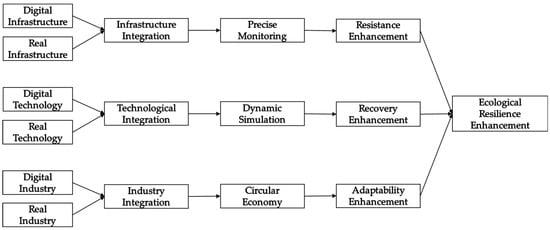

Disclaimer/Publisher’s Note: The statements, opinions and data contained in all publications are solely those of the individual author(s) and contributor(s) and not of MDPI and/or the editor(s). MDPI and/or the editor(s) disclaim responsibility for any injury to people or property resulting from any ideas, methods, instructions or products referred to in the content. |
© 2026 by the authors. Licensee MDPI, Basel, Switzerland. This article is an open access article distributed under the terms and conditions of the Creative Commons Attribution (CC BY) license.