1. Introduction
Biocultural landscapes are created by complex, adaptive, and mutually interconnected social and ecological systems that interact. These connections are developing, interacting across spatial and temporal scales. These interactions generate diverse forms of biocultural richness through the coevolution of human practices and natural processes [
1]. Truly pristine landscapes are now extremely rare, and most contemporary landscapes are seminatural or cultural, with human influence clearly visible. Cultural landscapes are the result of long-term human activity, particularly the development of agriculture in interaction with nature, or from landscapes intentionally designed and maintained, often over many generations by humans, such as historic gardens and palace parks [
2]. Where a functional balance between ecological processes and human use is maintained, such landscapes represent a value that merits long-term protection.
In recognition of this interaction, UNESCO introduced the category of cultural landscapes to the World Heritage List, defining them as the combined work of nature and humankind and as expressions of the long and complex relationship between people and their environment [
3]. This framework has enabled traditional agricultural landscapes to be recognised as world heritage, reflecting the assumption that environmental assets, cultural landscapes, and agricultural heritage developed gradually through traditional land use and either remain actively used or retain evidence of historical continuity. Such systems, including terraced agriculture, pastoral landscapes, and fish-pond systems, are increasingly recognized for their exceptional ecological and cultural values [
4].
The concept of biocultural diversity is grounded in the recognition that human societies have historically interacted with nature, emphasising that human societies have shaped biodiversity while simultaneously developing cultural knowledge systems and cultural identities linked to the local environment [
5,
6]. These interactions have resulted in the emergence of seminatural habitats that provide refugia for specific species assemblages and are strongly dependent on local management practices [
7]. Many of these habitats overlap conceptually and spatially with seminatural habitats protected under the EU Habitats Directive, which lists natural or seminatural habitat types of community interest. Importantly, many Annex I habitats are not expressions of “wild” nature but are instead the result of centuries of human use, and remain highly dependent on continued traditional management [
8]. Management under the Habitats Directive is legally required (Article 6) and aims to achieve favourable conservation status through combining passive and active measures, such as extensive grazing, late mowing, shrub control, and hydrological management, particularly in grassland and wetlands.
Despite these policy frameworks, landscapes are dynamic rather than static systems, and the current era of rapid socio-economic and environmental change has intensified pressures on seminatural habitats [
9]. Key threats include agricultural intensification, abandonment of traditional land use, invasive alien species, drainage and water regulation, forestry intensification, urbanisation, and infrastructure development [
10]. These processes do not merely alter species composition; they transform the social–ecological relationships that sustain biocultural values. Therefore, it is necessary to understand how these processes affect landscape values and the overall conservation status of habitats for prioritising conservation actions, restoration measures, and sustainable management strategies. Extensive historical, ecological, and ethnobiological research has demonstrated that many traditional land-use practices are environmentally sustainable and have a low ecological impact [
11]. At a broader scale, several studies have identified a positive correlation between cultural and biological diversity, highlighting their convergence within landscapes [
12,
13,
14]. Despite growing interest in biocultural landscapes and wide acknowledgement of the theoretical interlinkage between biological value and cultural heritage, operational tools for assessing their combined value remain methodologically challenging. Existing studies tend to follow three main approaches: (1) those focusing primarily on biodiversity conservation, often within Natura 2000; (2) those emphasising cultural ecosystem services; and (3) those explicitly integrating studies’ biological and cultural dimensions [
15,
16,
17]. The third approach—although conceptually most consistent with the biocultural paradigm—remains comparatively rare, particularly in relation to Natura 2000 habitats. As a result, conservation planning often overlooks spatial mismatches between biological and cultural values, temporal dynamics, and dependencies on traditional management and socio-ecological systems that determine long-term resilience. Common limitations include data scarcity, uncertainty, and the inherent subjectivity of evaluation processes. Moreover, most conservation evaluations prioritise ecological metrics while under-representing the cultural embeddedness of habitats and the degree to which their persistence depends on human stewardship [
18]. This omission is not merely theoretical—it has practical consequences. Conservation planning lacks a systematic framework capable of quantifying and comparing the integrated biocultural value of semi-natural habitats, and management strategies that ignore cultural dimensions may inadvertently undermine traditional practices that sustain biodiversity. Conversely, heritage-oriented policies may fail to account for ecological thresholds or conservation status. An integrated, systematically applied biocultural assessment framework is therefore urgently needed to bridge this divide.
Building on this context, the present study aims to provide a quantitative and qualitative assessment of the biocultural value of selected semi-natural and human-conditioned habitats in Slovakia. The specific objectives are to: (1) assess the biological and cultural values of habitats and their dependence on human management; (2) classify habitats according to their biocultural profiles in order to identify their uniqueness and interrelationships; and (3) evaluate the biocultural characteristics of Natura 2000 habitats in relation to management intensity, their conservation status, and landscape context. By applying an expert-based assessment to a nationally representative set of habitats, this study moves beyond theoretical discussion toward operationalisation of the biocultural concept in conservation practice. In doing so, it contributes empirical evidence to inform policy implementation under Natura 2000 and supports the development of management strategies that recognise human values not as external pressures but as potential drivers of sustainable stewardship. This research must respond to a pressing need to align biodiversity conservation with cultural heritage recognition, ensuring that semi-natural habitats are managed as living biocultural systems rather than isolated ecological units.
3. Results
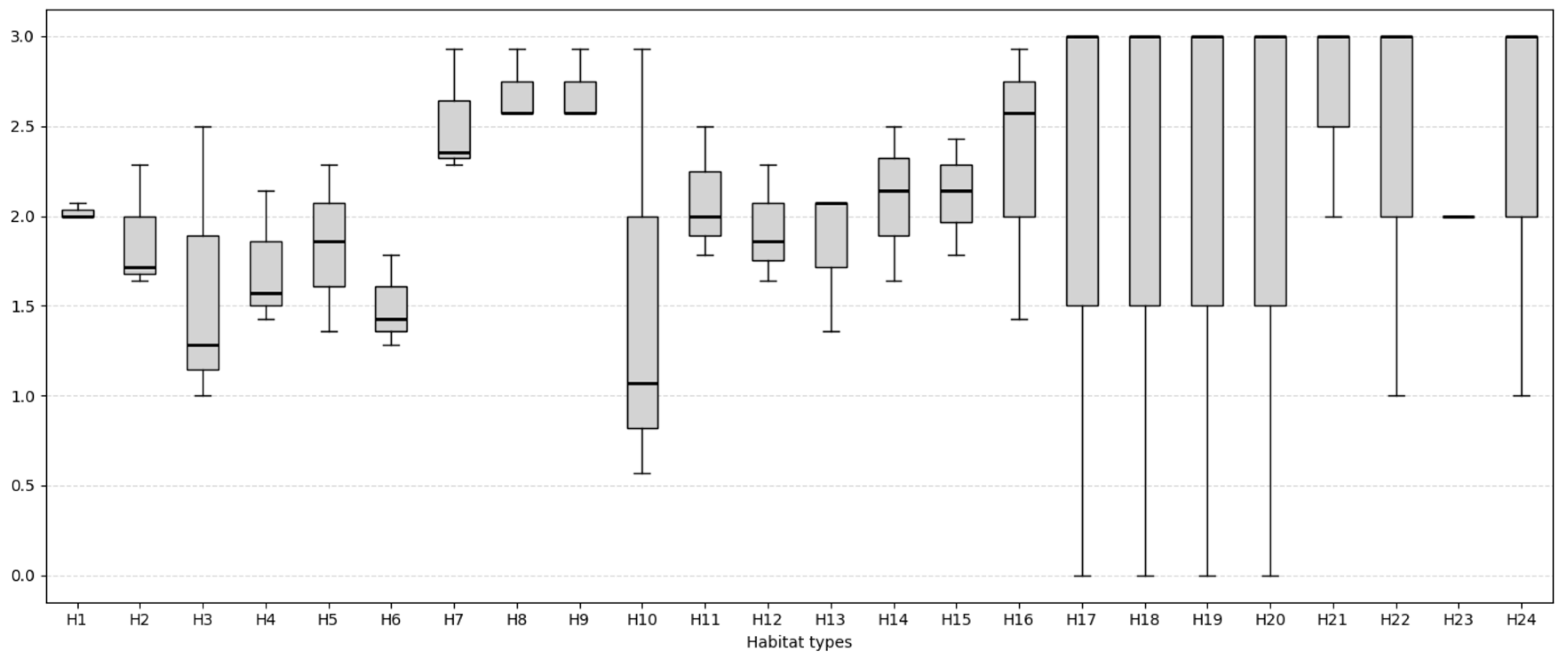
Boxplots of average biocultural values illustrated the distribution and variability of combined biocultural scores across habitat types (
Figure 2), indicating that some habitats consistently achieved high values, while others showed greater heterogeneity.
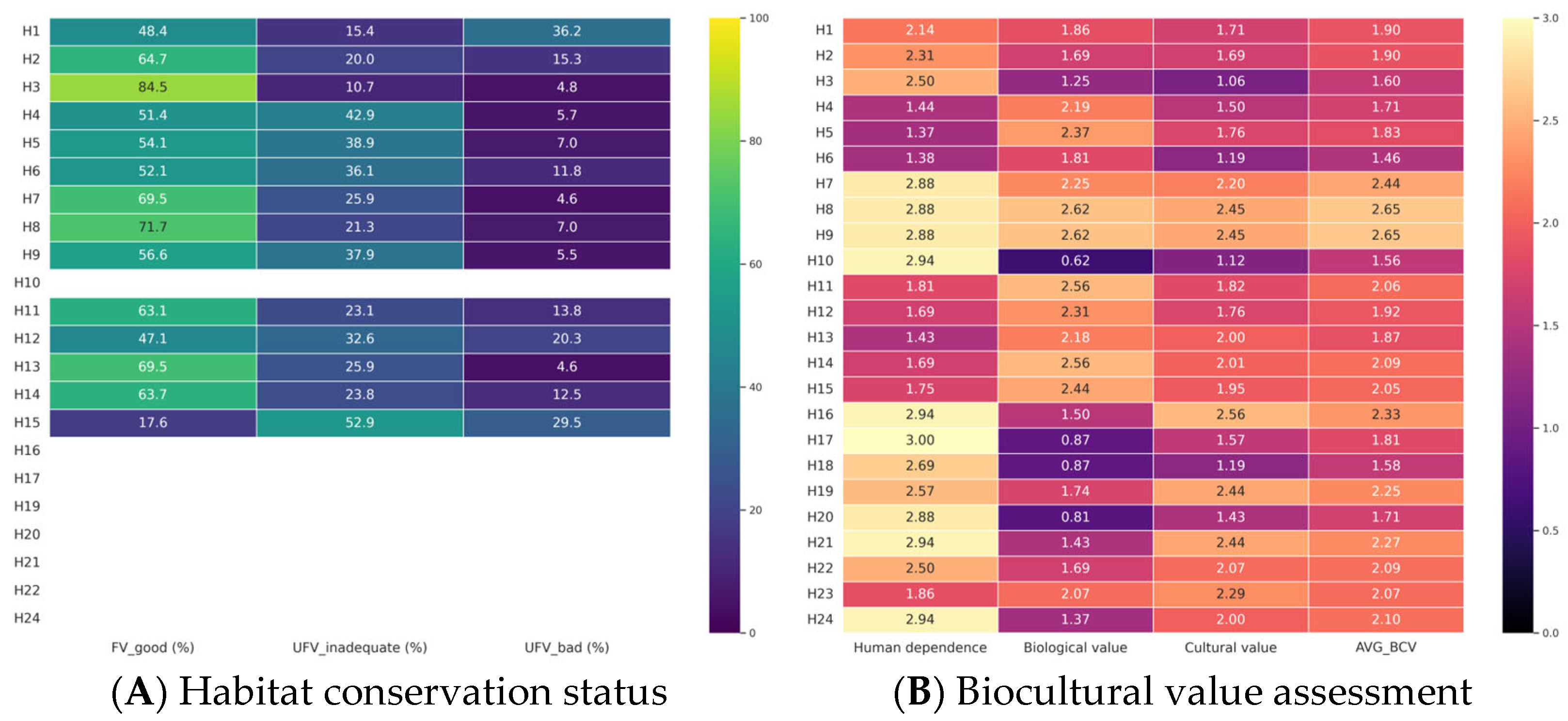
A heatmap was used to compare 24 habitat types (H1–H24) across four indicators: dependence on human management, biological values, cultural significance, and average biocultural value derived from the scores for biodiversity and culture (
Figure 3). This assessment was also compared to the assessment of the favourable condition of habitats [
22]. High dependence on human management (approximately 2.9–3) was particularly evident in grassland habitats (H7–H10) and agricultural systems (H16–H24), which often retain cultural importance despite relatively low biological value. In contrast, xeric sand and dry grassland habitats (H4–H6, H13) required substantially lower management, reflecting their adaptation to more extreme environmental conditions. The highest biocultural values (≥2.5) were recorded primarily in grassland habitats (H8, H9), which are nevertheless highly dependent on regular mowing. By contrast, intensively managed grasslands (H10), which require regular mowing, exhibited the lowest overall biocultural values.
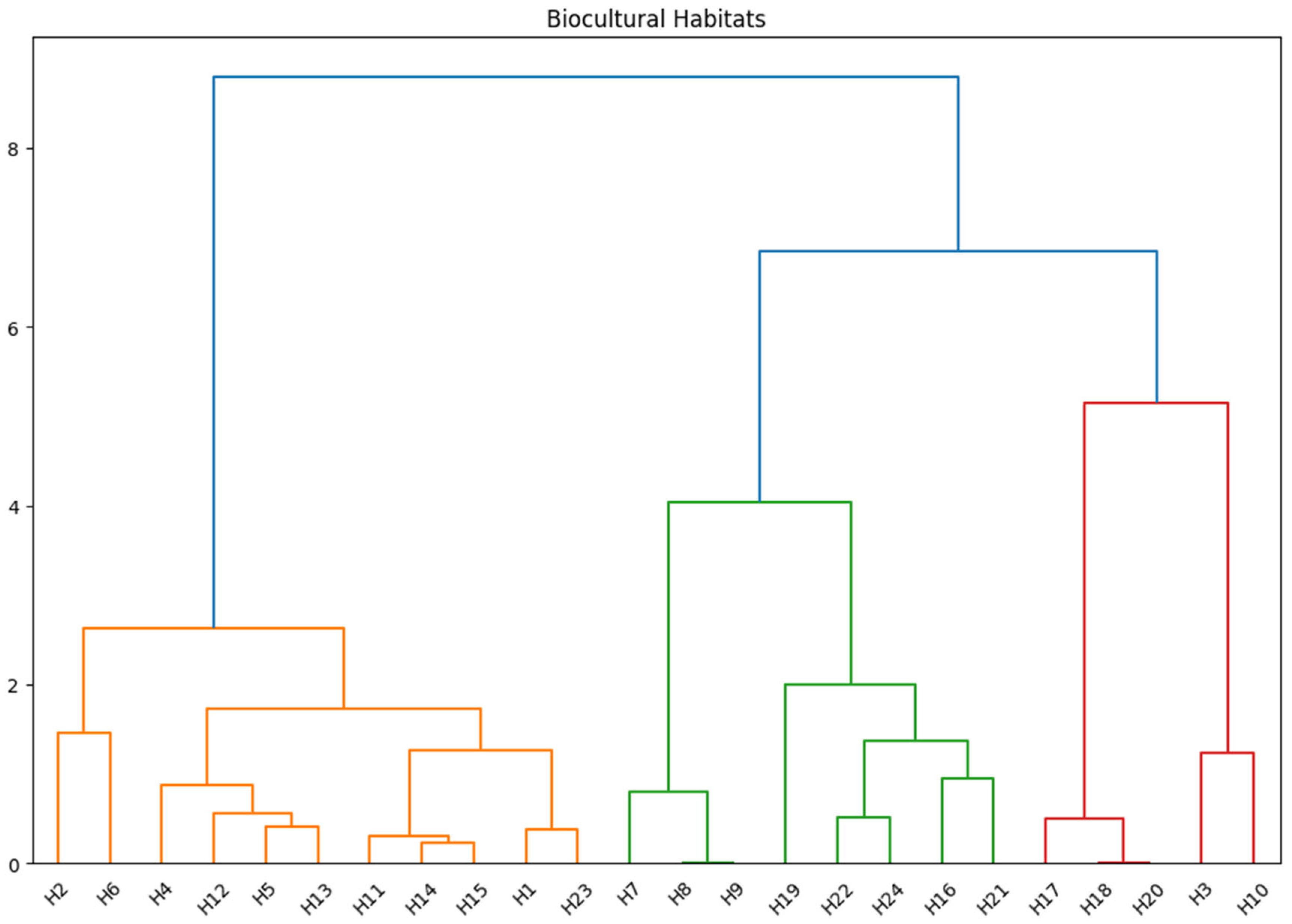
Hierarchical clustering (
Figure 4) revealed distinct groupings of habitats based on similarity in human dependence, biological, and cultural value. The cluster on the left side of the dendrogram was dominated by semi-natural, low-input grassland and wetland habitats, including xeric and steppe grasslands on calcareous and sandy substrates (H4, H5, H6), mesic and wet meadows (H11, H12, H14), saline grasslands (H15) and small-scale, heterogeneous rural mosaics (H23), which likely share structural and management features with traditional grassland landscapes. The relatively short linkage distances among many of these habitats indicate strong similarity in their semi-natural character, extensive management, and high ecological and cultural value (mean values of 1.5–2.5). Artificial standing water bodies (H1–H2) clustered with this group, suggesting that their ecological function and low-intensity management outweigh their artificial origin in shaping biocultural similarity.
A second cluster comprised traditionally managed agricultural and peri-urban habitats and small-scale cultural landscapes, including mesophilous and hay meadows (H7, H8, H9), orchards (H19), small vineyards (H16), gardens (H24), urban greenery (H21), and mosaics of arable land with semi-natural vegetation (H22). These habitats form a transitional group between semi-natural systems and fully intensified land use, characterised by moderate management intensity, landscape heterogeneity, and a close coupling between human use and ecological stability.
A smaller and more distinct cluster included intensively used or highly modified habitats, such as intensively managed grasslands (H10), large-block vineyards (H17), hop fields (H20), shrub plantations (H18), and artificial drainage or irrigation channels (H3). These habitats merged with the rest of the dendrogram only at higher linkage distances, indicating pronounced biocultural dissimilarity. They are characterised by high input dependence, simplified structure, and strong reliance on continuous management.
Overall, the dendrogram reveals a clear gradient from semi-natural, traditionally managed habitats through cultural landscape mosaics to highly intensified agricultural and technical systems, reflecting increasing levels of human modification and decreasing structural and ecological complexity.
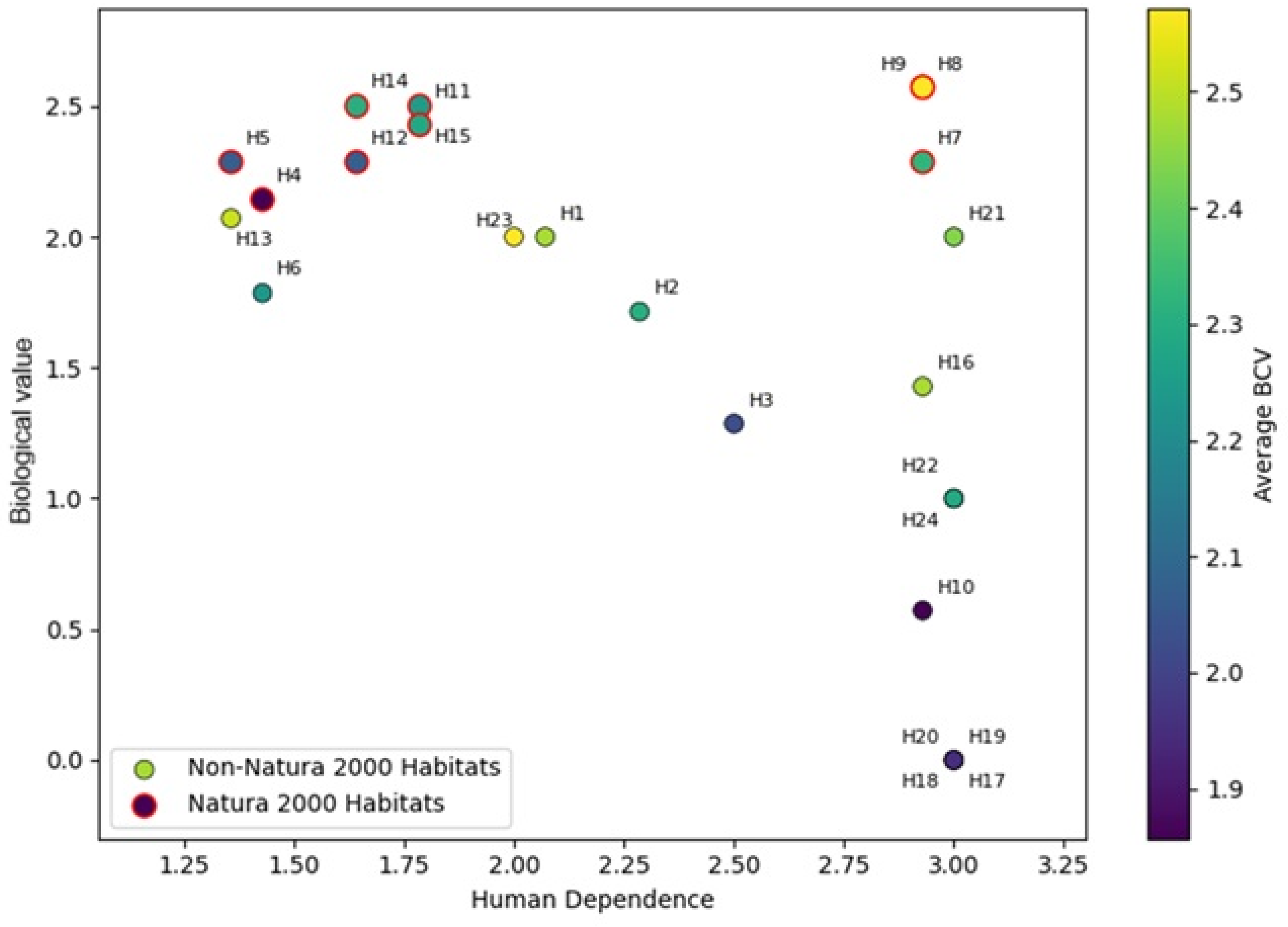
Scatter plots further clarified relationships between individual variables, with emphasis on Natura 2000 habitats (
Figure 5). Most Natura 2000 habitats cluster in the upper-left to central portion of the plot, combining high biodiversity with low to moderate management dependence. These include semi-natural grasslands and meadows (e.g., H5, H11, H12, H14, H15), shaped by long-term extensive management. Their position indicates that traditional, low-intensity land use can maintain both ecological richness and cultural relevance. Some habitats (H7, H8, H9) exhibit both high biological value and high management dependence, underscoring the need for active human intervention to sustain ecological value. Artificial or managed waterbodies (H1, H2) and small-scale rural mosaics (H23) occupy intermediate positions, reflecting a balance between ecological function and human use. In contrast, habitats with high human dependence but low biocultural value, such as intensively managed grasslands, large-block vineyards, hop fields, and plantation systems (H10, H17–H20) occupy the lower-right portion of the plot. These patterns indicated that biocultural outcomes depend less on human influence per se and then on the intensity, scale, and continuity of management.
Overall, the expert-based analyses provide an integrated perspective on the interactions among human dependence, biological, and cultural values across habitat types, offering insights relevant for conservation prioritisation and land management planning.
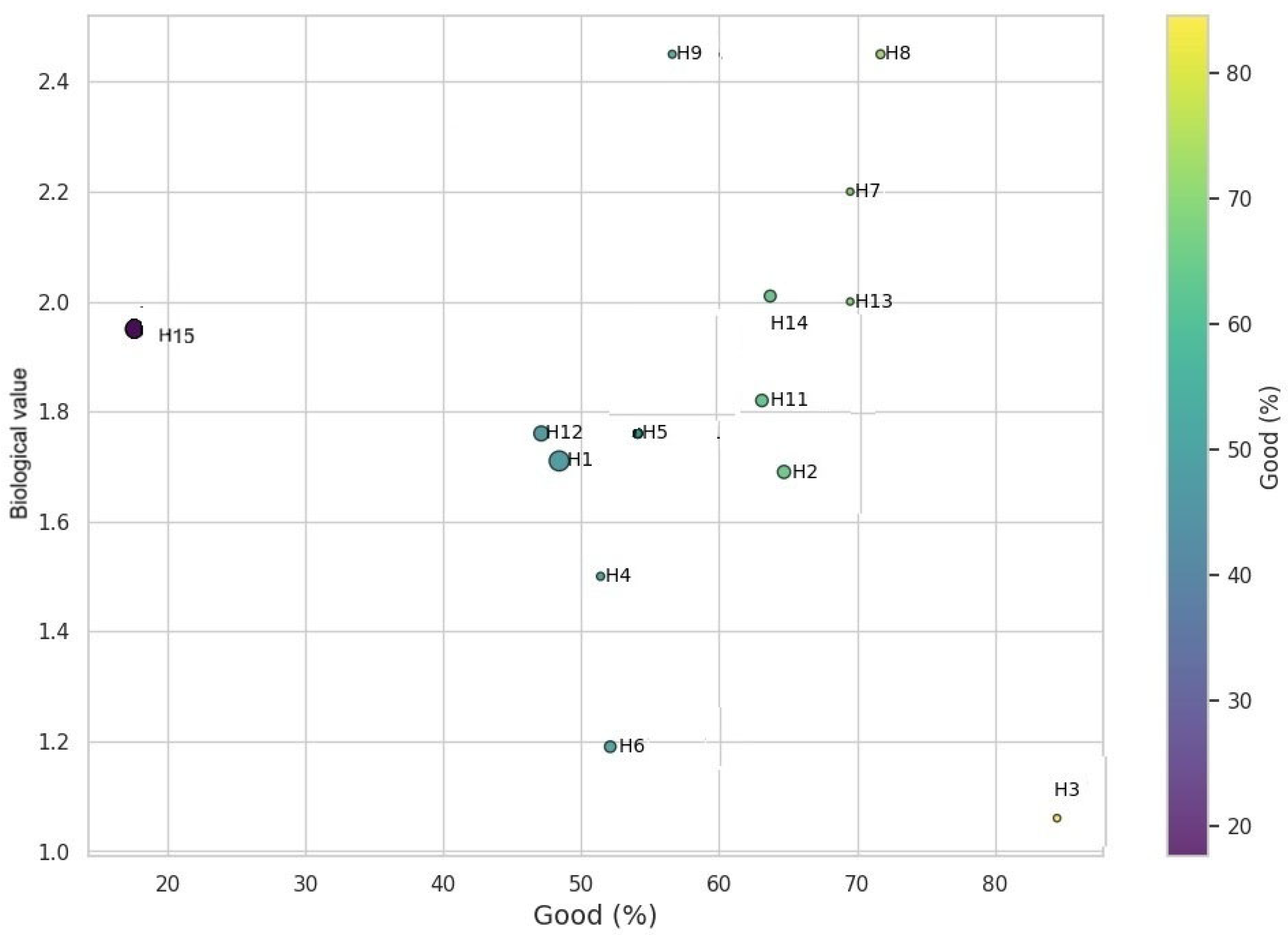
Habitats with the highest biocultural values, such as traditionally managed, species-rich grasslands, correspond to categories that frequently exhibit substantial proportions of unfavorable conservation status in the national monitoring dataset (e.g., saline grasslands and dry grasslands—
Figure 3B). The main threats identified were land-use change or abandonment, which indicates that they are highly dependent on low-intensity management.
By contrast, some aquatic habitats with intermediate biocultural values (e.g., standing waters) show relatively higher proportions of favourable conservation status, suggesting greater resilience to management variation, though they are still sensitive to hydrological and nutrient pressures.
Intensively modified or structurally simplified habitats, including heavily managed agricultural systems, plantations, and artificial channels, are not part of Natura 2000 habitats; therefore, their conservation status is not reported. On the other hand, their mosaic structures offer food and shelter for many nesting species and pollinators, and are often part of Spatial Protected Areas. This pattern reinforces the gradient from structurally complex, extensively managed systems to highly intensified landscapes identified in the biocultural analyses.
Overall, the comparison demonstrates that high biocultural value does not necessarily coincide with favourable conservation status (
Figure 6). Continuous, appropriately scaled management is required to maintain both biodiversity and favourable habitat conditions.
4. Discussion
The expert-based scoring approach provided a practical means to assess complex biocultural characteristics that are difficult to capture using existing datasets alone. By drawing on experts’ experience and contextual knowledge, the survey enabled evaluation of aspects such as management traditions and the cultural and biological significance of habitats. At the same time, expert-based assessments inevitably involve some subjectivity and may reflect differences in disciplinary background, regional experience, or individual interpretations of the evaluation criteria. The relatively low number of respondents represents a limitation of our survey; however, this reflects the specificity of biocultural assessment and the requirement that participants possess combined knowledge of biodiversity, habitat distribution, conservation status, and management practices. In practice, such integrative expertise is less common. Landscape managers often lack a comprehensive overview of habitat distribution and condition, whereas botanists typically focus on biodiversity and may pay less attention to broader landscape and socio-cultural contexts. Although the experts’ rankings were largely consistent, minor differences emerged, particularly in the evaluation of human-conditioned habitats (e.g., hop fields, shrub plantations, vineyards), which landscape ecologists and geographers assigned slightly higher biodiversity values. Botanists generally attributed lower cultural values to habitats. These differences highlight how disciplinary perspectives can shape the perception of biocultural systems and underscore the importance of integrating multiple expert viewpoints when assessing complex socio-ecological landscapes. Despite these limitations, expert knowledge remains a valuable source of information for evaluating systems where empirical data are incomplete, and it has been widely applied in conservation planning and environmental assessment [
23,
24,
25].
The highest biocultural value was ranked for grassland (H7 and H8). Throughout history, agriculture has played a fundamental role in shaping cultural landscapes, often giving rise to biodiversity-rich habitats, supported by ancestral knowledge, and strong cultural identity and social values that together constitute an important biocultural heritage [
26,
27]. In Central Europe, grassland represents a key component of this heritage and can be broadly classified as natural grasslands, determined by environmental constraints; seminatural grasslands, resulting from long-term human management since the Mesolithic-Neolithic transition; and improved or intensive grasslands, developed through modern agricultural practices [
28]. The visualisations and clustering of our analyses reveal a pronounced gradient in biocultural characteristics, structured primarily by land-use intensity and management regime rather than ecological type alone. Our survey proved that semi-natural grasslands and wetlands—such as xeric calcareous and sandy grasslands,
Molinia meadows, humid meadows, tall-herb fringes, and salt steppes—form a coherent biocultural group despite contrasting environmental conditions. Their close association suggests that long-term extensive management and continuity of traditional use generate a shared biocultural signature characterised by high biological value, strong links to traditional land use, and elevated ecological value. This pattern is consistent with the finding that biocultural significance increases with evolutionary time between human societies and ecosystems [
29]. Many of these habitats with high biocultural value are included in the Natura 2000 network, often with unfavourable conservation status, threatened by intensive land-use changes or abandonment [
30]. Our findings highlight extensive farming as both local ecological knowledge and cultural heritage and as a potential driver of sustainable management. The review of research on Natura 2000 habitats shows that comprehensive evaluation of both biotic and cultural dimension remain relatively uncommon dimension of biodiversity or their management due to methodological constraints and specific research objectives, as well as an under-representation of studies addressing ‘social and policy’ issues (typically focused on environmental impact assessment, multi-level governance, agri-environment policy, and ecosystem services valuation) [
31].
In contrast, our results show that intensively managed systems—including large-block vineyards, hop fields, shrub plantations, intensively managed grasslands, and artificial channels—cluster separately and exhibit substantially lower biocultural values. These habitats are defined by the need for regular management, simplified vegetation structure, and reduced landscape heterogeneity, reflecting the prioritisation of production-oriented functions. Although the differences between the responses of the participating experts were not significant, among the agricultural crops, botanists in particular rated the biological value very low, between 0 and 1, compared to other experts, who rated it between 1 and 1.5. Even if their capacity to support biodiversity and place-based cultural meaning is limited, other studies indicate that some of these systems retain economic and touristic significance, particularly in viticulture landscapes [
32,
33].
Between these extremes, traditionally managed agricultural and peri-urban habitats form a distinct transitional group. Hay meadows, orchards, small-scale vineyards, gardens, urban greenery, and mosaics of arable land and semi-natural elements combine moderate management intensity with relatively high habitat heterogeneity and continuity of cultural practices. Our results highlighted their intermediate biocultural position that underscores their role as bridges between conservation objectives and human land use. Low-intensive agricultural landscapes are of utmost importance for biodiversity conservation [
34,
35] and the delivery of cultural ecosystem services [
19]. The various management practices and diversified agricultural systems have been shown to embody local and indigenous knowledge and values that can guide the development and implementation of biocultural landscape management and conservation [
26]. Notably, artificial standing waterbodies cluster more closely with semi-natural habitats than with intensive agricultural systems, suggesting that ecological processes and low mechanical disturbance can outweigh artificial origin in shaping biocultural similarity.
Overall, our clustering patterns highlight the value of a biocultural perspective for conservation and landscape planning. Habitats are organised less by strict ecological classification than by the history, intensity, and spatial structure of human use. Agricultural intensification emerges as a key driver of biocultural homogenisation [
27]. Recognising and supporting traditional agricultural habitats as core components of biocultural diversity is therefore essential, not only for biodiversity conservation but also for sustainable rural development, and the maintenance of the local knowledge system [
36]. Managing the agricultural environment to preserve aesthetic and heritage qualities, especially by protecting and strengthening its essential ‘traditional’ characteristics, would also benefit a key indicator species and likely promote broader biodiversity [
26]. Strengthening local communities and specific local knowledge can help to maintain biocultural landscapes and their habitats [
37].
Although exploring the full range of relationships between cultural and ecological processes was beyond the scope of this study, our results highlight the potential of biocultural approaches for advancing habitat assessment and landscape research. The novelty of this work lies in integrating ecological and cultural dimensions through a biocultural classification framework supported by expert-based evaluation. By systematically assessing habitats according to their combined biological and cultural characteristics, this study contributes to a more comprehensive understanding of landscape values that are often overlooked in conventional ecological assessments. This expert assessment and classification of habitats can serve as a useful substitute for preliminary or exploratory analyses at the national level or in regions where empirical datasets are incomplete or unavailable, and where financial or logistical constraints prevent extensive field surveys. Future research could further refine this approach by introducing additional parameters and indicators that more explicitly capture interactions among cultural practices, land use history, and ecological processes. Detailed research using specific parameters, such as habitat quality maps, biodiversity data, the occurrence of rare and endangered species, the use of local ecological knowledge, demand for specific ecosystem services, etc., can be applied at the local or regional level where sufficient data are available.
5. Conclusions
This study highlights the importance of integrating biocultural values into habitat assessment and conservation policy, particularly within frameworks such as the Natura 2000 framework or the Nature Restoration Law. By combining expert evaluations of biodiversity, cultural value, and dependence on human management, we show that semi-natural and human-conditioned habitats in Slovakia are structured primarily along a gradient of land-use intensity rather than solely by ecological type. Our approach demonstrates the potential of expert-based assessment as a practical tool for preliminary or exploratory analysis, particularly in contexts where national datasets are incomplete or of limited quality. These assessments can also serve as inspiration for other countries or be adapted to specific data at the international level.
Semi-natural grasslands and wetlands maintained through long-term, low-intensity management exhibit the highest biocultural values, reflecting strong coevolutionary relationships between biodiversity, cultural heritage, and traditional land use. Many of these habitats correspond to Annex I Natura 2000 habitat types, emphasizing that their favourable conservation status depends on the continuity of appropriate management. Regular reporting on the conservation status of assessed habitats in Slovakia has shown that almost half of the habitats are in unfavourable conservation status, which requires due attention and, in the context of the nature restoration law, should be reflected in the preparation of the national restoration plan.
Intensively managed agricultural systems display markedly lower biocultural values despite their economic importance, illustrating how intensification leads to structural simplification and biocultural homogenisation. Traditionally managed agricultural habitats and landscape mosaics occupy an intermediate position, functioning as biocultural transition zones that sustain ecological functions while supporting cultural practices and local livelihoods.
The findings confirm that human influence is not inherently incompatible with high biodiversity. Instead, management intensity, spatial scale, and long-term continuity are decisive determinants of biocultural value. These insights have direct implications for Natura 2000 management and agri-environmental policy, highlighting the need to prioritise extensive practices such as traditional mowing, grazing, and small-scale cultivation. Conservation strategies should therefore extend beyond strictly “natural” habitats to explicitly include low-intensity cultural landscapes that contribute to biodiversity conservation, cultural identity, and the provision of ecosystem services.
Recognizing the biocultural character of habitats may support conservation strategies that better integrate biodiversity protection with the preservation of traditional land-use practices and cultural landscapes. Incorporating biocultural assessments into policy and management frameworks could enhance the effectiveness, social acceptance, and long-term sustainability of conservation measures, helping to safeguard both biodiversity and the living cultural landscapes on which it depends.