Vitalizing Public Space in Traditional Village Based on Scene Theory: Evidence from Shen’ao Village in Zhejiang, China


Abstract
1. Introduction
2. Theoretical Foundations and Analytical Framework
2.1. Scene Theory and Its Application in Rural Development
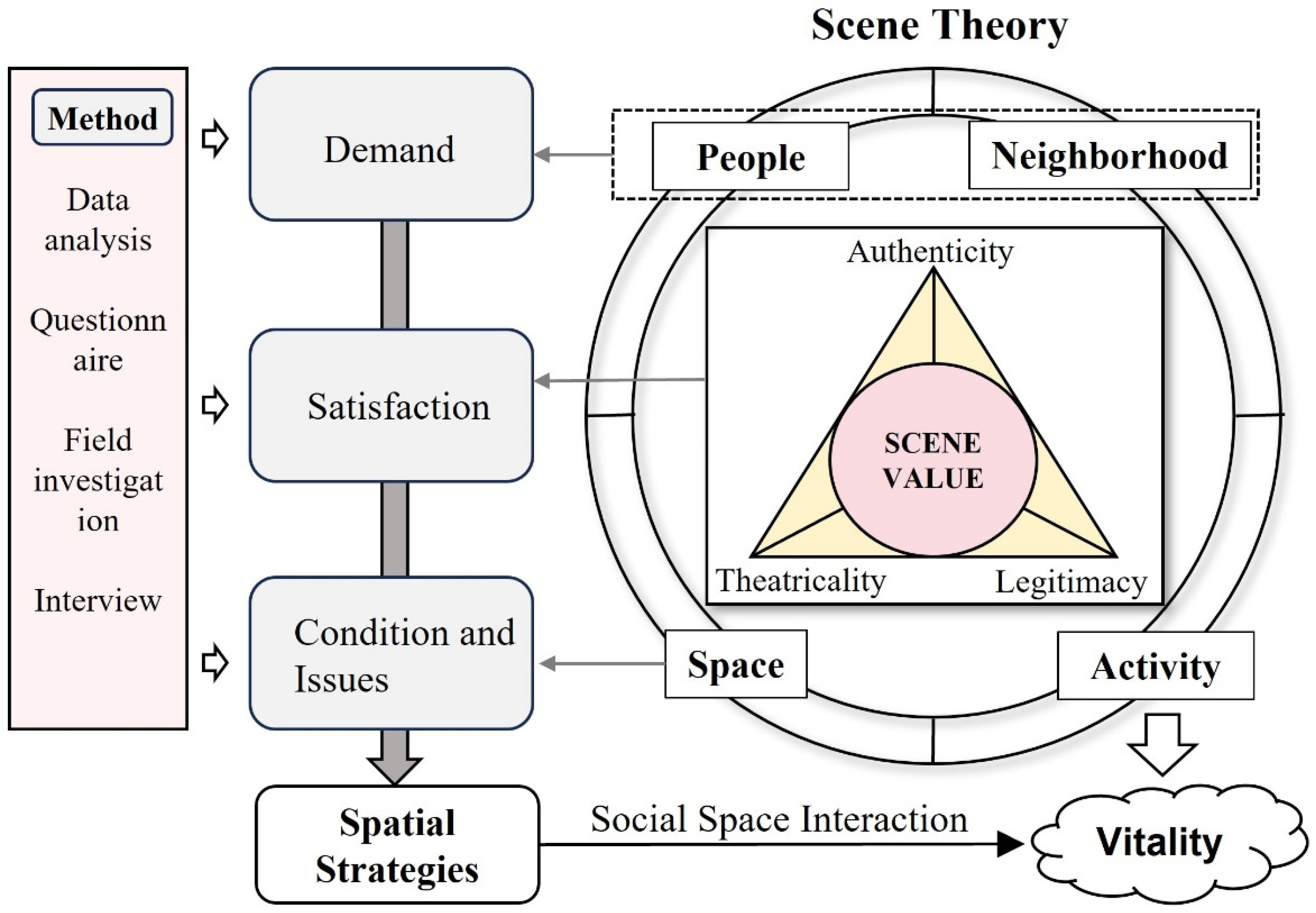
2.2. A Scene Theory-Based Framework to Vitalize Rural Public Space
3. Methodology
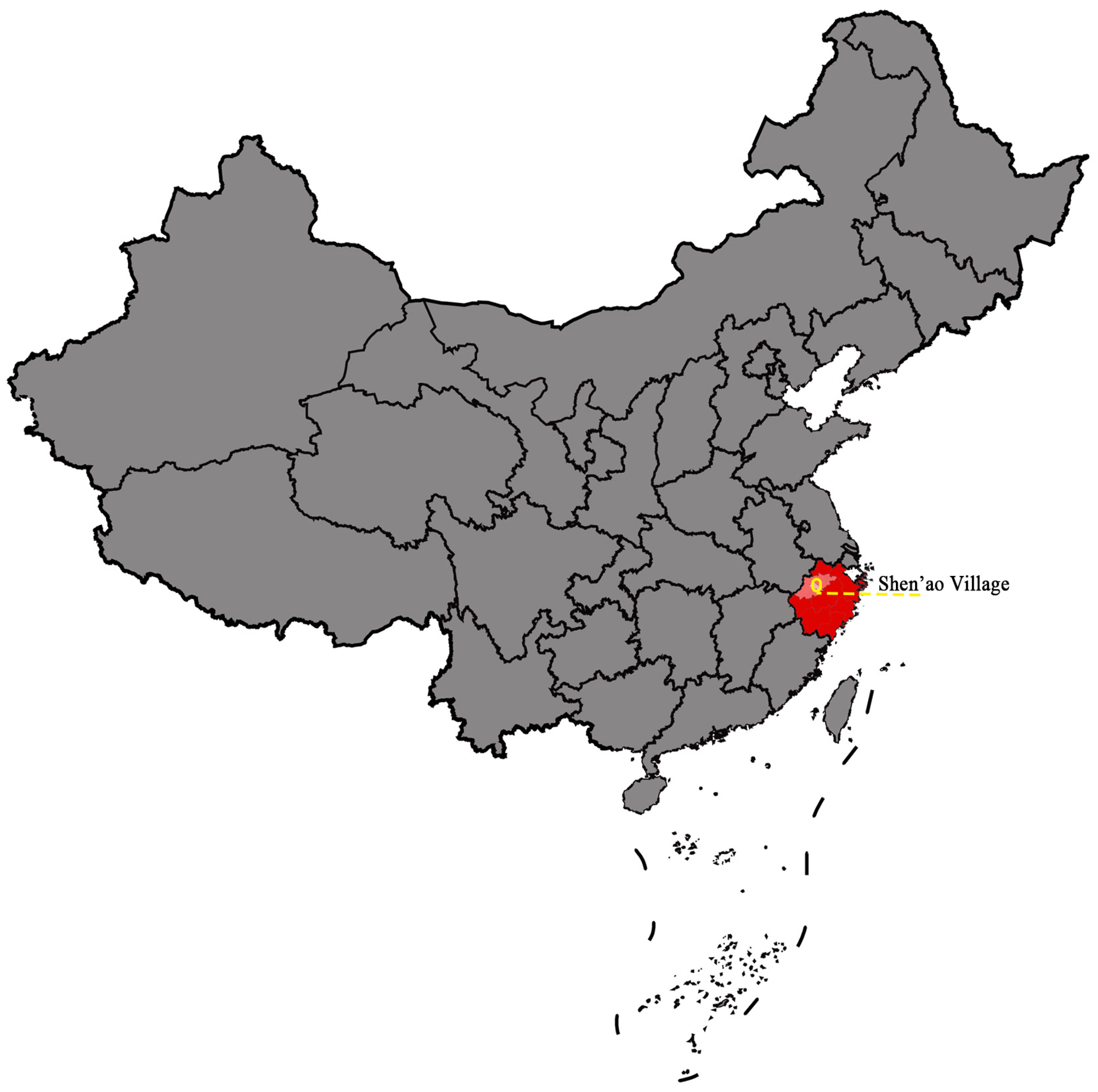
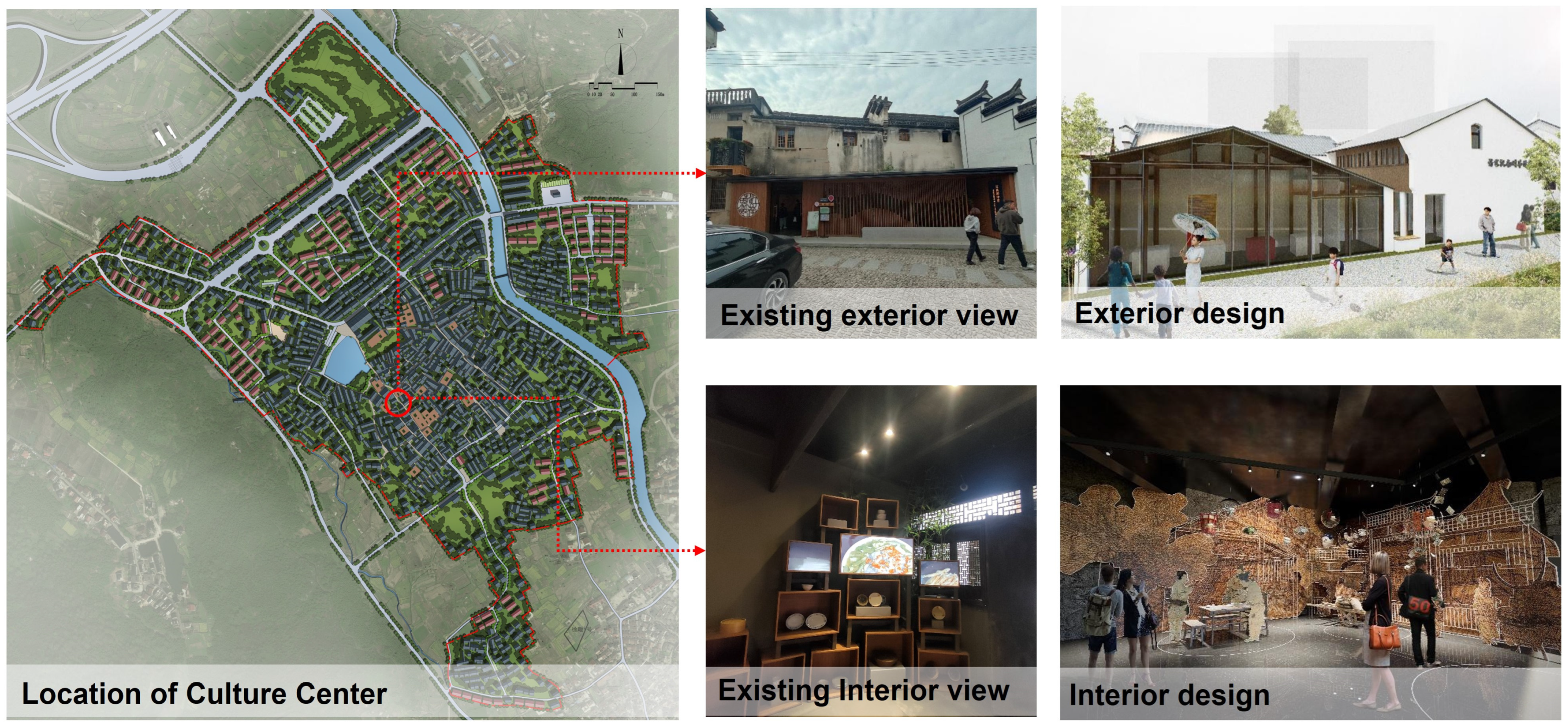
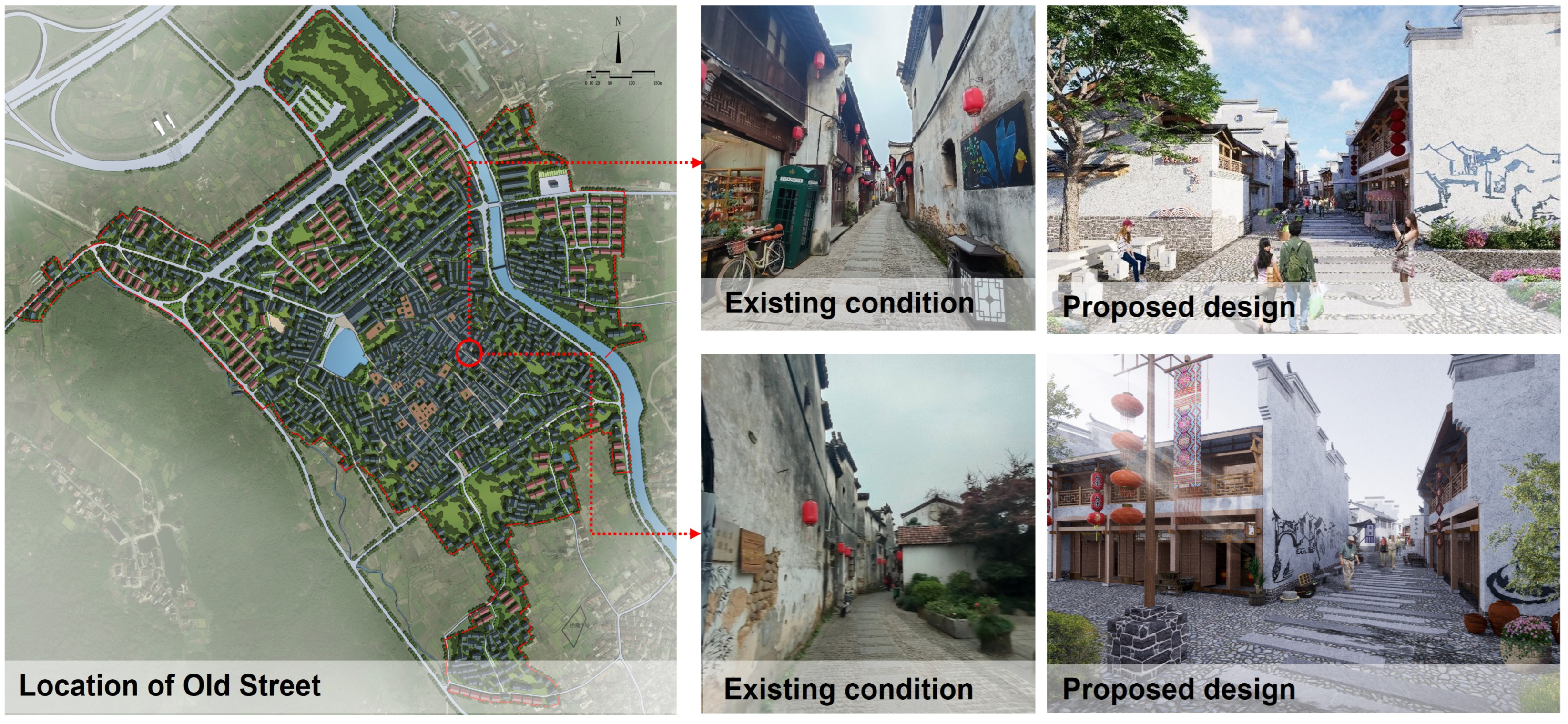
3.1. Study Area
3.2. Methods
3.2.1. Satisfaction Survey of Public Space
3.2.2. Field Investigation of Public Space
4. Evaluation Results of Rural Public Space
4.1. Indicator Importance Based on Their Weights
4.2. Assessment of Subjective Feelings on Rural Public Space
4.3. Causes of Low Satisfaction and Vitality of Public Space in Shen’ao Village
- Deficiency in normalization and planning of spatial construction
- Disconnection between cultural preservation and utilization
- Inequality of functional supply and spatial distribution
- Decoupling of spatial design and users’ emotional resonance
5. Discussion
5.1. Spatial Strategies for Public Space in Shen’ao Village
5.1.1. Experience Enhancement Through Digital Technology
5.1.2. Promotion of Mixed-Use Design
5.1.3. Function Optimization for All-Age Inclusivity
5.2. Advantages of Scene Theory-Based Approach for Public Space Optimization in Chinese Tradition Village
5.3. Policy Implications
6. Conclusions
Author Contributions
Funding
Data Availability Statement
Conflicts of Interest
Appendix A. Basic Information of Interviewees
| ID/NO | Gender | Type | Interview Duration (Min) | Major Topics |
| 1 | Male | Village Official | 120 |
|
| 2 | Male | Non-local Artisan | 96 |
|
| 3 | Female | 40 | ||
| 4 | Male | 32 | ||
| 5 | Female | Hotelier | 36 |
|
| 6 | Male | 20 | ||
| 7 | Female | Tourist | 41 |
|
| 8 | Female | 60 | ||
| 9 | Male | Villager | 20 |
|
| 10 | Female | 20 |
References
- Fahmi, F.Z.; Mendrofa, M.J.S. Rural transformation and the development of information and communication technologies: Evidence from Indonesia. Technol. Soc. 2023, 75, 102349. [Google Scholar] [CrossRef]
- Li, S.; Yang, R.; Long, H.; Lin, Y.; Ge, Y. Rural spatial restructuring in suburbs under capital intervention: Spatial construction based on nature. Habitat Int. 2024, 150, 103112. [Google Scholar] [CrossRef]
- Wen, Q.; Li, J.; Ding, J.; Wang, J. Evolutionary process and mechanism of population hollowing out in rural villages in the farming-pastoral ecotone of Northern China: A case study of Yanchi County, Ningxia. Land Use Policy 2023, 125, 106506. [Google Scholar] [CrossRef]
- Fang, Y.; Qiao, J.; Geng, H. Characterization of Rural Spatial Commodification Patterns around Metropolitan Areas and Analysis of Influential Factors: Case Study in Shanghai. Land 2024, 13, 1121. [Google Scholar] [CrossRef]
- Salvati, L.; Ranalli, F.; Gitas, I. Landscape fragmentation and the agro-forest ecosystem along a rural-to-urban gradient: An exploratory study. Int. J. Sustain. Dev. World Ecol. 2014, 21, 160–167. [Google Scholar] [CrossRef]
- Sun, W.; Zheng, Z. Degradation of fluoroquinolones in rural domestic wastewater by vertical flow constructed wetlands and ecological risks assessment. J. Clean. Prod. 2023, 398, 136629. [Google Scholar] [CrossRef]
- Sardaro, R.; La Sala, P.; De Pascale, G.; Faccilongo, N. The conservation of cultural heritage in rural areas: Stakeholder preferences regarding historical rural buildings in Apulia, southern Italy. Land Use Policy 2021, 109, 105662. [Google Scholar] [CrossRef]
- Zhang, M.; Shen, C.; Gu, W.; Chen, Q. Identification of Traditional Village Aggregation Areas from the Perspective of Historic Layering: Evidence from Hilly Regions in Zhejiang Province, China. Land 2023, 12, 2088. [Google Scholar] [CrossRef]
- Gao, J.; Wu, B. Revitalizing traditional villages through rural tourism: A case study of Yuanjia Village, Shaanxi Province, China. Tour. Manag. 2017, 63, 223–233. [Google Scholar] [CrossRef]
- Ma, Y.; Zhang, Q.; Huang, L. Spatial distribution characteristics and influencing factors of traditional villages in Fujian Province, China. Humanit. Soc. Sci. Commun. 2023, 10, 883. [Google Scholar] [CrossRef]
- Zhao, X.; Ju, S.; Wang, W.; Su, H.; Wang, L. Intergenerational and gender differences in satisfaction of farmers with rural public space: Insights from traditional village in Northwest China. Appl. Geogr. 2022, 146, 102770. [Google Scholar] [CrossRef]
- Song, J.; Zhu, Y.; Chu, X.; Yang, X. Research on the Vitality of Public Spaces in Tourist Villages through Social Network Analysis: A Case Study of Mochou Village in Hubei, China. Land 2024, 13, 359. [Google Scholar] [CrossRef]
- Agboola, O.P. The significance of rural markets as a public space in Nigeria. Habitat Int. 2022, 122, 102519. [Google Scholar] [CrossRef]
- Liu, S.; Zhu, Z.; Gao, Y.; Wang, S. Assessing the dynamic vitality of public spaces in tourism-oriented traditional villages: A collaborative active perception method. Herit. Sci. 2024, 12, 346. [Google Scholar] [CrossRef]
- Liu, J.; Huang, Z.; Wu, X.; Hou, Q. Optimization of urban village public space vitality based on complex network. Sci. Rep. 2025, 15, 15392. [Google Scholar] [CrossRef]
- Liu, S.; Zhu, Z.; Gao, Y.; Wang, S.; Zhou, Y. Exploring Factors Behind Weekday and Weekend Variations in Public Space Vitality in Traditional Villages, Using Wi-Fi Sensing Method. ISPRS Int. J. Geo-Inf 2025, 14, 386. [Google Scholar] [CrossRef]
- Silver, D.A.; Clark, T.N. Scenescapes: How Qualities of Place Shape Social Life; University of Chicago Press: Chicago, IL, USA, 2016. [Google Scholar]
- Derbyshire, J.; Phillips, F. Potential Surprise Theory as a Theoretical Foundation for Scenario Planning. Technol. Forecast. Soc. Change 2017, 124, 77–87. [Google Scholar] [CrossRef]
- James, A.O. Creating Better Futures: Scenario Planning as a Tool for a Better Tomorrow, 978–0195146110; Oxford University Press: New York, NY, USA, 2002. [Google Scholar]
- Lloyd, R.; Clark, T.N. The City as an Entertainment Machine. Crit. Perspect. Urban Redev. 2001, 6, 357–378. [Google Scholar] [CrossRef]
- Liu, Y.; Yi, X.; Liang, H. A study on experience renewal design of public space in ancient towns under the Perspective of scene theory. J. Asian Archit. Build. Eng. 2025, 24, 1–27. [Google Scholar] [CrossRef]
- Midmore, P. Towards a Postmodern Agricultural Economics. J. Agric. Econ. 2010, 47, 1–17. [Google Scholar] [CrossRef]
- Agnusdei, G.P.; Miglietta, P.P.; Pacifico, A.M.; Malorgio, G. Rurality as a driver of tourist demand in the Salento area: A systemic approach. Rural Soc. 2024, 33, 67–82. [Google Scholar] [CrossRef]
- Neal, S. Transition culture: Politics, localities and ruralities. J. Rural Stud. 2013, 32, 60–69. [Google Scholar] [CrossRef]
- Luo, Y.; Liu, C.; Li, Y.; Jin, X.; He, Z.; Chen, Q. Evaluation of rural vitality and development types in mountainous areas of southwestern China: A case study of Wuxi County, Chongqing. Heliyon 2024, 10, 27660. [Google Scholar] [CrossRef] [PubMed]
- Micek, M.; Staszewska, S. Urban and rural public spaces: Development issues and qualitative assessment. Bull. Geography. So-Cio-Econ. Ser. 2019, 45, 75–93. [Google Scholar] [CrossRef]
- Wang, H.; Li, C.; Ai, K. How to Produce Cultural Space for Sustainable Development Towards Rural Revitalization: A Case Study of China. J. Sustain. Built Environ. 2024, 1. [Google Scholar] [CrossRef]
- Liu, H.; Shi, G.; Xiao, W. Who Drives Rural Spatial Commodification? A Case Study of a Village in the Mountainous Region of Southwest China. Land 2025, 14, 1351. [Google Scholar] [CrossRef]
- Rekhviashvili, L. Marketization and the public-private divide: Contestations between the state and the petty traders over the access to public space in Tbilisi. Int. J. Sociol. Soc. Policy 2015, 35, 478–496. [Google Scholar] [CrossRef]
- Zheng, J.; He, J.; Tang, H. The Vitality of Public Space and the Effects of Environmental Factors in Chinese Suburban Rural Communities Based on Tourists and Residents. Int. J. Environ. Res. Public Health 2023, 20, 263. [Google Scholar] [CrossRef] [PubMed]
- Jacobs, J. The Death and Life of Great American Cities; Vintage Books: Vancouver, WA, USA, 2012. [Google Scholar]
- Shi, X.; Ling, G.; Leng, P. Demographic Change and Commons Governance: Examining the Impacts of Rural Out-Migration on Public Open Spaces in China Through a Social–Ecological Systems Framework. Land 2025, 14, 1444. [Google Scholar] [CrossRef]
- Perrin, A.J.; Caren, N.; Skinner, A.C.; Odulana, A.; Perrin, E.M. The unbuilt environment: Culture moderates the built environment for physical activity. BMC Public Health 2016, 16, 1227. [Google Scholar] [CrossRef]
- Qi, J.; Lu, Z. The Expression of Rurality and Scene Construction in Rural Tourism Destinations from a Youth Perspective. China Youth Study 2024, 25–34. (In Chinese) [Google Scholar] [CrossRef]
- Lin, Z.; Liang, Y.; Liu, X. Study on spatial form evolution of traditional villages in Jiuguan under the influence of historic transportation network. Herit. Sci. 2024, 12, 29. [Google Scholar] [CrossRef]
- Han, Q. Projecting Chinese Rural Society in Films: The Past and the Present. Cult. Soc. Hist. 2021, 18, 611–627. [Google Scholar] [CrossRef]
- Li, J.; Dang, A.; Song, Y. Defining the ideal public space: A perspective from the publicness. J. Urban Manag. 2022, 11, 479–487. [Google Scholar] [CrossRef]

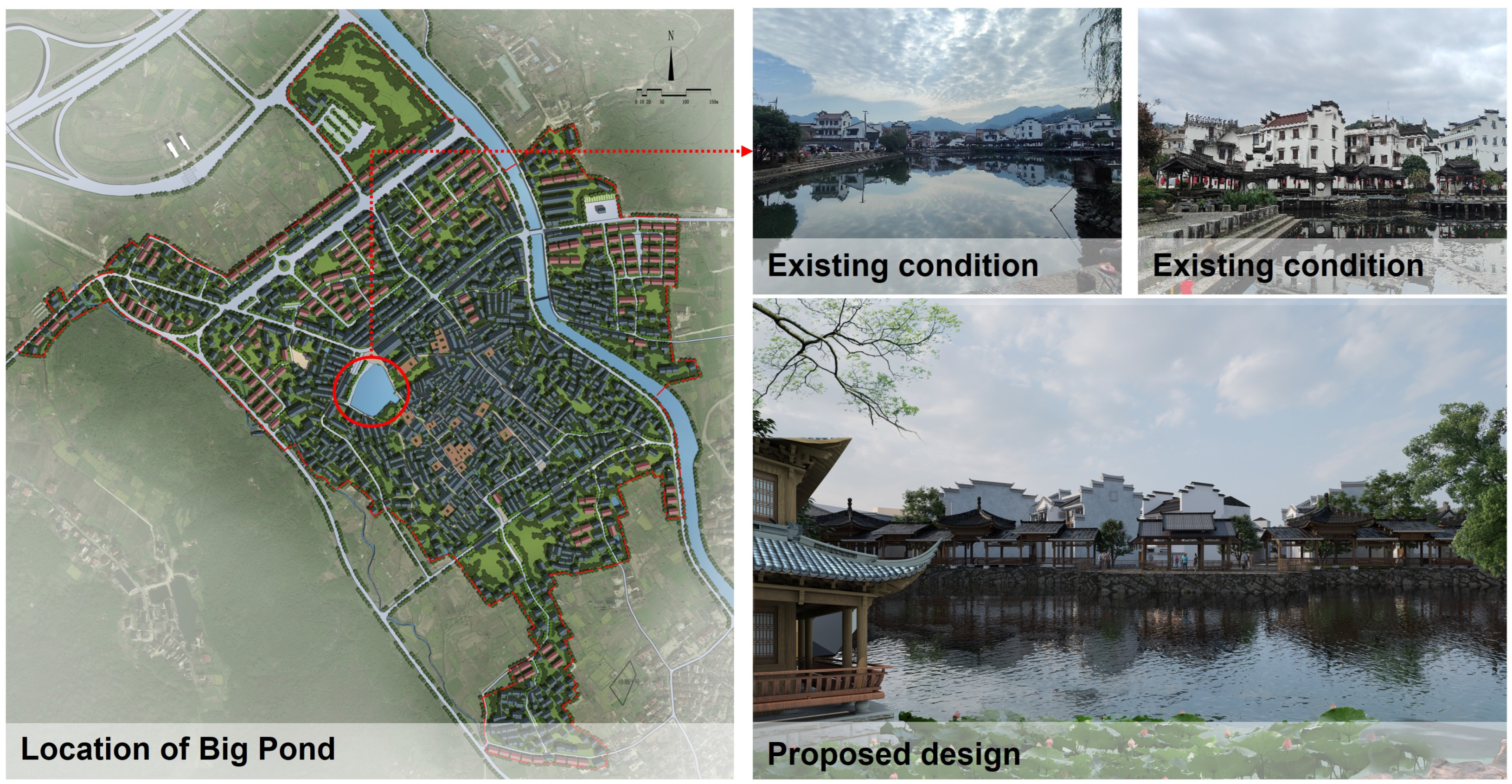
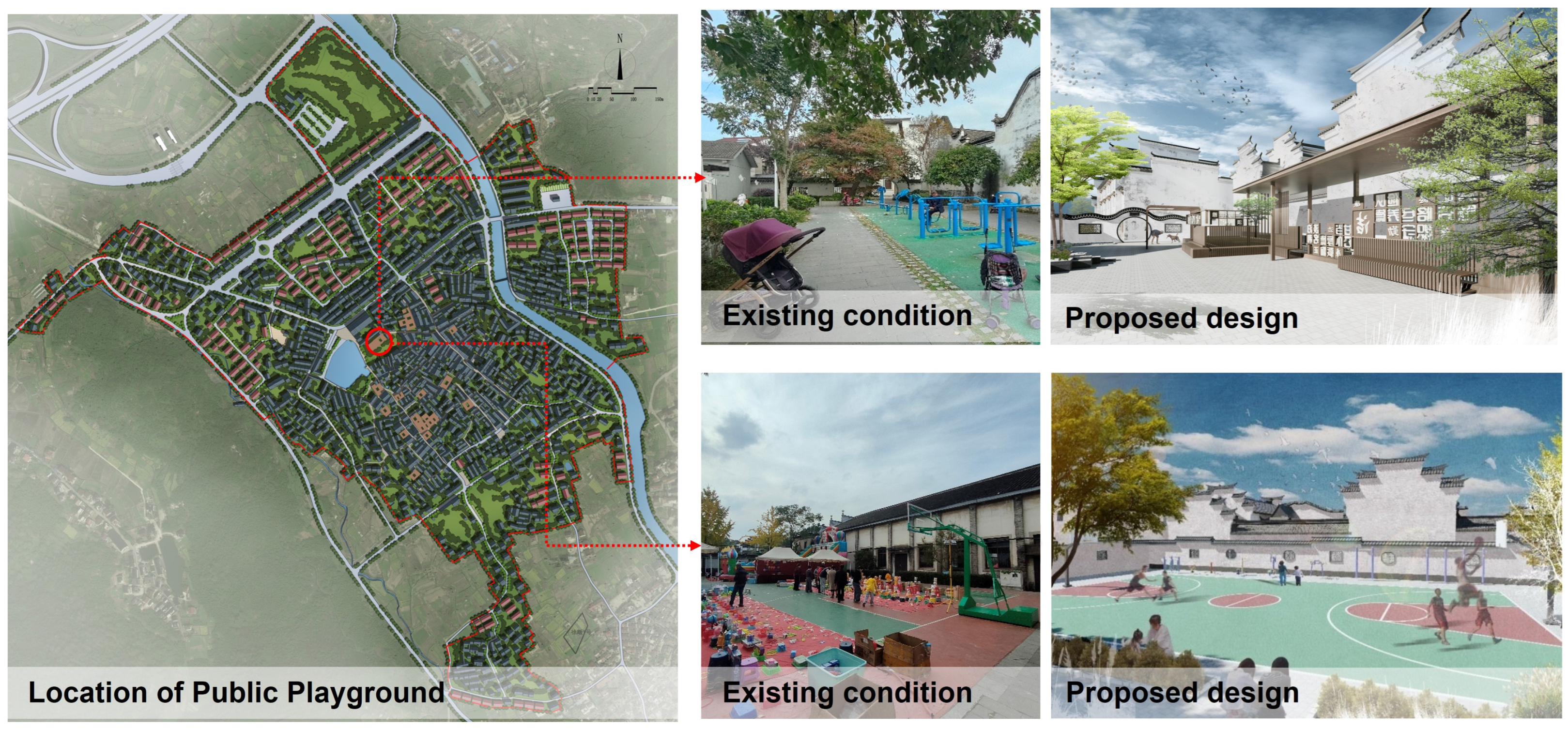
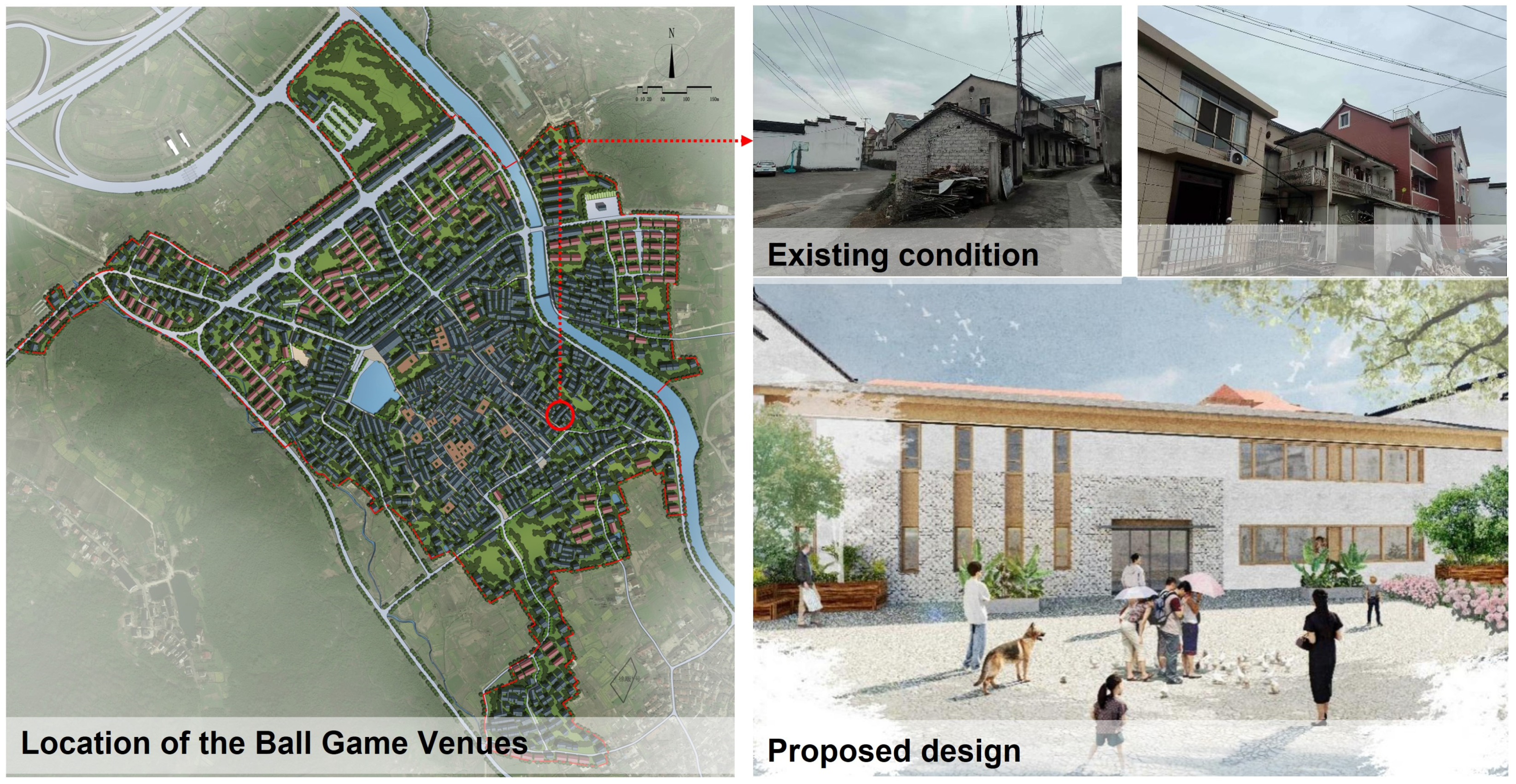

| Criterion | Indicator | Interpretation |
|---|---|---|
| Authenticity | Locality | Spatial experiences related to local culture and local life |
| Rationality | Spatial structure based on scientific planning and rational design | |
| Nationality | Public space is impacted by national policies and laws | |
| Corporateness | Interaction between space construction and the market economy | |
| Ethnicity | Spatial function is encoded with profound social meaning | |
| Theatricality | Charming | Unique design for stimulating positive emotional responses |
| Neighborly | Promotion of people’s interaction and harmonious relationships | |
| Transgressive | Adaption of unconventional behavior and creative expression | |
| Formal | Compliance with standards and norms | |
| Showy | Display the uniqueness of individuals or groups | |
| Legitimacy | Tradition | Display local culture |
| Extraordinary | Influence of local authority | |
| Utilitarian | Spatial functions serve practical need | |
| Equality | Fairness among space users | |
| Self-expression | Opportunity for individuals or groups to display themselves |
| Criterion | Weights | Indicator | Weights |
|---|---|---|---|
| Authenticity | 0.483 | Locality | 0.133 |
| Rationality | 0.087 | ||
| Nationality | 0.072 | ||
| Corporateness | 0.061 | ||
| Ethnicity | 0.129 | ||
| Theatricality | 0.149 | Charming | 0.048 |
| Neighborly | 0.039 | ||
| Transgressive | 0.015 | ||
| Formal | 0.037 | ||
| Showy | 0.010 | ||
| Legitimacy | 0.368 | Tradition | 0.081 |
| Extraordinary | 0.027 | ||
| Utilitarian | 0.101 | ||
| Equality | 0.113 | ||
| Self-expression | 0.046 |
| Type | Authenticity | Legitimacy | Theatricality | Overall Value |
|---|---|---|---|---|
| Public service space | 2.43 | 2.94 | 2.48 | 2.63 |
| Public open space | 3.17 | 3.45 | 3.14 | 3.27 |
| Public commercial space | 2.84 | 3.27 | 2.91 | 3.01 |
| Public cultural space | 2.92 | 3.27 | 2.76 | 3.03 |
| Criterion | Indicator | Service Space | Open Space | Commercial Space | Cultural Space | ||||
|---|---|---|---|---|---|---|---|---|---|
| Mean | Var. | Mean | Var. | Mean | Var. | Mean | Var. | ||
| Authenticity | Locality | 2.50 | 0.58 | 3.50 | 0.47 | 2.85 | 0.66 | 3.40 | 0.57 |
| Rationality | 2.40 | 1.20 | 3.25 | 1.04 | 2.70 | 1.06 | 3.25 | 0.62 | |
| Nationality | 2.05 | 0.68 | 2.60 | 0.99 | 2.35 | 0.98 | 2.60 | 1.41 | |
| Corporateness | 1.60 | 0.88 | 1.80 | 0.80 | 2.70 | 1.38 | 1.60 | 0.36 | |
| Ethnicity | 3.00 | 0.74 | 3.75 | 0.30 | 3.25 | 0.72 | 3.00 | 0.95 | |
| Theatricality | Charming | 2.40 | 0.99 | 3.30 | 0.75 | 3.15 | 0.56 | 3.45 | 0.26 |
| Neighborly | 2.55 | 0.58 | 2.95 | 0.68 | 3.05 | 1.00 | 2.90 | 0.73 | |
| Transgressive | 3.00 | 0.74 | 3.55 | 1.00 | 3.25 | 0.83 | 3.05 | 0.89 | |
| Formal | 3.80 | 0.48 | 3.90 | 0.52 | 3.75 | 0.30 | 3.95 | 0.26 | |
| Showy | 1.85 | 0.77 | 2.65 | 1.40 | 2.45 | 1.73 | 2.00 | 1.05 | |
| Legitimacy | Tradition | 2.60 | 0.46 | 3.55 | 0.47 | 3.45 | 0.68 | 3.00 | 0.53 |
| Extraordinary | 2.95 | 1.00 | 3.50 | 1.00 | 2.70 | 1.06 | 3.25 | 0.93 | |
| Utilitarian | 2.10 | 0.83 | 2.95 | 1.21 | 3.00 | 1.05 | 2.10 | 0.94 | |
| Equality | 2.20 | 0.38 | 2.45 | 0.79 | 2.50 | 0.58 | 2.40 | 0.67 | |
| Self-expression | 1.75 | 0.62 | 2.60 | 1.52 | 2.55 | 1.94 | 2.10 | 1.25 | |
Disclaimer/Publisher’s Note: The statements, opinions and data contained in all publications are solely those of the individual author(s) and contributor(s) and not of MDPI and/or the editor(s). MDPI and/or the editor(s) disclaim responsibility for any injury to people or property resulting from any ideas, methods, instructions or products referred to in the content. |
© 2025 by the authors. Licensee MDPI, Basel, Switzerland. This article is an open access article distributed under the terms and conditions of the Creative Commons Attribution (CC BY) license.
Share and Cite
Chen, Q.; Zhang, W.; Shou, J.; Zhang, M. Vitalizing Public Space in Traditional Village Based on Scene Theory: Evidence from Shen’ao Village in Zhejiang, China. Land 2026, 15, 67. https://doi.org/10.3390/land15010067
Chen Q, Zhang W, Shou J, Zhang M. Vitalizing Public Space in Traditional Village Based on Scene Theory: Evidence from Shen’ao Village in Zhejiang, China. Land. 2026; 15(1):67. https://doi.org/10.3390/land15010067
Chicago/Turabian StyleChen, Qiuxiao, Wei Zhang, Jiachen Shou, and Mingyu Zhang. 2026. "Vitalizing Public Space in Traditional Village Based on Scene Theory: Evidence from Shen’ao Village in Zhejiang, China" Land 15, no. 1: 67. https://doi.org/10.3390/land15010067
APA StyleChen, Q., Zhang, W., Shou, J., & Zhang, M. (2026). Vitalizing Public Space in Traditional Village Based on Scene Theory: Evidence from Shen’ao Village in Zhejiang, China. Land, 15(1), 67. https://doi.org/10.3390/land15010067