Article

Ecological Network Construction in the Central Urban Area of Fuzhou: A Perspective of Green Infrastructure Supply and Demand


1
College of Environment & Safety Engineering, Fuzhou University, Fuzhou 350108, China
2
Department of Environmental and Resources Engineering, Fuzhou University Zhicheng College, Fuzhou 350002, China
*
Author to whom correspondence should be addressed.
Land 2026, 15(1), 46; https://doi.org/10.3390/land15010046 (registering DOI)
Submission received: 15 October 2025 / Revised: 19 December 2025 / Accepted: 23 December 2025 / Published: 26 December 2025

Abstract

In the rapid urbanization process, ecological spaces are continuously encroached upon, leading to an increase in landscape fragmentation. This, in turn, results in a series of issues, such as weakened ecological connectivity and an imbalance in the supply and demand of ecosystem services. Green infrastructure serves a variety of ecosystem functions, and constructing and optimizing ecological networks based on green infrastructure is a key approach to enhancing landscape connectivity and mitigating the negative effects of urbanization. This study takes the central urban area of Fuzhou as a case study, innovatively combining the ecological network construction with supply–demand assessments of green infrastructure. It identifies ecological nodes and priority optimization zones. Results indicate that green infrastructure supply exhibits a pattern of “low in the central-eastern areas and high in the northern–southern areas,” while demand shows the opposite trend, revealing significant spatial mismatch between the two. The study identifies 7 key optimization areas, 29 ecological sources, 35 ecological corridors, and 61 ecological nodes. These are classified into core, important, and general levels based on centrality indices, and the ecological elements are finally overlapped to form an ecological network. This research provides practical insights for optimizing green infrastructure.

1. Introduction

Green infrastructure (GI) is defined as a system of interwoven and interconnected natural, semi-natural, and artificial urban blue-green spaces. It serves both ecological and social functions, including ecological roles such as mitigating the urban heat island effect [1,2,3], reducing flood disasters [4,5], decreasing environmental pollution [6], and conserving biodiversity [7], It also fulfills social functions by enhancing landscape aesthetics, improving social welfare, and safeguarding human physical and mental health [8]. The multifunctionality of GI can provide a wide range of urban ecosystem services, effectively alleviating the multi-layered ecological challenges faced by cities [9].
The accelerated pace of urbanization and expanding land use have triggered a series of adverse effects. The fragmentation and isolation of ecological land have intensified, leading to reduced ecological connectivity and undermining the structural stability and functional integrity of ecosystems. This impacts the spatial composition and configuration of GI [10,11], weakening its ecosystem service functions. Yet these highly urbanized areas typically exhibit greater demand for ecosystem services. Consequently, the planning, construction, and optimization of urban GI represent an effective approach to alleviating the pressures of urban expansion. Although early efforts were made to consciously protect and plan GI to ensure supply capacity, the lack of consideration for social, economic, environmental, and other multifaceted factors made it challenging to achieve integrated spatial development of GI in central urban areas amidst rapid urbanization [12,13]. This has led to an imbalance between the supply and demand of ecosystem services, primarily manifested in the disruption of ecological flows between urban centers and surrounding mountainous areas.
In recent years, the academic community has paid increasing attention to research on the supply and demand of ecosystem services. These services flow from ecosystems to human societies in a dynamic process that is essentially the result of this interaction, representing the link between ecosystems and human well-being [14,15]. A network built based on GI supply and demand can help develop a more scientific ecological planning method and improve the completeness, stability and fairness of the ecological system. The sources, corridors and nodes included in the GI ecological network are important elements in urban ecological construction. In this context, more and more studies are using ecological supply and demand capacity as the core basis for identifying ecological sources. For instance, Shi et al. [16] identified the ecological sources by evaluating carbon sequestration, water production, soil retention, habitat quality and morphometric spatial patterns; Zhang et al. [17] emphasized that identifying ecological sources depends on assessing ecosystem services in relation to human needs.; Jiang et al. [18] selected food production, water yield, carbon sequestration and recreational value as indicators of the supply and demand of ecosystem services in the Guangdong–Hong Kong–Macao Greater Bay Area, using them to identify ecological sources. However, the expansion of ecosystem services from one area to another is influenced by factors such as accessibility, economic development and social development. These factors are often reflected in human demand for geographic information. Ecological networks are the main carriers of the ‘flow’ of ecological processes and are widely used to support biodiversity protection [19], assess urban ecological risks [20], urban spatial planning [21] and environmental management [22,23]. They are mainly built based on the principles of landscape ecology, using methods such as morphological spatial pattern analysis [24], diagrammatic theory [25], circuit theory [26], They also integrate landscape connectivity assessment and centrality evaluation to establish ecological networks, forming a research framework for identifying ecological sources, constructing resistance surfaces and corridors [27,28]. This framework is currently the mainstream paradigm in ecological network research and has been widely applied by scholars both domestically and internationally in ecological network studies across different regions and spatial scales worldwide [29,30]. To meet the diverse ecological needs of cities, many scholars have analyzed and optimized urban ecological networks. From an international perspective, this framework has further validated its scientific merit: De Montis et al. [31] conducted research on urban and rural landscape planning in the Nuoro region of Italy, clearly highlighting the critical role of network models in protecting and enhancing species diversity. The core logic is to mitigate landscape fragmentation by connecting isolated patches; Weber et al. [32] in the U.S. conducted an evaluation based on green infrastructure networks to identify key ecological nodes and corridors as the core of planning, translating regional planning goals into local implementation standards. From a domestic perspective, Tang et al. [33] conducted research on regional ecological networks, connecting corridors to key ecological patches to achieve high integration of urban ecosystems; Huang et al. [34] quantitatively analyzed the ecological network structure of Wuhan and proposed optimization plans for coordinated development and ecological protection, enhancing ecosystem service functions. These studies provide theoretical support for the ecological planning and management of local cities; however, they overlook the balance between the supply and demand of green infrastructure in the construction of ecological networks [35].
In order to satisfy the demand for GI within urban areas, while simultaneously achieving a balance between urban development and ecological conservation, this study utilized a multifaceted data evaluation approach to assess GI requirements, subsequently constructing a resistance surface. The theoretical framework employed was based on the principles of circuit theory, utilizing the field of computer science’s space optimization theory to illustrate the process of ecological flow transmission. The investigation focused on the configuration of ecological corridors and pivotal nodes, thereby determining the critical areas for protection and optimization [36]. The implementation of targeted remediation measures in designated regions has been demonstrated to be a cost-effective approach to restoring the ecological functionality of the area. This approach has been shown to facilitate the harmonization of environmental, economic and social benefits, thereby promoting a comprehensive and integrated approach to sustainable development [37].
The central urban area of Fuzhou has a high-density built environment, and the conflict between green space utilization and urban construction is becoming increasingly prominent. Indeed, Fuzhou has implemented a series of measures to promote ecological construction, such as the development of forest cities and river ecological management projects. However, the imbalance and mismatch between the supply and demand of green infrastructure still exists, hindering the integrated development of the GI spatial structure. For urban areas with limited land resources, simply increasing green space without analyzing and evaluating the GI spatial structure often leads to minimal results. Therefore, integrating a supply–demand perspective into the comprehensive planning of the GI network is a scientific approach to alleviate the imbalance between the supply and demand of urban GI. This study selected the central urban area of Fuzhou, an economically developed city, as the research region. It analyzed the spatial distribution of GI supply and demand in the study area for the year 2023. By integrating the supply–demand relationship into the identification of ecological sources and the construction of the resistance surface, the study constructed an urban ecological network and proposed optimization strategies. The research aims to provide insights for achieving a balance between GI supply and demand amidst urban development, offers a scientific reference for GI network optimization, and proposes practical recommendations for landscape ecological restoration.

2. Materials and Methods

2.1. Study Area

Fuzhou, also known as Rongcheng, is the capital of Fujian Province and the hub of the West Coast Economic Zone. It is also an important gateway city for the 21st-century Maritime Silk Road. Located between latitudes 25°15′ and 26°39′ N and longitudes 118°08′ and 120°31′ E, Fuzhou borders the East China Sea, with Gushan to the east, Qishan to the west, Wuhu Mountain to the south, and Lianhua Mountain to the north.
The terrain is predominantly mountainous and hilly, accounting for approximately 72.7% of the city’s total area. With a forest coverage rate of 58.41%, it ranks second among China’s provincial capitals. The built-up area boasts a greening coverage rate of 44.98%, earning the city the titles of “National Forest City” and “National Model City for Greening”. The Min River flows through the city, and its coastline length ranks first among China’s provincial capitals.
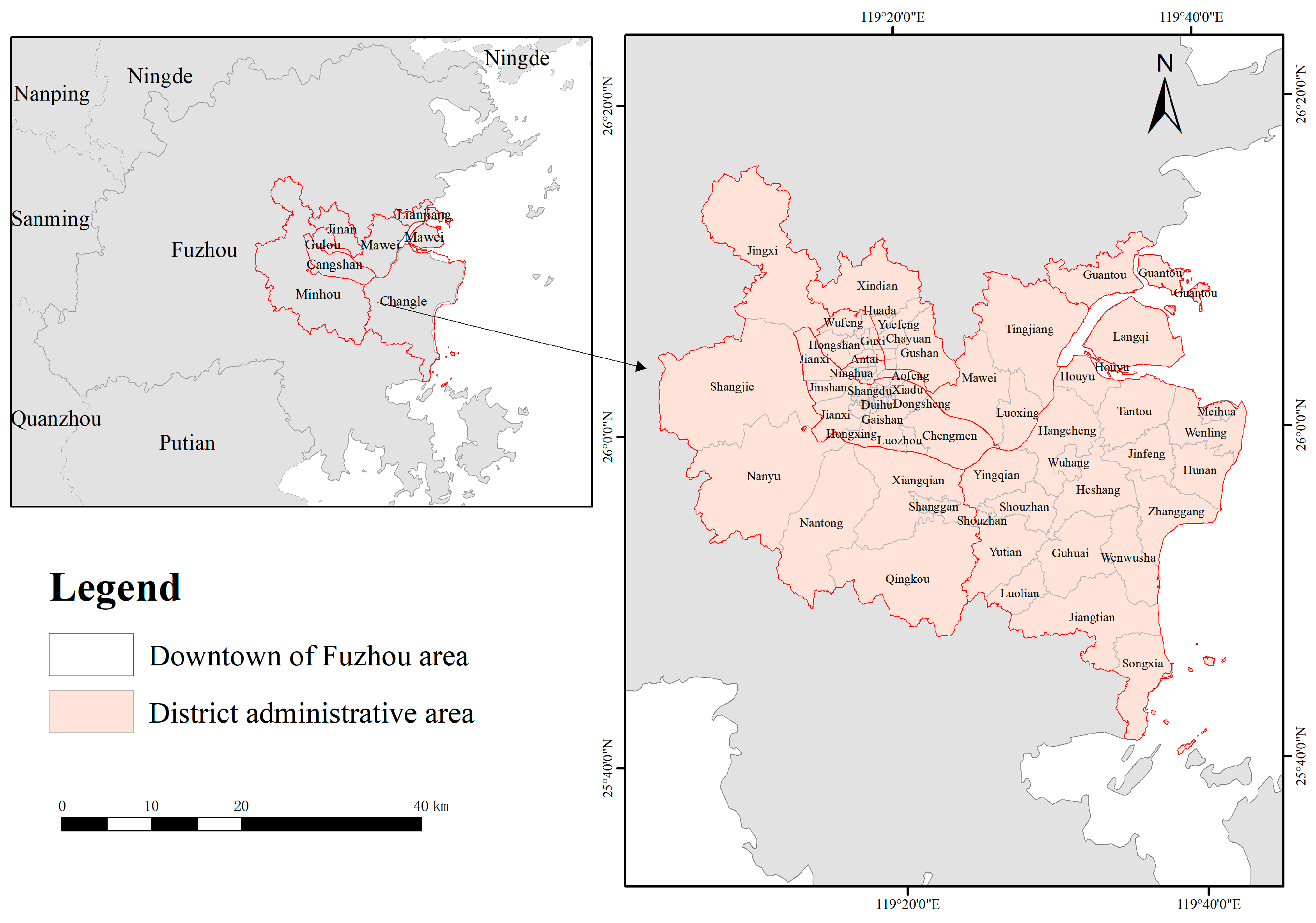
In recent years, rapid economic development has intensified the conflict between economic growth and ecological conservation. The rapid expansion of the central urban area of Fuzhou inevitably impacts the ecosystem services provided by urban green infrastructure. Therefore, this study focuses on the central urban area of Fuzhou, encompassing Gulou District, Taijiang District, Cangshan District, Jinan District (excluding Huanxi Town, Shoushan Township, and Rixi Township in the north), Mawei District, and Changle District, as well as Jingxi Town, Shangjie Town, Nanyu Town, Nantong Town, Shanggan Town, Xiangqian Town, and Qingkou Town in Minhou County, and Guantou Town in Lianjiang County (Figure 1). This encompasses a total of 6 districts and 2 counties, covering an area of approximately 2213 square kilometers.

2.2. Data Sources

This study utilized spatial data, ecological data, and socioeconomic data. For spatial data, the Digital Elevation Model (DEM) was sourced from the Landsat series data of Geospatial Data Cloud (https://www.gscloud.cn/ accessed on 23 April 2025), while slope data was calculated using the Slope tool within the Spatial Analysis toolset of ArcGIS 10.2 software. For ecological data, GI data in 2023 was sourced from the annual China Land Cover Dataset (CLCD) at 30 m resolution. Land use intensity was calculated as the ratio of impervious area to the total area of all land categories. For socioeconomic data, population datasets were sourced from GlobPOP (https://zenodo.org/records/11179644 accessed on 23 April 2025), a high-resolution global grid population dataset developed by the State Key Laboratory of Remote Sensing Science at Beijing Normal University. Nighttime light data was obtained from the National Environmental Information Center under the U.S. National Oceanic and Atmospheric Administration (https://www.ngdc.noaa.gov/eog/download.html accessed on 23 April 2025).

2.3. Research Methods

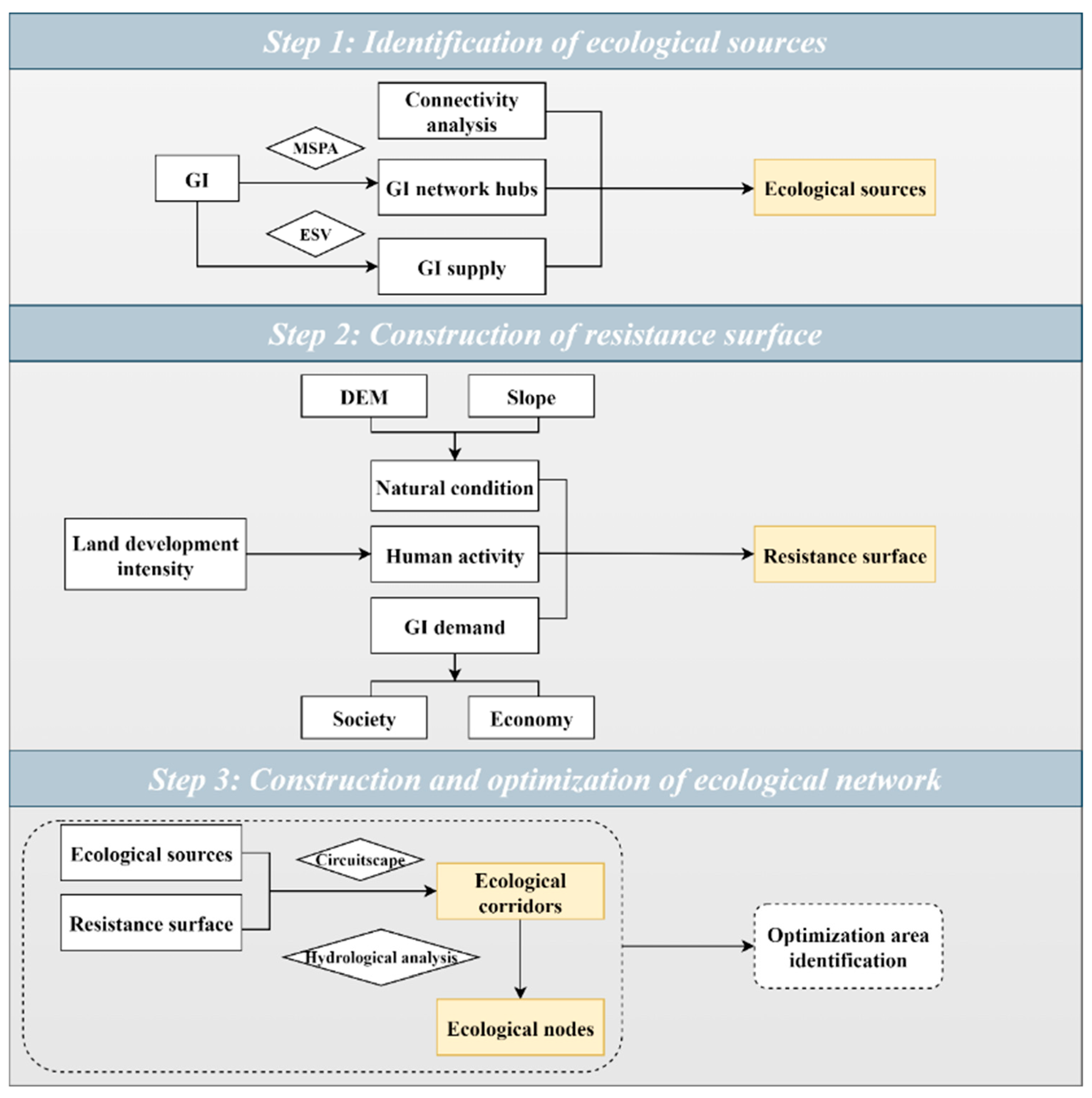
This study aims to analyze the supply and demand of GI to construct an ecological network based on “sources–resistance surfaces–corridors,” which will then be optimized and enhanced (Figure 2). The findings are expected to provide insights for urban ecological planning and construction, thereby promoting the sustainable development of urban ecosystems. The technical process is divided into the following steps: (1) Use morphological spatial pattern analysis (MSPA) to analyze regional landscape patterns and calculate landscape connectivity, initial GI elements were identified. The equivalent factor method was employed to calculate GI supply, and high-supply areas were screened and overlaid with initial GI elements to determine ecological sources. (2) Calculate factor weights using the entropy weight method to derive GI demand, then integrate natural factors and GI demand to construct a comprehensive resistance surface. (3) Extract ecological corridors using Linkage Mapper based on circuit theory, establish a preliminary GI ecological network, and conduct centrality analysis. (4) Identify ecological nodes, which represent critical conservation areas within the GI ecological network, through hydrological analysis and propose optimization strategies for enhancing the network.

2.3.1. Measurement of GI Supply

GI supply is measured by ecosystem service value. This study referenced the methodology developed by Xie Gaodi’s team for calculating ecosystem service value [38], GI supply values were estimated across four major categories and eleven subcategories: provisioning services, regulating services, supporting services, and cultural services. Based on the actual land use types within the study area, an ecosystem service value accounting index system (Table 1) was constructed for the central urban district of Fuzhou City, it included equivalence coefficient and supply coefficient.
Economic value plays a dominant role in influencing ecosystem service value [39,40]. This study employed the equivalence factor method, adjusted according to Equation 1 based on the actual productivity of the central urban area of Fuzhou. With its advantages of “standardization, ease of operation, and scalability,” the equivalence factor method has become a commonly used tool for ecosystem service valuation. Referencing the 2023 Fuzhou Statistical Yearbook and the National Agricultural Product Cost–Benefit Data Compilation, paddy, sweet potatoes, and potatoes were identified as Fuzhou’s three primary grain crops. Their total output, cultivated area, yield per hectare, and grain prices were determined (Table 2). Supply coefficients were calculated based on the ecosystem service value equivalence coefficient per unit of land area and economic value. The specific formula is
E a = 1 7 i = 0 n   m i p i q i M
S C = D i j × E a
where E a refers to the value of ecosystem services per unit area. S C is the capacity to supply ecosystem services, n is the number of major grain crops varieties, m i is the average price of the grain crops, p i is the average grain crops yield per unit area, q i is the sown area for each grain crops. M is the total sown area of grain crops, D i j is the equivalent value of ecosystem services per unit area.

2.3.2. Measurement of GI Demand

This study referenced previous research [41,42] and integrated the natural conditions and socioeconomic factors of the central urban area of Fuzhou. It comprehensively considered the demand for GI services driven by urban development and environmental protection, selecting three socioeconomic indicators—population density, nighttime light intensity, and land development intensity—for ecological service demand assessment. Urban residents constitute the primary demand group for GI, population density serves as a core indicator, higher population density correlates with greater resident demand for GI. Nighttime light intensity reflects regional human activity levels, higher light intensity indicates greater human activity. Land development intensity represents the economic demand for GI, higher development intensity signifies greater economic demand for GI. This multidimensional approach provides a scientific foundation for optimizing GI supply and demand. ArcGIS 10.2 software was employed to extract indicator values within the study area. Using the raster calculator, the data were normalized through Min-Max normalization to eliminate the dimensional effects caused by different units of the indicators. Subsequently, the entropy weight method was used to determine the weights of each indicator (Table 3). The entropy weight method is an objective weighting approach that avoids the influence of subjective human factors and is suitable for comprehensive evaluation of data [43]. The specific calculation formulas are as follows:
x i j = x i j x m i n x m a x x m i n
W i j = x i j i = 1 n x i j
e j = 1 ln n i = 1 n W i j ln W i j
d j = 1 e j
W j = d j j = 1 m d j
x i j is the raw data, x m i n is the minimum value of data, x m a x is the maximum value of data, x i j is the normalized data with a value range between [0, 1]. W i j is the proportion of a certain indicator, n is the number of samples, e j is the information entropy of each indicator, d j is the redundancy of information entropy, and W j is the weight of each indicator.

2.3.3. MSPA Identification and Landscape Connectivity Analysis

In ecological network research, MSPA is frequently employed to analyze the element categories within landscape patterns [24], identify binary land-use raster images and classify them into seven mutually exclusive landscape categories, designating the core area category as the preliminary target for ecological source areas. This process is accomplished using the Guidos toolbox 2.8 software. This is a tool specifically designed to describe the geometric forms and connectivity of ecological habitat matrices in images. It uses color coding to reclassify the image to be analyzed into seven different landscape elements [44]. Considering the connecting role of water bodies within green spaces, forest land, grassland, shrub, and water bodies were designated as foreground values. Cultivated land, primarily intended for economic production and covering a relatively large area in Fuzhou, was unsuitable as part of GI. Therefore, cultivated land, impervious surfaces, and bare land were assigned as background values. The land use classification data was imported into ArcGIS 10.2 software. Using the raster reclassification tool, foreground values were assigned a value of 2 and background values a value of 1. The resulting binary land use classification data for the central urban area of Fuzhou was exported in GeoTIFF format to serve as the data foundation for the MSPA. Using the MSPA in Guidos toolbox 2.8 software to identify different landscape elements, we referenced previous parameter settings [45,46,47] and considered the actual conditions of the central urban area of Fuzhou. Through comparative experiments with parameter adjustments, we determined the specific software parameter settings.
Key patches of ecological source are commonly identified using landscape connectivity index. The application of the connectivity index serves to eliminate subjective factors, thereby providing a more objective assessment of the contribution of the patch to the promotion of ecological flow and species migration. Ma et al. [48] calculated landscape connectivity index using Conefor 2.6 software and the Conefor Input for ArcGIS 10.2 plugin module based on data from the core landscape area of Fuzhou’s central urban district. They characterized patch importance through the probability of connectivity (PC) and the patch importance index (dPC) calculations. The specific calculation formula is
P C = i = 1 n   j = 1 n   a i a j p i j * 1 + n l i j A l 2 d P C = P C P C r e m o v e P C × 100 %
where 0 ≤ P C ≤ 1, a higher P C value indicates stronger landscape connectivity of the patch. In the equation, n denotes the total count of patches within the landscape, a i and a j denote the contribution values of patch i and patch j respectively, n l i j indicates the number of connections between patches i and j , and p i j * is the maximum possible dispersal of species between i and j . d P C represents the importance of each patch in maintaining landscape connectivity through P C variation (%). P C r e m o v e indicates the landscape connectivity value after removing a single patch; the more important the patch, the greater the value change.
The results of landscape connectivity analysis vary significantly depending on the distance threshold set; an appropriate distance threshold is essential to ensure the accuracy of landscape connectivity analysis. This study selected eight representative GI patches and tested eight thresholds (400, 800, 1200, 1500, 2000, 3000, 5000, 8000) to determine the optimal threshold based on the trend and stability of the connectivity changes.

2.4. Construction of the Ecological Network

2.4.1. Identification of Ecological Sources

Ecological sources constitute the core elements within ecological networks. When applying the mathematically based MSPA method, relying solely on single land use type data yields incomplete analytical results. This study combined morphological spatial pattern analysis with landscape connectivity indices to quantified GI supply levels for identifying ecological source areas, ensuring more objective and scientific results. Large-area GI core patches with strong landscape connectivity were extracted as preliminary ecological source areas within Fuzhou’s central urban district. Additionally, considering GI supply–demand balance, regions with high comprehensive GI supply values were identified. Through overlay analysis, the final ecological source areas were determined.

2.4.2. Construction of the Comprehensive Resistance Surface

During ecological flows such as material exchange, energy transfer, and species migration between patches of different origins, processes encounter comprehensive resistance barriers. Constructing a comprehensive resistance surface is the primary step for accurately identifying and extracting inter-source corridors [49]. Resistance surface construction typically encompasses both natural geographic factors and human activities. This study incorporated natural factors such as slope and elevation, while human activities were represented through land use classifications [50,51]. Based on other research and in combination with our previous studies in the Fuzhou area [52,53,54,55], we found that GI provides public ecological services, and its planning needs to achieve spatial alignment of supply and demand. To achieve a certain level of improvement in high-demand areas, GI demand was treated as one of the factors influencing the resistance surface. Highly urbanized, highly fragmented, and highly impervious areas often exhibit higher demand for GI, but their ecological connectivity is relatively poor, and the flow of materials, hydrological processes, or ecological functions is often difficult to facilitate, resulting in higher ecological resistance. The specific resistance values used in this study are shown in Table 4.

2.4.3. Construction of Ecological Corridors

Ecological corridors play a vital role in maintaining the dynamic equilibrium between urban development and ecosystems. The most widely applied method for constructing ecological corridors is the minimum cumulative resistance model [56]. While this model was initially used primarily in wildlife conservation and nature reserve planning studies, it has limitations in simulating optimal corridors [57,58]. With advancing research, many scholars have integrated circuit theory with landscape ecology for ecological corridor identification [59,60]. Circuit theory utilizes the random migration of electrons to simulate the stochastic nature of species movement. It not only rapidly identifies all potential corridors but also quantifies corridor importance, extracting corridors that better align with biological characteristics. Its core principle is to abstract a heterogeneous landscape as a circuit composed of nodes and resistances, assigning ecological significance to physical quantities such as resistance, current, conductance, and voltage, thereby simulating the process of species migration. Furthermore, circuit theory is particularly well-suited for constructing corridors at small to medium scales [13]. Linkage Mapper (https://linkagemapper.org/ accessed on 30 April 2025) is a tool that integrates the minimum cumulative resistance model, circuit theory, and graph theory, leveraging the strengths of these mainstream models and theories. By drawing an analogy between the movement of charges in a circuit and the activity of organisms in the natural environment, this method uses the principle of electric current to deeply reveal the characteristics of ecological flows. This approach not only simulates the migration routes of species between ecological sources through the direction of the current, but also determines the spatial extent of ecological corridors by extracting the effective values of accumulated current [61]. Therefore, this study employed the Linkage Mapper tool, inputting ecological source and comprehensive resistance surface data, to calculate ecological corridors based on the minimum cost path method. The function of ecological corridors is related to their spatial extent. Since changes in the threshold affect this spatial extent, the optimal threshold was determined by comparing the stability of variation in ecological corridor current values [62,63], this study selected nine thresholds for testing to identify the optimal corridor width.

2.4.4. Identification of Ecological Nodes

Ecological nodes are pivotal points for maintaining the overall connectivity of ecological networks. Identifying, protecting, restoring, and enhancing these nodes can help fully realize the ecological potential of the GI network [64,65]. The convergence points of ecological corridors experience high material flow rates and often serve as crucial spatial nodes within ecological networks [66]. To avoid overlooking potential nodes due to reliance on a single method, this study employed a combination of hydrological analysis methods to identify ecological nodes [67,68,69]. Ecological nodes were identified by extracting ridge lines from the comprehensive resistance surface data and intersecting them with ecological corridors. The nodes correspond to the intersections of ecological corridors as well as the points where the highest and lowest resistance paths converge.

3. Results

3.1. Analysis of GI Supply and Demand Dynamics

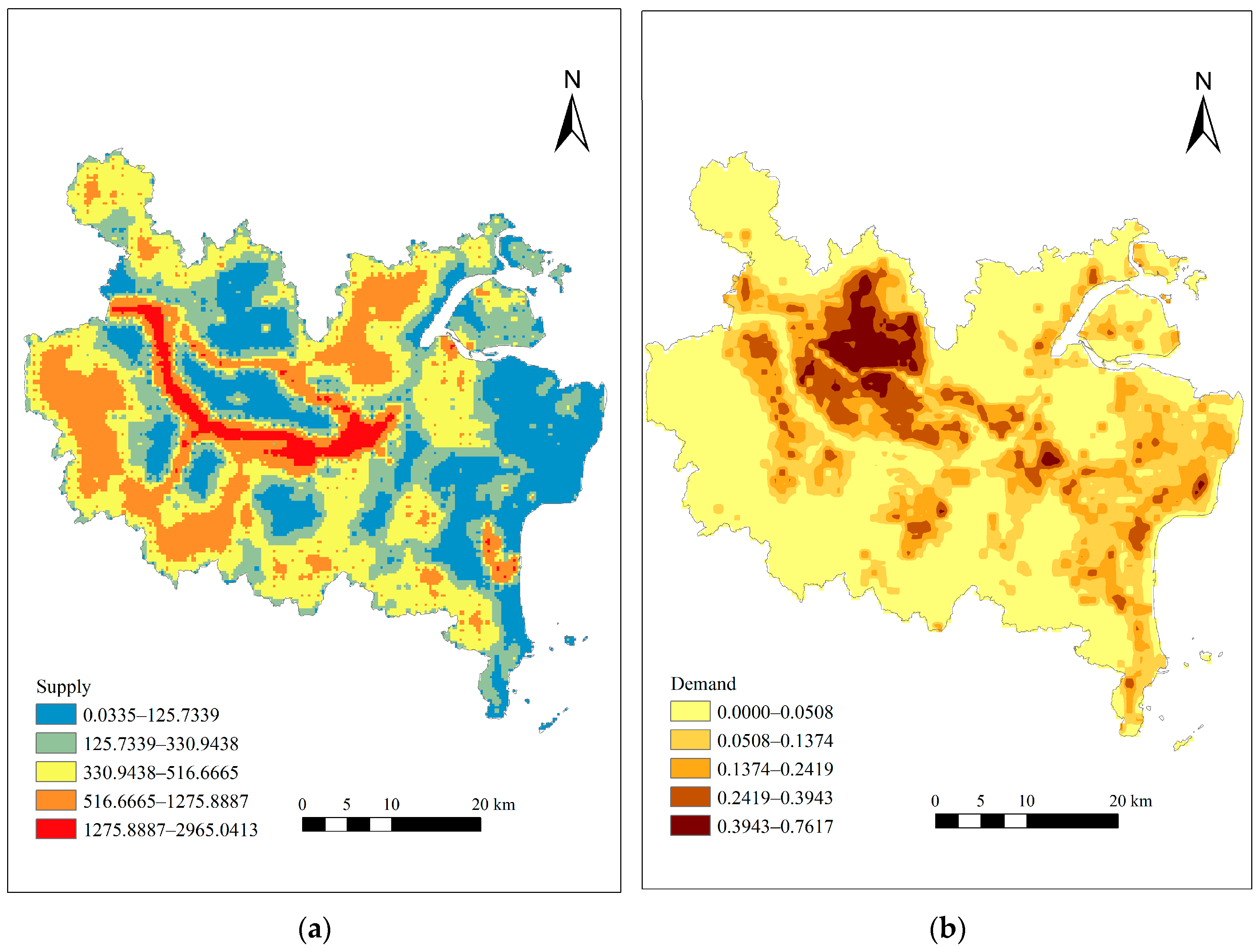
Comparing the results of GI supply and demand in the central urban area of Fuzhou in 2023 (Figure 3), we categorized GI supply and demand into five levels using the natural breakpoint method. Analysis of GI supply and demand distribution revealed that high-value GI supply zones were predominantly concentrated in the southwest, northeast, and along the Min River basin. As the Min River basin traverses the central district, the overall GI supply pattern exhibited an alternating distribution of high and low values. Correspondingly, high GI demand zones were concentrated in highly urbanized and densely populated core districts such as Gulou, Taijiang, Cangshan, and Jin’an. The overall GI demand exhibited significant aggregation and gradient differences. The demand level in the northwest was significantly higher than in other areas, showing a pattern with the northwest as the core and a gradual decrease toward the north and south. The demand level differences between different regions were quite prominent. This pattern arises primarily because the northwest area experiences higher urban development intensity and more frequent human activity, while the north and south are characterized by continuous mountain ranges, resulting in lower levels of human interference.

3.2. Analysis of GI Spatial Pattern

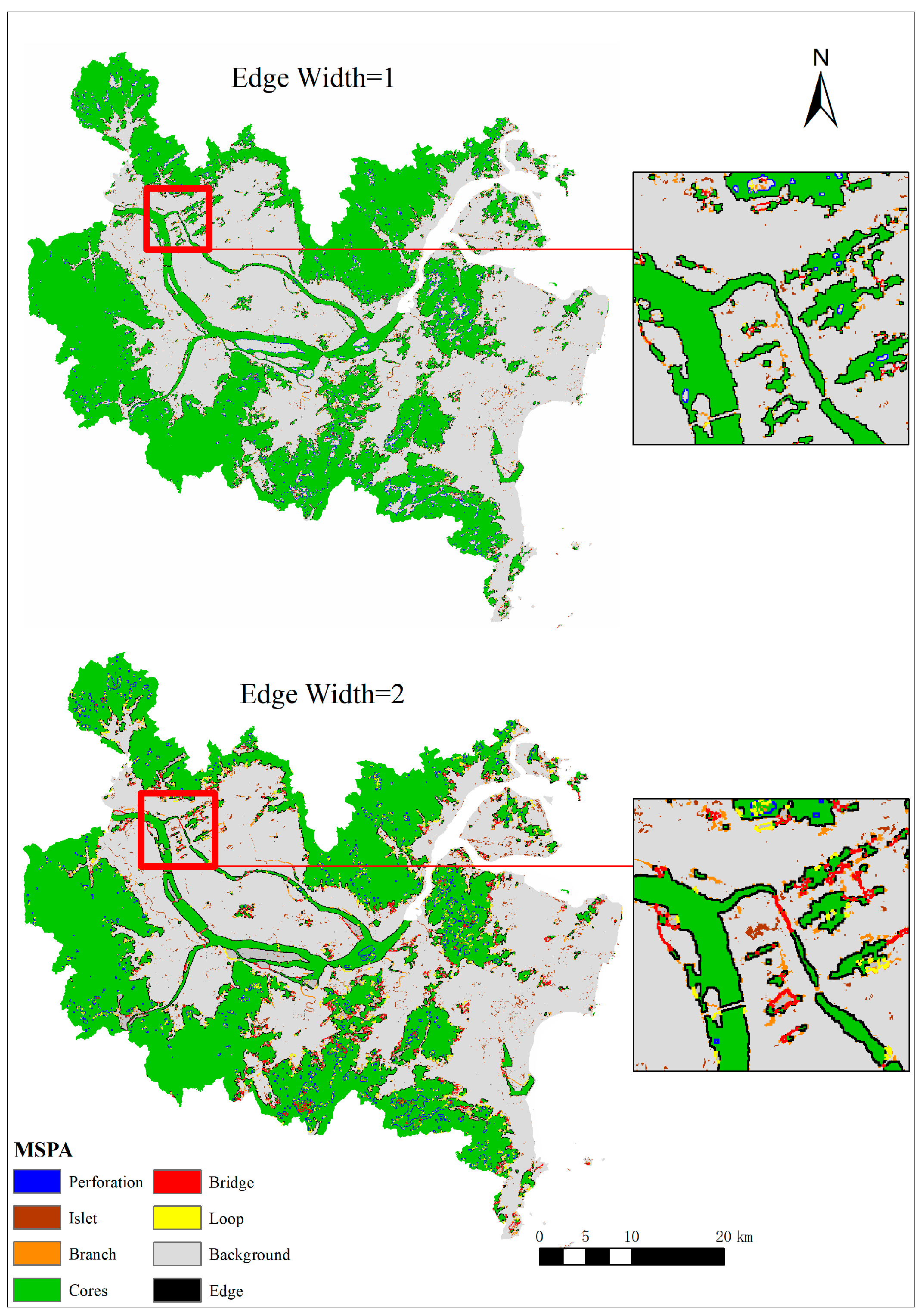
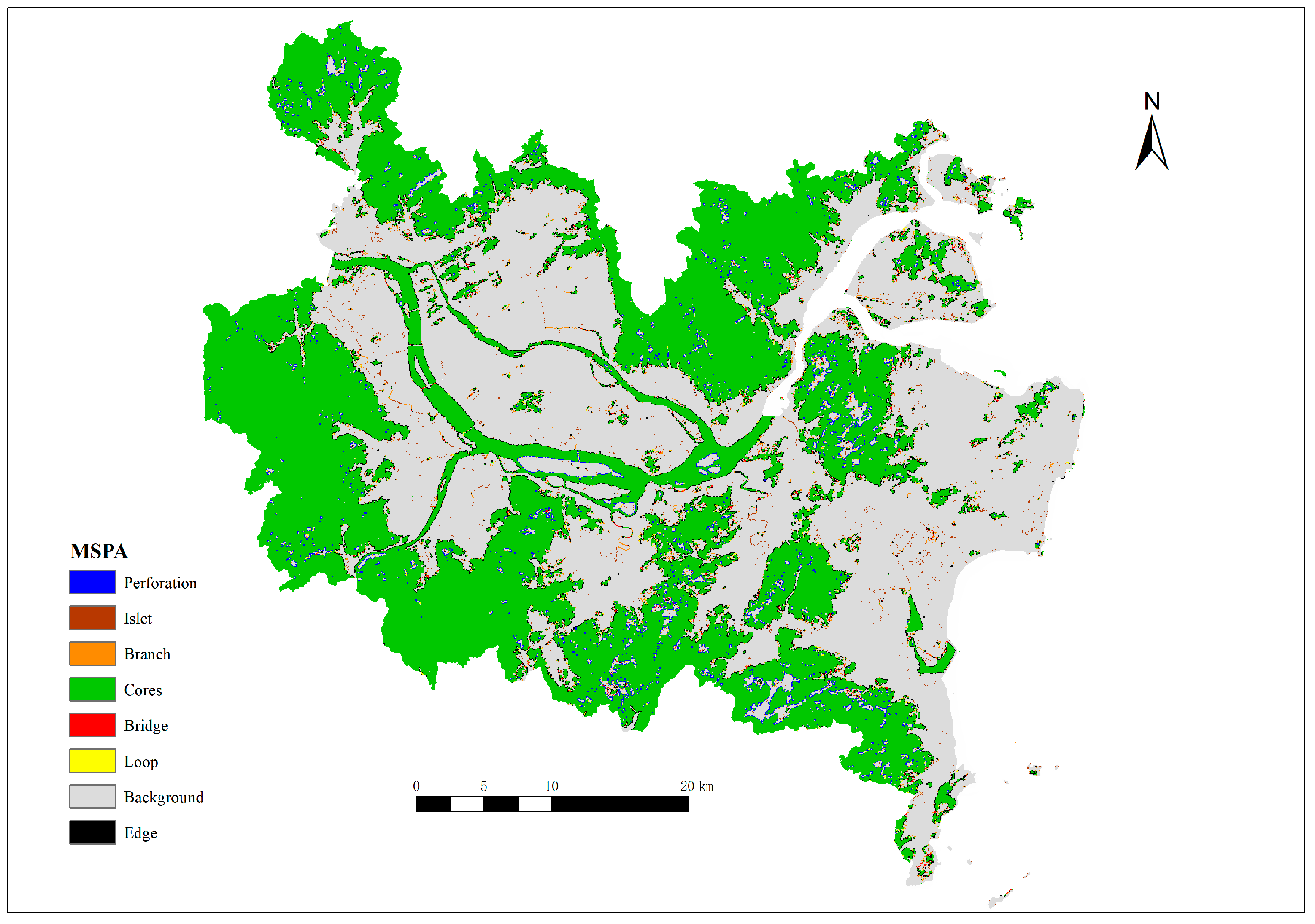
The parameter adjustment comparison experiment we conducted is shown in Figure 4. By comparing the results, we found that when the edge width was set to 2, there were some discrepancies in the details, such as certain river areas being classified as bridge zones. Since water bodies are one of the core areas in this study, an edge width of 1 effectively covers the boundary areas of foreground patches without excessively expanding the non-core area. The final parameter settings use the 8-neighborhood connectivity rule, with a pixel granularity of 30 m × 30 m, and the edge width set to 1. Based on the MSPA, seven landscape types were identified, as shown in Figure 5, with their respective areas and proportions detailed in Table 5. The total area of GI reached 1080.22 km2, which constituted 48.81% of the overall study region’s area. The core patch occupied the largest area, accounting for 87.02% of the GI area, primarily distributed in the northern, western, and southern parts of the study area. Edge elements followed with an area of 6.60% of the GI area, encircling the periphery of the core zone. The area of perforation was 28.27 km2. The distribution of perforation density in Changle district was significantly higher than that in the Minhou county. Specifically, the perforation density was lower in Wuhu Mountain and Qishan Mountain. Branch and islet elements were distributed rather scattered, while bridge elements were mainly distributed in Qinglong Mountain and Sandiejing Forest Park in Minhou county, as well as Langqi town in Lianjiang county.

3.3. Ecological Network Construction and Centrality Analysis

3.3.1. Ecological Sources

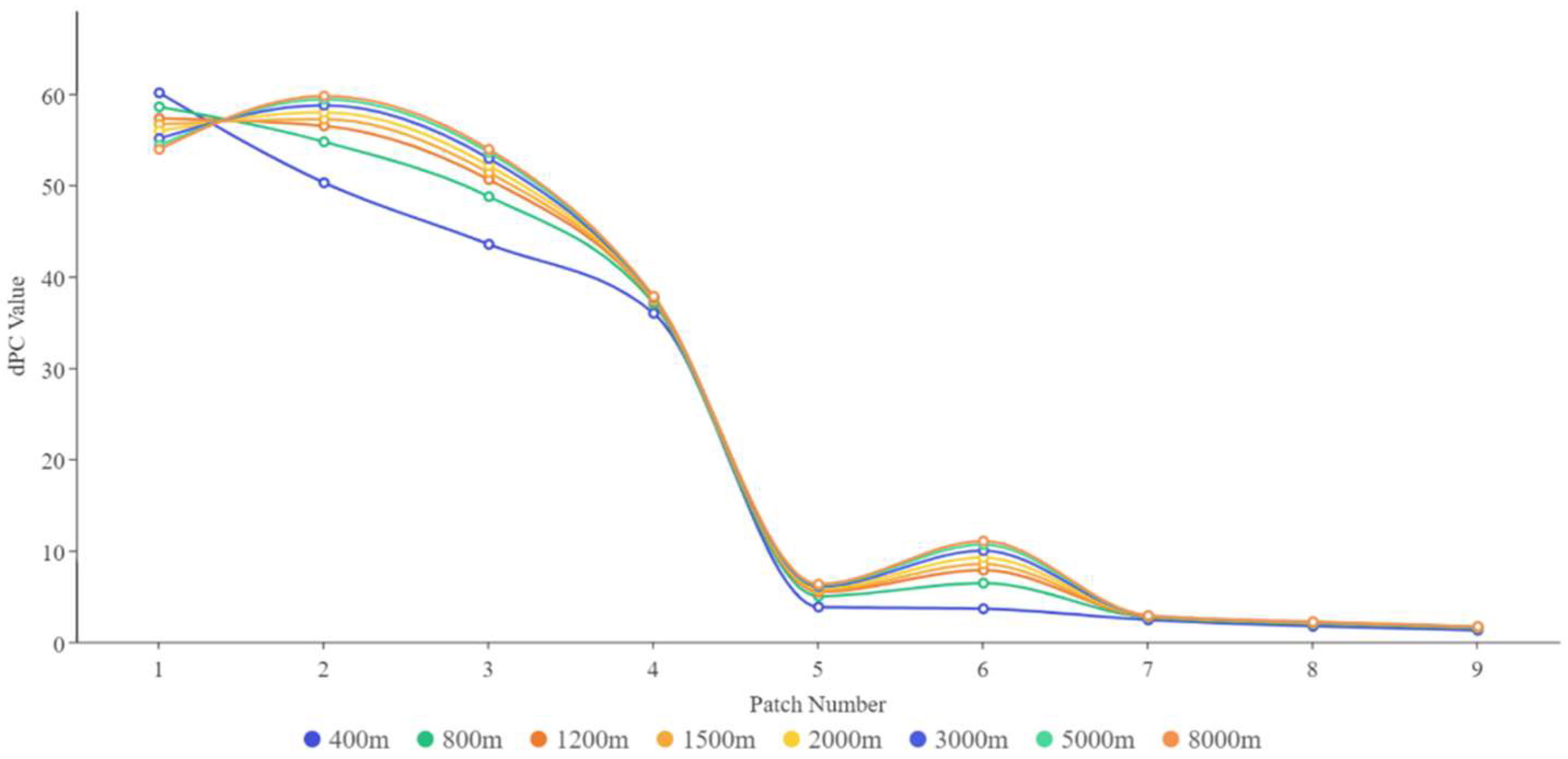
Based on the core areas identified by MSPA within the study area, the landscape connectivity index results were calculated. From the test results of the eight preset thresholds in the software, the d P C value exhibited minimal variation beyond 1200 m (Figure 6). Therefore, the optimal distance threshold for landscape connectivity in this study area was 1200 m. At this threshold, the actual landscape conditions of the study area can be more accurately reflected.
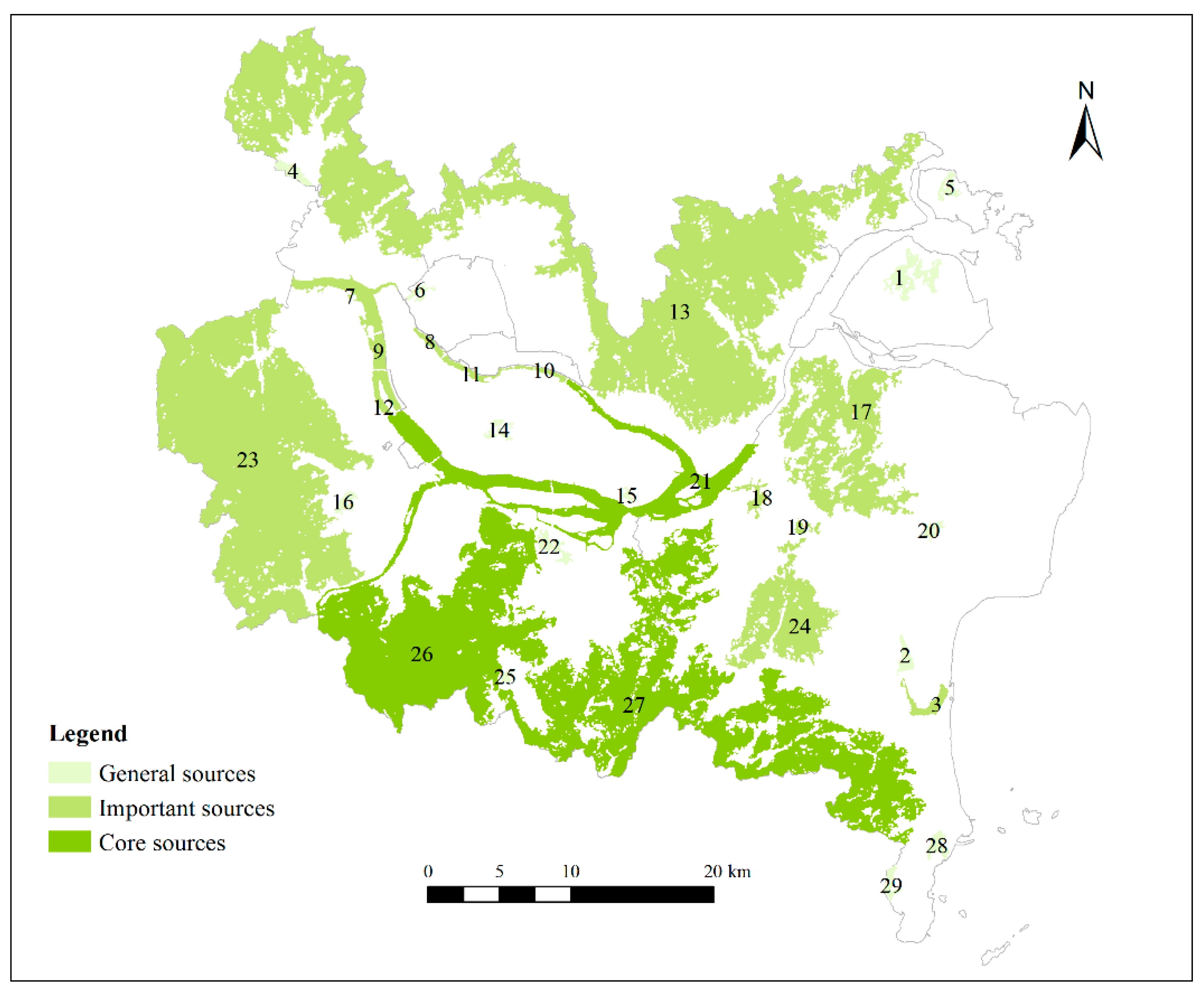
The d P C value of each patch was calculated and ranked. With reference to previous studies and the specific conditions of the study area, core patches with d P C ≥ 0.1 were selected. Considering the actual land use, ecological value, and landscape characteristics of the study area, the top 50% of areas in terms of GI supply value were integrated through overlay analysis, ultimately identifying 29 ecological source areas (Figure 7).
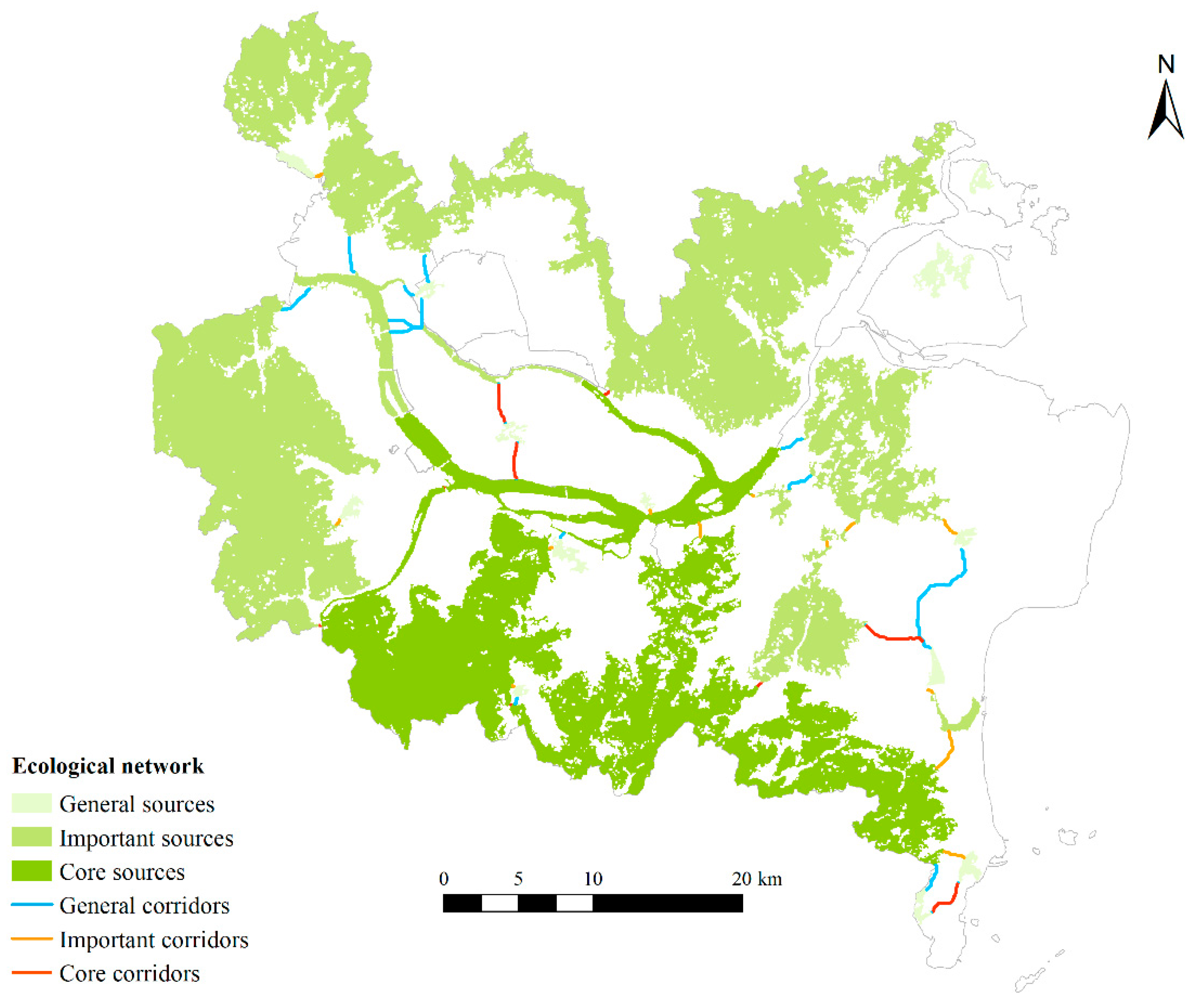
Centrality indices are used for the quantitative analysis of the role of source areas and corridors in the overall connectivity of the network, and to assess the importance level of each element. Higher centrality value indicates a greater contribution to network connectivity [70]. Based on centrality analysis using the Centrality Mapper tool in Circuitscape software, ecological sources were classified into core, important, and general source areas using the natural breakpoint method (Table 6). The centrality of the central urban area of Fuzhou is generally favorable, with Wulongjiang exhibiting the highest centrality at 244.970. The large ecological patches centered around Nantong Town and Qingkou Town in Minhou County, as well as Jiangtian Town, Luolian Town, and Shouzhan Town in Changle County, exhibited superior connectivity. These patches were extensive in area and closely clustered, enabling them to better deliver ecosystem services. Such areas were designated as core source regions. The upper reaches of the Min River, the western of Minhou, the northern of Changle, and the northern edge of the study area were designated as important source regions. It is noteworthy that Pengqi Hill in Guantou Town of Lianjiang County and Mengyang Hill in Langqi Town of Mawei District exhibited the lowest centrality values. Geographically, both were located on isolated islands with relatively remote locations, resulting in poor connectivity with surrounding ecological patches. Shanggan Town, Guantang Mountain, Zhangshan Park, and Qingkou Town Central Park in Minhou County; Fushan Country Park in Gulou District; Gaogai Mountain Park in Cangshan District; Shizhu Mountain and Fengdong Mountain in Changle District were general sources.

3.3.2. Comprehensive Resistance Surface

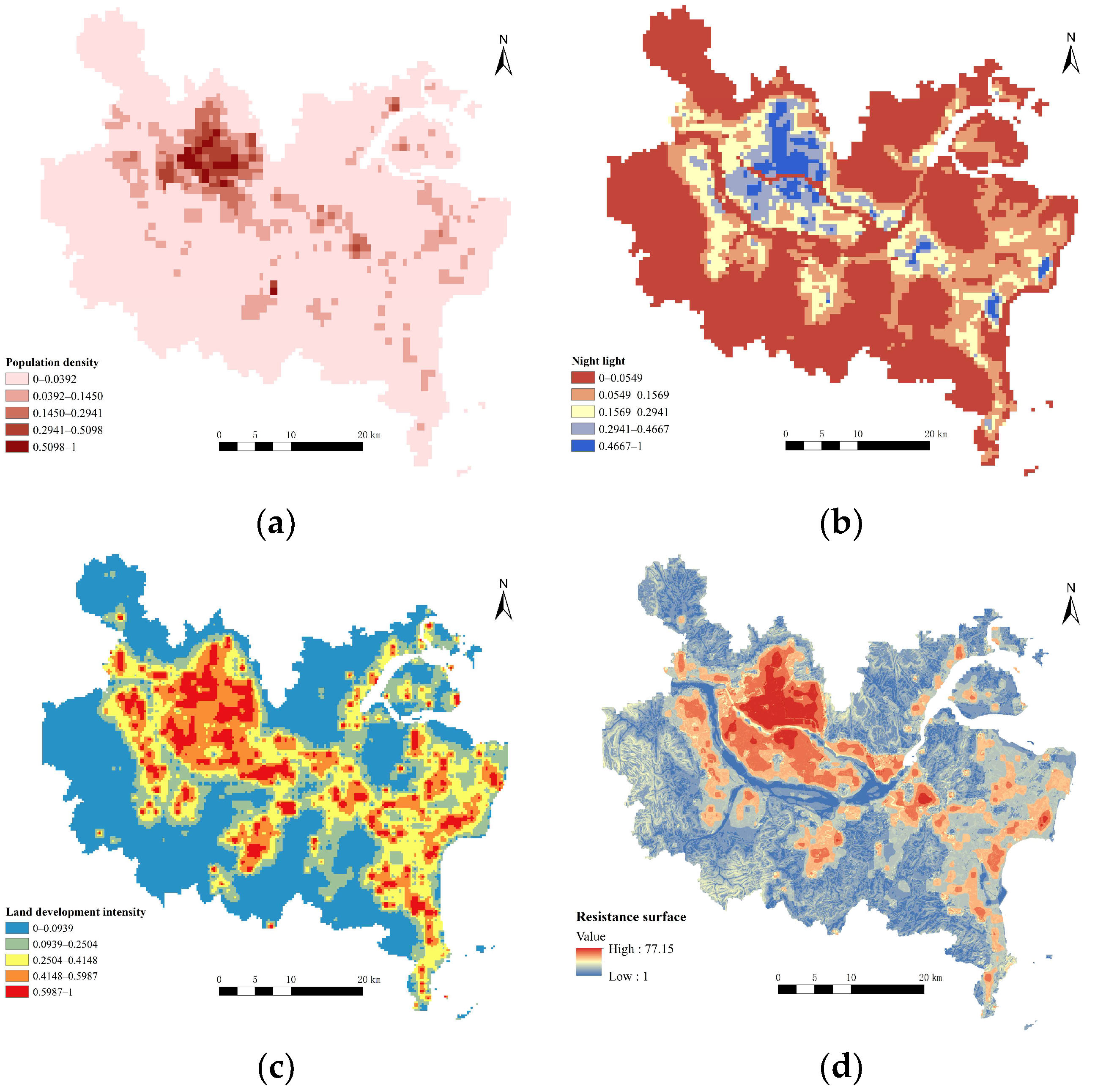
The reclassification tool in ArcGIS 10.2 was used to assign values to four factors: elevation, slope, land use, and GI demand. A weighted sum tool was then applied to compute the comprehensive resistance surface through raster overlay calculations. Areas with high resistance values were predominantly concentrated in highly urbanized neighborhoods centered in Gulou and Taijiang districts, extending to parts of Jin’an district such as Gushan town, Yuefeng town, Chayuan subdistrict, as well as Cangshan town, Sancha street, Xiadu subdistrict, Cangqian subdistrict, and Dongsheng subdistrict in Cangshan district (Figure 8). Notably, these areas also exhibited high levels of GI demand. Mountainous and hilly areas like Qishan, Gushan, Wuhushan, and forested regions in northern and southern Changle exhibited greater elevation and slope, resulting in higher resistance values compared to other regions.

3.3.3. Ecological Corridors

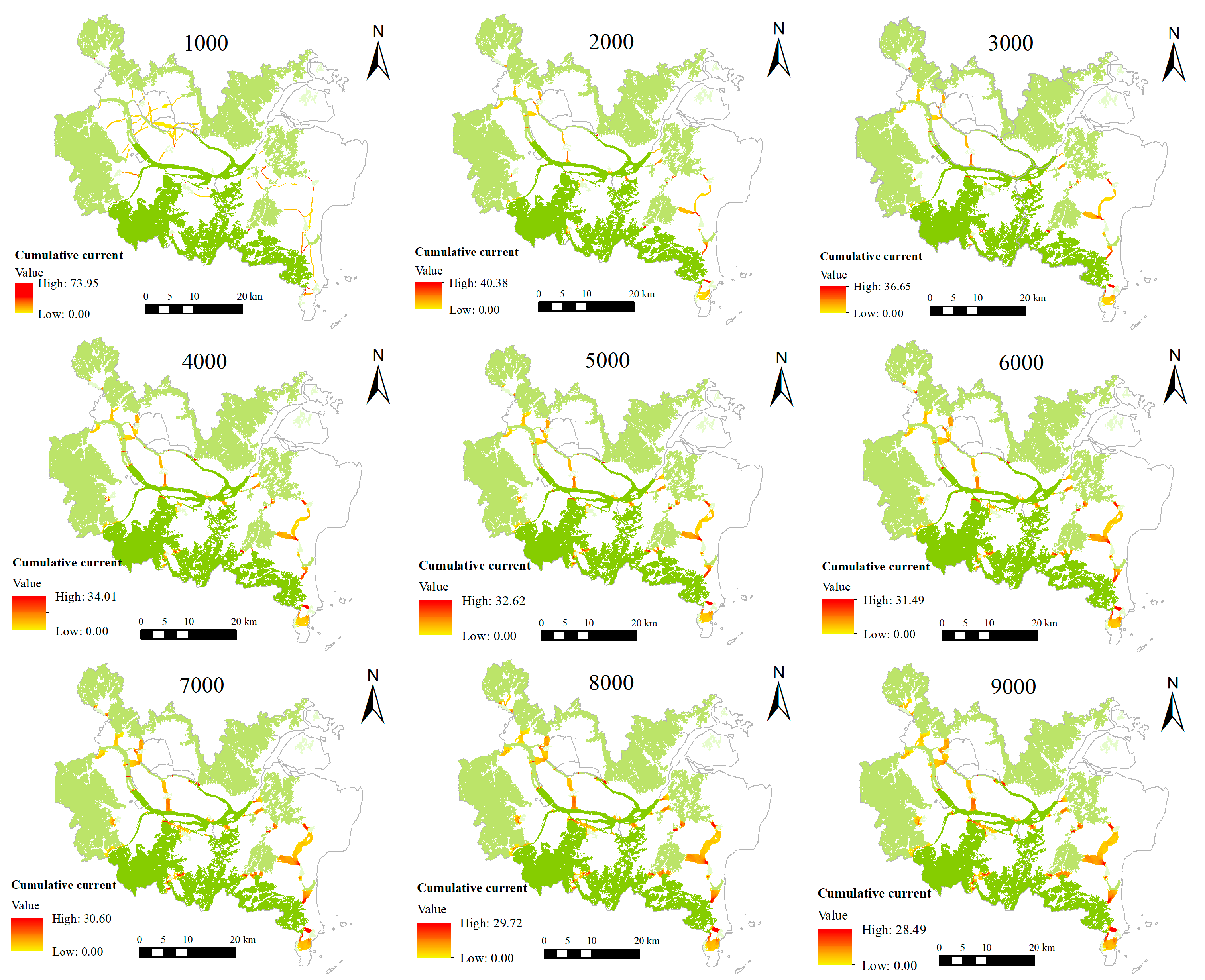
The resistance threshold interval was set from 1000 to 9000 m based on the Linkage Mapper tool. Figure 9 illustrated the variations in ecological corridor area and the corresponding cumulative current values under different thresholds, enabling the identification of the optimal ecological corridor width through comparison. As the cumulative resistance threshold increased, the ecological corridor area gradually expanded while the cumulative current gradually decreased. Stabilization in the rate of change in current values was observed when the cumulative resistance threshold reached 3000. Hence, a threshold of 3000 was selected to delineate the spatial extent of ecological corridors.
A total of 35 ecological corridors were identified, ranging in length from 0.042 km to 9.423 km (Figure 10), with centrality generally lower than that of ecological sources. Corridors with higher centrality predominantly clustered in Zhanggang subdistrict and Heshang town of Changle district. The abundance and proximity of ecological sources in these areas provided natural conditions for corridor formation. Corridors in the northern part of Xiangqian town and the eastern part of Nanyu town in Minhou county exhibited lower centrality. The former was primarily influenced by distance, while the latter was mainly affected by fragmented and dispersed patches. Based on centrality values, thresholds of 22.683 and 48.191 were determined using Jenks natural breaks classification, categorizing corridors into general, important, and core corridors. The comprehensive analysis ultimately identified 9 core corridors, 12 important corridors, and 14 general corridors, primarily located in the northwestern and southeastern parts of the study area. The core corridors of Cangshan district were centered around Gaogai mountain, connecting the north and south ports of the Minjiang river, and vertically linking Jiangxin Park, Chang’an Mountain Park, and Wushan River Park. The ecological corridors in the central part of Changle district were centered around the Wenwu Sand Reservoir, connecting to Longjiaofeng Park to the north, extending the ecological service function to the inland mountainous forest land, connecting to Niujiao Mountain to the south, linking to the coastal backbone forest belt, and connecting to Dongfeng Mountain National Forest Park to the west. These corridors are key links in building the overall ecological pattern of “the integration of mountains and sea, and the interdependence of forests and water” in Changle district. Other ecological corridors were scattered in Mawei Port, and the intersection of Minhou with Gulou and Cangshan, Especially, the close proximity and ecological contiguity between the western Qishan Mountain and the southern Wuhu Mountain resulted in shortened ecological corridors.

3.3.4. Ecological Nodes

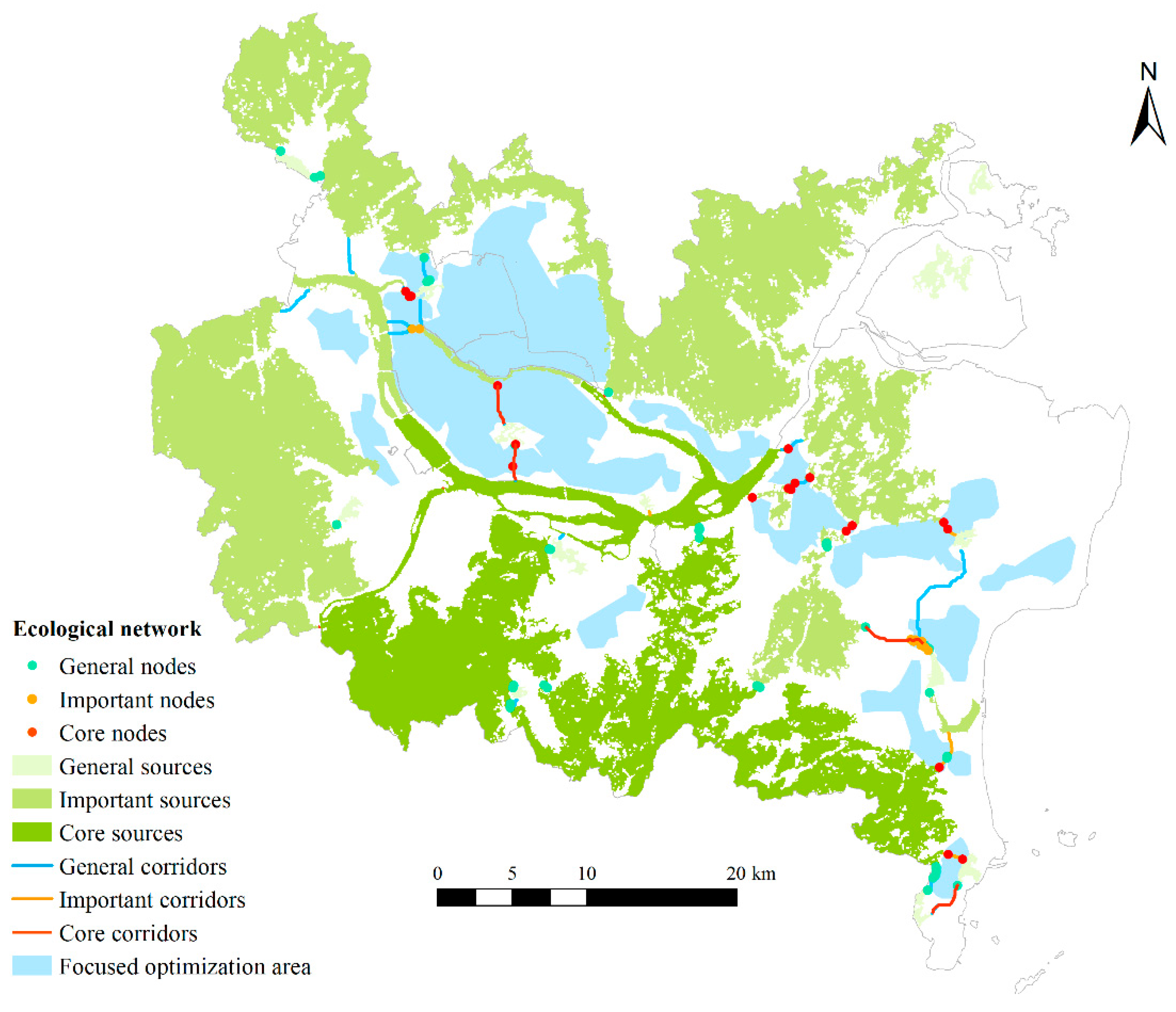
A total of 61 ecological nodes were identified through hydrological analysis. As shown in Figure 11, these nodes were primarily concentrated in Jianxin town in Cangshan district, Jingxi in Minhou county, intersection of Mawei Port and Changle district, Songxia town in Changle district, and Wenwu sand town in Changle district. Some nodes were located in Qingkou town in Minhou county, and Wuhang subdistrict in Changle district. From the perspective of land use types, nodes were predominantly located on building sites and farmland, with some situated on forested land. Based on ecological corridor intersections, nodes were categorized into general nodes and important nodes. Regional nodes exhibiting significant imbalances in green infrastructure supply and demand were elevated to core nodes. The classification comprised 19 core nodes, 8 important nodes, and 34 general nodes. These nodes represent areas that require the most attention and protection in the construction of the GI ecological network. If these nodes are damaged, the connectivity of ecological corridors would be compromised, thereby undermining the stability and functionality of the GI ecological network.

3.4. Analysis and Optimization of GI Ecological Network Construction

From the perspective of GI supply–demand balance, core areas identified by MSPA often coincide with regions exhibiting strong GI supply capacity. The expansion of ecological land should also take into account the influence of GI demand. Therefore, incorporating demand distribution into the construction of the resistance surface helps establish an ecological network that enhances supply–demand consistency.
Integrating Fuzhou’s functional system and overall layout, GI supply–demand patterns, and the constructed ecological network, seven key GI optimization areas have been identified: Gulou district, Taijiang district, Cangshan district, Minhou university town, as well as Heshang town, Guhuai town, and Wenwu sand town in Changle district. These areas require enhanced construction of ecological nodes and corridors based on existing ecological resources, in order to form a structurally complete ecological network and improve the supply capacity of comprehensive GI ecosystem services. Especially in the areas of Gulou district, Taijiang district and Minhou university town, which are severely affected by human interference, it is difficult to form effective corridors and nodes. In light of this constraint, the vertical ecological restoration approach from Belgrade, Serbia offers a viable model [71], suggesting that vertical greening on building facades and green roofs can be introduced as habitat supplements and process-based restorative measures in high-density built-up areas, thereby forming three-dimensional ecological stepping stones. Meanwhile, fragmented lands such as street corners and small public spaces should be systematically utilized for the development of pocket parks and micro-wetlands. Pocket parks, as refined and embedded small-scale green spaces, exhibit significant ecological and social functions in high-density urban areas. The Rybnicka Pocket Park in Gliwice, Poland, built on an industrial brownfield [72], demonstrates that preserving existing trees, integrating stormwater management facilities, and designing multifunctional activity areas can effectively enhance the ecological service capacity of the space. Similarly, the Meifeng Community Park in Shenzhen was transformed from a concrete parking lot through vegetation restoration and community involvement, which not only improved biodiversity but also strengthened community cohesion. Therefore, establishing pocket parks with ecological service functions on fragmented lands in high-density areas, and connecting them with vertical greening systems, offers notable habitat restoration and socio-ecological benefits.
Overall, the ecological network layout of the central urban area of Fuzhou aligns with the Fuzhou Territorial Spatial Master Plan (2021–2035). The plan proposes a green space system comprising “two rings, one belt, two corridors, ten wedges, and fourteen clusters.”, Southern source areas 23, 25, and 27, along with northern source areas 4, 5, and 13, are distributed within two mountain park rings. Source areas 2, 3, 20, and 28 correspond to greening and park development in the coastal new city area. Source areas 7, 8, 9, 10, 11, 12, and 21 align with the Minjiang–Wulongjiang landscape belt. The ten wedges and fourteen clusters represent interconnected mountain green wedges and park clusters within the city, distributed along ecological corridors. As a typical mountainous city, Fuzhou should prioritize the enhancement of its GI network in areas with abundant mountainous resources such as Nanyu town and Xiangqian town in Minhou county, Mawei town in Jin’an district, and Yingqian town in Changle district. This effort aims to ensure the stability of ecological connectivity and prevent its degradation.

4. Discussion

4.1. Factors Affecting GI Equilibrium

The impact of urban expansion on GI manifests primarily in two aspects. First, supply-side constraints: Urban spatial expansion directly leads to a reduction in GI land area, increased landscape fragmentation, and diminished ecological connectivity, thereby weakening GI’s capacity to deliver ecosystem services. This is consistent with the similar studies by Jia et al. [73], which indicate that during the urbanization process in Fuzhou, there has been a rapid expansion of built-up land, resulting in the encroachment of ecological land in the central urban area and a significant reduction in green space resources. Similarly, in the Raigad urban agglomeration in India [74], built-up land surged by 258% from 2001 to 2018, while water bodies and aquatic vegetation coverage decreased sharply by 80%. Key ecological sources such as forests and farmland have continued to shrink, and changes in land use have directly led to a severe decline in the capacity of ecosystem services. Second, demand surges. The influx of high-density populations and industrial activities accompanied by urbanization of places increased pressure on urban ecosystems while increasing demand for diverse ecosystem services. The analysis by Li et al. [75] in Zunyi City found that the correlation between residents’ demand for GI and population density is the strongest. Additionally, the spatial pattern of GI demand closely resembles the distribution of population density. This high demand driven by population often exceeds the existing supply capacity of GI. Consequently, rapid urban expansion alters the dynamic relationship between GI supply capacity and urban demand for its services, exacerbating supply–demand imbalances and posing threats to urban ecological security [76,77]. To achieve the goal of high-quality urban development, it is imperative to establish an urban ecological network centered on restoring and maintaining the dynamic equilibrium between the supply and demand of GI.

4.2. Innovation

The construction of ecological network resistance surfaces is a core component of ecological network research. Traditional studies mostly follow the natural factor-dominated approach, focusing on objective conditions. This study innovatively takes GI demand as a key factor, referring to the theory proposed by Tzoulas et al. [9] that GI supply–demand matching is crucial for maximizing ecological service effectiveness, incorporate GI supply–demand balance into the construction of ecological networks, with the goal of achieving a demand-driven resource allocation through model intervention. Huang et al. [78] used Fuzhou as a case study, considering the influence of mountainous terrain, and built a green infrastructure network in five administrative districts of Fuzhou, but they did not achieve precise supply–demand matching through resistance surface optimization. Our innovation lies in quantifying demand priority as resistance values, guiding ecological corridors and nodes to extend toward high-demand areas. However, practical construction challenges still exist, and targeted optimization measures need to be proposed based on urban realities and socio-economic dimensions. For example, in highly urbanized areas with large impermeable surfaces and dense building land, ecological protection and restoration can draw on practices such as pocket parks and vertical greening. Combining the characteristics of land scarcity in central urban areas, solutions like skybridge greening, wall greening, and community micro-green spaces can help address spatial constraints.
As a highly urbanized area, the central urban area of Fuzhou is severely disturbed by human activities, resulting in excessive separation between construction land and ecological land. This separation hinders the full utilization of GI ecological functions. Furthermore, there is a spatial mismatch between supply and demand, with supply exhibiting a pattern of “high in the north and south, low in the central and eastern parts,” while demand generally follows an opposite pattern to supply. Therefore, future ecological planning for the central urban area of Fuzhou should aim to ensure a balance between GI supply and demand, in order to maintain the stability of the urban ecological structure.

4.3. Limitations and Improvement

This study also presents certain limitations. Firstly, the threshold values and weight settings used in this paper have certain regional and subjective characteristics, changes in parameters may lead to significant differences in the results, so the parameters are not universally applicable. Secondly, this study only considers forest areas, grasslands, and water bodies as a unified category of green infrastructure, with each category containing multiple subcategories that exhibit certain ecological differences. In future research within smaller study areas, more detailed classifications should be considered. Third, biophysical quantities such as net primary productivity of vegetation and leaf area index can be used to modify the data based on the national equivalence factor table, which would improve the adaptability of the parameters and enhance the rigor and scientific validity of the study. Additionally, the academic community lacks a scientific and systematic theoretical framework and standards for evaluating GI demand indicators. Due to the constraints imposed by the spatial resolution of data, it is difficult to accurately characterize the high-resolution spatial distribution features at the supply–demand assessment scale, such as a grid size of 30 m, under which smaller green spaces might be overlooked. making it challenging to precisely quantify regional supply–demand pressures. This study is merely a preliminary exploration and requires further research employing more scientifically robust methodologies.

5. Conclusions

This study constructed an ecological network by introducing the supply and demand perspectives of green infrastructure in the central urban area of Fuzhou. It identified regions requiring urgent optimization and conservation–restoration efforts, aiming to alleviate supply–demand conflicts, provide insights for subsequent planning and low-impact development in urban centers. A total of 29 ecological sources, 35 ecological corridors, and 61 ecological nodes were identified. Based on centrality evaluations, 4 core source areas, 12 important source areas, and 13 general source areas were designated. Additionally, 9 core corridors, 12 important corridors, and 14 general corridors were identified. Furthermore, 19 core nodes, 8 important nodes, and 34 general nodes were determined. Among these, the core area will be the focal point of subsequent ecological planning. Research provides certain insights into ecological planning for mountainous cities.

Author Contributions

Conceptualization, C.H.; methodology, C.H. and Y.C.; software, C.H.; validation, Y.C. and W.P.; formal analysis, C.H.; investigation, Y.C.; resources, W.P.; data curation, Y.C.; writing—original draft preparation, C.H.; writing—review and editing, Y.C.; visualization, Y.C.; supervision, W.P. All authors have read and agreed to the published version of the manuscript.

Funding

This research was funded by Fujian Province Education Science Planning Routine Project for 2024 grant number FJJKBK24-018.

Data Availability Statement

All data collected or analyzed during this study are included in this manuscript, and further data related to this study if needed can be obtained from the corresponding author on reasonable request.

Acknowledgments

The authors would like to thank the editors and the anonymous reviewers for their valuable comments and suggestions.

Conflicts of Interest

The authors declare no conflicts of interest.

References

  1. Marando, F.; Heris, M.P.; Zulian, G.; Udías, A.; Mentaschi, L.; Chrysoulakis, N.; Parastatidis, D.; Maes, J. Urban heat island mitigation by green infrastructure in European functional urban areas. Sust. Cities Soc. 2022, 77, 103564. [Google Scholar] [CrossRef]
  2. Cai, Y.; Chen, Y.; Tong, C. Spatiotemporal evolution of urban green space and its impact on the urban thermal environment based on remote sensing data: A case study of Fuzhou city, China. Urban For. Urban Green. 2019, 41, 333–343. [Google Scholar] [CrossRef]
  3. Cai, Y.; Zhang, H.; Zheng, P.; Pan, W. Quantifying the impact of land use/land cover changes on the urban heat island: A case study of the natural wetlands distribution area of Fuzhou city, China. Wetlands 2016, 36, 285–298. [Google Scholar] [CrossRef]
  4. Wang, Z.; Li, Z.; Wang, Y.; Zheng, X.; Deng, X. Building green infrastructure for mitigating urban flood risk in Beijing, China. Urban For. Urban Green. 2024, 93, 128218. [Google Scholar] [CrossRef]
  5. Liu, N.; Zhang, F. Urban green spaces and flood disaster management: Toward sustainable urban design. Front. Public Health 2025, 13, 1583978. [Google Scholar] [CrossRef] [PubMed]
  6. Liu, O.Y.; Russo, A. Assessing the contribution of urban green spaces in green infrastructure strategy planning for urban ecosystem conditions and services. Sust. Cities Soc. 2021, 68, 102772. [Google Scholar] [CrossRef]
  7. Wang, D.; Xu, P.; An, B.; Guo, Q. Urban green infrastructure: Bridging biodiversity conservation and sustainable urban development through adaptive management approach. Front. Ecol. Evol. 2024, 12, 1440477. [Google Scholar] [CrossRef]
  8. Lourdes, K.T.; Hamel, P.; Gibbins, C.N.; Sanusi, R.; Azhar, B.; Lechner, A.M. Planning for green infrastructure using multiple urban ecosystem service models and multicriteria analysis. Landsc. Urban Plan. 2022, 226, 104500. [Google Scholar] [CrossRef]
  9. Tzoulas, K.; Korpela, K.; Venn, S.; Yli-Pelkonen, V.; Kazmierczak, A.; Niemela, J.; James, P. Promoting ecosystem and human health in urban areas using green infrastructure: A literature review. Landsc. Urban Plan. 2007, 81, 167–178. [Google Scholar] [CrossRef]
  10. Li, B.; Wang, Y.; Wang, T.; He, X.; Kazak, J.K. Scenario analysis for resilient urban green infrastructure. Land 2022, 11, 1481. [Google Scholar] [CrossRef]
  11. Kong, J.; Gao, M.; Deusen, D. Evaluating landscape ecological risk through supply-demand balance in ecosystem services Evidence from China. Ecol. Indic. 2025, 173, 113355, Corrigendum in Ecol. Indic. 2025, 177, 113664. [Google Scholar] [CrossRef]
  12. Zhou, L.; Zhou, C.; Che, L.; Wang, B. Spatio-temporal evolution and influencing factors of urban green development efficiency in China. J. Geogr. Sci. 2020, 30, 724–742. [Google Scholar] [CrossRef]
  13. Qin, X.; Liu, W.; Ling, H.; Zhang, G.; Gong, Y.; Meng, X.; Shan, Q. Construction and optimization of ecological security pattern in the mainstream of the tarim river basin, China. J. Arid. Land 2025, 17, 735–753. [Google Scholar] [CrossRef]
  14. Cai, Y.; Li, H.; Li, W. Optimization of a “social-ecological” system pattern from the perspective of ecosystem service supply and demand: A case study of Jilin province. Land 2024, 13, 1716. [Google Scholar] [CrossRef]
  15. Liu, X.; Han, Y.; Li, Y.; Li, L.; Liu, Y. Construction of ecological network in Daihai basin based on ecological security pattern and ecological service accessibility. Ecol. Front. 2024, 44, 1224–1231. [Google Scholar] [CrossRef]
  16. Shi, J.; Zhang, D.; Yin, J.; Wang, Z.; Feng, H.; Liu, Y.; Shi, P. Regional ecosystem health improvement pathway design based on ecological network optimization. Ecol. Indic. 2025, 173, 113377. [Google Scholar] [CrossRef]
  17. Zhang, L.; Li, J. Identifying priority areas for biodiversity conservation based on marxan and invest model. Landsc. Ecol. 2022, 37, 3043–3058. [Google Scholar] [CrossRef]
  18. Jiang, H.; Peng, J.; Dong, J.; Zhang, Z.; Xu, Z.; Meersmans, J. Linking ecological background and demand to identify ecological security patterns across the Guangdong-Hong Kong-Macao greater bay area in China. Landsc. Ecol. 2021, 36, 2135–2150. [Google Scholar] [CrossRef]
  19. Ma, J.; Yu, Q.; Wang, H.; Yang, L.; Wang, R.; Fang, M. Construction and optimization of wetland landscape ecological network in Dongying city, China. Land 2022, 11, 1226. [Google Scholar] [CrossRef]
  20. Shen, Z.; Wu, W.; Tian, S.; Wang, J. A multi-scale analysis framework of different methods used in establishing ecological networks. Landsc. Urban Plan. 2022, 228, 104579. [Google Scholar] [CrossRef]
  21. Nie, W.; Xu, B.; Yang, F.; Shi, Y.; Liu, B.; Wu, R.; Lin, W.; Pei, H.; Bao, Z. Simulating future land use by coupling ecological security patterns and multiple scenarios. Sci. Total Environ. 2023, 859, 160262. [Google Scholar] [CrossRef]
  22. Wang, T.; Huang, Y.; Cheng, J.; Xiong, H.; Ying, Y.; Feng, Y.; Wang, J. Construction and optimization of watershed-scale ecological network based on complex network method: A case study of Erhai lake basin in China. Ecol. Indic. 2024, 160, 111794. [Google Scholar] [CrossRef]
  23. Chen, H.; Yan, W.; Li, Z.; Wende, W.; Xiao, S. A framework for integrating ecosystem service provision and connectivity in ecological spatial networks: A case study of the shanghai metropolitan area. Sust. Cities Soc. 2024, 100, 105018. [Google Scholar] [CrossRef]
  24. An, Y.; Liu, S.; Sun, Y.; Shi, F.; Beazley, R. Construction and optimization of an ecological network based on morphological spatial pattern analysis and circuit theory. Landsc. Ecol. 2021, 36, 2059–2076. [Google Scholar] [CrossRef]
  25. Lumia, G.; Praticò, S.; Di Fazio, S.; Cushman, S.; Modica, G. Combined use of urban atlas and corine land cover datasets for the implementation of an ecological network using graph theory within a multi-species approach. Ecol. Indic. 2023, 148, 110150. [Google Scholar] [CrossRef]
  26. Huang, K.; Peng, L.; Wang, X.; Deng, W. Integrating circuit theory and landscape pattern index to identify and optimize ecological networks: A case study of the Sichuan basin, China. Environ. Sci. Pollut. Res. 2022, 29, 66874–66887. [Google Scholar] [CrossRef] [PubMed]
  27. Dong, X.; Wang, F.; Fu, M. Research progress and prospects for constructing ecological security pattern based on ecological network. Ecol. Indic. 2024, 168, 112800. [Google Scholar] [CrossRef]
  28. Zeng, W.; He, Z.; Bai, W.; He, L.; Chen, X.; Chen, J. Identification of ecological security patterns of alpine wetland grasslands based on landscape ecological risks: A study in zoigê county. Sci. Total Environ. 2024, 928, 172302. [Google Scholar] [CrossRef]
  29. Yuan, Y.; Wang, J.; Qiao, N.; Huang, Y.; Bai, Z. Identifying ecological strategic points based on multi-functional ecological networks: A case study of Changzhi city, China. Appl. Geogr. 2023, 159, 103002. [Google Scholar] [CrossRef]
  30. Guo, Z.; Zhu, C.; Fan, X.; Li, M.; Xu, N.; Yuan, Y.; Guan, Y.; Lyu, C.; Bai, Z. Analysis of ecological network evolution in an ecological restoration area with the MSPA-MCR model: A case study from Ningwu county, China. Ecol. Indic. 2025, 170, 113067. [Google Scholar] [CrossRef]
  31. De Montis, A.; Caschili, S.; Mulas, M.; Modica, G.; Ganciu, A.; Bardi, A.; Ledda, A.; Dessena, L.; Laudari, L.; Fichera, C.R. Urban—rural ecological networks for landscape planning. Land Use Policy 2016, 50, 312–327. [Google Scholar] [CrossRef]
  32. Weber, T.; Sloan, A.; Wolf, J. Maryland’s green infrastructure assessment: Development of a comprehensive approach to land conservation. Landsc. Urban Plan. 2006, 77, 94–110. [Google Scholar] [CrossRef]
  33. Tang, Y.; Gao, C.; Wu, X. Urban ecological corridor network construction: An integration of the least cost path model and the invest model. ISPRS Int. J. Geo-Inf. 2020, 9, 33. [Google Scholar] [CrossRef]
  34. Huang, X.; Wang, H.; Shan, L.; Xiao, F. Constructing and optimizing urban ecological network in the context of rapid urbanization for improving landscape connectivity. Ecol. Indic. 2021, 132, 108319. [Google Scholar] [CrossRef]
  35. Zheng, Y.; Wang, S.; Zhu, J.; Huang, S.; Cheng, L.; Dong, J.; Sun, Y. A comprehensive evaluation of supply and demand in urban parks along “luck greenway” in Fuzhou. Sustainability 2023, 15, 2250. [Google Scholar] [CrossRef]
  36. Chen, X.; Kang, B.; Li, M.; Du, Z.; Zhang, L.; Li, H. Identification of priority areas for territorial ecological conservation and restoration based on ecological networks: A case study of Tianjin city, China. Ecol. Indic. 2023, 146, 109809. [Google Scholar] [CrossRef]
  37. Chi, Y.; Zhang, Z.; Wang, J.; Xie, Z.; Gao, J. Island protected area zoning based on ecological importance and tenacity. Ecol. Indic. 2020, 112, 106139. [Google Scholar] [CrossRef]
  38. Xie, G.; Zhang, C.; Zhen, L.; Zhang, L. Dynamic changes in the value of China’s ecosystem services. Ecosyst. Serv. 2017, 26, 146–154. [Google Scholar] [CrossRef]
  39. Zhao, L.; Fan, X. Effects of land use changes on ecosystem service values: A case study in Guilin, China. Pol. J. Environ. Stud. 2020, 29, 1483–1492. [Google Scholar] [CrossRef]
  40. Xie, H.; Zhu, Z.; Li, Z. Spatial divergence analysis of ecosystem service value in hilly mountainous areas: A case study of Ruijin city. Land 2022, 11, 768. [Google Scholar] [CrossRef]
  41. Li, Y.; Liu, Z.; Li, S.; Li, X.; Wang, W. Spatiotemporal patterning and matching of ecosystem services’ supply and demand in Changchun, China. Land 2023, 12, 2101. [Google Scholar] [CrossRef]
  42. Sun, Y.; Liu, S.; Shi, F.; An, Y.; Li, M.; Liu, Y. Spatio-temporal variations and coupling of human activity intensity and ecosystem services based on the four-quadrant model on the Qinghai-Tibet plateau. Sci. Total Environ. 2020, 743, 140721. [Google Scholar]
  43. Zhu, Y.; Tian, D.; Yan, F. Effectiveness of entropy weight method in decision-making. Math. Probl. Eng. 2020, 2020, 3564835. [Google Scholar] [CrossRef]
  44. Soille, P.; Vogt, P. Morphological segmentation of binary patterns. Pattern Recognit. Lett. 2009, 30, 456–459. [Google Scholar] [CrossRef]
  45. Dong, J.; Guo, F.; Lin, M.; Zhang, H.; Zhu, P. Optimization of green infrastructure networks based on potential green roof integration in a high-density urban area—A case study of Beijing, China. Sci. Total Environ. 2022, 834, 155307. [Google Scholar] [CrossRef]
  46. Yu, Y.P.; Yin, H.W.; Kong, F.H.; Wang, J.J.; Xu, W.B. Scale effect of Nanjing urban green infrastructure network pattern and connectivity analysis. Chin. J. Appl. Ecol. 2016, 27, 2119–2127. [Google Scholar]
  47. Geng, J.; Yu, K.; Sun, M.; Xie, Z.; Huang, R.; Wang, Y.; Zhao, Q.; Liu, J. Construction and optimisation of ecological networks in high-density central urban areas: The case of Fuzhou city, China. Remote Sens. 2023, 15, 5666. [Google Scholar] [CrossRef]
  48. Ma, B.; Zeng, C.; Lv, T.; Liu, W.; Yang, W. Prioritization of ecological conservation and restoration areas through ecological networks: A case study of Nanchang city, China. Land 2024, 13, 878. [Google Scholar] [CrossRef]
  49. Adriaensen, F.; Chardon, J.P.; De Blust, G.; Swinnen, E.; Villalba, S.; Gulinck, H.; Matthysen, E. The application of ‘least-cost’ modelling as a functional landscape model. Landsc. Urban Plan. 2003, 64, 233–247. [Google Scholar] [CrossRef]
  50. Chen, F.; Li, L.; Niu, J.; Lin, A.; Chen, S.; Hao, L. Evaluating ecosystem services supply and demand dynamics and ecological zoning management in Wuhan, China. Int. J. Environ. Res. Public Health 2019, 16, 2332. [Google Scholar] [CrossRef]
  51. Wang, X.; Qiu, X.; Wang, Z.; Feng, C.; Fan, Z.; He, W. Construction of a social ecological security pattern based on the supply and demand of ecosystem services. J. Nat. Conserv. 2025, 86, 126962. [Google Scholar] [CrossRef]
  52. Ren, Q.; Ni, J.; Li, H.; Mao, G.; Hsu, W.; Yang, J. Analysis on spatial characteristics of supply-demand relationship of amenities in expanding central urban areas-a case study of Huai’an, China. Land 2022, 11, 1137. [Google Scholar] [CrossRef]
  53. Yan, Y.; Li, J.; Li, J.; Jiang, T. Spatiotemporal changes in the supply and demand of ecosystem services in the Kaidu-kongque river basin, China. Sustainability 2023, 15, 8949. [Google Scholar] [CrossRef]
  54. Cai, Y.; Zhang, H.; Pan, W.; Chen, Y.; Wang, X. Land use pattern, socio-economic development, and assessment of their impacts on ecosystem service value: Study on natural wetlands distribution area (NWDA) in Fuzhou city, southeastern China. Environ. Monit. Assess. 2013, 185, 5111–5123. [Google Scholar] [CrossRef]
  55. Liu, Y.; Zhang, H.; Yang, X.; Wang, Y.; Wang, X.; Cai, Y. Identifying priority areas for the conservation of ecosystem services using GIS-based multicriteria evaluation. Pol. J. Ecol. 2013, 61, 415–430. [Google Scholar]
  56. Dickson, B.G.; Albano, C.M.; Anantharaman, R.; Beier, P.; Fargione, J.; Graves, T.A.; Gray, M.E.; Hall, K.R.; Lawler, J.J.; Leonard, P.B.; et al. Circuit-theory applications to connectivity science and conservation. Conserv. Biol. 2019, 33, 239–249. [Google Scholar] [CrossRef]
  57. Wang, Y.; Pan, J. Building ecological security patterns based on ecosystem services value reconstruction in an arid inland basin: A case study in Ganzhou district, NW China. J. Clean. Prod. 2019, 241, 118337. [Google Scholar] [CrossRef]
  58. Li, L.; Huang, X.; Wu, D.; Wang, Z.; Yang, H. Optimization of ecological security patterns considering both natural and social disturbances in China’s largest urban agglomeration. Ecol. Eng. 2022, 180, 106647. [Google Scholar] [CrossRef]
  59. Zhang, L.; Liu, Q.; Wang, J.; Wu, T.; Li, M. Constructing ecological security patterns using remote sensing ecological index and circuit theory: A case study of the Changchun-Jilin-tumen region. J. Environ. Manage. 2025, 373, 123693. [Google Scholar] [CrossRef]
  60. Zhou, G.; Huan, Y.; Wang, L.; Lan, Y.; Liang, T.; Shi, B.; Zhang, Q. Linking ecosystem services and circuit theory to identify priority conservation and restoration areas from an ecological network perspective. Sci. Total Environ. 2023, 873, 162261. [Google Scholar] [CrossRef]
  61. Mcrae, B.H.; Beier, P. Circuit theory predicts gene flow in plant and animal populations. Proc. Natl. Acad. Sci. USA 2007, 104, 19885–19890. [Google Scholar] [CrossRef]
  62. Zhang, Y.; Hu, W.; Min, M.; Zhao, K.; Zhang, S.; Liu, T. Optimization of ecological connectivity and construction of supply-demand network in Wuhan metropolitan area, China. Ecol. Indic. 2023, 146, 109799. [Google Scholar] [CrossRef]
  63. Peng, J.; Yang, Y.; Liu, Y.; Hu, Y.; Du, Y.; Meersmans, J.; Qiu, S. Linking ecosystem services and circuit theory to identify ecological security patterns. Sci. Total Environ. 2018, 644, 781–790. [Google Scholar] [CrossRef]
  64. Kang, J.; Qing, Y.; Lu, W. Construction and optimization of the Saihanba ecological network. Ecol. Indic. 2023, 153, 110401. [Google Scholar] [CrossRef]
  65. Huo, J.; Shi, Z.; Zhu, W.; Li, T.; Xue, H.; Chen, X.; Yan, Y.; Ma, R. Construction and optimization of an ecological network in Zhengzhou metropolitan area, China. Int. J. Environ. Res. Public Health 2022, 19, 8066. [Google Scholar] [CrossRef]
  66. Yu, Q.; Yue, D.; Wang, Y.; Kai, S.; Fang, M.; Ma, H.; Zhang, Q.; Huang, Y. Optimization of ecological node layout and stability analysis of ecological network in desert oasis: A typical case study of ecological fragile zone located at Deng Kou county (inner Mongolia). Ecol. Indic. 2018, 84, 304–318. [Google Scholar] [CrossRef]
  67. Yang, H.; Xu, W.; Chen, Z.; Xie, X.; Yu, J.; Lei, X.; Guo, S.; Ding, Z. Ecological network construction for bird communities in high-density urban areas: A perspective of integrated approaches. Ecol. Indic. 2024, 158, 111592. [Google Scholar] [CrossRef]
  68. Xu, X.; Wang, S.; Rong, W. Construction of ecological network in Suzhou based on the plus and MSPA models. Ecol. Indic. 2023, 154, 110740. [Google Scholar] [CrossRef]
  69. Wei, Q.; Halike, A.; Yao, K.; Chen, L.; Balati, M. Construction and optimization of ecological security pattern in Ebinur lake basin based on MSPA-MCR models. Ecol. Indic. 2022, 138, 108857. [Google Scholar] [CrossRef]
  70. Shi, N.N.; Han, Y.; Wang, Q.; Quan, Z.J.; Xiao, N.W. Construction and optimization of ecological network for protected areas in Qinghai province. Chin. J. Ecol. 2018, 37, 1910–1916. [Google Scholar]
  71. Atrbac, S.; Kašanin-Grubin, M.; Pezo, L.; Stojić, N.; Lončar, B.; určić, L.; Pucarević, M. Green infrastructure designed through nature-based solutions for sustainable urban development. Int. J. Environ. Res. Public Health 2023, 20, 1102. [Google Scholar] [CrossRef]
  72. Bradecki, T.; Opania, S. Functional-environmental evaluation of pocket parks in urbanized areas—The case study of Gliwice. Civ. Environ. Eng. Rep. 2022, 32, 50–72. [Google Scholar] [CrossRef]
  73. Jia, D.; Guo, R.; Qiu, W.; Wu, Z.; Lin, S.; Hu, X. Impact of different grade roads on ecological networks: A case study of Fuzhou city, China. Chin. J. Appl. Ecol. 2024, 35, 489–500. [Google Scholar]
  74. Das, M.; Das, A.; Saikh, S. Estimating supply-demand mismatches for optimization of sustainable land use planning in a rapidly growing urban agglomeration (India). Land Use Policy 2024, 139, 107061. [Google Scholar] [CrossRef]
  75. Li, M.; Chen, T.; Li, J.; Yang, G.; Zhao, L.; Cao, Q.; Yang, L.; Sun, Y. Advancing sustainability in urban planning by measuring and matching the supply and demand of urban green space ecosystem services. Sustainability 2024, 16, 10306. [Google Scholar] [CrossRef]
  76. Zhang, Z.; Wang, Q.; Feng, Y.; Sun, Y.; Liu, N.; Yan, S. The Spatio-temporal evolution of spatial structure and supply-demand relationships of the ecological network in the yellow river delta region of China. J. Clean. Prod. 2024, 471, 143388. [Google Scholar] [CrossRef]
  77. Zeng, J.; Cui, X.; Chen, W.; Yao, X. Impact of urban expansion on the supply-demand balance of ecosystem services: An analysis of prefecture-level cities in China. Environ. Impact Assess. Rev. 2023, 99, 107003. [Google Scholar] [CrossRef]
  78. Huang, H.; Fu, D.; Ding, G.; Yan, C.; Xie, X.; Gao, Y.; Liu, Q. Construction and optimization of green infrastructure network in mountainous cities: A case study of Fuzhou, China. Sci. Rep. 2024, 14, 11936. [Google Scholar] [CrossRef]
Figure 1. Map of the central urban area of Fuzhou.
Land 15 00046 g001
Figure 2. Methodological flowchart used for the current study.
Land 15 00046 g002
Figure 3. GI supply and demand evaluation results. (a) GI supply; (b) GI demand.
Land 15 00046 g003
Figure 4. Comparison of different edge widths based on MSPA.
Land 15 00046 g004
Figure 5. Landscape classification map based on MSPA.
Land 15 00046 g005
Figure 6. Connectivity trends of patches with distance threshold.
Land 15 00046 g006
Figure 7. Distribution of ecological sources.
Land 15 00046 g007
Figure 8. Construction of resistance surface (a) population density; (b) night light; (c) land development intensity; (d) resistance surface.
Land 15 00046 g008
Figure 9. Ranges of ecological corridors and cumulative current under the different thresholds.
Land 15 00046 g009
Figure 10. Ecological corridors in the central urban area of Fuzhou.
Land 15 00046 g010
Figure 11. Ecological network in the central urban area of Fuzhou.
Land 15 00046 g011
Table 1. Ecosystem service value accounting index system.
Service TypesDetailed IndicatorsForest LandGrass LandWater
Equivalence CoefficientSupply CoefficientEquivalence CoefficientSupply CoefficientEquivalence CoefficientSupply Coefficient
Provisioning servicesFood 0.29690.210.22523.610.801904.02
Materials0.661570.820.33785.410.23547.41
Water 0.34809.210.18428.418.2919,730.45
Regulating servicesAir quality regulation2.175164.671.142713.230.771832.62
Climate regulations6.5015,470.20 3.027187.69 2.295450.27
Waste treatment1.934593.46 1.002380.03 5.5513,209.17
Regulation of water flows4.7411,281.34 2.215259.87 102.24243,334.27
Support servicesErosion prevention2.656307.08 1.393308.24 0.932213.43
Maintenance of soil fertility0.2476.01 0.11261.80 0.07166.60
Habitat services2.415735.87 1.273022.64 2.556069.08
Cultural servicesCultural &amenity services1.062522.83 0.561332.82 1.894498.26
Table 2. Correction coefficient for grain crops.
PaddySweet PotatoPotatoTotal
Output (t)240,409167,40357,403465,215
planting   area   m i (ha)39,67426,15311,85377,680
q i (t ha−1)6.0596.4014.84317.303
p i (yuan t−1)3012250026408152
E a (yuan ha−1)1331.676769.655278.6962380.027
Table 3. The demand indicators and its weight.
ItemsIndicatorInformation Entropy Value eInformation Utility Value dWeight Coefficient w (%)
Social demand Population density0.94120.058841.94
Economic demandNight light0.94480.055239.37
Land development intensity0.97380.026218.69
Table 4. The resistance factors and its weight.
FactorsResistance ValueWeight
1206080100
DEM≤200(200,400](400,600](600,800]>8000.15
Slope≤8(8,15](15,25](25,35]>350.2
Land useForest landWaterGrass
land
CroplandOthers0.15
GI demand≤0.05(0.05,0.15](0.15,0.25](0.25,0.4]>0.40.5
Table 5. Classification statistics of landscape spatial elements.
Landscape
Type
Area (km2)Ratio (%)
Cores940.5487.02
Islet9.590.89
Perforation28.272.62
Edge71.386.60
Loop7.670.71
Bridge5.930.55
Branch17.381.61
Table 6. Statistical table of GI patch connectivity in the core area.
RankNumberdPCAreaCentralityGrade
11352.113274.74170.829Important
22340.311184.50562.892Important
32737.354157.758141.602Core
42634.315121.219165.309Core
51727.15052.98759.599Important
6219.22444.481244.970Core
7245.83228.91063.346Important
871.5847.49153.260Important
91-5.3880General
10121.3373.05575.665Important
113-2.52748.595Important
1290.9852.32360.611Important
13220.5692.13635.948General
14180.5181.93984.960Important
1540.4871.76826General
16280.4421.69539.894General
172-1.62642.722General
18110.3831.62083.831Important
1950.2761.5450General
20160.2691.30827.826General
21290.2461.20233.746General
22140.2251.19329.635General
23200.2241.12738.758General
2480.1671.04756.707Important
25100.1441.02391.153Core
2660.1390.97438.042General
27190.1380.85951.327Important
28250.1250.55841.199General
29150.1090.51026General
Disclaimer/Publisher’s Note: The statements, opinions and data contained in all publications are solely those of the individual author(s) and contributor(s) and not of MDPI and/or the editor(s). MDPI and/or the editor(s) disclaim responsibility for any injury to people or property resulting from any ideas, methods, instructions or products referred to in the content.