1. Introduction
China’s rapid urbanization has positioned metropolitan areas as critical hubs for coordinated regional development, with the Beijing-Tianjin-Hebei region at the forefront [
1]. The 2015 Outline of Coordinated Development of the Beijing-Tianjin-Hebei Region, adopted by the Political Bureau of the CPC Central Committee, sets near-term (2017) goals for relieving nonessential capital functions to reduce Beijing’s urban congestion and medium-term (2020) goals for forming an integrated urban system [
2]. This policy aims to alleviate Beijing’s urban pressures, including population overload, traffic congestion, and environmental degradation, while reinforcing its role as the nation’s political, cultural, international, and technological hub, fostering sustainable urban development and resource-efficient urban systems that minimize waste and emissions. The Fifth Central Urban Work Conference (2025) further advocates polycentric, networked city clusters, promoting county urbanization and urban-rural integration to enhance regional synergy. Despite the emphasis on sustainability in these policies, there is a significant gap in understanding how decentralization influences commuting networks. This study contributes by using mobile big data and network analysis to examine the dynamics of Beijing’s commuting network under the function-relief policy, offering new insights into the transition towards a polycentric urban structure.
Metropolitan areas, conceptualized as interconnected economic, social, and transportation networks linking central cities to surrounding regions [
3,
4], are pivotal for China’s regional development strategy [
5]. The relief of the non-essential capital functions policy has profoundly reshaped Beijing’s spatial organization, influencing economic activities, social dynamics, and commuting networks [
6,
7]. The policy decentralizes functions to reduce urban congestion and promote polycentricity, supporting integrated urban systems that enhance sustainability through balanced resource distribution and reduced environmental pressures, such as lower carbon emissions, optimized land use, and efficient human capital allocation [
8]. However, quantitative analysis of these spatial changes, particularly in commuting networks, remains limited, constraining insights into the policy’s effectiveness in achieving sustainable urban outcomes [
9].
Metropolitan areas evolve through spatial restructuring, particularly in response to policies decentralizing central city functions [
10], as seen in Beijing’s nonessential capital function relocation strategy [
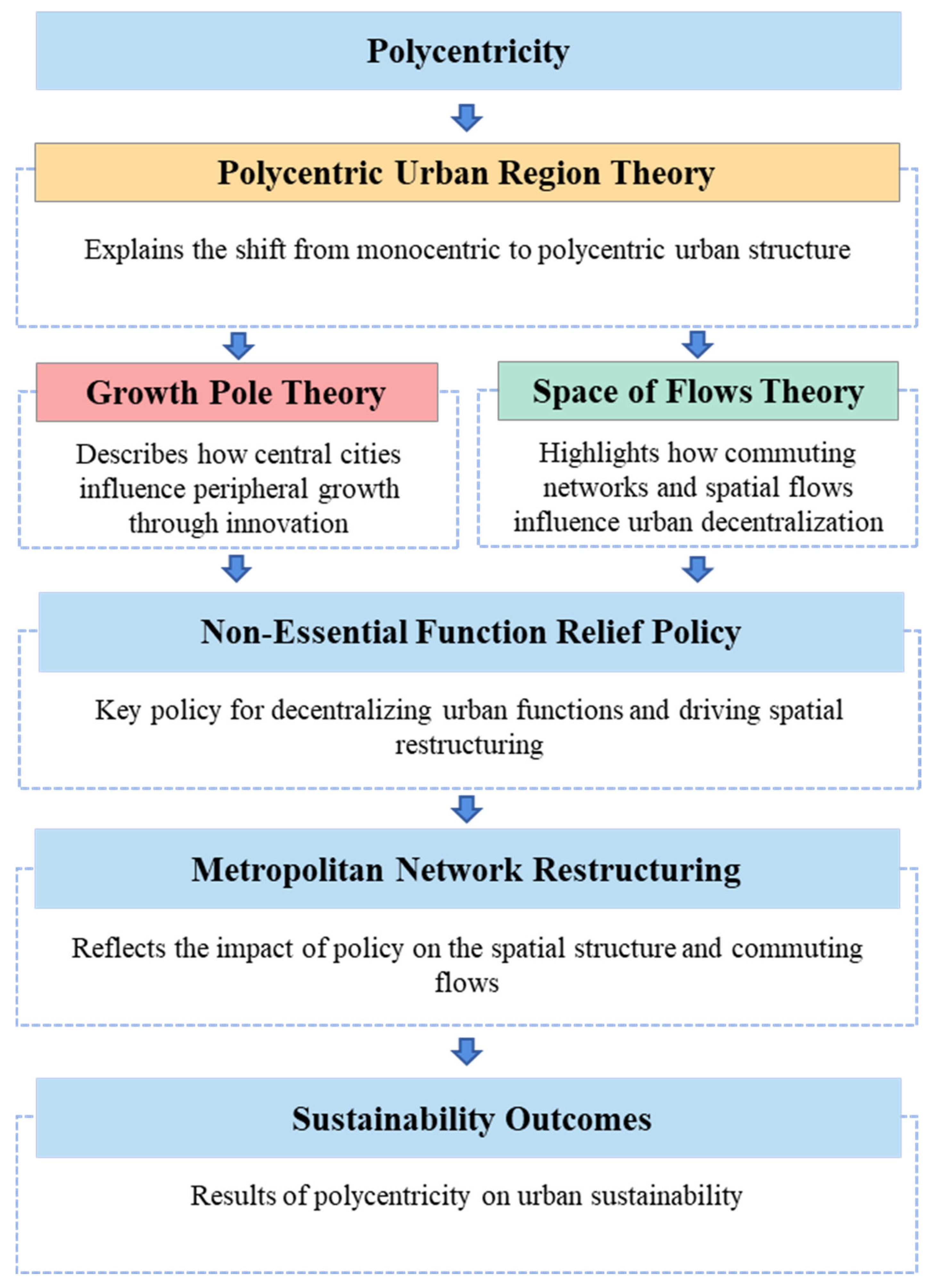
6]. To guide this study, we build upon key theoretical frameworks to understand how decentralization policies influence commuting networks and promote metropolitan polycentricity. Polycentric urban region theory provides a foundational framework, explaining how urban functions shift from monocentric cores to multiple interconnected centers, fostering metropolitan polycentricity for balanced regional development and sustainability [
11,
12]. Similar empirical analyses in Beijing have shown deviations from classic location theories due to historical inertia and policy interventions [
13], highlighting the need for data-driven assessments of urban intensity. This theory is closely linked to growth pole theory, which suggests that core cities drive peripheral growth through innovation and economic flows, contributing to urban decentralization [
14]. Additionally, the space of flows framework highlights the role of networked commuting interactions and emphasizes the importance of big data applications for analyzing mobility patterns in shaping polycentricity [
15,
16]. These frameworks together inform our study’s focus on the transformation of Beijing’s urban structure towards polycentricity, driven by decentralization policies. By linking these theoretical perspectives to network analysis, this study aims to evaluate the sustainability outcomes of polycentric urban systems, including the reduction in emissions, optimized land use, and enhanced resource efficiency.
Figure 1 summarizes how these theories are interconnected, with polycentricity acting as the central concept, shaped by growth poles and the space of flows framework, and leading to sustainability outcomes through spatial restructuring and network interactions.
Despite these theoretical advances, quantitative studies of Beijing’s commuting network dynamics under the relief of the non-essential capital functions policy are scarce. Previous qualitative studies have explored the effects of decentralization policies on urban spatial organization, often using case studies and interviews to understand the shifts in commuting patterns and the role of polycentricity [
17,
18]. While these studies provided valuable insights into the broader socio-economic impacts of decentralization, they could not analyze large-scale commuting flows with high resolution. This gap is crucial as it hinders a deeper understanding of how decentralization policies influence the transition towards polycentric urban structures. Traditional data sources, such as traffic surveys, lack the resolution of cell phone signaling data, which provide fine-grained insights into commuting flows [
19,
20]. Social network analysis, applied to nodal regions and networked cities [
21,
22], offers robust tools for analyzing urban network topology through metrics like centrality and density [
23,
24]. Recent studies highlight commuting flows as central to metropolitan spatial structures, yet few integrate big data with network analysis to examine policy-driven changes that foster metropolitan polycentricity for sustainability [
25,
26]. Therefore, the primary objective of this study is to examine the evolution of Beijing’s commuting network as it shifts from a monocentric to a polycentric structure, providing insights into how decentralization policies are reshaping the city’s spatial organization.
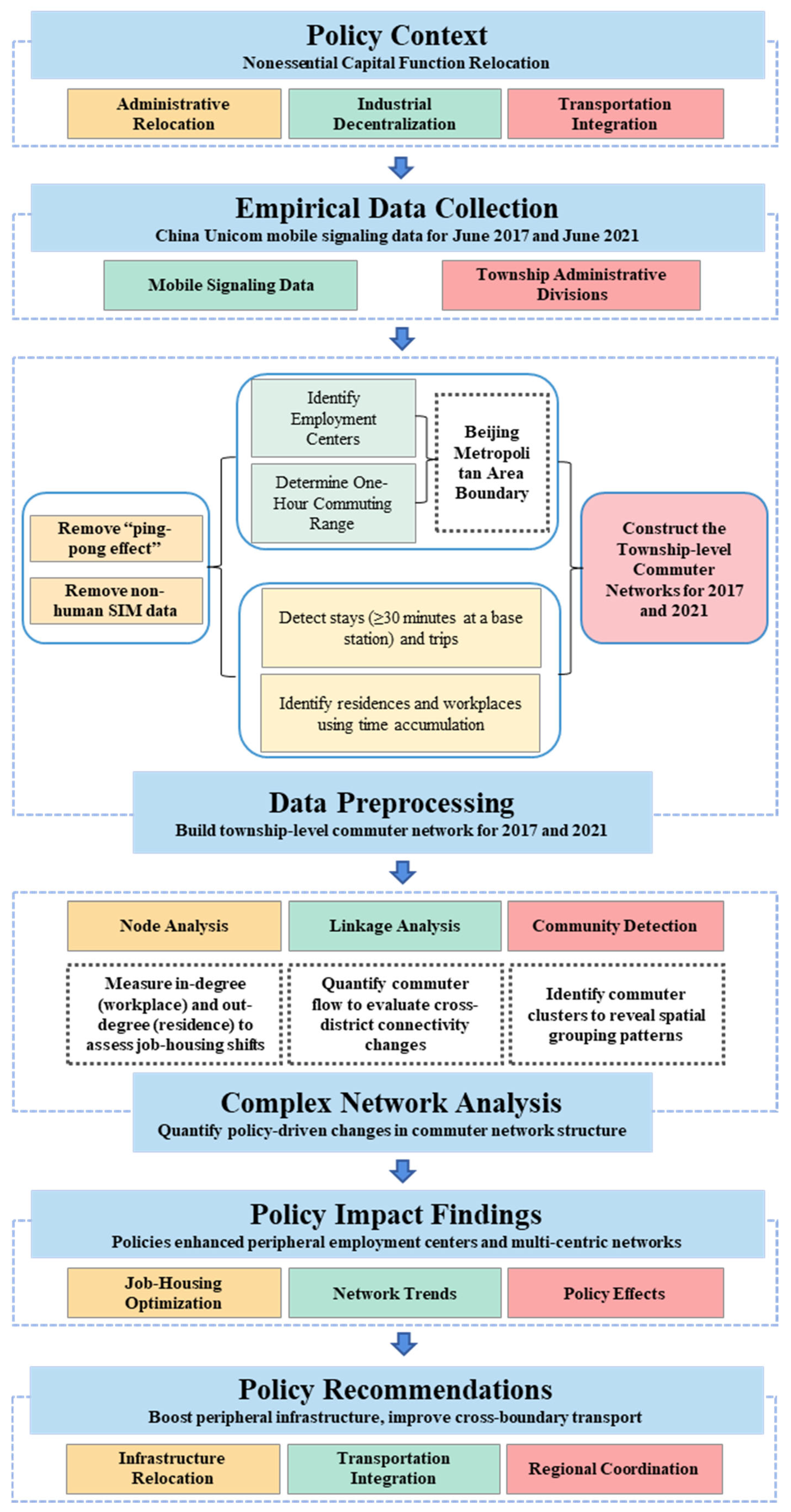
This study addresses the gap in quantitative assessments of Beijing’s commuting network dynamics by analyzing China Unicom’s cell phone signaling data from 2017 to 2021. Employing complex network analysis, we investigate the spatial structure evolution from node (township importance), link (commuting connectivity), and cluster (community structure) perspectives. Our objectives are to quantify the policy’s impact on transforming Beijing’s commuting network from monocentric to polycentric, assess the integration of peripheral areas like Yanjiao and Dachang, and evaluate the role of emerging centers like the Beijing Economic-Technological Development Area (BDA). By aligning with the Fifth Central Urban Work Conference’s vision, this research provides empirical evidence to support urban planning and policy optimization for the Beijing-Tianjin-Hebei urban agglomeration, promoting metropolitan polycentricity for sustainability through reduced emissions, optimized land use, and enhanced regional resilience.
The findings have broader implications for sustainable urban systems and regional development. By elucidating how policy-driven decentralization reshapes commuting networks, this study informs strategies to mitigate urban overcrowding, enhance transportation efficiency, and promote equitable resource distribution. These insights are relevant not only to Beijing but also to other global megacities navigating rapid urbanization and functional decentralization, such as Tokyo and New York. Moreover, the interdisciplinary approach—integrating urban studies, data science, and network theory—offers a scalable framework for analyzing metropolitan dynamics worldwide, contributing to sustainable urban systems and environmental resilience.
4. Result
4.1. Node-Level Changes: Employment and Residential Patterns
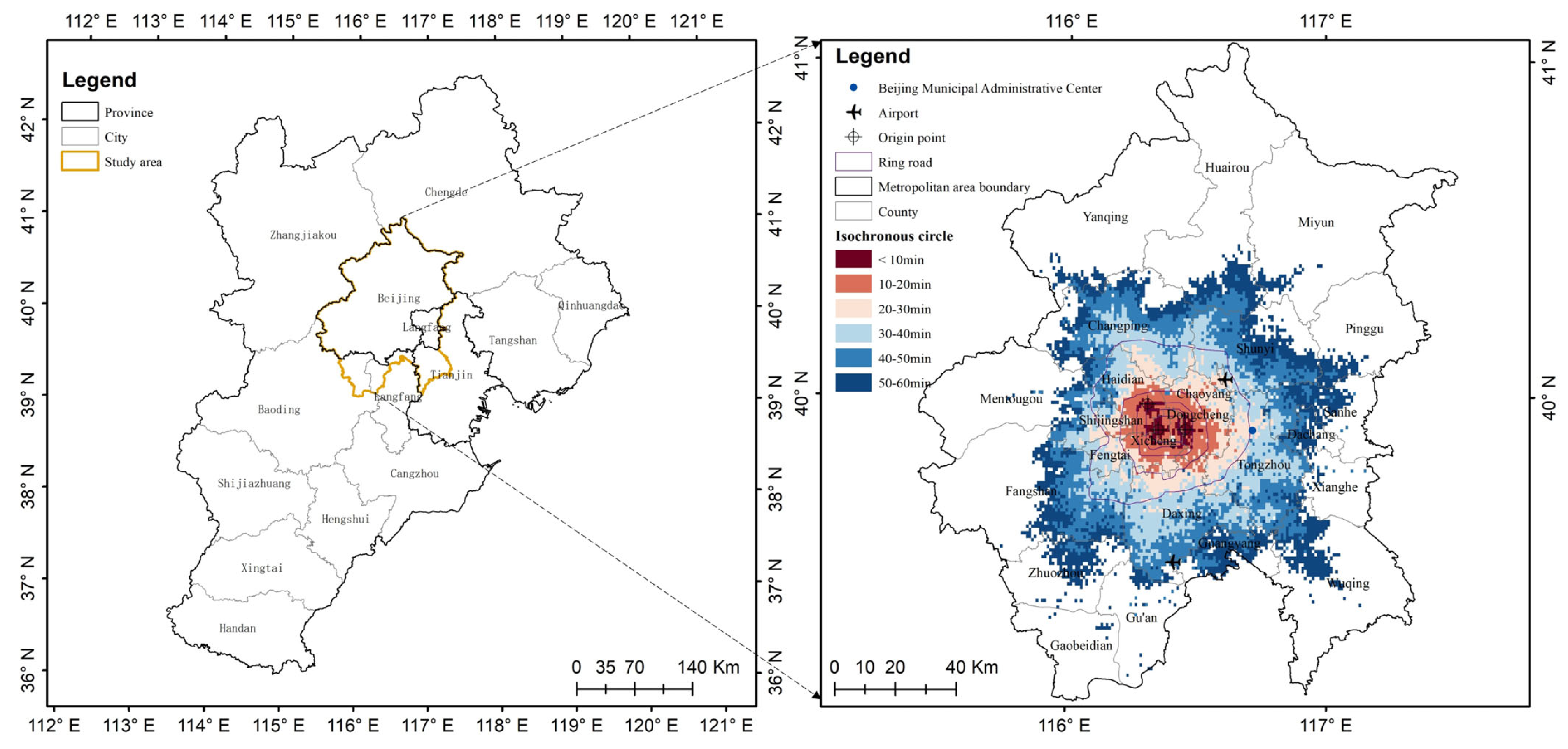
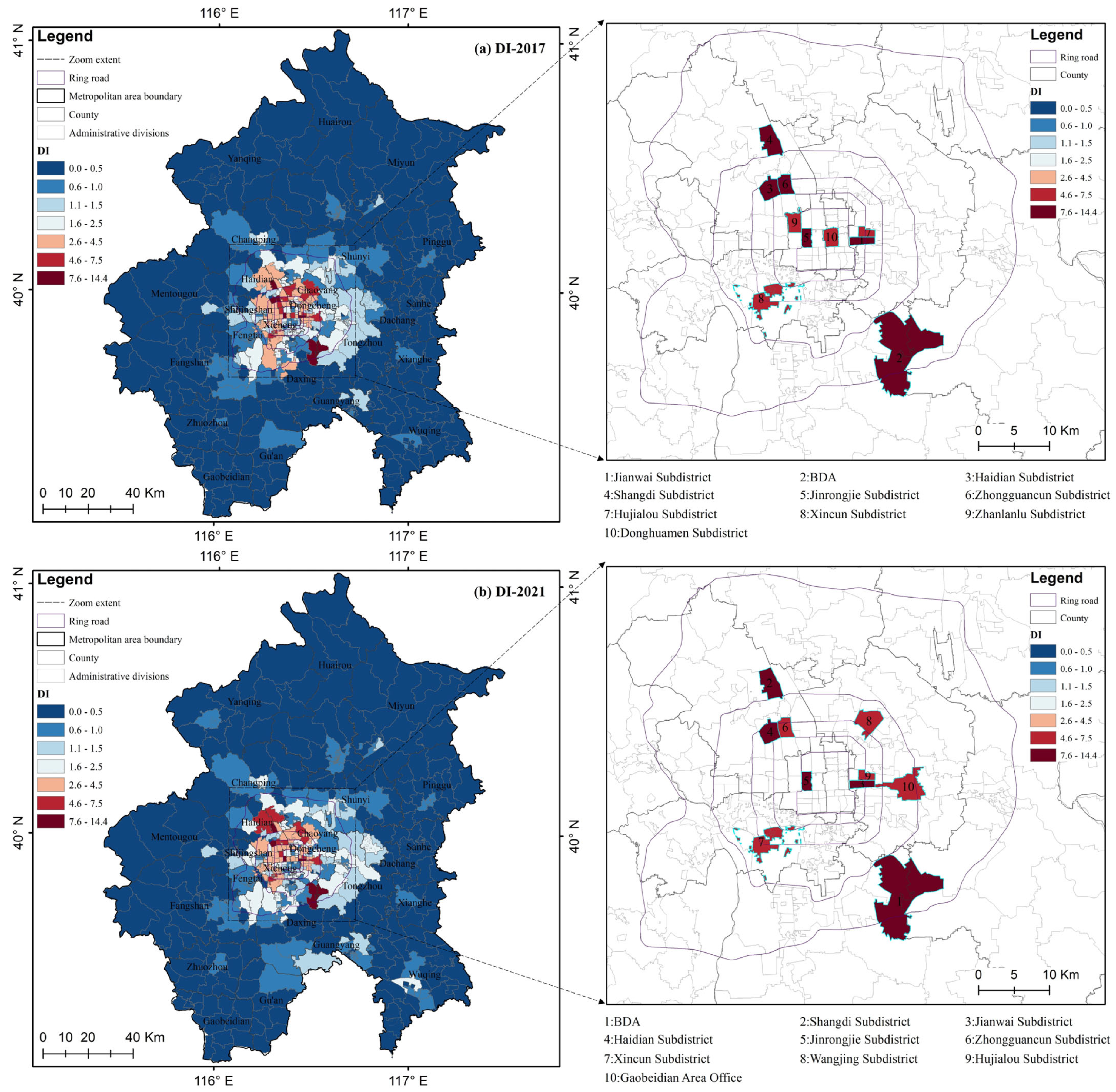
Employment centers in the Beijing metropolitan area remain concentrated within the Sixth Ring Road, notably along Chang’an Avenue, Zhongguancun, and the BDA, with the BDA emerging as a prominent hub (
Figure A2). In 2017, the top in-degree streets, indicating workplace centrality, were Jianwai Sub-district (CBD), BDA, Haidian Sub-district, Shangdi Sub-district, and Financial Street Sub-district. By 2021, BDA had risen to the top, followed by Shangdi, Jianwai, Haidian, and Financial Street, reflecting a shift toward peripheral employment centers (
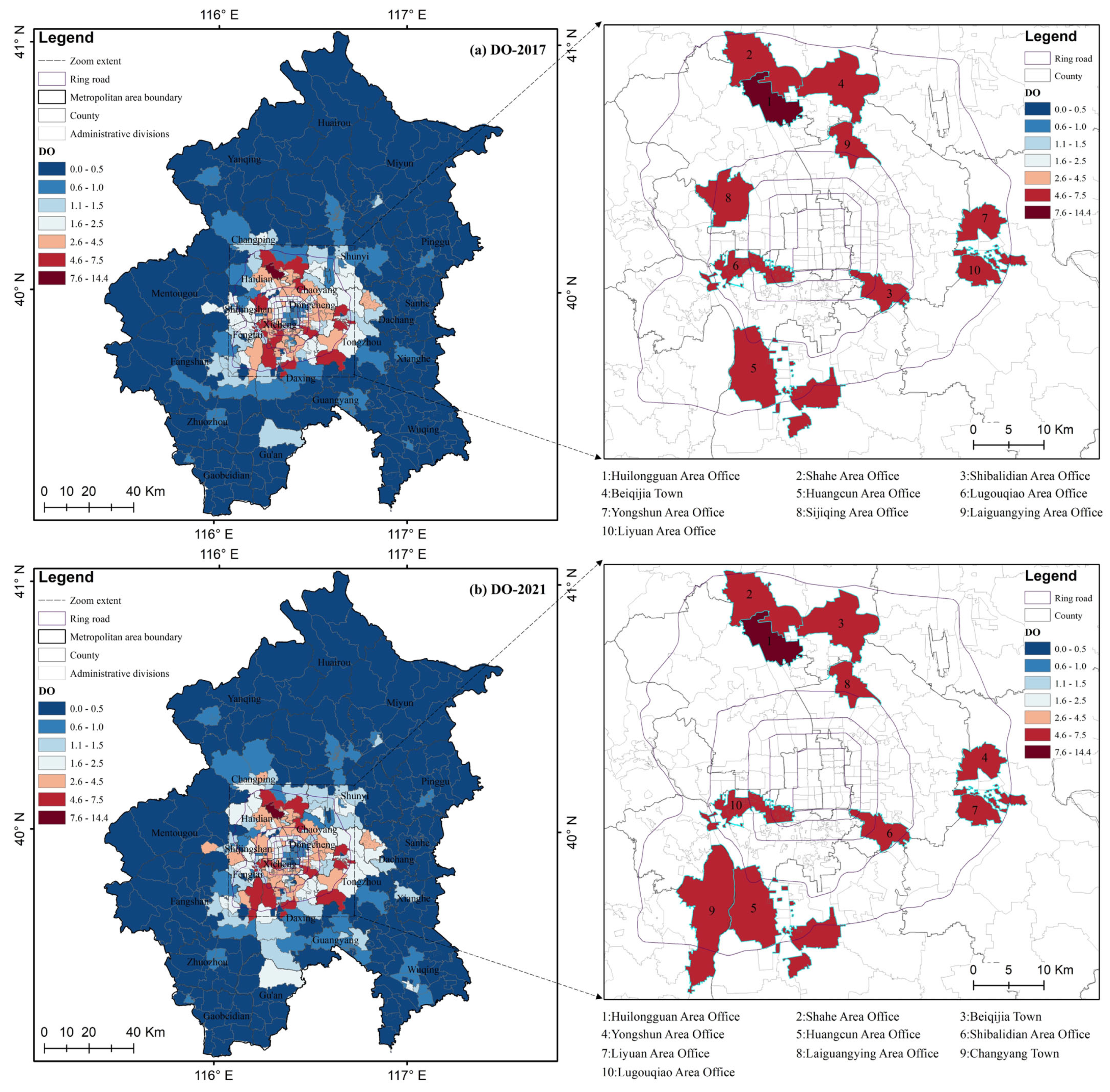
Table 1). Residential centers, measured by out-degree, are primarily located between the Fifth and Sixth Ring Roads, with Huilongguan (Changping) being the most representative case. In 2017, the top out-degree streets included Huilongguan, Shahe, and Shibalidian (Chaoyang). By 2021, Changyang Town had risen to rank 9th, while Sijiqing Subdistrict dropped out of the top 10 rankings, indicating evolving residential distributions (
Figure A3).
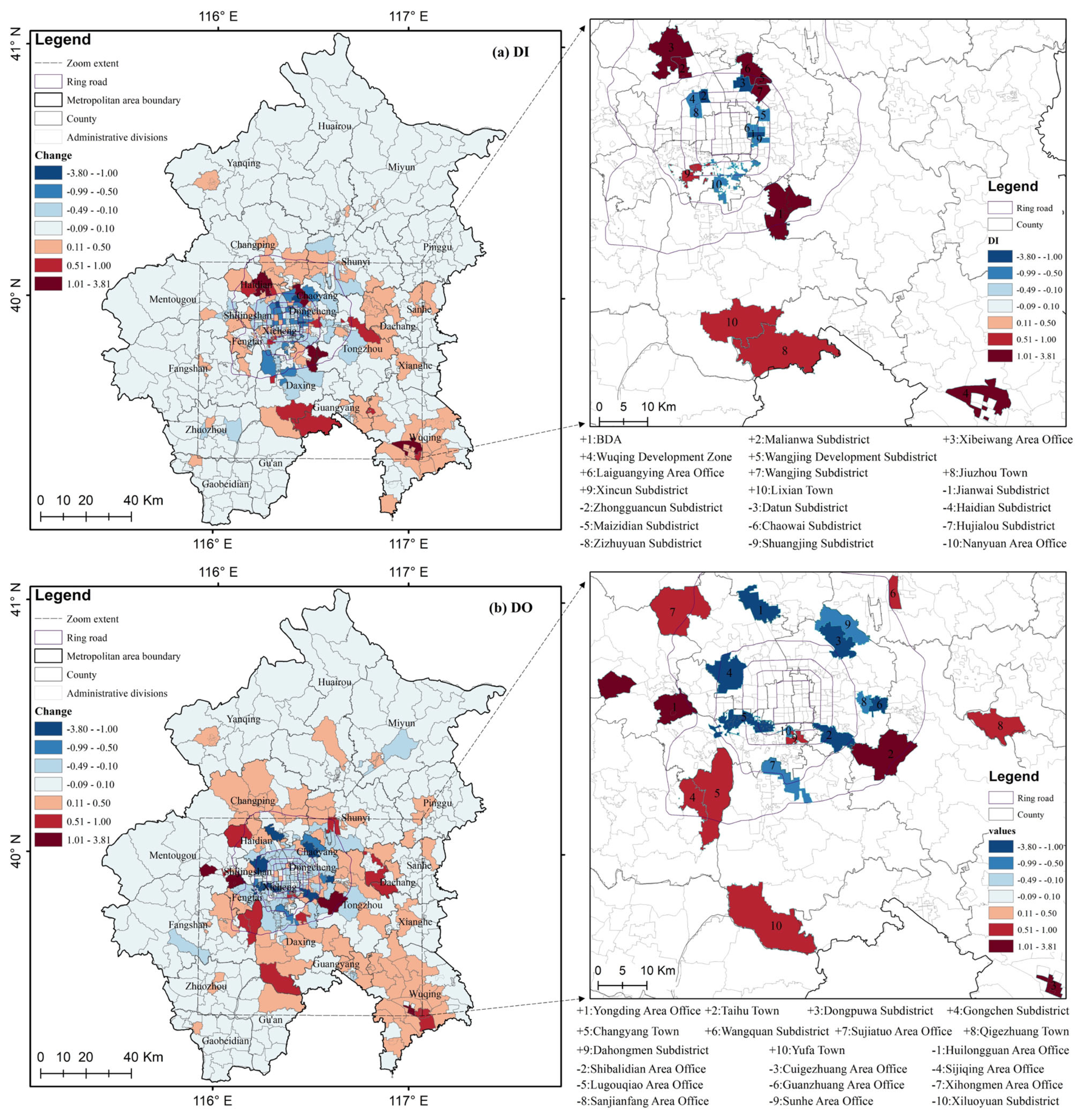
Centrality analysis (
Table 2) reveals a distinct spatial shift in node importance from 2017 to 2021. The Four Central Districts of Beijing (Chaoyang, Haidian, Fengtai, Shijingshan) experienced declines in both in-degree (DI) and out-degree (DO) centrality, falling by 4.9% and 8.7%, respectively. A more pronounced contraction was observed in the Capital Functional Core Area (Dongcheng, Xicheng, CFA), where DI and DO centralities decreased substantially by 10.4% and 9.8%. In contrast, suburban areas of Beijing saw their centrality rise, with DI increasing by 8.2% and DO by 6.3%. The most significant gains occurred in areas outside Beijing, where both centrality metrics surged by over 40%. Significant centrality increases were also observed in BDA, Malianwa Street, and Xibeiwang Town (northern Haidian), Wuqing Development Area (Tianjin), Wangjing Street and Laiguangying (Chaoyang), Xincun Sub-district (Fengtai), and the Daxing Airport Proximity Area (Jiuzhou Town, Guangyang; Lixian Town, Daxing). Growth was also noted in Yanjiao Development Zone (Sanhe City), though it ranked lower. Areas with declining centrality included core streets such as Jianwai, Zhongguancun, Datun, and several suburban and peripheral areas with reduced out-degree, including Huilongguan, Shibalidian, and Cuigezhuang. Additional areas with increased out-degree included Yongding Sub-district (Mentougou), Taihu Town (Tongzhou), among others, reflecting expansion to distant suburbs (
Figure 5).
These changes align with Beijing’s General Plan, which has effectively optimized the job-housing spatial structure and promoted metropolitan integration. The rise of peripheral employment nodes, particularly Jiuzhou and Lixian Town, is significantly attributable to the construction of Daxing International Airport. While the development of BDA, Malianwa, and Xibeiwang in northern Haidian, Xincun sub-district, Wangjing sub-district, and its surroundings is driven by policies of science and technology innovation. However, areas outside Beijing, such as Yanjiao and Zhuozhou, remain less central than suburban districts, indicating that regional integration is still evolving.
4.2. Linkage-Level Changes: Commuting Network Dynamics
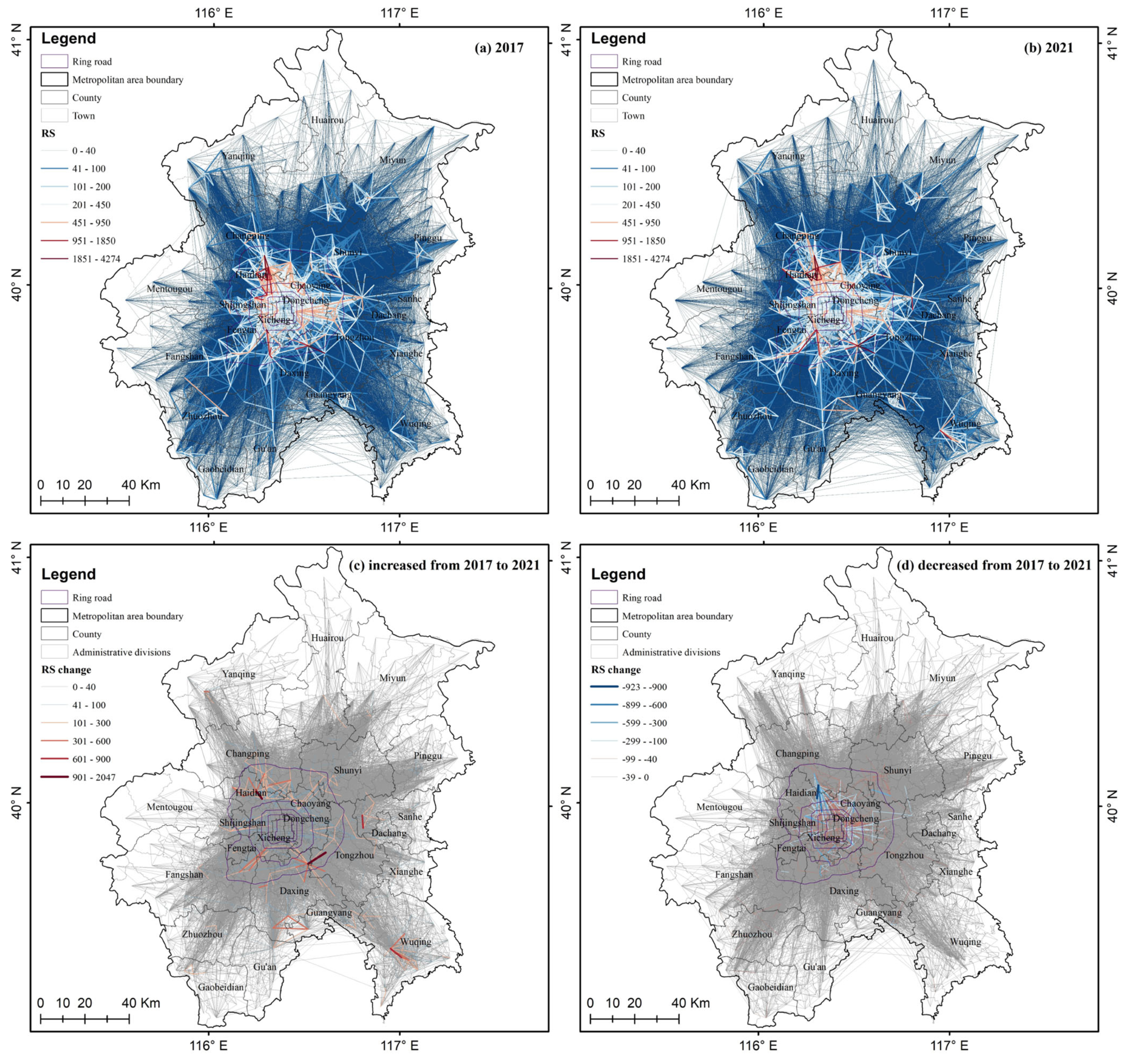
The commuting network of the Beijing metropolitan area exhibits relative stability, with peripheral districts and counties forming strong linkages primarily with their respective core urban areas between Beijing’s Fourth and Fifth Ring Roads, followed by cross-city connections like Yanjiao, which have directly integrated into Beijing’s commuting network (
Figure 6). Analysis of commuting network changes from 2017 to 2021 (
Table 3) reveals a weakening of linkages within CFA and Beijing’s four central districts, alongside an increase in nearby employment. Conversely, commuting networks in Beijing’s suburban areas and regions outside Beijing have strengthened. Inter-area commuting shows increased flows from the CFA to suburban districts, from suburban districts to the four central districts, and notably from areas outside Beijing to the suburban districts of Beijing, with the latter showing the most significant growth. Above all, commuting to the CFA and four central districts has weakened, while flows to the suburban districts and areas outside Beijing have moderately strengthened.
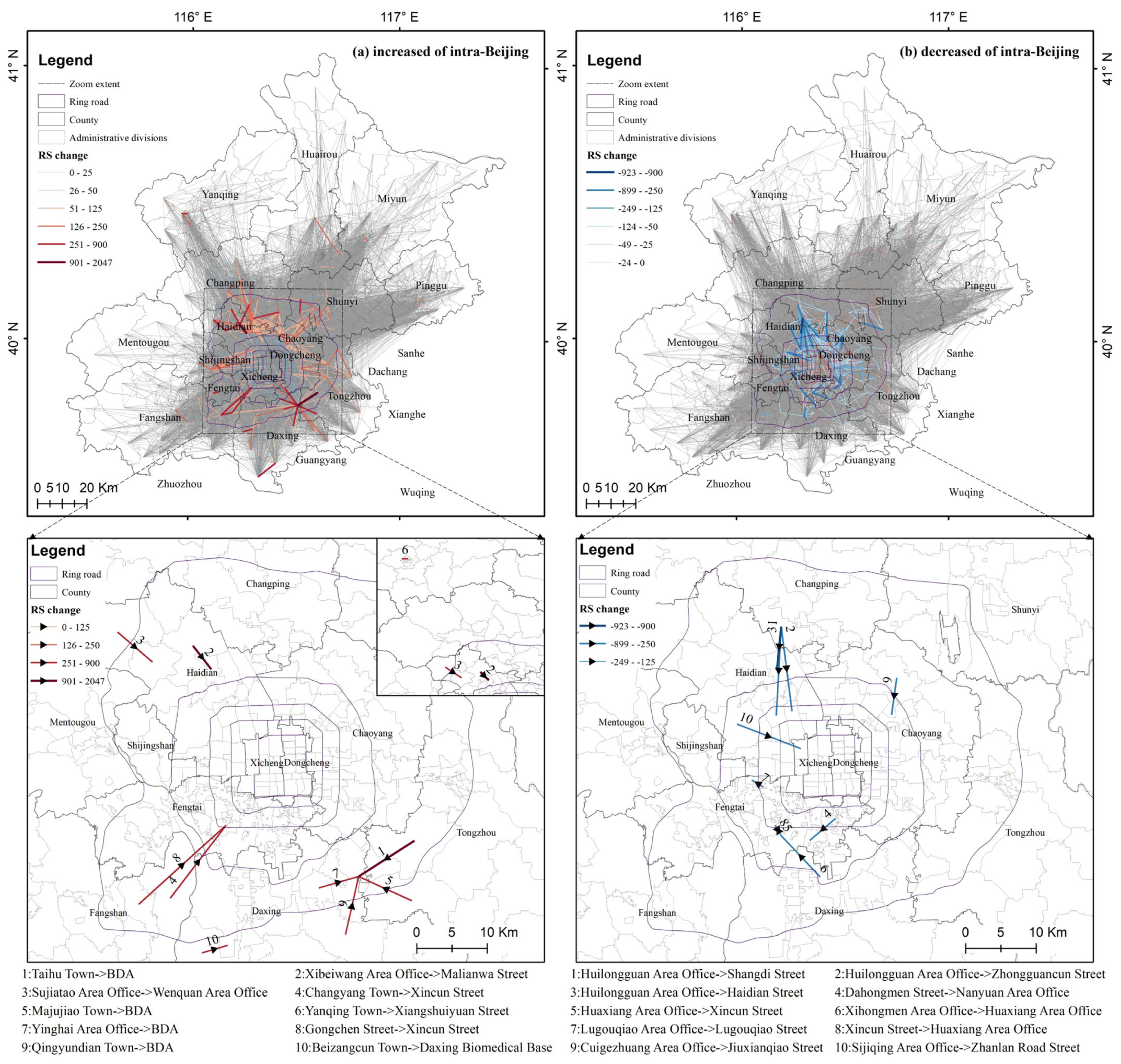
At the street and township scale within Beijing, the notable changes are driven by connections to the BDA, Xibeiwang Town (Haidian), and Xincun Sub-district (Fengtai). The most significant increases include commuting from Taihu Town (Tongzhou) to BDA, Xibeiwang town to Malianwa street (Haidian), among others, and most of them are short-distance commuting, which means the job-housing balance is improving. Conversely, reductions in commuting linkages are primarily observed from Huilongguan to core areas, including Shangdi, Zhongguancun, and Haidian Sub-district, followed by Xihongmen (Daxing) to Huaxiang (Fengtai), as detailed in
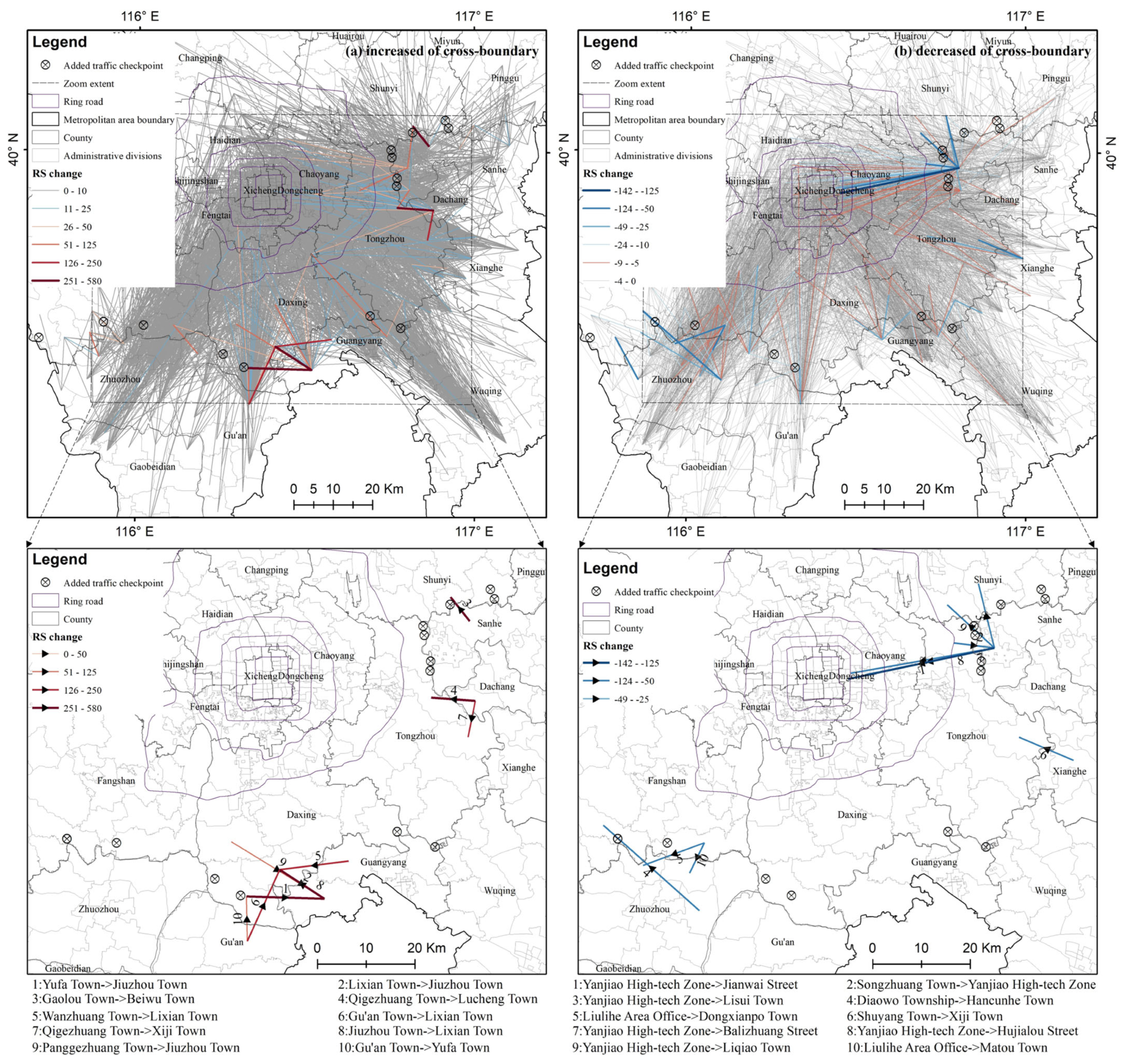
Figure 7. In contrast, cross-border commuting changes are primarily observed in the areas surrounding the new Daxing International Airport. These include increased commuting from neighboring towns such as Yufa Town and Lixian Town (Daxing) to Jiuzhou Town (Guangyang). On the other hand, reductions in commuting are mainly seen from areas like Yanjiao (Sanhe) to Jianwai and Hujialou Streets in central Beijing, as shown in
Figure 8. Regarding the reduction in commuting linkages between Sanhe and Beijing, we consider the possibility that this may have been influenced by the COVID-19 pandemic. To address this, we supplement the analysis with POI data from Amap (Gaode Map) to include the newly added checkpoint locations from 2019 to 2021 in
Figure 8. From the distribution of the added checkpoints, we observe that there has indeed been a significant increase between Sanhe and Beijing, but there has also been an increase in other areas, including around Daxing International Airport. Therefore, we believe the above results are still valid.
These changes in commuting linkages align with node-level shifts, reflecting policy-driven optimization of the job-housing spatial structure. The BDA significantly influences commuting networks in surrounding areas, while Xincun Sub-district (Fengtai) strengthens connections with Fangshan. The traditional residential hub of Huilongguan is supported by the Huitian Action Plan, a three-year urban redevelopment initiative launched in 2018 for the Huilongguan and Tiantongyuan areas in Changping District, which reduced reliance on central districts for employment. The relocation of the Beijing Zoo wholesale market has alleviated employment concentration in Xicheng’s Zhanlan Road Sub-district. The weakening of commuting to the Capital Airport Sub-district is likely associated with disruptions from the pandemic. Increased commuting from core areas to suburbs reflects industrial relocation and the development of Beijing’s subcenter, though the subcenter’s influence on peripheral commuting patterns remains limited at this stage. These changes in the cross-boundary suggest shifts in commuter patterns driven by the development of the Daxing International Airport and its surrounding areas, while traditional employment centers in central Beijing have experienced a decline in commuting connections, likely due to the decentralization of employment opportunities.
4.3. Cluster-Level Changes: Restructuring of Community Structures
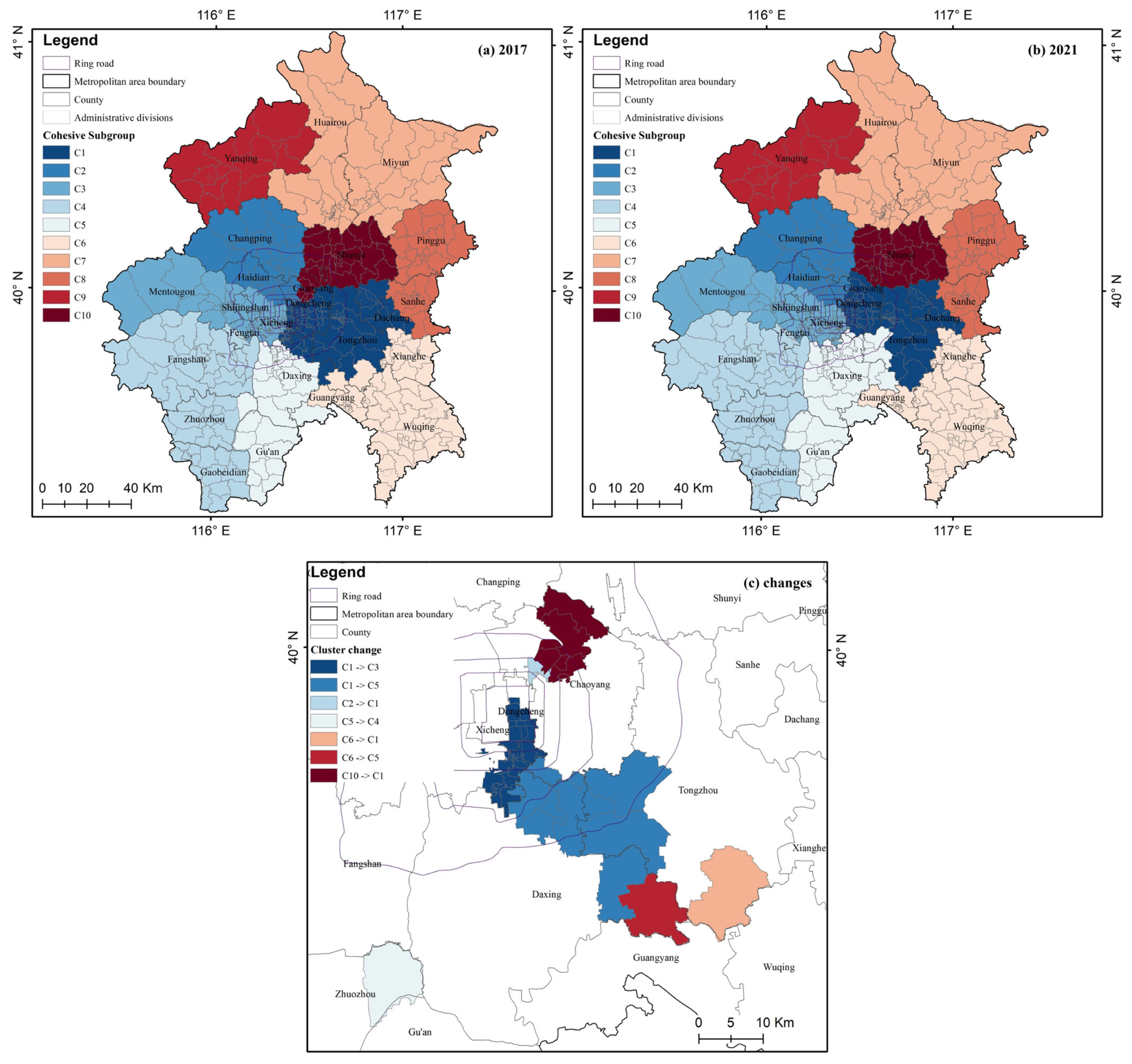
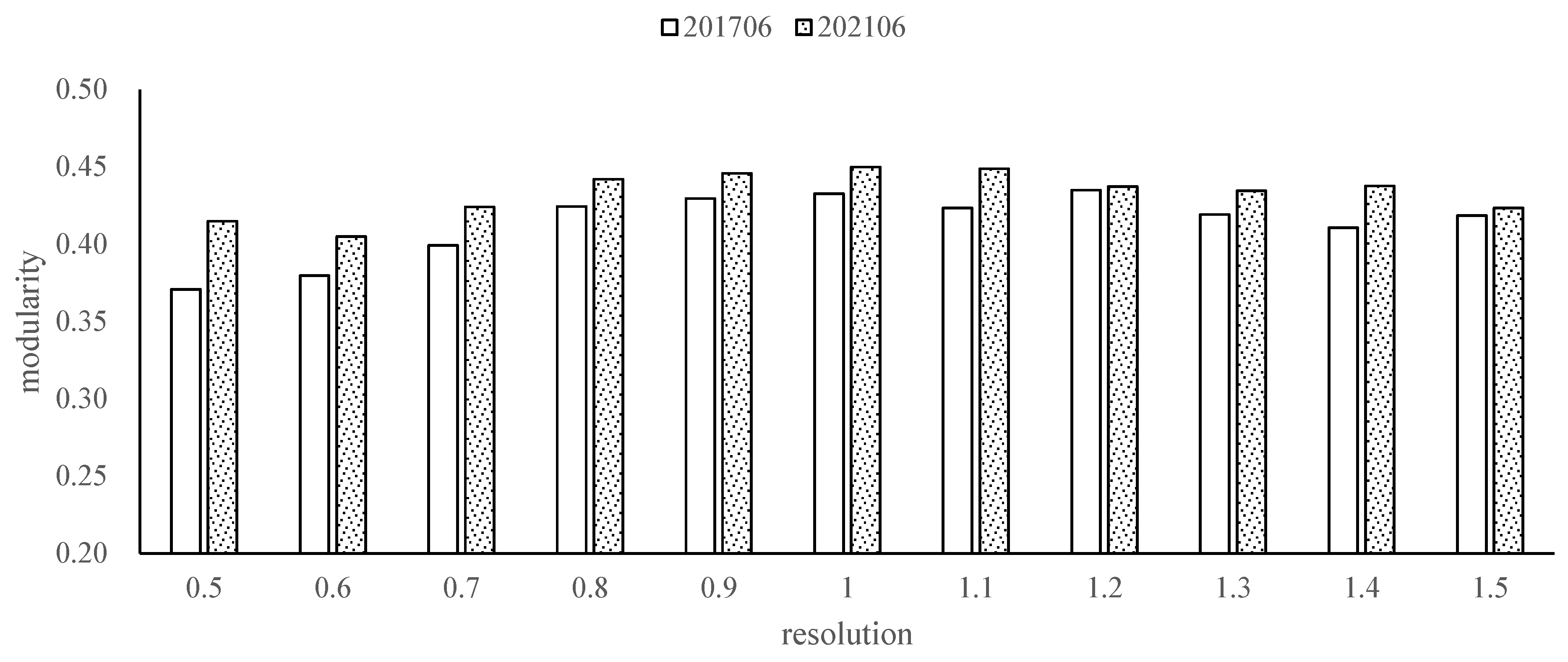
Community detection analysis using Pajek identifies 10 distinct clusters within the Beijing metropolitan area with modularity values of 0.44 in 2017 and 0.45 in 2021, exceeding 0.3 for both periods, confirming robust community structures (
Figure 9). Most districts and counties exhibit stronger intra-cluster centripetal forces than external commuting linkages, and cluster boundaries generally align with administrative divisions. The share of cross-Beijing boundary commutes increases modestly from 3.31% in 2017 to 3.65% in 2021 (a relative rise of 10.3%), yet stays well below the 5% empirical benchmark from the radiation model, underscoring ongoing boundary friction that impedes metropolitan commuting integration [
48]. Cross-district clusters are primarily categorized as follows: Dongcheng-Chaoyang-Tongzhou-Yanjiao-Dachang (C1); Changping-Haidian North-Central Area (C2); Xicheng-Fengtai-Haidian South-Shijingshan-Mentougou (C3); Fangshan-Zhuozhou-Gaobeidian (C4); Daxing-Gu’an-BDA (C5); Xianghe, Wuqing, and Guangyang District (C6); Huairou and Miyun (C7); eastern Sanhe and Pinggu (C8).
Analysis of cluster scope changes from 2017 to 2021 (
Table 4,
Figure 9c) reveals dynamic shifts. The C1 cluster exhibits the most significant changes, with relative stability in its eastern part but contraction in its western (integrated into the C3 cluster) and southwestern (integrated into the C5 cluster) areas. The C1 cluster expanded in its northwestern and southeastern parts, incorporating areas from the C2 and Shunyi (C10) clusters and one street from the C6 cluster. The C2 cluster lost two streets, while the C3 cluster expanded by 16 sub-districts and the C5 cluster by nine sub-districts bordering the C1 cluster. The C5 cluster exhibited significant spatial expansion, with 10 streets transferred from the C1 cluster and one absorbed from the C6 cluster, but lost one township to the C4 cluster. The C6 cluster is located two streets from Tongzhou (C1) and Daxing (C5), aligning fully with administrative divisions. Clusters C7, C8, and C9 (Yanqing) remained unchanged. The C10 cluster (Shunyi) contracted, losing six streets, including Wangjing and Jiuxianqiao (Chaoyang), and aligning strictly within Shunyi District.
Changes in cluster expansion reflect increased attractiveness of employment centers within clusters, while contraction indicates greater independence. The C1 cluster shows significant contraction (from 76 to 60 sub-districts), indicating an interception effect from Beijing’s Subcenter, which reduced its commuting influence. The BDA demonstrates strong spillover effects, increasing cross-district commuting flows and expanding its hinterland. The contraction of the C6 cluster reveals strong administrative boundary effects, as its post-decline borders strictly align with Beijing’s boundary. Despite Daxing International Airport’s significant impact on commuting flows, it has not yet altered clustering patterns in adjacent areas.
4.4. Global Network Changes: Regional Integration
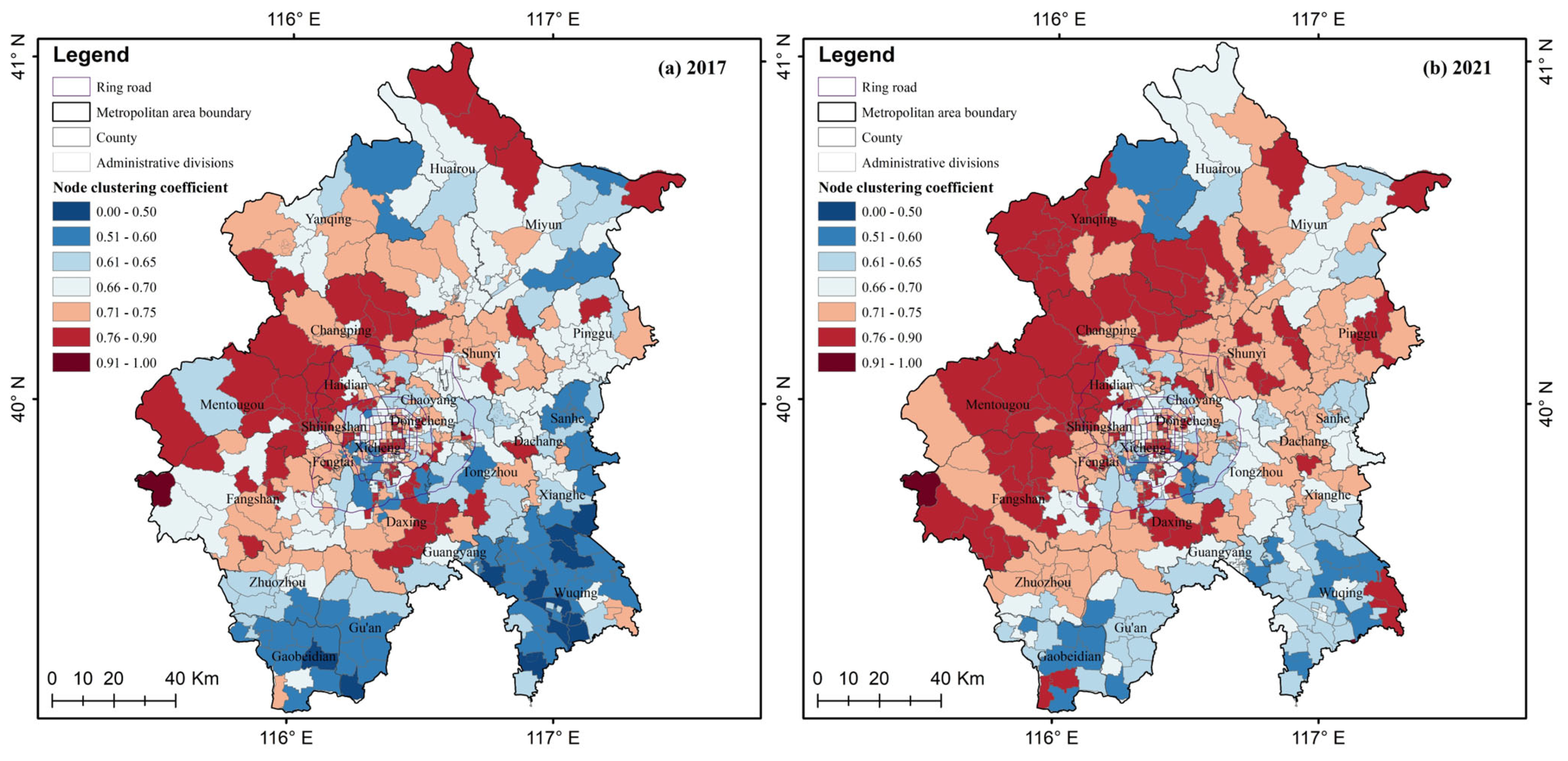
Network analysis reveals enhanced integration in Beijing’s metropolitan commuting network from 2017 to 2021, evidenced by increased clustering coefficients and network efficiency, alongside a decrease in the average path length (as shown in
Table 5). Peripheral nodes show strengthened connections, reflecting a shift toward polycentricity driven by the relief of non-essential capital functions policy.
Node efficiencies indicate a strengthening connection between peripheral nodes and surrounding areas, reflecting the trend of increasing peripheral polycentricity. This increased clustering coefficient signifies a partial improvement in jobs-housing balance, wherein an increasing number of residents commute within or adjacent to their local sub-regions, thereby reducing the necessity for long-distance travel across the central city. Concurrently, the enhanced regional centrality of peripheral employment hubs—such as the BDA—has facilitated the aggregation of commuting flows in their vicinity, marking a structural transition from a monocentric pattern toward a polycentric and networked spatial organization. Furthermore, the strengthened clustering of commuting connections indicates a more robust community structure, which likely contributes to an increased resilience of the urban network against disruptions.
The observed increase in Global Efficiency (GE) suggests a substantial enhancement in the overall integration and connectivity within the metropolitan region. This improvement can be largely attributed to the efficacy of transportation infrastructure development, wherein the expansion and optimization of high-speed rail networks, expressways, and arterial roads have dramatically reduced spatial-temporal distances between Beijing and its surrounding areas. The GE change in each node from 2017 to 2021 was heterogeneous across space. With the most pronounced increases observed in the northern and western sectors, significant changes also occurred in the southeastern, eastern, and southern regions of the Beijing Metropolitan, notably in areas such as the Northern Three Counties and Wuqing, as shown in
Figure 10. We also examine the average clustering coefficient and average path length, revealing an increase in the former and a decrease in the latter. These shifts have enhanced commuting efficiency across the metropolitan area and the compact evolution of its polycentric configuration.
6. Conclusions
Analysis of China Unicom’s mobile signaling data (2017–2021) and complex network methods reveals a transformation in Beijing’s metropolitan commuting network under the non-essential capital functions relief policy, uniquely quantifying the shift from monocentric to polycentric structure through fine-grained township-level flows and community detection—a methodological advance over prior qualitative or aggregate studies. Peripheral employment centers (e.g., BDA) have gained prominence, while core districts have lost centrality (e.g., in-degree in non-Beijing areas up +49.5%), driven by rail transit expansion and industrial relocation. This aligns with the Fifth Central Urban Work Conference’s polycentric vision, demonstrating that targeted decentralization can enhance job-housing balance and regional integration.
Practically, these findings inform sustainable urban governance: prioritizing cross-jurisdictional rail and industrial clustering in under-connected peripheral counties (e.g., Wuqing, Zhuozhou) could further reduce long-distance commuting and emissions. Cluster analysis highlights emergent networked urban groups, offering a replicable framework for diagnosing integration barriers in other megacity regions.
Limitations include seasonality, as June data may not capture seasonal variations; privacy and ethical safeguards, as raw mobile signaling data remain confidential due to privacy regulations; data unshareability, preventing direct replication; and the short 2017–2021 window, which limits assessment of long-term policy impacts. In addition, the data may under-represent certain demographic groups, which could introduce bias in our findings, particularly in terms of generalizing to the broader population. Future research should integrate multi-source data, such as traffic cards and navigation logs, and extend analysis to economic and information flows to refine strategies for resilient, low-carbon metropolitan systems in the Beijing-Tianjin-Hebei region and globally.