
Article

Hospital-Oriented Development (HOD): A Quantitative Morphological Analysis for Collaborative Development of Healthcare and Daily Life

1
College of Architecture and Urban Planning, Tongji University, Shanghai 200092, China
2
China Academy of Urban Planning and Design, Beijing 100044, China
3
Key Laboratory of Ecology and Energy Saving Study of Dense Habitat (Tongji University), Ministry of Education, Shanghai 200092, China
*
Author to whom correspondence should be addressed.
Land 2025, 14(10), 1996; https://doi.org/10.3390/land14101996
Submission received: 27 August 2025 / Revised: 27 September 2025 / Accepted: 3 October 2025 / Published: 4 October 2025
(This article belongs to the Special Issue Feature Papers on Land Use, Impact Assessment and Sustainability)

Abstract

With the global trend of population aging, human-centered development that integrates medical convenience with daily life quality has become a critical necessity. However, conceptual frameworks, evaluation methods, and spatial prototypes for such ‘healthcare–daily-life’ development remain limited. This study proposes Hospital-Oriented Development (HOD) as a framework to promote collaborative development by considering both hospital accessibility and urban development intensity, derived from multi-sourced urban data. First, a conceptual framework was established, consisting of three dimensions, i.e., network accessibility, facility completeness, and environmental comfort, which was then characterized by twelve indicators based on urban morphological features. Second, these indicators were quantitatively evaluated through detailed values measured among 20 exemplary hospitals in Shanghai selected via user-generated content. Finally, HOD performance and morphology informed the spatial prototype. The results reveal confidence intervals for each indicator and recommended spatial features. Numerically, there was a positive correlation between facility completeness and network accessibility, but a negative correlation with environmental comfort. Spatially, a context-specific HOD prototype for China was developed. This study proposes the concept of HOD, delivers quantitative measurements, and develops a spatial prototype via empirical research, providing theoretical insights and evidence to support the improvement in healthcare environments from a human-centered perspective.

1. Introduction

Population aging has become an inevitable demographic trajectory and a significant challenge across the world, reshaping contemporary urban development priorities [1]. This trend highlights the need for human-centered development that accelerates the integration of medical services into daily life, thereby calling for a collaborative development of ‘healthcare–daily-life’, particularly in complex urban areas with diverse socioeconomic groups. This concept encompasses two dimensions: for long-term residents living around the hospital, it emphasizes accessible medical services during illness while maintaining a high-quality, amenity-rich environment in routine life; for visiting patients and their families, it requires providing not only medical treatment but also supporting services such as accommodation, dining, and recreation during their temporary stay.
Many cities have attempted to upgrade the public infrastructure and environment surrounding hospitals to meet daily healthcare requirements [2]. However, they lack conceptual frameworks, evaluation methods, and spatial prototypes for designers and managers, which leads to a disconnection in urban form between hospitals and surrounding neighborhoods, and the functional requirements remain unmet in hospital-adjacent areas. Therefore, this study addresses a key gap in urban design—the absence of systematic frameworks to promote the collaborative development of healthcare and daily life—by proposing the concept of Hospital-Oriented Development (HOD). The methodology is developed in three parts: (1) concept formulation to define the key dimensions and construct the evaluation framework; (2) quantitative measurement of HOD performance; and (3) prototype with benchmark ranges and spatial features to guide practices. This framework is expected to provide both theoretical insights and implementation methods to support collaborative development of healthcare and daily life.

2. Literature Review

2.1. Related Concepts of HOD: Inspirations and Advancements of Accessibility, Community Life Circle, and TOD Paradigm

This section illustrates the concept and innovations of HOD by comparing it with three related concepts: accessibility, community-life-circle planning, and Transit-Oriented Development (TOD). The evolution from the accessibility measurements of a single facility to life-circle planning for comprehensive evaluation provides the methodological foundation for integrated assessment, while TOD offers the spatial prototype for collaborative development driven by core nodes. Building on these insights, HOD establishes an integrated evaluation framework which extends the concept of the 15 min community life circle to hospital-adjacent areas and shifts the prototype from the “transportation hub” in TOD to the hospital as the “core function”.
Accessibility is one of the most fundamental concepts in urban planning studies and can be measured based on infrastructures, activities, or utilities [3]. The potential model is commonly used to assess accessibility by focusing on the weighted sum of opportunities available at different destinations, discounted by travel cost or time [4]. However, early studies related to accessibility measurement are often limited to a single dimension, with few considering a comprehensive perspective. With the diversification of residents’ needs, the concept of the “15 min community life circle” has garnered significant attention in recent years as a sustainable urban planning model with integrated frameworks [5]. Compared with single-facility approaches, the life-circle framework highlights the link between facility groups and daily needs, giving particular attention to fairness and diversity within walkable distances [6]. Recent studies have extended this perspective to the analysis of the distribution characteristics of hospitals and the calculation of hospital service coverage to evaluate spatial equity [7,8].
Within the community-life circle framework, essential facilities are often assigned greater weights. When certain infrastructure facilities have gradually evolved into core nodes capable of radiating influence and integrating surrounding functions, an “X-oriented development” prototype emerges. The most representative paradigm is Transit-Oriented Development (TOD), positioning transportation hubs such as metro stations and bus terminals as essential nodes around which residential functions and daily activities are coordinated [9,10], providing a theoretical and practical foundation for node-based collaborative urban development. Building on this lineage, Hospital-Oriented Development (HOD) has been proposed as medical facilities have gradually become the main carrier of life necessities in an aging society. Specifically, large hospitals attract significant flows of diverse groups including patients, caregivers, and medical staff, whose needs extend beyond merely medical service. Therefore, HOD emphasizes the collaborative development of hospital-adjacent areas, focusing on the coordination of healthcare and daily life.

2.2. Multi-Scale Research and Factor Analysis on Hospital Planning and Design

Research on hospital planning and design has evolved across multiple scales and thematic perspectives. At the macro-scale, studies have primarily focused on spatial planning and accessibility. For example, Khodadadi developed a multi-objective optimization model to strategically locate hospitals in earthquake-prone regions [11]. Other studies have assessed spatial accessibility to capture diverse healthcare demands across age groups [12] and to reveal disparities in healthcare resource allocation between urban and rural regions [13,14]. At the micro-scale, attention has shifted toward the internal design, management and performance of hospitals themselves. Wijngaarden advocated for process-oriented hospital design [15], while Khayal emphasized patient-oriented healthcare services [16]. Zhu developed an optimal decision-making model for community hospitals, taking capital investment and sustainability benefits into account [17].
In addition, the impacts of specific elements on hospitals and surrounding spaces have been explored, guiding improvements in hospitals. For example, Anthopoulos investigated user preferences for hospital landscape design [18], and Whitehouse specialized in children’s hospital landscape design [19]. On the functional side, Xu analyzed the commercial services around hospitals, uncovering the organic evolution of retail, lodging, and convenience facilities to meet transient patient needs [20].

2.3. Quantitative Measurements for Evaluation of Collaborative Development

In recent years, an increasing number of studies have aimed to develop evaluation frameworks and spatially explicit indicators to quantitatively measure space quality [21,22]. Concurrently, some researchers have focused on the collaborative development between key urban functions and adjacent spaces, examining their interactions, characteristics, and implementation strategies. For example, Ye explored the interaction between urban wetland parks and adjacent built environments [23]. Ma revealed that multi-centered transit structures positively correlate with the emergence of commercial complexes [24]. In terms of sports infrastructure, strategies have been proposed to integrate sports facilities with surrounding urban functions, highlighting how “facility–industry–city” synergies can drive high-quality development [25,26,27].

2.4. Current Gaps and Our Study

In general, studies have conducted in-depth analysis of hospital planning across different scales, covering macro-level accessibility, micro-level operations, and singular design features. Some of them have also demonstrated the effective use of quantitative methods to precisely assess hospital performance and guide improvements. However, there are three main gaps:
  • First, despite extensive explorations into the macro- and micro-scale dimensions of hospital-related research, few studies explore the meso-scale, i.e., the collaborative development of hospital-surrounding areas.
  • Second, existing evaluations rely on limited indicators, either the performance of the hospital itself or isolated factors, lacking a comprehensive indicator system and systematic quantitative measurements.
  • Third, most designs are case-specific and experience-led with poor generalizability; a spatial prototype and evidence-based benchmarks that can directly and precisely guide the urban design practice of hospital areas are urgently needed.
Given the increasing availability and application of multi-sourced data in urban analysis, their advantages in extracting urban form features and evaluating spatial quality offer the potential to precisely assess the collaborative development between healthcare and daily life. This study proposes a comprehensive framework and prototype to evaluate and guide the development of hospital-adjacent areas, integrating theoretical foundations with implementation methods to provide urban planners and designers with practical tools.

3. Methodology

3.1. Study Area and Data Sources

This study focuses on Shanghai, which, as a metropolis, has an influential healthcare system and a well-developed urban data infrastructure including comprehensive facility information, road networks, and street views, which supports quantitative morphological analysis. Additionally, with the rapidly aging population in Shanghai, human-centered urban development integrating medical convenience with daily life quality has gained increasing attention. This study can provide targeted strategies and design guidance for both the renewal of existing hospital-adjacent areas and the planning of future hospital-oriented urban spaces. Regarding research objects, Shanghai’s medical resources center on Grade A tertiary hospitals, which are large-scale, have extensive service coverage, and attract substantial visitors both living nearby and from other regions, perfectly aligning with the HOD definition that positions hospitals as key regional facilities. Therefore, this study selected Grade A tertiary hospitals listed by the Shanghai Municipal Health Commission in 2024 for empirical research [28], with the 15 min walking catchment around each hospital defined as the research scope for quantitative measurement and prototype construction (Figure 1).
Multi-sourced urban data, including various kinds of non-traditional data, were collected from open-source digital platforms in 2024. Specifically, for basic urban datasets, street polylines were obtained from OpenStreetMap (OSM), while street view images (SVIs) and Point of Interest (POI) data of infrastructure facilities were collected via the Baidu Map API (one of largest digital navigation maps in China). For social media data, Xiaohongshu (a widely used lifestyle-sharing platform in China) was employed to capture user experiences, while Meituan (one of China’s largest store platforms) and Ctrip (a leading hotel and housing booking platform) were used to acquire information on service prices and user reviews. For landscape-related data, the green spaces were recognized from SVIs based on machine learning, and the data of NDVI and land cover were obtained from the TPDC database and WorldCover V2 2021 database, respectively. The Analytic Hierarchy Process (AHP) was applied for indicator weighting, with questionnaires completed by ten professionals in urban design. Further data preprocessing was conducted by ArcMap 10.8.1, Python 3.12, and Minitab 21.

3.2. Research Framework

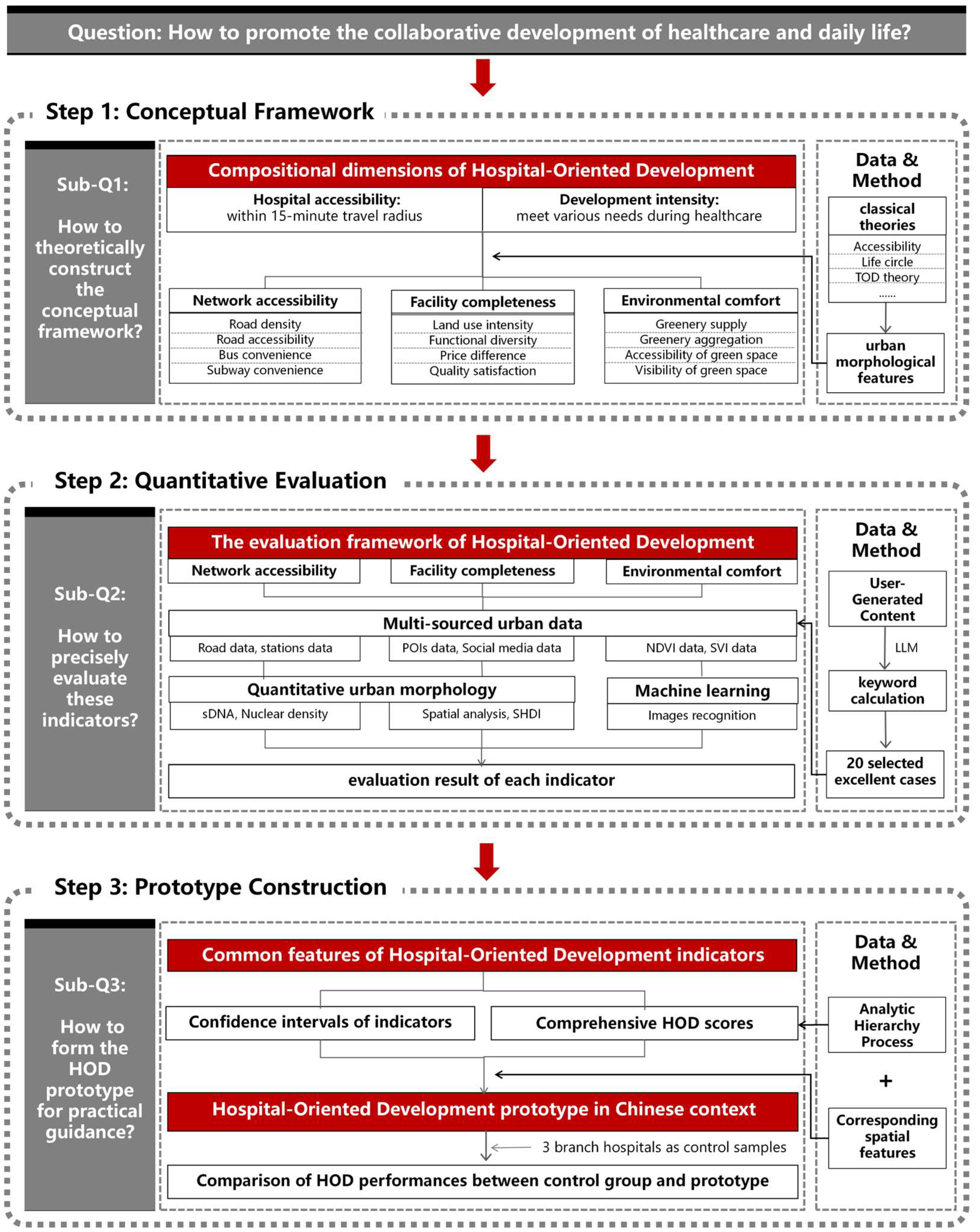
The main objective of this study is to explore the paradigm for the collaborative development of healthcare and daily life, which is referred to as Hospital-Oriented Development (HOD). To achieve this objective, study proposed a three-step framework, deriving from urban morphological features and multi-sourced urban data, as illustrated in Figure 2.
The first step focused on conceptual framework construction according to the HOD definition. Drawing on urban morphological features from research related to classical theories, measurable indicators were translated or adapted to represent each dimension, thereby establishing a comprehensive conceptual assessment framework.
The second step emphasized the quantitative evaluation of these indicators. Cases were selected via user-generated content (UGC), whose multi-sourced urban data were integrated, and advanced methods such as machine learning and quantitative morphological analysis were employed to achieve accurate measurement of each indicator.
The third step involved the development of a context-specific HOD prototype. Common features of HOD performance were summarized through confidence intervals of each indicator and comprehensive scores based on AHP, which are further correlated with spatial features to establish an HOD prototype within a 15 min catchment area.
This framework explored both evaluation methodologies and practice-oriented paradigms for the collaborative development of hospital-adjacent areas, including recommended value ranges, correlations between dimensions, and a spatially mapped paradigm as spatial design guidance, enabling the balance of various dimension improvements to enhance the overall HOD level and better implement the HOD concept.

3.3. Methods

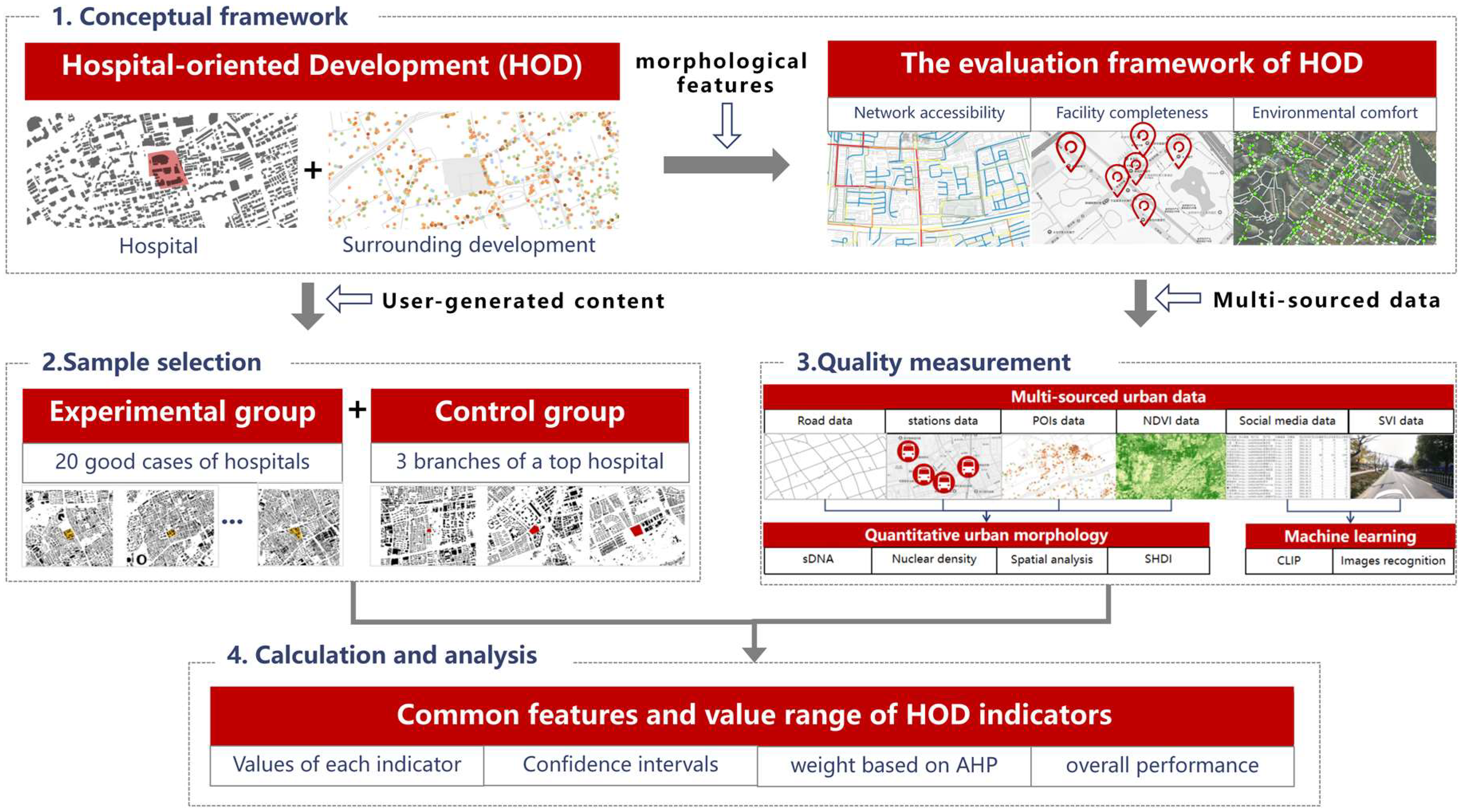
The analytical methods consisted of 4 parts: conceptual framework, sample selection, quality measurement, and calculation and analysis (Figure 3).
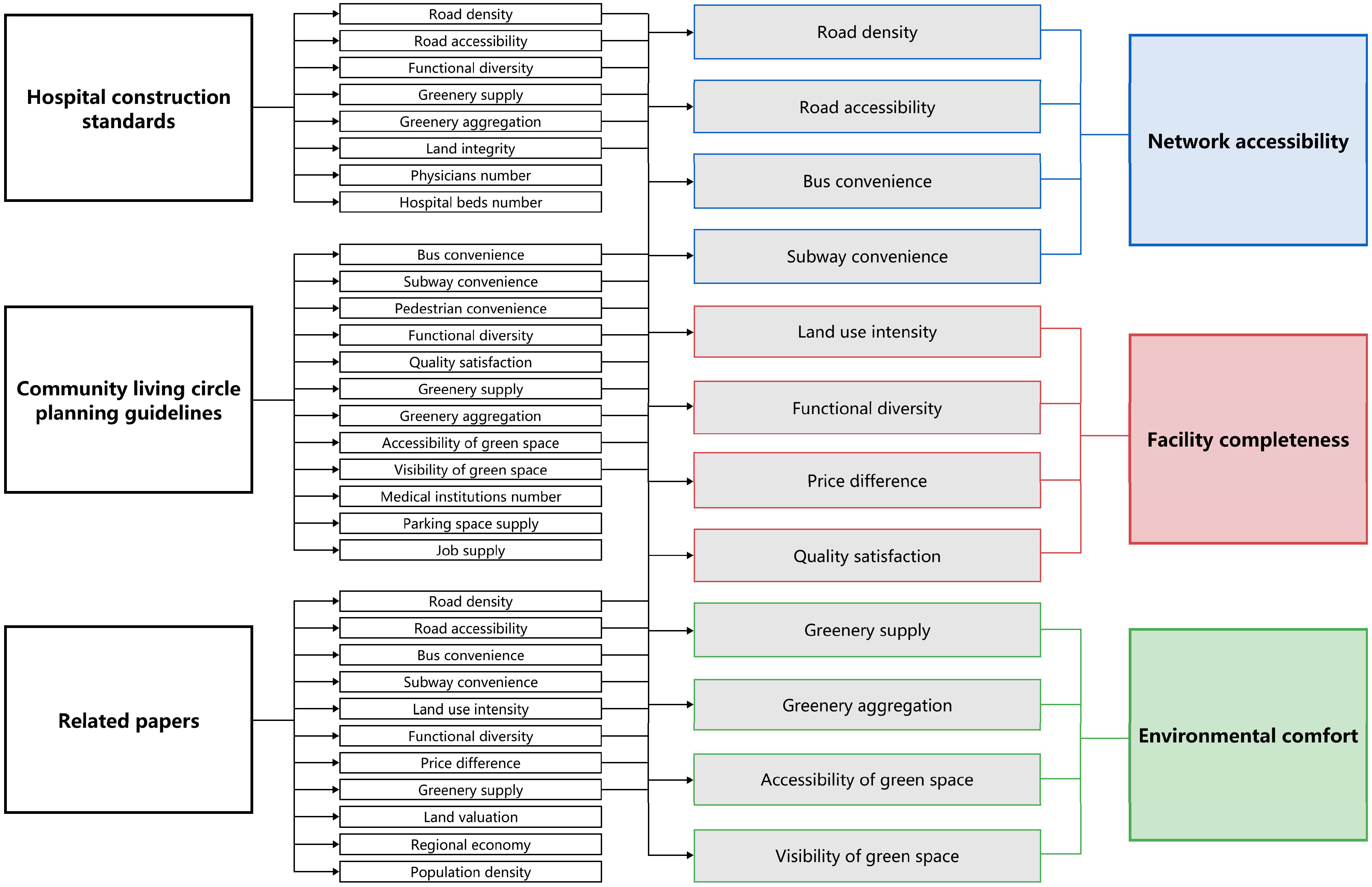
The first part involved concept formulation and framework construction. Guided by the goal of promoting coordinated development between hospitals and their surrounding urban spaces, HOD was defined as a comprehensive spatial–functional assessment that quantified synergies through two core dimensions: “Hospital accessibility (H)” and “Development intensity (D)”. “H” focused on ensuring the effective operation of hospital functions, reflecting the timeliness and efficiency of healthcare services for both long-term residents and temporary visitors. “D” emphasized the ability of surrounding spaces to meet diverse needs and to provide a comfortable experience during healthcare-related activities. Based on this dual-dimensional definition, HOD performance could be comprehensively evaluated through three aspects: “Network accessibility”, “Facility completeness”, and “Environmental comfort”. Then, the morphological features were taken as drivers to quantitatively measure these aspects. Given the lack of existing evaluation indices specifically tailored to ‘healthcare–daily-life’ development, an integrated approach to indicator selection was adopted, drawing from both hospital planning and living circle standards and research to ensure alignment with both medical functionality and daily-life needs. Specifically, as shown in Figure 4, relevant indicators were systematically reviewed and extracted from (1) hospital construction standards [29,30]; (2) community living circle planning guidelines [31,32]; and (3) related papers, especially those that used quantitative evaluation methods [33,34,35]. Through screening, integration, and refinement—based on relevance to the defined aspects and feasibility of morphological quantification—four indicators were selected for each aspect, resulting in a twelve-indicator evaluation framework to support the subsequent analysis.
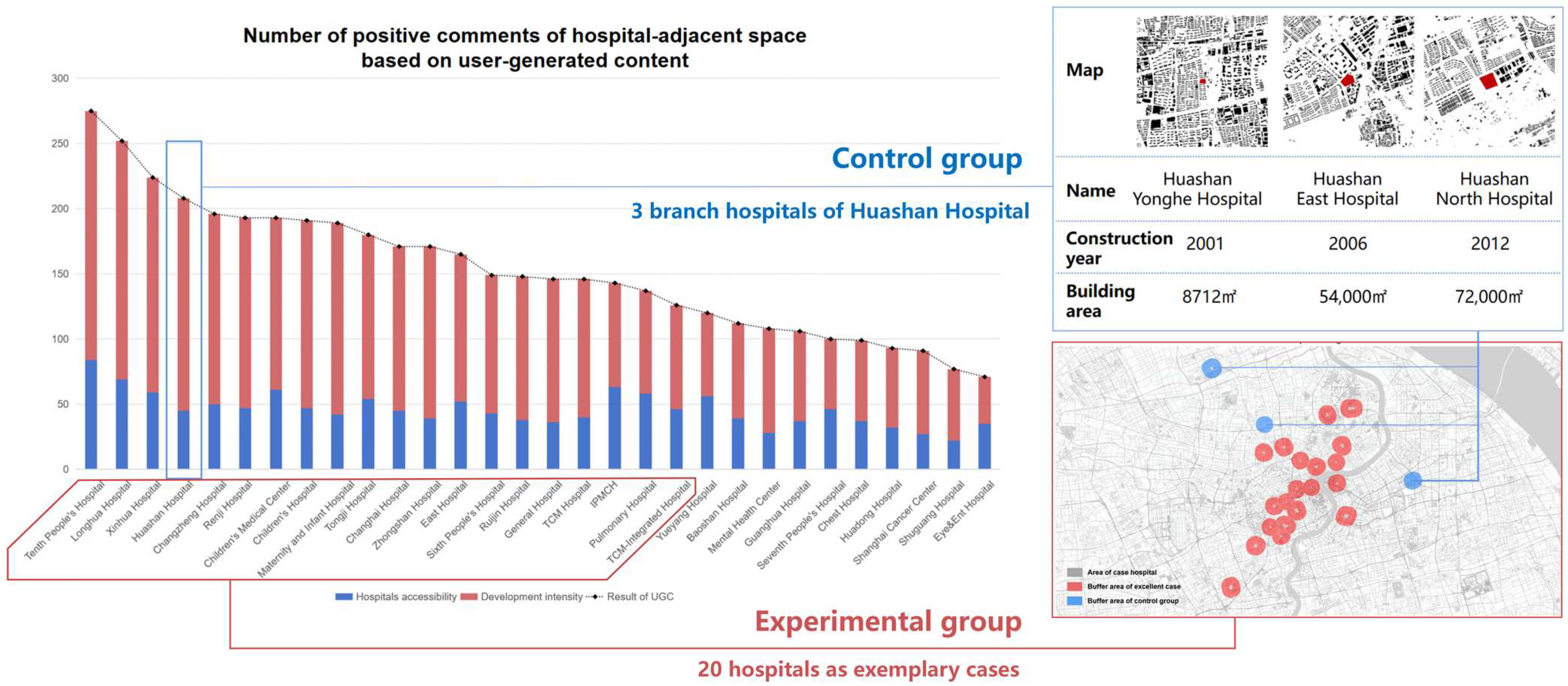
Secondly, the experimental and control groups were selected based on UGC, with Xiaohongshu chosen as the primary data source. Compared with other social media platforms like Weibo, Xiaohongshu places greater emphasis on users’ sharing of daily life experiences. Specifically, when searching through healthcare experiences, posts on other platforms often focus on the hospitals themselves such as medical quality and management level, resulting in excessive noise for data analysis. However, Xiaohongshu contains more descriptions of the surrounding facilities and life experiences, which better reflect the performance of HOD. For data collection, “surroundings of XXX hospital” was searched for each Grade A tertiary hospital in Shanghai, and those with fewer than 100 posts were excluded, resulting in a final set of 30 hospitals. From each hospital, the 100 most recent posts were extracted, and keyword frequency analysis was performed on the text by a Large Language Model (LLM). The keywords were selected according to the definition of HOD, capturing expressions related to accessibility and development intensity. For accessibility, keywords included “交通便利” (convenient transportation), “地铁” (subway), and “公交” (bus), etc. Development intensity included facility and environment aspects. The former were words like “美食” (good food), “玩” (play), “设施” (facilities), “好吃” (delicious), “好玩” (fun), “超市” (supermarket), “餐厅” (restaurant), and “citywalk”, etc., while the latter were words like “环境好” (good environment), “公园” (park), and “绿化” (greening), etc. The total frequency of these keywords was then calculated for each hospital, and the top 20 hospitals with the highest counts were selected as exemplary cases representing strong HOD performance (Figure 5). Meanwhile, three branches of Huashan Hospital, a representative exemplary case, were selected as the control group. This selection was based on two key considerations. On the one hand, these branches were constructed during China’s rapid urbanization over the past 20 years, a period when urban expansion prioritized the hospital itself over synergistic development with the surrounding areas, leading to fragmented “hospital–surroundings” relationships that typify underdeveloped HOD scenarios. Therefore, it enables validation of the feasibility of the HOD evaluation method. On the other hand, the new round of urban renewal would focus on these areas, so specific issues and targeted improvement strategies could be raised after evaluation.
Thirdly, the calculation of these indicators was accomplished based on multi-sourced urban data, including morphological data, street view imagery, and MODIS data. For quantitative measurement, urban morphological tools such as Spatial Design Network Analysis (sDNA) and the Shannon Diversity Index (SHDI) were used, alongside computational methods including Contrastive Language–Image Pretraining (CLIP) and semantic segmentation algorithms for object detection. The definition and formula for each indicator are provided in Table 1.
Finally, the performance of the 20 excellent cases across the 12 indicators was quantitatively measured, followed by multi-scale analysis. First, evidence-based benchmarks through 95% confidence intervals for all indicators were established. These intervals represent the range within which 95% of high-performing hospital-adjacent areas fall, defining a baseline threshold for each indicator and enabling micro-scale diagnosis of specific spatial strengths and weaknesses. Concurrently, the Analytic Hierarchy Process (AHP) was applied to integrate multidimensional metrics into a composite HOD performance score, providing macro-level insight into overall synergy effectiveness. This approach connected granular spatial tuning with holistic optimization, laying the foundation for translating data into operational renewal strategies.

4. Results

4.1. Calculation Results of Indicators

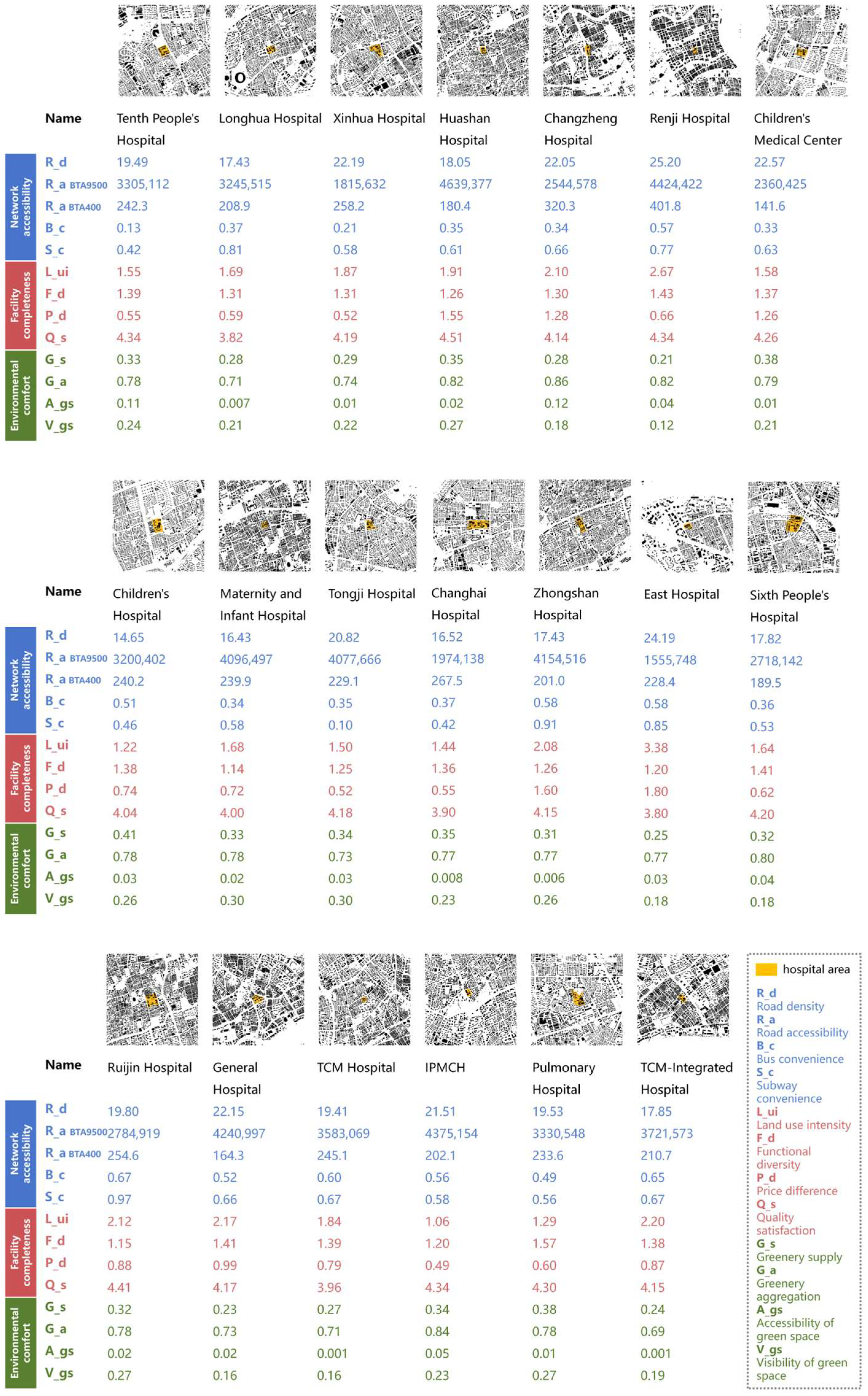
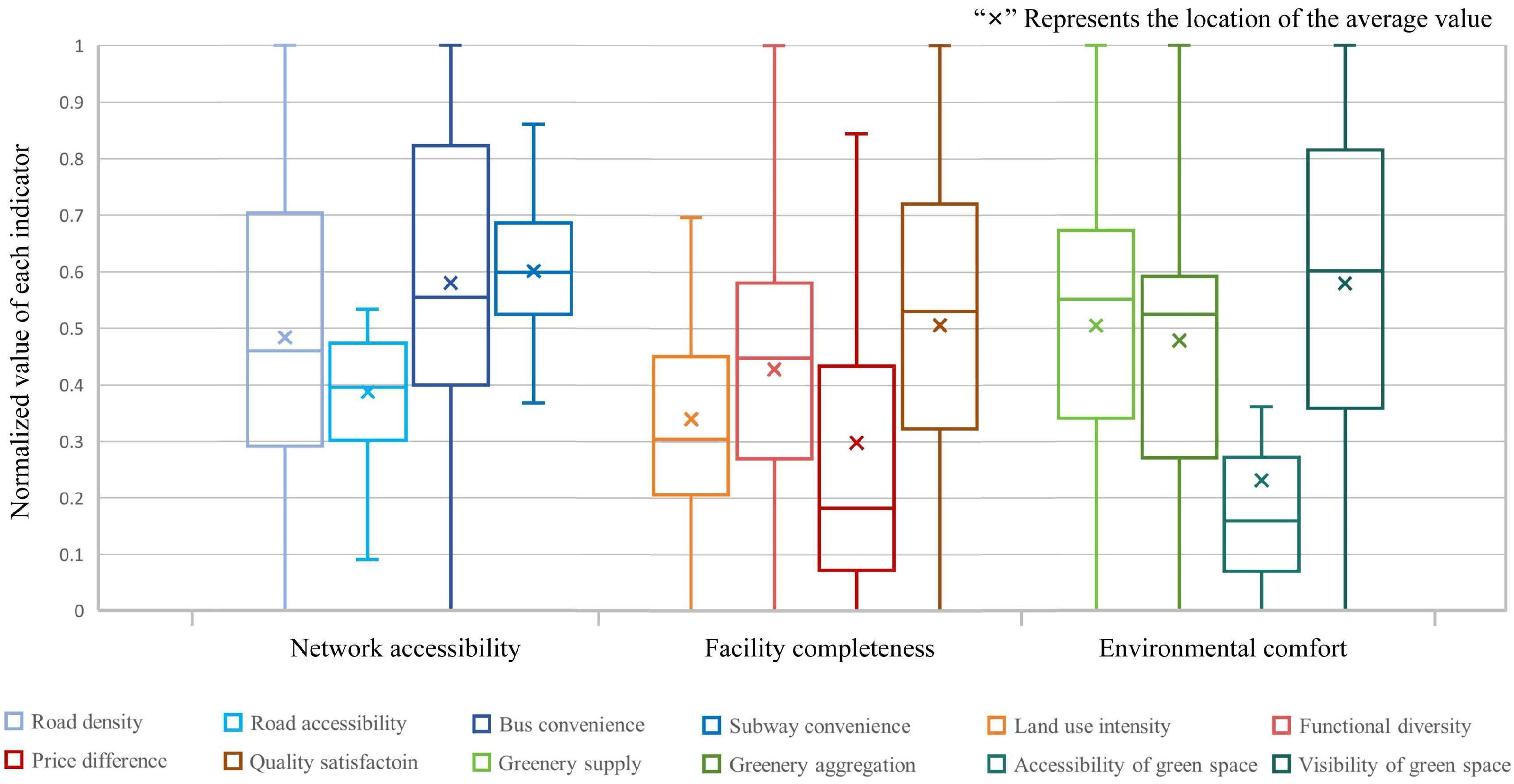
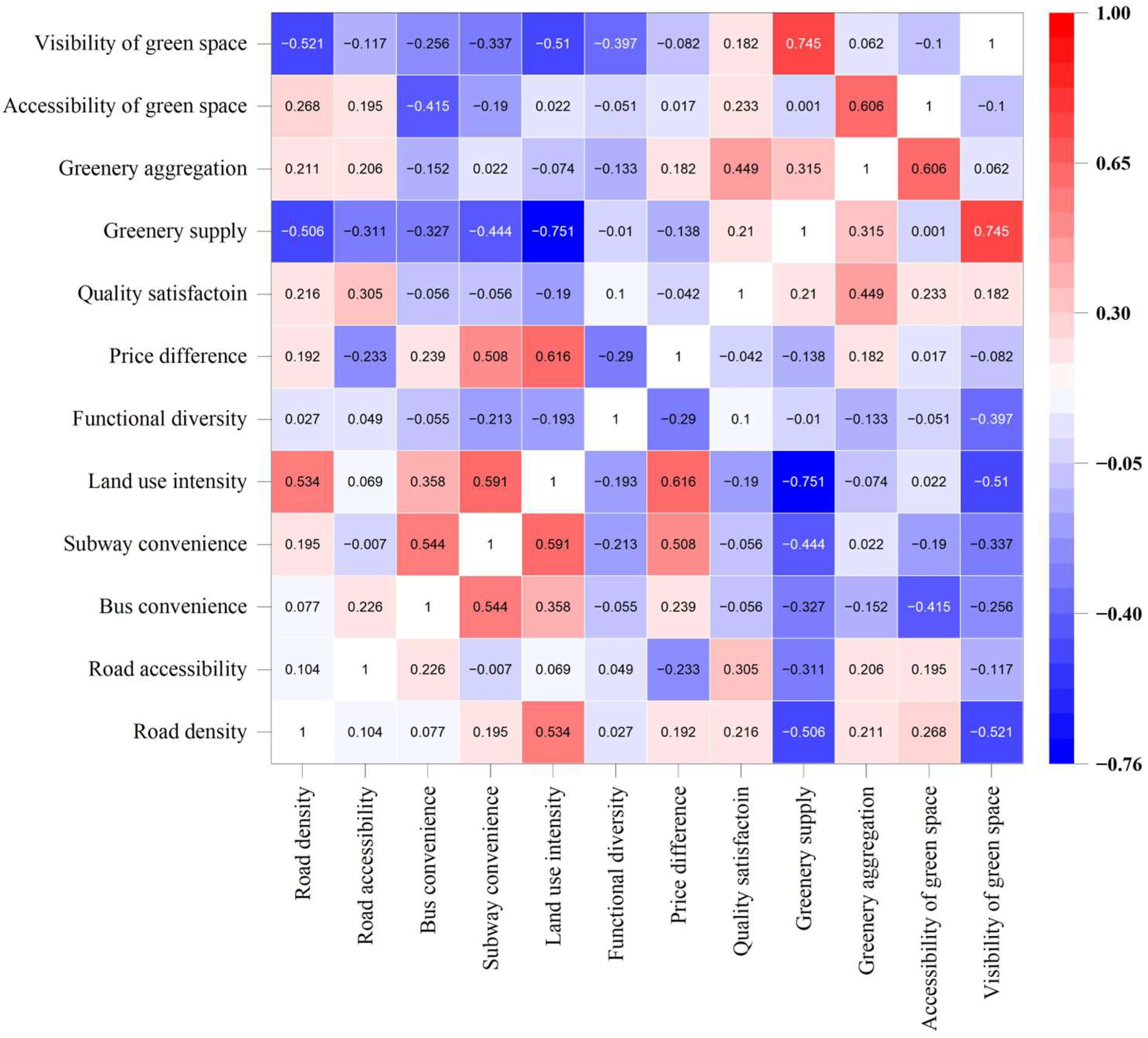
Based on the urban data and measurement methods outlined in Section 3, detailed values of each indicator were quantitatively measured among the 20 excellent cases of hospitals in Shanghai (Figure 6). Subsequently, boxplots and heatmaps of these indicators were analyzed to illustrate the descriptive statistics and correlations among the twelve variables, facilitating a better understanding of the relative development levels of the three dimensions in the current HOD performance, as well as the interaction relationships between twelve indicators.
In terms of the boxplots, the mean is represented by an “×” inside the box, the median by a horizontal line across the box, and the first (Q1) and third (Q3) quartiles by the bottom and top edges of the box, respectively (Figure 7). The overall performance of the “facility completeness” dimension is lower than that of the other two dimensions, with the mean and median values of its three indicators all below 0.5, showing that the diversity of the quantity, type, and price of facilities in hospital-adjacent areas requires more attention and improvement in current HOD practice.
In terms of the heatmap, the Pearson Correlation Coefficient (PCC) was used to measure the inter-indicator correlations, revealing clearly positive or negative correlation patterns (Figure 8). Specifically, indicators within the same dimension tend to exhibit positive correlations, while certain developmental conflicts exist between different dimensions. For instance, “land use intensity” shows a strong negative correlation with “greenery supply” (r = −0.751), whereas “visibility of green space” and “greenery supply” demonstrate a strong positive correlation (r = 0.745). Notably, indicators across different major dimensions of “network accessibility” and “facility completeness” present relatively strong positive correlations, showing that the areas with convenient subway and bus access tend to have higher land use intensity. Correlation analysis identifies the key challenges in collaborative development, namely building a pleasant environment under urban modernization.

4.2. Confidence Interval Analysis of Indicators

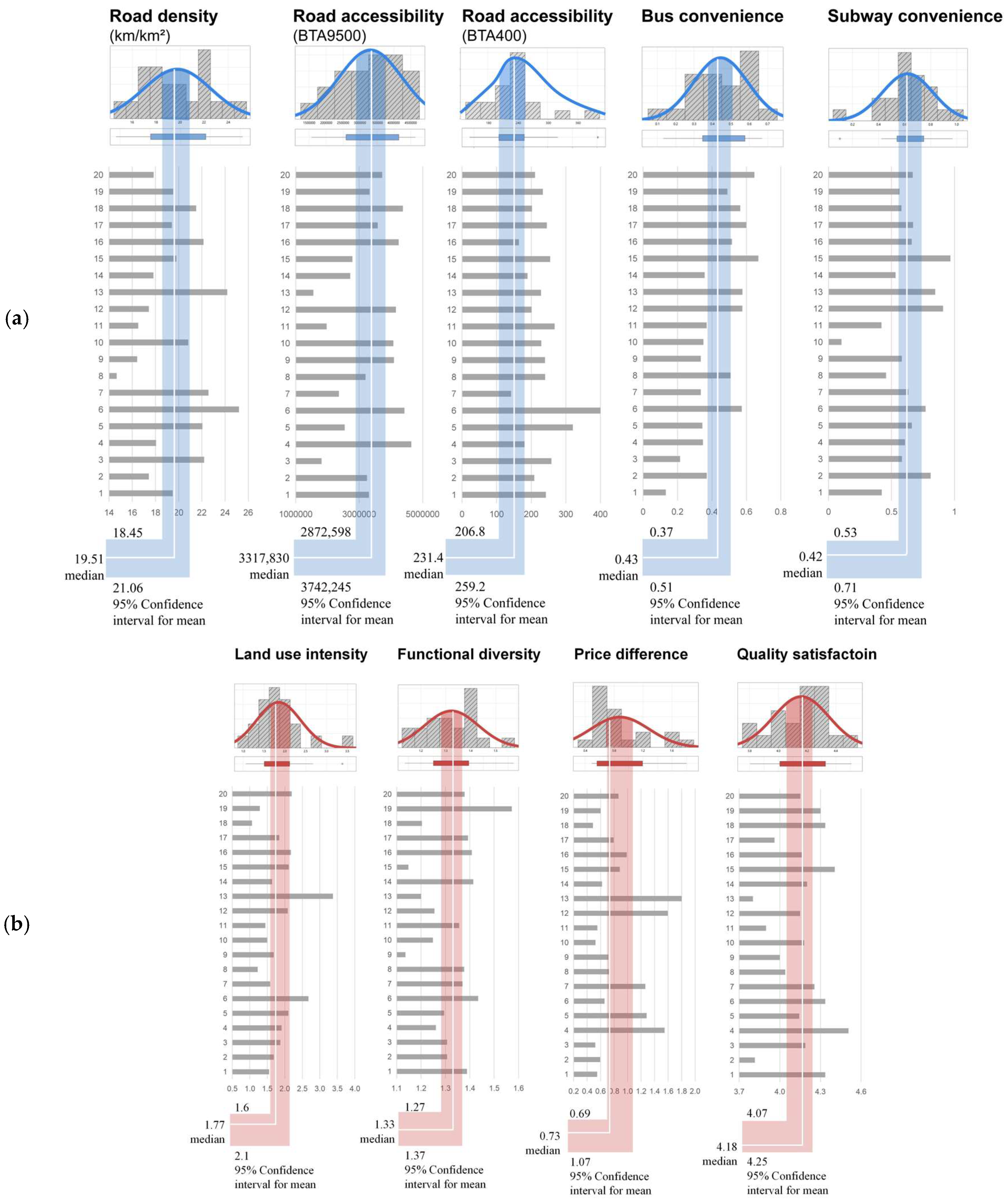
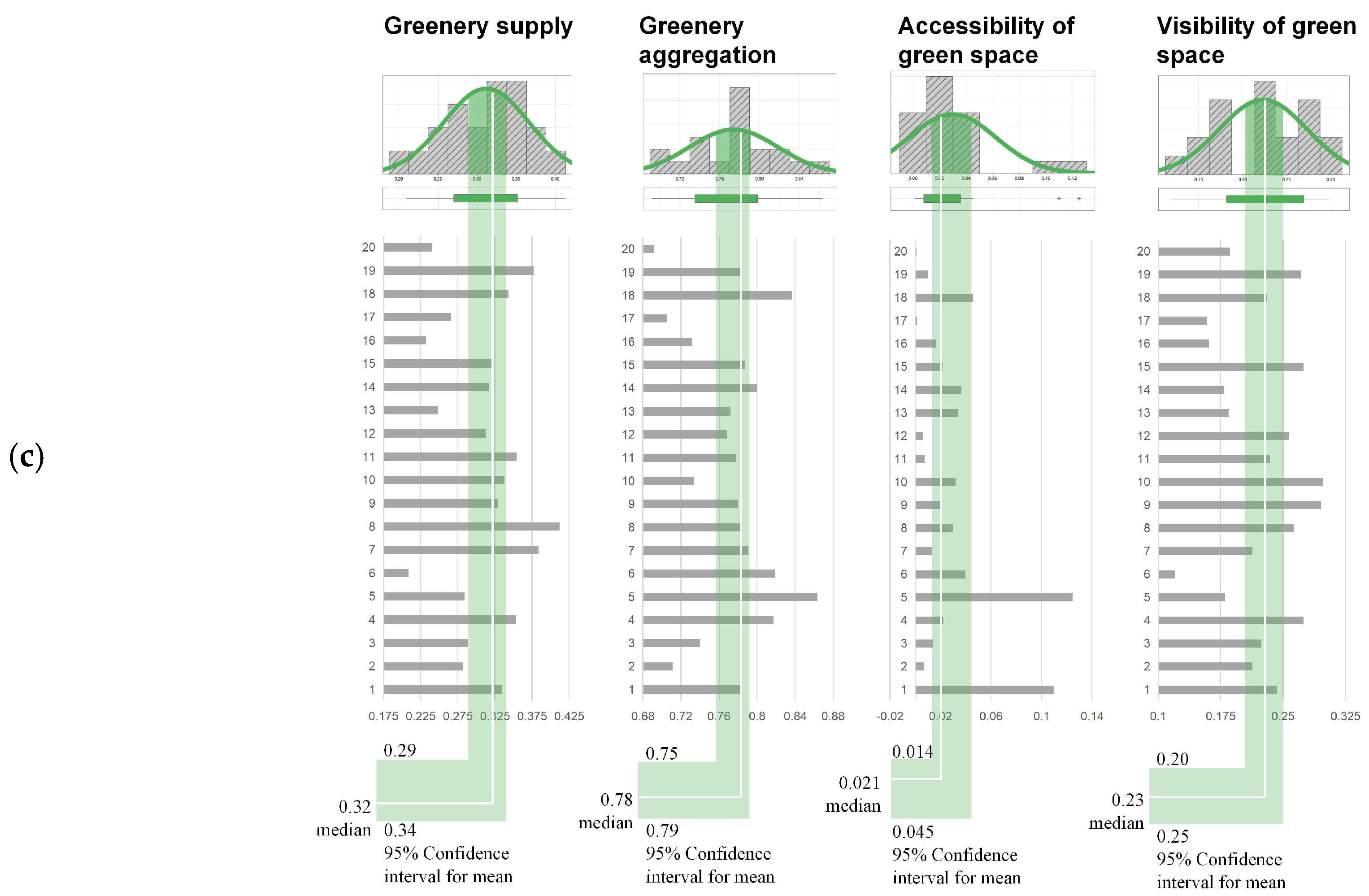
Subsequently, the 95% confidence interval for the mean of each indicator was calculated to identify the recommended benchmarks and common features of hospital-adjacent areas with favorable HOD performance (Figure 9). The following section presents the detailed calculation results and quantitative analyses for the three dimensions.

4.2.1. Network Accessibility

In most of the excellent cases, the network accessibility is relatively good, both with private cars and public transportation, resulting in significantly higher values for the former two indicators than those in surrounding urban areas. As shown in Figure 9a, for road density, the 95% confidence interval is (18.45 km/km2, 21.06 km/km2), generally 15% higher than that of surrounding parts of the hospital-adjacent area (16.06 km/km2, 17.705 km/km2). Regarding road accessibility, betweenness centrality—measuring the degree to which a road segment is selected as a passage [36]—is used to assess BTA9500 and BTA400. This dual measurement aligns with the service scope of large hospitals, which cater to both nearby residents and patients from broader urban or even regional areas. The 95% confidence intervals are about (29 × 104, 37 × 104 for BTA9500 and 206.8, 259.2 for BTA400), with more than 8% of roads being good at both global and local analysis. The latter two indicators, evaluating bus and subway convenience, are composite metrics integrating distance decay coefficients, station coverage, density, and quantity. Their 95% confidence intervals are (0.37, 0.51) and (0.53, 0.71), respectively.

4.2.2. Facility Completeness

Diversified and high-quality supporting facilities are key factors driving positive user feedback on hospital experiences and underpin the sustainable development of hospital-adjacent areas. As shown in Figure 9b, land use intensity, characterized via floor area ratio (FAR) [37], exhibits a 95% confidence interval of (1.6, 2.1), a moderately low value relative to Shanghai, which enables the provision of relatively comfortable living environment while retaining substantial planning flexibility. For the functional characteristics, four main function types (shopping, catering, hotel, and public service) were analyzed, with confidence intervals calculated for the means of their respective metrics. The Shannon index for functional diversity yields a 95% interval of (1.27, 1.37), while the coefficient of variation for price differences ranges from 0.69 to 1.07, which indicates a need to provide more choices to meet the demands of people with different incomes and preferences. In terms of quality satisfaction, store ratings from social media platforms were utilized, revealing a relatively high 95% confidence interval of (4.07, 4.25) on a 5-point scale.

4.2.3. Environmental Comfort

Environmental comfort has a significant impact on the experiential quality of hospital users [38], and as a key component of environmental comfort in outdoor spaces, greenery has been consistently linked to improved physical and psychological well-being [39]. As shown in Figure 9c, NDVI presents the greenery supply, whose 95% confidence interval is 0.29–0.34, slightly higher than Shanghai’s central-area average (0.30). Conversely, for greenery aggregation, the interval of green-space concentration (0.75–0.79) is lower than the central-area average (0.80), indicating more dispersed greenery distribution. For the accessibility and visibility of green space, the former is operationalized via the proportion of large-scale green space (1.4%, 4.5%), while the latter is the green rate (20%, 25%). Generally, densely distributed green spaces are associated with good HOD performance.

4.3. Synergistic Effect on HOD Performance of Indicators

HOD performance is a result of multi-indicator synergy, and its improvement requires moving beyond single-indicator numerical increases toward comprehensive consideration of positive and negative correlations between indicators to achieve overall optimization. This integrated development logic is clarified based on calculation results, dimensional correlations, and confidence intervals.
At the dimension level, calculation results show that “facility completeness” generally lags behind the other two dimensions, which tends to be a key bottleneck in HOD advancement. Meanwhile, correlation analysis further reveals that “network accessibility” and “facility completeness” tend to improve synergistically, while a trade-off exists between their enhancements and the maintenance of “environmental comfort”, which highlights the risk of one-dimensional and unbalanced development.
At the indicator level, three features emerged from the measurements: (1) higher density, betweenness, and convenience of public transportation imply better hospital accessibility; (2) a diverse mix of public facilities both in types and price ranges and good facility quality enhance daily life satisfaction; (3) abundant and evenly distributed public green spaces strengthen environmental comfort. Besides synergies of indicators within the same dimension, positive correlations also exist between some indicators of different dimensions. For example, greenery aggregation correlates positively with road density and facility quality satisfaction, which shows potential pathways and strategies for synchronous improvement across dimensions. Such synergistic features emphasize the need to translate sub-indicator characteristics into specific and comprehensive spatial expressions.

5. Discussion

5.1. Composite Scores of HOD Performance

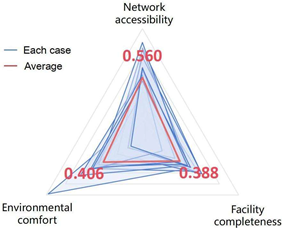
Based on the raw values, normalized values, and 95% confidence intervals obtained, composite scores were calculated for evaluating HOD performance. Specifically, the AHP was applied to determine the impact weights of the three dimensions and twelve indicators. This is because the evaluation of HOD involves multiple dimensions and criteria whose relative importance cannot be directly measured with objective data and must instead rely on structured expert judgment. Ten experts with extensive experience in urban planning and public facility evaluation were invited to participate in the scoring process. Specifically, experts were invited to conduct pairwise comparisons of the importance of 3 dimensions and 12 indicators. The Consistency Ratio (CR) was calculated (CR = CI/RI), and the result was 0.0372, which was significantly below the threshold of 0.1, indicating that the judgment matrix possessed satisfactory consistency and the computed weights were valid and reliable for subsequent analysis (Table 2). Then, the composite HOD scores for each case were derived (Table 3). To provide a reference for evaluating HOD performance, normalized values of exemplary cases and their average scores were visualized in a radar chart, which supported the precise assessment of control cases regarding their advantages and deficiencies for classification and strategy proposal.

5.2. Prototype Construction and Empirical Illustration

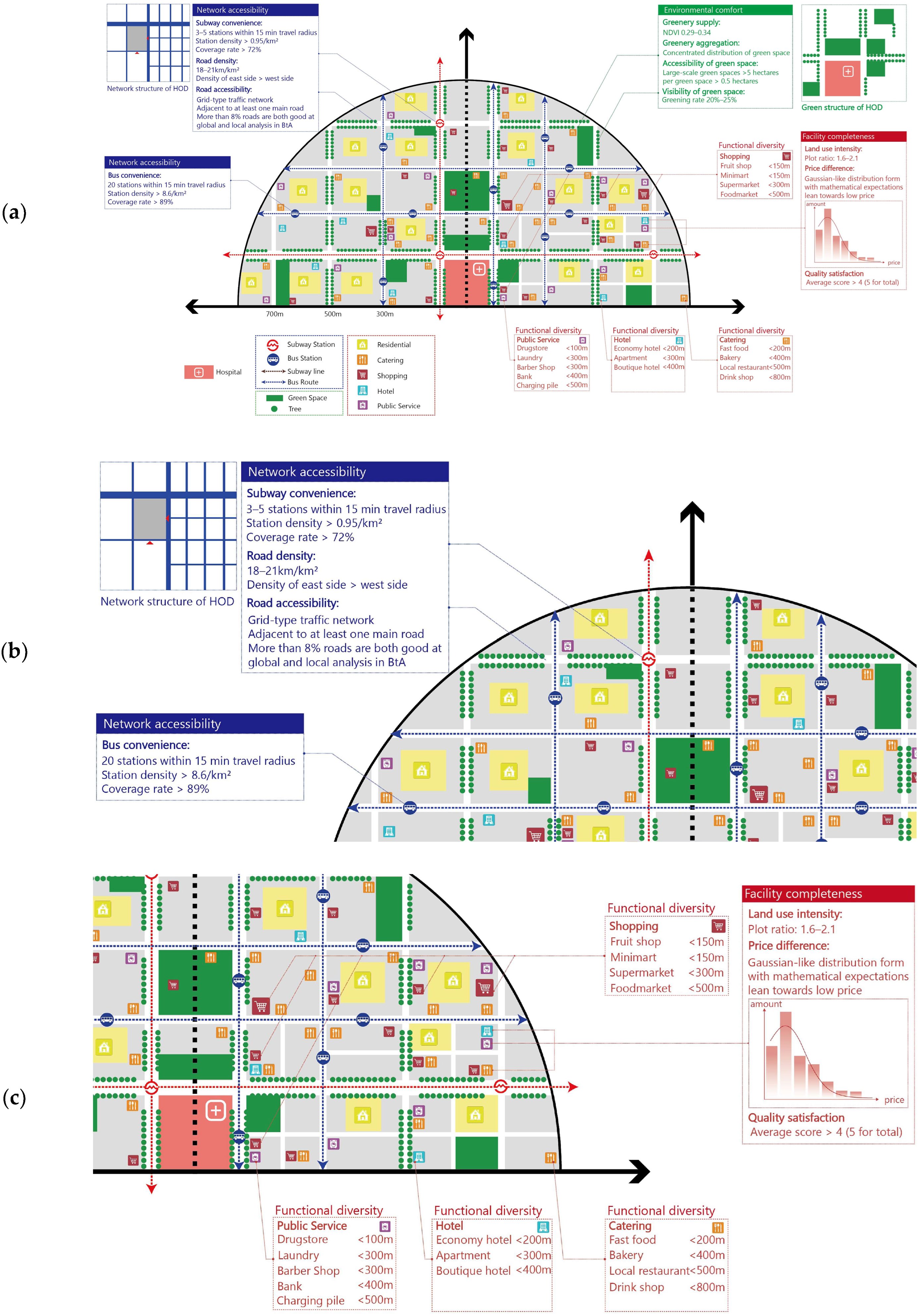
Based on quantitative measurements and multi-scale analyses using the confidence interval and weighted scores, spatial features represented by numerical values could be transformed into graphical form to directly guide urban design. Accordingly, an HOD prototype in the Chinese context was constructed (Figure 10a). Focusing on the daily living scope in a hospital-adjacent area, the prototype was mapped within an 800 m radius as a healthcare–daily life circle, corresponding to a 15 min walking catchment.
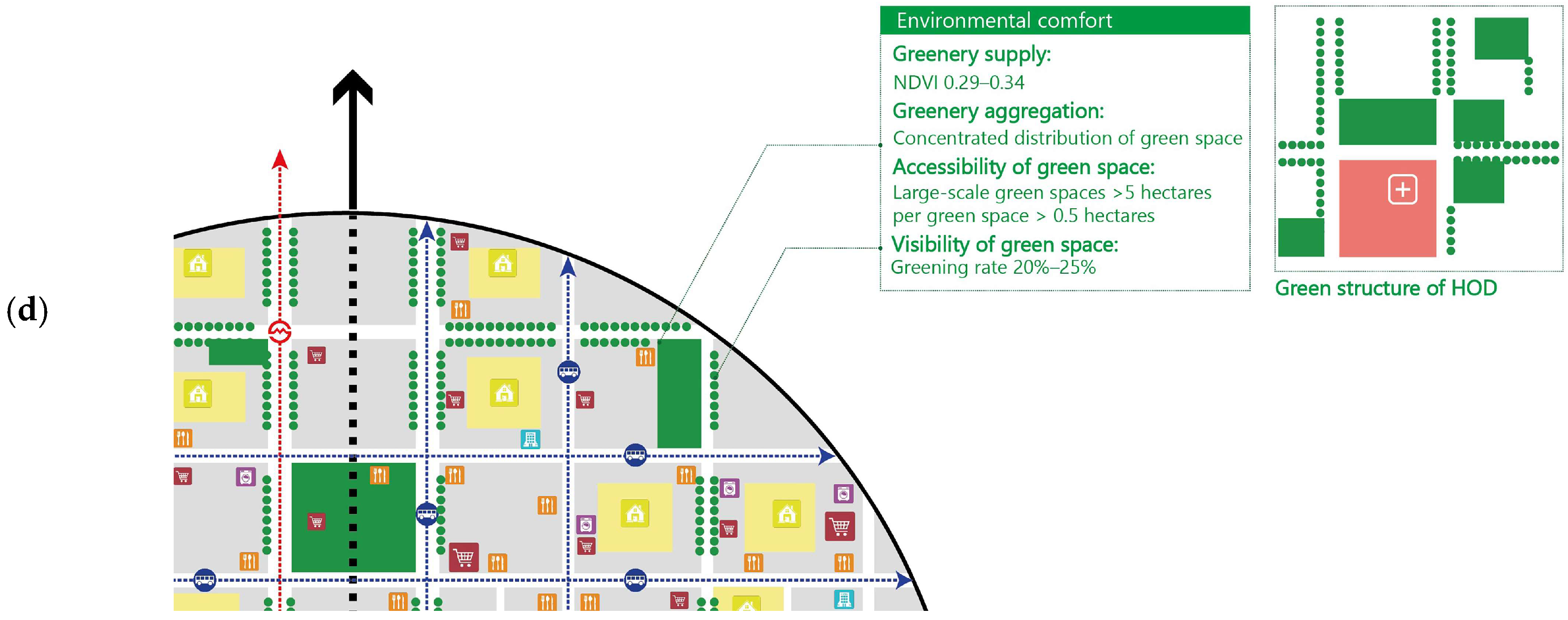
Network accessibility comprises two core elements: road structure and public transit station distribution (Figure 10b). A grid-type network is recommended, with a hospital adjacent to at least one main road, and a higher road density on the east side compared to the west. For public transit, 20 bus stops are required in this area with a density of over 8.6/km2 and a coverage rate exceeding 89%, with corresponding values of 3, near 1/km2, and 72% for subways. For facility completeness, the optimal minimum distances for each functional type (supermarket, drugstore, etc.) are derived from detailed analyses of excellent cases. The price distribution follows a Gaussian pattern, with the mean leaning toward affordable ranges, but relatively high quality is still needed (Figure 10c). Regarding environmental comfort, concentrated green space with a greening rate more than 20% is recommended. Besides roadside tree coverage, large-scale green spaces are also required at a density of over 5 hec/km2 with each individual green space exceeding 0.5 hec (Figure 10d).
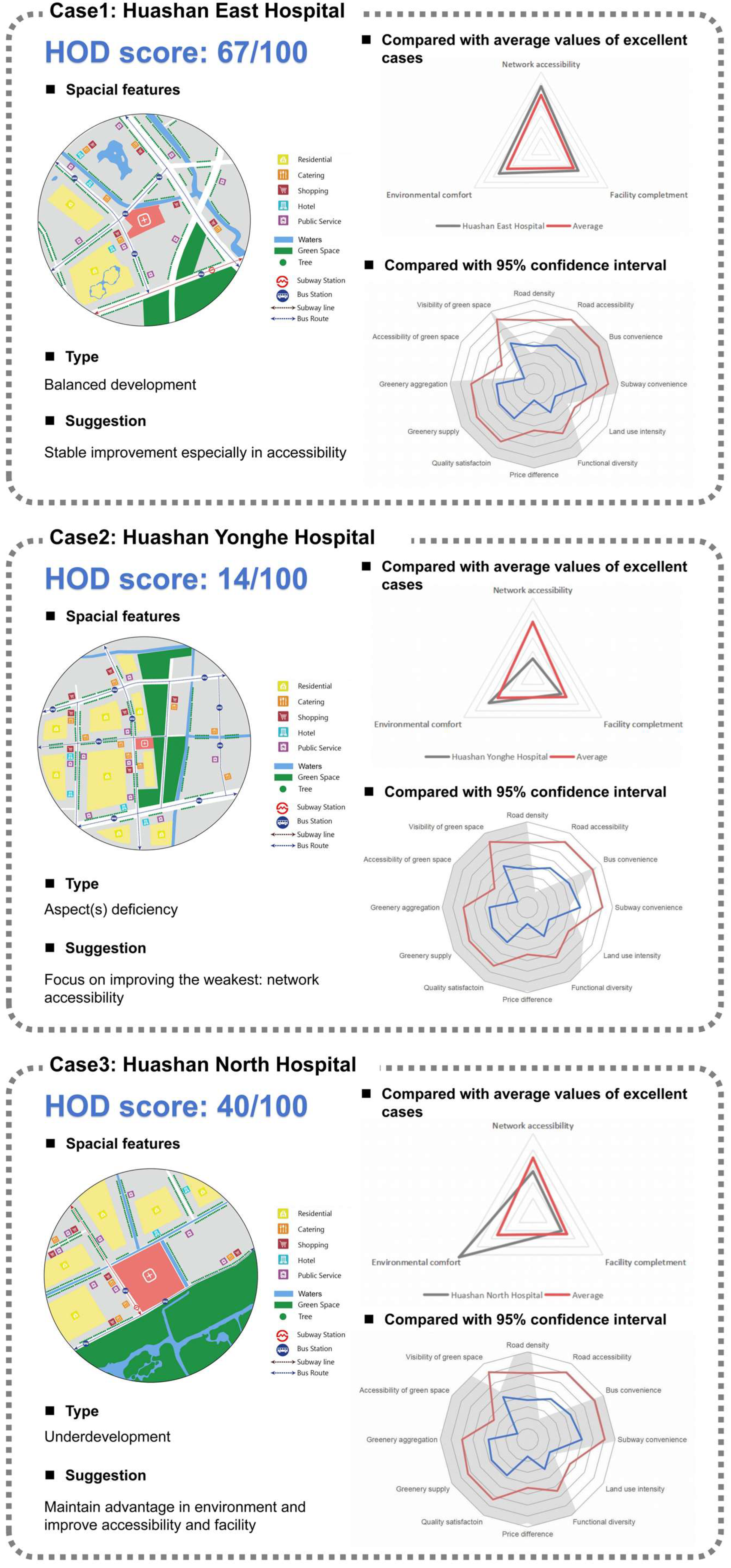
The HOD performances of the three Huashan Hospital branches as control cases were then evaluated both against the prototype and through numerical metrics, enabling the proposal of improvement strategies while validating the methodology’s feasibility (Figure 11). The results indicate that despite belonging to the same prestigious healthcare system where the main campus is listed in the excellent cases, the branches exhibit distinct developmental deficits. These disparities align with varying stages of surrounding urban development, mirroring common challenges in hospital-adjacent area development in many hospitals. According to the results, three different levels of HOD performance can be classified and corresponding improvement strategies can be proposed.
The first type, “Balanced development”, is represented by East Campus. This typology demonstrates minor shortcomings requiring incremental optimization. For instance, road hierarchy and density, particularly on the eastern side, fall below recommended benchmarks. Targeted interventions include adding additional east-side road segments and entrances to enhance network connectivity. The second type is “Aspect(s) deficiency”, represented by Yonghe Campus. Characterized by critical underperformance in at least one dimension, this typology demands focused remediation. For example, the east side of Yonghe Campus lacks road infrastructure entirely while existing roads fail to meet arterial standards due to prolonged underdevelopment, so comprehensive road network planning is required to integrate these areas. The third type is “Underdevelopment”, represented by North Campus. This typology is always far away from the urban center, with inadequate development intensity despite high environmental quality. For example, supporting amenities remain absent over a decade after the branch’s establishment, reflecting a notable disparity between its environmental comfort and the development level of road networks and infrastructures. Given its three-sided waterfront setting, priority interventions include bridge construction to establish a robust road network and the construction of essential facilities within the plot where a hospital is located.

6. Conclusions

6.1. Theoretical Contribution: Conceptual Framework Establishment

Theoretically, this study develops the concept and methodological framework of HOD to evaluate and promote the collaborative development of hospital-adjacent areas in response to the global trend of population aging and the associated demand for healthcare in daily life. HOD is especially defined as a paradigm that integrates hospital accessibility with daily-life facilities. Based on this definition, three core dimensions, i.e., network accessibility, facility completeness, and environmental comfort, were identified to operationalize this conceptual framework.

6.2. Empirical Contribution: Quantitative Evaluation

Methodologically, measurable indicators were specified to characterize the core dimensions, leading to the establishment of a quantitative evaluation system for HOD performance. These indicators were derived from urban morphological features and integrate hospital construction standards, community living circle guidelines, and relevant research. By analyzing multi-sourced data with quantitative techniques and machine learning, these indicators were precisely measured across exemplary cases, producing benchmarks, recommended ranges, and indicator correlations. These results reveal the expected levels for each indicator, key priorities for HOD, and empirical patterns, including (1) facility completeness as the main bottleneck, (2) synergy between dimensions to achieve overall optimization, and (3) trade-offs between the maintenance of environmental comfort and enhancements of other dimensions, which together inform strategies for the HOD improvement.

6.3. Practical Contribution: Prototype Construction

Practically, this study translates quantitative results into spatial prototypes, constructing an HOD prototype in the Chinese context. By converting numerical findings of the confidence interval into spatial elements and graphical language, this prototype bridges quantitative data and practical design. This enables planners and designers to (1) intuitively assess the current HOD performance of specific areas; (2) identify deficiencies across morphological features; and (3) obtain targeted improvement strategies and design guidance for existing hospital-adjacent areas. Therefore, this study establishes a closed-loop approach that links theory, measurement, and practice.

6.4. Limitations and Future Works

This study has several limitations. First, the selected cases are restricted to large cities like Shanghai, limiting the broader applicability of the confidence intervals, and the selection of exemplary hospital cases based on UGC is limited to Xiaohongshu, where 80% of users are aged 18 to 34, leading to a certain degree of selection bias. Meanwhile, the spatial prototype may be better suited for top-tier hospitals with large scales and service populations. Second, analytical dimensions can be expanded, and current indicators lack consideration of temporal dynamics and subjective human perceptions, which are also critical for HOD performance. Third, specific design methods and alignment with higher-level policies are not discussed in detail, limiting the direct feasibility of renovation strategies.
To address these limitations, future research should proceed in three directions. First, tier-2/3 cities and rural medical clusters should be selected as cases and assess different levels of HOD reference intervals and spatial prototypes, while smaller-sized hospitals should also be considered as control groups to validate the applicability of the HOD framework across different contexts. Meanwhile, multi-platforms (e.g., Xiaohongshu, Weibo, Dianping) and survey-based data should be integrated to mitigate the age bias and capture more comprehensive comments from diverse populations, especially the elderly. Second, indicators like temporal dynamics and human perceptions should be added, with their quantifiable measurement methods based on data like LBS, wearable devices, and environmental monitoring tools. Third, higher-level policies should be integrated into the evaluation framework, which can then be applied to specific projects—such as the planning of newly built hospitals or the urban renewal of existing hospital surroundings—with its effectiveness verified through Post-Project Evaluation (PPE).
To conclude, HOD, with its evaluation framework and prototype, demonstrates significant potential for advancing human-centered health city design. By bridging quantitative evaluation with urban morphology and constructing a “research–practice–feedback” loop, it offers a feasible pathway to transform hospital-adjacent area design from experience-led practices to evidence-based design science.

Author Contributions

Conceptualization, Z.C. and Y.Y.; methodology, Z.C. and Y.W.; software, H.Z.; validation, Z.C., Y.W. and H.Z.; formal analysis, J.L. and H.T.; investigation, Y.W.; resources, Y.Y. and X.W.; data curation, J.L. and H.T.; writing—original draft preparation, Z.C., Y.W. and H.Z.; writing—review and editing, Z.C., Y.Y. and X.W.; visualization, Z.C., Y.W. and H.Z.; supervision, Y.Y.; funding acquisition, Y.Y. and X.W. All authors have read and agreed to the published version of the manuscript.

Funding

This research was funded by the Shanghai Pilot Program for Basic Research (22TQ1400300), the Research Project of Tongji architectural design (group) co., ltd. 2023 (2023J-JB05), and the Fundamental Research Funds for the Central Universities (2025-1-ZD-02).

Data Availability Statement

The data of NDVI is open source and shared on TPDC, https://data.tpdc.ac.cn/zh-hans/data/10535b0b-8502-4465-bc53-78bcf24387b3 (accessed on 20 May 2025). The Aggregation Index data is calculated according to WorldCover V2 2021 shared on ESA, https://viewer.esa-worldcover.org/worldcover (accessed on 21 May 2025). Other data and materials are available from the authors upon request.

Acknowledgments

The authors thank the anonymous reviewers for their valuable comments and suggestions on this article.

Conflicts of Interest

The authors declare no conflicts of interest.

Abbreviations

The following abbreviations are used in this manuscript:
HODHospital-Oriented Development
AHPAnalytic Hierarchy Process
NDVINormalized Difference Vegetation Index
UGCUser-generated Content

References

  1. Hong, C.; Sun, L.; Liu, G.; Guan, B.; Li, C.; Luo, Y. Response of Global Health Towards the Challenges Presented by Population Aging. China CDC Wkly. 2023, 5, 884–887. [Google Scholar]
  2. Chen, Z.; Botta, F. The Geography of Inequalities in Access to Healthcare across England: The Role of Bus Travel Time Variability. J. Phys. Complex. 2025, 6, 025017. [Google Scholar] [CrossRef]
  3. Geurs, K.T.; van Eck, J.R. Accessibility Measures: Review and Applications. Evaluation of Accessibility Impacts of Land-Use Transportation Scenarios, and Related Social and Economic Impact; Universiteit Utrecht-URU: Utrecht, The Netherlands, 2001. [Google Scholar]
  4. Hansen, W.G. How Accessibility Shapes Land Use. J. Am. Inst. Plann. 1959, 25, 73–76. [Google Scholar] [CrossRef]
  5. Ma, W.; Wang, N.; Li, Y.; Sun, D. 15-Min Pedestrian Distance Life Circle and Sustainable Community Governance in Chinese Metropolitan Cities: A Diagnosis. Humanit. Soc. Sci. Commun. 2023, 10, 364. [Google Scholar] [CrossRef]
  6. Jiang, Z.; Wu, C.; Chung, H. The 15-Minute Community Life Circle for Older People: Walkability Measurement Based on Service Accessibility and Street-Level Built Environment—A Case Study of Suzhou, China. Cities 2025, 157, 105587. [Google Scholar] [CrossRef]
  7. Liao, S.; Li, J.; Shen, L.; Wu, Y.; Bao, H. Contributions to a Theoretical Framework for Evaluating the Supply–Demand Matching of Medical Care Facilities in Mega-Cities: Incorporating Location, Scale, and Quality Factors. Land 2024, 13, 1606. [Google Scholar] [CrossRef]
  8. Chen, L.; Zeng, H.; Wu, L.; Tian, Q.; Zhang, N.; He, R.; Xue, H.; Zheng, J.; Liu, J.; Liang, F.; et al. Spatial Accessibility Evaluation and Location Optimization of Primary Healthcare in China: A Case Study of Shenzhen. GeoHealth 2023, 7, e2022GH000753. [Google Scholar] [CrossRef]
  9. Calthorpe, P. The Sustainable Urban Development Reader; Beatley, T., Wheeler, S.M., Eds.; Routledge: Abingdon, UK, 2004; ISBN 978-1-136-99848-5. [Google Scholar]
  10. Curtis, C.; Renne, J.L.; Bertolini, L. Transit Oriented Development: Making It Happen (Transport and Mobility); Ashgate: Farnham, UK, 2009; ISBN 978-0-7546-7315-6. [Google Scholar]
  11. Khodadadi, S.; Tasooji, T.K.; Shariat-Mohayman, A.; Kalantari, N. A Multi-Objective Simultaneous Routing, Facility Location and Allocation Model for Earthquake Emergency Logistics. arXiv 2025, arXiv:2503.22487. [Google Scholar] [CrossRef]
  12. Sui, J.; Zhang, G.; Lin, T.; Hamm, N.A.S.; Li, C.; Wu, X.; Hu, K. Quantitative Evaluation of Spatial Accessibility of Various Urban Medical Services Based on Big Data of Outpatient Appointments. Int. J. Environ. Res. Public Health 2023, 20, 5050. [Google Scholar] [CrossRef]
  13. Gong, S.; Gao, Y.; Zhang, F.; Mu, L.; Kang, C.; Liu, Y. Evaluating Healthcare Resource Inequality in Beijing, China Based on an Improved Spatial Accessibility Measurement. Trans. GIS 2021, 25, 1504–1521. [Google Scholar] [CrossRef]
  14. Du, X.; Du, Y.; Zhang, Y.; Zhu, Y.; Yang, Y. Urban and Rural Disparities in General Hospital Accessibility within a Chinese Metropolis. Sci. Rep. 2024, 14, 23359. [Google Scholar] [CrossRef]
  15. Van Wijngaarden, J.D.H.; Braam, A.; Buljac-Samardžić, M.; Hilders, C.G.J.M. Towards Process-Oriented Hospital Structures; Drivers behind the Development of Hospital Designs. Int. J. Environ. Res. Public Health 2023, 20, 1993. [Google Scholar] [CrossRef]
  16. Khayal, I.S.; Farid, A.M. Designing Patient-Oriented Healthcare Services as a System of Systems. In Proceedings of the 2018 13th Annual Conference on System of Systems Engineering (SoSE), Paris, France, 19–22 June 2018; IEEE: New York, NY, USA; pp. 233–239. [Google Scholar]
  17. Zhu, Y.; Zhou, Y. Study on Sustainable Development Oriented Community Public Hospital in China Based on Optimal Decision Making Model for Environment Renovation. Sustainability 2023, 15, 7184. [Google Scholar] [CrossRef]
  18. Petros, A.K.; Georgi, J.N. Landscape Preference Evaluation for Hospital Environmental Design. J. Environ. Prot. 2011, 2, 639–647. [Google Scholar] [CrossRef]
  19. Whitehouse, S.; Varni, J.W.; Seid, M.; Cooper-Marcus, C.; Ensberg, M.J.; Jacobs, J.R.; Mehlenbeck, R.S. Evaluating a children’s hospital garden environment: Utilization and consumer satisfaction. J. Environ. Psychol. 2001, 21, 301–314. [Google Scholar] [CrossRef]
  20. Xu, Y.; Cui, H.; Liu, S.; Wang, L.; Wang, X. Self-Organization of Peripheral Service Facilities of Top-Three Hospitals in Big Cities: Taking Xinjiekou District of Beijing Jishuitan Hospital as an Example. Huazhong Archit. 2022, 8, 35–39. [Google Scholar]
  21. Ye, Y.; Zeng, W.; Shen, Q.; Zhang, X.; Lu, Y. The Visual Quality of Streets: A Human-Centred Continuous Measurement Based on Machine Learning Algorithms and Street View Images. Environ. Plan. B Urban Anal. City Sci. 2019, 46, 1439–1457. [Google Scholar] [CrossRef]
  22. Li, S.; Ma, S.; Tong, D.; Jia, Z.; Li, P.; Long, Y. Associations between the Quality of Street Space and the Attributes of the Built Environment Using Large Volumes of Street View Pictures. Environ. Plan. B Urban Anal. City Sci. 2022, 49, 1197–1211. [Google Scholar] [CrossRef]
  23. Ye, Y.; Qiu, H. Environmental and Social Benefits, and Their Coupling Coordination in Urban Wetland Parks. Urban For. Urban Green. 2021, 60, 127043. [Google Scholar] [CrossRef]
  24. Ma, F.; Ren, F.; Yuen, K.F.; Guo, Y.; Zhao, C.; Guo, D. The Spatial Coupling Effect between Urban Public Transport and Commercial Complexes: A Network Centrality Perspective. Sustain. Cities Soc. 2019, 50, 101645. [Google Scholar] [CrossRef]
  25. Lu, H.; Xuan, Z. Quantifying the Impact of Sports Stadiums on Urban Morphology: The Case of Jiangwan Stadium, Shanghai. Buildings 2025, 15, 2510. [Google Scholar] [CrossRef]
  26. Della Spina, L. Urban Regeneration: Economic and Social Impacts of a Multifunctional Sports Park in Reggio Calabria. Buildings 2025, 15, 466. [Google Scholar] [CrossRef]
  27. Li, Y.; Kim, Y.N. Exploring the Symbiotic Growth of Urban Sports Facilities and Ecology within the Framework of “Internet+” Strategy. Int. J. e-Collab. 2024, 20, 1–16. [Google Scholar] [CrossRef]
  28. Shanghai Municipal Health Commission. List of Tertiary Medical Institutions in Shanghai. Available online: https://wsjkw.sh.gov.cn/fwjg/20180601/0012-55891.html (accessed on 19 May 2025).
  29. GB 51039-2014; General Hospital Architectural Design Standards. Ministry of Housing and Urban-Rural Development of the People’s Republic of China: Beijing, China, 2014.
  30. National Health Commission of the People’s Republic of China. Guiding Principles for the Planning of Medical Institutions (2021–2025). Available online: http://big5.www.gov.cn/gate/big5/www.gov.cn/zhengce/zhengceku/2022-02/01/5671603/files/ebc7f734128e4a3c8f4311ce803d3441.pdf (accessed on 19 May 2025).
  31. Shanghai Planning and Land Resources Administration. Shanghai Planning Guidance of 15-Minute Community-Life Circle; Shanghai Planning and Land Resources Administration: Shanghai, China, 2016.
  32. TD/T 1062-2021; Spatial Planning Guidance to Community Life Unit. Ministry of Natural Resources of the People’s Republic of China, 2021. Available online: http://www.nrsis.org.cn/mnr_kfs/file/read/21d2d1d71032b84e847e2baeb6aaf39c (accessed on 19 May 2025).
  33. Ibrahim, S.M.; Ayad, H.M.; Turki, E.A.; Saadallah, D.M. Measuring Transit-Oriented Development (TOD) Levels: Prioritize Potential Areas for TOD in Alexandria, Egypt Using GIS-Spatial Multi-Criteria Based Model. Alex. Eng. J. 2023, 67, 241–255. [Google Scholar] [CrossRef]
  34. Ye, Y.; Richards, D.; Lu, Y.; Song, X.; Zhuang, Y.; Zeng, W.; Zhong, T. Measuring Daily Accessed Street Greenery: A Human-Scale Approach for Informing Better Urban Planning Practices. Landsc. Urban Plan. 2019, 191, 103434. [Google Scholar] [CrossRef]
  35. Maheshwari, R.; Grigolon, A.; Brussel, M. Evaluating TOD in the Context of Local Area Planning Using Mixed-Methods. Case Stud. Transp. Policy 2022, 10, 1015–1025. [Google Scholar] [CrossRef]
  36. Huang, L.S.; Han, Y.; Ye, Y. Coastal Waterfront Vibrancy: An Exploration from the Perspective of Quantitative Urban Morphology. Buildings 2022, 12, 1585. [Google Scholar] [CrossRef]
  37. Lu, Q.; Ning, J.; You, H.; Xu, L. Urban Intensity in Theory and Practice: Empirical Determining Mechanism of Floor Area Ratio and Its Deviation from the Classic Location Theories in Beijing. Land 2023, 12, 423. [Google Scholar] [CrossRef]
  38. Eijkelenboom, A.; Bluyssen, P.M. Comfort and Health of Patients and Staff, Related to the Physical Environment of Different Departments in Hospitals: A Literature Review. Intell. Build. Int. 2022, 14, 95–113. [Google Scholar] [CrossRef]
  39. Zhang, Y.; Van Dijk, T.; Tang, J.; Berg, A. Green Space Attachment and Health: A Comparative Study in Two Urban Neighborhoods. Int. J. Environ. Res. Public Health 2015, 12, 14342–14363. [Google Scholar] [CrossRef] [PubMed]
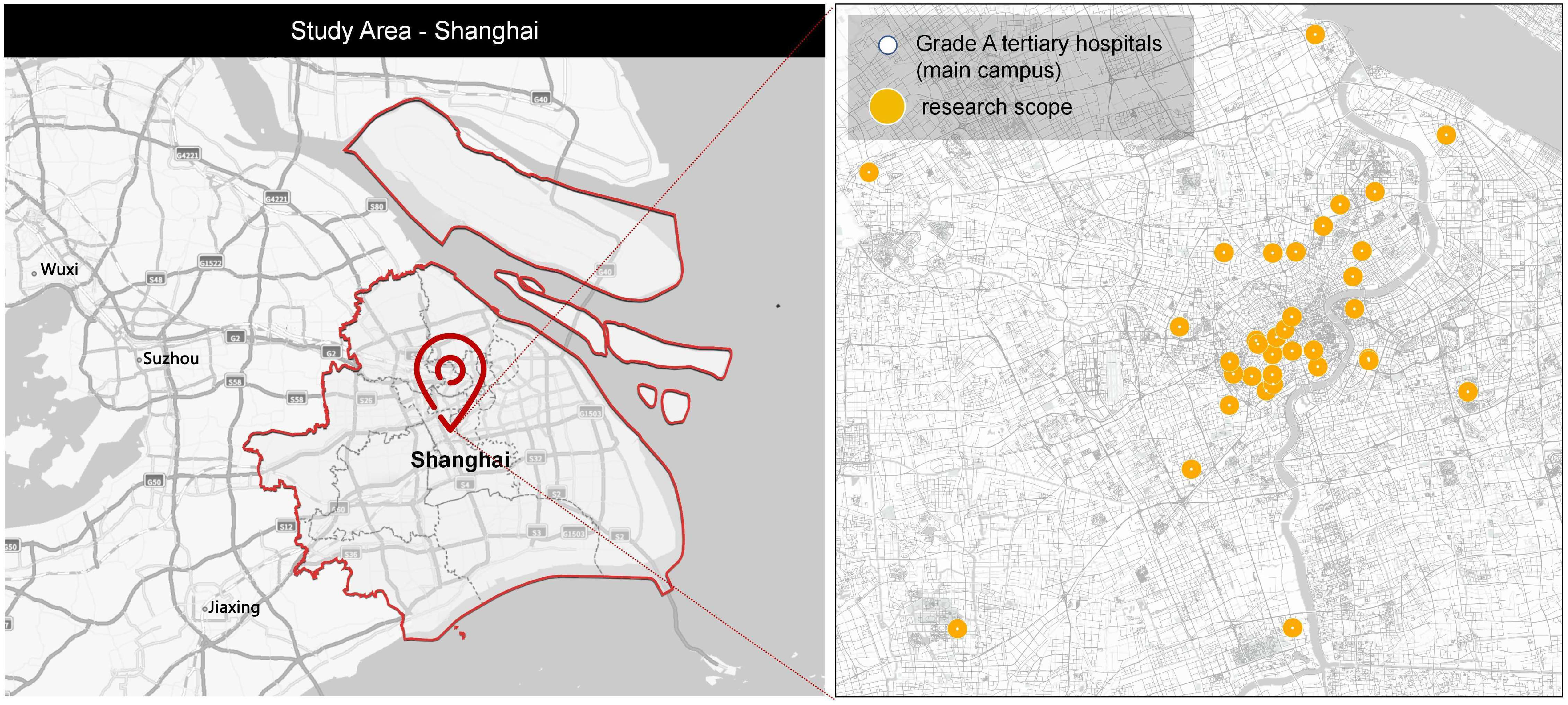
Figure 1. Study area.
Land 14 01996 g001
Figure 2. Research framework.
Land 14 01996 g002
Figure 3. Analytical parts and datasets.
Land 14 01996 g003
Figure 4. Relevant literature review and extraction of indicators.
Land 14 01996 g004
Figure 5. Sample selection of experimental and control groups.
Land 14 01996 g005
Figure 6. Calculation results for the excellent cases.
Land 14 01996 g006
Figure 7. Boxplots for twelve indicators (normalized).
Land 14 01996 g007
Figure 8. Heatmap of correlation analysis of indicators.
Land 14 01996 g008
Figure 9. Confidence interval results for (a) network accessibility, (b) facility completeness, and (c) and environmental comfort. Source: Authors.
Land 14 01996 g009aLand 14 01996 g009b
Figure 10. (a) HOD prototype in Chinese context. Specific spatial features and benchmark ranges of (b) network accessibility, (c) facility completeness, and (d) environmental comfort. Source: Authors.
Land 14 01996 g010aLand 14 01996 g010b
Figure 11. HOD performance and improvement strategies of control group.
Land 14 01996 g011
Table 1. The key indicators and calculation methods of HOD evaluation.
DimensionIndicatorDefinitionFormula
Network accessibilityRoad density
(km/km2)
The total length of the roads divided by the area R d = R l / L a
Rd: Road density; R l : Total road length in this district; L a : Land area
Road accessibilityThe number of times each street segment x is traversed by the “shortest” path between any two other street segments y and z within a particular analysis radius B T A = y N B e t w e e n e s s ( x ) z ϵ R y P ( z ) O D ( y , z , x )
This study utilized BTA9500 and BTA400, which fitted both nearby residents and patients from afar.
Bus convenienceComprehensive evaluation of attenuation coefficient of distance, station coverage, station distribution density, and number of bus stations based on AHP * C b = 0.2465 W D + 0.3786 S T C + 0.1645 S T D + 0.2104 S T N
WD = attenuation coefficient of distance
STC = station coverage
STD = station distribution density
STN = station amount
Subway convenienceComprehensive evaluation of attenuation coefficient of distance, station coverage, station distribution density, and number of subway stations based on AHP
Facility completenessLand use intensityThe intensity of land development in the region, expressed as plot ratio P R i = B i / L i
PRi: Plot ratio; B i : The total area of buildings; L i : Land area
Functional diversityThe diversity of subcategories of service facilities in the region, representing the degree of user choice when using a type of facility H = i = 1 R p i ln ( p i )
H: The POI diversity index; R : The total number of POI; p i :The relative abundance of the POI
Price differenceThe degree of dispersion in the unit price of a certain type of service facility in the region C v = σ μ ,     σ = 1 N i = 1 N ( x i μ ) 2
Cv: Coefficient of variation; σ : Standard deviation of probability distribution; μ : Mean of probability distribution
Quality satisfactionThe average score of a certain type of service facility in the region evaluated by consumers S A ¯ = 1 n s 1 + s 2 + + s n
S A ¯ : Average score of type A, s n : A certain score evaluated by consumer (5 points for total score)
Environmental
comfort
Greenery supplyThe number of available green spaces within a region, which is quantified by the Normalized Difference Vegetation Index (NDVI) N D V I = ( N I R R e d ) / ( N I R + R e d )
NIR: Near-infrared band reflectance, R e d : Red light band reflectance (this study took the mean NDVI for the region)
Greenery aggregationThe connectivity or dispersion trend of green spaces within a region, generally quantified using the Aggregation Index A I = g n m a x g n 100
gn: The number of similar adjacent patches of corresponding landscape types
Accessibility of green spaceThe distance from large green spaces or the proportion of large-scale green spaces in the surrounding area G a = S g S
Sg: The total area of various public green spaces in the surrounding area; S : Total area of the region
Visibility of green spaceThe proportion of green plants in the street view, using green visual index (GVI) as the main measurement indicator, which can be automatically identified by semantic segmentation methods V a = P g / P
Pg: The number of green pixels in the image; P : Total number of pixels in the image
* Scored by 10 experts with extensive experience in urban planning and public facilities; CR: 0.006 < 0.1 passes the consistency test.
Table 2. Impact weights of indicators.
Main DimensionsWeightIndicatorsWeight
Network accessibility0.2605Road density0.0148
Road accessibility0.0386
Bus convenience0.0386
Subway convenience0.1685
Facility completeness0.6334Land use intensity0.2702
Functional diversity0.1106
Price difference0.1043
Quality satisfaction0.1483
Environmental comfort0.1061Greenery supply0.0427
Greenery aggregation0.0043
Accessibility of green space0.0426
Visibility of green space0.0166
Table 3. HOD performance and average level of excellent cases.
NameAverage Level
Among Three Dimensions
HOD PerformanceNormalized Score
(100 Mark System)
Tenth People’s HospitalLand 14 01996 i0010.401138.95
Longhua Hospital0.325217.90
Xinhua Hospital0.371930.85
Huashan Hospital0.555181.63
Changzheng Hospital0.518371.44
Renji Hospital0.6214100.00
Children’s Medical Center0.458254.77
Children’s Hospital0.329119.00
Maternity and Infant Hospital0.313214.57
Tongji Hospital0.26060.00
Changhai Hospital0.26310.68
Zhongshan Hospital0.558482.52
East Hospital0.612397.46
Sixth People’s Hospital0.386734.95
Ruijin Hospital0.560583.12
General Hospital0.492364.21
TCM Hospital0.399138.37
IPMCH0.339121.76
Pulmonary Hospital0.443250.62
TCM-Integrated Hospital0.477460.08
Disclaimer/Publisher’s Note: The statements, opinions and data contained in all publications are solely those of the individual author(s) and contributor(s) and not of MDPI and/or the editor(s). MDPI and/or the editor(s) disclaim responsibility for any injury to people or property resulting from any ideas, methods, instructions or products referred to in the content.