Abstract
In China’s new era with a territorial spatial governance framework, the delineation of the “Three Zones and Three Lines” is a crucial step in establishing a comprehensive and vertically integrated spatial control system. The changes in the “Three Zone Space,” including ecological space, production space and living space, derived from land use abstractions, reflect the extent and manner of the impact of human activities. It serves as an important link between the macroscale (main functional zones) and the microscale (land use planning). The Three-River-Source Region is an important ecological security barrier and a demonstration area for ecological civilization in China. It is also considered one of the least suitable areas for human habitation in China. This region encompasses extensive protected natural areas, and human settlement space is scarce and valuable. The urban space, as an important spatial component of human habitation, often gives rise to significant conflicts between human activities and the environment during the implementation of development and conservation policies for remote areas in China. However, there is currently insufficient attention given to the human settlement space in this area. Therefore, it is necessary to study the evolution and driving mechanisms of urban spatial development from the perspective of the holistic and systematic nature of the “Three Zone Space”. To achieve this, the article first analyzes the characteristics of urban spatial changes from 1992 to 2020. Then, it utilizes the optimized parameter Geodetector to analyze the driving mechanisms behind these changes. The results show that: (1) urban spatial expansion has continued to grow over the past 30 years, with an increase of 774.56%; (2) agricultural space is the main source of conversion for urban spatial expansion; (3) natural factors have limited influence on urban spatial expansion, while human factors play a significant role with evident spatiotemporal heterogeneity. This study is significant for the governance and protection of river sources, the conservation of ecosystems in ecologically fragile areas, and the sustainable development of cities. It can also provide scientific references for decision-making in ecological environmental protection and the formulation of land use and spatial planning at various levels in pastoral areas.
1. Introduction
As a global leader in sustainable development, the World Commission on Environment and Development (WCED) proposed that the environmental policies and urban development of every country should actively respond to the goals of sustainable development [1]. Over the past few decades, China has undergone rapid urbanization, leading to significant changes in the spatial pattern of urban areas [2]. However, this development has also brought about ecological degradation, environmental pollution, resource scarcity and other issues. In order to achieve the Sustainable Urban Development Goals by 2030 [3], the Chinese government has put forward new requirements for territorial spatial planning, namely the delineation of “Three Zones and Three Lines”1 [4] to construct a comprehensive and coordinated spatial control system. Urban space, as the carrier of the regional economy and environment, is crucial for sustainable development. Guiding the development of urban areas in a rational manner and harmonizing the relationship between urban development and ecological protection are key to achieving sustainable economic and social development. For cities located in ecological functional areas, there is a higher degree of overlap between nature reserves and poverty-stricken areas, leading to obvious conflicts between resource protection and development. The conflicts between urban spatial development and ecological/agricultural spaces are more pronounced, and focusing solely on urban development planning may have negative impacts on natural resource conservation and ecological sustainability [5]. The new planning system emphasizes the integrity and systematic nature of territorial spatial planning and highlights the classification and governance of land. The changes in ecological space, agricultural space, and urban space (“Three Zone Space”) derived from land use abstractions reflect the extent and manner of the influence of human activities. This represents an important link between the macroscale (main functional areas) and microscale (land use planning). Therefore, it is necessary to study the evolution and driving mechanisms of urban spatial development from the perspective of the systemic integrity of “Three Zones” to effectively control the pace and scale of urbanization.
The Three-River-Source Region, located in the hinterland of the Qinghai–Tibet Plateau, is the origin of the Yangtze River, Yellow River, and Lancang River [6]. It is often referred to as the “Asian Water Tower” [7] and is recognized as an area sensitive to global climate change and an important ecological functional zone in China [8]. The region boasts numerous natural protected areas, accounting for 42% of the total area, while human settlement space is extremely limited. However, with the implementation of strategies such as the Western Development and the continuous improvement of socio-economic conditions, urban space in the Three-River-Source Region has rapidly expanded, encroaching upon ecological and agricultural areas and leading to conflicts between development and conservation, resulting in strained human–land relationships. To address this issue, it is necessary to establish a structurally rational and spatially ordered land resource element pattern from the perspective of the “Three Zone Space”, Specifically, it is important to describe the direction and quantity relationship between urban space and the other two types of spaces. By analyzing the distribution range, centroid, clustering degree, and directional changes of urban space at each time slice, the overall direction of urban-space change can be determined. This will help establish an optimized pathway for improving the urban spatial pattern. The use of a spatial cross-conversion matrix [8] and standard deviation ellipse [9] methods is suitable for achieving this goal. Currently, research on the Three-River-Source Region primarily focuses on areas such as ecosystem services, climate change, vegetation, and biodiversity [10,11,12], with limited attention given to land use, particularly in relation to urban space [13,14,15,16]. In contrast, research methods concerning urban space are relatively mature, with refined measurement approaches represented by spatial expansion-related indices and compactness [17,18,19,20]. Additionally, spatial autocorrelation methods are widely used to identify, explain, and analyze patterns and trends in land use changes [21]. The most commonly used methods are Moran’s I index (local Moran’s I index) and G coefficient (Getis-Ord local G). Among them, the former is often used to reveal the spatial patterns of the entire study area and is suitable for describing the long-term spatial pattern evolution characteristics in the Three-River-Source Region. Therefore, in this study, Moran’s I index was selected for global spatial autocorrelation assessment and significance testing. Regarding driving mechanisms, spatial econometric models and system dynamics models are widely employed, primarily focusing on the driving forces of socio-economic, population, and natural factors, while neglecting the quantification of cultural, policy, and other human factors. This poses certain limitations for the Three-River-Source Region, which is heavily influenced by ecological policies and Tibetan culture [22,23]. In comparison, Geodetector exhibits high detection sensitivity and its principle ensures the model’s immunity to multicollinearity among multiple independent variables. This model has been widely applied in various fields, including the analysis of urban spatial expansion, prediction of ecological risk factors, spatiotemporal evolution of land use/land cover types, spatial differentiation characteristics, and spatial layout. Importantly, this method can detect both numerical and qualitative data, which gives it an advantage in measuring policy and cultural factors. Therefore, this study utilizes an optimized parameter Geodetector tool to explore the impact of ecological conservation policies and Tibetan cultural factors on the evolution of urban space, aiming to provide a more comprehensive understanding of the spatiotemporal evolution characteristics and mechanisms of urban space in the Three-River-Source Region. In summary, there is currently a lack of comprehensive, long-term, and functionally integrated research on the spatial patterns, evolutionary processes, and mechanisms of urban space. Therefore, this study, within the framework of the “Three Zone Space,” examines the land resource element pattern of the Three-River-Source Region from the establishment of the market economy system to the present (1992–2020), quantitatively analyzes the scale changes, spatial transformations, and inherent driving factors of urban space, and fills the research gap in the long-term analysis of urban space in the context of territorial spatial planning in the Three-River-Source Region.
Urban areas are complex and open systems, and the Three-River-Source Region has its own unique characteristics in terms of urban spatial development due to its special natural geographical environment and diverse ethnic cultural background. These characteristics include prominent ecological features and significant regional transportation restrictions. The development of urban areas can provide employment opportunities and income sources for herders. With increasing population and input from herders, small towns play an increasingly important role in promoting pastoral area development and improving herders’ livelihoods. Since 2000, the Chinese government has implemented a series of major ecological projects in the Three-River-Source Region, constructing and completing a natural protected area system primarily based on national parks. These measures have had a positive impact on the development of urban tourism and public facilities, promoting the development and construction of urban spatial areas [24]. In the context of ecological civilization construction and the establishment of national parks in the Qinghai–Tibet Plateau, studying the urban spatial evolution and driving mechanisms in the Three-River-Source Region is not only significant for ecological environment protection, economic development, urban planning and construction, and cultural heritage conservation but also helps to better understand the process of urbanization and the implementation of relevant policies. It provides support for urban planning and management and promotes the achievement of sustainable urban development goals. The objectives of this study are as follows: first of all, to construct an analysis framework for the spatiotemporal evolution of urban spatial development in the Three-River-Source Region from the perspective of the ecological-agricultural-urban spatial system. Secondly, to describe in detail the spatiotemporal evolution characteristics of urban spatial development in the Three-River-Source Region. Lastly, to quantify the driving forces of natural changes and human activities on the evolution of urban spatial development.

2. Materials and Methods
2.1. Study Area
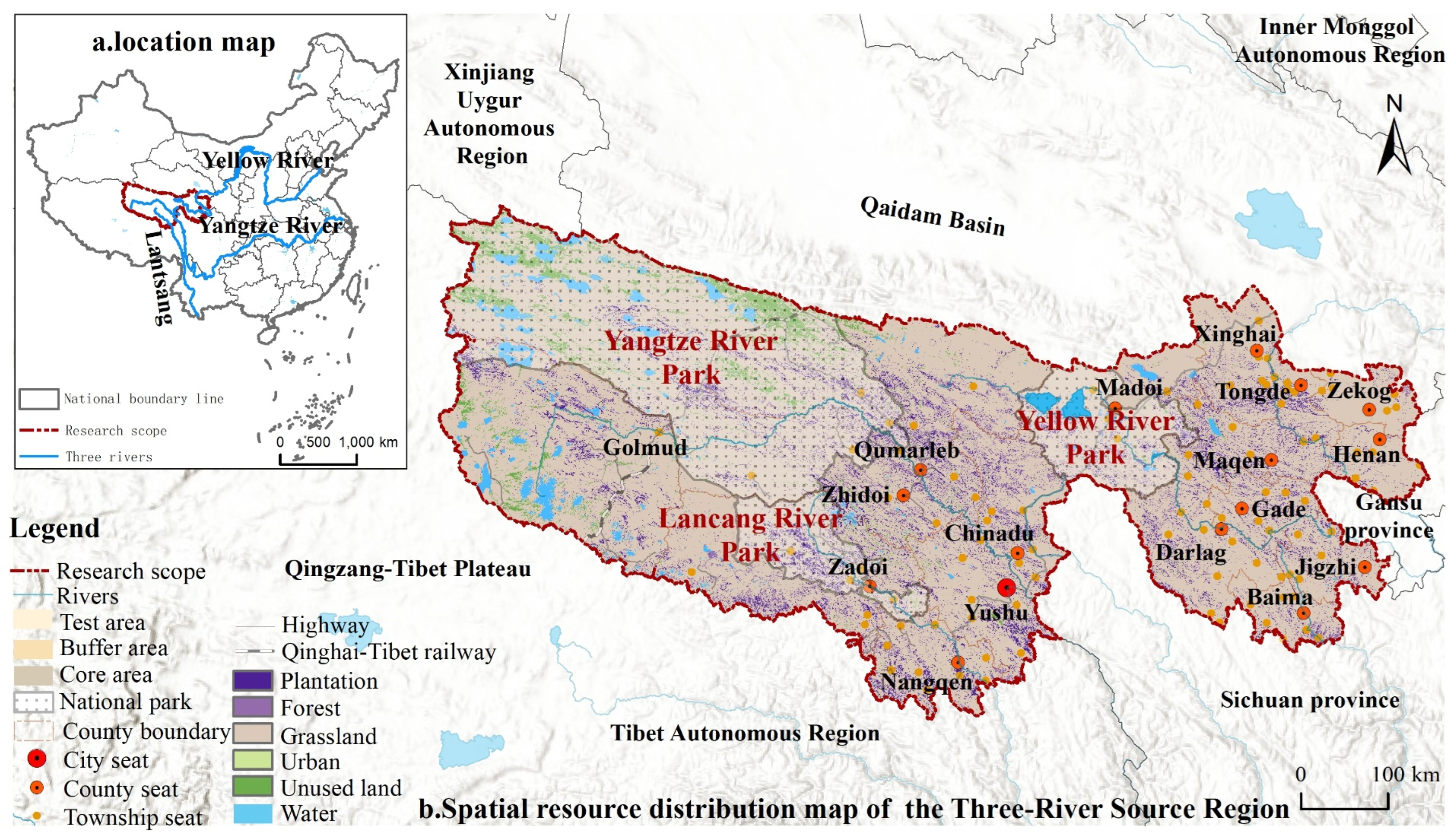
The Three-River-Source Region covers a total area of 357,000 km2, including 16 counties, 1 town, and 116 townships (Table 1). By the end of 2021, the total population of the area was 904,200, with a population density of less than 2 people per square kilometer. The population distribution is extremely uneven, with the majority concentrated in the urban areas where the prefectural and county seats are located. Due to its sensitive ecological environment, complex terrain, and remote location, the development space in the Three-River-Source Region is limited. The urban system is relatively weak, and infrastructure construction lags behind. The urbanization rate is less than 20%. Due to the constraints of the plateau’s natural conditions, many areas do not have the conditions for urban development, making it difficult to form dense and interconnected urban clusters. The distribution of towns is relatively scattered, with a loose spatial structure, and most towns have a single function. In addition, due to the small population size and extremely uneven spatial distribution, the agglomeration effect of towns is significantly inadequate. Currently, the Three-River-Source Region has initially formed a multi-level urban system centered around Yushu and Maqin, with the prefectural and county seats as the backbone and small towns as the foundation. The Chinese government is currently committed to transforming the Three-River-Source Region into a demonstration zone where humans and nature coexist harmoniously (Figure 1).
Table 1.
Administrative divisions of the Three-River-Source Region.
Figure 1.
The geographical location and spatial resources of the Three-River-Source Region.
2.2. Data
This article focuses on the urban spatial characteristics of the Three-River-Source Region, analyzing their distribution, scale, and spatial transformation. The study explores the driving mechanism of spatiotemporal evolution using each township administrative unit as a grid. The required data are presented in Table 2.
Table 2.
Data sources.
2.3. Methods
2.3.1. Spatial Classification
The article use ArcGIS technology to crop CCI-LC data from 1992 to 2020, with a time interval of every 5 years (a total of 7 periods) and identify 6 land use types by reclassifying cropland, forest land, grassland, watershed, urban and unused land. Based on the evaluation of grassland dominant functions [25], the six land use categories in the region were further consolidated into three spatial zones: “ecological, agricultural, and urban” (Table 3). From the perspective of the “Three Zone Space,” the study analyzed the evolutionary characteristics of urban space.
Table 3.
The classification scheme of three-function space in the Three-River-Source Region.
2.3.2. Spatial Autocorrelation
Spatial autocorrelation reflects the degree of mutual dependence between the characteristics of a unit and the same characteristic in its neighboring units. It is used to discover the spatial correlation of cross-transformation of a “three-zone space” at different time points. This study used global spatial autocorrelation measures to assess the clustering status of cross-transformation features and local spatial autocorrelation measures to examine the spatial differentiation patterns. This corresponds to using global Moran’s I and local Moran’s I. The formulas for calculation are as follows:
In the equation, represents the spatial weight matrix (constructed based on the criterion of shared boundaries in this study). is the number of grid units, is the observed value of the i-th unit, is the average value of the observed variable. and are the standardized values of the observed values for units i and j, respectively. The Moran’s I value ranges from −1 to 1. A Moran’s I value close to 1 indicates significant positive spatial correlation, while a value close to −1 indicates significant negative spatial correlation. When Moran’s I is 0, it indicates no spatial dependency. Based on the Local Moran’s I, the study units can be classified into four spatial patterns based on their differentiation: high-high clustering (H-H), low-low clustering (L-L), high-low clustering (H-L), and low-high clustering (L-H).
2.3.3. An Optimal Parameter-Based Geographical Detector Model
Geodetector is an important tool for detecting spatial heterogeneity [26]. In this study, the factor detection module of the optimized parameter Geodetector [27] was employed to analyze the impact of various factors on the transformation of a “three-zone space”. This method uses the q-value measure to explore the extent to which a factor X explains the spatial heterogeneity of attribute Y, and its expression is as follows:
In the equation, represents the stratification of variable or factor , which can be categorical or zonal. and are the number of units in stratum h and the entire region, respectively. and are the variances of variable Y in stratum h and the entire region, respectively. and represent the sum of within-stratum variances and the total variance of the entire region, respectively. The range of is [0, 1], where a larger value indicates a stronger spatial consistency between and and a stronger explanatory power of the independent variable on the attribute , and vice versa.
In terms of selecting influencing factors, the cross-transformation of a “three-zone space” is influenced by natural resource endowment and comprehensive human development. Based on existing research [28,29,30], and considering the factors’ quantifiability and availability, 16 indicators were selected as independent variables from 5 aspects: economy, society, geography, policy, and culture (Table 4). The selected independent variables were stratified using the Jenks natural breaks classification method, converting them from numerical variables to categorical variables. Then, using the Geodetector, factor detection was conducted for the four types of transformations in the three stages.
Table 4.
Description of variables and indicators.
3. Results
3.1. Spatial and Temporal Evolution Characteristics of Urban Space
Urban space in the Three-River-Source Region is scattered in a point-like pattern near the administrative centers of each county (or city). The density of urban space is higher in the eastern and southern parts, while it is nearly absent in the western part. Overall, the development level of urban areas is relatively low, influenced by natural conditions, socio-economic factors, and regional culture. In terms of vertical distribution, urban space is mainly concentrated within the range of 3600 to 4600 m, accounting for a high proportion of 70.96%.
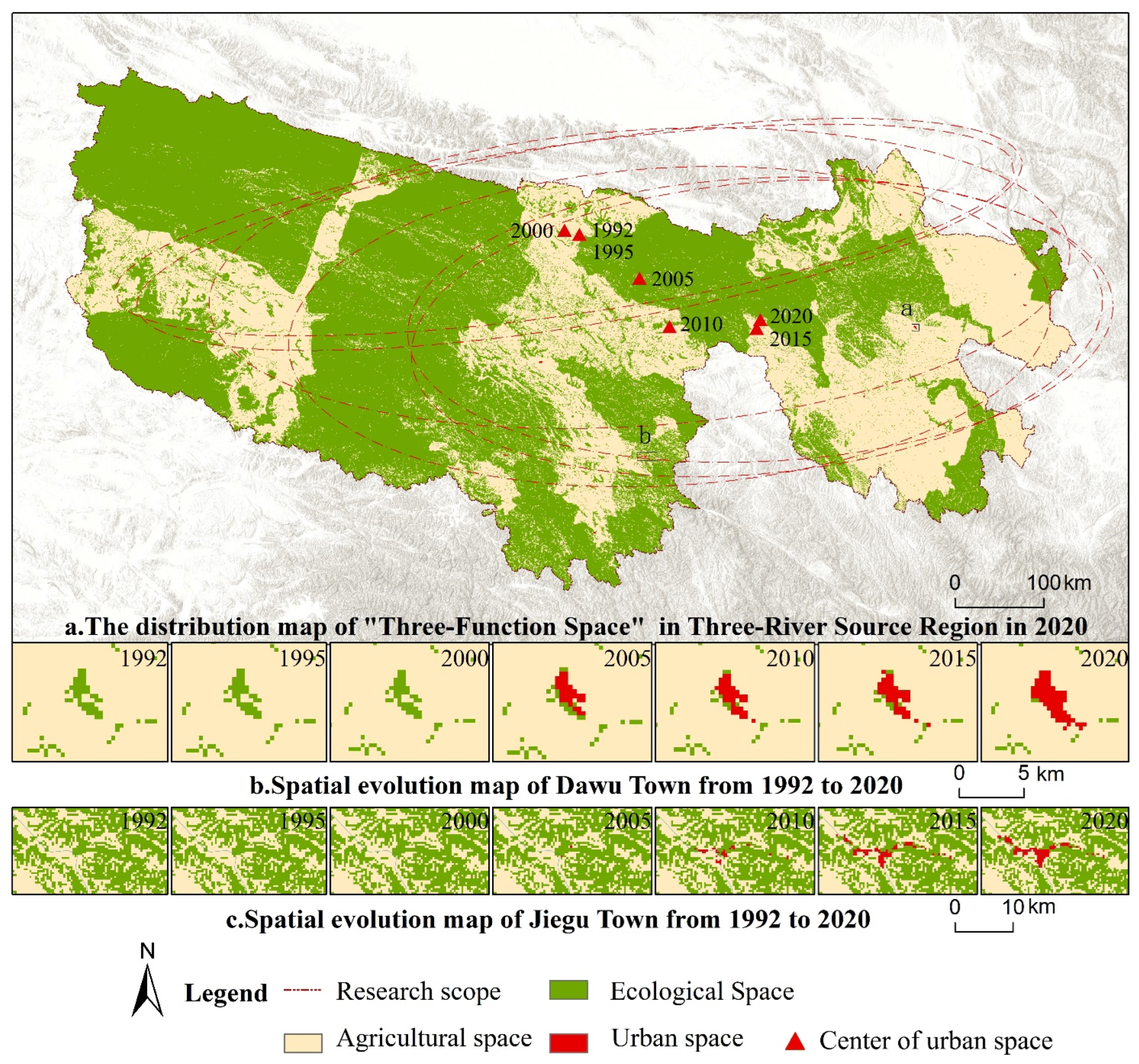
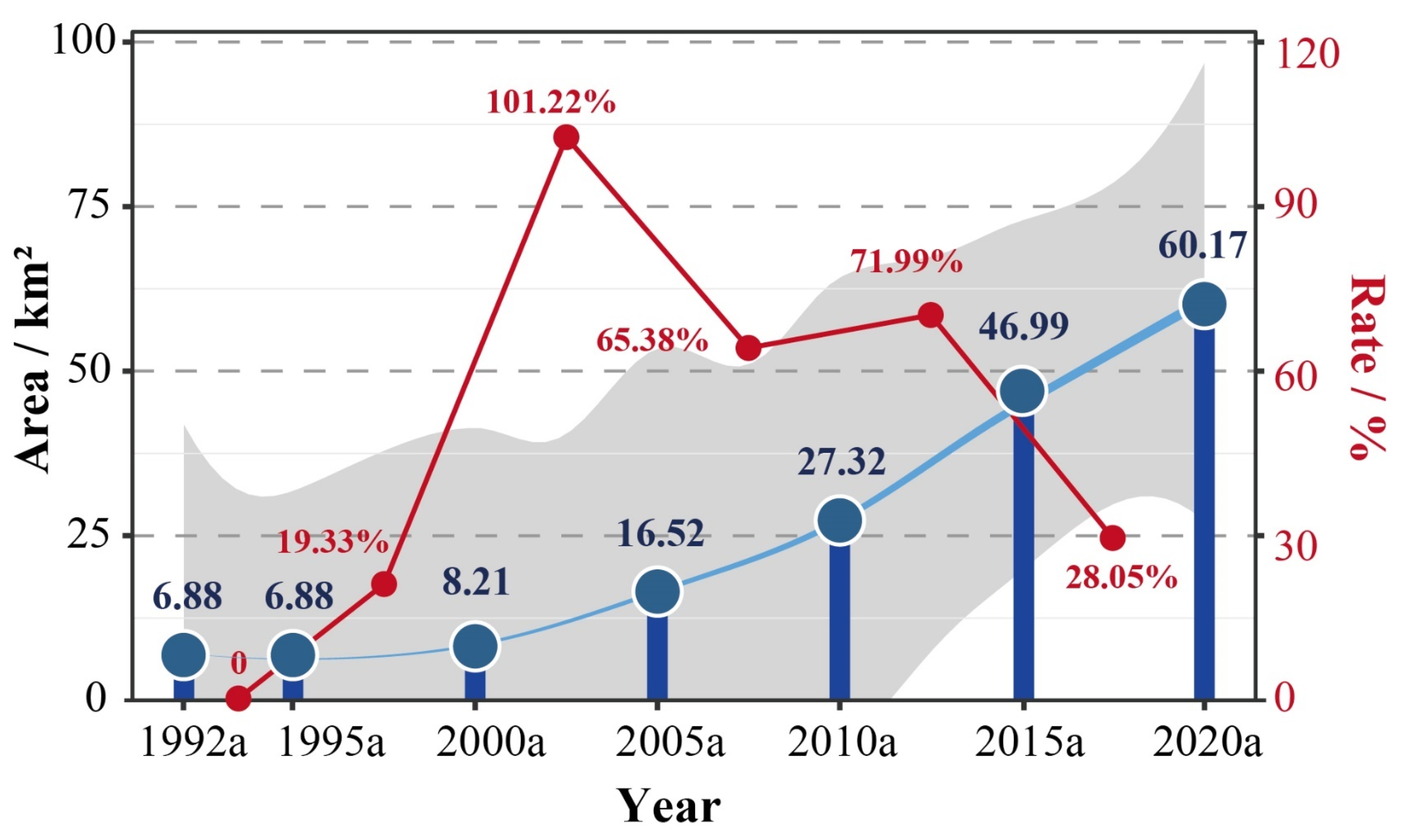
From 1992 to 2020, there have been significant changes in the urban spatial pattern in the Three-River-Source Region (Figure 2 and Figure 3). In 2020, the urban area reached 60.17 km2, accounting for 0.02% of the total land area. Over the course of 28 years, the urban area has increased by a total of 53.29 km2, representing a growth rate of 774.56%. The most significant expansion occurred between 2010 and 2015, with an increase of 19.67 km2 in just one year. The towns of Jiegu and Dawu experienced the most prominent expansion. In terms of spatial distribution, the area of the urban spatial ellipse changed significantly between 2000 and 2005, and the centroid exhibited a trend of eastward and southward movement, indicating increasing spatial dispersion. Looking at the overall centroid, from 1992 to 2005, the center of the urban space remained in Qumarleb County. In 2010, it shifted to Chinadu County, and after 2015, the center moved to Madoi County.
Figure 2.
Evolution map of urban space in the Three-River-Source Region from 1992 to 2020.
Figure 3.
The change in urban spatial area.
3.1.1. Analysis of Conversion Sources
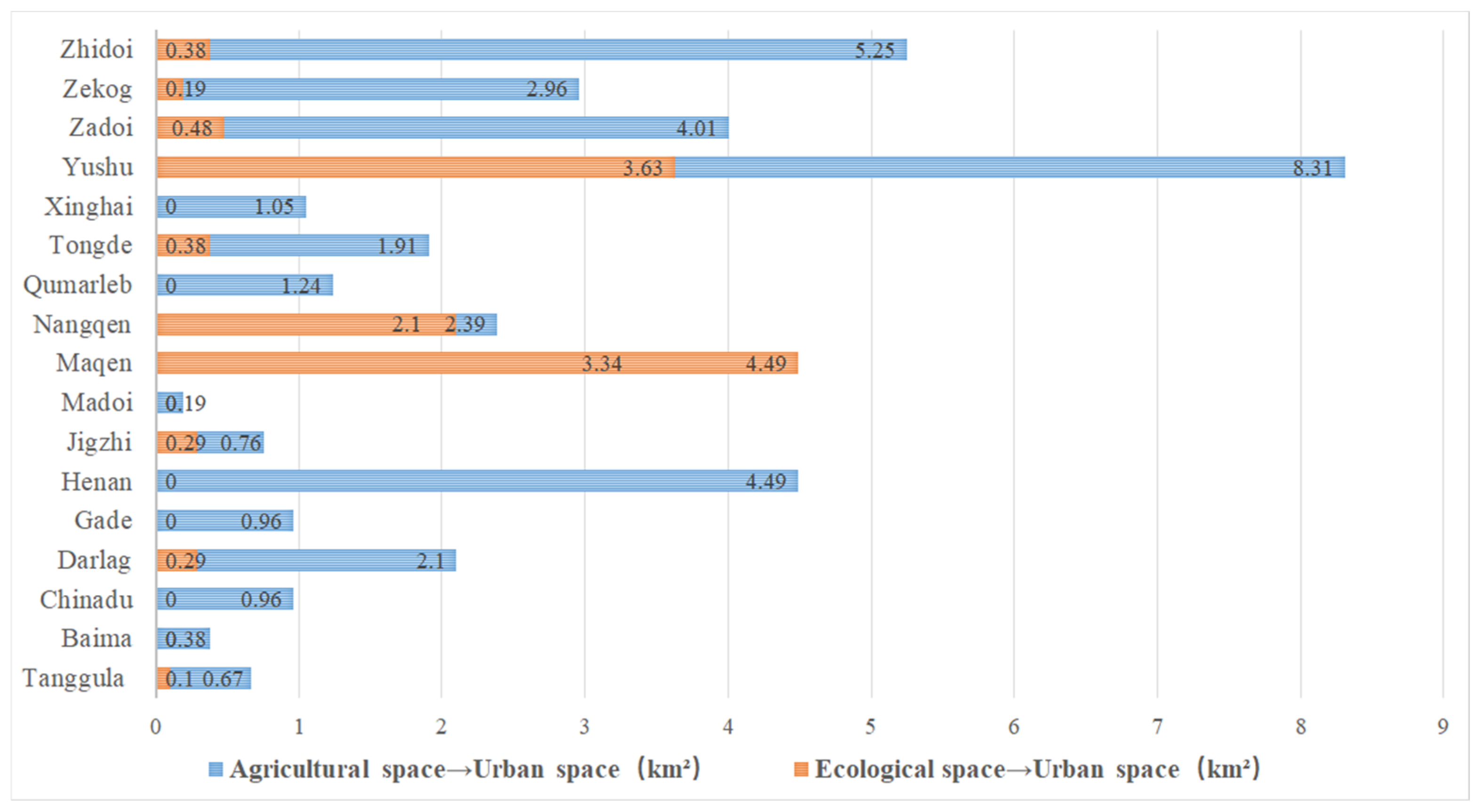
The study indicates that during the research period, urban space experienced continuous expansion and underwent transformations with ecological and agricultural spaces. Particularly, significant dynamic conversions occurred in ecological and agricultural spaces during two crucial time periods: the initiation of the Phase I and Phase II projects of the Three-River Source Ecological Protection and Construction by the government in 2005 and 2015, respectively. This period witnessed distinct characteristics in the three stages: 1992–2005, 2005–2015, and 2015–2020 (Table 5). In terms of transformation sources, agricultural space serves as a significant supplement (Figure 4). Over the past 30 years, the total conversion of agricultural space to urban space amounted to 41.0 km2, mainly occurring after 2005. The conversion was concentrated in the vicinity of county (city) seats, with notable cases in Jiegu town, Jiajiboluo town, and Youganning town. These areas are mostly located on the outskirts of nature reserves and have relatively well-developed transportation conditions. The increased population concentration has driven the demand for urban space. Additionally, the abundant agricultural resources in the surrounding areas have facilitated the conversion to urban space. Moreover, the surrounding agricultural space resources are relatively abundant, making the conversion to urban space easier to achieve. Among them, Jiegu town experienced significant urban space expansion due to post-earthquake reconstruction projects and the development of tourism since 2010. Jiajiboluo town in Zadoi County benefited mainly from the improvement of county and township road networks, facilitating the expansion of urban space. In Henan County, Huangnan Tibetan Autonomous Prefecture, the transformation of urban space in Youganning town was primarily promoted through migration projects [31].
Table 5.
Data of cross-conversion of three-zone space in the Three-River-Source Region from 1992 to 2020.
Figure 4.
Urban spatial inflow data of administrative units in the Three-River-Source Region (1992–2020).
The scale of ecological space conversion to urban space accounts for only 30% of the total conversion, mainly concentrated in Jiegu town and Dawu town, where the urbanization level and cultural tourism income are relatively high. Conversion in other counties is very low or nonexistent. This indicates that the expansion of urban space prioritizes encroachment on agricultural space, and the conversion of ecological space to urban space carries a significant economic cost due to its complex internal structure [32].
3.1.2. Conversion Scale and Speed
From the temporal characteristics of the conversion, the outflow of ecological space mainly occurred before 2005, with a total outflow of 468.28 km2. After 2005, there was a significant increase in inflow, especially during the period of 2015 to 2020 (+435.62 km2). In contrast, the trend of agricultural space conversion is the opposite. Before 2005, there was an increase (+458.64 km2), but after 2005, it has been continuously decreasing, especially during the period of 2015 to 2020 (−448.8 km2). The cross-conversion between the three types of spaces is mainly characterized by the mutual exchange between ecological space and agricultural space. Urban space continues to exhibit a growth trend, with a more significant inflow observed during the period of 2005 to 2015. Specifically, the conversions of agricultural space and ecological space to urban space were more pronounced during the period of 2005 to 2015. In the other two periods, the conversion of agricultural space to urban space showed a slightly higher quantity in the later period (10.1 km2) compared to the earlier period (7.0 km2), with a higher conversion rate in the later period (4.9%) compared to the earlier period (1.3%). The conversion of ecological space to urban space was comparable in both the earlier and later periods, with conversion quantities of 2.7 km2 and 3.1 km2, respectively. The conversion rate in the earlier period (1.7%) was slightly higher than that in the later period (1.5%).
3.1.3. Dynamic Spatial Correlation
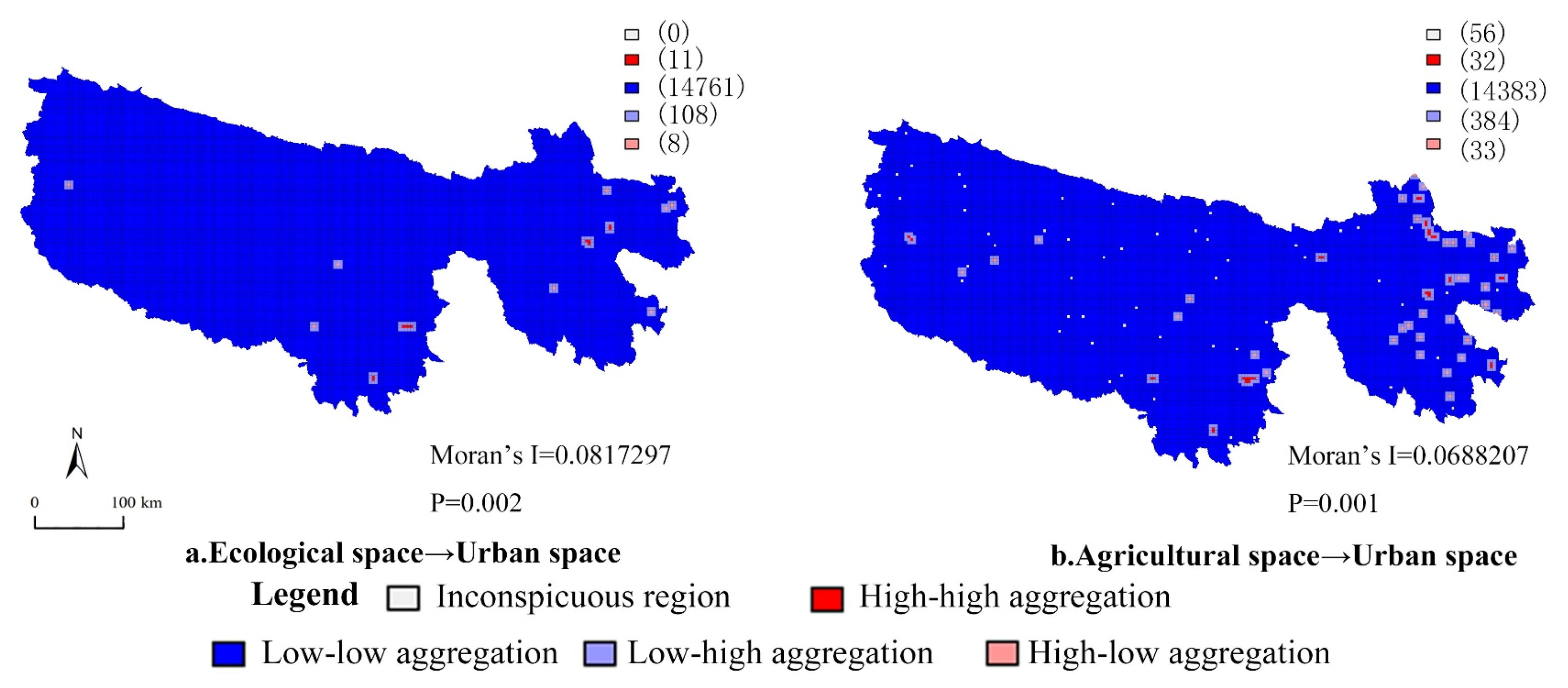
By the end of 2020, the proportions of ecological, agricultural, and urban space were 61.94, 38.04, and 0.02%, respectively. Over the past 30 years, both ecological and agricultural spaces have decreased, while urban space has continued to grow. However, due to the small base of urban space, the overall pattern of the three remains relatively stable. Spatial correlation analysis of the interconversion related to urban space was conducted using spatial analysis tools in GeoDa software, revealing spatial dependence and structure in different locations. By calculating the Moran’s I index, the global spatial autocorrelation of urban spatial type conversions in the Three-River-Source Region was obtained (Figure 5). The results revealed a clustering trend and positive spatial correlation in the urban spaces derived from ecological and agricultural spaces. Specifically, among the grid cells where ecological spaces transformed into urban spaces, 99.2% exhibited an aggregated distribution (LL and LL types), with the majority being LL type cells covering the entire study area. Dispersed distribution (LH and HL types) accounted for only 0.8% and was mainly concentrated in county seats and urban centers. Regarding the grid cells where agricultural spaces transformed into urban spaces, 0.4% showed non-significant autocorrelation, 0.2% exhibited HH-type distribution, primarily concentrated in the urban centers of Yushu City, Nangqian County, Zadoi County, Madoi County, Henan County, and Jiuzhi County. Furthermore, 96.6% exhibited LL-type distribution, widely distributed throughout the study area, while LH-type distribution was located on the outskirts of HH and HL types, mostly concentrated in the eastern part of the study area.
Figure 5.
The results of spatial autocorrelation analysis for the transformation of urban spatial patterns in the Three-River-Source Region from 1992 to 2020.
3.2. Driving Mechanism
3.2.1. The Results of Factor Detection
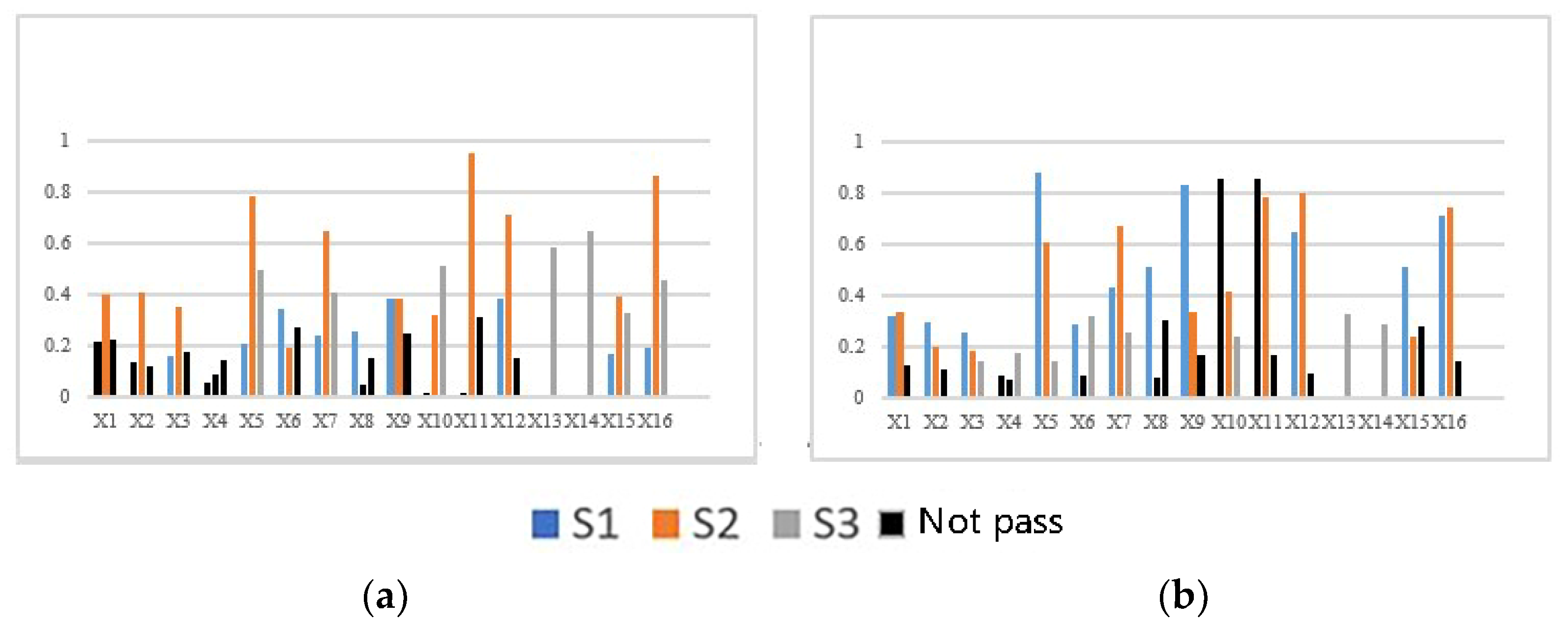
Based on the q-values for each stage (Table 6, Table 7, Table 8 and Table 9), the contribution rates of natural environmental factors (X1–X3) remained consistently low (14 to 43%), indicating that climate conditions and terrain played a fundamental constraining role in the conversion process. Transportation and location factors (X4–X6) had significant effects in the early and middle stages (13 to 90%). Economic factors (X9–X13) had generally high q-values and showed pronounced stage-specific changes, indicating their key driving role. Social factors (X7–X8) and policy factors (X14–X15) had a more prominent influence on the mutual conversion between “ecological” and “agricultural” spaces. The q-value for cultural factors (X16) declined significantly in the later stage, suggesting a decrease in their impact (Figure 6). This indicates that human factors exhibit strong spatial and temporal heterogeneity in their effects.
Table 6.
Geographical detection results of geographical factors.
Table 7.
Geographical detection results of social factors.
Table 8.
Geographical detection results of economic factors.
Table 9.
Geographical detection results of policy and culture factors.
Figure 6.
The influence factor contribution rate of the transformation scale of “three-zone space” in the Three-River-Source Region. (a) Ecological space → urban space; (b) Agricultural space → urban space.
Analysis revealed that X5 (average distance to railway), X7 (population count), X13 (cultural tourism income), and X14 (grazing prohibition subsidy) were the dominant factors influencing the four types of cross-conversion in the “Three Zone Space” of the Three-River-Source Region. Among them, X5 (average distance to railway) and X7 (population count) exhibited a consistent and significant influence across all three stages. X13 (cultural tourism income) and X14 (grazing prohibition subsidy) had missing data in the first two stages, but showed significant contributions in the later stage, with relatively high average contribution values.
3.2.2. Driving Mechanism Analysis
The evolution of urban space in the Three-River-Source Region is the result of the interaction between human and natural systems. The process of evolution is not only constrained by natural factors but also significantly influenced by human activities. It is a complex and open system with temporal and spatial characteristics.
Specifically, the overall conversion of ecological space to urban space accounted for only 0.5% of the total converted area. In terms of the contribution rate of q-values, economic, social, and policy-cultural factors played significant roles. Among them, economic factors had a higher proportion in the first stage, social factors showed significant enhancement in the second stage, and policy and cultural factors exerted a greater driving force in the third stage, while the driving role of economic factors gradually decreased. Among the geographical factors, only “average distance to the railway” showed significance through statistical tests. In practice, during the first stage, the transformation was mainly concentrated in Dawu Town, where Maqin County had the highest level of fiscal revenue, resident savings, and urbanization rate in the region, indicating that a higher level of economic development brings greater transformation capacity. In the second stage, Jiegu Town stands out in terms of transformation. During this period, Yushu City experienced a population increase of 22,791, the largest increment in the region. With the implementation of post-earthquake reconstruction projects, infrastructure has been improved, and fiscal expenditure levels reached the highest in the region. This may be understood as a larger scale of population growth and economic investment promoting the conversion from ecological space to urban space. In the third stage, the transformation quantities of the two towns were roughly equal, which is closely related to the strategic goals of promoting regional coordinated development during the “13th Five-Year Plan” period in Qinghai.
In the conversion from agricultural space to urban space, geographical and economic factors play a major driving role. In the early stage, X5 (average distance to the railway), X11 (residents’ savings), and X10 (local general budget expenditure) rank as the top three explanatory factors. Among them, the transformation was most prominent in Youganing Town, Henan Mongolian Autonomous County. The county has well-preserved Hekou grassland with a solid foundation in animal husbandry. The opening of the Qinghai–Tibet Railway further promoted the development of the animal husbandry economy, and economic growth accelerates population aggregation. The expansion of urban space mainly involves encroachment on the abundant agricultural space resources in the surrounding areas. In the middle stage, X12 (primary industry output value) became the most influential factor (80%). In the later stage, the explanatory power of each factor decreased compared to the earlier stage. X6 (average distance to highways) and X13 (cultural tourism income) ranked jointly as the most influential factors, but their explanatory power is only 32%. The transformation in these two stages was most prominent in Jiegu Town and Dawu Town. This can be explained by the fact that, since 2005, the development of animal husbandry, road transportation, and cultural tourism have greatly promoted the level of urbanization.
4. Discussion
4.1. The Effect of Natural Factors on Urban Space Expansion Is Not Obvious
Research indicates that natural factors have a limited impact on urban spatial expansion in the Three-River-Source Region, which is closely related to the region’s unique natural environment and the process of urbanization. Firstly, the complex geographical environment, rugged terrain, and relatively poor geological and hydrogeological conditions in the Three-River-Source Region make it difficult to utilize land resources. Secondly, the region has a lower level of development and insufficient development momentum, resulting in the expansion of urban areas being limited to small areas around old urban areas and already cultivated farmland, without significant conflicts between humans and the environment. Lastly, protective policies, through strict land use regulations, restrict the scale and scope of urban expansion.
Simultaneously, with social and economic development, the process of urbanization has accelerated, leading to continuous changes in industrial structure and lifestyles. This, to some extent, has weakened the impact of natural factors on urban spatial expansion. Therefore, in the Three-River-Source Region, the expansion of urban space is driven more by people’s demand for urbanization and corresponding policies and culture than natural factors. However, this does not imply that natural factors have no impact on urban spatial expansion in the Three -River Source Region. Instead, they serve as fundamental constraints that determine the location and direction of cross-conversion. It is essential to utilize and protect natural resources scientifically and rationally to promote the sustainable development of urban spaces.
4.2. Human Factors Have Obvious Spatiotemporal Heterogeneity on the Evolution of Urban Space
The conversion of urban space is primarily sourced from agricultural space (1.7%), followed by ecological space (0.5%). The factors influencing their conversion are predominantly human factors and exhibit significant spatiotemporal heterogeneity. In the case of agricultural space conversion, economic and geographical factors play a major driving role. Before 2005, it was driven by “transportation + economy.” Between 2005 and 2015, it transitioned to an “economy + culture”-driven pattern, while during the period from 2015 to 2020, it reverted to “transportation + economy” as the driving force. As for the conversion of ecological space, in the first phase, economic factors made the highest contribution, indicating an economy-driven pattern. In the middle phase, the contribution of social factors significantly increased. In the later stage, policy and cultural factors started to play a major driving role. The roles of these driving factors have been validated in the research findings of most scholars. This study further refines the drivers during different time periods, which can provide valuable insights for other research cases.
In practice, firstly, economic factors are the most significant drivers of urban space expansion. The improvement in economic conditions consistently catalyzes urban expansion, accelerating urban spatial development and promoting outward expansion. Secondly, with the continuous enhancement and improvement of infrastructure construction by the national and local governments in the region, transportation conditions have gradually improved. Rural areas in the Three-River-Source Region are better connected economically, in terms of communication, and have improved market access, facilitating the conversion of agricultural space into urban space. Finally, policy and cultural factors also play a crucial role in urban space expansion. The government has implemented a series of policies and measures to encourage and promote urbanization in the Three-River-Source Region, providing favorable policy support for urban space expansion. Examples include increased investment in urban infrastructure construction, encouraging private capital participation in urban development, and strengthening urban planning and construction. Additionally, cultural factors also contribute significantly to the urbanization process. The influx, dissemination, and acceptance of new cultural trends and lifestyles lead to changes in local residents’ consumption habits and demands. The shift in social values also propels the process of urbanization. Furthermore, as social functions become increasingly differentiated, cultural activities and exchanges between urban and rural residents become more frequent, naturally driving the expansion of urban space. With the strategic deployment of “Three-River-Source Region” conservation and ecological civilization construction, policy and cultural factors have become important means to promote the expansion of urban space. By guiding the urbanization process properly, balanced development between urban areas and the natural environment and ecological resources can be achieved.
4.3. Research Prospects and Limitations
In history, the human settlements in the region were primarily represented by various functional settlements such as castles, military towns, post stations, temples, villages, and hamlets. In the present, based on population concentration and administrative levels, the human habitat can be roughly divided into three levels: the first level comprises the capitals of the prefectures, cities, and counties (currently 16 in total); the second level consists of townships (currently 115 in total); and the third level includes community centers, village committees, and other villages and pastoral points (currently, approximately 1100). The towering snow-capped mountains, thin air, and extensive permafrost and glaciers make the Three-River-Source Region one of the least suitable areas for human habitation in China. However, the human settlement pattern in this area exhibits a precious example of harmonious coexistence between humans and nature, making it an extremely valuable example in the history of human settlements and providing profound inspiration for China’s ecological civilization construction. In the present era, as a key ecological functional area and a leading demonstration area for ecological civilization in China, effectively managing its natural resources is an important task and challenge for the region. Under the promotion of the urbanization process and ecological civilization construction, the optimization path for urban spatial development in the Three-River-Source Region should be based on ecological protection, guided by industrial transformation, achieved through optimized urban planning and land use, and supported by strengthened urban functions. It should be a path that promotes the mutual development of urbanization and ecological protection and the integrated development of urban and rural areas. Specifically, the optimization of urban spatial development in the Three-River-Source Region should focus on improving the resource allocation and carrying capacity of the “Three Zones,” enhancing the carrying capacity of central cities such as Yushu, coordinating the layout of townships and villages at the county level, and optimizing the urban–rural structure. It should also involve improving the living circles of urban and rural communities, forming urban clusters centered around county towns and central towns, guiding farmers and herders to gather in an orderly manner near urban areas, and promoting local urbanization development. Furthermore, leveraging the ecological and ethnic cultural characteristics of the plateau, it is important to prioritize the construction of a cluster of green towns centered around Yushu and Maqin, as well as cultural and tourism towns.
This study is based on the unique characteristics of the research area and strives to comprehensively consider the influence of both natural and human factors in the driving mechanisms. However, there are still some limitations in this study. Firstly, the analysis in this study focuses only on the changes in the scale of the “Three-Zones”, with less attention given to the hidden forms of land, such as property rights, management methods, inputs, and outputs. Secondly, the Three-River-Source Region exhibits strong seasonal variations, and it requires detailed research on the seasonal and cyclical changes in typical human activities such as tourism and pastoralism. Future research needs to further integrate economic data, field surveys, and POI (points of interest) data for further exploration. It is necessary to select and express the driving factors more accurately. For example, the current characterization of transportation factors focuses on road network density, but it has limitations in accurately reflecting the accessibility of the region and the connectivity of public service resources. Subsequent research can design more targeted driving factors for quantitative representation. Combining the research results of the interaction of multiple factors with the simulation and prediction of urban land changes in urban agglomerations, the application value of the research results can be explored.
5. Conclusions
The Three-River-Source region is one of the typical ecologically fragile areas and important ecological functional zones in China. The ecological environment and natural landscapes of the Three-River-Source Region are of great significance to China’s ecological security. With the acceleration of urbanization, the planning and management of urban space in the Three-River-Source Region also face new challenges. Based on the territorial spatial governance framework of the “Three Zone Space,” this paper analyzes the long-term spatiotemporal evolution characteristics of urban space in the region and examines the inherent driving mechanisms of its evolution. The following conclusions are drawn from the research:
Since the 1990s, the urban space in the region has undergone continuous expansion. In terms of the expansion scale, the urban space area has increased by a net 53.29 km2 during the study period, with a growth rate of 774.56%. The expansion speed has shown a pattern of “slow growth—accelerated growth—deceleration”. In terms of the sources of expansion, the increase in urban space is primarily due to the conversion of agricultural space. Over the past 30 years, 41.0 km2 of agricultural space has been transformed into urban space, while only 12.3 km2 of ecological space has been converted. These conversions are concentrated in the vicinity of county (city) seats. Regarding the expansion mechanisms, the evolution of urban space in the Three-River-Source Region is influenced by natural factors, socio-economic factors, as well as cultural and policy factors. Firstly, the high-altitude and complex natural geographic conditions in the Three-River-Source Region serve as a fundamental constraint on the location and direction of cross-transformations, but they have a less significant impact on urban space expansion. Secondly, economic factors play a crucial role in driving urban space expansion. Despite the relatively weak socio-economic environment in the Three-River-Source Region, the abundant grassland resources and top-level tourism resources, such as the output value of animal husbandry and income from ecological tourism, have become key drivers for urban expansion, significantly influencing the scale and speed of conversions. Finally, policy and cultural factors also play an important role in urban space expansion. With the strategic deployment of national policies for the protection of the Three-River-Source Region and the construction of ecological civilization, policy and cultural factors have increasingly become important means to promote urban space expansion.
This study has significant implications for promoting ecosystem protection in ecologically vulnerable areas, enhancing high-quality urban development, and achieving regional harmony between humans and the environment for sustainable development. It also provides valuable references for strengthening the governance and protection of river sources and accelerating the formation of a scientifically rational pattern for land development and conservation.
Author Contributions
Conceptualization, K.Z. and W.W.; methodology, K.Z. and L.Y.; software, K.Z. and L.Y.; formal analysis, K.Z. and L.Y.; investigation, K.Z., L.Y. and W.W.; resources, J.Z.; data curation, K.Z.; writing—original draft preparation, K.Z.; writing—review and editing, K.Z. and W.W.; visualization, K.Z. and L.Y.; supervision, W.W.; project administration, W.W.; funding acquisition, W.W. All authors have read and agreed to the published version of the manuscript.
Funding
This research was funded by the Major Issues of the National Development and Reform Commission entrusted to the project “Study on Spatial Strategic Pattern and Spatial Structure Optimization Direction in the Fourteenth Five-Year Period”, grant number No. 201708.
Data Availability Statement
Not applicable.
Conflicts of Interest
The authors declare no conflict of interest.
Note
| 1 | Three Zones refer to the “three types of space” of towns, agriculture and ecology, and Three Lines refers to the red line corresponding to the three types of space. |
References
- Bourgeois, W. Sustainable Development: A Useful Family of Concepts after all. Environ. Ethics 2014, 36, 259–282. [Google Scholar] [CrossRef]
- Wang, K.; Xu, H.; Zhou, Y.J. The Essence of "National Spatial Planning Theory": Methods and Applications of Precise Analysis and Adaptive Technology. Urban Plan. Forum 2022, 8–17. [Google Scholar] [CrossRef]
- United Nations Statistics Division of Sustainable Development Goals. Available online: https://unstats.un.org/sdgs/indicators/indicators-list/ (accessed on 3 May 2023).
- Yue, W.Z.; Wang, T.Y.; Zhen, Y.L. Unified Zoning of Territorial Space Use Control Derived from the Core Concept of “Three Types of Spatial Zones and Alert-lines”. China Land Sci. 2020, 34, 52–59. [Google Scholar] [CrossRef]
- Wang, Q.X.; Cao, W.; Huang, L. Evolutionary characteristics and zoning of ecosystem functional stability on the Qinghai-Tibet Plateau. Acta Geogr. Sin. 2023, 5, 1104–1118. [Google Scholar] [CrossRef]
- Fang, Y. The effects of natural capital protection on pastoralist’s livelihood and management implication in the source region of the Yellow River, China. J. Mt. Sci. 2013, 10, 885–897. [Google Scholar] [CrossRef]
- Wang, J.F.; Xu, C.D. Geodetector: Principle and prospective. Acta Geogr. Sin. 2017, 72, 116–134. [Google Scholar] [CrossRef]
- Tong, L.; Xu, X.; Fu, Y.; Li, S. Wetland Changes and Their Responses to Climate Change in the Three-River Headwaters Region of China since the 1990s. Energies 2014, 7, 2515–2534. [Google Scholar] [CrossRef]
- Zhang, Y.; Zhang, C.; Wang, Z.; An, R.; Li, J. Comprehensive Research on Remote Sensing Monitoring of Grassland Degradation: A Case Study in the Three-River Source Region, China. Sustainability 2019, 11, 1845. [Google Scholar] [CrossRef]
- Jiang, L.; Yu, L. Analyzing land use intensity changes within and outside protected areas using ESA CCI-LC datasets. Glob. Ecol. Conserv. 2019, 20, e00789. [Google Scholar] [CrossRef]
- Fang, Y. Managing the Three-Rivers Headwater Region, China: From Ecological Engineering to Social Engineering. Ambio 2013, 42, 566–576. [Google Scholar] [CrossRef]
- Huyan, J.Q.; Xiao, J.; Yu, B.W.; Xu, W.H. Research progress in function zoning of nature reserves in China. Acta Ecol. Sin. 2014, 34, 6391–6396. [Google Scholar] [CrossRef]
- Yang, J.; Wang, Y.C.; Guo, L.; Xue, D. Patterns and Structures of Land Use Change in the Three Rivers Headwaters Region of China. PLoS ONE 2015, 10, e0119121. [Google Scholar] [CrossRef]
- Han, Z.; Song, W.; Deng, X.; Xu, X. Grassland ecosystem responses to climate change and human activities within the Three-River Headwaters region of China. Sci. Rep. 2018, 8, 9079. [Google Scholar] [CrossRef]
- Chung, M.G.; Pan, T.; Zou, X.; Liu, J. Complex Interrelationships between Ecosystem Services Supply and Tourism Demand: General Framework and Evidence from the Origin of Three Asian Rivers. Sustainability 2018, 10, 4576. [Google Scholar] [CrossRef]
- Zhang, Y.; Zhang, C.; Wang, Z.; Chen, Y.; Gang, C.; An, R.; Li, J. Vegetation dynamics and its driving forces from climate change and human activities in the Three-River Source Region, China from 1982 to 2012. Sci. Total Environ. 2016, 563–564, 210–220. [Google Scholar] [CrossRef]
- Feng, Y.F.; Li, C.; Li, Y.; Ma, J.J.; Feng, J.M. Characteristics of urban land expansion and its mechanism of cities and towns around the floodplain of the Lower Yellow River. Geogr. Res. 2023, 42, 955–976. [Google Scholar] [CrossRef]
- Sun, S.L.; Du, W.W.; Li, Y.C.; Qian, Y. Research on the Realization Approach of the Three-dimensional Spatial Morphology Index of Settlement Landscape Space. J. Southwest Univ. (Nat. Sci. Ed.) 2022, 44, 210–220. [Google Scholar] [CrossRef]
- Jia, Z.; Meng, C.; Zhou, Z. A 3-D morphological approach on spatial form and cultural identity of ethnic mountain settlements: Case from Guizhou, China. J. Mt. Sci. 2021, 18, 1144–1158. [Google Scholar] [CrossRef]
- Zhou, X.Y.; Wang, S.Q. Spatiotemporal Response of Ecosystem Service Values to Urban Expansion in the Yangtze River Economic Belt Based on the GTWR Model. Res. Soiland Water Conserv. 2021, 28, 300–307. [Google Scholar] [CrossRef]
- Zheng, T.; Chen, S.; Zhang, T.; Xu, L.T.; Ma, L.Y. Research on driving mechanism of ecological land loss based on Bayesian network. J. Nat. Resour. 2020, 35, 2980–2994. [Google Scholar] [CrossRef]
- Zhang, K.; Wei, W.; Zhou, J.; Yin, L.; Xia, J.N. Spatial-temporal Evolution Characteristics and Mechanism of “Three-Function Space” in the Three-Rivers Headwaters’ Region from 1992 to 2020. J. Geo-Inf. Sci. 2022, 24, 1755–1770. [Google Scholar] [CrossRef]
- Wei, R.Z. Cultural changes and cultural adaptation of grassland ecological migration: A case study of ecological migration in San-jiang-yuan. J. Southwest Univ. Natl. 2013, 4, 50–54. [Google Scholar] [CrossRef]
- Yu, Y.; Guo, Z.; Wang, Y.C. Spatial patterns and driving forces of land change in Tibetan-inhabited Three Rivers Headwaters region, China. J. Mt. Sci. 2019, 16, 207–225. [Google Scholar] [CrossRef]
- Zhang, M.; Zheng, L.J.; He, Y.H. Characteristics and influencing factors of urban expansion in the Yangtze River Economic Belt in recent 30years. Sci. Surv. Mapp. 2022, 47, 186–196. [Google Scholar] [CrossRef]
- Wang, Y.; Cheng, C.; Xie, Y.; Liu, B.; Yin, S.; Liu, Y.; Hao, Y. Increasing trends in rainfall-runoff erosivity in the Source Region of the Three Rivers, 1961–2012. Sci. Total Environ. 2017, 592, 639–648. [Google Scholar] [CrossRef]
- Song, Y.; Wang, J.; Ge, Y.; Xu, C. An optimal parameters-based geographical detector model enhances geographic charac-teristics of explanatory variables for spatial heterogeneity analysis: Cases with different types of spatial data. GIScience Remote Sens. 2020, 57, 593–610. [Google Scholar] [CrossRef]
- Shao, Q.Q.; Fan, J.W.; Liu, J.Y.; Huang, L.; Cao, W.; Liu, L.L. Target-based Assessment on Effects of First-stage Ecological Conservation and Restoration Project in Three-river Source Region, China and Policy Recommendations. Bull. Chin. Acad. Sci. 2017, 32, 35–44. [Google Scholar] [CrossRef]
- Ma, X.F.; Huang, X.D.; Deng, J.; Wang, Y.L.; Liang, T.G. Comprehensive risk assessment of snow disasters in Qinghai Province. Acta Pratacult. Sin. 2017, 26, 10–20. [Google Scholar] [CrossRef]
- Zhong, S.Y.; Feng, Y.J. Research on the system dynamics of ecological migration engineering and ecosystem sustainable development. China Popul. Resour. Environ. 2018, 28, 10–19. [Google Scholar]
- Du, F. Research on Ecological Migration of San-Jiang-Yuan, 1st ed.; China Social Sciences Press: Beijing, China, 2014; pp. 67–82. [Google Scholar]
- Wei, W.; Yin, L.; Xie, B.; Bo, L.M. Spatial-temporal Evolution Characteristics and Mechanism of “Three-function Space” in the Yellow River Basin Under the Background of Territorial Spatial Planning. Econ. Geogr. 2022, 42, 44–55. [Google Scholar] [CrossRef]
Disclaimer/Publisher’s Note: The statements, opinions and data contained in all publications are solely those of the individual author(s) and contributor(s) and not of MDPI and/or the editor(s). MDPI and/or the editor(s) disclaim responsibility for any injury to people or property resulting from any ideas, methods, instructions or products referred to in the content. |
© 2023 by the authors. Licensee MDPI, Basel, Switzerland. This article is an open access article distributed under the terms and conditions of the Creative Commons Attribution (CC BY) license (https://creativecommons.org/licenses/by/4.0/).