Article

Assessment of Heat Mitigation Services Provided by Blue and Green Spaces: An Application of the InVEST Urban Cooling Model with Scenario Analysis in Wuhan, China
1
Hubei Key Laboratory of Regional Development and Environmental Response, Hubei University, Wuhan 430062, China
2
State Key Laboratory of Geodesy and Earth’s Dynamics, Innovation Academy for Precision Measurement Science and Technology, Chinese Academy of Sciences, Wuhan 430077, China
3
State Key Laboratory of Geo-Information Engineering, Xi’an 710054, China
*
Author to whom correspondence should be addressed.
Land 2023, 12(5), 963; https://doi.org/10.3390/land12050963
Submission received: 24 February 2023 / Revised: 19 April 2023 / Accepted: 24 April 2023 / Published: 26 April 2023

Abstract

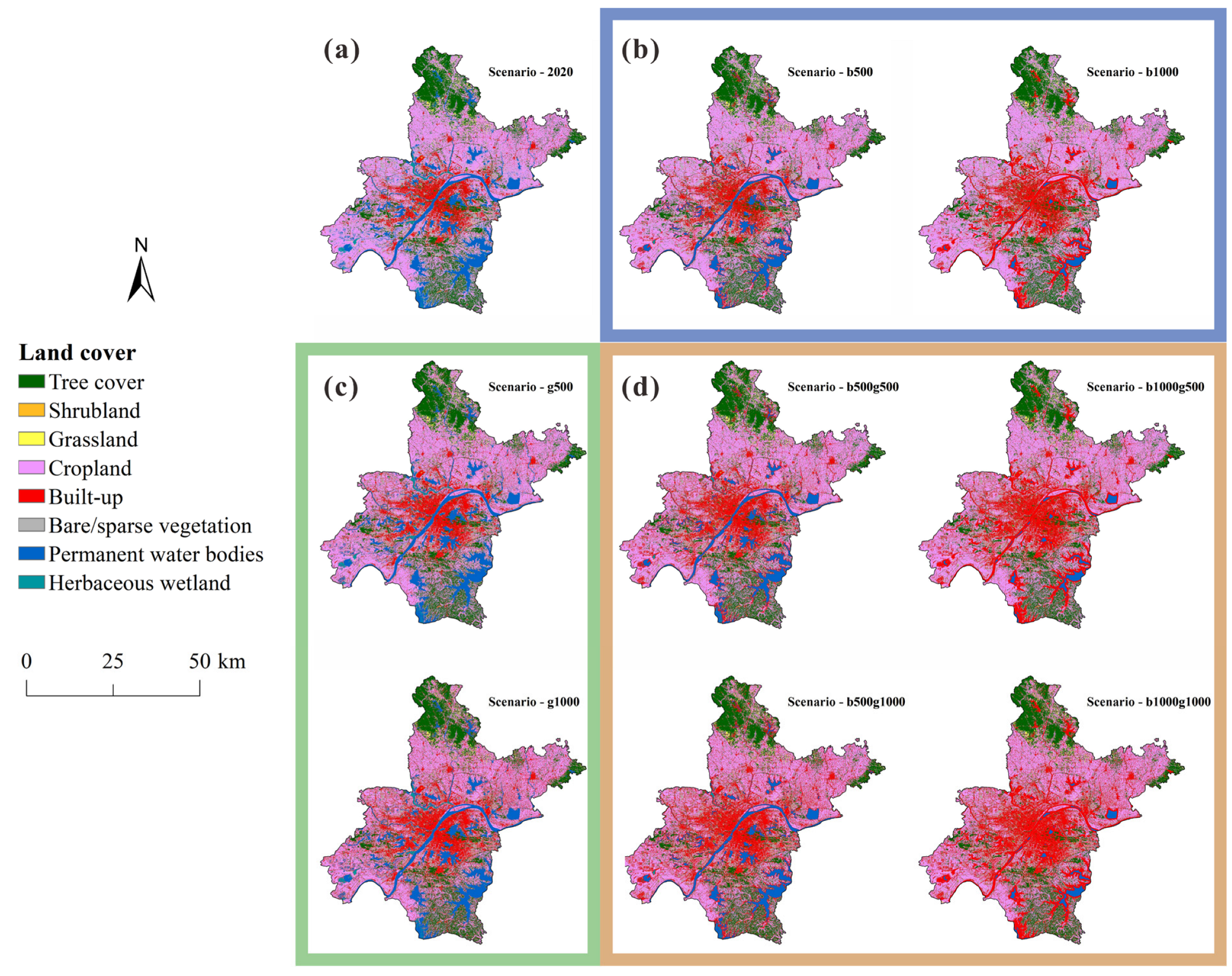
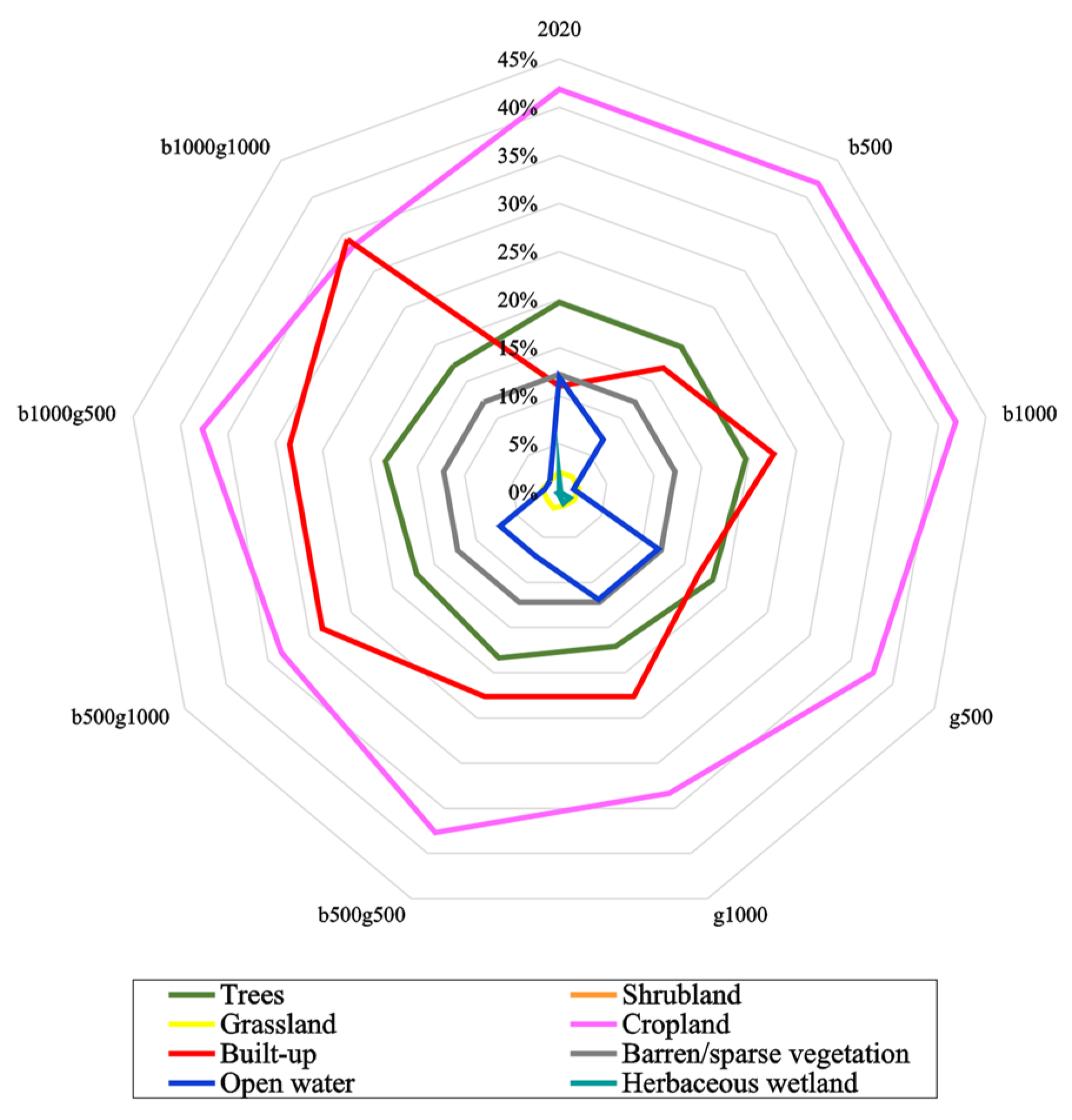
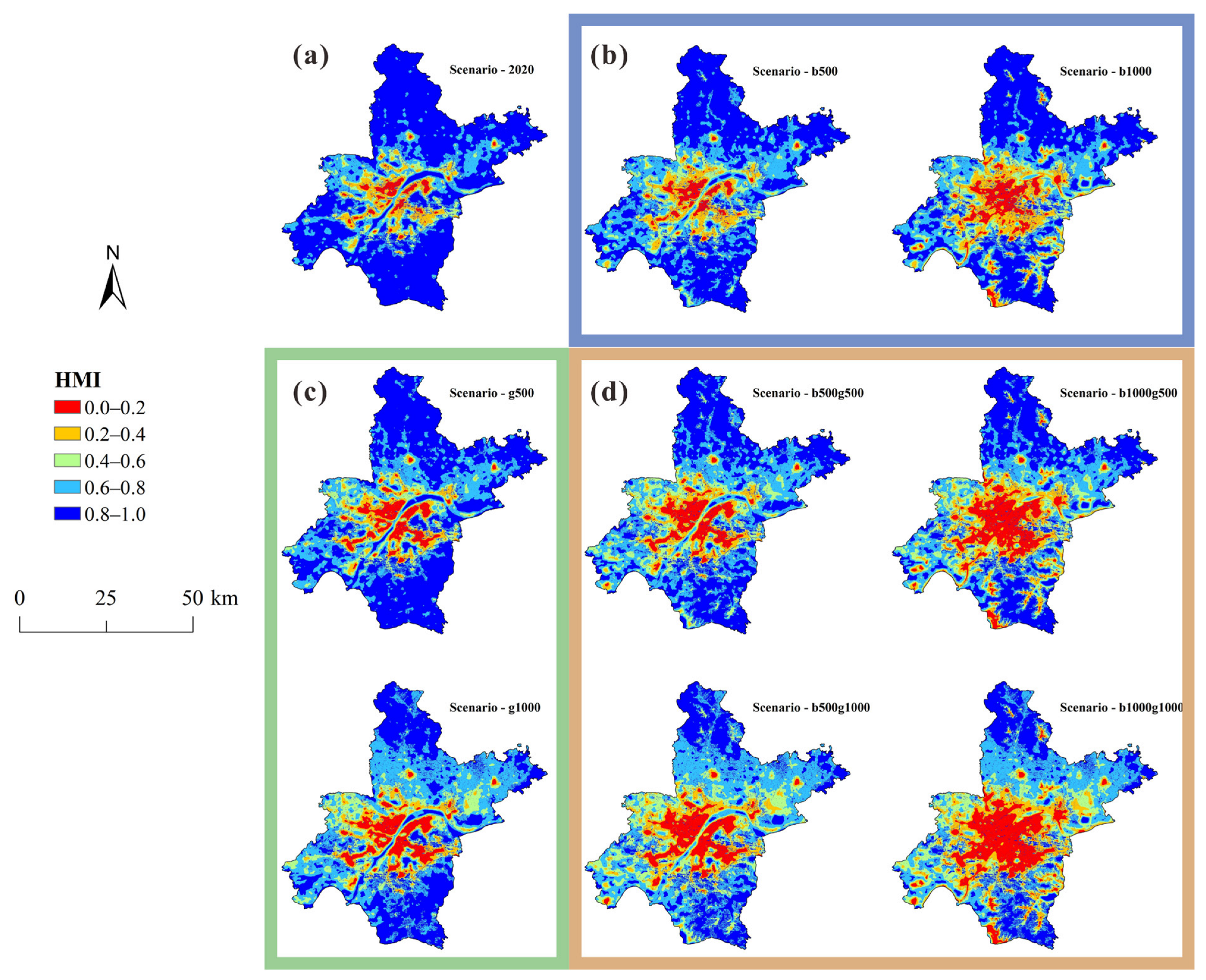
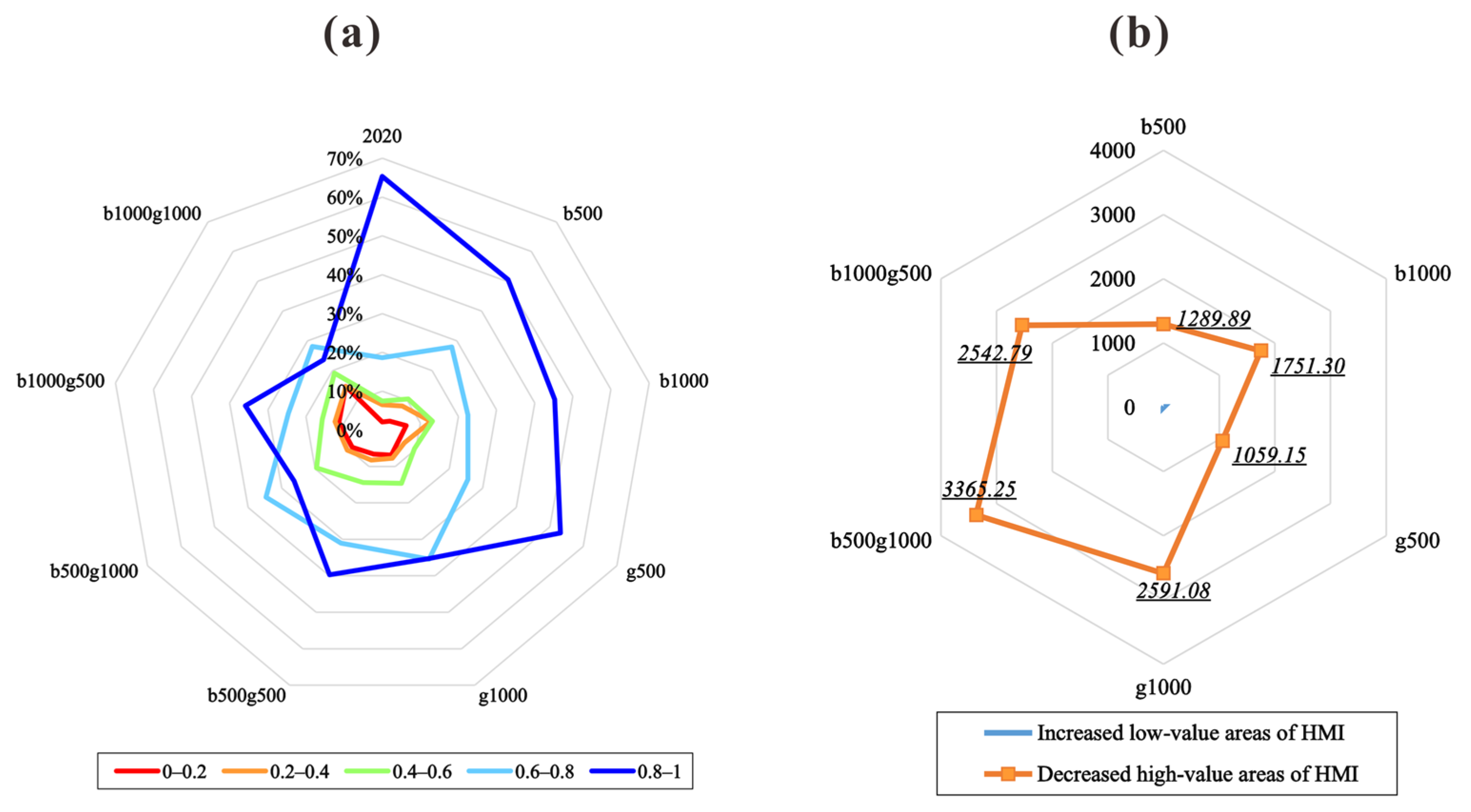
Natural infrastructure is essential in reducing thermal discomfort caused by the urban heat island (UHI) effect. Optimizing and planning green and blue spaces can help establish nature-based urban heat mitigation strategies that benefit sustainable urban development. Most current studies on urban heat mitigation have focused on the single heat reduction effect of green space or blue space, while there has been a lack of research on the combined cooling effects of blue and green spaces. Moreover, existing heat mitigation models and methods cannot directly guide the optimization of blue–green spatial patterns at the urban scale. This has led to an unclear relationship between heat mitigation effects and blue–green spatial patterns. Based on land use data, meteorological data, and biophysical information as inputs, this paper utilized the InVEST urban cooling model (UCM) and scenario analysis method to simulate urban heat mitigation patterns by setting up different blue–green space configuration scenarios. The relative contribution of blue–green space changes to the variation of heat mitigation benefits was quantitatively estimated using the difference comparison method, and the relationship between heat reduction effects and urban blue–green spatial patterns was elucidated using spatial analysis methods. The results show that the InVEST UCM captured some of the variability in the surface thermal response of Wuhan and can be applied to the modeling of urban heat mitigation patterns. Furthermore, they show that consideration of the cooling effect of water evaporation can improve the simulation accuracy to some extent. In Wuhan, there were regional differences in heat mitigation patterns and the heat mitigation effect was significantly higher in the suburbs than in the city. Additionally, urban parks, lakes, and mountains with surface or block distribution had noticeable cooling benefits. Finally, the scenario simulation results demonstrate that green space was more efficient at mitigating heat, while blue space was more critical for the geographical partitioning of the UHI. These findings can provide a reference for the planning and optimal management of urban blue and green spaces, as well as for the design of heat reduction policies.
Keywords: blue space; green space; heat mitigation; InVEST urban cooling model; scenario simulation blue space; green space; heat mitigation; InVEST urban cooling model; scenario simulation