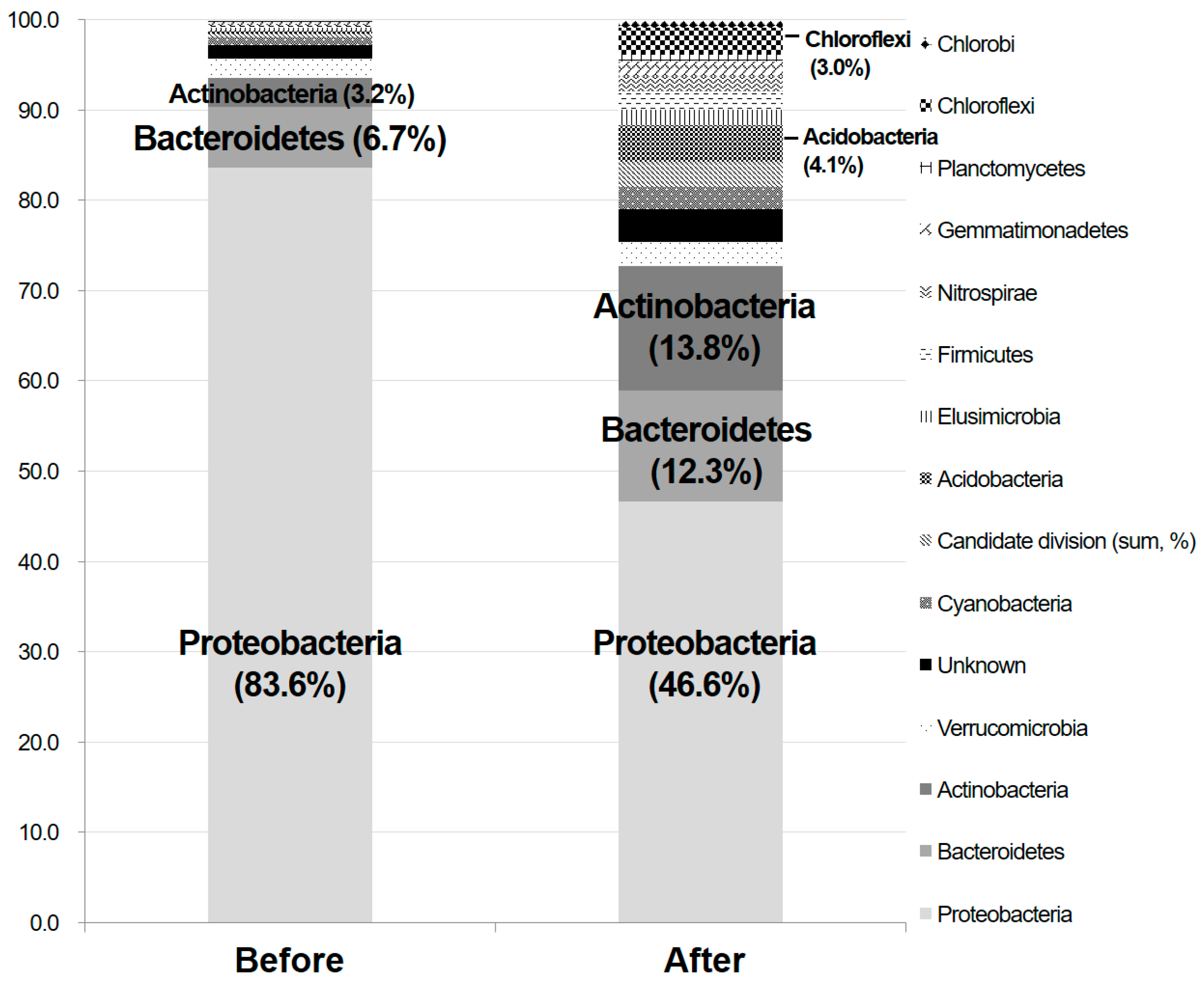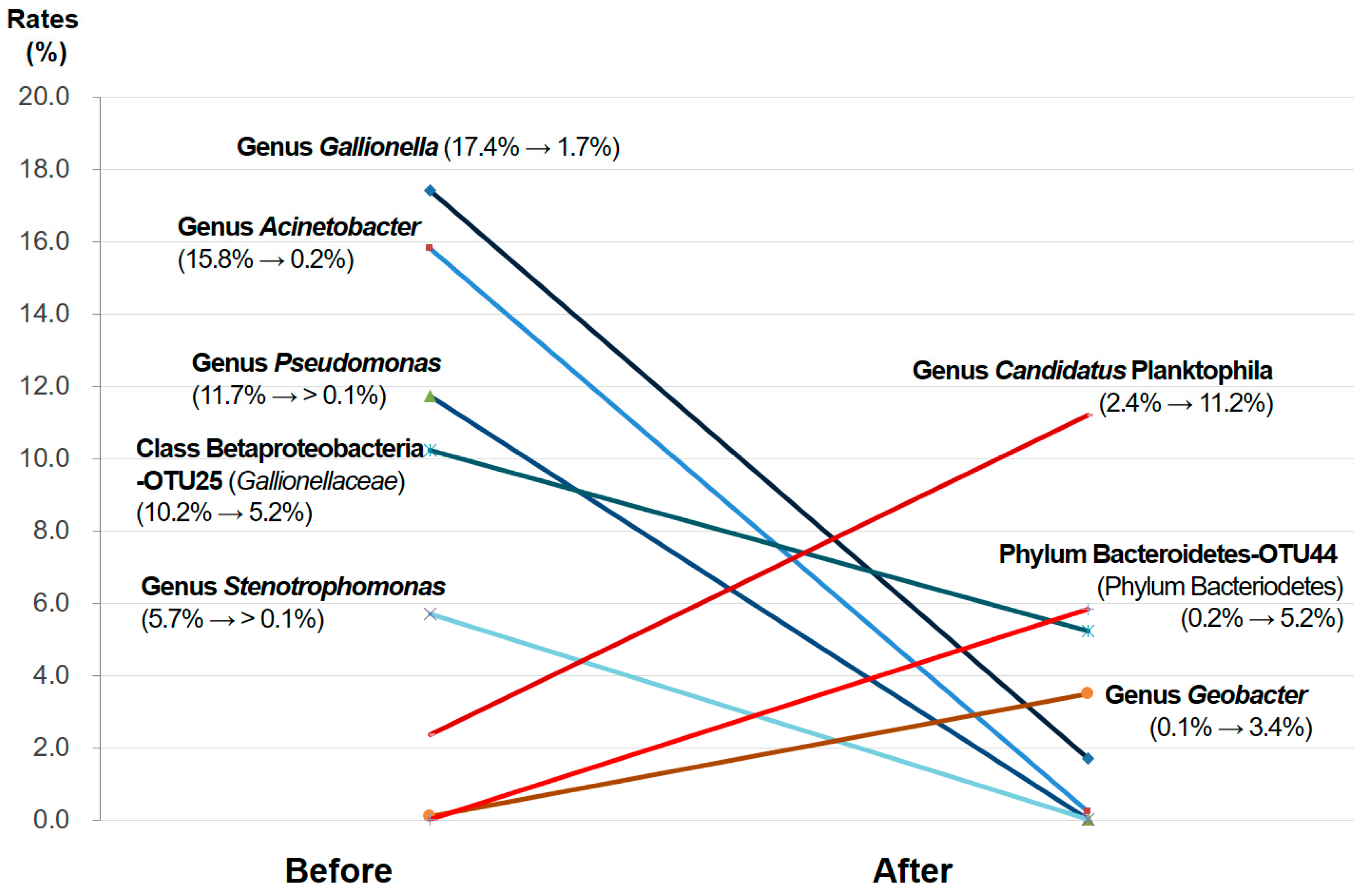
Composition of Groundwater Bacterial Communities before and after Air Surging in a Groundwater Heat Pump System According to a Pyrosequencing Assay




Abstract
Share and Cite
Kim, H.; Mok, J.-K.; Park, Y.; Kaown, D.; Lee, K.-K. Composition of Groundwater Bacterial Communities before and after Air Surging in a Groundwater Heat Pump System According to a Pyrosequencing Assay. Water 2017, 9, 891. https://doi.org/10.3390/w9110891
Kim H, Mok J-K, Park Y, Kaown D, Lee K-K. Composition of Groundwater Bacterial Communities before and after Air Surging in a Groundwater Heat Pump System According to a Pyrosequencing Assay. Water. 2017; 9(11):891. https://doi.org/10.3390/w9110891
Chicago/Turabian StyleKim, Heejung, Jong-Koo Mok, Youngyun Park, Dugin Kaown, and Kang-Kun Lee. 2017. "Composition of Groundwater Bacterial Communities before and after Air Surging in a Groundwater Heat Pump System According to a Pyrosequencing Assay" Water 9, no. 11: 891. https://doi.org/10.3390/w9110891
APA StyleKim, H., Mok, J.-K., Park, Y., Kaown, D., & Lee, K.-K. (2017). Composition of Groundwater Bacterial Communities before and after Air Surging in a Groundwater Heat Pump System According to a Pyrosequencing Assay. Water, 9(11), 891. https://doi.org/10.3390/w9110891