Response of Coastal Vegetation to Extreme Precipitation Modulated by Groundwater: A Case Study of Two Extreme Years in the Contemporary Yellow River Delta


Abstract
1. Introduction
2. Materials and Methods
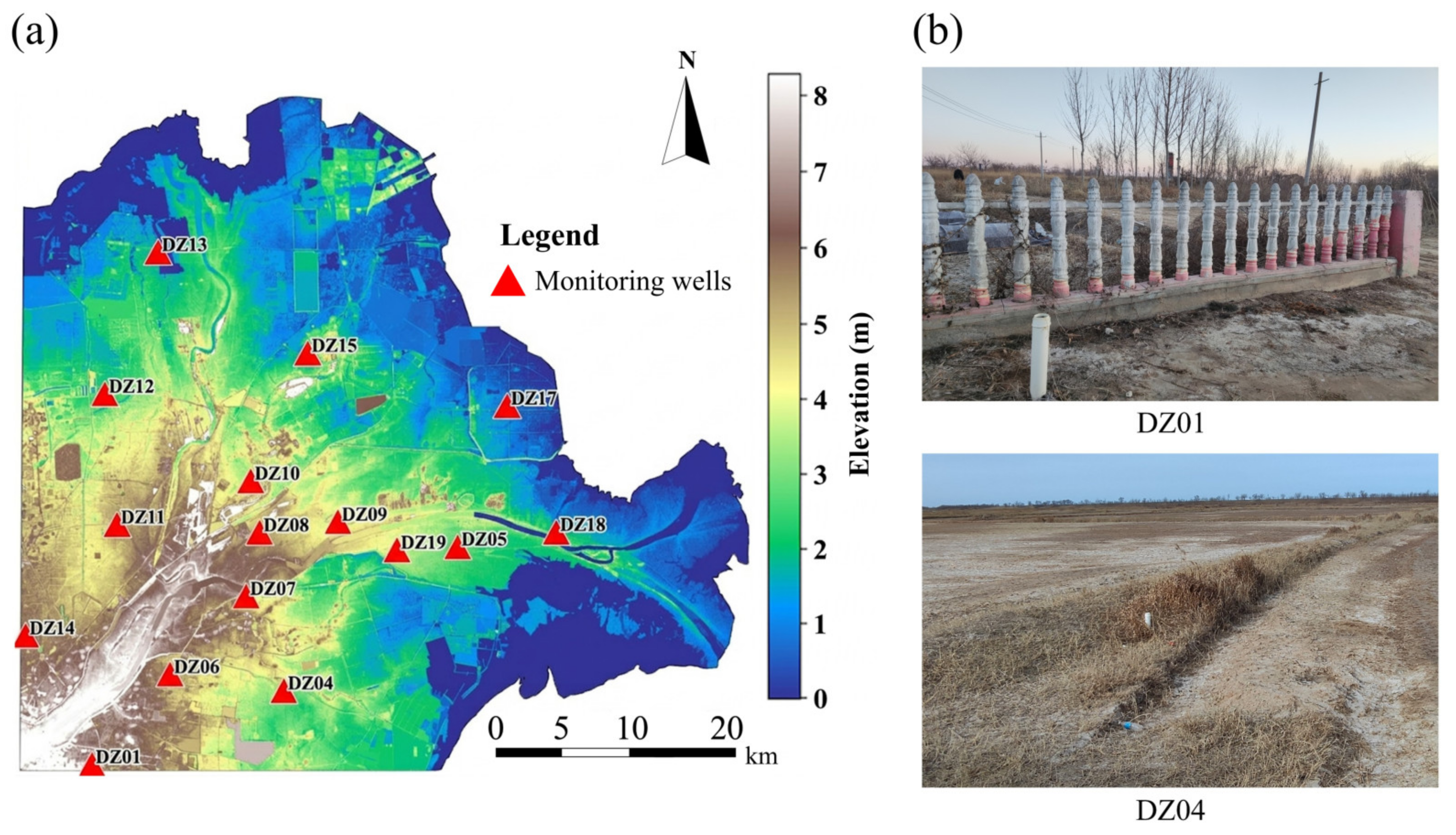
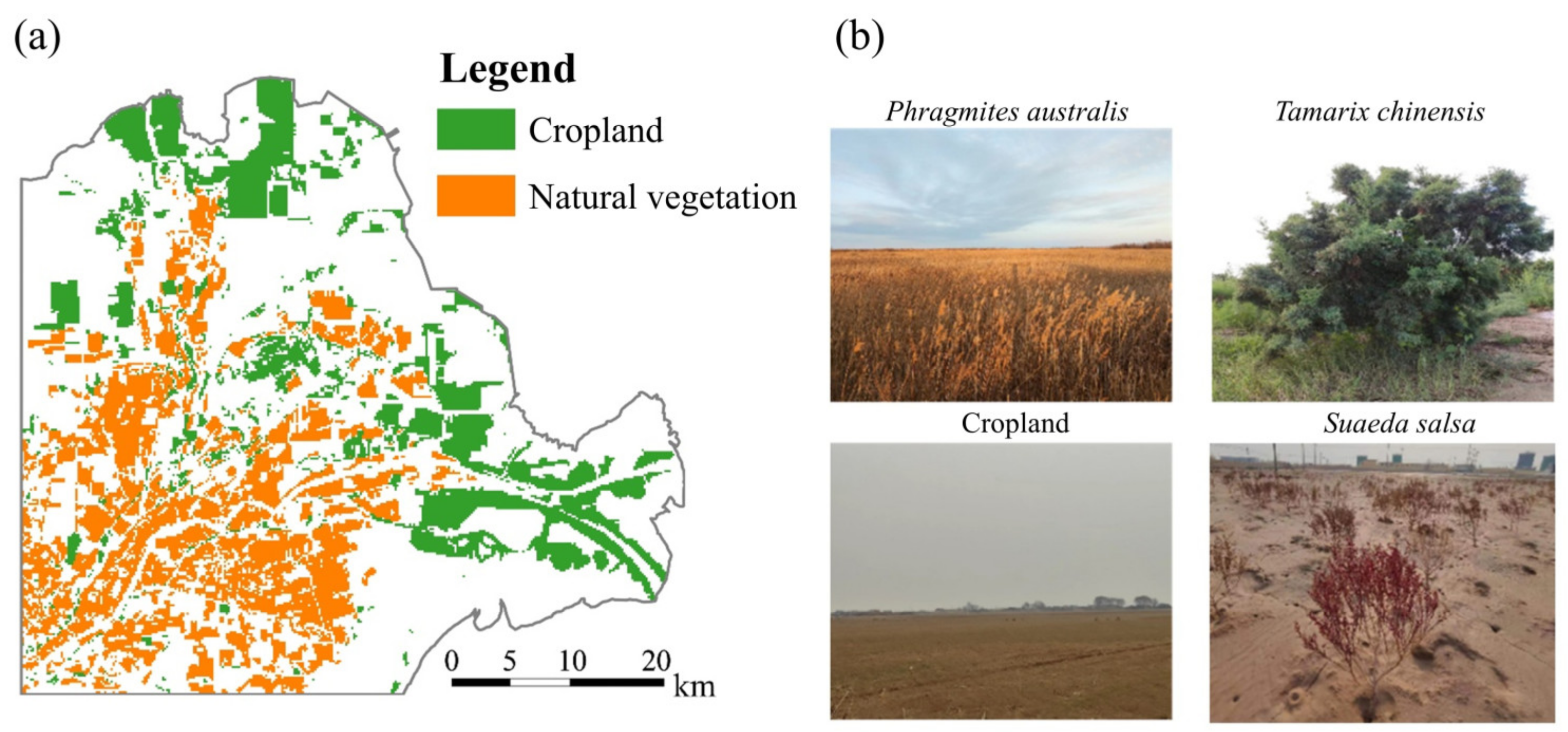
2.1. Study Area
2.2. Data Sources and Processing
2.2.1. Precipitation Data
2.2.2. Groundwater Monitoring Data
2.2.3. Remote Sensing Data and Five-Day kNDVI Generation
2.2.4. Digital Elevation Model and Land Use Data
2.3. Extreme Precipitation Event
2.4. Groundwater Depth Interpolation
2.5. Quantification of the Response of Vegetation to Extreme Precipitation
2.6. Analysis of Groundwater Modulation of Vegetation Responses to Extreme Precipitation
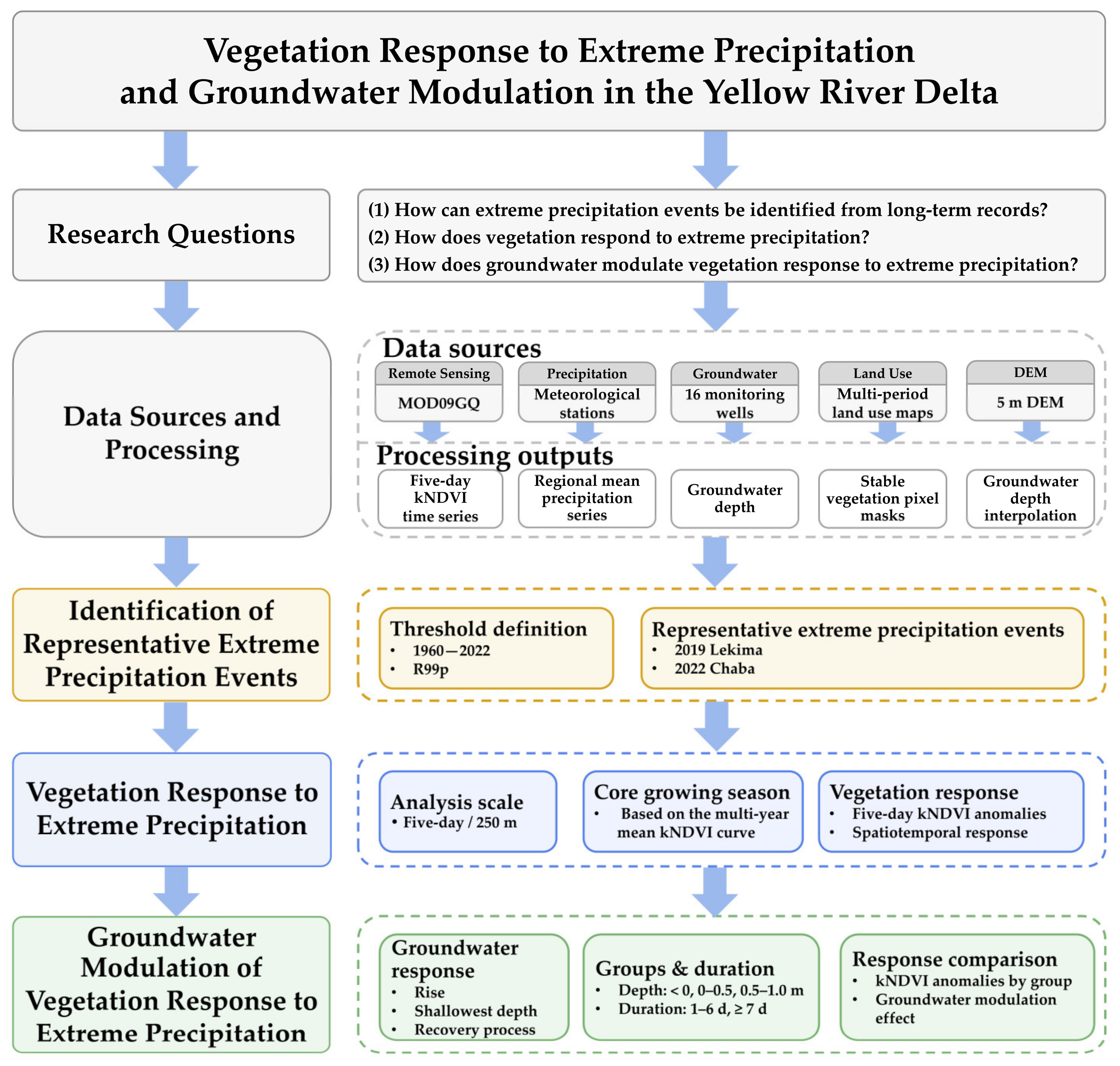
2.7. Workflow of the Study
3. Results
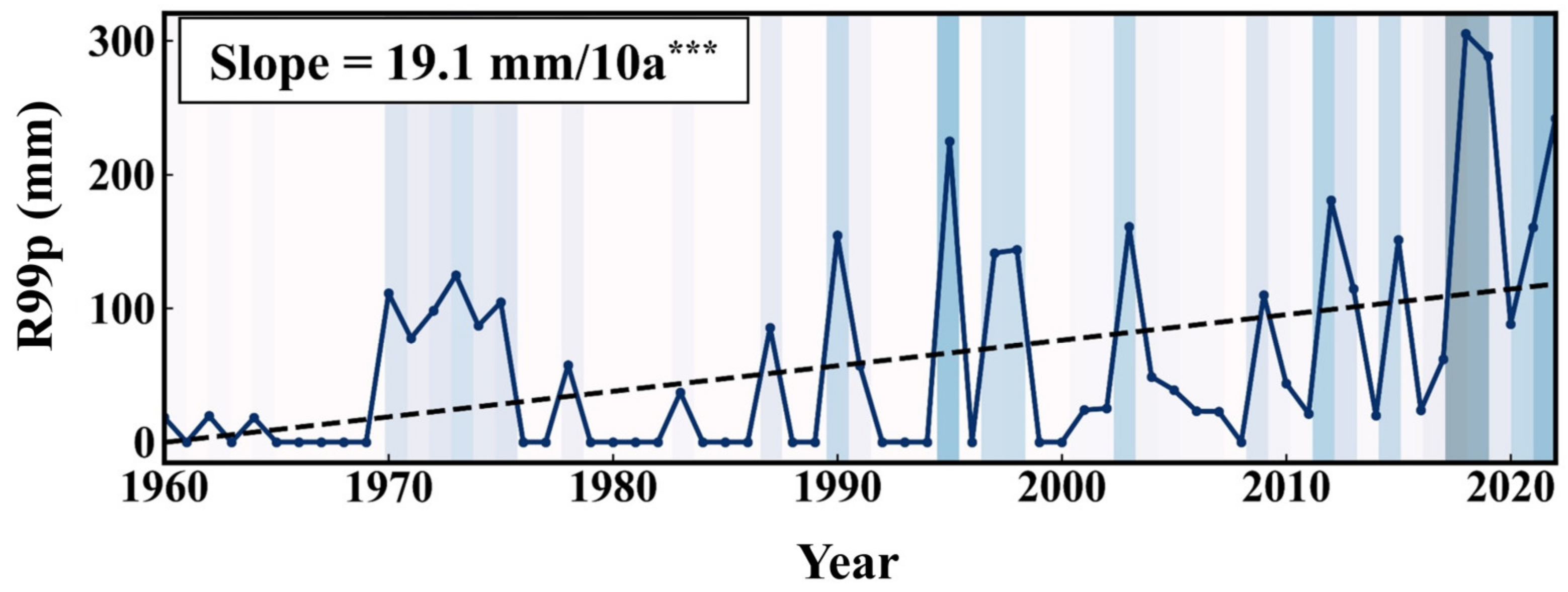
3.1. Long-Term Increase in Extreme Precipitation from 1960 to 2022
3.2. Response of Vegetation Growth to Extreme Precipitation
3.3. Groundwater Response to Extreme Precipitation
3.4. Vegetation Responses to Extreme Precipitation Were Modulated by Groundwater
4. Discussion
4.1. Response of Vegetation to the Extreme Precipitation Events
4.2. Groundwater as a Key Hydrological Link in Modulating Vegetation Responses to Extreme Precipitation Events
4.3. The Potential and Uncertainty of kNDVI in Monitoring Coastal Vegetation Response to Extreme Precipitation Events
5. Conclusions
- (1)
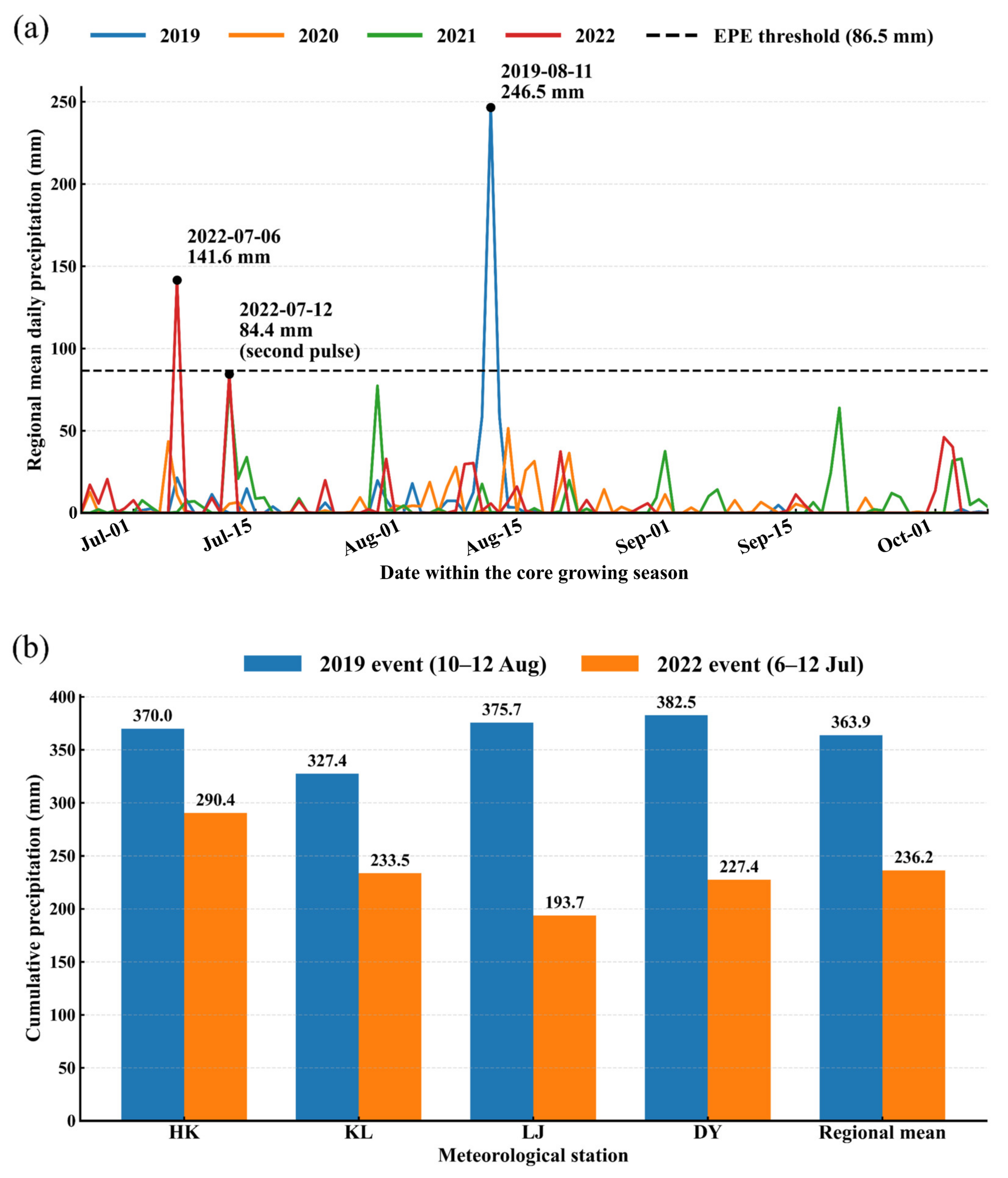
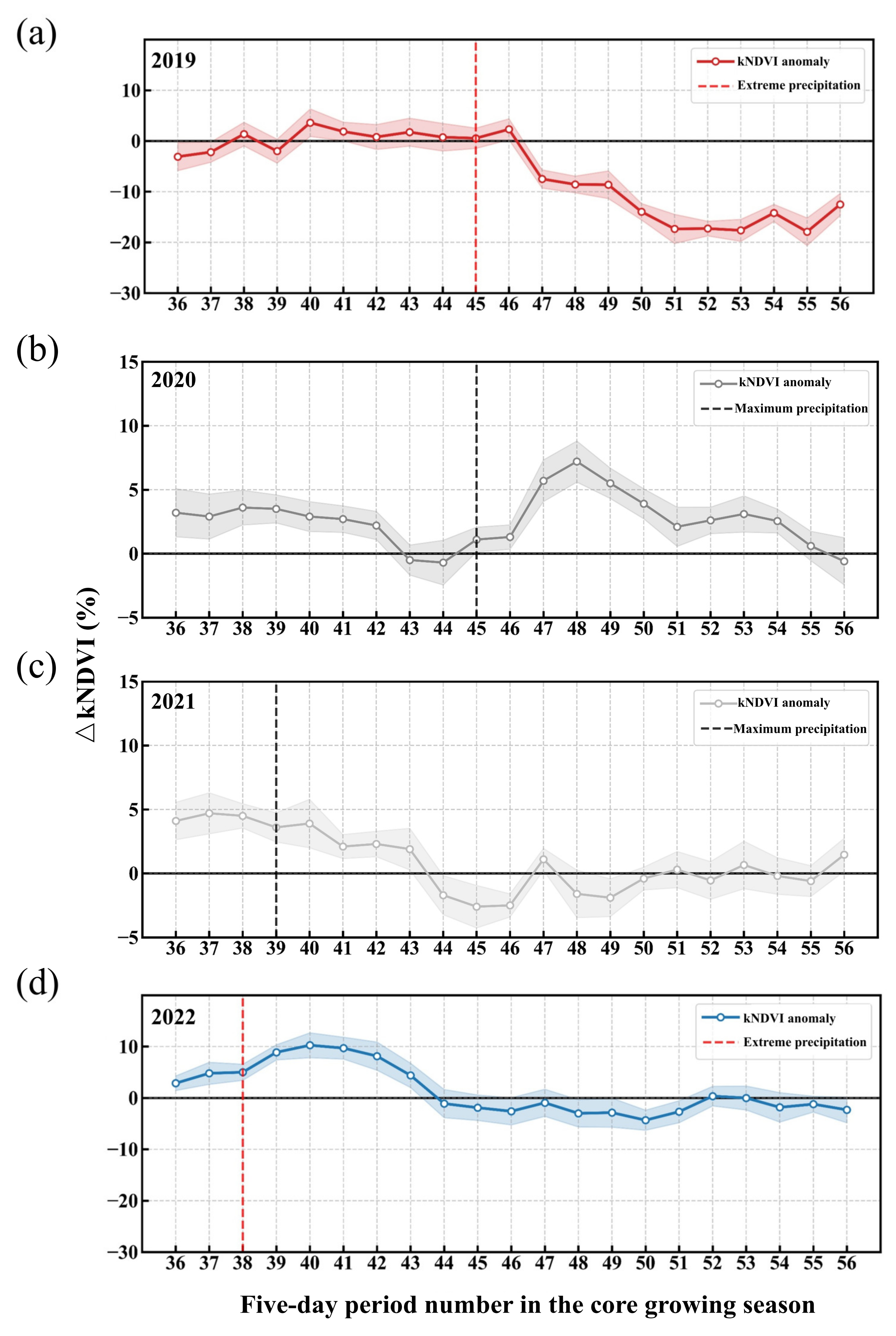
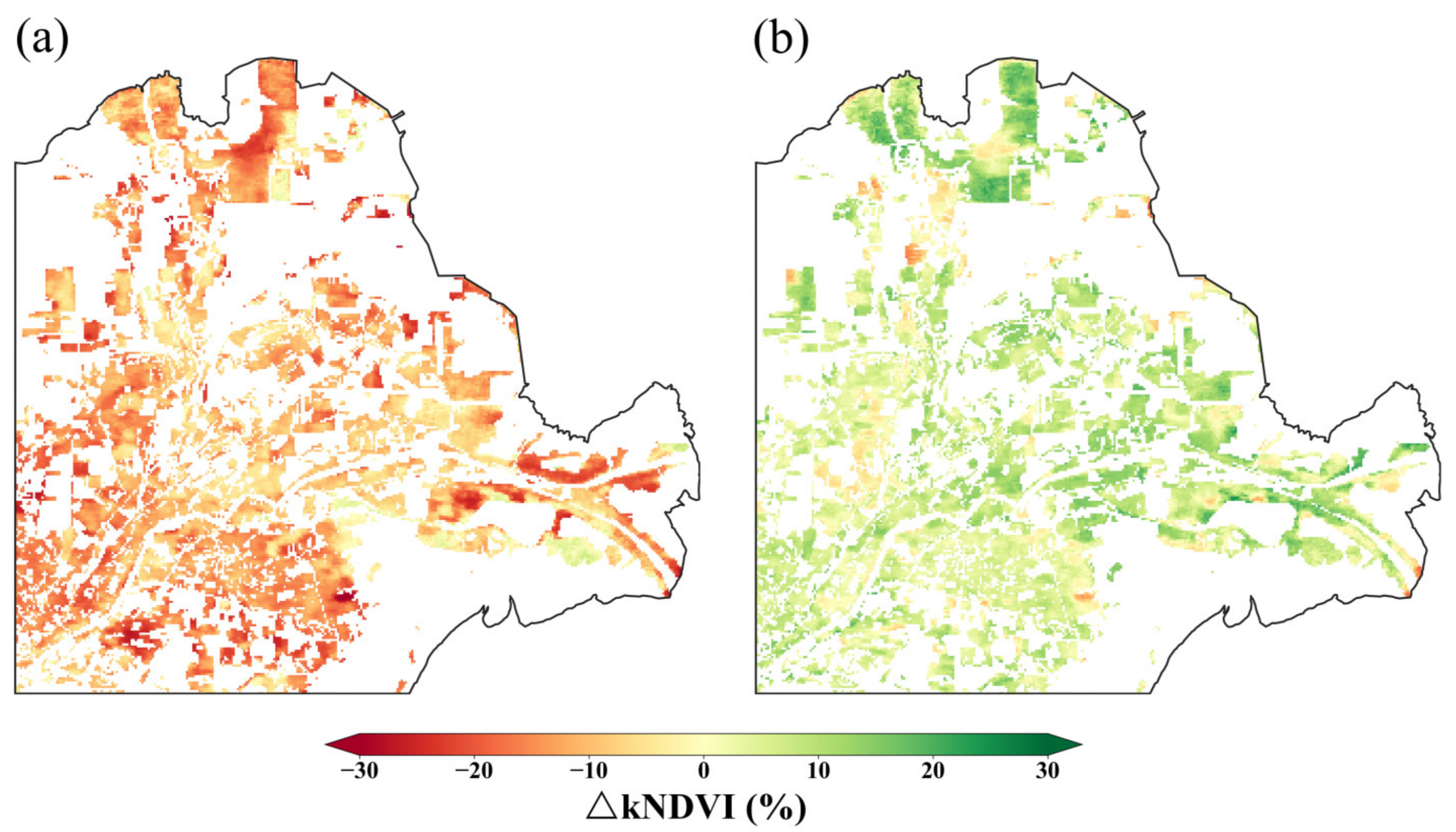
- Extreme precipitation in the study area showed an overall increasing trend. R99p increased significantly during 1960–2022, with a linear trend of 19.1 mm/10 a, and both R95p and Rx1day also showed persistent upward trends. These results indicate that the contemporary Yellow River Delta is facing an intensifying extreme precipitation background. Under this background, vegetation growth was clearly disturbed after the 2019 Typhoon Lekima event, and the disturbance lasted into the late growing season, with a mean post-event kNDVI anomaly of −12.8%. In contrast, after the 2022 Typhoon Chaba event, kNDVI anomalies were mainly within the range of −1% to −4%, and the negative response was mostly confined to local areas.
- (2)
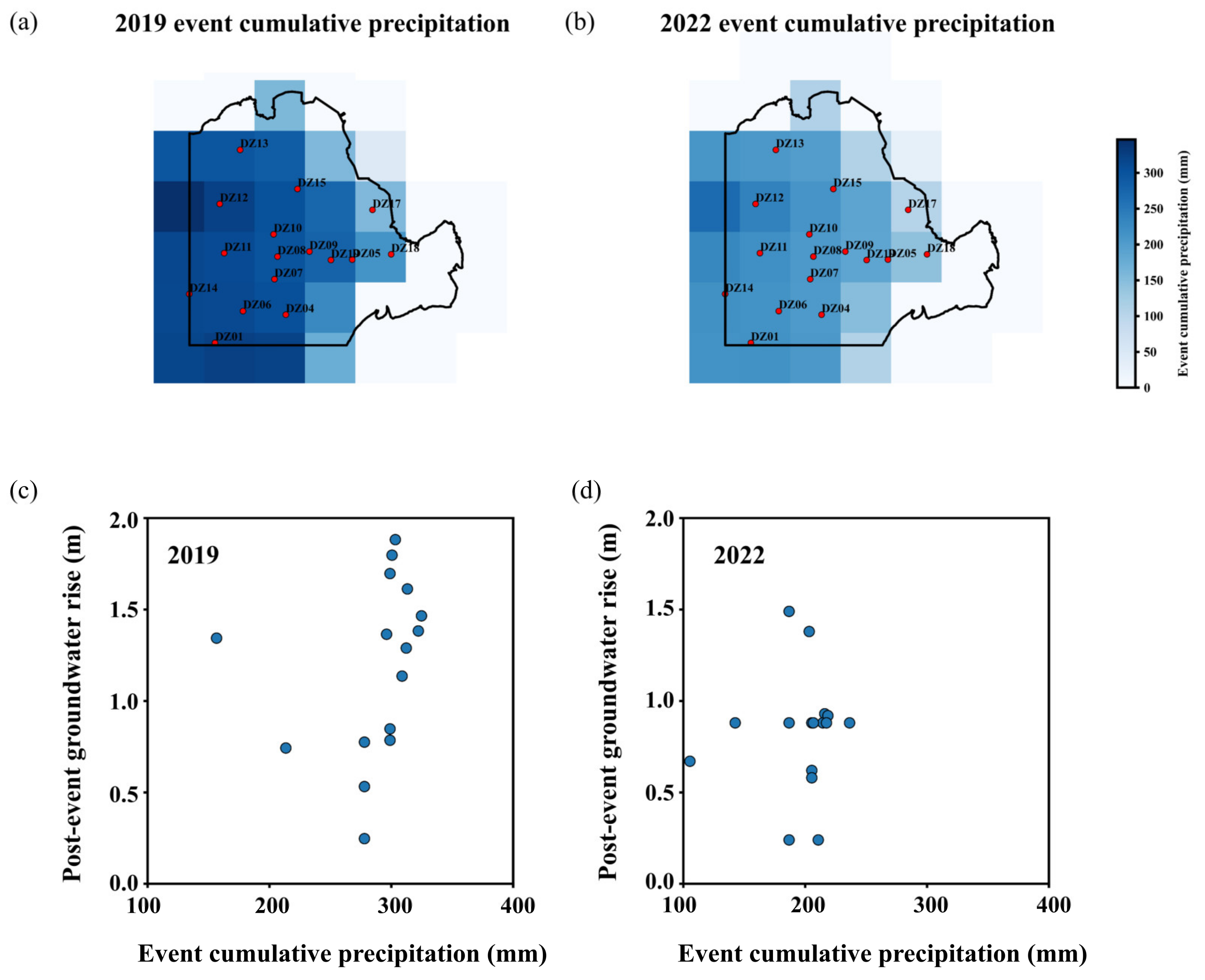
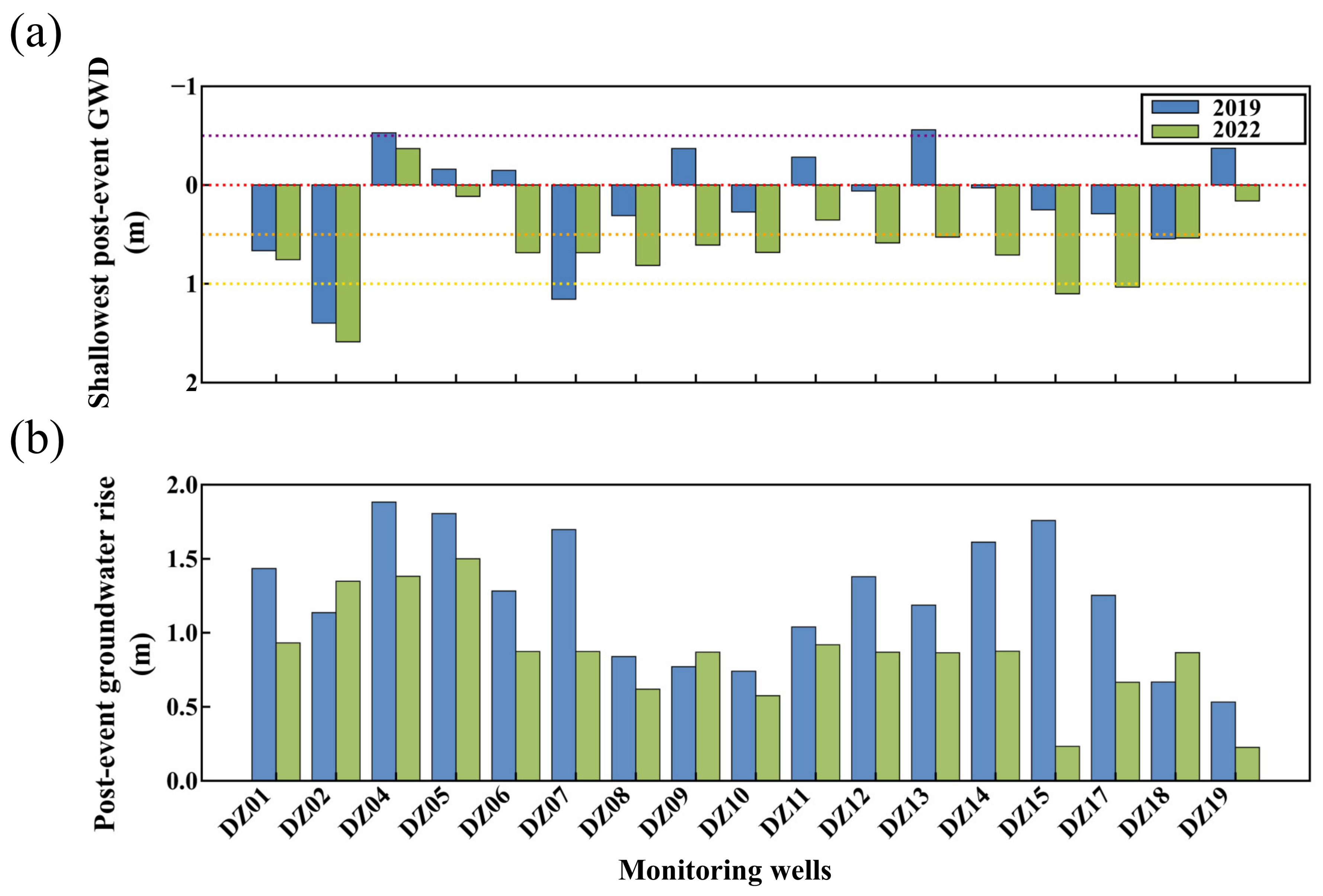
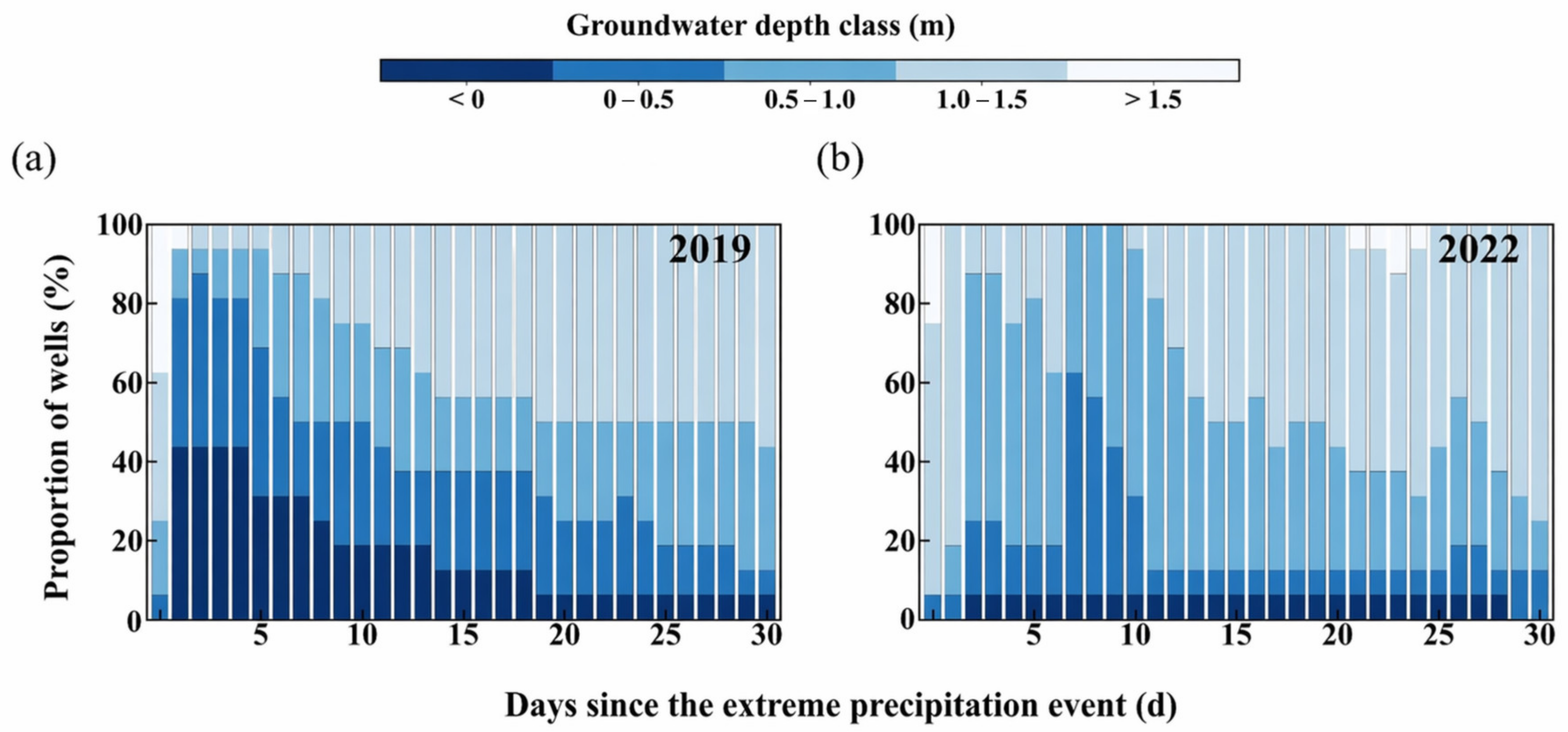
- Groundwater responded rapidly and synchronously to both events, but the response in 2019 was stronger and recovered more slowly. After the 2019 event, groundwater levels rose above the ground surface at multiple monitoring wells, and the groundwater rise at the well scale was mainly 0.5–1.9 m, with some wells exceeding 1.5 m. In 2022, groundwater rise was weaker overall and was mainly within 0.5–1.0 m. In addition, the proportion of wells with above-surface water levels reached 43.8% in 2019, which was much higher than the 12.5% recorded in 2022.
- (3)
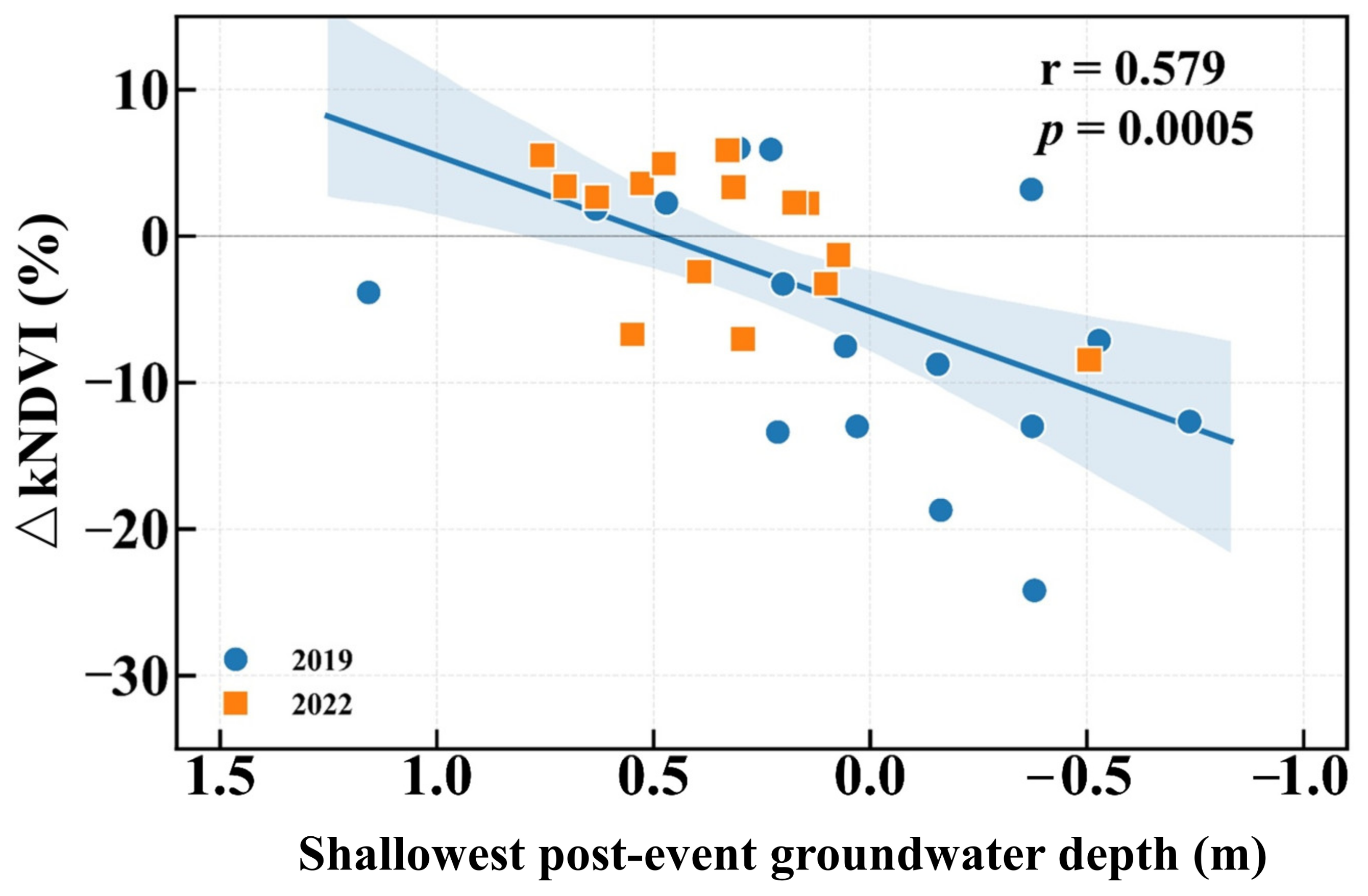
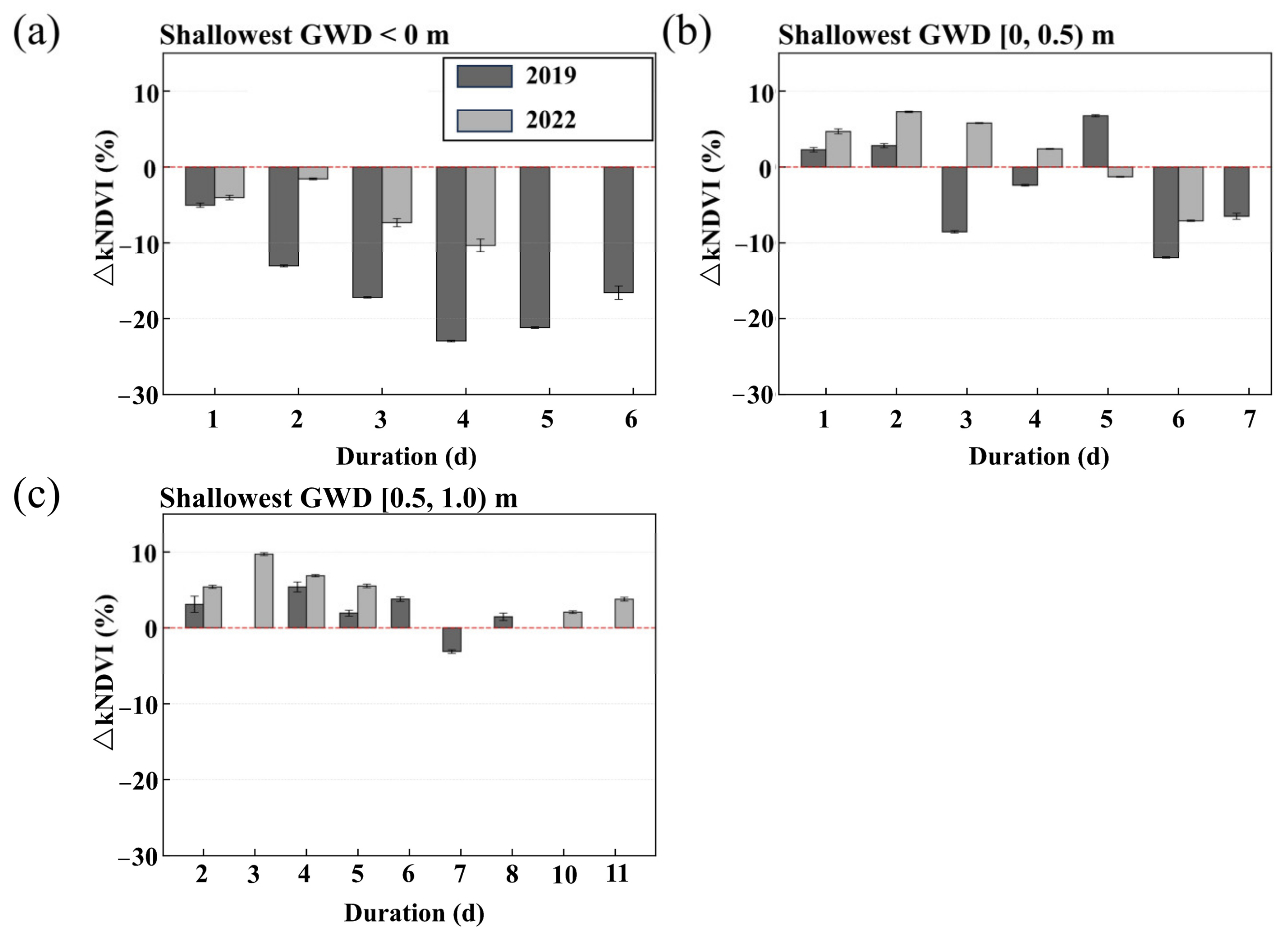
- Groundwater played a key modulatory role in the effect of extreme precipitation on vegetation. The shallowest post-event groundwater depth was significantly negatively correlated with kNDVI anomalies at the monitoring-well scale (r = 0.579, p < 0.001). Further analysis showed that vegetation disturbance was jointly controlled by the shallowest post-event groundwater depth and its duration. When above-surface inundation lasted longer, vegetation disturbance became stronger. During the 2019 event, the kNDVI had already declined to below about −17% when surface inundation lasted for 6 days. In contrast, when the shallowest groundwater depth remained within 0.5–1.0 m, kNDVI anomalies were generally close to the baseline or showed only slight fluctuations.
Supplementary Materials
Author Contributions
Funding
Data Availability Statement
Acknowledgments
Conflicts of Interest
References
- Donat, M.G.; Lowry, A.L.; Alexander, L.V.; O’Gorman, P.A.; Maher, N. More extreme precipitation in the world’s dry and wet regions. Nat. Clim. Chang. 2016, 6, 508–513, Addendum in Nat. Clim. Chang. 2017, 7, 154–158. [Google Scholar] [CrossRef]
- IPCC. Climate Change 2021: The Physical Science Basis; Cambridge University Press: Cambridge, UK, 2021. [Google Scholar]
- Reichstein, M.; Bahn, M.; Ciais, P.; Frank, D.; Mahecha, M.D.; Seneviratne, S.I.; Zscheischler, J.; Beer, C.; Buchmann, N.; Frank, D.C.; et al. Climate extremes and the carbon cycle. Nature 2013, 500, 287–295. [Google Scholar] [CrossRef]
- Frank, D.; Reichstein, M.; Bahn, M.; Thonicke, K.; Frank, D.; Mahecha, M.D.; Smith, P.; van der Velde, M.; Vicca, S.; Babst, F.; et al. Effects of climate extremes on the terrestrial carbon cycle: Concepts, processes and potential future impacts. Glob. Change Biol. 2015, 21, 2861–2880. [Google Scholar] [CrossRef]
- Piao, S.; Zhang, X.; Chen, A.; Liu, Q.; Lian, X.; Wang, X.; Peng, S.; Wu, X. The impacts of climate extremes on the terrestrial carbon cycle: A review. Sci. China Earth Sci. 2019, 62, 1551–1563. [Google Scholar] [CrossRef]
- Bevacqua, E.; Vousdoukas, M.I.; Zappa, G.; Hodges, K.; Shepherd, T.G.; Maraun, D. More meteorological events that drive compound coastal flooding are projected under climate change. Commun. Earth Environ. 2020, 1, 47. [Google Scholar] [CrossRef]
- Moftakhari, H.R.; Salvadori, G.; AghaKouchak, A.; Sanders, B.F.; Matthew, R.A. Compounding effects of sea level rise and fluvial flooding. Proc. Natl. Acad. Sci. USA 2017, 114, 9785–9790. [Google Scholar] [CrossRef]
- Zhang, X.; Alexander, L.; Hegerl, G.C.; Jones, P.; Klein Tank, A.M.G.; Peterson, T.C.; Trewin, B.; Zwiers, F.W. Indices for monitoring changes in extremes based on daily temperature and precipitation data. WIREs Clim. Change 2011, 2, 851–870. [Google Scholar] [CrossRef]
- Sillmann, J.; Kharin, V.V.; Zhang, X.; Zwiers, F.W.; Bronaugh, D. Climate extremes indices in the CMIP5 multimodel ensemble: Part 1. Model evaluation in the present climate. J. Geophys. Res. Atmos. 2013, 118, 1716–1733. [Google Scholar] [CrossRef]
- Islam, M.A.; Macdonald, S.E. Ecophysiological adaptations of black spruce (Picea mariana) and tamarack (Larix laricina) seedlings to flooding. Trees 2004, 18, 35–42. [Google Scholar] [CrossRef]
- Kozlowski, T.T. Plant responses to flooding of soil. BioScience 1984, 34, 162–167. [Google Scholar] [CrossRef]
- Li, Y.; Guan, K.; Schnitkey, G.D.; DeLucia, E.; Peng, B. Excessive rainfall leads to maize yield loss of a comparable magnitude to extreme drought in the United States. Glob. Change Biol. 2019, 25, 2325–2337. [Google Scholar] [CrossRef]
- Fu, J.; Jian, Y.; Wang, X.; Li, L.; Ciais, P.; Zscheischler, J.; Zhou, F. Extreme rainfall reduces one-twelfth of China’s rice yield over the last two decades. Nat. Food 2023, 4, 416–426. [Google Scholar] [CrossRef] [PubMed]
- Chen, J.; Qiu, B.; Guo, W.; Li, L.; Miao, X. Divergent response of crops and natural vegetation to the record-breaking extreme precipitation event in 2020 modulated by topography. Environ. Res. Lett. 2023, 18, 064047. [Google Scholar] [CrossRef]
- Wei, S.; Han, G.; Chu, X.; Sun, B.; Song, W.; He, W.; Wang, X.; Li, P.; Yu, D. Prolonged impacts of extreme precipitation events weakened annual ecosystem CO2 sink strength in a coastal wetland. Agric. For. Meteorol. 2021, 310, 108655. [Google Scholar] [CrossRef]
- Cui, H.; Bai, J.; Du, S.; Wang, J.; Keculah, G.; Wang, W.; Zhang, G.; Jia, J. Interactive effects of groundwater level and salinity on soil respiration in coastal wetlands of a Chinese delta. Environ. Pollut. 2021, 286, 117400. [Google Scholar] [CrossRef]
- Ward, N.D.; Megonigal, J.P.; Bond-Lamberty, B.; Bailey, V.L.; Butman, D.; Canuel, E.A.; Diefenderfer, H.; Ganju, N.K.; Goñi, M.A.; Graham, E.B.; et al. Representing the function and sensitivity of coastal interfaces in Earth system models. Nat. Commun. 2020, 11, 2458. [Google Scholar] [CrossRef]
- Li, Z.; Xue, H.; Dong, G.; Liu, X.; Lian, Y. Spatiotemporal variation in extreme climate in the Yellow River Basin and its impacts on vegetation coverage. Forests 2024, 15, 307. [Google Scholar] [CrossRef]
- Luo, F.; Wang, D.; Tian, X.; Bi, X.; Zheng, Q.; Zhou, Z.; Tang, Z. Estuarine groundwater level response to and recovery from extreme precipitation events: Typhoon Lekima in the Yellow River Delta. J. Hydrol. 2024, 632, 130918. [Google Scholar] [CrossRef]
- Fan, X.; Min, T.; Dai, X. The spatio-temporal dynamic patterns of shallow groundwater level and salinity: The Yellow River Delta, China. Water 2023, 15, 1426. [Google Scholar] [CrossRef]
- Liu, J.; Engel, B.A.; Zhang, G.; Wang, Y.; Wu, Y.; Zhang, M.; Zhang, Z. Hydrological connectivity: One of the driving factors of plant communities in the Yellow River Delta. Ecol. Indic. 2020, 112, 106150. [Google Scholar] [CrossRef]
- Huang, W.; Han, G.; Wei, S.; Zhao, M.; Chu, X.; Sun, R.; Zou, N.; Wang, X.; Li, P.; Zhang, X.; et al. Seasonal precipitation distribution determines ecosystem CO2 and H2O exchange by regulating spring soil water-salt dynamics in a brackish wetland. Funct. Ecol. 2024, 38, 1465–1480. [Google Scholar] [CrossRef]
- Song, J.; Liang, Z.; Li, X.; Wang, X.; Chu, X.; Zhao, M.; Zhang, X.; Li, P.; Song, W.; Huang, W.; et al. Precipitation changes alter plant dominant species and functional groups by changing soil salinity in a coastal salt marsh. J. Environ. Manag. 2024, 368, 122235. [Google Scholar] [CrossRef]
- Fan, X.; Pedroli, B.; Liu, G.; Liu, Q.; Liu, H.; Shu, L. Soil salinity development in the Yellow River Delta in relation to groundwater dynamics. Land Degrad. Dev. 2012, 23, 175–189. [Google Scholar] [CrossRef]
- Han, J.; Miao, C.; Gou, J.; Zheng, H.; Zhang, Q.; Guo, X. A new daily gridded precipitation dataset for the Chinese mainland based on gauge observations. Earth Syst. Sci. Data 2023, 15, 3147–3161. [Google Scholar] [CrossRef]
- Vermote, E.F.; Roger, J.C.; Ray, J.P. MODIS Surface Reflectance User’s Guide; Version 1.4; MODIS Land Processes Distributed Active Archive Center: Greenbelt, MD, USA, 2015. [Google Scholar]
- Vermote, E.F.; Wolfe, R.E. MODIS/Terra Surface Reflectance Daily L2G Global 250m SIN Grid V061; NASA EOSDIS Land Processes Distributed Active Archive Center: Sioux Falls, SD, USA, 2021. [Google Scholar] [CrossRef]
- Camps-Valls, G.; Campos-Taberner, M.; Moreno-Martínez, Á.; Walther, S.; Duveiller, G.; Cescatti, A.; Mahecha, M.D.; Muñoz-Marí, J.; García-Haro, F.J.; Guanter, L.; et al. A unified vegetation index for quantifying the terrestrial biosphere. Sci. Adv. 2021, 7, eabc7447. [Google Scholar] [CrossRef] [PubMed]
- Wu, Z.; Yao, F.; Ahmad, A.; Deng, F.; Fang, J. Spatiotemporal evolution and driving mechanisms of kNDVI in different sections of the Yangtze River Basin using multiple statistical methods and the PLSPM model. Remote Sens. 2025, 17, 299. [Google Scholar] [CrossRef]
- Guo, B.; Zhang, R.; Lu, M.; Xu, M.; Liu, P.; Wang, L. A new large-scale monitoring index of desertification based on kernel normalized difference vegetation index and feature space model. Remote Sens. 2024, 16, 1771. [Google Scholar] [CrossRef]
- Holben, B.N. Characteristics of maximum-value composite images from temporal AVHRR data. Int. J. Remote Sens. 1986, 7, 1417–1434. [Google Scholar] [CrossRef]
- Jönsson, P.; Eklundh, L. TIMESAT—A program for analyzing time-series of satellite sensor data. Comput. Geosci. 2004, 30, 833–845. [Google Scholar] [CrossRef]
- Zhu, Y.; Lu, L.; Li, Z.; Wang, S.; Yao, Y.; Wu, W.; Pandey, R.; Tariq, A.; Luo, K.; Li, Q. Monitoring Land Use Changes in the Yellow River Delta Using Multi-Temporal Remote Sensing Data and Machine Learning from 2000 to 2020. Remote Sens. 2024, 16, 1946. [Google Scholar] [CrossRef]
- Hengl, T.; Heuvelink, G.B.M.; Rossiter, D.G. About regression-kriging: From equations to case studies. Comput. Geosci. 2007, 33, 1301–1315. [Google Scholar] [CrossRef]
- Chrysanthi, M.; Pavlides, A.; Varouchakis, E.A. A Bayesian geostatistical approach to analyzing groundwater depth in mining areas. Geosciences 2025, 15, 410. [Google Scholar] [CrossRef]
- Zhang, X.; Friedl, M.A.; Schaaf, C.B.; Strahler, A.H.; Hodges, J.C.F.; Gao, F.; Reed, B.C.; Huete, A. Monitoring vegetation phenology using MODIS. Remote Sens. Environ. 2003, 84, 471–475. [Google Scholar] [CrossRef]
- Yue, S.; Zhang, X.; Xu, S.; Liu, M.; Qiao, Y.; Zhang, Y.; Liang, J.; Wang, A.; Zhou, Y. The super typhoon Lekima (2019) resulted in massive losses in large seagrass (Zostera japonica) meadows, soil organic carbon and nitrogen pools in the intertidal Yellow River Delta, China. Sci. Total Environ. 2021, 793, 148398. [Google Scholar] [CrossRef] [PubMed]
- Ma, S.; Ren, J.; Wu, C.; He, Q. Extreme precipitation events trigger abrupt vegetation succession in emerging coastal wetlands. Catena 2024, 241, 108066. [Google Scholar] [CrossRef]
- Liu, J.; Wei, L.; Zheng, Z.; Du, J. Vegetation cover change and its response to climate extremes in the Yellow River Basin. Sci. Total Environ. 2023, 905, 167366. [Google Scholar] [CrossRef]
- Xu, X.; Jiang, H.; Guan, M.; Wang, L.; Huang, Y.; Jiang, Y.; Wang, A. Vegetation responses to extreme climatic indices in coastal China from 1986 to 2015. Sci. Total Environ. 2020, 744, 140784. [Google Scholar] [CrossRef]
- Day, J.W.; Anthony, E.; Costanza, R.; Edmonds, D.; Gunn, J.; Hopkinson, C.; Mann, M.E.; Morris, J.; Osland, M.; Quirk, T.; et al. Coastal Wetlands in the Anthropocene. Annu. Rev. Environ. Resour. 2024, 49, 105–135. [Google Scholar] [CrossRef]
- Li, Y.; Huang, S.; Liu, Y.; Han, M.; Gong, H. Hydrological Connectivity Evolution of Yellow River Delta Wetland Based on Hydrological Connectivity Pattern Analysis. Water 2024, 16, 3323. [Google Scholar] [CrossRef]
- Zheng, Q.; Luo, F.; Wang, D.; Tian, X.; Bi, X.; Ji, X.; Tang, Z. Insight into landscape characteristics influence on the adaptability of estuarine shallow groundwater system to 100-year extreme precipitation. J. Hydrol. Reg. Stud. 2025, 57, 102187. [Google Scholar] [CrossRef]
- Pang, B.; Che, C.; Yang, C.; Xie, T.; Cui, B.; Liu, Y.; Wang, Q.; Lu, Y.; Li, Y.; Gao, F. Hydrological connectivity associated with salinity mediates wetland vegetation pattern and productivity in estuary. J. Environ. Manag. 2025, 395, 127842. [Google Scholar] [CrossRef]
- Paz, I.; Tchiguirinskaia, I.; Schertzer, D. Rain gauge networks’ limitations and the implications to hydrological modelling highlighted with a X-band radar. J. Hydrol. 2020, 583, 124615. [Google Scholar] [CrossRef]
- Fallah, A.; O, S.; Orth, R. Climate-dependent propagation of precipitation uncertainty into the water cycle: Catchment-scale analysis of multi-source precipitation data. Hydrol. Earth Syst. Sci. 2020, 24, 3725–3749. [Google Scholar] [CrossRef]
- Wang, Q.; Moreno-Martínez, Á.; Muñoz-Marí, J.; Campos-Taberner, M.; Camps-Valls, G. Estimation of vegetation traits with kernel NDVI. ISPRS J. Photogramm. Remote Sens. 2023, 195, 408–417. [Google Scholar] [CrossRef]
- Li, S.; Xu, L.; Jing, Y.; Yin, H.; Li, X.; Guan, X. High-quality vegetation index product generation: A review of NDVI time series reconstruction techniques. Int. J. Appl. Earth Obs. Geoinf. 2021, 105, 102640. [Google Scholar] [CrossRef]
- Lai, J.; Huang, Y. Potential of Solar-Induced Chlorophyll Fluorescence for Monitoring Gross Primary Productivity and Evapotranspiration in Tidally-Influenced Coastal Salt Marshes. Remote Sens. 2024, 16, 4636. [Google Scholar] [CrossRef]





| Method | RMSE (m) | Win Rate (%) |
|---|---|---|
| IDW | 0.67 | 13% |
| OK | 0.52 | 18% |
| RK | 0.28 | 69% |
| Duration (d) | 2019 <0 m (%) | 2022 <0 m (%) | 2019 [0, 0.5) m (%) | 2022 [0, 0.5) m (%) | 2019 [0.5, 1.0) m (%) | 2022 [0.5, 1.0) m (%) |
|---|---|---|---|---|---|---|
| 1 | 1.8 | 1.0 | 1.2 | 1.1 | 0.0 | 0.1 |
| 2 | 6.6 | 6.1 | 1.5 | 12.7 | 0.2 | 3.1 |
| 3 | 6.2 | 0.1 | 7.1 | 15.2 | 0.1 | 4.5 |
| 4 | 21.5 | 0.0 | 3.0 | 16.2 | 0.2 | 7.7 |
| 5 | 13.7 | 0.0 | 7.0 | 11.6 | 0.2 | 2.3 |
| 6 | 4.2 | 0.0 | 10.8 | 5.7 | 0.6 | 0.0 |
| ≥7 | 0.0 | 0.0 | 9.0 | 1.0 | 5.3 | 11.7 |
Disclaimer/Publisher’s Note: The statements, opinions and data contained in all publications are solely those of the individual author(s) and contributor(s) and not of MDPI and/or the editor(s). MDPI and/or the editor(s) disclaim responsibility for any injury to people or property resulting from any ideas, methods, instructions or products referred to in the content. |
© 2026 by the authors. Licensee MDPI, Basel, Switzerland. This article is an open access article distributed under the terms and conditions of the Creative Commons Attribution (CC BY) license.
Share and Cite
Ji, X.; Wang, D.; Tian, X.; Bi, X.; Wang, X. Response of Coastal Vegetation to Extreme Precipitation Modulated by Groundwater: A Case Study of Two Extreme Years in the Contemporary Yellow River Delta. Water 2026, 18, 1108. https://doi.org/10.3390/w18091108
Ji X, Wang D, Tian X, Bi X, Wang X. Response of Coastal Vegetation to Extreme Precipitation Modulated by Groundwater: A Case Study of Two Extreme Years in the Contemporary Yellow River Delta. Water. 2026; 18(9):1108. https://doi.org/10.3390/w18091108
Chicago/Turabian StyleJi, Xiaolan, De Wang, Xinpeng Tian, Xiaoli Bi, and Xiaoli Wang. 2026. "Response of Coastal Vegetation to Extreme Precipitation Modulated by Groundwater: A Case Study of Two Extreme Years in the Contemporary Yellow River Delta" Water 18, no. 9: 1108. https://doi.org/10.3390/w18091108
APA StyleJi, X., Wang, D., Tian, X., Bi, X., & Wang, X. (2026). Response of Coastal Vegetation to Extreme Precipitation Modulated by Groundwater: A Case Study of Two Extreme Years in the Contemporary Yellow River Delta. Water, 18(9), 1108. https://doi.org/10.3390/w18091108