Article

Hydrogeochemical Characterization of Volcanic Lakes at the Sete Cidades Volcano (São Miguel, Azores)

by
Andrea Sempere Corada
1,
César Andrade
1,2,* and
José Virgílio Cruz
1,2
1
FCT—Faculty of Sciences and Technology, University of the Azores, 9501-855 Ponta Delgada, Portugal
2
IVAR—Research Institute for Volcanology and Risks Assessment, University of the Azores, 9501-855 Ponta Delgada, Portugal
*
Author to whom correspondence should be addressed.
Water 2026, 18(8), 935; https://doi.org/10.3390/w18080935
Submission received: 16 March 2026 / Revised: 9 April 2026 / Accepted: 10 April 2026 / Published: 14 April 2026
(This article belongs to the Section Hydrogeology)

Abstract

The hydrogeochemical characterization of shallow volcanic lakes at the Sete Cidades Volcano (São Miguel, Azores) provides new insights into the processes controlling water chemistry in low-depth lacustrine systems within active volcanic environments. Fourteen lakes (0.6–4 m deep) were sampled during two campaigns (winter 2024 and spring/summer 2025), combining in situ physicochemical measurements and major ion analyses along vertical profiles. The lakes are holomictic, cold (11.3–17.6 °C), slightly acidic (pH 5.66–5.95), and weakly mineralized (EC ~65–69 µS/cm), indicating dilute waters of predominantly meteoric origin. Hydrochemical facies are dominated by Na–Cl type, with strong correlations between chloride and conductivity (r = 0.857), supporting a major contribution from marine atmospheric deposition. To move beyond correlation-based interpretation, Gibbs diagrams and saturation indices (PHREEQC) were applied to constrain the dominant geochemical processes. Most samples plot within the precipitation dominance field, while all calculated saturation indices are negative (SI < 0), indicating undersaturation with respect to carbonate, evaporite, and silicate minerals. These results demonstrate that water chemistry is primarily controlled by atmospheric inputs, with only minor contributions from water–rock interaction and negligible influence of evaporation or mineral equilibrium processes. Seasonal increases in HCO3 and dissolved CO2 at depth suggest enhanced organic matter decomposition during warmer periods, highlighting the role of biogeochemical processes in modulating carbon dynamics in shallow systems. The absence of a clear hydrothermal signature further distinguishes these lakes from deeper volcanic systems in the Azores. This study provides the first integrated hydrogeochemical framework for shallow volcanic lakes in the region, combining classical hydrochemistry with process-based tools. The results establish a quantitative baseline for assessing environmental change and improve the interpretation of external (atmospheric) versus internal (geochemical and biological) controls in volcanic lake systems.

1. Introduction

Volcanic lakes are dynamic hydrogeochemical systems where water chemistry is controlled by the interaction between meteoric inputs, water–rock processes, and, in some cases, magmatic and hydrothermal contributions [1,2]. In these environments, hydrological behaviour and water quality are further influenced by basin morphology, geological substrate, and regional climatic conditions, as well as by external inputs such as precipitation and groundwater inflow [3,4,5]. These combined factors generate complex geochemical signatures, reflected in parameters such as pH, electrical conductivity, temperature, and dissolved gases, which regulate nutrient availability, redox conditions, and biological productivity [6].
Volcanic lakes, although representing a very small fraction of global freshwater resources (~0.009%), occur in a significant proportion of Holocene volcanoes (~16%) and are particularly relevant in active volcanic regions [1,7,8,9,10]. These systems act as natural collectors of atmospheric deposition, volcanic gases, and weathering-derived solutes, making them sensitive indicators of both environmental change and volcanic activity [8,11,12]. In particular, temporal changes in major and trace element composition may reflect variations in subsurface processes, providing insights into fluid circulation, water–rock interaction, and the evolution of volcanic activity (e.g., [13]). In addition, climate change has emerged as an important co-driver of lake biogeochemical dynamics. Rising water temperatures can enhance internal nutrient cycling, stimulate microbial activity, and promote phytoplankton growth, thereby intensifying eutrophication processes, algal blooms, and oxygen depletion in lake systems (e.g., [14,15,16]). These effects are particularly pronounced in shallow lakes, where rapid thermal responses and strong sediment–water interactions amplify the impact of external forcing.
Recent studies have emphasized that the hydrogeochemistry of volcanic lakes is primarily controlled by the relative contribution of three main sources: (i) meteoric water, (ii) marine atmospheric inputs, and (iii) volcanic or hydrothermal fluids. The balance between these components determines lake typology, mineralization degree, and chemical facies, which can be used to classify volcanic lakes according to their dominant geochemical processes (e.g., [13,14,15,16,17]). However, the relative influence of these components remains poorly constrained in many systems, particularly in shallow lakes where rapid mixing and short residence times may enhance atmospheric and local biogeochemical signals.
In oceanic island environments, marine aerosol deposition can represent a major source of dissolved ions, particularly Na+ and Cl, often dominating water chemistry, whereas water–rock interaction and hydrothermal inputs contribute to bicarbonate, sulfate, and other dissolved species, depending on the geological and volcanic context [18,19,20,21].
The Azores archipelago provides an excellent natural laboratory to investigate these interactions. Volcanic lakes in this region display a wide range of morphologies and geochemical characteristics, reflecting varying degrees of meteoric, marine, and volcanic influence. Despite this diversity, most studies have focused on large and deep systems, while small and shallow volcanic lakes remain comparatively underexplored, particularly in terms of their hydrogeochemical variability, seasonal dynamics, and sensitivity to external inputs. This limitation is particularly relevant because shallow systems, due to their reduced depth and volume, are more responsive to short-term environmental variability and atmospheric forcing, making them key targets for assessing rapid geochemical changes. However, their controlling processes remain poorly constrained, limiting their application in volcanic monitoring.
In the Sete Cidades Volcano (São Miguel Island), numerous small and shallow lakes are distributed across the volcanic edifice, representing one of the highest lake densities per unit area in the Azores [22]. Nevertheless, their hydrogeochemical characteristics and controlling processes remain insufficiently constrained, particularly at seasonal scales.
Therefore, the main objectives of this study are: to characterize the hydrogeochemistry of selected shallow lakes in the Sete Cidades Volcano; to identify the dominant processes controlling water chemistry, with particular emphasis on the relative influence of meteoric, marine, and geological inputs; and to assess the implications of these findings for hydrogeochemical monitoring in volcanic environments.

2. Geological Setting

The Azores archipelago is located in the North Atlantic Ocean, between latitudes 37° and 40° N and longitudes 25° and 31° W (Figure 1). It comprises nine volcanic islands arranged along an approximately 600 km long WNW–ESE-trending alignment. Flores and Corvo islands form the Western Group, located furthest to the west. The Central Group includes Faial, Pico, São Jorge, Graciosa, and Terceira islands, whereas São Miguel and Santa Maria define the Eastern Group. The Azorean islands emerge from the Azores Plateau, a roughly triangular region associated with the interaction zone between the North American, Eurasian, and African lithospheric plates, known as the Azores triple junction. The main tectonic structures involved in this setting include the Mid-Atlantic Ridge, the Terceira Rift, and the Gloria Fault.

Sete Cidades Volcano

São Miguel Island comprises seven main volcanic units, with the studied lakes located in the western sector within the Sete Cidades Volcano [23]. Sete Cidades is a ~12 km-wide caldera volcano hosting lakes, domes, and maars, whose activity began at least 250 ka ago, evolving from predominantly effusive (Hawaiian/Strombolian) to explosive (Plinian/Subplinian) eruptions [24,25,26]. Caldera formation is linked to major eruptions at ~36, 29, and 16 ka, followed by limited intracaldera, hydromagmatic, and tectonically controlled volcanism aligned mainly NW–SE with the Terceira Rift; no subaerial eruptions have occurred in the last 600 years, although submarine events were recorded in 1638 and 1811 [27,28,29,30,31].
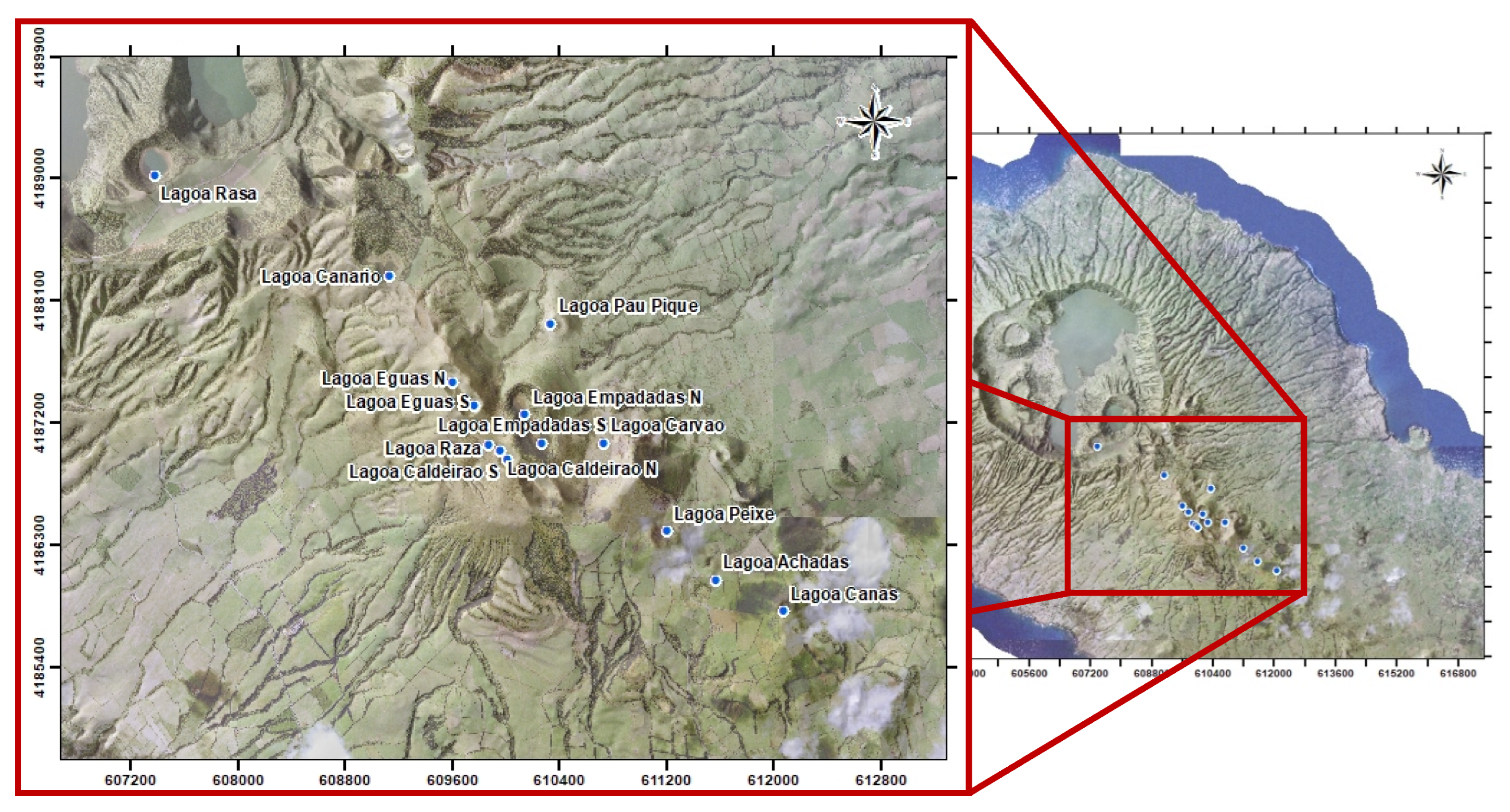
The Sete Cidades Volcanic Massif is the area in the Azores with the highest concentration of lake systems per unit surface area. For this study, 14 shallow water bodies (maximum depth ranging from 0.6 to 4 m) were selected: Empadadas Lakes (North and South), Pau Pique Lake, Canário Lake, Éguas Lakes (North and South), Raza Lake, Carvão Lake, Canas Lake, Caldeirão Lakes (North and South), Achadas Lake, Peixe Lake, and Rasa Lake (Figure 2). Altitude and maximum depth data for each lake are provided in Table 1. These lakes do not stratify, as water temperatures from surface to bottom remain relatively homogeneous throughout the year, both in summer and winter. Therefore, the deeper monomictic lakes of the Sete Cidades volcano, namely Lagoa Azul, Lagoa Verde, and Lagoa de Santiago, which are prone to stratification of the water column during the summer period, were excluded due to their different hydrological behavior, besides already being extensively studied.

3. Methodology

3.1. Study Area and Sampling Design

This study is based on a field survey aimed at characterizing the hydrogeochemistry of selected lakes located in the Sete Cidades Volcano, São Miguel Island (Azores). Sampling sites were chosen according to earlier studies (e.g., [18,32,33,34,35]), ensuring the comparability of results.
The study was conducted in two complementary phases: (i) field data collection and (ii) laboratory analysis and data processing using appropriate statistical and hydrogeochemical methods.

3.2. Sampling Campaigns

Two sampling surveys were carried out at each lake under contrasting seasonal conditions: one during the cold season (late January 2025) and another during the warm season (late May 2025). A total of 79 water samples were collected from 14 lakes (Table 2).
Sampling was conducted at the same locations during both campaigns. Whenever lake depth allowed, water samples were collected along the water column at 1 m intervals. In lakes with depths shallower than 1 m, samples were collected at the surface and near the bottom.
The selection of these sampling periods aimed to assess the potential influence of seasonal thermal stratification on water chemistry and to allow comparison with previously published data for these volcanic lakes.

3.3. In Situ Measurements

In situ measurements of physicochemical parameters, including temperature, pH, and electrical conductivity (EC), were performed using calibrated portable meters, following standard procedures. Calibration was conducted prior to each sampling campaign to ensure data reliability. A Testo 925 m was used to measure water temperature and a WTW 340i meter for pH and electrical conductivity.
Free CO2 concentration and alkalinity were determined in the field by volumetric titration. Free CO2 was titrated with NaOH (1/44 M) until pH 8.33, whereas alkalinity was determined by titration with H2SO4 (0.05 M) to pH 4.45. Free CO2 concentration was calculated based on the volume of titrant consumed, and alkalinity was expressed in mg/L as CaCO3. Bicarbonate concentration was subsequently estimated from alkalinity values.
Water samples were collected in polyethylene bottles previously rinsed with ultrapure water. Depth samples were obtained using a Niskin-type sampler and transferred to the storage containers.

3.4. Laboratory Analyses, Data Processing

After collection, samples were transported to the laboratory in insulated containers to maintain appropriate storage conditions. Upon arrival, samples were immediately filtered through 0.45 μm membrane filters. The filtered water was then divided into two aliquots: an unacidified aliquot was used for the determination of Cl, SO42− and HCO3 concentrations by ion chromatography (model DYONEX ICS-1000), and a second aliquot was acidified with concentrated HNO3 to pH ≈ 2 to prevent chemical alterations prior to analysis and used for the determination of Na+, K+, Mg2+ and Ca2+ concentrations by atomic absorption spectrometry (model GBA 906 AA). Standard analytical procedures were followed, including instrument calibration with certified standards, analysis of blanks, and periodic quality control checks to ensure accuracy and precision. All analyses were carried out following standard laboratory protocols, with appropriate quality assurance and quality control (QA/QC) procedures.
Analytical results were processed and statistically analyzed using AQUACHEM v.3.7 software, which was employed as a supporting tool for data organization, visualization, and interpretation. The software was used to generate graphical representations (e.g., binary diagrams and hydrochemical facies plots) and to explore relationships between major ions. Data quality was assessed through charge balance error calculations, with values generally within acceptable limits (±5%), indicating good analytical reliability. Statistical relationships were evaluated using correlation analysis to identify associations among variables and support process-based interpretations. Correlation coefficients were interpreted considering their statistical significance and relevance to hydrogeochemical processes. Results were further compared with previously published hydrogeochemical datasets for volcanic lakes of the Sete Cidades Volcano, particularly the comprehensive dataset presented by [19]. This integrated approach enabled the evaluation of spatial and seasonal variations in water chemistry and supported the interpretation of the main hydrogeochemical processes controlling these lacustrine systems.

4. Results and Discussion

4.1. Main Physico-Chemical Parameters Variation with Depth

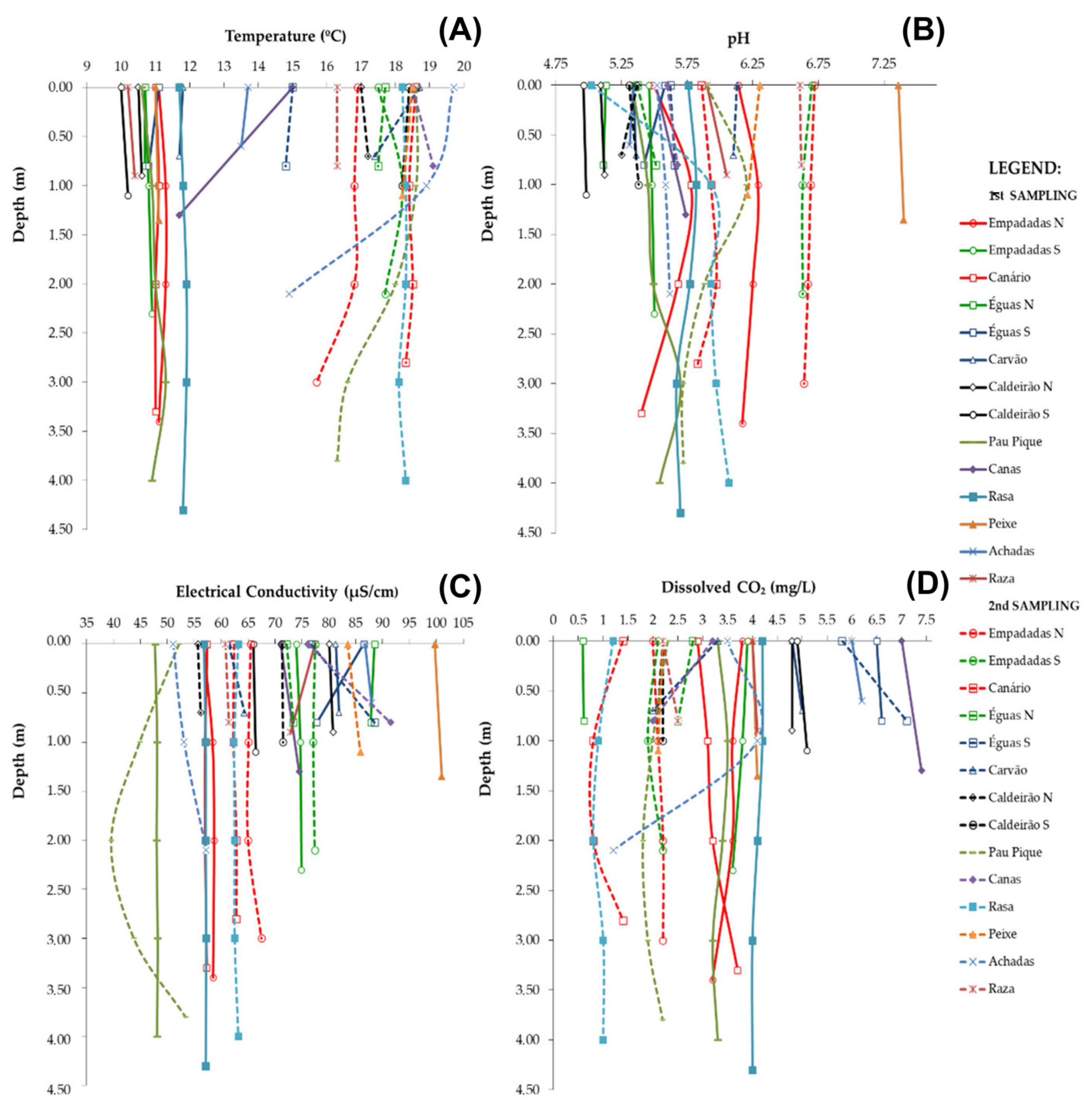
In this study, the lowest temperature (10 °C) was recorded during the 1st sampling survey at the surface of Lagoa do Caldeirão S, while the highest temperature (19.7 °C) occurred during the 2nd survey at Lagoa das Achadas (1 m depth). Mean water temperature was higher during the second sampling (17.6 °C) than during the first (11.3 °C). In both cases, values were lower than ambient air temperature, allowing the studied lakes to be classified as cold waters.
The temperature gradient from surface to depth was similar in both campaigns, reaching 5 °C in the first sampling and 4.9 °C in the second. Temperature profiles along the water column show a minimal variation during the winter survey (Figure 3A). In contrast, during the spring/summer survey, slight temperature differences were observed between surface and bottom waters in some lakes, particularly in Lagoa das Achadas, where a 5 °C difference was recorded.
The studied lakes show a pH range of 2.44 units during the first sampling survey and 1.70 units during the second (Figure 3B). The minimum pH value (4.96) was recorded during the first survey at the surface of Lagoa do Caldeirão S, while the maximum pH (7.40) was measured at the bottom of Lagoa do Peixe (1.35 m depth). Mean pH values were equal to 5.66 in the first survey, been slightly higher in the second (5.95). Overall, these results classify the lake waters as slightly acidic, consistent with previous studies that described these lakes as slightly acidic to neutral [18].
In the present study, the lowest EC value (39.6 µS/cm) was recorded at 2 m-depth in Lagoa do Pau Pique during the second sampling survey. The highest EC value (101 µS/cm) was measured at the bottom of Lagoa do Peixe (1.35 m depth) during the first survey.
Electrical conductivity gradient along the water column reached 53.30 µS/cm in the first survey and 51.90 µS/cm in the second. Vertical EC profiles for both sampling periods indicate that, during both winter and spring/summer campaigns, measurements were generally uniform throughout the water column in most lakes (Figure 3C). However, in Lagoa das Éguas S, a surface-to-bottom difference of 8.7 µS/cm was observed during the first sampling, increasing to 11.80 µS/cm in the second, with higher values at the bottom. A similar pattern was observed in Lagoa das Canas, where the surface bottom difference reached 15.40 µS/cm during the second sampling.
Statistical analysis (Table A1, Table A2 and Table A3Appendix A) shows that CO2 concentrations in the studied lakes ranged from 0.59 mg/L, at the surface of Lagoa das Éguas N (1st survey), to 7.4 mg/L, at the bottom of Lagoa das Canas during the same survey. The whole dataset, mean values were equal to 4.16 mg/L and 2.24 mg/L, respectively at the 1st and 2nd surveys.
Vertical profiles (Figure 3D) indicate minimal variation in CO2 during the winter survey, while the spring/summer survey shows slight surface-to-bottom differences. For example, in Lagoas das Canas and do Carvão, bottom concentrations were ~1.3 mg/L lower than at the surface. In Lagoa das Éguas S, the opposite trend occurred, with ~1.3 mg/L higher CO2 at the bottom. Lagoa das Achadas exhibited the most pronounced variation, with 4.1 mg/L at 1 m depth and 1.2 mg/L at 2.1 m, indicating a sharp decrease with depth. These patterns are interpreted as being related to lake eutrophication, seasonality, microbial activity, and organic matter decomposition [18,36,37,38]. Other studies made in other lakes in the Azores, which characterized the bottom sediments’ microbiome, have shown how microbial activity regulates organic matter decomposition, releasing CO2 to the water [21,39].

4.2. Major-Ion Composition and Water Types

The major cations (Ca2+, Mg2+, Na+, and K+) and anions (Cl, SO42−, and HCO3) show generally low variability across all studied lakes. Vertical profiles indicate no significant differences along the water column, reflecting a geochemical stability derived from the full mixing conditions throughout the year. Regarding ionic composition, major-ion content decreases in the following order: Na+ > Mg2+ > Ca2+ > K+ for cations, and Cl > HCO3 > SO42− for anions. Although minor fluctuations have been observed between surface and bottom, as well as between sampling surveys, which fall within the same order of magnitude and are consistent with previously reported values. Seasonal differences are subtle, with slightly lower anion concentrations during the second campaign, interpreted as reflecting dilution effects and seasonal biogeochemical dynamics.
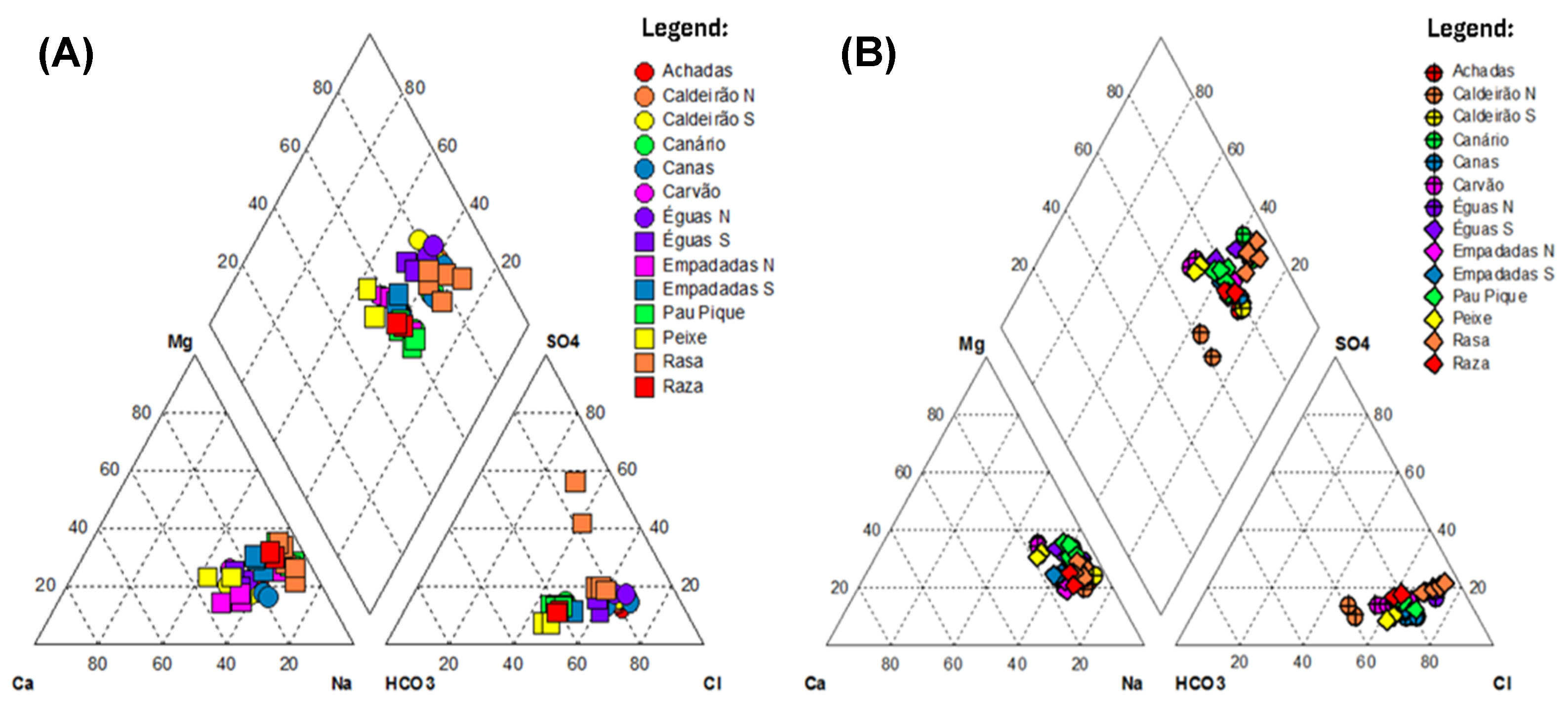
Waters of the studied lakes are predominantly from the sodium–chloride type (Figure 4A,B). An exception was observed during the 1st survey at Lagoa Rasa, where waters were classified as from the Na-SO4. Some samples are plotted in intermediate fields, including Cl-HCO3, HCO3-Cl, SO4-Cl, and Cl-SO4 facies in the anion triangle, and Na-Ca facies in the cation triangle of the Piper-type diagram (Figure 4A,B).

4.3. Hydrogeochemical Processes

The assessment of hydrogeochemical processes in aquatic systems requires evaluating whether water–rock interactions evolve toward chemical equilibrium under relatively constant external conditions [40]. In natural systems, however, both internal and external factors may inhibit the attainment of equilibrium. The dissolved chemical composition of volcanic lakes generally reflects varying degrees of interaction between water and the surrounding rocks, often influenced by processes such as volatile uptake (particularly CO2), mixing with hydrothermal fluids, and, in some cases, marine or anthropogenic contamination [18,19,35]. In the case of the studied lakes, the available physico-chemical and major ion data indicate the combined influence of water–rock interaction, atmospheric deposition, and biogeochemical processes. However, no clear hydrothermal signature is identified, and its potential contribution cannot be definitively assessed without the use of isotopic or gas geochemical tracers.
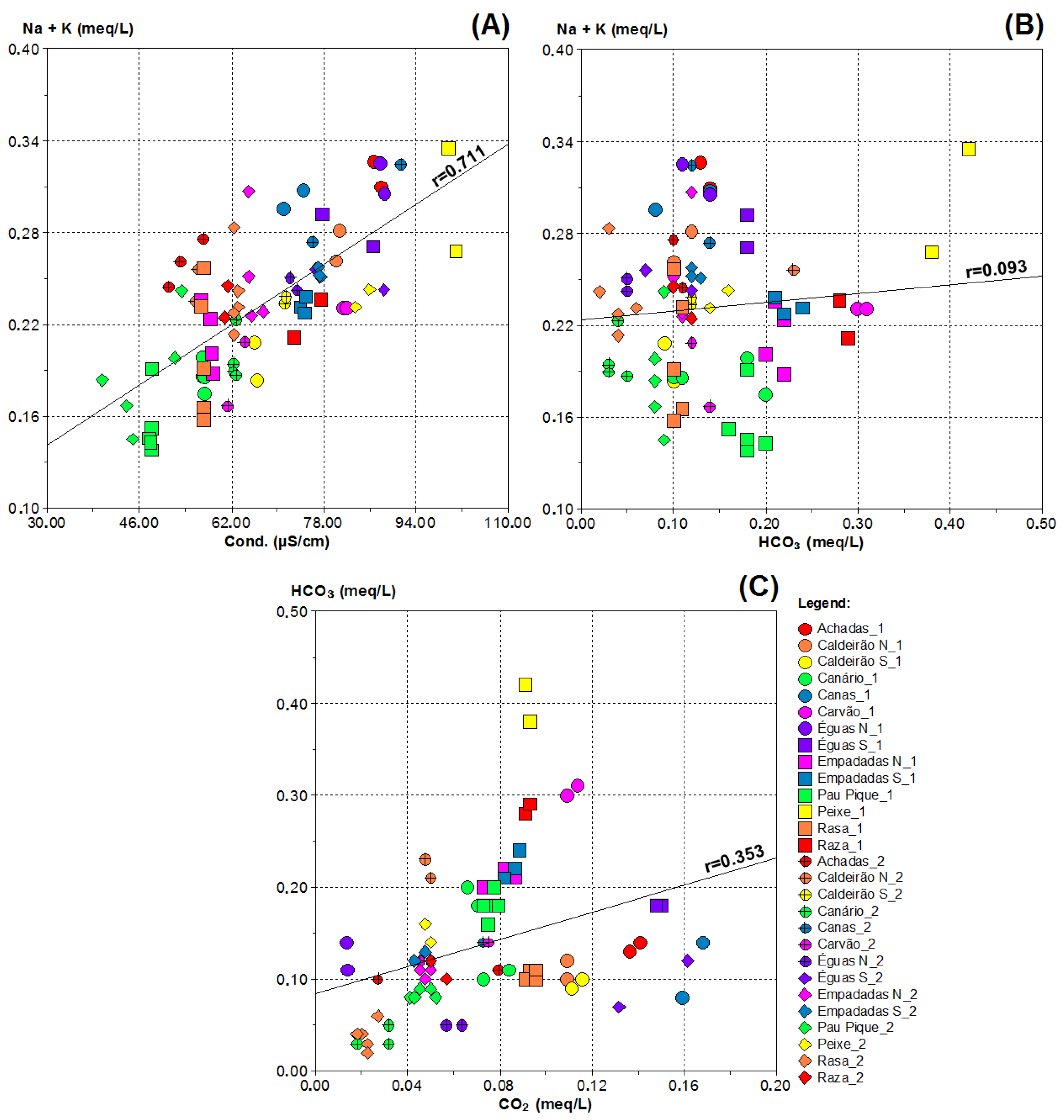
Waters of the small lakes at Sete Cidades Volcano were classified using bivariate analysis tools, allowing their chemical characteristics to be associated with the dominant geochemical processes. A moderate linear correlation between (Na+ + K+) and EC (r = 0.711) indicates that alkali cations contribute partially to water mineralization, likely through minor silicate dissolution influence, although marine salt input deposition is not to be excluded (Figure 5A). The low significance of the HCO3–alkali metal relationship further supports the limited role of water–rock interaction. The available data do not indicate a clear hydrothermal contribution, which is consistent with previous studies [18,19] (Figure 5B). However, this interpretation should be considered with caution, since the absence of specific analyses (isotopic or gas geochemical tracers) did not allow a definitive assessment of potential hydrothermal inputs.
The dissolved CO2–bicarbonate relationship reveals two groups of samples (Figure 5C): one showing a weak linear trend (r = 0.353), mainly associated with bottom waters, and another exhibiting bicarbonate enrichment independent of CO2 concentration. The former is interpreted as reflecting organic CO2 inputs linked to respiration and organic matter decomposition, particularly during warmer periods, while the latter may be explained by pH-driven shifts in carbonate speciation rather than direct CO2 addition.
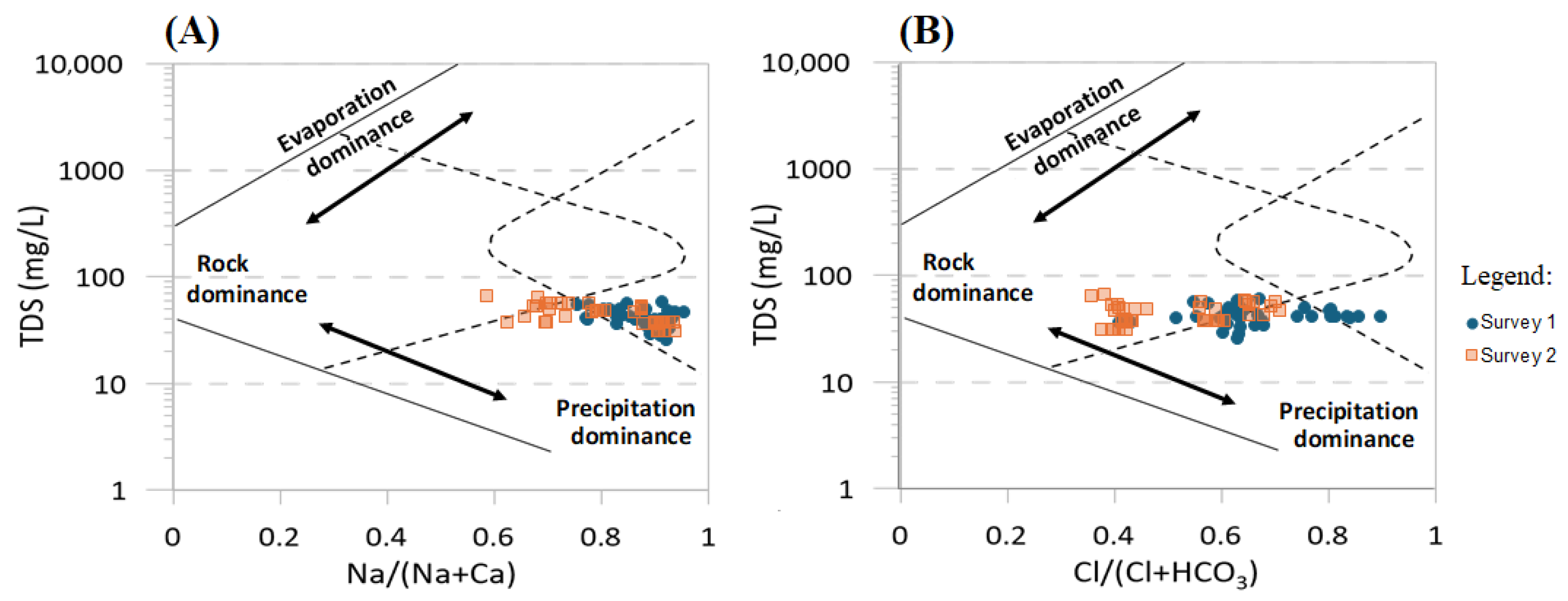
To further constrain the dominant processes controlling water chemistry beyond correlation-based approaches, Gibbs diagrams were applied (Figure 6). In both cation [Na+/(Na+ + Ca2+)] (Figure 6A) and anion [Cl/(Cl + HCO3)] (Figure 6B) plots, most samples cluster within the precipitation dominance field. This distribution indicates that atmospheric inputs, particularly marine aerosols, exert the primary control on lake water composition. The absence of a clear trend toward the evaporation dominance field suggests that evaporative concentration is negligible, while only minor dispersion toward the rock dominance field points to limited water–rock interaction. The strong overlap between sampling campaigns further indicates temporal stability and reinforces the dominance of external atmospheric controls over internal geochemical processes.
In addition to local hydrogeochemical controls, broader environmental drivers should also be considered. While the assessment of climate change impacts on the trophic state of these water bodies is not a primary objective of this study, it is important to highlight that climate change may play a significant role in the evolution of eutrophication processes in volcanic lakes. Although the present work does not allow for a direct evaluation of long-term climatic trends, some of the observed seasonal differences, particularly the higher temperatures recorded during late spring, may favour increased biological activity and nutrient cycling. Shallow lakes are especially vulnerable to climatic variability due to their reduced depth and continuous mixing, which can enhance internal nutrient recycling. Previous studies have shown that increases in air temperature can lead to higher water temperatures during warmer periods, promoting enhanced decomposition of organic matter, increased phytoplankton productivity, and a higher frequency of algal blooms. These processes may, in turn, contribute to a significant increase in greenhouse gas emissions, particularly CO2, from eutrophic aquatic systems. Therefore, these findings reinforce the importance of considering climate-driven effects in future studies of volcanic lakes [38,39,41,42,43].
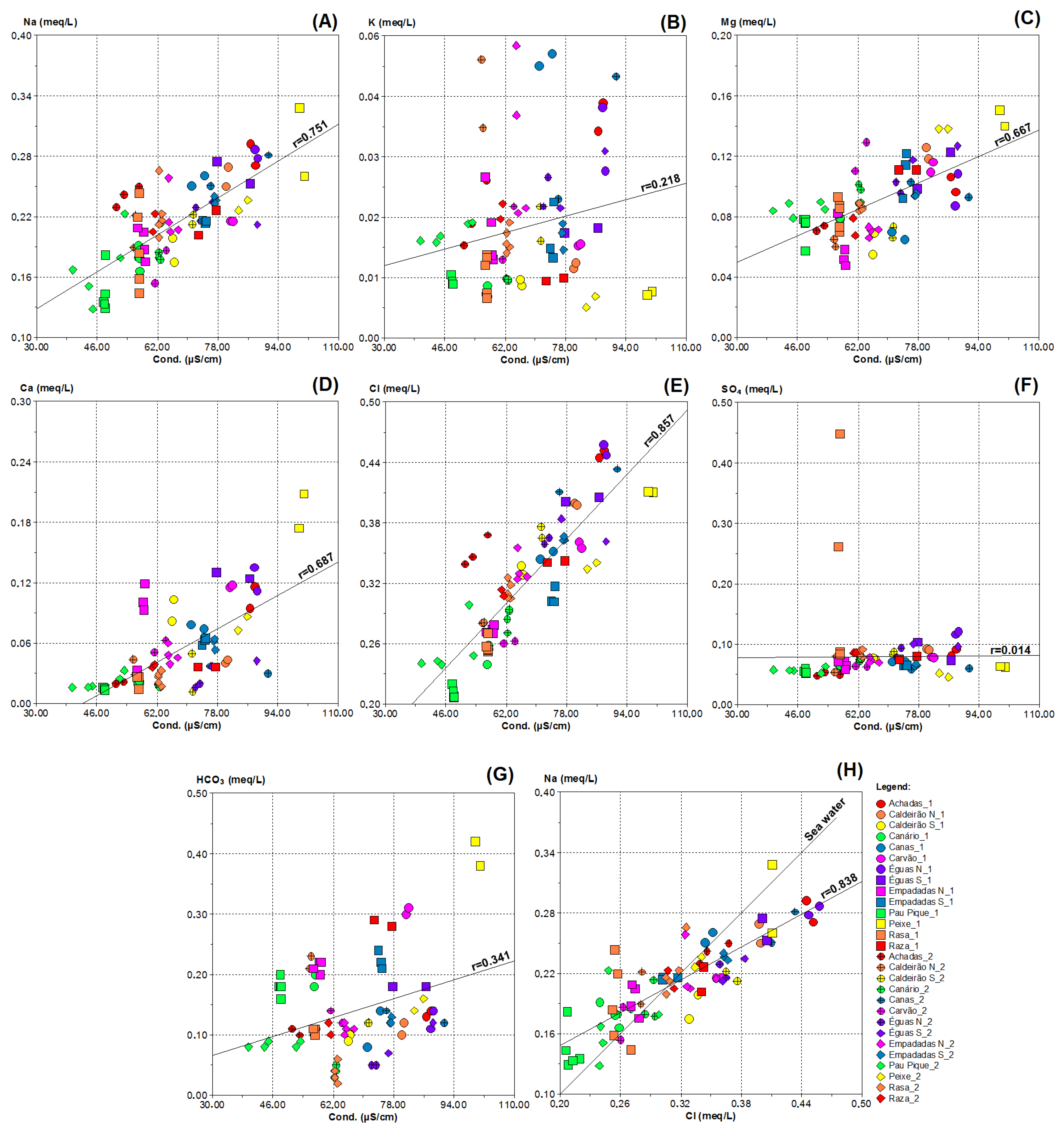
Correlations between individual cations and EC highlight marine and lithological influences. Sodium shows a strong positive correlation with EC (r = 0.751; Figure 7A), consistent with marine aerosol input. Magnesium (r = 0.667; Figure 7C) and calcium (r = 0.687; Figure 7D) also correlate positively with EC, suggesting a secondary contribution from silicate dissolution. Potassium exhibits only a weak correlation with EC (r = 0.218; Figure 7B), reflecting its low mobility and limited role in controlling overall water mineralization.
A strong linear relationship between electrical conductivity (EC) and chloride concentration (r = 0.857) indicates that chloride plays a major role in controlling water chemistry, consistent with a dominant marine influence, although this interpretation is based on geochemical relationships rather than direct atmospheric measurements (Figure 7E). This is further supported by the Na+ vs. Cl relationship, where most samples plot close to the seawater composition line, indicating marine salt input via atmospheric transport (Figure 7H). This interpretation is consistent with recent studies on rainwater chemistry in São Miguel Island, which demonstrate that marine aerosols are a primary source of dissolved ions in precipitation, as indicated by Na/Cl ratios close to seawater and marine-like isotopic signatures [44]. However, rainwater composition in volcanic island environments reflects a complex mixture of sources, including marine aerosols, volcanic emissions, and mineral dust. In active volcanic settings such as the Azores, fumarolic activity and secondary degassing may significantly modify meteoric water chemistry, introducing additional variability.
Slight sodium enrichment observed in some samples suggests a secondary contribution from silicate mineral dissolution, as previously reported by [18]. Overall, while the Na–Cl signature and low mineralization strongly support a dominant atmospheric marine input, secondary contributions from water–rock interaction and volcanic sources cannot be excluded. In addition, the small spatial scale of the island and the proximity of the lakes to the coastline, combined with prevailing westerly winds, favour the efficient transport of marine aerosols across the study area, enhancing their influence on lake water chemistry. A more quantitative assessment would require integration of rainwater chemistry, spatial gradients relative to the coastline, and atmospheric circulation patterns.
To further evaluate the geochemical processes identified above and assess mineral equilibrium conditions, saturation indices were calculated using PHREEQC.
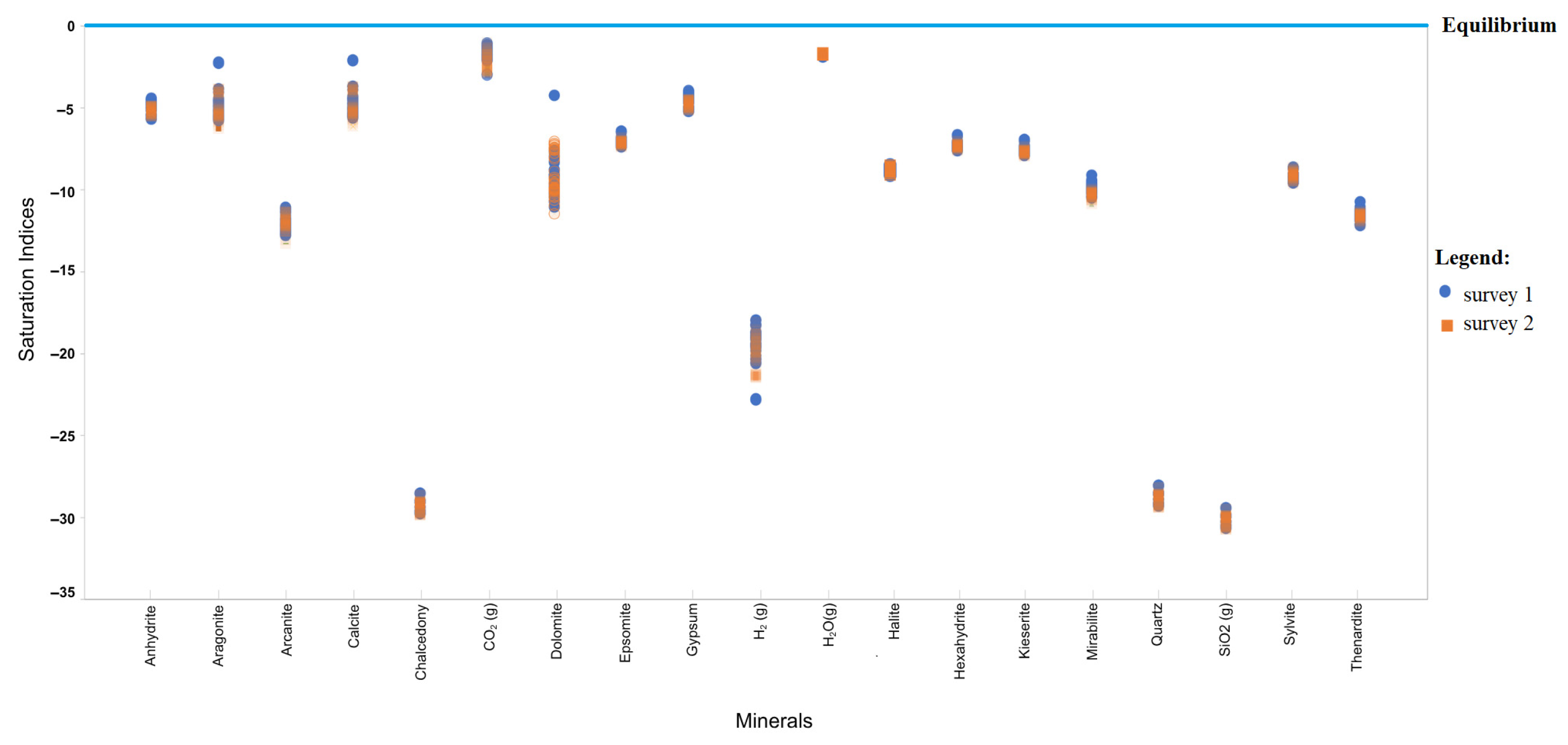
The calculated saturation indices (SI) indicate that the waters are generally undersaturated (SI < 0) with respect to most mineral phases (Figure 8). Carbonate minerals such as calcite, aragonite, and dolomite show negative SI values, suggesting that carbonate precipitation is not thermodynamically favored and that buffering by carbonate equilibria is limited. Similarly, evaporite minerals (e.g., halite, gypsum, thenardite) are strongly undersaturated, confirming that evaporation–crystallization processes are negligible in the system. Silicate phases, including quartz and chalcedony, display highly negative SI values, indicating that waters are far from equilibrium with respect to silicate weathering. These results support the interpretation derived from the Gibbs diagrams, reinforcing that water chemistry is primarily controlled by atmospheric inputs, with only minor contributions from water–rock interaction and no evidence of significant mineral precipitation.
In contrast, sulfate shows no significant correlation with EC (r = 0.014), indicating that it does not control lake water mineralization (Figure 7F). Sulfate in surface waters is commonly associated with atmospheric pollution [1,45], as well as secondary from sea salt spraying, although no clear evidence of such influence is observed in the studied lakes. Agricultural runoff cannot be fully excluded due to land use in some drainage basins. Elevated sulfate concentrations measured in Lagoa Rasa during the first campaign are inconsistent with previous studies [18] and may reflect analytical uncertainty.
The relationship between bicarbonate (HCO3) and EC is weak (r = 0.341; Figure 7G). Slight HCO3 enrichment accompanied by EC increases in some lakes may be related to eutrophication processes, including organic matter production and decomposition at depth. Contributions from water–rock interaction or carbonate dissolution cannot be excluded, although the weak correlation suggests limited influence. The available data do not indicate a clear hydrothermal contribution, which is consistent with the generally low mineralization observed in these waters. However, this interpretation should be considered with caution, given that the absence of concrete data does not allow a definitive assessment of potential hydrothermal inputs.
Finally, to place the obtained results within a broader regional context, it is relevant to compare them with deeper volcanic lakes in the Azores.
A comparison between the studied shallow lakes and deeper volcanic lakes from the Azores archipelago highlights important differences in their physico-chemical behavior. While the shallow lakes analyzed in this study are predominantly holomictic, with continuous mixing throughout the year, deeper lakes in the region commonly exhibit monomict behavior, developing thermal stratification during the warm season. This stratification leads to significant vertical gradients in temperature and dissolved gases, particularly CO2, which tends to accumulate in the hypolimnion due to restricted mixing [46,47,48]. In contrast, the permanent mixing in shallow systems promotes more homogeneous physico-chemical conditions along the water column. Despite these differences, both shallow and deep lakes are generally characterized by dilute waters, with low electrical conductivity and slightly acidic to neutral pH values. The dominant hydrochemical facies in both systems are typically Na–Cl and, to a lesser extent, Na–HCO3 types, reflecting the influence of marine aerosols and water–rock interaction processes. However, deeper lakes may show more pronounced geochemical gradients and localized enrichment in dissolved species at depth, associated with stratification dynamics and, in some cases, volcanic or biogenic CO2 inputs [46,47,48].

5. Conclusions

The analysis of the main physico-chemical parameters and elemental composition of waters from small holomictic lakes from Sete Cidades Volcano (São Miguel Island) provided an integrated understanding of the origin, dynamics, and mineralization processes characterizing these lacustrine systems in an oceanic volcanic environment. Seasonal assessment of the sampling surveys indicates a relatively stable regime, predominantly controlled by atmospheric inputs, with limited water–rock interaction. This interpretation is further supported by the application of Gibbs diagrams, which indicate precipitation dominance, and by saturation index calculations, confirming that waters are undersaturated with respect to major mineral phases. The available data do not indicate a clear hydrothermal influence; however, this cannot be definitively excluded in the absence of isotopic or gas geochemical constraints.
Mean water temperatures remained below ambient air temperatures (11.28 °C and 17.63 °C) during the first and second surveys, respectively, confirming the cold nature of these water bodies. The shallow depth of the lakes prevents the establishment of seasonal thermal stratification, resulting in holomictic systems with continuous mixing throughout the year. This condition promotes vertical homogenization and limits thermal differentiation between surface and bottom waters, a characteristic feature of shallow, frequently renewed lacustrine ecosystems.
Electrical conductivity values were low and vertically homogeneous (mean values equal to 68.68 µS/cm and 65.12 µS/cm, respectively in winter and spring/summer surveys), indicating low mineralization waters of predominantly meteoric origin and reflecting the overall geochemical stability of the systems.
Measured pH values ranged between 5.66 and 5.95, classifying the waters as slightly acidic. This acidity is consistent with the volcanic nature of the substrate and the meteoric origin of the waters, which undergo relatively limited water–rock interaction. The weak buffering capacity and short residence time explain the lack of significant neutralization, maintaining a mildly acidic chemical equilibrium.
Dissolved CO2 profiles showed marked seasonal differences. During winter, concentrations remained nearly constant throughout the water column, indicating vertical stability and low biological activity. In contrast, during spring/summer, higher CO2 concentrations were observed at depth, interpreted as being related to increased organic matter decomposition and microbial respiration, processes enhanced by higher temperatures. Released CO2 reacts with water to form bicarbonate, contributing to a slight increase in alkalinity at depth and highlighting the role of seasonal biogeochemical processes and eutrophication in controlling dissolved carbon dynamics.
The ionic composition exhibited stability between sampling campaigns, both in terms of concentration magnitude and abundance hierarchy. Major cations followed the order Na+ > Mg2+ > Ca2+ > K+, while anions decreased as Cl > HCO3 > SO42−. This distribution is characteristic of Na-Cl waters, which are the dominant type, besides some Na-Cl-HCO3 and Na-SO4-Cl samples, and is interpreted as reflecting a strong marine influence through atmospheric deposition of oceanic salts. The strong correlation between chloride and EC (r = 0.857), as well as the close relationship between sodium and chloride, confirms their dominant role in total mineralization. Slight Na enrichment observed in some samples suggests a secondary contribution from silicate mineral dissolution, consistent with the volcanic context.
The behavior of bicarbonate and sulfate also supports this interpretation. Bicarbonate showed a moderate correlation with EC (r = 0.341), indicating partial control by organic matter decomposition and limited water–rock interaction. Sulfate displayed an almost negligible correlation with conductivity (r = 0.014), demonstrating that it does not control water chemistry. Its presence is mainly attributed to atmospheric deposition of anthropogenic origin and, locally, to agricultural runoff, without evidence of significant contamination from industrial sources. Elevated sulfate values observed at Lagoa Rasa during the first campaign may reflect localized drainage conditions or isolated analytical uncertainty.
Geochemical relationships between electrical conductivity and major cations (Na+: r = 0.751; Mg2+: r = 0.667; Ca2+: r = 0.687) further indicate that water composition is primarily controlled by marine-derived salts, with secondary contributions from silicate and carbonate dissolution. The weak correlation between bicarbonate and alkali metals suggests low-intensity water–rock interaction. These findings are consistent with saturation index results, which indicate no thermodynamic tendency for mineral precipitation, reinforcing the interpretation of dilute systems controlled by external inputs. The available data do not indicate a clear hydrothermal contribution. However, it cannot be definitively excluded in the absence of other types of analysis to verify the existence of in-depth contributions.
Future research should focus on improving the understanding of trophic evolution and biogeochemical dynamics of these lakes through the application of targeted methodologies, such as isotopic tools, as well as analysis of dissolved species of nitrogen and phosphorus and chlorophyll a, direct indicators of phytoplankton productivity and eutrophication status. Stable carbon isotope (δ13C) analyses of both dissolved inorganic and organic carbon would be particularly valuable for identifying carbon sources. More detailed analyses of major, minor, and trace elements would further refine the understanding of mineralization processes and water–rock interactions.
The integration of these approaches with periodic sampling would enable the development of a robust database to support continuous water quality monitoring, to fully assess biogeochemical activity, and long-term surveillance of the volcanic systems hosting these water bodies, contributing to effective seismovolcanic monitoring. The incorporation of process-based tools in this study provides a more robust framework for interpreting hydrogeochemical controls in shallow volcanic lake systems.

Author Contributions

Conceptualization, A.S.C. and J.V.C.; methodology, A.S.C. and C.A.; software, A.S.C.; validation, A.S.C., J.V.C. and C.A.; formal analysis, A.S.C.; investigation, A.S.C.; resources, A.S.C., J.V.C. and C.A.; data curation, A.S.C.; writing—original draft preparation, A.S.C.; writing—review and editing, A.S.C., J.V.C. and C.A.; visualization, A.S.C., J.V.C. and C.A.; supervision, J.V.C. and C.A. All authors have read and agreed to the published version of the manuscript.

Funding

This research received no external funding.

Data Availability Statement

The original contributions presented in this study are included in the article. Further inquiries can be directed to the corresponding author.

Acknowledgments

The authors are grateful to the comments of the editor and two anonymous reviewers that helped to improve the original version of the manuscript. The authors are grateful to the Direção Regional do Ambiente e Ação Climática (Directorate-Regional for Environment and Climate Action), from the Azores regional government, for the support for the sampling surveys.

Conflicts of Interest

The authors declare no conflicts of interest.

Appendix A

Table A1. Physicochemical parameters determined during the 1st sampling survey (winter period), presenting the values obtained in the different lakes according to depth, along with the respective descriptive statistical analysis (maximum, minimum, mean ± standard deviation, and median).
Lake NameDepthTpHE Cond.CO2CaMgNaKClHCO3SO4
(m)(°C)µS/cmmg/Lmg/Lmg/Lmg/Lmg/Lmg/Lmg/Lmg/L
Empadadas N0.0011.106.1456.703.800.661.004.801.049.6312.813.44
1.0011.306.2958.403.602.020.634.710.759.7313.423.45
2.0011.306.2558.703.602.380.584.030.519.8813.423.11
3.4011.106.1758.503.201.860.714.310.549.5912.202.81
Empadadas S0.0010.705.4674.003.901.171.124.980.5810.7214.643.14
1.0010.805.4874.703.801.271.394.920.5210.7013.423.17
2.3010.905.5074.903.601.301.484.960.8811.2312.813.13
Canário0.0011.005.5057.402.900.400.953.820.349.1712.203.08
1.0011.105.7857.003.100.411.014.400.298.4910.983.38
2.0011.005.6857.003.200.390.984.120.289.106.103.14
3.3011.005.4057.303.700.450.964.110.279.036.713.15
Éguas N0.0010.705.1388.500.592.241.326.391.0815.858.545.80
0.8010.705.1187.800.612.711.066.591.4916.236.715.59
Éguas S0.0011.105.5886.506.502.491.495.810.7114.3810.983.52
0.8010.805.4277.806.602.611.206.310.6814.2110.984.98
Carvão0.0011.805.3481.304.802.311.334.960.6012.8018.303.79
0.7011.705.3681.905.002.361.414.950.6112.5918.913.76
Caldeirão N0.0010.505.0980.104.800.811.535.750.4514.156.104.45
0.9010.605.1280.804.800.871.446.180.4914.107.324.37
Caldeirão S0.0010.004.9666.004.901.640.674.570.3811.955.493.70
1.1010.204.9866.405.102.070.844.020.3411.656.103.67
Pau Pique0.0010.605.3347.703.300.320.953.110.417.7910.982.68
1.0010.905.4548.103.500.300.952.970.357.3910.982.53
2.0011.005.4948.003.400.300.923.070.377.5412.202.93
3.0011.305.7048.203.200.270.934.180.357.3410.982.59
4.0010.905.5448.103.300.280.703.300.357.319.762.53
Canas0.0015.005.5171.107.001.570.855.761.7612.204.883.41
1.3011.705.7474.507.401.490.796.001.8412.488.543.41
Rasa0.0011.705.7656.804.200.541.135.050.479.126.7112.56
1.0011.805.8257.104.200.540.895.600.529.026.1021.52
2.0011.905.7757.104.100.281.063.650.268.996.714.20
3.0011.905.6757.204.000.280.854.230.298.946.104.08
4.3011.805.7057.104.000.291.043.310.549.596.104.01
Peixe0.0011.007.3699.704.003.491.837.540.2814.5725.623.04
1.3511.107.40101.004.104.171.705.980.3014.5523.183.01
Achadas0.0013.705.3486.706.001.891.296.721.3415.777.933.90
0.6013.505.3188.006.202.331.176.231.5216.018.544.43
Raza0.0010.205.9077.504.000.731.355.200.3912.1417.083.85
0.9010.406.0572.904.100.731.354.640.3712.0817.693.64
Max.-15.007.40101.007.404.171.837.541.8416.2321.5225.62
Min.-10.004.9647.700.590.270.582.970.267.312.534.88
Mean-11.285.56 68.684.161.34 1.104.90 ± 0.6311.234.2810.98
SD-0.950.5214.781.391.000.301.120.422.683.224.88
Median-11.005.5166.404.001.171.044.920.4910.723.4510.98
Table A2. Physicochemical parameters determined during the 2nd sampling survey (spring/summer period), presenting the values obtained in the different lakes according to depth, along with the respective descriptive statistical analysis (maximum, minimum, mean ± standard deviation, and median).
Lake NameDepthTpHE Cond.CO2Ca MgNaKClHCO3SO4
(m)(°C) (µS/cm)mg/Lmg/Lmg/Lmg/Lmg/Lmg/Lmg/Lmg/L
Empadadas N0.0016.906.7265.502.000.790.864.710.8111.696.713.54
1.0016.806.6965.102.100.960.804.931.4412.596.103.80
2.0016.806.6765.002.201.200.895.941.8911.507.323.36
3.0015.706.6467.502.200.920.874.760.8411.576.713.37
Empadadas S0.0017.506.7077.502.101.071.165.430.5712.867.933.13
1.0018.206.6377.101.901.231.145.520.6812.857.323.04
2.1017.706.6377.402.201.291.145.360.7413.007.323.26
Canário0.0018.605.8662.401.400.391.084.240.399.591.833.44
1.0018.405.9362.300.800.371.234.130.3810.081.833.63
2.0018.505.9762.800.800.361.094.910.3710.382.443.64
2.8018.305.8362.801.400.331.194.080.3810.433.053.71
Éguas N0.0017.705.3772.202.800.331.255.260.8512.723.053.76
0.8017.505.5173.402.500.401.164.961.0412.953.054.50
Éguas S0.0015.005.6276.705.800.741.435.390.8413.604.274.84
0.8014.805.6688.507.100.851.544.871.2112.827.324.63
Carvão0.0018.706.1361.403.301.021.343.540.519.238.543.07
0.7017.406.1064.302.001.261.574.290.859.317.323.00
Caldeirão N0.0017.005.3755.702.200.880.794.351.809.9412.812.58
0.7017.205.2556.202.100.580.735.091.369.9714.033.86
Caldeirão S0.0018.405.3171.302.201.000.804.880.8513.337.324.00
1.0018.205.3871.502.200.240.895.100.6312.947.324.21
Pau Pique0.0018.605.9052.202.300.501.094.120.7410.584.882.50
1.0018.606.2044.902.000.350.962.950.668.495.492.70
2.0018.005.8839.601.800.321.023.850.638.534.882.76
3.0016.605.7243.801.900.331.083.470.628.614.882.75
3.8016.305.7253.402.200.661.035.120.758.805.493.05
Canas0.0018.505.6076.103.200.751.255.760.9014.558.542.80
0.8019.105.6891.502.000.601.136.461.6915.367.322.89
Rasa0.0018.205.0263.201.200.351.054.970.5910.813.663.80
1.0018.305.9362.400.900.531.024.870.6110.962.444.03
2.0018.305.9362.500.800.421.074.580.5510.842.443.94
3.0018.105.9762.501.000.581.086.110.6811.541.834.29
4.0018.306.0763.201.000.661.035.120.7511.291.224.39
Peixe0.0018.506.3183.502.201.461.685.200.2011.858.542.51
1.1018.206.2185.902.101.731.685.430.2712.079.762.20
Achadas0.0019.705.5251.103.500.400.865.270.6012.026.712.31
1.0018.905.5953.104.100.440.905.560.7412.276.102.57
2.1014.905.6257.201.200.560.955.741.0213.046.102.40
Raza0.0016.306.6160.802.200.720.964.710.7711.117.324.12
0.8016.306.6261.402.500.780.825.120.8710.906.104.13
Max.-19.706.7291.507.101.731.686.461.8915.364.8414.03
Min.-14.805.0239.600.800.240.732.950.208.492.201.22
Mean-17.635.9565.122.240.711.094.900.8011.423.415.93
SD-1.160.4711.631.220.360.230.720.381.650.702.82
Median-18.155.9263.002.100.631.084.970.7411.523.416.10
Table A3. Descriptive statistical analysis (maximum, minimum, mean ± standard deviation, and median) for the two surveys.
DepthTpHE Cond.CO2Ca MgNaKClHCO3SO4
(m)(°C) (µS/cm)mg/Lmg/Lmg/Lmg/Lmg/Lmg/Lmg/Lmg/L
Max.-19.707.40101.007.404.171.837.541.8916.2321.5225.62
Min.-10.004.9639.600.590.240.582.950.207.312.201.22
Mean-14.495.8166.883.181.021.094.900.7211.333.848.42
SD-3.350.5113.401.620.810.270.940.412.222.364.71
Median-14.905.7063.203.200.731.064.950.6111.293.447.32

References

  1. Wetzel, R.G. Limnologia; Fundação Calouste Gulbenkian: Lisboa, Portugal, 1993; p. 407. [Google Scholar]
  2. Rouwet, D.; Tassi, F. Geochemical monitoring of volcanic lakes. A generalized box model for active crater lake. Ann. Geophys. 2011, 54, 161–173. [Google Scholar] [CrossRef]
  3. Hutchinson, G.E. A Treatise on Limnology. Vol. 1: Geography, Physics and Chemistry; John Wiley and Sons: New York, NY, USA, 1957; p. 1015. [Google Scholar]
  4. Meybeck, M. Global distribution of lakes. In Physics and Chemistry of Lakes; Lerman, A., Imboden, D.M., Gat, J.R., Eds.; Springer: Berlin, Germany, 1995; pp. 1–35. [Google Scholar]
  5. Hanson, J.K. Lakes (The Extreme Earth); Chelsea House Publications: New York, NY, USA, 2007; p. 146. [Google Scholar]
  6. Ribeiro, D.C.; Martins, G.; Nogueira, R.; Cruz, J.V.; Brito, A.G. Phosphorus fractionation in volcanic lake sediments (Azores—Portugal). Chemosphere 2008, 70, 1256–1263. [Google Scholar] [CrossRef]
  7. Pasternack, G.B.; Varekamp, J.C. Volcanic lake systematics I: Physical constraints. Bull. Volcanol. 1997, 58, 528–538. [Google Scholar] [CrossRef]
  8. Delmelle, P.; Bernard, A. Downstream composition changes of acidic volcanic waters. J. Volcanol. Geotherm. Res. 2000, 97, 55–75. [Google Scholar] [CrossRef]
  9. Rowe, G.L.; Ohsawa, S.; Takano, B.; Brantley, S.L.; Fernandez, J.F.; Barquero, J. Using volcanic lake chemistry to predict volcanic activity. Bull. Volcanol. 1992, 54, 494–503. [Google Scholar] [CrossRef]
  10. Simkin, T.; Siebert, L. Volcanoes of the World, 2nd ed.; Geoscience Press: Tucson, AZ, USA, 1994; p. 349. [Google Scholar]
  11. Varekamp, J.C. Volcanic lakes: Coloured windows into magma chamber. In Proceedings of the II Jornadas Internacionais de Vulcanologia da Ilha do Pico, Pico, Portugal, 5–8 June 2002; pp. 71–72. [Google Scholar]
  12. Rouwet, D.; Tassi, F.; Mora-Amador, R.A.; Sandri, L.; Chiarini, V. Past, present and future of volcanic lake monitoring. J. Volcanol. Geotherm. Res. 2014, 272, 78–97. [Google Scholar] [CrossRef]
  13. Pappaterra, S.; Inguaggiato, C.; Rouwet, D.; Levresse, G.; Peiffer, L.; Apollaro, C.; Mora-Amador, R.; Ramírez-Umaña, C.; González, G.; Schiavo, B.; et al. Fluid-mineral dynamics at the Rincón de la Vieja volcano—Hydrothermal system (Costa Rica) inferred by the study of major, minor and rare earth elements in the hyperacid crater lake. Front. Earth Sci. 2023, 11, 1197568. [Google Scholar] [CrossRef]
  14. Seidel, L.; Broman, E.; Turner, S.; Ståhle, M.; Dopson, M. Interplay between eutrophication and climate warming on bacterial communities in coastal sediments differs depending on water depth and oxygen history. Sci. Rep. 2021, 11, 23384. [Google Scholar] [CrossRef] [PubMed]
  15. Mozafari, Z.; Noori, R.; Bateni, S.M.; Jun, C.; Kim, D.; Saravani, M.J.; Naderian, D.; Siadatmousavi, S.M.; Afzalimehr, H.; Azizpour, J.; et al. Impact of climatic factors on eutrophication in the World’s largest lake. Ecol. Ind. 2025, 175, 113497. [Google Scholar] [CrossRef]
  16. Yindong, T.; Xiwen, X.; Miao, Q.; Jingjing, S.; Yiyan, Z.; Wei, Z.; Mengzhu, W.; Xuejun, W.; Yang, Z. Lake warming intensifies the seasonal pattern of internal nutrient cycling in the eutrophic lake and potential impacts on algal blooms. Water Res. 2021, 188, 116570. [Google Scholar] [CrossRef] [PubMed]
  17. Almeida Miranda, E.O.; Inguaggiato, C.; Meza Maldonado, L.F.; Peiffer, L.; Schiavo, B.; Levresse, G. Geochemical processes influencing As distribution in waters associated with volcanic-hydrothermal systems: A case study of Coconucos volcanic chain–Puracé volcano, Colombia. J. S. Am. Earth Sci. 2025, 165, 105716. [Google Scholar] [CrossRef]
  18. Andrade, C.; Cruz, J.V.; Viveiros, F.; Moreno, L.; Ferreira, L.; Coutinho, R. Hydrogeochemical evolution of volcanic lakes in the Azores. Appl. Geochem. 2024, 164, 105933. [Google Scholar] [CrossRef]
  19. Andrade, C. Emissão de CO2 em Lagos Vulcânicos dos Açores: Quantificação e Implicações Hidrogeoquímicas. Master Thesis, Universidade dos Açores, Ponta Delgada, Portugal, 2014. [Google Scholar]
  20. Cruz, J.V.; Antunes, P.; Amaral, C.; França, Z.; Nunes, J.C. Volcanic lakes of the Azores archipelago. J. Volcanol. Geotherm. Res. 2006, 156, 135–157. [Google Scholar] [CrossRef]
  21. Cruz, J.V.; Andrade, C.; Ferreira, L.; Viveiros, F. Lake water composition in oceanic islands. Water 2025, 17, 1849. [Google Scholar] [CrossRef]
  22. Porteiro, J. Lagoas dos Açores: Elementos de Suporte ao Planeamento Integrado. Ph.D. Thesis, Universidade dos Açores, Ponta Delgada, Portugal, 2000. [Google Scholar]
  23. Gaspar, J.L.; Queiroz, G.; Ferreira, T.; Medeiros, A.R.; Goulart, C.; Medeiros, J. Earthquakes and volcanic eruptions in the Azores region. In Volcanic Geology of S. Miguel Island; Geological Society: London, UK, 2015; pp. 33–49. [Google Scholar]
  24. Queiroz, G.; Pacheco, J.M.; Gaspar, J.L.; Aspinall, W.P.; Guest, J.E.; Ferreira, T. The last 5000 years of activity at Sete Cidades volcano. J. Volcanol. Geotherm. Res. 2008, 178, 562–573. [Google Scholar] [CrossRef]
  25. Queiroz, G.; Pacheco, J.M.; Gaspar, J.L.; Aspinall, W.P.; Guest, J.E.; Ferreira, T. Eruptive history and evolution of Sete Cidades volcano. In Volcanic Hazards in the Azores; Geological Society: London, UK, 2015; pp. 123–145. [Google Scholar]
  26. Moore, R.B. Preliminary Geologic Map of Sete Cidades Volcano; U.S. Geological Survey: Reston, VA, USA, 1983.
  27. Booth, B.; Croasdale, R.; Walker, G. Five thousand years of volcanism on São Miguel. Philos. Trans. R. Soc. Lond. 1978, 288, 271–319. [Google Scholar]
  28. Moore, R.B. Geology of the Three Late Quaternary Stratovolcanoes on São Miguel; U.S. Geological Survey: Reston, VA, USA, 1991.
  29. Beier, C.; Haase, K.M.; Hansteen, T.H. Magma evolution of Sete Cidades volcano. J. Petrol. 2006, 47, 1375–1411. [Google Scholar] [CrossRef]
  30. Carmo, R.; Madeira, J.; Ferreira, T.; Queiroz, G.; Hipólito, A. Volcano-tectonic structures of São Miguel Island. In Volcanic Geology of S. Miguel Island; Geological Society: London, UK, 2015; pp. 65–86. [Google Scholar]
  31. Moore, R.B. Volcanic geology and eruption frequency, São Miguel. Bull. Volcanol. 1990, 52, 602–614. [Google Scholar] [CrossRef]
  32. Antunes, P. Lagos Vulcânicos dos Açores: Caracterização Geoquímica e Monitorização Vulcanológica. Master Thesis, Universidade dos Açores, Ponta Delgada, Portugal, 2003. [Google Scholar]
  33. Antunes, P. Estudo Hidrogeoquímico e Vulcanológico de Lagos no Arquipélago dos Açores. Ph.D. Thesis, Universidade dos Açores, Ponta Delgada, Portugal, 2008. [Google Scholar]
  34. Malcata, A.; Pacheco, D.M.; Cymbron, R. Monitorização da Qualidade da Água das Lagoas; Governo Regional dos Açores: Ponta Delgada, Portugal, 2022.
  35. Andrade, C. Gaseous Emanations from Azores Volcanic Lakes: Geochemical Characterization. Ph.D. Thesis, Universidade dos Açores, Ponta Delgada, Portugal, 2019. [Google Scholar]
  36. Andrade, C.; Viveiros, F.; Cruz, J.V.; Coutinho, R. Global CO2 output of volcanic lakes in the Azores. J. Geochem. Explor. 2021, 229, 106835. [Google Scholar] [CrossRef]
  37. Andrade, C.; Cruz, J.V.; Viveiros, F.; Coutinho, R. CO2 flux from volcanic lakes in the Western Group of the Azores. Water 2019, 11, 599. [Google Scholar] [CrossRef]
  38. Andrade, C.; Cruz, J.V.; Viveiros, F.; Branco, R.; Coutinho, R. CO2 degassing from Pico Island volcanic lakes. Limnologica 2019, 76, 72–81. [Google Scholar] [CrossRef]
  39. Andrade, C.; Cruz, J.V.; Ferreira, L.; Viveiros, F.; Toubarro, D.; Tassi, F.; Pimentel, A.; Braga, D.; Cordeiro, A.; Raposeiro, P. Diffuse CO2 and CH4 emissions of two volcanic lakes on Pico Island (Azores). J. Volcanol. Geotherm. Res. 2025, 467, 108424. [Google Scholar] [CrossRef]
  40. Matthess, G. The Properties of Groundwater; Wiley: New York, NY, USA, 1982. [Google Scholar]
  41. Antunes, P.; Rodrigues, F.C. Azores volcanic lakes: Factors affecting water quality. In Water Quality: Current Trends and Expected Climate Change Impacts; IAHS Publish: Wallingford, UK, 2011; Volume 348, pp. 106–114. [Google Scholar]
  42. Cruz, J.V.; Pacheco, D.; Porteiro, J.; Cymbron, R.; Mendes, S.; Malcata, A.; Andrade, C. Sete Cidades and Furnas Lake eutrophication. Sci. Total Environ. 2015, 520, 168–186. [Google Scholar] [CrossRef]
  43. Santos, M.; Pacheco, D.; Santana, A.F.; Mueller, H. Cyanobacteria blooms in Sete Cidades Lake. Algol. Stud. 2005, 117, 3. [Google Scholar]
  44. Ferreira, L.; Cruz, J.V.; Viveiros, F.; Durães, N.; Coutinho, R.; Andrade, C.; Santos, J.F. Chemical and 87Sr/86Sr signatures of rainwaters at two active central volcanoes in São Miguel (Azores)—First survey. J. Volcanol. Geotherm. Res. 2024, 447, 108033. [Google Scholar] [CrossRef]
  45. Berner, E.K.; Berner, R.A. Global Environment: Water, Air and Geochemical Cycles; Prentice-Hall: Saddle River, NJ, USA, 1996. [Google Scholar]
  46. Andrade, C.; Cruz, J.V.; Viveiros, F.; Coutinho, R.; Pacheco, J.; Silva, C.; Branco, R. Diffuse CO2 emissions from Furnas volcanic lake. J. Volcanol. Geotherm. Res. 2016, 325, 123–137. [Google Scholar]
  47. Andrade, C.; Viveiros, F.; Cruz, J.V.; Branco, R.; Moreno, L.; Silva, C.; Coutinho, R.; Pacheco, J. Diffuse CO2 flux emission in two maar lakes. J. Volcanol. Geotherm. Res. 2019, 369, 188–202. [Google Scholar] [CrossRef]
  48. Andrade, C.; Cruz, J.V.; Viveiros, F.; Coutinho, R. CO2 emissions from Fogo intracaldera lakes. J. Volcanol. Geotherm. Res. 2020, 400, 106915. [Google Scholar] [CrossRef]
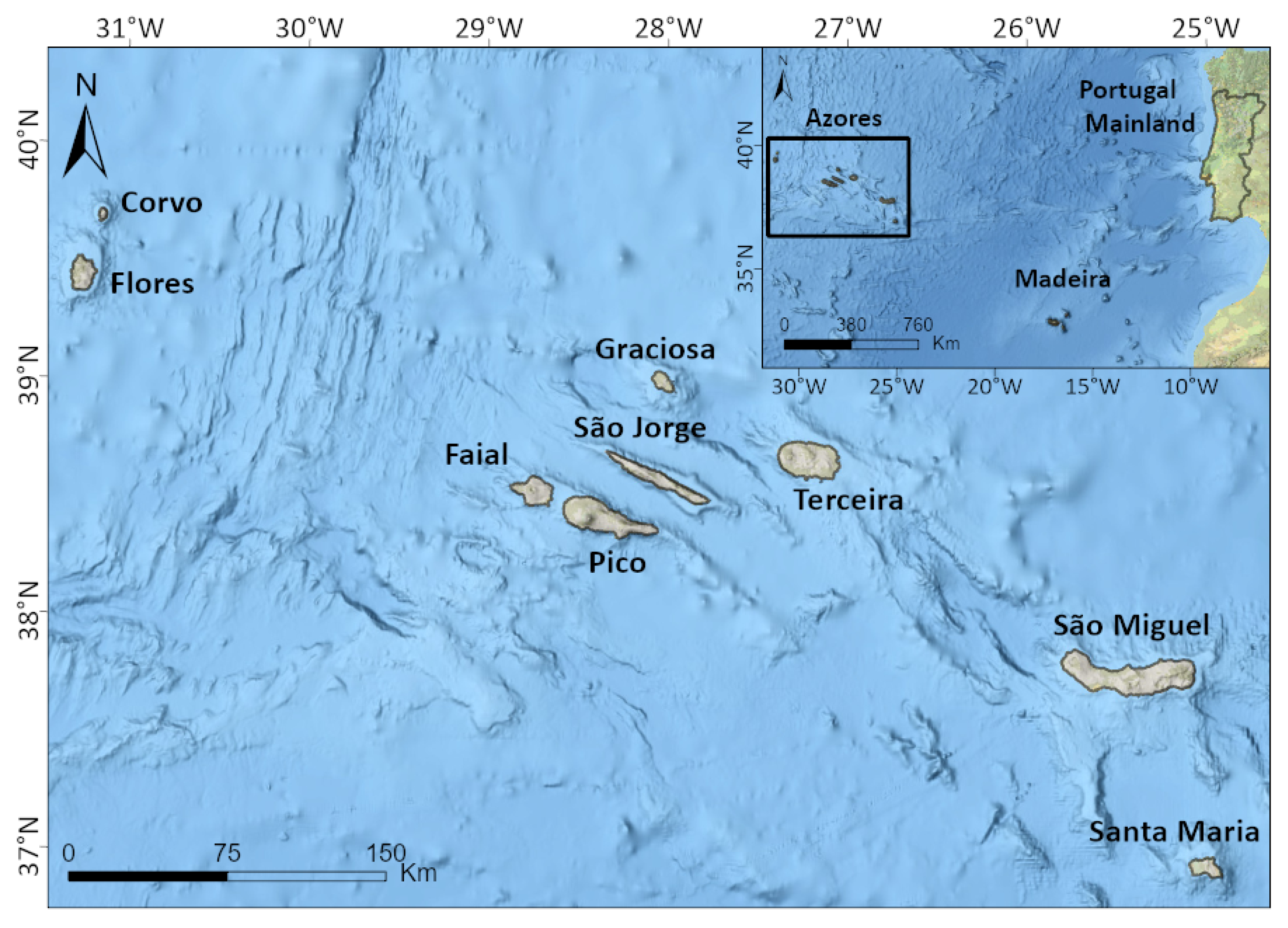
Figure 1. Geographical location of the Azores archipelago.
Water 18 00935 g001
Figure 2. Geographical location of the study area in the Sete Cidades Volcano (São Miguel Island).
Water 18 00935 g002
Figure 3. Variation of (A) temperature, (B) pH, (C) electrical conductivity and (D) dissolved CO2 from surface to bottom along the water column in the studied lakes during both surveys (the solid line corresponds to the 1st survey, and the dashed line to the 2nd survey).
Water 18 00935 g003
Figure 4. Piper diagram showing the relative major-ion composition of the studied lakes, corresponding to the winter (A) and spring/summer periods (B).
Water 18 00935 g004
Figure 5. (A) Relationship between alkali metals content (Na + K) and electrical conductivity; (B) relationship between alkali metals (Na + K) and HCO3 content; (C) relationship between dissolved carbon dioxide and HCO3 content. Lake reference sequence for the 1st and 2nd surveys is shown in the legend of each plot from top to bottom.
Water 18 00935 g005
Figure 6. Variations in the (A) weight ratio Na/(Na + Ca) and (B) Cl/(Cl + HCO3) as a function of the TDS content for the studied lakes during both surveys represented by a Gibbs-type diagram.
Water 18 00935 g006
Figure 7. Relationship between the mean content of the main ions and electrical conductivity, with the respective linear correlation lines: (A) Na vs. EC; (B) K vs. EC; (C) Mg vs. EC; (D) Ca vs. EC; (E) Cl vs. EC; (F) SO4 vs. EC; (G) HCO3 vs. EC. The relationship between the Na vs. Cl content is shown in (H). Lake reference sequence for the 1st and 2nd surveys is shown in the legend of each plot from top to bottom.
Water 18 00935 g007
Figure 8. Saturation indices (SI) of selected mineral phases calculated using PHREEQC for all studied lakes’ water samples from both surveys.
Water 18 00935 g008
Table 1. Maximum lake depths and altitude measured during the field campaigns conducted in the present study (surface area and geological setting according to [18]: ud—undifferentiated depression; scc—scoria cone crater; m—maar).
LakeMax. Depth
(m)
1st Survey
Max. Depth
(m)
2nd Survey
Altitude
(m)
Area
(Km2)
Geol.
Sett.
Empadadas N3.43.07450.017scc
Empadadas S2.32.17420.017scc
Pau Pique4.03.87080.003scc
Canário3.32.87520.019m
Éguas N0.80.88200.002scc
Éguas S0.80.88020.003scc
Raza0.90.87710.019ud
Carvão0.70.76800.004ud
Canas1.30.85760.004scc
Caldeirão N0.90.77710.002scc
Caldeirão S1.11.07730.002scc
Achadas0.62.1566<0.001scc
Peixe1.351.16180.002ud
Rasa4.34.05510.036m
Table 2. Samples collected during the two sampling campaigns.
LakeNº of Samplings
1st Survey
Nº of Samplings
2nd Survey
Empadadas N44
Empadadas S33
Pau Pique55
Canário44
Éguas N22
Éguas S22
Raza22
Carvão22
Canas22
Caldeirão N22
Caldeirão S22
Achadas23
Peixe22
Rasa55
Disclaimer/Publisher’s Note: The statements, opinions and data contained in all publications are solely those of the individual author(s) and contributor(s) and not of MDPI and/or the editor(s). MDPI and/or the editor(s) disclaim responsibility for any injury to people or property resulting from any ideas, methods, instructions or products referred to in the content.