Article

Spectral Quasi-Linearization Analysis of Nonlinear Contaminant Transport in a Porous Channel with Generalized Haldane Kinetics

by
Unyime V. Johnson
1,*,
Samuel O. Adesanya
1,2 and
Ramoshweu S. Lebelo
3
1
Department of Mathematics and Statistics, Redeemer’s University, Ede 232101, Nigeria
2
Education Department, Vaal University of Technology, Private Bag X021, Vanderbijlpark 1911, South Africa
3
Applied Physical Sciences Department, Vaal University of Technology, Private Bag X021, Vanderbijlpark 1911, South Africa
*
Author to whom correspondence should be addressed.
Water 2026, 18(7), 842; https://doi.org/10.3390/w18070842
Submission received: 24 February 2026 / Revised: 20 March 2026 / Accepted: 26 March 2026 / Published: 1 April 2026
(This article belongs to the Special Issue Water Quality, Wastewater Treatment and Water Recycling, 2nd Edition)

Abstract

The increasing presence of biological contaminants in wastewater poses serious challenges to safe water reuse and sustainable management. The effects of filtration on pollutant transport in a vertical porous channel are investigated mathematically and numerically in this work, taking into account nonlinear microbial growth controlled by generalized Haldane kinetics. Key characteristics, including viscosity, density, and diffusivity, are supposed to change nonlinearly with contaminant concentration, and the fluid is described as incompressible and dilatant. The Bivariate Spectral Quasi-Linearization Method (BSQLM) is used to solve the resulting system of nonlinear partial differential equations, and the Bivariate Spectral Chebyshev Collocation Method (BSCCM) is used for validation. The findings show that while higher inhibition and liquid–biofilm mass transfer coefficients successfully control pollutant concentration, porous filtration dramatically lowers flow velocity due to increased resistance and bio-clogging. With few residual errors, the numerical scheme exhibits great accuracy and quick convergence. Overall, the study establishes that coupling filtration mechanisms with generalized biokinetic models provides a robust framework for predicting contaminant behavior and enhancing the design of efficient wastewater treatment and reuse systems.

1. Introduction

Over the last few years, numerous studies have examined the scarcity of clean water and its implications for health and well-being (SDGs 3 and 6). Due to increasing occurrences of biological contaminants in drinking water sources arising from industrialization, urbanization, and rapid population growth [1,2,3,4,5,6,7,8], various harmful microorganisms have been identified in the literature. These include bacteria (such as Salmonella, Shigella, and Escherichia coli), parasites (such as Giardia and Cryptosporidium), and viruses (such as hepatitis viruses and norovirus), particularly in urban areas exposed to sewage pollutants, agrochemicals (e.g., animal waste), and other contamination pathways.
Given these challenges, Muloiwa et al. [9] analyzed the performance of kinetic growth-rate models in describing bacterial growth in biological wastewater treatment systems to support effective wastewater management. Nikolenko et al. [10] profiled contaminants of emerging concern (CECs) in groundwater beneath Barcelona and assessed their potential health risks. Mannina et al. [11] reported a strong mathematical correlation among biomass kinetics, membrane fouling, and the application of membrane bioreactor technology for water purification. Mohanty et al. [12] demonstrated a reasonable model fit for the effects of phenol on sulphate reduction. Ahmad et al. [13], on the other hand, revealed a poor fit for caffeine biodegradation, underscoring the need for more sophisticated computational methods. Using Candida parapsilosis, Halmi et al. [14] created a mathematical model that produced high agreement in catechol degradation. Similar to this, Dey and Mukherjee [15] verified kinetic models for phenol degradation, highlighting the significance of microbial interactions in the breakdown of contaminants, as also covered in the references included therein.
From the standpoint of fluid dynamics, water is a deformable and incompressible fluid that responds to changes in channel geometry, density, and pressure. Therefore, as stressed in SDGs 3 and 6, monitoring the fate and movement of pollutants in drinking water sources is crucial for protecting human health; Madhukesh et al. [16] investigated pollutant-driven. Similarly, Adeosun et al. [17] investigated sewage dispersion in channel flow, incorporating filtration and biodegradation mechanisms into water quality management. In [18], Adeosun and co-authors modeled pollutant removal in water channels using uniformly dispersed carbon nanotubes combined with filtration processes. Mahmood et al. [19] analyzed stagnation-point flow around a cylinder under complex physical effects, including pollutant concentration, radiation, and gyrotactic microorganisms. Nimmy et al. [20] also studied magnetohydrodynamic (MHD) nanofluid flow with heat and mass transfer in a chemically reactive fluid around a rotating sphere in the presence of external pollutant sources.
Furthermore, Radha et al. [21] provided a numerical solution to a one-dimensional nonlinear advection–dispersion equation describing contaminant transport in heterogeneous groundwater systems, incorporating nonlinear sorption via Freundlich and Langmuir isotherms. In a related study, Manitcharoen et al. [22] presented numerical approximations for one-dimensional unsteady dissolved oxygen (DO) concentration in a river with exponentially increasing pollution. Ercan [23] employed one-parameter Lie group scaling transformations to investigate self-similarity in three-dimensional advective–dispersive–reactive (ADR) groundwater transport processes, accounting for advection, dispersion, sorption, and degradation. Oloudun et al. [24] utilized a coupled mathematical model to analyze nonhomogeneous water pollutants, where treatment processes convert insoluble forms into soluble forms through eutrophication. Kiteto et al. [25] conducted a mathematical study of advanced water treatment processes based on the Freundlich isotherm. Several related studies are also reported by Adesanya et al. [26] on the flow and mass transfer of wastewater sludge containing chemically reactive contaminants into potable water (interested readers are referred to the references therein [27,28,29,30]).
Despite extensive studies [1,2,3,4,5,6,7,8,9,10,11,12,13,14,15,16,17,18,19,20,21,22,23,24,25,26,27,28,29,30], limited work has addressed the mathematical modeling of wastewater reuse involving biological contaminants under combined flocculation and ultrafiltration processes, particularly during eutrophication, where bio-clogging due to biofilm accumulation is inevitable. From a sustainability perspective, treated wastewater provides significant environmental and economic benefits, including reduced dependence on freshwater resources and expanded applications in domestic, industrial, and irrigation sectors. The impact of porous filtration on wastewater flow with biological contaminants under nonlinear microbiological growth controlled by generalized Haldane kinetics is examined in this work. In order to simulate contaminant movement, a unique modeling framework is created by combining concentration-dependent fluid characteristics, porous medium effects, and generalized Haldane biokinetics. The Bivariate Spectral Quasi-Linearization Method (BSQLM), which is renowned for its high accuracy and quick convergence, is used to solve the resulting nonlinear system of partial differential equations. Results are verified using the Chebyshev polynomial-based Bivariate Spectral Collocation Method (BSCM) to guarantee dependability. It is commonly known that spectral approaches are effective in solving complicated differential equations [31,32,33,34,35,36,37,38,39]. The following is a summary of this study’s primary contributions:
  • To explain nonlinear pollutant movement in wastewater systems, a novel mathematical model is created that combines concentration-dependent fluid characteristics, porous filtration effects, and generalized Haldane biokinetics.
  • The model provides a more accurate depiction of biological wastewater treatment processes by incorporating substrate inhibition and bio-clogging mechanisms.
  • The Bivariate Spectral Quasi-Linearization Method (BSQLM) yields an effective numerical solution, which is validated against the Chebyshev collocation method to guarantee precision and dependability.
  • The effects of mass transfer, inhibition kinetics, and filtration on flow behavior and contamination removal efficiency are investigated through a thorough parametric analysis.
The mathematical formulation of the governing equations, model assumptions, dimensionless analysis, and numerical implementation are the next steps in the work.

2. Materials and Methods

2.1. Mathematical Analysis

Consider the unsteady flow of polluted wastewater containing biological contaminants through a vertical channel of infinite length along the x-axis, with the two channel walls separated by a distance 2a in the y-direction. The fluid is assumed to follow a power-law constitutive model, while the presence of fine porous layers suitable for the filtration of suspended particles and biological contaminants restricts the flow. The following assumptions are made in simplifying the governing equations:
  • The flow is one-dimensional, fully developed; hence, derivatives of the flow velocity along the (x,z) direction are neglected to simplify the analysis and limit the transport procedure in porous filtration systems to a direction.
  • The fluid is dilatant and satisfies the power-law constitutive relation.
  • Physical properties such as viscosity, density, and diffusivity are assumed to vary nonlinearly with contaminant concentration.
  • Microbial growth is governed by the generalized Haldane kinetic model.
Based on the flow assumptions, the appropriate governing equations can be written as [26,40]:
ρ u ¯ t ¯ + v 0 u ¯ y ¯ = P x ¯ + y ¯ μ C ¯ u ¯ y ¯ m 1 u ¯ y ¯ + ρ g β C ¯ C 0 μ C ¯ u ¯ y ¯ m 1 K u ¯ ,       m > 1     C ¯ t ¯ + v 0 C ¯ y ¯ = y ¯ D C ¯ C ¯ y ¯ + S C ¯
where the concentration of microbial growth is given by the proposed generalized Haldane kinetics [41,42,43,44]. The regular Haldane model admits n = 1, while Monod can be recovered whenever the inhibition coefficient ( β = 0). Finally, the Moser Kinetic model can be readily obtained from the generalized Haldane whenever n > 1, β = 0. The proposed generalized model can then be written as:
S C ¯ = K M C ¯ n K A + C ¯ n + C ¯ n 2 K i n ,   n 1
Then the initial-boundary value conditions are:
u ¯ y ¯ , 0 = M 1 y ¯ 2 a 2 ,     C ¯ y ¯ , 0 = C 0 ,       u ¯ ± a ,   t ¯ = 0 ,     C ¯ ± a ,   t ¯ = C w ,   for     t ¯ > 0
with
y = y ¯ a ,   x = x ¯ a , u = u ¯ a ν ,   t = ν t ¯ a 2 ,   P = p ¯ a 2 ρ ν 2 , K = P x , υ = μ 0 ρ , μ = μ ¯ μ 0 , G r = g β a 3 C w C 0 υ 2 , S c = υ D 0 , D a = k a 2 , S 2 = 1 D a , ε = K A C w C 0 , D = D ¯ D 0 , α , γ = b 1 , 2 C w C 0 , R = v 0 a υ ,     μ C ¯ = μ 0 e b 1 C C 0 ,     D C ¯ = D 0 e b 2 C C 0 , ϕ = C ¯ C 0 C w C 0 , β = C w C 0 n K i n , K R = a 2 K M C w C 0 n v C w C 0
will obtain:
u t + R u y = K + y e α ϕ u y m + G r ϕ S 2 u e α ϕ u y m 1     ϕ t + R ϕ y = 1 S c y e γ ϕ ϕ y + K R ϕ n ε + ϕ n + β ϕ 2 n
together with the conditions:
u y , 0 = m 1 y 2 , ϕ y , 0 = 0 ,     u ± 1 , t = 0 ,     ϕ ± 1 ,   t = 1 ,   for     t > 0

2.2. Bivariate Spectral Quasi-Linearization Method of Solution

In this section, the Bivariate Spectral Quasi-Linearization Method (BSQLM) will be employed to obtain the approximate solutions of the dimensionless coupled problem. The choice of this method is due to its ability to efficiently handle strongly nonlinear coupled partial differential equations. Unlike conventional numerical techniques such as finite difference or finite element methods, which may require fine discretization to achieve high accuracy, spectral methods provide exponential convergence for smooth solutions. To obtain the numerical solution of the nonlinear partial differential equation by the quasi-linearization method, we first rewrite (5)–(6) as follows:
Ω 1 = K + y e α ϕ u y m + G r ϕ S 2 u e α ϕ u y m 1 u t R u y     Ω 2 =     1 S c y e γ ϕ ϕ y ϕ t R ϕ y + K R ϕ n ε + ϕ n + β ϕ 2 n
From (7), the nonlinear equations are transformed into a sequence of linear problems, so that the quasi-linearized version of (7) takes the form:
a 0 ( y , t ) 2 u r + 1 y 2 + a 1 ( y , t ) u r + 1 y + a 2 ( y , t ) u r + 1 + a 3 ( y , t ) u r + 1 t = R 1 ( y , t ) b 0 ( y , t ) 2 ϕ r + 1 y 2 + b 1 ( y , t ) ϕ r + 1 y + b 2 ( y , t ) ϕ r + 1 + b 3 ( y , t ) ϕ r + 1 t = R 2 ( y , t )
Evidently (8) is in its quasi-linearized form and can be solved iteratively. The coefficients in (8) can be easily generated as follows:
a 0 y , t = Ω 1 u y y = m e α ϕ u y m 1 ,     a 1 y , t = Ω 1 u y = α m e α ϕ u y m 1 + m 1 m 2 u y 2 e α ϕ u y m 2 R S 2 u e α ϕ m 1 u y m 2 , a 2 y , t = Ω 1 u = S 2 u e α ϕ u y m 1 , a 3 y , t = Ω 1 u t = 1 ,     b 0 y , t = Ω 2 ϕ y y = e γ ϕ S c ,   b 1 y , t = Ω 2 ϕ y = 2 γ e γ ϕ Sc ϕ y R , b 2 y , t = Ω 2 ϕ = γ e γ ϕ Sc γ ϕ y 2 + 2 ϕ y 2 + K R n ϕ n 1 ε + ϕ n + β ϕ 2 n ϕ n K R ( n ϕ n 1 + 2 n ϕ 2 n 1 ) ε + ϕ n + β ϕ 2 n 2 ,   b 3 y , t = Ω 2 ϕ t = 1 .
The series approximation of (8) can be obtained by using the Lagrange cardinal polynomial, L p y L q τ of the form:
u ( y , t ) U ( y , t ) = p = 0 N y q = 0 N τ U ( y p , τ q ) L p y L q τ , ϕ ( y , t ) Φ ( y , t ) = p = 0 N y q = 0 N τ Φ ( y p , τ q ) L p y L q τ .
With the bivariate Chebyshev–Gauss–Lobatto points for independent variables by using time and length scales:
y i = c o s ( π i N y ) i = 0 N y , τ j = c o s ( π j N τ ) j = 0 N τ
At this stage, there is a ( y i , τ j ) change to the Chebyshev domain, τ [ 1 , 1 ] using the transformation t = T ( τ + 1 ) 2 and
L p y = i = 0 i k N x y y k y i y k ,       L q τ = j = 0 j k N τ τ τ k τ i τ k ,     L p ( y k ) = δ i k = 0 , i k   1 , i = k
In line with the Chebyshev differentiation matrix approach, derivatives appearing in (7) can be computed with ease at any Chebyshev–Gauss–Lobatto point ( y i , τ j ) :
r U y r ( y i , τ j ) = p = 0 N x D i , p r U ( y p , τ j ) = D r U j , U τ y i , τ j = q = 0 N τ d j , q U y i , τ q = q = 0 N τ d j , q U q , r Φ y r ( y i , τ j ) = p = 0 N x D i , p r Φ ( y p , τ j ) = D r Φ j , Φ τ ( y i , τ j ) = q = 0 N τ d j , q Φ ( y i , τ q ) = q = 0 N τ d j , q Φ q
In (13), D   a n d   d j , q = T 2 d j , q the matrices of Chebyshev differentiation for ( N y + 1 ) × ( N y + 1 ) and ( N τ + 1 ) × ( N τ + 1 ) respectively, while U j and Φ j are given by:
U j = [ U y 0 , τ j , U y 1 , τ j , U y 2 , τ j , , U y N , τ j , ] T ,   f o r   j = 0,1 , 2 , , N τ , Φ j = [ Φ y 0 , τ j , Φ y 1 , τ j , Φ y 2 , τ j , , Φ y N , τ j , ] T , f o r   j = 0,1 , 2 , , N τ ,
The transpose and identity matrices are shown by superscripts T and I, respectively. Using (14) and (13) in (8), we obtain
a 0 , r ( y , τ j ) D 2 U r + 1 , j + a 1 , r ( y , τ j ) D U r + 1 , j + a 2 , r ( y , τ j ) q = 0 N τ d j , q U r + 1 , q = R 1 , r ( y , τ j ) , b 0 , r ( y , τ j ) D 2 Φ r + 1 , j + b 1 , r ( y , τ j ) D Φ r + 1 , j + b 2 , r ( y , τ j ) I + b 3 , r ( y , τ j ) q = 0 N τ d j , q Φ r + 1 , q = R 2 , r ( y , τ j ) ,
while the transformed boundary conditions are:
U r + 1 y 0 , t j = 0 ,     ϕ r + 1 y 0 , t j = 1 , U r + 1 y N y , t j = 0 ,     ϕ r + 1 y N y , t j = 1 .    
Equation (6) provides the starting condition matched by the vectors, U r + 1 , N τ and ϕ r + 1 , N τ iterative solutions to matrices (16) are performed until acceptable outcomes are achieved. To validate the correctness of the bivariate spectral quasi-linearization technique applied to the problem, the following section will use another convergent spectral technique based on the Chebyshev collocation approach for two independent variables. To authenticate the accuracy of the Bivariate Spectral Quasi-Linearization Method which was computed using Matlab 2024a, both the convergence and error norms are computed at finite points, and the numerical results are displayed in Table 1 and Table 2.

2.3. Bivariate Spectral Chebyshev Collocation Method of Solution

To achieve the numerical solutions via this method, an admissible solution of the form of the Chebyshev polynomial is assumed, ϕ j y , t in N + 1 Dimensions, that is,
u y , t U N y , t = J = 0 N P a j Φ j y , t , ϕ y , t Φ N y , t = J = 0 N P b j Φ j y , t ,
where the residues of (5)–(6) become
R 1 = K + y e α ϕ U y N m + G r ϕ U t N R U y N S 2 u e α ϕ U y N m 1 k R 2 = y 1 S c e γ ϕ Φ y N + K r ϕ n ε + ϕ n + ϕ 2 n β 1 Φ t N R Φ y N
with
U N y , 0 = 0.1 1 y 2 , Φ N y , 0 = 0 , U N ± 1 , t = 0 , Φ N ± 1 , t = 0 , for   t > 0
The coupled system (17) is equated to zero to achieve vanishing residuals with the use of the Gauss–Lobatto points, given by
  y i = c o s π i N p   , i = 0,1 , 2 , 3 , , N
t j = c o s π i N p , j = 0,1 , 2 , 3 , , N
The differentiation matrix used is given as
D m a t r i x = T a b l e [ d [ i , j ] , { i , 0 , N y } , { j , 0 , N y } ]
d m a t r i x = T a b l e [ d [ l , r ] , { l , 0 , N t } , { r , 0 , N t } ]
The above Equations (17)–(23) are then coded in Wolfram Mathematica 13.3 for straightforward computation. The numerical results are also shown in the Section 3 and Section 4.

3. Results

In this section, the numerical results obtained using the Bivariate Spectral Quasi-Linearization Method (BSQLM) are presented and analyzed. The accuracy of the method is verified through comparison with the Bivariate Spectral Chebyshev Collocation Method (BSCCM). At the same time, convergence and residual error analyses are performed to establish the reliability of the solutions. Furthermore, the influence of key physical and biokinetic parameters on the velocity and contaminant concentration profiles is examined based on the value range reported in the current literature.
Unless otherwise stated, all computations and graphical results are carried out using the following parameter values: Ny = 30, Nt = 10, Lt = 1 , S = 0.1 , k r = 0.1 , ε = 0.1 , α = 0.1, Sc = 0.6, γ = 0.1, n = 3, β = 2, R = 1, m = 1.1, Gr = 0.1. However, for the graphical illustrations presented in Figure 1, Figure 2, Figure 3, Figure 4, Figure 5, Figure 6, Figure 7, Figure 8, Figure 9 and Figure 10, the computational time domain is extended to Lt = 10 while all other parameter values remain unchanged unless otherwise specified.

4. Discussion

Table 1 presents a comparison between the velocity profiles obtained using BSQLM and BSCCM. The results show excellent agreement between the two methods across all spatial and temporal points, with negligible differences observed. This demonstrates that the suggested quasi-linearization method yields precise and reliable velocity field solutions. The pollutant concentration profiles produced by the two numerical methods are also contrasted in Table 2. The BSQLM scheme’s accuracy and resilience in solving nonlinear transport equations involving biokinetic reactions are further confirmed by the findings’ close agreement. The convergence behavior of the BSQLM as the number of spectral terms Np rises is seen in Table 3. The solution is seen to converge quickly, and stable results are obtained at Np = 20. Numerical stability is indicated by the solution changing very little when Np is increased beyond this point. As Np increases, the residual errors drastically drop and become closer to zero. This demonstrates that the nonlinear system is successfully converted into a series of quickly convergent linear problems by the quasi-linearization technique. The numerical method’s great accuracy and dependability are demonstrated by the low magnitude of residual errors.
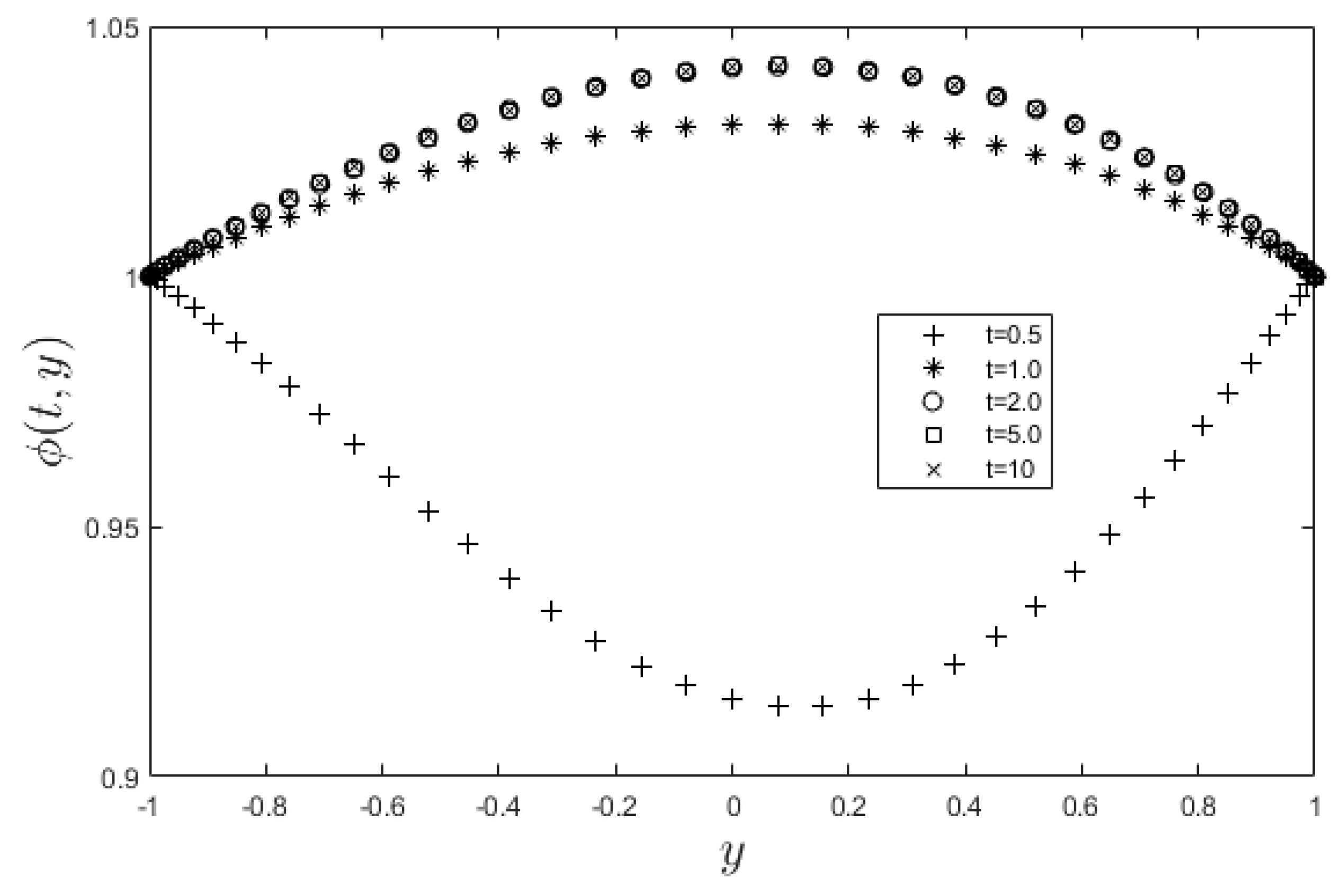
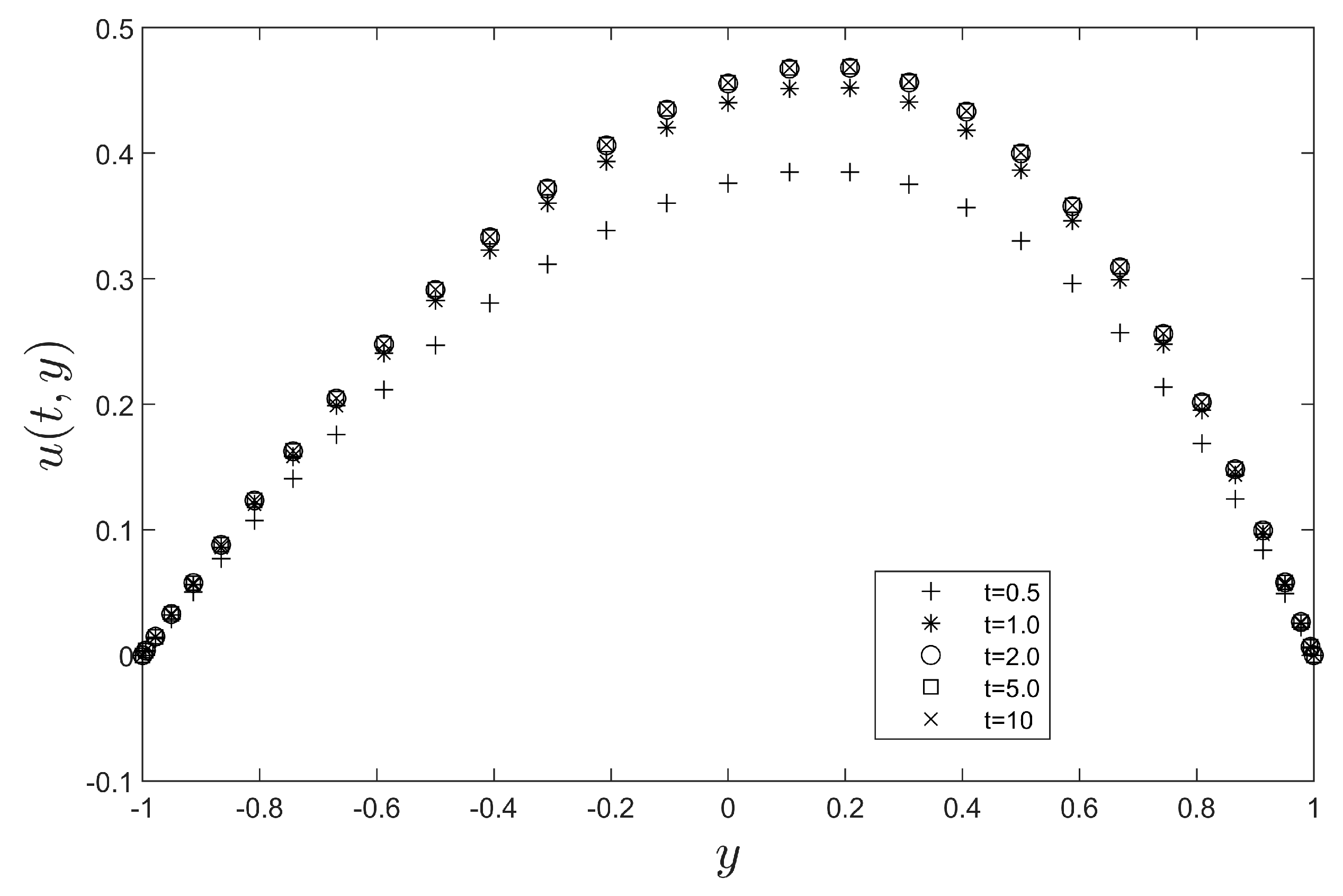
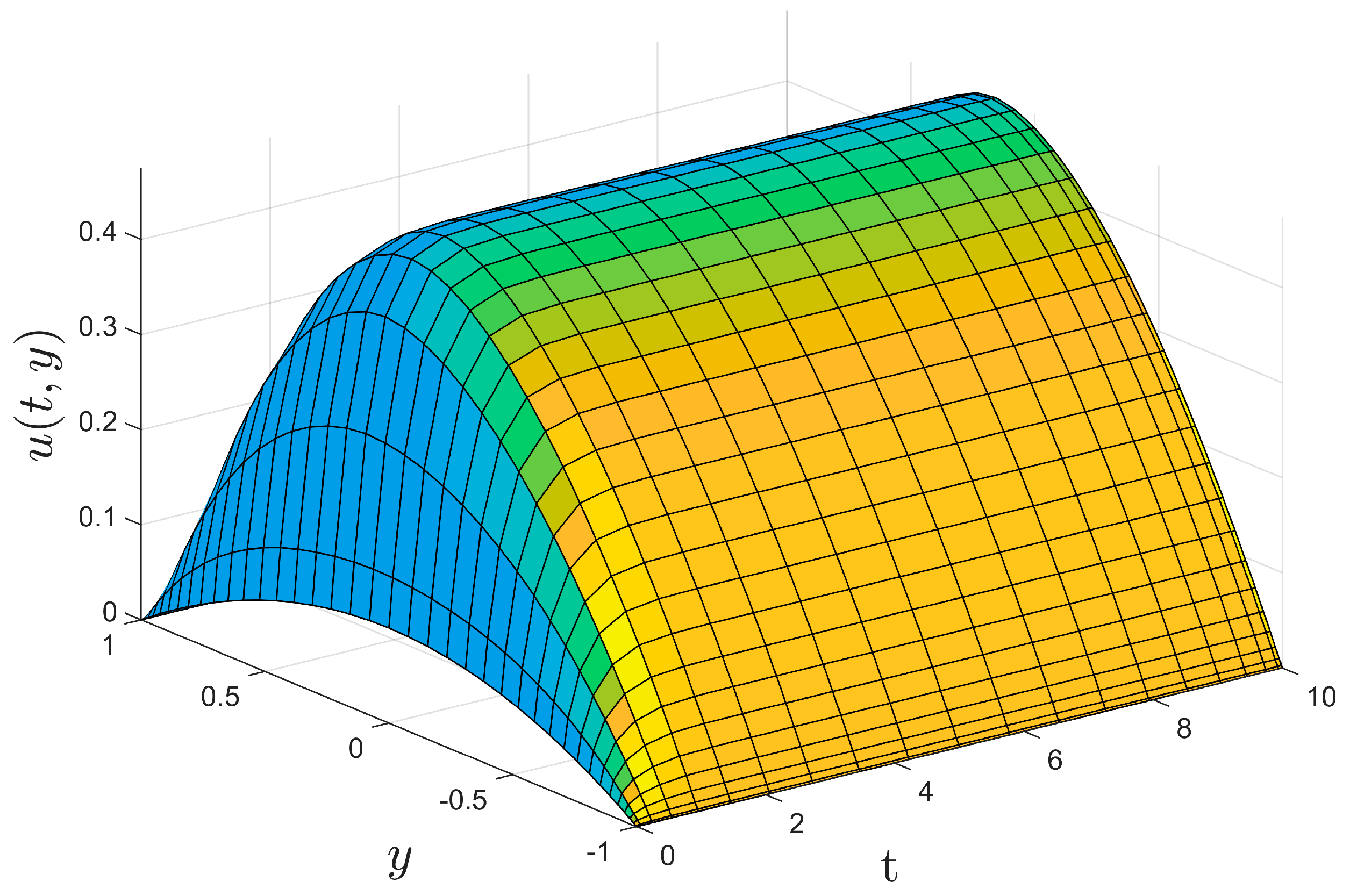
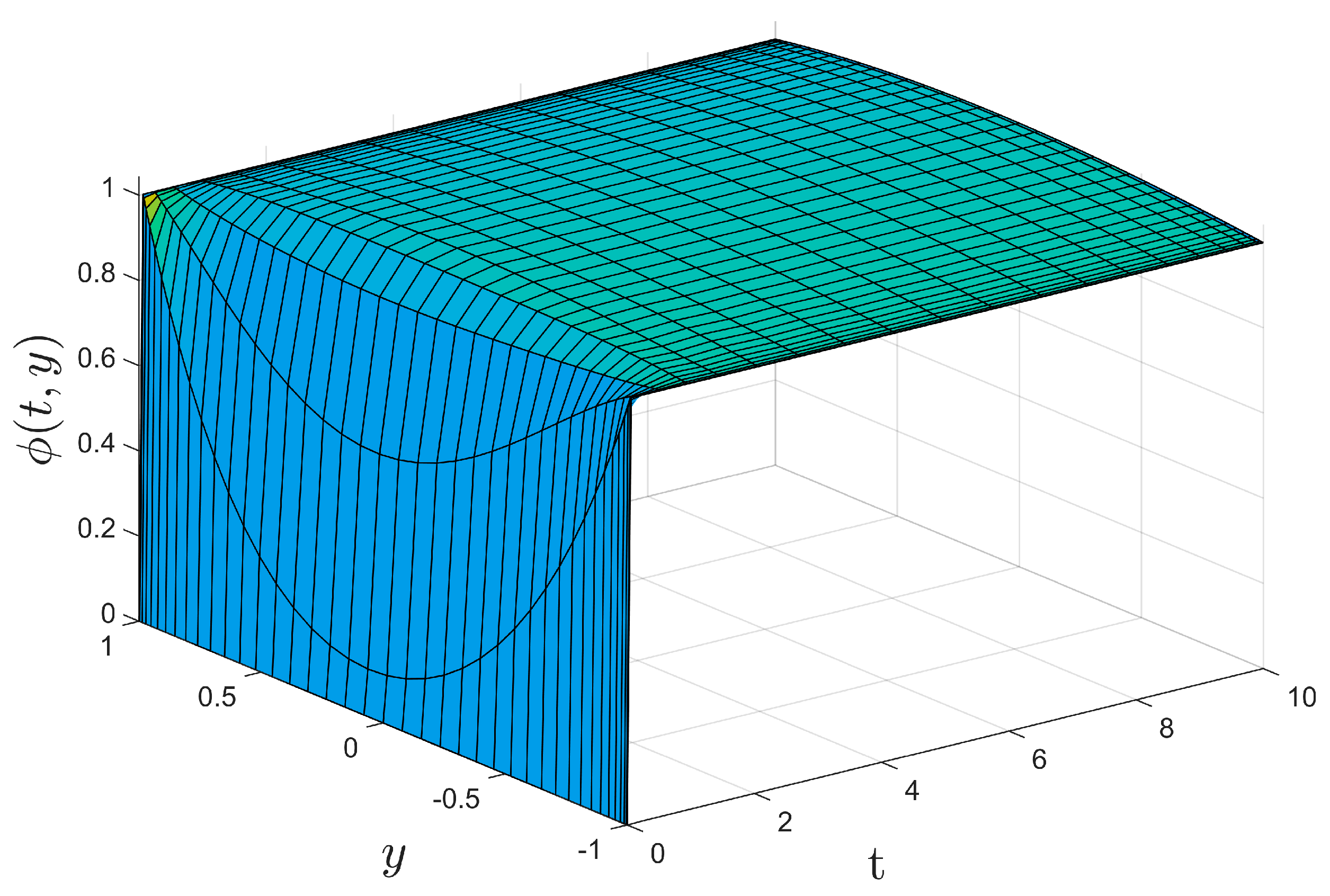
The velocity and contaminant concentration profiles’ temporal evolution are depicted in Figure 1 and Figure 2, respectively. As time goes on, both variables get closer to a steady state. Around t = 2.0, the velocity stabilizes, after which additional time progression has very little effect. In a similar vein, the concentration of contaminants rapidly drops in the early stages and stabilizes in the same amount of time. The equilibrium between transport processes and biokinetic responses, where diffusion and reaction progressively take precedence over temporary effects, is reflected in this trend. The matching three-dimensional profiles are shown in Figure 3 and Figure 4. In line with conventional channel flow behavior, the velocity distribution shows a parabolic form across the channel width. The gradual shift from transient to steady-state circumstances is confirmed by the temporal evolution. Similarly, the concentration profile exhibits a smooth geographic fluctuation whose magnitude decreases over time as a result of filtering and biodegradation.
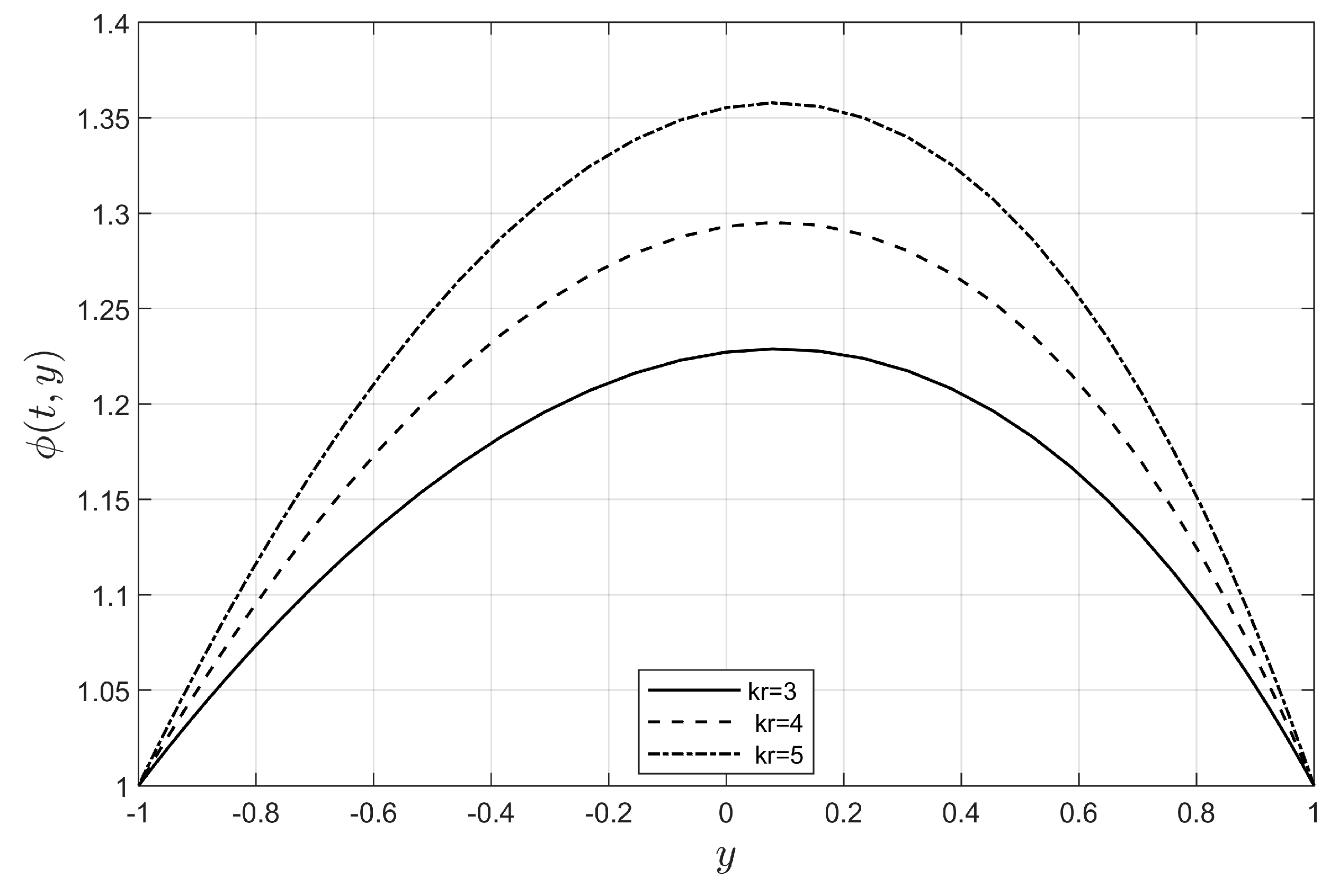
The impact of the microbial growth parameter on contamination concentration is shown in Figure 5. As a result of increased microbial activity and biomass multiplication, increasing this parameter causes concentration levels to rise. This observation is true due to the proliferation of microorganisms in nutrient-rich environments, in which the availability of more substrate encourages the buildup of biomass. Similarly, the high organic loading conditions in a good number of industrial wastewater treatment systems, like activated sludge and biofilm reactors, are expected to result in excessive biomass growth and worsen effluent quality if improperly controlled.
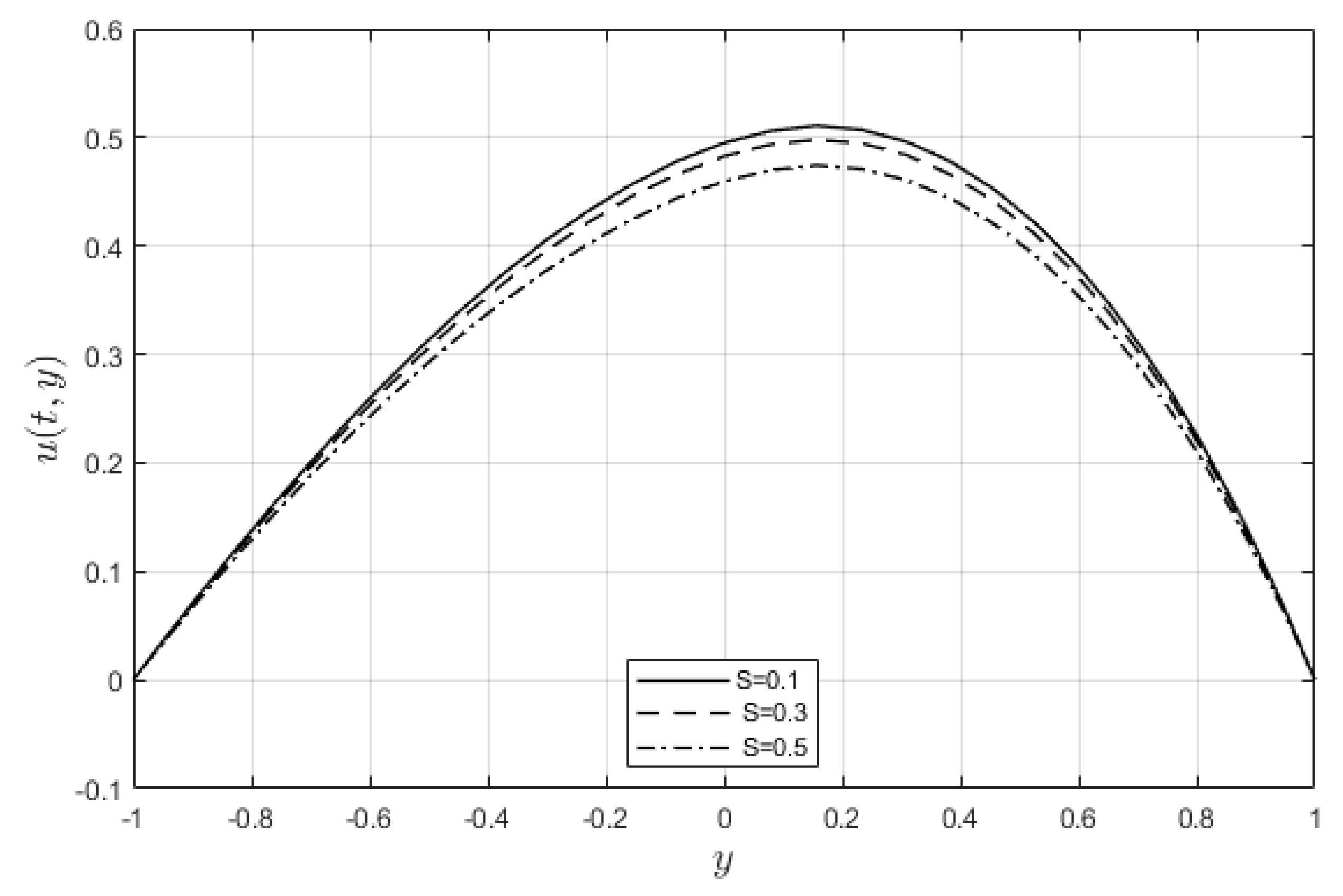
The impact of the Darcy number on the velocity profile is depicted in Figure 6. Flow velocity is significantly reduced when the Darcy number decreases, which is indicative of stronger filtration resistance. Increased drag forces and the buildup of particles and biofilm layers (bio-clogging) are blamed for this due to microbial adhesion and biofilm formation in porous media. The reported trend provides a macroscopic description of bio-clogging by using a porous resistance term to describe the decrease in permeability. Biologically, this relates to how extracellular polymeric materials aid in pore blockage. This trend, which emphasizes the trade-off between filtration efficiency and flow performance, is frequently seen in membrane bioreactors and sand filtration systems.
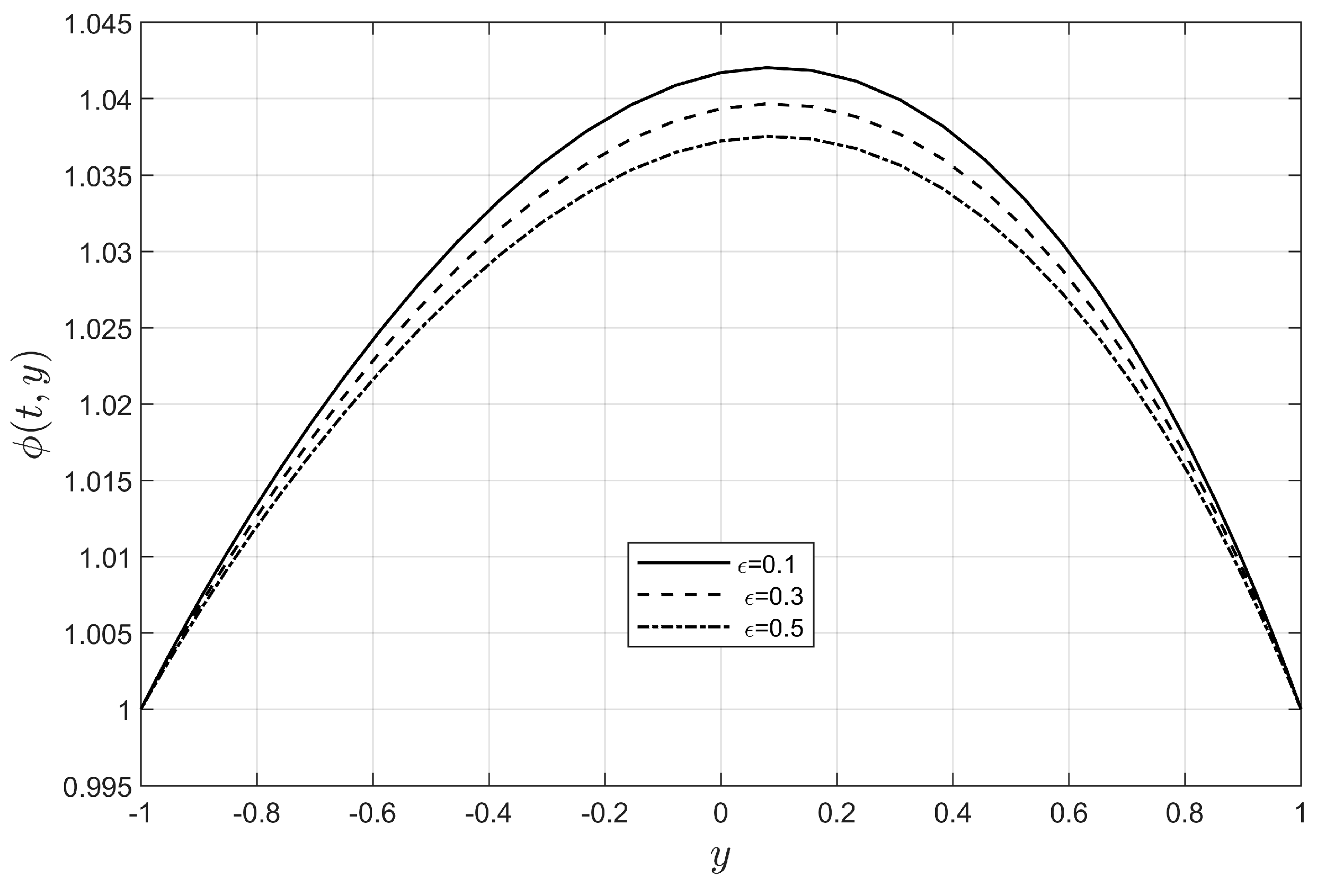
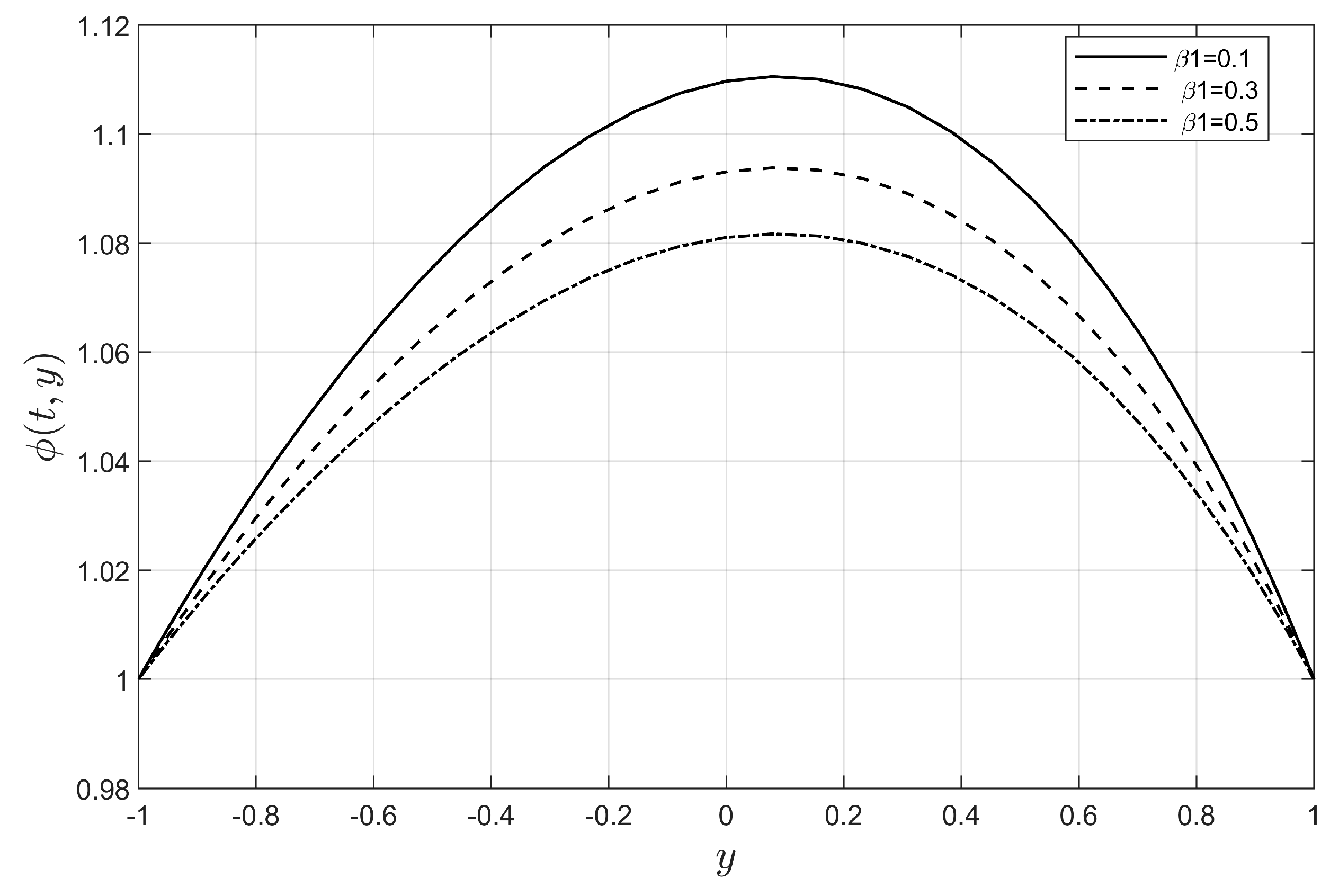
The effect of the biokinetic inhibition parameter on pollutant concentration is shown in Figure 7. Increasing the inhibition parameter lowers concentration, which is indicative of substrate inhibition, the suppression of microbial action by high contamination levels. This technique is crucial for controlling microbial growth and minimizing the buildup of excessive contaminants, especially in systems that are exposed to hazardous or high-strength effluents.
The impact of the liquid–biofilm mass transfer coefficient on concentration is shown in Figure 8. Since higher mass transfer facilitates the flow of contaminants from the bulk fluid to the biofilm, where biodegradation takes place, an increase in this parameter results in a discernible drop in contaminant concentration. This emphasizes how crucial mass transfer is to increasing biological wastewater treatment systems’ effectiveness, especially in biofilm-based reactors.
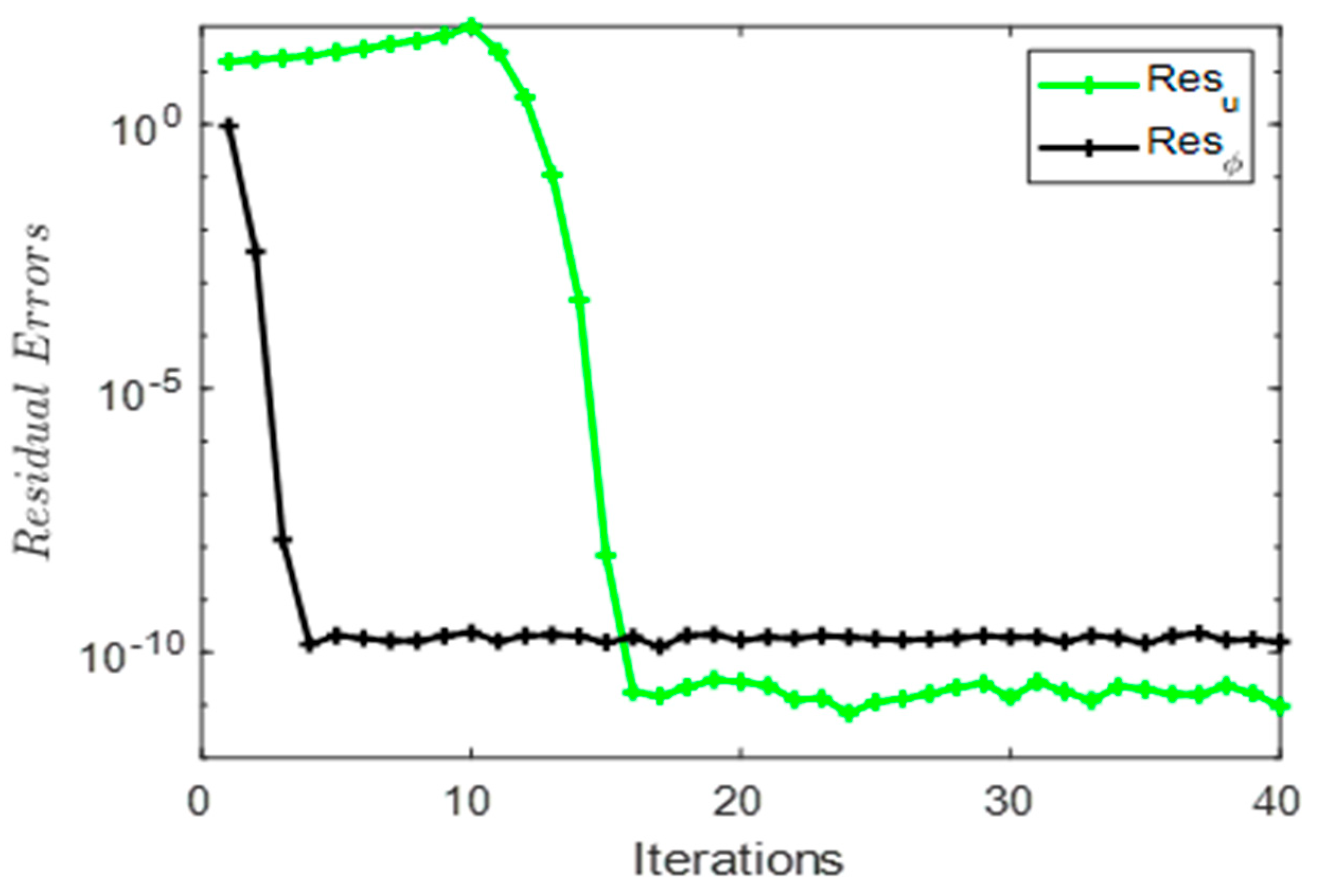
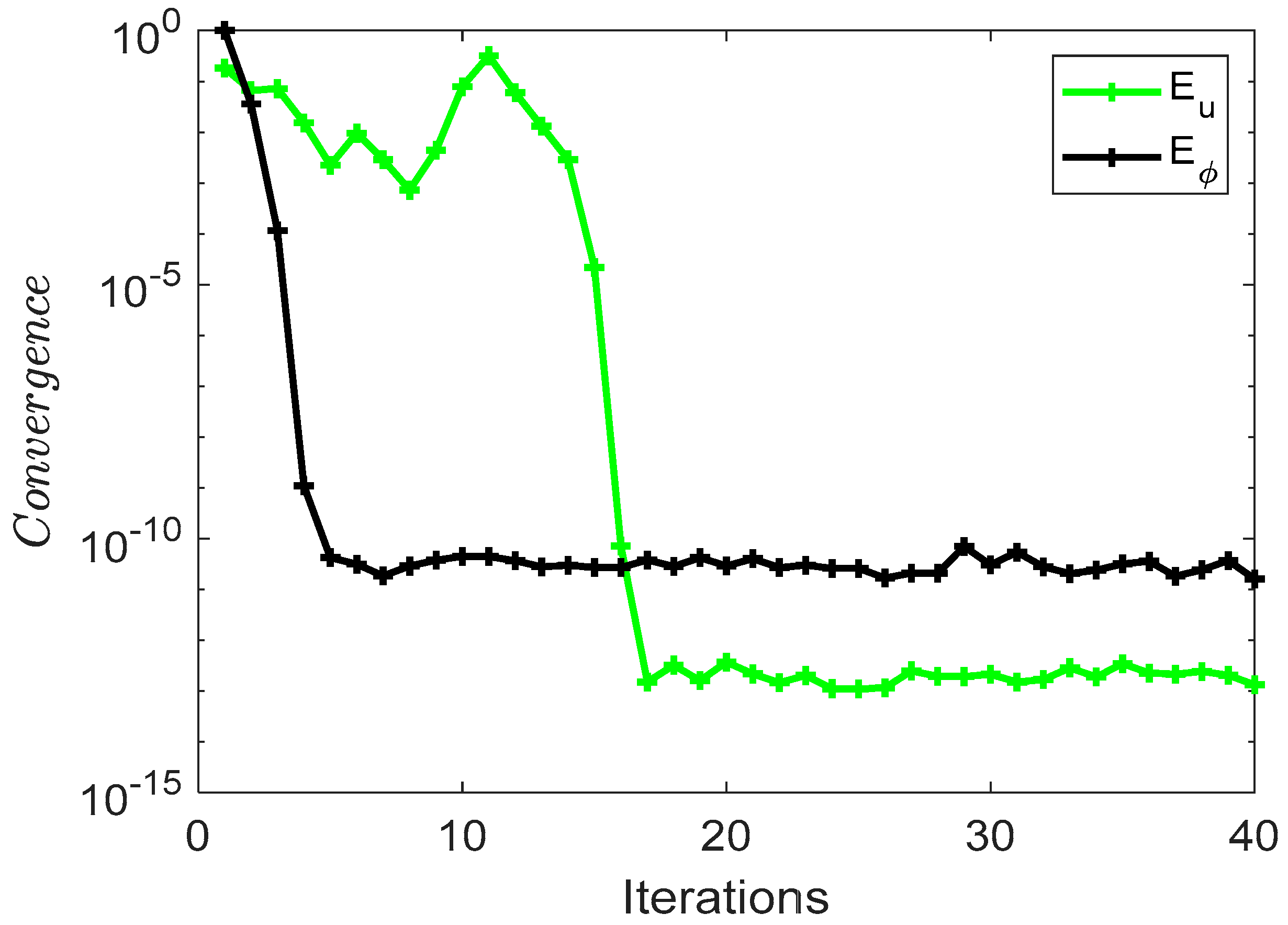
The numerical scheme’s convergence behavior and residual error distribution are shown in Figure 9 and Figure 10. As the number of iterations increases, the residual errors rapidly diminish, demonstrating the effectiveness of the quasi-linearization method. The numerical solutions are very accurate and appropriate for solving complex nonlinear partial differential equations since the errors lie within a very tiny range (on the scale of 10 5   t o   10 11 .).
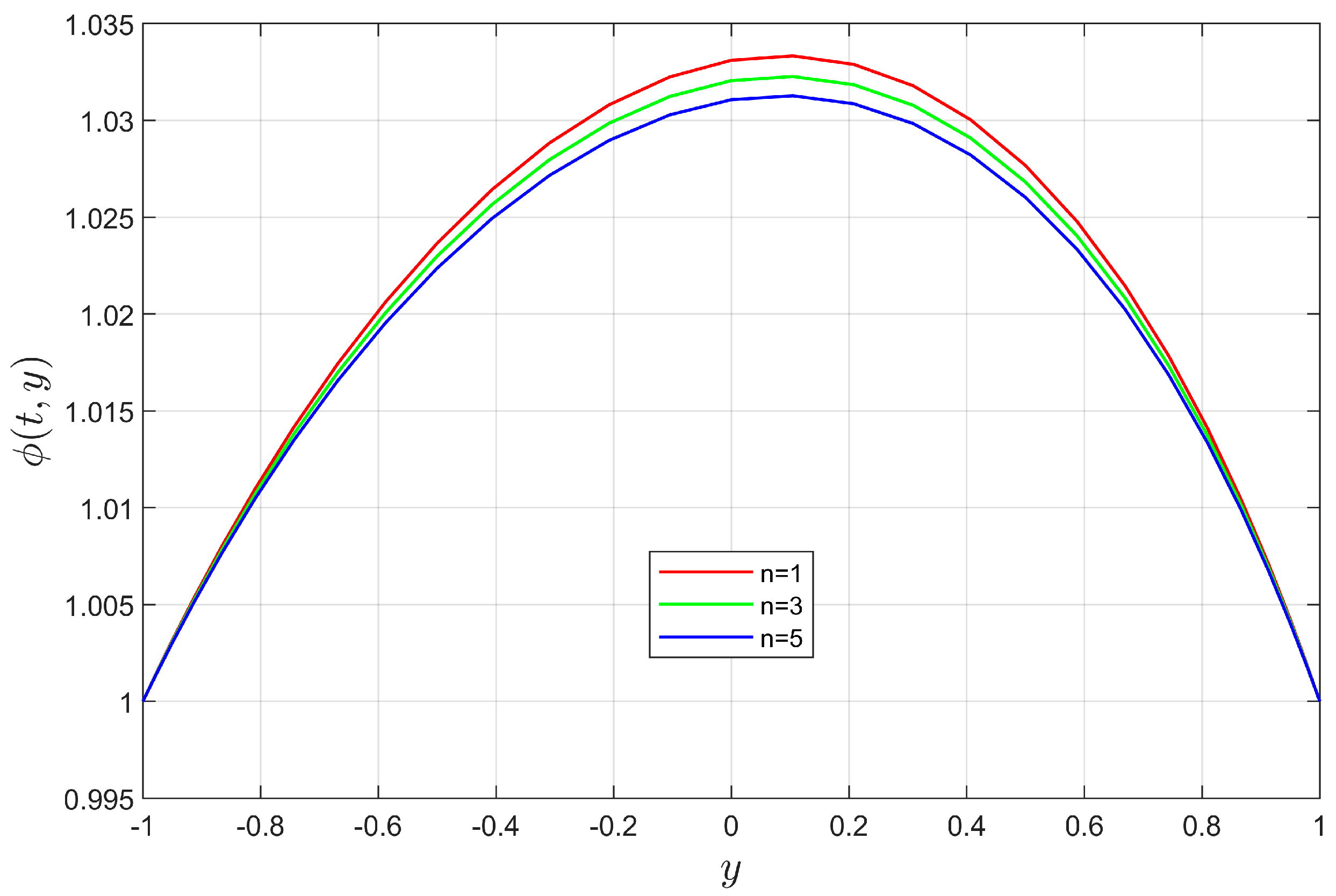
The impact of the kinetic power n on pollutant concentration is depicted in Figure 11. The model reduces to the traditional Haldane kinetics when n = 1. Stronger nonlinear inhibitory effects are indicated by the peak concentration decreasing as n grows. More flexibility in simulating microbial growth under different environmental circumstances is made possible by this generalization. The generalized Haldane model is especially appropriate from a biological perspective for actual wastewater systems, where contamination concentrations can vary greatly.
Overall, the findings show that fluid flow, microbial kinetics, and mass transfer mechanisms interact intricately to control pollutant movement in wastewater systems. While the porous media formulation takes filtration and bio-clogging effects into account, the model is able to capture genuine biological responses like growth, inhibition, and substrate limitation by using generalized Haldane kinetics. The design and optimization of biological wastewater treatment systems, such as membrane bioreactors, biofilm reactors, and filtration units, are directly impacted by these discoveries.

5. Conclusions

This study established a complete mathematical model to analyze the transport of reactive pollutants in wastewater flow via a porous medium, combining generalized Haldane biokinetics, nonlinear concentration-dependent characteristics, and filtering effects. The resulting nonlinear system of governing equations was successfully solved using the Bivariate Spectral Quasi-Linearization Method (BSQLM), with validation performed using the Bivariate Spectral Chebyshev Collocation Method (BSCCM). The correctness and resilience of the suggested solution strategy were confirmed by the numerical results, which showed good agreement between the two approaches. With errors reduced to insignificant levels, convergence and residual studies further demonstrated the method’s dependability.
Several significant physical findings were uncovered by the parametric analysis. The significance of filtration and bio-clogging in limiting flow was highlighted by the considerable reduction in fluid velocity caused by an increase in porous resistance (lower Darcy number). It was discovered that the inhibition parameter suppressed the concentration of contaminants, representing the effects of substrate inhibition on microbial growth. On the other hand, by encouraging biodegradation inside the biofilm, greater liquid–biofilm mass transfer rates improved the effectiveness of pollutant removal. Furthermore, the generalized kinetics model offered flexibility in describing nonlinear microbial activity in a variety of environmental settings.
All things considered, the study offers a reliable and effective computational framework for examining intricate transport and reaction mechanisms in wastewater treatment systems. The results provide useful information for enhancing contaminant removal techniques and maximizing filtering effectiveness in environmental engineering applications.

Author Contributions

U.V.J.: Writing—original draft preparation, software, validation; S.O.A.: Conceptualization, methodology, formal analysis, and supervision; R.S.L.: Resources, and funding acquisition. All authors have read and agreed to the published version of the manuscript.

Funding

This research received no external funding.

Data Availability Statement

All data generated or analyzed during this study are included in this article.

Conflicts of Interest

The authors declare no conflicts of interest.

Nomenclature

ρ   represents sludge density/mass.
u ¯ represents the velocity of the flow profile
t ¯ represents time
v 0 represents constant injection/suction velocity
y ¯ represents the vertical coordinates
P ¯ represents pressure
x ¯ represents axial, i.e., horizontal co-ordinates
μ C ¯ represents the concentration dependence of the dynamic component of water viscosity
mrepresents the power-law index
grepresents gravitational acceleration
C ¯ represents the dissolved contaminant concentration
C 0 represents referenced wall concentrations
krepresents the permeability parameter
D C ¯ represents the concentration dependence of diffusion
S C ¯ represents the concentration dependence of the nonlinear source on the contaminant
K M represents Haldane kinetics
K i n represents the inhibition constant
M, arepresents the initial condition control parameters
C w represents channel half-width
urepresents dimensionless velocity
ϕ represents contaminant concentration
Rrepresents the suction Reynolds number
Krepresents a dimensionless constant pressure gradient
α represents the viscosity variation parameter
Grrepresents the Solutal Grashof number
Screpresents Schmidt Number
Darepresents Darcy’s parameter for fluid velocity
S 2 represents Darcy’s number
ε represents the liquid–biofilm mass transfer coefficient
γ represents a concentration-dependent parameter
Krrepresents the nonlinear source parameter
nrepresents the order of the reaction, i.e., the non-linearity factor
β represents a dimensionless inhibition constant parameter.

References

  1. Keshaviah, A.; Diamond, M.B.; Wade, M.J.; Scarpino, S.V. Wastewater monitoring can anchor global disease surveillance system. Lancet Glob. Health 2023, 11, e976–e981. [Google Scholar] [PubMed]
  2. Niju, S.; Shruthi, V.; Priyadharshini, K. Comprehensive insights into biological and bio-electrochemical treatment of the sago industry wastewater: Challenges and future perspectives. Sustain. Chem. Environ. 2025, 10, 100242. [Google Scholar] [CrossRef]
  3. Hassan, H.; Ansari, F.A.; Rawat, I.; Bux, F. Unlocking the potential of microalgae: Cultivation in algae recycled effluent with domestic wastewater for enhancing biomass, bioenergy production and CO2 sequestration. J. Water Process Eng. 2024, 68, 106499. [Google Scholar] [CrossRef]
  4. Jayabal, R. Addressing challenges in marine ecosystems: Advanced strategies for wastewater effluent management and contaminated sediment remediation. Results Eng. 2025, 26, 104638. [Google Scholar] [CrossRef]
  5. Paz-Ruiz, N.D.; Zurita-Milla, R.; Augustijn, E.-W.; Farnaghi, M.; Abdulkareem, S.A. Wastewater-based epidemiology framework: Collaborative modeling for sustainable disease surveillance. Sci. Total Environ. 2025, 968, 178889. [Google Scholar]
  6. Zhai, J.; Mao, H.; He, B.; Jia, T.; Zhou, S.; Chen, R.; Zhao, Y. A review of recent development in the enhancement mechanism of catalytic membranes for wastewater treatment. Environ. Funct. Mater. 2025, 4, 79–98. [Google Scholar] [CrossRef]
  7. Malla, M.A.; Ansari, F.A.; Bux, F.; Kumari, S. Re-vitalizing wastewater: Nutrient recovery and carbon capture through microbe-algae synergy using omics-biology. Environ. Res. 2024, 259, 119439. [Google Scholar]
  8. Zhang, H.; Yu, J.; Wang, Z.; Sun, L.; Tong, Q.; Xue, S.; Yang, T.; Zhang, W.; Du, R.; Xiao, Z. Carbon emission characteristics and reduction technologies in urban wastewater systems: A review. Water Cycle 2025, 6, 285–299. [Google Scholar] [CrossRef]
  9. Muloiwa, M.; Nyende-Byakika, S.; Dinka, M. Comparison of unstructured kinetic bacterial growth models. S. Afr. J. Chem. Eng. 2020, 33, 141–150. [Google Scholar]
  10. Nikolenko, O.; Pujades, E.; Teixid’o, M.; S’aez, C.; Jurado, A. Contaminants of emerging concern in the urban aquifers of Barcelona: Do they hamper the use of groundwater? Chemosphere 2023, 341, 140023. [Google Scholar] [CrossRef]
  11. Mannina, G.; Ni, B.-J.; Makinia, J.; Harmand, J.; Alliet, M.; Brepols, C.; Ruano, M.V.; Robles, A.; Heran, M.; Gulhan, H.; et al. Biological processes modelling for MBR systems: A review of the state-of-the-art focusing on SMP and EPS. Water Res. 2023, 242, 120275. [Google Scholar] [CrossRef] [PubMed]
  12. Mohanty, M.P.; Brahmacharimayum, B.; Ghosh, P.K. Effects of phenol on sulfate reduction by mixed microbial culture: Kinetics and bio-kinetics analysis. Water Sci. Technol. 2018, 77, 1079–1088. [Google Scholar] [CrossRef] [PubMed]
  13. Ahmad, S.; Ibrahim, S.; Shukor, M.; Johari, W.L.; Rahman, N.A.; Syed, M.A.S. Biodegradation kinetics of caffeine by Leifsonia sp. strain SIU. J. Chem. Pharmaceut. Sci. 2015, 8, 312–316. [Google Scholar]
  14. Halmi, M.I.E.; Shukor, M.S.; Shukor, M.Y. Evaluation of several mathematical models for fitting the growth and kinetics of the catechol-degrading Candida parapsilopsis: Part 2. J. Environ. Bioremed. Toxicol. 2014, 2, 53–57. [Google Scholar] [CrossRef]
  15. Dey, S.; Mukherjee, S. Performance and kinetic evaluation of phenol biodegradation by mixed microbial culture in a batch reactor. Int. J. Water Resour. Environ. Eng. 2010, 3, 40–49. [Google Scholar]
  16. Madhukesh, J.K.; Sahar, F.; Prasannakumara, B.C.; Shehzad, S.A. Waste-discharge concentration and quadratic thermal radiation influence the time-dependent nanofluid flow over a porous rotating sphere. Numer. Heat Transf. Part B Fundam. 2024, 86, 2357–2375. [Google Scholar] [CrossRef]
  17. Adeosun, A.T.; Kasim, A.R.M.; Fatunmbi, E.O. Numerical exploration of sewage dispersion into a channel conveying water: Considering filtration and biodegradation as treatment mechanisms. Int. Commun. Heat Mass Transf. 2025, 163, 108690. [Google Scholar] [CrossRef]
  18. Adeosun, A.T.; Kasim, A.R.M.; Akolade, M.T. Modeling pollutant discharges in a channel: Water quality control and treatment using carbon nanotubes for filtration and adsorption. J. Water Process Eng. 2025, 76, 108074. [Google Scholar] [CrossRef]
  19. Mahmood, Z.; Rafique, K.; Ansari, M.A.; Adnan; Khan, U.; Kumar, A.; Taj, M. Scrutinizing pollutant concentration with variable electrical conductivity and quadratic radiation effects over a convective cylinder with zero mass flux and gyrotactic microorganisms. J. Radiat. Res. Appl. Sci. 2025, 18, 101256. [Google Scholar] [CrossRef]
  20. Nimmy, P.; Obalalu, A.M.; Nagaraja, K.V.; Madhukesh, J.K.; Khan, U.; Ishak, A.; Sriram, D.; Hussain, S.M.; Kumar, R.; Abed, A.M. Computational analysis of nanoparticles and waste discharge concentration past a rotating sphere with Lorentz forces. Appl. Rheol. 2024, 34, 20240012. [Google Scholar] [CrossRef]
  21. Radha, R.; Singh, R.K.; Singh, M.K. Contaminant transport analysis under non-linear sorption in a heterogeneous groundwater system. Appl. Math. Sci. Eng. 2022, 30, 736–761. [Google Scholar] [CrossRef]
  22. Manitcharoen, N.; Pimpunchat, B.; Sattayatham, P. Water Quality Analysis for the Depletion of Dissolved Oxygen due to Exponentially Increasing Form of Pollution Source. J. Appl. Math. 2020, 2020, 9085981. [Google Scholar] [CrossRef]
  23. Ercan, A. Self-similarity in fate and transport of contaminants in groundwater. Sci. Total Environ. 2020, 706, 135738. [Google Scholar] [CrossRef] [PubMed]
  24. Oludoun, O.Y.; Salawu, S.O.; Adesanya, S.O.; Abiodun, O.E. Mathematical analysis and control optimization of soluble and insoluble water pollutants dispersion. Heliyon 2024, 10, e40457. [Google Scholar] [CrossRef] [PubMed]
  25. Kiteto, M.K.; Mecha, C.A.; Chollom, M.N. Advances in Mathematical Modelling, Mathematical Optimization and Simulation in Water Treatment. Water Air Soil Pollut. 2025, 236, 501. [Google Scholar] [CrossRef]
  26. Adesanya, S.O.; Adeosun, T.A.; Yusuf, T.A.; Adeyemi, A.A.; Bamigboye, J.S.; Ogunlaja, A.; Lebelo, R.S.; Unuabonah, E.I. Numerical examination of concentration-dependent wastewater sludge ejected into a drinking water source. Sci. Rep. 2023, 13, 15538. [Google Scholar] [CrossRef]
  27. Hasaan, S.H.; Ebrahim, S.E. Developed a novel reusable magnetic photocatalyst nanocomposite CoFe2O4/CuO/Ag3VO4 that effectively removes the harmful organic dye from wastewater under optimized conditions. Alex. Eng. J. 2025, 122, 205–214. [Google Scholar] [CrossRef]
  28. Adeleke, A.O.; Omar, R.C.; Katibi, K.K.; Dele-Afolabi, T.T.; Ahmad, A.; Quazim, J.O.; Amusa, A.A.; Alshammari, M.B. Process optimization of superior biosorption capacity of biogenic oyster shells nanoparticles for Congo red and Bromothymol blue dyes removal from aqueous solution: Response surface methodology, equilibrium isotherm, kinetic, and reusability studies. Alex. Eng. J. 2024, 92, 11–23. [Google Scholar] [CrossRef]
  29. Wang, Y.; Gu, Y.; Yang, S. Developing a novel strategy for light-triggered reversible enzyme immobilization and reuse of support. Alex. Eng. J. 2022, 61, 6949–6957. [Google Scholar] [CrossRef]
  30. Misran, E.; Bani, O.; Situmeang, E.M.; Purba, A.S. Banana stem-based activated carbon as a low-cost adsorbent for methylene blue removal: Isotherm, kinetics, and reusability. Alex. Eng. J. 2022, 61, 1946–1955. [Google Scholar] [CrossRef]
  31. Coclite, A.; Lopez, L.; Pellegrino, S.F. A spectral method for dispersive solutions of the nonlocal Sine–Gordon equation. Math. Comput. Simul. 2025, 234, 235–247. [Google Scholar] [CrossRef]
  32. Ji, M.; Sekiguchi, Y.; Naito, M.; Sato, C. A modified spectral collocation method for vibration of sandwich beams based on a higher-order layer-wise beam theory. Thin-Walled Struct. 2025, 209, 112949. [Google Scholar] [CrossRef]
  33. Zhu, B.; Jin, Y.; Guan, X. SSMM: Semi-supervised manifold method with spatial-spectral self-training and regularized metric constraints for hyperspectral image dimensionality reduction. Int. J. Appl. Earth Obs. Geoinf. 2025, 136, 104373. [Google Scholar] [CrossRef]
  34. Kamran; Shah, F.A.; Shah, K.; Abdeljawad, T. Numerical solution of two-dimensional time-fractional telegraph equation using Chebyshev spectral collocation method. Partial Differ. Equ. Appl. Math. 2025, 13, 101129. [Google Scholar] [CrossRef]
  35. Piterskaya, A.; Mortensen, M. A study of the Orr–Sommerfeld and induction equations by Galerkin and Petrov–Galerkin spectral methods utilizing Chebyshev polynomials. J. Comput. Appl. Math. 2025, 459, 116374. [Google Scholar] [CrossRef]
  36. Muzara, H.; Shateyi, S.; Marewo, G.T. On the bivariate spectral quasi-linearization method for solving the two-dimensional Bratu problem. Open Phys. 2018, 16, 554–562. [Google Scholar]
  37. Rai, N.; Mondal, S. Spectral methods to solve nonlinear problems: A review. Partial Differ. Equ. Appl. Math. 2021, 4, 100043. [Google Scholar] [CrossRef]
  38. Goqo, S.P.; Oloniiju, S.D.; Mondal, H.; Sibanda, P.; Motsa, S.S. Entropy generation in MHD radiative viscous nanofluid flow over a porous wedge using the bivariate spectral quasi-linearization method. Case Study. Therm. Eng. 2018, 12, 774–788. [Google Scholar]
  39. Akolade, M.T.; Tijani, Y.O. A Comparative study of three-dimensional flow of Casson–Williamson nano fluids past a Riga plate: Spectral quasi-linearization approach. Partial Differ. Equ. Appl. Math. 2021, 4, 100108. [Google Scholar] [CrossRef]
  40. Adesanya, S.O.; Falade, J.A. Thermodynamics analysis of hydromagnetic third-grade fluid flow through a channel filled with porous medium. Alex. Eng. J. 2015, 54, 615–622. [Google Scholar] [CrossRef]
  41. Praveen, P.; Mazumder, D. A new approach for determining inhibition constant in the Haldane kinetics using differentiation method. Indian Chem. Eng. 2025, 67, 821–835. [Google Scholar] [CrossRef]
  42. Esfahani, S.G.; Alcalde, R.E.; Valocchi, A.J.; Sanford, R.A.; Werth, C.J. Modeling the Migration and Growth of Shewanella Oneidensis MR-1 in a Diffusion-Dominated Microfluidic Gradient Chamber Under the Influence of an Antibiotic Concentration Gradient. Biotechnol. Bioeng. 2025, 122, 1840–1855. [Google Scholar] [CrossRef]
  43. Tazdaït, D.; Tazdaït, R.S. Microorganisms in Bioreactor. In Microbial Approach of Biofiltration in Industrial Wastewater Treatment for the Sustainability of Environment; Springer: Cham, Switzerland, 2025; pp. 1–18. [Google Scholar] [CrossRef]
  44. Russel, J.G.; Shende, A.D.; Gurjar, R.; Krishnakumar, B. Kinetics of the biological reduction of perchlorate from groundwater in an anaerobic fixed film bioreactor (AFBR). Case Stud. Chem. Environ. Eng. 2024, 9, 100649. [Google Scholar] [CrossRef]
Figure 1. Evolution of Steady State Solution for u(t, y) of the Model.
Water 18 00842 g001
Figure 2. Evolution of Steady State Solution for ϕ (t, y) of the Model.
Water 18 00842 g002
Figure 3. Solution for u(t, y) in 3-D of the Model.
Water 18 00842 g003
Figure 4. Solution for ϕ (t, y) in 3-D of the Model.
Water 18 00842 g004
Figure 5. Impact of nonlinear source parameter on ϕ (t, y) for the model.
Water 18 00842 g005
Figure 6. Impact of Darcy’s number on u(t, y) on the model.
Water 18 00842 g006
Figure 7. Impact of the bio-kinetic inhibition constant on ϕ (t, y) for the model.
Water 18 00842 g007
Figure 8. Impact of the liquid–biofilm mass transfer coefficient on ϕ (t, y) for the model.
Water 18 00842 g008
Figure 9. Residual errors.
Water 18 00842 g009
Figure 10. Convergence plot for the residuals.
Water 18 00842 g010
Figure 11. Impact of the order of the kinetics power on ϕ (t, y) for the model.
Water 18 00842 g011
Table 1. Validation of Bivariate Spectral Quasi-Linearization Method (BSQLM) with Bivariate Spectral Chebyshev Collocation Method (BSCCM) for flow velocity.
Y u B S C C M ( t ,   y ) u B S Q L M ( t ,   y ) | u B S C C M ( t ,   y ) u B S Q L M ( t ,   y ) |
−1 0 0 0.6881828816 × 10 14
−0.75 0.15924296427 0.15924296709 2.8225901338 × 10 9
−0.50 0.29033403619 0.29033405566 1.9477075285 × 10 8
−0.25 0.38739168901 0.38739171018 2.1146775719 × 10 8
0.00 0.44287148146 0.44287148146 8.1046280796 × 10 15
0.25 0.44692928193 0.44692932405 4.2116162298 × 10 8
0.50 0.38663393317 0.38663399202 5.88450748842 × 10 8
0.75 0.24502724902 0.24502726364 1.462123974672 × 10 8
1 0 0 7.9428651628 × 10 14
Table 2. Validation of the Bivariate Spectral Quasi-Linearization Method (BSQLM) with the Bivariate Spectral Chebyshev Collocation Method (BSCCM) for contaminant concentrations.
Y ϕ S C C M ( t ,   y ) ϕ S Q L M ( t ,   y ) | ϕ S C C M ( t ,   y ) ϕ S Q L M ( t ,   y ) |
−1 1 0.99999999999 1.04399822121 × 10 11
−0.75 0.999683461242 0.99968349895 3.771205704 × 10 8
−0.50 0.998083158225 0.99808313107 2.7152734283 × 10 8
−0.25 0.99727262779 0.997272611939 1.58504660508 × 10 8
0.00 0.996637088568 0.99663708857 5.78248560146 × 10 12
0.25 0.996474192789 0.99647418500 7.788736766656 × 10 9
0.50 0.996962677456 0.99696264977 2.76871937599 × 10 8
0.75 0.998753588155 0.99875362162 3.346917587521 × 10 8
1.00 1 1.00000000002 2.18909335104 × 10 11
Table 3. Convergence of the Bivariate Spectral Quasi-Linearization Method (BSQLM) when N y = 0.25 ,   N t = 10 ,   α = 0.1 ,   K = 1 ,   n = 3 ,   m = 1.1 ,   R = 1 ,   G r = 0.1 ,   S c = 0.6 ,   s = 0.1 ,   γ = 0.1 ,   ϵ = 0.1 ,   K r = 0.1 ,   β = 2 .
Np u ( y ) ϕ ( y ) Residual   Error   for   u ( y ) Residual   Error   for   ϕ ( y )
50.2441522218220.9964741638417.8015712.029715 ×   10 10
100.2174376850550.9964741638467.873904 2.594643 × 10 10
150.4778070203630.996474163832.585918 ×   10 5 2.024069 ×   10 10
200.4778070964350.996474163842.987240 ×   10 11 0.753064 × 10 10
250.4778070964350.996474163845.325328 ×   10 11 2.534052 ×   10 10
300.4778070964350.996474163845.621555 ×   10 11 2.429189 ×   10 10
350.4778070964350.996474163842.618289 ×   10 11 1.909441 ×   10 10
400.4778070964350.996474163846.772277 ×   10 11 2.839139 ×   10 10
Disclaimer/Publisher’s Note: The statements, opinions and data contained in all publications are solely those of the individual author(s) and contributor(s) and not of MDPI and/or the editor(s). MDPI and/or the editor(s) disclaim responsibility for any injury to people or property resulting from any ideas, methods, instructions or products referred to in the content.