Article

Corrosion Characteristics of Iron Pipe in Reclaimed Water Disinfected by UV/NaClO

1
Key Laboratory of Urban Stormwater System and Water Environment, Ministry of Education, Beijing University of Civil Engineering and Architecture, Beijing 100044, China
2
Beijing Future Science City Real Estate Co., Ltd., Beijing 102209, China
3
Beijing General Municipal Engineering Design & Research Institute Co., Ltd., Beijing 100080, China
*
Author to whom correspondence should be addressed.
Water 2026, 18(6), 763; https://doi.org/10.3390/w18060763
Submission received: 14 January 2026 / Revised: 18 March 2026 / Accepted: 19 March 2026 / Published: 23 March 2026
(This article belongs to the Section Wastewater Treatment and Reuse)

Abstract

The use of reclaimed water is a crucial strategy for water conservation. However, the quality of reclaimed water may induce corrosion in pipelines. Although UV (Ultraviolet) irradiation is a highly effective physical disinfection method that requires no chemical additives, it must be used in conjunction with NaClO (Sodium hypochlorite) disinfection because UV alone cannot provide continuous control of bacterial growth. This study monitored the concentrations of Cl and SO42− in water samples collected from an annular biofilm coupon reactor, as well as the corrosion rate of cast iron coupons, to explore the corrosion characteristics of reclaimed water pipelines under different disinfection modes. The results showed that, when using NaClO as the sole disinfectant, the corrosion rate of the pipeline was the lowest at a NaClO dosage of 7 mg/L (corrosion rate: 0.85 mm/a at 72 h). For the UV-NaClO-combined disinfection, the optimal parameters were a UV dose of 120 mJ/cm2 and a NaClO dosage of 5 mg/L, with a minimum corrosion rate of 0.62 mm/a at 72 h. The scanning electron microscopy (SEM) and X-ray diffraction (XRD) analyses revealed that a protective CaCO3 layer forms on the pipe surface in the early corrosion stage, which effectively protects the metal pipeline. This study innovatively clarifies the synergistic effect of UV and NaClO on pipeline corrosion and identifies the optimal disinfection parameters, filling the research gap in the correlation between combined disinfection and cast iron pipe corrosion in reclaimed water systems.

1. Introduction

Advances in reclaimed water reuse technology provide a promising alternative to mitigate global water scarcity. However, during its transmission and distribution, the complex matrix of reclaimed water can induce the severe and rapid corrosion of pipeline networks, particularly those constructed with metallic materials [1]. Such corrosion further leads to the deterioration of effluent water quality [2]. Lee et al. demonstrated that reclaimed water with a higher ionic content exhibits a significantly higher corrosion rate toward metallic pipes than conventional tap water [3]. Zhang et al. reported that the use of disinfectants (e.g., sodium hypochlorite (NaClO) and chlorine dioxide (ClO2) during reclaimed water disinfection substantially alters electron transfer mechanisms and the physicochemical properties of corrosion byproducts, which in turn exacerbates uniform corrosion along the inner walls of pipelines [4].
The corrosion in drinking water distribution pipelines is predominantly driven by coupled chemical and microbial processes, representing a synergistic effect between metal substrates, abiotic corrosion products, bacterial cells, and their metabolic byproducts [5]. Analogous to drinking water pipeline corrosion, the degradation of reclaimed water pipelines is also governed by the synergistic interplay between chemical and microbial factors. However, reclaimed water typically contains higher concentrations of reductive organic matter, inorganic ions, and other constituents, resulting in a more intricate corrosion mechanism and a markedly higher corrosion rate compared to drinking water systems. Notably, chemical corrosion contributes to approximately 70–80% of the total corrosion in reclaimed water distribution networks, with microbiologically influenced corrosion (MIC) accounting for the remaining 20–30% [6].
A wide range of inorganic ions can trigger chemical corrosion, each acting via distinct mechanisms and exhibiting specific impacts on the progression of corrosion. The pioneering work by Larson et al. on the chemical corrosion of metallic pipelines was initiated in the mid-20th century [7], leading to the development of the Larson ratio (LR) in 1957. This index was established to characterize the influence of corrosive inorganic anions, specifically chloride (Cl) and sulfate (SO42−), on metal corrosion. The Larson ratio is mathematically defined as: LR = ([Cl] + 2[SO42−])/([HCO3]). The subsequent work by Lee et al. verified that Cl and SO42− are the dominant anions that drive the acceleration of metallic corrosion in reclaimed water systems [8]. These anions can penetrate and destroy protective scale layers that are formed on the pipe surfaces, while promoting the dissolution of iron-bearing corrosion products [9].
The foundational concept of microbiologically influenced corrosion (MIC) was first proposed by R. H. Gaines in the early 20th century [10]. MIC refers to an electrochemical corrosion process in which the corrosion of metallic materials is directly or indirectly modulated by microbial metabolic activities. Such biological modulation can significantly accelerate the corrosion rate of metals, potentially leading to the premature failure of the pipeline materials and a loss of structural integrity [11]. This corrosion process involves a complex suite of biochemical and electrochemical reactions mediated by diverse microbial communities.
Liu et al. investigated the correlation between microbial growth and cast iron pipe corrosion and identified the presence of microorganisms in reclaimed water as one of the dominant drivers of pipeline degradation [12]. By comparing bacterial communities under non-disinfected and disinfected conditions, Zhang et al. found that shifts in bacterial community composition are the primary contributors to diverse corrosion behaviors in reclaimed water pipelines [13].
Kharchenko et al. reported that microbial abundance and metabolic activity are key indicators governing the progression of MIC [14]. Adenosine triphosphate (ATP), the core energy carrier in cellular bioenergetic metabolism, has been widely adopted by researchers as a quantitative proxy for microbial activity [15,16]. This method has been extensively applied to quantify the microbial presence in both natural aquatic environments and engineered water treatment and distribution systems.
A positive linear correlation has been well established between bacterial abundance and ATP concentration, enabling the reliable quantification of total microbial biomass [17]. Furthermore, ATP has an extremely short extracellular half-life (on the order of seconds), making it a highly specific and robust indicator of viable microbial activity. Accordingly, ATP quantification can serve as a robust indirect proxy for MIC severity, as it simultaneously reflects the abundance and viability of the microbial biomass in the system.
The operational safety and reliability of reclaimed water reuse systems are directly determined by the efficacy of pipeline corrosion management. Therefore, to simultaneously mitigate chemical corrosion and MIC, it is critical to select appropriate disinfection strategies and optimize their operational parameters for reclaimed water distribution systems.
The concentration of reductive organic matter in reclaimed water is typically orders of magnitude higher than that in conventional drinking water [18]. This elevated organic load results in significantly higher disinfectant demand during the disinfection process. Feng et al. proposed that optimizing the coagulation and disinfection processes is the core strategy for corrosion control in reclaimed water distribution systems and further systematically evaluated the influence of water treatment processes on pipeline corrosion in these systems [19].
Widely used disinfection technologies for reclaimed water include chlorination, ozonation, and ultraviolet (UV) irradiation. UV irradiation offers multiple distinct advantages, including a broad-spectrum antimicrobial efficacy, no requirement for chemical dosing, and a high inactivation efficiency against chlorine-resistant pathogens. These features not only reduce the reliance on chlorination but also help mitigate pipeline corrosion in distribution networks. While UV irradiation alone provides no sustained disinfectant residual, its sequential combination with chlorination can significantly reduce the required chlorine dosage [20].
Liquid chlorine has been largely replaced by the NaClO solution in practical applications due to its lower safety risks [21]. However, NaClO disinfection can substantially alter electron transfer pathways and the physicochemical properties of corrosion products, which may, in turn, exacerbate pipeline corrosion [22]. Therefore, it is critical to systematically investigate the quantitative correlations between corrosion severity, disinfectant dosage, and microbial activity in NaClO-based disinfection systems. The primary objectives of this study are: (1) to optimize the dosage of NaClO-based disinfectants; (2) to elucidate the corrosion patterns of reclaimed water distribution networks under different initial disinfectant dosage conditions; and (3) to provide a theoretical basis for corrosion management in reclaimed water systems.
Most of the existing studies on reclaimed water disinfection processes have solely focused on the effects of NaClO disinfection on pipeline corrosion, or the bactericidal efficacy and disinfection byproduct formation rules of UV-NaClO-combined disinfection. Few studies have systematically investigated the synergistic mechanism of UV-NaClO sequential disinfection on the corrosion of cast iron pipelines in reclaimed water systems, nor is there sufficient research on the screening of optimal process parameters that simultaneously satisfy disinfection standards and the long-term corrosion control of pipeline networks. To address the above research gaps, this study conducted a series of systematic experiments with the objectives of investigating the corrosion characteristics of cast iron pipelines in reclaimed water networks under the conditions of sole NaClO disinfection and UV-NaClO-combined disinfection, clarifying the regulatory mechanisms of chloride ion and sulfate ion concentrations and the microbial activity on corrosion under different disinfection parameters (including UV dose and NaClO dosage), and screening out the optimal disinfection parameter combination that balances disinfection efficacy and corrosion control. The research hypothesis is that UV-NaClO-combined disinfection can reduce the corrosion rate of cast iron pipelines by synergistically inhibiting the microbial activity and regulating the ionic concentrations in water and that there exists an optimal parameter combination that achieves a balance between disinfection performance and corrosion prevention.

2. Materials and Methods

2.1. Experimental Device and Materials

(1)
Raw water
The raw water was from a secondary effluent of a certain city’s reclaimed water plant and was produced by being processed through a coagulation–sedimentation–filtration device. The features of the raw water quality are displayed in Table 1.
(2)
Experimental equipment
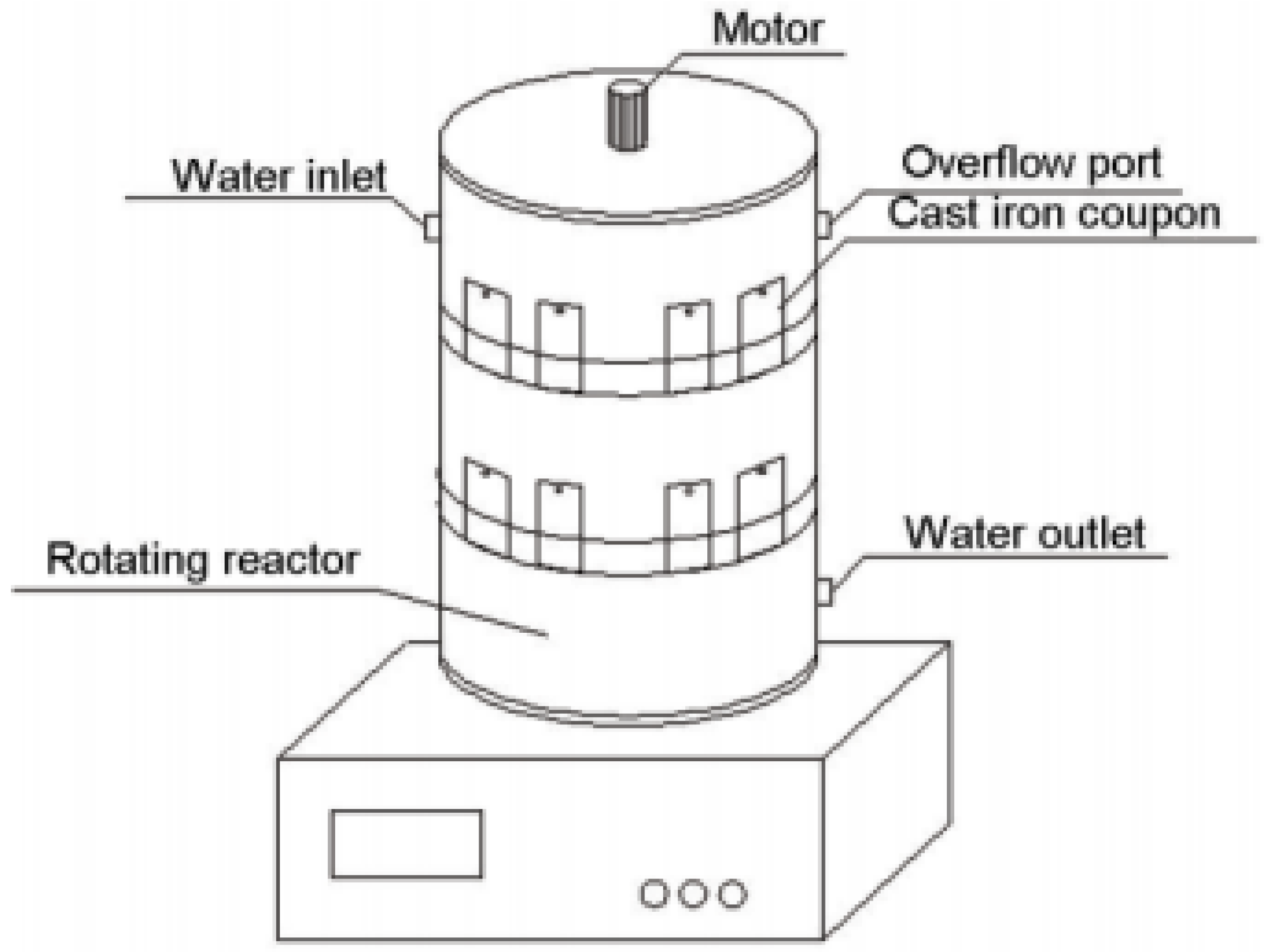
To simulate the actual operating environment of a reclaimed water distribution network, a pipe network corrosion test system was established in this study. The system takes five biofilm annular reactors (BARs) (BioSurface Technologies Corporation, Bozeman, MT, USA) (Figure 1) as the core components and is equipped with a dedicated ultraviolet (UV) disinfection device (Figure 2) as the supporting equipment. A stirring paddle was installed inside each BAR to ensure the complete and uniform mixing of the mixed liquor in the reactor, and the hydraulic retention time (HRT) of the test system was set at 36 h. The outer wall of all reactors was fully wrapped with aluminum foil to achieve thermal insulation and prevent light interference. Throughout the entire experimental period, the internal ambient temperature of the reactors was stably maintained at 30 ± 1 °C. This temperature falls within the high-temperature range of reclaimed water systems, as it can significantly promote biofilm growth, accelerate the rates of microbiologically influenced corrosion (MIC) and chemical corrosion, and intensify the processes of scaling and disinfectant consumption, thus exerting adverse effects on both the durability of the reclaimed water pipeline network and the stability of the water quality. Therefore, this temperature setting was adopted in this study to accurately reproduce the typical adverse operating conditions of the reclaimed water pipeline network under high-temperature summer conditions.
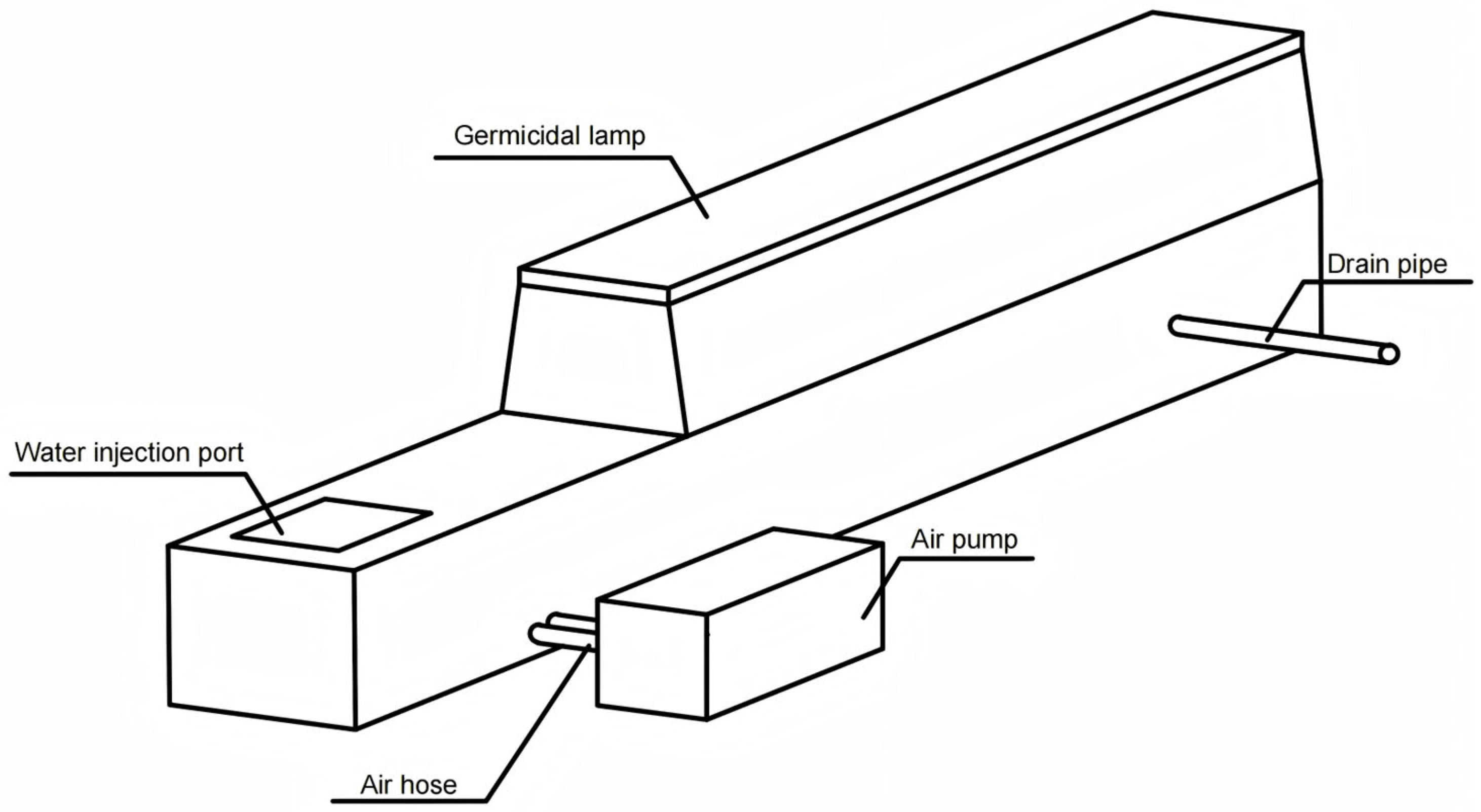
The matched UV disinfection device consists of a water supply unit, a disinfection system, a test docking unit, and a wastewater discharge module. Among them, the water supply unit supports dual-mode water feeding, which can provide a continuous water supply via a hose and a manual water injection through the filling port. The double-sided water outlet pipes are equipped to facilitate water sampling during the test. The core disinfection process of the device is achieved by irradiation from a dual-tube 40 W UV germicidal lamp system. The UV disinfection unit in this experiment adopts two 40 W low-pressure mercury UV germicidal lamps (Philips Lighting, Amsterdam, The Netherlands), with a rated power of 40 W for a single lamp and a total power of 80 W for the dual lamps. The main emission wavelength of the lamps is 253.7 nm, and the effective luminous arc length of each lamp is 1200 mm. The lamps are horizontally installed in a submerged arrangement parallel to the axial direction of the reactor chamber and are matched with high-purity fused quartz sleeves with a UV transmittance of no less than 90% at 254 nm. The center of each lamp is 80 mm away from the liquid surface and 120 mm away from the bottom of the chamber, and the effective path length of the reactor is fixed at 15 cm. The target effective UV doses of the experiment are 60 mJ/cm2 and 120 mJ/cm2, and the irradiation time is calculated and determined based on the water quality-corrected UV dose formula. The whole calculation process fully complies with the specification requirements of the Technical Requirements for Ultraviolet Disinfectors (GB/T 32091-2015) [23]. To ensure the uniformity and full coverage of the UV irradiation during the disinfection process, an aeration turbulence device is installed inside the water storage tank. The air supply conditions can be accurately controlled through the exhaust adjustment knob of the air pump (Hailea Group Co., Ltd., Chaozhou, China), which drives the water body in the tank to form a circumferential peristaltic flow regime, ensuring that all water in the tank is fully exposed to UV irradiation and providing stable and controllable irradiation conditions for subsequent disinfection tests.
(3)
Experimental methods
In this study, one UV disinfection device and five biofilm annular reactors were used to conduct NaClO disinfection and sequential UV-NaClO disinfection experiments. A strict sequential treatment mode was adopted, in which UV irradiation was applied prior to NaClO addition. The UV dosages were 60 and 120 mJ/cm2, respectively, and the NaClO dosages were set at 0, 3, 5, 7, and 9 mg/L.
The concentrations of Cl, SO42−, and microbial ATP in the influent and effluent of the reactors were determined at 12, 24, 36, 48, 60, and 72 h. Three biofilm coupons were collected from each reactor at 24, 48, and 72 h to measure the corrosion rate. The surface morphology and composition of the coupons were characterized by X-ray diffraction (XRD) and scanning electron microscopy (SEM).
To further analyze the long-term evolution characteristics of corrosion products, the SEM, XRD, and energy dispersive spectroscopy (EDS) analyses of the coupon surfaces were extended to 13 d, with key analytical time points on days 4, 10, and 13.
(4)
Pipe material coupon
The experiment employed type I cast iron coupons, which were composed of gray cast iron and measured 5 cm × 2.5 cm × 0.2 cm. Only a cleaning pretreatment was applied to the coupons in order to examine the cast iron pipe network’s corrosion properties.

2.2. Analysis and Detection

(1)
Microbial activity
Adenosine triphosphate (ATP) is the primary intracellular energy currency of viable microbial cells. The bioluminescent signal generated by the ATP-driven luciferin–luciferase reaction exhibits a linear quantitative correlation with the ATP concentration, and thus with the viable microbial biomass in water samples. For ATP quantification, intracellular ATP was first extracted from microbial cells using a dedicated extractant (BacTiter-GloTM Microbial Cell Viability Assay Kit, Promega Corporation, Madison, WI, USA), followed by bioluminescent detection via the luciferin–luciferase assay. After the water sample had fully reacted with the luminescent reagent, the emitted bioluminescence intensity was measured with a calibrated luminometer (GloMax® 20/20 Luminometer, Promega Corporation, Madison, WI, USA), and the obtained readings were used to determine the biomass and metabolic activity of the microorganisms in the sample.
(2)
Corrosion rate
The corrosion rate is the core indicator for quantitatively characterizing the corrosion degree of metallic pipeline materials. At present, the mainstream measurement and monitoring technologies for the corrosion rate are mainly divided into three categories. The first is probe-based monitoring technologies, including the resistance probe method, the electrochemical probe method, and the inductance probe method. Among them, the inductance probe method can obtain corrosion data by measuring the inductance changes caused by metal corrosion, which has both excellent measurement accuracy and stability, and has been widely used in online corrosion monitoring in scenarios such as the petrochemical industry and in pipeline transmission and distribution. The second is the geometric dimension measurement method. Ling et al. established a calculation method for the corrosion depth and the corrosion rate by measuring the thickness change in the sample cross-section before and after the corrosion test, which can intuitively characterize the cross-sectional corrosion damage degree of the materials in corrosive media [24]. The third is the volume loss method, which quantifies the corrosion degree by measuring the volume change in samples before and after corrosion and can also be used for the accurate measurement of the uniform corrosion rate of metallic materials [25].
In this study, when targeting the corrosion characteristics of cast iron pipes in reclaimed water distribution networks and combining the characteristics of the annular biofilm coupon reactor experimental system, the classic weight loss method was adopted to determine the average corrosion rate of cast iron coupons. The initial weight of each individual metal coupon that was fixed on a special lanyard was measured prior to its placement into the biofilm annular reactor (BAR). After reaching the preset reaction duration, the coupons were retrieved and re-weighed. To address the issue of weight gain caused by the adhesion of the corrosion products in the weight loss measurements, this study further verified the influence of the adhesion characteristics of the corrosion products under different disinfection conditions on the test results. The results showed that under the single NaClO disinfection condition, the compactness of the corrosion product layer and its adhesion strength to the substrate increased with the rise in disinfectant dosage, and incomplete cleaning was more likely to cause test deviation derived from weight gain. In contrast, under the combined UV-NaClO disinfection condition, specifically in the optimal condition with a UV dose of 120 mJ/cm2 coupled with a NaClO dosage of 5 mg/L, the corrosion product layer was dominated by protective calcium carbonate and iron oxides, with a high compactness and a stable composition. This layer could be completely removed through standardized cleaning procedures, as the test results of the corrosion rate under this condition presented a higher accuracy. Meanwhile, triplicate parallel cleaning and weighing verification were performed on all of the parallel samples in this study, with the relative standard deviation (RSD) of all the results below 3%. This further ensured the reliability of the weight loss measurement results and eliminated the systematic error caused by the weight gain of the corrosion products.
Based on the mass loss of the coupons before and after corrosion, the annual average corrosion rate of the coupons was calculated using Equation (1):
R ( m m / a ) = 8760 × 10 × W l o s s A × ρ × T
where 8760 means the number of hours equivalent to 1 year; mm/a refers to the corrosion depth expressed in millimeters (mm) every year; Wloss (g) is the weight loss during the corrosion process; A (cm2) is the test surface area; ρ (g/cm3) is the density of the test material; and T (h) is the experimental duration.
(3)
Corrosion coupon morphology and identification of surface corrosion products
The morphology of the corrosion coupon was observed using a Quanta 200 FEG Environmental Scanning Electron Microscope (SEM), (FEI Company, Hillsboro, OR, USA) and the energy spectrum observations were made with an energy spectrometer.
The corrosion products on the coupon are identified using an X’Pert-Pro MPD X-ray diffractometer (XRD) (Malvern Panalytical B.V., Almelo, The Netherlands), which was used to detect the calcium carbonate and iron oxides.

3. Results and Discussions

3.1. Chloride (Cl) Concentration in Water After Disinfection

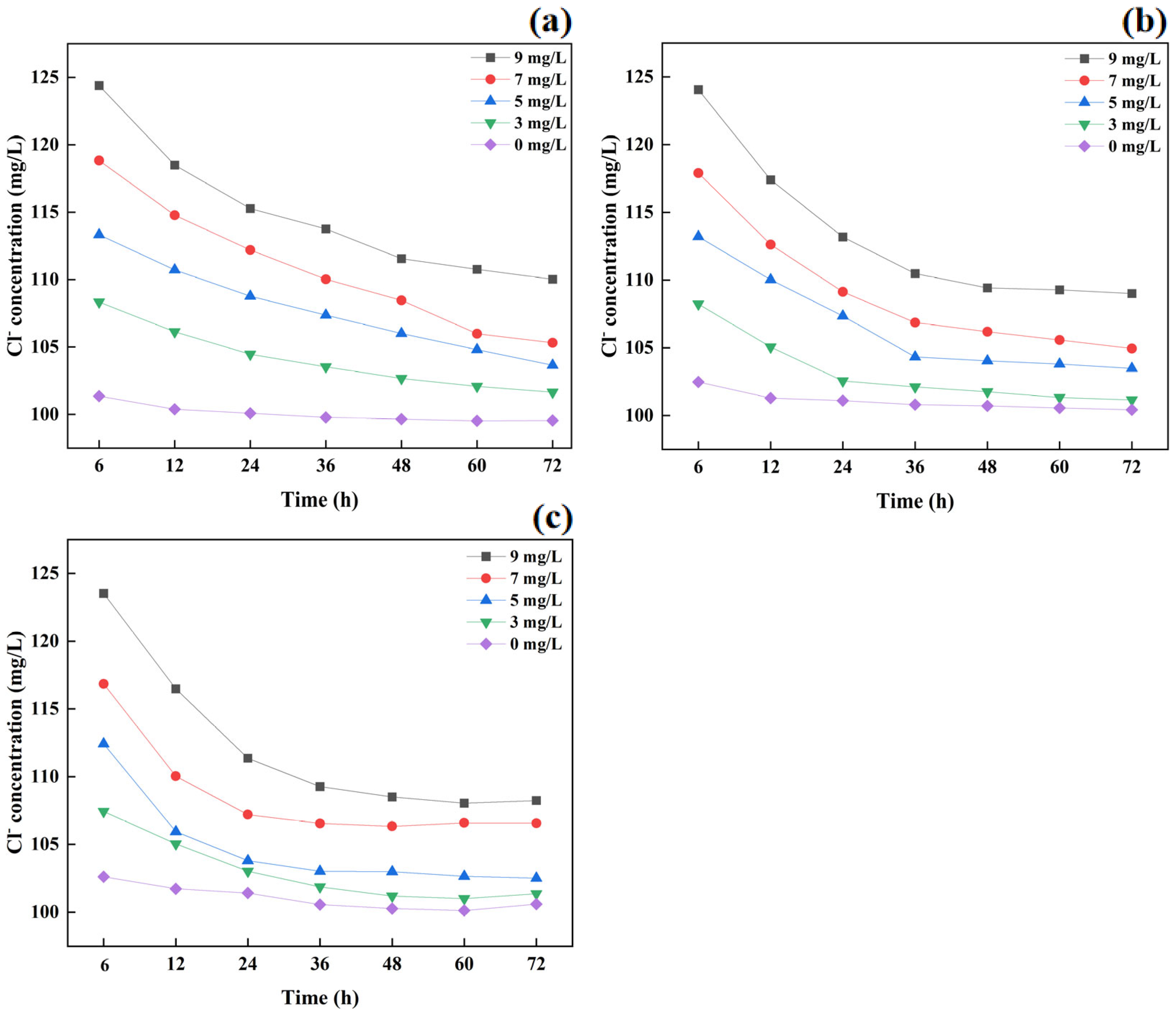
The Cl concentration in the raw water was 133.53 mg/L. The experiments on disinfection with NaClO and combined UV-NaClO were conducted. The influence of disinfection methods and dosages on the effluent chloride concentration is illustrated in Figure 3.
With the increase in NaClO dosage, the initial free available chlorine (FAC, residual chlorine) and background chloride concentration of the system increased synchronously, both of which were significantly and positively correlated with the NaClO dosage. The elevation of the initial residual chlorine concentration accelerated the disinfection reaction rate, leading to a significant rise in the residual chlorine consumption rate and chloride generation rate within 24 h of the reaction. As the reaction proceeded, the residual chlorine was continuously consumed and converted into chloride ions, and the chloride concentration in the system gradually stabilized. In short, the NaClO dosage was the core factor determining the background chloride concentration, the in situ reaction-generated chloride content, and the final effluent chloride concentration of the system: the higher the dosage, the higher the initial background chloride concentration of the system, the faster the disinfection reaction rate, and the greater the total amount of chloride generated ultimately.
NaClO + H2O → HClO + NaOH
HOCl → H+ + Cl + [O]
Cl2 + H2O ⇌ HClO + H++ Cl
When compared with NaClO disinfection alone, the sequential UV-NaClO-combined disinfection process exhibited a faster degradation rate of residual chlorine at the initial reaction stage, with a correspondingly more significant chloride generation rate. Furthermore, when the UV dosage reached 120 mJ/cm2, the residual chlorine degradation rate and chloride generation rate were further accelerated. This may be attributed to the fact that UV irradiation not only directly photolyzes free residual chlorine in water but also activates components such as natural organic matter (NOM) and characteristic inorganic ions in the water matrix. These activated components subsequently undergo redox reactions with NaClO, thereby accelerating the consumption of NaClO and the generation rate of chloride ions [26,27].
Based on the above analysis, UV disinfection can accelerate the conversion process of residual chlorine and promote the generation of chloride ions, while the NaClO dosage is the core controlling factor determining the effluent chloride concentration. Considering both the compliance requirements for the disinfection efficacy and the control target of the effluent chloride concentration, a NaClO dosage of 7 mg/L can meet the statutory disinfection limit requirements while maintaining the effluent chloride concentration at a low level. Therefore, this dosage is identified as the optimal dosage under the experimental conditions of this study.

3.2. Sulfate Ion (SO42−) Concentration in Water After Disinfection

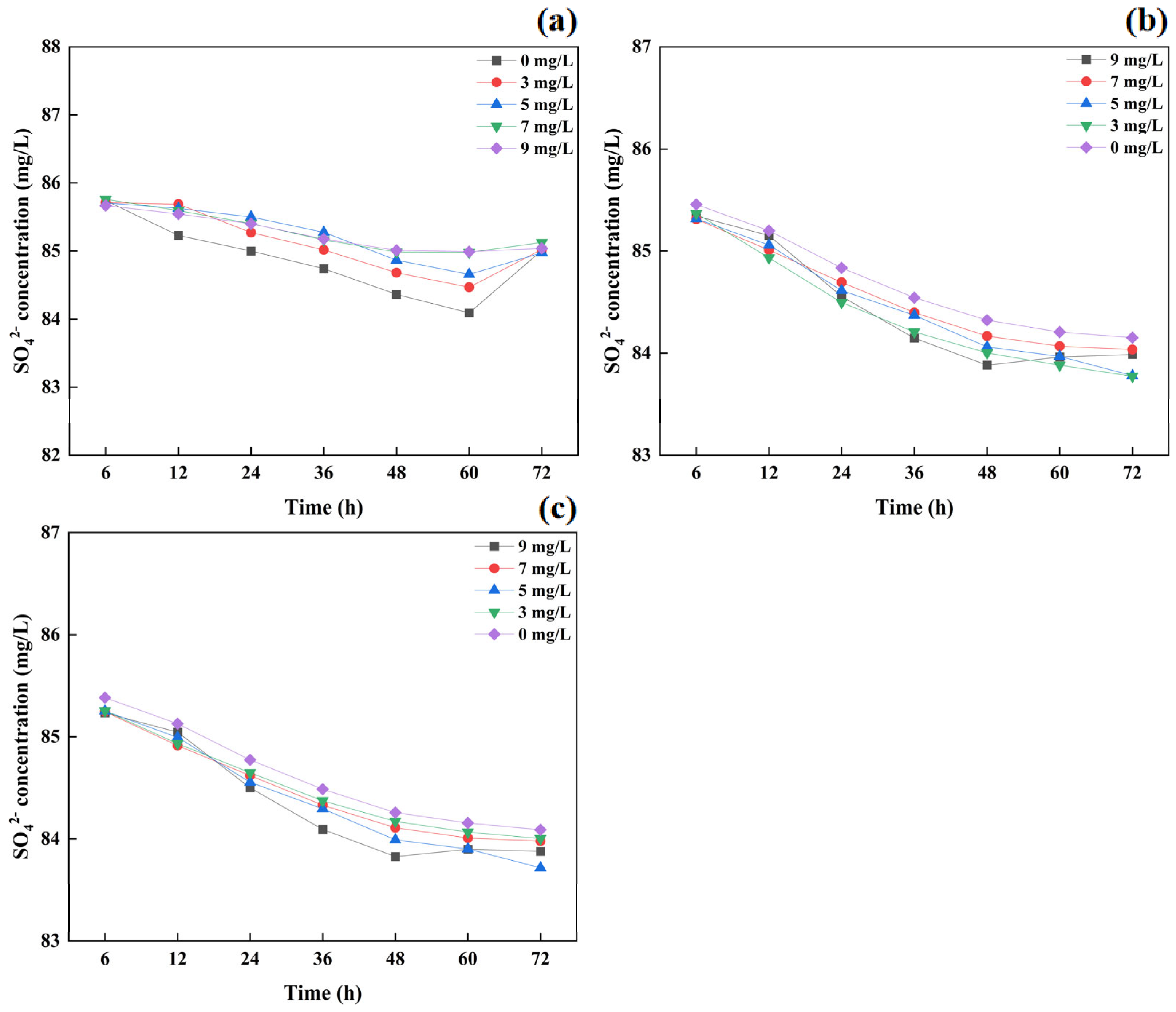
The SO42− concentration in the raw water was 105.13 mg/L. The impact of the disinfection methods and the dosages on the sulfate concentration in the water during the NaClO disinfection and UV-NaClO disinfection trials is shown in Figure 4.
Figure 4a shows that the concentration of SO42− in the water is not significantly affected by different NaClO dosages. The sulfate-reducing bacteria in the water convert sulfate to sulfide (S2−) as the reaction proceeds [28], which lowers the concentration of SO42−. Nonetheless, the greatest decrease noted during the observational timeframe did not surpass 2%. The concentration of SO42− shows a modest increase after 60 h of response. This was explained by the ongoing activity of the disinfectant NaClO, which raises the sulfate concentration by oxidizing the reduced sulfur in the water back to SO42− [29] and lowering the number of sulfate-reducing bacteria.
As seen in Figure 4b,c, after increasing by UV disinfection, the overall trend of the SO42− concentration continues to decrease over time, with no increase in the concentration observed in up to 72 h. Therefore, enhancing the UV disinfection contributes to the reduction in SO42− concentration.

3.3. Microbial Activity After Disinfection

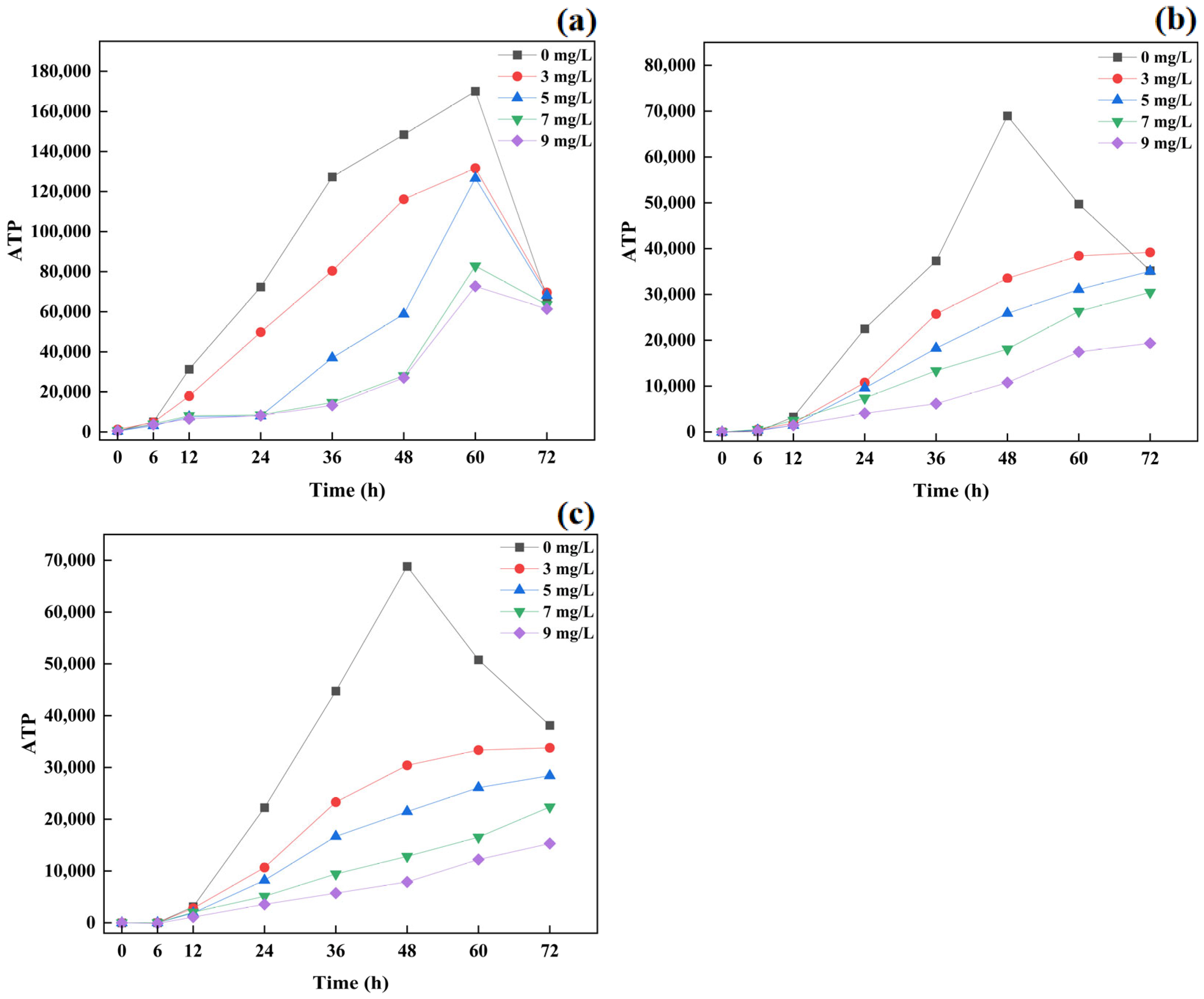
The microbial ATP on test coupons was measured after disinfection with NaClO and the UV-NaClO disinfection, with the results illustrated in Figure 5.
Figure 5a indicates that NaClO can inhibit microbial growth, with higher dosages resulting in lower ATP levels. When this is combined with Figure 5b,c, it can be seen that the addition of UV leads to even lower ATP levels, and the higher the dose of UV, the stronger the inhibitory effect on the microbes. Regardless of whether UV disinfection is applied or not, a NaClO dosage of 3 mg/L is not effective in inhibiting microbial growth after 6 h.
The dosages of 5 mg/L, 7 mg/L, and 9 mg/L of NaClO have a substantial inhibitory impact on the bacteria when used for disinfection; the activity declines after 72 h, and rapid growth only starts after 24 h. The introduction of UV disinfection causes a discernible delay in the bacteria’s life cycle as well as a partial reduction in the overall number of microbes.

3.4. The Corrosion Rate and Corrosion Morphology of Coupons

(1)
The corrosion rate of coupons after disinfection
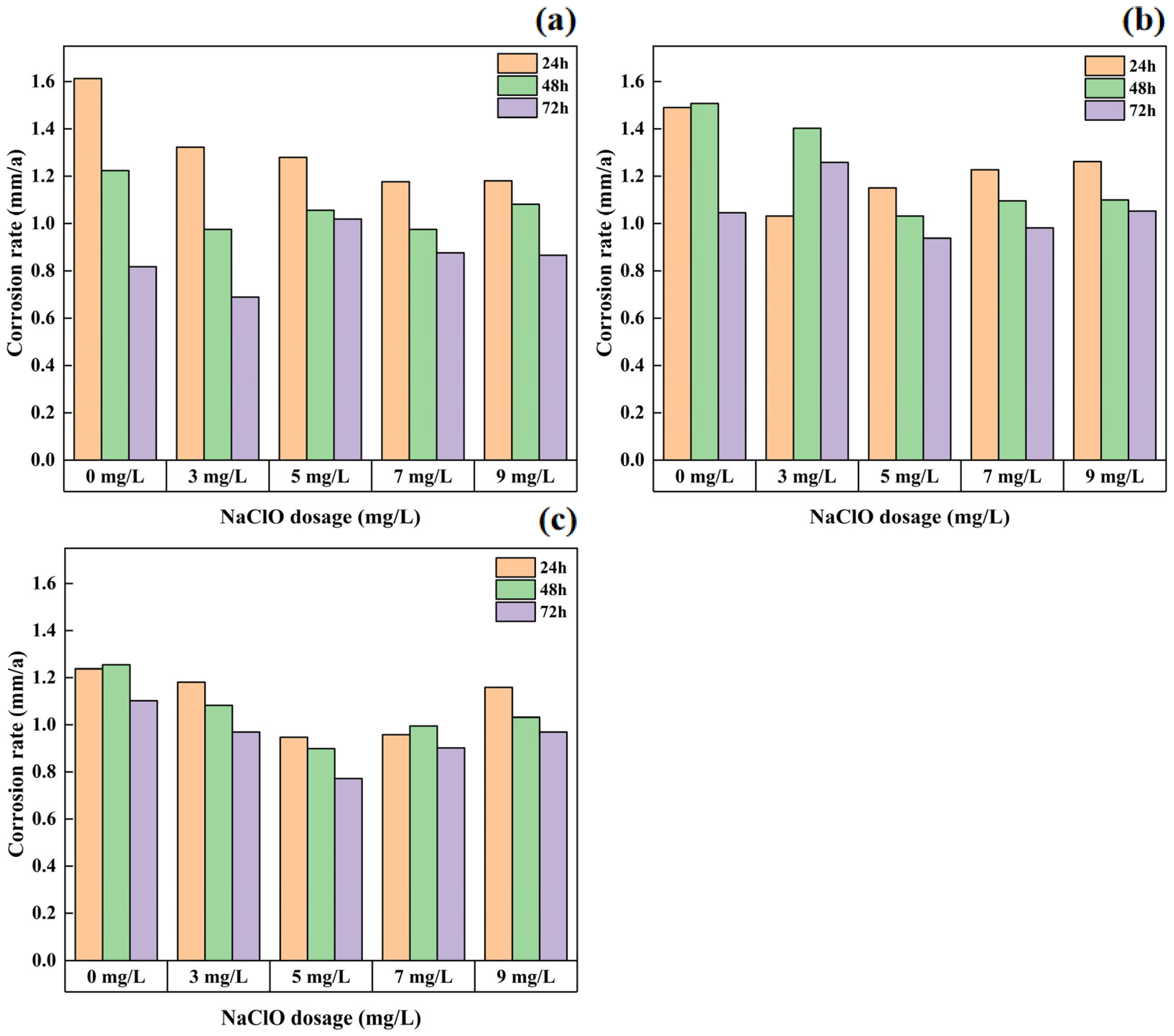
In the UV-NaClO disinfection, with NaClO and UV at doses of 60 mJ/cm2 and 120 mJ/cm2, respectively, the rate of coupon corrosion as a function of dosing variation is illustrated, as seen in Figure 6.
Figure 6 shows that the blank sample without NaClO has a rather significant corrosion rate. When more disinfectant is added, the corrosion rate after 24 h of reaction steadily declines with the addition of NaClO. However, when the NaClO dosages are increased to 7 mg/L and 9 mg/L, there is no discernible change in the rate of corrosion. This phenomenon reveals the trade-off between microbial corrosion and chemical corrosion, which is the core reason why this study does not select the maximum disinfectant dosage but seeks the optimal dosage: an increase in disinfectant concentration can better inhibit microbial corrosion, but the synchronous increase in the content of hydrolyzed ClO and Cl will significantly intensify the chemical corrosion on the coupon’s surface, ultimately resulting in no obvious change in the overall corrosion rate. The corrosion rates of the coupons treated with various disinfection techniques also exhibit a trend of initially declining and then increasing with the rise in disinfectant concentration after responding for 48 h. Furthermore, when viewed in conjunction with Figure 5, it is evident that the microbial activity is only now starting to rebound, and the chemical corrosion should therefore have a greater effect than the microbial corrosion. Therefore, at this time, both chemical and microbial corrosion are at play. The higher corrosion rate at higher NaClO dosages is mainly due to the continuous accumulation of Cl produced by the continuous decomposition of HClO, which enhances the chemical corrosion.
By 72 h, the rate of corrosion has once more dropped, and at dosages of 5 mg/L, 7 mg/L, and 9 mg/L of NaClO, the rates of corrosion are higher than those at lower sodium chloride concentrations. The fact that there are now significantly fewer microorganisms suggests that the residual disinfectant is no longer the primary factor regulating microbial development. Rather, the microbial activity declines as a result of the ongoing consumption of carbon and nitrogen sources, as well as other nutrients in the water.
As shown in Figure 6b, after disinfection with 60 mJ/cm2 of UV, the corrosion rate actually increases gradually with the addition of NaClO over a 24 h reaction period. When this is combined with Figure 5b, UV treatment significantly reduces the microbial biomass. However, an insufficient irradiation intensity may lead to the photoreactivation of some of the microbes, resulting in the phenomenon observed in Figure 6b, where the corrosion rate actually increases gradually with the addition of NaClO after reacting for 24 h. This indicates that the UV at this dosage does not provide adequate disinfection. Meanwhile, Figure 6c demonstrates that a continuous trend in the corrosion rate with varying NaClO concentrations is seen after 24, 48, and 72 h following exposure to 120 mJ/cm2 of UV light, with the lowest corrosion rate recorded at a dosage of 5 mg/L.
After a certain dose of UV radiation, the addition of NaClO results in a decreasing corrosion rate of the coupons over the reaction time. This is because the residual chlorine in the water gradually decreases as the reaction proceeds; the corrosive effect of Cl on the surface of cast iron is gradually weakened, as described in Section 3.1.
When comparing this to the same NaClO addition conditions as Figure 6b,c, it can be seen that the corrosion rate of the cast iron coupons at a UV dose of 120 mJ/cm2 is lower than that at 60 mJ/cm2, indicating that increasing the UV dose can effectively reduce the microbial corrosion.
Thus, it can be seen that when the UV dose is 120 mJ/cm2 and the NaClO dosage is 5 mg/L, the corrosion rate is relatively low.
(2)
The corrosion morphology of the coupons after disinfection
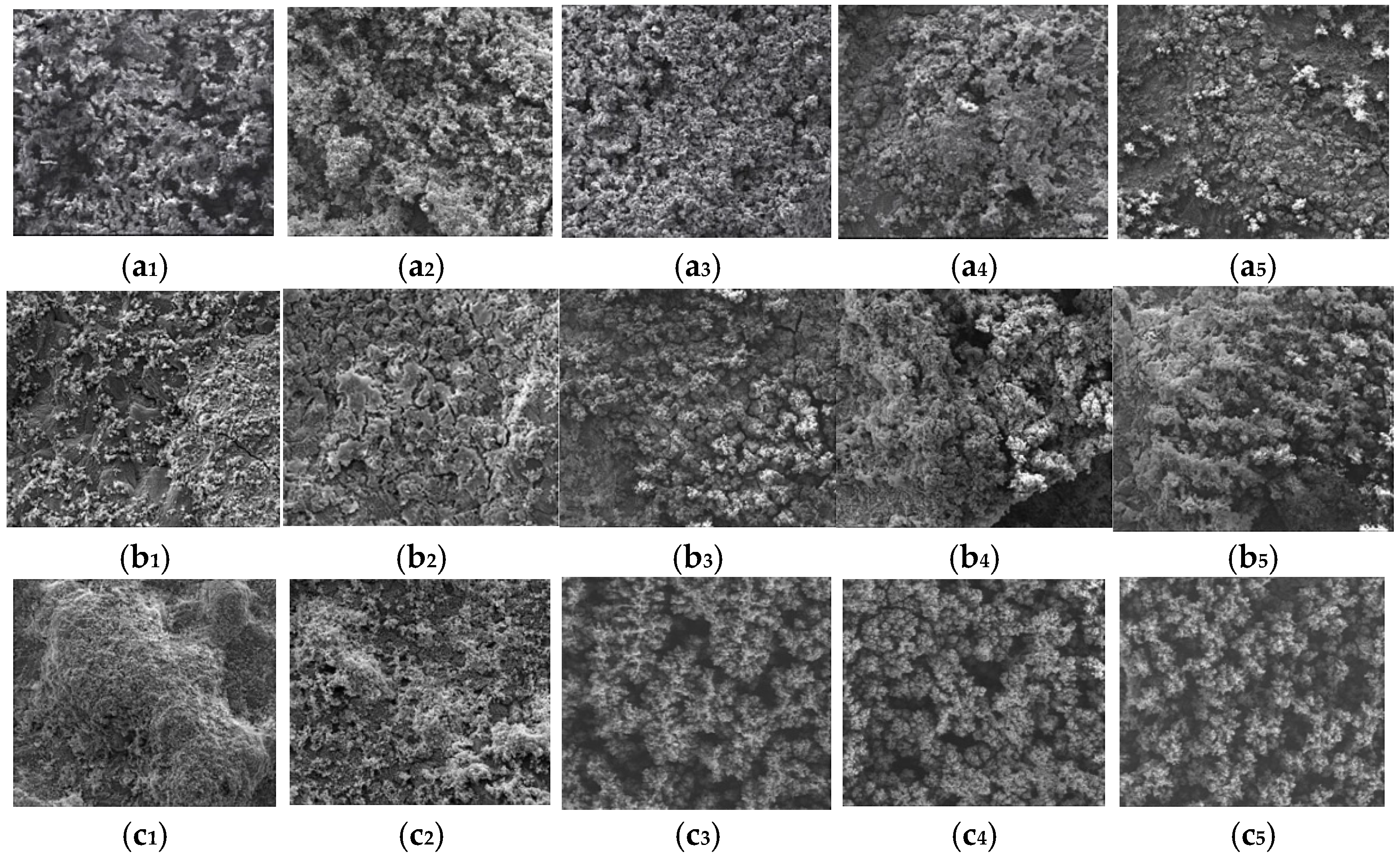
The corrosion morphology of the coupons after 72 h of disinfection, with NaClO and UV doses of 60 mJ/cm2 and 120 mJ/cm2, can be observed in the SEM images, as shown in Figure 7.
The first line of Figure 7 shows that the oxide film that forms on the coupon surface when NaClO disinfection is used alone, without the benefit of UV light, gets thicker and more compact with an increasing NaClO dosage, improving the metal’s protection. Without the addition of NaClO, an oxide coating can still form; however, it will be relatively loose. The surface oxide film shows localized rupturing at a dosage of 9 mg/L.
Without the addition of NaClO, a large number of microorganisms were present in the corrosion products. However, with an increase in NaClO dosage, the microorganisms in the corrosion products decreased rapidly. At a NaClO dosage of 5 mg/L, only a few filamentous bacteria were present in the corrosion products, and the formed corrosion products were relatively uniform (as shown in Figure 7(a3)). Under conditions of a 7 mg/L and 9 mg/L dosage, hardly any microorganisms could be observed (as shown in Figure 7(a4)), and at a dosage of 9 mg/L, iron oxide corrosion products were clearly visible, and the corrosion products were relatively compact (as shown in Figure 7(a5)).
The middle line of images reveals that after 60 mJ/cm2 of UV radiation, microbial presence persists 72 h after the addition of NaClO, but the microbial biomass is significantly reduced compared to the water sample without UV treatment. The corrosion layer is uneven, with some iron oxides protruding through the original oxide film and continuing to grow outward.
At a UV dosage of 120 mJ/cm2, after 72 h of reaction with the addition of 5 mg/L NaClO, the surface corrosion products have essentially spread across the entire cast iron surface. The layer of iron oxides close to the coupon surface has become quite compact, appearing as uniform, small spherical shapes. At the top of these spheres, some iron oxide components were still present. The growth state of the corrosion layer is better compared to a UV dosage of 60 mJ/cm2 (as shown in Figure 7(c3)).
From the image of c1, it can be clearly seen that after 120 mJ/cm2 of UV treatment, even without the addition of NaClO, there are almost no microorganisms present on the entire corrosion surface, and the surface was already covered with a relatively uniform iron oxide component, indicating that increasing the UV dosage is crucial for microbial eradication.
As the NaClO dosage increased, more and more iron oxide coverage was observed. In c3, the bottom layer essentially formed a complete layer of iron oxide film, but it continued to grow. In images c4 and c5, the small spheroidal iron oxides that formed are quite compact, with some growth still occurring at the edges, but the formation was essentially stable. Continuing to increase the NaClO dosage to 9 mg/L, the metal surface passivation film is attacked by the influence of Cl, causing pitting corrosion and resulting in an uneven corrosion layer. (as shown in Figure 7(c5)).
The analysis indicates that, from the perspective of corrosion control in reclaimed water distribution systems, UV-NaClO disinfection is superior to NaClO disinfection alone. Moreover, under the conditions of this experiment, a UV dose of 120 mJ/cm2 with a NaClO dosage of 5 mg/L is considered a more favorable operational condition for corrosion control.
(3)
The analysis of the corrosion process of coupons under optimal disinfection conditions
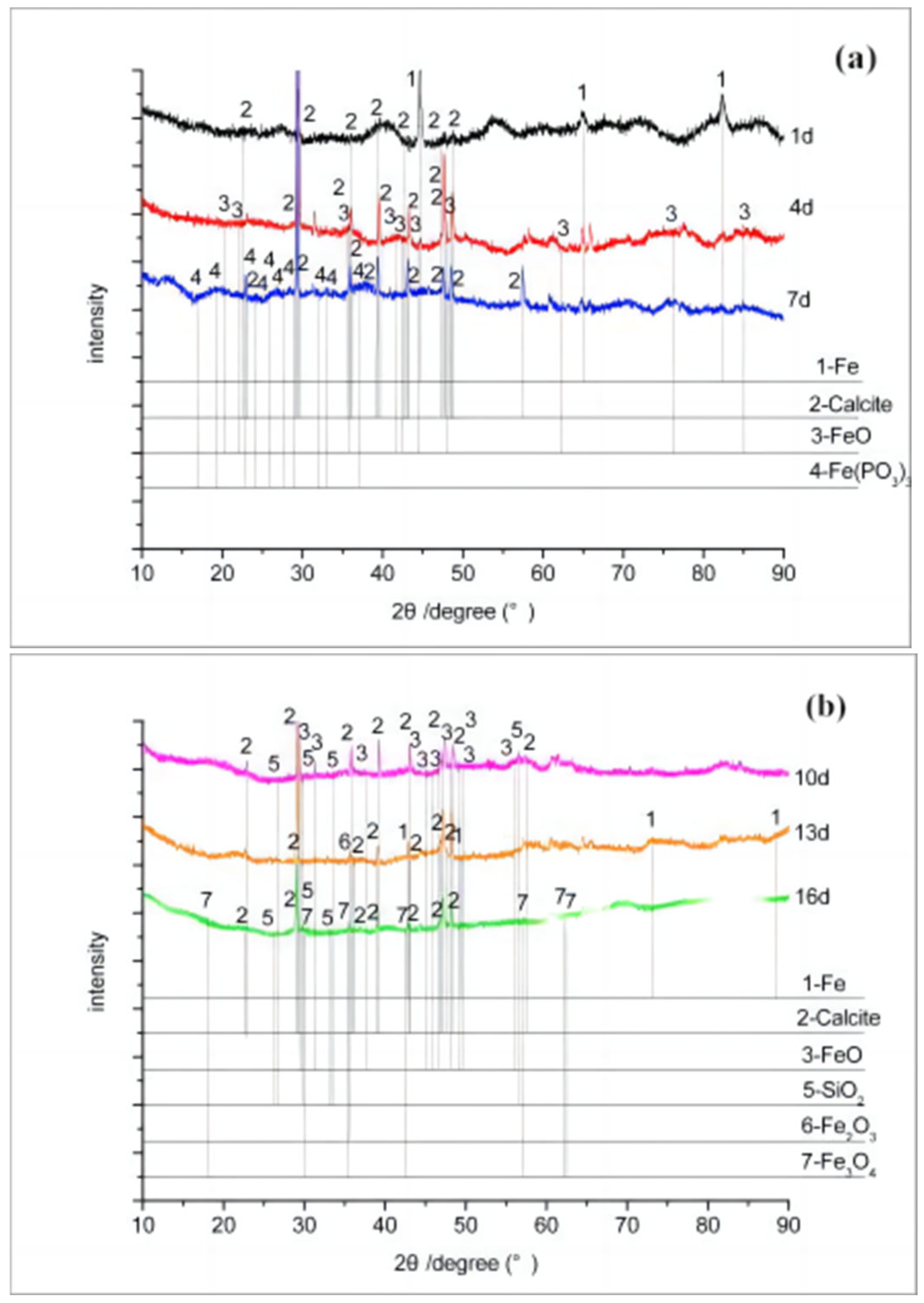
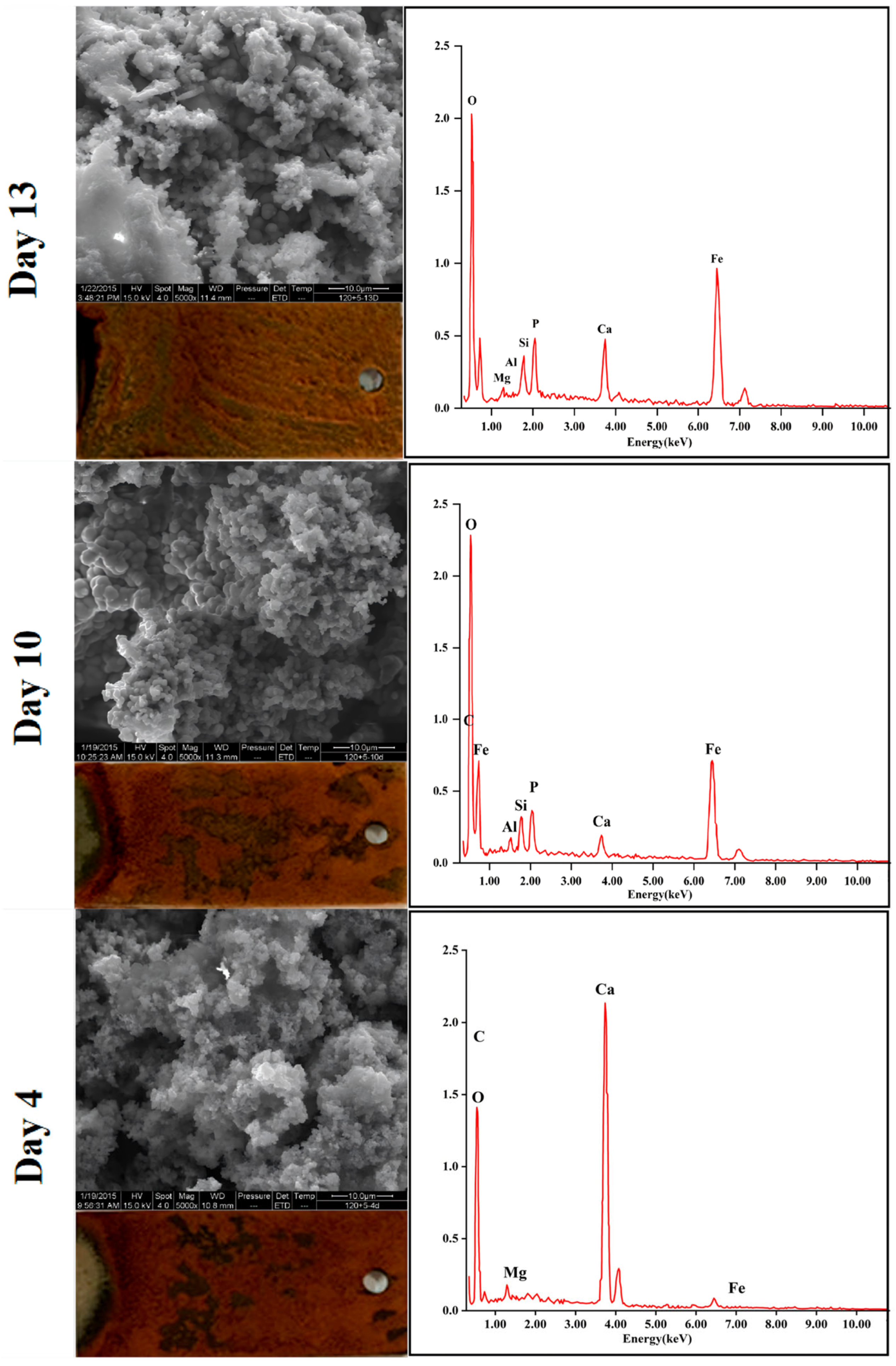
The reclaimed water disinfection process is optimized for the best corrosion control conditions with a UV dose of 120 mJ/cm2 and a NaClO dosage of 5 mg/L. On Days 4, 10, and 13, the SEM and energy dispersive spectroscopy (EDS) analyses of the corrosion layer changes are carried out in conjunction with the crystallographic analysis of the products on the coupon surface. The findings are displayed in Figure 8 and Figure 9.
The SEM and EDS characterization results of the cast iron coupons under the optimal disinfection conditions show that, on day 4, thin flake-shaped corrosion products with markedly elevated calcium content were formed on the coupon surface, indicating the precipitation of calcium carbonate, which can act as a protective barrier for the underlying metal matrix. On day 10, numerous spherical oxide particles with a high phosphorus content were generated; the presence of phosphorus was responsible for the reduced particle size of the iron oxide phases. By day 13, uniformly sized spherical corrosion products were clearly distinguishable on the cast iron coupon surface, which were mainly composed of iron, calcium, phosphorus, and oxygen. These products were most likely a composite phase of iron oxides and calcium-bearing compounds, and phosphorus was found to be progressively enriched in the corrosion products with an increasing reaction time.
Figure 8 illustrates that the phase composition of the corrosion products that formed on cast iron coupons varied significantly across different reaction stages. Initially (day 1), the corrosion products were dominated by elemental Fe and CaCO3. By day 4, elemental Fe was gradually oxidized to FeO. On day 7, Fe(PO3)3 became the predominant corrosion product. From day 10 to day 13, iron-containing phases were progressively transformed into mixed iron oxides, including FeO, Fe2O3 and Fe3O4, accompanied by the formation of a small amount of SiO2. The stepwise phase transformation of iron-containing compounds indicated that the corrosion process proceeded at a relatively slow rate. Notably, CaCO3 was detected in the corrosion products throughout the entire 13-day reaction period. The previous studies have confirmed that the persistent presence of CaCO3 can form a compact protective scale layer, providing long-term effective corrosion inhibition for cast iron coupons.
The phase composition of the corrosion products on cast iron coupons evolved continuously with the reaction time: the initial phases were dominated by elemental Fe and CaCO3, followed by the formation of phosphorus-rich iron-bearing particles, and finally transformed into mixed iron oxides and silicate phases. The sustained presence of CaCO3 throughout the reaction cycle provided durable corrosion protection for the cast iron matrix. This protective effect, combined with the favorable phase evolution of corrosion products, explains the lower corrosion severity observed under the condition of a 120 mJ/cm2 UV dose coupled with a 5 mg/L NaClO dose, compared with all other experimental groups.

4. Conclusions

(1)
When NaClO was used alone for disinfection, both the initial free available chlorine (residual chlorine) and background chloride ion (Cl) concentrations in the system increased synchronously with the NaClO dosage, showing a significant positive correlation. An increase in the initial residual chlorine concentration accelerated the disinfection reaction rate and significantly enhanced the consumption rate of residual chlorine and the formation rate of Cl. With the extension of the reaction time, residual chlorine was continuously consumed and converted into Cl, and the Cl concentration in the system gradually stabilized. The recommended dosage of NaClO for a single disinfection was 7 mg/L. At this dosage, the effluent Cl concentration could be maintained at a low level while meeting the disinfection limit requirements, thereby balancing the disinfection compliance and corrosion control in the pipe network. In addition, the NaClO dosage had no significant effect on the sulfate ion (SO42−) concentration in the water, and the maximum fluctuation of SO42− concentration within 72 h was less than 2%.
(2)
The UV-NaClO sequential disinfection process significantly accelerated the degradation rate of the residual chlorine at the initial stage of the reaction, and the corresponding formation rate of Cl also increased synchronously. This effect was enhanced with the increase in UV dose. When the UV dose reached 120 mJ/cm2, the rates of residual chlorine degradation and Cl formation were further accelerated. The core mechanism of this phenomenon was that UV irradiation could not only directly photolyze free residual chlorine in the water but also activate components such as natural organic matter and characteristic inorganic ions, which then underwent redox reactions with NaClO, thereby accelerating the NaClO consumption and Cl generation. Regardless of the combination with UV disinfection, the variation trend of Cl concentration with the reaction time was basically consistent and was characterized by a rapid change at the initial stage followed by gradual stabilization.
(3)
NaClO dosages of 7 mg/L and 9 mg/L both effectively controlled the microbial activity on the surface of the biofilm coupons within 48 h. However, an excessively high NaClO dosage would increase the Cl concentration in the system and aggravate the chemical corrosion risk of reclaimed water pipelines. Considering the dual requirements of microbial inactivation and the long-term corrosion control of the pipe network, a dosage of 7 mg/L is recommended under NaClO single disinfection to reduce the corrosive effect of Cl on the pipeline.
(4)
When compared with NaClO alone, UV-NaClO sequential disinfection could more efficiently control the microbial biomass and significantly reduce the corrosion rate of cast iron coupons. The optimal operating condition for the UV-NaClO sequential disinfection determined in this study was a UV dose of 120 mJ/cm2 and a NaClO dosage of 5 mg/L. Under this condition, the minimum corrosion rate at 72 h was only 0.62 mm/a. Under the optimal condition, elements such as calcium and phosphorus in the water significantly affected the morphology and composition of corrosion products; the transformation of iron oxides on the cast iron surface was relatively slow and could continue until the 13th day of the experiment. Calcium carbonate (CaCO3) was stably present in the corrosion products on the coupon surface throughout the reaction period from day 1 to day 13, providing a sustained and stable protective effect on the cast iron matrix.
(5)
This study clarified the influence of the law and synergistic regulation mechanism of UV-NaClO sequential disinfection on the corrosion of cast iron pipelines in reclaimed water distribution systems. The internal relationships among the disinfection process parameters, the water quality index evolution, the microbial activity, and the pipeline corrosion behavior were elucidated, and the optimal operating parameters balancing disinfection compliance and pipe network corrosion control were determined. This work fills the research gap regarding the correlation between sequential disinfection processes and cast iron pipeline corrosion in reclaimed water distribution systems and can provide theoretical support and engineering references for the safe and stable operation of reclaimed water networks, the optimization of disinfection processes, and the construction of corrosion control systems.

Author Contributions

C.F.: Writing—review and editing, funding acquisition, project administration, supervision, investigation; S.L.: writing—original draft, conceptualization, formal analysis, visualization; D.L.: methodology, conceptualization; T.W.: visualization, investigation; Y.W.: investigation, visualization. All authors have read and agreed to the published version of the manuscript.

Funding

This research is funded by the National Natural Science Foundation of China (51678026).

Data Availability Statement

The authors confirm that the data supporting the findings of this study are available within the article. Further inquiries can be directed to the corresponding author.

Conflicts of Interest

Author Dandan Liu was employed by the company Beijing Future Science City Real Estate Co., Ltd. Author Tong Wei was employed by the company Beijing General Municipal Engineering Design & Research Institute Co., Ltd. The remaining authors declare that the research was conducted in the absence of any commercial or financial relationships that could be construed as a potential conflict of interest.

References

  1. Yu, H.; Li, W.; Song, X.; Zhang, G.; Sun, S. The divergency of microbiological influenced corrosion for diverse pipe materials in the drinking water distribution system. Chem. Eng. J. Adv. 2023, 16, 100559. [Google Scholar] [CrossRef]
  2. Xu, X.; Liu, S.; Smith, K.; Cui, Y.; Wang, Z. An overview on corrosion of iron and steel components in reclaimed water supply systems and the mechanisms involved. J. Clean. Prod. 2020, 276, 124079. [Google Scholar] [CrossRef]
  3. Lee, H.; Rasheed, U.; Kong, M. A Study on the Comparison of Corrosion in Water Supply Pipes Due to Tap Water (TW) and Reclaimed Water (RW). Water 2018, 10, 496. [Google Scholar] [CrossRef]
  4. Zhang, H.; Tian, Y.; Guo, H.; Kang, M.; Song, Y. Electrochemical corrosion of cast iron pipes in reclaimed water containing disinfectant. Int. J. Electrochem. Sci. 2018, 13, 9069–9084. [Google Scholar] [CrossRef]
  5. Chen, X.; Zhao, Y. Research on Corrosion Protection of Buried Steel Pipeline. Engineering 2017, 9, 504–509. [Google Scholar] [CrossRef]
  6. Feng, Z.; Liu, D.; Yin, X.; Mi, N.; Huang, X. Optimization of coagulation and disinfection process as a key measure to control corrosion in reclaimed water pipeline network. Corros. Prot. 2015, 36, 516–521. [Google Scholar]
  7. Larson, T.E.; Skold, R.V. Laboratory studies relating mineral quality ofwater to corrosion of steel and cast iron. Corrosion 1958, 14, 43–46. [Google Scholar] [CrossRef]
  8. Larson, T.E.; Skold, R.V. Corrosion and tuberculation of cast iron. Am. Water Work. Assoc. 1957, 49, 1294–1302. [Google Scholar] [CrossRef]
  9. Mi, Z.L.; Zhang, X.J.; Chen, C. Iron release in drinking water distribution systems by feeding desalinated seawater: Characteristics and control. Desalin. Water Treat. 2016, 57, 9728–9739. [Google Scholar] [CrossRef]
  10. He, Y.; Zhang, T.; Wang, H.; Zhang, F.; Li, G.; Liu, H. Research progress of microbial corrosion inhibitors. Chin. J. Corros. Prot. 2021, 41, 748–756. [Google Scholar]
  11. Yuan, Y.; Zhang, G.; Fang, H.; Su, D.; Wang, F. Microbial spatial distribution and corrosion evaluation in urban sewer systems with different service lives. Eng. Fail. Anal. 2022, 139, 106482. [Google Scholar] [CrossRef]
  12. Liu, D.P.; Rong, C.; Jin, J.T.; Liang, S.; Zhang, J. Characteristics of biofilm community structure in a reclaimed water cast iron pipeline. Environ. Sci. Water Res. Technol. 2018, 10, 1489. [Google Scholar] [CrossRef]
  13. Zhang, G.; Li, B.; Liu, J.; Luan, M.; Yue, L.; Jiang, X.; Yu, K.; Guan, Y. The bacterial community significantly promotes cast iron corrosion in reclaimed wastewater distribution systems. Microbiome 2018, 6, 222. [Google Scholar] [CrossRef] [PubMed]
  14. Kharchenko, U.; Beleneva, I.; Karpov, V.; Reznik, E. Microbiological activity of fouling communities as indicator of biocorrosion aggressiveness of sea water. Prot. Met. Phys. Chem. Surf. 2010, 46, 842–845. [Google Scholar] [CrossRef]
  15. van der Wielen, P.W.; van der Kooij, D. Effect of water composition, distance and season on the adenosine triphosphate concentration in unchlorinated drinking water in The Netherlands. Water Res. 2010, 44, 4860–4867. [Google Scholar] [CrossRef] [PubMed]
  16. Chen, Y.; Zhou, H.; Gao, H.; Su, Z.; Li, X.; Qi, P.; Li, T.; Hu, C.; Li, Z.; Bi, Z.; et al. Comprehensive comparison of water quality risk and microbial ecology between new and old cast iron pipe distribution systems. J. Environ. Sci. 2023, 146, 55–66. [Google Scholar] [CrossRef]
  17. Tao, J.; Yu, B.; Nzekoue, F.K.; Zhou, X.; Shen, Q.; He, J.; Sagratini, G.; Huang, X.; Vittori, S.; Caprioli, G.; et al. Determination of ATP-related compounds by HPLC to study the effect of cell-free supernatants of Lactiplantibacillus plantarum on the shelf life of sliced dry-cured ham. Food Biosci. 2023, 55, 102984. [Google Scholar] [CrossRef]
  18. Jin, J.; Wu, G.; Guan, Y. Effect of bacterial communities on the formation of cast iron corrosion tubercles in reclaimed water. Water Res. 2015, 71, 207–218. [Google Scholar] [CrossRef]
  19. Feng, C.; Jin, J.; Wang, C.; Zhang, J.; Zhang, X.; Liu, D.; Liu, C. Effects of two water treatment processes on the corrosion of reclaimed water pipeline network. Corros. Prot. 2017, 38, 411–415. [Google Scholar]
  20. Zhang, T.; Li, K.; Liu, X. DBP-FP change of biofilm in drinking water distribution system induced by sequential UV and chlorine disinfection: Effect of UV dose and influencing mechanism. Environ. Pollut. 2023, 338, 122716. [Google Scholar] [CrossRef]
  21. Liu, X.; Song, C.; Feng, C.; Tian, M.; Ji, H.; Zhang, X.; Ding, Z. Microbial characterization of pipe network disinfected with ultraviolet light and tea polyphenol/sodium hypochlorite. J. Environ. Eng. 2019, 13, 616–623. [Google Scholar]
  22. Zhang, H.; Zhao, L.; Liu, D.; Wang, J.; Zhang, X.; Chen, C. Early period corrosion and scaling characteristics of ductile iron pipe for ground water supply with sodium hypochlorite disinfection. Water Res. 2020, 176, 115742. [Google Scholar] [CrossRef]
  23. GB/T 32091-2015; Water Quality—Guidance Standard for Generalized Application of Reclaimed Water. Standards Press of China: Beijing, China, 2015.
  24. Ling, Z.; Yang, W.; Wang, X.; Zhang, X.; Zhang, Y.; Jiang, J.; Chen, X.; Liu, W.; Geng, Z.; Peg, Y. Enhanced corrosion resistance of laser-remelted Fe–Cr–B–Mo alloy through interfacial periodic layered structures in liquid aluminum. J. Mater. Res. Technol. 2025, 37, 4717–4731. [Google Scholar] [CrossRef]
  25. Cao, W.; Huang, T.; Sun, W.; Shi, J. Application of ultraviolet disinfection technology in secondary water supply. China Water Supply Drain. 2021, 37, 60–64. [Google Scholar]
  26. Zhang, Y.; Su, N.; Xu, P.; Liu, B. Effect of UV-enhanced sodium hypochloritedisinfection on the corrosion of reclaimed water pipe network. China Water Supply Drain. 2015, 31, 79–83. [Google Scholar]
  27. Zhang, Z.; Zhang, C.; Yang, Y.; Zhang, Z.; Tang, Y.; Su, P.; Lin, Z. A review of sulfate-reducing bacteria: Metabolism, influencing factors and application in wastewater treatment. J. Clean. Prod. 2022, 376, 134109. [Google Scholar] [CrossRef]
  28. Lin, Y. Research on Corrosion of Reclaimed Water Pipelines by Sodium Hypochlorite and Sulfate-Reducing Bacteria. Master’s Thesis, Tianjin University, Tianjin, China, 2017. [Google Scholar]
  29. Lu, S.-J.; Gao, L.-J.; Li, Q.-F.; Han, X.; Zhao, D.-F. On-line monitoring technology for internal corrosion of CO2-EOR oil field. Energy Procedia 2018, 154, 118–124. [Google Scholar] [CrossRef]
Figure 1. The biofilm annular reactor.
Water 18 00763 g001
Figure 2. The UV disinfection device.
Water 18 00763 g002
Figure 3. The concentration of Cl after NaClO disinfection and UV-NaClO disinfection. (a) The NaClO disinfection, (b) the UV (60 mJ/cm2)-NaClO disinfection, and (c) the UV (120 mJ/cm2)-NaClO disinfection.
Water 18 00763 g003
Figure 4. The concentration of SO42− after NaClO disinfection and UV-NaClO disinfection. (a) The NaClO disinfection, (b) the UV (60 mJ/cm2)-NaClO disinfection, and (c) the UV (120 mJ/cm2)-NaClO disinfection.
Water 18 00763 g004
Figure 5. The activity of microbes on the coupons after disinfection. (a) The NaClO disinfection, (b) the UV (60 mJ/cm2)-NaClO disinfection, and (c) the UV (120 mJ/cm2)-NaClO disinfection.
Water 18 00763 g005
Figure 6. The corrosion rate of coupons subjected to NaClO disinfection and UV-NaClO-combined disinfection. (a) The NaClO disinfection, (b) the UV (60 mJ/cm2)-NaClO disinfection, and (c) UV (120 mJ/cm2)-NaClO disinfection.
Water 18 00763 g006
Figure 7. The SEM micrographs of different disinfection methods and dosages. (a1a5) were taken as a NaClO dosage of 0, 3, 5, 7 and 9 mg/L; the pictures on the middle line, i.e., (b1b5), were taken as a UV dose of 60 mJ/cm2 with a NaClO dosage of 0, 3, 5, 7 and 9 mg/L; and the last five pictures, i.e., (c1c5), were taken as a UV dose of 60 mJ/cm2 with a NaClO dosage of 0, 3, 5, 7 and 9 mg/L.
Water 18 00763 g007
Figure 8. The SEM and EDS of coupons under a UV radiation of 120 mJ/cm2 and a NaClO dosage of 5 mg/L.
Water 18 00763 g008
Figure 9. The XRD of the corrosion scale on the coupon surface under optimal operating conditions. (a) Day 1–day 7 and (b) day 10–day 13.
Water 18 00763 g009
Table 1. Raw water quality indicators.
IndexSO42−
(mg/L)
Cl
(mg/L)
HCO3
(mg/L)
Ca2+
(mg/L)
CODCr
(mg/L)
Total Organic Carbon(mg/L)Total Phosphorus
(mg/L)
Turbidity
(NTU)
LR (Larson Index)
The daily average value of water samples 105.17133.53238.6389.6921.548.230.720.411.44
Disclaimer/Publisher’s Note: The statements, opinions and data contained in all publications are solely those of the individual author(s) and contributor(s) and not of MDPI and/or the editor(s). MDPI and/or the editor(s) disclaim responsibility for any injury to people or property resulting from any ideas, methods, instructions or products referred to in the content.