1. Introduction
Water is a vital natural resource for the world’s rapidly growing population [
1]. Climate change has a significant impact on water resources and, although rainwater is freely available, substantial efforts and resources are required to reintegrate it into the natural water cycle. In recent years, global warming and human activities have contributed to increasing water scarcity worldwide, leading to severe consequences in regions experiencing water stress, including ecosystem degradation, food insecurity, and inadequate hygiene and health conditions.
According to the UNICEF report “Reimagining WASH—Water Security for All” [
2], water demand is directly proportional to population growth, urbanization, and improvements in living standards, further exacerbating water stress. Therefore, the protection of water resources is fundamental. Sustainable water consumption can ensure the satisfaction of basic human needs for future generations, regardless of geographical location.
From the perspective of the human right to water, as defined by the United Nations Committee on Economic, Social and Cultural Rights (General Comment No. 15) [
3], water must be sufficient, safe, acceptable, and physically and economically accessible for personal and domestic use. In this context, water is explicitly included in the 2030 Agenda for Sustainable Development under Sustainable Development Goal 6: Clean Water and Sanitation.
Sustainable water management involves reducing potable water consumption and promoting recycling and reuse, thereby transforming wastewater and rainwater into valuable resources. Studies indicate that up to 6.6 billion m
3 of water could be reused annually, while only 1.1 billion m
3 is currently reused worldwide [
4]. Due to its multiple reuse possibilities, rainwater represents one of the most effective means of supporting sustainable building development. Moreover, amendments adopted in October 2023 to the European Directive 91/271/EEC on urban wastewater treatment highlight that climate change is likely to increase the risk of hydraulic overload caused by storm events and urban runoff. Urban wastewater management infrastructures are particularly vulnerable, and the directive encourages the development of local solutions for rainwater management, aiming to reduce overloads to approximately 1% of the annual wastewater load entering treatment plants [
5].
1.1. Context
Urban areas worldwide are increasingly facing major challenges in water resource management due to rapid urbanization, continuous population growth, and climate variability. These pressures manifest rising water demand, increased stress on centralized water supply systems, and the occurrence of extreme hydrological events, such as prolonged droughts and short-duration intense rainfall events [
6,
7]. As cities continue to evolve, sustainable approaches to water supply and stormwater management have become essential to ensure urban resilience and to reduce vulnerabilities associated with climate change. Within this context, Sustainable Urban Water Management (SUWM) has emerged as a key component of climate adaptation strategies, aligning with the Sustainable Development Goals (SDGs) particularly SDG 6 (Clean Water and Sanitation) and SDG 11 (Sustainable Cities and Communities) [
8].
Historically, rainwater in European cities was regarded both as waste and as a hazard, leading to the development of infrastructure designed to rapidly convey it away from urban environments [
9]. However, the combined impacts of urbanization and climate change have shifted this perception, generating renewed interest in rainwater harvesting (RWH) as an effective decentralized solution. RWH is defined as the process of capturing and storing precipitation from rooftops or other impervious surfaces, providing a supplementary water source for non-potable uses such as sanitation, irrigation, and cleaning [
10,
11]. Numerous studies from Europe, Asia, and Australia have demonstrated that RWH systems contribute to water savings, stormwater mitigation, and enhanced urban climate resilience [
8,
12,
13]. Furthermore, RWH supports the transition from linear to circular water management by reducing energy consumption and promoting decentralized water supply systems [
10].
1.2. Justification
In this context, preventive measures such as avoiding the inflow of unpolluted stormwater into sewer systems, increasing green and blue infrastructure, promoting natural retention, and enabling stormwater relocation are essential. Reuse represents a recommended measure that can be implemented and integrated into existing systems, supported by digital tools that enable continuous monitoring of rainwater chemical composition and the detection of emerging pollutants [
11,
14,
15].
Recent studies indicate that RWH systems are increasingly implemented in Western European countries—particularly Germany, Austria, and Switzerland—where supportive policies and financial incentives encourage their adoption [
9]. In addition to reducing potable water consumption and energy demand, rainwater harvesting (RWH) contributes to stormwater flood control and improved water quality management. However, Eastern European countries, including Romania, report limited large-scale implementation of RWH systems, while existing studies mainly focus on rainwater chemistry and short-term monitoring rather than on the long-term performance of integrated RWH solutions [
16,
17]. This uneven adoption reflects existing gaps in research, legislation, and public awareness regarding sustainable water resource practices.
Romanian municipalities are increasingly affected by water-related challenges such as seasonal water scarcity, uneven precipitation distribution, and high pressure on centralized water supply infrastructure [
18]. In the city of Cluj-Napoca, located in northwestern Romania, average annual precipitation reaches approximately 602 mm but is characterized by strong seasonal variability—ranging from only 20–24 mm during winter months to approximately 95 mm in early summer [
19,
20]. This pattern highlights both a significant potential for rainwater harvesting during wet periods and a clear need for storage solutions to compensate for dry seasons. Moreover, integrating rainwater-harvesting systems into public buildings, including educational infrastructure, can reduce operational water costs, strengthen environmental education, and support national and European sustainability objectives, particularly in relation to nearly zero-energy buildings (NZEB).
Despite these advantages, few applied studies have evaluated the performance of RWH systems in Romanian urban environments, particularly with respect to the simultaneous efficiency of water savings, stormwater control, and harvested water quality. Consequently, a significant research gap remains regarding the effectiveness, operational constraints, and sustainability contributions of RWH systems under Romania’s specific hydrological and climatic conditions.
To address this gap, this article presents a rainwater harvesting and storage system installed in an educational building in Cluj-Napoca, Romania—one of the country’s most dynamic urban centers. The proposed solution is evaluated using local pluviometric data, storage efficiency analysis, and laboratory testing of key physico-chemical water quality parameters. By integrating hydrological and environmental information, this research aims to provide evidence-based insights into both the potential and limitations of rainwater use in Eastern European urban contexts. The findings are expected to support the development of local sustainability strategies and climate adaptation policies, contributing to integrated and resilient urban water management.
At the European Commission level, more rigorous and cost-effective management of urban wastewater is also being promoted, supported by regulations that demonstrate a clear return on investment through the generated environmental and economic benefits. The Commission proposes both a reduction in permitted pollutant levels and improved enforcement to ensure that pollution reduction targets are more consistently achieved in practice [
21].
To better cope with intense rainfall events—whose frequency has increased due to climate change—an integrated and sustainable approach to stormwater management is therefore required.
2. Applied Research and Implementation Context
The development and implementation of rainwater reuse solutions in existing buildings requires addressing key questions regarding water availability, storage capacity, and surplus management. These considerations guided the design of a rainwater collection, treatment, storage, and infiltration system, connected to a single downspout from the existing rainwater system of the Faculty of Building Services Engineering in Cluj-Napoca. Specifically, the potential rainfall volume was estimated, available space for system installation was evaluated, and an appropriate storage capacity was determined. A key aspect of the system design was the limited available space, which dictated the integration of all stages—including sedimentation/clarification, filtration, storage, and infiltration—within the chosen area. Overflow management strategies were also formulated to ensure system resilience during periods of intense precipitation.
The selection of this building as a pilot site was informed by its established role as an experimental platform for sustainability-oriented research. Previous investigations have analyzed its energy performance, indoor environmental quality, and digital monitoring through IoT technologies and the KNX protocol, highlighting its suitability for integrated building-level performance evaluation [
22,
23]. More recent studies examined carbon management and greenhouse gas emissions, demonstrating the building’s relevance in the broader context of climate neutrality [
24]. Leveraging this research infrastructure and existing datasets enabled the current study to extend the sustainability assessment to include rainwater harvesting and water quality, offering a holistic evaluation of resource efficiency that encompasses energy, carbon, indoor environment, and water management at the real-building scale.
Building on this foundation, prior research by the authors explored the impact of rainwater reuse in both residential and social-administrative buildings. These studies included physicochemical analyses of rainwater collected from various rooftops and urban contexts, considering catchment area characteristics, surface type, and urban influence. One residential complex case study integrated local rainwater management from the design phase, implementing gravity-driven rooftop collection, storage in retention and infiltration tanks, and eliminating the need for connection to the municipal sewer system. Multi-year monitoring indicated that, although precipitation occasionally exceeded the nominal tank capacity, continuous infiltration prevented the tank from reaching its maximum volume, confirming the solution’s feasibility.
Expanding these insights, subsequent research focused on a social-administrative building, assessing water demands for both indoor use and external needs, including irrigation of green spaces and courtyard cleaning. A five-year precipitation dataset for July, the wettest month in the study region, revealed that rainfall met irrigation requirements in some years, whereas supplemental municipal water was necessary in others. Similarly, in a residential building study, rainwater was treated as greywater in sanitary facilities, with continuous monitoring of microbiological and physicochemical parameters. These findings demonstrated significant reductions in potable water consumption and associated costs while also highlighting the influence of climatic variability on the volume of water that can be collected [
25].
Collectively, these studies provided the foundation for the AmZEB project, which seeks to develop rainwater reuse strategies for zero-energy buildings (ZEBs) in alignment with circular water economy principles. By integrating lessons from previous research and applying them to real-scale building implementation, the project contributes to reducing water consumption and the associated carbon footprint, thus advancing an integrated approach to sustainable urban building management.
In the broader context of rainwater harvesting research, previously reported systems frequently focus on individual components such as storage optimization, basic filtration, or runoff retention. Compared with these approaches, the AmZEB configuration adopts an integrated strategy that combines sedimentation, filtration using natural zeolite media, storage, and controlled infiltration within a single decentralized system. This design was selected to address typical constraints encountered in existing urban buildings, where available installation space is limited and stormwater management must simultaneously support water reuse and reduce pressure on urban drainage networks. By integrating treatment and infiltration processes within a compact configuration, the proposed system aims to enhance both water quality and hydraulic resilience while maintaining adaptability to different building types and urban environments.
3. Description of the Experimental AmZEB System
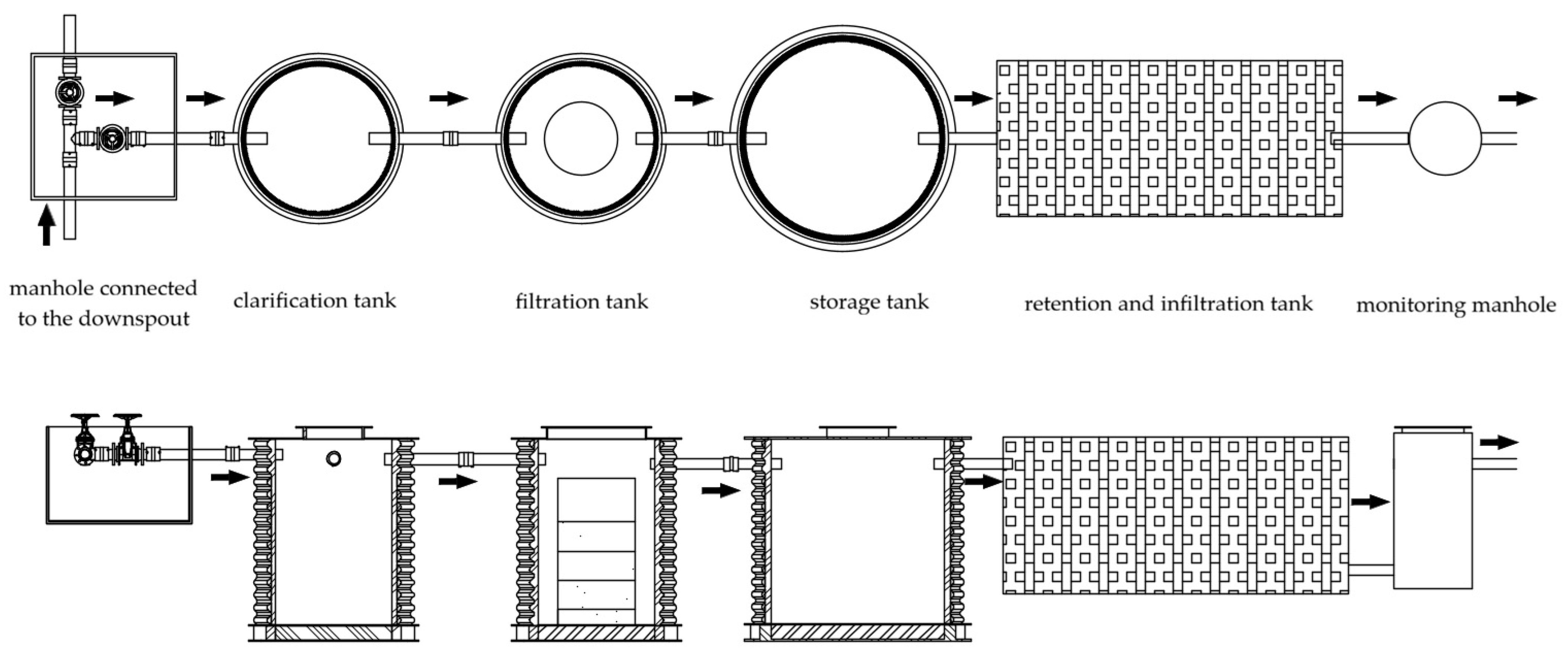
The AmZEB system was designed to enable efficient management of rainwater through collection, transport, filtration, storage, recycling, reuse, and infiltration. Rainwater is collected from a 120 m2 pitched roof made of metal sheets with a 30° inclination and directed via gutters and downspouts into the system. Two control valves were installed to regulate water supply and, in case of heavy rainfall, allow part of the flow to be diverted back to the initial system.
In the first stage, rainwater accumulates in a 4500 L polyethylene tank, serving as a primary sedimentation unit and flow regulator. Polyethylene was selected due to its low cost, high durability, corrugated profile providing structural strength, and compatibility with potable water, making it an ideal material for long-term rainwater storage. This tank reduces turbulence, allowing heavier particles to settle before water is transferred via a 110 mm polyethylene pipe to the filtration tank.
In the current configuration of the experimental installation, the system is connected to only one of the six downspouts of the building, collecting rainwater from a limited portion of the roof surface. Consequently, the inflow rate to the system is directly dependent on the intensity and duration of rainfall events, resulting in significant variability in the incoming flow. The installation was implemented as a pilot-scale experimental system aimed at evaluating the operational performance of decentralized rainwater harvesting, treatment, storage, and infiltration under real urban conditions. In this initial research phase, the monitoring program focused primarily on water quality assessment and functional system performance, while detailed hydraulic characterization and continuous-flow monitoring are planned for future monitoring stages.
For this reason, the hydraulic retention time cannot be considered constant and was not precisely determined at the this stage of this research. To improve the hydraulic characterization of the system, the next stage of the project will include the integration of a flow meter at the inlet of the experimental station, which will enable continuous monitoring of collected volumes and a more accurate estimation of system hydraulic parameters.
The filtration column consists of zeolite granules of varying sizes, chosen for their excellent adsorption and cation-exchange properties. This microporous aluminosilicate effectively removes metal ions, ammonium, and other dissolved substances, improving water quality. The zeolite’s geological and chemical characteristics were documented to ensure reproducibility and comparability in subsequent studies. Water flows gravitation-driven above the filter media, removing suspended solids and impurities.
Filtered water is then stored in a 5600 L polyethylene tank, from which it can be used for irrigation and courtyard maintenance. Due to limited available space in the public building, the system also includes an infiltration pathway for excess water. Water exceeding the storage tank’s capacity is transported via a 110 mm polyethylene pipe to a retention and infiltration tank, allowing for gradual infiltration into the soil. To prevent flooding during extreme rainfall events, a monitoring manhole is installed, directing water to the on-site sewer system when all tanks reach maximum capacity. The functional schematic of the experimental configuration is shown in
Figure 1.
From a practical implementation perspective, the proposed configuration can serve as a reference model for decentralized rainwater-harvesting systems integrated into existing urban buildings. Key design considerations include the available roof catchment area, local precipitation patterns, available installation space, and the intended non-potable water uses. In constrained urban environments, integrating sedimentation, filtration, storage, and controlled infiltration within a compact configuration can provide an effective strategy for both water reuse and stormwater mitigation. Although the present study focuses on pilot-scale implementation, the conceptual design can be adapted to different building types and urban contexts by adjusting storage capacity, filtration media, and infiltration components according to local hydrological and spatial conditions.
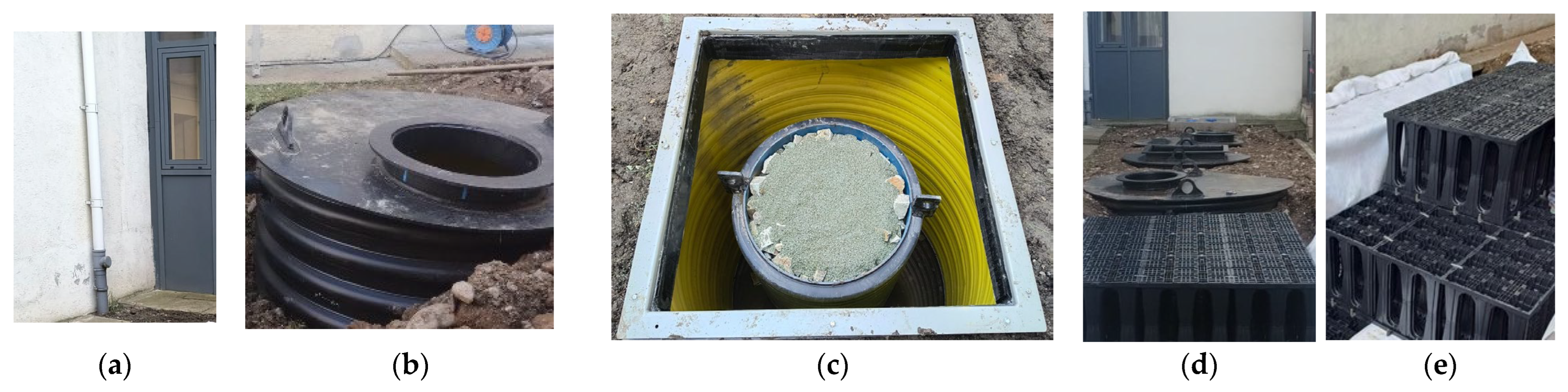
To provide a clearer understanding of the proposed solution, several images captured during the implementation of the project are presented.
Figure 2a illustrates the downpipe through which the collected rainwater enters the system. The inspection opening of the rainwater calming tank is shown in
Figure 2b, while
Figure 2c presents the filtration tank containing the filtering media. In
Figure 2d, all four tanks installed within the system can be identified in sequence.
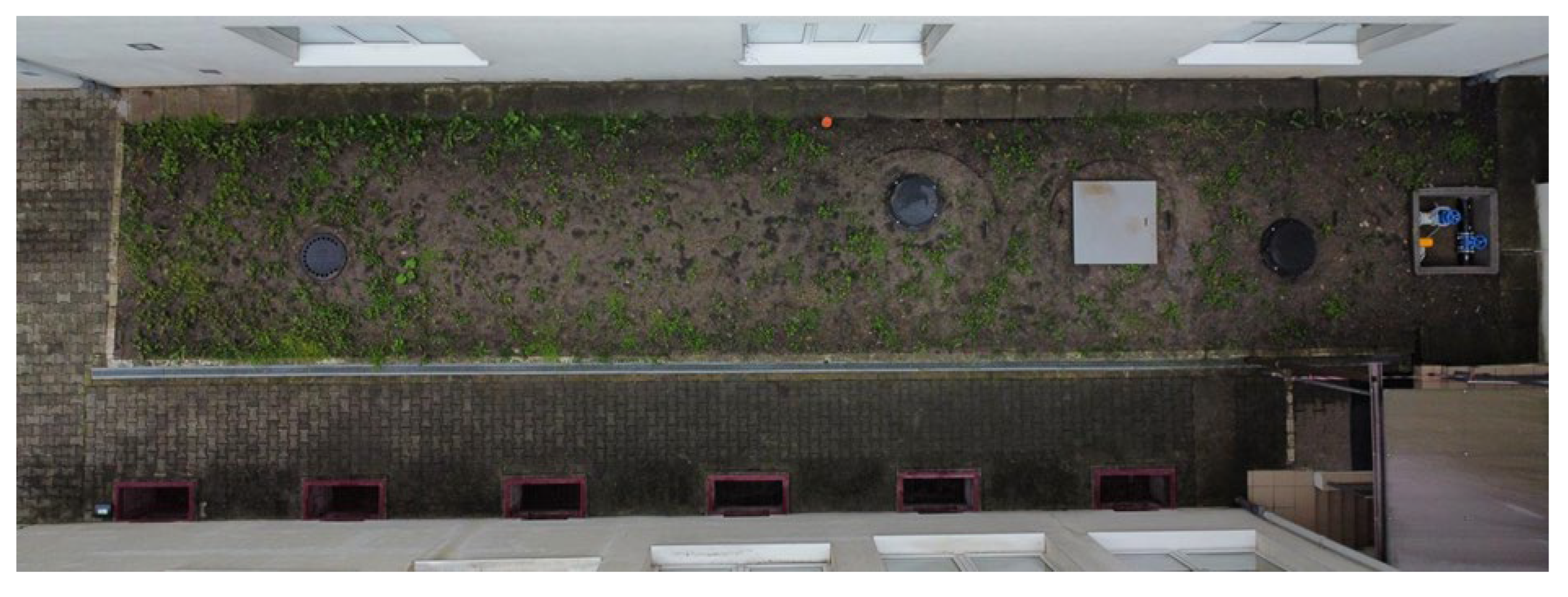
Figure 2e provides a detailed view of the installation of the retention and infiltration tank, highlighting the permeable membrane that allows for the gradual infiltration of rainwater into the soil. A general overview of the system at the final stage of implementation is shown in
Figure 3.
At present, the entire system is fully operational and has entered the optimization and monitoring phase. The main components of the AmZEB pilot installation, including the rainwater collection, treatment, storage, and infiltration units, are illustrated in
Figure 2, while an overall view of the fully implemented system is provided in
Figure 3.
During the first significant rainfall events, it was observed that collecting runoff from only approximately 30% of the building’s roof area led to a substantial reduction in the hydraulic load on the on-site sewer network. In several instances, the existing drainage infrastructure had previously shown limited capacity to accommodate peak stormwater flows. These observations highlight an important benefit of the proposed solution, namely the mitigation of pressure on combined sewer systems during intense precipitation events, when urban drainage networks frequently operate at or near their maximum conveyance capacity.
Beyond hydraulic performance, the assessment of water quality represents a key component of the system evaluation. To this end, periodic monitoring of key physicochemical parameters is planned for all storage tanks throughout the year. Prior to the implementation of the system, baseline water quality analyses were conducted on rainwater collected directly from the downpipe supplying the pilot installation (
Figure 2a). The monitored parameters indicate that, despite being collected in a dense urban environment, rainwater can represent a viable alternative resource for alleviating urban water stress, particularly in areas characterized by low surface permeability.
To obtain a comprehensive evaluation of the pilot station’s performance, water quality parameters were monitored both at the inlet and at the outlet of the system, enabling a direct assessment of the effectiveness of the implemented treatment, storage, and infiltration processes (
Figure 2 and
Figure 3).
While the hydraulic performance of the system highlights its role in stormwater management, a comprehensive evaluation also requires an assessment of the quality of the collected and treated rainwater.
Although measurements were performed on a limited number of occasions, this study represents a pilot-scale implementation aimed at demonstrating system functionality under real urban conditions. The collected data are considered representative of typical operational conditions and interpreted in the context of local precipitation variability. The purpose of this experimental campaign was to assess the operational feasibility of the system rather than to provide long-term statistical characterization.
4. Assessment of Rainwater Quality in the AmZEB System
4.1. Comparative Analysis and Reuse Potential
To evaluate the performance of the AmZEB rainwater-harvesting system, the monitored water quality parameters were analyzed and compared with the national drinking water quality standards established by Order No. 7/2023 [
26] and Government Decision No. 971/2023 [
27]. This comparative approach enables an objective assessment of the effectiveness of the implemented treatment processes and the potential for rainwater reuse.
For a preliminary evaluation of rainwater quality, the monitored parameters included pH, electrical conductivity, turbidity, ammonium, nitrates, total hardness, temperature, odor, and color. A key methodological aspect was the identification of the optimal sampling moments, considering the variability in rainwater quality depending on rainfall events, the duration of antecedent dry periods, and the treatment stages within the system.
Microbiological parameters such as Escherichia coli and total coliforms were not included in the monitoring program conducted in this study. The scope of this research was primarily focused on the evaluation of the physicochemical characteristics of harvested rainwater in order to assess the efficiency of the filtration and treatment stages implemented within the AmZEB system. These parameters represent key indicators for the preliminary characterization of water quality and for evaluating the performance of the treatment processes applied within the rainwater-harvesting system.
The rainwater collected by the analyzed system is intended mainly for non-potable uses, such as irrigation of green areas and other outdoor courtyard applications. In this context, the comparison of the obtained results with the limit values established by the national drinking water quality regulations (Order No. 7/2023 and Government Decision No. 971/2023) was used as a reference benchmark to provide an indicative assessment of the potential quality of the treated rainwater and to highlight the performance level of the implemented treatment processes.
Microbiological monitoring was not included in the this stage of this research due to the exploratory and physicochemical characterization scope of this study. However, this aspect represents an important component for a comprehensive assessment of harvested rainwater quality and will be addressed in future research stages. In studies addressing rainwater-harvesting systems, the stepwise evaluation of water quality, beginning with physicochemical characterization, is commonly applied as a preliminary approach for assessing treatment efficiency and potential reuse options.
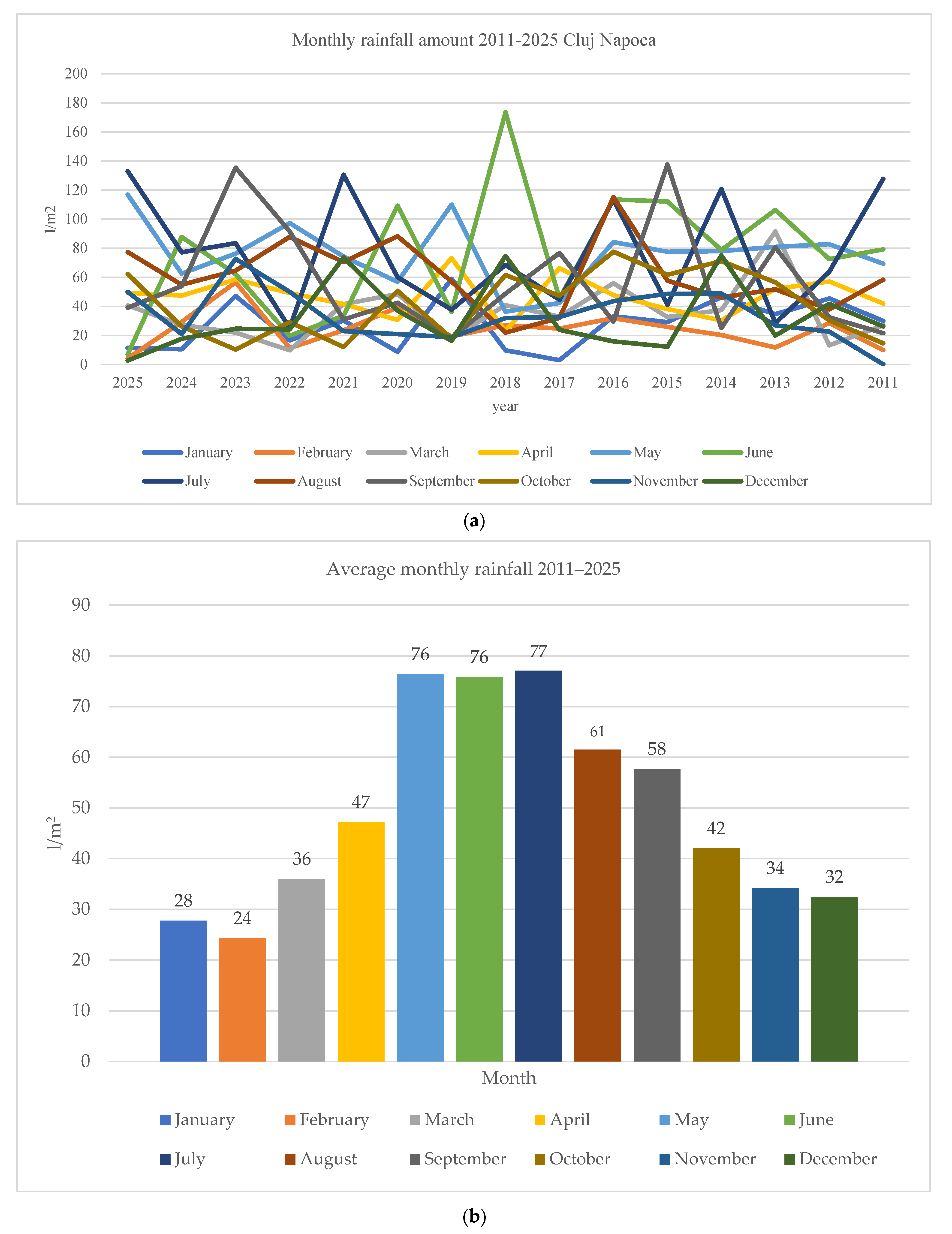
To determine the appropriate sampling periods for water quality analyses, local precipitation data recorded in the system implementation area were examined. The analysis of the local pluviometry regime was used to select representative periods that reflect the actual operational conditions of the rainwater-harvesting system. The distribution of precipitation amounts recorded in the study area is illustrated in
Figure 4, highlighting the seasonal variability in rainfall patterns and the periods with high potential for rainwater collection. To further emphasize the seasonal precipitation regime,
Figure 4b presents the average monthly rainfall calculated for the period 2011–2025. This complementary representation allows for a clearer identification of the typical seasonal distribution of precipitation and provides a more robust basis for evaluating the potential availability of rainwater resources and the operational performance of the-harvesting system.
4.1.1. Meteorological Data Collection
Precipitation data for Cluj-Napoca over the past 15 years were analyzed to assess seasonal variability. The highest average monthly precipitation was recorded in July (≈78 mm), while February was identified as the driest month (≈25 mm). Meteorological data were obtained from the official archives of the National Meteorological Administration of Romania (ANM), ensuring reliability and consistency. These data informed the design and operational parameters of the AmZEB system.
4.1.2. Water Sampling and Handling
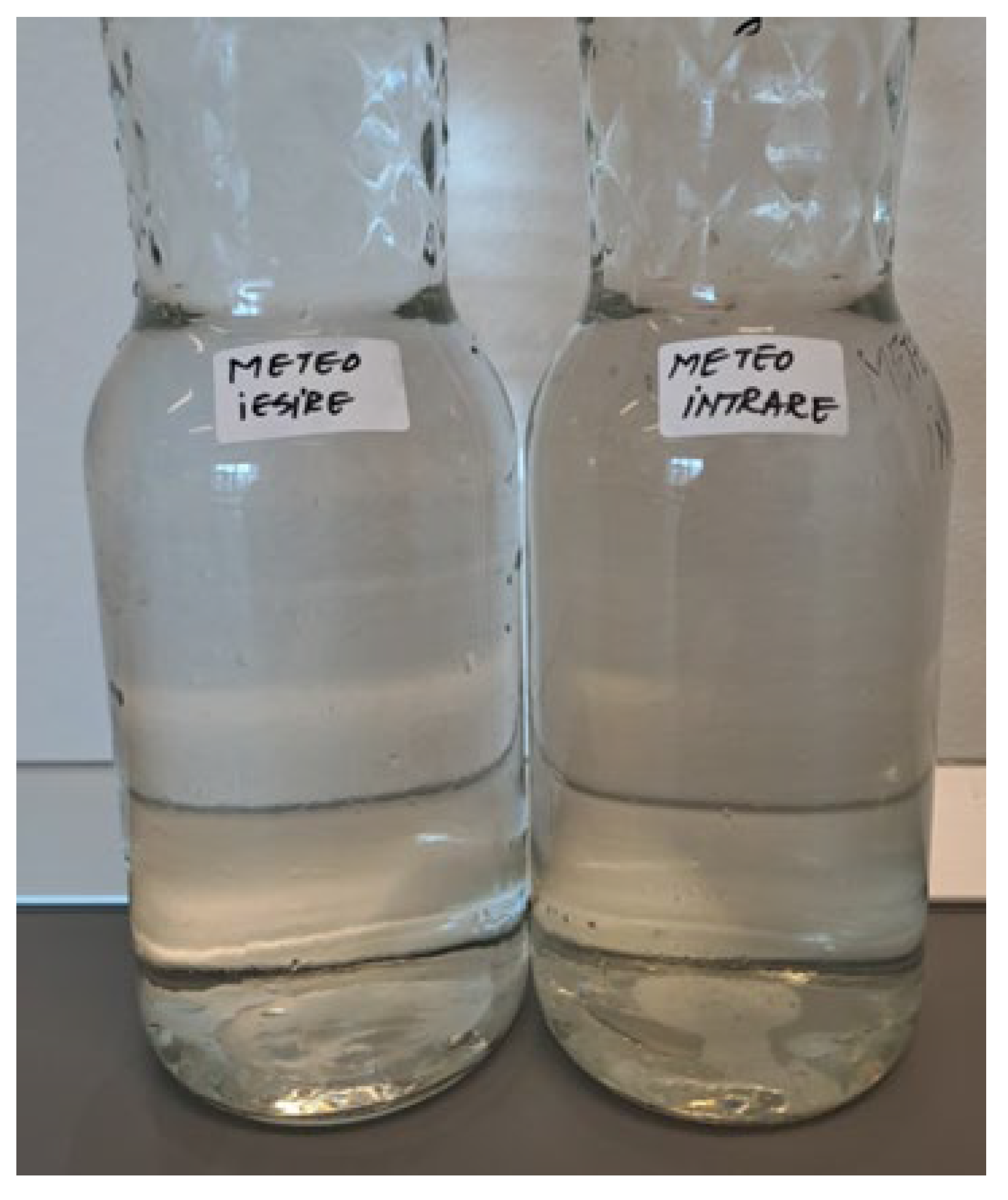
Rainwater samples were collected from the AmZEB system using clean, inert glass containers (pre-washed with distilled water and rinsed with sample water prior to filling). Each sample had a volume of approximately 1 L, sufficient for all subsequent physicochemical analyses. Following collection, samples were labeled and transported to an accredited laboratory under controlled conditions, stored at approximately 4 °C, and analyzed within the timeframe recommended by standard methods to avoid chemical alterations.
Parameters such as pH and electrical conductivity were measured immediately or within a minimal interval after sampling. All laboratory analyses were conducted in accordance with established procedures and standard methodologies, ensuring the traceability and reliability of the results.
Figure 5 shows the water samples collected from the AmZEB system and transported to the accredited laboratory under controlled conditions, following standard sample handling and analysis procedures.
Standardized laboratory methods, recognized both nationally and internationally, were employed during the laboratory analyses to ensure accuracy, reliability, and reproducibility of the results.
Table 1 summarizes the physicochemical parameters analyzed and specifies the corresponding determination methods applied for each parameter. All methods follow the official national standards and internationally accepted protocols (e.g., ISO, EN), guaranteeing comparability of the results across studies.
4.1.3. Sampling Campaigns
The first sampling campaign was conducted in February 2025, following the collection and storage of an initial sequence of precipitation events in the AmZEB system under representative operating conditions. February was chosen as it typically exhibits the lowest average monthly precipitation while also marking the first month of operation of the rainwater collection system.
A second campaign was carried out in July 2025, corresponding to the month with the highest average monthly precipitation in 2025. The selection of these contrasting months enabled the assessment of the AmZEB system’s performance and the variability in water quality parameters under different hydrological conditions.
The sampling campaigns were conducted during two representative rainfall periods to capture the operational behavior of the system under different seasonal conditions. Although the number of sampling events is limited due to the pilot-stage nature of the installation, the collected data provides an initial assessment of the physicochemical quality of harvested rainwater and the treatment performance of the implemented system. Extended monitoring campaigns are planned in future research stages to further consolidate the dataset.
The water quality of the collected rainwater was assessed at both the inlet and outlet of the AmZEB system during the two monitoring campaigns. The results, summarized in
Table 2, provide an evaluation of the system’s treatment efficiency under different precipitation conditions. Comparison of inlet and outlet values highlights the performance of the sedimentation, filtration, and storage processes in improving water quality for potential reuse applications.
4.2. Discussion and Interpretation
Monitoring the pH of rainwater provides insight into its acidic or alkaline character, which influences both chemical stability and compatibility with distribution systems. pH values outside the recommended range for drinking water can lead to pipe corrosion, metal leaching, and adverse effects on taste. Low pH can cause mucosal irritation, while high pH may affect palatability and digestibility.
The pH values observed during the two monitoring campaigns (February and July) reflect both the seasonal variability in rainwater quality and the influence of the treatment and storage processes implemented within the AmZEB system. As summarized in
Table 2, in February, the inlet pH was 7.2, indicating neutral to slightly alkaline conditions, likely related to seasonal atmospheric characteristics, including reduced CO
2 dissolution and deposition of winter-specific particles. After sedimentation, filtration, and storage, the outlet pH decreased to 5.49, reflecting a more acidic character. This decrease may be associated with extended retention time, increased CO
2 dissolution during storage, interactions with system materials at lower temperatures, and limited hydraulic turnover.
In contrast, during the July monitoring campaign, the inlet pH was 6.0, characteristic of slightly acidic rainwater. Following treatment, the outlet pH increased to 6.4, approaching the lower limit of the recommended range for drinking water according to Romanian regulations. This rise suggests a stabilizing effect of the implemented treatment processes, likely due to sedimentation, filtration, partial CO2 degassing, higher water renewal rates, and elevated ambient temperatures. The contrasting trends observed between the two monitoring periods highlight the significant influence of seasonal conditions, precipitation patterns, and storage dynamics on pH evolution in the AmZEB system. Although the outlet pH values during both campaigns remain slightly below the minimum threshold for potable water, they fall within acceptable limits for non-potable uses. These results indicate that, while the current AmZEB configuration is suitable for non-potable applications, additional conditioning steps, such as pH adjustment or remineralization, would be necessary to fully meet drinking water standards.
The pH values measured at the outlet of the system occasionally fell slightly below the limits established for drinking water standards. This behavior is consistent with the characteristically low mineralization and buffering capacity of rainwater, which may lead to mildly acidic conditions due to the dissolution of atmospheric carbon dioxide. Although these values do not represent a limitation for the intended non-potable uses of the system, such as irrigation or outdoor cleaning, they highlight the need for additional conditioning steps, such as remineralization or pH adjustment, if potable reuse were to be considered in future implementations.
Electrical conductivity (EC) serves as an indirect indicator of total dissolved salts. Low EC values are typical of poorly mineralized rainwater. The EC values recorded during monitoring campaigns show a clear seasonal influence on the mineralization dynamics of rainwater within the system. In February, inlet EC was 31 µS/cm, reflecting low mineral content typical of rainwater, while outlet EC increased to 77 µS/cm, suggesting temporary enrichment of dissolved ions during treatment and storage. This increase may be attributed to prolonged retention, reduced hydraulic turnover, and enhanced water-material interactions at lower temperatures, as well as deposition and dissolution of fine atmospheric particles. Conversely, in July, inlet EC was 18 µS/cm, characteristic of very low mineral content in summer precipitation. After treatment, EC decreased to 11.5 µS/cm, indicating effective removal or stabilization of dissolved substances, supported by higher water renewal rates, elevated temperatures, and dilution from successive low-mineral precipitation events. All recorded EC values remained well below the maximum permissible limit for drinking water, confirming the low-mineral character of treated rainwater. From a reuse perspective, these results are favorable for non-potable applications, while remineralization would be required for potential potable use to ensure chemical stability and compliance with standards.
Turbidity is a key indicator of particulate content, as high values may promote microbial growth and reduce disinfection efficiency, while low turbidity is associated with improved water clarity and overall quality stability. In February, inlet turbidity was 2.7 NTU, decreasing to 1.24 NTU after treatment, representing over a 50% reduction. In July, inlet turbidity was 2.99 NTU, decreasing to 1.30 NTU post-treatment. These consistent reductions across both campaigns demonstrate the robustness of the AmZEB system in enhancing water clarity under varying seasonal and hydrological conditions. All outlet values remained well below the maximum permissible limits for drinking water, confirming the suitability of treated rainwater for non-potable reuse.
Ammonium (NH4+) is a key indicator of organic and nitrogenous contamination, often associated with biological degradation and increased microbial risk. In February, the inlet ammonium concentration was 0.315 mg/L, remaining below the maximum permissible limit for drinking water (≤0.5 mg/L), while outlet values were below the detection limit (<0.064 mg/L), demonstrating the effectiveness of sedimentation, filtration, and storage processes in reducing ammonium levels. In July, the inlet ammonium concentration was 0.328 mg/L, also below the drinking water limit, and decreased to <0.064 mg/L after treatment. These results highlight the capacity of the AmZEB system to reduce ammonium concentrations under different seasonal conditions while also indicating the influence of atmospheric deposition and roof surface wash-off on inlet water quality. The treated water meets the requirements for non-potable reuse, while potable applications would require continuous monitoring and, where necessary, additional conditioning steps.
Nitrites and nitrates are important indicators of nitrogen contamination, with elevated concentrations posing health risks and subject to strict regulatory limits. In both February and July, concentrations at the inlet and outlet were below detection limits (<0.041 mg/L for nitrites, <3 mg/L for nitrates), significantly lower than the maximum allowable concentrations (≤0.5 mg/L for nitrites, ≤50 mg/L for nitrates). The absence of significant variations between inlet and outlet values indicates no relevant sources of nitrogen contamination on the collection surfaces and confirms that the AmZEB system does not promote transformation of nitrogen compounds during treatment and storage.
Total hardness reflects the concentration of dissolved calcium and magnesium salts, influencing both chemical properties and compatibility with installations. In the AmZEB system, inlet hardness was very low (0.67 °G), decreasing slightly after treatment (0.33 °G), both well below the recommended minimum for potable water (≥5 °G). This low mineralization is typical of rainwater and advantageous for non-potable applications, while remineralization would be necessary for potable use to ensure chemical stability and protection of distribution systems.
Overall, the comparative analysis of rainwater quality parameters at the inlet and outlet of the AmZEB system during February and July demonstrates the effectiveness of the implemented treatment and storage processes and highlights the influence of seasonal conditions on system performance. Treatment consistently improved key physical and chemical indicators, including turbidity, ammonium concentration, electrical conductivity, and water clarity, under both cold and warm seasonal conditions. Physical treatment processes, particularly sedimentation and filtration, consistently reduced turbidity by over 50%, while ammonium concentrations decreased to below or near detection limits. Seasonal variability was most pronounced for parameters sensitive to storage dynamics, such as pH and electrical conductivity, reflecting the combined effects of precipitation patterns, retention time, and ambient temperature.
In both campaigns, treated rainwater exhibited consistently low mineralization, as indicated by very low EC and total hardness values, confirming the characteristic properties of atmospheric precipitation and the limited contribution of dissolved salts from the system. While these properties are favorable for non-potable applications, they highlight the need for additional conditioning, including pH adjustment and remineralization, for potential potable use.
In summary, the results demonstrate that the AmZEB system reliably improves rainwater quality under varying seasonal conditions, supporting its suitability for non-potable reuse and potential integration into sustainable urban water management strategies. Continuous monitoring and targeted post-treatment measures could further enhance system performance and ensure full compliance with drinking water quality standards where required.
Although the AmZEB system demonstrated an effective reduction in municipal water demand and improved stormwater management, its current configuration represents only a pilot-scale implementation, collecting runoff from approximately 15–30% of the building’s roof area. Consequently, the estimated annual volume of harvested rainwater (≈30 m3/year) is relatively modest, highlighting the importance of scaling the system to the entire roof surface or multiple buildings for substantial water savings. Long-term monitoring and multi-seasonal datasets are also necessary to evaluate system performance under extreme precipitation events and prolonged dry periods, ensuring robust assessment of both hydraulic and water quality outcomes.
5. Economic Benefits and Upscaling Potential of Rainwater Infiltration
The estimated annual volume of rainwater collected by the AmZEB system, approximately 30 m3/year, corresponds to a catchment area representing only about 15% of the total roof surface of the faculty building. In the local context, stormwater discharged into the municipal sewer network is subject to a tariff of 1.65 EUR/m3, generating direct costs associated with rainwater drainage. By retaining and infiltrating rainwater on site, the AmZEB system prevents this volume from entering the sewer network, resulting in an avoided discharge cost of approximately 50 EUR per year (30 m3 × 1.65 EUR/m3).
It should be noted that the AmZEB installation represents a pilot experimental system implemented within an existing building infrastructure. Therefore, the present economic assessment focuses primarily on avoided stormwater discharge costs, while installation and operational costs were not analyzed in detail. A comprehensive cost–benefit analysis including investment, operation, and maintenance costs will be addressed in future research, particularly in the context of large-scale implementation.
Although this economic benefit is relatively modest at the scale of the current pilot installation, it reflects the impact of a system connected to only a fraction of the total catchment area of the building. Expanding the rainwater collection and infiltration system to the entire roof surface would proportionally increase the volume of stormwater managed locally and the associated cost savings. This highlights the significant upscaling potential of decentralized stormwater management solutions, particularly when implemented at building or district scale.
Beyond direct financial savings, on-site retention and infiltration of rainwater contribute to reducing hydraulic loads on combined sewer systems and wastewater treatment plants, especially during high-intensity rainfall events when urban drainage networks frequently reach or exceed their maximum conveyance capacity. In this context, urban areas are increasingly exposed to water-related challenges driven by climate change, hydrological extremes, and the expansion of impervious surfaces, which disrupt natural infiltration processes and intensify pressure on centralized drainage and water supply infrastructure.
In addition to these direct and operational benefits, decentralized stormwater solutions can generate indirect economic value at the urban scale by enhancing infrastructure resilience and reducing long-term investment needs. By attenuating peak runoff and restoring elements of the natural hydrological cycle, such systems may delay or reduce the necessity for costly upgrades of centralized drainage infrastructure. Recent studies highlight the importance of integrating resilient, context-specific water infrastructure into urban planning frameworks, particularly in areas increasingly exposed to hydrological extremes and high surface impermeability [
38].
The results obtained from the AmZEB pilot system implemented in an educational building in Cluj-Napoca demonstrate that decentralized rainwater-harvesting solutions, when combined with controlled retention and infiltration, can effectively reduce stormwater runoff volumes, mitigate hydraulic stress on combined sewer systems during intense rainfall events, and improve local urban water balance conditions. Even when connected to only a limited portion of the building’s roof area, the system proved capable of significantly reducing stormwater discharge to the public sewer network, underscoring its scalability and potential relevance for dense urban environments.
Physico-chemical analyses confirmed that the implemented treatment and storage stages lead to a consistent improvement in rainwater quality, making it suitable for a wide range of non-potable applications. At the same time, the persistently low mineralization of the treated rainwater highlights the need to consider additional conditioning steps if potable reuse is envisaged, in line with findings reported in previous studies on decentralized rainwater systems and circular water use [
39,
40]. Beyond reuse, the integration of retention and controlled infiltration plays a key role in restoring disrupted urban hydrological processes. Local infiltration supports groundwater recharge, mitigates the decline in shallow aquifers, and contributes to urban microclimate stabilization, particularly in areas dominated by impervious surfaces [
41,
42,
43]. Such approaches are aligned with the principles of Sustainable Urban Water Management and nature-based solutions, which emphasize multifunctional infrastructure capable of delivering hydrological, environmental, and economic benefits simultaneously [
39,
42]. Recent assessments of rainwater-harvesting systems confirm these benefits and provide a comprehensive view of their environmental performance, supporting the adoption of decentralized solutions in urban contexts [
16,
39].
Overall, the AmZEB system illustrates how rainwater harvesting, when combined with retention and infiltration strategies, can serve as an effective, cost-efficient, and environmentally sound solution for addressing urban water stress. This approach is particularly relevant for cities in Eastern Europe, where the adoption of decentralized stormwater management solutions remains limited. The findings of this study support the wider implementation of similar systems as part of integrated urban water strategies aimed at enhancing climate resilience, protecting groundwater resources, and reducing the environmental footprint of the built environment.
6. Conclusions
This study demonstrates the effectiveness of a decentralized rainwater harvesting and management system (AmZEB) implemented in an urban educational building in Cluj-Napoca, Romania. By integrating on-site collection, treatment, storage, and controlled infiltration, the system proved capable of reliably supporting non-potable water reuse while simultaneously reducing pressure on the municipal drainage infrastructure.
Seasonal variability in precipitation significantly influences system performance, highlighting the importance of appropriate storage sizing and controlled overflow management. The implemented treatment processes consistently improved key physicochemical water quality parameters, rendering the harvested rainwater suitable for irrigation, cleaning, and other non-potable applications. While additional conditioning would be required for potable use, the system provides a robust and adaptable solution for sustainable urban water management.
From an operational perspective, the AmZEB approach reduces stormwater discharge costs and mitigates hydraulic overloads during high-intensity rainfall events. Its decentralized design offers substantial upscaling potential at both building and district levels, promising meaningful hydrological, environmental, and financial benefits.
The AmZEB installation should also be interpreted as a pilot-scale experimental system, developed to evaluate the feasibility and operational performance of decentralized rainwater harvesting and infiltration strategies under real urban conditions. While the results obtained in Cluj-Napoca reflect the local climatic regime, the conceptual design of the system—combining rainwater collection, treatment, storage, and controlled infiltration—can be adapted to a wide range of urban contexts. Such systems may become particularly relevant in cities increasingly affected by short-duration, high-intensity rainfall events, which frequently generate localized flooding and overload urban drainage networks. Therefore, the proposed approach offers a flexible framework that can be adjusted to different climatic conditions and urban infrastructure configurations.
Although the harvested rainwater within the studied system is primarily intended for non-potable outdoor uses, such as irrigation of green areas, the implemented treatment configuration was designed within a research-oriented framework aimed at evaluating the performance of a multi-stage treatment process. This approach allows for a detailed assessment of water quality improvements and provides a basis for exploring the potential extension of rainwater reuse applications toward more stringent water quality requirements in future research stages.
Beyond water reuse, the system contributes to urban resilience, partially restoring natural hydrological processes, supporting groundwater recharge, and mitigating the impacts of impervious surfaces and extreme rainfall. The AmZEB case highlights how decentralized rainwater management strategies can deliver multifunctional benefits, aligning with Sustainable Development Goals, advancing circular water economy principles, and offering a replicable blueprint for cities confronting water scarcity and climate variability.
This study provides an application-oriented demonstration of rainwater reuse system implementation in an existing urban building while acknowledging that extended monitoring programs and advanced hydraulic characterization represent important directions for future research.
Overall, the results of this pilot-scale study highlight the potential of decentralized rainwater-harvesting systems to support sustainable urban water management strategies and enhance the resilience of cities facing increasing climate variability.
7. Future Research Directions
Although the results obtained from the AmZEB pilot system demonstrate the technical feasibility and multiple benefits of decentralized rainwater harvesting combined with local retention and infiltration, several directions for future research can be identified to further strengthen the evidence base and support large-scale implementation.
First, long-term monitoring under a wider range of climatic conditions is required to assess system performance during extreme precipitation events and prolonged dry periods, which are expected to increase in frequency due to climate change. Continuous, multiannual datasets would allow for a more robust evaluation of seasonal variability, system resilience, and long-term operational stability.
Further research should also focus on improving system characterization through the integration of flow monitoring at the system inlet and outlet, enabling a more precise quantification of retained, infiltrated, and overflow volumes. In addition, testing alternative filter media and treatment configurations could provide insights into optimizing water quality improvement while maintaining low maintenance requirements.
The integration of digital monitoring tools, smart sensors, and real-time data analytics represents another promising research direction. Such technologies could support adaptive system management, optimize storage and infiltration strategies, and enable early detection of changes in water quality, thereby enhancing the overall efficiency and reliability of decentralized stormwater management solutions.