1. Introduction
Water pollution is a global environmental and public health concern due to the increasing discharge of organic pollutants and industrial effluents containing nitrates, phosphates, and toxic metals, which threaten ecosystems and human health. Unlike biodegradable organics, heavy metals such as iron (Fe
2+) and manganese (Mn
2+) persist indefinitely, bioaccumulate in aquatic food chains, and can lead to hazardous tissue concentrations over time [
1]. This challenge is particularly acute in transboundary river basins, where pollution sources and their socio-environmental impacts span national borders, complicating management and regulatory enforcement.
In Bolivia’s Pallina River, which flows into the Peru-shared Lake Titicaca’s Cohana Bay, Ministry of Environment and Water (MMAyA) monitoring from 2019 to 2022 reported Fe
2+ concentrations peaking at 6.7 mg/L—over 20 times the legal limit—alongside elevated Mn
2+ and chemical oxygen demand, reflecting urban and mining runoff. Conventional treatments, including chemical precipitation, ion exchange, and reverse osmosis, are effective in high-pollution contexts but are costly, energy-intensive, and generate sludge, limiting applicability in rural areas [
2].
Adsorption has emerged as one of the most practical options for metal removal from aqueous systems due to its cost-effectiveness, high efficiency, and ease of operation [
3]. Iron adsorption mechanisms are generally reported to involve surface complexation, electrostatic interactions, and ion exchange [
4,
5] mediated by functional groups. Experimental studies using plant-based and plant-derived biosorbents have demonstrated that functional groups such as –OH and –COOH play a critical role in Fe
2+ binding, with adsorption behavior commonly described using Langmuir and Freundlich isotherms and pseudo-second-order kinetics under synthetic single-metal conditions [
6]. However, real river water matrices such as competitive adsorption effects and matrix interferences in multi-component systems remain insufficiently addressed [
7].
Nature-based solutions (NbS), such as biosorption using plant biomass, offer low-cost alternatives. Wetland macrophytes like
Schoenoplectus californicus (totora) and
Phragmites australis (reed) are abundant, locally available, and suitable for integration into simple batch or fixed-bed treatment systems [
8,
9]. Despite their potential, the performance of totora for Fe
2+ removal under complex Pallina River conditions—including high organic content, co-occurring metals, and variable pH—remains untested, and evidence for scalable continuous-flow applications is limited.
This study addresses these gaps by evaluating totora and reed as biosorbents and NbS for transboundary water management. Specifically, we investigate: (i) the Fe2+ removal capacity and efficiency of these biomasses under laboratory and real-water conditions; (ii) the influence of operational parameters on adsorption kinetics and equilibrium; (iii) the underlying adsorption mechanisms using kinetic and isotherm models; and (iv) the scalability of fixed-bed column systems. By combining mechanistic understanding with practical deployment, this work aims to provide low-cost, locally applicable strategies to support regulatory compliance, protect highland communities, and contribute to sustainable transboundary water management under the Lake Titicaca Binational and Ramsar frameworks.
2. Materials and Methods
2.1. Water Sampling and Physicochemical Analysis in the Pallina River
Water samples from the Pallina River were collected between 2019 and 2020. For column experiments, om site river water was additionally characterized during 2021–2022 at sampling points located at 16°38′32.69″ S, 68°19′42.42″ W and 16°38′43.32″ S, 68°19′02.20″ W. Fe2+ concentrations before and after adsorption experiments were determined by flame atomic absorption spectrometry (AAS) using a PinAAcle 900 instrument (PerkinElmer, Shelton, CT, USA), in accordance with Standard Methods.
2.2. Biosorbents Preparation and Characterization
Two macrophytes were used as biosorbents:
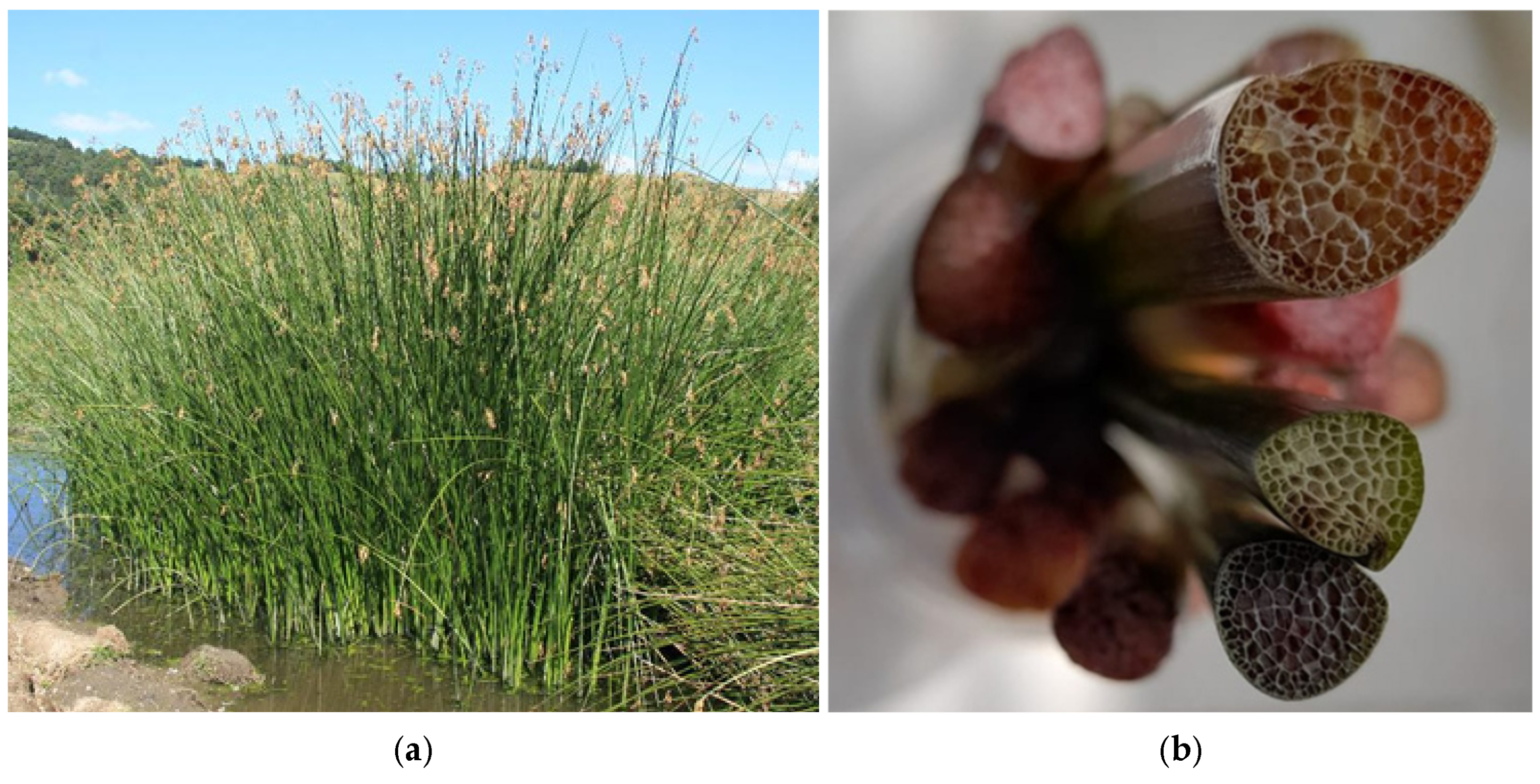
Schoenoplectus californicus (totora), collected as residual biomass from Achocalla Lagoon (
Figure 1), and
Phragmites australis (reed), collected in the municipality of Mecapaca, Bolivia. The biomaterials were washed sequentially with tap, distilled, and deionized water, dried at 60 °C, ground and then sieved to obtain particle sizes between 0.15 and 0.85 mm.
Chemical activation was performed using 0.1 M NaOH at 18 °C and 200 rpm for 3 h in order to enhance surface reactivity. After treatment, the materials were thoroughly rinsed with deionized water until neutral pH was reached and dried at 60 °C. The modified biosorbents were stored in a desiccator until use.
Comprehensive physicochemical characterization was performed prior to adsorption experiments in order to elucidate the structural, chemical, and surface properties governing Fe2+ uptake. Elemental composition was determined by X-ray fluorescence (XRF). Surface functional groups and chemical modifications induced by alkaline treatment were analyzed by Fourier transform infrared spectroscopy (FTIR). The surface charge behavior was evaluated through determination of the pH of the point of zero charge (pHPZC) using the pH drift method in 0.01 M NaCl solution. In addition, scanning electron microscopy (SEM) was employed to examine surface morphology and textural features.
2.3. Synthetic Solutions and Analytical Methods
All glassware was acid-washed with 1% HNO3. A stock Fe2+ solution (200 mg L−1) was prepared from FeSO4·7H2O and diluted with deionized water to obtain the desired concentrations. To minimize Fe2+ oxidation, solutions were acidified immediately using HNO3 (nitric acid), freshly prepared prior to each experiment, and handled without aeration. Solution pH was adjusted with NaOH or HCl. Initial Fe2+ concentrations were verified by atomic absorption spectrometry.
2.4. Batch Biosorption Experiments
Batch experiments were conducted to evaluate the effects of contact time, biosorbent dose, particle size and pH on Fe2+ removal. All experiments were performed at room temperature (18 °C) under constant agitation (200 rpm) using 250 mL Erlenmeyer flasks containing 100 mL of Fe2+ solution.
The amount of metal adsorbed at time, t, and at equilibrium, (e), was calculated according to:
where Co, Ct and Ce (mg/L) represent the initial, time-dependent, and equilibrium concentrations, respectively; V (L) is the solution volume; and m (g) is the dry mass of biosorbent [
10].
Adsorption kinetics
Kinetic experiments were evaluated at an initial concentration of 20 ppm Fe2+ ions with constant agitation for 24 h, using the optimal conditions determined in preliminary tests. Experimental data were analyzed using the pseudo-first-order (PFO) and pseudo-second-order (PSO) models.
The pseudo-first-order model is expressed as:
where
(1/min) is the rate constant.
The pseudo-second-order model is represented as:
where
(g/mg·min) is the PSO rate constant [
10].
Adsorption isotherms
Equilibrium adsorption data were fitted to the Freundlich and Langmuir models using non-linear regression analysis. The Langmuir model assumes monolayer adsorption onto a homogeneous surface and is described by:
where
(mg/g) represents the maximum adsorption capacity and
(L/mg) is the Langmuir affinity constant.
The Freundlich model, which assumes heterogeneous surface adsorption, is given by:
where
and
are empirical constants [
10].
Model performance was evaluated using the correlation coefficient (R2). A 2ᵏ factorial experimental design was applied to assess the combined effects of biosorbent dose, particle size, and pH solution. All experiments were conducted in duplicate, and results are reported as mean values. Statistical analysis was performed using Design-Expert software (version 7.0).
2.5. Column Biosorption
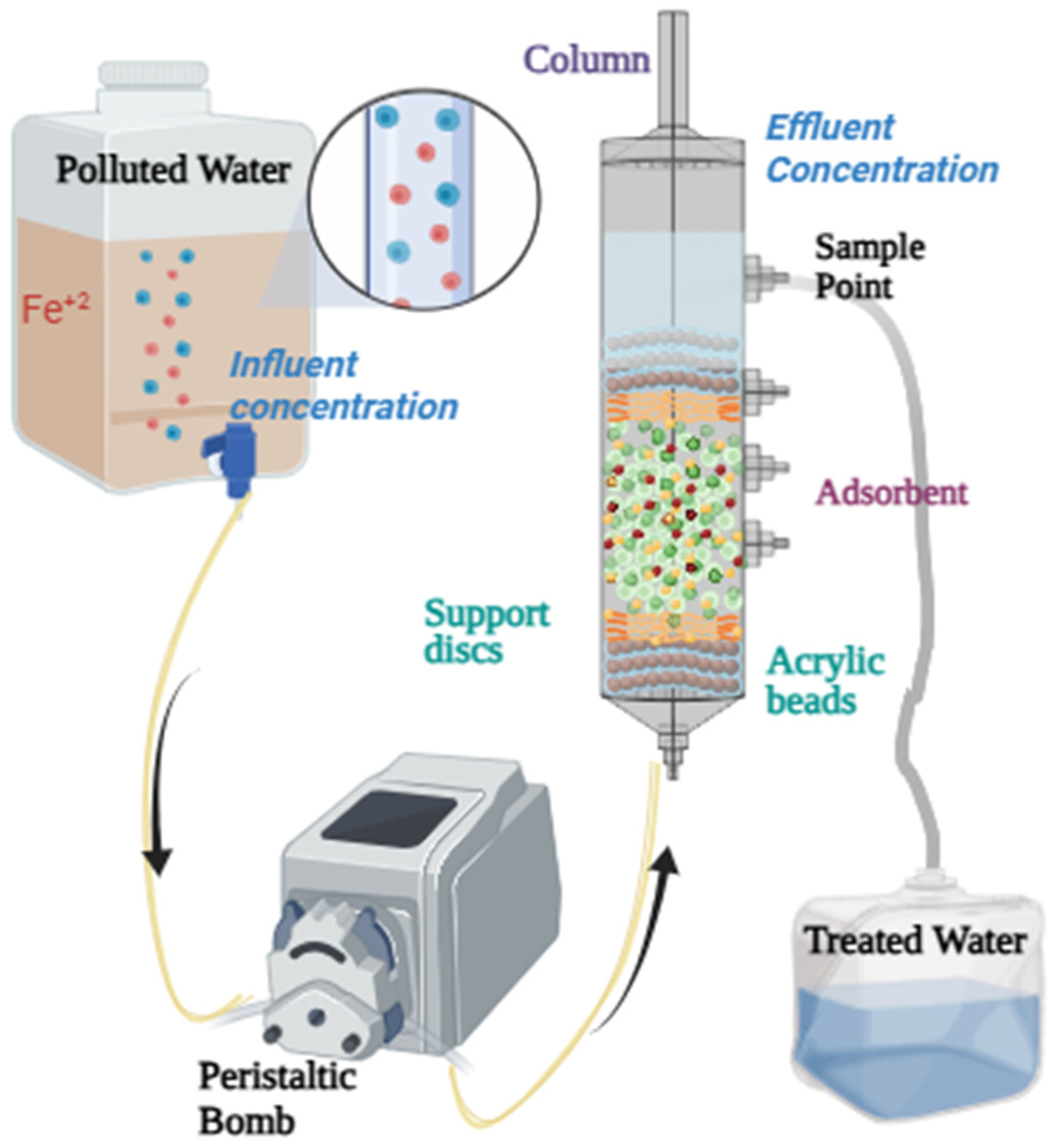
Column studies were performed in a laboratory-scale up-flow acrylic column (3.8 cm internal diameter, 30 cm length). As illustrated in
Figure 2, the experimental setup consisted of a peristaltic pump delivering influent solution from a feed reservoir containing Fe
2+ solution under controlled flow conditions.
An empty inlet section was maintained at the base of the column to stabilize flow, followed by a 2 cm layer of acrylic beads and perforated acrylic distributor disks at both ends of the packed bed to ensure uniform flow distribution. Synthetic Fe2+ solutions were initially used to optimize operational parameters, including bed height (7 and 12 cm), flow rate (0.8 and 1.0 mL min−1), and particle size (0.610–0.700 mm and 0.700–0.850 mm). Breakthrough curves were obtained by plotting the normalized concentration ratio (Ct/Co) as a function of time. Breakthrough time was defined at Ct/Co = 0.05, while saturation time corresponded to Ct/Co = 0.9.
The total amount of Fe
2+ adsorbed in the fixed-bed column (
) was calculated from the breakthrough curve using:
where Q (L/min) is the volumetric flow rate, Co and Ct (mg/L) are the influent and effluent concentrations at the time t, t
s (min) is the saturation time, and m (g) is the dry mass of biosorbent packed in the column [
11].
Breakthrough data was analyzed using the Thomas and Yoon–Nelson kinetic models [
11]. Under optimal conditions, the column was subsequently operated with Pallina River water to assess performance under real matrix conditions, including breakthrough time, saturation time, adsorption capacity, and treated effluent volume.
3. Results
This study reveals serious Fe2+ pollution in Bolivia’s Pallina River from mining and urban runoff, regularly exceeding national safety limits and threatening Lake Titicaca, shared with Peru. Local wetland plant totora proves effective at cleaning water, removing most of the Fe2+ lab tests and about half in actual river water using simple filter systems.
Totora works better than the common reed, offering a cheap, ready-to-use solution for rural communities unable to afford expensive chemical treatments. The plant-based filters perform reliably across different setups, providing practical guidance for real-world cleanup efforts.
While natural river conditions slightly reduce performance due to other contaminants, totora maintains meaningful Fe2+ removal and shows promise for scaling up. Overall, we demonstrate nature-based cleaning as a viable, community-appropriate strategy to protect vital water resources in highland Latin America. These points are explained in the sections below.
3.1. Water Quality and Metal Occurrence
Fe
2+ and Mn
2+ concentrations in the Pallina River exceeded the limits established by Bolivian Environmental Law No. 1333 (
Table 1), confirming significant metal pollution. Due to the chemical instability of Fe
2+ in oxic aqueous systems and its tendency to undergo oxidation and precipitation, this ion was selected as the target metal for detailed adsorption studies.
3.2. Biosorbent Characterization
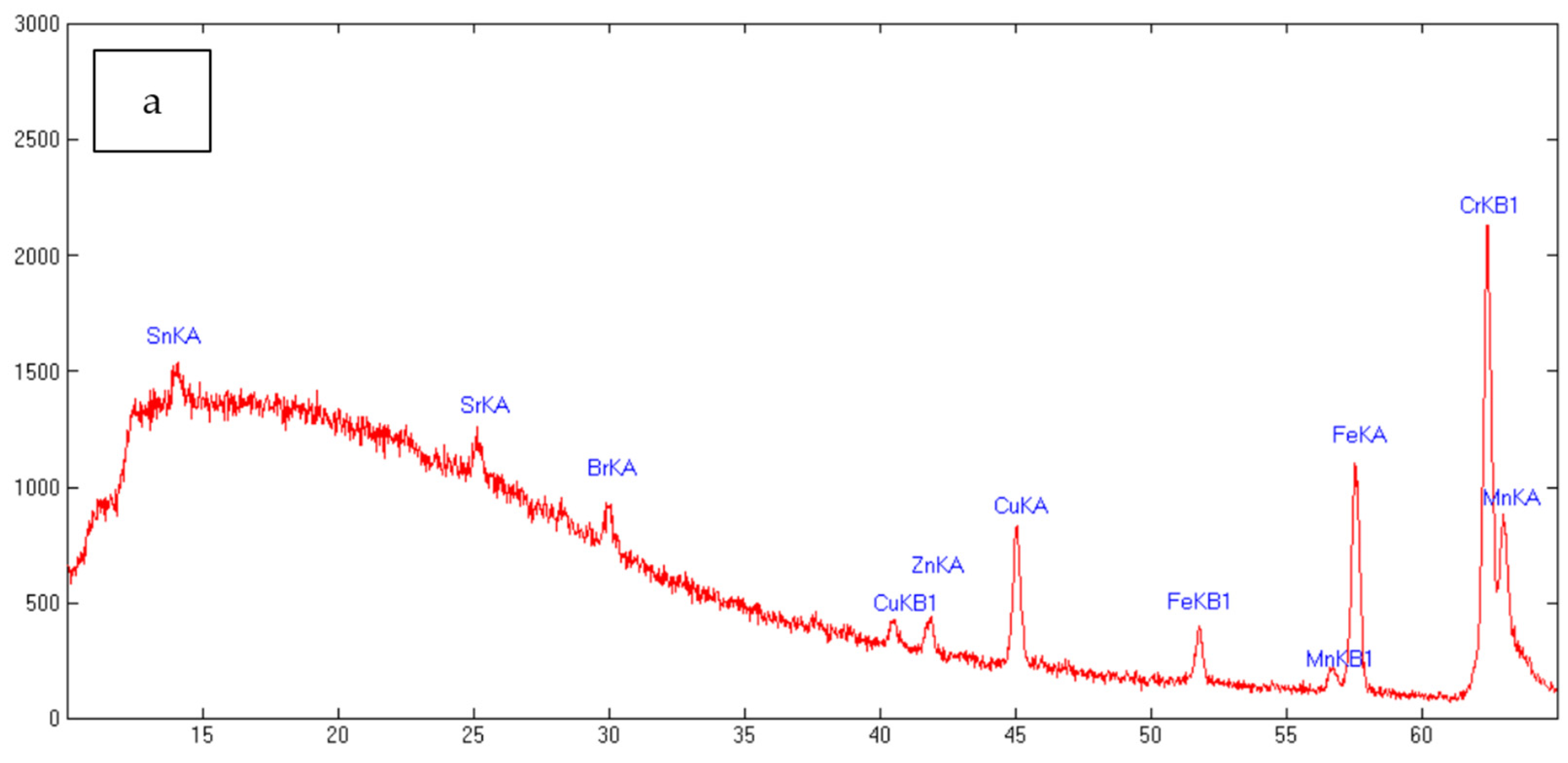
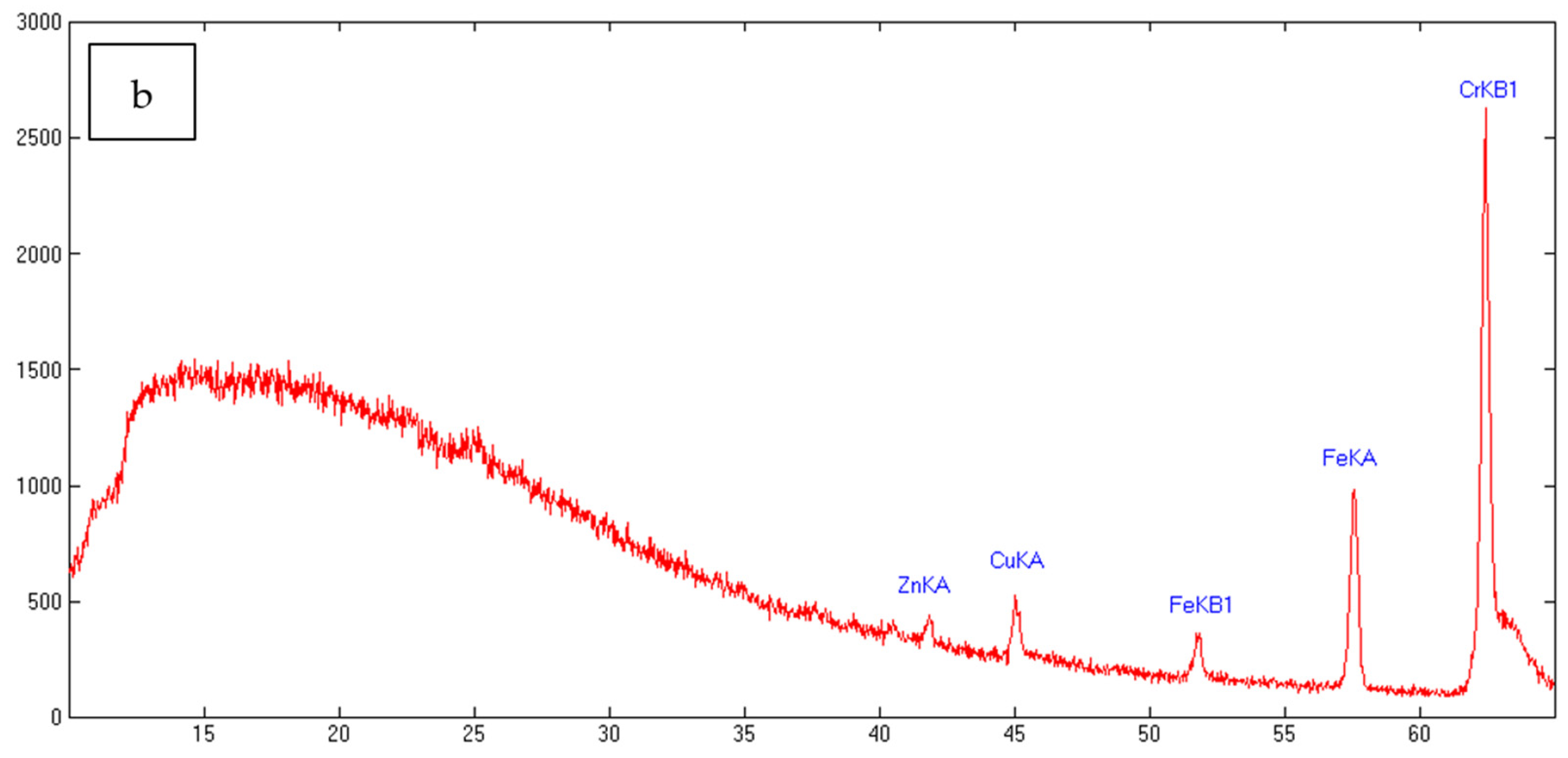
The XRF spectra of raw totora and reed are presented in
Figure 3. For both biosorbents (microphytes), silicon (Si) was identified as the predominant element, indicating a significant siliceous fraction within the biomass. This is consistent with the known accumulation of phytolith-associated silica in aquatic macrophytes [
12]. Additionally, trace amounts of iron were detected in both materials, as evidenced by Fe Kα and Fe Kβ signals. Minor signals correspond to Zn and Cu. These elements are commonly associated with the natural environmental exposure of aquatic macrophytes [
12].
The chromium peak observed at high energy was attributed to the sample holder and does not correspond to the biomass composition. The XRF results indicate that both totora and reed consist primarily of an organic matrix containing measurable inorganic components; this analysis establishes an elemental composition prior to adsorption experiments.
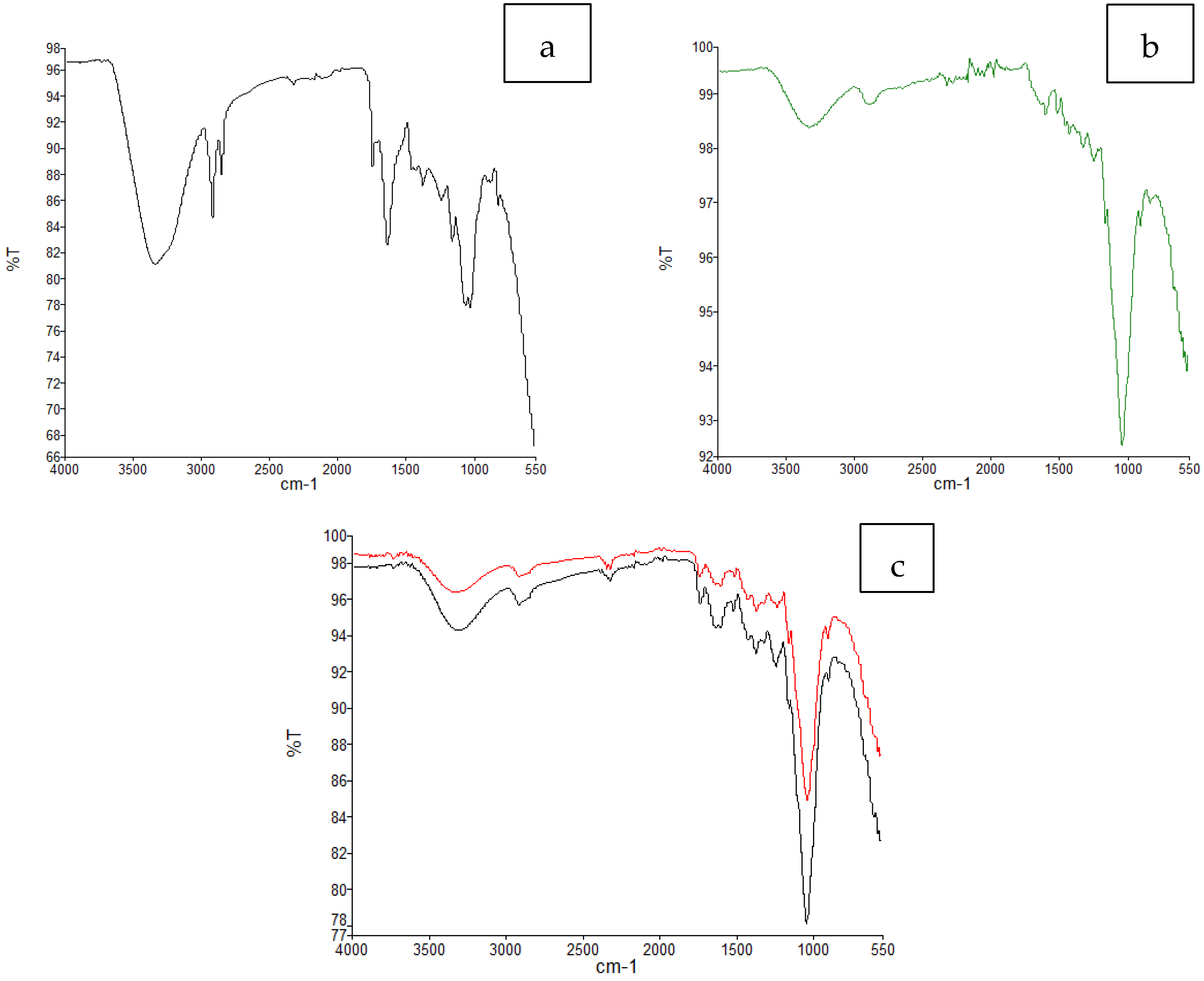
FTIR spectra of raw and NaOH-modified totora and reed are presented in
Figure 4. For both biosorbents, the raw materials exhibited characteristic lignocellulosic bands: ~3400 cm
−1: O–H stretching vibrations associated with hydroxyl groups in cellulose and hemicellulose; 2920–2850 cm
−1: aliphatic C–H stretching vibrations; ~1730 cm
−1: C=O stretching vibrations attributed to carbonyl and carboxylic groups; 1200–1000 cm
−1: C–O and C–O–C stretching vibrations typical of polysaccharide structures [
13].
Following alkaline modification on
Figure 4b,c, changes in band intensity were observed, particularly in the regions associated with oxygen-containing functional groups. The modification did not introduce new functional groups but altered the relative intensity and possibly the accessibility of existing ones.
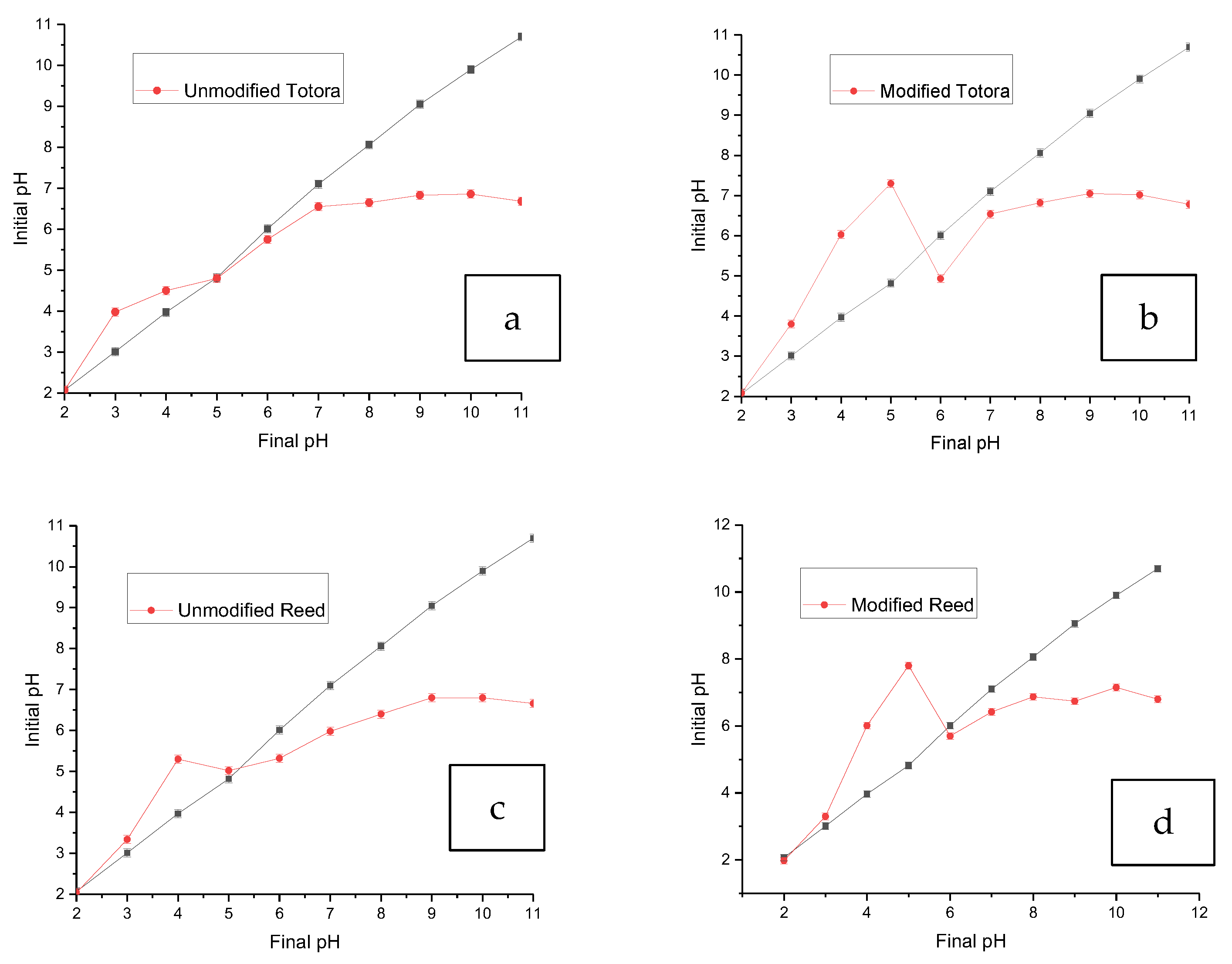
The pHPZC values are presented in
Figure 5. Alkaline modification increased the pHPZC of both biosorbents, shifting from 4.7 to 5.7 for totora and from 4.9 to 5.9 for reed. This upward shift indicates an alteration of surface acidic functionalities and changes in protonation–deprotonation equilibria, consistent with NaOH treatment [
14]. All adsorption experiments were performed at pH 3.5 and 5, below the pHPZC of both raw and modified materials. Under these conditions, the biosorbent surfaces are predominantly positively charged. Therefore, electrostatic attraction cannot be considered the primary driving force for Fe
2+ uptake.
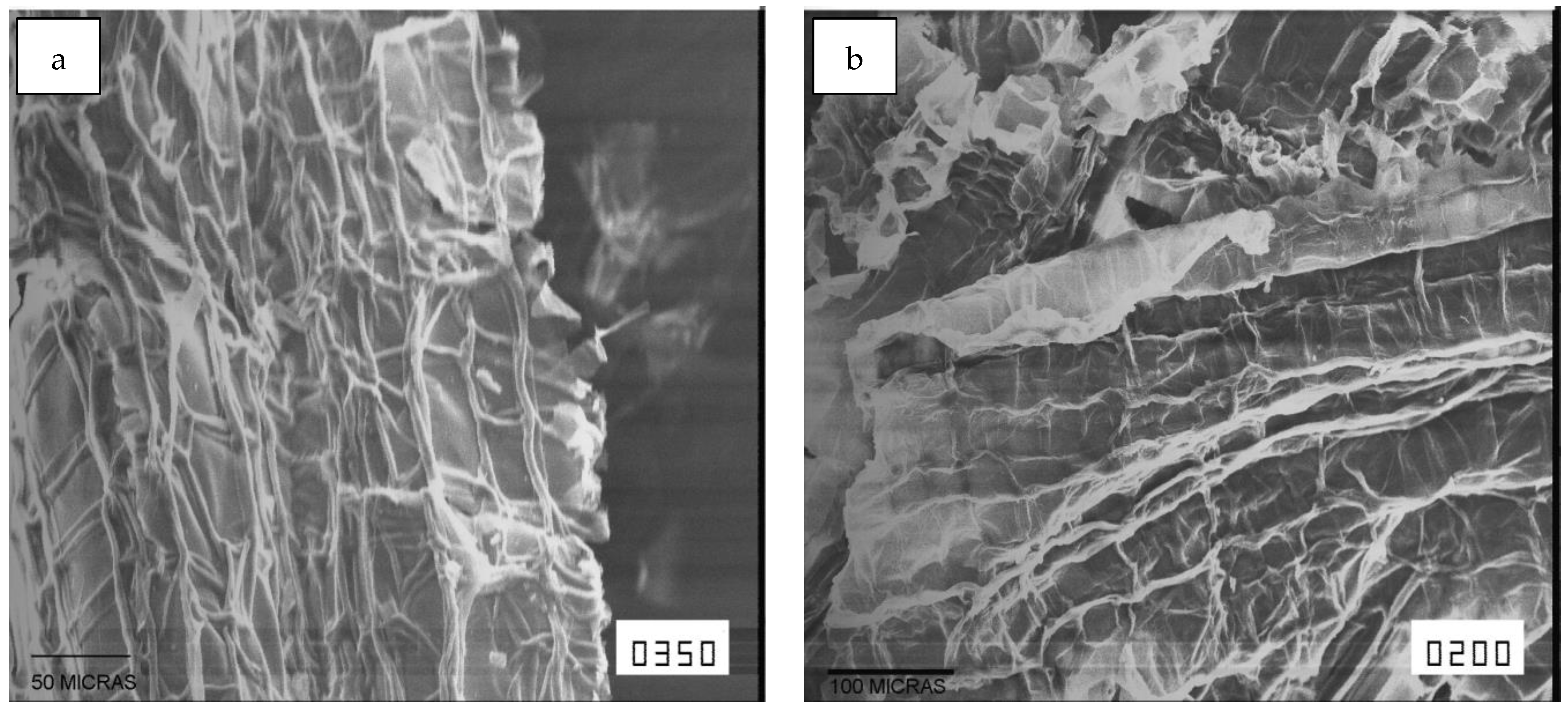
SEM micrographs (
Figure 6) revealed that totora exhibits elongated structures with perpendicular lattice arrangements, which may enhance surface accessibility for metal binding (
Figure 3). The morphological characteristics of reed were described based on literature, indicating a filamentous structure with heterogeneous pore distribution.
3.3. Batch Biosorption Performance with Synthetic Water
3.3.1. Effect of Biosorbent Dose
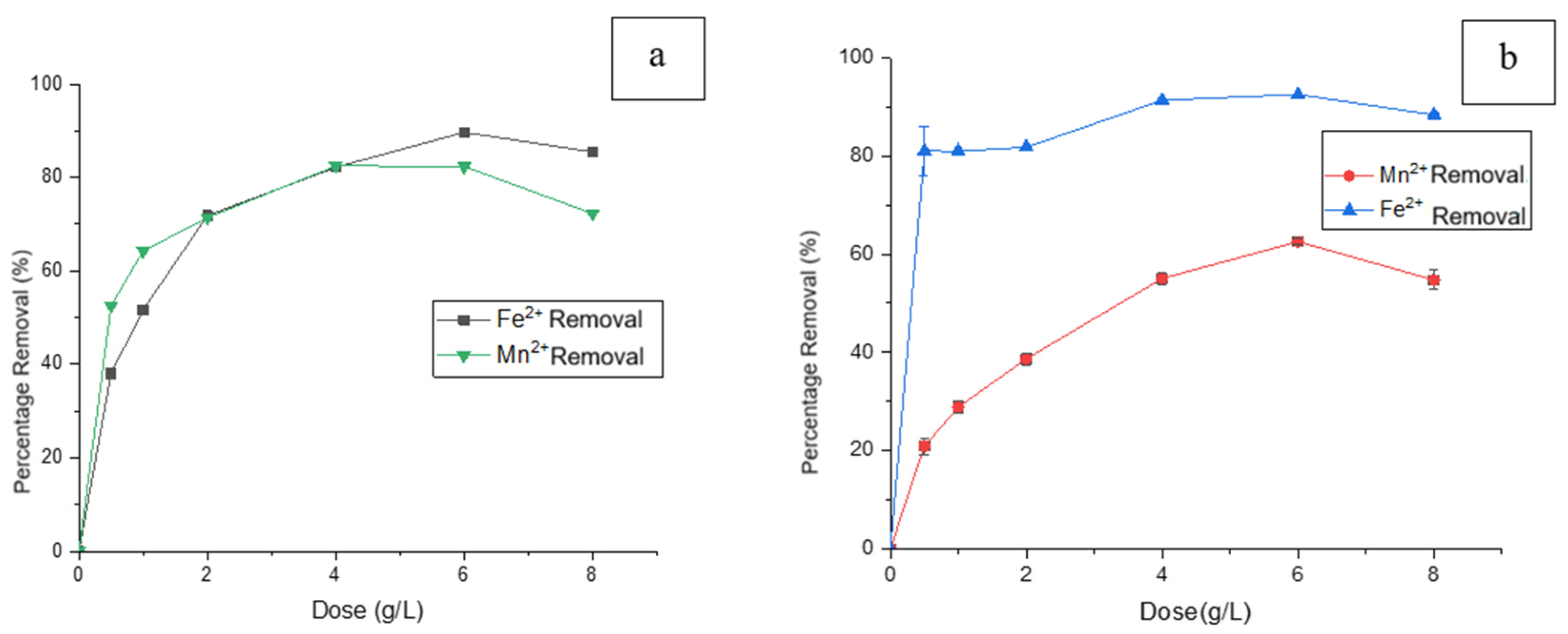
Increasing biosorbent dose enhanced Fe
2+ removal up to an optimum range of 4–6 g L
−1 (
Figure 7). Beyond this range, removal efficiency decreased, likely due to aggregation of biosorbent particles and saturation of available adsorption sites. Based on removal efficiency and Fe
2+ instability, subsequent batch experiments focused exclusively on Fe
2+ adsorption.
3.3.2. Effect of pH on the Fe2+ Ion
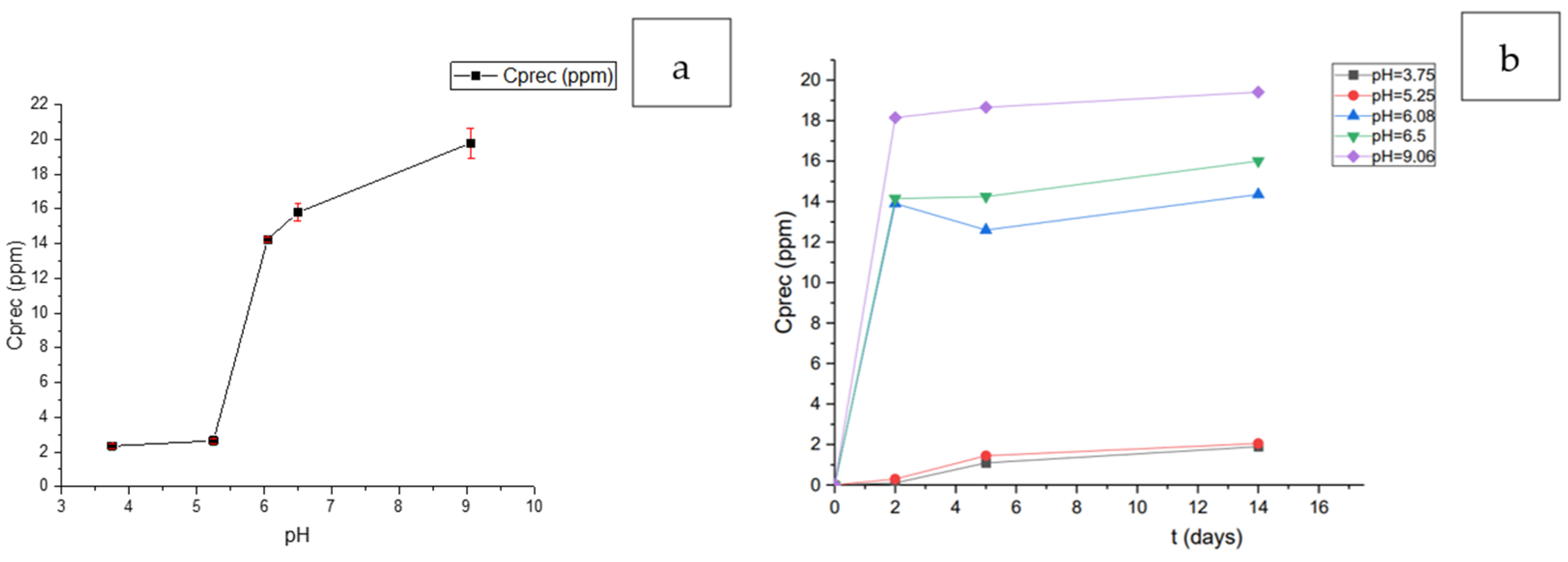
Fe
2+ removal was strongly influenced by solution pH [
15]. At pH values above 6, precipitation exceeded 80% (
Figure 8a), whereas negligible precipitation was observed at pH 4–5 (
Figure 8b). These results confirm that chemical precipitation becomes dominant under near-neutral conditions, consistent with previous reports [
16,
17,
18]. To minimize precipitation and isolate adsorption mechanisms, pH 5–6 was selected for batch experiments as reported in [
17]. Final pH measurements showed a slight increase after adsorption, with totora reaching values of 5.75–6.55 and reed 6.50–6.74. This increase is attributed to residual alkalinity from NaOH-treated biosorbents.
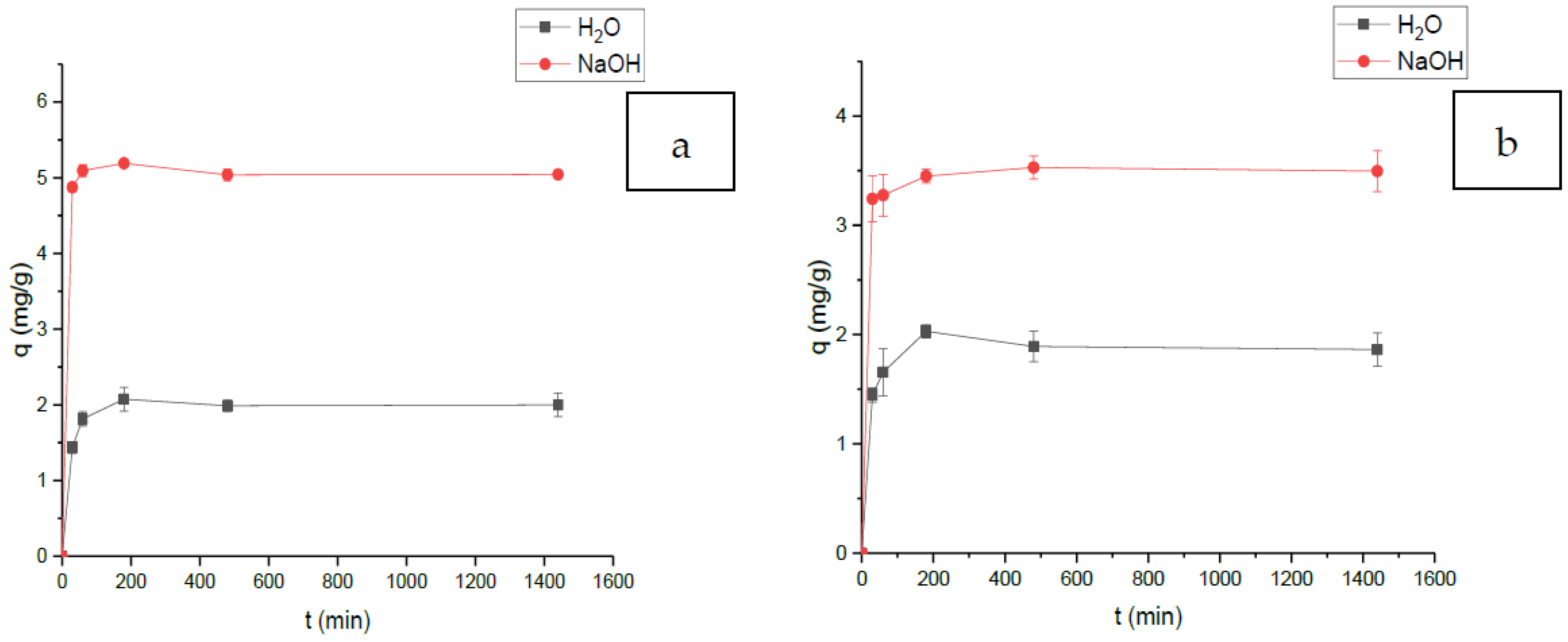
Both biosorbents exhibited rapid Fe
2+ uptake during the initial adsorption stage, followed by a gradual approach to equilibrium. Totora reached equilibrium after approximately 120 min (
Figure 9a), while reed required about 180 min (
Figure 9b). NaOH-modified biosorbents showed substantially higher adsorption rates than unmodified materials, highlighting the role of surface activation in enhancing Fe
2+ binding.
3.3.3. Effect of Particle Size
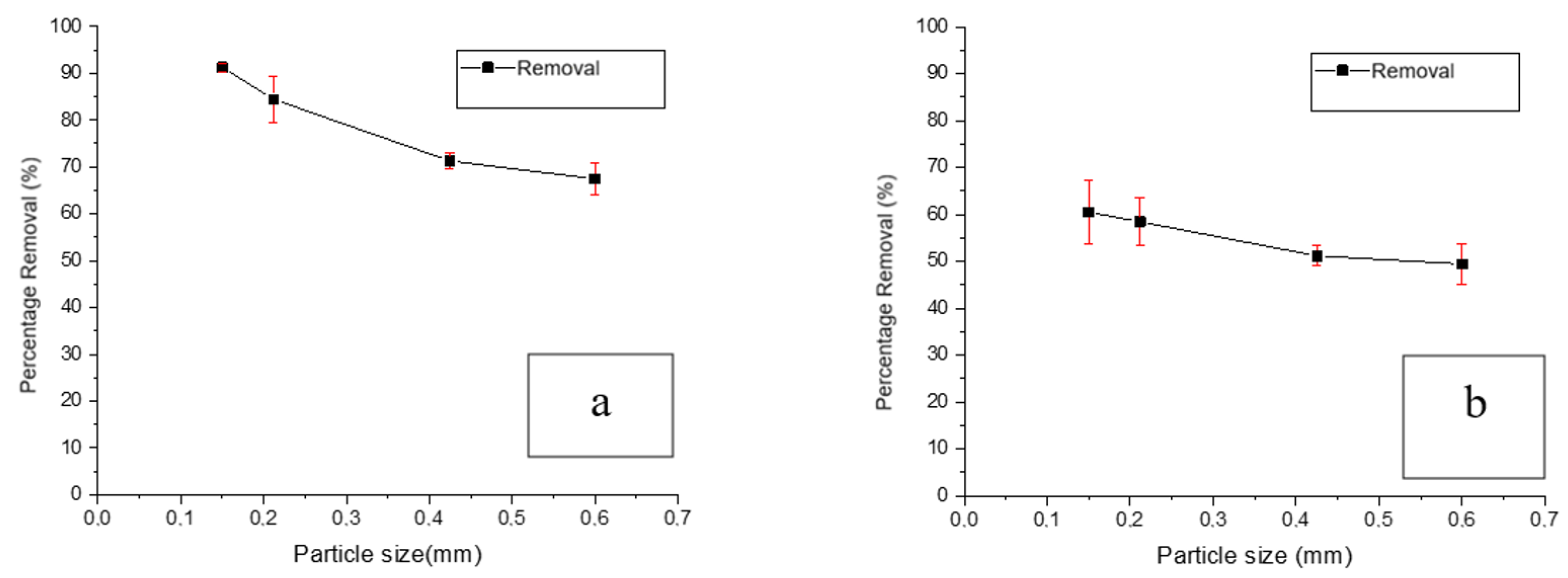
Fe
2+ removal efficiency increased with decreasing particle size for both biosorbents. The smallest fraction (0.150–0.212 mm) achieved the highest removal efficiency (
Figure 10), consistent with increased surface area and the availability of active adsorption sites. This trend agrees with conventional adsorption theory and supports the selection of fine particle fractions for subsequent experiments.
3.3.4. Adsorption Kinetics
Adsorption kinetics for both biosorbents were evaluated using pseudo-first-order and pseudo-second-order models [
19]. The pseudo-second-order model yielded higher correlation coefficients (R
2 = 0.998 for totora and R
2 = 0.999 for reed) compared to the pseudo-first-order model (
Table 2).
The Ho and McKay formulation was used to calculate kinetic parameters, including the initial adsorption rate constants.
3.3.5. Adsorption Isotherm
Fe
2+ adsorption equilibrium data were better described by the Langmuir model than by the Freundlich model for both biosorbents in
Table 3. The Langmuir separation factor (R
L) values of 0.294 for totora and 0.535 for reed indicate favorable adsorption and support monolayer formation on relatively homogeneous adsorption sites [
15,
20].
The maximum adsorption capacities obtained in this study (7.8 mg/g and 2.9 mg/g for modified totora and reed, respectively) are within the range reported for minimally modified lignocellulosic biosorbents used for Fe
2+ removal. For example, alkali-treated coir fibers evaluated by [
21] showed comparable Fe
2+ adsorption performance under aqueous conditions of 7.49 and 11.11 mg Fe
2+/g in a multicomponent system. Fe
2+ adsorption onto rice husk ash reported by [
17,
22] reached 6.21 mg/g under aqueous conditions. Additionally, Bilal et al. reported Fe
2+ uptake values of 1.225 and 1.408 mg/g using slightly modified biomass materials [
23].
3.4. Batch Biosorption Performance with Site Water
Biosorption experiments conducted on site using water from the Pallina River showed lower adsorption capacities than those observed in synthetic solutions, likely due to the presence of competing ions and natural organic matter in the water matrix. Fe
2+ removal ranged from 40–50% for reed and 10–20% for totora, while Mn
2+ removal was similarly reduced. Despite these constraints, both biosorbents retained a selective affinity for Fe
2+ and Mn
2+, demonstrating their potential applicability under realistic environmental conditions, as shown in
Table 4.
3.5. Fixed-Bed Column Biosorption
Preliminary fixed-bed column experiments were conducted using NaOH-modified totora and reed biosorbents under identical operating conditions (bed height: 12 cm; particle size: 0.425–0.610 mm; flow rate: 1.0 mL min
−1). Breakthrough curves (
Figure 8) showed that totora exhibited higher adsorption capacity (
Table 5) and longer service time than reed, corroborating batch adsorption trends.
Breakthrough times of approximately 1500 min for totora and 500 min for reed were obtained, while saturation times reached 2500 min and 1500 min, respectively. These results confirm the superior dynamic adsorption performance of totora under continuous-flow conditions.
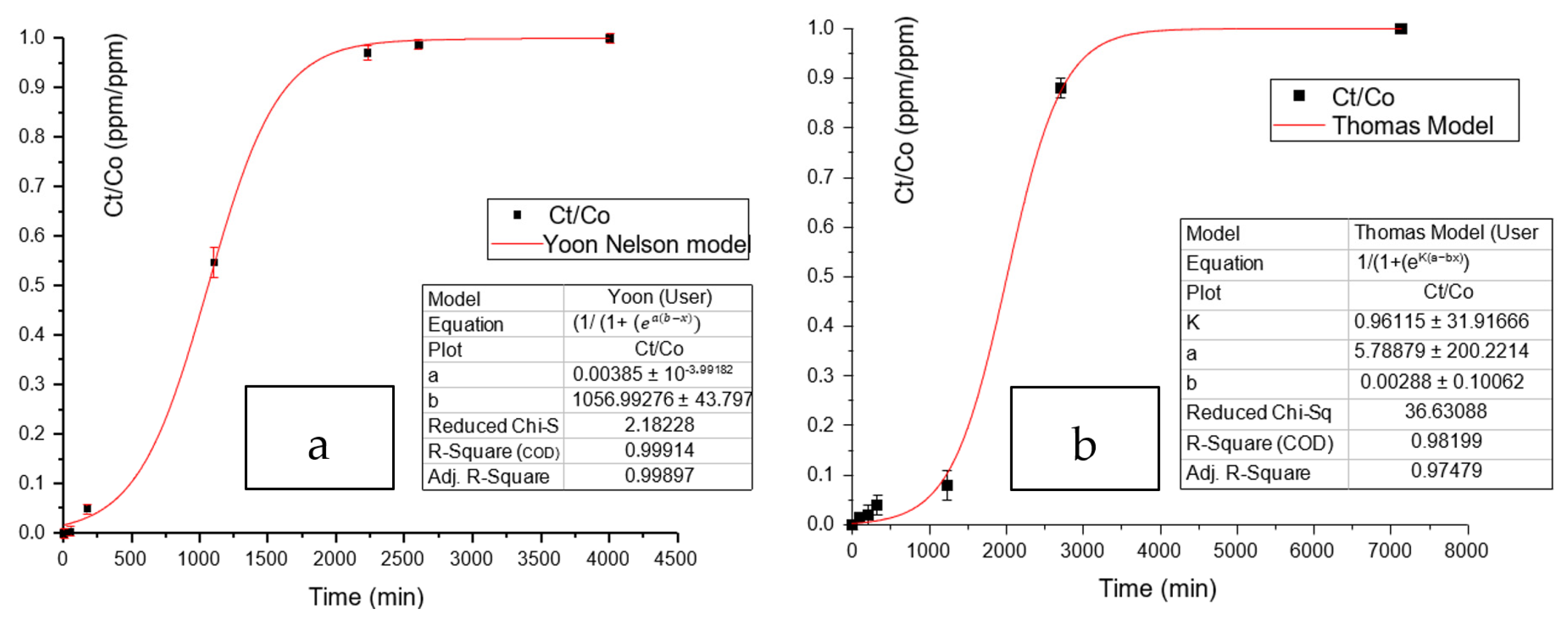
Breakthrough data were analyzed using the Thomas and Yoon–Nelson models (
Figure 11). The Thomas model provided the best fit for totora (R
2 = 0.998), consistent with the Langmuir-type behavior observed in batch experiments. In contrast, on
Table 5, reed adsorption was better described by the Yoon–Nelson model (R
2 = 0.998), indicating differences in adsorption dynamics between the two biosorbents.
3.5.1. Particle Size Effect
Under identical operating conditions, the larger particle size (0.710–0.850 mm) consistently exhibited higher adsorption capacities and longer breakthrough times compared to 0.600–0.710 mm. At a feed flow rate of 0.8 mL/min and a bed height of 7 cm, the adsorption capacity increased from 6.64 to 8.34 mg Fe2+/g when particle size increased from 0.600 to 0.710 mm.
This behavior contrasts with typical batch adsorption trends and may be attributed to the heterogeneous structure of totora, which includes cortex and membrane fractions with different hydration and swelling capacities [
24]. Larger particles likely reduce excessive hydration and pore blockage, improving bed permeability and effective mass transfer under continuous-flow conditions.
3.5.2. Feed Rate Effect
The influence of feed flow rate was evaluated at 0.8 and 1.0 mL/min. A lower flow rate (0.8 mL/min) resulted in improved column stability and a more favorable breakthrough profile, despite a marginally lower instantaneous adsorption capacity. At higher flow rates, shortened residence time limited ion–biosorbent contact, accelerating bed saturation.
At lower flow conditions, excessive hydration of the biosorbent was reduced, minimizing fiber swelling and preserving effective porosity. Conversely, at higher flow rates, external mass transfer becomes dominant, as increased renewal of the boundary layer reduces film diffusion resistance and enhances Fe
2+ transport to the biosorbent surface [
25]. Similar effects have been reported in fixed-bed systems, where higher flow rates improve adsorption kinetics but lead to earlier breakthrough [
26].
3.5.3. Bed Height Effect
Increasing the bed height from 7 to 12 cm reduced adsorption capacity per unit mass from 8.34 to 5.52 mg Fe
2+ per gram (
Table 6). This indicates that the additional biosorbent was not efficiently utilized, a behavior typically associated with the formation of ineffective bed regions in taller packed columns, where mass transfer limitations outweigh the benefit of increased sorbent mass [
27].
The reduced performance at higher bed heights is attributed to bed compaction and biosorbent hydration, which limit pore accessibility and intraparticle diffusion. These effects were more evident in totora-based columns due to the fibrous and compressible nature of the biomass [
25], causing increased axial stress, localized bed deformation, and a reduced effective contact area.
A bed height of 7 cm provided the optimal balance between adsorption efficiency and hydraulic stability, maximizing the useful bed fraction while minimizing pressure drop (
Table 7). This result confirms that increasing bed height does not necessarily improve column performance and may hinder scalability in low-cost biosorption systems [
28].
3.5.4. Optimal Operating Conditions
The selection of the optimal column design considered breakthrough and saturation times, treated effluent volume, and the useful bed fraction. Based on adsorption capacity, breakthrough behavior, and effective biosorbent utilization, the optimal fixed-bed operating conditions were identified as a particle size range of 0.710–0.850 mm, a feed flow rate of 0.8 mL/min, and a bed height of 7 cm. These conditions provide an appropriate balance between adsorption efficiency, hydraulic stability, and practical applicability for Fe2+ removal using modified totora.
3.5.5. Competitive Adsorption of Fe2+–Mn2+ Solutions
On
Table 8, binary Fe
2+–Mn
2+ column tests showed competitive adsorption, with Fe
2+ preferentially occupying active sites due to its higher influent concentration. The presence of Mn
2+ led to earlier breakthrough and saturation and an expanded mass transfer zone, reducing the useful bed fraction [
29]. This behavior is consistent with multicomponent adsorption under mixed-metal conditions such as those in the Pallina River.
3.6. Column Operation with Pallina River Water
Column experiments using Pallina River water highlighted the influence of matrix complexity on biosorption performance. Two configurations were evaluated: O-PAL (filtration only) and N-PAL (centrifugation followed by filtration), with both samples adjusted to pH 3.5 prior to adsorption (
Table 9).
The N-PAL system exhibited higher adsorption capacity and better agreement with the Thomas model, indicating that pretreatment reduced interference from suspended solids and competing species. In contrast, O-PAL showed delayed breakthrough, primarily due to its lower initial Fe
2+ concentration. Breakthrough criteria were defined as Ct/C
0 = 0.1 to ensure compliance with Bolivian regulatory limits (Law 1333). Although turbidity and co-contaminants were effectively reduced, progressive column clogging was observed during extended operation, associated with floc formation and particulate retention [
30].
Overall, centrifugation and filtration prior to adsorption improved column performance, underscoring the importance of upstream conditioning when treating complex rural waters.
4. Discussion
4.1. Water Quality Baseline in the Pallina River
Transboundary river systems, such as Bolivia’s Pallina River, which flows into Peru’s shared Lake Titicaca, require integrated observation and modeling across seasons and years to effectively manage shared pollution. Historical monitoring data from Bolivia’s Ministry of Environment and Water (MMAyA) spanning 2019 to 2022 reveal critical degradation baselines essential for binational governance, with dissolved iron (Fe2+) levels consistently exceeding Bolivia’s Law 1333 safety limit of 0.3 milligrams per liter—peaking dramatically at 6.7 mg/L during the dry season of 2019 and 4.1 mg/L in the wet season of 2020. These spikes, driven by mining runoff and urban sewage from La Paz–El Alto, coincided with manganese (Mn2+) levels reaching 3.1 mg/L and chemical oxygen demand (COD) surging to 300 mg O2/L, signaling heavy organic loads that starve aquatic life of oxygen.
The measured Fe2+ concentrations consistently exceeded the permissible limit established by Bolivian regulations, with peak values surpassing the standard by more than 20 times. At circumneutral to slightly alkaline pH (>6), iron undergoes hydrolysis and precipitation, leading to sediment accumulation and an enhanced potential for bioaccumulation in aquatic organisms. Such elevated iron levels, combined with suboptimal dissolved oxygen concentrations (15–44%) and temperatures between 12 and 16 °C, create a stressful environment that may impair aquatic life and disrupt ecological balance. These conditions pose a significant risk to the water quality and food security of communities reliant on Lake Titicaca, highlighting the need for continuous monitoring and mitigation strategies to manage metal contamination in the basin.
The measured concentrations were evaluated against the Bolivian Regulation for Water Pollution Control (RMCH in Spanish) under Environmental Law 1333, which establishes maximum admissible limits for receiving water bodies classified into classes A, B, C and D. According to this regulation, the permissible limit for total Fe2+ in surface waters ranges between 0.3 mg/L (Classes A–B) and 1.0 mg/L (Classes C–D). This MMAyA archive enables retrospective modeling—reconstructing past river flows and pollutant pathways under historical weather conditions—to inform Bolivia–Peru agreements on mitigating mining and agricultural discharges.
4.2. Batch Biosorption Optimization in Synthetic Solution
Building on this degraded baseline, attention was then directed to evaluating low-cost remediation through controlled batch experiments. Fast-forward to 2021–2022 samples, where Fe2+ lingered at 0.249–1.035 mg/L and Mn2+ at 0.204–0.358 mg/L, still over limits but lower, validated through innovative biosorption tests using totora (Schoenoplectus californicus), a free wetland reed harvested as waste from Bolivia’s Achocalla Lagoon.
Under these controlled conditions, lab batch experiments mixed 4–6 g of totora per liter at pH = 5, with fine particles (0.15–0.212 mm) shaken for 180 min until equilibrium. Totora removed 80–89% of Fe2+, outshining reed (Phragmites australis) at 70–85%, with maximum capacity (qmax from Langmuir isotherm) hitting 7.8 mg per gram for totora versus 2.9 mg/g for reed—think of it as one gram of totora soaking up nearly eight milligrams of Fe2+ like a super-sponge holding eight drops before filling up, while reed manages just three.
Kinetic data were described using the pseudo-first-order and pseudo-second-order models. The pseudo-second-order model provided the higher correlation coefficient (R2 = 0.998) under the studied conditions. Equilibrium data were evaluated using the Langmuir isotherm, which yielded a correlation coefficient of R2 = 0.889. The calculated separation factor (RL = 0.294) was within the range 0 < RL < 1 for the evaluated concentrations.
In parallel, totora and reed were triple-washed (tap, distilled, deionized water), oven-dried at 60 °C, ground to sizes from 0.15 to 0.850 mm, and activated in 0.1 M NaOH for three hours at 18 °C to expose sticky functional groups, illustrated by XRF (calcium/potassium), FTIR, and SEM showing totora’s lattice structure. Dose trials (1–8 g/L at pH 5) peaked removal at 4–6 g/L before sites saturated; pH = 5 avoided iron’s rusting above 6 (80% precipitation, not true adsorption); equilibrium was reached at 180 min for totora (120 for reed), the fastest in the first 30 min post-NaOH; tinier particles (0.15–0.212 mm) maximized the surface area. The pseudo-second-order model showed higher correlation coefficients (R2 = 0.998–0.999) compared to the pseudo-first-order model under the evaluated conditions. The kinetic parameters were calculated according to the Ho and McKay formulation.
4.3. Fixed-Bed Column Experiments
Continuous-column experiments demonstrated that totora outperforms reed under equivalent conditions. At 1 mL/min and 12 cm bed height, totora exhibited a breakthrough time of 1500 min and saturation time of 2500 min, compared to 500 min and 1500 min for reed, respectively. Optimal column performance was achieved with 0.710–0.850 mm particle size, a 0.8 mL/min flow rate, and a 7 cm bed height. The reduced flow enhanced solute–biosorbent contact time without inducing pore clogging from fiber hydration, while excessive bed heights (12 cm) resulted in compaction due to hydration-induced consolidation. Particle sizes of 0.6–0.71 mm provided the best compromise between hydraulic permeability and mass transfer efficiency.
Under these optimized conditions, System 2 processed 537.6 mL of synthetic solution with an adsorption capacity of 8.34 mg/g, in close agreement with Thomas model predictions (8.44 mg/g, R
2 = 0.995), indicating favorable external and intraparticle mass transfer kinetics. System 4, operated at a higher flow rate (1.0 mL/min), achieved higher adsorption capacity (10.91 mg/g) but at the cost of reduced useful bed fraction (FBU = 0.61). The mass transfer zone height (HMTZ) was minimized with intermediate particle sizes (0.710–0.850 mm), optimizing bed utilization and maintaining stable hydraulic behavior suitable for scale-up. Mechanistically, smaller particles increase specific surface area and reduce intraparticle diffusion lengths, enhancing adsorption rates, but could increase pressure drop and risk of pore blockage under low flow conditions [
30,
31]. Larger particles reduce axial dispersion and compaction risk, facilitating stable operation in low-maintenance systems, particularly in rural or decentralized applications [
32]. These results underscore that particle size, bed height, and flow rate must be jointly optimized to maximize adsorption capacity, breakthrough effluent volume (Vb), and useful bed fraction (FBU) while controlling HMTZ [
33,
34].
Overall, the optimized totora-based system provides predictable adsorption behavior, confirmed by the Thomas model. This indicates that totora is a technically viable, low-cost, scalable solution for Fe2+ removal in decentralized water treatment, particularly in regions where conventional chemical treatment is economically or logistically constrained.
4.4. Biosorption Performance in Real Pallina River Water
Established peerformance under synthetic conditions and the systems were then evaluated using real Pallina River water. For batch treatment, in real Pallina water from two points in 2021–2022, performance dipped to 50% efficiency (qmax 0.12 mg/g for totora, 0.076 mg/g for reed), as organics (COD up to 160 mgO2/L) and rival metals like Mn2+ and Zn2+ competed for spots—for instance, at Point 1, Fe2+ dropped from 1.125 mg/L to 0.6 mg/L, a solid 47% cut despite complexities.
Consistently, fixed-bed column experiments using real Pallina River water demonstrated the strong influence of matrix complexity and pretreatment on biosorption performance. The comparison between direct filtration (O-PAL) and centrifugation followed by filtration (N-PAL) confirmed that upstream conditioning is a critical requirement for stable, efficient column operation in complex rural waters. The N-PAL configuration achieved a substantially higher adsorption capacity (Q_e,exp = 2.54 mg/g) and Fe2+ uptake (Q_total = 12.68 mg) than O-PAL (0.64 mg/g and 3.21 mg, respectively), indicating that the removal of suspended solids and part of the competing matrix significantly enhanced the accessibility of active sites and mass transfer efficiency. Pre-filtration steps counteract spreading pollutants (axial dispersion) and gunk, making 50% real-world success practical for rural settings.
4.5. Challenge and Public Policies in the Vulnerable Highland Communities and Ramsar Wetland Restoration
Beyond the laboratory and pilot scale, these results provide the basis for predictive modeling and policy integration. Predictive tools build on this: HEC-RAS models river flows while SWAT simulates watershed pollution using 2019–2022 baselines for Cohana Bay–Titicaca inflows under IPCC climate scenarios. A 20% El Niño flow cut, for example, reduces dilution by 30%, demanding 1.5 times more totora biomass. Artificial neural networks (ANNs) forecast equilibrium uptake to 20 ppm (favorable RL = 0.294), and MODFLOW-MT3D simulates multi-metal (Fe/Mn/Zn) removal in totora wetlands.
Under future climate stress, Chacaltaya glacier melt threatens a 40% dilution loss by 2050, potentially doubling metal concentrations, but hybrid totora beds slash remediation costs by 70% compared to energy-hungry reverse osmosis. GRACE satellites monitor water mass, gauges provide real-time data, and Kalman filters merge MMAyA inputs with CMIP6 projections into dashboards that track Regional Integrated Climate Plans (RICPs) through nature-based solutions (NbS), such as totora.
To embed this in policy, the integration of totora (Schoenoplectus californicus) into Ramsar wetland management protocols and within the framework of the Lake Titicaca Binational Convention is supported by its well-established role as natural infrastructure for improving water quality. According to Ramsar Convention guidelines, wetlands play a key role in contaminant retention, sedimentation, and metal absorption, making them strategic tools for integrated river basin management. In the Titicaca–Desaguadero system, historical Fe2+ concentrations of up to 6.7 mg/L have been recorded, exceeding environmental standards and justifying the implementation of annual alerts and preventive monitoring mechanisms. Studies on constructed and restored wetlands using totora report contaminant removal efficiencies ranging from 50% to 95%, allowing for a projected sustained compliance of at least 80% with the limits established under Bolivia’s Environmental Law No. 1333.
Furthermore, the use of locally generated organic waste, such as that from Achocalla, for totora cultivation and expansion supports the implementation of restoration pilot projects of up to 100 km2, strengthened through technical training and territorial governance processes, including those promoted by international organizations (e.g., UN Decade of Ecological Restoration). From an economic and public health perspective, investment in nature-based solutions (NbS) yields a positive return by reducing public health costs through the prevention of iron bioaccumulation along the food chain, a process associated with hepatic and cardiac damage and oxidative stress in humans. These environmental and health benefits reinforce the relevance of cross-border financing mechanisms, aligned with the protection of a shared and strategic ecosystem for Bolivia and Peru.
5. Conclusions
This research demonstrates that using locally available wetland plants as biosorbents is a practical and promising strategy to complement conventional treatment, especially in rural, resource-constrained settings. At the same time, the study also clarifies the limits of biosorption under complex environmental conditions, including competition among metals, reduced efficiency in natural matrices, and sensitivity to hydrodynamic design. Rather than presenting biosorption as a standalone solution, the results position totora-based systems as a nature-based, low-cost solution complement to regulatory measures and conventional treatment in transboundary watersheds. Overall, the paper provides both quantitative evidence and operational guidance to support the integration of biosorption into broader pollution control and management strategies in Latin American highland basins, with direct relevance for Lake Titicaca.
From a policy perspective, this study shows that impacts from mining/urban runoff on shared water resources are echoed across Andean basins, where 70% of highland rivers exceed metal thresholds; the contamination of these riparian systems calls for collective action to national and regional protocols and global frameworks for the scalability of these nature-based solutions.
Pallina River Fe2+ levels exceeded Bolivia’s legal limits in 2019, threatening Lake Titicaca shared with Peru through mining and urban runoff. Totora wetlands offer a low-cost, local solution, removing 95% Fe2+ in tests and 50% from real polluted water using simple column filters, which holds potential. Regional scaling via community-led filters can help reduce treatment costs by a large margin compared to chemical-based methods. The Global and Regional Partnerships Fund can support tech transfer, ensuring the proposed research maintains a climate adaptation and equity focus. The point is to protect indigenous health from anemia and secure water for vulnerable highlanders through co-managed nature-based solutions. Policymakers could also integrate these interventions linked to the water–health nexus into transboundary agreements, such as the Titicaca Lake Binational authority (ALT), and mandate pilot projects in high-risk areas, such as Cohana Bay, to restore wetlands meeting established standards.




 ,
,