Article

Metal Accumulation and Plant Performance in Controlled Bioretention Mesocosms

1
Key Laboratory of Urban Stormwater System and Water Environment, Ministry of Education, Beijing University of Civil Engineering and Architecture, Beijing 100044, China
2
Collaborative Innovation Center of Energy Conservation & Emission Reduction and Sustainable Urban-Rural Development in Beijing, Beijing 100044, China
3
Capital Engineering & Research Incorporation Limited, Beijing 100176, China
*
Author to whom correspondence should be addressed.
Water 2026, 18(5), 642; https://doi.org/10.3390/w18050642
Submission received: 28 January 2026 / Revised: 1 March 2026 / Accepted: 6 March 2026 / Published: 8 March 2026
(This article belongs to the Special Issue Urban Drainage Systems and Stormwater Management, 2nd Edition)

Abstract

Bioretention systems are increasingly implemented as green infrastructure for urban stormwater management. However, their long-term performance is jeopardized by the continuous accumulation of potentially toxic metals in substrates and vegetation, posing significant risks to ecosystem health and human safety. Despite their growing application, the mechanisms driving metal dynamics and plant responses within these systems remain poorly understood. This study conducts a comprehensive multi-factor investigation into the accumulation, mobility, and biological impacts of four representative potentially toxic metals (Cd, Cu, Zn, and Pb) in bioretention soils and vegetation. Through controlled mesocosm experiments, we quantified metal concentrations in soils and three plant species, analyzed alterations in the physical and chemical properties of soil, and assessed plant physiological stress responses. Metal concentrations were measured using inductively coupled plasma mass spectrometry (ICP-MS), and statistical analyses were conducted using one-way ANOVA (p < 0.05). Cadmium exhibited the highest enrichment, with plant uptake increasing by 330.0% to 563.2%, especially in Iris tectorum Maxim., which demonstrated superior phytoaccumulation potential. Conversely, Ophiopogon japonicus Ker Gawl. showed remarkable tolerance to metal-induced stress, maintaining stable levels of chlorophyll content, photosynthetic rate, peroxidase activity, and soluble sugar concentration. Notably, the incorporation of humic substances significantly enhanced metal immobilization in soil, while simultaneously reducing plant uptake and physiological stress, revealing a promising strategy for toxicity mitigation. By integrating the effects of plant species, substrate composition, and influent concentration, this study provides novel insights into the complex interactions governing pollutant fate in bioretention systems. The findings offer critical guidance for optimizing bioretention design and management to ensure sustained pollutant removal efficiency and ecological resilience in urban stormwater treatment.

1. Introduction

Rapid urbanization has significantly intensified stormwater runoff pollution, making it a primary contributor to water quality degradation in urban rivers and lakes. Among various stormwater pollutants, potentially toxic metals are of particular concern because they are persistent, difficult to degrade, and capable of accumulating in sediments and living organisms [1,2,3]. Even at relatively low concentrations, certain metals can exert toxic effects on aquatic biota [4,5]. Once transported into receiving waters, these metals tend to accumulate in bottom sediments, where they may persist for extended periods and re-enter the water column under changing environmental conditions [6,7]. Through trophic transfer, these metals can enter aquatic food webs, potentially leading to bioaccumulation and adverse effects on benthic organisms and higher trophic levels [8,9,10]. Low Impact Development (LID) strategies, particularly bioretention systems, have been widely implemented to mitigate runoff quantity and improve stormwater quality [11,12]. However, sustained metal loading from traffic-related sources, atmospheric deposition, and urban infrastructure may influence the long-term retention capacity and stability of these systems [13].
While bioretention systems have demonstrated relatively high initial removal efficiencies for metals, increasing evidence indicates that their long-term retention capacity may decline over time due to sorption site saturation, redox-driven remobilization, and changes in soil buffering capacity [14,15,16,17]. Under prolonged loading conditions, these processes may reduce the stability of retained metals and, in certain cases, promote their re-release into outflow water [18,19]. Cu, Zn, Cd, and Pb are among the most prevalent metals in urban runoff, largely originating from traffic activities and urban infrastructure [20,21]. Given the widespread implementation of bioretention systems in urban environments, continuous metal inputs and progressive accumulation within filter media are expected over time [22,23]. Despite extensive documentation of short-term removal performance, the long-term impacts of metal accumulation on system function and soil–plant interactions remain insufficiently understood [14]. In particular, uncertainties persist regarding metal stability within different substrates, potential effects on vegetation, and implications for maintenance and design optimization. Clarifying these processes is critical for maintaining the long-term functional stability of bioretention systems.
Substrate media are fundamental to the functioning of bioretention systems, as they govern the retention and redistribution of stormwater-borne metals [24,25]. In natural and contaminated soils, metal concentrations often decrease with depth and are closely associated with organic matter and reactive mineral phases, reflecting the strong affinity of metals for organic ligands and mineral surfaces [26,27,28]. Similar distribution patterns have been reported in engineered bioretention media [29]. For instance, Lim et al. [30] observed that Cu, Zn, Pb, and Cd were predominantly accumulated within the upper 5 cm of filter media, and that increasing overall media depth (600 mm versus 300 mm) did not substantially alter removal performance. These findings suggest that metal retention processes are concentrated near the media surface under repeated stormwater loading. To improve pollutant removal, engineered substrates are commonly amended with organic-rich materials such as compost or biochar to enhance sorption capacity [31,32,33]. Organic matter, including humic substances, provides functional groups capable of complexing metal ions and thereby increasing retention potential [34,35,36]. However, while such amendments may improve short-term adsorption performance, their influence on long-term metal stability under variable hydrological conditions remains insufficiently characterized. Therefore, a clearer understanding of how specific substrate compositions regulate long-term metal retention dynamics is still needed.
Plants constitute an essential functional component of bioretention systems and differ markedly in their capacity to accumulate and tolerate metals [37,38,39]. Following transport by stormwater runoff, metals are retained within the substrate matrix, where they may subsequently be absorbed by plant roots and translocated to aboveground tissues. However, excessive metal accumulation can disrupt cellular homeostasis, impair metabolic processes, and accelerate leaf senescence [40]. Photosynthetic performance is particularly sensitive to metal-induced stress. Chlorophyll, the primary pigment involved in light harvesting, often shows reduced synthesis and degradation under elevated metal concentrations, leading to declines in photosynthetic capacity [41]. In response to oxidative stress induced by metal exposure, plants activate antioxidant defense systems; peroxidase (POD), a key enzyme in reactive oxygen species scavenging, plays an important protective role, although its activity may increase or decrease depending on stress intensity and plant species [42,43]. Additionally, soluble sugars contribute to osmotic adjustment and stress mitigation under metal exposure [44]. Accordingly, physiological parameters including chlorophyll content, net photosynthetic rate, peroxidase activity, and soluble sugar concentration have been widely employed to evaluate plant responses to metal stress in bioretention and related systems [45,46]. Rycewicz-Borecki et al. [47] quantified heavy metal concentrations at a depth of 27 cm in bioretention soils and reported significant differences associated with vegetation presence, as well as distinct accumulation patterns between aboveground and belowground tissues. However, the interactive effects of substrate properties and plant species on these accumulation and physiological response patterns remain insufficiently explored.
Although potentially toxic metals are known to accumulate progressively in bioretention substrates, it remains unclear how loading intensity, substrate amendments, and plant functional traits jointly regulate metal partitioning between soil and vegetation. Previous research has largely focused on overall removal efficiency, with less attention to internal metal partitioning, plant physiological responses, and the role of substrate amendments. In particular, how humic incorporation modifies metal immobilization–bioavailability dynamics, and how different plant species respond physiologically under increasing influent concentrations, require systematic evaluation. This study conducted controlled mesocosm experiments to examine the accumulation, mobility, and physiological impacts of Cd, Cu, Zn, and Pb in bioretention soils and three plant species (Iris lactea, Iris tectorum, and Ophiopogon japonicus). Metal concentrations in soil and plant tissues, soil physical and chemical properties, and plant physiological indicators were analyzed under varying influent concentrations and humic amendments. By integrating plant traits, substrate modification, and loading intensity, this study identifies key factors governing metal distribution and plant stress responses within bioretention systems, providing experimental evidence to inform plant selection and substrate management for long-term system stability.

2. Materials and Methods

2.1. Experimental Setup and Methods

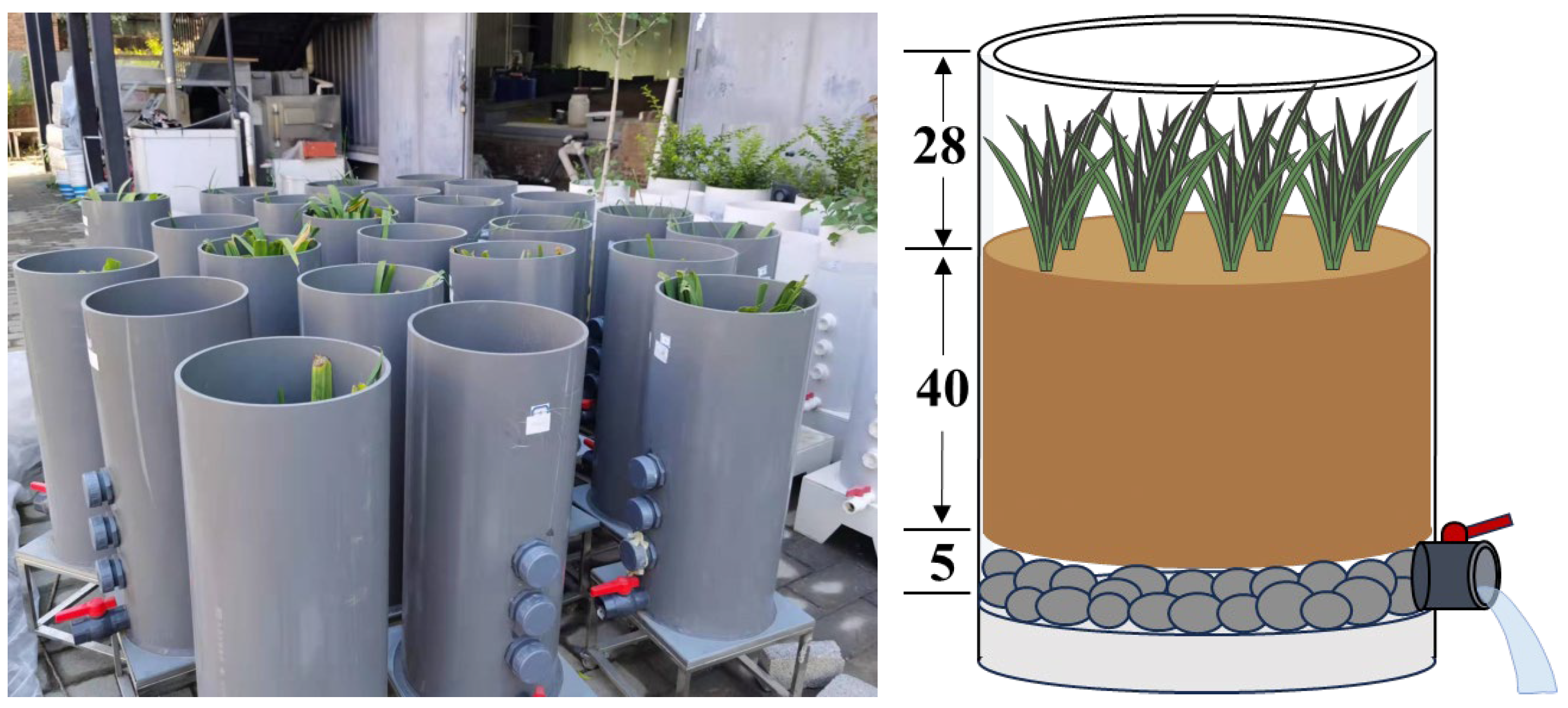
The study involved 12 PVC experimental columns constructed and operated outdoors at the Daxing Campus of Beijing University of Civil Engineering and Architecture (Key Laboratory of Urban Stormwater System and Water Environment, Ministry of Education, Beijing, China). From top to bottom, each column consisted of a 28 cm water retention layer, a 40 cm filter media layer (with two configurations: SS “garden soil (40%) + sand (60%)” and SSH “garden soil (30%) + sand (60%) + humus (10%)”), a geotextile layer, a 5 cm gravel layer (gravel diameter approximately 1 cm), and a 10 cm base layer. The gravel layer was embedded with perforated drainage pipes, each with a diameter of 3 cm. The total height of each column was 83 cm, as illustrated in Figure 1, which presents both a photograph and a cross-sectional schematic of the experimental setup.
Three herbaceous species—Iris tectorum Maxim., Iris lactea Pall., and Ophiopogon japonicus Ker Gawl.—were selected based on their common use in Beijing bioretention systems. These species exhibit well-developed root systems, high tolerance to both drought and waterlogging, and notable ornamental value. Mature nursery-grown plants were transplanted into the columns in May after substrate filling and hydraulic settling to achieve stable compaction. The systems were then maintained with regular tap water irrigation for two months to allow plant establishment before potentially toxic metal treatments began in early July. The inflow experiments were conducted from July to November under natural outdoor climatic conditions in Beijing, covering both the summer and autumn seasons.
The 12 experimental columns were divided into three groups according to the type of inflow: one group simulated low-concentration potentially toxic metal runoff (C), another group simulated runoff with elevated potentially toxic metal concentrations at 2C, 4C, 6C, and 8C, and the third group served as a control, receiving tap water. Tap water was also used to prepare potentially toxic metal solutions, ensuring consistent background water quality across treatments. Among the setups, eight columns were planted with Iris tectorum, two with Iris lactea, and two with Ophiopogon japonicus. Detailed configurations of the inflow concentrations and device allocations are presented in Table 1.
This study targeted four representative potentially toxic metals commonly found in urban stormwater runoff: Cu, Zn, Cd, and Pb. Based on water quality monitoring data from typical Chinese cities and the concentration ranges observed in Beijing’s stormwater, five contamination levels were established for the experimental treatments (Table 2) [48]. Monthly inflow volumes and intervals were determined using 30-year rainfall records (April–October) from Beijing. Rainfall events were separated by a 12 h inter-event period, and events below 2.0 mm were excluded. Inflow volumes were calculated assuming the bioretention area accounted for 10% of the catchment area, and a constant event volume was applied within each month for experimental consistency (Table 3). Additionally, the experiment was conducted under dynamic intermittent inflow conditions to simulate natural rainfall events rather than batch equilibrium adsorption tests.

2.2. Sample Collection and Analysis

2.2.1. Soil Sampling and Analytical Methods

The soil used in the bioretention systems was sourced from agricultural land in Daxing District, Beijing, and was compacted during the construction of the experimental columns. Soil samples were collected every 30 days from a depth of 10 cm below the surface and temporarily stored in sealed plastic bags for subsequent analysis. Three subsamples (0.50 g each) from the same column were processed using the Tessier sequential extraction method. After extraction, the solutions were filtered through 0.45 µm membrane filters and appropriately diluted prior to analysis. Concentrations of Cu, Zn, Cd, and Pb were determined using an inductively coupled plasma mass spectrometer (ICP-MS, Agilent 7900, Agilent Technologies, Santa Clara, CA, USA) following the procedure described in reference [49]. The instrument was operated under standard manufacturer-recommended conditions. Multi-element standard solutions were used for calibration, and internal standards were applied to correct for instrumental drift. Procedural blanks and duplicate samples were included to ensure analytical accuracy and precision.

2.2.2. Analytical Methods for Determining Potentially Toxic Metals in Plant Tissue

Approximately 4 g of above-ground biomass (stems and leaves) from the same plant species were collected every 30 days and stored in sealed plastic bags for subsequent analysis of Cu, Zn, Cd, and Pb. Upon completion of all inflow experiments and final physiological assessments, entire root systems were harvested and preserved for potentially toxic metal analysis. All plant samples were oven-dried and ground to a fine powder. Subsequently, 2.0000 g of each sample was placed into digestion vessels containing concentrated nitric acid and hydrogen peroxide for microwave-assisted digestion. The concentrations of Cu, Zn, Cd, and Pb in plant tissues were then determined using inductively coupled plasma mass spectrometry (ICP-MS) [50].

2.2.3. Analytical Methods for Measuring Plant Physiological Indicators

Photosynthetic measurements were conducted every 15 days on five fully expanded, healthy leaves per plant. For physiological and biochemical analyses, approximately 6 cm2 of leaf area from each selected leaf was sampled to ensure consistency among plants. Each leaf was measured three times, and the average values were used to determine the net photosynthetic rate (Pn) using a CI-340 portable infrared gas analyzer (CID, Inc., Camas, WA, USA). Chlorophyll content was assessed using a SPAD-502 chlorophyll meter (Konica Minolta, Tokyo, Japan). Peroxidase activity and soluble sugar content were quantified using commercial assay kits (plant peroxidase and soluble sugar content test kits) purchased from JCDIRECT Biotechnology Co., Ltd. (Nanjing, China) [51].

2.3. Indicators of Metal Accumulation in Plants

Plant metal accumulation is assessed using the Bioaccumulation Factor (BAF), defined as the ratio of the metal concentration in a specific plant part to the metal concentration in the soil. This ratio indicates the efficiency of metal transfer from the soil to the plant [52]. The formula is:
B A F = C i / S i
In the formula, Ci represents the concentration of metals in the plant leaves, and Si represents the concentration of metals in the soil. A BAF value greater than 1 indicates metal accumulation, whereas BAF ≤ 1 suggests low or negligible accumulation.

2.4. Statistical Analysis

Graphs were generated using Origin after data processing. All measurements were conducted with three independent replicates (n = 3), and data are presented as mean ± standard deviation (SD). Statistical analyses were performed using IBM SPSS Statistics 25. One-way analysis of variance (ANOVA) followed by the Least Significant Difference (LSD) test was used to evaluate differences among treatments, with statistical significance set at p < 0.05. Pearson correlation analysis was conducted to assess relationships between variables. Statistical significance of correlations was determined based on p-values (p < 0.05), while the magnitude of the correlation coefficient (r) was used to describe the strength of association, with |r| ≥ 0.5 indicating moderate to strong correlation [53].

3. Results

3.1. Accumulation of Potentially Toxic Metals in Bioretention Systems

3.1.1. Accumulation in Soils

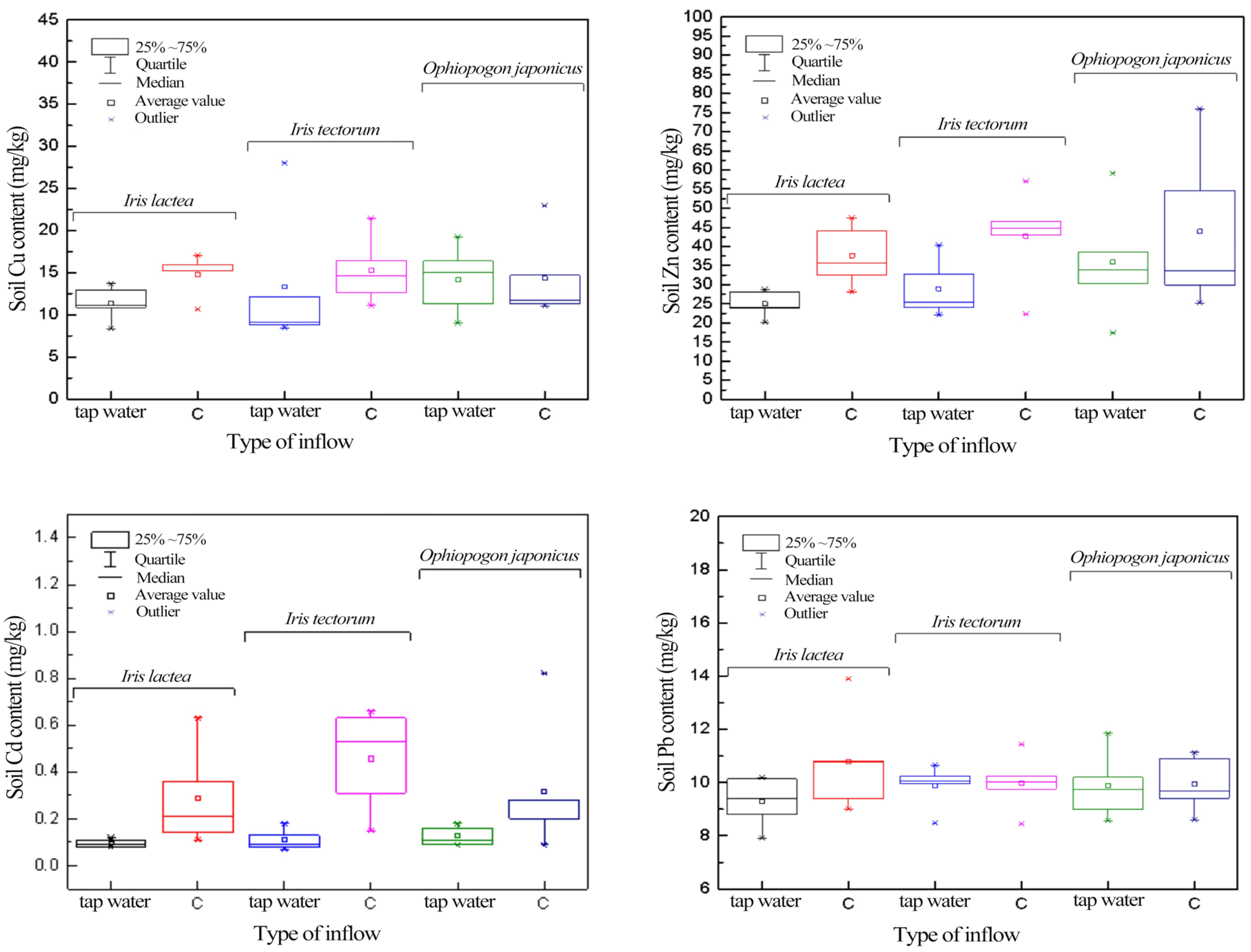
The initial concentrations of Cu, Zn, Cd, and Pb in the soils of the 12 experimental units showed limited variation prior to system operation (Table S1). The mean initial concentrations were 11.59 ± 2.64 mg/kg for Cu, 25.85 ± 6.77 mg/kg for Zn, 0.11 ± 0.05 mg/kg for Cd, and 8.93 ± 0.89 mg/kg for Pb. These baseline values were used as references for calculating the percentage increases observed during the experimental period. The accumulation of Cu, Zn, Cd, and Pb in soils of the bioretention devices planted with different species is presented in Figure 2. Soils in all vegetated systems exhibited higher concentrations of potentially toxic metals compared to the control group.
Among the four metals, Cd showed the largest increase in soil concentration across treatments, with increases of 290.0% in Iris lactea, 418.2% in Iris tectorum, and 246.2% in Ophiopogon japonicus. Zn concentrations increased by 150.4%, 147.5%, and 122.4%, respectively, while Cu increased by 130.0%, 114.6%, and 101.0%. In contrast, Pb showed comparatively smaller increases (116.0%, 101.0%, and 100.7%, respectively), and these differences were not statistically significant across groups. Significant differences (p < 0.05) were observed for Cu and Zn in soils associated with Iris lactea and for Cd in soils associated with Iris tectorum.
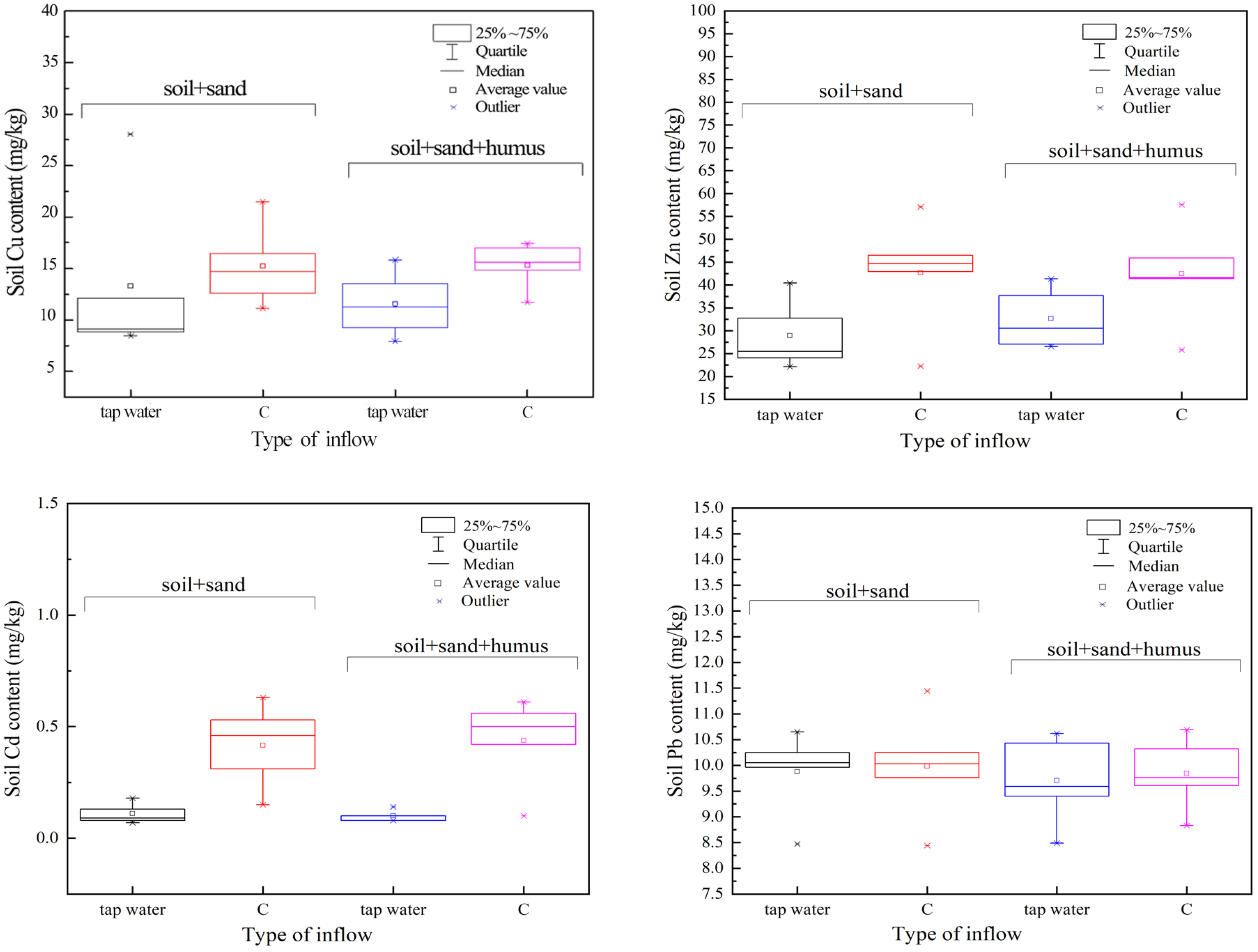
When comparing different substrate compositions (planted with Iris tectorum; Figure 3), the “garden soil + sand + humus” treatment showed significantly higher Cu retention (p < 0.05) than the substrate without humus. The average organic matter content in the humus-amended soils (2.65 ± 0.45%) was significantly higher than in soils without humus addition (1.50 ± 0.07%).

3.1.2. Accumulation in Plants

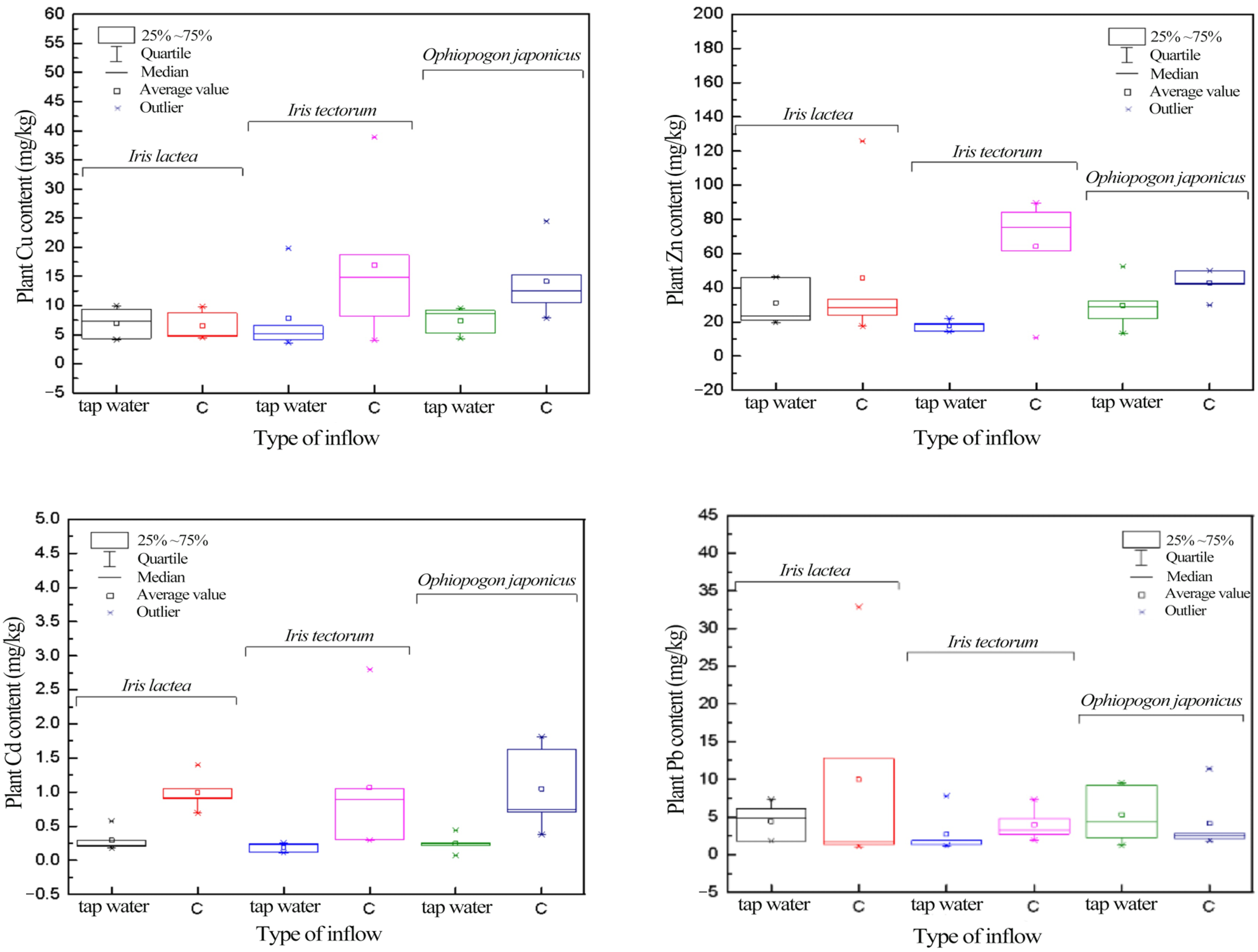
The accumulation of potentially toxic metals in plant tissues is shown in Figure 4. Significantly higher concentrations of Cu, Zn, and Cd were observed in plants exposed to runoff compared to control plants. In contrast, Pb concentrations showed limited variation, and in Ophiopogon japonicus, Pb was slightly lower in the experimental group. For Cd, increases in plant tissues ranged from 330.0% to 563.2% across species. Among the three species, Iris tectorum exhibited the highest overall accumulation of Cu, Zn, and Cd.
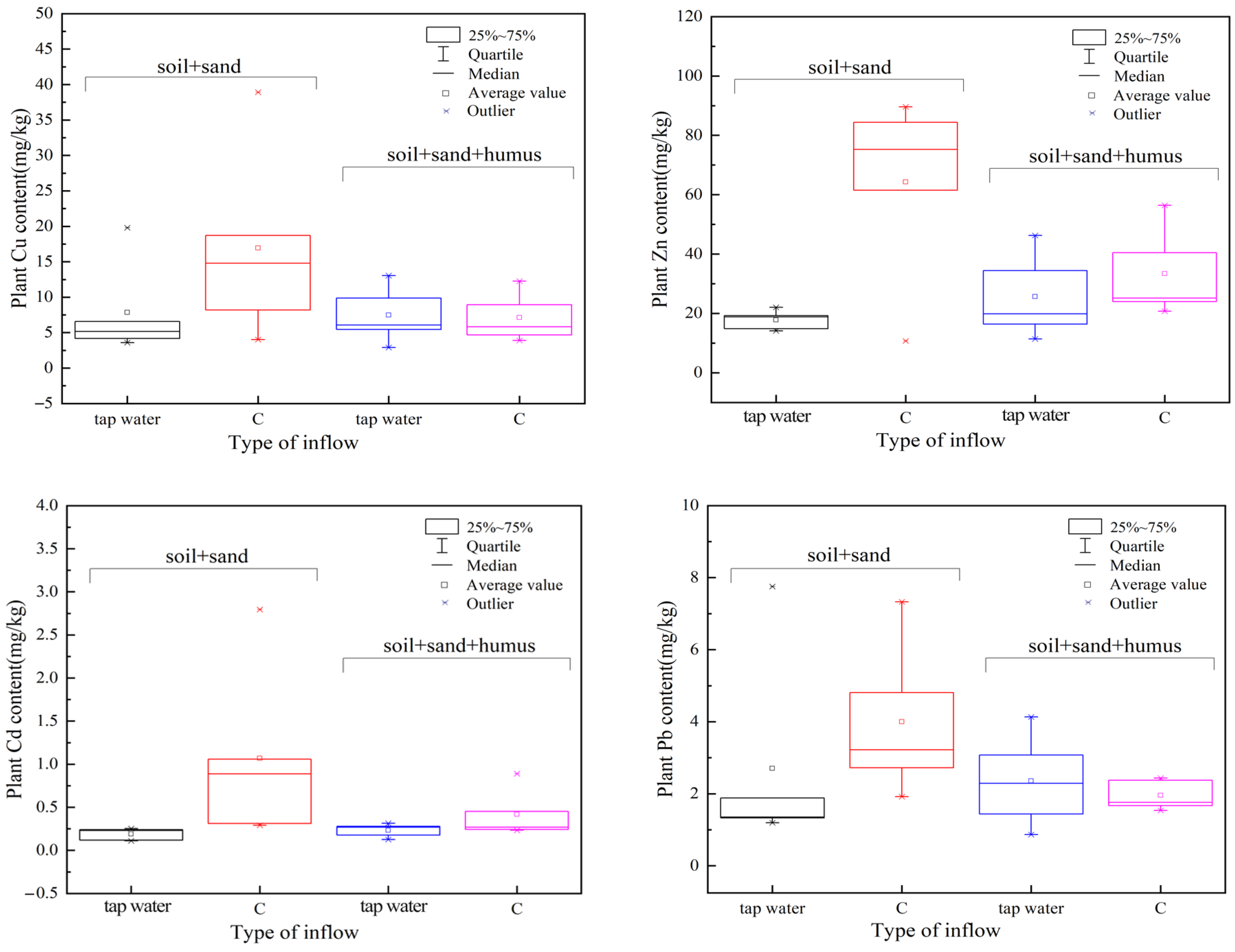
In systems with different substrate types (Figure 5), Zn and Cd concentrations in Iris tectorum were higher in the humus-amended group than in the control, but lower than in the non-humus group. Zn differences were statistically significant (p < 0.05). For Cu and Pb, concentrations were lower in the humus-amended group than in both the control and non-humus treatments.

3.2. Bioaccumulation Factors

The bioaccumulation factors of Cd, Cu, Zn, and Pb in plant stems and leaves across different devices are presented in Table 4. In most systems, the accumulation hierarchy followed: Cd > Cu > Zn > Pb.
Furthermore, when comparing the accumulation factors among three plant species in experimental setups, SS (C; Iris lactea P.), SS (C; Iris tectorum M.), and SS (C; Ophiopogon japonicus K.), it becomes clear that the Cd accumulation factor exceeds 1, in the following order: Iris tectorum > Iris lactea > Ophiopogon japonicus.
For Iris tectorum grown in different substrate conditions, systems supplemented with humic substances and irrigated with runoff exhibited bioaccumulation factor values below 1 for Cu, Zn, and Pb. In contrast, systems without humic substances showed relatively higher bioaccumulation factor values for all four metals.
In systems with identical plant species but varying influent concentrations, Cu and Zn accumulation increased with increasing influent concentration. Except for the low-concentration and control systems, where bioaccumulation factor values for Cu and Zn were below 1, other systems showed bioaccumulation factor values greater than 1. For Cd, bioaccumulation factor values remained greater than 1 across all systems regardless of influent concentration. In contrast, Pb bioaccumulation factor values were consistently below 1 in all devices.

3.3. Physiological Responses of Plants

To evaluate plant responses to runoff-associated metals, changes in chlorophyll content, net photosynthesis rate, peroxidase activity, and soluble sugar content were monitored.

3.3.1. Changes in Chlorophyll Content and Net Photosynthesis Rate

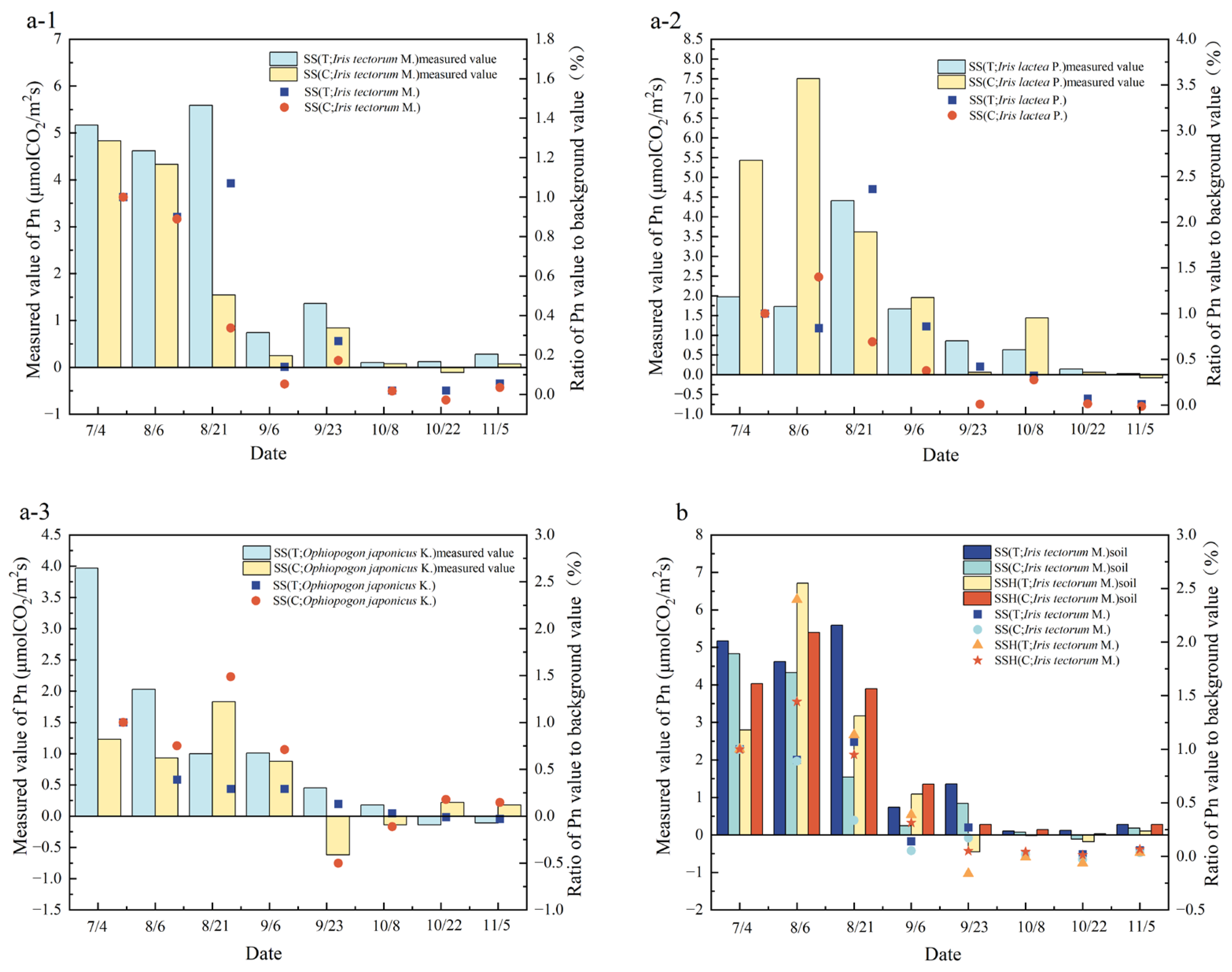
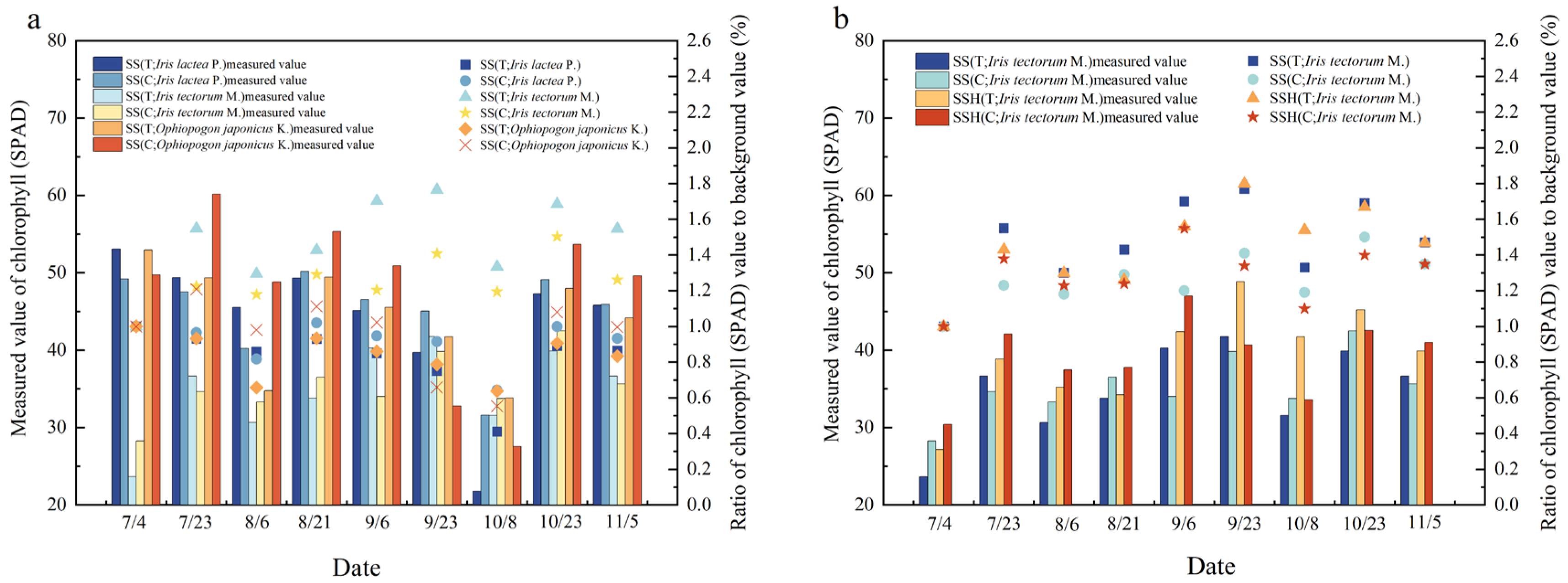
Comparisons of chlorophyll content and net photosynthesis rates (Figure 6a; Figure 7(a-1–a-3)) showed species-specific responses to potentially toxic metal exposure. In Iris lactea, chlorophyll content relative to background levels was consistently higher in the experimental group than in the control group. The chlorophyll growth rates were −13.7% (control) and −6.7% (experimental). However, net photosynthesis declined markedly in both groups, with final changes of −98.5% and −101.5%, respectively.
In Iris tectorum, the experimental group showed lower final growth rates in both chlorophyll and net photosynthesis compared to the control, with reductions of 26.2% and 54.8% for chlorophyll, and −96.3% and −94.6% for photosynthesis, respectively. Conversely, in Ophiopogon japonicus, both chlorophyll content and net photosynthesis were enhanced by potentially toxic metals.
Comparisons across media types (Figure 6b and Figure 7b) showed that the effects of runoff on chlorophyll and net photosynthesis varied with substrate composition. In Iris tectorum, chlorophyll content was consistently lower under potentially toxic metal addition, with stronger reductions observed in systems containing humic substances. A significant positive correlation in chlorophyll trends between the control groups of the two media types (r = 0.891, p < 0.01) was observed.
For net photosynthesis, in systems without humic substances, the control group maintained higher rates than the experimental group throughout the study. In systems with humic substances, the control group initially showed higher net photosynthesis; however, after September 23, the experimental group exceeded the control. Net photosynthesis trends were significantly positively correlated within the same substrate type (p < 0.01).

3.3.2. Changes in Peroxidase Activity and Soluble Sugar Content

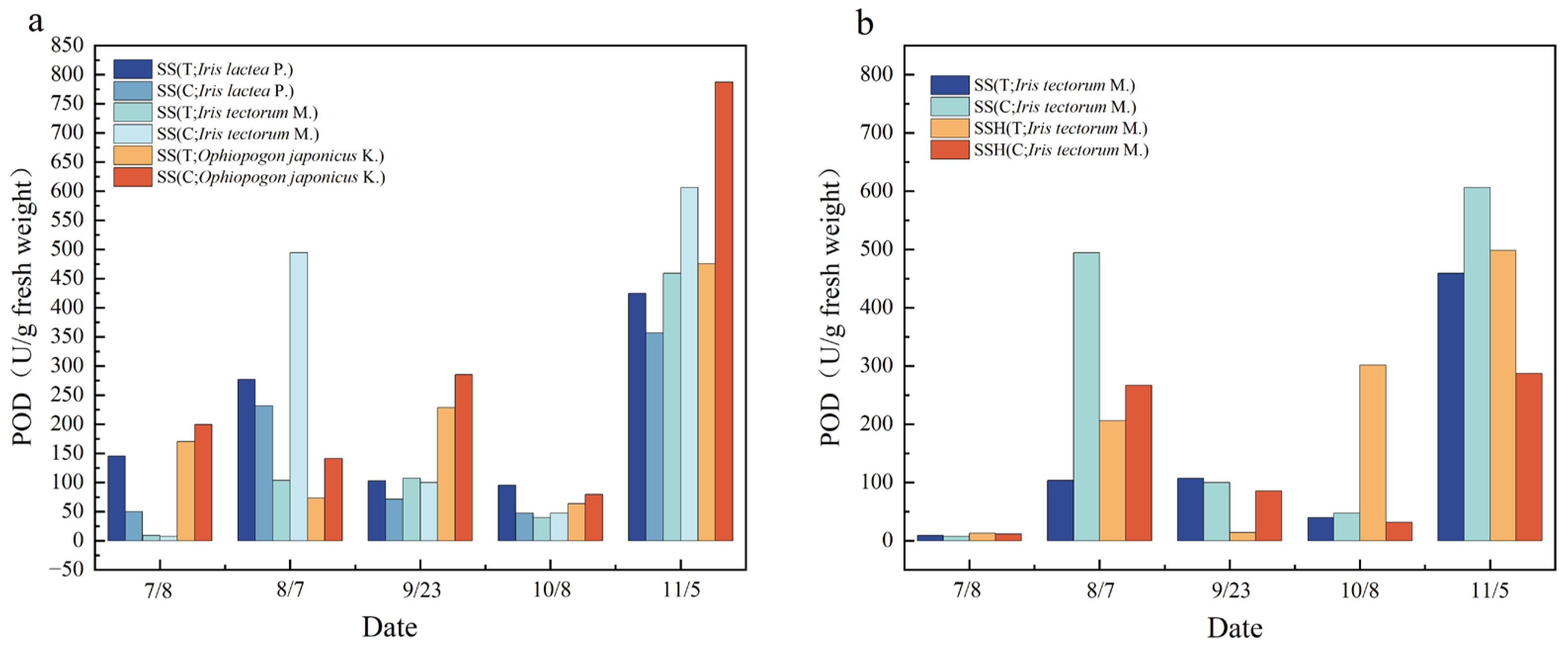
As shown in Figure 8a and Figure 9a, metals elevated peroxidase activity in plants, with significant positive correlations observed between control and experimental groups of the same species (p < 0.01), such as in Iris lactea and Ophiopogon japonicus. Based on the magnitude of POD response, species sensitivity followed the order: Iris tectorum > Iris lactea > Ophiopogon japonicus.
Substrate type also affected POD dynamics (Figure 8b and Figure 9b). A significant positive correlation (p < 0.05) was observed between SSH (C; Iris tectorum M.) and SS (C; Iris tectorum M.) systems. Both systems showed an initial increase, followed by a decrease and a later increase in POD activity.
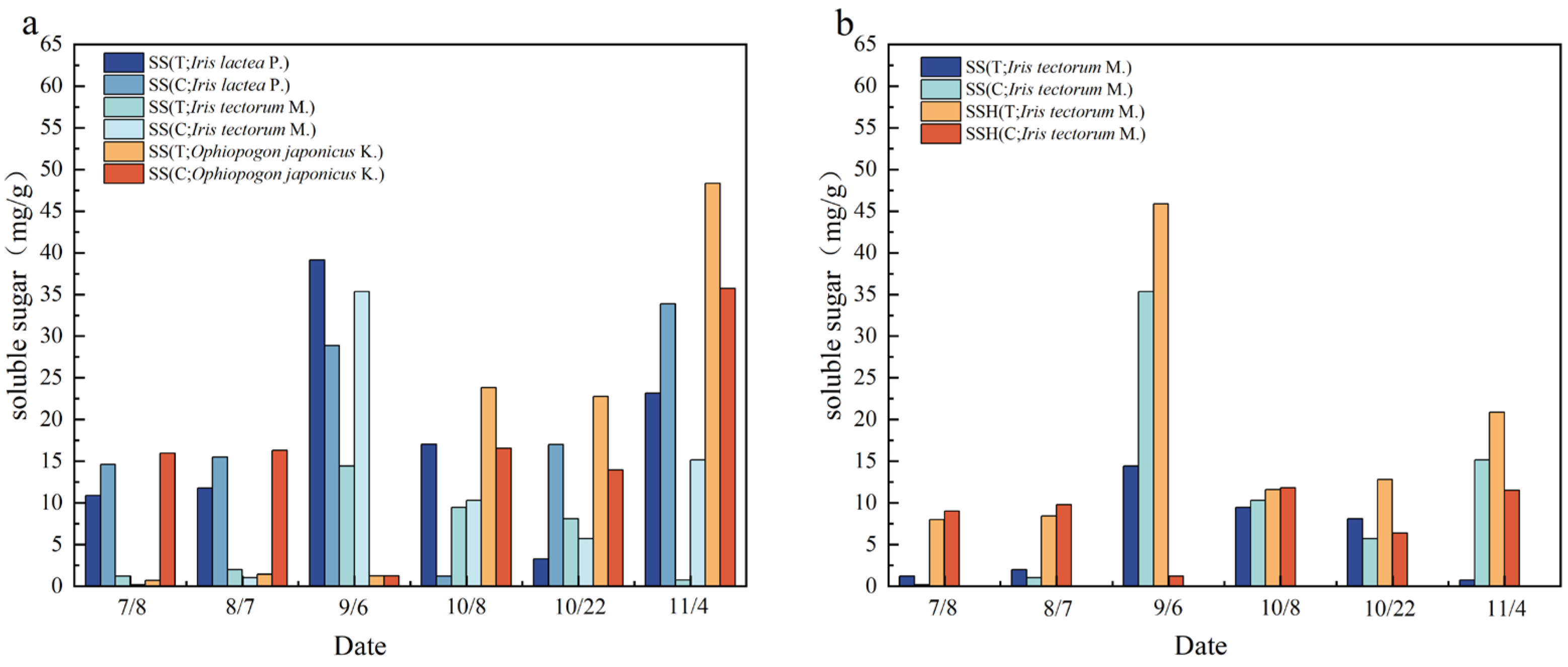
For soluble sugars, metals promoted sugar accumulation in Iris tectorum, reduced sugar content in Ophiopogon japonicus, and caused fluctuating changes in Iris lactea, characterized by an increase–decrease–increase pattern. Systems without humic substances generally exhibited greater increases in soluble sugar content than systems containing humic substances.

4. Discussion

4.1. Retention and Distribution of Potentially Toxic Metals

The results demonstrate that bioretention systems effectively retain potentially toxic metals within the substrate layer. Among the four studied elements, Cd exhibited the highest enrichment in soils under the experimental conditions. This pattern may be related to the relatively high mobility and weak sorption affinity of Cd in soils compared to Cu and Pb. Previous studies have reported that Cd tends to display higher transfer potential in stormwater treatment systems, even when its influent concentration is lower than that of Zn or Cu, due to its limited binding to mineral and organic fractions [54,55].
Differences among plant species further influenced potentially toxic metal distribution within the systems. Soils associated with Ophiopogon japonicus exhibited comparatively lower metal accumulation, whereas Iris tectorum showed higher accumulation in both soils and plant tissues. Such variation is likely associated with species-specific root morphology, transpiration rates, and metal tolerance mechanisms. Well-developed root systems have been shown to enhance rhizosphere interactions and influence metal partitioning between substrate and biomass [56]. In the present study, the relatively limited root development of Ophiopogon japonicus, particularly under short irrigation intervals (<5 days), may have reduced its capacity to regulate potentially toxic metal uptake and redistribution.
Substrate composition also played a critical role in potentially toxic metal retention. The addition of humic substances significantly increased soil organic matter content and enhanced Cu retention. This observation is consistent with studies indicating that humic substances promote the formation of stable organo-metal complexes and reduce the exchangeable fraction of metals in soils [57,58]. However, while humus enhanced metal retention in soils, it reduced the accumulation of Cu and Pb in plant tissues, suggesting decreased bioavailability for root uptake. Similar patterns have been reported in amended soils and constructed wetlands, where organic amendments improved metal immobilization but limited plant accumulation [59,60].
Overall, potentially toxic metal retention and distribution in bioretention systems are governed by the combined influence of substrate characteristics and plant species traits. The pronounced enrichment of Cd under the tested conditions highlights the importance of monitoring its long-term accumulation in stormwater bioretention systems.

4.2. Bioaccumulation Behavior and Influencing Factors

Previous studies have shown that plants primarily absorb water-soluble and exchangeable metal fractions, which represent the more bioavailable forms in soils and bioretention substrates [61]. The distribution of metals among different chemical fractions can influence their transfer from substrate to plant tissues. Pb has been widely reported to exhibit strong affinity for Fe–Mn oxides, carbonates, and organic matter, forming relatively stable associations that may reduce its phytoavailability [62]. In contrast, Cd is often associated with more exchangeable and weakly bound fractions, which may contribute to its comparatively higher mobility and availability for plant uptake under similar conditions [63]. In addition to fractionation behavior, intrinsic physical and chemical properties of Cd may also play a role. Previous studies have suggested that the relatively smaller ionic radius of Cd2+ may facilitate its passage across biological membranes compared to larger divalent metal ions [64]. This characteristic may partly explain the consistently higher bioaccumulation factors observed for Cd in the present study.
Cu and Zn, although essential micronutrients, generally display intermediate behavior: they can be actively taken up by plants but are also subject to complexation and adsorption processes. These literature-reported physical and chemical characteristics are consistent with the accumulation pattern observed in this study (Cd > Cu > Zn > Pb), although specific transport mechanisms were not directly examined.
Among the tested species, Iris tectorum exhibited higher bioaccumulation factor values for most metals compared with the other two species, indicating a comparatively greater transfer of metals to aboveground tissues. Differences in accumulation behavior among plant species may be related to variations in root characteristics and physiological tolerance to potentially toxic metals [65,66]. As only aboveground tissues were analyzed in this study, the results reflect relative transfer to shoots rather than whole-plant accumulation.
The addition of humic substances significantly reduced the bioaccumulation factors of Cu, Zn, and Pb. Humic substances have been widely reported to interact with metal ions through complexation and chelation reactions, potentially decreasing the concentration of free metal ions in the soil solution [67,68]. The reduction in bioavailable fractions may limit root uptake and subsequently decrease metal accumulation in plant tissues. This effect appeared less pronounced for Cd, which is generally considered to have weaker associations with organic matter compared to Cu and Pb.
Increasing influent concentrations enhanced the bioaccumulation factor values of Cu and Zn, indicating concentration-dependent accumulation within the tested range. In contrast, Cd maintained bioaccumulation factor values above 1 across treatments, while Pb consistently remained below 1, suggesting differences in effective transfer potential among the four metals under varying loading conditions.

4.3. Physiological Responses Under Metal Stress

The results indicate that runoff-associated potentially toxic metals altered photosynthetic performance, antioxidant activity, and carbohydrate metabolism in a species-dependent manner. Changes in chlorophyll content in Iris lactea (r = 0.903, p < 0.01) and Ophiopogon japonicus (r = 0.688, p < 0.05) were significantly positively correlated with metal addition, confirming the direct influence of metal input on pigment dynamics. However, chlorophyll content and net photosynthesis did not always change synchronously. In Iris lactea, chlorophyll content increased whereas net photosynthesis declined markedly. This pattern suggests that although pigment synthesis was maintained, the photosynthetic process itself was inhibited under metal stress. Potentially toxic metals are known to interfere with photosynthetic electron transport and carbon assimilation, which may explain the observed decline in net photosynthesis [69,70]. In Iris tectorum, both chlorophyll and net photosynthesis decreased under metal exposure, indicating a stronger inhibitory effect on the photosynthetic system. In contrast, Ophiopogon japonicus exhibited enhanced chlorophyll content and net photosynthesis, suggesting a comparatively higher tolerance to runoff-associated metals.
Humic substances modified these responses. Previous studies have reported that humic substances can form complexes with metals and influence their bioavailability [58]. In this study, systems containing humic substances showed stronger inhibition of chlorophyll and soluble sugars during certain periods, suggesting that humic substances may enhance metal uptake or availability at earlier stages. However, after late September, net photosynthesis increased and peroxidase activity decreased in humic-containing systems, indicating that seasonal changes may alter the interaction between humic substances and metals, thereby reducing physiological stress in the later growth stage [71].
POD activity increased under potentially toxic metal exposure, particularly in Iris tectorum, reflecting activation of antioxidant defense mechanisms. Potentially toxic metals can induce oxidative stress through the generation of reactive oxygen species, and elevated POD activity is commonly regarded as a response to such stress [72,73]. The greater increase in POD activity in Iris tectorum is consistent with its stronger inhibition in photosynthesis, indicating higher sensitivity to metal stress.
Soluble sugar responses also varied among species. Increased sugar accumulation in Iris tectorum may represent a stress response, as soluble sugars can function in osmotic adjustment and stress protection [74]. In contrast, reduced sugar content in Ophiopogon japonicus suggests less metabolic disturbance. Systems containing humic substances showed lower sugar accumulation compared with those without humic substances, indicating that humic addition may influence carbohydrate metabolism under metal exposure, possibly through interactions affecting metal availability [75].
Overall, the combined physiological indicators suggest that Ophiopogon japonicus exhibits lower sensitivity to runoff-associated potentially toxic metals, whereas Iris tectorum experiences more pronounced physiological stress. These differences should be considered in plant selection for long-term operation of bioretention systems receiving metal-enriched runoff.
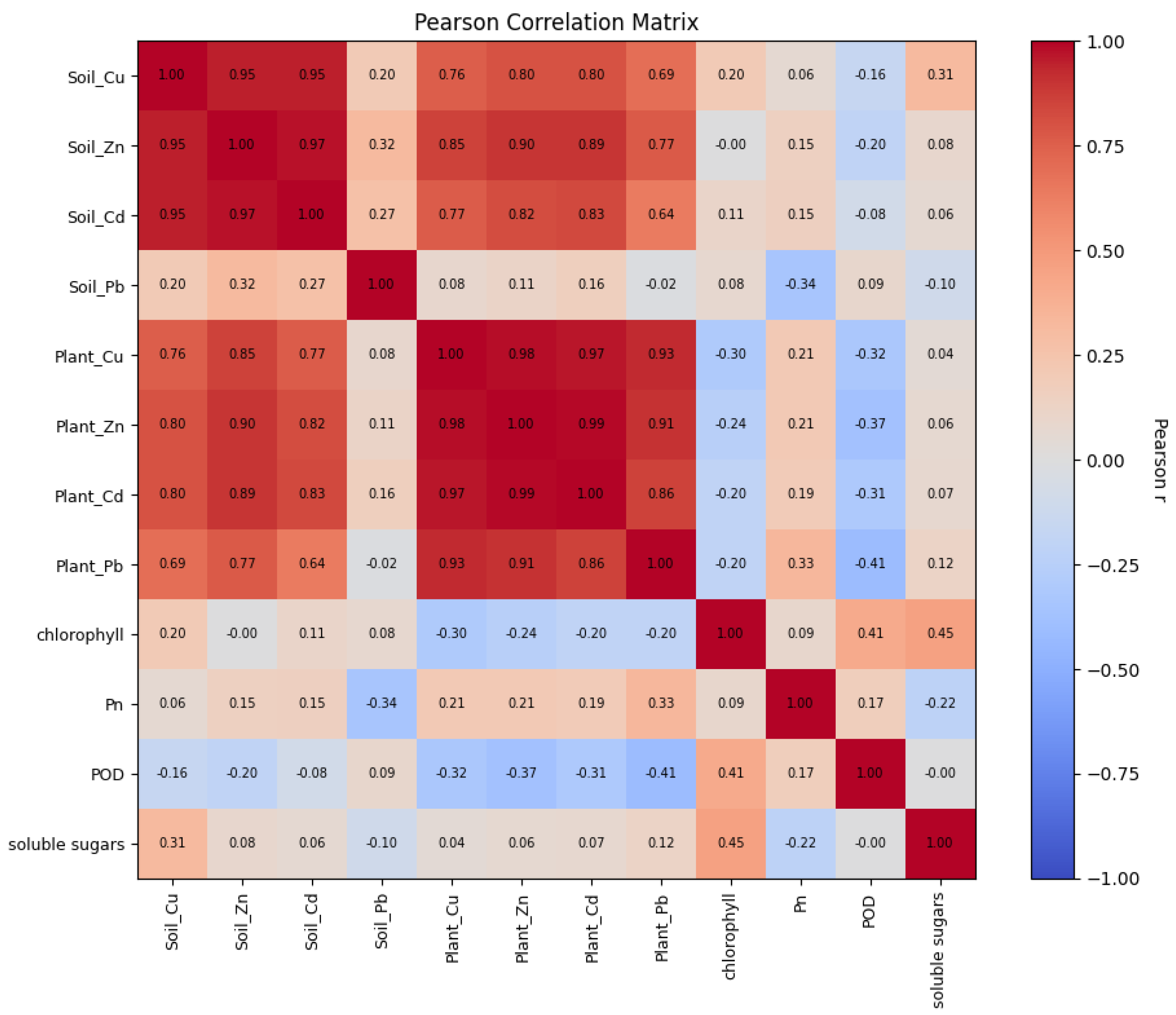
Pearson correlation analysis (Figure 10) revealed strong positive correlations among soil metals (r = 0.95 to 0.97), suggesting coordinated accumulation patterns within the bioretention systems. Significant correlations were also observed between soil and plant concentrations of the same metals (e.g., Zn: r = 0.90; Cd: r = 0.83), indicating that plant uptake was largely governed by soil metal availability. In addition, plant metals were highly correlated with each other (r = 0.97 to 0.99), reflecting co-accumulation within plant tissues.
In contrast, physiological indicators exhibited generally weak correlations with metal concentrations (|r| < 0.5). Chlorophyll content showed weak negative associations with plant metals (r = −0.20 to −0.30), and peroxidase activity was weakly negatively correlated with plant Pb (r = −0.41). These findings suggest that although metal accumulation occurred, physiological responses remained relatively stable, indicating adaptive regulation rather than severe metal-induced stress.

4.4. Implications for Urban Stormwater Managements

The findings of this study have direct relevance for vegetation selection and substrate configuration in bioretention systems exposed to metal-contaminated runoff.
Clear differences were observed among plant species. Under metal exposure, Ophiopogon japonicus maintained comparatively stable photosynthetic performance and showed lower antioxidant responses, while Iris tectorum exhibited stronger inhibition of photosynthesis and elevated stress indicators. These contrasting responses indicate that plant tolerance should be taken into account when selecting vegetation for stormwater facilities subjected to continuous metal loading. This consideration is particularly important in the context of China’s “sponge city” developments, where bioretention systems are widely implemented and operate under long-term runoff inputs [76].
Substrate conditions also affected plant performance. The addition of humic substances influenced chlorophyll content, soluble sugar levels, and peroxidase activity, and the direction of these effects changed over the growing season. The shift in physiological responses after late September suggests that plant–substrate–metal interactions vary over time. Consequently, evaluations based only on short monitoring periods may not fully represent long-term system behavior, and performance assessments should cover complete growth cycles.
Several limitations should be acknowledged. The experiment was conducted at a controlled scale and focused on selected physiological parameters. Metal accumulation within plant tissues, long-term substrate saturation, and hydrological variability at field scale were not included. Effluent metal concentrations were not continuously monitored; therefore, potential short-term desorption events could not be directly assessed. Further work involving multi-year monitoring and pilot-scale systems is needed to determine whether physiological stability is associated with sustained metal removal under practical conditions.
The plant species investigated are commonly used in urban landscaping, and humic substances are readily available as soil amendments. Therefore, applying these findings does not require specialized materials or infrastructure. Nevertheless, implementation in other regions, particularly those with limited resources, should consider local plant adaptability and substrate availability.
Taken together, incorporating plant tolerance characteristics into stormwater system design may contribute to more stable operation of bioretention systems receiving metal-enriched runoff.

5. Conclusions

Understanding the behavior of potentially toxic metals in stormwater runoff and their interactions with plant–soil systems is essential for improving the long-term efficiency and ecological stability of bioretention systems. This study employed Iris lactea, Iris tectorum, and Ophiopogon japonicus as model plants and systematically examined the influence of plant species, media types, and influent metal concentrations on bioretention performance. Key findings include:
(1)
Among the three herbaceous plants studied, Iris tectorum exhibited stronger capabilities in soil–plant accumulation and bioaccumulation of the four potentially toxic metals compared to Ophiopogon japonicus. Physiological responses to potentially toxic metals revealed lower sensitivity in Ophiopogon japonicus. This study proposes deploying Iris tectorum as the primary metal accumulator in moderately contaminated zones, with Ophiopogon japonicus strategically implemented as stress-buffering vegetation in high-load pollution areas within practical bioretention system designs. This configuration leverages their differential metal uptake efficiency and physiological resilience to optimize bioretention system performance.
(2)
Elevated runoff concentrations increased copper and zinc bioaccumulation in Iris tectorum, and synergistic effects among potentially toxic metals were frequently observed in the foliage. Humic substances combined with appropriate runoff concentrations strengthened plant–soil metal correlations, whereas excessively high concentrations weakened these linkages. Adaptive inflow regulation mechanisms via pretreatment units can be implemented to modulate peak metal concentrations.
(3)
The role of humic substances was assessed by comparing systems with and without humic amendment, as humic fractions were not directly quantified. Under the tested conditions, humic addition increased soil organic matter content and enhanced Cu retention in the substrate, while significantly reducing the bioaccumulation factors of Cu, Zn, and Pb in plant shoots. The effect on Cd was comparatively limited. These results indicate that humic substances primarily redistributed metals within the system by enhancing soil retention and reducing plant uptake. Seasonal differences in photosynthesis and peroxidase activity further suggest that humic amendment influenced plant physiological responses in a time-dependent manner.
This study was conducted under controlled experimental conditions and focused on selected plant species and metal combinations. Field-scale variability and long-term stability of metal–humic interactions require further validation. Future studies should assess long-term performance and microbial mediation under real stormwater conditions. From a management perspective, integrating plant functional differentiation, influent control, and stratified substrate design can enhance both removal efficiency and ecological sustainability.

Supplementary Materials

The following supporting information can be downloaded at https://www.mdpi.com/article/10.3390/w18050642/s1; Table S1: The initial metal content in the experimental soils.

Author Contributions

All authors equally contributed to the study conceptualization and design. Material preparation, data collection, and formal analysis were performed by Q.C., B.W., G.Z., and M.W. Q.C. drafted the initial manuscript, and Y.G. contributed to the review and editing of the manuscript. All authors have read and agreed to the published version of the manuscript.

Funding

This research was funded by the National Natural Science Foundation of China (52270085) and the Project of Construction and Support for High-Level Innovative Teams of Beijing Municipal Institutions (BPHR20220108).

Data Availability Statement

The original contributions presented in this study are included in the article. Further inquiries can be directed to the corresponding author.

Conflicts of Interest

Author Guohong Zhang was employed by the company MCC Capital Engineering & Research Incorporation Limited. The remaining authors declare that the research was conducted in the absence of any commercial or financial relationships that could be construed as a potential conflict of interest.

References

  1. Sahu, P.; Patel, A.R.; Pandey, A.; Hait, M.; Patra, G.K. Assessment of heavy metal ion toxicity in wastewater: A comprehensive review. Inorg. Chim. Acta 2025, 585, 122751. [Google Scholar] [CrossRef]
  2. Moukadiri, H.; Noukrati, H.; Ben Youcef, H.; Iraola, I.; Trabadelo, V.; Oukarroum, A.; Malka, G.; Barroug, A. Impact and toxicity of heavy metals on human health and latest trends in removal process from aquatic media. Int. J. Environ. Sci. Technol. 2024, 21, 3407–3444. [Google Scholar] [CrossRef]
  3. Ali, H.; Khan, E.; Ilahi, I. Environmental Chemistry and Ecotoxicology of Hazardous Heavy Metals: Environmental Persistence, Toxicity, and Bioaccumulation. J. Chem. 2019, 2019, 6730305. [Google Scholar] [CrossRef]
  4. Jin, X.; Wu, Q.; Peñuelas, J.; Sardan, J.; Peng, Y.; Li, Z.; Peng, X.; Heděnec, P.; Yang, Q.; Yuan, C.; et al. Climate and anthropogenic activities control the concentrations of copper, zinc, cadmium and chromium in global inland waters. Commun Earth Environ. 2025, 6, 520. [Google Scholar] [CrossRef]
  5. Farouz, M.; El-Dek, S.; ElFaham, M.M.; Eldemerdash, U. Ecofriendly sustainable synthetized nano-composite for removal of heavy metals from aquatic environment. Appl. Nanosci. 2022, 12, 1585–1600. [Google Scholar] [CrossRef]
  6. Yang, L.Y.; Zhang, W.; Ren, M.Y.; Cao, F.F.; Chen, F.F.; Zhang, Y.T.; Shang, L.H. Mercury distribution in a typical shallow lake in northern China and its re-emission from sediment. Ecotoxicol. Environ. Saf. 2020, 192, 110316. [Google Scholar] [CrossRef] [PubMed]
  7. Obayomi, O.O.; Sulaiman, M.B.; Oluwasola, H.O.; Sulaiman, A.B.; Akpomie, K.G.; Odewole, O.A.; Otunomo, I.I.; David, M.K. Ecological risk assessment of potentially toxic elements in the bottom sediments of a stream in Oke-Ere, Kogi State, North Central Nigeria. Int. J. Environ. Sci. Technol. 2023, 20, 13107–13118. [Google Scholar] [CrossRef]
  8. Saidon, N.B.; Szabo, R.; Budai, P.; Lehel, J. Trophic transfer and biomagnification potential of environmental contaminants (heavy metals) in aquatic ecosystems. Environ. Pollut. 2024, 340, 122815. [Google Scholar] [CrossRef]
  9. Zheng, R.Y.; Liu, Y.R.; Zhang, Z.H. Trophic transfer of heavy metals through aquatic food web in the largest mangrove reserve of China. Sci. Total Environ. 2023, 899, 165655. [Google Scholar] [CrossRef]
  10. Waqas, W.; Yuan, Y.; Ali, S.; Zhang, M.Q.; Shafiq, M.; Ali, W.; Chen, Y.Y.; Xiang, Z.F.; Chen, R.X.; Ikhwanuddin, M.; et al. Toxic effects of heavy metals on crustaceans and associated health risks in humans: A review. Environ. Chem. Lett. 2024, 22, 1391–1411. [Google Scholar] [CrossRef]
  11. Li, J.Y.; Culver, T.B.; Persaud, P.P.; Hathaway, J.M. Developing nitrogen removal models for stormwater bioretention systems. Water Res. 2023, 243, 120381. [Google Scholar] [CrossRef]
  12. Li, Y.Q.; Zhang, Y.; Yu, H.; Han, Y.; Zuo, J.N. Enhancing nitrate removal from urban stormwater in an inverted bioretention system. Ecol. Eng. 2021, 170, 106315. [Google Scholar] [CrossRef]
  13. Duan, X.L.; Wang, S.M.; Li, J.K. Accumulation characteristics and risk of heavy metals and microbial community composition in bioretention systems: A case study of a university campus. Ecol. Eng. 2023, 193, 106996. [Google Scholar] [CrossRef]
  14. Liu, K.Y.; Li, X.Y.; Lei, P.C.; Wang, H.; Yuan, S.J.; Li, L.; Dai, X.H. Heavy metals removal from stormwater runoff by bioretention cells: Recent advances and future prospects. J. Water Process Eng. 2025, 75, 108027. [Google Scholar] [CrossRef]
  15. Wang, J.L.; Zhao, Y.L.; Yang, L.Q.; Tu, N.N.; Xi, G.P.; Fang, X. Removal of Heavy Metals from Urban Stormwater Runoff Using Bioretention Media Mix. Water 2017, 9, 854. [Google Scholar] [CrossRef]
  16. Jafarzadeh, A.; Matta, A.; Moghadam, S.V.; Dessouky, S.; Hutchinson, J.; Kapoor, V. Field performance of two stormwater bioretention systems for treating heavy metals and polycyclic aromatic hydrocarbons from urban runoff. J. Environ. Manag. 2024, 370, 123080. [Google Scholar] [CrossRef] [PubMed]
  17. Costello, D.M.; Hartung, E.W.; Stoll, J.T.; Jefferson, A.J. Bioretention cell age and construction style influence stormwater pollutant dynamics. Sci. Total Environ. 2020, 712, 135597. [Google Scholar] [CrossRef] [PubMed]
  18. Croft, K.; Kjellerup, B.; Davis, A.P. Interactions of particulate- and dissolved-phase heavy metals in a mature stormwater bioretention cell. J. Environ. Manag. 2024, 352, 120014. [Google Scholar] [CrossRef]
  19. Al-Amin, A.; Ryan, R.J.; McKenzie, E.R. Effects of dissolved organic carbon on potentially toxic element desorption in stormwater bioretention systems. Sci. Total Environ. 2024, 912, 168651. [Google Scholar] [CrossRef] [PubMed]
  20. Soltaninia, S.; Taghavi, L.; Hosseini, S.A.; Motamedvaziri, B.; Eslamian, S. The effect of land-use type and climatic conditions on heavy metal pollutants in urban runoff in a semi-arid region. Water Reuse 2022, 12, 384–402. [Google Scholar] [CrossRef]
  21. Shah, K.J.; Yu, J.C.; Zhang, T.; You, Z.Y.; Kim, H. Simultaneous Removal of Cu(II) And Pb(Ii) From Stormwater Runoff by Y-Type-Zeolite-Modified Bioretention System. Water Air Soil Pollut. 2024, 235, 7179. [Google Scholar] [CrossRef]
  22. Al-Ameri, M.; Hatt, B.; Le Coustumer, S.; Fletcher, T.; Payne, E.; Deletic, A. Accumulation of heavy metals in stormwater bioretention media: A field study of temporal and spatial variation. J. Hydrol. 2018, 567, 721–731. [Google Scholar] [CrossRef]
  23. Furén, R.; Österlund, H.; Winston, R.J.; Tirpak, R.A.; Dorsey, J.D.; Smith, J.; Viklander, M.; Blecken, G.T. Concentration, distribution, and fractionation of metals in the filter material of 29 bioretention facilities: A field study. Environ. Sci. Water Res. Technol. 2023, 9, 3158–3173. [Google Scholar] [CrossRef]
  24. Jiang, C.B.; Peng, X.Z.; Dang, Z.G.; Li, J.K.; Dong, W.; Yang, X.; Zhang, Y.X.; Bai, X.R.; Yang, Q. Temporal Process and Leaching Characteristics for Runoff Pollutants in Typical Solid Waste Improved Bioretention Filters. Water Air Soil Pollut. 2023, 234, 6434. [Google Scholar] [CrossRef]
  25. Mehmood, T.; Lu, J.; Liu, C.; Gaurav, G.K. Organics removal and microbial interaction attributes of zeolite and ceramsite assisted bioretention system in copper-contaminated stormwater treatment. J. Environ. Manag. 2021, 292, 112654. [Google Scholar] [CrossRef] [PubMed]
  26. Liu, X.; Shi, H.; Bai, Z.; Zhou, W.; Liu, K.; Wang, M.; He, Y. Heavy metal concentrations of soils near the large opencast coal mine pits in China. Chemosphere 2020, 244, 125360. [Google Scholar] [CrossRef] [PubMed]
  27. Pikula, D.; Stepien, W. Effect of the Degree of Soil Contamination with Heavy Metals on Their Mobility in the Soil Profile in a Microplot Experiment. Agronomy 2021, 11, 878. [Google Scholar] [CrossRef]
  28. Bashir, M.A.; Rehim, A.; Liu, J.; Imran, M.; Liu, H.B.; Suleman, M.; Naveed, S. Soil survey techniques determine nutrient status in soil profile and metal retention by calcium carbonate. Catena 2019, 173, 141–149. [Google Scholar] [CrossRef]
  29. Bao, J.S.; Chang, Y.H.; Cheng, N.; Li, Y.X.; Chang, X.; Feng, J.S.; Nan, X.; Ren, H.M. Vertical distribution and migration of heavy metals in soil of green stormwater infrastructure receiving roof runoff. Sci. Total Environ. 2024, 954, 176511. [Google Scholar] [CrossRef]
  30. Lim, H.S.; Lim, W.; Hu, J.Y.; Ziegler, A.; Ong, S.L. Comparison of filter media materials for heavy metal removal from urban stormwater runoff using biofiltration systems. J. Environ. Manag. 2015, 147, 24–33. [Google Scholar] [CrossRef]
  31. Biswal, B.K.; Vijayaraghavan, K.; Tsen-Tieng, D.L.; Balasubramanian, R. Biochar-based bioretention systems for removal of chemical and microbial pollutants from stormwater: A critical review. J. Hazard. Mater. 2022, 422, 126886. [Google Scholar] [CrossRef]
  32. Buates, J.; Sun, Y.Q.; He, M.J.; Mohanty, S.K.; Khan, E.; Tsang, D.C.W. Performance of wood waste biochar and food waste compost in a pilot-scale sustainable drainage system for stormwater treatment. Environ. Pollut. 2024, 348, 123767. [Google Scholar] [CrossRef] [PubMed]
  33. Tirpak, R.A.; Afrooz, A.; Winston, R.J.; Valenca, R.; Schiff, K.; Mohanty, S.K. Conventional and amended bioretention soil media for targeted pollutant treatment: A critical review to guide the state of the practice. Water Res. 2021, 189, 116648. [Google Scholar] [CrossRef]
  34. Zhang, X.R.; Liu, Z.Y.; Zhang, H.K.; Liu, J.F.; Wang, Y.; Zhang, Z.Y.; Tan, C.H.; Li, H.Y. Synergistic removal efficiency of heavy metals and biological effects in humic acid-modified coal gangue-amended bioretention systems. Process Saf. Environ. Prot. 2026, 205, 108237. [Google Scholar] [CrossRef]
  35. da Silva, L.S.; Constantino, I.C.; Bento, L.R.; Tadini, A.M.; Bisinoti, M.C.; Boscolo, M.; Ferreira, O.P.; Mounier, S.; Piccolo, A.; Spaccini, R.; et al. Humic extracts from hydrochar and Amazonian Anthrosol: Molecular features and metal binding properties using EEM-PARAFAC and 2D FTIR correlation analyses. Chemosphere 2020, 256, 127110. [Google Scholar] [CrossRef]
  36. Zhao, K.; Yang, Y.; Peng, H.; Zhang, L.; Zhou, Y.; Zhang, J.; Du, C.; Liu, J.; Lin, X.; Wang, N.; et al. Silicon fertilizers, humic acid and their impact on physicochemical properties, availability and distribution of heavy metals in soil and soil aggregates. Sci. Total Environ. 2022, 822, 153483. [Google Scholar] [CrossRef]
  37. Peng, M.; Zhao, C.; Ma, H.; Yang, Z.; Yang, K.; Liu, F.; Li, K.; Yang, Z.; Tang, S.; Guo, F.; et al. Heavy metal and Pb isotopic compositions of soil and maize from a major agricultural area in Northeast China: Contamination assessment and source apportionment. J. Geochem. Explor. 2020, 208, 106403. [Google Scholar] [CrossRef]
  38. Yu, S.Q.; Qin, H.P.; Ding, W. Modeling the effects of vegetation dynamics on the hydrological performance of a bioretention system. J. Hydrol. 2023, 620, 129473. [Google Scholar] [CrossRef]
  39. Shrestha, P.; Hurley, S.E.; Wemple, B.C. Effects of different soil media, vegetation, and hydrologic treatments on nutrient and sediment removal in roadside bioretention systems. Ecol. Eng. 2018, 112, 116–131. [Google Scholar] [CrossRef]
  40. Ghori, N.H.; Ghori, T.; Hayat, M.Q.; Imadi, S.R.; Gul, A.; Altay, V.; Ozturk, M. Heavy metal stress and responses in plants. Int. J. Environ. Sci. Technol. 2019, 16, 1807–1828. [Google Scholar] [CrossRef]
  41. Phaenark, C.; Seechanhoi, P.; Sawangproh, W. Metal toxicity in Bryum coronatum Schwaegrichen: Impact on chlorophyll content, lamina cell structure, and metal accumulation. Int. J. Phytoremediat. 2024, 26, 1336–1347. [Google Scholar] [CrossRef] [PubMed]
  42. Xu, Y.X.; Zhang, L.; Wang, J.; Liang, D.; Xia, H.; Lv, X.L.; Deng, Q.X.; Wang, X.; Luo, X.; Liao, M.A.; et al. Gibberellic acid promotes selenium accumulation in Cyphomandra betacea under selenium stress. Front. Plant Sci. 2022, 13, 968768. [Google Scholar] [CrossRef] [PubMed]
  43. Li, L.Y.; Fan, Z.H.; Gan, Q.Q.; Xiao, G.; Luan, M.B.; Zhu, R.L.; Zhang, Z.Q. Conservative mechanism through various rapeseed (Brassica napus L.) varieties respond to heavy metal (Cadmium, Lead, Arsenic) stress. Front. Plant Sci. 2025, 15, 1521075. [Google Scholar] [CrossRef]
  44. Qi, W.J.; Bai, J.P.; Yu, H.; Han, G.J. Physiological Adaptations of Vigna radiata to Heavy Metal Stress: Soluble Sugar Accumulation and Biomass Enhancement. Plants 2025, 14, 14081191. [Google Scholar] [CrossRef]
  45. Yu, S.; Qin, H. Modeling the effects of plant uptake dynamics on nitrogen removal of a bioretention system. Water Res. 2023, 247, 120763. [Google Scholar] [CrossRef]
  46. Song, J.J.C.; Li, Y.Y.; Tang, H.; Qiu, C.S.; Lei, L.; Wang, M.L.; Xu, H. Application potential of Vaccinium ashei R. for cadmium migration retention in the mining area soil. Chemosphere 2023, 324, 138346. [Google Scholar] [CrossRef]
  47. Rycewicz-Borecki, M.; McLean, J.E.; Dupont, R.R. Bioaccumulation of copper, lead, and zinc in six macrophyte species grown in simulated stormwater bioretention systems. J. Environ. Manag. 2016, 166, 267–275. [Google Scholar] [CrossRef] [PubMed]
  48. Gong, Y.W.; Hao, Y.; Li, J.Q.; Li, H.Y.; Shen, Z.Y.; Wang, W.H.; Wang, S.S. The Effects of Rainfall Runoff Pollutants on Plant Physiology in a Bioretention System Based on Pilot Experiments. Sustainability 2019, 11, 6402. [Google Scholar] [CrossRef]
  49. Gong, Y.W.; Zhang, G.H.; Hao, Y.; Nie, L.M. Enrichment Evaluation of Heavy Metals from Stormwater Runoff to Soil and Shrubs in Bioretention Facilities. Water 2022, 14, 0638. [Google Scholar] [CrossRef]
  50. Pehoiu, G.; Murarescu, O.; Radulescu, C.; Dulama, I.D.; Teodorescu, S.; Stirbescu, R.M.; Bucurica, I.A.; Stanescu, S.G. Heavy metals accumulation and translocation in native plants grown on tailing dumps and human health risk. Plant Soil 2020, 456, 405–424. [Google Scholar] [CrossRef]
  51. Yang, X.; Guo, A.L.; Pang, Y.P.; Cheng, X.J.; Xu, T.; Li, X.R.; Liu, J.; Zhang, Y.Y.; Liu, Y. Astaxanthin Attenuates Environmental Tobacco Smoke-Induced Cognitive Deficits: A Critical Role of p38 MAPK. Mar. Drugs 2019, 17, 0024. [Google Scholar] [CrossRef] [PubMed]
  52. Liu, J.; Zhang, X.H.; Li, T.Y.; Wu, Q.X.; Jin, Z.J. Soil characteristics and heavy metal accumulation by native plants in a Mn mining area of Guangxi, South China. Environ. Monit. Assess. 2013, 186, 2269–2279. [Google Scholar] [CrossRef] [PubMed]
  53. Serbula, S.M.; Radojevic, A.A.; Kalinovic, J.V.; Kalinovic, T.S. Indication of airborne pollution by birch and spruce in the vicinity of copper smelter. Environ. Sci. Pollut. Res. 2014, 21, 11510–11520. [Google Scholar] [CrossRef]
  54. Devi, U.; Bhattacharyya, K.G. Mobility and bioavailability of Cd, Co, Cr, Cu, Mn and Zn in surface runoff sediments in the urban catchment area of Guwahati, India. Appl. Water Sci. 2018, 8, 6518. [Google Scholar] [CrossRef]
  55. Duan, R.B.; Fedler, C.B. Competitive adsorption of Cu2+, Pb2+, Cd2+, and Zn2+ onto water treatment residuals: Implications for mobility in stormwater bioretention systems. Water Sci. Technol. 2022, 86, 878–893. [Google Scholar] [CrossRef]
  56. Zheng, Y.H.; Li, Y.T.; Zhang, Z.G.; Tan, Y.N.; Cai, W.Q.; Ma, C.N.; Chen, F.L.; Lu, J.W. Effect of Low-Molecular-Weight Organic Acids on Migration Characteristics of Pb in Reclaimed Soil. Front. Chem. 2022, 10, 934949. [Google Scholar] [CrossRef]
  57. Wang, M.M.; Song, G.F.; Zheng, Z.H.; Song, Z.X.; Mi, X.; Hua, J.J.; Wang, Z.H. Effect of humic substances on the fraction of heavy metal and microbial response. Sci. Rep. 2024, 14, 61575. [Google Scholar] [CrossRef]
  58. Li, C.N.; Li, H.Y.; Yao, T.; Su, M.; Ran, F.; Li, J.H.; He, L.; Chen, X.; Zhang, C.; Qiu, H.Z. Effects of swine manure composting by microbial inoculation: Heavy metal fractions, humic substances, and bacterial community metabolism. J. Hazard. Mater. 2021, 415, 125559. [Google Scholar] [CrossRef]
  59. Lasota, J.; Blonska, E.; Lyszczarz, S.; Tibbett, M. Forest Humus Type Governs Heavy Metal Accumulation in Specific Organic Matter Fractions. Water Air Soil Pollut. 2020, 231, 4450. [Google Scholar] [CrossRef]
  60. Mei, Y.; Zhou, H.; Gao, L.; Zuo, Y.M.; Wei, K.H.; Cui, N.Q. Accumulation of Cu, Cd, Pb, Zn and total P from synthetic stormwater in 30 bioretention plants. Environ. Sci. Pollut. Res. 2020, 27, 19888–19900. [Google Scholar] [CrossRef] [PubMed]
  61. Xu, L.; Xing, X.Y.; Cui, H.B.A.; Zhou, J.; Zhou, J.; Peng, J.B.A.; Bai, J.F.; Zheng, X.B.; Ji, M.F. The Combination of Lime and Plant Species Effects on Trace Metals (Copper and Cadmium) in Soil Exchangeable Fractions and Runoff in the Red Soil Region of China. Front. Environ. Sci. 2021, 9, 638324. [Google Scholar] [CrossRef]
  62. Ares, A.; Itouga, M.; Kato, Y.; Sakakibara, H. Differential Metal Tolerance and Accumulation Patterns of Cd, Cu, Pb and Zn in the Liverwort Marchantia polymorpha L. Bull. Environ. Contam. Toxicol. 2018, 100, 444–450. [Google Scholar] [CrossRef]
  63. Qin, S.Y.; Liu, H.G.; Nie, Z.J.; Rengel, Z.; Gao, W.; Li, C.; Zhao, P. Toxicity of cadmium and its competition with mineral nutrients for uptake by plants: A review. Pedosphere 2020, 30, 168–180. [Google Scholar] [CrossRef]
  64. Sinkakarimi, M.H.; Solgi, E.; Hosseinzadeh Colagar, A. Interspecific differences in toxicological response and subcellular partitioning of cadmium and lead in three earthworm species. Chemosphere 2020, 238, 124595. [Google Scholar] [CrossRef] [PubMed]
  65. Shao, L.M.; Xu, T.; Wang, X.B.; Zhang, R.L.; Wang, X.Y.; Ren, Z.M.; Zhang, J.P.; Xia, Y.P.; Li, D.Q. Integrative Comparative Assessment of Cold Acclimation in Evergreen and Deciduous Iris Species. Antioxidants 2022, 11, 0977. [Google Scholar] [CrossRef]
  66. Ali, F.; Jilani, G.; Fahim, R.; Bai, L.L.; Wang, C.L.; Tian, L.Q.; Jiang, H.L. Functional and structural roles of wiry and sturdy rooted emerged macrophytes root functional traits in the abatement of nutrients and metals. J. Environ. Manag. 2019, 249, 109330. [Google Scholar] [CrossRef] [PubMed]
  67. Wang, Y.S.; Luo, S.X.; Wang, Z.; Tong, Z.; Deng, Q.; Lin, Y.L.; Zhang, L.X. Effects of exogenous selenium levels on humus characteristics in selenium-enriched soil and lead accumulation in Brassica juncea. J. Soils Sediments 2020, 20, 3742–3755. [Google Scholar] [CrossRef]
  68. Nguyen-Phuong, Q.; Ponthieu, M.; Sayen, S.; Marin, B.; Guillon, E. Adsorption modeling of Cu(II) and Pb(II) onto humin extracted from a peat soil. J. Soils Sediments 2024, 24, 769–778. [Google Scholar] [CrossRef]
  69. Todorenko, D.; Volgusheva, A.; Timofeev, N.; Kovalenko, I.; Matorin, D.; Antal, T. Multiple in vivo Effects of Cadmium on Photosynthetic Electron Transport in Pea Plants. Photochem. Photobiol. 2021, 97, 1516–1526. [Google Scholar] [CrossRef]
  70. Sharma, A.; Kumar, V.; Shahzad, B.; Ramakrishnan, M.; Sidhu, G.P.S.; Bali, A.S.; Handa, N.; Kapoor, D.; Yadav, P.; Khanna, K.; et al. Photosynthetic Response of Plants Under Different Abiotic Stresses: A Review. J. Plant Growth Regul. 2020, 39, 509–531. [Google Scholar] [CrossRef]
  71. Song, X.Y.; Zhang, C.H.; Su, X.Y.; Zhu, L.J.; Wei, Z.M.; Zhao, Y. Characteristics of humic substance in lake sediments: The case of lakes in northeastern China. J. Hydrol. 2021, 603, 127079. [Google Scholar] [CrossRef]
  72. Imran, A.; Ghosh, A. Evolutionary expansion, functional diversification, and transcript profiling of plant Glutathione Peroxidases. Plant Sci. 2024, 341, 111991. [Google Scholar] [CrossRef] [PubMed]
  73. Mansoor, S.; Ali, A.; Kour, N.; Bornhorst, J.; Alharbi, K.; Rinklebe, J.; Abd El Moneim, D.; Ahmad, P.; Chung, Y.S. Heavy Metal Induced Oxidative Stress Mitigation and ROS Scavenging in Plants. Plants 2023, 12, 163003. [Google Scholar] [CrossRef] [PubMed]
  74. Cui, Y.N.; Yan, S.J.; Zhang, Y.N.; Wang, R.; Song, L.L.; Ma, Y.; Guo, H.; Yang, P.Z. Physiological, Metabolome and Gene Expression Analyses Reveal the Accumulation and Biosynthesis Pathways of Soluble Sugars and Amino Acids in Sweet Sorghum under Osmotic Stresses. Int. J. Mol. Sci. 2024, 25, 8942. [Google Scholar] [CrossRef]
  75. Shah, Z.H.; Rehman, H.M.; Akhtar, T.; Alsamadany, H.; Hamooh, B.T.; Mujtaba, T.; Daur, I.; Al Zahrani, Y.; Alzahrani, H.A.S.; Ali, S.; et al. Humic Substances: Determining Potential Molecular Regulatory Processes in Plants. Front. Plant Sci. 2018, 9, 0263. [Google Scholar] [CrossRef]
  76. Yang, W.C.; Lin, K.H.; Wu, C.W.; Chang, Y.J.; Chang, Y.S. Effects of Waterlogging with Different Water Resources on Plant Growth and Tolerance Capacity of Four Herbaceous Flowers in a Bioretention Basin. Water 2020, 12, 1619. [Google Scholar] [CrossRef]
Figure 1. Actual image and cross-section of the experimental setup.
Water 18 00642 g001
Figure 2. Accumulation of Cu, Zn, Cd, and Pb in soils with different plant types. The influent concentration C corresponds to the concentrations of road runoff (artificially configured), specifically including 0.5 mg/L CuSO4, 2 mg/L ZnSO4, 0.08 mg/L Pb(NO3)2, and 0.04 mg/L Cd(NO3)2. For details, refer to Table 1.
Water 18 00642 g002
Figure 3. Accumulation of Cu, Zn, Cd, and Pb in soils with different filling types.
Water 18 00642 g003
Figure 4. Accumulation of Cu, Zn, Cd, and Pb in plant tissues across different plant types.
Water 18 00642 g004
Figure 5. Accumulation of Cu, Zn, Cd, and Pb in plant tissues across different filling types.
Water 18 00642 g005
Figure 6. Effects of Typical Metals in Runoff on Chlorophyll Content in Plants across Different Species and Filter Media Types. (a) Different plant species; (b) different filter media types.
Water 18 00642 g006
Figure 7. Effects of Typical Metals in Runoff on Net Photosynthesis Rates in Plants across Different Species and Filter Media Types. (a-1) The net photosynthetic rate of Iris lacteal, (a-2) the net photosynthetic rate of Iris tectorum, (a-3) the net photosynthetic rate of Ophiopogon japonicus; (b) the net photosynthetic rate of different filter media types.
Water 18 00642 g007
Figure 8. Effects of Typical Metals in Runoff on Peroxidase Activity in Plants across Different Species and Filter Media Types. (a) Different plant species; (b) different filter media types.
Water 18 00642 g008
Figure 9. Effects of Typical Metals in Runoff on Soluble Sugar Content in Plants across Different Species and Filter Media Types. (a) Different plant species; (b) different filter media types.
Water 18 00642 g009
Figure 10. Pearson correlation matrix of soil metals, plant metal concentrations, and physiological indicators at the final sampling stage.
Water 18 00642 g010
Table 1. Names of experimental devices and water intake tables of each device.
Device NameFilter Media (40 cm)Influent
Concentration
Low concentration experimental groupSS (C; Iris lactea P.)Garden soil (40%) + Sand (60%)C
SS (C; Iris tectorum M.)Garden soil (40%) + Sand (60%)C
SS (C; Ophiopogon japonicus K.)Garden soil (40%) + Sand (60%)C
SSH (C; Iris tectorum M.)Garden soil (30%) + Sand (60%) + Humus (10%)C
High concentration experimental groupSSH (2C; Iris tectorum M.)Garden soil (30%) + Sand (60%) + Humus (10%)2C
SSH (4C; Iris tectorum M.)Garden soil (30%) + Sand (60%) + Humus (10%)4C
SSH (6C; Iris tectorum M.)Garden soil (30%) + Sand (60%) + Humus (10%)6C
SSH (8C; Iris tectorum M.)Garden soil (30%) + Sand (60%) + Humus (10%)8C
Control groupSS (T; Iris lactea P.)Garden soil (40%) + Sand (60%)tap water
SS (T; Iris tectorum M.)Garden soil (40%) + Sand (60%)tap water
SS (T; Ophiopogon japonicus K.)Garden soil (40%) + Sand (60%)tap water
SSH (T; Iris tectorum M.)Garden soil (30%) + Sand (60%) + Humus (10%)tap water
Note: The influent concentration C corresponds to the road runoff concentration reported in the literature, which has been artificially prepared for this study [48]. Humus is added to increase the organic matter content in the system.
Table 2. Typical potentially toxic metal concentration configuration table in simulated stormwater.
Water
Quality
Parameters
SourceSimulated Rainfall
Runoff Typical Metal Low Concentration (mg/L)
Simulated
Rainfall Runoff Typical Metals Twice the
Concentration (mg/L)
Simulated
Rainfall Runoff Typical Metals Four Times the Concentration (mg/L)
Simulated
Rainfall Runoff Typical Metals Six Times the
Concentration (mg/L)
Simulated Rainfall Runoff Typical Metals Eight Times the Concentration (mg/L)
CuCuSO40.51234
ZnZnSO42481216
PbPb(NO3)20.080.160.320.480.64
CdCd(NO3)20.040.080.160.240.32
Table 3. Parameters of experimental water intake in each month.
MonthTime IntervalAverage Rainfall per Event (mm)Influent Volume of the Device (L)
5119.715.440
679.425.274
759.205.150
869.735.451
9810.585.924
10209.205.150
Table 4. Bioaccumulation factors of potentially toxic metals in stems and leaves of plants in different systems.
System IDPlant Bioaccumulation Factor
CuZnCdPb
SS (C; Iris lactea P.)0.67 0.76 3.88 0.08
SS (C; Iris tectorum M.)3.08 2.09 8.97 0.24
SS (C; Ophiopogon japonicus K.)1.07 0.92 2.19 0.17
SSH (C; Iris tectorum M.)0.70 0.88 1.79 0.17
SSH (2C; Iris tectorum M.)1.43 1.44 4.77 0.30
SSH (4C; Iris tectorum M.)1.85 1.68 2.70 0.59
SSH (6C; Iris tectorum M.)2.48 2.39 4.29 0.49
SSH (8C; Iris tectorum M.)3.39 2.73 7.44 1.10
SS (T; Iris lactea P.)0.43 0.73 0.690.20
SS (T; Iris tectorum M.)1.63 0.43 1.96 0.13
SS (T; Ophiopogon japonicus K.)0.27 0.39 0.42 0.14
SSH (T; Iris tectorum M.)0.87 0.83 1.98 0.11
Disclaimer/Publisher’s Note: The statements, opinions and data contained in all publications are solely those of the individual author(s) and contributor(s) and not of MDPI and/or the editor(s). MDPI and/or the editor(s) disclaim responsibility for any injury to people or property resulting from any ideas, methods, instructions or products referred to in the content.