Article

Sedimentary Footprint of the Eurasian Beaver (Castor fiber L.) in Small Rivers of European Russia in the Landscape–Climatic Context


by
Artyom V. Gusarov
1,*,
Aidar G. Sharifullin
2 and
Achim A. Beylich
3
1
Institute of Geology and Petroleum Technologies, Kazan Federal University, Kazan 420008, Russia
2
Institute of Ecology, Biotechnology and Nature Management, Kazan Federal University, Kazan 420008, Russia
3
Geomorphological Field Laboratory (GFL), 7584 Selbustrand, Norway
*
Author to whom correspondence should be addressed.
Water 2026, 18(4), 452; https://doi.org/10.3390/w18040452
Submission received: 13 December 2025 / Revised: 27 January 2026 / Accepted: 29 January 2026 / Published: 9 February 2026
(This article belongs to the Section Water Erosion and Sediment Transport)

Abstract

In recent decades, the number of beavers both in Russia as a whole and its European part has increased significantly due to reintroduction, conservation measures, etc., which has partially resulted in changes in the water regime, especially of small rivers, erosion and sedimentation processes in them, and a partial transformation of riparian ecosystems. Based on the results of 2022–2024 field work and laboratory studies, spatiotemporal features of changes in the rate of sedimentation, grain-size distribution, and organic matter content in bottom sediments of beaver ponds in 15 small rivers of the southern forest, forest–steppe and steppe landscape–climatic zones of the Volga–Kama region of the East European Plain were revealed. It was found that the highest rates of sediment accumulation, the largest proportion of fine grain-size fractions (<0.01 mm), and the highest content of total organic matter in the bottom sediments of beaver ponds are observed in small rivers of the steppe zone, while the smallest indicators of the above are characteristic of small rivers in the southern forest zone. Moreover, the highest rates of sedimentation are observed in the ponds of the upper reaches of small rivers in the studied zones. The distribution of sedimentation rates in beaver ponds demonstrates distinct seasonal dynamics: the highest rates of sediment accumulation are observed during the spring flood caused by snowmelt, while lower rates occur during the summer–autumn low-water season with episodic rainfall flood events, especially during a prolonged absence of the latter. Using two rivers in the forest–steppe zone as an example, the rates of total sedimentation in beaver ponds were identified (1.3–14.7 cm per year), which correlate well with the rates of sedimentation in beaver ponds of small rivers in various lowland/upland regions of Europe.

1. Introduction

Small water bodies of various origins, located in the upper reaches of river systems, especially in regions with a high level of agricultural development, intensively retain organo-mineral sediments and the pollutants they carry from the catchment areas [1,2,3], which is an important and urgent environmental issue [4,5,6,7]. Across the world, studies have documented an acceleration in the rate of siltation of small bodies of water in recent decades due to climate change [8,9]. Siltation is directly related primarily to soil erosion (to a lesser extent to riverbank erosion), which is influenced by factors such as precipitation intensity, soil freezing depth, water reserves in snow, vegetation cover, topographical features, erosion-control measures, etc., [2,10,11,12,13,14,15].
The vast majority of dammed water bodies on Earth are small ponds [16]. Despite this, their role in trapping sediments and pollutants remains poorly understood, in contrast to large lakes and reservoirs [17,18,19]. For example, the construction of numerous small farm ponds in Texas (USA) over recent decades has reduced the sedimentation rate (SR) in downstream reservoirs by approximately 55%, suggesting that small ponds have a significant influence on sediment transport through the river network [20,21].
Improving the rational management of water resources is impossible without considering small ponds [22]. After all, ponds allow for the rational use of marginal lands, prevent further gully growth, and reduce sediment loads from croplands into riverbeds and floodplains downstream. Despite some advantages, their economic and environmental effectiveness can vary greatly [21,23]. Natural ponds, such as those created by beavers, are a good alternative to traditional ponds for combating river sediment overload [24] due to their environmental sustainability, hydrological efficiency and stability (site adaptation, self-healing), economic benefits (zero construction cost, zero operating costs with free ecosystem services), climate resilience, etc. In general, these ponds also hold promise for reducing the rate of riverbank erosion [25]; near-dam sections of the riverbed are sometimes an exception.
The Eurasian beaver (Castor fiber Linnaeus, 1758, or C. fiber for short) is found exclusively in Eurasia [26,27]. According to recent studies, its population is approximately 1.5 million individuals [27]. Beaver activities significantly alter the environment, affecting hydrological, hydrochemical, and geomorphological processes, as well as the state of small river ecosystems [28,29,30,31,32,33,34,35,36,37,38,39], which results in the transformation of river valley bottom landscapes. Thus, the geomorphic consequences of the activity of these animals are caused by the construction of dams, the excavation of burrows and channels, and the transport of woody material into watercourses, etc., [31,40]. In addition, beaver dams contribute to the accumulation of sediments in water bodies from the catchment area, which alters the morphology and morphometry of floodplains and riverbeds [31]. However, only a few beaver ponds can completely be filled with sediment, since when dams break during intense snowmelt and rainfall floods, the sediments in the ponds are washed out [40,41,42]. Nevertheless, in a vertical section of alluvial deposits at the bottom of river valleys, the composition and structure of sediments formed as a result of beaver activity can be clearly seen [31,43,44,45,46,47].
Reliable markers that allow determining the rates of sedimentation in the bottoms of water bodies are the technogenic isotope 137Cs of global and Chernobyl (1986) origin, and the natural isotopes 210Pb and 214Pb [48,49,50,51]. Another method, more traditional and tested in many studies since the beginning of the 20th century, is the use of sedimentation traps to capture sediment [52,53,54]. To detect the relative contribution of various sources to river sediment runoff and water body siltation, fatty acids and the fingerprinting technique have been also used as tracers [55,56,57,58].
Beaver dams and associated ponds contribute to significant sediment capture in floodplain–riverbed complexes compared to riverbeds without them [28,31,40,57]. Sedimentation rates in beaver ponds vary from fractions of a millimeter to many tens of centimeters per year (according to data on some rivers in Europe and North America). This variability also depends on regional environmental conditions (topography and climate, the area and features of cultivation of the slopes within the catchment area, forest cover, etc.). It was also noted that sediment accumulation rates decreased with increasing pond age [31,44]. Furthermore, in addition to the catchment (soil erosion) and riverbank-erosion components, the beaver-pond sediments contain material of local origin, mobilized by the mechanical activity of C. fiber [59].
Russia is the undisputed world leader with the largest population of C. fiber due to its vast territory, abundance of suitable water bodies, successful programs of reintroduction and protection of beavers in the 20th and 21st centuries, as well as some restrictions on economic activity in many regions of the country (initially in numerous nature reserves and national parks). Despite this, the hydrological and sedimentary role of C. fiber has been extremely poorly studied there, including in the landscape–climatic context. With the findings of this study, we attempted to contribute to the solution of these issues by using a comprehensive methodology integrating extensive field studies, laboratory analyses, and statistical data processing methods to quantify sedimentation in beaver ponds using the example of 15 small rivers flowing in various landscape zones of the temperate climatic zone of the East European Plain, within the Volga–Kama region, one of the most populated and economically developed areas of the plain. The main objective of this study was to identify the spatiotemporal patterns of changes in the accumulation rates and composition (grain size and organic matter content) of sediments, considering changes in landscapes and climatic zoning in the study region. The identified patterns could serve as a basis for developing management practices aimed at mitigating the effects of sediment overloading in rivers associated with soil/gully erosion in interfluves, preserving the ecosystem services provided by beaver ponds, and expanding similar research across the country.

2. Materials and Methods

2.1. Study Objects

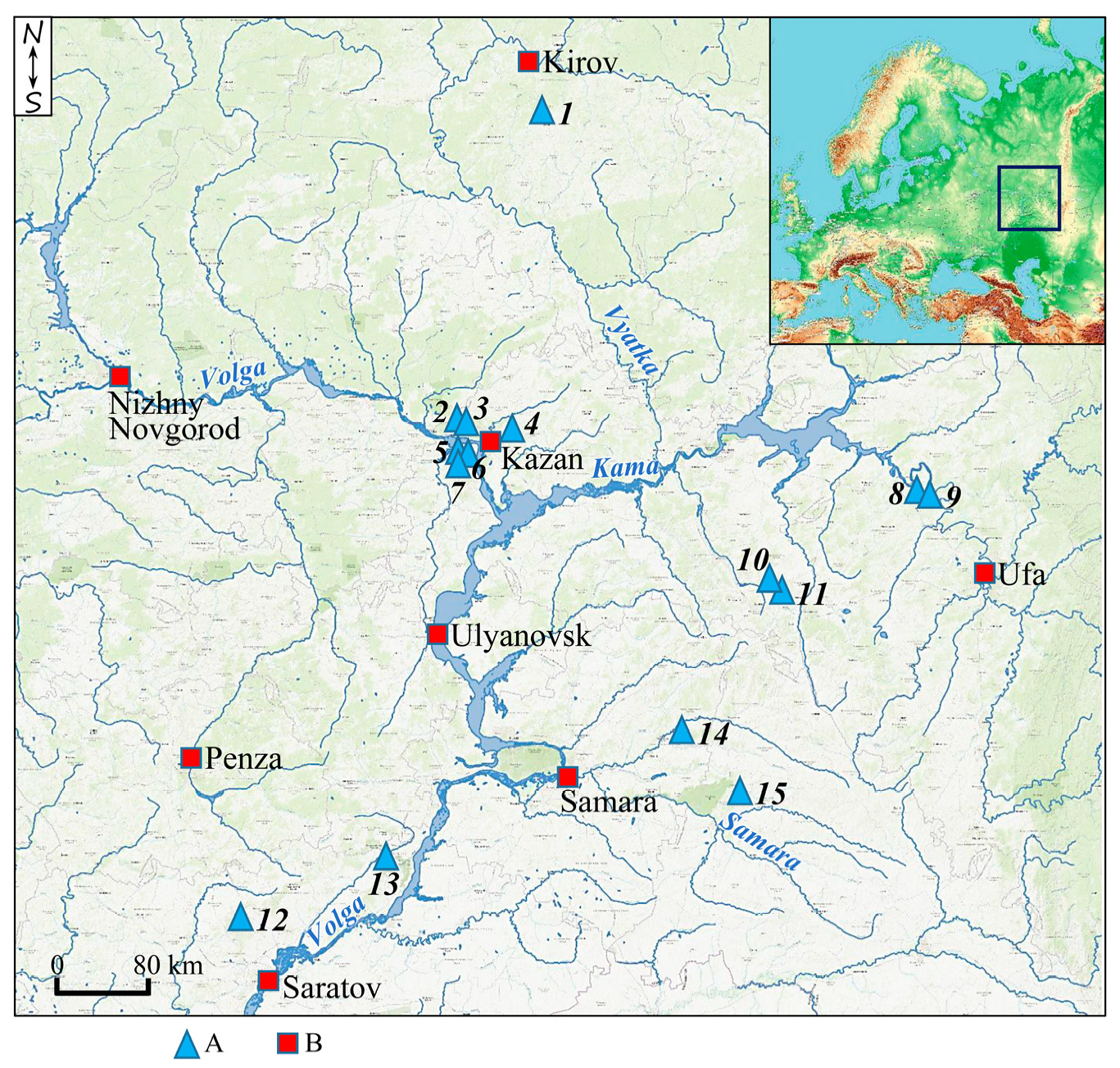
Field sedimentation studies were fulfilled in July–October 2022–2024 in 15 small rivers of the Volga–Kama region, located in the east of the East European Plain, in the basins of the middle reaches of the Vyatka River (Peschanka River), the lower reaches of the Kama River (Karakashly, Zaumyat, Aigildinka, and Salayaz rivers), the middle (Serbulak, Sumka, Morkvashka, Morkvashinka, Noksa, and Makarov Dol rivers), and the lower reaches of the Volga River (Zhiloy Klyuch, Yagodnaya, Malaya Yoga, and P’yanka rivers) (Figure 1). These rivers differ in their length, riverbed slopes, composition of surface rocks and soils, specific water runoff, and anthropogenic disturbance of the pristine landscapes in their basins.
The rivers were selected based on their geomorphological representativeness for their subregion and the presence of C. fiber activity within them. The rivers’ lengths range from 2.5 to 16.6 km, and their basin areas range from 3.1 to 86.9 km2 (Table 1). The rivers studied are fed by mixed waters, with snowmelt predominating. Consequently, most of the annual water flow in the rivers studied occurs during the snowmelt floods (March or April). Information on the lithological structure of the river basins is given in Table 1. In the valleys of the studied rivers, the lower and upper floodplains are morphologically expressed; the (Early Holocene) river terrace is also morphologically expressed as larger massifs up to 4–5 m high [59]. The river basins studied represent the following landscape–climatic zones of the East European Plain: forest (southern taiga and mixed forests), forest–steppe, and steppe. Pristine vegetation is characterized by spruce–fir–pine forests (southern forest zone), linden–oak forests with some maple, beech, and elm, alternating with forb–grass pasture meadows (forest–steppe zone), and communities of rich forb fescue–feather-grass meadows (steppe zone) [60,61,62,63]. Along rivers, on their floodplains and lower terraces, communities of small-leaved forests (pine forests may be present in the southern taiga), shrubs, and wet grass meadows combine. Due to relatively low agricultural efficiency, a significant portion of cropland, mainly in the forest zone, has been abandoned in recent decades [14].

2.2. Field Work

To identify general features of modern sediment accumulation in small rivers in the Volga–Kama region, affected by C. fiber activity, sedimentation studies were carried out in 2022–2024. The studies included installing traps in beaver ponds and adjacent sections of unregulated (beaver-free) riverbeds, sampling modern floodplain sediments, determining the thickness of bottom sediments in the ponds, and collecting water samples for suspended sediment concentration. The abovementioned tasks were carried out in detail on most of the ponds of the basic Morkvashka River and about a third of the ponds of the Morkvashinka River, on the remaining rivers—partially on individual representative ponds.

2.2.1. Installation of Sedimentation Traps

The sedimentation rate monitoring program involved two approaches. In the Morkvashka and Morkvashinka basic rivers, studies were carried out year-round, covering all phases of the water regime except for the winter low-water season. On the remaining rivers, measurements were limited to the summer–autumn low-water seasons with rainfall-induced floods. At each studied water body, sedimentation traps were placed in the near-dam zone of the most accessible and representative beaver ponds.
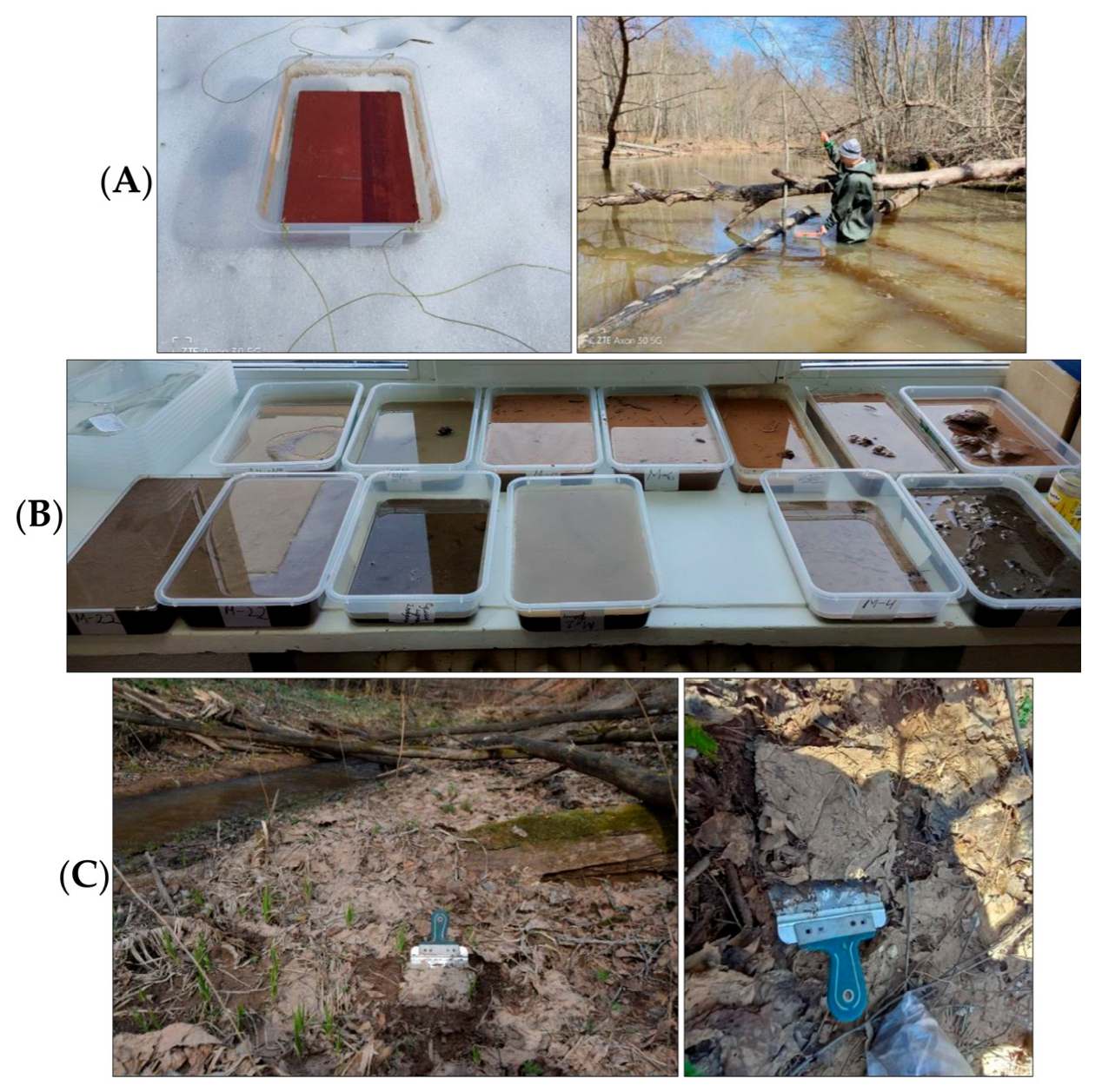
In every site studied and each water regime phase, three plastic products used as sedimentation traps (Elfplast LLC, Essentuki, Russia) (for obtaining a single integral sample) measuring 20 × 30 cm (0.06 m2) were placed (in beaver ponds at a distance of up to 3–8 m upstream from beaver dams) at close proximity to each other in each section (Figure 2A). To secure the traps to the river/pond bottom, metal rods (or durable wooden ones) and 3–5 mm thick metal plates were used. At each trap placement point, their depth was measured.
The traps were regularly lifted as their complete filling was approached. The collected material was then placed in plastic containers and sent to the laboratory. The total number of traps (more precisely, trap installations/lifts procedures in total) placed in the studied watercourses was 588. Of these, 387 were located in the near-dam zones of beaver ponds, and 201 were in other areas (wedging zones, middle parts of ponds, beaver-free riverbed sections, etc.).

2.2.2. Sediment Sampling on the Floodplain

After the end of the spring (snowmelt) flood event in April 2023, some samples of freshly accumulated (hereinafter, for the 2023–2024 field work season) floodplain sediments were collected in the Morkvashka and Morkvashinka river valleys: Sedimentary materials were collected from the surface of the previous year’s autumn foliage layer from a series of 20 × 20 cm sample plots located relatively close to each other on the same floodplain surface area (Figure 2C). To ensure the representativeness of the obtained data results for each of the two characteristic types of floodplain sites—adjacent to beaver ponds and located in the zone of an unregulated (beaver-free) riverbed—an integral (mixed) sample was formed, including material from three closely located sampling points.

2.2.3. Bottom Sediment Thickness Measurement

Bottom sediment thickness was determined in representative ponds of the Morkvashka and Morkvashinka basic rivers from August to October 2022. In dry ponds (at the time of the survey), thickness within a single pond was measured along several profiles (in the near-dam area, the middle section, and in the wedging zone) using an EIJKELKAMP 04.23.SA hand-held drilling sampler (Eijkelkamp Soil & Water BV, the Netherlands). In the flooded ponds, the thickness was determined only in the near-dam zone. The sampler was inserted into the bottom sediments and continued drilling until it reached a compacted layer consisting of alluvial rubble with weakly rounded pebbles. The difference between the total length of the sampler used, its upper part above water, and the depth of the pond (in dry sections, without pond depth) was noted as the thickness of the sediments according to the method from [31]. This method assumes that the compacted/consolidated layer represents the surface of normal riverbed alluvium, while the loose (mainly finely dispersed) sediment layer above represents material accumulated after the pond’s creation. Fifty-seven borehole measurements were carried out in the two rivers.

2.2.4. Taking Water Samples

As part of a study examining the influence of beaver ponds on sedimentation processes, partial water sampling was carried out to measure suspended sediment concentration. The work was carried out in the Morkvashka and Morkvashinka rivers: in the pond wedging zone and near-dam water area. Water samples were collected using a bathometer (GR-16M; Gidrometpribor JSC, Safonovo, Russia) at a depth of 0.6 d (d is the depth at the sampling point). After raising the bathometer, the water was transferred to 5 L, chemically inert polyethylene containers pre-rinsed with river water. A total of 17 integral samples (one integral sample consisted of three samples) were collected.

2.3. Laboratory Testing

The sedimentary materials obtained in the field were analyzed at the licensed biogeochemical laboratory of the Institute of Ecology and Subsoil-Use Problems, Academy of Sciences of the Republic of Tatarstan, Kazan, Russia. The samples were thoroughly dried and then weighed with an accuracy of 0.01 g. Since several sedimentation traps were placed at each sampling site, the contents of the bottom sediments in them were combined to obtain an integral sample. The mineral fraction of sediment accumulated on the floodplain was separated from the leaves by rinsing with distilled water until turbidity disappeared. The resulting suspension was evaporated to an air-dry state and weighed with an accuracy of 0.01 g.
The grain-size distribution was examined using the pipette method in accordance with [64]. Each sample was analyzed for its clay (grain size < 5 μm), silt (5 to 50 μm), and sand (50 to 1000 μm) content. The total organic matter content of the collected samples was calculated using dry ashing at 550 °C [65]. They were dried to a permanent weight for an hour, after which they were re-weighed to detect the hygroscopic water (in %) for converting the results of ashing into dry matter. Next, the samples were subjected to heat treatment at 550 °C for four hours until permanent weight was reached, and the relative content of total organic matter (OM) in the samples was revealed. The suspended solids content of the water was computed by filtering the sample through a 35 mm cellulose acetate membrane (Vladipor CJSC, Vladimir, Russia) with a pore size of 0.45 µm. Using a filter of this size results in the non-accounting of the values for fractions smaller than 0.45 µm; the relative weight of such an ultra-thin material can sometimes be significant in some hydrological phases. After this, the samples were dried and weighed with an accuracy of 0.0001 g.

2.4. Materials Processing

Knowing the mass of sedimentary material and the operating time of the trap during which this material was accumulated, the average specific sedimentation rate (SR, in kg/m2 per day) in this time interval can be calculated as follows.
SR = M/(Š × n)
where M is the dry mass of the accumulated material, Š is the surface area of the material accumulation (in traps or on fallen leaves), and n is the number of days of accumulation (in the traps), i.e., this number of days is calculated as the difference between the date the trap was lifted from the bottom (with deposits) and the date it was installed (the trap’s operating time (exposure time), during which it captured material transported by the river). This is the so-called average age of the deposits. By averaging sedimentation rates in a series of traps, it is possible to obtain average sedimentation rates over longer periods of time, especially during individual phases of the river water regime. Standardization of sampling was also ensured by using identical (same size) traps and a uniform sampling scheme.
It should be noted that the sedimentation rates obtained in this way are averaged over a given time interval, meaning they represent sediment accumulation as a uniform process over a given period, which is far from reality. Sedimentation processes, as the causes of sediment formation, are discrete in intensity not only in time but also in space. Therefore, the obtained SR values should be interpreted with caution.
The following quantitative parameters were also determined (see Table 1):
  • Ĺ (km) is the length of the watercourse from its source to the lowest control pond (more precisely, control beaver dam) where this study was carried out. This value was determined both based on the results of geodetic surveys [66] and the topographic map of the European part of Russia (1:25,000); http://www.etomesto.ru/map-atlas_topo-russia/; accessed on 22 November 2025.
  • S (km2) is the catchment area upstream from the lowest control beaver pond, determined using HydroSHEDS vector data [67] in the QGIS program (v. 3.40).
  • Ě (m) is the average elevation in the basin of the corresponding river, which was determined from FABDEM data [68] in the QGIS program.
  • A (m) is the difference between the maximum and minimum absolute elevations of the riverbed, obtained from geodetic survey data and topographic maps.
  • α (m/km) is the slope of the river section under study, calculated as the ratio A/Ĺ of the river.
  • T (°C) is the long-term average annual average air temperature in the basin of the corresponding river, according to [69].
  • P (mm) is the long-term average annual precipitation in the basin of the corresponding river, according to [69].
  • R (mm) is the long-term average annual water runoff depth in the basin of the corresponding river, according to [69].
  • W (m3) is the long-term average annual volume of river water flow, considering the parameters R and S.
  • Lith is the dominant lithology in the river basin, revealed based on the geological maps of pre-Quaternary and Quaternary deposits (Russian Geological Research Institute; https://webmapget.karpinskyinstitute.ru/; accessed on 26 November 2025).
  • Predominant soil type (Soil) and vegetation type (Vg), obtained from regional atlases and monographs ([60,61,62,63], etc.).
  • Pl (%) and F (%) are the share of cropland (except for abandoned land) and forests, respectively, in the basin area of the corresponding river, according to [70,71].

2.5. Statistics and Software

Statistical processing of data (sedimentation rates, organic matter content, and grain-size distribution) was carried out in the Python environment (v. 3.13.5) using the Pandas library for data processing and analysis, SciPy (v. 1.15.3) for statistical tests (the Shapiro–Wilk test for the normality of distribution). Descriptive statistics were used to determine the mean, median, and standard deviation values. For group comparisons, the following were used: for normal distributions, Student’s t-test for independent groups, and the paired t-test for dependent measurements were used; for non-normal distributions, the Mann–Whitney test for independent groups from SciPy was used. A regression analysis was carried out to identify key factors controlling sedimentation rates in beaver ponds.

2.6. Main Limitations

  • Some of the installed sedimentation traps were damaged or displaced by C. fiber during their activities. This was most noticeable at three streams in the southern forest zone (Brodovka, Atsvezh, and Kuser rivers), where all installed traps were lost. For this reason, these rivers were not included in the final analysis. This not only resulted in a reduction in the overall number of traps but also a temporary cessation of monitoring at these sites, which could have impacted the spatial representativeness and continuity of sedimentation rate observations.
  • Due to low sedimentation rates in some beaver ponds during the summer–autumn low-water season, the mass of sediment collected from traps was sometimes lower than the minimum required to carry out the full range of planned laboratory analyses. This limited the “depth” of laboratory testing for individual samples.
  • The method used to collect sediment from leaf litter records only the portion of the material retained by this organic filter. Losses due to post-sedimentation removal (due to possible runoff or wind) and the percolation of fine fractions through the leaf layer remain unaccounted for. This may result in a systematic underestimation of both the total mass and changes in the grain-size distribution of floodplain sediments.
  • This study did not include monitoring of sedimentation processes during the period of stable ice cover (winter low-water period) due to methodological difficulties and safety concerns. Consequently, the contribution of the winter season remained uncertain. Although the estimated sedimentation rates during this period are extremely low, their quantitative absence should be considered when subsequently interpreting the final annual sedimentation values.
  • It is important to note that sedimentation rates calculated using Formula (1) represents average values over the periods of trap operation. This method does not allow for differentiating the contribution of individual, including extreme, short-term sedimentation events to the total mass of accumulated material. Such observations with high temporal resolution require detailed monitoring not only in various rivers but also in their different sections (considering the soil erosion patterns in river basins), which currently appears to be a challenging task.
  • The obtained sedimentation rates are representative of the climatic conditions of 2023–2024 and may differ significantly in years with extreme floods or prolonged droughts, which limits the possibility of direct extrapolation of the calculated rates to long-term average values without considering climate variability.
  • Sedimentation rates can vary significantly due to the morphological features of pond bottoms, especially in those partially occupying river floodplains. This requires separate and more detailed studies. Therefore, the obtained results are only rough estimates of sedimentation rates in the complex beaver-pond ecosystems of the study region.
  • This study includes 15 small rivers, each with unique catchment characteristics (lithology and soils, slopes, land use/cover, etc.). The identified patterns and calculated average sedimentation rates should be applied with caution to other small rivers in the region. To improve the representativeness and statistical reliability of the findings, it would be desirable to expand the monitoring network and include more river basins with different combinations of environmental variables.

3. Results

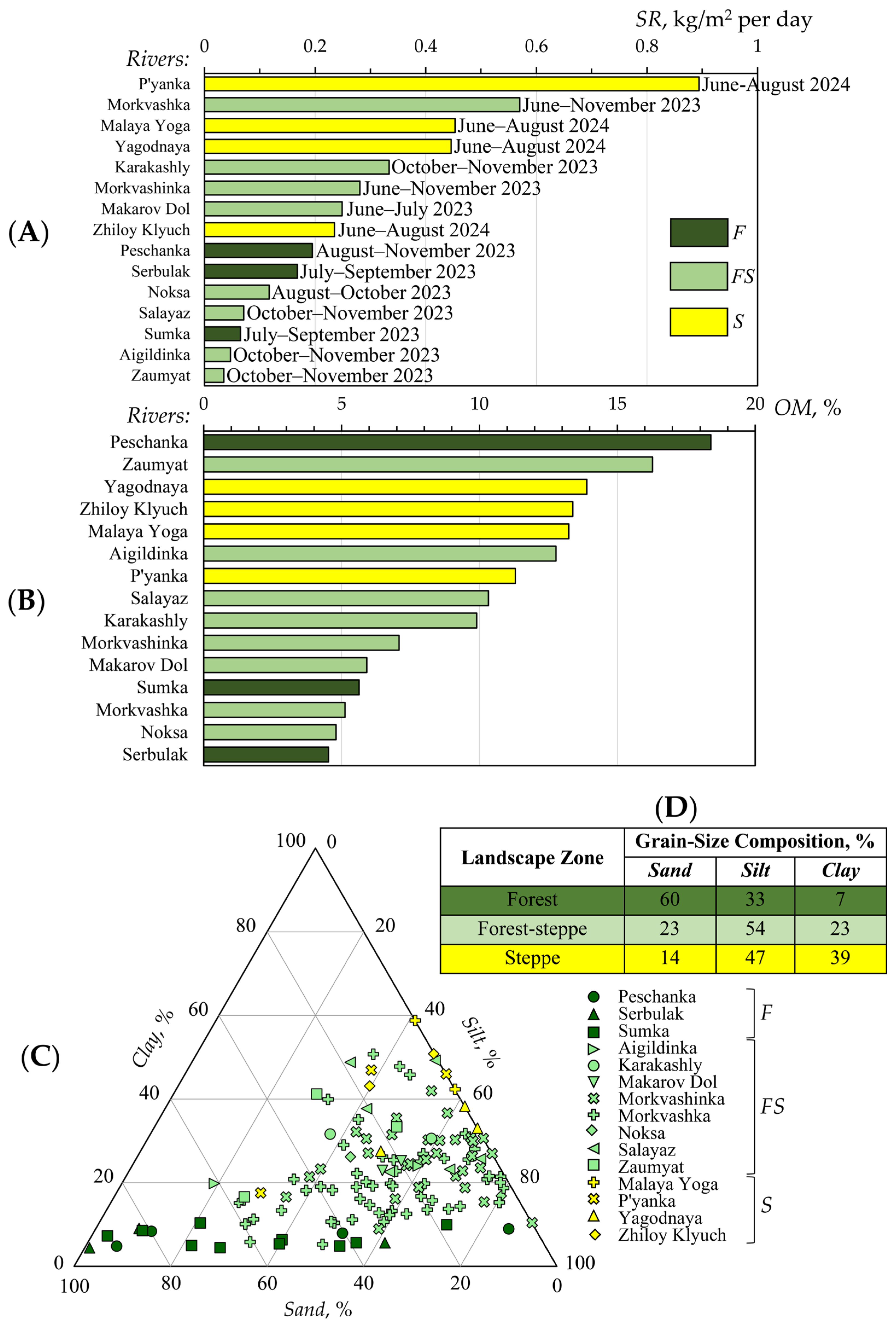
The summarized results on sedimentation rates and the organic matter contained in the freshly accumulated sediments in beaver ponds of the studied rivers during the observation period are presented in Figure 3. As can be seen from the figure, in the summer–autumn low-water season with episodic rainfall flood events, the highest average sedimentation rates were found in the steppe P’yanka River, which, according to this indicator, is almost 30 times greater than in the forest–steppe Zaumyat River. The latter recorded the lowest average sedimentation rates (Figure 3A). The increased rates of sedimentation in the studied ponds of the P’yanka River could have been partly because of watering the shepherd’s horses during our field work, which periodically led to the roiling of the bottom sediments (resuspension) in the ponds.
In terms of organic matter content, the leading place is occupied by a forest river, the Peschanka (Figure 3B), which for this indicator is almost four times higher than another forest river, the Serbulak, with the lowest average OM content. With a large amplitude of variation in SR values across the studied rivers, features of landscape–climatic zoning can be traced in the modern beaver-pond sediments in changes in their grain-size composition. Thus, if in the pond sediments of the steppe rivers the share of silt–clay fractions in total averages about 86%, then in the sediments of the forest zone rivers it is only about 40% (Figure 3C,D).
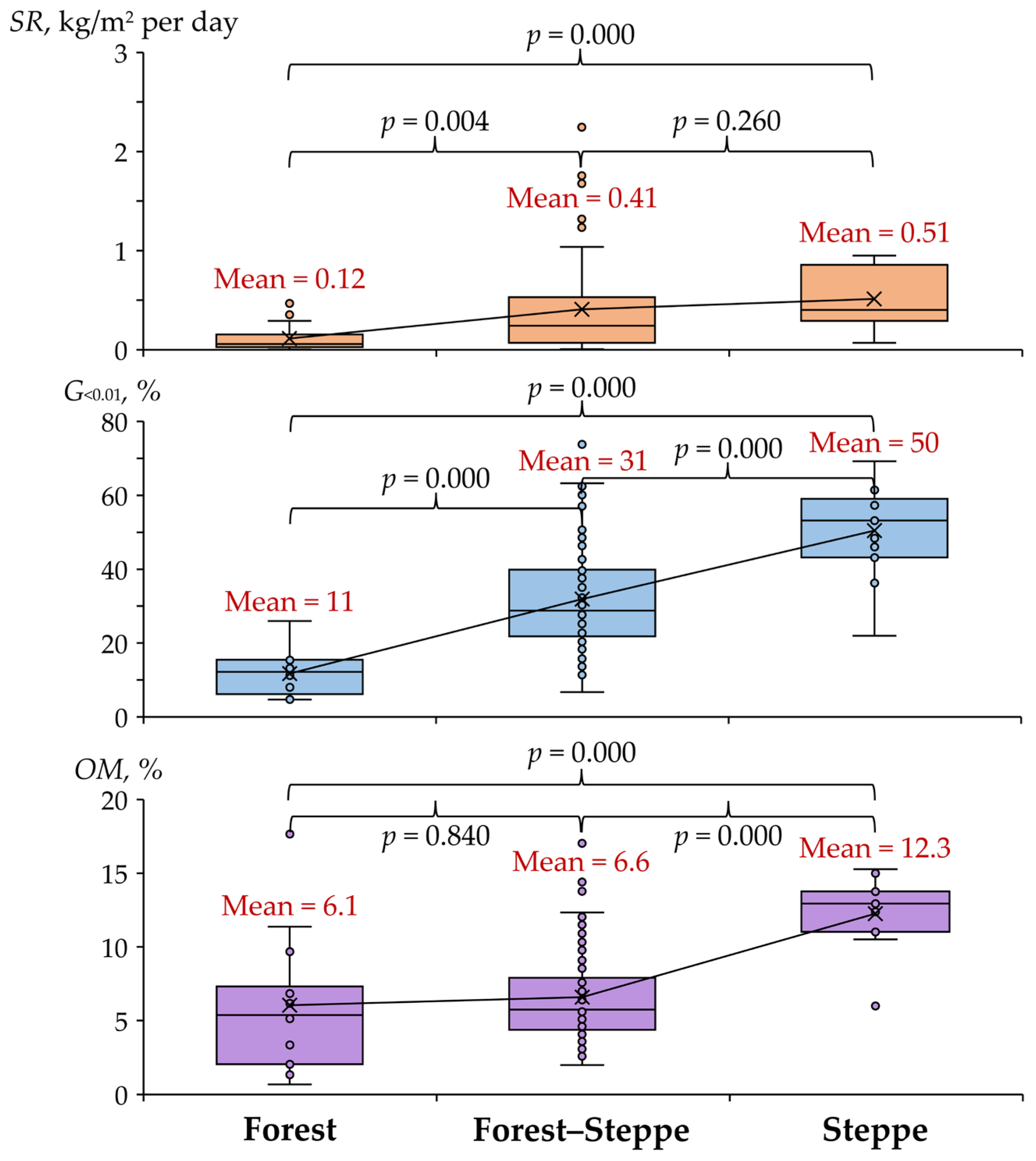
In the distribution of sedimentation rates in beaver ponds during the summer–autumn low-water season with episodic rainfall flood events, features of landscape–climatic zoning can be traced: they are lowest in the studied rivers of the southern forest zone, and highest in the rivers of the steppe zone (Figure 4). Moreover, the differences in the average SR values between the forest and forest–steppe zones, as well as the forest and steppe zones, are statistically significant, while the differences between the forest–steppe and steppe zones are statistically insignificant.
The sediments in beaver ponds of small rivers in the steppe zone are characterized by the dominance of finely dispersed fractions (less than 0.01 mm); the lowest content of them was found in the forest zone rivers (Figure 3D and Figure 4). Moreover, all differences in the average values of fine material content between the indicated landscape–climatic zones are statistically significant.
Regarding the total organic matter in freshly accumulated sediments of the studied beaver ponds, its content in the steppe rivers is almost twice as high and statistically significantly different from its content in river sediments in the forest and forest–steppe zones (Figure 4). No statistically significant differences in OM content were found between the ponds of the rivers in the forest and forest–steppe zones.
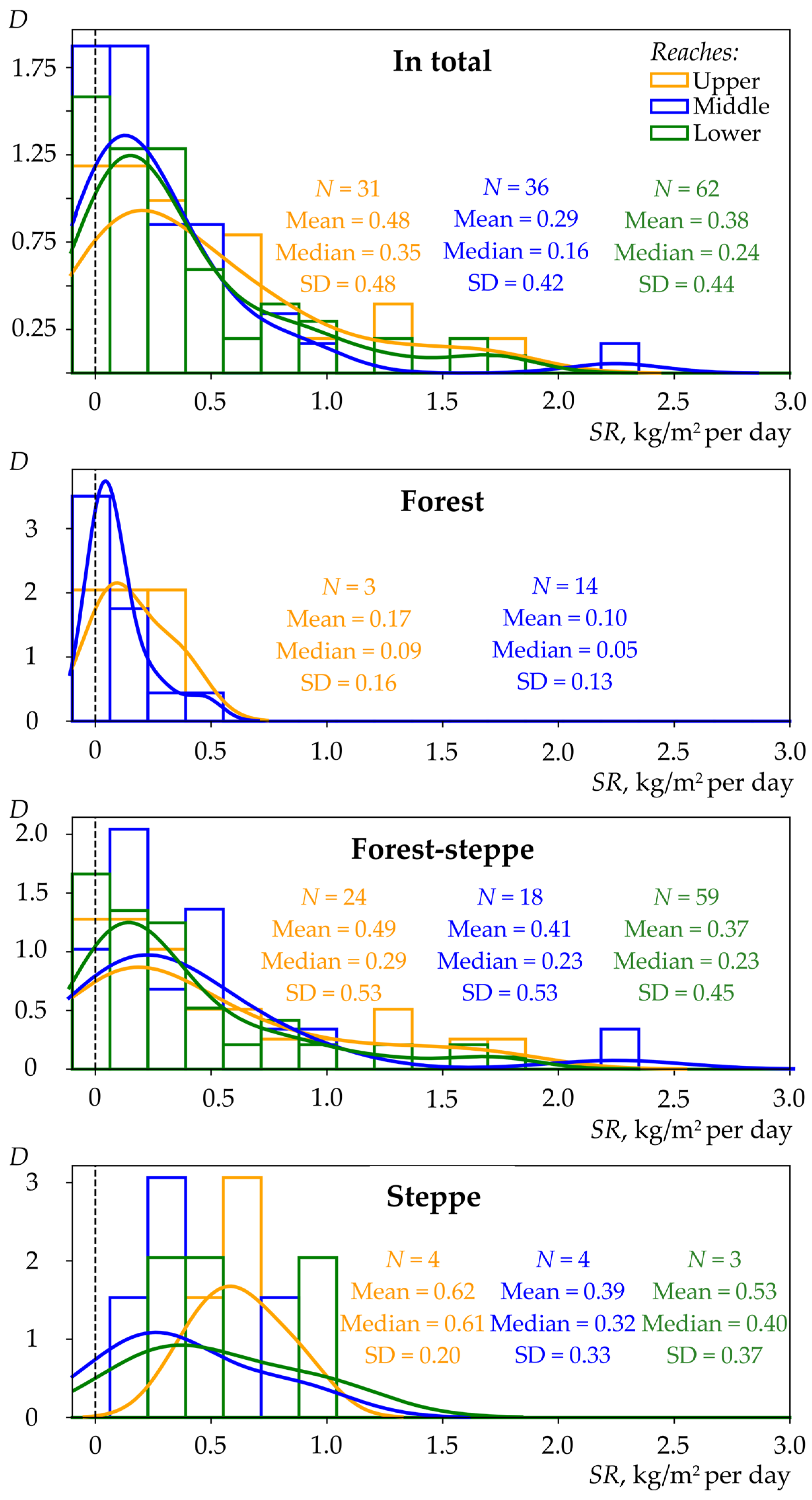
It is important to note that these indicators vary not only between landscape–climatic zones but also within the zones themselves along the rivers. In all analyzed zones, average sedimentation rates are highest (a relatively small excess) in the upper reaches of small rivers, while in the middle reaches they are generally lowest (possibly except for the rivers in the forest–steppe zone) (Figure 5).
According to the combined analysis of all the studied beaver ponds, a slight increase in SR is found in the lower reaches of small rivers, especially in the rivers of the steppe zone (Figure 5). Also, in the all rivers studied, the overwhelming majority of beaver ponds have average sedimentation rates of no more than 1 kg/m2 per day during the summer–autumn season of low water with episodic rainfall floods.
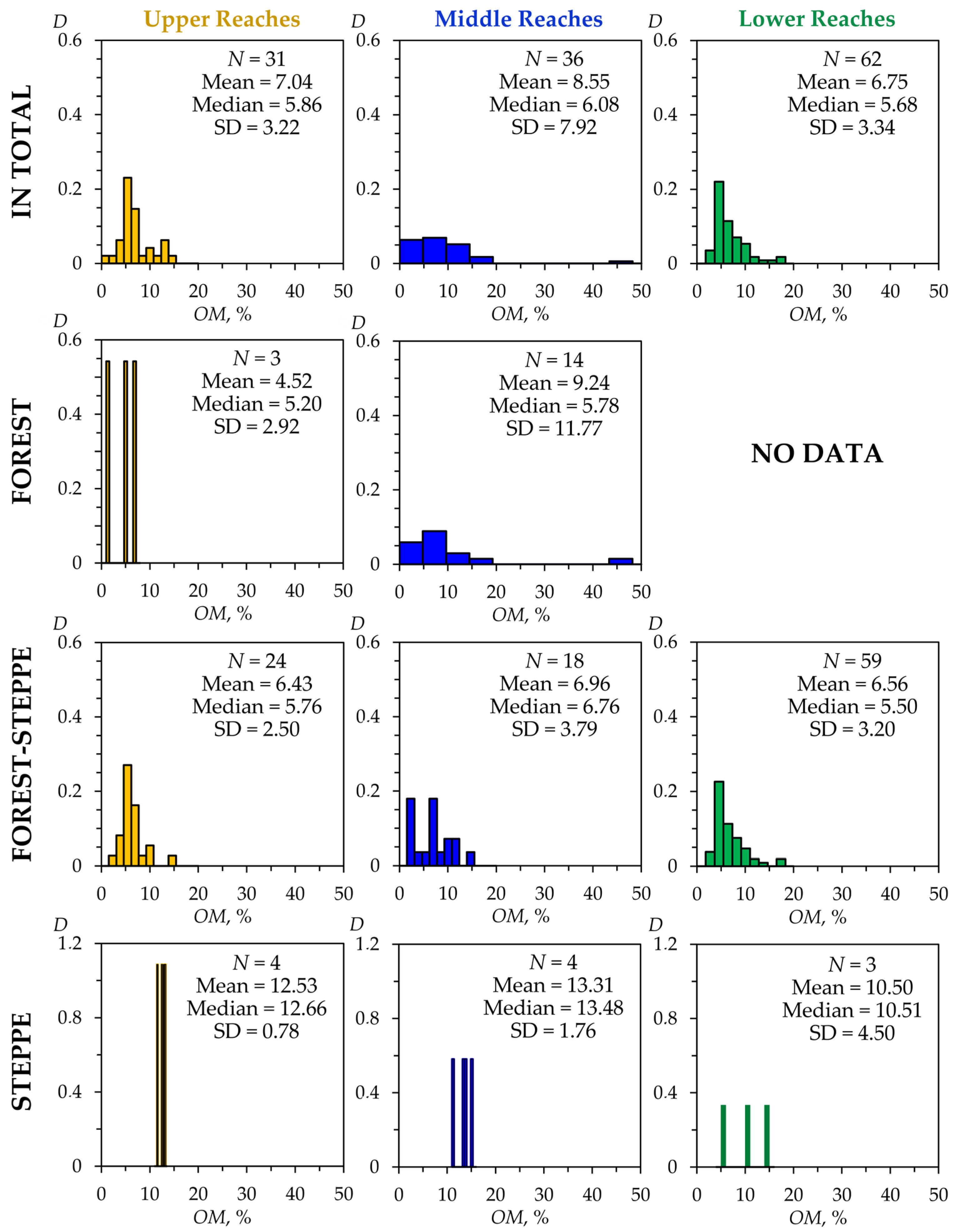
As for the distribution of organic matter content, in general, both in the study region and in individual landscape–climatic zones, a slight increase is noted in the middle reaches of the rivers (Figure 6). Moreover, the differences in organic matter content between the middle and upper reaches are most notable in the forest zone rivers. Across all the rivers, the average organic matter content in modern beaver-pond sediments does not exceed 20%.
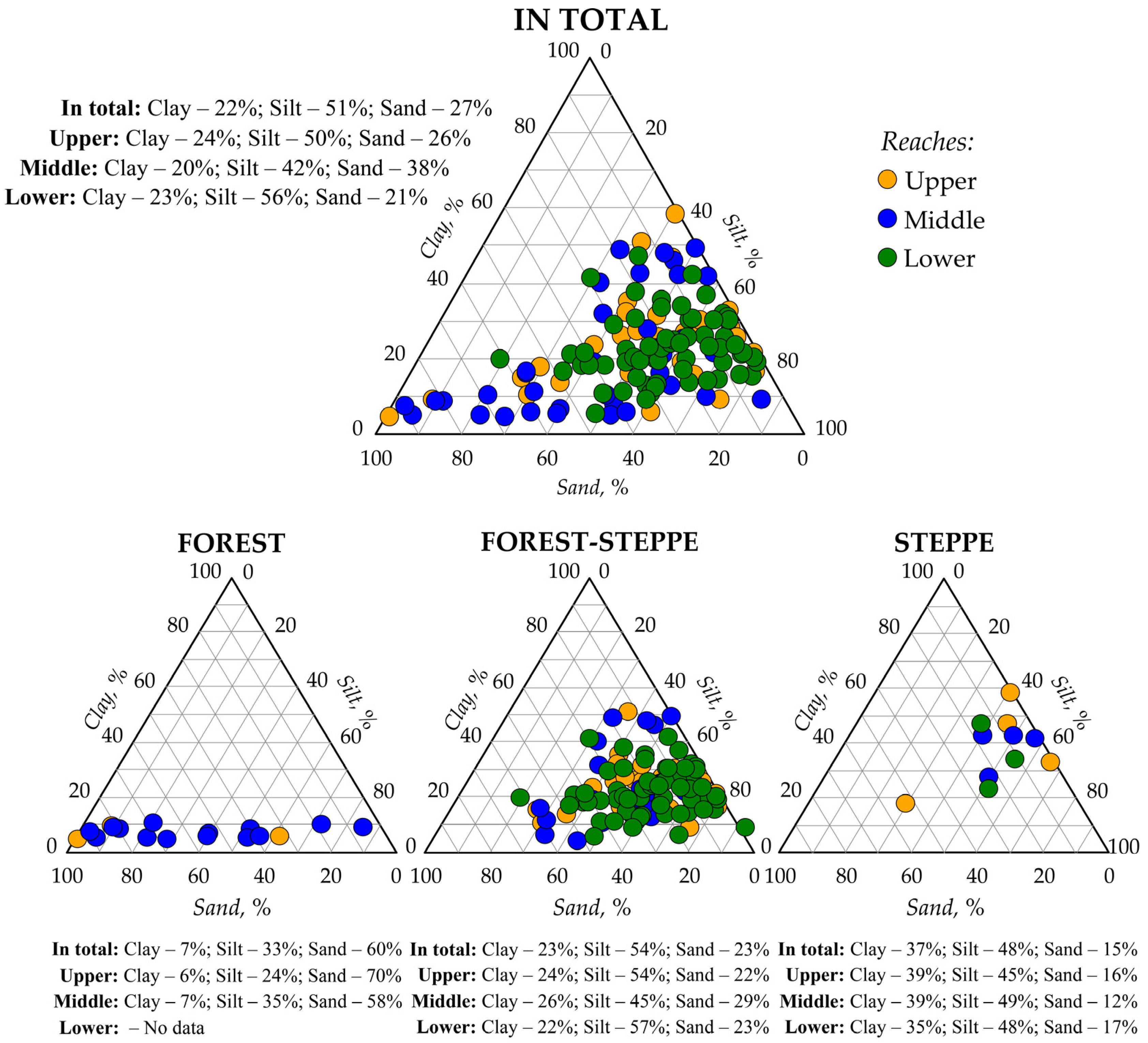
Concerning the change in the grain-size composition in the freshly accumulated sediments of beaver ponds along the length of small rivers, some coarsening in the sizes of mineral particles of sediments in the middle reaches of rivers and its thinning in the upper and especially lower reaches of the rivers is noted. This supposed pattern is, firstly, violated in the rivers of the forest zone, where the coarsest (mainly sandy) material accumulates in beaver ponds of the upper reaches of small rivers and, secondly, in the rivers of the steppe zone, where a relatively weakly expressed minimum content of coarse (sandy) fractions occurs in the middle reaches of the studied rivers (Figure 7).
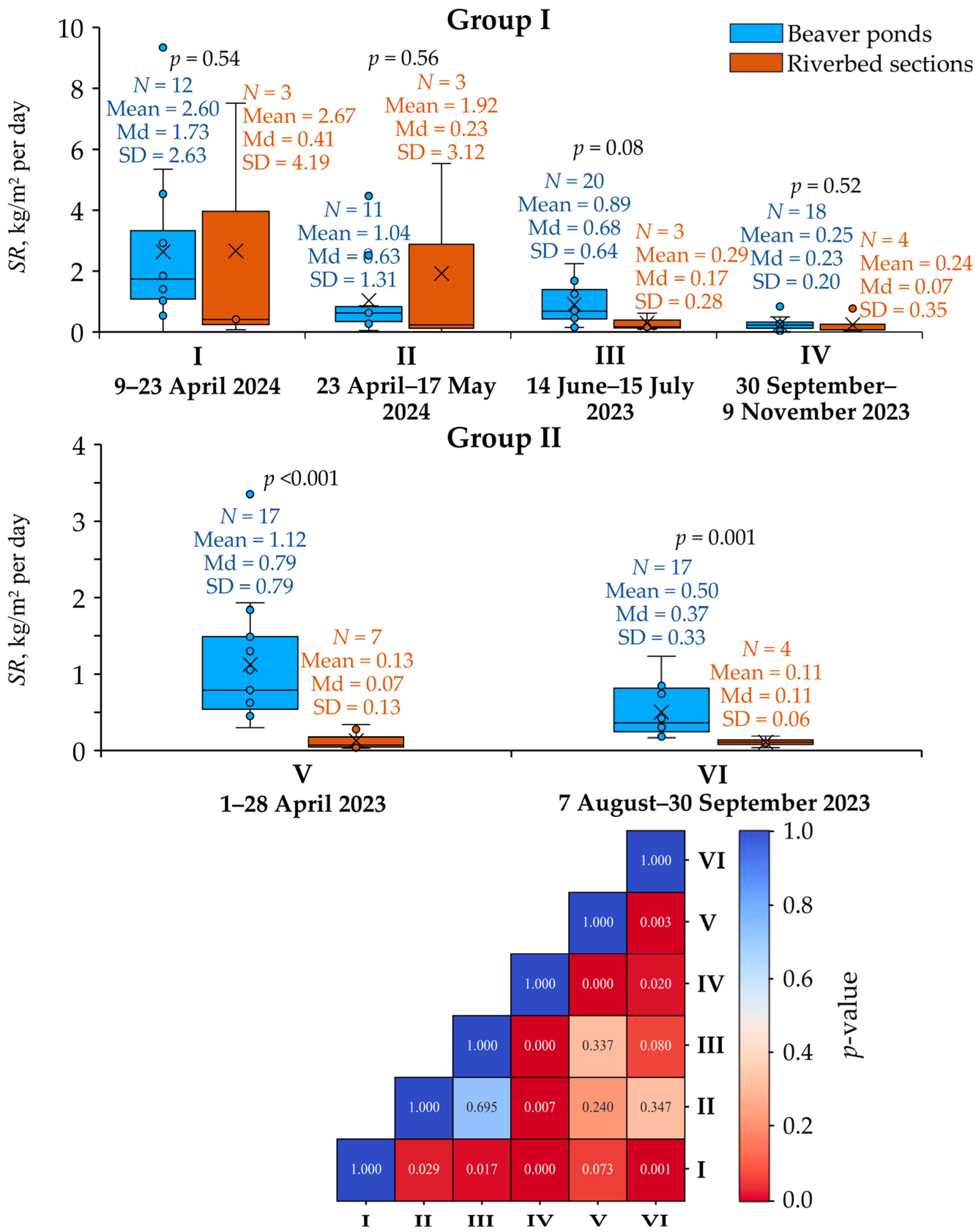
We studied interseasonal changes in sedimentation rates together with intraseasonal differences in these rates between beaver ponds and river sections unregulated by C. fiber, only in the Morkvashka River, which flows in the Volga Upland’s far north within the forest–steppe zone of the East European Plain. Firstly, as expected, sedimentation rates were highest during the snowmelt flood period: about 2.6–2.7 kg/m2 per day around the peak of the flood and about 1–2 kg/m2 at its end, according to the results of field work in the spring of 2024. Moreover, statistically significant differences between sedimentation rates in beaver ponds and unregulated (beaver-free) riverbed sections were not identified (Figure 8). Compared to the period of snowmelt flood, the average sedimentation rates during the summer and autumn seasons of low water, interrupted by rainfall floods, were significantly lower, especially in the autumn season of the year (Figure 8).
It is noteworthy that during the combined period of summer low water and rainfall floods, SR in beaver ponds was more than twice as high as SR in river sections not regulated by C. fiber, although the differences between these rates were not statistically significant. During the combined autumn period of low water and episodic rainfall floods, any differences in the average SR values together with the statistical significance of their difference between these hydrological objects along the river were not revealed. In March 2023, the snowmelt flood in the Morkvashka River was unusually early and comparatively short, and we only witnessed its very end, having placed sedimentation traps that remained operational for most of April. It was in April 2023 that significant differences (on average, by 8.6 times) in average sedimentation rates between beaver ponds and unregulated sections of the riverbed were recorded, which were statistically significant. Essentially, this stage of the water regime can be called the snowmelt flood “trail”, occurring after the main volumes of river flow have passed; it is the transition period between the snowmelt flood and the summer–autumn low-water season (or, more accurately, the late spring–summer–autumn low-water season, given ongoing climate change (warming) in the region) with episodic rainfall flood events. In terms of average values, sedimentation rates in beaver ponds during this period were 2–4 times higher than those in the summer and autumn seasons, although in unregulated riverbed sections, they were, conversely, half as fast as in these seasons. Furthermore, in August–September of 2023, we also noted statistically significant differences in sedimentation rates in beaver ponds and unregulated riverbed sections (Figure 8); it was this period, spanning late summer and early autumn, that was characterized by very low precipitation amounts that year.
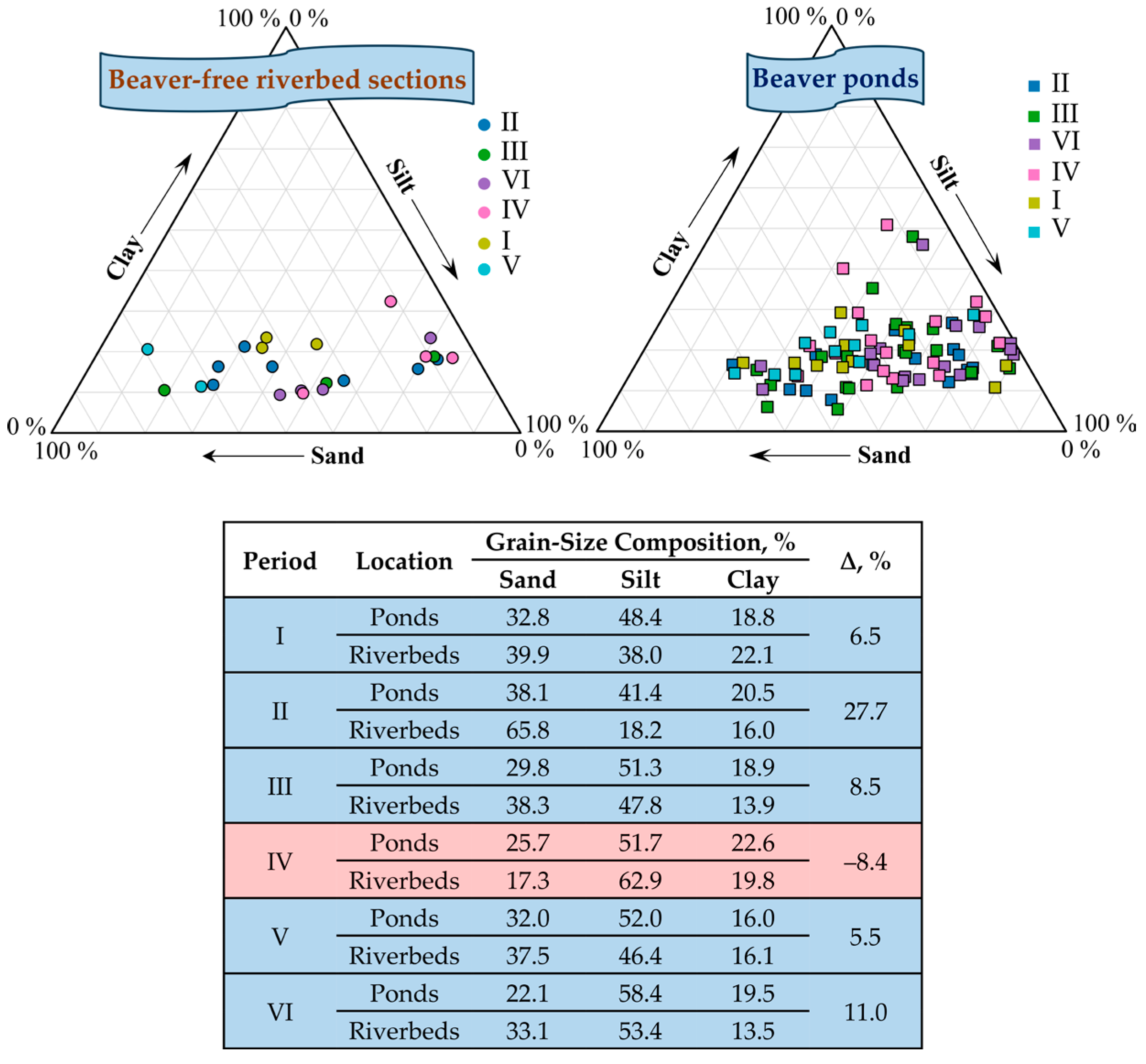
During all phases (subphases) of the Morkvashka River’s water regime, some thinning of the grain-size distribution of bottom sediments is observed in its beaver ponds compared to unregulated sections of the riverbed (Figure 9). This thinning of the material is particularly noticeable during the end of the spring snowmelt flood. An exception is the autumn season of low water, interrupted by rainfall floods, when the sediments in beaver ponds are, on the contrary, somewhat finer than in beaver-free sections of the riverbed.
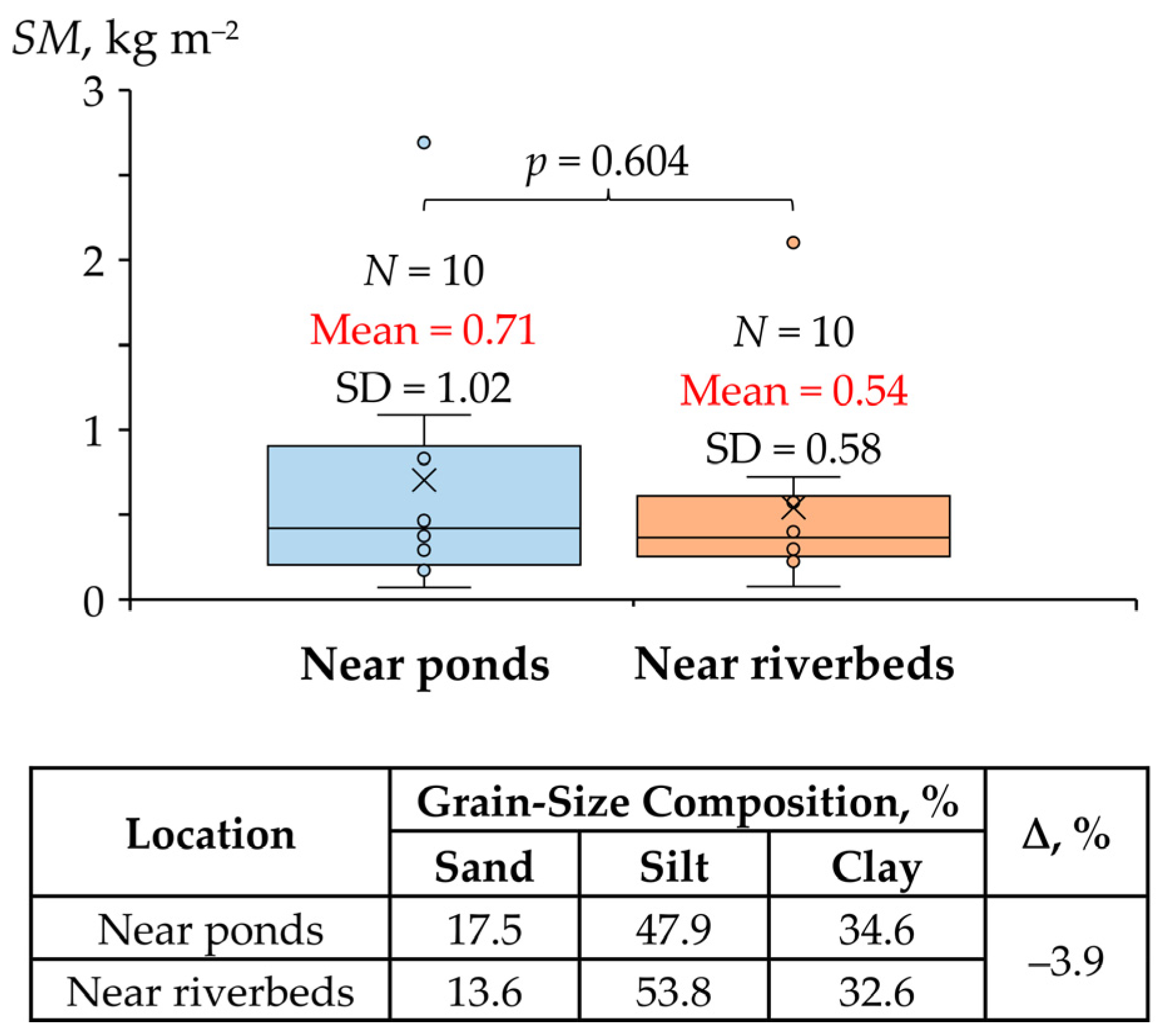
A comparison of the masses of freshly accumulated sediments on fallen past-autumn leaves on the surface of the lower floodplain immediately adjacent to beaver ponds and unregulated sections of the Morkvashka and Morkvashinka riverbeds after the end of the 2023 snowmelt-flood event showed insignificant differences: the average mass of the sediments near the ponds was statistically insignificantly different from that near unregulated sections of the riverbeds (Figure 10). Therefore, it can also be assumed that there are no statistically significant differences in the rates of floodplain sedimentation along sections of rivers dammed and undammed by beavers. We also did not find any statistically significant differences in the grain-size distribution of sediments accumulated on the lower floodplains along different sections of these two rivers (Figure 10).
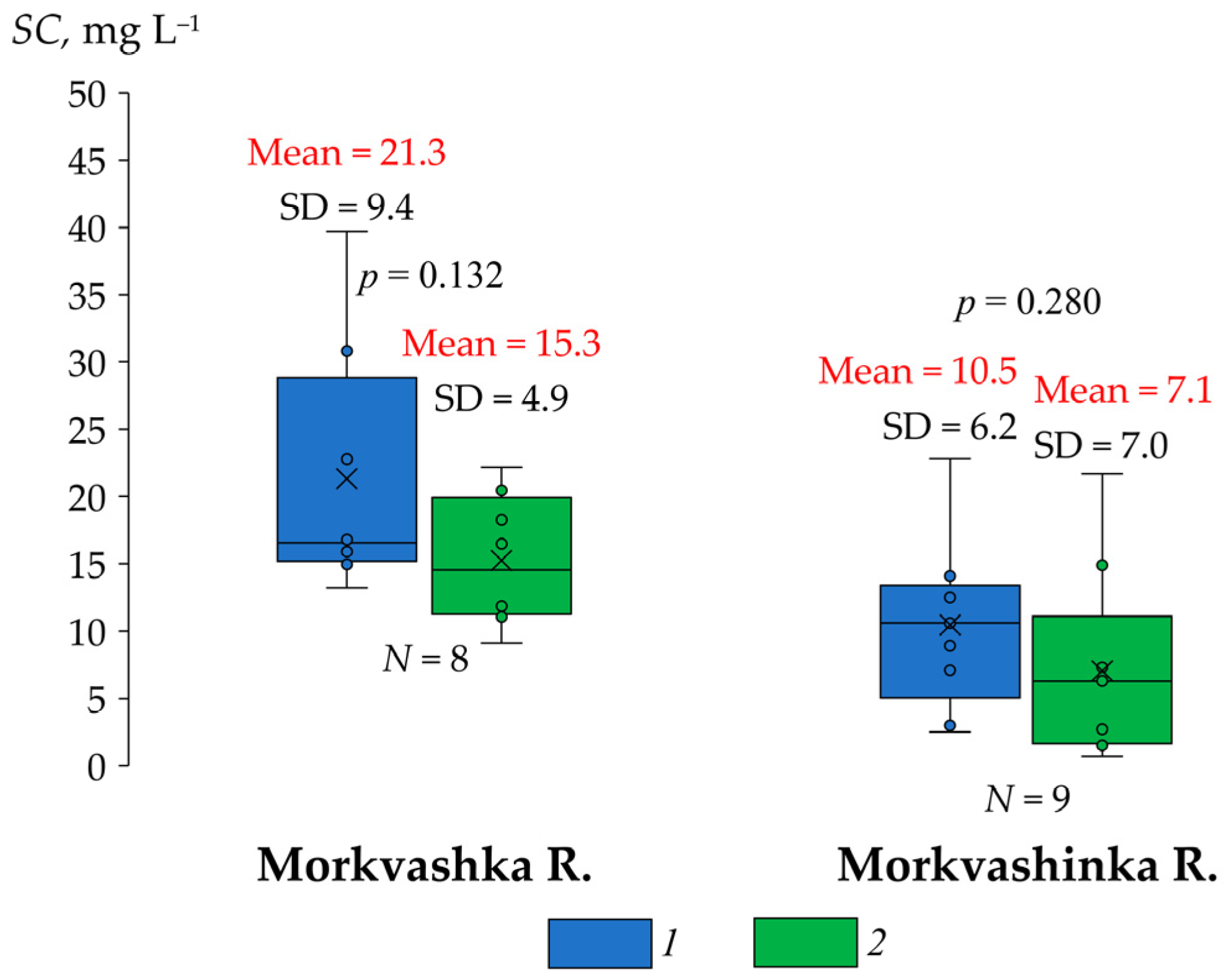
Using two basic rivers, the Morkvashka and Mokvashinka, as examples, changes in suspended sediment concentrations were identified along their beaver ponds. Specifically, a general decrease in the concentrations was observed in pond waters from the wedging zone (the beginning of the pond) to the near-dam area (the end of the pond) (Figure 11). However, the differences in mean values were not statistically significant.
Features of sediment accumulation rates and sediment composition (grain-size and organic matter composition) along some beaver ponds of the Morkvashka and Morkvashinka rivers were also identified. They are presented in Table 2.
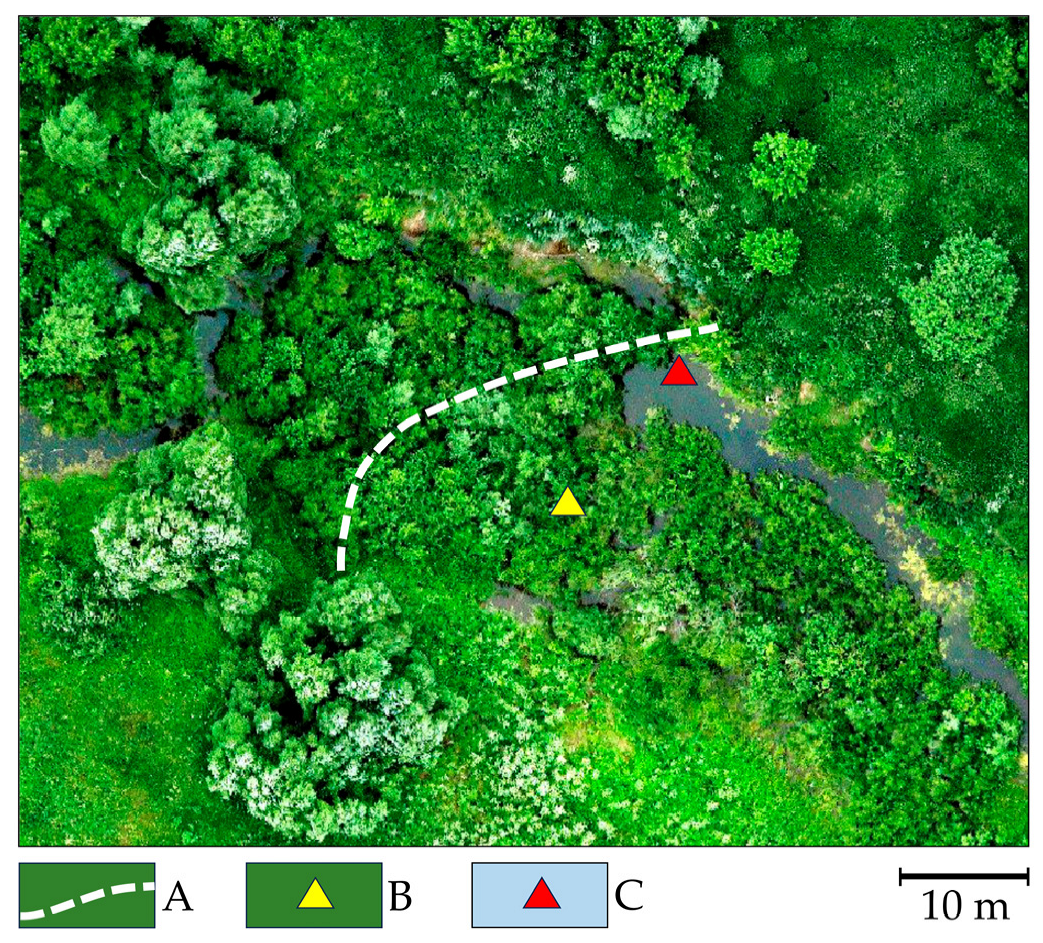
In one of the beaver ponds of the Morkvashinka River, which floods not only the riverbed but also a significant portion of the river’s lower floodplain, six sedimentation traps were installed at two sites (three traps in each) in the summer and autumn of 2023: one in the flooded riverbed near its dam, the second on the flooded surface of the lower floodplain (Figure 12). The summarized results of this experiment are presented in Table 3. Significant differences in the rate of sedimentation were observed only during the summer low-water season, interrupted by rainfall floods: this rate in the riverbed flooded by the pond was more than ten times higher than on the inundated floodplain. Moreover, if in the riverbed part of the pond bottom the total share of clay–silt fractions in the freshly deposited sediments was about 52–60%, then in the floodplain part it was about 94–97% (see Table 3).
The summarized results of drilling through the entire sediment layers accumulated in representative beaver ponds in the forest–steppe Morkvashka and Morkvashinka basic rivers are presented in Table 4. They show that the greatest sediment thicknesses and, hence, sedimentation rates are observed in the upper reaches of the rivers, while the lowest are in the lower reaches. The average minimum thickness of deposits, associated with the hydraulic engineering activities of C. fiber, also decreases in this direction. One of the reasons for the recorded significant decrease in sediment thickness in the ponds of the lower reaches of the rivers is the regular drying up of this section in the Morkvashinka River during the second half of the warm season in recent years due to increased water loss because of evaporation from the surface of numerous beaver ponds and some artificial ponds (as water supply sources), which are located upstream [66].
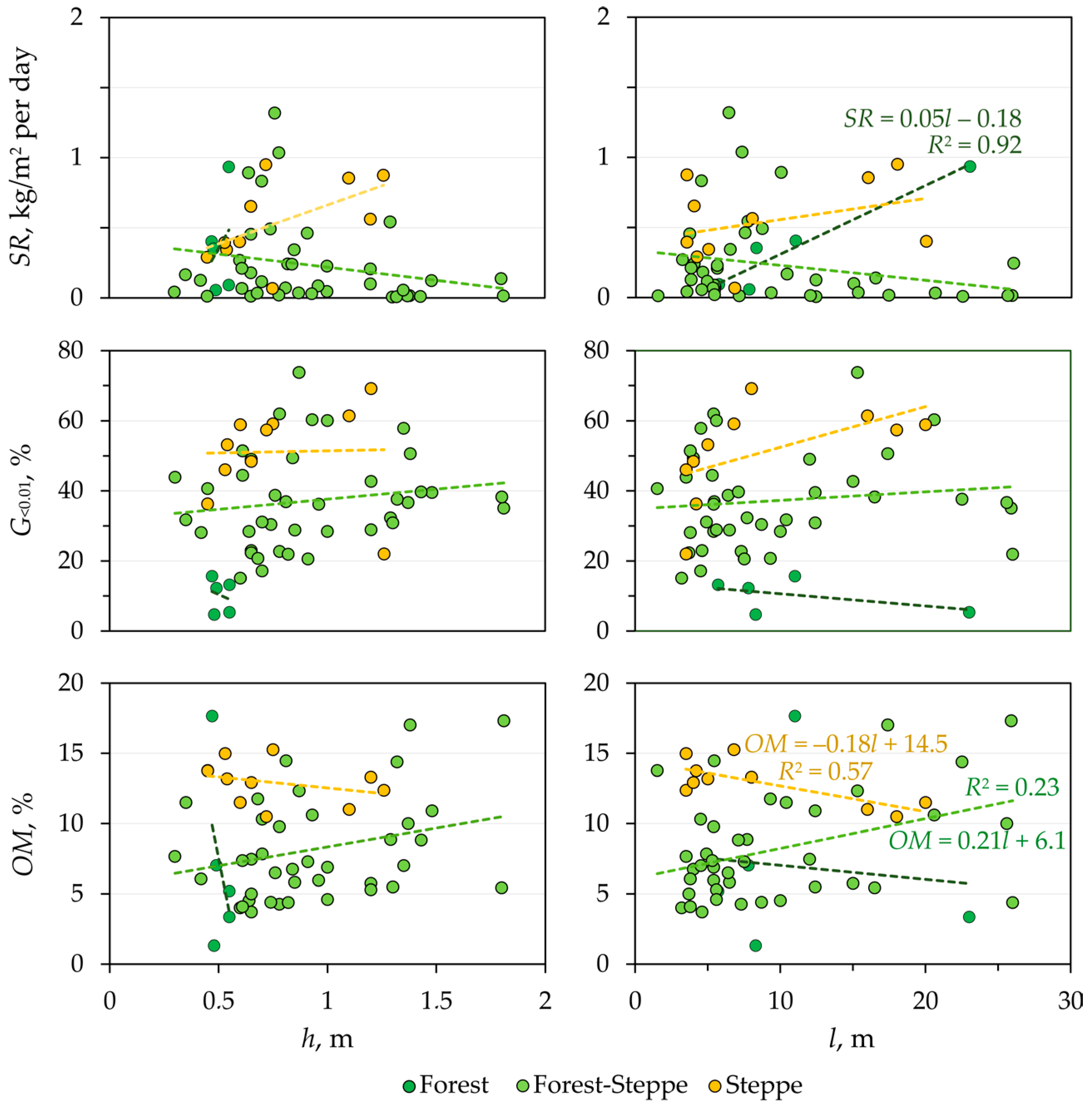
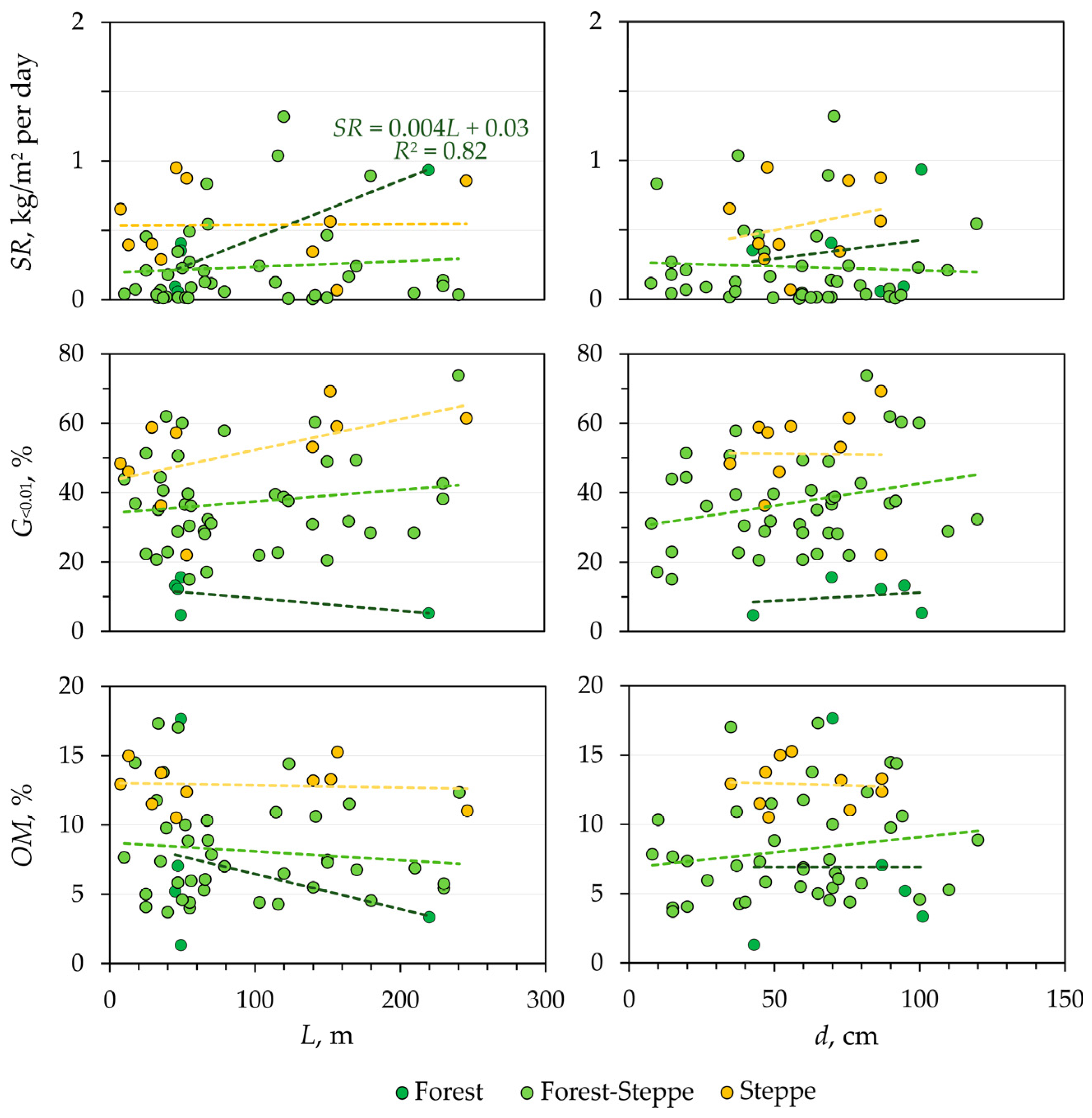
Preliminary regression analysis did not reveal a statistically reliable influence of several “internal” factors (height and length of beaver dams, length of beaver ponds, and depth of beaver pond at the location of sedimentation traps) on the sedimentation rates, nor the grain-size composition or organic matter content in the freshly accumulated sediments of beaver ponds in different landscape–climatic zones of the study region (Figure 13 and Figure 14). Only the direct and close influence of the length of the beaver dam and pond on the sedimentation rates in the studied small rivers of the southern forest zone is noteworthy. However, these and other forest-zone dependencies should be treated with caution, since they were obtained based on data from only three rivers. We would also note the inverse effect of the length of the beaver dam on organic matter content in the sediments in the steppe-zone rivers (Figure 13). Further detailed studies are required to confirm this relationship and explore its nature.
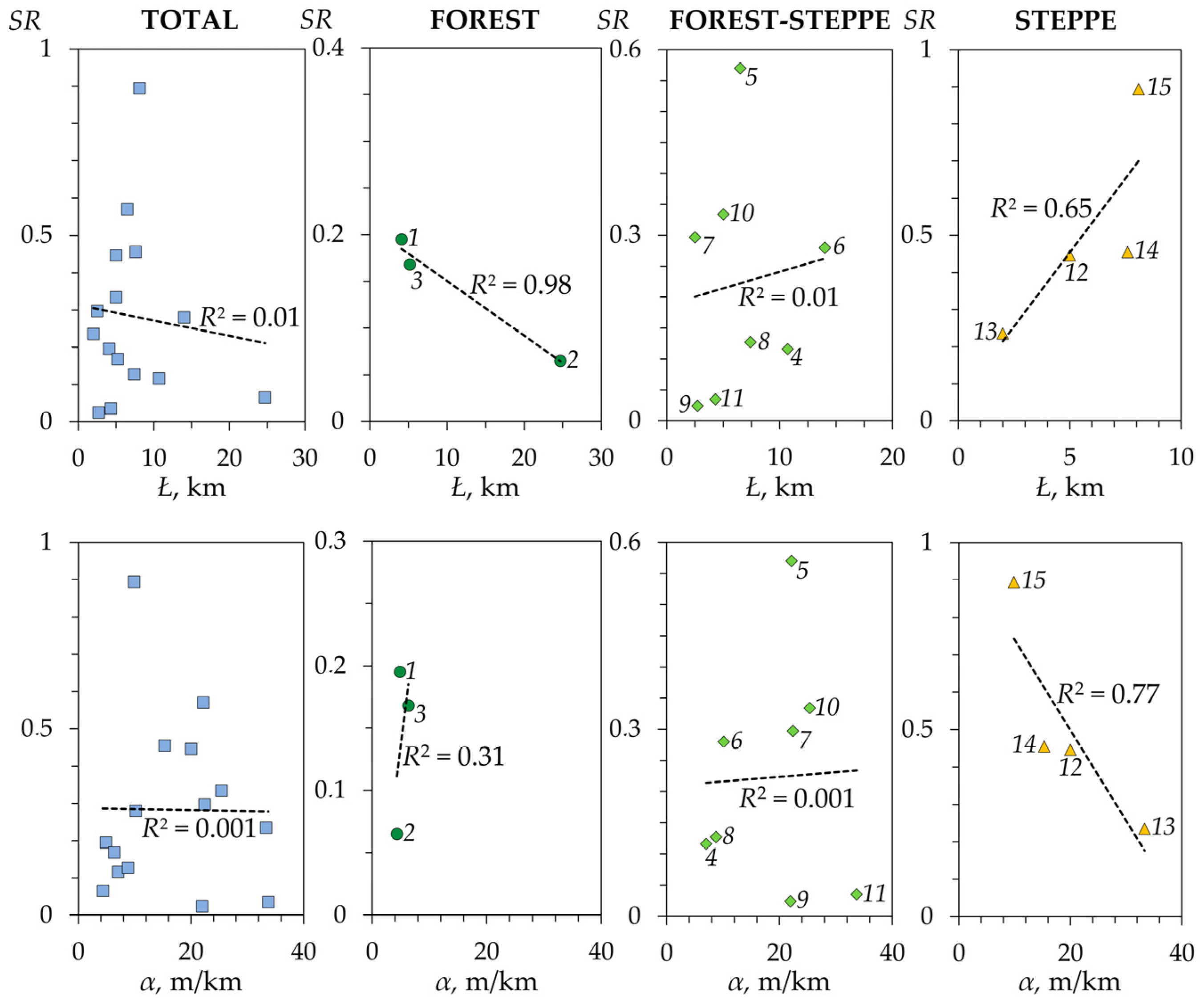
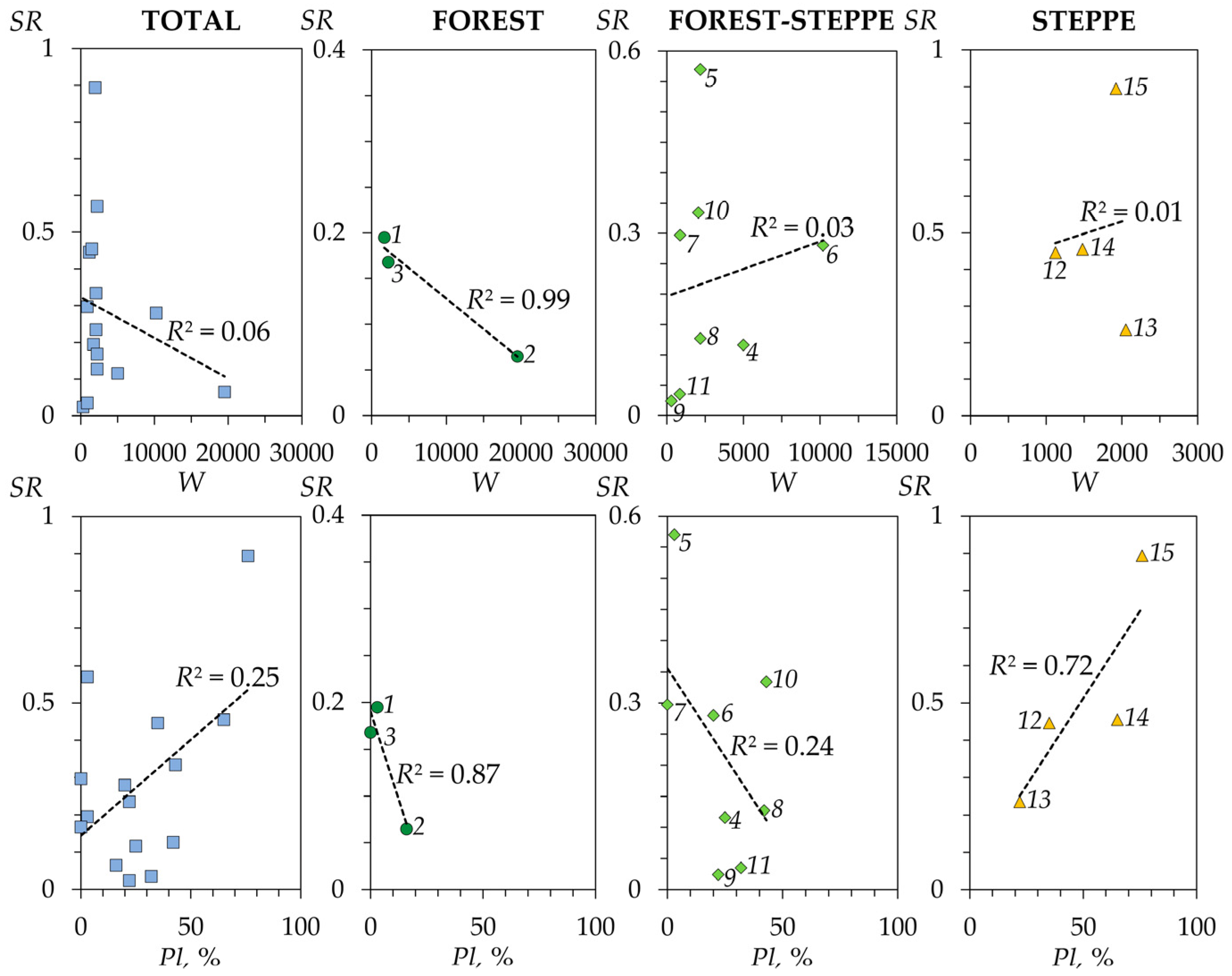
Preliminary regression analysis also revealed no statistically significant influence of some “external” factors (such as the length of the river upstream from the lowest beaver dam studied and its slope, the average long-term river water flow, and the percentage of soil plowing in the part of the river basin located upstream from the lowest beaver dam studied) on the sedimentation rates in beaver ponds in the study region (Figure A1 and Figure A2, Appendix A). Due to the relatively small number of rivers analyzed in each of the landscape–climatic zones, it still seems difficult to obtain statistically significant results. Nevertheless, the relationships show that the issue of the factorial determination of sedimentation in beaver ponds is complex and ambiguous, thus requiring further careful study.

4. Discussion

In analyzing the presented results, we would like to focus only on the following points, which seem to us to be the most important.
  • As noted above, the highest rates of sedimentation, the highest content of organic matter, and the greatest finely dispersed grain-size fractions are confined to the bottom sediments of beaver ponds of the steppe zone’s small rivers (see Figure 4). Just a few decades ago, soil erosion rates in river basins of the forest–steppe zone were highest in the East European Plain due to the low forest cover, high percentage of plowed soils, and still relatively high meltwater and rainfall runoff in the interfluve areas, among other reasons [72]. In recent decades, due to climate change and land-use and land-cover transformations in the region, soil losses and sediment input into the river network have significantly decreased, primarily in the forest–steppe zone [13,14]. However, they still remain high, as demonstrated by the lack of large and statistically significant differences in sedimentation rates in beaver ponds between the forest–steppe and steppe landscape–climatic zones (see Figure 4). Moreover, the widespread development of Chernozem soils in the steppes, rich in organic compounds, under conditions of still relatively high rates of soil erosion, contribute to the increased enrichment of bottom sediments of beaver ponds in this zone with organic matter and finely dispersed soil particles. On the contrary, the widespread development of relatively low-fertility soils, comparatively depleted in organic matter and finely dispersed fractions, in the river basins of the southern forest zone of the study region with a wide distribution of sandy Quaternary deposits contribute to the fact that the bottom sediments of beaver ponds, all other factors being equal, are less silted up, more sandy, and contain little organic matter (see Figure 4).
  • The comparatively increased rates of siltation in beaver ponds in the upper reaches of the studied rivers (Figure 5 and Table 4) are entirely expected, since it is these ponds, all other factors being equal, that are the first to intercept a significant mass of sediment carried by the rivers. Some increase in the rates of freshly accumulated sediments in beaver ponds in the lower reaches of the rivers may be associated with a sharp decrease in the slopes of their riverbeds in these sections, and, as a consequence, a decrease in the transport capacity of the rivers [73]. However, this was not reflected in the increase in the rates of total sediment accumulation in the lower reaches of the rivers (see Table 4). The reasons for this discrepancy require further investigation.
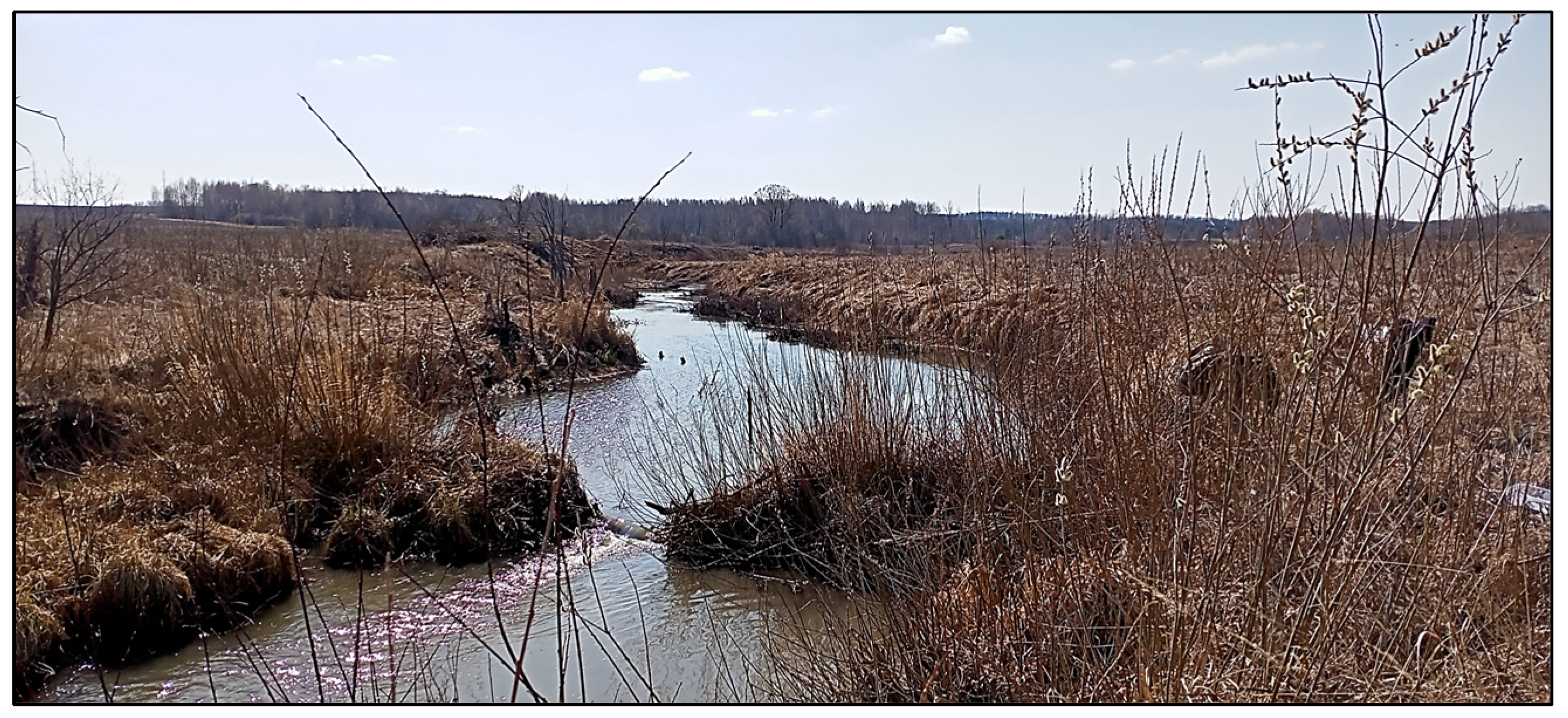
  • The results of seasonal variability in sedimentation rates are also generally expected: they are highest during periods of dominant spring snowmelt floods. The results obtained for the summer and autumn seasons are rather rough generalizations, as they include both periods of low-water flow and rainfall floods integrally (without phase/subphase separation). It is quite clear that the rates reported for these seasons are caused by sediment input into beaver ponds primarily from rainfall floods. In this regard, in phases/subphases of the water regime with the dominance or significant presence of snowmelt and rainfall floods, the differences in the rates of sediment accumulation in beaver ponds and riverbed sections not regulated by beavers are not statistically expressed, since the relatively high-flowing stream behaves more or less similarly in its speeds both in the ponds and beaver-free riverbeds. In other words, during these floods the river turns into a kind of uniform channel for transporting sediments. During the spring snowmelt flood, beavers even purposely partially dismantle their dams (Figure 15) so that the pond water can more or less freely flow downstream, without overflowing the pond and, thus, not completely destroying the dam due to its possible breakthrough. Differences between sedimentation rates in beaver ponds and beaver-free sections of the riverbed become statistically more significant during the non-flood period, when the ponds themselves become more like “settling tanks” for sediments, including finely dispersed grain-size fractions.
  • The distribution pattern of accumulation rates and composition of bottom sediments is very complex both by seasons and depending on the length and morphological features of the bottom of beaver ponds, as shown in Table 2 and Table 3. However, two extreme cases should be noted. During the most active phase of the snowmelt flood, when the river water flow is greatest, the highest rates of sedimentation are observed in the pond wedging zone (at the beginning of the pond), when there is a slight drop in water flow velocities upon entering the beaver pond. Near beaver dams (at the end of the pond), these rates decrease by about a third during this period. In the same direction, the freshly accumulated sedimentary material thins (see Table 2). Conversely, during periods of the year when floods have little or no impact on the functioning of beaver ponds, the material that has been in the pond water for some time is distributed more or less evenly throughout the pond, and no differences in sedimentation rates are observed along its length. However, even in this case, some thinning of the accumulated sediment occurs from the beginning to the end (near-dam area) of the pond (see Table 2).
  • As expected, differences in the rates of accumulation and composition of sediments in the flooded riverbed and inundated floodplain parts of the beaver-pond bottoms were observed in the summer and autumn seasons (see Table 3). Moreover, these differences in the study region contrasted the most during the summer period, when episodic flood waters passing through the ponds were caused by more intense rainfall events than during the autumn period. The comparatively low sedimentation rates in the floodplain sector of the pond bottom could have been influenced by the shrubby willow (see Figure 12) in the flooded zone where the sedimentation traps were installed (low flow velocity zone).
  • The average rates of total sediment accumulation in beaver ponds in the forest–steppe Morkvashka and Morkvashinka rivers that we obtained generally correlate well with those that were previously obtained for beaver ponds in small rivers in Europe and partly in North America, where beaver activity is also widespread. A comparison of these sedimentation rate estimates is presented in Table 5.
The data presented in Table 5 allow for a comparative analysis of sedimentation rates in beaver ponds in different regions of the temperate zone in the Northern Hemisphere. It should be noted that the sedimentation rates presented in Table 5 and obtained in our study are integral indicators, averaged from the pond’s inception to the determination of the accumulated sediment thickness. The conducted studies show that this process is not localized and is observed in a variety of geographic settings. The highest sedimentation rates are consistently observed in mountainous and foothill landscapes (Rocky Mountains in the USA, Carpathians in Poland, and Ardennes in Belgium), with high flow transport potential and active slope processes. Moreover, the values we obtained for lowland/upland rivers in the eastern East European Plain (1.3–14.7 cm/year) are comparable in order of magnitude to data for other lowland and upland regions of Europe (e.g., 5.4 cm/year in Devon, UK; 8 cm/year in Spessart Uplands, Germany, etc.). This indicates that beaver ponds serve as effective sediment traps not only in mountains, but also in lowland/upland landscapes, significantly slowing sediment transit along small rivers. The role of these structures underscores their global significance as a factor that should be considered in sediment runoff and associated pollutant models for small river basins across various physiographic regions.
7
As noted above, the rates of accumulation of freshly deposited (2023–2024) sediments in the studied beaver ponds vary over a fairly wide range, although in the vast majority of cases they do not exceed 1 kg/m2 per day. This also applies to organic matter, the content of which in the overwhelming majority of sediment samples does not exceed 15%. The rather wide range of estimates of these parameters is primarily associated with the diversity of lithological, geomorphic, and landscape conditions in the basins of the studied small rivers, which have been transformed by humans (primarily by plowing) to various degrees for a long time. As a comparison, we can give an example based on the parameters obtained for beaver ponds in the State Nature Reserve “Privolzhskaya Lesostep (Cis–Volga Forest–Steppe)”, located to the west (Penza Oblast, European Russia) of our study region. The widespread distribution of natural landscapes in this area (especially their vegetation component) has resulted in relatively low rates of intrapond sedimentation (0.007–0.072 kg/m2 per day during the summer season) and a high content of organic matter (40–56%) in the bottom sediments [82]. Among the rivers we studied, the Peschanka and Serbulak rivers are close analogues, with their basins almost completely forested (see Table 1). However, in the former, the average organic matter content in sediments reaches almost 20%, which is more than 2–2.5 times lower than in the example from the Reserve “Privolzhskaya Lesostep” mentioned above—the highest value among all the studied rivers in the region (Figure 3). In the latter case, it is only about 5%, which may be due to the high concentration of lakes and swamps in the valley of this river, which also flows through a reserve (Volga–Kama Nature Reserve). The example of this comparison convincingly demonstrates the importance of considering the characteristics of natural landscapes of river basins and their anthropogenic transformation when assessing and predicting sedimentation processes and sediment composition in beaver ponds.
8
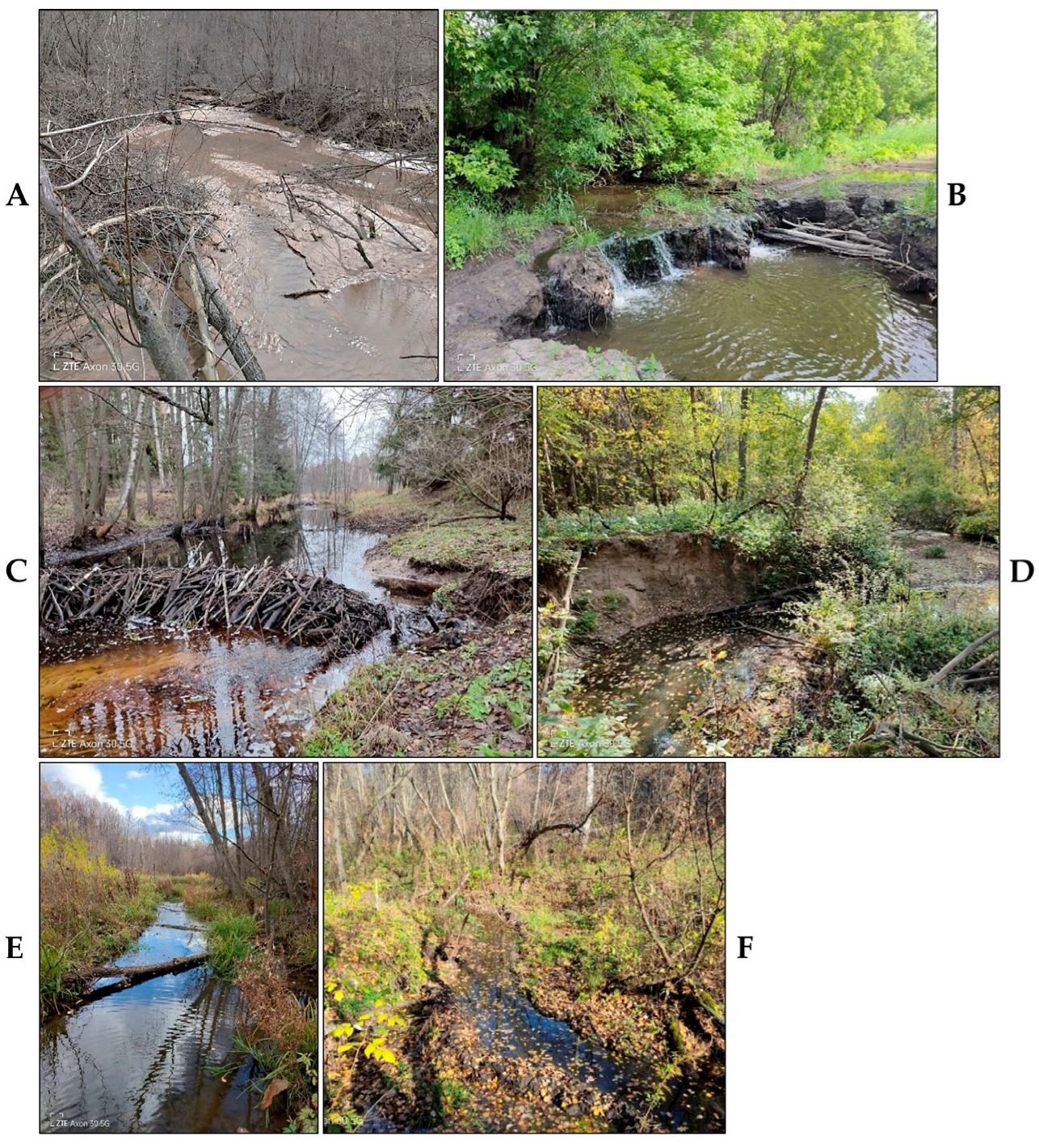
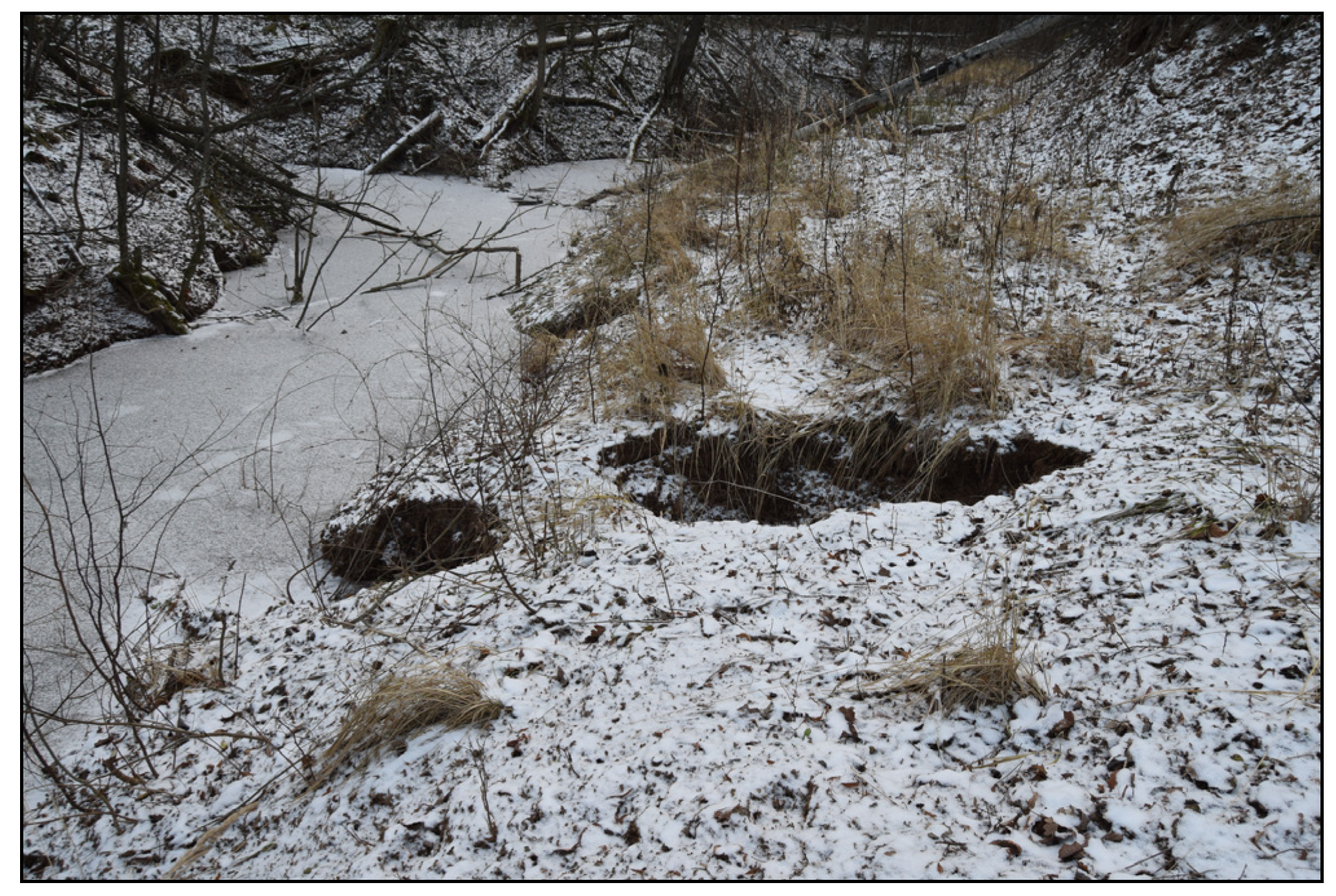
The direct and indirect influence of beaver activity on small rivers also comes down to geomorphic transformations in the bottoms of the river valleys themselves, which often act as a source of additional sediments in beaver ponds. Figure 16 and Figure 17 show some examples of such influence on erosion/sedimentation processes and associated changes in valley landforms. These processes also alter the lithological composition of sediments on the bottoms of small river valleys, resulting in a general transformation of their landscapes.
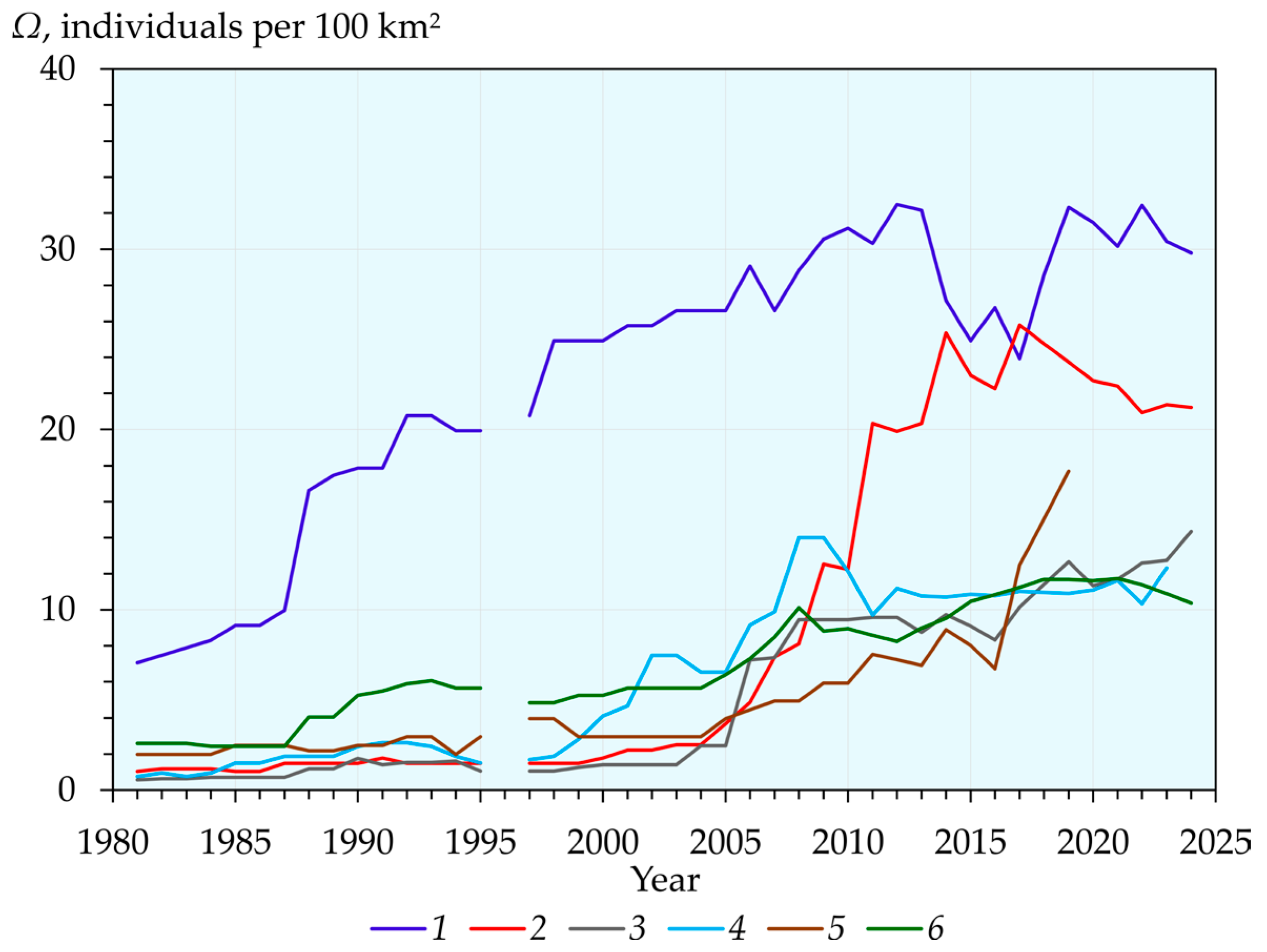
The growth of the C. fiber population in the East European Plain in recent decades [27,36] has coincided with progressive climate change, along with changes in water runoff and sediment loads in the region’s rivers. It is likely that sedimentation processes in beaver ponds have contributed to the reduction in sediment loads in the rivers in recent decades. Snowmelt water runoff has significantly decreased [83,84], while low-water (winter and summer–autumn) runoff has increased sharply, particularly in the region’s forest–steppe and steppe zones. This has reduced the intra-annual variability of water runoff by several times [85], creating increasingly favorable conditions for the survival [38,39,86] and further expansion of beaver colonies in the region’s rivers (Figure 18). The latter could also be facilitated by a decrease in the intensity of soil erosion and, as a result, a decrease in sediment runoff in the region’s river basins in recent decades [13,14,87,88,89], which, in turn, could contribute to an increase in the functioning time of beaver ponds by reducing the rate of their siltation. In this regard, the extension and deepening of research on the influence of C. fiber activity on small rivers remains urgent from both scientific and applied points of view, especially within the framework of interdisciplinary projects.

5. Study Prospects

The experience of this study allows us to outline the following priorities for future research:
(1)
Organizing long-term monitoring at permanent sites to obtain real-time data;
(2)
Development (improvement) of methods for accounting for sediment balance over the entire area of a beaver pond;
(3)
Expanding the study area to consider different landscapes and anthropogenic conditions;
(4)
Improving the standardization of methods for determining sedimentation rates;
(5)
Integrating quantitative data on sedimentation in beaver ponds into basin-wide models of sediment, pollutants, and carbon balance.

6. Conclusions

To summarize the above findings, we can formulate the following preliminary main conclusions:
  • In the context of the landscape–climatic zoning of the study region, the following patterns can be traced: The highest rates of the freshly sedimentation, the largest proportion of fine grain-size fractions (less than 0.01 mm), and the highest total organic matter content in the bottom sediments of beaver ponds of small rivers are observed in the steppe zone, while the smallest values are characteristic of small rivers in the (southern) forest zone. In this assessment, beaver ponds of the forest–steppe zone’s small rivers occupy an intermediate position.
  • Along the length of small rivers, some statistically insignificant excess of sedimentation rates in beaver ponds can be observed in their upper reaches, while the content of organic matter is observed in the ponds in the middle reaches of rivers.
  • The largest proportion of finely dispersed (silt–clay) grain-size fractions is found in beaver-pond sediments in the steppe zone rivers, while the smallest proportion is revealed in the sediments of beaver ponds in the forest zone.
  • The distribution of the rates of sedimentation in beaver ponds exhibits seasonal dynamics. As expected, the highest rates of sediment accumulation are observed during the spring snowmelt flood period, while the lowest rates occur toward the end of the summer–autumn low-water season with rainfall flood events. Moreover, for most of the seasons of the year, in which active snowmelt/rainfall flood events are present in one way or another, statistically significant differences in the rates of sediment accumulation between beaver ponds and adjacent sections of riverbeds not regulated by beavers were not identified. They are revealed only during periods of the year with the absence or weak manifestation of flood events, when beaver ponds function in the mode of “settling tanks” for sediments (the post-snowmelt flood period before the beginning of the summer low-water time, interrupted by episodic rains, and during long periods of summer and autumn low water without floods).
  • Using the example of the basic Morkvashka and Morkvashinka rivers, flowing in the Volga Upland’s far north within the forest–steppe zone, the average rates of total sediment accumulation in their 22 beaver ponds were obtained, which amounted to 1.3–14.7 cm per year. These values correlate well with the rates of sedimentation in beaver ponds of small rivers in various regions of Europe, primarily in plain (lowland/upland) rivers.
  • At this stage of the study, we have not yet identified a statistically significant influence of either “external” (share of plowed and forested areas in the river basin, water flow, length of rivers) or “internal” (length and height of beaver dams, length and depth of beaver ponds) factors on the rates of sediment accumulation in beaver ponds of small rivers due to the relatively small sample of rivers studied.
The preliminary nature of the above conclusions is due to two main circumstances:
(i)
Timeframe: Beaver-pond sedimentation data collection was carried out over one to two years. Longer, multi-year observations are needed to identify stable seasonal trends and more statistically reliable relationships.
(ii)
Spatial uncertainty: The study covered only 15 small watercourses, which is clearly insufficient for such a large area as the study region, especially for the southern forest zone, given the high variability of geological, geomorphic, landscape–climatic and land-use conditions in the region’s river basins.

Author Contributions

Conceptualization, A.V.G.; methodology, A.V.G. and A.G.S.; software, A.G.S. and A.V.G.; formal analysis, A.G.S. and A.V.G.; investigation, A.V.G. and A.G.S.; resources, A.G.S. and A.V.G.; data curation, A.G.S. and A.V.G.; writing—original draft preparation, A.V.G. and A.G.S.; writing—review and editing, A.V.G. and A.A.B.; visualization, A.V.G. and A.G.S.; supervision, A.V.G.; project administration, A.V.G. and A.G.S.; funding acquisition, A.G.S. and A.V.G. All authors have read and agreed to the published version of the manuscript.

Funding

This research was funded by the Russian Science Foundation, grant number 22-77-10087, https://rscf.ru/project/22-77-10087/, accessed on 8 December 2025 (field work and laboratory tests), and also was funded by the subsidy allocated to Kazan Federal University for the state assignment project no. FZSM-2023-0023 in the sphere of scientific activities (data processing; preparation of the manuscript).

Data Availability Statement

The data presented in this study are available on request from the corresponding author. The data are not publicly available because they are part of an ongoing larger study and have not yet been completely processed.

Acknowledgments

The authors thank the staff of the Volga–Kama Nature Reserve (Republic of Tatarstan, Russia) for their assistance in carrying out field work in the Raifa sector of this protected natural area.

Conflicts of Interest

The authors declare no conflicts of interest. The funders had no role in the design of the study; in the collection, analyses, or interpretation of data; in the writing of the manuscript; or in the decision to publish the results.

Appendix A

Figure A1. Changes in average summer/autumn sedimentation rate (SR, kg/m2 per day) in beaver ponds depending on the length of the river upstream of the lowest beaver dam studied (Ł) and its slope (α) in the analyzed rivers according to the landscape–climatic zone of the study region. R2 is the coefficient of linear trend determination. Note: None of the obtained relationships are statistically significant.
Water 18 00452 g0a1
Figure A2. Changes in average summer/autumn sedimentation rate (SR, kg/m2 per day) in beaver ponds depending on the average long-term river water flow (W) and the percentage of soil plowing in the part of the river basin located upstream of the lowest beaver dam studied (Pl) in the analyzed rivers according to the landscape–climatic zone of the study region. R2 is the coefficient of linear trend determination. Note: None of the obtained relationships are statistically significant.
Water 18 00452 g0a2

References

  1. Fullen, M.A. Compaction, hydrological processes and soil erosion on loamy sands in east Shropshire, England. Soil Tillage Res. 1985, 6, 17–29. [Google Scholar] [CrossRef]
  2. Dutta, S. Soil erosion, sediment yield and sedimentation of reservoir: A review. Model. Earth Syst. Environ. 2016, 2, 123. [Google Scholar] [CrossRef]
  3. Holden, J.; Haygarth, P.M.; Dunn, N.; Harris, J.; Harris, R.C.; Humble, A.; Jenkins, A.; MacDonald, J.; McGonigle, D.F.; Meacham, T.; et al. Water quality and UK agriculture: Challenges and opportunities. Wiley Interdiscip. Rev. Water 2017, 4, e1201. [Google Scholar] [CrossRef]
  4. Moss, B. Water pollution by agriculture. Philos. Trans. R. Soc. B Biol. Sci. 2008, 363, 659–666. [Google Scholar] [CrossRef] [PubMed]
  5. Withers, P.J.A.; Jarvie, H.P. Delivery and cycling of phosphorus in rivers: A review. Sci. Total Environ. 2008, 400, 379–395. [Google Scholar] [CrossRef]
  6. Khatri, N.; Tyagi, S. Influences of natural and anthropogenic factors on surface and groundwater quality in rural and urban areas. Front. Life Sci. 2015, 8, 23–39. [Google Scholar] [CrossRef]
  7. Sotiri, K.; Hilgert, S.; Duraes, M.; Armindo, R.A.; Wolf, N.; Scheer, M.B.; Kishi, R.; Pakzad, K.; Fuchs, S. To what extent can a sediment yield model be trusted? A case study from the Passaúna catchment, Brazil. Water 2021, 13, 1045. [Google Scholar] [CrossRef]
  8. Lahlou, A. Environmental and socio-economic impacts of erosion and sedimentation in North Africa. IAHS Publ. 1996, 236, 491–500. [Google Scholar]
  9. Rosas, M.A.; Vanacker, V.; Viveen, W.; Gutierrez, R.R.; Huggel, C. The potential impact of climate variability on siltation of Andean reservoirs. J. Hydrol. 2020, 581, 124396. [Google Scholar] [CrossRef]
  10. Wischmeier, W.H.; Smith, D.D. Predicting Rainfall Erosion Losses—A Guide to Conservation Planning; USDA, Science and Education Administration: Hyattsville, MD, USA, 1978. [Google Scholar]
  11. Golosov, V.N.; Ivanova, N.N.; Gusarov, A.V.; Sharifullin, A.G. Assessment of arable land degradation trend based on the study of the stratozem formation using the caesium-137 as a chronomarker. Eurasian Soil. Sci. 2017, 50, 1195–1208. [Google Scholar] [CrossRef]
  12. Golosov, V.; Koiter, A.; Ivanov, M.; Maltsev, K.; Gusarov, A.; Sharifullin, A.; Radchenko, I. Assessment of soil erosion rate trends in two agricultural regions of European Russia for the last 60 years. J. Soils Sediments 2018, 18, 3388–3403. [Google Scholar] [CrossRef]
  13. Gusarov, A.V. The response of water flow, suspended sediment yield and erosion intensity to contemporary long-term changes in climate and land use/cover in river basins of the Middle Volga Region, European Russia. Sci. Total Environ. 2020, 719, 134770. [Google Scholar] [CrossRef] [PubMed]
  14. Gusarov, A.V. Land-use/-cover changes and their effect on soil erosion and river suspended sediment load in different landscape zones of European Russia during 1970–2017. Water 2021, 13, 1631. [Google Scholar] [CrossRef]
  15. Sharifullin, A.G.; Gusarov, A.V. Contemporary erosion and sedimentation on gray forest soils in hollows of small catchments of the Republic of Tatarstan, European Russia. Eurasian Soil. Sci. 2022, 55, 115–125. [Google Scholar] [CrossRef]
  16. Downing, J.A.; Prairie, Y.T.; Cole, J.J.; Duarte, C.M.; Tranvik, L.J.; Striegl, R.G.; McDowell, W.H.; Kortelainen, P.; Caraco, N.F.; Melack, J.M.; et al. The global abundance and size distribution of lakes, ponds, and impoundments. Limnol. Oceanogr. 2006, 51, 2388–2397. [Google Scholar] [CrossRef]
  17. Smith, S.V.; Renwick, W.H.; Bartley, J.D.; Buddemeier, R.W. Distribution and significance of small, artificial water bodies across the United States landscape. Sci. Total Environ. 2002, 299, 21–36. [Google Scholar] [CrossRef]
  18. Seekell, D.A.; Pace, M.L.; Tranvik, L.J.; Verpoorter, C. A fractal-based approach to lake size-distributions. Geophys. Res. Lett. 2013, 40, 517–521. [Google Scholar] [CrossRef]
  19. Verpoorter, C.; Kutser, T.; Seekell, D.A.; Tranvik, L.J. A global inventory of lakes based on high-resolution satellite imagery. Geophys. Res. Lett. 2014, 41, 6396–6402. [Google Scholar] [CrossRef]
  20. Chin, A.; Laurencio, L.R.; Martinez, A.E. The hydrologic importance of small- and medium-sized dams: Examples from Texas. Prof. Geogr. 2008, 60, 238–251. [Google Scholar] [CrossRef]
  21. Berg, M.D.; Popescu, S.C.; Wilcox, B.P.; Angerer, J.P.; Rhodes, E.C.; McAlister, J.; Fox, W.E. Small farm ponds: Overlooked features with important impacts on watershed sediment transport. JAWRA J. Am. Water Resour. Assoc. 2016, 52, 67–76. [Google Scholar] [CrossRef]
  22. Schmadel, N.M.; Harvey, J.W.; Schwarz, G.E.; Alexander, R.B.; Gomez-Velez, J.D.; Scott, D.; Ator, S.W. Small ponds in headwater catchments are a dominant influence on regional nutrient and sediment budgets. Geophys. Res. Lett. 2019, 46, 9669–9677. [Google Scholar] [CrossRef]
  23. Wohl, E.; Inamdar, S. Beaver Versus Human: The big differences in small dams. Wiley Interdiscip. Rev. Water 2025, 12, e70019. [Google Scholar] [CrossRef]
  24. Hansen, A.T.; Dolph, C.L.; Foufoula-Georgiou, E.; Finlay, J.C. Contribution of wetlands to nitrate removal at the watershed scale. Nat. Geosci. 2018, 11, 127–132. [Google Scholar] [CrossRef]
  25. Pollock, M.M.; Beechie, T.J.; Wheaton, J.M.; Jordan, C.E.; Bouwes, N.; Weber, N.; Volk, C. Using beaver dams to restore incised stream ecosystems. BioScience 2014, 64, 279–290. [Google Scholar] [CrossRef]
  26. Halley, D.; Rosell, F.; Saveljev, A. Population and distribution of Eurasian beaver (Castor fiber). Balt. For. 2012, 18, 168–175. [Google Scholar]
  27. Halley, D.J.; Saveljev, A.P.; Rosell, F. Population and distribution of beavers Castor fiber and Castor canadensis in Eurasia. Mamm. Rev. 2021, 51, 1–24. [Google Scholar] [CrossRef]
  28. Gurnell, A.M. The hydrogeomorphological effects of beaver dam-building activity. Prog. Phys. Geogr. 1998, 22, 167–189. [Google Scholar] [CrossRef]
  29. Gorshkov, Y.A.; Easter-Pilcher, A.L.; Pilcher, B.K.; Gorshkov, D. Ecological Restoration by Harnessing the Work of Beavers. In Beaver Protection, Management, and Utilization in Europe and North America; Springer: Berlin/Heidelberg, Germany, 1999; pp. 67–76. [Google Scholar]
  30. Gorshkov, D. Is it possible to use beaver building activity to reduce lake sedimentation? Lutra 2003, 46, 189–196. [Google Scholar]
  31. Butler, D.R.; Malanson, G.P. The geomorphic influences of beaver dams and failures of beaver dams. Geomorphology 2005, 71, 48–60. [Google Scholar] [CrossRef]
  32. Otyukova, N.G. Some aspects of the hydrochemical regime of a small river under the conditions of zoogenic disturbance. Water Resour. 2009, 36, 604–609. [Google Scholar] [CrossRef]
  33. Aleynikov, A.A. Dynamics of vegetation cover of small river valleys as a result of beaver activities. Bull. Mosc. State For. Univ. For. Bull. 2010, 3, 165–168. (In Russian) [Google Scholar]
  34. Laland, K.N.; Boogert, N.J. Niche construction, co-evolution and biodiversity. Ecol. Econ. 2010, 69, 731–736. [Google Scholar] [CrossRef]
  35. Westbrook, C.J.; Cooper, D.J.; Butler, D.R. Beaver Hydrology and Geomorphology. In Treatise on Geomorphology; Shroder, J.F., Ed.; Elsevier Academic Press: Amsterdam, The Netherlands, 2013; pp. 293–306. [Google Scholar]
  36. Zavyalov, N.A. Beavers (Castor fiber and Castor canadensis), the founders of habitats and phytophages. Biol. Bull. Rev. 2014, 4, 157–180. [Google Scholar] [CrossRef]
  37. Katsman, E.A. Floristic diversity of watercourses and temporary reservoirs of the Ostrovtsovsky Cluster of the Volga Regional Forest-Steppe State Natural Biospheric Reserve impacted by the European Beaver’s expansion. Povolzhskiy J. Ecol. 2018, 4, 513–518. (In Russian) [Google Scholar] [CrossRef]
  38. Neumayer, M.; Teschemacher, S.; Schloemer, S.; Zahner, V.; Rieger, W. Hydraulic modeling of beaver dams and evaluation of their impacts on flood events. Water 2020, 12, 300. [Google Scholar] [CrossRef]
  39. Westbrook, C.J.; Ronnquist, A.; Bedard-Haughn, A. Hydrological functioning of a beaver dam sequence and regional dam persistence during an extreme rainstorm. Hydrol. Process. 2020, 34, 3726–3737. [Google Scholar] [CrossRef]
  40. Meentemeyer, R.K.; Butler, D.R. Hydrogeomorphic effects of beaver dams in Glacier National Park, Montana. Phys. Geogr. 1999, 20, 436–446. [Google Scholar] [CrossRef]
  41. Butler, D.R. The failure of beaver dams and resulting outburst flooding: A geomorphic hazard of the southeastern Piedmont. Geogr. Bull. 1989, 31, 29–38. [Google Scholar]
  42. Green, K.C.; Westbrook, C.J. Changes in riparian area structure, channel hydraulics, and sediment yield following loss of beaver dams. J. Ecosyst. Manag. 2009, 10, 68–79. [Google Scholar] [CrossRef]
  43. John, S.; Klein, A. Hydrogeomorphic effects of beaver dams on floodplain morphology: Avulsion processes and sediment fluxes in upland valley floors (Spessart, Germany). Quaternaire 2004, 15, 219–231. [Google Scholar] [CrossRef]
  44. Pollock, M.M.; Beechie, T.J.; Jordan, C.E. Geomorphic changes upstream of beaver dams in Bridge Creek, an incised stream channel in the interior Columbia River basin, eastern Oregon. Earth Surf. Process. Landf. 2007, 32, 1174–1185. [Google Scholar] [CrossRef]
  45. Persico, L.; Meyer, G. Natural and historical variability in fluvial processes, beaver activity, and climate in the Greater Yellowstone Ecosystem. Earth Surf. Process. Landf. 2013, 38, 728–750. [Google Scholar] [CrossRef]
  46. De Visscher, M.; Nyssen, J.; Pontzeele, J.; Billi, P.; Frankl, A. Spatio-temporal sedimentation patterns in beaver ponds along the Chevral river, Ardennes, Belgium. Hydrol. Process. 2014, 28, 1602–1615. [Google Scholar] [CrossRef]
  47. Gusarov, A.V.; Sharifullin, A.G.; Beylich, A.A.; Lisetskii, F.N. Cesium-137 distribution patterns in bottom sediments of beaver ponds in small rivers in the north of the Volga Upland, European Russia. Water 2025, 17, 503. [Google Scholar] [CrossRef]
  48. Golosov, V.N.; Belyaev, V.R.; Markelov, M.V.; Shamshurina, E.N. Specifics of sediment redistribution within a small arable catchment during different periods of its cultivation (Gracheva Loschina catchment, the Kursk region). Geomorfologiya 2013, 1, 25–35. (In Russian) [Google Scholar] [CrossRef]
  49. Bábek, O.; Sedláček, J.; Lenďáková, Z.; Elznicová, J.; Tolaszová, J.; Pacina, J. Historical pond systems as long-term composite archives of anthropogenic contamination in the Vrchlice River, Czechia. Anthropocene 2021, 33, 100283. [Google Scholar] [CrossRef]
  50. Ivanov, M.M.; Konoplev, A.V.; Walling, D.E.; Konstantinov, E.A.; Gurinov, A.L.; Ivanova, N.N.; Kuzmenkova, N.V.; Tsyplenkov, A.S.; Ivanov, M.A.; Golosov, V.N. Using reservoir sediment deposits to determine the longer-term fate of Chernobyl-derived 137Cs fallout in the fluvial system. Environ. Pollut. 2021, 274, 116588. [Google Scholar] [CrossRef] [PubMed]
  51. Fox, D.M. Evaluation of the efficiency of some sediment trapping methods after a Mediterranean forest fire. J. Environ. Manag. 2011, 92, 258–265. [Google Scholar] [CrossRef] [PubMed]
  52. Hoess, R.; Geist, J. Effect of fish pond drainage on turbidity, suspended solids, fine sediment deposition and nutrient concentration in receiving pearl mussel streams. Environ. Pollut. 2021, 274, 116520. [Google Scholar] [CrossRef]
  53. Robotham, J.; Old, G.; Rameshwaran, P.; Sear, D.; Gasca-Tucker, D.; Bishop, J.; Old, J.; McKnight, D. Sediment and nutrient retention in ponds on an agricultural stream: Evaluating effectiveness for diffuse pollution mitigation. Water 2021, 13, 1640. [Google Scholar] [CrossRef]
  54. Mead, R.; Xu, Y.; Chong, J.; Jaffé, R. Sediment and soil organic matter source assessment as revealed by the molecular distribution and carbon isotopic composition of n-alkanes. Org. Geochem. 2005, 36, 363–370. [Google Scholar] [CrossRef]
  55. Minella, J.P.G.; Walling, D.E.; Merten, G.H. Establishing a sediment budget for a small agricultural catchment in southern Brazil, to support the development of effective sediment management strategies. J. Hydrol. 2014, 519, 2189–2201. [Google Scholar] [CrossRef]
  56. Wiltshire, C.; Waine, T.W.; Grabowski, R.C.; Meersmans, J.; Thornton, B.; Addy, S.; Glendell, M. Assessing n-alkane and neutral lipid biomarkers as tracers for land-use specific sediment sources. Geoderma 2023, 433, 116445. [Google Scholar] [CrossRef]
  57. Westbrook, C.J.; Cooper, D.J.; Baker, B.W. Beaver assisted river valley formation. River. Res. Appl. 2011, 27, 247–256. [Google Scholar] [CrossRef]
  58. Butler, D.R. Beavers as agents of biogeomorphic change: A review and suggestions for teaching exercises. J. Geogr. 1991, 90, 210–217. [Google Scholar] [CrossRef]
  59. Butakov, G.P. From Kazan to the Sviyaga River mouth. In The Middle Volga. Geomorphological Guide; Dedkov, A.P., Ed.; Kazan University: Kazan, Russia, 1991; pp. 41–48. (In Russian) [Google Scholar]
  60. Lavrov, L.L. (Ed.) Atlas of the Kirov Oblast; Roskartografiya: Ekaterinburg, Russia, 1997. (In Russian) [Google Scholar]
  61. Ermolaev, O.P.; Igonin, M.E.; Bubnov, A.Y.; Pavlova, S.V. Landscapes of the Republic of Tatarstan. Regional Landscape-Ecological Analysis; Slovo: Kazan, Russia, 2007. (In Russian) [Google Scholar]
  62. Anikin, V.V.; Akifyeva, E.V.; Afanasieva, A.N.; Bashkatov, A.N.; Belyachenko, A.V.; Berezutsky, M.A.; Boldirev, V.A.; Volkov, Y.V.; Goldin, V.E.; Gusev, V.A.; et al. Educational and Local History Atlas of Saratov Oblast; Saratov State University: Saratov, Russia, 2013; Available online: https://geoportal.rgo.ru/catalog/regionalnye-atlasy/uchebno-kraevedcheskiy-atlas-saratovskoy-oblasti?tiles=1 (accessed on 30 November 2025). (In Russian)
  63. Sokolov, A.A.; Chibilev, A.A.; Rudneva, O.S.; Barbazyuk, E.V.; Dubrovskaya, S.A.; Kin, N.O.; Klimentyev, A.I.; Levykin, S.V.; Pavleichik, V.M.; Padalko, Y.A.; et al. Geographical Atlas of Orenburg Oblast; Institute of Steppe of the Ural Branch of the Russian Academy of Sciences: Orenburg, Russia, 2020; Available online: https://geoportal.rgo.ru/catalog/regionalnye-atlasy/geograficheskiy-atlas-orenburgskoy-oblasti?tiles=1&items_per_page=50 (accessed on 30 November 2025). (In Russian)
  64. GOST 12536-2014; State Standard. Soils. Methods of Laboratory Grain-Size and Microaggregate Distribution. Standartinform: Moscow, Russia, 2015. (In Russian)
  65. PND F 16.2.2:2.3:3.32-02; Federal Environmental Regulations. Quantitative Chemical Analysis of Soil. Methods for Measuring the Content of Dry and Calcined Residue in Solid and Liquid Wastes of Production and Consumption, Sediments, Sludge, Activated Sludge, Bottom Sediments by the Gravimetric Method. NTF “Xromos”: Moscow, Russia, 2017. (In Russian)
  66. Sharifullin, A.G.; Gusarov, A.V.; Lavrova, O.A.; Beylich, A.A. Channel gradient as a factor in the distribution of beaver dams and ponds on small rivers: A case study in the northern extremity of the Volga Upland, the East European Plain. Water 2023, 15, 2491. [Google Scholar] [CrossRef]
  67. Lehner, B.; Grill, G. Global river hydrography and network routing: Baseline data and new approaches to study the world’s large river systems. Hydrol. Process. 2013, 27, 2171–2186. [Google Scholar] [CrossRef]
  68. Hawker, L.; Uhe, P.; Paulo, L.; Sosa, J.; Savage, J.; Sampson, C.; Neal, J. A 30 m global map of elevation with forests and buildings removed. Environ. Res. Lett. 2022, 17, 024016. [Google Scholar] [CrossRef]
  69. Yermolaev, O.P.; Mukharamova, S.S.; Maltsev, K.A.; Ivanov, M.A.; Gafurov, A.M.; Saveliev, A.A.; Shynbergenov, E.A.; Ermolaeva, P.O.; Bodrova, A.O.; Yantsitov, R.O. Geography and geoecology of Russia in the mosaic of river basins. Geogr. Nat. Resour. 2023, 44, 208–214. [Google Scholar] [CrossRef]
  70. ArcGis Map Viewer. World Imagery. Available online: https://esri.maps.arcgis.com/apps/mapviewer/index.html?webmap=c03a526d94704bfb839445e80de95495 (accessed on 28 November 2025).
  71. Hansen, M.C.; Potapov, P.V.; Pickens, A.; Tyukavina, A.; Hernandez Serna, A.; Zalles, V.; Turubanova, S.; Kommareddy, I.; Stehman, S.V.; Song, X.; et al. Global land use extent and dispersion within natural land cover using Landsat data. Environ. Res. Lett. 2021, 17, 034050. [Google Scholar] [CrossRef]
  72. Dedkov, A.P.; Moszherin, V.I. Erosion on the plains of Eastern Europe. Geomorfol. Paleogeogr. 1996, 2, 3–9. (In Russian) [Google Scholar]
  73. Chalov, R.S.; Golosov, V.N.; Sidorchuk, A.Y. (Eds.) Catchment Erosion-Fluvial Systems; INFRA-M Publication: Moscow, Russia, 2017. (In Russian) [Google Scholar]
  74. Larsen, A.; Larsen, J.R.; Lane, S.N. Dam builders and their works: Beaver influences on the structure and function of river corridor hydrology, geomorphology, biogeochemistry and ecosystems. Earth Sci. Rev. 2021, 218, 103623. [Google Scholar] [CrossRef]
  75. Butler, D.R.; Malanson, G.P. Sedimentation rates and patterns in beaver ponds in a mountain environment. Geomorphology 1995, 13, 255–269. [Google Scholar] [CrossRef]
  76. Dunn, S.B.; Rathburn, S.L.; Wohl, E. Post-fire sediment attenuation in beaver ponds, Rocky Mountains, CO and WY, USA. Earth Surf. Process. Landf. 2024, 49, 4340–4354. [Google Scholar] [CrossRef]
  77. Rees, J.C.; Lininger, K.B.; Landis, J.D.; Briles, C.E. Assessing Controls on sedimentation rates and sediment organic carbon accretion in beaver ponds. Sci. Total Environ. 2024, 949, 174951. [Google Scholar] [CrossRef]
  78. Devito, K.J.; Dillon, P.J. Importance of runoff and winter anoxia to the P and N dynamics of a beaver pond. Can. J. Fish. Aquat. Sci. 1993, 50, 2222–2234. [Google Scholar] [CrossRef]
  79. Giriat, D.; Gorczyca, E.; Sobucki, M. Beaver ponds’ impact on fluvial processes (Beskid Niski Mts., SE Poland). Sci. Total Environ. 2016, 544, 339–353. [Google Scholar] [CrossRef] [PubMed]
  80. Rurek, M. Characteristics of beaver ponds and landforms induced by beaver activity, S part of the Tuchola Pinewoods, Poland. Water 2021, 13, 3641. [Google Scholar] [CrossRef]
  81. Puttock, A.; Graham, H.A.; Carless, D.; Brazier, R.E. Sediment and nutrient storage in a beaver engineered wetland. Earth Surf. Process. Landf. 2018, 43, 2358–2370. [Google Scholar] [CrossRef]
  82. Bashinskiy, I.V.; Osipov, V.V. Sedimentation rate of suspended matter and its chemical composition in beaver water bodies in the State Nature Reserve “Privolzhskaya lesostep” (European Russia). Nat. Conserv. Res. 2019, 4, 54–66. (In Russian) [Google Scholar] [CrossRef]
  83. Gelfan, A.N.; Frolova, N.L.; Magritsky, D.V.; Kireeva, M.B.; Grigoriev, V.Y.; Motovilov, Y.G.; Gusev, E.M. Climate change impact on the annual and maximum runoff of Russian rivers: Diagnosis and projections. Izv. Atmos. Ocean. Phys. 2023, 59, 153–169. [Google Scholar] [CrossRef]
  84. Blöschl, G.; Hall, J.; Viglione, A.; Perdigão, R.A.P.; Parajka, J.; Merz, B.; Lun, D.; Arheimer, B.; Aronica, G.T.; Bilibashi, A.; et al. Changing climate both increases and decreases European river floods. Nature 2019, 573, 108–111. [Google Scholar] [CrossRef] [PubMed]
  85. Gusarov, A.V.; Beylich, A.A. Anthropocene trends in water flow of small and medium-sized rivers in the east of the East European Plain: The forest-steppe and steppe zones. Hydrology 2025, 12, 242. [Google Scholar] [CrossRef]
  86. D’yakov, Y.V. Beavers of the European Part of the Soviet Union; Moskovskii Rabochii Publication: Moscow, Russia, 1975. (In Russian) [Google Scholar]
  87. Gusarov, A.V.; Golosov, V.N.; Sharifullin, A.G. Contribution of climate and land cover changes to reduction in soil erosion rates within small cultivated catchments in the eastern part of the Russian Plain during the last 60 years. Environ. Res. 2018, 167, 21–33. [Google Scholar] [CrossRef]
  88. Gusarov, A.V.; Beylich, A.A. Water discharge change in the rivers of the south of the boreal forest zone of Eastern European Russia at the end of the Late Holocene and in the Anthropocene: The Vyatka River. Hydrology 2024, 11, 210. [Google Scholar] [CrossRef]
  89. Gusarov, A.V.; Sharifullin, A.G.; Beylich, A.A. Contemporary trends in river flow, suspended sediment load, and soil/gully erosion in the south of the boreal forest zone of European Russia: The Vyatka River Basin. Water 2021, 13, 2567. [Google Scholar] [CrossRef]
  90. Novikova, B.V. (Ed.) Fund of Hunting Grounds and the Number of Main Species of Wild Animals in the RSFSR; Central Scientific Research Laboratory of the Main Directorate of Hunting and Reserves under the Council of Ministers of the Russian Federation: Moscow, Russia, 1992. (In Russian) [Google Scholar]
  91. Lomanov, I.K.; Borisov, B.P.; Volodina, O.A.; Gubar, Y.P.; Lomanova, N.P.; Mirutenko, V.S.; Molochayev, A.V.; Mosheva, T.S.; Naumova, A.A.; Novikov, G.B.; et al. Resources of the Main Species of Game Animals and Hunting Grounds of Russia (1991–1995); Lomanov, I.K., Ed.; Central Scientific Research Laboratory of the Hunting Department of the Ministry of Agriculture and Food of Russia: Moscow, Russia, 1996. (In Russian) [Google Scholar]
  92. Lomanov, I.K. (Ed.) State of Game Animal Resources in the Russian Federation. Information and Analytical Materials. In Game Animals of Russia (Biology, Protection, Study of Resources, and Rational Use); Tsentrokhotkontrol: Moscow, Russia, 2000. (In Russian) [Google Scholar]
  93. Lomanov, I.K. (Ed.) State of Game Animal Resources in the Russian Federation in 2000–2003. Information and Analytical Materials. In Game Animals of Russia (Biology, Protection, Study of Resources, and Rational Use); Tsentrokhotkontrol: Moscow, Russia, 2004. (In Russian) [Google Scholar]
  94. Gubar, Y.P. (Ed.) State of Game Animal Resources in the Russian Federation in 2003–2007. Information and Analytical Materials. In Game Animals of Russia (Biology, Protection, Study of Resources, and Rational Use); Tsentrokhotkontrol: Moscow, Russia, 2007. (In Russian) [Google Scholar]
  95. Lomanov, I.K. (Ed.) State of Game Animal Resources in the Russian Federation in 2008–2010. Information and Analytical Materials. In Game Animals of Russia (Biology, Protection, Study of Resources, and Rational Use); Tsentrokhotkontrol: Moscow, Russia, 2011. (In Russian) [Google Scholar]
  96. Regional Reports on the State of the Environment of Kirov Oblast in 2011–2020. Available online: https://kirovreg.ru/econom/ecology/doklad.php (accessed on 17 December 2025). (In Russian)
  97. State Committee of the Republic of Tatarstan for Biological Resources in 2011–2024. Available online: https://ojm.tatarstan.ru/gosohotreestr.htm?page=1 (accessed on 17 December 2025). (In Russian)
  98. State Report on the State of Natural Resources and Environment of the Republic of Bashkortostan in 2013–2024. Available online: https://ecology.bashkortostan.ru/presscenter/lectures/ (accessed on 17 December 2025). (In Russian)
  99. Report on the Environmental Situation in Samara Oblast for 2011–2024. Available online: https://priroda.samregion.ru/category/deyatelnost/ohrana_okr_sredbi/doklad_ob_eko_situatsii/ (accessed on 17 December 2025). (In Russian)
  100. Resolution of 30 September 2020 No. 326 on Approval of the Scheme for the Placement, Use and Protection of Hunting Grounds in Saratov Oblast. Available online: https://docs.cntd.ru/document/467727533 (accessed on 17 December 2025). (In Russian)
  101. State Report on the State of Natural Resources and Environmental Protection of Orenburg Oblast in 2005–2024. Available online: https://mpr.orb.ru/activity/624/ (accessed on 17 December 2025). (In Russian)
Figure 1. Location of the studied small rivers (A) in Eastern Europe. The rivers: 1—Peschanka, 2—Sumka, 3—Serbulak, 4—Noksa, 5—Morkvashka, 6—Morkvashinka, 7—Makarov Dol, 8—Salayaz, 9—Aigildinka, 10—Karakashly, 11—Zaumyat, 12—Yagodnaya, 13—Zhiloy Klyuch, 14—Malaya Yoga, 15—P’yanka; (B)—cities.
Water 18 00452 g001
Figure 2. Methodological stages of the field study period: (A)—setting sedimentation traps (the photograph shows a beaver pond in the Sumka River within the Volga–Kama State Nature Reserve); (B)—pre-laboratory settling of the selected sediment materials; (C)—the spring (April) collection of sediment accumulated on past year’s autumn foliage on the surface of the lower floodplain (the photographs show a section of the riverbed/floodplain unregulated by beaver ponds). Note: All the above photos were taken by the authors.
Water 18 00452 g002
Figure 3. Distribution of (A) sedimentation rate (SR), (B) organic matter (OM), and (C,D) grain-size composition of the freshly accumulated bottom sediments of the studied beaver ponds in the context of landscape–climatic zoning. F—forest zone; FS—forest–steppe zone; S—steppe zone. June–August 2024, June–November 2023, etc. are the times when the sedimentation traps were operated during the summer–autumn low-water season with episodic rainfall flood events.
Water 18 00452 g003
Figure 4. Distribution of average sedimentation rate (SR), proportion of fine grain-size fractions (G<0.01, less than 0.01 mm), and organic matter (OM) in freshly accumulated bottom sediments of studied beaver ponds according to the landscape–climatic zone of the study region during the summer–autumn low-water season with episodic rainfall flood events (see Figure 3). p is the statistical significance of the difference in mean values.
Water 18 00452 g004
Figure 5. Changes in the distribution density (D) of average sedimentation rate (SR) in beaver ponds along the studied small rivers (in their upper, middle, and lower reaches) according to the landscape–climatic zone of the study region during the summer–autumn low-water season with rainfall flood events (see Figure 3). N—number of ponds analyzed; SD—standard deviation.
Water 18 00452 g005
Figure 6. Changes in the distribution density (D) of average organic matter content (OM) in the freshly accumulated sediments of beaver ponds along the studied small rivers (in their upper, middle, and lower reaches) according to the landscape–climatic zone of the study region during the summer–autumn low-water season with episodic rainfall flood events (see Figure 3). N—number of ponds analyzed; SD—standard deviation. For color legend, see Figure 5.
Water 18 00452 g006
Figure 7. Changes in grain-size distribution in the freshly accumulated bottom sediments in beaver ponds along the studied small rivers (in their upper, middle, and lower reaches) according to the landscape–climatic zone of the study region during the summer–autumn low-water season with episodic rainfall flood events (see Figure 3).
Water 18 00452 g007
Figure 8. Seasonal changes in sedimentation rate (SR) in beaver ponds and unregulated (beaver-free) sections of the Morkvashka River bed. N—number of ponds/sections analyzed; Md—median; SD—standard deviation; p—statistical significance of the difference in mean values of SR; 9–23 April 2024, 23 April–17 May 2024, etc.—calendar dates of sedimentation trap operation. Note 1: Group I includes phases (subphases) of the water regime of the river with statistically insignificant differences in the mean values of SR between beaver ponds and unregulated sections of the riverbed, while Group II includes the phases (subphases) with statistically significant differences. Note 2: The heat map shows the statistical significance of SR differences for the phases/subphases in the studied ponds created by C. fiber.
Water 18 00452 g008
Figure 9. Seasonal grain-size composition changes in the freshly accumulated bottom sediments in sedimentation traps in beaver ponds and beaver-free riverbed sections of the Morkvashka River. The time reference for periods I, II, etc., can be found in Figure 8. Δ—change in the total percentage of silt–clay fractions in the sediments. Note: In the table, the blue (pink) fields highlight the phases/subphases of the water regime of the river, in which some thinning (coarsening) of the granulometric composition of the freshly accumulated bottom sediments in the ponds was recorded compared to the unregulated sections of the riverbed.
Water 18 00452 g009
Figure 10. Comparison of the masses (SM) and grain-size composition of sediments accumulated on the surface of the lower floodplains near beaver ponds and beaver-free riverbed sections of the forest–steppe Morkvashka and Morkvashinka rivers after a shorter flood in 2023 caused by snowmelt. N—number of sampling sites; SD—standard deviation; p—statistical significance of the difference in average SM values; Δ—change (decrease) in the total percentage of silt–clay fractions in the sediments when moving from near-riverbed locations to near-beaver-pond locations.
Water 18 00452 g010
Figure 11. Changes in the concentration of suspended sediments (SC) in the wedging zone (1) and near-dam area (2) of some beaver ponds of the forest–steppe Morkvashka and Morkvashinka rivers in the 2003 summer–autumn low-water season with episodic rainfall flood events. N—number of sampling sites; SD—standard deviation; p—statistical significance of the difference in mean SC values.
Water 18 00452 g011
Figure 12. Location of groups of sedimentation traps in the inundated floodplain–channel complex of one of the beaver ponds (55.7487272776° N, 48.8605086415° E) in the middle reaches of the Morkvashinka River (July 2022). A—beaver dam of the pond; B—location of the traps among the shrubby willow on the inundated surface of the floodplain; C—location of the traps near the dam of the pond.
Water 18 00452 g012
Figure 13. Changes in average summer/autumn sedimentation rate (SR), content of fine particles (G<0.01, less than 0.01 mm), and organic matter (OM) in beaver-pond sediments depending on changes in the height (h) and length (L) of beaver dams in the analyzed rivers according to the landscape–climatic zone of the study region. R2 is the coefficient of linear trend determination (the coefficient is shown only for those relationships that have statistical significance (p < 0.05)).
Water 18 00452 g013
Figure 14. Changes in average summer/autumn sedimentation rate (SR), content of fine particles (G<0.01, less than 0.01 mm), and organic matter (OM) in beaver-pond sediments depending on changes in the length of beaver ponds (L) and the depth of the ponds at the location of sediment traps in the analyzed rivers according to the landscape–climatic zone of the study region. R2 is the coefficient linear trend determination (the coefficient is shown only for the relationship that has statistical significance (p < 0.05)).
Water 18 00452 g014
Figure 15. An example of a beaver dam (55°42′17.35″ N, 48°49′41.56″ E), partially dismantled by beavers so that excess river meltwater could flow out of the pond located upstream (upper reaches of the Morkvashinka River, 12 April 2022). Note: The photo was taken by one of the authors.
Water 18 00452 g015
Figure 16. Some geomorphic consequences of the activity of C. fiber in the floodplain–riverbed complexes within small river valleys in the study region: (A)—one of the uppermost beaver ponds in the Morkvashka River, almost completely silt-filled due to road reconstruction work in the catchment area of its right-side stream (20 April 2024); (B)—small erosion ledge created by the river in previously accumulated sediment at the bottom of a former beaver pond (P’yanka River, steppe zone) (15 June 2024); (C,D)—consequences of lateral flood-induced erosion of riverbanks/floodplains (retreat of the riverbank) near beaver dams in the Serbulak and Sumka rivers, respectively (southern forest zone) (16 November 2023 and 20 September 2023, respectively); (E,F)—consequences of channeling (straightening) the riverbed by C. fiber in the Salayaz River (forest–steppe zone) (14 October 2023). Note: All the above photos were taken by one of the authors.
Water 18 00452 g016
Figure 17. An example of the collapse of one of the burrows created by C. fiber on the left bank of the uppermost beaver pond of the Morkvashka River (55°44′13.22″ N, 48°45′33.79″ E; November 2022). Note 1: Often, such collapsed burrows become the birthplace of small gullies or even gully networks that destroy the floodplain and river terraces. Note 2: The photo was taken by one of the authors.
Water 18 00452 g017
Figure 18. Year-to-year changes in the recorded mean population density (Ω) of C. fiber in 1981–2024 by administrative region of the European part of Russia, in which the studied small rivers flow (graph is based on data from [90,91,92,93,94,95,96,97,98,99,100,101]). The following administrative regions are shown: 1—Kirov Oblast (Peschanka River); 2—Republic of Tatarstan (Sumka, Serbulak, Noksa, Morkvashka, Morkvashinka, Makarov Dol, Karakashly, and Zaumyat rivers); 3—Republic of Bashkortostan (Salayaz and Aigildinka rivers); 4—Samara Oblast (Malaya Yoga River); 5—Saratov Oblast (Yagodnaya and Zhiloy Klyuch rivers); 6—Orenburg Oblast (P’yanka River). Note: A sharp increase in the number of C. fiber in 2004–2014 is noteworthy in the Republic of Tatarstan, where 8 of the 15 rivers studied flow.
Water 18 00452 g018
Table 1. Some characteristics of the rivers under study and their basins.
Num.NĹSĚAαTPRWLithSoilVgPlF
Forest zone
1226.1916833.65.52.96232121950Sd, LmUATF392
282.8 112931.80.64.355013032892543
355.217105336.34.35501302171099
Forest–steppe zone
443.5 261357.52.14.4552119714Lm, LimGPBLF1015
5407.820165154.419.84.45461462978346
66116.687152152.19.24.454613611,8182040
772.561805622.44.4546136870025
8567.723161668.63.64941002260Lm, Sd, LimVCMS4233
992.7317559.322.13.64941003102261
10246.920239136.619.83.95311222403Lm, Lim4316
11184.37252167.939.13.95311228423223
Steppe zone
12445.310.6285102.419.35.746586912Sd, LmVCFF3564
131814.448.8156147.310.25.7465763709Lm, Cl, Ch3331
1451819.3145116.314.54.74748716797724
154510.435.119184.58.14.74567425977611
Notes: 1 The uppermost reaches of the river upstream of Lake Raifa. 2 The uppermost reaches of the river upstream of the village of Chernikovo. “Num.” is the numbering of the rivers, according to Figure 1; N (units) is the total number of beaver dams found; Ĺ (km) is the length of the river from the source to the mouth, determined based on field research results; S (km2) is the river basin area; Ě (m) is the average elevation of the river basin; A (m) is the difference between the maximum and minimum absolute elevation of the river obtained in the field; α is the slope of the river; T (°C) is the annual average air temperature; P (mm per year) is the annual precipitation; R (mm per year) is the annual water runoff (depth) in the basin of a given river; W (×103 m3 per year) is the annual water flow. Lithological composition of surface rocks (Lith): Sd—sand, Cl—clay, Lm—loam, BS—crushed stone, Lim—limestone, Ch—chalk; soil cover (predominant): UA—Umbric Albeluvisols, GP—Greyic Phaeozems, VC—Voronic Chernozems. Vegetation cover (Vg) (predominant): TF is spruce and fir–spruce southern taiga forests, giving way to broad-leaved and fir–spruce subtaiga forests to the south; BLF is linden–oak broadleaf forests; MS is rich-herb and mixed-herb meadow steppes; and FF is rich mixed-grass and fescue–feather-grass meadow steppes. Pl (%) is the share of cropland in the total area of the corresponding river basin and F (%) is the share of forested area in the total area of the basin.
Table 2. Seasonal changes in sedimentation rate (SR, kg/m2 per day), content of organic matter (OM, %), and fine grain-size fractions (G<0.01, %, less than 0.01 mm) in the freshly accumulated bottom sediments from sedimentation traps placed in different parts of some beaver ponds of the forest–steppe Morkvashka and Morkvashinka rivers.
Period
(Dates) 1
ParameterIntrapond Location
Wedging ZoneCentral PartNear-Dam Area
I
(9–23 April 2024)
SR2.3 [N = 4]ND1.6 [N = 4]
OM4.5 [N = 4]ND5.5 [N = 4]
G<0.0123.5 [N = 4]ND29.9 [N = 4]
II
(23 April–17 May 2024)
SR1.1 [N = 3]0.7 [N = 1]1.3 [N = 5]
OM4.7 [N = 3]3.9 [N = 1]5.2 [N = 5]
G<0.0125.6 [N = 3]27.1 [N = 1]28.8 [N = 5]
III
(14 June–15 July 2023)
SR0.5 [N = 5]1.0 [N = 2]0.8 [N = 6]
OM6.4 [N = 5]6.5 [N = 2]4.5 [N = 6]
G<0.0134.2 [N = 5]20.0 [N = 2]26.0 [N = 6]
IV
(30 September–9 November 2023)
SR0.3 [N = 4]0.4 [N = 1]0.2 [N = 4]
OM4.8 [N = 4]4.6 [N = 1]7.1 [N = 4]
G<0.0119.9 [N = 4]28.6 [N = 1]33.9 [N = 4]
V
(1–28 April 2023)
SR0.4 [N = 4]ND0.6 [N = 6]
OM5.6 [N = 4]ND7.8 [N = 6]
G<0.0125.8 [N = 4]ND34.2 [N = 6]
VI
(7 August–30 September 2023)
SR0.4 [N = 5]0.4 [N = 2]0.4 [N = 5]
OM6.7 [N = 5]6.4 [N = 2]6.1 [N = 5]
G<0.0124.5 [N = 5]27.2 [N = 2]30.1 [N = 5]
Notes: 1 The calendar dates of the functioning of sedimentation traps; ND—no data; N—number of analyzed sedimentation traps.
Table 3. Comparison of sedimentation rate (SR) and grain-size distribution of sediments from the traps installed in the riverbed and on the floodplain, flooded by the waters of one of the Morkvashinka River’s beaver ponds (see Figure 12) in the summer–autumn season with episodic rainfall flood events.
LocationSeason
Summer (18 June–20 July 2023)Autumn (26 September–30 October 2023)
Pond riverbed: 1
SR, kg/m2 per day0.240.02
Grain-size composition, %Sand = 40.5; Silt = 37.9; Clay = 21.6Sand = 47.8; Silt = 35.4; Clay = 16.8
Pond floodplain: 2
SR, kg/m2 per day0.020.01
Grain-size composition, %Sand = 2.5; Silt = 67.4; Clay = 30.1Sand = 6.0; Silt = 63.5; Clay = 30.5
Notes: 1 In a part of the riverbed flooded by the waters of the beaver pond, 3 m from its dam. 2 In a section of the river floodplain inundated by the waters of the beaver pond, approximately 14 m from its dam, among the shrubby willow.
Table 4. Changes in the thickness and rates of total sedimentation in the studied beaver ponds in different reaches of the Morkvashka and Morkvashinka rivers (integrally).
ParameterReachesOn Average
UpperMiddleLower
N7113957 1
TSFmin, cm4772
TSFmax, cm>220>220>220
TSFav, cm170 ± 59125 ± 5159 ± 1886 ± 20
TSR, cm per year>11.3>8.3>3.9>5.7
Notes: 1 The total number of drilling sites (N—number of drilling sites); TSF—average total sediment thickness: TSFmin is the minimum, TSFmax is the maximum, TSFav is the average; TSR—average total sedimentation rate. Note: The inception of the beaver ponds in these rivers occurred around 2010 [47].
Table 5. Comparison of sedimentation rate (SR, cm/year) in beaver ponds of some rivers in various countries of Europe and North America (according to [74], with some changes and additions).
Country
(Region)
Environmental ContextSRNMethodReference
North America
USA
(Montana)
Mountainous
(Northern Rockies)
2–28 8Cores within drained beaver deposits[75]
USA
(Montana)
Mountainous
(Northern Rockies)
15–2510Systematic grid-based coring of beaver ponds[40]
USA
(Colorado)
Mountainous
(Front Range)
11Sediment depth from drained beaver ponds[57]
USA
(Oregon)
Mountainous
(Columbia Plateau)
0.75–4513Systematic grid-based coring of beaver ponds[44]
USA
(Colorado/
Wyoming)
Mountainous
(Rocky Mountains)
1.8–20.4 37Cores within pond deposits[76]
USA
(Colorado)
Mountainous
(Southern Rocky
Mountains)
11.645Historical aerial imagery and radiometric dating with 7Be, 210Pb, and 14C[77]
Canada
(British Columbia)
Mountainous
(Purcell Mountains)
3.78Regression model based on other sites[42]
Canada
(Ontario)
Plain0.2–0.61Cores within pond deposits[78]
Europe
Germany
(Bavaria)
Plain
(Spessart Uplands)
85Systematic grid-based coring of beaver ponds[43]
Belgium
(Wallonia)
Mountainous
(Central Ardennes)
3.610Systematic grid-based coring of beaver ponds[46]
PolandMountainous
(Polish Carpathians)
145Coring of beaver-pond deposit[79]
Poland
(Gdańsk Pomerania)
Plain
(Tuchola Forest)
2–8417Systematic grid-based coring of beaver ponds[80]
UK
(England)
Plain
(SW England, Devon)
5.413Systematic grid-based coring of beaver ponds[81]
Russia
(European part)
Plain
(Volga–Kama region)
1.3–14.722Coring of beaver-pond depositThis study
Disclaimer/Publisher’s Note: The statements, opinions and data contained in all publications are solely those of the individual author(s) and contributor(s) and not of MDPI and/or the editor(s). MDPI and/or the editor(s) disclaim responsibility for any injury to people or property resulting from any ideas, methods, instructions or products referred to in the content.