Review

Marine Pollution in Panama: A Bibliometric Approach to Knowledge Gaps and Institutional Influence


by
Nelva E. Alvarado-González
1,
Yulissa De Gracia
2,3,4,
Jenifer Ortega
2,3,4,
Maricselis Díaz
5,
Yostin Añino
6,7,
Xabier Lekube
8,9,
Maren Ortiz-Zarragoitia
8,9 and
Beñat Zaldibar
8,9,*
1
Instituto Especializado de Análisis (IEA), Vicerrectoría de Investigación y Postgrado, Universidad de Panamá, Panama City 0824, Panama
2
Centro Regional Universitario de Azuero, Universidad de Panamá, Panama City 0824, Panama
3
Autoridad de los Recursos Acuáticos de Panamá (ARAP), Panama City 0824, Panama
4
Maestría en Gestión Ambiental y Sostenibilidad, Universidad del Istmo, Avenida Justo Arosemena, Calle 40 Este, Panama City 0796, Panama
5
Centro de Investigaciones Psicofarmacológicas, Facultad de Medicina, Universidad de Panamá, Panama City 0824, Panama
6
Museo de Invertebrados G.B. Fairchild, Universidad de Panamá, Panama City 0824, Panama
7
Estación Científica COIBA AIP, Ciudad del Saber, Clayton, Panama City 0843, Panama
8
CBET+ CRG, Department of Zoology and Animal Cell Biology, Faculty of Science and Technology, University of the Basque Country (UPV/EHU), E-48940 Leioa, Basque Country, Spain
9
Research Centre for Experimental Marine Biology and Biotechnology (PIE), University of the Basque Country (UPV/EHU), E-48620 Plentzia, Basque Country, Spain
*
Author to whom correspondence should be addressed.
Water 2026, 18(3), 426; https://doi.org/10.3390/w18030426
Submission received: 11 August 2025 / Revised: 24 October 2025 / Accepted: 27 October 2025 / Published: 6 February 2026
(This article belongs to the Section Oceans and Coastal Zones)

Abstract

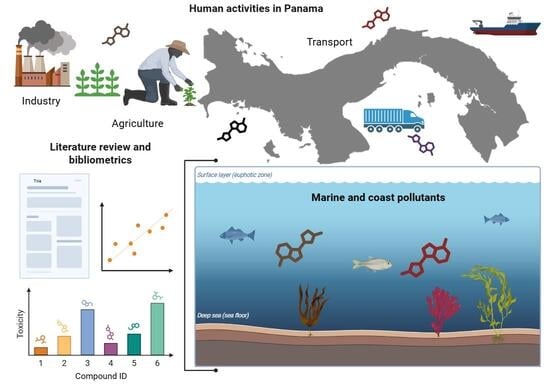
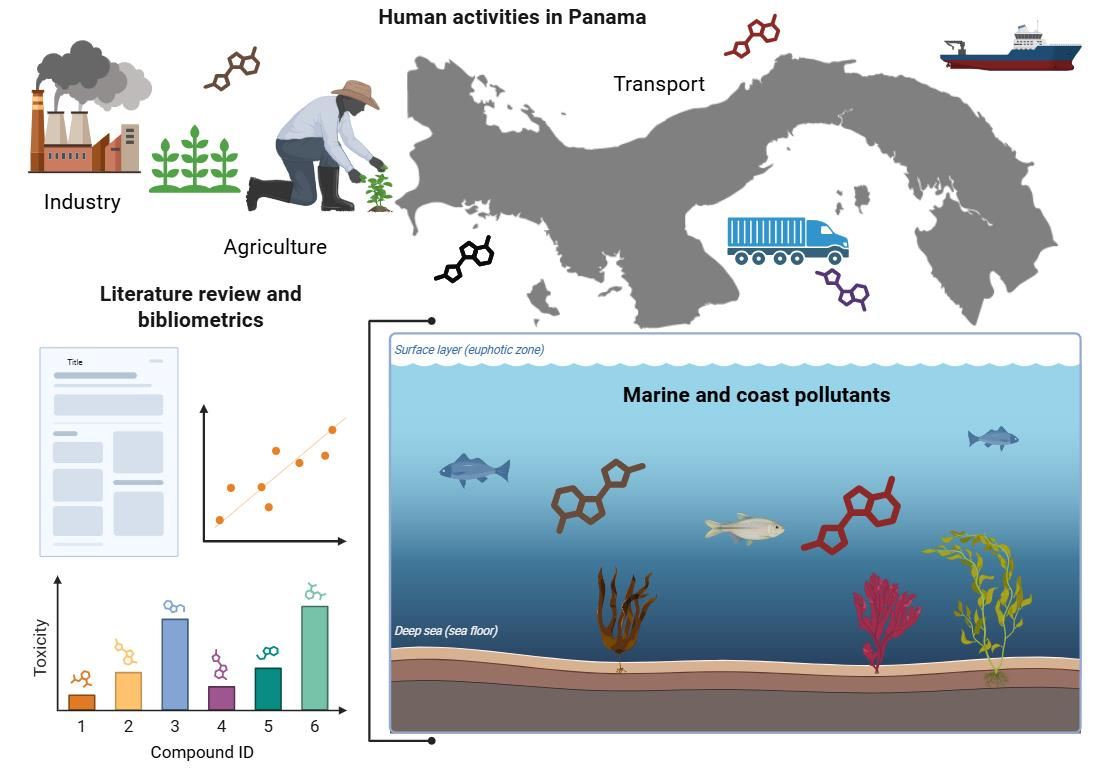
Human activities in Panama, such as agriculture, industry, and transport, have led to the release of pollutants that affect the health of marine and coastal ecosystems. However, there is a lack of bibliographic compilation studies to understand the current state of research on marine pollution in Panama. In recent years, bibliometric studies have attracted attention due to the development of new analytical and integrative online tools. This study conducts a bibliometric analysis of marine pollution and its environmental effects on Panama’s coastal areas. The results show consistent growth in scientific production, with increased collaboration among researchers. However, the involvement of national institutions is limited, highlighting the need to strengthen local research. Most publications focus on environmental sciences, with a recent shift towards studying a broader range of pollutants.

Graphical Abstract

1. Introduction

Panama, with a strategic geographical location, hosts a rich biodiversity in both its terrestrial and marine territories. With over 1700 km of Pacific coastline and 1300 km of Caribbean coastline, Panama is a vital country in the conservation of marine and coastal ecosystems. However, human activities, such as agriculture, industry, and transportation, along with the discharge of urban and rural wastewater, have led to the release of pollutants into these ecosystems, threatening their health and the health of the organisms living in them. These pollutants, including heavy metals, hydrocarbons, pesticides, and herbicides, affect the growth, reproduction, and diversity of marine species [1]. The country’s river network, with a limited amount of wastewater treatment plants, transports pollutants from inland areas to the coastal zones, exacerbating the problem.
Tropical environments including mangroves, seagrass, and coral reefs are widely known to provide relevant ecosystem services [2] and play a significant role in nutrient cycling, carbon sequestration, coastal protection [3,4]. Among the problems that the coastal tropic environments are facing, the loss of marine environments (mainly mangroves and coral reefs) is particularly relevant. In Panama, a loss of 68% of mangroves between 1980 and 2011 has been estimated (see the in-depth review [5]). Currently, there is limited information on the health status of marine environments in Panama and as far as the authors are aware, there is no national environmental monitoring programme, although some recent efforts are being made though CEMAR (Eastern Tropical Pacific Marine Corridor) to develop marine monitoring systems.
In response to growing concerns about marine pollution, the government of Panama, in collaboration with the United Nations, has implemented several initiatives, such as the National Action Plan on Marine Litter (2017) and joint projects with Colombia and Jamaica to address plastic pollution [6]. However, beyond plastics, there are other pollutants whose presence and effects on marine ecosystems still require scientific attention. Assessing the health of marine organisms is crucial for determining the environmental quality of these ecosystems, which is a priority that is highlighted in the United Nations’ Sustainable Development Goals [5].
Bibliometric studies have become a key tool for assessing and visualizing the state, structure, and trends of research in various scientific fields [7]. Despite the growing concern over marine pollution in Panama, no bibliometric analysis has specifically addressed the effects of marine pollutants on its coasts. This study aims to conduct a bibliometric analysis of the scientific literature on marine pollution and its environmental effects on Panama’s coastal areas, in order to provide a reference for future studies and support researchers and environmental managers. Additionally, this study seeks to identify the most relevant authors and institutions in the field, as well as the keywords used, to understand the predominant approaches and perspectives in the research published to date.

2. Materials and Methods

The data for the bibliometric analysis were obtained from the Web of Science© Core Collection database on 10 July 2024. Records were retrieved through a systematic search of documents, matching the search terms in the “All fields” section. The Boolean string used was “Panama AND (pollution OR contamination) AND (marine OR estuary OR beach OR seaside)” in an attempt to cover the broadest possible range of publications, without setting any limits on the publication year. The search yielded 146 publications, but one was excluded due to an incomplete record. After reviewing these publications, 86 were selected for the present study. The publications excluded were either not directly related to Panama (57% of the excluded publications) or did not focus on pollutants and their effects on organisms (38% of the excluded publications). The retrieved metadata including full records with authors’ full name and affiliations, as well as cited references, were exported in plain text format (Figure 1).
Bibliometric analyses and visualizations were conducted using the Biblioshiny app of the Bibliometrix package [8] with the RStudio Desktop IDE (version 2024.04.2). The Biblioshiny app was used to calculate the publication numbers, authors, years, countries, and thematic keywords. This data has been analyzed and displayed using the Microsoft Excel software. On the other hand, considering that bibliographic coupling is slightly more effective than co-citation analysis [9], the analysis of author and keyword coupling was performed using the VosViewer (v 1.6.20) [10] software so bibliographic coupling and keyword distribution could be organized and displayed thematically.
Lotka’s index was estimated, which is a principle describing the distribution of authors based on their productivity. It is calculated using the following formula:
XnxY = C
where “C” is a value dependent on the field of knowledge, “X” is the number of publications, “Y” is the number of authors, and “n” is a value generally ranging between 1.2 and 3.5 [11,12].
On the other hand, Price’s Index was also calculated. This index is defined as the number of citations less than five years old from the time the paper was published, divided by the total number of citations of the paper, multiplied by 100. It is calculated using the following formula [13]:
Price s   Index = number of citations less than 5 yers old total number of citations × 100
The production over time, the knowledge areas, and the countries and institutions were obtained directly from the metadata with the Biblioshiny app. For keyword distribution and keyword centrality and density, keywords appearing in at least three publications were included and a Walktrap algorithm was applied to detect keyword clusters among the analyzed documents.

3. Results and Discussion

The collected publications were based solely on the “Web of Science© Core” (WoS) database and, as such, did not include other database collections such as “Scopus” or “PubMed”, which may contain information not captured in WoS, nor regional databases such as “Latindex,” which may also be of interest. Nevertheless, WoS has been described as a highly appropriate and recommended database for conducting bibliometric studies in relatively specific fields [14,15]. Notably, when the same search string was entered into the “Scopus” database, 49 publications were obtained—a lower number than those retrieved from WoS. Of the 49 publications, 24 (48.9%) were matches. Despite the relatively low overlap, the fact that 12 publications (24.4%) were national or proceedings—documents that are harder to track—helps explain this limited coincidence. Upon more detailed review, only four publications not indexed in WoS (8.1%) were specific to the selected topic.
When the same search was conducted in the “PubMed” database, 53 publications were retrieved, which is also fewer than in WoS. Of these, 31 (58.5%) were relevant—a higher number than in Scopus. Again, a detailed review revealed that only four publications not found in WoS (7.5%) were specific to the selected area and topic. Therefore, we can conclude that the selected search strategy was quite efficient.
The Bibliometrix package indicated that, overall, the quality of the imported metadata (document type, journal, language, number of cited references, title, total citations, authorship, scientific categories, publication year, corresponding author, cited references, abstract, DOI, keyword plus, and keywords) was excellent, good, or acceptable, except in the case of “keywords”, where 23 words were lost (26.74% of the total). In contrast, only 17 “keyword plus” terms were lost (19.77%), which is acceptable for the analysis. Thus, co-citation studies were carried out using “keyword plus” terms.

3.1. Publication Patterns and General Characteristics

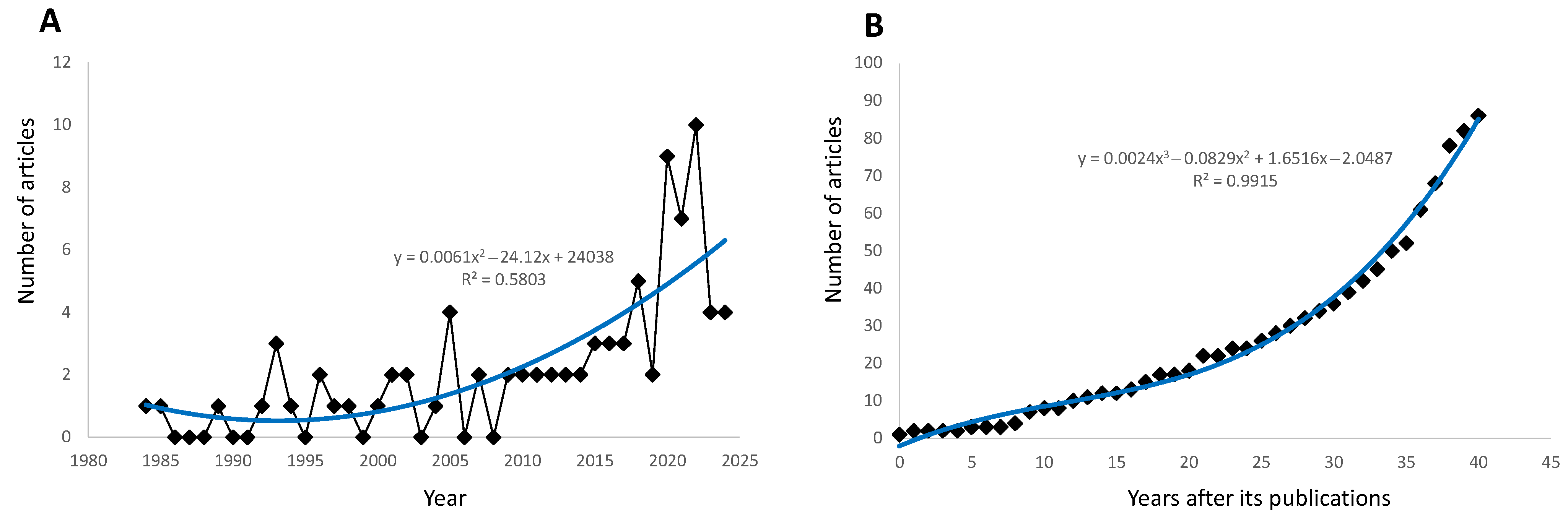
The earliest publication on the selected topic dates back to 1984, with an increase in publications per years observed, particularly from 2018 onwards (Figure 2A). It should be noted that no scientific research works were published on the selected topic between 1984 and 1994 (in 1986–1988, 1990 and 1991), but more consistent publication was observed from 1996 onwards. On the other hand, the decline observed in 2021 could be attributed to the unique circumstances during the COVID-19 global pandemic. The fact that many investigations were based on field sampling and the mobility limitations in 2020/2021 could explain the drop in the number of published articles. The lower values for 2024 are due to the search being conducted in July of that year. Price’s Law is a commonly used indicator for assessing the productivity in a specific research field, suggesting that the growth of scientific output should follow an exponential pattern [16]. In this case, however, the curve does not fit an exponential model (R2 = 0.595), but the fact that 4 of the 11 years exceed the curve fit (2018, 2020–2022) are recent suggests that research interest in the field is increasing.
The third-order polynomial model presents a high correlation coefficient (R2 = 0.9915) between the annual cumulative number of publications and the publication year since 1984 (Figure 2B). Based on these data, it is predicted that there will be a 35% increase in the number of publications by 2030, reaching a total of 132 publications compared to 2024. Similar polynomial prediction models have been successfully used in other areas of knowledge [17].
As expected in scientific literature, original research articles dominate publication type (79.06%), followed by review articles and news items (9.30% and 6.98%, respectively).

3.2. Authors, Journals, and Affiliations

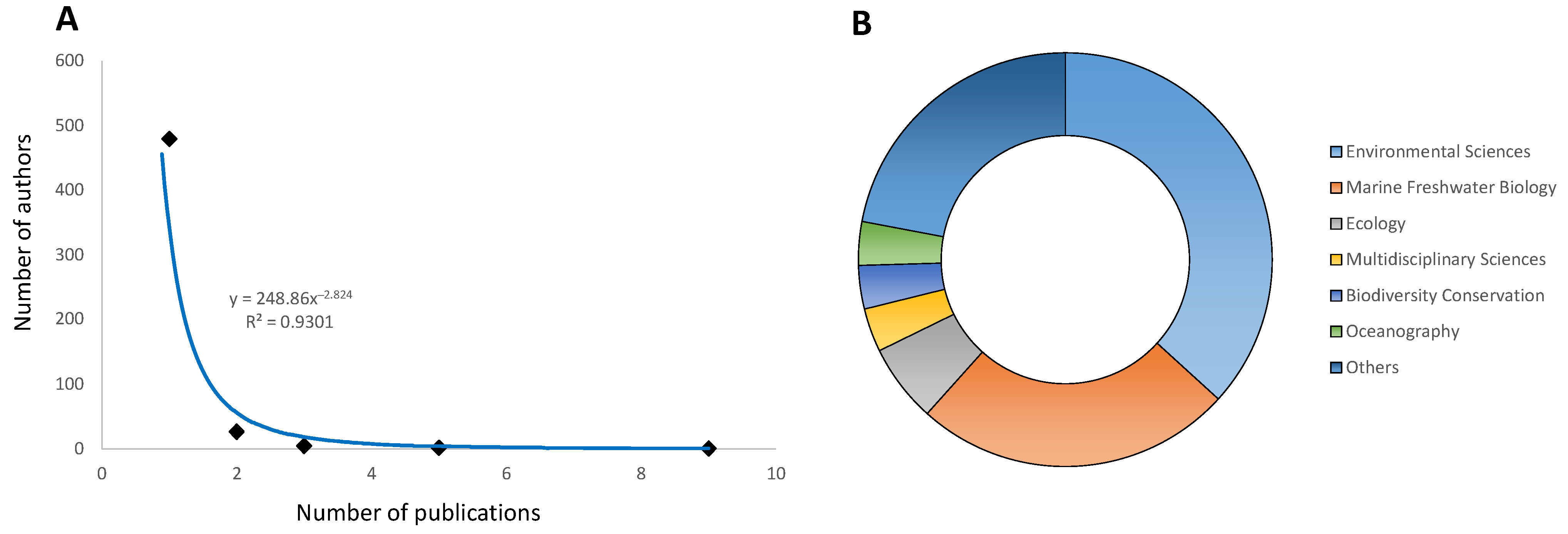
The 86 analyzed publications were authored by 514 different researchers. In this study, Lotka’s law would be expressed as X2.82 × Y = 248.86, and the correlation line closely matches the theoretical expectation (R2 = 0.9301), with values close to one (Figure 3A). According to the data Lotka’s law holds, most authors have one or two publications, and only a few authors have published multiple times. Despite its limitations, compliance with Lotka’s law suggests the knowledge area is maturing, and the increase in publications in recent years indicates growing interest and increased involvement from researchers. Based on author productivity, a classification of great producers (>ten works), moderate producers (five to nine works), aspirants (two to four works), and occasional (one work) has been proposed [18]. Within the context of the present study, only one great producer was identified (HM Guzmán with ten publications) and one moderate producer (JBC Jackson with five publications) was identified. The lack of great and moderate producers is indicative that the current status of the analyzed subject is in the early stages of development (in agreement with the Price’s Law data) and that future works would indicate whether the study of environmental pollution in Panama will increase or remain at baseline levels.
The studies were published in 46 different journals. The journal “Marine Pollution Bulletin” stands out, with thirty-one publications (36.05% of the total), followed by “Science of the Total Environment” with four (4.65%), and “Chemosphere”, “Environmental Pollution”, and “Marine Ecology Progress Series”, which have three publications each (3.49%). Given the search profile and journal distribution, it is not surprising that “Environmental Sciences” is the dominant research area in WoS classifications (Figure 3B), followed by “Marine Freshwater Biology” and “Ecology”, which are the journals with the highest publication counts that fall into these categories.
Another notable aspect is the high level of collaboration in the research field: only 10 of the 86 documents (11.63%) were single authored, with the remainder being collaborative efforts. On average, each publication had 6.6 authors.
The most prolific author is Héctor M. Guzmán from the Smithsonian Tropical Research Institute who has published 10 papers and the author shows a vast and long-standing collaboration network, as the next two most prolific authors are Jeremy B. C. Jackson and Kathryn A. Burns, who are both collaborators of Guzmán’s [19]. It should be remarked that although there is a relevant collaboration with an important mean amount of authors in the publications (6.6) and international co-authorship (51.16% of the documents), the interactions between different groups appear more limited and present an opportunity for improvement.
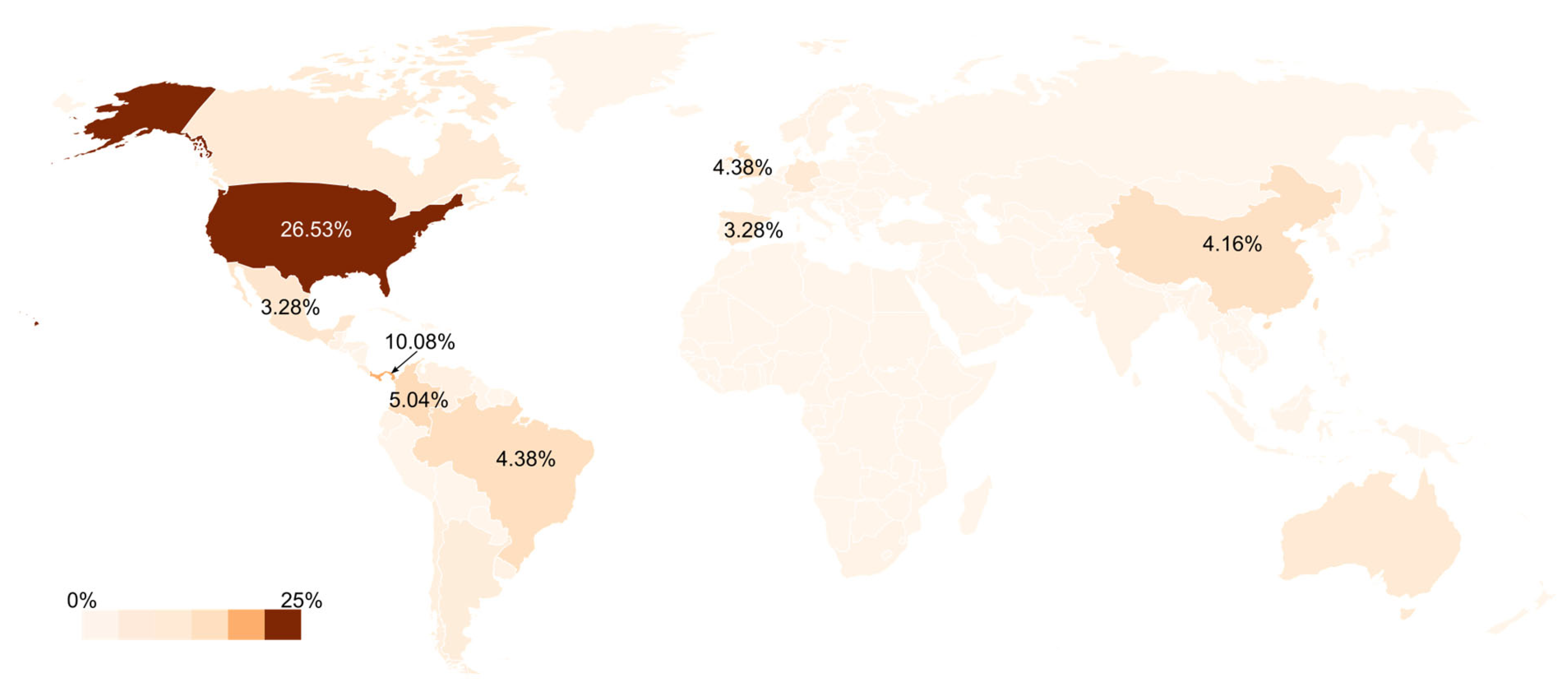
The 514 identified authors are affiliated with 250 different institutions. Publications on the selected topic are concentrated in relatively small number institutions. Of these 250 institutions, 217 (86.80%) have published one or two works, while just four institutions (1.20%) have 10 or more publications. It includes the “Smithsonian Institution” (SI) with 29 publications, the “Smithsonian Tropical Research Institute” (STRI) with 23 publications, the “State University System of Florida” (SUSF) with 12 publications, and the “Universidad Nacional Autónoma de México” (UNAM) with 10 publications. Given that the SI and the SUSF are based in the United States, the STRI is based in Panama, and UNAM in Mexico, it is not surprising that the United States and Panama lead in publication counts with 26.53% and 10.08%, respectively (Figure 4). When detailed observation of the publication trend through the years is carried out, it can be observed that institutions such as SI, STRI, or SUSF present a constant interest in the topic and publication occurs regularly. On the other hand, in the case of UNAM, its first publication is dated 2018 [20] and in few years, it has has become a relevant institution regarding the study of pollution in the area. Similarly, the University of Hong Kong, had its first publication in 2022 [21] and has already published six works, being the 10th most prolific institution in the subject.
However, it is noteworthy that Panamanian national institutions and research centres have limited authorship presence, suggesting a need to increase local work in this area. For instance, the Universidad Tecnológica de Panamá has five publications, but the first of which is from 2020 [22], which could indicate recent increased interest in the area. Universidad de Panamá has three published works but the first one is from 2010 [23], suggesting that the study subject has not received much attention. In addition to Panama, neighbouring countries—Colombia, Costa Rica, Guatemala, and El Salvador—are also conducting relevant research. According to Scimago and data consulted in May 2025 [24], these countries rank 50th, 84th, 142nd, and 167th, respectively, in scientific production in environmental sciences. Yet, in the current study, their presence is relatively high, indicating particular interest in pollution and its impacts in the region. In the case of Panama, although it ranks 90th in production, its local focus ranks second in this study. This is mostly due to the high level of production of the STRI and the strong collaboration network developed by this institution. This could serve as an example to other national institutions in Panama looking to boost research and development.

3.3. Keywords and Thematic Map

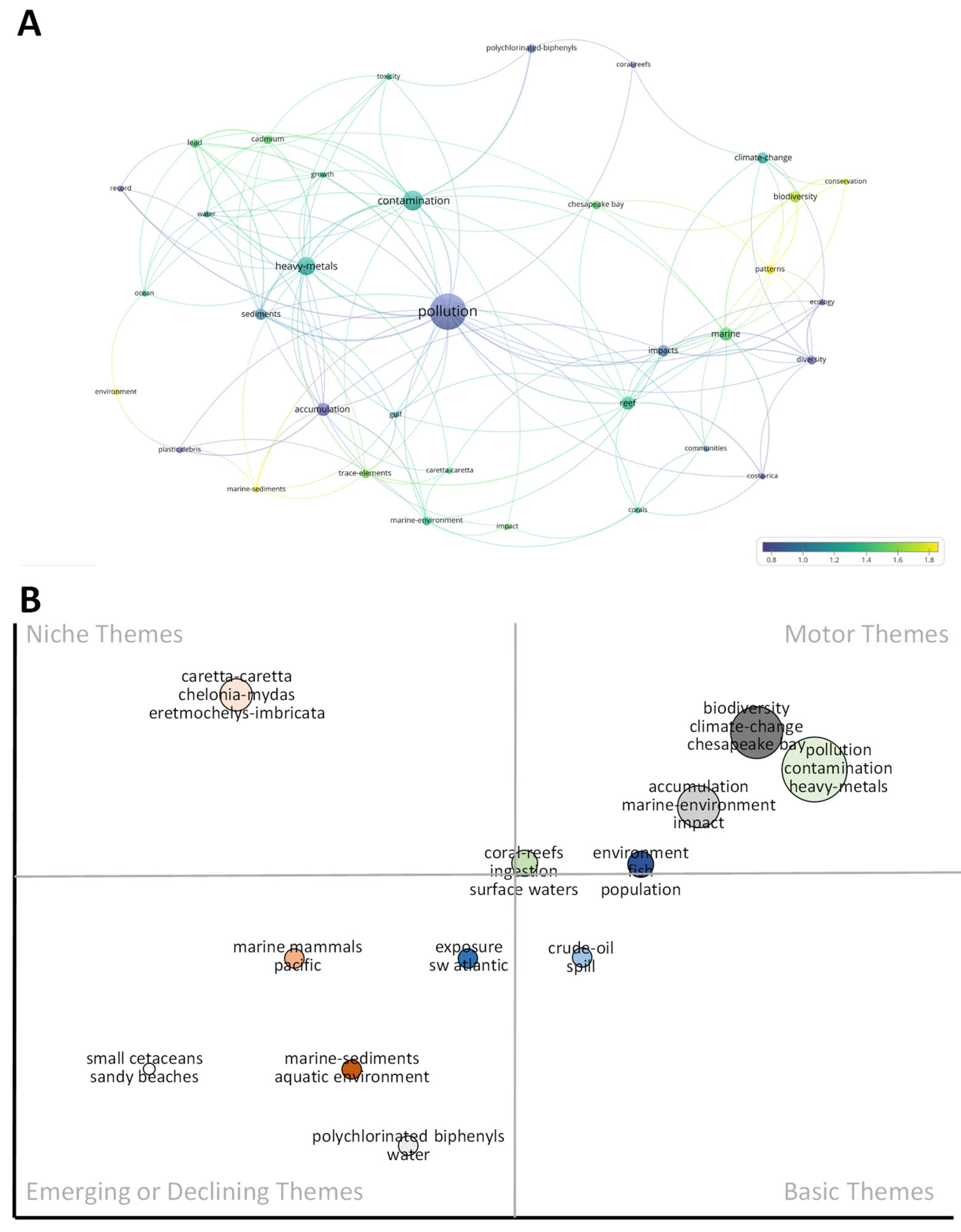
To analyze the keywords proposed by the authors in the 86 publications studied, a co-occurrence analysis was carried out. A total of 35 keywords were selected for the study. The results indicate that the most frequently repeated keyword is “pollution” (appearing sixteen times), followed by “contamination” (nine times), and “heavy metals” (eight times). By clustering the keywords, five main clusters with closer associations were identified (Figure 5).
The first cluster predominantly includes articles with a more ecological approach to the issue of pollution in Panama, containing keywords such as “ecology”, “biodiversity”, “conservation” or “patterns” (Figure 5A). The second cluster encompasses publications more related to chemical analyses of the presence of pollutants, including keywords such as “heavy metals”, “marine-sediments”, or “trace elements.” The third cluster is similar to the second, presenting keywords like “lead”, “plastic debris”, or “cadmium.” The fourth and fifth clusters, which contain a smaller number of keywords, feature more specific terms such as “caretta caretta”, “corals”, “communities”, “coral-reefs”, or “polychlorinated-biphenyls”, which correspond to a smaller number of publications but are closely related to each other.
When comparing and illustrating the relations between articles in a map, the concepts of ‘centrality’ and ‘density’ should be considered. Centrality measures the intensity of a group’s connections to other groups. The stronger and more numerous these links are, the more the group represents a set of crucial research problems. Density is characterized by the strength of the links uniting the words that make up the group. The stronger these links, the greater the coherence and integration of the research topic. When a thematic map with four quadrants [25] based on centrality and density characteristics is applied, it is observed that most keywords fall within the quadrant with the highest centrality and the greatest development. This indicates that the themes of clusters 1, 2, and 3 in Figure 5A are highly relevant and closely related. Another set of keywords, such as “caretta caretta”, “corals”, “coral-reefs”, or “polychlorinated-biphenyls”, belonging to clusters 4 and 5, tends to be more peripheral and is used less frequently.
When keyword relevance is analyzed throughout time, analysis indicates that some keywords are within the most developed quadrant in the whole studied time period. These keywords include “Contamination”, “Pollution”, “Reefs”, “Heavy metals”, or “Trace metals”. On the other hand, it is relevant that other keywords start to be relevant from 2019 onwards, such as “Microplastic” and “Plastic debris”, which indicates an increasing interest in this specific type of pollution in the most recent years.
As discussed above, earlier studies seem to have focused more on determining the concentrations of heavy metals and their effects on various organisms. However, in the recent years, the range of pollutants studied has expanded significantly to include polycyclic aromatic hydrocarbons, microplastics and, to a lesser extent, pharmaceuticals.
What seems consistent over time is the wide range of species studied, including fish, mammals, corals, and molluscs, which allows for a more holistic understanding of the situation. As an example, research includes studies on the presence and concentration of heavy metals like mercury and vanadium in corals and mangroves [26,27], monitoring coral reef health, diversity, and distribution along the Panamanian coast [28,29] and assessing the effects of organic compound pollution (e.g., fuel oil) in Panama’s coastal areas [30] (Table 1). These works cover key contaminant families such as heavy metals and polycyclic aromatic hydrocarbons and studies ecologically significant species like coral reefs. However, research on emerging pollutants such as pharmaceuticals is more limited [31], although interest in the accumulation and effects of microplastics appears to be increasing in recent years [32,33]. In most cases, it has been demonstrated that pollutants are still present in some coastal areas of Panama, and more efforts are needed to improve environmental health [27,28].
The current study does not analyze the content of the publications but instead presents a quantitative analysis of scientific output. Additionally, the work bears the inherent limitations of bibliometric studies, such as the database used, the Boolean search strings selected, the manual standardization process, and the bibliometric data employed to analyze the selected publications [16]. Nevertheless, this study indicates that research on pollution along the coasts of Panama appears to be in an early growth phase. While the potential adjustment is not significant, this could be due to the initial stage we are in, and an increase is expected in the coming years, as the calculated publication trends suggest.
In any case, results from the selected publications highlight some interesting points. Overall, no significant toxicity has been found in sediments (except for those coming from industrial ports), but some metals are of particular interest (Cu, Cr, V, and Pb) [34,35,36]. Of greater concern is the fact that imposex has been described in gastropod species in the Pacific coast [38] and that could be indicative of high sensitivity to TBT and the lack of information regarding pharmaceutical-related pollutants [39], algae blooms [21] (that could be more prominent due to climate change), and pesticides. The latter is particularly relevant since high levels have been described in human placentae [48], but no environmental information is offered.
The studies published so far indicate a high level of collaboration among different authors but not that much among institutions. The number of authors per article is important, but there are some overall limitations in terms of more wider-level collaborations. The research groups seem to be, up to some point, isolated or specialized in specific working fields, but wider collaboration networks are still limited and this is probably an area for improvement. However, neighbouring countries are concerned about this issue, which explains the observed trend towards increased publications and the relatively better position of countries in the region compared to the general level of scientific production.
Finally, we hope this study will encourage national institutions and research centres to conduct investigations in the field of marine pollution in Panama, thereby increasing their presence in future publications.

4. Conclusions

This bibliometric study represents the first systematic approach to analyzing the scientific publications related to marine pollution along the coasts of Panama. Despite certain methodological limitations, the results indicate that research on marine pollution in Panama has been increasing, particularly in recent years, with a focus on topics such as heavy metals, hydrocarbons, and more recently, microplastics. However, information and knowledge gaps remain regarding certain pollutants of concern, such as pharmaceuticals and pesticides. A high level of scientific collaboration and strong institutional concentration were observed, with the Smithsonian Tropical Research Institution standing out. Nevertheless, the limited representation of Panamanian institutions highlights the need to strengthen local capacities in this priority area for the country’s environmental sustainability. This work provides a useful foundation for future research and environmental management strategies, contributing to the strengthening of scientific knowledge regarding the challenges faced by Panama’s coastal ecosystems. Additionally, the strategic approach followed in this work can be applied to other countries and regions worldwide with limited publication records in different disciplines.

Author Contributions

Conceptualization, N.E.A.-G. and B.Z.; methodology, N.E.A.-G., X.L., M.O.-Z. and B.Z.; software, N.E.A.-G., Y.A. and B.Z.; validation, N.E.A.-G., Y.D.G., J.O., M.D., Y.A., X.L., M.O.-Z. and B.Z.; formal analysis, N.E.A.-G. and Y.A.; investigation, N.E.A.-G., Y.D.G., J.O., M.D., X.L., M.O.-Z. and B.Z.; resources, N.E.A.-G. and B.Z.; data curation, Y.A. and B.Z.; writing—original draft preparation, B.Z.; writing—review and editing, N.E.A.-G., Y.D.G., J.O., M.D., Y.A., X.L., M.O.-Z. and B.Z.; visualization, N.E.A.-G. and Y.A.; supervision, N.E.A.-G.; project administration, N.E.A.-G.; funding acquisition, N.E.A.-G. and M.O.-Z. All authors have read and agreed to the published version of the manuscript.

Funding

This research was funded by the National Secretariat of Science, Technology and Innovation (SENACYT) of Panama through the Research Mobility Call, Economic Grant Agreement DDCCT-211-2023, the University Research Fund Call (CUFI-VIP 10-01-2021-01) from the Office of the Vice Rector for Research and Graduate Studies at the University of Panama and Basque Government (grant to CRGs, IT1743-22).

Data Availability Statement

The original contributions presented in this study are included in the article. Further inquiries can be directed to the corresponding author.

Acknowledgments

The abstract graphic was designed by Madelaine M. Aguilar-Pérez.

Conflicts of Interest

The authors declare no conflict of interest.

References

  1. Mearns, A.J.; Bissell, M.; Morrison, A.M.; Rempel-Hester, M.A.; Arthur, C.; Rutherford, N. Effects of pollution on marine organisms. Water Environ. Res. 2020, 92, 1510–1532. [Google Scholar] [CrossRef] [PubMed]
  2. De Groot, R.; Brander, L.; Van Der Ploeg, S.; Costanza, R.; Bernard, F.; Braat, L.; Christie, M.; Crossman, N.; Ghermandi, A.; Hein, L.; et al. Global estimates of the value of ecosystems and their services in monetary units. Ecosyst. Serv. 2012, 1, 50–61. [Google Scholar] [CrossRef]
  3. Taillardat, P.; Friess, D.A.; Lupascu, M. Mangrove blue carbon strategies for climate change mitigation are most effective at the national scale. Biol. Lett. 2018, 14, 20180251. [Google Scholar] [CrossRef] [PubMed]
  4. IPCC. Climate Change 2022: Impacts, Adaptation and Vulnerability. In Contribution of Working Group II to the Sixth Assessment Report of the Intergovernmental Panel on Climate Change; Pörtner, H.O., Roberts, D.C., Tignor, M., Poloczanska, E.S., Mintenbeck, K., Alegría, A., Craig, M., Langsdorf, S., Löschke, S., Möller, V., et al., Eds.; Cambridge University Press: Cambridge, UK, 2022; p. 3056. [Google Scholar] [CrossRef]
  5. United Nations. Transforming Our World: The 2030 Agenda for Sustainable Development; United Nations: New York, NY, USA, 2015. [Google Scholar]
  6. United Nations. Colombia, Jamaica and Panama Unite to Combat Urban Plastic Pollution. United Nations Environment Programme. 2023. Available online: https://www.unep.org/news-and-stories/press-release/colombia-jamaica-and-panama-unite-combat-urban-plastic-pollution (accessed on 21 April 2025).
  7. Veiga-Del-Baño, J.M.; Cámara, M.Á.; Oliva, J.; Hernández-Cegarra, A.T.; Andreo-Martínez, P.; Motas, M. Mapping of emerging contaminants in coastal waters research: A bibliometric analysis of research output during 1986–2022. Mar. Pollut. Bull. 2023, 194, 115366. [Google Scholar] [CrossRef]
  8. Aria, M.; Cuccurullo, C. Bibliometrix: An R-tool for comprehensive science mapping analysis. J. Informetr. 2017, 11, 959–975. [Google Scholar] [CrossRef]
  9. Boyack, K.W.; Klavans, R. Co-citation analysis, bibliographic coupling, and direct citation: Which citation approach represents the research front most accurately? J. Assoc. Inf. Sci. Technol. 2010, 61, 2389–2404. [Google Scholar] [CrossRef]
  10. van Eck, N.J.; Waltman, L. Software survey: VOSviewer, a computer program for bibliometric mapping. Scientometrics 2010, 84, 523–538. [Google Scholar] [CrossRef]
  11. Lotka, A.J. The frequency distribution of scientific productivity. J. Wash. Acad. Sci. 1926, 16, 317–323. [Google Scholar]
  12. Zhi, W.; Ji, G. Constructed wetlands, 1991–2011: A review of research development, current trends, and future directions. Sci. Total Environ. 2012, 441, 19–27. [Google Scholar] [CrossRef]
  13. Wildgaard, L.; Schneider, J.W.; Larsen, B. A review of the characteristics of 108 author-level bibliometric indicators. Scientometrics 2014, 101, 125–158. [Google Scholar] [CrossRef]
  14. Chen, Y.; Lin, M.; Zhuang, D. Wastewater treatment and emerging contaminants: Bibliometric analysis. Chemosphere 2022, 297, 133932. [Google Scholar] [CrossRef]
  15. Shan, M.; Dong, Y.; Chen, J.; Su, Q.; Wang, Y. Global tendency and frontiers of research on myopia from 1900 to 2020: A bibliometric analysis. Front. Public Health 2022, 10, 846601. [Google Scholar] [CrossRef]
  16. Price, D.J. Little Science, Big Science… and Beyond; Columbia University Press: New York, NY, USA, 1986. [Google Scholar]
  17. Andreo-Martínez, P.; Ortiz-Martínez, V.M.; García-Martínez, N.; de los Ríos, A.P.; Hernández-Fernández, F.J.; Quesada-Medina, J. Production of biodiesel under supercritical conditions: State of the art and bibliometric analysis. Appl. Energy 2020, 264, 114753. [Google Scholar] [CrossRef]
  18. Crane, D. Social structure in a group of scientists: A test of the “invisible college” hypothesis. Am. Sociol. Rev. 1969, 34, 335–352. [Google Scholar] [CrossRef]
  19. Guzmán, H.M.; Burns, K.A.; Jackson, J.B.C. Injury, regeneration and growth of Caribbean reef corals after a major oil spill in Panama. Mar. Ecol. Prog. Ser. 1994, 105, 231–241. [Google Scholar] [CrossRef]
  20. Cuellar-Martinez, T.; Ruiz-Fernández, A.C.; Alonso-Hernández, C.; Amaya-Monterrosa, O.; Quintanilla, R.; Carrillo-Ovalle, H.L.; Arbelez, M.N.; Díaz-Asencio, L.; Méndez, S.M.; Vargas, M.; et al. Addressing the problem of harmful Algal Blooms in Latin America and the Caribbean- A regional network for early warning and response. Front. Mar. Sci. 2018, 5, 409. [Google Scholar] [CrossRef]
  21. Hong, Y.; Yasuhara, M.; Iwatani, H.; Harnik, P.G.; Chao, A.; Cybulski, J.D.; Liu, Y.; Ruan, Y.; Li, X.; Wei, C.H. Benthic ostracod diversity and biogeography in an urbanized seascape. Mar. Micropal. 2022, 174, 102067. [Google Scholar] [CrossRef]
  22. de Borrero, D.D.; Duque, J.F.; Olmos, J.; Garcés-Ordóñez, O.; Amaral, S.S.G.D.; Vezzone, M.; Felizardo, J.P.d.S.; dos Anjos, R.M. Distribution of Plastic Debris in the Pacific and Caribbean Beaches of Panama. Air Soil Wat. Res. 2020, 13, 1178622120920268. [Google Scholar] [CrossRef]
  23. Sánchez-Argüello, R.; Cornejo, A.; Pearson, R.G.; Boyero, L. Spatial and temporal variation of stream communities in a human-affected tropical watershed. Int. J. Lim. 2010, 46, 149–156. [Google Scholar] [CrossRef]
  24. SCImago. Country Rankings in Marine Pollution Research. SCImago Journal & Country Rank. 2024. Available online: https://www.scimagojr.com/countryrank.php?area=2300&order=itp&ord=desc (accessed on 29 May 2025).
  25. Callon, M.; Courtial, J.P.; Laville, F. Co-word analysis as a tool for describing the network of interactions between basic and technological research: The case of polymer chemistry. Scientometrics 1991, 22, 155–205. [Google Scholar] [CrossRef]
  26. Guzmán, H.M.; Jiménez, C.E. Contamination of coral reefs by heavy metals along the Caribbean coast of Central America (Costa Rica and Panama). Mar. Pollut. Bull. 1992, 24, 554–561. [Google Scholar] [CrossRef]
  27. Defew, L.H.; Mair, J.M.; Guzman, H.M. An assessment of metal contamination in mangrove sediments and leaves from Punta Mala Bay, Pacific Panama. Mar. Pollut. Bull. 2005, 50, 547–552. [Google Scholar] [CrossRef] [PubMed]
  28. Jackson, J.B.C.; Kirby, M.X.; Warner, R.R.; Berger, W.H.; Bjorndal, K.A.; Botsford, L.W.; Bourque, B.J.; Bradbury, R.H.; Cooke, R.; Erlandson, J.; et al. Historical overfishing and the recent collapse of coastal ecosystems. Science 2001, 293, 629–638. [Google Scholar] [CrossRef] [PubMed]
  29. Jackson, J.B.C. The future of the oceans past. Philos. Trans. R. Soc. B 2010, 365, 3765–3778. [Google Scholar] [CrossRef]
  30. Renegar, D.A.; Schuler, P.A.; Knap, A.H.; Dodge, R.E. TRopical Oil Pollution Investigations in Coastal Systems (TROPICS): A synopsis of impacts and recovery. Mar. Pollut. Bull. 2022, 181, 113880. [Google Scholar] [CrossRef]
  31. Menzies, R.; Quinete, N.S.; Gardinali, P.; Seba, D. Baseline occurrence of organochlorine pesticides and other xenobiotics in the marine environment: Caribbean and Pacific collections. Mar. Pollut. Bull. 2013, 70, 289–295. [Google Scholar] [CrossRef]
  32. Courtene-Jones, W.; Maddalene, T.; James, K.M.; Smith, N.S.; Youngblood, K.; Jambeck, J.R.; Earthrowl, S.; Delvalle-Borrero, D.; Penn, E.; Thompson, R.C. Source, sea and sink: A holistic approach to understanding plastic pollution in the Southern Caribbean. Sci. Total Environ. 2021, 797, 149048. [Google Scholar] [CrossRef]
  33. Curl, L.F.; Hurst, S.A.; Pomory, C.M.; Lamont, M.M.; Janosik, A.M. Assessing microplastics contamination in unviable loggerhead sea turtle eggs. Sci. Total Environ. 2024, 912, 169434. [Google Scholar] [CrossRef]
  34. Bolaños-Alvarez, Y.; Ruiz-Fernández, A.C.; Sanchez-Cabeza, J.A.; Asencio, M.D.; Espinosa, L.F.; Parra, J.P.; Garay, J.; Delanoy, R.; Solares, N.; Montenegro, K.; et al. Regional assessment of the historical trends of mercury in sediment cores from Wider Caribbean coastal environments. Sci. Total Environ. 2024, 920, 170609. [Google Scholar] [CrossRef]
  35. Broce, K.; Ruiz-Fernández, A.C.; Batista, A.; Franco-Ábrego, A.K.; Sanchez-Cabeza, J.A.; Pérez-Bernal, L.H.; Guerra-Chanis, G.E. Background concentrations and accumulation rates in sediments of pristine tropical environments. Catena 2022, 214, 106252. [Google Scholar] [CrossRef]
  36. Valdelamar-Villegas, J.; Gomez, J.; de la Rosa, J.D.; Olivero-Verbel, J. Multi-elemental composition and toxicity of bottom sediments from Panama Canal watershed. Ocean. Coast. Manag. 2021, 204, 105459. [Google Scholar] [CrossRef]
  37. Batista-Andrade, J.A.; Caldas, S.S.; Batista, R.M.; Castro, I.B.; Fillmann, G.; Primel, E.G. From TBT to booster biocides: Levels and impacts of antifouling along coastal areas of Panama. Environ. Poll. 2018, 234, 243–252. [Google Scholar] [CrossRef]
  38. Ballou, T.G.; Dodge, R.E.; Hess, S.C.; Knap, A.H.; Sleeter, T.D. Effects of a Dispersed and Undispersed Crude Oil on Mangroves, Seagrasses and Corals. In Prepared for the American Petroleum Institute; The American Petroleum Institute: Washington, DC, USA, 1987; pp. 1–229. [Google Scholar]
  39. Wilkinson, J.L.; Boxall, A.B.A.; Kolpin, D.W.; Leung, K.M.Y.; Lai, R.W.S.; Galbán-Malagón, C.; Adell, A.D.; Mondon, J.; Metian, M.; Marchant, R.A.; et al. Pharmaceutical pollution of the world’s rivers. Proc. Natl. Acad. Sci. USA 2022, 119, e2113947119. [Google Scholar] [CrossRef]
  40. Fallon, B.R.; Freeman, C.J. Plastics in Porifera: The occurrence of potential microplastics in marine sponges and seawater from Bocas del Toro, Panamá. PeerJ 2021, 9, e11638. [Google Scholar] [CrossRef] [PubMed]
  41. Cramer, K.L.; Jackson, J.B.C.; Donovan, M.K.; Greenstein, B.J.; Korpanty, C.A.; Cook, G.M.; Pandolfi, J.M. Widespread loss of Caribbean acroporid corals was underway before coral bleaching and disease outbreaks. Sci. Adv. 2020, 6, eaax9395. [Google Scholar] [CrossRef] [PubMed]
  42. Berry, K.L.E.; Seemann, J.; Dellwig, O.; Struck, U.; Wild, C.; Leinfelder, R.R. Sources and spatial distribution of heavy metals in scleractinian coral tissues and sediments from the Bocas del Toro Archipelago, Panama. Environ. Monit. Assess. 2013, 185, 9089–9099. [Google Scholar] [CrossRef] [PubMed]
  43. Soto, E.; Botero, C.; Milanés, C.; Rodríguez-Santiago, A.; Palacios-Moreno, M.; Díaz-Ferguson, E.; Velázquez, Y.; Abbehusen, A.; Guerra-Castro, E.; Simoes, N.; et al. How does the beach ecosystem change without tourists during COVID-19 lockdown? Biol. Conserv. 2021, 255, 108972. [Google Scholar] [CrossRef]
  44. Contreras-MacBeath, T.; Ardón, D.A.; Quintana, Y.; Angulo, A.; Lyons, T.; Lardizabal, C.; McMahan, C.D.; Elías, D.J.; Matamoros, W.A.; Barraza, J.E.; et al. Freshwater Fishes of Central America: Distribution, Assessment, and Major Threats. Diversity 2022, 14, 793. [Google Scholar] [CrossRef]
  45. Dulvy, N.K.; Pacoureau, N.; Rigby, C.L.; Pollom, R.A.; Jabado, R.W.; Ebert, D.A.; Finucci, B.; Pollock, C.M.; Cheok, J.; Derrick, D.H.; et al. Overfishing drives over one-third of all sharks and rays toward a global extinction crisis. Curr. Biol. 2021, 31, 4773–4787.e8. [Google Scholar] [CrossRef]
  46. Guzman, H.M.; Kaiser, S.; van Hinsberg, V.J. Race metal and metalloid levels were measured in eggs of the nw atlantic leatherback turtle (Dermochelys coriacea) from nesting grounds in the bocas. Chemosphere 2020, 243, 125424. [Google Scholar] [CrossRef]
  47. Barragán-Barrera, D.C.; Trejos-Lasso, L.; Pérez-Ortega, B.; Casas, J.J.; Santamaria-Valverde, R. First mercury and stable isotope assessment from an unusual mass stranding of rough-toothed dolphins (Steno bredanensis) (Artiodactyla: Delphinidae) in Azuero peninsula, Pacific coast of Panama. Rev. Biol. Trop. 2023, 17 (Suppl. S4), e57188. [Google Scholar] [CrossRef]
  48. Iribarne-Durán, L.; Castillero-Rosales, I.; Peinado, F.; Artacho-Cordón, F.; Molina-Molina, J.; Medianero, E.; Nicolás-Delgado, S.; Sánchez-Pinzón, L.; Núñez-Samudio, V.; Vela-Soria, F.; et al. Placental concentrations of xenoestrogenic organochlorine pesticides and polychlorinated biphenyls and assessment of their xenoestrogenicity in the PA-MAMI mother-child cohort. Environ. Res. 2024, 241, 117622. [Google Scholar] [CrossRef]
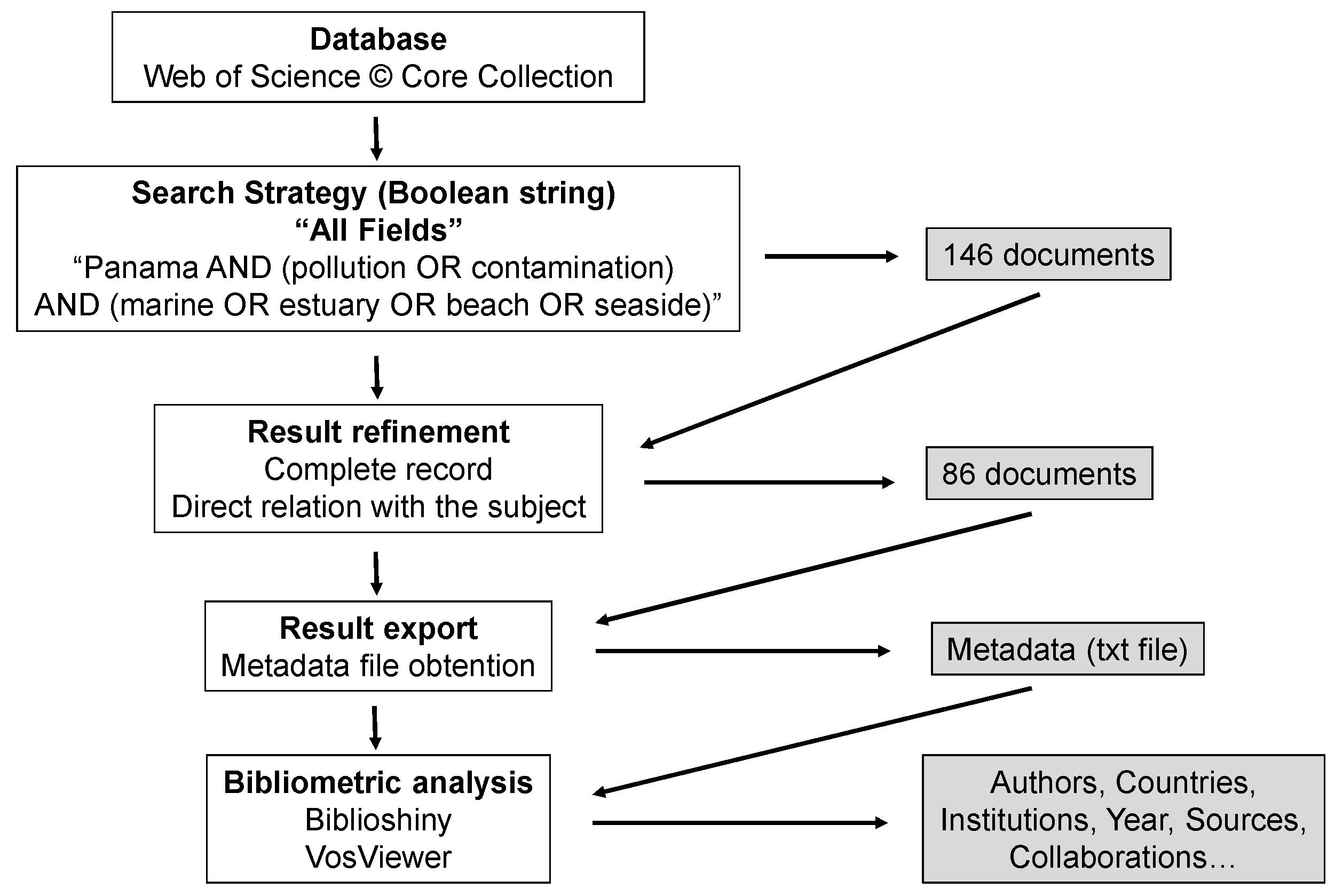
Figure 1. Flow diagram of the research for bibliometric data analysis.
Water 18 00426 g001
Figure 2. (A) Number of publications over time with an exponential fit (blue line). (B) Cumulative number of publications from the first with a third-degree polynomial fit.
Water 18 00426 g002
Figure 3. (A) Relationship between the number of authors and publications with a potential fit to indicate Lotka’s Law. (B) Proportion of knowledge areas of selected publications as classified in “Web of Science”.
Water 18 00426 g003
Figure 4. Proportion of countries of institutional origin in the selected publications.
Water 18 00426 g004
Figure 5. (A) Distribution of keywords. Five main clusters can be identified and the links between keywords and clusters are highlighted in the diagram. (B) Links and thematic map of keywords in relation to their centrality and density.
Water 18 00426 g005
Table 1. Summary of different field works carried out in the coast of Panama, including study matrix, site, and measured parameter.
Unit of AnalysisSiteParameterRef.
SedimentsAlmirante BayHg[34]
SedimentsCoiba Island
Gulf of Montijo
Trace elements[35]
SedimentsPanama CanalTrace elements[36]
Sediments
Gastropods
Panama CanalOrganotin compounds
Biocides
Imposex
[37]
Water
Sediments
Mangrove leaves
Seagrass
Oysters
Corals
Almirante BayHydrocarbons[38]
Surface waters
Subsurface waters
Sediments
San Blas IslandsPlastics[32]
River surface watersPanama CityActive pharmaceutical ingredients[39]
Surface watersCaribbean and Pacific PanamaOrganochlorine pesticides[31]
SandEmbarcadero de Juan Diaz, San Carlos, Punta Galeta and Palenque beachesPlastics[23]
Surface waters
Sponges
Bocas del ToroPlastics[40]
DinoflagellatesCaribbean PanamaCiguatera toxin[21]
CoralsCaribbean PanamaDiversity, community[26]
Acropopra coralsCaribbean PanamaBleaching and disease[41]
Corals
Porites furcata
Agaricia tenuifolia
Bocas del ToroTrace elements[42]
Stream communitiesCapira streamRichness[22]
Several speciesVeracruz, Gorgona and El Estero beachesDiversity[43]
Freshwater fishes45 sites across PanamaExtinction risk[44]
Sharks raysPanama CoastExtinction[45]
Leatherback turtle (Dermochelys coriacea) eggsBocas del ToroTrace metals[46]
Bottlenose dolphins (Tursiops truncatus)Bocas del ToroForaging, Hg[47]
Disclaimer/Publisher’s Note: The statements, opinions and data contained in all publications are solely those of the individual author(s) and contributor(s) and not of MDPI and/or the editor(s). MDPI and/or the editor(s) disclaim responsibility for any injury to people or property resulting from any ideas, methods, instructions or products referred to in the content.