Article

Spatiotemporal Characteristics of Water Quality in Qiantang River Basin: An Analysis Based on the WQI Model and Multivariate Statistics

1
College of Agricultural Science and Engineering, Hohai University, Nanjing 210098, China
2
College of Hydraulic Engineering, Zhejiang Tongji Vocational College of Science and Technology, Hangzhou 311231, China
3
Quzhou Municipal Rural Water Conservancy Management Center, Quzhou 324002, China
*
Author to whom correspondence should be addressed.
Water 2026, 18(3), 386; https://doi.org/10.3390/w18030386
Submission received: 25 December 2025 / Revised: 28 January 2026 / Accepted: 29 January 2026 / Published: 2 February 2026
(This article belongs to the Section Water Quality and Contamination)

Abstract

Global river water quality degradation severely impairs aquatic ecosystem stability and human health, highlighting the urgency of spatiotemporal analysis for management guidance. Based on 2014–2024 monitoring data from the Quzhou Section of Qiantang River Basin, this study adopted the Water Quality Index (WQI) and statistical methods (PCA, Mann–Kendall test) to explore the spatiotemporal characteristics of water quality across the basin. Results showed an overall mean WQI of 79.26 (classified as “Good”), with general stability, localized fluctuations, and a stable-then-declining trend, mirroring an imbalance between governance effects and emerging pollution pressures. It identifies a critical governance phase focused on securing the current good water quality and curbing the trend of further deterioration. Water quality exhibited distinct variations: upper reaches > lower reaches, tributaries > mainstreams, with priority required for the Wuxi River’s declining WQI and the Qu River’s persistently low WQI. TN, TP, and NH3-N were identified as key factors coupled with land use patterns. A differentiated strategy prioritizing nitrogen control, synergizing phosphorus–oxygen management, and reducing organics is thus proposed. This study provides scientific references for water quality assessment and targeted aquatic ecological governance in the basin and similar river networks.

1. Introduction

Global water quality degradation poses a severe challenge to population security and socioeconomic sustainability. Water pollution is driving a growing risk to rivers, ecosystem services, and their sustainable development [1], and has emerged as a critical factor impacting human survival and socioeconomic development systems [2]. One recent research has indicated that 55% of the population of the world is currently exposed to clean water scarcity (considering both quantity and quality) for at least one month annually [3]. When river water quality deteriorates to a certain threshold, it could lead to a 1.4–2.5% decline in GDP growth rates in the lower reaches [4]. As the world’s largest developing country, China has long been confronted with intense pressure from water quality degradation driven by rapid economic growth. As such, integrated management of water resources and water quality has emerged as a critical strategy for safeguarding water security and advancing sustainable development goals [5].
Rivers, the core carriers of global water resources, are critical for maintaining ecological security and supporting sustainable development. Studying the spatiotemporal patterns of their water quality is vital for the integrated management of global water resources and the collaborative governance of trans-regional pollution. As a significant river basin in southern China, the Qiantang River Basin is an ecological corridor connecting Zhejiang, an economically developed province in China, and the East China Sea, serving as a core carrier for the regional water resource security and ecological balance. The Qiantang River, known as the “Mother River” of Zhejiang Province and the foremost system among its eight major river networks, has long played a crucial role in the province’s socio-economic development. The basin not only ensures the domestic water supply for residents along its banks but also provides indispensable support for agricultural irrigation, navigation, and biodiversity preservation. The Quzhou Section of the Qiantang River Basin is located in the core area of the upper reaches of the southern source, encompassing key tributaries including the tributaries of Changshan Gang, Wuxi River, Jiangshan Gang, and Lingshan Gang. As the main source of water for the entire basin, its water quality directly impacts the overall aquatic environmental safety of the Qiantang River Basin and the well-being of over 16 million residents in the middle and lower reaches, thus holding strategic source control significance for the basin’s ecological conservation.
However, existing studies have yet to systematically explore the long-term spatiotemporal evolution of water quality in the Quzhou section of the Qiantang River Basin. Notably, they offer little in-depth analysis of long-term water quality responses following the rollout of the Five-Water Co-governance policy, as well as variation characteristics amid emerging environmental pressures in recent years. With the 11-year sequential data (2014 to 2024), this study focuses on water quality evolution during the overlapping period of policy implementation and emerging pollution pressures. It fills the gap in long-term, comprehensive spatiotemporal water quality research in this basin, offering a scientific and practical evaluation framework for rivers under different climatic conditions and development stages worldwide. It also provides a practicable pathway for sustained water quality improvement through long-term monitoring and targeted measures.
Currently, the commonly used methods among many for river water quality assessment and analysis include the Grey Relational Analysis (GRA), the Fuzzy Mathematics-Based Evaluation, the Pollution Index Method, the Single-Factor Evaluation Method, the Artificial Neural Network (ANN) Evaluation, and the Comprehensive Water Quality Index (WQI) Method [6,7,8]. Each method presents inherent trade-offs, with distinct strengths and limitations that determine its suitability for specific assessment contexts. The Gray Relational Analysis can effectively handle the uncertainty and incomplete information of water quality data, but it is subjective in determining weights and sensitive to extreme values. The Fuzzy Mathematics-based Evaluation can better fit the fuzzy characteristics of water quality grade boundaries, objectively reflecting the fuzziness of water quality, but it lacks a unified standard for determining membership functions and weights, and involves a relatively complicated calculation process. The Pollution Index Method, with the advantage of computational simplicity and ease of interpretation, is well-suited for assessing water bodies affected by individual or a limited number of pollutants. However, it has limited capacity to capture the synergistic effects of complex pollutant mixtures, demonstrating poor adaptability for evaluating integrated water quality systems. The Single-Factor Evaluation Method, straightforward to operate and highly targeted, enables the rapid identification of non-compliant pollutants and clear insights into the spatiotemporal dynamics of individual indicators. Its principal limitation, however, lies in its inability to characterize the comprehensive or integrated status of overall water quality. The Artificial Neural Network Evaluation, without a need for a preset mathematical model, can autonomously learn patterns in water quality data and adapt to complex nonlinear relationships. However, the method is constrained by its reliance on extensive training datasets, limited model interpretability, and high calculation costs. The Comprehensive Water Quality Index (WQI) integrates data from multiple indicators to produce concise results, enabling clear comparisons. This approach is suitable for analyzing overall water quality trends in water bodies [9]. In light of these, this study integrates the single-factor assessment method, the WQI model, principal component analysis (PCA), and the Mann–Kendall (M-K) test. The integration of these four methods enables a full-chain analysis covering comprehensive assessment, factor identification, and trend interpretation, thereby enhancing the scientific rigor and reliability of the results. On this basis, the study systematically assesses water quality conditions of the river network in the Quzhou section of the Qiantang River Basin from 2014 to 2024 and analyzes its spatiotemporal dynamic variations. The findings provide robust support for targeted basin management, while offering scientific evidence and practical insights for water ecological governance in similar river systems worldwide.

2. Materials and Methods

2.1. Study Area

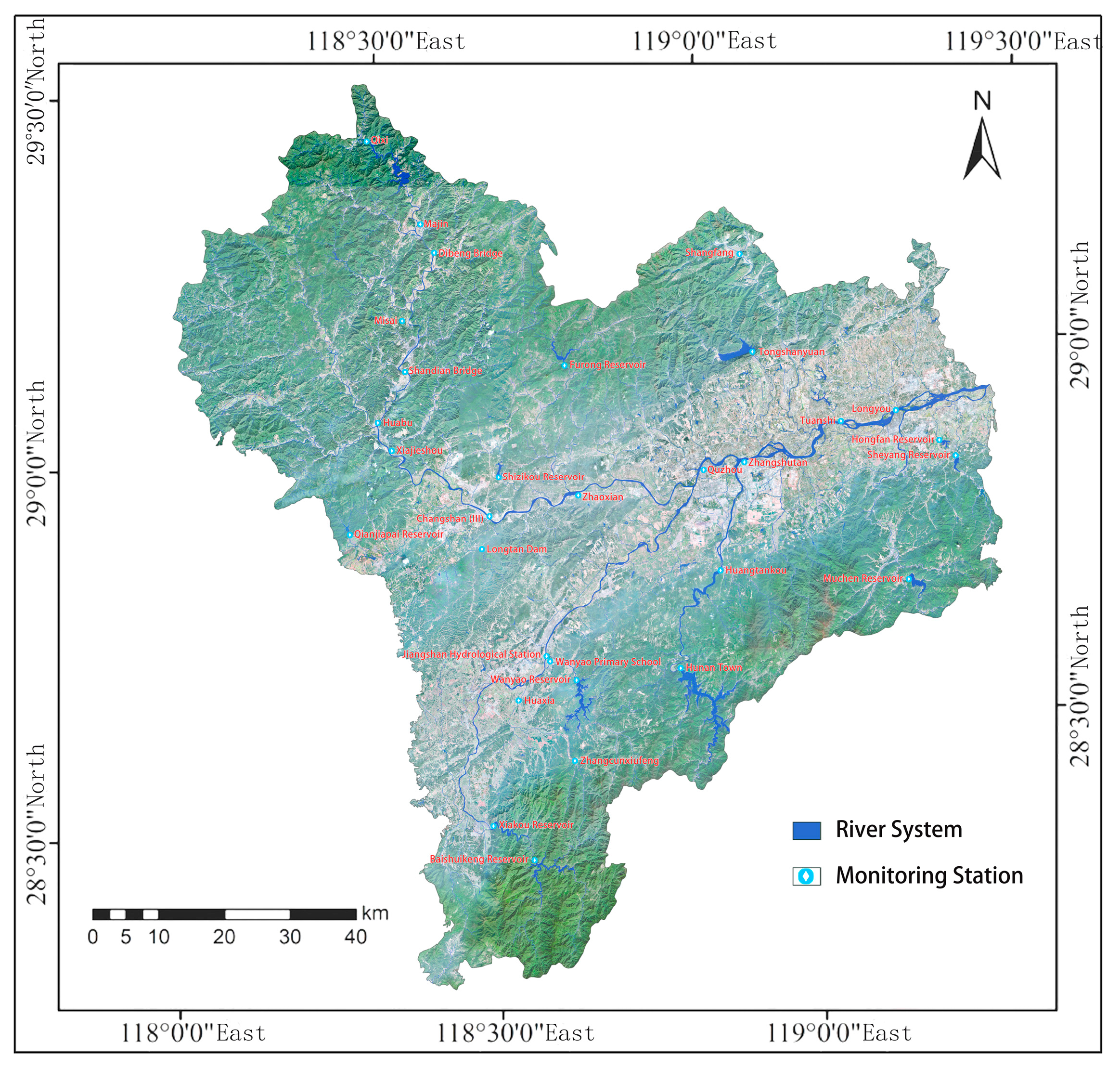
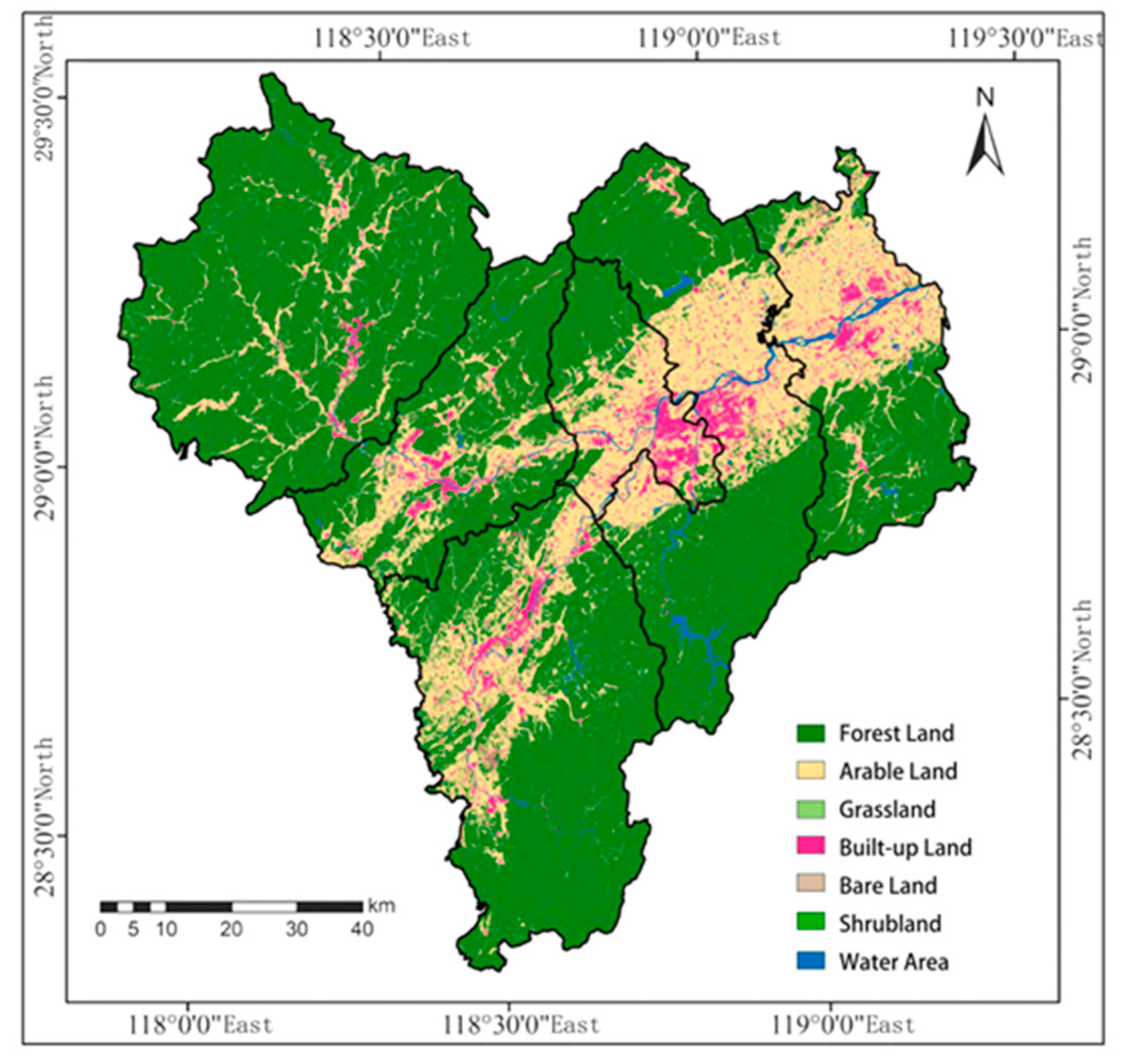
The Quzhou section of the Qiantang River Basin, located in western Zhejiang Province and at the junction of Zhejiang, Fujian, Jiangxi, and Anhui provinces, serves as the upper reaches and headwaters of the basin. With a distinctive geographical location, it acts as a vital node linking the Yangtze River Delta, Pan-Pearl River Delta, and West Taiwan Strait Economic Zones, earning the reputation as a hub connecting four provinces. The Qu River, which runs through Quzhou, is one of the primary headwater streams of the Qiantang River Basin. It is formed by the confluence of multiple tributaries, including Changshan Gang, Jiangshan Gang, Wuxi River, and Lingshan Gang in Quzhou City. The main channel of the Qu River stretches 257.9 km, with 236.9 km flowing through Quzhou, covering a drainage area of 10,730 km2. Quzhou features a subtropical monsoon climate with distinct seasons and abundant rainfall. The multi-year mean precipitation depth reaches 1819 mm, with considerable interannual variability. According to the rainfall data from Quzhou Hydrological Station, precipitation from April to July accounts for 54.5% of the annual total. As specified in the Regulations of Zhejiang Province on Flood Control, Typhoon Prevention and Drought Relief [10], the flood season lasts from April to October each year, while the non-flood season covers January–March and November–December. The study area is shown in Figure 1. The land use in the study area is shown in Figure 2.

2.2. Data Source and Processing

2.2.1. Data Source

Water quality data were obtained from the monthly surface water monitoring records (2014–2024) provided by the Quzhou Hydrological Station of Zhejiang Province. From the dataset, 29 representative monitoring stations with relatively fixed locations were selected, which provided long-term, high-quality water quality data for the study. Among the water quality parameters monitored at these stations, seven representative ones were chosen for the subsequent analysis: pH, dissolved oxygen (DO), permanganate index (CODmn), five-day biochemical oxygen demand (BOD5), ammonia nitrogen (NH3-N), total nitrogen (TN), and total phosphorus (TP). All parameter measurements were conducted in accordance with the protocols specified in the Environmental Quality Standards for Surface Water (GB3838-2002) [11].

2.2.2. Data Processing

To ensure the reliability and scientific rigor of the results, this study performed standardized preprocessing on the collected surface water quality monitoring data from the study section before conducting water quality assessments. First, the monthly monitoring frequency of water quality data at each sampling site was verified individually to confirm consistent sampling frequency across all stations. Next, systematic screening was conducted for missing values in the data; verification showed no missing data, eliminating the need for imputation. For the small number of outliers detected, identification and treatment were strictly implemented in accordance with the standard procedures specified in Statistical Interpretation of Data—Detection and Treatment of Outliers in the Normal Sample (GB/T 4883-2008) [12]. After completing data preprocessing, the annual mean WQI was calculated using a stepwise averaging method: monthly WQI values were first computed for each monitoring station, followed by the calculation of the overall mean across all stations. Based on the monthly water quality data, the Mann–Kendall (M-K) test was applied to analyze the inter-annual variation trends of water quality in the basin.

2.3. Methods

2.3.1. Single-Factor Evaluation Method

This study assessed the water quality of the study section, using the Single-Factor Evaluation Method in accordance with the Environmental Quality Standards for Surface Water (GB3838-2002) [11] and the Measures for the Evaluation of Surface Water Environmental Quality (Trial) (MEP Measures [2011] No. 22). When the concentration of a water quality parameter within the river basin exceeds the Grade III standard limits, the corresponding excess multiple of the pollutant(s) shall be calculated. The calculation formula is as follows:
B = ƿ ƿ III ƿ III
In the formula, B is the excess multiple of the water quality parameter. ƿ is the measured concentration of the water quality parameter, in mg/L. ƿIII is the Grade III water quality standard limit for the parameter, in mg/L. The excess multiple is not calculated for dissolved oxygen (DO).

2.3.2. Comprehensive Water Quality Index (WQI)

This study employs the modified WQI calculation method by Pesce et al. [9]. The formula is as follows:
W Q I = i = 1 n C i P i i = 1 n P i
In the formula, n is the total number of water quality parameters included in the study; Ci is the normalized value of parameter i; Pi is the weight assigned to parameter i, with values ranging from 1 to 4. These values are based on previous research findings [13,14,15,16]. The WQI is a composite index scored on a scale of 0 to 100, providing a quantitative measure of overall water quality. Based on the WQI, water quality is rated on a five-grade scale: excellent (WQI ≥ 90), good (70 ≤ WQI < 90), moderate (50 ≤ WQI < 70), poor (20 ≤ WQI < 50), and very poor (0 ≤ WQI < 20). A higher WQI indicates better water quality. The parameters used for water quality assessment in this study are listed in Table 1, which includes the relative weights and the normalized values for each parameter, as derived from previous research [9,13,14,15,16].

2.3.3. Statistical Analysis Methods

Based on the water quality data obtained from field monitoring, this study applied mathematical statistics methods to conduct an in-depth analysis of the inherent statistical patterns of the data [17]. Principal component analysis (PCA) was employed to identify the key factors influencing basin water quality, along with analyzing the sensitivity and contribution of individual parameters to the Water Quality Index. As a multivariate statistical method widely used in studies on the spatiotemporal variations of surface water quality [18,19], PCA projects original data into a new feature space via linear transformation through dimensionality reduction. Its core objective is to extract a smaller set of representative variables that capture most of the information characterizing the observed phenomenon. To verify the applicability of the water quality dataset, the Kaiser-Meyer-Olkin (KMO) test and Bartlett’s test of sphericity were conducted before performing the PCA analysis. Meanwhile, the generalized linear model—linear regression (ordinary least squares, OLS)—was adopted to validate the PCA results. The non-parametric Mann–Kendall (M-K) trend test was applied to conduct rigorous statistical analysis of the time series of both the comprehensive Water Quality Index (WQI) and individual key water quality parameters, thereby identifying their temporal variation trends and evaluating the evolution patterns of water quality across the basin’s water system.

3. Results and Analysis

3.1. Analysis of Water Quality Parameters

The statistical results for seasonal water quality parameters (2014–2024) in the study section are provided in Table 2. The mean pH values in the study section remained stable, being weakly alkaline during both the flood and non-flood seasons (with low coefficients of variation). The slightly higher pH and greater fluctuation observed during the flood season may be attributed to alkaline inputs from surface runoff in the rainy period. The mean BOD5 concentrations were relatively low in both the flood and non-flood seasons, with the non-flood season mean being 18.4% higher than that in the flood season. Meanwhile, the degree of data dispersion in the non-flood season was significantly higher than that in the flood season. Despite these differences, the mean BOD5 concentrations in both periods complied with the Grade I standard specified in Environmental Quality Standards for Surface Water (GB 3838-2002) [11]. The mean DO concentrations during the flood season (7.53 mg/L) and non-flood season (8.0 mg/L) both met the Grade I standard. The non-flood season mean was 6.2% higher than that of the flood season, with a slightly greater dispersion, indicating richer dissolved oxygen content and stronger water self-purification capacity during the non-flood season. Both seasonal means of the permanganate index essentially met the Grade I standard. Specifically, the mean concentration was slightly higher during the flood season (2.037 mg/L) than in the non-flood season (1.998 mg/L), while data dispersion was significantly lower in the flood season. The mean NH3-N concentrations were 0.185 mg/L in the flood season and 0.219 mg/L in the non-flood season, respectively, both meeting the Grade II standard. The mean concentration in the non-flood season was 18.2% higher than that in the flood season. The coefficients of variation (CV) were relatively large for both periods, with the maximum CV observed in the non-flood season. This indicates a high degree of NH3-N dispersion and uneven distribution across the basin, and the data dispersion in the non-flood season was significantly higher than that in the flood season, with the maximum NH3-N concentration reaching 16.600 mg/L in the non-flood season. The mean TP concentrations in the flood season were close to those in the non-flood season, falling between the Grade I and II and being relatively close to the Grade I standard. However, the TP concentration in the non-flood season exhibited a relatively high extreme value, with the maximum reaching 1.308 mg/L, which exceeded the Grade III standard limit, nearly reaching the threshold of the Grade IV standard. In addition, the coefficients of variation (CV) of TP in both seasons were relatively large compared with those of other water quality parameters, indicating a high degree of TP dispersion and uneven distribution across the basin. The mean TN concentration during the non-flood season (1.522 mg/L) exceeded the Grade III threshold by a factor of 0.52, while the mean concentration in the flood season (1.2769 mg/L) exceeded the same threshold by a factor of 0.2769. The TN data also exhibited a higher degree of dispersion in the non-flood season, with the maximum concentration reaching 18.45 mg/L. Upon verification, the maximum concentrations of both NH3-N and TN were recorded simultaneously at the Huaxia monitoring section in January 2014, with this extreme event occurring only once, which indicates the probability of severe pollution occurring at this monitoring section during such a specific time period. Overall, the water quality in the upper reaches of the study section was generally good, with most parameters meeting the Grade III standard. However, the TN parameter frequently exceeded the standard limits, which has become the primary water environmental concern in this basin.

3.2. Analysis of Spatiotemporal Characteristics Based on WQI

3.2.1. Analysis of Temporal Variation

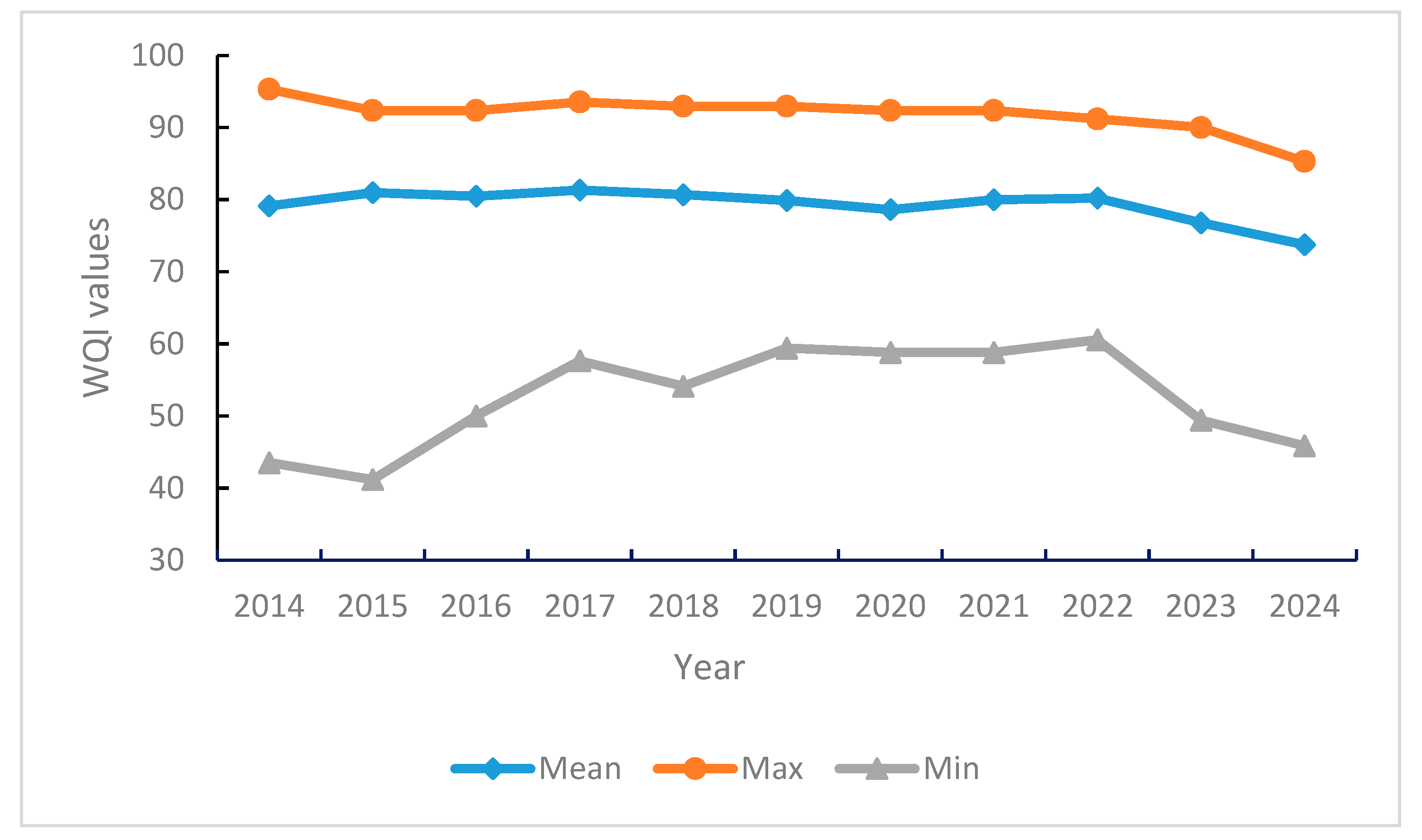
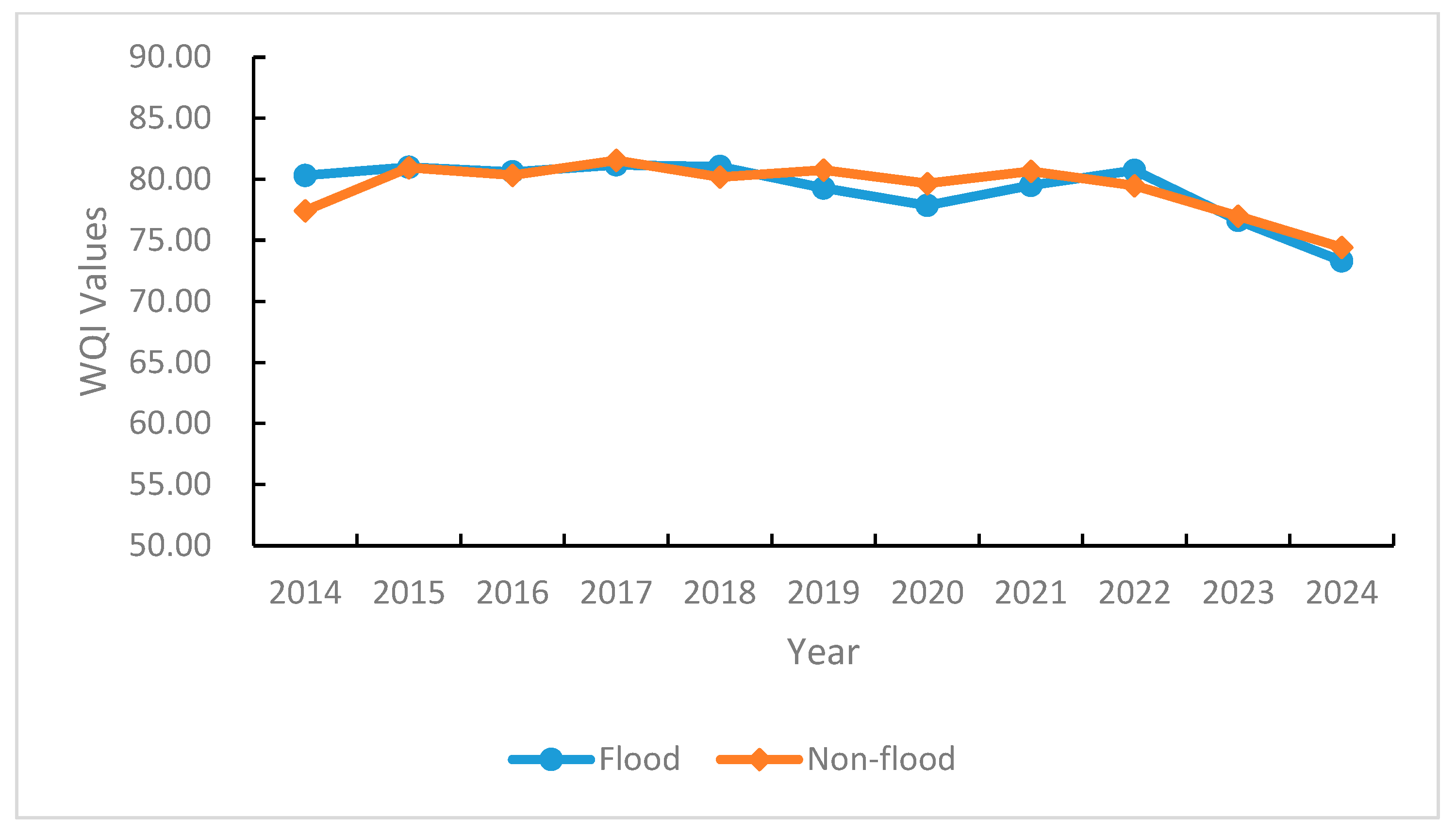
The statistical results of the mean WQI for the study section from 2014 to 2024 are presented in Table 3 and Figure 3. The interannual variations of WQI values across different seasons are illustrated in Figure 4. As shown, the mean WQI during this period was 79.26, with water quality consistently rated as “Good”. However, the temporal trend followed a pattern of “initial stability followed by decline.”
In terms of annual variations, the mean WQI remained basically stable within the range of 78.60–81.33 during the period from 2014 to 2022. The year 2017 witnessed the best water quality over the past decade, with the mean WQI peaking at 81.33, marking an increase of 2.33% relative to 2014. Subsequently, the mean WQI maintained relative stability from 2016 to 2021, with the interannual fluctuation range controlled within ±1.5%. This indicated a relatively stable water quality status during this period, which demonstrates that the special rectification campaign of “Five Water Governance” launched in Zhejiang Province from 2014 to 2020 achieved remarkable results. A turning point emerged in 2023, when the mean WQI dropped by 4.27% compared with 2022, followed by a further 3.93% decline in 2024, amounting to a cumulative reduction of 8.03% over the two years. This indicates declining water quality stability and increased pollution risks. The variation trend of CV was basically consistent with that of the standard deviation: it decreased from 0.1245 in 2014 to 0.0738 in 2022 and then rose back to 0.0905 in 2024, which further validates the trend of water quality stability improving initially and then declining. As shown in Figure 4, the mean WQI during the flood season was generally slightly higher than that in the non-flood season from 2014 to 2019 (except in 2017), with a mean difference ranging from 0.5 to 2.9. This indicated that the water quality in the flood season was slightly better or comparable to that in the non-flood season. In contrast, from 2020 to 2024, the mean WQI in the non-flood season was slightly higher than that in the flood season (except in 2022), with a mean difference ranging from 1.0 to 1.8, indicating that the water quality in the non-flood season was relatively better than that in the flood season. Overall, the mean WQI for the flood season and non-flood season in this basin reached 79.22 and 79.31, respectively, both falling into the “Good” category with negligible differences between them. In terms of variability, WQI values during the non-flood season exhibited greater fluctuations (e.g., the standard deviation of the non-flood season reached 11.96 in 2014), whereas those during the flood season were relatively stable, a pattern that may be attributed to seasonal differences in hydrological conditions.
Extreme value analysis based on Table 3 shows that the maximum WQI value decreased continuously from 95.29 in 2014 to 85.29 in 2024, representing a drop of 10.50%, which indicates a decline in the number of stations with good or better water quality in the basin. In contrast, the minimum WQI value exhibited fluctuating characteristics: it fell to a low of 41.18 in 2015, rose to a high of 60.59 in 2022, and then dropped back to 45.88 in 2024, reflecting the recurrent occurrence of water quality issues in local areas.

3.2.2. Analysis of Spatial Variation

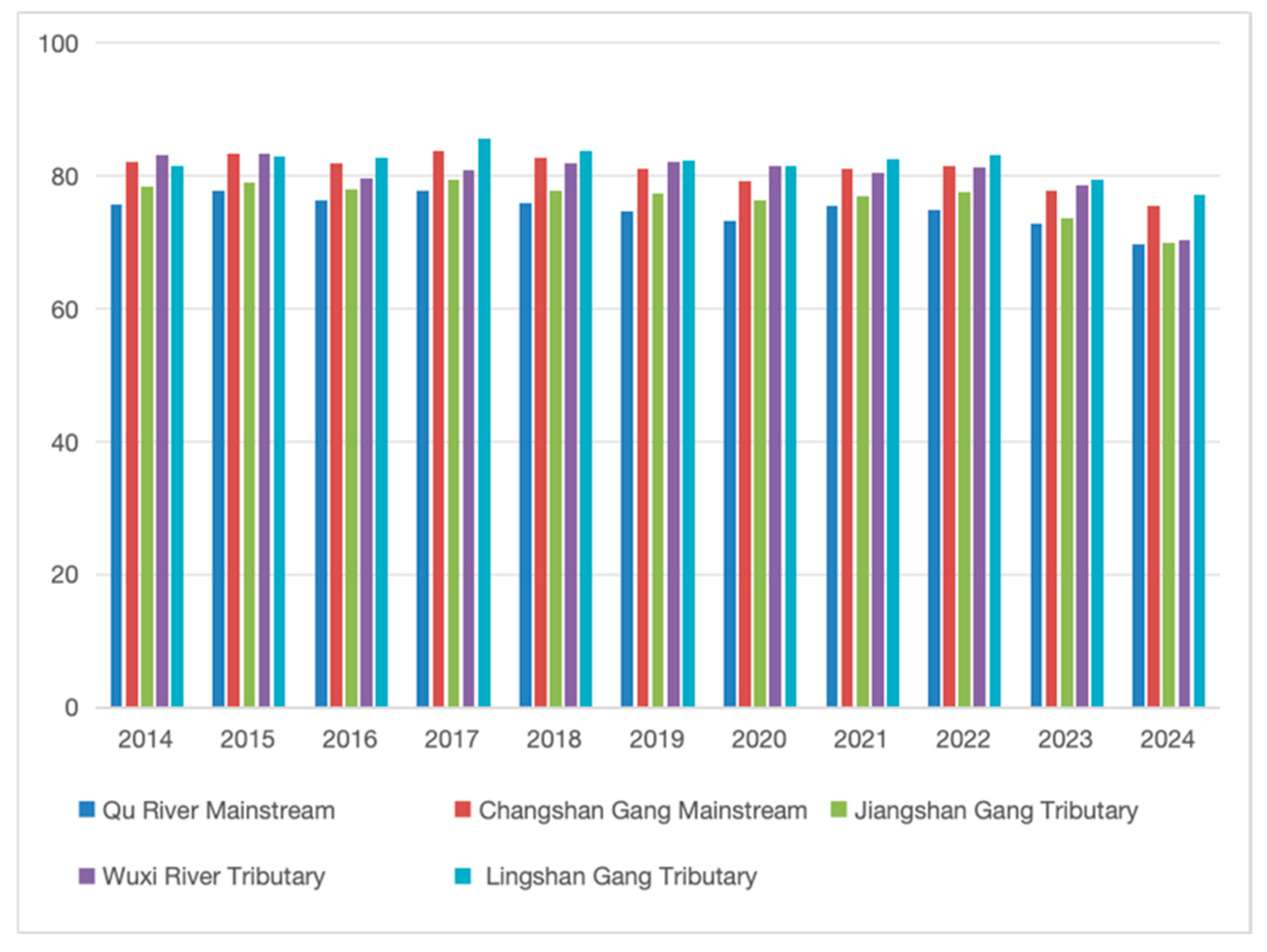
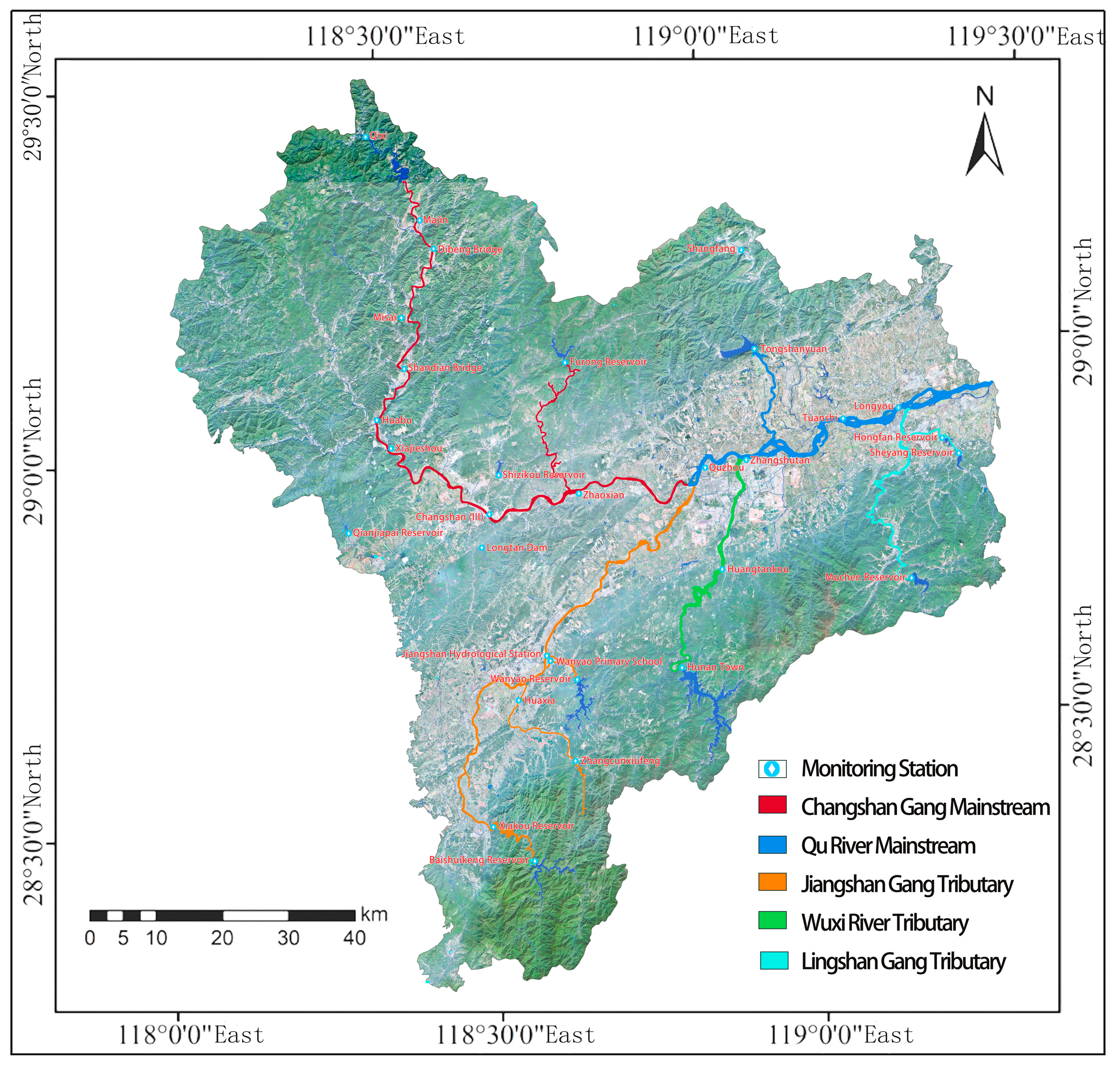
The main channel of the study section is the Qu River, which is mainly fed by the Qu River mainstream, the Changshan Gang mainstream, the Jiangshan Gang tributary, the Wuxi River tributary, and the Lingshan Gang tributary. Based on this spatial distribution, the annual mean WQI for the river system was calculated, respectively, with the results presented in Figure 5.
As shown in Figure 5, the mean WQI of each tributary in the upper reaches of the study section remained consistently at the “Good” category from 2014 to 2024, but exhibited an overall downward trend, reflecting mounting pressure on the basin’s water quality. In terms of variation magnitude, the Wuxi River tributary exhibited the most significant decline, with its WQI value dropping from 83.22 in 2014 to 70.36 in 2024, representing a decrease of 15.45%. This was followed by the Jiangshan Gang tributary, with a reduction of 10.60%, while the Changshan Gang mainstream, the Qu River mainstream, and the Lingshan Gang tributary recorded decreases of 7.95%, 7.85%, and 5.36%, respectively. Among the tributaries, the Lingshan Gang tributary had the highest multi-year mean WQI (82.08), while the Qu River mainstream had the lowest (74.97), indicating that the water quality of tributaries in the upper reaches of the basin was generally better than that of the mainstreams in the middle and lower reaches.
In terms of spatial distribution, water quality exhibits a distinct pattern: upper reaches superior to lower reaches; tributaries superior to mainstreams. The distribution map of the study section is presented in Figure 6. The Changshan Gang mainstream, as the main water source of the upper reaches of the Qu River mainstream, consistently demonstrates better water quality (annual mean WQI: 80.97) than the Qu River mainstream. The Lingshan Gang tributary (with an annual mean WQI of 82.08), a tributary joining the mainstream in the lower reaches, exhibited the best water quality performance, reaching a peak value of 85.59 in 2017. The Wuxi River tributary (with an annual mean WQI of 80.33) maintained a good-or-higher water quality level above 83 from 2014 to 2015, but its WQI value dropped to 70.36 in 2024. Notably, as the primary channel in the middle and lower reaches of the basin, the Qu River mainstream has consistently maintained a relatively low WQI value, which dropped to 69.74 in 2024, representing a decrease of 5.94 points compared with 2014. This reflects the prominent water quality pressure in the confluence area of the middle and lower reaches.
The time-series data reveal that WQI values across the tributaries remained relatively stable from 2014 to 2017. However, a general declining trend emerged after 2018, with a particularly pronounced drop observed during the 2023–2024 period. Among the tributaries, the Lingshan Gang tributary has maintained the highest WQI for eleven successive years, indicating a relatively stable ecosystem. In contrast, the Wuxi River tributary saw the fastest decline, with its WQI value dropping from a peak of 83.22 in 2014 to 70.36 in 2024, calling for focused attention on the causes of its water quality deterioration. In addition, the Qu River mainstream consistently recorded the lowest WQI values in all monitored years. This persistent poor performance likely reflects cumulative pollution pressures in the middle and lower confluence zones, underscoring the formidable challenge of improving water quality in this critical section. Overall, the basin water quality presents a pattern where the upper-reach tributaries support the water quality of the mainstreams in the middle and lower reaches. However, a clear basin-wide declining trend has become evident in recent years. This situation calls for enhanced collaborative, basin-wide management and particular attention to the rapid decline in the Wuxi River tributary and the persistently low values in the Qu River mainstream.

3.3. Statistical Analysis of Water Pollution Characteristics

3.3.1. Analysis of Water Quality Parameters Based on PCA

The results of the Kaiser-Meyer-Olkin (KMO) test and Bartlett’s test of sphericity for water quality parameters are presented in Table 4. The KMO value was 0.681, falling within the range of 0.6–0.7. This indicates that the partial correlations among the variables were at a moderate level, and the sample data were basically suitable for PCA. The Bartlett’s test of sphericity showed an approximate chi-square value of 1843.971 (with 21 degrees of freedom) and a corresponding p-value of 0.000. This strongly rejected the null hypothesis of no inter-variable correlation at the 1% significance level, confirming significant correlations among the variables and satisfying the prerequisite for PCA. Combining the results of these two tests, the data exhibited good construct validity and were therefore suitable for dimensionality reduction and key factor extraction via PCA.
The results of the PCA analysis on the basin water quality parameters are presented in Table 5. This table shows the eigenvalues, variance explanation rates, cumulative variance explanation rates of each water quality parameter, as well as the factor loadings of these parameters on the principal components (PCs). As shown in the factor loading table, PC1 explained 27.996% of the total variance and exhibited high loadings on NH3-N (0.732), TP (0.769), and TN (0.667). This indicates that nitrogen, phosphorus, and other nutrients are the primary characteristic pollutants in the basin. When combined with the original monitoring data, the highest mean concentrations of NH3-N, TP, and TN were all recorded at the river monitoring sections in Quzhou, Tuanshi, Longyou, Zhangshutang, and other areas crossing densely populated human settlements. This reveals that PC1 primarily characterizes the comprehensive impacts of pollutants driven by human activities on water quality, including point-source pollution from domestic sewage discharge and non-point-source pollution from agricultural fertilizer application, livestock and poultry breeding, and other agricultural practices. PC2 accounted for 15.888% of the total variance, with pH showing a strong positive loading. This indicates that pH serves as the dominant driving factor for PC2, which primarily characterizes the acid-base properties of the water body. PC3 explained 14.708% of the total variance, with DO showing a strong positive loading. This loading characteristic can be explained by the photochemical synthesis process of algae, which characterizes the self-purification capacity of the river basin water. BOD5 also exhibited a strong positive loading, reflecting the cumulative contribution of organic pollutants in the water body.

3.3.2. Validation of the Principal Component Analysis (PCA)

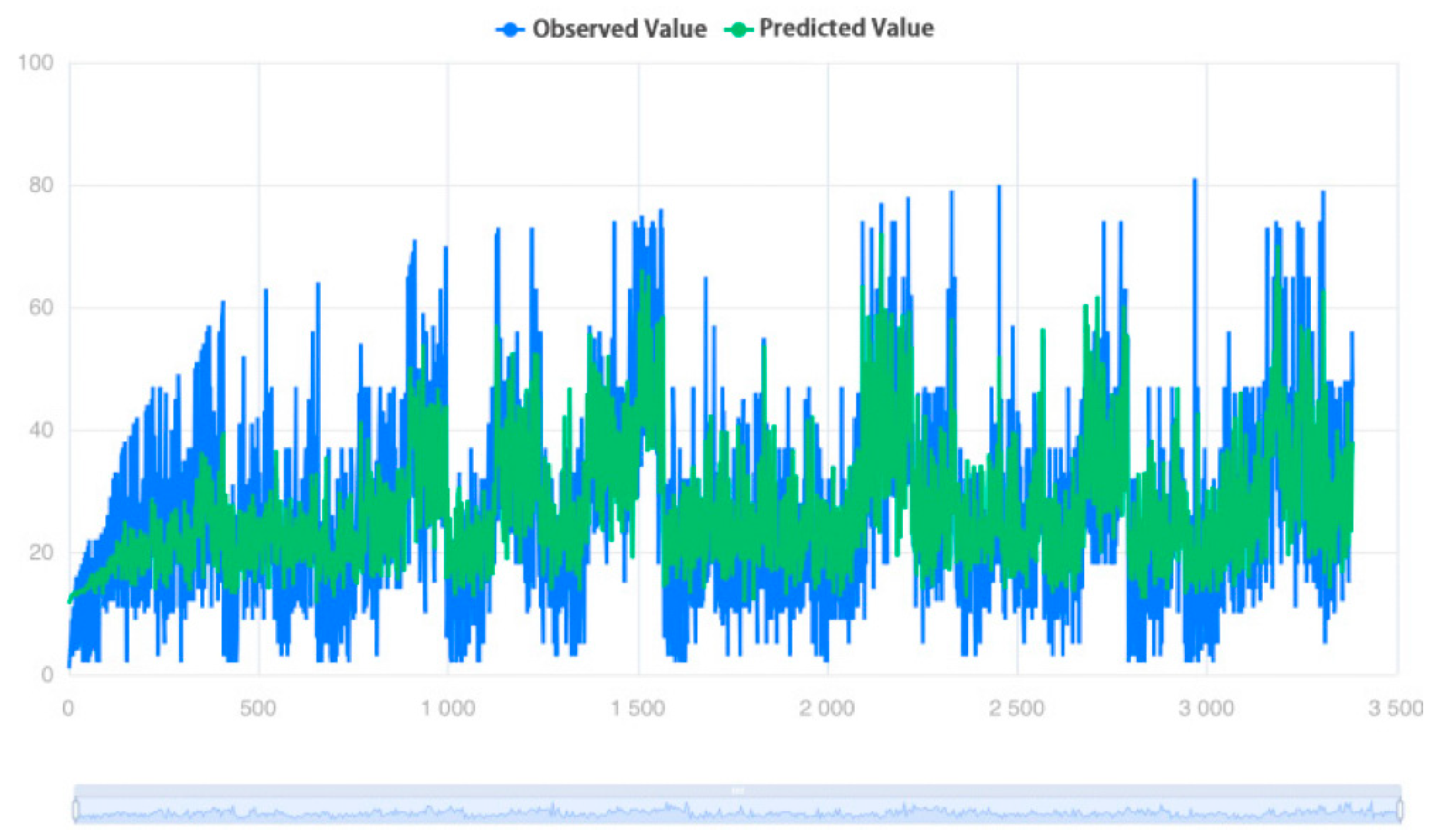
In this study, linear regression (ordinary least squares, OLS) was adopted as a generalized linear model to validate the results of principal component analysis (PCA). Results are presented in Table 6. The model achieved a satisfactory goodness of fit, which is presented in Figure 7. The model with a sample size of 3384 was statistically significant overall (F = 403.519, p < 0.001), and the adjusted R2 was 0.454, indicating that the selected independent variables together explained 45.4% of the variance in the dependent variable, the WQI index. Among all variables, pH (β = −0.044, p < 0.001), CODmn (β = 0.106, p < 0.001), BOD5 (β = 0.182, p < 0.001), NH3-N (β = 0.279, p < 0.001), TP (β = 0.284, p < 0.001), and TN (β = 0.199, p < 0.001) all exerted significant effects. Among these parameters, TP and NH3-N exhibited the highest standardized coefficients, followed by TN. These results indicate that the three parameters have the strongest explanatory power for the Water Quality Index, and the outcomes of this validation analysis are generally consistent with those of PCA. In contrast, DO did not achieve statistical significance (β = 0.004, p = 0.778). The coefficients of all significant independent variables were consistent with theoretical expectations in environmental science: an increase in pH reduced the WQI (i.e., acidic water conditions deteriorate water quality), while increased levels of organic pollutants (CODmn, BOD5) and nutrients (NH3-N, TP, TN) each contributed to a rise in the WQI index. The unstandardized coefficients indicated that each unit increase in TP led to a 0.098-unit rise in the WQI, representing the most substantial impact magnitude. The model results confirmed that NH3-N, TP, and TN are the key factors influencing the Water Quality Index of the river basin.

3.3.3. Analysis Based on Mann–Kendall Trend Test

According to the results of the Mann–Kendall trend test (see Table 7), the comprehensive Water Quality Index (WQI) exhibited a downward trend; however, with a p-value of 0.062 (>0.05), this decreasing trend was not statistically significant. Meanwhile, the Sen’s slope of the WQI was −0.338, with a 95% confidence interval of [−0.500, 0.333]. Since this interval spanned zero, the trend of the WQI was confirmed to be statistically insignificant, which indicates that there was no statistically significant deterioration in the overall water quality across the river basin. Among the key water quality parameters, DO exhibited a statistically significant decrease (p < 0.01), dropping from 8.47 mg/L in 2014 to 6.522 mg/L in 2024 with a reduction of 23%. This trend reflected a weakened self-purification capacity of the water body and poses a potential threat to the health of the aquatic ecosystem. For TP, the Z-value was −2.647 (p < 0.01) with a Sen’s slope of −0.003, reflecting a statistically significant reduction in eutrophication risk. Though other water quality parameters, including pH, BOD5, NH3-N, TN, and CODmn, exhibited minor fluctuations (both increases and decreases), their p-values were all greater than 0.05, indicating insufficient trend significance and a relatively stable status during the study period. The comprehensive analysis revealed that the water quality of the study section exhibited an evolutionary characteristic of “overall stability with local fluctuations” during the period from 2014 to 2024. The local fluctuations in water quality were mainly driven by a notable negative trend of substantial reduction in DO. As a key indicator of the health of aquatic ecosystems, the continuous decline in DO may signal a weakening of water self-purification capacity and the degradation of ecosystem functions, suggesting the need for measures to restore DO levels. Although the WQI exhibited a decreasing trend, the trend was not statistically significant; such a decline may be attributable to random variation rather than a systematic trend. Nevertheless, this can serve as an early warning signal for water quality management, and longer-term time-series monitoring data will be required to verify this trend.

4. Discussion

4.1. Seasonal Differences in Water Quality and Pollution Sources

Some studies have demonstrated that the quality of surface water during the rainy season is better than that in the dry season [20,21,22]; that is, surface water quality in the flood season outperforms that in the non-flood season. In this study, the WQI values indicated that the overall water quality difference between the flood season and non-flood season was small. Specifically, the mean WQI in the flood season was generally slightly higher than that in the non-flood season in the early period (2014–2019), with the exception of 2017, while in the later period (2020–2024), the mean WQI in the non-flood season was marginally higher than that in the flood season, except for 2022. However, all these differences were statistically insignificant. In contrast, the Single-Factor analysis revealed that the four water quality parameters (TN, DO, CODmn, BOD5 and NH3-N) in this basin exhibited significant variations between the flood season and the non-flood season.; the remaining parameters showed variations only in certain years or monitoring sections; and the water quality parameters during the flood season performed slightly better than those in the non-flood season. These findings are basically consistent with the conclusions of previous studies. In the study section, flood-season runoff accounted for 63–66% of the annual total. An average runoff volume of 3.05 billion cubic meters was recorded, which was roughly 84.8% higher than the runoff in the non-flood season. Based on the rainfall data released by the Quzhou Water Conservancy Bureau, the average rainfall from 2014 to 2024 in the flood season and non-flood season of the study section reached 1060 mm and 852 mm, respectively, with precipitation highly concentrated in the period from April to September. The high runoff volume and enhanced hydrodynamic conditions during the flood season not only significantly improved the dilution effect on water pollutants but also strengthened the water self-purification processes such as physical purification, chemical transformation and biodegradation. Driven by these dual effects, the water quality parameters in the flood season are relatively better than those in the non-flood season. Research indicated that reduced precipitation during the non-flood season and growing demands for agricultural irrigation and domestic water led to heavy water abstraction, further decreasing river flow and intensifying the accumulation of nitrogen and phosphorus contaminants [23].
This study, based on PCA, identified the key pollution characteristics of the target basin. The results indicated that nitrogen and phosphorus pollution were the primary pollutants in the basin, followed by organic pollutants. This finding aligns well with the dominant contributor to nitrogen and phosphorus contamination in Chinese rivers, namely the overloading of nitrogen and phosphorus nutrients from anthropogenic activities. The three major sources of it are agricultural runoff, municipal domestic sewage, and industrial wastewater discharge [24]. Notably, the pollution loads derived from these distinct sources are not static; instead, they show considerable relative temporal variation. This is generally consistent with existing research: the pollutant output from agricultural sources exhibits intense seasonal features, with their loads concentrated mainly in the flood season [25]; in contrast, the relative contribution of point sources such as domestic and industrial pollution may be more prominent in the non-flood season [26]. Research has shown that the relative input proportions of pollutants originating from distinct sources can even evolve over decades [27].
The dominant land use types in the study basin are farmland and forestland (see Figure 2). Spatially, farmland is highly concentrated in the Qu River basin, the Jiangshan Gang basin, and the lower reaches of the Changshan Gang basin, with the farmland area in the Qu River Basin accounting for more than 70% of the total basin area. As illustrated in Figure 2, all these water systems pass through densely built-up areas, where the primary land cover consists of urban settlements and industrial zones. Such an intertwined farmland-urban landscape exposes the basin to both non-point and point source pollution pressures. This study confirms that in similar basins with mixed land use, pollutant inputs from agricultural and urban sources and their impacts on water quality undergo dynamic changes with seasonal variations and short-term weather events [28], which together shape the complex spatiotemporal patterns of nitrogen and phosphorus pollution.

4.2. Spatiotemporal Variations in Water Quality

Analysis of interannual variations in WQI in the study section during 2014–2024 revealed that: the overall water quality of the basin maintained a good grade during the study period; the mean WQI showed a stable trend from 2014 to 2022, with occasional minor fluctuations within a range of ±1.5%; the water quality in 2017 reached the optimal level in the past decade (the WQI peak value). Following the “Five-water Co-governance” campaign launched by Zhejiang Province in 2014, a suite of pollution prevention and control measures, including industrial pollution rectification, agricultural non-point source management, and river ecological restoration, have been put into practice in Quzhou City. Such integrated efforts have effectively driven the continuous improvement of the basin’s aquatic ecological environment quality, with the water quality of cross-border sections remaining at Grade II or superior status over the long term. By 2023, Quzhou City had secured the “Dayu Tripod”, the top accolade for the “Five-water Co-governance” program, for ten consecutive years [29]. The WQI evaluation results of this study have formed a positive correlation with the effectiveness of aquatic ecological governance during this period. It is worth noting that there was a marked drop in the mean WQI from 2023 to 2024. Based on an analysis of the natural environmental conditions and human activity patterns, the drop could be attributed to the land use adjustments and the short-term ecological disturbances caused by the centralized construction of major water conservancy projects within the study basin (Changshan River Navigation and Hydropower Hub Project). Land use within the basin was not a static background per se during the study period (2014–2024). Based on regional data, the areas of cultivated land and construction land in Quzhou City continued to increase during this period. This change directly affected the pollution load entering rivers: the expansion and reclamation of farmland may increase the potential risk of agricultural non-point source pollution, and the expansion of construction land may increase domestic and industrial point source emissions. The construction of major water conservancy projects may not only directly lead to an increase in suspended solids and the introduction of pollutants, but the process of altering local hydrological conditions and disturbing natural water flow paths may also, in the short term, change the regional hydrological connectivity, which is key in the migration, diffusion, and transformation of pollutants [30]. Engineering disturbance temporarily reduces water connectivity efficiency and impairs the water body’s dilution and self-purification capacities. This effect, together with insufficient precipitation and runoff shrinkage in the study area in 2024, has jointly amplified the pollution impact.
Spatial variations in WQI across the study basin during the 2014–2024 period demonstrated distinct water quality differentiation, with the key feature of “better water quality in upper reaches than that in lower reaches; better in tributaries than in mainstreams.” Such a spatial pattern reveals the close interaction between the hydrological connectivity of the basin and the spatial distribution of human activities. The tributaries in the upper reaches, including the Lingshan Gang and Wuxi River, were subject to minimal disturbance from urbanization and agricultural activities, thus retaining a favorable ecological background. This spatial pattern facilitated maintaining high structural connectivity and water self-purification capacity, which accounts for the generally high multi-year mean WQI. In contrast, the mainstream of the Qu River, a confluence hub in the middle and lower reaches, assumed a distinctive spatial role. It received inflows from multiple tributaries such as the Changshan Gang and the Jiangshan Gang. The hydrological connectivity of this river system enhanced material transport capacity on the one hand, and aggregated pollution loads from urban and agricultural areas along the basin on the other. Hydrological connectivity in the basin exerts a dual effect on water quality: connectivity facilitates the transport and dilution of pollutants, but in confluence areas with concentrated pollutant inputs, it may also accelerate the diffusion and accumulation of pollutants [28]. Within the study basin, the clustered urban settlements and industrial complexes along the mainstream of the Qu River contributed to substantial point and non-point source pollution loads. Given its key function as the basin’s confluence node, these factors jointly led to a marked accumulation of pollutants, which in turn resulted in its WQI values consistently ranking the lowest throughout the basin. This finding verifies that for basins dominated by human activities, spatial variations in hydrological connectivity serve as a critical inherent mechanism driving the formation of the “upper-reach superiority over lower-reach” water quality distribution pattern [30,31].

5. Conclusions

(1)
From 2014 to 2024, the overall water quality in the study section consistently met the Grade I–III standard specified in the Environmental Quality Standards for Surface Water (GB 3838-2002) [11]. However, the TN parameter frequently exceeded the standard thresholds; its multi-year mean concentration exceeded the Grade III standard threshold. The primary contributor to this pollution load was identified as runoff loss of chemical fertilizers from agricultural non-point sources. The frequent TN exceedance was highly aligned with the spatial pattern of concentrated farmland distribution in the lower reaches of the Qu River and the Changshan Gang. This finding highlights the decisive role of agricultural non-point source pollution control in basin water quality improvement, while also revealing the deficiencies in the refined management of non-point source pollution within the basin at present.
(2)
The mean WQI of the study basin stood at 79.26, maintaining an overall “Good” grade, but exhibited a pattern of “initial stability followed by degradation”. This trend implies an imbalance between the effectiveness of water environment governance and the emerging pollution pressures. The water quality stabilization period from 2014 to 2022 was a direct reflection of the positive outcomes achieved by the specialized Five-Water Co-governance program. The successive decline in water quality during 2023–2024 was not an accidental fluctuation. Instead, it can be attributed to multiple emerging stressors: land use adjustments, short-term ecological disturbances from the concentrated construction of water conservancy projects and reduced self-purification capacity caused by diminished dry-season runoff. This downward trend serves as a warning that water quality governance in the basin has entered a critical phase of ecological management focused on “securing the current good water quality and curbing the trend of further deterioration.”
(3)
Spatially, water quality in the study section from 2014 to 2024 exhibited a distinct pattern of “better water quality in upper reaches than in lower reaches; in tributaries than in mainstreams”. Tributaries in upper reaches, including the Lingshan Gang and Changshan Gang, were subject to minimal disturbance from urbanization and industrial activities and boasted a robust ecological base, thus emerging as the core supporting areas for water quality across the basin. The Qu River mainstream, acting as a confluence hub in the middle and lower reaches, received pollution loads from multiple tributaries while being subjected to the concentrated input of industrial wastewater and agricultural non-point source pollution from adjacent towns and cities. This led to a distinct pollution accumulation effect, consequently resulting in its persistently low WQI values. The rapid decline in water quality of the Wuxi River tributary (with a reduction of 15.45%) is particularly alarming. The sharp drop may signal the risk that the ecological carrying threshold has been breached by excessive development activities in local regions, indicating that this tributary should be prioritized as a key control unit for targeted governance across the basin.
(4)
The comprehensive water quality status (represented by WQI) of the study section exhibited no significant seasonal variation. However, key individual parameters, including TN, NH3-N, and BOD5, showed a pattern where water quality was better in the flood season than in the non-flood season. The core mechanism underlying this phenomenon lies in the dilution effect of high runoff volumes and enhanced water self-purification processes during the flood season, which offset the potential increments of non-point source pollution induced by flooding. Essentially, this reflects the dynamic buffering effect of the basin’s hydrological processes on pollution loads, a feature that is highly compatible with the natural hydrological pattern of concentrated precipitation in the flood season. Principal component analysis (PCA) results demonstrated that pollution in the basin was dominated by key phosphorus and nitrogen pollutants, namely TN, TP, and NH3-N, followed by COD and BOD5. The core pollution sources were highly coupled with the regional land use pattern: farmlands centered in the lower reaches contribute to the input of nitrogen and phosphorus from agricultural non-point sources, while densely built-up zones (e.g., urban areas, industrial parks) are the primary sources of domestic and industrial pollution discharge. This synergistic coupling relationship among the “natural hydrological pattern, spatial distribution of human activities, and pollution profiles” reveals the spatially targeted characteristics of pollution across the basin, thereby providing a scientific basis for the precise delimitation of pollution control zones and the implementation of tailored management measures.
(5)
From 2014 to 2024, the water quality of the study section generally exhibited an evolutionary characteristic of “overall stability with local fluctuations”. The key factors driving local water quality fluctuations were TN, TP, and NH3-N, while CODmn and BOD5 exerted synergistic impacts. DO was a critical indicator of aquatic ecosystem health. It is suggested that a differentiated ecological governance strategy of “prioritizing nitrogen control, coordinating phosphorus and oxygen management, and reducing organic loads” should be adopted for the basin.

Author Contributions

Conceptualization, W.L. and J.C. (Jing Chen); methodology, W.L.; investigation, D.L.; data curation, W.L. and J.C. (Jing Cheng); writing—original draft preparation, W.L.; writing—review and editing, W.L., D.L., J.C. (Jing Chen) and J.C. (Jing Cheng); funding acquisition, J.C. (Jing Cheng). All authors have read and agreed to the published version of the manuscript.

Funding

This research was funded by the Scientific Research Fund of Zhejiang Provincial Education Department, grant number Y202250567.

Data Availability Statement

The original contributions presented in this study are included in the article. Further inquiries can be directed to the corresponding author.

Acknowledgments

During the preparation of this manuscript, we used DeepSeek-V3.2 and Doubao V8.0.0 for the purposes of improving language. The authors have reviewed and edited the output and take full responsibility for the content of this publication.

Conflicts of Interest

The authors declare no conflicts of interest. The funders had no role in the design of the study; in the collection, analyses, or interpretation of data; in the writing of the manuscript; or in the decision to publish the results.

Abbreviations

The following abbreviations are used in this manuscript:
WQIWater Quality Index
DOdissolved oxygen
TNtotal nitrogen
TPtotal phosphorus
NH3-Nammonia nitrogen
CODmnpermanganate index
BOD5five-day biochemical oxygen demand
CVcoefficient of variation

References

  1. Loucks, D.P. Managing water as a critical component of a changing world. Water Resour. Manag. 2017, 31, 2905–2916. [Google Scholar] [CrossRef]
  2. Lee, C.C.; Chiu, Y.B.; Sun, C.H. The environmental Kuznets curve hypothesis for water pollution: Do regions matter? Energy Policy 2010, 38, 12–23. [Google Scholar] [CrossRef]
  3. Jones, E.R.; Bierkens, M.F.P.; van Vliet, M.T.H. Current and Future Global Water Scarcity Intensifies when Accounting for Surface Water Quality. Nat. Clim. Change 2024, 14, 629–635. [Google Scholar] [CrossRef]
  4. Russ, J.; Zaveri, E.; Desbureaux, S.; Damania, R.; Rodella, A.-S. The impact of water quality on GDP growth: Evidence from around the world. Water Secur. 2022, 17, 100130. [Google Scholar] [CrossRef]
  5. Dubey, D.; Kumar, S.; Dutta, V. A Circular Economy Approach for Sustainable Water Reuse in India: Policies, Practices and Future Prospects. Environ. Sustain. 2024, 7, 303–323. [Google Scholar] [CrossRef]
  6. Das, A. Multivariate Statistical Approach for the Assessment of Water Quality of Mahanadi Basin, Odisha. Mater. Today Proc. 2022, 65, A1–A11. [Google Scholar] [CrossRef]
  7. Ren, C.P.; Zheng, B.H. Study on Water Quality Trends and Driving Factors in Plateau Lakes: A Case Study of Qionghai Lake in Sichuan Province. J. Lake Sci. 2024, 36, 756–769. [Google Scholar]
  8. Liu, Y.L.; Zheng, Y.A. Water Quality Assessment and Spatial-Temporal Variation Analysis in Yellow River Basin. Environ. Sci. 2022, 43, 1332–1345. [Google Scholar]
  9. Pesce, S.F.; Wunderlin, D.A. Use of Water Quality Indices to Verify the Impact of Córdoba City (Argentina) on Suquía River. Water Res. 2000, 34, 2915–2926. [Google Scholar] [CrossRef]
  10. Standing Committee of Zhejiang Provincial People’s Congress. Regulations of Zhejiang Province on Flood Control, Typhoon Prevention and Drought Relief; Standing Committee of Zhejiang Provincial People’s Congress: Hangzhou, China, 2021. [Google Scholar]
  11. GB 3838-2002; Environmental Quality Standards for Surface Water. State Environmental Protection Administration: Beijing, China; General Administration of Quality Supervision, Inspection and Quarantine of China: Beijing, China, 2002.
  12. GB/T 4883-2008; Statistical Interpretation of Data–Detection and Treatment of Outliers in the Normal Sample. General Administration of Quality Supervision, Inspection and Quarantine of China: Beijing, China; Standardization Administration of China: Beijing, China, 2008.
  13. Debels, P.; Figueroa, R.; Urrutia, R.; Barra, R.; Niell, X. Evaluation of Water Quality in the Chillán River (Central Chile) Using Physico-Chemical Parameters and a Modified Water Quality Index. Environ. Monit. Assess. 2005, 110, 301–322. [Google Scholar] [CrossRef]
  14. Kocer, M.A.T.; Sevgili, H. Parameters Selection for Water Quality Index in the Assessment of the Environmental Impacts of Land-Based Trout Farms. Ecol. Indic. 2014, 36, 672–681. [Google Scholar] [CrossRef]
  15. Zhao, P.; Tang, X.L.; Tang, J.L.; Wang, C. Assessing Water Quality of Three Gorges Reservoir, China, over a Five-Year Period from 2006 to 2011. Water Resour. Manag. 2013, 27, 4545–4558. [Google Scholar] [CrossRef]
  16. Kannel, P.R.; Lee, S.; Lee, Y.-S.; Kanel, S.R.; Pelletier, G.J. Application of Water Quality Indices and Dissolved Oxygen as Indicators for River Water Classification and Urban Impact Assessment. Environ. Monit. Assess. 2007, 132, 93–110. [Google Scholar] [CrossRef]
  17. SPSSPRO. Available online: https://www.spsspro.com/?utm_source=baidu-ss-spsspro&keyword=spsspro%25C6%25C6%25BD%25E2%25B0%25E6 (accessed on 2 November 2025).
  18. Hao, Y.F.; Jin, G.Q.; Tang, H.W.; Zhang, P.; Chen, X.; Xiao, Y.; Yuan, S.; Li, Z.; Yang, G. Spatial and Temporal Distribution Analysis of Typical Contaminants in the Mainstream of Huai River. J. Hohai Univ. (Nat. Sci.) 2020, 48, 291–299. [Google Scholar]
  19. Lin, T.; Yin, J.; Zhang, B.; Shan, Y.; Yang, P.; Yang, Y.; Yu, Y. Application of the Improved Comprehensive Water Quality Identification Index Method in Water Quality Evaluation of the Pearl River Estuary. Water Resour. Prot. 2022, 38, 166–173. [Google Scholar]
  20. Giao, N.T. Analysis of Surface Water Quality Using Multivariate Statistical Approaches: A Case Study in Ca Mau Peninsula, Vietnam. Pollution 2022, 8, 463–477. [Google Scholar]
  21. Rahman, K.; Barua, S.; Imran, H.M. Assessment of Water Quality and Apportionment of Pollution Sources of an Urban Lake Using Multivariate Statistical Analysis. Clean. Eng. Technol. 2021, 5, 100309. [Google Scholar] [CrossRef]
  22. Obayemi, O.E.; Komolafe, O.O. Environmental Assessment of Esa-Odo Reservoir Based on Water Quality Index and Multivariate analysis. Sustain. Water Resour. Manag. 2023, 9, 13521. [Google Scholar] [CrossRef]
  23. Rani, N.; Sinha, R.K.; Prasad, K.; Kedia, D.K. Assessment of temporal variation in water quality of some important rivers in middle Gangetic Plains, India. Environ. Monit. Assess. 2011, 174, 401–415. [Google Scholar] [CrossRef] [PubMed]
  24. Li, X.; Xu, W.; Song, S.; Sun, J. Sources and spatiotemporal distribution characteristics of nitrogen and phosphorus loads in the Haihe River Basin, China. Mar. Pollut. Bull. 2023, 189, 114756. [Google Scholar] [CrossRef]
  25. Chen, Y.; Zhao, Y.X.; Zhao, Y.; Wang, D.; Bai, H.; Guo, H. Nitrogen and phosphorus pollution load assessment based on SWAT model in the Bali Lake Basin, Jiangxi Province. Acta Sci. Nat. Univ. Pekin. 2019, 55, 1112–1118. [Google Scholar]
  26. Fu, K.; Gao, H.J.; Li, F.D.; Wu, K.; Zhang, Q.; Li, Z.; Mao, S.; Li, C.; Wang, J. Water quality assessment and influencing factor analysis of rivers in typical agricultural areas. J. Agric. Resour. Environ. Sci. 2023, 40, 583–597. [Google Scholar]
  27. Metson, G.S.; Lin, J.; Compton, J.E.; Harrison, J.A. Where have all the nutrients gone? Long-term decoupling of inputs and outputs in the Willamette River watershed, Oregon, United States. J. Geophys. Res. Biogeosci. 2020, 125, e2020JG005792. [Google Scholar] [CrossRef] [PubMed]
  28. Jiang, Y.K.; Liu, L.H.; Zhang, Q.W.; Huang, X.; Yan, Y. Characteristics of spatial and temporal transport of N and P under coordinated management of ditches and rivers in the plain river network area. Chin. J. Eco-Agric. 2025, 33, 301–313. [Google Scholar]
  29. Zheng, J.J.; Liu, Y.; Wang, W. Sustaining Clean Water Diversion to Downstream Regions: Quzhou’s Decade-Long Accolade of the “Dayu Tripod” Award. China Environmental News, 27 January 2025. [Google Scholar]
  30. Su, Y.; Yang, G.S.; Li, B.; Wan, R.R. Water quality improves with increased spatially surface hydrological connectivity in plain river network areas. J. Environ. Manag. 2025, 377, 124703. [Google Scholar] [CrossRef]
  31. Lyu, L.T.; Zheng, X.Y.; Liu, Q.; Sun, C.Z.; Bi, S.Q. Spatial scale effect of non-point source pollution response to landscape pattern: A case study of the Taizi River Basin in Northeast China. Chin. J. Appl. Ecol. 2024, 35, 1112–1122. [Google Scholar]
Figure 1. Location Map of the Study Area.
Water 18 00386 g001
Figure 2. Land Use Map of the Study Area.
Water 18 00386 g002
Figure 3. Interannual Variation in WQI Values.
Water 18 00386 g003
Figure 4. Seasonal Interannual WQI Variation.
Water 18 00386 g004
Figure 5. Annual Mean WQI Values of Each Tributary.
Water 18 00386 g005
Figure 6. Tributary Distribution Map of Quzhou Section of Qiantang River Basin.
Water 18 00386 g006
Figure 7. Fitting Effect Diagram of Linear Regression.
Water 18 00386 g007
Table 1. Normalized values ( C i ) and relative weights ( P i ) of water quality parameters used in WQI.
Parameter P i Threshold1009080706050403020100
DO4≥7.5≥7.5>7>6.5>6>5>4>3.5>3>2≥1<1
BOD53<0.5<0.5<2<3<4<5<6<8<10<12≤15>15
CODmn31<1<2<3<4<5<8<10<12<14≤15>15
NH3-N3<0.01<0.01<0.05<0.1<0.2<0.3<0.4<0.5<0.75<1≤1.25>1.25
pH1777–88–8.58.5–96.5–66–6.5
9–9.5
5–6
9.5–10
4–5
10–11
3–4
11–12
2–3
12–13
1–2
13–14
TN2<0.1<0.1<0.2<0.35<0.5<0.75<1<1.25<1.5<1.75≤2>2
TP1<0.01<0.01<0.02<0.05<0.1<0.15<0.2<0.25<0.3<0.35≤0.4>0.4
Note: The optimal thresholds are derived from references [9,13,14,15,16].
Table 2. Seasonal Water Quality Parameters in Quzhou Section of Qiantang River Basin (2014–2024).
ParameterSeasonMaxMinMeanSDCV
pHNon-flood9.46.537.740 0.341 0.044
Flood10.216.477.771 0.416 0.054
BOD5 (mg/L)Non-flood17.70.230.970 0.907 0.935
Flood9.60.110.820 0.599 0.730
TN (mg/L)Non-flood18.450.071.522 1.050 0.690
Flood5.650.191.277 0.627 0.491
TP (mg/L)Non-flood1.3080.0090.040 0.062 1.574
Flood0.5880.0080.039 0.043 1.114
NH3-N (mg/L)Non-flood16.60.0180.219 0.565 2.578
Flood2.9430.0180.185 0.185 1.001
DO (mg/L)Non-flood15.144.98.007 1.460 0.182
Flood15.722.927.540 1.277 0.169
CODmn (mg/L)Non-flood17.270.711.998 0.775 0.388
Flood6.330.62.037 0.548 0.269
Table 3. WQI Statistics for Quzhou Section of Qiantang River Basin (2014–2024).
YearMeanMaxMinSDCV(−)WQI Grade
201479.13 95.29 43.53 9.85 0.125 Good
201580.97 92.35 41.18 8.31 0.103 Good
201680.48 92.35 50.00 7.39 0.092 Good
201781.33 93.53 57.65 7.20 0.089 Good
201880.68 92.94 54.12 7.49 0.093 Good
201979.89 92.94 59.41 6.56 0.082 Good
202078.60 92.35 58.82 6.83 0.087 Good
202179.98 92.35 58.82 5.95 0.074 Good
202280.21 91.18 60.59 5.92 0.074 Good
202376.79 90.00 49.41 6.55 0.085 Good
202473.77 85.29 45.88 6.67 0.091 Good
Table 4. Results of KMO Test and Bartlett’s Test of Sphericity.
KMO Value0.681
Bartlett’s Test of SphericityApproximate Chi-Square Value1843.971
df21
p0.000 ***
Note: *** indicates significance levels of 1%.
Table 5. Factor Loadings and Eigenvalues of Basin Water Quality Parameters.
PC1PC2PC3PC4
PH−0.0740.82−0.0110.203
DO0.2630.3310.675−0.584
COD0.5030.3620.1330.508
BOD50.247−0.4320.6670.403
NH3-N0.732−0.104−0.162−0.065
TP0.7690.003−0.1820.035
TN0.667−0.043−0.228−0.248
eigenvalues1.961.1121.030.869
Contribution %27.99615.88814.70812.413
cumulative contribution %27.99643.88458.59271.005
Table 6. Results of Linear Regression Analysis.
Unstandardized
Coefficient
Standardized
Coefficient Beta
tpVIFR2Adjusted R2F
BStandard Error
Intercept11.3450.546-20.7910.000 ***-0.4560.454F = 403.519, p = 0.000 ***
PH−0.0140.004−0.044−3.4050.001 ***1.025
COD0.0230.0030.1067.9440.000 ***1.108
BOD50.0870.0060.18214.1310.000 ***1.032
NH3-N0.0260.0010.27919.1580.000 ***1.314
TP0.0980.0050.28419.0820.000 ***1.374
TN0.0360.0030.19914.2540.000 ***1.211
DO00.0010.0040.2820.7781.028
Independent variable: WQI
Note: *** indicate significance levels of 1%.
Table 7. Results of Mann–Kendall Trend Test for Water Quality Parameters: Quzhou Section of Qiantang River Basin (2014–2024).
ParameterTrend
Direction
S StatisticZ-Scorep-ValueSen’s SlopeSignificance
WQI−25−1.8680.062−0.338ns
pH−19−1.4010.161−0.016ns
DO−41−3.1140.0018−0.199p < 0.01
CODmn110.7780.4360.012ns
BOD5−9−0.6230.533−0.027ns
NH3N −9−0.6230.533−0.002ns
TP−35−2.6470.008−0.003p < 0.01
TN−17−1.2460.213−0.012ns
Note: ns = not significant.
Disclaimer/Publisher’s Note: The statements, opinions and data contained in all publications are solely those of the individual author(s) and contributor(s) and not of MDPI and/or the editor(s). MDPI and/or the editor(s) disclaim responsibility for any injury to people or property resulting from any ideas, methods, instructions or products referred to in the content.