Article

Assessing Meteorological (1950–2022) and Hydrological (1911–2022) Trends in the Northwestern Alps: Insights from the Upper Po River Basin


1
Department of Civil and Enviromental Engineering, Politecnico di Milano, P.za L. da Vinci 32, 20138 Milano, Italy
2
Department of Environmental Science and Policy, University of Milan, Via Celoria 10, 20133 Milano, Italy
*
Author to whom correspondence should be addressed.
Water 2026, 18(3), 348; https://doi.org/10.3390/w18030348
Submission received: 12 December 2025 / Revised: 12 January 2026 / Accepted: 27 January 2026 / Published: 30 January 2026
(This article belongs to the Section Water and Climate Change)

Abstract

This study investigates transboundary hydro-meteorological trends in the Upper Po River basin, adopting a multi-perspective framework to disentangle the joint evolution of climatic and hydrological drivers. We analyzed climatic variables from 25 weather stations (1950–2022) alongside streamflow data from 14 river sections (1911–2022). Trends were assessed using the Mann–Kendall test to detect monotonic changes and the Theil-Sen estimator to quantify magnitude, ensuring robustness against outliers. The results reveal pronounced warming, particularly in spring maximum temperatures with +0.95 ± 0.40 °C per decade, and +0.62 ± 0.35 °C per decade at the annual scale. Conversely, average and minimum daily temperatures show lower rates with, respectively, +0.50 ± 0.26 °C and +0.39 ± 0.27 °C at the annual scale. Consequently, potential evapotranspiration increased significantly (+15.1 ± 9.4 mm per decade), likely contributing to a marked decline in summer streamflow in 8 out of 14 sections. Correlation analysis confirms that snow dynamics modulate the hydrological response: precipitation drives discharge annually and in autumn, winter exhibits a weaker coupling, as winter precipitation is partially stored in the basin as snow, contributing to discharge during spring and summer. By focusing on this strategic region for European agriculture and industry, the study provides useful insights into the combined effects of warming and evapotranspiration on water availability for adaptation strategies.

1. Introduction

Mountain areas are considered a hot spot for climate change [1]. Rising temperatures threaten diverse ecosystems, water supplies, and natural resources. Moreover, mountain areas host many glaciers that are retreating at a global scale [2], serving as a visible proof of climate changes. Among all the mountain areas, the European Alps are one of the most studied. This is due to their proximity to a densely populated area, where technological development and scientific knowledge were relatively advanced during the last centuries. This enabled the reconstruction of climate series starting from the 18th century [3]. These records revealed that during the 20th century, temperatures in the Alps increased at twice the global average (+2 °C vs. +1 °C), with warming accelerating significantly since the 1980s. Consequently, this decade is widely considered a turning point for the Alps in terms of air temperature, sunshine duration, and snow cover [4,5,6], a shift largely attributed to water vapor-enhanced greenhouse warming [7].
In the European Alps, the compounding effects of climate change and dense urbanization are already causing significant economic and socio-environmental damage. Declining snow cover and the retreat of glaciers are negatively impacting winter tourism [8] while reducing summer river discharge. This poses a potential threat to key sectors such as agriculture [9] and hydropower [10]. Furthermore, extreme events, including storms, floods, droughts, and heat waves, are increasing in intensity and frequency [11,12], exposing goods, structures, and public services to damage.
These effects are also evident in the Italian sector. The Piedmont region’s environmental protection agency, ARPA Piemonte, highlighted a pronounced trend in regional maximum temperatures, which reached +0.58 °C per decade during 1981–2019 [13]. According to ARPA and ISPRA (the Italian Institute for Environmental Protection and Research), the years 2022–2024 were three of the four warmest years between 1958 and 2024. As in surrounding regions, average air temperatures show a significant warming trend [14], which also impacts groundwater temperature [15]. In contrast, high variability in total precipitation masks any clear long-term trend in annual average [16]. Nevertheless, extreme precipitation events are becoming increasingly frequent. The winter of 2021–2022 was the third driest in the last 65 years, whereas 2 October 2020 marked the wettest day in the last 60 years [17]. Similarly, the winter of 2022–2023 was exceptionally dry, while 2024 ranked as the second wettest year in the historical records [18]. This variability has had profound implications for the river network. Notably, the severe snow drought of 2021–2022 resulted in the lowest terrestrial water storage on record during the summer of 2022 [19]. Molina et al. [20] suggested that the long-term deficit observed in the Po River between 2000 and 2022 might represent the most severe hydrological drought sequence in the last 500 years.
Furthermore, the intensification of heavy precipitation was already observed in the Piedmont region prior to 2024 [21], acting as a potential masking factor for climate change signals [22] in the Upper Po Basin. Simultaneously, heat waves—such as the 2003 event—have tripled in duration since the late 19th century [23], exacerbating discharge deficits through increased evapotranspiration [24]. Consequently, consistent long-term datasets are essential to robustly detect significant changes in average hydro-meteorological variables.
This study analyzes meteo-hydrological trends in the northwestern Alps, specifically within a transboundary region spanning northern Italy and southern Switzerland. Unlike previous research in this area [14,15,16], which examined single variables in isolation, this study investigates the interplay between temperature, precipitation, and river discharge. While the link between precipitation and discharge could be considered intuitive, several factors, including the cryosphere cycle, the presence of reservoirs, crop demand, and changes in evapotranspiration, can weaken this link. To address this, we employed statistical correlation analysis to assess the response of flow discharge to climatic drivers within the studied catchment.
The manuscript is organized as follows. Section 2 describes the study area, data sources, and methodology. Section 3 reports the results of the analysis, followed by the discussion in Section 4 and conclusions in Section 5.

2. Materials and Methods

2.1. Study Area

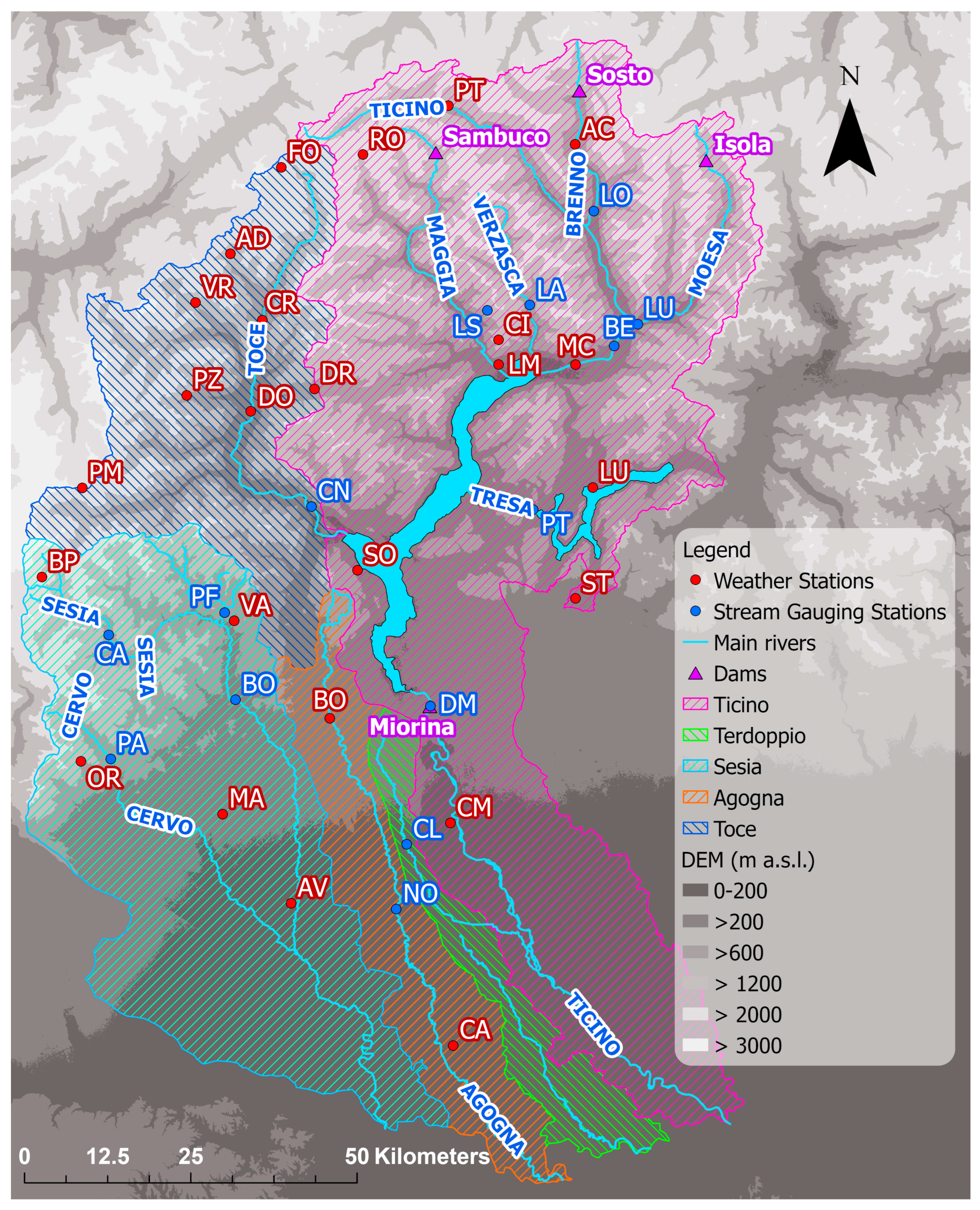
The study area is located in the SW Alps, spanning northern Italy and southern Switzerland. It covers a total area of 12,665 km2 with complex orography [25]. Geographically, the region encompasses a large portion of Piedmont, western Lombardy, and the Swiss cantons of Valais and Ticino (Figure 1). It comprises five major sub-basins (Ticino, Sesia, Toce, Agogna, and Terdoppio Novarese), all tributaries of the Po River. The mean elevation of these basins ranges from 137 m a.s.l. (Terdoppio) to 1548 m a.s.l. (Toce), with an average elevation of 870 m a.s.l. across the entire study area (Table 1). Catchment sizes vary significantly, ranging from 515 km2 (Terdoppio) to 6301 km2 (Ticino).

2.2. Data

Daily data for precipitation, temperature, estimated evapotranspiration, and river discharge were aggregated into annual and seasonal time series. The seasonal periods were defined as winter (JFM), spring (AMJ), summer (JAS), and autumn (OND). Following established protocols [26], we required a minimum monthly data availability of ≥80% for precipitation and ≥50% for temperature and discharge. Consequently, any annual or seasonal record containing one or more missing or incomplete months was excluded from the analysis.

2.2.1. Climate Data

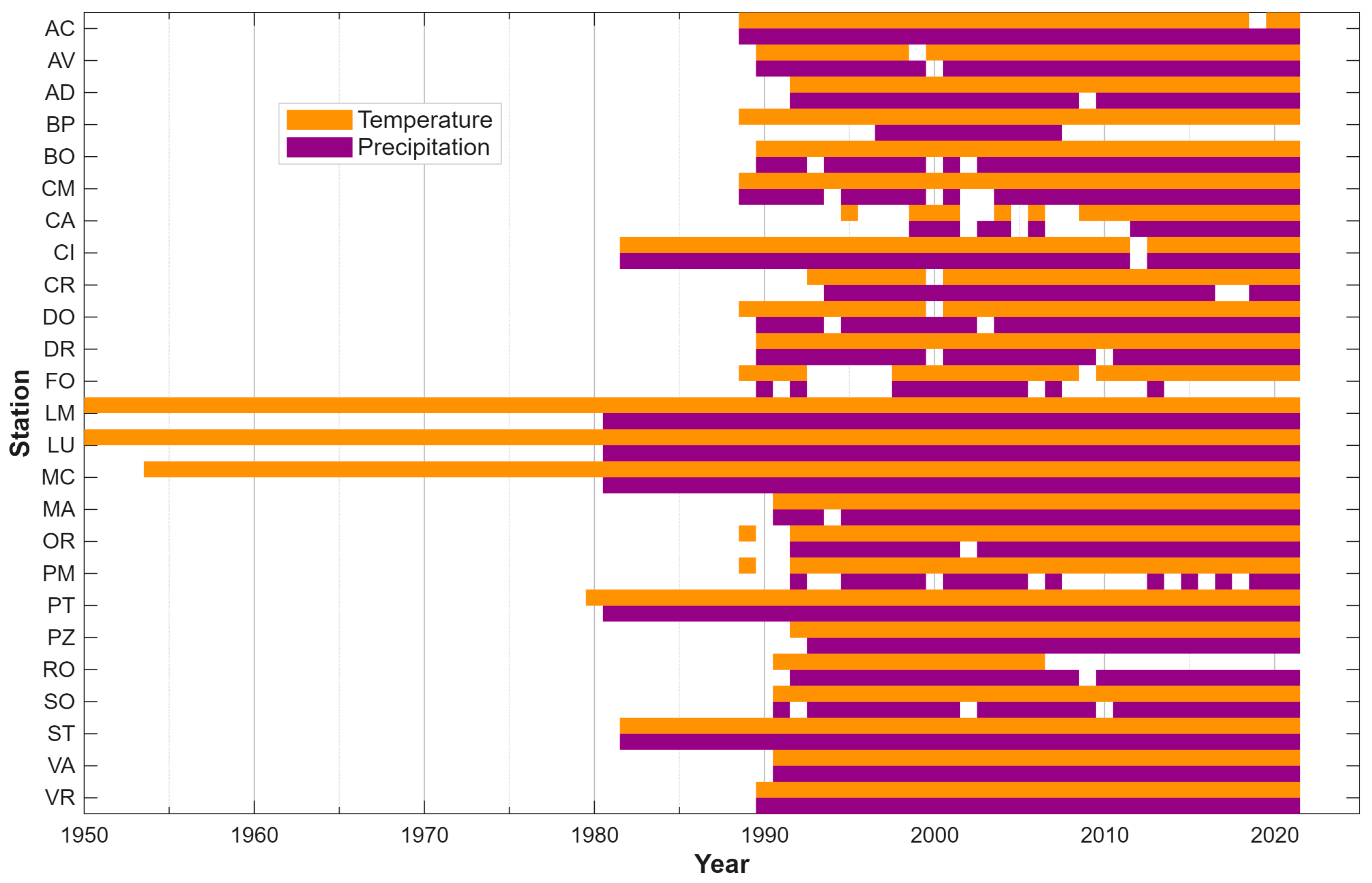
Precipitation and air temperature data were sourced from two distinct datasets. For the trend analysis (Section 3.2), we utilized 25 daily time series of precipitation and temperature (minimum, average, maximum) from stations in Switzerland and Italy (Piedmont and Lombardy) (Figure 1; Table S1). These data, aggregated to a monthly resolution, cover varying observation periods, with start years ranging from 1950 to 1992 and ending in 2022. Stations in Switzerland were provided by MeteoSwiss, while Italian data were retrieved from automatic stations managed by ARPA Lombardia and ARPA Piemonte. ARPA data were automatically or manually validated by an operator, while the longest climate series from MeteoSwiss were homogenized according to [27]. Most series span at least 30 years, with minor exceptions in data-scarce areas. Notably, distinct discontinuities affect the time series of several stations (e.g., PM, FO, CA, CM), as shown in Figure 2. These gaps may limit the statistical robustness of the trend analysis for those specific locations (see Section Climate Trends in Alpine Area). Station elevations range from 155 m a.s.l. to 2820 m a.s.l.
For the correlation analysis (Section 2.3.5), we employed a monthly gridded dataset covering the period 1900–2021, based on an enhanced version of the dataset presented in [28]. This dataset features a spatial resolution of 30 arc-seconds (approximately 700 m at considered latitude) and was reconstructed using the anomaly method. This involved superimposing relative anomaly series onto a high-resolution 1961–1990 climatology. The anomaly series were derived by interpolating a high-density dataset of quality-controlled precipitation records, which integrates data from historical mechanical stations, owned by the Italian Hydrological Service, and modern automatic stations, managed by regional authorities. These data have been subjected to a quality control procedure to remove incomplete years and possible outliers (i.e., evidently implausible values) and to identify major breaks [29].

2.2.2. Hydrometric Data

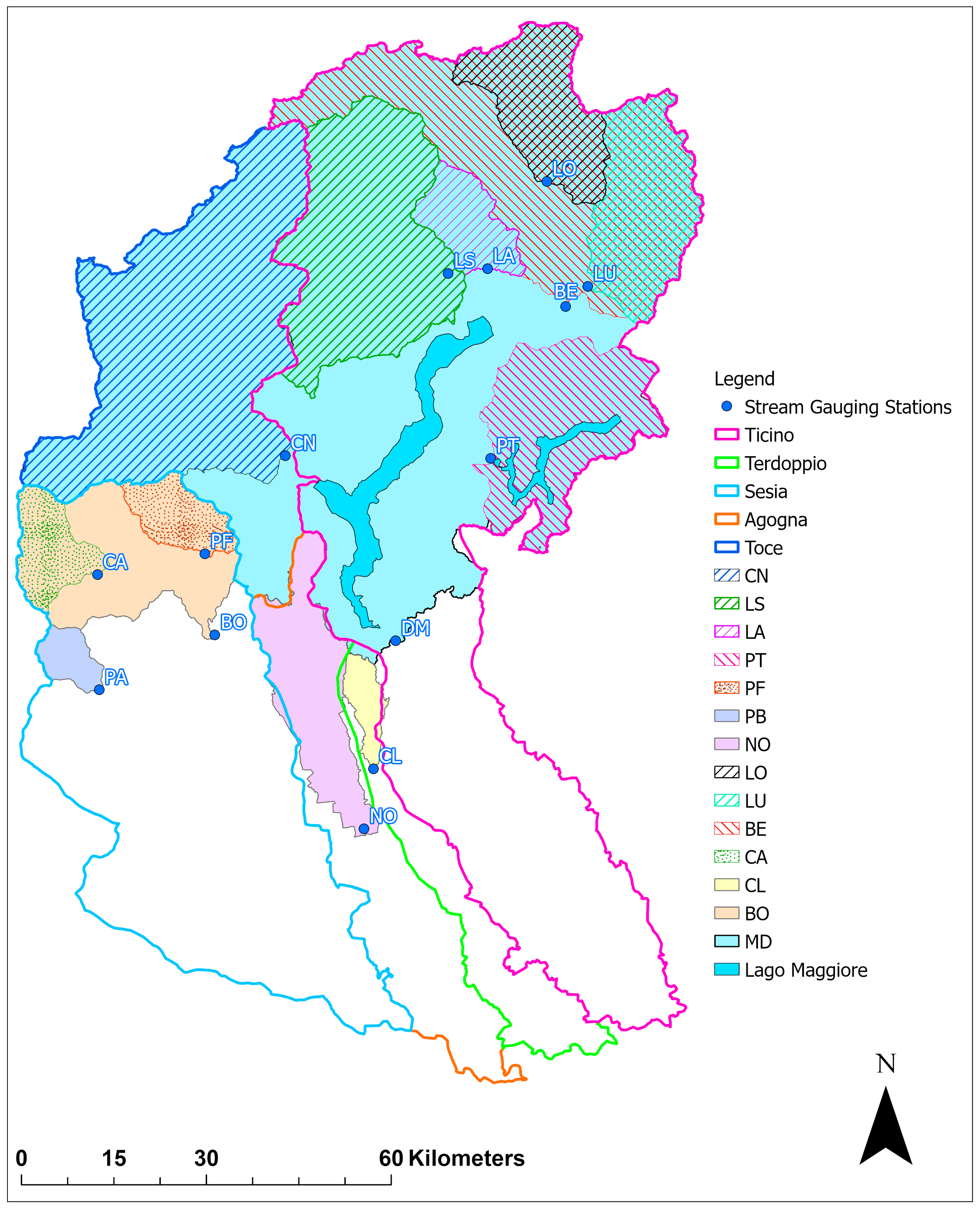
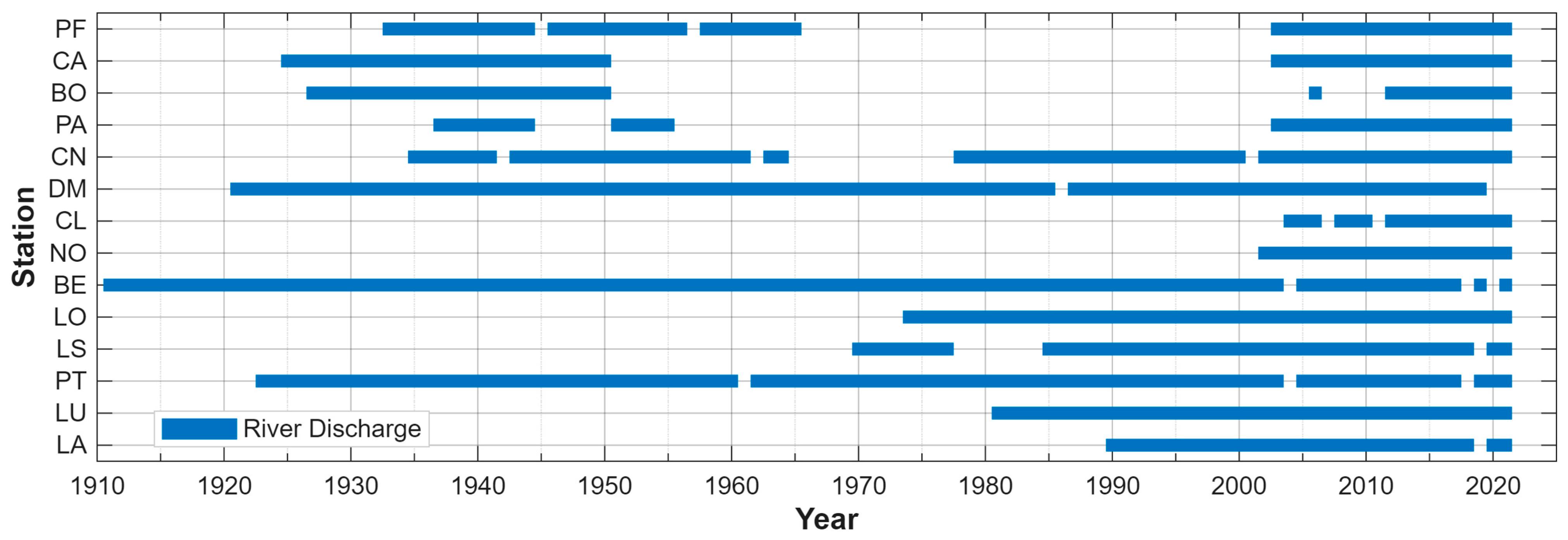
To assess trends and correlations with climate variables, we selected 14 hydrometric stations (Figure 3; Table S2) distributed across five main catchments: Agogna, Sesia, Terdoppio Novarese, Toce, and Ticino. These stations provide daily discharge records. Due to the steep topography of the Alpine terrain, the hydrological response is fast, with times of concentration generally shorter than 24 h [30]. Similarly to weather stations, discontinuities affect the time series of several hydrometric stations (Figure 4), especially PF, CA, BO, PA, CN, where the gap can last several consecutive years.
Complementing the river discharge data, we analyzed water level records from Lake Maggiore, measured at Sesto Calende near the lake’s outlet. This dataset was examined to identify potential trends driven by climatic shifts or changes in the regulation of the Miorina dam.

2.3. Methods

2.3.1. Evapotranspiration Assessment

Based on the temperature datasets described in Section 3.1, we calculated monthly series of potential evapotranspiration (PET) for all weather stations and grid points. These estimates were derived using the Thornthwaite equation [31,32]:
P E T i = 16 10 T m e a n i I a
where PET is the potential evapotranspiration [mm/month] for a specific month i, and Tmean denotes the average monthly temperature [°C] (adjusted to 0 °C if negative). Finally, I is the annual heat index, calculated according to the following equation:
I = i = 1 12 T M E D i 5 1.514
The exponent a is an empirical coefficient dependent on the annual heat index I, calculated as follows:
a = 675 · 10 9 I 3 771 · 10 7 I 2 + 1792 · 10 5 I + 0.49239

2.3.2. Water Storage of Lake Maggiore

We could exploit the available data of inflow, QIN (given by the sum of discharge of main tributaries: CN, LS, LA, BE, PT), outflow, and QOUT (assessed at DM), to calculate water storage for Lake Maggiore:
Q I N Q O U T = V h t
where ∆V is the lake volume variation due to the balance of inflow and outflow within the time window ∆t considered, i.e., 1 day. To calculate the daily regulation volume, we defined a reference volume of 0 Mm3 corresponding to a water level of −0.50 m. This level represents the minimum value observed in the historical record relative to the hydrometric zero (193.01 m a.s.l.).

2.3.3. Effects of Flow Regulation

In the Alpine region, hydropower infrastructure is widespread [33]. These structures can significantly alter hydrological regimes by modifying downstream flow. Four of the selected gauging stations are situated downstream of major dams (Figure 1; Table 2), potentially subjecting their discharge records to anthropogenic alteration. However, the catchments upstream of the Sosto, Isola, and Sambuco dams account for less than 20% of the total contributing area at the corresponding gauging stations [34]. Consequently, their regulatory impact can be neglected as a first approximation. In contrast, the Miorina dam regulates a much larger drainage area; therefore, its influence on discharge dynamics requires specific attention.

2.3.4. Detection of Significant Trends

To identify significant trends in seasonal precipitation, temperature, and evapotranspiration, we applied the non-parametric Mann–Kendall (M-K) test with a significance level of p value = 0.05. This test is widely employed in climatological and hydrological studies [35,36,37] to detect monotonic trends within time series. Methodologically, the test involves comparing the rank of each data point with all subsequent values, utilizing the sign function to determine the direction of the change.
S = k 1 n 1 j k + 1 n s g n x j x k
Under the null hypothesis of no monotonic trend, the test statistic Z follows a standard normal distribution. However, while the M-K test identifies the significance of a trend, it does not quantify its magnitude. To address this, we coupled the M-K test (significance level p value = 0.05) with the Theil-Sen estimator [38,39]. This method calculates the magnitude of the trend as the median slope of all possible pairs of data points. Unlike simple linear regression, the Theil-Sen estimator is highly robust against extreme values [40], making it particularly suitable for hydro-meteorological time series.

2.3.5. Correlation Analysis Between Surface Runoff and Climatic Variables

Finally, we investigated the correlation between mean seasonal river discharge and climatic drivers (precipitation, temperature, and evapotranspiration). As noted, this analysis utilized the gridded dataset rather than point-station data. For each catchment, we calculated spatially averaged values of temperature, precipitation, and evapotranspiration by aggregating grid cells within the respective watershed boundaries. To ensure robustness, we employed three distinct statistical metrics: Pearson’s correlation coefficient [41], Spearman’s rank correlation coefficient [42], and Kendall’s rank correlation coefficient [43]. The analysis focused exclusively on concurrent (zero-lag) correlations between seasonal hydro-climatic variables. Specifically, discharge records from the selected stations were correlated with the area-averaged climatic data for the catchments depicted in Figure 1.

3. Results

3.1. Mean Hydro-Climatic Conditions

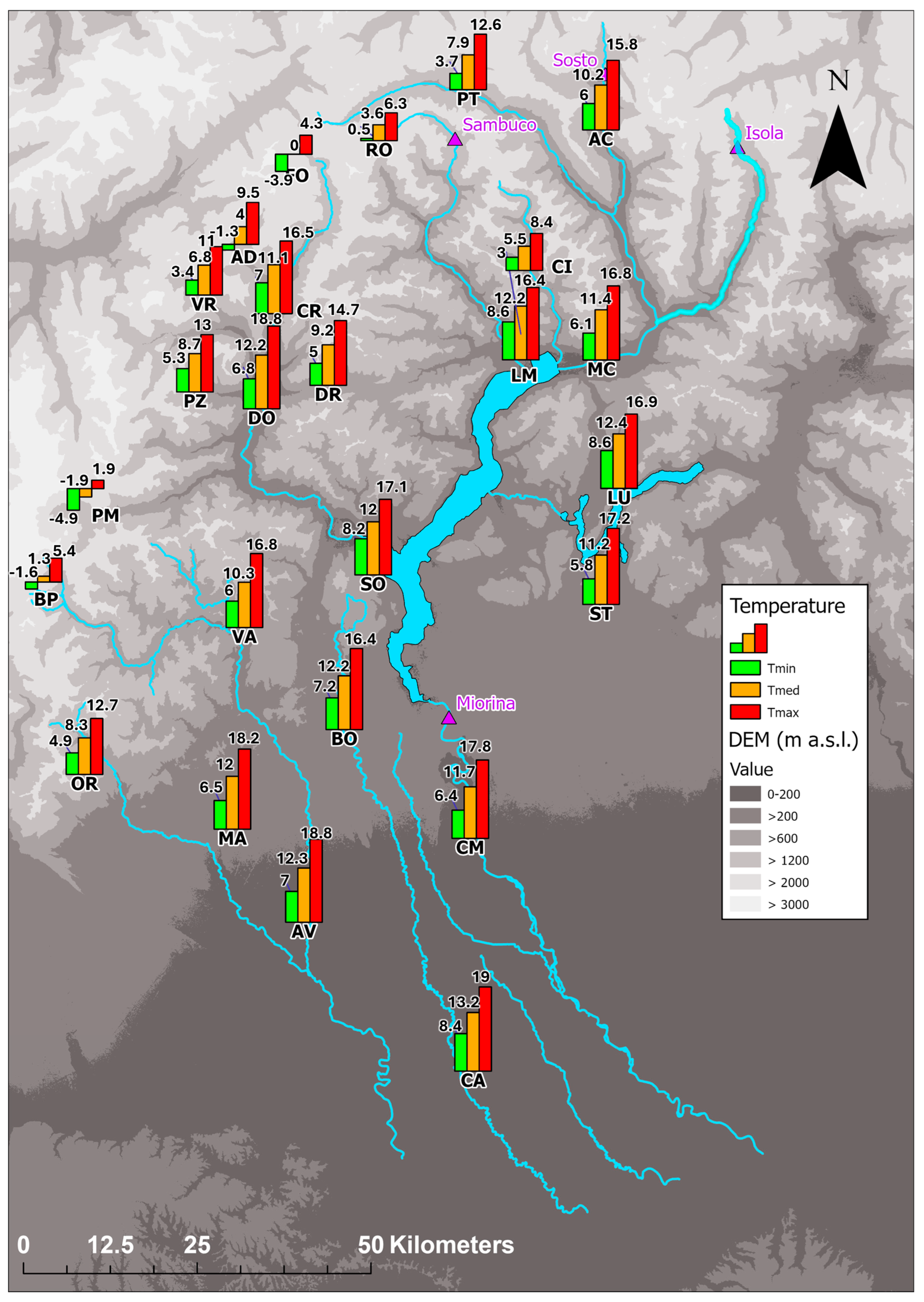
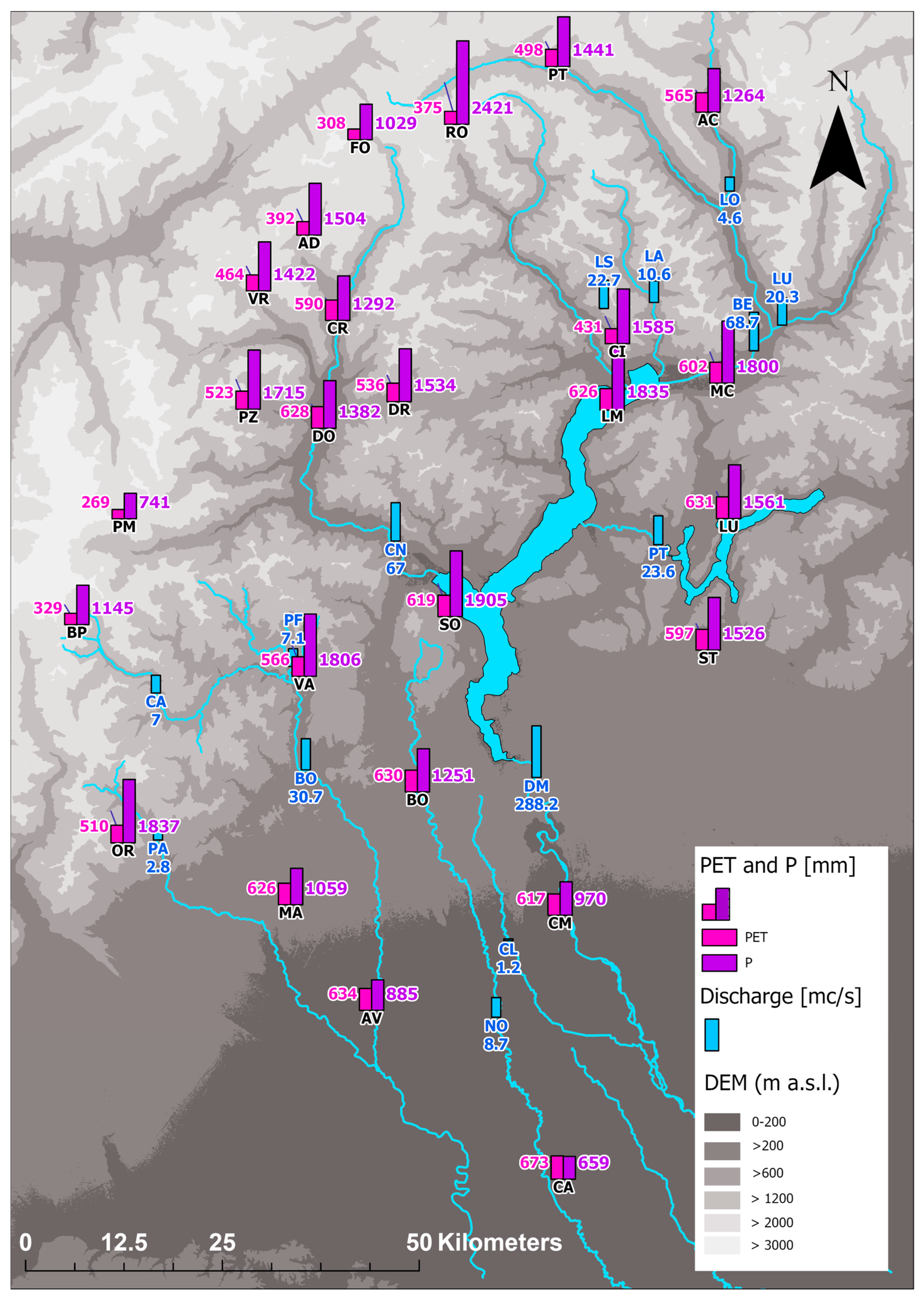
As a preliminary step to the trend and correlation analysis, we present the long-term climatological baseline of the study area. Figure 5 illustrates the minimum, mean, and maximum daily temperatures, which exhibit a strong dependence on station elevation. Complementing this, Figure 6 depicts the average values for potential evapotranspiration (PET), total precipitation, and river discharge.

3.2. Trend Analysis

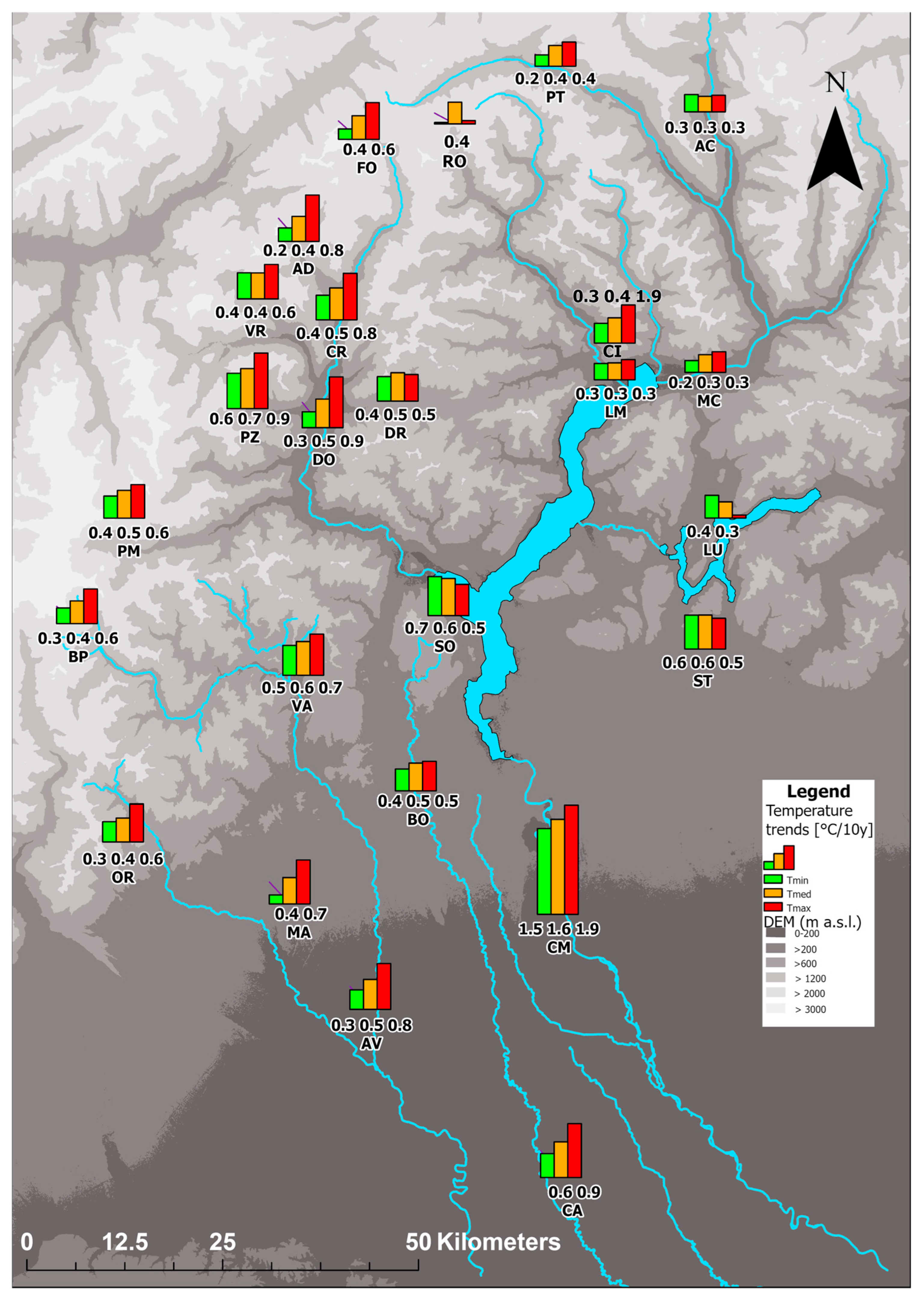
The results of the long-terms trend analysis by the Theil-Sen estimator, with their confidence interval at 95%, and the statistical significance of the Mann–Kendall test are listed in detail in Tables S3–S9. We also report in Figure 7 the values of the trend assessed for maximum, average, and minimum temperature, which provided the highest statistical significance. Indeed, temperature (Tables S4–S6; Figure 7) and PET (Table S7), which is assessed by temperature data, exhibit clear positive trends. The most pronounced warming occurs in spring, particularly for maximum daily temperature (+0.95 ± 0.40 °C per decade). Conversely, winter (JFM) temperature trends are smaller in magnitude and less statistically significant. Only 7 out of 25 stations recorded significant trends (MK p-value < 0.05) for the average temperature in winter, while at the annual scale, the trend is significant for all the stations.
On the other hand, precipitation, characterized by high natural variability, generally lacks significant long-term trends (Table S3). However, a localized negative trend in summer (JAS) precipitation was observed in 5 out of 25 stations. In contrast, river discharge (Table S8) shows significant negative trends in 9 out of 14 stations in summer (JAS), and is not present at the annual scale. This specific pattern is discussed in the section Climate Trends in Alpine Area. Weak positive trends were observed in winter (JFM), possibly due to a shift from snowfall to rain. Regarding Lake Maggiore, the analysis of water levels and volumes revealed no significant trends (Table S9). The absence of trends in the lake parameters implies that reservoir regulation does not significantly alter downstream flow dynamics at the seasonal scale. Notably, while significant trends exist in the discharge downstream of the Miorina dam, the lake’s storage volume remains stable. This strongly suggests that the observed downstream trends are not artifacts of management policies but are driven by upstream climatic conditions.

3.3. Correlation Analysis

The calculated correlation coefficients (Pearson, Spearman, and Kendall) were in close agreement, yielding very similar values in this study. Given the expected linear dependence between the analyzed variables and Pearson’s wider adoption in this field [28], only the results of Pearson’s correlation coefficient (r) are reported (Table 3 and Table 4). Flow discharge was correlated against the spatially averaged climate data (Section 3.3) for the 14 catchments (Figure 1).
Pearson’s r generally exhibits high coefficients, confirming a strong linear relationship between discharge and climatic variables. Correlation values against precipitation are high across all seasons, especially at the yearly scale, with peaks reaching r   =   0.95 . Maximum temperatures reveal primarily negative correlations, indicating that as maximum temperature rises, river discharge tends to decrease. Likewise, minimum temperature shows generally negative correlation in spring (AMJ) and summer (JAS) but positive correlation in autumn (OND) and winter (JFM).

4. Discussion

Climate Trends in Alpine Area

As highlighted in the introduction, the European Alps are experiencing warming rates twice the global average [3], with summer trends generally exceeding those in winter (Tables S4–S6). In terms of winter dynamics, our results are consistent with observations from the Swiss and French Alps [44,45,46], which identify stronger warming at lower elevations. Indeed, we found consistent winter warming trends exclusively at stations located below 600 m a.s.l. Regarding summer trends, the cited studies [44,45,46] report stronger warming above 2000 m a.s.l. However, in our study area, we did not detect such Elevation-Dependent Warming (EDW); instead, summer temperature increases appear variable across all stations regardless of altitude.
Our dataset is characterized by wide variability in the start years of measurements and occasional gaps within the time series. Due to this temporal heterogeneity, the calculated average trend (+0.50 ± 0.26 °C per decade), while substantial in magnitude, has limited statistical representativeness as it aggregates different timeframes. Moreover, autocorrelation tests (Tables S10 and S11) provide somewhat positive values for temperature, which could lead to an overestimation of the number of significant trends. However, a clear pattern emerges when grouping by observation period: stations with records starting before the 1960s (MC, LU, LM, AC) show moderate trends for average temperature (+0.27 to +0.30 °C per decade), whereas for stations beginning after the 1980s, the trend is substantially steeper (+0.35 to +1.61 °C per decade, +0.53 °C in average). This confirms that climate change has intensified during the last few decades [4,5,47].
Regarding daily maximum and minimum temperatures, we observed a stronger warming trend for the maximums compared to the minimums. This contrasts with Acquaotta et al. [14], who reported larger trends for minimum temperatures in the northwestern Alps. However, Stucchi et al. [5]—analyzing a subset of the same data—excluded maximum temperatures, citing potential biases from older equipment and direct solar radiation [48]. Our findings align more closely with Nigrelli and Chiarle [49], who analyzed 23 Alpine stations and reported decadal increases of 0.5 °C for maximum and 0.4 °C for minimum temperatures. Notably, they also found no significant correlation between elevation and warming rates, consistent with the absence of EDW in our results.
Precipitation exhibits the highest variability in the dataset, showing no significant trend on an annual scale. However, a significant negative trend in summer was detected in 5 out of 25 stations. Similar negative summer trends have been reported in the SE and southern Alps [44,45], although those regions also show positive winter trends that are absent in our study area. Consistent with the precipitation signal, river discharge shows no generalized annual trend but a significant decline in summer (Table S8). Unlike other Alpine regions, our study area is characterized by limited glacial coverage. Consequently, the earlier onset of snowmelt [46,47,48], driven by temperature increase in spring, also observed in our dataset, leads to the reduction in summer discharge [49], making it more dependent on summer (liquid) precipitation, signaling a transition from a nival toward a pluvial hydrological regime. This shift is well assessed all over European Alps [50,51] and it is expected to have drastic consequences on future runoff of Alpine rivers, where snow’s contribution to discharge might halve by the end of the century [52].
The observed reduction in summer discharge is likely aggravated by the corresponding increase in evapotranspiration, which we estimated with the Thornthwaite equation. Although this method relies solely on temperature to estimate potential evapotranspiration, we consider this interpretation realistic given the abundance of precipitation in the region and the lack of clear trends in cloud cover or wind speed [38,53]. To further support the effect of earlier snowmelt onset, we assessed the correlation between summer discharge and spring temperature, the peak melting period. This correlation was significantly negative for 10 out of 14 stations (ranging from −0.21 to −0.45, −0.35 on average).
The correlation analysis confirmed the relationship between discharge and precipitation, which is strongest at the annual scale. At the seasonal scale, snow dynamics (accumulation and melt) significantly modulate the hydrological response. Notably, the coupling between precipitation and discharge is weakest in winter. Indeed, the observed positive correlation between minimum temperature and winter discharge confirms that colder temperatures favor snow accumulation, effectively storing water and reducing immediate runoff. On the other hand, we observe for 14 out of 15 river sections a negative correlation in summer between discharge and temperature, due to enhanced evapotranspiration losses. Notably, this negative correlation is more pronounced for maximum temperature and displays significant spatial heterogeneity across catchments (e.g., 0.68 for Ticino at BO vs. 0.21 for Maggia at LS). This variability highlights the need for site-specific analyses to elucidate the complex interplay between temperature and discharge. For instance, in high-altitude catchments, the persistence of snow cover may attenuate the negative correlation driven by evapotranspiration, as higher temperatures also induce meltwater release. Furthermore, hydropower reservoir operations, which release water based on energy demand, can decouple the natural relationship between climatic drivers and river discharge.

5. Conclusions

This study advances the understanding of hydro-climatic trends and their impact on Alpine river discharge. Our analysis confirms that the Alpine region is warming at a rate double the global average. This warming is characterized by a distinct asymmetry, with maximum temperatures rising faster than minimums, leading to an increased diurnal temperature range in 19 out of 25 stations. These climatic shifts have profound hydrological implications. The accelerated warming, particularly in spring and summer, drives a significant increase in potential evapotranspiration, which correlates with the observed decline in summer streamflow. Simultaneously, the positive correlation between winter temperature and discharge signals a structural shift in the hydrological regime: Alpine catchments are transitioning from nival (snow-dominated) to pluvial (rain-dominated) behaviors. This transition reduces natural water storage in the form of snowpack, altering the timing of water availability for the downstream European plains. By focusing on the Upper Po River basin—a strategic resource for northern Italian agriculture and industry—this work provides the quantitative basis needed to define effective adaptation strategies to cope with increasingly scarce summer resources.

Supplementary Materials

The following supporting information can be downloaded at: https://www.mdpi.com/article/10.3390/w18030348/s1, Table S1: Main characteristics of the selected weather stations.; Table S2: Main characteristics of the selected hydrometric stations. Table S3: Results of the precipitation trend analysis. Table S4: Results of the maximum temperature trend analysis. Table S5: Results of the average temperature trend analysis. Table S6: Results of the minimum temperature trend analysis. Table S7: Results of the Potential Evapotranspiration trend analysis. Table S8: Results of the river discharge trend analysis. Table S9: Results of the Lake Maggiore trend analysis (water level and volume). Table S10: Autocorrelation values of Pearson coefficient for Maximum, Minimum and Average temperatures. Table S11: Autocorrelation values of Pearson coefficient for discharge data.

Author Contributions

Conceptualization, D.J., L.S. and D.B.; methodology, V.M. and M.M.; formal analysis, D.J. and L.S.; writing—original draft preparation, D.J. and L.S.; writing—review and editing, L.S., D.B., V.M. and M.M. All authors have read and agreed to the published version of the manuscript.

Funding

The present research was funded by the Project CCHP-ALPS (Prot. 2022CN4RWK, CUP. D53D23004630006.)—Climate Change and HydroPower in the Alps—funded by the Italian Research Program PRIN 2022, which is funded by the EU (NextGenerationEU funds).

Data Availability Statement

Data of Italian stations can be downloaded at ARPA PIEMONTE website (https://www.arpa.piemonte.it/dato/banca-dati-storica-dati-giornalieri-mensili, accessed on 11 December 2025), while Swiss data can be downloaded from MeteoSwiss website (https://www.meteosvizzera.admin.ch/servizi-e-pubblicazioni/prestazioni/open-data.html, accessed on 11 December 2025).

Acknowledgments

We kindly acknowledge the work of three anonymous reviewers, that helped in improving the manuscript. Moreover, Acqua Novara Verbano Cusio Ossola ANVCO Company is kindly acknowledged for support to Leonardo Stucchi, and Diego Jacopino, under the funding agreement ANVCO-ADAPT, 2025–2027.

Conflicts of Interest

The authors declare no conflicts of interest.

References

  1. Intergovernmental Panel on Climate Change (IPCC). Mountains. In Climate Change 2022—Impacts, Adaptation and Vulnerability; Cambridge University Press: Cambridge, UK, 2023; pp. 2273–2318. [Google Scholar]
  2. Zemp, M.; Huss, M.; Thibert, E.; Eckert, N.; McNabb, R.; Huber, J.; Barandun, M.; Machguth, H.; Nussbaumer, S.U.; Gärtner-Roer, I.; et al. Global Glacier Mass Changes and Their Contributions to Sea-Level Rise from 1961 to 2016. Nature 2019, 568, 382–386. [Google Scholar] [CrossRef]
  3. Auer, I.; Böhm, R.; Jurkovic, A.; Lipa, W.; Orlik, A.; Potzmann, R.; Schöner, W.; Ungersböck, M.; Matulla, C.; Briffa, K.; et al. HISTALP—Historical Instrumental Climatological Surface Time Series of the Greater Alpine Region. Int. J. Climatol. 2007, 27, 17–46. [Google Scholar] [CrossRef]
  4. Marty, C. Regime Shift of Snow Days in Switzerland. Geophys. Res. Lett. 2008, 35, L12501. [Google Scholar] [CrossRef]
  5. Stucchi, L.; Dresti, C.; Bocchiola, D. Centenary (1930–2023) Climate, and Snow Cover Changes in the Western Alps of Italy. The Ossola Valley. Clim. Change 2023, 176, 78. [Google Scholar] [CrossRef]
  6. Marcolini, G.; Bellin, A.; Disse, M.; Chiogna, G. Variability in Snow Depth Time Series in the Adige Catchment. J. Hydrol. Reg. Stud. 2017, 13, 240–254. [Google Scholar] [CrossRef]
  7. Philipona, R. Greenhouse Warming and Solar Brightening in and around the Alps. Int. J. Climatol. 2013, 33, 1530–1537. [Google Scholar] [CrossRef]
  8. Steiger, R.; Knowles, N.; Pöll, K.; Rutty, M. Impacts of Climate Change on Mountain Tourism: A Review. J. Sustain. Tour. 2024, 32, 1984–2017. [Google Scholar] [CrossRef]
  9. Bocchiola, D. Impact of Potential Climate Change on Crop Yield and Water Footprint of Rice in the Po Valley of Italy. Agric. Syst. 2015, 139, 223–237. [Google Scholar] [CrossRef]
  10. Gaudard, L.; Romerio, F.; Dalla Valle, F.; Gorret, R.; Maran, S.; Ravazzani, G.; Stoffel, M.; Volonterio, M. Climate Change Impacts on Hydropower in the Swiss and Italian Alps. Sci. Total Environ. 2014, 493, 1211–1221. [Google Scholar] [CrossRef]
  11. Wilhelm, B.; Rapuc, W.; Amann, B.; Anselmetti, F.S.; Arnaud, F.; Blanchet, J.; Brauer, A.; Czymzik, M.; Giguet-Covex, C.; Gilli, A.; et al. Impact of Warmer Climate Periods on Flood Hazard in the European Alps. Nat. Geosci. 2022, 15, 118–123. [Google Scholar] [CrossRef]
  12. Le Roux, E.; Evin, G.; Eckert, N.; Blanchet, J.; Morin, S. Elevation-Dependent Trends in Extreme Snowfall in the French Alps from 1959 to 2019. Cryosphere 2021, 15, 4335–4356. [Google Scholar] [CrossRef]
  13. Avato, M.T. Relazione Annuale 2020 Verso un Presente Sostenibile II; Istituto di Ricerca Economica e Sociale (IRES): Rome, Italy, 2020. [Google Scholar]
  14. Acquaotta, F.; Fratianni, S.; Garzena, D. Temperature Changes in the North-Western Italian Alps from 1961 to 2010. Theor. Appl. Clim. 2015, 122, 619–634. [Google Scholar] [CrossRef]
  15. Egidio, E.; Mancini, S.; De Luca, D.A.; Lasagna, M. The Impact of Climate Change on Groundwater Temperature of the Piedmont Po Plain (NW Italy). Water 2022, 14, 2797. [Google Scholar] [CrossRef]
  16. Acquaotta, F.; Fratianni, S. Analysis on Long Precipitation Series in Piedmont (North-West Italy). Am. J. Clim. Change 2013, 2, 14–24. [Google Scholar] [CrossRef]
  17. ARPA. Evento Del 2–3 Ottobre 2020; Arpa Piemonte: Turin, Italy, 2020.
  18. Arpa Piemonte. Il Clima in Piemonte 2024; Arpa Piemonte: Turin, Italy, 2025. [Google Scholar]
  19. Avanzi, F.; Munerol, F.; Milelli, M.; Gabellani, S.; Massari, C.; Girotto, M.; Cremonese, E.; Galvagno, M.; Bruno, G.; Morra di Cella, U.; et al. Winter Snow Deficit Was a Harbinger of Summer 2022 Socio-Hydrologic Drought in the Po Basin, Italy. Commun. Earth Environ. 2024, 5, 64. [Google Scholar] [CrossRef]
  20. Ramírez Molina, A.A.; Tootle, G.; Formetta, G.; Piechota, T.; Gong, J. Extraordinary 21st Century Drought in the Po River Basin (Italy). Hydrology 2024, 11, 219. [Google Scholar] [CrossRef]
  21. Fugazza, D.; Manara, V.; Senese, A.; Diolaiuti, G.; Maugeri, M. Snow Cover Variability in the Greater Alpine Region in the MODIS Era (2000–2019). Remote Sens. 2021, 13, 2945. [Google Scholar] [CrossRef]
  22. Crespi, A.; Brunetti, M.; Lentini, G.; Maugeri, M. 1961–1990 High-resolution Monthly Precipitation Climatologies for Italy. Int. J. Climatol. 2018, 38, 878–895. [Google Scholar] [CrossRef]
  23. Crespi, A.; Brunetti, M.; Ranzi, R.; Tomirotti, M.; Maugeri, M. A Multi-century Meteo-hydrological Analysis for the Adda River Basin (Central Alps). Part I: Gridded Monthly Precipitation (1800–2016) Records. Int. J. Climatol. 2021, 41, 162–180. [Google Scholar] [CrossRef]
  24. Ravazzani, G.; Boscarello, L.; Cislaghi, A.; Mancini, M. Review of Time-of-Concentration Equations and a New Proposal in Italy. J. Hydrol. Eng. 2019, 24, 04019039. [Google Scholar] [CrossRef]
  25. Thornthwaite, C.W. An Approach toward a Rational Classification of Climate. Geogr. Rev. 1948, 38, 55. [Google Scholar] [CrossRef]
  26. Black, P.E. Revisiting the Thornthwaite and Mather Water Balance 1. JAWRA J. Am. Water Resour. Assoc. 2007, 43, 1604–1605. [Google Scholar] [CrossRef]
  27. Flaminio, S.; Piégay, H.; Le Lay, Y.-F. To Dam or Not to Dam in an Age of Anthropocene: Insights from a Genealogy of Media Discourses. Anthropocene 2021, 36, 100312. [Google Scholar] [CrossRef]
  28. Ravazzani, G.; Dalla Valle, F.; Gaudard, L.; Mendlik, T.; Gobiet, A.; Mancini, M. Assessing Climate Impacts on Hydropower Production: The Case of the Toce River Basin. Climate 2016, 4, 16. [Google Scholar] [CrossRef]
  29. Bocchiola, D. Long Term (1921–2011) Hydrological Regime of Alpine Catchments in Northern Italy. Adv. Water Resour. 2014, 70, 51–64. [Google Scholar] [CrossRef]
  30. Fioravanti, G.; Fraschetti, P.; Lena, F.; Perconti, W.; Piervitali, E.; Pavan, V. Gli Indicatori Del Clima in Italia Nel 2020; Institute for Environmental Protection and Research (ISPRA): Roma, Italy, 2021.
  31. Gadedjisso-Tossou, A.; Adjegan, K.I.; Kablan, A.K.M. Rainfall and Temperature Trend Analysis by Mann–Kendall Test and Significance for Rainfed Cereal Yields in Northern Togo. Sci 2021, 3, 17. [Google Scholar] [CrossRef]
  32. Manara, V.; Brunetti, M.; Wild, M.; Maugeri, M. Variability and Trends of the Total Cloud Cover over Italy (1951–2018). Atmos. Res. 2023, 285, 106625. [Google Scholar] [CrossRef]
  33. Swain, S.; Dayal, D.; Pandey, A.; Mishra, S.K. Trend Analysis of Precipitation and Temperature for Bilaspur District, Chhattisgarh, India. In World Environmental and Water Resources Congress 2019, Pittsburgh, Pennsylvania, 19–23 May 2019; American Society of Civil Engineers: Reston, VA, USA, 2019; pp. 193–204. [Google Scholar]
  34. Gad, A.; Qura, M. Regression Estimation in the Presence of Outliers: A Comparative Study. Int. J. Probab. Stat. 2016, 5, 65–72. [Google Scholar]
  35. Pearson, K. VII. Note on Regression and Inheritance in the Case of Two Parents. Proc. R. Soc. Lond. 1895, 58, 240–242. [Google Scholar] [CrossRef]
  36. Spearman, C. The Proof and Measurement of Association between Two Things. Int. J. Epidemiol. 2010, 39, 1137–1150. [Google Scholar] [CrossRef]
  37. Kendall, M.G. A New Measure of Rank Correlation. Biometrika 1938, 30, 81. [Google Scholar] [CrossRef]
  38. Pepin, N.C.; Arnone, E.; Gobiet, A.; Haslinger, K.; Kotlarski, S.; Notarnicola, C.; Palazzi, E.; Seibert, P.; Serafin, S.; Schöner, W.; et al. Climate Changes and Their Elevational Patterns in the Mountains of the World. Rev. Geophys. 2022, 60, e2020RG000730. [Google Scholar] [CrossRef]
  39. Isotta, F.A.; Chimani, B.; Hiebl, J.; Frei, C. Long-Term Alpine Precipitation Reconstruction (LAPrec): A Gridded Monthly Data Set Dating Back to 1871. J. Geophys. Res. Atmos. 2024, 129, e2023JD039637. [Google Scholar] [CrossRef]
  40. Scherrer, S.C. Temperature Monitoring in Mountain Regions Using Reanalyses: Lessons from the Alps. Environ. Res. Lett. 2020, 15, 044005. [Google Scholar] [CrossRef]
  41. Isoard, S. Regional Climate Change and Adaptation—The Alps Facing the Challenge of Changing Water Resources; European Environment Agency (EEA): Copenhagen, Denmark, 2009. [Google Scholar]
  42. Böhm, R.; Jones, P.D.; Hiebl, J.; Frank, D.; Brunetti, M.; Maugeri, M. The Early Instrumental Warm-Bias: A Solution for Long Central European Temperature Series 1760–2007. Clim. Change 2010, 101, 41–67. [Google Scholar] [CrossRef]
  43. Nigrelli, G.; Chiarle, M. 1991–2020 Climate Normal in the European Alps: Focus on High-Elevation Environments. J. Mt. Sci. 2023, 20, 2149–2163. [Google Scholar] [CrossRef]
  44. Brugnara, Y.; Maugeri, M. Daily Precipitation Variability in the Southern Alps since the Late 19th Century. Int. J. Climatol. 2019, 39, 3492–3504. [Google Scholar] [CrossRef]
  45. Janža, M. Impact Assessment of Projected Climate Change on the Hydrological Regime in the SE Alps, Upper Soča River Basin, Slovenia. Nat. Hazards 2013, 67, 1025–1043. [Google Scholar] [CrossRef]
  46. Kotlarski, S.; Gobiet, A.; Morin, S.; Olefs, M.; Rajczak, J.; Samacoïts, R. 21st Century Alpine Climate Change. Clim. Dyn. 2023, 60, 65–86. [Google Scholar] [CrossRef]
  47. Confortola, G.; Soncini, A.; Bocchiola, D. Climate Change Will Affect Hydrological Regimes in the Alps. J. Alp. Res. 2013, 101, 1–19. [Google Scholar] [CrossRef]
  48. Diolaiuti, G.A.; Bocchiola, D.; Vagliasindi, M.; D’Agata, C.; Smiraglia, C. The 1975–2005 Glacier Changes in Aosta Valley (Italy) and the Relations with Climate Evolution. Prog. Phys. Geogr. Earth Environ. 2012, 36, 764–785. [Google Scholar] [CrossRef]
  49. Stagl, J.; Hattermann, F. Impacts of Climate Change on the Hydrological Regime of the Danube River and Its Tributaries Using an Ensemble of Climate Scenarios. Water 2015, 7, 6139–6172. [Google Scholar] [CrossRef]
  50. Poschlod, B.; Willkofer, F.; Ludwig, R. Impact of Climate Change on the Hydrological Regimes in Bavaria. Water 2020, 12, 1599. [Google Scholar] [CrossRef]
  51. Muelchi, R.; Rössler, O.; Schwanbeck, J.; Weingartner, R.; Martius, O. River Runoff in Switzerland in a Changing Climate–Runoff Regime Changes and Their Time of Emergence. Hydrol. Earth Syst. Sci. 2021, 25, 3071–3086. [Google Scholar] [CrossRef]
  52. Stucchi, L.; Bocchiola, D.; Simoni, C.; Ambrosini, S.R.; Bianchi, A.; Rosso, R. Future Hydropower Production under the Framework of NextGenerationEU: The Case of Santa Giustina Reservoir in Italian Alps. Renew. Energy 2023, 215, 118980. [Google Scholar] [CrossRef]
  53. Ferrarin, L.; Stucchi, L.; Bocchiola, D. Statistical Downscaling of GCMs Wind Speed Data for Trend Analysis of Future Scenarios: A Case Study in the Lombardy Region. Theor. Appl. Climatol. 2024, 155, 4875–4890. [Google Scholar] [CrossRef]
Figure 1. Map of the study area and Digital Terrain Model (DTM). The monitoring network includes dams (purple triangles), hydrometric stations (blue dots), and weather stations (red dots). Major watersheds (hatched areas), the river network, and lakes are also depicted.
Water 18 00348 g001
Figure 2. Data availability for the analyzed meteorological stations. The chart illustrates the temporal coverage of the datasets: orange bars represent the temperature series, while purple bars represent the precipitation series.
Water 18 00348 g002
Figure 3. Map of the stream gauging station catchments. Thick outlines delimit the five main basins. Downstream sub-basins (PB, NO, BO, MD) are distinguished by solid colors, whereas upstream sub-basins are highlighted with hatched patterns.
Water 18 00348 g003
Figure 4. Data availability for the hydrological stations. Blue bars represent hydrometric data coverage.
Water 18 00348 g004
Figure 5. Long-term daily temperature statistics (1950–2022). The chart displays the average minimum (green), mean (orange), and maximum (red) temperatures.
Water 18 00348 g005
Figure 6. Long-term mean annual hydro-climatic variables (1911–2022): potential evapotranspiration (PET, Thornthwaite method), total precipitation, and river discharge.
Water 18 00348 g006
Figure 7. Trends in annual minimum, mean, and maximum temperatures. Trend magnitudes are expressed in °C/decade. Numerical labels are displayed only for statistically significant results (p < 0.05).
Water 18 00348 g007
Table 1. Main features of the chosen catchments (basins).
#BasinArea [km2]Mean Altitude
[m a.s.l.]
Max Altitude
[m a.s.l.]
Min Altitude
[m a.s.l.]
1Ticino6301951340153
2Toce177815484591194
3Sesia3075644454292
4Agogna996205117564
5Terdoppio Novarese51513738258
Tot:12,665870459153
Table 2. Main features of the dams and the related hydrometric stations.
#DamLong. [°]Lat. [°]A0
[m a.s.l.]
Dam Catchment Area [km2]RiverStream Gauging StationReservoir Volume [Mm3]
1Isola Dam9.190946.4475158442MoesaLumino6.5
2Sosto Dam8.941446.5403102380BrennoLoderio0.02
3Miorina Dam8.653345.70611946599TicinoMiorina420
4Sambuco Dam8.659746.4561137634MaggiaLocarno-Solduno64
Table 3. Pearson correlation coefficients between discharge [m3 s−1], PET [mm] and precipitation [mm]. Significant correlation coefficients (p value < 0.05) are reported in bold.
IDPETPrecipitation
JFMAMJJASONDYEARJFMAMJJASONDYEAR
PF−0.04−0.36−0.640.17−0.290.830.720.840.850.90
CA0.020.00−0.080.01−0.160.400.670.480.810.72
BO0.05−0.16−0.28−0.02−0.120.840.840.680.930.90
PA−0.28−0.23−0.430.06−0.300.790.730.820.860.80
CN−0.01−0.29−0.16−0.07−0.240.540.700.650.860.81
DM0.11−0.28−0.420.06−0.220.640.760.690.860.90
CL0.13−0.19−0.540.19−0.010.830.730.510.870.88
NO0.08−0.49−0.670.43−0.260.820.900.850.880.90
BE0.25−0.15−0.310.08−0.210.400.620.710.820.83
LO0.29−0.470.02−0.09−0.170.530.730.720.740.77
LS0.17−0.28−0.13−0.05−0.180.720.840.860.900.94
PT0.14−0.44−0.600.10−0.280.820.830.740.900.95
LU0.28−0.32−0.21−0.11−0.140.640.670.820.870.85
LA0.34−0.20−0.27−0.01−0.090.770.650.870.900.90
Table 4. Pearson correlation coefficients between discharge [m3 s−1] and temperature metrics [°C] (average, minimum, and maximum). Significant correlation coefficients (p value < 0.05) are reported in bold.
IDT MAXT AVET MIN
JFMAMJJASONDYEARJFMAMJJASONDYEARJFMAMJJASONDYEAR
PF0.02−0.42−0.64−0.06−0.370.13−0.40−0.640.10−0.330.22−0.35−0.590.24−0.27
CA−0.01−0.02−0.40−0.17−0.180.200.02−0.360.02−0.090.330.07−0.280.180.01
BO0.17−0.26−0.41−0.11−0.100.28−0.21−0.440.06−0.070.36−0.14−0.430.19−0.03
PA−0.24−0.26−0.52−0.02−0.28−0.17−0.28−0.530.10−0.28−0.08−0.30−0.490.21−0.26
CN−0.07−0.34−0.39−0.17−0.320.05−0.30−0.380.03−0.260.18−0.23−0.330.21−0.18
DM0.08−0.38−0.54−0.18−0.330.23−0.31−0.510.02−0.230.38−0.20−0.450.20−0.11
CL−0.04−0.22−0.49−0.03−0.080.18−0.19−0.450.200.100.42−0.11−0.310.410.31
NO−0.10−0.56−0.68−0.01−0.330.09−0.54−0.640.34−0.170.33−0.46−0.470.600.09
BE0.26−0.28−0.48−0.06−0.310.37−0.24−0.480.08−0.250.49−0.19−0.450.22−0.17
LO−0.02−0.50−0.21−0.21−0.280.04−0.49−0.19−0.08−0.230.14−0.38−0.150.07−0.16
LS−0.04−0.37−0.27−0.16−0.240.01−0.35−0.230.05−0.160.14−0.25−0.180.26−0.05
PT−0.04−0.54−0.65−0.19−0.390.14−0.48−0.600.04−0.300.35−0.33−0.510.25−0.17
LU0.17−0.32−0.39−0.18−0.210.23−0.33−0.350.02−0.120.34−0.20−0.270.240.01
LA0.01−0.24−0.36−0.10−0.170.05−0.30−0.310.11−0.050.18−0.20−0.220.320.09
Disclaimer/Publisher’s Note: The statements, opinions and data contained in all publications are solely those of the individual author(s) and contributor(s) and not of MDPI and/or the editor(s). MDPI and/or the editor(s) disclaim responsibility for any injury to people or property resulting from any ideas, methods, instructions or products referred to in the content.