Article

Tracing the Origin of Groundwater Salinization in Multilayered Coastal Aquifers Using Geochemical Tracers


by
Mariana La Pasta Cordeiro
1,*,
Johanna Wallström
2 and
Maria Teresa Condesso de Melo
1
1
Civil Engineering Research and Innovation for Sustainability-CERIS, Instituto Superior Técnico, Universidade de Lisboa, Av. Rovisco Pais, 1, 1049-001 Lisboa, Portugal
2
Department of Physical Geography, Stockholm University, 10691 Stockholm, Sweden
*
Author to whom correspondence should be addressed.
Water 2026, 18(2), 252; https://doi.org/10.3390/w18020252 (registering DOI)
Submission received: 30 November 2025 / Revised: 10 January 2026 / Accepted: 13 January 2026 / Published: 17 January 2026
(This article belongs to the Section Water Quality and Contamination)

Abstract

Salinization represents a significant threat to freshwater resources worldwide, compromising water quality and security. In the Vieira de Leiria–Marinha Grande aquifer, salinization mechanisms are a complex interaction between seawater intrusion and evaporite dissolution. Near the coast, groundwater is mainly influenced by seawater, evidenced by Na-Cl hydrochemical facies, high electrical conductivity, and Na+/Cl, Cl/Br and SO42−/Cl molar ratios consistent with marine signatures. In areas affected by diapiric dissolution, besides elevated electrical conductivity, groundwater is enriched in SO42− and Ca2+ and in minor elements like K+, Li+, B3+, Ba2+ and Sr2+, and high SO42−/Cl and Ca2+/HCO3 molar ratios, indicative of gypsum/anhydrite dissolution. The relationship between δ18O and electrical conductivity further supports the identification of distinct salinity sources. This study integrates hydrogeochemical tracers to investigate hydrochemical evolution in the aquifer with increasing residence time and influence of water–rock interaction, as well as the accurate characterization of salinization mechanisms in multilayer aquifers. A comprehensive understanding of these processes is essential for identifying vulnerable zones and developing effective management strategies to ensure the protection and sustainable use of groundwater resources.

1. Introduction

The qualitative and quantitative characterization of groundwater state is essential for sustainable water resources management and for assessing aquifer vulnerability to both natural and anthropogenic pressures. In Europe, the Water Framework Directive establishes management measures to protect groundwater chemical status by preventing and controlling pollutants concentrations. Groundwater salinization is one of the main quality issues faced in coastal aquifers and is influenced by several factors such as seawater intrusion, climate change, geological structures and anthropogenic contamination. Furthermore, geogenic processes related to water–rock interactions can increase the concentrations of contaminants such as arsenic, fluoride, uranium, iron and manganese. The natural origin of these chemicals often makes their detection, prevention and management more complex, risking water supply, human health and biodiversity.
Environmental stable isotope ratios of oxygen (δ18O) and hydrogen (δ2H) combined with hydrochemical data have been successfully applied in several studies for a variety of purposes [1,2,3,4,5,6,7,8], including the characterization of salinization mechanisms and the distinction between salinity sources such as seawater intrusion, mineral dissolution, leaching of salt deposits and salt accumulation due to evaporation [9,10].
In the Marinha Grande region, both geogenic and anthropogenic salinization pose significant threats to groundwater, which is the only source for public supply, industry and agriculture. The presence of diapiric structures contributes to elevated concentrations of arsenic (As), iron (Fe) and manganese (Mn), while the overexploitation of the aquifer, due to land use changes, urban development, agriculture and recreational facilities like hotels, water parks and swimming pools led to the decline of groundwater levels and increased salinity, particularly in the northern sector of the aquifer [11,12]. Furthermore, the increasing risk of extreme events driven by climate change rises further vulnerability to groundwater resources and dependent ecosystems [13,14,15,16]. Therefore, given the strategic importance of the aquifer and the typically persistent nature of groundwater contamination, this study aims to distinguish the sources of groundwater salinity in the Marinha Grande region, differentiating between natural geogenic origins and human-induced contribution through an integrated approach using stable isotopes and geochemical tracers to identify the distinct fingerprints of each salinization source, understand the main processes driving salinity changes and assess their impacts in groundwater quality.

Study Area

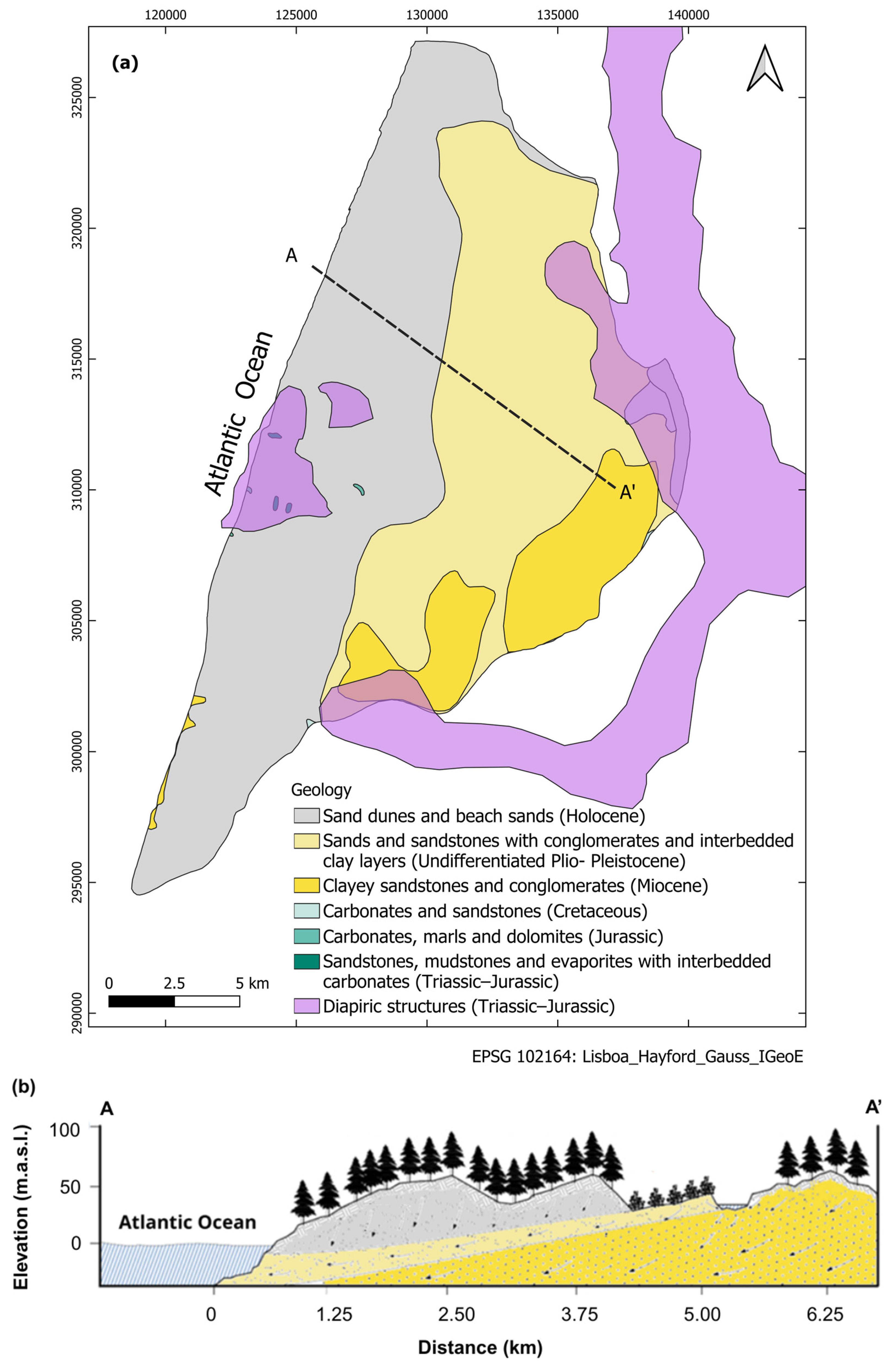
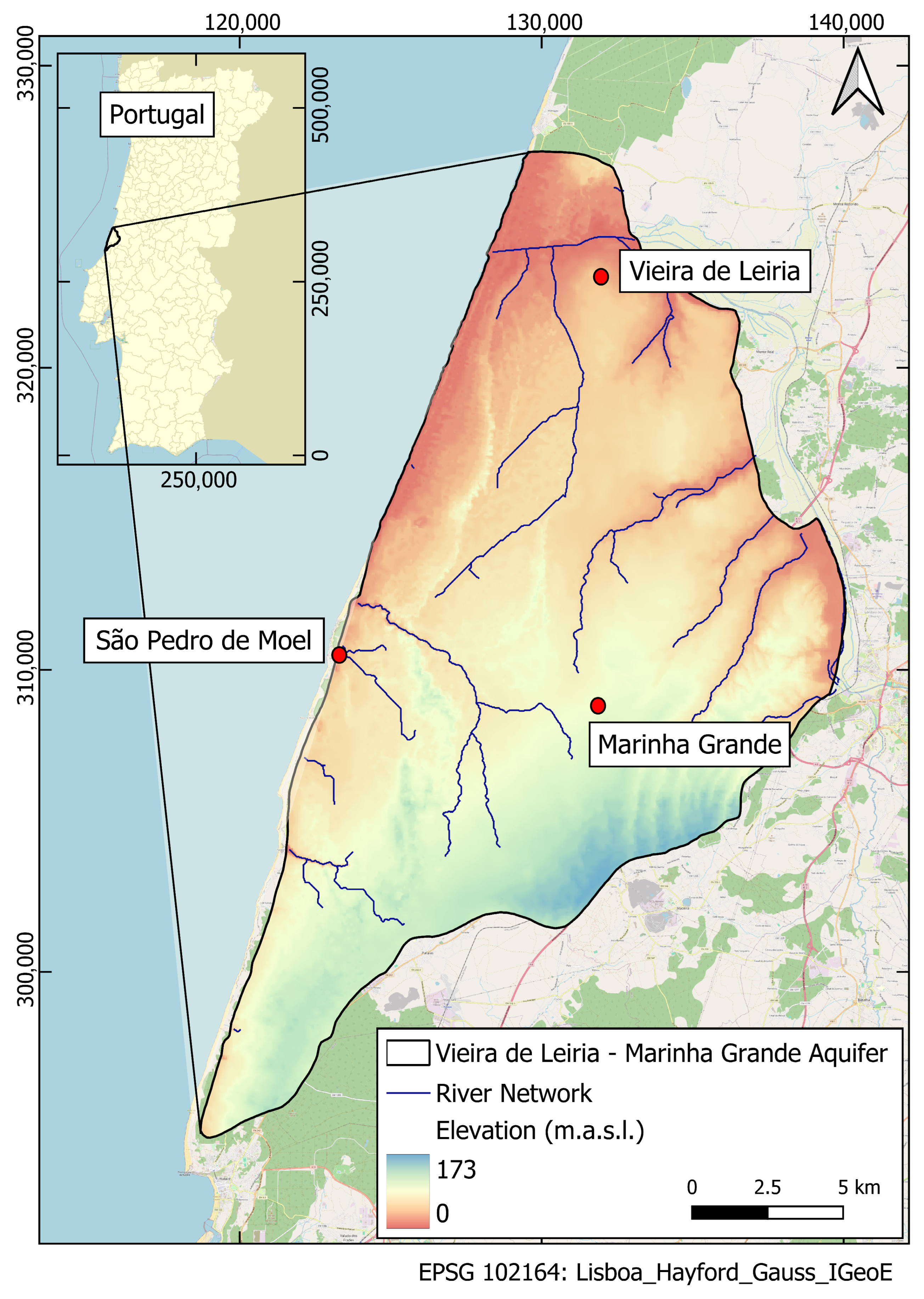
The Vieira de Leiria–Marinha Grande aquifer is located in the district of Leiria (Central Portugal) covering an area of 320 km2 and comprising four municipalities: Alcobaça, Marinha Grande, Leiria and Nazaré (Figure 1). It consists of a porous, multi-layered coastal aquifer that represents the primary source of water for public supply, industry, irrigation and ecosystem services in the region [14]. Based on geological mapping [13,14,16,17,18,19] and borehole data interpretation, four main hydrogeological units were identified (Figure 2a,b):
  • Holocene: Consists of unconsolidated coastal sand dunes forming an unconfined porous aquifer parallel to the coast, with thickness exceeding 50 m in some areas. This unit shows hydraulic conductivities between 10 and 30 m day−1, groundwater level depth between 2 and 4 m, and it is mainly recharged by direct infiltration of precipitation.
  • Undifferentiated Plio-Pleistocene: Composed of fine- to medium-grained sands with conglomeratic horizons and clay intercalations. Thickness ranges from less than 20 m close to São Pedro de Moel to more than 150 m towards southeast. Hydraulic conditions vary from semi-confined to confined.
  • Miocene: Formed by clayey sandstones, conglomerates and calcareous concretions. Hydraulic conditions vary from unconfined in the eastern outcrop areas to confined westward below the undifferentiated Plio-Pleistocene clayey layers. Recharge occurs through direct infiltration of precipitation in elevated eastern areas and through interactions with surface water.
  • Early Cretaceous (Aptian–Albian): Confined to semi-confined unit composed of sandstones and carbonate complexes underlying the Miocene formations. Although it does not outcrop within the study area, recharge occurs through eastern outcrops and along fault zones.
The geological setting of the area has been strongly influenced by tectonic activity and diapiric movements, which control sediment distribution, aquifer thickness and groundwater flow paths. The regional groundwater flow direction is predominantly oriented SE-NW towards the Atlantic coast, influenced by fault systems [16] and diapiric structures such as São Pedro de Moel and Monte Real, which generate abrupt lateral and vertical changes in lithology, locally enhancing vertical connectivity, and affecting groundwater quality, particularly in areas in the central coastal and eastern parts of the aquifer [13,15,16,20,21]. The hydraulic properties of the system show high spatial variability due to lithological heterogeneity and tectonic compartmentalization. According to Almeida et al. [14], the average transmissivity of the aquifer is 230 m3 day−1, with values mostly between 30 and 260 m3 day−1.
The aquifer is overlaid by the Leiria National Pine Forest (‘Pinhal de Leiria’), a unique Atlantic coastal forest that serves as a protective cover and an important recharge zone to the aquifer. The area is characterized by a low topographic gradient altitudes range between sea level on the coast and a maximum of 170 m above sea level in the southeast (Figure 1). The primary and secondary dune system along the coast causes local abrupt topographic differences that may interfere in runoff and infiltration patterns of the unconfined aquifer. According to the Koppen–Geiger classification [22], the area presents a warm-summer Mediterranean climate (Csb), with an average annual temperature and precipitation of 15 °C and 750 mm, respectively [23].

2. Materials and Methods

2.1. Data Sampling and Analytical Methods

2.1.1. Rainwater

Rainfall chemistry was monitored monthly onsite from October 2022 to June 2023. Each monthly sample is a composite of all rainfall events occurred during that month, collected using a 3 L container positioned in an open field at Vieira de Leiria (Figure 3). The site is located less than 2 km from the coast, so it is expected that the chemical signature of the rain samples is influenced by the contribution of sea aerosols. All samples were analyzed for stable isotopes (δ18O and δ2H) at the LIE (Lisbon University Stable Isotope Laboratory, Lisbon, Portugal) and nine samples (October 2022 and June 2023) were analyzed for major (Na+, K+, Ca2+, Mg2+, Si4+, Cl, SO42−, Br, NO3) and minor ions at the LAIST (Laboratory of Analysis of the Instituto Superior Técnico, Lisbon, Portugal). The HCO3 concentrations were calculated using Phreeqc Interactive 3.7.3 software [24] by establishing the chemical equilibrium with CO2 while maintaining the charge balance, following a widely applied approach that provides accurate HCO3 estimations.
  • Local Meteoric Water Line (LMWL) determination
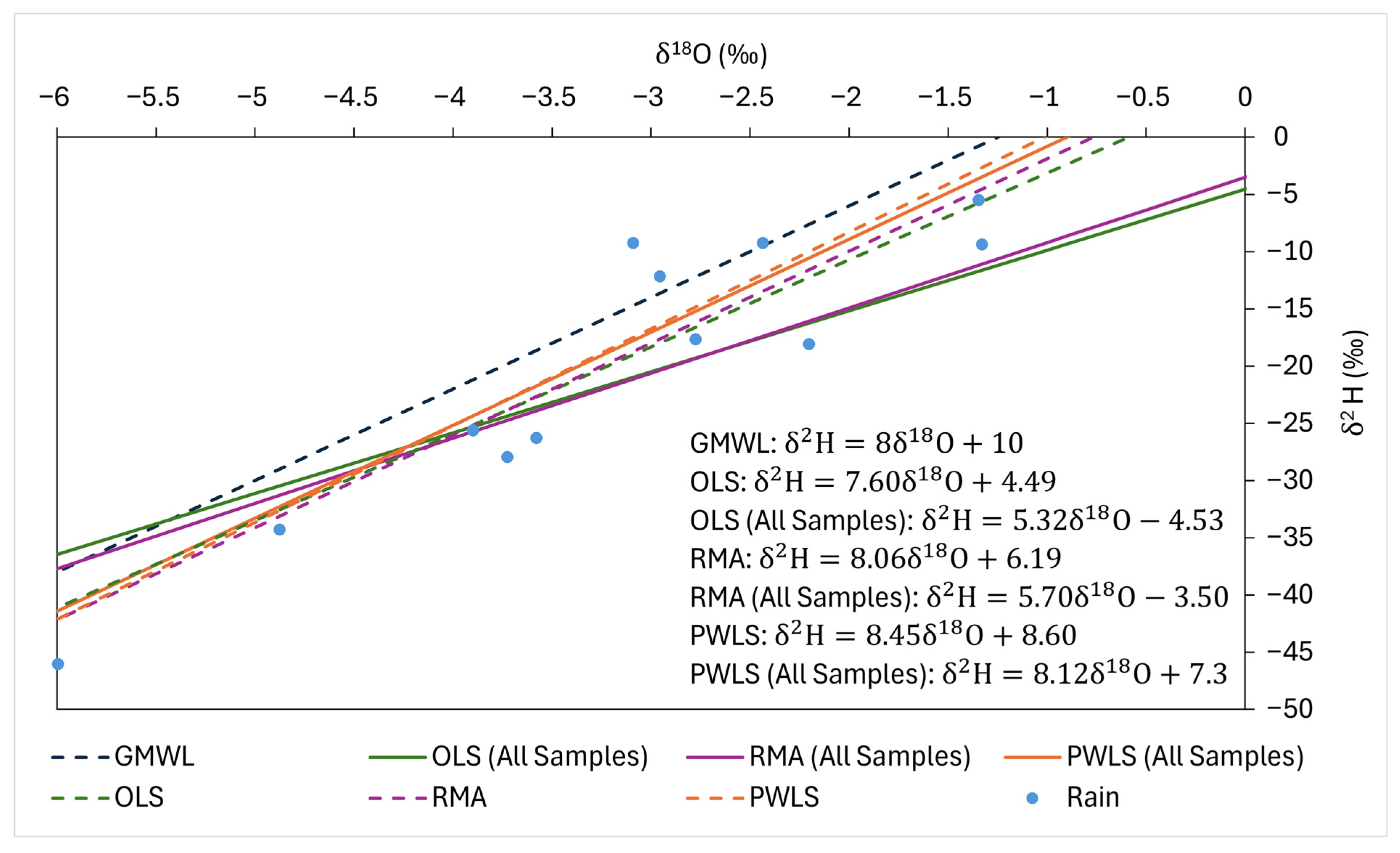
The Local Meteoric Water Line (LMWL) was defined to support isotopic interpretation of processes impacting groundwater chemical composition like evaporation, mixing, recharge sources and water–rock interactions. Three regression methods were tested in the present study to define the LMWL: ordinary least squares regression (OLS), reduced major axis regression (RMA), and precipitation weighted least squares regression (PWLS). Stable isotopic data were plotted on a δ2H vs. δ18O diagram and compared with the different LMWLs obtained using the equations described in Helsel and Hirsch [25], Hughes and Crawford [26] and Crawford et al. [27].

2.1.2. Groundwater

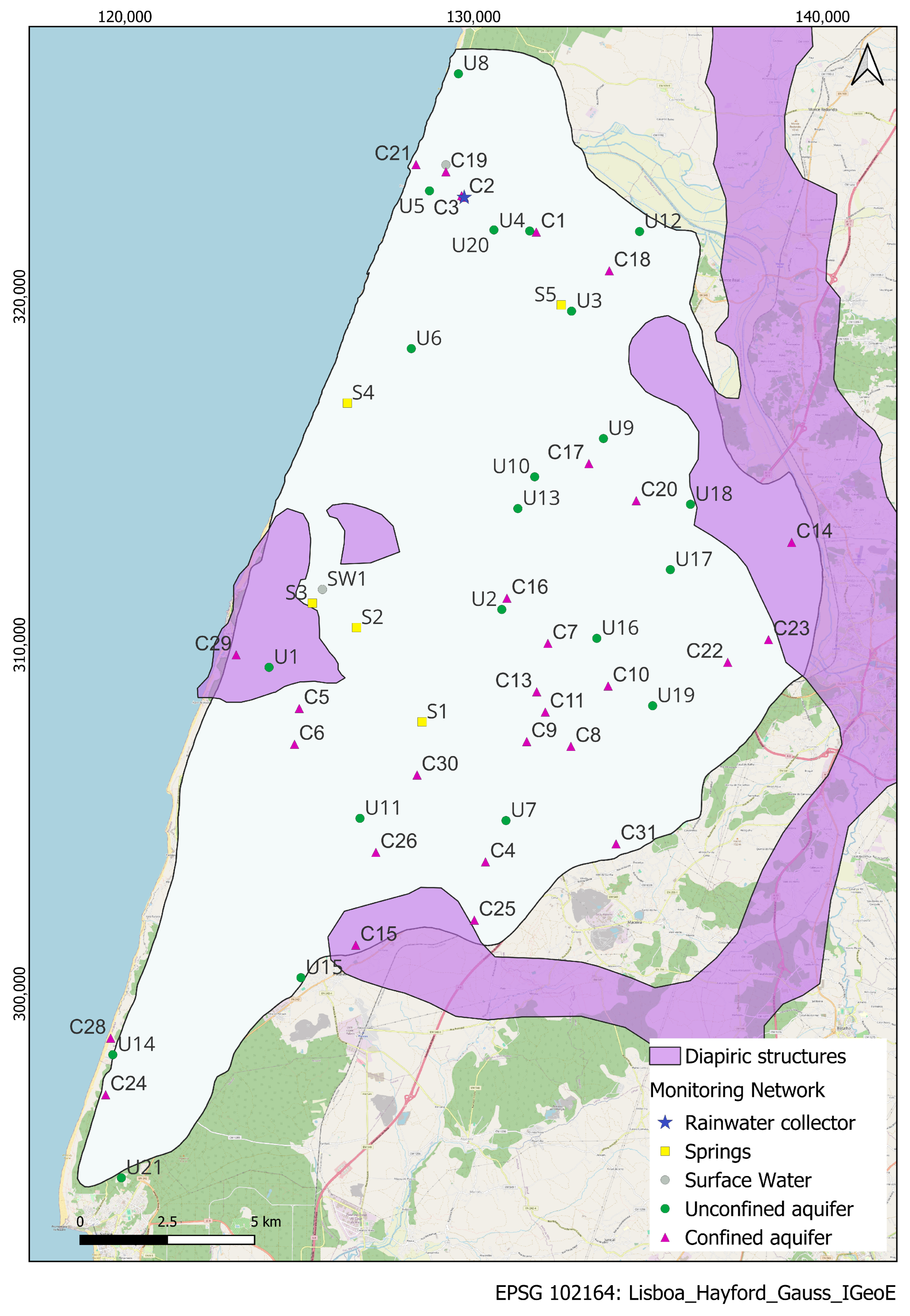
An inventory of existing wells, boreholes and springs owned by private individuals, organizations and public institutions was compiled to establish a reliable, spatially distributed, representative monitoring network comprising 59 water points: 22 wells, 30 boreholes, 5 springs and 2 streams, distributed across unconfined and the confined aquifer units (Figure 3). The confined aquifer was sampled in April 2019 and included public supply boreholes (12) from Marinha Grande Municipality, private boreholes (17) and one spring (1). The unconfined aquifer was monthly monitored from July 2022 to October 2023 to measure water levels and key physical–chemical parameters (pH, EC, temperature, dissolved oxygen, alkalinity and redox potential) in 22 wells, 5 springs and 2 streams.
Field parameters were measured from March 2022 to September 2023 using a HANNA® HI 9828 multiparameter probe (Woonsocket, RI, USA) with an in-line flow cell to minimize aeration. Total alkalinity (expressed as HCO3) was determined in the field by acid titration using a HACH® standard colorimetric titration kit (Loveland, CO, USA). Samples collected in April 2019 (confined aquifer) and April 2023 (unconfined aquifer) were analyzed for major, minor and trace elements at certified laboratories (Activation Laboratories, Ancaster, ON, Canada) using inductively coupled plasma mass spectrometry (ICP-MS) and ion chromatography (IC). Stable isotope analysis (δ18O and δ2H) was performed at the LIE (Lisbon University Stable Isotope Laboratory Lisbon, Portugal). Further stable isotope analyses (δ18O and δ2H) were performed on groundwater samples from wells located in the unconfined aquifer (46) and springs (20) collected between February 2022 and October 2023, with analytical precision of ±0.2‰ for δ2H and ±0.1‰ for δ18O.
Quality control was assessed using the electroneutrality principle (Equation (1)), with ionic balance errors within ±10% considered acceptable. Samples exceeding this threshold were excluded due to potential errors during sampling and/or preservation in the field or inaccuracies in the laboratory analysis. Therefore, samples U12 (E.N. = 15.6%) and C13 (E.N. = 16.6%) were discarded.
E . N . ( % ) = ( N a + , K + , C a 2 + , M g 2 + ) + ( H C O 3 , C l , S O 4 2 , N O 3 a s   N ) ( N a + , K + , C a 2 + , M g 2 + ) ( H C O 3 , C l , S O 4 2 , N O 3 a s   N ) × 100
Hydrogeochemical and isotopic data were used to characterize groundwater chemistry and identify vertical and lateral variations within aquifer units. Ionic ratios, hydrochemical facies classification and isotopic tracers, combined with rainfall data, supported the identification of salinization processes linked to seawater intrusion and evaporite dissolution. Seawater composition used for comparison was based on Hem (1985) [28].

3. Results and Discussion

3.1. Hydrochemical Characterization

3.1.1. Rainwater Characterization

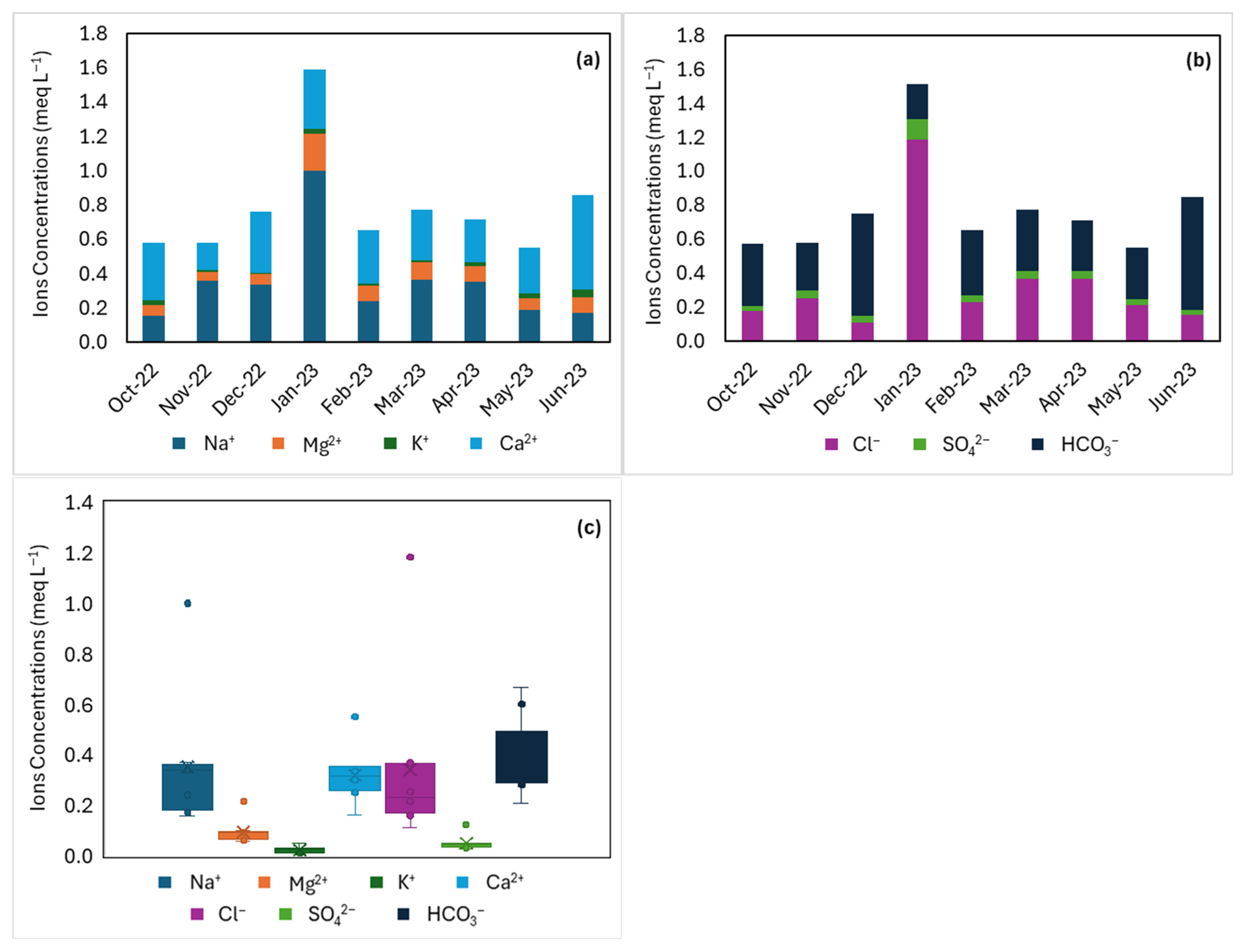
The main recharge process in the area is related to the infiltration of rainwater originated in the Atlantic Ocean; therefore, groundwater signatures reflect a strong marine influence combined with terrestrial inputs. Precipitation chemistry varies from Ca-HCO3 to Na-Cl water types, driven by variations in marine aerosol input associated with wind intensity and storm activity (Figure 4). Na+/Cl, K+/Na+ and Mg2+/Na+ ratios exceeding seawater references indicate that soil dust also contributes to rainwater composition (Table 1). Another factor indicating the enrichment in terrestrial-dominated chemical species is the Na+/Ca2+ and Mg2+/Ca2+ molar ratios lower than seawater values.
Rainwater composition is affected by seasonality, reflecting shifts in relative contribution of marine and terrestrial sources throughout the year. Marine contributions to Ca2+ range from 1 to 13%, highlighting the influence of terrestrial dust, while K+ shows marine contributions below 50% in all samples, except for R4 and R6. On the other hand, Na+, Mg2+ and SO42− show marine contributions above 50% in all samples, except for R3, which indicates reduced marine influence (Table 2).
Several studies report dilution processes contribute to this pattern (e.g., [29]). Dilution effects during high precipitation events are observed in some samples, particularly on R3, where Na+, Mg2+ and SO42− concentrations, typically associated with marine input, decrease during high precipitation periods (P = 200 mm). Concentrations of NO3 and Br were below the detection limit in all samples.
Precipitation amount was positively correlated with HCO3 (r = 0.42), Na+ (r = 0.36) and SO42− (r = 0.34) and negatively correlated with K+ (r = −0.42), while no significant correlations were observed for Cl (r = 0.14), Ca2+ (r = −0.10) and Mg2+ (r = 0.04).

3.1.2. Groundwater Characterization

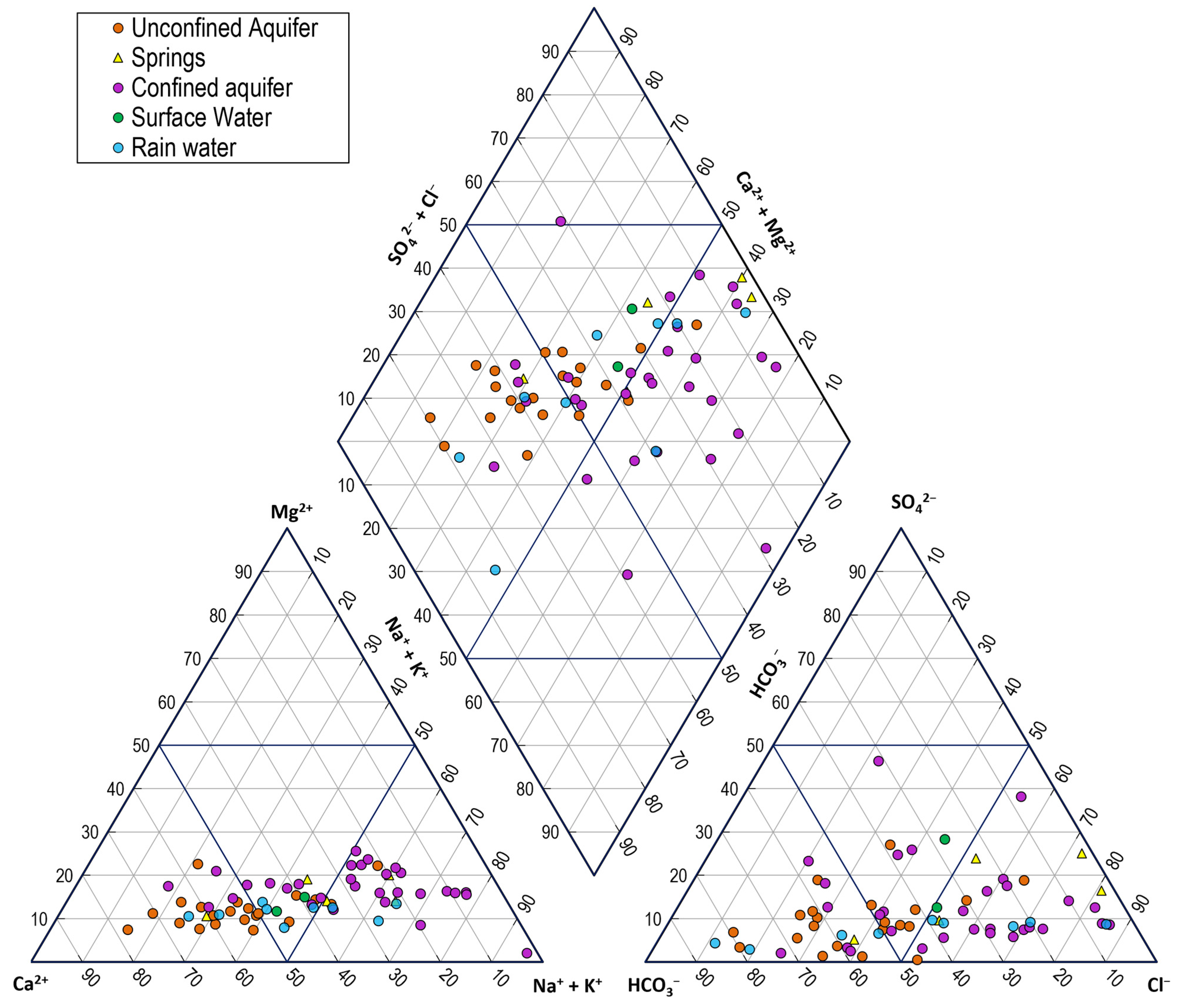
Groundwater samples from the Vieira de Leiria–Marinha Grande aquifer were classified into three hydrochemical facies: Na-Cl, Na-HCO3 and Ca-HCO3 (Figure 5). Due to the differences in weathering reactions velocity and CO2 dissolution, and the faster dissolution of carbonates when compared to silicate, groundwater from the unconfined aquifer is predominantly of Ca-HCO3 type, reflecting modern recharge processes, relatively short residence times and limited water–rock interaction, with median concentrations of Ca2+ and HCO3 of approximately 35 and 93 mg L−1, respectively. The main statistics for the physical chemical parameters and major ions in groundwater, surface water and springs are given in Table 3.
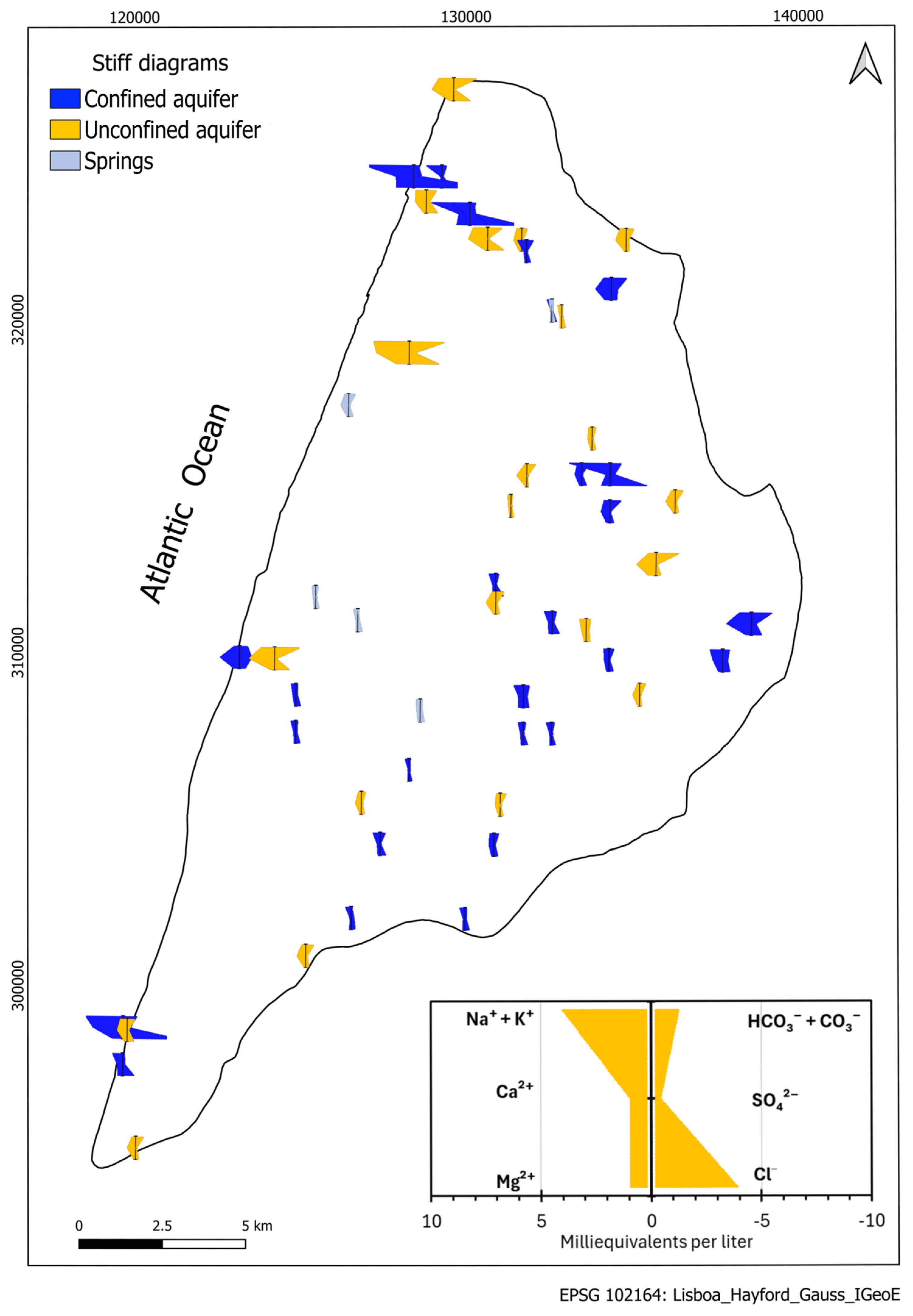
In the confined aquifer, groundwater is predominantly Na-Cl type, except in the eastern and northeastern regions, where Ca-HCO3 groundwaters are found, corresponding to inland recharge areas (Figure 6). The HCO3/Cl ratio also reflects this change in groundwater composition, with inland samples mainly enriched in HCO3 shifting to Cl near the coast. The only exception is sample C29 that although is very close to the coast, shows a Ca-HCO3 signature. Besides ion exchange, the presence of water with very strong Na-Cl signature near the coast, especially in the northern region close to Praia da Vieira, indicates the salinization processes occurring in this part of the aquifer.
The chemical signature of the springs varies throughout the area. While S4 shows a composition similar to the unconfined aquifer, S1, S2, S3 and S5 samples are chemically closer to confined aquifer groundwaters, indicating different origins of water discharging from the springs.
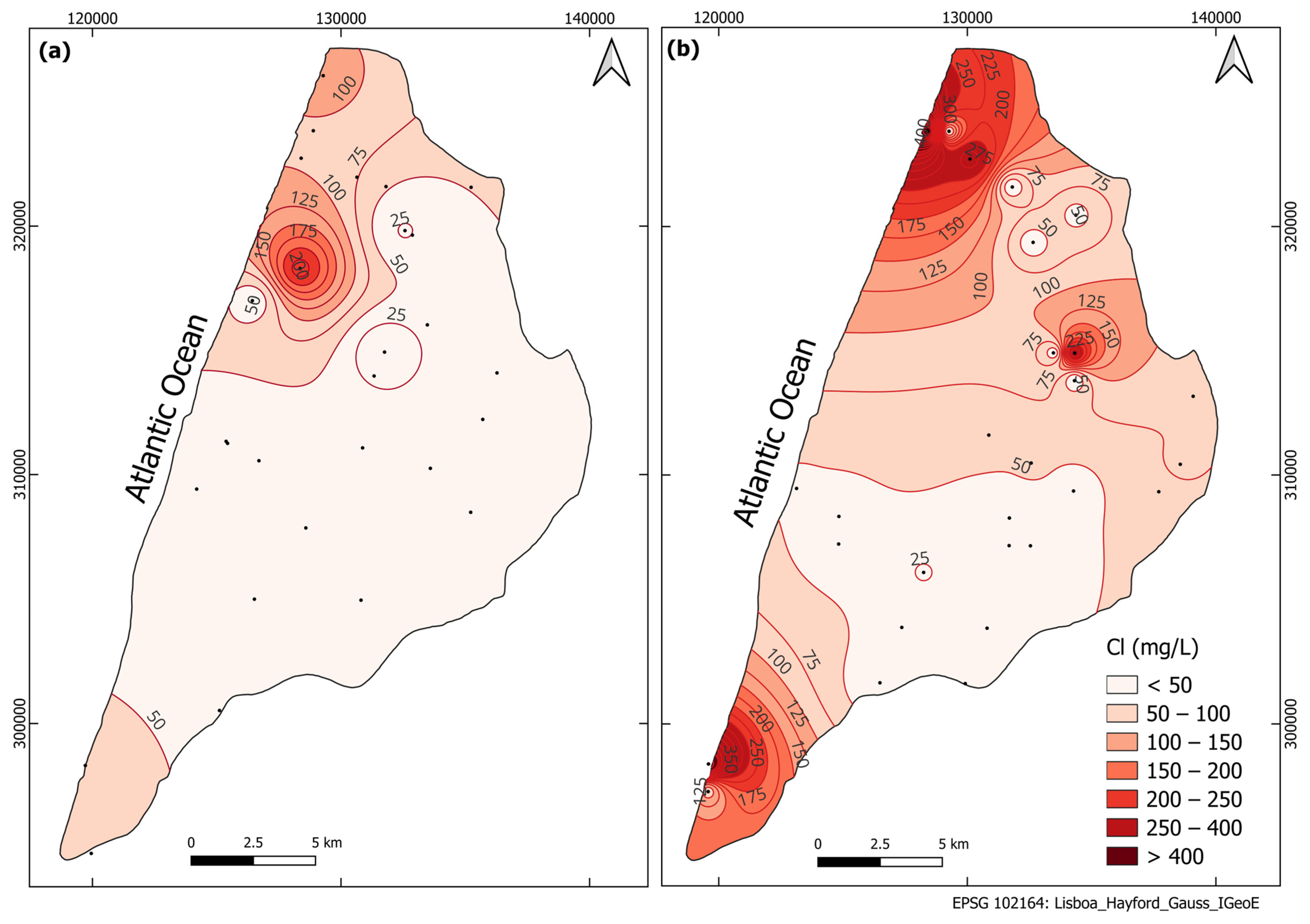
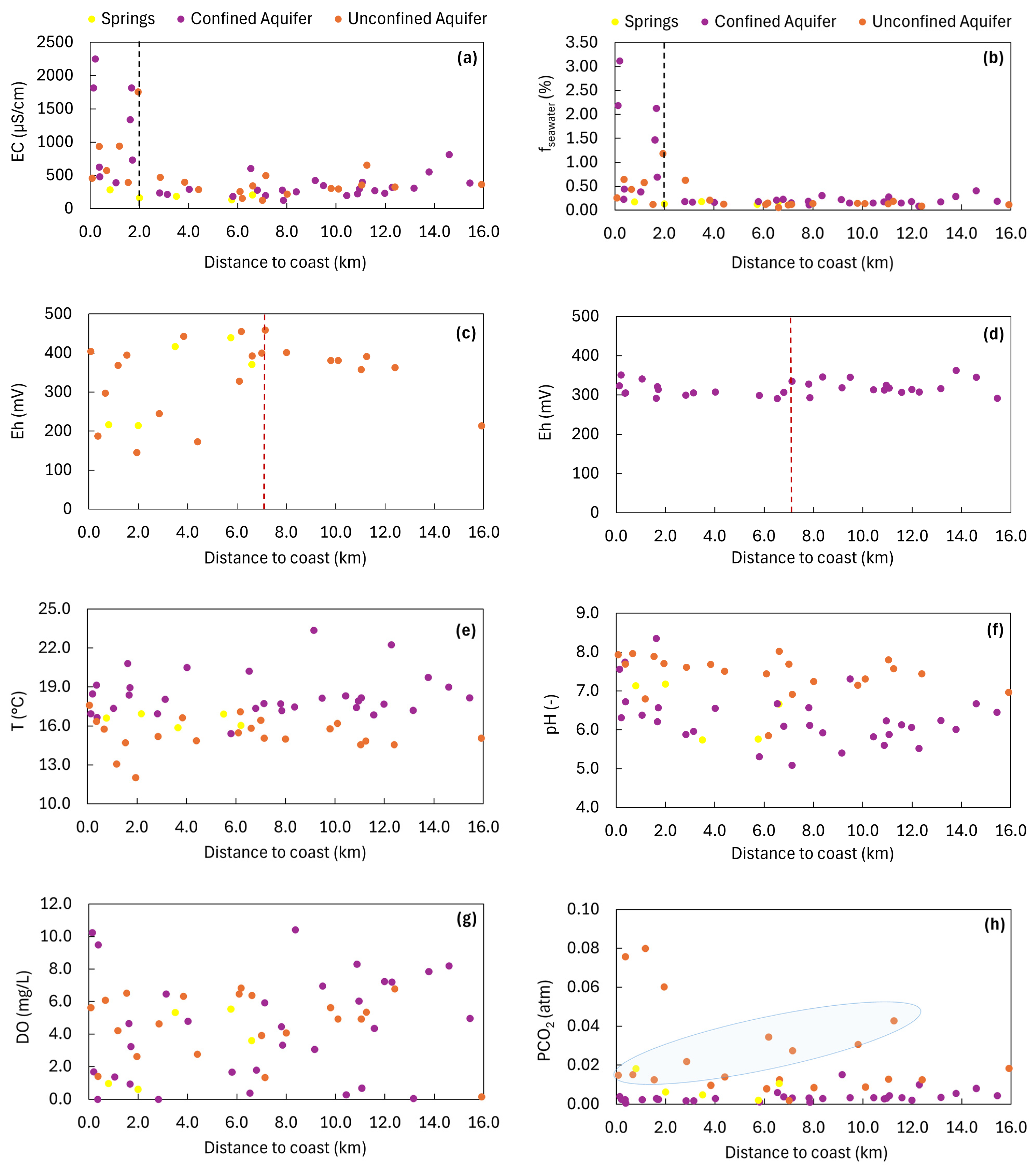
The chloride distribution in both unconfined and confined aquifers is given in Figure 7. In the unconfined aquifer, Cl concentrations are lower than 50 mg L−1 in most of the area, with local enrichment near the coast, especially in the northern sector. The confined aquifer shows higher and more widespread Cl concentrations, with hotspots reaching up to 600 mg L−1, near the coast and inland. EC values are also higher in the confined aquifer compared to the unconfined aquifer, springs and surface water, with EC increasing towards the coast in both aquifer units, although this trend is much stronger in the confined samples (Figure 8a). These patterns are also reflected in the percentage of seawater contribution, especially significant in the first 2 km from the coast (Figure 8b), suggesting a stronger marine influence and greater vulnerability to salinization in the confined system, enhanced by overexploitation.
The redox potential (Eh) in the unconfined samples range from 144 to 458 mV and reducing conditions were consistently found in two springs (S3 and S4) and in three wells (U1, U6 and U8). Moreover, during the summer months, reducing redox conditions were also observed in several wells that did not present this behavior during the rainy season, indicating mixing water processes. The Eh values in confined aquifer samples range from 290 to 362 mV, generally increasing with the distance from the coast. The existence of a redox boundary approximately 7 km from the coast is indicated by the dashed red line in Figure 8c,d.
Groundwater temperature ranges from about 9 to 20.5 °C in the unconfined aquifer and from 15 to 23 °C in the confined aquifer (Figure 8e). The differences in the temperature ranges of the sampling groups are influenced by depth, residence time and interaction with the atmosphere. Groundwater from springs, surface water and unconfined aquifer are directly related to air temperature, thus highly influenced by seasonality, due to the direct exposure to the atmospheric conditions, while the confined aquifer is generally less affected by seasonality, presenting more stable temperatures mostly due to the greater depth and longer residence times, which allow equilibration with the geothermal gradient. In the unconfined samples, the correlation between temperature and other parameters such as elevation, distance from the coast and well depth is not significant. Although in the confined samples the rise in temperature with increasing borehole depth can be observed in C32 and C1, this effect is not observed in other points, likely due to the presence of multi-level screens, promoting the contribution of waters from different depths to the sample. These results are similar to the findings of Busby et al. [30] that state temperature in shallow groundwater is generally 1–2 °C higher than the mean annual surface temperature, while below 15 m depth, thermal gradients are the dominant factor controlling groundwater temperature [31,32].
In the confined aquifer, pH values range from 5.09 to 8.35, with an average of 6.30, and from 6.85 to 8.02, with an average of 7.44 in the unconfined aquifer (Figure 8f). For both datasets, the lower values are in the southeastern part of the aquifer, becoming progressively higher towards the coast, which is consistent with carbonate equilibrium reactions. DO concentrations indicate predominantly aerobic conditions in the unconfined aquifer, while a large section of the confined aquifer is under anoxic conditions, with DO close to 0 mg L−1, particularly within 10 km from the coast in the north (Figure 8g). Partial CO2 pressure (PCO2) was calculated using Phreeqc Interactive 3.7.3 [24]. All samples have higher PCO2 values than the atmospheric PCO2 (10−3.5 atm), suggesting an input of CO2 from root respiration and organic matter degradation. Nevertheless, values in the unconfined samples are consistently higher than in the confined aquifer samples (Figure 8h). The blue ellipse in Figure 8h indicates a PCO2 trend along the SE-NW flow path in the northern part of the study area where groundwater presents generally higher values of CO2.
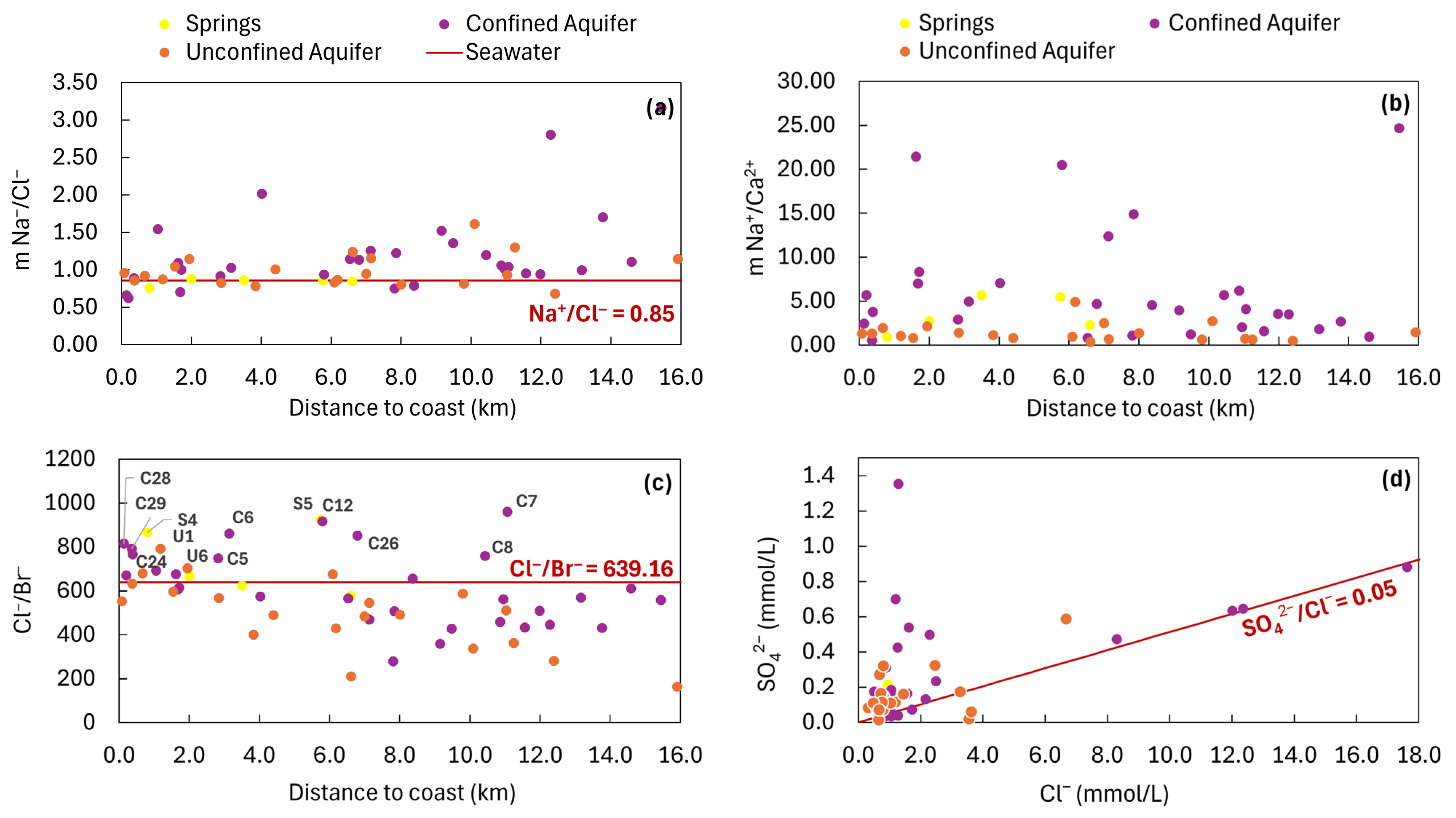
Groundwater from the unconfined aquifer usually presents Na+/Cl ratios close to seawater (0.85), while groundwater in the confined aquifer usually shows higher ratios, indicating seawater influence and the aerosol effects are not the only sources of Na+ and that water–rock interaction is contributing to Na+ increase (Figure 9a). In the northern sector of the confined aquifer, Na+/Cl ratios decrease towards the coast following the regional SE-NW flow direction. Although some rainwater samples present similar Na+/Cl signature compared to seawater (R1, R4 and R8), the average value for the dataset is 1.01, indicating the influence of soil dust in rainwater composition. The enrichment in Na+ in the confined samples can also be observed in the relation Na+/Ca2+, indicating the release of Na+ in groundwater due to sodium feldspar dissolution and ionic exchange processes, while in the unconfined samples, the low residence times and limited water–rock interactions are not enough to promote meaningful change to groundwater composition (Figure 9b).
The Cl/Br ratios remain very similar to the seawater value ([Cl]/[Br] = 639.16) in all sample groups up to 4 km from the coast, indicating marine influence. While distance from the coast increases, Cl/Br ratios decrease in relation to the seawater line, reflecting input from non-marine sources, geochemical reactions or anthropogenic contamination. Alcalá and Custódio [33] compile values from Cl/Br ratios for the main salinity processes in aquifers located in the Iberian Peninsula, with seawater origin ranging from 586 to 764, while leaching of natural evaporites range from 4611 to 5556 in the case of halite and 590 to 1728 in case of gypsum. Condesso de Melo (2002) [34] analyzed 16 samples in the Aveiro Cretaceous Aquifer and reported values of 786 ± 62 for gypsum dissolution in diapiric structures. The Cl/Br ratio in the sample groups ranges from 280 to 961 in the confined, 164 to 792 in the unconfined and 580 to 924 in the springs. In the Vieira de Leiria–Marinha Grande aquifer, the enrichment in Cl through salt dissolution in the unconfined samples can be pointed out in samples U1 and U6, which is not widely observed, while in the confined aquifer, this effect is significant in several samples, such as C5, C6, C7, C8, C24, C26, C28 and C29 (Figure 9c).
In the confined aquifer, SO42−/Cl ratios range from 0.03 to 1.05, while in the unconfined aquifer, these values are between 0.01 and 0.40. The SO42−/Cl ratios in boreholes and wells are highly influenced by distance from the coast, with those located close to the sea presenting values compatible with the seawater (0.05), especially in the confined aquifer, supporting the occurrence of seawater intrusion (Figure 9d). The same effect is observed in confined and springs samples that are enriched in Mg2+ when compared to seawater, while the samples of the unconfined aquifer are depleted in Mg2+. Samples with increased SO42−/Cl, such as C18, C22, C28, C31 and U16, are related to gypsum/anhydrite dissolution, suggesting the influence of diapiric formations. The dissolution of sulphates in groundwater is also pointed out in springs samples S2 and S5, with SO42−/HCO3 of 5.83 and 3.22, respectively. Moreover, the increased Ca2+/HCO3 ratios indicate a Ca2+ input higher than expected by the dissolution of calcite and dolomite, supporting that the hydrochemical composition of these samples is shaped by gypsum or anhydrite dissolution associated with the diapiric structures, which not only introduces SO42−, but also Ca2+ in groundwater. Contrarily, depleted SO42−/Cl indicate sulphate reduction in anoxic environments; these processes are normally accompanied by low Eh, increased HCO3, Fe and/or Mn, as observed in C8, C26, C30, U7, U8 and U20.
  • Minor and trace elements in the aquifer
The confined aquifer generally presents higher median concentrations and lower variability of minor and trace elements compared to the confined aquifer, reflecting stronger water–rock interaction processes and longer residence times. Elevated concentrations of elements such as F, Fe, Ba, Zn, Al and As sometimes exceed the maximum admissible value for human consumption in the confined aquifer. Moreover, the lower variability in the deep aquifer indicates a more stable geochemical matrix and less influence of modern recharge.
Similar median concentrations of Br, Sr, Co and U are observed in both aquifer units, suggesting that reactions along the flow path are minimal, although localized high values indicate spatial heterogeneity. The presence of several outliers for Fe, Mn, Zn, As, Sr and Co suggest the presence of local sources or specific conditions such as reductive zones, local mineralization and/or anthropogenic inputs. Other minor and trace elements such as Cr, Cd, Ge, Be and Se are observed in low concentrations in both aquifers, very close or below the detection limit, suggesting low availability of these elements in the aquifer.
Although the main signature of diapiric influence are high concentrations of Na+, Cl, Ca2+ and SO42−, the enrichment in minor chemical elements like Potassium (K), Lithium (Li), Borum (B), Barium (Ba) and Strontium (Sr) have also been associated with these structures, e.g., [35,36,37]. The enrichment, above the 90th percentile for the respective dataset, simultaneously in at least three of these elements, was observed in the sampled points U6, U1, C18, C21 and C28.
Interpreting hydrochemical data in multilayer aquifers is a complex process that must integrate multiple tracers to properly characterize geochemical conditions and main mechanisms acting in each aquifer layer. Understanding lateral and vertical hydraulic connectivity between aquifers is essential to identify vertical flows and mixing processes affecting groundwater chemical composition. Geological and soil information, including the distribution of specific mineral species (e.g., gypsum, halite), can be useful for distinguishing between similar geochemical processes that may occur simultaneously and produce mixed chemical signatures. Besides geological differences, multilayer systems also have distinct residence times, which significantly affect water–rock interactions.

3.2. Isotopic Characterization

3.2.1. Rainwater

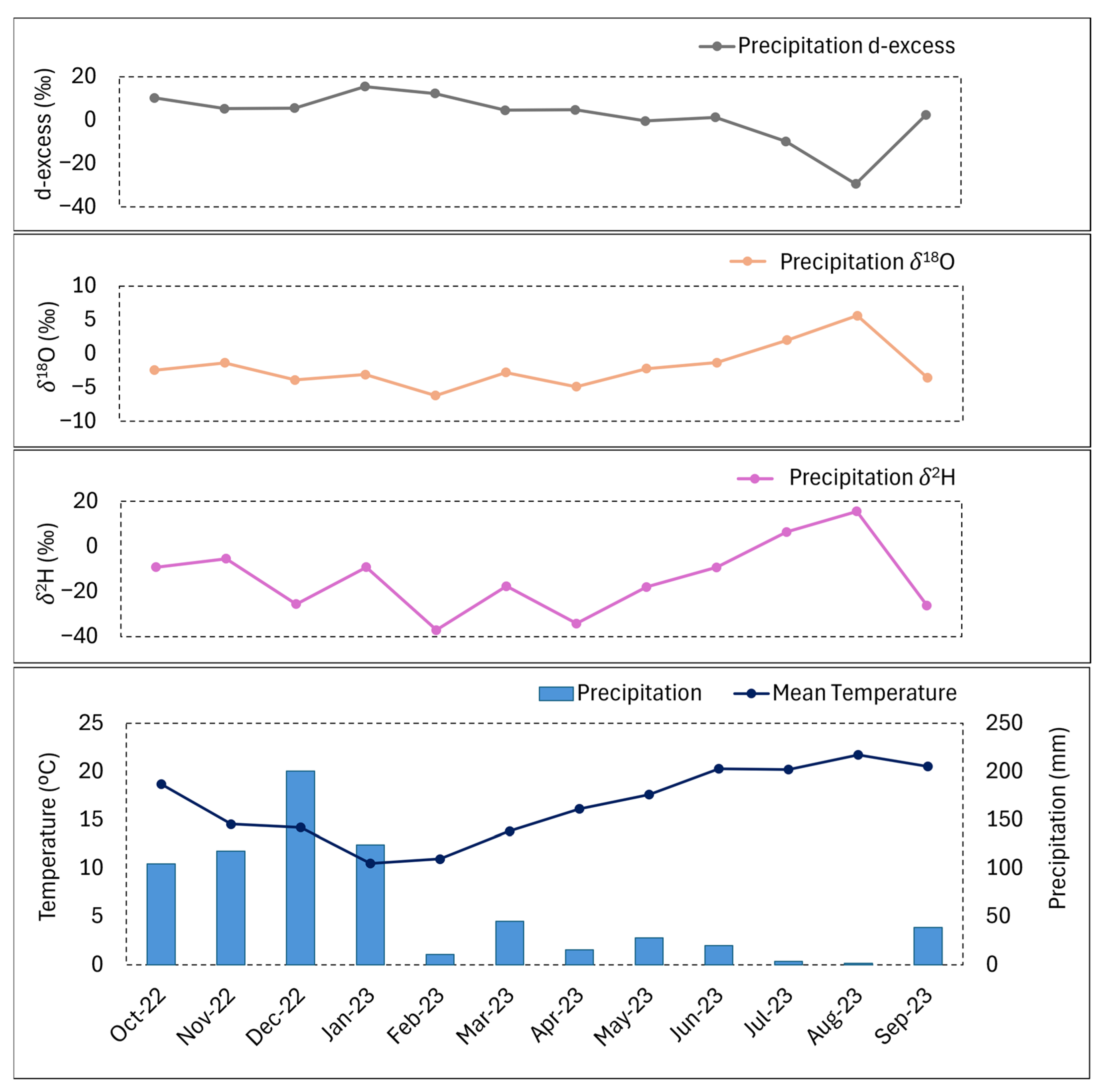
Values for δ18O, δ2H and d-excess in the area ranged from −6.2 to 5.6‰, −37.1 to 15.5‰ and −29.4 to 15.5‰, respectively. Depleted values of δ18O (−6.2‰) and δ2H (−37.1‰) are observed in winter (February) and more enriched values of δ18O (5.6‰) and δ2H (15.5‰) in summer (August), (Figure 10) reflecting temperature-controlled fractionation processes typical of mid-latitude climates and likely affected by evaporation processes during sampling procedure [38,39]. The complete isotopic database used in the study can be found in Supplementary Material.
Local Meteoric Water Lines (LMWLs) were defined using three regression techniques (OLS, RMA and PWLS), considering both the complete dataset and a reduced dataset eliminating summer samples characterized by very low precipitation amounts, namely 3.3 mm in July and 1.4 mm in August 2023 (Figure 11) [1].
The OLS regression is the most common methodology used for fitting the δ2H-δ18O relationship [27,40,41], and it is designed to fit a line that best represents the relationship between one or more independent variables and a dependent variable by minimizing the sum of the squared differences between the observed values and the values predicted by the model (residuals). It assumes the independent variable is measured without error, which is not always true, leading to the underestimation of the slope. The RMA regression considers the slope as the ratio of two standard deviations, accounting for errors in both independent and dependent variables [42].
Another limitation of OLS is that it assigns equal weighting to all samples, regardless of the precipitation amount they represent. This approach overlooks the fact that smaller precipitation amounts are more likely to have lower d-excess values due to re-evaporation of raindrops or biases in the sampling method. To overcome this, some authors choose to exclude events with low precipitation amounts, namely July and August, to reduce their impact on the LMWL [26]. Alternatively, applying the PWLS regression can be an effective approach to reduce this effect since it incorporates weights based on precipitation, enhancing estimates, especially in heterogeneous datasets.
The slopes calculated using the PWLS method are higher than those obtained using traditional methods, which aligns with the findings from Putman et al. [41]. Although the use of PWLS is not applicable in all circumstances, the authors acknowledge its benefits in Mediterranean climates like Portugal, where the impact of small precipitation events in the isotopic ratio during summer is significant. Additionally, using the values obtained during the summer months without caution may lead to an overestimation of isotopic enrichment and a consequent shift in the LMWL due to the significantly lower precipitation values recorded in July and August during the one-and-a-half-year monitoring period compared to the historical average for the same months from 1961 to 2023, which are 5.8 mm and 10.8 mm, respectively.
For the OLS and RMA methods, there is a considerable difference between the slope (a) and intercept (b) obtained using all samples and the one obtained excluding the summer samples, while in the PWLS, the values are similar for both datasets (Table 4).
Based on these results, and considering the benefits and limitations of each methodology, the LMWL was defined for the Leiria Pine forest region using PWLS and is given in Equation (2).
δ 2 H = 8.12 δ 18 O + 7.32
LMWLs are typically assessed by their deviation from the Global Meteoric Water Line (GMWL) (Equation (3)) [43], which serves as a reference for equilibrium relationships [44]. The regional meteoric water line (RMWL) was defined by Carreira et al. [45] using 405 rainwater samples from 7 meteorological stations along inland Portugal (r = 0.95) and it is expressed in Equation (4).
δ 2 H = 8 δ 18 O + 10
δ 2 H = ( 6.78 ± 0.10 ) δ 18 O + ( 4.45 ± 4.46 )
The slope of the LMWL differs from the GMWL, presenting an offset towards higher deuterium values. The slope (8.12) is slightly higher than the GMWL (8), characteristic of moderate climate that follows a typical isotopic fractionation pattern dominated by equilibrium processes, with low evaporation effects influencing the isotopic composition in precipitation, except during the summer months. This value reasonably matches the findings in Putman et al. [41], that states seasonally hot and dry regions (Köppen classe Cs). Moreover, the d-excess value in the area is 7.32 is lower than the GMWL, indicating the evaporation process occurs under high humidity conditions. These characteristics indicate the influence of marine air masses. Considering the d-excess parameter, the rain samples present a negative trend against temperature and a positive one related to the amount of precipitation, indicating the seasonal response of the isotopic composition. Summer samples, representing warmer and dryer climatic conditions, show lower d-excess values compared to winter (colder and wetter) samples.

3.2.2. Surface and Groundwater

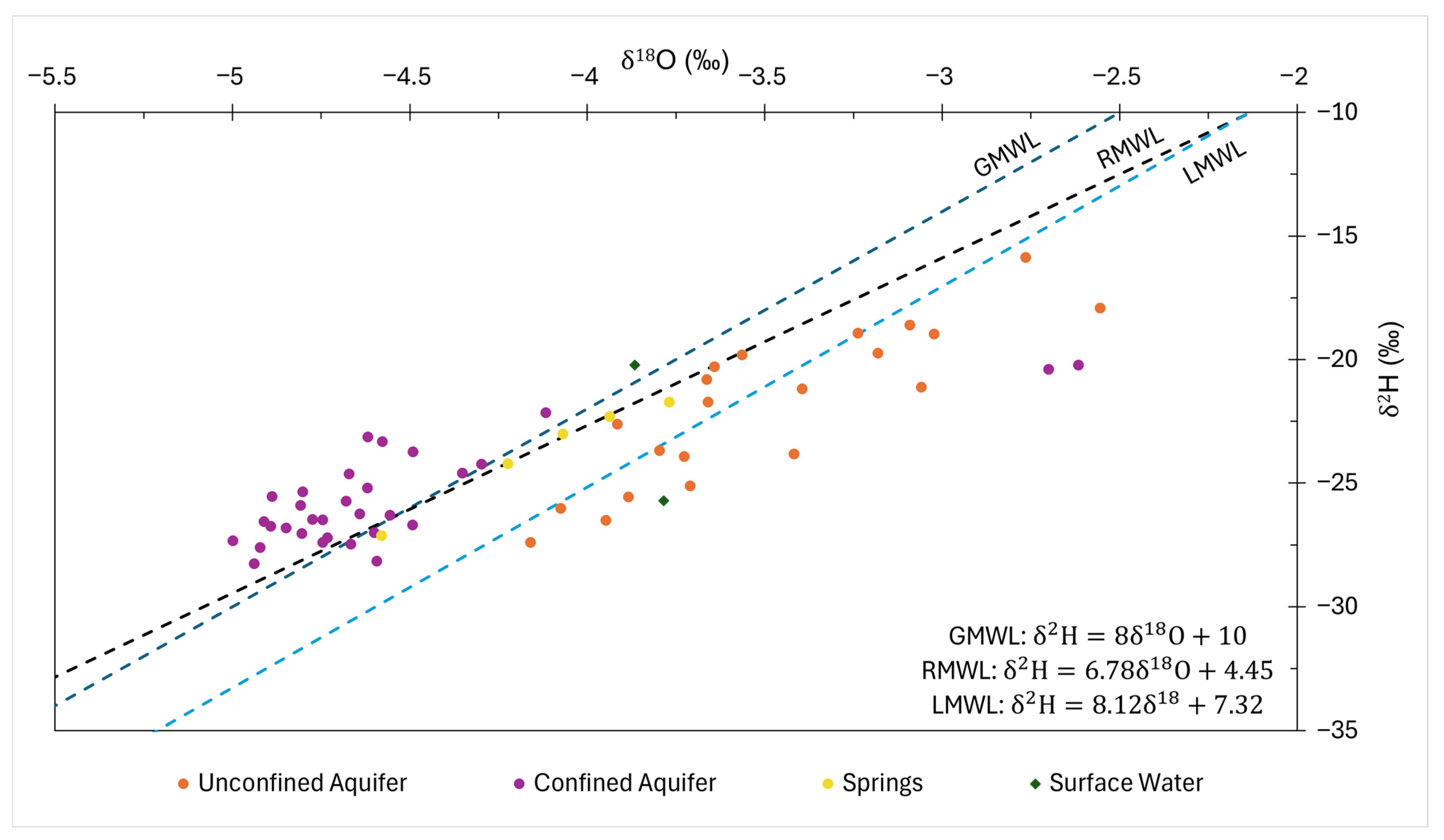
The isotopic composition of the unconfined aquifer varies from −4.3 to −2.6‰, for δ18O and from −28.4 to −15.9‰ for δ2H, while the confined aquifer shows values ranging from −5.0 to −2.6‰ for δ18O and from −28.3 to −20.2‰ for δ2H. Deuterium (δ2H) and oxygen-18 (δ18O) contents for all the groundwater samples are plotted in the δ18O-δ2H diagram with the GMWL and are presented in Figure 12. Median values were used for sampling points with more than one measurement.
Confined aquifer isotope signatures present a lighter composition when compared to the unconfined aquifer. This pattern reflects a combination of factors, including low contribution of modern recharge, longer residence times and recharge under different hydroclimatic conditions [46]. On the other hand, unconfined aquifer samples are plotted close to and slightly below the LMWL, consistent with modern recharge. The isotopic signature is also influenced by evaporation, due to the higher temperatures (especially during summer), shallow water tables, and the absence of cover in some monitoring points.
The springs are mainly plotted between the LMWL and the GMWL, along the RMWL, presenting an isotopic composition that transitions between the composition from the unconfined and the confined aquifers (Figure 12), suggesting mixing between waters of distinct isotopic composition either due to seasonality (e.g., precipitation in different seasons) or by surface water contribution.
Surface water samples from River Lis (Rio Lis) and São Pedro de Moel stream (RSP) show similar δ18O values, but quite distinct δ2H signatures, leading to a higher d-excess in the RSP sample. It can be attributed to the different degrees of fractionation of oxygen-18 and deuterium, as well as the influence of post-precipitation processes, such as mixing with groundwater or contributions from waters with distinct isotopic compositions. The RSP sample, located in the burnt area, aligns with the RMWL and resembles the isotopic composition of nearby springs. This reinforces the hypothesis that the stream is partially fed by groundwater from the underlying aquifer.
Altitude and continental effects are (e.g., [6,47]), weakly observed in the study area either because of the low topographic gradient or by the strong maritime influence that may consistently feed the precipitation in the area, softening this effect by keeping the isotopic signature of groundwater relatively enriched in heavier isotopes despite the distance from the coast and altitude.

3.3. Groundwater Salinity Sources

The integration of hydrochemical and isotopic data provides a robust framework for identifying salinity sources in the Vieira de Leiria–Marinha Grande aquifer, where both marine and non-marine processes are influenced by the geological and hydrogeological settings. Groundwater quality is affected by geogenic factors that increase in Cl, SO42−, As, Fe and Mn concentrations as groundwater flows through diapiric formations, and by anthropogenic activities that modify groundwater balance and quality. Over-pumping of the confined aquifer, especially during the summer months when demand increases due to tourism, can induce seawater intrusion raising salinity, particularly in the northern part of the aquifer. Additional pressures from land use practices (e.g., pools, water parks and agriculture) and from extreme events driven by climate change (e.g., wildfires and droughts) can also introduce salts and other contaminants to the system.
The presence of Na-Cl groundwater types with elevated EC (>1000 µS/cm) in both confined aquifer and unconfined aquifer units indicates marine influence, especially in the first 2 km from the coast. The marine signature is characterized by Na-Cl water types near the coast, with high EC and Cl concentrations, coupled with Na+/Cl, Cl/Br and SO42−/Cl ratios close to seawater (0.86, 650 and 0.05, respectively). This signature is observed in samples U8, C2, C3, C21 and C28, marking marine influence and the role of seawater in controlling groundwater salinity near the coast. In the northern part of the aquifer, EC varies according to exploitation patterns. Borehole C21 is intensively pumped during summer, showing high EC, consistent with seawater intrusion (2250 µS/cm), while C19, a private borehole used only for domestic purposes, has lower EC (397 µS/cm), comparable to unaffected areas.
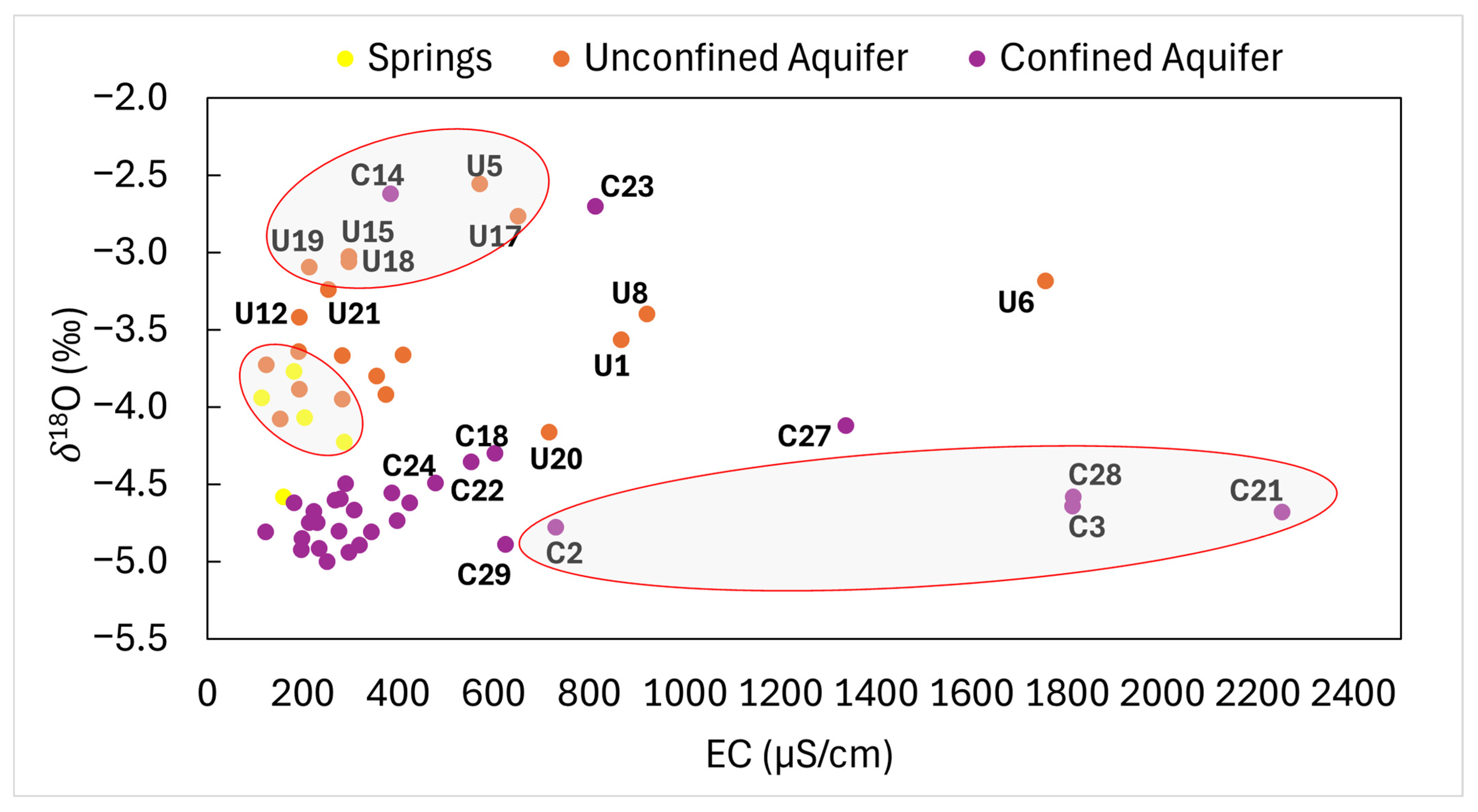
The weak correlation between EC and δ18O (Figure 13) in all sampling groups (r2 < 0.10) indicates seawater influence is not the only mechanism driving groundwater salinization. Groundwaters affected by evaporite dissolution are usually marked by high EC, an enrichment in Na+, Cl, Ca2+, SO42− and in minor elements such as K+, Li+, B3+, Ba2+ and Sr2+, and elevated SO42−/Cl and Ca2+/HCO3 ratios, further indicative of dissolution of gypsum/anhydrite from diapiric structures. Furthermore, samples with increased EC without correspondent isotopic effect usually indicate salt dissolution [10]. This fingerprint is identified in samples U1, U6, C23 and C29, which are enriched in Ca2+ and SO42− with limited contribution of typical marine salts indicated by Cl, supporting the dissolution of gypsum/anhydrite from evaporites.
Evaporation effects are identified by enrichment in heavy isotopes in samples U5, U17, U15, U17, U18, U19 and C14. Most of these samples were collected either from small agricultural fields and orchards (U5, U15, U17, U19) or in open wells subject to groundwater evaporation (U18). Some samples show mixed signatures reflecting the simultaneous influence of multiple processes. Sample C27 presents Cl/Br and SO42−/Cl ratios very similar to seawater, indicating dominant marine control, but its enriched stable isotope composition points to additional evaporation associated with fractionation processes before recharge. The higher Na+/Cl ratio relative to seawater marks an additional input of Na+, likely related to silicate weathering reactions. Sample C23 shows the same evaporative isotopic fingerprint and Na+ enrichment (Na+/Cl > 1), but its high SO42−/Cl and Ca2+/HCO3 ratios indicate evaporite dissolution, consistent with its location in the eastern part of the area, influenced by diapiric.
Springs generally show evidence of evaporation through enrichment in heavy stable isotopes. Although EC is low (<300 µS/cm), the Cl/Br and Na+/Cl ratios of S1, S2, S3 and S5 are consistent with seawater influence (0.86 ± 0.02). SO42−/Cl ratios are higher than seawater standard value (0.05) in all samples, indicating contribution of evaporite dissolution and supported by elevated Ca2+/HCO3 ratios, especially in S2 (5.16) and S5 (5.00).

4. Conclusions

The integrated hydrochemical and isotopic characterization of the aquifer revealed distinct groundwater regimes related to recharge sources, ion exchange processes, and residence times, and allowed the identification of salinity sources.
The unconfined aquifer is dominated by Ca-HCO3 facies, indicating recent recharge and short residence times, with chemical composition mainly controlled by carbonate dissolution, also reflected in the higher pH values. This aquifer presents higher Eh and PCO2 compared to the confined samples due to the influence of biological activity and soil aeration. The confined aquifer is characterized predominantly by Na-Cl groundwater type. Nevertheless, Ca-HCO3 groundwaters are found in the eastern and northeastern regions, indicating inland recharge areas. Moreover, it is characterized by lower Eh, higher temperatures and generally higher and less variable concentrations of minor and trace elements like Fe, As, Cd and Al. Springs show mixed signatures, indicating hydraulic connectivity and vertical mixing between aquifer units.
Stable isotope data support groundwater sources and flow interpretation with unconfined groundwater enriched in heavy isotopes and aligned with the LMWL, consistent with modern recharge and greater influence of evaporation, confined groundwater depleted in heavy isotopes and do not match the LMWL, suggesting the dominance of older waters, and springs showing intermediate isotopic signatures, distributed along the RMWL, consistent with mixing between waters of different origins.
Salinization is mainly controlled by two processes: seawater intrusion and evaporite dissolution. These processes were distinguished using a multi-tracer approach combining hydrochemical facies analysis, ionic ratios evaluation and isotopic data. Moreover, considering location, depth, groundwater flow paths and the distinct hydrogeological regimes is essential to understand salinity sources in groundwater. While seawater intrusion prevails close to the coast in the north-western part of the aquifer, the dissolution of evaporites affects both coastal and inland areas. The observed hydrogeochemical patterns show other important water–rock interaction processes such as ion exchange and mineral weathering, highlighting the differences between confined and unconfined regimes and showing the multiple and complex reactions system shaping groundwater composition. The results also recognize the influence of anthropogenic pressures, capable of intensifying salinization and modifying geochemical and isotopic patterns.
The main limitations of this study are related to the temporal gap between sampling campaigns in confined (April/2019) and unconfined (April/2023) aquifers. Groundwater chemistry, especially in unconfined systems, can suffer significant seasonal and interannual variations driven by climate, geogenic processes and human activities, so data from different periods may represent different hydrological conditions, complicating data integration and direct comparison. Changes in groundwater recharge caused by extreme weather events such as droughts and wildfires can alter trade-offs between water cycle compartments, including the flow between aquifer layers, changing salinity patterns and ionic ratios. Other factors such as modifications in land use and abstraction patterns may also affect interpretation when sampling campaigns are temporally spaced, because each dataset will capture the state of the aquifer in a specific time, which can lead to incomplete or inaccurate conclusions regarding hydrochemical evolution of groundwater. Therefore, synchronized sampling campaigns should be prioritized, when possible, to validate interpretation and reduce uncertainties.
Considering the complex interactions between natural and anthropogenic salinization mechanisms is crucial for designing effective management and adaptation strategies, capable of anticipating natural, human and climate-induced pressures targeting the most vulnerable areas of the aquifer. In this process, the installation of long-term monitoring networks, employing both chemical and isotopic tracers, is essential to track trends, detect shifts in dominant processes that may intensify environmental stress, and help in the installation of future abstraction points in areas less affected by the elevated salinity. The development of a consistent monitoring plan considering spatial distribution and depth of sampling points, elements of interest and appropriate sampling frequency is keen to improve aquifer resilience, guaranteeing water supply for the population and the sustainable management of water resources.

Supplementary Materials

The following supporting information can be downloaded at: https://www.mdpi.com/article/10.3390/w18020252/s1, Table S1: Isotopic database used in the characterization of rainwater, springs, confined aquifer and unconfined aquifer in the Vieira de Leiria-Marinha Grande aquifer system-Portugal.

Author Contributions

Conceptualization, M.L.P.C. and M.T.C.d.M.; methodology, M.L.P.C. and M.T.C.d.M.; formal analysis, M.L.P.C.; investigation, M.L.P.C. and J.W.; data curation, M.L.P.C. and J.W.; writing—original draft preparation, M.L.P.C.; writing—review and editing, M.L.P.C. and M.T.C.d.M.; supervision, M.T.C.d.M.; funding acquisition, M.L.P.C. and M.T.C.d.M. All authors have read and agreed to the published version of the manuscript.

Funding

This research was funded in whole or in part by the Fundação para a Ciência e a Tecnologia, I.P. (FCT, https://ror.org/00snfqn58, accessed on 15 November 2025) under a PhD scholarship (10.54499/2021.06868.BD) and under Grant UID/6438/2025 (https://doi.org/10.54499/UID/06438/2025) of the University of Lisbon Institute of Civil Engineering Research and Innovation for Sustainability (CERIS) research unit. For the purpose of Open Access, the author has applied a CC-BY public copyright license to any Author’s Accepted Manuscript (AAM) version arising from this submission.

Data Availability Statement

The raw data supporting the conclusions of this article will be made available by the authors on request.

Acknowledgments

The authors would like to thank Fundação para a Ciência e Tecnologia (FCT) support through funding a PhD scholarship (10.54499/2021.06868.BD) carried out at the research unit Civil Engineering Research and Innovation for Sustainability (CERIS). We would like also to acknowledge the European Commission for funding a 2-year Erasmus Mundus scholarship for following the Joint Master Degree Programme on Groundwater and Global Change—Impacts and Adaptation; Municipality of Marinha Grande; the Portuguese Institute of Conservation of the Nature and Forests (ICNF), the Portuguese Air Force.

Conflicts of Interest

The authors declare no conflicts of interest.

Abbreviations

The following abbreviations are used in this manuscript:
DODissolved Oxygen
ECElectrical Conductivity
PCO2Parcial CO2 pressure
OLSOrdinary Least Squares Regression
RMAReduced Major Axis Regression
PWLSPrecipitation Weighted Least Squares Regression
RSPSão Pedro de Moel stream
LMWLLocal Meteoric Water Line
RMWLRegional Meteoric Water Line
GMWLGlobal Meteoric Water Line

References

  1. Diamond, R.E. Stable Isotope Hydrology; Kalin, R., Poeter, E., Cherry, J., Eds.; The Groundwater Project: Guelph, ON, Canada, 2022; ISBN 978-1-77470-043-3. [Google Scholar]
  2. El Ouali, A.; Roubil, A.; Lahrach, A.; El Hmaidi, A.; El Ouali, A.; Ousmana, H.; Bouchaou, L. Assessments of Groundwater Recharge Process and Residence Time Using Hydrochemical and Isotopic Tracers under Arid Climate: Insights from Errachidia Basin (Central-East Morocco). Groundw. Sustain. Dev. 2024, 25, 101145. [Google Scholar] [CrossRef]
  3. Santoni, S.; Huneau, F.; Garel, E.; Celle-Jeanton, H. Multiple Recharge Processes to Heterogeneous Mediterranean Coastal Aquifers and Implications on Recharge Rates Evolution in Time. J. Hydrol. 2018, 559, 669–683. [Google Scholar] [CrossRef]
  4. Yeh, H.F.; Lee, J.W. Stable Hydrogen and Oxygen Isotopes for Groundwater Sources of Penghu Islands, Taiwan. Geosciences 2018, 8, 84. [Google Scholar] [CrossRef]
  5. Eid, M.H.; Eissa, M.; Mohamed, E.A.; Ramadan, H.S.; Czuppon, G.; Kovács, A.; Szűcs, P. Application of Stable Isotopes, Mixing Models, and K-Means Cluster Analysis to Detect Recharge and Salinity Origins in Siwa Oasis, Egypt. Groundw. Sustain. Dev. 2024, 25, 101124. [Google Scholar] [CrossRef]
  6. Paíz, R.; Low-Calle, J.F.; Molina-Estrada, A.G.; Gil-Villalba, S.; Condesso de Melo, M.T. Combining Spectral Analysis and Geochemical Tracers to Investigate Surface Water–Groundwater Interactions: A Case Study in an Intensive Agricultural Setting (Southern Guatemala). Sci. Total Environ. 2023, 899, 165578. [Google Scholar] [CrossRef]
  7. Zhang, Q.; Liu, H.; Zu, P.; Xu, W.; Su, X. Evaluation of the Influence of River Bank Infiltration on Groundwater in an Inland Alluvial Fan Using Spectral Analysis and Environmental Tracers. Hydrogeol. J. 2021, 29, 1117–1128. [Google Scholar] [CrossRef]
  8. Eastoe, C.J. Isotope Record of Groundwater Recharge Mechanisms and Climate Change in Southwestern North America. Appl. Geochem. 2023, 151, 105604. [Google Scholar] [CrossRef]
  9. Araguás-Araguás, L.; Gonfiantini, R. Environmental Isotopes in Sea Water Intrusion Studies; IAEA: Vienna, Austria, 1989. [Google Scholar]
  10. Carreira, P.M.; Marques, J.M.; Nunes, D. Source of Groundwater Salinity in Coastline Aquifers Based on Environmental Isotopes (Portugal): Natural vs. Human Interference. A Review and Reinterpretation. Appl. Geochem. 2014, 41, 163–175. [Google Scholar] [CrossRef]
  11. Wallström, J. Groundwater Quality Constraints in the Vieira de Leiria-Marinha Grande Aquifer: Implications for Further Development under Global Changes. Master’s Thesis, Instituto Superior Técnico, Lisbon, Portugal, 2019. [Google Scholar]
  12. Zbyszewski, G.; Torre de Assunção, C. Notícia Explicativa da Folha 22-D—Marinha Grande. In Carta Geológica de Portugal na Escala de 1/50 000; Laboratório Nacional de Energia e Geologia: Amadora, Portugal, 1965; pp. 1–46. [Google Scholar]
  13. Almeida, C.; Mendonça, J.J.L.; Jesus, M.R.; Gomes, A.J. Sistemas Aquíferos de Portugal Continental; Centro de Geologia da Universidade de Lisboa & Instituto Nacional da Água: Lisbon, Portugal, 2000. [Google Scholar]
  14. Dias, P.A.C. Modelação Estrutural e Gravimétrica da Estrutura Salífera de Monte Real (Leiria, Portugal). Master’s Thesis, Universidade de Coimbra, Coimbra, Portugal, 2017. [Google Scholar]
  15. Kullberg, J.C.R.; Rocha, R.B.; Soares, A.F.; Rey, J.; Terrinha, P.; Azerêdo, A.C.; Callapez, P.; Duarte, L.V.; Kullberg, M.C.; Martins, L.; et al. A Bacia Lusitaniana: Estratigrafia, Paleogeografia e Tectónica. In Geologia de Portugal: Geologia Meso-Cenozóica de Portugal; Dias, R., Araújo, A., Terrinha, P., Kullberg, J.C., Eds.; Escolar: Lisbon, Portugal, 2013; Volume II, pp. 195–347. ISBN 978-972-592-364-1. [Google Scholar]
  16. Zbyszewski, G. Notícia Explicativa da Folha 22-B—Vieira de Leiria. In Carta Geológica de Portugal na Escala de 1/50 000; Laboratório Nacional de Energia e Geologia: Amadora, Portugal, 1965; pp. 1–21. [Google Scholar]
  17. Kullberg, J.C.R. Evolução Tectónica Mesozóica da Bacia Lusitaniana; Universidade Nova de Lisboa: Lisboa, Portugal, 2000. [Google Scholar]
  18. Kullberg, J.; Rocha, R.; Rey, J. A Bacia Lusitaniana: Estratigrafia, Paleogeografia e Tectónica. In Geologia de Portugal no Contexto da Ibéria; Dias, R., Araújo, A., Terrinha, P., Kullberg, J.C., Eds.; Universidade de Évora: Évora, Portugal, 2006; pp. 317–368. [Google Scholar]
  19. Calvín, P.; Oliva-Urcia, B.; Kullberg, J.C.; Torres-López, S.; Casas-Sainz, A.; Villalaín, J.J.; Soto, R. Applying Magnetic Techniques to Determine the Evolution of Reactive Diapirs: A Case Study of the Lusitanian Basin. Tectonophysics 2023, 868, 230088. [Google Scholar] [CrossRef]
  20. Casacão, J.; Silva, F.; Rocha, J.; Almeida, J.; Santos, M. Aspects of Salt Diapirism and Structural Evolution of Mesozoic-Cenozoic Basins at the West Iberian Margin. Am. Assoc. Pet. Geol. Bull. 2023, 107, 49–85. [Google Scholar] [CrossRef]
  21. Davison, I.; Barreto, P. Deformation and Sedimentation Processes, and Hydrocarbon Accumulations on Upturned Salt Diapir Flanks in the Lusitanian Basin, Portugal. Pet. Geosci. 2019, 27, petgeo2019-138. [Google Scholar] [CrossRef]
  22. Kottek, M.; Grieser, J.; Beck, C.; Rudolf, B.; Rubel, F. World Map of the Köppen-Geiger Climate Classification Updated. Meteorol. Z. 2006, 15, 259–263. [Google Scholar] [CrossRef] [PubMed]
  23. La Pasta Cordeiro, M.; Nunes, J.P.; Condesso de Melo, M.T. Impact of Wildfires on Spatial and Temporal Evolution of Groundwater Recharge in an Atlantic Pine Forest: An Integrated Approach Using Field, Remote Sensing and Modeling. J. Hydrol. Reg. Stud. 2025, 59, 102408. [Google Scholar] [CrossRef]
  24. Parkhurst, D.L.; Appelo, C.A.J. User’s Guide to PHREEQC (Version 2): A Computer Program for Speciation, Batch-Reaction, One-Dimensional Transport, and Inverse Geochemical Calculations; Water-Resources Investigations Report 99-4259; U.S. Geological Survey: Reston, VA, USA, 1999. [Google Scholar] [CrossRef]
  25. Helsel, D.R.; Hirsch, R.M. Statistical Methods in Water Resources; U.S. Geological Survey: Reston, VA, USA, 2002. [Google Scholar]
  26. Hughes, C.E.; Crawford, J. A New Precipitation Weighted Method for Determining the Meteoric Water Line for Hydrological Applications Demonstrated Using Australian and Global GNIP Data. J. Hydrol. 2012, 464–465, 344–351. [Google Scholar] [CrossRef]
  27. Crawford, J.; Hughes, C.E.; Lykoudis, S. Alternative Least Squares Methods for Determining the Meteoric Water Line, Demonstrated Using GNIP Data. J. Hydrol. 2014, 519, 2331–2340. [Google Scholar] [CrossRef]
  28. Hem, J.D. Study and Interpretation of the Chemical Characteristics of Natural Water; U.S. Geological Survey: Reston, VA, USA, 1985. [Google Scholar]
  29. Eklund, T.J.; Mcdowell, W.H.; Pringle, C.M. Seasonal Variation of Tropical Precipitation Chemistry: La Selva, Costa Rica. Atmos. Environ. 1997, 31, 3903–3910. [Google Scholar] [CrossRef]
  30. Busby, J.; Lewis, M.; Reeves, H.; Lawley, R. Initial Geological Considerations before Installing Ground Source Heat Pump Systems. Q. J. Eng. Geol. Hydrogeol. 2009, 42, 295–306. [Google Scholar] [CrossRef]
  31. Bloomfield, J.P.; Jackson, C.R.; Stuart, M.E. Changes in Groundwater Levels, Temperature and Quality in the UK over the 20th Century: An Assessment of Evidence of Impacts from Climate Change. 2013. Available online: https://nora.nerc.ac.uk/id/eprint/503271/ (accessed on 10 July 2025).
  32. Szczucińska, A.M.; Wasielewski, H. Seasonal Water Temperature Variability of Springs from Porous Sediments in Gryżynka Valley, Western Poland. Quaest. Geogr. 2013, 32, 111–117. [Google Scholar] [CrossRef]
  33. Alcalá, F.J.; Custodio, E. Using the Cl/Br Ratio as a Tracer to Identify the Origin of Salinity in Aquifers in Spain and Portugal. J. Hydrol. 2008, 359, 189–207. [Google Scholar] [CrossRef]
  34. Condesso de Melo, M.T. Flow and Hydrogeochemical Mass Transport Model of the Aveiro Cretaceous Multilayer Aquifer (Portugal). Ph.D. Thesis, University of Aveiro, Aveiro, Portugal, 2002. [Google Scholar]
  35. Zhuang, L.; Song, Y.; Leach, D.; Liu, Y.; Hou, Z.; Fard, M. Vanished Evaporites, Halokinetic Structure, and Zn-Pb Mineralization in the World-Class Angouran Deposit, Northwestern Iran. Bull. Geol. Soc. Am. 2024, 136, 1569–1586. [Google Scholar] [CrossRef]
  36. Taghipour, S.; Khalili, M.; MacKizadeh, M.A.; Kananian, A.; Taghipour, B. Mineralogy, Geochemistry and Petrogenesis of Igneous Inclusions within Three Inactive Diapirs, Zagros Belt, Shahre-Kord, Iran. Geol. Mag. 2013, 150, 72–88. [Google Scholar] [CrossRef]
  37. Zhao, Y.; Wei, H.Z.; Liu, X.; Wang, Y.J.; Jiang, S.Y.; Eastoe, C.J.; Peryt, T.M. Isotope Evidence for Multiple Sources of B and Cl in Middle Miocene (Badenian) Evaporites, Carpathian Mountains. Appl. Geochem. 2021, 124, 104819. [Google Scholar] [CrossRef]
  38. Jasechko, S. Global Isotope Hydrogeology―Review. Rev. Geophys. 2019, 57, 835–965. [Google Scholar] [CrossRef]
  39. Araguás-Araguás, L.; Froehlich, K.; Rozanski, K. Deuterium and Oxygen-18 Isotope Composition of Precipitation and Atmospheric Moisture. Hydrol. Process 2000, 14, 1341–1355. [Google Scholar] [CrossRef]
  40. Marchina, C.; Zuecco, G.; Chiogna, G.; Bianchini, G.; Carturan, L.; Comiti, F.; Engel, M.; Natali, C.; Borga, M.; Penna, D. Alternative Methods to Determine the Δ2H-Δ18O Relationship: An Application to Different Water Types. J. Hydrol. 2020, 587, 124951. [Google Scholar] [CrossRef]
  41. Putman, A.L.; Fiorella, R.P.; Bowen, G.J.; Cai, Z. A Global Perspective on Local Meteoric Water Lines: Meta-Analytic Insight Into Fundamental Controls and Practical Constraints. Water Resour. Res. 2019, 55, 6896–6910. [Google Scholar] [CrossRef]
  42. Harper, W.V. Reduced Major Axis Regression. In Wiley StatsRef: Statistics Reference Online; Wiley: Hoboken, NJ, USA, 2016; pp. 1–6. [Google Scholar]
  43. Craig, H. Isotopic Variations in Meteoric Waters. Science 1961, 177, 1702–1703. [Google Scholar] [CrossRef]
  44. Dansgaard, W. Stable Isotopes in Precipitation. Tellus 1964, 16, 436–468. [Google Scholar] [CrossRef]
  45. Carreira, P.M.M.; Araujo, M.F.; Nunes, D. Isotopic Composition of Precipitation in the Mediterranean Basin in Relation to Air Circulation and Climate; IAEA: Vienna, Austria, 2005. [Google Scholar]
  46. Clark, I.D.; Fritz, P. Environmental Isotopes in Hydrogeology; Lewis Publishers: New York, NY, USA, 1997; ISBN 1566702496. [Google Scholar]
  47. Bershaw, J. Controls on Deuterium Excess across Asia. Geosciences 2018, 8, 257. [Google Scholar] [CrossRef]
Figure 1. Topographic map of the study area location with the river network displayed and the main cities highlighted.
Water 18 00252 g001
Figure 2. (a) Geological setting of the aquifer system and (b) geological section (A–A′) of the area with the main geological layers and flow lines.
Water 18 00252 g002
Figure 3. Location of the study area with the monitoring network established in the confined and unconfined aquifers, surface water and springs.
Water 18 00252 g003
Figure 4. Hydrochemical composition of rainwater (n = 9). (a) Cations and (b) anions distribution in the water samples in meq L−1 and (c) Blox-plot distribution of major ions in rainwater samples.
Water 18 00252 g004
Figure 5. Piper plot showing groundwater, surface water, rainwater and spring water in the Vieira de Leiria–Marinha Grande multilayer aquifer.
Water 18 00252 g005
Figure 6. Stiff diagram for the groundwater samples in the springs, confined aquifer and unconfined aquifer.
Water 18 00252 g006
Figure 7. Chloride concentration distribution (mg/L) in (a) unconfined (July 2023) and (b) confined (April 2019) aquifers.
Water 18 00252 g007
Figure 8. Hydrochemical parameters (a) EC (µS/cm); (b) seawater contribution (%); redox potential in (c) unconfined aquifer and springs and (d) confined aquifer; (e) temperature (°C); (f) pH; (g) dissolved oxygen (DO), and (h) PCO2 (atm) distributed according to the distance from the coast, the blue ellipse indicates a trend along the SE-NW flow path in the northern part of the area. The black dashed lines represent the area most influenced by seawater while the red dashed lines mark the redox boundary identified in the area.
Water 18 00252 g008
Figure 9. Variation in (a) Na+/Cl, (b) Na+/Ca2+, (c) Cl/Br molar ratios with increasing distance from the coast and (d) relation between SO42− and Cl in groundwater samples.
Water 18 00252 g009
Figure 10. Evolution of δ18O, δ2H and d-excess in rainfall during the monitoring period of October 2022 to September 2023.
Water 18 00252 g010
Figure 11. Global Meteoric Water Line (GMWL) and Local Meteoric Water Lines calculated using distinct regression techniques for the Leiria Pine Forest using precipitation data from March 2022 to October 2023.
Water 18 00252 g011
Figure 12. Global Meteoric Water Line (GMWL), Regional Meteoric Water Line (RMWL), Local Meteoric Water Line (LMWL) and isotope signatures for different sampled water groups. The unconfined aquifer is represented by the median values for the isotopic samples collected from February to May 2023 and the confined aquifer is represented by samples collected in April 2019.
Water 18 00252 g012
Figure 13. δ18O vs. EC for groundwater samples from the confined aquifer, unconfined aquifer and springs. The red circles highlight the groups of samples affected by different salinization processes.
Water 18 00252 g013
Table 1. Chemical molar ratios in rainwater compared to the molar rations found in seawater. The seawater chemical composition was based on the results presented in Hem (1985) [28].
Precipitation (mm/Month)Na+/Ca2+K+/Na+Mg2+/Na+Mg2+/Ca2+Na+/ClHCO3/ClSO42−/Cl
Seawater104.744.650.020.125.430.850.00430.05
R1October-2022117.90.940.150.200.190.881.660.09
R2November-2022200.54.470.030.080.351.640.760.09
R3December-2022124.31.910.020.090.173.077.450.20
R4January-202310.85.730.030.110.610.910.070.05
R5February-202345.21.520.050.190.291.020.700.09
R7March-202315.32.460.030.130.331.000.360.06
R7April-2023282.820.070.130.360.960.290.07
R8May-202319.71.410.180.180.260.861.210.08
R9June-2023 0.620.290.270.161.064.140.08
Table 2. Seawater and other sources contribution in rainwater composition.
Major Ions (mmol/L)Seawater
Composition
R1R2R3R4
October-2022November-2022December-2022January-2023
Rainwater
Composition
Seawater
Contribution
Other SourcesRainwater
Composition
Seawater
Contribution
Other SourcesRainwater
Composition
Seawater
Contribution
Other SourcesRainwater
Composition
Seawater
Contribution
Other Sources
Na+456.80.160.150.010.360.220.140.340.090.241.001.01−0.01
K+100.020.000.020.010.000.010.010.000.010.030.020.01
Ca2+10.20.170.000.160.080.000.080.180.000.180.170.020.15
Mg2+55.50.030.020.010.030.030.000.030.010.020.110.12−0.02
Cl5360.180.180.000.250.250.000.110.110.001.181.180.00
SO42−28.10.020.010.010.020.010.010.020.010.020.060.060.00
fsw 0.0003 0.0005 0.0002 0.0022
Major Ions (mmol/L)R5R6R7R8R9
February-2023March-2023April-2023May-2023June-2023
Rainwater
Composition
Seawater
Contribution
Other SourcesRainwater
Composition
Seawater
Contribution
Other SourcesRainwater CompositionSeawater
Contribution
Other SourcesRainwater
Composition
Seawater
Contribution
Other SourcesRainwater
Composition
Seawater
Contribution
Other Sources
Na+0.240.200.040.370.310.060.350.310.040.190.180.000.170.130.04
K+0.010.000.010.010.010.000.020.010.020.030.000.030.050.000.05
Ca2+0.160.000.150.150.010.140.120.010.120.130.000.130.270.000.27
Mg2+0.050.020.020.050.040.010.050.040.010.030.020.010.050.020.03
Cl0.230.230.000.370.370.000.370.370.000.210.210.000.160.160.00
SO42−0.020.010.010.020.020.000.020.020.000.020.010.010.010.010.00
fsw0.0004 0.0007 0.0007 0.0004 0.0003
Table 3. Main statistics for the physical–chemical parameters and major ions for the water samples collected in the study area. The samples from the confined aquifer were collected in April 2019, while the samples from the unconfined aquifer and springs were collected during the period from October 2022 to September 2023. The number of samples of springs and the unconfined aquifer for the statistical analysis of major ions were n = 7 and n = 22 and n = 60 and n = 239, respectively.
Samples Physical Chemical ParametersMajor Ions (mg L−1)
pHT (°C)EC (mS/cm)Eh (mV)DO (mg/L)Na+Mg2+K+Ca2+HCO3ClSO42−
Springs (n = 7 and n = 60)MIN5.7414.691332140.600.600.070.040.110.020.690.07
MAX7.1819.572834385.540.880.180.050.821.441.020.21
AVG6.4917.211933313.200.730.130.050.330.490.880.12
SD0.711.29571082.340.110.040.000.280.580.140.07
MED6.6617.161833703.600.740.140.050.240.420.940.07
Range1.444.881502244.940.280.110.010.711.420.320.15
Confined Aquifer (n = 29)MIN5.0915.411222900.000.780.080.050.070.070.500.07
MAX8.3523.36225036210.4211.003.850.296.694.5517.632.71
AVG6.3018.375433174.382.560.830.111.451.282.770.57
SD0.711.67532183.282.740.860.051.651.024.080.61
MED6.2118.063183134.451.370.460.100.841.071.050.33
Range3.267.9521287110.4210.233.770.246.614.4717.132.64
Unconfined Aquifer (n = 22 and n = 239)MIN5.859.331241440.160.340.090.030.150.220.320.01
MAX8.0220.4217564586.837.661.380.593.647.856.690.59
AVG7.4416.224803414.611.500.290.131.212.271.530.15
SD0.502.35362941.961.650.300.130.901.961.560.13
MED7.5716.503633804.930.750.190.101.011.690.800.11
Range2.1711.0916323136.677.321.290.573.497.636.370.57
Surface Water (n = 2)MIN7.4716.124102639.481.540.220.080.891.011.630.49
MAX8.0916.3188333110.423.730.640.201.672.873.950.52
Table 4. Slopes and intercepts of the LMWLs obtained using the different statistical approaches.
OLSRMAPWLS
All SamplesWithout OutliersAll SamplesWithout OutliersAll SamplesWithout Outliers
a5.327.605.708.068.128.45
b−4.534.49−3.506.197.328.60
Disclaimer/Publisher’s Note: The statements, opinions and data contained in all publications are solely those of the individual author(s) and contributor(s) and not of MDPI and/or the editor(s). MDPI and/or the editor(s) disclaim responsibility for any injury to people or property resulting from any ideas, methods, instructions or products referred to in the content.