1. Introduction
With the continuous development of industrialization and urbanization, organic pollution in groundwater is becoming increasingly serious [
1,
2]. Air sparging (AS), valued for its high efficiency, low energy consumption, and minimal secondary pollution, is recognized as one of the most effective techniques for removing volatile organic compounds from groundwater [
3]. In recent years, horizontal well air sparging technology (HAS), distinguished by its remarkable efficiency and ecological compatibility, has garnered growing attention in environmental remediation, emerging as a prominent research focus in the field [
4,
5].
Horizontal wells can operate beneath surface obstacles, effectively minimizing environmental disruption while enhancing remediation efficiency. Moreover, the use of horizontal wells can substantially decrease the number of wells needed for environmental remediation projects. Lundegard et al. [
6] found that the aeration effect of a 90 m long horizontal well installed in the Guadalupe field was comparable to that of 30 vertical wells. Bortone et al. [
7] used Comsol software to simulate the remediation of a uniformly contaminated Cr(VI) aquifer (volume 1400 m
3, pollution plume covering 200 m
2, depth 7 m) with horizontal and vertical wells. Their study showed that the remediation effect of 8 m long horizontal wells was equivalent to that of four vertical wells. Compared to the traditional vertical wellpoint system, horizontal wells function as “line sources”, delivering airflow to contaminated areas more efficiently, making them better suited for regions where pollutants are widely spread horizontally. It has been reported that over one thousand horizontal remediation wells have been applied across various field conditions, generally demonstrating superior performance compared to vertical wells [
8].
The study of airflow distribution in air sparging (AS) technology has attracted considerable attention in environmental science [
9,
10,
11]. Research has shown that the effectiveness of the HAS process depends on factors such as site conditions, injection pressure, flow rate, well depth, and airflow distribution [
12,
13,
14]. Previous studies have characterized the influence of soil particle size [
5], sparger depth [
15], and airflow flux patterns [
16,
17], revealing non-uniform distributions that vary with aquifer properties and sparger configurations. Despite these insights, most investigations have focused on vertical wells, and the airflow patterns observed in such configurations cannot be directly extrapolated to horizontal wells. Consequently, the gas-phase transport characteristics in HAS technology, particularly in horizontal well systems, remain insufficiently understood and warrant further investigation.
Research on pollutant control using HAS technology remains limited. Zheng et al. [
18] demonstrated that air sparging (AS) effectively removed methyl tertiary butyl ether (MTBE) from homogeneous quartz sand. Yao et al. [
19] found that in heterogeneous porous media, the removal rate of highly volatile benzene was higher than that of less volatile naphthalene. Most applications of AS technology for organic pollutant remediation involve a combination of air injection and gas-phase extraction. Yao et al. [
20] reported that airflow generated during HAS application enhanced hydraulic circulation, with nitrobenzene concentrations near the sparger decreasing most rapidly. These findings highlight the significant role of bubble-water interactions in pollutant migration and removal. However, a comprehensive understanding of how airflow migration in aquifers influences pollutant removal is still lacking. Moreover, although AS is widely recognized for its high efficiency in removing VOCs through volatilization and air–water mass transfer, its influence on the transport and retention of non-volatile, dissolved pollutants is still insufficiently understood. In particular, the formation of a gas phase within saturated porous media can alter pore connectivity, reduce effective permeability, and increase interfacial resistance, suggesting that AS may also act as a physical barrier that restricts dissolved contaminant migration. To explore this mechanism, Rhodamine B (RhB) was selected as a representative dissolved tracer. RhB is non-volatile, highly soluble, and easily visualized, making it suitable for quantifying diffusion and migration processes affected by gas-phase formation. By focusing on RhB, this study extends the application of AS beyond volatilization-driven VOC removal and examines its broader potential in controlling the spread of dissolved organic pollutants in groundwater. Further exploration of these aspects is necessary to advance horizontal well aeration technology in environmental remediation.
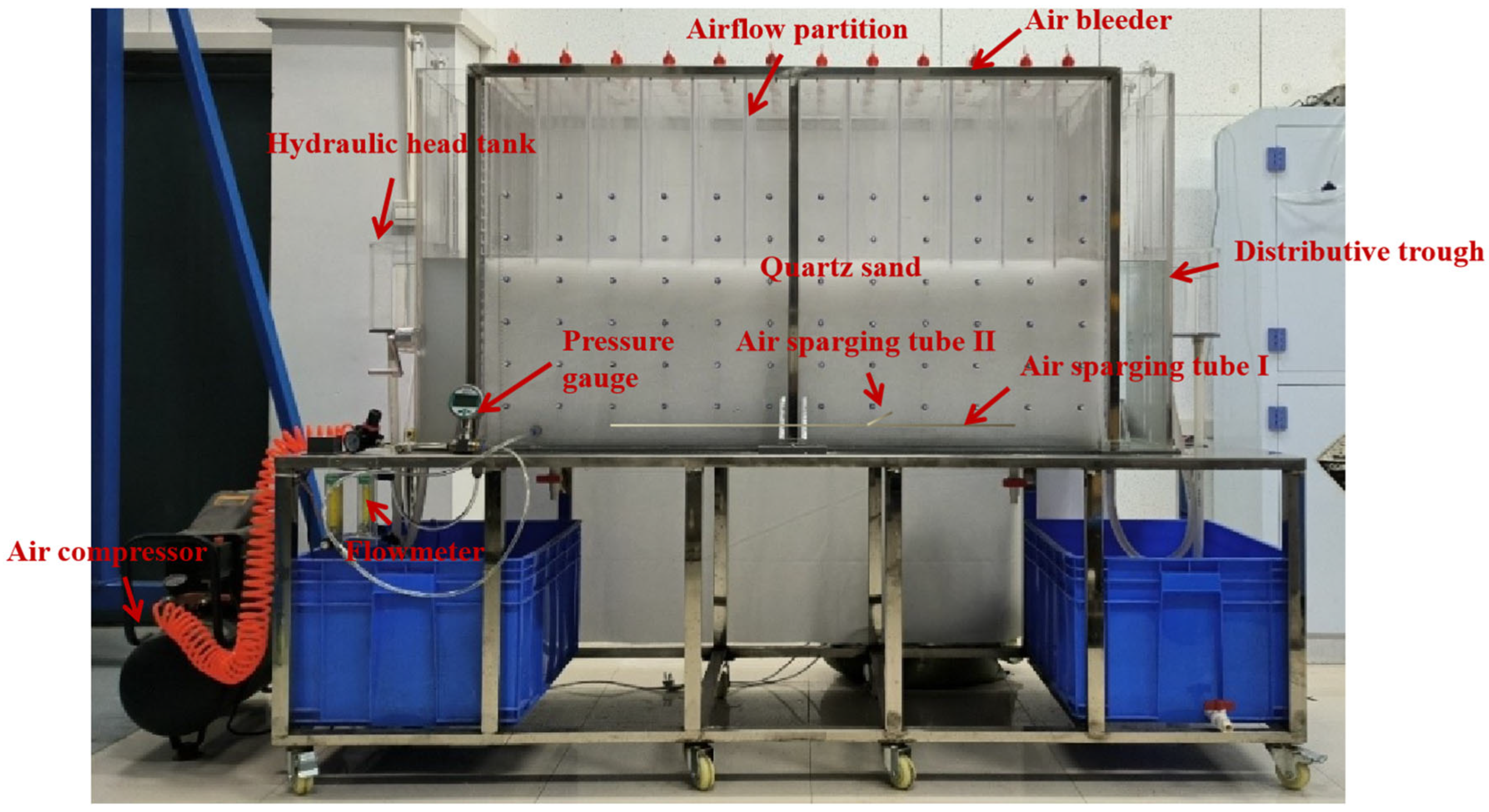
This study investigated the airflow distribution characteristics of HAS technology and its efficacy in blocking pollutant diffusion through airflow barriers. Using sandbox experiments, the effects of HAS pressure, tube burial depth, and groundwater flow on airflow patterns in porous media were evaluated. To explore the aeration characteristics of horizontal wells, AS tubes were arranged in both parallel and perpendicular orientations relative to groundwater flow. RhB was used as a model dissolved pollutant to examine how airflow barriers in different orientations could impede the migration and diffusion of pollutants in groundwater. The novelty of this study lies in its detailed exploration of the interaction between aeration characteristics and groundwater flow conditions in horizontal well systems. By comparing different AS tube arrangements and airflow barriers, this work provides new insights into optimizing pollutant control strategies and improving the efficiency of horizontal well applications for environmental remediation. These findings not only advance our understanding of airflow dynamics in porous media but also offer practical guidance for optimizing horizontal well designs in the field of groundwater pollution control.
3. Results and Discussion
3.1. Airflow Distribution Characteristics of AS Tube I
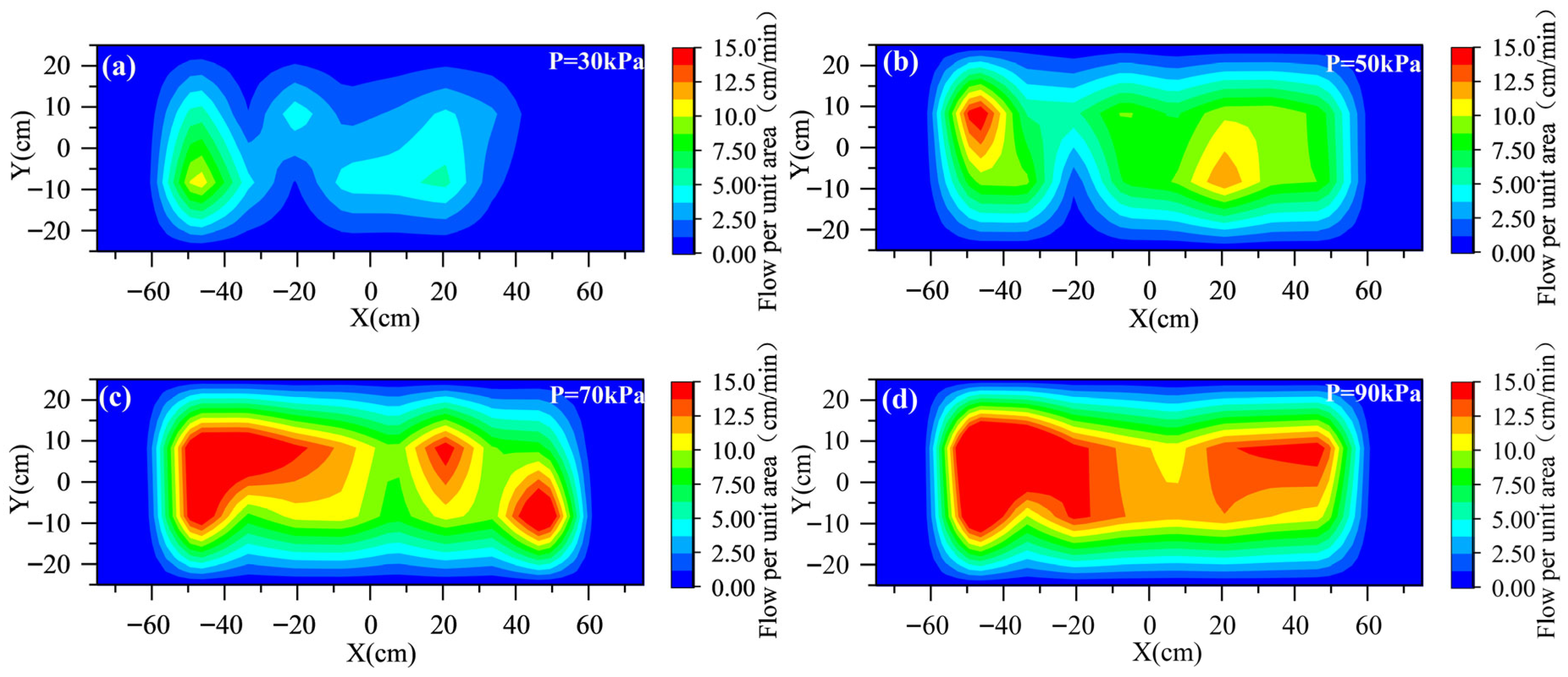
Figure 2 illustrates the distribution characteristics of flow velocity at a burial depth of 10 cm under varying pressures (30–90 kPa). At a pressure of 30 kPa, the flow velocity remained low. As the pressure rose to 50 kPa, the airflow diffusion range expanded significantly, though the distribution was non-uniform, with two high flow velocity regions (preferential flows) forming on either side of the AS tube origin. As the pressure continued to increase, the number of preferential flows rose further, attributed to the elevated aeration pressure, which increased the number of void channels in the porous medium, thereby enhancing the airflow paths and expanding both the number of preferential flows and the airflow diffusion range [
24].
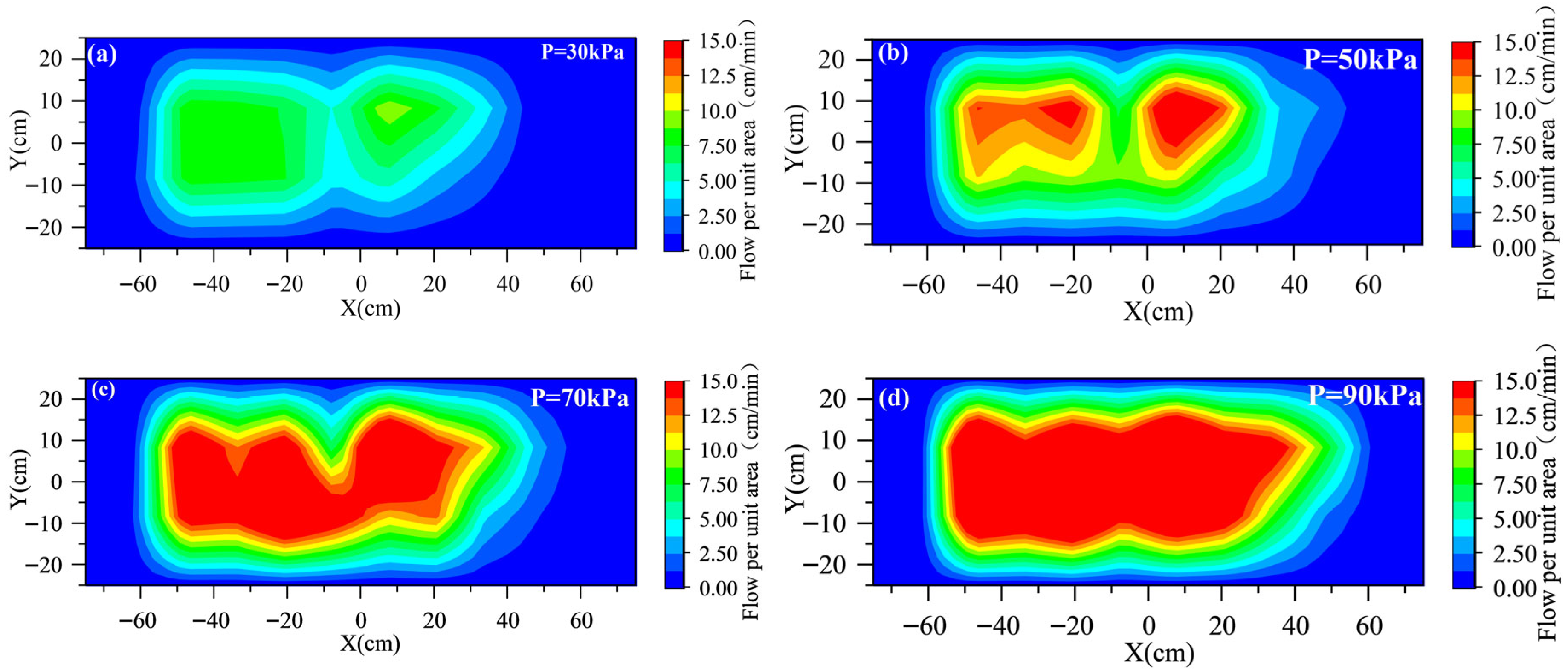
Figure 3 illustrates the distribution characteristics of flow velocity at a burial depth of 20 cm under varying pressures (30–90 kPa). Flow velocity remained low at 30 kPa. The lateral zone of influence (ZOI) area increases from 2356 cm
2 (30 kPa) to 3770 cm
2 (90 kPa), demonstrating a positive correlation between ZOI size and AS pressure. The airflow distribution results of this study are generally consistent with those reported by Zhang et al. [
25], who investigated gas-phase migration in horizontal air sparging systems. Both studies demonstrated that increasing sparging pressure significantly enlarges the ZOI and enhances the uniformity of gas flow.
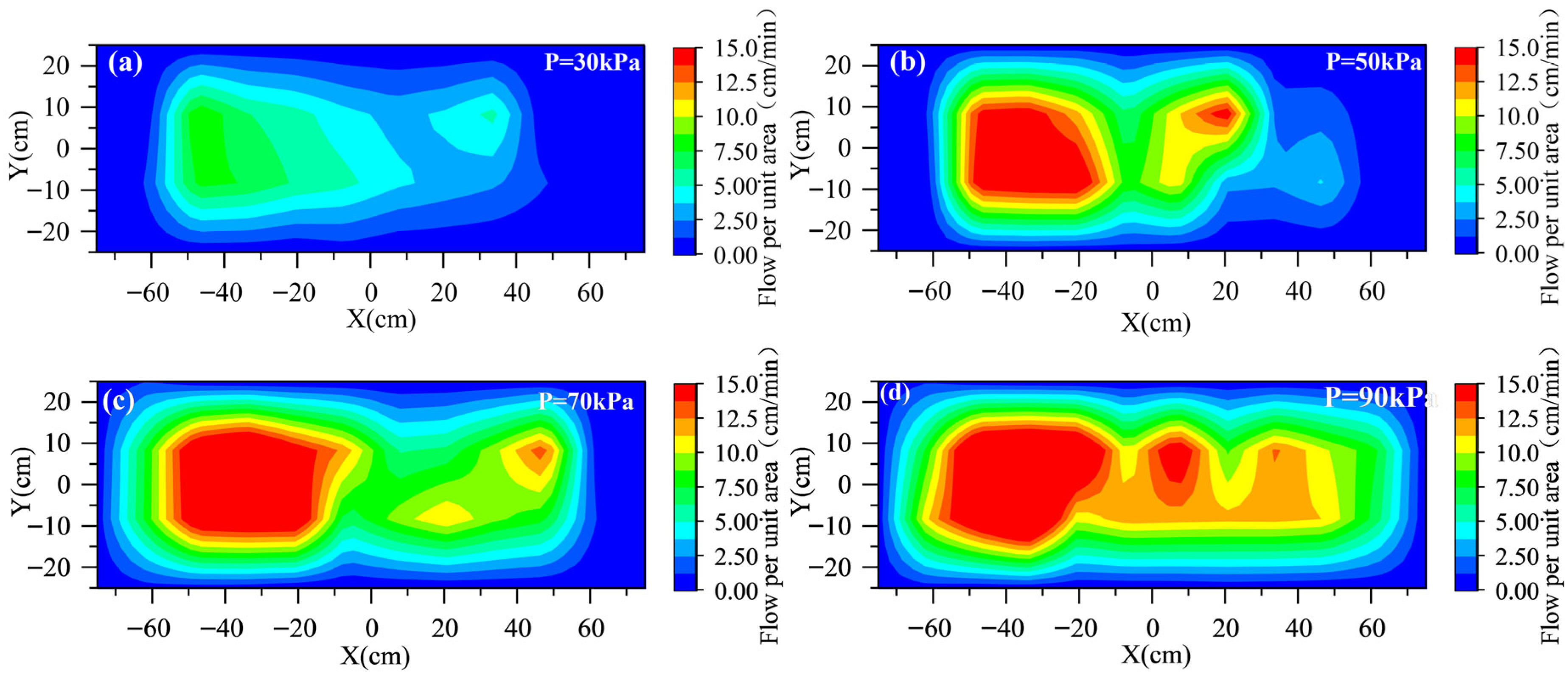
Figure 4 illustrates the distribution characteristics of airflow velocity at a burial depth of 30 cm under varying pressures. As the pressure reached 50 kPa, pronounced preferential flows emerged near the airflow source end. This was primarily due to the significant pressure drop along the AS tube, caused by tube wall friction and the jet flow-induced rough peaks, which led to more pronounced preferential flow at the source end [
19]. As the aeration pressure continued to increase, the airflow distribution became more influenced by the momentum of the airflow itself. The pressure gradually increased along the tube toward the closed end, promoting the diffusion of airflow toward the distal end [
26]. The complex interaction between these factors—momentum transfer, frictional losses, and the pressure increase at the closed end—facilitated the gradual spreading of airflow, despite the resistance from hydrostatic and capillary pressures at the aeration holes. These resistances hindered the formation of large, high-velocity flow regions at the distal end, which was further constrained by the burial depth [
27].
Overall, the flow behavior of airflow in porous media was governed by the combined effects of pressure gradients and burial depth. Elevating aeration pressure significantly enhanced the range and velocity of airflow. However, airflow was also influenced by variations in permeability and flow resistance induced by changes in burial depth. The flow resistance model adopted by Zhang et al. [
25] for air injection in horizontal wells can be used to explain the effects resulting from the increase in burial depth in this study. According to the Ergun-based porous resistance formulation, the pressure drop is positively related to both the flow path length and the porous-medium drag; therefore, when the horizontal sparging tube is placed deeper, the gas has to migrate through a longer saturated layer, resulting in a larger pressure loss and a reduction in gas velocity, even under the same injection pressure. This increased flow resistance weakens the lateral spreading of the gas and leads to a smaller effective ZOI at greater depths, which is consistent with the depth-dependent attenuation of gas migration observed in our experiments and with the mechanism described by Zhang [
25].
3.2. Airflow Distribution Characteristics of AS Tube II
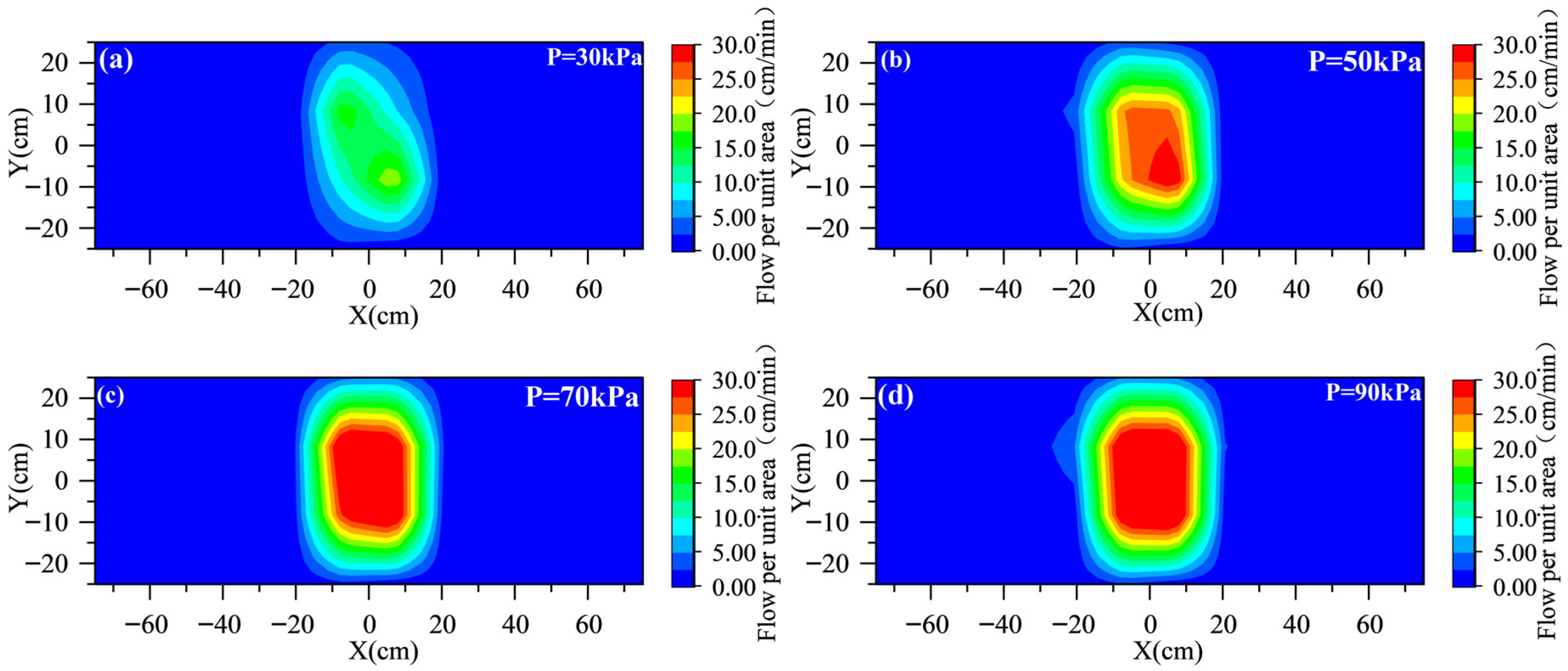
Figure 5 illustrates the airflow velocity distribution characteristics of AS tube II (36 cm in length, positioned perpendicular to AS tube I) under varying pressure conditions (30–90 kPa), with the transverse direction of AS tube II designated as the Y-axis. At 30 kPa, airflow velocity remained low, with limited overall impact force. As pressure rose to 50 kPa, airflow velocity increased markedly, accompanied by an expanded airflow distribution zone, with preferential flows gradually forming near the airflow source end. With further pressure increased to 70 kPa and 90 kPa, airflow velocity continued to rise, culminating in the formation of uniform and concentrated preferential flows above the tube.
In summary, for AS tube II, higher pressures correlated with faster airflow velocities and greater flow concentration. The airflow distribution evolved from a dispersed state at 30 kPa to a highly concentrated state under elevated pressures, underscoring the enhanced impact force and concentration of airflow under high-pressure conditions. Additionally, the AS tube II is relatively short, and the fluid’s flow distance from the inlet to the outlet is short. Although there is friction, the momentum consumed by the frictional resistance is relatively small, and the total momentum within the tube is preserved more completely, facilitating the formation of a uniformly distributed airflow, which was highly effective for retarding and remediating pollution [
19,
28].
3.3. Transverse Airflow Distribution Characteristics of AS Tubes
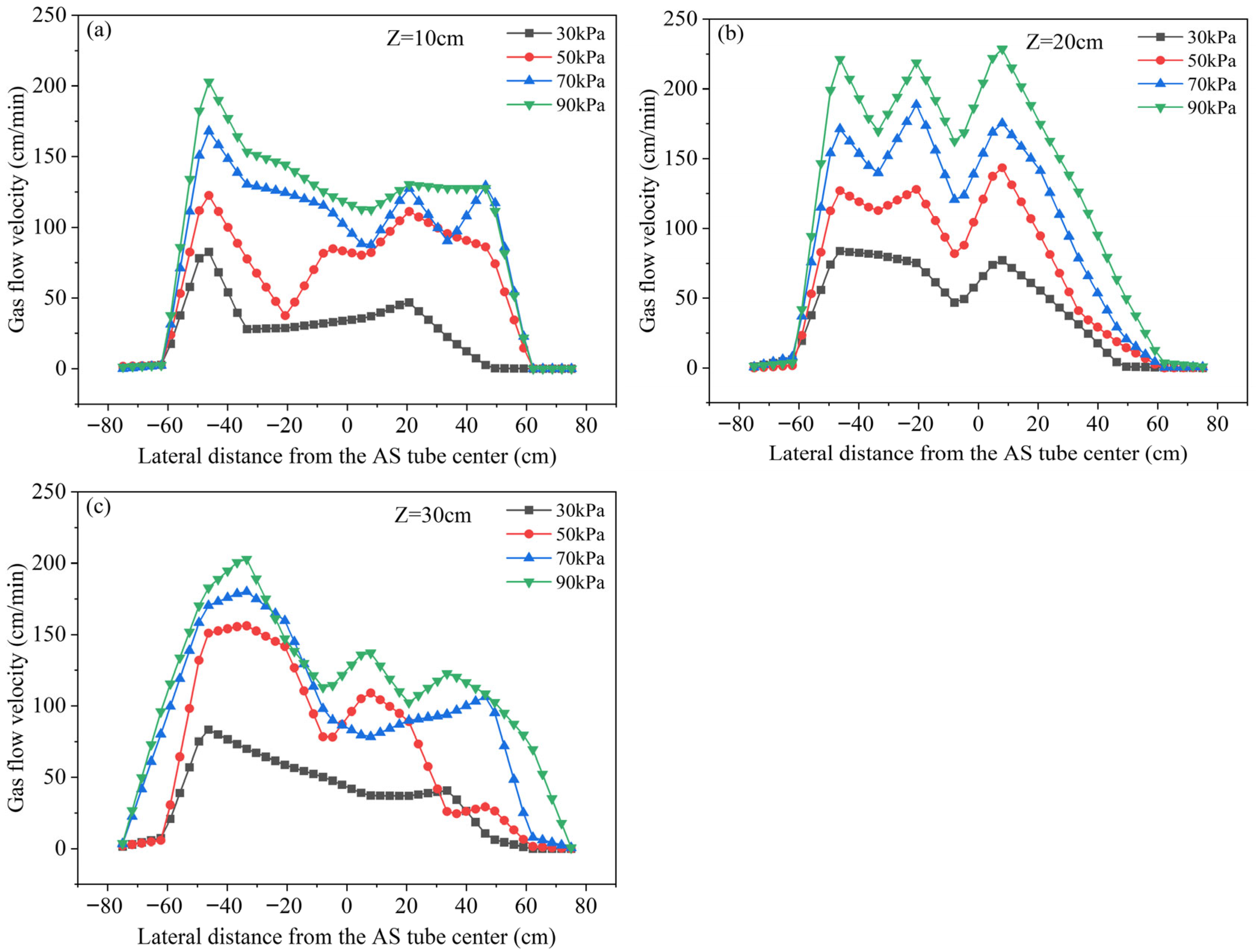
Figure 6a–c illustrate the transverse airflow distribution across different planes (Z = 30 cm, 20 cm, 10 cm) above AS tube I under varying pressures (30–90 kPa). The transverse airflow distribution at the Z = 10 cm plane (
Figure 6a) revealed pronounced airflow fluctuations due to its proximity to the AS tube, with preferential flows concentrated near the airflow source end and a broad transverse influence range. On the Z = 20 cm plane (
Figure 6b), increasing pressure led to a corresponding rise in the airflow rate. The airflow was predominantly distributed directly above the AS tube, exhibiting a relatively uniform trapezoidal pattern with high concentration and limited transverse diffusion capacity. In contrast, the Z = 30 cm plane (
Figure 6c) displayed marked variations in airflow distribution, particularly at X = −38 cm near the airflow source end, where distinct preferential flows emerged under all pressure conditions. Meanwhile, this suggested that as height increases, the airflow distribution transitioned from finger-shaped flows to distinct peak airflows. Additionally, the transverse influence range of airflow on this plane significantly exceeded that on the Z = 20 cm plane, likely due to the greater vertical distance from the aeration holes, where medium resistance slowed the airflow’s ascent, and the compressive effect of underlying airflow promoted lateral diffusion, thereby expanding the transverse influence range of airflow on this plane [
16].
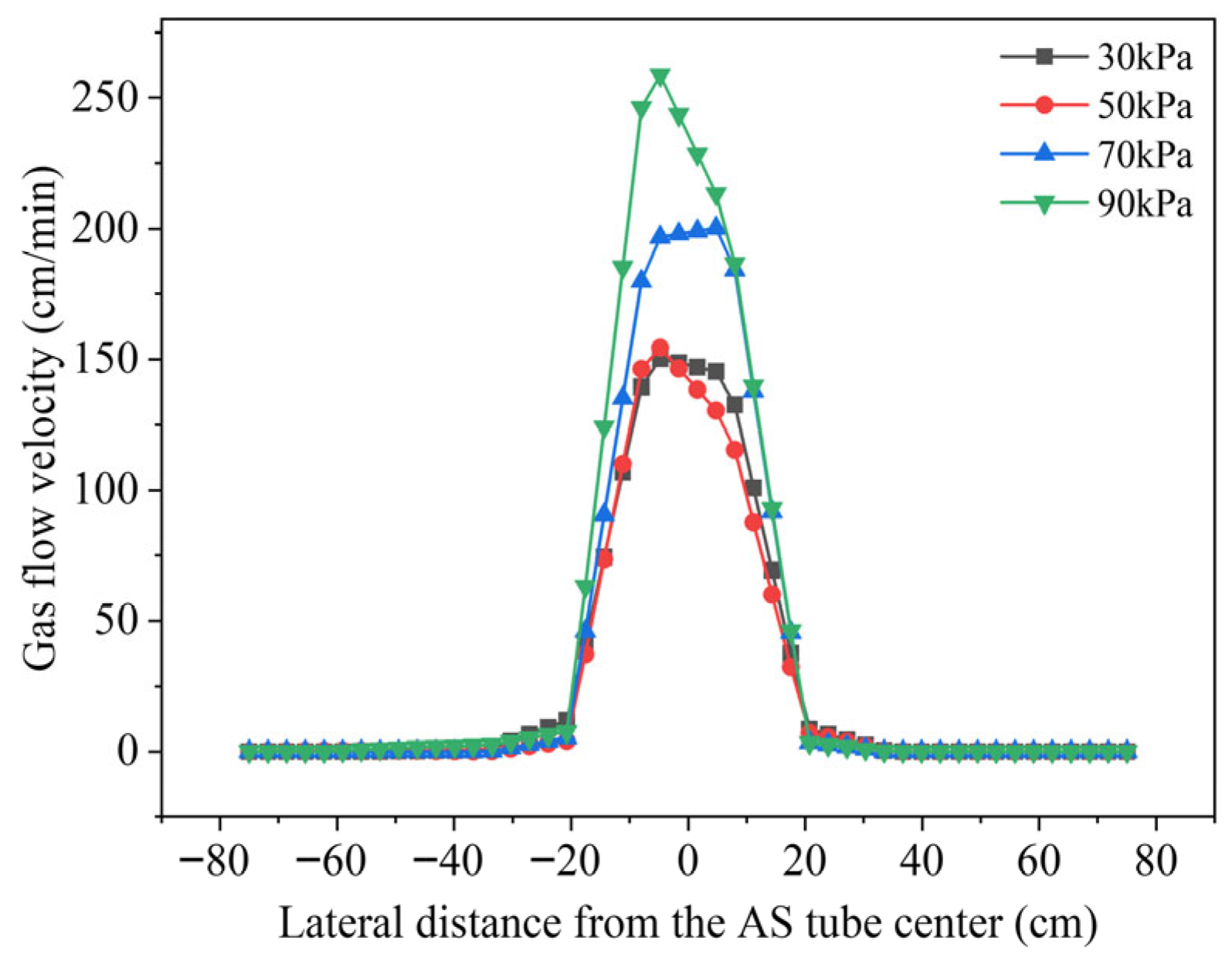
Figure 7 illustrates the transverse airflow distribution of AS tube II at a burial depth of 30 cm under varying pressure conditions (30–90 kPa). The analysis revealed that increasing pressure markedly elevated the peak airflow velocity, rising from approximately 100 cm/min at 30 kPa to about 350 cm/min at 90 kPa. This indicated that a higher pressure gradient effectively overcame the permeability resistance of the porous medium, thereby enhancing airflow migration capacity. At lower pressures, the airflow distribution remained relatively dispersed, hindering the formation of a stable airflow. In contrast, at higher pressures (70 kPa and 90 kPa), the airflow velocity exhibited a highly concentrated pattern across transverse positions, with the most pronounced concentration observed at 90 kPa, where the airflow velocity peaks. Under high-pressure conditions, the airflow distribution in AS tube II became locally concentrated, with significantly elevated peak velocities. This flow pattern bolstered the airflow’s impact force, thereby improving the retardation efficiency of localized pollutants.
3.4. Influence of Groundwater Flow on the Aeration Zone
The impact of groundwater flow on airflow velocity distribution within the aeration zone was examined by manipulating the head difference (ΔH = 5 cm, 10 cm) in a model box.
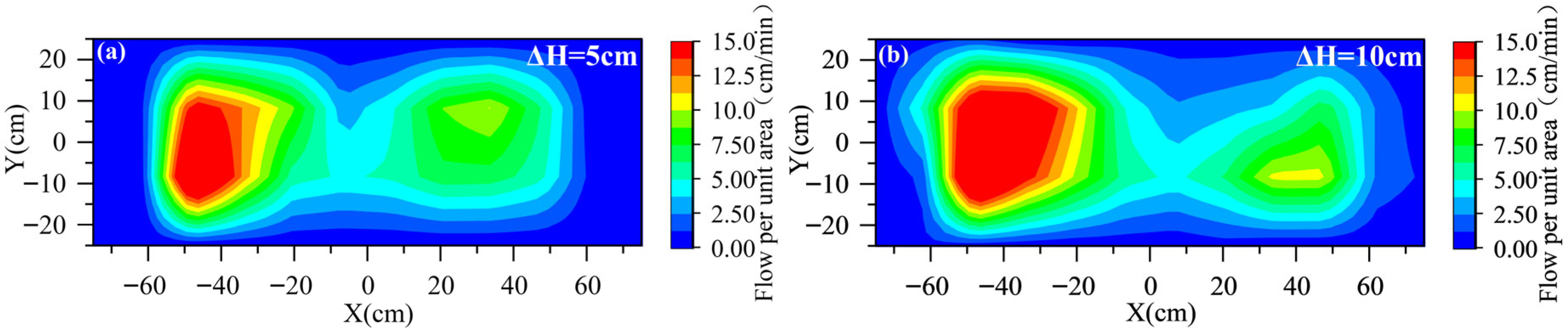
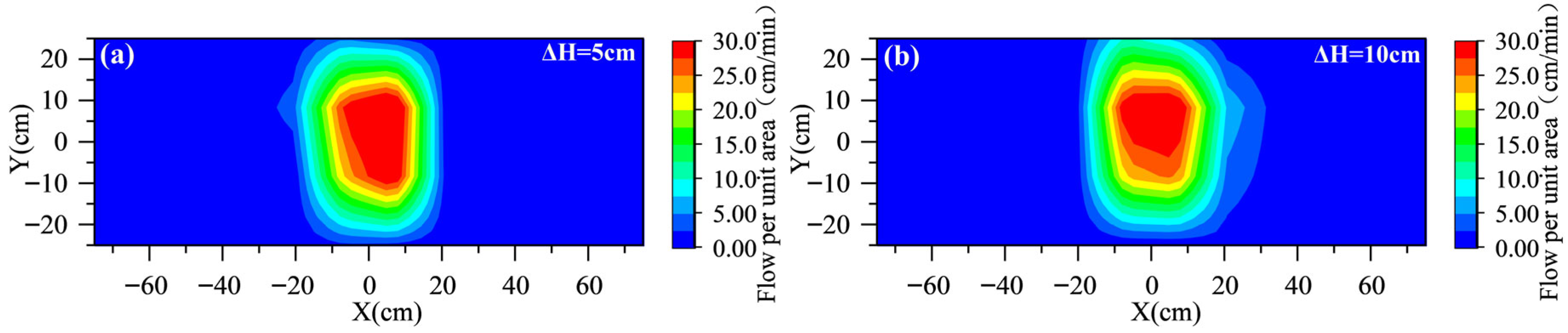
Figure 8 presents the airflow velocity distribution cloud map for AS tube I under varying head difference conditions.
At a head difference of ΔH = 5 cm, the airflow distribution exhibited a relatively broad range, with high flow velocity regions concentrated near the airflow source end (X = −55 cm to X = −35 cm). The ZOI displayed a roughly symmetric oblong shape in the horizontal plane, consistent with the typical ZOI geometric features documented in the study.
As the head difference increased to ΔH = 10 cm, notable changes in airflow distribution and ZOI characteristics emerged: the airflow distribution shifted toward the right (low head difference side), and the asymmetry of the ZOI shape increased significantly—specifically, the ZOI’s influence range shifted rightward by approximately 10 cm, and the aeration core zone (high flow velocity concentration area) also offset rightward by 6 cm. Despite the spatial shifts, high flow velocity regions remained concentrated near the airflow source end but extended slightly (X = −55 cm to X = −25 cm). Concurrently, airflow in the middle and rear sections of the AS tube (X = −3 cm to X = 55 cm) was compressed, which is attributed to the driving and squeezing effects of groundwater flow on the gas phase.
The hydraulic gradient induced by the groundwater head difference exerted a pronounced guiding effect on airflow diffusion pathways, with additional momentum enhancing downstream airflow migration, while upstream airflow velocity was suppressed due to increased resistance. Consequently, under conditions of strong groundwater flow, the uniformity of airflow distribution in the aeration zone was significantly diminished, and the diffusion range became more constrained, thereby reducing the overall remediation efficiency of HAS technology.
Figure 9 illustrates the airflow velocity distribution for AS tube II under different head difference conditions. At ΔH = 5 cm, the airflow was concentrated in the central region of the AS tube, forming a relatively symmetrical high flow velocity region, with the velocity gradient decreasing progressively outward from the center. When the head difference rose to ΔH = 10 cm, the airflow remained centralized, but the asymmetry of the distribution intensified, with the high flow velocity region compressed and shifted rightward, though maintaining relative concentration. This suggested that the airflow distribution of AS tube II retained considerable stability under hydraulic gradient influences. Theoretically, an increased groundwater head difference imposed additional horizontal hydraulic forces, directing airflow downstream. However, compared to AS tube I, the airflow distribution of AS tube II was more concentrated and its stability was also greater, indicating that its airflow diffusion was predominantly governed by pressure-driven mechanisms, with hydraulic gradients exerting a relatively minor influence. This highly concentrated distribution pattern of the airflow is particularly suitable for the treatment of localized high levels of pollution.
From an engineering perspective, the influence of groundwater head difference on airflow diffusion necessitates careful consideration in aeration system design. In sites with high hydraulic gradients, optimizing the placement of AS tubes in downstream regions can enhance airflow distribution uniformity and remediation efficiency. These insights provide a theoretical foundation for the application of HAS technology under groundwater flow conditions.
3.5. Impact of HAS on Pollutant Migration and Diffusion in Groundwater
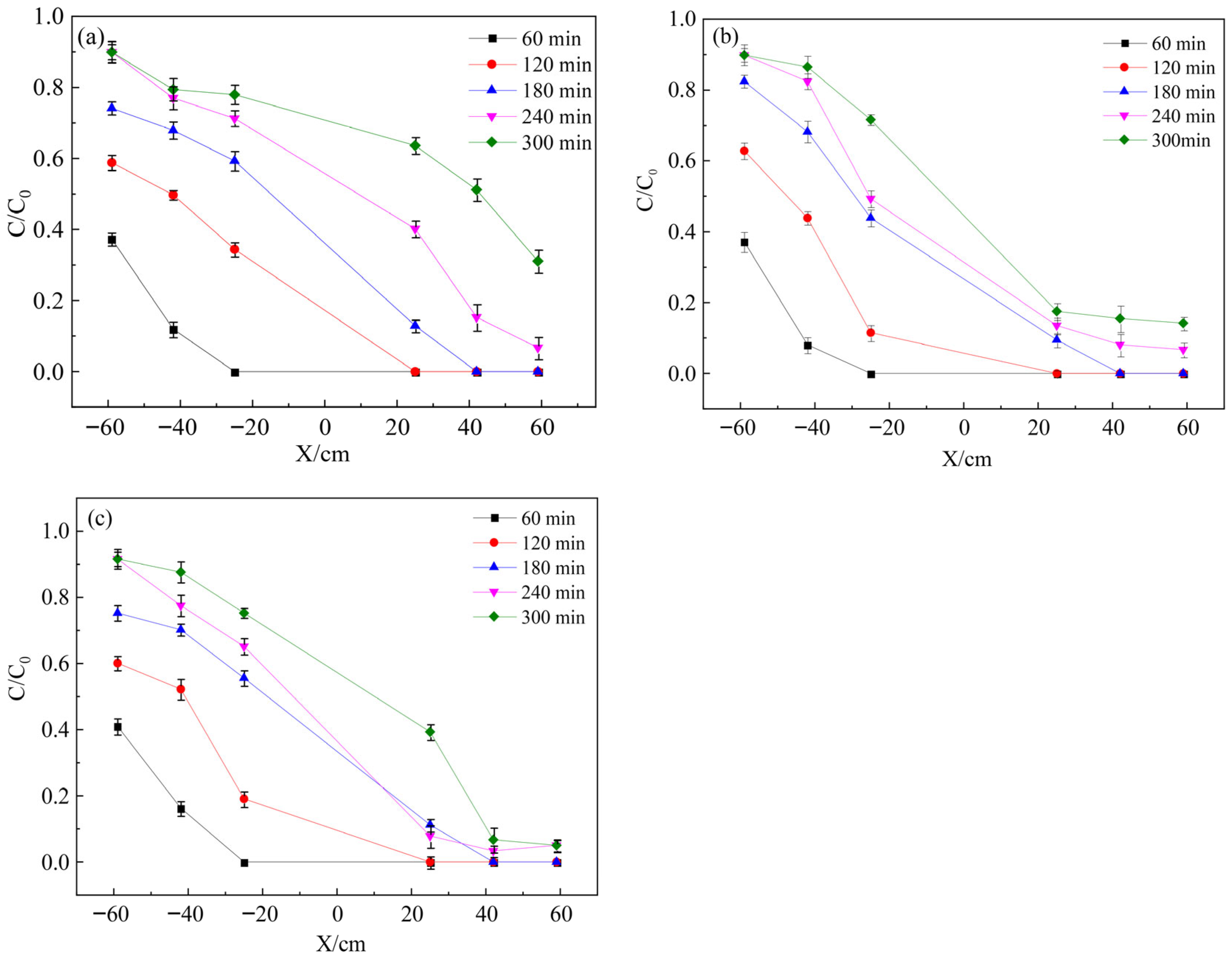
To examine the effects of HAS on pollutant migration and diffusion, six sampling points were uniformly placed along the long edge of a model box to monitor the migration and diffusion of the pollutant (RhB) under non-aerated and aerated conditions.
Figure 10 depicts the migration and diffusion characteristics of RhB at various time intervals (60 to 300 min) under non-aerated conditions (
Figure 10a) and aerated conditions (
Figure 10b: AS tube I;
Figure 10c: AS tube II), elucidating the retardation effects and influence patterns of horizontal well aeration on pollutant diffusion. The quantitative analysis of the concentration changes of RhB at the sampling points is helpful in exploring the blocking mechanism of the airflow, and it also has practical application value in pollution control.
Under non-aerated conditions (
Figure 10a), RhB concentrations increased steadily over time, exhibiting a pronounced diffusion trend. By 300 min, the concentration at the left sampling point (neared the pollution source) peaks at 0.9, while the right point reached 0.4, indicating stable pollutant diffusion along the water flow direction with a relatively gradual concentration gradient and minimal resistance.
AS tube I, aligned with the water flow direction (
Figure 10b), generated an airflow that markedly impeded longitudinal pollutant diffusion. Compared to non-aerated conditions, the concentration at the right sampling point at 300 min decreased by 53.1% (from 0.32 to 0.15), demonstrating that AS tube I effectively curbed pollutant migration into deeper sand layers. By reducing the permeability of the porous medium and increasing interfacial resistance, the airflow formed a longitudinal barrier, significantly slowing the pollutant migration rate within the airflow zone. AS tube II, positioned perpendicular to the water flow (
Figure 10c), exerted a more substantial retardation effect on lateral pollutant diffusion. At 300 min, the concentration at the right sampling point (downstream region) dropped by 84.38% (from 0.32 to 0.05), underscoring the strong inhibitory effect of the perpendicular airflow on lateral diffusion, particularly in regions distant from the pollution source. Given the robust hydrodynamic forces driving lateral diffusion, the airflow caused pollutants to accumulate predominantly in the upstream region, severely limiting downstream spread.
The retardation effect of the airflow is grounded in multiphase flow theory. Airflow injection creates a gas–liquid interface, reduces medium permeability, and disrupts the water flow pressure gradient, collectively suppressing pollutant migration and diffusion. The longitudinal airflow of AS tube I is particularly effective for mitigating deep-layer pollutant migration, whereas the lateral airflow of AS tube II excels at constraining lateral diffusion. These distribution patterns provide a theoretical foundation for targeted groundwater pollution remediation. In conclusion, horizontal well air sparging, by modulating the direction and intensity of the airflow, achieves efficient retardation of pollutants across varying migration pathways. In practical applications, selecting an optimal AS tube configuration based on pollutant distribution and hydrodynamic conditions can significantly enhance groundwater pollution control efficacy.
4. Conclusions
(1) The interplay between aeration pressure and burial depth strongly influenced airflow distribution and migration. Higher pressure increased gas velocity and diffusion range, while shallow burial depths favored localized, high-efficiency remediation. In contrast, deeper setups produced more uniform but weaker airflow, indicating limited applicability beyond the laboratory scale.
(2) Differences in groundwater head regulated the uniformity and direction of gas migration. Under high hydraulic gradients, groundwater flow exerted a pronounced guiding effect, which should be carefully accounted for in practical air-sparging designs.
(3) The configuration of AS tubes governed airflow retardation and pollutant control. Alignment with groundwater flow reduced longitudinal spreading, whereas perpendicular placement improved lateral control. These findings are based on homogeneous media and controlled conditions, and their transferability to heterogeneous aquifers remains to be verified.
In the future, subsequent studies will focus on field-scale validation and parameter sensitivity analysis under heterogeneous permeability conditions to enhance the engineering applicability of the results.




 ,
,