Article

Scale Experiments of a Shallow Channels Impact on Spillway Flow Distribution and Discharge Capacity


by
P. A. Mikael Hedberg
1,*,
J. Gunnar I. Hellström
1,
Anders G. Andersson
1 and
Patrik Andreasson
2,3
1
Division of Fluid and Experimental Mechanics, Luleå University of Technology, 977 54 Luleå, Sweden
2
Vattenfall AB Research and Development, 814 70 Älvkarleby, Sweden
3
Wildlife, Fish and Environmental Studies, Swedish University of Agricultural Sciences, 901 83 Umeå, Sweden
*
Author to whom correspondence should be addressed.
Water 2026, 18(2), 177; https://doi.org/10.3390/w18020177
Submission received: 30 October 2025 / Revised: 18 December 2025 / Accepted: 19 December 2025 / Published: 9 January 2026
(This article belongs to the Section Hydraulics and Hydrodynamics)

Abstract

This experimental work on discharge capacity investigates the flow distribution in a downscaled, multi-outlet experimental hydraulic rig. The water passing over each individual outlet is gathered and measured separately by collecting it into a large tank suspended on weight cells. This is repeated to ensure repeatability of the mass flow measurement method. To provide a large and robust set of data for CFD validation, six different inflows are tested, ranging from 60 l/s to 180 l/s. The findings show that for a larger inflow, and thus a higher water level, the discharge distribution over the spillway gets exacerbated by increasing the relative differences in the flow through each outlet. The differences in the measured water levels at different points in the channel leading up to the outlets also increase. ADV is used to measure velocities in the flow leading up to the channel for two of the six tested inflows. The ADV data shows persistent recirculation zones in different dimensions, as well as how the flow moving towards the outlets changes subtly as inflow is increased. Finally, comparisons are made to previous experiments on similar setups, indicating that a larger water column under the crest of a spillway reduces risk of uneven flow distribution for a spillway with multiple outlets. The data presented, along with dimensions of the model, can be used as a case study to validate how well different computational methods can predict flow distribution and spillway capacity.

1. Introduction

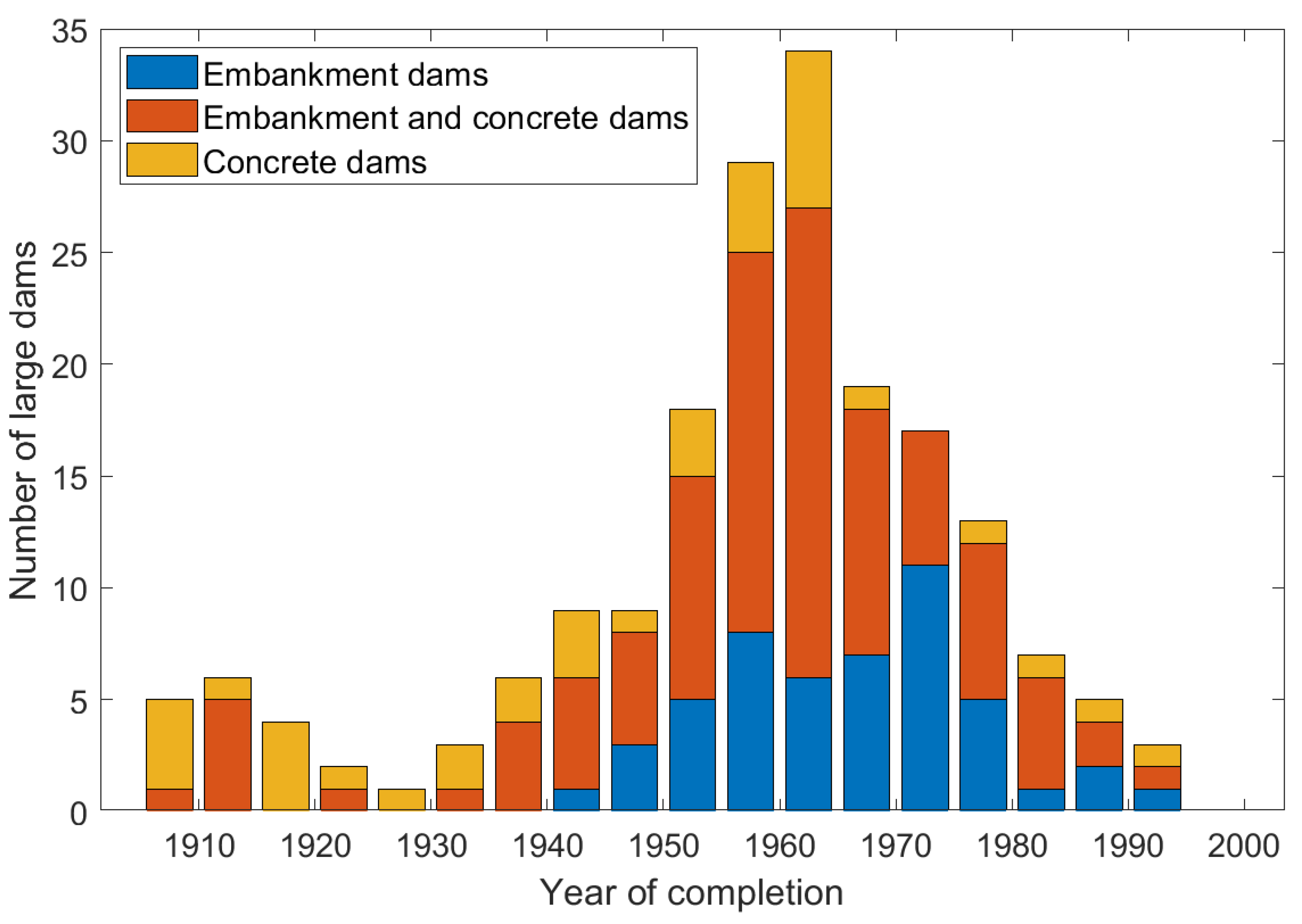
Hydropower was first introduced in Sweden in the early 20th century and has since become an important part of the Swedish energy system. The peak of dam construction in Sweden culminated around 1960, when around 60 large dams, as defined according to the ICOLD (International Commission on Large Dams), were completed over a 10-year period, mainly to be used as a source of hydropower. For a more comprehensive view of completion dates of large dams in Sweden [1], Figure 1 is included. During this time, there existed several laboratories dedicated to the scale model testing of planned dam constructions and spillways. As fewer dam projects were started, and as the rivers designated for use in hydropower were developed, laboratories dedicated to river hydraulics were closed except for one in Älvkarleby, run by the Swedish state-owned hydropower company Vattenfall. In a paper by Yang et al. [2], comparisons of past and present model studies of Swedish dams were made. It was found that for about 25% of cases, there was a large difference in discharge capacity between past and present models, ranging from increases of 11% to decreases of 8%. Their stated expected accuracy for correctly performed hydraulic scale model experiments would be in the range of ±(2–4)%. The main reason for the newer model studies was new legislation that could prompt a need for refurbishment. This need for refurbishment may be due to different factors, some of which interact, such as increased precipitation due to climate change [3], or new water directives provided by the Swedish government. The previously cited IPCC (Intergovernmental Panel on Climate Change) report shows that for Sweden, a general trend is that with increases in temperature, increases in both annual average precipitation and the number of events that can lead to flooding can be expected. Similar issues can be found in other nations where older infrastructure faces new, challenging conditions [4].
Since the heyday of dam construction in Sweden, there have been large advancements in both computational power and computational methods, which could now potentially serve as tools for design of outlets and spillways. For validation of these computational methods, there exist a plethora of validation cases. For hydropower and specifically ogee spillways, the vast majority of validation cases consist of a single-outlet spillway with a straight channel leading up to it. More complex works show a combination of CFD methods and physical scale modeling for redesigning a spillway [5] by adding an auxiliary spillway to increase spillway capacity of an existing dam. The work involves testing different designs by using CFD methods and finally validating a chosen redesign by using a physical model; the measuring is focused on water levels and total discharge. Otherwise, in the literature, scale model experiments in large part focus on spillways with one outlet. Some examples of recent work include [6], which described high head scale experiments for comparison with theoretical velocity profiles based on potential flow, which led to new models [7,8] and discussions on the former [9]. Further work with high head ratios combined machine learning approaches with CFD for evaluation of discharge coefficients [10]. Another work on CFD methods coupled CFD with experiments for measuring of water levels [11]. An experimental work examined abutment geometries for increased discharge [12], and some older work validated CFD against pressure measurements and older literature references [13,14]. Work has also been undertaken on high head experiments and comparisons with CFD [15]. These one-outlet experiments often have a relatively long straight channel leading up to the spillway, creating flow conditions for ideal flow over the spillway. Some works that include multiple outlets show good agreement of water level measurements between CFD models and experiments [16]. There are also larger models where the interactions of multiple spillways are explored, concluding that adding an additional spillway does not provide an additive increase in discharge capacity [17]. However, discharge increases from two competing spillways can interact negatively, scaling with distance and water head. Experimental work focusing on the impact of multiple outlets of one spillway is lacking, but there is work performed, for example, refs. [18,19]—both papers present work undertaken in an experimental rig similar to what is presented in this paper. Other research on spillways focus on the downstream part of the chute and ways to improve energy dissipation [20] or on labyrinth-type weirs [21,22,23] or stepped spillways [24]. There is also a paper describing the recent advances in spillway hydraulics [25]; the only paper relating to ogee spillways is the work by Stilmant et al. [7].
Due to the dearth of validation cases of a more complex nature, such as multiple outlets or oblique approach flow, experiments were planned and performed for a spillway setup with three outlets in parallel. Conclusions of the previously mentioned papers include that further research is needed to provide definitive results on distribution of flow across a spillway. To build on that previous research, changes were introduced to the geometry of the experiment to try to induce larger differences in the flow distribution between the outlets. The aim of the experiment was to gather data that show larger differences than previously recorded so that comparisons can be made with earlier results coupling changes in geometry to changes in discharge capacity and discharge distribution. The sought-after increase in difference in discharge between outlets will also improve their use as a validation case for computational modeling. This work is continuation of work presented at a conference [26].

2. Materials and Methods

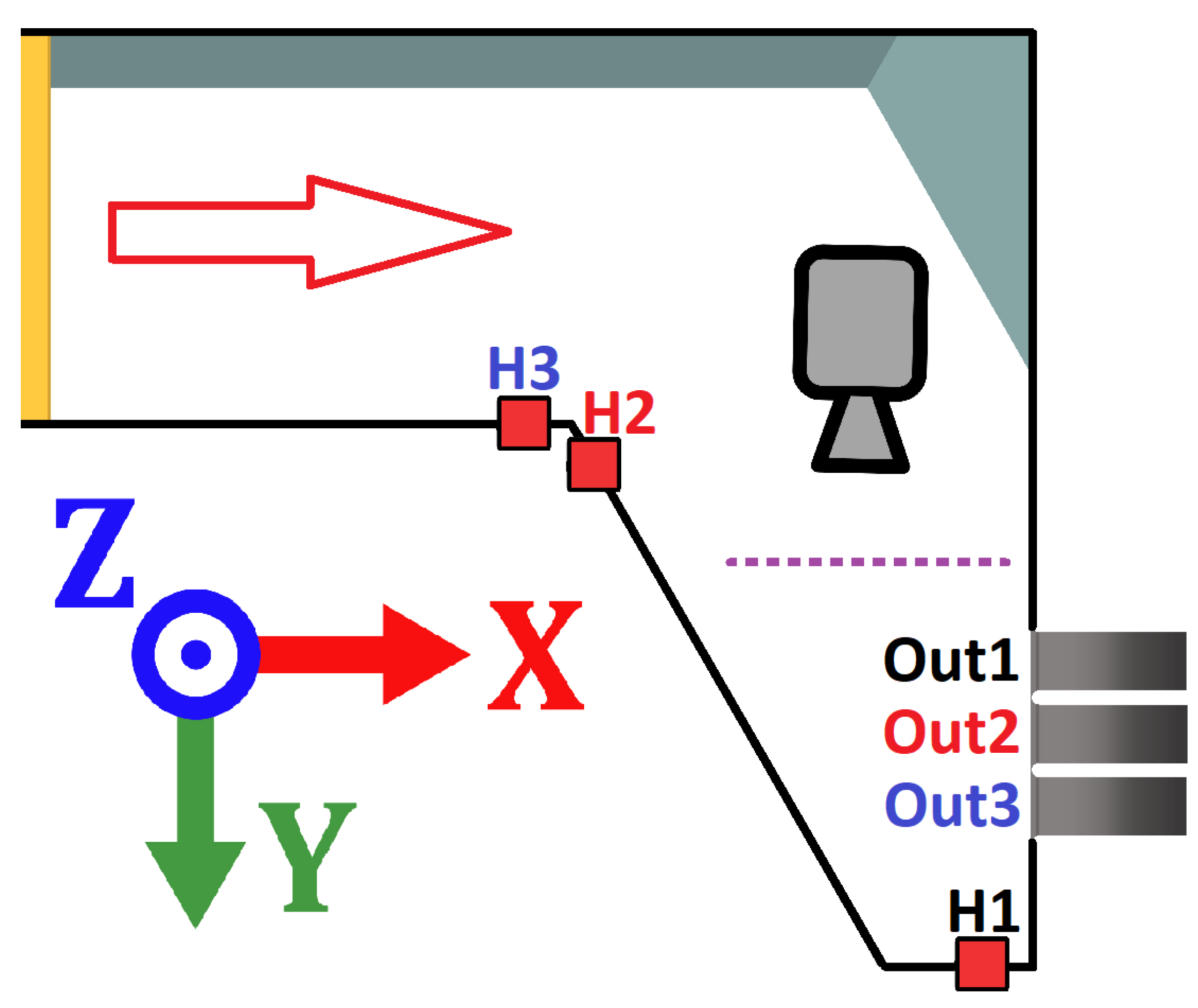
The experimental rig has four main parts, as well as additional ADV equipment for measuring average flows in a cross section close to the outlets, marked with a dashed purple line in Figure 2. First, pumps supply the flow to the channel: two pumps convey the flow through a pipe with a maximum capacity of 300 L per second. This flow is kept stable by a PID regulator guided by the pressure from the pump. The flow through the pipe is measured by a magnetostatic flowmeter placed after each pump, which provides a very accurate flow reading in the range of 1%. These measurements are then added together in postprocessing for the complete inflow into the channel. The pipe leads down close to the floor of the channel that leads up the spillway. The water passes through several perforated steel plates to break up large flow structures and to even out the flow. Lastly, before entering the channel, it passes through a honeycomb structure. The second part is the main part of the channel, which covers an area of approximately 5 × 5 m and has two features included to introduce interesting flow phenomena. The first is the corner, which sheds vortices and produces a zone of recirculating flow behind it. The second is the sloping walls along one side of the channel marked, in gray in Figure 2. The vertical distance from the crest of the spillway to the floor of the channel is 13.5 cm. For more details of the measurements of the channel, a CAD model of the experiment will be provided on request.
In the channel, there are three static pressure holes to lead water from the channel to measure the water level, pointed out in Figure 2 as H1–H3. The third part of the experiment is the spillway section. The shape of the spillways is taken from a hydropower plant in Torpshammar, Sweden, and is scaled down 1:50. As well as scaling it down, three outlets are placed in parallel, which is not a feature of the spillway from which the shape was sourced. The spillway is the only part of the experimental setup that is sourced from any existing structure. The width of each outlet is 300 mm, the pillars have a width of 75 mm, and the abutments have a width of 40 mm. The last part is the measuring tank, with an approximate volume of 6 m 3 , which is suspended upon four weight cells by two girders.
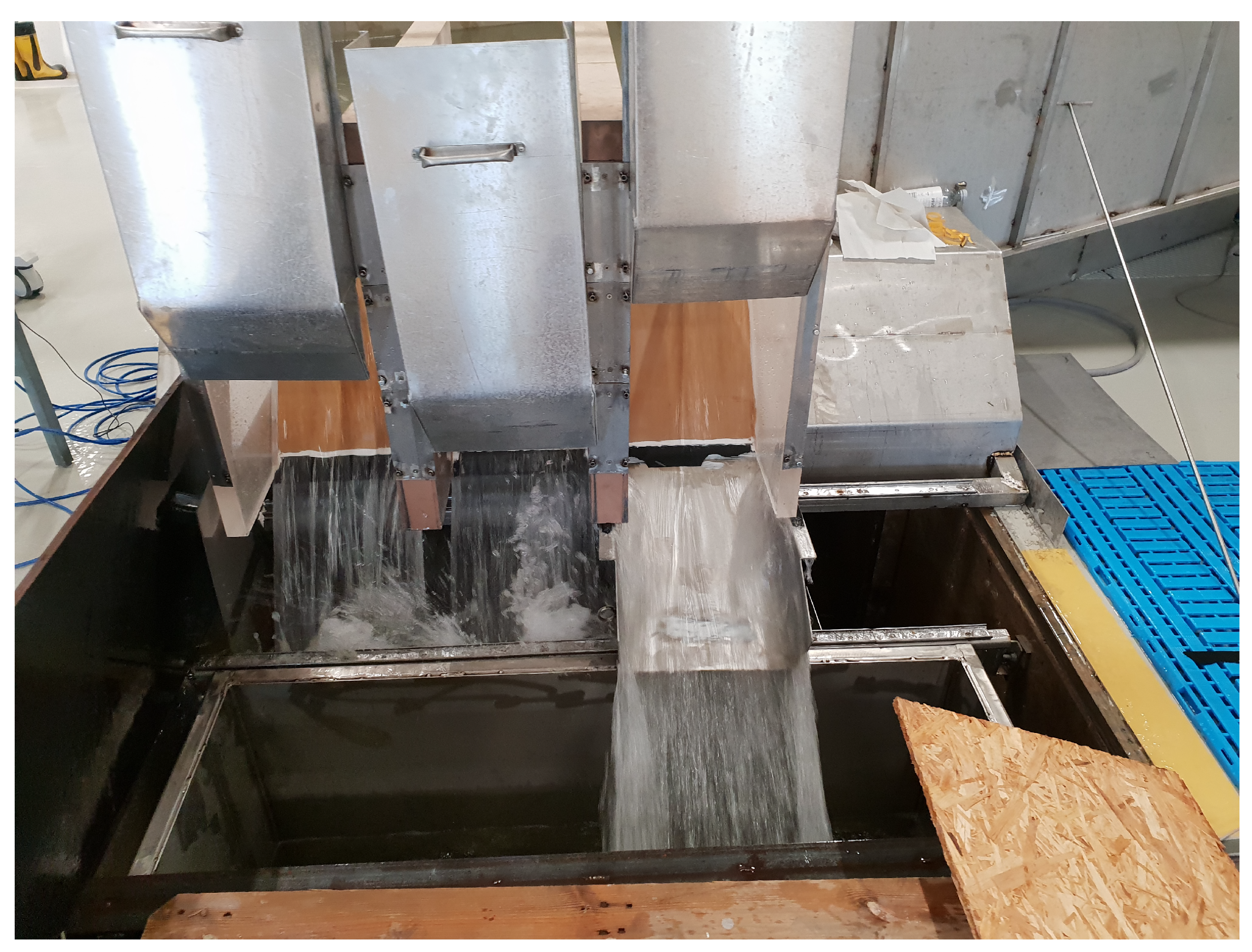
A metal flume on rails, which can be seen in Figure 3, is used to redirect water into the tank by pushing it under the outlet to be measured, outlets can be seen from a different angle in Figure 4. The overview of the experimental flume can be seen in Figure 5. To calibrate the weight tank with the measured inlet flow, all but one of the outlets were blocked. This showed a good agreement between the measured inlet and outlet flows. Labview was used to gather and record the data at 1600 Hz. Measurements were performed over instances of around 60 s over 2 days for each individual outlet, resulting in 6 measured discharges for each outlet for 6 different inlet flows, ranging from 60 l/s up to about 180 l/s. Postprocessing was performed in matlab, where the data from the weight cells were fitted to a line to provide the flow gathered by extrapolating the angle of the slope. ADV equipment was used independently of the other measurements to gather data on the behavior of the flow leading up to the outlets. Data were gathered at 100 Hz with a Nortek 10 MHz Velocimeter for a duration of 60 s. As ADV works by bouncing sound waves off particles suspended in the fluid of interest, a lack of particles can cause a need for seeding of such particles to produce good data. During the experiments, no need for seeding occurred, as the water used had enough particulate matter. The duration of 60 s was chosen as a compromise to be able to gather enough data for viable average flow velocities. As in the literature, the time used for ADV recordings with similar gathering frequencies had a range of experiments on debris accumulation where second-order turbulence numerics were of interest [27], and for that purpose 5 min was used. For lower sample sizes, work on velocity recordings around bridge piers in gravel beds [28] used 3 min but mentioned 1 min would be enough. ADV was also used for evaluation of turbulence characteristics in bed flow [29], where 4 min was used. Two works were also found with lower recording times [30,31], where the average velocities were of interest. As the data of interest for these experiments were the average velocities, a 60 s sample size was deemed suitable. The data were gathered in a grid starting 10 cm from the wall with the outlets and 5 cm from the bottom of the channel. These distances were also used as the distances between points. Data were gathered until the measurements started to read values below 0 in the main direction of flow, which occurred due to a large recirculation zone existing close to the wall opposite the outlets, and in the z-direction until the probe was above water. The minimum distance from the wall was chosen, as acoustic reflections caused interference in the instrument when placed too close to the wall. The location of the measured cross section, marked with a purple line in Figure 2, was located approximately 30 cm from the outlets. The gathered data were processed and filtered according to the specifications of the manufacturer for average velocities by the recommended signal-to-noise ratio of 5 and correlation of 70, as recorded by the instrument.
To compare the results of the experiments performed to those of other spillway experiments, the calculated coefficient of discharge can be used. The formula for this can be found in various books [32] and is as follows:
Q = C L H e 3 / 2
where Q is the flow across the spillway, C is the coefficient of discharge, L is the total width of the spillway, and H e is the actual head being considered for the crest, including the velocity head h v . In this case, h v was calculated by using Equation (2) based on the ADV measurements, with V being the mean velocities recorded in the main flow direction and g being gravity. The results provided by Equation (2) showed velocity heads of 1 mm for the 150 l/s case, which corresponds to about 1 l/s of flow. The formula used for this is as follows:
h v = V 2 2 g
Due to the fluctuating flow from the pumps being slightly larger than the effect of the velocity head, it is neglected in the calculations. For the H values measured, the mean value of H 1 and H 3 is used for calculations.

3. Results

3.1. Discharge and Water Level Measurements

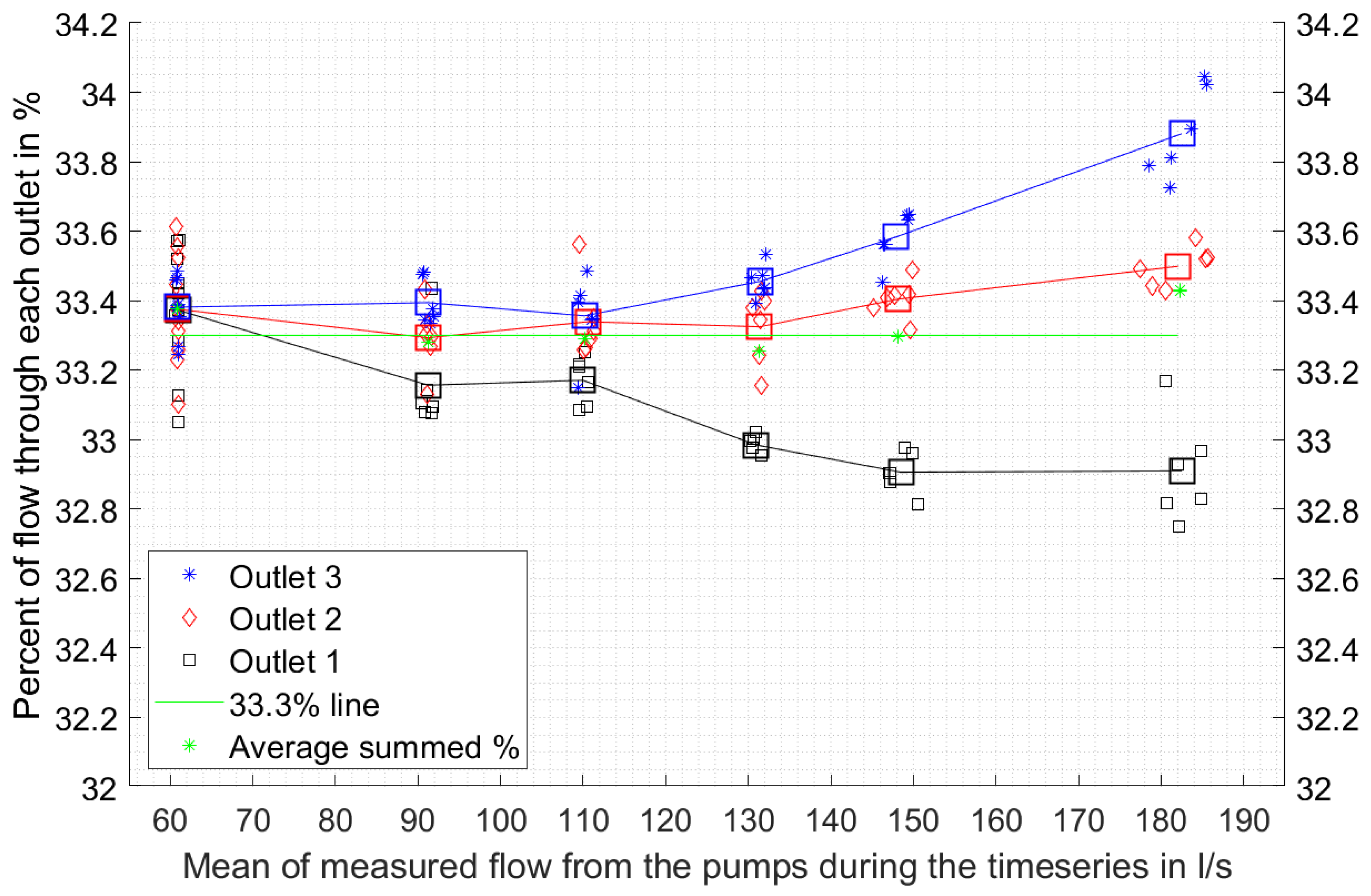
The results provided in this article are from the experiments performed at six different approximate inflows, starting at 60 l/s and ranging up to 180 l/s. These results are presented in graphical form in Figure 6, showing flow distribution. For the distribution of water across the outlets, there is some spread in the recorded values. This is clearest for the lowest flows, where the average flow distribution is very even, while the individual measurements fluctuate a lot, relatively. As the flow is increased, the averages show a clearer difference, especially for the flow through outlet 1.
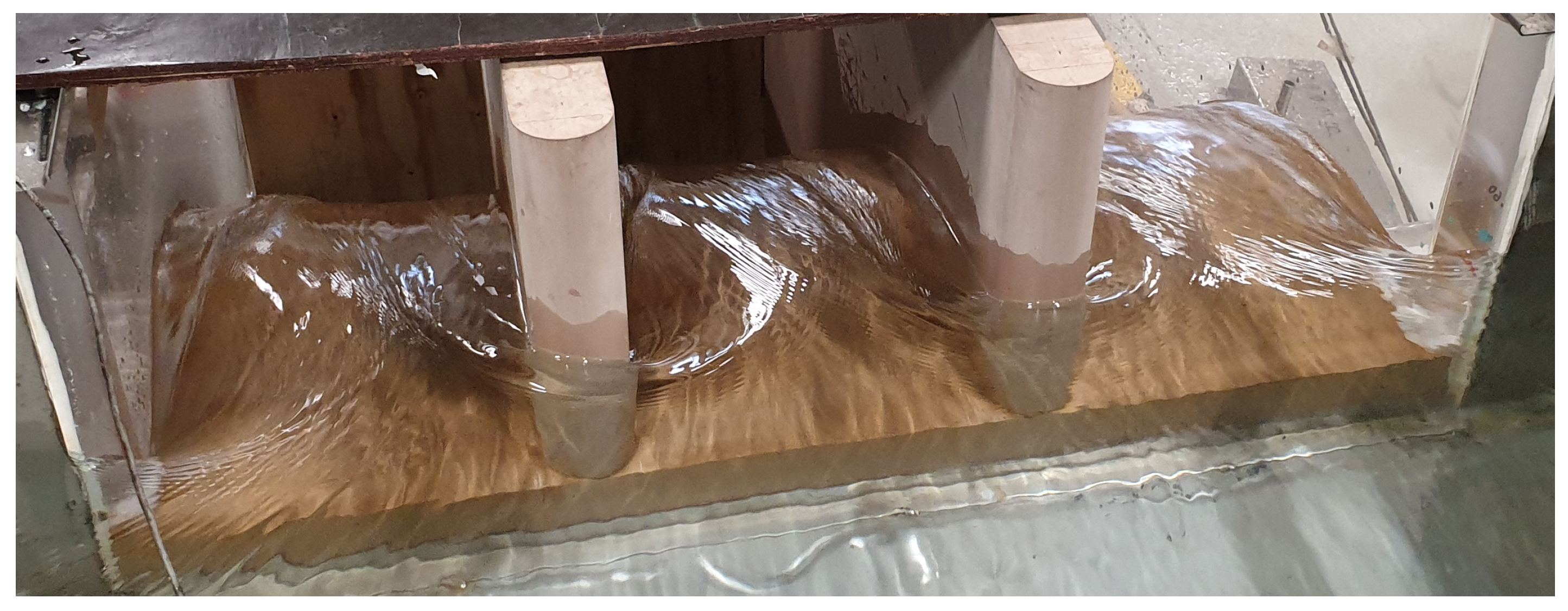
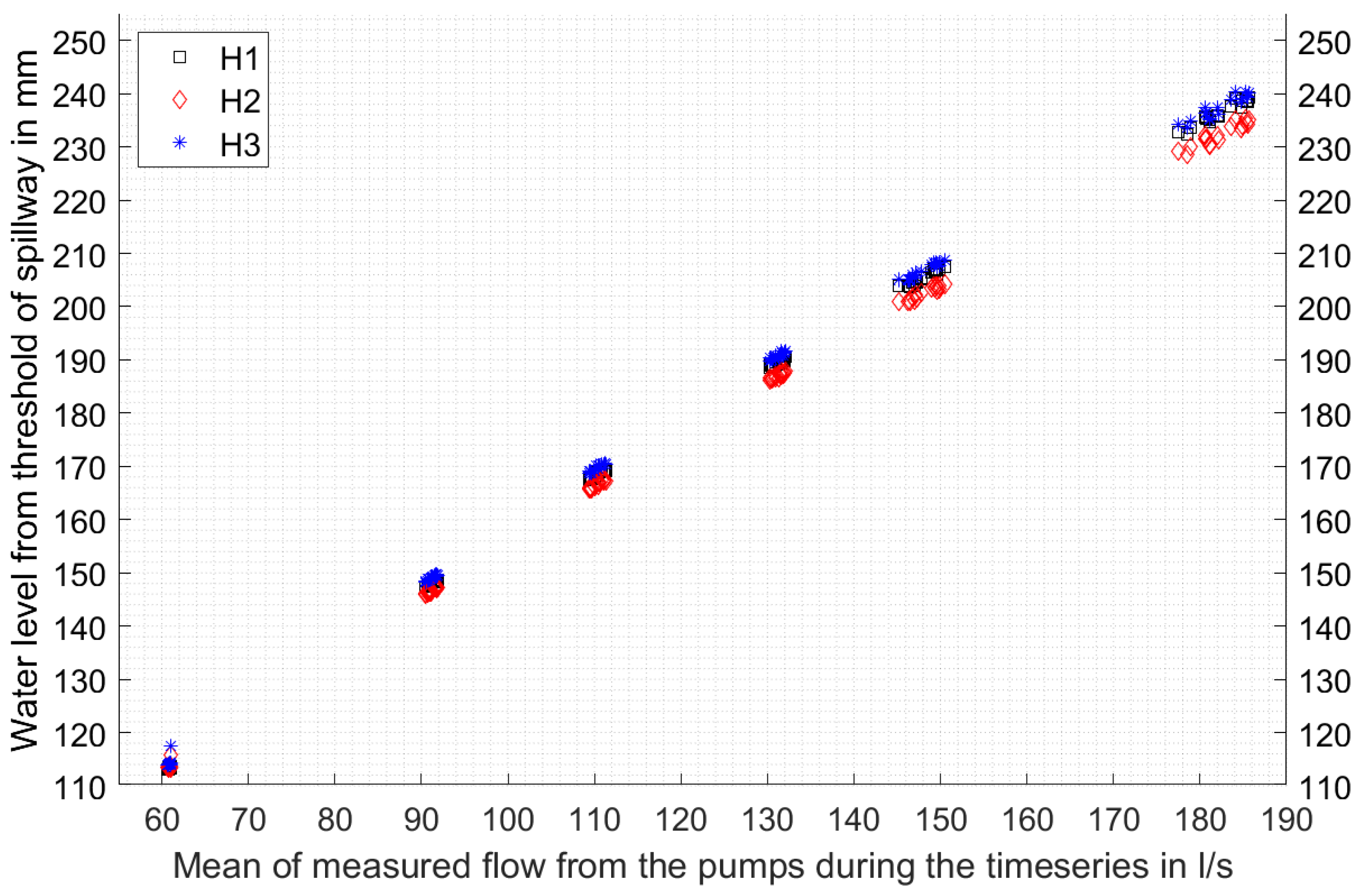
For the water levels, as seen in Figure 7, the relative water levels are quite similar, slightly increasing for the higher-flow case. The data was measured over two separate days, with three sets for each inflow per day. The second day of measurements had larger differences in mean inflow, which explains the less even distribution of the data, which is especially notable for the higher flows. The difference between the days lies in the need to manually adjust a valve to control the flow against a moving average readout from the velocimeter. In Figure 6, green stars and a corresponding line are included as the sum of the recorded flow through the outlets divided by 3. This is shown to illustrate that a small amount of water is not recorded either through leaks when redirecting it or when the flow moving towards the spillway is very unsteady, leading to variable flow through each outlet, and example of this can be seen in Figure 4. This variable flow caused a noticeable increase in total recorded water for the 180 l/s case and a smaller increase for the 60 l/s case. As only six measurements were performed, it is possible to have captured less or more than the average flow during the experiments. While a recording time of 40–60 s per attempt provides a long total time series for each case, more experimental data would have shown a better result. The results for the flow distribution were tabulated and are presented in Table 1, and the water levels can be seen in Table 2.

3.2. Calculated Coefficient of Discharge

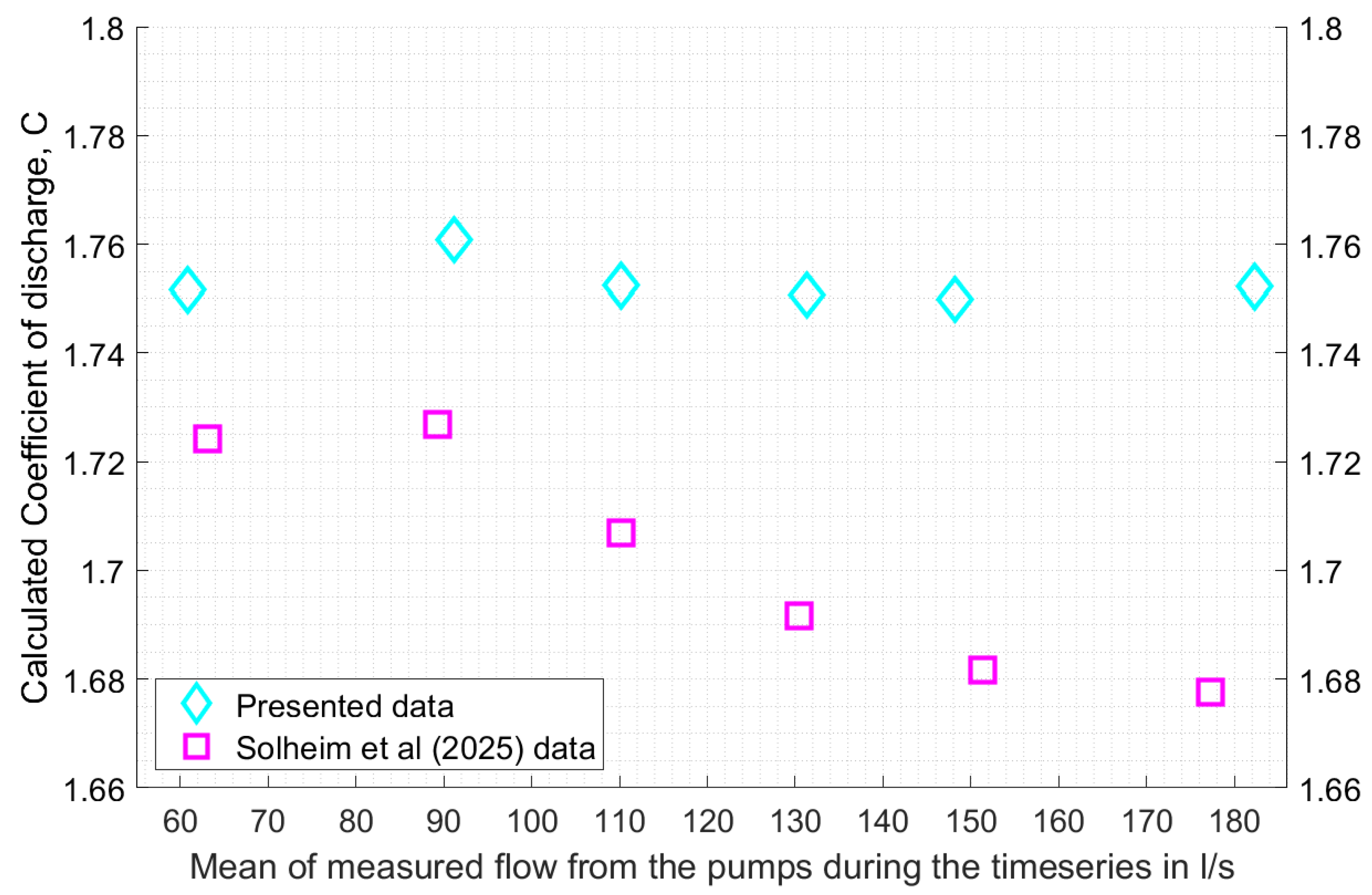
For the calculation of the coefficient of discharge, Equation (1) was used and is presented in Figure 8. Plotted is the average inlet flows against the calculated C. The data used is the average inflow values presented in Table 1, as well as some of the data in the paper by Solheim et al. [33] for comparison. This shows how the discharge capacity is lowered for the case presented by Solheim et al. [33], while for the case presented in this paper, instead of increasing, the discharge capacity remains quite stable.

3.3. ADV Measurements

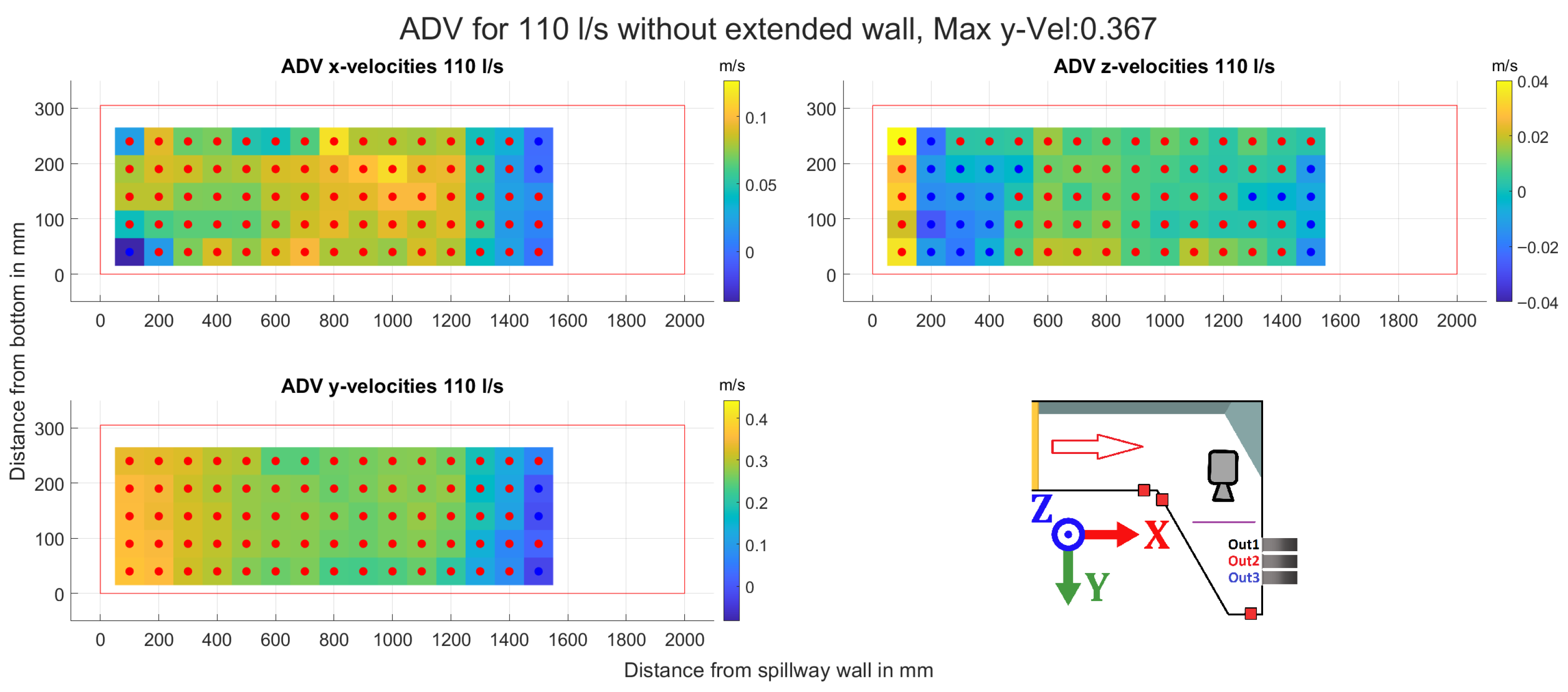
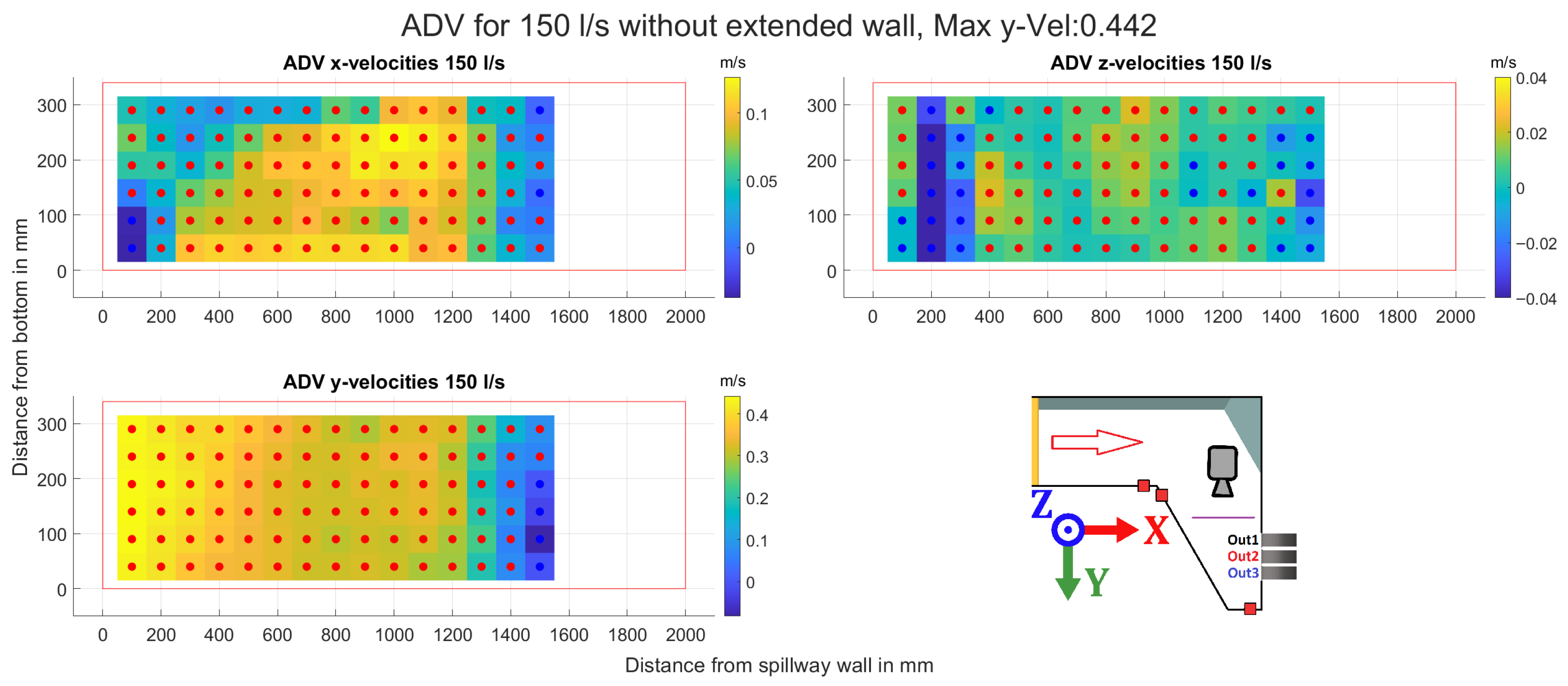
The recorded ADV measurements reveal the underlying behavior of the flow leading up to the spillway outlets. Some clear similarities and differences can be seen between the lower-flow case of 110 l/s, seen in Figure 9, against the case of high flow with 150 l/s, seen in Figure 10. Most obvious should be the z-velocities, where for both cases, indications of a recirculation zone in the z-x plane can be seen. In the lower-flow case, the z-velocities close to the outlet wall are almost twice as high as the higher-flow case. The x-velocities also show quite large differences especially closer to the outlet wall. Where for the low-flow case it looks quite even in the velocity distribution, for the higher-flow case, the x-velocities remain concentrated further away from the outlet wall and closer to the bottom of the flume. In the y-velocities, there are no perceivable differences; the large x-y-oriented recirculation zone attached to the wall opposite the outlets gets registered at the same distance of 1.5 m. In contrast, the distributions of the velocities follow the same trends, with higher velocities closer to the wall connected to the outlets.

4. Discussion

The conditions of the flow leading up to a spillway outlet can have a large impact on the discharge distribution and thus the discharge capacity of a spillway. The test with a low flow of 60 l/s shows an interesting contrast to the higher-flow cases recorded, as the spread of values is quite high, as seen in Figure 6, while the average flows are close together. With increased inflow, the average values start to diverge and show distinct separation, along with fewer outliers in the individual measurements. Comparisons of the results presented in this paper can be made with similar experiments conducted. The first case to compare is a previous work by the authors [19], which presents data gathered in a similar channel experiment, where the differences are the depth of the channel leading up to the spillway outlets. The deeper channel presented a larger volume for the flow to pass through, which allows water to more easily flow to the outlets further along the channel. Despite this, at lower discharges, outlet 1 saw the highest flow distribution, unlike the data presented in Table 1 and illustrated in Figure 6, where the discharge through outlet 1 for all cases except for the 60 l/s one remained the lowest. However, the differences in flow distribution were small and lacked the consistency needed for drawing clear conclusions. The paper by Hedberg et al. [19] also presents data for a higher-flow case, where the differences in flow distribution are larger and the results are more similar to the results presented in this paper, with the lowest flow through outlet 1. Further comparison with data from another work by the author [33] in a similar channel with further restricted geometry in the x-y plane shows large differences even at low flows. These are then further exacerbated as the flow is increased, with close to 69% of water passing through outlets 2 and 3. The discharge capacity showed only small changes with the increase in inlet flow for the data from this experiment, while the comparison data in Figure 8 showed a reduced capacity with increased flow. This could be attributed to the impact of the steeper angle of the flow towards the spillway, inducing losses due to friction. The losses incurred were larger than the expected efficiency increase from the nature of an ogee spillway. The ADV data presented shows how differences in inlet flows impact the the creation of turbulent structures as the water moves along the channel and past obstacles towards the spillway. The nature of such behavior and the ability to predict it should be of interest to dam operators as the data presented here shows that as flow increases, quite large changes can occur in the behavior of flow leading up to the spillway. This increase in flow could, depending on the geometry leading up to the spillway, increase risk of overtopping due to reduced discharge capacity of the spillway. This reduced capacity is not a unique manifestation of an ogee-type spillway but can occur for other types, such as labyrinth types, as shown by the work of Allen et al. [34].

5. Conclusions

A novel, relatively shallow channel, leading up to a spillway with multiple outlets produces an uneven distribution of the flow across the spillway when the channel geometry creates flow with large lateral components. The largest differences measured were close to 1% of the total flow, or close to 2 l/s of difference, between outlets 1 and 3. These lateral components change behavior with the changes in inflow, as shown by the ADV measurements. For all six cases tried, the inflow resulted in lower flow through outlet 1 as compared to outlets 2 and 3 except for the lowest-flow case of 60 l/s, as can be seen in Figure 6. Comparing this to earlier work with a deeper channel shows that the flow distribution was more even with a deeper channel. At a low flow comparable to the case with 90 l/s presented in this paper, most flow passed through outlet 1, indicating that the increased floor level changed the flow distribution across the spillway. The data shown in Figure 6 and Figure 7 and presented in Table 1 and Table 2 can be used as inlet conditions for a CFD model with an appropriate blueprint of the channel geometry for validation of the CFD code. Such a blueprint will be provided if asked for. Along with the results of water levels along the channel and distribution of flow passing through each outlet, accuracy and suitability of turbulence models and CFD methods can be evaluated. Further studies on multiple outlets could be of interest to evaluate how uneven flow conditions affect the total discharge capacity with a varying number of outlets, as well as the total width of the spillway.

Author Contributions

Conceptualization, J.G.I.H., A.G.A., P.A.M.H. and P.A.; methodology, P.A.M.H., J.G.I.H., A.G.A. and P.A.; software, P.A.M.H.; validation, P.A.M.H.; formal analysis, P.A.M.H.; investigation, P.A.M.H.; data curation, P.A.M.H.; writing—original draft preparation, P.A.M.H.; writing—review and editing, P.A.M.H., J.G.I.H., A.G.A. and P.A.; visualization, P.A.M.H.; supervision, J.G.I.H., A.G.A. and P.A.; project administration, J.G.I.H., A.G.A. and P.A.; funding acquisition, J.G.I.H., A.G.A. and P.A. All authors have read and agreed to the published version of the manuscript.

Funding

This research was funded by the Swedish Centre for Sustainable Hydropower.

Data Availability Statement

The raw data supporting the conclusions of this article will be made available by the authors on request.

Acknowledgments

The experimental work associated with this study was conducted at Vattenfall R&D Hydraulic Laboratory, in addition to research at the division of fluid mechanics at Luleå University of Technology. The research presented here was carried out as a part of the ”Swedish Centre for Sustainable Hydropower”—SVC—svc.energiforsk.se. A special thanks to Vattenfall R&D, for assistance at Vattenfall Hydraulic Laboratory in Älvkarleby.

Conflicts of Interest

Author Patrik Andreasson was employed by the company Vattenfall AB Research and Development. The remaining authors declare that the research was conducted in the absence of any commercial or financial relationships that could be construed as a potential conflict of interest.

Abbreviations

The following abbreviations are used in this manuscript:
CFDComputational fluid dynamics
ADVAcoustic Doppler velocimetry
ICOLDInternational Commission on Large Dams
IPCCIntergovernmental Panel on Climate Change
CADComputer-assisted design

References

  1. SwedCOLD. Book on Dams the Swedish Experience; SwedCOLD: Östersund, Sweden, 2023. [Google Scholar]
  2. Yang, J.; Andreasson, P.; Teng, P.; Xie, Q. The Past and Present of Discharge Capacity Modeling for Spillways—A Swedish Perspective. Fluids 2019, 4, 10. [Google Scholar] [CrossRef]
  3. IPCC. Weather and Climate Extreme Events in a Changing Climate. In Climate Change 2021—The Physical Science Basis: Working Group I Contribution to the Sixth Assessment Report of the Intergovernmental Panel on Climate Change; Cambridge University Press: Cambridge, UK, 2023; pp. 1513–1766. [Google Scholar]
  4. Cho, E.; Ahmadisharaf, E.; Villarini, G.; AghaKouchak, A. Historical changes in overtopping probability of dams in the United States. Nat. Commun. 2025, 16, 6693. [Google Scholar] [CrossRef]
  5. Li, S.; Cain, S.; Wosnik, M.; Miller, C.; Kocahan, H.; Wyckoff, R. Numerical Modeling of Probable Maximum Flood Flowing through a System of Spillways. J. Hydraul. Eng. 2011, 137, 66–74. [Google Scholar] [CrossRef]
  6. Peltier, Y.; Dewals, B.; Archambeau, P.; Pirotton, M.; Erpicum, S. Pressure and velocity on an ogee spillway crest operating at high head ratio: Experimental measurements and validation. J. Hydro-Environ. Res. 2018, 19, 128–136. [Google Scholar] [CrossRef]
  7. Stilmant, F.; Erpicum, S.; Peltier, Y.; Archambeau, P.; Dewals, B.; Pirotton, M. Flow at an Ogee Crest Axis for a Wide Range of Head Ratios: Theoretical Model. Water 2022, 14, 2337. [Google Scholar] [CrossRef]
  8. Castro-Orgaz, O.; Hager, W.H.; Guo, Y.; Erpicum, S.; Cantero-Chinchilla, F.N. Irrotational Flow over Ogee Spillway Crest: New Solution Method and Flow Geometry Analysis. Water 2024, 16, 2720. [Google Scholar] [CrossRef]
  9. Castro-Orgaz, O.; Hager, W.H. Comment on Stilmant et al. Flow at an Ogee Crest Axis for a Wide Range of Head Ratios: Theoretical Model. Water 2022, 14, 2337. Water 2024, 16, 231. [Google Scholar] [CrossRef]
  10. Hien, L.T.T.; Van Chien, N.; Xuan-Hien, L. Advanced hybrid techniques for predicting discharge coefficients in ogee-crested spillways: Integrating physical, numerical, and machine learning models. Environ. Res. Commun. 2024, 6, 115002. [Google Scholar] [CrossRef]
  11. Kocaer, O.; Yarar, A. Experimental and Numerical Investigation of Flow Over Ogee Spillway. Water Resour Manag. 2020, 34, 3949–3965. [Google Scholar] [CrossRef]
  12. Solheim, N.; Hedberg, M.; Lunde, N.H.; Pummer, E.; Lia, L. Modified Guide Walls for Incremental Increase of Spillway Capacity. In Proceedings of the 40th IAHR World Congress, Vienna, Austria, 21–25 August 2023; pp. 1978–1983. [Google Scholar] [CrossRef]
  13. Savage, B.M.; Johnson, M.C. Flow over Ogee Spillway: Physical and Numerical Model Case Study. J. Hydraul. Eng. 2001, 127, 640–649. [Google Scholar] [CrossRef]
  14. Johnson, M.C.; Savage, B.M. Physical and Numerical Comparison of Flow over Ogee Spillway in the Presence of Tailwater. J. Hydraul. Eng. 2006, 132, 1353–1357. [Google Scholar] [CrossRef]
  15. Luo, C.; Mohammadian, A.; Nistor, I.; Imanian, H. Experimental and numerical study of the gated and ungated ogee spillway. Flow Meas. Instrum. 2024, 97, 102561. [Google Scholar] [CrossRef]
  16. Andersson, A.G.; Andreasson, P.; Staffan Lundström, T. CFD-Modelling and Validation of Free Surface Flow During Spilling of Reservoir in Down-Scale Model. Eng. Appl. Comput. Fluid Mech. 2013, 7, 159–167. [Google Scholar] [CrossRef]
  17. Lee, J.H.; Julien, P.Y.; Thornton, C.I. Interference of Dual Spillways Operations. J. Hydraul. Eng. 2019, 145, 04019014. [Google Scholar] [CrossRef]
  18. Hedberg, M.; Hellström, G.; Andersson, A.; Andreasson, P.; Andersson, R.; Angele, K. Numerical modelling for design of spillway refurbishing. In Proceedings of the 8th IAHR International Symposium on Hydraulic Structures ISHS2020, Santiago, Chile, 12–15 May 2020. [Google Scholar] [CrossRef]
  19. Hedberg, P.A.M.; Hellström, J.G.I.; Andersson, A.G.; Andreasson, P.; Andersson, R.L. Measurements and Simulations of the Flow Distribution in a Down-Scaled Multiple Outlet Spillway with Complex Channel. Water 2024, 16, 871. [Google Scholar] [CrossRef]
  20. Yang, J.; Li, S.; Farooq, U.; Helgesson, A. Energy Dissipation in Chute Spillway with Labyrinth Roughness Appurtenances. Water 2025, 17, 3417. [Google Scholar] [CrossRef]
  21. Mattos-Villarroel, E.D.; Ojeda-Bustamante, W.; Díaz-Delgado, C.; Salinas-Tapia, H.; Bautista-Capetillo, C.F.; Flores-Velázquez, J.; Aguilar-Rodríguez, C.E. Influence of the Semicircular Cycle in a Labyrinth Weir on the Discharge Coefficient. Water 2025, 17, 3151. [Google Scholar] [CrossRef]
  22. Shehata, A.H.; Youssef, T.F.; Hamada, H.A.; M, I.M.; Samy, A. Optimizing Trapezoidal Labyrinth Weir Design for Enhanced Scour Mitigation in Straight Channels. Water 2024, 16, 2443. [Google Scholar] [CrossRef]
  23. Megh Raj, K.C.; Crookston, B.; Flake, K.; Felder, S. Enhancing flow aeration on an embankment sloped stepped spillway using a labyrinth weir. J. Hydraul. Res. 2025, 63, 32–47. [Google Scholar] [CrossRef]
  24. Toro, J.P.; Sepúlveda, S.; Bombardelli, F.A.; Moreno-Casas, P.A.; Meireles, I.; Matos, J.; Blanc, A. Influence of Step Height on Turbulence Statistics in the Non-Aerated Skimming Flow in Steep-Stepped Spillways. Water 2025, 17, 3256. [Google Scholar] [CrossRef]
  25. Schleiss, A.J.; Erpicum, S.; Matos, J. Advances in Spillway Hydraulics: From Theory to Practice. Water 2023, 15, 2161. [Google Scholar] [CrossRef]
  26. Hedberg, P.A.M.; Hellström, J.G.I.; Andersson, A.G. Shallow channel spillway flow distribution experiments. In Proceedings of the 9th IAHR International Junior Researcher and Engineer Workshop on Hydraulic Structures, Zurich, Switzerland, 20 June 2024. [Google Scholar] [CrossRef]
  27. Jeon, J.; Kim, Y.; Kim, D.; Kang, S. Flume Experiments for Flow around Debris Accumulation at a Bridge. KSCE J. Civ. Eng. 2024, 28, 1049–1061. [Google Scholar] [CrossRef]
  28. Pandey, M.; Sharma, P.; Ahmad, Z.; Singh, U.; Karna, N. Three-dimensional velocity measurements around bridge piers in gravel bed. Mar. Georesour. Geotechnol. 2018, 36, 663–676. [Google Scholar] [CrossRef]
  29. Umesh K. Singh, Z.A.; Kumar, A. Turbulence characteristics of flow over the degraded cohesive bed of clay–silt–sand mixture. ISH J. Hydraul. Eng. 2017, 23, 308–318. [Google Scholar] [CrossRef]
  30. Kumar, B.; Pandey, M.; Ahmad, Z. Flow field and sediment passing capacity of type-a piano key weirs. Int. J. Sediment Res. 2024, 39, 540–551. [Google Scholar] [CrossRef]
  31. Son, G.; Kim, D.; Kim, K.; Roh, Y. Performance of a Rectangular-Shaped Surface Velocity Radar for River Velocity Measurements. KSCE J. Civ. Eng. 2023, 27, 1077–1092. [Google Scholar] [CrossRef]
  32. USBR. Design of Small Dams; Water resources technical publication; U.S. Department of the Interior, Bureau of Reclamation: Washington, DC, USA, 1987.
  33. Solheim, N.; Hedberg, M.P.; Hellström, G.I.; Lia, L.; Andersson, A.G.; Andreasson, P.; Pummer, E. Discharge distribution in a multi-outlet spillway with varying adverse conditions. Sci. Rep. 2025, 15, 6329. [Google Scholar] [CrossRef]
  34. Allen, J.; Phillips, M.; Crookston, B.; Diaz, Y. Comparison of Head-Discharge Relationships from an Arced High Head Submerged Labyrinth Weir, Prado Dam—A case study. In Proceedings of the 10th International Symposium on Hydraulic Structures, Zurich, Switzerland, 17–19 June 2024. [Google Scholar] [CrossRef]
Figure 1. Approximate completion years of large dam projects in Sweden.
Water 18 00177 g001
Figure 2. Top-down view of the experimental setup, including a stylized camera indicating point of view for ADV figures. The red arrow indicates flow direction. H1–H3 mark the locations where water level measurements are taken. Out1–Out3 indicate which outlet is which. Sloped walls are shown along the top of the figure. The dashed line shows the cross-section measured by ADV.
Water 18 00177 g002
Figure 3. Picture taken during measurements of discharge through outlet 1. Water is led through outlet 1 into the measuring tank.
Water 18 00177 g003
Figure 4. Picture taken as the experiment was in progress, showing contractions and time-dependent flow structures at the outlet.
Water 18 00177 g004
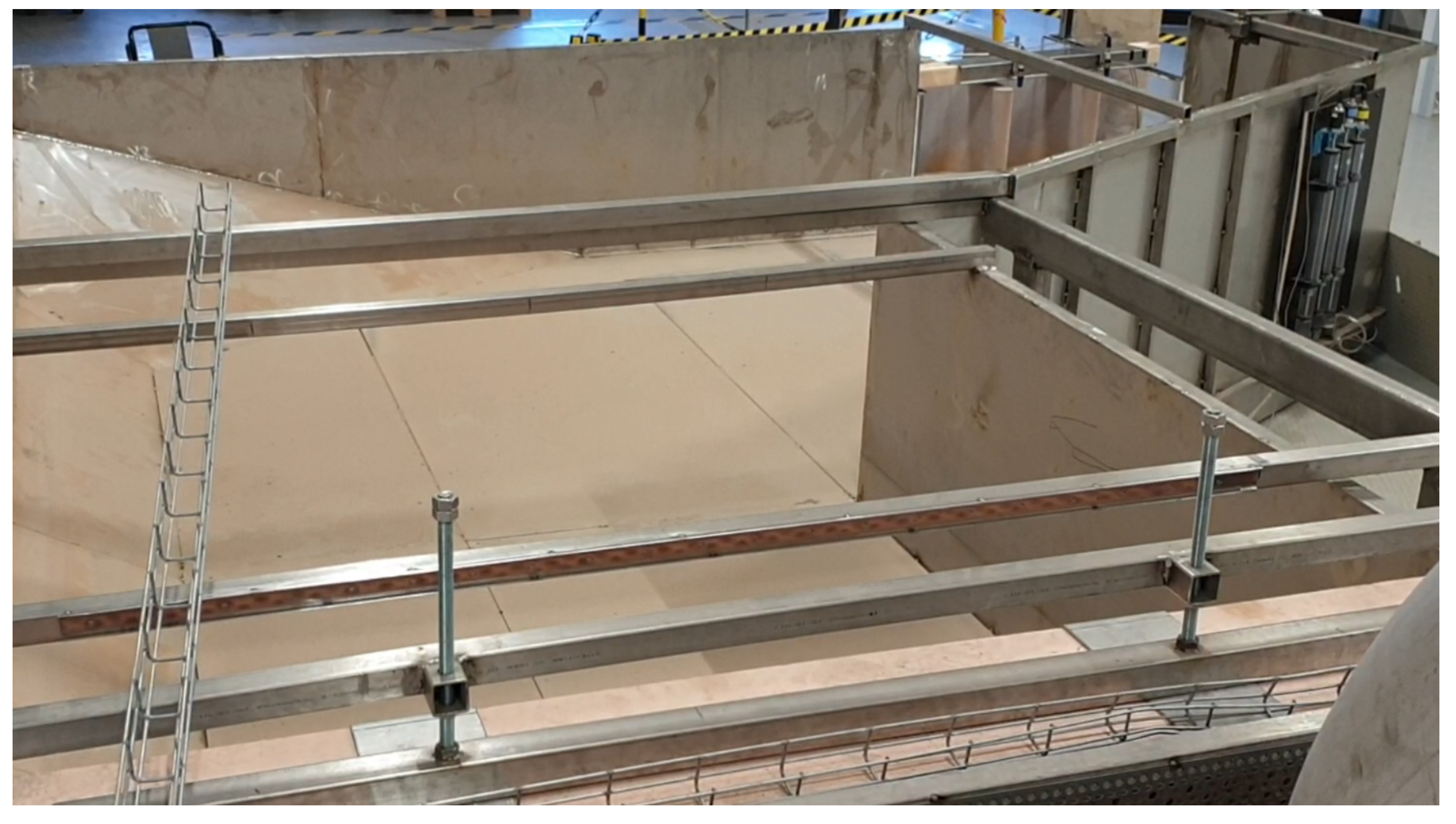
Figure 5. Overview of the experimental flume, showing the plates making up the raised floor, outlets, and top of the honeycomb inlet shown along the bottom of the photo. The sloped walls can be seen along the left side of the figure. On the right side, the instruments for measuring the water levels are shown, fastened on a black board.
Water 18 00177 g005
Figure 6. Plot of the individual average flows, captured from each outlet for the different inlet flows.
Water 18 00177 g006
Figure 7. Water levels captured at three separate points while gathering water.
Water 18 00177 g007
Figure 8. Plot of calculated coefficient of discharge [33].
Water 18 00177 g008
Figure 9. ADV data for the flow case of 110 l/s illustrated as average velocities with the points where measurements were taken shown with red or blue dots. Red dots indicate positive velocities, and blue dots indicating negative velocities in the reference coordinate system included in the figure.
Water 18 00177 g009
Figure 10. ADV data for the flow case of 150 l/s illustrated as average velocities with the points where measurements were taken shown with red or blue dots. Red dots indicating positive velocities, and blue dots indicate negative velocities in the reference coordinate system included in the figure.
Water 18 00177 g010
Table 1. Table of the summarized flow results.
Inflow [l/s]Out1 [l/s]Ratio1 [%]Out2 [l/s]Ratio2 [%]Out3 [l/s]Ratio3 [%]
61.0220.1733.0520.2933.2520.2833.24
60.9720.2233.1220.1833.1020.2633.26
60.9620.3733.4220.3233.3120.3533.38
60.8120.3833.4520.3133.4420.3433.46
60.8920.2933.2820.2033.2220.3333.38
91.6730.3033.0730.1833.1230.6433.35
91.4330.6333.4330.5333.2930.6333.37
91.7030.3733.0930.4433.2630.4833.33
90.8230.1933.1430.3533.4330.3033.34
90.9429.9533.1030.2833.3030.3733.48
90.7030.0633.0730.3633.3330.2933.47
109.5436.2533.0836.7233.2636.5433.39
109.9836.3733.2136.5833.2536.2433.15
109.4536.3833.2036.7733.5636.6233.41
110.3936.6633.1637.0733.3136.9733.48
111.1336.5433.0937.1033.3537.0333.34
110.8736.6433.2536.9133.2837.0533.34
130.8242.9932.9943.6033.1543.6133.46
131.0843.3732.9543.6333.2444.0833.43
131.0243.0432.9743.5533.3743.7133.39
131.0643.3732.9543.9933.4244.3133.53
131.6843.2433.0244.0833.3944.1033.47
131.9543.1033.0043.8333.3444.1333.43
147.1648.4232.9049.3733.4149.1633.56
146.5848.3832.9049.0233.4048.9033.45
146.3648.4132.8748.4733.3749.1333.56
149.7949.3932.9549.8333.3150.2333.63
149.6649.3932.8150.1833.4850.2233.64
149.3449.1332.9749.9733.4150.2733.64
182.5359.6332.7460.3633.4261.2533.81
179.0060.6632.8259.8533.4461.0633.72
180.2359.3032.8159.4333.4960.3033.78
182.4860.9632.9662.1533.5262.2333.89
185.0659.8833.1662.2433.5263.1034.02
184.7859.9232.9261.8333.5863.0734.04
Notes: Inflow is taken as an average of the recorded inflow for the three recorded outflows. The ratios are calculated as the recorded inflow divided by the recorded outflow.
Table 2. Table of the summarized results of the recordings of average height over the spillway crest.
Inflow [l/s]H1 [mm]H2 [mm]H3 [mm]
60.93113.35113.61114.24
91.25148.05146.72149.08
109.96168.46166.58169.67
130.94189.46187.03190.75
148.47205.58203.60206.84
182.50236.41232.35237.33
Notes: Inflow is taken as an average of the recorded inflow for all recorded outflows. Heights taken as an average of all recorded heights for the relevant flow.
Disclaimer/Publisher’s Note: The statements, opinions and data contained in all publications are solely those of the individual author(s) and contributor(s) and not of MDPI and/or the editor(s). MDPI and/or the editor(s) disclaim responsibility for any injury to people or property resulting from any ideas, methods, instructions or products referred to in the content.