Article

Low-Carbon Operation Strategies for Membrane-Aerated Biofilm Reactor Through Process Simulation and Multi-Objective Optimization


1
School of Energy and Environmental Engineering, University of Science and Technology Beijing, Beijing 100083, China
2
Yangtze River Ecological Environment Engineering Research Center of China Three Gorges Group Co., Ltd., Beijing 100038, China
3
School of Environment, Tsinghua University, Beijing 100084, China
*
Authors to whom correspondence should be addressed.
These authors contributed equally to this work.
Water 2026, 18(2), 150; https://doi.org/10.3390/w18020150
Submission received: 13 November 2025 / Revised: 24 December 2025 / Accepted: 31 December 2025 / Published: 6 January 2026
(This article belongs to the Section Wastewater Treatment and Reuse)

Abstract

As an emerging wastewater treatment technology, the membrane-aerated biofilm reactor (MABR) process is increasingly being coupled with anaerobic anoxic aerobic (AAO) process. However, there is currently a lack of systematic research and clear consensus on which of these two arrangements is more significant in improving overall process efficiency in practical applications. This study established GPS-X models of the conventional AAO process and two AAO-MABRs (anoxic or aerobic) under different concentrations of influent and effluent water quality conditions, and systematically compared their effluent quality, operation cost and greenhouse gas emissions. The results indicate that, compared with the conventional AAO process, the AAO-MABR coupled process improved the denitrification rate by 37.46%~47.71% (Anoxic), reduced energy consumption by an average of 0.11 kWh/m3, and lowered the operating cost by 0.036 USD/m3. In terms of carbon emission intensity, the AAO-MABR process achieved an average reduction of 0.67 kgCO2eq/m3. Notably, the AAO-MABR (Anoxic) configuration exhibited superior robustness under varying influent and effluent conditions, yielding the lowest average operational cost (0.047 USD/m3) and carbon intensity (0.61 kgCO2eq/m3). This study provides a reference for the practical application of MABR process, especially for the upgrading of traditional AAO processes.

1. Introduction

Urban wastewater treatment plants (WWTPs) are essential infrastructure for centralized wastewater treatment, compliance with discharge standards, and resource recovery. They are closely linked to the urban ecological environment, public health, and sustainable development. However, while improving water quality, these facilities also consume large amounts of electricity and emit greenhouse gases. Globally, the wastewater treatment industry accounts for approximately 3% of total energy consumption and 1.6% of total carbon emissions [1]. As a high-energy-consuming sector, WWTPs therefore have considerable potential for emission reduction and represent a key pathway toward sustainable development. Previous studies have shown that carbon emissions from WWTPs are strongly influenced by operating conditions, treatment processes, and influent water quality [2]. Among these factors, the evaluation and selection of appropriate treatment processes play a pivotal role in the design and construction of WWTPs. Selecting suitable processes that balance resource recovery, economic efficiency, and environmental protection can improve operational performance, reduce costs, and promote sustainable wastewater management.
The anaerobic anoxic aerobic (AAO) process is widely applied in wastewater treatment plants because of its simple configuration, stable performance, and ease of operation [3]. However, the low influent chemical oxygen demand (COD) concentration, together with the consumption of organic matter in the anaerobic tank, greatly limits the availability of carbon sources [4]. This limitation often necessitates the addition of external carbon sources (e.g., acetate, ethanol) to enhance nitrogen removal [5]. The production and utilization of these commercial organic carbon sources contribute more than 20% of the total carbon footprint of wastewater treatment and impose considerable economic costs [6]. In contrast, the MABR process is a novel wastewater treatment technology that integrates gas-separation membranes with fixed biofilm systems [7]. This process offers new possibilities for enhancing biological treatment capacity and reducing energy consumption, and it has demonstrated advantages in pollutant removal and N2O mitigation [8]. Therefore, it is regarded as a promising innovation in wastewater treatment [9]. Currently, the MABR process is usually operated in a coupled form with other processes [10,11]. The influence of longitudinal heterogeneity on N2O generation within MABR and PN/A processes has been explored from a modeling standpoint by Chen et al. [12]. In another significant study, Lu et al. [13] demonstrated that integrating PN/anammox/n-DAMO into an MABR framework enables efficient nitrogen removal. Beyond these, applications combining MABR with conventional processes like AAO have also been reported. It is thus evident that a prominent trend in current research is the extensive exploration of coupling MABR with various other technologies. Notably, in the context of AAO systems, MABR is typically implemented in one of two distinct treatment units: the anoxic zone or the aerobic zone. However, systematic research and clear conclusions regarding which of these two configurations contributes more significantly to overall process efficiency in practical applications are currently lacking.
The effluent quality index (EQI), operating cost index (OCI), and greenhouse gas emissions (GHG) are three key objectives for evaluating the sustainability of wastewater treatment. However, inevitable trade-offs among these objectives hinder effective decision-making in process selection [14,15]. To comprehensively assess and balance these objectives, multi-objective evaluation methods should be incorporated into the selection and decision-making processes. Pareto optimality is one of the most suitable decision-making theories for solving multi-objective optimization problems, where a Pareto-optimal state represents an ideal allocation of resources in which no objective can be improved without deteriorating another [16,17]. In recent years, numerous studies have adopted the concept of Pareto optimality and applied multi-objective optimization algorithms, such as Non-dominated Sorting Genetic Algorithm (NSGA) and Particle Swarm Optimization (PSO), to process control and optimization in wastewater treatment plants, thereby enhancing overall operational performance [18,19]. Given the complexity of wastewater treatment processes, process modeling and simulation provide an efficient pathway for plant design and technology selection [20]. Among the available tools, GPS-X offers advantages in model formulation, dynamic simulation, and interpretation of results [21]. Liao et al. simulated tens of thousands of scenarios using GPS-X software, providing an effective approach for achieving low-carbon and economical WWTP operations [22]. Therefore, in this study, GPS-X was selected to construct process models and ensure the accuracy and reliability of the generated Pareto solution sets.
This study aims to comprehensively evaluate the operational efficiency and carbon emission reduction potential of the AAO process and the AAO–MABR coupled process, and to compare their performance based on three key indicators: effluent quality, operating cost, and carbon emissions. GPS-X simulation software was first employed for process modeling and simulation to obtain the fundamental data required for evaluation. Subsequently, a multi-objective evaluation system was established, and the values of the three indicators for each process under baseline conditions were calculated to generate a set of Pareto-optimal solutions. Finally, the non-dominated sorting method was applied for multi-objective process comparison to identify the Pareto-optimal scenario. The results of this study provide practical guidance for wastewater treatment plants in selecting appropriate treatment processes to support future carbon neutrality goals.

2. Materials and Methods

2.1. Framework of Selection Methods

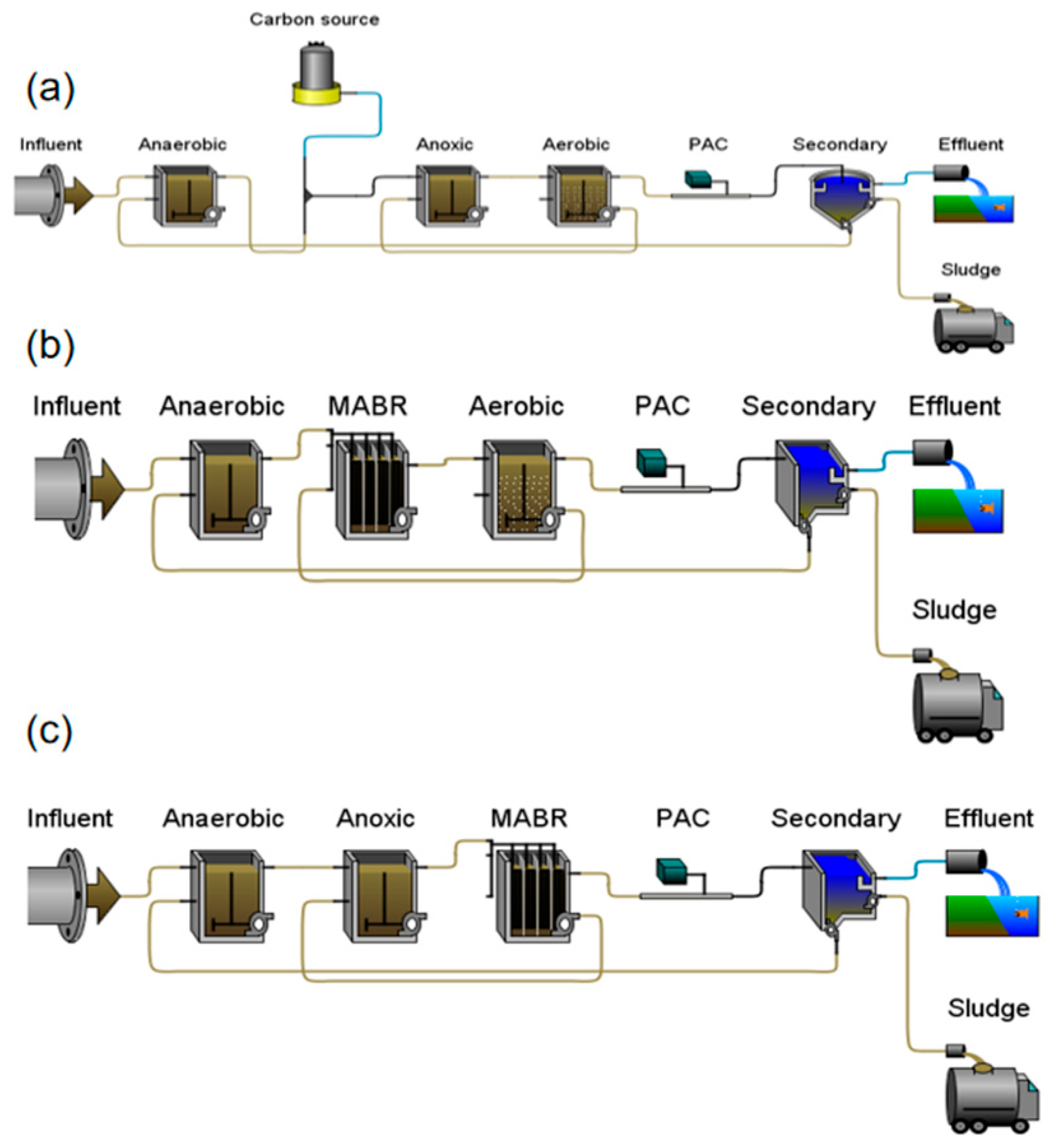
In this study, a multi-objective evaluation and selection framework for wastewater treatment processes was developed based on four key criteria: direct carbon emissions, indirect carbon emissions, operational cost, and energy consumption. The GPS-X simulation software, version 8.0.1 (Hydromantis, Hamilton, ON, Canada) was employed to model and calibrate three process configurations: (1) the conventional AAO process; (2) the AAO-MABR process with the anoxic tank replaced by an MABR; (3) the AAO-MABR process with the aerobic tank replaced by an MABR, enabling comparison of their operational and environmental performance. Each model was calibrated to satisfy the effluent standards specified for the corresponding influent conditions.
The EQI and OCI for each process were calculated using the integrated cost accounting and water quality modules of GPS-X. Additionally, the carbon emissions of each process were quantified based on intermediate operational parameters derived from the simulation results. The obtained results were used to construct a Pareto set comprising four performance indicators: indirect carbon emissions per cubic meter of treated water, direct carbon emissions per cubic meter, operational cost per cubic meter, and energy consumption per cubic meter.
The Pareto front was visualized in three dimensions, using indirect carbon emissions, operational cost, and energy consumption as the primary performance indicators. In the final step, a non-dominated sorting algorithm was applied to classify the data points within the Pareto set, and the optimal process for each scenario was identified from the first non-dominated front.

2.2. Process Influent and Effluent Scenario Settings

To enhance the representativeness of the evaluation, multiple scenarios were established by varying the influent water quality and effluent discharge standards. Three influent conditions representing typical pollutant concentrations in municipal wastewater across China were selected to ensure general applicability. The effluent standards were determined based on the most widely adopted Discharge Standard of Pollutants for Municipal Wastewater Treatment Plants (GB18918-2002 [23]), specifically the Grade I-A standard. In addition, a stricter discharge standard corresponding to Class IV of the Environmental Quality Standards for Surface Water (GB3838-2002 [24]) was further considered. The combinations of influent and effluent conditions adopted in the evaluation are summarized in Table 1. For clarity, H, M, and L denote high, medium, and low influent concentrations, respectively, while A and IV represent the Grade I-A and Class IV effluent standards.

2.3. Process Simulation

Three wastewater treatment processes were constructed and simulated using GPS-X software. The model input variables included influent conditions, reactor configuration parameters, and stoichiometric and kinetic coefficients, while the output variables included effluent quality, sludge production, and other operational performance indicators. In addition, GPS-X was able to calculate and display intermediate variables such as the influent and effluent characteristics for each unit, in-reactor water quality, energy consumption, and operational costs. Following the study by Hu et al. [25], the conventional AAO process was modified by replacing the anoxic tank with an MABR, hereafter referred to as the AAO-MABR (anoxic) coupled process. Similarly, as reported by Wang et al. [26], the aerobic tank in the traditional AAO process was replaced with an MABR, forming the AAO–MABR (aerobic) coupled process. For all processes, the structural and operational parameters of each treatment unit were adjusted within the ranges reported in engineering practice and literature [27,28] to achieve the desired effluent quality, while the stoichiometric and kinetic parameters were maintained at their default values. The design and operational parameters of each process unit are summarized in Table 2, and a schematic representation of the model is illustrated in Figure 1.
In MABR-integrated systems, DO levels are typically selected based on specific process objectives and influent characteristics. For instance, in the AAO-MABR process, the DO concentration in the aerobic zone is generally maintained at 2.0–2.5 mg/L [25]. In contrast, the MABR-PN/A process employs a significantly lower DO concentration (<0.5 mg/L) to suppress the activity of nitrite-oxidizing bacteria (NOB), thereby favoring stable nitrite accumulation [27]. Consequently, selecting DO concentrations tailored to the specific process configuration is critical for optimizing performance. Accordingly, in this study, the bulk DO setpoints for the aerobic and anoxic zones containing MABR units were established at 2.0 mg/L and 0.2 mg/L, respectively (Table 2). This strategy preserves the unique stratified biofilm structure, thereby creating favorable conditions for efficient simultaneous nitrification and denitrification (SND).
To ensure the accuracy of GPS-X in simulating wastewater treatment processes, the simulation results were systematically validated against operational data from full-scale WWTPs. The comparison aimed to verify that the model is capable of providing reliable predictions and analyses for practical engineering applications. The results demonstrated that GPS-X can accurately represent the operational performance of wastewater treatment facilities with a high degree of accuracy, thereby serving as a powerful tool for process design and operational optimization. By employing GPS-X, engineers and researchers can efficiently simulate and evaluate wastewater treatment schemes and anticipate potential operational issues before project implementation. This capability enables the development of corresponding mitigation strategies, thereby reducing risks and costs in full-scale operation.

2.4. Evaluation Criteria

We adopted the calculation methods from previous studies to compute EQI, OCI, and GHG. Here, we only provide a brief introduction and the corresponding calculation formulas [22]. EQI is employed to evaluate the overall pollutant discharge load in the daily average effluent. As an integrated indicator, the EQI provides a more intuitive assessment of the overall effluent quality of the treatment process. The EQI is calculated according to Equation (1). In the GPS-X software, the EQI values of each process can be directly obtained from the component output results.
EQI = Q i = 1 n w i S i
where
  • Q—Wastewater treatment plant effluent flow rate, m3/d;
  • n—The number of pollutants examined in the EQI assessment;
  • wi—Proportion weight of pollutants in EIQ;
  • Si—The concentration of the i-th pollutant in EQI.
OCI is adopted to characterize the economic performance of each process. In this study, the operational cost primarily included energy and chemical costs. The total OCI was calculated according to Equation (2). Similarly to the EQI, the OCI values for each treatment process were directly obtained from the component output results in the GPS-X software.
O C I = C a r e + C c h e + C d i s p
where
  • OCI—Operating costs, in USD/m3;
  • Care—Energy cost, electricity fee 0.093 USD/kWh;
  • Cche—Pharmaceutical cost, carbon source cost 0.34 USD/kg, PAC cost 0.15 USD/kg.
  • Cdisp—Sludge disposal cost, with sludge transportation cost at 80 USD/t.
GHG emission intensity served as the primary metric to evaluate the carbon footprint of the wastewater treatment process. The system boundary encompassed all direct and indirect emissions generated from the influent inlet to the effluent discharge. Direct emissions primarily consisted of N2O and CH4 generated during biological treatment, while indirect emissions were mainly associated with electricity consumption and chemical usage. Direct emissions were quantified based on GPS-X simulation outputs, whereas indirect emissions were calculated using the emission factor method (Equations (3) and (4)). Total GHGs were determined utilizing the built-in carbon footprint module within the GPS-X platform. However, emissions stemming from equipment maintenance, material transportation, and non-operational personnel activities were excluded from the analysis. Additionally, specific unit operations, such as membrane cleaning and sludge disposal, were omitted from the system boundary.
G H G = Q C i n C o u t · E F · G W P
G H G = A D · E F · G W P
where
  • GHG—Greenhouse gas emissions, measured in kgCO2eq/m3;
  • AD—Emission source activity data, unit depends on the calculated emission source;
  • EF—Emission factor, unit depends on the unit of activity data;
  • C i n —Concentration of influent pollutants, mg/L;
  • C o u t —Concentration of effluent pollutants, mg/L;
  • GWP—Global warming potential, GWP CH4 is 25 kgCO2eq/kgCH4, GWP N2O is 298 kgCO2eq/kgN2O.

2.5. Non-Dominated Sorting Method

Since this study focuses solely on multi-objective ranking and selection rather than generating new datasets via complex optimization algorithms, the core concept of Pareto optimality served as the theoretical foundation. Specifically, the non-dominated sorting approach—originally proposed in the NSGA-II algorithm—was adopted as the core logical framework for the evaluation process. A loop-based exhaustive sorting method was used to perform the non-dominated sorting procedure. During the iterative process, each scenario was compared with all others to determine the dominance relationships among them. In each iteration, the scenarios that were not dominated by any others were identified as the optimal set for that iteration. This iterative process continued until no further dominance relationships existed among the remaining scenarios. To perform the non-dominated sorting and visualize the Pareto front, Python (version 3.8.10) was used to conduct Pareto ranking and generate the corresponding plots.

3. Results and Discussion

3.1. Characteristics of Process Effluent Quality

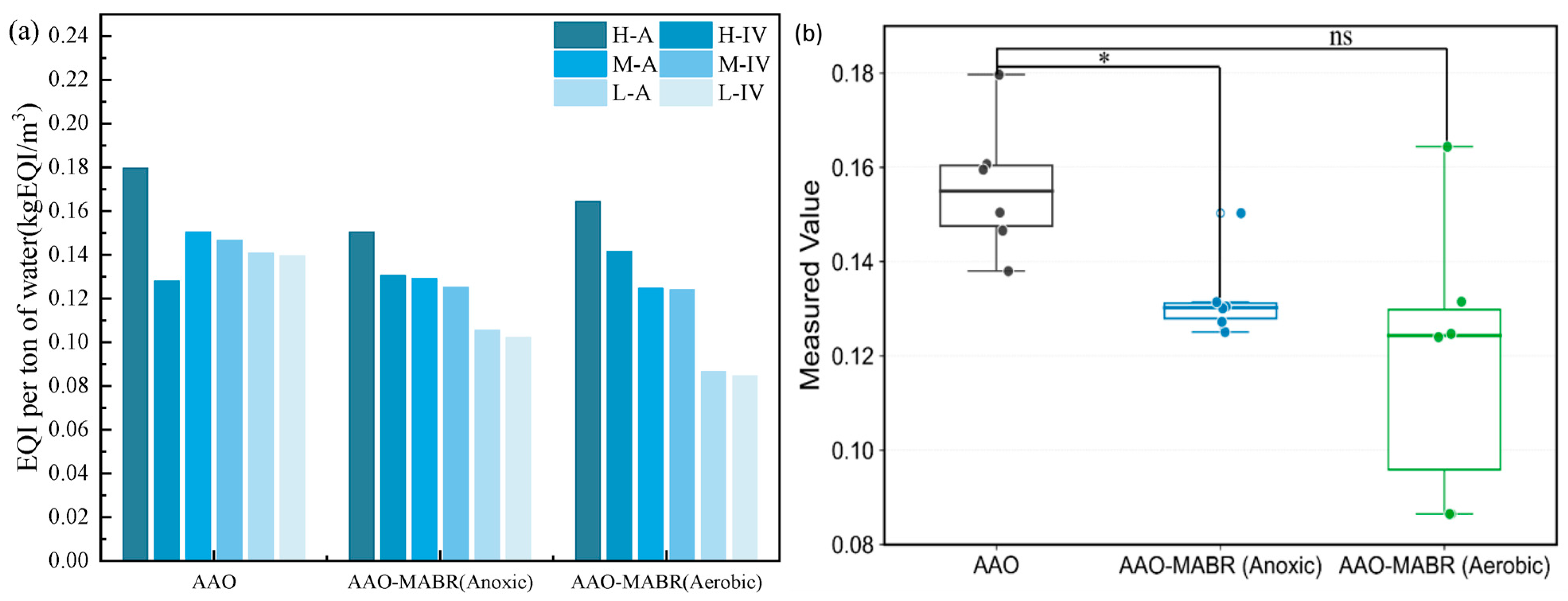
Figure 2 presents the effluent quality results of the three wastewater treatment processes across six influent–effluent scenarios. Since this study primarily focuses on the carbon emission characteristics of each process, it is essential to ensure the scientific rigor and comparability of subsequent analyses involving operational cost, carbon emissions, and energy consumption. To achieve this, the effluent qualities of all processes were maintained close to the Grade I-A standard specified in the Discharge Standard of Pollutants for Municipal Wastewater Treatment Plants (GB18918-2002) and the Class IV water standard defined in the Environmental Quality Standards for Surface Water (GB3838-2002). This approach thus established a unified performance benchmark for subsequent evaluation.
The MABR module facilitates the formation of a stratified biofilm characterized by an inner aerobic zone and an outer anoxic layer, driven by the counter-diffusion of oxygen and substrates. This unique architecture enables the simultaneous removal of COD, TN, and NH4+-N, thereby significantly enhancing overall process performance [29]. Furthermore, a study has shown that hybrid MABR systems can achieve simultaneous nitrification and denitrification [28,30]. Reported removal efficiencies for total COD, NH4+-N, and TN reached approximately 85%, 88%, and 68%, respectively, confirming the robust pollutant removal capability of this configuration [8]. Meanwhile, we found in our simulation experiment that the TN removal rate of the AAO-MABR (anoxic) process was 5.63% higher than that of the AAO-MABR (aerobic) process, indicating that under anoxic conditions, MABR is more conducive to simultaneous nitrification and denitrification. Finally, the AAO-MABR (Anoxic) system demonstrated a statistically significant improvement in performance compared to the conventional AAO system (p < 0.05, Bonferroni-corrected), with a median reduction of 16.1% in measured values (Figure 2b). This consistent enhancement across all replicates suggests robust operational stability under anoxic conditions. In contrast, although the AAO-MABR (Aerobic) system exhibited a greater median reduction (19.4%), the high variability in measurements (IQR: 0.086–0.164) resulted in a lack of statistical significance. Notably, specific replicates achieved superior performance, highlighting the potential of the MABR process to significantly enhance the conventional AAO system.

3.2. Process Operating Cost Characteristics

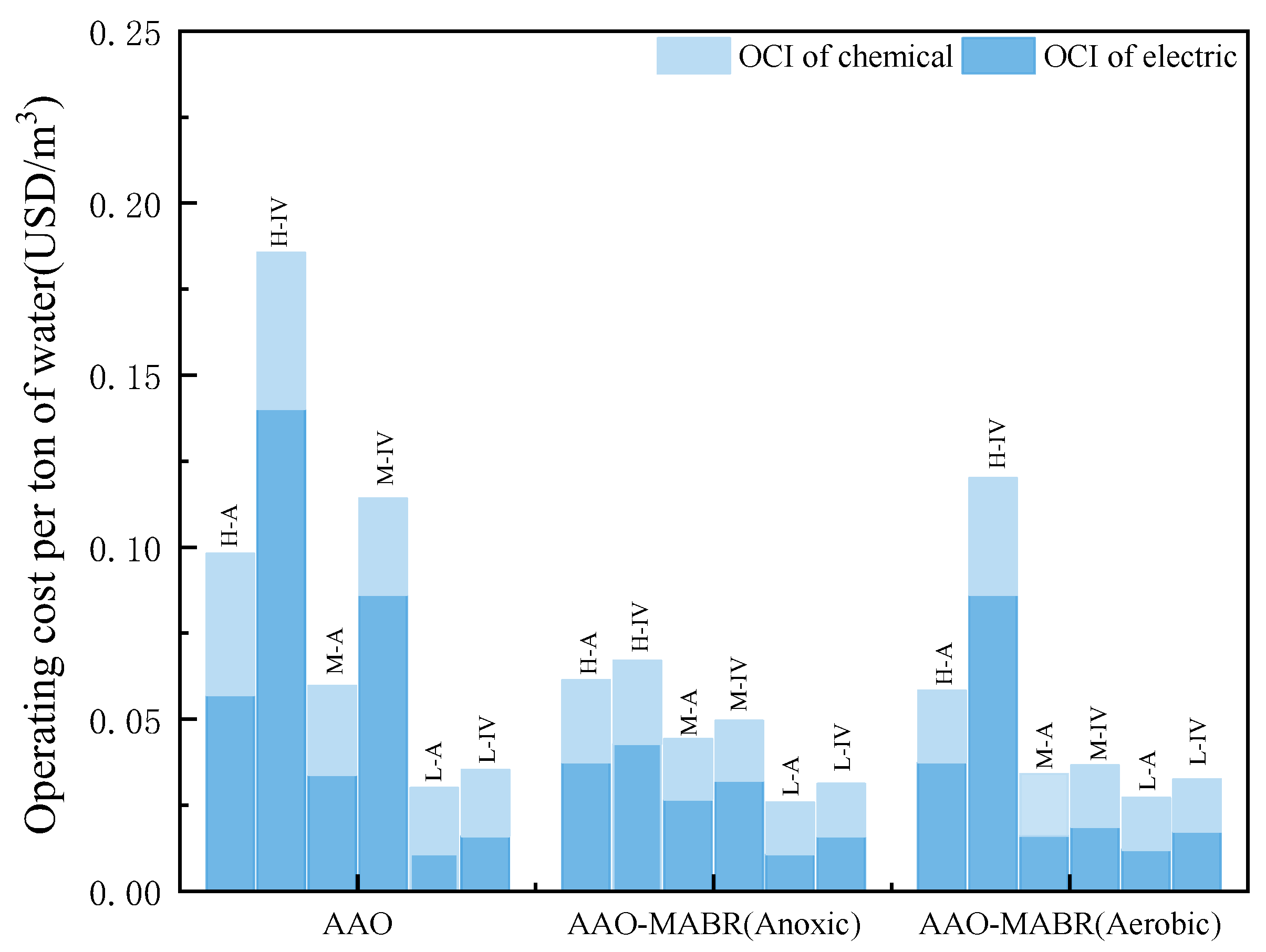
Figure 3 presents the operational cost evaluation results for the three wastewater treatment processes under six different influent–effluent scenarios. Because the simulation software used in this study can only estimate the costs associated with energy consumption and chemical dosing during the process design stage, the analysis focuses on three core components of operational expenses: energy consumption, chemical usage, and auxiliary materials. In terms of operational cost per cubic meter of treated water (Figure 3), the overall cost level of the AAO-MABR coupled processes—both Anoxic and Aerobic configurations—is significantly lower than that of the conventional AAO process, indicating a distinct economic advantage. The operational cost ranges of the three processes were 0.03–0.19 USD/m3 for the conventional AAO process, 0.026–0.069 USD/m3 for the AAO-MABR (Anoxic) process, and 0.027–0.12 USD/m3 for the AAO–MABR (Aerobic) process.
Further analysis of cost variations for the same process under different effluent standards shows that operational costs under the surface water Class IV standard are generally higher than those under the Grade I-A discharge standard. This trend is consistent with the findings of previous studies [26], which have shown that higher effluent quality standards require greater energy and chemical input to enhance pollutant removal efficiency, thereby leading to increased operational costs. Notably, under the H–IV influent–effluent scenario, the disparity in operational cost per cubic meter of treated water among the three processes was most pronounced. The conventional AAO process exhibited the highest cost (approximately 0.19 USD/m3), followed by the AAO-MABR (Aerobic) process, while the AAO–MABR (Anoxic) process had the lowest cost (0.069 USD/m3). This result is primarily attributed to aerobic biofilms in the anoxic tank generating the nitrates required for denitrification. When most nitrification occurs within the biofilm rather than in the suspended phase, overall economic efficiency can be maximized [31]. These findings suggest that when the wastewater treatment system operates under higher influent loads, the AAO-MABR (Anoxic) process offers a pronounced economic advantage, positioning it as the most cost-effective strategy under such operating conditions.
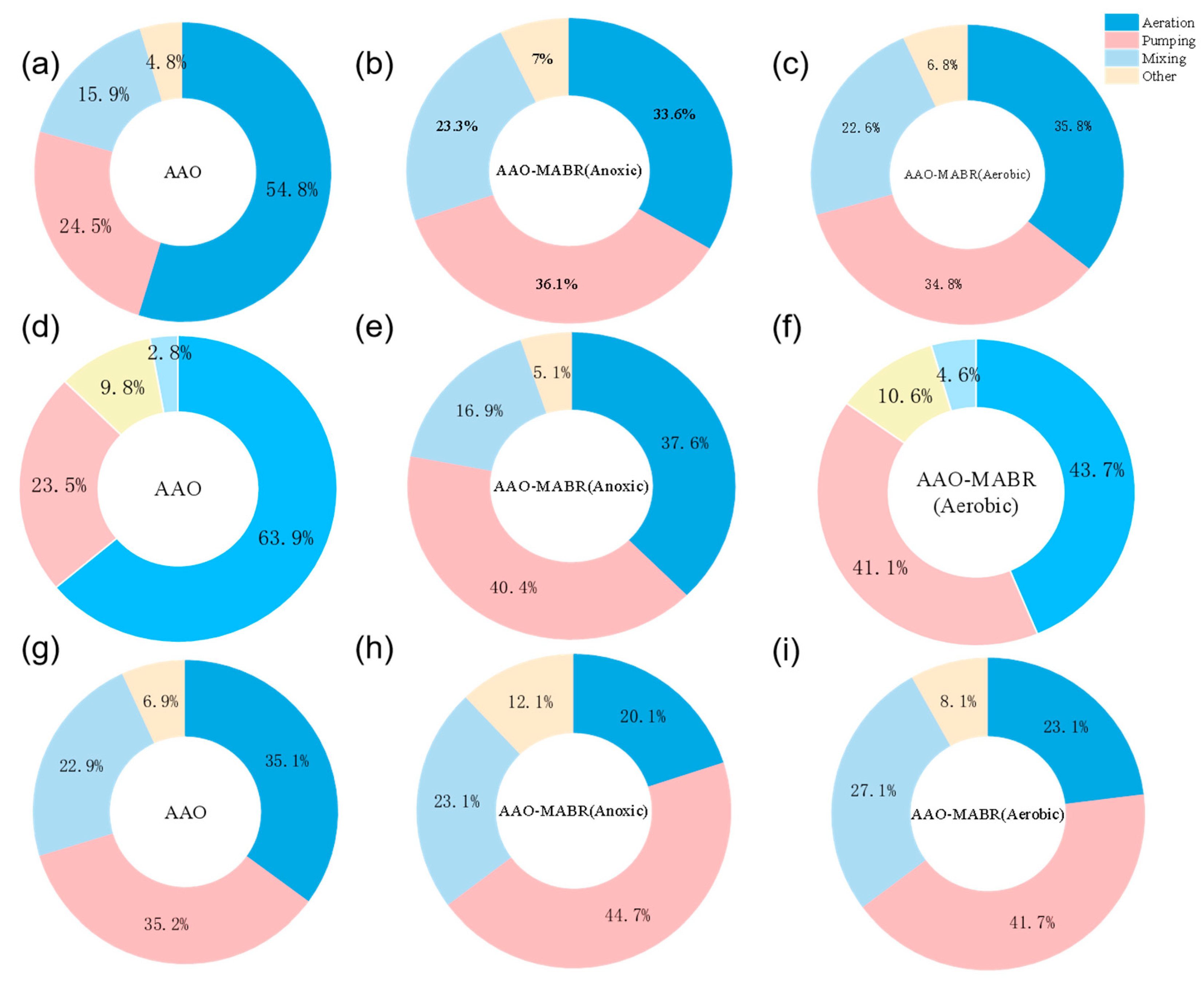
Figure 4 illustrates the energy consumption profiles of the investigated processes under the Surface Water Class IV effluent scenario. In the conventional AAO process, aeration constitutes the predominant energy sink, followed by pumping. Conversely, the AAO-MABR configurations (both Anoxic and Aerobic) exhibit a balanced energy distribution, with comparable contributions from aeration and pumping. Consequently, the AAO-MABR coupled processes demonstrate significantly lower total operational energy costs compared to the conventional AAO system, underscoring their superior energy efficiency. As an emerging biological treatment technology, the MABR process has been shown to reduce energy consumption by up to 70% relative to conventional activated sludge systems [32].
Notably, under low-influent-concentration scenarios, the energy consumption structure of all processes undergoes a marked change, as illustrated in Figure 4g–i. In these cases, pumping replaces aeration as the dominant energy consumer, accounting for more than 40% of the total energy use. Accordingly, energy optimization strategies for systems operating under low-influent conditions should prioritize the pumping stage. Adopting high-efficiency pumps and optimizing hydraulic design can effectively reduce pumping energy consumption, thereby enhancing overall energy management under all operating conditions.

3.3. Characteristics of Carbon Emissions from Industrial Processes

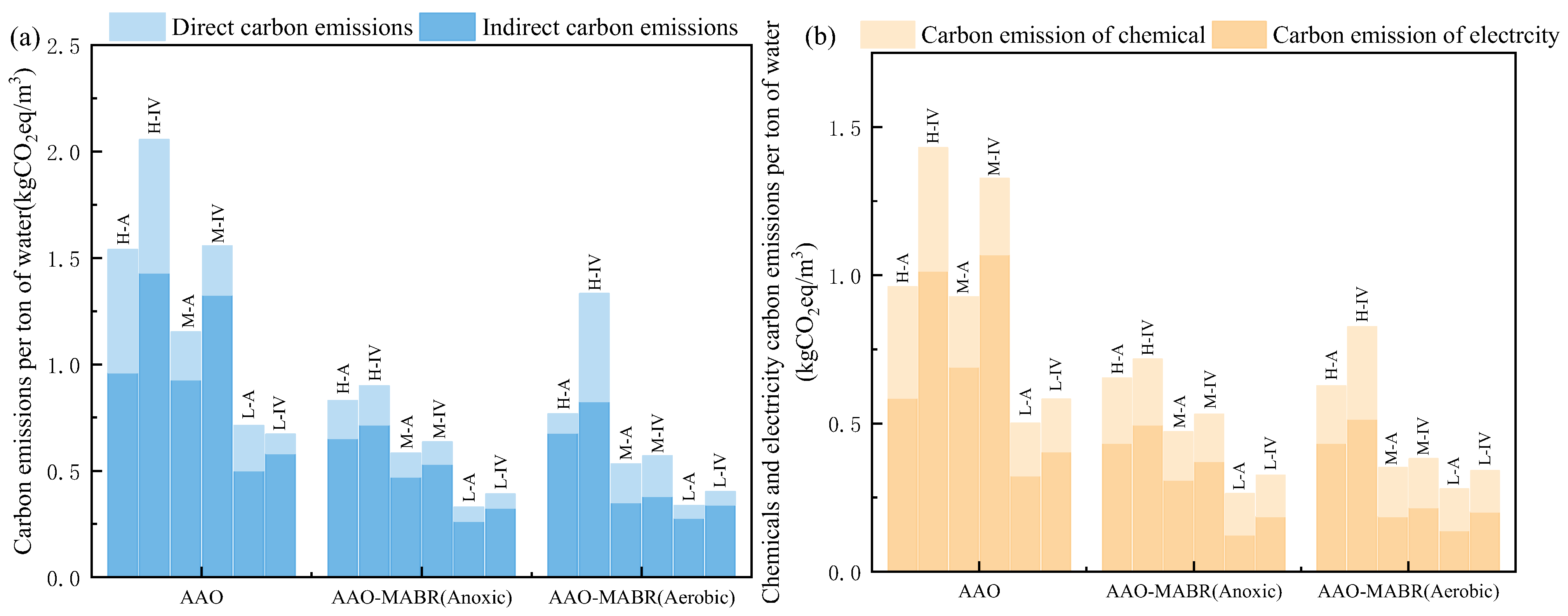
Figure 5 presents the total, chemical, and electricity-related carbon emission intensities for the three processes. As illustrated in panel (a), carbon emission intensities varied significantly across the different processes and scenarios. Moreover, carbon emissions from chemical use and electricity consumption show a strong correlation with operational costs. Consequently, elevated influent pollutant concentrations and stricter effluent discharge standards drive up operational costs, thereby resulting in higher carbon emissions. As shown in Figure 5a, both total and indirect carbon emission intensities peaked under the H–IV scenario.
Overall, the coupled AAO-MABR process demonstrated lower carbon emission intensities than the conventional AAO process. This reduction can be primarily attributed to the inherently lower energy demand of the MABR. Numerous studies have shown that electricity-related carbon emissions account for a substantial share of the total carbon footprint in wastewater treatment [33]. Simulation results further indicate that the AAO process requires supplemental external carbon dosing to enhance denitrification and achieve comparable effluent nitrogen removal [34]. This external carbon addition, however, indirectly increases the overall carbon emission intensity. The average carbon emission intensity of the conventional AAO process across the six scenarios was 1.28 kgCO2eq/m3, which is generally consistent with the 1.0 kgCO2eq/m3 reported by Su et al. [35]. In contrast, the AAO–MABR processes exhibited an average carbon emission intensity of 0.63 kgCO2eq/m3, representing a substantial reduction relative to the conventional AAO process. This reduction is attributed not only to lower energy consumption but also to the distinctive structural and microbial features of MABR systems, which significantly contribute to the mitigation of N2O emissions. As reported previously, MABR has strong potential for reducing N2O emissions due to its distinctive biofilm stratification, whereby N2O generated in the inner biofilm layers can be subsequently consumed in the outer aerobic regions [36]. Compared with conventional biological treatment alternatives, hybrid MABR systems can markedly reduce greenhouse gas emissions while simultaneously improving nitrogen removal efficiency [11]. For example, Liao et al. reported an electricity-related carbon emission intensity of 0.79 kgCO2eq/m3 for the AAO-MABR process [37]. This is largely due to the fact that, compared with conventional biofilm-based technologies, MABR can reduce N2O emissions by up to two orders of magnitude during nitrification–denitrification and autotrophic nitrogen removal [38].
In summary, the integrated AAO-MABR process achieves markedly lower indirect carbon emission intensity and effectively mitigates direct N2O emissions, demonstrating significant potential for low-carbon wastewater treatment.

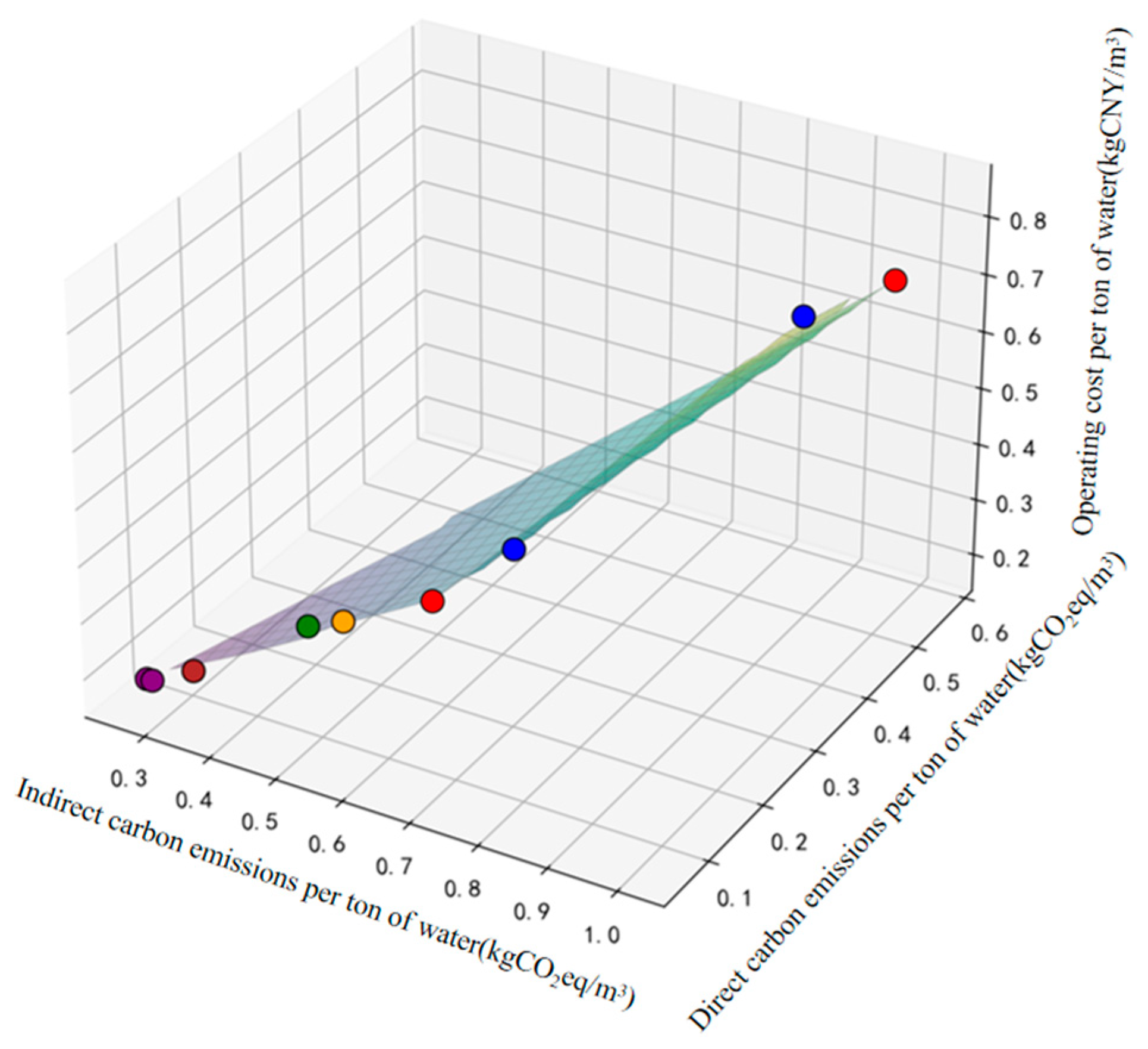
3.4. Multi-Objective Comparison and Selection Results

Operational costs, energy consumption, and carbon emissions are critical determinants in the upgrading and selection of wastewater treatment processes. Accordingly, the specific operational cost, along with direct and indirect carbon emissions, were selected as key indicators for the Pareto-based multi-objective evaluation. A total of 18 datasets were classified into six scenarios, each comprising data for the three treatment processes under identical influent and effluent conditions. The objective was to identify the optimal process for each scenario. The Pareto front (Figure 6) was constructed using direct carbon emissions, indirect carbon emissions, and operational cost per cubic meter as the primary variables. Table 3 summarizes the Pareto-based selection results for the three treatment processes across the six scenarios. Among these, the optimal processes under the H-A, H-IV, and L-A scenarios were AAO-MABR (Aerobic) and AAO-MABR (Anoxic), whereas in the remaining three scenarios, the AAO-MABR (Anoxic) process consistently exhibited superior performance. Notably, the conventional AAO process consistently underperformed across all six evaluated scenarios, aligning with the results discussed above. Overall, as shown in Table 3, the AAO-MABR (Anoxic) process exhibited outstanding performance across all scenarios, demonstrating broader adaptability to varying influent conditions and superior operational as well as environmental outcomes.
Since the influent quality of actual wastewater treatment plants generally resembles the M-scenario influent conditions in this study, the OCI and GHG characteristics under this scenario were analyzed in detail. Comparison of the biochemical process parameters revealed that, regardless of whether the MABR unit was configured in the anoxic or aerobic zone, both nitrification and denitrification occurred to varying extents within the system. In the AAO–MABR (Anoxic) process under the M scenario, the ammonium load was 0.036 kg/(m3·d), and the nitrification rate reached 0.89 g/(m2·d), consistent with the findings reported by Bao et al. [39]. Their study further indicated that the nitrification rate of the AAO–MABR (Anoxic) process could reach 1.2 g/(m2·d) and that the MABR biofilm exhibited an initially increasing and subsequently stable trend with rising ammonium load. This finding suggests that the AAO-MABR (Anoxic) process exhibits strong robustness against fluctuations in ammonium loading within a certain range, thereby maintaining stable and efficient nitrogen removal performance. Moreover, previous studies have demonstrated that the MABR process exhibits substantially lower energy consumption. This advantage stems primarily from the mitigation of aerobic oxidation of particulate and colloidal organic carbon, which allows more soluble and biodegradable organic carbon to be effectively utilized for denitrifications [40]. In addition, unlike conventional aeration, membrane aeration does not produce bubbles, allowing oxygen diffusing through the membrane to be fully utilized by the biofilm. Consequently, this configuration achieves exceptionally high oxygen transfer efficiency and considerable energy savings [41].
In light of these findings, the AAO-MABR (Anoxic) process demonstrates distinct advantages in wastewater treatment performance owing to its highly efficient nitrogen removal capability. Specifically, under identical effluent quality requirements, the process achieves treatment objectives with higher stability and efficiency. More importantly, it delivers substantial energy savings, effectively reducing overall consumption. In full-scale wastewater treatment plants, energy-related expenses account for a substantial proportion of total operational costs, and indirect carbon emissions associated with energy use constitute a major component of overall GHGs. Therefore, the low energy demand of the AAO-MABR (Anoxic) process not only contributes to a substantial reduction in plant operating costs but also results in a marked decrease in overall GHGs. These dual benefits directly address two of the most pressing challenges faced by wastewater treatment facilities: economic efficiency and environmental sustainability. In conclusion, integrating an MABR unit into a conventional AAO configuration… offers a viable and effective technological pathway for upgrading existing wastewater treatment systems. This hybrid process demonstrates great potential for achieving higher effluent standards while maintaining operational efficiency. As such, it provides a useful reference for advancing the sustainable and high-efficiency development of the wastewater treatment sector.

4. Conclusions

This study represents the first quantitative comparison between the conventional AAO process and the AAO-MABR coupled process configuration with respect to operating costs and carbon emissions. The results show that the addition of the MABR process can improve the overall treatment efficiency of the AAO process, reduce electricity consumption, and to some extent, decrease carbon emissions and operating costs of the process. Pareto optimality analysis further demonstrates that the AAO-MABR (anoxic) coupled process can accommodate a broader range of influent water quality conditions. Collectively, these findings strongly suggest that incorporating an MABR unit into the anoxic zone of a wastewater treatment plant offers markedly superior operational and environmental advantages.

Author Contributions

C.S. & M.L.: Writing—original draft, Investigation, Methodology, and Visualization. H.Z.: Writing—review and editing, Investigation, and Resources. Y.Q.: Resources. Y.C. & B.L.: Writing—review and editing, Conceptualization, Resources, and Supervision. All authors have read and agreed to the published version of the manuscript.

Funding

The authors gratefully acknowledge the funding support from the Yangtze River Ecological Environment Engineering Research Center of China Three Gorges Group Co., Ltd., Beijing [grant number 20242000656]. This study was also sponsored by the Tsinghua University (School of Environment)—Chengdu Environmental Investment Group Co., Ltd., Water Advanced Technology Joint Research Center [grant number 20242910032].

Data Availability Statement

The raw data supporting the conclusions of this article will be made available by the authors on request.

Conflicts of Interest

Author Mengmeng Liu and Yasong Chen were employed by Yangtze River Ecological Environment Engineering Research Center of China Three Gorges Group Co., Ltd. The remaining authors declare that the research was conducted in the absence of any commercial or financial relationships that could be construed as a potential conflict of interest. The authors declare that this study received funding from Yangtze River Ecological Environment Engineering Research Center of China Three Gorges Group Co., Ltd., and Chengdu Environmental Investment Group Co., Ltd., Water Advanced Technology Joint Research Center. The funders were not involved in the study design, collection, analysis, interpretation of data, the writing of this article or the decision to submit it for publication.

References

  1. Lu, L.; Guest, J.S.; Peters, C.A.; Zhu, X.; Rau, G.H.; Ren, Z.J. Wastewater treatment for carbon capture and utilization. Nat. Sustain. 2018, 1, 750–758. [Google Scholar] [CrossRef]
  2. Zhang, C.; Zhao, G.; Jiao, Y.; Quan, B.; Lu, W.; Su, P.; Tang, Y.; Wang, J.; Wu, M.; Xiao, N.; et al. Critical analysis on the transformation and upgrading strategy of Chinese municipal wastewater treatment plants: Towards sustainable water remediation and zero carbon emissions. Sci. Total Environ. 2023, 896, 165201. [Google Scholar] [CrossRef]
  3. Wang, J.; Chon, K.; Ren, X.; Kou, Y.; Chae, K.; Piao, Y. Effects of beneficial microorganisms on nutrient removal and excess sludge production in an anaerobic-anoxic/oxic (A2O) process for municipal wastewater treatment. Bioresour. Technol. 2019, 281, 90–98. [Google Scholar] [CrossRef]
  4. Lei, S.; Zhang, J.; Hu, B.; Zhao, J.; Yang, W.; Shi, B.; Chen, Y.; Zhao, J. Improving nutrients removal of Anaerobic-Anoxic-Oxic process via inhibiting partial anaerobic mixture with nitrite in side-stream tanks: Role of nitric oxide. Bioresour. Technol. 2023, 382, 129207. [Google Scholar] [CrossRef]
  5. Zhang, M.; Liu, J.; Wang, D.; Lu, M.; Fan, Y.; Ji, J.; Wu, J. Combined effects of carbon source and C/N ratio on the partial denitrification performance: Nitrite accumulation, denitrification kinetic and microbial transition. J. Environ. Chem. Eng. 2024, 12, 113343. [Google Scholar] [CrossRef]
  6. Qu, S.; Hu, Y.; Wei, R.; Yu, K.; Liu, Z.; Zhou, Q.; Wang, C.; Zhang, L. Carbon Footprint Drivers in China’s Municipal Wastewater Treatment Plants and Mitigation Opportunities through Electricity and Chemical Efficiency. Engineering 2025, 50, 106–116. [Google Scholar] [CrossRef]
  7. Wang, C.; Li, H.; Wu, B.; Meng, J. A nano-Al2O3 modified polypropylene hollow fiber membrane with enhanced biofilm formation in membrane aerated biofilm reactor application. J. Environ. Chem. Eng. 2024, 12, 112524. [Google Scholar] [CrossRef]
  8. He, H.; Wagner, B.M.; Carlson, A.L.; Yang, C.; Daigger, G.T. Recent progress using membrane aerated biofilm reactors for wastewater treatment. Water Sci. Technol. 2021, 84, 2131–2157. [Google Scholar] [CrossRef]
  9. Bao, Y.; Xu, S.; Yang, T.; Xiang, X.; Chai, C. Performance of MABR-coupled A2O process for municipal wastewater treatment. China Water Wastewater 2024, 40, 15–20. [Google Scholar]
  10. Siagian, U.; Friatnasary, D.; Khoiruddin, K.; Reynard, R.; Qiu, G.; Ting, Y.; Wenten, I. Membrane-aerated biofilm reactor (MABR): Recent advances and challenges. Rev. Chem. Eng. 2024, 40, 93–122. [Google Scholar] [CrossRef]
  11. He, H.; Daigger, G.T. The hybrid MABR process achieves intensified nitrogen removal while N2O emissions remain low. Water Res. 2023, 244, 120458. [Google Scholar] [CrossRef] [PubMed]
  12. Chen, X.; Yang, L.; Sun, J.; Wei, W.; Liu, Y.; Ni, B.J. Influences of longitudinal heterogeneity on nitrous oxide production from membrane-aerated biofilm reactor: A modeling perspective. Environ. Sci. Technol. 2020, 54, 10964–10973. [Google Scholar] [CrossRef]
  13. Lu, Y.; Liu, T.; Hu, S.; Yuan, Z.; Dwyer, J.; Van Den Akker, B.; Lloyd, J.; Guo, J. Coupling partial nitritation, anammox and n-DAMO in a membrane aerated biofilm reactor for simultaneous dissolved methane and nitrogen removal. Water Res. 2024, 255, 121511. [Google Scholar] [CrossRef]
  14. Sweetapple, C.; Fu, G.; Butler, D. Multi-objective optimisation of wastewater treatment plant control to reduce greenhouse gas emissions. Water Res. 2014, 55, 52–62. [Google Scholar] [CrossRef]
  15. Ortiz-Martínez, V.M.; Martínez-Frutos, J.; Hontoria, E.; Hernández-Fernández, F.J.; Egea, J.A. Multiplicity of solutions in model-based multiobjective optimization of wastewater treatment plants. Optim. Eng. 2021, 22, 1–16. [Google Scholar] [CrossRef]
  16. Dai, H.; Wang, Z.; Zhao, J.; Jia, X.; Liu, L.; Wang, J.; Abbasi, H.N.; Guo, Z.; Chen, Y.; Geng, H.; et al. Modeling and optimizing of an actual municipal sewage plant: A comparison of diverse multi-objective optimization methods. J. Environ. Manag. 2023, 328, 116924. [Google Scholar] [CrossRef]
  17. Wang, N.; Zhao, W.; Wu, N.; Wu, D. Multi-objective optimization: A method for selecting the optimal solution from Pareto non-inferior solutions. Expert Syst. Appl. 2017, 74, 96–104. [Google Scholar] [CrossRef]
  18. Béraud, B.; Steyer, J.P.; Lemoine, C.; Latrille, E.; Manic, G.; Printemps-Vacquier, C. Towards a global multi objective optimization of wastewater treatment plant based on modeling and genetic algorithms. Water Sci. Technol. 2007, 56, 109–116. [Google Scholar] [CrossRef]
  19. Muschalla, D. Optimization of integrated urban wastewater systems using multi-objective evolution strategies. Urban Water J. 2008, 5, 59–67. [Google Scholar] [CrossRef]
  20. Cao, J.; Yang, E.; Xu, C.; Zhang, T.; Xu, R.; Fu, B.; Feng, Q.; Fang, F.; Luo, J. Model-based strategy for nitrogen removal enhancement in full-scale wastewater treatment plants by GPS-X integrated with response surface methodology. Sci. Total Environ. 2021, 769, 144851. [Google Scholar] [CrossRef]
  21. Jasim, N.A. The design for wastewater treatment plant (WWTP) with GPS-X modelling. Cogent Eng. 2020, 7, 1723782. [Google Scholar] [CrossRef]
  22. Liao, J.; Li, S.; Liu, Y.; Mao, S.; Tian, T.; Ma, X.; Li, B.; Qiu, Y. Multi-objective optimization based on simulation integrated pareto analysis to achieve low-carbon and economical operation of a wastewater treatment plant. Water 2024, 16, 995. [Google Scholar] [CrossRef]
  23. GB 18918-2002; Discharge Standard of Pollutants for Municipal Wastewater Treatment Plant. China Environmental Science Press: Beijing, China, 2002.
  24. GB 3838-2002; Environmental Quality Standards for Surface Water. China Environmental Science Press: Beijing, China, 2002.
  25. Hu, Y.; He, Y.; Song, N.; Niu, J.; Yang, C.; Qiu, L. Study on the Effect of MABR-AO Coupling Process on the Treatment of Low C/N Township Domestic Sewage. Environ. Impact Assess. 2024, 46, 69–73, 77. [Google Scholar]
  26. Wang, J.; Mu, Y.; Zhang, L.; Wu, Y.; Xue, X.; Cao, Z.; Li, J. Pilot-scale verification study of the MABR process for municipal wastewater treatment. Chin. J. Environ. Eng. 2025, 19, 2645–2655. [Google Scholar]
  27. Yin, J.; Jiang, H.; Qiu, L.; Yang, J.; Zhang, H.; Liang, H.; Ni, B.J. Synergistic suppression of nitrous oxide and residual nitrate in DNRA-enhanced MABR-PN/A hybrid systems. Water Res. 2025, 286, 124245. [Google Scholar] [CrossRef]
  28. Sun, C.; Mao, S.; Zhao, W.; Chen, Y.; Cao, X.; Tian, T.; Ma, X.; Li, B.; Qiu, Y. Multi-objective comparison of conventional and emerging wastewater treatment processes based on simulation to reduce greenhouse gas emissions. Front. Environ. Sci. Eng. 2025, 19, 29. [Google Scholar] [CrossRef]
  29. Hou, F.; Li, B.; Xing, M.; Wang, Q.; Hu, L.; Wang, S. Surface modification of PVDF hollow fiber membrane and its application in membrane aerated biofilm reactor (MABR). Bioresour. Technol. 2013, 140, 1–9. [Google Scholar] [CrossRef]
  30. Yan, Z.; Han, X.; Lin, Y.; Jin, Y.; Song, X. Insights into partial nitrification in a membrane-aerated biofilm reactor (MABR): Performance, microbial characteristics, and mechanisms. ACS EST Eng. 2025, 5, 2555–2564. [Google Scholar] [CrossRef]
  31. Uri-Carreño, N.; Nielsen, P.H.; Gernaey, K.V.; Domingo-Félez, C.; Flores-Alsina, X. Nitrous oxide emissions from two full-scale membrane-aerated biofilm reactors. Sci. Total Environ. 2024, 908, 168030. [Google Scholar] [CrossRef]
  32. Li, X.; Bao, D.; Zhang, Y.; Xu, W.; Zhang, C.; Yang, H.; Ru, Q.; Wang, Y.-f.; Ma, H.; Zhu, E.; et al. Development and Application of Membrane Aerated Biofilm Reactor (MABR)—A Review. Water 2023, 15, 436. [Google Scholar] [CrossRef]
  33. Mamais, D.; Noutsopoulos, C.; Dimopoulou, A.; Stasinakis, A.; Lekkas, T.D. Wastewater treatment process impact on energy savings and greenhouse gas emissions. Water Sci. Technol. 2014, 71, 303–308. [Google Scholar] [CrossRef]
  34. Guo, F.; Yan, G.; Wang, H.; Shi, L.; Zhang, Y.; Ling, Y.; Wei, Y.; Wang, H.; Dong, W.; Chang, Y.; et al. Denitrification enhanced by composite carbon sources in AAO-biofilter: Efficiency and metagenomics research. J. Environ. Sci. 2025, 150, 25–35. [Google Scholar] [CrossRef]
  35. Su, S.; Wang, C.; Lu, C.; Zhao, W.; Liu, C.; Chen, D.; Jiang, B.; Fan, X.; Zhao, Z.; Chen, Y.; et al. Carbon emissions from rural wastewater treatment using the anoxic-anaerobic-oxic membrane bioreactor process. J. Clean. Prod. 2025, 510, 145640. [Google Scholar] [CrossRef]
  36. Li, J.; Feng, M.; Zheng, S.; Zhao, W.; Xu, X.; Yu, X. The membrane aerated biofilm reactor for nitrogen removal of wastewater treatment: Principles, performances, and nitrous oxide emissions. Chem. Eng. J. 2023, 460, 141693. [Google Scholar] [CrossRef]
  37. Liao, X.; Tian, Y.; Gan, Y.; Ji, J. Quantifying urban wastewater treatment sector’s greenhouse gas emissions using a hybrid life cycle analysis method—An application on Shenzhen city in China. Sci. Total Environ. 2020, 745, 141176. [Google Scholar] [CrossRef]
  38. Kinh, C.T.; Riya, S.; Hosomi, M.; Terada, A. Identification of hotspots for NO and N2O production and consumption in counter- and co-diffusion biofilms for simultaneous nitrification and denitrification. Bioresour. Technol. 2017, 245, 318–324. [Google Scholar] [CrossRef]
  39. Bao, J.; Zhu, Y.; Xu, S.; Xu, B.; Cao, L.; Huang, X. Effects of process parameters on the performance of membrane-aerated biofilm reactors in wastewater treatment. Environ. Eng. 2025, 43, 95–103. [Google Scholar]
  40. He, H.; Carlson, A.L.; Wagner, B.; Yang, C.; Cao, Y.; Uzair, M.D.; Daigger, G.T. An update on hybrid membrane aerated biofilm reactor technology. Water Environ. Res. 2025, 97, e70065. [Google Scholar] [CrossRef]
  41. Kim, B.; Perez-Calleja, P.; Li, M.; Nerenberg, R. Effect of predation on the mechanical properties and detachment of MABR biofilms. Water Res. 2020, 186, 116289. [Google Scholar] [CrossRef]
Figure 1. Process conceptual model. (a) AAO process (b) AAO–MABR (Anoxic) process (c) AAO–MABR (Aerobic).
Water 18 00150 g001
Figure 2. Effluent water quality characteristics of wastewater treatment process. (a) The ton of effluent EQI (b) Significance analysis of EQI for influent water in each scenario (“ns” stands for “not significant” under this sample size, “*” indicates p < 0.05).
Water 18 00150 g002
Figure 3. Total operating cost per ton of water under different scenarios.
Water 18 00150 g003
Figure 4. Specific energy consumption proportions of three processes. (ac) Energy consumption proportions of each process under H-IV scenario. (df) Energy consumption proportions of each process under M-IV scenario. (gi) Energy consumption proportions of each process under L-IV scenario; processes in the figure are from left to right: AAO, AAO–MABR (Anoxic), AAO–MABR (Aerobic).
Water 18 00150 g004
Figure 5. Carbon emission intensity. (a) Carbon emission intensity per ton of effluent. (b) Carbon emission intensity of chemical and electric.
Water 18 00150 g005
Figure 6. Pareto comparison results.
Water 18 00150 g006
Table 1. Scenario settings for influent and effluent water quality.
Water Quality IndicatorsInfluent (mg/L)Effluent (mg/L)
HMLAIV
COD10005002505030
BOD4002201101010
SS3502001001010
TN8540201510
NH4+-N64301551.5
TP15840.50.3
Table 2. Parameters of process operation.
ProcessFacilitiesValueUnit
AAOAnaerobic tank1000m3
Anoxic tank1000m3
Aerobic tank1000m3
DO1.0 [25,27]mg/L
AAO-MABR
(Anoxic)
Anaerobic tank1000m3
MABR1000m3
DO(MABR)0.2mgO2/L
Aerobic tank1000m3
DO1.0 [25,27]mgO2/L
Carrier outer diameter0.001m
Carrier length2.0m
Liquid film thickness0.05mm
AAO-MABR
(Aerobic)
Anaerobic tank1000m3
Anoxic tank1000m3
MABR1000m3
DO(MABR)2.0 [25,27]mg/L
Carrier outer diameter0.001m
Carrier length2.0m
Liquid film thickness0.005mm
Table 3. Optimal processes for different influent and effluent scenarios under multi-objective approach (In Figure 6, red, blue, green, orange, purple, and brown represent the optimal results selected under six scenarios, respectively, from H-A to L-IV).
Influent ConcentrationEffluent StandardOptimal Process
High Influent ConcentrationGrade I-AAAO-MABR(Aerobic)\AAO-MABR(Anoxic)
High Influent ConcentrationClass IVAAO-MABR(Aerobic)\AAO-MABR(Anoxic)
Medium Influent ConcentrationGrade I-AAAO-MABR(Anoxic)
Medium Influent ConcentrationClass IVAAO-MABR(Anoxic)
Low Influent ConcentrationGrade I-AAAO-MABR(Aerobic)\AAO-MABR(Anoxic)
Low Influent ConcentrationClass IVAAO-MABR(Anoxic)
Disclaimer/Publisher’s Note: The statements, opinions and data contained in all publications are solely those of the individual author(s) and contributor(s) and not of MDPI and/or the editor(s). MDPI and/or the editor(s) disclaim responsibility for any injury to people or property resulting from any ideas, methods, instructions or products referred to in the content.