Article

Enhancing Pore-Water Drainage in Coastal Soft Soils: Enzymatic Degradation and Hydraulic Performance of Straw-PLA Vertical Drains

1
College of Civil Engineering and Architecture, Zhejiang University, Hangzhou 310058, China
2
Center for Balance Architecture, Zhejiang University, Hangzhou 310058, China
3
Architectural Design and Research Institute of Zhejiang University Co., Ltd., Hangzhou 310028, China
4
School of Civil Engineering, Hefei University of Technology, Hefei 230009, China
*
Author to whom correspondence should be addressed.
Water 2026, 18(17), 2119; https://doi.org/10.3390/w18172119
Submission received: 29 June 2026 / Revised: 18 August 2026 / Accepted: 25 August 2026 / Published: 28 August 2026
(This article belongs to the Special Issue Hydrology and Hydrodynamics Characteristics in Coastal Area)

Abstract

Prefabricated vertical drains are critical for accelerating pore-water pressure dissipation and consolidating water-saturated soft soils in coastal and riverine environments. Straw drainage boards, composed of agricultural straw and polylactic acid (PLA), offer an alternative to traditional plastic drains, mitigating potential water pollution and microplastic accumulation in sensitive aquatic ecosystems. However, their slow natural biodegradability can impact long-term hydraulic performance and post-construction settlement. This study investigates the enzymatic degradation characteristics of straw–PLA drainage boards to optimize their hydraulic behavior and degradation in simulated water-saturated soft soils. We explored the effects of various bio-enzymes, specifically cellulase and alkaline protease, on the structural integrity and hydraulic properties of the drainage boards. Our results demonstrate that both enzymes significantly alter the water flow capacity of the boards, indicating accelerated degradation. Furthermore, a synergistic effect was observed when cellulase and alkaline protease were applied concurrently, leading to more pronounced degradation. The findings suggest that enzyme-enhanced degradation offers a promising strategy to optimize the hydraulic performance of drainage boards, facilitating more effective pore-water pressure dissipation and rapid soil consolidation in offshore and coastal engineering projects.

1. Introduction

Water-saturated soft soils, prevalent in coastal, marine, and riverine regions globally, pose significant challenges to infrastructure development due to their extremely high water content, low permeability, and slow natural pore-water pressure dissipation rates [1,2]. Managing the subsurface hydrology and accelerating pore-water drainage are therefore critical for ensuring the stability and serviceability of civil engineering structures built in these environments [3,4].
As a common method for improving soft soil foundations, the drainage consolidation method currently primarily consists of the surcharge preloading method [5,6,7] and the vacuum preloading method [8,9,10]. Both preloading methods require vertical drainage channels to discharge water from the soft soil, thereby improving the bearing capacity of the soft soil foundation. Due to its advantages such as rapid construction, low cost, short construction period, and high hydraulic conductivity, the prefabricated vertical drain (PVD) has become an effective vertical drainage channel in preloading–consolidation ground improvement methods [11,12,13,14,15,16]. PVDs have been widely used in soft soil improvement projects around the world and have achieved satisfactory performance [17,18,19,20,21,22]. According to relevant studies, approximately 1.5 billion linear meters of PVDs are consumed annually worldwide for soft ground improvement [23]. PVDs are primarily made of polyethylene and polypropylene [24]. Under natural conditions, they are difficult to degrade and remain in the ground for a long time [25,26].
The emergence of straw drainage boards compensates for the shortcomings of traditional plastic drainage boards. They are primarily made of straw fibers and polylactic acid. Under natural conditions, both materials are degradable, exhibiting low-carbon and environmentally friendly characteristics. Currently, research on straw drainage boards is still in its initial stage. Xu et al. [27] introduced the application of wheat straw in vacuum consolidation for treating reclaimed land foundations and suggested that short wheat straw can be used as a substitute material for PVDs, while long wheat straw can serve as a substitute for sand. Xu et al. [28] wrapped straws with geotextile as a horizontal drainage channel for vacuum preloading, providing an effective method for eco-treatment of dredged sludge. Chu et al. [29] mixed degradable straw materials with tailings sand to form a combined vertical drain. After vacuum preloading, the vane shear strength of the soil increased significantly. Feng et al. [30] introduced an application of wheat straw in the production of drainage boards, and the mechanical properties and drainage performance of the straw drainage boards meet engineering requirements. Xu et al. [31] braided rice straw into spiral ropes to serve as vertical drainage channels for vacuum preloading treatment of sludge. Their study shows that the water discharge capacity and tensile strength of the straw spiral ropes are comparable to those of PVD. Li et al. [32] tested the drainage performance of straw drainage boards and plastic drainage boards under vacuum preloading conditions. The study showed that the pore pressure dissipation in the foundation treated with straw drainage boards was 7% higher than that with plastic drainage boards. Comparing laboratory tests and field tests, Yuan et al. [33] found that straw drainage boards exhibit better engineering performance and economy than plastic drainage boards. Deng et al. [34] used woven rice straw as horizontal drainage boards for vacuum preloading treatment of high-water-content dredged slurry. Their study showed that the closer the straw was to the interface between the drainage board and the vacuum pipe, the greater the degree of degradation. Nguyen et al. [35] investigated the degradation characteristics of prefabricated vertical jute drains in saturated soft soils. The results indicate that when the drains degrade in different manners, the dissipation of excess pore-water pressure can exhibit significant differences. Yuan et al. [36] conducted degradation tests of straw drainage boards in soft soil from a prototype project. The results showed that after 240 days, the water flow capacity and tensile strength of the straw drainage boards decreased by more than 30%. The study by Zhu et al. [37] shows that straw drainage boards can persist in soft soil for up to 425 days, and the microbial communities in the soft soil accelerate the degradation of the straw drainage boards. Liu et al. [38] used wheat straw as vertical and horizontal drainage channels for shallow reinforcement of dredged fill along the Yellow Sea. After reinforcement with wheat straw, the settlement, water content, and undrained shear strength of the foundation were similar to those obtained by traditional methods.
Existing research has primarily focused on the degradation characteristics of straw drainage boards under natural conditions. Previous studies have shown that straw drainage boards remain in soft soil foundations for a relatively long period, which is detrimental to the control of post-construction settlement. Therefore, it is of great engineering significance to capitalize on the inherent biodegradability of straw drainage boards and accelerate their degradation through the addition of bio-enzymes, thereby enabling effective control of post-construction foundation settlement.
This study aims to bridge this critical gap by investigating the enzymatic degradation characteristics of eco-friendly straw–polylactic acid drainage boards. We hypothesize that specific bio-enzymes can significantly accelerate the breakdown of these materials, thereby enhancing their overall efficacy in soft soil improvement projects. We systematically explore the effects of two prominent bio-enzymes, cellulase and alkaline protease, on the degradation of straw drainage boards in a simulated soft soil environment. Our research not only quantifies the individual impact of each enzyme but also investigates potential synergistic effects when applied concurrently. Furthermore, this study introduces an application case of straw drainage boards in an offshore soft soil foundation treatment, presenting monitoring results from foundation settlement, deep soil displacement, and cone penetration tests. The findings provide crucial insights into developing an enzyme-enhanced strategy for optimizing the performance of sustainable drainage materials, paving the way for more efficient, responsible soft soil foundation treatments.

2. Enzymatic Degradation Characteristics Test of Straw Drainage Boards

2.1. Experimental Scheme

In the enzymatic degradation characteristic tests of straw drainage boards conducted in this study, cellulase, neutral protease, alkaline protease, and acid protease were selected as the degrading enzymes. Cellulase is capable of accelerating the degradation of straw fibers, whereas proteases exhibit differential degradation behaviors depending on the pH level. Considering the economic feasibility for future engineering applications, the effective bio-enzyme dosage was set at 1 g. The detailed experimental scheme is listed in Table 1. The test temperature was maintained between 18 °C and 23 °C, and the degradation period was 60 days.
In the table, Test S1 is the natural degradation test of straw drainage boards, providing a benchmark and basis for the subsequent degradation characteristics of various bio-enzyme formulations. Tests S2 to S5 are degradation tests of straw drainage boards under the action of a single bio-enzyme. Tests S6 to S7 are degradation tests of straw drainage boards with a cellulase-to-other-protease ratio of 1:1.

2.2. Test Apparatus and Materials

The straw drainage board used in the test was manufactured by Jiangsu Zhonglian Roadbed Engineering Co., Ltd. (Yancheng, China). The straw drainage board has a width of 100 mm and a thickness of 4 mm, as shown in Figure 1. The straw drainage board comprises a supporting core (made of straw and PLA) and a filter mesh (non-woven fabric). The core contains voids that act as drainage channels.
The soil samples used in the tests were collected from the subgrade construction site on the northern section of Liangmu Road, Hangzhou. The soil is grayish-brown saturated silt. The physical properties of the soil are presented in Table 2.
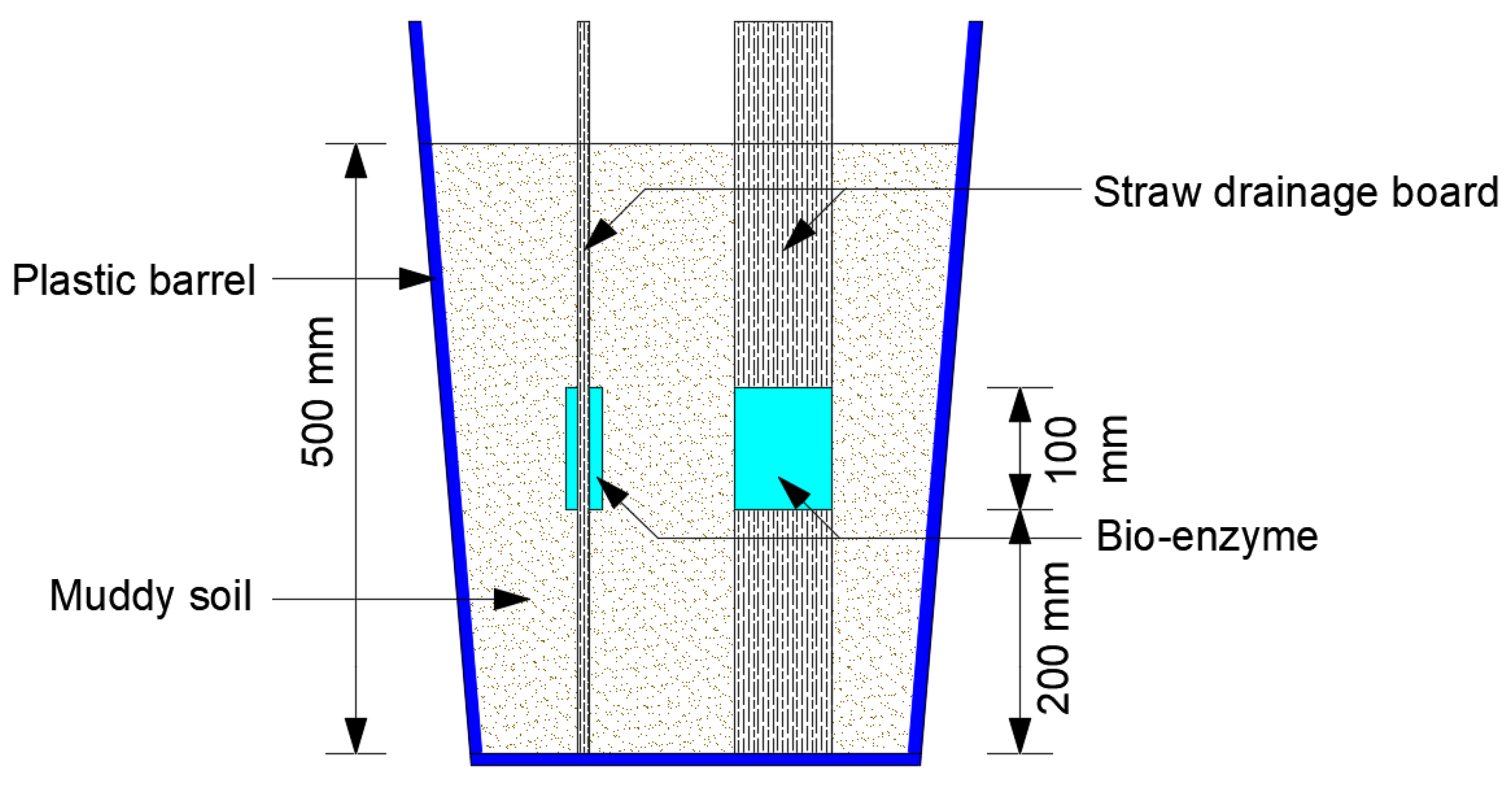
In this test, a straw drainage board with a length of 60 cm and an embedded depth in soil of 50 cm was placed in a plastic barrel. Bio-enzymes were added at a depth of 20–30 cm along the straw drainage board. The schematic diagram of the degradation test for the straw drainage board is shown in Figure 2.
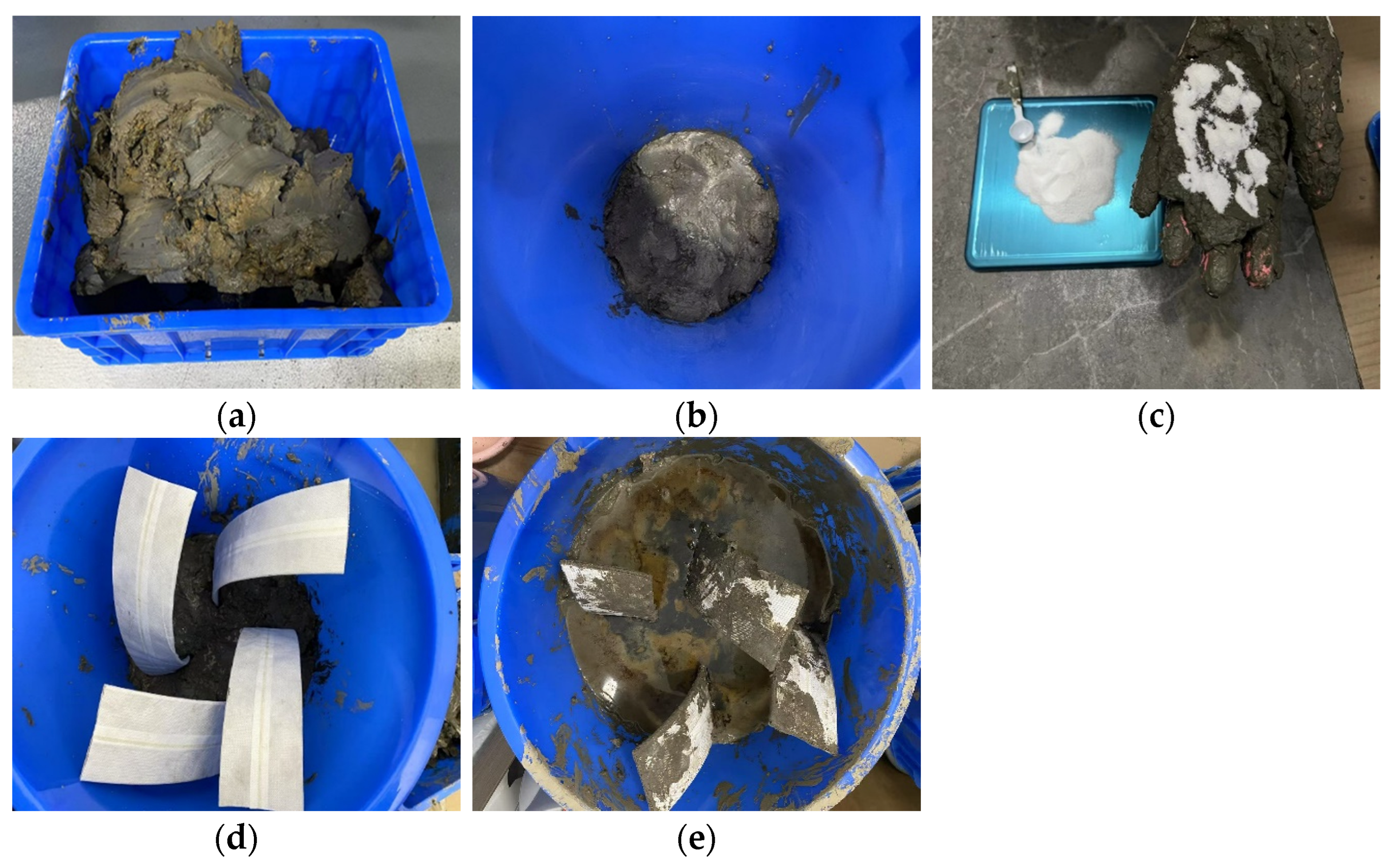
Figure 3 shows the flow chart of the degradation test for the straw drainage board. The sludge was excavated from the roadbed construction site (Figure 3a) and then prepared to a saturated state. The prepared sludge was filled into the plastic barrel to a height of 20 cm, and the filled soft soil was leveled (Figure 3b). A piece of sludge was shaped into a square of approximately 10 cm × 10 cm, and the weighed bio-enzyme was evenly sprinkled onto its surface (Figure 3c). A 50 cm long straw drainage board was cut and inserted into the already filled sludge (Figure 3d). The sludge block containing the bio-enzyme was placed tightly against the straw drainage board, and an appropriate amount of sludge was filled to secure it. After placing the bio-enzyme-containing sludge blocks on both sides of the straw drainage board, sludge was filled to a height of 30 cm and compacted to ensure close contact between the bio-enzyme and the straw drainage board. Sludge was then further filled to a height of 50 cm. An appropriate amount of clean water was added to the plastic barrel to maintain the test model in a saturated condition, and the specimen was left to stand for 60 days (Figure 3e).
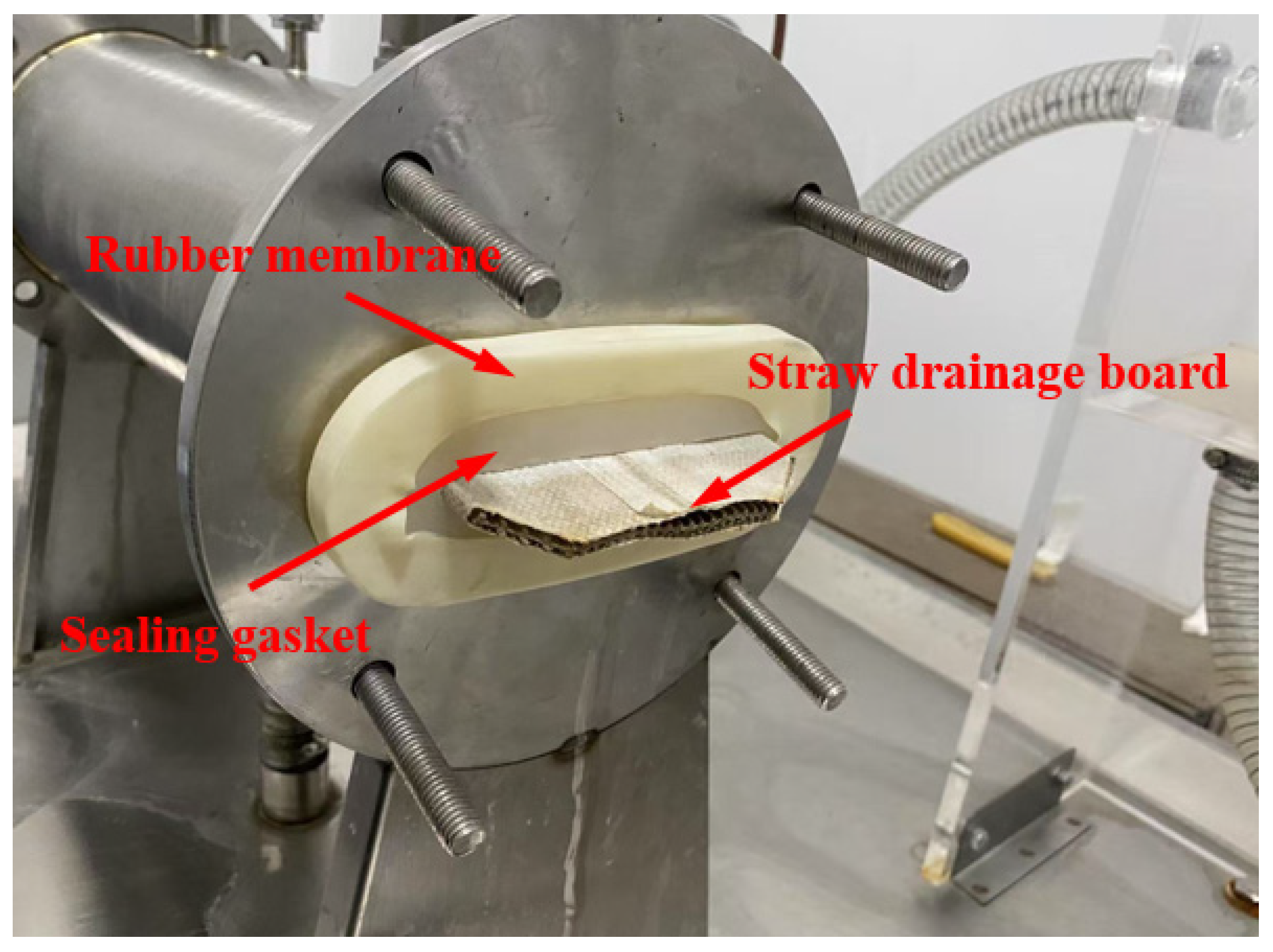
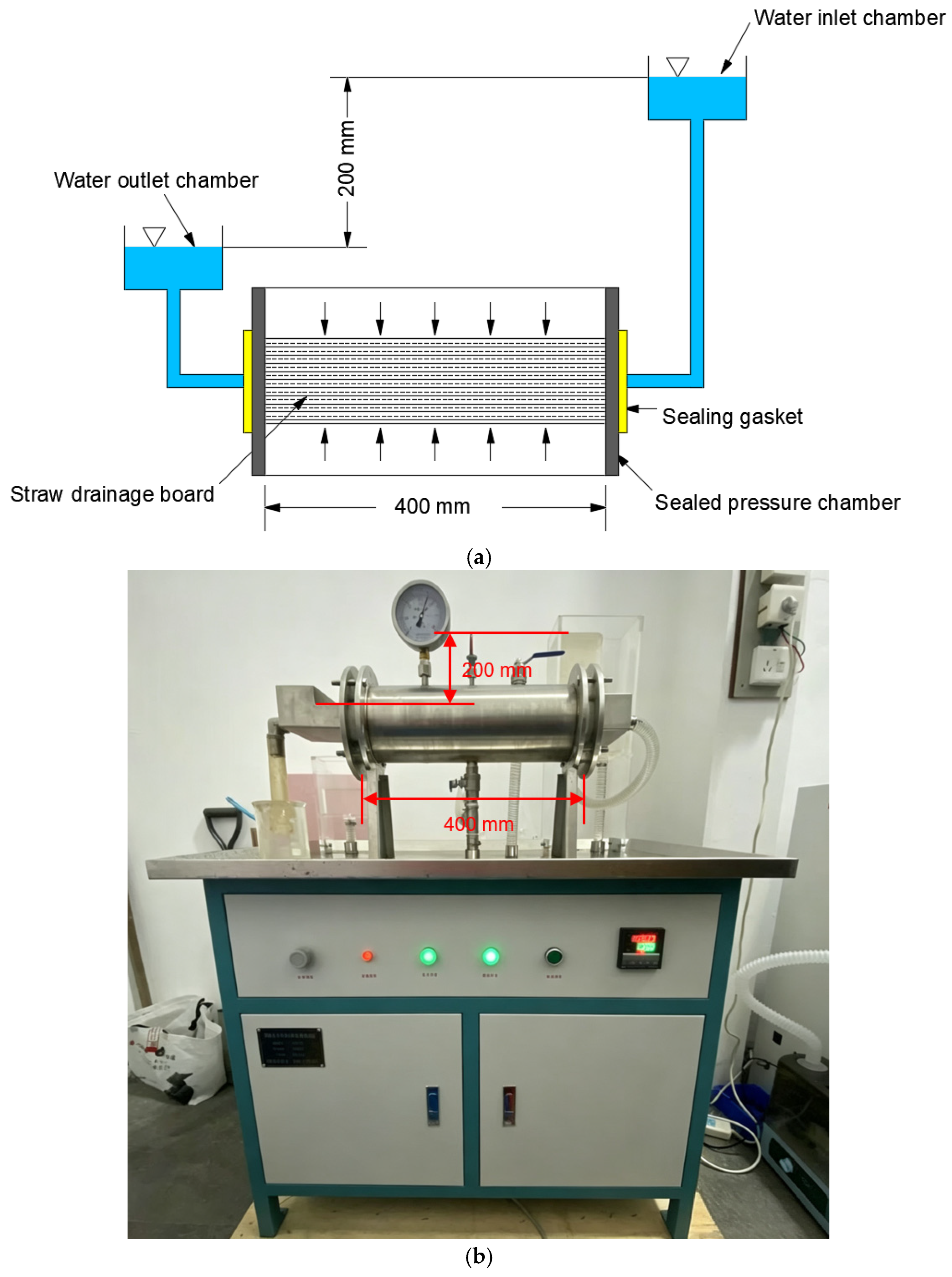
The instrument used to measure the discharge capacity of the straw drainage board in this test was the ZSPT-5 apparatus (Huawang Construction Equipment Co., Ltd., Cangzhou, China). The maximum pressure applied by the instrument is 350 kPa, which is transmitted to the straw drainage board through a rubber membrane. The effective test length of the straw drainage board is 40 cm, and the head difference is 20 cm, resulting in a hydraulic gradient of 0.5 during the test, which complies with the requirements of the “Code for Test and Measurement of Geosynthetics” (SL/T235, 1999) [39]. Figure 4 shows the discharge capacity testing device used in the degradation test of the straw drainage board. To ensure sealing during the pressurization process, the rubber membrane shall wrap around the sealing gasket when installing the straw drainage board for discharge capacity testing, as shown in Figure 5.

2.3. Results and Analysis

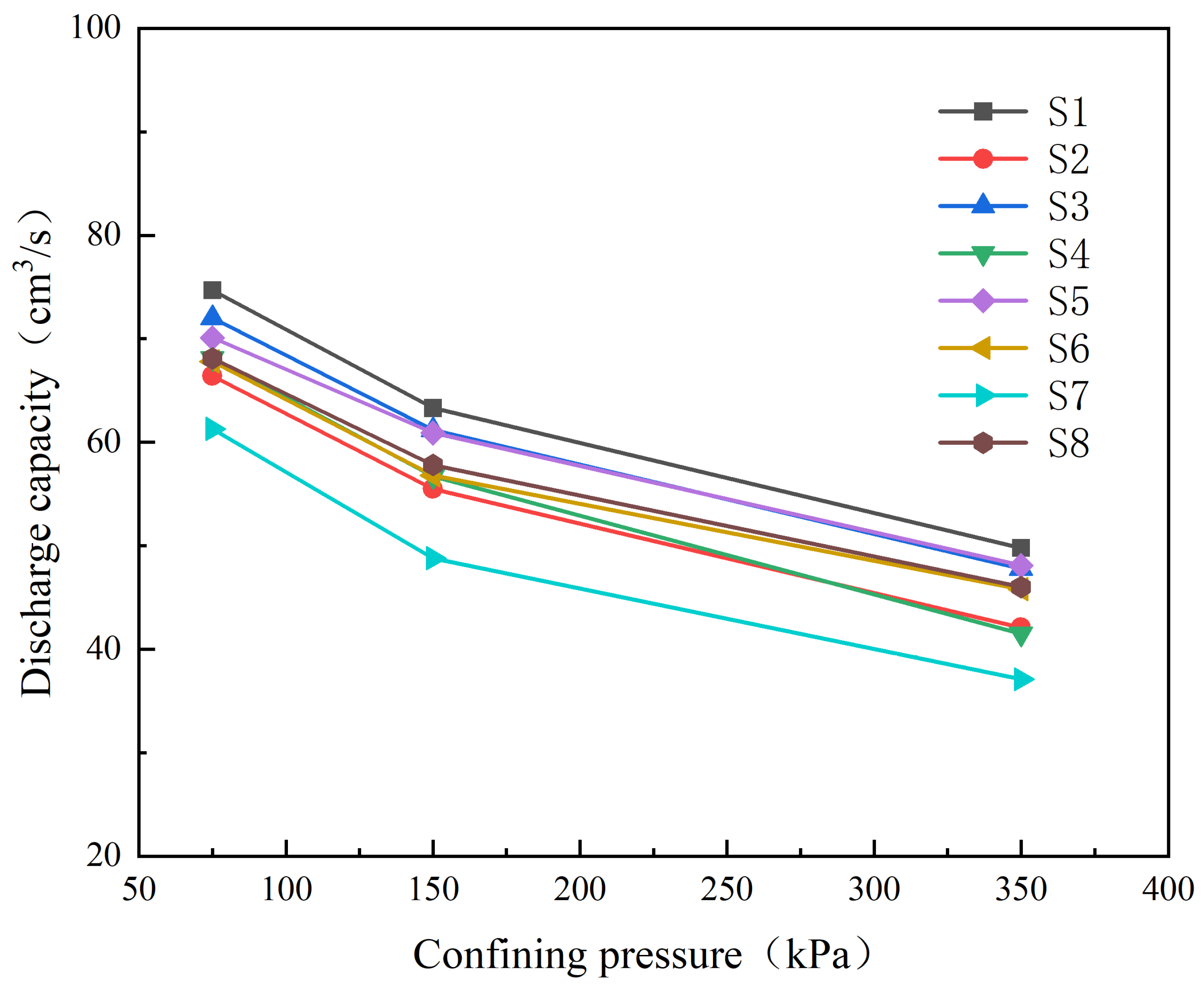
Figure 6 shows the changes in water flow capacity of the straw drainage boards after 60 days under the action of bio-enzymes. Curves S1–S5 represent the changes in water flow capacity under single bio-enzyme action. It can be observed that as the confining pressure increases, the water flow capacity of the straw drainage boards decreases. Under natural degradation conditions, the initial water flow capacity of the straw drainage board at a confining pressure of 75 kPa was 74.7 cm3/s, and when the confining pressure increased to 350 kPa, the water flow capacity decreased to 49.8 cm3/s. When the confining pressure reaches 350 kPa, S4 exhibits the most significant decrease, with the water flow capacity of the straw drainage board dropping to 41.5 cm3/s, followed by S2, for which the water flow capacity decreases to 42.1 cm3/s. For S3 and S5, as the confining pressure increases, their changing trends are not significantly different from that of S1. The test results indicate that under the action of a single bio-enzyme, alkaline protease and cellulase exhibit significant degradation effects, and the difference between the two is small. Neutral protease and acid protease show limited effects, which are similar to the degradation of straw drainage boards under natural conditions.
S6–S8 represent the changes in water flow capacity of the straw drainage boards under the combined action of cellulase and different proteases. It can be observed that as the confining pressure increases, the water flow capacity of the straw drainage boards exhibits a decreasing trend under the combined action of cellulase and different proteases. S7 exhibits the most significant decrease. When the confining pressure increases to 350 kPa, the water flow capacity of the straw drainage board drops to 37.1 cm3/s. This value is already below the requirement specified in the Technical Specification for Application of Plastic Drainage Boards in Water Transport Engineering, which states that the water flow capacity under a confining pressure of 350 kPa should be greater than or equal to 40.0 cm3/s. The changes in water flow capacity of S6 and S8 are close to those of S2 at low confining pressures. When the confining pressure increases to 350 kPa, the water flow capacity changes in S6 and S8 are slightly lower than those of S2. The test results indicate that under the combined action of cellulase and alkaline protease, the straw drainage board exhibits the fastest degradation rate and the most significant effect. The combined action of cellulase with other proteases also accelerates the degradation of the straw drainage board; however, the effect is slightly lower compared to that under cellulase alone, which is attributed to the reduction in cellulase dosage by half.
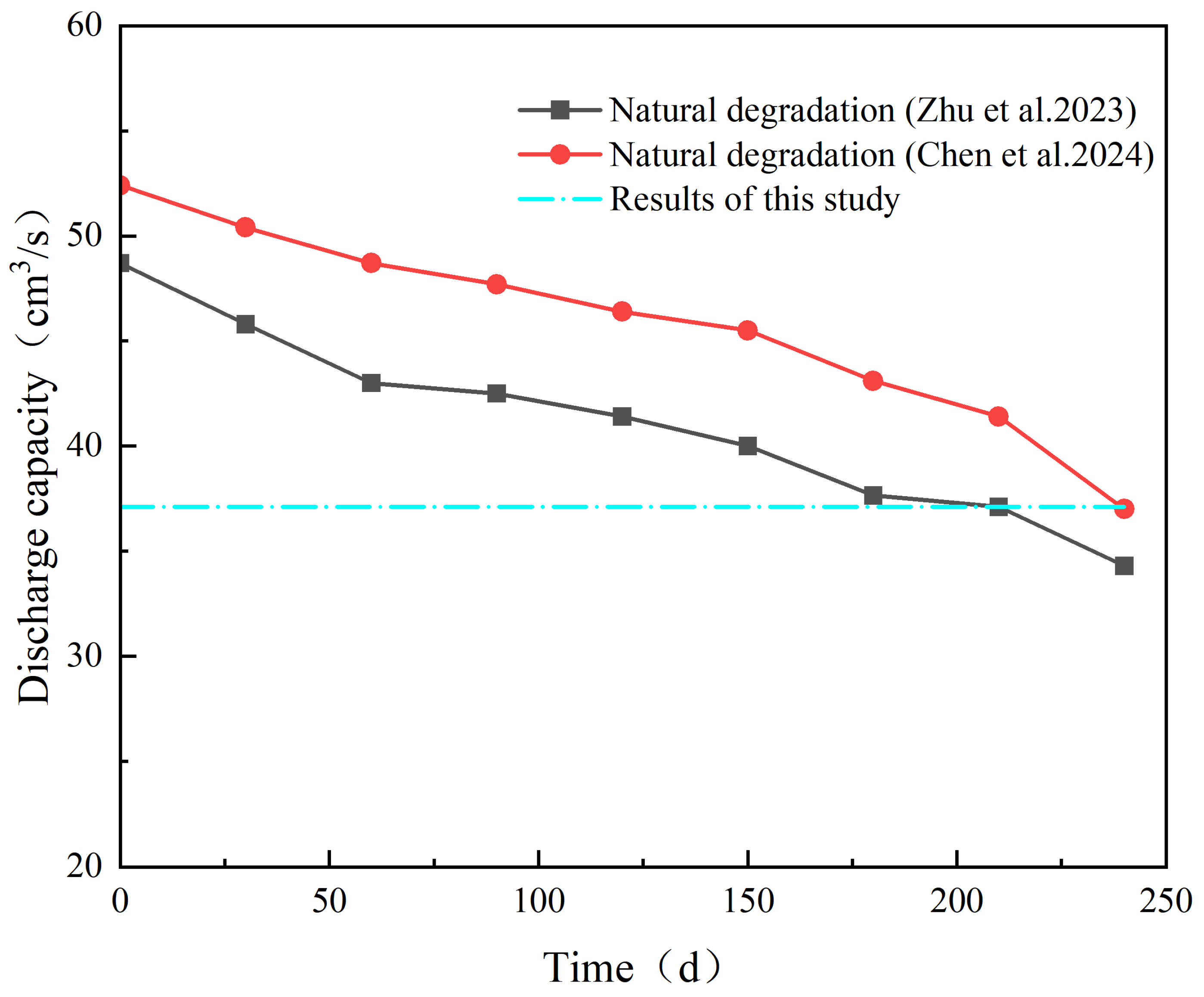
Figure 7 presents a comparison between the results of this study and those from existing research under a confining pressure of 350 kPa. It can be seen that for the straw drainage board with added cellulase and alkaline protease, the water flow capacity decreased to 37.1 cm3/s after 60 days of degradation, which is similar to the natural degradation of straw drainage boards at 210 days in the study by Zhu [37] and at 240 days in the study by Chen [40]. The experimental results indicate that the addition of cellulase and alkaline protease significantly accelerates the degradation of straw drainage boards.
To investigate the accelerating effect of alkaline protease on the degradation of straw drainage boards, the water content in the sludge from the degradation test was sampled and tested for its pH value. The monitoring results showed that the water in the sludge exhibited weak alkalinity. Alkaline protease facilitates its degradation characteristics in an alkaline environment, which explains why alkaline protease is more effective in accelerating the degradation of straw drainage boards compared to neutral protease and acid protease.

3. Engineering Application of Straw Drainage Boards

3.1. Project Overview

A tank farm project in Zhoushan, Zhejiang Province, is located on the east side of Jintang Island. The site is adjacent to the sea. The subsurface stratigraphy consists of approximately 12 m of mucky clay, which exhibits a high water content and high void ratio. The soft foundation is treated by the method of surcharge preloading in conjunction with drainage consolidation, with a surcharge height of 5.5 m.
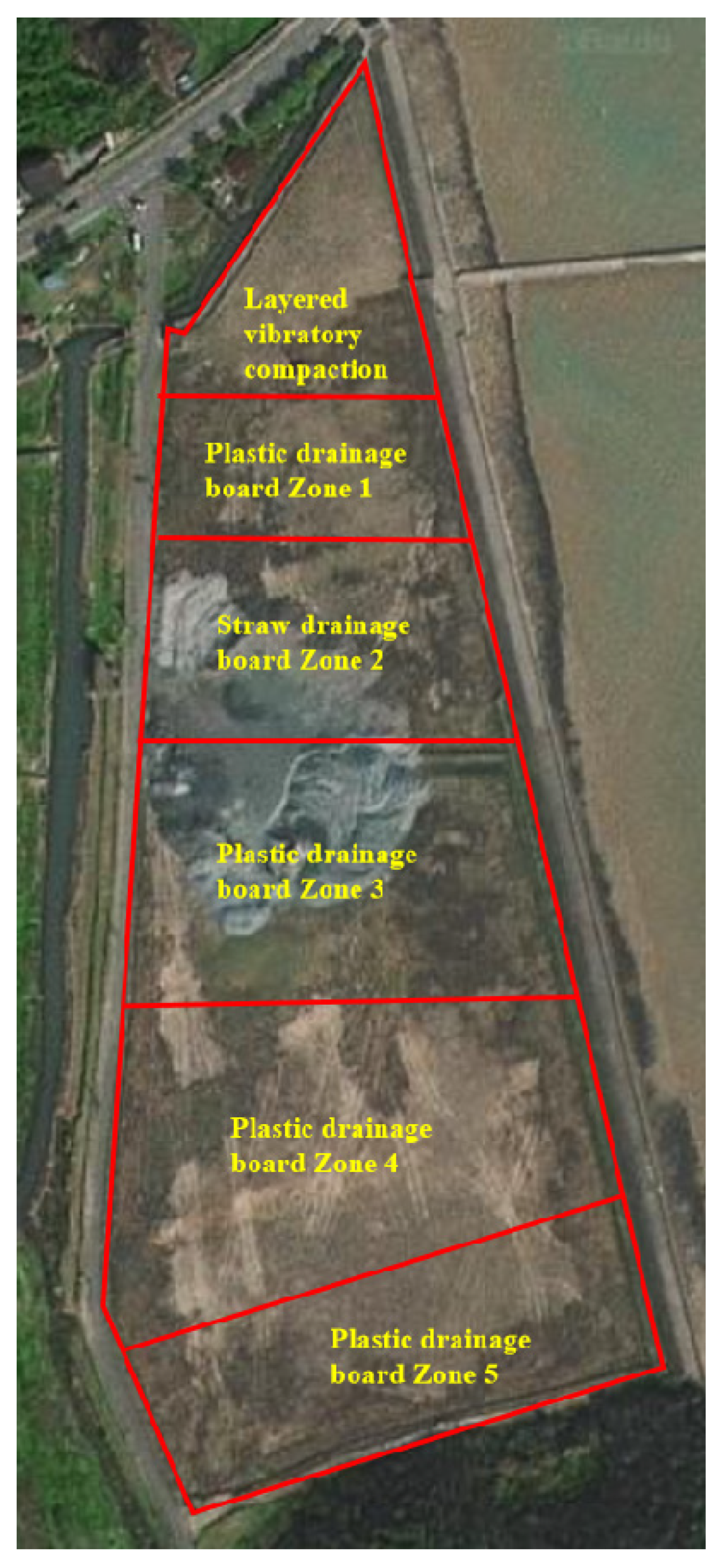
Except for the northern part of the site, which is treated by layered vibratory rolling, the remaining area is divided into five zones. As shown in Figure 8, Zones 1, 3, 4, and 5 are treated with plastic drainage boards, whereas Zone 2 is treated with straw drainage boards for drainage consolidation; Zone 2 is the focus of monitoring and analysis in this paper. The drainage boards penetrate through the 12 m thick mucky clay layer, with a spacing of 1.0 m arranged in a square pattern.

3.2. Layout of Monitoring Points

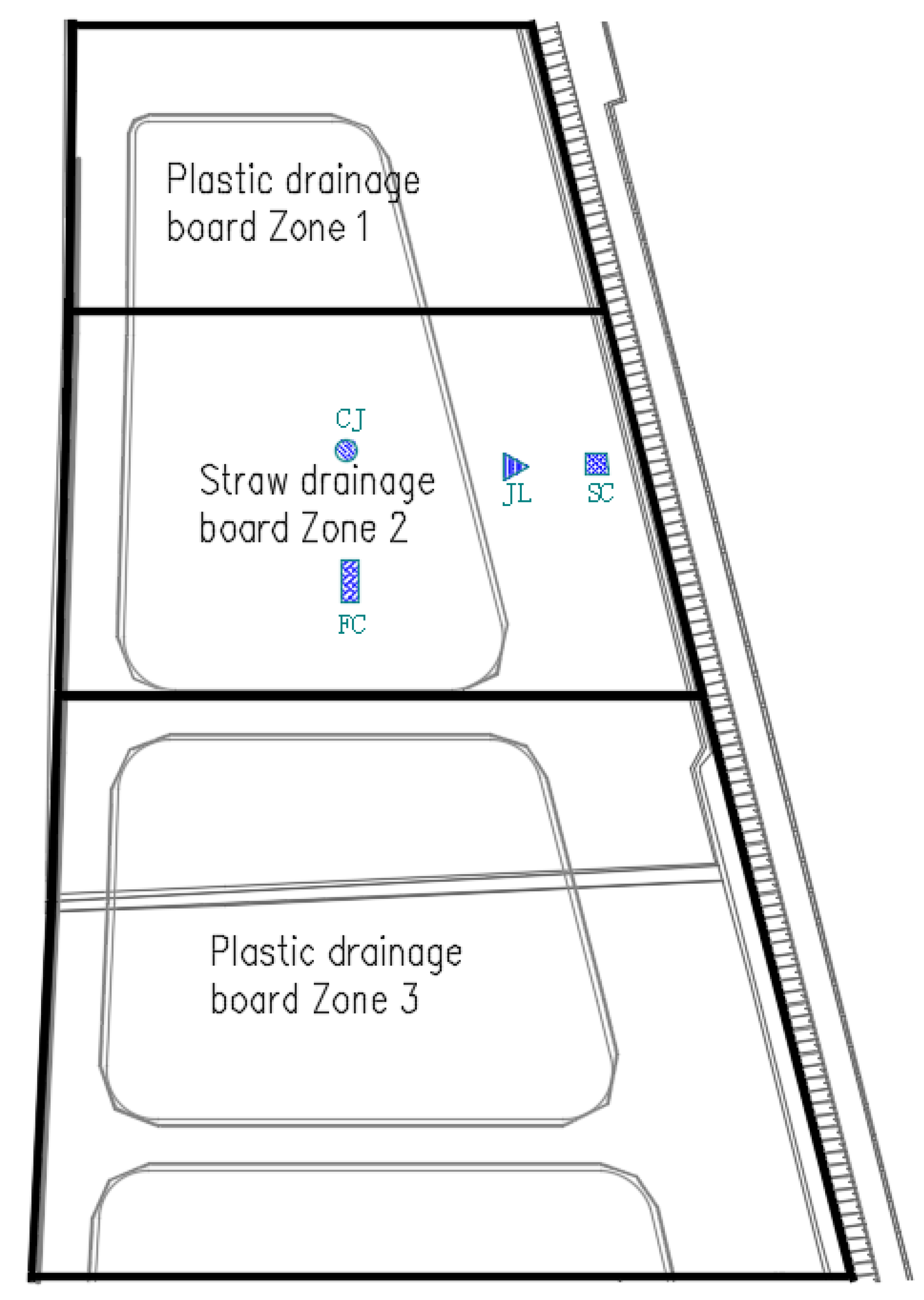
To evaluate the effectiveness of soft ground treatment using straw drainage boards and ensure construction site safety, monitoring works that included ground surface settlement, deep soil displacement, and cone penetration tests were carried out. A number of monitoring points were arranged at the construction site. To analyze the performance of drainage consolidation treatment of soft ground using straw drainage boards, this study selected data from representative monitoring points for an in-depth investigation. The specific testing points are shown in Figure 9, where CJ denotes settlement monitoring points, FC denotes layered settlement monitoring points, SC denotes deep soil displacement monitoring points, and JL denotes cone penetration test points.

3.3. Analysis of Field Test Results

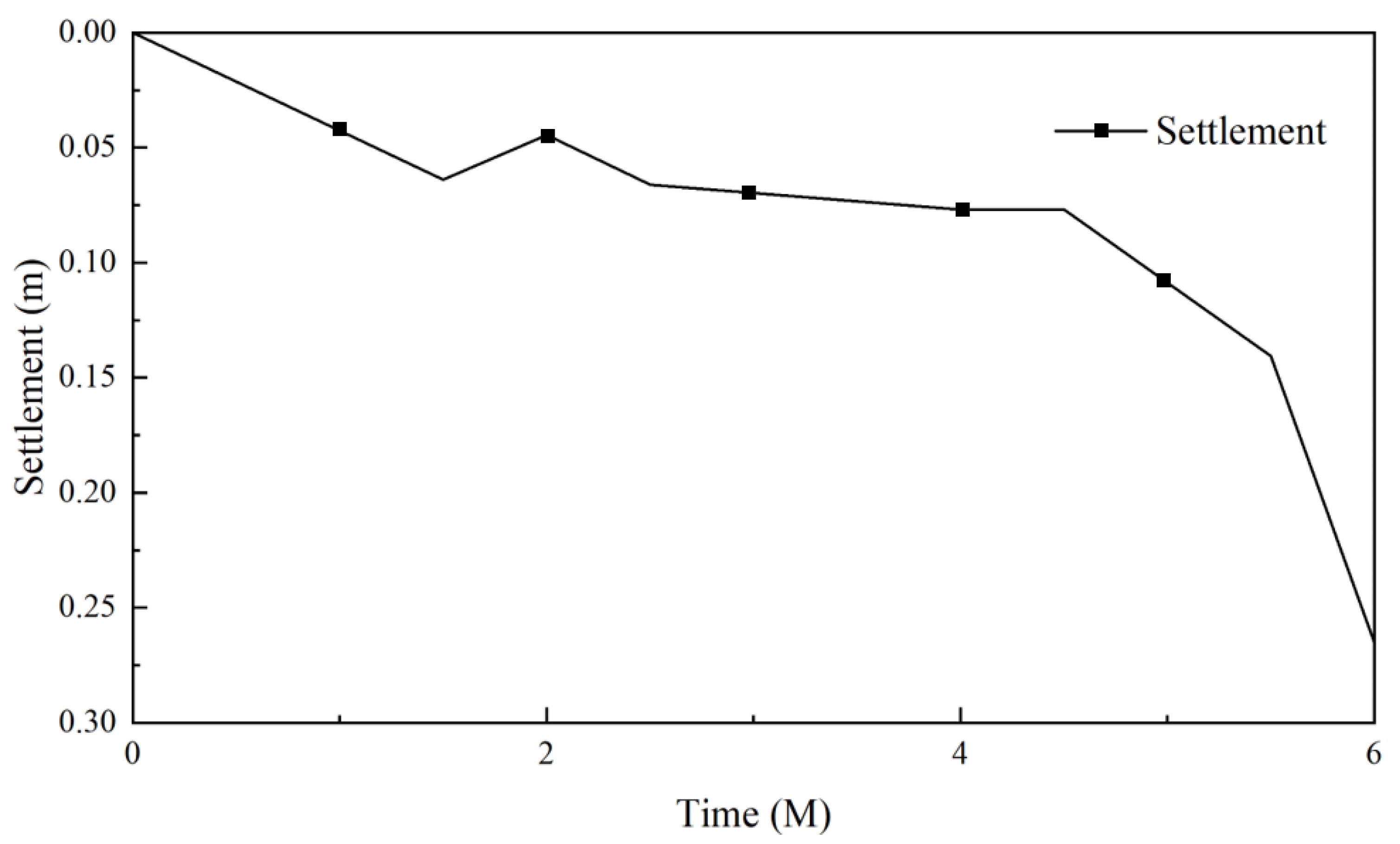
Figure 10 and Figure 11 present the settlement curve and layered settlement curve of the site treated with straw drainage boards. It can be seen from the figures that within six months of installation, the ground settlement reached approximately 27 cm. The layered settlement curves indicate that with increasing surcharge loading time, the settlement at various depths increases significantly. The monitoring results of ground surface settlement and layered settlement show that under surcharge consolidation, the settlement at the construction site continues to increase, indicating compression of the soil layers and confirming the effectiveness of the straw drainage boards in achieving consolidation.
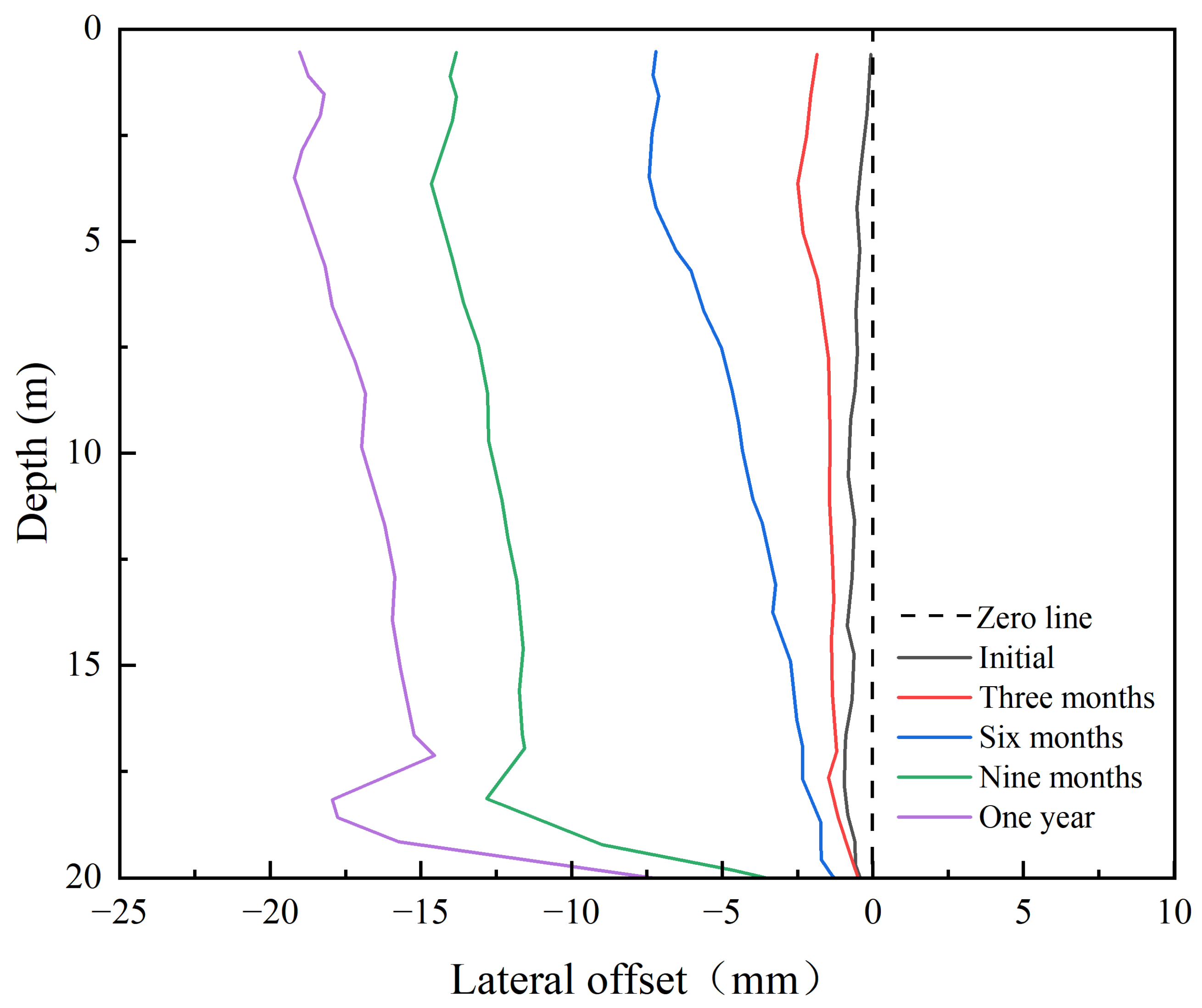
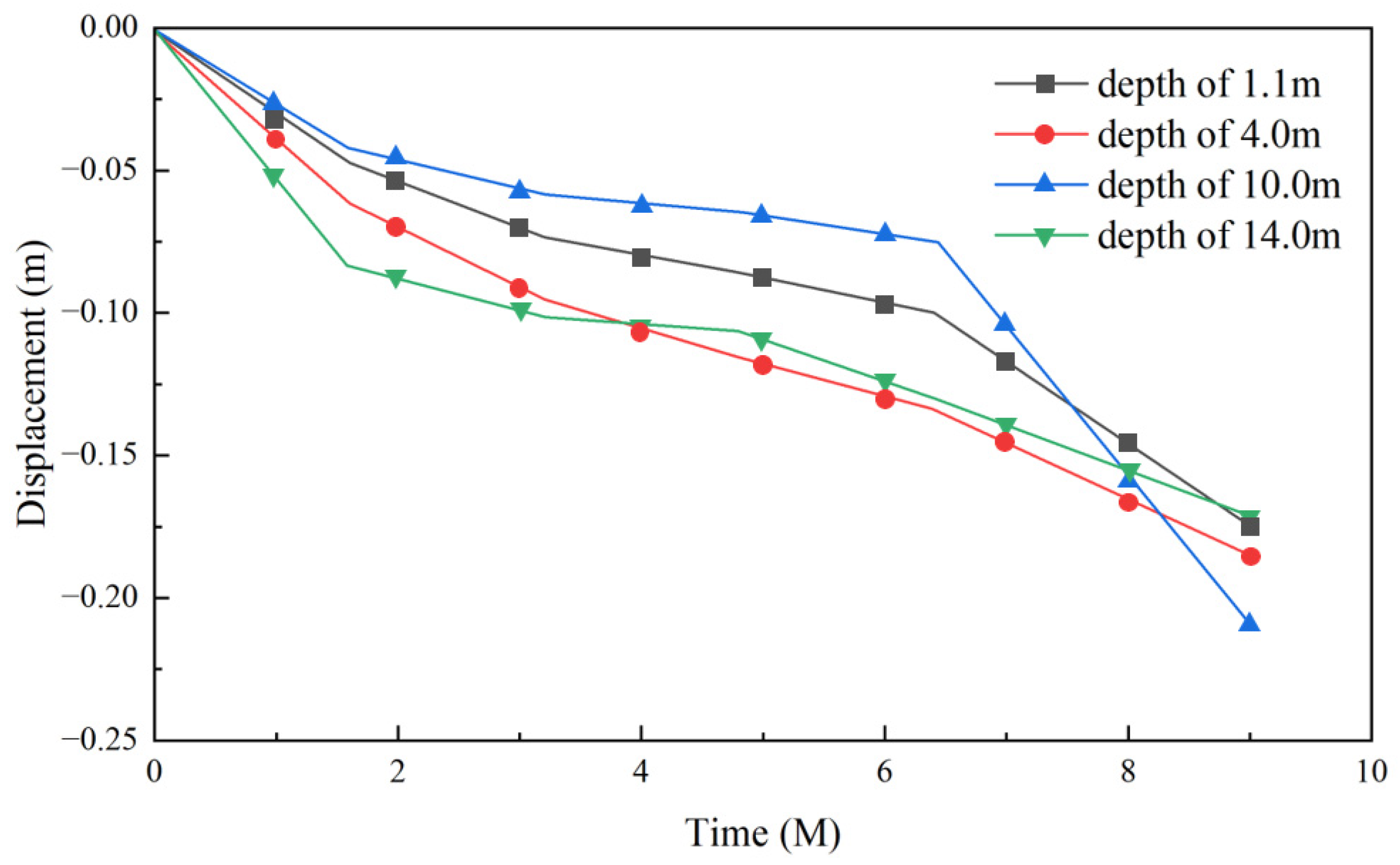
Figure 12 presents the deep soil displacement. It can be seen from the figure that the soil exhibits a tendency for lateral displacement over time. The monitoring results after one year show a horizontal displacement of approximately 18 mm. Compared with the ground settlement of approximately 27 cm, the lateral displacement of the soil is relatively small. The test results indicate that the vertical drainage effect of the straw drainage boards is significant, and the ground deformation is primarily dominated by vertical deformation.
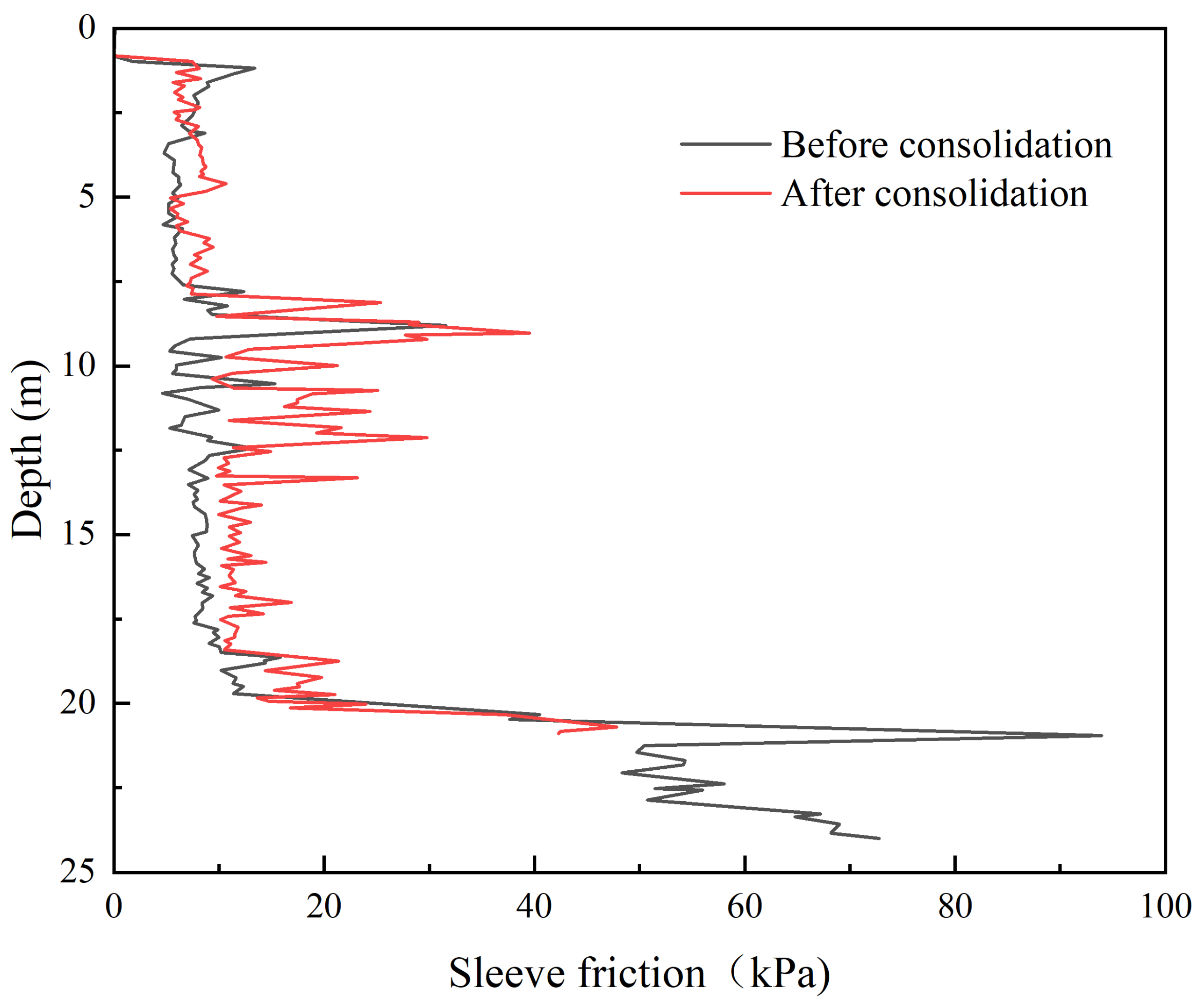
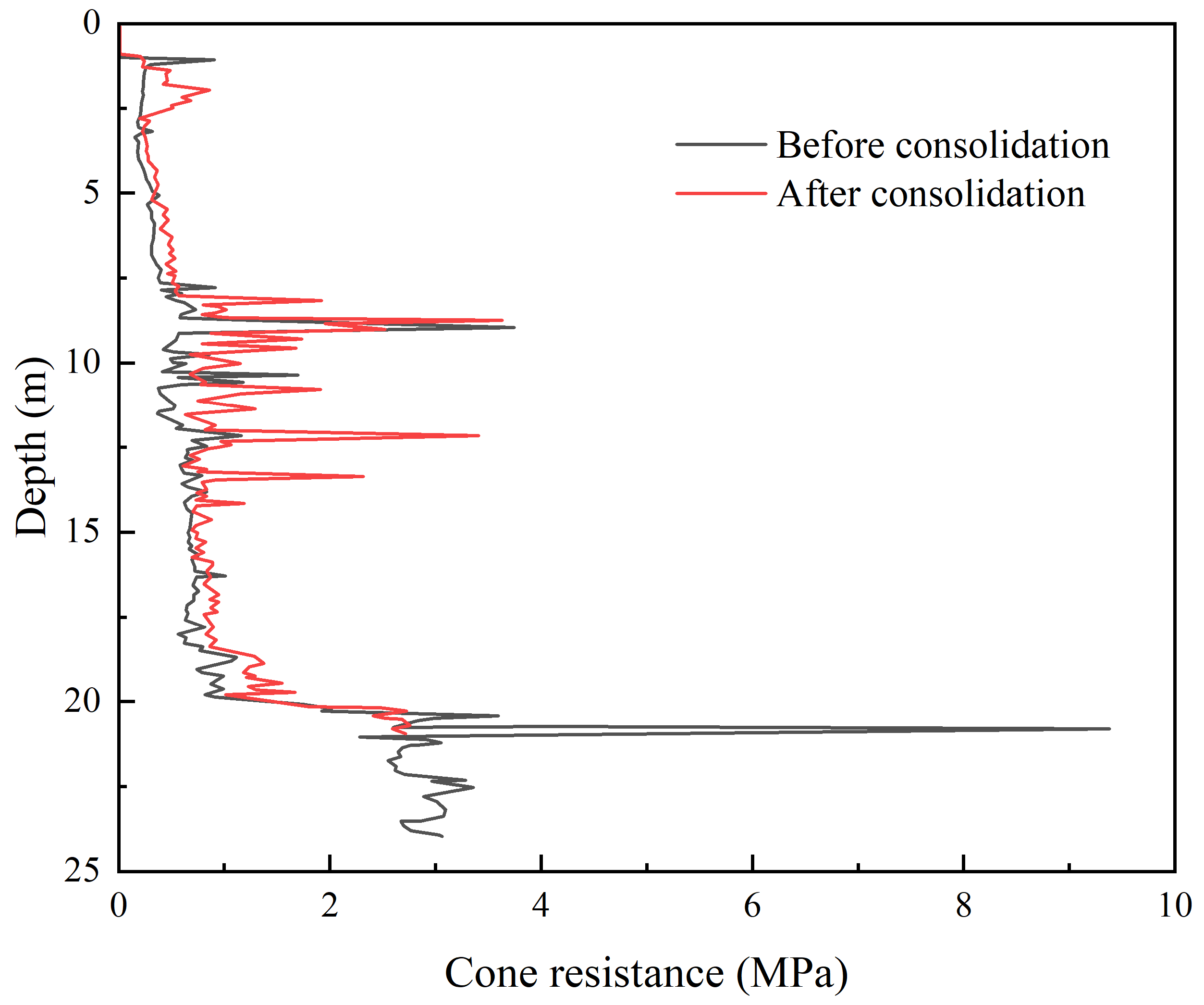
Figure 13 and Figure 14 show the sleeve friction and cone resistance of the soil measured by cone penetration tests before and after treatment with straw drainage boards. It can be seen from the figures that within the treatment range of the straw drainage boards, both the sleeve friction and cone resistance of the foundation soil have increased to a certain extent, with the sleeve friction showing a more pronounced increase. At a depth of approximately 10 m, the sleeve friction has approximately doubled. The test results indicate that the treatment of soft soil foundations with straw drainage boards can effectively increase the soil strength.

4. Limitations and Discussion

The application conditions of straw drainage boards are generally complex, as foundation soils often contain various microorganisms. The influence of these microorganisms on the degradation of straw drainage boards remains unclear. This study only investigated the effects of cellulase and protease on the degradation characteristics of straw drainage boards. Further detailed experiments are needed to explore the influence of bio-enzymes on the degradation characteristics of straw drainage boards, such as the impact of soil microorganisms on the degradation of straw drainage boards, the selection of optimal bio-enzyme ratios, and the effect of ambient temperature on bio-enzyme activity. The mass loss, mechanical properties, microscopic morphology, and chemical characterization of straw drainage boards also represent important research priorities for future investigation.
In existing soft soil ground treatment projects, there is a lack of documented application of prefabricated straw drainage boards. This paper presents the application effect of straw drainage boards in soft soil ground treatment; however, the long-term service behavior of the straw drainage boards still requires further investigation, and the settlement behavior and reinforcement effect of the foundation after complete degradation of the boards also necessitate continued long-term monitoring.

5. Conclusions

This study captured the enzymatic degradation characteristics of straw drainage boards and their potential for enhanced application in offshore soft soil foundations. Our findings demonstrate that bio-enzymes play a crucial role in accelerating the degradation of these materials. Specifically, the conclusions drawn from this study can be summarized as follows:
(1)
The application of cellulase significantly reduced the water flow capacity of straw drainage boards, confirming its efficacy in promoting material degradation.
(2)
Under the weakly alkaline conditions characteristic of soft soil environments, alkaline protease also proved effective in accelerating the degradation process, as evidenced by a substantial decrease in the boards’ water flow capacity.
(3)
The combined application of cellulase and alkaline protease exhibited a notable synergistic effect. The water flow capacity of the straw drainage boards was reduced to 37.1 cm3/s, substantially shortening the degradation time and achieving remarkable degradation performance. These results highlight the potential of a multi-enzyme approach to optimize degradation rates.
These insights are pivotal for improving the efficiency of post-construction settlement control by mitigating the challenge of slow natural degradation. The enzymatic acceleration of straw drainage board breakdown presents a sustainable and innovative strategy for geotechnical engineering, offering a pathway toward more rapid and effective soft soil consolidation.

Author Contributions

Conceptualization, F.L., J.Z. and P.G.; methodology, F.L. and X.X.; formal analysis, Y.W. and H.Z.; investigation, P.G.; resources, H.Z., Y.W. and P.G.; writing—original draft preparation, F.L. and Y.W.; writing—review and editing, H.Z., J.Z. and P.G.; supervision, X.X. All authors have read and agreed to the published version of the manuscript.

Funding

This research was funded by the Construction Research Project of the Department of Housing and Urban-Rural Development of Zhejiang Province, grant number 2024K053.

Data Availability Statement

The data presented in this study are available upon request from the corresponding author. The raw/processed data required for reproducing these findings cannot be shared publicly at this time, as they are also part of an ongoing study.

Acknowledgments

We gratefully acknowledge funding received from the Construction Research Project of the Department of Housing and Urban–Rural Development of Zhejiang Province, 2024K053.

Conflicts of Interest

Authors Feng Liu, Jiancai Zhu, and Yan Wang were employed by the Architectural Design and Research Institute of Zhejiang University Co., Ltd. The remaining authors declare that the research was conducted in the absence of any commercial or financial relationships that could be construed as a potential conflict of interest.

References

  1. Wang, Y.X.; Guo, P.P.; Lin, H.; Zhao, Y.L. Risk Management Technologies for Deep Excavations in Water-Rich Areas. Water 2024, 16, 323. [Google Scholar] [CrossRef] [Scilit]
  2. Liu, S.; Guo, P.P.; Li, X.; Wang, K.; Tang, R.; Wang, Y.X. Settlement Behavior of Composite Foundation with Deep Mixed Piles Supporting Highway Subgrades in Water-Rich Flood Plains. Water 2023, 15, 2048. [Google Scholar] [CrossRef] [Scilit]
  3. Zhang, T.; Liu, J.; Sun, S.Y. Challenges, models, and algorithms for flow and transport simulations in deep reservoirs. Deep Undergr. Sci. Eng. 2025, 4, 638–650. [Google Scholar] [CrossRef] [Scilit]
  4. Yu, P.; Liu, H.H.; Wang, Z.S.; Fu, J.N.; Zhang, H.; Wang, J.; Yang, Q. Development of urban underground space in coastal cities in China: A review. Deep Undergr. Sci. Eng. 2023, 2, 148–172. [Google Scholar] [CrossRef] [Scilit]
  5. Lu, X.Z.; Li, C.X.; Wang, P. An analytical solution for the nonlinear large strain consolidation of soils treated by electro-osmosis combined with vacuum and surcharge preloading. Comput. Geotech. 2024, 174, 106620. [Google Scholar] [CrossRef] [Scilit]
  6. Liao, J.; Xu, S.Y.; Zhang, C.C.; Bai, G.J.; Li, T.Y. Experimental study on the consolidation characteristics of soilbags-reinforced soft soil foundation with surcharge preloading. Case Stud. Constr. Mater. 2025, 22, e04746. [Google Scholar] [CrossRef] [Scilit]
  7. Wang, J.; Gu, C.L.; Fu, H.T.; Wang, L.; Ni, J.F.; Gao, Z.Y.; Geng, X.Y. Centrifuge model study on the influence of PVD installation depth under surcharge preloading. Geotext. Geomembr. 2026, 54, 115–128. [Google Scholar] [CrossRef] [Scilit]
  8. Gong, X.N.; Cen, Y.R. Mechanism of vacuum preloading. J. Harbin Univ. C.E. Archit. 2002, 35, 7–10. [Google Scholar]
  9. Xu, G.Z.; Liu, Y.F.; Ni, J.J.; Cao, Y.P.; Deng, S.F. Influence of soil crack on large-deformation consolidation of dredged clay under vacuum preloading: A numerical solution. Comput. Geotech. 2025, 183, 107161. [Google Scholar] [CrossRef] [Scilit]
  10. Zhao, X.Q.; Gong, X.N.; Guo, P.P. Caisson-bored pile composite anchorage foundation for long-span suspension bridge: Feasibility study and parametric analysis. J. Bridge Eng. 2022, 27, 04022117. [Google Scholar] [CrossRef] [Scilit]
  11. Zhou, Y.F.; Chen, R.; Cai, Y.Q.; Wang, J.; Wang, P.; Su, D.; Chen, X.S. Experimental and consolidation modeling of flowing mud during vacuum preloading considering transient clogging and vacuum pressure attenuation. Geotext. Geomembr. 2025, 53, 767–779. [Google Scholar] [CrossRef] [Scilit]
  12. Zhao, W.B.; Lei, G.H.; Chen, Y.H. Study on calculational method of geotextile-reinforced and plastic board-drained foundation. Chin. J. Geotech. Eng. 1998, 20, 61–65. [Google Scholar]
  13. Zhang, Z.P.; Li, Y.J.; Feng, G.Q. The effect of plastic drain board in atmospheric pressure soft-base reinforcement. J. Guangzhou Univ. (Nat. Sci. Ed.) 2002, 1, 68–71. [Google Scholar]
  14. Zhu, C.W.; Wu, W.; Ying, H.W.; Gong, X.N.; Guo, P.P. Drainage-induced ground response in a twin-tunnel system through analytical prediction over the seepage field. Undergr. Space 2022, 7, 408–418. [Google Scholar] [CrossRef] [Scilit]
  15. Jiang, H.; Shen, S.L.; Dou, F.G.; Cai, F.X.; Xu, Y.S. Analytical method of PVD-improved subsoil. Rock. Soil Mech. 2004, 25, 437–440. [Google Scholar]
  16. Le, C.; Xu, C.; Wu, X.F.; Jin, Y.W. Experimental research on clogging characteristic of two of PVD filters. Rock. Soil Mech. 2014, 35, 2529–2534. [Google Scholar]
  17. Xie, F.; Xiao, C.; Wang, Z.D.; Jiang, Y.L.; Zhu, S.X.; Xu, H.Y. Application of plastic dewatering board of preloading method in soft subgrade treatment. Chin. J. Undergr. Space Eng. 2011, 7, 1542–1548. [Google Scholar]
  18. Guo, Y.X.; Wang, Z.J.; Qiu, L.F.; Su, P. Application of geodrain-loading method to reclamation engingeering. Chin. J. Rock. Mech. Eng. 2004, 23, 1025–1031. [Google Scholar]
  19. Xia, Y.B.; Chen, Y.J. Experimental study and research on straight-line vacuum preloading method to reinforce soft soil. J. Eng. Geol. 2010, 18, 376–384. [Google Scholar]
  20. Jeon, H.Y.; Kim, S.H.; Chung, Y.I.; Yoo, H.K.; Mlynarek, J. Assessment of long-term filtration performance of degradable prefabricated geotextile drains. Polym. Test. 2003, 22, 779–784. [Google Scholar] [CrossRef] [Scilit]
  21. Sheng, M.H.; Lu, F.Q.; Jiang, N.; Guo, P.P.; Li, X.; An, R.; Wang, Y.X. Bearing behavior of pile foundation in karst region: Physical model test and finite element analysis. Appl. Rheol. 2024, 34, 20230115. [Google Scholar] [CrossRef] [Scilit]
  22. Yamada, S.; Sato, K.; Takuro, F.; Nomura, T. Acceleration effect of self-weight consolidation due to dewatering using plastic board drains. Int. Offshore Polar Eng. Conf. Proc. 2006, 2, 449–454. [Google Scholar]
  23. Chang, L.; Li, X.F.; Su, K.M.; Zhang, L.; Wang, Y.H.; Li, K.B.; Li, D.G. Relationship between the application of straw degradation drainage technology in carbon neutrality and emission peak and rigid flexible thick shell foundation. J. Ground Improv. 2022, 4, 144–151. [Google Scholar]
  24. Yang, A.W.; Liu, T.L.; Fan, R.D.; Zhang, H.; Liang, F.Y.; Liu, X.L.; Song, G.W. Vertical Drainage Performance of a Novel Anti-Clogging Plastic Vertical Drainage Board for Soda-Residue-Stabilized Soil. Materials 2025, 18, 5661. [Google Scholar] [CrossRef] [Scilit] [PubMed]
  25. Zhang, Z.; Huo, J.H.; Ye, G.H.; Hong, Y.; Zhu, Y.Q. Development and performance testing of biodegradable prefabricated vertical drain core. J. Build. Mater. 2025, 28, 1155–1162. [Google Scholar]
  26. Wang, Q.P.; Li, W.L.; Xu, Z.K.; Sun, Y.G. Adaptive Recognition and Control of Shield Tunneling Machine in Soil Layers Containing Plastic Drainage Boards. Actuators 2024, 13, 470. [Google Scholar] [CrossRef] [Scilit]
  27. Xu, G.Z.; Yu, X.J.; Wu, F.H.; Yin, Y. Feasibility of Vacuum Consolidation in Managing Dredged Slurries with Wheat Straw as Drainage Channels. J. Civ. Eng. 2017, 21, 1154–1160. [Google Scholar] [CrossRef] [Scilit]
  28. Xu, G.Z.; Zhang, Q.Y.; Gao, M.Y.; Ni, J.J.; Weng, J.X. Influence of layered degradable straw drainage system on eco-treatment of dredged sludge under vacuum preloading. Mar. Georesour. Geotechnol. 2024, 42, 1687–1698. [Google Scholar] [CrossRef] [Scilit]
  29. Chu, C.F.; Liu, L.L.; Cai, H.R.; Wu, S.; Zha, F.S. Investigating the impact of straw-to-tailings sand ratios on combined vertical drain performance. Acta Geophys. 2024, 72, 4495–4507. [Google Scholar] [CrossRef] [Scilit]
  30. Feng, X.S.; Weng, J.X.; Zong, S.; Yan, W.; Li, H.; Yao, D.; Ji, F. Study on Application of Wheat Straw to Production of Degradable Drainboards. J. Nanjing Inst. Technol. (Nat. Sci. Ed.) 2018, 16, 1–4. [Google Scholar]
  31. Xu, G.Z.; Han, Q.Y.; Wang, Z.H.; Wu, J.X.; Yin, J. Eco-friendly rice straw as vertical drains for dredged slurry treatment as construction fill. Constr. Build. Mater. 2022, 345, 128244. [Google Scholar] [CrossRef] [Scilit]
  32. Li, C.H.; Wu, H.; Cheng, G.Y.; Chen, Y.; Jin, M.; Chang, L. Comparative experimental study on soft soil reinforcement by vacuum preloading with different band drains. Rock. Soil Mech. 2022, 43, 2819–2827. [Google Scholar]
  33. Yuan, W.; Deng, Y.F.; Chen, X.B.; Su, Y.Q.; Li, J.D.; Yang, Q. Laboratory degradation test and field application of straw drainage board. J. Southeast Univ. (Nat. Sci. Ed.) 2023, 53, 402–409. [Google Scholar]
  34. Deng, S.F.; Xu, G.Z.; Geng, W.J.; Wu, D.; Song, W.Z. Experimental study on dredged slurry treatment with straw as horizontal drains by vacuum preloading. Mar. Georesour. Geotechnol. 2024, 42, 1638–1650. [Google Scholar] [CrossRef] [Scilit]
  35. Nguyen, T.T.; Indraratna, B.; Carter, J. Laboratory Investigation into Biodegradation of Jute Drains with Implications for Field Behavior. J. Geotech. Geoenviron. Eng. 2018, 144, 04018026. [Google Scholar] [CrossRef] [Scilit]
  36. Yuan, W.; Deng, Y.F.; Ying, Z.; Yang, Q.; Su, Y.Q.; Hong, Z.S. Degradation of straw-based wick drain and its effect on consolidation. J. Clean. Prod. 2024, 452, 142182. [Google Scholar] [CrossRef] [Scilit]
  37. Zhu, R.T.; Su, Y.Q.; Wu, C.K.; Yuan, W.; Deng, Y.F. Evaluation of the Laboratory Degradation Performance of a Straw Drainage Board. Sustainability 2023, 14, 16365. [Google Scholar] [CrossRef] [Scilit]
  38. Liu, C.; Xu, G.Z.; Xu, B. Field Study on the Vacuum Preloading of Dredged Slurry with Wheat Straw Drainage. J. Civ. Eng. 2018, 22, 4327–4333. [Google Scholar] [CrossRef] [Scilit]
  39. SL/T235-1999; Code for Test and Measurement of Geosynthetics. Ministry of Water Resources of the People’s Republic of China: Beijing, China, 1999.
  40. Chen, T.; Deng, M.S.; Su, Y.Q.; Yang, Q.; Chen, G.; Zhang, G.L. Laboratory Testing of Degradation of Straw Wick Drains. Soil Eng. Found. 2024, 38, 849–864. [Google Scholar]
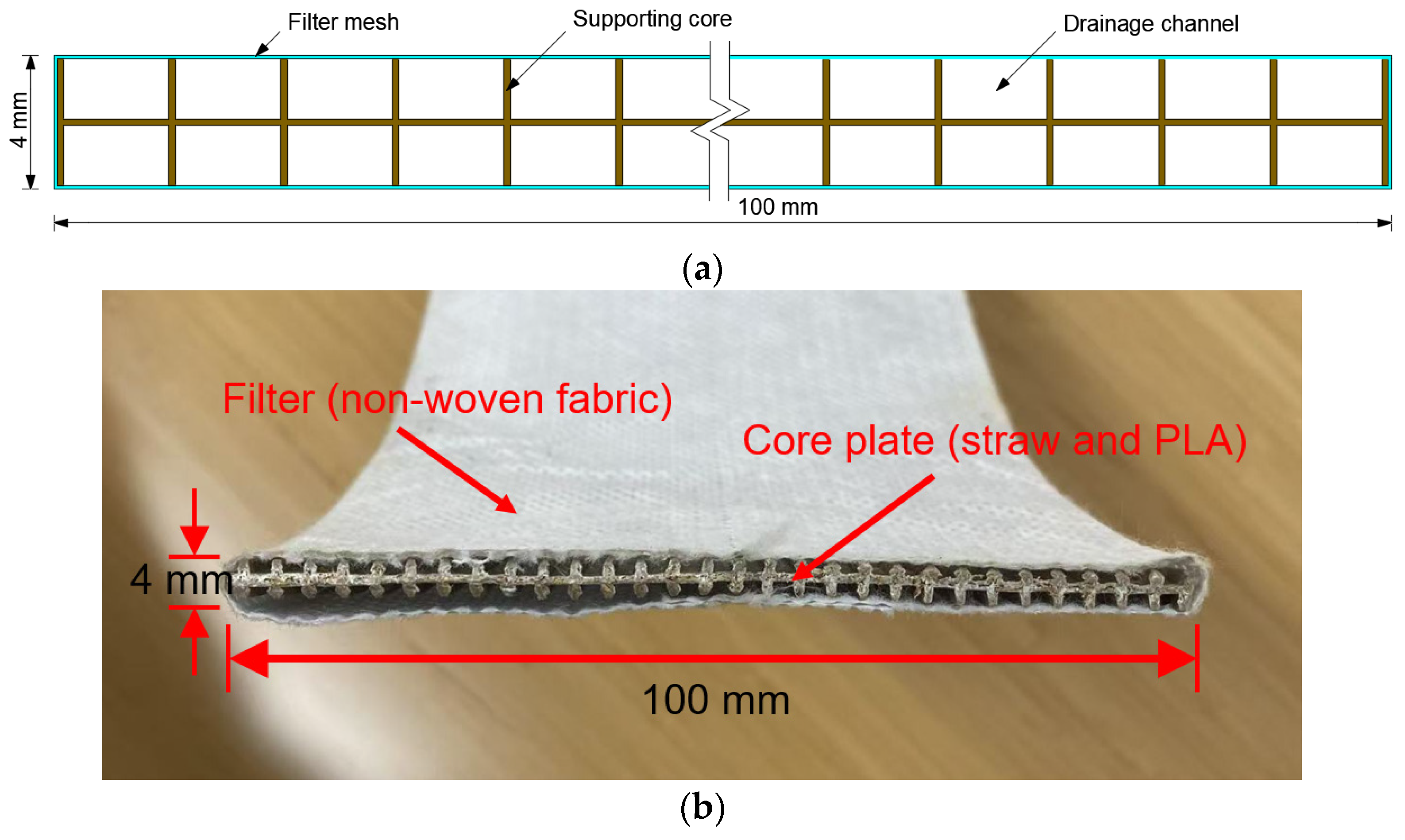
Figure 1. Straw drainage board: (a) schematic diagram of the straw drainage board; (b) photograph of the straw drainage board.
Water 18 02119 g001
Figure 2. Schematic diagram of the degradation test.
Water 18 02119 g002
Figure 3. Flow chart of the degradation test: (a) soil sampling; (b) fill soil; (c) bio-enzyme addition; (d) installation of drainage board; and (e) static conditioning of the model.
Water 18 02119 g003
Figure 4. Discharge capacity testing device: (a) schematic diagram of discharge capacity testing device; (b) photograph of discharge capacity testing device.
Water 18 02119 g004
Figure 5. Installation of drainage board for testing.
Water 18 02119 g005
Figure 6. Changes in water discharge capacity of straw drainage board under enzyme action.
Water 18 02119 g006
Figure 7. Comparison between this study and previous research under 350 kPa confining pressure [37,40].
Water 18 02119 g007
Figure 8. Zoning diagram of ground treatment.
Water 18 02119 g008
Figure 9. Arrangement diagram of testing points.
Water 18 02119 g009
Figure 10. Settlement curve.
Water 18 02119 g010
Figure 11. Settlement curve by layer.
Water 18 02119 g011
Figure 12. Displacement of deep soil.
Water 18 02119 g012
Figure 13. Sleeve friction.
Water 18 02119 g013
Figure 14. Cone resistance.
Water 18 02119 g014
Table 1. Test on enzymatic degradation properties of straw drainage board.
Test No.Bio-Enzyme TypeRatio
S1none0
S2cellulase100%
S3neutral protease100%
S4alkaline protease100%
S5acid protease100%
S6cellulase/neutral protease1:1
S7cellulase/alkaline protease1:1
S8cellulase/acid protease1:1
Table 2. Physical properties of the soil.
Soilω/%γ/(kN· m 3 ) Gs w l /% w p /% I p
silt98.516.42.7551.527.324.2
Disclaimer/Publisher’s Note: The statements, opinions and data contained in all publications are solely those of the individual author(s) and contributor(s) and not of MDPI and/or the editor(s). MDPI and/or the editor(s) disclaim responsibility for any injury to people or property resulting from any ideas, methods, instructions or products referred to in the content.