Article

Deposition Patterns and Sediment Reduction Strategies in a Large-Scale Water Diversion Channel: A One-Dimensional Modeling Study of the Shigu Water Source Project on the Jinsha River

1
The State Key Laboratory of Hydroscience and Engineering, Tsinghua University, Beijing 100084, China
2
River Research Department, Changjiang River Scientific Research Institute, Wuhan 430010, China
3
Key Laboratory of Changjiang River of Ministry of Water Resources, Changjiang River Scientific Research Institute, Wuhan 430010, China
4
Bureau of Rivers and Lakes, Changjiang Water Resources Commission, Wuhan 430010, China
*
Authors to whom correspondence should be addressed.
Water 2026, 18(13), 1530; https://doi.org/10.3390/w18131530 (registering DOI)
Submission received: 2 April 2026 / Revised: 4 June 2026 / Accepted: 5 June 2026 / Published: 23 June 2026

Abstract

Sediment deposition in water diversion channels threatens the operational safety and water supply reliability of large-scale inter-basin water transfer projects. This study investigates the deposition patterns and sediment reduction strategies for the diversion channel of the Shigu Water Source Project, a key intake hub of the Central Yunnan Water Diversion Project on the Jinsha River. A one-dimensional total-load sediment mathematical model (HELIU-2) was used to simulate deposition volume, particle size distribution, and sediment concentration at the pumping station intake under eight design scenarios spanning high-, medium-, and low-sediment years. Results show that over 95% of the deposited sediment in front of the pumping station is finer than 0.05 mm. Dredging reduces the deposition thickness at the pump intake by 13–25% in high-sediment years, significantly enhancing sediment trapping efficiency and reducing both average and maximum sediment concentrations. Longer diversion channels increase total deposition by 9–13% but reduce intake sediment concentration by 2–5% and decrease local deposition thickness by 27–42%, especially in high-sediment years. These findings provide quantitative support for optimizing desilting basin layout, channel length design, and dredging schedules. The proposed modeling framework and mitigation strategies may provide a reference for other large-scale water diversion systems facing similar sedimentation challenges.

1. Introduction

Large-scale inter-basin water diversion projects are critical infrastructure for addressing regional water scarcity worldwide. The Central Yunnan Water Diversion Project, a major national water conservancy initiative in China, is designed to alleviate severe water shortages in the central region of Yunnan Province. As the primary intake structure of this project, the Shigu Water Source Project, located on the Jinsha River, plays a pivotal role in ensuring a stable and reliable water supply. However, sediment deposition in the diversion channel is a critical design and operational concern for the Shigu Water Source Project, as excessive sediment entering the diversion channel can potentially affect operational safety, water conveyance efficiency, and long-term sustainability [1]. Therefore, effective channel design must strike a balance between diverting low-sediment water and minimizing long-term sediment accumulation.
Sediment transport and deposition in diversion channels have been extensively studied, with research focusing primarily on hydrodynamic mechanisms and engineering mitigation strategies. Regarding hydrodynamic controls, previous studies have demonstrated that flow velocity, sediment concentration, grain size distribution, bend-induced secondary flows, and local scour features are key factors influencing sediment transport and deposition patterns [2,3,4,5,6]. In particular, the diversion angle, defined as the angle between the central axis of the diversion channel and the main channel at the intake point, has been identified as a critical geometric parameter. Experimental studies by Alomari et al. [7] showed that decreasing the diversion angle from 90° to 30° can increase the diverted water discharge by up to 10% while reducing sediment concentration by an average of 64%, as a smaller angle widens the effective entrance width and reduces flow resistance. Conversely, a sudden change in angle, as seen in Y-shaped diversion channels, can induce boundary layer separation and large-scale vortex formation, which significantly promotes sediment deposition near the pump intake [8]. Beyond these local geometric effects, broader alterations to the upstream sediment regime also play a critical role. The construction of cascade reservoirs has further altered downstream sediment regimes by trapping a substantial portion of incoming sediment, thereby disrupting the natural sediment balance and affecting sedimentation processes in downstream diversion channels [9,10,11,12]. Recent analyses of long-term field data from the upper Changjiang River Basin have revealed a significant “fining” trend in suspended sediment grain size following large dam constructions, with the median particle size decreasing substantially from 0.017 mm to 0.008 mm between 1973 and 2019 [13]. This grain size reduction has critical implications for sediment management in downstream diversion channels.
Complementing these field observations, Zhao et al. [14] utilized a Fluent-based numerical model to analyze flow velocity and sediment concentration distributions before and after the installation of a sediment sluice gate at a canal head, demonstrating that gate placement significantly influences near-bed sediment transport. Similarly, Yuan et al. [15] applied a 2D numerical model to simulate sediment erosion and deposition in the Shengzhong Reservoir and its intake for the Western Chongqing Water Allocation Project, identifying critical deposition thicknesses near the intake over a 50-year operation period. Focusing on pumping stations, Ma et al. [16] analyzed long-term sedimentation in the approach channel of the Sheling Pumping Station, estimating average deposition thickness and proposing targeted dredging intervals. Furthermore, Xin et al. [17] examined practical engineering measures for mitigating canal sedimentation in the Zhengzhou Yellow River Irrigation District, highlighting the effectiveness of timely dredging and channel optimization.
In terms of engineering interventions, research has highlighted the effectiveness of diversion scheduling strategies—such as regulating diversion flow rates and gate operations—in influencing sediment transport dynamics [18]. Furthermore, the morphological evolution of the diversion channel itself exerts strong feedback on its function. Xu et al. [19] highlighted that adjustments in channel geometry, such as local erosion and deposition, can significantly alter water levels and discharge capacity, ultimately affecting the reliability of water conveyance. This underscores the need to consider the co-evolution of flow and bed morphology in channel design. Additionally, the optimization of desilting basins and sediment sluice gates has been shown to reduce deposition in intake channels [20]. Current sediment reduction measures generally fall into three categories: structural measures (e.g., desilting basins, guide walls, and sediment sluice gates) [21,22], operational optimization (e.g., reservoir-induced artificial flood peaks for sediment flushing and flow regulation based on hydrological forecasting) [23,24], and ecological management (e.g., afforestation in sediment source areas and ecological bank protection) [25,26,27]. Complementary operational strategies have also been explored, including sediment-flushing equilibrium achieved through coordinated water diversion and gate operations [28], controlled sediment flushing operations in Alpine reservoirs [23], and “sediment avoidance diversion” for injection-type water supply projects on sediment-laden rivers [29].
Beyond operational concerns, fine sediment delivery to downstream water bodies can also pose environmental challenges. Increased suspended sediment concentrations may elevate turbidity, reduce light penetration, and degrade aquatic habitat quality. Therefore, sediment management strategies for large-scale water diversion projects should consider both engineering and environmental objectives. Furthermore, a particular challenge is that the majority of deposited sediment in front of the pumping station is finer than 0.05 mm, which conventional desilting basins are not designed to remove efficiently. Zhang and Wu [30] investigated similar high turbidity issues in a water diversion project and demonstrated that multi-water-level intake strategies can substantially reduce suspended sediment concentrations by enabling water abstraction from cleaner surface layers. This fine sediment fraction exacerbates pump wear and reduces operational reliability.
Recent methodological advances have also contributed to sedimentation research in water diversion contexts. Koffi et al. [31] proposed a hydrosedimentary model based on settling basin theory and Gamma-distributed settling velocities to estimate trapping efficiency in dam reservoirs. Chen et al. [32] developed a risk assessment model for long-distance water diversion projects considering multiple interdependencies among risk factors.
Existing research on sedimentation in diversion channels often addresses individual factors in isolation, lacking a comprehensive assessment that integrates the coupled effects of channel layout, inflow water–sediment conditions, and sediment reduction measures. Moreover, few studies have systematically quantified sedimentation risks and mitigation strategies for large-scale diversion systems under varying hydrological scenarios using integrated numerical modeling approaches. In particular, the trade-off between channel length and sedimentation efficiency—a critical consideration in the design phase—remains poorly understood. This knowledge gap hinders the development of evidence-based design and operational guidelines for large-scale water diversion projects facing complex sedimentation challenges.
To address these gaps, this study evaluates sediment deposition risks in the diversion channel of the Shigu Water Source Project under a range of design and operational scenarios. Using a one-dimensional total-load sediment mathematical model (HELIU-2), we simulated deposition volumes, grain size distributions, and sediment concentrations at the pumping station intake under high-, medium-, and low-sediment years. Specifically, this study aims to:
  • Characterize sedimentation patterns by systematically analyzing the grain size distribution of deposited sediment under multiple scenarios, thereby identifying the dominant particle size fraction accumulating in front of the pumping station.
  • Quantify the individual and combined effects of dredging and channel length optimization on sediment control, providing a scenario-based assessment of their effectiveness under contrasting hydrological conditions.
  • Identify and quantify the trade-off between total sediment deposition and water quality intake, thereby offering a rational basis for optimizing channel design.
By achieving these objectives, this study provides an integrated modeling framework and quantitative mitigation strategies that may provide a methodological reference for other large-scale water diversion systems facing similar sedimentation challenges.

2. One-Dimensional Total-Load Mathematical Model

2.1. Model Governing Equations and Numerical Solution

Sediment deposition in the diversion channel was calculated and analyzed using the HELIU-2 one-dimensional total-load sediment mathematical model. This model was independently developed by the Changjiang River Scientific Research Institute and has been validated against field measurements in multiple reservoir and channel systems within the Yangtze River basin. While the one-dimensional approach adopted here is well-suited for long-term, reach-scale sedimentation assessments, higher-dimensional models can capture localized three-dimensional flow features such as vortices and secondary flows that may influence local deposition patterns [33]. The complementary strengths of one- and three-dimensional approaches suggest that future studies could benefit from a multi-scale modeling strategy.
The model is governed by the following equations:
Flow continuity equation:
Q x + A t = 0
Flow motion equation:
Z x + J f + 1 2 g U 2 x + 1 g U t = 0
Suspended sediment continuity equation:
( Q S i ) x + ( A S i ) t + α B ( S i S * i ) ω i = 0 ( i = 1 , 2 , 8 )
Sediment transport capacity formula:
S * = S * ( U , Z , ω )
Bed load transport rate equation:
Gb = Gb(U, Z, d…)
Bed deformation equation for suspended load:
( Q S ) x + ( γ s Δ A 1 ) t + ( A S ) t = 0
Bed deformation equation for bed load:
( G b ) x + ( γ s Δ A 2 ) t = 0
where Q is the flow discharge; A is the cross-sectional flow area; x is the longitudinal distance along the channel; t is time; Z is the water level; Jf is the energy slope; U is the flow velocity; and g is the gravitational acceleration; Si and S∗i are the cross-sectionally averaged sediment concentration and sediment transport capacity for the i-th particle size group, respectively; B is the water surface width; ωi is the settling velocity of sediment particles in still water; α is the recovery saturation coefficient; Gb is unit width bed load transport rate; d is sediment particle size; γs′ is the dry bulk density; and ΔA1 and ΔA2 represent the erosion/deposition areas of the cross-section associated with suspended load and bed load, respectively.
During numerical solution, the governing equations are appropriately simplified. The entire simulation period is divided into smaller time steps, while the computational river reach is discretized into multiple shorter sub-reaches. Within each time step, the flow is treated as steady. The bed load transport rate is determined using empirical curves calibrated by the Changjiang River Scientific Research Institute [34].
For sediment transport calculations, the suspended sediment continuity equation is solved, which represents the conservation of suspended sediment mass. The exchange of sediment between the flow and the bed is governed by the difference between the actual sediment concentration and the transport capacity, using a recovery saturation coefficient to account for the difference between the depth-averaged sediment concentration and the near-bed concentration. The mixed sediment is classified into groups based on particle size, and the transport, deposition, and erosion amounts for each group are calculated separately. The contributions from all particle size groups are then superimposed to obtain the total bed deformation caused by total-load sediment transport.
The model adopts a decoupled solution approach. Each computational time step consists of the following three sequential steps:
  • Calculate the water surface profile to determine hydraulic parameters at each cross-section.
  • Compute the deposition or erosion amounts for sediment of different particle size groups within each river reach.
  • Update the geometric configuration of the corresponding cross-sections based on the deposition or erosion results.

2.2. Model Calibration and Validation

The HELIU-2 model parameters were calibrated using historical field measurements from other basins. The recovery saturation coefficient α was set to 0.25 for deposition and 1.0 for erosion, following the values established for the Yangtze River conditions [34]. The bed load transport rate equations were calibrated against field measurements at multiple cross-sections along the upper Yangtze River [34].
Regarding validation, the HELIU-2 model has been successfully applied to and validated against field data from multiple reservoir and channel systems, as documented in previous studies [35,36,37]. Key validation studies include:
Three Gorges Reservoir: Lu and Huang [35] compared predicted and measured sedimentation over 10 years of operation. When input conditions were adjusted to match actual hydrology, the predicted deposition volume differed from measured values by less than 10%, and the predicted sedimentation patterns (e.g., deltaic progradation and longitudinal distribution) were consistent with prototype observations.
Baihetan Reservoir (Jinsha River): Lin et al. [36] applied the HELIU-2 model to simulate sedimentation in the Baihetan Reservoir, located on the same river system as the present study. The model was explicitly reported as having been “calibrated and validated multiple times” using field measurements, with results accepted by expert review panels for major engineering design.
Tingzikou Reservoir (Jialing River): Wan and Gong [37] used the HELIU-2 model to simulate sedimentation in a sediment-rich reservoir on a major tributary of the upper Yangtze River, demonstrating its applicability to conditions relevant to the present study.

3. Case Study Description

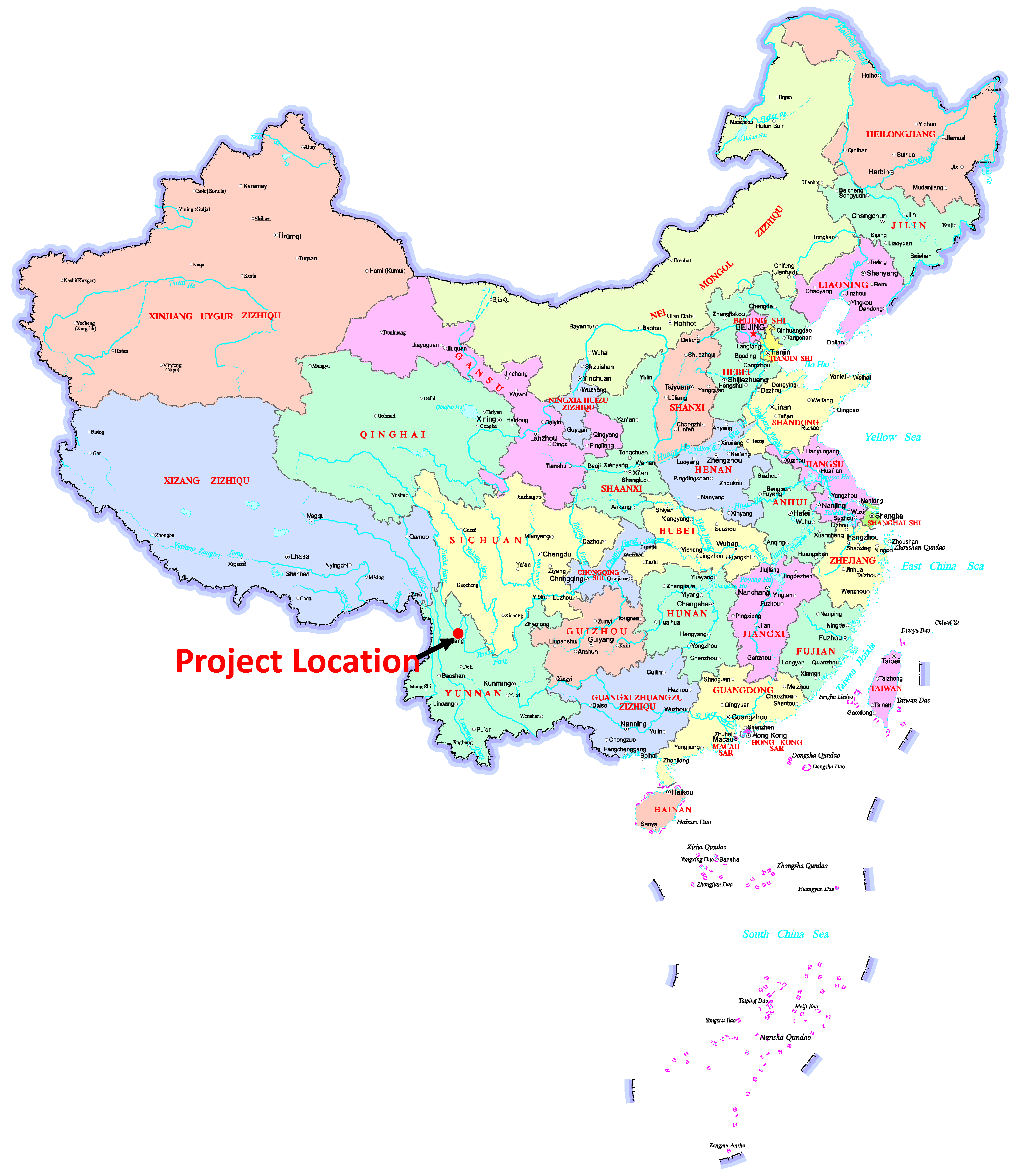
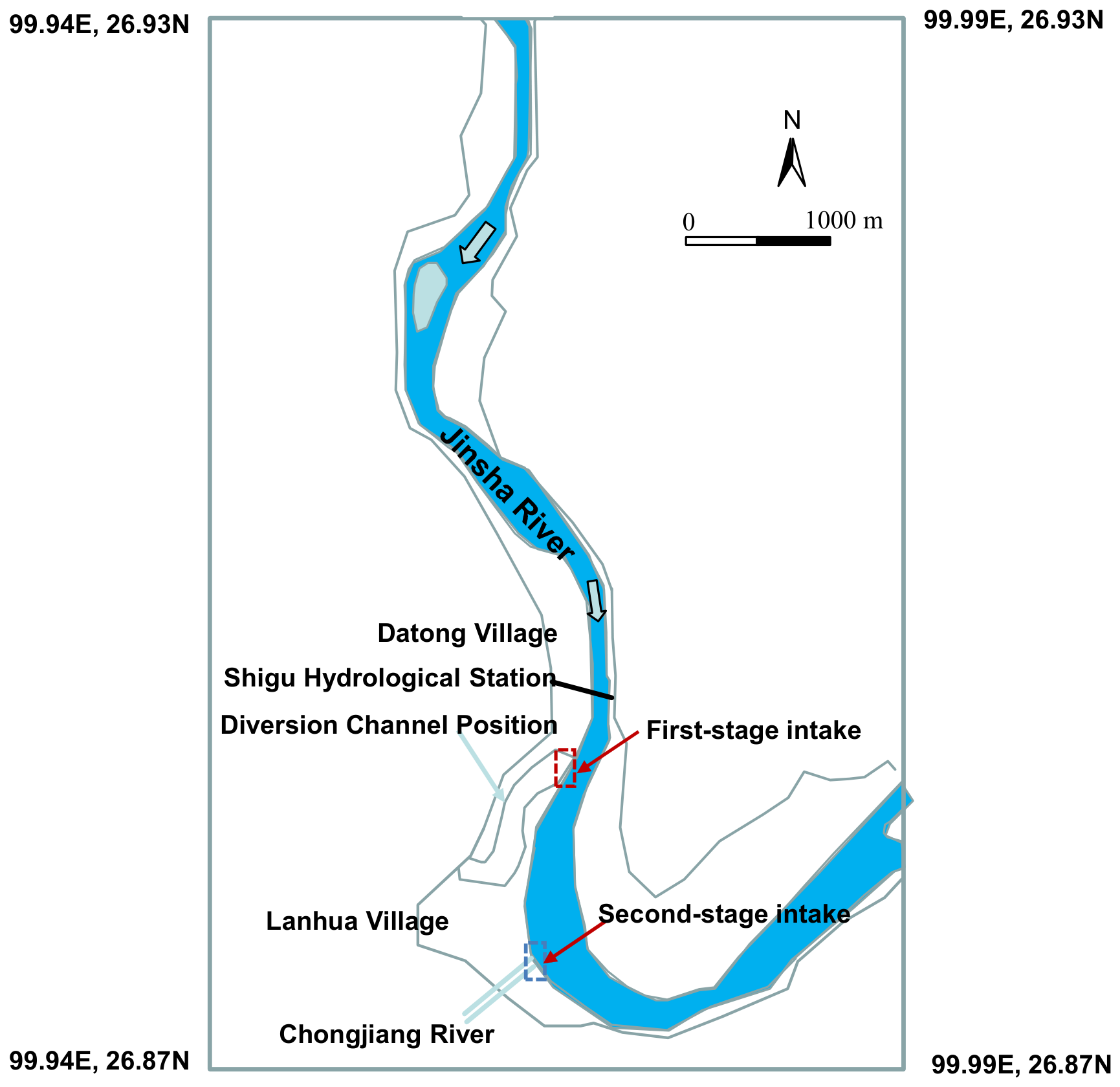
The Shigu Water Source Project, the primary intake hub of the Central Yunnan Water Diversion Project on the Jinsha River, encompasses multiple design alternatives. Figure 1 presents a schematic layout of the project. Among them, the Datong Water Intake Scheme—which comprises first-stage and second-stage pumping station configurations with varying diversion channel lengths—serves as the primary design basis for this study. Under this scheme, the intake of the first-stage pumping station is located on the right bank of the Jinsha River, 847 m downstream from the base cross-section of the Shigu Hydrological Station (marked in Figure 1). After pumping, water is conveyed through an approximately 3.8 km tunnel to the second-stage pumping station at the Chongjiang River (Figure 1), a tributary that joins the Jinsha River in the study area. The water then passes through a desilting basin and is pumped again by the second-stage pumping station before being connected to the Xianglushan Tunnel, which conveys water further south to the Central Yunnan Water Diversion Project. The diversion channel (Figure 1) connects the intake from the Jinsha River to the pumping stations and desilting basin. Key features—including the Jinsha River, the diversion channel, the Shigu Hydrological Station, and the Chongjiang River—are indicated in Figure 1.
Hydrological and sediment data for this study were obtained from the Shigu Hydrological Station, which has continuously recorded daily discharge and daily sediment concentration since 1963. The 48-year record (1963–2010) was used for typical year selection and model forcing. It should be noted that while the Shigu Hydrological Station provides reliable inflow data, no systematic measurements of sediment deposition within the diversion channel were available for model validation. This limitation is addressed in Section 6.4.
Figure 1. Location and schematic diagram of the diversion channel location within the Shigu Water Source Project. The red dashed box indicates the approximate location of the Datong First-Stage diversion channel intake (detailed in Figure 2), and the blue dashed box indicates the Datong Second-Stage diversion channel intake (detailed in Figure 3). Flow direction is from the Jinsha River toward the pumping stations and desilting basins.
Water 18 01530 g001aWater 18 01530 g001b

4. Calculation Conditions and Scenarios

The modeling, calculation, and scenario analysis were conducted in five sequential steps.
Step 1 (Model setup and domain definition): The HELIU-2 one-dimensional total-load sediment mathematical model was established for the diversion channel, and the calculation area and cross-sections were defined accordingly.
Step 2 (Selection of typical years): Three typical years were selected based on the long-term sediment transport records at the Shigu Hydrological Station: 1989 (high-sediment year, 86.5% above the long-term average), 1985 (medium-sediment year, 0.9% below the long-term average), and 1986 (low-sediment year, 57.6% below the long-term average).
Step 3 (Calculation schemes): Eight calculation schemes were defined by combining (i) two desilting basin stages (Datong First-Stage and Datong Second-Stage schemes), (ii) two diversion channel lengths (long and short), and (iii) two dredging conditions (with dredging above an elevation of 1810 m and without dredging).
Step 4 (Model simulation): Daily time steps over 24 h were used. The inflow discharge at the channel head was derived from the ten-day average discharge recorded at the Shigu Hydrological Station, and the sediment concentration was represented by the daily average sediment concentration at the same station.
Step 5 (Output analysis): The model outputs—including annual deposition volume, deposition mass, mean and maximum sediment concentrations at the pumping station intake, particle size distribution in the water and in the deposited sediment, and deposition thickness in front of the pumping station—were analyzed under different hydrological conditions.

4.1. Calculation Area and Cross-Section Configuration

For the Datong First-Stage Long Diversion Channel scheme, the total channel length is 1018 m, with 19 cross-sections defined along its alignment.
For the Datong First-Stage Short Diversion Channel scheme, the total channel length is 718 m, with 13 cross-sections defined.
For the Datong Second-Stage Long Diversion Channel scheme, the total channel length is 472 m, with 12 cross-sections defined.
For the Datong Second-Stage Short Diversion Channel scheme, the total channel length is 370 m, with 11 cross-sections defined.

4.2. Selection of Typical Years for Sediment Deposition Calculation

To analyze the influence of different sediment inflow conditions on sediment deposition in the diversion channel, the years 1989, 1985, and 1986 were selected as typical years representing high, medium, and low sediment loads, respectively. According to the classification criteria used in the China River Sediment Bulletin published by the Ministry of Water Resources, a high-sediment year is defined as a year in which the annual sediment load exceeds the long-term average by more than 25%, a medium-sediment year is defined as a year in which the annual sediment load deviates from the long-term average by less than ±25%, and a low-sediment year is defined as a year in which the annual sediment load falls below the long-term average by more than 25%. Based on the 48-year (1963–2010) sediment transport record at the Shigu Hydrological Station, 1989 (86.48% above the long-term average) qualifies as a high-sediment year, 1985 (0.89% below the long-term average) qualifies as a medium-sediment year, and 1986 (57.62% below the long-term average) qualifies as a low-sediment year. The selection of these three distinct hydrological conditions enables a systematic evaluation of sediment deposition responses to varying inflow sediment loads. The hydrological and sediment characteristics of each typical year are summarized in Table 1.
The use of three discrete representative years rather than a continuous multi-year time series follows the standard representative year approach in hydrological and sediment engineering design. This approach is based on the premise that the upper, middle, and lower bounds of a hydrological variable capture the full range of system behavior under contrasting boundary conditions. The three selected years represent three distinct hydrological levels: 1989 represents a high-sediment level (86.48% above the long-term average), 1985 represents a medium-sediment level (0.89% below the long-term average), and 1986 represents a low-sediment level (57.62% below the long-term average). Although only three discrete years are simulated, they systematically capture the range of hydrological conditions—from high to low—that the diversion channel is likely to experience. This boundary-condition approach is appropriate for the present study because our objective is to evaluate sedimentation behavior under extreme scenarios rather than to predict long-term average deposition.
For the sediment deposition calculations, a daily time step of 24 h was adopted. The inflow discharge at the channel head was derived from the ten-day average discharge recorded at the Shigu Hydrological Station, located 847 m upstream of the intake. The sediment concentration was represented by the daily average sediment concentration recorded at the same station.
For each typical year, daily inflow discharge was interpolated from the 10-day average discharge at the Shigu Hydrological Station. Daily sediment concentration was directly used from station records. The sediment grain size distribution at the channel inlet was kept constant across all scenarios, based on the long-term average of suspended sediment at the Shigu Station. This assumption isolates the effect of channel design and dredging from grain-size variability.

4.3. Calculation Schemes

Based on the desilting basin stage (Datong First-Stage or Datong Second-Stage scheme), diversion channel length (long or short), and two operating conditions, a total of eight calculation schemes were established to evaluate sediment deposition in the diversion channel. The schemes are listed in Table 2.
The diversion channel lengths (long vs. short) were determined based on the available layout space and the location of the desilting basin. The long and short schemes differ by approximately 300 m in the First Stage and 100 m in the Second Stage, allowing a comparative assessment of the effect of channel length on sedimentation without altering the inlet/outlet boundary conditions.
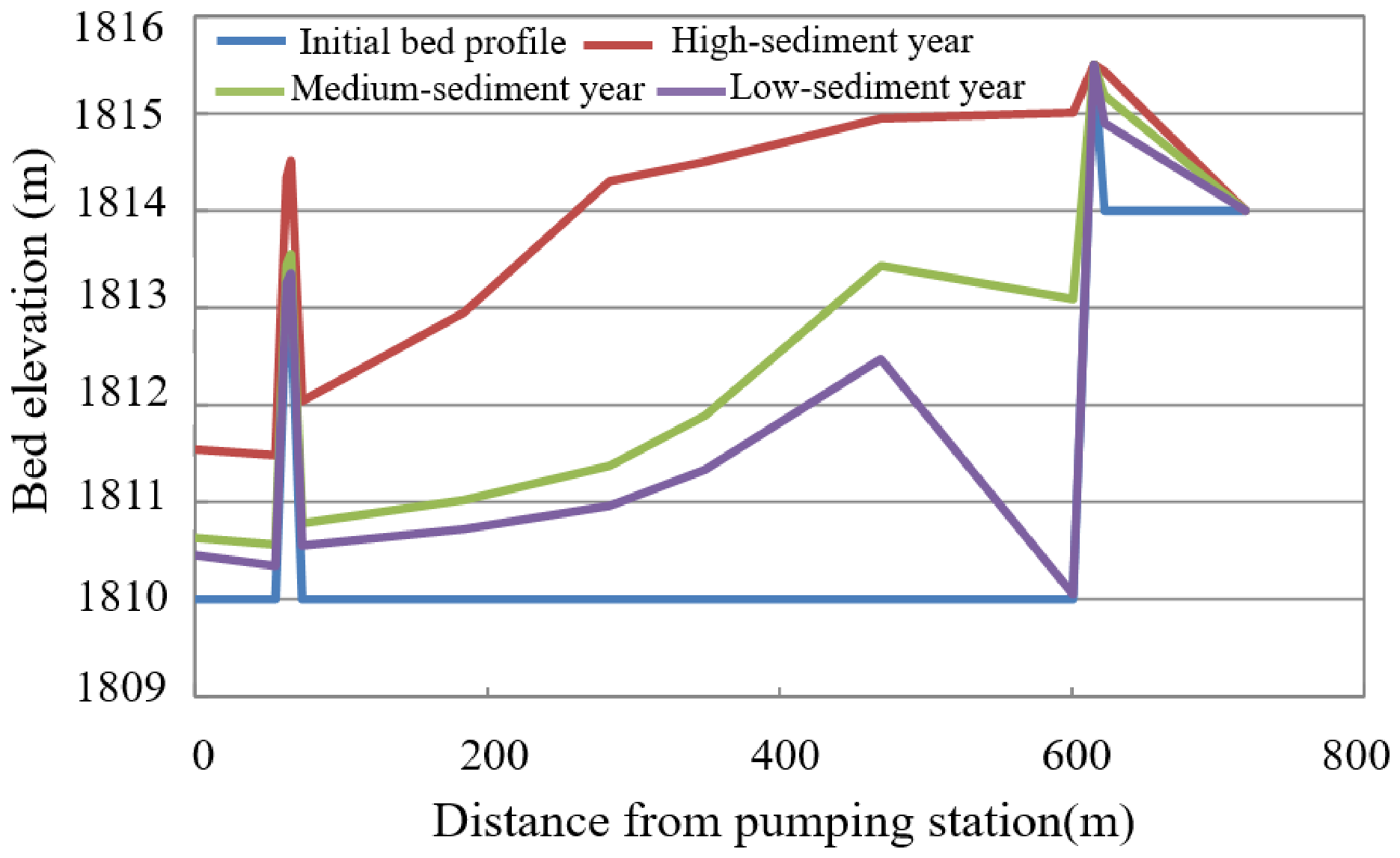
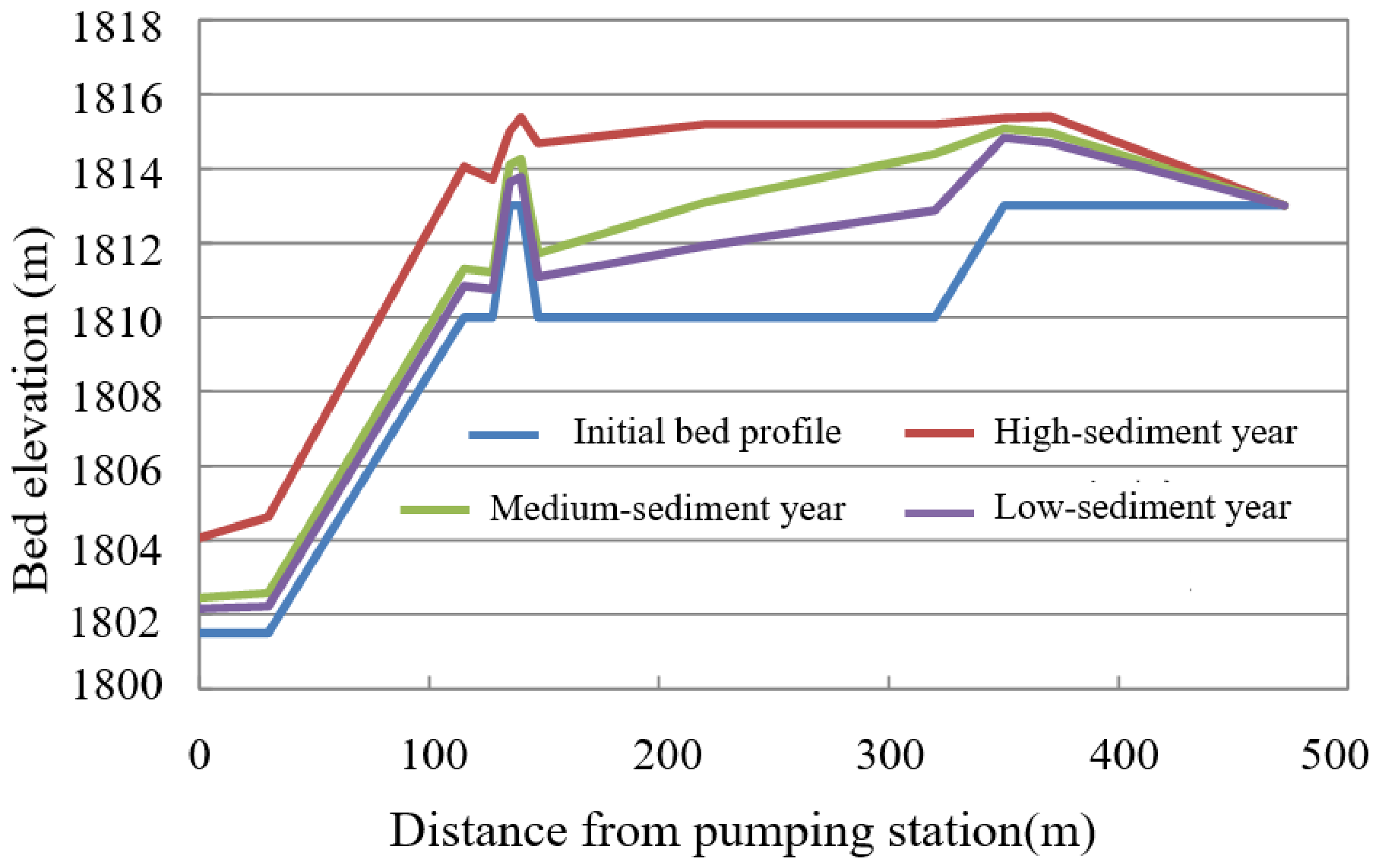
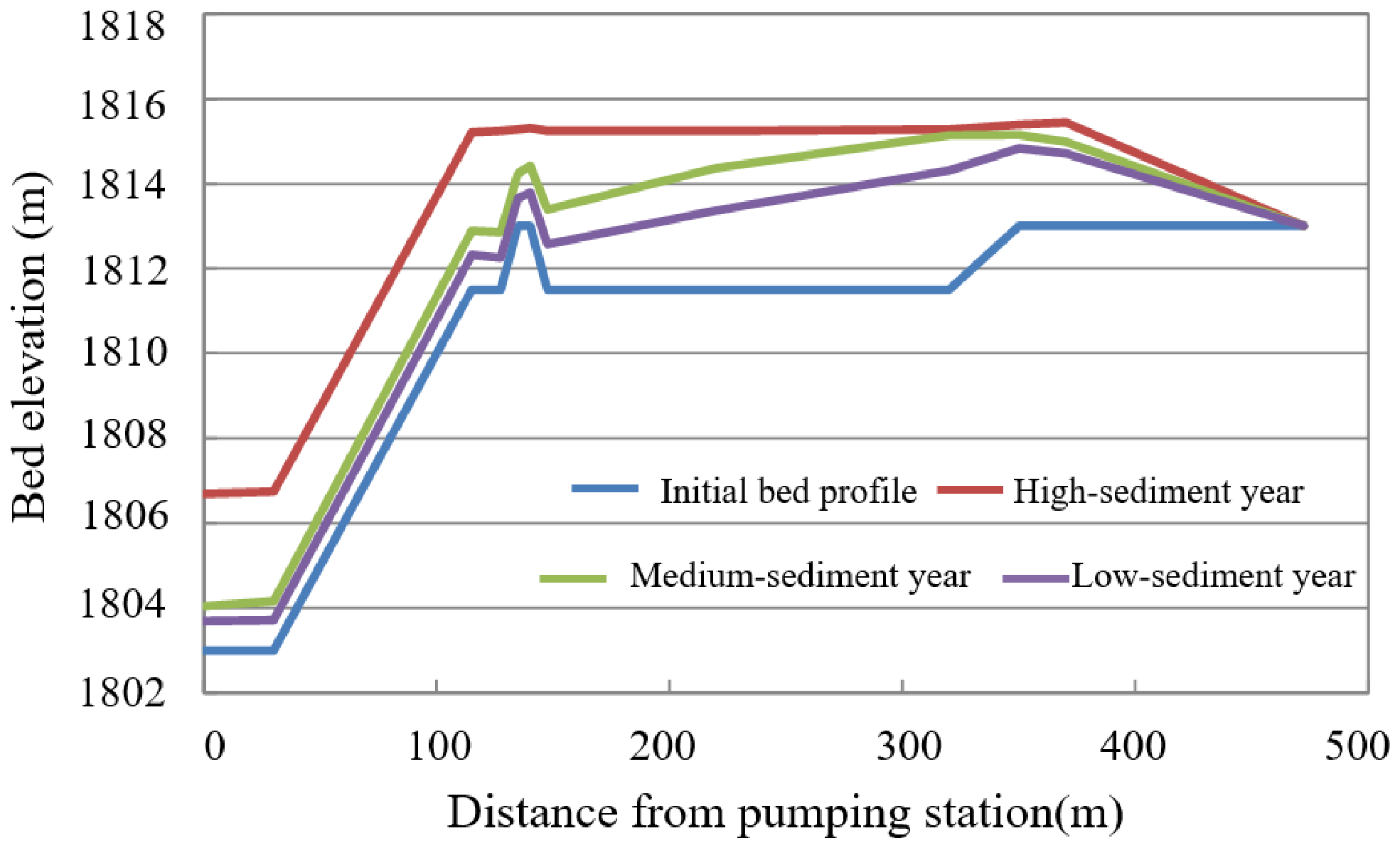
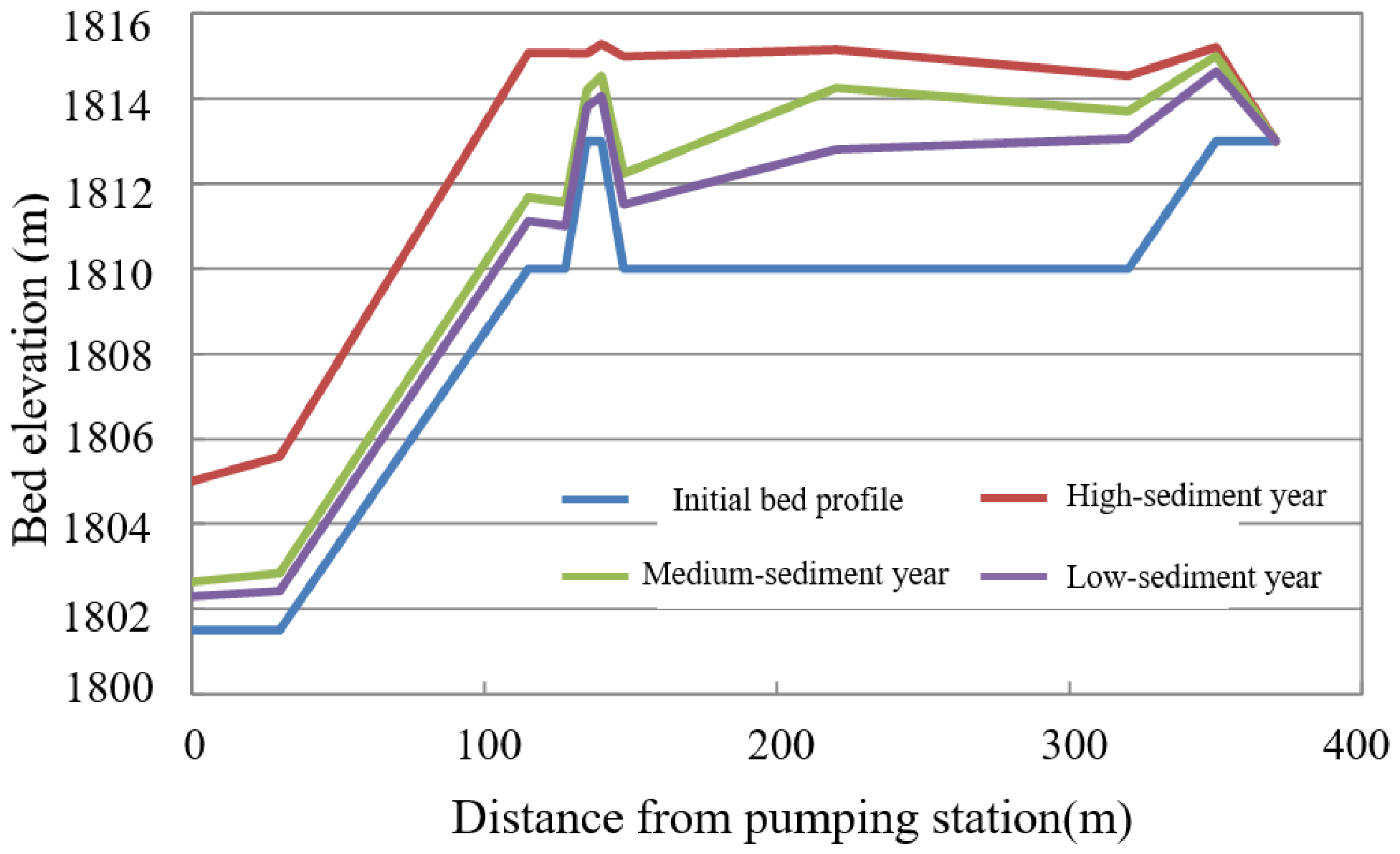
The dredging elevation (1810 m) is set 2 m below the designed bottom elevation of the desilting basin (1812 m, as shown in the initial bed profiles of Figure 4, Figure 5, Figure 6, Figure 7, Figure 8, Figure 9, Figure 10 and Figure 11). It serves as a maintenance trigger level rather than the physical basin bottom. Dredging here is defined as complete removal of sediment accumulated above 1810 m, representing an idealized but comparable maintenance condition.
The First- and Second-Stage schemes represent two independent design alternatives rather than sequential phases, with different channel geometries and distances to the pumping station.
To ensure a fair comparison between long and short channels under the same stage, the inlet and outlet boundary conditions (water level, discharge, sediment concentration, and grain size) were kept identical across schemes. The only differences are channel length and associated cross-section spacing. This allows the effect of channel length on sedimentation to be isolated.
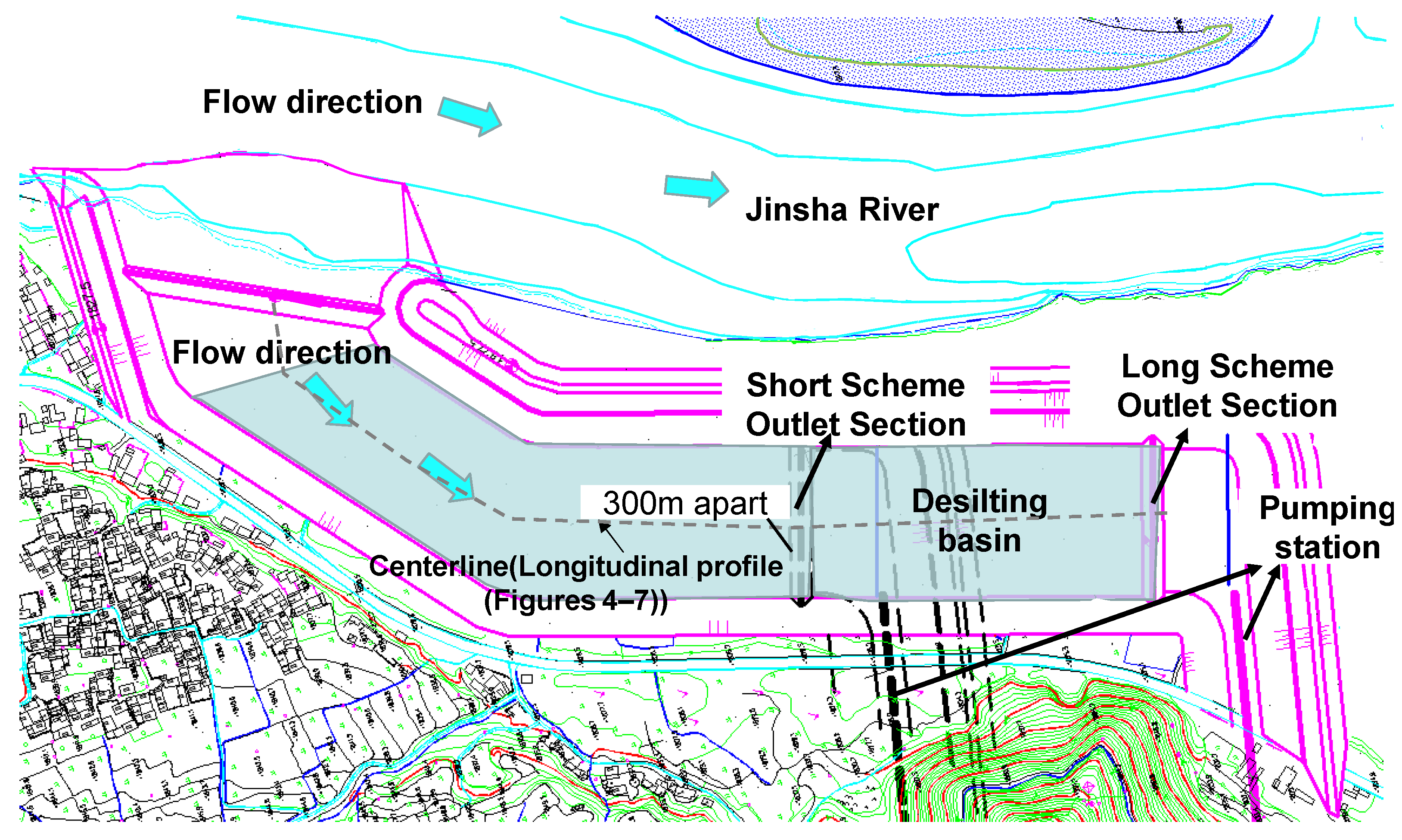
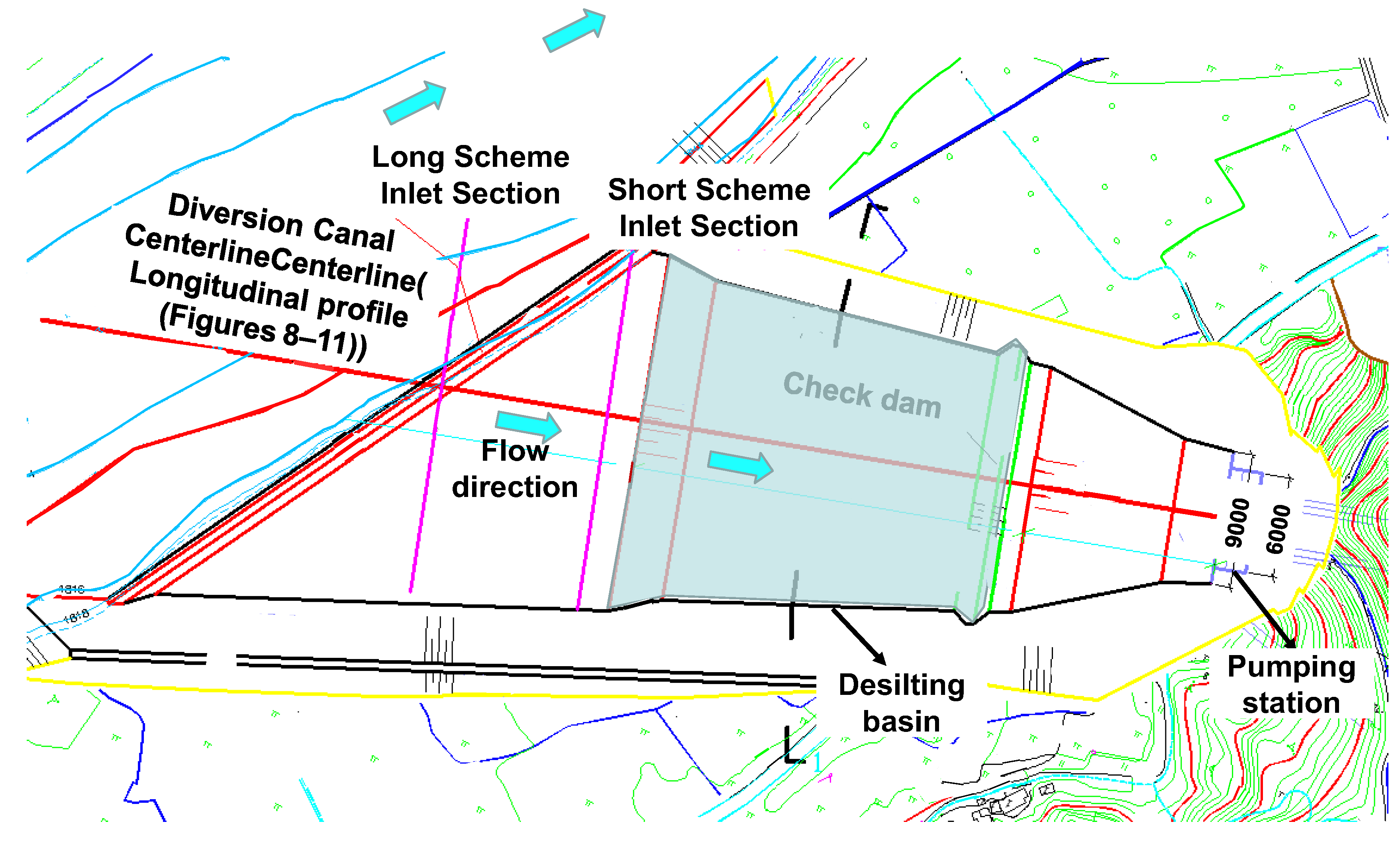
The layouts of the Datong First-Stage and Datong Second-Stage schemes are illustrated in Figure 2 and Figure 3, respectively. In the Datong First-Stage scheme, to facilitate comparison of sedimentation between the long and short diversion channel configurations, the outlet cross-sections of the two schemes were spaced 300 m apart. In the Datong Second-Stage scheme, owing to the large angle between the inlet cross-section and the central axis of the diversion channel, two cross-sections perpendicular to the channel axis were selected as inlet cross-sections for the long and short channel schemes, respectively, to ensure consistent boundary conditions for comparison.
To account for the effect of sediment dredging on deposition within the diversion channel, two operating conditions were considered:
Condition 1: Sediment deposition was calculated after dredging all sediment deposits from the desilting basin above an elevation of 1810 m. This elevation is slightly lower than the designed basin bottom (1812 m), representing a conservative operational threshold to maintain sufficient water depth for effective sedimentation.
Condition 2: Sediment deposition was calculated under the original designed topography (without dredging).

5. Results

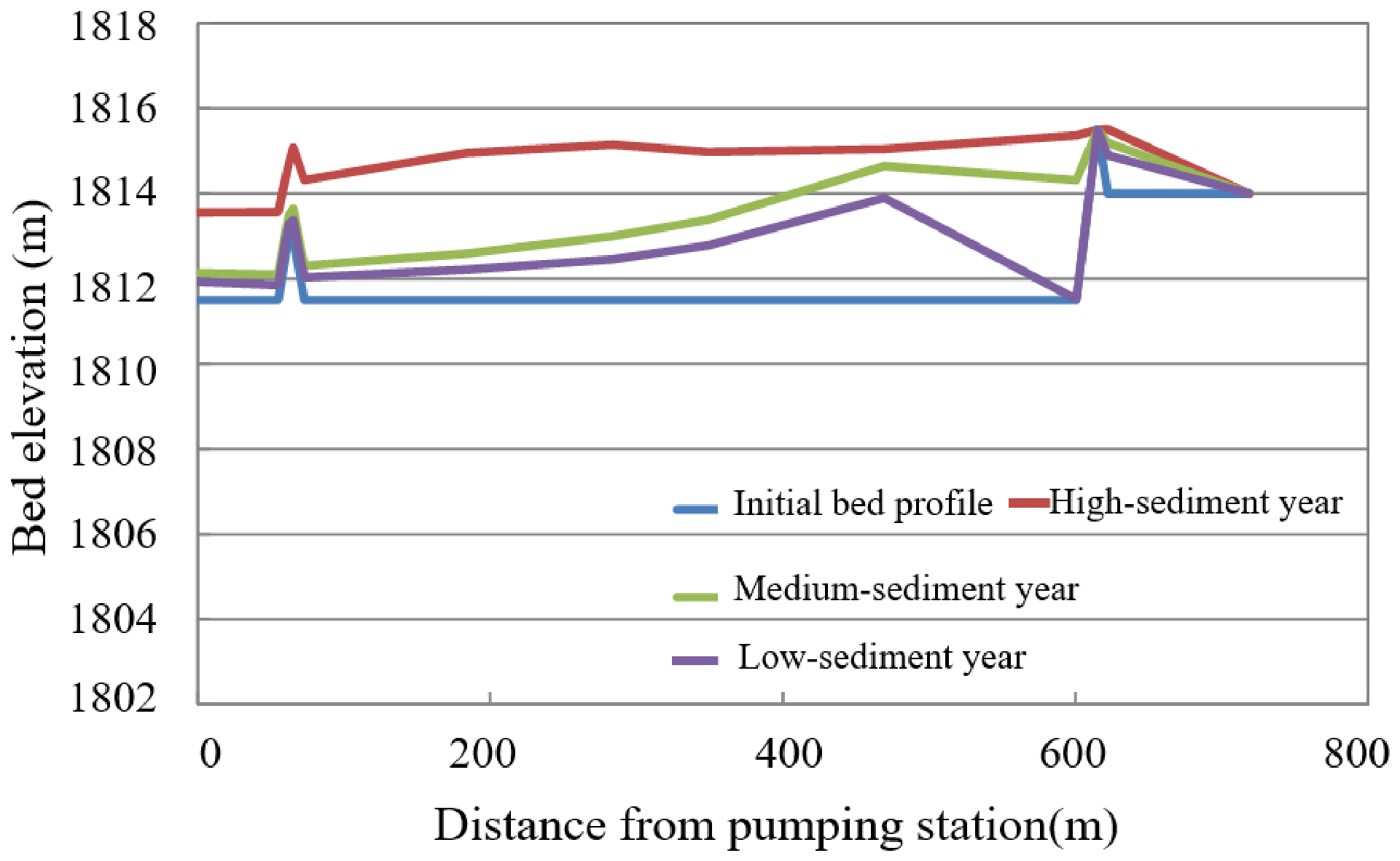
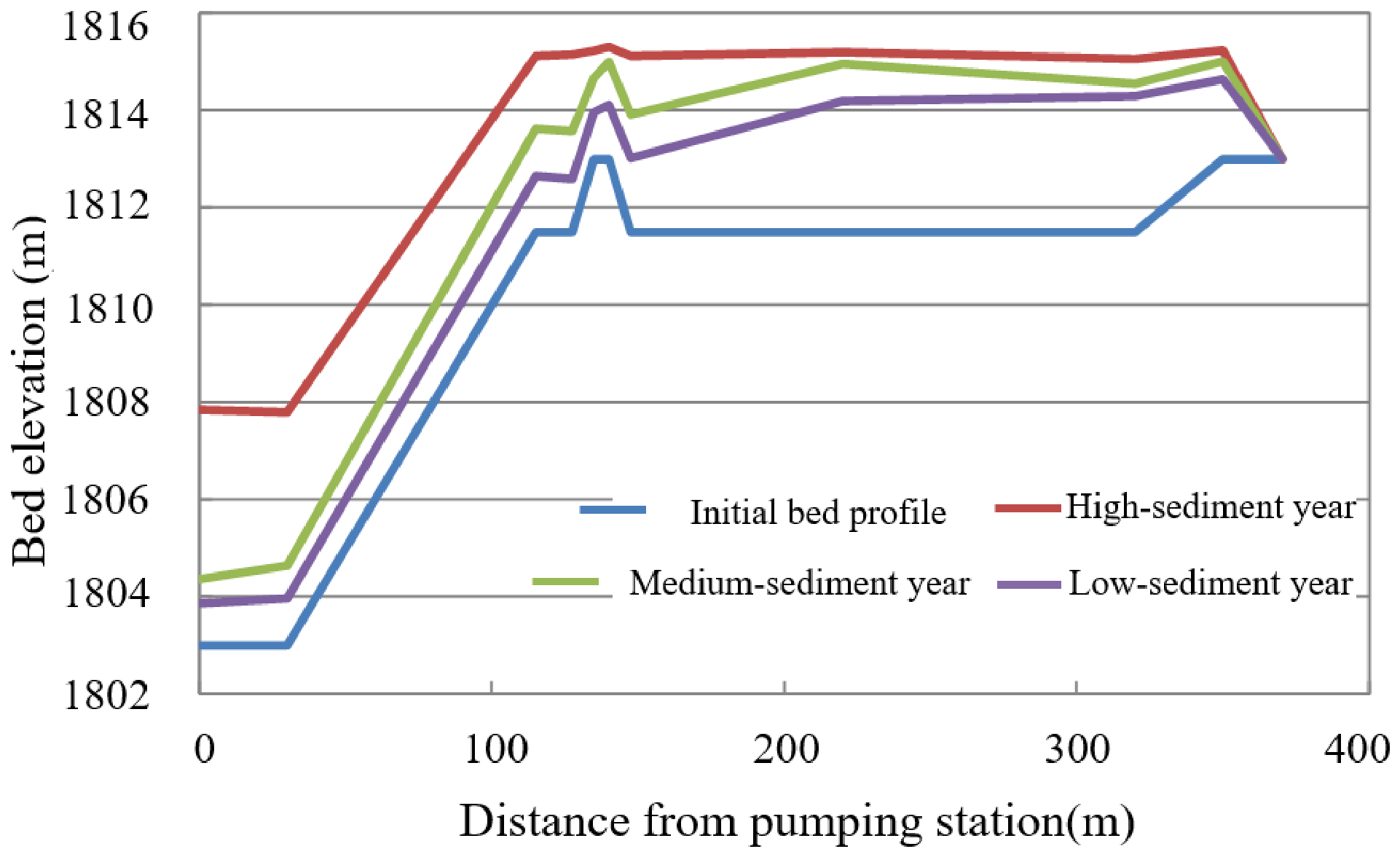
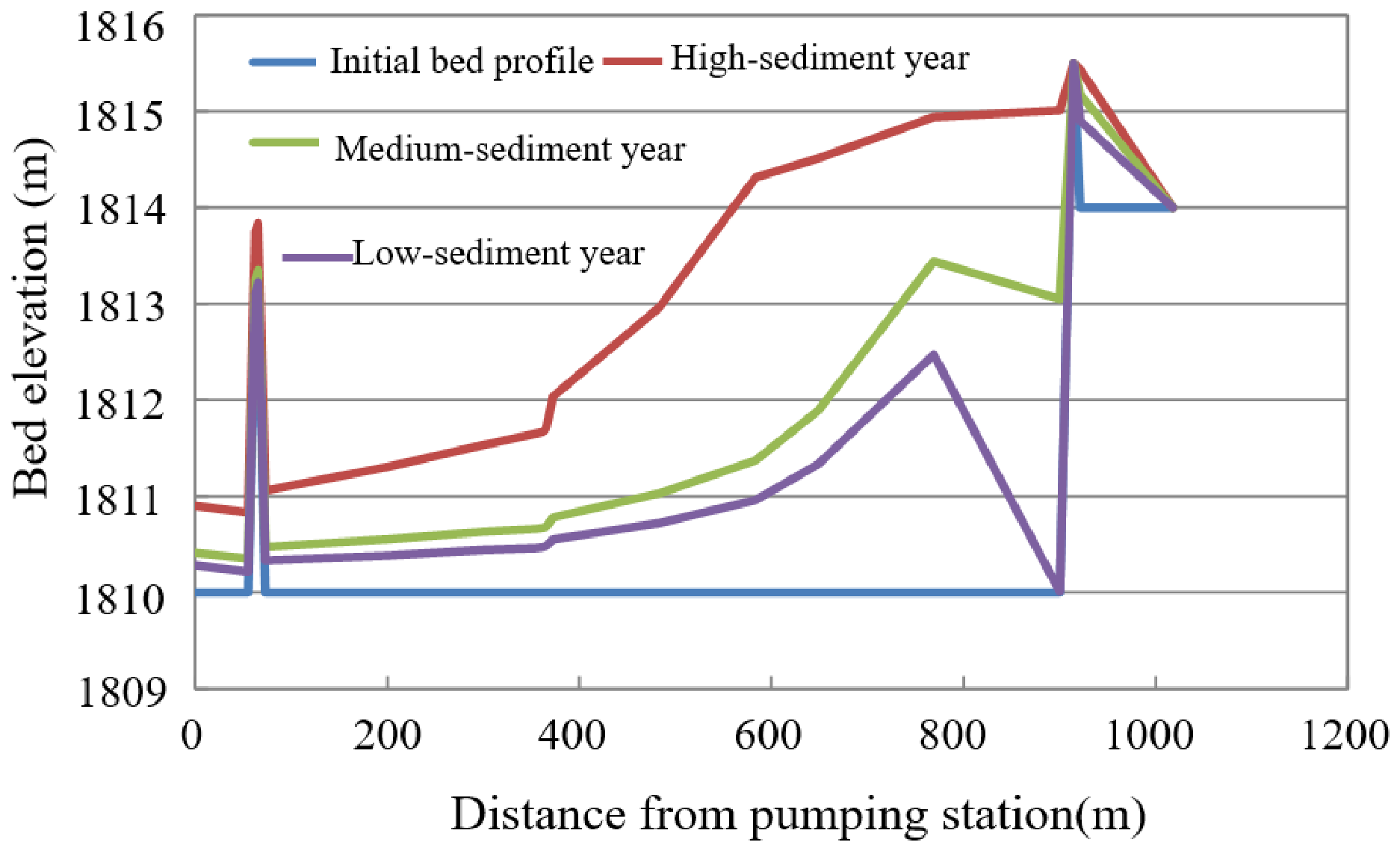
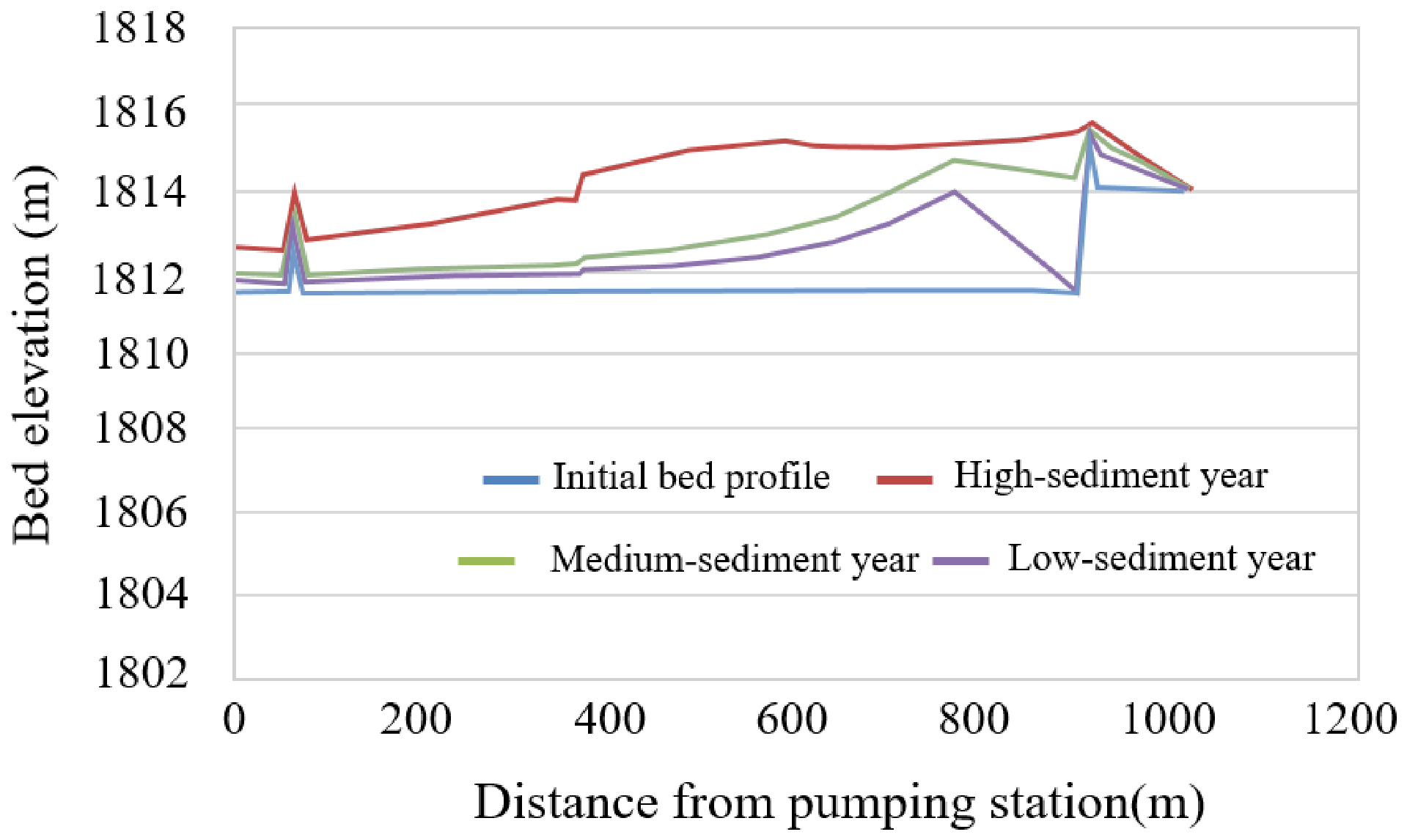
Before presenting the quantitative results, the key characteristics of the simulated diversion channel configurations are briefly recalled (see Section 4.1 for full details). The Datong First-Stage long channel extends to 1018 m with 19 cross-sections, while the short channel extends to 718 m with 13 cross-sections. The Datong Second-Stage long channel extends to 472 m with 12 cross-sections, and the short channel extends to 370 m with 11 cross-sections. All channels convey water from the Jinsha River intake to the pumping station intake, with the desilting basin located immediately upstream of the pumping station. The profiles in Figure 4, Figure 5, Figure 6 and Figure 7 correspond to the First-Stage channel shown in Figure 2, and those in Figure 8, Figure 9, Figure 10 and Figure 11 correspond to the Second-Stage channel shown in Figure 3. In all profiles, the horizontal axis represents the distance from the pumping station intake (x = 0 at the pumping station). The channel extends rightward from the pumping station toward the Jinsha River intake.
Table 3 and Table 4 present the calculated results in the diversion channel under different operating conditions for each typical year.

5.1. Overview of Sediment Deposition Patterns

Under all simulated scenarios, sediment deposition in the diversion channel exhibited three consistent characteristics. Firstly, over 95% of the sediment deposited in front of the pumping station are finer than 0.05 mm (P0.05 > 95% in Table 3, following the Chinese standard [38], where 0.05 mm is adopted as the minimum design settling particle size for desilting basins), indicating that fine sediment dominates the deposition mass despite conventional desilting basins being designed primarily for coarser particles. Secondly, deposition volumes and thicknesses followed the order high-sediment year > medium-sediment year > low-sediment year, as expected from the inflow sediment loads (Table 1). Thirdly, longitudinal deposition profiles (Figure 4, Figure 5, Figure 6, Figure 7, Figure 8, Figure 9, Figure 10 and Figure 11) showed a local peak at the desilting basin (located immediately upstream of the pumping station), caused by hydraulic disturbances at the basin inlet and outlet. The pumping station intake itself is at the rightmost end of each profile. A key observation is that short-channel configurations resulted in substantially greater deposition thickness at the pumping station intake. Quantitatively, under high-sediment-year conditions with dredging, the short-channel scheme (Scheme III) increased intake deposition thickness by 71% compared with the long-channel scheme (Scheme I), from 0.90 m to 1.54 m. Qualitatively, the long-channel configurations (Figure 4, Figure 5, Figure 8 and Figure 9) exhibit more gradual deposition profiles, while short-channel configurations (Figure 6, Figure 7, Figure 10 and Figure 11) show steeper deposition near the inlet and higher deposition at the basin (the abrupt elevation change in each figure). (Figure 4, Figure 5, Figure 6, Figure 7, Figure 8, Figure 9, Figure 10 and Figure 11 provide visual comparisons of longitudinal deposition patterns.)

5.2. Effect of Dredging

Dredging (removing sediment above an elevation of 1810 m) improved sediment trapping efficiency and reduced deposition at the pump intake, with the magnitude of effectiveness varying by hydrological scenario and channel configuration (Table 4a). Under the first-stage, short-channel configuration in a high-sediment year, dredging reduced deposition thickness at the pump intake from 2.06 m to 1.54 m (a 25.2% reduction). Under the first-stage, long-channel configuration, the reduction was 13.5% (from 1.04 m to 0.90 m). In medium- and low-sediment years, the effect was modest (typically <10% change in deposition volume). Dredging also slightly reduced the mean sediment concentration at the pump intake (by 2–3% in high-sediment years) and increased the proportion of fine sediment (grain size ≤ 0.05 mm) in the suspended load. For the second-stage configuration, similar reductions were observed: in a high-sediment year, dredging reduced deposition thickness at the pump intake by 30.6% for the long-channel scheme and by 27.5% for the short-channel scheme (Table 4a), with similarly modest effects in medium- and low-sediment years. Dredging also slightly reduced the mean sediment concentration at the pump intake (by 2–3% in high-sediment years) and increased the proportion of fine sediment (grain size ≤ 0.05 mm) in the suspended load, with consistent trends observed across both first- and second-stage configurations.

5.3. Effect of Channel Length on Deposition

Channel length exhibited a consistent trade-off: longer channels increased total deposition volume but reduced sediment concentration at the pump intake (Table 4b). This trade-off was most pronounced in high-sediment years. Under the first-stage configuration with dredging in a high-sediment year, the long channel (Scheme I: first-stage, long channel, with dredging) increased total deposition volume by 13.2% (from 42.92 × 10⁴ m3 to 48.58 × 10⁴ m3) compared with the short channel (Scheme III: first-stage, short channel, with dredging), while reducing the annual mean sediment concentration at the pump intake by 5.3% (from 0.38 kg/m3 to 0.36 kg/m3). More notably, the short channel exhibited a 71% greater deposition thickness at the pump intake (1.54 m vs. 0.90 m) under the same conditions, indicating that the additional deposition in the long channel occurs primarily in the upstream and middle sections, thereby protecting the pump intake from excessive localized aggradation.
For the second-stage configurations, similar trade-offs were observed but with smaller magnitudes. Under a high-sediment year, the long channel (Scheme V: second-stage, long channel, with dredging) increased total deposition by 9.0% and reduced the mean sediment concentration by 2.4% compared with the short channel (Scheme VII: second-stage, short channel, with dredging). Deposition thickness at the pump intake was 27% lower in the long-channel configuration (2.56 m vs. 3.51 m).
In medium- and low-sediment years, similar trends were observed but with smaller or negligible reductions in sediment concentration (Table 4b).

5.4. Synthesis of Key Findings

Table 3 summarizes the deposition results for all eight schemes across three hydrological years. Several patterns emerge. First, the proportion of sediment grain size finer than 0.05 mm (calculated as (100% − S > 0.05) in Table 3) in the deposited sediment ranges from 6.6% to 37.3%, indicating that while fine sediment dominates the mass of sediment reaching the pump intake, the bed deposit composition is coarser due to preferential retention of larger particles. Second, maximum sediment concentrations at the pump intake can be higher in low-sediment years than in medium-sediment years (e.g., Scheme I: 1.73 kg/m3 in low-sediment year vs. 1.21 kg/m3 in medium-sediment year), reflecting the importance of short-duration, high-concentration flood events that are not fully captured by annual sediment load averages. Third, the desilting basin stage (First-Stage vs. Second-Stage schemes) influences deposition patterns primarily through channel geometry, with the Second-stage schemes exhibiting higher deposition thicknesses at the pump intake due to their shorter overall channel lengths (370–472 m vs. 718–1018 m for First-stage scheme).

6. Discussion

6.1. Mechanisms Controlling Fine Sediment Deposition

The finding that over 95% of the sediment deposited in front of the pumping station is finer than 0.05 mm (Table 3) is not merely descriptive but reflects a fundamental shift in the upstream sediment regime [39]. Coarse particles (grain size > 0.05 mm) are preferentially trapped by cascade reservoirs in the upper Yangtze River, leaving a finer suspended load that reaches the Shigu intake. Conventional desilting basins, designed with a minimum settling particle grain size of 0.05 mm [38], are therefore inherently inefficient for the majority of the incoming sediment.
From a hydrodynamic perspective, the settling behavior of these fine particles is governed by Stokes’ law, which predicts very low settling velocities for particle grain sizes < 0.05 mm. However, the observed deposition rates in our simulations—despite using a conventional sediment transport model without flocculation [40]—suggest that the extended retention time within the diversion channel, combined with the reduced turbulence in the desilting basin, is sufficient to allow a substantial fraction of these fine particles to settle. This finding implies that even in the absence of flocculation, channel geometry and hydraulic conditions can be optimized to enhance fine sediment capture.
From an engineering perspective, the high proportion of fine sediment in front of the pumping station implies a sustained risk of pump wear, reduced operational efficiency, and potential clogging of downstream conveyance systems. As noted in the Introduction, fine sediment delivery also carries environmental implications (e.g., turbidity, light penetration, and aquatic habitat quality).

6.2. Hydrological Influence on Dredging Effectiveness

The simulation results show that dredging (removing sediment above an elevation of 1810 m) reduces deposition thickness at the pump intake by 13–31% in high-sediment years, but by substantially smaller magnitudes in medium- and low-sediment years (Table 4a). This differential effectiveness can be interpreted hydraulically. Dredging removes accumulated sediment from the desilting basin, thereby increasing its effective water depth and flow across the cross-sectional area. For a given flow discharge, a larger cross-sectional area leads to lower flow velocities, which in turn enhances the gravitational settling of suspended particles. In a high-sediment year, the incoming sediment load (4830 × 104 t in 1989, Table 1) is sufficiently large that this improved settling environment yields a substantial reduction in sediment delivery to the pump intake. In contrast, in low-sediment years (1098 × 104 t in 1986), the baseline settling conditions are already sufficient to trap most of the limited incoming load, so the marginal benefit of dredging is modest.
Notably, dredging also slightly increased the proportion of fine sediment (grain size ≤ 0.05 mm) in the suspended load (e.g., from 94.94% to 95.96% for Scheme I (first-stage, long channel, with dredging) vs. Scheme II (first-stage, long channel, without dredging) under high-sediment conditions). This may be because the reduced flow velocity following dredging preferentially enhances the settling of coarser particles, which have higher settling velocities, thereby leaving a slightly finer fraction in suspension. A similar phenomenon has been observed in reservoir sediment management, where sediment removal operations can temporarily alter the composition of outflow sediment [41]. This suggests that dredging operations should be coordinated with real-time inflow sediment monitoring to avoid unintended increases in fine sediment delivery to the pumping station.

6.3. Understanding the Channel Length–Sedimentation Trade-Off

The trade-off quantified in Section 5.3—where longer channels increase total deposition volume by 9–13% but reduce pump intake sediment concentration by 2–5% (Table 4b)—can be explained hydrodynamically. In a longer diversion channel, the extended flow path reduces the energy slope, leading to lower flow velocities and reduced turbulence. These conditions allow more sediment to settle gravitationally before reaching the pumping station. However, this additional deposition occurs primarily in the upstream and middle sections of the channel. This inference is supported by the comparison of total deposition volume and pump intake deposition thickness: despite increasing total deposition by 9–13%, the long channel reduces deposition thickness at the pump intake by 27–42% (Table 4b), indicating that the additional sediment has settled upstream of the intake.
This interpretation has practical implications for channel design. The trade-off is not simply “longer is better” or “shorter is better”; rather, it depends on project-specific priorities. If the primary concern is protecting the pump from abrasion, the modest reduction in sediment concentration (2–5%) may justify the increased total deposition volume. If maintenance burden is the dominant constraint, a shorter channel may be preferable despite higher localized deposition at the pump intake. The quantitative ratios provided in Table 4b offer a rational basis for this site-specific optimization.

6.4. Implications for Sediment Management in Large-Scale Water Diversion Projects

Based on the findings above, the following integrated sediment management strategies are recommended for the Shigu Water Source Project and similar large-scale water diversion systems:
Dredging strategy: This aims to establish a regular post-flood dredging schedule, with priority given to high-sediment years. The simulation results suggest that dredging is most beneficial in high-sediment years for the first-stage long-channel configuration, where it reduces the peak sediment concentration at the pump intake. However, the effect on mean annual sediment concentration is relatively modest. Therefore, dredging should be scheduled immediately following high-sediment flood events. Regarding depth, the current study assumes removal of all deposits above an elevation of 1810 m; this threshold could be refined based on real-time monitoring of deposition thickness at the pumping station intake. A risk-based maintenance trigger is recommended.
Channel length design: This recognizes the trade-off between total sediment deposition and intake water quality when considering channel extension. While longer channels can reduce sediment concentration at the pumping station intake, they also increase total deposition volumes, which may increase maintenance burden. The present study provides a quantitative basis for this trade-off: for the first-stage desilting basin under a high-sediment year, the long channel (Scheme I) increased total deposition volume by 13.2% (from 42.92 × 10⁴ m3 to 48.58 × 10⁴ m3) and reduced the mean sediment concentration from 0.38 kg/m3 to 0.36 kg/m3 compared to the short channel (Scheme III). However, the short channel exhibited a 71% greater deposition thickness at the pump intake (1.54 m vs. 0.90 m). These trade-off ratios can inform the selection of channel length based on project-specific priorities.
Implications for sediment management: The finding that over 95% of deposited sediment grain size is finer than 0.05 mm (Table 3) indicates that conventional desilting basins, which are designed primarily for coarse particle settling, are insufficient for complete sediment removal. While the present study does not evaluate specific operational or fine-sediment control measures (e.g., retention time optimization, coagulation–flocculation pre-treatment using polyaluminum chloride or anionic polyacrylamide [42], ecological bank filtration, or adaptive intake operation during peak sediment concentration periods), this finding suggests that such complementary approaches, along with the ecological impacts of fine sediment delivery on receiving water bodies [43], warrant further investigation in future research.
Although the present study is specific to the Shigu Water Source Project on the Jinsha River, the integrated modeling framework and the identified trade-offs (e.g., channel length vs. deposition, benefits of dredging in high-sediment years) are likely to provide a reference for other large-scale water diversion systems facing similar sedimentation challenges, such as those on the lower Yellow River or the South-to-North Water Diversion Project. However, site-specific calibration would be required for each new application.

6.5. Methodological Value of Multi-Scenario Analysis

The eight design scenarios defined in this study (combining two stages, two channel lengths, two dredging conditions, and three hydrological years) enable a systematic isolation of individual controlling factors. Specifically, pairwise comparisons (e.g., long vs. short channel with identical boundary conditions; with vs. without dredging under the same hydrology) allow the separate quantification of channel length effects and dredging effects, which would be impossible in a single-scenario or single-year simulation. This scenario-based design is therefore not merely an enumeration of cases but a deliberate strategy to disentangle coupled factors in sedimentation problems.

6.6. Limitations and Future Directions

The HELIU-2 one-dimensional model employed in this study has been widely validated in the Yangtze River basin and is well suited for long-term, reach-scale sedimentation simulations. However, as a one-dimensional approach, it is inherently limited to cross-sectionally averaged quantities and cannot resolve secondary flows, local scour holes, or bend-induced helical flow—factors that can influence local deposition patterns and are not captured by section-averaged models. Consequently, while our main conclusions regarding the fine-sediment fraction and the channel-length trade-off are robust, the absolute deposition thicknesses at the pump intake and the longitudinal profiles (Figure 4, Figure 5, Figure 6, Figure 7, Figure 8, Figure 9, Figure 10 and Figure 11) should be interpreted with caution. Future studies should consider coupling the one-dimensional model with two- or three-dimensional hydrodynamic models to capture these localized effects. In this regard, Hu et al. [44,45,46] developed several advanced modeling approaches for shallow water hydrodynamics and scalar transport, offering promising methodological references for future sedimentation studies aiming to overcome the limitations of one-dimensional models. In addition, the current study assumes a fixed sediment inflow gradation based on historical data; the potential impact of future upstream reservoir construction or climate change on incoming sediment characteristics is not considered and warrants further investigation.
No site-specific field observations (e.g., longitudinal deposition profiles or cross-sectional deposition thickness) were available for the diversion channel at the time of this study. Therefore, quantitative validation of the predicted longitudinal deposition profiles could not be performed. To address this limitation, future research should conduct physical model experiments under controlled laboratory conditions to systematically investigate the hydrodynamic and sedimentation processes in the diversion channel. The experimental results—particularly deposition thickness, longitudinal distribution patterns, and sediment concentration at the intake—can then be directly compared with the HELIU-2 model predictions to validate and calibrate the numerical model. In addition, future studies should consider coupling the one-dimensional model with two- or three-dimensional hydrodynamic models to capture localized effects such as secondary flows and local scour.

7. Conclusions

This study quantitatively assessed sediment deposition in the diversion channel of the Shigu Water Source Project under multiple design and inflow scenarios. The main conclusions are as follows:
  • Sediment characteristics: Sediment deposited in front of the pumping station is predominantly fine (grain size smaller than 0.05 mm), accounting for over 95% of the total deposition mass under all simulated scenarios. This finding indicates that conventional desilting basins, designed primarily for coarse particle settling, are insufficient for complete sediment removal. Complementary fine-sediment control measures (e.g., coagulant-assisted sedimentation or ecological buffer zones) are therefore necessary.
  • Effectiveness of dredging: Dredging improves sediment trapping efficiency, but the magnitude of its effectiveness varies by hydrological scenario. Quantitatively, under the first-stage long-channel configuration in a high-sediment year, dredging reduced the deposition thickness at the pump intake from 1.04 m to 0.90 m (a 13.5% reduction). Under the short-channel configuration, reduction was more pronounced: from 2.06 m to 1.54 m (a 25.2% reduction). The most pronounced benefits occur in high-sediment years, while the effect in medium- and low-sediment years is relatively modest. These quantitative, scenario-specific findings provide a basis for prioritizing dredging operations following high-sediment flood events.
  • Trade-off in channel length: The trade-off between channel length and sedimentation is quantified in this study. Under the first-stage desilting basin in a high-sediment year, the long channel (Scheme I) increased total deposition volume by 13.2% and reduced the mean sediment concentration at the pump intake by 5.3% (from 0.38 kg/m3 to 0.36 kg/m3) compared to the short channel (Scheme III). Notably, the short channel exhibited a 71% greater deposition thickness at the pump intake (1.54 m vs. 0.90 m). These quantitative ratios—rather than the expected direction of the trade-off—represent the main contribution, as they provide a basis for optimizing channel length based on project-specific priorities.
  • Methodological contribution and transferability: The integrated modeling-assessment framework developed in this study combines a one-dimensional sediment transport model with a multi-scenario design that systematically varies channel length, dredging condition, and hydrological year. This design enables the individual effects of channel length and dredging to be isolated and quantified (Table 4a,b), revealing trade-offs that single-scenario simulations cannot capture. The framework thus provides a reference for optimizing channel design and sediment management in large-scale water diversion projects.
Collectively, these findings provide a quantitative, scenario-based framework for optimizing channel design and sediment management in the Shigu Water Source Project and similar large-scale water diversion systems.

Author Contributions

Conceptualization, X.Z.; Methodology, J.Z.; Formal analysis, Y.Y.; Resources, J.Z. and Y.Y.; Data curation, Y.Y.; Writing—original draft, X.Z.; Writing—review and editing, X.Z.; Visualization, X.Z. and J.Z.; Supervision, J.Z. and Y.Y.; Funding acquisition, Y.Y. and X.Z. All authors have read and agreed to the published version of the manuscript.

Funding

This research was funded by the National Key Research and Development Program of China (2023YFC3209501), the Open Research Fund Program of the State Key Laboratory of Hydroscience and Engineering (sklhse-KF-2025-E-04).

Data Availability Statement

The raw data supporting the conclusions of this article will be made available by the authors on request.

Conflicts of Interest

The authors declare no conflicts of interest. The funders had no role in the design of the study; in the collection, analyses, or interpretation of data; in the writing of the manuscript; or in the decision to publish the results.

References

  1. Wang, Y.S.; Zhou, Z.W.; Li, Z.J.; Li, D.Z.; Jin, Z.W. Experimental study on water diversion and sediment control at water intake hub of Central Yunnan Water Diversion Project. J. Change River Sci. Res. Inst. 2025, 42, 188–197. (In Chinese) [Google Scholar]
  2. Garcia, M.H. Sedimentation Engineering: Processes, Measurements, Modeling, and Practice; ASCE Manuals and Reports on Engineering Practice No. 110; American Society of Civil Engineers: Reston, VA, USA, 2008. [Google Scholar]
  3. Julien, P.Y. Erosion and Sedimentation, 2nd ed.; Cambridge University Press: Cambridge, UK, 2010. [Google Scholar]
  4. Wu, W. Computational River Dynamics; Taylor & Francis: London, UK, 2007. [Google Scholar]
  5. Termini, D. Experimental observations of flow and bed processes in large-amplitude meandering flume. J. Hydraul. Eng. 2009, 135, 575–587. [Google Scholar] [CrossRef]
  6. Lin, J.T.-Y.; Lacunza, E.; Fernández, R.; García, M.H.; Rhoads, B.; Best, J.; Leroy, J.Z.; Parker, G. Hydrodynamic processes of incipient meander chute cutoffs: Laboratory experiments with implications for morphodynamics and depth-averaged modeling. Water Resour. Res. 2025, 61, e2024WR038502. [Google Scholar]
  7. Alomari, N.K.; Yusuf, B.; Mohammad, T.A.; Ghazali, A.H. Influence of diversion angle on water and sediment flow into diversion channel. CATENA 2020, 192, 104593. [Google Scholar]
  8. Wang, H.; Xu, D.; Tang, H. Numerical and experimental investigation on vortex control and sedimentation suppression in a Y-shaped diversion channel with circular inlet tanks. Eng. Appl. Comput. Fluid Mech. 2024, 18, 2380295. [Google Scholar] [CrossRef]
  9. Kondolf, G.M.; Gao, Y.; Annandale, G.W.; Morris, G.L.; Jiang, E.; Zhang, J.; Cao, Y.; Carling, P.; Fu, K.; Guo, Q. Sustainable sediment management in reservoirs and regulated rivers: Experiences from five continents. Earth’s Future 2014, 2, 256–280. [Google Scholar] [CrossRef]
  10. Vörösmarty, C.J.; Meybeck, M.; Fekete, B.; Sharma, K.; Green, P.; Syvitski, J.P.M. Anthropogenic sediment retention: Major global impact from registered river impoundments. Global Planet. Change 2003, 39, 169–190. [Google Scholar] [CrossRef]
  11. Yang, H.F.; Yang, S.L.; Xu, K.H.; Milliman, J.D.; Wang, H.; Yang, Z.; Chen, Z.; Zhang, C.Y. Human impacts on sediment in the Yangtze River: A review and new perspectives. Global Planet. Change 2018, 162, 8–17. [Google Scholar] [CrossRef]
  12. Lu, X.X.; Siew, R.Y. Water discharge and sediment flux changes over the past decades in the Lower Mekong River: Possible impacts of the Chinese dams. Hydrol. Earth Syst. Sci. 2006, 10, 181–195. [Google Scholar] [CrossRef]
  13. Liu, J.; Zheng, H.; Shen, Y.; Xing, B.; Wang, X. Variation in sediment sources and the response of suspended sediment grain size in the upper Changjiang River Basin following the large dam constructions. Sci. Total Environ. 2024, 904, 166869. [Google Scholar]
  14. Zhao, W.Z. Analysis of water-sediment evolution characteristics after adding a sediment sluice gate at the canal head of a certain project. Water Conserv. Technol. Superv. 2022, 2, 228–232. (In Chinese) [Google Scholar]
  15. Yuan, Y.; Cui, Z.F.; Huang, R.Y.; Ling, J.P.; Li, B.H. Numerical Simulation Study on Sediment Erosion and Deposition in Shengzhong Reservoir and Its Water Intake of the Western Chongqing Water Resources Allocation Project. Water Resour. Plan. Des. 2026, 10, 36–45. (In Chinese) [Google Scholar]
  16. Ma, Z.Z.; Gao, P.; Wang, C.X. Study on sediment deposition in the approach channel of Sheling Pumping Station. Northeast. Water Resour. Hydropower 2025, 1, 60–63. (In Chinese) [Google Scholar]
  17. Xin, H.; He, X.; Xing, J.H. Thoughts and measures on channel sedimentation in the Zhengzhou Yellow River Irrigation District. Yellow River 2022, 44, 60–63. (In Chinese) [Google Scholar]
  18. Chen, C.; Yang, W.; Wang, Z.; Huangfu, K.; Cai, F.; Chen, H.; Chen, Y. Study on characteristics of the water diversion ratio and impact of the diversion dyke at south and north ports of the Minjiang River during wet season. Water 2025, 17, 1183. [Google Scholar] [CrossRef]
  19. Xu, M.; Chen, L.; Wu, Q.; Li, D. Morph- and hydro-dynamic effects toward flood conveyance and navigation of diversion channel. Int. J. Sediment Res. 2016, 31, 169–175. [Google Scholar]
  20. Zhao, S.K.; Yang, L.L.; Zhou, S.; Liu, Y. Influence of multi-stage filtration settling basin on sedimentation efficiency of high-concentration fine-grained sediment. Water Sav. Irrig. 2025, 5, 34–38. (In Chinese) [Google Scholar]
  21. Meng, L.; Zhang, W.; Li, H. Influence of guide wall on hydraulic characteristics of forebay in irrigation pumping station junction. Water Conserv. Sci. Cold Reg. Eng. 2025, 8, 118–122. (In Chinese) [Google Scholar]
  22. Zhao, W.Z. Analysis on water and sediment evolution characteristics after adding sand sluicing gate at the headwork of a project. Tech. Superv. Water Resour. 2022, 2, 228–231. (In Chinese) [Google Scholar]
  23. Quadroni, S.; Stradiotti, G.; Servanzi, L.; Crosa, G.; Espa, P.; Pisaturo, G.R.; Imbalzano, G.; Righetti, M.; Talluto, N.; Doretto, A. An overview of controlled sediment flushing operations: Perception, issues and management strategies across the European Alps. J. Hydrol. Reg. Stud. 2025, 60, 102570. [Google Scholar] [CrossRef]
  24. Brandt, S.A. Classification of geomorphological effects downstream of dams. Catena 2000, 40, 375–401. [Google Scholar] [CrossRef]
  25. Walling, D.E. Human impact on land–ocean sediment transfer by the world’s rivers. Geomorphology 2006, 79, 192–216. [Google Scholar] [CrossRef]
  26. Borrelli, P.; Robinson, D.A.; Fleischer, L.R.; Lugato, E.; Ballabio, C.; Alewell, C.; Meusburger, K.; Modugno, S.; Schütt, B.; Ferro, V. An assessment of the global impact of 21st century land use change on soil erosion. Nat. Commun. 2017, 8, 2013. [Google Scholar] [CrossRef] [PubMed]
  27. Palermo, M.; Roy, D.; Pagliara, S. Morphological characteristics of eco-friendly protected basins downstream of block ramps in river bends. Geomorphology 2021, 377, 107587. [Google Scholar] [CrossRef]
  28. Meng, F.; Xiang, L.; Zhu, J.; Lv, H.; Jiang, C. Sediment-flushing equilibrium downstream of tide gates in a coastal region: Findings from a 36-day prototype water-diversion experiment. J. Hydrol. Reg. Stud. 2025, 60, 102472. [Google Scholar] [CrossRef]
  29. Li, P.; Li, G.; Guo, L.; Shi, D. A study on sediment avoidance diversion and the coordinated dispatch of water and sediment at an injection-water supply project on a sediment-laden river. Eng. Appl. Comput. Fluid Mech. 2021, 15, 530–548. [Google Scholar]
  30. Zhang, R.; Wu, B. Environmental impacts of high water turbidity of the Niulan River to Dianchi Lake Water Diversion Project. J. Environ. Eng. 2020, 146, 05019006. [Google Scholar] [CrossRef]
  31. Koffi, B.; Kouakou, K.E.; Brou, A.L.; Sanchez, M.; Blaise, O.G.; Coulibaly, B.W.; Akaffou, F.H.; Habel, M.; Kouassi, A.M.; Brou, D.; et al. Assessment of the sedimentation and trapping efficiency in dam reservoirs by applying the settling basin framework. J. Hydrol. Reg. Stud. 2025, 57, 102172. [Google Scholar] [CrossRef]
  32. Chen, Z.; Zhu, B.; Zhang, S.; Han, R.; Bai, J.; Lin, J.; Liu, Y.; Wang, B. A multiple-interdependency risk assessment model with time-varying reasoning capabilities for long-distance water diversion projects. J. Hydrol. 2026, 669, 135110. [Google Scholar]
  33. Xu, C.; Tian, J.; Wang, G.; Lian, H.; Wang, R.; Hu, X. Numerical analysis of water-sediment flow fields within the intake structure of pumping station under different hydraulic conditions. Water 2024, 16, 779. [Google Scholar]
  34. Jin, Z.; Lu, J.; Yao, S. Verification on formulas of bed-load sediment transport rate at the upstream of Yangtze River. Shuili Xuebao 2009, 40, 1299–1306. (In Chinese) [Google Scholar]
  35. Lu, J.Y.; Huang, Y. Comparison of sedimentation in Three Gorges Reservoir between calculated prediction and prototype measurement. J. Yangtze River Sci. Res. Inst. 2013, 30, 1–6. (In Chinese) [Google Scholar]
  36. Lin, Q.S.; Wan, J.R.; Huang, L. Calculation and analysis of sediment deposition in Baihetan Reservoir on Jinsha River. Yangtze River 2009, 40, 1–3+7. (In Chinese) [Google Scholar]
  37. Wan, J.R.; Gong, P. Study on sediment deposition of Tingzikou Reservoir on Jialing River. Yangtze River 2006, 37, 47–48+52. (In Chinese) [Google Scholar]
  38. SL/T269-2019; Design Specification for Desilting Basins of Water and Hydropower Projects. China Water & Power Press: Beijing, China, 2019. (In Chinese)
  39. Liu, J.; Zhang, W.W.; Shen, Y.; Wang, X. Dramatic sediment load changes and sedimentation characteristics upstream of the Three Gorges Dam due to the large reservoirs construction. Front. Earth Sci. 2024, 18, 565–578. [Google Scholar] [CrossRef]
  40. Wang, L.; Wang, D.; Cuthbertson, A.J.S.; Chen, Q.; Guan, J.; Zhang, L.; Huang, H.; Zhang, S. Experimental measurement of flocculation and settling behavior in fine sediments from the Three Gorges Reservoir, China. Int. J. Sediment Res. 2025, 40, 954–971. [Google Scholar] [CrossRef]
  41. Lee, F.Z.; Lai, J.S.; Guo, W.D.; Sumi, T. Scouring of replenished sediment through reservoir flood discharge affects suspended sediment concentrations at downstream river water intake. Water 2019, 11, 1998. [Google Scholar] [CrossRef]
  42. Bolto, B.; Gregory, J. Organic polyelectrolytes in water treatment. Water Res. 2007, 41, 2301–2324. [Google Scholar] [CrossRef] [PubMed]
  43. Yuan, Y.; Zhou, B.; Zhou, Z.; Jiang, L.; Wang, Y. Impacts of the Yangtze-to-Huaihe water diversion project on phytoplankton community structure in Lake Caizi: Integrated effects of hydrological connectivity, water diversion, and navigation. J. Environ. Manag. 2026, 398, 128574. [Google Scholar]
  44. Hu, D.C.; Chen, Z.B.; Li, Z.J.; Zhu, Y.H. An implicit 1D-2D deeply coupled hydrodynamic model for shallow water flows. J. Hydrol. 2024, 631, 130833. [Google Scholar] [CrossRef]
  45. Hu, D.C.; Yao, S.M.; Duan, C.K.; Li, S.P. Real-time simulation of hydrodynamic and scalar transport in large river-lake systems. J. Hydrol. 2020, 582, 124531. [Google Scholar]
  46. Hu, D.C.; Yao, S.M.; Qu, G.; Zhong, D.Y. Flux-Form Eulerian-Lagrangian Method for Solving Advective Transport of Scalars in Free-Surface Flows. J. Hydraul. Eng. 2019, 145, 04019004. [Google Scholar]
Figure 2. Layout of the Datong First-Stage Diversion Channel. The dashed line along the channel centerline indicates the alignment of the longitudinal profiles shown in Figure 4, Figure 5, Figure 6 and Figure 7. Flow direction is from the Jinsha River intake (right) toward the pumping station (left). The desilting basin (dredged above an elevation of 1810 m in Condition 1) is located immediately upstream of the pumping station. The red box in Figure 1 indicates the spatial context of this channel within the overall project area.
Water 18 01530 g002
Figure 3. Layout of the Datong Second-Stage Diversion Channel. The dashed line along the channel centerline indicates the alignment of the longitudinal profiles shown in Figure 8, Figure 9, Figure 10 and Figure 11. Flow direction is from the Jinsha River intake toward the pumping station. The desilting basin (dredged above an elevation of 1810 m in Condition 1) is located upstream of the pumping station. The blue box in Figure 1 indicates the spatial context of this channel.
Water 18 01530 g003
Figure 4. Longitudinal deposition profile under Scheme I (Scheme I represents the first-stage desilting basin + long diversion channel + dredging scenario) in different typical years.
Water 18 01530 g004
Figure 5. Longitudinal deposition profile under Scheme II in different typical years.
Water 18 01530 g005
Figure 6. Longitudinal deposition profile under Scheme III in different typical years.
Water 18 01530 g006
Figure 7. Longitudinal deposition profile under Scheme IV in different typical years.
Water 18 01530 g007
Figure 8. Longitudinal deposition profile under Scheme V in different typical years.
Water 18 01530 g008
Figure 9. Longitudinal deposition profile under Scheme VI in different typical years.
Water 18 01530 g009
Figure 10. Longitudinal deposition profile under Scheme VII in different typical years.
Water 18 01530 g010
Figure 11. Longitudinal deposition profile under Scheme VIII in different typical years.
Water 18 01530 g011
Table 1. Summary of characteristic values for typical years used in sediment deposition calculations.
Typical YearYearSediment Transport at Shigu Station (104 t)Difference from Long-Term Average
High-Sediment Year19894830+86.48%
Medium-Sediment Year19852567−0.89%
Low-Sediment Year19861098−57.62%
Long-term Average1963~20102590
Notes: Long-term average represents the mean annual sediment transport at Shigu Hydrological Station over the 48-year period from 1963 to 2010.
Table 2. Calculation schemes.
SchemeDesilting Basin StageDiversion Channel LengthCondition
IDatong First StageLongCondition 1
IICondition 2
IIIShortCondition 1
IVCondition 2
VDatong Second StageLongCondition 1
VICondition 2
VIIShortCondition 1
VIIICondition 2
Notes: Condition 1: With dredging (sediment removed above an elevation of 1810 m). Condition 2: Without dredging.
Table 3. (a) Sediment deposition results for the Datong First-Stage desilting basin; (b) sediment deposition results for the Datong Second-Stage desilting basin.
(a)
SchemeChannel LengthDredgingYearVd (104 m3)Cmean
(kg/m3)
Cmax
(kg/m3)
P0.05 (%)S > 0.05 (%)Td (m)
ILongYesHigh48.580.362.9595.96%91.75%0.90
LongYesMed25.780.221.2196.69%93.38%0.41
LongYesLow17.620.131.7395.92%91.71%0.28
IILongNoHigh46.320.372.9594.94%89.43%1.04
LongNoMed25.280.221.2196.10%92.12%0.40
LongNoLow17.210.131.7395.06%89.84%0.27
IIIShortYesHigh42.920.383.0893.02%84.92%1.54
ShortYesMed23.300.231.2694.51%88.48%0.63
ShortYesLow15.940.131.8093.74%86.67%0.45
IVShortNoHigh39.600.393.0891.17%80.30%2.06
ShortNoMed22.800.231.2693.93%87.13%0.64
ShortNoLow15.580.141.8093.01%84.97%0.43
(b)
SchemeChannel LengthDredgingYearVd
(104 m3)
Cmean
(kg/m3)
Cmax
(kg/m3)
P0.05 (%)S > 0.05 (%)Td (m)
VLongYesHigh36.740.413.21189.41%75.73%2.56
LongYesMed20.990.241.31292.25%83.00%0.95
LongYesLow14.640.141.87492.09%82.57%0.66
VILongNoHigh33.100.423.21187.14%69.51%3.69
LongNoMed20.590.241.31291.81%81.90%1.04
LongNoLow14.510.141.87491.83%81.93%0.69
VIIShortYesHigh33.710.423.32587.32%70.09%3.51
ShortYesMed20.230.241.35891.11%80.21%1.14
ShortYesLow13.970.141.94190.64%78.99%0.8
VIIIShortNoHigh29.330.433.32584.80%62.71%4.84
ShortNoMed19.190.241.35889.99%77.28%1.36
ShortNoLow13.700.141.94190.18%77.80%0.86
Notes: Vd: deposition volume; Cmean: mean sediment concentration in front of pumping station; Cmax: maximum sediment concentration in front of pumping station; P0.05: proportion of sediment finer than 0.05 mm; S > 0.05: proportion of sediment larger than 0.05 mm in deposited sediment; Td: deposition thickness in front of pumping station; High: high-sediment year; Med: medium-sediment year; Low: low-sediment year. Maximum sediment concentration (Cmax) in low-sediment years can exceed that in medium-sediment years due to short-duration, high-concentration flood events, which are not fully reflected in the lower annual sediment load.
Table 4. (a) Effect of dredging on sedimentation (percentage changes, with dredging vs. without dredging); (b) effect of channel length on sedimentation (percentage changes, long vs. short channel).
(a)
ConfigurationYearVdCmeanTd (%)
(%)(%)
First-stage long channelHigh+4.9%−2.7%−13.5%
Med+2.0%0%+2.5%
Low+2.4%0%+3.7%
First-stage short channelHigh+8.4%−2.6%−25.2%
Med+2.2%0%−1.6%
Low+2.3%−7.1%+4.7%
Second-stage long channelHigh+11.0%−2.4%−30.6%
Med+1.9%0%−8.7%
Low+0.9%0%−4.3%
Second-stage short channelHigh+14.9%−2.3%−27.5%
Med+5.4%0%−16.2%
Low+2.0%0%−7.0%
(b)
ConfigurationYearVdCmeanTd (%)
(%)(%)
First-stage with dredgingHigh+13.2%−5.3%−41.6%
Med+10.6%−4.3%−34.9%
Low+10.5%0%−37.8%
First-stage without dredgingHigh+17.0%−5.1%−49.5%
Med+10.9%−4.3%−37.5%
Low+10.5%−7.1%−37.2%
Second-stage with dredgingHigh+9.0%−2.4%−27.1%
Med+3.8%0%−16.7%
Low+4.8%0%−17.5%
Second-stage without dredgingHigh+12.8%−2.3%−23.7%
Med+7.3%0%−23.5%
Low+5.9%0%−19.8%
Note: (a) Positive values indicate increases with dredging; negative values indicate decreases. Δ = (with dredging–without dredging)/without dredging × 100%. “0%” indicates a change of less than ±0.5%; (b) Positive values indicate higher values for long channels; negative values indicate lower values for long channels. Δ = (long − short)/short × 100%. “0%” indicates a change of less than ±0.5%.
Disclaimer/Publisher’s Note: The statements, opinions and data contained in all publications are solely those of the individual author(s) and contributor(s) and not of MDPI and/or the editor(s). MDPI and/or the editor(s) disclaim responsibility for any injury to people or property resulting from any ideas, methods, instructions or products referred to in the content.